
BACTERIAL
ENDOSPORES
Dr. P. Saranraj
BACTERIAL ENDOSPORES
 Endospores are the resisting structures formed by
bacteria for survival during adverse environmental
condition.
 Endospores differ significantly from the vegetative
and normal functioning of cells.
 Endospores provide resistance against
 Heat
 Drying
 Low nutrient conditions
 Radiation
 Osmotic pressure
 Various chemical disinfectants
SPORE PROTEINS
 Dipicolinic acid
 Located in the core
 Calcium – Dipicolinic acid complexes reduces water
available and helps to dehydrate spores.
 Interculates into the DNA and stabilizes it to heat
denaturation.
 Small Acid Soluble Proteins (SASPs)
 Bind to the DNA in the core and protect it from damage.
 Function as a carbon and energy source when forming
vegetative cells to spore cells.
NOT ALL BACTERIAL SPECIES CAN FORM
SPORES
 A few genera of bacteria produce Endospore
such as Clostridium (Gangrene) and Bacillus
(Anthrax), both of them are Gram + rods
(Endospore production is associated with
Gram Positive bacteria)
 Since not all bacteria form Endospores, we
can use this as an identification factor.
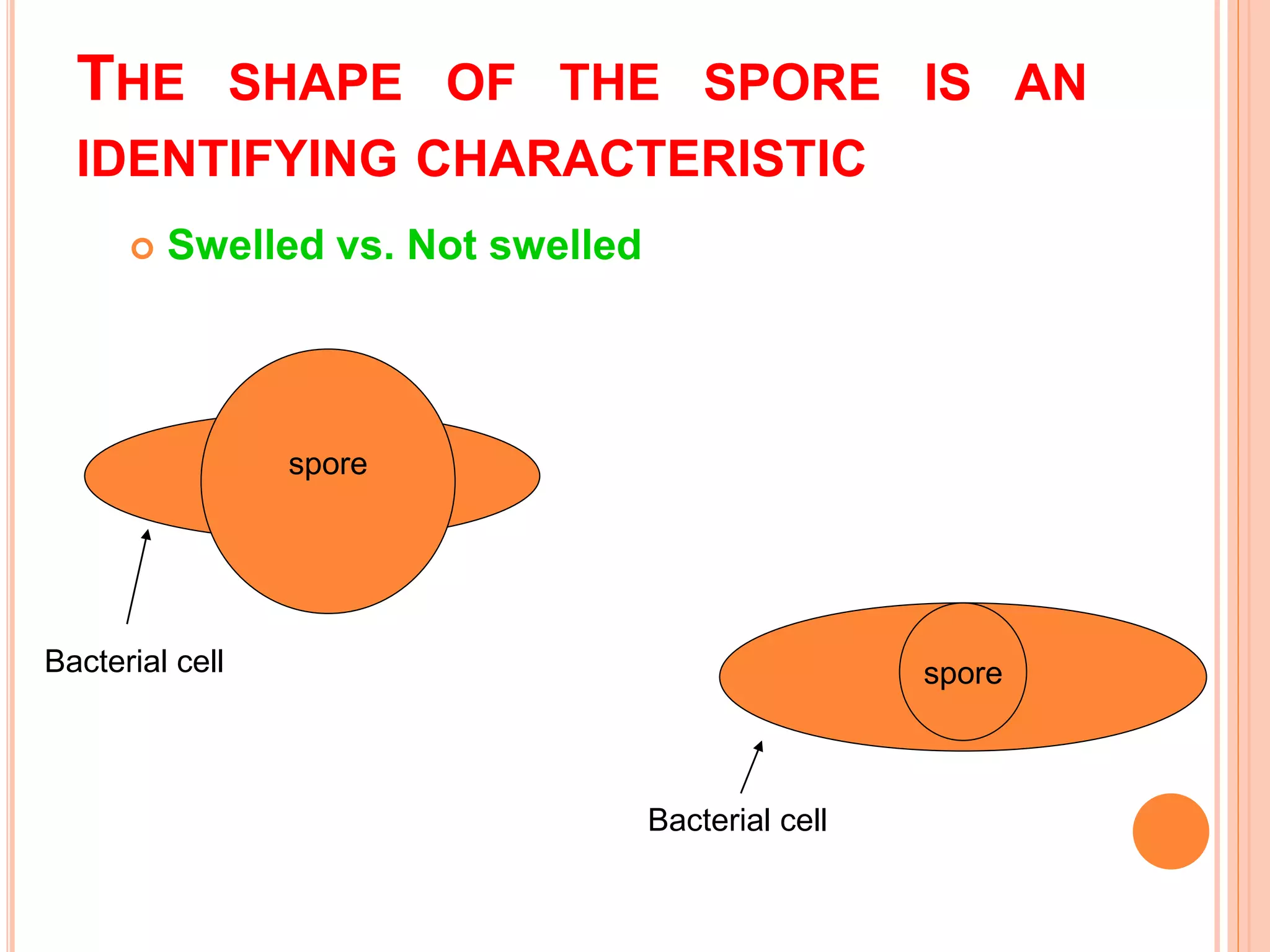
THE SHAPE OF THE SPORE IS AN
IDENTIFYING CHARACTERISTIC
 Swelled vs. Not swelled
spore
Bacterial cell spore
Bacterial cell
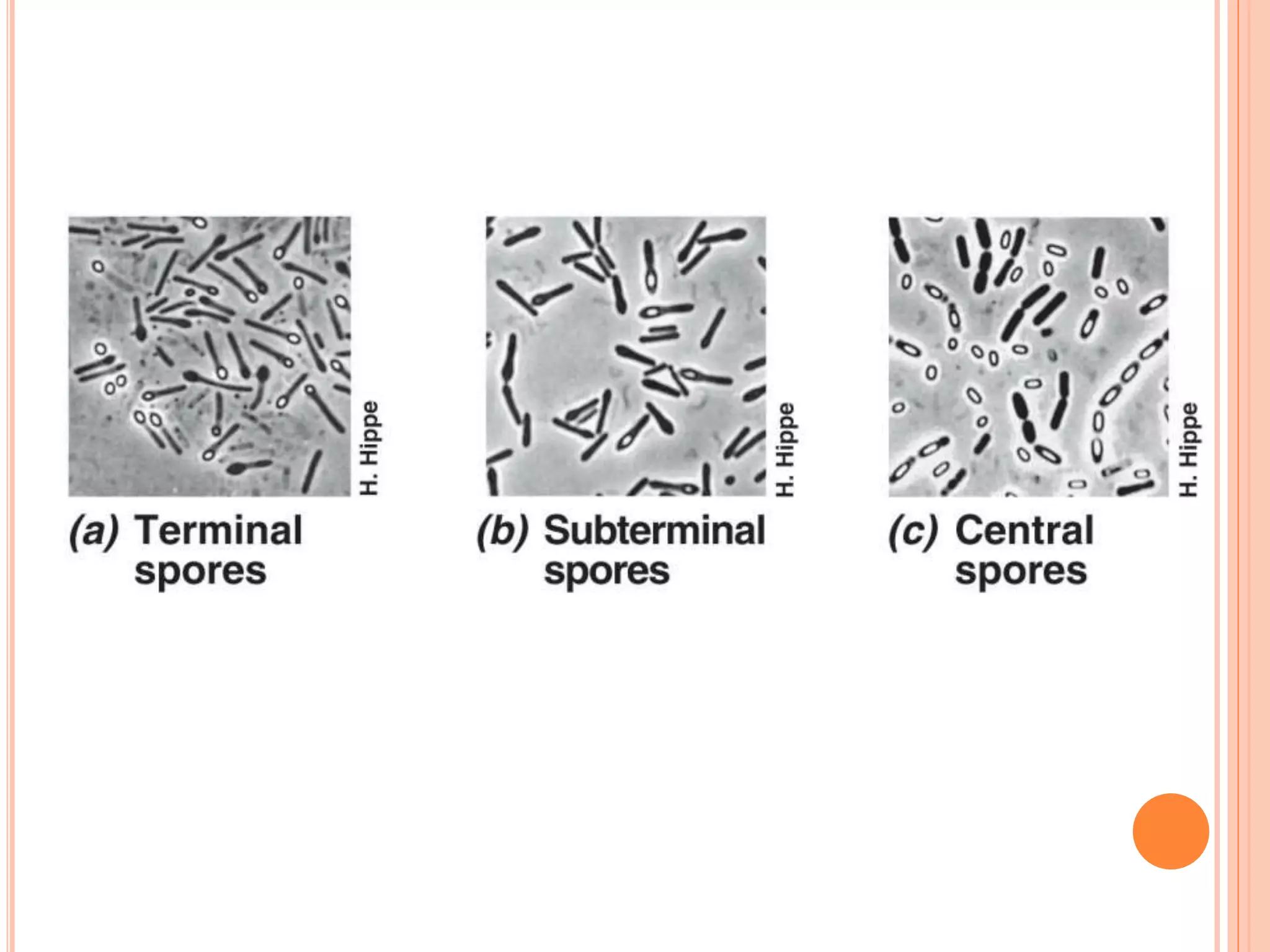
LOCATION OF THE SPORES
 Central, Sub-Terminal, and Terminal spores
SOME SPORE FORMING BACTERIA ARE
CAPABLE OF CAUSING DISEASE
 Clostridium botulinum – Botulism
 Clostridium perfingens – Gas gangrene
 Clostridium tetani – Tetanus
 Bacillus anthrasis – Woolsorter’s Disease and
Wound infections
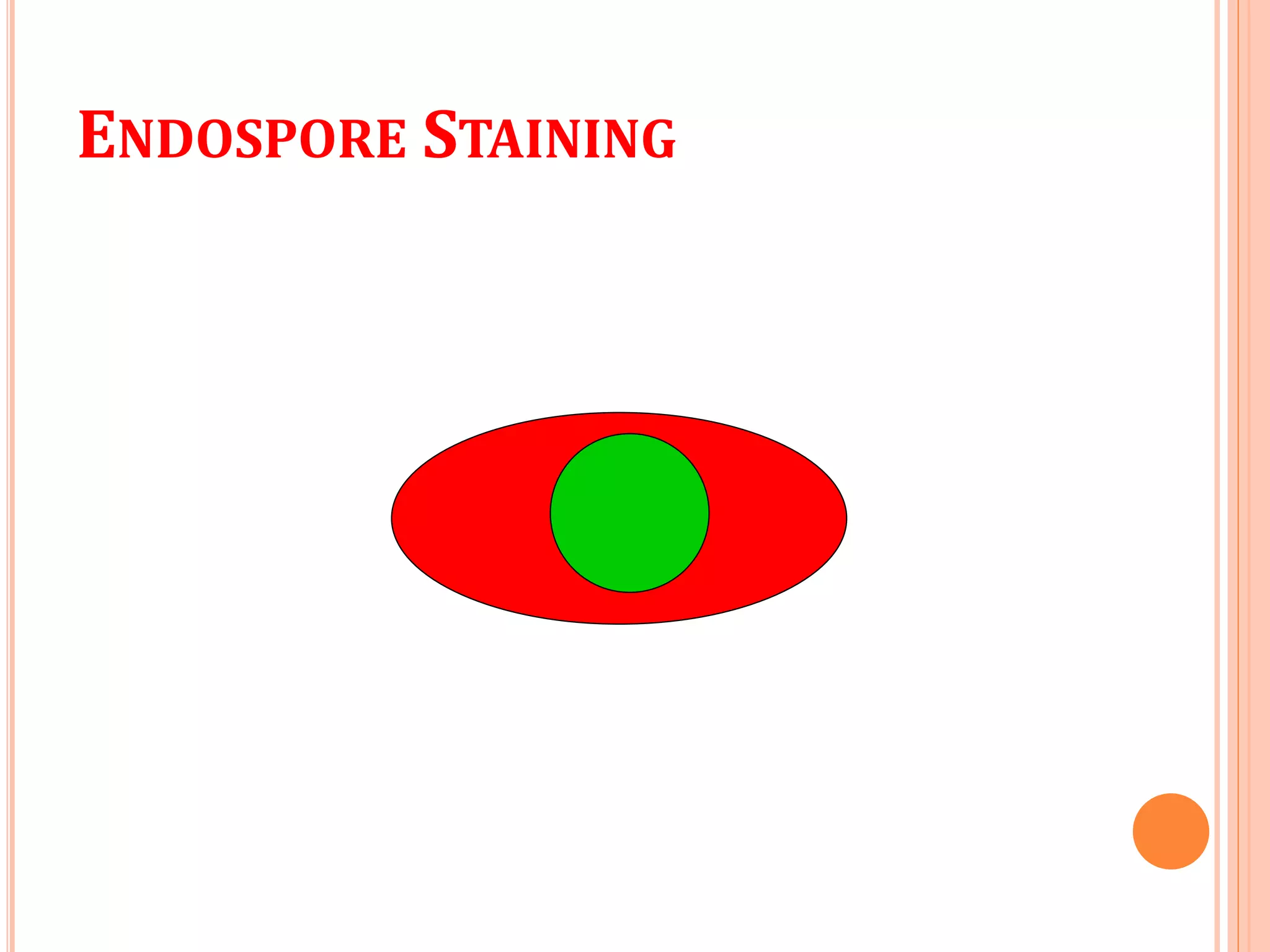
 The Schaeffer-Fulton Stain Procedure is used to
differentiate between endospores and vegetative
cells
ENDOSPORE STAINING
Endospores

Endospores

  • 1.
  • 2.
    BACTERIAL ENDOSPORES  Endosporesare the resisting structures formed by bacteria for survival during adverse environmental condition.  Endospores differ significantly from the vegetative and normal functioning of cells.  Endospores provide resistance against  Heat  Drying  Low nutrient conditions  Radiation  Osmotic pressure  Various chemical disinfectants
  • 3.
    SPORE PROTEINS  Dipicolinicacid  Located in the core  Calcium – Dipicolinic acid complexes reduces water available and helps to dehydrate spores.  Interculates into the DNA and stabilizes it to heat denaturation.  Small Acid Soluble Proteins (SASPs)  Bind to the DNA in the core and protect it from damage.  Function as a carbon and energy source when forming vegetative cells to spore cells.
  • 4.
    NOT ALL BACTERIALSPECIES CAN FORM SPORES  A few genera of bacteria produce Endospore such as Clostridium (Gangrene) and Bacillus (Anthrax), both of them are Gram + rods (Endospore production is associated with Gram Positive bacteria)  Since not all bacteria form Endospores, we can use this as an identification factor.
  • 5.
    THE SHAPE OFTHE SPORE IS AN IDENTIFYING CHARACTERISTIC  Swelled vs. Not swelled spore Bacterial cell spore Bacterial cell
  • 6.
    LOCATION OF THESPORES  Central, Sub-Terminal, and Terminal spores
  • 8.
    SOME SPORE FORMINGBACTERIA ARE CAPABLE OF CAUSING DISEASE  Clostridium botulinum – Botulism  Clostridium perfingens – Gas gangrene  Clostridium tetani – Tetanus  Bacillus anthrasis – Woolsorter’s Disease and Wound infections  The Schaeffer-Fulton Stain Procedure is used to differentiate between endospores and vegetative cells
  • 9.