Bacterial Classification
and its Structure
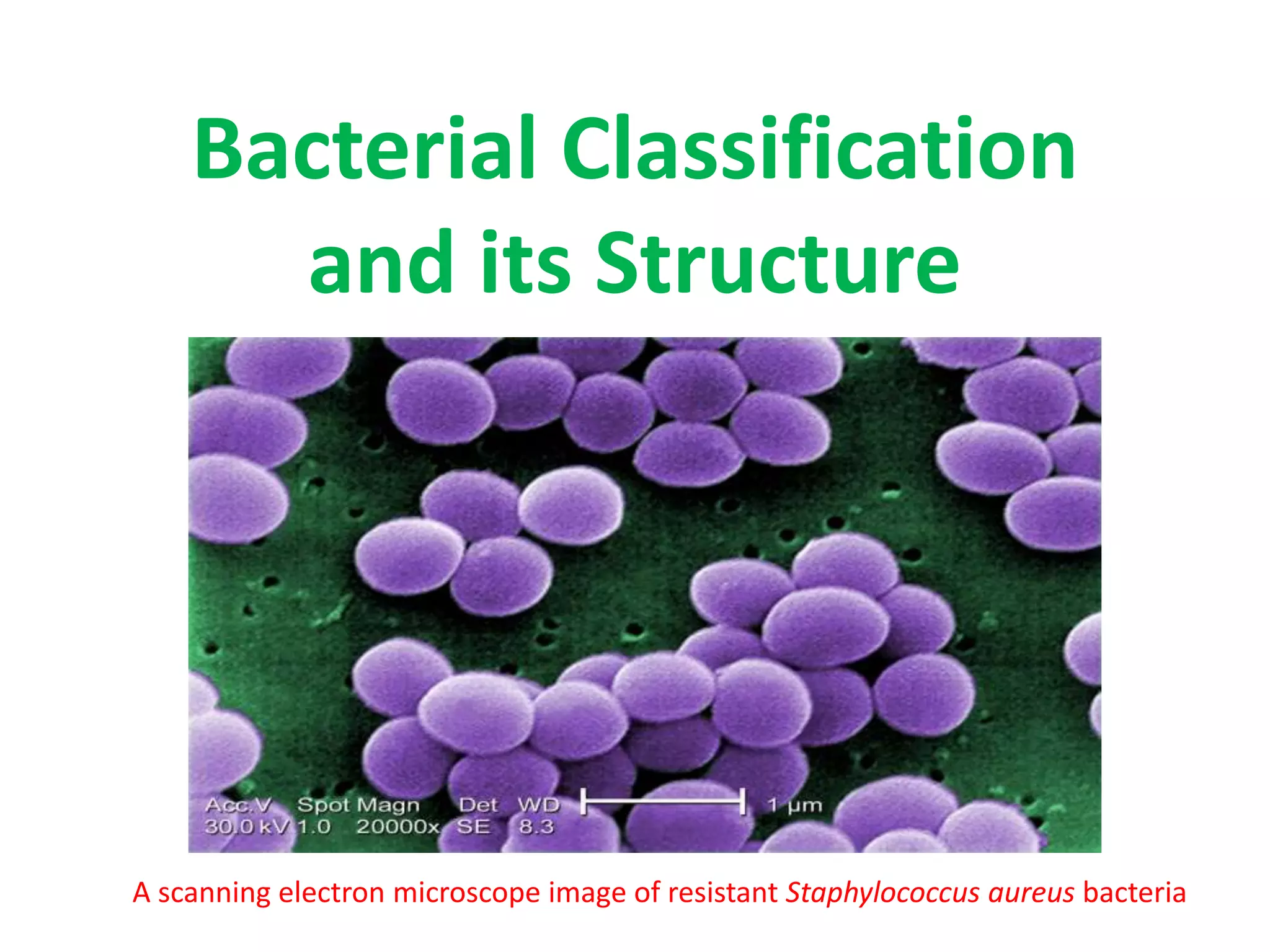
A scanning electron microscope image of resistant Staphylococcus aureus bacteria
Introduction
• Bacteria are microscopic, single-celled organisms that
thrive in diverse environments.
• These organisms can live in soil, the ocean and inside the
human gut.
• Bacteria represent a large and diverse group of
microorganisms that can exist as single cells or as cell
clusters.
• Some bacteria are harmful, but most serve a useful purpose.
• They support many forms of life, both plant and animal, and
they are used in industrial and medicinal processes.
• Bacteria are thought to have been the first organisms to
appear on earth, about 4 billion years ago.
• A gram of soil typically contains about 40 million
bacterial cells.
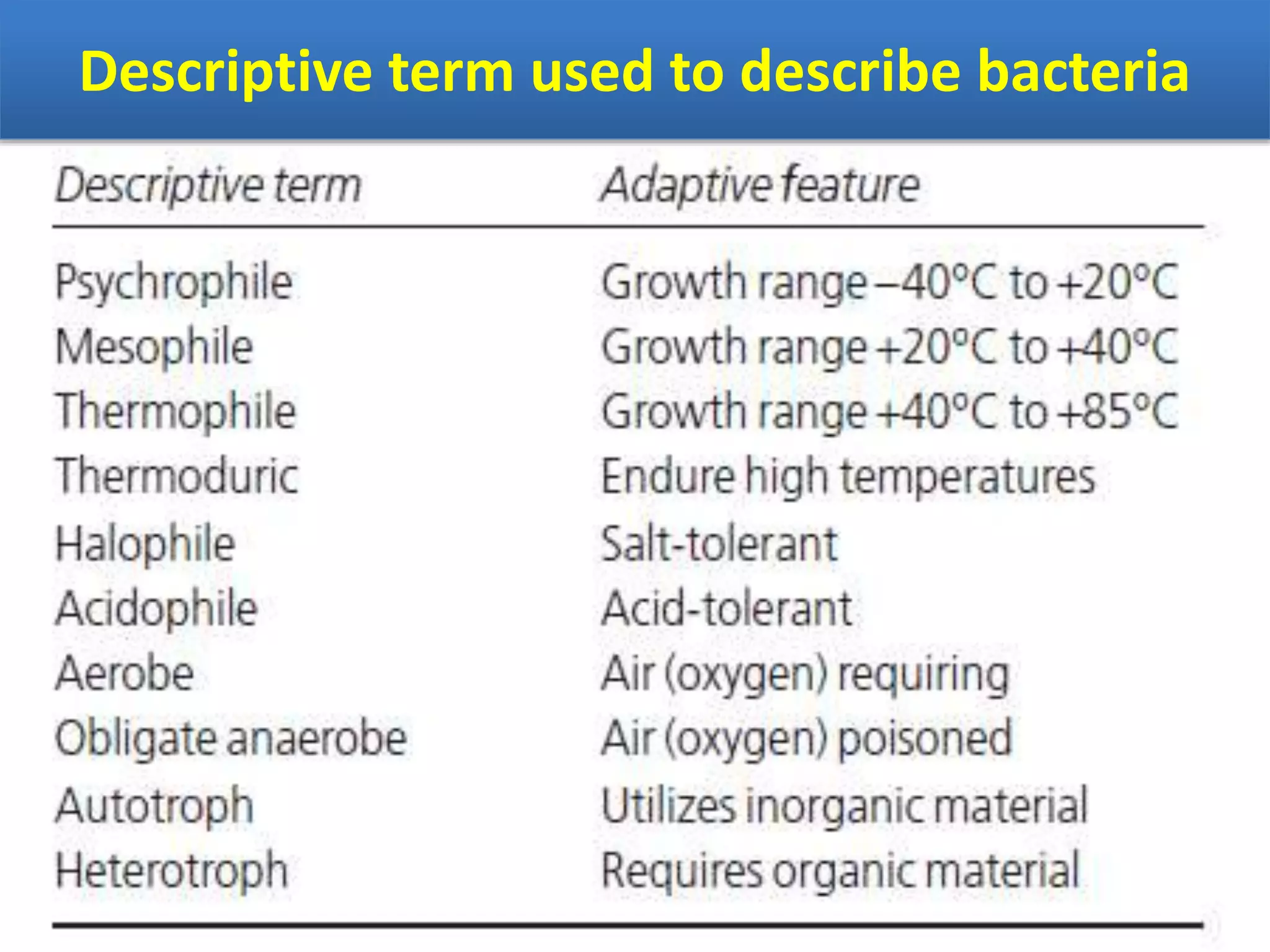
Descriptive term used to describe bacteria
Classification of Bacteria
• On the basis of Staining
• On the basis of Shape
• On the basis of Growth and
nutrition
• On the basis of presence of Flagella
• On the basis of Motility
Classification
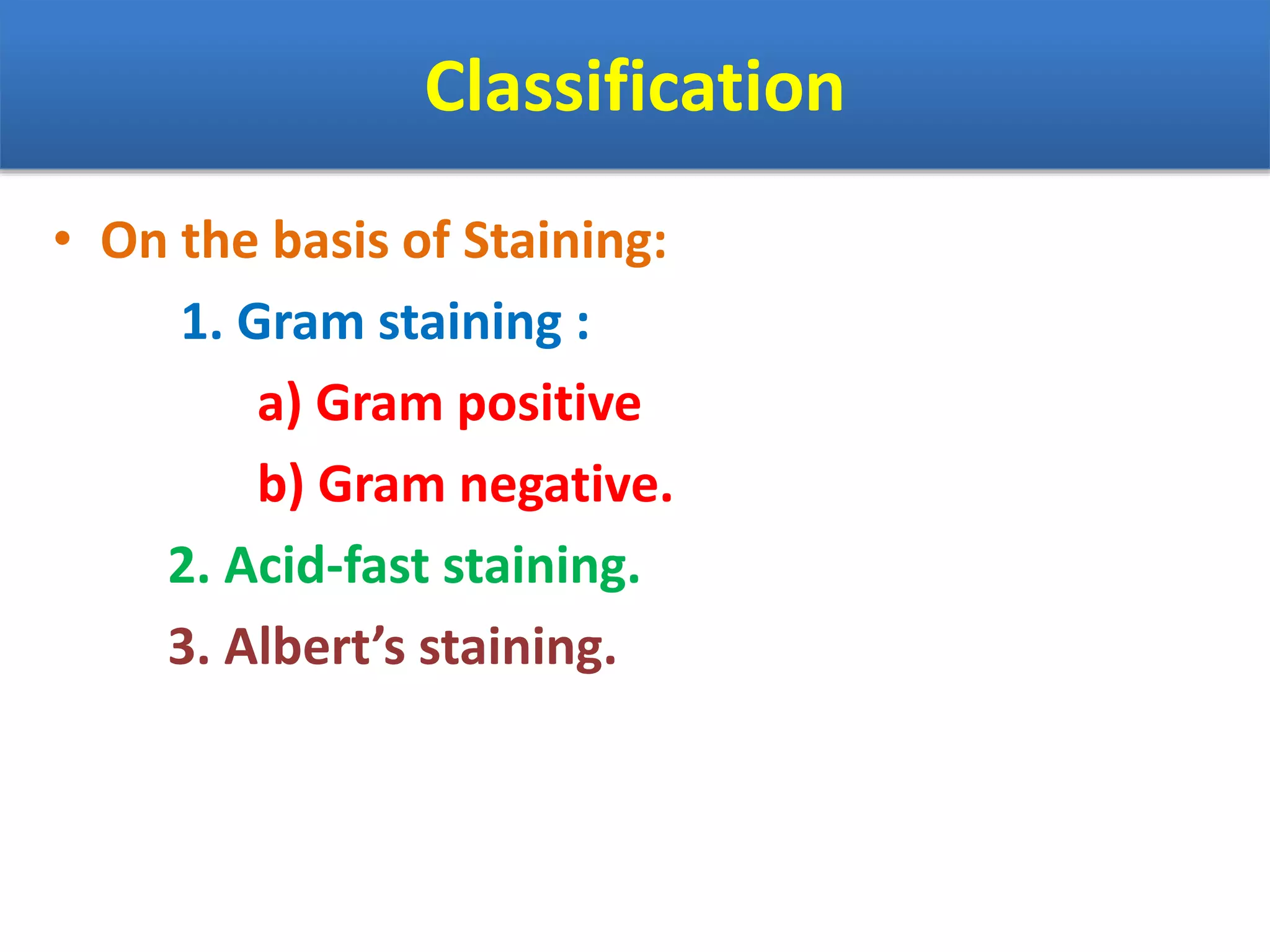
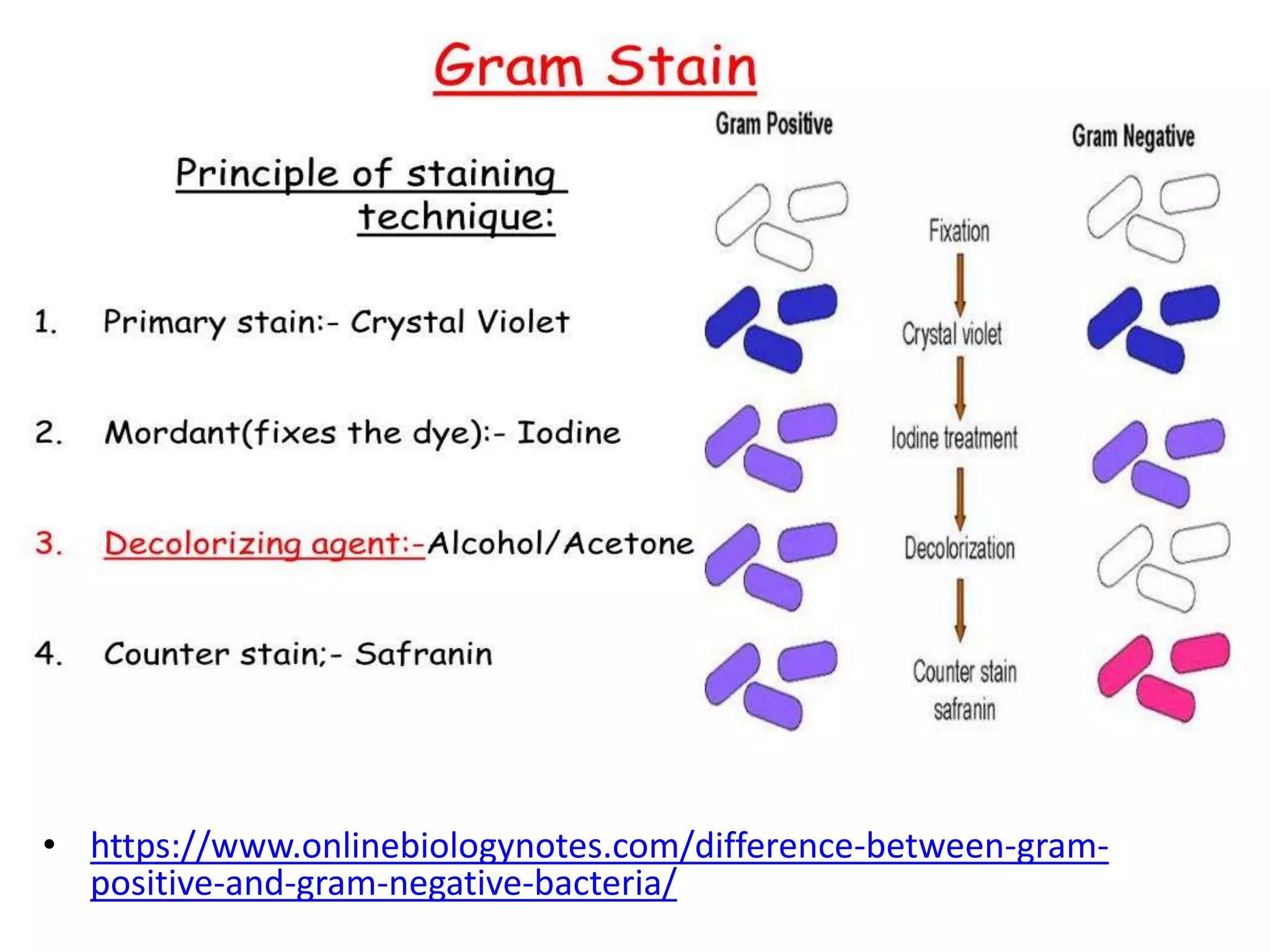
• On the basis of Staining:
1. Gram staining :
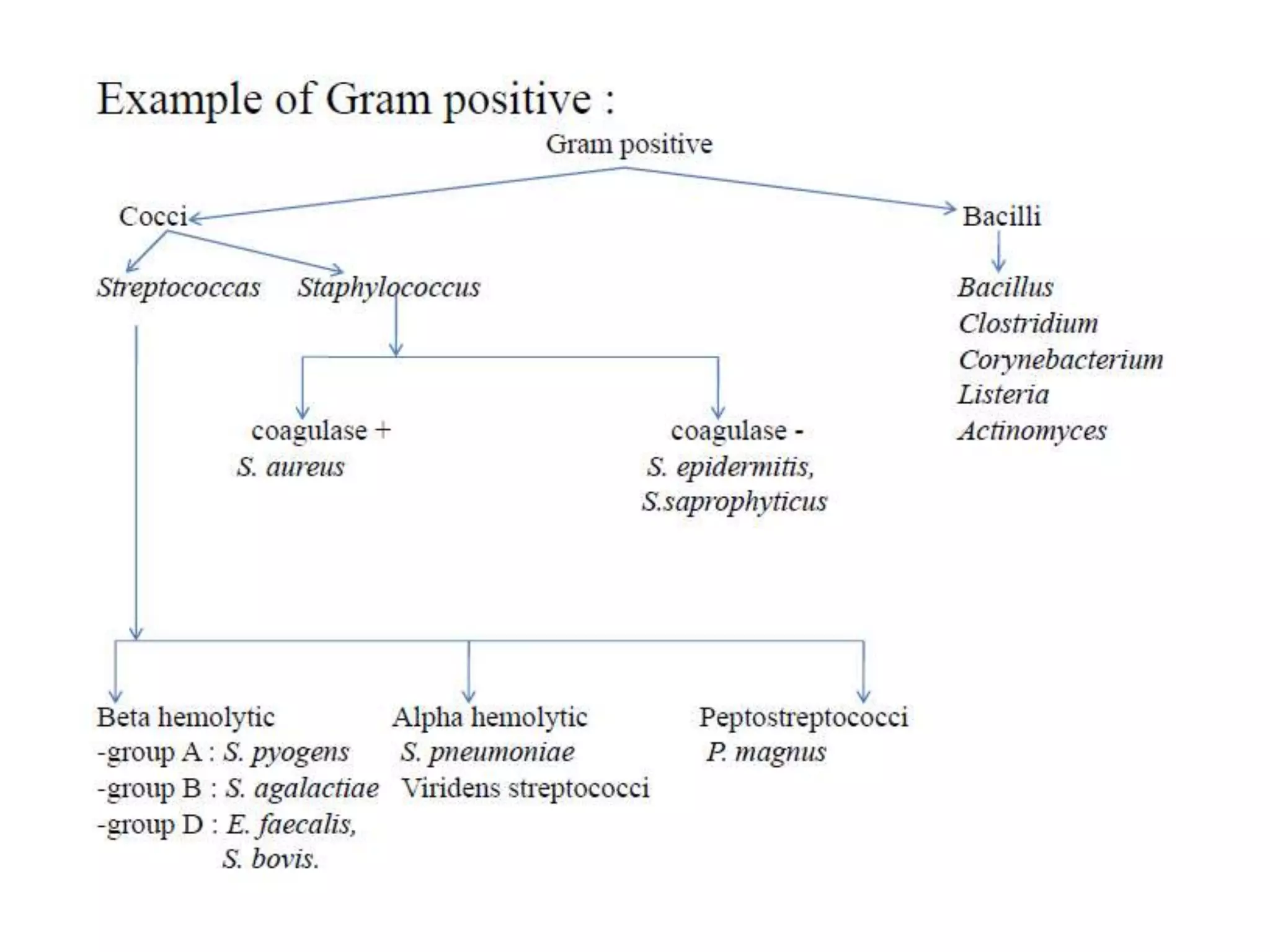
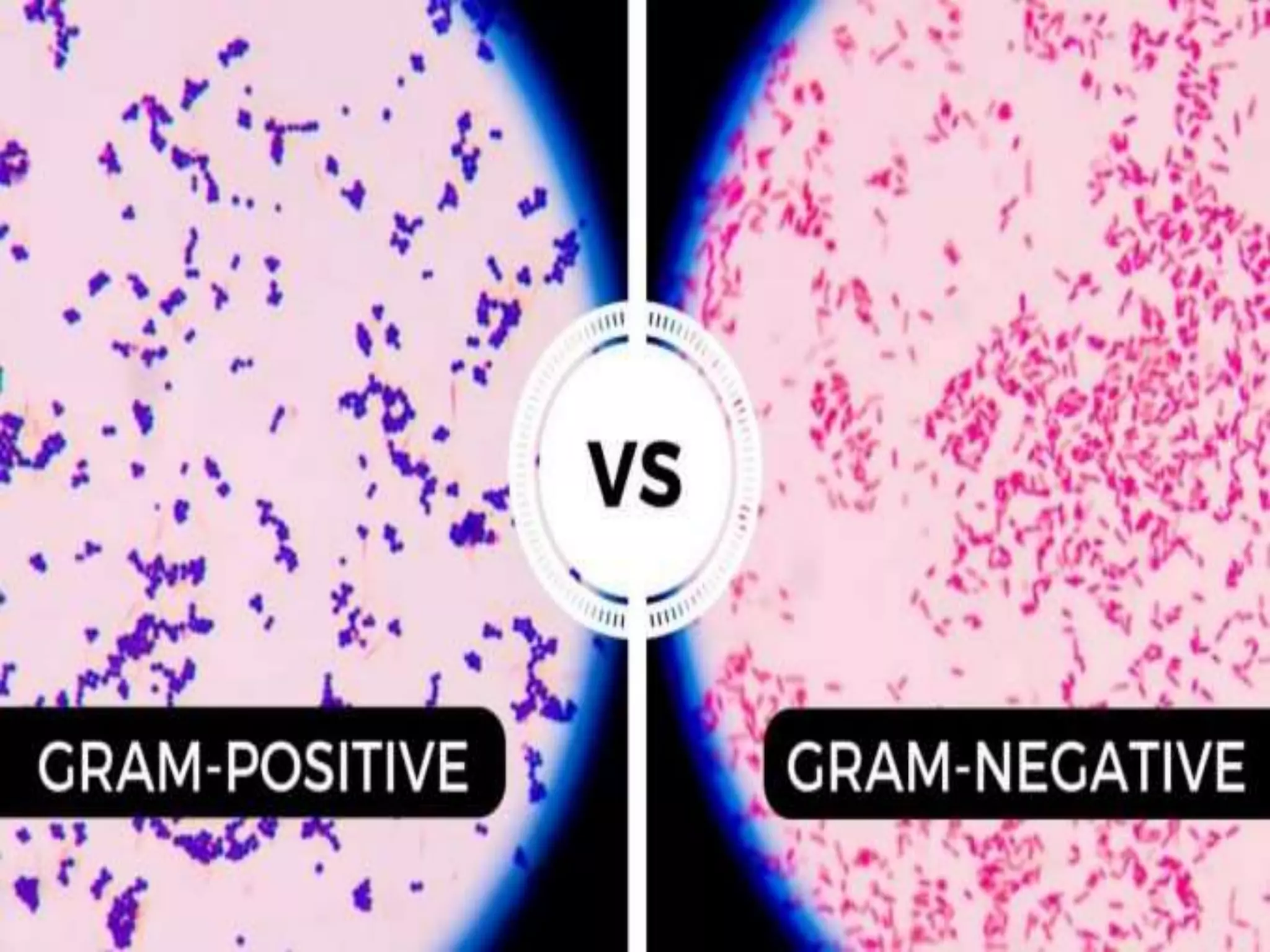
a) Gram positive
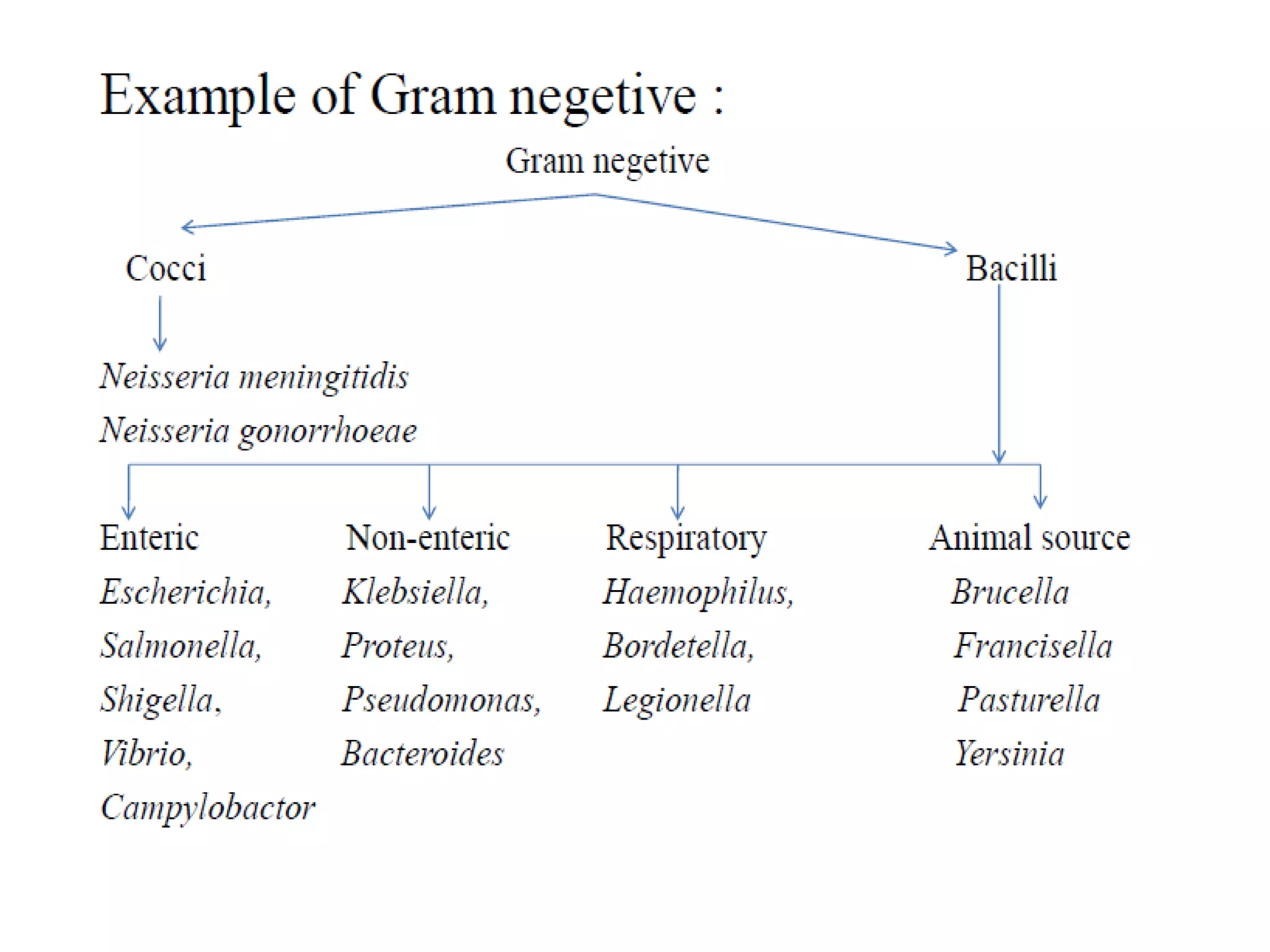
b) Gram negative.
2. Acid-fast staining.
3. Albert’s staining.
• https://www.onlinebiologynotes.com/difference-between-gram-
positive-and-gram-negative-bacteria/
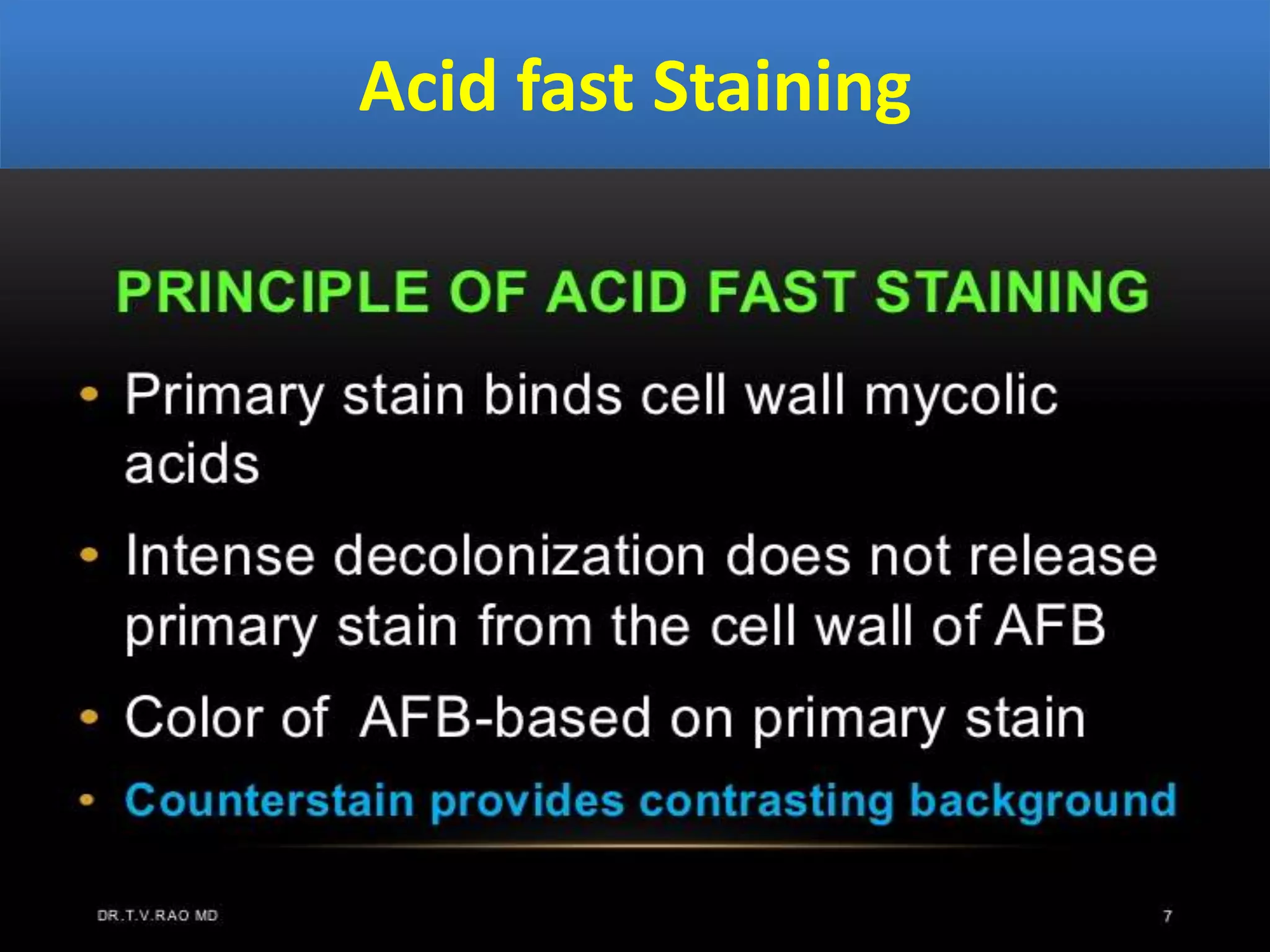
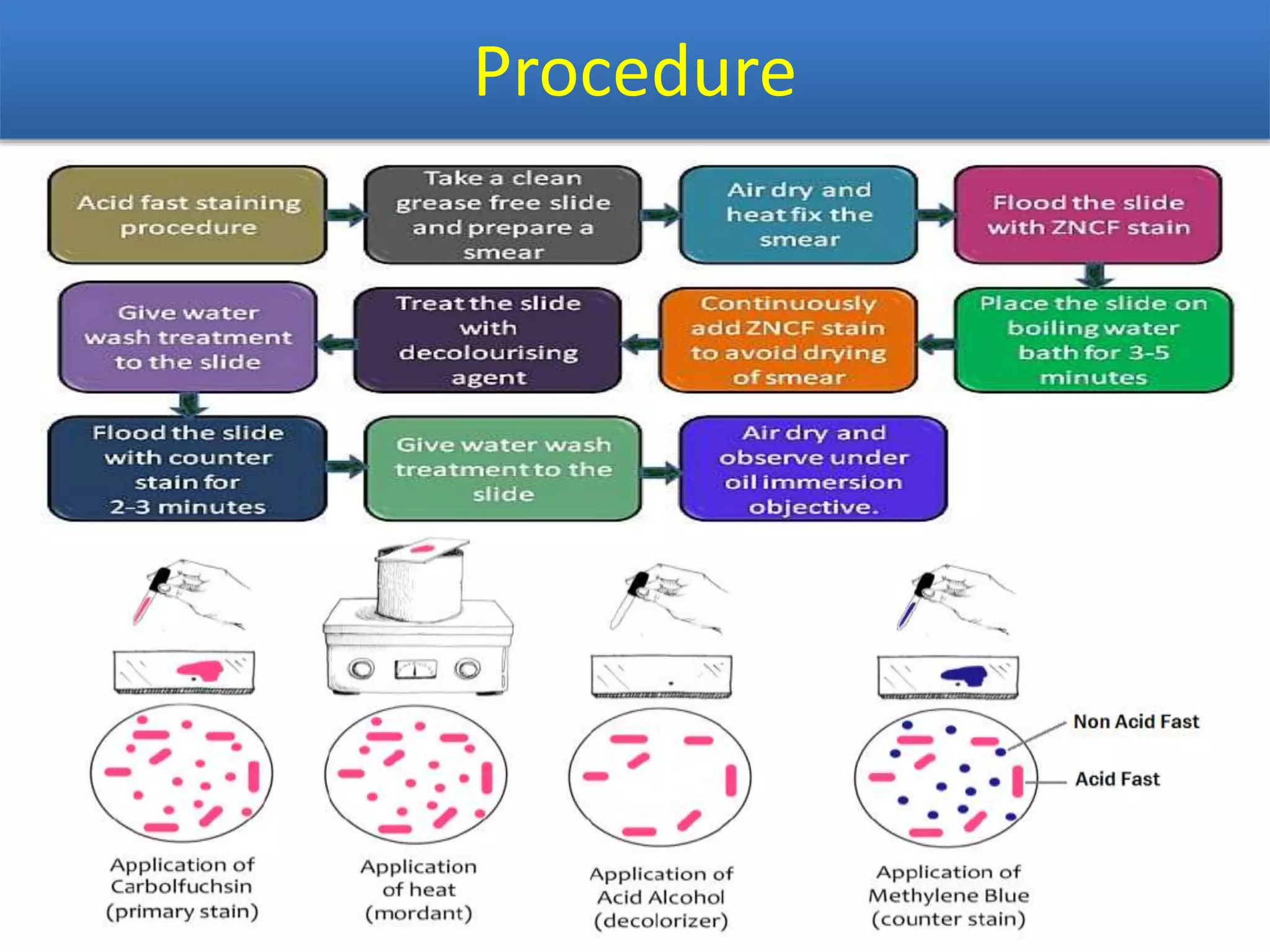
Acid fast Staining
Procedure
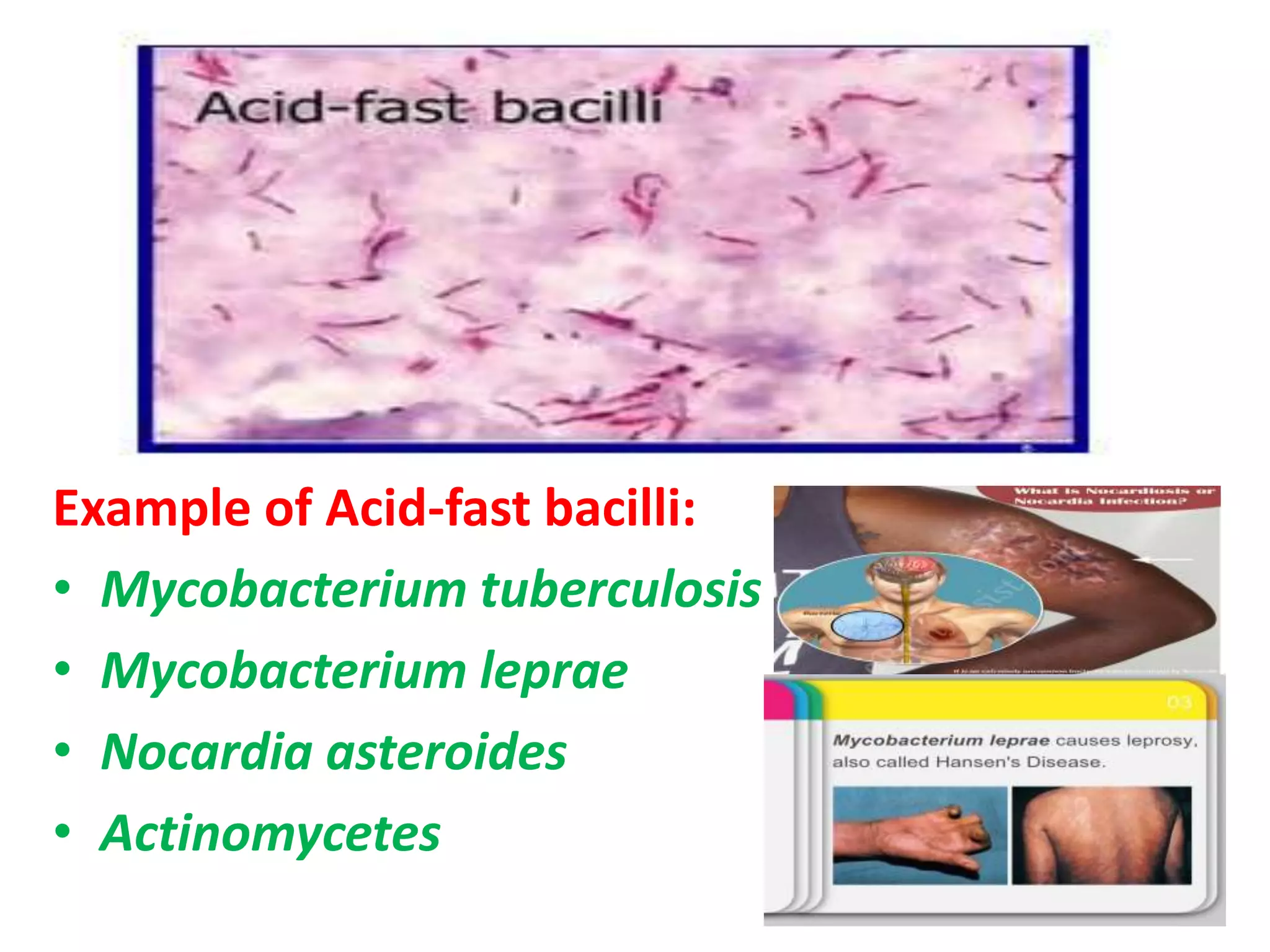
Example of Acid-fast bacilli:
• Mycobacterium tuberculosis
• Mycobacterium leprae
• Nocardia asteroides
• Actinomycetes
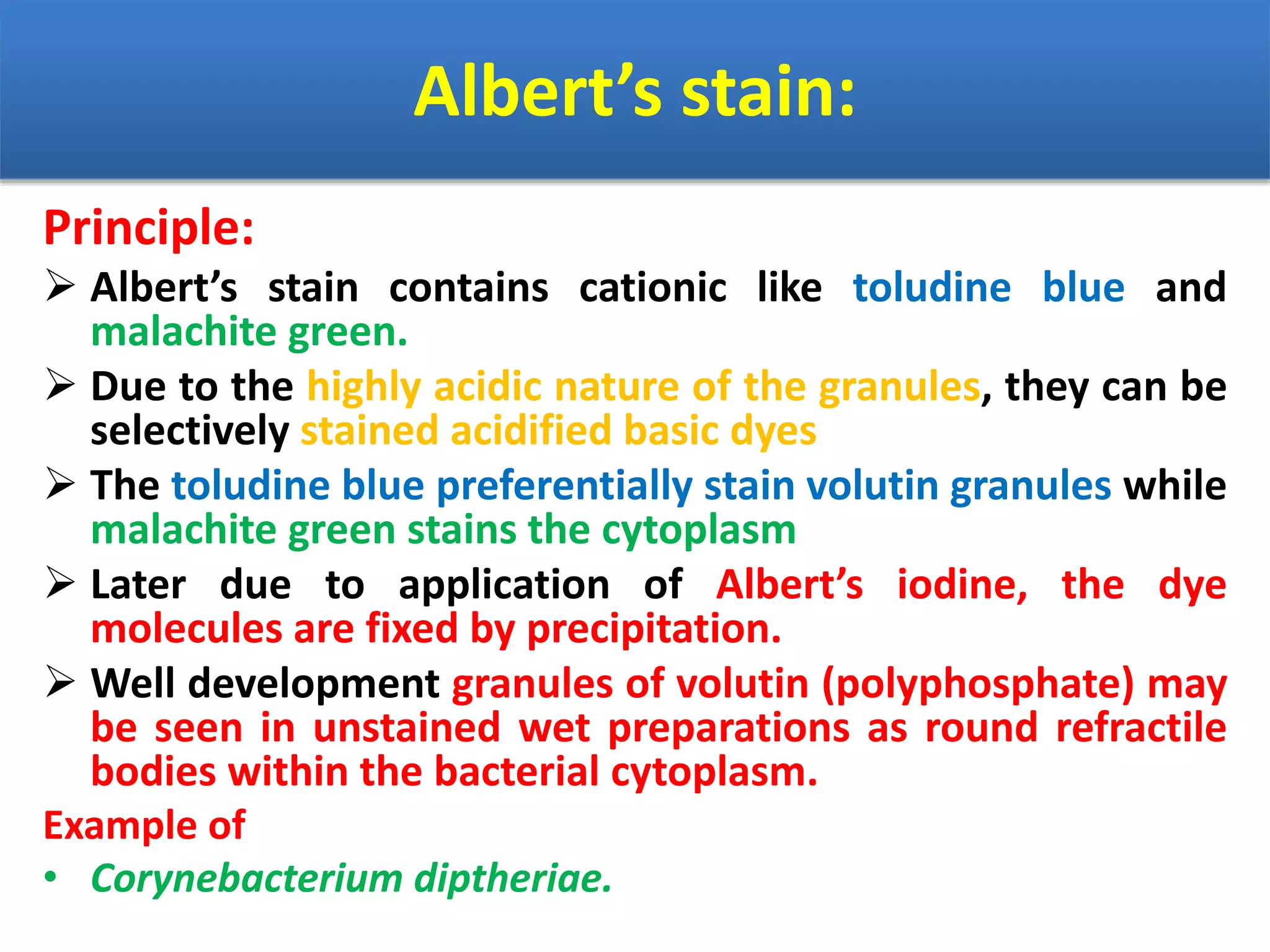
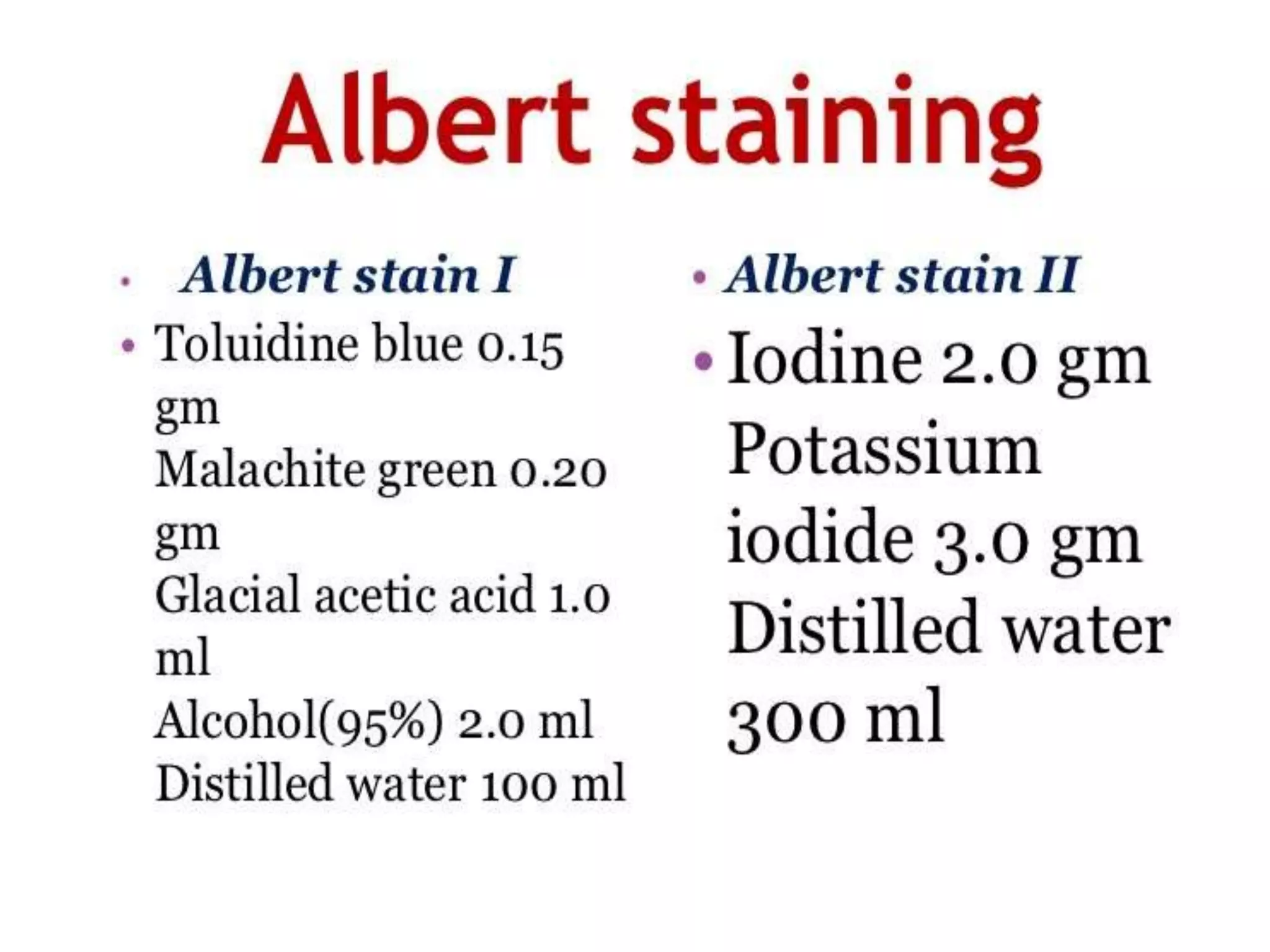
Albert’s stain:
Principle:
 Albert’s stain contains cationic like toludine blue and
malachite green.
 Due to the highly acidic nature of the granules, they can be
selectively stained acidified basic dyes
 The toludine blue preferentially stain volutin granules while
malachite green stains the cytoplasm
 Later due to application of Albert’s iodine, the dye
molecules are fixed by precipitation.
 Well development granules of volutin (polyphosphate) may
be seen in unstained wet preparations as round refractile
bodies within the bacterial cytoplasm.
Example of
• Corynebacterium diptheriae.
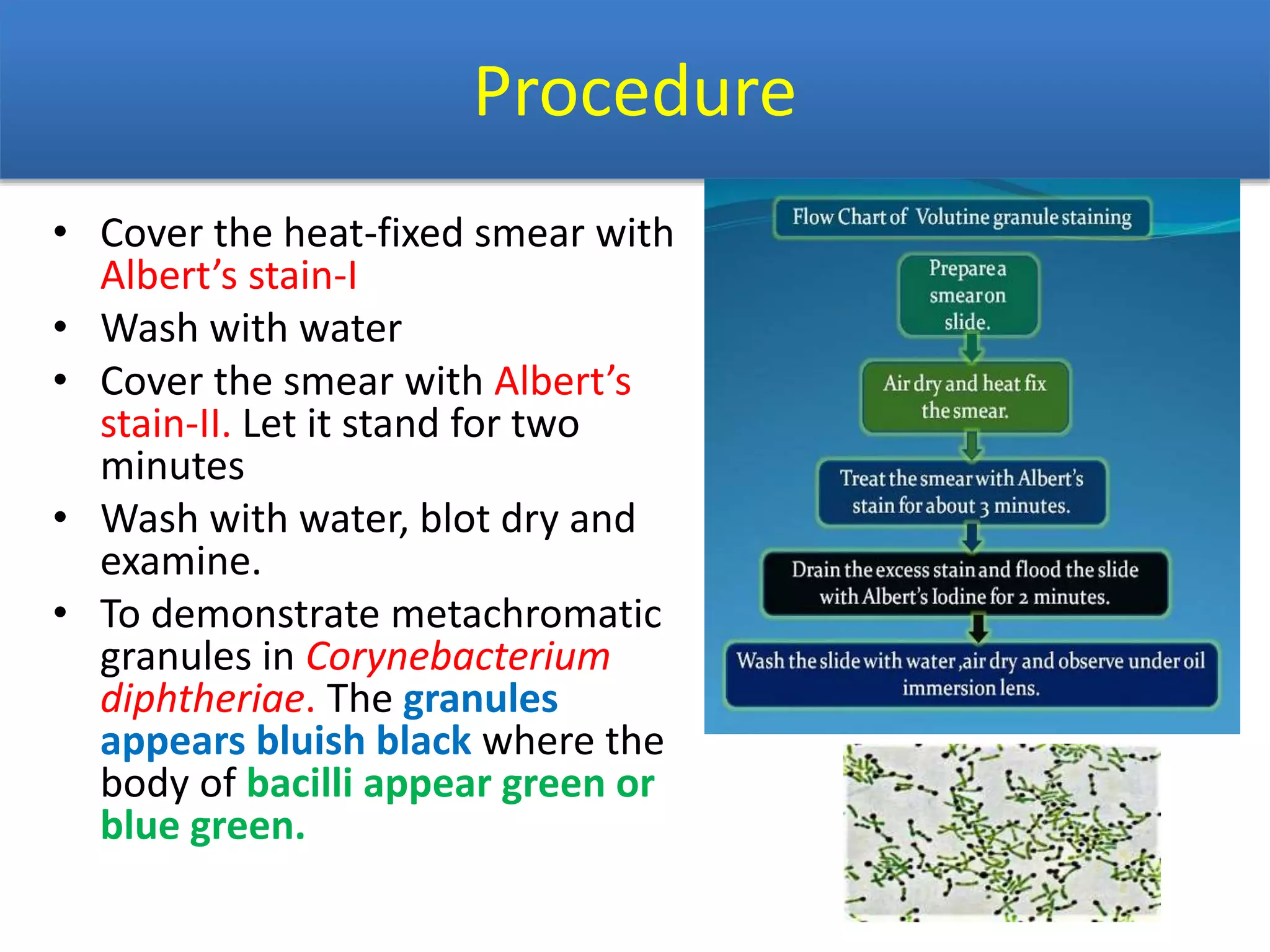
Procedure
• Cover the heat-fixed smear with
Albert’s stain-I
• Wash with water
• Cover the smear with Albert’s
stain-II. Let it stand for two
minutes
• Wash with water, blot dry and
examine.
• To demonstrate metachromatic
granules in Corynebacterium
diphtheriae. The granules
appears bluish black where the
body of bacilli appear green or
blue green.
On the basis of Shape:
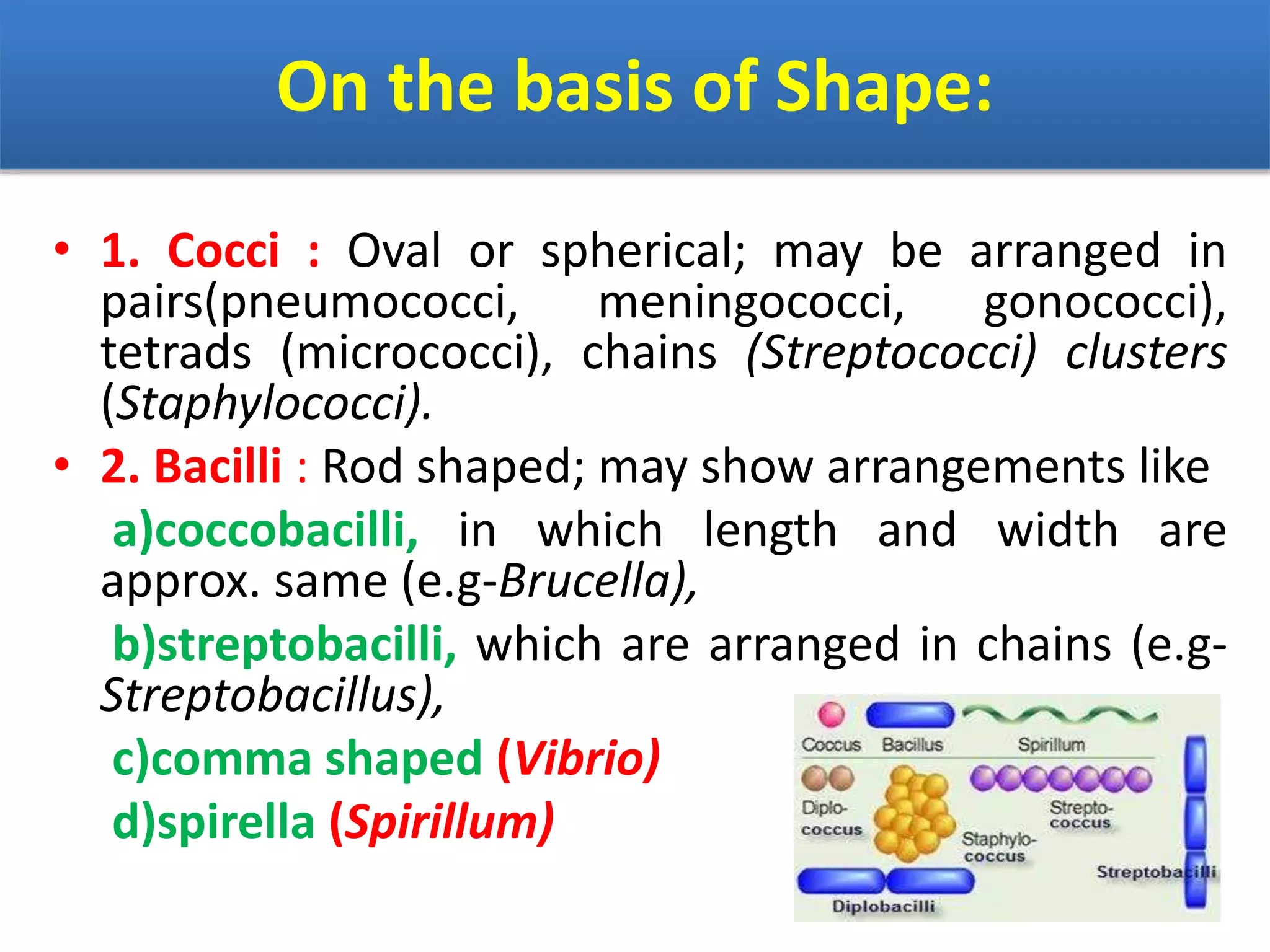
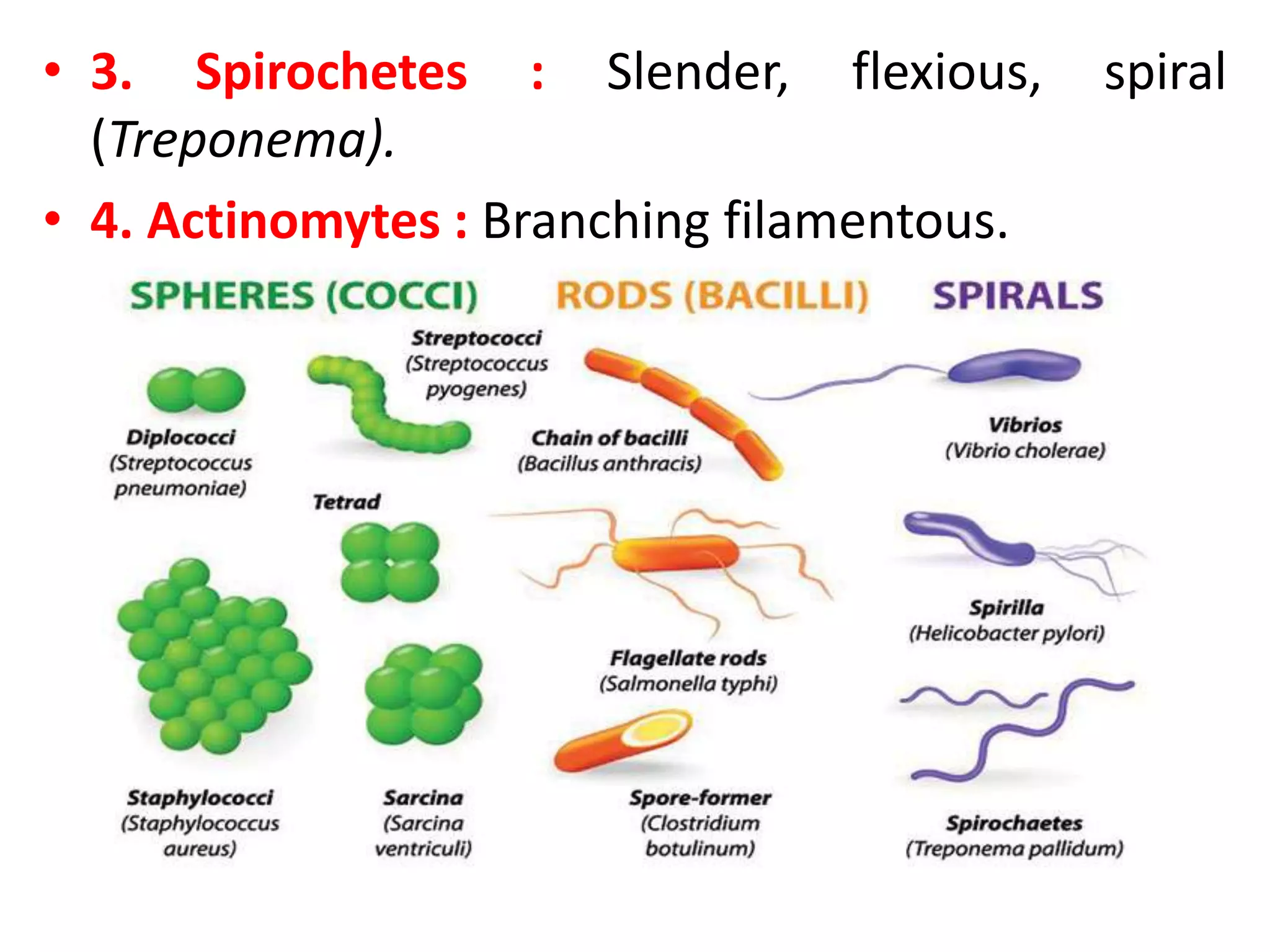
• 1. Cocci : Oval or spherical; may be arranged in
pairs(pneumococci, meningococci, gonococci),
tetrads (micrococci), chains (Streptococci) clusters
(Staphylococci).
• 2. Bacilli : Rod shaped; may show arrangements like
a)coccobacilli, in which length and width are
approx. same (e.g-Brucella),
b)streptobacilli, which are arranged in chains (e.g-
Streptobacillus),
c)comma shaped (Vibrio)
d)spirella (Spirillum)
• 3. Spirochetes : Slender, flexious, spiral
(Treponema).
• 4. Actinomytes : Branching filamentous.
On the basis of Growth and nutrition:
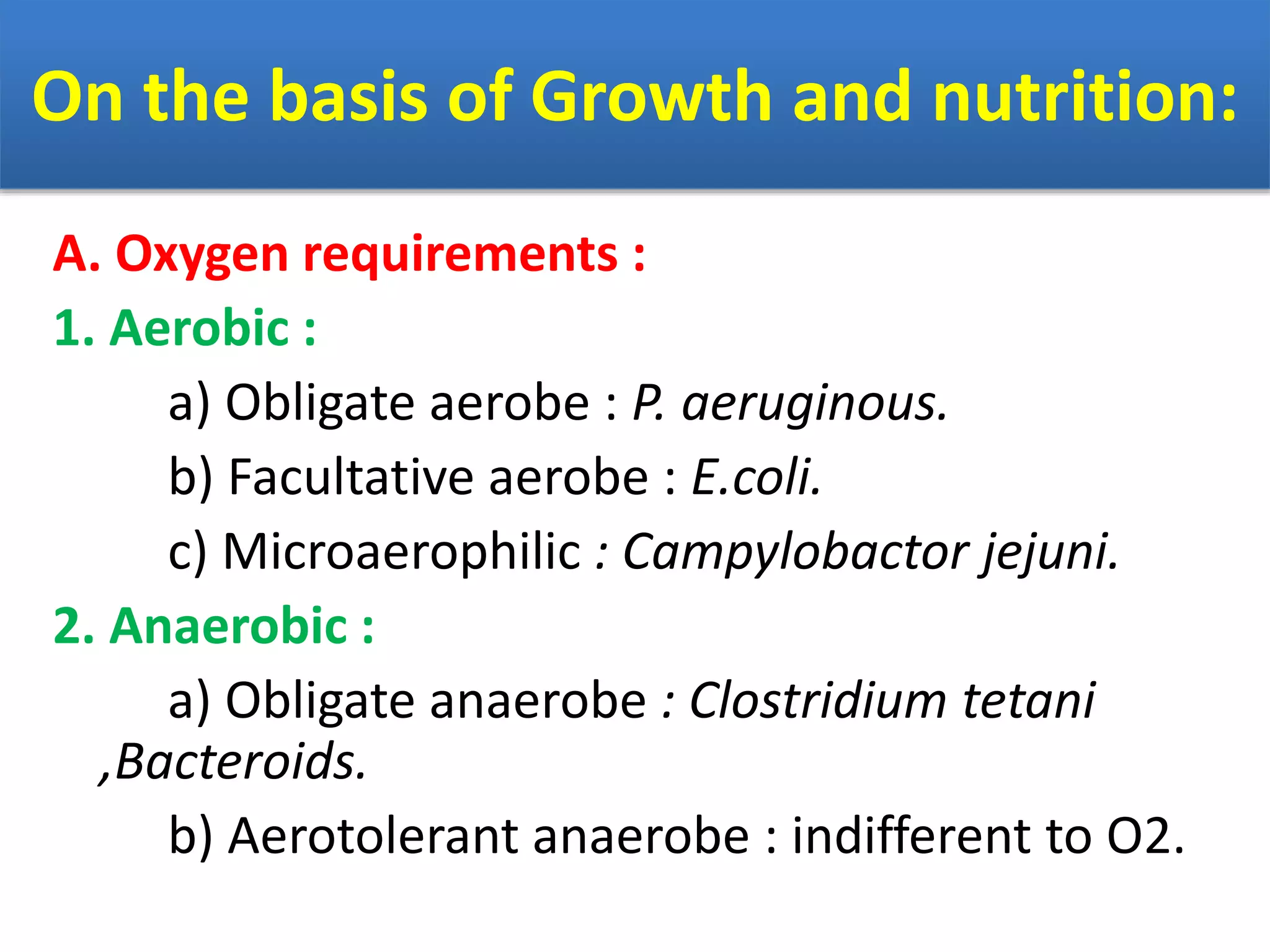
A. Oxygen requirements :
1. Aerobic :
a) Obligate aerobe : P. aeruginous.
b) Facultative aerobe : E.coli.
c) Microaerophilic : Campylobactor jejuni.
2. Anaerobic :
a) Obligate anaerobe : Clostridium tetani
,Bacteroids.
b) Aerotolerant anaerobe : indifferent to O2.
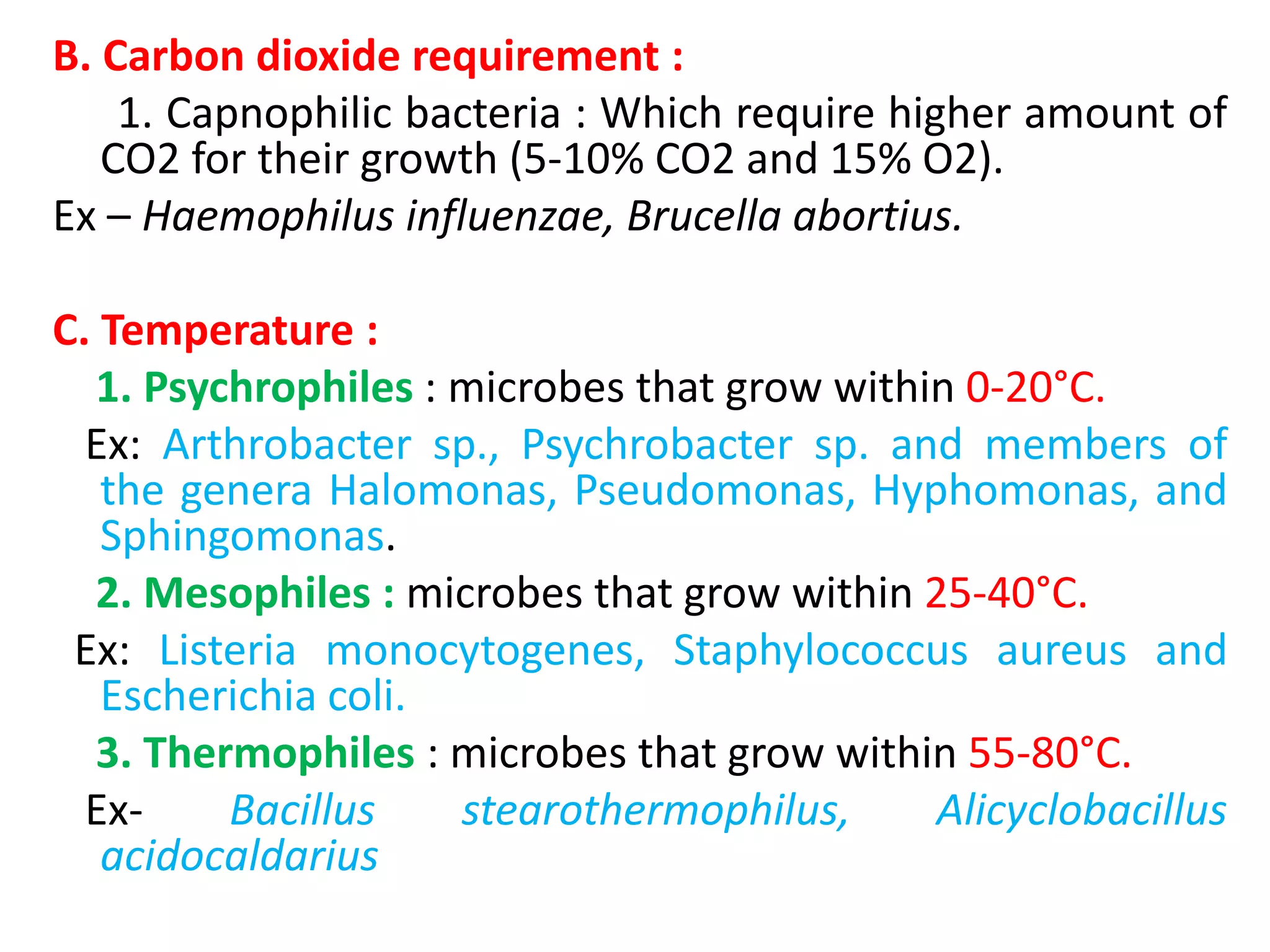
B. Carbon dioxide requirement :
1. Capnophilic bacteria : Which require higher amount of
CO2 for their growth (5-10% CO2 and 15% O2).
Ex – Haemophilus influenzae, Brucella abortius.
C. Temperature :
1. Psychrophiles : microbes that grow within 0-20°C.
Ex: Arthrobacter sp., Psychrobacter sp. and members of
the genera Halomonas, Pseudomonas, Hyphomonas, and
Sphingomonas.
2. Mesophiles : microbes that grow within 25-40°C.
Ex: Listeria monocytogenes, Staphylococcus aureus and
Escherichia coli.
3. Thermophiles : microbes that grow within 55-80°C.
Ex- Bacillus stearothermophilus, Alicyclobacillus
acidocaldarius
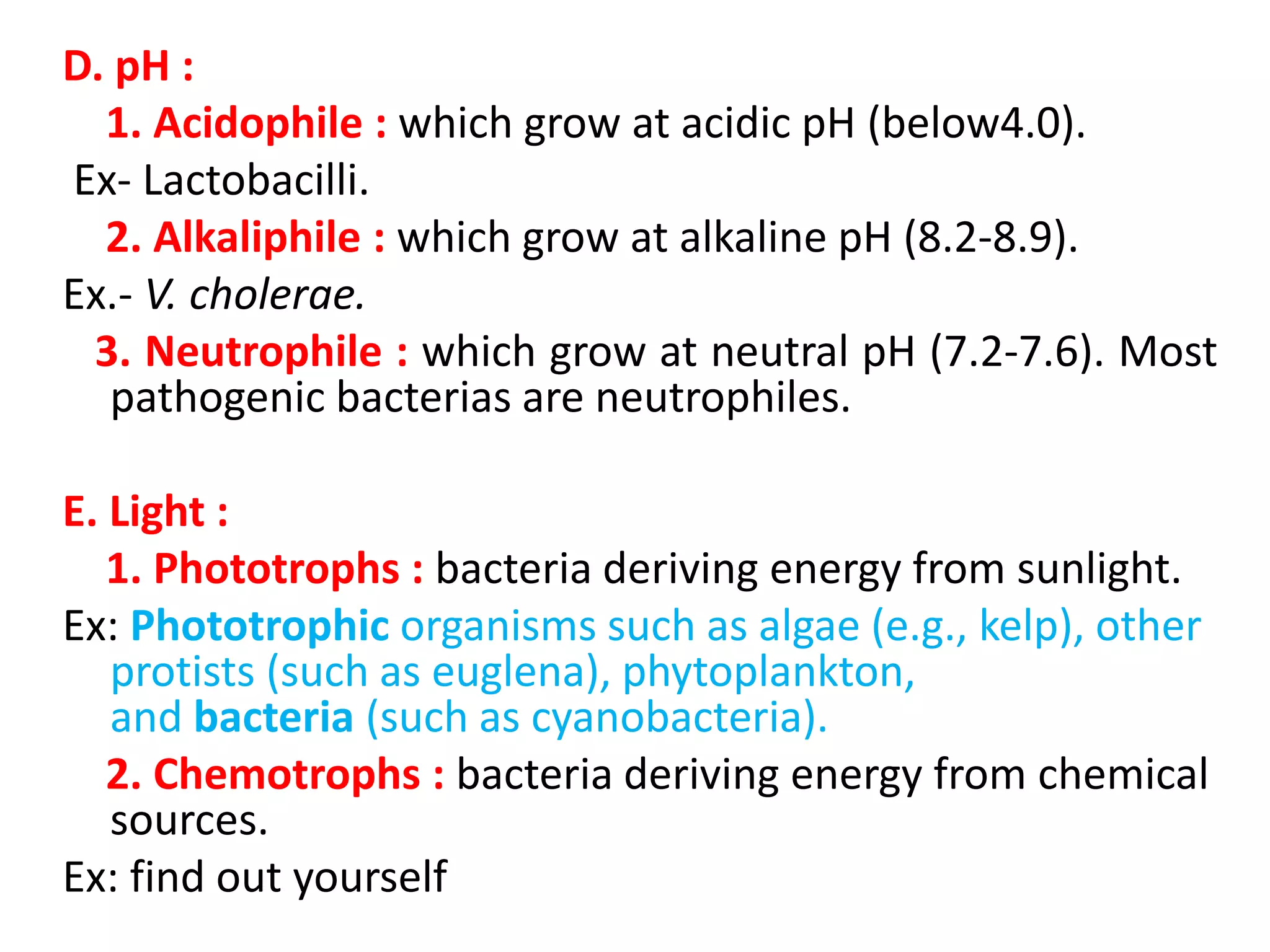
D. pH :
1. Acidophile : which grow at acidic pH (below4.0).
Ex- Lactobacilli.
2. Alkaliphile : which grow at alkaline pH (8.2-8.9).
Ex.- V. cholerae.
3. Neutrophile : which grow at neutral pH (7.2-7.6). Most
pathogenic bacterias are neutrophiles.
E. Light :
1. Phototrophs : bacteria deriving energy from sunlight.
Ex: Phototrophic organisms such as algae (e.g., kelp), other
protists (such as euglena), phytoplankton,
and bacteria (such as cyanobacteria).
2. Chemotrophs : bacteria deriving energy from chemical
sources.
Ex: find out yourself
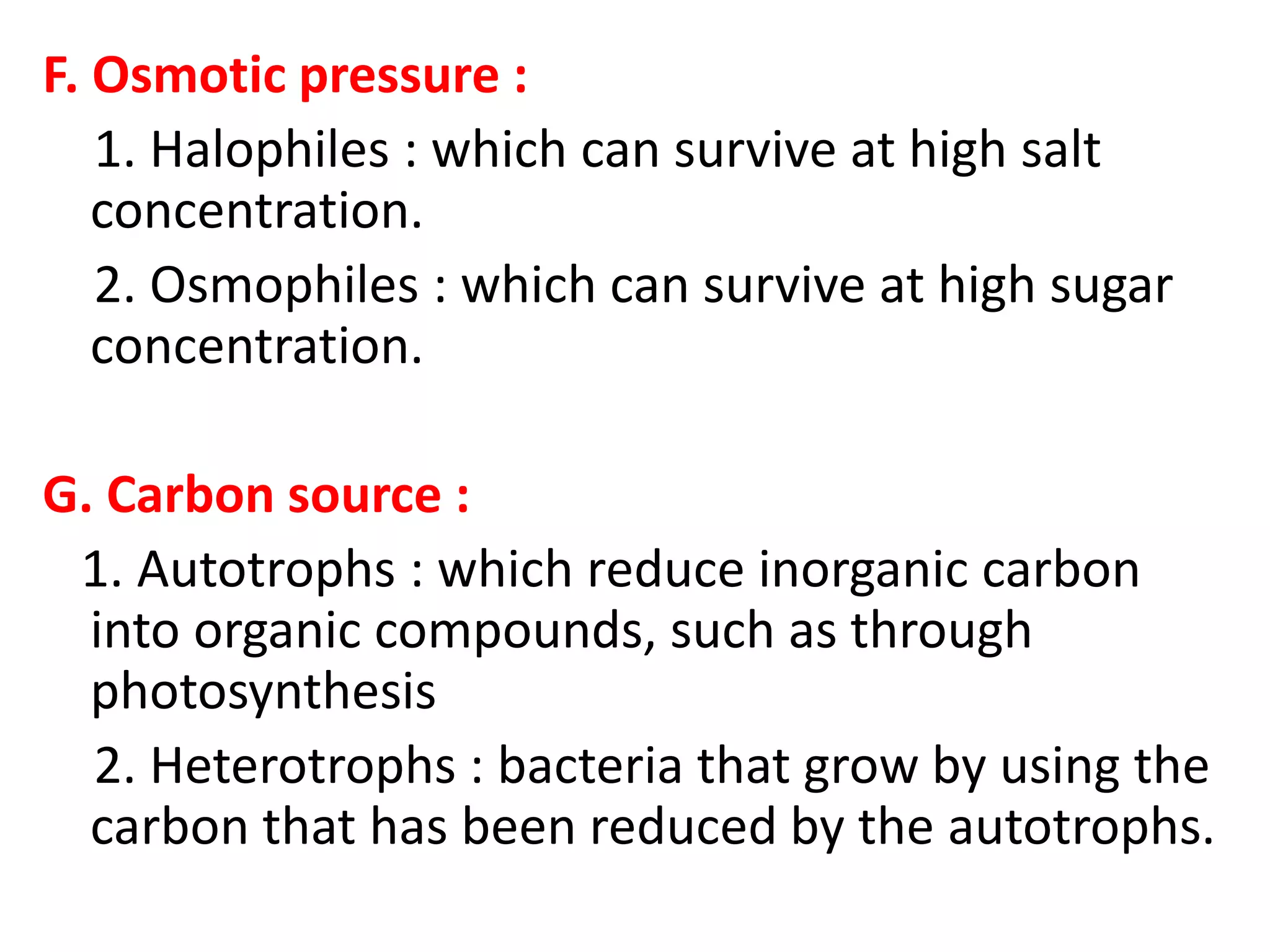
F. Osmotic pressure :
1. Halophiles : which can survive at high salt
concentration.
2. Osmophiles : which can survive at high sugar
concentration.
G. Carbon source :
1. Autotrophs : which reduce inorganic carbon
into organic compounds, such as through
photosynthesis
2. Heterotrophs : bacteria that grow by using the
carbon that has been reduced by the autotrophs.
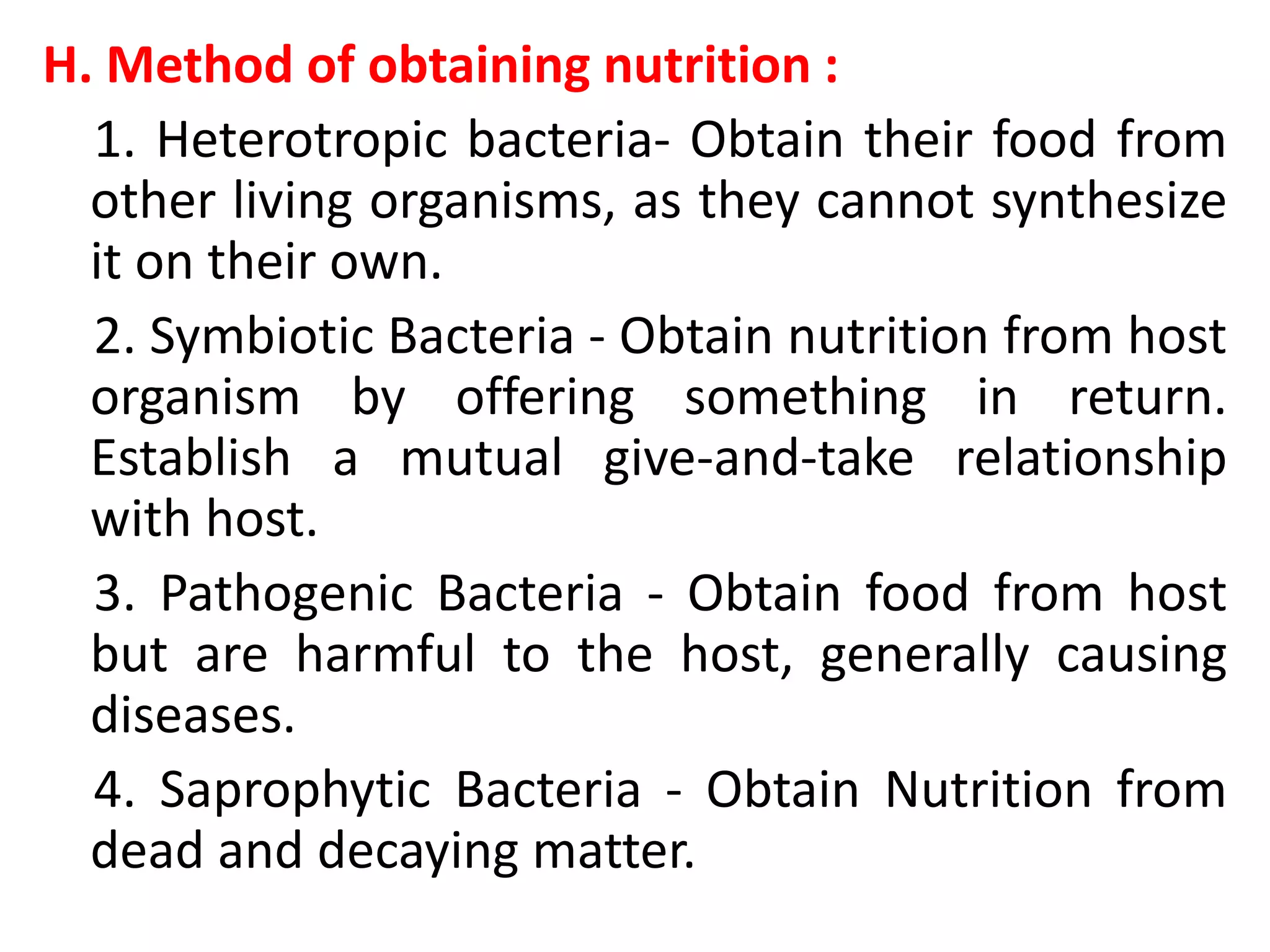
H. Method of obtaining nutrition :
1. Heterotropic bacteria- Obtain their food from
other living organisms, as they cannot synthesize
it on their own.
2. Symbiotic Bacteria - Obtain nutrition from host
organism by offering something in return.
Establish a mutual give-and-take relationship
with host.
3. Pathogenic Bacteria - Obtain food from host
but are harmful to the host, generally causing
diseases.
4. Saprophytic Bacteria - Obtain Nutrition from
dead and decaying matter.
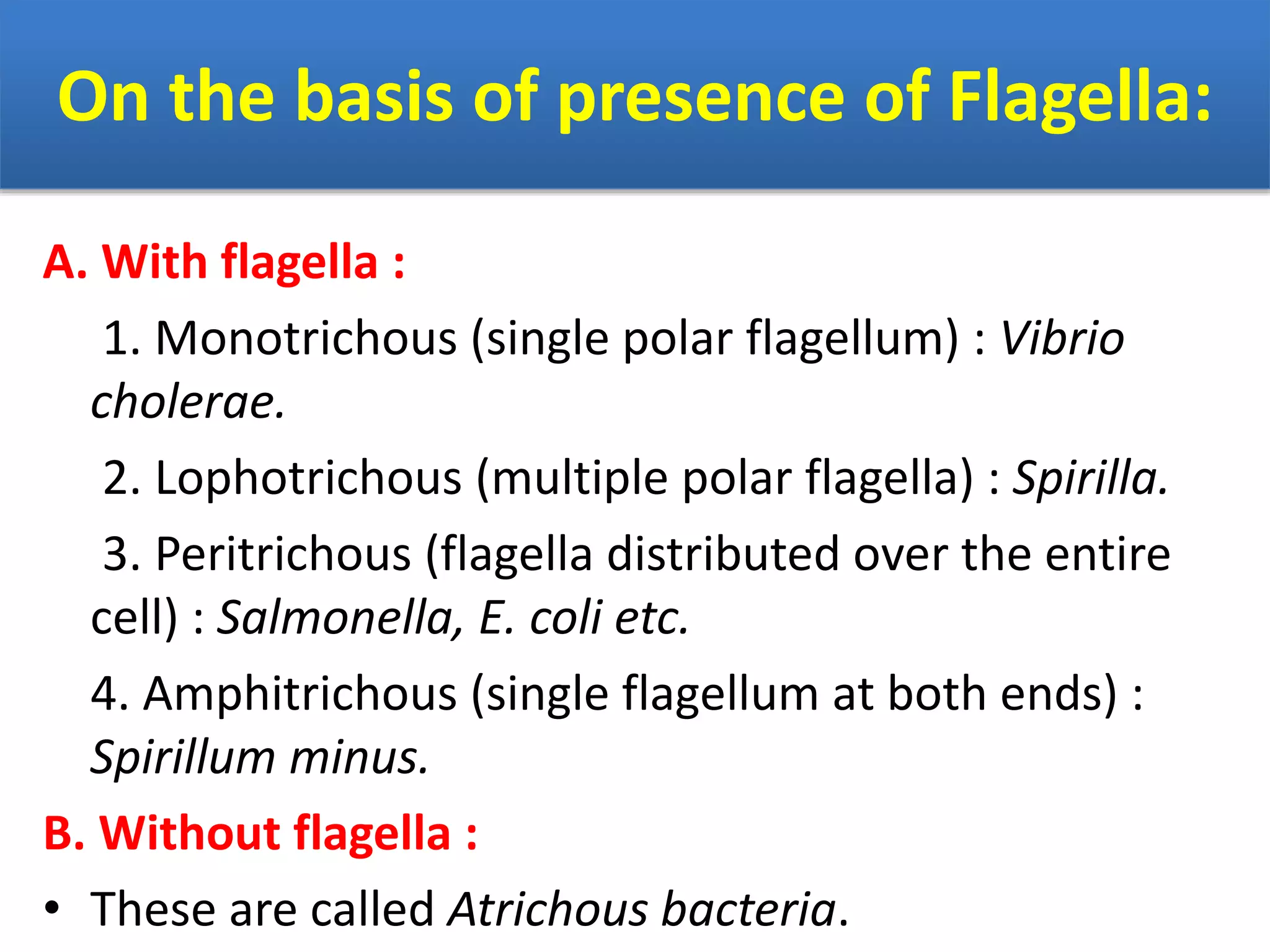
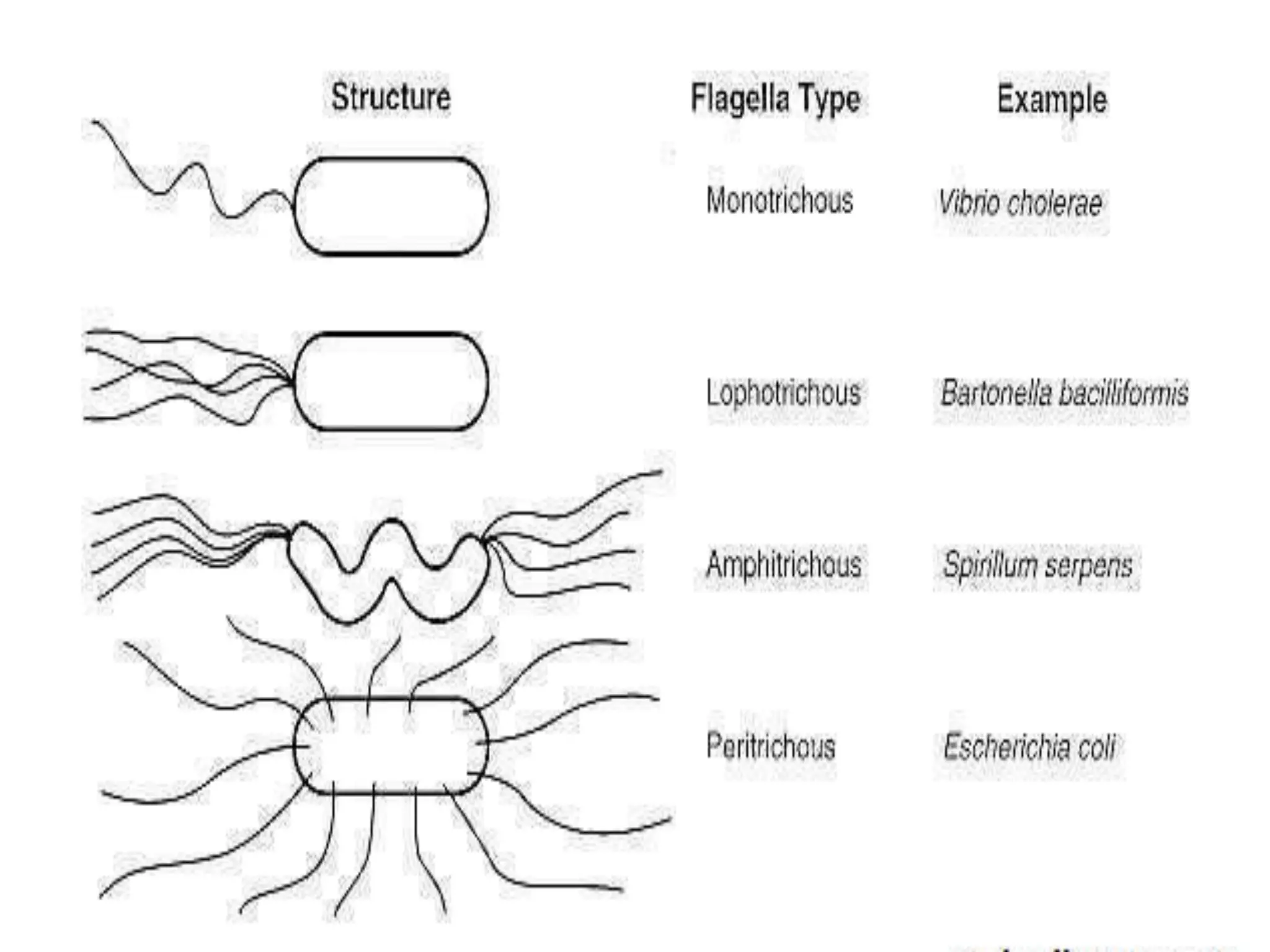
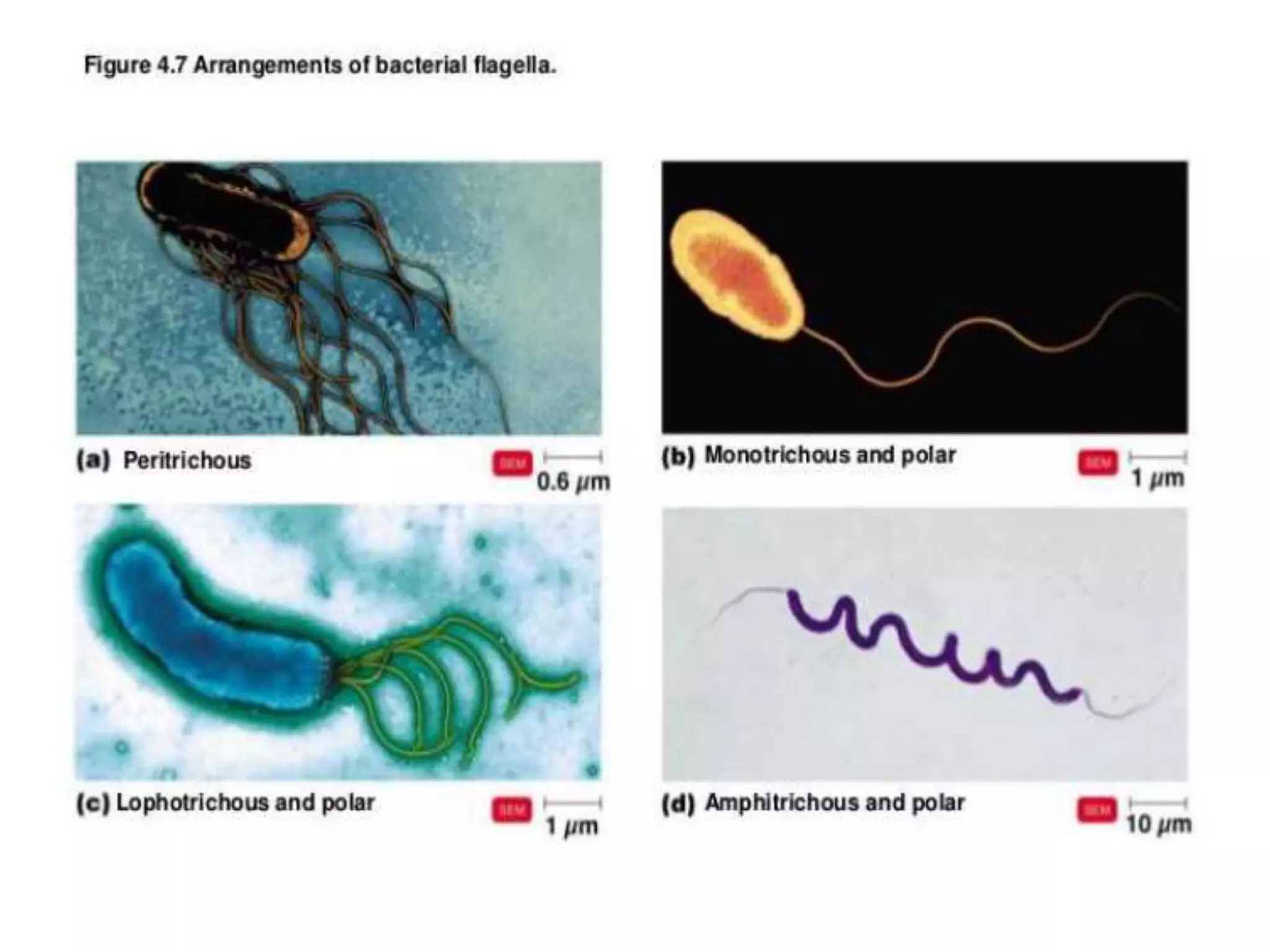
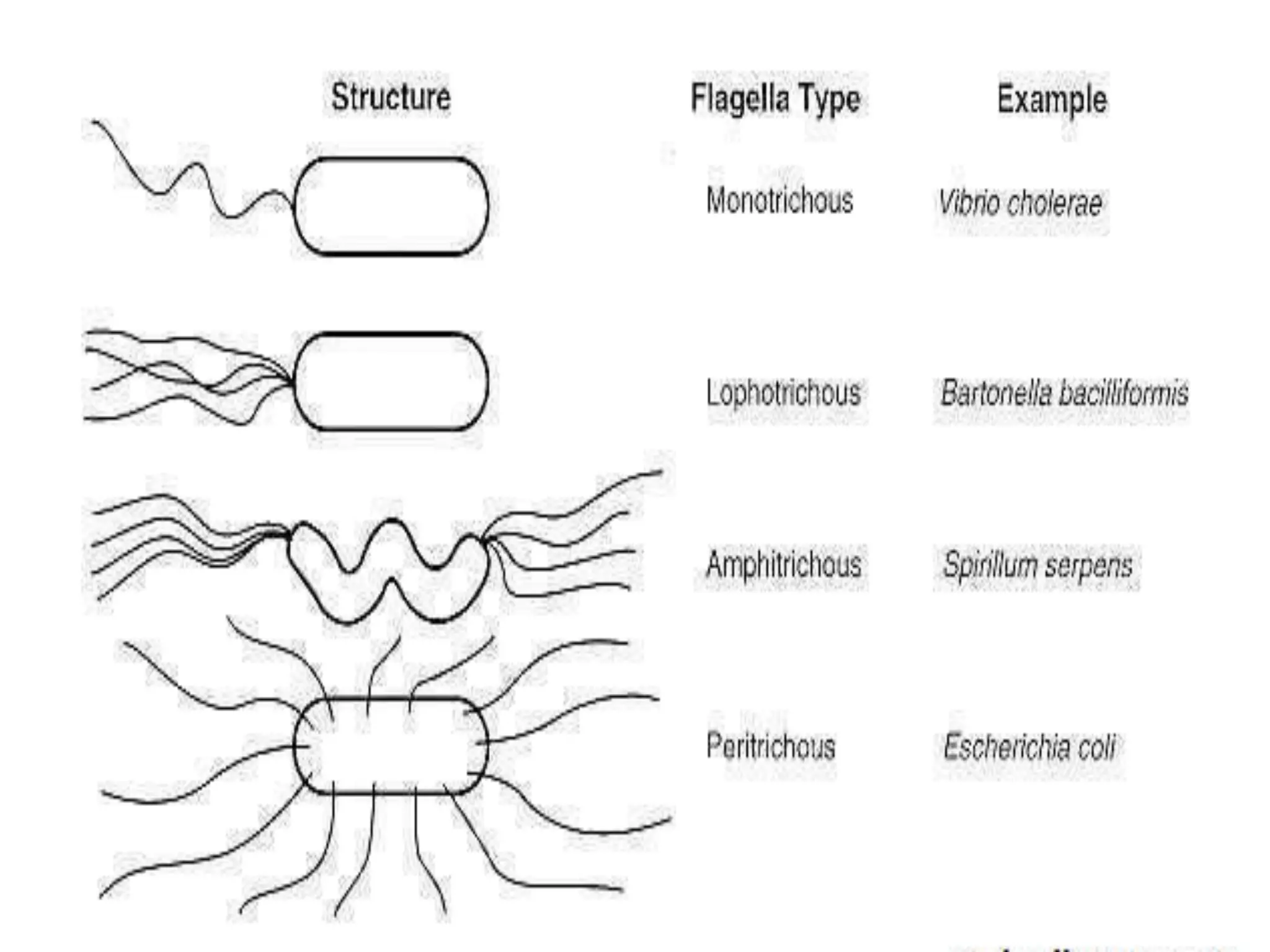
On the basis of presence of Flagella:
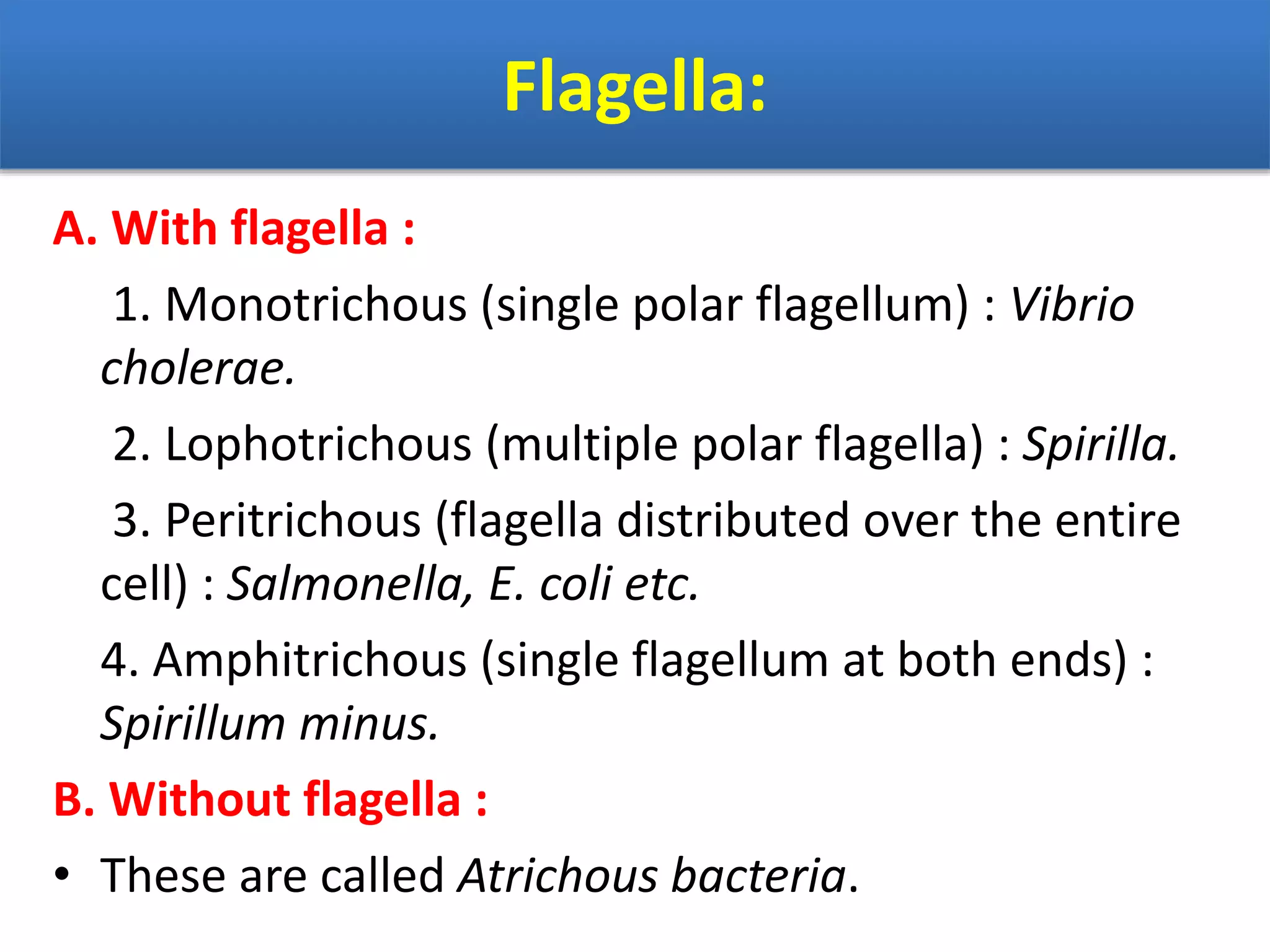
A. With flagella :
1. Monotrichous (single polar flagellum) : Vibrio
cholerae.
2. Lophotrichous (multiple polar flagella) : Spirilla.
3. Peritrichous (flagella distributed over the entire
cell) : Salmonella, E. coli etc.
4. Amphitrichous (single flagellum at both ends) :
Spirillum minus.
B. Without flagella :
• These are called Atrichous bacteria.
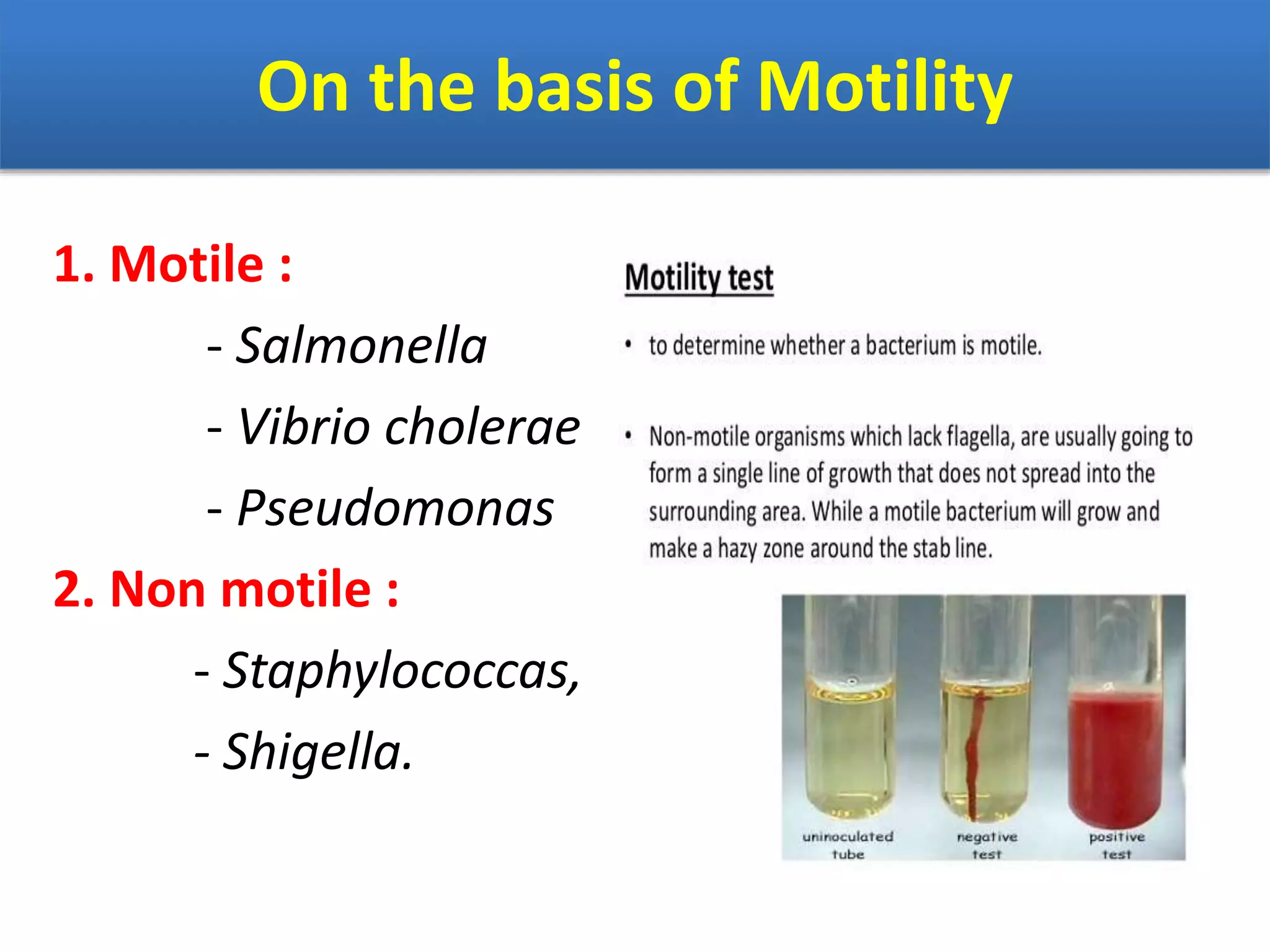
On the basis of Motility
1. Motile :
- Salmonella
- Vibrio cholerae
- Pseudomonas
2. Non motile :
- Staphylococcas,
- Shigella.
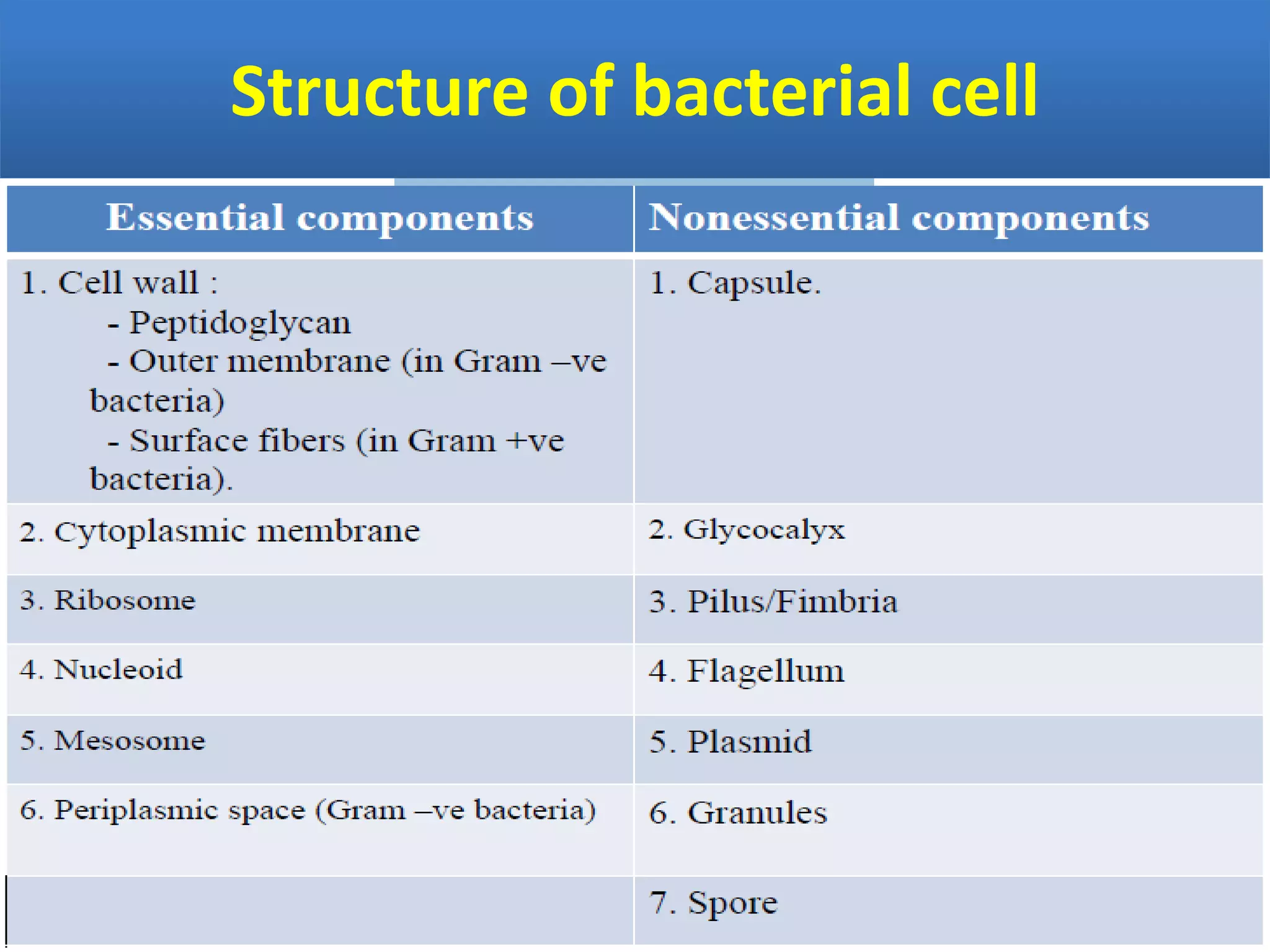
Structure of bacterial cell
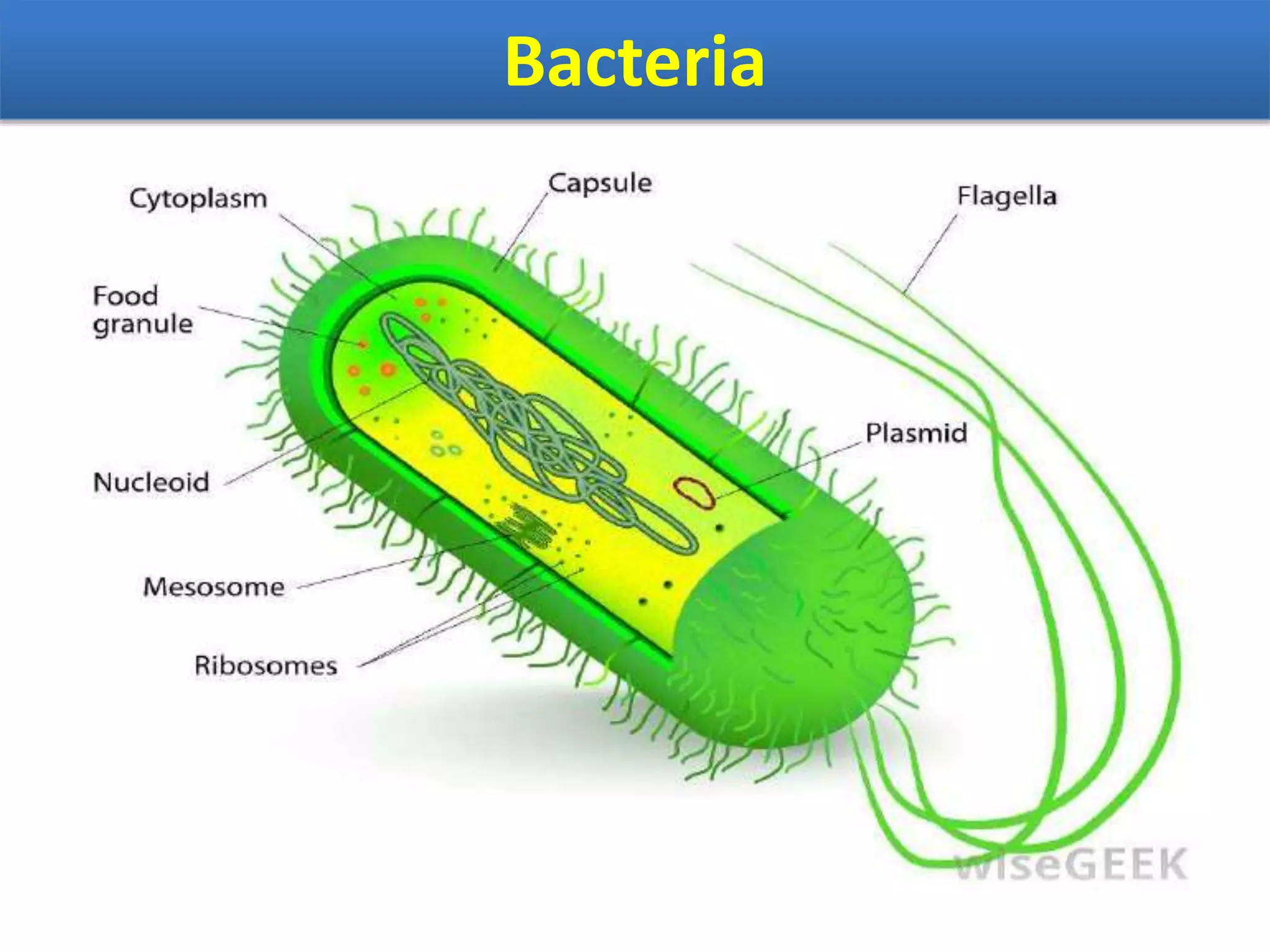
Bacteria
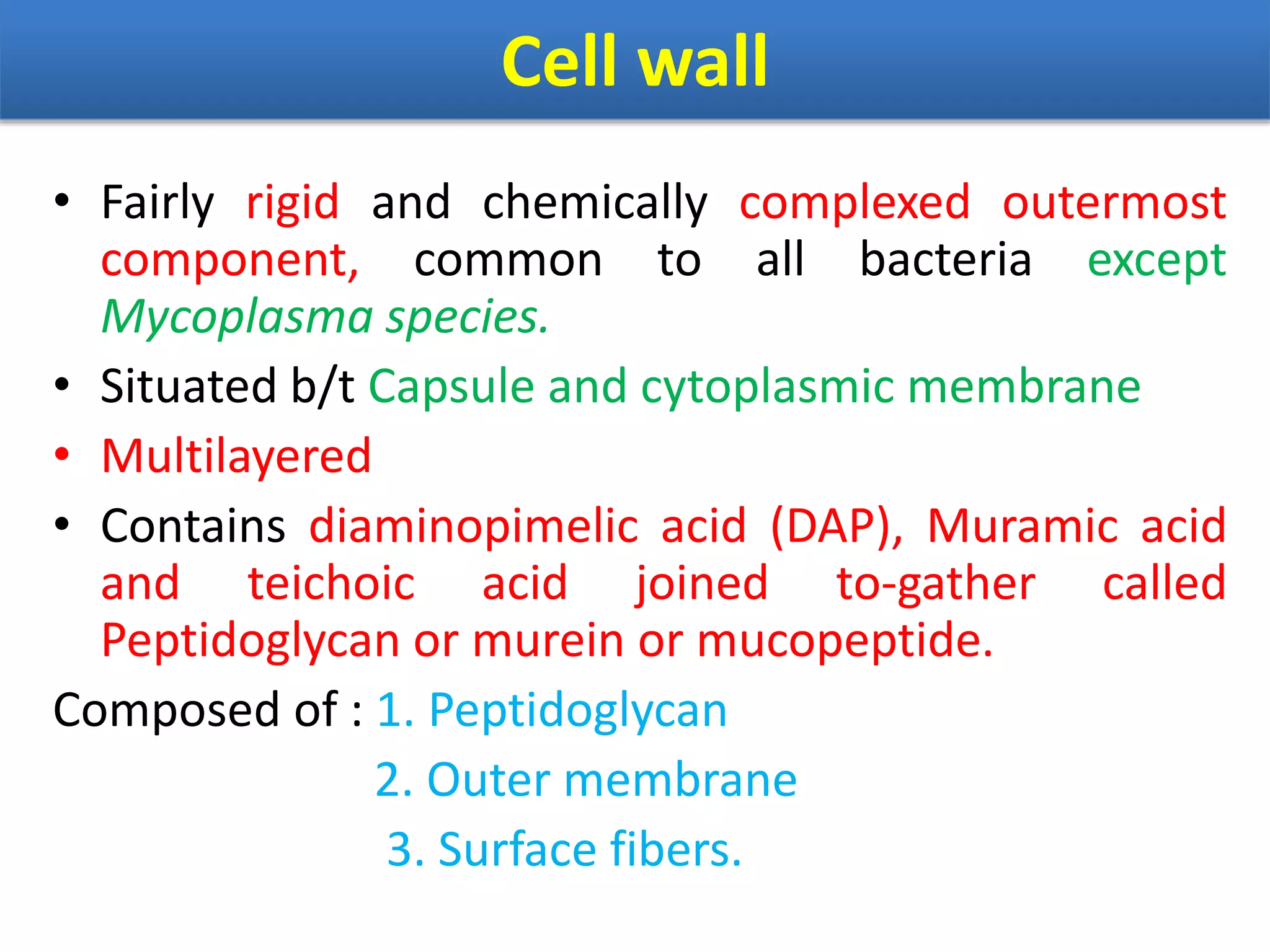
Cell wall
• Fairly rigid and chemically complexed outermost
component, common to all bacteria except
Mycoplasma species.
• Situated b/t Capsule and cytoplasmic membrane
• Multilayered
• Contains diaminopimelic acid (DAP), Muramic acid
and teichoic acid joined to-gather called
Peptidoglycan or murein or mucopeptide.
Composed of : 1. Peptidoglycan
2. Outer membrane
3. Surface fibers.
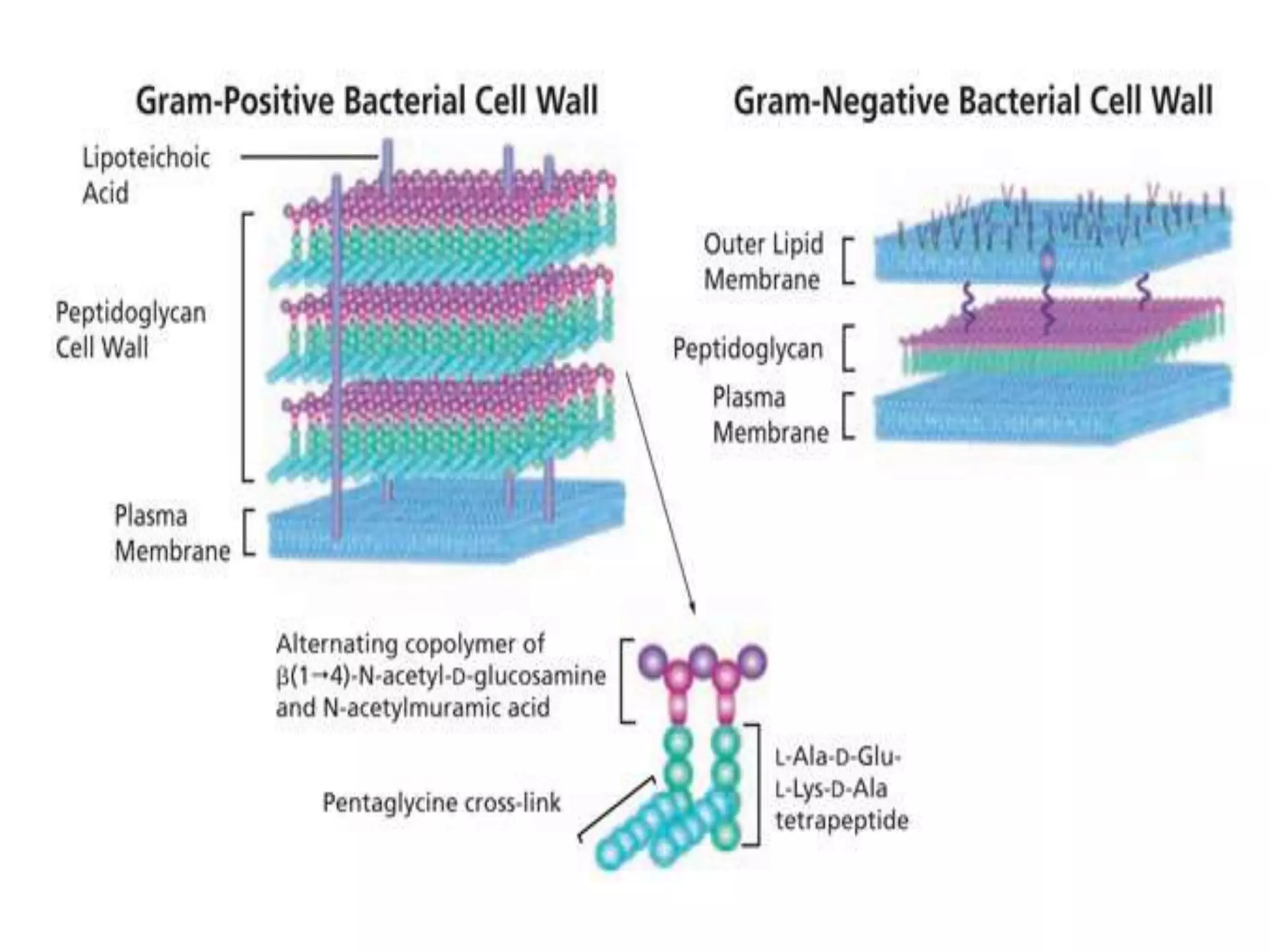
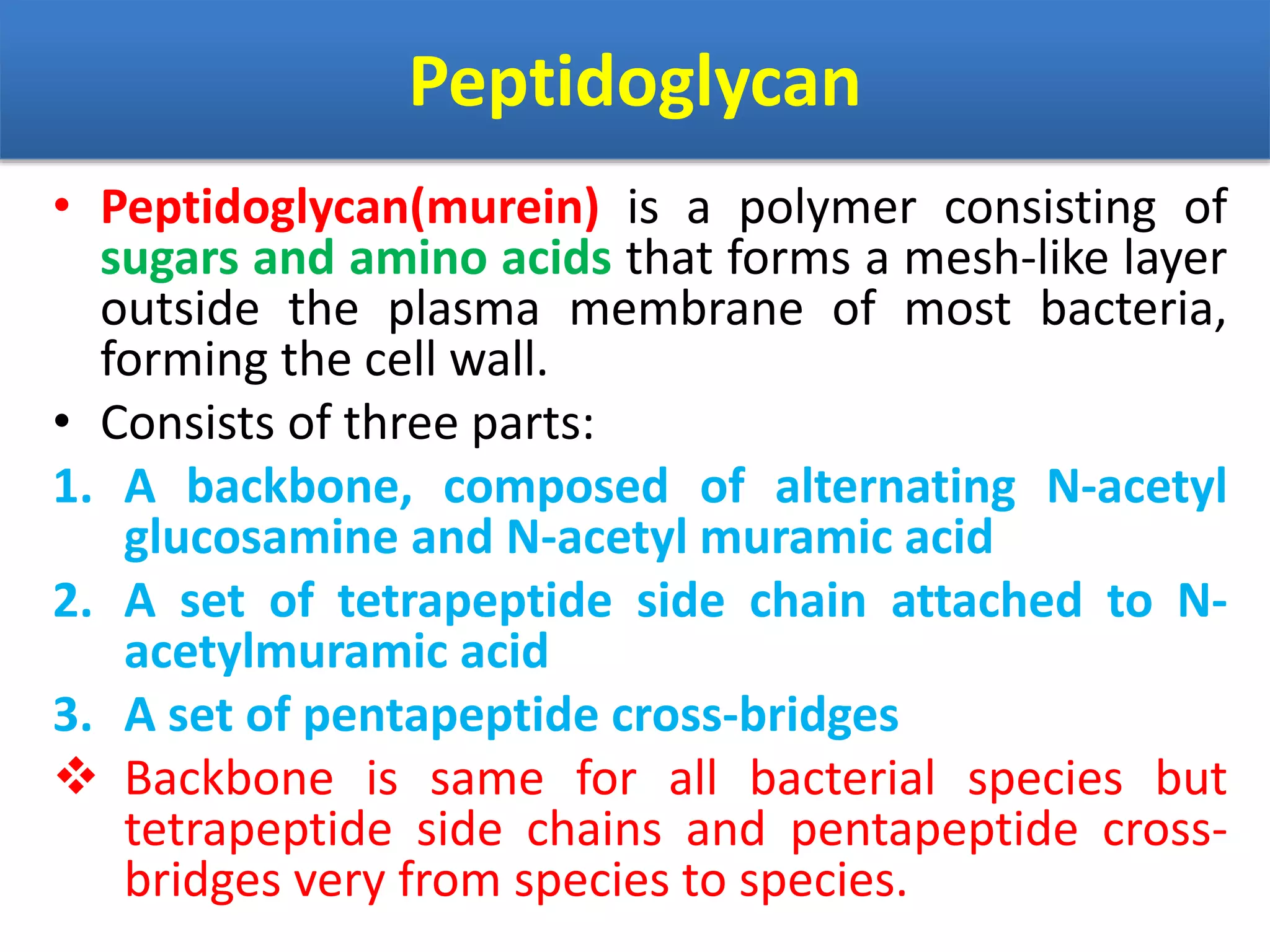
Peptidoglycan
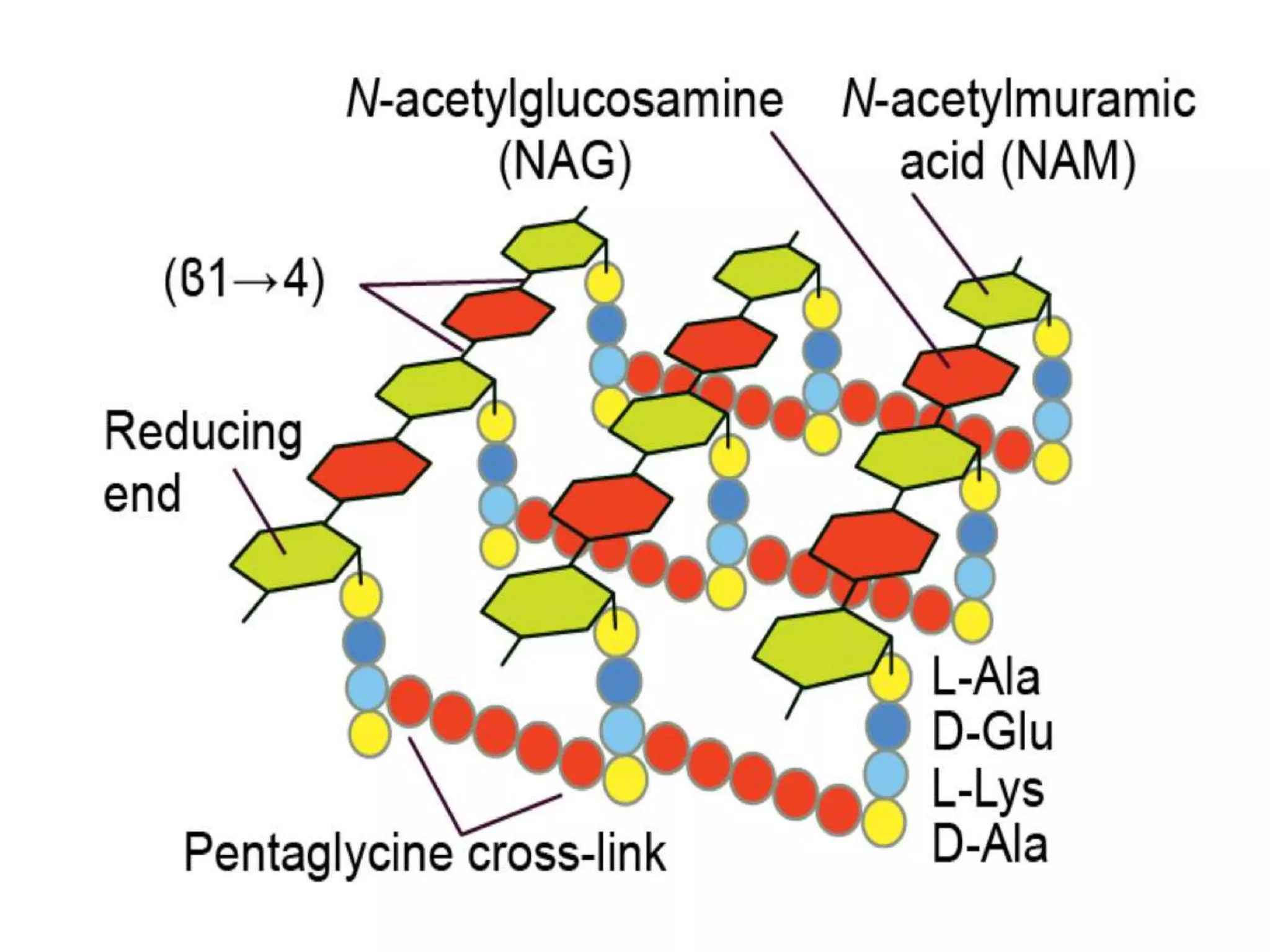
• Peptidoglycan(murein) is a polymer consisting of
sugars and amino acids that forms a mesh-like layer
outside the plasma membrane of most bacteria,
forming the cell wall.
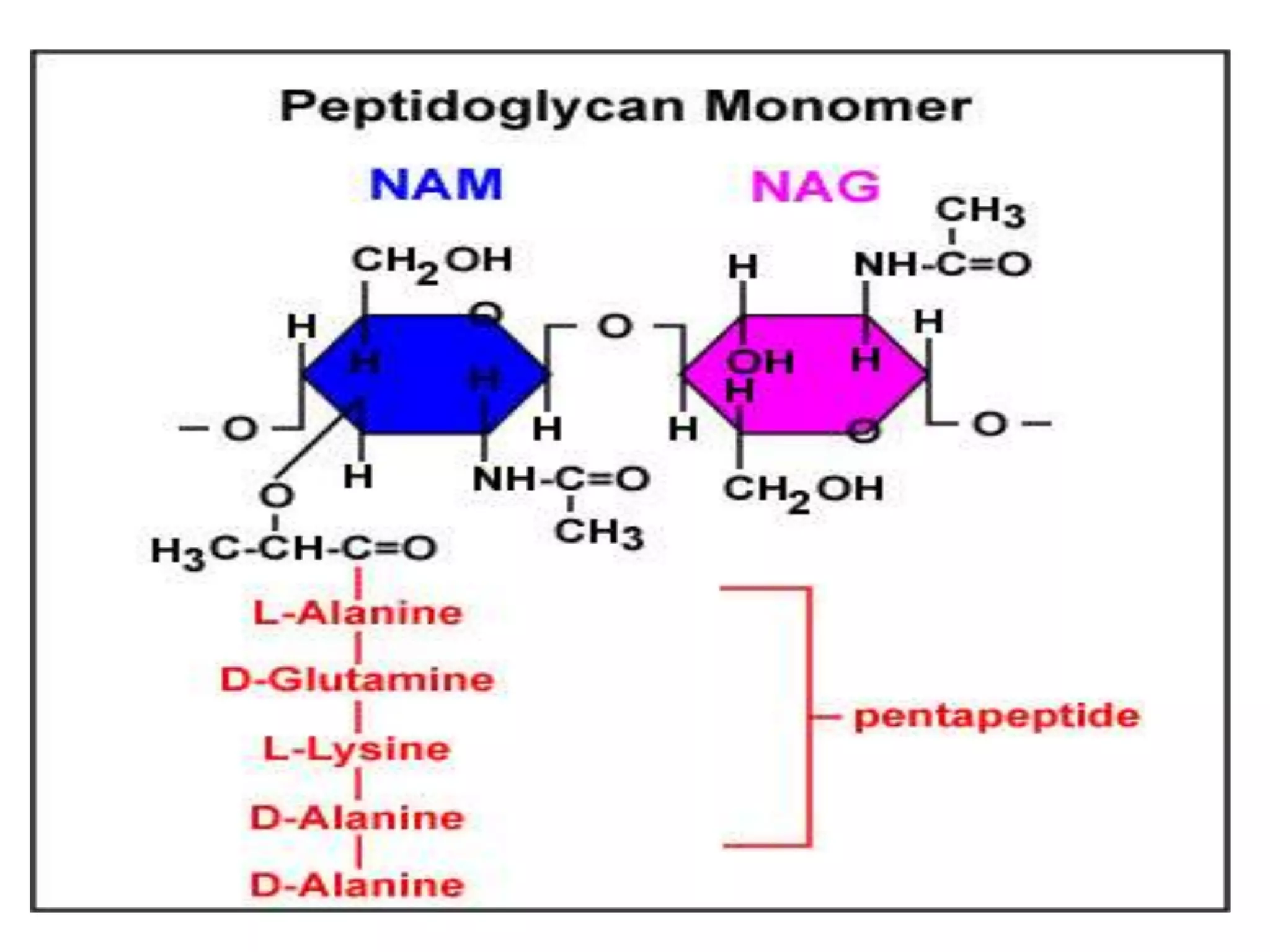
• Consists of three parts:
1. A backbone, composed of alternating N-acetyl
glucosamine and N-acetyl muramic acid
2. A set of tetrapeptide side chain attached to N-
acetylmuramic acid
3. A set of pentapeptide cross-bridges
 Backbone is same for all bacterial species but
tetrapeptide side chains and pentapeptide cross-
bridges very from species to species.
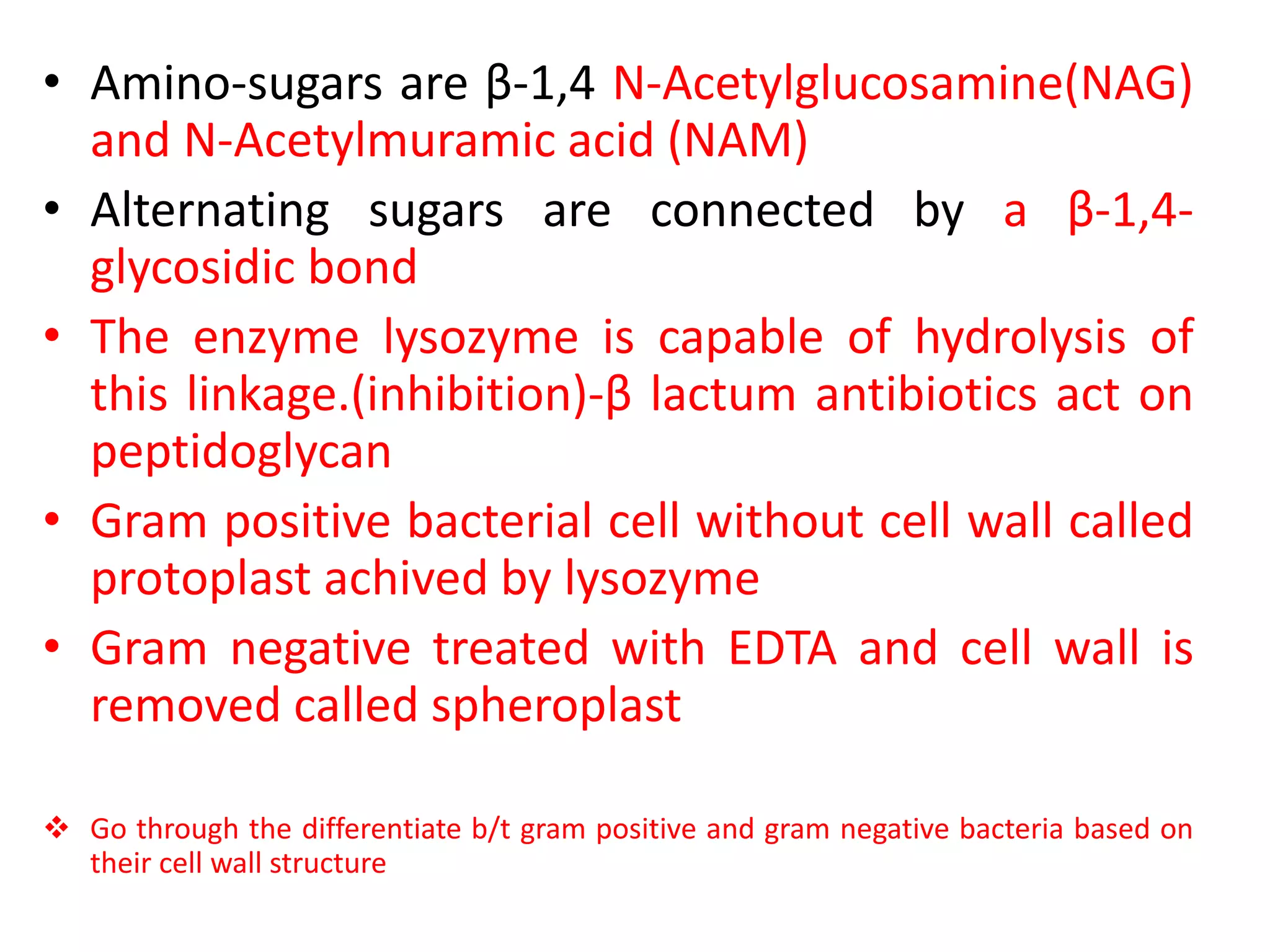
• Amino-sugars are β-1,4 N-Acetylglucosamine(NAG)
and N-Acetylmuramic acid (NAM)
• Alternating sugars are connected by a β-1,4-
glycosidic bond
• The enzyme lysozyme is capable of hydrolysis of
this linkage.(inhibition)-β lactum antibiotics act on
peptidoglycan
• Gram positive bacterial cell without cell wall called
protoplast achived by lysozyme
• Gram negative treated with EDTA and cell wall is
removed called spheroplast
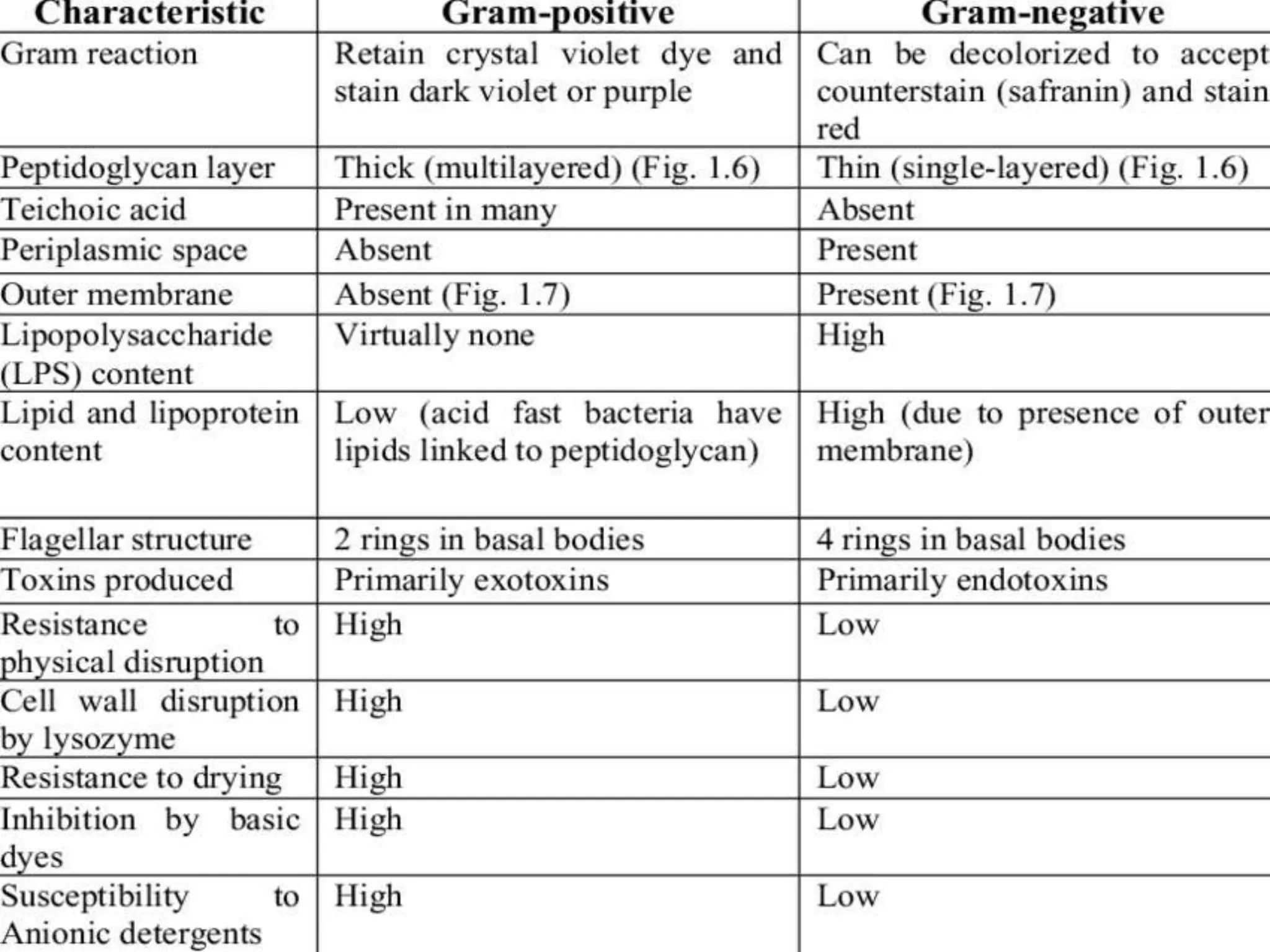
 Go through the differentiate b/t gram positive and gram negative bacteria based on
their cell wall structure
Function of cell wall
1. It is involved in growth and cell division of
bacteria
2. It gives shape to the cell
3. It gives protection to the internal structure and
act as a supporting layer
4. It provides attachment to complement
5. It contains receptor sites for phages and colicin
6. It shows resistance to the harmful effects of
environment
Flagella:
A. With flagella :
1. Monotrichous (single polar flagellum) : Vibrio
cholerae.
2. Lophotrichous (multiple polar flagella) : Spirilla.
3. Peritrichous (flagella distributed over the entire
cell) : Salmonella, E. coli etc.
4. Amphitrichous (single flagellum at both ends) :
Spirillum minus.
B. Without flagella :
• These are called Atrichous bacteria.
Pilli and fimbriae
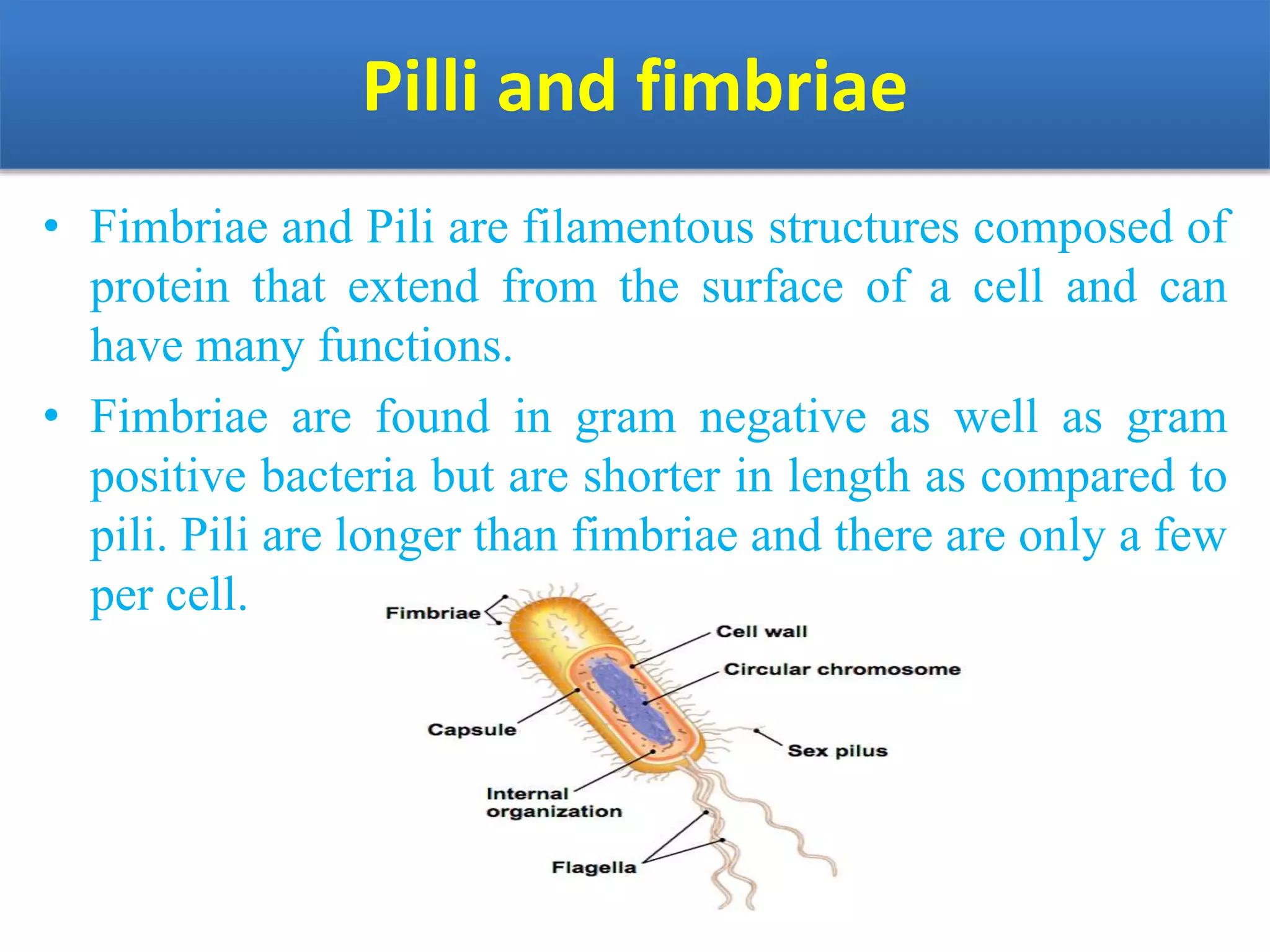
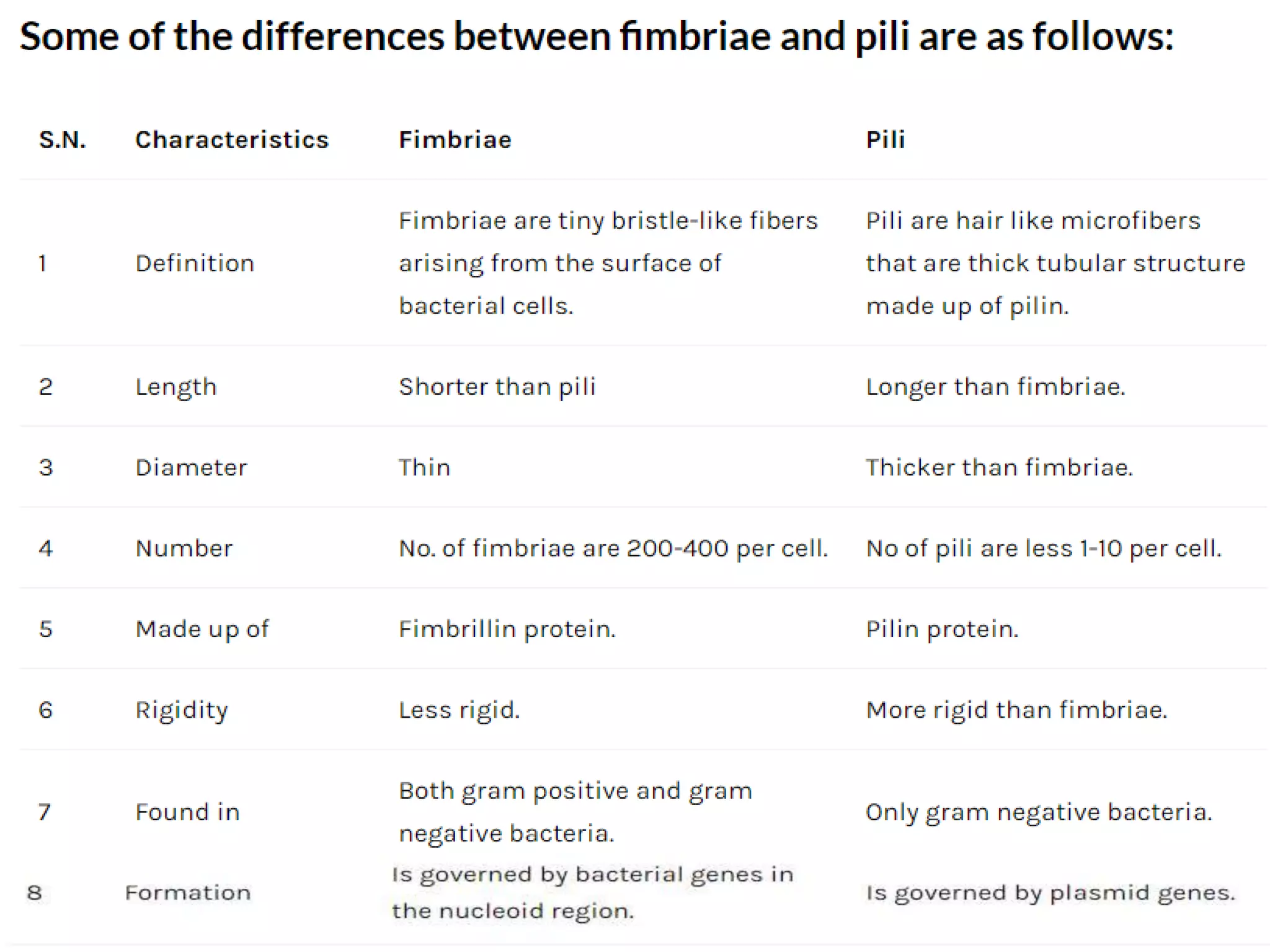
• Fimbriae and Pili are filamentous structures composed of
protein that extend from the surface of a cell and can
have many functions.
• Fimbriae are found in gram negative as well as gram
positive bacteria but are shorter in length as compared to
pili. Pili are longer than fimbriae and there are only a few
per cell.
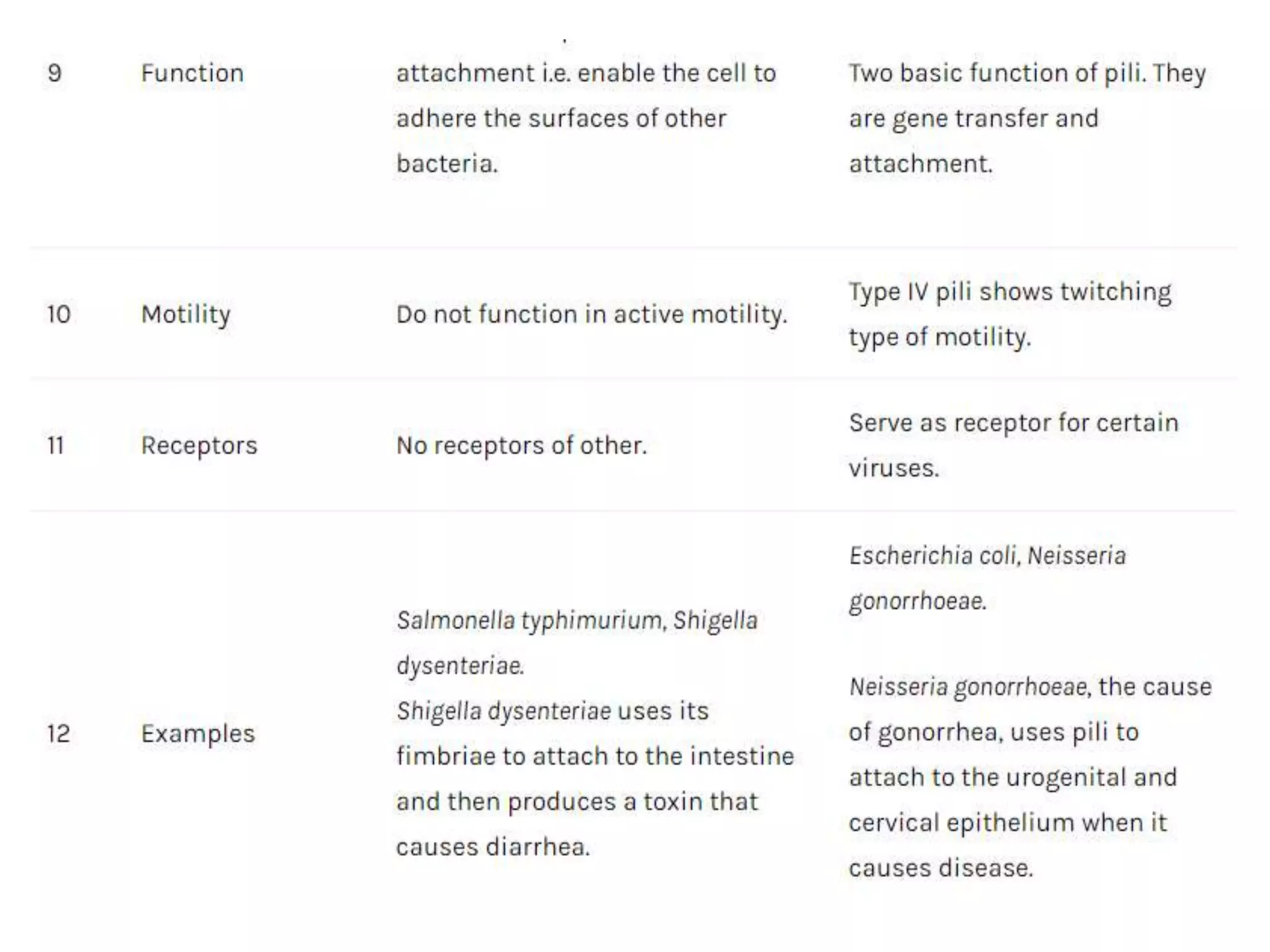
Functions :
1. adherence of symbiotic and pathogenic
bacteria to host cells.
2. Transfer of bacterial DNA takes place through
sex pili during the process of conjugation.
3. Antigenic variation of pili of Neisseria
gonorrhoeae makes it to survive even after the
presence of antibody against the original type of
pili.
4. Inhibit phagocytic ability of leukocyte.
5. Helps in identification by haemagglitination.
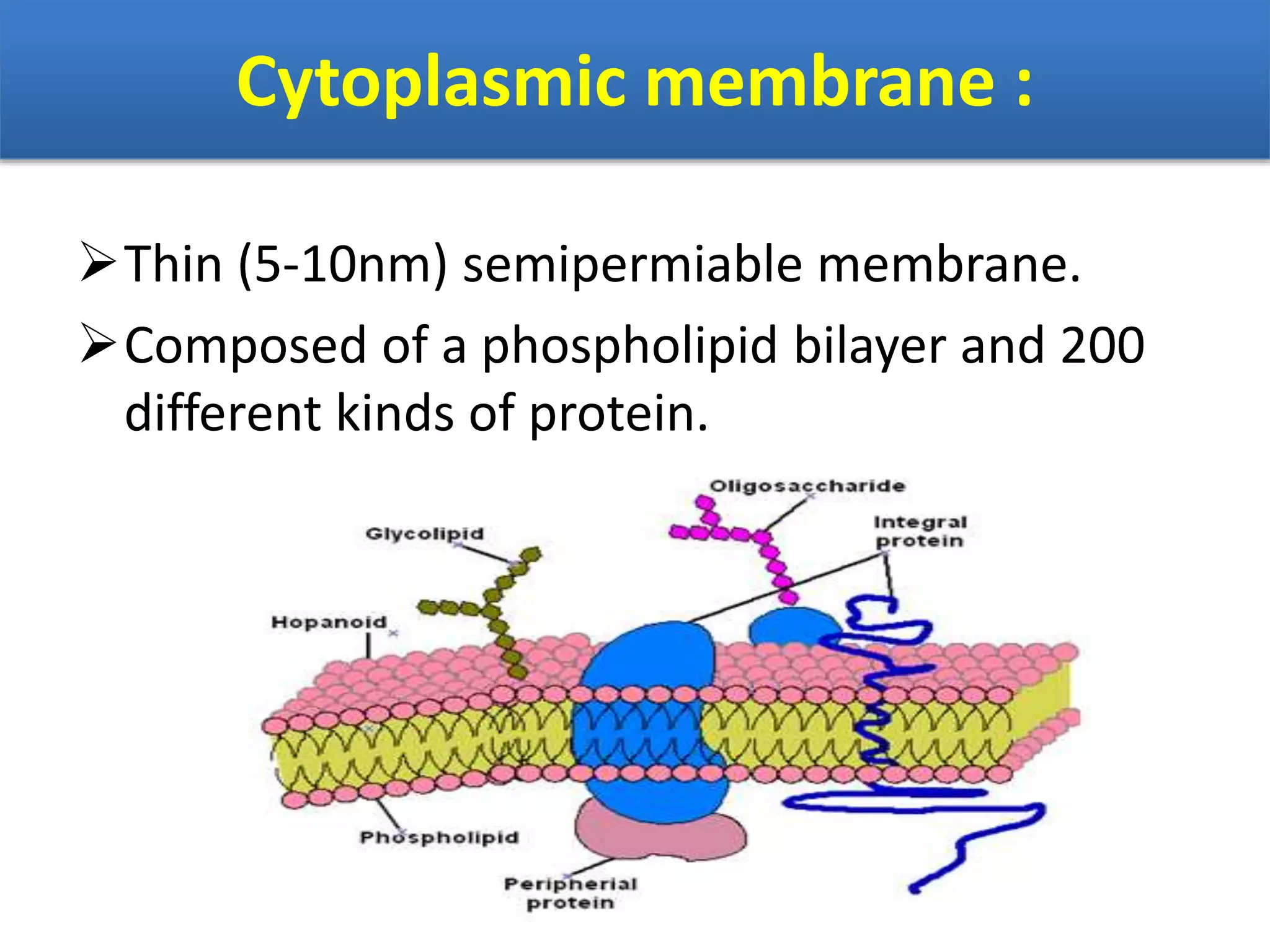
Cytoplasmic membrane :
Thin (5-10nm) semipermiable membrane.
Composed of a phospholipid bilayer and 200
different kinds of protein.
FUNCTIONS
1. Acts as osmotic barrier and regulate the
tranportation of metabolites to and from
protoplasm.
2. Electron transport and oxidative
phosphorylation.
3. Excretion of hydrolytic exoenzyme and
pathogenicity protein.
4. Biosynthetic function.
5. Chemotactic systems.
Cytoplasm :
Matrix is largely formed with 70% water.
Lack Endoplasmic reticulam, mitocondria.
Consists : 1. Ribosome
2. mesosome
3. Intracytoplasmic inclusion bodies.
4. Nucleus
5. Spores
Assignment on cytoplasmic composition with
their functions!
Important links
• https://www.medicalnewstoday.com/articles/
157973.php
• https://www.livescience.com/51641-
bacteria.html
Bacterial classification and its structure

Bacterial classification and its structure

  • 1.
    Bacterial Classification and itsStructure A scanning electron microscope image of resistant Staphylococcus aureus bacteria
  • 2.
    Introduction • Bacteria aremicroscopic, single-celled organisms that thrive in diverse environments. • These organisms can live in soil, the ocean and inside the human gut. • Bacteria represent a large and diverse group of microorganisms that can exist as single cells or as cell clusters. • Some bacteria are harmful, but most serve a useful purpose. • They support many forms of life, both plant and animal, and they are used in industrial and medicinal processes. • Bacteria are thought to have been the first organisms to appear on earth, about 4 billion years ago. • A gram of soil typically contains about 40 million bacterial cells.
  • 3.
    Descriptive term usedto describe bacteria
  • 4.
    Classification of Bacteria •On the basis of Staining • On the basis of Shape • On the basis of Growth and nutrition • On the basis of presence of Flagella • On the basis of Motility
  • 5.
    Classification • On thebasis of Staining: 1. Gram staining : a) Gram positive b) Gram negative. 2. Acid-fast staining. 3. Albert’s staining.
  • 11.
  • 12.
  • 13.
  • 14.
    Example of Acid-fastbacilli: • Mycobacterium tuberculosis • Mycobacterium leprae • Nocardia asteroides • Actinomycetes
  • 15.
    Albert’s stain: Principle:  Albert’sstain contains cationic like toludine blue and malachite green.  Due to the highly acidic nature of the granules, they can be selectively stained acidified basic dyes  The toludine blue preferentially stain volutin granules while malachite green stains the cytoplasm  Later due to application of Albert’s iodine, the dye molecules are fixed by precipitation.  Well development granules of volutin (polyphosphate) may be seen in unstained wet preparations as round refractile bodies within the bacterial cytoplasm. Example of • Corynebacterium diptheriae.
  • 16.
    Procedure • Cover theheat-fixed smear with Albert’s stain-I • Wash with water • Cover the smear with Albert’s stain-II. Let it stand for two minutes • Wash with water, blot dry and examine. • To demonstrate metachromatic granules in Corynebacterium diphtheriae. The granules appears bluish black where the body of bacilli appear green or blue green.
  • 18.
    On the basisof Shape: • 1. Cocci : Oval or spherical; may be arranged in pairs(pneumococci, meningococci, gonococci), tetrads (micrococci), chains (Streptococci) clusters (Staphylococci). • 2. Bacilli : Rod shaped; may show arrangements like a)coccobacilli, in which length and width are approx. same (e.g-Brucella), b)streptobacilli, which are arranged in chains (e.g- Streptobacillus), c)comma shaped (Vibrio) d)spirella (Spirillum)
  • 19.
    • 3. Spirochetes: Slender, flexious, spiral (Treponema). • 4. Actinomytes : Branching filamentous.
  • 20.
    On the basisof Growth and nutrition: A. Oxygen requirements : 1. Aerobic : a) Obligate aerobe : P. aeruginous. b) Facultative aerobe : E.coli. c) Microaerophilic : Campylobactor jejuni. 2. Anaerobic : a) Obligate anaerobe : Clostridium tetani ,Bacteroids. b) Aerotolerant anaerobe : indifferent to O2.
  • 21.
    B. Carbon dioxiderequirement : 1. Capnophilic bacteria : Which require higher amount of CO2 for their growth (5-10% CO2 and 15% O2). Ex – Haemophilus influenzae, Brucella abortius. C. Temperature : 1. Psychrophiles : microbes that grow within 0-20°C. Ex: Arthrobacter sp., Psychrobacter sp. and members of the genera Halomonas, Pseudomonas, Hyphomonas, and Sphingomonas. 2. Mesophiles : microbes that grow within 25-40°C. Ex: Listeria monocytogenes, Staphylococcus aureus and Escherichia coli. 3. Thermophiles : microbes that grow within 55-80°C. Ex- Bacillus stearothermophilus, Alicyclobacillus acidocaldarius
  • 22.
    D. pH : 1.Acidophile : which grow at acidic pH (below4.0). Ex- Lactobacilli. 2. Alkaliphile : which grow at alkaline pH (8.2-8.9). Ex.- V. cholerae. 3. Neutrophile : which grow at neutral pH (7.2-7.6). Most pathogenic bacterias are neutrophiles. E. Light : 1. Phototrophs : bacteria deriving energy from sunlight. Ex: Phototrophic organisms such as algae (e.g., kelp), other protists (such as euglena), phytoplankton, and bacteria (such as cyanobacteria). 2. Chemotrophs : bacteria deriving energy from chemical sources. Ex: find out yourself
  • 23.
    F. Osmotic pressure: 1. Halophiles : which can survive at high salt concentration. 2. Osmophiles : which can survive at high sugar concentration. G. Carbon source : 1. Autotrophs : which reduce inorganic carbon into organic compounds, such as through photosynthesis 2. Heterotrophs : bacteria that grow by using the carbon that has been reduced by the autotrophs.
  • 24.
    H. Method ofobtaining nutrition : 1. Heterotropic bacteria- Obtain their food from other living organisms, as they cannot synthesize it on their own. 2. Symbiotic Bacteria - Obtain nutrition from host organism by offering something in return. Establish a mutual give-and-take relationship with host. 3. Pathogenic Bacteria - Obtain food from host but are harmful to the host, generally causing diseases. 4. Saprophytic Bacteria - Obtain Nutrition from dead and decaying matter.
  • 25.
    On the basisof presence of Flagella: A. With flagella : 1. Monotrichous (single polar flagellum) : Vibrio cholerae. 2. Lophotrichous (multiple polar flagella) : Spirilla. 3. Peritrichous (flagella distributed over the entire cell) : Salmonella, E. coli etc. 4. Amphitrichous (single flagellum at both ends) : Spirillum minus. B. Without flagella : • These are called Atrichous bacteria.
  • 27.
    On the basisof Motility 1. Motile : - Salmonella - Vibrio cholerae - Pseudomonas 2. Non motile : - Staphylococcas, - Shigella.
  • 29.
  • 30.
  • 31.
    Cell wall • Fairlyrigid and chemically complexed outermost component, common to all bacteria except Mycoplasma species. • Situated b/t Capsule and cytoplasmic membrane • Multilayered • Contains diaminopimelic acid (DAP), Muramic acid and teichoic acid joined to-gather called Peptidoglycan or murein or mucopeptide. Composed of : 1. Peptidoglycan 2. Outer membrane 3. Surface fibers.
  • 32.
    Peptidoglycan • Peptidoglycan(murein) isa polymer consisting of sugars and amino acids that forms a mesh-like layer outside the plasma membrane of most bacteria, forming the cell wall. • Consists of three parts: 1. A backbone, composed of alternating N-acetyl glucosamine and N-acetyl muramic acid 2. A set of tetrapeptide side chain attached to N- acetylmuramic acid 3. A set of pentapeptide cross-bridges  Backbone is same for all bacterial species but tetrapeptide side chains and pentapeptide cross- bridges very from species to species.
  • 33.
    • Amino-sugars areβ-1,4 N-Acetylglucosamine(NAG) and N-Acetylmuramic acid (NAM) • Alternating sugars are connected by a β-1,4- glycosidic bond • The enzyme lysozyme is capable of hydrolysis of this linkage.(inhibition)-β lactum antibiotics act on peptidoglycan • Gram positive bacterial cell without cell wall called protoplast achived by lysozyme • Gram negative treated with EDTA and cell wall is removed called spheroplast  Go through the differentiate b/t gram positive and gram negative bacteria based on their cell wall structure
  • 36.
    Function of cellwall 1. It is involved in growth and cell division of bacteria 2. It gives shape to the cell 3. It gives protection to the internal structure and act as a supporting layer 4. It provides attachment to complement 5. It contains receptor sites for phages and colicin 6. It shows resistance to the harmful effects of environment
  • 37.
    Flagella: A. With flagella: 1. Monotrichous (single polar flagellum) : Vibrio cholerae. 2. Lophotrichous (multiple polar flagella) : Spirilla. 3. Peritrichous (flagella distributed over the entire cell) : Salmonella, E. coli etc. 4. Amphitrichous (single flagellum at both ends) : Spirillum minus. B. Without flagella : • These are called Atrichous bacteria.
  • 40.
    Pilli and fimbriae •Fimbriae and Pili are filamentous structures composed of protein that extend from the surface of a cell and can have many functions. • Fimbriae are found in gram negative as well as gram positive bacteria but are shorter in length as compared to pili. Pili are longer than fimbriae and there are only a few per cell.
  • 43.
    Functions : 1. adherenceof symbiotic and pathogenic bacteria to host cells. 2. Transfer of bacterial DNA takes place through sex pili during the process of conjugation. 3. Antigenic variation of pili of Neisseria gonorrhoeae makes it to survive even after the presence of antibody against the original type of pili. 4. Inhibit phagocytic ability of leukocyte. 5. Helps in identification by haemagglitination.
  • 44.
    Cytoplasmic membrane : Thin(5-10nm) semipermiable membrane. Composed of a phospholipid bilayer and 200 different kinds of protein.
  • 45.
    FUNCTIONS 1. Acts asosmotic barrier and regulate the tranportation of metabolites to and from protoplasm. 2. Electron transport and oxidative phosphorylation. 3. Excretion of hydrolytic exoenzyme and pathogenicity protein. 4. Biosynthetic function. 5. Chemotactic systems.
  • 46.
    Cytoplasm : Matrix islargely formed with 70% water. Lack Endoplasmic reticulam, mitocondria. Consists : 1. Ribosome 2. mesosome 3. Intracytoplasmic inclusion bodies. 4. Nucleus 5. Spores Assignment on cytoplasmic composition with their functions!
  • 47.