
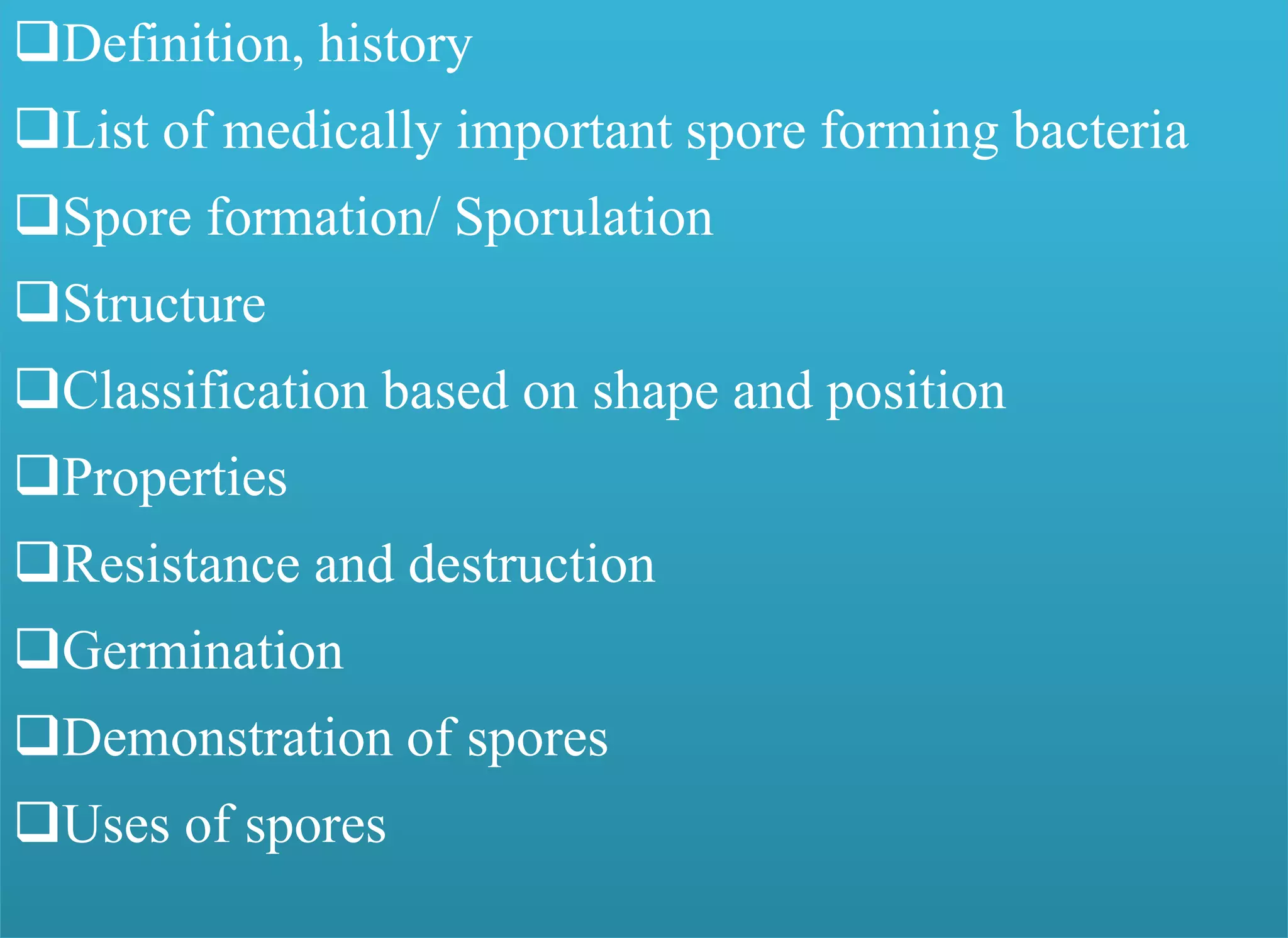
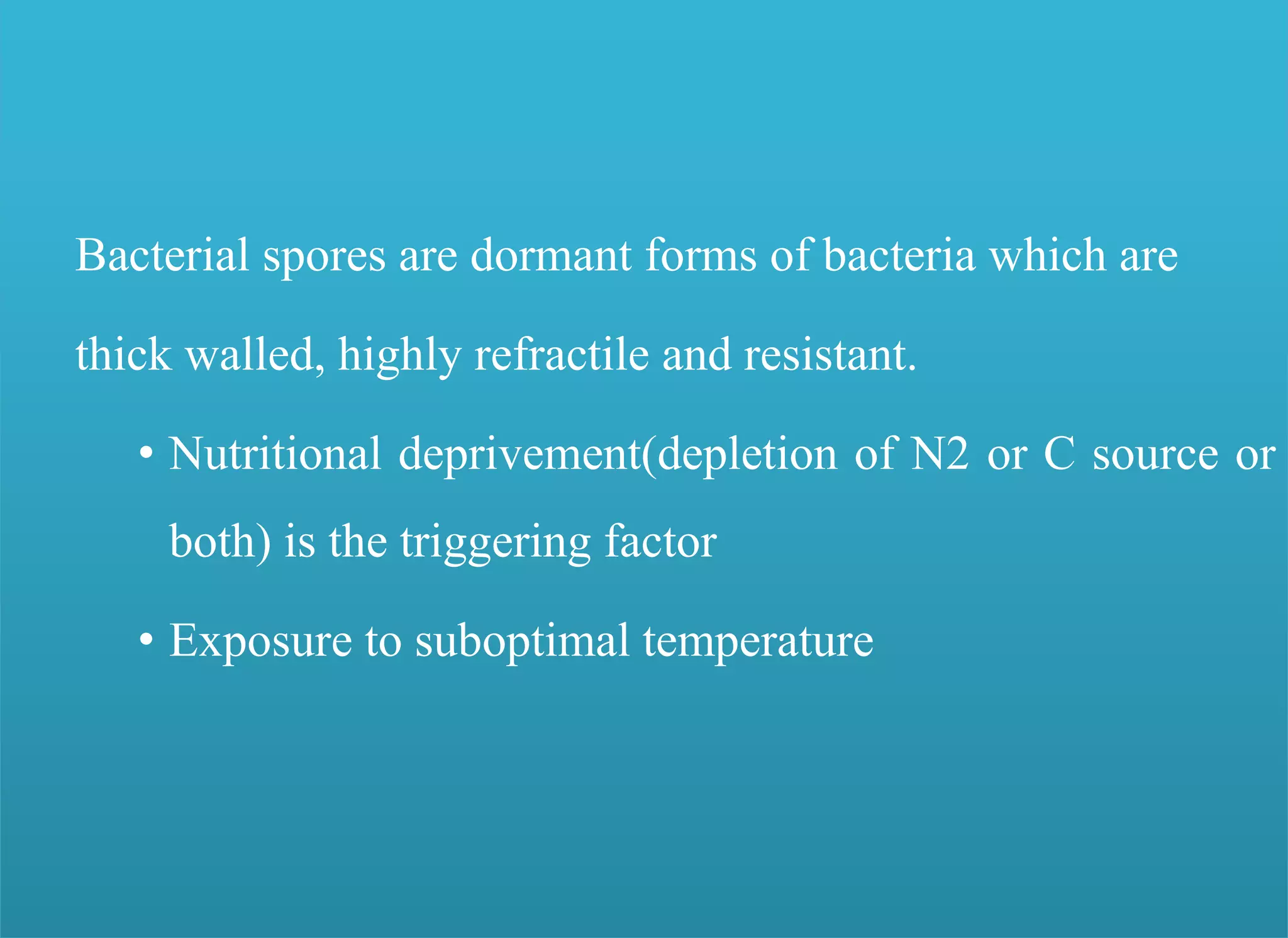
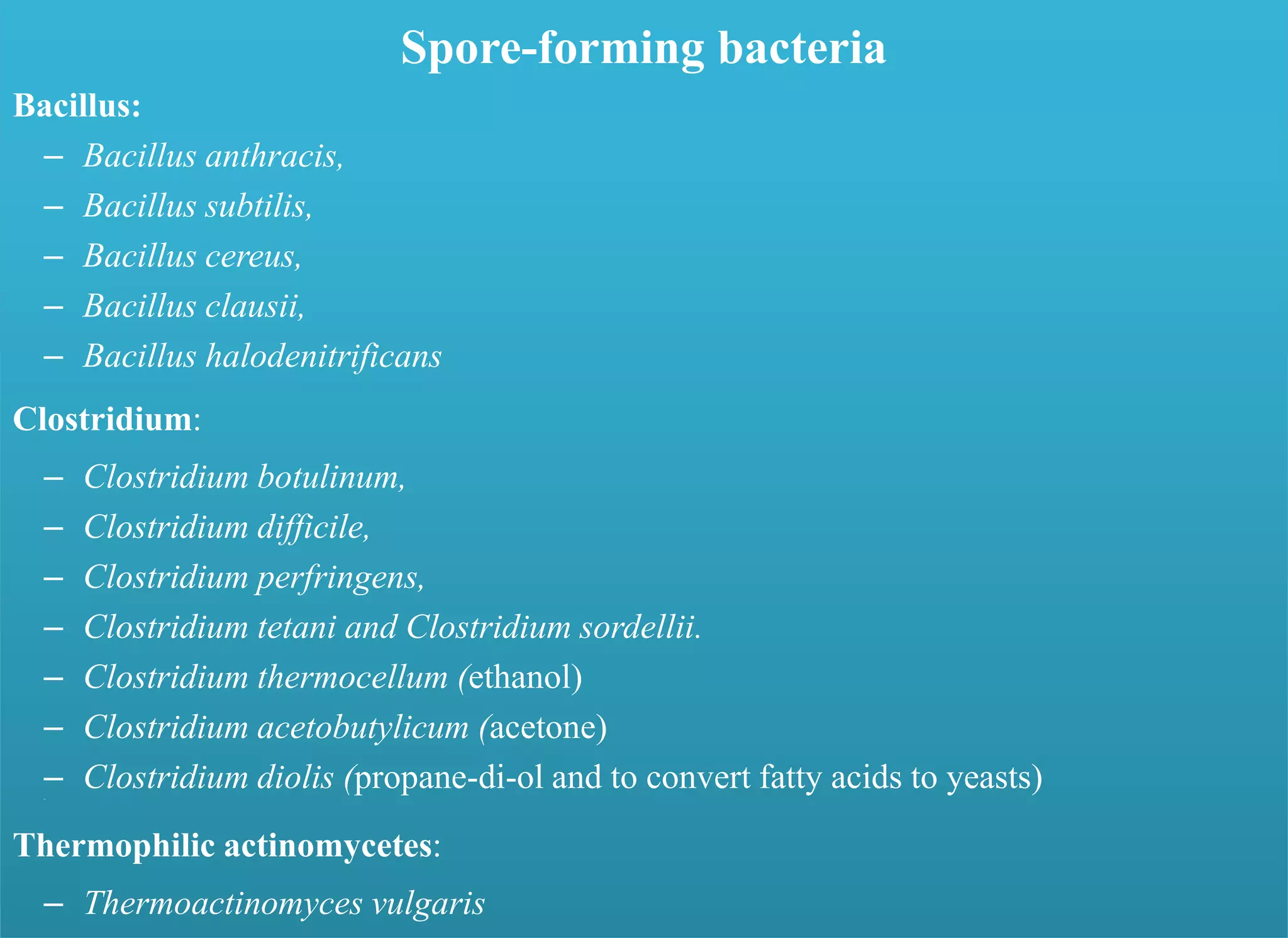
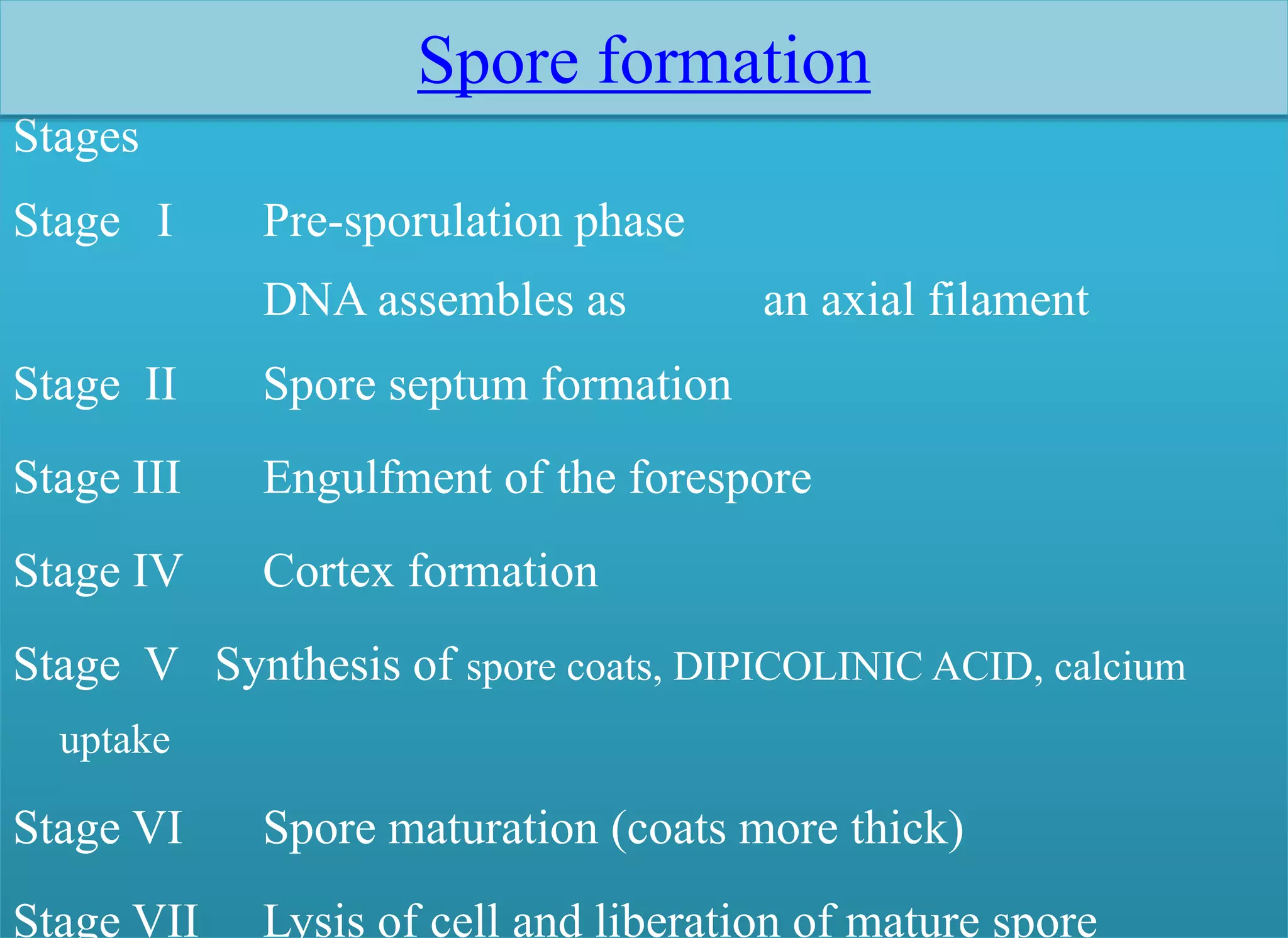
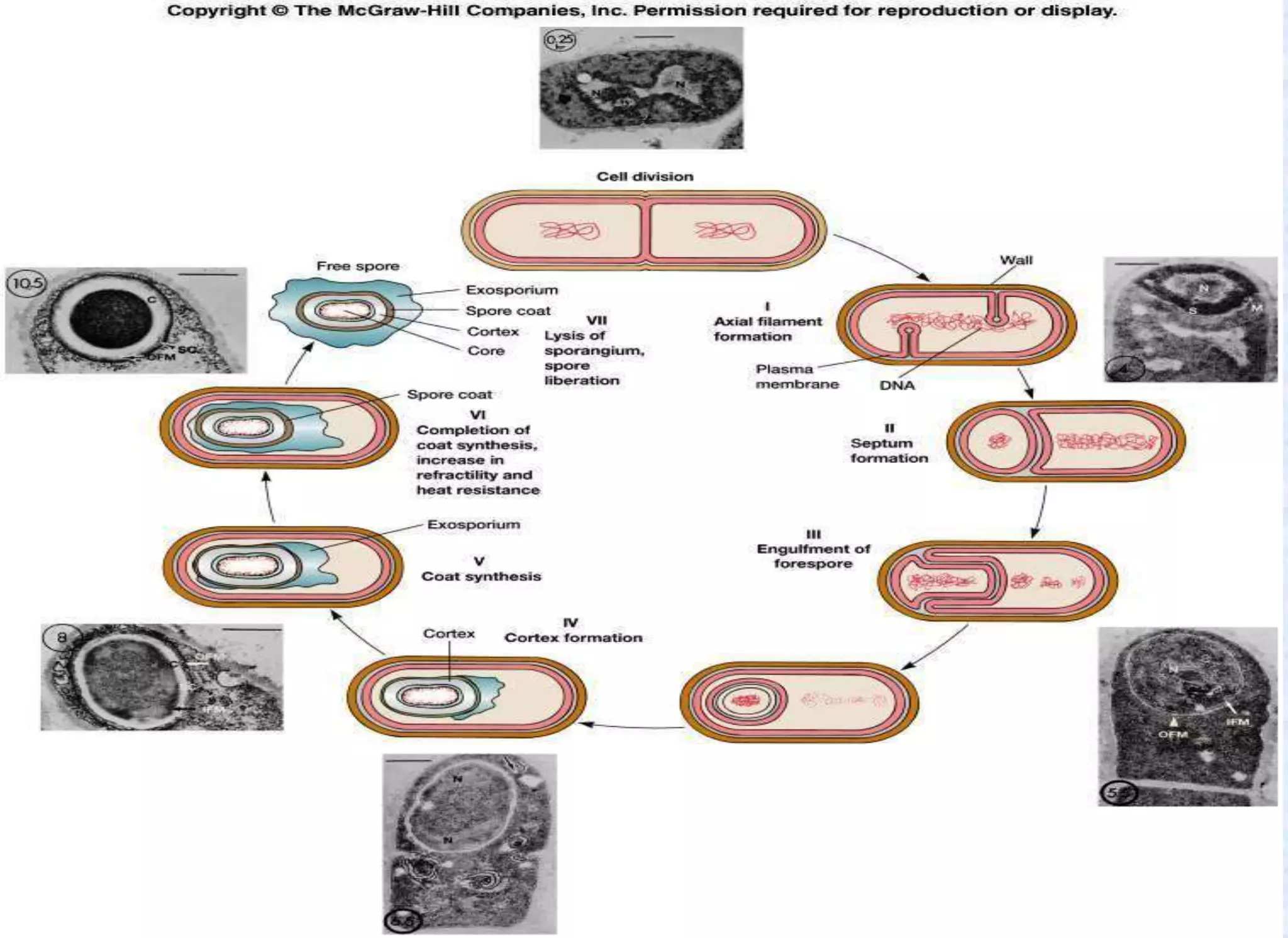
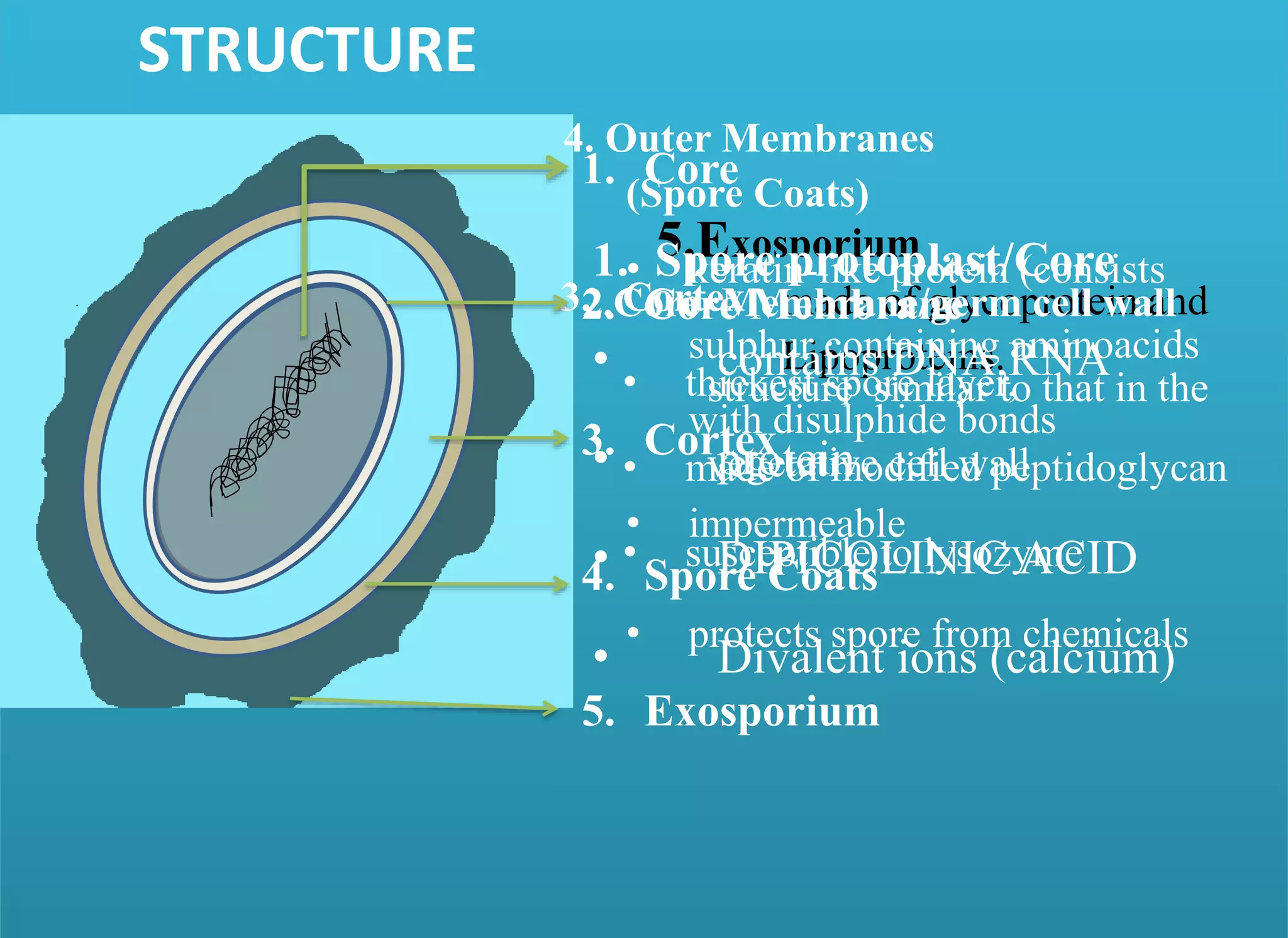
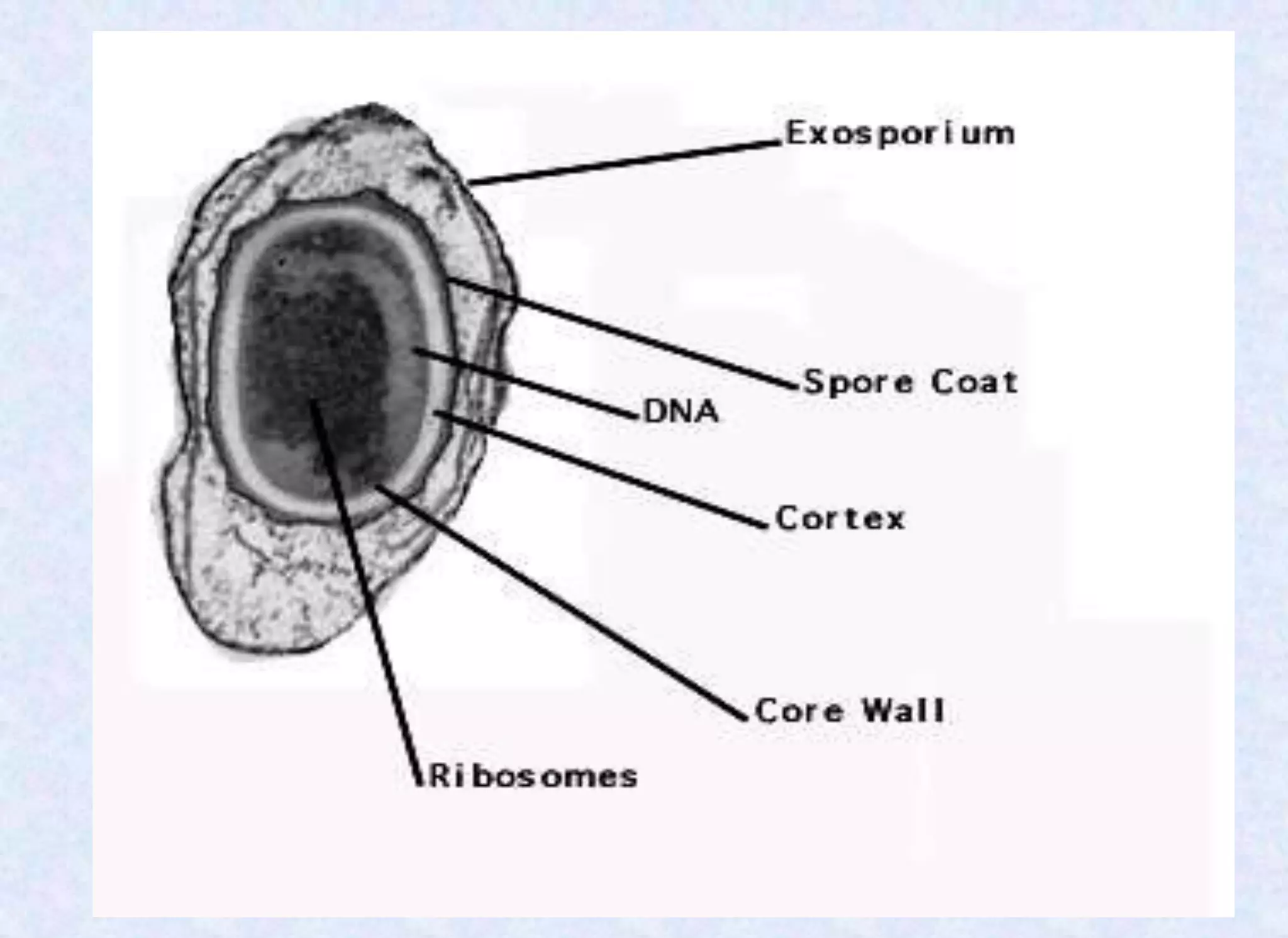

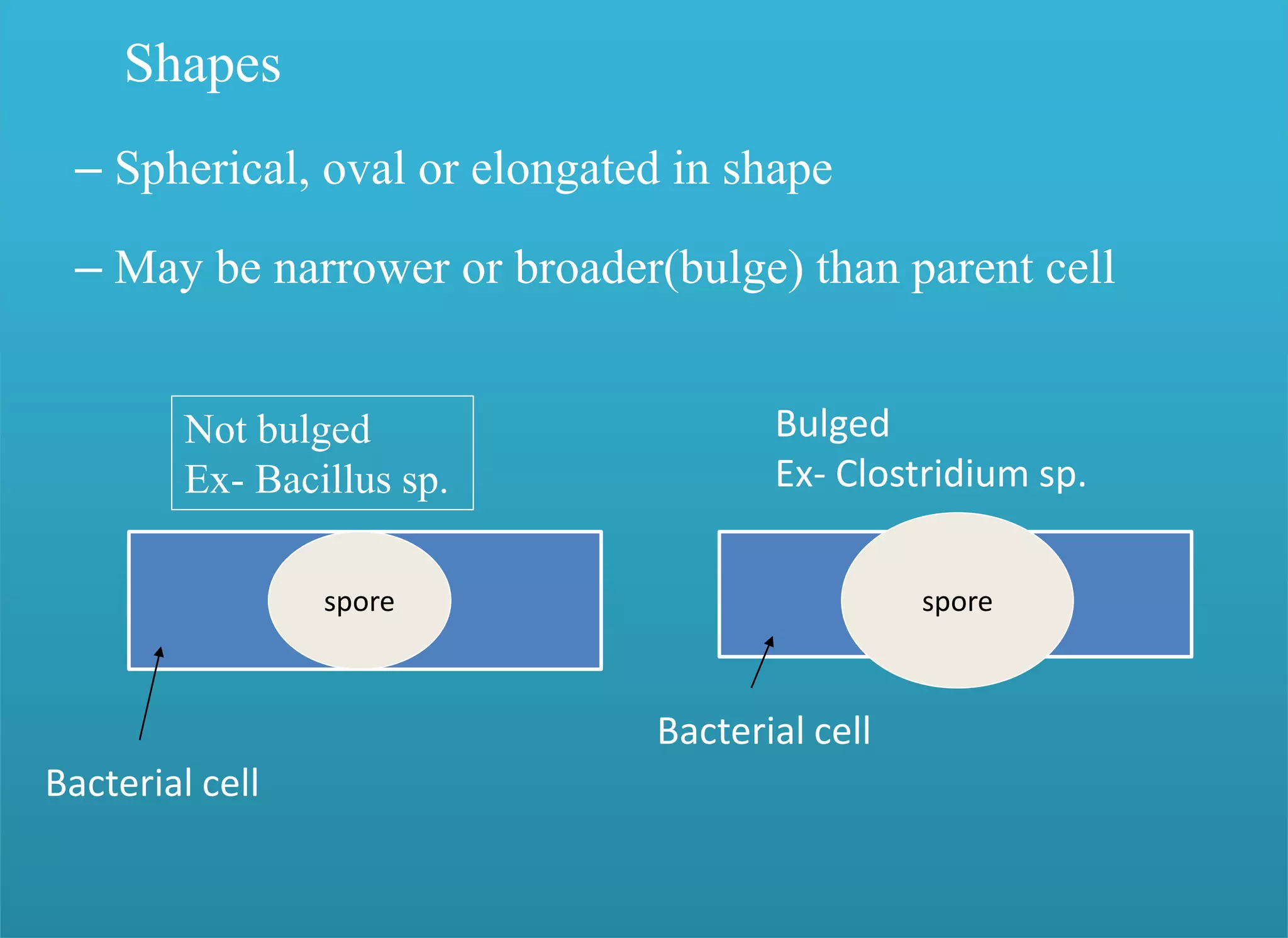

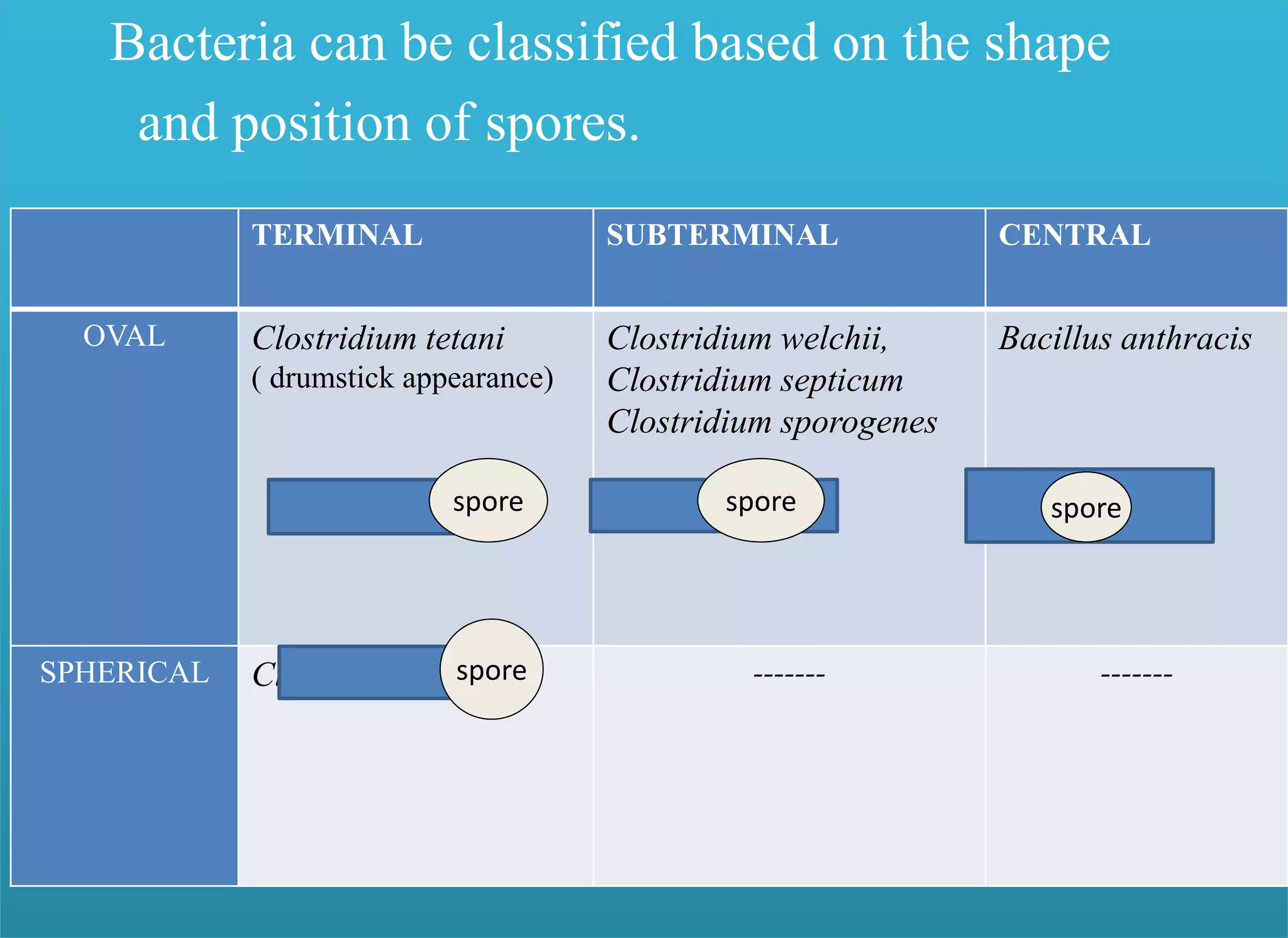
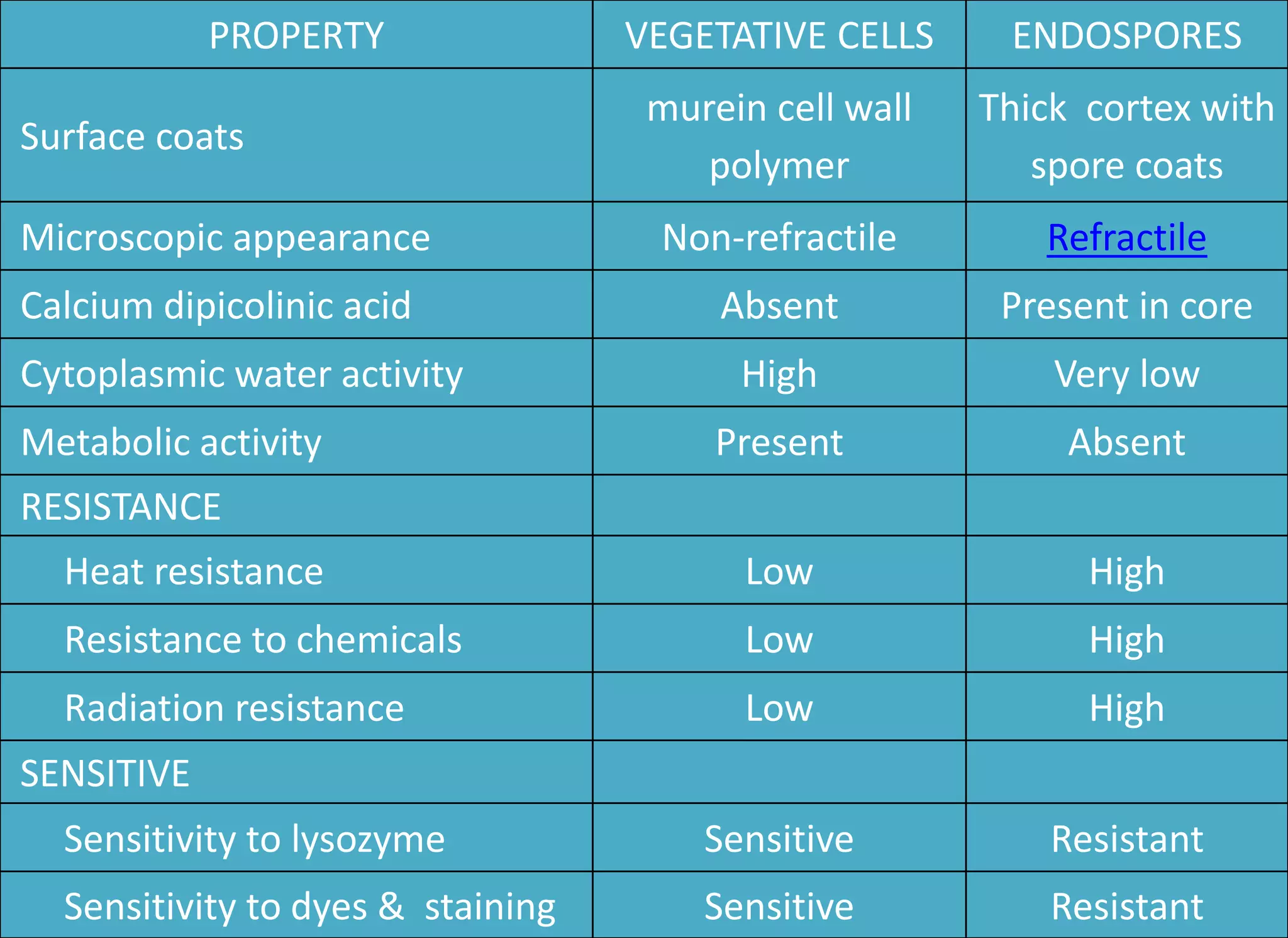
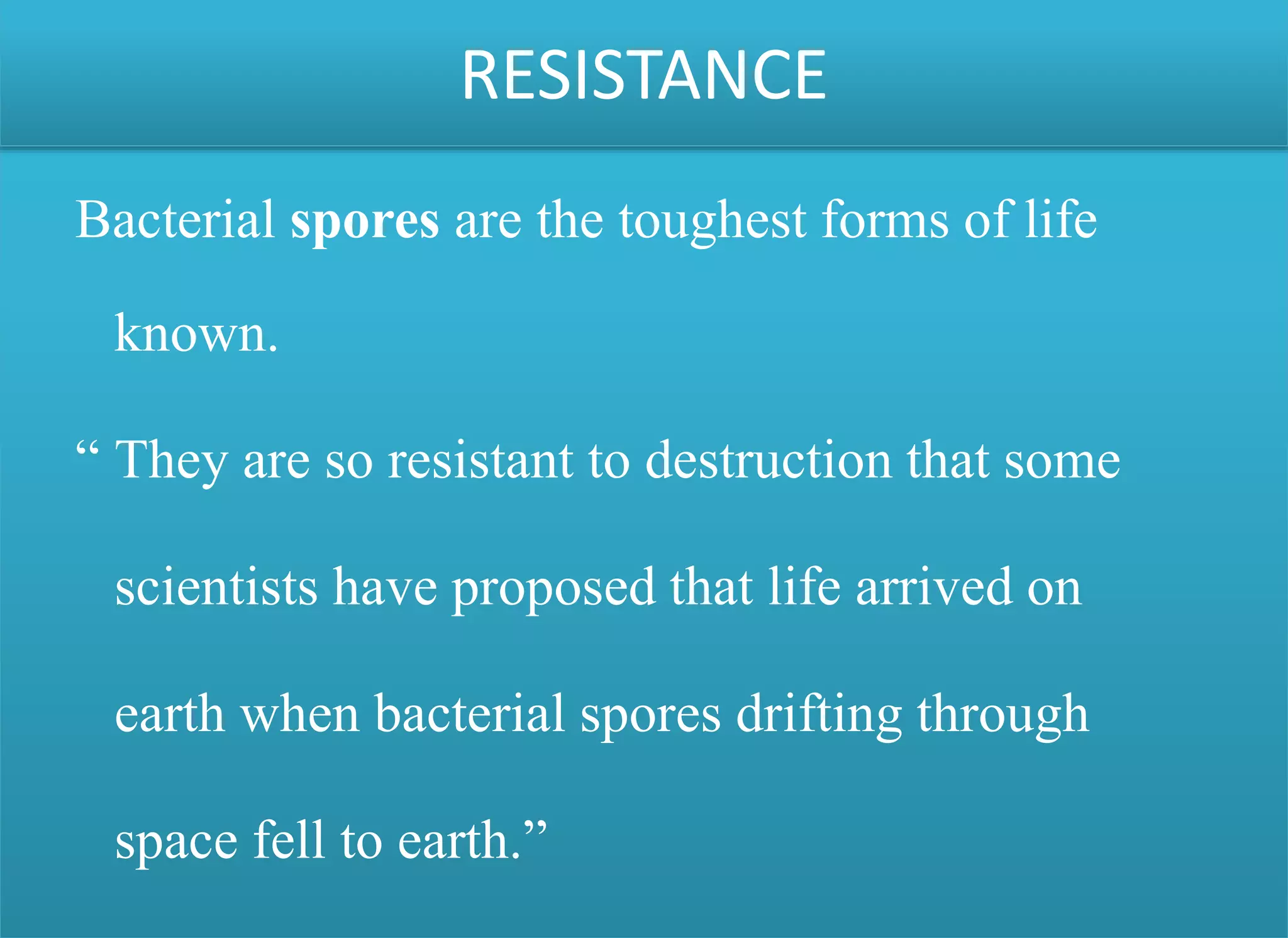
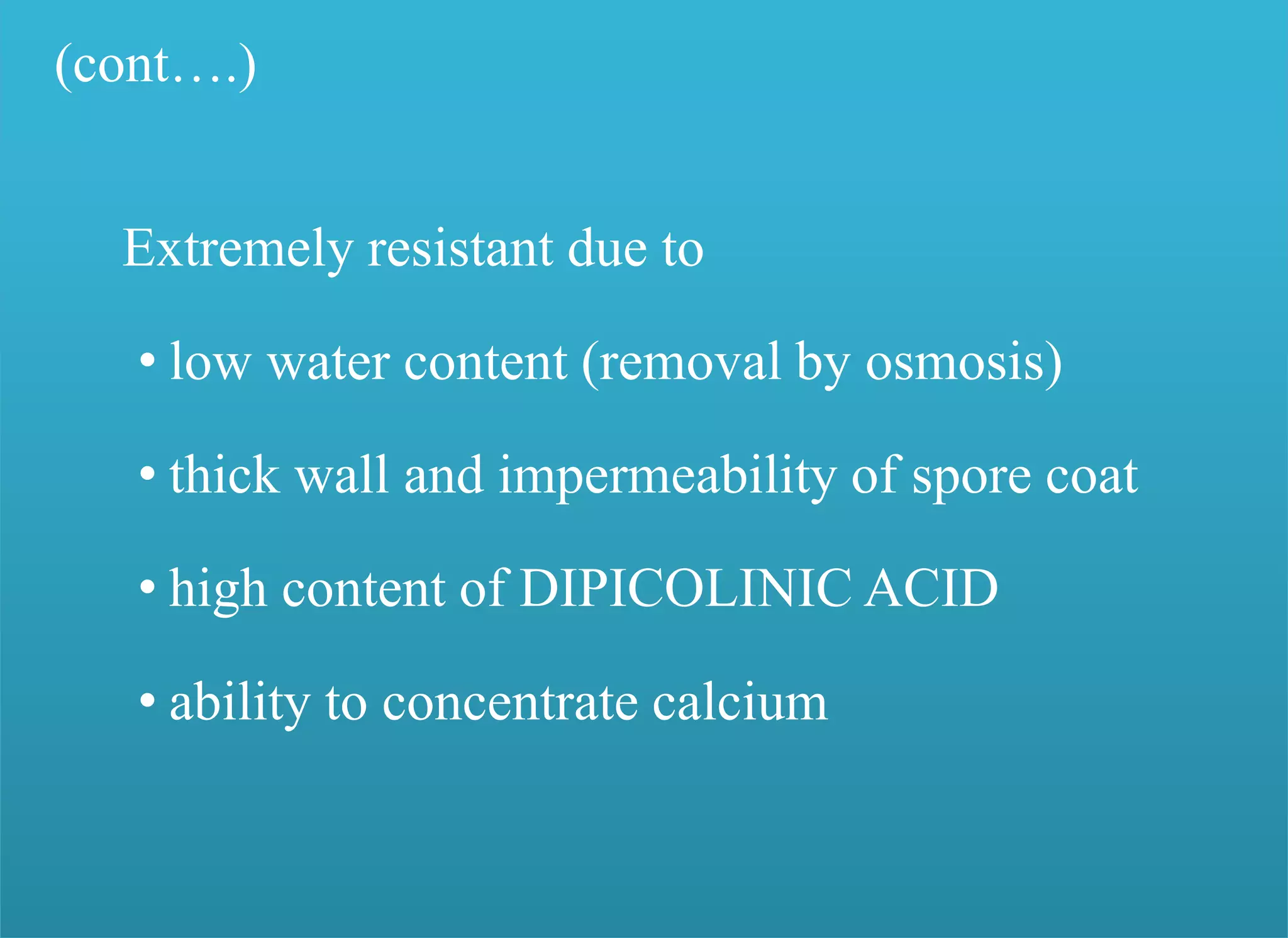
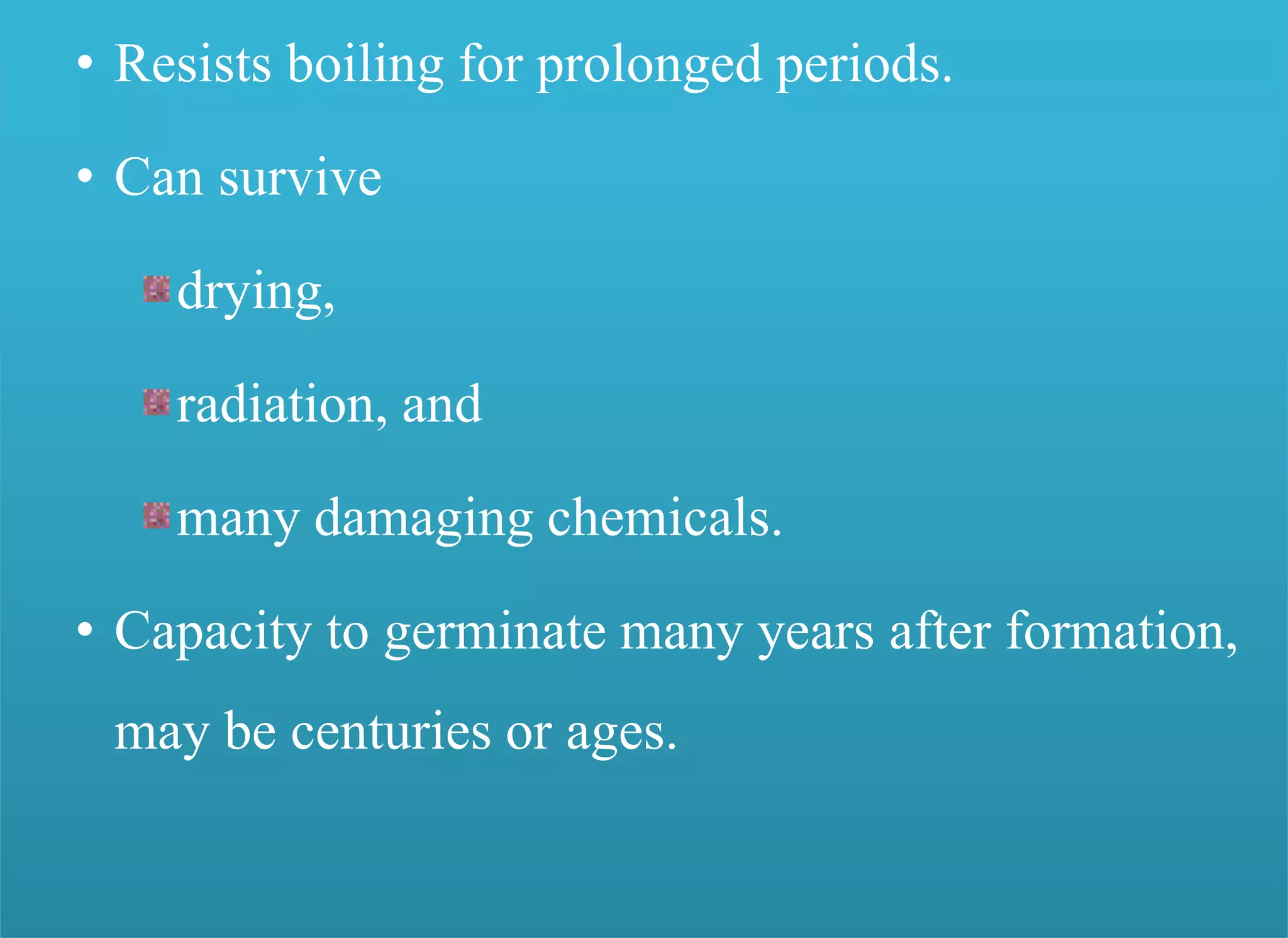
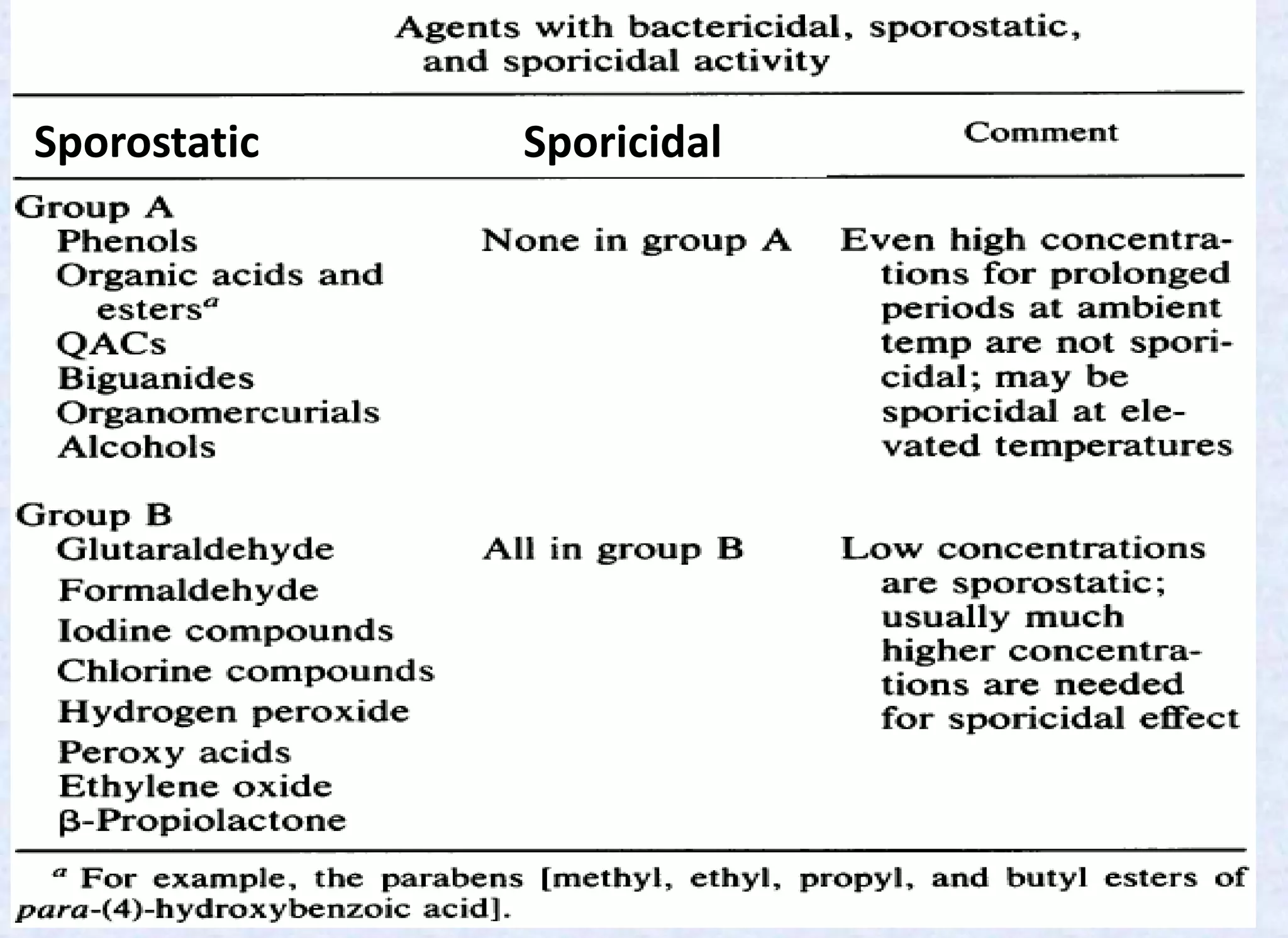
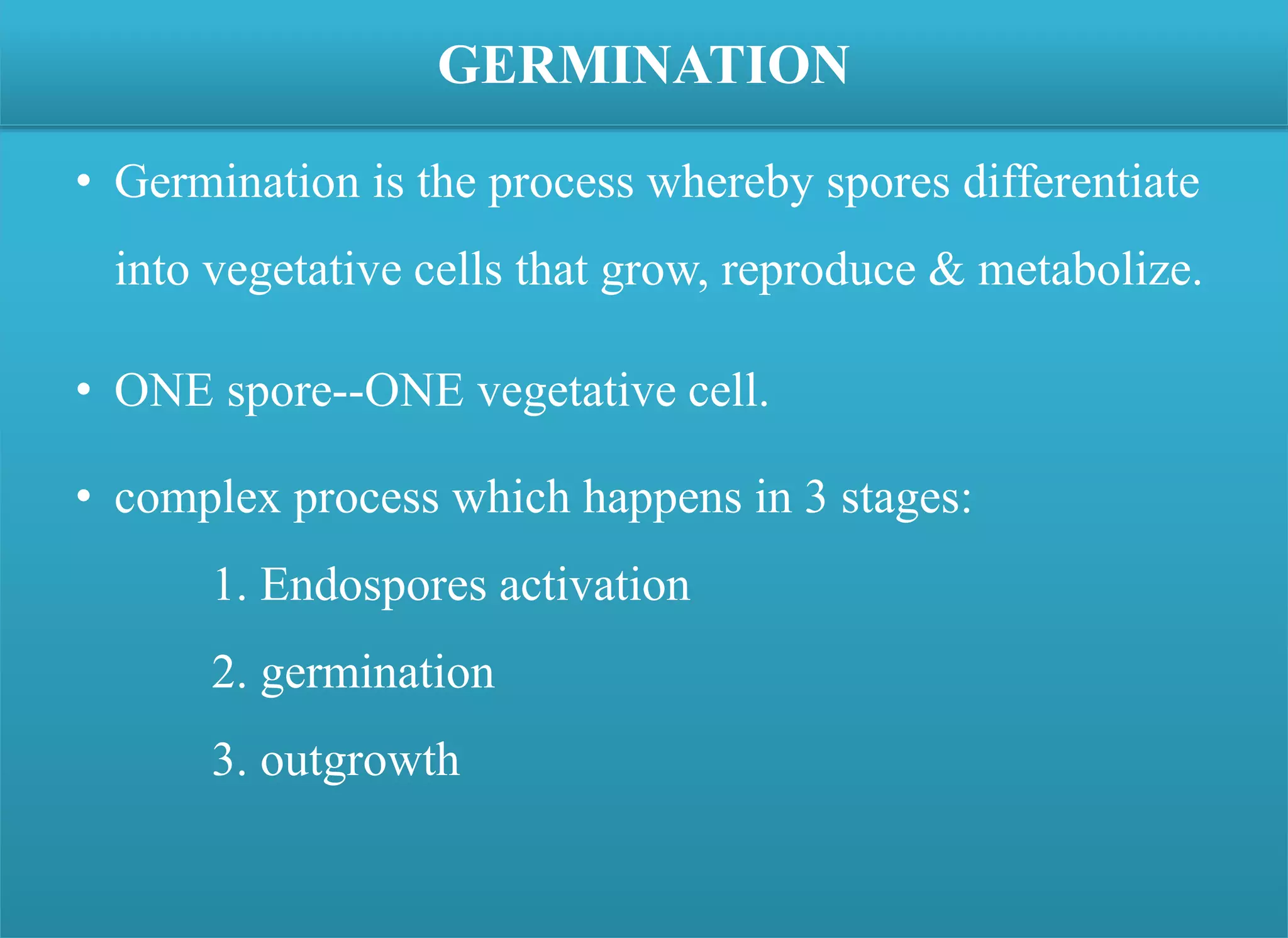
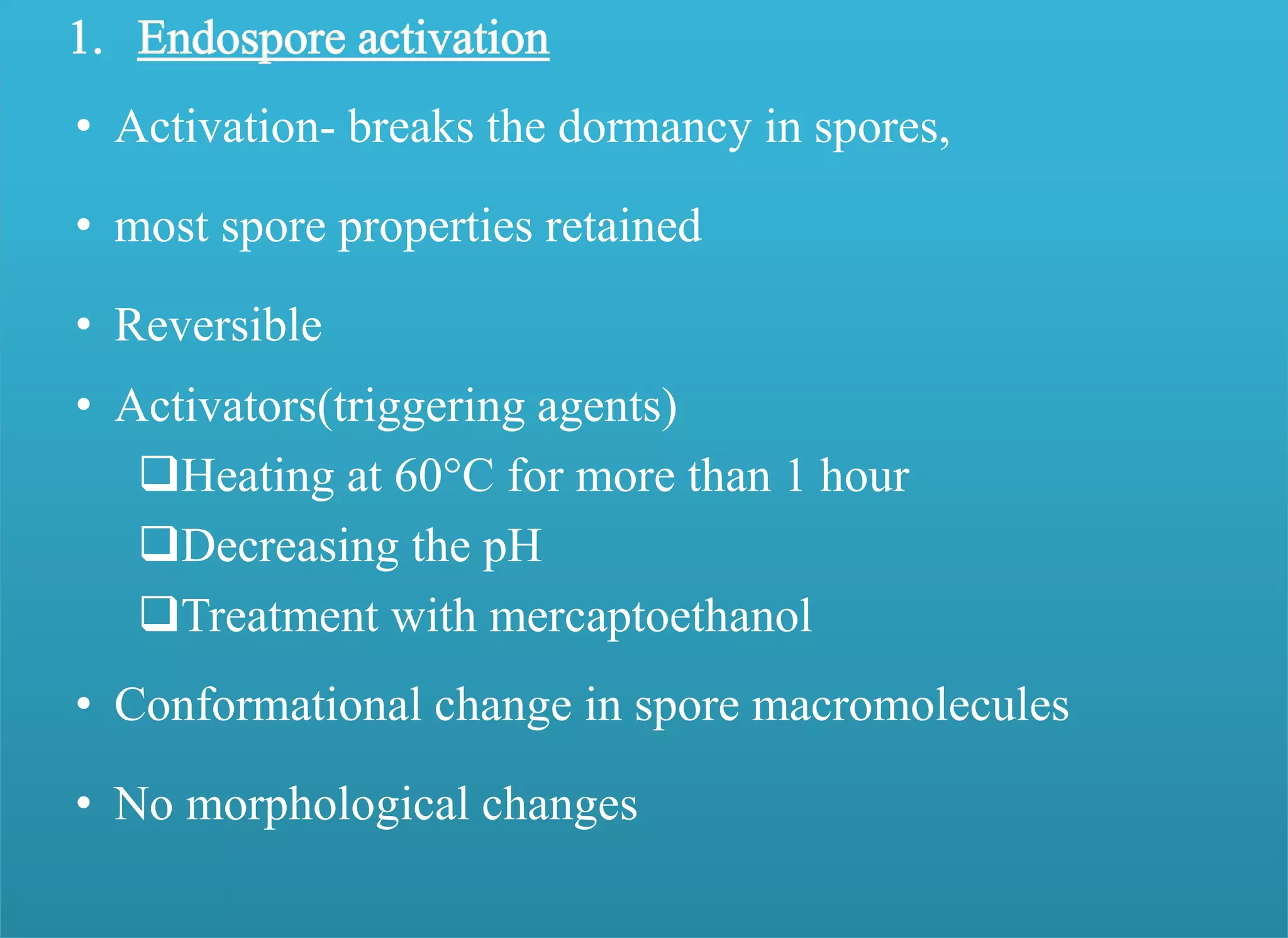
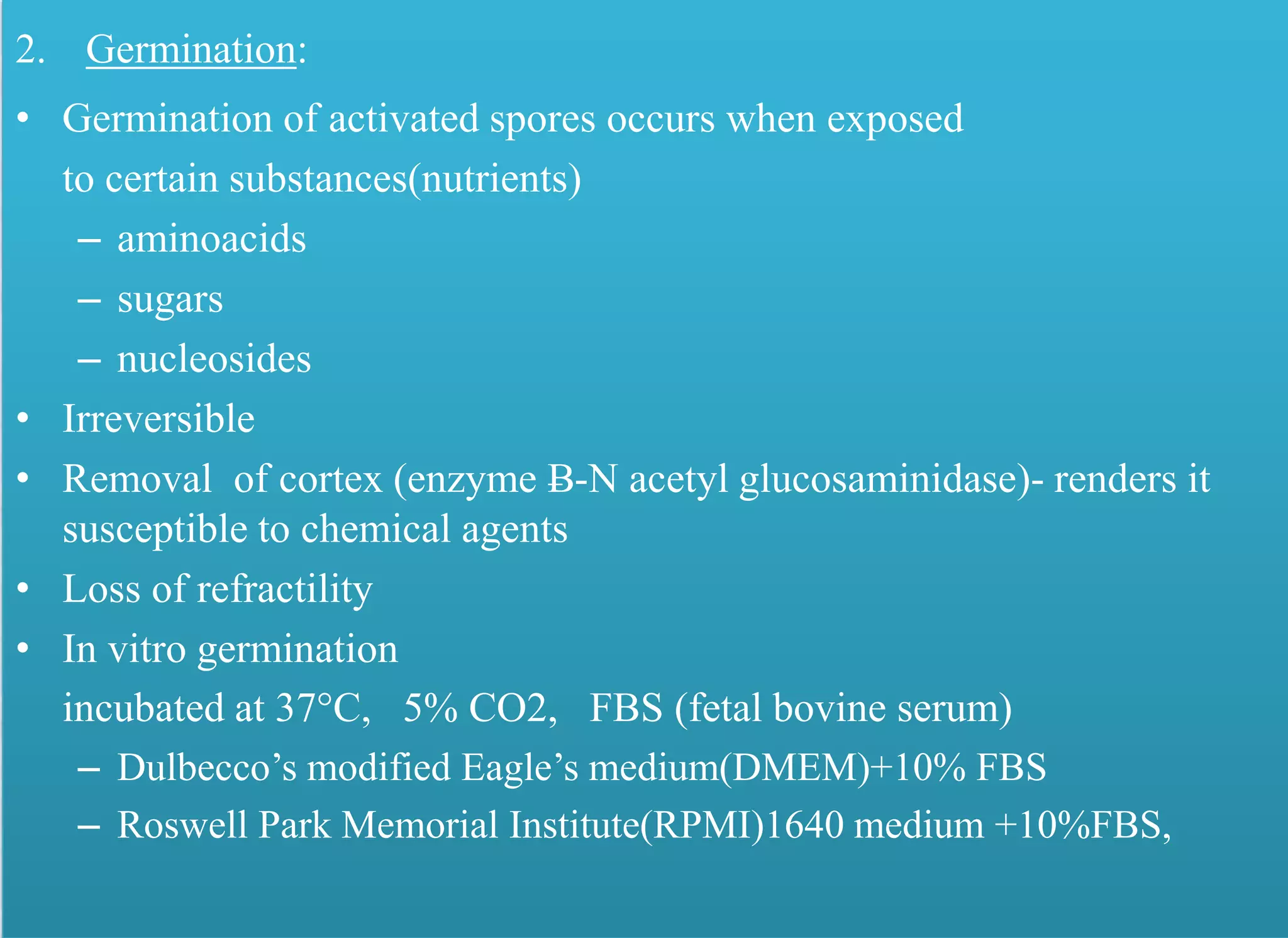
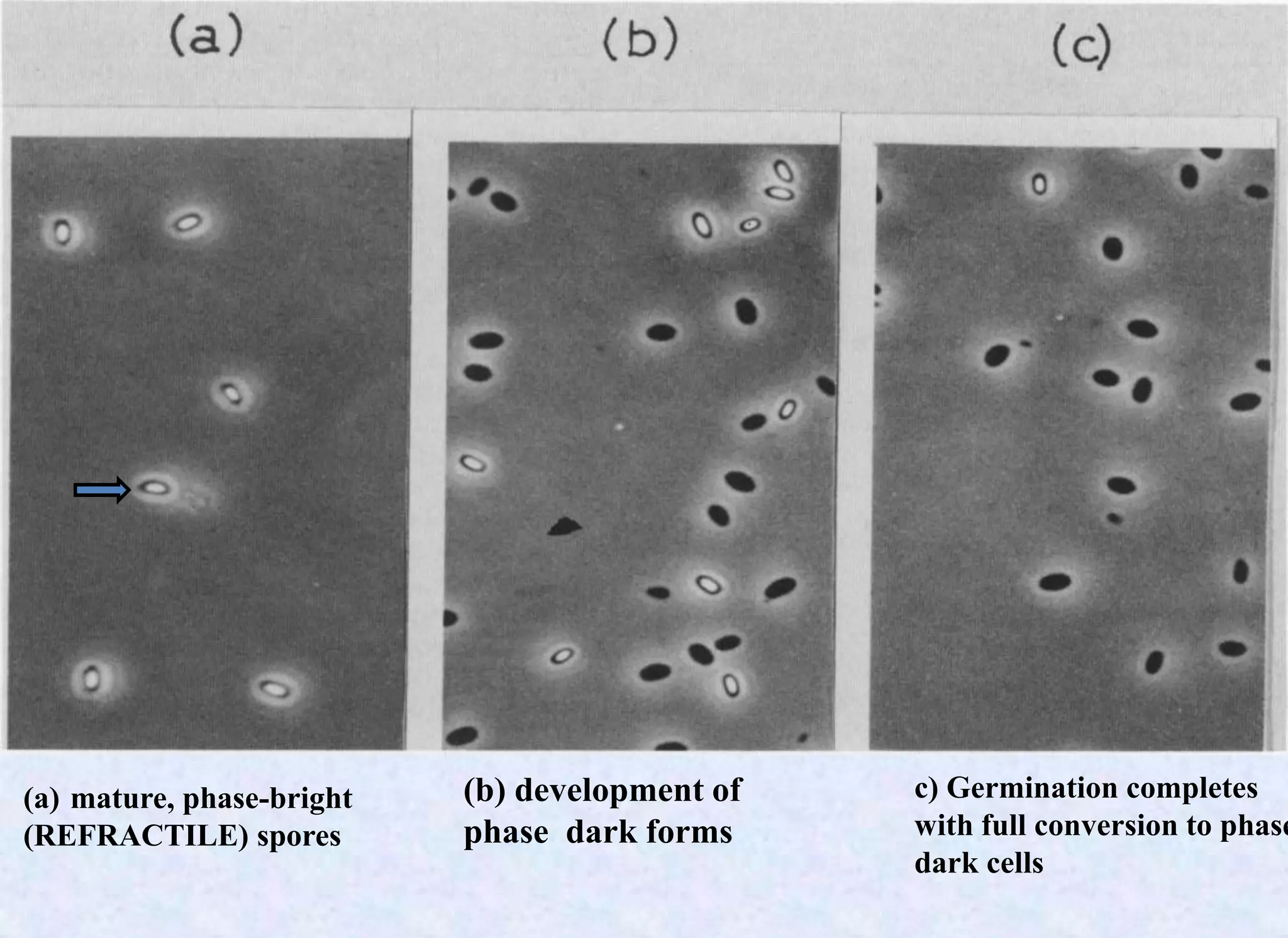
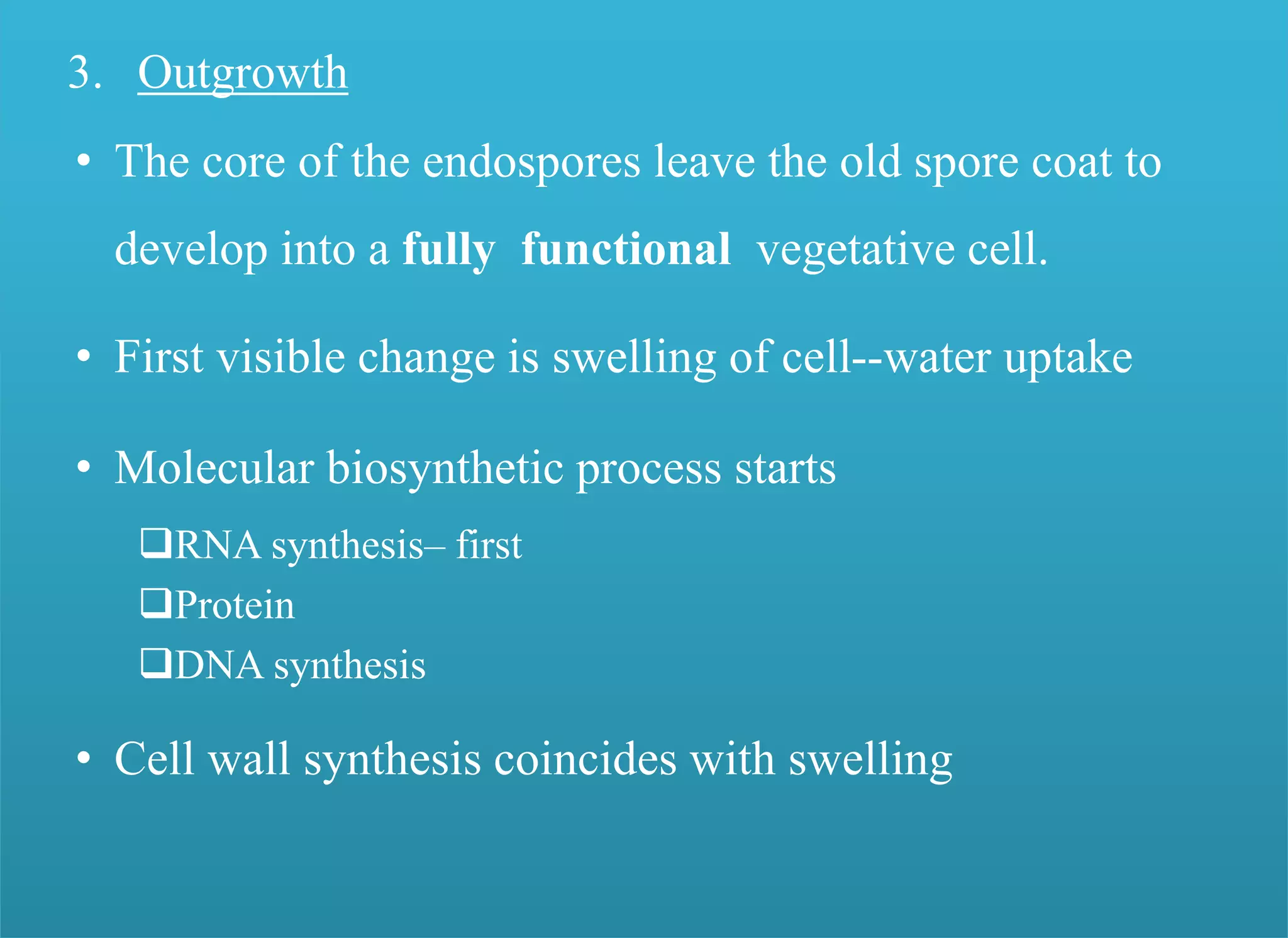
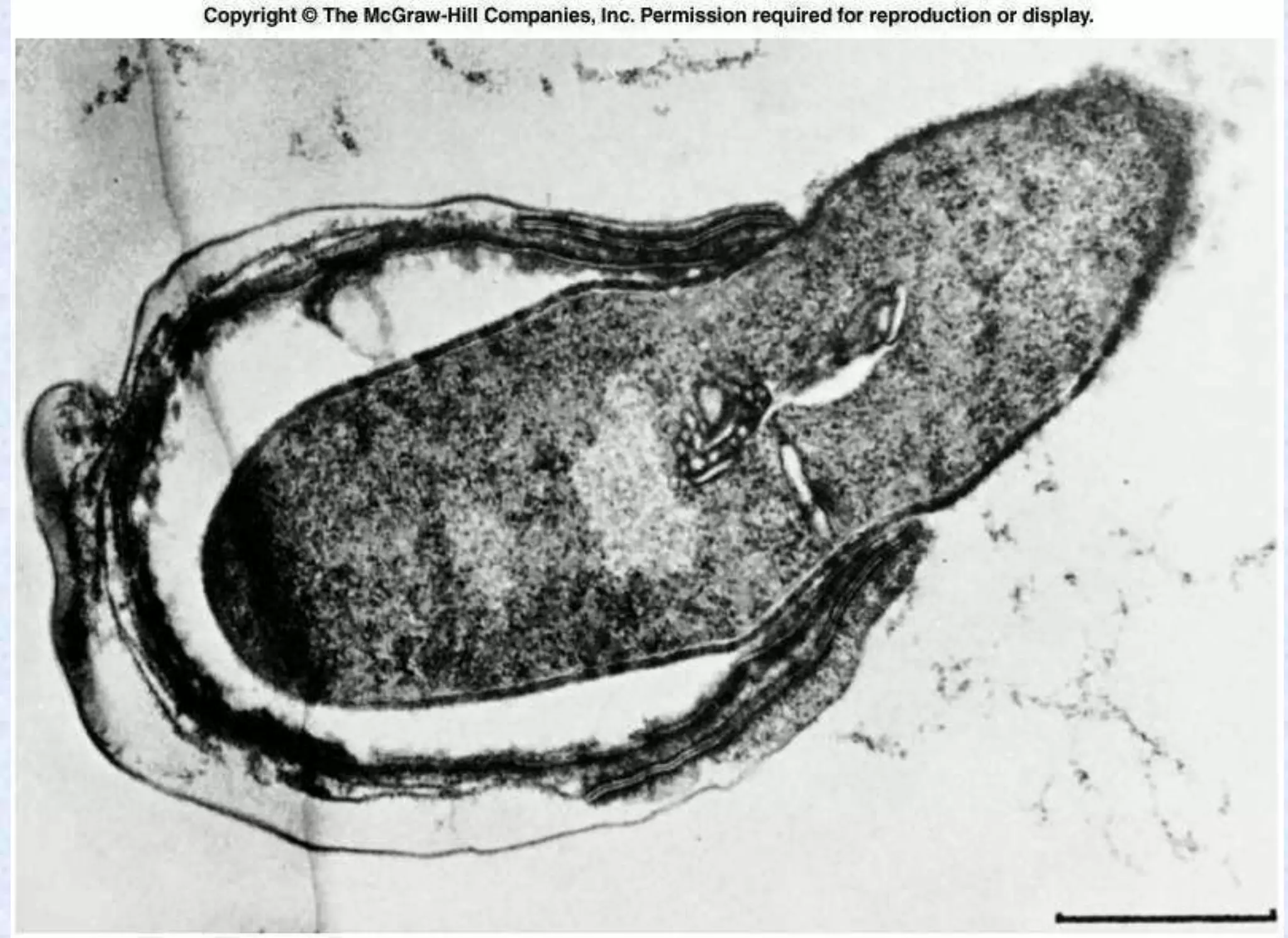



This document provides an overview of bacterial spores, including their definition, structure, important spore-forming bacteria, sporulation process, properties, resistance, germination, and uses. Key points include: - Bacterial spores are dormant, highly resistant forms of bacteria that form in response to starvation or stress. - Important spore-forming genera include Bacillus and Clostridium, which include pathogenic species. - Spores have a protective multilayer structure and properties like low water content that make them highly resistant to heat, chemicals, radiation, and desiccation. - Spores can germinate into active vegetative cells in response to certain nutrients after a triggering process called activation.


![Apporach to lung biopsy [Auto-saved].pptx latest](https://cdn.slidesharecdn.com/ss_thumbnails/apporachtolungbiopsyauto-saved-251211225655-93258539-thumbnail.jpg?width=640&height=640&fit=bounds)


