End Prep/Facing Crew Safety and Shaving
             Management

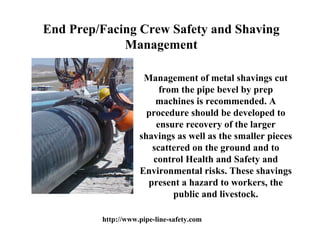
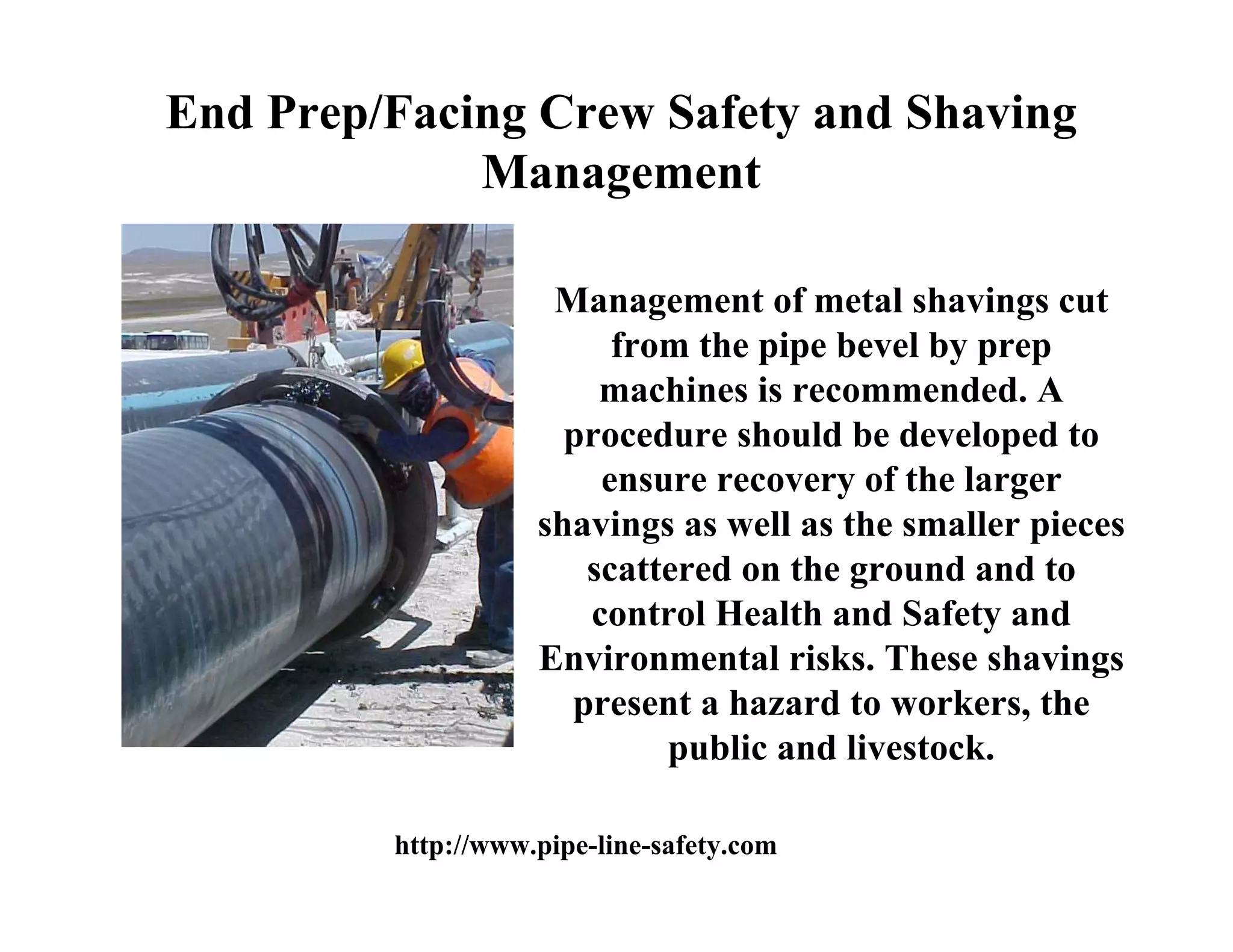
                     Management of metal shavings cut
                         from the pipe bevel by prep
                        machines is recommended. A
                      procedure should be developed to
                        ensure recovery of the larger
                    shavings as well as the smaller pieces
                       scattered on the ground and to
                       control Health and Safety and
                    Environmental risks. These shavings
                      present a hazard to workers, the
                            public and livestock.

         http://www.pipe-line-safety.com
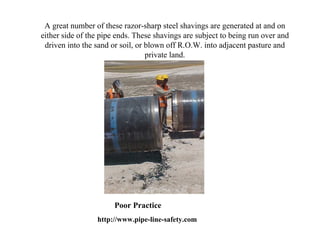
A great number of these razor-sharp steel shavings are generated at and on
either side of the pipe ends. These shavings are subject to being run over and
 driven into the sand or soil, or blown off R.O.W. into adjacent pasture and
                                  private land.


                       Poor Practice
                 http://www.pipe-line-safety.com
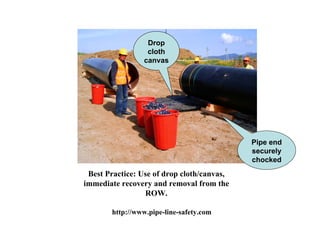
Drop
                  cloth
                 canvas


                                            Pipe end
                                            securely
                                            chocked
 Best Practice: Use of drop cloth/canvas,
immediate recovery and removal from the
                 ROW.

        http://www.pipe-line-safety.com
•   Prior to the prep/facing machine being inserted into the pipe joint, a piece of
    canvas, ideally 48” canvas about 96” in length is placed at the end of the pipe,
    in the form of a “T”, with about 1/3 of the width under the pipe. Two or three
    canvas tarps should be available for each facing machine so that production is
    not hindered.
•   The facing machine is then inserted, the milling completed, the machine
    removed and tractor proceeds to the next joint.
•   Once the pipe end is clear and the facing machine no longer poses a hazard,
    the canvas is picked up in such a fashion that it forms a “V” and then tipped
    into a common plastic dustbin. The dust bin should hold the shavings from 3-4
    pipe ends. Depending the size of the pipe, a bin no larger than 100 liters
    should suffice.
•   Care should be taken to ensure that any small pieces of steel are not driven
    into the sand or soil by being stepped on. A quick sweep with a magnet catches
    any stray pieces of metal on the ground and these are wiped by kevlar-gloved
    hand into the bin.
•   As required the 100 liter plastic bin, when full is tipped into one or more larger
    containers mounted on each prep/facing tractor. As the containers are filled,
    they are taken and dumped at a skip, located at an access road, central to
    several days facing operations, or in an assigned dump truck.
•   Note: The drums should be mounted on the front of the tractor if it is backing-
    up and attached at the rear if the tractor is moving forward.


                       http://www.pipe-line-safety.com
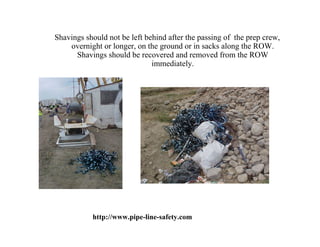
Shavings should not be left behind after the passing of the prep crew,
    overnight or longer, on the ground or in sacks along the ROW.
      Shavings should be recovered and removed from the ROW
                              immediately.


           http://www.pipe-line-safety.com
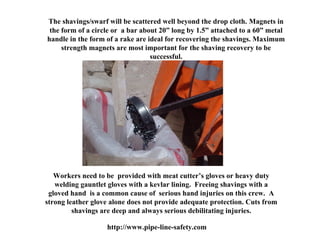
The shavings/swarf will be scattered well beyond the drop cloth. Magnets in
 the form of a circle or a bar about 20” long by 1.5” attached to a 60” metal
handle in the form of a rake are ideal for recovering the shavings. Maximum
     strength magnets are most important for the shaving recovery to be
                                  successful.


   Workers need to be provided with meat cutter’s gloves or heavy duty
   welding gauntlet gloves with a kevlar lining. Freeing shavings with a
 gloved hand is a common cause of serious hand injuries on this crew. A
strong leather glove alone does not provide adequate protection. Cuts from
         shavings are deep and always serious debilitating injuries.

                   http://www.pipe-line-safety.com
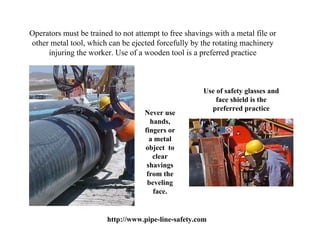
Operators must be trained to not attempt to free shavings with a metal file or
other metal tool, which can be ejected forcefully by the rotating machinery
     injuring the worker. Use of a wooden tool is a preferred practice


                                                       Use of safety glasses and
                                                           face shield is the
                                                         preferred practice
                                    Never use
                                      hands,
                                    fingers or
                                      a metal
                                    object to
                                       clear
                                     shavings
                                     from the
                                     beveling
                                       face.


                        http://www.pipe-line-safety.com
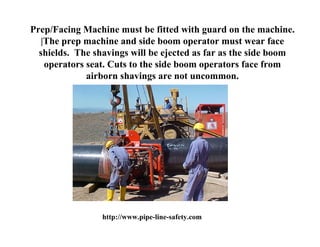
Prep/Facing Machine must be fitted with guard on the machine.
   |The prep machine and side boom operator must wear face
  shields. The shavings will be ejected as far as the side boom
    operators seat. Cuts to the side boom operators face from
              airborn shavings are not uncommon.


                 http://www.pipe-line-safety.com
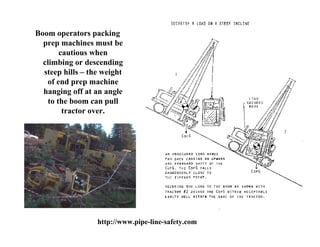
Boom operators packing
  prep machines must be
       cautious when
  climbing or descending
  steep hills – the weight
   of end prep machine
  hanging off at an angle
   to the boom can pull
        tractor over.


                  http://www.pipe-line-safety.com
•   Don't get between the pipe and prep machine when the prep machine is being set in
    and pulled out of the pipe joint.
•   Prep machine operators wear face shields – history of facial cuts from ejected
    shavings.
•   Use a wooden tool or stick for freeing shavings in prep machine - do not use gloved
    hands or a metal tool.
•   Don’t expect gloves to protect your hands. Shavings will cut right through gloves -
    only the bones in your fingers will stop the sharp cutting edge of the shavings -
    Never pull with gloved hand on a long shaving that is stuck or restrained in any
    way. Cuts from shavings are always serious injuries which require stitches and
    subsequent surgery to reconnect tendons- be careful.
•   Be careful freeing shavings from magnetic pickup - restrained shaving will cut
    through your glove.
•   Do not run bare hands around lathed pipe ends.
•   The best gloves to use are filleting gloves, with 10%-15% stainless woven into it,
    inside a leather glove; Leather staple gloves; gloves with interwoven kevlar such as
    hand guard 11 by Whizard Protective Wear.
•   Wear protective clothing on forearms.
•   Use a glove with a high cuff, to protect arteries in wrist. Cuts from shavings are
    always serious injuries which require stitches - be careful.
•   Ensure pipe joints are securely chocked prior to setting prep machine into end of
    joint.
•   Take precautions to prevent pipe joint from sliding downhill when setting prep
    machine in the end of joint on the uphill side

                        http://www.pipe-line-safety.com

End Prep Facing Shaving Management

  • 1.
    End Prep/Facing CrewSafety and Shaving Management Management of metal shavings cut from the pipe bevel by prep machines is recommended. A procedure should be developed to ensure recovery of the larger shavings as well as the smaller pieces scattered on the ground and to control Health and Safety and Environmental risks. These shavings present a hazard to workers, the public and livestock. http://www.pipe-line-safety.com
  • 2.
    A great numberof these razor-sharp steel shavings are generated at and on either side of the pipe ends. These shavings are subject to being run over and driven into the sand or soil, or blown off R.O.W. into adjacent pasture and private land. Poor Practice http://www.pipe-line-safety.com
  • 3.
    Drop cloth canvas Pipe end securely chocked Best Practice: Use of drop cloth/canvas, immediate recovery and removal from the ROW. http://www.pipe-line-safety.com
  • 4.
    Prior to the prep/facing machine being inserted into the pipe joint, a piece of canvas, ideally 48” canvas about 96” in length is placed at the end of the pipe, in the form of a “T”, with about 1/3 of the width under the pipe. Two or three canvas tarps should be available for each facing machine so that production is not hindered. • The facing machine is then inserted, the milling completed, the machine removed and tractor proceeds to the next joint. • Once the pipe end is clear and the facing machine no longer poses a hazard, the canvas is picked up in such a fashion that it forms a “V” and then tipped into a common plastic dustbin. The dust bin should hold the shavings from 3-4 pipe ends. Depending the size of the pipe, a bin no larger than 100 liters should suffice. • Care should be taken to ensure that any small pieces of steel are not driven into the sand or soil by being stepped on. A quick sweep with a magnet catches any stray pieces of metal on the ground and these are wiped by kevlar-gloved hand into the bin. • As required the 100 liter plastic bin, when full is tipped into one or more larger containers mounted on each prep/facing tractor. As the containers are filled, they are taken and dumped at a skip, located at an access road, central to several days facing operations, or in an assigned dump truck. • Note: The drums should be mounted on the front of the tractor if it is backing- up and attached at the rear if the tractor is moving forward. http://www.pipe-line-safety.com
  • 5.
    Shavings should notbe left behind after the passing of the prep crew, overnight or longer, on the ground or in sacks along the ROW. Shavings should be recovered and removed from the ROW immediately. http://www.pipe-line-safety.com
  • 6.
    The shavings/swarf willbe scattered well beyond the drop cloth. Magnets in the form of a circle or a bar about 20” long by 1.5” attached to a 60” metal handle in the form of a rake are ideal for recovering the shavings. Maximum strength magnets are most important for the shaving recovery to be successful. Workers need to be provided with meat cutter’s gloves or heavy duty welding gauntlet gloves with a kevlar lining. Freeing shavings with a gloved hand is a common cause of serious hand injuries on this crew. A strong leather glove alone does not provide adequate protection. Cuts from shavings are deep and always serious debilitating injuries. http://www.pipe-line-safety.com
  • 7.
    Operators must betrained to not attempt to free shavings with a metal file or other metal tool, which can be ejected forcefully by the rotating machinery injuring the worker. Use of a wooden tool is a preferred practice Use of safety glasses and face shield is the preferred practice Never use hands, fingers or a metal object to clear shavings from the beveling face. http://www.pipe-line-safety.com
  • 8.
    Prep/Facing Machine mustbe fitted with guard on the machine. |The prep machine and side boom operator must wear face shields. The shavings will be ejected as far as the side boom operators seat. Cuts to the side boom operators face from airborn shavings are not uncommon. http://www.pipe-line-safety.com
  • 9.
    Boom operators packing prep machines must be cautious when climbing or descending steep hills – the weight of end prep machine hanging off at an angle to the boom can pull tractor over. http://www.pipe-line-safety.com
  • 10.
    Don't get between the pipe and prep machine when the prep machine is being set in and pulled out of the pipe joint. • Prep machine operators wear face shields – history of facial cuts from ejected shavings. • Use a wooden tool or stick for freeing shavings in prep machine - do not use gloved hands or a metal tool. • Don’t expect gloves to protect your hands. Shavings will cut right through gloves - only the bones in your fingers will stop the sharp cutting edge of the shavings - Never pull with gloved hand on a long shaving that is stuck or restrained in any way. Cuts from shavings are always serious injuries which require stitches and subsequent surgery to reconnect tendons- be careful. • Be careful freeing shavings from magnetic pickup - restrained shaving will cut through your glove. • Do not run bare hands around lathed pipe ends. • The best gloves to use are filleting gloves, with 10%-15% stainless woven into it, inside a leather glove; Leather staple gloves; gloves with interwoven kevlar such as hand guard 11 by Whizard Protective Wear. • Wear protective clothing on forearms. • Use a glove with a high cuff, to protect arteries in wrist. Cuts from shavings are always serious injuries which require stitches - be careful. • Ensure pipe joints are securely chocked prior to setting prep machine into end of joint. • Take precautions to prevent pipe joint from sliding downhill when setting prep machine in the end of joint on the uphill side http://www.pipe-line-safety.com