ENCODE-IT
ONLINE
TRAINING
WORKDAY HCM : FUNCTIONAL :
INTEGRATION
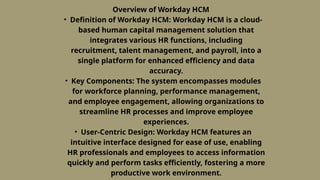
Overview of Workday HCM
• Definition of Workday HCM: Workday HCM is a cloud-
based human capital management solution that
integrates various HR functions, including
recruitment, talent management, and payroll, into a
single platform for enhanced efficiency and data
accuracy.
• Key Components: The system encompasses modules
for workforce planning, performance management,
and employee engagement, allowing organizations to
streamline HR processes and improve employee
experiences.
• User-Centric Design: Workday HCM features an
intuitive interface designed for ease of use, enabling
HR professionals and employees to access information
quickly and perform tasks efficiently, fostering a more
productive work environment.
Importance of Human Capital Management:
• Pros: Enhances employee engagement, drives organizational performance, improves talent
acquisition, fosters a culture of development, supports strategic decision-making, increases
workforce productivity
• Cons: Requires significant investment, may face resistance to change, demands ongoing training,
can be complex to implement, risks data privacy issues, may lead to over-reliance on technology
Key Features of Workday HCM:
• Comprehensive Talent Management: Workday HCM offers robust tools for recruiting, onboarding,
and developing talent, ensuring organizations can attract and retain top performers while fostering
employee growth and career progression.
• Real-Time Analytics and Reporting: The platform provides advanced analytics capabilities that allow
HR professionals to generate real-time insights into workforce metrics, enabling data-driven
decision-making and strategic planning.
• Seamless Integration Capabilities: Workday HCM is designed to integrate effortlessly with other
enterprise systems, facilitating smooth data flow across various business functions and enhancing
overall operational efficiency.
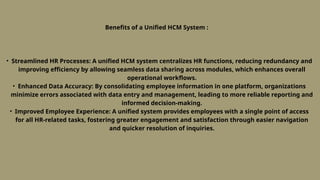
Benefits of a Unified HCM System :
• Streamlined HR Processes: A unified HCM system centralizes HR functions, reducing redundancy and
improving efficiency by allowing seamless data sharing across modules, which enhances overall
operational workflows.
• Enhanced Data Accuracy: By consolidating employee information in one platform, organizations
minimize errors associated with data entry and management, leading to more reliable reporting and
informed decision-making.
• Improved Employee Experience: A unified system provides employees with a single point of access
for all HR-related tasks, fostering greater engagement and satisfaction through easier navigation
and quicker resolution of inquiries.
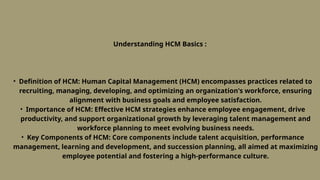
Understanding HCM Basics :
• Definition of HCM: Human Capital Management (HCM) encompasses practices related to
recruiting, managing, developing, and optimizing an organization's workforce, ensuring
alignment with business goals and employee satisfaction.
• Importance of HCM: Effective HCM strategies enhance employee engagement, drive
productivity, and support organizational growth by leveraging talent management and
workforce planning to meet evolving business needs.
• Key Components of HCM: Core components include talent acquisition, performance
management, learning and development, and succession planning, all aimed at maximizing
employee potential and fostering a high-performance culture.
Staffing Models in Workday :
• Types of Staffing Models: Workday offers various
staffing models, including centralized, decentralized,
and hybrid approaches, allowing organizations to tailor
their recruitment strategies based on operational needs
and workforce dynamics.
• Impact on Workforce Planning: Effective staffing models
in Workday facilitate strategic workforce planning by
aligning talent acquisition with business objectives,
ensuring that the right skills are available at the right
time to meet organizational demands.

ENCODE-IT : WORKDAY HCM ONLINE TRAINING.

  • 1.
  • 2.
    Overview of WorkdayHCM • Definition of Workday HCM: Workday HCM is a cloud- based human capital management solution that integrates various HR functions, including recruitment, talent management, and payroll, into a single platform for enhanced efficiency and data accuracy. • Key Components: The system encompasses modules for workforce planning, performance management, and employee engagement, allowing organizations to streamline HR processes and improve employee experiences. • User-Centric Design: Workday HCM features an intuitive interface designed for ease of use, enabling HR professionals and employees to access information quickly and perform tasks efficiently, fostering a more productive work environment.
  • 3.
    Importance of HumanCapital Management: • Pros: Enhances employee engagement, drives organizational performance, improves talent acquisition, fosters a culture of development, supports strategic decision-making, increases workforce productivity • Cons: Requires significant investment, may face resistance to change, demands ongoing training, can be complex to implement, risks data privacy issues, may lead to over-reliance on technology Key Features of Workday HCM: • Comprehensive Talent Management: Workday HCM offers robust tools for recruiting, onboarding, and developing talent, ensuring organizations can attract and retain top performers while fostering employee growth and career progression. • Real-Time Analytics and Reporting: The platform provides advanced analytics capabilities that allow HR professionals to generate real-time insights into workforce metrics, enabling data-driven decision-making and strategic planning. • Seamless Integration Capabilities: Workday HCM is designed to integrate effortlessly with other enterprise systems, facilitating smooth data flow across various business functions and enhancing overall operational efficiency.
  • 4.
    Benefits of aUnified HCM System : • Streamlined HR Processes: A unified HCM system centralizes HR functions, reducing redundancy and improving efficiency by allowing seamless data sharing across modules, which enhances overall operational workflows. • Enhanced Data Accuracy: By consolidating employee information in one platform, organizations minimize errors associated with data entry and management, leading to more reliable reporting and informed decision-making. • Improved Employee Experience: A unified system provides employees with a single point of access for all HR-related tasks, fostering greater engagement and satisfaction through easier navigation and quicker resolution of inquiries.
  • 5.
    Understanding HCM Basics: • Definition of HCM: Human Capital Management (HCM) encompasses practices related to recruiting, managing, developing, and optimizing an organization's workforce, ensuring alignment with business goals and employee satisfaction. • Importance of HCM: Effective HCM strategies enhance employee engagement, drive productivity, and support organizational growth by leveraging talent management and workforce planning to meet evolving business needs. • Key Components of HCM: Core components include talent acquisition, performance management, learning and development, and succession planning, all aimed at maximizing employee potential and fostering a high-performance culture.
  • 6.
    Staffing Models inWorkday : • Types of Staffing Models: Workday offers various staffing models, including centralized, decentralized, and hybrid approaches, allowing organizations to tailor their recruitment strategies based on operational needs and workforce dynamics. • Impact on Workforce Planning: Effective staffing models in Workday facilitate strategic workforce planning by aligning talent acquisition with business objectives, ensuring that the right skills are available at the right time to meet organizational demands.