Lesson 8 for November 25, 2023
How to deal with those in need:
Friends of the needy. Luke 5:17-26.
Imitate Jesus. John 5:1-9.
Special cases:
Refugies and migrants. Matthew 2:13-14.
Those who suffer. Luke 4:18.
Motivated to help:
Just for love. John 15:13.
One topic that is highlighted throughout the Bible is a special concern
for those who, for one reason or another, need help.
In the 21st century there are still people with the same or similar
needs as those who lived in biblical times. Therefore, it is good to
remember (and apply) the principles that the Word of God teaches us
in order to alleviate their burdens.
We talk about poor, sick, foreigners, widows, orphans... Groups of
people that should not exist in a perfect world. But of course, we
don't live in a perfect world.
“Some men came, bringing to him a paralyzed man,
carried by four of them” (Mark 2:3)
Luke 5:17-26 shows us the story of some men who bring one of
their friends to Jesus to be healed of his paralysis. They do not give
up in the face of difficulties. If it is necessary to break through the
roof to take him to Jesus, they will do it (there will be time to fix
the damage later).
When we find out that one of our friends is going through a time of
need, what do we do?
We must do everything possible to
alleviate their need. But we have to go
a little further. We must take him to
Jesus, who can not only help him, but
also give him eternal life.
When Jesus heals the man, he does not speak of his faith, but of
“their faith” (v. 20). They wanted their friend to be healed and able
to have a normal life again – to stop being needy. Upon hearing
about Jesus, they believed that He could perform the miracle, and
they immediately took action.
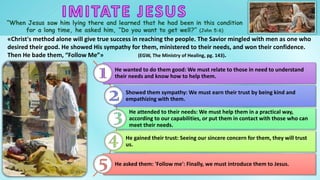
“When Jesus saw him lying there and learned that he had been in this condition
for a long time, he asked him, “Do you want to get well?” (John 5:6)
«Christ's method alone will give true success in reaching the people. The Savior mingled with men as one who
desired their good. He showed His sympathy for them, ministered to their needs, and won their confidence.
Then He bade them, “Follow Me”» (EGW, The Ministry of Healing, pg. 143).
He wanted to do them good: We must relate to those in need to understand
their needs and know how to help them.
Showed them sympathy: We must earn their trust by being kind and
empathizing with them.
He attended to their needs: We must help them in a practical way,
according to our capabilities, or put them in contact with those who can
meet their needs.
He gained their trust: Seeing our sincere concern for them, they will trust
us.
He asked them: 'Follow me': Finally, we must introduce them to Jesus.
“So he got up (Joseph), took the child and his mother during
the night and left for Egypt” (Matthew 2:14)
While he was a child, Jesus‘s family had to flee their
country to save his life. Jesus was a migrant, a needy!
It requires a special effort on our part to help them. Perhaps they will need
special help that exceeds our possibilities, but we can collaborate with
humanitarian aid organizations, giving them part of our time and resources.
Emigrating to a different country is difficult, especially
without knowing the language. Sometimes, it is also
difficult to help them, or even sympathize with them. Their
customs are different; his appearance and his way of
speaking too; They are especially sensitive and, in many
cases, are afraid to open up.
Although at that time there were no massive movements
of thousands of people going from one country to
another, there were refugees and migrants (foreigners).
Some came to take refuge in Israel [like Ittai (2 Sam.
15:19)]; others had to leave for various reasons [such as
David (1 Sam. 27:1), or Elimelek and Naomi (Ruth 1:1-2)].
Suffering has no barriers. It affects the poor and the rich; to learned and ignorant; to
men and women; …The rich suffer from depression; the poor suffer from hunger.
Anyone can suffer an accident, contract an illness, lose a loved one, etc.
Although we want they to know
and accept Jesus, this should not
condition our service. As you
help them, they may want to
know more about Jesus, or they
may not. It doesn't matter. We
must help them whatever their
decision.
Although Jesus healed thousands, only a few followed Him (Mark 6:56; Luke 17:12-9).
But that did not stop him from continuing to help and heal the broken and suffering
(Acts 10:38). Let's follow his example.
And we are here to help them. Imitating Jesus, we must approach those who suffer;
understand their needs; and provide them with the best possible help.
“Greater love has no one than this: to lay down one’s life for one’s friends”
(John 15:13)
We know that needs never end, because “you will always have the poor [or needy]
with you, and whenever you want you can do good to them” (Mark 14:7).
Therefore, we must ask ourselves: why help them?
This is especially important when we want to help
a specific community that may differ from us due
to their religion, their customs, their way of life…
Love breaks down any barrier that may prevent us from approaching those in
need, empathizing with them, and helping them in whatever way we can.
Because we love them as God loves us. Love should prompt us to perform acts of
benevolence toward others (1Jn. 3:16-18).
When approaching them with the intention of
helping them, we must pray for special help from
God to know the best way to do it. He will help us
show our love, become their friends, help them,
and lead them to Jesus.
“Seize every opportunity to contribute to the happiness of those
around you, sharing with them your affection. Words of kindness,
looks of sympathy, expression of appreciation, would to many a
struggling, lonely one be as a cup of cold water to a thirsty soul. A
word of cheer, an act of kindness, would go far to lighten the burdens
that are resting heavily upon weary shoulders. It is in unselfish
ministry that true happiness is found. And every word and deed of
such service is recorded in the books of heaven as done to Christ....
Live in the sunshine of Christ's love. Then your influence will bless
the world”
EGW (The Youth’s Instructor April 9, 1903)
WEEKLY CHALLENGE
ADVANCED CHALLENGE
Find out about foreigners or non-
Christians living in your country.
Identify someone within your sphere of influence. Begin
praying regularly for that person after answering the
following questions:
Is this person my friend according to Jesus' model of
friendship? Do I know the needs of your life? How can I
bring her to Jesus for healing?

en_2023t408.pptx

  • 1.
    Lesson 8 forNovember 25, 2023
  • 3.
    How to dealwith those in need: Friends of the needy. Luke 5:17-26. Imitate Jesus. John 5:1-9. Special cases: Refugies and migrants. Matthew 2:13-14. Those who suffer. Luke 4:18. Motivated to help: Just for love. John 15:13. One topic that is highlighted throughout the Bible is a special concern for those who, for one reason or another, need help. In the 21st century there are still people with the same or similar needs as those who lived in biblical times. Therefore, it is good to remember (and apply) the principles that the Word of God teaches us in order to alleviate their burdens. We talk about poor, sick, foreigners, widows, orphans... Groups of people that should not exist in a perfect world. But of course, we don't live in a perfect world.
  • 5.
    “Some men came,bringing to him a paralyzed man, carried by four of them” (Mark 2:3) Luke 5:17-26 shows us the story of some men who bring one of their friends to Jesus to be healed of his paralysis. They do not give up in the face of difficulties. If it is necessary to break through the roof to take him to Jesus, they will do it (there will be time to fix the damage later). When we find out that one of our friends is going through a time of need, what do we do? We must do everything possible to alleviate their need. But we have to go a little further. We must take him to Jesus, who can not only help him, but also give him eternal life. When Jesus heals the man, he does not speak of his faith, but of “their faith” (v. 20). They wanted their friend to be healed and able to have a normal life again – to stop being needy. Upon hearing about Jesus, they believed that He could perform the miracle, and they immediately took action.
  • 6.
    “When Jesus sawhim lying there and learned that he had been in this condition for a long time, he asked him, “Do you want to get well?” (John 5:6) «Christ's method alone will give true success in reaching the people. The Savior mingled with men as one who desired their good. He showed His sympathy for them, ministered to their needs, and won their confidence. Then He bade them, “Follow Me”» (EGW, The Ministry of Healing, pg. 143). He wanted to do them good: We must relate to those in need to understand their needs and know how to help them. Showed them sympathy: We must earn their trust by being kind and empathizing with them. He attended to their needs: We must help them in a practical way, according to our capabilities, or put them in contact with those who can meet their needs. He gained their trust: Seeing our sincere concern for them, they will trust us. He asked them: 'Follow me': Finally, we must introduce them to Jesus.
  • 8.
    “So he gotup (Joseph), took the child and his mother during the night and left for Egypt” (Matthew 2:14) While he was a child, Jesus‘s family had to flee their country to save his life. Jesus was a migrant, a needy! It requires a special effort on our part to help them. Perhaps they will need special help that exceeds our possibilities, but we can collaborate with humanitarian aid organizations, giving them part of our time and resources. Emigrating to a different country is difficult, especially without knowing the language. Sometimes, it is also difficult to help them, or even sympathize with them. Their customs are different; his appearance and his way of speaking too; They are especially sensitive and, in many cases, are afraid to open up. Although at that time there were no massive movements of thousands of people going from one country to another, there were refugees and migrants (foreigners). Some came to take refuge in Israel [like Ittai (2 Sam. 15:19)]; others had to leave for various reasons [such as David (1 Sam. 27:1), or Elimelek and Naomi (Ruth 1:1-2)].
  • 9.
    Suffering has nobarriers. It affects the poor and the rich; to learned and ignorant; to men and women; …The rich suffer from depression; the poor suffer from hunger. Anyone can suffer an accident, contract an illness, lose a loved one, etc. Although we want they to know and accept Jesus, this should not condition our service. As you help them, they may want to know more about Jesus, or they may not. It doesn't matter. We must help them whatever their decision. Although Jesus healed thousands, only a few followed Him (Mark 6:56; Luke 17:12-9). But that did not stop him from continuing to help and heal the broken and suffering (Acts 10:38). Let's follow his example. And we are here to help them. Imitating Jesus, we must approach those who suffer; understand their needs; and provide them with the best possible help.
  • 11.
    “Greater love hasno one than this: to lay down one’s life for one’s friends” (John 15:13) We know that needs never end, because “you will always have the poor [or needy] with you, and whenever you want you can do good to them” (Mark 14:7). Therefore, we must ask ourselves: why help them? This is especially important when we want to help a specific community that may differ from us due to their religion, their customs, their way of life… Love breaks down any barrier that may prevent us from approaching those in need, empathizing with them, and helping them in whatever way we can. Because we love them as God loves us. Love should prompt us to perform acts of benevolence toward others (1Jn. 3:16-18). When approaching them with the intention of helping them, we must pray for special help from God to know the best way to do it. He will help us show our love, become their friends, help them, and lead them to Jesus.
  • 12.
    “Seize every opportunityto contribute to the happiness of those around you, sharing with them your affection. Words of kindness, looks of sympathy, expression of appreciation, would to many a struggling, lonely one be as a cup of cold water to a thirsty soul. A word of cheer, an act of kindness, would go far to lighten the burdens that are resting heavily upon weary shoulders. It is in unselfish ministry that true happiness is found. And every word and deed of such service is recorded in the books of heaven as done to Christ.... Live in the sunshine of Christ's love. Then your influence will bless the world” EGW (The Youth’s Instructor April 9, 1903)
  • 13.
    WEEKLY CHALLENGE ADVANCED CHALLENGE Findout about foreigners or non- Christians living in your country. Identify someone within your sphere of influence. Begin praying regularly for that person after answering the following questions: Is this person my friend according to Jesus' model of friendship? Do I know the needs of your life? How can I bring her to Jesus for healing?