A lecture about   where babies come from

                    Richard Beebe MS RN NRP
To be able to handle a routine vaginal
delivery in an emergent situation.
To recognize that over 90% of
pregnancies end in a normal term
delivery and that we as healthcare
workers are there to assist something
that has been going on for millions of
years.
To be able to recognize potential
complications of pregnancy and delivery
and be able to administer commonly
accepted measures to alleviate the
complications.
Ovulation
Mittelschmerz
Fertilization
  Chlamydia
Implantation
Placenta
   Hormones
Umbilical Cord
Amniotic Sac
Amniotic Fluid
   175 - 225 mL - 4 months
PROM
40 weeks in length
   37 - 42 Weeks
3 trimesters
Average weight
   6.6 to 7.9 pounds
A missed period is the usual first clue
11% of women who say there is “no way” they
could be pregnant actually are..
Last
Menstrual
Period
TPAL vs GPA
  Primapara
  Grandpara
Estimated
Due Date
Abdominal
Assessment
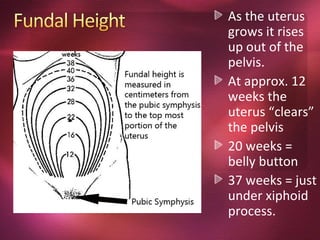
As the uterus
grows it rises
up out of the
pelvis.
At approx. 12
weeks the
uterus “clears”
the pelvis
20 weeks =
belly button
37 weeks = just
under xiphoid
process.
Are you pregnant?
How far along are you?
How far apart are the contractions?
Any bleeding or discharge? Show?
PROM?
Do you feel pressure between your legs?
How many times have you been pregnant
before?
How fast were your previous babies
Placenta Previa
Abruptio Placenta
Eclampsia
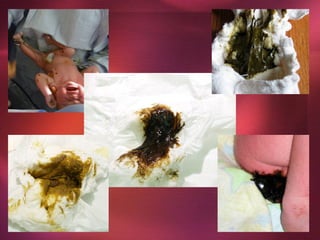
Fetal Distress (Meconium)
Breech Presentation
Cephalopelvic Disproportion
Active Herpes
Always give high
flow oxygen
Baseline Vital Signs
History and Physical
Put mom on side if
delivery is not
imminent*
Locate the OB
delivery kit
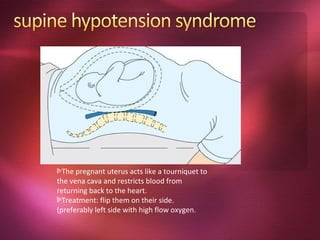
The pregnant uterus acts like a tourniquet to
the vena cava and restricts blood from
returning back to the heart.
  Treatment: flip them on their side.
(preferably left side with high flow oxygen.

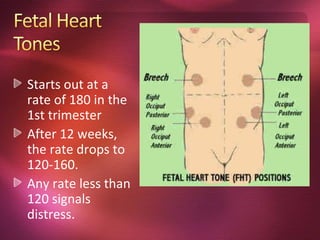
Starts out at a
rate of 180 in the
1st trimester
After 12 weeks,
the rate drops to
120-160.
Any rate less than
120 signals
distress.
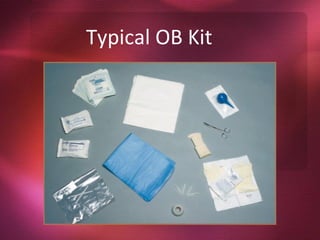
Typical OB Kit
A few clean towels,
blankets, shirts, etc.
clean string
clean sturdy scissors
or a knife
a clean trash bag
Some gauze pads to
wipe out the mouth
Prayer
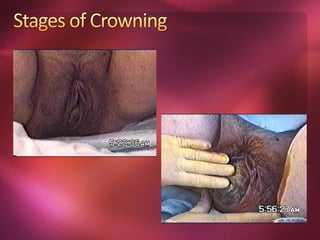
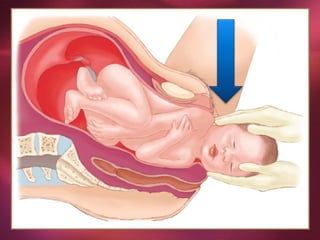
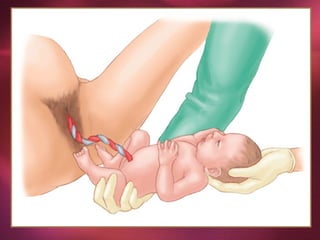
check for crowning
Get your already located OB kit/supplies out.
if you have time, place some folded towels
underneath mom’s pelvis with a clean plastic
bag opened up and tucked underneath her
buttocks.
Have your assistant set up another bed/cot near
the mom and prepare for baby care.
Position, Dry, Wrap ‘em up. Keep them
warm.
Keep them level with mom’s body. Keep
warm.
Check sugar if lethargic or SGA or LGA.
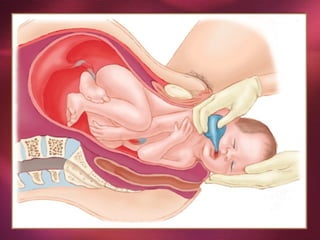
Repeat suctioning as needed, keep warm.
Note the time of birth and if mobile the
county baby was born in.
Assess the infant, obtain APGAR’s, keep
warm
Stimulate if not perking up.
Appearance
(color)
Pulse (> 100)
Grimace
(vigorous and
crying)
Activity (good
motion in
limbs)
Respirations
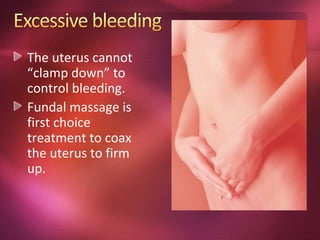
The uterus cannot
“clamp down” to
control bleeding.
Fundal massage is
first choice
treatment to coax
the uterus to firm
up.
Explain to mom that this will be uncomfortable,
similar to a bad menstrual cramp, but that it
MUST be done or she can bleed to death.
With your hand flat and perpendicular to the
belly, press down anterior to posterior just
above the umbilicus until you feel a “ridge” rise
up. This “ridge” is the fundus. Begin rubbing the
fundus and moving down toward the pubic
symphysis until it you no longer see clots and
“gushes” from the vagina.
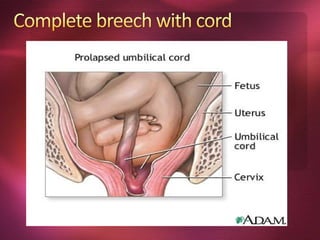
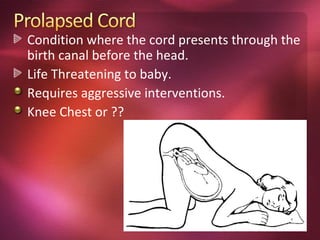
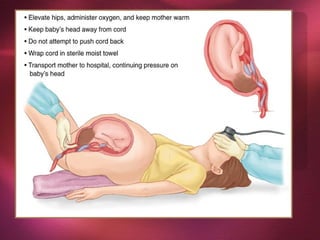
Condition where the cord presents through the
birth canal before the head.
Life Threatening to baby.
Requires aggressive interventions.
Knee Chest or ??
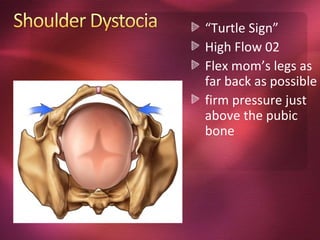
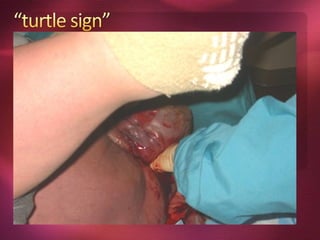
“Turtle Sign”
High Flow 02
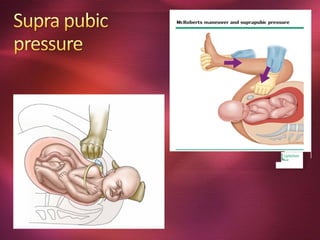
Flex mom’s legs as
far back as possible
firm pressure just
above the pubic
bone
Emt childbirth
Emt childbirth
Emt childbirth
Emt childbirth
Emt childbirth
Emt childbirth

Emt childbirth

  • 1.
    A lecture about where babies come from Richard Beebe MS RN NRP
  • 2.
    To be ableto handle a routine vaginal delivery in an emergent situation. To recognize that over 90% of pregnancies end in a normal term delivery and that we as healthcare workers are there to assist something that has been going on for millions of years. To be able to recognize potential complications of pregnancy and delivery and be able to administer commonly accepted measures to alleviate the complications.
  • 3.
  • 4.
    Placenta Hormones Umbilical Cord Amniotic Sac Amniotic Fluid 175 - 225 mL - 4 months PROM
  • 5.
    40 weeks inlength 37 - 42 Weeks 3 trimesters Average weight 6.6 to 7.9 pounds A missed period is the usual first clue 11% of women who say there is “no way” they could be pregnant actually are..
  • 7.
    Last Menstrual Period TPAL vs GPA Primapara Grandpara Estimated Due Date Abdominal Assessment
  • 8.
    As the uterus growsit rises up out of the pelvis. At approx. 12 weeks the uterus “clears” the pelvis 20 weeks = belly button 37 weeks = just under xiphoid process.
  • 9.
    Are you pregnant? Howfar along are you? How far apart are the contractions? Any bleeding or discharge? Show? PROM? Do you feel pressure between your legs? How many times have you been pregnant before? How fast were your previous babies
  • 10.
    Placenta Previa Abruptio Placenta Eclampsia FetalDistress (Meconium) Breech Presentation Cephalopelvic Disproportion Active Herpes
  • 11.
    Always give high flowoxygen Baseline Vital Signs History and Physical Put mom on side if delivery is not imminent* Locate the OB delivery kit
  • 12.
    The pregnant uterusacts like a tourniquet to the vena cava and restricts blood from returning back to the heart. Treatment: flip them on their side. (preferably left side with high flow oxygen.
  • 13.
    Starts out ata rate of 180 in the 1st trimester After 12 weeks, the rate drops to 120-160. Any rate less than 120 signals distress.
  • 14.
  • 15.
    A few cleantowels, blankets, shirts, etc. clean string clean sturdy scissors or a knife a clean trash bag Some gauze pads to wipe out the mouth Prayer
  • 16.
    check for crowning Getyour already located OB kit/supplies out. if you have time, place some folded towels underneath mom’s pelvis with a clean plastic bag opened up and tucked underneath her buttocks. Have your assistant set up another bed/cot near the mom and prepare for baby care.
  • 27.
    Position, Dry, Wrap‘em up. Keep them warm. Keep them level with mom’s body. Keep warm. Check sugar if lethargic or SGA or LGA. Repeat suctioning as needed, keep warm. Note the time of birth and if mobile the county baby was born in. Assess the infant, obtain APGAR’s, keep warm Stimulate if not perking up.
  • 28.
    Appearance (color) Pulse (> 100) Grimace (vigorousand crying) Activity (good motion in limbs) Respirations
  • 32.
    The uterus cannot “clampdown” to control bleeding. Fundal massage is first choice treatment to coax the uterus to firm up.
  • 33.
    Explain to momthat this will be uncomfortable, similar to a bad menstrual cramp, but that it MUST be done or she can bleed to death. With your hand flat and perpendicular to the belly, press down anterior to posterior just above the umbilicus until you feel a “ridge” rise up. This “ridge” is the fundus. Begin rubbing the fundus and moving down toward the pubic symphysis until it you no longer see clots and “gushes” from the vagina.
  • 36.
    Condition where thecord presents through the birth canal before the head. Life Threatening to baby. Requires aggressive interventions. Knee Chest or ??
  • 44.
    “Turtle Sign” High Flow02 Flex mom’s legs as far back as possible firm pressure just above the pubic bone

Editor's Notes

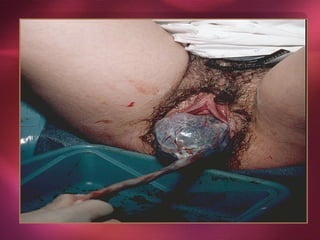
  • #49 The uterus turns inside out. Risk factors: magnesium sulfate, multiple pregnancies, pregnancy with multiples, tugging on the cord/placenta before it is ready to break away. Occurs 2:1000 deliveries Bloody, meaty red bulge hanging out of perineum. Life Threatening
  • #50 Administer Tocolytics (NTG, Mag Sulfate, or terbutaline) make a fist and place in center of the uterine fold Make one firm push to reduce the uterus back up. Requires your fist to enter into the vagina. After the uterus is successfully replaced, administer a pitocin drip to help it firm up.