ENHANCING WORKFORCE
CAPABILITY: STRATEGIES
FOR EFFECTIVE EMPLOYEE
TRAINING AND
DEVELOPMENT
INTRODUCTION TO
WORKFORCE
CAPABILITY
In today's competitive landscape,
enhancing workforce capability is
crucial. Effective employee
training and development
strategies ensure that
organizations can adapt to
changes and thrive. This
presentation will explore key
approaches to cultivate a skilled
and motivated workforce.
IMPORTANCE OF
EMPLOYEE
TRAINING
Investing in employee
training is vital for
organizational success. It
boosts productivity, reduces
turnover, and fosters a
culture of continuous
learning. By prioritizing
training, companies can
enhance employee
satisfaction and drive overall
performance.
IDENTIFYING TRAINING
NEEDS
To develop effective training
programs, organizations must
assess training needs. This
involves analyzing current skills,
identifying gaps, and aligning
training with business goals. A
thorough needs assessment
ensures targeted and impactful
training initiatives.
Diverse Training
Methods
Utilizing a variety of training
methods can enhance learning
outcomes. Options include on-the-
job training, e-learning,
workshops, and mentorship. A
blended approach caters to
different learning styles and
maximizes engagement among
employees.
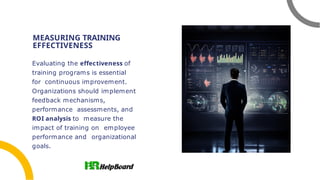
MEASURING TRAINING
EFFECTIVENESS
Evaluating the effectiveness of
training programs is essential
for continuous improvement.
Organizations should implement
feedback mechanisms,
performance assessments, and
ROI analysis to measure the
impact of training on employee
performance and organizational
goals.
CREATING A LEARNING
CULTURE
Fostering a learning culture
encourages employees to take
ownership of their development.
Organizations can promote this
by providing resources,
recognizing achievements, and
encouraging collaboration. A
strong learning culture drives
innovation and employee
engagement.
LEVERAGING TECHNOLOGY IN TRAINING
Incorporating technology
into training programs can
enhance accessibility and
engagement. Tools like LMS,
virtual reality, and mobile
learning platforms provide
flexible options for
employees to learn at their
own pace and convenience.
In conclusion, enhancing workforce capability
through effective training and development is
imperative. Organizations should continuously
assess needs, utilize diverse methods, and foster a
learning culture to ensure long-term success and
adaptability in a dynamic environment.
CONCLUSION AND
RECOMMENDATIONS
Thanks!
Do you have any questions?
info@hrhelpboard.com
+91 9899990261
www.hrhelpboard.com

Employee Training and Development in HRM

  • 1.
    ENHANCING WORKFORCE CAPABILITY: STRATEGIES FOREFFECTIVE EMPLOYEE TRAINING AND DEVELOPMENT
  • 2.
    INTRODUCTION TO WORKFORCE CAPABILITY In today'scompetitive landscape, enhancing workforce capability is crucial. Effective employee training and development strategies ensure that organizations can adapt to changes and thrive. This presentation will explore key approaches to cultivate a skilled and motivated workforce.
  • 3.
    IMPORTANCE OF EMPLOYEE TRAINING Investing inemployee training is vital for organizational success. It boosts productivity, reduces turnover, and fosters a culture of continuous learning. By prioritizing training, companies can enhance employee satisfaction and drive overall performance.
  • 4.
    IDENTIFYING TRAINING NEEDS To developeffective training programs, organizations must assess training needs. This involves analyzing current skills, identifying gaps, and aligning training with business goals. A thorough needs assessment ensures targeted and impactful training initiatives.
  • 5.
    Diverse Training Methods Utilizing avariety of training methods can enhance learning outcomes. Options include on-the- job training, e-learning, workshops, and mentorship. A blended approach caters to different learning styles and maximizes engagement among employees.
  • 6.
    MEASURING TRAINING EFFECTIVENESS Evaluating theeffectiveness of training programs is essential for continuous improvement. Organizations should implement feedback mechanisms, performance assessments, and ROI analysis to measure the impact of training on employee performance and organizational goals.
  • 7.
    CREATING A LEARNING CULTURE Fosteringa learning culture encourages employees to take ownership of their development. Organizations can promote this by providing resources, recognizing achievements, and encouraging collaboration. A strong learning culture drives innovation and employee engagement.
  • 8.
    LEVERAGING TECHNOLOGY INTRAINING Incorporating technology into training programs can enhance accessibility and engagement. Tools like LMS, virtual reality, and mobile learning platforms provide flexible options for employees to learn at their own pace and convenience.
  • 9.
    In conclusion, enhancingworkforce capability through effective training and development is imperative. Organizations should continuously assess needs, utilize diverse methods, and foster a learning culture to ensure long-term success and adaptability in a dynamic environment. CONCLUSION AND RECOMMENDATIONS
  • 10.
    Thanks! Do you haveany questions? info@hrhelpboard.com +91 9899990261 www.hrhelpboard.com