Embossing Printing
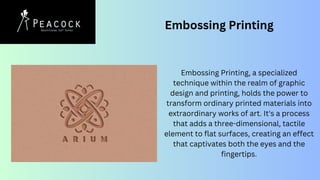
Embossing Printing, a specialized
technique within the realm of graphic
design and printing, holds the power to
transform ordinary printed materials into
extraordinary works of art. It's a process
that adds a three-dimensional, tactile
element to flat surfaces, creating an effect
that captivates both the eyes and the
fingertips.
Embossing involves creating raised patterns or images on paper or other
materials through the application of pressure. It's accomplished using a
combination of specialized dies, which are metal plates engraved with the
desired design, and a printing press. The material is placed between the
dies, and pressure is applied, causing the design to be raised on one side
and depressed on the other. This results in a visually striking and tactile
effect that engages multiple senses.
Embossing printing has the remarkable ability to enhance the visual appeal of
printed materials. Whether it's a business card, a book cover, a packaging box,
or a greeting card, embossed elements catch the light in a unique way, creating
shadows and highlights that add depth and dimension. This added visual
intrigue commands attention, making the design stand out and leave a lasting
impression.
In a digital age where much of our interactions are screen-based, tactile
experiences hold a special allure. Embossing brings a tactile component to
printed materials, inviting the reader or recipient to touch and feel the
design. Running one's fingers over an embossed logo, pattern, or texture
imparts a sensory engagement that fosters a stronger connection to the
piece. This physical interaction leaves a memorable imprint in the mind,
setting the experience apart from traditional flat printing.
Embossing offers a versatile range of possibilities. From
subtle and understated designs that add a hint of elegance to
bold and intricate patterns that demand attention, embossing
can cater to various aesthetic preferences. It allows designers
to play with contrasts, creating a balance between the raised
and flat areas, as well as exploring the interplay of light and
shadow
THANK YOU
peacockdubai.com
sales@peacockdubai.com

Embossing Printing

  • 1.
    Embossing Printing Embossing Printing,a specialized technique within the realm of graphic design and printing, holds the power to transform ordinary printed materials into extraordinary works of art. It's a process that adds a three-dimensional, tactile element to flat surfaces, creating an effect that captivates both the eyes and the fingertips.
  • 2.
    Embossing involves creatingraised patterns or images on paper or other materials through the application of pressure. It's accomplished using a combination of specialized dies, which are metal plates engraved with the desired design, and a printing press. The material is placed between the dies, and pressure is applied, causing the design to be raised on one side and depressed on the other. This results in a visually striking and tactile effect that engages multiple senses.
  • 3.
    Embossing printing hasthe remarkable ability to enhance the visual appeal of printed materials. Whether it's a business card, a book cover, a packaging box, or a greeting card, embossed elements catch the light in a unique way, creating shadows and highlights that add depth and dimension. This added visual intrigue commands attention, making the design stand out and leave a lasting impression.
  • 4.
    In a digitalage where much of our interactions are screen-based, tactile experiences hold a special allure. Embossing brings a tactile component to printed materials, inviting the reader or recipient to touch and feel the design. Running one's fingers over an embossed logo, pattern, or texture imparts a sensory engagement that fosters a stronger connection to the piece. This physical interaction leaves a memorable imprint in the mind, setting the experience apart from traditional flat printing.
  • 5.
    Embossing offers aversatile range of possibilities. From subtle and understated designs that add a hint of elegance to bold and intricate patterns that demand attention, embossing can cater to various aesthetic preferences. It allows designers to play with contrasts, creating a balance between the raised and flat areas, as well as exploring the interplay of light and shadow
  • 6.