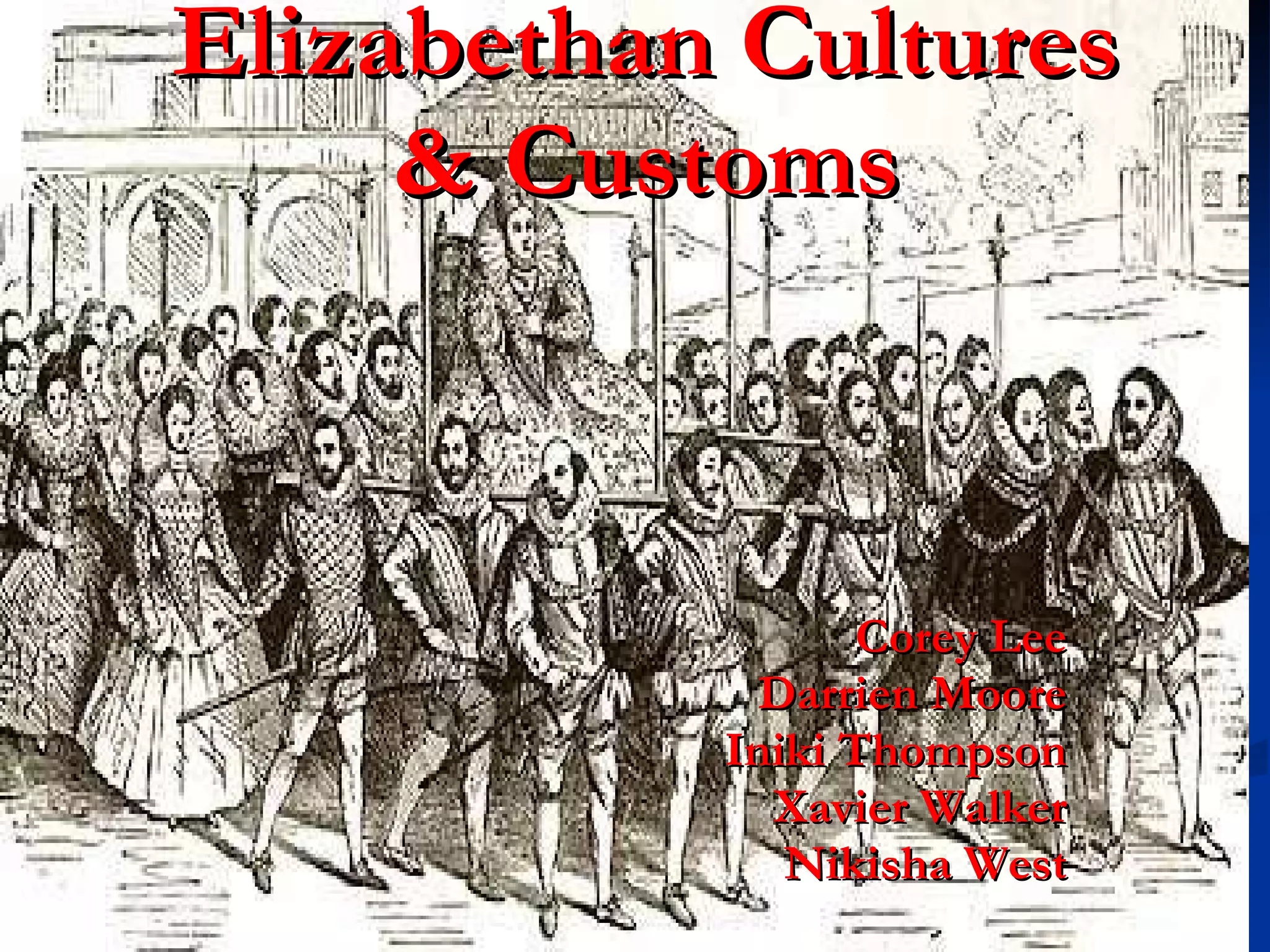
Elizabethan Cultures & Customs Corey Lee Darrien Moore Iniki Thompson Xavier Walker Nikisha West
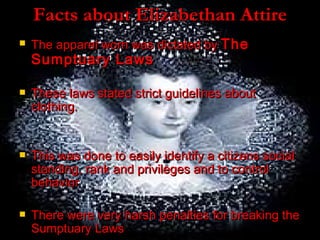
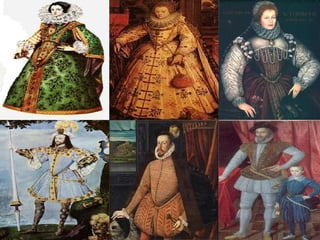
Facts about Elizabethan Attire The apparel worn was dictated by  The Sumptuary Laws These laws stated strict guidelines about clothing. This was done to easily identify a citizens social standing, rank and privileges and to control behavior  There were very harsh penalties for breaking the Sumptuary Laws
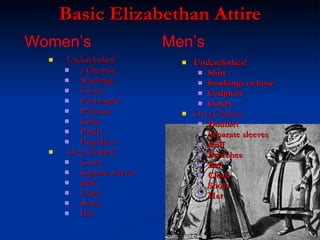
Basic Elizabethan Attire Underclothes!  a Chemise Stockings  Corset  Farthingale  Petticoat  Kirtle  Partlet Headdress Over Clothes!  Gown Separate sleeves Ruff  Cloak  Shoes Hat Underclothes!  Shirt  Stockings or hose Codpiece  Corset Over Clothes!  Doublet  Separate sleeves Ruff  Breeches Belt Cloak Shoes Hat Women’s  Men’s
 
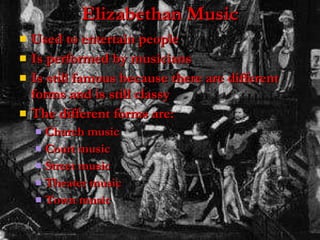
Elizabethan Music Used to entertain people  Is performed by musicians Is still famous because there are different forms and is still classy  The different forms are: Church music Court music Street music Theater music Town music
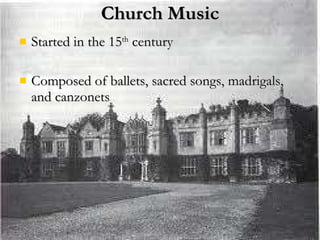
Church Music Started in the 15 th  century  Composed of ballets, sacred songs, madrigals, and canzonets
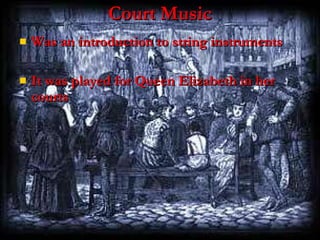
Court Music Was an introduction to string instruments It was played for Queen Elizabeth in her courts
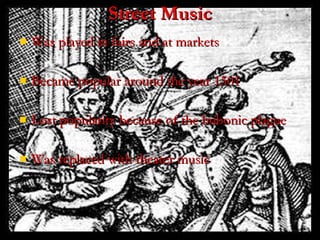
Street Music Was played in fairs and at markets Became popular around the year 1501 Lost popularity because of the bubonic plague Was replaced with theater music
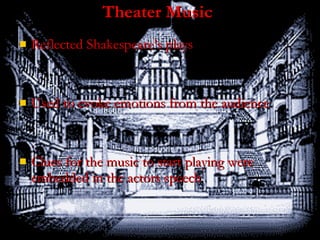
Theater Music Reflected Shakespeare’s plays Used to evoke emotions from the audience Clues for the music to start playing were embedded in the actors speech
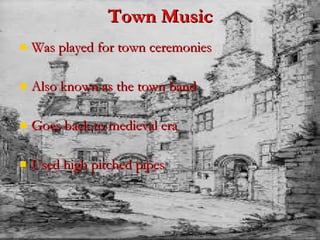
Town Music Was played for town ceremonies  Also known as the town band Goes back to medieval era Used high pitched pipes
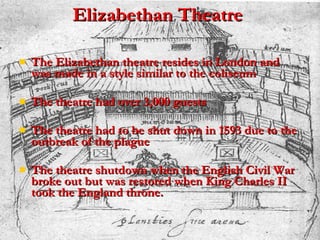
Elizabethan Theatre  The Elizabethan theatre resides in London and was made in a style similar to the coliseum The theatre had over 3,000 guests The theatre had to be shut down in 1593 due to the outbreak of the plague The theatre shutdown when the English Civil War broke out but was restored when King Charles II took the England throne.
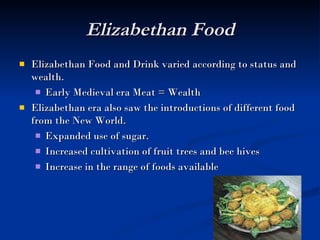
Elizabethan Food Elizabethan Food and Drink varied according to status and wealth.  Early Medieval era Meat = Wealth Elizabethan era also saw the introductions of different food from the New World.  Expanded use of sugar.   Increased cultivation of fruit trees and bee hives  Increase in the range of foods available
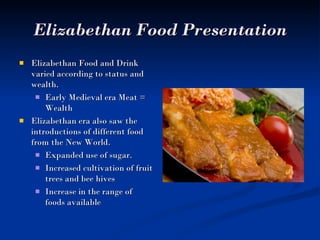
Elizabethan Food Presentation Elizabethan Food and Drink varied according to status and wealth.  Early Medieval era Meat = Wealth Elizabethan era also saw the introductions of different food from the New World.  Expanded use of sugar.   Increased cultivation of fruit trees and bee hives  Increase in the range of foods available
Cooking Methods Elizabethan food was prepared by several cooking methods: Spit roasting Baking Boiling Smoking Salting Fried
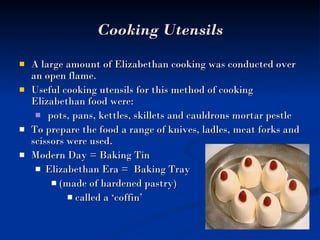
Cooking Utensils A large amount of Elizabethan cooking was conducted over an open flame.  Useful cooking utensils for this method of cooking Elizabethan food were: pots, pans, kettles, skillets and cauldrons mortar pestle To prepare the food a range of knives, ladles, meat forks and scissors were used.  Modern Day = Baking Tin  Elizabethan Era =  Baking Tray  (made of hardened pastry)  called a ‘coffin’
Elizabethan Drink Water was not clean in the Middle Ages    People therefore drank wine and ale.  Rich drank both      Poor just drank ale.   Honey was used to make a sweet alcoholic drink called mead which was drunk by all classes.  Wine was generally imported although some fruit wines were produced in England.  A form of cider referred to as 'Apple-wine' was also produced.  Ales were brewed with malt and water Other flavors were added to ales and beers such as bayberries or long pepper. Consumption of weak, low-alcohol drinks at this time has been estimated at around one gallon per person per day.
Works Cited &quot;ELIZABETHAN CLOTHING.&quot;  ELIZABETHAN ERA . Web. 07 Jan. 2011. <http://www.elizabethan-era.org.uk/elizabethan-clothing.htm>. Dogra, Aastha. &quot;Elizabethan Era.&quot;  Buzzle Web Portal: Intelligent Life on the Web . Web. 07 Jan. 2011. <http://www.buzzle.com/articles/elizabethan-era.html>.

Elizabethan Cultures & Customs

  • 1.
    Elizabethan Cultures &Customs Corey Lee Darrien Moore Iniki Thompson Xavier Walker Nikisha West
  • 2.
    Facts about ElizabethanAttire The apparel worn was dictated by The Sumptuary Laws These laws stated strict guidelines about clothing. This was done to easily identify a citizens social standing, rank and privileges and to control behavior There were very harsh penalties for breaking the Sumptuary Laws
  • 3.
    Basic Elizabethan AttireUnderclothes! a Chemise Stockings Corset Farthingale Petticoat Kirtle Partlet Headdress Over Clothes! Gown Separate sleeves Ruff Cloak Shoes Hat Underclothes! Shirt Stockings or hose Codpiece Corset Over Clothes! Doublet Separate sleeves Ruff Breeches Belt Cloak Shoes Hat Women’s Men’s
  • 4.
  • 5.
    Elizabethan Music Usedto entertain people Is performed by musicians Is still famous because there are different forms and is still classy The different forms are: Church music Court music Street music Theater music Town music
  • 6.
    Church Music Startedin the 15 th century Composed of ballets, sacred songs, madrigals, and canzonets
  • 7.
    Court Music Wasan introduction to string instruments It was played for Queen Elizabeth in her courts
  • 8.
    Street Music Wasplayed in fairs and at markets Became popular around the year 1501 Lost popularity because of the bubonic plague Was replaced with theater music
  • 9.
    Theater Music ReflectedShakespeare’s plays Used to evoke emotions from the audience Clues for the music to start playing were embedded in the actors speech
  • 10.
    Town Music Wasplayed for town ceremonies Also known as the town band Goes back to medieval era Used high pitched pipes
  • 11.
    Elizabethan Theatre The Elizabethan theatre resides in London and was made in a style similar to the coliseum The theatre had over 3,000 guests The theatre had to be shut down in 1593 due to the outbreak of the plague The theatre shutdown when the English Civil War broke out but was restored when King Charles II took the England throne.
  • 12.
    Elizabethan Food ElizabethanFood and Drink varied according to status and wealth. Early Medieval era Meat = Wealth Elizabethan era also saw the introductions of different food from the New World. Expanded use of sugar.  Increased cultivation of fruit trees and bee hives Increase in the range of foods available
  • 13.
    Elizabethan Food PresentationElizabethan Food and Drink varied according to status and wealth. Early Medieval era Meat = Wealth Elizabethan era also saw the introductions of different food from the New World. Expanded use of sugar.  Increased cultivation of fruit trees and bee hives Increase in the range of foods available
  • 14.
    Cooking Methods Elizabethanfood was prepared by several cooking methods: Spit roasting Baking Boiling Smoking Salting Fried
  • 15.
    Cooking Utensils Alarge amount of Elizabethan cooking was conducted over an open flame. Useful cooking utensils for this method of cooking Elizabethan food were: pots, pans, kettles, skillets and cauldrons mortar pestle To prepare the food a range of knives, ladles, meat forks and scissors were used. Modern Day = Baking Tin Elizabethan Era = Baking Tray (made of hardened pastry) called a ‘coffin’
  • 16.
    Elizabethan Drink Waterwas not clean in the Middle Ages  People therefore drank wine and ale. Rich drank both   Poor just drank ale. Honey was used to make a sweet alcoholic drink called mead which was drunk by all classes. Wine was generally imported although some fruit wines were produced in England. A form of cider referred to as 'Apple-wine' was also produced. Ales were brewed with malt and water Other flavors were added to ales and beers such as bayberries or long pepper. Consumption of weak, low-alcohol drinks at this time has been estimated at around one gallon per person per day.
  • 17.
    Works Cited &quot;ELIZABETHANCLOTHING.&quot; ELIZABETHAN ERA . Web. 07 Jan. 2011. <http://www.elizabethan-era.org.uk/elizabethan-clothing.htm>. Dogra, Aastha. &quot;Elizabethan Era.&quot; Buzzle Web Portal: Intelligent Life on the Web . Web. 07 Jan. 2011. <http://www.buzzle.com/articles/elizabethan-era.html>.