IOT IN E-WASTE
MANAGEMENT
Presented By
DEEYA DARSHINI SD
1JB22CS404
INTRODUCTION TO
E- WASTE
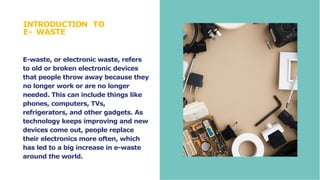
E-waste, or electronic waste, refers
to old or broken electronic devices
that people throw away because they
no longer work or are no longer
needed. This can include things like
phones, computers, TVs,
refrigerators, and other gadgets. As
technology keeps improving and new
devices come out, people replace
their electronics more often, which
has led to a big increase in e-waste
around the world.
Understanding
IoT
Internet of Things (IoT) refers to
the network of interconnected
devices that communicate and
exchange data. By leveraging
smart technologies, we can
monitor and manage e-waste
more efficiently, leading to
improved recycling and resource
recovery processes.
Tracking E-
Waste
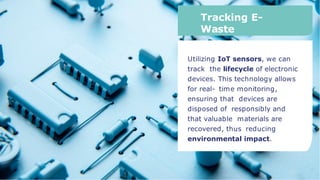
Utilizing IoT sensors, we can
track the lifecycle of electronic
devices. This technology allows
for real- time monitoring,
ensuring that devices are
disposed of responsibly and
that valuable materials are
recovered, thus reducing
environmental impact.
SMART
RECYCLING
SOLUTIONS
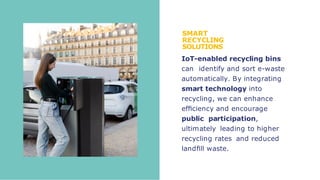
IoT-enabled recycling bins
can identify and sort e-waste
automatically. By integrating
smart technology into
recycling, we can enhance
efficiency and encourage
public participation,
ultimately leading to higher
recycling rates and reduced
landfill waste.
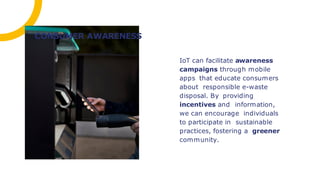
IoT can facilitate awareness
campaigns through mobile
apps that educate consumers
about responsible e-waste
disposal. By providing
incentives and information,
we can encourage individuals
to participate in sustainable
practices, fostering a greener
community.
CONSUMER AWARENESS
CHALLENGES
AHEAD
Despite the potential of IoT,
challenges remain,
including data privacy,
technological disparities,
and the need for
regulatory frameworks.
Addressing these issues is
crucial
to fully harness the benefits of
IoT for e-waste management.
In conclusion, harnessing IoT for e-waste
management presents a transformative
opportunity. By embracing smart solutions, we can
pave the way for a sustainable future, reduce
environmental harm, and promote responsible
consumption and disposal practices.
CONCLUSION
Thank You!

Electronic- waste Management based on iot

  • 1.
    IOT IN E-WASTE MANAGEMENT PresentedBy DEEYA DARSHINI SD 1JB22CS404
  • 2.
    INTRODUCTION TO E- WASTE E-waste,or electronic waste, refers to old or broken electronic devices that people throw away because they no longer work or are no longer needed. This can include things like phones, computers, TVs, refrigerators, and other gadgets. As technology keeps improving and new devices come out, people replace their electronics more often, which has led to a big increase in e-waste around the world.
  • 3.
    Understanding IoT Internet of Things(IoT) refers to the network of interconnected devices that communicate and exchange data. By leveraging smart technologies, we can monitor and manage e-waste more efficiently, leading to improved recycling and resource recovery processes.
  • 4.
    Tracking E- Waste Utilizing IoTsensors, we can track the lifecycle of electronic devices. This technology allows for real- time monitoring, ensuring that devices are disposed of responsibly and that valuable materials are recovered, thus reducing environmental impact.
  • 5.
    SMART RECYCLING SOLUTIONS IoT-enabled recycling bins canidentify and sort e-waste automatically. By integrating smart technology into recycling, we can enhance efficiency and encourage public participation, ultimately leading to higher recycling rates and reduced landfill waste.
  • 6.
    IoT can facilitateawareness campaigns through mobile apps that educate consumers about responsible e-waste disposal. By providing incentives and information, we can encourage individuals to participate in sustainable practices, fostering a greener community. CONSUMER AWARENESS
  • 7.
    CHALLENGES AHEAD Despite the potentialof IoT, challenges remain, including data privacy, technological disparities, and the need for regulatory frameworks. Addressing these issues is crucial to fully harness the benefits of IoT for e-waste management.
  • 8.
    In conclusion, harnessingIoT for e-waste management presents a transformative opportunity. By embracing smart solutions, we can pave the way for a sustainable future, reduce environmental harm, and promote responsible consumption and disposal practices. CONCLUSION
  • 9.