Electronic And Computer Music 3rd Edition Peter Manning
Electronic And Computer Music 3rd Edition Peter Manning
Electronic And Computer Music 3rd Edition Peter Manning
Electronic And Computer Music 3rd Edition Peter Manning
Electronic And Computer Music 3rd Edition Peter Manning
1.
Electronic And ComputerMusic 3rd Edition Peter
Manning download
https://ebookbell.com/product/electronic-and-computer-music-3rd-
edition-peter-manning-5223494
Explore and download more ebooks at ebookbell.com
2.
Here are somerecommended products that we believe you will be
interested in. You can click the link to download.
Electronic And Computer Music 3rd Revised Expanded Peter Manning
https://ebookbell.com/product/electronic-and-computer-music-3rd-
revised-expanded-peter-manning-6713142
Electronic And Computer Music Fourth Edition Peter Manning
https://ebookbell.com/product/electronic-and-computer-music-fourth-
edition-peter-manning-11049170
Electronic And Computer Music P Maning
https://ebookbell.com/product/electronic-and-computer-music-p-
maning-4090376
Waves And Forms Electronic Music Devices And Computer Encodings In
China Basile Zimmermann
https://ebookbell.com/product/waves-and-forms-electronic-music-
devices-and-computer-encodings-in-china-basile-zimmermann-49443020
3.
Aircraft Digital ElectronicAnd Computer Systems 3rd Edition Michael H
Tooley
https://ebookbell.com/product/aircraft-digital-electronic-and-
computer-systems-3rd-edition-michael-h-tooley-43772582
Aircraft Digital Electronic And Computer Systems 2nd Edition Mike
Tooley
https://ebookbell.com/product/aircraft-digital-electronic-and-
computer-systems-2nd-edition-mike-tooley-5222842
Aircraft Digital Electronic And Computer Systems 2nd Edition 2nd
Tooley
https://ebookbell.com/product/aircraft-digital-electronic-and-
computer-systems-2nd-edition-2nd-tooley-55605548
Advances In Electrical And Electronic Engineering And Computer Science
Lecture Notes In Electrical Engineering 741 1st Ed 2021 Zahriladha
Zakaria Editor
https://ebookbell.com/product/advances-in-electrical-and-electronic-
engineering-and-computer-science-lecture-notes-in-electrical-
engineering-741-1st-ed-2021-zahriladha-zakaria-editor-36373786
Recent Advances In Electrical And Electronic Engineering And Computer
Science Zahriladha Zakaria
https://ebookbell.com/product/recent-advances-in-electrical-and-
electronic-engineering-and-computer-science-zahriladha-
zakaria-42013132
Preface
Since the publicationof the first edition of this book in 1985 the medium of elec-
tronic and computer music has expanded at a breathtaking pace. At that time the
era of MIDI was in its infancy, and few could have accurately predicted the true
extent of the digital revolution that was to follow, bringing increasingly powerful
audio synthesis and processing resources both to institutions and in turn individ-
uals working at home, using the personal computer and the Internet. The con-
tinuing rapid pace of advances in digital technology since the publication of the
third edition in 2004 has necessitated a further major expansion of the text, with
four new chapters and a number of revisions to the existing account of develop-
ments from the dawn of the new Millennium. Yet again the sheer scale of the
progress that has been made during the intervening years demands a reappraisal
of this recent legacy.
Viewed in retrospect, it is notable that many of the issues discussed in earlier
editions have achieved elevated levels of importance for this new edition. The
growing interest in vintage analogue synthesizers is an interesting example of this
development. As these devices become increasingly consigned to museums, so our
knowledge and understanding of their functional characteristics and our ability to
recreate them in a suitably authentic manner using modern technologies become
ever more challenging. The retention of all the existing material from previous edi-
tions in this context is thus clearly of more than an historical value, now provid-
ing increasingly useful information for those wishing to revisit the fascinating
world of analogue synthesis.
More generally, a number of key issues in terms of the art and practice of elec-
tronic and computer music still remain to be resolved, demonstrating that ad-
13.
viii : Preface
vancesin technology do not necessarily result in concomitant improvements in
their creative application. There is, for example, still no universal language for ex-
pressing musical ideas in a format that has a direct equivalence with the technical
resources that are necessary to realize them. This creates many context-specific
difficulties that have yet to be adequately addressed, and progress here in recent
years has been far from overwhelming. The desire to explore pastures new is all-
compelling, and the importance of such lines of enquiry must not be underesti-
mated. Such enthusiasm, however, sometimes comes at the expense of critical re-
flection and the tendency at times to re-invent the wheel. A key purpose of this
book is to provide a comprehensive point of reference for developing an informed
understanding of the issues that have arisen in this context from the birth of the
medium to the present day.
At the most fundamental level it is the nature of the working relationships es-
tablished between composers and performers and their sound-producing tools
that holds the key to failure or success. These relationships are ultimately de-
pendent upon the modes of communication and interaction that can be facilitated
by the available technologies, relating the worlds of creativity and subjectivity with
the highly objective environment of scientific engineering. It is this point of inter-
section that provides a primary point of reference throughout this account, com-
bined with the clear intention to provide the reader with a perspective that con-
nects these interdisciplinary strands in the pursuit of common goals within this
diverse, complex, and intriguing medium of creative expression.
14.
Contents
3 1. TheBackground to 1945
I. Developments from 1945 to 1960
19 2. Paris and Musique Concrète
39 3. Cologne and Elektronische Musik
68 4. Milan and Elsewhere in Europe
74 5. America
II. New Horizons in Electronic Design
101 6. The Voltage-Controlled Synthesizer
III. The Electronic Repertory from 1960
135 7. Works for Tape
157 8. Live Electronic Music
168 9. Rock and Pop Electronic Music
IV. The Digital Revolution to 1980
181 10. The Foundations of Computer Music
197 11. From Computer Technology to Musical Creativity
217 12. The Microprocessor Revolution
15.
x : Contents
V.Digital Audio
245 13. The Characteristics of Digital Audio
VI. MIDI
263 14. The Development of the MIDI Communications Protocol
279 15. From Analog to Digital: The Evolution of MIDI Hardware
311 16. From Microcomputer to Music Computer: The MIDI Perspective
327 17. Further Advances in Hardware Design
344 18. The Changing Fortunes of the MIDI Manufacturing Sector
VII. Desktop Synthesis and Signal Processing
365 19. From Minicomputer to Advanced Computer Workstation
382 20. The Personal Computer
395 21. The Digital Audio Workstation
417 22. Laptop Music and Related Activities
430 23. Synthesis, Signal Processing, and Spatialization
450 24. Performance Controllers: Evolution and Change
VIII. Global Networking
471 25. The Internet
483 26. Conclusion
493 Notes
509 Bibliography
513 Index
Photo gallery follows page 132.
16.
Illustrations
1 Ondes Martenot,1977 concert version
2 Thérémin, original concert version
3 Pierre Schaeffer at work in his studio in the early 1960s
4 Stockhausen at work in the Cologne Studio, c.1960
5 The Milan Studio,c.1960
6 The Philips Pavilion at the 1958 Brussels World Fair
7 The RCA synthesizer
8 The Moog Mk 3C synthesizer
9 The Tonus ARP 2000 synthesizer
10 Miss Oram in her Oramics studio
11 The main voltage-controlled studio at the Institute of Sonology, Utrecht,
c.1970
12 The electronic music studio, University of Toronto, c.1963, featuring the
Hamograph.
13 Performance of Variations V (1965) by the Merce Cunningham
Dance Company
14 MIT Experimental Music Studio, running MUSIC 11, c.1976
15 The IRCAM Musical Workstation, c.1991
16 GROOVE System, Bell Telephone Laboratories, c.1970
17 The MUSYS studio of Peter Zinovieff, c.1970
18 The Yamaha SY99 synthesizer
17.
19 The SynclavierII synthesizer
20 The Fairlight CMI synthesizer
Photographs are reproduced by kind permission of the following:
(1) John Morton, Darlington; (3) photo Serge Lido, Paris; (4) Universal Edition
(London) Ltd.; (5) RAI Radiotelevisione Italiana, Milan; (6) Philips Press Office,
Eindhoven; (7) RCA, New York; (10) Daphne Oram, Wrotham Kent; (11) Insti-
tuut voor sonologie, Utrecht; (12) Electronic Music Studio, University of
Toronto (UTEMS); (13) Cunningham Dance Foundation (photo Hervé
Gloaguen); (14) Massachusetts Institute of Technology (photo Jim Harrison);
(15) IRCAM, Paris (photo Phillipe Gontier); (16) Bell Laboratories, Murray Hill,
NJ; (17) Peter Zinovieff, Swaffham Prior, Cambs; (18) Yamaha-Kemble Music
(UK) Ltd; (19) Bandive Ltd, London; (20) Fairlight Instruments Pty, Sydney.
xii : Illustrations
18.
ABOUT THE COMPANIONWEB SITE
www.oup.com/us/electronicandcomputermusic
Oxford has created an open access Web site containing the discography to ac-
company Electronic and Computer Music, and the reader is encouraged to take full
advantage of it. This listing is a unique archival resource, providing a comprehen-
sive listing of the records and CDs produced from the early 1950s to the early
2000s. With the increasing use of self-publication and promotion via the Internet
in recent years, the CD listings from this period are necessarily more selective.
Nonetheless it is hoped that this supplementary perspective will form a useful
foundation for further enquiry.
The Background to1945
Buried among the records of the United States patent office for the year 1897 is a
rather unusual entry, no. 580.035, registered in the name of Thaddeus Cahill. The
invention described has long since passed into obscurity, but in several respects it
was to prove as significant a landmark for electronic music as the more celebrated
phonograph patents of Edison and Berliner registered some twenty years previously.
Cahill’s entry described an electrically based sound-generation system, subse-
quently known as his Dynamophone or Telharmonium, the first fully developed
model being presented to the public early in 1906 at Holyoke, Massachusetts. As
the former title suggests, the machine was essentially a modified electrical dynamo,
employing a number of specially geared shafts and associated inductors to pro-
duce alternating currents of different audio frequencies. These signals passed via
a polyphonic keyboard and associated bank of controls to a series of telephone re-
ceivers fitted with special acoustic horns.
The Dynamophone was a formidable construction, about 200 tons in weight
and some 60 feet in length, assuming the proportions of a power-station genera-
tor. The quoted cost, some $200,000, provides another startling statistic. For all its
excessive proportions and eccentricities the machine offered sound-production
features that were entirely new and flexible to a degree not equaled by subsequent
designs for some considerable time. Cahill saw his invention not merely as a sub-
1
23.
stitute for aconventional keyboard instrument but as a powerful tool for explor-
ing an enlarged world of pitched sounds. He believed it would become possible to
produce the notes and chords of a musical composition with any timbre. This
claim highlighted the ability of the performer to vary the musical quality of the se-
lected sounds in terms of the relative strengths of each of the primary harmonics
associated with a particular note. Such a facility necessitated the use of separate
inductors for each overtone, adding greatly to the complexity of the system.
News of Cahill’s work traveled far, attracting the attention of no less a composer
than Ferruccio Busoni. In an extended essay entitled Sketch of a New Esthetic of
Music (1907),1
he championed the Dynamophone as a powerful tool for exploring
new concepts of harmony.2
Sadly, however, Busoni did not choose to pioneer investigations himself. Cahill,
and the New England Electric Music Company that funded the venture, intended
to sell production models of the machine to large cities and towns throughout
America for the transmission of “Telharmony” to hotels, restaurants, theaters, and
private homes via the local telephone exchange. This visionary quest to provide a
music broadcasting network for the nation was not to become a reality, however,
for in addition to the excessive capital outlay required, it was discovered that the
machine seriously interfered with other telephone calls. Faced with such impos-
sible commercial odds the venture ran into financial difficulty, and eventually failed
in 1914, just before the outbreak of the First World War in Europe.
Advances in the newly established field of electronics were, nevertheless, pre-
paring the way for less costly and more compact approaches to the generation of
synthetic sound. The direct current arc oscillator appeared in 1900, and by 1906,
the same year as the first demonstration of the Dynamophone, Lee De Forest had
patented the vacuum-tube triode amplifier valve. Progress was slow but steady, and
by the end of the war, with the industry well established, several engineers were
able to investigate the possibility of using the new technology for the construction
of electronic musical instruments. The primary motivation behind most of these
designs was a desire to create additions to the conventional orchestral range, with
an underlying hope that composers could be persuaded to provide a suitable rep-
ertoire. The devices that emerged were thus intended primarily to satisfy traditional
ideas of musical writing. Some indeed, such as the Neo-Bechstein Piano (1931),
were little more than modified acoustical instruments, using special pick-ups to
capture naturally produced vibratory characteristics for the processes of electronic
amplification and modification. The best-known modern example of this class of
instrument is the electric guitar.
The majority relied on an electronic method of sound generation, for example,
the Thérémin (1924), the Sphärophon (1927), the Dynaphone (not to be confused
with the Dynamophone) (1927–8), the Ondes Martenot (1928), and the Trautonium
(1930). Most were keyboard-oriented, providing a single melodic output and an
ancillary means of controlling volume, usually taking the form of a hand-operated
4 : The Background to 1945
24.
lever or afoot-pedal. The Thérémin was a notable exception, having no keyboard
at all. Instead, two capacitor-based detectors were employed, one a vertical rod,
the other a horizontal loop. These controlled pitch and amplitude, respectively, by
generating electrical fields that altered according to the proximity of the hands of
the performer.
Electronic instruments of this type flourished briefly during the interwar period.
Despite contributions from composers such as Hindemith, Honegger, Koechlin,
Milhaud, and Messiaen, only a limited repertory of works was produced. More sus-
tained interest was shown by writers of film music until the emergence of more
modern synthesizer technology, but outside this particular sphere of activity these
instruments failed to establish any lasting position of significance. Today, the Ondes
Martenot is the only example of these original designs still encountered on the rare
occasion in concert use, its position being sustained by works such as Messiaen’s
Turangalîla symphony and Trois Petites Liturgies.
The Givelet (1929), soon to be overshadowed by the Hammond Organ (1935),
heralded a rather different and commercially more successful line of development,
for these instruments were polyphonic rather than monophonic, designed in the
first instance as competitively priced replacements for the pipe organ. The Givelet
combined the principles of the Pianola or “player piano” with those of electronic
sound generation, for it could also be controlled via a prepunched tape. The Ham-
mond Organ, although a more conventional instrument from the performer’s point
of view, gained a reputation for its distinctive if not entirely authentic sound qual-
ity. This was largely due to the method of tone generation employed, involving the
rotation of suitably contoured discs within a magnetic field in a manner reminis-
cent of the Dynamophone. The potential of the Givelet and the Hammond Organ
as substitutes for the piano in the field of popular music was quickly recognized
and exploited. Applications such as these, however, contributed very little to an
appreciation of the artistic potential of this new medium of sound production, and
it was perhaps inevitable that the first excursions into such an unknown sphere
should be so closely modeled on traditional instrumental practice. There were,
nevertheless, a few pioneers who were anxious to explore the possibilities of an
expanded sound world in a less restricted manner.
One of the earliest attempts to employ nontraditional sound-generation tech-
niques as part of a communicative art form arose from the activities of the members
of the Futurist movement. This was initiated by the Italian poet Filippo Marinetti
in February 1909 with the publication of his Manifesto of Futurist Poetry.3 The mu-
sical objectives of the movement were outlined by Balilla Pratella in the Manifesto
of Futurist Musicians, published in October 1910. Echoing the revolutionary spirit
of the movement, this document called for “the rejection of traditional musical
principles and methods of teaching and the substitution of free expression, to be
inspired by nature in all its manifestations.”4
Five months later to the day, Pratella suggested in the Technical Manifesto of Fu-
The Background to 1945 : 5
25.
turist Music thatcomposers should “master all expressive technical and dynamic
elements of instrumentation and regard the orchestra as a sonorous universe in a
state of constant mobility, integrated by an effective fusion of all its constituent
parts.”5 Further, he considered that their work should reflect “all forces of nature
tamed by man through his continued scientific discoveries,” for example, “the mu-
sical soul of crowds, of great industrial plants, of trains, of transatlantic liners, of
armored warships, of automobiles, of airplanes.” Exactly two years later another
Futurist, Luigi Russolo, published a related manifesto entitled The Art of Noises as
an open statement to Pratella.6
This document proposed the composition of works
based entirely on the use of sound sources from the environment:
Musical sound is too limited in qualitative variety of timbre. The most com-
plicated of orchestras reduce themselves to four or five classes of instruments
differing in timbre: instruments played with the bow, plucked instruments,
brass-winds, wood-winds and percussion instruments. . . . We must break
out of this narrow circle of pure musical sounds and conquer the infinite va-
riety of noise sounds.7
This document is notable for its appreciation of the relevance of acoustic laws
to the generation of musical structures from noise sources:
We must fix the pitch and regulate the harmonics and rhythms of these ex-
traordinarily varied sounds. To fix the pitch of noises does not mean to take
away from them all the irregularity of tempo and intensity that characterizes
their vibrations, but rather to give definite gradation of pitch to the stronger
and more predominant of these vibrations. Indeed noise is differentiated from
musical sound merely in that the vibrations that produce it are confused and
irregular, both in tempo and intensity. Every noise has a note—sometimes
even a chor—that predominates in the ensemble of its irregular vibrations.
Because of this characteristic pitch it becomes possible to fix the pitch of a given
noise, that is, to give it not a single pitch but a variety of pitches without los-
ing its characteristic quality—its distinguishing timbre. Thus certain noises
produced by rotary motion may offer a complete ascending or descending
chromatic scale by merely increasing or decreasing the speed of motion.8
The practical manifestations of his proposal involved the construction of spe-
cially designed noise instruments, Intonarumori, in collaboration with the per-
cussionist Ugo Piatti. The first public performance of the “Art of Noises” took place
in June 1913 at the Teatro Storchi, Milan, barely three months after the publica-
tion of the manifesto, and with only some of the Intonarumori completed. A sec-
ond altogether more successful performance using the full complement of instru-
ments was given as part of a concert of Futuristic music, presented by Marinetti
and Russolo at the Teatro dal Verne, Milan, in April 1914.
The historical interest in this venture lies not so much in the acoustical design
6 : The Background to 1945
26.
features of theIntonarumori themselves, instruments that in any event have long
since been destroyed, but more in the motivation that led to their construction.
The Futurist movement did not succeed in its attempt to produce a major revolu-
tion in the path of new music, but its challenging of traditionally accepted relation-
ships between the science of acoustics and the art of musical sound production
was to prove singularly prophetic.
Busoni had already attacked traditional nineteenth-century musical practices in
his Sketch of a New Esthetic of Music, advocating a reappraisal of the whole language
of music “free from architectonic, acoustic and aesthetic dogmas.”9
This book
caught the attention of a young French composer, Edgard Varèse, who, having re-
belled against the traditional outlook of the Paris Conservatoire, was eager to ex-
plore new concepts of musical expression. Varèse, perhaps more than any other
composer of his time, pioneered in his instrumental music the aesthetics that were
necessary for the acceptance of electronic sound-processing techniques in musical
composition. It is thus particularly tragic that it was not until the 1950s, toward
the end of his life, that he gained access to the facilities he so fervently desired.
As early as 1916 he was quoted in the New York Telegraph as saying: “Our mu-
sical alphabet must be enriched. . . . We also need new instruments very badly. . . .
In my own works I have always felt the need for new mediums of expression.”10
He was quick, however, to deny suggestions that his efforts were directed toward
the Futurist movement.
The Futurists (Marinetti and his noise artists) have made a serious mistake. . . .
Instruments, after all, must only be a temporary means of expression. Musi-
cians should take up this question in deep earnest with the help of machin-
ery specialists. . . . What I am looking for are new technical means which can
lend themselves to every expression of thought.11
Varèse had become acquainted with the electronic designer René Bertrand in
May 1913, and this marked the start of a long and lasting friendship.12
In 1922,
during the composer’s first stay in America, he declared in an interview for the
Christian Science Monitor: “What we want is an instrument that will give us con-
tinuous sound at any pitch. The composer and electrician will have to labor to-
gether to get it. . . . Speed and synthesis are characteristics of our own epoch.”13
During the 1920s, Varèse continued his search for new sound textures, but with-
out the aid of any suitable technical facilities. His work with natural instrumental
resources in his first published compositions was nevertheless singularly prophetic,
for he was concerned to use procedures that were to become primary characteris-
tics of electronic sound processing: analysis and resynthesis. He experimented, for
example, with altered attack characteristics for brass instruments, where the ini-
tial transient would be suppressed by making the entry of a sound piano, and its
central portion or body heavily accentuated by means of a rapid crescendo. Such
The Background to 1945 : 7
27.
an effect isremarkably similar to that achieved by playing recordings of normally
articulated notes backward, the decay thus becoming the attack. He was also par-
ticularly concerned to use instruments as component building blocks for sound
masses of varying quality, density, and volume, in contrast to their traditional roles
as sources of linear counterpoint.
His philosophy of musical expression, to use his own term, was based on the
concept of “organized sound,” with no prior restrictions as to the choice or use of
the component sound sources involved in the process of synthesis. Percussion in-
struments figured prominently in his works. Ionisation (1930–1), for example, is
scored entirely for instruments of this family. With the aid of effects such as sirens,
whips, a lion’s roar, and sleigh-bells, he struggled to develop a compositional art
that integrated the natural sounds of the environment with more traditional sources
of musical expression. This was not the somewhat crude Futurist “Art of Noises”
exploring the exotic, but an attempt to extract an artistic perspective from the uni-
verse of sound.
Varèse was not immune from imitators. The American composer George Antheil
required the use of car horns, airplane propellers, saws, and anvils in his Ballet mé-
canique, first performed in Paris in 1926, and again in New York in 1927. The work
of Joseph Schillinger is also of interest in this context. Schillinger, a Russian com-
poser and theorist, advocated the development of new musical instruments based
on electrical principles in a similar vein to Varèse as early as 1918. A decade later
he traveled to America in response to an invitation from the American Society for
Cultural Relations with Russia, remaining in the United States until his premature
death fifteen years later. Soon after his arrival he embarked on a collaborative ven-
ture with his countryman Thérémin, designing a domestic version of the Thérémin
for commercial manufacture by RCA. As an aid to promotion Schillinger com-
posed his Airphonic Suite for RCA Thérémin and Orchestra, the work receiving its first
performance at Cleveland, Ohio, in November 1929, with Thérémin as soloist.
His interest in fostering the creative application of science for musical ends is il-
lustrated by the following extract from an article entitled “Electricity, a Musical
Liberator,” which appeared in Modern Music in March 1931:
The growth of musical art in any age is determined by the technological
progress which parallels it. Neither the composer nor performer can tran-
scend the limits of the instruments of his time. On the other hand technical
developments stimulate the creation of certain forms of composition and per-
formance. Although it is true that musicians may have ideas which hurdle
these technical barriers, yet, being forced to use existing instruments, their
intentions remain unrealized until scientific progress comes to the rescue. . . .
If we admit that the creative imagination of the composer may form musical
ideas which, under the specific conditions of a given epoch, cannot be trans-
lated into sounds, we acknowledge a great dependence of the artist upon the
8 : The Background to 1945
28.
technical position ofhis era, for music attains reality only through the pro-
cess of sound.14
During the remaining years of his life he became increasingly preoccupied with
aspects of music theory, producing a set of twelve books describing The Schillinger
System of Musical Composition (1946),15 followed two years later by a monumental
treatise, The Mathematical Basis of the Arts.16
Neither of these volumes, unfortu-
nately, was published until after his death. Despite some rather curious aspects,
including the use of statistical data as a basis for measuring the degree of stylistic
consistency displayed by major classical composers, and the formulation of a set
of compositional rules based on empirical analyses of musical structures, his theories
contain some features of particular interest. In particular, his attempt to analyze
sounds in music-acoustic terms, using such identifying features as melody, rhythm,
timbre, harmony, dynamics, and density anticipated the type of methodology to
be applied from many quarters in the search for a morphology to describe the
elements of electronic music.
Varèse, unlike Schillinger, continued to press actively for practical facilities. To-
ward the end of 1927, he became restless to learn more about the possibilities of
electronic instruments, and contacted Harvey Fletcher, the director of the acousti-
cal research division of Bell Telephone Laboratories, with a view to acquiring a labo-
ratory for research in this field. Fletcher took an interest in his proposals but could
not offer the funds necessary for such a venture. In desperation, Varèse departed
for Paris in the autumn of 1928 to ascertain from Bertrand what potentially useful
technical developments had taken place in his absence. One product of his visit
was the formulation of a project to develop what might have become the first
sound synthesis studio, and an associated school of composition. Although details
were never officially published, his biographer, Fernand Ouellette, managed to
obtain a copy of this document from Ernst Schoen, Varèse’s first pupil. The pro-
posal ran as follows:
Only students already in possession of a technical training will be accepted
in the composition class. In this department, studies will concentrate upon
all forms required by the new concepts existing today, as well as the new
techniques and new acoustical factors which impose themselves as the logi-
cal means of realizing those concepts.
Also under Varèse’s direction, with the assistance of a physicist, there will
be a working laboratory in which sound will be studied scientifically, and in
which the laws permitting the development of innumerable new means of
expression will be established without any reference to empirical rules. All
new discoveries and all inventions of instruments and their uses will be
demonstrated and studied. The laboratory will possess as complete a collec-
tion of phonographic records as possible, including examples of the music of
all races, all cultures, all periods, and all tendencies.17
The Background to 1945 : 9
29.
The scheme wasnot to materialize, for Varèse was unable to find an adequate
source of finance. On 1 December 1932, while still in Paris, he wrote again to
Fletcher requesting access to the facilities of the Bell Telephone Laboratories in re-
turn for his services to the company: “I am looking to find a situation where my
collaboration would have value and pecuniary return.”18 Varèse was so eager for
laboratory facilities that he was even prepared to sacrifice his career as a composer,
at least for a time. He also applied to the John Simon Guggenheim Memorial Foun-
dation for a grant towards his work. In response to a request for more details, he
wrote again to the Foundation on 6 February 1933 offering the following proposal:
The acoustical work which I have undertaken and which I hope to continue
in collaboration with René Bertrand consists of experiments which I have sug-
gested on his invention, the Dynaphone. The Dynaphone (invented 1927–8)
is a musical instrument of electrical oscillations somewhat similar to the Théré-
min, Givelet and Martenot electrical instruments. But its principle and opera-
tion are entirely different, the resemblance being only superficial. The tech-
nical results I look for are as follows:
1. To obtain absolutely pure fundamentals.
2. By means of loading the fundamentals with certain series of harmon-
ics to obtain timbres which will produce new sounds.
3. To speculate on the new sounds that the combination of two or more
interfering Dynaphones would give if combined in a single instrument.
4. To increase the range of the instrument so as to obtain high frequencies
which no other instrument can give, together with adequate intensity.
The practical result of our work will be a new instrument which will be ade-
quate to the needs of the creative musician and musicologist. I have conceived
a system by which the instrument may be used not only for the tempered and
natural scales, but one which also allows for the accurate production of any
number of frequencies and consequently is able to produce any interval or
any subdivision required by the ancient or exotic modes.19
This application, unlike his previous proposal, laid down for the first time the
acoustical principles that would serve as the basis for a program of research, inves-
tigating the musical applications of electronic sound synthesis. The Dynaphone, de-
spite his assertions, did not differ significantly from its relatives. Its ability to gener-
ate timbres in an additive manner using harmonic stops, for example, was matched
by a similar facility within the Ondes Martenot. Nevertheless, since Varèse was well
acquainted with its designer, he was aware of the potential of developing its circuits
to produce not merely an enhanced electronic instrument, but a versatile sound
synthesis system serving a wide variety of compositional demands.
The Guggenheim Foundation, unfortunately, did not understand the purpose
of Varèse’s proposal, and despite repeated requests Varèse failed to win financial
10 : The Background to 1945
30.
support from thisquarter. Similarly, despite a certain degree of interest, and a will-
ingness to support his Guggenheim applications, Harvey Fletcher was unable to
grant him facilities at Bell Telephone Laboratories. It is ironic to note that the latter
institution, twenty years later, was to pioneer research into a revolutionary new
area of sound generation, computer synthesis.20
Despite these setbacks, some progress was being made in other quarters. The
1900s had seen the birth of the commercial 78 r.p.m. gramophone record and the
1920s the development of electrical recording systems as a sequel to broadcasting,
making generally available a technique not only for storing sound information,
but also for effecting certain alterations to its reproduction. Darius Milhaud real-
ized that changing the speed of a recording varies not only the pitch but also the
intrinsic acoustical characteristics of the material, and during the period 1922 to
1927 carried out several experiments investigating vocal transformations. Percy
Grainger performed similar experiments during the 1930s, paying particular at-
tention to the use of piano sounds as source material.
During 1929–30, Paul Hindemith and Ernst Toch carried out rather more de-
tailed operations on phonograph recordings at the Rundfunk-Versuchsstelle Hoch-
schule für Musik in Berlin. Hindemith was primarily interested in testing his theo-
ries of acoustics and the analysis of harmonic structures, later outlined in his treatise
The Craft of Musical Composition (1937).21
A by-product of this period of scientific
investigation was a collaborative venture with the scientist Friedrich Trautwein,
leading to the invention of the Trautonium, and the composition of his Concerto
for Solo Trautonium and Orchestra (1931).
Hindemith, however, did not choose to explore the creative possibilities of syn-
thetic sound production for himself beyond the specific limits of instrumental
imitation. The time was still not ripe for any general acceptance of processes of
musical composition that extended beyond the traditional orchestra. Varèse, none-
theless, was not to remain quite so isolated in his specific endeavors, for the cli-
mate of musical opinion was slowly beginning to change. A prophetic address was
given extemporaneously by the conductor Leopold Stokowski to a meeting of the
Acoustical Society of America on 2 May 1932, entitled “New Horizons in Music.”22
Stokowski, as a keen conductor of contemporary music, devoted much effort to
bringing young composers into contact with as large a public as possible, and he
appreciated the importance of establishing, even on a general level, a sustained dia-
logue between scientists and artists in an increasingly technological society. His
address included not only a discussion of the artistic implications of the uses of
technology as an aid to communication through the media of the radio and the
phonograph but also some interesting predictions regarding the future use of elec-
tronic synthesis devices as compositional tools.
Another vista that is opening out is for the composer, for the creator in
music. . . . Our musical notation is utterly inadequate. It cannot by any means
The Background to 1945 : 11
31.
express all thepossibilities of sound, not half of them, not a quarter of them,
not a tenth of them. We have possibilities in sound which no man knows
how to write on paper. If we take an orchestral score and reproduce it, just
mechanically perfect, it will sound mechanical. It won’t have the human ele-
ment in it. Also there would be so much that the composer was trying to ex-
press, that he conceived but couldn’t write down because of the limitations
of notation. . . . One can see coming ahead a time when the musician who is
a creator can create directly into TONE, not on paper. This is quite within the
realm of possibility. That will come. Any frequency, any duration, any inten-
sity he wants, any combinations of counterpoint, of harmony, of rhythm—
anything can be done by that means and will be done.23
Stokowski’s predictions were based at least in part on a knowledge of some in-
teresting technical developments that were taking place at the time. Hindemith’s
experiments with phonograph records had caught the attention of several mem-
bers of the Bauhaus movement, including László Moholy-Nagy, Oskar Fischinger,
and Paul Arma. These artists became absorbed with the physical shapes of recorded
sounds and carried out their own investigations during the period 1930–2. Ini-
tially they attempted to alter the acoustical content by running the recordings
backward against the stylus to scratch new patterns. The results, however, were
largely unsatisfactory, and their attention soon turned toward the more interesting
possibilities of manipulating optical soundtracks, a recording method developed
for use with moving film.
Optical recording involves the transfer of sound information onto film in the
form of patterns of varying densities, which may subsequently be detected and re-
produced acoustically via a photocell detector. Physical alterations to the shaded
contours will thus affect the sound reproduction. The German inventor Rudolf
Pfenninger pioneered research in this field, discovering in 1932 that analysis of the
shapes on an optical soundtrack elicited sufficient information for the synthesis of
a wide range of musical timbres in terms of handdrawn patterns.
This work was important, for despite many practical limitations it resulted in
the first really flexible system of communication between the composer and his
synthesis tools. Investigations continued in Ottawa, where Norman McLaren com-
pleted a series of films employing “drawn” soundtracks,24
and in Leningrad, where
Yevgeny Sholpo developed four versions of his Variophone, a machine for graphi-
cally encoding sound information. The latter acted as models for the ANS (photo-
electric optic sound synthesizer) developed at the Moscow Experimental Studio,
later expanded into the Scriabin Museum Laboratory in 1961.
The relentless march of technology, nevertheless, was already signaling the de-
mise of optical recording techniques in favor of another medium, magnetic tape.
Magnetic recording systems had been in existence since 1898, when the Danish
scientist Valdemar Poulsen invented his Telegraphone, a machine employing steel
12 : The Background to 1945
32.
wire that couldbe permanently magnetized by an electromagnet. The quality of
reproduction, however, was very poor and the system as a whole decidedly cum-
bersome. Poulsen made some improvements to his machine during the early 1900s
and launched a series of companies to market the device, but these soon ran into
financial difficulties and the venture collapsed.
The development of magnetic recording then remained almost dormant until a
German, Dr. Kurt Stille, began filing patents during the early 1920s. His work led
to the development of a synchronized sound system for films using magnetized
steel tape. Stille sold the rights of his machine to Ludwig Blattner, who marketed
the first commercial version, the Blattnerphone, in 1929. A model was bought by
the British Broadcasting Corporation in 1931 and installed at the Savoy Hill stu-
dio. During the early 1930s the firm of Marconi bought the manufacturing rights
and began marketing a less cumbersome machine, the Marconi-Stille recorder.
Steel tape, however, was still employed as the recording medium and this created
many practical difficulties. Erasure of previously recorded signals was now pos-
sible, but the tape was awkward to splice, requiring welded joints. It was also ex-
tremely heavy and liable to sheer dangerously when spooled at high speed.
A major breakthrough occurred in Germany in 1935 when the firm of AEG pro-
duced the Magnetophon, a machine that utilized a plastic tape coated with fine
ferrous particles. This invention was a notable improvement on the steel tape re-
corder and heralded the start of a series of technological developments, which led
by the end of the Second World War to a compact and versatile recording system,
soon to rival the direct disc-cutting methods of the previous era. The primary ad-
vantages of the new medium were the facility to reuse the recording tape, the ease
of editing, and the ability to record two or more discrete tracks of recorded infor-
mation simultaneously on the same piece of tape. Magnetic recording soon dis-
placed its optical rival, mainly as a result of the superior quality of reproduction.
This process of change was inevitably self-perpetuating, for engineers were diverted
from the task of improving the characteristics of optical sound transfer, and as a
result one important recording technique, of considerable interest to electronic
sound synthesis, lost the support of commercial development.
Magnetic tape systems supply no direct means of contact between the composer
and the component characteristics of recorded sounds, for the wave patterns are
not visible to the eye, nor may they be usefully modified by any direct physical ac-
tion. Little importance was attached to such a disadvantage for some considerable
time, for very few of the studios that emerged during the 1950s and early 1960s
incorporated any visual means for specifying or altering material. For the most
part, designers concentrated on the keyboard, the slider, and the rotary knob as
the primary control facilities for their systems, pending the development of digi-
tal technology and the computer graphics terminal, the precursor of the modern
video interface used by all personal computers.
Once again it was Varèse who prophesied the advent of such an important syn-
The Background to 1945 : 13
33.
thesis facility wellbefore it true potential was generally recognized. During the late
1930s he entered a period of deep personal crisis regarding his whole language of
composition. His own experiments with phonograph records led to increasing frus-
tration with the limitations of this experimental medium, and he soon abandoned
this line of investigation, spending the next three years attempting a rationaliza-
tion of his ideas for a new sound world. As a result of this period of reflection he
delivered one of his most important lectures to the University of Southern Cali-
fornia during 1939. This included the following pertinent observations:
When you listen to music do you ever stop to realize that you are being sub-
jected to a physical phenomenon? Not until the air between the listener’s ear
and the instrument has been disturbed does music occur. . . . In order to an-
ticipate the result, a composer must understand the mechanics of the instru-
ments and must know just as much as possible about acoustics. . . . We com-
posers are forced to use, in the realization of our works, instruments that
have not changed for two centuries. . . . Personally, for my conceptions, I
need an entirely new medium of expression: a sound-producing machine
(not a sound re-producing one). . . . Whatever I write, whatever my message,
it will reach the listener unadulterated by “interpretation.” It will work some-
thing like this: after a composer has set down his score on paper by means of
a new graphic, similar in principle to a seismographic or oscillographic no-
tation, he will then, with the collaboration of a sound engineer, transfer the
score directly to this electric machine. After that anyone will be able to press
a button to release the music exactly as the composer wrote it. . . . And here
are the advantages I anticipate from such a machine. Liberation from the ar-
bitrary, paralyzing tempered system; the possibility of obtaining any number
of cycles or if still desired subdivisions of the octave, consequently the for-
mation of any desired scale; unsuspected range in low and high registers,
new harmonic splendors obtainable from the use of sub-harmonic combina-
tions now impossible, new dynamics far beyond the present human power
orchestra; a sense of sound projection in space by means of the emission of
sound in any part or in as many parts of the hall as may be required by the
score.25
Many of the more ambitious predictions could only be matters of speculation at
that time, from both a technical and a musical viewpoint. Composers faced major
problems of specification, particularly in equating the subjective world of the cre-
ative musician to the highly objective characteristics of the new technology, a sit-
uation that is still not wholly resolved today. By the end of the 1930s, neverthe-
less, scientific advances had produced the basic theories for the design of sound
synthesis systems, and advocates of such technologies were able to predict with
some confidence the likely course of future developments.
14 : The Background to 1945
34.
The writings ofboth Stokowski and Varèse on the potential uses of electronics
in musical composition at that time were endorsed by John Cage, a composer who
in most other respects subscribed to a very different school of aesthetics. Speaking
to a meeting of a Seattle Arts Society in 1937, he postulated:
I believe that the use of noise . . . to make noise . . . will continue and increase
until we reach a music produced through the aid of electrical instruments . . .
which will make available for musical purposes any and all sounds that can
be heard. Photoelectric film and mechanical mediums for the synthetic pro-
duction of music . . . will be explored. Whereas, in the past, the point of dis-
agreement has been between dissonance and consonance, it will be, in the
immediate future between noise and so-called musical sounds.
Wherever we are, what we hear is mostly noise. . . . We want to capture
and control these sounds, to use them not as studio effects but as musical in-
struments. Every film studio has a library of “sound effects” recorded on film.
With a film phonograph it is now possible to control the amplitude and fre-
quency of any of these sounds and to give it rhythms within or beyond the
reach of the imagination. . . . Many inventors of electrical musical instruments
have attempted to imitate eighteenth and nineteenth century instruments
just as early automobile designers copied the carriage. . . . .When Thérémin
provided an instrument with genuinely new possibilities Théréministes did
their utmost to make the instrument sound like some old instrument giving
it sickeningly sweet vibrato, and performing upon it, with difficulty, master-
pieces of the past. . . . The special function of electrical instruments will be
to provide complete control of the overtone structures of tones (as opposed
to noises) and to make these tones available in any frequency, amplitude and
duration. . . .The composer (organizer of sound) will be faced not only with
the entire field of sound but also with the entire field of time. The “frame” or
fraction of a second, following established film technique, will probably be
the basic unit in the measurement of time. No rhythm will be beyond the
composer’s earth.26
In the event, these commentaries proved to be more than mere conjecture. Col-
lectively they established pioneering artistic principles well in advance of any
practical means for realizing them. The subsequent birth of the electronic music
studio was thus to take place in a climate where many of the problems encoun-
tered in relating such technology to the language of music had already been iden-
tified, if not actually solved.
On 9 December 1939, Cage performed his Imaginary Landscape No. 1 in Seattle,
employing a muted piano, cymbal, and two variable-speed turntables playing
RCA Victor test recordings of fixed and variable frequencies. In 1942, he produced
Imaginary Landscape No. 2 for percussion quintet and amplified coil of wire, and
The Background to 1945 : 15
35.
Imaginary Landscape No.3 for percussion sextet, tin cans, muted gong, audio fre-
quency oscillators, variable-speed turntables for the playing of frequency test
recordings, buzzer, amplified coil of wire, and marimba, amplified by a contact
microphone. Interest in the medium had thus already extended to the use of live
electronic techniques, and the stage was set for the first properly equipped studios,
and their associated schools of composition.
16 : The Background to 1945
Paris and MusiqueConcrète
The revival of the arts after the Second World War took place in an environment
altogether more favorable for the development of electronic music. The rapid ad-
vances in technology as a result of the war, an upsurge of interest from many quar-
ters in new sound techniques, and a generally expansionist economic climate pro-
vided sufficient incentives for institutions to provide support.
In Europe two broadcasting networks, Radiodiffusion Télévision Française (RTF)
in Paris, and Norwestdeutscher Rundfunk (NWDR)1
in Cologne, took up the ini-
tiative. Both of these established studios of considerable importance, in the first
instance pursuing radically different objectives. Movements toward new paths in
musical composition during the second half of the century tended, at least initially,
to polarize around select groups of activists with a strongly defended identity, and
these studios were no exception. The Paris group, which will be considered first,
became dedicated to the advancement of musique concrète, while the Cologne group
championed the cause of elektronische Musik.
Intense disagreements developed between the studios and these were aired in
public on a number of occasions, notably at the summer European festivals of con-
temporary music that were then approaching their zenith in terms of their inter-
national significance. The reasons for this overt hostility were not merely a matter
of patriotism, although understandably this factor played a part. They lay more
2
39.
fundamentally in markeddifferences of outlook as regards acceptable practices of
electronic composition.
To talk of a group when considering the early years of the Paris studio is a little
misleading, for the initiative and leadership for the project came from a single pio-
neer, Pierre Schaeffer. Schaeffer, an electronic engineer, served his apprenticeship
with the RTF during the 1930s after initial training at the Paris Polytechnic. His tech-
nical skills led to rapid promotion, and by 1942, at the age of only thirty-two, he was
able to persuade the corporation, then under the control of the German occupy-
ing forces, to initiate research into the science of musical acoustics with himself as
director. From very modest beginnings as a Studio d’Essai this venture gradually
gathered momentum, the more familiar name Club d’Essai being substituted in
1946. In the course of his research Schaeffer’s attention was drawn toward the use
of recording techniques as a means of isolating naturally produced sound events,
and in 1948 he started to consider how such material might be used as a basis for
composing.
Schaeffer’s preliminary investigations, inspired to some degree by an interest in
the Futurists, were concerned with an exploration of the properties of percussion
sounds. His recording equipment was very basic, consisting of a simple direct disc-
cutting lathe, with all its attendant limitations. Taping facilities were introduced in
due course, but not before a considerable quantity of work had been carried out
using the former facility. During the first four months of 1948, he studied the ef-
fect of striking a number of percussion instruments in different ways. This led him
to observe that any single musical event is characterized not only by the timbre of
the main body of the sound, but also by the nature of its attack and decay. On 21
April he carried out experiments recording bell tones on to disc, where by oper-
ating a volume control inserted between the microphone and the cutter he was
able to eliminate the natural attack of each note. Two days later he speculated
whether an instrument might be constructed to produce the sounds of an orches-
tral instrument by means of a bank of previously recorded events. This idea antic-
ipated the Mellotron, an early precursor of the digital sampler introduced in 1963.
This device plays prerecorded loops of tape, triggered individually via a conven-
tional music keyboard.
Having made a superficial study of the attack, body, and decay of isolated sound
events, and also the effects of playing recordings backward, Schaeffer turned his
attention toward the task of resynthesis. His first work, Étude aux chemins de fer,
was constructed from recordings made at the depot for the Gare des Batignolles,
Paris. These included the sounds of six steam locomotives whistling, trains accel-
erating, and wagons passing over joints in the rails. The piece was constructed for
the most part from successive rather than overlaid extracts of material, and this
drew particular attention to the repetitive characteristics of the sounds. Schaeffer
quickly realized that sources retaining a significant proportion of their identifying
characteristics after processing created major problems of association. As a result,
20 : Deve lopm ent s from 1945 to 1960
40.
the piece wasmore an essay on the activities of a seemingly schizophrenic goods
yard than the intended creative study in sound.
In an attempt to overcome this difficulty he reverted to more conventional
sources of musical sounds, investigating the effects of playing recordings at differ-
ent speeds. This led to the discovery that such alterations affected not only the pitch
and overall duration of individual events, but also their amplitude envelope (attack-
body-decay). Such interdependence made it impossible to vary one of these char-
acteristics without affecting the others. A further study of the relationships be-
tween these intrinsic features led to a series of short Études, realized during the
early summer of 1948.
The Étude pour piano et orchestre endeavoured to combine the sounds of an am-
ateur orchestra tuning up with a spontaneous piano improvisation played by Jean-
Jacques Grunenwald. The result was largely unsatisfactory in musical terms, for
there was no coherent dialogue between the areas of sound material, creating the
impression that two apparently unconnected pieces had been crudely mixed to-
gether. This early discovery of the problems of integrating dissimilar sources was
an important one, for it identified a major stumbling block for composers of elec-
tronic music. Two of the studies, Étude au piano I and Étude au piano II, were based
on sounds derived from the piano alone. Schaeffer had considered the possibility
of a piano à bruits from a very early stage in his investigations, unaware at the time
of similar experiments by John Cage in America. His provisional conclusions, how-
ever, led him to reject live performance on a modified piano as little more than a
simple extension of the normal characteristics of the instrument, and these studies
were created instead by manipulating recordings of traditionally produced sonori-
ties. Pierre Boulez created the source textures, the intention being to reflect different
musical styles, for example, classical, romantic, impressionistic, or atonal. Schaeffer
then endeavored to achieve a degree of continuity by careful juxtaposition of the
selected material, but once again the fragmentary nature of the latter proved prob-
lematical.
The first public presentation of these pieces took the form of a broadcast entitled
Concert à bruits, transmitted by the RTF on 5 October 1948. The reactions of the
unsuspecting listeners were fiercely divided, developing into a spirited contro-
versy both in musical circles and the general press. Further developments, how-
ever, had to wait for several months, for Schaeffer was posted abroad until the
spring of 1949 as an official representative at a number of symposia on recording
and broadcasting. On his return, he approached the RTF with a view to gaining
the funds necessary for supporting a team of assistants. In response, they appointed
the composer Pierre Henry as co-researcher, and as studio technician seconded the
sound engineer Jacques Poullin, who had already expressed an interest in Schaef-
fer’s work. During the summer of 1949, Schaeffer began to reappraise the role of
natural instruments as sound sources, carrying out experiments that retraced
much of the ground covered by Varèse some twenty years previously. His next
Paris and Musique Concrète : 21
41.
piece, Suite pourquatorze instruments, is of particular significance, for it provided
the starting point for his work on a syntax for musique concrète.
His main preoccupation at this time was the possible parallels that might be
drawn between the processes of conventional and concret composition. This led to
the identification of two distinct methods of approach. On the one hand, com-
posers may choose to start the creative process by developing a clear concept of
the sound structures they wish to achieve. Such a picture then requires rationali-
zation and modification in terms of the available practical facilities, leading in the
case of concret work to a precise set of studio routines, which may then be exe-
cuted. On the other hand, composers may wish to start with a selection of poten-
tial sound sources, offering a range of characteristics with which they may experi-
ment, building up from the results of such investigations the elements for a
complete composition.
These distinctions were to prove important not only for Schaeffer, but for the
development of electronic music in general, for they highlight important proce-
dural difficulties encountered in relating the subjective world of musical creativity
to the objective, scientific world of the sound studio. It will be seen in due course
how the former approach requires provision of a versatile specification language,
capable of translating a variety of musical ideas into equivalent studio procedures.
The latter approach, by contrast, involves a less complex dialogue between the
composer and the system, built around the functional characteristics offered by
the devices themselves, or in the case of concret material the intrinsic characteris-
tics of the chosen sources. Classical ideas of an “orchestra” and a “score” may thus
be pursued, electronic devices, where appropriate, taking the place of traditional
instruments.
In practice most composers have drawn upon aspects of both approaches and
Schaeffer was quick to recognize the existence of a dichotomy. His earlier pieces
had for the most part proceeded from a general idea of the desired result to an at-
tempt at its realization by the selection of suitable material and processes. In the
Suite he experimented with almost the reverse approach, studying the intrinsic
characteristics of instrumental music and then applying suitable concret proce-
dures to produce a new musical work. Each of the five movements highlighted one
particular aspect of this compositional method. The Courante, for example, was a
monody assembled from the juxtaposition of short extracts drawn from the entire
library of source material. The Gavotte, in contrast, used interpretations of one
short musical phrase on different instruments, juxtaposed to create a set of varia-
tions. Extensive use was made of pitch transposition, effected by playing the source
recordings at different speeds.
Schaeffer was not happy with the musicality of the results, and not without
cause. The latter movement suffered particularly badly from its reliance on a single
phrase, which despite many interpretations and transpositions retained many of
its original characteristics. As a result the primary impression gained was one of
22 : Deve lopm ent s from 1945 to 1960
42.
monotonous repetition withlittle sense of shape or direction. These difficulties
provoked him to carry out closer analyses of the nature of sounds, leading to a pre-
liminary definition of an objet sonore; a basic sound event, which is isolated from
its original context and examined in terms of its innate characteristics outside its
normal time continuum. He asserted that the abstraction of such events from natu-
ral sound sources to provide components for the regeneration of musical material
required processes compatible with the principles of post-Webern serialism (this
was later to be challenged fiercely by the German school of elektronische Musik).
Schaeffer tried to establish why his transformation procedures failed to remove
or materially alter many of the distinctive characteristics of his sound sources. He
concluded that techniques such as playing recordings at different speeds or in re-
verse, and the use of elementary montage, did not produce anything essentially
new. The use of musical instruments, musical habits, and musical structures had
conditioned the way in which he had carried out his processes of analysis and resyn-
thesis, and it thus seemed appropriate to return to his original starting point, the
world of noises, as a more basic source of sound information. Such a move, how-
ever, did not remove the problems of association, as he had already discovered in
preparing Étude aux chemins de fer, and it proved necessary not only to examine the
nature of sounds in more detail but also to perfect an expanded range of transfor-
mation techniques.
Taking sound events of varying lengths and degrees of complexity as sources,
Schaeffer began to study them not only on a “macro” level as before, identifying
the primary characteristics of the structures as a whole, but also on a “micro” level.
The latter approach involved examining the inner detail of the characteristics
themselves, for example the way in which an attack developed, or the changes in
timbre occurring during the body of a note. Such exercises, however, did not offer
any major solutions to the problems already posed. At one extreme, the “micro”
elements were still of sufficient duration for the retention of distinctive character-
istics that would survive processes of juxtaposition and transposition. At the other
extreme, the division of sound events into too short a series of extracts led all too
quickly to the isolation of meaningless “blips.”
Despite these setbacks, Schaeffer decided that his investigations had reached a
stage where he was ready to embark on a major piece of musique concrète, and in
collaboration with Henry commenced work on Symphonie pour un homme seul.
During the early stages of formulating his ideas, Schaeffer encountered consider-
able difficulty in selecting suitable sources of material. Two lines of development
were uppermost in his mind at this time: (1) the extension of the possibilities of
instrumental sources by means of new technical aids, and (2) the development of
his principles of objets sonores, and their rules of composition.
His quest for an area of sound material that would prove sufficiently rich to sus-
tain a major composition led him to select a source which in many respects offered
connections with instrumental material and noises; the sounds of a man. His ini-
Paris and Musique Concrète : 23
43.
tial idea wasto select sound material solely from noises that could be produced
naturally by the man, for example breathing, walking, and whistling. These sources,
however, proved too limiting and this selection was soon extended to include
sounds drawn from the man’s communication with the world via his actions, for
example, the production of percussive sounds, or the playing of orchestral instru-
ments. The inclusion of a prepared piano in the latter category was inconsistent with
his earlier views on such devices, and this element of ambivalence suggests that
Schaeffer had still some way to go before achieving a thorough consolidation of his
ideas. In this instance, the influence of Henry clearly served to widen his artistic
outlook, resulting in a less dogmatic approach to the use of technology as a com-
positional tool. The final catalogue of sounds selected as sources was as follows:
Human sounds Nonhuman sounds
Various aspects of breathing Footsteps, etc.
Vocal fragments Knocking on doors
Shouting Percussion
Humming Prepared piano
Whistled tunes Orchestral instruments
The work is divided into eleven movements, some of which are modeled loosely
on classical structures, for example, Partita, Valse, and Scherzo. The rhythmic pat-
tern of the spoken word or phrase acts as the central theme, highlighted by the use
of repeated loops and the juxtaposition of extracts with complementary fragments
of instrumental and percussive patterns. The mood is light and humorous, con-
trasting sharply with the rigid structures of the early pieces of elektronische Musik.
During the winter of 1949–50, Schaeffer and Henry turned their attention to-
wards staging the first public concert of musique concrète, finally presented in the
hall of the École Normale de Musique, Paris, on 18 March, the Symphonie provid-
ing the central feature. Schaeffer was at last able to investigate how the character-
istics of a concert auditorium might best be exploited, and accordingly designed
and built a complete live performance system incorporating several sets of turn-
tables, loudspeakers, and mixing units. The performance did not go as smoothly
as expected, for the routines involved in mixing and projecting the sounds around
the hall were under-rehearsed, and the complexities of creating live montages
from unwieldy turntables proved at times overwhelming.
The concert, nevertheless, was well received by many of those who attended,
and was followed by further public recitals on a more modest scale in the Club
d’Essai, where the equipment of Schaeffer’s studio could be utilized more conve-
niently. The critic Roger Richard, writing in the magazine Combat, 19 July 1950,
noted that:
A public not especially prepared or warned to be on their guard readily ac-
cepts the impact of this extraordinary music. . . . Musique concrète is ready to
24 : Deve lopm ent s from 1945 to 1960
44.
leave the laboratory.It is time musicians exploited it. When musicians and
musicologists such as Roland Manuel, Olivier Messiaen and Serge Moreaux
express interest in it we can trust in this departure.2
After a short period of absence, Schaeffer returned to his studio in the autumn
of 1950 to find Henry working on two of his own compositions, Concerto des am-
biguïtés and a Suite. Henry had encountered considerable difficulty in devising an
acceptable method of notation for his construction score. Accordingly, Schaeffer
became preoccupied with the task of creating a practical syntax for musique con-
crète, using these two works as experimental models. The characteristic source
phrases in the Concerto had been notated traditionally whilst the material for the
Suite consisted of a series of graphic drawings. The structure of the Concerto, how-
ever, rapidly rendered the use of conventional scoring unsatisfactory, for the prin-
cipal sound source was a prepared piano, producing acoustic results that differed
significantly from the note/events suggested by the original score.
After much thought he concluded that it was necessary to assemble a solfège for
the objets sonores that would classify sounds in terms of hierarchies of tessitura,
timbre, rhythm, and density. A provisional system of scoring was adopted, closely
modeled on the classical Western music system. Using conventional five-line staves
for each sound element, a page of the score was divided into four areas: (1) living
elements such as voices, (2) noises, (3) prepared instruments, and (4) conventional
instruments. The time scale was linear, drawn along the bottom of the score in sec-
onds, with a vertical dashed line every five seconds. For natural instruments and
vocal sources normal clef and notational symbols were employed, excepting that
the duration values of the individual pitches had to be modified to conform to the
time axis. For concret sounds, elements of standard notation were combined with
extra graphical symbols to give an approximate indication of the events’ pitch
characteristics with respect to time. Schaeffer appreciated that the method suffered
from several disadvantages, for example, the use of the vertical axis to represent
pitch precluded any clear indication of timbre. This method of representation was
nevertheless a distinct improvement.
The year 1951 was to prove extremely important from a technical point of view,
for the RTF agreed to provide Schaeffer with a new studio. This development led to
the introduction of the tape recorder as the principal recording medium in place of
the ageing disc cutters. The effect was considerable, for the whole philosophy of
musique concrète was based on the simple manipulation of microphone recordings,
the use of electronic sound sources and electronic processing devices being expressly
forbidden. The initial reaction was singularly unenthusiastic, for the long and close
association with the old equipment had fostered a methodology such that its lim-
ited facilities had become a major part of the musical process. Familiarization with
the enhanced capabilities of tape, however, gradually dispelled such prejudices,
although it was some time before the disc cutters were totally abandoned.
Paris and Musique Concrète : 25
45.
In addition toa set of conventional tape recorders, including, however, one ca-
pable of registering five independent tracks of sound, three special versions were
also installed. One of these, known as a Morphophone, was fitted with a row of
twelve playback heads instead of the usual one. Each head in turn thus repro-
duced the sounds captured via the recording head, producing delayed echoes that
could be mixed to create a pulsed type of reverberation.3 The two other machines,
known as Phonogènes, were designed to play prerecorded tape loops via a single
replay head at different speeds. One provided a continuously variable range of tape
speeds while the other, controlled by a twelve-note keyboard with a two-position
octave switch, provided twenty-four tempered pitch transpositions.
Poullin had been particularly concerned with the problems of sound distribu-
tion in an auditorium ever since the experience of the first public concert of musique
concrète.4
The ability to record five sound channels on a single reel of tape provided
the basis for a well-ordered system of multichannel distribution, and this inspired
him to develop a sound projection aid known as a potentiomètre d’espace.5
It is im-
portant to appreciate that very little was known about the practical applications of
multichannel recording in the early 1950s. The monophonic long-playing record,
with its extended fidelity, was only just beginning to pose a serious challenge to
the old 78s, and the stereophonic groove had yet to leave the research laboratory.
Poullin’s enhancement of a multichannel playback system was thus quite remark-
able for its time, offering composers the opportunity to explore spatial projection
as an added dimension for musique concrète. Four loudspeakers were employed to
reproduce discretely encoded sound information, recorded on four of the five
available tracks. Two loudspeakers were positioned at the front of the auditorium
on either side of the stage, a third in the center of the ceiling, and the fourth half
way along the back wall.
The effects of off-axis listening, arising from the impossibility of seating an en-
tire audience at a point equidistant from all the loudspeakers, were minimized by
employing specially designed units that concentrated their energy in a 60º cone,
thus increasing their power of direct sound projection. This arrangement had one
major advantage over the more usual four-channel convention of a loudspeaker in
each corner, for the use of a ceiling loudspeaker made it possible to create illusions
of vertical as well as horizontal movements, adding an extra spatial dimension to
the diffusion of sound. The fifth tape track supplied an additional channel of in-
formation, to be distributed between the four loudspeakers by a concert performer
operating the potentiomètre d’espace itself. The latter consisted of a small hand-held
transmitting coil, and four wire receiving loops arranged around the performer in
a tetrahedron, representing in miniature the location of the loudspeakers in the au-
ditorium. Moving the coil about within this receiving area induced signals of vary-
ing strengths in the loops, this information being applied to electronic amplitude
controls, regulating the distribution of the fifth track between the four channels.
The new studio led to a considerable expansion of activities. Schaeffer and a
26 : Deve lopm ent s from 1945 to 1960
46.
growing number ofassociates adopted the title “Groupe de Musique Concrète,
Club d’Essai.” This organization was subsequently renamed “Groupe de Recherches
Musicales” (GRM) in 1958, and formally adopted by the RTF as part of “Service
de la Recherche de l’ORTF” in 1960. During 1951 Schaeffer and Henry worked in-
tensively on the first opéra concret, Orphée 51. Many practical problems arose in the
construction of a score, and Schaeffer found his visions of a grand opera greatly
tempered. After a less than satisfactory premiere in Paris the work was revised and
considerably expanded as Orphée 53 for a performance at Donaueschingen in Oc-
tober 1953.6
The difficulties encountered in sketching Orphée forced Schaeffer to develop
still further his ideas regarding a solfège for musique concrète. This led him to for-
mulate the idea of an orchestre concret, based on the observation that certain
sounds would continue to display specific characteristics whatever the degree of
transformation effected, within the perceptual limitations of the human ear. The
persistence of these characteristics resulted in these elements being treated as
“pseudo” instruments, notated in the realization score in a manner similar to that
accorded to conventional instruments.
Schaeffer also felt it necessary to prepare two entirely different types of score.
These were: (1) la partition opératoire, concerned with registering the technical
procedures invoked within the studio, and (2) la partition d’effet, concerned with
indicating the development of musical ideas in terms of parallel staves, each asso-
ciated with an element of the orchestre concret. To an outside observer an idea of
the structure of the work could only be given by the second representation, this
taking the form of the provisional score discussed earlier. The notational system,
however, was still far from adequate, and the problems of sound classification
greatly retarded his progress throughout 1951. These frustrations precipitated a
deep personal crisis, exacerbated by the discovery that his colleagues were more
interested in developing musical ideas within the constraints of the existing stu-
dio than with the task of pioneering new techniques and developing an associated
morphology. This conservatism disturbed him greatly, for he could foresee not
merely disagreements but more serious conflicts arising between musicians and
scientists over the future of the medium.
His morale was boosted considerably by the appointment of the scientist André
Moles as a research member of the team during the summer. Moles had become
interested in the study of perception and had written a thesis on the physical struc-
ture of recorded sounds. His results closely concurred with the observations of
Schaeffer,7 and a further study of the relationships between composers and their
sound worlds led to analyses of psychoacoustic phenomena that were to prove in-
valuable in the quest for a solfège. He was also acutely aware of the problems of
communication encountered in using an electronic medium for composing. Ac-
cordingly he also advocated the design and development of machines that could
record and display acoustical features in a graphic form.
Paris and Musique Concrète : 27
47.
It was during1951 that the previously mentioned disagreements between the
proponents of musique concrète and elektronische Musik began in earnest. Schaeffer
and Henry’s Symphonie pour un homme seul, broadcast on radios Cologne (NWDR),
Hamburg, Baden-Baden, and Munich, was received with considerable hostility by
those who preferred the German approach. The Summer School at Darmstadt, the
Internationale Ferienkurse für neue Musik, took up the controversy by organizing
a symposium on the subject of sound technology and music. The French and the
Germans disagreed violently and the Swiss criticized both for describing their
work as “music.”
Schaeffer returned to his studio to spend several months in a further period of
consolidation, determined to defend and expand the aesthetic principles in which
he believed. His diary at this time reflects the conflicts that arose at Darmstadt. In
particular, he criticized the concepts of elektronische Musik for providing no obvi-
ous key to thes problems of communication associated with contemporary music.
He also denied the suggestion that musique concrète had no connection with the
musical languages of Schoenberg and Stravinsky, saying that it had a middle role
to play, between the polarities represented by the two composers. In support of
this view Schaeffer equated techniques of montage and tape looping with the poly-
tonal and polyrhythmic structures of Stravinsky. He also suggested that the objet
sonore provided a basis for an extension of Schoenberg’s Klangfarbenmelodie, reach-
ing beyond the concept of a melody of timbres derived from a series of pitches to
include more comprehensive structures derived from other acoustical features.
In 1952, Schaeffer finally published a definitive syntax for musique concrète in
the form of a treatise entitled “Esquisse d’un solfège concret.” This appeared as the
last section of a book, A La recherche d’une musique concrète,8
which outlined the
events of the previous four years. The treatise is divided into two main sections.
The first consists of a set of twenty-five provisional definitions for use in the de-
scription of objets sonores, and the basic processes that might be applied to them,
while the second is concerned with the application of these definitions to create
an operational language for the synthesis of musique concrète.
The twenty-five provisional definitions may be summarized as follows:9
1. Prélèvement, concerned with the initial action of creating a sound and then
recording it on to disc or tape.
Any such sound event (objet sonore) is then classified in two ways, each associ-
ated with its own set of definitions:
A. 2. Classification matérielle des objets sonores, the material classification of
sounds prior to any aesthetic or technical analysis. This classification is
based on the temporal length of each sound and its center of interest.
Three classes are identified:
28 : Deve lopm ent s from 1945 to 1960
48.
3. Échantillon, asound lasting several seconds or more with no clearly de-
fined center of interest.
4. Fragment, a sound lasting one or perhaps a few seconds with a clearly
defined center of interest.
5. Éléments, short extracts isolated from a sound, for example the attack,
decay, or part of the main body of the event.
B. 6. Classification musicale des objets sonores, value judgments on the nature
of sounds, in particular their degree of complexity. Four classes are
identified:
7. Monophonie, concomitant elements isolated by the ear from an accom-
panying texture. Schaeffer draws a parallel with the subjective ability to
identify a melody within a polyphonic texture.
8. Groupe, a monophonie of some significance lasting many seconds, which
may be studied for its internal development or repetitions. A groupe, by
definition, is constructed from cellules or notes complexes:
9. Cellule, thick sound complexes with no overall shape, involving rapid
changes of rhythm, timbre, or pitch, or complex combinations of notes
that cannot easily be discerned.
10. Note complexe, any element of a monophonie that displays a sufficiently
clear envelope (attack, body, and decay) to be equated to a musical
note. Schaeffer adds a rider to the effect that the element also must be
of a simple nature.
11. Grosse note, a note complexe in which the attack, the body, or the decay
is of a significant duration. Beyond certain limits, a grosse note must be
treated as a groupe.
12. Structures, the ensemble of material with which the composer starts his
examination. This may consist not only of cellules or notes complexes but
also of ordinary notes, prepared or not, obtained from classical, exotic,
or experimental instruments.
The next group of definitions identifies the operations involved in processing
the sound prior to the main task of composition:
13. Manipulations. Three types are identified:
14. Transmutation, any manipulation of the material that leaves the form es-
sentially unaltered.
15. Transformation, any manipulation that alters the form of the material,
rather than its content.
16. Modulation, any manipulation that is not clearly a transmutation or a
transformation, but a variation selectively applied to one of the three at-
tributes of pitch, intensity, or timbre.
17. Paramètres caractérisant un son leads on from definition (16) to propose
Paris and Musique Concrète : 29
49.
parameters for theanalysis of concret sounds. In place of the classical no-
tions of pitch, intensity, and duration, Schaeffer substitutes the idea of:
18. Three plans de référence, which describe the evolution of each of these
quantities as a function of one of the others: pitch/intensity, pitch/dura-
tion, and intensity/duration.
The importance of these plans merits a close examination of their characteris-
tics, and these will be returned to in due course.
The next group of definitions describes the primary processes involved in real-
izing a piece of musique concrète:
19. Procédés d’execution. Six operations are identified, the last three being con-
cerned with the spatial organization of the material in its final realization:
20. Préparations, the use of classical, exotic, or modern musical instru-
ments as sound sources, without any restriction as to the mode of their
performance.
21. Montage, the construction of objets sonores by simple juxtaposition of
prerecorded fragments.
22. Mixage, in contrast to montage, involves the superimposition of mono-
phonies, to create polyphonic textures.
23. Musique spatiale, all music that is concerned with the projection of objets
sonores in space during a public performance.
24. Spatialisation statique, the projection of clearly identifiable monophonies
from specific locations. This feature arises from the use of different chan-
nels on the multitrack tape recorder for the distribution of information
at the time of mixage.
25. Spatialisation cinématique, the dynamic projection of objets sonores dur-
ing performance using the potentiomètre d’espace.
These definitions by their very nature could only serve as generalizations of the
various processes involved in the earlier stages of musique concrète. The whole
solfège was subjected to significant change as Schaeffer’s work continued, and ulti-
mately consolidated in a formidable work, Traité des objets musicaux, which ap-
peared in 1966.10
This synopsis nevertheless gives a useful insight into the philo-
sophical principles applied during the period of its gestation. Indeed, the three
plans de référence have a more lasting significance that extends well beyond the
limited sphere of concret composition, for they are germane to any psychoacoustic
study or synthesis of sound material.
Schaeffer defined his plans as follows:
1. Plan mélodique ou des tessitures, the evolution of pitch parameters with re-
spect to time.
2. Plan dynamique ou des formes, evolution of intensity parameters with re-
spect to time.
30 : Deve lopm ent s from 1945 to 1960
50.
3. Plan harmoniqueou des timbres, the reciprocal relationship between the pa-
rameters of pitch and intensity represented as a spectrum analysis.
These three plans may be combined as follows:
Paris and Musique Concrète : 31
The result highlights the problems encountered in creating a visual representa-
tion of sonic events. Although several attempts have been made to improve on this
model over the years, the impossibility of reducing such detail to a single two-
dimensional graph has proved a major stumbling block. The model cannot be ex-
panded to embrace multiple objets sonores, and is in itself only capable of limited
accuracy. The plan harmonique, for example, only provides an accurate indication
of timbre at one selected instant during the course of the event. If this spectrum
changes significantly several extra plans harmoniques might be required to repre-
sent the timbre at different stages in the evolution of the objet sonore.
Schaeffer was only too well aware of these difficulties. His solution was to con-
struct a syntax that was based on a limited number of descriptive criteria for each
plan. This involved a rationalization of the seemingly infinite range of sonic possi-
bilities into categories that were neither too specific nor too vague. His approach
was based on the following line of reasoning: In the strictest sense, it is impossible
to give a simple description of the evolution of pitch with respect to time unless
the sound under examination is exceptionally pure. As noted earlier, a thorough
description would demand the superimposition of the plan harmonique both on
the plan mélodique, to obtain a frequency/time graph of partials, and also on the
plan dynamique, to obtain an amplitude/time graph of partials. Such an outcome
destroys the whole purpose of the simplified analytical model.
Fortunately, the psychology of perception offers a viable compromise, for the
brain, when evaluating the quality of a sound at a selected instant, takes into ac-
count the acoustic phenomena that immediately precede it. Indeed, there is a mini-
mum sampling time necessary for the comprehension of any sonic event. Experi-
ments have shown that sufficient information is contained in extracts of the order
Figure 1
51.
of about onetwentieth of a second for the brain to identify any center or centers
of pitch interest with some degree of certainty. Lengthening the analysis interval
permits the ear to study the changes in these centers with respect to time.
Schaeffer’s approach is of considerable significance, for it focuses attention on
aspects of psychoacoustics that are an essential part of any study or manipulation
of sound material, whether natural or electronic in origin. He made an important
distinction between two very different elements regularly encountered in objets
sonores: (1) the complex spectrum associated with a sharp attack or an abrupt
change in content, and (2) the more ordered, slowly changing spectrum usually
associated with the body and the decay. The latter characteristic is particularly
clear if the objet is a note with a definite pitch center. The former characteristic is
often described as a transient response, an important feature in many natural mu-
sical sounds. One of the major problems of all-electronic synthesis even today is
the difficulty encountered in creating satisfactory transients, and this key aspect
will be returned to in due course.
During attack transients the spectrum table is extremely complex, so much so
that a plan harmonique drawn during this particular stage of a sound would be
most misleading, for its content will be undergoing rapid changes only partially
comprehended by the ear. The spectral elements are in many instances so disor-
dered that the result is a semicontinuous spectrum of noise, indicated on the plan
mélodique by a wide shaded band or bands of frequencies. The body and the decay,
by contrast, are often sufficiently stable for a much narrower band or bands to be
drawn, in particularly clear cases reducing to a line. Schaeffer thus proposed that
a single plan harmonique for an objet sonore should be drawn during the body of a
note, at the point where the spectrum reaches its greatest state of development.
The preceding diagram illustrates the use of the three plans to identify the salient
features of a sound of moderate density, displaying three predominant areas of par-
tials after an initial transient. It also reveals that the decay is characterized by a
more rapid attenuation of higher partials relative to their lower counterparts.
Five principal criteria were proposed for evaluating the plan mélodique, to be as-
sociated specifically with the pitch characteristics displayed during the body of the
objet sonore. These were: (1) stable, displaying a fixed pitch characteristic; (2) cyclic,
displaying a pitch vibrato of about 5 to 6 Hertz (Hz); (3) continuous ascent; (4) con-
tinuous descent; and (5) discontinuous, where the pitch flickers in a complex fashion.
Suggestions for subsidiary criteria included a variation on (2), spinning, to de-
scribe sounds that fluctuate more rapidly about a central pitch, and a variation on
(5), indistinct, to describe the pitchless quality of uniform noise.
The principal criteria for the plan dynamique were divided into four groups, one
for the attack, two for the body, and one for the decay. Three principal criteria are
specified for the attack: (1) plucked, (2) percussive, and (3) aeolian.
Two subsidiary criteria were suggested for use in describing the artificial types
of attack encountered in the use of concret techniques: (1) stepped, to describe an
32 : Deve lopm ent s from 1945 to 1960
52.
attack that developsas a succession of terraced levels, and (2) pulsed, to describe
an attack that develops in successive waves.
The decision to provide two complementary sets of principal criteria for the
body of the sound requires some explanation. Schaeffer clearly felt it desirable to
classify not only the nature of the body itself but also the way in which it develops
out of the attack. Six principal criteria were proposed under the latter heading.
These were: (1) shock, no sustaining into a body at all; (2) natural resonance, the
sound sustained by a smooth natural reverberation; (3) artificial resonance, the
same effect created by artificial overlaying; (4) drubbing, a beating continuation of
the attack impetus; (5) pulsation, sustaining by repetition of the attack either se-
quentially or by partial overlaying; and (6) artificial, a synthetic sustaining char-
acteristic produced by a montage of various elements.
Five principal criteria were proposed for the body itself, with the intention that
these should be treated as complementary to the criteria for the plan mélodique,
Paris and Musique Concrète : 33
Figure 2
Figure 3
53.
discussed above. Thesewere: (1) stable, steady intensity; (2) cyclic, continuous am-
plitude vibrato of about 1 to 5 percent; (3) continuous crescendo; (4) continuous de-
crescendo; and (5) discontinuous, for example, stepped or pulsing.
34 : Deve lopm ent s from 1945 to 1960
Figure 4
The decay of a sound, concerned with the gradual dissipation of the accumu-
lated energy, was accorded five principal criteria. These were: (1) cut dead, rapid
decay with almost no reverberation; (2) normal reverberation, a natural exponen-
tial decay; (3) artificially extended reverberation, generally involving a subsidiary
peak of reverberant energy; (4) artificially discontinuous reverberation, sharp inter-
Figure 5
54.
ruptions to thenatural decay characteristic; and (5) artificially cyclic reverberation,
superimposition of an amplitude vibrato onto the decay.
Paris and Musique Concrète : 35
The plan harmonique, as already observed, provided an analysis of the timbre
spectrum of an objet sonore, most suitably at the peak of its development. Schaef-
fer’s approach was slightly different for this plan, for he divided his principal cri-
teria into three complementary groups, concerned respectively with density, rich-
ness, and coloration. Four principal criteria of density were proposed: (1) pure, a
single fundamental tone; (2) blurred, a less distinct fundamental; (3) thick, an iden-
tifiable primary area of frequency, but with no clear fundamental; and (4) white,
no distinct frequency area.
Figure 6
Figure 7
Two principal criteria of richness were identified: (1) rich timbre, displaying many
partials; and (2) poor timbre, displaying few partials.
Three principal criteria of coloration were identified, intended to provide a
qualitative assessment, as a counterpart to the more quantitative assessment pro-
vided by the criteria of richness. These were: (1) dark, few partials, rapidly falling
This ebook isfor the use of anyone anywhere in the United States
and most other parts of the world at no cost and with almost no
restrictions whatsoever. You may copy it, give it away or re-use it
under the terms of the Project Gutenberg License included with this
ebook or online at www.gutenberg.org. If you are not located in the
United States, you will have to check the laws of the country where
you are located before using this eBook.
Title: The Narrow House
Author: Evelyn Scott
Release date: April 14, 2013 [eBook #42534]
Most recently updated: October 23, 2024
Language: English
Credits: Produced by Clare Graham & Marc D'Hooghe (Images
generously made available by the Internet Archive.)
*** START OF THE PROJECT GUTENBERG EBOOK THE NARROW
HOUSE ***
EVELYN SCOTT
AUTHOR OF"PRECIPITATIONS"
BONI AND LIVERIGHT
PUBLISHERS NEW YORK
1921
"Love seeketh only Self to please,
To bind another to its delight,
Joys in another's loss of ease,
And builds a hell in heaven's despite."
—WILLIAM BLAKE
PART I
The hot, bright street looked almost deserted. A sign swung before
the disheveled building at the corner and on a purple ground one
could read the notice, "Robinson & Son, Builders," painted in tall
white letters. Some broken plaster had been thrown from one of the
windows and lay on the dusty sidewalk in a glaring heap.
The old-fashioned house next door was as badly in need of
improvements as the one undergoing alterations. The dingy brick
walls were streaked by the drippage from the leaky tin gutter that
63.
ran along theroof. The massive shutters, thrown back from the long
windows, were rotting away. Below the lifted panes very clean worn
curtains hung slack like things exhausted by the heat.
Some papers had been thrust in the tin letter box before the clumsy
dark green door, and as Mrs. Farley emerged from the house she
stopped to glance at them before descending to the street. One of
the papers had a Kansas City postmark and she thought it must
have come for her husband from a certain woman whom she was
trying to forget. She placed the papers clumsily back where she had
found them.
As she passed down the stone stairs she stooped to toss a bright
scrap of orange peel to the gutter. She sighed as she did it, not even
taking the trouble to brush the dust from the shabby white cotton
gloves she wore. Her skirt was too long behind and as she dragged
her feet across the pavement it swept the ground after her. She
glanced into the place which was being repaired and wished that
something might be done to improve her home. At any rate now
that her daughter-in-law, Winnie, had become reconciled to her
parents things would be better. Mr. and Mrs. Price were rich. They
had a carriage and an automobile. Mrs. Farley told herself that it was
because of her grandchildren that the end of the long family quarrel
brought some relief. Winnie's two babies, a girl and a boy, would
now enjoy many things which the Farleys had not been able to
provide. Mrs. Farley thought of them going to church in Mrs. Price's
fine carriage. Mrs. Farley knew that she should have taken the part
of her son, Laurence, who had been responsible for the
disagreement, but somehow it had been impossible to condemn
Winnie. The poor girl was not strong. Laurie was a harsh man. He
was stubborn. He did not forgive easily and would suffer everything
rather than admit himself in the wrong. He had been like that as a
youth. And idly, as one in a boat allows a hand to trail along the
silken surface of the water, the woman allowed her mind to drift with
the surface of long past events. She had reached the butcher shop;
had almost gone by it.
64.
"How do youdo, Mrs. Farley? Nice warm weather we're having." The
butcher had a hooked nose and when he smiled it seemed to press
down his thick brown mustache that framed his even white teeth so
beautifully. He settled his apron over his stomach and gazed at her
hungrily and affectionately above the glass top of the counter as
though he were trying to hypnotize her into buying some of the coral
pink sausages which reposed beside a block of ice in the transparent
case.
The meat shop was as white as death. It smelt of blood and sawdust
and its tiled interior offered a refuge from the heat without.
"I want a piece of—can you give me a nice rib roast today—? No!
What do you ask for those hens?" Mrs. Farley, as always, hesitated
when she spoke and lines as fine as hairs traced themselves on her
pale, dry, hastily powdered forehead. Her vague, rather squinting
eyes traveled undecidedly over the big pieces of meat: the
shoulders, the forelegs, the haunches, of different shades of red
streaked with tallow or suet, that swung on hooks in the shadow
against the gray-white tiling of the walls. The fowls dangled in a row
a little to the fore of the meat. The feet of the hens were a sickly
bluish yellow, and the toes, cramped together yet flaccid, still
suggested the fatigue which follows agony. The eyes bulged under
thin blue-tinged lids and on the heads and necks about the close-
shut beaks bunches of reddish brown feathers had been left as
decorations. The butcher took one down and, laying it on the
counter, pinched up the plump flesh between his forefinger and
thumb.
"You could never find a better fed hen than that," he told her. "Nice
firm solid meat. You see they are just in and I was so sure of getting
rid of them I did not even put them on the ice yet. They're not
storage fowls. I buy them from a young man who has a farm out
near where my sister lives at Southbridge."
Mrs. Farley, in spite of a gala occasion and the fact that Mr. and Mrs.
Price were to do her the condescension of coming to dinner at her
house the next day, had not intended to buy anything so expensive
65.
as chicken. Forall those people it would take two hens. But though
she tried her best not to allow the butcher to catch her eye, she
knew he was staring at her intently and that the white teeth were
flashing almost cruelly under the brown mustache beneath the
hooked nose. It heightened a conviction of weakness which she
never failed to experience when she was called upon to decide
anything, especially in the presence of other people, and she wished
she had asked Alice to buy the meat before she went to work. Of
course Alice would spend too much but what she got was sure to be
nice and the diners were certain to praise it.
"I will take two of the hens," said Mrs. Farley, moistening the dry
down along her lips. "Be sure you give me fat ones," she went on,
frowning. While she fumbled in the pocketbook for the money she
did not cease to be aware of the pleasant confident manner of the
butcher, as with deft fingers he ran his hand into the bird and with a
slight clawing sound tore out a heap of discolored entrails so neatly
that not one burst. Then he slit the chicken's neck and extracted its
crop. Mrs. Farley was anxious to get away. She never had any peace
of mind except when she was by herself.
"I'm sure you will be pleased," declared the butcher with a slight
bow, as he took the money she handed him. Her short white hand
was corded with bluish veins and her fingers were slightly knotted
and bent from gout. They had hovered almost palpitantly over her
worn black purse while she tried to make up her mind whether to
give him the exact amount or to ask him to change the five dollars
which Alice had turned over to her that morning. At last she gave
him the five dollars, and when he counted the sum due her into her
palm the dull brightness of the pieces of money swam slightly before
her eyes and she had no idea whether or not the amount returned
to her was what was owing.
The butcher bowed again, managing to appear deferential. "Where
shall I send them?" he asked, inclining his ear toward her, and in a
low hurried voice she recalled the number he had forgotten. "They
must be sent right away," she insisted, "or I can't get them ready."
66.
With a gallantinclination of the head the butcher promised to send
them at once.
She made her way through the bitter-smelling gloom and as she
pushed the screen door open a large blue fly rose stupidly and
bumped against her face.
She was obliged to go to the grocer's and to the bakery and when
she approached her home again it was already three o'clock in the
afternoon. May, Winnie's little girl, an unhealthy looking child with
lustrous wax-like skin, large, vapid, glazed, blue eyes, and thin,
damp curls of gray-blonde hair which clung to her hollow shoulders,
rose from the shadowed doorstep.
"Hello, Grandma," she called, with one hand smoothing the front of
her faded pink gingham dress, while with the other she pressed her
weight against the grimy iron balustrade.
Mrs. Farley's eyes frowned wearily but a conscientious smile came to
her lips that were twisted a little with repugnance.
"Where's Mamma, May?" she asked, not looking at the child. "Is she
lying down?" May sucked her middle finger and wagged her head
from side to side. Her smile was vacant in its timorous interest. "Do
you want to take one of my bundles?" May nodded her head up and
down and accepted the parcel. Her small arm twined around it
loosely. The front door was ajar, opening into a familiar smelling
twilight, and she hopped after her grandmother into the house.
As Mrs. Farley entered the darkened bedroom, Winnie, in a cheap,
fancy négligé of lilac and pink, rose from an old corduroy-covered
lounge and came forward to meet her. Winnie's small, pointed face
was haggard and smeary with tears. She gazed at her mother-in-law
with a childish look of reproach.
67.
"O Mamma Farley,I know Laurie will say some terrible thing again!"
She wrung her hands that were plump through the palm and had
tapering fingers which curved backward at the tips. "I have been
lying here all afternoon worrying about what may happen
tomorrow!" As she spoke she glanced beyond her mother-in-law's
head to the heavily beveled mirror in the old bureau, and her rapt,
tragic face became even more voluptuously tragic as it contemplated
itself.
"Now, Winnie, I have talked to Laurence and he realizes perfectly
well that he can't say what he thinks to your father. He will let
bygones be bygones just like the rest of us."
"O Mamma Farley, you don't know Laurie! And he hates Papa and
Mamma so and he has no mercy on me. Sometimes I think he hates
me, too!"
Mrs. Farley's mouse-gray hair hung in straight wisps below the edge
of her shiny old black velvet turban which was tilted askew. Her
withered face became harshly kind. She had more firmness when
she was with Winnie than in the presence of other people.
"You must remember, Winnie, that I have known Laurie considerably
longer than you have. Pull yourself together and rest and don't
worry about this any more. I know it will be all right."
May had followed her grandmother and now stood awkwardly and
apologetically on one foot watching the two women. When her
mother glanced at her, her face quivered a little. She looked at the
floor and rubbed the scaled toe of her slipper against the raveled
blue nap of the carpet.
"I am going to make a cake today." Mrs. Farley sighed as she turned
toward the door. "There's my usual Saturday baking, too. You'd
better keep still so you won't be feeling worse tomorrow. If I get
through in time tonight I'm going to press your yellow dress for you.
I want you to look pretty." She left the room.
Winnie was not sure that she wanted to look pretty. She was a little
ashamed of the feeling but she would have liked to create with her
68.
parents the impressionthat the Farleys had not treated her well.
This was from no desire to injure the Farleys but rather from an
intuition as to what kind of story of the past years would please Mr.
and Mrs. Price most and present their daughter in the most
interesting light.
May, sidling reluctantly toward the hall, still watched her mother.
Winnie's eyes, with soft, hostile possessiveness, fastened themselves
on her little girl's face. May would have preferred not to meet her
mother's eyes so straight.
"Come here, May!" Winnie sank suddenly to her knees and held out
her arms. May walked forward, seeming not able to stop herself.
"You love Mamma anyway, don't you?"
"Yes," May said. There were bubbles of saliva on her lips because
she would not take her finger away from her mouth.
"You don't think I'm selfish, May?" Winnie shook May a little, then
held the child to her. A shudder ran like a live, uncontrolled thing
between them.
May was ashamed of the shudder as if it had been her fault. Winnie
drew away and stared at her daughter. Winnie's eyes were soft and
wistful with hurt, but underneath their darkness as under a cloud
May saw something she was afraid of. It was angry with itself and
demanded that she give it something. She did not know what to give
it. To escape it she wanted to cry.
Winnie wanted to make May cry but hated her for crying.
"You must love me, May! I'm your mamma! You must love me!"
"I do," May said. Her eyes were black with tears, but because she
wanted to cry she could not keep her lips from smiling a little.
"As well as you love papa?"
May felt accused of something. She could not make herself speak.
She was sorry and wanted her mother to strike her.
69.
"Then you lovePapa best? Oh, May, that's cruel! You mustn't love
him best!" Winnie's excited manner was contagious. May did not
know how to explain what was the matter and suddenly burst into
tears. Winnie moved back again and watched the little girl with her
arm over her face, crying.
May's sobs lessened. Without knowing what had occurred, she felt
utterly subjugated. She wanted to love her mother, but the soft,
angrily caressing eyes would not let her. When would her mother let
her stop crying? There were no tears any more. It was hard to cry
without tears.
"Poor naughty Mamma doesn't know what she's done!"
May, with her eyes shut, stole out a hand which trembled on her
mother's face.
"You do love me then? May, you must! You mustn't love Papa best!"
"I don't!"
They kissed. May saw that her mother's eyes were like things
standing in their own shadows and loving themselves. They liked
being sad. They yearned over May's face, but it was as if they did
not see it and were yearning for themselves.
"Go play with Bobby then, dear, and don't hurt poor Mamma like
that."
"I won't."
May ran out and left Winnie looking into the glass beyond where the
child had been. Winnie could not understand how she could be
blamed for anything. She was so innocent, so childlike. At one time
Laurence had been able to discover no faults in her. She recalled the
early months of their marriage and remembered that in those days
whenever she had reason to think him displeased with her she made
funny little pictures of herself with her hands over her eyes and,
signing them "poor Winnie," left them under his plate at table where
he found them at the next meal. A pang of hatred shot through her,
mingled with the recollection of caresses, involuntary on his part.
70.
She felt aneed for justifying her increasing hardness of heart and
when she regarded herself sadly in the mirror she was reassured. It
was as if in the way her tousled reddish curls shot back the light
there was something that contradicted blame.
It was four o'clock. Through the window the sunshine on the row of
houses opposite paled their red bricks to the purplish tint of old rose
petals. At the end of the street where the square began bunches of
raw green foliage floated with a heavy stillness above the smutty
roofs steeped in light. Behind the bright yellow-green leaves the blue
sky melted into itself as into its own dream.
Laurence came home early on Saturdays and Winnie decided to
dress. As she opened the front of her négligé Bobby entered the
room and made her hesitate. He sweated and panted, dragging his
feet and lugging with both hands a small tin bucket filled with the
dirt he had dug in the back yard. He was very fat. He wore overalls
and there was dirt smeared in the creases of his neck under his firm
chin.
"Bobby! How can you!"
"Dirt. Nice dirt," Bobby explained. Everything about him showed that
he belonged to himself. His brown eyes were passively against his
mother. Grunting laboriously, he stooped and began to empty the
rich purplish earth on the clean-swept blue carpet. Winnie's eyes
flashed.
"Don't you dare do that, Bobby!" She sprang toward him, trying to
be angry.
He did not mind. He kept his fat shoulders bent to his task.
"Stop it, I say!" Only a few grains of the damp, dark soil remained in
the bright bucket. She gripped his elbow. He glanced at her, his
solemn eyes twinkling with a kind of placid malice. His grasp on the
tin handle relaxed and he sat down very flat on his plump bottom.
Winnie dropped down beside him and began to laugh. She could not
have said why but she always felt flattered by his defiance.
71.
"Now what shallI do?" she demanded. They stared at each other.
"I'm makin' a house," Bobby said. There were still harsh lights in his
placid eyes. They made her ashamed and glad that she was his
mother. Her heart beat very fast and, escaping from an emotion
which perplexed and disturbed her, she threw her arms about him
and buried her face against his cool ear and his moist, cool cheek.
"Oh, you love me! You love me! I know you love me!" she crooned,
rocking him against her. "You love me as well as you do Papa, I
know you do."
Bobby wriggled. "Don't love Papa!" he said.
"But you must! You know you must." There was a sob in Winnie's
voice. She was sick, she said to herself. That was why she wanted to
be loved.
"'Don't love Papa!' You must love Papa, but love Mamma, too! Oh,
Bobby, poor Mamma!" Bobby tried to pull away again, but she had
felt some one looking at them and she would not let him go. Bobby's
breath was warm on her half bare breast.
She turned her head, guilty, and ready to cry with hatred of her
guilt. Laurence was in the doorway. She knew he had hesitated
there, but when she looked at him he walked straight forward past
her with the air of having only just arrived.
"Hello," he said. "Glad you are up."
"Look what Bobby's done." She let Bobby go.
"Into mischief as usual, eh?" Laurence said. He walked to the
wardrobe and hung up his hat. He had a short, bulky figure, the
head and shoulders too big for the rest of him. He had thick brown
hair, coarse and very slightly sprinkled with gray. His skin was ruddy
but did not look fresh. As he walked with his swaying, awkward
stride, he held his head forward and a little to one side. His coat
sagged on the hips and was caught up toward the back seam. His
hands did not appear to belong to him. They were short,
disproportionately small, and very delicate.
72.
"Bobby, you shouldbe made to clean up," Winnie said.
Laurence came over and looked at the pile of dirt. "May——" was all
Bobby said. He wanted to get away from his father. He ran out.
"He's made a mess, all right. Can I help you up?" Laurence leaned to
her and she gave him her weak hands. She wanted him to feel them
weak in his. His mouth twitched a little as he pulled her to her feet.
She hated the furtive bitterness that was in all he did for her, yet it
struck a self-righteous fire from her. She leaned against him. She
was frail and plaintive. He seemed to stiffen against her softness.
She loved herself wistfully, her eyes lifted to his face.
To marry her he had given up the prospect of a career in science. An
expedition to Africa with one of his old professors had been
abandoned. At that time he had finished college and was working for
a scientific degree. She was eighteen.
Winnie felt herself still to be good, pretty, and sweet. She had a right
to something beside this distant tenderness. She knew there had
been times when simply a look, a glance, a word from her had
carried him off his feet. After these occasions there were symptoms
of self-contempt on his part. Yet he was proud of her, she was
certain. Often, without his being aware of it, she had seen him
betray to others a secret vanity in possessing her. Surely it was no
disgrace to yield to her!
She had sometimes caught him staring at her abstractedly, yet with
such unyielding curiosity that it made her shiver to remember it. She
clung to him so that he could not look at her like that now.
"Do you feel well enough to dress for dinner?" Laurence asked.
"Yes, Laurie—I'll feel all right if——"
"If what?" He was always harsh when he joked.
She twisted the button of his coat. His eyes narrowed against hers
as though he were shutting her out. His sweet, harsh lips smiled. He
gave her a kiss and moved out of her arms, going to the window.
73.
She was ill.The doctor had advised another operation. Without it
she could have no more children. She would die. She looked at
Laurence. He hurt her. The line of his back against her forced her
into herself. It was a pain. But when she remembered what a serious
state of health she was in most of her bitterness passed away from
her. An expression of sweetness and resignation came into her face.
Her gray-green eyes shone in tears under her reddish, disheveled
hair. In her illness she felt superior to her husband and was able to
love herself more completely.
"I heard from Mamma today again, Laurence," she began gently.
"Yes?" Laurence had hesitated before replying. She wanted him to
turn round. He kept his gaze fixed on the street beyond the open
window. A soft current of motion stirred the bright heavy air blue
with whirling motes. She could see his hair slowly lifted. Past his
head the sky was pale with light. The sunshine floated green-white
from the dim quivering sky.
She kept watching his shoulders in the sagging coat. "I believe you
had rather see me miserable all the rest of my life! Oh, Laurence,
how can you! I can't hurt Mamma any longer even to please you!"
"To please me?" Laurence's voice was sharp and sarcastic, yet it did
not reproach. She hated its tolerance.
"Of course I know I can't please you!" she said. She could not see
his face and it was almost unbearable not to know whether he was
smiling or not. She felt him going farther away from her because of
her mother. It was cruel. Now whenever he did not want to touch
her he said she was sick. She hugged her sickness but she hated
him for talking about it.
"Now, Winnie!" He was facing her. "I've tried to efface myself as
much as possible as regards your parents. If you weren't nervous
and ill you would realize that the time has passed for reproaching
me."
"Forgive me."
74.
"There's nothing toforgive."
She was irritated because he would not forgive her, but she went to
him and laid her head against his coat. A tremor shot through him
when she touched him and she did not know whether she was
agitating him in a manner complimentary to herself or not. But
something in her hardened. He had no right to conceal himself.
"Oh, Laurie!" They were still against each other. She felt him waiting
for her to lift her head. When people married they became one. She
was conscious of feeling cruel, but it seemed to her that she had
nothing to reproach herself with. "I cut myself on my manicure
scissors today. You mustn't be stern with me." He could not help
thinking what a common deceitful-looking little hand she had. He
was sorry for her.
"What a tragedy!" His lips rested on the finger an instant without
giving themselves. They quivered a little. An emotion that was
unpleasant and at the same time exhilarating swept through her and
seemed to lift her from her feet. She thought sadly and complacently
of how much she had suffered for him already.
"Where is May?" Laurence asked suddenly. He felt that in kissing
Winnie's finger he had committed himself to some unknown almost
sinister thing. He resented the stupidity of his thought.
"Downstairs, I suppose." When he talked of May, Winnie was glad to
leave him. She felt as if he were lying to her.
Laurence moved toward the door, his gross body large in the
darkening room. Winnie seemed to know each detail of him as he
passed into the dark hall. It was painful to know him so distinctly.
She tried in vain to revive the blurred apperception of him which she
had had in earlier days. She wanted people to see him as she had
seen him then. His rocking walk humiliated her and when visitors
were present she tried to inveigle him into sitting in an armchair
where his heavy handsome profile would be silhouetted against the
light, his awkward body at rest.
75.
I don't thinkit is right for him to show an exaggerated preference
for one child, she told herself. He doesn't love May! He exaggerates
his feeling for her out of pique. Winnie could not forgive him for
being kinder to May than she was.
She found a match. Among the shadows the invisible sun made
patches of bronze light. In the dark the match flared like a long soft
wound of flame. The gas rushed out of the jet with a thick hiss and
the flame spread into a fan. It was a wing covered with yellow
down, blue at the quill. The wind sucked at it soundlessly.
She walked to the window which the gas flame had already made
dark. The sky was green-blue. Bunches of black leaves on the trees
in the square cut the dim fiery horizon into twinkling segments. A
telegraph pole rose up like a finger higher than the houses and
appeared to lean heavily against the quiet beyond. Behind flecks of
cloud putrescent stars shone as through flecks of foam on an
enchanted sea.
Winnie pressed her head against the cold pane. Laurence, herself,
old age. She would never be happy. A peaceful vanity took the place
of her unrest. She realized an ethereal quality in herself which
coincided with the whiteness of her little hands. She was aware of
her hands, delicate and precious against her breast. Her breathing
tightened. She did not want to remember the ugliness of the long
illness she had had and to think of the operation which threatened
her threw her into a panic. When people talked too much to her of
death she only saw something ugly which she did not understand.
She wanted to get away from it. She felt that she should not be
forced to think of death. It did not belong to her. If people only
loved her and allowed her to be herself she gave everything.
She turned away from the window and walked back to the mirror.
76.
Alice was thelast to reach home for dinner. She closed the front
door briskly after her. Its thud was muffled and at the same time
emphasized by the quiet of the empty street behind it. She whistled
as she took off her hat. The tramp of her feet toward the dining-
room was like a man's.
"Hello, Mamma Farley. Hello, Laurie! Glad to see you down, Winnie."
She tweaked Bobby's ear.
"Hello, Aunt Alice!" His voice was thick. Like a small amused Buddha,
he looked at her.
May thought Aunt Alice was not going to notice her, but Aunt Alice
patted the little girl's head. May was terrified and relieved when the
big hand brushed her hair heavily. She smiled at Aunt Alice, but Aunt
Alice did not see her. Then her face grew stupid with perplexity
again and her eyes were like two dark bright empty things; and
under her frilled apron, though she tried to hold her chest in tight,
you could see her heart beat.
Mr. Farley, who had been upstairs, was the last to enter the dining-
room. When Alice saw him her homely rugged face lit with
peremptory condescending affection and she said, "Come and sit by
me this minute, Papa Farley. Your soup is cold. What do you mean
by being so late?"
Mr. Farley was always embarrassed by Alice's officious regard, but he
would not permit himself to become impatient. He was a large
handsome man ten years younger than his wife. His hair was
prematurely white. There were heavy lines at the corners of his
mouth and one deep fold between his brows, but otherwise his face
was smooth and fresh. His lips were compressed continually into a
smile. He veiled his disconcerted rather empty blue eyes under
defensively lowered lids. He gave a quick glance around the brightly
lit table.
"Winnie's improving. That's good."
"Yes. You look better," Alice observed to her sister-in-law. Winnie
made a little moue as she met the cheerful but accurate scrutiny of
77.
Alice's eyes. Winniefelt aggrieved by this clearness of gaze. In
resenting it she pitied Alice, who had coarse sallow skin and large
hands and feet.
"Winnie has every reason to be better. Her father and mother are
coming to dinner with us." Mrs. Farley's conversation was always
studiedly general. Her voice was weak and toneless and a little
harsh, but she spoke carefully with an agreeable intonation. While
she talked, her stubby uncertain hand grasped the hilt of a long
horn-handled knife and the thin flashing blade sunk into the brown
crusted beefsteak, so that the beautiful wine-colored blood spurted
from the soft pink inner flesh and mingled with the grease that was
cooling and coating the bottom of the dish. She laid fat brown-edged
pieces of pink meat on the successive plates which she removed
from a cracked white pile before her. The boiled potatoes were
overdone and burst apart when she tried to serve them. On the thin
yellow skin which hardened over their mealy insides there were
greenish-gray spots.
"I'm glad, Winnie. We're all glad. No grievance is worth hugging like
this." Mr. Farley held his hand to his eyes but he spoke determinedly.
They all knew how hard it must be for him to accede to a meeting
with Mr. Price. Laurence, Alice, and Winnie thought of the unkind
things which Mr. Price had said about their family scandal at the time
of the break, and wondered if he would refer to it again.
Mr. Farley liked to do hard things. If his resolution hurt him he kept it
and was not afraid of it. He was comfortable in the bare cheaply
furnished dining-room because he felt that if he had desired
happiness he might not have been there; and as he was very
punctilious in his duties toward his wife he was able to relieve the
oppressive sense of sin which he had carried with him during most
of his life.
Winnie and Alice were both watching Laurence. His face was bitterly
impassive. On a former occasion he had insulted Mr. Price. His
present resignation was full of disgust. Winnie felt that he was giving
her to her mother.
78.
"You're not eating,dear. I let the children stay up because you were
feeling better. I thought we would celebrate." Mrs. Farley's eyelashes
were whitish. She carried nose glasses fastened to a gold hook on
the breast of the black waist she had washed herself and ironed so
badly. She squinted when she smiled, yet her eyes did not look glad,
but tired.
"I'm trying, Mamma Farley." Winnie's sweet mouth was tremulous.
She was glad to feel it tremulous. How could Laurence give her over
simply because her heart would not let her refuse her mother any
longer?
Alice cut her beefsteak with brisk emphatic strokes. She took big
bites and chewed them with an air of exaggerated relish. She felt
herself to be the one person in the world who understood Laurence,
but she knew that he feared and resented her understanding. He
had always been saturnine and had lived his life alone. At college he
paid his own way until he won a medal which entitled him to a
scholarship. After this he devoted himself to research work in
biology. Alice's imagination had never quite encompassed his
impulse in marrying Winnie and it was still more difficult to
understand why Winnie had committed herself. Even in the days of
courtship Winnie had often fled in tears from her lover. She was
ashamed of his deliberated vulgarities, though they piqued and
invited her. Alice could not comprehend it. Winnie and Laurence had
been secretly married. When the Prices commanded their daughter
to leave her husband, Laurence had withdrawn from the decision
and told her to do as she liked. She had not been able to make
herself leave him. She did not know that she wanted to. Her parents
had cut her off. Ten months later May was born. Laurence took his
scientific knowledge to the laboratory of a manufacturer of serums
and began to make a living.
"I used up most of your five dollars on some hens today, Alice." Mrs.
Farley's conscience was heavy with the sudden silence at the table.
It merged into her own inner silence and became the voice of herself
from which she was anxious to escape.
79.
"Good."
"You work sohard, Mamma Farley. Don't!" Winnie, not wanting
Mamma Farley to work, felt sad and nice again and justified before
Laurence.
"I'm used to it." Mrs. Farley's mouth puckered in a prim tired smile.
The mouth was satisfied with itself, so it drew up like that.
"Don't deprive Mamma of the joy of martyrdom, Winnie," Alice
insisted, laughing shortly. Mrs. Farley kept her withered lips smiling,
but her eyes, dull and confused with resentment, felt covertly and
bitterly for her daughter's face. Alice ate, oblivious. Mrs. Farley, with
physical irritation, felt Alice eating beefsteak and swallowing it half
chewed.
"You leave Mother alone, Alice. Expend your benevolent energies
somewhere else." Laurence, his lip twitching with repression, stared
hard and smiling into Alice's eyes. Her eyes were a sad brown, a
little dull. They were quiet eyes staring back unreproachfully as
though they understood the pain of his. Laurence had a constant
unreasoning impulse to defy Alice.
"Thanks," Alice answered with tired sarcasm.
"I don't need any one to look after me, Laurence," Mrs. Farley said,
her voice cheerful, her mouth wry and tight, her lids drooped.
Mr. Farley was restless. "Your mother is right. We must give Mr. and
Mrs. Price a royal welcome tomorrow. We must put ourselves in their
place. There are two sides to everything and it takes a great deal of
determination to make the first overture. They've done that. Now it's
up to us." Mr. Farley was always afraid that the incipient quarrel
between Alice and her mother would develop plainer proportions. He
did not see the group about him clearly, but a helpless smile was on
his face. In terror of their unkindliness he showed them how noble
he was.
There was another silence. Mrs. Farley could not bear it.
80.
"Has Mr. Ridgedecided when he will leave for Europe, Alice?" Mrs.
Farley's knife and fork in her weak hands clattered against her plate.
Alice was silent a moment. "He won't leave before next month," she
said. She was very intent on her food. A flush went across her
forehead like a burn half under her stringy brown hair. Laurence
gave her a quick half-pleased glance of involuntary inquiry. Winnie
stared at her with soft sharpness.
"Does the doctor think his eyes will get well?" Mr. Farley asked, too
clouded with his own concerns to be aware of the tension in Alice's
face.
"He hopes so. It is nervous strain and overwork mostly. There was
some sort of infection, but that came as a result."
"Then you'll have a vacation. He can't take you to Europe."
"No," Alice said almost angrily. "I know where I can get green things
cheap, Mamma. That market on Smith Street."
"I see where Ridge has been attacked by all his radical friends. He
seems to have most of the world down on him for that last book."
Alice would not see Laurence's sneer.
"He's too good for all of them," she said sharply.
Winnie pursed her mouth. It was an effort not to laugh. To see Alice
show feeling for a man like Ridge made one hysterical.
Mr. Farley was not thinking of Alice or of Horace Ridge. Again and
again, as if in spite of himself, he allowed his gaze to rest on Winnie.
His daughter-in-law disturbed him and if he could avoid it he never
looked her in the eye. If he could keep from noticing the throats and
breasts and arms of women he was usually all right. Then if he were
obliged to see them clearly he wanted to weep with the pain of it
and when tears again blurred his vision he was relieved. Marriage
had been a failure. There had been, he felt, terrible things in his life.
Sex had invariably placed him in the wrong, so sex must be the
expression of a perverse impulse. Tainted, as he considered it, like
81.
other men, hestruggled to exalt himself into a vagueness in which
particular women did not exist.
Winnie despised him, but she would not admit it to herself.
"I'm so glad to see you better! So glad!" Mr. Farley repeated
irrelevantly, uncomfortable because he felt the sweetness of Winnie's
face too intimately.
"Thank you, dear Papa Farley." Winnie laid her hand gently on his
big fist resting on the table. He withdrew his fingers, but as he did
so gave her hand an apologetic pat. Her little fingers felt to her like
iron under his big soft hand. She knew he was afraid when she
touched him. Vulgar old man, she said to herself. She despised him
so that she wanted to touch him again out of her superiority. "Dear
Papa Farley!" There was helpless moisture in his eyes which he could
not keep from her.
"I have some work today. I'll forego dessert." Alice got up with
sudden awkwardness and pushed her chair back. She smiled at
them all, not seeing them.
When she had gone they were pleased and yet ashamed of
themselves, knowing why she went.
"Did you get your deal through, Father?" Laurence asked impatiently
after a moment. They were all relieved of the silence too heavy with
Alice.
The window was open and the thick dark night, coming warm and
moist into the bedroom, made Alice feel as though some one
breathed into her face, close against her, stifling her. The yellow gas
flame rushed up from the jet with a stealthy noise. The street
outside was still.
Alice sat down before her typewriter and stared at it. Suddenly her
full breasts heaved. "Oh, my God!" She buried her face. Her blouse
82.
pulled tight acrossher shoulders as she stretched her arms in front
of her.
Horace Ridge was going to Europe to remain two years. He might
get well. He might die. His eyes. She felt herself lost in the darkness
of his eyes.
Then something broke in her. I'll tell him. I'll go with him.
She dared not see herself in the glass opposite. Once she had
abandoned herself to her desire to be beautiful. She remembered,
with a horrible sense of humiliation, the hours spent behind locked
doors when she had tried to make herself into something men would
like. One day she had done her hair a new way, and, going into the
living-room, had caught Laurence's ridiculing eyes upon her. That
was before he married Winnie. Alice realized that something had
gone wild in her. She had picked a paper knife from a table and
hurled it at him and it had cut his hand. His face had turned scarlet,
then white, then scarlet again. He had gone out as if he were glad,
without speaking to her.
After that she fixed her hair the old way and avoided the mirror. She
did not want to realize what she was. Nothing existed but work.
When she met a pretty woman in the streets Alice had a sense of
outrage. A self-righteous flame burnt in her. Then she tried to be
patient and it grew cool. She wore heavy careless clothing. She was
generous to Winnie. Most of all it relieved Alice to buy presents for
the children.
It was the evening before when she came home from work that
Bobby met her in the hall. Then there was jam on his unperturbed
face. "You donna bring me sumpin'," he reminded her.
She held out a top. For an instant a cold gleam of possession lit
Bobby's still eyes in his fat face. He grasped the top and moved a
little away from her. His air was suspicious. When he was sure the
top was his the cold light died from his face. He was smooth and
shut into himself again. He was like a china baby. To get at his soul
one needed to break him.
83.
"You like it,eh?" Alice demanded. Her eyes were more violently hard
than his. She seemed to like him against her will. She bent down.
His lips brushed her cheek dutifully and she felt as though a mark
had been left there. She imagined it a spot like frost with five points
like a leaf.
"Tan I go?"
As he went away from her the spot burned her.
Inexorably Bobby descended to the back yard. He seemed to know
how futile a thing Alice was compared to himself.
With her face buried on the oilcloth cover of the typewriter Alice's
thoughts, all confused, ran on God, art, suggestions that had come
to her as Horace Ridge dictated his book. Then in the turmoil she
could see Horace Ridge's big figure still against the light of the
window where he worked. Alice felt herself light, clear and vacuous,
absorbed in the substantiality of this picture.
Christ died on a cross. She felt sick as with disgust. Good to others.
Hate. Winnie.
Alice could not bear to think of the children born of Winnie. Bobby
born of Winnie. She could not think of him. Virgin Mary. There
seemed something secret and awful in maternity—some desecration.
She felt the child helplessly intimate with the mother's body. He did
not want her. Other religions. No time to read up. Buddha. Sex.
Marriage. Laurie was an atheist. He wanted to be perverse.
Must be something. Nice pictures. Art. Beauty.
When she said beauty to herself her heart was hard with
resentment. Long-haired men. Rot. They did not understand.
She cried a few moments thinking of nothing, but it was as if
something unseen grew strong with her weakness. It drank her
misery and left her dry. She got up, feverish, and stood before the
glass, hating herself. Her waist had pulled apart in front and she saw
the swell of her big firm breast. Her face was heavy and ugly with
rebellion, sallow, the eyes inflamed.
84.
Welcome to ourwebsite – the perfect destination for book lovers and
knowledge seekers. We believe that every book holds a new world,
offering opportunities for learning, discovery, and personal growth.
That’s why we are dedicated to bringing you a diverse collection of
books, ranging from classic literature and specialized publications to
self-development guides and children's books.
More than just a book-buying platform, we strive to be a bridge
connecting you with timeless cultural and intellectual values. With an
elegant, user-friendly interface and a smart search system, you can
quickly find the books that best suit your interests. Additionally,
our special promotions and home delivery services help you save time
and fully enjoy the joy of reading.
Join us on a journey of knowledge exploration, passion nurturing, and
personal growth every day!
ebookbell.com









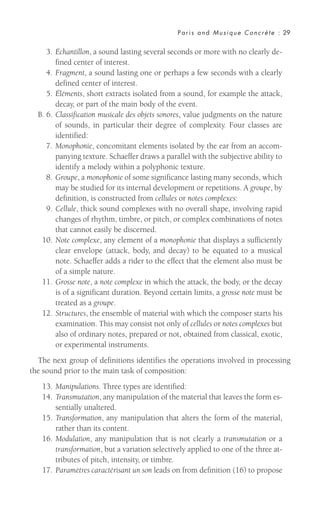
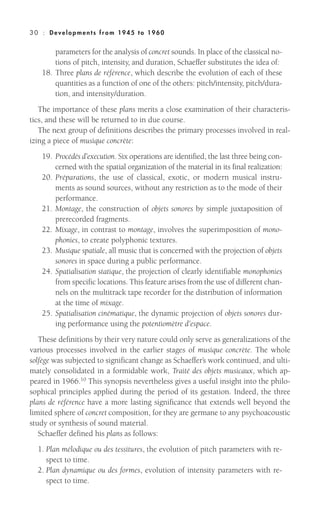
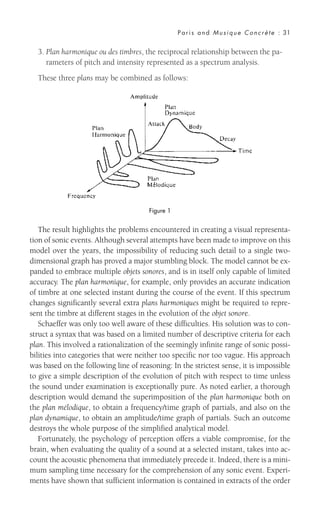
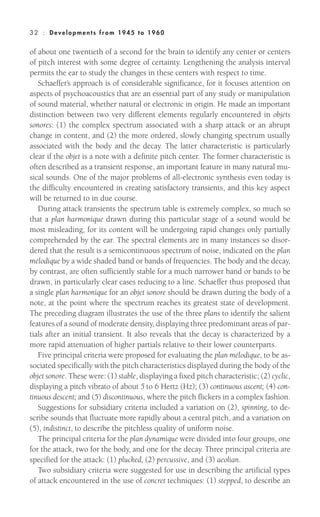
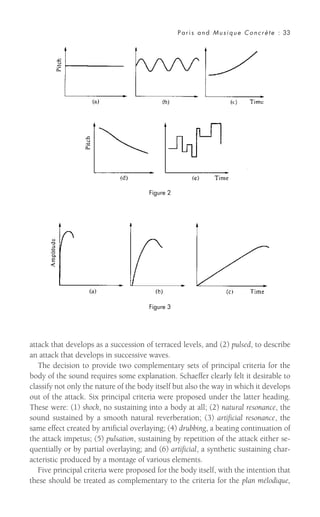
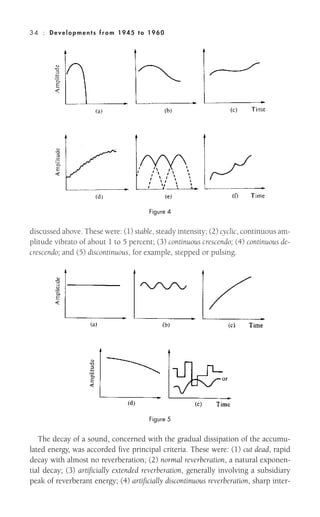
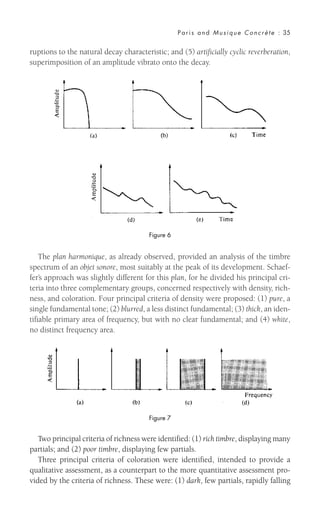




![This ebook is for the use of anyone anywhere in the United States
and most other parts of the world at no cost and with almost no
restrictions whatsoever. You may copy it, give it away or re-use it
under the terms of the Project Gutenberg License included with this
ebook or online at www.gutenberg.org. If you are not located in the
United States, you will have to check the laws of the country where
you are located before using this eBook.
Title: The Narrow House
Author: Evelyn Scott
Release date: April 14, 2013 [eBook #42534]
Most recently updated: October 23, 2024
Language: English
Credits: Produced by Clare Graham & Marc D'Hooghe (Images
generously made available by the Internet Archive.)
*** START OF THE PROJECT GUTENBERG EBOOK THE NARROW
HOUSE ***](https://image.slidesharecdn.com/2611747-250515091012-b4c4de80/85/Electronic-And-Computer-Music-3rd-Edition-Peter-Manning-60-320.jpg)