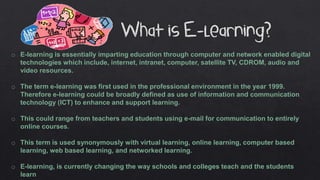
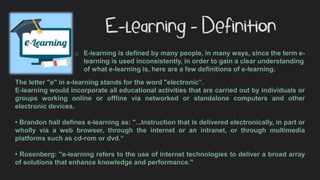
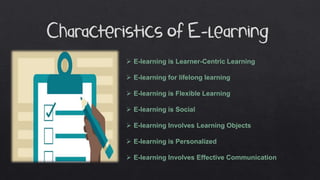
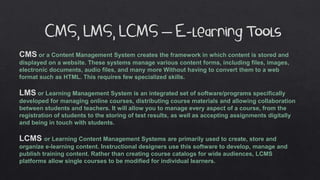
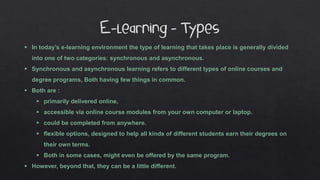
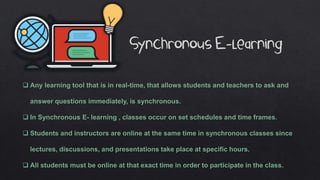
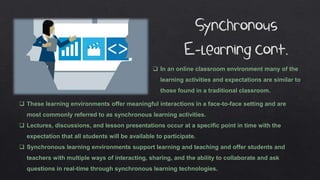
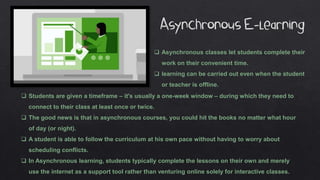
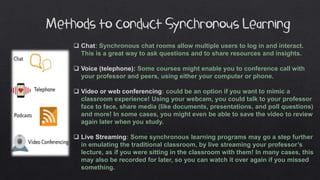
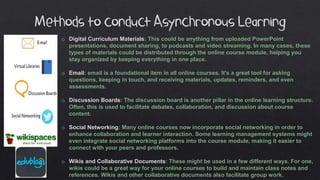
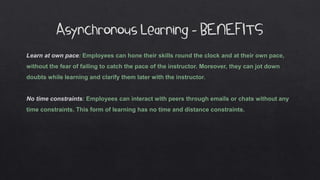
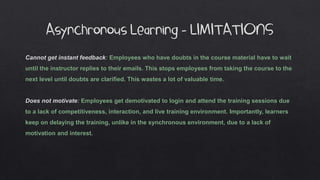
The document provides information on asynchronous and synchronous e-learning. It defines e-learning as imparting education through digital technologies like the internet, computers, and multimedia. Synchronous e-learning involves real-time classes on set schedules where students and instructors are online simultaneously, while asynchronous allows students to complete lessons independently without strict schedules. Both have benefits like flexibility but synchronous allows immediate feedback while asynchronous lacks instant interaction and motivation. Choosing the approach depends on factors like costs, time, collaboration needs, and instructor availability.





![Web based learning [autosaved]](https://cdn.slidesharecdn.com/ss_thumbnails/webbasedlearningautosaved-191118055810-thumbnail.jpg?width=640&height=640&fit=bounds)


![E learing rose_[autosaved]_rosemarie](https://cdn.slidesharecdn.com/ss_thumbnails/elearingroseautosavedrosemarie-210430035014-thumbnail.jpg?width=640&height=640&fit=bounds)


