Installation Sheet 29APR05 P/N: 3100612 REV: 3.0
Genesis Ceiling Strobe 1 / 2
Genesis Ceiling Strobe
Product information
The Genesis Ceiling Strobe is a visible fire alarm notification
appliance designed for indoor ceilings and walls. See Table 1
for a list of model numbers.
The strobe includes a field configurable switch for selecting the
desired candela output. The candela output setting is locked in
place and remains visible after final installation.
This strobe features an enhanced synchronization circuit to
comply with the latest requirements of UL 1971 Signaling
Devices for the Hearing Impaired and the latest Canadian
standard CAN/ULC S526-02. Synchronized operation requires
a separately installed synchronization control module. See
Table 2 for a list of compatible synchronization modules.
Install this device in accordance with applicable requirements
in the latest editions of the NFPA codes and standards and
Canadian Electrical Code, Part 1, Section 32, CAN/ULC S524-
01, Standard for the Installation of Fire Alarm Systems, and in
accordance with the local authorities having jurisdiction.
Table 1: Models
Description Number
Strobe,
15 to 95 multi-cd, white
ADTGC-VM MGC-VM
EGC-VM XLSGC-VM
GC-VM ZGC-VM
GC-VM-LG
Strobe,
15 to 95 multi-cd, white,
with FIRE marking
ADTGCF-VM MGCF-VM
EGCF-VM XLSGCF-VM
GCF-VM ZGCF-VM
GCF-VM-LG
Strobe,
15 to 95 multi-cd, red,
with FIRE marking
EGCFR-VM
GCFR-VM
MGCFR-VM
Table 2: Compatible synchronization modules
Description Model number
Auto-Sync Output
Module
SIGA-CC1S SIGA-MCC1S
SIGA-CC1S-LG SIGA-MCC1S-LG
Genesis Signal Master -
Remote Mount
ADTG1M-RM MG1M-RM
EG1M-RM XLSG1M-RM
G1M-RM ZG1M-RM
G1M-RM-LG
Specifications
Operating voltage
Regulated 16 to 33 Vdc, 16 to 33 Vfwr
This device was tested to the Regulated 24 Vdc/fwr
operating voltage limits of 16 V and 33 V. Do not apply
80% and 110% of these values for system operation.
Strobe operating current: See Table 3
Light output: Selectable at 15, 30, 75, and 95 cd
Synchronization: Meets UL 1971 requirements. Maximum
allowed resistance between any two devices is 20 Ω.
Refer to specifications for the synchronization control
module, this strobe, and the control panel to determine
allowed wire resistance.
Wire size: 12 to 18 AWG (2.50 to 0.75 sq mm)
Compatible electrical boxes
North American 4 in square electrical box, 2-1/8 in deep
(no extension ring)
Operating environment
Temperature: 32 to 120 °F (0 to 49 °C)
Humidity: 0 to 93% RH, noncondensing at 90 °F (32 °C)
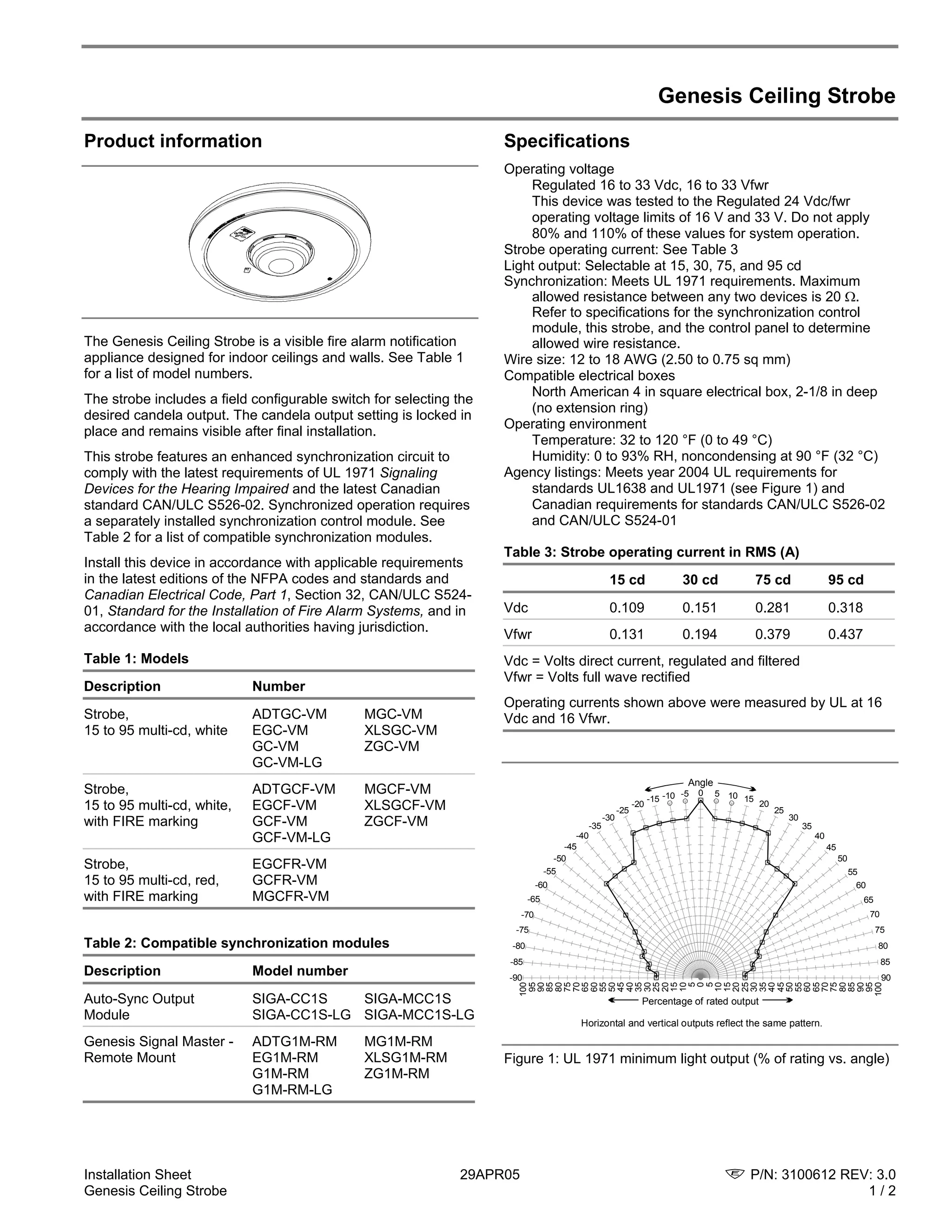
Agency listings: Meets year 2004 UL requirements for
standards UL1638 and UL1971 (see Figure 1) and
Canadian requirements for standards CAN/ULC S526-02
and CAN/ULC S524-01
Table 3: Strobe operating current in RMS (A)
15 cd 30 cd 75 cd 95 cd
Vdc 0.109 0.151 0.281 0.318
Vfwr 0.131 0.194 0.379 0.437
Vdc = Volts direct current, regulated and filtered
Vfwr = Volts full wave rectified
Operating currents shown above were measured by UL at 16
Vdc and 16 Vfwr.
100
95
90
85
80
75
70
65
60
55
50
45
40
35
30
25
20
15
10
5
0
5
10
15
20
25
30
35
40
45
50
55
60
65
70
75
80
85
90
95
100
0 5 10 15
20
25
30
35
40
45
50
55
60
65
70
75
80
85
90
-5-10-15
-20
-25
-30
-35
-40
-45
-50
-55
-60
-65
-70
-75
-80
-85
-90
Angle
Percentage of rated output
Horizontal and vertical outputs reflect the same pattern.
Figure 1: UL 1971 minimum light output (% of rating vs. angle)
P/N: 3100612 REV: 3.0 29APR05 Installation Sheet
2 / 2 Genesis Ceiling Strobe
Installation Instructions
Warning: To reduce the risk of shock, disconnect all power
and allow 10 minutes for stored energy to dissipate before
handling.
Caution: Electrical supervision requires the wire run to be
broken at each terminal. Do not loop the signaling circuit field
wires around the terminals.
To install the strobe:
1. Remove the cover by depressing the tab on the side of the
unit with a small screwdriver. Turn the cover
counterclockwise to release.
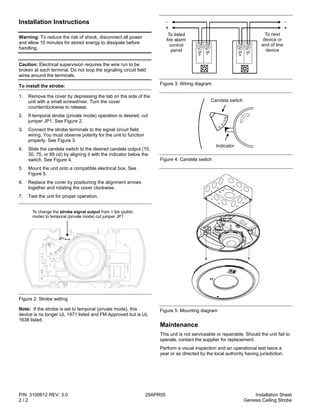
2. If temporal strobe (private mode) operation is desired, cut
jumper JP1. See Figure 2.
3. Connect the strobe terminals to the signal circuit field
wiring. You must observe polarity for the unit to function
properly. See Figure 3.
4. Slide the candela switch to the desired candela output (15,
30, 75, or 95 cd) by aligning it with the indicator below the
switch. See Figure 4.
5. Mount the unit onto a compatible electrical box. See
Figure 5.
6. Replace the cover by positioning the alignment arrows
together and rotating the cover clockwise.
7. Test the unit for proper operation.
To change the from 1 fps (public
mode) to temporal (private mode) cut jumper JP1
strobe signal output
JP1
Figure 2: Strobe setting
Note: If the strobe is set to temporal (private mode), this
device is no longer UL 1971 listed and FM Approved but is UL
1638 listed.
S+
S+
S-
S-
To next
device or
end of line
device
++
To listed
fire alarm
control
panel
Figure 3: Wiring diagram
95
75
15
30
Candela switch
Indicator
Figure 4: Candela switch
Figure 5: Mounting diagram
Maintenance
This unit is not serviceable or repairable. Should the unit fail to
operate, contact the supplier for replacement.
Perform a visual inspection and an operational test twice a
year or as directed by the local authority having jurisdiction.

Edwards Signaling EGC-VM Installation Manual

  • 1.
    Installation Sheet 29APR05P/N: 3100612 REV: 3.0 Genesis Ceiling Strobe 1 / 2 Genesis Ceiling Strobe Product information The Genesis Ceiling Strobe is a visible fire alarm notification appliance designed for indoor ceilings and walls. See Table 1 for a list of model numbers. The strobe includes a field configurable switch for selecting the desired candela output. The candela output setting is locked in place and remains visible after final installation. This strobe features an enhanced synchronization circuit to comply with the latest requirements of UL 1971 Signaling Devices for the Hearing Impaired and the latest Canadian standard CAN/ULC S526-02. Synchronized operation requires a separately installed synchronization control module. See Table 2 for a list of compatible synchronization modules. Install this device in accordance with applicable requirements in the latest editions of the NFPA codes and standards and Canadian Electrical Code, Part 1, Section 32, CAN/ULC S524- 01, Standard for the Installation of Fire Alarm Systems, and in accordance with the local authorities having jurisdiction. Table 1: Models Description Number Strobe, 15 to 95 multi-cd, white ADTGC-VM MGC-VM EGC-VM XLSGC-VM GC-VM ZGC-VM GC-VM-LG Strobe, 15 to 95 multi-cd, white, with FIRE marking ADTGCF-VM MGCF-VM EGCF-VM XLSGCF-VM GCF-VM ZGCF-VM GCF-VM-LG Strobe, 15 to 95 multi-cd, red, with FIRE marking EGCFR-VM GCFR-VM MGCFR-VM Table 2: Compatible synchronization modules Description Model number Auto-Sync Output Module SIGA-CC1S SIGA-MCC1S SIGA-CC1S-LG SIGA-MCC1S-LG Genesis Signal Master - Remote Mount ADTG1M-RM MG1M-RM EG1M-RM XLSG1M-RM G1M-RM ZG1M-RM G1M-RM-LG Specifications Operating voltage Regulated 16 to 33 Vdc, 16 to 33 Vfwr This device was tested to the Regulated 24 Vdc/fwr operating voltage limits of 16 V and 33 V. Do not apply 80% and 110% of these values for system operation. Strobe operating current: See Table 3 Light output: Selectable at 15, 30, 75, and 95 cd Synchronization: Meets UL 1971 requirements. Maximum allowed resistance between any two devices is 20 Ω. Refer to specifications for the synchronization control module, this strobe, and the control panel to determine allowed wire resistance. Wire size: 12 to 18 AWG (2.50 to 0.75 sq mm) Compatible electrical boxes North American 4 in square electrical box, 2-1/8 in deep (no extension ring) Operating environment Temperature: 32 to 120 °F (0 to 49 °C) Humidity: 0 to 93% RH, noncondensing at 90 °F (32 °C) Agency listings: Meets year 2004 UL requirements for standards UL1638 and UL1971 (see Figure 1) and Canadian requirements for standards CAN/ULC S526-02 and CAN/ULC S524-01 Table 3: Strobe operating current in RMS (A) 15 cd 30 cd 75 cd 95 cd Vdc 0.109 0.151 0.281 0.318 Vfwr 0.131 0.194 0.379 0.437 Vdc = Volts direct current, regulated and filtered Vfwr = Volts full wave rectified Operating currents shown above were measured by UL at 16 Vdc and 16 Vfwr. 100 95 90 85 80 75 70 65 60 55 50 45 40 35 30 25 20 15 10 5 0 5 10 15 20 25 30 35 40 45 50 55 60 65 70 75 80 85 90 95 100 0 5 10 15 20 25 30 35 40 45 50 55 60 65 70 75 80 85 90 -5-10-15 -20 -25 -30 -35 -40 -45 -50 -55 -60 -65 -70 -75 -80 -85 -90 Angle Percentage of rated output Horizontal and vertical outputs reflect the same pattern. Figure 1: UL 1971 minimum light output (% of rating vs. angle)
  • 2.
    P/N: 3100612 REV:3.0 29APR05 Installation Sheet 2 / 2 Genesis Ceiling Strobe Installation Instructions Warning: To reduce the risk of shock, disconnect all power and allow 10 minutes for stored energy to dissipate before handling. Caution: Electrical supervision requires the wire run to be broken at each terminal. Do not loop the signaling circuit field wires around the terminals. To install the strobe: 1. Remove the cover by depressing the tab on the side of the unit with a small screwdriver. Turn the cover counterclockwise to release. 2. If temporal strobe (private mode) operation is desired, cut jumper JP1. See Figure 2. 3. Connect the strobe terminals to the signal circuit field wiring. You must observe polarity for the unit to function properly. See Figure 3. 4. Slide the candela switch to the desired candela output (15, 30, 75, or 95 cd) by aligning it with the indicator below the switch. See Figure 4. 5. Mount the unit onto a compatible electrical box. See Figure 5. 6. Replace the cover by positioning the alignment arrows together and rotating the cover clockwise. 7. Test the unit for proper operation. To change the from 1 fps (public mode) to temporal (private mode) cut jumper JP1 strobe signal output JP1 Figure 2: Strobe setting Note: If the strobe is set to temporal (private mode), this device is no longer UL 1971 listed and FM Approved but is UL 1638 listed. S+ S+ S- S- To next device or end of line device ++ To listed fire alarm control panel Figure 3: Wiring diagram 95 75 15 30 Candela switch Indicator Figure 4: Candela switch Figure 5: Mounting diagram Maintenance This unit is not serviceable or repairable. Should the unit fail to operate, contact the supplier for replacement. Perform a visual inspection and an operational test twice a year or as directed by the local authority having jurisdiction.