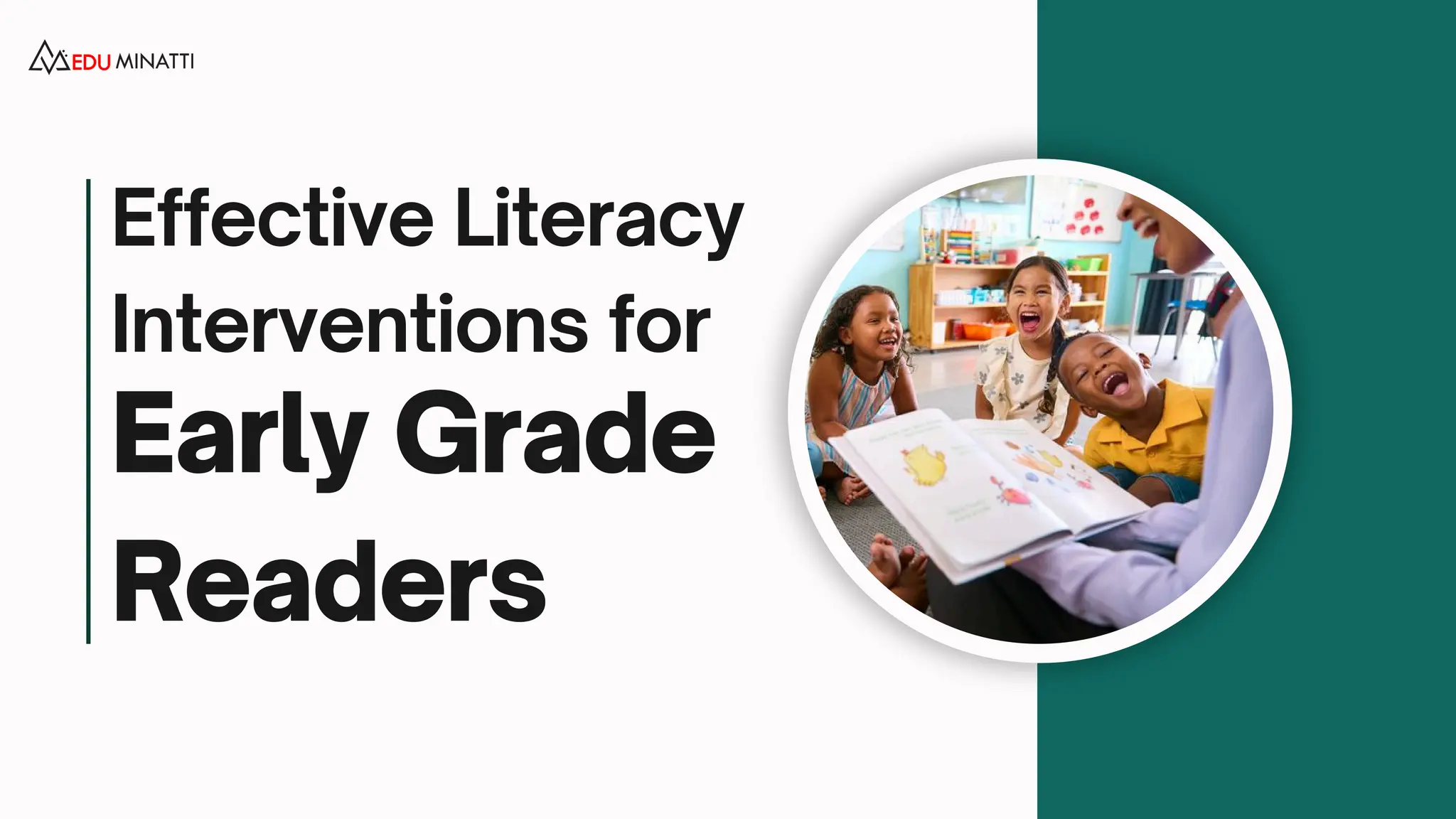
Effective Literacy
Interventions for
Early Grade
Readers
Introduction to Literacy
Interventions
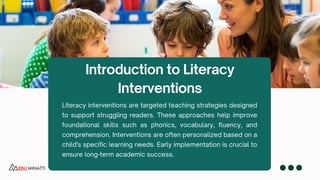
Literacy interventions are targeted teaching strategies designed
to support struggling readers. These approaches help improve
foundational skills such as phonics, vocabulary, fluency, and
comprehension. Interventions are often personalized based on a
child's specific learning needs. Early implementation is crucial to
ensure long-term academic success.
Key Intervention
Strategies
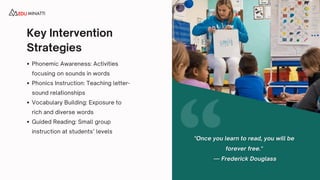
Phonemic Awareness: Activities
focusing on sounds in words
Phonics Instruction: Teaching letter-
sound relationships
Vocabulary Building: Exposure to
rich and diverse words
Guided Reading: Small group
instruction at students’ levels
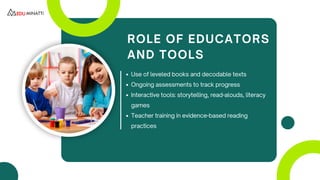
Use of leveled books and decodable texts
Ongoing assessments to track progress
Interactive tools: storytelling, read-alouds, literacy
games
Teacher training in evidence-based reading
practices
ROLE OF EDUCATORS
AND TOOLS
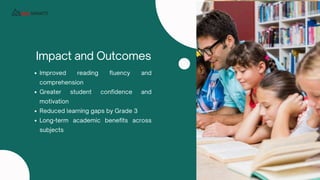
Impact and Outcomes
Improved reading fluency and
comprehension
Greater student confidence and
motivation
Reduced learning gaps by Grade 3
Long-term academic benefits across
subjects
THANKYOU

Effective Literacy Interventions for Early Grade Readers

  • 1.
  • 2.
    Introduction to Literacy Interventions Literacyinterventions are targeted teaching strategies designed to support struggling readers. These approaches help improve foundational skills such as phonics, vocabulary, fluency, and comprehension. Interventions are often personalized based on a child's specific learning needs. Early implementation is crucial to ensure long-term academic success.
  • 3.
    Key Intervention Strategies Phonemic Awareness:Activities focusing on sounds in words Phonics Instruction: Teaching letter- sound relationships Vocabulary Building: Exposure to rich and diverse words Guided Reading: Small group instruction at students’ levels
  • 4.
    Use of leveledbooks and decodable texts Ongoing assessments to track progress Interactive tools: storytelling, read-alouds, literacy games Teacher training in evidence-based reading practices ROLE OF EDUCATORS AND TOOLS
  • 5.
    Impact and Outcomes Improvedreading fluency and comprehension Greater student confidence and motivation Reduced learning gaps by Grade 3 Long-term academic benefits across subjects
  • 6.