WHAT IS WASTEWATER?
Wastewater is water generated
after the use of freshwater,
raw water, drinking water or
saline water in a variety of
deliberate applications or
processes.
The composition of wastewater
is 99.9% water and the
remaining 0.1% is what is
removed. This 0.1% contains
organic matter,
microorganisms and inorganic
compounds.
DOMESTIC WASTEWATER
Wastewater produced due to
human activities in
households is called domestic
wastewater i.e. wastewater
from the kitchen, shower,
wash basin, toilet and laundry
INDUSTRIAL WASTEWATER
Industrial wastewater is
the aqueous discard that results
from substances having been
dissolved or suspended in water,
typically during the use of water
in an industrial manufacturing
process
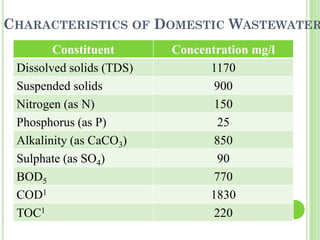
CHARACTERISTICS OF DOMESTIC WASTEWATER
Constituent Concentration mg/l
Dissolved solids (TDS) 1170
Suspended solids 900
Nitrogen (as N) 150
Phosphorus (as P) 25
Alkalinity (as CaCO3) 850
Sulphate (as SO4) 90
BOD5 770
COD1 1830
TOC1 220
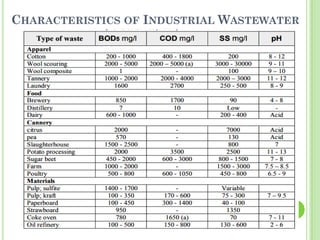
CHARACTERISTICS OF INDUSTRIAL WASTEWATER
WATERSHED MANAGEMENT
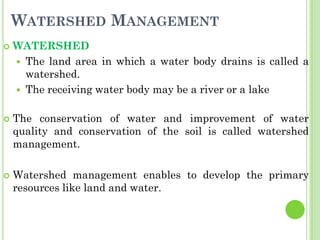
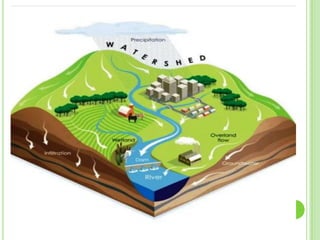
 WATERSHED
 The land area in which a water body drains is called a
watershed.
 The receiving water body may be a river or a lake
 The conservation of water and improvement of water
quality and conservation of the soil is called watershed
management.
 Watershed management enables to develop the primary
resources like land and water.
 The primary resources support the development of
secondary resources like animals and plants.
 Developing primary and secondary resources will
maintain an ecological balance.
 Implementing water management and land usage
practices improves water quality and the natural
resources belonging to the watershed.
RAINWATER HARVESTING
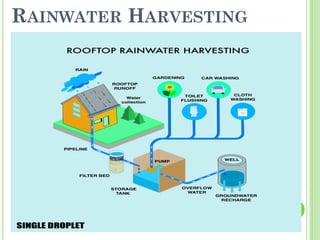
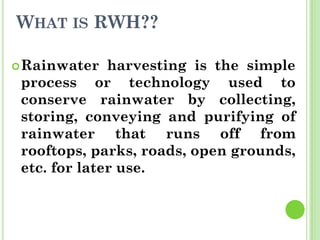
WHAT IS RWH??
Rainwater harvesting is the simple
process or technology used to
conserve rainwater by collecting,
storing, conveying and purifying of
rainwater that runs off from
rooftops, parks, roads, open grounds,
etc. for later use.
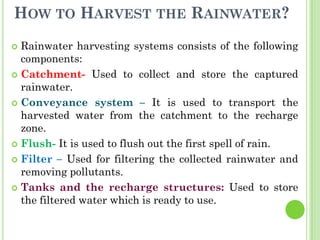
HOW TO HARVEST THE RAINWATER?
 Rainwater harvesting systems consists of the following
components:
 Catchment- Used to collect and store the captured
rainwater.
 Conveyance system – It is used to transport the
harvested water from the catchment to the recharge
zone.
 Flush- It is used to flush out the first spell of rain.
 Filter – Used for filtering the collected rainwater and
removing pollutants.
 Tanks and the recharge structures: Used to store
the filtered water which is ready to use.
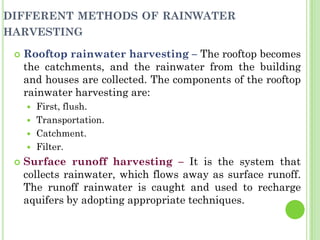
DIFFERENT METHODS OF RAINWATER
HARVESTING
 Rooftop rainwater harvesting – The rooftop becomes
the catchments, and the rainwater from the building
and houses are collected. The components of the rooftop
rainwater harvesting are:
 First, flush.
 Transportation.
 Catchment.
 Filter.
 Surface runoff harvesting – It is the system that
collects rainwater, which flows away as surface runoff.
The runoff rainwater is caught and used to recharge
aquifers by adopting appropriate techniques.

EE unit 2.pdf

  • 1.
    WHAT IS WASTEWATER? Wastewateris water generated after the use of freshwater, raw water, drinking water or saline water in a variety of deliberate applications or processes. The composition of wastewater is 99.9% water and the remaining 0.1% is what is removed. This 0.1% contains organic matter, microorganisms and inorganic compounds.
  • 2.
    DOMESTIC WASTEWATER Wastewater produceddue to human activities in households is called domestic wastewater i.e. wastewater from the kitchen, shower, wash basin, toilet and laundry
  • 3.
    INDUSTRIAL WASTEWATER Industrial wastewateris the aqueous discard that results from substances having been dissolved or suspended in water, typically during the use of water in an industrial manufacturing process
  • 4.
    CHARACTERISTICS OF DOMESTICWASTEWATER Constituent Concentration mg/l Dissolved solids (TDS) 1170 Suspended solids 900 Nitrogen (as N) 150 Phosphorus (as P) 25 Alkalinity (as CaCO3) 850 Sulphate (as SO4) 90 BOD5 770 COD1 1830 TOC1 220
  • 5.
  • 6.
    WATERSHED MANAGEMENT  WATERSHED The land area in which a water body drains is called a watershed.  The receiving water body may be a river or a lake  The conservation of water and improvement of water quality and conservation of the soil is called watershed management.  Watershed management enables to develop the primary resources like land and water.
  • 7.
     The primaryresources support the development of secondary resources like animals and plants.  Developing primary and secondary resources will maintain an ecological balance.  Implementing water management and land usage practices improves water quality and the natural resources belonging to the watershed.
  • 9.
  • 10.
    WHAT IS RWH?? Rainwaterharvesting is the simple process or technology used to conserve rainwater by collecting, storing, conveying and purifying of rainwater that runs off from rooftops, parks, roads, open grounds, etc. for later use.
  • 11.
    HOW TO HARVESTTHE RAINWATER?  Rainwater harvesting systems consists of the following components:  Catchment- Used to collect and store the captured rainwater.  Conveyance system – It is used to transport the harvested water from the catchment to the recharge zone.  Flush- It is used to flush out the first spell of rain.  Filter – Used for filtering the collected rainwater and removing pollutants.  Tanks and the recharge structures: Used to store the filtered water which is ready to use.
  • 12.
    DIFFERENT METHODS OFRAINWATER HARVESTING  Rooftop rainwater harvesting – The rooftop becomes the catchments, and the rainwater from the building and houses are collected. The components of the rooftop rainwater harvesting are:  First, flush.  Transportation.  Catchment.  Filter.  Surface runoff harvesting – It is the system that collects rainwater, which flows away as surface runoff. The runoff rainwater is caught and used to recharge aquifers by adopting appropriate techniques.