For health extension worker and
students
Class room management
CLASSROOM MANAGEMENT
CONCEPT OF CLASSROOM MANAGEMENT
BASIC STEPS OF MANAGING TEACHING
MANAGEMENT OF TEACHING LEARNING PROCESS
TASK ANALYSIS
FORMULATION OF OBJECTIVES
POSITIVE CLASSROOM ENVIRONMENT
CLASSROOM SEATING ARRANGEMENT
CLASSROOM CLIMATE
CLASSROOM DECORATION
CLASSROOM
Group of students meeting regularly to study
a subject under the guidance of a teacher .
STUDENTS
REGULARLY
SUBJECT
TEACHER
MANAGEMENT
Art of planning , organizing, leading and
controlling human and other resources to achieve
desired goals efficiently and effectively .
PLANNING
ORGANIZING
LEADING
CONTROLLING
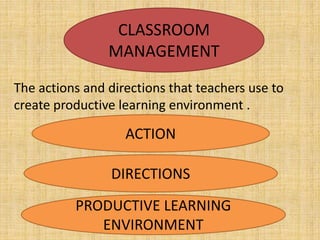
CLASSROOM
MANAGEMENT
The actions and directions that teachers use to
create productive learning environment .
ACTION
DIRECTIONS
PRODUCTIVE LEARNING
ENVIRONMENT
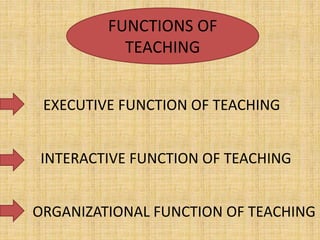
FUNCTIONS OF
TEACHING
EXECUTIVE FUNCTION OF TEACHING
INTERACTIVE FUNCTION OF TEACHING
ORGANIZATIONAL FUNCTION OF TEACHING
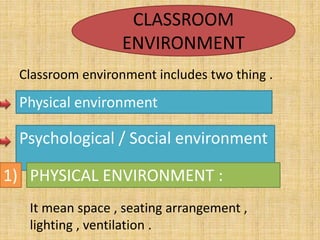
CLASSROOM
ENVIRONMENT
Classroom environment includes two thing .
Physical environment
Psychological / Social environment
1) PHYSICAL ENVIRONMENT :
It mean space , seating arrangement ,
lighting , ventilation .
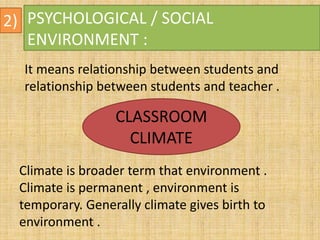
2) PSYCHOLOGICAL / SOCIAL
ENVIRONMENT :
It means relationship between students and
relationship between students and teacher .
CLASSROOM
CLIMATE
Climate is broader term that environment .
Climate is permanent , environment is
temporary. Generally climate gives birth to
environment .
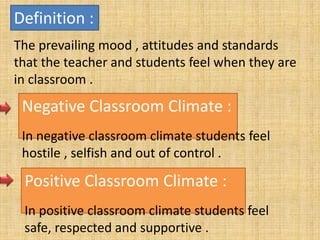
Definition :
The prevailing mood , attitudes and standards
that the teacher and students feel when they are
in classroom .
Negative Classroom Climate :
In negative classroom climate students feel
hostile , selfish and out of control .
Positive Classroom Climate :
In positive classroom climate students feel
safe, respected and supportive .
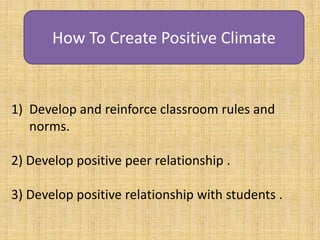
How To Create Positive Climate
1) Develop and reinforce classroom rules and
norms.
2) Develop positive peer relationship .
3) Develop positive relationship with students .
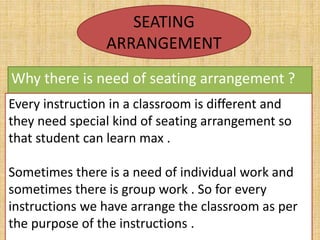
SEATING
ARRANGEMENT
Why there is need of seating arrangement ?
Every instruction in a classroom is different and
they need special kind of seating arrangement so
that student can learn max .
Sometimes there is a need of individual work and
sometimes there is group work . So for every
instructions we have arrange the classroom as per
the purpose of the instructions .
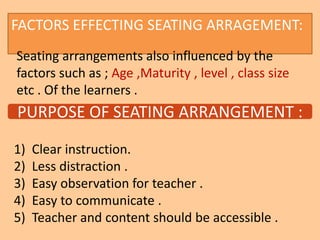
FACTORS EFFECTING SEATING ARRAGEMENT:
Seating arrangements also influenced by the
factors such as ; Age ,Maturity , level , class size
etc . Of the learners .
PURPOSE OF SEATING ARRANGEMENT :
1) Clear instruction.
2) Less distraction .
3) Easy observation for teacher .
4) Easy to communicate .
5) Teacher and content should be accessible .
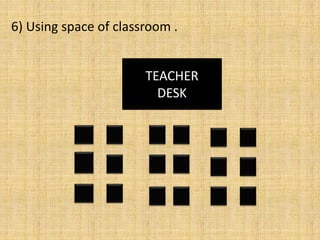
6) Using space of classroom .
TEACHER
DESK
Types Of Seating
Arrangement
1) Pairs .
2) Presentation .
3) Grid.
4) U-shape.
5) Double u-shape.
6) Herringbone.
7) Rows/ Column.
8) Circle.
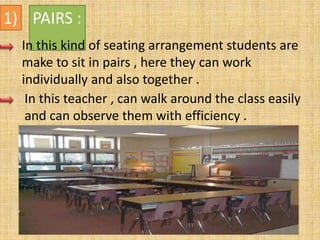
1) PAIRS :
In this kind of seating arrangement students are
make to sit in pairs , here they can work
individually and also together .
In this teacher , can walk around the class easily
and can observe them with efficiency .
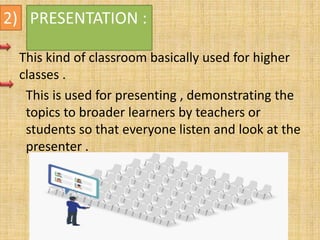
2) PRESENTATION :
This kind of classroom basically used for higher
classes .
This is used for presenting , demonstrating the
topics to broader learners by teachers or
students so that everyone listen and look at the
presenter .
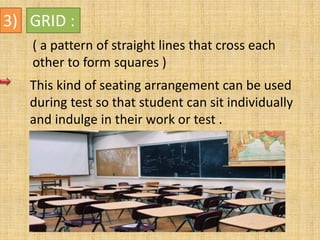
3) GRID :
( a pattern of straight lines that cross each
other to form squares )
This kind of seating arrangement can be used
during test so that student can sit individually
and indulge in their work or test .
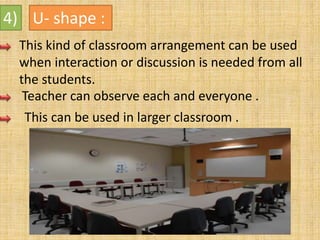
4) U- shape :
This kind of classroom arrangement can be used
when interaction or discussion is needed from all
the students.
Teacher can observe each and everyone .
This can be used in larger classroom .
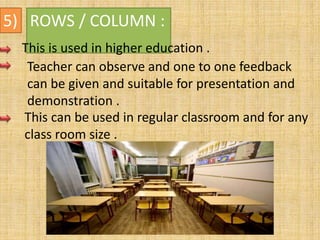
5) ROWS / COLUMN :
This is used in higher education .
Teacher can observe and one to one feedback
can be given and suitable for presentation and
demonstration .
This can be used in regular classroom and for any
class room size .
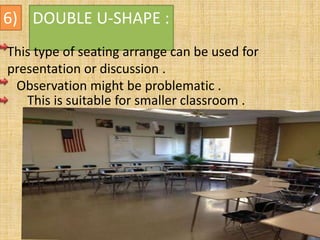
6) DOUBLE U-SHAPE :
This type of seating arrange can be used for
presentation or discussion .
This is suitable for smaller classroom .
Observation might be problematic .
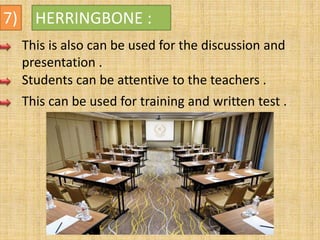
7) HERRINGBONE :
This is also can be used for the discussion and
presentation .
Students can be attentive to the teachers .
This can be used for training and written test .
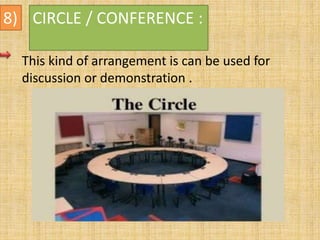
8) CIRCLE / CONFERENCE :
This kind of arrangement is can be used for
discussion or demonstration .
CLASSROOM CLIMATE IN
CLASSROOM
Ambrose , Bridges , Dipietro , Lovett and
Norman . (2010) define classroom climate as
the intellectual , social , emotional and physical
environments in which our students learn .
Climate is determined by a constellation of
interacting factors that include faculty-student
interaction , the tone instructors set , instance of
stereotyping or tokenism, the course
demographics (for example, relative size of racial
And other social groups enrolled in the course)
student-student interaction , and the range of
perspectives represented in the course content
and material .
THANK
YOU

EDUCATION.pptx

  • 1.
    For health extensionworker and students Class room management
  • 2.
    CLASSROOM MANAGEMENT CONCEPT OFCLASSROOM MANAGEMENT BASIC STEPS OF MANAGING TEACHING MANAGEMENT OF TEACHING LEARNING PROCESS TASK ANALYSIS FORMULATION OF OBJECTIVES POSITIVE CLASSROOM ENVIRONMENT CLASSROOM SEATING ARRANGEMENT CLASSROOM CLIMATE CLASSROOM DECORATION
  • 3.
    CLASSROOM Group of studentsmeeting regularly to study a subject under the guidance of a teacher . STUDENTS REGULARLY SUBJECT TEACHER
  • 4.
    MANAGEMENT Art of planning, organizing, leading and controlling human and other resources to achieve desired goals efficiently and effectively . PLANNING ORGANIZING LEADING CONTROLLING
  • 5.
    CLASSROOM MANAGEMENT The actions anddirections that teachers use to create productive learning environment . ACTION DIRECTIONS PRODUCTIVE LEARNING ENVIRONMENT
  • 6.
    FUNCTIONS OF TEACHING EXECUTIVE FUNCTIONOF TEACHING INTERACTIVE FUNCTION OF TEACHING ORGANIZATIONAL FUNCTION OF TEACHING
  • 7.
    CLASSROOM ENVIRONMENT Classroom environment includestwo thing . Physical environment Psychological / Social environment 1) PHYSICAL ENVIRONMENT : It mean space , seating arrangement , lighting , ventilation .
  • 8.
    2) PSYCHOLOGICAL /SOCIAL ENVIRONMENT : It means relationship between students and relationship between students and teacher . CLASSROOM CLIMATE Climate is broader term that environment . Climate is permanent , environment is temporary. Generally climate gives birth to environment .
  • 9.
    Definition : The prevailingmood , attitudes and standards that the teacher and students feel when they are in classroom . Negative Classroom Climate : In negative classroom climate students feel hostile , selfish and out of control . Positive Classroom Climate : In positive classroom climate students feel safe, respected and supportive .
  • 10.
    How To CreatePositive Climate 1) Develop and reinforce classroom rules and norms. 2) Develop positive peer relationship . 3) Develop positive relationship with students .
  • 11.
    SEATING ARRANGEMENT Why there isneed of seating arrangement ? Every instruction in a classroom is different and they need special kind of seating arrangement so that student can learn max . Sometimes there is a need of individual work and sometimes there is group work . So for every instructions we have arrange the classroom as per the purpose of the instructions .
  • 12.
    FACTORS EFFECTING SEATINGARRAGEMENT: Seating arrangements also influenced by the factors such as ; Age ,Maturity , level , class size etc . Of the learners . PURPOSE OF SEATING ARRANGEMENT : 1) Clear instruction. 2) Less distraction . 3) Easy observation for teacher . 4) Easy to communicate . 5) Teacher and content should be accessible .
  • 13.
    6) Using spaceof classroom . TEACHER DESK
  • 14.
    Types Of Seating Arrangement 1)Pairs . 2) Presentation . 3) Grid. 4) U-shape. 5) Double u-shape. 6) Herringbone. 7) Rows/ Column. 8) Circle.
  • 15.
    1) PAIRS : Inthis kind of seating arrangement students are make to sit in pairs , here they can work individually and also together . In this teacher , can walk around the class easily and can observe them with efficiency .
  • 16.
    2) PRESENTATION : Thiskind of classroom basically used for higher classes . This is used for presenting , demonstrating the topics to broader learners by teachers or students so that everyone listen and look at the presenter .
  • 17.
    3) GRID : (a pattern of straight lines that cross each other to form squares ) This kind of seating arrangement can be used during test so that student can sit individually and indulge in their work or test .
  • 18.
    4) U- shape: This kind of classroom arrangement can be used when interaction or discussion is needed from all the students. Teacher can observe each and everyone . This can be used in larger classroom .
  • 19.
    5) ROWS /COLUMN : This is used in higher education . Teacher can observe and one to one feedback can be given and suitable for presentation and demonstration . This can be used in regular classroom and for any class room size .
  • 20.
    6) DOUBLE U-SHAPE: This type of seating arrange can be used for presentation or discussion . This is suitable for smaller classroom . Observation might be problematic .
  • 21.
    7) HERRINGBONE : Thisis also can be used for the discussion and presentation . Students can be attentive to the teachers . This can be used for training and written test .
  • 22.
    8) CIRCLE /CONFERENCE : This kind of arrangement is can be used for discussion or demonstration .
  • 23.
    CLASSROOM CLIMATE IN CLASSROOM Ambrose, Bridges , Dipietro , Lovett and Norman . (2010) define classroom climate as the intellectual , social , emotional and physical environments in which our students learn . Climate is determined by a constellation of interacting factors that include faculty-student interaction , the tone instructors set , instance of stereotyping or tokenism, the course demographics (for example, relative size of racial
  • 24.
    And other socialgroups enrolled in the course) student-student interaction , and the range of perspectives represented in the course content and material .
  • 25.