Education for
sustainable
development
a selection of UCC Library contributions to
the UN Sustainability Development Goals
Stephanie Chen, Digital Learning Specialist
@iamstephanie_c
Introduction and Context
UCC Library
UCC Library's Digital Scholarship Studio
Education for Sustainable Development
(ESD)
“Education for Sustainable
Development allows every human
being to acquire the knowledge,
skills, attitudes and values necessary
to shape a sustainable future.”
University of Plymouth - ESD
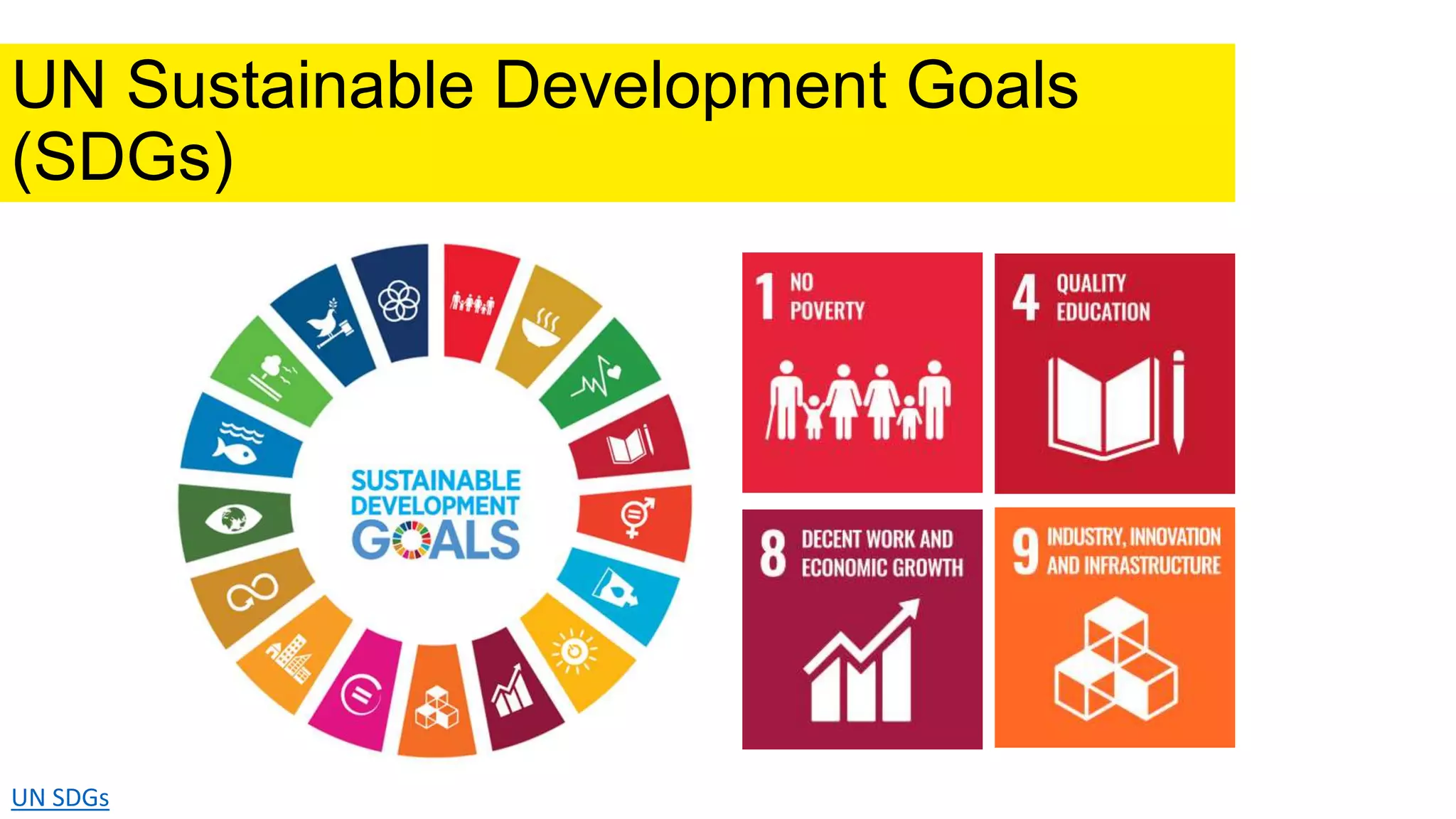
UN Sustainable Development Goals
(SDGs)
UN SDGs
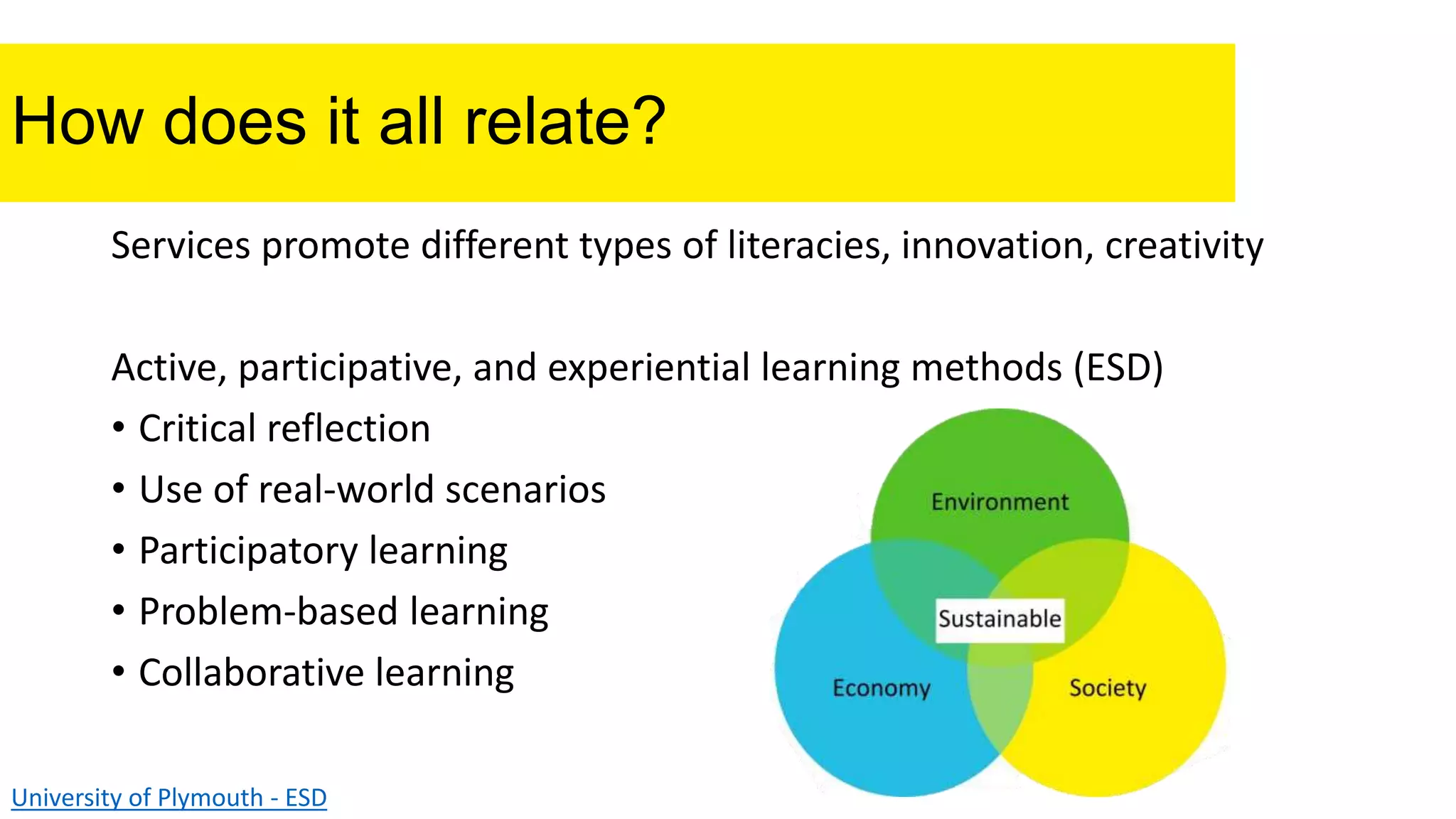
How does it all relate?
Services promote different types of literacies, innovation, creativity
Active, participative, and experiential learning methods (ESD)
• Critical reflection
• Use of real-world scenarios
• Participatory learning
• Problem-based learning
• Collaborative learning
University of Plymouth - ESD
Examples
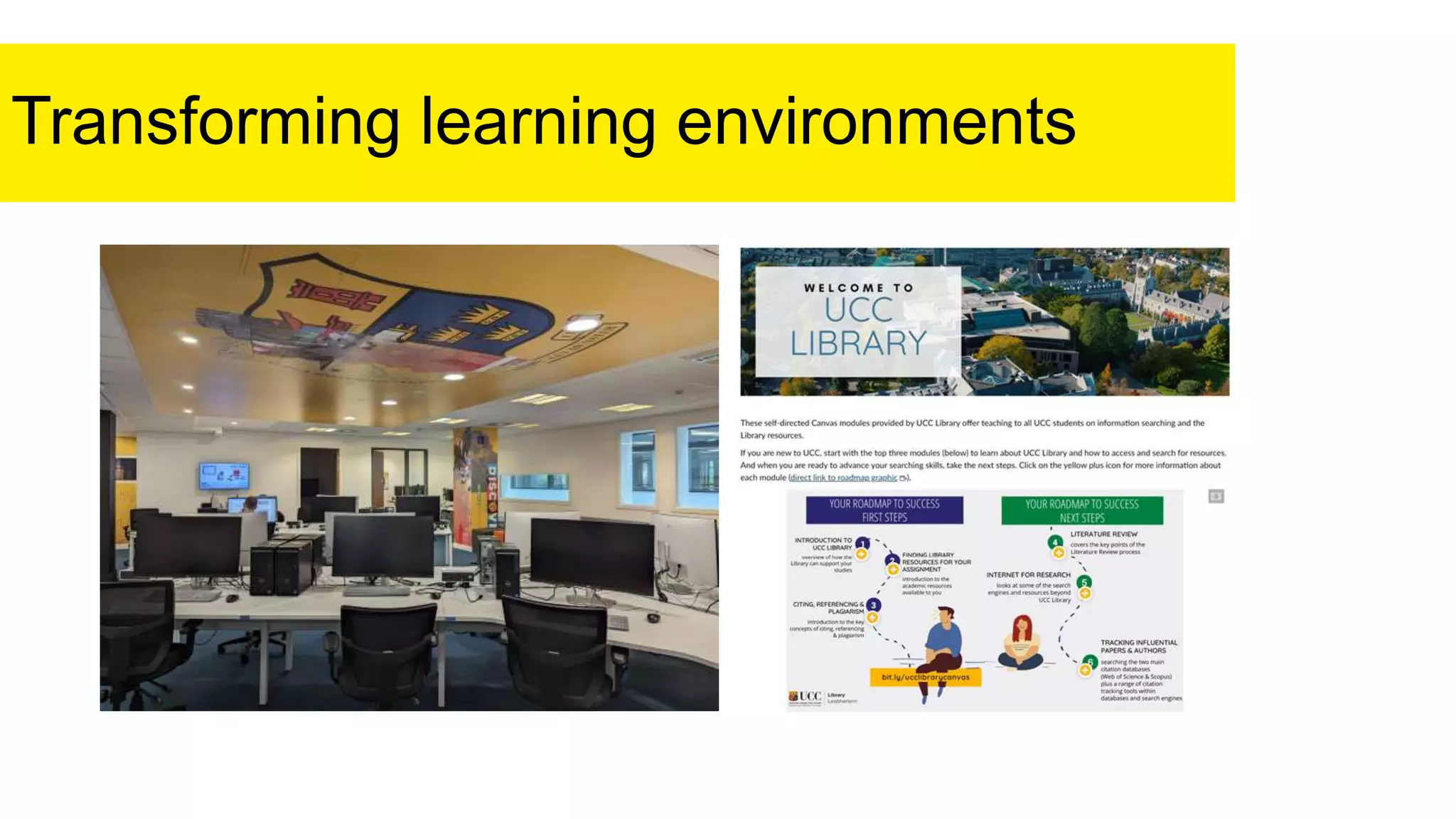
Transforming learning environments
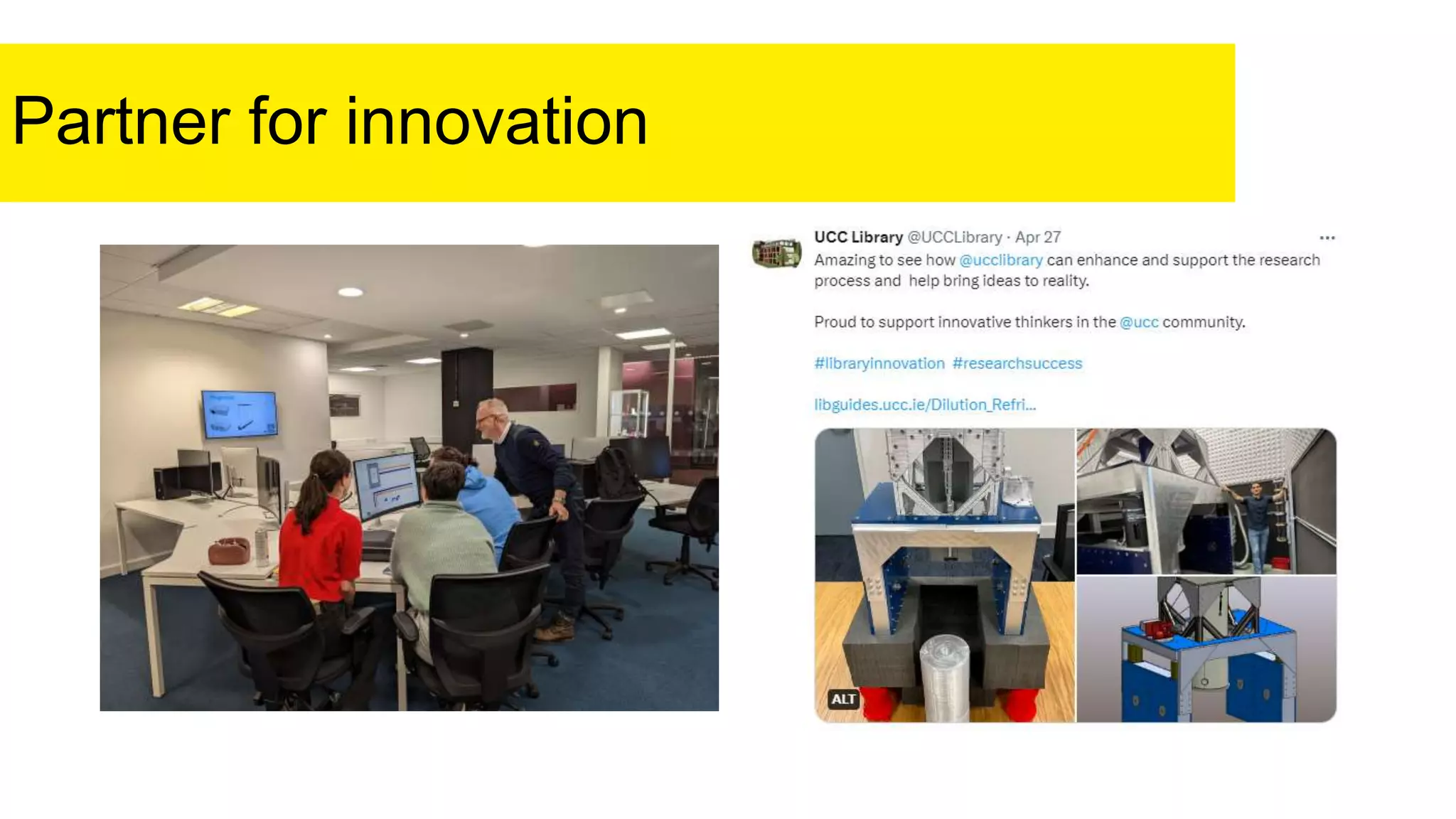
Partner for innovation
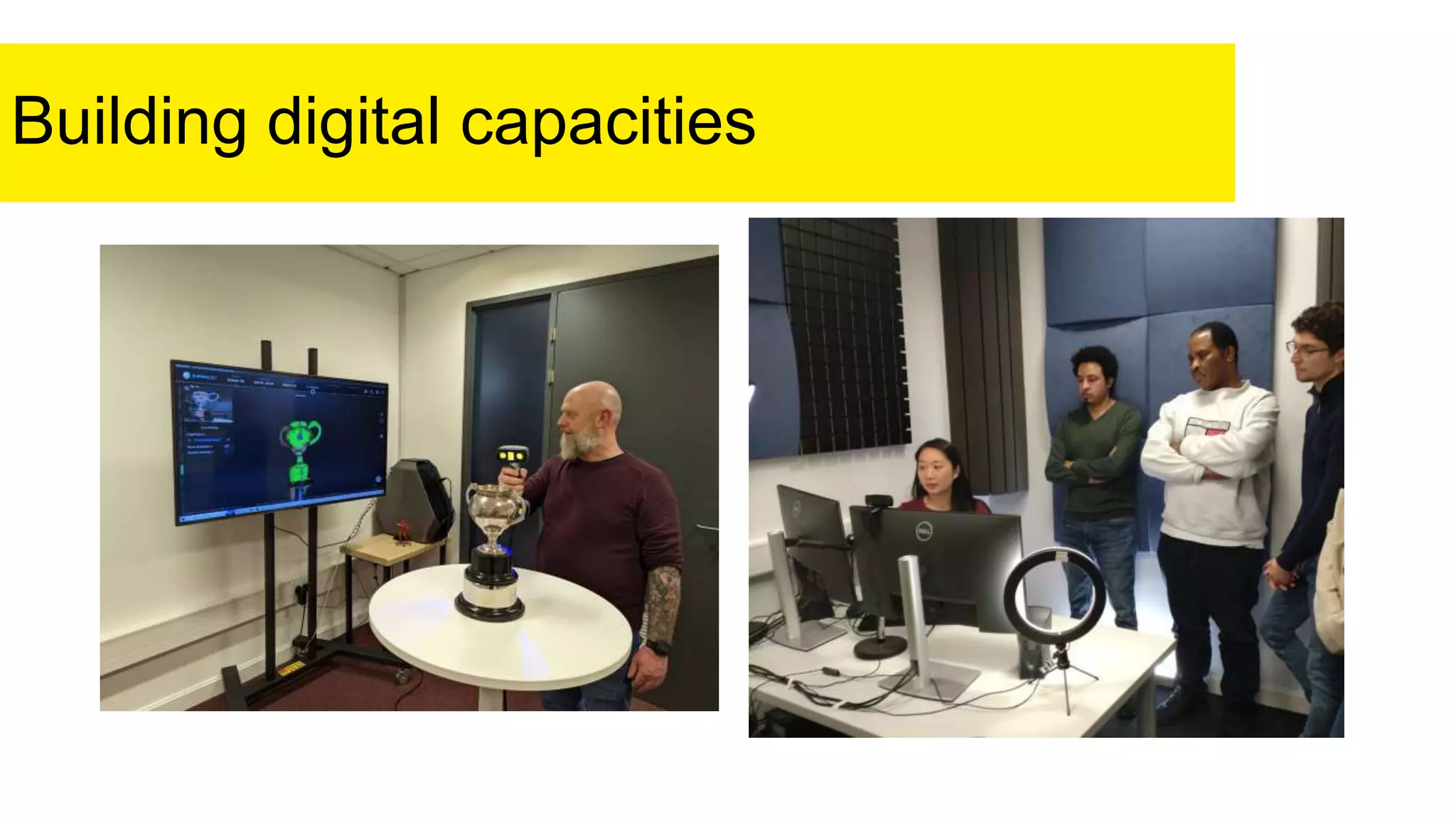
Building digital capacities
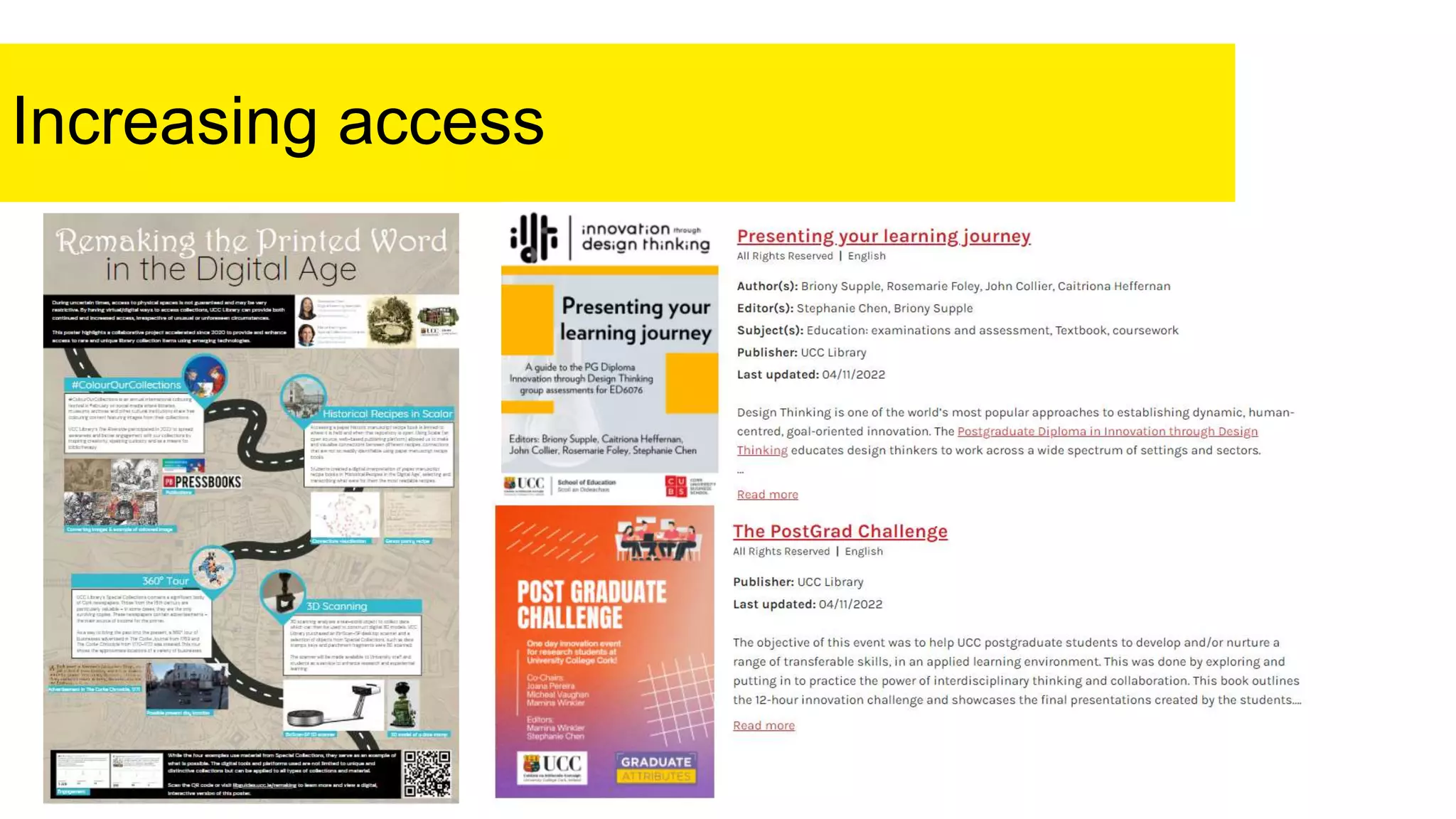
Increasing access
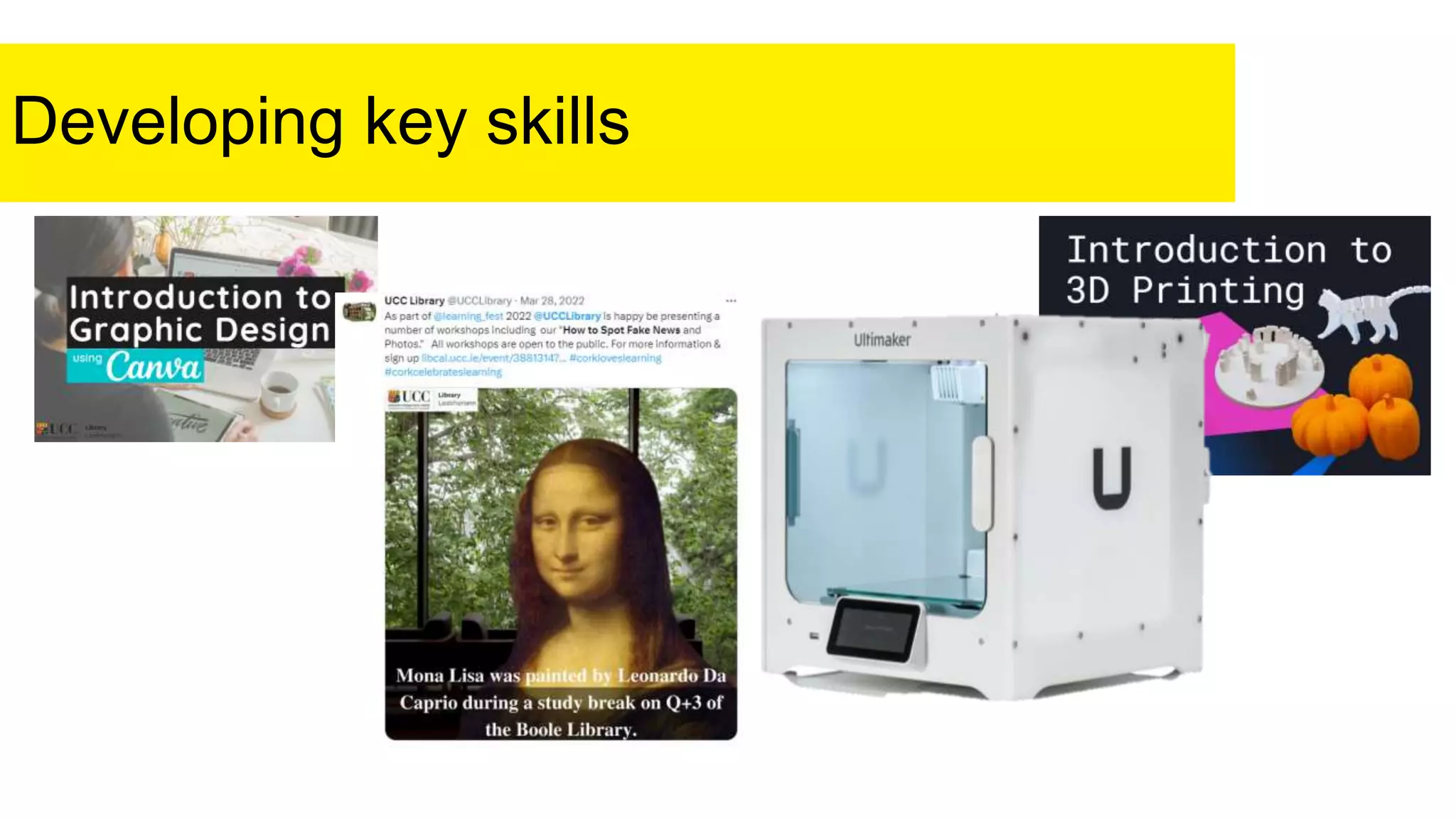
Developing key skills
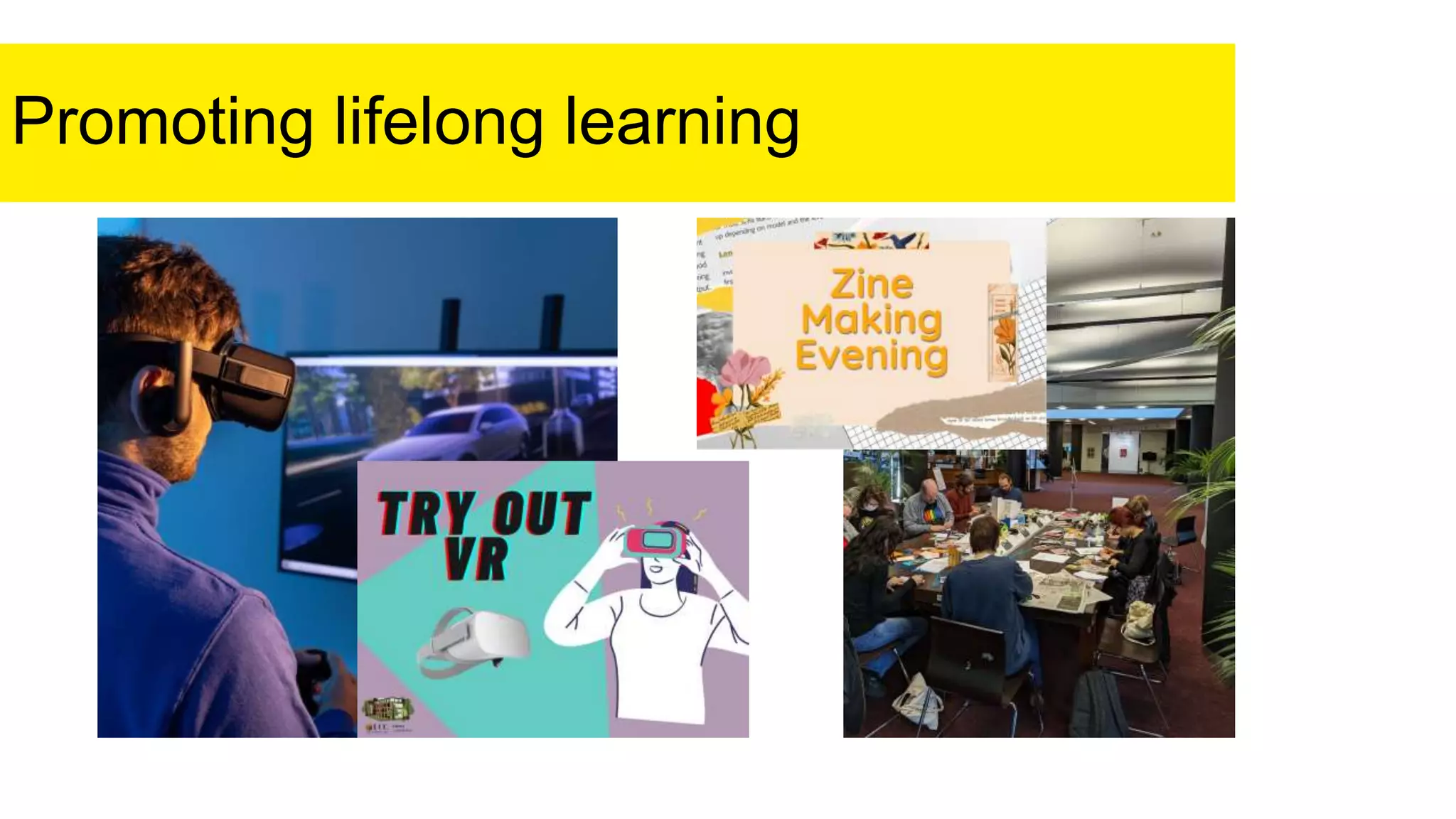
Promoting lifelong learning
Conclusion
Thank you
stephanie.chen@ucc.ie

Education for sustainable development: a selection of UCC Library contributions to the UN Sustainability Development Goals

Editor's Notes

  • #4 Presentation will be in the context of digital experiences and digital learning services from UCC Library. Spaces and services 3D printing and scanning Equipment loans Virtual reality Library studio Digital Scholarship Studio OER
  • #6 Which ones will be covered? SDG 1: no poverty SDG 4: quality education SDG 8: decent work and economic growth SDG 9: industry, innovation, and infrastructure
  • #7 Promoting literacies, digital inclusion, promote innovation, creativity and access About the environment but also about social and economic development Recognizing and valuing the link between SDGs and ESD and what libraries are doing Supporting Pedagogical approaches in ESD 1. Critical reflection – including the more traditional lecture, but also newer approaches such as reflexive accounts, learning journals, and discussion groups. 2. Systemic thinking and analysis – the use of real-world case studies and critical incidents, project-based learning, stimulus activities, and the use of the campus as a learning resource. 3. Participatory learning – with emphasis on group or peer learning, developing dialogue, experiential learning, action research/learning to act, and developing case studies with local community groups and business 4. Thinking creatively for future scenarios – by using role play, real-world inquiry, futures visioning, problem-based learning, and providing space for emergence. 5. Collaborative learning – including contributions from guest speakers, work-based learning, interdisciplinary/ multidisciplinary working, and collaborative learning and co-inquiry.
  • #9 Transforming learning environments – both physical and virtual to ensure everyone has access to quality education (SDG 4)
  • #10 Partnering for innovation (SDG 9) Digital Humanities students using Digital Scholarship Studio to scan butter wrappers from the Butter Museum
  • #11 Building digital capacities – both for our own staff but also outside the library for SDG 8 (decent work and economic growth)
  • #12 Increased access to resources, knowledge and information to support students, staff and researchers to create new knowledge (SDG 4)