Download to read offline
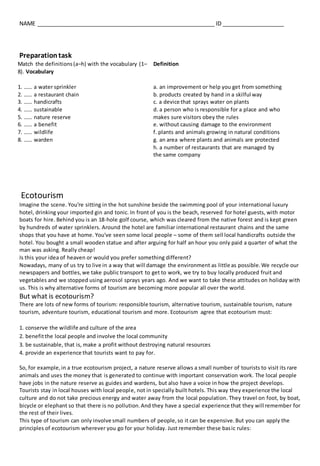


1. The document defines ecotourism as tourism that conserves wildlife and local culture, benefits local communities, is environmentally sustainable, and provides a unique experience for tourists. 2. Examples of ecotourism given include nature reserves that use tourist fees for conservation work and employ local people as guides, with tourists staying in local homes to experience the culture without overtaxing resources. 3. The document provides principles for travelers to follow to engage in ecotourism, such as learning about the local area, respecting the culture, minimizing waste, and using non-polluting transportation or staying in local accommodations.


