1
Energy Flow
Through an
Ecosystem
Food Chains, Food Webs,
Energy Pyramids
Energy Pyramids
Submitted By:
Submitted By:
Name: Diksha Kulshrestha
Class: MSc. Zoology 3
Class: MSc. Zoology 3rd
rd
Semester
Semester
Roll No. : 247422850011 Enrollment No. : MSU24036130
College: Shri Ram College, Muzaffarnagar (742)
Submitted To:
Submitted To:
Dr. Reetu Pundir Mam
2
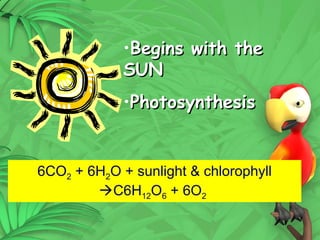
•Begins with the
Begins with the
SUN
SUN
•Photosynthesis
Photosynthesis
6CO2 + 6H2O + sunlight & chlorophyll
C6H12O6 + 6O2
3
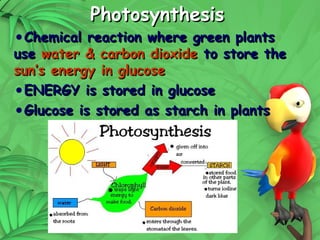
Photosynthesis
Photosynthesis
•Chemical reaction where green plants
Chemical reaction where green plants
use
use water & carbon dioxide
water & carbon dioxide to store the
to store the
sun’s energy in glucose
•ENERGY is stored in glucose
ENERGY is stored in glucose
•Glucose is stored as starch in plants
Glucose is stored as starch in plants
4
Organisms that can
Organisms that can
make glucose during
make glucose during
photosynthesis are
photosynthesis are
called
called PRODUCERS.
5
Producers
Producers use
use
most of the
most of the
energy they make
energy they make
for themselves.
for themselves.
6
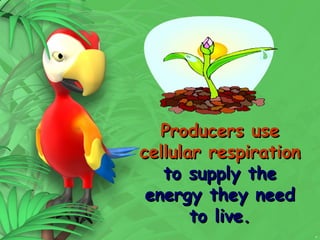
Producers use
Producers use
cellular respiration
to supply the
to supply the
energy they need
energy they need
to live.
to live.
7
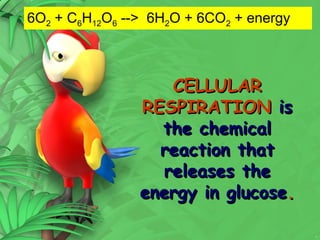
CELLULAR
CELLULAR
RESPIRATION
RESPIRATION is
is
the chemical
the chemical
reaction that
reaction that
releases the
releases the
energy in glucose
energy in glucose.
.
6O2 + C6H12O6 --> 6H2O + 6CO2 + energy
8
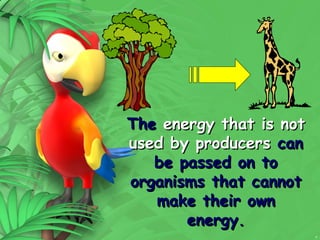
The
The energy that is not
energy that is not
used by producers
used by producers can
can
be passed on to
be passed on to
organisms that cannot
make their own
make their own
energy.
energy.
9
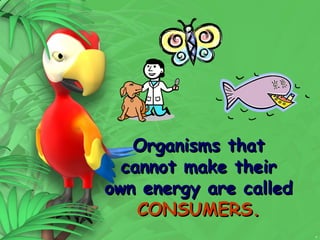
Organisms that
Organisms that
cannot make their
cannot make their
own energy are called
CONSUMERS.
CONSUMERS.
10
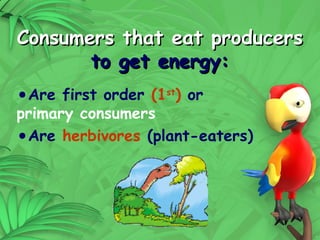
Consumers that eat producers
to get energy:
to get energy:
•Are first order (1st
) or
primary consumers
•Are herbivores (plant-eaters)
11
Most
Most of the
of the
energy the
energy the
primary consumer
primary consumer
gets from the
gets from the
producer is used
producer is used
by the consumer.
by the consumer.
12
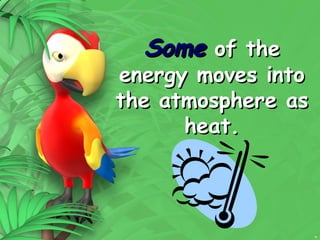
Some
Some of the
of the
energy moves into
energy moves into
the atmosphere as
the atmosphere as
heat.
heat.
13
Some energy in the
Some energy in the
primary consumer is
primary consumer is
STORED
STORED &
& not lost
not lost
to the atmosphere or
used by the
used by the
consumer itself.
consumer itself.
This energy is
This energy is
available
available for another
for another
consumer
consumer (predator).
(predator).
14
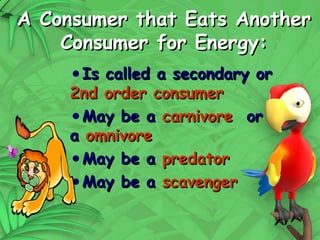
A Consumer that Eats Another
Consumer for Energy:
•Is called a secondary or
Is called a secondary or
2nd order consumer
2nd order consumer
•May be a
May be a carnivore
carnivore or
or
a
a omnivore
omnivore
•May be a
May be a predator
predator
•May be a
May be a scavenger
scavenger
15
Most
Most of the
of the
energy the
energy the
secondary
secondary
consumer gets
consumer gets
from the primary
from the primary
consumer is used
consumer is used
by the secondary
by the secondary
consumer.
consumer.
16
Some
Some of the
of the
energy is lost as
energy is lost as
heat
heat, but some
, but some
energy is stored
energy is stored
and can
and can passed
passed
on to another
on to another
consumer.
consumer.
17
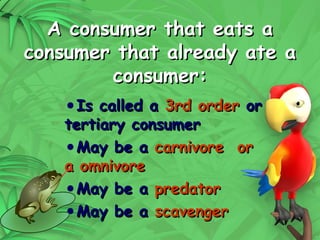
A consumer that eats a
consumer that already ate a
consumer:
consumer:
•Is called a
Is called a 3rd order
3rd order or
or
tertiary consumer
tertiary consumer
•May be a
May be a carnivore or
carnivore or
a omnivore
a omnivore
•May be a
May be a predator
predator
•May be a
May be a scavenger
scavenger
18
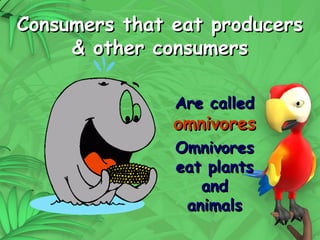
Consumers that eat producers
& other consumers
& other consumers
Are called
Are called
omnivores
omnivores
Omnivores
Omnivores
eat plants
eat plants
and
and
animals
animals
19
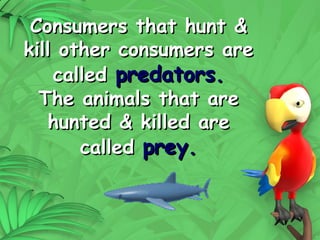
Consumers that hunt &
kill other consumers are
called
called predators.
predators.
The animals that are
hunted & killed are
hunted & killed are
called
called prey.
prey.
20
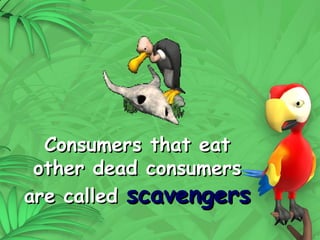
Consumers that eat
Consumers that eat
other dead consumers
are called
are called scavengers
scavengers
21
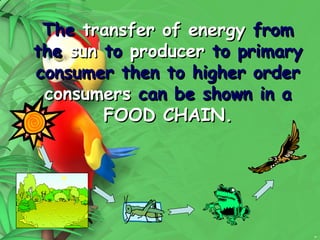
The
The transfer of energy
transfer of energy from
from
the
the sun
sun to
to producer
producer to primary
to primary
consumer then to higher order
consumers
consumers can be shown in a
can be shown in a
FOOD CHAIN.
FOOD CHAIN.
22
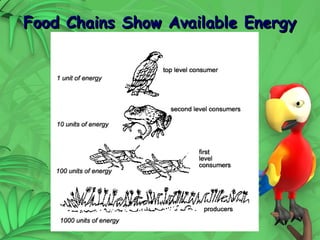
Food Chains Show Available Energy
23
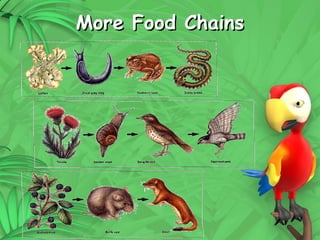
More Food Chains
More Food Chains
24
Another way
Another way
of showing the
of showing the
transfer of
transfer of
energy in an
energy in an
ecosystem is
ecosystem is
the
the
ENERGY
ENERGY
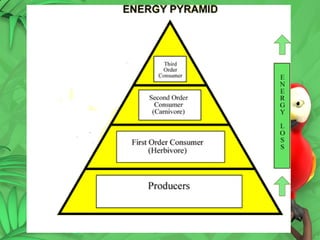
PYRAMID
PYRAMID
25
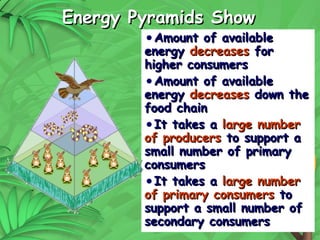
Energy Pyramids Show
•Amount of available
Amount of available
energy
energy decreases
decreases for
for
higher consumers
higher consumers
•Amount of available
Amount of available
energy
energy decreases
decreases down the
down the
food chain
food chain
•It takes a
It takes a large number
large number
of producers
of producers to support a
to support a
small number of primary
consumers
consumers
•It takes a
It takes a large number
large number
of primary consumers
of primary consumers to
to
support a small number of
secondary consumers
secondary consumers
26
27
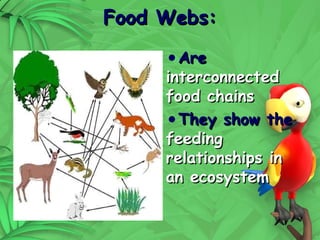
Food Webs:
Food Webs:
•Are
Are
interconnected
interconnected
food chains
food chains
•They show the
They show the
feeding
feeding
relationships in
relationships in
an ecosystem
an ecosystem
28
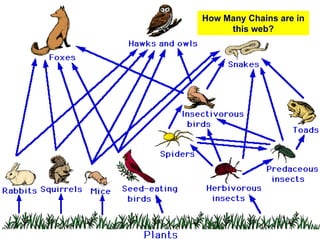
How Many Chains are in
this web?
29
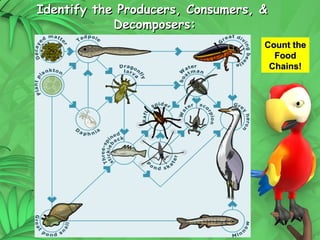
Identify the Producers, Consumers, &
Decomposers:
Decomposers:
Count the
Count the
Food
Food
Chains!
Chains!
30
THANK YOU
VERY MUCH….

EcosystemEnergyFlow for kids academy.ppt

  • 1.
    1 Energy Flow Through an Ecosystem FoodChains, Food Webs, Food Chains, Food Webs, Energy Pyramids Energy Pyramids Submitted By: Submitted By: Name: Diksha Kulshrestha Name: Diksha Kulshrestha Class: MSc. Zoology 3 Class: MSc. Zoology 3rd rd Semester Semester Roll No. : 247422850011 Enrollment No. : MSU24036130 Roll No. : 247422850011 Enrollment No. : MSU24036130 College: Shri Ram College, Muzaffarnagar (742) College: Shri Ram College, Muzaffarnagar (742) Submitted To: Submitted To: Dr. Reetu Pundir Mam Dr. Reetu Pundir Mam
  • 2.
    2 •Begins with the Beginswith the SUN SUN •Photosynthesis Photosynthesis 6CO2 + 6H2O + sunlight & chlorophyll C6H12O6 + 6O2
  • 3.
    3 Photosynthesis Photosynthesis •Chemical reaction wheregreen plants Chemical reaction where green plants use use water & carbon dioxide water & carbon dioxide to store the to store the sun’s energy in glucose sun’s energy in glucose •ENERGY is stored in glucose ENERGY is stored in glucose •Glucose is stored as starch in plants Glucose is stored as starch in plants
  • 4.
    4 Organisms that can Organismsthat can make glucose during make glucose during photosynthesis are photosynthesis are called called PRODUCERS.
  • 5.
    5 Producers Producers use use most ofthe most of the energy they make energy they make for themselves. for themselves.
  • 6.
    6 Producers use Producers use cellularrespiration cellular respiration to supply the to supply the energy they need energy they need to live. to live.
  • 7.
    7 CELLULAR CELLULAR RESPIRATION RESPIRATION is is the chemical thechemical reaction that reaction that releases the releases the energy in glucose energy in glucose. . 6O2 + C6H12O6 --> 6H2O + 6CO2 + energy
  • 8.
    8 The The energy thatis not energy that is not used by producers used by producers can can be passed on to be passed on to organisms that cannot organisms that cannot make their own make their own energy. energy.
  • 9.
    9 Organisms that Organisms that cannotmake their cannot make their own energy are called own energy are called CONSUMERS. CONSUMERS.
  • 10.
    10 Consumers that eatproducers Consumers that eat producers to get energy: to get energy: •Are first order (1st ) or primary consumers •Are herbivores (plant-eaters)
  • 11.
    11 Most Most of the ofthe energy the energy the primary consumer primary consumer gets from the gets from the producer is used producer is used by the consumer. by the consumer.
  • 12.
    12 Some Some of the ofthe energy moves into energy moves into the atmosphere as the atmosphere as heat. heat.
  • 13.
    13 Some energy inthe Some energy in the primary consumer is primary consumer is STORED STORED & & not lost not lost to the atmosphere or to the atmosphere or used by the used by the consumer itself. consumer itself. This energy is This energy is available available for another for another consumer consumer (predator). (predator).
  • 14.
    14 A Consumer thatEats Another A Consumer that Eats Another Consumer for Energy: Consumer for Energy: •Is called a secondary or Is called a secondary or 2nd order consumer 2nd order consumer •May be a May be a carnivore carnivore or or a a omnivore omnivore •May be a May be a predator predator •May be a May be a scavenger scavenger
  • 15.
    15 Most Most of the ofthe energy the energy the secondary secondary consumer gets consumer gets from the primary from the primary consumer is used consumer is used by the secondary by the secondary consumer. consumer.
  • 16.
    16 Some Some of the ofthe energy is lost as energy is lost as heat heat, but some , but some energy is stored energy is stored and can and can passed passed on to another on to another consumer. consumer.
  • 17.
    17 A consumer thateats a A consumer that eats a consumer that already ate a consumer that already ate a consumer: consumer: •Is called a Is called a 3rd order 3rd order or or tertiary consumer tertiary consumer •May be a May be a carnivore or carnivore or a omnivore a omnivore •May be a May be a predator predator •May be a May be a scavenger scavenger
  • 18.
    18 Consumers that eatproducers Consumers that eat producers & other consumers & other consumers Are called Are called omnivores omnivores Omnivores Omnivores eat plants eat plants and and animals animals
  • 19.
    19 Consumers that hunt& Consumers that hunt & kill other consumers are kill other consumers are called called predators. predators. The animals that are The animals that are hunted & killed are hunted & killed are called called prey. prey.
  • 20.
    20 Consumers that eat Consumersthat eat other dead consumers other dead consumers are called are called scavengers scavengers
  • 21.
    21 The The transfer ofenergy transfer of energy from from the the sun sun to to producer producer to primary to primary consumer then to higher order consumer then to higher order consumers consumers can be shown in a can be shown in a FOOD CHAIN. FOOD CHAIN.
  • 22.
    22 Food Chains ShowAvailable Energy Food Chains Show Available Energy
  • 23.
  • 24.
    24 Another way Another way ofshowing the of showing the transfer of transfer of energy in an energy in an ecosystem is ecosystem is the the ENERGY ENERGY PYRAMID PYRAMID
  • 25.
    25 Energy Pyramids Show EnergyPyramids Show •Amount of available Amount of available energy energy decreases decreases for for higher consumers higher consumers •Amount of available Amount of available energy energy decreases decreases down the down the food chain food chain •It takes a It takes a large number large number of producers of producers to support a to support a small number of primary small number of primary consumers consumers •It takes a It takes a large number large number of primary consumers of primary consumers to to support a small number of support a small number of secondary consumers secondary consumers
  • 26.
  • 27.
    27 Food Webs: Food Webs: •Are Are interconnected interconnected foodchains food chains •They show the They show the feeding feeding relationships in relationships in an ecosystem an ecosystem
  • 28.
    28 How Many Chainsare in this web?
  • 29.
    29 Identify the Producers,Consumers, & Identify the Producers, Consumers, & Decomposers: Decomposers: Count the Count the Food Food Chains! Chains!
  • 30.