Early Childhood
Education
ASSESSMENT TECHNIQUES
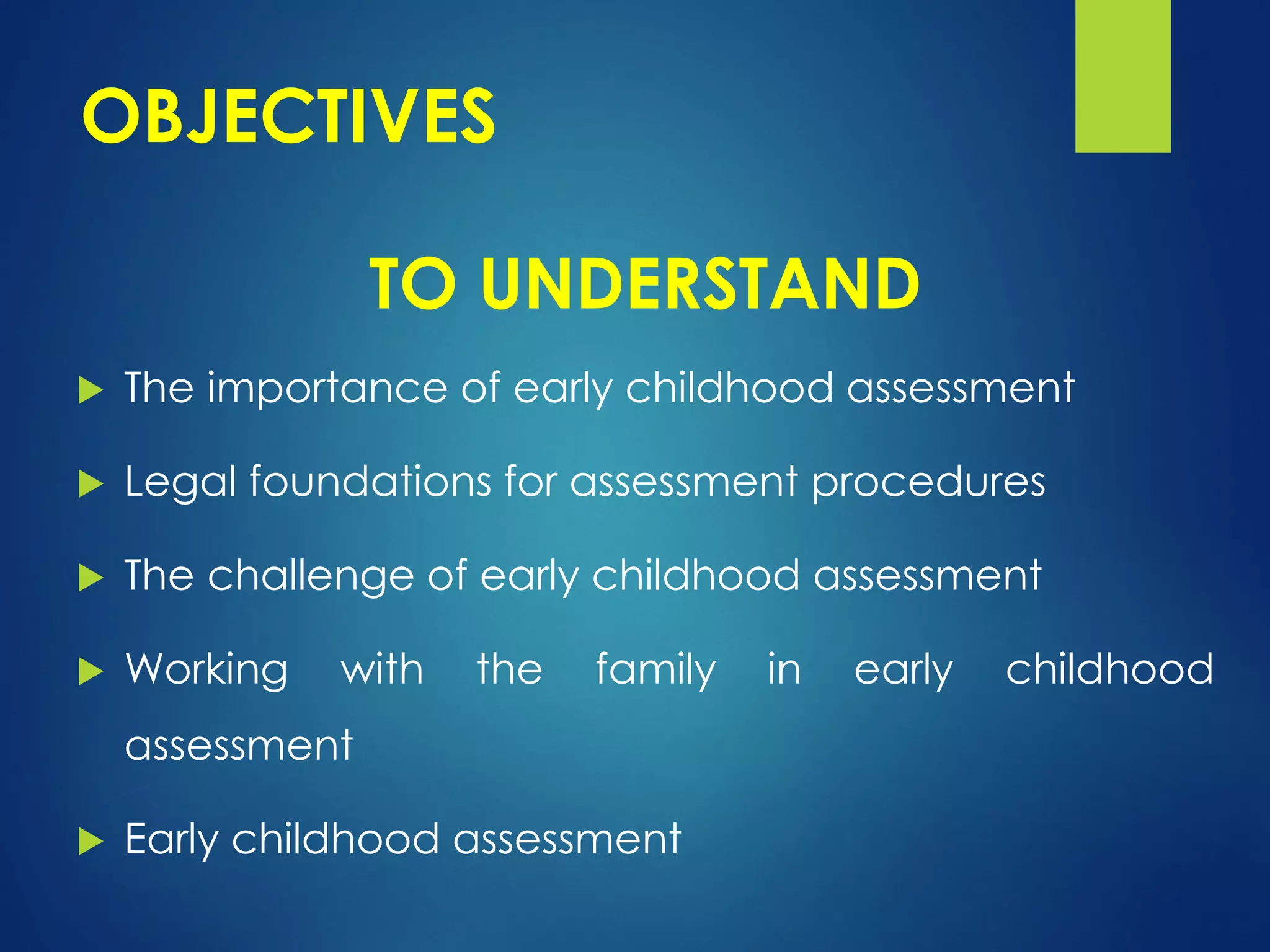
OBJECTIVES
 The importance of early childhood assessment
 Legal foundations for assessment procedures
 The challenge of early childhood assessment
 Working with the family in early childhood
assessment
 Early childhood assessment
TO UNDERSTAND
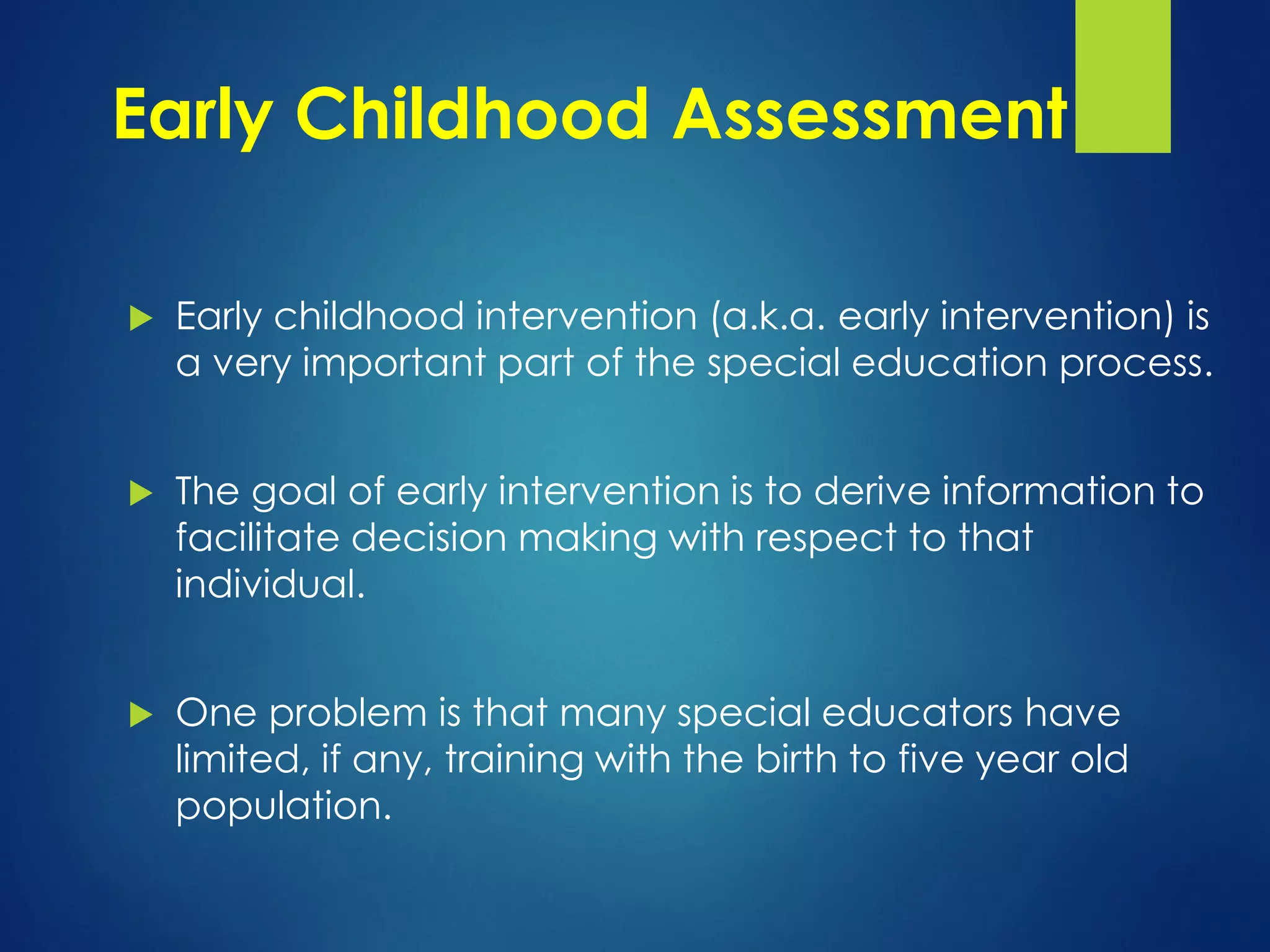
Early Childhood Assessment
 Early childhood intervention (a.k.a. early intervention) is
a very important part of the special education process.
 The goal of early intervention is to derive information to
facilitate decision making with respect to that
individual.
 One problem is that many special educators have
limited, if any, training with the birth to five year old
population.
Six Standards of Assessment
Materials for Use with Young
Children
1. Authenticity (Truthiness)
2. Convergence (Merging)
3. Collaboration
4. Equity (Justice)
5. Sensitivity
6. Congruence (Similarity)
The
Challenge
of
EARLY CHILDHOOD ASSESSMENT
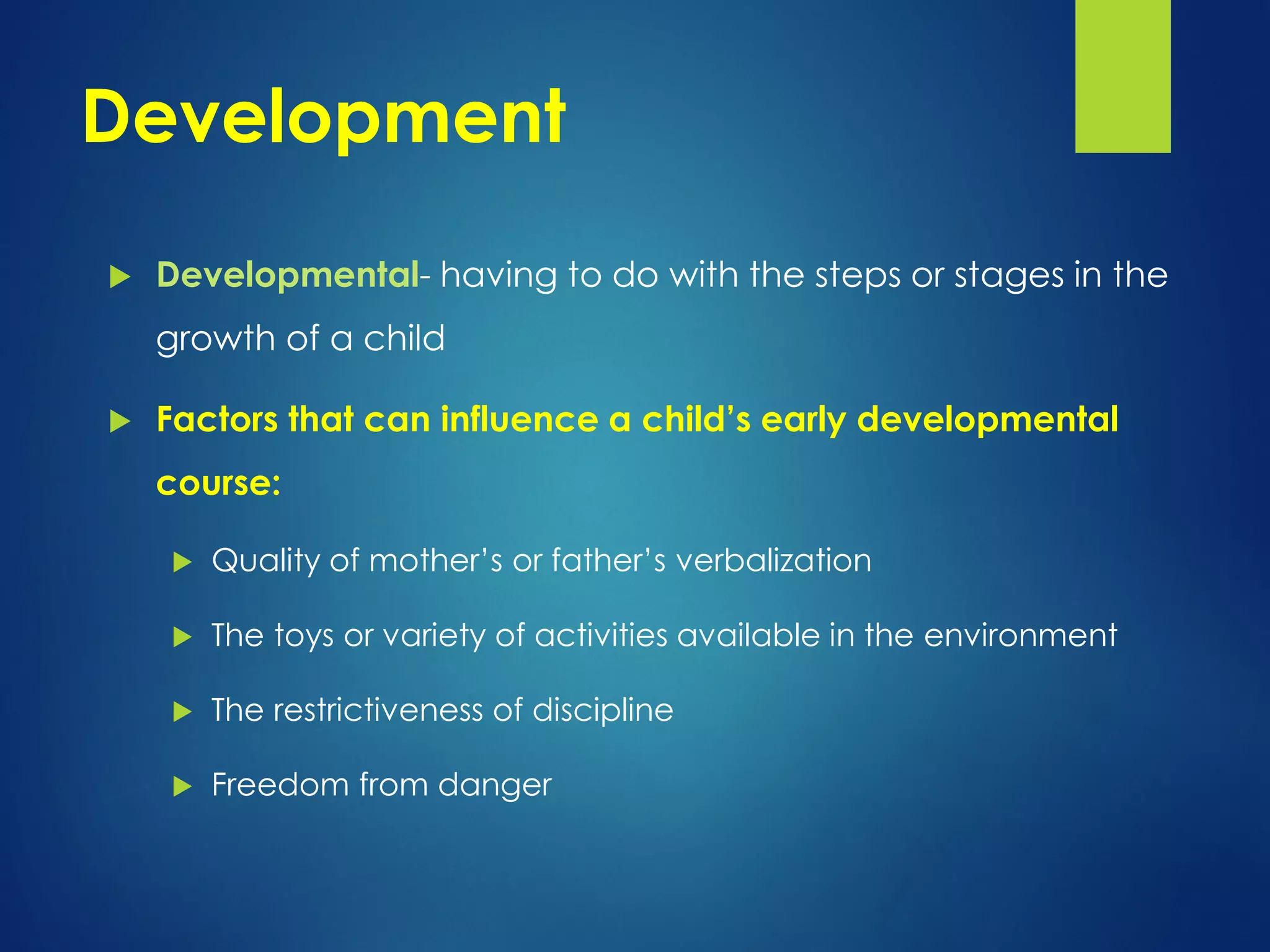
Development
 Developmental- having to do with the steps or stages in the
growth of a child
 Factors that can influence a child’s early developmental
course:
 Quality of mother’s or father’s verbalization
 The toys or variety of activities available in the environment
 The restrictiveness of discipline
 Freedom from danger
Eight Fundamental Goals
1. Determine the eligibility for services and the
appropriateness of alternative environments
2. Identify developmentally appropriate and
functional intervention goals
3. Identify the unique styles, strengths, and coping
strategies of each child
4. Identify parents’ goals for their children and their
needs for themselves
Eight Fundamental Goals
5. Build and reinforce parents’ sense of competence and worth
6. Develop a shared and integrated perspective on child and
family needs and resources
7. Create a shared commitment to intervention goals
8. Evaluate the effectiveness of services for children and families
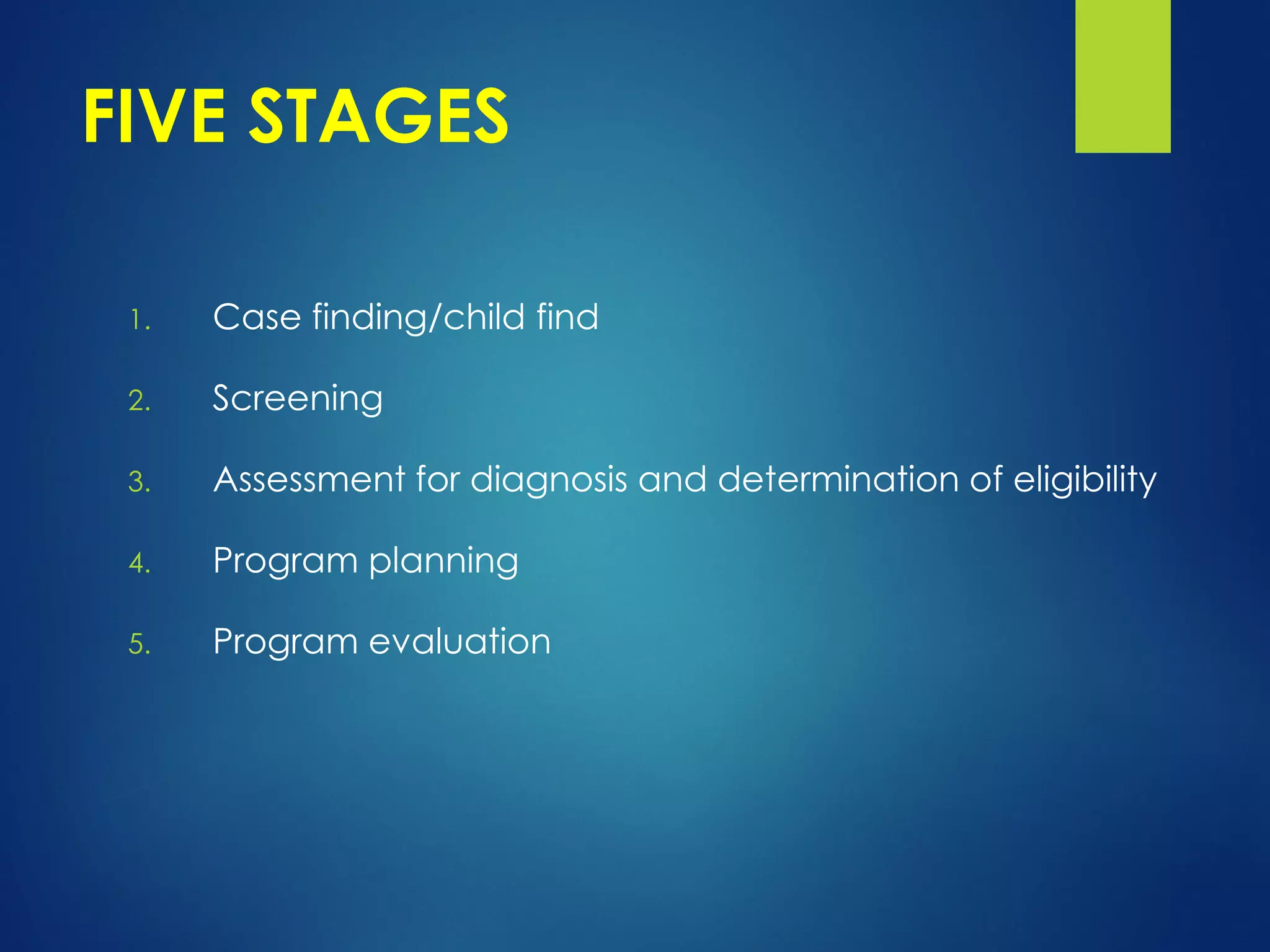
FIVE STAGES
1. Case finding/child find
2. Screening
3. Assessment for diagnosis and determination of eligibility
4. Program planning
5. Program evaluation
IFSP
Individualized (I)
Family (F)
Service(S)
Plan (P)
SERVICE MODELS
Home and community-based
visits
Facility or center-based visits
Parent-child groups
Family support groups
Group development
intervention
Working with the Family in
Early Childhood Assessment
Interview the parents/caregivers- often done during
a home visit.
10 Practical suggestions for special educators
when conducting parent interviews in early
intervention.
Early Childhood
Assessment Measures
Here are a number of early
childhood education assessment
tools :
Early Childhood
Assessment Measures
1. Observation:
1. you must take a strategic approach to watching and
documenting young children.
2. Through strategic observation, you can begin to notice
patterns and determine how activities and routines can be
adapted to meet a child’s needs.
3. Observing a child within the context of your daily childcare
center activities and routines can offer valuable information
on the child’s development, interests, and individual needs.
1. For example – do they initiate interaction with others?
2. Do they struggle with fine motor skills when attempting to
make a craft?
Early Childhood
Assessment Measures
2. Standardized tests:
1. Standardized tests are an early childhood education
assessment tool that can be used to compare a child to
the average child at the same stage of development.
Tests
 Achievement tests
 Diagnostic tests
 Aptitude tests
Early Childhood
Assessment Measures
3. Running records:
1. As an educator, you may choose to document a child’s
progress over a period of time by recording specific events,
behaviors, and successes to gain insight into how a child is
developing.
2. Running records are especially helpful in analyzing social skill
development or behavior concerns in young children.
3. Running records also can be narrowly focused on a specific
activity or subject area if necessary.
4. It’s essential to be objective in your records, and include as
much detail as possible to help you assess the meaning of the
behavior at a later date.
THE
END

Early Childhood Education Assessment.pdf

  • 1.
  • 2.
    OBJECTIVES  The importanceof early childhood assessment  Legal foundations for assessment procedures  The challenge of early childhood assessment  Working with the family in early childhood assessment  Early childhood assessment TO UNDERSTAND
  • 3.
    Early Childhood Assessment Early childhood intervention (a.k.a. early intervention) is a very important part of the special education process.  The goal of early intervention is to derive information to facilitate decision making with respect to that individual.  One problem is that many special educators have limited, if any, training with the birth to five year old population.
  • 4.
    Six Standards ofAssessment Materials for Use with Young Children 1. Authenticity (Truthiness) 2. Convergence (Merging) 3. Collaboration 4. Equity (Justice) 5. Sensitivity 6. Congruence (Similarity)
  • 5.
  • 6.
    Development  Developmental- havingto do with the steps or stages in the growth of a child  Factors that can influence a child’s early developmental course:  Quality of mother’s or father’s verbalization  The toys or variety of activities available in the environment  The restrictiveness of discipline  Freedom from danger
  • 7.
    Eight Fundamental Goals 1.Determine the eligibility for services and the appropriateness of alternative environments 2. Identify developmentally appropriate and functional intervention goals 3. Identify the unique styles, strengths, and coping strategies of each child 4. Identify parents’ goals for their children and their needs for themselves
  • 8.
    Eight Fundamental Goals 5.Build and reinforce parents’ sense of competence and worth 6. Develop a shared and integrated perspective on child and family needs and resources 7. Create a shared commitment to intervention goals 8. Evaluate the effectiveness of services for children and families
  • 9.
    FIVE STAGES 1. Casefinding/child find 2. Screening 3. Assessment for diagnosis and determination of eligibility 4. Program planning 5. Program evaluation
  • 10.
  • 11.
    SERVICE MODELS Home andcommunity-based visits Facility or center-based visits Parent-child groups Family support groups Group development intervention
  • 12.
    Working with theFamily in Early Childhood Assessment Interview the parents/caregivers- often done during a home visit. 10 Practical suggestions for special educators when conducting parent interviews in early intervention.
  • 13.
    Early Childhood Assessment Measures Hereare a number of early childhood education assessment tools :
  • 14.
    Early Childhood Assessment Measures 1.Observation: 1. you must take a strategic approach to watching and documenting young children. 2. Through strategic observation, you can begin to notice patterns and determine how activities and routines can be adapted to meet a child’s needs. 3. Observing a child within the context of your daily childcare center activities and routines can offer valuable information on the child’s development, interests, and individual needs. 1. For example – do they initiate interaction with others? 2. Do they struggle with fine motor skills when attempting to make a craft?
  • 15.
    Early Childhood Assessment Measures 2.Standardized tests: 1. Standardized tests are an early childhood education assessment tool that can be used to compare a child to the average child at the same stage of development. Tests  Achievement tests  Diagnostic tests  Aptitude tests
  • 16.
    Early Childhood Assessment Measures 3.Running records: 1. As an educator, you may choose to document a child’s progress over a period of time by recording specific events, behaviors, and successes to gain insight into how a child is developing. 2. Running records are especially helpful in analyzing social skill development or behavior concerns in young children. 3. Running records also can be narrowly focused on a specific activity or subject area if necessary. 4. It’s essential to be objective in your records, and include as much detail as possible to help you assess the meaning of the behavior at a later date.
  • 17.