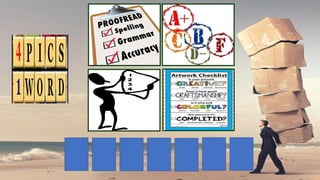
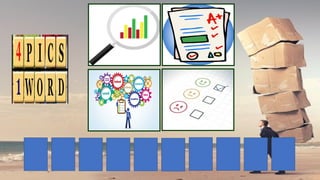
exam
checklist
rubrics
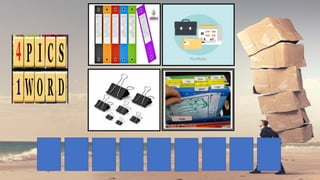
portfolio
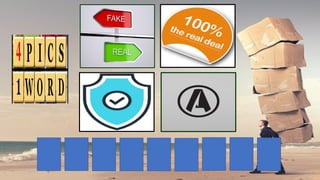
authentic
assessment
THE
ASSESSMENT
PROCESS
WHAT IS ASSESSMENT?
WHAT IS CHILD ASSESSMENT?
•Early childhood assessment
is a tool used to gather and
provide educators, parents,
and families with critical
information about a child’s
development and growth.
•Childhood assessment is a
process of gathering information
about a child, reviewing the
information, and then using the
information to plan educational
activities that are at a level the
child can understand and is able
to learn from.
•Assessment is a critical part
of a high-quality, early
childhood program. When
educators do an assessment,
they observe a child to get
information about what he
knows and what he can do.
•Observing and documenting a child’s
work and performance over the course
of a year allows an educator to
accumulate a record of the child’s
growth and development. With this
information, educators can begin to plan
appropriate curriculum and effective
individualized instruction for each child.
Authentic
assessment
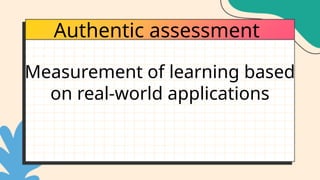
Authentic assessment
Measurement of learning based
on real-world applications
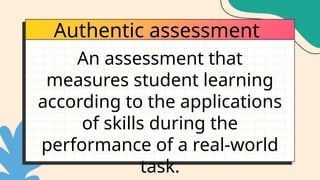
Authentic assessment
An assessment that
measures student learning
according to the applications
of skills during the
performance of a real-world
task.
Demonstrate
knowledge
By doing.
Authentic Assessment
•reduce unintended or implicit biases
•Can be an alternative to test that can be
anxiety inducing and developmentally
inappropriate for young children (esp. in
KINDER)
•It does not focus on what the child didn’t get,
but on their strength.
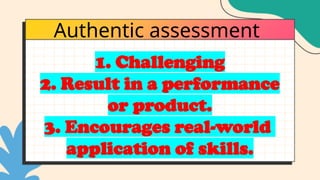
Authentic assessment
1. Challenging
2. Result in a performance
or product.
3. Encourages real-world
application of skills.
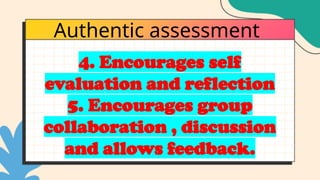
Authentic assessment
4. Encourages self
evaluation and reflection
5. Encourages group
collaboration , discussion
and allows feedback.
Why is
assessment
important?
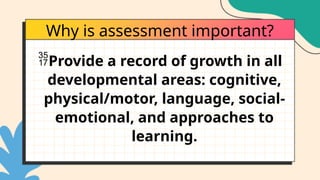
Why is assessment important?
Provide a record of growth in all
developmental areas: cognitive,
physical/motor, language, social-
emotional, and approaches to
learning.
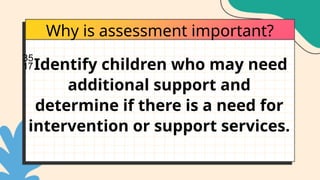
Why is assessment important?
Identify children who may need
additional support and
determine if there is a need for
intervention or support services.
Help educators plan individualized
instruction for a child or for a
group of children that are at the
same stage of development.
Identify the strengths and
weaknesses within a program and
information on how well the
program meets the goals and
needs of the children.
Provide a common ground
between educators and parents
or families to use in
collaborating on a strategy to
support their child.
PURPOSE OF ASSESSMENT IN
THE EARLY GRADES
1.Assessment drives
instruction
2.Assessment drives learning
3.Assessment informs
students of their progress
PURPOSE OF ASSESSMENT IN
THE EARLY GRADES
4.Assessment informs teaching
practice
5.Role of grading in assessment
6.When student learning
outcomes are not met
What are different child assessment
methods?
•Observations
•Portfolio
•Educator ratings
•parents’ rating
•Standardized test
What are different child assessment
methods?
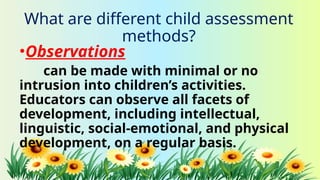
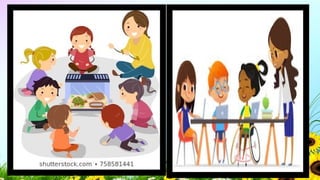
•Observations
can be made with minimal or no
intrusion into children’s activities.
Educators can observe all facets of
development, including intellectual,
linguistic, social-emotional, and physical
development, on a regular basis.
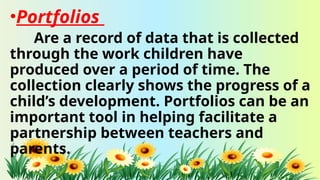
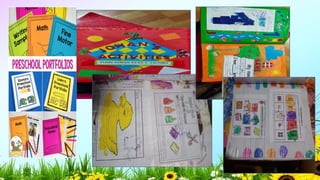
•Portfolios
Are a record of data that is collected
through the work children have
produced over a period of time. The
collection clearly shows the progress of a
child’s development. Portfolios can be an
important tool in helping facilitate a
partnership between teachers and
parents.
•Educator Ratings
Are useful in assessing children’s
cognitive and language abilities as well
as their social-emotional development.
These ratings can be linked to other
methods of assessment, such as
standardized testing or other
assessment tools.
•Parent Ratings
integrate parents into the
assessment process. Parents who
are encouraged to observe and
listen to their child can help detect
and target important milestones
and behaviors in their child’s
development.
•Standardized Tests
are tests created to fit a set of
testing standards. These tests are
administered and scored in a
standard manner and are often used
to assess the performance of
children in a program.
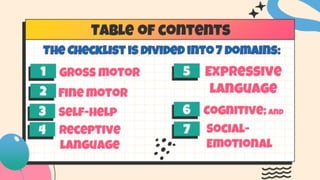
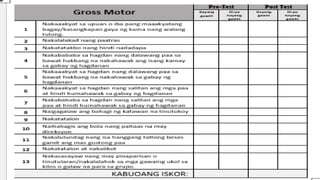
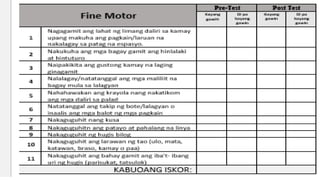
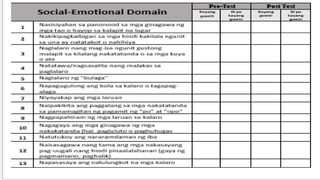
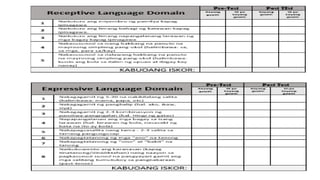
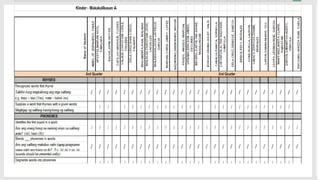
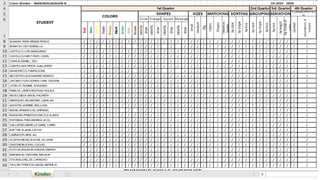
Early Grades Assessment Checklist
PHILIPPINE EARLY CHILDHOOD
EDUCATION CHECKLIST
By using the checklist, they will be able
to determine if a child is developing
adequately or is at risk for
developmental delays.
This Checklist is NOT intended to be
used to
Early Grades Assessment Checklist
2) determine a child’s intelligence quotient
or IQ; or
3) gauge his academic achievement.
It is only the first of several steps in a
comprehensive assessment process that a
child at risk is expected to go through so he
can get the help he needs as early as
possible.
Early Grades Assessment Checklist
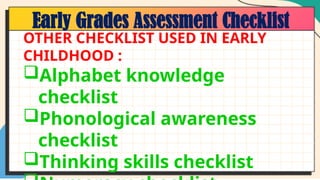
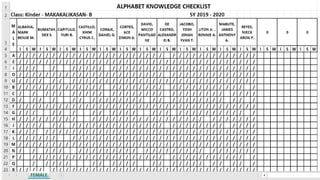
OTHER CHECKLIST USED IN EARLY
CHILDHOOD :
Alphabet knowledge
checklist
Phonological awareness
checklist
Thinking skills checklist
Thank you
and god
bless !!

ASSESSMENT IN EDUCATION - AUTHENTIC ASSESSMENT.pptx

  • 3.
  • 5.
  • 7.
  • 9.
  • 11.
  • 13.
  • 14.
  • 15.
    WHAT IS ASSESSMENT? WHATIS CHILD ASSESSMENT? •Early childhood assessment is a tool used to gather and provide educators, parents, and families with critical information about a child’s development and growth.
  • 16.
    •Childhood assessment isa process of gathering information about a child, reviewing the information, and then using the information to plan educational activities that are at a level the child can understand and is able to learn from.
  • 17.
    •Assessment is acritical part of a high-quality, early childhood program. When educators do an assessment, they observe a child to get information about what he knows and what he can do.
  • 18.
    •Observing and documentinga child’s work and performance over the course of a year allows an educator to accumulate a record of the child’s growth and development. With this information, educators can begin to plan appropriate curriculum and effective individualized instruction for each child.
  • 21.
  • 22.
    Authentic assessment Measurement oflearning based on real-world applications
  • 23.
    Authentic assessment An assessmentthat measures student learning according to the applications of skills during the performance of a real-world task.
  • 24.
  • 25.
    Authentic Assessment •reduce unintendedor implicit biases •Can be an alternative to test that can be anxiety inducing and developmentally inappropriate for young children (esp. in KINDER) •It does not focus on what the child didn’t get, but on their strength.
  • 27.
    Authentic assessment 1. Challenging 2.Result in a performance or product. 3. Encourages real-world application of skills.
  • 28.
    Authentic assessment 4. Encouragesself evaluation and reflection 5. Encourages group collaboration , discussion and allows feedback.
  • 30.
  • 31.
    Why is assessmentimportant? Provide a record of growth in all developmental areas: cognitive, physical/motor, language, social- emotional, and approaches to learning.
  • 32.
    Why is assessmentimportant? Identify children who may need additional support and determine if there is a need for intervention or support services.
  • 33.
    Help educators planindividualized instruction for a child or for a group of children that are at the same stage of development.
  • 34.
    Identify the strengthsand weaknesses within a program and information on how well the program meets the goals and needs of the children.
  • 35.
    Provide a commonground between educators and parents or families to use in collaborating on a strategy to support their child.
  • 36.
    PURPOSE OF ASSESSMENTIN THE EARLY GRADES 1.Assessment drives instruction 2.Assessment drives learning 3.Assessment informs students of their progress
  • 37.
    PURPOSE OF ASSESSMENTIN THE EARLY GRADES 4.Assessment informs teaching practice 5.Role of grading in assessment 6.When student learning outcomes are not met
  • 38.
    What are differentchild assessment methods? •Observations •Portfolio •Educator ratings •parents’ rating •Standardized test
  • 39.
    What are differentchild assessment methods? •Observations can be made with minimal or no intrusion into children’s activities. Educators can observe all facets of development, including intellectual, linguistic, social-emotional, and physical development, on a regular basis.
  • 41.
    •Portfolios Are a recordof data that is collected through the work children have produced over a period of time. The collection clearly shows the progress of a child’s development. Portfolios can be an important tool in helping facilitate a partnership between teachers and parents.
  • 43.
    •Educator Ratings Are usefulin assessing children’s cognitive and language abilities as well as their social-emotional development. These ratings can be linked to other methods of assessment, such as standardized testing or other assessment tools.
  • 44.
    •Parent Ratings integrate parentsinto the assessment process. Parents who are encouraged to observe and listen to their child can help detect and target important milestones and behaviors in their child’s development.
  • 45.
    •Standardized Tests are testscreated to fit a set of testing standards. These tests are administered and scored in a standard manner and are often used to assess the performance of children in a program.
  • 46.
    Early Grades AssessmentChecklist PHILIPPINE EARLY CHILDHOOD EDUCATION CHECKLIST By using the checklist, they will be able to determine if a child is developing adequately or is at risk for developmental delays. This Checklist is NOT intended to be used to
  • 47.
    Early Grades AssessmentChecklist 2) determine a child’s intelligence quotient or IQ; or 3) gauge his academic achievement. It is only the first of several steps in a comprehensive assessment process that a child at risk is expected to go through so he can get the help he needs as early as possible.
  • 53.
    Early Grades AssessmentChecklist OTHER CHECKLIST USED IN EARLY CHILDHOOD : Alphabet knowledge checklist Phonological awareness checklist Thinking skills checklist
  • 59.