¿cómo  pensar la educación que viene? ∙  dr. cristóbal cobo ∙ flacso-méxico re
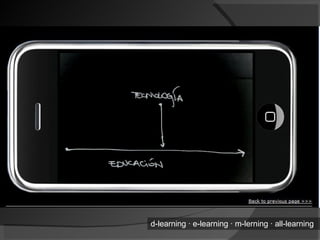
d-learning ∙ e-learning ∙ m-lerning ∙ all-learning
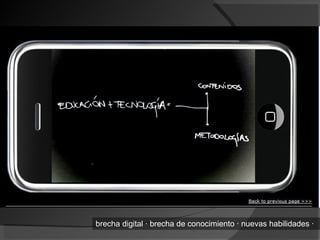
brecha digital ∙ brecha de conocimiento ∙ nuevas habilidades ∙
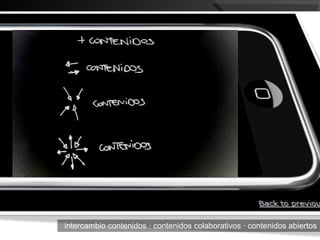
intercambio contenidos ∙ contenidos colaborativos ∙ contenidos abiertos
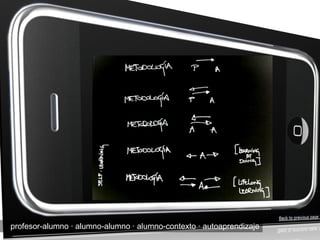
profesor-alumno ∙ alumno-alumno ∙ alumno-contexto ∙ autoaprendizaje
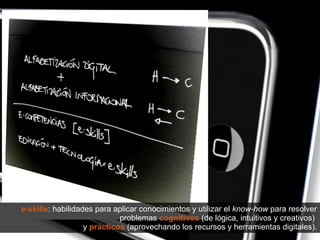
e-skills : habilidades para aplicar conocimientos y utilizar el  know-how  para resolver problemas  cognitivos  (de lógica, intuitivos y creativos)  y  prácticos  (aprovechando los recursos y herramientas digitales).
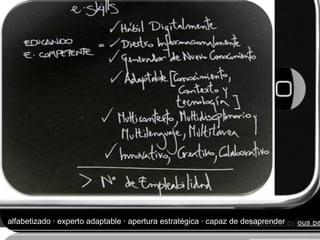
alfabetizado ∙ experto adaptable ∙ apertura estratégica ∙ capaz de desaprender
2008 2014 2026 2030 ¿la tecnología  de mañana? [ + ]  Earthmine  [ + ] Everyscape [ + ] Microsoft Surface
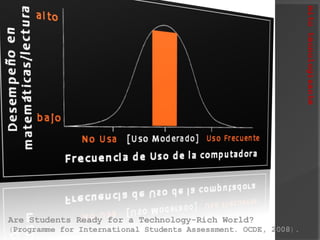
Are Students Ready for a Technology-Rich World?   ( Programme for International Students Assessment .  OCDE, 2008 ).  mito tecnologizante
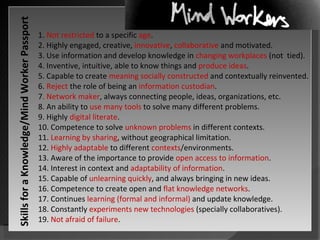
1.  Not restricted  to a specific  age . 2. Highly engaged, creative,  innovative ,  collaborative  and motivated. 3. Use information and develop knowledge in  changing workplaces  (not  tied). 4. Inventive, intuitive, able to know things and  produce ideas . 5. Capable to create  meaning socially constructed  and contextually reinvented. 6.  Reject  the role of being an  information custodian . 7 . Network maker , always connecting people, ideas, organizations, etc. 8. An ability to  use many tools  to solve many different problems. 9. Highly  digital literate . 10. Competence to solve  unknown problems  in different contexts. 11.  Learning by sharing , without geographical limitation. 12.  Highly adaptable  to different  contexts /environments. 13. Aware of the importance to provide  open access to information . 14. Interest in context and  adaptability of information . 15. Capable of  unlearning quickly , and always bringing in new ideas. 16. Competence to create open and  flat knowledge networks . 17. Continues  learning (formal and informal)  and update knowledge. 18. Constantly  experiments new technologies  (specially collaboratives). 19.  Not afraid of failure . Skills for a Knowledge/Mind Worker Passport
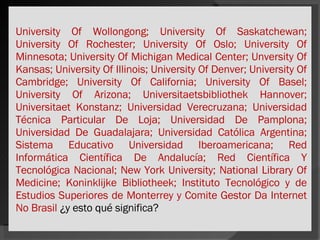
University Of Wollongong; University Of Saskatchewan; University Of Rochester; University Of Oslo; University Of Minnesota; University Of Michigan Medical Center; Unversity Of Kansas; University Of Illinois; University Of Denver; University Of Cambridge; University Of California; University Of Basel; University Of Arizona; Universitaetsbibliothek Hannover; Universitaet Konstanz; Universidad Verecruzana; Universidad Técnica Particular De Loja; Universidad De Pamplona; Universidad De Guadalajara; Universidad Católica Argentina; Sistema Educativo Universidad Iberoamericana; Red Informática Científica De Andalucía; Red Científica Y Tecnológica Nacional; New York University; National Library Of Medicine; Koninklijke Bibliotheek; Instituto Tecnológico y de Estudios Superiores de Monterrey y Comite Gestor Da Internet No Brasil  ¿y esto qué significa?
[…  que el mundo es  plano ] [ The World is Flat .  Thomas Friedman ]
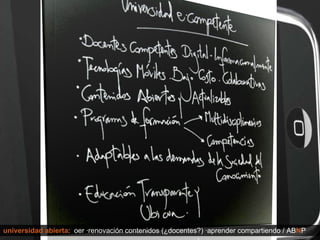
universidad abierta :  oer ∙renovación contenidos (¿docentes?) ∙aprender compartiendo / AB N P
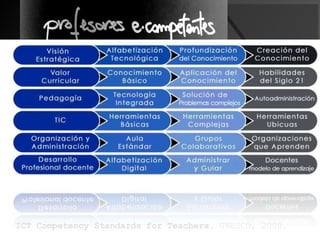
ICT Competency Standards for Teachers . UNESCO, 2008.
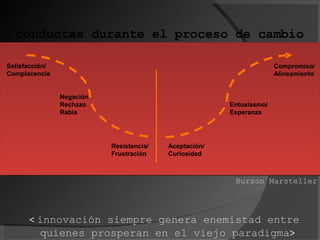
conductas durante el proceso de cambio Burson Marsteller <  innovación siempre genera enemistad entre  quienes prosperan en el viejo paradigma >
dr.cristobal_cobo ergonomic.blogspot.com flacso-mexico planetaweb2.net

E Skills Education Upn

  • 1.
    ¿cómo pensarla educación que viene? ∙ dr. cristóbal cobo ∙ flacso-méxico re
  • 2.
    d-learning ∙ e-learning∙ m-lerning ∙ all-learning
  • 3.
    brecha digital ∙brecha de conocimiento ∙ nuevas habilidades ∙
  • 4.
    intercambio contenidos ∙contenidos colaborativos ∙ contenidos abiertos
  • 5.
    profesor-alumno ∙ alumno-alumno∙ alumno-contexto ∙ autoaprendizaje
  • 6.
    e-skills : habilidadespara aplicar conocimientos y utilizar el know-how para resolver problemas cognitivos (de lógica, intuitivos y creativos) y prácticos (aprovechando los recursos y herramientas digitales).
  • 7.
    alfabetizado ∙ expertoadaptable ∙ apertura estratégica ∙ capaz de desaprender
  • 8.
    2008 2014 20262030 ¿la tecnología de mañana? [ + ] Earthmine [ + ] Everyscape [ + ] Microsoft Surface
  • 9.
    Are Students Readyfor a Technology-Rich World? ( Programme for International Students Assessment . OCDE, 2008 ). mito tecnologizante
  • 10.
    1. Notrestricted to a specific age . 2. Highly engaged, creative, innovative , collaborative and motivated. 3. Use information and develop knowledge in changing workplaces (not tied). 4. Inventive, intuitive, able to know things and produce ideas . 5. Capable to create meaning socially constructed and contextually reinvented. 6. Reject the role of being an information custodian . 7 . Network maker , always connecting people, ideas, organizations, etc. 8. An ability to use many tools to solve many different problems. 9. Highly digital literate . 10. Competence to solve unknown problems in different contexts. 11. Learning by sharing , without geographical limitation. 12. Highly adaptable to different contexts /environments. 13. Aware of the importance to provide open access to information . 14. Interest in context and adaptability of information . 15. Capable of unlearning quickly , and always bringing in new ideas. 16. Competence to create open and flat knowledge networks . 17. Continues learning (formal and informal) and update knowledge. 18. Constantly experiments new technologies (specially collaboratives). 19. Not afraid of failure . Skills for a Knowledge/Mind Worker Passport
  • 11.
    University Of Wollongong;University Of Saskatchewan; University Of Rochester; University Of Oslo; University Of Minnesota; University Of Michigan Medical Center; Unversity Of Kansas; University Of Illinois; University Of Denver; University Of Cambridge; University Of California; University Of Basel; University Of Arizona; Universitaetsbibliothek Hannover; Universitaet Konstanz; Universidad Verecruzana; Universidad Técnica Particular De Loja; Universidad De Pamplona; Universidad De Guadalajara; Universidad Católica Argentina; Sistema Educativo Universidad Iberoamericana; Red Informática Científica De Andalucía; Red Científica Y Tecnológica Nacional; New York University; National Library Of Medicine; Koninklijke Bibliotheek; Instituto Tecnológico y de Estudios Superiores de Monterrey y Comite Gestor Da Internet No Brasil ¿y esto qué significa?
  • 12.
    [… queel mundo es plano ] [ The World is Flat . Thomas Friedman ]
  • 13.
    universidad abierta : oer ∙renovación contenidos (¿docentes?) ∙aprender compartiendo / AB N P
  • 14.
    ICT Competency Standardsfor Teachers . UNESCO, 2008.
  • 15.
    conductas durante elproceso de cambio Burson Marsteller < innovación siempre genera enemistad entre quienes prosperan en el viejo paradigma >
  • 16.