



Recognition, on a non
discriminatory basis, of
characteristics and behavioral
patterns of persons who are likely
to threaten security
Objective: at the end of the topic, the
trainee must have gain some
knowledge in identifying a possible
terrorist.
INTELLIGENCE BRIEF
Maj. Matt Hurley
11 WG/DSI
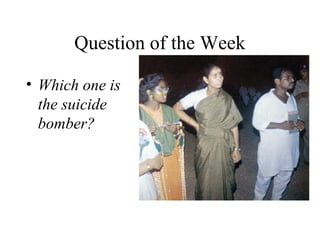
Question of the Week
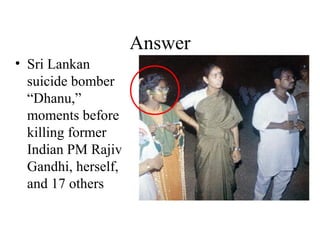
• Which one is
the suicide
bomber?
Answer
• Sri Lankan
suicide bomber
“Dhanu,”
moments before
killing former
Indian PM Rajiv
Gandhi, herself,
and 17 others
Answer
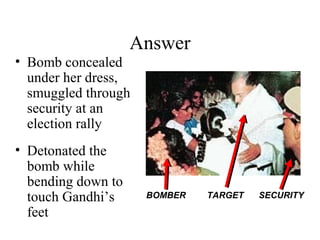
• Bomb concealed
under her dress,
smuggled through
security at an
election rally
• Detonated the
bomb while
bending down to
touch Gandhi’s
feet
BOMBER TARGET SECURITY
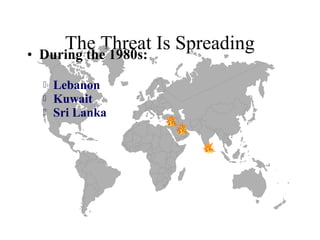
The Threat Is Spreading
• During the 1980s:
 Lebanon
 Kuwait
 Sri Lanka
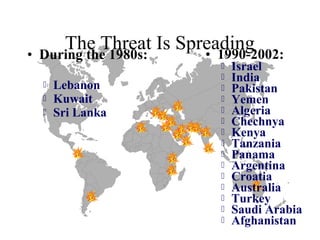
The Threat Is Spreading
• During the 1980s:
 Lebanon
 Kuwait
 Sri Lanka
• 1990-2002:
 Israel
 India
 Pakistan
 Yemen
 Algeria
 Chechnya
 Kenya
 Tanzania
 Panama
 Argentina
 Croatia
 Australia
 Turkey
 Saudi Arabia
 Afghanistan
Modus Operandi
• A suicide bomber’s success depends on three main
elements:
– Secrecy is essential to plan and conduct the mission
– Thorough reconnaissance and surveillance is required to
choose a target and identify its weakness
– Extensive rehearsals and “dry runs” are necessary to ensure
stealth and speed during the attack
• Ultimate goal: inflict as many casualties as possible
Prevention
• Traditional concepts of security are based on deterring
terrorist attacks
– Assumes the terrorist fears death or capture
– But, suicide attacks depend on the death of the terrorist
– The suicide bomber doesn’t care about his/her death,
imprisonment or torture at the time of the attack
– No need for an escape plan, traditionally the most difficult
part of a terrorist operation
• There is no sure method of preventing a determined
suicide bomber, but…
• The surveillance / reconnaissance phase is the best
time to spot and thwart attack planning
• Strong and obvious force protection measures are the
best way to deter a suicide attack
– The terrorist group wants to succeed
– The suicide bomber does not want to die for nothing
– If a target is too tough, they will choose another
Prevention
Prevention
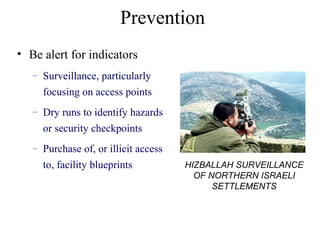
• Be alert for indicators
– Surveillance, particularly
focusing on access points
– Dry runs to identify hazards
or security checkpoints
– Purchase of, or illicit access
to, facility blueprints HIZBALLAH SURVEILLANCE
OF NORTHERN ISRAELI
SETTLEMENTS
• Pamphlet distributed to the public, early Sep 02
• Lists basic external, behavioral indicators:
– Unseasonable dress or conspicuous, bulky clothes
– Obvious or awkward attempts to “blend in” to a
crowd
– Repeated and nervous handling of parts of clothing
– Profuse sweating, slow-paced walking while
focusing on sides
– Attempts to stay away from security personnel
– Hesitant, nervous muttering
– Perfumed, recently shaved
Prevention: Tips from the Israelis

E. recognition, on a non discriminatory basis,

  • 1.
    Recognition, on anon discriminatory basis, of characteristics and behavioral patterns of persons who are likely to threaten security
  • 2.
    Objective: at theend of the topic, the trainee must have gain some knowledge in identifying a possible terrorist.
  • 22.
  • 23.
    Question of theWeek • Which one is the suicide bomber?
  • 24.
    Answer • Sri Lankan suicidebomber “Dhanu,” moments before killing former Indian PM Rajiv Gandhi, herself, and 17 others
  • 25.
    Answer • Bomb concealed underher dress, smuggled through security at an election rally • Detonated the bomb while bending down to touch Gandhi’s feet BOMBER TARGET SECURITY
  • 26.
    The Threat IsSpreading • During the 1980s:  Lebanon  Kuwait  Sri Lanka
  • 27.
    The Threat IsSpreading • During the 1980s:  Lebanon  Kuwait  Sri Lanka • 1990-2002:  Israel  India  Pakistan  Yemen  Algeria  Chechnya  Kenya  Tanzania  Panama  Argentina  Croatia  Australia  Turkey  Saudi Arabia  Afghanistan
  • 28.
    Modus Operandi • Asuicide bomber’s success depends on three main elements: – Secrecy is essential to plan and conduct the mission – Thorough reconnaissance and surveillance is required to choose a target and identify its weakness – Extensive rehearsals and “dry runs” are necessary to ensure stealth and speed during the attack • Ultimate goal: inflict as many casualties as possible
  • 29.
    Prevention • Traditional conceptsof security are based on deterring terrorist attacks – Assumes the terrorist fears death or capture – But, suicide attacks depend on the death of the terrorist – The suicide bomber doesn’t care about his/her death, imprisonment or torture at the time of the attack – No need for an escape plan, traditionally the most difficult part of a terrorist operation
  • 30.
    • There isno sure method of preventing a determined suicide bomber, but… • The surveillance / reconnaissance phase is the best time to spot and thwart attack planning • Strong and obvious force protection measures are the best way to deter a suicide attack – The terrorist group wants to succeed – The suicide bomber does not want to die for nothing – If a target is too tough, they will choose another Prevention
  • 31.
    Prevention • Be alertfor indicators – Surveillance, particularly focusing on access points – Dry runs to identify hazards or security checkpoints – Purchase of, or illicit access to, facility blueprints HIZBALLAH SURVEILLANCE OF NORTHERN ISRAELI SETTLEMENTS
  • 32.
    • Pamphlet distributedto the public, early Sep 02 • Lists basic external, behavioral indicators: – Unseasonable dress or conspicuous, bulky clothes – Obvious or awkward attempts to “blend in” to a crowd – Repeated and nervous handling of parts of clothing – Profuse sweating, slow-paced walking while focusing on sides – Attempts to stay away from security personnel – Hesitant, nervous muttering – Perfumed, recently shaved Prevention: Tips from the Israelis