Dyslipidemia & Monoconal antibodies
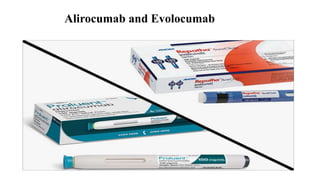
Alirocumab and Evolocumab
Both medications are indicated for heterozygous familial
hypercholesterolemia (HeFH) or atherosclerotic cardiovascular
disease (ASCVD) as an adjunct to diet and maximally tolerated
statin therapy (or other therapies in HeFH), when additional LDL
lowering is required.
 bind to proprotein convertase subtilisin kexin type 9 (PCSK9).
 PCSK9 binds to the LDL receptors on hepatocyte surfaces to promote
LDLR degradation.
 LDLR is the primary receptor that clears circulating LDL; therefore, the
decrease in LDLR levels by PCSK9 results in higher blood levels of LDL.
 By inhibiting the binding of PCSK9 to LDLR, these agents increase the
number of LDLRs available to clear LDL, thereby lowering LDL levels.
Mechanism of action
What is PRALUENT® (alirocumab)?
PRALUENT is an injectable prescription medicine used:
-In adults with cardiovascular disease to reduce the risk of heart attack, stroke,
and certain types of chest pain conditions (unstable angina) requiring
hospitalization.
-A long with diet, alone or together with other cholesterol-lowering medicines
in adults with high blood cholesterol levels called primary hyperlipidemia
(including a type of high cholesterol called heterozygous familial
hypercholesterolemia), to reduce low-density lipoprotein cholesterol (LDL-C)
or bad cholesterol.
-It is not known if PRALUENT is safe and effective in children.
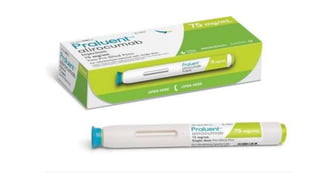
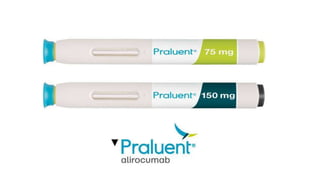
Praluent (alirocumab)
Company:Sanofi Aventis
Approval Status: Approved July 2015
Specific Treatments: heterozygous familial
hypercholesterolemia or atherosclerotic
cardiovascular disease.
Important Safety Information:
Do not use PRALUENT if you are allergic to alirocumab or
to any of the ingredients in PRALUENT.
PRALUENT can cause serious side effects, including
allergic reactions that can be severe and require treatment
in a hospital.
The most common side effects of PRALUENT include:
redness, itching, swelling, or pain/tenderness at the
injection site, symptoms of the common cold, and flu or flu-
like symptoms.
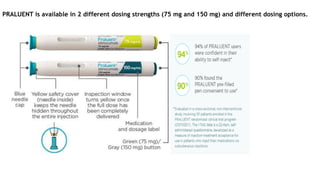
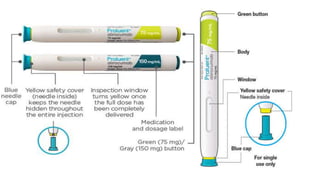
PRALUENT is available in 2 different dosing strengths (75 mg and 150 mg) and different dosing options.
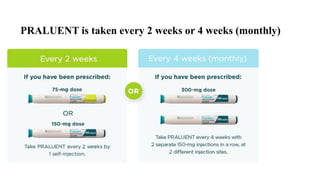
PRALUENT is taken every 2 weeks or 4 weeks (monthly)
For adults with heart disease, Repatha® is a treatment that
dramatically lowers LDL bad cholesterol and reduces the risk of
heart attack and stroke. If you’re taking a statin, but you are still
struggling to lower your LDL, it’s time for a different approach.
What Is Repatha®?
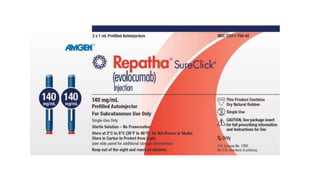
Repatha (evolocumab)
Company :Amgen
Approval Status: Approved August 2015.
Specific Treatments : as an adjunctive treatment
for adults with heterozygous familial and
homozygous familial hypercholesterolemia (HoFH).
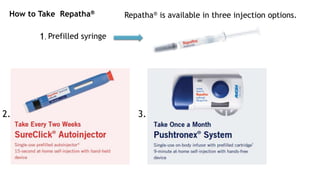
How to Take Repatha®
Repatha® is available in three injection options.
Prefilled syringe1.
2. 3.
Storing and traveling with Repatha®
Store Repatha
® in the refrigerator (36°F to 46°F) until you’re ready to use it.
Repatha® can also be stored at room temperature (68°F to 77°F) in its original box
for up to 30 days.
What are the possible side effects of Repatha®?
Repatha® can cause serious side effects including, serious allergic reactions.
Stop taking Repatha® and call your healthcare provider or seek emergency
help right away if you have any of these symptoms: trouble breathing or
swallowing, raised bumps (hives), rash or itching, swelling of the face, lips,
tongue, throat or arms.
The most common side effects of Repatha® include: runny nose, sore throat,
symptoms of the common cold, flu or flu-like symptoms, back pain, high blood
sugar levels (diabetes), and redness, pain, or bruising at the injection site.
Important Safety Information
Do not use Repatha® if you are allergic to evolocumab or to any of the ingredients in Repatha®.
Before you start using Repatha®, tell your healthcare provider about all your medical conditions,
including if you are allergic to rubber or latex, are pregnant or plan to become pregnant,
or are breastfeeding or plan to breastfeed.
2.https://www.centerwatch.com/drug-information/fda-approved-
drugs/drug/100089/praluent-alirocumab/?mp=amf
1.https://www.praluent.com
4.https://www.amgen.com/media/news-releases/2015/08/fda-approves-amgens-new-
cholesterollowering-medication-repatha-evolocumab/
3.https://www.repatha.com
References

Dyslipidemia & monoconal antibodies

  • 1.
  • 2.
  • 3.
    Both medications areindicated for heterozygous familial hypercholesterolemia (HeFH) or atherosclerotic cardiovascular disease (ASCVD) as an adjunct to diet and maximally tolerated statin therapy (or other therapies in HeFH), when additional LDL lowering is required.
  • 4.
     bind toproprotein convertase subtilisin kexin type 9 (PCSK9).  PCSK9 binds to the LDL receptors on hepatocyte surfaces to promote LDLR degradation.  LDLR is the primary receptor that clears circulating LDL; therefore, the decrease in LDLR levels by PCSK9 results in higher blood levels of LDL.  By inhibiting the binding of PCSK9 to LDLR, these agents increase the number of LDLRs available to clear LDL, thereby lowering LDL levels. Mechanism of action
  • 7.
    What is PRALUENT®(alirocumab)? PRALUENT is an injectable prescription medicine used: -In adults with cardiovascular disease to reduce the risk of heart attack, stroke, and certain types of chest pain conditions (unstable angina) requiring hospitalization. -A long with diet, alone or together with other cholesterol-lowering medicines in adults with high blood cholesterol levels called primary hyperlipidemia (including a type of high cholesterol called heterozygous familial hypercholesterolemia), to reduce low-density lipoprotein cholesterol (LDL-C) or bad cholesterol. -It is not known if PRALUENT is safe and effective in children.
  • 8.
    Praluent (alirocumab) Company:Sanofi Aventis ApprovalStatus: Approved July 2015 Specific Treatments: heterozygous familial hypercholesterolemia or atherosclerotic cardiovascular disease.
  • 9.
    Important Safety Information: Donot use PRALUENT if you are allergic to alirocumab or to any of the ingredients in PRALUENT. PRALUENT can cause serious side effects, including allergic reactions that can be severe and require treatment in a hospital. The most common side effects of PRALUENT include: redness, itching, swelling, or pain/tenderness at the injection site, symptoms of the common cold, and flu or flu- like symptoms.
  • 10.
    PRALUENT is availablein 2 different dosing strengths (75 mg and 150 mg) and different dosing options.
  • 12.
    PRALUENT is takenevery 2 weeks or 4 weeks (monthly)
  • 14.
    For adults withheart disease, Repatha® is a treatment that dramatically lowers LDL bad cholesterol and reduces the risk of heart attack and stroke. If you’re taking a statin, but you are still struggling to lower your LDL, it’s time for a different approach. What Is Repatha®?
  • 15.
    Repatha (evolocumab) Company :Amgen ApprovalStatus: Approved August 2015. Specific Treatments : as an adjunctive treatment for adults with heterozygous familial and homozygous familial hypercholesterolemia (HoFH).
  • 16.
    How to TakeRepatha® Repatha® is available in three injection options. Prefilled syringe1. 2. 3.
  • 17.
    Storing and travelingwith Repatha® Store Repatha ® in the refrigerator (36°F to 46°F) until you’re ready to use it. Repatha® can also be stored at room temperature (68°F to 77°F) in its original box for up to 30 days.
  • 18.
    What are thepossible side effects of Repatha®? Repatha® can cause serious side effects including, serious allergic reactions. Stop taking Repatha® and call your healthcare provider or seek emergency help right away if you have any of these symptoms: trouble breathing or swallowing, raised bumps (hives), rash or itching, swelling of the face, lips, tongue, throat or arms. The most common side effects of Repatha® include: runny nose, sore throat, symptoms of the common cold, flu or flu-like symptoms, back pain, high blood sugar levels (diabetes), and redness, pain, or bruising at the injection site. Important Safety Information Do not use Repatha® if you are allergic to evolocumab or to any of the ingredients in Repatha®. Before you start using Repatha®, tell your healthcare provider about all your medical conditions, including if you are allergic to rubber or latex, are pregnant or plan to become pregnant, or are breastfeeding or plan to breastfeed.
  • 19.