NADAR SARASWATHI COLLEGE OF ARTS AND SCIENCE
Cloud Computing
Dynamic Scalability Architecture
&
Elastic Resource Capacity Architecture
By:
D. AKI AKSHAYA
II-M.Sc(Computer Science)
Dynamic Scalability &
Elastic Resource Capacity
Architecture in Cloud
Computing
Architecting responsive, cost-efficient cloud systems that adapt to
demand
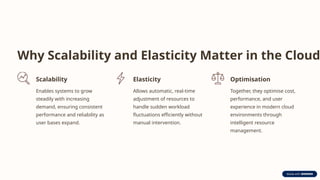
Why Scalability and Elasticity Matter in the Cloud
Scalability
Enables systems to grow
steadily with increasing
demand, ensuring consistent
performance and reliability as
user bases expand.
Elasticity
Allows automatic, real-time
adjustment of resources to
handle sudden workload
fluctuations efficiently without
manual intervention.
Optimisation
Together, they optimise cost,
performance, and user
experience in modern cloud
environments through
intelligent resource
management.
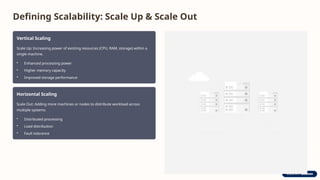
Defining Scalability: Scale Up & Scale Out
Vertical Scaling
Scale Up: Increasing power of existing resources (CPU, RAM, storage) within a
single machine.
• Enhanced processing power
• Higher memory capacity
• Improved storage performance
Horizontal Scaling
Scale Out: Adding more machines or nodes to distribute workload across
multiple systems.
• Distributed processing
• Load distribution
• Fault tolerance
Understanding Elasticity:
Real-Time Automatic
Resource Adjustment
Dynamic Provisioning
Elasticity dynamically provisions or de-provisions resources based
on current demand patterns.
Instant Response
Enables systems to respond instantly to spikes or drops without
manual intervention or downtime.
Real Example
Netflix automatically scaling streaming servers during peak evening
hours, then scaling down during off-peak times.
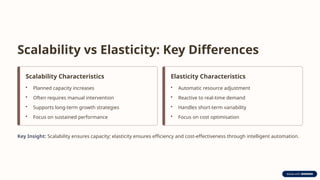
Scalability vs Elasticity: Key Differences
Scalability Characteristics
• Planned capacity increases
• Often requires manual intervention
• Supports long-term growth strategies
• Focus on sustained performance
Elasticity Characteristics
• Automatic resource adjustment
• Reactive to real-time demand
• Handles short-term variability
• Focus on cost optimisation
Key Insight: Scalability ensures capacity; elasticity ensures efficiency and cost-effectiveness through intelligent automation.
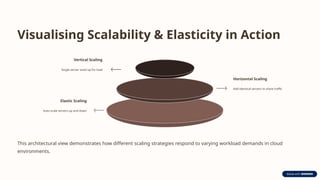
Visualising Scalability & Elasticity in Action
Vertical Scaling
Single server sized up for load
Horizontal Scaling
Add identical servers to share traffic
Elastic Scaling
Auto-scale servers up and down
This architectural view demonstrates how different scaling strategies respond to varying workload demands in cloud
environments.
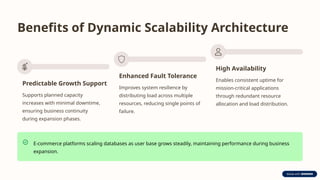
Benefits of Dynamic Scalability Architecture
Predictable Growth Support
Supports planned capacity
increases with minimal downtime,
ensuring business continuity
during expansion phases.
Enhanced Fault Tolerance
Improves system resilience by
distributing load across multiple
resources, reducing single points of
failure.
High Availability
Enables consistent uptime for
mission-critical applications
through redundant resource
allocation and load distribution.
E-commerce platforms scaling databases as user base grows steadily, maintaining performance during business
expansion.
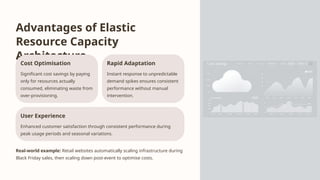
Advantages of Elastic
Resource Capacity
Architecture
Cost Optimisation
Significant cost savings by paying
only for resources actually
consumed, eliminating waste from
over-provisioning.
Rapid Adaptation
Instant response to unpredictable
demand spikes ensures consistent
performance without manual
intervention.
User Experience
Enhanced customer satisfaction through consistent performance during
peak usage periods and seasonal variations.
Real-world example: Retail websites automatically scaling infrastructure during
Black Friday sales, then scaling down post-event to optimise costs.
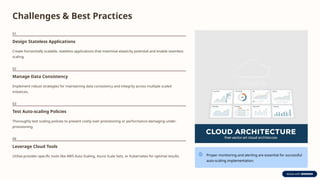
Challenges & Best Practices
01
Design Stateless Applications
Create horizontally scalable, stateless applications that maximise elasticity potential and enable seamless
scaling.
02
Manage Data Consistency
Implement robust strategies for maintaining data consistency and integrity across multiple scaled
instances.
03
Test Auto-scaling Policies
Thoroughly test scaling policies to prevent costly over-provisioning or performance-damaging under-
provisioning.
04
Leverage Cloud Tools
Utilise provider-specific tools like AWS Auto Scaling, Azure Scale Sets, or Kubernetes for optimal results. Proper monitoring and alerting are essential for successful
auto-scaling implementation.
The Future: Combining Scalability & Elasticity for
Cloud Excellence
Hybrid Approaches
Blending planned scalability with real-time
elasticity for comprehensive resource
management strategies.
AI-Driven Scaling
Implementing predictive scaling algorithms
for proactive resource management based
on usage patterns.
Resilient Architecture
Building cost-efficient, highly responsive
cloud infrastructures that adapt intelligently
to business needs.
Your Journey
Start architecting for growth and agility
today—embrace both scalability and
elasticity for cloud success.
Architect for Tomorrow

Dynamic-Scalability-and-Elastic-Resource-Capacity-Architecture-in-Cloud-Computing.pptx

  • 1.
    NADAR SARASWATHI COLLEGEOF ARTS AND SCIENCE Cloud Computing Dynamic Scalability Architecture & Elastic Resource Capacity Architecture By: D. AKI AKSHAYA II-M.Sc(Computer Science)
  • 2.
    Dynamic Scalability & ElasticResource Capacity Architecture in Cloud Computing Architecting responsive, cost-efficient cloud systems that adapt to demand
  • 3.
    Why Scalability andElasticity Matter in the Cloud Scalability Enables systems to grow steadily with increasing demand, ensuring consistent performance and reliability as user bases expand. Elasticity Allows automatic, real-time adjustment of resources to handle sudden workload fluctuations efficiently without manual intervention. Optimisation Together, they optimise cost, performance, and user experience in modern cloud environments through intelligent resource management.
  • 4.
    Defining Scalability: ScaleUp & Scale Out Vertical Scaling Scale Up: Increasing power of existing resources (CPU, RAM, storage) within a single machine. • Enhanced processing power • Higher memory capacity • Improved storage performance Horizontal Scaling Scale Out: Adding more machines or nodes to distribute workload across multiple systems. • Distributed processing • Load distribution • Fault tolerance
  • 5.
    Understanding Elasticity: Real-Time Automatic ResourceAdjustment Dynamic Provisioning Elasticity dynamically provisions or de-provisions resources based on current demand patterns. Instant Response Enables systems to respond instantly to spikes or drops without manual intervention or downtime. Real Example Netflix automatically scaling streaming servers during peak evening hours, then scaling down during off-peak times.
  • 6.
    Scalability vs Elasticity:Key Differences Scalability Characteristics • Planned capacity increases • Often requires manual intervention • Supports long-term growth strategies • Focus on sustained performance Elasticity Characteristics • Automatic resource adjustment • Reactive to real-time demand • Handles short-term variability • Focus on cost optimisation Key Insight: Scalability ensures capacity; elasticity ensures efficiency and cost-effectiveness through intelligent automation.
  • 7.
    Visualising Scalability &Elasticity in Action Vertical Scaling Single server sized up for load Horizontal Scaling Add identical servers to share traffic Elastic Scaling Auto-scale servers up and down This architectural view demonstrates how different scaling strategies respond to varying workload demands in cloud environments.
  • 8.
    Benefits of DynamicScalability Architecture Predictable Growth Support Supports planned capacity increases with minimal downtime, ensuring business continuity during expansion phases. Enhanced Fault Tolerance Improves system resilience by distributing load across multiple resources, reducing single points of failure. High Availability Enables consistent uptime for mission-critical applications through redundant resource allocation and load distribution. E-commerce platforms scaling databases as user base grows steadily, maintaining performance during business expansion.
  • 9.
    Advantages of Elastic ResourceCapacity Architecture Cost Optimisation Significant cost savings by paying only for resources actually consumed, eliminating waste from over-provisioning. Rapid Adaptation Instant response to unpredictable demand spikes ensures consistent performance without manual intervention. User Experience Enhanced customer satisfaction through consistent performance during peak usage periods and seasonal variations. Real-world example: Retail websites automatically scaling infrastructure during Black Friday sales, then scaling down post-event to optimise costs.
  • 10.
    Challenges & BestPractices 01 Design Stateless Applications Create horizontally scalable, stateless applications that maximise elasticity potential and enable seamless scaling. 02 Manage Data Consistency Implement robust strategies for maintaining data consistency and integrity across multiple scaled instances. 03 Test Auto-scaling Policies Thoroughly test scaling policies to prevent costly over-provisioning or performance-damaging under- provisioning. 04 Leverage Cloud Tools Utilise provider-specific tools like AWS Auto Scaling, Azure Scale Sets, or Kubernetes for optimal results. Proper monitoring and alerting are essential for successful auto-scaling implementation.
  • 11.
    The Future: CombiningScalability & Elasticity for Cloud Excellence Hybrid Approaches Blending planned scalability with real-time elasticity for comprehensive resource management strategies. AI-Driven Scaling Implementing predictive scaling algorithms for proactive resource management based on usage patterns. Resilient Architecture Building cost-efficient, highly responsive cloud infrastructures that adapt intelligently to business needs. Your Journey Start architecting for growth and agility today—embrace both scalability and elasticity for cloud success. Architect for Tomorrow