Drug Safety and
Pharmacovigilance
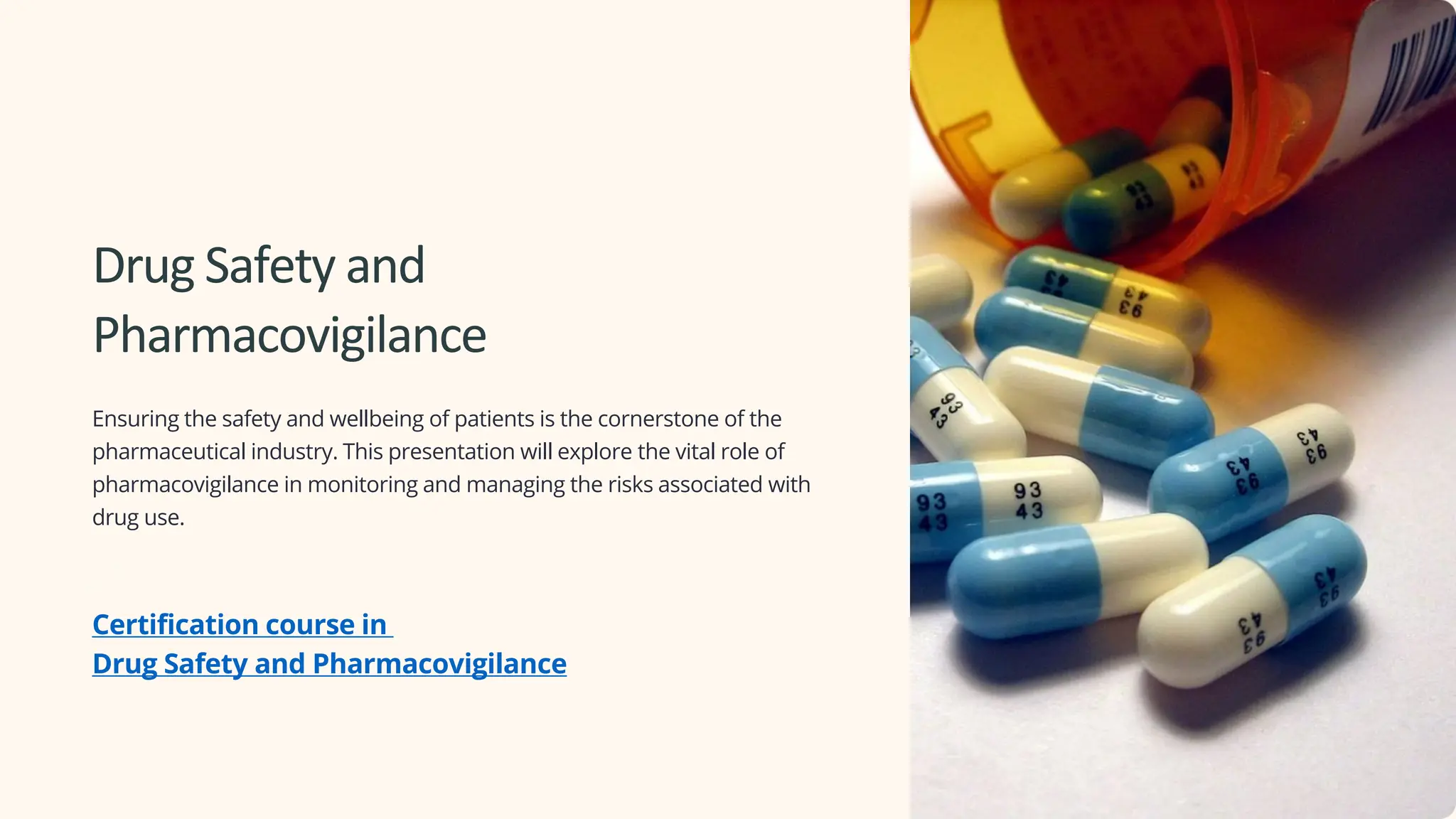
Ensuring the safety and wellbeing of patients is the cornerstone of the
pharmaceutical industry. This presentation will explore the vital role of
pharmacovigilance in monitoring and managing the risks associated with
drug use.
Certification course in
Drug Safety and Pharmacovigilance
Defining Pharmacovigilance
Definition
Pharmacovigilance is the
science and activities
related to the detection,
assessment,
understanding, and
prevention of adverse
effects or any other drug-
related problems.
Importance
Pharmacovigilance ensures
patient safety by
continuously monitoring
and evaluating the risks
and benefits of
pharmaceutical products.
Scope
Pharmacovigilance
includes signal detection,
risk management,
regulatory reporting, and
the ongoing surveillance of
drug safety.
Key Pharmacovigilance Processes
Adverse Event Reporting
Systematic documentation
and reporting of adverse
effects associated with drug
use.
Risk Management Plans
Strategies to identify,
characterize, and mitigate
potential risks related to
pharmaceutical products.
Signal Detection
Identifying new safety signals
and potential risks through
data analysis and review.
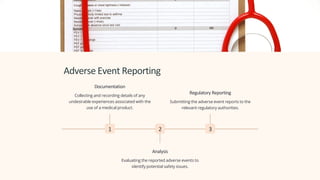
Adverse Event Reporting
1
Documentation
Collecting and recording details of any
undesirable experiences associated with the
use of a medical product.
2
Analysis
Evaluating the reported adverse events to
identify potential safety issues.
3
Regulatory Reporting
Submitting the adverse event reports to the
relevant regulatory authorities.
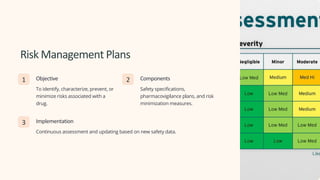
Risk Management Plans
1 Objective
To identify, characterize, prevent, or
minimize risks associated with a
drug.
2 Components
Safety specifications,
pharmacovigilance plans, and risk
minimization measures.
3 Implementation
Continuous assessment and updating based on new safety data.
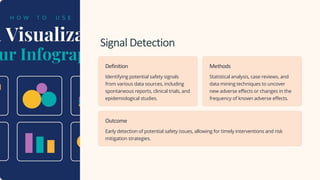
Signal Detection
Definition
Identifying potential safety signals
from various data sources, including
spontaneous reports, clinical trials, and
epidemiological studies.
Methods
Statistical analysis, case reviews, and
data mining techniques to uncover
new adverse effects or changes in the
frequency of known adverse effects.
Outcome
Early detection of potential safety issues, allowing for timely interventions and risk
mitigation strategies.
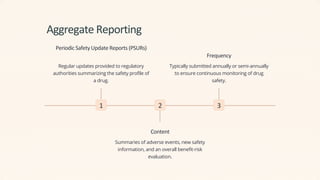
Aggregate Reporting
1
Periodic Safety Update Reports (PSURs)
Regular updates provided to regulatory
authorities summarizing the safety profile of
a drug.
2
Content
Summaries of adverse events, new safety
information, and an overall benefit-risk
evaluation.
3
Frequency
Typically submitted annually or semi-annually
to ensure continuous monitoring of drug
safety.
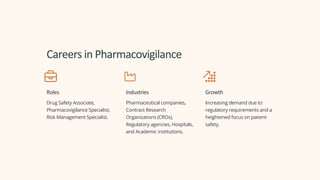
Careers in Pharmacovigilance
Roles
Drug Safety Associate,
Pharmacovigilance Specialist,
Risk Management Specialist.
Industries
Pharmaceutical companies,
Contract Research
Organizations (CROs),
Regulatory agencies, Hospitals,
and Academic institutions.
Growth
Increasing demand due to
regulatory requirements and a
heightened focus on patient
safety.
Why Choose Sollers College?
Specialized Programs: Tailored courses in Drug Safety and Pharmacovigilance.
Industry-Relevant Curriculum: Designed by experts to meet industry standards.
Flexible Learning: Online programs that fit your schedule.
Hands-On Training: Practical experience with real-world tools and software.
Career Support: Guidance and support to help you advance into rewarding careers.
Course Offerings at Sollers College
Master’s Degrees: In-depth knowledge and advanced skills.
Bachelor’s Degrees: Foundational knowledge with practical applications.
Certificate Programs:
• Drug Safety and Pharmacovigilance
• Advanced Drug Safety and Pharmacovigilance
• Medical Narrative Writing
• Aggregate Reporting
• Signal Detection
Contact Information
Website: www.sollers.edu
Phone: +1 (201) 254-5772 / (732) 806-7846
Email: admissions@sollers.edu
Certificate Programs:
• Drug Safety and Pharmacovigilance
• Clinical Trial Management
• Medical Narrative Writing
• Aggregate Reporting
• Signal Detection

Drug Safety Pharmacovigilance Certification

  • 1.
    Drug Safety and Pharmacovigilance Ensuringthe safety and wellbeing of patients is the cornerstone of the pharmaceutical industry. This presentation will explore the vital role of pharmacovigilance in monitoring and managing the risks associated with drug use. Certification course in Drug Safety and Pharmacovigilance
  • 2.
    Defining Pharmacovigilance Definition Pharmacovigilance isthe science and activities related to the detection, assessment, understanding, and prevention of adverse effects or any other drug- related problems. Importance Pharmacovigilance ensures patient safety by continuously monitoring and evaluating the risks and benefits of pharmaceutical products. Scope Pharmacovigilance includes signal detection, risk management, regulatory reporting, and the ongoing surveillance of drug safety.
  • 3.
    Key Pharmacovigilance Processes AdverseEvent Reporting Systematic documentation and reporting of adverse effects associated with drug use. Risk Management Plans Strategies to identify, characterize, and mitigate potential risks related to pharmaceutical products. Signal Detection Identifying new safety signals and potential risks through data analysis and review.
  • 4.
    Adverse Event Reporting 1 Documentation Collectingand recording details of any undesirable experiences associated with the use of a medical product. 2 Analysis Evaluating the reported adverse events to identify potential safety issues. 3 Regulatory Reporting Submitting the adverse event reports to the relevant regulatory authorities.
  • 5.
    Risk Management Plans 1Objective To identify, characterize, prevent, or minimize risks associated with a drug. 2 Components Safety specifications, pharmacovigilance plans, and risk minimization measures. 3 Implementation Continuous assessment and updating based on new safety data.
  • 6.
    Signal Detection Definition Identifying potentialsafety signals from various data sources, including spontaneous reports, clinical trials, and epidemiological studies. Methods Statistical analysis, case reviews, and data mining techniques to uncover new adverse effects or changes in the frequency of known adverse effects. Outcome Early detection of potential safety issues, allowing for timely interventions and risk mitigation strategies.
  • 7.
    Aggregate Reporting 1 Periodic SafetyUpdate Reports (PSURs) Regular updates provided to regulatory authorities summarizing the safety profile of a drug. 2 Content Summaries of adverse events, new safety information, and an overall benefit-risk evaluation. 3 Frequency Typically submitted annually or semi-annually to ensure continuous monitoring of drug safety.
  • 8.
    Careers in Pharmacovigilance Roles DrugSafety Associate, Pharmacovigilance Specialist, Risk Management Specialist. Industries Pharmaceutical companies, Contract Research Organizations (CROs), Regulatory agencies, Hospitals, and Academic institutions. Growth Increasing demand due to regulatory requirements and a heightened focus on patient safety.
  • 9.
    Why Choose SollersCollege? Specialized Programs: Tailored courses in Drug Safety and Pharmacovigilance. Industry-Relevant Curriculum: Designed by experts to meet industry standards. Flexible Learning: Online programs that fit your schedule. Hands-On Training: Practical experience with real-world tools and software. Career Support: Guidance and support to help you advance into rewarding careers.
  • 10.
    Course Offerings atSollers College Master’s Degrees: In-depth knowledge and advanced skills. Bachelor’s Degrees: Foundational knowledge with practical applications. Certificate Programs: • Drug Safety and Pharmacovigilance • Advanced Drug Safety and Pharmacovigilance • Medical Narrative Writing • Aggregate Reporting • Signal Detection
  • 11.
    Contact Information Website: www.sollers.edu Phone:+1 (201) 254-5772 / (732) 806-7846 Email: admissions@sollers.edu Certificate Programs: • Drug Safety and Pharmacovigilance • Clinical Trial Management • Medical Narrative Writing • Aggregate Reporting • Signal Detection