Dengue : Recent Updates and Fluid
management
PRESENTEDBY
Dr DeepakDadhich
Residentdoctor
MODERATOR
Dr JITENDRAverma
Ap.departmentof Pediatrics
rvrs medicalCollegeBhilwara
Contents
1. Introduction & epidemiology
2. Patho-physiology
3. Classification
4. Clinical criteria & case definition
5. Course of illness
6. Investigations
7. Treatment
8. Prevention
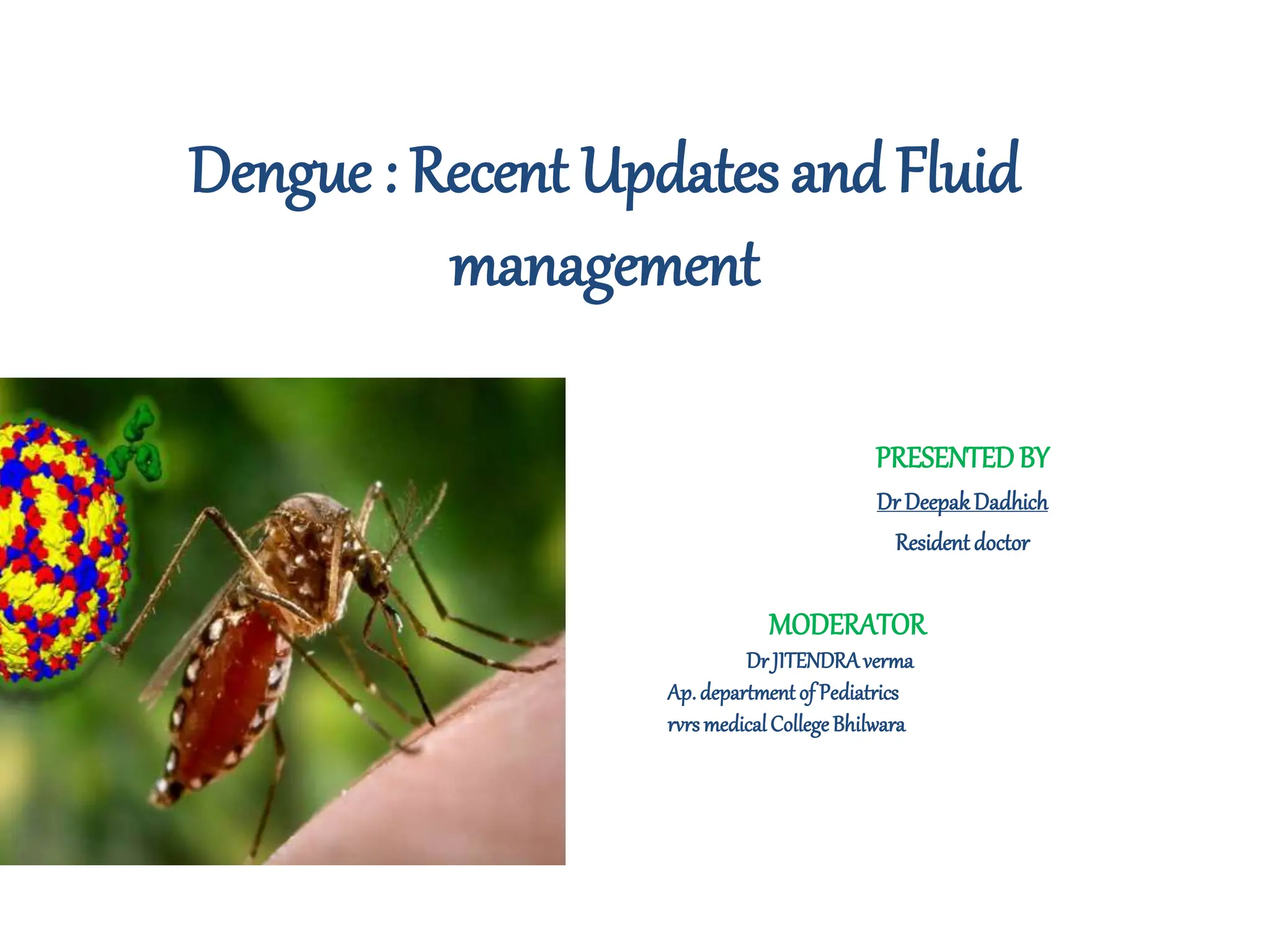
Dengue Virus
• Genus – Flavivirus
• Positive sense single-stranded RNA
• Four Serotypes – DENV type 1 to 4
• Differ in nucleotide sequence from each other
• Each serotype provides specific lifetime immunity, and short-
term cross-immunity
 Subtype/ Genotype
 DENV-1 :
 DENV-2 :
 DENV-3 :
 DENV-4 :
( NATIONAL GUIDELINE 2014 )
 Three structural protein genes encoding the nucleocapsid of core
protein
• A membrane protein (M),
• An envelope protein(E)
• Seven non-structural (NS) proteins – NS1, NS2A, NS2B, NS3,
NS4A, NS4B and NS5
( NATIONAL GUIDELINE 2014 )
The Vector
• Female Aedes mosquito
• Ae. aegypti (M/C)
• Ae. Albopictus ( some states)
• Other - Ae. polynesiensis &
Ae. niveus.
( NATIONAL GUIDELINE 2014 )
• Usually day biting mosquito but can bite at any time of day
• Breeds in domestic man-made water receptacles
• Ae. Albopictus prefers natural larval habitats
• Survive best b/w 16 - 30 0C and a relative humidity of 60–
80%.
• Also transmits chikungunya, yellow fever and Zika infection
Ae. aegypti
( NATIONAL GUIDELINE 2014 )
Intrinsic
incubation
Period
( 3-14d )
Dengue
During viremia (fever)
Virus multiply
Virus injectd
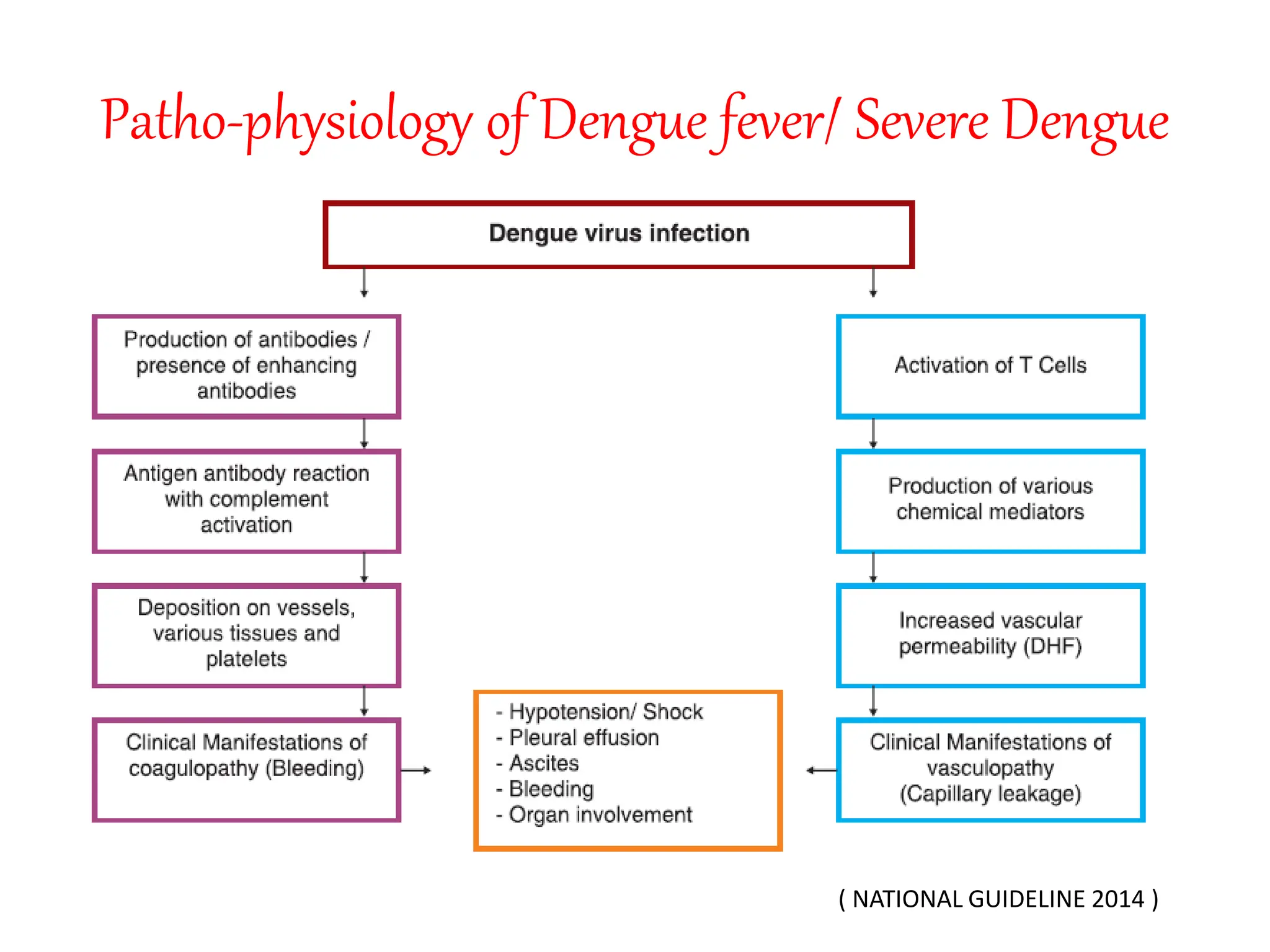
Patho-physiology of Dengue fever/ Severe Dengue
( NATIONAL GUIDELINE 2014 )
• Earlier studies- several factors like immunopathology and
high viremia are important triggers of disease severity,
• Recent studies - dengue virus directly affecting platelets
and endothelial cells
• Direct binding of dengue virus to human platelets leading to
activation and inflammatory responses, including possible
support of virus replication by platelet environment, have
been dramatic recent findings.
• Moreover, the susceptibility of vascular endothelium to
dengue virus and alteration of subsequent endothelial
physiology, especially cell adhesion biology and transport
could be important in the genesis of capillary dysfunction
seen in DSS case
(WHO Dengue bulletin vol 39, 2016)
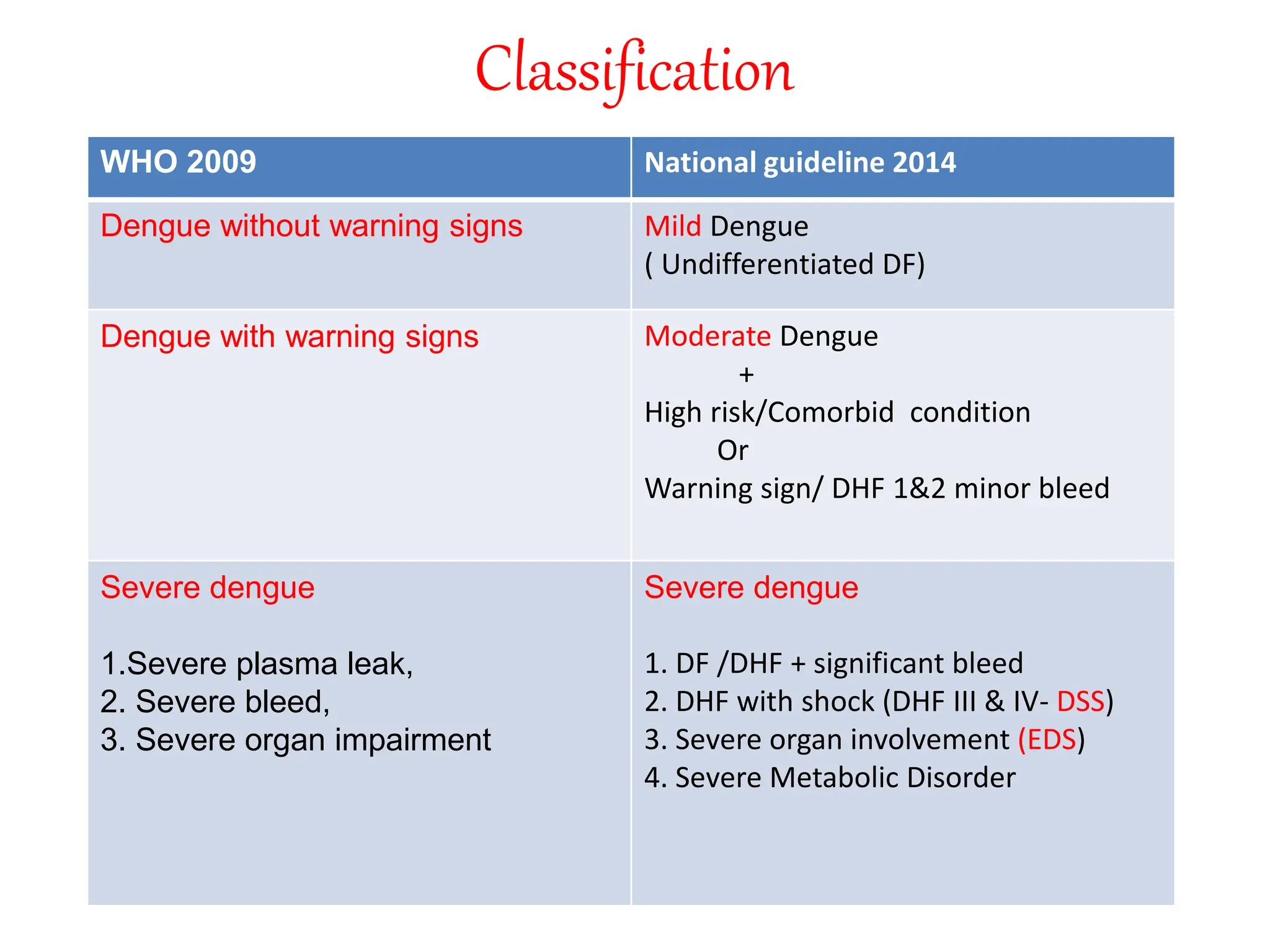
Classification
WHO 2009 National guideline 2014
Dengue without warning signs Mild Dengue
( Undifferentiated DF)
Dengue with warning signs Moderate Dengue
+
High risk/Comorbid condition
Or
Warning sign/ DHF 1&2 minor bleed
Severe dengue
1.Severe plasma leak,
2. Severe bleed,
3. Severe organ impairment
Severe dengue
1. DF /DHF + significant bleed
2. DHF with shock (DHF III & IV- DSS)
3. Severe organ involvement (EDS)
4. Severe Metabolic Disorder
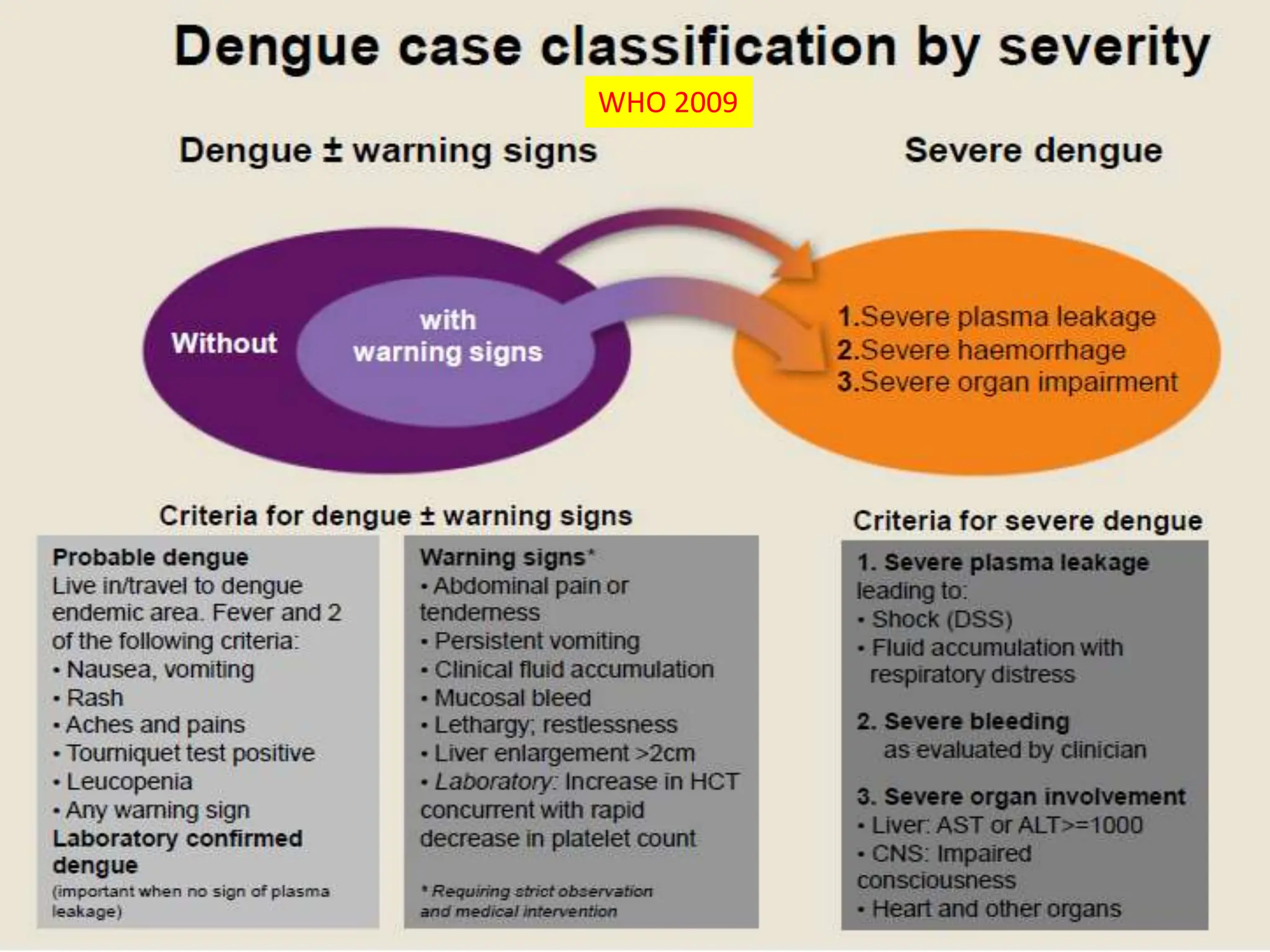
WHO 2009
WARNING SIGN
Case Definition
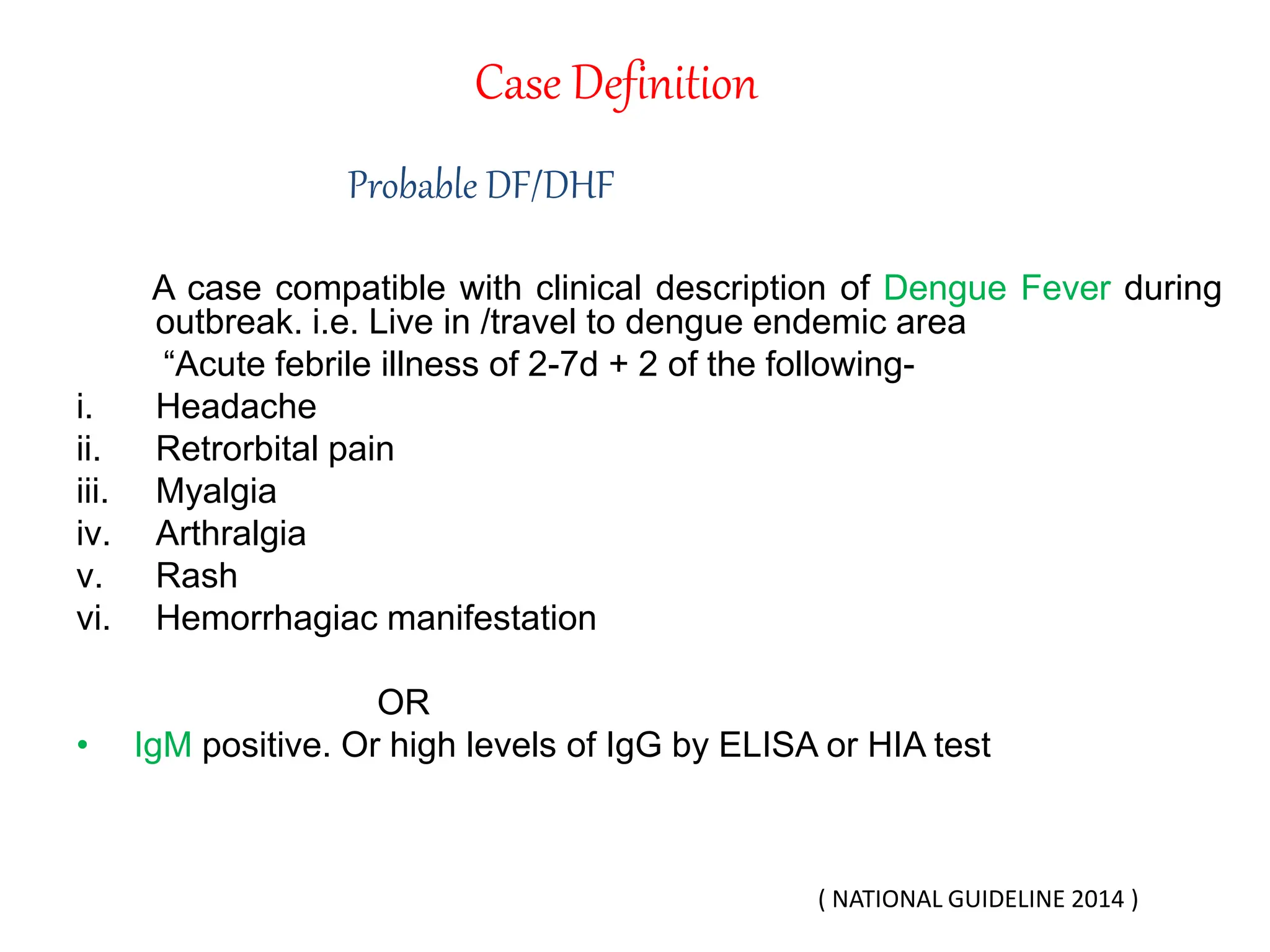
Probable DF/DHF
A case compatible with clinical description of Dengue Fever during
outbreak. i.e. Live in /travel to dengue endemic area
“Acute febrile illness of 2-7d + 2 of the following-
i. Headache
ii. Retrorbital pain
iii. Myalgia
iv. Arthralgia
v. Rash
vi. Hemorrhagiac manifestation
OR
• IgM positive. Or high levels of IgG by ELISA or HIA test
( NATIONAL GUIDELINE 2014 )
Conifrmed dengue Fever
 A case compatible with the clinical description of dengue
fever
 with at least one of the following
1. Isolation of the dengue virus (Virus culture +VE) from
serum, plasma, leucocytes.
2. Demonstration of IgM antibody titre by ELISA positive in
single serum sample.
3. Demonstration of dengue virus antigen in serum sample by
NS1-ELISA.
4. IgG seroconversion in paired sera after 2 weeks with Four
fold increase of IgG titre. Or (neg to positive-WHO)
5. Detection of viral nucleic acid by polymerase chain
reaction (RT-PCR).
( NATIONAL GUIDELINE 2014 )
DENGUE LIKE DISEASE
• This term should be used until a specific diagnosis
is established
( Nelson’s textbook,21th edn )
Dengue Haemorrhagic Fever (DHF)
 Dengue Fever
 Haemorrhagic tendencies- one or more of the following
• 1. Positive tourniquet test
• 2. Petechiae, ecchymoses or purpura
• 3. Bleeding from mucosa, gastrointestinal tract, injection sites or
other sites
 Thrombocytopenia (<1 lac cells/mm3
)
 Plasma leakage- > 1 of the following:
• 1. Arise in average haematocrit for age and sex > 20%
• 2. A more than 20% drop in haematocrit following volume
replacement treatment compared to baseline
• 3. Signs of plasma leakage (pleural effusion, ascites,
hypoproteinemia)
( NATIONAL GUIDELINE 2014 )
Grading of DHF
• DHF I: positive tourniquet test
• DHF II: Spontaneous bleeding in skin or other organs (black
tarry stool, epistaxis, gum bleeds) and abdominal pain.
• DHF III (DSS): circulatory failure (weak rapid pulse, narrow
pulse pressure < 20 mmHg, Hypotension, cold clammy skin,
restlessness).
• DHF IV (DSS): Profound shock with undetectable blood
pressure or pulse.
+
Dengue fever + Thrombocytopenia (platelet count <100000/
mm3
) + Hct rise >20% over baseline.
( NATIONAL GUIDELINE 2014 )
Tourniquet test
• Inflating a blood pressure cuff
• Midpoint between the systolic and diastolic pressure ( 5
minute )
• > 10 petechiae/inch2
over forearm i.e. +
• In DHF > 20 petechiae/inch2
i.e. definite +
• in DSS- negetive/ mildly positive
( NATIONAL GUIDELINE 2014 )
Expanded dengue Syndrome (EDS)
( NATIONAL GUIDELINE 2014 )
The term expanded dengue syndrome incorporates the unusual manifestations of
dengue affecting multiple systems
.Renal :renal failure, hemolytic uremic syndrome, acute tubular necrosis
.Cardiac: myocarditis, pericarditis,heart block.
. Respiratory:ARDS, pulmonary hemorrhage, pulmonary oedema, pleural effusion.
.CNS: Encephalopathy, encephalitis, febrile seizures,I/C bleed.
.GIT: Hepatitis, Hepatic failure,cholecystitis, pancreatitis.
EYE: conjunctival and macular hemorrhage, visual impairment,optic neuritis.
Lymphoreticular:Bone marrow suppression, hemophagocytic lymphohistiocytosis.
Musculoskeletal: myosotis,rhabdomyolysis
WHO handbook 2012
1. Febrile phase-
• Fever-biphasic
• 2-7 day
• A/w headache, flushing, rash, pain in retro-orbital area,
joint or bone.
• Rash- after 3rd/4th day of fever
Course of Dengue illness
( NATIONAL GUIDELINE 2014 )
2. Critical phase (Leakage phase)
• After 3 to 4 days of onset of fever
• Plasma leakage usually persists for 36-48 hrs.
• Febrile to afebrile
• Progressive leukopenia f/b thrombocytopenia usually
precede plasma leakage
• Warning sign
• Plasma leakage and high haemoconcentration
• Patients may develop hypotension & shock,
hemorrhage, organ impairment
• TLC may increase as a stress response in severe
bleeding
3.Convalescent phase
(recovery phase)
• After 6-7 days of fever
• last for 2-3 days.
• ECF returns to the circulatory system ,Hct falls ,and signs and
symptoms improve.
• Pruritus
• WBC rise f/b platelet rise
• May develop pulmonary oedema due to fluid overload
(observe pedal edema, neck vein engorgement, resp. distress)
.IV fluids must be discontinued in this phase.
Investigations
DIAGNOSIS : COMPERATIVE MERITS OF TESTS
WHO 2009
ELISA
WHO handbook 2012
• A case is confirmed by isolation of virus,viral
antigens,Genome by PCR .
• Detection of IgM with four fold or greater rise
in Ab titre
Investigations :
• CBC ( should be repeated daily untill critical phase is over)
• Dengue specific lab tests
• LFT, RFT, Blood sugar, Serum electrolytes
• CXR :Pleural effusion (Right>left)
• USG Abd,Chest:
– Evidence of free fluid
– Gall bladder wall edema
 ECG
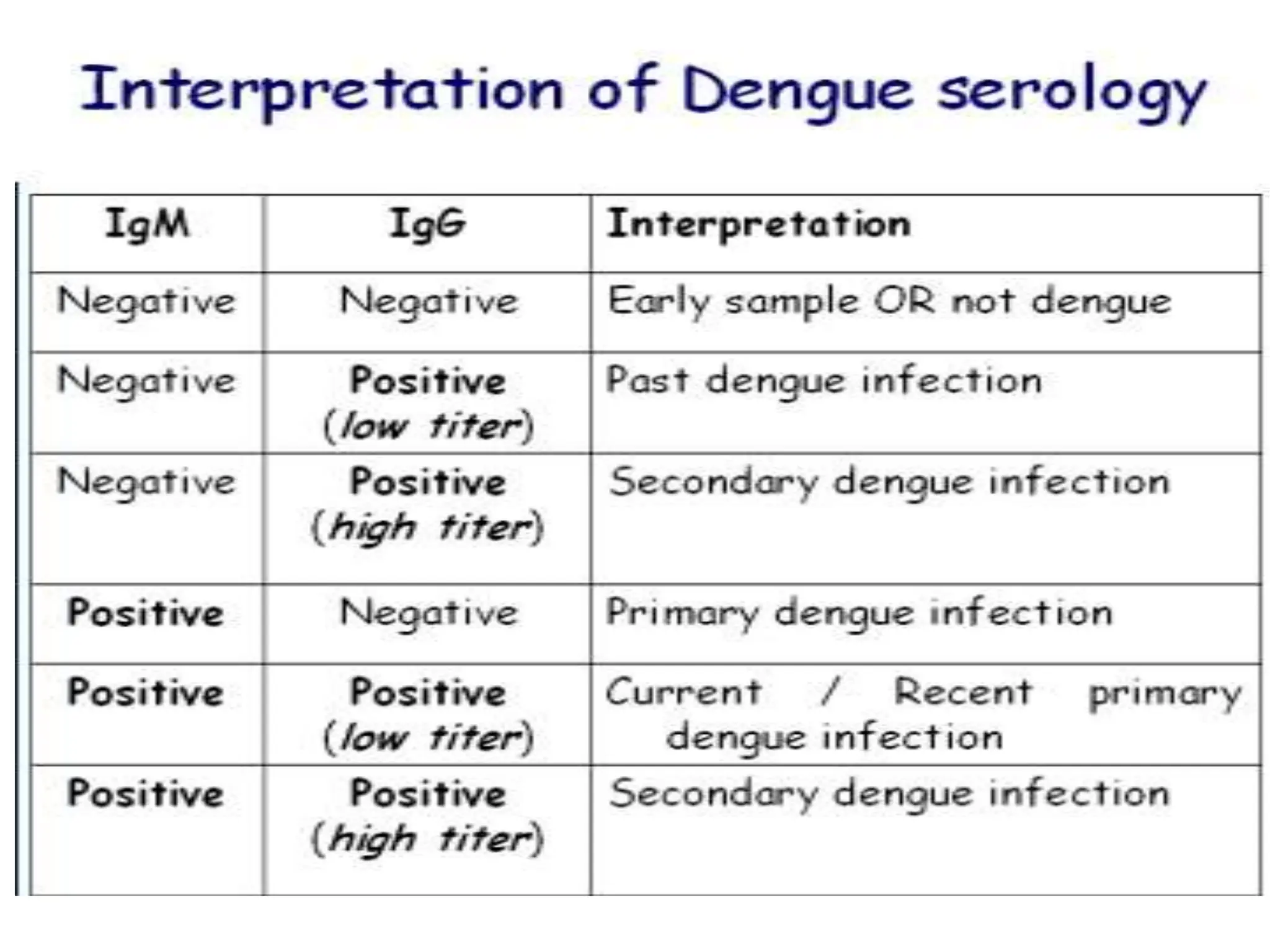
ELISA TEST
 Sensitivity: 90%, Specificity : 97.6%
 Primary dengue infection :
 80% of individuals demonstrate detectable IgM
antibodies by day 5 and 99% by day 10-12.
 IgM antibodies peak at two weeks and then
decline over the next 2-3 months.
 IgG antibodies rise later(14 days) and to lower
levels as compared to IgM, then decline
gradually but persist at low levels for life.
D-5
DAY OF ILLNESS
D-14
IgM
IgG
ANTIBODY
LEVELS PRIMARY INFECTION
ELISA…
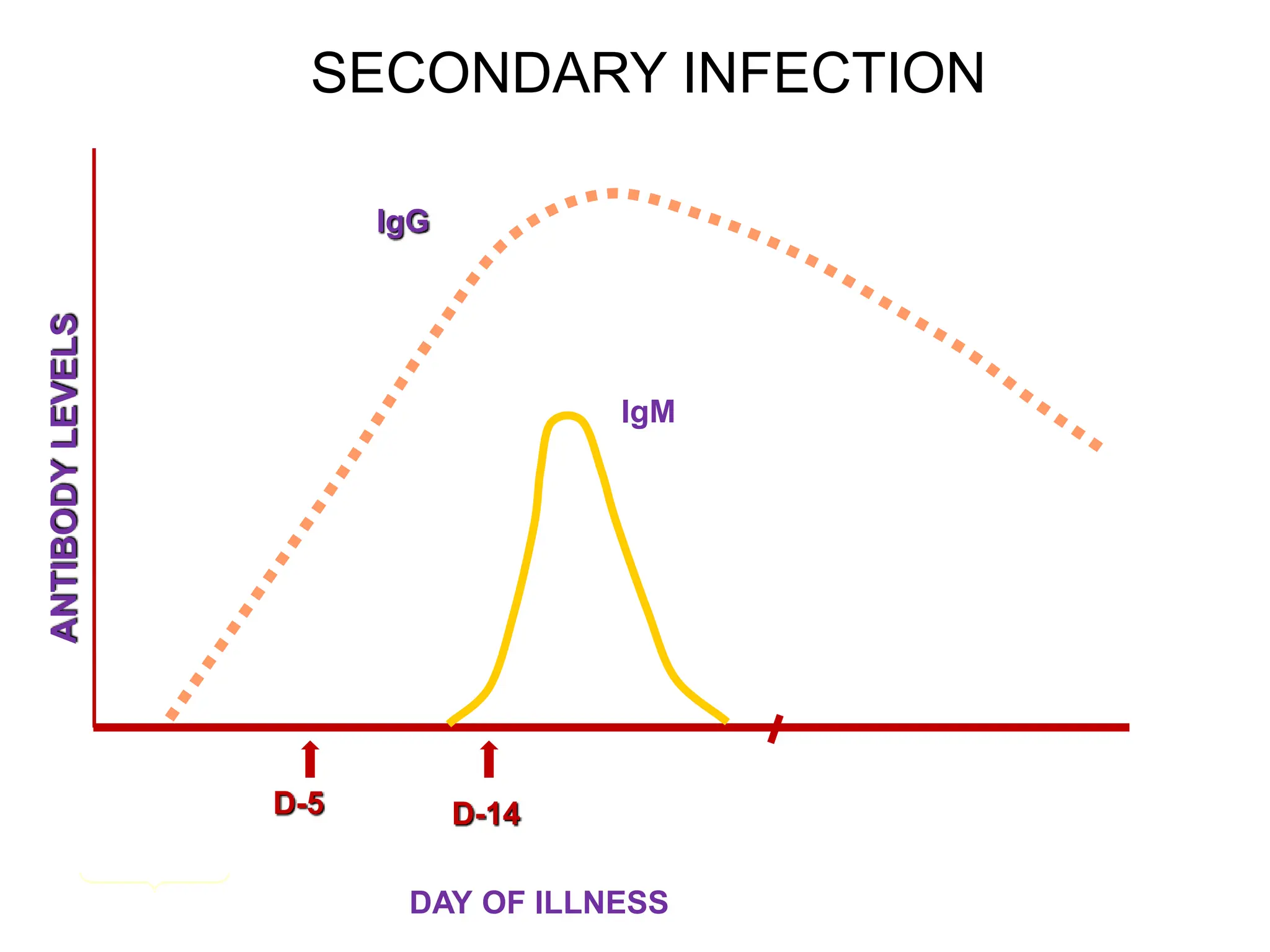
• Secondary infection:
– There is a brisk and rapid IgG response peaking at
two weeks and then declining slowly over the next
3-6 months.
– The IgM response in secondary dengue infections
starting at 14 days,is slower and lower than IgG
– Combined use of IgM and IgG in paired sera gives
a sensitivity of 99% and specificity of 96%.
– The best results are obtained if acute and
convalescent sera are tested for both IgM and IgG
dengue
SECONDARY INFECTION
D-5
DAY OF ILLNESS
D-14
IgM
IgG
ANTIBODY
LEVELS
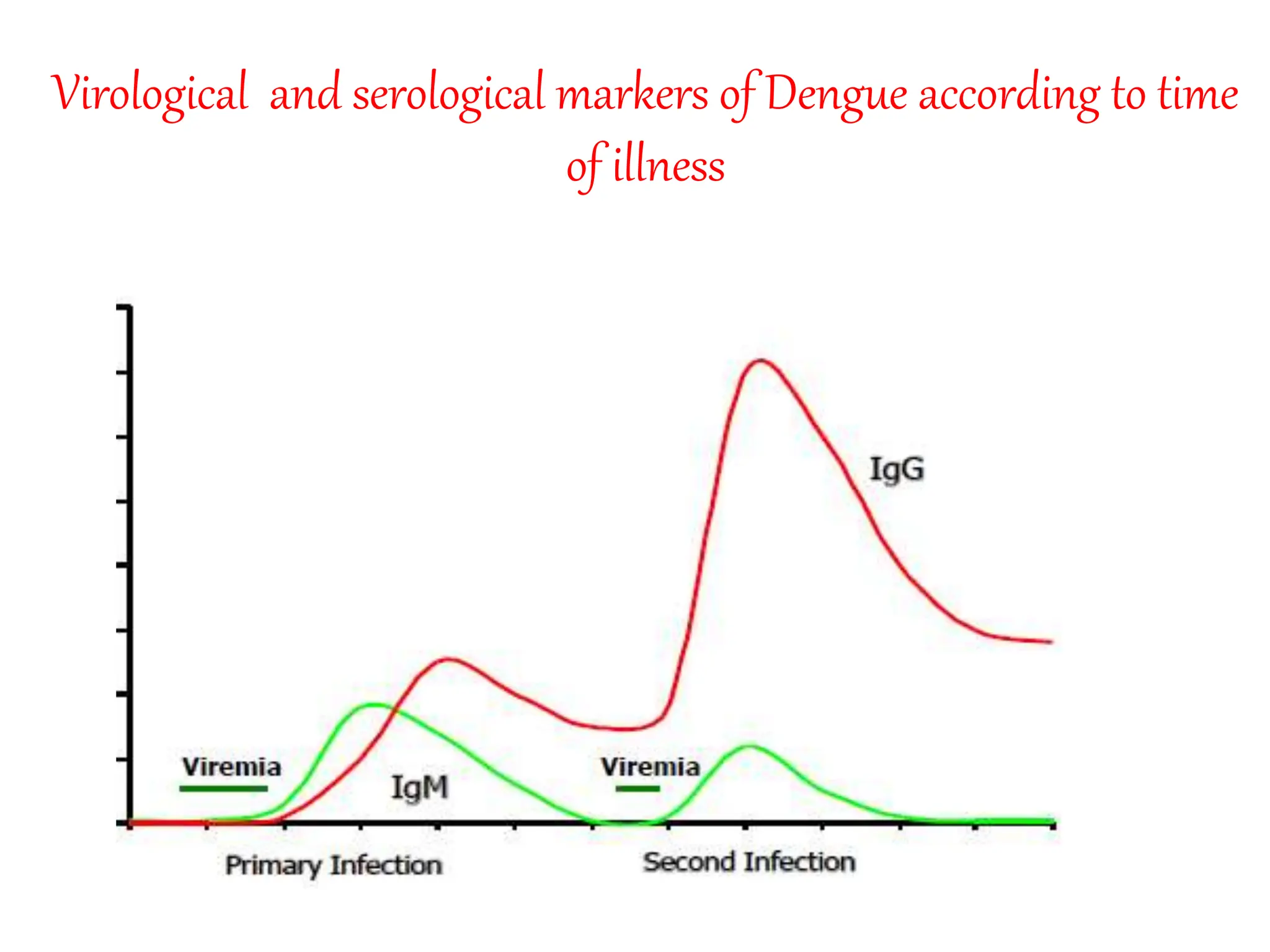
Virological and serological markers of Dengue according to time
of illness
Aedes Mosquito-
Chickengunya,
Dengue
Yellow fever
Zika virus
WHO handbook 2012
• DIFFERENTIAL DIAGNOSIS
• Viral respiratory and influenza like diseases
• Malaria
• Yellow fever
• Scrub typhus
• Leptospirosis
• Enteric fever
• Sandfly fever
TREATMENT
Indications for domiciliary management
If No sign of
• Tachycardia
• Hypotension
• Narrowing of pulse pressure
• Bleeding
• Haemoconcentration
• Followup after 24 hr / any warning sign
( NATIONAL GUIDELINE 2014 )
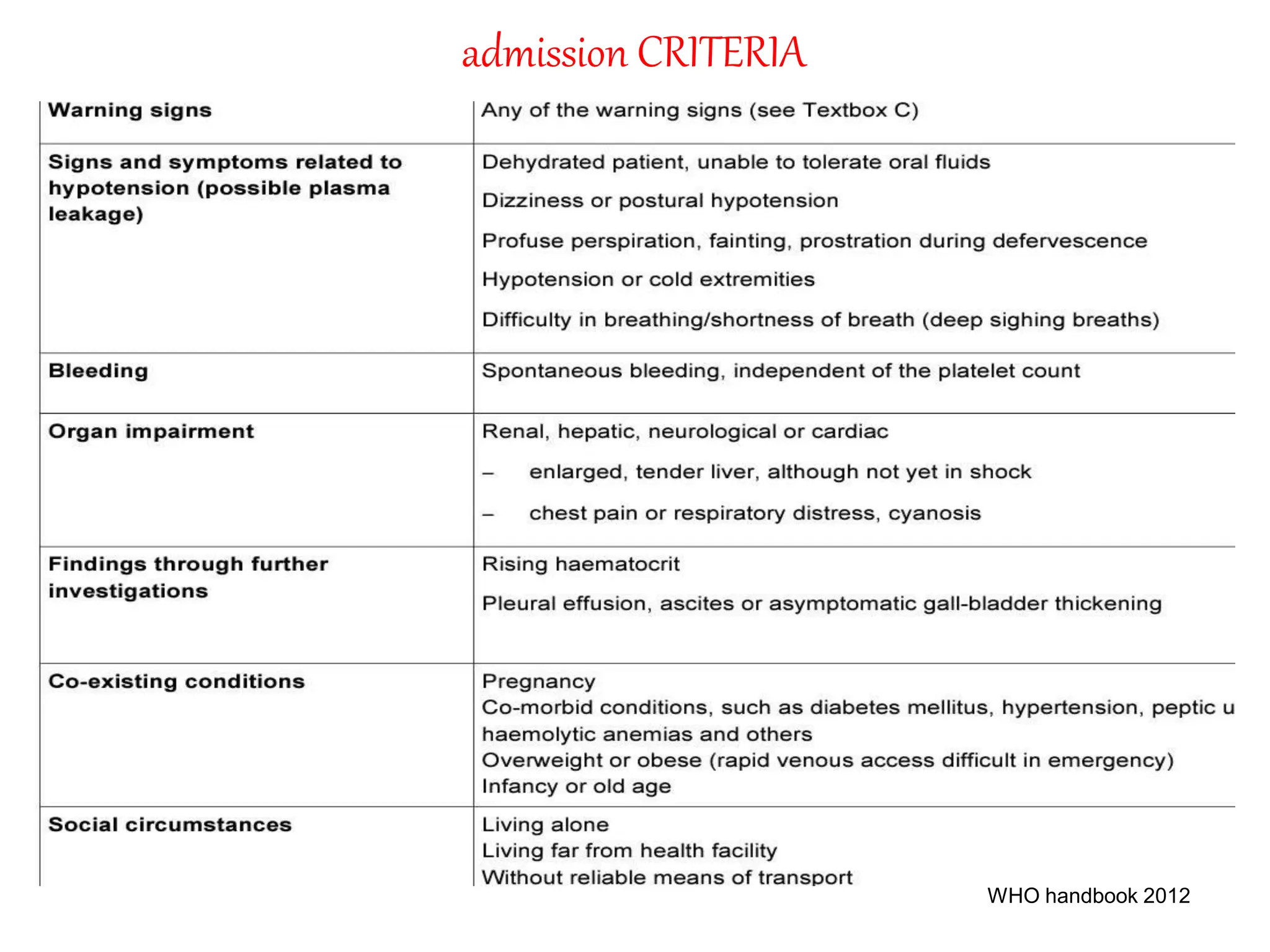
admission CRITERIA
WHO handbook 2012
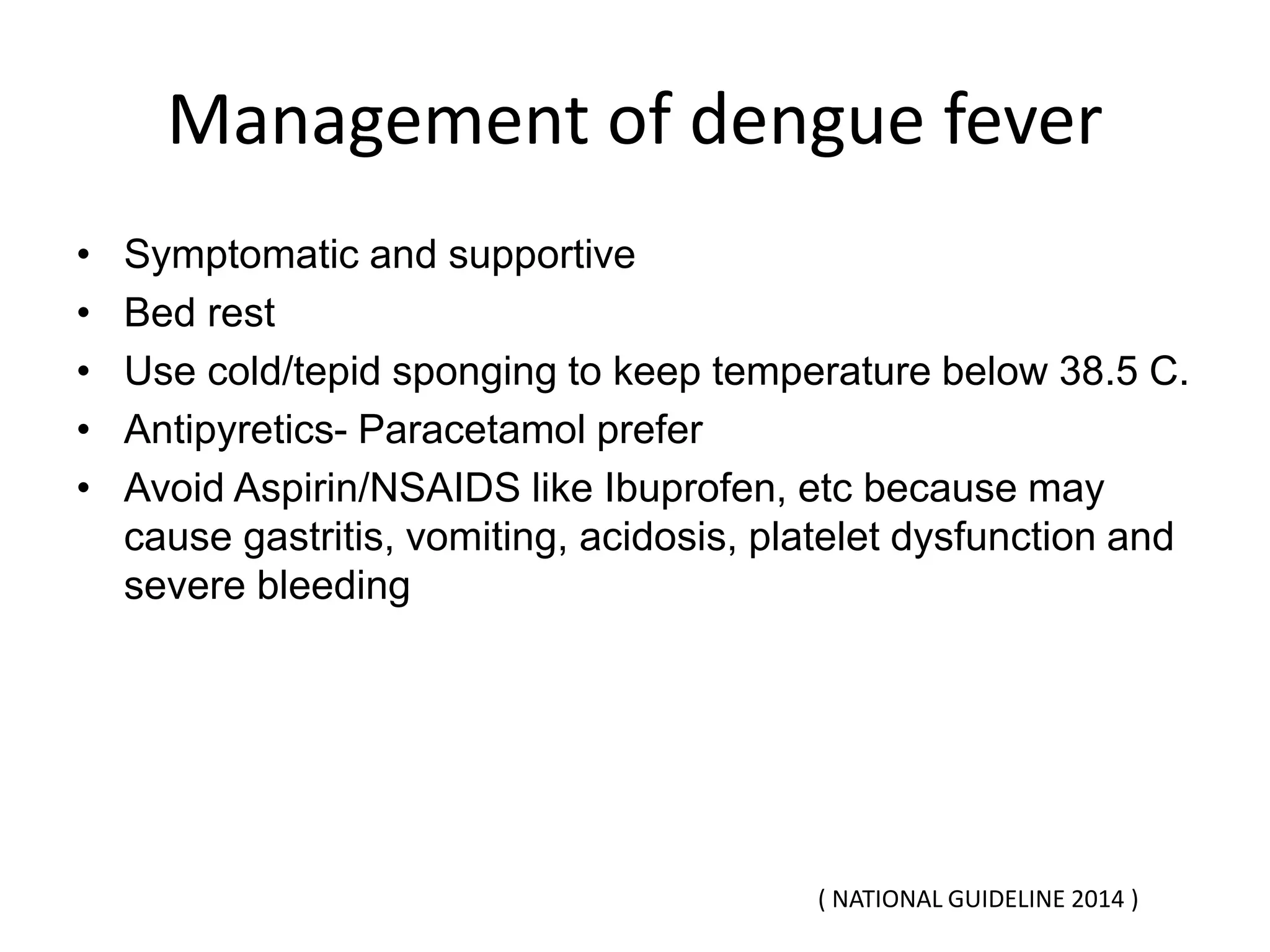
Management of dengue fever
• Symptomatic and supportive
• Bed rest
• Use cold/tepid sponging to keep temperature below 38.5 C.
• Antipyretics- Paracetamol prefer
• Avoid Aspirin/NSAIDS like Ibuprofen, etc because may
cause gastritis, vomiting, acidosis, platelet dysfunction and
severe bleeding
( NATIONAL GUIDELINE 2014 )
• Oral fluid and electrolyte therapy is recommended for
patients with excessive sweating or vomiting.
• Patients should be monitored for 24 to 48 hours after
they become afebrile for development of complications.
• ORS, fruit juice, Coconut water, soup prefer than plain
water to prevent electrolyte imbalance
• If persistent vomitting/ refusal to feed- Start IVF
• Monitor the initial sign of shock.
• Critical period- during the transition from febrile to
afebrile stage.
( NATIONAL GUIDELINE 2014 )
Choice of IVF
• Prefer isotonic fluid
• Colloid and Crystalloid
• No clear advantage to the use of colloids over
crystalloids in terms of the overall outcome.
( NATIONAL GUIDELINE 2014 )
Crystalloids
1. Normal saline ( 1st choice)
2. Ringer lactate
3. 5% DNS
( NATIONAL GUIDELINE 2014 )
Normal Saline
• Sodium (154 mmol/L) & Chloride (154 mmol/L)
• Osmolarity - 308 mOsm/L
• Lead to hyperchloremic acidosis which may confused or
aggrevate lactic acidosis from profond shock
• So monitor chloride & lactate
• So when chloride exceed than normal range change fluid
(RL)
( NATIONAL GUIDELINE 2014 )
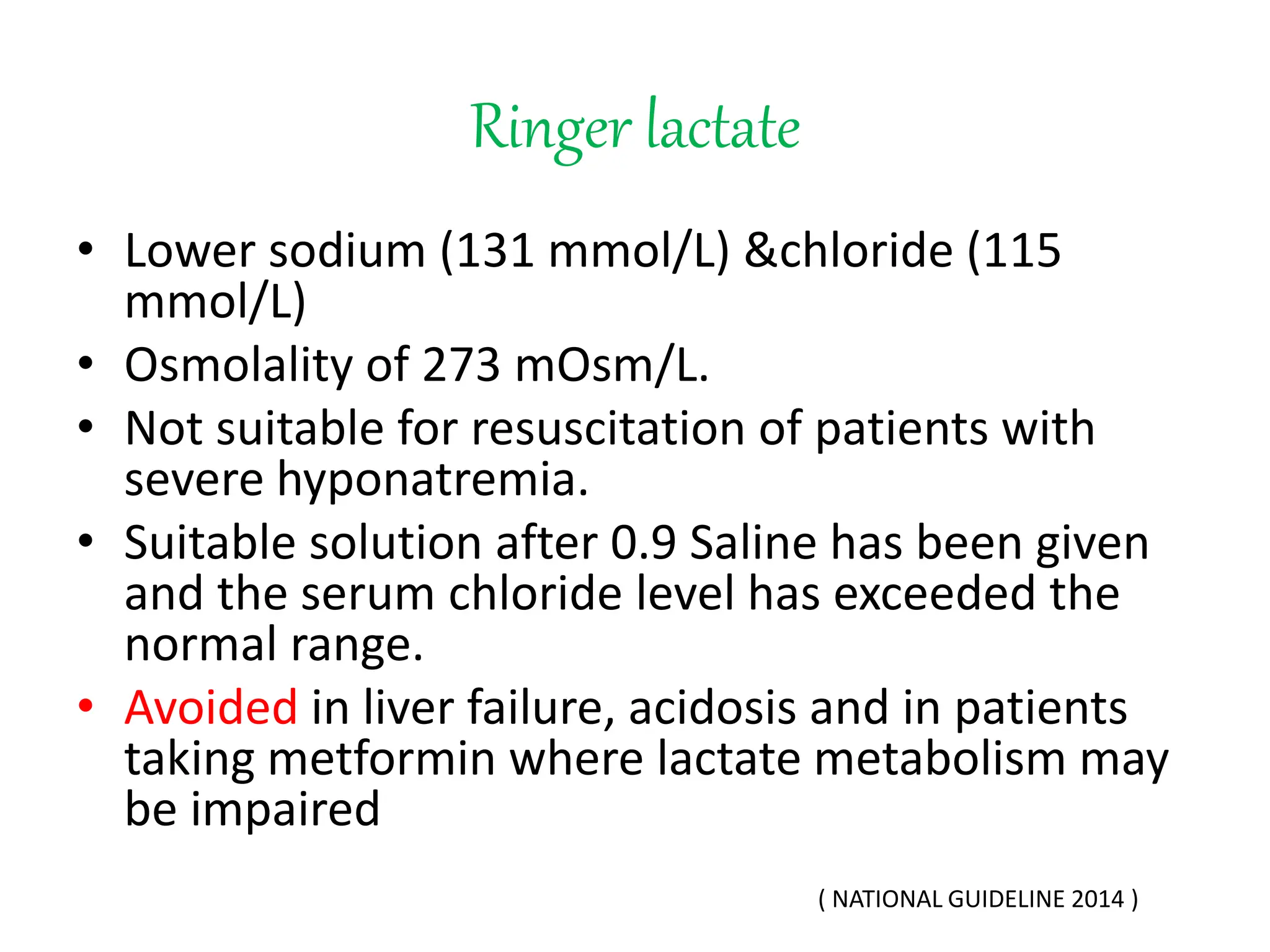
Ringer lactate
• Lower sodium (131 mmol/L) &chloride (115
mmol/L)
• Osmolality of 273 mOsm/L.
• Not suitable for resuscitation of patients with
severe hyponatremia.
• Suitable solution after 0.9 Saline has been given
and the serum chloride level has exceeded the
normal range.
• Avoided in liver failure, acidosis and in patients
taking metformin where lactate metabolism may
be impaired
( NATIONAL GUIDELINE 2014 )
COLLOID
• 1. Dextran-based,
• 2. Hydroxyethyl starch
• 3. Gelatin-based solutions.
• Advantage:
• 1. BP restore fast,
• 2. Restore the cardiac index
• 3. Reduce the level of haematocrit faster than crystalloids
in patients with intractable shock and PP <10mmHg
• Disadvantage :
• 1.Impact on coagulation ( Dextran > gelatin)
• 2. Allergic reactions ( Gelatin > Dextran 70 )
• 3. osmotic renal injury in hypovolaemic patients (
Dextran 40 & Starch)
• Theoretically, dextrans bind to VWF/Factor VIII complex
and impair coagulation the most. not observed to have
clinical significance in fluid resuscitayion.
• If haemodynamic unstable with high hct = 2-3 boluses
crystalloid = Not improove= switch to colloid
• If there is no improvement in the haemodynamic state, it
is essential to consider if severe bleeding has occurred
Stepwise approach to the management of Dengue
(WHO 2009)
WHO handbook 2012
Step 1- Overall assessment
1. History :-
 date of onset of fever/ illness
 Quantity of oral fluid intake
 Diarrhoea
 Urine output (frequency, volume and last time of voiding)
 Assessment of warning signs
 Change in mental state/ seizure/ dizziness
 Other relevent hostory- family/ neighbourhood dengue,
travel to dengue endemic area etc.
WHO handbook 2012
2. Physical examination :
 Assessment of mental state
 Assessment of hydration status
 Assessment of haemodynamic status
 Checking for quiet tachypnoea/acidotic breathing/ pleural
effusion
 Checking for abdominal tenderness/hepatomegaly/ascites;
 Examination for rash and bleeding manifestations;
 Torniquet test ( repeat if previously negative or if there is no
bleeding).
3. Investigations
WHO handbook 2012
Step 2- Diagnosis, assessment of disease phase &
severity
• By history, Physical examination, CBC – Dengue?
• Phase- Febrile/critical/recovery
• Warning sign+/-
• Severity
• Admission/ home
WHO handbook 2012
Step 3 Management
 1. Dengue notification
• Cases of suspected, probable and confirmed dengue
should be notified early so that appropriate public health
measures can be initiated.(In dengue endemic countries)
• Laboratory confirmation is not necessary before
notification, but it should be obtained. (WHO)
 2. Dengue case management
• Group- A
• Group- B
• Group- C
WHO handbook 2012
WHO handbook 2012
• May be sent home
• Criteria:-
1. Patients who do not have warning signs
and
2. Tolerate adequate volume of oral feed
3. Passes urine once in every 6 hours
Group A
WHO handbook 2012
Treatment:-
 Adequate bed rest;
 Adequate fluid intake;
 Paracetamol for fever
 Monitoring includes
 Daily review of disease progression
 Decreasing WBC, defervescence
 Warning signs
 Written advice of management
WHO handbook 2012
Group B
( NATIONAL GUIDELINE 2014 )
Group - C
 If patient with any of –
1. Severe plasma leakage leading to dengue shock and/or fluid
accumulation with respiratory distress
2. Severe haemorrhages
3. Severe organ impairment (hepatic damage, renal impairment,
cardiomyopathy, encephalopathy or encephalitis).
 Compensated shock / Hypotensive shock
WHO handbook 2012
CDC GUIDELINE
WHO handbook 2012
( NATIONAL GUIDELINE 2014 )
WHO handbook 2012
( 20 ml/kg in 15 min )
( NATIONAL GUIDELINE 2014 )
 Treatment of Haemorrhagic complication
• 5-10 ml/kg of fresh packed cells or 10-20 ml/kg of fresh whole
blood.
 As a temporary measure to prevent life threatening
hypotension in dengue shock, during induction for
intubation and while correction of intravascular
volume is vigorously carried out – Dopamine ( DOC )
 Cardiogenic shock- d/t myocarditis or ischaemic
heart disease- Dobutamine ( DOC )
 In concomitant septic shock- Dopamine or NE ( DOC )
Indication of vasopressor and inotropes-
Indication of platelet transfusion
 NATIONAL GUIDELINE 2014
1. Platelet count < 10,000/cu.mm in absence of bleeding
(Prophylactic)
2. Haemorrhage with or without thrombocytopenia
 WHO Guideline & CDC guideline-
No evidence that support the practice of transfusing
platelet or FFP for severe bleeding in dengue
CDC GUIDELINE
CDC GUIDELINE
When to stop IV fluid
 Stop or reduce IV fluid If any one of following :
1. Signs of cessation of plasma leakage;
2. Stable BP, pulse and peripheral perfusion;
3. Haematocrit decreases in the presence of a good pulse
volume;
4. Apyrexia (without the use of antipyretics) for more than 24–
48 hours;
5. Resolving bowel/abdominal symptoms;
6. Improving urine output.
Continuing IV therapy beyond the 48 hours of the critical
phase will put the patient at risk of pulmonary oedema and
other complications such as thrombophlebitis.
WHO handbook 2012
Criteria for discharge
1. Absence of fever for at least 24 hours without antipyretic
2. No respiratory distress from pleural effusion or ascites
3. Return of appetite
4. Good urine output
5. Minimum of 2 to 3 days after recovery from shock
6. Visible clinical improvement
7. Platelet count > 50,000/mm and improoving trend
8. Stable hematocrit without IV fluid (WHO 2012)
( NATIONAL GUIDELINE 2014 )
Prevention and control
• Preventing mosquitoes from accessing egg-laying habitats by
environmental management and modification
• Disposing of solid waste properly and removing artificial man-
made habitats;
• Covering, emptying and cleaning of domestic water storage
containers on a weekly basis;
• Applying appropriate insecticides to water storage outdoor
containers;
• Using of personal household protection such as window
screens, long-sleeved clothes, insecticide treated materials,
coils and vaporizers;
• Improving community participation and mobilization for
sustained vector control;
• Applying insecticides as space spraying during
outbreaks as one of the emergency vector-control
measures;
• Active monitoring and surveillance of vectors should be
carried out to determine effectiveness of control
interventions.
IMMUNIZATION
• 1st Dengue vaccine- Dengvaxia (CYD-TDV ) by Sanofi
Pasteur
• Licensed in Dec. 2015- in 20 Countries in endemic areas
( In > 70 % seroprevelance areas )( 9-45 yrs)
• 3 dose- 6M apart
• Live attenuated vaccine
• Safe in seropositive person i.e. had a previous dengue
virus infection
• But Increased risk of severe dengue in Seronegative i.e.
who experience 1st natural dengue infection after
vaccination
• Not yet approved by MOHFW, GOI
WHO SAGE April 2018
THANK
YOU

Dr Deepak Dadhich DENGUE FEVER ppt under guidance of Dr Jitendra Verma Sir Professor department of pediatrics medical College BHILWARA.pptx

  • 1.
    Dengue : RecentUpdates and Fluid management PRESENTEDBY Dr DeepakDadhich Residentdoctor MODERATOR Dr JITENDRAverma Ap.departmentof Pediatrics rvrs medicalCollegeBhilwara
  • 2.
    Contents 1. Introduction &epidemiology 2. Patho-physiology 3. Classification 4. Clinical criteria & case definition 5. Course of illness 6. Investigations 7. Treatment 8. Prevention
  • 3.
    Dengue Virus • Genus– Flavivirus • Positive sense single-stranded RNA • Four Serotypes – DENV type 1 to 4 • Differ in nucleotide sequence from each other • Each serotype provides specific lifetime immunity, and short- term cross-immunity  Subtype/ Genotype  DENV-1 :  DENV-2 :  DENV-3 :  DENV-4 : ( NATIONAL GUIDELINE 2014 )
  • 4.
     Three structuralprotein genes encoding the nucleocapsid of core protein • A membrane protein (M), • An envelope protein(E) • Seven non-structural (NS) proteins – NS1, NS2A, NS2B, NS3, NS4A, NS4B and NS5 ( NATIONAL GUIDELINE 2014 )
  • 5.
    The Vector • FemaleAedes mosquito • Ae. aegypti (M/C) • Ae. Albopictus ( some states) • Other - Ae. polynesiensis & Ae. niveus. ( NATIONAL GUIDELINE 2014 )
  • 6.
    • Usually daybiting mosquito but can bite at any time of day • Breeds in domestic man-made water receptacles • Ae. Albopictus prefers natural larval habitats • Survive best b/w 16 - 30 0C and a relative humidity of 60– 80%. • Also transmits chikungunya, yellow fever and Zika infection Ae. aegypti ( NATIONAL GUIDELINE 2014 )
  • 8.
    Intrinsic incubation Period ( 3-14d ) Dengue Duringviremia (fever) Virus multiply Virus injectd
  • 9.
    Patho-physiology of Denguefever/ Severe Dengue ( NATIONAL GUIDELINE 2014 )
  • 10.
    • Earlier studies-several factors like immunopathology and high viremia are important triggers of disease severity, • Recent studies - dengue virus directly affecting platelets and endothelial cells • Direct binding of dengue virus to human platelets leading to activation and inflammatory responses, including possible support of virus replication by platelet environment, have been dramatic recent findings. • Moreover, the susceptibility of vascular endothelium to dengue virus and alteration of subsequent endothelial physiology, especially cell adhesion biology and transport could be important in the genesis of capillary dysfunction seen in DSS case (WHO Dengue bulletin vol 39, 2016)
  • 11.
    Classification WHO 2009 Nationalguideline 2014 Dengue without warning signs Mild Dengue ( Undifferentiated DF) Dengue with warning signs Moderate Dengue + High risk/Comorbid condition Or Warning sign/ DHF 1&2 minor bleed Severe dengue 1.Severe plasma leak, 2. Severe bleed, 3. Severe organ impairment Severe dengue 1. DF /DHF + significant bleed 2. DHF with shock (DHF III & IV- DSS) 3. Severe organ involvement (EDS) 4. Severe Metabolic Disorder
  • 12.
  • 13.
  • 14.
    Case Definition Probable DF/DHF Acase compatible with clinical description of Dengue Fever during outbreak. i.e. Live in /travel to dengue endemic area “Acute febrile illness of 2-7d + 2 of the following- i. Headache ii. Retrorbital pain iii. Myalgia iv. Arthralgia v. Rash vi. Hemorrhagiac manifestation OR • IgM positive. Or high levels of IgG by ELISA or HIA test ( NATIONAL GUIDELINE 2014 )
  • 15.
    Conifrmed dengue Fever A case compatible with the clinical description of dengue fever  with at least one of the following 1. Isolation of the dengue virus (Virus culture +VE) from serum, plasma, leucocytes. 2. Demonstration of IgM antibody titre by ELISA positive in single serum sample. 3. Demonstration of dengue virus antigen in serum sample by NS1-ELISA. 4. IgG seroconversion in paired sera after 2 weeks with Four fold increase of IgG titre. Or (neg to positive-WHO) 5. Detection of viral nucleic acid by polymerase chain reaction (RT-PCR). ( NATIONAL GUIDELINE 2014 )
  • 16.
    DENGUE LIKE DISEASE •This term should be used until a specific diagnosis is established ( Nelson’s textbook,21th edn )
  • 17.
    Dengue Haemorrhagic Fever(DHF)  Dengue Fever  Haemorrhagic tendencies- one or more of the following • 1. Positive tourniquet test • 2. Petechiae, ecchymoses or purpura • 3. Bleeding from mucosa, gastrointestinal tract, injection sites or other sites  Thrombocytopenia (<1 lac cells/mm3 )  Plasma leakage- > 1 of the following: • 1. Arise in average haematocrit for age and sex > 20% • 2. A more than 20% drop in haematocrit following volume replacement treatment compared to baseline • 3. Signs of plasma leakage (pleural effusion, ascites, hypoproteinemia) ( NATIONAL GUIDELINE 2014 )
  • 18.
    Grading of DHF •DHF I: positive tourniquet test • DHF II: Spontaneous bleeding in skin or other organs (black tarry stool, epistaxis, gum bleeds) and abdominal pain. • DHF III (DSS): circulatory failure (weak rapid pulse, narrow pulse pressure < 20 mmHg, Hypotension, cold clammy skin, restlessness). • DHF IV (DSS): Profound shock with undetectable blood pressure or pulse. + Dengue fever + Thrombocytopenia (platelet count <100000/ mm3 ) + Hct rise >20% over baseline. ( NATIONAL GUIDELINE 2014 )
  • 19.
    Tourniquet test • Inflatinga blood pressure cuff • Midpoint between the systolic and diastolic pressure ( 5 minute ) • > 10 petechiae/inch2 over forearm i.e. + • In DHF > 20 petechiae/inch2 i.e. definite + • in DSS- negetive/ mildly positive ( NATIONAL GUIDELINE 2014 )
  • 20.
    Expanded dengue Syndrome(EDS) ( NATIONAL GUIDELINE 2014 ) The term expanded dengue syndrome incorporates the unusual manifestations of dengue affecting multiple systems .Renal :renal failure, hemolytic uremic syndrome, acute tubular necrosis .Cardiac: myocarditis, pericarditis,heart block. . Respiratory:ARDS, pulmonary hemorrhage, pulmonary oedema, pleural effusion. .CNS: Encephalopathy, encephalitis, febrile seizures,I/C bleed. .GIT: Hepatitis, Hepatic failure,cholecystitis, pancreatitis. EYE: conjunctival and macular hemorrhage, visual impairment,optic neuritis. Lymphoreticular:Bone marrow suppression, hemophagocytic lymphohistiocytosis. Musculoskeletal: myosotis,rhabdomyolysis
  • 21.
  • 22.
    1. Febrile phase- •Fever-biphasic • 2-7 day • A/w headache, flushing, rash, pain in retro-orbital area, joint or bone. • Rash- after 3rd/4th day of fever Course of Dengue illness ( NATIONAL GUIDELINE 2014 )
  • 23.
    2. Critical phase(Leakage phase) • After 3 to 4 days of onset of fever • Plasma leakage usually persists for 36-48 hrs. • Febrile to afebrile • Progressive leukopenia f/b thrombocytopenia usually precede plasma leakage • Warning sign • Plasma leakage and high haemoconcentration • Patients may develop hypotension & shock, hemorrhage, organ impairment • TLC may increase as a stress response in severe bleeding
  • 24.
    3.Convalescent phase (recovery phase) •After 6-7 days of fever • last for 2-3 days. • ECF returns to the circulatory system ,Hct falls ,and signs and symptoms improve. • Pruritus • WBC rise f/b platelet rise • May develop pulmonary oedema due to fluid overload (observe pedal edema, neck vein engorgement, resp. distress) .IV fluids must be discontinued in this phase.
  • 25.
  • 26.
    DIAGNOSIS : COMPERATIVEMERITS OF TESTS WHO 2009
  • 27.
    ELISA WHO handbook 2012 •A case is confirmed by isolation of virus,viral antigens,Genome by PCR . • Detection of IgM with four fold or greater rise in Ab titre
  • 28.
    Investigations : • CBC( should be repeated daily untill critical phase is over) • Dengue specific lab tests • LFT, RFT, Blood sugar, Serum electrolytes • CXR :Pleural effusion (Right>left) • USG Abd,Chest: – Evidence of free fluid – Gall bladder wall edema  ECG
  • 29.
    ELISA TEST  Sensitivity:90%, Specificity : 97.6%  Primary dengue infection :  80% of individuals demonstrate detectable IgM antibodies by day 5 and 99% by day 10-12.  IgM antibodies peak at two weeks and then decline over the next 2-3 months.  IgG antibodies rise later(14 days) and to lower levels as compared to IgM, then decline gradually but persist at low levels for life.
  • 30.
  • 31.
    ELISA… • Secondary infection: –There is a brisk and rapid IgG response peaking at two weeks and then declining slowly over the next 3-6 months. – The IgM response in secondary dengue infections starting at 14 days,is slower and lower than IgG – Combined use of IgM and IgG in paired sera gives a sensitivity of 99% and specificity of 96%. – The best results are obtained if acute and convalescent sera are tested for both IgM and IgG dengue
  • 32.
    SECONDARY INFECTION D-5 DAY OFILLNESS D-14 IgM IgG ANTIBODY LEVELS
  • 33.
    Virological and serologicalmarkers of Dengue according to time of illness
  • 35.
    Aedes Mosquito- Chickengunya, Dengue Yellow fever Zikavirus WHO handbook 2012 • DIFFERENTIAL DIAGNOSIS • Viral respiratory and influenza like diseases • Malaria • Yellow fever • Scrub typhus • Leptospirosis • Enteric fever • Sandfly fever
  • 36.
  • 37.
    Indications for domiciliarymanagement If No sign of • Tachycardia • Hypotension • Narrowing of pulse pressure • Bleeding • Haemoconcentration • Followup after 24 hr / any warning sign ( NATIONAL GUIDELINE 2014 )
  • 38.
  • 39.
    Management of denguefever • Symptomatic and supportive • Bed rest • Use cold/tepid sponging to keep temperature below 38.5 C. • Antipyretics- Paracetamol prefer • Avoid Aspirin/NSAIDS like Ibuprofen, etc because may cause gastritis, vomiting, acidosis, platelet dysfunction and severe bleeding ( NATIONAL GUIDELINE 2014 )
  • 40.
    • Oral fluidand electrolyte therapy is recommended for patients with excessive sweating or vomiting. • Patients should be monitored for 24 to 48 hours after they become afebrile for development of complications. • ORS, fruit juice, Coconut water, soup prefer than plain water to prevent electrolyte imbalance • If persistent vomitting/ refusal to feed- Start IVF • Monitor the initial sign of shock. • Critical period- during the transition from febrile to afebrile stage. ( NATIONAL GUIDELINE 2014 )
  • 41.
    Choice of IVF •Prefer isotonic fluid • Colloid and Crystalloid • No clear advantage to the use of colloids over crystalloids in terms of the overall outcome. ( NATIONAL GUIDELINE 2014 )
  • 42.
    Crystalloids 1. Normal saline( 1st choice) 2. Ringer lactate 3. 5% DNS ( NATIONAL GUIDELINE 2014 )
  • 43.
    Normal Saline • Sodium(154 mmol/L) & Chloride (154 mmol/L) • Osmolarity - 308 mOsm/L • Lead to hyperchloremic acidosis which may confused or aggrevate lactic acidosis from profond shock • So monitor chloride & lactate • So when chloride exceed than normal range change fluid (RL) ( NATIONAL GUIDELINE 2014 )
  • 44.
    Ringer lactate • Lowersodium (131 mmol/L) &chloride (115 mmol/L) • Osmolality of 273 mOsm/L. • Not suitable for resuscitation of patients with severe hyponatremia. • Suitable solution after 0.9 Saline has been given and the serum chloride level has exceeded the normal range. • Avoided in liver failure, acidosis and in patients taking metformin where lactate metabolism may be impaired ( NATIONAL GUIDELINE 2014 )
  • 45.
    COLLOID • 1. Dextran-based, •2. Hydroxyethyl starch • 3. Gelatin-based solutions. • Advantage: • 1. BP restore fast, • 2. Restore the cardiac index • 3. Reduce the level of haematocrit faster than crystalloids in patients with intractable shock and PP <10mmHg
  • 46.
    • Disadvantage : •1.Impact on coagulation ( Dextran > gelatin) • 2. Allergic reactions ( Gelatin > Dextran 70 ) • 3. osmotic renal injury in hypovolaemic patients ( Dextran 40 & Starch) • Theoretically, dextrans bind to VWF/Factor VIII complex and impair coagulation the most. not observed to have clinical significance in fluid resuscitayion. • If haemodynamic unstable with high hct = 2-3 boluses crystalloid = Not improove= switch to colloid • If there is no improvement in the haemodynamic state, it is essential to consider if severe bleeding has occurred
  • 47.
    Stepwise approach tothe management of Dengue (WHO 2009) WHO handbook 2012
  • 48.
    Step 1- Overallassessment 1. History :-  date of onset of fever/ illness  Quantity of oral fluid intake  Diarrhoea  Urine output (frequency, volume and last time of voiding)  Assessment of warning signs  Change in mental state/ seizure/ dizziness  Other relevent hostory- family/ neighbourhood dengue, travel to dengue endemic area etc. WHO handbook 2012
  • 49.
    2. Physical examination:  Assessment of mental state  Assessment of hydration status  Assessment of haemodynamic status  Checking for quiet tachypnoea/acidotic breathing/ pleural effusion  Checking for abdominal tenderness/hepatomegaly/ascites;  Examination for rash and bleeding manifestations;  Torniquet test ( repeat if previously negative or if there is no bleeding). 3. Investigations WHO handbook 2012
  • 50.
    Step 2- Diagnosis,assessment of disease phase & severity • By history, Physical examination, CBC – Dengue? • Phase- Febrile/critical/recovery • Warning sign+/- • Severity • Admission/ home WHO handbook 2012
  • 51.
    Step 3 Management 1. Dengue notification • Cases of suspected, probable and confirmed dengue should be notified early so that appropriate public health measures can be initiated.(In dengue endemic countries) • Laboratory confirmation is not necessary before notification, but it should be obtained. (WHO)  2. Dengue case management • Group- A • Group- B • Group- C WHO handbook 2012
  • 52.
  • 53.
    • May besent home • Criteria:- 1. Patients who do not have warning signs and 2. Tolerate adequate volume of oral feed 3. Passes urine once in every 6 hours Group A WHO handbook 2012
  • 54.
    Treatment:-  Adequate bedrest;  Adequate fluid intake;  Paracetamol for fever  Monitoring includes  Daily review of disease progression  Decreasing WBC, defervescence  Warning signs  Written advice of management WHO handbook 2012
  • 56.
  • 57.
  • 58.
    Group - C If patient with any of – 1. Severe plasma leakage leading to dengue shock and/or fluid accumulation with respiratory distress 2. Severe haemorrhages 3. Severe organ impairment (hepatic damage, renal impairment, cardiomyopathy, encephalopathy or encephalitis).  Compensated shock / Hypotensive shock WHO handbook 2012
  • 59.
  • 60.
  • 61.
  • 62.
    WHO handbook 2012 (20 ml/kg in 15 min )
  • 63.
  • 64.
     Treatment ofHaemorrhagic complication • 5-10 ml/kg of fresh packed cells or 10-20 ml/kg of fresh whole blood.
  • 66.
     As atemporary measure to prevent life threatening hypotension in dengue shock, during induction for intubation and while correction of intravascular volume is vigorously carried out – Dopamine ( DOC )  Cardiogenic shock- d/t myocarditis or ischaemic heart disease- Dobutamine ( DOC )  In concomitant septic shock- Dopamine or NE ( DOC ) Indication of vasopressor and inotropes-
  • 67.
    Indication of platelettransfusion  NATIONAL GUIDELINE 2014 1. Platelet count < 10,000/cu.mm in absence of bleeding (Prophylactic) 2. Haemorrhage with or without thrombocytopenia  WHO Guideline & CDC guideline- No evidence that support the practice of transfusing platelet or FFP for severe bleeding in dengue
  • 68.
  • 69.
  • 70.
    When to stopIV fluid  Stop or reduce IV fluid If any one of following : 1. Signs of cessation of plasma leakage; 2. Stable BP, pulse and peripheral perfusion; 3. Haematocrit decreases in the presence of a good pulse volume; 4. Apyrexia (without the use of antipyretics) for more than 24– 48 hours; 5. Resolving bowel/abdominal symptoms; 6. Improving urine output. Continuing IV therapy beyond the 48 hours of the critical phase will put the patient at risk of pulmonary oedema and other complications such as thrombophlebitis. WHO handbook 2012
  • 71.
    Criteria for discharge 1.Absence of fever for at least 24 hours without antipyretic 2. No respiratory distress from pleural effusion or ascites 3. Return of appetite 4. Good urine output 5. Minimum of 2 to 3 days after recovery from shock 6. Visible clinical improvement 7. Platelet count > 50,000/mm and improoving trend 8. Stable hematocrit without IV fluid (WHO 2012) ( NATIONAL GUIDELINE 2014 )
  • 72.
    Prevention and control •Preventing mosquitoes from accessing egg-laying habitats by environmental management and modification • Disposing of solid waste properly and removing artificial man- made habitats; • Covering, emptying and cleaning of domestic water storage containers on a weekly basis; • Applying appropriate insecticides to water storage outdoor containers; • Using of personal household protection such as window screens, long-sleeved clothes, insecticide treated materials, coils and vaporizers;
  • 73.
    • Improving communityparticipation and mobilization for sustained vector control; • Applying insecticides as space spraying during outbreaks as one of the emergency vector-control measures; • Active monitoring and surveillance of vectors should be carried out to determine effectiveness of control interventions.
  • 74.
    IMMUNIZATION • 1st Denguevaccine- Dengvaxia (CYD-TDV ) by Sanofi Pasteur • Licensed in Dec. 2015- in 20 Countries in endemic areas ( In > 70 % seroprevelance areas )( 9-45 yrs) • 3 dose- 6M apart • Live attenuated vaccine • Safe in seropositive person i.e. had a previous dengue virus infection • But Increased risk of severe dengue in Seronegative i.e. who experience 1st natural dengue infection after vaccination • Not yet approved by MOHFW, GOI WHO SAGE April 2018
  • 75.

Editor's Notes

  • #14 8. Decrease urinary output, 9. Cold clammy extremities, 10. Narrow pulse pressure, 11. Rapid pulse, 13. Hypotension