C O N V E N T I O N S
DOCUMENTARIES
VOICE-OVER
Documentaries often use
voice-overs to offer
information, explanations
and opinions for viewers
on the the subject being
documented. This is either
done while filming is done
or added as separate
audio when editing.
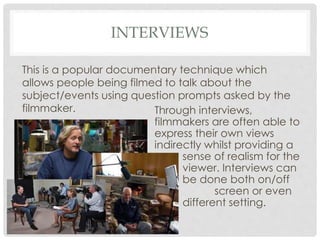
INTERVIEWS
This is a popular documentary technique which
allows people being filmed to talk about the
subject/events using question prompts asked by the
filmmaker. Through interviews,
filmmakers are often able to
express their own views
indirectly whilst providing a
sense of realism for the
viewer. Interviews can
be done both on/off
screen or even
in a different setting.
EXTREME CLOSE-UPS
These shots help provide a sense of realism and are
often a good way of filling up spaces in which the
interview may be being conducted and shots are
needed to fill in audio space.
Differently extreme close-
ups are popular among
wildlife/nature
documentaries in order to
give a better, much
clearer view of the
animal/insect.
ARCHIVAL FOOTAGE
These are used in order to show historical events or
add detail without additional filming. Also known as
‘stock footage’, this material can often be accessed
from an archive or film library.
REENACTMENT
These artificial scenes of an event reconstructed and
acted out based on information of what happened.
These are often used in documentaries in order to
provide viewers with a sense of realism as if they saw
the event themselves.
Indications that footage is
not real may include:
blurring, distortion, coulour
enhancement and lighting
effects.

Documentary Conventions

  • 1.
    C O NV E N T I O N S DOCUMENTARIES
  • 2.
    VOICE-OVER Documentaries often use voice-oversto offer information, explanations and opinions for viewers on the the subject being documented. This is either done while filming is done or added as separate audio when editing.
  • 3.
    INTERVIEWS This is apopular documentary technique which allows people being filmed to talk about the subject/events using question prompts asked by the filmmaker. Through interviews, filmmakers are often able to express their own views indirectly whilst providing a sense of realism for the viewer. Interviews can be done both on/off screen or even in a different setting.
  • 4.
    EXTREME CLOSE-UPS These shotshelp provide a sense of realism and are often a good way of filling up spaces in which the interview may be being conducted and shots are needed to fill in audio space. Differently extreme close- ups are popular among wildlife/nature documentaries in order to give a better, much clearer view of the animal/insect.
  • 5.
    ARCHIVAL FOOTAGE These areused in order to show historical events or add detail without additional filming. Also known as ‘stock footage’, this material can often be accessed from an archive or film library.
  • 6.
    REENACTMENT These artificial scenesof an event reconstructed and acted out based on information of what happened. These are often used in documentaries in order to provide viewers with a sense of realism as if they saw the event themselves. Indications that footage is not real may include: blurring, distortion, coulour enhancement and lighting effects.