D E P A R T M E N T OF E N T
M GM M E DI C A L C O L L E GE , A U R A N G A B A D
Diseases of the external ear
Congenital diseases of pinna
 Anotia- complete absence of pinna and lobule
 Microtia- small pinna
 Macrotia- excessively large pinna
 Bat ear- abnormally protruding ear due to large
concha with poorly developed antihelix and scapha
 Lop ear- hypoplasia of upper third of pinna
 Cryptotia- upper third of pinna embedded under
scalp skin
 Coloboma- transverse cleft in middle of pinna
 Darwin’s tubercle- pointed tubercle on upper part
of helix
 Stahl’s ear- helix is flat and upper crus of antihelix
is duplicated and reaches rim of helix
 Lobule deformities- large, bifid, pixed
 Pre-auricular tags- skin covered tags that appear
on a line drawn from tragus to angle of mouth
 Pre-auricular sinus- epithelial track in front of
crus of helix or above tragus due to incomplete
fusion of tubercles
Traumatic diseases of pinna
 HEMATOMA
1. Cauliflower ear/ boxer’s ear
2. Collection of blood between
auricular cartilage and its
perichondrium
3. Treatment- aspiration
under aseptic precautions
and pressure dressing, if
fails then I&D with through
and through sutures,
prophylactic antibiotics
Lacerations & avulsions of pinna
Frost bite
 Erythema, oedema, bullae
formation, necrosis of skin and
subcutaneous tissue, complete
necrosis with loss of affected part
 Treatment-
1. Rewarming with moist cotton
pledgets at temperature 38-42
deg C
2. Application of 0.5% silver
nitrate soaks
3. Analgesics
4. Protection of bullae from
rupture
5. Systemic antibiotics
Keloid
 May follow trauma or
piercing of the ear
 Surgical removal may
lead to recurrence
 Recurrence can be
avoided by pre- and post-
operative radiation with
a total dose of 600-800
rad delivered in 4 divided
doses
Perichondritis
 Infections sec to lacerations,
hematoma or surgical incisions
 Common pathogens-
pseudomonas and mixed flora
 Symptoms- red, hot and
painful stiff pinna, abscess
formation between cartilage
and perichondrium with
necrosis of cartilage
 Treatment- systemic
antibiotics, 4% aluminium
acetate compresses, abscess
drainage, removal of
devitalised cartilage
Furuncle
 Staphylococcal infection
of hair follicle
 Symptoms- severe pain
and tenderness,
movements of pinna or
jaw cause pain
 Treatment- systemic
antibiotics, analgesics,
local heat, ear pack of
10%ichthammol
glycerine, I &D of abscess
Diffuse otitis externa
 Diffuse inflammation of meatal skin which may spread to
involve the pinna and epidermal layer of tympanic membrane
 Hot and humid climate, swimmers
 Trauma to meatal skin and invasion by pathogenic organisms
 Staph. Aureus, Pseudomonas, Bacillus, E.Coli
 Acute phase: hot burning sensation followed by pain during
jaw movements, thin serous discharge which later becomes
thick and purulent, meatal lining is inflamed and swollen,
severe cases- lymphnodes are enlarged and tender with
cellulitis of surrounding tissues
 Chronic phase: irritation and strong desire to itch,
scanty discharge which dries up to form crusts,
meatal skin is thick and swollen and shows scaling
and fissuring
 Treatment: ear toilet, insertion of medicated wicks
(antibiotic steroid preparation), local steroid drops,
aluminium acetate or silver nitrate (mild astringents)
wicks, broad spectrum systemic antibiotics,
analgesics, 10% ichthammol glycerine wick to reduce
swelling in chronic phase
Otomycosis
 Fungal infection of ear canal
due to Aspergillus niger, A.
fumigatus, Candida Albicans
 Hot and humid climate
 Secondary fungal growth in
patients using topical antibiotics
 Intense itching, discomfort,
pain, watery discharge with
musty odour
 Treatment: ear toilet, Nystatin
for candida, clotrimazole,
povidone iodine, 2% salicylic
acid in alcohol
 EAR KEPT DRY
Malignant otitis externa
 An inflammatory condition caused by pseudomonas
infection usually in elderly diabetics, or in those on
immunosuppressive drugs
 Excrutiating pain, appearance of granulations in the
ear canal
 Facial paralysis
 Infection may spread to skull base and jugular foramen
causing multiple cranial nerve palsies, anteriorly
spreads to temporomandibular fossa, posteriorly to
mastoid, medially to middle ear and petrous bone
 Treatment:
1. Control of diabetes
2. Toilet of ear canal
3. Antibiotic treatment for 6-8 weeks- Gentamycin+
ticarcillin, third generation cephalosporins+
aminoglycosides, quinolones
Impacted wax
 Wax is composed of secretion of sebaceous glands,
ceruminous glands, hair, desqaumated epithelial
debris, keratin and dirt
 Factors causing impacted wax- secretion of more
sweat or cerumen, narrow and tortuous ear canal,
stiff hair or obstructive lesion e.g. exostosis
 Symptoms- impaired hearing or sense of blocked ear,
tinnitus, giddiness, reflex cough
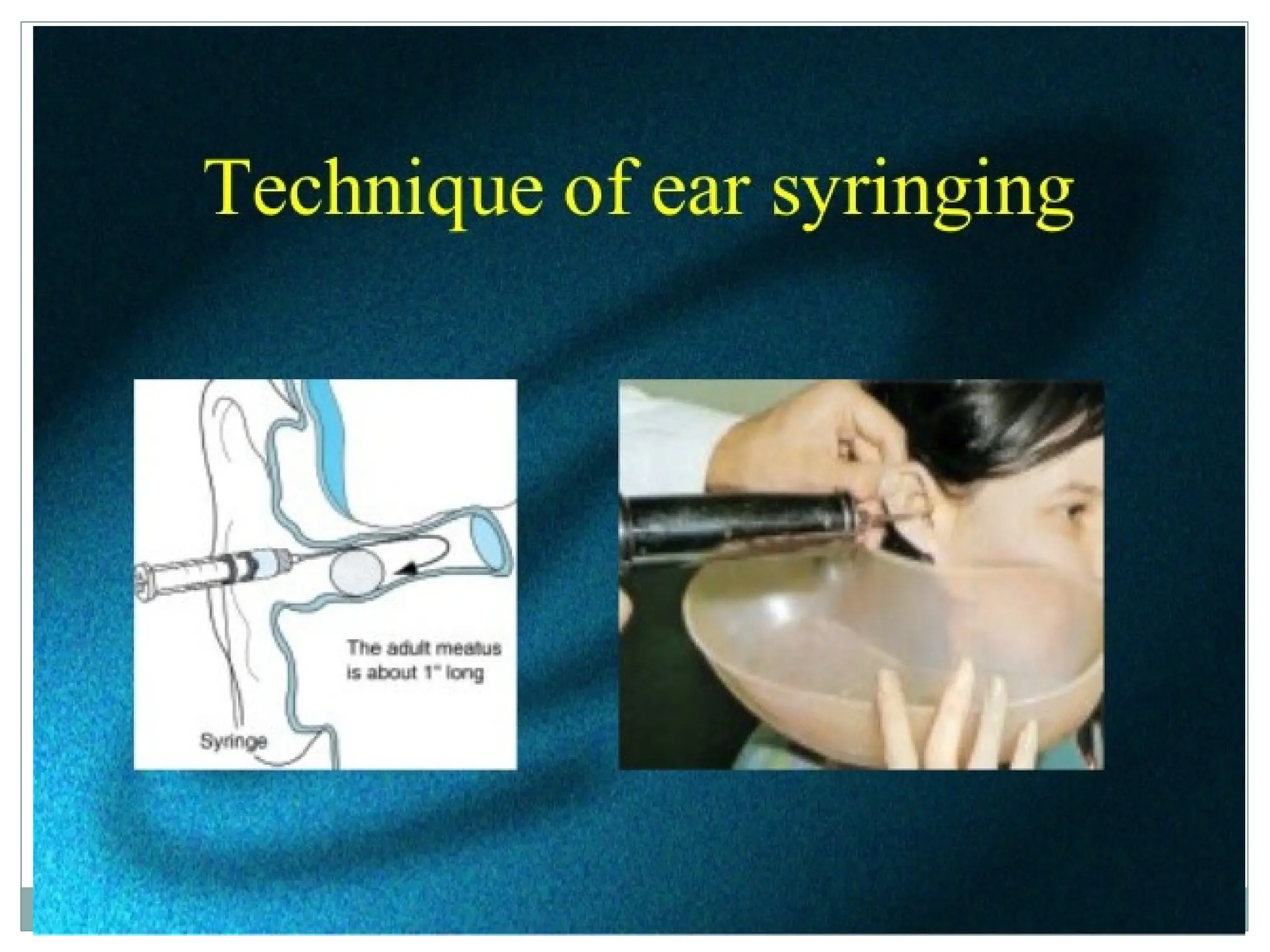
 Treatment- removal by syringing or instrumental
manipulation, prior sofening with wax solvents
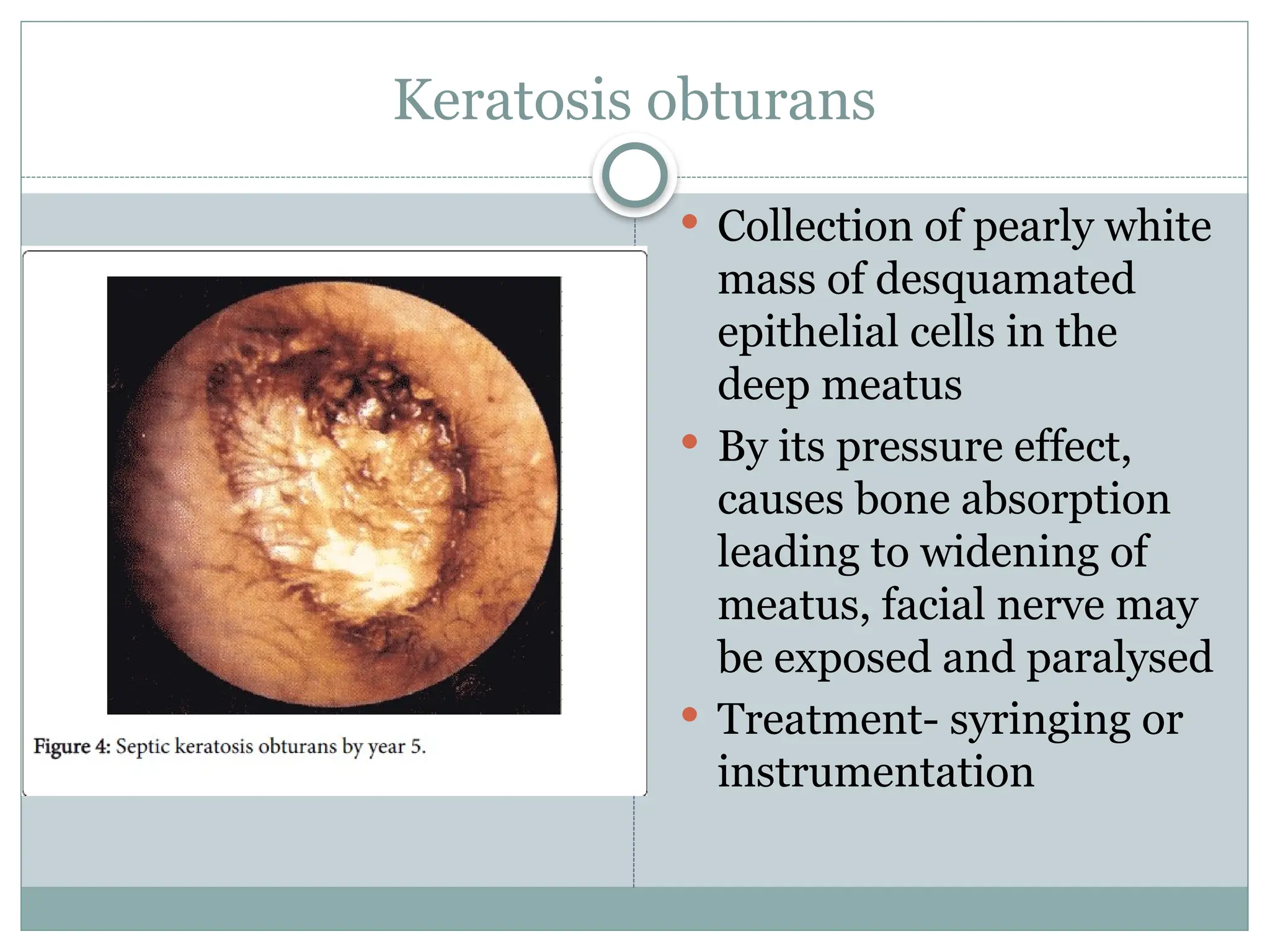
Keratosis obturans
 Collection of pearly white
mass of desquamated
epithelial cells in the
deep meatus
 By its pressure effect,
causes bone absorption
leading to widening of
meatus, facial nerve may
be exposed and paralysed
 Treatment- syringing or
instrumentation
Diseases of tympanic membrane
 Retracted tympanic membrane
 Myringitis bullosa
 Herpes Zoster oticus
 Myringitis granulosa
 Traumatic rupture
 Atrophic tympanic membrane
 Retraction pockets & atelectasis
 Tympanosclerosis
 Perforations
DOC-20250317-WA0050..pptx external ear dise

DOC-20250317-WA0050..pptx external ear dise

  • 1.
    D E PA R T M E N T OF E N T M GM M E DI C A L C O L L E GE , A U R A N G A B A D Diseases of the external ear
  • 3.
    Congenital diseases ofpinna  Anotia- complete absence of pinna and lobule  Microtia- small pinna  Macrotia- excessively large pinna  Bat ear- abnormally protruding ear due to large concha with poorly developed antihelix and scapha  Lop ear- hypoplasia of upper third of pinna  Cryptotia- upper third of pinna embedded under scalp skin  Coloboma- transverse cleft in middle of pinna
  • 5.
     Darwin’s tubercle-pointed tubercle on upper part of helix  Stahl’s ear- helix is flat and upper crus of antihelix is duplicated and reaches rim of helix  Lobule deformities- large, bifid, pixed  Pre-auricular tags- skin covered tags that appear on a line drawn from tragus to angle of mouth  Pre-auricular sinus- epithelial track in front of crus of helix or above tragus due to incomplete fusion of tubercles
  • 7.
    Traumatic diseases ofpinna  HEMATOMA 1. Cauliflower ear/ boxer’s ear 2. Collection of blood between auricular cartilage and its perichondrium 3. Treatment- aspiration under aseptic precautions and pressure dressing, if fails then I&D with through and through sutures, prophylactic antibiotics
  • 8.
  • 9.
    Frost bite  Erythema,oedema, bullae formation, necrosis of skin and subcutaneous tissue, complete necrosis with loss of affected part  Treatment- 1. Rewarming with moist cotton pledgets at temperature 38-42 deg C 2. Application of 0.5% silver nitrate soaks 3. Analgesics 4. Protection of bullae from rupture 5. Systemic antibiotics
  • 10.
    Keloid  May followtrauma or piercing of the ear  Surgical removal may lead to recurrence  Recurrence can be avoided by pre- and post- operative radiation with a total dose of 600-800 rad delivered in 4 divided doses
  • 11.
    Perichondritis  Infections secto lacerations, hematoma or surgical incisions  Common pathogens- pseudomonas and mixed flora  Symptoms- red, hot and painful stiff pinna, abscess formation between cartilage and perichondrium with necrosis of cartilage  Treatment- systemic antibiotics, 4% aluminium acetate compresses, abscess drainage, removal of devitalised cartilage
  • 13.
    Furuncle  Staphylococcal infection ofhair follicle  Symptoms- severe pain and tenderness, movements of pinna or jaw cause pain  Treatment- systemic antibiotics, analgesics, local heat, ear pack of 10%ichthammol glycerine, I &D of abscess
  • 14.
    Diffuse otitis externa Diffuse inflammation of meatal skin which may spread to involve the pinna and epidermal layer of tympanic membrane  Hot and humid climate, swimmers  Trauma to meatal skin and invasion by pathogenic organisms  Staph. Aureus, Pseudomonas, Bacillus, E.Coli  Acute phase: hot burning sensation followed by pain during jaw movements, thin serous discharge which later becomes thick and purulent, meatal lining is inflamed and swollen, severe cases- lymphnodes are enlarged and tender with cellulitis of surrounding tissues
  • 15.
     Chronic phase:irritation and strong desire to itch, scanty discharge which dries up to form crusts, meatal skin is thick and swollen and shows scaling and fissuring  Treatment: ear toilet, insertion of medicated wicks (antibiotic steroid preparation), local steroid drops, aluminium acetate or silver nitrate (mild astringents) wicks, broad spectrum systemic antibiotics, analgesics, 10% ichthammol glycerine wick to reduce swelling in chronic phase
  • 17.
    Otomycosis  Fungal infectionof ear canal due to Aspergillus niger, A. fumigatus, Candida Albicans  Hot and humid climate  Secondary fungal growth in patients using topical antibiotics  Intense itching, discomfort, pain, watery discharge with musty odour  Treatment: ear toilet, Nystatin for candida, clotrimazole, povidone iodine, 2% salicylic acid in alcohol  EAR KEPT DRY
  • 18.
    Malignant otitis externa An inflammatory condition caused by pseudomonas infection usually in elderly diabetics, or in those on immunosuppressive drugs  Excrutiating pain, appearance of granulations in the ear canal  Facial paralysis  Infection may spread to skull base and jugular foramen causing multiple cranial nerve palsies, anteriorly spreads to temporomandibular fossa, posteriorly to mastoid, medially to middle ear and petrous bone
  • 19.
     Treatment: 1. Controlof diabetes 2. Toilet of ear canal 3. Antibiotic treatment for 6-8 weeks- Gentamycin+ ticarcillin, third generation cephalosporins+ aminoglycosides, quinolones
  • 21.
    Impacted wax  Waxis composed of secretion of sebaceous glands, ceruminous glands, hair, desqaumated epithelial debris, keratin and dirt  Factors causing impacted wax- secretion of more sweat or cerumen, narrow and tortuous ear canal, stiff hair or obstructive lesion e.g. exostosis  Symptoms- impaired hearing or sense of blocked ear, tinnitus, giddiness, reflex cough  Treatment- removal by syringing or instrumental manipulation, prior sofening with wax solvents
  • 23.
    Keratosis obturans  Collectionof pearly white mass of desquamated epithelial cells in the deep meatus  By its pressure effect, causes bone absorption leading to widening of meatus, facial nerve may be exposed and paralysed  Treatment- syringing or instrumentation
  • 24.
    Diseases of tympanicmembrane  Retracted tympanic membrane  Myringitis bullosa  Herpes Zoster oticus  Myringitis granulosa  Traumatic rupture  Atrophic tympanic membrane  Retraction pockets & atelectasis  Tympanosclerosis  Perforations