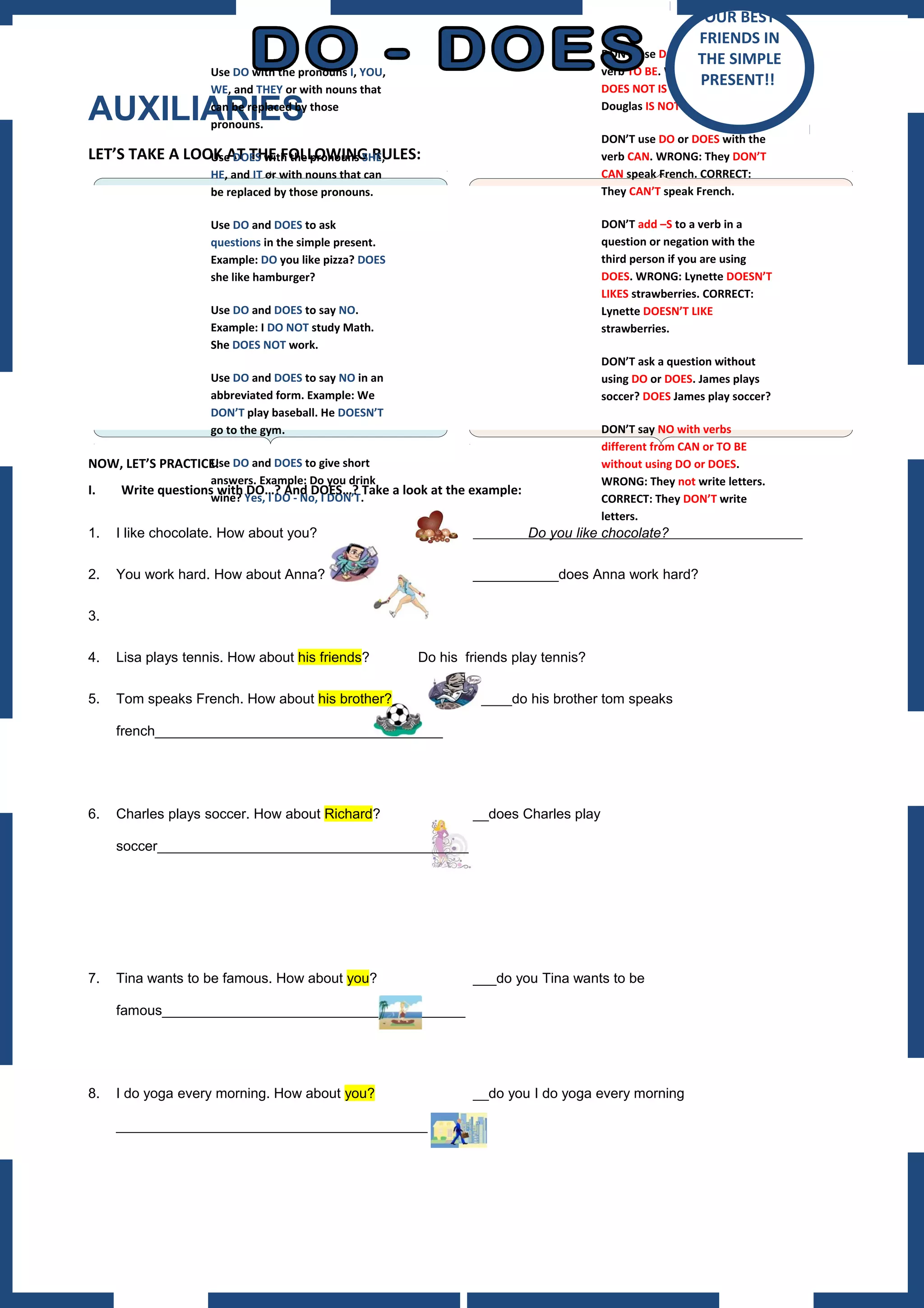
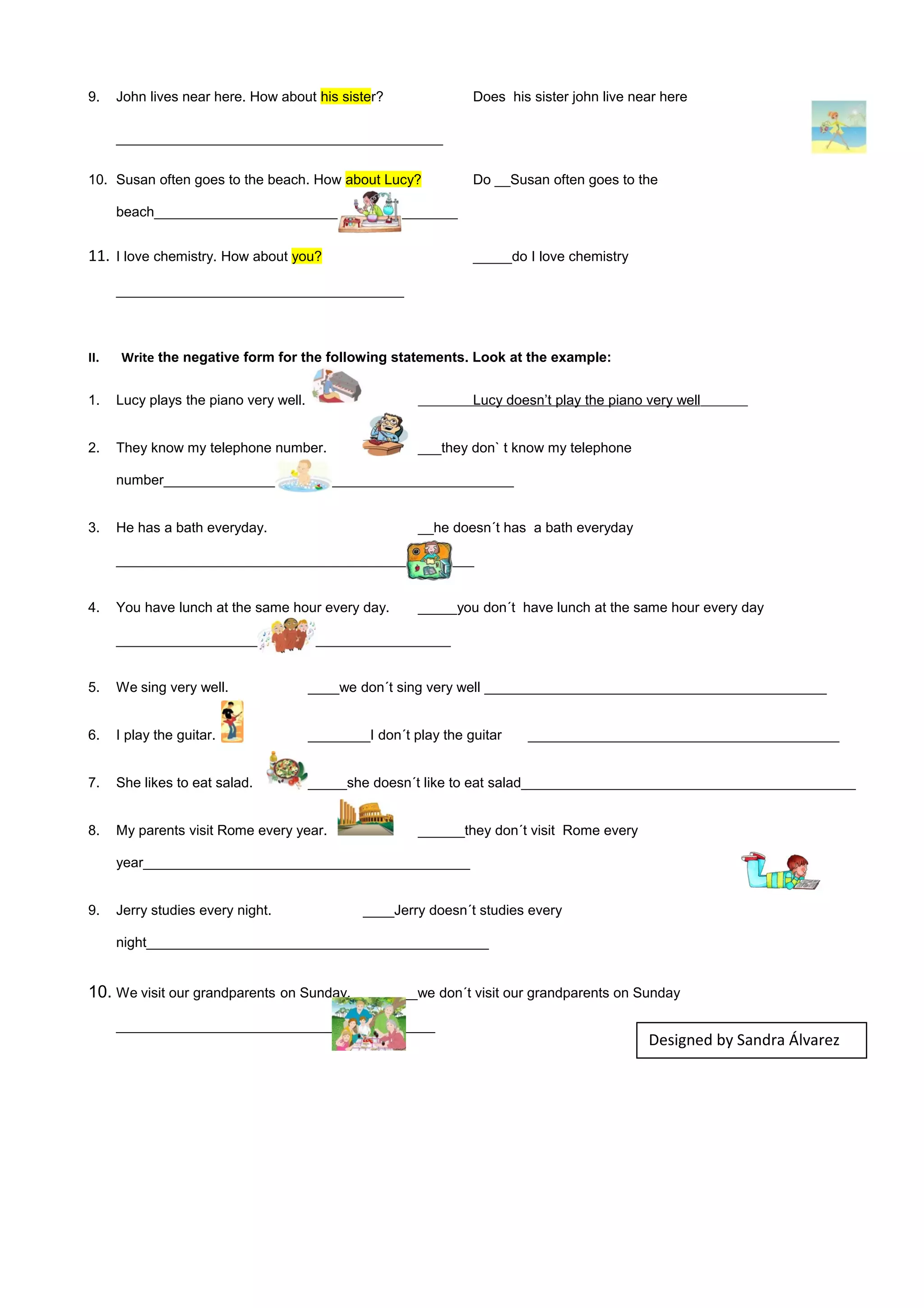
The document provides rules and examples for forming questions and negatives in the simple present tense using auxiliary verbs like "do" and "does" in English. Some key points covered include:
- Using "do" with pronouns like "I", "you", "we", and "they", and "does" with pronouns like "she", "he", and "it".
- Forming questions with "do/does" and negatives with "don't/doesn't".
- Exceptions like not using "do/does" with verbs like "be" and "can", and avoiding adding "-s" when using "doesn't".
- Examples of questions, negatives, and short answers are