."'111,'%
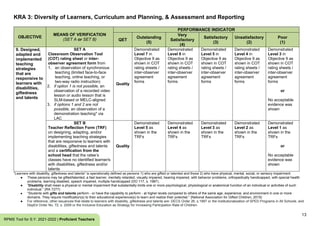
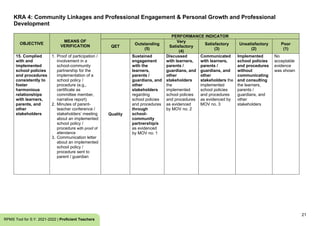
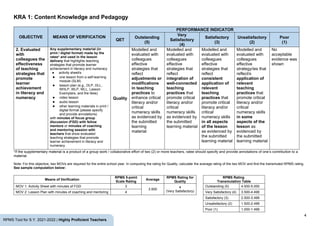
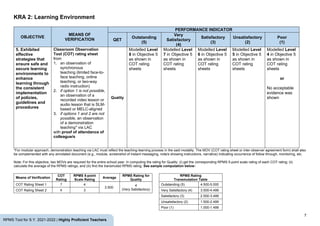
i"H"j
icplblic of tla Pritippinlt
DepEd MEMORANDUM
No. , s. 2022
I}IPLEMEIYTATIOIT OF THE RESULTS;-BASED PERI1ORMAXCE }IANAGEIEIYT
SYSTEM.PHILIPPIITE PROFESSIOIYAL STAITDARDS F'OR TEACHERS
FOR SCHOOL YEAR 20.21-2022
To: Undersecretaries
Assistant Secretaries
Minister, Basic, Higher, and Technical Education, BARMM
Bureau and Service Directors
Regional Directors
Schools Division Superintendents
Public Elementary and Secondar5r School Heads
A11 Others Concerned
1. Faithful to the commitment of the Department of Education (DepEd) to
quarityteaching,itbeingrecogrr'izedasvitaltotheattainmentofdesiredlearning
&t"o-"", the bepartment reitains steadfast in the efforts to anchor its human
resource systems
-and
actions on well-defined professional standards for teacher
q"rfitv. C"on*i"t"t t with DepEd Order (Do) No' 2, s' 2ol5 prescribine the
drli""fi.r." on tJle Establishment and implementation of the Results-Based
Performance Management System (RPMS) in the Department of F ducation and
;;;;, to Secti"on 5 of Do 4b, s' 2ol7 on the National Adoption and
i-pi.-"it"trrn of the philippine professional standards for Teachers (PPST), which
-Joa"t"" that all p"rro. .i-r'"" appraisals for teachers shall be based on this set of
standards, this Department has been integrating and embedding the PPST into the
RPMS of teache.s iince School Year (SY) 2018-20 19'
2. For SY 2O2l-2O22, the Department aims to complete tt'" !11 cy-cle of
.mU.aairrg the 37 PPST' indicatois into teachers' performanc,e' -Thrs DepEd
Memorandum titled Inplementatloa of thG Rerults'Bared Performaace
ii"i"g.i."t system_philtpptEe profersto-er standar& fot Teachen IRPUS-
;Psiiil s.t""r veat 2Ci21'2022 provides for the guidelines 9n !!re
perfomance
Lr""!"-""t and appraisal of teachirs using the remaining 18 indicators in their
nif'f S] Witir the impiementation of the Basii Education Itarning Continuity Plan
iie-ice1, the sudden shift from face to face to remote learning' and now the
F"a"J
'ilnplementatio., oi th" limited face to face classes' the tools' forms' and
r;;;;_"tprlated herein are developed and modified to ensure that the measures
;i;;;;;;"" this school yeuu. are appropriate, adaptive' and relevant to capture
teachers' actual performance in the context of the pandemic'
3. This DM shall cover all Teachers and Master Teachers in all public
"i"-".rt"ty
and secondary schools and community learning centers
-
(CLCs)'
i""i"ai"i "tir."e Tea"he." Ld Master Teachers who are reassigned as full-time
Teacher-"Broadcasters in DepEd Central Office (CO)' It shall .guide the ratees'
,"i"r",
"pprorring "utho.itieJ,
and other stakeholders in the implementation of
piSf_.fig"ea ReilS ttrrougtr the prescribed performance indicators that shall be
reflected in the Individual
"perfomance commitment and Review Forms (IPCRFs) of
teachers fiot SY 2O2l-2O22
DepEd Codplex, Meralco Avenue, Pasig City 1600
pa633-720a 1a633-722A / A6s2-136r f 8636-4A761A637 -6209
qwu'w.deped. gov. ph
Depatmeit of @luotion
4. For purposes of implementation of RPMS-PPST for SY 2027-2022, these
guidelines are prescribed.
a. With the continued delivery of basic education services through
various distalce learning delivery modalities (DLDMs), the changes in
the expectations of teachers necessitates a COVID- 19 responsive
RPMS while upholding quality teaching using the professional
standards. The modifications in RPMS, its tools, processes, and
protocols, for Sy 2O2l-2O22 captures the DepEd
current system that governs teachers' functions.
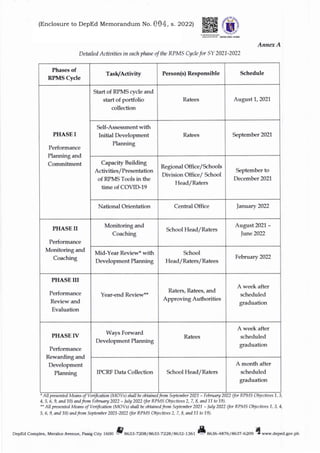
b. Consistent with the School Calendar and Activities for SY 2027-2022
to include all the preparatory and end-of-school year activities
stipulated in Enclosure No. 2 of DO O29, s.2O2l, the performance
cycle for all teaching personnel for SY 2O2l-2O22 shall cover the
performance from Auguet l, 2O2L to July 31, 2022. The timeline of
activities for each phase of the RPMS cycle is illustrated below,
particulars of which is detailed in Annex A.
Figure 1 . TlLe RPMS Cgcle with Adjusted SY 2O2 1- 2O22 Timeline
,

a
,<t
t.
€"
-'lYa
a";
I
o
o
t
lD
a
a
3"
o
c
o
.s
I
o
a.ria.r-E frcnrha rt l
aodrlt ra.G,F. i.9i
iri,6loall. FCtf +sal.
(...ird; a.,t Et r@2
raBrEtr b.{4 6 ,rE
,r, lpdnd irOtiOt, -d
I
a
PER FORMAiICE PI.ANNI NG
AND COMMITMENT
PERFONMA'{CE
MONNORII{GAND
coA0flllc
lt
IV
il! PERFORMAT.'CE REVIEW
ANO EVAI.UANOiI
,.
t D
3
olaraoty'r$lrE ol 1116
at'|r,rD!-t plira,
tol
qi.d trasdoti.n
,rn b.r.d 6. 3Ar, !l. ra
Teacher
Quality
a.E rt. tnt ttr o,
,'dn bI coirqrih..l
atMli 16lr ircf,, .
'aI
+
PERR)RMANCE
REWARDING AT{D
DEVETOPMENT PTANNING
E.r
,!rH
*
,1o16
-t .4 a...rrink .E
t
I
ilrlt
tFd ,ftfor'.r sltod rD(it
r,/ ffilurrd trC rart
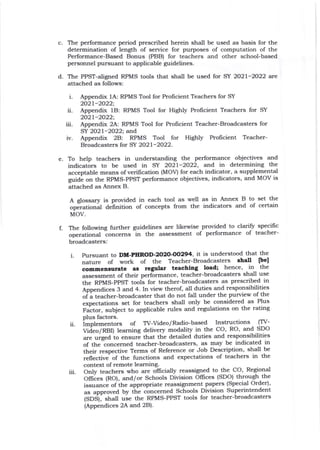
c The performance period prescribed herein shall be used as basis for the
determination of length of service for purposes of computation of the
Performance-Based Bonus (PBB) for teachers and other school-based
personnel pursuant to applicable guidelines.
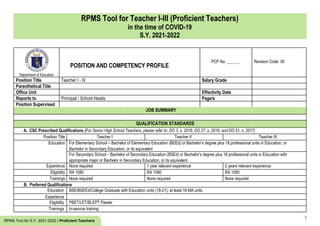
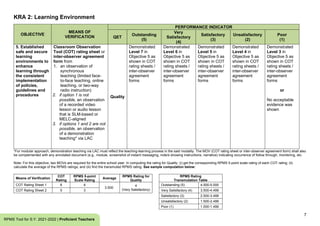
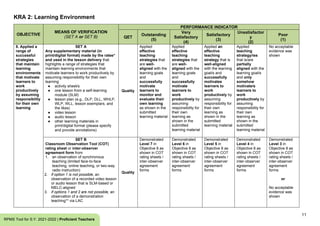
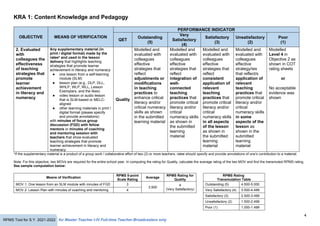
d. The PPST-aligrred RPMS tools that shall be used for SY 2027-2022 are
attached as follows:
t-
ii.
in.
iv.
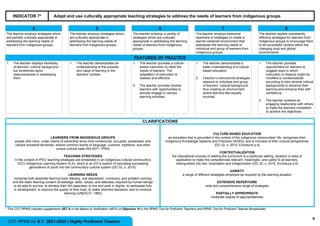
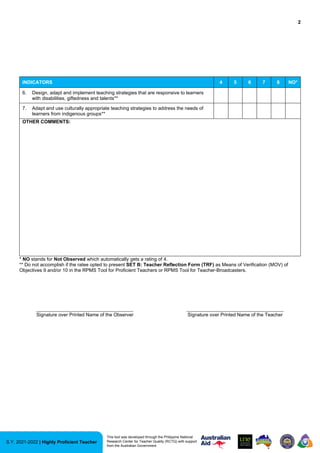
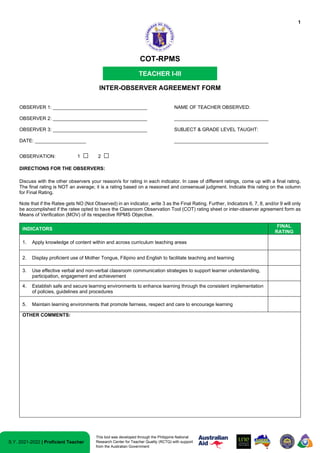
Appendix 1A: RPMS Tool for Profrcient Teachers for SY
2021-2022;
Appendix 1E}: RPMS Tool for Highly Prolicient Teachers for SY
2021-2022;
Appendix 2A: RPMS Tool for Prolicient Teacher-Broadcasters for
SY 2027-2022; and
Appendix 28: RPMS Tool for Highly Prolicient Teacher-
Broadcasters for SY 2O2l-2O22.
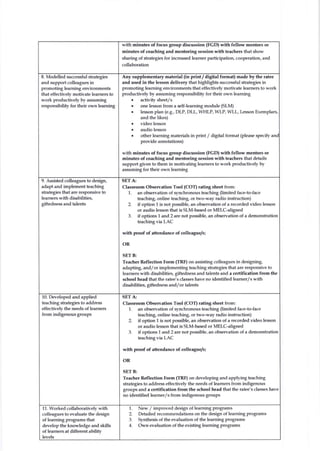
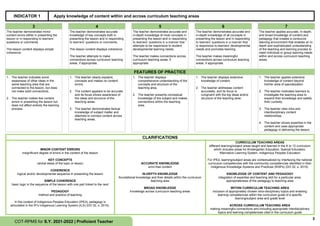
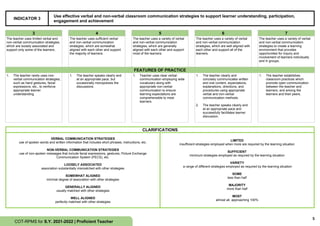
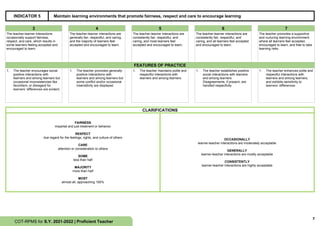
e To help teachers in understanding the performance objectives and
indicators to be used in SY 2021-2022, and in determining the
acceptable means of verification (MOV) for each indicator, a supplemental
guide on the RPMS-PPST performance objectives, indicators, and MOV is
attached as Annex B.
A glossary is provided in each tool as well as in Annex B to set the
opJ."tio.ri dehnition of concepts from the indicators and of certain
MOV.
The following further guidelines are likewise provided to clariff specific
operational iorr""..r" ln tJle assessment of performance of teacher-
broadcasters.'
i. Pursuant to DM-PIIROD -2O2O'OO294, it is understood that the
nature of work of tJ:e Teacher-Broadcasters shdl [bel
commenrurate es rcgular teechlttg load; hence, in the
assessment of their performance, teacher-broadcasters shall use
the RPMS-PPST tooli for teacher-broadcasters as prescribed in
Appendices 3 and 4. In view therof, all duties and responsibiljties
of a teacher-broadcaster that do not fall under the purview of the
expectations set for teachers shall only be considered as PIus
Factor, subject to applicable rules and regulations on the rating
plus factors.
ii. implementors of TV-Video/Radio-based Instructions (TV-
Video/ RBI) learning delivery modality in the CO, RO, and SDO
are urged to ensure that the detailed duties and responsibilities
of theloncerned teacher-broadcasters, as may be indicated in
their respective Terms of Reference or Job Description' shall be
reflective of the functions and expectations of teachers in the
context of remote learning.
iii. Only teachers who are o{frcially reassigned to .the CO, Regional
Offrces (RO), and/or Schools Division OIEces (SDO) through the
issuance of the appropriate reassignment paPers (Special Order)'
as approved by tti .-o.rce.ned Schools Division Superintendent
(SOS1), strall use the RPMS-PPST tools for teacher-broadcasters
(Appendices 2A atd 2Bl.
f
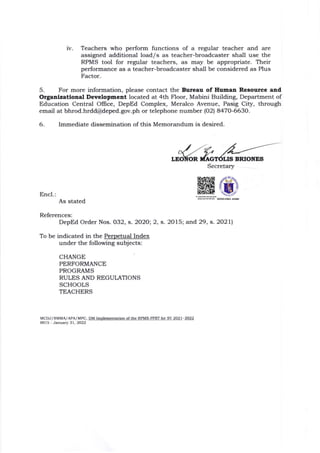
IV Teachers who perform functions of a regular teacher and are
assigned additional load/s as teacher-broadcaster shall use the
RPMS tool for regular teachers, as may be appropriate. Their
performance as a teacher-broadcaster shall be considered as Plus
Factor.
5. For more information, please contact tlle Bureau of Human Resoutce aad
Organlzatloaal Development located at 4th Floor, Mabini Building, Department of
Education Central Office, DepEd Complex, Meralco Avenue, Pasig City, through
email at bhrod.hrdct@deped.gov.ph or telephone number lo2l 8470-6630.
6. Immediate dissemination of this Memorandum is desired.
BRIONES
Secretary
Encl.:
As stated
References:
DepEd Order Nos. O32, s. 2020; 2, s.2075; and 29, s.2O2ll
To be indicated in the Perpetual Index
under the following subjects:
CHANGE
PERFORMANCE
PROGRAMS
RULES AND REGULATIONS
SCHOOLS
TEACHERS
MCDJ/SMMA/APA/Mrc, DM Implemcntation ofthe RPMS PPST for SY 2021-202
OOlS January 31.2022
Enclosure to Dep&d Metnotz,ndum IVo. _
Annex A
Detailed Actioities in each phax of the RPMS Cycle for Sy 2021-2022
Phases of
RPMS Cycle
Tasly'Activity Person(s) Responsible Schedule
PHASE I
Performance
Planning and
Commitrnent
Start of RPMS cycle and
start of porfolio
collection
August 1, 2021
Self-Assessment with
Initial Development
Planning
Ratees September 2021
Capacity Building
Activities/ Presentation
of RPMS Tools in the
time of COVID19
Regional Offi ce/ Schools
Division Office/ School
Head/Raters
September to
December 2021
National Orientation Central Office
PHASE II
Performance
Monitoring and
Coaching
Monitoring and
Coaching
School Head/ Raters
August 2021 -
Jrne 2022
Mid-Year Review* with
Development Planning
School
Head/Raters/ Ratees
Febru.ary20D
PHASE III
Performance
Review and
Evaluation
Year-end Review*
Raters, Ratees, and
Approving Authorities
A week afur
scheduled
graduation
PHASE IV
Performance
Rewarding and
Development
Planning
Ways Forward
Development Planning
Ratees
A week after
scheduled
graduation
IPCRI Data Collection School Head/Raters
A month after
scheduled
graduation
' All Plescnt d Means of Vetifcation (MOV|) shall tu obtaircd fion Septembt 2021 - February 2022 (for RPMS Objectioes 1 , 3,
4, 5, 6, 9, and 10) ond fron February 2022 - luly 2022 (t'or RPMS Objectioes 2, 7, 8, and 11 to 19).
** All qeseated. Merns of Vetifcanon (MOVs) shall be obtained Itotfl Septernbet 2021 - luly 2022 (lot RPMS Objectirxs 1, 3, 4,
5, 6, 9, md 10) and from Septernber 2021-2022 (fot RPMS Objectioes 2, 7, 8, dtd 11 ta 19).
DepEd Complex, Mcralco Avcnuc, Pasig City 1600
p4633-7204/4633-7224I 32-36r * 4636-4476 /4637 -6209
qq,ww.deped.gov.ph
Ratees
lanuary 2022
(Enclosure to DepEd Memorandum No. , s. 2022)
Annex B
RPMS-PPST Performance Obiectives, Indicators, and
Means of Verifications for S 2O27-2O22
PART I. Regular Teachers
There are 18 indicators hom the Philippine Professional Standards for Teachers (PI€T)
chosen as RPMS o$ectives for this school year. These priority indicators complete the integration
of PI€T through the RPMS.
*e Appmdix 7A for the RPMS Tool for Proficient Teachers for SY 2027-2022 and Appmilit
18 for the RPMS Tool for Higtrly Proficient Teachers tor SY 2027-2022, respectively. A glossary is
provided in each tool to set the operational definition of concepts from the indicators and of
certain MOV.
Classroom obse roable obi e ctioes
For Proficient Teachers, there are nine (9) classroom observable objectives. The
performance indicators of these objectives are identified for Quality.
Objectives 7, 3, 4, 5, and 5 require means of verification (MOV) from a classroom
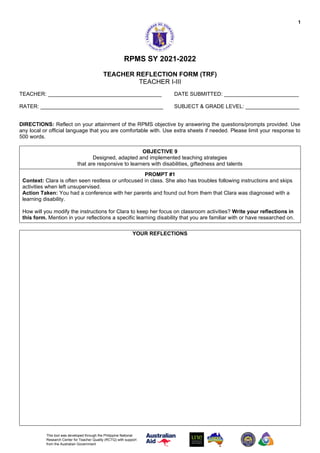
observation. While Obiectives 7,8,9, and 10 have SET A and SET B options that require MOV
from either a classroom observation, provision of supplemetal material/s, or accomplishment of
a Teacher Reflection Form (1RF) depending on the context of the teacher.
For Highly Proficient Teachere, there are seven (7) classroom observable objectives. The
performance indicators of these objectives are identified for Quality.
Objectives 1, 3, 4, 5, and 5 require MOV from a classroom observation. While Obiectives 9
and 10 have SET A and SET B options that require MOV from either a classroom observation or
accomplishment of a Teacher Reflection Form (TRF) depending on the context of the Eacher.
Only two (2) observations are required for both Proficient and Highly Proficient Teachers
for the entire school year.
N on-classroom ob*n:able obiectiaes
There are thirteen (13) non-classroom obiectives for both Proficient and Highly Proficient
Teachers. This includes the o$ectives that have SET A and SET B options. The performance
indicators of these o$ectives ate identified for Quality. Plus Factor is O$ective 19.
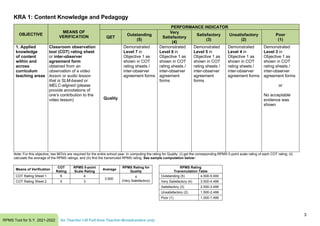
Tabte 1. MOV ryr inilicator lor the Profcient Teachers for RPMS SY 2027-2022
RPMS objective based on the
PPST priority indicator
Means of verifi.ation
l. Applied knowledge of content
within and acroas curriculum
teaching areas
Classroom Obe€rvation Tool (COT) rating 6heet or inter.observ€r
.greemmt form from:
1. an observation of synchronous teaching (Iimid face-to-face
teaching, online teachin& or two-way radio instruction)
L if opnon 1 is not possibk, a ob*rwation of a recorded video lesson or
audio lesson that is SLM-based or MElC-aligned
3. if opnons 1 tnd 2 are not possible, an obrrvation of a demonstntion
teaching via LAC
2. Used resea rch-ba sed
knowledge and principles of
teaching and learning to enhance
One (1) Iesson plan with annotrtions identifying the research-based
knowledge and/or principtes of teaching and leaming used as basis for
planning / designing the lesson
Enclosttre to DcpEd Memoraadum No,
professional practice
3. Displayed proficient use of
Motler Tongue, Filipino and
English to facilitate teaching and
leaming
Clas8toom Obsen ation Tool (COT) ratin8 sheet or inter-obs€rver
agr€ement form from:
1. an observation of synchronous teaching oimid face-to-face
teachin& online teachin& or two-way radio ins'truction)
2. if option 7 is nol possibl?, an observation of a .ecorded video lesson or
audio lesson that is SlM-based or MElc-aligned
3. il options "l and 2 ate not possibb , an observation of a demonstration
teaching via LAC
4. Used effective verbal and non-
verbal classroom communication
strategies to support leamer
understandin&, participation,
efl gagement and achievement
5. Established safe and rcure
leaming environments to enhance
leaming through the consistent
imptementation of policies,
guidelines and procedures
6. Maintained leaming
environments that promote
faimess, respect and care to
encouraqe learning
SET A
Any supplementary material (in print/digital format) made by the ratee
and used in the lesson delivery that highlights maintaining leaming
environments that nurture and inspire leamers to participate, cooperate and
collaborate in continued leamhg
. activity sheet/s
. one lesson from a self-leaming module (SLM)
. lesson plan (e.9., DLP, DLL, WHLP, WLP, WLL,lesson exemplars,
and the likes)
. video lesson
o audio lesson
. other leaming materials in print/digital format (please specify and
provide annotations)
with client/eamer feedback on how the material encouraged the
leamers to participate, coopeEte, and collaborate (Please specify
and provide annotations of one's contribution to a material if it is
a group work.)
ot{
SET B
Classroom Observation Tool (COT) rrtint sheet or inter-observer
agreement form from:
1. an observation of synchronous teaching 0imited face-to-face
teachin& online teachin& or two-way radio instruction)
2. if option 1 is not possible an observation ofa recorded video lesson
or audio lesson that is SLM-based or MELc-aligned
3. if options 1 and 2 are not possible an observation of a demonstration
teaching via LAC
8. Applied a range of successful
sbategies that maintain leaming
env onments that motivate
learners to work productively by
assuming responsibility for their
own leaming
SET A
Any supplement ry materiat (in prinyditital format) m.de by the r.tee
and used in the lesson delivery that highlights a .ange of sbategies that
maintain leaming environments that motivate leamers to work productively
by as,stming responsibility for their own leaming
o activig sheet/s
. one lesson from a selfJeaming module (SLM)
. lesson plan (e.9., DLP, DLL, WHLP, WLP, WLL, lesson exemplart
and the tikes)
o video lesson
. audio lesson
o other leaming materials in print/digital format (please specify and
provide annotations)
(Please specily and provide amotations of onds conkibution)
OR
7. Maintained leaming
environments that nurfure and
inspire leamers to participate,
cooPerate and collabomte in
continued leaming
SET B
Classroom Observation Tool (COT) ratin8 sheet or inter-obseler
a8reement folm from:
1. an obseruation of synchronous teaching oimited face-to.face teachin&
online teachin& or two-way radio instruction)
2. if option 1 is not possible, an obs€rvation of a recorded video lesson or
audio lesson that is Sl-M-based or MElC-aligned
3. if options 1 and 2 are not possible, an observation ofa demonstration
teaching via LAC
9. Designed, adapted and
implemented teaching strategies
that are responsive to leamers
with disabilities, giftedness and
talents
SET A
Claseroom Obaervation Tool (COT) lating 6heet or inter-observel
agreem€nt form ftom:
1. an observation of synchronous teaching (timited face-to-face teachin&
online teachin& or two-way radio instruction)
2. if option I is not possible, an observation of a recorded video lesson or
audio lesson that is SLM-based or MElC-aligned
3. if options 1 and 2 are not possible, an observation of a demonstration
teaching via LAC
OR
SET B
Teacher Reflec+ion Form (fRF) on designing adapting and/or
implementing teaching strategies that are responsive to leamers with
disabilities, giftedness and talents and a certification from the school he.d
that the ratee's classes have no identified learner/s with disabilities,
gift edness and/ or talents
10. Adapted and used culturaly
appropriate teaching strategies to
address the needs of leamers
from indigenous groups
SEI A
Claseroom Observation Tool (COT) rating sheet or inter-ob8€rver
agreemmt form from:
1. an observation of synchronous teaching (limited face-to-face teachin&
online teachin& or two-way radio instruction)
2. iI option t is not possible. an observation of a recorded video lesson or
audio lesson that is SlM-based or MElc-aligned
3. if options 1 and 2 are not possible, an observation of a demonstration
teaching via LAC
()R
SE-T B
Teacher Refle<tion ForEr CIRD on adapting and using culturally
appropriate teaching strategies to address the needs of learners
from indigenous groups and a certification from the s.hool head
that the rate€'s dasses have no identified leamer/s hom
indigenous groups
.11.
Adapted and implemented
learning programs that ensu.e
relevance and responsiveness to
the needs of all leamers
1. Proof of evaluationr on the implementation of the adapted /
contextualized leaming program
2. Progress report on the implementation of the adapted / contextuatized
learning program
3. Accomplishment/ completion / technical report on the imPlementation
ofan adapted / contextualized leaming program
4. Action plan / activity proposal / activity hatrix that shows a. adapted
/ contextualiz€d leaming program
12. Utilized assessment data to
inform the modification of
teaching and learning practices
and programs
A list of identified least/ most mastered skills based on the frequency of
erroE / correct respons€s with any of the following supporting MoV
l. accomplishment rcport for remedial / enhancehent activities (e.9.,
remedial sessions, Summer Reading Camp, PhilJRl-based reading
program)
2. intervention material used for remediation / reinforcement /
enhancement
3. lesson plan/activity log for re$ediation / enhancement utilizhg of
ass€ssmmt data to modify teaching and leaming practices ot programs
13. Maintained leaming
environments that are responsive
to community contexts
1. Accomplishment .eport ofa program / proFct / activity that maintains
a leaming environment
2. Piogram / Proiect / Activity plan on maintaining a leaming
Enclosure to DepEd Memotandum Ivo.
-
envfonment
3. Minutes ofa consultative meeting / community stakeholders me€ting
about a program / proi,ct / activity that maintains a leaming
environment with proof of attendance
4. Communication letter about a Program / proiect / activity that
maintains a leamin8 environment
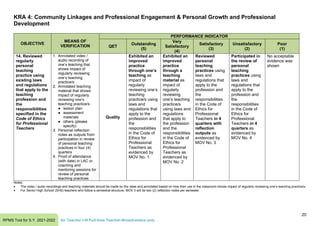
1. Annotated video/audio recording of onds teaching that
shows impact of regularly reviewing one's teaching Practice/s
2. Annotad teaching material that shows imPact of regularly
reviewing one's teaching prachce/s
o lesson plan
. activity sheet
. ass€ssment materials
. others (please spectfy)
3. Personal reflection notes as outPuts from ParticiPation in
review of Frsonal teaching practices in four (4) quart€F
4. Proof of attendance (with date) in LAC or coaching and
teachin actices
men sessions for review of
14, Reviewed regularty personal
teaching practice using existing
Iaws and regulations that aPply
to the teaching profession and the
responsibilities specified in the
Cad. ol Ethics lor Professional
Teadurs
committee member, nafiative report)
2. Minutes of parent-tea(her conference / stakeholders' meetrng aboul an
i-otemented school policy / procedure with proof of ahendance
3. Communication lettei about an implemented rhool poliry / proceoure
sent to Parent / guardian
I
(e.9.
un
-conlm
srhoo
a
tn Pa
vem iw
of
Proof rticipation
pa
certificate
ure
of school
tion proced
tnl poliry
the
for plementa
15. Complied wirh and
implemented school Policies and
procedures consistendY to foster
harmonious relationshiPs with
leamers, parents, and other
stakeholders
tialism)
of
tion
the
ex pplica
annotations mmg
with Pla
lesson
One plan
(1
r5nl existen
cons:lnrchv
h
teac hy
rner-centered philosop
rng
Iea
lesson
the
fo desigfling
5 basis lanning
used P
philosoPhy of teaching that is
leamer<entered
16. Applied a personal
Screenshot of text message/chat/emait/ any form of
comfl unication with Parents/Suardian
or leamers
(name or anv identifier removed)
Remarks from mentot/master teacher/school head
about one's qualities (e 8., entries in Performance
Monitoring and Coaching Form [PMCfl or in Mid-
Year Review Form)
Recognition from the rhool/ schoot community
about one's qualities
orofession
Z. irrrrot"t"a
"r,ia"ttce
of practice indirectlv linking to-the
uriorai"e of th" aignity of teaching as a profession by-
"iiiuitittiqrufitl"t
*cir as caring attitude' resPect and
integrity
from colleagues,
k
feedbac
Doaumented
I
the
holders
stake direcdy
other
rdran,
gua
parents/
as
of teach
the
d mg
tha dignitv
s
tee' phol
I practices
good
Others
17. Adopted Practices
the dignity of teaching as a
profession by exhibiting qualities
such as caring attitude, resPect
and integrity
r}lat uPhold
3. IPCRF-DP
i. i"ifi.r*io" fto- the tCT Coordinator/School Head/Focal
of e-SAT
Person in
II
Phase
from
DP
F
IPCR
U
I pdated
Form
Review (MRF)
l'1id
2. -yea
goals based on the PhiliPPine
kofessional Standards for
Teachers
18. Set professional develoPment
committee involvement
advisorship of co-curricular activities
book ot ioumal authorship/ contributorship
coordinatorship/chairpersonshiP
coaching and mentoring leamers in comPetitions
serving-as reliever of classes in the absence of teachers
mentoring Pre-service teachets
tion
teachin
hon
demonstra
ln
hon
particiPa
ber
men'l
technical I
as working gou
rticipa
Pa
tions
nnota
ide
others
Any proof of:
19. Performed various re
works/ activities that contribute
to the teaching-leaming Process
lated
(e.c.
leamers,
51lperiols,
reflecting
and
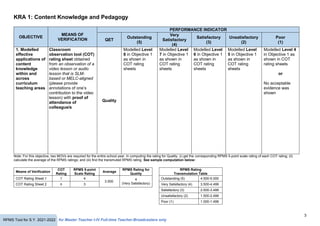
Table 2. MOV pu indicator for the Highly Profcient Teachers for RPMS SY 2m1-2022
Means of verification
RPMS obiective based on the PPST
indi(ator
Clascroom Obeervation Tool (COT) ratin8 sheet from:
1. an observation of synchronous teaching oimited face-to-face
teachin& online teachin& or two-way radio instruction)
2. if option 1 is not possible, an obsewation of a recorded video lesson
or audio lesson that is SlM-based or MElC-aligned
3. if options 1 and 2 are not possible, an observation of a demonsbation
teaching via LAC
with proof of attendance of colleagu{s
1. Modelled effective applications
of content knowledge within and
across curriculum teaching areas
promote leamer achievement in literacy and numeracy
o activity sheet/ s
. one lesson from a selfJeaming module (SLM)
. lesson plan (e.g., DLP, DLL, WHLP, WLB WLL' l'esson Exemplars'
and the likes)
. video lesson
o audio lesson
. other leaming materials in print / digital format (please sPecify and
provide annotations)
with minutes of focus Stoup dis(uEsion (FGD) with fellow mentors
or minutes of coa.hinB and mentoring 36sion with teacheE that
show evaluated teaching strategies that Plomote Ieamer achievement
in litency and numerary
deliv
ratee
the
made by
format)
material (in digital
print
lementatv
supP
tha
ts
tha
lesson teaching
d
an d
usct ln gh
highti
ery
2. Evaluated with colleagues the
effectiveness of teaching skategies
that promote leamer achievement
in literacy and numeracY learning
Process
colleagues in the Proficimt us€ of
Mother Tongue, FiliPino and
English to imProve teaching and
leamin& as well as to develoP
leamers' Pride of thei. language,
1 Modelled and supported
and culture
4. Displayed a wide
effuctive verbal and
classroom communication
shategies to suPPort leamer
understandin& ParticiPation,
range of
non-verbal
and achievement
efl
5. Exhibited effective str
that ensure safe and secure
leaming environments to enhance
leaming though the consistent
implementation of Policies,
ategies
ures
idelines and
ClasEroom Observation Tool (COT) rating sheet fromr
- .
l. an observation of synchronous teaching (timiH face-to-lace
tea(hing online teachin& or two-way radio instruction)
2. if optioi 1 is not Possible, an obseryation of a rrorded vldeo ksson
o, u'rdlo tetsot ttrat is SlM-based or MElC-aligned
a. f .pti.i" i""a 2 are not po$sible' an observation of a demonstration
teaching via LAC
with proof of attendance of colleagu+
6. Exhibited effective Practices
foster learning environments that
promote faimess, tesPect and care
to encou
to
. activity sheet/s
. one lison from a selfJeaming modute (SLM)
. t€sson plan (e.g., DLP, DLL, WHLP, WLP' WLL' Lesson
ExemPlars, and the likes)
. video lesson
r audio lesson
. otfr", te.mi.g -aterials in Print / diSital format (Please sPecify
provide annotations)
tatee
the
made
format) by
material digital
(in print
lementary
SUPP
Any
that
stra
successfu
ts
tha tegre
deliv gh
lesson
ln
d highl
the
use ery
and
IS
Ieame
and
rtu
rlu re
that lnsPrre
ts
envlronmen
lea
su mlnS
stain pportive
rn
lea
continued
in
te mg
bora
colla
and
te,
to cooPerate
rticipa
Pa
7. Worked with colleagues to
successful strategies that sustain
supportive leaming environments
that nurture and insPite leamers to
participate, cooPerate and
collaborate in continued leaming
share
Any
slrategies
the
Enclosure to DepH Mernorandum IYo. _
with minutes of focus Broup dis.ussion (FGD) with fellow mentors or
minutes of coaching and m€ntoring session with teachers that show
sharing of slaategies for increased leamer participation, cooperation, and
collaboration
Any supplementary material (in print / di8ital format) made by the ratee
end uaed in the leason delivery that highlights successful strategies in
promoting learning environments that effectively motivate leamers to work
productively by assuming responsibility for their own leaming
. activity sheet/s
. one lesson from a self-learning module (SLlv0
. lesson plan (e.9., DLP, DLL, WHLP, WLP, WLL, I€sson Exemplars,
and the likes)
. video lesson
. audio lesson
. other leaming materials in p nt / digital format (please specify and
provide annotations)
with rrinutes of focus group discuasion (FGD) with fellow mento.s or
minutes of coaching and mentoring session with teach€rs that details
support given to them in motivating leamers to work productively by
assuming for their own leaming
SET A:
Classroom Observation Tool (COT) ratin8 sh€et from:
l. an observation of s,.nchronous teaching oimid face-to-face
teachin& online teachin& or two-way radio instruction)
2. if option 1 is not possible, an observation of a recorded video lesson
o. audio lesson that is SlM-based or MElC-aligned
3. if options I and 2 are not possible, an observahon of a demonstration
teaching via LAC
with Foof of attendence of collertue/s;
OR
SET B:
Teacher Rdlection Form (IRF) on assisting colleagues in designing,
adaptin& and/or implementing teaching shategies that are rcsponsive to
leamers with disabilities, giftedness and talents and a certification from the
school head that the rate€'s classes have no identified learner/s with
d isabilities, giftedness and/or talents
.10.
Dev€loped and applied
teachhg strategies to address
effectively the needs of leamers
from indigenous g.oups
SET A,:
Claseroom Obeervation Tool (COT) rating sheet from:
1. an observation of synchronous teaching oimited face-to-face
teachin& online teaching, or two-way Iadio ins,truction)
2. if option 1 is not poasible, an observation of a recorded video lesson
or audio lesson that is SlM-based or MELc-aligned
3. if options 1 and 2 arc not possible, an observation of a demonskation
teaching via LAC
with proof of.ttendance of colleagu{s;
OR
SET B:
Teacher Refle.ction Form CrRD on developing and applying teaching
strategies to address effectivety the needs of leamers from indigenous
g.oups and a certification from the school head that the ratee's classes have
no identified leamer/s from indigenous groups
11. Worked collaboratively with
colleagues to evaluate the design
of leaming programs that
develop the knowtedge and skills
of leamers at different ability
levels
l. New / improved design of leaming programs
2. Detailed recommendations on the design of learning programs
3. Synthesis of the evaluation of the learning programs
4. Ovm evaluation of the existing leaming programs
8. Modelled successful strategies
and support colleagues in
prornoting leaming environments
that effectively motivate leameE to
work productively by assuming
responsibility for their own leaming
9. Assisted colleagues to design,
adapt and implement teaching
strategies that are r€sponsive to
leamers with disabilities,
giftedness and talents
Accomplished LAC plan an(hored with th€ s.hool LAC plan (Annex 1 of
DO 35, s. 2015) to analyze and utilize assessment data to modify practice
and/or program to further support leamer progress and achievement with
any 1 used in the impl€mentation of the LAC plan
minutes of LAC session on the analysis of assessmmt data to modify
teaching practices and programs
any proof of collaborative rcview of leamer assessment data
o lesson plan with accomplished part VI: Reflection and Index
of Mastery o test item analysis
o list of identified least mastered skills based on frequenry of
elrols / correct responses
o intervention / remediation / enhancement / enrichm€nt
plan
any proof of collaborative review of intervention mate als
developed for remediation / enhancement
accomplishment rePort of intervention / remediation / enhancement
/ enrichment activities (e.g., remedial sessions, Summer Reading
Camp, Phil-lRl-based program)
others and annotations
Synthesis of evaluation of a program / project
maintains the leaming environment responsive to community
contexts
2. Minutes of consultative meeting with parents / othe. extemal
stakeholders on progtms, projrts, and/or activities that maintain a
leaming environment, highlighting the evaluations made, with Proof
of attendance
3. Minutes of focus group dirussion (FGD) with teachers on a Program
/ proi€ct / activity that maintains a leaming environment,
highlighting the evaluations made, with proof of aftendance
4. Survey on progams / Proiects / activities that maintain a learning
envtonment
I / activit_v that
Minutes ofLAC sessions / professional meetings to diruss
of Ethics for Profussional Teachers and the reviewed annotated
evidence of pmctice of colleagues
Minutes of LAC s€ssions / professional meetings to diruss the Code
of Ethics for Professional Teachers and the reviewed personal
reflection notes of colleagues
Minutes of LAC sessions / Professional meetings to diruss the Code
of Ethics for Professional Teachers
Activity proposal / teaming Action Cell (LAg Plan (refe. to Annex
1 of DO 15, s. m15) to discuss the Code of Ethics for Professional
Teachers
I
3
4
the Code
14. Discussed with colleagues
teaching and leaming pnctices
that apply existing codes, laws
and regulations that aPply to the
teaching profession, and the
responsibilities sp€cified in the
Cod! of Ethics lor Prolessional
Teachets
1. Evaluation report on the implementation
minutes of subiect arca/grade level meetings or Professional meetings on
evaluating school policies/procedures
2. Minutes o1subiect arca/grade level meetings or professional meetings on
the implementation progress of school policies/pro.edures [Provide at
least 2 to show discussions heldl
3. Minutes of subrect area/grade level meeting or professional meeting on
disseminating information and implementing rhool policies/Procedures
[provide at least 2 to show dirussions held]
4. Proof of implementation of school Policies and Procedu,es
of rhool policies/ procedures
1 5. Exhibited commitment to and
suppoded teachers in the
implementation of rhool Policies
and procedures to foster
harmonious telationshiPs witl
leamert parmts and other
stakeholders
their leamet{entered teaching PhilosoPhv
2. Minutes of LAC session/s about enhancing teachers' leamertentered
teaching philosoPhy through lesson plaoning
3. LAC plan (rcfer to Annex I of DO 35, s. 2016) that detatu suPPorting
teachers in enhancing their learner{entered teaching Philosophv through
lesson planning
4. [,essolplan exemplar used during a Leaming Action Cell (LAC) session
l. Sample lesson plans of colleague/s with annotations about enhancing
15. Manifested a leamer-centered
teaching philosophy in va ous
aspects of practice and suPPort
colleagues in enhancing their
own leamer-{entered teaching
philosophy
1. Performance Coaching and Mentoring
given to teachers and aemarks in terms
Form (PMCF) showing guidance
of upholding the dignity of
teac
u hold the d of
17. Identified and utilized
personal professional strengths to
12. Worked collaboratively with
colleagues to analyze and utilize
assessment data to modify
practices and programs to further
support leamer progress and
achievement
13. Reflected on and evaluated
leaming environments that are
responsive to community
contexts
Enclosure to DepEd uemordndum.lllo. _
a profession to help build a
positive teaching and leaming
culture within the school
2. Documented feedback from zuperiors, colleagues, leamers,
parents/guardian, or other stakeholders direcdy reflecting the ratee's
good pnctices that uphold the dignity of teaching as a profession
3. Annotated evidence of practice indtectly linking to the upholding of the
dignity of teaching as a profession
. screenshot of text messag€/chat/email/ ary form of
communication with parents/guardian or leamers (name or any
identifier removed)
. remark ftom superior/school head about one's Perconal
professional qualities (e.g., enkies in Performance Monitoring and
Coaching Form [PMCFI or in Mid-Year Review Form)
. r€cognition from the rhool/school community about one's
qualities
. others (please specr!)
4. Pe6onal notes on one's personal professional strengtis
18. Reflected on the Philippine
Professional Standards for
Teachers to plan personal
professional development goals
and assist colleagues in planning
and achieving their own goals
l. Updated IPCRF-DP from Phase II
2. Mid-year Review Form (MRF)
3. P€rformance Monitoring and Coaching Form (PMCD
4. IPCRF-DP
5. Certification from the ICT Coordinator/School Head/Focal Person in
charge of e-SAT and IPCRF-DP
19. Performed various related
works/ activities that contribute
to the teaching-leaming process
Any pioof that the master teacher:
. served as facilitator/ speaker
. served as demonstration teacher
. servd as a member of the technical working group
. served as OIC in the absence of the principal
. represented the principal in meetings and confermce
. observed classes of Teachers l-lll
. assisted the school selection committee in the evaluation of
credentials when hiring or promoting teachers
. served in a committee
. s€rved as adviser to co-curricu-lar activities
. rrvedascoordinator/chairperson
. authored/contributed to a book or joumal
. coached and mentored learners in competitions
. mentored pre-s€rvice/ in-service teachers
. othe$ (please sP€cify and provide annotations)
PART II. Teacher Broadcasters
Same with the RPMSPI,ST Tools for Regular Teachers, There are 18 indicators from the
Philippine Professional Standards for Teachers (PI'ST) chosen as RPMS obiectives for this school
year. These indicators complete the integration of PI€T through the RPMS.
k Appmilit 24 for the RPMS Tool for Proficient Teachers (Full-time Teacher
Broadcasters) and Appeadix 28 for the RPMS Tool for Highly Proficient Teachers (Full-time
Teacher Broadcasters). A glossary is provided in each tool to set the operational definition of
concepts from the indicators and of certain MOV.
ssroom obseroable tiTes
For Proficient Teachers, there are nine (9) classroom observable objectives. The
performance indicators of these obiectives are identified for Quality.
o$ectives 1. 3, 4, 5, and 6 require MOV from a classroom observation. while o$ectives 7,
8, 9, and 10 have sET A and SET B options that require MoV from either a classroom observation,
provision of supplemetal material/ s, or accomplishment of a TRF depending on the context of the
teacher.
For Highly Proficient Teachers, there are seven (7) classroom observable obiectives. The
performance indicators of these obiectives are identified for Quality'
obiectives 1, 3, 4, 5, and 6 require MoV from a classroom observation. While obiectives 9
and 10 have sET A and SET B options that require MOV from either a classroom observation or
accomplishment of a TRF depending on the context of the teacher'
only two (2) observations are required for both Proficient and Higtrly Proficient Teachers
for the entire school Year.
Non room ble s
Therearethirteen(13)non.classroomob|ectivesforbothProficientandHighlyProficient
Teachers. This includes the obiectives that have SET A and SET B options' The performance
indicators of these objectives are identified for Quality. Plus Factor is o$ective 19.
Table j. Mov ?rcr indicator for the Profcient Teachcrs (Full-time Teacher Broadcnsters
for RPMS SY 2027'2022)
Claa$oom obsewation tool (COD rating she€t or intet-
oba€ €r agrecanent form obtained from an obserootixn of a oideo
bsson or tuiio lesscrn thqt is SLM-bosed or MELC-aligned (plealF
piovide annotations of one's conbibuhon to the video lesson)
Means of verification
RPMS obiective based on the
arreem€nt form obta .med hom an obsentahofl ol a f id?o lesson ot tudio lessott
riat is SLM-based or MELC-oligncd (plea* Provide annotahons of one's
contribution to the video lesson)
rating sheet or inter-observer
Classroom observation tool (cor)
1. Applied knowledge of content
within and across curriculum
teaching areas
script
contribu
on
instructi
d
radio-base
TV
fot
a
OI esson
lesson
One (1 plan
led or
know
sed
tc ba
h-
the ge
annotations
with identilying
ba for
se5
ln
lea used
a d nnlng
pla
teach rng
lng
principles
ideo
tion the
to
rovide
lesson
the P
(please
2. Used research-based
knowtedge and princiPles of
teaching and learning to enhance
professional practice
3. Disptayed Proficient use of
Mother Tongue, FiliPino and
English to facilitate teaching and
4. Used effective verbal and non-
verbal classroom communication
indicator
PPST prio.ity
or
ard,/
as designing
one's
of
annotations
lesson)
learninq
Enclosure to Dcpad Aemotwdum JIo. _
strategies to support leamer
understanding, participation,
engagement and achievemenl
5 Established safe and secure
leaming envircnments to enhance
Iearning through the consistent
implementation of policies,
guidelines and procedures
6. Maintained leaming
environments that promote
fairness, respect and care to
encourage leaminq
7. Maintained leaming
environments that nurfure and
inspire Ieamers to padicipate,
cooperate and collaborate in
continued leaming
with clienyleamer feedback on how the material encouraged the leamers
participate, cooperate, and collaborate Clease sPecify and Provide
annotahons of one's contribution to a material if it is a group work.)
SET B
Cleesroom obrrvetion tool (COT) rating Eheet or inter-obs€rver
rgre€ment form obta ined fuom an obsettaticn of o ttideo lesson or audio bsson
tlrot i" SLM-br*d * MELc-aligned (Plea* Provide annotations of onds
contribution to the video lesson)
8. Applied a range of successful
strategies that maintain leaming
environments that motivate
leamers to work productively by
assuming responsibility for their
own leaming
SET A
Any supplementary material (in print/digital format) made by the ratee and
used in the lesson delivery that highlights a range of st ategies that maintain
leaming environments that motivate learners to work productively by
assrming responsibility for their own leaming
o one lesson from a setf-leaming module (SLlv0
o lesson plan (e.g., DLB DLL, WHLP, WLP, WLL, leseon exemPlars,
and the likes)
. video lesson or audio lesson that is Sl-M-based or MElC-aligned
r other leaming materials in Print/digital format (Please specify and
provide airnotations)
(Pleas€ specify and provide annotations of onds contribution to a
material if it is a grouP work.)
()R
srr B
Classroom obE€rvation tool (COT) rating she€t or inler-obscrver
agreem€nt forn obta irred fuom an obsen'ation of a oideo lrssoh or autlio lesson
thal is SLM-based or MELc-atigned (please provid€ annotations of one's
contribution to the video lesson)
9. Designed, adapted and
implemented teaching strategies
that are rcsponsive to leamels
with disabilities, giftedness and
talents
SET A
Cla6sroom ob6ervation tool (COT) rating sheet or inter-observer
rtreement form obta ined fuom an obseflation of a nideo ksson or audio lesson
tiat is SLM-based or MELC-oligned (plea* provide annotations of one's
contribution to the video lesson)
OR
SET B
SET A
Any suppl€mentary m.terial (in PrinvdiSital forErt) made by the ratce
and used in the lesson delivery that highlights maintaining learning
envircnments that nurture and inspire leamers to ParticiPate, cooPerate and
collaborate in continued leaming
. one lesson fiom a selfJeaming module (SLlv0
o lesson plan (e.g., DLP, DLL, WHLP, WLP, WLL, lesson exemPlars,
and the likes)
. video lesson or audio lesson that is SLM-based or MELC-aligned
. client/leamer feedback on how the material encouraged the
leamers to particiPate, cooperate, and collaborate
. other leaming materials in print/digital format (Please sPeciry and
provide annotations)
Teacher Reflection Form CfRD on designin& adaptin& and/or
implementing teaching strategies that are responsive to leamers with
d isabilities, giftedness, and talents
10. Adapted and used culturally
appropriate teaching strategies to
addrcss the needs of learners
from indigenous groups
SET A
Claesroom observation tool (COT) rating sheet or intet-observer
atreement form obtained trom an obserttation of o uideo lesson or audio lessan
thal is SLM-bqscd ot MELc-aligned. (plea* provide annotations of one's
contribution to the video lesson)
OR
SET 8
Teacher Rdlection Form ffRD on adapting and using culturally
apprcpriate teaching strategies to address the needs of leamers
from indigenous group
11. Adapted and implemented
learning programs that ensure
relevance and responsiveness to
the needs ofall leamers
with client/earner feedbrck highlighting the relevance and
responsiveness of the leaming prognm to the needs of the
leamers (Please specify and provide annotations ofone's
contribution to a mate al if it is a group work.)
12. Utilized assessment data to
inform the modification of
teaching and leaming practices
and programs
One (1) Iesson plan or a lesson sdipt fot TV- or radio-based inskuction
with annot tions highlighting utilization of available assessment data (e.9.,
PISA, TIMMS, other open access) in modifing teaching and teaming
practices or programs (please provide annotations of one's contribution to
the video lesson)
13. Maintained l€aming
envircnments tlEt are resPonsive
to community conto(ts
Any supplementary material (in print/diFtal format) used in the lesson
delivery that highlights maintaining leaming environments that are
responsive to community contexts
. one lesson ftom a selfleaming module (SLM)
. Iesson plan (e.9., DLP, DLL, WHLP, wLP, WLL, lesson exemPlart
and the likes)
. video lesson or audio lesson that is SLM-bard or MElC-aligned
. other leaming materials in print/digital format (please speciS and
provide annotations)
(Please specify and provid€ annotations of one's contribution to a
material if it is a group work.)
14. Reviewed regularly personal
teaching practice using existing
laws and regulations that apply
to the teaching profession and the
responsibilities specified in the
Code of Ethics lor Prcfessioaal
Teachefi
1. Annotated video / audio recording of one's teaching tfiat shows
impact of regularly reviewing one's teachin8 practice/s
2. Annotated teaching material that shows impact of regularly rwiewing
onds teaching practice/s
. lesson plan
. assessment mateaials
. others (plear speciry)
3. Personal reflection notes as outputs from patticipation in review of
personal teaching practices in four (4) quarters
4. Proof ofattendance (with date) in LAC o. coaching and mentoring
sessions for aeview of personal teaching Practices
15. Complied with and
implemented school policies and
procedures consistently to foster
harmonious relationships with
Proof of participation / involvement in a community
partnership at the national / regional / division / rhool
level for the implementation of a DepEd/s.hool
policy/procedure such as the BE-LCP (e,9., reassignment
I
Any supplementary material (in pdnt/digital format) made by the ratee and
used in tie lesson delivery that highlights adapting and implementing
leaming programs that ensure relevance and responsiveness to the needs of
all leamers
. one lesson fiom a self-leaming module (SLM)
. lesson plan (e.9., DLP, DLL, WHLP, WLP, WLL, lesson exemplarg
and the likes)
. video lesson or audio lesson that is Sl-M-based or MElC-aligned
. other learning materials in print/digital format (please specify and
provide annotations)
leameE, parents, and other
stakeholders
16. Applied a personal
philosophy of teaching that is
leamer-centered
One (1) lesson plan or a lesson s.ript fot TV- or radiobased instruction
with annotations identifying the application ofa personal philosophy of
teaching that is leamer-centered (please provide annotations of one's
contribution to the video lesson)
17. Adopted practices that uphold
the dignity of teaching as a
profession by exhibiting qualities
such as caring attitude, respect
and integrity
1 . Documented Hback from superiors, colleagues, or other
stakeholders direcdy reflecting the ratee's good practices that uphold
the dignity of teaching as a profession
2. Annotated evidence of practice indirectly linking to the upholding of
the dignity of teaching as a profession by exhibiting qualities zuch as
caring attitude, rcspect and integrity
. Remarks from superiors, colleagues, or master teacher / school
head about onds qualities (e.8., entries in Performance
Monitodng and Coaching Form [PMCFI or in Mid-Year Review
Form)
. Recognition from the school / school community about one's
qualities
. Othets (please specify)
18. Set professional development
goals based on the Philippine
Profesrional Standards for
Teachers
1 . Updated IrcRF-DP from Phase II
2. Mid-year Review Form (MRF)
3. IrcRF.DP
4. Certification from the ICT Coordinator/School Head/Focal
Person in charge of e-SAT
Any proof ot
. committeeinvolvement
. involvement as module / learning material writer / validator
o book orjoumal authorshiP / contributorshiP
. coordinatorship/chairperconship
. participation as Eseaich Ptesenter in a forum / conference
. participation in demonstration teaching
. others (Please specify and Provide annotations)
Enclosure to DepEd Memorlc;ndum IVo. _
order, certificate as committee member, narrative report)
2. Proof of other stakeholders meeting (e.9., attendance sheet
with minutes of online or face-to-face meeting)
3. Any form of comfiunication to stakeholders (e.g.,
screenshot of chat/text message/ communication [name or
any identifier removed])
Tabb 4. MOV pu indicator lor the Highly Profcient Teachets (Full-time Teachcr Broadcasters
for RPMS SY 2027-2022)
2. Evaluated with colleagues the
effectiveness of teaching strategies
that promote leamer achievement
in literary and numeracy leaming
Process
Any supplementary material (in Print
and used in the lesson delivery that hi
/ digital format) made by the ratee
ghlights teaching strategies that
promote leamer achi€vement in literacy and numeracy
. one lesson from a self-leaming module (SLM)
o lesson plan (e.g., DLP, DLL, WHLP, WLP, WLL, tesson ExemPlars,
and the likes)
. video lesson or audio lesson that is SlM-based or MElC-aligned
o other leaming materials in Print / digital format (please sPecily an
provide annotations)
with minutes of focus grouP discu8sion (FGD) with fellow mento.6
or minutes of coaching and mentoring s€ssion with te.chers that
show evaluated teaching strategies that promote leamer achievement
Means of verification
RPMS obiective ba6ed on the PPST
priority indi(ator
Classroom observation tool (CO'IJ ratint
observation of a video lesson oi audio lesson that is SlM-based o. MELC-
aligned (please provide annotations ofone's contribution to th€ video
lesson) with proof of attendance of .olleague/s
sheet obtained from an
1. Modelled effective apPlications
of content knowledge within and
across culliculum teaching areas
19 Performed various related
works/ activities that conkibute
to the teachingJeaming Process
in literacy and numeracy (please specify and provide annotations of
one's cont bution to a material if it is a group work)
3. Modelled and supported
colleagues in the proficient use of
Mother Tongue, Filipino and
English to improve teaching and
leaming, as well as to develop
leamers' pride of their language,
and culture.
4. Displayed a wide range of
effective verbal and non-verbal
classroom communication
strategies to support leamer
understanding, participation,
and achievement
5. Exhibited effective strategies
that ensure safe and s€cure
leaming environments to enhance
leaming through the consistent
implementation of policies,
idelines and u tes
Classroom obse.vation tool (COT) ratin8 sheet obtained ftom an
observation ofa video lesson or audio lesson that is SlM-based or MELC-
aligned (please provide annotations of one's conkibution to the video
lesson) with proof ofattendance of colleague/s
6. Exhibited effective practices to
foster leaming environments that
promote faimess, rcspect and care
Any supplementary material (in Print/ diSital
and used in the lesson delivery that highlights
sustain supportive leaming environments that nurture and insPire leamets
to participate, cooPerate and collaborate in continued leaming
. one lesson frcm a self-leaming module (SLM)
. Lesson plan (e.8., DLP, DLL, WHLP, WLP, WLL, t esson
Exemplars, and the likes)
. video lesson or audio lesson that is SlM-based or MElc-aligned
. other leaming materials in Print / digital format (Pleas€ sPecify
provide annotations)
with minutes of focus group discussion (FGD) with fellow mentors ot
minutes of coa(hing and mentoring ses6ion with teachers that show
sharing of strategies for increased leamer Participation, cooPeration, and
collaboration (please sPecily afld provide annotations of one's
contribution to a material if it is a gloup work)
format) made by the ratee
successfu I stratedes that
7. Worked with colleagues to share
successful strategies that sustain
supportive leaming environments
that nu.ture and insPire leamers to
participate, cooPerate and
collaborate in continued leaming
. other l€aming materials in Print / digital format (please sPeciry
provide anhotations)
with minutes of focus Eroup dis.u6sion (FGD) with fellow mentors-or
minutes of coaching and mintoring session with teacheG that details
support given ro th; in motivating leamers (Please sP€cifr and provide
.nnotutiJn" of onu'" contribution to a material if it is a grcup work)
promoting leaming environments that effectively motivate leamels to wo'k
producti"ily Uy assuming resPonsibility for their own leaming
. one lesson frcm a selfJeaming module (SLN{)
o lesson plan (e.g., DLP, DLL, WHLP, WLP, WLL, l'esson Exemplars'
and the tikes)
. video lesson or audio tesson that is SlM'based or MElC-aligned
(in
highlights
made ratee
the
material format) by
print digital
supplement.iy
Any
Stra te
successfu
tha gres
the
ln lesson
used
and deliverv
8. Modetted successful sbategies
and support colleagues in
promoting leaming environments
that effectively motivate leamers to
work productively by assuming
responsibilitv for their own leaming
SEI A
Classroom observation tool (COT) ratinS sheet obtained from an
observation of a video lesson or audio lesson that isSlM-based or MELC-
aligned (please provide annotations of one's cofltribution to the video
Iesson) with proof of attendance of colleague/s
OR
SET B
9. Assisted colleagues to design,
adapt and implemenl teaching
strategies that arc rcsPonsive to
leamers with disabilities,
giftedness and talents
to encoumge leaminq
ln
Enclosure to DepH lllemorandum lYo. _
10. Developed and applied
teaching strategies to address
effectively the needs of leamers
from indigenous groups
SE'T A
Classroom obseration tool (COT) rating sheet obtained ftom an
observation of a video lesson or audio lesson that is SlM-based or MELC-
aligned (please provide annotations of one's contribution to the video
lesson) with proof of attendance of colleague/s
OR
SET B
Teacher Refle<tion Form (fRF) on developing and applying teaching
strategies to address effectively the needs of leamers from indigenous
groups
11. Worked collaborativety with
colleagues to evaluate the design
of leamint programs that
develop the knowledge and skills
of leamers at differcnt ability
levels
Any supplementary uteri.I (in print/ ditital format) Elade by the ratee
and used in the leEoon delivery that highliShts design of leaming programs
that develop the knowledge and skills of leamers at different ability levels
r one lesson from a self-learning module (SLM)
. lesson plan (e.g., DLP, DLL, WHLP, wLP, wLL, tesson ExemPlars,
and the likes)
. video lesson or audio lesson that is SlM-based or MElC-aligned
. other leaming mate als in print / digital format (Please sp€cify a
provide annotations)
with minutes of focus group di6.ussion (FGD) with fellow mento.s or
minutes of coachinS and mentoring session with teachers that details
working collaboratively with them in evaluating the design of leaming
programs (please specify and provide annotations of one's contribution to a
material if it is a gtoup work)
12. Worked collaboratively with
colleagues to analyze and utilize
assessrnent data to modiry
practices and programs to further
support leamer progress and
achievement
Accomplished LAC plan anchored with the school LAC plan (Annex 1 of
DO 35, s. 2016) to analyze and utilize assessment data to modify practice
and/or program to further suPport leamer proS.ess and achievement with
any 1 ueed in the iurPlementation of the LAC Plan
o minutes of LAC session on the analysis of assessment data to
modify teaching Prctices and programs
. any proof of collaborative review of leamel assessmenl data
. lesson plan a lesson scriPt for TV- or radio-based instruction with
annotations or highlighting utilization of available as'sessment data
(e.g., PISA, TIMMS, other open access) in modifying practices and
programs to further suPPort leamer Progress and achievement
. any proof ofcollaborative review of intervention materials
developed for remediation / enhancement
. otheE (Please specify and Ptovide annotations)
13. Reflected on and evaluated
leaming environments that are
responsive to community
contexts
A.y supplementary material (in print
and used lesson delivery that
the
digita format made by the ratee
)
reflection and alu tion
n
of leaming environments that are responsive to communitv contexts
r one lesson from a rlfJearning module (SLM)
. lesson plan (e.g., DLP, DLL, WHLP, WLP, WLL, t eson Exemplars,
and the likes)
o video lesson or audio lesson that is SlM-based or MElC'aligned
r other learning materials in Print / digital format (Please speciry
provide annotations)
(Please speci! and ptovide annotatrons of one's contribution to a material if
it is a gioup work.)
14. Discussed with colleagues
teaching and leaming practices
that apply existin8 codes, laws
and regulations that apply to the
teaching profession, and the
responsibilities specified in the
Code of Ethics fot Prcfessional
Teachcrs
I
3
Ethics for Professional Teachers
Minutes of LAC rssions/ profussional meetings to discuss the Code of
Ethics for Profegsional Teachers ard the reviewed annotad evidence
of practice of colleagues
Minutes of LAC sessions/ Profussional meetings to discuss the Code of
Ethics for Profussional Teachers and the reviewed personal reflection
notes of colleagues
Minutes of LAC rssions/ Profussionat meetings to discuss the Code of
T€ache. R€flection Form (fRD on assisting colleagues in designing,
adapting, and/or implementing teaching suategies that are responsive to
Ieamers with disabilities, giftedness and talens
ln highlights
{ Activity proposal/traming Action Cell (LAC) Plan (refer to Annex 1 of
DO 35, s. 2016) to discuss the Code of Ethics for Professional Teachers
15. Exhibited commitment to and
supported teachers in the
implementation of school policies
and procedures to foster
harmonious rela tionships with
leamers, parenb and other
stakeholdels
1. Evaluation report on the implementation ofrhool poticies/procedures
or minutes of subiect arca/grade level meetings or professional
meetings on evaluating school policies/procedures
2. Minutes of subiect area/grade level meetings or professionat meetings
on the implementation progress of school policies/procedures [provide
at least 2 to show discussions held]
3. Minutes of subiect area/grade level meeting or professional meeting on
disseminating information and imptementing school
policies/procedures [provide at least 2 to show discussions held]
4. Proof of implementation ofschool policies and procedures
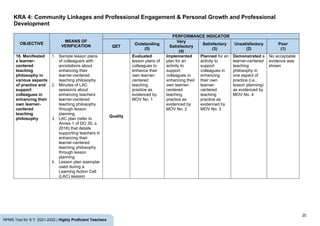
15. Manifested a leamer-centered
teaching philosophy in various
aspects of practice and support
colleagues in enhancing thei.
own leamer-centered teaching
philosophy
1. Sampte lesson plans ofcolleague/s with annotations about enlancing
their leamercentered teaching philosoph),
2. Minutes of LAC session/s about enhancirg teachers' leamer{enterd
teaching philosophy through lesson planning
3. LAC plan (refer to Annex 1 of DO 35, s. 20.16) that details supporting
teachers in enhancing their leamer-centered teaching philosophy
through lesson planning
4. Lesron plan exemplar used during a teaming Action Cell (LAC)
session
17. Identified and utilized
personal professional strengtis to
uphold the dignilv of teaching as
a profes,sion to help build a
positive teaching and leaming
culture within the school
1. Performance Coaching and Mentoring Form (PMCF) showing
guidance given to teachers ard remarks in terms of upholding the
dignity of teaching
2. Documented feedback from snperiors, colleagues, or other
stakeholders directly reflecting the ratee's Sood Practices that uPhold
the dignity of teaching as a profession
3. Annotated evidence of practice indirectly linking to the upholding of
the dignity of teaching as a profession
. rcmarks fiom superior / colleagues about one's Personal
professional qualities (e.g., entries in Performance Monitoring
and Coaching Form IPMCFI or in Mid-Year Review Form)
. recognition from the school / rhool community about one's
qualities
. others (please speci&)
4. Personal notes on one's p€Eonal Professional sbengtlts
18. Reflected on the Philippine
Professional Standards for
Teachers to plan personal
professional development goals
and assist colleagues in planning
and achieving their own goals
1. Updated IPCRF-DP ftom Phase II
2. Mid-year Review Form (MRF)
3. Performance Monitoring and Coaching Form (PMCF)
4. IPCRF-DP
5. Certification from the ICT Coordinator / School Head / Focal Person
in charge of e-SAT and IrcRF-DP
19. Performed various related
works/ activities that contribute
to the teachingleaming process
Any proof that the master teacher:
. served as coordinator / chairperson
. authored / contributed to a book or ioumal
. s€rved as module / leaming mat€ al writer
. seryed as module / leaming material validator
. s€rved in a committee
. observed teaching performance of Teachers l-[[[
. others (please specify and provide annotations)
Enclosure to DepH emofirndum to. _
PART III. Gloeeary of Terms
Table 5. Glossary for the RPMS Tools SY 2021-2022
GLOSSARY
Audio Lesson
Refers to a leaming material that is an ardio reco ed lesson whkh can be used
for distance learning or as supplementary material
This can be saved in a USB flash drive and ptaved in a device (e.g., plug-and-
play radios with USB port, TV with USB port, computer, etc.).
Daily Lesson Log (DLL) *e bsson Plan
Detailed Lesson Plan (DLP) *e bsson Plan
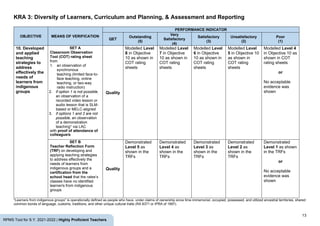
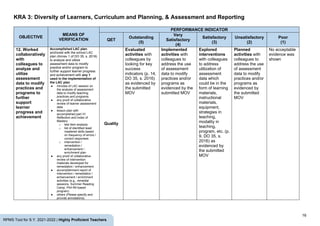
Learning Action Cell (LAC)
Functions as a professional leaming community for teachers that will help
them improve practice and learner achievement (Department of Education
2076a, i
LAC aims to improve the teachingJeaming process that will lead to
improved leaming among the students; to nufture sxccessful teachers; to
enable teacheE to support each other to continuously improve their content
and pedagogical knowledge, practice, skills, and attitudes; and to foster a
professional collaborative spirit among school heads, teachers, and the
community as a whole (Department of Education 2016a, 3).
Lesson Er(emplar
"During pandemic and other disruptive events, all Public elementary and
secondary school teachers in the region shall prcpare their lessoa aanpbts
instead of the usual Detailed l€sson Plan (DLPs) and/or Daily Leaming Logs
(DLL) for MELCS and/or enabling competencies" (DePartrnent of Education -
CALABARZON 2020, 10).
Lesson Plan
Refurs to the Daily L essott Log (DLL) ot Detaited Lesson Ptan (DLP) as part
of instructional planning (Department of Education 2016b)
Other forms of a lesson plan are the Weekly Lesson Plan (iNLP), Weekly
Lessot Log (WLLI, Weekly Home Leamhg Plaa (WHLP) and Lesson
E,,ernplarc (LE).
Mort Essential Leaming
Competencies (MELCs)
Refer to the competencies from the K to l2 curriculum guides which are most
us€fuI in many professions and in everydav life, therebv satisfing the so-
called endurance criterion.
Anchored on the prescribed standards. these competencies identified by the
Department in consultation with stakeholders are to be used nationwide b-v
field implementers and private schools for Sl NfuNZI as a resPonse to
developing resilient education systems most esPecially during emetgencies
such as tie current qlobal pandemic (Department of Education, 2020a).
Online Synchronous Teaching
A mode of teaching that utilizes video confe.encing,, live chat, instant
messagin& or a combination of any of the online tools to engage leamers to
work in real-time
These materials may be designed for collaborative tasks to engage leamers on
vttual collaboration among peels (Department of Education 2020b,31).
Supplementary Materials
Refur to leaming resources crafted by teacherc to supplement tie materials
handed down by the DepEd division/regional/cenbal offices
These materials should be aligned with DepEd standards and support the
contextualized ne€ds of leamers in online, modular, and TV- and radio-based
instruction. Thes€ teacher-made leaming mate als can be Printed or digital
modules, activity sheets, intenctive e-materialt and MElclaligned video-
and audio-lessons (Department of Education - Undersecretary for
Curriculum and lnstruction 2020, 3). Writing tasks can also be part of the
supplementary materials where leamers can write the challenges thev arc
facing and what parts of the lesson they did not fully underctand and need
additional help for from their teacher (Departrnent of Education mzJb.lfl
Two-way Radio Instruction
Refe.s to real-time instruction via handheld two-way radios or walkie-talkies.
"Those areas with [rst Mile Schools which cannot be reached by the 25-50
kilometer radius coverage area would now be served using handheld two-
way radios or 'walkie-talkies.' These schools would each be given sets of
walkie.talkies to be able to reach leamers who are 3-5 kilometers awav from
the school. Paired with DepEd printed modules, teachers are able to guide
their siudents and ansr,{er thei, questions real-time. The combination of the
two modalities, printed modules and handheld radiot enable the effective
delivery of lessons even in tie abs€nce of online options, television and radio
broadcast services" (Department of Education - UndeEecretary for
Administration, 2021 )
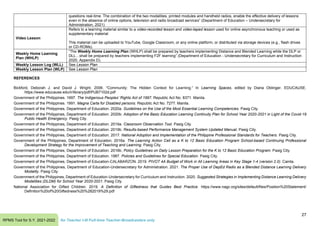
Video Lesson
Refers to a leaming material similar to a ui deo-reconled lessot and oideo-tqed
lessoa used for online asynchronous teaching or used as supplementary
material
This material can b€ uploaded to YouTube, Googte Classroom, or any online
plafform, or distributed via storage devices (e.9., flash drives or CD-ROMS).
Weekly Home Leaming Plan
(wHLP)
"The Weekly Horne Learniflg Plan (yVHLP) shall be prepared by teachers
implementing Distance and Blended L,eaming while the DLP or DLL...shall
be prepared by teachers implementing F2F leaming" (Department of
Education - Undersecretary for Curriculum and lnstruction 20m, Appendix
D).
Weekly Lesson Log (WLL) *e Lrsson Plan
Weekly Lesson Plan (WLP) * Ltsson PIM
General Guidelines for the RPMS Alternative Classroom Observation
The altemative classroom observations for RPMS are considered only for SY 2021-2022
due to the absence of or limited capacity for face-to-face leaming. The selection of altemative
classroom observation shall depend on the adopted Leaming Delivery Modality (LDM) of the
school.
Alternative Class.oom
Obaervations
Cuidelines
1. Observation of real-time
teaching (online synchronous
leaming or two-way radio
instruction)
This applies to teachers who will adopt online synchronous learning or two-
way radio instruction rcgardless of the number of classes and leamers.
2. Observation ofa
video lesson or an audio
lesson
Consider this mode of ob**ation uthm option 1 is not Wsible .
This applies to teachers who will adopt online asynchronous leaming or
audio Iesson ifl arv o/ th.it classes and leomers.
A video lesson or audio lesson shall be used in les,son delivery as part of the
supplementary materials or as one of the leaming mateiials for online
asynchronous leaming or two-way radio instruction. It is not the same as the
video lesson for TV-based instru.tion or audio lesson for radio-based
instruction that the Cenbal Office/Regional Office/Division Office
produces.
A video lesson or audio lesson must be SlM-based or MElc-aligned. A
teacher can use any recording device to record herself/himself while
teaching a lesson.
A video lesson or audio lesson can be stored in a cloud (e.g., Coogle Drive) or
any storage device (e.9., flash drive), or uploaded to an online classroom (e.g.,
Google Classroom) or a l€arning Management System.
3. Obsewation of a
demonstration teaching via
Leaming Action Cetl (LAC)
Consider this mode of obf€laaon]athl7. options 1 and 2 arc not possible.
This applies to teachers who will adopt p!r. modular leaming
(print/digital), radio-based instruction (e.g., DepEd Radio), and TV-
based instruction (e.9., DepEd TV).
In DepEd's BE-LCP in the tine of COIID-19, "a support mechanism shall be
established for teachers and school leaderc to have access to relevant on-
demand technical and administrative advice and guidance which come in
many forms. . . including professional learning communities through the LAC"
@epEd Order No. 12, s- 2020, p. 41). In support ofthis mechanism, the LAC
policy states that school LAC "primarily functions as a professional learning
community for teache.s that will help them improve practice and leamer
achievement" Ed Order No. 35, s. 2015,
4. Observation during
limited face-to-face clasges
in low-rGk areas
This shatl only apply to authorized public and private rhools that are
located in minimal- or low-risk arcas based on the criteria set by the
Department of Health (DOC), and passed the school safety assessment of
DepEd.
Table 6. Alternatioe class/oom obserrations and their conesponding guidelines
Enclosu"e to lrep8d Memorandum Ivo. _
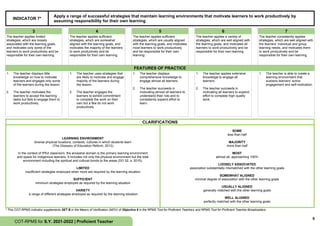
Authorized public and private schools that are allowed to conduct
limited face-to-face (lasses shall follow the usual classroom observation
proto.ols subiect to strict observan.e of COVID-1g health and srfety
precautions and prevailing communit5r quarantine
There should be two (2) classroom obs€rvations for the entire school year. Hence, ratees
should submit 2 classroom observation tool (COT) rating sheets/ inter-observer agreement forms
as MOV for o$ectives that require such (i.e., Objectives 7, 3, 4, 5,6, 9 and 10). The altemative
classroom observations should follow this timeframe:
. CO 1 - between September 2021 and February 2022
o CO 2 - between March 2022 an dJuly 2022
sx Appmdiz 5 for the FAQs (frequently asked questions) on the altemative classroom
observations.
Classroom Observation Processes in the New Normal
Given the implementation of different teaching-learning modalities, various classroom
observation processes can be done depending on the applicable context and modalities adopted
by the rhool. The pre-observatiory observation, and post- observation are still to be followed with
minimal modifications as shown in the table below.
Table 7. Alternatiae classrcom obxroation procesxs
Ots€fvatioo of a
demonsiration bEching
v*r Leaming Action Cell
(rAcl
Observalion durino
linited facelolace
classes in low{i3* itBas
Online observation and
throuoh two-way radio
insln ciio
ObsefvEtbfl of a
video lesson or rn aodio
lesson
Tool3 /
FoIms
tleeded
Teadrcr Observef/s
Observef/s Teadler Observer/s
Observeris Teadlef
COT- RPi/6
rubft
.!F.lab io
tii/lEr
porilon.
. Pl s ir?
le$dt b-e{,
mt|e
indcators-
. RarelYs
. Meel wi0t
tE leaclE to
dsorss fE
scho(fuae ol
llE oGite
otc€.Yalion
. Relrier/v tE
COT{PMS
rublh
Aoro0.iate io
fE pciltuo c
trE le*lE to
be obrrved-
@T. RPi'S
rubric
#o9.iate to
tGrlE
pcilorl-
. Pl rs lhe
kssoi baed
qr lhe
indcators.
. Re,/ie!r,s
. Resieu, fle
coT{Piis
nthic
m.o9.i.b to
fE pGilirl d
fE leacr|6 lo
be ob3err&d-
' Maet r'r !
fE baclrer to
dsq,ss fE
Bctredle d
TE LAC
s€t8irt
ir €rded lo.
dcrionsiralixt
t€.diB
coT{Pt s
rublh
mrlp.iabto
ti!/lE
pciloo.
. PI l3lic
l6sor| beed
mllte
indcalol3.
. Ddi're.s BE
|csroll ushg a
virco 6 audo
lrcolfrg
de{ca
. Re.,/iq/r3
. Meel witt
lhe leacrref lo
dsdrls ttE
scrEdre o(
ili.ra$,(rn of
trE viieo ot
andio l€aaon.
. Revieu tlE
cor{Pits
rubtu
ry.op.i.b to
OE pciliIl d
the leactrer to
be ob8€ryed.
COT- RPi'S
rub.ic
rwide io
ti3lEr
pcilon.
. Pl ltie
hasoo bGed
ql0re
indcaloE.
. Revielals
coT-
RPTIS
RUBRIC
. Rerricw lh€
COT{PMS
rubdc
mrqdate to
the pGilim d
lhe bact|6 to
b. ob8eryed.
. Meet wi0r
ttE leacnef to
dsqr8s th.
sdledle rld
tE odiE
paatfsm to bc
used ioa
otce{valioo:
hafldheld
Io( tlD-vJay
ralo
irElludin
e
b
!
&
. Ddi,€r3 fE
bsson oDsile
qt the 4.e€d
date .nd tirrE
. Rerdd dl
cqlrErb qr
tE
Obcewdin
l.loles Fdm.
. Sl.l a'll,
avdaUG
se*'
. Mlrli)a"
obc€rtEts
rc to gl +rt
. Ddirr€rs
leston d| the
4[Erd lirE
d locatiro
. Sfr at any
aralatlc
seaE'
. R*od dl
cdtrIEnls on
fE
OtEcrvilin
l'lde3 Fdm.
. Sub il ltE
vireo c audo
le$oar lo tle
Geryet,!
. R€cord Cl
cdmEtlb m
fie
ObeN-dixr
Noles Fdm
. n€rvlhe
viireo lcsson
( fsEr to tltc
ardb l€l8qr
alier
sltn*3ill'
. Dclivcrs Ole
16s..l h 0E
cliGen qtlrE
pa{am q
handheld
rdo.
OASER
vaTlox
XOTE S
FORII
. AcDe$ Ure
q radb
trq.Ercy d
the s#ul"d
lyrdt'qlous
cla3s'
. Rrcod dl
cdrrrEnt3 qt
fte
Ot ervdir
t6e. Fq'rl.
E
3
o
. Rats lhe
tea{rEr.
. Rrle fie
teacrEr
. Rate lic
teadE .
. Rale the
teldEr.
RATI}TG
SHEET
ln ci3e o(
n!nide
daErv?rs:
. Cls{r.'!!rE
raling witrl
ftlqlt
dcerwrb.
ralrng
oo lhe
. tl!.r.!s ltE
ralilg uih
tlotr
otcrrvct/s.
ln cale ol
iPle
otc€rvEB:
. Decide frl
tE firtal rating.
ln case c
rrulide
otcelvers:
. Dsd-uE ltE
rdirg wih
lelffr
&w/s
. DGcire qr
tlE tual rdtttg.
IXTER.
OBSE
RVER
AGRE
EHEIIT
FORH
ln ce oa
m,rltipae
otcervel:i:
. tlsclEs ltE
rdirg r|itrl
Elot
obccnr"r,s.
. Oe.ire ql
the fud ralitlg.
their sheet
lhe
oal
atu rating
Ergnafures
observation
of
readts Itey
Itte
6BcrJss
to the
teachef
the llreel
and
Obaen/et/s
lolm
lhe irter-olBerv€f aqeerEr
t
t
o
o,
. For higlrly profcint teachcr$, a F@l of allendonce
'luting
obseroation is Pod of tlvir Mov Hetce' lfu following
Wlocols dtouw be obsefled:
1)onlinesynchronousleamilgorhDo-wcyradioiflstluction-(i)lnoiteyoufcollrague/stogitinyouf
synchronotts class. (ii) Hqoe M attcndmce shtet
'irned
afT the clas6'
2) Obl'?flotion of aoideo ot audio lcssa - (i) Gioe a cory olwroidco ot aiio less.,t toyour colbague/s tthidr
tlEV shauld vie!.). (ii) H@e at attend,nce sheet signcd afmoards' (Note: Obseme s rnust ensare that
colleaguds oiew the video lesson or listen lo E aradio lcsEon )
3) Obxroatiot of a demottstration tea.hing oia LAC - (i) Inoite Wt collaaguek to &eroe yalt deflonstration
tea&ing during a LAC session. (ii) Hoe at oltenltance sllaet $iged afettoodg
1)Obxroationdu/]nglimibdface-to-ltclaslrjsinlottt-iskorcos-(i)lttoiteWrcolleague/stositinyour
limitedfacelo-fuce. (ii) Have m attcndmce sheet signed afrer the closs'
mline
ot
Teacher
Enclosure to DepEd Memorandum IVo. _
RPMS Tools for SY 2027-2022
Regular Teachers
Principal/ School Head
Superintendent
Small and Medium Diuisions
Assistant Superintendent
I-arge and Very Inrge Ditisions
Teacher Principal/ School Head
Superintendent
Small and Medium Diuisions
Assistant Superintendent
Iarge and Very Large Diusions
Teacher
Master Teacher/ Head
Teacher/ Assistant Principal
Principal/ School Head
AI-S Implementers
(school-baxd)
Master Teacher/ Head
Teacher/ Assistant Principal
Principal/ School Head
AIS Implementers
(cornmunity learning
centers-baxd)
Education Program
Specialist for AIS
Chief of Curriculum
Implementation Division
(crD)
F ull-Time Te acher Broadcasters (TBs)
TBs holding Teacher I-Il
Positions
Any TB holding Master
Teacher I-[V positions,
preferably in the same
leaming area
Director IV, ICTS
TBs holding Master
Teacher I-IV
positions
Director IV, ICTS Director IV, ICTS
Ratedfeacher
Attached to this DepEd Memorandum are the COT-RPM9 SAT-RPMS, andTRF (Appmilix 3 to
5) for Proficient Teachers and Highly Proficient Teachers for SY 2021-2022 (both Regular Teachers
and Teacher Broadcasters). SubsequentJy, the aforementioned tools may also be accessed tfuough
this linl httpEy'/bit.lylRPMSPPST2O2l2O22
The abovementioned link can only be accessed by teachers using their official DepEd e-mail
address (example juanluna@deft4,Wllr) when accessing the link. Any other e-mail adress other
shall not be allowed access to the Google Drive.
In case the teacher does not yet have a DepEd e-mail address, they may request for one from their
respective Division Information Technology Offcier (ITO).
Ratee, Rater, and Approving Authority in the RPMS
DepEd Order No. 2, s. 2015, or the Guifulines on tlv Establishment and lfipbmentation of tlu Results-
baxd Petformancz Management System (RPMS) in the Department of Etlucation, establishes who
the ratees are and their corresponding raters and approving authorities. See table below as
reference to the expanded version of ratee-rater matrix.
Table 8. Mttrix ol RPMS Rttee-Rater-Approoing Authoity
Ratey'Observer Approving Authority
Head Teacher
Master Teacher
References
Govemment of the Philippines, Deparhnent of Education. 2O2Oa. Guidelines on the Ux ol the
Most Esseatial barning Competenoes. Pasig City.
Govemment of the Philippines, Department of Education. 2020b. Adopkon of the Basic Education
baming Continuity Plan for School Year 2020-2021 in Light of tfu Cwid-1g Public Health
Emergmcy. Pasig City.
Govemrnent of the Philippines, Departrnent of Education. 2019a. Classroom Obsentation Tool.Pasig
City.
Government of the Philippines, Deparknent of Education. 20l9b. Results-baseil Perlormance
Managemmt Systeu Updated Manual. Pasig City.
Government of the Philippines, Department of Education. 2077. National Adoption and
Implemmtation of the Philippine Professional Standards for Teachers . Pasig City .
Government of the Philippines, Departnent of Education. 2016a. The leaming Action Cell as a K
to 12 Basic Education Program School-based Continuing Professional Development Strategy
for the Improvement of Teaching and l,eaming. Pasig City. Govemment of the Philippines,
DeParknent of Education. 2076b. Policy Guidelines on Daily Lesson Preparation for the K to
l2Basic Etlucnfion Program. Pasig City.
Govemment of the Philippines, Departrnent of Education. 20"15. Guidelircs on the Enhanced School
Imprcoement Planning (SIP) Process and the School Report Card (SRC). Pasig City.
Government of the Philippines, Deparknent of Education - CALABARZON. 2019. PIVOT 4A
Budget oJWork in All lzarning Areas in Key Stage 1-4 (version 2.0). Cainta.
Government of the Philippines, Department of Education - Undersecretary for Curriculum and
Instruction. 2020. Policy Guiilelines on the lmplemantation of baming Delioery Modalities lor the
Formal Educttion. Pasig City.
covemment of the Philippines, Deparknent of Education - Teacher Education council. 2019.
Philippine Professional Standards for Teacfurs (PPST) Reswrce Package Module 12. pasig City.
united Nations Educational, scientific and Cultural organization. 799. programme
for tlu
Education of Childrm in Dfficult Circamstances: sheet children, wo*ing childrea...access to
education, euen fo, the most tbstitute.
hftps://unesdoc.unero.org/ark: / a8223/ pt00f,0718101_eng?postnSet=1&queryId=9046c1
d9 - f537 4e9c-9641- 9 d4d93b0 a429
1
RPMS Tool for S.Y. 2021-2022 | Proficient Teachers
RPMS Tool for Teacher I-III (Proficient Teachers)
in the time of COVID-19
S.Y. 2021-2022
POSITION AND COMPETENCY PROFILE
PCP No. ______ Revision Code: 00
Department of Education
Position Title Teacher I - III Salary Grade
Parenthetical Title
Office Unit Effectivity Date
Reports to Principal / School Heads Page/s
Position Supervised
JOB SUMMARY
QUALIFICATION STANDARDS
A. CSC Prescribed Qualifications (For Senior High School Teachers, please refer to: DO 3, s. 2016; DO 27, s. 2016; and DO 51, s. 2017)
Position Title Teacher I Teacher II Teacher III
Education For Elementary School – Bachelor of Elementary Education (BEEd) or Bachelor’s degree plus 18 professional units in Education, or
Bachelor in Secondary Education, or its equivalent
For Secondary School – Bachelor of Secondary Education (BSEd) or Bachelor’s degree plus 18 professional units in Education with
appropriate major or Bachelor in Secondary Education, or its equivalent
Experience None required 1 year relevant experience 2 years relevant experience
Eligibility RA 1080 RA 1080 RA 1080
Trainings None required None required None required
B. Preferred Qualifications
Education BSE/BSEEd/College Graduate with Education units (18-21), at least 18 MA units
Experience
Eligibility PBET/LET/BLEPT Passer
Trainings In-service training
2
RPMS Tool for S.Y. 2021-2022 | Proficient Teachers
DUTIES AND RESPONSIBILITIES
1. Applies mastery of content knowledge and its application across learning areas
2. Facilitates learning using appropriate and innovative teaching strategies and classroom management practices
3. Manages an environment conducive to learning
4. Addresses learner diversity
5. Implements and supervises curricular and co-curricular programs to support learning
6. Monitors and evaluates learner progress and undertakes activities to improve learner performance
7. Maintains updated records of learners’ progress
8. Counsels and guides learners
9. Works with relevant stakeholders, both internal and external, to promote learning and improve school performance
10. Undertakes activities towards personal and professional growth
11. Does related work
3
RPMS Tool for S.Y. 2021-2022 | Proficient Teachers
KRA 1: Content Knowledge and Pedagogy
OBJECTIVE
MEANS OF
VERIFICATION
PERFORMANCE INDICATOR
QET
Outstanding
(5)
Very
Satisfactory
(4)
Satisfactory
(3)
Unsatisfactory
(2)
Poor
(1)
1. Applied
knowledge
of content
within and
across
curriculum
teaching
areas
Classroom Observation
Tool (COT) rating sheet or
inter-observer agreement
form from
1. an observation of
synchronous
teaching (limited face-to-
face teaching, online
teaching, or two-way
radio instruction)
2. if option 1 is not
possible, an observation
of a recorded video
lesson or audio lesson
that is SLM-based or
MELC-aligned
3. if options 1 and 2 are not
possible, an observation
of a demonstration
teaching* via LAC
Quality
Demonstrated
Level 7 in
Objective 1 as
shown in COT
rating sheets /
inter-observer
agreement forms
Demonstrated
Level 6 in
Objective 1 as
shown in COT
rating sheets /
inter-observer
agreement
forms
Demonstrated
Level 5 in
Objective 1 as
shown in COT
rating sheets /
inter-observer
agreement
forms
Demonstrated
Level 4 in
Objective 1 as
shown in COT
rating sheets /
inter-observer
agreement forms
Demonstrated
Level 3 in
Objective 1 as
shown in COT
rating sheets /
inter-observer
agreement forms
or
No acceptable
evidence was
shown
*For modular approach, demonstration teaching via LAC must reflect the teaching-learning process in the said modality. The MOV (COT rating sheet or inter-observer agreement form) shall also
be complemented with any annotated document (e.g., module, screenshot of instant messaging, note/s showing instructions, narrative) indicating occurrence of follow through, monitoring, etc.
Note: For this objective, two MOVs are required for the entire school year. In computing the rating for Quality: (i) get the corresponding RPMS 5-point scale rating of each COT rating; (ii)
calculate the average of the RPMS ratings; and (iii) find the transmuted RPMS rating. See sample computation below:
Means of Verification
COT
Rating
RPMS 5-point
Scale Rating
Average
RPMS Rating for
Quality
RPMS Rating
Transmutation Table
COT Rating Sheet 1 6 4
3.500
4
(Very Satisfactory)
Outstanding (5) 4.500-5.000
COT Rating Sheet 2 5 3 Very Satisfactory (4) 3.500-4.499
Satisfactory (3) 2.500-3.499
Unsatisfactory (2) 1.500-2.499
Poor (1) 1.000-1.499
4
RPMS Tool for S.Y. 2021-2022 | Proficient Teachers
KRA 1: Content Knowledge and Pedagogy
OBJECTIVE
MEANS OF
VERIFICATION
PERFORMANCE INDICATOR
QET
Outstanding
(5)
Very
Satisfactory
(4)
Satisfactory
(3)
Unsatisfactory
(2)
Poor
(1)
2. Used
research-
based
knowledge
and principles
of teaching
and learning to
enhance
professional
practice
One (1) lesson plan
with annotations
identifying the
research-based
knowledge and/or
principles of teaching
and learning used as
basis for planning /
designing the lesson Quality
Used research-
based
knowledge
and/or principles
of teaching and
learning in all
the
components of
instruction in
the lesson plan
to improve
student
learning
Used research-
based
knowledge
and/or
principles of
teaching and
learning in two
components of
instruction in
the lesson
plan to
improve
student
learning
Used research-
based
knowledge
and/or
principles of
teaching and
learning in one
component of
instruction in
the lesson
plan to
improve
student
learning
Use of research-
based
knowledge
and/or principle
of teaching and
learning is
identified but
was poorly
used as basis
for planning /
designing the
lesson
No acceptable
evidence was
shown
Research-based knowledge – Information, knowledge or data acquired through systematic investigation and logical study (PPST, 2017)
Principles of teaching and learning – Teachers’ views, understandings and conceptualization of teaching and learning (PPST, 2017)
Components of instruction – learning objectives, instructional activities, and assessments
5
RPMS Tool for S.Y. 2021-2022 | Proficient Teachers
KRA 1: Content Knowledge and Pedagogy
OBJECTIVE
MEANS OF
VERIFICATION
PERFORMANCE INDICATOR
QET
Outstanding
(5)
Very
Satisfactory
(4)
Satisfactory
(3)
Unsatisfactory
(2)
Poor
(1)
3. Displayed
proficient use
of Mother
Tongue,
Filipino and
English to
facilitate
teaching and
learning
Classroom Observation
Tool (COT) rating sheet
or inter-observer
agreement form from
1. an observation of
synchronous
teaching (limited face-
to-face teaching, online
teaching, or two-way
radio instruction)
2. if option 1 is not
possible, an
observation of a
recorded video lesson
or audio lesson that is
SLM-based or MELC-
aligned
3. if options 1 and 2 are
not possible, an
observation of a
demonstration
teaching* via LAC
Quality
Demonstrated
Level 7 in
Objective 3 as
shown in COT
rating sheets /
inter-observer
agreement forms
Demonstrated
Level 6 in
Objective 3 as
shown in COT
rating sheets /
inter-observer
agreement
forms
Demonstrated
Level 5 in
Objective 3 as
shown in COT
rating sheets /
inter-observer
agreement
forms
Demonstrated
Level 4 in
Objective 3 as
shown in COT
rating sheets /
inter-observer
agreement forms
Demonstrated
Level 3 in
Objective 3 as
shown in COT
rating sheets /
inter-observer
agreement forms
or
No acceptable
evidence was
shown
*For modular approach, demonstration teaching via LAC must reflect the teaching-learning process in the said modality. The MOV (COT rating sheet or inter-observer agreement form) shall also
be complemented with any annotated document (e.g., module, screenshot of instant messaging, note/s showing instructions, narrative) indicating occurrence of follow through, monitoring, etc.
Note: For this objective, two MOVs are required for the entire school year. In computing the rating for Quality: (i) get the corresponding RPMS 5-point scale rating of each COT rating; (ii)
calculate the average of the RPMS ratings; and (iii) find the transmuted RPMS rating. See sample computation below:
Means of Verification
COT
Rating
RPMS 5-point
Scale Rating
Average
RPMS Rating for
Quality
RPMS Rating
Transmutation Table
COT Rating Sheet 1 6 4
3.500
4
(Very Satisfactory)
Outstanding (5) 4.500-5.000
COT Rating Sheet 2 5 3 Very Satisfactory (4) 3.500-4.499
Satisfactory (3) 2.500-3.499
Unsatisfactory (2) 1.500-2.499
Poor (1) 1.000-1.499
6
RPMS Tool for S.Y. 2021-2022 | Proficient Teachers
KRA 1: Content Knowledge and Pedagogy
OBJECTIVE
MEANS OF
VERIFICATION
PERFORMANCE INDICATOR
QET
Outstanding
(5)
Very
Satisfactory
(4)
Satisfactory
(3)
Unsatisfactory
(2)
Poor
(1)
4. Used
effective verbal
and non-verbal
classroom
communication
strategies to
support learner
understanding,
participation,
engagement
and
achievement
Classroom Observation
Tool (COT) rating sheet or
inter-observer agreement
form from
1. an observation of
synchronous
teaching (limited face-
to-face teaching, online
teaching, or two-way
radio instruction)
2. if option 1 is not
possible, an observation
of a recorded video
lesson or audio lesson
that is SLM-based or
MELC-aligned
3. if options 1 and 2 are
not possible, an
observation of a
demonstration teaching*
via LAC
Quality
Demonstrated
Level 7 in
Objective 4 as
shown in COT
rating sheets /
inter-observer
agreement
forms
Demonstrated
Level 6 in
Objective 4 as
shown in COT
rating sheets /
inter-observer
agreement
forms
Demonstrated
Level 5 in
Objective 4 as
shown in COT
rating sheets /
inter-observer
agreement
forms
Demonstrated
Level 4 in
Objective 4 as
shown in COT
rating sheets /
inter-observer
agreement
forms
Demonstrated
Level 3 in
Objective 4 as
shown in COT
rating sheets /
inter-observer
agreement
forms
or
No acceptable
evidence was
shown
*For modular approach, demonstration teaching via LAC must reflect the teaching-learning process in the said modality. The MOV (COT rating sheet or inter-observer agreement form) shall also
be complemented with any annotated document (e.g., module, screenshot of instant messaging, note/s showing instructions, narrative) indicating occurrence of follow through, monitoring, etc.
Note: For this objective, two MOVs are required for the entire school year. In computing the rating for Quality: (i) get the corresponding RPMS 5-point scale rating of each COT rating; (ii)
calculate the average of the RPMS ratings; and (iii) find the transmuted RPMS rating. See sample computation below:
Means of Verification
COT
Rating
RPMS 5-point
Scale Rating
Average
RPMS Rating for
Quality
RPMS Rating
Transmutation Table
COT Rating Sheet 1 6 4
3.500
4
(Very Satisfactory)
Outstanding (5) 4.500-5.000
COT Rating Sheet 2 5 3 Very Satisfactory (4) 3.500-4.499
Satisfactory (3) 2.500-3.499
Unsatisfactory (2) 1.500-2.499
Poor (1) 1.000-1.499
7
RPMS Tool for S.Y. 2021-2022 | Proficient Teachers
KRA 2: Learning Environment
OBJECTIVE
MEANS OF
VERIFICATION
PERFORMANCE INDICATOR
QET
Outstanding
(5)
Very
Satisfactory
(4)
Satisfactory
(3)
Unsatisfactory
(2)
Poor
(1)
5. Established
safe and secure
learning
environments to
enhance
learning through
the consistent
implementation
of policies,
guidelines and
procedures
Classroom Observation
Tool (COT) rating sheet or
inter-observer agreement
form from
1. an observation of
synchronous
teaching (limited face-
to-face teaching, online
teaching, or two-way
radio instruction)
2. if option 1 is not
possible, an observation
of a recorded video
lesson or audio lesson
that is SLM-based or
MELC-aligned
3. if options 1 and 2 are not
possible, an observation
of a demonstration
teaching* via LAC
Quality
Demonstrated
Level 7 in
Objective 5 as
shown in COT
rating sheets /
inter-observer
agreement
forms
Demonstrated
Level 6 in
Objective 5 as
shown in COT
rating sheets /
inter-observer
agreement
forms
Demonstrated
Level 5 in
Objective 5 as
shown in COT
rating sheets /
inter-observer
agreement
forms
Demonstrated
Level 4 in
Objective 5 as
shown in COT
rating sheets /
inter-observer
agreement
forms
Demonstrated
Level 3 in
Objective 5 as
shown in COT
rating sheets /
inter-observer
agreement
forms
or
No acceptable
evidence was
shown
*For modular approach, demonstration teaching via LAC must reflect the teaching-learning process in the said modality. The MOV (COT rating sheet or inter-observer agreement form) shall also
be complemented with any annotated document (e.g., module, screenshot of instant messaging, note/s showing instructions, narrative) indicating occurrence of follow through, monitoring, etc.
Note: For this objective, two MOVs are required for the entire school year. In computing the rating for Quality: (i) get the corresponding RPMS 5-point scale rating of each COT rating; (ii)
calculate the average of the RPMS ratings; and (iii) find the transmuted RPMS rating. See sample computation below:
Means of Verification
COT
Rating
RPMS 5-point
Scale Rating
Average
RPMS Rating for
Quality
RPMS Rating
Transmutation Table
COT Rating Sheet 1 6 4
3.500
4
(Very Satisfactory)
Outstanding (5) 4.500-5.000
COT Rating Sheet 2 5 3 Very Satisfactory (4) 3.500-4.499
Satisfactory (3) 2.500-3.499
Unsatisfactory (2) 1.500-2.499
Poor (1) 1.000-1.499
8
RPMS Tool for S.Y. 2021-2022 | Proficient Teachers
KRA 2: Learning Environment
OBJECTIVE
MEANS OF
VERIFICATION
PERFORMANCE INDICATOR
QET
Outstanding
(5)
Very
Satisfactory
(4)
Satisfactory
(3)
Unsatisfactory
(2)
Poor
(1)
6. Maintained
learning
environments
that promote
fairness,
respect and
care to
encourage
learning
Classroom Observation
Tool (COT) rating sheet or
inter-observer agreement
form from
1. an observation of
synchronous
teaching (limited face-
to-face teaching, online
teaching, or two-way
radio instruction)
2. if option 1 is not
possible, an observation
of a recorded video
lesson or audio lesson
that is SLM-based or
MELC-aligned
3. if options 1 and 2 are not
possible, an observation
of a demonstration
teaching* via LAC
Quality
Demonstrated
Level 7 in
Objective 6 as
shown in COT
rating sheets /
inter-observer
agreement forms
Demonstrated
Level 6 in
Objective 6 as
shown in COT
rating sheets /
inter-observer
agreement
forms
Demonstrated
Level 5 in
Objective 6 as
shown in COT
rating sheets /
inter-observer
agreement
forms
Demonstrated
Level 4 in
Objective 6 as
shown in COT
rating sheets /
inter-observer
agreement forms
Demonstrated
Level 3 in
Objective 6 as
shown in COT
rating sheets /
inter-observer
agreement forms
or
No acceptable
evidence was
shown
*For modular approach, demonstration teaching via LAC must reflect the teaching-learning process in the said modality. The MOV (COT rating sheet or inter-observer agreement form) shall also
be complemented with any annotated document (e.g., module, screenshot of instant messaging, note/s showing instructions, narrative) indicating occurrence of follow through, monitoring, etc.
Note: For this objective, two MOVs are required for the entire school year. In computing the rating for Quality: (i) get the corresponding RPMS 5-point scale rating of each COT rating; (ii)
calculate the average of the RPMS ratings; and (iii) find the transmuted RPMS rating. See sample computation below:
Means of Verification
COT
Rating
RPMS 5-point
Scale Rating
Average
RPMS Rating for
Quality
RPMS Rating
Transmutation Table
COT Rating Sheet 1 6 4
3.500
4
(Very Satisfactory)
Outstanding (5) 4.500-5.000
COT Rating Sheet 2 5 3 Very Satisfactory (4) 3.500-4.499
Satisfactory (3) 2.500-3.499
Unsatisfactory (2) 1.500-2.499
Poor (1) 1.000-1.499
9
RPMS Tool for S.Y. 2021-2022 | Proficient Teachers
KRA 2: Learning Environment
OBJECTIVE
MEANS OF VERIFICATION
(SET A or SET B)
PERFORMANCE INDICATOR
QET
Outstanding
(5)
Very
Satisfactory
(4)
Satisfactory
(3)
Unsatisfactory
(2)
Poor
(1)
7. Maintained
learning
environments
that nurture
and inspire
learners to
participate,
cooperate
and
collaborate in
continued
learning
SET A
Any supplementary material (in print/digital
format) made by the ratee* and used in the
lesson delivery that highlights maintaining
learning environments that nurture and inspire
learners to participate, cooperate and
collaborate in continued learning
● activity sheet/s
● one lesson from a self-learning module
(SLM)
● lesson plan (e.g., DLP, DLL, WHLP,
WLP, WLL, lesson exemplars, and the
likes)
● video lesson
● audio lesson
● other learning materials in print/digital
format (please specify and provide
annotations)
with client/learner feedback on how the
material encouraged the learners to participate,
cooperate, and collaborate
Quality
Provided
effective and
varying
learning
opportunities
that are well-
aligned with
the learning
goals and
feature all
elements of
collaborative
learning as
shown in the
submitted
learning
material
Provided
effective
learning
opportunities
that are well-
aligned with the
learning goals
and engage
learners to
participate,
cooperate,
and/or
collaborate in
continued
learning as
shown in the
submitted
learning material
Provided an
effective
learning
opportunity that
is well-aligned
with the learning
goal/s and
engage learners
to participate,
cooperate,
and/or
collaborate in
continued
learning as
shown in the
submitted
learning material
Provided learning
opportunity/ies
that is/are
partially aligned
with the learning
goal/s and only
somehow
engage/s
learners to
participate,
cooperate,
and/or
collaborate in
continued
learning as
shown in the
submitted learning
material
No acceptable
evidence was
shown
SET B
Classroom Observation Tool (COT) rating
sheet or inter-observer agreement form from
1. an observation of synchronous
teaching (limited face-to-face teaching,
online teaching, or two-way radio
instruction)
2. if option 1 is not possible, an observation of
a recorded video lesson or audio lesson
that is SLM-based or MELC-aligned
3. if options 1 and 2 are not possible, an
observation of a demonstration teaching**
via LAC
Quality
Demonstrated
Level 7 in
Objective 7 as
shown in COT
rating sheets /
inter-observer
agreement
forms
Demonstrated
Level 6 in
Objective 7 as
shown in COT
rating sheets /
inter-observer
agreement forms
Demonstrated
Level 5 in
Objective 7 as
shown in COT
rating sheets /
inter-observer
agreement forms
Demonstrated
Level 4 in
Objective 7 as
shown in COT
rating sheets /
inter-observer
agreement forms
Demonstrated
Level 3 in
Objective 7 as
shown in COT
rating sheets /
inter-observer
agreement
forms
or
No acceptable
evidence was
shown
Elements of collaborative learning – positive interdependence, individual accountability, and shared authority in assessing and facilitating one’s learning.
10
RPMS Tool for S.Y. 2021-2022 | Proficient Teachers
*If the supplementary material is a product of a group work / collaborative effort of two (2) or more teachers, ratee should specify and provide annotations of one’s contribution to a
material.
** For modular approach, demonstration teaching via LAC must reflect the teaching-learning process in the said modality. The MOV (COT rating sheet or inter-observer agreement form) shall
also be complemented with any annotated document (e.g., module, screenshot of instant messaging, note/s showing instructions, narrative) indicating occurrence of follow through, monitoring,
etc.
Note for SET A: For this objective, two MOVs are required for the entire school year. In computing the rating for Quality, calculate the average rating of the two MOV and find the transmuted
RPMS rating. See sample computation below:
Means of Verification
RPMS 5-point
Scale Rating
Average
RPMS Rating for
Quality
RPMS Rating
Transmutation Table
MOV 1: Activity Sheet 3
3.500
4
(Very Satisfactory)
Outstanding (5) 4.500-5.000
MOV 2: One lesson from a SLM 4 Very Satisfactory (4) 3.500-4.499
Satisfactory (3) 2.500-3.499
Unsatisfactory (2) 1.500-2.499
Poor (1) 1.000-1.499
Note for SET B: For this objective, two MOVs are required for the entire school year. In computing the rating for Quality: (i) get the corresponding RPMS 5-point scale rating of each COT rating;
(ii) calculate the average of the RPMS ratings; and (iii) find the transmuted RPMS rating. See sample computation below:
Means of Verification
COT
Rating
RPMS 5-point
Scale Rating
Average
RPMS Rating for
Quality
RPMS Rating
Transmutation Table
COT Rating Sheet 1 6 4
3.500
4
(Very Satisfactory)
Outstanding (5) 4.500-5.000
COT Rating Sheet 2 5 3 Very Satisfactory (4) 3.500-4.499
Satisfactory (3) 2.500-3.499
Unsatisfactory (2) 1.500-2.499
Poor (1) 1.000-1.499
11
RPMS Tool for S.Y. 2021-2022 | Proficient Teachers
KRA 2: Learning Environment
OBJECTIVE
MEANS OF VERIFICATION
(SET A or SET B)
PERFORMANCE INDICATOR
QET
Outstanding
(5)
Very
Satisfactory
(4)
Satisfactory
(3)
Unsatisfactor
y
(2)
Poor
(1)
8. Applied a
range of
successful
strategies
that maintain
learning
environments
that motivate
learners to
work
productively
by assuming
responsibility
for their own
learning
SET A
Any supplementary material (in
print/digital format) made by the ratee*
and used in the lesson delivery that
highlights a range of strategies that
maintain learning environments that
motivate learners to work productively by
assuming responsibility for their own
learning
● activity sheet/s
● one lesson from a self-learning
module (SLM)
● lesson plan (e.g., DLP, DLL, WHLP,
WLP, WLL, lesson exemplars, and
the likes)
● video lesson
● audio lesson
● other learning materials in
print/digital format (please specify
and provide annotations)
Quality
Applied
effective
teaching
strategies that
are well-
aligned with the
learning goals
and
successfully
motivate
learners to
monitor and
evaluate their
own learning
as shown in the
submitted
learning material
Applied
effective
teaching
strategies that
are well-
aligned with the
learning goals
and
successfully
motivate
learners to
work
productively by
assuming
responsibility for
their own
learning as
shown in the
submitted
learning material
Applied an
effective
teaching
strategy that is
well-aligned
with the learning
goal/s and
successfully
motivates
learners to
work
productively by
assuming
responsibility for
their own
learning as
shown in the
submitted
learning material
Applied
teaching
strategy/ies
that is/are
partially
aligned with the
learning goal/s
and only
somehow
motivate/s
learners to
work
productively by
assuming
responsibility for
their own
learning as
shown in the
submitted
learning material
No acceptable
evidence was
shown
SET B
Classroom Observation Tool (COT)
rating sheet or inter-observer
agreement form from
1. an observation of synchronous
teaching (limited face-to-face
teaching, online teaching, or two-way
radio instruction)
2. if option 1 is not possible, an
observation of a recorded video lesson
or audio lesson that is SLM-based or
MELC-aligned
3. if options 1 and 2 are not possible, an
observation of a demonstration
teaching** via LAC
Quality
Demonstrated
Level 7 in
Objective 8 as
shown in COT
rating sheets /
inter-observer
agreement
forms
Demonstrated
Level 6 in
Objective 8 as
shown in COT
rating sheets /
inter-observer
agreement
forms
Demonstrated
Level 5 in
Objective 8 as
shown in COT
rating sheets /
inter-observer
agreement
forms
Demonstrated
Level 4 in
Objective 8 as
shown in COT
rating sheets /
inter-observer
agreement
forms
Demonstrated
Level 3 in
Objective 8 as
shown in COT
rating sheets /
inter-observer
agreement
forms
or
No acceptable
evidence was
shown
12
RPMS Tool for S.Y. 2021-2022 | Proficient Teachers
*If the supplementary material is a product of a group work / collaborative effort of two (2) or more teachers, ratee should specify and provide annotations of one’s contribution to a
material.
** For modular approach, demonstration teaching via LAC must reflect the teaching-learning process in the said modality. The MOV (COT rating sheet or inter-observer agreement form) shall
also be complemented with any annotated document (e.g., module, screenshot of instant messaging, note/s showing instructions, narrative) indicating occurrence of follow through, monitoring,
etc.
Note for SET A: For this objective, two MOVs are required for the entire school year. In computing the rating for Quality, calculate the average rating of the two MOV and find the transmuted
RPMS rating. See sample computation below:
Means of Verification
RPMS 5-point
Scale Rating
Average
RPMS Rating for
Quality
RPMS Rating
Transmutation Table
MOV 1: Activity Sheet 3
3.500
4
(Very Satisfactory)
Outstanding (5) 4.500-5.000
MOV 2: One lesson from a SLM 4 Very Satisfactory (4) 3.500-4.499
Satisfactory (3) 2.500-3.499
Unsatisfactory (2) 1.500-2.499
Poor (1) 1.000-1.499
Note for SET B: For this objective, two MOVs are required for the entire school year. In computing the rating for Quality: (i) get the corresponding RPMS 5-point scale rating of each COT rating;
(ii) calculate the average of the RPMS ratings; and (iii) find the transmuted RPMS rating. See sample computation below:
Means of Verification
COT
Rating
RPMS 5-point
Scale Rating
Average
RPMS Rating for
Quality
RPMS Rating
Transmutation Table
COT Rating Sheet 1 6 4
3.500
4
(Very Satisfactory)
Outstanding (5) 4.500-5.000
COT Rating Sheet 2 5 3 Very Satisfactory (4) 3.500-4.499
Satisfactory (3) 2.500-3.499
Unsatisfactory (2) 1.500-2.499
Poor (1) 1.000-1.499
13
RPMS Tool for S.Y. 2021-2022 | Proficient Teachers
KRA 3: Diversity of Learners, Curriculum and Planning, & Assessment and Reporting
OBJECTIVE
MEANS OF VERIFICATION
(SET A or SET B)
PERFORMANCE INDICATOR
QET
Outstanding
(5)
Very
Satisfactory
(4)
Satisfactory
(3)
Unsatisfactory
(2)
Poor
(1)
9. Designed,
adapted and
implemented
teaching
strategies
that are
responsive to
learners with
disabilities,
giftedness
and talents
SET A
Classroom Observation Tool
(COT) rating sheet or inter-
observer agreement form from
1. an observation of synchronous
teaching (limited face-to-face
teaching, online teaching, or
two-way radio instruction)
2. if option 1 is not possible, an
observation of a recorded video
lesson or audio lesson that is
SLM-based or MELC-aligned
3. if options 1 and 2 are not
possible, an observation of a
demonstration teaching* via
LAC
Quality
Demonstrated
Level 7 in
Objective 9 as
shown in COT
rating sheets /
inter-observer
agreement
forms
Demonstrated
Level 6 in
Objective 9 as
shown in COT
rating sheets /
inter-observer
agreement
forms
Demonstrated
Level 5 in
Objective 9 as
shown in COT
rating sheets /
inter-observer
agreement
forms
Demonstrated
Level 4 in
Objective 9 as
shown in COT
rating sheets /
inter-observer
agreement
forms
Demonstrated
Level 3 in
Objective 9 as
shown in COT
rating sheets /
inter-observer
agreement
forms
or
No acceptable
evidence was
shown
SET B
Teacher Reflection Form (TRF)
on designing, adapting, and/or
implementing teaching strategies
that are responsive to learners with
disabilities, giftedness and talents
and a certification from the
school head that the ratee’s
classes have no identified learner/s
with disabilities, giftedness and/or
talents
Quality
Demonstrated
Level 5 as
shown in the
TRFs
Demonstrated
Level 4 as
shown in the
TRFs
Demonstrated
Level 3 as
shown in the
TRFs
Demonstrated
Level 2 as
shown in the
TRFs
Demonstrated
Level 1 as
shown in the
TRFs
or
No acceptable
evidence was
shown
“Learners with disability, giftedness and talents” is operationally defined as persons 1) who are gifted or talented and those 2) who have physical, mental, social, or sensory impairment.
● These persons may be gifted/talented, a fast learner, mentally retarded, visually impaired, hearing impaired, with behavior problems, orthopedically handicapped, with special health
problems, learning disabled, speech impaired, multiple handicapped (DO 117, s. 1987).
● “Disability shall mean a physical or mental impairment that substantially limits one or more psychological, physiological or anatomical function of an individual or activities of such
individual.” (RA 7277)
● “Students with gifts and talents perform - or have the capability to perform - at higher levels compared to others of the same age, experience, and environment in one or more
domains. They require modification(s) to their educational experience(s) to learn and realize their potential.” (National Association for Gifted Children, 2019)
● For reference, other issuances that relate to learners with disability, giftedness and talents are: DECS Order 26, s.1997 or the Institutionalization of SPED Programs in All Schools, and
DepEd Order No. 72, s. 2009 or the Inclusive Education as Strategy for Increasing Participation Rate of Children.
14
RPMS Tool for S.Y. 2021-2022 | Proficient Teachers
*For modular approach, demonstration teaching via LAC must reflect the teaching-learning process in the said modality. The MOV (COT rating sheet or inter-observer agreement form) shall also
be complemented with any annotated document (e.g., module, screenshot of instant messaging, note/s showing instructions, narrative) indicating occurrence of follow through, monitoring, etc.
Note for SET A: For this objective, two MOVs are required for the entire school year. In computing the rating for Quality: (i) get the corresponding RPMS 5-point scale rating of each COT rating;
(ii) calculate the average of the RPMS ratings; and (iii) find the transmuted RPMS rating. See sample computation below:
Means of Verification
COT
Rating
RPMS 5-point
Scale Rating
Average
RPMS Rating for
Quality
RPMS Rating
Transmutation Table
COT Rating Sheet 1 6 4
3.500
4
(Very Satisfactory)
Outstanding (5) 4.500-5.000
COT Rating Sheet 2 5 3 Very Satisfactory (4) 3.500-4.499
Satisfactory (3) 2.500-3.499
Unsatisfactory (2) 1.500-2.499
Poor (1) 1.000-1.499
Note for SET B: For this objective, two MOVs are required for the entire school year. In computing the rating for Quality, calculate the average rating of the two MOV and find the transmuted
RPMS rating. See sample computation below:
Means of Verification
RPMS 5-point
Scale Rating
Average
RPMS Rating for
Quality
RPMS Rating
Transmutation Table
TRF 1 3
3.500
4
(Very Satisfactory)
Outstanding (5) 4.500-5.000
TRF 2 4 Very Satisfactory (4) 3.500-4.499
Satisfactory (3) 2.500-3.499
Unsatisfactory (2) 1.500-2.499
Poor (1) 1.000-1.499
15
RPMS Tool for S.Y. 2021-2022 | Proficient Teachers
KRA 3: Diversity of Learners, Curriculum and Planning, & Assessment and Reporting
OBJECTIVE
MEANS OF VERIFICATION
(SET A or SET B)
PERFORMANCE INDICATOR
QET
Outstanding
(5)
Very
Satisfactory
(4)
Satisfactory
(3)
Unsatisfactory
(2)
Poor
(1)
10. Adapted
and used
culturally
appropriate
teaching
strategies to
address the
needs of
learners
from
indigenous
groups
SET A
Classroom Observation
Tool (COT) rating sheet or
inter-observer agreement
form from
1. an observation of
synchronous
teaching (limited face-to-
face teaching, online
teaching, or two-way radio
instruction)
2. if option 1 is not possible,
an observation of a
recorded video lesson or
audio lesson that is SLM-
based or MELC-aligned
3. if options 1 and 2 are not
possible, an observation of
a demonstration teaching*
via LAC
Quality
Demonstrated
Level 7 in
Objective 10 as
shown in COT
rating sheets /
inter-observer
agreement
forms
Demonstrated
Level 6 in
Objective 10 as
shown in COT
rating sheets /
inter-observer
agreement
forms
Demonstrated
Level 5 in
Objective 10 as
shown in COT
rating sheets /
inter-observer
agreement
forms
Demonstrated
Level 4 in
Objective 10 as
shown in COT
rating sheets /
inter-observer
agreement forms
Demonstrated
Level 3 in
Objective 10 as
shown in COT
rating sheets /
inter-observer
agreement forms
or
No acceptable
evidence was
shown
SET B
Teacher Reflection Form
(TRF) on adapting and using
culturally appropriate teaching
strategies to address the
needs of learners from
indigenous groups and a
certification from the school
head that the ratee’s classes
have no identified learner/s
from indigenous groups
Quality
Demonstrated
Level 5 as
shown in the
TRFs
Demonstrated
Level 4 as
shown in the
TRFs
Demonstrated
Level 3 as
shown in the
TRFs
Demonstrated
Level 2 as shown
in the TRFs
Demonstrated
Level 1 as shown
in the TRFs
or
No acceptable
evidence was
shown
“Learners from indigenous groups” is operationally defined as people who have, under claims of ownership since time immemorial, occupied, possessed, and utilized ancestral territories, shared
common bonds of language, customs, traditions, and other unique cultural traits (RA 8371 or IPRA of 1997).
16
RPMS Tool for S.Y. 2021-2022 | Proficient Teachers
*For modular approach, demonstration teaching via LAC must reflect the teaching-learning process in the said modality. The MOV (COT rating sheet or inter-observer agreement form) shall also
be complemented with any annotated document (e.g., module, screenshot of instant messaging, note/s showing instructions, narrative) indicating occurrence of follow through, monitoring, etc.
Note for SET A: For this objective, two MOVs are required for the entire school year. In computing the rating for Quality: (i) get the corresponding RPMS 5-point scale rating of each COT rating;
(ii) calculate the average of the RPMS ratings; and (iii) find the transmuted RPMS rating. See sample computation below:
Means of Verification
COT
Rating
RPMS 5-point
Scale Rating
Average
RPMS Rating for
Quality
RPMS Rating
Transmutation Table
COT Rating Sheet 1 6 4
3.500
4
(Very Satisfactory)
Outstanding (5) 4.500-5.000
COT Rating Sheet 2 5 3 Very Satisfactory (4) 3.500-4.499
Satisfactory (3) 2.500-3.499
Unsatisfactory (2) 1.500-2.499
Poor (1) 1.000-1.499
Note for SET B: For this objective, two MOVs are required for the entire school year. In computing the rating for Quality, calculate the average rating of the two MOV and find the transmuted
RPMS rating. See sample computation below:
Means of Verification
RPMS 5-point
Scale Rating
Average
RPMS Rating for
Quality
RPMS Rating
Transmutation Table
TRF 1 3
3.500
4
(Very Satisfactory)
Outstanding (5) 4.500-5.000
TRF 2 4 Very Satisfactory (4) 3.500-4.499
Satisfactory (3) 2.500-3.499
Unsatisfactory (2) 1.500-2.499
Poor (1) 1.000-1.499
17
RPMS Tool for S.Y. 2021-2022 | Proficient Teachers
KRA 3: Diversity of Learners, Curriculum and Planning, & Assessment and Reporting
OBJECTIVE MEANS OF VERIFICATION
PERFORMANCE INDICATOR
QET
Outstanding
(5)
Very
Satisfactory
(4)
Satisfactory
(3)
Unsatisfactory
(2)
Poor
(1)
11. Adapted and
implemented
learning
programs that
ensure
relevance and
responsiveness
to the needs of
all learners
1. Proof of evaluation* on
the implementation of
the adapted /
contextualized learning
program
2. Progress report on the
implementation of the
adapted / contextualized
learning program
3. Accomplishment
/ completion / technical
report on the
implementation of an
adapted / contextualized
learning program
4. Action plan / activity
proposal / activity matrix
that shows an adapted /
contextualized learning
program
Quality
Evaluated the
adapted /
contextualized
learning
program as
evidenced by
MOV No. 1
Monitored
progress of the
adapted /
contextualized
learning
program while
being
implemented as
evidenced by
MOV No. 2
Completed the
implementation
of the adapted /
contextualized
learning
program as
evidenced by
MOV No. 3
Planned for the
implementation
of the adapted /
contextualized
existing learning
program
as evidenced by
MOV No. 4
No
acceptable
evidence was
shown
Learning programs are organized and sequenced set of strategies, activities and tasks that effect learning (PPST, 2017) that may include, but not limited to, literacy programs, numeracy
programs, Strategic Intervention Materials (SIM), enrichment programs, remediation programs, intervention modules, ALS modular programs, SPED Individualized Education Programs (IEP),
among others. A group of teachers or an entire school may collaborate on a learning program. The implementor/s themselves may also evaluate the effectiveness of their adapted /
implemented learning program.
* Proof of evaluation may be the Individual Learning Monitoring Plan enclosed in DM-CI-2020-00162 (Suggested Strategies in Implementing Distance Learning Delivery Modalities (DLDM) for
School Year 2020-2021) or any other similar/contextualized tool used by the school or prescribed by the DepEd Central Office - Curriculum & Instruction Strand in succeeding issuances.
18
RPMS Tool for S.Y. 2021-2022 | Proficient Teachers
KRA 3: Diversity of Learners, Curriculum and Planning, & Assessment and Reporting
OBJECTIVE MEANS OF VERIFICATION
PERFORMANCE INDICATOR
QET
Outstanding
(5)
Very
Satisfactory
(4)
Satisfactory
(3)
Unsatisfactory
(2)
Poor
(1)
12. Utilized
assessment
data to inform
the
modification of
teaching and
learning
practices and
programs
A list of identified least /
most mastered skills based
on the frequency of errors /
correct responses with any
of the following supporting
MOV
1. accomplishment report for
remedial / enhancement
activities (e.g., remedial
sessions, Summer
Reading Camp, Phil-IRI-
based reading program)
2. intervention material used
for remediation /
reinforcement /
enhancement
3. lesson plan/activity log for
remediation /
enhancement utilizing of
assessment data to
modify teaching and
learning practices or
programs
Quality
Implemented
a teaching and
learning
strategy /
program using
materials
based on
learners’
assessment
data as
evidenced by a
list of identified
least / most
mastered skills
with supporting
MOV No. 1
Developed
materials
based on
learners’
assessment
data as
evidenced by a
list of identified
least / most
mastered skills
with supporting
MOV No. 2
Planned for a
teaching and
learning
strategy and/or
program based
on learners’
assessment
data as
evidenced by a
list of identified
least / most
mastered skills
with supporting
MOV No. 3
Analyzed
learners’
mastered skills
based on the
frequency of
errors and
correct
responses as
evidenced by a
list of identified
least / most
mastered skills
No acceptable
evidence was
shown
19
RPMS Tool for S.Y. 2021-2022 | Proficient Teachers
KRA 4: Community Linkages and Professional Engagement & Personal Growth and Professional
Development
OBJECTIVE MEANS OF VERIFICATION
PERFORMANCE INDICATOR
QET
Outstanding
(5)
Very
Satisfactory
(4)
Satisfactory
(3)
Unsatisfactory
(2)
Poor
(1)
13. Maintained
learning
environments
that are
responsive to
community
contexts
1. Accomplishment report of a
program / project / activity
that maintains a learning
environment
2. Program / Project / Activity
plan on maintaining a
learning environment
3. Minutes of a consultative
meeting / community
stakeholders meeting
about a program / project /
activity that maintains a
learning environment with
proof of attendance
4. Communication letter about
a program / project /
activity that maintains a
learning environment
Quality
Collaborated
with the
community
stakeholder in
the
implementation
/ completion of
a program,
project, and/or
activity that
maintains a
learning
environment
responsive to
community
contexts as
evidenced by
MOV No. 1
Planned with
the community
stakeholders a
program,
project, and/or
activity that
maintains a
learning
environment
responsive to
community
contexts as
evidenced by
MOV No. 2
Conducted a
consultative
meeting with
the community
stakeholders
on a program,
project, and/or
activity that
maintains a
learning
environment
responsive to
community
contexts as
evidenced by
MOV No. 3
Communicated
with the
community
stakeholders
about a
program,
project, and/or
activity that
maintains the
learning
environment
responsive to
community
contexts as
evidenced by
MOV No. 4
No acceptable
evidence was
shown
Learning environment is the classroom and other physical learning areas outside the classroom.
Community contexts refer to situations and all the circumstances in which learners learn from instruction (PPST, 2017).
Community/wider school community refers to both internal and external stakeholders (PPST, 2017).
Notes:
● This objective refers to classroom and school programs, projects, and activities that enrich the learning environment and the wider school community’s engagement in the educative process.
● A group of teachers or even the entire school may collaborate on a classroom/school program, project, or activity.
● Education can be conducted better by focusing on community and community building and seeking ways in which community can improve student learning; one of which is by “using community to
improve pedagogical, curricular, and cocurricular environments” (Bickford, D. & Wright, D., 2006). Here are sample activities that foster an engaged community in student learning:
o Pedagogical approaches – active learning activities in class use cooperative techniques; team-based projects are conducted outside class and culminate in student-led presentations; classroom
visitors such as civic leaders or alumni can broaden classroom community and enrich discussion; learners meet with faculty in office spaces that are easy to find and conducive to dialogue;
o Curricular approaches – tutoring programs are offered for at-risk learners and learners with learning needs; learner research projects culminate in school presentations with appropriate
grade/credit;
o Cocurricular approaches – social and cultural activities explore and build on the community’s heritage and mission; learners participate in volunteer work to expand their understanding of social
responsibilities and develop leadership skills; co-curricular activities involve students, faculty, and staff in shared dialogue; learners participate in experiential learning opportunities and in campus
management decisions to create a sense of ownership and responsibility.
20
RPMS Tool for S.Y. 2021-2022 | Proficient Teachers
KRA 4: Community Linkages and Professional Engagement & Personal Growth and Professional
Development
OBJECTIVE
MEANS OF
VERIFICATION
PERFORMANCE INDICATOR
QET
Outstanding
(5)
Very
Satisfactory
(4)
Satisfactory
(3)
Unsatisfactory
(2)
Poor
(1)
14. Reviewed
regularly
personal
teaching
practice using
existing laws
and regulations
that apply to the
teaching
profession and
the
responsibilities
specified in the
Code of Ethics
for Professional
Teachers
1. Annotated video /
audio recording of
one’s teaching that
shows impact of
regularly reviewing
one’s teaching
practice/s
2. Annotated teaching
material that shows
impact of regularly
reviewing one’s
teaching practice/s
● lesson plan
● activity sheet
● assessment
materials
● others (please
specify)
3. Personal reflection
notes as outputs from
participation in review
of personal teaching
practices in four (4)
quarters
4. Proof of attendance
(with date) in LAC or
coaching and
mentoring sessions for
review of personal
teaching practices
Quality
Exhibited an
improved
practice
through one’s
teaching as
impact of
regularly
reviewing one’s
teaching
practice/s using
laws and
regulations that
apply to the
profession and
the
responsibilities
in the Code of
Ethics for
Professional
Teachers as
evidenced by
MOV No. 1
Exhibited an
improved
practice
through a
teaching
material as
impact of
regularly
reviewing
one’s teaching
practice/s
using laws and
regulations
that apply to
the profession
and the
responsibilities
in the Code of
Ethics for
Professional
Teachers as
evidenced by
MOV No. 2
Reviewed
personal
teaching
practices using
laws and
regulations that
apply to the
profession and
the
responsibilities
in the Code of
Ethics for
Professional
Teachers in 4
quarters with
reflection
outputs as
evidenced by
MOV No. 3
Participated in
the review of
personal
teaching
practices using
laws and
regulations that
apply to the
profession and
the
responsibilities
in the Code of
Ethics for
Professional
Teachers in 4
quarters as
evidenced by
MOV No. 4
No acceptable
evidence was
shown
Note:
• The video / audio recordings and teaching materials should be made by the ratee and annotated based on how their use in the classroom shows impact of regularly reviewing one’s teaching practice/s.
• For Senior High School (SHS) teachers who follow a semestral structure, MOV 3 will be two (2) reflection notes per semester.
21
RPMS Tool for S.Y. 2021-2022 | Proficient Teachers
KRA 4: Community Linkages and Professional Engagement & Personal Growth and Professional
Development
OBJECTIVE
MEANS OF
VERIFICATION
PERFORMANCE INDICATOR
QET
Outstanding
(5)
Very
Satisfactory
(4)
Satisfactory
(3)
Unsatisfactory
(2)
Poor
(1)
15. Complied
with and
implemented
school policies
and procedures
consistently to
foster
harmonious
relationships
with learners,
parents, and
other
stakeholders
1. Proof of participation /
involvement in a
school-community
partnership for the
implementation of a
school policy /
procedure (e.g.,
certificate as
committee member,
narrative report)
2. Minutes of parent-
teacher conference /
stakeholders’ meeting
about an implemented
school policy /
procedure with proof of
attendance
3. Communication letter
about an implemented
school policy /
procedure sent to
parent / guardian
Quality
Sustained
engagement
with the
learners,
parents /
guardians, and
other
stakeholders
regarding
school policies
and procedures
through
school-
community
partnership/s
as evidenced
by MOV no. 1
Discussed
with learners,
parents /
guardians, and
other
stakeholders
the
implemented
school policies
and procedures
as evidenced
by MOV no. 2
Communicated
with learners,
parents /
guardians, and
other
stakeholders the
implemented
school policies
and procedures
as evidenced by
MOV no. 3
Implemented
school policies
and procedures
without
communicating
and consulting
the learners,
parents /
guardians, and
other
stakeholders
No
acceptable
evidence
was shown
22
RPMS Tool for S.Y. 2021-2022 | Proficient Teachers
KRA 4: Community Linkages and Professional Engagement & Personal Growth and Professional
Development
OBJECTIVE
MEANS OF
VERIFICATION
PERFORMANCE INDICATOR
QET
Outstanding
(5)
Very
Satisfactory
(4)
Satisfactory
(3)
Unsatisfactory
(2)
Poor
(1)
16. Applied a
personal
philosophy of
teaching that is
learner-centered
One (1) lesson plan
with annotations
explaining the
application of a
learner-centered
teaching philosophy
(e.g., constructivism,
existentialism) used
as basis for planning /
designing the lesson
Quality
Applied learner-
centered
teaching
philosophy in
the lesson plan
in all the
components of
instruction in
the lesson
plan to
improve
student
learning
Applied learner-
centered
teaching
philosophy in
the lesson plan
in two
components of
instruction in
the lesson
plan to
improve
student
learning
Applied
learner-
centered
teaching
philosophy in
the lesson plan
in one
component of
instruction in
the lesson
plan to
improve
student
learning
Application of
learner-centered
teaching
philosophy is
reflected but
was poorly
used as basis
for planning /
designing the
lesson.
No acceptable
evidence was
shown
Components of instruction – learning objectives, instructional activities, and assessments
23
RPMS Tool for S.Y. 2021-2022 | Proficient Teachers
KRA 4: Community Linkages and Professional Engagement & Personal Growth and Professional
Development
OBJECTIVE
MEANS OF
VERIFICATION
PERFORMANCE INDICATOR
QET
Outstanding
(5)
Very
Satisfactory
(4)
Satisfactory
(3)
Unsatisfactory
(2)
Poor
(1)
17. Adopted
practices that
uphold the
dignity of
teaching as a
profession by
exhibiting
qualities such
as caring
attitude,
respect and
integrity
1. Documented feedback
from superiors, colleagues,
learners, parents /
guardian, or other
stakeholders directly
reflecting the ratee’s good
practices that uphold the
dignity of teaching as a
profession
2. Annotated evidence of
practice indirectly linking to
the upholding of the dignity
of teaching as a profession
by exhibiting qualities such
as caring attitude, respect
and integrity
● Screenshot of text
message / chat / email /
any form of communication
with parents / guardian or
learners (name or any
identifier removed)
● Remarks from mentor /
master teacher / school
head about one’s qualities
(e.g., entries in
Performance Monitoring
and Coaching Form
[PMCF] or in Mid-Year
Review Form)
● Recognition from the
school / school community
about one’s qualities
● Others (please specify)
Quality
Exhibited
dignity of
teaching as a
profession by
exhibiting
qualities such
as caring
attitude,
respect, and
integrity with
affirmation
from different
school
stakeholders
as evidenced
by at least two
MOV No. 1
Exhibited
dignity of
teaching as a
profession by
exhibiting
qualities such
as caring
attitude,
respect, and
integrity with
affirmation
from any
school
stakeholder as
evidenced by
one MOV No. 1
Adopted
practices that
uphold the
dignity of
teaching as a
profession by
exhibiting
qualities such
as caring
attitude,
respect, and
integrity as
evidenced by
at least two
MOV No. 2
Adopted a
practice that
uphold the
dignity of
teaching as a
profession by
exhibiting
qualities such as
caring attitude,
respect, and
integrity as
evidenced by
one MOV No. 2
No acceptable
evidence was
shown
24
RPMS Tool for S.Y. 2021-2022 | Proficient Teachers
KRA 4: Community Linkages and Professional Engagement & Personal Growth and Professional
Development
OBJECTIVE
MEANS OF
VERIFICATION
PERFORMANCE INDICATOR
QET
Outstanding
(5)
Very
Satisfactory
(4)
Satisfactory
(3)
Unsatisfactory
(2)
Poor
(1)
18. Set
professional
development
goals based on
the Philippine
Professional
Standards for
Teachers
1. Updated IPCRF-DP
from Phase II
2. Mid-year Review Form
(MRF)
3. IPCRF-DP
4. Certification from the
ICT Coordinator /
School Head / Focal
Person in charge of e-
SAT
Quality
Updated
professional
development
goals during
Phase II of the
RPMS Cycle as
evidenced by
MOV No. 1
Discussed
progress on
professional
development
goals with the
rater during the
mid-year review
as evidenced
by MOV No. 2
Set
professional
development
goals based
on e-SAT
results as
evidenced by
MOV No. 3
Accomplished
the e-SAT at the
beginning of the
school year as
evidenced by
MOV No. 4
No acceptable
evidence
25
RPMS Tool for S.Y. 2021-2022 | Proficient Teachers
KRA 5: Plus Factor
OBJECTIVE
MEANS OF
VERIFICATION
PERFORMANCE INDICATOR
QET
Outstanding
(5)
Very
Satisfactory
(4)
Satisfactory
(3)
Unsatisfactory
(2)
Poor
(1)
19. Performed
various related
works /
activities that
contribute to
the teaching-
learning
process
Any proof of:
● committee
involvement
● advisorship of co-
curricular activities
● book or journal
authorship /
contributorship
● coordinatorship /
chairpersonship
● coaching and
mentoring learners in
competitions
● serving as reliever of
classes in the
absence of teachers
● mentoring pre-service
teachers
● participation in
demonstration
teaching
● participation as
technical working
group member
● others (please
specify and provide
annotations)
Quality
Performed at
least 1 related
work / activity
that contributed
to the teaching-
learning
process
beyond the
school /
Community
Learning
Center (CLC)
as evidenced
by submitted
MOV
Performed at
least 1 related
work / activity
that contributed
to the teaching-
learning
process within
the school /
Community
Learning
Center (CLC)
as evidenced
by submitted
MOV
Performed at
least 1 related
work / activity
that
contributed to
the teaching-
learning
process within
the learning
area /
department as
evidenced by
submitted
MOV
Performed at
least 1 related
work / activity
that contributed
to the teaching-
learning process
within the class
as evidenced by
submitted MOV
No acceptable
evidence was
shown
26
RPMS Tool for S.Y. 2021-2022 | Proficient Teachers
GLOSSARY
Audio Lesson
Refers to a learning material that is an audio recorded lesson which can be used for distance learning or as supplementary material
This can be saved in a USB flash drive and played in a device (e.g., plug-and-play radios with USB port, TV with USB port, computer, etc.).
Daily Lesson Log (DLL) See Lesson Plan
Detailed Lesson Plan
(DLP)
See Lesson Plan
Learning Action Cell (LAC)
Functions as a professional learning community for teachers that will help them improve practice and learner achievement (Department of
Education 2016a, i)
LAC aims to improve the teaching-learning process that will lead to improved learning among the students; to nurture successful teachers;
to enable teachers to support each other to continuously improve their content and pedagogical knowledge, practice, skills, and attitudes;
and to foster a professional collaborative spirit among school heads, teachers, and the community as a whole (Department of Education
2016a, 3).
Lesson Exemplar
“During pandemic and other disruptive events, all public elementary and secondary school teachers in the region shall prepare their lesson
exemplars instead of the usu al Detailed Lesson Plan (DLPs) and/or Daily Learning Logs (DLL) for MELCs and/or enabling competencies”
(Department of Education - CALABARZON 2020, 10).
Lesson Plan
Refers to the Daily Lesson Log (DLL) or Detailed Lesson Plan (DLP) as part of instructional planning (Department of Education 2016b)
Other forms of a lesson plan are the Weekly Lesson Plan (WLP), Weekly Lesson Log (WLL), Weekly Home Learning Plan (WHLP) and
Lesson Exemplars (LE).
Most Essential Learning
Competencies (MELCs)
Refer to the competencies from the K to 12 curriculum guides which are most useful in many professions and in everyday life, thereby
satisfying the so-called endurance criterion.
Anchored on the prescribed standards, these competencies identified by the Department in consultation with stakeholders are to be used
nationwide by field implementers and private schools for SY 2020-2021 as a response to developing resilient education systems most
especially during emergencies such as the current global pandemic (Department of Education, 2020a).
Online Synchronous
Teaching
A mode of teaching that utilizes video conferencing, live chat, instant messaging, or a combination of any of the online tools to engage
learners to work in real-time
These materials may be designed for collaborative tasks to engage learners on virtual collaboration among peers (Department of Education
2020b, 31).
Supplementary Materials
Refer to learning resources crafted by teachers to supplement the materials handed down by the DepEd division/regional/central offices
These materials should be aligned with DepEd standards and support the contextualized needs of learners in online, modular, and TV- and
radio-based instruction. These teacher-made learning materials can be printed or digital modules, activity sheets, interactive e-materials,
and MELCs-aligned video- and audio-lessons (Department of Education - Undersecretary for Curriculum and Instruction 2020, 3). Writing
tasks can also be part of the supplementary materials where learners can write the challenges they are facing and what parts of the lesson
they did not fully understand and need additional help for from their teacher (Department of Education 2020b, 37)
Two-way Radio Instruction
Refers to real-time instruction via handheld two-way radios or walkie-talkies.
“Those areas with Last Mile Schools which cannot be reached by the 25-50 kilometer radius coverage are would now be served using
handheld two-way radios or ‘walkie-talkies.’ These schools would each be given sets of walkie-talkies to be able to reach learners who are
3-5 kilometers away from the school. Paired with DepEd printed modules, teachers are able to guide their students and answer their
27
RPMS Tool for S.Y. 2021-2022 | Proficient Teachers
questions real-time. The combination of the two modalities, printed modules and handheld radios, enable the effective delivery of lessons
even in the absence of online options, television and radio broadcast services” (Department of Education – Undersecretary for
Administration, 2021)
Video Lesson
Refers to a learning material similar to a video-recorded lesson and video-taped lesson used for online asynchronous teaching or used as
supplementary material
This material can be uploaded to YouTube, Google Classroom, or any online platform, or distributed via storage devices (e.g., flash drives
or CD-ROMs).
Weekly Home Learning
Plan (WHLP)
“The Weekly Home Learning Plan (WHLP) shall be prepared by teachers implementing Distance and Blended Learning while the DLP or
DLL…shall be prepared by teachers implementing F2F learning” (Department of Education - Undersecretary for Curriculum and Instruction
2020, Appendix D).
Weekly Lesson Log (WLL) See Lesson Plan
Weekly Lesson Plan (WLP) See Lesson Plan
REFERENCES
Bickford, Deborah J. and David J. Wright. 2006. “Community: The Hidden Context for Learning.” In Learning Spaces, edited by Diana Oblinger. EDUCAUSE.
https://www.educause.edu/ir/library/pdf/PUB7102d.pdf
Government of the Philippines. 1997. The Indigenous Peoples’ Rights Act of 1997. Republic Act No. 8371. Manila.
Government of the Philippines. 1991. Magna Carta for Disabled persons. Republic Act No. 7277. Manila.
Government of the Philippines, Department of Education. 2020a. Guidelines on the Use of the Most Essential Learning Competencies. Pasig City.
Government of the Philippines, Department of Education. 2020b. Adoption of the Basic Education Learning Continuity Plan for School Year 2020-2021 in Light of the Covid-19
Public Health Emergency. Pasig City.
Government of the Philippines, Department of Education. 2019a. Classroom Observation Tool. Pasig City.
Government of the Philippines, Department of Education. 2019b. Results-based Performance Management System Updated Manual. Pasig City.
Government of the Philippines, Department of Education. 2017. National Adoption and Implementation of the Philippine Professional Standards for Teachers. Pasig City.
Government of the Philippines, Department of Education. 2016a. The Learning Action Cell as a K to 12 Basic Education Program School-based Continuing Professional
Development Strategy for the Improvement of Teaching and Learning. Pasig City.
Government of the Philippines, Department of Education. 2016b. Policy Guidelines on Daily Lesson Preparation for the K to 12 Basic Education Program. Pasig City.
Government of the Philippines, Department of Education. 1987. Policies and Guidelines for Special Education. Pasig City.
Government of the Philippines, Department of Education-CALABARZON. 2019. PIVOT 4A Budget of Work in All Learning Areas in Key Stage 1-4 (version 2.0). Cainta.
Government of the Philippines, Department of Education-Undersecretary for Administration. 2021. The Proper Use of DepEd Radio as a Blended Distance Learning Delivery
Modality. Pasig City.
Government of the Philippines, Department of Education-Undersecretary for Curriculum and Instruction. 2020. Suggested Strategies in Implementing Distance Learning Delivery
Modalities (DLDM) for School Year 2020-2021. Pasig City.
National Association for Gifted Children. 2019. A Definition of Giftedness that Guides Best Practice. https://www.nagc.org/sites/default/files/Position%20Statement/
Definition%20of%20Giftedness%20%282019%29.pdf
1
RPMS Tool for S.Y. 2021-2022 | Highly Proficient Teachers
RPMS Tool for Master Teacher I-IV (Highly Proficient Teachers)
in the time of COVID-19
S.Y. 2021-2022
POSITION AND COMPETENCY PROFILE PCP No. ______ Revision Code: 00
Department of Education
Position Title Master Teacher I-IV Salary Grade
Parenthetical Title
Office Unit Effectivity Date
Reports to Page/s
Position Supervised
JOB SUMMARY
QUALIFICATION STANDARDS
A. CSC Prescribed Qualifications (For Senior High School Teachers, please refer to: DO 3, s. 2016; DO 27, s. 2016; and DO 51, s. 2017)
Position Title Master Teacher I Master Teacher II Master Teacher III Master Teacher IV
Education For Elementary School - For Elementary School - Completion of academic Completion of academic
Bachelor of Elementary Bachelor of Elementary requirements for a Master’s requirements for a Master’s
Education (BEEd) or Education (BEEd) or degree in Education or its degree in Education or its
Bachelor’s degree plus 18 Bachelor’s degree plus 18 equivalent equivalent
professional units in professional units in Education;
Education; and 18 units for a and 24 units for a Master’s
Master’s degree in Education degree in Education or its
or its equivalent equivalent
For Secondary School - For Secondary School - Completion of academic Completion of academic
Bachelor of Secondary Bachelor of Secondary requirements for a Master’s requirements for a Master’s
2
RPMS Tool for S.Y. 2021-2022 | Highly Proficient Teachers
Education (BSEd) or Education (BSEd) or degree in Education or its degree in Education or its
Bachelor’s degree plus 18 Bachelor’s degree plus 18 equivalent equivalent
professional units in Education professional units in Education;
with appropriate major; and 18 and 24 units for a Master’s
units for a Master’s degree in degree in Education or its
Education or its equivalent equivalent
Experience 3 years relevant experience 1 year as Master Teacher I or 1 year as Master Teacher II or 1 year as Master Teacher III or
4 years as Teacher III 5 years as Teacher III 5 years as Teacher III
Eligibility RA 1080 RA 1080 RA 1080 RA 1080
Trainings None required 4 hours relevant training 8 hours of relevant training 16 hours of relevant training
B. Preferred Qualifications
Education Master’s Degree Graduate
Experience 3 years in service as Teacher III
Eligibility PBET/LET/BLEPT Passer
Trainings Relevant trainings
DUTIES AND RESPONSIBILITIES
1. Models exemplary practice in the application of content knowledge and pedagogy showing its integration within and across learning areas
2. Conducts in-depth studies or action researches on teaching-learning innovations
3. Works with colleagues to create learning-focused environments that promote learner responsibility and achievement
4. Assists colleagues to implement differentiated teaching strategies that are responsive to learner diversity
5. Leads in the preparation and enrichment of curriculum
6. Initiates programs and projects that can enhance the curriculum and its implementation
7. Leads colleagues in the design, evaluation, interpretation and utilization of different types of assessment tools for the improvement of the teaching and learning process
8. Updates parents/guardians on learner needs, progress and achievement
9. Strengthens school-community partnerships to enrich engagement of internal and external stakeholders in the educative process
10. Establishes links with colleagues through attendance and membership in professional organizations for self-growth and advancement
11. Provides technical assistance through demonstration teaching, mentoring, coaching, class monitoring and observation, organizing/leading/serving as
trainers/facilitators in teacher quality circles/learning action cells
12. Does related work
3
RPMS Tool for S.Y. 2021-2022 | Highly Proficient Teachers
KRA 1: Content Knowledge and Pedagogy
OBJECTIVE MEANS OF VERIFICATION
PERFORMANCE INDICATOR
QET
Outstanding
(5)
Very
Satisfactory
(4)
Satisfactory
(3)
Unsatisfactory
(2)
Poor
(1)
1. Modelled
effective
applications of
content
knowledge
within and
across
curriculum
teaching areas
Classroom Observation
Tool (COT) rating sheet
from
1. an observation of
synchronous
teaching (limited face-to-
face teaching, online
teaching, or two-way radio
instruction)
2. if option 1 is not possible,
an observation of a
recorded video lesson or
audio lesson that is SLM-
based or MELC-aligned
3. if options 1 and 2 are not
possible, an observation
of a demonstration
teaching* via LAC
with proof of attendance of
colleague/s
Quality
Modelled Level
8 in Objective 1
as shown in
COT rating
sheets
Modelled Level
7 in Objective 1
as shown in
COT rating
sheets
Modelled Level
6 in Objective 1
as shown in
COT rating
sheets
Modelled Level
5 in Objective 1
as shown in
COT rating
sheets
Modelled Level
4 in Objective 1
as shown in
COT rating
sheets
or
No acceptable
evidence was
shown
*For modular approach, demonstration teaching via LAC must reflect the teaching-learning process in the said modality. The MOV (COT rating sheet or inter-observer agreement form) shall also
be complemented with any annotated document (e.g., module, screenshot of instant messaging, note/s showing instructions, narrative) indicating occurrence of follow through, monitoring, etc.
Note: For this objective, two MOVs are required for the entire school year. In computing the rating for Quality: (i) get the corresponding RPMS 5-point scale rating of each COT rating; (ii)
calculate the average of the RPMS ratings; and (iii) find the transmuted RPMS rating. See sample computation below:
Means of Verification
COT
Rating
RPMS 5-point
Scale Rating
Average
RPMS Rating for
Quality
RPMS Rating
Transmutation Table
COT Rating Sheet 1 7 4
3.500
4
(Very Satisfactory)
Outstanding (5) 4.500-5.000
COT Rating Sheet 2 6 3 Very Satisfactory (4) 3.500-4.499
Satisfactory (3) 2.500-3.499
Unsatisfactory (2) 1.500-2.499
Poor (1) 1.000-1.499
4
RPMS Tool for S.Y. 2021-2022 | Highly Proficient Teachers
KRA 1: Content Knowledge and Pedagogy
OBJECTIVE MEANS OF VERIFICATION
PERFORMANCE INDICATOR
QET
Outstanding
(5)
Very
Satisfactory
(4)
Satisfactory
(3)
Unsatisfactory
(2)
Poor
(1)
2. Evaluated
with
colleagues the
effectiveness
of teaching
strategies that
promote
learner
achievement
in literacy and
numeracy
Any supplementary material (in
print / digital format) made by the
ratee* and used in the lesson
delivery that highlights teaching
strategies that promote learner
achievement in literacy and numeracy
● activity sheet/s
● one lesson from a self-learning
module (SLM)
● lesson plan (e.g., DLP, DLL,
WHLP, WLP, WLL, Lesson
Exemplars, and the likes)
● video lesson
● audio lesson
● other learning materials in print /
digital format (please specify
and provide annotations)
with minutes of focus group
discussion (FGD) with fellow
mentors or minutes of coaching
and mentoring session with
teachers that show evaluated
teaching strategies that promote
learner achievement in literacy and
numeracy
Quality
Modelled and
evaluated with
colleagues
effective
strategies that
reflect
adjustments or
modifications
in teaching
practices to
enhance critical
literacy and/or
critical
numeracy skills
as evidenced by
the submitted
learning
material
Modelled and
evaluated with
colleagues
effective
strategies that
reflect
integration of
well-connected
teaching
practices that
promote critical
literacy and/or
critical
numeracy skills
as evidenced by
the submitted
learning material
Modelled and
evaluated with
colleagues
effective
strategies that
reflect
consistent
application of
relevant
teaching
practices that
promote critical
literacy and/or
critical
numeracy skills
in all aspects
of the lesson
as evidenced by
the submitted
learning material
Modelled and
evaluated with
colleagues
effective
strategy/ies that
reflect/s
application of
relevant
teaching
practices that
promote critical
literacy and/or
critical
numeracy skills
in some
aspects of the
lesson as
evidenced by
the submitted
learning material
No
acceptable
evidence was
shown
*If the supplementary material is a product of a group work / collaborative effort of two (2) or more teachers, ratee should specify and provide annotations of one’s contribution to a
material.
Note: For this objective, two MOVs are required for the entire school year. In computing the rating for Quality, calculate the average rating of the two MOV and find the transmuted RPMS rating.
See sample computation below:
Means of Verification
RPMS 5-point
Scale Rating
Average
RPMS Rating for
Quality
RPMS Rating
Transmutation Table
MOV 1: Activity Sheet with minutes of FGD 3
3.500
4
(Very Satisfactory)
Outstanding (5) 4.500-5.000
MOV 2: Lesson Plan with minutes of coaching and mentoring 4 Very Satisfactory (4) 3.500-4.499
Satisfactory (3) 2.500-3.499
Unsatisfactory (2) 1.500-2.499
Poor (1) 1.000-1.499
5
RPMS Tool for S.Y. 2021-2022 | Highly Proficient Teachers
KRA 1: Content Knowledge and Pedagogy
OBJECTIVE
MEANS OF
VERIFICATION
PERFORMANCE INDICATOR
QET
Outstanding
(5)
Very
Satisfactory
(4)
Satisfactory
(3)
Unsatisfactory
(2)
Poor
(1)
3. Modelled
and supported
colleagues in
the proficient
use of Mother
Tongue,
Filipino and
English to
improve
teaching and
learning, as
well as to
develop
learners’ pride
of their
language,
heritage and
culture.
Classroom Observation
Tool (COT) rating sheet
from
1. an observation of
synchronous
teaching (limited face-to-
face teaching, online
teaching, or two-way
radio instruction)
2. if option 1 is not possible,
an observation of a
recorded video lesson or
audio lesson that is SLM-
based or MELC-aligned
3. if options 1 and 2 are not
possible, an observation
of a demonstration
teaching* via LAC
with proof of attendance of
colleague/s
Quality
Modelled Level
8 in Objective 3
as shown in
COT rating
sheets
Modelled Level
7 in Objective 3
as shown in
COT rating
sheets
Modelled Level
6 in Objective 3
as shown in
COT rating
sheets
Modelled Level
5 in Objective 3
as shown in
COT rating
sheets
Modelled Level 4
in Objective 3 as
shown in COT
rating sheets
or
No acceptable
evidence was
shown
*For modular approach, demonstration teaching via LAC must reflect the teaching-learning process in the said modality. The MOV (COT rating sheet or inter-observer agreement form) shall also
be complemented with any annotated document (e.g., module, screenshot of instant messaging, note/s showing instructions, narrative) indicating occurrence of follow through, monitoring, etc.
Note: For this objective, two MOVs are required for the entire school year. In computing the rating for Quality: (i) get the corresponding RPMS 5-point scale rating of each COT rating; (ii)
calculate the average of the RPMS ratings; and (iii) find the transmuted RPMS rating. See sample computation below:
Means of Verification
COT
Rating
RPMS 5-point
Scale Rating
Average
RPMS Rating for
Quality
RPMS Rating
Transmutation Table
COT Rating Sheet 1 7 4
3.500
4
(Very Satisfactory)
Outstanding (5) 4.500-5.000
COT Rating Sheet 2 6 3 Very Satisfactory (4) 3.500-4.499
Satisfactory (3) 2.500-3.499
Unsatisfactory (2) 1.500-2.499
Poor (1) 1.000-1.499
6
RPMS Tool for S.Y. 2021-2022 | Highly Proficient Teachers
KRA 1: Content Knowledge and Pedagogy
OBJECTIVE
MEANS OF
VERIFICATION
PERFORMANCE INDICATOR
QET
Outstanding
(5)
Very
Satisfactory
(4)
Satisfactory
(3)
Unsatisfactory
(2)
Poor
(1)
4. Displayed a
wide range of
effective verbal
and non-verbal
classroom
communicatio
n strategies to
support learner
understanding,
participation,
engagement
and
achievement
Classroom Observation
Tool (COT) rating sheet
from
1. an observation of
synchronous
teaching (limited face-to-
face teaching, online
teaching, or two-way
radio instruction)
2. if option 1 is not possible,
an observation of a
recorded video lesson or
audio lesson that is SLM-
based or MELC-aligned
3. if options 1 and 2 are not
possible, an observation
of a demonstration
teaching* via LAC
with proof of attendance of
colleague/s
Quality
Modelled Level
8 in Objective 4
as shown in
COT rating
sheets
Modelled Level
7 in Objective 4
as shown in
COT rating
sheets
Modelled Level
6 in Objective 4
as shown in
COT rating
sheets
Modelled Level
5 in Objective 4
as shown in
COT rating
sheets
Modelled Level 4
in Objective 4 as
shown in COT
rating sheets
or
No acceptable
evidence was
shown
*For modular approach, demonstration teaching via LAC must reflect the teaching-learning process in the said modality. The MOV (COT rating sheet or inter-observer agreement form) shall also
be complemented with any annotated document (e.g., module, screenshot of instant messaging, note/s showing instructions, narrative) indicating occurrence of follow through, monitoring, etc.
Note: For this objective, two MOVs are required for the entire school year. In computing the rating for Quality: (i) get the corresponding RPMS 5-point scale rating of each COT rating; (ii)
calculate the average of the RPMS ratings; and (iii) find the transmuted RPMS rating. See sample computation below:
Means of Verification
COT
Rating
RPMS 5-point
Scale Rating
Average
RPMS Rating for
Quality
RPMS Rating
Transmutation Table
COT Rating Sheet 1 7 4
3.500
4
(Very Satisfactory)
Outstanding (5) 4.500-5.000
COT Rating Sheet 2 6 3 Very Satisfactory (4) 3.500-4.499
Satisfactory (3) 2.500-3.499
Unsatisfactory (2) 1.500-2.499
Poor (1) 1.000-1.499
7
RPMS Tool for S.Y. 2021-2022 | Highly Proficient Teachers
KRA 2: Learning Environment
OBJECTIVE
MEANS OF
VERIFICATION
PERFORMANCE INDICATOR
QET
Outstanding
(5)
Very
Satisfactory
(4)
Satisfactory
(3)
Unsatisfactory
(2)
Poor
(1)
5. Exhibited
effective
strategies that
ensure safe and
secure learning
environments to
enhance
learning through
the consistent
implementation
of policies,
guidelines and
procedures
Classroom Observation
Tool (COT) rating sheet
from
1. an observation of
synchronous
teaching (limited face-to-
face teaching, online
teaching, or two-way
radio instruction)
2. if option 1 is not possible,
an observation of a
recorded video lesson or
audio lesson that is SLM-
based or MELC-aligned
3. if options 1 and 2 are not
possible, an observation
of a demonstration
teaching* via LAC
with proof of attendance of
colleague/s
Quality
Modelled Level
8 in Objective 5
as shown in
COT rating
sheets
Modelled Level
7 in Objective 5
as shown in
COT rating
sheets
Modelled Level
6 in Objective 5
as shown in
COT rating
sheets
Modelled Level
5 in Objective 5
as shown in
COT rating
sheets
Modelled Level
4 in Objective 5
as shown in
COT rating
sheets
or
No acceptable
evidence was
shown
*For modular approach, demonstration teaching via LAC must reflect the teaching-learning process in the said modality. The MOV (COT rating sheet or inter-observer agreement form) shall also
be complemented with any annotated document (e.g., module, screenshot of instant messaging, note/s showing instructions, narrative) indicating occurrence of follow through, monitoring, etc.
Note: For this objective, two MOVs are required for the entire school year. In computing the rating for Quality: (i) get the corresponding RPMS 5-point scale rating of each COT rating; (ii)
calculate the average of the RPMS ratings; and (iii) find the transmuted RPMS rating. See sample computation below:
Means of Verification
COT
Rating
RPMS 5-point
Scale Rating
Average
RPMS Rating for
Quality
RPMS Rating
Transmutation Table
COT Rating Sheet 1 7 4
3.500
4
(Very Satisfactory)
Outstanding (5) 4.500-5.000
COT Rating Sheet 2 6 3 Very Satisfactory (4) 3.500-4.499
Satisfactory (3) 2.500-3.499
Unsatisfactory (2) 1.500-2.499
Poor (1) 1.000-1.499
8
RPMS Tool for S.Y. 2021-2022 | Highly Proficient Teachers
KRA 2: Learning Environment
OBJECTIVE
MEANS OF
VERIFICATION
PERFORMANCE INDICATOR
QET
Outstanding
(5)
Very
Satisfactory
(4)
Satisfactory
(3)
Unsatisfactory
(2)
Poor
(1)
6. Exhibited
effective
practices to
foster learning
environments
that promote
fairness, respect
and care to
encourage
learning
Classroom Observation
Tool (COT) rating sheet
from
1. an observation of
synchronous
teaching (limited face-
to-face teaching, online
teaching, or two-way
radio instruction)
2. if option 1 is not
possible, an observation
of a recorded video
lesson or audio lesson
that is SLM-based or
MELC-aligned
3. if options 1 and 2 are
not possible, an
observation of a
demonstration teaching*
via LAC
with proof of attendance
of colleague/s
Quality
Modelled Level
8 in Objective 6
as shown in
COT rating
sheets
Modelled Level
7 in Objective 6
as shown in
COT rating
sheets
Modelled Level
6 in Objective 6
as shown in
COT rating
sheets
Modelled Level
5 in Objective 6
as shown in
COT rating
sheets
Modelled Level 4
in Objective 6 as
shown in COT
rating sheets
or
No acceptable
evidence was
shown
*For modular approach, demonstration teaching via LAC must reflect the teaching-learning process in the said modality. The MOV (COT rating sheet or inter-observer agreement form) shall also
be complemented with any annotated document (e.g., module, screenshot of instant messaging, note/s showing instructions, narrative) indicating occurrence of follow through, monitoring, etc.
Note: For this objective, two MOVs are required for the entire school year. In computing the rating for Quality: (i) get the corresponding RPMS 5-point scale rating of each COT rating; (ii)
calculate the average of the RPMS ratings; and (iii) find the transmuted RPMS rating. See sample computation below:
Means of Verification
COT
Rating
RPMS 5-point
Scale Rating
Average
RPMS Rating for
Quality
RPMS Rating
Transmutation Table
COT Rating Sheet 1 7 4
3.500
4
(Very Satisfactory)
Outstanding (5) 4.500-5.000
COT Rating Sheet 2 6 3 Very Satisfactory (4) 3.500-4.499
Satisfactory (3) 2.500-3.499
Unsatisfactory (2) 1.500-2.499
Poor (1) 1.000-1.499
9
RPMS Tool for S.Y. 2021-2022 | Highly Proficient Teachers
KRA 2: Learning Environment
OBJECTIVE MEANS OF VERIFICATION
PERFORMANCE INDICATOR
QET
Outstanding
(5)
Very
Satisfactory
(4)
Satisfactory
(3)
Unsatisfactory
(2)
Poor
(1)
7. Worked with
colleagues to
share
successful
strategies that
sustain
supportive
learning
environments
that nurture
and inspire
learners to
participate,
cooperate and
collaborate in
continued
learning
Any supplementary material (in print /
digital format) made by the ratee* and
used in the lesson delivery that
highlights successful strategies that
sustain supportive learning environments
that nurture and inspire learners to
participate, cooperate and collaborate in
continued learning
● activity sheet/s
● one lesson from a self-learning
module (SLM)
● Lesson plan (e.g., DLP, DLL, WHLP,
WLP, WLL, Lesson Exemplars, and
the likes)
● video lesson
● audio lesson
● other learning materials in print /
digital format (please specify and
provide annotations)
with minutes of focus group
discussion (FGD) with fellow mentors
or minutes of coaching and mentoring
session with teachers that show
sharing of strategies for increased
learner participation, cooperation, and
collaboration
Quality
Modelled
varying
strategies that
sustain a
supportive
learning
environment for
learners to
recognize
each other’s
learning
strengths and
value the
contribution of
others as
evidenced by
the submitted
learning
material
Modelled
varying
strategies that
sustain a
supporting
learning
environment
and feature all
elements of
collaborative
learning as
shown in the
submitted
learning
material
Modelled
effective
strategies that
promote a
supportive
learning
environment
and engage
learners to
participate,
cooperate,
and/or
collaborate in
continued
learning as
shown in the
submitted
learning
materials
Modelled an
effective
strategy that
promote a
supportive
learning
environment
and engage
learners to
participate,
cooperate,
and/or
collaborate in
class
discussions as
shown in the
submitted
learning
materials
No acceptable
evidence was
shown
Elements of collaborative learning – positive interdependence, individual accountability, and shared authority in assessing and facilitating one’s learning.
*If the supplementary material is a product of a group work / collaborative effort of two (2) or more teachers, ratee should specify and provide annotations of one’s contribution to a material.
Note: For this objective, two MOVs are required for the entire school year. In computing the rating for Quality, calculate the average rating of the two MOV and find the transmuted RPMS rating.
See sample computation below:
Means of Verification
RPMS 5-point
Scale Rating
Average
RPMS Rating for
Quality
RPMS Rating
Transmutation Table
MOV 1: Activity Sheet with minutes of FGD 3
3.500
4
(Very Satisfactory)
Outstanding (5) 4.500-5.000
MOV 2: Lesson Plan with minutes of coaching and mentoring 4 Very Satisfactory (4) 3.500-4.499
Satisfactory (3) 2.500-3.499
Unsatisfactory (2) 1.500-2.499
Poor (1) 1.000-1.499
10
RPMS Tool for S.Y. 2021-2022 | Highly Proficient Teachers
KRA 2: Learning Environment
OBJECTIVE MEANS OF VERIFICATION
PERFORMANCE INDICATOR
QET
Outstanding
(5)
Very
Satisfactory
(4)
Satisfactory
(3)
Unsatisfactory
(2)
Poor
(1)
8. Modelled
successful
strategies and
supported
colleagues in
promoting
learning
environments
that effectively
motivate
learners to
work
productively
by assuming
responsibility
for their own
learning
Any supplementary material (in print
/ digital format) made by the ratee*
and used in the lesson delivery that
highlights successful strategies in
promoting learning environments
that effectively motivate learners to
work productively by assuming
responsibility for their own learning
● activity sheet/s
● one lesson from a self-learning
module (SLM)
● lesson plan (e.g., DLP, DLL,
WHLP, WLP, WLL, Lesson
Exemplars, and the likes)
● video lesson
● audio lesson
● other learning materials in print /
digital format (please specify and
provide annotations)
with minutes of focus group
discussion (FGD) with fellow
mentors or minutes of coaching and
mentoring session with teachers that
details support given to them in
motivating learners to work
productively by assuming for their own
learning
Quality
Modelled and
discussed with
colleagues
effective
strategies that
reflect
modifications
in teaching
practices to
sustain learner
motivation in
monitoring and
evaluating their
own learning
as shown in the
submitted
learning material
Modelled and
discussed with
colleagues
consistent
application of
teaching
practices that
successfully
motivate
learners to
monitor and
evaluate their
own learning
as shown in the
submitted
learning material
Modelled and
discussed with
colleagues
varied teaching
practices that
successfully
motivate
learners to
work
productively by
assuming
responsibility for
their own
learning as
shown in the
submitted
learning material
Modelled and
discussed with
colleagues a
teaching
practice that
successfully
motivate
learners to
work
productively by
assuming
responsibility for
their own
learning as
shown in the
submitted
learning material
No acceptable
evidence was
shown
*If the supplementary material is a product of a group work / collaborative effort of two (2) or more teachers, ratee should specify and provide annotations of one’s contribution to a
material.
Note: For this objective, two MOVs are required for the entire school year. In computing the rating for Quality, calculate the average rating of the two MOV and find the transmuted RPMS rating.
See sample computation below:
Means of Verification
RPMS 5-point
Scale Rating
Average
RPMS Rating for
Quality
RPMS Rating
Transmutation Table
MOV 1: Activity Sheet with minutes of FGD 3
3.500
4
(Very Satisfactory)
Outstanding (5) 4.500-5.000
MOV 2: Lesson Plan with minutes of coaching and mentoring 4 Very Satisfactory (4) 3.500-4.499
Satisfactory (3) 2.500-3.499
Unsatisfactory (2) 1.500-2.499
Poor (1) 1.000-1.499
11
RPMS Tool for S.Y. 2021-2022 | Highly Proficient Teachers
KRA 3: Diversity of Learners, Curriculum and Planning, & Assessment and Reporting
OBJECTIVE MEANS OF VERIFICATION
PERFORMANCE INDICATOR
QET
Outstanding
(5)
Very
Satisfactory
(4)
Satisfactory
(3)
Unsatisfactory
(2)
Poor
(1)
9. Assisted
colleagues to
design, adapt
and implement
teaching
strategies that
are responsive
to learners
with
disabilities,
giftedness and
talents
SET A
Classroom Observation
Tool (COT) rating sheet from
1. an observation of synchronous
teaching (limited face-to-face
teaching, online teaching, or
two-way radio instruction)
2. if option 1 is not possible, an
observation of a recorded video
lesson or audio lesson that is
SLM-based or MELC-aligned
3. if options 1 and 2 are not
possible, an observation of a
demonstration teaching* via LAC
with proof of attendance of
colleague/s
Quality
Modelled Level
8 in Objective 9
as shown in
COT rating
sheets
Modelled Level
7 in Objective 9
as shown in
COT rating
sheets
Modelled Level
6 in Objective 9
as shown in
COT rating
sheets
Modelled Level
5 in Objective 9
as shown in
COT rating
sheets
Modelled Level
4 in Objective 9
as shown in
COT rating
sheets
or
No acceptable
evidence was
shown
SET B
Teacher Reflection Form (TRF) on
assisting colleagues in designing,
adapting, and/or implementing
teaching strategies that are
responsive to learners with
disabilities, giftedness and talents
and a certification from the school
head that the ratee’s classes have
no identified learner/s with
disabilities, giftedness and/or talents
Quality
Demonstrated
Level 5 as
shown in the
TRFs
Demonstrated
Level 4 as
shown in the
TRFs
Demonstrated
Level 3 as
shown in the
TRFs
Demonstrated
Level 2 as
shown in the
TRFs
Demonstrated
Level 1 as
shown in the
TRFs
or
No acceptable
evidence was
shown
“Learners with disability, giftedness and talents” is operationally defined as persons 1) who are gifted or talented and those 2) who have physical, mental, social, or sensory impairment.
● These persons may be gifted/talented, a fast learner, mentally retarded, visually impaired, hearing impaired, with behavior problems, orthopedically handicapped, with special health
problems, learning disabled, speech impaired, multiple handicapped (DO 117, s. 1987).
● “Disability shall mean a physical or mental impairment that substantially limits one or more psychological, physiological or anatomical function of an individual or activities of such
individual.” (RA 7277)
● “Students with gifts and talents perform - or have the capability to perform - at higher levels compared to others of the same age, experience, and environment in one or more
domains. They require modification(s) to their educational experience(s) to learn and realize their potential.” (National Association for Gifted Children, 2019)
● For reference, other issuances that relate to learners with disability, giftedness and talents are: DECS Order 26, s.1997 or the Institutionalization of SPED Programs in All Schools, and
DepEd Order No. 72, s. 2009 or the Inclusive Education as Strategy for Increasing Participation Rate of Children.
12
RPMS Tool for S.Y. 2021-2022 | Highly Proficient Teachers
*For modular approach, demonstration teaching via LAC must reflect the teaching-learning process in the said modality. The MOV (COT rating sheet or inter-observer agreement form) shall also
be complemented with any annotated document (e.g., module, screenshot of instant messaging, note/s showing instructions, narrative) indicating occurrence of follow through, monitoring, etc.
Note for SET A: For this objective, two MOVs are required for the entire school year. In computing the rating for Quality: (i) get the corresponding RPMS 5-point scale rating of each COT rating;
(ii) calculate the average of the RPMS ratings; and (iii) find the transmuted RPMS rating. See sample computation below:
Means of Verification
COT
Rating
RPMS 5-point
Scale Rating
Average
RPMS Rating for
Quality
RPMS Rating
Transmutation Table
COT Rating Sheet 1 7 4
3.500
4
(Very Satisfactory)
Outstanding (5) 4.500-5.000
COT Rating Sheet 2 6 3 Very Satisfactory (4) 3.500-4.499
Satisfactory (3) 2.500-3.499
Unsatisfactory (2) 1.500-2.499
Poor (1) 1.000-1.499
Note for SET B: For this objective, two MOVs are required for the entire school year. In computing the rating for Quality, calculate the average rating of the two MOV and find the transmuted
RPMS rating. See sample computation below:
Means of Verification
RPMS 5-point
Scale Rating
Average
RPMS Rating for
Quality
RPMS Rating
Transmutation Table
TRF 1 3
3.500
4
(Very Satisfactory)
Outstanding (5) 4.500-5.000
TRF 2 4 Very Satisfactory (4) 3.500-4.499
Satisfactory (3) 2.500-3.499
Unsatisfactory (2) 1.500-2.499
Poor (1) 1.000-1.499
13
RPMS Tool for S.Y. 2021-2022 | Highly Proficient Teachers
KRA 3: Diversity of Learners, Curriculum and Planning, & Assessment and Reporting
OBJECTIVE MEANS OF VERIFICATION
PERFORMANCE INDICATOR
QET
Outstanding
(5)
Very
Satisfactory
(4)
Satisfactory
(3)
Unsatisfactory
(2)
Poor
(1)
10. Developed
and applied
teaching
strategies to
address
effectively the
needs of
learners from
indigenous
groups
SET A
Classroom Observation
Tool (COT) rating sheet
from
1. an observation of
synchronous
teaching (limited face-to-
face teaching, online
teaching, or two-way
radio instruction)
2. if option 1 is not possible,
an observation of a
recorded video lesson or
audio lesson that is SLM-
based or MELC-aligned
3. if options 1 and 2 are not
possible, an observation
of a demonstration
teaching* via LAC
with proof of attendance of
colleague/s
Quality
Modelled Level
8 in Objective
10 as shown in
COT rating
sheets
Modelled Level
7 in Objective
10 as shown in
COT rating
sheets
Modelled Level
6 in Objective
10 as shown in
COT rating
sheets
Modelled Level
5 in Objective 10
as shown in
COT rating
sheets
Modelled Level 4
in Objective 10 as
shown in COT
rating sheets
or
No acceptable
evidence was
shown
SET B
Teacher Reflection Form
(TRF) on developing and
applying teaching strategies
to address effectively the
needs of learners from
indigenous groups and a
certification from the
school head that the ratee’s
classes have no identified
learner/s from indigenous
groups
Quality
Demonstrated
Level 5 as
shown in the
TRFs
Demonstrated
Level 4 as
shown in the
TRFs
Demonstrated
Level 3 as
shown in the
TRFs
Demonstrated
Level 2 as
shown in the
TRFs
Demonstrated
Level 1 as shown
in the TRFs
or
No acceptable
evidence was
shown
“Learners from indigenous groups” is operationally defined as people who have, under claims of ownership since time immemorial, occupied, possessed, and utilized ancestral territories, shared
common bonds of language, customs, traditions, and other unique cultural traits (RA 8371 or IPRA of 1997).
14
RPMS Tool for S.Y. 2021-2022 | Highly Proficient Teachers
*For modular approach, demonstration teaching via LAC must reflect the teaching-learning process in the said modality. The MOV (COT rating sheet or inter-observer agreement form) shall also
be complemented with any annotated document (e.g., module, screenshot of instant messaging, note/s showing instructions, narrative) indicating occurrence of follow through, monitoring, etc.
Note for SET A: For this objective, two MOVs are required for the entire school year. In computing the rating for Quality: (i) get the corresponding RPMS 5-point scale rating of each COT rating;
(ii) calculate the average of the RPMS ratings; and (iii) find the transmuted RPMS rating. See sample computation below:
Means of Verification
COT
Rating
RPMS 5-point
Scale Rating
Average
RPMS Rating for
Quality
RPMS Rating
Transmutation Table
COT Rating Sheet 1 7 4
3.500
4
(Very Satisfactory)
Outstanding (5) 4.500-5.000
COT Rating Sheet 2 6 3 Very Satisfactory (4) 3.500-4.499
Satisfactory (3) 2.500-3.499
Unsatisfactory (2) 1.500-2.499
Poor (1) 1.000-1.499
Note for SET B: For this objective, two MOVs are required for the entire school year. In computing the rating for Quality, calculate the average rating of the two MOV and find the transmuted
RPMS rating. See sample computation below:
Means of Verification
RPMS 5-point
Scale Rating
Average
RPMS Rating for
Quality
RPMS Rating
Transmutation Table
TRF 1 3
3.500
4
(Very Satisfactory)
Outstanding (5) 4.500-5.000
TRF 2 4 Very Satisfactory (4) 3.500-4.499
Satisfactory (3) 2.500-3.499
Unsatisfactory (2) 1.500-2.499
Poor (1) 1.000-1.499
15
RPMS Tool for S.Y. 2021-2022 | Highly Proficient Teachers
KRA 3: Diversity of Learners, Curriculum and Planning, & Assessment and Reporting
OBJECTIVE
MEANS OF
VERIFICATION
PERFORMANCE INDICATOR
QET
Outstanding
(5)
Very Satisfactory
(4)
Satisfactory
(3)
Unsatisfactory
(2)
Poor
(1)
11. Worked
collaboratively
with
colleagues to
evaluate the
design of
learning
programs that
develop the
knowledge
and skills of
learners at
different ability
levels
1. New / improved
design of learning
programs
2. Detailed
recommendations
on the design of
learning
programs
3. Synthesis of the
evaluation of the
learning
programs
4. Own evaluation of
the existing
learning
programs
Quality
Worked with
colleagues in
redesigning
learning
programs based
on the list of
recommendations
as evidenced by
MOV No. 1
Worked with
colleagues in
listing detailed
recommendations
on improving the
design of learning
programs based on
the results of
evaluation as
evidenced by MOV
No. 2
Worked with
colleagues in
evaluating the
design of
learning
programs that
develop the
knowledge and
skills of learners
at different
ability levels as
evidenced by
MOV No. 3
Evaluated the
design of
learning
programs that
develop the
knowledge and
skills of learners
at different
ability levels
without the help
of colleagues
as evidenced
by MOV No. 4
No acceptable
evidence was
shown
Learning programs are organized and sequenced set of strategies, activities and tasks that effect learning (PPST, 2017) that may include, but not limited to, literacy programs, numeracy
programs, Strategic Intervention Materials (SIM), enrichment programs, remediation programs, intervention modules, ALS modular programs, SPED Individualized Education Programs (IEP),
among others.
16
RPMS Tool for S.Y. 2021-2022 | Highly Proficient Teachers
KRA 3: Diversity of Learners, Curriculum and Planning, & Assessment and Reporting
OBJECTIVE
MEANS OF
VERIFICATION
PERFORMANCE INDICATOR
QET
Outstanding
(5)
Very
Satisfactory
(4)
Satisfactory
(3)
Unsatisfactory
(2)
Poor
(1)
12. Worked
collaboratively
with
colleagues to
analyze and
utilize
assessment
data to modify
practices and
programs to
further
support
learner
progress and
achievement
Accomplished LAC plan
anchored with the school LAC
plan (Annex 1 of DO 35, s. 2016)
to analyze and utilize
assessment data to modify
practice and/or program to
further support learner progress
and achievement with any 1
used in the implementation of
the LAC plan
● minutes of LAC session on
the analysis of assessment
data to modify teaching
practices and programs
● any proof of collaborative
review of learner assessment
data
● lesson plan with
accomplished part VI:
Reflection and Index of
Mastery
o test item analysis
o list of identified least
mastered skills based
on frequency of errors /
correct responses
o intervention /
remediation /
enhancement /
enrichment plan
● any proof of collaborative
review of intervention
materials developed for
remediation / enhancement
● accomplishment report of
intervention / remediation /
enhancement / enrichment
activities (e.g., remedial
sessions, Summer Reading
Camp, Phil-IRI-based
program)
● others (Please specify and
provide annotations)
Quality
Evaluated
activities with
colleagues by
looking for key
success
indicators (p. 14,
DO 35, s. 2016)
as evidenced by
the submitted
MOV
Implemented
activities with
colleagues to
address the use
of assessment
data to modify
practices and/or
programs as
evidenced by the
submitted MOV
Explored
interventions
with colleagues
to address
utilization of
assessment
data which
could be in the
form of learning
materials,
instructional
materials,
equipment,
strategies in
teaching,
modality in
teaching,
program, etc. (p.
9, DO 35, s.
2016) as
evidenced by
the submitted
MOV
Planned
activities with
colleagues to
address the use
of assessment
data to modify
practices and/or
programs as
evidenced by
the submitted
MOV
No acceptable
evidence was
shown
17
RPMS Tool for S.Y. 2021-2022 | Highly Proficient Teachers
KRA 4: Community Linkages and Professional Engagement & Personal Growth and Professional
Development
OBJECTIVE MEANS OF VERIFICATION
PERFORMANCE INDICATOR
QET
Outstanding
(5)
Very
Satisfactory
(4)
Satisfactory
(3)
Unsatisfactory
(2)
Poor
(1)
13. Reflected
on and
evaluated
learning
environments
that are
responsive to
community
contexts
1. Synthesis of evaluation of a
program / project / activity that
maintains the learning
environment responsive to
community contexts
2. Minutes of consultative meeting
with parents / other external
stakeholders on programs,
projects, and/or activities that
maintain a learning environment,
highlighting the evaluations
made, with proof of attendance
3. Minutes of focus group
discussion (FGD) with teachers
on a program / project / activity
that maintains a learning
environment, highlighting the
evaluations made, with proof of
attendance
4. Survey on programs / projects /
activities that maintain a learning
environment
Quality
Synthesized the
evaluations from
the wider school
community of the
programs,
projects, and/or
activities that
maintain the
learning
environment
responsive to
community
context as
evidenced by
MOV No. 1
Consulted
parents,
guardians, and/or
other external
stakeholders on
programs,
projects, and/or
activities that
maintain the
learning
environments
responsive to
community
context to reflect
on and evaluate
them as
evidenced by
MOV No. 2
Conducted FGD
with teachers on
programs,
projects, and/or
activities that
maintain the
learning
environments
responsive to
community
context to reflect
on and evaluate
them as
evidenced by
MOV No. 3
Conducted a
survey to gather
feedback on
programs,
projects, and/or
activities that are
responsive to
community
contexts as
evidenced by
MOV No. 4
No acceptable
evidence was
shown
Learning environment is the classroom and other physical learning areas outside the classroom.
Community contexts refer to situations and all the circumstances in which learners learn from instruction (PPST, 2017).
Community/wider school community refers to both internal and external stakeholders (PPST, 2017).
Notes:
● This objective refers to classroom and school programs, projects, and activities that enrich the learning environment and the wider school community’s engagement in the educative process.
● A group of teachers or even the entire school may collaborate on a classroom/school program, project, or activity.
● Education can be conducted better by focusing on community and community building and seeking ways in which community can improve student learning; one of which is by “using community to
improve pedagogical, curricular, and cocurricular environments” (Bickford, D. & Wright, D., 2006). Here are sample activities that foster an engaged community in student learning:
o Pedagogical approaches – active learning activities in class use cooperative techniques; team-based projects are conducted outside class and culminate in student-led presentations; classroom
visitors such as civic leaders or alumni can broaden classroom community and enrich discussion; learners meet with faculty in office spaces that are easy to find and conducive to dialogue;
o Curricular approaches – tutoring programs are offered for at-risk learners and learners with learning needs; learner research projects culminate in school presentations with appropriate
grade/credit;
o Cocurricular approaches – social and cultural activities explore and build on the community’s heritage and mission; learners participate in volunteer work to expand their understanding of social
responsibilities and develop leadership skills; co-curricular activities involve students, faculty, and staff in shared dialogue; learners participate in experiential learning opportunities and in campus
management decisions to create a sense of ownership and responsibility.
18
RPMS Tool for S.Y. 2021-2022 | Highly Proficient Teachers
KRA 4: Community Linkages and Professional Engagement & Personal Growth and Professional
Development
OBJECTIVE
MEANS OF
VERIFICATION
PERFORMANCE INDICATOR
QET
Outstanding
(5)
Very
Satisfactory
(4)
Satisfactory
(3)
Unsatisfactory
(2)
Poor
(1)
14. Discussed
with
colleagues
teaching and
learning
practices that
apply existing
codes, laws
and
regulations
that apply to
the teaching
profession,
and the
responsibilities
specified in the
Code of Ethics
for
Professional
Teachers
1. Minutes of LAC
sessions / professional
meetings to discuss
the Code of Ethics for
Professional Teachers
and the reviewed
annotated evidence of
practice of colleagues
2. Minutes of LAC
sessions / professional
meetings to discuss
the Code of Ethics for
Professional Teachers
and the reviewed
personal reflection
notes of colleagues
3. Minutes of LAC
sessions / professional
meetings to discuss
the Code of Ethics for
Professional Teachers
4. Activity proposal /
Learning Action Cell
(LAC) Plan (refer to
Annex 1 of DO 35, s.
2016) to discuss the
Code of Ethics for
Professional Teachers
Quality
Discussed with
colleagues
teaching and
learning
practices that
adhere to laws,
regulations, and
responsibilities
specified in the
Code of Ethics
for Professional
Teachers and
reviewed the
annotated
evidence of
practice of
colleagues as
evidenced by
MOV No. 1
Discussed with
colleagues
teaching and
learning practices
that adhere to
laws, regulations,
and
responsibilities
specified in the
Code of Ethics for
Professional
Teachers and
reviewed the
personal
reflection notes
of colleagues as
evidenced by
MOV No. 2
Discussed with
colleagues
teaching and
learning
practices that
adhere to laws,
regulations, and
responsibilities
specified in the
Code of Ethics
for Professional
Teachers as
evidenced by
MOV No. 3
Planned for a
discussion of
teaching and
learning
practices that
adhere to laws,
regulations, and
responsibilities
specified in the
Code of Ethics
for Professional
Teachers as
evidenced by
MOV No. 4
No acceptable
evidence was
shown
19
RPMS Tool for S.Y. 2021-2022 | Highly Proficient Teachers
KRA 4: Community Linkages and Professional Engagement & Personal Growth and Professional
Development
OBJECTIVE
MEANS OF
VERIFICATION
PERFORMANCE INDICATOR
QET
Outstanding
(5)
Very
Satisfactory
(4)
Satisfactory
(3)
Unsatisfactory
(2)
Poor
(1)
15. Exhibited
commitment to
and supported
teachers in the
implementation
of school
policies and
procedures to
foster
harmonious
relationships
with learners,
parents and
other
stakeholders
1. Evaluation report on
the implementation of
school policies /
procedures or minutes
of subject area / grade
level meetings or
professional meetings
on evaluating school
policies/procedures
2. Minutes of subject area
/ grade level meetings
or professional
meetings on the
implementation
progress of school
policies / procedures
[provide at least 2 to
show discussions held]
3. Minutes of subject area
/ grade level meeting
or professional meeting
on disseminating
information and
implementing school
policies / procedures
[provide at least 2 to
show discussions held]
4. Proof of
implementation of
school policies and
procedures
Quality
Evaluated with
teachers the
implementation
of certain school
policies and
procedures as
evidenced by
MOV No. 1
Conducted
discussions
with teachers on
the progress of
implementation
of certain school
policies and
procedures as
evidenced by
MOV No. 2
Discussed with
teachers certain
school policies
and procedures
for uniform
implementation
as evidenced by
MOV No. 3
Implemented
school policies
and procedures
as evidenced by
MOV No. 4
No evidence
was shown
20
RPMS Tool for S.Y. 2021-2022 | Highly Proficient Teachers
KRA 4: Community Linkages and Professional Engagement & Personal Growth and Professional
Development
OBJECTIVE
MEANS OF
VERIFICATION
PERFORMANCE INDICATOR
QET
Outstanding
(5)
Very
Satisfactory
(4)
Satisfactory
(3)
Unsatisfactory
(2)
Poor
(1)
16. Manifested
a learner-
centered
teaching
philosophy in
various aspects
of practice and
support
colleagues in
enhancing their
own learner-
centered
teaching
philosophy
1. Sample lesson plans
of colleague/s with
annotations about
enhancing their
learner-centered
teaching philosophy
2. Minutes of LAC
session/s about
enhancing teachers’
learner-centered
teaching philosophy
through lesson
planning
3. LAC plan (refer to
Annex 1 of DO 35, s.
2016) that details
supporting teachers in
enhancing their
learner-centered
teaching philosophy
through lesson
planning
4. Lesson plan exemplar
used during a
Learning Action Cell
(LAC) session
Quality
Evaluated
lesson plans of
colleagues to
enhance their
own learner-
centered
teaching
practice as
evidenced by
MOV No. 1
Implemented
plan for an
activity to
support
colleagues in
enhancing their
own learner-
centered
teaching
practice as
evidenced by
MOV No. 2
Planned for an
activity to
support
colleagues in
enhancing
their own
learner-
centered
teaching
practice as
evidenced by
MOV No. 3
Demonstrated a
learner-centered
teaching
philosophy in
one aspect of
practice (i.e.,
lesson planning)
as evidenced by
MOV No. 4
No acceptable
evidence was
shown
21
RPMS Tool for S.Y. 2021-2022 | Highly Proficient Teachers
KRA 4: Community Linkages and Professional Engagement & Personal Growth and Professional
Development
OBJECTIVE MEANS OF VERIFICATION
PERFORMANCE INDICATOR
QET
Outstanding
(5)
Very
Satisfactory
(4)
Satisfactory
(3)
Unsatisfactory
(2)
Poor
(1)
17. Identified
and utilized
personal
professional
strengths to
uphold the
dignity of
teaching as a
profession to
help build a
positive
teaching and
learning culture
within the
school
1. Performance Coaching and
Mentoring Form (PMCF)
showing guidance given to
teachers and remarks in terms
of upholding the dignity of
teaching
2. Documented feedback from
superiors, colleagues,
learners, parents / guardian, or
other stakeholders directly
reflecting the ratee’s good
practices that uphold the
dignity of teaching as a
profession
3. Annotated evidence of practice
indirectly linking to the
upholding of the dignity of
teaching as a profession
● screenshot of text message /
chat / email / any form of
communication with parents /
guardian or learners (name
or any identifier removed)
● remarks from superior /
school head about one’s
personal professional
qualities (e.g., entries in
Performance Monitoring and
Coaching Form [PMCF] or in
Mid-Year Review Form)
● recognition from the school /
school community about
one’s qualities
● others (please specify)
4. Personal notes on one’s
personal professional
strengths
Quality
Identified and
utilized
personal
professional
strengths to
uphold the
dignity of
teaching as a
profession to
help build a
positive
teaching and
learning culture
within the
school by
inspiring unity
in responding
to potential
threats and
risks to the
school
community as
evidenced by
MOV No. 1
Identified and
utilized
personal
professional
strengths to
uphold the
dignity of
teaching as a
profession to
help build a
positive
teaching and
learning culture
within the
school by
initiating
activities to
avoid potential
threats and
risks to the
school
community as
evidenced by
MOV No. 2
Identified and
utilized
personal
professional
strengths to
uphold the
dignity of
teaching as a
profession to
help build a
positive
teaching and
learning
culture within
the school in
responding to
an issue or a
challenging
situation as
evidenced by
MOV No. 3
Identified
personal
professional
strengths that
uphold the
dignity of
teaching as a
profession as
evidenced by
MOV No. 4
No acceptable
evidence was
shown
22
RPMS Tool for S.Y. 2021-2022 | Highly Proficient Teachers
KRA 4: Community Linkages and Professional Engagement & Personal Growth and Professional
Development
OBJECTIVE
MEANS OF
VERIFICATION
PERFORMANCE INDICATOR
QET
Outstanding
(5)
Very
Satisfactory
(4)
Satisfactory
(3)
Unsatisfactory
(2)
Poor
(1)
18. Reflected
on the
Philippine
Professional
Standards for
Teachers to
plan personal
professional
development
goals and
assist
colleagues in
planning and
achieving their
own goals
1. Updated IPCRF-DP
from Phase II
2. Mid-year Review
Form (MRF)
3. Performance
Monitoring and
Coaching Form
(PMCF)
4. IPCRF-DP
5. Certification from the
ICT Coordinator /
School Head / Focal
Person in charge of e-
SAT and IPCRF-DP
Quality
Updated
professional
development
goals during
Phase II of the
RPMS Cycle as
evidenced by
MOV No. 1
Conducted
mid-year review
with colleagues
as evidenced
by MOV No. 2
or 3
Planned for
professional
development
based on e-
SAT results as
evidenced by
MOV No. 4
Accomplished
the e-SAT at the
beginning of the
school year as
evidenced by
MOV No. 5
No acceptable
evidence
23
RPMS Tool for S.Y. 2021-2022 | Highly Proficient Teachers
KRA 5: Plus Factor
OBJECTIVE
MEANS OF
VERIFICATION
PERFORMANCE INDICATOR
QET
Outstanding
(5)
Very
Satisfactory
(4)
Satisfactory
(3)
Unsatisfactory
(2)
Poor
(1)
19. Performed
various related
works/activities
that contribute
to the teaching-
learning
process
Any proof that the master
teacher:
● served as facilitator /
speaker
● served as
demonstration teacher
● served as a member of
the technical working
group
● served as OIC in the
absence of the principal
● represented the
principal in meetings
and conference
● observed classes of
Teachers I-III
● assisted the school
selection committee in
the evaluation of
credentials when hiring
or promoting teachers
● served in a committee
● served as adviser to co-
curricular activities
● served as coordinator /
chairperson
● authored / contributed
to a book or journal
● coached and mentored
learners in competitions
● mentored pre-service /
in-service teachers
● others (please specify
and provide
annotations)
Quality
Performed at
least 1 related
work / activity
that contributed
to the teaching-
learning
process
beyond the
school /
Community
Learning
Center (CLC)
as evidenced
by submitted
MOV
Performed at
least 1 related
work / activity
that contributed
to the teaching-
learning
process within
the school /
Community
Learning
Center (CLC)
as evidenced
by submitted
MOV
Performed at
least 1 related
work / activity
that
contributed to
the teaching-
learning
process within
the learning
area /
department as
evidenced by
submitted
MOV
Performed at
least 1 related
work / activity
that contributed
to the teaching-
learning process
within the class
as evidenced by
submitted MOV
No acceptable
evidence was
shown
24
RPMS Tool for S.Y. 2021-2022 | Highly Proficient Teachers
GLOSSARY
Audio Lesson
Refers to a learning material that is an audio recorded lesson which can be used for distance learning or as supplementary material
This can be saved in a USB flash drive and played in a device (e.g., plug-and-play radios with USB port, TV with USB port, computer, etc.).
Daily Lesson Log (DLL) See Lesson Plan
Detailed Lesson Plan
(DLP)
See Lesson Plan
Learning Action Cell (LAC)
Functions as a professional learning community for teachers that will help them improve practice and learner achievement (Department of
Education 2016a, i)
LAC aims to improve the teaching-learning process that will lead to improved learning among the students; to nurture successful teachers; to
enable teachers to support each other to continuously improve their content and pedagogical knowledge, practice, skills, and attitudes; and to
foster a professional collaborative spirit among school heads, teachers, and the community as a whole (Department of Education 2016a, 3).
Lesson Exemplar
“During pandemic and other disruptive events, all public elementary and secondary school teachers in the region shall prepare their lesson
exemplars instead of the usual Detailed Lesson Plan (DLPs) and/or Daily Learning Logs (DLL) for MELCs and/or enabling competencies”
(Department of Education - CALABARZON 2020, 10).
Lesson Plan
Refers to the Daily Lesson Log (DLL) or Detailed Lesson Plan (DLP) as part of instructional planning (Department of Education 2016b)
Other forms of a lesson plan are the Weekly Lesson Plan (WLP), Weekly Lesson Log (WLL), Weekly Home Learning Plan (WHLP) and
Lesson Exemplars (LE).
Most Essential Learning
Competencies (MELCs)
Refer to the competencies from the K to 12 curriculum guides which are most useful in many professions and in everyday life, thereby
satisfying the so-called endurance criterion.
Anchored on the prescribed standards, these competencies identified by the Department in consultation with stakeholders are to be used
nationwide by field implementers and private schools for SY 2020-2021 as a response to developing resilient education systems most
especially during emergencies such as the current global pandemic (Department of Education 2020a).
Online Synchronous
Teaching
A mode of teaching that utilizes video conferencing, live chat, instant messaging, or a combination of any of the online tools to engage
learners to work in real-time
These materials may be designed for collaborative tasks to engage learners on virtual collaboration among peers (Department of Education
2020b, 31).
Supplementary Materials
Refer to learning resources crafted by teachers to supplement the materials handed down by the DepEd division/regional/central offices
These materials should be aligned with DepEd standards and support the contextualized needs of learners in online, modular, and TV- and
radio-based instruction. These teacher-made learning materials can be printed or digital modules, activity sheets, interactive e-materials, and
MELCs-aligned video- and audio-lessons (Department of Education - Undersecretary for Curriculum and Instruction 2020, 3). Writing tasks
can also be part of the supplementary materials where learners can write the challenges they are facing and what parts of the lesson they did
not fully understand and need additional help for from their teacher (Department of Education 2020b, 37)
Two-way Radio Instruction
Refers to real-time instruction via handheld two-way radios or walkie-talkies.
“Those areas with Last Mile Schools which cannot be reached by the 25-50 kilometer radius coverage are would now be served using
handheld two-way radios or ‘walkie-talkies.’ These schools would each be given sets of walkie-talkies to be able to reach learners who are 3-5
kilometers away from the school. Paired with DepEd printed modules, teachers are able to guide their students and answer their questions
25
RPMS Tool for S.Y. 2021-2022 | Highly Proficient Teachers
real-time. The combination of the two modalities, printed modules and handheld radios, enable the effective delivery of lessons even in the
absence of online options, television and radio broadcast services” (Department of Education – Undersecretary for Administration, 2021)
Video Lesson
Refers to a learning material similar to a video-recorded lesson and video-taped lesson used for online asynchronous teaching or used as
supplementary material
This material can be uploaded to YouTube, Google Classroom, or any online platform, or distributed via storage devices (e.g., flash drives or
CD-ROMs).
Weekly Home Learning
Plan (WHLP)
“The Weekly Home Learning Plan (WHLP) shall be prepared by teachers implementing Distance and Blended Learning while the DLP or
DLL…shall be prepared by teachers implementing F2F learning” (Department of Education - Undersecretary for Curriculum and Instruction
2020, Appendix D).
Weekly Lesson Log (WLL) See Lesson Plan
Weekly Lesson Plan (WLP) See Lesson Plan
REFERENCES
Bickford, Deborah J. and David J. Wright. 2006. “Community: The Hidden Context for Learning.” In Learning Spaces, edited by Diana Oblinger. EDUCAUSE.
https://www.educause.edu/ir/library/pdf/PUB7102d.pdf
Government of the Philippines. 1997. The Indigenous Peoples’ Rights Act of 1997. Republic Act No. 8371. Manila.
Government of the Philippines. 1991. Magna Carta for Disabled persons. Republic Act No. 7277. Manila.
Government of the Philippines, Department of Education. 2020a. Guidelines on the Use of the Most Essential Learning Competencies. Pasig City.
Government of the Philippines, Department of Education. 2020b. Adoption of the Basic Education Learning Continuity Plan for School Year 2020-2021 in Light of the Covid-19
Public Health Emergency. Pasig City.
Government of the Philippines, Department of Education. 2019a. Classroom Observation Tool. Pasig City.
Government of the Philippines, Department of Education. 2019b. Results-based Performance Management System Updated Manual. Pasig City.
Government of the Philippines, Department of Education. 2017. National Adoption and Implementation of the Philippine Professional Standards for Teachers. Pasig City.
Government of the Philippines, Department of Education. 2016a. The Learning Action Cell as a K to 12 Basic Education Program School-based Continuing Professional
Development Strategy for the Improvement of Teaching and Learning. Pasig City.
Government of the Philippines, Department of Education. 2016b. Policy Guidelines on Daily Lesson Preparation for the K to 12 Basic Education Program. Pasig City.
Government of the Philippines, Department of Education. 1987. Policies and Guidelines for Special Education. Pasig City.
Government of the Philippines, Department of Education-CALABARZON. 2019. PIVOT 4A Budget of Work in All Learning Areas in Key Stage 1-4 (version 2.0). Cainta.
Government of the Philippines, Department of Education-Undersecretary for Administration. 2021. The Proper Use of DepEd Radio as a Blended Distance Learning Delivery
Modality. Pasig City.
Government of the Philippines, Department of Education-Undersecretary for Curriculum and Instruction. 2020. Suggested Strategies in Implementing Distance Learning Delivery
Modalities (DLDM) for School Year 2020-2021. Pasig City.
National Association for Gifted Children. 2019. A Definition of Giftedness that Guides Best Practice. https://www.nagc.org/sites/default/files/Position%20Statement/
Definition%20of%20Giftedness%20%282019%29.pdf
1
RPMS Tool for S.Y. 2021-2022 for Teacher I-III Full-time Teacher-Broadcasters only
RPMS Tool for Teacher I-III (Proficient Teachers)
Full-time Teacher-Broadcasters
in the time of COVID-19
S.Y. 2021-2022
POSITION AND COMPETENCY PROFILE
PCP No. ______ Revision Code: 00
Department of Education
Position Title Teacher I - III Salary Grade
Parenthetical Title
Office Unit Effectivity Date
Reports to Principal / School Heads Page/s
Position Supervised
JOB SUMMARY
QUALIFICATION STANDARDS
A. CSC Prescribed Qualifications (For Senior High School Teachers, please refer to: DO 3, s. 2016; DO 27, s. 2016; and DO 51, s. 2017)
Position Title Teacher I Teacher II Teacher III
Education For Elementary School – Bachelor of Elementary Education (BEEd) or Bachelor’s degree plus 18 professional units in Education, or
Bachelor in Secondary Education, or its equivalent
For Secondary School – Bachelor of Secondary Education (BSEd) or Bachelor’s degree plus 18 professional units in Education with
appropriate major or Bachelor in Secondary Education, or its equivalent
Experience None required 1 year relevant experience 2 years relevant experience
Eligibility RA 1080 RA 1080 RA 1080
Trainings None required None required None required
B. Preferred Qualifications
Education BSE/BSEEd/College Graduate with Education units (18-21), at least 18 MA units
Experience
Eligibility PBET/LET/BLEPT Passer
Trainings In-service training
2
RPMS Tool for S.Y. 2021-2022 for Teacher I-III Full-time Teacher-Broadcasters only
DUTIES AND RESPONSIBILITIES
1. Applies mastery of content knowledge and its application across learning areas
2. Facilitates learning using appropriate and innovative teaching strategies and classroom management practices
3. Manages an environment conducive to learning
4. Addresses learner diversity
5. Implements and supervises curricular and co-curricular programs to support learning
6. Monitors and evaluates learner progress and undertakes activities to improve learner performance
7. Maintains updated records of learners’ progress
8. Counsels and guides learners
9. Works with relevant stakeholders, both internal and external, to promote learning and improve school performance
10. Undertakes activities towards personal and professional growth
11. Does related work
3
RPMS Tool for S.Y. 2021-2022 for Teacher I-III Full-time Teacher-Broadcasters only
KRA 1: Content Knowledge and Pedagogy
OBJECTIVE
MEANS OF
VERIFICATION
PERFORMANCE INDICATOR
QET
Outstanding
(5)
Very
Satisfactory
(4)
Satisfactory
(3)
Unsatisfactory
(2)
Poor
(1)
1. Applied
knowledge
of content
within and
across
curriculum
teaching areas
Classroom observation
tool (COT) rating sheet
or inter-observer
agreement form
obtained from an
observation of a video
lesson or audio lesson
that is SLM-based or
MELC-aligned (please
provide annotations of
one’s contribution to the
video lesson) Quality
Demonstrated
Level 7 in
Objective 1 as
shown in COT
rating sheets /
inter-observer
agreement forms
Demonstrated
Level 6 in
Objective 1 as
shown in COT
rating sheets /
inter-observer
agreement
forms
Demonstrated
Level 5 in
Objective 1 as
shown in COT
rating sheets /
inter-observer
agreement
forms
Demonstrated
Level 4 in
Objective 1 as
shown in COT
rating sheets /
inter-observer
agreement forms
Demonstrated
Level 3 in
Objective 1 as
shown in COT
rating sheets /
inter-observer
agreement forms
or
No acceptable
evidence was
shown
Note: For this objective, two MOVs are required for the entire school year. In computing the rating for Quality: (i) get the corresponding RPMS 5-point scale rating of each COT rating; (ii)
calculate the average of the RPMS ratings; and (iii) find the transmuted RPMS rating. See sample computation below:
Means of Verification
COT
Rating
RPMS 5-point
Scale Rating
Average
RPMS Rating for
Quality
RPMS Rating
Transmutation Table
COT Rating Sheet 1 6 4
3.500
4
(Very Satisfactory)
Outstanding (5) 4.500-5.000
COT Rating Sheet 2 5 3 Very Satisfactory (4) 3.500-4.499
Satisfactory (3) 2.500-3.499
Unsatisfactory (2) 1.500-2.499
Poor (1) 1.000-1.499
4
RPMS Tool for S.Y. 2021-2022 for Teacher I-III Full-time Teacher-Broadcasters only
KRA 1: Content Knowledge and Pedagogy
OBJECTIVE
MEANS OF
VERIFICATION
PERFORMANCE INDICATOR
QET
Outstanding
(5)
Very
Satisfactory
(4)
Satisfactory
(3)
Unsatisfactory
(2)
Poor
(1)
2. Used
research-
based
knowledge
and principles
of teaching
and learning to
enhance
professional
practice
One (1) lesson plan
or a lesson script for
TV- or radio-based
instruction with
annotations
identifying the
research-based
knowledge and/or
principles of teaching
and learning used as
bases for planning /
designing the lesson
(please provide
annotations of one’s
contribution to the
video lesson)
Quality
Used research-
based
knowledge
and/or principles
of teaching and
learning in all
the
components of
instruction in
the lesson plan
/ script to
improve
student
learning
Used research-
based
knowledge
and/or
principles of
teaching and
learning in two
components of
instruction in
the lesson
plan / script to
improve
student
learning
Used research-
based
knowledge
and/or
principles of
teaching and
learning in one
component of
instruction in
the lesson
plan / script to
improve
student
learning
Use of research-
based
knowledge
and/or principle
of teaching and
learning is
identified but
was poorly
used as basis
for planning /
designing the
lesson / script.
No acceptable
evidence was
shown
Research-based knowledge – Information, knowledge or data acquired through systematic investigation and logical study (PPST, 2017)
Principles of teaching and learning – Teachers’ views, understandings and conceptualization of teaching and learning (PPST, 2017)
Components of instruction – learning objectives, instructional activities, and assessments
5
RPMS Tool for S.Y. 2021-2022 for Teacher I-III Full-time Teacher-Broadcasters only
KRA 1: Content Knowledge and Pedagogy
OBJECTIVE
MEANS OF
VERIFICATION
PERFORMANCE INDICATOR
QET
Outstanding
(5)
Very
Satisfactory
(4)
Satisfactory
(3)
Unsatisfactory
(2)
Poor
(1)
3. Displayed
proficient use
of Mother
Tongue,
Filipino and
English to
facilitate
teaching and
learning
Classroom observation
tool (COT) rating sheet
or inter-observer
agreement form
obtained from an
observation of a video
lesson or audio lesson
that is SLM-based or
MELC-aligned (please
provide annotations of
one’s contribution to the
video lesson)
Quality
Demonstrated
Level 7 in
Objective 3 as
shown in COT
rating sheets /
inter-observer
agreement forms
Demonstrated
Level 6 in
Objective 3 as
shown in COT
rating sheets /
inter-observer
agreement
forms
Demonstrated
Level 5 in
Objective 3 as
shown in COT
rating sheets /
inter-observer
agreement
forms
Demonstrated
Level 4 in
Objective 3 as
shown in COT
rating sheets /
inter-observer
agreement forms
Demonstrated
Level 3 in
Objective 3 as
shown in COT
rating sheets /
inter-observer
agreement forms
or
No acceptable
evidence was
shown
Note: For this objective, two MOVs are required for the entire school year. In computing the rating for Quality: (i) get the corresponding RPMS 5-point scale rating of each COT rating; (ii)
calculate the average of the RPMS ratings; and (iii) find the transmuted RPMS rating. See sample computation below:
Means of Verification
COT
Rating
RPMS 5-point
Scale Rating
Average
RPMS Rating for
Quality
RPMS Rating
Transmutation Table
COT Rating Sheet 1 6 4
3.500
4
(Very Satisfactory)
Outstanding (5) 4.500-5.000
COT Rating Sheet 2 5 3 Very Satisfactory (4) 3.500-4.499
Satisfactory (3) 2.500-3.499
Unsatisfactory (2) 1.500-2.499
Poor (1) 1.000-1.499
6
RPMS Tool for S.Y. 2021-2022 for Teacher I-III Full-time Teacher-Broadcasters only
KRA 1: Content Knowledge and Pedagogy
OBJECTIVE
MEANS OF
VERIFICATION
PERFORMANCE INDICATOR
QET
Outstanding
(5)
Very
Satisfactory
(4)
Satisfactory
(3)
Unsatisfactory
(2)
Poor
(1)
4. Used
effective verbal
and non-verbal
classroom
communication
strategies to
support learner
understanding,
participation,
engagement
and
achievement
Classroom observation
tool (COT) rating sheet
or inter-observer
agreement form
obtained from an
observation of a video
lesson or audio lesson
that is SLM-based or
MELC-aligned (please
provide annotations of
one’s contribution to the
video lesson)
Quality
Demonstrated
Level 7 in
Objective 4 as
shown in COT
rating sheets /
inter-observer
agreement forms
Demonstrated
Level 6 in
Objective 4 as
shown in COT
rating sheets /
inter-observer
agreement
forms
Demonstrated
Level 5 in
Objective 4 as
shown in COT
rating sheets /
inter-observer
agreement
forms
Demonstrated
Level 4 in
Objective 4 as
shown in COT
rating sheets /
inter-observer
agreement forms
Demonstrated
Level 3 in
Objective 4 as
shown in COT
rating sheets /
inter-observer
agreement forms
or
No acceptable
evidence was
shown
Note: For this objective, two MOVs are required for the entire school year. In computing the rating for Quality: (i) get the corresponding RPMS 5-point scale rating of each COT rating; (ii)
calculate the average of the RPMS ratings; and (iii) find the transmuted RPMS rating. See sample computation below:
Means of Verification
COT
Rating
RPMS 5-point
Scale Rating
Average
RPMS Rating for
Quality
RPMS Rating
Transmutation Table
COT Rating Sheet 1 6 4
3.500
4
(Very Satisfactory)
Outstanding (5) 4.500-5.000
COT Rating Sheet 2 5 3 Very Satisfactory (4) 3.500-4.499
Satisfactory (3) 2.500-3.499
Unsatisfactory (2) 1.500-2.499
Poor (1) 1.000-1.499
7
RPMS Tool for S.Y. 2021-2022 for Teacher I-III Full-time Teacher-Broadcasters only
KRA 2: Learning Environment
OBJECTIVE
MEANS OF
VERIFICATION
PERFORMANCE INDICATOR
QET
Outstanding
(5)
Very
Satisfactory
(4)
Satisfactory
(3)
Unsatisfactory
(2)
Poor
(1)
5. Established
safe and secure
learning
environments to
enhance
learning through
the consistent
implementation
of policies,
guidelines and
procedures
Classroom observation
tool (COT) rating sheet
or inter-observer
agreement form
obtained from an
observation of a video
lesson or audio lesson
that is SLM-based or
MELC-aligned (please
provide annotations of
one’s contribution to the
video lesson) Quality
Demonstrated
Level 7 in
Objective 5 as
shown in COT
rating sheets /
inter-observer
agreement forms
Demonstrated
Level 6 in
Objective 5 as
shown in COT
rating sheets /
inter-observer
agreement
forms
Demonstrated
Level 5 in
Objective 5 as
shown in COT
rating sheets /
inter-observer
agreement
forms
Demonstrated
Level 4 in
Objective 5 as
shown in COT
rating sheets /
inter-observer
agreement forms
Demonstrated
Level 3 in
Objective 5 as
shown in COT
rating sheets /
inter-observer
agreement forms
or
No acceptable
evidence was
shown
Note: For this objective, two MOVs are required for the entire school year. In computing the rating for Quality: (i) get the corresponding RPMS 5-point scale rating of each COT rating; (ii)
calculate the average of the RPMS ratings; and (iii) find the transmuted RPMS rating. See sample computation below:
Means of Verification
COT
Rating
RPMS 5-point
Scale Rating
Average
RPMS Rating for
Quality
RPMS Rating
Transmutation Table
COT Rating Sheet 1 6 4
3.500
4
(Very Satisfactory)
Outstanding (5) 4.500-5.000
COT Rating Sheet 2 5 3 Very Satisfactory (4) 3.500-4.499
Satisfactory (3) 2.500-3.499
Unsatisfactory (2) 1.500-2.499
Poor (1) 1.000-1.499
8
RPMS Tool for S.Y. 2021-2022 for Teacher I-III Full-time Teacher-Broadcasters only
KRA 2: Learning Environment
OBJECTIVE
MEANS OF
VERIFICATION
PERFORMANCE INDICATOR
QET
Outstanding
(5)
Very
Satisfactory
(4)
Satisfactory
(3)
Unsatisfactory
(2)
Poor
(1)
6. Maintained
learning
environments
that promote
fairness,
respect and
care to
encourage
learning
Classroom
observation tool
(COT) rating sheet or
inter-observer
agreement form
obtained from an
observation of a video
lesson or audio lesson
that is SLM-based or
MELC-aligned (please
provide annotations of
one’s contribution to the
video lesson)
Quality
Demonstrated
Level 7 in
Objective 6 as
shown in COT
rating sheets /
inter-observer
agreement forms
Demonstrated
Level 6 in
Objective 6 as
shown in COT
rating sheets /
inter-observer
agreement
forms
Demonstrated
Level 5 in
Objective 6 as
shown in COT
rating sheets /
inter-observer
agreement
forms
Demonstrated
Level 4 in
Objective 6 as
shown in COT
rating sheets /
inter-observer
agreement forms
Demonstrated
Level 3 in
Objective 6 as
shown in COT
rating sheets /
inter-observer
agreement forms
or
No acceptable
evidence was
shown
Note: For this objective, two MOVs are required for the entire school year. In computing the rating for Quality: (i) get the corresponding RPMS 5-point scale rating of each COT rating; (ii)
calculate the average of the RPMS ratings; and (iii) find the transmuted RPMS rating. See sample computation below:
Means of Verification
COT
Rating
RPMS 5-point
Scale Rating
Average
RPMS Rating for
Quality
RPMS Rating
Transmutation Table
COT Rating Sheet 1 6 4
3.500
4
(Very Satisfactory)
Outstanding (5) 4.500-5.000
COT Rating Sheet 2 5 3 Very Satisfactory (4) 3.500-4.499
Satisfactory (3) 2.500-3.499
Unsatisfactory (2) 1.500-2.499
Poor (1) 1.000-1.499
9
RPMS Tool for S.Y. 2021-2022 for Teacher I-III Full-time Teacher-Broadcasters only
KRA 2: Learning Environment
OBJECTIVE MEANS OF VERIFICATION
PERFORMANCE INDICATOR
QET
Outstanding
(5)
Very
Satisfactory
(4)
Satisfactory
(3)
Unsatisfactor
y
(2)
Poor
(1)
7. Maintained
learning
environments
that nurture
and inspire
learners to
participate,
cooperate
and
collaborate in
continued
learning
SET A
Any supplementary material (in print/digital
format) made by the ratee* and used in the
lesson delivery that highlights maintaining
learning environments that nurture and inspire
learners to participate, cooperate and
collaborate in continued learning
● one lesson from a self-learning module
(SLM)
● lesson plan (e.g., DLP, DLL, WHLP, WLP,
WLL, lesson exemplars, and the likes)
● video lesson or audio lesson that is SLM-
based or MELC-aligned
● client/learner feedback on how the material
encouraged the learners to participate,
cooperate, and collaborate
● other learning materials in print/digital
format (please specify and provide
annotations)
with client/learner feedback on how the
material encouraged the learners to
participate, cooperate, and collaborate
Quality
Provided
effective and
varying
learning
opportunities
that are well-
aligned with
the learning
goals and
feature all
elements of
collaborative
learning as
shown in the
submitted
learning
materials
Provided
effective
learning
opportunities
that are well-
aligned with
the learning
goals and
engage
learners to
participate,
cooperate,
and/or
collaborate in
continued
learning as
shown in the
submitted
learning
material
Provided an
effective
learning
opportunity
that is well-
aligned with
the learning
goal/s and
engage
learners to
participate,
cooperate,
and/or
collaborate in
continued
learning as
shown in the
submitted
learning
material
Provided
learning
opportunity/ie
s that is/are
partially
aligned with
the learning
goal/s and
only
somehow
engage/s
learners to
participate,
cooperate,
and/or
collaborate in
continued
learning as
shown in the
submitted
learning
material
No acceptable
evidence was
shown
SET B
Classroom observation tool (COT) rating
sheet or inter-observer agreement form
obtained from an observation of a video lesson
or audio lesson that is SLM-based or MELC-
aligned (please provide annotations of one’s
contribution to the video lesson)
Demonstrated
Level 7 in
Objective 7 as
shown in COT
rating sheets /
inter-observer
agreement
forms
Demonstrated
Level 6 in
Objective 7 as
shown in COT
rating sheets /
inter-observer
agreement
forms
Demonstrated
Level 5 in
Objective 7 as
shown in COT
rating sheets /
inter-observer
agreement
forms
Demonstrated
Level 4 in
Objective 7 as
shown in COT
rating sheets /
inter-observer
agreement
forms
Demonstrated
Level 3 in
Objective 7 as
shown in COT
rating sheets /
inter-observer
agreement
forms
or
No acceptable
evidence was
shown
Elements of collaborative learning – positive interdependence, individual accountability, and shared authority in assessing and facilitating one’s learning.
10
RPMS Tool for S.Y. 2021-2022 for Teacher I-III Full-time Teacher-Broadcasters only
*If the supplementary material is a product of a group work / collaborative effort of two (2) or more teachers, ratee should specify and provide annotations of one’s contribution to a material.
Note for SET A: For this objective, two MOVs are required for the entire school year. In computing the rating for Quality, calculate the average rating of the two MOV and find the transmuted
RPMS rating. See sample computation below:
Means of Verification
RPMS 5-point
Scale Rating
Average
RPMS Rating for
Quality
RPMS Rating
Transmutation Table
MOV 1: Lesson plan 3
3.500
4
(Very Satisfactory)
Outstanding (5) 4.500-5.000
MOV 2: One lesson from an SLM 4 Very Satisfactory (4) 3.500-4.499
Satisfactory (3) 2.500-3.499
Unsatisfactory (2) 1.500-2.499
Poor (1) 1.000-1.499
Note for SET B: For this objective, two MOVs are required for the entire school year. In computing the rating for Quality: (i) get the corresponding RPMS 5-point scale rating of each COT rating;
(ii) calculate the average of the RPMS ratings; and (iii) find the transmuted RPMS rating. See sample computation below:
Means of Verification
COT
Rating
RPMS 5-point
Scale Rating
Average
RPMS Rating for
Quality
RPMS Rating
Transmutation Table
COT Rating Sheet 1 6 4
3.500
4
(Very Satisfactory)
Outstanding (5) 4.500-5.000
COT Rating Sheet 2 5 3 Very Satisfactory (4) 3.500-4.499
Satisfactory (3) 2.500-3.499
Unsatisfactory (2) 1.500-2.499
Poor (1) 1.000-1.499
11
RPMS Tool for S.Y. 2021-2022 for Teacher I-III Full-time Teacher-Broadcasters only
KRA 2: Learning Environment
OBJECTIVE MEANS OF VERIFICATION
PERFORMANCE INDICATOR
QET
Outstanding
(5)
Very
Satisfactory
(4)
Satisfactory
(3)
Unsatisfactory
(2)
Poor
(1)
8. Applied a
range of
successful
strategies that
maintain
learning
environments
that motivate
learners to
work
productively
by assuming
responsibility
for their own
learning
SET A
Any supplementary material
(in print/digital format) made
by the ratee* and used in the
lesson delivery that highlights a
range of strategies that maintain
learning environments that
motivate learners to work
productively by assuming
responsibility for their own
learning
● one lesson from a self-
learning module (SLM)
● lesson plan (e.g., DLP,
DLL, WHLP, WLP, WLL,
lesson exemplars, and the
likes)
● video lesson or audio
lesson that is SLM-based
or MELC-aligned
● other learning materials in
print/digital format (please
specify and provide
annotations)
Quality
Applied effective
teaching
strategies that are
well-aligned with
the learning goals
and successfully
motivate learners
to monitor and
evaluate their own
learning as shown
in the submitted
learning material
Applied effective
teaching
strategies that are
well-aligned with
the learning goals
and successfully
motivate learners
to work
productively by
assuming
responsibility for
their own learning
as shown in the
submitted learning
material
Applied an
effective teaching
strategy that is
well-aligned with
the learning goal/s
and successfully
motivates learners
to work
productively by
assuming
responsibility for
their own learning
as shown in the
submitted learning
material
Applied teaching
strategy/ies that
is/are partially
aligned with the
learning goal/s and
only somehow
motivate/s
learners to work
productively by
assuming
responsibility for
their own learning
as shown in the
submitted learning
material
No acceptable
evidence was
shown
SET B
Classroom observation tool
(COT) rating sheet or inter-
observer agreement form
obtained from an observation of
a video lesson or audio lesson
that is SLM-based or MELC-
aligned (please provide
annotations of one’s contribution
to the video lesson)
Demonstrated
Level 7 in
Objective 8 as
shown in COT
rating sheets / inter-
observer
agreement forms
Demonstrated
Level 6 in
Objective 8 as
shown in COT
rating sheets / inter-
observer
agreement forms
Demonstrated
Level 5 in
Objective 8 as
shown in COT
rating sheets / inter-
observer
agreement forms
Demonstrated
Level 4 in
Objective 8 as
shown in COT
rating sheets / inter-
observer
agreement forms
Demonstrated
Level 3 in
Objective 8 as
shown in COT
rating sheets / inter-
observer
agreement forms
or
No acceptable
evidence was
shown
*If the supplementary material is a product of a group work / collaborative effort of two (2) or more teachers, ratee should specify and provide annotations of one’s contribution to a material.
12
RPMS Tool for S.Y. 2021-2022 for Teacher I-III Full-time Teacher-Broadcasters only
Note for SET A: For this objective, two MOVs are required for the entire school year. In computing the rating for Quality, calculate the average rating of the two MOV and find the transmuted
RPMS rating. See sample computation below:
Means of Verification
RPMS 5-point
Scale Rating
Average
RPMS Rating for
Quality
RPMS Rating
Transmutation Table
MOV 1: Lesson plan 3
3.500
4
(Very Satisfactory)
Outstanding (5) 4.500-5.000
MOV 2: One lesson from an SLM 4 Very Satisfactory (4) 3.500-4.499
Satisfactory (3) 2.500-3.499
Unsatisfactory (2) 1.500-2.499
Poor (1) 1.000-1.499
Note for SET B: For this objective, two MOVs are required for the entire school year. In computing the rating for Quality: (i) get the corresponding RPMS 5-point scale rating of each COT rating;
(ii) calculate the average of the RPMS ratings; and (iii) find the transmuted RPMS rating. See sample computation below:
Means of Verification
COT
Rating
RPMS 5-point
Scale Rating
Average
RPMS Rating for
Quality
RPMS Rating
Transmutation Table
COT Rating Sheet 1 6 4
3.500
4
(Very Satisfactory)
Outstanding (5) 4.500-5.000
COT Rating Sheet 2 5 3 Very Satisfactory (4) 3.500-4.499
Satisfactory (3) 2.500-3.499
Unsatisfactory (2) 1.500-2.499
Poor (1) 1.000-1.499
13
RPMS Tool for S.Y. 2021-2022 for Teacher I-III Full-time Teacher-Broadcasters only
KRA 3: Diversity of Learners, Curriculum and Planning, & Assessment and Reporting
OBJECTIVE
MEANS OF
VERIFICATION
PERFORMANCE INDICATOR
QET
Outstanding
(5)
Very
Satisfactory
(4)
Satisfactory
(3)
Unsatisfactory
(2)
Poor
(1)
9. Designed,
adapted and
implemented
teaching
strategies that
are responsive
to learners
with
disabilities,
giftedness and
talents
SET A
Classroom observation
tool (COT) rating sheet or
inter-observer agreement
form obtained from an
observation of a video
lesson or audio lesson that
is SLM-based or MELC-
aligned (please provide
annotations of one’s
contribution to the video
lesson)
Quality
Demonstrated
Level 7 in
Objective 9 as
shown in COT
rating sheets /
inter-observer
agreement
forms
Demonstrated
Level 6 in
Objective 9 as
shown in COT
rating sheets /
inter-observer
agreement
forms
Demonstrated
Level 5 in
Objective 9 as
shown in COT
rating sheets /
inter-observer
agreement
forms
Demonstrated
Level 4 in
Objective 9 as
shown in COT
rating sheets /
inter-observer
agreement
forms
Demonstrated
Level 3 in
Objective 9 as
shown in COT
rating sheets /
inter-observer
agreement
forms
or
No acceptable
evidence was
shown
SET B
Teacher Reflection Form
(TRF) on designing,
adapting, and/or
implementing teaching
strategies that are
responsive to learners with
disabilities, giftedness and
talents
Quality
Demonstrated
Level 5 as
shown in the
TRFs
Demonstrated
Level 4 as
shown in the
TRFs
Demonstrated
Level 3 as
shown in the
TRFs
Demonstrated
Level 2 as
shown in the
TRFs
Demonstrated
Level 1 as
shown in the
TRFs
or
No acceptable
evidence was
shown
“Learners with disability, giftedness and talents” is operationally defined as persons 1) who are gifted or talented and those 2) who have physical, mental, social, or sensory impairment.
● These persons may be gifted/talented, a fast learner, mentally retarded, visually impaired, hearing impaired, with behavior problems, orthopedically handicapped, with special health
problems, learning disabled, speech impaired, multiple handicapped (DO 117, s. 1987).
● “Disability shall mean a physical or mental impairment that substantially limits one or more psychological, physiological or anatomical function of an individual or activities of such
individual.” (RA 7277)
● “Students with gifts and talents perform - or have the capability to perform - at higher levels compared to others of the same age, experience, and environment in one or more
domains. They require modification(s) to their educational experience(s) to learn and realize their potential.” (National Association for Gifted Children, 2019)
● For reference, other issuances that relate to learners with disability, giftedness and talents are: DECS Order 26, s.1997 or the Institutionalization of SPED Programs in All Schools, and
DepEd Order No. 72, s. 2009 or the Inclusive Education as Strategy for Increasing Participation Rate of Children.
14
RPMS Tool for S.Y. 2021-2022 for Teacher I-III Full-time Teacher-Broadcasters only
Note for SET A: For this objective, two MOVs are required for the entire school year. In computing the rating for Quality: (i) get the corresponding RPMS 5-point scale rating of each COT rating;
(ii) calculate the average of the RPMS ratings; and (iii) find the transmuted RPMS rating. See sample computation below:
Means of Verification
COT
Rating
RPMS 5-point
Scale Rating
Average
RPMS Rating for
Quality
RPMS Rating
Transmutation Table
COT Rating Sheet 1 6 4
3.500
4
(Very Satisfactory)
Outstanding (5) 4.500-5.000
COT Rating Sheet 2 5 3 Very Satisfactory (4) 3.500-4.499
Satisfactory (3) 2.500-3.499
Unsatisfactory (2) 1.500-2.499
Poor (1) 1.000-1.499
Note for SET B: For this objective, two MOVs are required for the entire school year. In computing the rating for Quality, calculate the average rating of the two MOV and find the transmuted
RPMS rating. See sample computation below:
Means of Verification
RPMS 5-point
Scale Rating
Average
RPMS Rating for
Quality
RPMS Rating
Transmutation Table
TRF 1 3
3.500
4
(Very Satisfactory)
Outstanding (5) 4.500-5.000
TRF 2 4 Very Satisfactory (4) 3.500-4.499
Satisfactory (3) 2.500-3.499
Unsatisfactory (2) 1.500-2.499
Poor (1) 1.000-1.499
15
RPMS Tool for S.Y. 2021-2022 for Teacher I-III Full-time Teacher-Broadcasters only
KRA 3: Diversity of Learners, Curriculum and Planning, & Assessment and Reporting
OBJECTIVE
MEANS OF
VERIFICATION
PERFORMANCE INDICATOR
QET
Outstanding
(5)
Very
Satisfactory
(4)
Satisfactory
(3)
Unsatisfactory
(2)
Poor
(1)
10. Adapted
and used
culturally
appropriate
teaching
strategies to
address the
needs of
learners from
indigenous
groups
SET A
Classroom
observation tool (COT)
rating sheet or inter-
observer agreement
form obtained from an
observation of a video
lesson or audio lesson
that is SLM-based or
MELC-aligned (please
provide annotations of
one’s contribution to the
video lesson)
Quality
Demonstrated
Level 7 in
Objective 10 as
shown in COT
rating sheets /
inter-observer
agreement
forms
Demonstrated
Level 6 in
Objective 10 as
shown in COT
rating sheets /
inter-observer
agreement
forms
Demonstrated
Level 5 in
Objective 10 as
shown in COT
rating sheets /
inter-observer
agreement
forms
Demonstrated
Level 4 in
Objective 10 as
shown in COT
rating sheets /
inter-observer
agreement forms
Demonstrated
Level 3 in
Objective 10 as
shown in COT
rating sheets /
inter-observer
agreement forms
or
No acceptable
evidence was
shown
SET B
Teacher Reflection
Form (TRF) on
adapting and using
culturally appropriate
teaching strategies to
address the needs of
learners from
indigenous groups
Quality
Demonstrated
Level 5 as
shown in the
TRFs
Demonstrated
Level 4 as
shown in the
TRFs
Demonstrated
Level 3 as
shown in the
TRFs
Demonstrated
Level 2 as
shown in the
TRFs
Demonstrated
Level 1 as shown
in the TRFs
or
No acceptable
evidence was
shown
“Learners from indigenous groups” is operationally defined as people who have, under claims of ownership since time immemorial, occupied, possessed, and utilized ancestral territories, shared
common bonds of language, customs, traditions, and other unique cultural traits (RA 8371 or IPRA of 1997).
16
RPMS Tool for S.Y. 2021-2022 for Teacher I-III Full-time Teacher-Broadcasters only
Note for SET A: For this objective, two MOVs are required for the entire school year. In computing the rating for Quality: (i) get the corresponding RPMS 5-point scale rating of each COT rating;
(ii) calculate the average of the RPMS ratings; and (iii) find the transmuted RPMS rating. See sample computation below:
Means of Verification
COT
Rating
RPMS 5-point
Scale Rating
Average
RPMS Rating for
Quality
RPMS Rating
Transmutation Table
COT Rating Sheet 1 6 4
3.500
4
(Very Satisfactory)
Outstanding (5) 4.500-5.000
COT Rating Sheet 2 5 3 Very Satisfactory (4) 3.500-4.499
Satisfactory (3) 2.500-3.499
Unsatisfactory (2) 1.500-2.499
Poor (1) 1.000-1.499
Note for SET B: For this objective, two MOVs are required for the entire school year. In computing the rating for Quality, calculate the average rating of the two MOV and find the transmuted
RPMS rating. See sample computation below:
Means of Verification
RPMS 5-point
Scale Rating
Average
RPMS Rating for
Quality
RPMS Rating
Transmutation Table
TRF 1 3
3.500
4
(Very Satisfactory)
Outstanding (5) 4.500-5.000
TRF 2 4 Very Satisfactory (4) 3.500-4.499
Satisfactory (3) 2.500-3.499
Unsatisfactory (2) 1.500-2.499
Poor (1) 1.000-1.499
17
RPMS Tool for S.Y. 2021-2022 for Teacher I-III Full-time Teacher-Broadcasters only
KRA 3: Diversity of Learners, Curriculum and Planning, & Assessment and Reporting
OBJECTIVE MEANS OF VERIFICATION
PERFORMANCE INDICATOR
QET
Outstanding
(5)
Very
Satisfactory
(4)
Satisfactory
(3)
Unsatisfactory
(2)
Poor
(1)
11. Adapted and
implemented
learning
programs that
ensure
relevance and
responsiveness
to the needs of
all learners
Any supplementary
material (in print/digital
format) made by the ratee*
and used in the lesson
delivery that highlights
adapting and implementing
learning programs that
ensure relevance and
responsiveness to the needs
of all learners
• one lesson from a self-
learning module (SLM)
• lesson plan (e.g., DLP,
DLL, WHLP, WLP, WLL,
lesson exemplars, and
the likes)
• video lesson or audio
lesson that is SLM-based
or MELC-aligned
• other learning materials in
print/digital format (please
specify and provide
annotations)
with client/learner feedback
highlighting the relevance
and responsiveness of the
learning program to the
needs of the learners
Quality
Adapted /
implemented
learning
programs that
are well-
aligned with
the learning
goals and
relevant and
appropriate in
responding to
learning needs
as shown in the
submitted
learning
materials
Adapted /
implemented
learning
programs that
are well-
aligned with
the learning
goals and
relevant or
appropriate in
responding to
learning needs
as shown in the
submitted
learning
material
Utilized a
learning
program that is
well-aligned
with the
learning goals
and relevant or
appropriate in
responding to
learning needs
as shown in the
submitted
learning
material
Utilized
learning
program/s that
is/are partially
aligned with
the learning
goal/s and only
somehow
respond to
learning
needs as
shown in the
submitted
learning
material
No acceptable
evidence was
shown
Learning programs are organized and sequenced set of strategies, activities and tasks that effect learning (PPST, 2017) that may include, but not limited to, literacy programs,
numeracy programs, Strategic Intervention Materials (SIM), enrichment programs, remediation programs, intervention modules, ALS modular programs, SPED Individualized
Education Programs (IEP), among others. A group of teachers or an entire school may collaborate on a learning program.
*If the supplementary material is a product of a group work / collaborative effort of two (2) or more teachers, ratee should specify and provide annotations of one’s contribution
to a material.
18
RPMS Tool for S.Y. 2021-2022 for Teacher I-III Full-time Teacher-Broadcasters only
KRA 3: Diversity of Learners, Curriculum and Planning, & Assessment and Reporting
OBJECTIVE MEANS OF VERIFICATION
PERFORMANCE INDICATOR
QET
Outstanding
(5)
Very
Satisfactory
(4)
Satisfactory
(3)
Unsatisfactory
(2)
Poor
(1)
12. Utilized
assessment
data to inform
the
modification of
teaching and
learning
practices and
programs
One (1) lesson plan or a
lesson script for TV- or
radio-based instruction with
annotations highlighting
utilization of available
assessment data (e.g., PISA,
TIMMS, other open access) in
modifying teaching and
learning practices or
programs (please provide
annotations of one’s
contribution to the video
lesson)
Quality
Utilized
assessment
data to inform
the
modification of
teaching and
learning
practices and
programs in
all the
components
of instruction
in the lesson
plan / script
to improve
student
learning
Utilized
assessment
data to inform
the
modification of
teaching and
learning
practices and
programs in
two
components
of instruction
in the lesson
plan / script
to improve
student
learning
Utilized
assessment
data to inform
the
modification of
teaching and
learning
practices and
programs in
one
component of
instruction in
the lesson
plan / script
to improve
student
learning
Utilized
assessment
data to inform
the modification
of teaching and
learning
practices and
programs is
identified but
was poorly
used as basis
for planning /
designing the
lesson / script
No acceptable
evidence was
shown
Components of instruction – learning objectives, instructional activities, and assessments
19
RPMS Tool for S.Y. 2021-2022 for Teacher I-III Full-time Teacher-Broadcasters only
KRA 4: Community Linkages and Professional Engagement & Personal Growth and Professional
Development
OBJECTIVE MEANS OF VERIFICATION
PERFORMANCE INDICATOR
QET
Outstanding
(5)
Very
Satisfactory
(4)
Satisfactory
(3)
Unsatisfactory
(2)
Poor
(1)
13. Maintained
learning
environments
that are
responsive to
community
contexts
Any supplementary material (in
print/digital format) used in the
lesson delivery that highlights
maintaining learning environments that
are responsive to community contexts
• one lesson from a self-
learning module (SLM)
• lesson plan (e.g., DLP, DLL,
WHLP, WLP, WLL, lesson
exemplars, and the likes)
• video lesson or audio lesson
that is SLM-based or MELC-
aligned
• other learning materials in
print/digital format (please
specify and provide
annotations)
(If the supplementary material is a
product of a group work / collaborative
effort of two (2) or more teachers,
ratee should specify and provide
annotations of one’s contribution to a
material.)
Quality
Provided
effective
learning
opportunities
that are well-
aligned with the
learning goals
and appropriate
in responding
beyond
community
contexts as
shown in the
submitted
learning
materials
Provided
effective
learning
opportunities
that are well-
aligned with the
learning goals
and appropriate
in responding to
community
contexts as
shown in the
submitted
learning
materials
Provided an
effective
learning
opportunity
that is well-
aligned with the
learning goal/s
and appropriate
in responding to
community
contexts as
shown in the
submitted
learning
materials
Provided
learning
opportunity/ies
that is/are
partially aligned
with the learning
goal/s and only
somehow
appropriate in
responding to
community
contexts as
shown in the
submitted
learning
materials
No acceptable
evidence was
shown
Learning environment is the classroom and other physical learning areas outside the classroom.
Community contexts refer to general situations and circumstances in which learners learn from instruction (PPST, 2017). For instance, the Most Essential Learning Competencies (MELC) serves as
compendium of target competencies in the context of the pandemic.
Community/wider school community refers to both internal and external stakeholders (PPST, 2017).
Notes:
● This objective refers to programs, projects, and activities that enrich the learning environment and the wider school community’s engagement in the educative process. A group of teachers may
collaborate on a program, project, or activity. Moreover, responding beyond community contexts refers to provided learning opportunities that are long-term, sustainable, and anticipatory in nature.
● Education can be conducted better by focusing on community and community building and seeking ways in which community can improve student learning; one of which is by “using community to
improve pedagogical, curricular, and cocurricular environments” (Bickford, D. & Wright, D., 2006). Here are sample activities that foster an engaged community in student learning:
o Pedagogical approaches – active learning activities in class use cooperative techniques; team-based projects are conducted outside class and culminate in student-led presentations; classroom
visitors such as civic leaders or alumni can broaden classroom community and enrich discussion; learners meet with faculty in office spaces that are easy to find and conducive to dialogue;
o Curricular approaches – tutoring programs are offered for at-risk learners and learners with learning needs; learner research projects culminate in school presentations with appropriate
grade/credit;
o Cocurricular approaches – social and cultural activities explore and build on the community’s heritage and mission; learners participate in volunteer work to expand their understanding of social
responsibilities and develop leadership skills; co-curricular activities involve students, faculty, and staff in shared dialogue; learners participate in experiential learning opportunities and in campus
management decisions to create a sense of ownership and responsibility.
20
RPMS Tool for S.Y. 2021-2022 for Teacher I-III Full-time Teacher-Broadcasters only
KRA 4: Community Linkages and Professional Engagement & Personal Growth and Professional
Development
OBJECTIVE
MEANS OF
VERIFICATION
PERFORMANCE INDICATOR
QET
Outstanding
(5)
Very
Satisfactory
(4)
Satisfactory
(3)
Unsatisfactory
(2)
Poor
(1)
14. Reviewed
regularly
personal
teaching
practice using
existing laws
and regulations
that apply to the
teaching
profession and
the
responsibilities
specified in the
Code of Ethics
for Professional
Teachers
1. Annotated video /
audio recording of
one’s teaching that
shows impact of
regularly reviewing
one’s teaching
practice/s
2. Annotated teaching
material that shows
impact of regularly
reviewing one’s
teaching practice/s
● lesson plan
● assessment
materials
● others (please
specify)
3. Personal reflection
notes as outputs from
participation in review
of personal teaching
practices in four (4)
quarters
4. Proof of attendance
(with date) in LAC or
coaching and
mentoring sessions for
review of personal
teaching practices
Quality
Exhibited an
improved
practice
through one’s
teaching as
impact of
regularly
reviewing one’s
teaching
practice/s using
laws and
regulations that
apply to the
profession and
the
responsibilities
in the Code of
Ethics for
Professional
Teachers as
evidenced by
MOV No. 1
Exhibited an
improved
practice
through a
teaching
material as
impact of
regularly
reviewing
one’s teaching
practice/s
using laws and
regulations
that apply to
the profession
and the
responsibilities
in the Code of
Ethics for
Professional
Teachers as
evidenced by
MOV No. 2
Reviewed
personal
teaching
practices using
laws and
regulations that
apply to the
profession and
the
responsibilities
in the Code of
Ethics for
Professional
Teachers in 4
quarters with
reflection
outputs as
evidenced by
MOV No. 3
Participated in
the review of
personal
teaching
practices using
laws and
regulations that
apply to the
profession and
the
responsibilities
in the Code of
Ethics for
Professional
Teachers in 4
quarters as
evidenced by
MOV No. 4
No acceptable
evidence was
shown
Notes:
• The video / audio recordings and teaching materials should be made by the ratee and annotated based on how their use in the classroom shows impact of regularly reviewing one’s teaching practice/s.
• For Senior High School (SHS) teachers who follow a semestral structure, MOV 3 will be two (2) reflection notes per semester.
21
RPMS Tool for S.Y. 2021-2022 for Teacher I-III Full-time Teacher-Broadcasters only
KRA 4: Community Linkages and Professional Engagement & Personal Growth and Professional
Development
OBJECTIVE
MEANS OF
VERIFICATION
PERFORMANCE INDICATOR
QET
Outstanding
(5)
Very
Satisfactory
(4)
Satisfactory
(3)
Unsatisfactory
(2)
Poor
(1)
15. Complied
with and
implemented
school policies
and procedures
consistently to
foster
harmonious
relationships
with learners,
parents, and
other
stakeholders
1. Proof of participation
/ involvement in a
community partnership
at the national /
regional / division /
school level for the
implementation of a
DepEd/school
policy/procedure such
as the BE-LCP (e.g.,
reassignment order,
certificate as committee
member, narrative
report)
2. Proof of other
stakeholders meeting
(e.g., attendance sheet
with minutes of online
or face-to-face meeting)
3. Any form of
communication to
stakeholders (e.g.,
screenshot of chat/text
message/
communication [name
or any identifier
removed])
Quality
Engaged with
stakeholders
regarding
DepEd / school
policies and
procedures
through
school-
community
partnership/s
as evidenced by
MOV no. 1
Discussed with
stakeholders
the implemented
DepEd / school
policies and
procedures as
evidenced by
MOV no. 2
Communicated
with
stakeholders
the implemented
DepEd / school
policies and
procedures as
evidenced by
MOV no. 3
Implemented
DepEd / school
policies and
procedures
without
communicating
and consulting
the stakeholders
No acceptable
evidence was
shown
Note: In this objective, stakeholders may include DepEd offices involved in the Teacher-Broadcaster program such as the Information and Communications Technology Service (ICTS) and Public Affairs
Service (PAS). Further, the means of verifications may also refer to the policies and procedures implemented at the national, regional, division, or school level. Example of such DepEd/school policies and
procedures is the Basic Education–Learning Continuity Plan (BE-LCP) e.g., TV- and radio-based instruction.
22
RPMS Tool for S.Y. 2021-2022 for Teacher I-III Full-time Teacher-Broadcasters only
KRA 4: Community Linkages and Professional Engagement & Personal Growth and Professional
Development
OBJECTIVE
MEANS OF
VERIFICATION
PERFORMANCE INDICATOR
QET
Outstanding
(5)
Very
Satisfactory
(4)
Satisfactory
(3)
Unsatisfactory
(2)
Poor
(1)
16. Applied a
personal
philosophy of
teaching that is
learner-centered
One (1) lesson plan
or a lesson script for
TV- or radio-based
instruction with
annotations
identifying the
application of a
personal philosophy
of teaching that is
learner-centered
(please provide
annotations of one’s
contribution to the
video lesson)
Quality
Applied learner-
centered
teaching
philosophy in
the lesson plan
in all the
components of
instruction in
the lesson
plan / script
Applied learner-
centered
teaching
philosophy in
the lesson plan
in two
components of
instruction in
the lesson
plan / script
Applied
learner-
centered
teaching
philosophy in
the lesson plan
in one
component of
instruction in
the lesson
plan / script
Application of
learner-centered
teaching
philosophy is
reflected but
was poorly
used as basis
for planning /
designing the
lesson / script
No acceptable
evidence was
shown
Components of instruction – learning objectives, instructional activities, and assessments
23
RPMS Tool for S.Y. 2021-2022 for Teacher I-III Full-time Teacher-Broadcasters only
KRA 4: Community Linkages and Professional Engagement & Personal Growth and Professional
Development
OBJECTIVE
MEANS OF
VERIFICATION
PERFORMANCE INDICATOR
QET
Outstanding
(5)
Very
Satisfactory
(4)
Satisfactory
(3)
Unsatisfactory
(2)
Poor
(1)
17. Adopted
practices that
uphold the
dignity of
teaching as a
profession by
exhibiting
qualities such
as caring
attitude,
respect and
integrity
1. Documented feedback
from superiors, colleagues,
or other stakeholders
directly reflecting the
ratee’s good practices that
uphold the dignity of
teaching as a profession
2. Annotated evidence of
practice indirectly linking to
the upholding of the dignity
of teaching as a profession
by exhibiting qualities such
as caring attitude, respect
and integrity
● Remarks from superiors,
colleagues, or master
teacher / school head
about one’s qualities
(e.g., entries in
Performance Monitoring
and Coaching Form
[PMCF] or in Mid-Year
Review Form)
● Recognition from the
school / school
community about one’s
qualities
● Others (please specify)
Quality
Exhibited
dignity of
teaching as a
profession by
exhibiting
qualities such
as caring
attitude,
respect, and
integrity with
affirmation
from different
school
stakeholders
as evidenced
by at least two
MOV No. 1
Exhibited
dignity of
teaching as a
profession by
exhibiting
qualities such
as caring
attitude,
respect, and
integrity with
affirmation
from any
school
stakeholder as
evidenced by
one MOV No. 1
Adopted
practices that
uphold the
dignity of
teaching as a
profession by
exhibiting
qualities such
as caring
attitude,
respect, and
integrity as
evidenced by
at least two
MOV No. 2
Adopted a
practice that
uphold the
dignity of
teaching as a
profession by
exhibiting
qualities such as
caring attitude,
respect, and
integrity as
evidenced by
one MOV No. 2
No acceptable
evidence was
shown
24
RPMS Tool for S.Y. 2021-2022 for Teacher I-III Full-time Teacher-Broadcasters only
KRA 4: Community Linkages and Professional Engagement & Personal Growth and Professional
Development
OBJECTIVE
MEANS OF
VERIFICATION
PERFORMANCE INDICATOR
QET
Outstanding
(5)
Very
Satisfactory
(4)
Satisfactory
(3)
Unsatisfactory
(2)
Poor
(1)
18. Set
professional
development
goals based on
the Philippine
Professional
Standards for
Teachers
1. Updated IPCRF-DP
from Phase II
2. Mid-year Review Form
(MRF)
3. IPCRF-DP
4. Certification from the
ICT Coordinator /
School Head / Focal
Person in charge of e-
SAT
Quality
Updated
professional
development
goals during
Phase II of the
RPMS Cycle as
evidenced by
MOV No. 1
Discussed
progress on
professional
development
goals with the
rater during the
mid-year review
as evidenced
by MOV No. 2
Set
professional
development
goals based
on e-SAT
results as
evidenced by
MOV No. 3
Accomplished
the e-SAT at the
beginning of the
school year as
evidenced by
MOV No. 4
No acceptable
evidence
25
RPMS Tool for S.Y. 2021-2022 for Teacher I-III Full-time Teacher-Broadcasters only
KRA 5: Plus Factor
OBJECTIVE
MEANS OF
VERIFICATION
PERFORMANCE INDICATOR
QET
Outstanding
(5)
Very
Satisfactory
(4)
Satisfactory
(3)
Unsatisfactory
(2)
Poor
(1)
19. Performed
various related
works /
activities that
contribute to
the teaching-
learning
process
Any proof of:
● committee
involvement
● involvement as
module / learning
material writer /
validator
● book or journal
authorship /
contributorship
● coordinatorship /
chairpersonship
● participation as
research presenter
in a forum /
conference
● participation in
demonstration
teaching
● others (please
specify and
provide
annotations)
Quality
Performed at
least 1 related
work / activity
that contributed
to the teaching-
learning
process
beyond the
school /
Community
Learning
Center (CLC)
as evidenced
by submitted
MOV
Performed at
least 1 related
work / activity
that contributed
to the teaching-
learning
process within
the school /
Community
Learning
Center (CLC)
as evidenced
by submitted
MOV
Performed at
least 1 related
work / activity
that
contributed to
the teaching-
learning
process within
the learning
area /
department as
evidenced by
submitted
MOV
Performed at
least 1 related
work / activity
that contributed
to the teaching-
learning process
within the class
as evidenced by
submitted MOV
No acceptable
evidence was
shown
26
RPMS Tool for S.Y. 2021-2022 for Teacher I-III Full-time Teacher-Broadcasters only
GLOSSARY
Audio Lesson
Refers to a learning material that is an audio recorded lesson which can be used for distance learning or as supplementary material
This can be saved in a USB flash drive and played in a device (e.g., plug-and-play radios with USB port, TV with USB port, computer, etc.).
Daily Lesson Log (DLL) See Lesson Plan
Detailed Lesson Plan
(DLP)
See Lesson Plan
Learning Action Cell (LAC)
Functions as a professional learning community for teachers that will help them improve practice and learner achievement (Department of
Education 2016a, i)
LAC aims to improve the teaching-learning process that will lead to improved learning among the students; to nurture successful teachers;
to enable teachers to support each other to continuously improve their content and pedagogical knowledge, practice, skills, and attitudes;
and to foster a professional collaborative spirit among school heads, teachers, and the community as a whole (Department of Education
2016a, 3).
Lesson Exemplar
“During pandemic and other disruptive events, all public elementary and secondary school teachers in the region shall prepare their lesson
exemplars instead of the usu al Detailed Lesson Plan (DLPs) and/or Daily Learning Logs (DLL) for MELCs and/or enabling competencies”
(Department of Education - CALABARZON 2020, 10).
Lesson Plan
Refers to the Daily Lesson Log (DLL) or Detailed Lesson Plan (DLP) as part of instructional planning (Department of Education 2016b)
Other forms of a lesson plan are the Weekly Lesson Plan (WLP), Weekly Lesson Log (WLL), Weekly Home Learning Plan (WHLP) and
Lesson Exemplars (LE).
Most Essential Learning
Competencies (MELCs)
Refer to the competencies from the K to 12 curriculum guides which are most useful in many professions and in everyday life, thereby
satisfying the so-called endurance criterion.
Anchored on the prescribed standards, these competencies identified by the Department in consultation with stakeholders are to be used
nationwide by field implementers and private schools for SY 2020-2021 as a response to developing resilient education systems most
especially during emergencies such as the current global pandemic (Department of Education, 2020a).
Online Synchronous
Teaching
A mode of teaching that utilizes video conferencing, live chat, instant messaging, or a combination of any of the online tools to engage
learners to work in real-time
These materials may be designed for collaborative tasks to engage learners on virtual collaboration among peers (Department of Education
2020b, 31).
Supplementary Materials
Refer to learning resources crafted by teachers to supplement the materials handed down by the DepEd division/regional/central offices
These materials should be aligned with DepEd standards and support the contextualized needs of learners in online, modular, and TV- and
radio-based instruction. These teacher-made learning materials can be printed or digital modules, activity sheets, interactive e-materials,
and MELCs-aligned video- and audio-lessons (Department of Education - Undersecretary for Curriculum and Instruction 2020, 3). Writing
tasks can also be part of the supplementary materials where learners can write the challenges they are facing and what parts of the lesson
they did not fully understand and need additional help for from their teacher (Department of Education 2020b, 37)
Two-way Radio Instruction
Refers to real-time instruction via handheld two-way radios or walkie-talkies.
“Those areas with Last Mile Schools which cannot be reached by the 25-50 kilometer radius coverage are would now be served using
handheld two-way radios or ‘walkie-talkies.’ These schools would each be given sets of walkie-talkies to be able to reach learners who are
3-5 kilometers away from the school. Paired with DepEd printed modules, teachers are able to guide their students and answer their
27
RPMS Tool for S.Y. 2021-2022 for Teacher I-III Full-time Teacher-Broadcasters only
questions real-time. The combination of the two modalities, printed modules and handheld radios, enable the effective delivery of lessons
even in the absence of online options, television and radio broadcast services” (Department of Education – Undersecretary for
Administration, 2021)
Video Lesson
Refers to a learning material similar to a video-recorded lesson and video-taped lesson used for online asynchronous teaching or used as
supplementary material
This material can be uploaded to YouTube, Google Classroom, or any online platform, or distributed via storage devices (e.g., flash drives
or CD-ROMs).
Weekly Home Learning
Plan (WHLP)
“The Weekly Home Learning Plan (WHLP) shall be prepared by teachers implementing Distance and Blended Learning while the DLP or
DLL…shall be prepared by teachers implementing F2F learning” (Department of Education - Undersecretary for Curriculum and Instruction
2020, Appendix D).
Weekly Lesson Log (WLL) See Lesson Plan
Weekly Lesson Plan (WLP) See Lesson Plan
REFERENCES
Bickford, Deborah J. and David J. Wright. 2006. “Community: The Hidden Context for Learning.” In Learning Spaces, edited by Diana Oblinger. EDUCAUSE.
https://www.educause.edu/ir/library/pdf/PUB7102d.pdf
Government of the Philippines. 1997. The Indigenous Peoples’ Rights Act of 1997. Republic Act No. 8371. Manila.
Government of the Philippines. 1991. Magna Carta for Disabled persons. Republic Act No. 7277. Manila.
Government of the Philippines, Department of Education. 2020a. Guidelines on the Use of the Most Essential Learning Competencies. Pasig City.
Government of the Philippines, Department of Education. 2020b. Adoption of the Basic Education Learning Continuity Plan for School Year 2020-2021 in Light of the Covid-19
Public Health Emergency. Pasig City.
Government of the Philippines, Department of Education. 2019a. Classroom Observation Tool. Pasig City.
Government of the Philippines, Department of Education. 2019b. Results-based Performance Management System Updated Manual. Pasig City.
Government of the Philippines, Department of Education. 2017. National Adoption and Implementation of the Philippine Professional Standards for Teachers. Pasig City.
Government of the Philippines, Department of Education. 2016a. The Learning Action Cell as a K to 12 Basic Education Program School-based Continuing Professional
Development Strategy for the Improvement of Teaching and Learning. Pasig City.
Government of the Philippines, Department of Education. 2016b. Policy Guidelines on Daily Lesson Preparation for the K to 12 Basic Education Program. Pasig City.
Government of the Philippines, Department of Education. 1987. Policies and Guidelines for Special Education. Pasig City.
Government of the Philippines, Department of Education-CALABARZON. 2019. PIVOT 4A Budget of Work in All Learning Areas in Key Stage 1-4 (version 2.0). Cainta.
Government of the Philippines, Department of Education-Undersecretary for Administration. 2021. The Proper Use of DepEd Radio as a Blended Distance Learning Delivery
Modality. Pasig City.
Government of the Philippines, Department of Education-Undersecretary for Curriculum and Instruction. 2020. Suggested Strategies in Implementing Distance Learning Delivery
Modalities (DLDM) for School Year 2020-2021. Pasig City.
National Association for Gifted Children. 2019. A Definition of Giftedness that Guides Best Practice. https://www.nagc.org/sites/default/files/Position%20Statement/
Definition%20of%20Giftedness%20%282019%29.pdf
1
RPMS Tool for S.Y. 2021-2022 for Master Teacher I-IV Full-time Teacher-Broadcasters only
RPMS Tool for Master Teacher I-IV (Highly Proficient Teachers)
Full-time Teacher-Broadcasters
in the time of COVID-19
S.Y. 2021-2022
POSITION AND COMPETENCY PROFILE PCP No. ______ Revision Code: 00
Department of Education
Position Title Master Teacher I-IV Salary Grade
Parenthetical Title
Office Unit Effectivity Date
Reports to Page/s
Position Supervised
JOB SUMMARY
QUALIFICATION STANDARDS
A. CSC Prescribed Qualifications (For Senior High School Teachers, please refer to: DO 3, s. 2016; DO 27, s. 2016; and DO 51, s. 2017)
Position Title Master Teacher I Master Teacher II Master Teacher III Master Teacher IV
Education For Elementary School - For Elementary School - Completion of academic Completion of academic
Bachelor of Elementary Bachelor of Elementary requirements for a Master’s requirements for a Master’s
Education (BEEd) or Education (BEEd) or degree in Education or its degree in Education or its
Bachelor’s degree plus 18 Bachelor’s degree plus 18 equivalent equivalent
professional units in professional units in Education;
Education; and 18 units for a and 24 units for a Master’s
Master’s degree in Education degree in Education or its
or its equivalent equivalent
For Secondary School - For Secondary School - Completion of academic Completion of academic
Bachelor of Secondary Bachelor of Secondary requirements for a Master’s requirements for a Master’s
2
RPMS Tool for S.Y. 2021-2022 for Master Teacher I-IV Full-time Teacher-Broadcasters only
Education (BSEd) or Education (BSEd) or degree in Education or its degree in Education or its
Bachelor’s degree plus 18 Bachelor’s degree plus 18 equivalent equivalent
professional units in Education professional units in Education;
with appropriate major; and 18 and 24 units for a Master’s
units for a Master’s degree in degree in Education or its
Education or its equivalent equivalent
Experience 3 years relevant experience 1 year as Master Teacher I or 1 year as Master Teacher II or 1 year as Master Teacher III or
4 years as Teacher III 5 years as Teacher III 5 years as Teacher III
Eligibility RA 1080 RA 1080 RA 1080 RA 1080
Trainings None required 4 hours relevant training 8 hours of relevant training 16 hours of relevant training
B. Preferred Qualifications
Education Master’s Degree Graduate
Experience 3 years in service as Teacher III
Eligibility PBET/LET/BLEPT Passer
Trainings Relevant trainings
DUTIES AND RESPONSIBILITIES
1. Models exemplary practice in the application of content knowledge and pedagogy showing its integration within and across learning areas
2. Conducts in-depth studies or action researches on teaching-learning innovations
3. Works with colleagues to create learning-focused environments that promote learner responsibility and achievement
4. Assists colleagues to implement differentiated teaching strategies that are responsive to learner diversity
5. Leads in the preparation and enrichment of curriculum
6. Initiates programs and projects that can enhance the curriculum and its implementation
7. Leads colleagues in the design, evaluation, interpretation and utilization of different types of assessment tools for the improvement of the teaching and learning process
8. Updates parents/guardians on learner needs, progress and achievement
9. Strengthens school-community partnerships to enrich engagement of internal and external stakeholders in the educative process
10. Establishes links with colleagues through attendance and membership in professional organizations for self-growth and advancement
11. Provides technical assistance through demonstration teaching, mentoring, coaching, class monitoring and observation, organizing/leading/serving as
trainers/facilitators in teacher quality circles/learning action cells
12. Does related work
3
RPMS Tool for S.Y. 2021-2022 for Master Teacher I-IV Full-time Teacher-Broadcasters only
KRA 1: Content Knowledge and Pedagogy
OBJECTIVE
MEANS OF
VERIFICATION
PERFORMANCE INDICATOR
QET
Outstanding
(5)
Very
Satisfactory
(4)
Satisfactory
(3)
Unsatisfactory
(2)
Poor
(1)
1. Modelled
effective
applications of
content
knowledge
within and
across
curriculum
teaching areas
Classroom
observation tool (COT)
rating sheet obtained
from an observation of a
video lesson or audio
lesson that is SLM-
based or MELC-aligned
(please provide
annotations of one’s
contribution to the video
lesson) with proof of
attendance of
colleague/s
Quality
Modelled Level
8 in Objective 1
as shown in
COT rating
sheets
Modelled Level
7 in Objective 1
as shown in
COT rating
sheets
Modelled Level
6 in Objective 1
as shown in
COT rating
sheets
Modelled Level
5 in Objective 1
as shown in
COT rating
sheets
Modelled Level 4
in Objective 1 as
shown in COT
rating sheets
or
No acceptable
evidence was
shown
Note: For this objective, two MOVs are required for the entire school year. In computing the rating for Quality: (i) get the corresponding RPMS 5-point scale rating of each COT rating; (ii)
calculate the average of the RPMS ratings; and (iii) find the transmuted RPMS rating. See sample computation below:
Means of Verification
COT
Rating
RPMS 5-point
Scale Rating
Average
RPMS Rating for
Quality
RPMS Rating
Transmutation Table
COT Rating Sheet 1 7 4
3.500
4
(Very Satisfactory)
Outstanding (5) 4.500-5.000
COT Rating Sheet 2 6 3 Very Satisfactory (4) 3.500-4.499
Satisfactory (3) 2.500-3.499
Unsatisfactory (2) 1.500-2.499
Poor (1) 1.000-1.499
4
RPMS Tool for S.Y. 2021-2022 for Master Teacher I-IV Full-time Teacher-Broadcasters only
KRA 1: Content Knowledge and Pedagogy
OBJECTIVE MEANS OF VERIFICATION
PERFORMANCE INDICATOR
QET
Outstanding
(5)
Very
Satisfactory
(4)
Satisfactory
(3)
Unsatisfactory
(2)
Poor
(1)
2. Evaluated
with
colleagues the
effectiveness
of teaching
strategies that
promote
learner
achievement
in literacy and
numeracy
Any supplementary material (in
print / digital format) made by the
ratee* and used in the lesson
delivery that highlights teaching
strategies that promote learner
achievement in literacy and numeracy
● one lesson from a self-learning
module (SLM)
● lesson plan (e.g., DLP, DLL,
WHLP, WLP, WLL, Lesson
Exemplars, and the likes)
● video lesson or audio lesson
that is SLM-based or MELC-
aligned
● other learning materials in print /
digital format (please specify
and provide annotations)
with minutes of focus group
discussion (FGD) with fellow
mentors or minutes of coaching
and mentoring session with
teachers that show evaluated
teaching strategies that promote
learner achievement in literacy and
numeracy
Quality
Modelled and
evaluated with
colleagues
effective
strategies that
reflect
adjustments or
modifications
in teaching
practices to
enhance critical
literacy and/or
critical numeracy
skills as shown
in the submitted
learning material
Modelled and
evaluated with
colleagues
effective
strategies that
reflect
integration of
well-
connected
teaching
practices that
promote critical
literacy and/or
critical
numeracy skills
as shown in
the submitted
learning
material
Modelled and
evaluated with
colleagues
effective
strategies that
reflect
consistent
application of
relevant
teaching
practices that
promote critical
literacy and/or
critical
numeracy skills
in all aspects
of the lesson
as shown in
the submitted
learning
material
Modelled and
evaluated with
colleagues
effective
strategy/ies
that reflect/s
application of
relevant
teaching
practices that
promote critical
literacy and/or
critical
numeracy skills
in some
aspects of the
lesson as
shown in the
submitted
learning
material
Modelled
Level 4 in
Objective 2 as
shown in COT
rating sheets
or
No acceptable
evidence was
shown
*If the supplementary material is a product of a group work / collaborative effort of two (2) or more teachers, ratee should specify and provide annotations of one’s contribution to a material.
Note: For this objective, two MOVs are required for the entire school year. In computing the rating for Quality, calculate the average rating of the two MOV and find the transmuted RPMS rating.
See sample computation below:
Means of Verification
RPMS 5-point
Scale Rating
Average
RPMS Rating for
Quality
RPMS Rating
Transmutation Table
MOV 1: One lesson from an SLM module with minutes of FGD 3
3.500
4
(Very Satisfactory)
Outstanding (5) 4.500-5.000
MOV 2: Lesson Plan with minutes of coaching and mentoring 4 Very Satisfactory (4) 3.500-4.499
Satisfactory (3) 2.500-3.499
Unsatisfactory (2) 1.500-2.499
Poor (1) 1.000-1.499
5
RPMS Tool for S.Y. 2021-2022 for Master Teacher I-IV Full-time Teacher-Broadcasters only
KRA 1: Content Knowledge and Pedagogy
OBJECTIVE
MEANS OF
VERIFICATION
PERFORMANCE INDICATOR
QET
Outstanding
(5)
Very
Satisfactory
(4)
Satisfactory
(3)
Unsatisfactory
(2)
Poor
(1)
3. Modelled
and supported
colleagues in
the proficient
use of Mother
Tongue,
Filipino and
English to
improve
teaching and
learning, as
well as to
develop
learners’ pride
of their
language,
heritage and
culture.
Classroom
observation tool
(COT) rating sheet
obtained from an
observation of a video
lesson or audio lesson
that is SLM-based or
MELC-aligned (please
provide annotations of
one’s contribution to
the video lesson) with
proof of attendance
of colleague/s
Quality
Modelled Level
8 in Objective 3
as shown in
COT rating
sheets
Modelled Level
7 in Objective 3
as shown in
COT rating
sheets
Modelled Level
6 in Objective 3
as shown in
COT rating
sheets
Modelled Level
5 in Objective 3
as shown in
COT rating
sheets
Modelled Level 4
in Objective 3 as
shown in COT
rating sheets
or
No acceptable
evidence was
shown
Note: For this objective, two MOVs are required for the entire school year. In computing the rating for Quality: (i) get the corresponding RPMS 5-point scale rating of each COT rating; (ii)
calculate the average of the RPMS ratings; and (iii) find the transmuted RPMS rating. See sample computation below:
Means of Verification
COT
Rating
RPMS 5-point
Scale Rating
Average
RPMS Rating for
Quality
RPMS Rating
Transmutation Table
COT Rating Sheet 1 7 4
3.500
4
(Very Satisfactory)
Outstanding (5) 4.500-5.000
COT Rating Sheet 2 6 3 Very Satisfactory (4) 3.500-4.499
Satisfactory (3) 2.500-3.499
Unsatisfactory (2) 1.500-2.499
Poor (1) 1.000-1.499
6
RPMS Tool for S.Y. 2021-2022 for Master Teacher I-IV Full-time Teacher-Broadcasters only
KRA 1: Content Knowledge and Pedagogy
OBJECTIVE
MEANS OF
VERIFICATION
PERFORMANCE INDICATOR
QET
Outstanding
(5)
Very
Satisfactory
(4)
Satisfactory
(3)
Unsatisfactory
(2)
Poor
(1)
4. Displayed a
wide range of
effective verbal
and non-verbal
classroom
communicatio
n strategies to
support learner
understanding,
participation,
engagement
and
achievement
Classroom
observation tool
(COT) rating sheet
obtained from an
observation of a video
lesson or audio lesson
that is SLM-based or
MELC-aligned (please
provide annotations of
one’s contribution to the
video lesson) with
proof of attendance of
colleague/s
Quality
Modelled Level
8 in Objective 4
as shown in
COT rating
sheets
Modelled Level
7 in Objective 4
as shown in
COT rating
sheets
Modelled Level
6 in Objective 4
as shown in
COT rating
sheets
Modelled Level
5 in Objective 4
as shown in
COT rating
sheets
Modelled Level 4
in Objective 4 as
shown in COT
rating sheets
or
No acceptable
evidence was
shown
Note: For this objective, two MOVs are required for the entire school year. In computing the rating for Quality: (i) get the corresponding RPMS 5-point scale rating of each COT rating; (ii)
calculate the average of the RPMS ratings; and (iii) find the transmuted RPMS rating. See sample computation below:
Means of Verification
COT
Rating
RPMS 5-point
Scale Rating
Average
RPMS Rating for
Quality
RPMS Rating
Transmutation Table
COT Rating Sheet 1 7 4
3.500
4
(Very Satisfactory)
Outstanding (5) 4.500-5.000
COT Rating Sheet 2 6 3 Very Satisfactory (4) 3.500-4.499
Satisfactory (3) 2.500-3.499
Unsatisfactory (2) 1.500-2.499
Poor (1) 1.000-1.499
7
RPMS Tool for S.Y. 2021-2022 for Master Teacher I-IV Full-time Teacher-Broadcasters only
KRA 2: Learning Environment
OBJECTIVE
MEANS OF
VERIFICATION
PERFORMANCE INDICATOR
QET
Outstanding
(5)
Very
Satisfactory
(4)
Satisfactory
(3)
Unsatisfactory
(2)
Poor
(1)
5. Exhibited
effective
strategies that
ensure safe and
secure learning
environments to
enhance
learning through
the consistent
implementation
of policies,
guidelines and
procedures
Classroom observation
tool (COT) rating sheet
obtained from an
observation of a video
lesson or audio lesson
that is SLM-based or
MELC-aligned (please
provide annotations of
one’s contribution to the
video lesson) with proof
of attendance of
colleague/s
Quality
Modelled Level
8 in Objective 5
as shown in
COT rating
sheets
Modelled Level
7 in Objective 5
as shown in
COT rating
sheets
Modelled Level
6 in Objective 5
as shown in
COT rating
sheets
Modelled Level
5 in Objective 5
as shown in
COT rating
sheets
Modelled Level 4
in Objective 5 as
shown in COT
rating sheets
or
No acceptable
evidence was
shown
Note: For this objective, two MOVs are required for the entire school year. In computing the rating for Quality: (i) get the corresponding RPMS 5-point scale rating of each COT rating; (ii)
calculate the average of the RPMS ratings; and (iii) find the transmuted RPMS rating. See sample computation below:
Means of Verification
COT
Rating
RPMS 5-point
Scale Rating
Average
RPMS Rating for
Quality
RPMS Rating
Transmutation Table
COT Rating Sheet 1 7 4
3.500
4
(Very Satisfactory)
Outstanding (5) 4.500-5.000
COT Rating Sheet 2 6 3 Very Satisfactory (4) 3.500-4.499
Satisfactory (3) 2.500-3.499
Unsatisfactory (2) 1.500-2.499
Poor (1) 1.000-1.499
8
RPMS Tool for S.Y. 2021-2022 for Master Teacher I-IV Full-time Teacher-Broadcasters only
KRA 2: Learning Environment
OBJECTIVE
MEANS OF
VERIFICATION
PERFORMANCE INDICATOR
QET
Outstanding
(5)
Very
Satisfactory
(4)
Satisfactory
(3)
Unsatisfactory
(2)
Poor
(1)
6. Exhibited
effective
practices to
foster learning
environments
that promote
fairness, respect
and care to
encourage
learning
Classroom
observation tool
(COT) rating sheet
obtained from an
observation of a video
lesson or audio lesson
that is SLM-based or
MELC-aligned (please
provide annotations of
one’s contribution to
the video lesson) with
proof of attendance of
colleague/s
Quality
Modelled Level
8 in Objective 6
as shown in
COT rating
sheets
Modelled Level
7 in Objective 6
as shown in
COT rating
sheets
Modelled Level
6 in Objective 6
as shown in
COT rating
sheets
Modelled Level
5 in Objective 6
as shown in
COT rating
sheets
Modelled Level 4
in Objective 6 as
shown in COT
rating sheets
or
No acceptable
evidence was
shown
Note: For this objective, two MOVs are required for the entire school year. In computing the rating for Quality: (i) get the corresponding RPMS 5-point scale rating of each COT rating; (ii)
calculate the average of the RPMS ratings; and (iii) find the transmuted RPMS rating. See sample computation below:
Means of Verification
COT
Rating
RPMS 5-point
Scale Rating
Average
RPMS Rating for
Quality
RPMS Rating
Transmutation Table
COT Rating Sheet 1 7 4
3.500
4
(Very Satisfactory)
Outstanding (5) 4.500-5.000
COT Rating Sheet 2 6 3 Very Satisfactory (4) 3.500-4.499
Satisfactory (3) 2.500-3.499
Unsatisfactory (2) 1.500-2.499
Poor (1) 1.000-1.499
9
RPMS Tool for S.Y. 2021-2022 for Master Teacher I-IV Full-time Teacher-Broadcasters only
KRA 2: Learning Environment
OBJECTIVE MEANS OF VERIFICATION
PERFORMANCE INDICATOR
QET
Outstanding
(5)
Very
Satisfactory
(4)
Satisfactory
(3)
Unsatisfactory
(2)
Poor
(1)
7. Worked with
colleagues to
share
successful
strategies that
sustain
supportive
learning
environments
that nurture
and inspire
learners to
participate,
cooperate and
collaborate in
continued
learning
Any supplementary material (in
print / digital format) made by the
ratee* and used in the lesson
delivery that highlights successful
strategies that sustain supportive
learning environments that nurture and
inspire learners to participate,
cooperate and collaborate in continued
learning
● one lesson from a self-learning
module (SLM)
● Lesson plan (e.g., DLP, DLL,
WHLP, WLP, WLL, Lesson
Exemplars, and the likes)
● video lesson or audio lesson that
is SLM-based or MELC-aligned
● other learning materials in print /
digital format (please specify and
provide annotations)
with minutes of focus group
discussion (FGD) with fellow
mentors or minutes of coaching and
mentoring session with teachers
that show sharing of strategies for
increased learner participation,
cooperation, and collaboration
Quality
Modelled
varying
strategies that
sustain a
supportive
learning
environment for
learners to
recognize each
other’s
learning
strengths and
value the
contribution of
others as
shown in the
submitted
learning
material
Modelled
varying
strategies that
sustain a
supporting
learning
environment
and feature all
elements of
collaborative
learning as
shown in the
submitted
learning
material
Modelled
effective
strategies that
promote a
supportive
learning
environment
and encourage
learners to
participate,
cooperate,
and/or
collaborate in
continued
learning as
shown in the
submitted
learning
materials
Modelled an
effective
strategy that
promote a
supportive
learning
environment
and encourage
learners to
participate,
cooperate,
and/or
collaborate in
their own
learning as
shown in the
submitted
learning
materials
No acceptable
evidence was
shown
*If the supplementary material is a product of a group work / collaborative effort of two (2) or more teachers, ratee should specify and provide annotations of one’s contribution to a material.
For this objective, elements of collaborative learning are positive interdependence, individual accountability, and shared authority in assessing and facilitating one’s learning.
Note: For this objective, two MOVs are required for the entire school year. In computing the rating for Quality, calculate the average rating of the two MOV and find the transmuted RPMS rating.
See sample computation below:
Means of Verification
RPMS 5-point
Scale Rating
Average
RPMS Rating for
Quality
RPMS Rating
Transmutation Table
MOV 1: One lesson from an SLM module with minutes of FGD 3
3.500
4
(Very Satisfactory)
Outstanding (5) 4.500-5.000
MOV 2: Lesson Plan with minutes of coaching and mentoring 4 Very Satisfactory (4) 3.500-4.499
Satisfactory (3) 2.500-3.499
Unsatisfactory (2) 1.500-2.499
Poor (1) 1.000-1.499
10
RPMS Tool for S.Y. 2021-2022 for Master Teacher I-IV Full-time Teacher-Broadcasters only
KRA 2: Learning Environment
OBJECTIVE MEANS OF VERIFICATION
PERFORMANCE INDICATOR
QET
Outstanding
(5)
Very
Satisfactory
(4)
Satisfactory
(3)
Unsatisfactory
(2)
Poor
(1)
8. Modelled
successful
strategies and
supported
colleagues in
promoting
learning
environments
that effectively
motivate
learners to
work
productively
by assuming
responsibility
for their own
learning
Any supplementary material (in
print / digital format) made by the
ratee* and used in the lesson
delivery that highlights successful
strategies in promoting learning
environments that effectively
motivate learners to work
productively by assuming
responsibility for their own
learning
● one lesson from a self-learning
module (SLM)
● lesson plan (e.g., DLP, DLL,
WHLP, WLP, WLL, Lesson
Exemplars, and the likes)
● video lesson or audio lesson
that is SLM-based or MELC-
aligned
● other learning materials in print /
digital format (please specify
and provide annotations)
with minutes of focus group
discussion (FGD) with fellow
mentors or minutes of coaching
and mentoring session with
teachers that details support given
to them in motivating learners
Quality
Modelled and
discussed with
colleagues
effective
strategies that
reflect
modifications
in teaching
practices to
sustain learner
motivation in
monitoring and
evaluating their
own learning
as shown in the
submitted
learning
material
Modelled and
discussed with
colleagues
consistent
application of
teaching
practices that
successfully
motivate
learners to
monitor and
evaluate their
own learning
as shown in the
submitted
learning material
Modelled and
discussed with
colleagues
varied teaching
practices that
successfully
motivate
learners to
work
productively by
assuming
responsibility for
their own
learning as
shown in the
submitted
learning material
Modelled and
discussed with
colleagues a
teaching
practice that
successfully
motivate
learners to
work
productively by
assuming
responsibility for
their own
learning as
shown in the
submitted
learning material
No acceptable
evidence was
shown
*If the supplementary material is a product of a group work / collaborative effort of two (2) or more teachers, ratee should specify and provide annotations of one’s contribution to a material.
Note: For this objective, two MOVs are required for the entire school year. In computing the rating for Quality, calculate the average rating of the two MOV and find the transmuted RPMS rating.
See sample computation below:
Means of Verification
RPMS 5-point
Scale Rating
Average
RPMS Rating for
Quality
RPMS Rating
Transmutation Table
MOV 1: One lesson from an SLM module with minutes of FGD 3
3.500
4
(Very Satisfactory)
Outstanding (5) 4.500-5.000
MOV 2: Lesson Plan with minutes of coaching and mentoring 4 Very Satisfactory (4) 3.500-4.499
Satisfactory (3) 2.500-3.499
Unsatisfactory (2) 1.500-2.499
Poor (1) 1.000-1.499
11
RPMS Tool for S.Y. 2021-2022 for Master Teacher I-IV Full-time Teacher-Broadcasters only
KRA 3: Diversity of Learners, Curriculum and Planning, & Assessment and Reporting
OBJECTIVE MEANS OF VERIFICATION
PERFORMANCE INDICATOR
QET
Outstanding
(5)
Very
Satisfactory
(4)
Satisfactory
(3)
Unsatisfactory
(2)
Poor
(1)
9. Assisted
colleagues to
design, adapt
and implement
teaching
strategies that
are responsive
to learners
with
disabilities,
giftedness and
talents
SET A
Classroom observation tool
(COT) rating sheet obtained
from an observation of a video
lesson or audio lesson that is
SLM-based or MELC-aligned
(please provide annotations of
one’s contribution to the video
lesson) with proof of
attendance of colleague/s
Quality
Modelled Level
8 in Objective 9
as shown in
COT rating
sheets
Modelled Level
7 in Objective 9
as shown in
COT rating
sheets
Modelled Level
6 in Objective 9
as shown in
COT rating
sheets
Modelled Level
5 in Objective 9
as shown in
COT rating
sheets
Modelled Level
4 in Objective 9
as shown in
COT rating
sheets
or
No acceptable
evidence was
shown
SET B
Teacher Reflection Form
(TRF) on assisting colleagues
in designing, adapting, and/or
implementing teaching
strategies that are responsive
to learners with disabilities,
giftedness and talents
Quality
Demonstrated
Level 5 as
shown in the
TRFs
Demonstrated
Level 4 as
shown in the
TRFs
Demonstrated
Level 3 as
shown in the
TRFs
Demonstrated
Level 2 as
shown in the
TRFs
Demonstrated
Level 1 as
shown in the
TRFs
or
No acceptable
evidence was
shown
“Learners with disability, giftedness and talents” is operationally defined as persons 1) who are gifted or talented and those 2) who have physical, mental, social, or sensory impairment.
● These persons may be gifted/talented, a fast learner, mentally retarded, visually impaired, hearing impaired, with behavior problems, orthopedically handicapped, with special health
problems, learning disabled, speech impaired, multiple handicapped (DO 117, s. 1987).
● “Disability shall mean a physical or mental impairment that substantially limits one or more psychological, physiological or anatomical function of an individual or activities of such
individual.” (RA 7277)
● “Students with gifts and talents perform - or have the capability to perform - at higher levels compared to others of the same age, experience, and environment in one or more
domains. They require modification(s) to their educational experience(s) to learn and realize their potential.” (National Association for Gifted Children, 2019)
● For reference, other issuances that relate to learners with disability, giftedness and talents are: DECS Order 26, s.1997 or the Institutionalization of SPED Programs in All Schools, and
DepEd Order No. 72, s. 2009 or the Inclusive Education as Strategy for Increasing Participation Rate of Children.
12
RPMS Tool for S.Y. 2021-2022 for Master Teacher I-IV Full-time Teacher-Broadcasters only
Note for SET A: For this objective, two MOVs are required for the entire school year. In computing the rating for Quality: (i) get the corresponding RPMS 5-point scale rating of each COT rating;
(ii) calculate the average of the RPMS ratings; and (iii) find the transmuted RPMS rating. See sample computation below:
Means of Verification
COT
Rating
RPMS 5-point
Scale Rating
Average
RPMS Rating for
Quality
RPMS Rating
Transmutation Table
COT Rating Sheet 1 7 4
3.500
4
(Very Satisfactory)
Outstanding (5) 4.500-5.000
COT Rating Sheet 2 6 3 Very Satisfactory (4) 3.500-4.499
Satisfactory (3) 2.500-3.499
Unsatisfactory (2) 1.500-2.499
Poor (1) 1.000-1.499
Note for SET B: For this objective, two MOVs are required for the entire school year. In computing the rating for Quality, calculate the average rating of the two MOV and find the transmuted
RPMS rating. See sample computation below:
Means of Verification
RPMS 5-point
Scale Rating
Average
RPMS Rating for
Quality
RPMS Rating
Transmutation Table
TRF 1 3
3.500
4
(Very Satisfactory)
Outstanding (5) 4.500-5.000
TRF 2 4 Very Satisfactory (4) 3.500-4.499
Satisfactory (3) 2.500-3.499
Unsatisfactory (2) 1.500-2.499
Poor (1) 1.000-1.499
13
RPMS Tool for S.Y. 2021-2022 for Master Teacher I-IV Full-time Teacher-Broadcasters only
KRA 3: Diversity of Learners, Curriculum and Planning, & Assessment and Reporting
OBJECTIVE
MEANS OF
VERIFICATION
PERFORMANCE INDICATOR
QET
Outstanding
(5)
Very
Satisfactory
(4)
Satisfactory
(3)
Unsatisfactory
(2)
Poor
(1)
10. Developed
and applied
teaching
strategies to
address
effectively the
needs of
learners from
indigenous
groups
SET A
Classroom observation
tool (COT) rating sheet
obtained from an
observation of a video
lesson or audio lesson
that is SLM-based or
MELC-aligned (please
provide annotations of
one’s contribution to the
video lesson) with proof
of attendance of
colleague/s
Quality
Modelled Level
8 in Objective
10 as shown in
COT rating
sheets
Modelled Level
7 in Objective
10 as shown in
COT rating
sheets
Modelled Level
6 in Objective
10 as shown in
COT rating
sheets
Modelled Level
5 in Objective 10
as shown in
COT rating
sheets
Modelled Level 4
in Objective 10 as
shown in COT
rating sheets
or
No acceptable
evidence was
shown
SET B
Teacher Reflection
Form (TRF) on
developing and applying
teaching strategies to
address effectively the
needs of learners from
indigenous groups
Quality
Demonstrated
Level 5 as
shown in the
TRFs
Demonstrated
Level 4 as
shown in the
TRFs
Demonstrated
Level 3 as
shown in the
TRFs
Demonstrated
Level 2 as
shown in the
TRFs
Demonstrated
Level 1 as shown
in the TRFs
or
No acceptable
evidence was
shown
“Learners from indigenous groups” is operationally defined as people who have, under claims of ownership since time immemorial, occupied, possessed, and utilized ancestral territories, shared
common bonds of language, customs, traditions, and other unique cultural traits (RA 8371 or IPRA of 1997).
14
RPMS Tool for S.Y. 2021-2022 for Master Teacher I-IV Full-time Teacher-Broadcasters only
Note for SET A: For this objective, two MOVs are required for the entire school year. In computing the rating for Quality: (i) get the corresponding RPMS 5-point scale rating of each COT rating;
(ii) calculate the average of the RPMS ratings; and (iii) find the transmuted RPMS rating. See sample computation below:
Means of Verification
COT
Rating
RPMS 5-point
Scale Rating
Average
RPMS Rating for
Quality
RPMS Rating
Transmutation Table
COT Rating Sheet 1 7 4
3.500
4
(Very Satisfactory)
Outstanding (5) 4.500-5.000
COT Rating Sheet 2 6 3 Very Satisfactory (4) 3.500-4.499
Satisfactory (3) 2.500-3.499
Unsatisfactory (2) 1.500-2.499
Poor (1) 1.000-1.499
Note for SET B: For this objective, two MOVs are required for the entire school year. In computing the rating for Quality, calculate the average rating of the two MOV and find the transmuted
RPMS rating. See sample computation below:
Means of Verification
RPMS 5-point
Scale Rating
Average
RPMS Rating for
Quality
RPMS Rating
Transmutation Table
TRF 1 3
3.500
4
(Very Satisfactory)
Outstanding (5) 4.500-5.000
TRF 2 4 Very Satisfactory (4) 3.500-4.499
Satisfactory (3) 2.500-3.499
Unsatisfactory (2) 1.500-2.499
Poor (1) 1.000-1.499
15
RPMS Tool for S.Y. 2021-2022 for Master Teacher I-IV Full-time Teacher-Broadcasters only
KRA 3: Diversity of Learners, Curriculum and Planning, & Assessment and Reporting
OBJECTIVE
MEANS OF
VERIFICATION
PERFORMANCE INDICATOR
QET
Outstanding
(5)
Very Satisfactory
(4)
Satisfactory
(3)
Unsatisfactory
(2)
Poor
(1)
11. Worked
collaboratively
with
colleagues to
evaluate the
design of
learning
programs that
develop the
knowledge
and skills of
learners at
different ability
levels
Any supplementary
material (in print / digital
format) made by the
ratee* and used in the
lesson delivery that
highlights design of learning
programs that develop the
knowledge and skills of
learners at different ability
levels
• one lesson from a self-
learning module (SLM)
• lesson plan (e.g., DLP,
DLL, WHLP, WLP, WLL,
Lesson Exemplars, and
the likes)
• video lesson or audio
lesson that is SLM-based
or MELC-aligned
• other learning materials in
print / digital format
(please specify and
provide annotations)
with minutes of focus
group discussion (FGD)
with fellow mentors or
minutes of coaching and
mentoring session with
teachers that details
working collaboratively with
them in evaluating the
design of learning programs
Quality
Collaborated
with colleagues
in redesigning
learning
programs as
shown in the
submitted
learning material
Discussed with
colleagues
detailed
recommendations
on improving the
design of learning
programs as
shown in the
submitted learning
material
Worked with
colleagues in
evaluating the
design of
learning
programs that
develop the
knowledge and
skills of learners
at different
ability levels as
shown in the
submitted
learning
material
Evaluated the
design of
learning
programs that
develop the
knowledge and
skills of learners
at different
ability levels
without the help
of colleagues
as shown in the
submitted
learning
material
No acceptable
evidence was
shown
Learning programs are organized and sequenced set of strategies, activities and tasks that effect learning (PPST, 2017) that may include, but not limited to, literacy programs, numeracy
programs, Strategic Intervention Materials (SIM), enrichment programs, remediation programs, intervention modules, ALS modular programs, SPED Individualized Education Programs (IEP),
among others.
*If the supplementary material is a product of a group work / collaborative effort of two (2) or more teachers, ratee should specify and provide annotations of one’s contribution to a material.
16
RPMS Tool for S.Y. 2021-2022 for Master Teacher I-IV Full-time Teacher-Broadcasters only
KRA 3: Diversity of Learners, Curriculum and Planning, & Assessment and Reporting
OBJECTIVE
MEANS OF
VERIFICATION
PERFORMANCE INDICATOR
QET
Outstanding
(5)
Very
Satisfactory
(4)
Satisfactory
(3)
Unsatisfactory
(2)
Poor
(1)
12. Worked
collaboratively
with
colleagues to
analyze and
utilize
assessment
data to modify
practices and
programs to
further
support
learner
progress and
achievement
Accomplished LAC plan
anchored with the school LAC
plan (Annex 1 of DO 35, s.
2016) to analyze and utilize
assessment data to modify
practice and/or program to
further support learner
progress and achievement with
any 1 used in the
implementation of the LAC
plan
● minutes of LAC session
on the analysis of
assessment data to
modify teaching practices
and programs
● any proof of collaborative
review of learner
assessment data
● lesson plan a lesson script
for TV- or radio-based
instruction with
annotations or highlighting
utilization of available
assessment data (e.g.,
PISA, TIMMS, other open
access) in modifying
practices and programs to
further support learner
progress and achievement
● any proof of collaborative
review of intervention
materials developed for
remediation /
enhancement
● others (Please specify and
provide annotations)
Quality
Evaluated
activities with
colleagues by
looking for key
success
indicators (p. 14,
DO 35, s. 2016)
as shown in the
submitted
learning material
Implemented
activities with
colleagues to
address the use
of assessment
data to modify
practices and/or
programs as
shown in the
submitted
learning material
Explored
interventions
with colleagues
to address
utilization of
assessment
data which
could be in the
form of learning
materials,
instructional
materials,
equipment,
strategies in
teaching,
modality in
teaching,
program, etc. (p.
9, DO 35, s.
2016) as shown
in the submitted
learning material
Planned
activities with
colleagues to
address the use
of assessment
data to modify
practices and/or
programs as
shown in the
submitted
learning material
No acceptable
evidence was
shown
17
RPMS Tool for S.Y. 2021-2022 for Master Teacher I-IV Full-time Teacher-Broadcasters only
KRA 4: Community Linkages and Professional Engagement & Personal Growth and Professional
Development
OBJECTIVE MEANS OF VERIFICATION
PERFORMANCE INDICATOR
QET
Outstanding
(5)
Very
Satisfactory
(4)
Satisfactory
(3)
Unsatisfactory
(2)
Poor
(1)
13. Reflected
on and
evaluated
learning
environments
that are
responsive to
community
contexts
Any supplementary material (in
print / digital format) made by
the ratee* and used in the
lesson delivery that highlights
reflection on and evaluation of
learning environments that are
responsive to community contexts
• one lesson from a self-learning
module (SLM)
• lesson plan (e.g., DLP, DLL,
WHLP, WLP, WLL, Lesson
Exemplars, and the likes)
• video lesson or audio lesson
that is SLM-based or MELC-
aligned
• other learning materials in print
/ digital format (please specify
and provide annotations)
Quality
Adapted
modified
programs,
projects, and/or
activities based
on the
discussed
reflection and
evaluation with
colleagues to
respond beyond
community
contexts as
shown in the
submitted
learning
materials
Discussed
with
colleagues
programs,
projects,
and/or
activities that
maintain the
learning
environments
responsive to
community
context to
reflect on and
evaluate them
as shown in
the submitted
learning
materials
Reflected on
and evaluated
programs,
projects, and/or
activities that
are responsive
to community
contexts as
shown in the
submitted
learning
materials
Implemented
programs,
projects, and/or
activities that
are responsive
to community
contexts as
shown in the
submitted
learning
materials
No acceptable
evidence was
shown
Learning environment is the classroom and other physical learning areas outside the classroom.
Community contexts refer to situations and all the circumstances in which learners learn from instruction (PPST, 2017).
Community/wider school community refers to both internal and external stakeholders (PPST, 2017).
*If the supplementary material is a product of a group work / collaborative effort of two (2) or more teachers, ratee should specify and provide annotations of one’s contribution to a material.
Notes:
● This objective refers to programs, projects, and activities that enrich the learning environment and the wider school community’s engagement in the educative process. A group of teachers may
collaborate on a program, project, or activity. Moreover, responding beyond community contexts refers to provided learning opportunities that are long-term, sustainable, and anticipatory in nature.
● Education can be conducted better by focusing on community and community building and seeking ways in which community can improve student learning; one of which is by “using community to
improve pedagogical, curricular, and cocurricular environments” (Bickford, D. & Wright, D., 2006). Here are sample activities that foster an engaged community in student learning:
o Pedagogical approaches – active learning activities in class use cooperative techniques; team-based projects are conducted outside class and culminate in student-led presentations; classroom
visitors such as civic leaders or alumni can broaden classroom community and enrich discussion; learners meet with faculty in office spaces that are easy to find and conducive to dialogue;
o Curricular approaches – tutoring programs are offered for at-risk learners and learners with learning needs; learner research projects culminate in school presentations with appropriate
grade/credit;
o Cocurricular approaches – social and cultural activities explore and build on the community’s heritage and mission; learners participate in volunteer work to expand their understanding of social
responsibilities and develop leadership skills; co-curricular activities involve students, faculty, and staff in shared dialogue; learners participate in experiential learning opportunities and in campus
management decisions to create a sense of ownership and responsibility.
18
RPMS Tool for S.Y. 2021-2022 for Master Teacher I-IV Full-time Teacher-Broadcasters only
KRA 4: Community Linkages and Professional Engagement & Personal Growth and Professional
Development
OBJECTIVE
MEANS OF
VERIFICATION
PERFORMANCE INDICATOR
QET
Outstanding
(5)
Very
Satisfactory
(4)
Satisfactory
(3)
Unsatisfactory
(2)
Poor
(1)
14. Discussed
with
colleagues
teaching and
learning
practices that
apply existing
codes, laws
and
regulations
that apply to
the teaching
profession,
and the
responsibilities
specified in the
Code of Ethics
for
Professional
Teachers
1. Minutes of LAC
sessions / professional
meetings to discuss
the Code of Ethics for
Professional Teachers
and the reviewed
annotated evidence of
practice of colleagues
2. Minutes of LAC
sessions / professional
meetings to discuss
the Code of Ethics for
Professional Teachers
and the reviewed
personal reflection
notes of colleagues
3. Minutes of LAC
sessions / professional
meetings to discuss
the Code of Ethics for
Professional Teachers
4. Activity proposal /
Learning Action Cell
(LAC) Plan (refer to
Annex 1 of DO 35, s.
2016) to discuss the
Code of Ethics for
Professional Teachers
Quality
Discussed with
colleagues
teaching and
learning
practices that
adhere to laws,
regulations, and
responsibilities
specified in the
Code of Ethics
for Professional
Teachers and
reviewed the
annotated
evidence of
practice of
colleagues as
evidenced by
MOV No. 1
Discussed with
colleagues
teaching and
learning practices
that adhere to
laws, regulations,
and
responsibilities
specified in the
Code of Ethics for
Professional
Teachers and
reviewed the
personal
reflection notes
of colleagues as
evidenced by
MOV No. 2
Discussed with
colleagues
teaching and
learning
practices that
adhere to laws,
regulations, and
responsibilities
specified in the
Code of Ethics
for Professional
Teachers as
evidenced by
MOV No. 3
Planned for a
discussion of
teaching and
learning
practices that
adhere to laws,
regulations, and
responsibilities
specified in the
Code of Ethics
for Professional
Teachers as
evidenced by
MOV No. 4
No acceptable
evidence was
shown
19
RPMS Tool for S.Y. 2021-2022 for Master Teacher I-IV Full-time Teacher-Broadcasters only
KRA 4: Community Linkages and Professional Engagement & Personal Growth and Professional
Development
OBJECTIVE
MEANS OF
VERIFICATION
PERFORMANCE INDICATOR
QET
Outstanding
(5)
Very
Satisfactory
(4)
Satisfactory
(3)
Unsatisfactory
(2)
Poor
(1)
15. Exhibited
commitment to
and supported
teachers in the
implementation
of school
policies and
procedures to
foster
harmonious
relationships
with learners,
parents and
other
stakeholders
1. Evaluation report on the
implementation of
DepEd / school policies /
procedures or minutes of
subject area or
professional meetings on
evaluating DepEd /
school policies /
procedures
2. Minutes of subject area
meetings or professional
meetings on the
implementation progress
of DepEd / school
policies / procedures
[provide at least 2 to
show discussions held]
3. Minutes of subject area
meeting or professional
meeting on
disseminating
information and
implementing DepEd /
school policies /
procedures [provide at
least 2 to show
discussions held]
4. Proof of implementation
of DepEd / school
policies and procedures
Quality
Evaluated with
teachers the
implementation
of certain DepEd
/ school policies
and procedures
as evidenced by
MOV No. 1
Conducted
discussions
with teachers on
the progress of
implementation
of certain DepEd
/ school policies
and procedures
as evidenced by
MOV No. 2
Discussed with
teachers certain
DepEd / school
policies and
procedures for
uniform
implementation
as evidenced by
MOV No. 3
Implemented
DepEd / school
policies and
procedures as
evidenced by
MOV No. 4
No evidence
was shown
Note: In this objective, the means of verifications may also refer to the policies and procedures implemented at the national, regional, division, or school level. Example of such DepEd/school policies and
procedures is the Basic Education–Learning Continuity Plan (BE-LCP) e.g., TV- and radio-based instruction.
20
RPMS Tool for S.Y. 2021-2022 for Master Teacher I-IV Full-time Teacher-Broadcasters only
KRA 4: Community Linkages and Professional Engagement & Personal Growth and Professional
Development
OBJECTIVE
MEANS OF
VERIFICATION
PERFORMANCE INDICATOR
QET
Outstanding
(5)
Very
Satisfactory
(4)
Satisfactory
(3)
Unsatisfactory
(2)
Poor
(1)
16. Manifested
a learner-
centered
teaching
philosophy in
various aspects
of practice and
support
colleagues in
enhancing their
own learner-
centered
teaching
philosophy
1. Sample lesson plans
of colleague/s with
annotations about
enhancing their
learner-centered
teaching philosophy
2. Minutes of LAC
session/s about
enhancing teachers’
learner-centered
teaching philosophy
through lesson
planning
3. LAC plan (refer to
Annex 1 of DO 35, s.
2016) that details
supporting teachers in
enhancing their
learner-centered
teaching philosophy
through lesson
planning
4. Lesson plan exemplar
used during a
Learning Action Cell
(LAC) session
Quality
Evaluated
lesson plans of
colleagues to
enhance their
own learner-
centered
teaching
practice as
evidenced by
MOV No. 1
Implemented
plan for an
activity to
support
colleagues in
enhancing their
own learner-
centered
teaching
practice as
evidenced by
MOV No. 2
Planned for an
activity to
support
colleagues in
enhancing
their own
learner-
centered
teaching
practice as
evidenced by
MOV No. 3
Demonstrated a
learner-centered
teaching
philosophy in
one aspect of
practice (i.e.,
lesson planning)
as evidenced by
MOV No. 4
No acceptable
evidence was
shown
21
RPMS Tool for S.Y. 2021-2022 for Master Teacher I-IV Full-time Teacher-Broadcasters only
KRA 4: Community Linkages and Professional Engagement & Personal Growth and Professional
Development
OBJECTIVE MEANS OF VERIFICATION
PERFORMANCE INDICATOR
QET
Outstanding
(5)
Very
Satisfactory
(4)
Satisfactory
(3)
Unsatisfactory
(2)
Poor
(1)
17. Identified
and utilized
personal
professional
strengths to
uphold the
dignity of
teaching as a
profession to
help build a
positive
teaching and
learning culture
within the
school
1. Performance Coaching and
Mentoring Form (PMCF)
showing guidance given to
teachers and remarks in
terms of upholding the
dignity of teaching
2. Documented feedback from
superiors, colleagues, or
other stakeholders directly
reflecting the ratee’s good
practices that uphold the
dignity of teaching as a
profession
3. Annotated evidence of
practice indirectly linking to
the upholding of the dignity
of teaching as a profession
● remarks from superior /
colleagues about one’s
personal professional
qualities (e.g., entries in
Performance Monitoring
and Coaching Form
[PMCF] or in Mid-Year
Review Form)
● recognition from the
school / school
community about one’s
qualities
● others (please specify)
4. Personal notes on one’s
personal professional
strengths
Quality
Identified and
utilized
personal
professional
strengths to
uphold the
dignity of
teaching as a
profession to
help build a
positive
teaching and
learning culture
within the
school by
inspiring unity
in responding
to potential
threats and
risks to the
school
community as
evidenced by
MOV No. 1
Identified and
utilized
personal
professional
strengths to
uphold the
dignity of
teaching as a
profession to
help build a
positive
teaching and
learning culture
within the
school by
initiating
activities to
avoid potential
threats and
risks to the
school
community as
evidenced by
MOV No. 2
Identified and
utilized
personal
professional
strengths to
uphold the
dignity of
teaching as a
profession to
help build a
positive
teaching and
learning
culture within
the school in
responding to
an issue or a
challenging
situation as
evidenced by
MOV No. 3
Identified
personal
professional
strengths that
uphold the
dignity of
teaching as a
profession as
evidenced by
MOV No. 4
No acceptable
evidence was
shown
22
RPMS Tool for S.Y. 2021-2022 for Master Teacher I-IV Full-time Teacher-Broadcasters only
KRA 4: Community Linkages and Professional Engagement & Personal Growth and Professional
Development
OBJECTIVE
MEANS OF
VERIFICATION
PERFORMANCE INDICATOR
QET
Outstanding
(5)
Very
Satisfactory
(4)
Satisfactory
(3)
Unsatisfactory
(2)
Poor
(1)
18. Reflected
on the
Philippine
Professional
Standards for
Teachers to
plan personal
professional
development
goals and
assist
colleagues in
planning and
achieving their
own goals
1. Updated IPCRF-DP
from Phase II
2. Mid-year Review
Form (MRF)
3. Performance
Monitoring and
Coaching Form
(PMCF)
4. IPCRF-DP
5. Certification from the
ICT Coordinator /
School Head / Focal
Person in charge of e-
SAT and IPCRF-DP
Quality
Updated
professional
development
goals during
Phase II of the
RPMS Cycle as
evidenced by
MOV No. 1
Conducted
mid-year review
with colleagues
as evidenced
by MOV No. 2
or 3
Planned for
professional
development
based on e-
SAT results as
evidenced by
MOV No. 4
Accomplished
the e-SAT at the
beginning of the
school year as
evidenced by
MOV No. 5
No acceptable
evidence
23
RPMS Tool for S.Y. 2021-2022 for Master Teacher I-IV Full-time Teacher-Broadcasters only
KRA 5: Plus Factor
OBJECTIVE
MEANS OF
VERIFICATION
PERFORMANCE INDICATOR
QET
Outstanding
(5)
Very
Satisfactory
(4)
Satisfactory
(3)
Unsatisfactory
(2)
Poor
(1)
19. Performed
various related
works/activities
that contribute
to the teaching-
learning
process
Any proof that the
master teacher:
● served as coordinator
/ chairperson
● authored /
contributed to a book
or journal
● served as module /
learning material
writer
● served as module /
learning material
validator
● served in a
committee
● observed teaching
performance of
Teachers I-III
● others (please
specify and provide
annotations)
Quality
Performed at
least 1 related
work / activity
that contributed
to the teaching-
learning
process
beyond the
school /
Community
Learning
Center (CLC)
as evidenced
by submitted
MOV
Performed at
least 1 related
work / activity
that contributed
to the teaching-
learning
process within
the school /
Community
Learning
Center (CLC)
as evidenced
by submitted
MOV
Performed at
least 1 related
work / activity
that
contributed to
the teaching-
learning
process within
the learning
area /
department as
evidenced by
submitted
MOV
Performed at
least 1 related
work / activity
that contributed
to the teaching-
learning process
within the class
as evidenced by
submitted MOV
No acceptable
evidence was
shown
24
RPMS Tool for S.Y. 2021-2022 for Master Teacher I-IV Full-time Teacher-Broadcasters only
GLOSSARY
Audio Lesson
Refers to a learning material that is an audio recorded lesson which can be used for distance learning or as supplementary material
This can be saved in a USB flash drive and played in a device (e.g., plug-and-play radios with USB port, TV with USB port, computer, etc.).
Daily Lesson Log (DLL) See Lesson Plan
Detailed Lesson Plan
(DLP)
See Lesson Plan
Learning Action Cell (LAC)
Functions as a professional learning community for teachers that will help them improve practice and learner achievement (Department of
Education 2016a, i)
LAC aims to improve the teaching-learning process that will lead to improved learning among the students; to nurture successful teachers; to
enable teachers to support each other to continuously improve their content and pedagogical knowledge, practice, skills, and attitudes; and to
foster a professional collaborative spirit among school heads, teachers, and the community as a whole (Department of Education 2016a, 3).
Lesson Exemplar
“During pandemic and other disruptive events, all public elementary and secondary school teachers in the region shall prepare their lesson
exemplars instead of the usual Detailed Lesson Plan (DLPs) and/or Daily Learning Logs (DLL) for MELCs and/or enabling competencies”
(Department of Education - CALABARZON 2020, 10).
Lesson Plan
Refers to the Daily Lesson Log (DLL) or Detailed Lesson Plan (DLP) as part of instructional planning (Department of Education 2016b)
Other forms of a lesson plan are the Weekly Lesson Plan (WLP), Weekly Lesson Log (WLL), Weekly Home Learning Plan (WHLP) and
Lesson Exemplars (LE).
Most Essential Learning
Competencies (MELCs)
Refer to the competencies from the K to 12 curriculum guides which are most useful in many professions and in everyday life, thereby
satisfying the so-called endurance criterion.
Anchored on the prescribed standards, these competencies identified by the Department in consultation with stakeholders are to be used
nationwide by field implementers and private schools for SY 2020-2021 as a response to developing resilient education systems most
especially during emergencies such as the current global pandemic (Department of Education 2020a).
Online Synchronous
Teaching
A mode of teaching that utilizes video conferencing, live chat, instant messaging, or a combination of any of the online tools to engage
learners to work in real-time
These materials may be designed for collaborative tasks to engage learners on virtual collaboration among peers (Department of Education
2020b, 31).
Supplementary Materials
Refer to learning resources crafted by teachers to supplement the materials handed down by the DepEd division/regional/central offices
These materials should be aligned with DepEd standards and support the contextualized needs of learners in online, modular, and TV- and
radio-based instruction. These teacher-made learning materials can be printed or digital modules, activity sheets, interactive e-materials, and
MELCs-aligned video- and audio-lessons (Department of Education - Undersecretary for Curriculum and Instruction 2020, 3). Writing tasks
can also be part of the supplementary materials where learners can write the challenges they are facing and what parts of the lesson they did
not fully understand and need additional help for from their teacher (Department of Education 2020b, 37)
Two-way Radio Instruction
Refers to real-time instruction via handheld two-way radios or walkie-talkies.
“Those areas with Last Mile Schools which cannot be reached by the 25-50 kilometer radius coverage are would now be served using
handheld two-way radios or ‘walkie-talkies.’ These schools would each be given sets of walkie-talkies to be able to reach learners who are 3-5
kilometers away from the school. Paired with DepEd printed modules, teachers are able to guide their students and answer their questions
25
RPMS Tool for S.Y. 2021-2022 for Master Teacher I-IV Full-time Teacher-Broadcasters only
real-time. The combination of the two modalities, printed modules and handheld radios, enable the effective delivery of lessons even in the
absence of online options, television and radio broadcast services” (Department of Education – Undersecretary for Administration, 2021)
Video Lesson
Refers to a learning material similar to a video-recorded lesson and video-taped lesson used for online asynchronous teaching or used as
supplementary material
This material can be uploaded to YouTube, Google Classroom, or any online platform, or distributed via storage devices (e.g., flash drives or
CD-ROMs).
Weekly Home Learning
Plan (WHLP)
“The Weekly Home Learning Plan (WHLP) shall be prepared by teachers implementing Distance and Blended Learning while the DLP or
DLL…shall be prepared by teachers implementing F2F learning” (Department of Education - Undersecretary for Curriculum and Instruction
2020, Appendix D).
Weekly Lesson Log (WLL) See Lesson Plan
Weekly Lesson Plan (WLP) See Lesson Plan
REFERENCES
Bickford, Deborah J. and David J. Wright. 2006. “Community: The Hidden Context for Learning.” In Learning Spaces, edited by Diana Oblinger. EDUCAUSE.
https://www.educause.edu/ir/library/pdf/PUB7102d.pdf
Government of the Philippines. 1997. The Indigenous Peoples’ Rights Act of 1997. Republic Act No. 8371. Manila.
Government of the Philippines. 1991. Magna Carta for Disabled persons. Republic Act No. 7277. Manila.
Government of the Philippines, Department of Education. 2020a. Guidelines on the Use of the Most Essential Learning Competencies. Pasig City.
Government of the Philippines, Department of Education. 2020b. Adoption of the Basic Education Learning Continuity Plan for School Year 2020-2021 in Light of the Covid-19
Public Health Emergency. Pasig City.
Government of the Philippines, Department of Education. 2019a. Classroom Observation Tool. Pasig City.
Government of the Philippines, Department of Education. 2019b. Results-based Performance Management System Updated Manual. Pasig City.
Government of the Philippines, Department of Education. 2017. National Adoption and Implementation of the Philippine Professional Standards for Teachers. Pasig City.
Government of the Philippines, Department of Education. 2016a. The Learning Action Cell as a K to 12 Basic Education Program School-based Continuing Professional
Development Strategy for the Improvement of Teaching and Learning. Pasig City.
Government of the Philippines, Department of Education. 2016b. Policy Guidelines on Daily Lesson Preparation for the K to 12 Basic Education Program. Pasig City.
Government of the Philippines, Department of Education. 1987. Policies and Guidelines for Special Education. Pasig City.
Government of the Philippines, Department of Education-CALABARZON. 2019. PIVOT 4A Budget of Work in All Learning Areas in Key Stage 1-4 (version 2.0). Cainta.
Government of the Philippines, Department of Education-Undersecretary for Administration. 2021. The Proper Use of DepEd Radio as a Blended Distance Learning Delivery
Modality. Pasig City.
Government of the Philippines, Department of Education-Undersecretary for Curriculum and Instruction. 2020. Suggested Strategies in Implementing Distance Learning Delivery
Modalities (DLDM) for School Year 2020-2021. Pasig City.
National Association for Gifted Children. 2019. A Definition of Giftedness that Guides Best Practice. https://www.nagc.org/sites/default/files/Position%20Statement/
Definition%20of%20Giftedness%20%282019%29.pdf
in the time of the COVID-19 pandemic
2
COT-RPMS for S.Y. 2021-2022 | Proficient Teacher
RUBRIC LEVEL SUMMARY
LEVEL LEVEL LABEL LEVEL DESCRIPTION
3 ORGANIZING The teacher demonstrates a limited range of loosely-associated pedagogical aspects of the indicator.
4 DEVELOPING
The teacher demonstrates a range of associated pedagogical aspects of the indicator that sometimes are aligned with
the learners' developmental needs.
5 APPLYING
The teacher demonstrates a range of associated pedagogical aspects of the indicator that usually are aligned with the
learners' developmental needs.
6 CONSOLIDATING
The teacher uses well-connected pedagogical aspects of the indicator that consistently are aligned with student
development and support students to be successful learners.
7 INTEGRATING
The teacher uses well-connected pedagogical aspects of the indicator to create an environment that addresses
individual and group learning goals.
3
COT-RPMS for S.Y. 2021-2022 | Proficient Teacher
INDICATOR 1 Apply knowledge of content within and across curriculum teaching areas
3 4 5 6 7
The teacher demonstrates minor
content errors either in presenting the
lesson or in responding to learners’
questions or comments.
The lesson content displays simple
coherence.
The teacher demonstrates accurate
knowledge of key concepts both in
presenting the lesson and in responding
to learners’ questions or comments.
The lesson content displays coherence.
The teacher attempts to make
connections across curriculum teaching
areas, if appropriate.
The teacher demonstrates accurate and
in-depth knowledge of most concepts in
presenting the lesson and in responding
to learners’ questions in a manner that
attempts to be responsive to student
developmental learning needs.
The teacher makes connections across
curriculum teaching areas, if
appropriate.
The teacher demonstrates accurate and
in-depth knowledge of all concepts in
presenting the lesson and in responding
to learners’ questions in a manner that
is responsive to learners' developmental
needs and promotes learning.
The teacher makes meaningful
connections across curriculum teaching
areas, if appropriate.
The teacher applies accurate, in-depth,
and broad knowledge of content and
pedagogy that creates a conducive
learning environment that enables an in-
depth and sophisticated understanding
of the teaching and learning process to
meet individual or group learning needs
within and across curriculum teaching
areas.
FEATURES OF PRACTICE
1. The teacher indicates some
awareness of other ideas in the
same teaching area that are
connected to the lesson, but does
not make solid connections.
2. The teacher makes few content
errors in presenting the lesson but
does not affect entirely the learning
process.
1. The teacher clearly explains
concepts and makes no content
errors.
2. The content appears to be accurate
and its focus shows awareness of
the ideas and structure of the
teaching areas.
3. The teacher demonstrates factual
knowledge of subject matter and
attempts to connect content across
teaching areas.
1. The teacher displays
comprehensive understanding of the
concepts and structure of the
teaching area.
2. The teacher presents conceptual
knowledge of the subject and makes
connections within the teaching
area.
1. The teacher displays extensive
knowledge of content.
2. The teacher addresses content
accurately, and its focus is
congruent with the big ideas and/or
structure of the teaching area.
1. The teacher applies extensive
knowledge of content beyond
his/her area of specialization.
2. The teacher motivates learners to
investigate the teaching area to
expand their knowledge and satisfy
their curiosity.
3. The teacher cites intra and
interdisciplinary content
relationships.
4. The teacher shows expertise in the
content and uses appropriate
pedagogy in delivering the lesson.
CLARIFICATIONS
MINOR CONTENT ERRORS
insignificant degree of errors in the content of the lesson
KEY CONCEPTS
central ideas of the topic or lesson
COHERENCE
logical and/or developmental sequence in presenting the lesson
SIMPLE COHERENCE
basic logic in the sequence of the lesson with one part linked to the next
PEDAGOGY
method and practice of teaching
In the context of Indigenous Peoples Education (IPEd), pedagogy is
articulated in the IP’s Indigenous Learning System (ILS) (DO 32, s. 2015).
ACCURATE KNOWLEDGE
error-free content
IN-DEPTH KNOWLEDGE
foundational knowledge and finer details within the curriculum
teaching area
BROAD KNOWLEDGE
knowledge across curriculum teaching areas
CURRICULUM TEACHING AREAS
different learning/subject areas taught and learned in the K to 12 curriculum
which includes areas for Kindergarten Education, Special Education,
Alternative Learning System, Indigenous Peoples Education
For IPEd, learning/subject areas are contextualized by interfacing the national
curriculum competencies with the community competencies identified in their
Indigenous Knowledge Systems and Practices (IKSPs) (DO 32, s. 2015).
KNOWLEDGE OF CONTENT AND PEDAGOGY
integration of expertise and teaching skill for a particular area;
appropriateness of the pedagogy to teaching area
WITHIN CURRICULUM TEACHING AREA
inclusion of appropriately chosen intra-disciplinary topics and enabling
learning competencies within the curriculum guide of a specific
learning/subject area and grade level
ACROSS CURRICULUM TEACHING AREA
making meaningful connections and including appropriate interdisciplinary
topics and learning competencies cited in the curriculum guide
4
COT-RPMS for S.Y. 2021-2022 | Proficient Teacher
INDICATOR 2 Display proficient use of Mother Tongue, Filipino and English to facilitate teaching and learning
3 4 5 6 7
The teacher displays Intermediate
Mid sublevel proficiency in the use of
Mother Tongue, and/or Filipino,
and/or English that loosely facilitates
teaching and learning.
The teacher displays Intermediate
High sublevel proficiency in the use of
Mother Tongue, and/or Filipino,
and/or English that fairly facilitates
teaching and learning
The teacher displays Advanced Low
sublevel proficiency in the use of
Mother Tongue, and/or Filipino,
and/or English that regularly
facilitates teaching and learning.
The teacher displays Advanced Mid
sublevel proficiency in the use of
Mother Tongue, and/or Filipino,
and/or English that progressively
facilitates teaching and learning
including probing questions and
feedback.
The teacher displays Advanced High
sublevel proficiency in the use of
Mother Tongue, and/or Filipino,
and/or English that extensively
facilitates teaching and learning
including probing questions and
feedback.
FEATURES OF PRACTICE
1. Teacher’s use of Mother
Tongue, and/or Filipino, and/or
English is characterized by
occasional pauses and self-
corrections as he/she searches
for adequate vocabulary and
appropriate language forms in
delivering the lesson.
2. The teacher rarely has difficulty
linking ideas and using
communication strategies, such
as code switching and
translation.
1. Teacher’s use of Mother
Tongue, and/or Filipino, and/or
English is primarily framed using
connected ideas.
2. Teacher’s use of Mother
Tongue, and/or Filipino, and/or
English manifests minimal
linguistic challenges.
1. Teacher’s use of Mother
Tongue, and/or Filipino, and/or
English is mostly sufficient,
accurate, clear, and precise in
conveying ideas to learners
without misrepresentation or
confusion.
2. Teacher’s use of Mother
Tongue, and/or Filipino, and/or
English is generally understood
by the learners.
1. Teacher’s use of Mother
Tongue, and/or Filipino, and/or
English is marked by a
substantial flow of ideas. His/her
vocabulary is fairly extensive and
appropriate to the level of
learners.
2. Teacher’s use of Mother
Tongue, and/or Filipino, and/or
English is concrete, accurate,
clear and precise, conveying
his/her ideas without
misinterpretations or confusion.
1. Teacher’s use of Mother
Tongue, and/or Filipino, and/or
English demonstrates a well-
developed ability in using
communication strategies, such
as code switching and
translation.
2. The teacher uses precise
vocabulary and intonation to
express meaning and often
shows great fluency and ease in
delivering the lesson.
CLARIFICATIONS
MOTHER TONGUE
the native language or the first language the learner learns as a child (PPST, 2017)
PROFICIENCY
the use of language (medium of instruction) to communicate effectively in speech and in writing,
including code switching (alternating between 2 or more languages in a single discourse) and
translation (communicating meaning from one langauge to another)
Proficiency for SPED teachers handling learners with hearing impairment:
use of Total Communication (TC), that is incorporating various modes of communication such as
speech, gestures, body language, lipreading, and formal signs (e.g., American Sign Language
(ASL), Filipino Sign Language (FSL), Signed Exact English (SEE))
INTERMEDIATE MID SUBLEVEL PROFICIENCY
able to lead class discussions in any of the mediums of instruction (Mother Tongue/Filipino/English)
in a variety of simple communicative tasks in learning situations
INTERMEDIATE HIGH SUBLEVEL PROFICIENCY
able to lead class discussions in any of the mediums of instruction (Mother Tongue/Filipino/English)
with ease and confidence when dealing with routine tasks and learning situations
ADVANCED LOW SUBLEVEL PROFICIENCY
able to consistently handle class discussions in any of the mediums of instruction (Mother Tongue/
Filipino/English) in a variety of communicative tasks in learning situations
ADVANCED MID SUBLEVEL PROFICIENCY
able to consistently handle class discussions in any of the mediums of instruction (Mother Tongue/
Filipino/English) with ease and confidence in a large number of communicative tasks
ADVANCED HIGH SUBLEVEL PROFICIENCY
able to consistently handle class discussions in any of the mediums of instruction (Mother Tongue/
Filipino/English) with linguistic ease, confidence, and competence in complex communicative tasks
(Adapted from ACTFL Proficiency Guidelines, 2012)
5
COT-RPMS for S.Y. 2021-2022 | Proficient Teacher
INDICATOR 3
Use effective verbal and non-verbal classroom communication strategies to support learner understanding, participation,
engagement and achievement
3 4 5 6 7
The teacher uses limited verbal and
non-verbal communication strategies,
which are loosely associated and
support only some of the learners.
The teacher uses sufficient verbal
and non-verbal communication
strategies, which are somewhat
aligned with each other and support
the majority of learners.
The teacher uses a variety of verbal
and non-verbal communication
strategies, which are generally
aligned with each other and support
most of the learners.
The teacher uses a variety of verbal
and non-verbal communication
strategies, which are well aligned with
each other and support all of the
learners.
The teacher uses a variety of verbal
and non-verbal communication
strategies to create a learning
environment that provides
opportunities for inquiry and
involvement of learners individually
and in groups.
FEATURES OF PRACTICE
1. The teacher rarely uses non-
verbal communication strategies,
such as hand gestures, facial
expressions, etc., to reinforce
appropriate learner
understanding
1. The teacher speaks clearly and
at an appropriate pace, but
occasionally monopolizes the
discussions.
1. Teacher uses clear verbal
communication employing wide
vocabulary along with
appropriate non-verbal
communication to ensure
learning expectations are
comprehensible to most
learners.
1. The teacher clearly and
concisely communicates written
and oral content, expectations,
explanations, directions, and
procedures using appropriate
verbal and non-verbal
communication methods.
2. The teacher speaks clearly and
at an appropriate pace and
successfully facilitates learner
discussion.
1. The teacher establishes
classroom practices which
promote open communication
between the teacher and
learners, and among the
learners and their peers.
CLARIFICATIONS
VERBAL COMMUNICATION STRATEGIES
use of spoken words and written information that includes short phrases, instructions, etc.
NON-VERBAL COMMUNICATION STRATEGIES
use of non-spoken messages that include facial expressions, gestures, Picture Exchange
Communication System (PECS), etc.
LOOSELY ASSOCIATED
association substantially mismatched with other strategies
SOMEWHAT ALIGNED
minimal degree of association with other strategies
GENERALLY ALIGNED
usually matched with other strategies
WELL ALIGNED
perfectly matched with other strategies
LIMITED
insufficient strategies employed when more are required by the learning situation
SUFFICIENT
minimum strategies employed as required by the learning situation
VARIETY
a range of different strategies employed as required by the learning situation
SOME
less than half
MAJORITY
more than half
MOST
almost all, approaching 100%
6
COT-RPMS for S.Y. 2021-2022 | Proficient Teacher
INDICATOR 4
Establish safe and secure learning environments to enhance learning through the consistent implementation of policies,
guidelines and procedures
3 4 5 6 7
The teacher rarely implements safety
policies, guidelines, and procedures
to establish a safe and secure
learning environment and only some
learners follow such rules.
The teacher occasionally implements
safety policies, guidelines, and
procedures to establish a safe and
secure learning environment and
majority of the learners follow such
rules.
The teacher frequently implements
safety policies, guidelines, and
procedures to establish a safe and
secure learning environment and
most of the learners follow such rules.
The teacher generally implements
safety policies, guidelines, and
procedures to establish a safe and
secure learning environment and all
learners follow such rules.
The teacher consistently implements
safety policies, guidelines, and
procedures to regularly maintain a
safe and secure learning environment
to enhance individual and group
learning.
FEATURES OF PRACTICE
1. The teacher implements safety
guidelines and practices to very
few selected tasks.
1. The teacher implements safety
guidelines and practices to
several learning tasks.
1. The teacher implements safety
guidelines and practices to most
of the learning tasks.
1. The teacher implements safety
guidelines and practices in
almost all of the learning tasks.
1. The teacher ensures that
learners can articulate and
adhere to the safety guidelines
and practices in all the learning
tasks.
CLARIFICATIONS
SAFE LEARNING ENVIRONMENT
every aspect of creating a positive experience for students which includes
the physical space and the relationships between students, teachers, and the learning community
as a whole (UNHCR, 2007)
SECURE LEARNING ENVIRONMENT
school spaces and activities that free learners from physical harm or risks to promote their well-being
and support their learning (NCSSLE, 2019)
SAFETY POLICIES, GUIDELINES, AND PROCEDURES
involve proper conduct in relating to adults and peers; arrangement of chairs, tables, and
equipment; general cleanliness; precautions in handling, storage, and disposal of hazardous
chemicals in laboratories; proper use of tools; etc.
RARELY
seldom occurs
OCCASIONALLY
irregularly occurs
FREQUENTLY
often occurs
GENERALLY
normally occurs
CONSISTENTLY
constantly occurs
SOME
less than half
MAJORITY
more than half
MOST
almost all, approaching 100%
7
COT-RPMS for S.Y. 2021-2022 | Proficient Teacher
INDICATOR 5 Maintain learning environments that promote fairness, respect and care to encourage learning
3 4 5 6 7
The teacher-learner interactions
occasionally support fairness,
respect, and care, which results in
some learners feeling accepted and
encouraged to learn.
The teacher-learner interactions are
generally fair, respectful, and caring,
and the majority of learners feel
accepted and encouraged to learn.
The teacher-learner interactions are
consistently fair, respectful, and
caring, and most learners feel
accepted and encouraged to learn.
The teacher-learner interactions are
consistently fair, respectful, and
caring, and all learners feel accepted
and encouraged to learn.
The teacher promotes a supportive
and nurturing learning environment
where all learners feel accepted,
encouraged to learn, and free to take
learning risks.
FEATURES OF PRACTICE
1. The teacher encourages social
positive interactions with
learners and among learners but
occasional inconsistencies like
favoritism, or disregard for
learners’ differences are evident.
1. The teacher promotes generally
positive interactions with
learners and among learners but
some conflict and/or occasional
insensitivity are displayed.
1. The teacher maintains polite and
respectful interactions with
learners and among learners.
1. The teacher establishes positive
social interactions with learners
and among learners.
Disagreements, if present, are
handled respectfully.
1. The teacher enhances polite and
respectful interactions with
learners and among learners,
and exhibits sensitivity to
learners’ differences.
CLARIFICATIONS
FAIRNESS
impartial and just treatment or behavior
RESPECT
due regard for the feelings, rights, and culture of others
CARE
attention or consideration to others
SOME
less than half
MAJORITY
more than half
MOST
almost all, approaching 100%
OCCASIONALLY
learner-teacher interactions are moderately acceptable
GENERALLY
learner-teacher interactions are mostly acceptable
CONSISTENTLY
learner-teacher interactions are highly acceptable
8
COT-RPMS for S.Y. 2021-2022 | Proficient Teacher
INDICATOR 6* Maintain learning environments that nurture and inspire learners to participate, cooperate and collaborate in continued learning
3 4 5 6 7
The teacher provides limited learning
opportunities, which are loosely
associated with the learning goals,
and engages only some learners to
participate, cooperate, and
collaborate in continued learning.
The teacher provides sufficient
learning opportunities, which are
somewhat aligned with the learning
goals, and engages majority of the
learners to participate, to cooperate,
and to collaborate in continued
learning.
The teacher provides sufficient
learning opportunities, which are
usually aligned with the learning
goals, and engages most learners to
participate, cooperate, and
collaborate in continued learning.
The teacher provides a variety of
learning opportunities, which are well
aligned with the learning goals, and
engages all learners to participate,
cooperate, and collaborate in
continued learning.
The teacher consistently provides
varied learning opportunities, which
are well aligned with the learners’
individual and group learning needs,
and engages learners to participate,
cooperate, and collaborate in
continued learning.
FEATURES OF PRACTICE
1. The teacher puts learners in
small groups to complete a
certain task. However, group
constitution and tasks are poorly
structured.
2. Only some learners are actively
engaged in group learning
activities.
1. The teacher conducts
collaborative work which is
structured.
2. The majority of learners are
engaged in the tasks.
1. The teacher engages learners in
a structured task that features
some elements of cooperative
learning: positive
interdependence, individual
accountability, and face-to-face
interaction.
1. The teacher clearly provides the
class with structured tasks
involving most elements of
cooperative learning.
1. The teacher constructs carefully-
structured groups in which
learners are engaged in learning
experiences that clearly reflect
all elements of cooperative
learning.
2. The teacher provides complex
tasks in which all learners share
the authority of setting goals,
assessing learning, and
facilitating learning.
CLARIFICATIONS
PRINCIPLES OF COLLABORATIVE LEARNING
• heterogeneous grouping
• mixed abilities
• mixed gender
• interdependence
STRUCTURED TASKS
specific tasks given to learners in group activities
For SPED classrooms: A healthy balance of structured and
unstructured processes is important to maintain an organized
classroom and limit distractions.
SUPPORTIVE LEARNING ENVIRONMENT
child-friendly and conducive to learning
LOOSELY ASSOCIATED
association substantially mismatched
with the other learning goals
SOMEWHAT ALIGNED
minimal degree of association with the other learning goals
USUALLY ALIGNED
generally matched with the other learning goals
WELL ALIGNED
perfectly matched with the other learning goals
LIMITED
insufficient strategies employed when more are required
by the learning situation
SUFFICIENT
minimum strategies employed as required by the learning situation
VARIETY
a range of different strategies employed as required by the learning
situation
SOME
less than half
MAJORITY
more than half
MOST
almost all, approaching 100%
* This COT-RPMS indicator supplements SET B in the Means of Verification (MOV) of Objective 7 in the RPMS Tool for Proficient Teachers and RPMS Tool for Proficient Teacher-Broadcasters.
9
COT-RPMS for S.Y. 2021-2022 | Proficient Teacher
INDICATOR 7*
Apply a range of successful strategies that maintain learning environments that motivate learners to work productively by
assuming responsibility for their own learning
3 4 5 6 7
The teacher applies limited
strategies, which are loosely
associated with the learning goals,
and motivates only some of the
learners to work productively and be
responsible for their own learning.
The teacher applies sufficient
strategies, which are somewhat
aligned with the learning goals, and
motivates the majority of the learners
to work productively and be
responsible for their own learning.
The teacher applies sufficient
strategies, which are usually aligned
with the learning goals, and motivates
most learners to work productively
and be responsible for their own
learning.
The teacher applies a variety of
strategies, which are well aligned with
the learning goals, and motivates all
learners to work productively and be
responsible for their own learning.
The teacher consistently applies
strategies, which are well aligned with
the learners’ individual and group
learning needs, and motivates them
to work productively and be
responsible for their own learning.
FEATURES OF PRACTICE
1. The teacher displays little
knowledge on how to motivate
learners and engages only some
of the learners during the lesson.
2. The teacher motivates the
learners to accept the learning
tasks but fails to engage them to
work productively.
1. The teacher uses strategies that
are likely to motivate and engage
majority of the learners during
the lesson.
2. The teacher engages the
learners to exhibit commitment
to complete the work on their
own but a few do not work
productively.
1. The teacher displays
comprehensive knowledge to
engage almost all learners.
2. The teacher succeeds in
motivating almost all learners to
understand their role and to
consistently expend effort to
learn.
1. The teacher applies extensive
knowledge to engage all
learners.
2. The teacher succeeds in
motivating all learners to expend
effort to complete high-quality
work.
1. The teacher is able to create a
learning environment that
sustains learners’ active
engagement and self-motivation.
CLARIFICATIONS
LEARNING ENVIRONMENT
diverse physical locations, contexts, cultures in which students learn
(The Glossary of Education Reform, 2013)
In the context of IPEd classroom, the ancestral domain is the primary learning environment
and space for indigenous learners. It includes not only the physical environment but the total
environment including the spiritual and cultural bonds to the areas (DO 32, s. 2015).
LIMITED
insufficient strategies employed when more are required by the learning situation
SUFFICIENT
minimum strategies employed as required by the learning situation
VARIETY
a range of different strategies employed as required by the learning situation
SOME
less than half
MAJORITY
more than half
MOST
almost all, approaching 100%
LOOSELY ASSOCIATED
association substantially mismatched with the other learning goals
SOMEWHAT ALIGNED
minimal degree of association with the other learning goals
USUALLY ALIGNED
generally matched with the other learning goals
WELL ALIGNED
perfectly matched with the other learning goals
* This COT-RPMS indicator supplements SET B in the Means of Verification (MOV) of Objective 8 in the RPMS Tool for Proficient Teachers and RPMS Tool for Proficient Teacher-Broadcasters.
10
COT-RPMS for S.Y. 2021-2022 | Proficient Teacher
INDICATOR 8* Design, adapt and implement teaching strategies that are responsive to learners with disabilities, giftedness and talents
3 4 5 6 7
The teacher employs strategies which
are somewhat appropriate in
addressing the learning needs of
learners with special educational
needs.
The teacher employs strategies which
are partially appropriate in addressing
the learning needs of learners with
special educational needs.
The teacher employs strategies which
are appropriate in addressing the
learning needs of learners with
special educational needs.
The teacher employs a variety of
strategies which are appropriate in
addressing the learning needs of
learners with special educational
needs.
The teacher employs extensive
repertoire of strategies to create a
learner-centered environment that
addresses the learning needs of the
individual and group of learners with
special educational needs.
FEATURES OF PRACTICE
1. The teacher demonstrates a
limited understanding of the
educability of individual learners.
2. The teacher gives opportunities
to only few learners to actively
engage in the learning activities.
1. The teacher displays familiarity
of learners’ background but
occasionally lacks
responsiveness in addressing
them.
1. The teacher demonstrates an
understanding of the purpose
and value of learning about
learners’ background to inform
instructions.
1. The teacher provides thoughtful
and appropriate instructional
adaptation for individual learner
needs. The adaptation of
instruction is realistic and
effective.
2. The teacher provides diverse
learners with opportunities to
actively engage in various
learning activities.
1. The teacher demonstrates an
expanded understanding of the
educability of individual learners.
2. The teacher’s instructional
strategies respond to individual
and group of learners’
background, thus creating an
environment where learners feel
equally involved.
CLARIFICATIONS
LEARNERS WITH DISABILITY, GIFTEDNESS AND TALENTS
persons 1) who are gifted or talented and those 2) who have physical, mental, social or sensory
impairment and cultural differences; these persons may be:
• gifted/talented
• fast learner
• mentally retarded
• visually impaired
• hearing impaired
• with behavior problems
• orthopedically handicapped
• with special health problems
• learning disabled
• speech impaired
• multiple handicapped (DO 117, s. 1987)
SPECIAL EDUCATIONAL NEEDS
a restriction that makes learning challenging to a person with physical, sensory, mental, social, or
learning disability, or other conditions
EDUCABILITY
observed variations in the learners’ capacity to perform tasks
VARIETY
a range of different strategies employed as required by the learning situation
EXTENSIVE REPERTOIRE
wide and comprehensive range of strategies
SOMEWHAT APPROPRIATE
minimal degree of appropriateness
PARTIALLY APPROPRIATE
moderate degree of appropriateness
* This COT-RPMS indicator supplements SET A in the Means of Verification (MOV) of Objective 9 in the RPMS Tool for Proficient Teachers and RPMS Tool for Proficient Teacher-Broadcasters.
11
COT-RPMS for S.Y. 2021-2022 | Proficient Teacher
INDICATOR 9* Adapt and use culturally appropriate teaching strategies to address the needs of learners from indigenous groups
3 4 5 6 7
The teacher employs strategies which
are somewhat culturally appropriate
in addressing the learning needs of
learners from indigenous groups
The teacher employs strategies which
are partially culturally appropriate in
addressing the learning needs of
learners from indigenous groups.
The teacher employs strategies which
are culturally appropriate in
addressing the learning needs of
learners from indigenous groups.
The teacher employs a variety of
strategies which are culturally
appropriate in addressing the learning
needs of learners from indigenous
groups.
The teacher employs extensive
repertoire of strategies to create a
learner-centered environment that
addresses the learning needs of
individual and group of learners from
indigenous groups.
FEATURES OF PRACTICE
1. The teacher demonstrates a
limited understanding of a
culture-based education.
2. The teacher gives opportunities
to only few learners to actively
engage in the learning activities.
1. The teacher displays familiarity
of learners’ cultural background
but sometimes lacks
responsiveness in addressing
them.
1. The teacher demonstrates an
understanding of the purpose
and value of learning in the
learners' context.
1. The teacher provides a culture-
based instruction to meet the
needs of learners. The
adaptation of instruction is
realistic and effective.
2. The teacher provides diverse
learners with opportunities to
actively engage in various
learning activities.
1. The teacher demonstrates a
wider understanding of a culture-
based education.
2. Teacher’s instructional strategies
respond to individual and group
of learners’ cultural background,
thus creating an environment
where learners feel equally
involved.
CLARIFICATIONS
LEARNERS FROM INDIGENOUS GROUPS
people who have, under claims of ownership since time immemorial, occupied, possessed, and
utilized ancestral territories, shared common bonds of language, customs, traditions, and other
unique cultural traits (RA 8371, IPRA)
TEACHING STRATEGIES
In the context of IPEd, teaching strategies are embedded in an indigenous cultural community's
(ICC) Indigenous Learning System (ILS), which is an ICC's system of educating succeeding
generations of youth into the community's cultural system (DO 32, s. 2015).
LEARNING NEEDS
comprise both essential learning tools (literacy, oral expression, numeracy, and problem solving)
and the basic learning content (knowledge, skills, values, and attitudes) required by human beings
to be able to survive, to develop their full capacities, to live and work in dignity, to participate fully
in development, to improve the quality of their lives, to make informed decisions, and to continue
learning (UNESCO, 1992)
CULTURE-BASED EDUCATION
an education that is grounded in the context of the indigenous communities' life, recognizes their
Indigenous Knowledge Systems and Practices (IKSPs), and is inclusive of their cultural perspectives
(DO 32, s. 2015, Enclosure p.4)
CONTEXTUALIZATION
the educational process of relating the curriculum to a particular setting, situation or area of
application to make the competencies relevant, meaningful, and useful to all learners;
distinguished into two: localization and indigenization (DO 32, s. 2015, Enclosure p.6)
VARIETY
a range of different strategies employed as required by the learning situation
EXTENSIVE REPERTOIRE
wide and comprehensive range of strategies
SOMEWHAT APPROPRIATE
minimal degree of appropriateness
PARTIALLY APPROPRIATE
moderate degree of appropriateness
* This COT-RPMS indicator supplements SET A in the Means of Verification (MOV) of Objective 10 in the RPMS Tool for Proficient Teachers and RPMS Tool for Proficient Teacher-Broadcasters.
12
COT-RPMS for S.Y. 2021-2022 | Proficient Teacher
in the time of the COVID-19 pandemic
2
COT-RPMS for S.Y. 2021-2022 | Highly Proficient Teacher
RUBRIC LEVEL SUMMARY
LEVEL LEVEL LABEL LEVEL DESCRIPTION
4 DEVELOPING
The teacher demonstrates a range of associated pedagogical aspects of the indicator that sometimes are aligned with
the learners' developmental needs.
5 APPLYING
The teacher demonstrates a range of associated pedagogical aspects of the indicator that usually are aligned with the
learners' developmental needs.
6 CONSOLIDATING
The teacher uses well-connected pedagogical aspects of the indicator that consistently are aligned with student
development and support students to be successful learners.
7 INTEGRATING
The teacher uses well-connected pedagogical aspects of the indicator to create an environment that addresses
individual and group learning goals.
8 DISCRIMINATING
The teacher applies deep knowledge and understanding of the indicator discriminately to contextualize teaching and
learning processes within the discipline to meet individual and group learning goals.
3
COT-RPMS for S.Y. 2021-2022 | Highly Proficient Teacher
INDICATOR 1 Apply knowledge of content within and across curriculum teaching areas
4 5 6 7 8
The teacher demonstrates accurate
knowledge of key concepts both in
presenting the lesson and in responding
to learners’ questions or comments.
The lesson content displays coherence.
The teacher attempts to make
connections across curriculum teaching
areas, if appropriate.
The teacher demonstrates accurate and
in-depth knowledge of most concepts in
presenting the lesson and in responding
to learners’ questions in a manner that
attempts to be responsive to student
developmental learning needs.
The teacher makes connections across
curriculum teaching areas, if
appropriate.
The teacher demonstrates accurate and
in-depth knowledge of all concepts in
presenting the lesson and in responding
to learners’ questions in a manner that
is responsive to learners' developmental
needs and promotes learning.
The teacher makes meaningful
connections across curriculum teaching
areas, if appropriate.
The teacher applies accurate, in-depth,
and broad knowledge of content and
pedagogy that creates a conducive
learning environment that enables an in-
depth and sophisticated understanding
of the teaching and learning process to
meet individual or group learning needs
within and across curriculum teaching
areas.
The teacher applies high-level
knowledge of content and pedagogy
within and across curriculum teaching
areas to empower learners to acquire
and apply successful learning strategies
to assist in their development as
independent learners.
FEATURES OF PRACTICE
1. The teacher clearly explains
concepts and makes no content
errors.
2. The content appears to be accurate
and its focus shows awareness of
the ideas and structure of the
teaching areas.
3. The teacher demonstrates factual
knowledge of subject matter and
attempts to connect content across
teaching areas.
1. The teacher displays
comprehensive understanding of the
concepts and structure of the
teaching area.
2. The teacher presents conceptual
knowledge of the subject and
makes connections within the
teaching area.
1. The teacher displays extensive
knowledge of content.
2. The teacher addresses content
accurately, and its focus is
congruent with the big ideas and/or
structure of the teaching area.
1. The teacher applies extensive
knowledge of content beyond
his/her area of specialization.
2. The teacher motivates learners to
investigate the teaching area to
expand their knowledge and satisfy
their curiosity.
3. The teacher cites intra and
interdisciplinary content
relationships.
4. The teacher shows expertise in the
content and uses appropriate
pedagogy in delivering the lesson.
1. The teacher applies extensive and
complex content knowledge to
support learners in acquiring
successful learning strategies in
other areas.
2. The teacher extends knowledge
beyond the curriculum
requirements and stimulates
learners’ curiosity.
CLARIFICATIONS
MINOR CONTENT ERRORS
insignificant degree of errors in the content of the lesson
KEY CONCEPTS
central ideas of the topic or lesson
COHERENCE
logical and/or developmental sequence in presenting the lesson
SIMPLE COHERENCE
basic logic in the sequence of the lesson with one part linked to the next
PEDAGOGY
method and practice of teaching
In the context of Indigenous Peoples Education (IPEd), pedagogy is
articulated in the IP’s Indigenous Learning System (ILS) (DO 32, s. 2015).
ACCURATE KNOWLEDGE
error-free content
IN-DEPTH KNOWLEDGE
foundational knowledge and finer details within the curriculum
teaching area
BROAD KNOWLEDGE
knowledge across curriculum teaching areas
CURRICULUM TEACHING AREAS
different learning/subject areas taught and learned in the K to 12 curriculum
which includes areas for Kindergarten Education, Special Education,
Alternative Learning System, Indigenous Peoples Education
For IPEd, learning/subject areas are contextualized by interfacing the national
curriculum competencies with the community competencies identified in their
Indigenous Knowledge Systems and Practices (IKSPs) (DO 32, s. 2015).
KNOWLEDGE OF CONTENT AND PEDAGOGY
integration of expertise and teaching skill for a particular area;
appropriateness of the pedagogy to teaching area
WITHIN CURRICULUM TEACHING AREA
inclusion of appropriately chosen intra-disciplinary topics and enabling
learning competencies within the curriculum guide of a specific
learning/subject area and grade level
ACROSS CURRICULUM TEACHING AREA
making meaningful connections and including appropriate interdisciplinary
topics and learning competencies cited in the curriculum guide
4
COT-RPMS for S.Y. 2021-2022 | Highly Proficient Teacher
INDICATOR 2 Use a range of teaching strategies that enhance learner achievement in literacy and numeracy skills
4 5 6 7 8
The teacher occasionally applies
teaching strategies that address
learners’ literacy and/or numeracy
needs.
The teacher frequently applies
relevant strategies that enhance
learners’ literacy and/or numeracy
skills.
The teacher consistently applies
relevant strategies that enhance
learners’ literacy and/or numeracy
skills.
The teacher integrates well-
connected teaching
strategies that promote individual and
group learners’ critical literacy and/or
critical numeracy skills.
The teacher adjusts teaching and
learning strategies in order to
enhance individual and group
learners’ critical literacy and/or critical
numeracy skills.
FEATURES OF PRACTICE
1. In some parts of the lesson, the
teacher provides activities which
address learners’ literacy and/or
numeracy needs but fails to do
so in some critical parts of the
lesson where either or both skills
are necessary.
1. The teacher uses activities that
enhance literacy and/or
numeracy in almost all aspects
of the lesson.
1. The teacher provides activities to
enhance learners’ literacy and/or
numeracy skills in all aspects of
the lesson.
1. The teacher employs activities
that enhance and support
learners’ higher level of literacy
and/or numeracy skills as a
significant part of his/her
instruction.
1. The teacher modifies challenging
activities to fit with learners’ level
of literacy and numeracy skills.
CLARIFICATIONS
LITERACY SKILLS
skills needed for reading and writing. These may include awareness of sounds of language,
awareness of print, and the relationship between letters and sounds. Other skills such as creating
knowledge through writing as well as developing media and technology are part of literacy skills.
Examples of literacy skills in IPEd classrooms: reading the behavior of animals, symbols of leaves,
formation of clouds, wind direction and temperature; identifying the meaning of dreams
NUMERACY SKILLS
skills which consist of comprehending and applying fundamental arithmetic operations like addition,
subtraction, multiplication, and division. Numeracy skills may also include the ability to reason with
mathematical concepts like interpreting data, charts, and diagrams; to process information; to solve
problems; and to make decisions based on logical thinking and reasoning.
Examples of numeracy skills in SPED classrooms: up-down movement in brushing of teeth; counting
the number of boys and girls; folding of clothes using numbered pattern
Examples of numeracy skills in IPEd classrooms: indigenous measurement
(handspan, pacing, etc.); indigenous calendar; synchronized planting; weaving patterns
CRITICAL LITERACY
ability to critically analyze and evaluate the meaning of text
as it relates to community and global issues to inform a critical stance, response, and/or action
CRITICAL NUMERACY
ability to effectively use mathematical concepts
in applying, analyzing, evaluating, and creating ideas
OCCASIONALLY
irregularly occurs
FREQUENTLY
often occurs
CONSISTENTLY
constantly occurs
RELEVANT STRATEGIES
teaching approaches which are moderately associated with the learners’
developmental needs to enhance literacy and/or numeracy skills
5
COT-RPMS for S.Y. 2021-2022 | Highly Proficient Teacher
INDICATOR 3
Use effective verbal and non-verbal classroom communication strategies to support learner understanding, participation,
engagement and achievement
4 5 6 7 8
The teacher uses sufficient verbal
and non-verbal communication
strategies, which are somewhat
aligned with each other and support
the majority of learners.
The teacher uses a variety of verbal
and non-verbal communication
strategies, which are generally
aligned with each other and support
most of the learners.
The teacher uses a variety of verbal
and non-verbal communication
strategies, which are well aligned with
each other and support all of the
learners.
The teacher uses a variety of verbal
and non-verbal communication
strategies to create a learning
environment that provides
opportunities for inquiry and
involvement of learners individually
and in groups.
The teacher adapts and modifies
verbal and non-verbal communication
strategies to address learners’
individual and group learning needs
leading to motivation and growing
support.
FEATURES OF PRACTICE
1. The teacher speaks clearly and
at an appropriate pace, but
occasionally monopolizes the
discussions.
1. Teacher uses clear verbal
communication employing wide
vocabulary along with
appropriate non-verbal
communication to ensure
learning expectations are
comprehensible to most
learners.
1. The teacher clearly and
concisely communicates written
and oral content, expectations,
explanations, directions, and
procedures using appropriate
verbal and non-verbal
communication methods.
2. The teacher speaks clearly and
at an appropriate pace and
successfully facilitates learner
discussion.
1. The teacher establishes
classroom practices which
promote open communication
between the teacher and
learners, and among the
learners and their peers.
1. The teacher adapts
communication style and
proactively modifies
communication strategies in
response to students’ learning
needs.
CLARIFICATIONS
VERBAL COMMUNICATION STRATEGIES
use of spoken words and written information that includes short phrases, instructions, etc.
NON-VERBAL COMMUNICATION STRATEGIES
use of non-spoken messages that include facial expressions, gestures, Picture Exchange
Communication System (PECS), etc.
SOMEWHAT ALIGNED
minimal degree of association with other strategies
GENERALLY ALIGNED
usually matched with other strategies
WELL ALIGNED
perfectly matched with other strategies
SUFFICIENT
minimum strategies employed as required by the learning situation
VARIETY
a range of different strategies employed as required by the learning situation
SOME
less than half
MAJORITY
more than half
MOST
almost all, approaching 100%
6
COT-RPMS for S.Y. 2021-2022 | Highly Proficient Teacher
INDICATOR 4
Establish safe and secure learning environments to enhance learning through the consistent implementation of policies,
guidelines and procedures
4 5 6 7 8
The teacher occasionally implements
safety policies, guidelines, and
procedures to establish a safe and
secure learning environment and
majority of the learners follow such
rules.
The teacher frequently implements
safety policies, guidelines, and
procedures to establish a safe and
secure learning environment and
most of the learners follow such rules.
The teacher generally implements
safety policies, guidelines, and
procedures to establish a safe and
secure learning environment and all
learners follow such rules.
The teacher consistently implements
safety policies, guidelines, and
procedures to regularly maintain a
safe and secure learning environment
to enhance individual and group
learning.
The teacher adapts and modifies
safety policies, guidelines, and
procedures taking into account the
individual and group of learners’
needs which result in enhanced
learning.
FEATURES OF PRACTICE
1. The teacher implements safety
guidelines and practices to
several learning tasks.
1. The teacher implements safety
guidelines and practices to most
of the learning tasks.
1. The teacher implements safety
guidelines and practices in
almost all of the learning tasks.
1. The teacher ensures that
learners can articulate and
adhere to the safety guidelines
and practices in all the learning
tasks.
1. The teacher identifies key safety
guidelines and practices that are
relevant to the learning needs
and environment.
CLARIFICATIONS
SAFE LEARNING ENVIRONMENT
every aspect of creating a positive experience for students which includes
the physical space and the relationships between students, teachers, and the learning community
as a whole (UNHCR, 2007)
SECURE LEARNING ENVIRONMENT
school spaces and activities that free learners from physical harm or risks to promote their well-being
and support their learning (NCSSLE, 2019)
SAFETY POLICIES, GUIDELINES, AND PROCEDURES
involve proper conduct in relating to adults and peers; arrangement of chairs, tables, and
equipment; general cleanliness; precautions in handling, storage, and disposal of hazardous
chemicals in laboratories; proper use of tools; etc.
OCCASIONALLY
irregularly occurs
FREQUENTLY
often occurs
GENERALLY
normally occurs
CONSISTENTLY
constantly occurs
SOME
less than half
MAJORITY
more than half
MOST
almost all, approaching 100%
7
COT-RPMS for S.Y. 2021-2022 | Highly Proficient Teacher
INDICATOR 5 Maintain learning environments that promote fairness, respect and care to encourage learning
4 5 6 7 8
The teacher-learner interactions are
generally fair, respectful, and caring,
and the majority of learners feel
accepted and encouraged to learn.
The teacher-learner interactions are
consistently fair, respectful, and
caring, and most learners feel
accepted and encouraged to learn.
The teacher-learner interactions are
consistently fair, respectful, and
caring, and all learners feel accepted
and encouraged to learn.
The teacher promotes a supportive
and nurturing learning environment
where all learners feel accepted,
encouraged to learn, and free to take
learning risks.
The teacher and learners create a
democratic learning environment of
harmonious relationships and
sensitivity to social and cultural
differences.
FEATURES OF PRACTICE
1. The teacher promotes generally
positive interactions with
learners and among learners but
some conflict and/or occasional
insensitivity are displayed.
1. The teacher maintains polite and
respectful interactions with
learners and among learners.
1. The teacher establishes positive
social interactions with learners
and among learners.
Disagreements, if present, are
handled respectfully.
1. The teacher enhances polite and
respectful interactions with
learners and among learners,
and exhibits sensitivity to
learners’ differences.
1. The teacher consciously designs
learning environment, where
learners are respectful and
sensitive to social and cultural
differences.
CLARIFICATIONS
FAIRNESS
impartial and just treatment or behavior
RESPECT
due regard for the feelings, rights, and culture of others
CARE
attention or consideration to others
SOME
less than half
MAJORITY
more than half
MOST
almost all, approaching 100%
GENERALLY
learner-teacher interactions are mostly acceptable
CONSISTENTLY
learner-teacher interactions are highly acceptable
8
COT-RPMS for S.Y. 2021-2022 | Highly Proficient Teacher
INDICATOR 6* Design, adapt and implement teaching strategies that are responsive to learners with disabilities, giftedness and talents
4 5 6 7 8
The teacher employs strategies which
are partially appropriate in addressing
the learning needs of learners with
special educational needs.
The teacher employs strategies which
are appropriate in addressing the
learning needs of learners with
special educational needs.
The teacher employs a variety of
strategies which are appropriate in
addressing the learning needs of
learners with special educational
needs.
The teacher employs extensive
repertoire of strategies to create a
learner-centered environment that
addresses the learning needs of the
individual and group of learners with
special educational needs.
The teacher applies consistently
effective strategies for learners with
special educational needs to
encourage them to be successful
citizens within the changing local and
global environments.
FEATURES OF PRACTICE
1. The teacher displays familiarity
of learners’ background but
occasionally lacks
responsiveness in addressing
them.
1. The teacher demonstrates an
understanding of the purpose
and value of learning about
learners’ background to inform
instructions.
1. The teacher provides thoughtful
and appropriate instructional
adaptation for individual learner
needs. The adaptation of
instruction is realistic and
effective.
2. The teacher provides diverse
learners with opportunities to
actively engage in various
learning activities.
1. The teacher demonstrates an
expanded understanding of the
educability of individual learners.
2. The teacher’s instructional
strategies respond to individual
and group of learners’
background, thus creating an
environment where learners feel
equally involved.
1. The teacher provides
opportunities for learners to
suggest ways in which
instruction or lessons might be
modified according to their
diverse backgrounds to advance
their learning and enhance their
self-confidence.
2. The teacher sustains an
engaging relationship with others
to make the learners competent
to achieve the objectives.
CLARIFICATIONS
LEARNERS WITH DISABILITY, GIFTEDNESS AND TALENTS
persons 1) who are gifted or talented and those 2) who have physical, mental, social or sensory
impairment and cultural differences; these persons may be:
• gifted/talented
• fast learner
• mentally retarded
• visually impaired
• hearing impaired
• with behavior problems
• orthopedically handicapped
• with special health problems
• learning disabled
• speech impaired
• multiple handicapped (DO 117, s. 1987)
SPECIAL EDUCATIONAL NEEDS
a restriction that makes learning challenging to a person with physical, sensory, mental, social, or
learning disability, or other conditions
EDUCABILITY
observed variations in the learners’ capacity to perform tasks
VARIETY
a range of different strategies employed as required by the learning situation
EXTENSIVE REPERTOIRE
wide and comprehensive range of strategies
PARTIALLY APPROPRIATE
moderate degree of appropriateness
* This COT-RPMS indicator supplements SET A in the Means of Verification (MOV) of Objective 9 in the RPMS Tool for Proficient Teachers and RPMS Tool for Proficient Teacher-Broadcasters.
9
COT-RPMS for S.Y. 2021-2022 | Highly Proficient Teacher
INDICATOR 7* Adapt and use culturally appropriate teaching strategies to address the needs of learners from indigenous groups
4 5 6 7 8
The teacher employs strategies which
are partially culturally appropriate in
addressing the learning needs of
learners from indigenous groups.
The teacher employs strategies which
are culturally appropriate in
addressing the learning needs of
learners from indigenous groups.
The teacher employs a variety of
strategies which are culturally
appropriate in addressing the learning
needs of learners from indigenous
groups.
The teacher employs extensive
repertoire of strategies to create a
learner-centered environment that
addresses the learning needs of
individual and group of learners from
indigenous groups.
The teacher applies consistently
effective strategies for learners from
indigenous groups to encourage them
to be successful citizens within the
changing local and global
environments.
FEATURES OF PRACTICE
1. The teacher displays familiarity
of learners’ cultural background
but sometimes lacks
responsiveness in addressing
them.
1. The teacher demonstrates an
understanding of the purpose
and value of learning in the
learners' context.
1. The teacher provides a culture-
based instruction to meet the
needs of learners. The
adaptation of instruction is
realistic and effective.
2. The teacher provides diverse
learners with opportunities to
actively engage in various
learning activities.
1. The teacher demonstrates a
wider understanding of a culture-
based education.
2. Teacher’s instructional strategies
respond to individual and group
of learners’ cultural background,
thus creating an environment
where learners feel equally
involved.
1. The teacher provides
opportunities for learners to
suggest ways in which
instruction or lessons might be
modified or contextualized
according to their diverse cultural
backgrounds to advance their
learning and enhance their self-
confidence.
2. The teacher sustains an
engaging relationship with others
to make the learners competent
to achieve the objectives.
CLARIFICATIONS
LEARNERS FROM INDIGENOUS GROUPS
people who have, under claims of ownership since time immemorial, occupied, possessed, and
utilized ancestral territories, shared common bonds of language, customs, traditions, and other
unique cultural traits (RA 8371, IPRA)
TEACHING STRATEGIES
In the context of IPEd, teaching strategies are embedded in an indigenous cultural community's
(ICC) Indigenous Learning System (ILS), which is an ICC's system of educating succeeding
generations of youth into the community's cultural system (DO 32, s. 2015).
LEARNING NEEDS
comprise both essential learning tools (literacy, oral expression, numeracy, and problem solving)
and the basic learning content (knowledge, skills, values, and attitudes) required by human beings
to be able to survive, to develop their full capacities, to live and work in dignity, to participate fully
in development, to improve the quality of their lives, to make informed decisions, and to continue
learning (UNESCO, 1992)
CULTURE-BASED EDUCATION
an education that is grounded in the context of the indigenous communities' life, recognizes their
Indigenous Knowledge Systems and Practices (IKSPs), and is inclusive of their cultural perspectives
(DO 32, s. 2015, Enclosure p.4)
CONTEXTUALIZATION
the educational process of relating the curriculum to a particular setting, situation or area of
application to make the competencies relevant, meaningful, and useful to all learners;
distinguished into two: localization and indigenization (DO 32, s. 2015, Enclosure p.6)
VARIETY
a range of different strategies employed as required by the learning situation
EXTENSIVE REPERTOIRE
wide and comprehensive range of strategies
PARTIALLY APPROPRIATE
moderate degree of appropriateness
* This COT-RPMS indicator supplements SET A in the Means of Verification (MOV) of Objective 10 in the RPMS Tool for Proficient Teachers and RPMS Tool for Proficient Teacher-Broadcaster
1
S.Y. 2021-2022 | Proficient Teacher
This tool was developed through the Philippine National
Research Center for Teacher Quality (RCTQ) with support
from the Australian Government
COT-RPMS
TEACHER I-III
RATING SHEET
OBSERVER: _________________________________________________ DATE: __________________________
TEACHER OBSERVED: ________________________________________ QUARTER: ______________________
SUBJECT & GRADE LEVEL TAUGHT: ________________________________________________________________________
OBSERVATION: 1 □ 2 □
DIRECTIONS FOR THE OBSERVERS:
1. Rate each item on the checklist according to how well the teacher performed during the classroom observation. Mark the
appropriate column with a (✓) symbol.
2. Each indicator is assessed on an individual basis, regardless of its relationship to other indicators.
3. For schools with only one observer, this form will serve as the final rating sheet.
INDICATORS 3 4 5 6 7 NO*
1. Apply knowledge of content within and across curriculum teaching areas
2. Display proficient use of Mother Tongue, Filipino and English to facilitate teaching
and learning
3. Use effective verbal and non-verbal classroom communication strategies to support
learner understanding, participation, engagement and achievement
4. Establish safe and secure learning environments to enhance learning through the
consistent implementation of policies, guidelines and procedures
5. Maintain learning environments that promote fairness, respect and care to
encourage learning
OTHER COMMENTS:
* NO stands for Not Observed which automatically gets a rating of 3.
2
S.Y. 2021-2022 | Proficient Teacher
This tool was developed through the Philippine National
Research Center for Teacher Quality (RCTQ) with support
from the Australian Government
INDICATORS 3 4 5 6 7 NO*
6. Maintain learning environments that nurture and inspire learners to participate,
cooperate and collaborate in continued learning**
7. Apply a range of successful strategies that maintain learning environments that
motivate learners to work productively by assuming responsibility for their own
learning**
8. Design, adapt and implement teaching strategies that are responsive to learners
with disabilities, giftedness and talents***
9. Adapt and use culturally appropriate teaching strategies to address the needs of
learners from indigenous groups***
OTHER COMMENTS:
* NO stands for Not Observed which automatically gets a rating of 3.
** Do not accomplish if the ratee opted to present SET A: A supplementary material as Means of Verification (MOV) of Objectives
7 and/or 8 in the RPMS Tool for Proficient Teachers or RPMS Tool for Teacher-Broadcasters.
*** Do not accomplish if the ratee opted to present SET B: Teacher Reflection Form (TRF) as Means of Verification (MOV) of
Objectives 9 and/or 10 in the RPMS Tool for Proficient Teachers or RPMS Tool for Teacher-Broadcasters.
____________________________________
Signature over Printed Name of the Observer
____________________________________
Signature over Printed Name of the Teacher
1
S.Y. 2021-2022 | Highly Proficient Teacher
This tool was developed through the Philippine National
Research Center for Teacher Quality (RCTQ) with support
from the Australian Government
COT-RPMS
MASTER TEACHER I-IV
RATING SHEET
OBSERVER: _________________________________________________ DATE: __________________________
TEACHER OBSERVED: ________________________________________ QUARTER: ______________________
SUBJECT & GRADE LEVEL TAUGHT: ________________________________________________________________________
OBSERVATION: 1 □ 2 □
DIRECTIONS FOR THE OBSERVERS:
1. Rate each item on the checklist according to how well the teacher performed during the classroom observation. Mark the
appropriate column with a (✓) symbol.
2. Each indicator is assessed on an individual basis, regardless of its relationship to other indicators.
3. For schools with only one observer, this form will serve as the final rating sheet.
INDICATORS 4 5 6 7 8 NO*
1. Apply knowledge of content within and across curriculum teaching areas
2. Use a range of teaching strategies that enhance learner achievement in literacy
and numeracy skills
3. Use effective verbal and non-verbal classroom communication strategies to support
learner understanding, participation, engagement and achievement
4. Establish safe and secure learning environments to enhance learning through the
consistent implementation of policies, guidelines and procedures
5. Maintain learning environments that promote fairness, respect and care to
encourage learning
OTHER COMMENTS:
* NO stands for Not Observed which automatically gets a rating of 4.
2
S.Y. 2021-2022 | Highly Proficient Teacher
This tool was developed through the Philippine National
Research Center for Teacher Quality (RCTQ) with support
from the Australian Government
INDICATORS 4 5 6 7 8 NO*
6. Design, adapt and implement teaching strategies that are responsive to learners
with disabilities, giftedness and talents**
7. Adapt and use culturally appropriate teaching strategies to address the needs of
learners from indigenous groups**
OTHER COMMENTS:
* NO stands for Not Observed which automatically gets a rating of 4.
** Do not accomplish if the ratee opted to present SET B: Teacher Reflection Form (TRF) as Means of Verification (MOV) of
Objectives 9 and/or 10 in the RPMS Tool for Proficient Teachers or RPMS Tool for Teacher-Broadcasters.
____________________________________
Signature over Printed Name of the Observer
____________________________________
Signature over Printed Name of the Teacher
1
This tool was developed through the Philippine National
Research Center for Teacher Quality (RCTQ) with support
from the Australian Government
COT-RPMS
OBSERVATION NOTES FORM
OBSERVER: __________________________________________________________ DATE: __________________________
TEACHER OBSERVED: _________________________________________________ TIME STARTED: __________________
SUBJECT & GRADE LEVEL TAUGHT: _____________________________________ TIME ENDED: ____________________
OBSERVATION: 1 □ 2 □
DIRECTIONS FOR THE OBSERVERS:
Write your observations on the teacher’s classroom performance on the space provided. Use additional sheets whenever
necessary.
____________________________________
Signature over Printed Name of the Observer
1
S.Y. 2021-2022 | Proficient Teacher
This tool was developed through the Philippine National
Research Center for Teacher Quality (RCTQ) with support
from the Australian Government
COT-RPMS
TEACHER I-III
INTER-OBSERVER AGREEMENT FORM
OBSERVER 1: ___________________________________ NAME OF TEACHER OBSERVED:
OBSERVER 2: ___________________________________ ___________________________________
OBSERVER 3: ___________________________________ SUBJECT & GRADE LEVEL TAUGHT:
DATE: ___________________ ___________________________________
OBSERVATION: 1 □ 2 □
DIRECTIONS FOR THE OBSERVERS:
Discuss with the other observers your reason/s for rating in each indicator. In case of different ratings, come up with a final rating.
The final rating is NOT an average; it is a rating based on a reasoned and consensual judgment. Indicate this rating on the column
for Final Rating.
Note that if the Ratee gets NO (Not Observed) in an indicator, write 3 as the Final Rating. Further, Indicators 6, 7, 8, and/or 9 will only
be accomplished if the ratee opted to have the Classroom Observation Tool (COT) rating sheet or inter-observer agreement form as
Means of Verification (MOV) of its respective RPMS Objective.
INDICATORS
FINAL
RATING
1. Apply knowledge of content within and across curriculum teaching areas
2. Display proficient use of Mother Tongue, Filipino and English to facilitate teaching and learning
3. Use effective verbal and non-verbal classroom communication strategies to support learner understanding,
participation, engagement and achievement
4. Establish safe and secure learning environments to enhance learning through the consistent implementation
of policies, guidelines and procedures
5. Maintain learning environments that promote fairness, respect and care to encourage learning
OTHER COMMENTS:
2
S.Y. 2021-2022 | Proficient Teacher
This tool was developed through the Philippine National
Research Center for Teacher Quality (RCTQ) with support
from the Australian Government
INDICATORS
FINAL
RATING*
6. Maintain learning environments that nurture and inspire learners to participate, cooperate and collaborate in
continued learning
7. Apply a range of successful strategies that maintain learning environments that motivate learners to work
productively by assuming responsibility for their own learning
8. Design, adapt and implement teaching strategies that are responsive to learners with disabilities, giftedness
and talents
9. Adapt and use culturally appropriate teaching strategies to address the needs of learners from indigenous
groups
OTHER COMMENTS:
* Write N/A if not applicable.
______________________________
Signature over Printed Name
of Observer 1
______________________________
Signature over Printed Name
of Observer 2
______________________________
Signature over Printed Name
of Observer 3
____________________________________
Signature over Printed Name of the Teacher
1
This tool was developed through the Philippine National
Research Center for Teacher Quality (RCTQ) with support
from the Australian Government
RPMS SY 2021-2022
TEACHER REFLECTION FORM (TRF)
TEACHER I-III
TEACHER: ______________________________________ DATE SUBMITTED: _________________________
RATER: _________________________________________ SUBJECT & GRADE LEVEL: __________________
DIRECTIONS: Reflect on your attainment of the RPMS objective by answering the questions/prompts provided. Use
any local or official language that you are comfortable with. Use extra sheets if needed. Please limit your response to
500 words.
OBJECTIVE 9
Designed, adapted and implemented teaching strategies
that are responsive to learners with disabilities, giftedness and talents
PROMPT #1
Context: Clara is often seen restless or unfocused in class. She also has troubles following instructions and skips
activities when left unsupervised.
Action Taken: You had a conference with her parents and found out from them that Clara was diagnosed with a
learning disability.
How will you modify the instructions for Clara to keep her focus on classroom activities? Write your reflections in
this form. Mention in your reflections a specific learning disability that you are familiar with or have researched on.
YOUR REFLECTIONS
2
This tool was developed through the Philippine National
Research Center for Teacher Quality (RCTQ) with support
from the Australian Government
3
This tool was developed through the Philippine National
Research Center for Teacher Quality (RCTQ) with support
from the Australian Government
RPMS SY 2021-2022
TEACHER REFLECTION FORM (TRF)
TEACHER I-III
TEACHER: ______________________________________ DATE SUBMITTED: _________________________
RATER: _________________________________________ SUBJECT & GRADE LEVEL: __________________
DIRECTIONS: Reflect on your attainment of the RPMS objective by answering the questions/prompts provided. Use
any local or official language that you are comfortable with. Use extra sheets if needed. Please limit your response to
500 words.
OBJECTIVE 9
Designed, adapted and implemented teaching strategies
that are responsive to learners with disabilities, giftedness and talents
PROMPT #2
Design a lesson plan for the gifted and talented learners based on your idea on how they may be addressed in
your class. Your strategies for the gifted and talented learners must be highlighted and annotated in this form.
Attach your lesson plan here.
YOUR ANNOTATIONS
4
This tool was developed through the Philippine National
Research Center for Teacher Quality (RCTQ) with support
from the Australian Government
5
This tool was developed through the Philippine National
Research Center for Teacher Quality (RCTQ) with support
from the Australian Government
RPMS SY 2021-2022
TEACHER REFLECTION FORM (TRF)
TEACHER I-III
TEACHER: ______________________________________ DATE SUBMITTED: _________________________
RATER: _________________________________________ SUBJECT & GRADE LEVEL: __________________
DIRECTIONS: Reflect on your attainment of the RPMS objective by answering the questions/prompts provided. Use
any local or official language that you are comfortable with. Use extra sheets if needed. Please limit your response to
500 words.
OBJECTIVE 10
Adapted and used culturally appropriate teaching strategies
to address the needs of learners from indigenous groups
PROMPT #1
Below is an assessment activity for a class of 30 learners, five of which belong to an indigenous peoples (IP) group.
Evaluate the appropriateness of the activity to your learners. Write your response in this form.
Directions: For your assessment, research on the following roles in your community by asking your parents or
anyone with knowledge on these roles. Choose from Set A and Set B. Explain why these are important roles.
Set A
1. mayor
2. councilors
3. medical officers
Set B
1. datu/chieftain
2. community elders
3. healers
YOUR REFLECTIONS
6
This tool was developed through the Philippine National
Research Center for Teacher Quality (RCTQ) with support
from the Australian Government
7
This tool was developed through the Philippine National
Research Center for Teacher Quality (RCTQ) with support
from the Australian Government
RPMS SY 2021-2022
TEACHER REFLECTION FORM (TRF)
TEACHER I-III
TEACHER: ______________________________________ DATE SUBMITTED: _________________________
RATER: _________________________________________ SUBJECT & GRADE LEVEL: __________________
DIRECTIONS: Reflect on your attainment of the RPMS objective by answering the questions/prompts provided. Use
any local or official language that you are comfortable with. Use extra sheets if needed. Please limit your response to
500 words.
OBJECTIVE 10
Adapted and used culturally appropriate teaching strategies
to address the needs of learners from indigenous groups
PROMPT #2
Design a lesson plan for your class that integrates aspects of indigenous peoples (IP) culture using national
mandates on indigenous peoples education (IPEd) as reference:
• Republic Act No. 8371 or the Indigenous People’s Rights Act of 1997
• DepEd Order No. 62, S. 2011 or the Adopting the National Indigenous Peoples (IP) Education Policy
Framework
• DepEd Order No. 32, S. 2015 or the Adopting the Indigenous Peoples (IP) Education Curriculum Framework
The integration of IP culture in the lesson plan must be highlighted and annotated in this reflection form.
Attach your lesson plan here.
YOUR ANNOTATIONS
8
This tool was developed through the Philippine National
Research Center for Teacher Quality (RCTQ) with support
from the Australian Government
1
This tool was developed through the Philippine National
Research Center for Teacher Quality (RCTQ) with support
from the Australian Government
RPMS SY 2021-2022
TEACHER REFLECTION FORM (TRF)
MASTER TEACHER I-IV
TEACHER: ______________________________________ DATE SUBMITTED: _________________________
RATER: _________________________________________ SUBJECT & GRADE LEVEL: __________________
DIRECTIONS: Reflect on your attainment of the RPMS objective by answering the questions/prompts provided. Use
any local or official language that you are comfortable with. Use extra sheets if needed. Please limit your response to
500 words.
OBJECTIVE 9
Assisted colleagues to design, adapt and implement teaching strategies
that are responsive to learners with disabilities, giftedness and talents
PROMPT #1
This is the observation notes form accomplished for the observation in the class of Teacher Emille. The observer
noted that all learners must receive the same activity and no differentiation must be applied for advanced learners.
• Good start of the class
• The teacher has a well-modulated voice.
• Why was there a special activity for one student? There must be uniform measure of
students’ success. Therefore, there must be no differentiation in what the students do
even if the teacher claims that this student is advanced in terms of artwork compared
to his classmates.
Veronica San Vicente
Emille Santos
MAPEH Gr.7
October 18, 2021
10:00am
11:00am
2
This tool was developed through the Philippine National
Research Center for Teacher Quality (RCTQ) with support
from the Australian Government
Do the following:
1. In the context of addressing gifted learners, do you agree with the note of the observer? Write your reflections
in this form.
2. Based on your reflection, design a Learning Action Cell (LAC) plan to assist your colleagues in
designing, adapting, and implementing teaching strategies for gifted learners. Attach your LAC plan here.
YOUR REFLECTIONS
3
This tool was developed through the Philippine National
Research Center for Teacher Quality (RCTQ) with support
from the Australian Government
RPMS SY 2021-2022
TEACHER REFLECTION FORM (TRF)
MASTER TEACHER I-IV
TEACHER: ______________________________________ DATE SUBMITTED: _________________________
RATER: _________________________________________ SUBJECT & GRADE LEVEL: __________________
DIRECTIONS: Reflect on your attainment of the RPMS objective by answering the questions/prompts provided. Use
any local or official language that you are comfortable with. Use extra sheets if needed. Please limit your response to
500 words.
OBJECTIVE 9
Assisted colleagues to design, adapt and implement teaching strategies
that are responsive to learners with disabilities, giftedness and talents
PROMPT #2
1. Design a lesson plan for learners with disabilities based on your idea on how they may be addressed in
your class. Your strategies for learners with disabilities must be highlighted and annotated in this form.
Mention a specific exceptionality or learning disability. Attach your lesson plan here.
2. Present and discuss your lesson plan to your colleagues during a LAC session. Have your school head
sign your lesson plan as proof.
YOUR ANNOTATIONS
4
This tool was developed through the Philippine National
Research Center for Teacher Quality (RCTQ) with support
from the Australian Government
5
This tool was developed through the Philippine National
Research Center for Teacher Quality (RCTQ) with support
from the Australian Government
RPMS SY 2021-2022
TEACHER REFLECTION FORM (TRF)
MASTER TEACHER I-IV
TEACHER: ______________________________________ DATE SUBMITTED: _________________________
RATER: _________________________________________ SUBJECT & GRADE LEVEL: __________________
DIRECTIONS: Reflect on your attainment of the RPMS objective by answering the questions/prompts provided. Use
any local or official language that you are comfortable with. Use extra sheets if needed. Please limit your response to
500 words.
OBJECTIVE 10
Developed and applied teaching strategies to address effectively the needs of learners from indigenous groups
PROMPT #1
Leo and Margarito belong to an indigenous group of people called the T’boli tribe. T’boli is one of the major Lumad
ethnolinguistic groups in the Southern part of the country. Their culture is richly connected and inspired by nature,
with dances that mimic from actions of animals and a variety of music and songs. Leo and Margarito’s families have
migrated to the lowlands due to conflicts related to their ancestral domain. They are the only indigenous peoples in
your class of 45 students. Having a different culture from the rest of the class has affected their sense of self and
how they relate to others.
Do the following:
1. In the context of addressing the needs of learners from indigenous groups, what teaching strategy will you
develop and use in your lesson to affirm and strengthen their indigenous cultural identity? Write your
reflections in this form.
2. Based on your reflection, design a Learning Action Cell (LAC) plan to assist your colleagues in adapting
and using culturally appropriate teaching strategies for learners from indigenous groups. Attach your LAC
plan here.
YOUR REFLECTIONS
6
This tool was developed through the Philippine National
Research Center for Teacher Quality (RCTQ) with support
from the Australian Government
7
This tool was developed through the Philippine National
Research Center for Teacher Quality (RCTQ) with support
from the Australian Government
RPMS SY 2021-2022
TEACHER REFLECTION FORM (TRF)
MASTER TEACHER I-IV
TEACHER: ______________________________________ DATE SUBMITTED: _________________________
RATER: _________________________________________ SUBJECT & GRADE LEVEL: __________________
DIRECTIONS: Reflect on your attainment of the RPMS objective by answering the questions/prompts provided. Use
any local or official language that you are comfortable with. Use extra sheets if needed. Please limit your response to
500 words.
OBJECTIVE 10
Developed and applied teaching strategies to address effectively the needs of learners from indigenous groups
PROMPT #2
1. Design a lesson plan for your class that integrates aspects of indigenous peoples (IP) culture using
national mandates on indigenous peoples education (IPEd) as reference:
• Republic Act No. 8371 or the Indigenous People’s Rights Act of 1997
• DepEd Order No. 62, S. 2011 or the Adopting the National Indigenous Peoples (IP) Education Policy
Framework
• DepEd Order No. 32, S. 2015 or the Adopting the Indigenous Peoples (IP) Education Curriculum
Framework
The integration of IP culture in the lesson plan must be highlighted and annotated in this reflection
form. Attach your lesson plan here.
2. Present and discuss your lesson plan to your colleagues during a LAC session. Have your school head
sign your lesson plan as proof.
YOUR ANNOTATIONS
8
This tool was developed through the Philippine National
Research Center for Teacher Quality (RCTQ) with support
from the Australian Government
RPMS SY 2021-2022
TEACHER REFLECTION FORM (TRF) RUBRIC FOR TEACHER I-III
(scoring rubric for grading the TRF)
Outstanding
(5)
Very Satisfactory
(4)
Satisfactory
(3)
Unsatisfactory
(2)
Poor
(1)
Reflections,
annotations, and/or
outputs (e.g., lesson
plan) exceed the
expectations of the
TRF prompt.
They are complete and
show comprehensive
and in-depth knowledge
about the topic
/question by providing
accurate details and
some critical inputs or
creativity.
Reflections,
annotations, and/or
outputs (e.g., lesson
plan) exceed the
expectations of the
TRF prompt.
They are complete and
show comprehensive
knowledge about the
topic/question by
providing accurate
details.
Reflections,
annotations, and/or
outputs (e.g., lesson
plan) meet the
expectations of the
TRF prompt.
They are complete and
show sufficient
knowledge about the
topic/question.
Reflections,
annotations, and/or
outputs (e.g., lesson
plan) partially meet the
expectations of the
TRF prompt.
They are either
complete or incomplete
and show limited
knowledge about the
topic/question.
Reflections,
annotations, and/or
outputs (e.g., lesson
plan) do not meet the
expectations of the
TRF prompt.
They are incomplete
and totally
disconnected from
what is asked.
This tool was developed through the Philippine National
Research Center for Teacher Quality (RCTQ) with support
from the Australian Government
RPMS SY 2021-2022
TEACHER REFLECTION FORM (TRF) RUBRIC FOR MASTER TEACHER I-IV
(scoring rubric for grading the TRF)
Outstanding
(5)
Very Satisfactory
(4)
Satisfactory
(3)
Unsatisfactory
(2)
Poor
(1)
Reflections,
annotations, and/or
outputs (e.g., LAC plan,
lesson plan) exceed
the expectations of the
TRF prompt.
They are complete and
show comprehensive
and in-depth knowledge
about the topic
/question by providing
accurate details and
some critical inputs or
creativity.
Reflections,
annotations, and/or
outputs (e.g., LAC plan,
lesson plan) exceed
the expectations of the
TRF prompt.
They are complete and
show comprehensive
knowledge about the
topic/question by
providing accurate
details.
Reflections,
annotations, and/or
outputs (e.g., LAC plan,
lesson plan) meet the
expectations of the
TRF prompt.
They are complete and
show sufficient
knowledge about the
topic/question.
Reflections,
annotations, and/or
outputs (e.g., LAC plan,
lesson plan) partially
meet the expectations
of the TRF prompt.
They are either
complete or incomplete
and show limited
knowledge about the
topic/question.
Reflections,
annotations, and/or
outputs (e.g., LAC
plan, lesson plan) do
not meet the
expectations of the
TRF prompt.
They are incomplete
and totally
disconnected from
what is asked.
This tool was developed through the Philippine National
Research Center for Teacher Quality (RCTQ) with support
from the Australian Government
RESULTS-BASED PERFORMANCE MANAGEMENT SYSTEM
(RPMS) FOR TEACHERS
The passage of the K to 12 Law (R.A. 10533) in May 2013 as a response to the changes and
challenges of the modern world has changed the landscape of teacher quality requirements in
the Philippines. The current reform calls for teachers to critically reflect on their roles and the
expectations of them in the context of K to 12 Education.
This tool is designed for you to reflect on the different objectives related to your professional
work. It consists of 19 items that you will analyze and rate according to your level of capability
and level of priority for development. The items meet teacher quality requirements congruent
with the Philippine K to 12 Reform and reflective of international teacher standards.
You should accomplish this tool prior to the beginning of the school year and use to reflect on
your performance throughout the RPMS cycle. The result of your self-assessment will guide you
on which RPMS objectives to improve and on what areas you need coaching and mentoring.
Other school personnel, including the School Head, are not allowed to see the results of this
tool. However, you can discuss with them your IPCRF-Development Plan (IPCRF-DP) based on
your self-assessment.
This tool has three parts: Part I: Demographic Profile; Part II: Objectives; and Part III: Core
Behavioral Competencies.
For Part I: Demographic Profile, please shade the circle of the demographic information
applicable to you.
For Part II: Objectives, please shade the circle that corresponds to how you rate the objectives
based on: (1) level of capability and (2) level of priority for development. At the bottom of each
page, there is the opportunity to write about any aspects that you feel are relevant to the
objectives on that page.
For Part III: Core Behavioral Competencies, please shade the circle of the behavioral indicators
that you demonstrated during the performance cycle.
SELF-ASSESSMENT TOOL FOR TEACHER I-III
(Proficient Teachers) for SY 2021-2022
in the time of COVID-19
PLEASE READ THE INSTRUCTIONS
2
SAT-RPMS S.Y. 2021-2022 | Proficient Teachers
PART I: DEMOGRAPHIC PROFILE
Please shade the circle that is applicable to you.
1. Age
O Under 25 O 41-45
O 25-30 O 46-50
O 31-35 O 51-55
O 36-40 O Over 55
2. Sex
O Male O Female
3. Employment Status
O Regular Permanent O Substitute
O Provisional O Contractual
4. Position
O Teacher I O SPED Teacher I
O Teacher II O SPED Teacher II
O Teacher III O SPED Teacher III
O Special Science O SPED Teacher IV
Teacher I
5. Total Number of Years in Teaching
(Private and Public)
O 0-3 years
O 4-10 years
O More than 10 years
6. Highest Degree Obtained
O Bachelor’s Degree ________________
O Master’s Degree __________________
O Doctorate Degree _________________
7. Area of Specialization
O English O Values Education
O Filipino O SPED
O Mathematics O Music
O General Science O Arts
O Biology O Physical Health
O Chemistry O Health
O Physics O TLE/ TVL
O Social Sciences O Others (Specify)
O Early Childhood ____________
Education
8. Subject(s) Taught
O Mother Tongue O MAPEH
O Filipino O Technology
O English and Livelihood
O Mathematics O Edukasyong
O Science Pantahanan at
O Araling Panlipunan Pangkabuhayan
O Edukasyon sa O Others (Specify)
Pagpapakatao ______________
9. Grade Level Taught
O Kindergarten
O Elementary
O Junior High School
O Senior High School
O Others (Specify) _______________
10. Curricular Classification of the School
O Kindergarten
O Kinder, Grade 1-6
O Kinder, Grade 1-6, Grade 7-10
O Kinder, Grade 1-6, Grade 7-10,
Grade 11-12
O Kinder, Grade 1-6, Grade 11-12
O Kinder, Grade 1-6, Grade 7-10
attached to Tertiary
O Kinder, Grade 1-6, Grade 7-10,
Grade 11-12 attached to Tertiary
O Kinder, Grade 7-10
O Kinder, Grade 7-10, Grade 11-12
O Kinder, Grade 11-12
O Grade 1-6
O Grade 1-6 and Grade 7-10
O Grade 1-6 and Grade 11-12
O Grade 1-6, Grade 7-10 and Grade 11-12
O Grade 7-10
O Grade 7-10 and Grade 11-12
O Grade 11-12
O Community-based Learning Center
11.Region
Luzon
O National Capital Region
O Cordillera Administrative Region
O I - Ilocos
O II - Cagayan Valley
O III - Central Luzon
O IV-A - CALABARZON
O IV-B - MIMAROPA
O V - Bicol
Visayas
O VI - Western Visayas
O VII - Central Visayas
O VIII - Eastern Visayas
Mindanao
O IX - Zamboanga Peninsula
O X - Northern Mindanao
O XI - Davao Region
O XII - SOCCSKSARGEN
O XIII - Caraga
O Bangsamoro Autonomous Region in Muslim
Mindanao
3
SAT-RPMS S.Y. 2021-2022 | Proficient Teachers
PART II: OBJECTIVES
There are two columns for every objective. Please shade one circle in each column corresponding to
how you rate your (1) level of capability and (2) priority for development for each objective.
OBJECTIVES
Level of
Capability
Priority Areas
to be Addressed
Low
Moderate
High
Very
High
Low
Moderate
High
Very
High
1 2 3 4 1 2 3 4
1. Content Knowledge and Pedagogy (PPST Domain 1)
1.1 Applied knowledge of content within and across
curriculum teaching areas. (PPST Indicator 1.1.2)
1.2 Used research-based knowledge and principles of
teaching and learning to enhance professional practice.
(PPST Indicator 1.2.2)
1.3 Displayed proficient use of Mother Tongue, Filipino and
English to facilitate teaching and learning. (PPST Indicator
1.6.2)
1.4 Used effective verbal and non-verbal classroom
communication strategies to support learner understanding,
participation, engagement and achievement. (PPST Indicator
1.7.2)
2. Learning Environment (PPST Domain 2)
2.1 Established safe and secure learning environments to
enhance learning through the consistent implementation of
policies, guidelines and procedures. (PPST Indicator 2.1.2)
2.2 Maintained learning environments that promote
fairness, respect and care to encourage learning. (PPST
Indicator 2.2.2)
OBJECTIVES
Level of
Capability
Priority Areas
to be Addressed
Optional: In the space provided, you may want to make some personal comments about your
practice and the objectives on this page.
________________________________________________________________________________________
________________________________________________________________________________________
________________________________________________________________________________________
________________________________________________________________________________________
________________________________________________________________________________________
________________________________________________________________________________________
________________________________________________________________________________________
________________________________________________________________________________________
________________________________________________________________________________________
4
SAT-RPMS S.Y. 2021-2022 | Proficient Teachers
OBJECTIVES
Level of
Capability
Priority Areas
to be Addressed
Low
Moderate
High
Very
High
Low
Moderate
High
Very
High
1 2 3 4 1 2 3 4
2. Learning Environment (PPST Domain 2) - continuation
2.3 Maintained supportive learning environments that
nurture and inspire learners to participate, cooperate and
collaborate in continued learning. (PPST Indicator 2.4.2)
2.4 Applied a range of successful strategies that maintain
learning environments that motivate learners to work
productively by assuming responsibility for their own
learning. (PPST Indicator 2.5.2)
3. Diversity of Learners, Curriculum and Planning, & Assessment and Reporting
(PPST Domains 3, 4, and 5)
3.1 Designed, adapted and implemented teaching strategies
that are responsive to learners with disabilities, giftedness
and talents. (PPST Indicator 3.3.2)
3.2. Adapted and used culturally appropriate teaching
strategies to address the needs of learners from indigenous
groups. (PPST Indicator 3.5.2)
3.3 Adapted and implemented learning programs that ensure
relevance and responsiveness to the needs of all learners.
(PPST Indicator 4.3.2)
3.4 Utilized assessment data to inform the modification of
teaching and learning practices and programs. (PPST
Indicator 5.5.2)
Optional: In the space provided, you may want to make some personal comments about your
practice and the objectives on this page.
________________________________________________________________________________________
________________________________________________________________________________________
________________________________________________________________________________________
________________________________________________________________________________________
________________________________________________________________________________________
________________________________________________________________________________________
________________________________________________________________________________________
________________________________________________________________________________________
________________________________________________________________________________________
________________________________________________________________________________________
________________________________________________________________________________________
5
SAT-RPMS S.Y. 2021-2022 | Proficient Teachers
OBJECTIVES
Level of
Capability
Priority Areas
to be Addressed
Low
Moderate
High
Very
High
Low
Moderate
High
Very
High
1 2 3 4 1 2 3 4
4. Community Linkages and Professional Engagement & Personal Growth and
Professional Development (PPST Domains 6 & 7)
4.1 Maintained learning environments that are responsive to
community contexts. (PPST Indicator 6.1.2)
4.2 Reviewed regularly personal teaching practice using
existing laws and regulations that apply to the teaching
profession and the responsibilities specified in the Code of
Ethics for Professional Teachers. (PPST Indicator 6.3.2)
4.3 Complied with and implemented school policies and
procedures consistently to foster harmonious relationships
with learners, parents, and other stakeholders. (PPST
Indicator 6.4.2)
4.4 Apply a personal philosophy of teaching that is learner-
centered. (PPST Indicator 7.1.2)
4.5 Adopt practices that uphold the dignity of teaching as a
profession by exhibiting qualities such as caring attitude,
respect and integrity. (PPST Indicator 7.2.2)
4.6 Set professional development goals based on the
Philippine Professional Standards for Teachers. (PPST
Indicator 7.5.2)
5. Plus Factor
Performed various related works/activities that contribute to
the teaching-learning process.
Optional: In the space provided, you may want to make some personal comments about your
practice and the objectives on this page.
________________________________________________________________________________________
________________________________________________________________________________________
________________________________________________________________________________________
________________________________________________________________________________________
________________________________________________________________________________________
________________________________________________________________________________________
________________________________________________________________________________________
________________________________________________________________________________________
________________________________________________________________________________________
________________________________________________________________________________________
6
SAT-RPMS S.Y. 2021-2022 | Proficient Teachers
PART III: CORE BEHAVIORAL COMPETENCIES
Please shade the circle of the competency indicators that you demonstrated during the performance
cycle.
CORE BEHAVIORAL COMPETENCIES Total
1. Self-Management
1. Sets personal goals and directions, needs and development.
2. Undertakes personal actions and behavior that are clear and
purposive and takes into account personal goals and values
congruent to that of the organization.
3. Displays emotional maturity and enthusiasm for and is challenged
by higher goals.
4. Prioritizes work tasks and schedules (through Gantt charts,
checklists, etc.) to achieve goals.
5. Sets high quality, challenging, realistic goals for self and others.
2. Professionalism and Ethics
1. Demonstrates the values and behavior enshrined in the Norms
and Conduct and Ethical Standards for public officials and employees
(RA 6713).
2. Practices ethical and professional behavior and conduct taking into
account the impact of his/her actions and decisions.
3. Maintains a professional image: being trustworthy, regularity of
attendance and punctuality, good grooming and communication.
4. Makes personal sacrifices to meet the organization’s needs.
5. Act with a sense of urgency and responsibility to meet the
organization’s needs, improve system and help others improve their
effectiveness.
3. Results Focus
1. Achieves results with optimal use of time and resources most of
the time.
2. Avoids rework, mistakes and wastage through effective work
methods by placing organizational needs before personal needs.
3. Delivers error-free outputs most of the time by conforming to
standard operating procedures correctly and consistently. Able to
produce very satisfactory quality work in terms of
usefulness/acceptability and completeness with no supervision
required.
4. Expresses a desire to do better and may express frustration at
waste or inefficiency. May focus on new or more precise ways of
meeting goals set.
5. Makes specific changes in the system or in own work methods to
improve performance. Examples may include doing something
better, faster, at a lower cost, more efficiently, or improving quality,
customer satisfaction, morale, without setting any specific goal.
7
This tool was developed through the
Philippine National Research Center for
Teacher Quality (RCTQ) with support
from the Australian Government.
CORE BEHAVIORAL COMPETENCIES Total
4. Teamwork
1. Willingly does his/her share of responsibility.
2. Promotes collaboration and removes barrier to teamwork and goal
accomplishment across the organization.
3. Applies negotiation principles in arriving at win-win agreements.
4. Drives consensus and team ownership of decisions.
5. Works constructively and collaboratively with others and across
organizations to accomplish organization goals and objectives.
5. Service Orientation
1. Can explain and articulate organizational directions, issues and
problems.
2. Takes personal responsibility for dealing with and/or correcting
customer service issues and concerns.
3. Initiates activities that promote advocacy for men and women
empowerment.
4. Participates in updating office vision, mission, mandates and
strategies based on DEPED strategies and directions.
5. Develops and adopts service improvement program through
simplified procedures that will further enhance service delivery.
6. Innovation
1. Examines the root cause of problems and suggests effective
solutions. Foster new ideas, processes and suggests better ways to
do things (cost and/ or operational efficiency).
2. Demonstrates an ability to think “beyond the box”. Continuously
focuses on improving personal productivity to create higher value
and results.
3. Promotes a creative climate and inspires co-workers to develop
original ideas or solutions.
4. Translates creative thinking into tangible changes and solutions
that improve the work unit and organization.
5. Uses ingenious methods to accomplish responsibilities.
Demonstrates resourcefulness and the ability to succeed with
minimal resources.
5 (Role model) - If all behavioral indicators had been demonstrated
4 (Consistently demonstrates) - If four behavioral indicators had been demonstrated
3 (Most of the time demonstrates) - If three behavioral indicators had been demonstrated
2 (Sometimes demonstrates) - If two behavioral indicators had been demonstrated
1 (Rarely demonstrates) - If only one behavioral indicator had been demonstrated
RESULTS-BASED PERFORMANCE MANAGEMENT SYSTEM
(RPMS) FOR TEACHERS
The passage of the K to 12 Law (R.A. 10533) in May 2013 as a response to the changes and
challenges of the modern world has changed the landscape of teacher quality requirements in
the Philippines. The current reform calls for teachers to critically reflect on their roles and the
expectations of them in the context of K to 12 Education.
This tool is designed for you to reflect on the different objectives related to your professional
work. It consists of 19 items that you will analyze and rate according to your level of capability
and level of priority for development. The items meet teacher quality requirements congruent
with the Philippine K to 12 Reform and reflective of international teacher standards.
You should accomplish this tool prior to the beginning of the school year and use to reflect on
your performance throughout the RPMS cycle. The result of your self-assessment will guide you
on which RPMS objectives to improve and on what areas you need coaching and mentoring.
Other school personnel, including the School Head, are not allowed to see the results of this
tool. However, you can discuss with them your IPCRF-Development Plan (IPCRF-DP) based on
your self-assessment.
This tool has three parts: Part I: Demographic Profile; Part II: Objectives; and Part III: Core
Behavioral Competencies.
For Part I: Demographic Profile, please shade the circle of the demographic information
applicable to you.
For Part II: Objectives, please shade the circle that corresponds to how you rate the objectives
based on: (1) level of capability and (2) level of priority for development. At the bottom of each
page, there is the opportunity to write about any aspects that you feel are relevant to the
objectives on that page.
For Part III: Core Behavioral Competencies, please shade the circle of the behavioral indicators
that you demonstrated during the performance cycle.
SELF-ASSESSMENT TOOL FOR MASTER TEACHER I-IV
(Highly Proficient Teachers) for SY 2021-2022
in the time of COVID-19
PLEASE READ THE INSTRUCTIONS
2
SAT-RPMS S.Y. 2021-2022 | Highly Proficient Teachers
PART I: DEMOGRAPHIC PROFILE
Please shade the circle that is applicable to you.
1. Age
O Under 25 O 41-45
O 25-30 O 46-50
O 31-35 O 51-55
O 36-40 O Over 55
2. Sex
O Male O Female
3. Employment Status
O Regular Permanent O Substitute
O Provisional O Contractual
4. Position
O Master Teacher I O Master Teacher IV
O Master Teacher II O SPED Teacher V
O Master Teacher III
5. Total Number of Years in Teaching
(Private and Public)
O 0-3 years
O 4-10 years
O More than 10 years
6. Highest Degree Obtained
O Bachelor’s Degree ________________
O Master’s Degree __________________
O Doctorate Degree _________________
7. Area of Specialization
O English O Values Education
O Filipino O SPED
O Mathematics O Music
O General Science O Arts
O Biology O Physical Health
O Chemistry O Health
O Physics O TLE/ TVL
O Social Sciences O Others (Specify)
O Early Childhood ____________
Education
8. Subject(s) Taught
O Mother Tongue O MAPEH
O Filipino O Technology
O English and Livelihood
O Mathematics O Edukasyong
O Science Pantahanan at
O Araling Panlipunan Pangkabuhayan
O Edukasyon sa O Others (Specify)
Pagpapakatao ______________
9. Grade Level Taught
O Kindergarten
O Elementary
O Junior High School
O Senior High School
O Others (Specify) _______________
10. Curricular Classification of the School
O Kindergarten
O Kinder, Grade 1-6
O Kinder, Grade 1-6, Grade 7-10
O Kinder, Grade 1-6, Grade 7-10,
Grade 11-12
O Kinder, Grade 1-6, Grade 11-12
O Kinder, Grade 1-6, Grade 7-10
attached to Tertiary
O Kinder, Grade 1-6, Grade 7-10,
Grade 11-12 attached to Tertiary
O Kinder, Grade 7-10
O Kinder, Grade 7-10, Grade 11-12
O Kinder, Grade 11-12
O Grade 1-6
O Grade 1-6 and Grade 7-10
O Grade 1-6 and Grade 11-12
O Grade 1-6, Grade 7-10 and Grade 11-12
O Grade 7-10
O Grade 7-10 and Grade 11-12
O Grade 11-12
O Community-based Learning Center
11.Region
Luzon
O National Capital Region
O Cordillera Administrative Region
O I - Ilocos
O II - Cagayan Valley
O III - Central Luzon
O IV-A - CALABARZON
O IV-B - MIMAROPA
O V - Bicol
Visayas
O VI - Western Visayas
O VII - Central Visayas
O VIII - Eastern Visayas
Mindanao
O IX - Zamboanga Peninsula
O X - Northern Mindanao
O XI - Davao Region
O XII - SOCCSKSARGEN
O XIII - Caraga
O Bangsamoro Autonomous Region in Muslim
Mindanao
3
SAT-RPMS S.Y. 2021-2022 | Highly Proficient Teachers
PART II: OBJECTIVES
There are two columns for every objective. Please shade one circle in each column corresponding to
how you rate your (1) level of capability and (2) priority for development for each objective.
OBJECTIVES
Level of
Capability
Priority Areas
to be Addressed
Low
Moderate
High
Very
High
Low
Moderate
High
Very
High
1 2 3 4 1 2 3 4
1. Content Knowledge and Pedagogy (PPST Domain 1)
1.1 Modelled effective applications of content knowledge
within and across curriculum teaching areas. (PPST Indicator
1.1.3)
1.2 Evaluated with colleagues the effectiveness of teaching
strategies that promote learner achievement in literacy and
numeracy. (PPST Indicator 1.4.3)
1.3 Modelled and supported colleagues in the proficient use
of Mother Tongue, Filipino and English to improve teaching
and learning, as well as to develop the learners’ pride of
their language, heritage and culture. (PPST Indicator 1.6.3)
1.4 Displayed a wide range of effective verbal and non-
verbal classroom communication strategies to support
learner understanding, participation, engagement and
achievement. (PPST Indicator 1.7.3)
2. Learning Environment (PPST Domain 2)
2.1 Exhibited effective strategies that ensure safe and
secure learning environments to enhance learning through
the consistent implementation of policies, guidelines and
procedures. (PPST Indicator 2.1.3)
2.2 Exhibited effective practices to foster learning
environments that promote fairness, respect and care to
encourage learning. (PPST Indicator 2.2.3)
OBJECTIVES
Level of
Capability
Priority Areas
to be Addressed
Optional: In the space provided, you may want to make some personal comments about your
practice and the objectives on this page.
________________________________________________________________________________________
________________________________________________________________________________________
________________________________________________________________________________________
________________________________________________________________________________________
________________________________________________________________________________________
________________________________________________________________________________________
________________________________________________________________________________________
________________________________________________________________________________________
4
SAT-RPMS S.Y. 2021-2022 | Highly Proficient Teachers
OBJECTIVES
Level of
Capability
Priority Areas
to be Addressed
Low
Moderate
High
Very
High
Low
Moderate
High
Very
High
1 2 3 4 1 2 3 4
2. Learning Environment (PPST Domain 2) - continuation
2.3 Worked with colleagues to share successful strategies
that sustain supportive learning environments that nurture
and inspire learners to participate, cooperate and
collaborate in continued learning. (PPST Indicator 2.4.3)
2.4 Modelled successful strategies and supported colleagues
in promoting learning environments that effectively motivate
learners to work productively by assuming responsibility for
their own learning. (PPST Indicator 2.5.3)
3. Diversity of Learners, Curriculum and Planning, & Assessment and Reporting
(PPST Domains 3, 4, and 5)
3.1 Assisted colleagues to design, adapt and implement
teaching strategies that are responsive to learners with
disabilities, giftedness and talents. (PPST Indicator 3.3.3)
3.2. Developed and applied teaching strategies to address
effectively the needs of learners from indigenous groups.
(PPST Indicator 3.5.3)
3.3 Worked collaboratively with colleagues to evaluate the
design of learning programs that develop the knowledge and
skills of learners at different ability levels. (PPST Indicator
4.3.3)
3.4 Worked collaboratively with colleagues to analyze and
utilize assessment data to modify practices and programs to
further support learner progress and achievement. (PPST
Indicator 5.5.3)
Optional: In the space provided, you may want to make some personal comments about your
practice and the objectives on this page.
________________________________________________________________________________________
________________________________________________________________________________________
________________________________________________________________________________________
________________________________________________________________________________________
________________________________________________________________________________________
________________________________________________________________________________________
________________________________________________________________________________________
________________________________________________________________________________________
________________________________________________________________________________________
________________________________________________________________________________________
5
SAT-RPMS S.Y. 2021-2022 | Highly Proficient Teachers
OBJECTIVES
Level of
Capability
Priority Areas
to be Addressed
Low
Moderate
High
Very
High
Low
Moderate
High
Very
High
1 2 3 4 1 2 3 4
4. Community Linkages and Professional Engagement & Personal Growth and
Professional Development (PPST Domains 6 & 7)
4.1 Reflect on and evaluate learning environments that are
responsive to community contexts. (PPST Indicator 6.1.3)
4.2 Discuss with colleagues teaching and learning practices
that apply existing codes, laws and regulations that apply to
the teaching profession, and the responsibilities specified in
the Code of Ethics for Professional Teachers. (PPST Indicator
6.3.3)
4.3 Exhibit commitment to and support teachers in the
implementation of school policies and procedures to foster
harmonious relationships with learners, parents and other
stakeholders. (PPST Indicator 6.4.3)
4.4 Manifest a learner-centered teaching philosophy in
various aspects of practice and support colleagues in
enhancing their own learner-centered teaching philosophy.
(PPST Indicator 7.1.3)
4.5 Contribute actively to professional networks within and
between schools to improve knowledge and to enhance
practice. (PPST Indicator 7.2.3)
4.6 Reflect on the Philippine Professional Standards for
Teachers to plan personal professional development goals
and assist colleagues in planning and achieving their own
goals. (PPST Indicator 7.5.3)
5. Plus Factor
Performed various related works/activities that contribute to
the teaching-learning process.
Optional: In the space provided, you may want to make some personal comments about your
practice and the objectives on this page.
________________________________________________________________________________________
________________________________________________________________________________________
________________________________________________________________________________________
________________________________________________________________________________________
________________________________________________________________________________________
________________________________________________________________________________________
________________________________________________________________________________________
________________________________________________________________________________________
________________________________________________________________________________________
6
SAT-RPMS S.Y. 2021-2022 | Highly Proficient Teachers
PART III: CORE BEHAVIORAL COMPETENCIES
Please shade the circle of the competency indicators that you demonstrated during the performance
cycle.
CORE BEHAVIORAL COMPETENCIES Total
1. Self-Management
1. Sets personal goals and directions, needs and development.
2. Undertakes personal actions and behavior that are clear and
purposive and takes into account personal goals and values
congruent to that of the organization.
3. Displays emotional maturity and enthusiasm for and is challenged
by higher goals.
4. Prioritizes work tasks and schedules (through Gantt charts,
checklists, etc.) to achieve goals.
5. Sets high quality, challenging, realistic goals for self and others.
2. Professionalism and Ethics
1. Demonstrates the values and behavior enshrined in the Norms
and Conduct and Ethical Standards for public officials and employees
(RA 6713).
2. Practices ethical and professional behavior and conduct taking into
account the impact of his/her actions and decisions.
3. Maintains a professional image: being trustworthy, regularity of
attendance and punctuality, good grooming and communication.
4. Makes personal sacrifices to meet the organization’s needs.
5. Act with a sense of urgency and responsibility to meet the
organization’s needs, improve system and help others improve their
effectiveness.
3. Results Focus
1. Achieves results with optimal use of time and resources most of
the time.
2. Avoids rework, mistakes and wastage through effective work
methods by placing organizational needs before personal needs.
3. Delivers error-free outputs most of the time by conforming to
standard operating procedures correctly and consistently. Able to
produce very satisfactory quality work in terms of
usefulness/acceptability and completeness with no supervision
required.
4. Expresses a desire to do better and may express frustration at
waste or inefficiency. May focus on new or more precise ways of
meeting goals set.
5. Makes specific changes in the system or in own work methods to
improve performance. Examples may include doing something
better, faster, at a lower cost, more efficiently, or improving quality,
customer satisfaction, morale, without setting any specific goal.
7
This tool was developed through the
Philippine National Research Center for
Teacher Quality (RCTQ) with support
from the Australian Government.
CORE BEHAVIORAL COMPETENCIES Total
4. Teamwork
1. Willingly does his/her share of responsibility.
2. Promotes collaboration and removes barrier to teamwork and goal
accomplishment across the organization.
3. Applies negotiation principles in arriving at win-win agreements.
4. Drives consensus and team ownership of decisions.
5. Works constructively and collaboratively with others and across
organizations to accomplish organization goals and objectives.
5. Service Orientation
1. Can explain and articulate organizational directions, issues and
problems.
2. Takes personal responsibility for dealing with and/or correcting
customer service issues and concerns.
3. Initiates activities that promote advocacy for men and women
empowerment.
4. Participates in updating office vision, mission, mandates and
strategies based on DEPED strategies and directions.
5. Develops and adopts service improvement program through
simplified procedures that will further enhance service delivery.
6. Innovation
1. Examines the root cause of problems and suggests effective
solutions. Foster new ideas, processes and suggests better ways to
do things (cost and/ or operational efficiency).
2. Demonstrates an ability to think “beyond the box”. Continuously
focuses on improving personal productivity to create higher value
and results.
3. Promotes a creative climate and inspires co-workers to develop
original ideas or solutions.
4. Translates creative thinking into tangible changes and solutions
that improve the work unit and organization.
5. Uses ingenious methods to accomplish responsibilities.
Demonstrates resourcefulness and the ability to succeed with
minimal resources.
5 (Role model) - If all behavioral indicators had been demonstrated
4 (Consistently demonstrates) - If four behavioral indicators had been demonstrated
3 (Most of the time demonstrates) - If three behavioral indicators had been demonstrated
2 (Sometimes demonstrates) - If two behavioral indicators had been demonstrated
1 (Rarely demonstrates) - If only one behavioral indicator had been demonstrated
1
Bureau of Human Resource and
Organizational Development
FAQs on the Alternative Classroom Observations
for RPMS SY 2021-2022
Topics Frequently Asked Questions with Responses
General Questions Q: What are the alternative classroom observations for SY 2021-2022?
A: There are 3 modes of observation for SY 2021-2022 namely, online
observation (option 1), observation of a video lesson (option 2), and
observation of a demonstration teaching via LAC (option 3).
Q: Who/what will determine the mode of observation?
A: The modality adopted by the teacher will determine the mode of
observation.
Q: I will adopt 2-3 learning modalities (blended learning) for the school year.
What do I consider for observation?
A: If online synchronous is one of your modalities, take option 1 (online
observation) as the sole mode of observation. If online asynchronous is
one of your modalities and online synchronous is not possible, take
option 2 (observation of a video lesson). If online learning (synchronous
or asynchronous) is neither of your modalities, take option 3
(observation of a demonstration teaching via LAC).
Q: Can I shift between modes of observation?
A: No. Use only one mode of observation for the entire year.
Q: How many observations are required for SY 2021-2022?
A: Only 2 observations are required.
Online observation Q: I only have 1 online class with 5 learners in a week. Does online
observation apply to me?
A: Yes. Online observation applies to teachers adopting online
synchronous learning regardless of the number of classes and learners.
Q: Does online observation apply to blended learning?
A: Yes, as long as online synchronous learning is one of your modalities
in blended learning.
Q: What if my online class was cut off due to intermittent internet connection
during my scheduled observation, can I reschedule the online observation?
A: Yes. You can reschedule the observation with your observer/s. Other
factors outside the performance of the teacher such as poor internet
connection and sudden power outage should not be graded against the
teacher.
Q: Can I submit a recording of my online teaching if my internet is perennially
unstable?
A: Yes. This can be discussed with your observer/s.
Observation of a
video lesson
Q: How do I create a video lesson?
A: You record yourself while teaching a lesson using any video
recording device.
Q: Can I submit a video lesson that is not used in any of my classes?
A: No. A video lesson must have been used in your lesson delivery as
part of your supplementary materials or as one of your learning
materials for online asynchronous learning.
Q: Is the video lesson used for TV-based instruction?
2
Bureau of Human Resource and
Organizational Development
A: No. The video lesson is a teacher-made learning material used for
online asynchronous learning.
Q: How do I let my observers access my video lesson intended for
observation?
A: Give your observers access to the storage cloud (e.g., Google Drive)
or any storage device (e.g., flash drive) where the video lesson is saved.
You can also give access to your online classroom (e.g., Google
Classroom) or a Learning Management System where the video lesson
is uploaded.
Observation of a
demonstration
teaching via
Learning Action
Cell (LAC)
Q: In what learning modality does observation of a demonstration teaching
via Learning Action Cell (LAC) apply?
A: This mode of observation applies to purely modular learning
(print/digital), radio-based instruction, and TV-based instruction.
Q: Why is LAC utilized for teaching observation?
A: This may be the best time to use LAC as an opportunity for both
ratees and observers to discuss collegially strategies in improving the
teaching and learning processes especially in addressing challenges in
learning delivery brought by the pandemic.
Observation during
limited face-to-face
classes in low-risk
areas
Q: Can I be observed in a physical classroom setting?
A: Yes, PROVIDED that your school is one of the selected public/private
schools that successfully passed the school safety assessment for the
conduct of limited face-to-face classes.
Schools that did not pass the school safety assessment is NOT
ALLOWED to conduct any onsite classroom observation.
Q: How many observers can be present during the conduct of the onsite
classroom observation?
A: It is recommended that 2-3 observers sit for an observation
PROVIDED that usual protocols on physical distancing are strictly
observed.
However, if challenges in schedules/availability or any potential issue on
the safety of the teacher/observer/learner is foreseen, one (1) observer
shall be allowed.

DM_s2022_004.pdf

  • 1.
    ."'111,'% i"H"j icplblic of tlaPritippinlt DepEd MEMORANDUM No. , s. 2022 I}IPLEMEIYTATIOIT OF THE RESULTS;-BASED PERI1ORMAXCE }IANAGEIEIYT SYSTEM.PHILIPPIITE PROFESSIOIYAL STAITDARDS F'OR TEACHERS FOR SCHOOL YEAR 20.21-2022 To: Undersecretaries Assistant Secretaries Minister, Basic, Higher, and Technical Education, BARMM Bureau and Service Directors Regional Directors Schools Division Superintendents Public Elementary and Secondar5r School Heads A11 Others Concerned 1. Faithful to the commitment of the Department of Education (DepEd) to quarityteaching,itbeingrecogrr'izedasvitaltotheattainmentofdesiredlearning &t"o-"", the bepartment reitains steadfast in the efforts to anchor its human resource systems -and actions on well-defined professional standards for teacher q"rfitv. C"on*i"t"t t with DepEd Order (Do) No' 2, s' 2ol5 prescribine the drli""fi.r." on tJle Establishment and implementation of the Results-Based Performance Management System (RPMS) in the Department of F ducation and ;;;;, to Secti"on 5 of Do 4b, s' 2ol7 on the National Adoption and i-pi.-"it"trrn of the philippine professional standards for Teachers (PPST), which -Joa"t"" that all p"rro. .i-r'"" appraisals for teachers shall be based on this set of standards, this Department has been integrating and embedding the PPST into the RPMS of teache.s iince School Year (SY) 2018-20 19' 2. For SY 2O2l-2O22, the Department aims to complete tt'" !11 cy-cle of .mU.aairrg the 37 PPST' indicatois into teachers' performanc,e' -Thrs DepEd Memorandum titled Inplementatloa of thG Rerults'Bared Performaace ii"i"g.i."t system_philtpptEe profersto-er standar& fot Teachen IRPUS- ;Psiiil s.t""r veat 2Ci21'2022 provides for the guidelines 9n !!re perfomance Lr""!"-""t and appraisal of teachirs using the remaining 18 indicators in their nif'f S] Witir the impiementation of the Basii Education Itarning Continuity Plan iie-ice1, the sudden shift from face to face to remote learning' and now the F"a"J 'ilnplementatio., oi th" limited face to face classes' the tools' forms' and r;;;;_"tprlated herein are developed and modified to ensure that the measures ;i;;;;;;"" this school yeuu. are appropriate, adaptive' and relevant to capture teachers' actual performance in the context of the pandemic' 3. This DM shall cover all Teachers and Master Teachers in all public "i"-".rt"ty and secondary schools and community learning centers - (CLCs)' i""i"ai"i "tir."e Tea"he." Ld Master Teachers who are reassigned as full-time Teacher-"Broadcasters in DepEd Central Office (CO)' It shall .guide the ratees' ,"i"r", "pprorring "utho.itieJ, and other stakeholders in the implementation of piSf_.fig"ea ReilS ttrrougtr the prescribed performance indicators that shall be reflected in the Individual "perfomance commitment and Review Forms (IPCRFs) of teachers fiot SY 2O2l-2O22 DepEd Codplex, Meralco Avenue, Pasig City 1600 pa633-720a 1a633-722A / A6s2-136r f 8636-4A761A637 -6209 qwu'w.deped. gov. ph Depatmeit of @luotion
  • 2.
    4. For purposesof implementation of RPMS-PPST for SY 2027-2022, these guidelines are prescribed. a. With the continued delivery of basic education services through various distalce learning delivery modalities (DLDMs), the changes in the expectations of teachers necessitates a COVID- 19 responsive RPMS while upholding quality teaching using the professional standards. The modifications in RPMS, its tools, processes, and protocols, for Sy 2O2l-2O22 captures the DepEd current system that governs teachers' functions. b. Consistent with the School Calendar and Activities for SY 2027-2022 to include all the preparatory and end-of-school year activities stipulated in Enclosure No. 2 of DO O29, s.2O2l, the performance cycle for all teaching personnel for SY 2O2l-2O22 shall cover the performance from Auguet l, 2O2L to July 31, 2022. The timeline of activities for each phase of the RPMS cycle is illustrated below, particulars of which is detailed in Annex A. Figure 1 . TlLe RPMS Cgcle with Adjusted SY 2O2 1- 2O22 Timeline , a ,<t t. €" -'lYa a"; I o o t lD a a 3" o c o .s I o a.ria.r-E frcnrha rt l aodrlt ra.G,F. i.9i iri,6loall. FCtf +sal. (...ird; a.,t Et r@2 raBrEtr b.{4 6 ,rE ,r, lpdnd irOtiOt, -d I a PER FORMAiICE PI.ANNI NG AND COMMITMENT PERFONMA'{CE MONNORII{GAND coA0flllc lt IV il! PERFORMAT.'CE REVIEW ANO EVAI.UANOiI ,. t D 3 olaraoty'r$lrE ol 1116 at'|r,rD!-t plira, tol qi.d trasdoti.n ,rn b.r.d 6. 3Ar, !l. ra Teacher Quality a.E rt. tnt ttr o, ,'dn bI coirqrih..l atMli 16lr ircf,, . 'aI + PERR)RMANCE REWARDING AT{D DEVETOPMENT PTANNING E.r ,!rH * ,1o16 -t .4 a...rrink .E t I ilrlt tFd ,ftfor'.r sltod rD(it r,/ ffilurrd trC rart
  • 3.
    c The performanceperiod prescribed herein shall be used as basis for the determination of length of service for purposes of computation of the Performance-Based Bonus (PBB) for teachers and other school-based personnel pursuant to applicable guidelines. d. The PPST-aligrred RPMS tools that shall be used for SY 2027-2022 are attached as follows: t- ii. in. iv. Appendix 1A: RPMS Tool for Profrcient Teachers for SY 2021-2022; Appendix 1E}: RPMS Tool for Highly Prolicient Teachers for SY 2021-2022; Appendix 2A: RPMS Tool for Prolicient Teacher-Broadcasters for SY 2027-2022; and Appendix 28: RPMS Tool for Highly Prolicient Teacher- Broadcasters for SY 2O2l-2O22. e To help teachers in understanding the performance objectives and indicators to be used in SY 2021-2022, and in determining the acceptable means of verification (MOV) for each indicator, a supplemental guide on the RPMS-PPST performance objectives, indicators, and MOV is attached as Annex B. A glossary is provided in each tool as well as in Annex B to set the opJ."tio.ri dehnition of concepts from the indicators and of certain MOV. The following further guidelines are likewise provided to clariff specific operational iorr""..r" ln tJle assessment of performance of teacher- broadcasters.' i. Pursuant to DM-PIIROD -2O2O'OO294, it is understood that the nature of work of tJ:e Teacher-Broadcasters shdl [bel commenrurate es rcgular teechlttg load; hence, in the assessment of their performance, teacher-broadcasters shall use the RPMS-PPST tooli for teacher-broadcasters as prescribed in Appendices 3 and 4. In view therof, all duties and responsibiljties of a teacher-broadcaster that do not fall under the purview of the expectations set for teachers shall only be considered as PIus Factor, subject to applicable rules and regulations on the rating plus factors. ii. implementors of TV-Video/Radio-based Instructions (TV- Video/ RBI) learning delivery modality in the CO, RO, and SDO are urged to ensure that the detailed duties and responsibilities of theloncerned teacher-broadcasters, as may be indicated in their respective Terms of Reference or Job Description' shall be reflective of the functions and expectations of teachers in the context of remote learning. iii. Only teachers who are o{frcially reassigned to .the CO, Regional Offrces (RO), and/or Schools Division OIEces (SDO) through the issuance of the appropriate reassignment paPers (Special Order)' as approved by tti .-o.rce.ned Schools Division Superintendent (SOS1), strall use the RPMS-PPST tools for teacher-broadcasters (Appendices 2A atd 2Bl. f
  • 4.
    IV Teachers whoperform functions of a regular teacher and are assigned additional load/s as teacher-broadcaster shall use the RPMS tool for regular teachers, as may be appropriate. Their performance as a teacher-broadcaster shall be considered as Plus Factor. 5. For more information, please contact tlle Bureau of Human Resoutce aad Organlzatloaal Development located at 4th Floor, Mabini Building, Department of Education Central Office, DepEd Complex, Meralco Avenue, Pasig City, through email at bhrod.hrdct@deped.gov.ph or telephone number lo2l 8470-6630. 6. Immediate dissemination of this Memorandum is desired. BRIONES Secretary Encl.: As stated References: DepEd Order Nos. O32, s. 2020; 2, s.2075; and 29, s.2O2ll To be indicated in the Perpetual Index under the following subjects: CHANGE PERFORMANCE PROGRAMS RULES AND REGULATIONS SCHOOLS TEACHERS MCDJ/SMMA/APA/Mrc, DM Implemcntation ofthe RPMS PPST for SY 2021-202 OOlS January 31.2022
  • 5.
    Enclosure to Dep&dMetnotz,ndum IVo. _ Annex A Detailed Actioities in each phax of the RPMS Cycle for Sy 2021-2022 Phases of RPMS Cycle Tasly'Activity Person(s) Responsible Schedule PHASE I Performance Planning and Commitrnent Start of RPMS cycle and start of porfolio collection August 1, 2021 Self-Assessment with Initial Development Planning Ratees September 2021 Capacity Building Activities/ Presentation of RPMS Tools in the time of COVID19 Regional Offi ce/ Schools Division Office/ School Head/Raters September to December 2021 National Orientation Central Office PHASE II Performance Monitoring and Coaching Monitoring and Coaching School Head/ Raters August 2021 - Jrne 2022 Mid-Year Review* with Development Planning School Head/Raters/ Ratees Febru.ary20D PHASE III Performance Review and Evaluation Year-end Review* Raters, Ratees, and Approving Authorities A week afur scheduled graduation PHASE IV Performance Rewarding and Development Planning Ways Forward Development Planning Ratees A week after scheduled graduation IPCRI Data Collection School Head/Raters A month after scheduled graduation ' All Plescnt d Means of Vetifcation (MOV|) shall tu obtaircd fion Septembt 2021 - February 2022 (for RPMS Objectioes 1 , 3, 4, 5, 6, 9, and 10) ond fron February 2022 - luly 2022 (t'or RPMS Objectioes 2, 7, 8, and 11 to 19). ** All qeseated. Merns of Vetifcanon (MOVs) shall be obtained Itotfl Septernbet 2021 - luly 2022 (lot RPMS Objectirxs 1, 3, 4, 5, 6, 9, md 10) and from Septernber 2021-2022 (fot RPMS Objectioes 2, 7, 8, dtd 11 ta 19). DepEd Complex, Mcralco Avcnuc, Pasig City 1600 p4633-7204/4633-7224I 32-36r * 4636-4476 /4637 -6209 qq,ww.deped.gov.ph Ratees lanuary 2022 (Enclosure to DepEd Memorandum No. , s. 2022)
  • 6.
    Annex B RPMS-PPST PerformanceObiectives, Indicators, and Means of Verifications for S 2O27-2O22 PART I. Regular Teachers There are 18 indicators hom the Philippine Professional Standards for Teachers (PI€T) chosen as RPMS o$ectives for this school year. These priority indicators complete the integration of PI€T through the RPMS. *e Appmdix 7A for the RPMS Tool for Proficient Teachers for SY 2027-2022 and Appmilit 18 for the RPMS Tool for Higtrly Proficient Teachers tor SY 2027-2022, respectively. A glossary is provided in each tool to set the operational definition of concepts from the indicators and of certain MOV. Classroom obse roable obi e ctioes For Proficient Teachers, there are nine (9) classroom observable objectives. The performance indicators of these objectives are identified for Quality. Objectives 7, 3, 4, 5, and 5 require means of verification (MOV) from a classroom observation. While Obiectives 7,8,9, and 10 have SET A and SET B options that require MOV from either a classroom observation, provision of supplemetal material/s, or accomplishment of a Teacher Reflection Form (1RF) depending on the context of the teacher. For Highly Proficient Teachere, there are seven (7) classroom observable objectives. The performance indicators of these objectives are identified for Quality. Objectives 1, 3, 4, 5, and 5 require MOV from a classroom observation. While Obiectives 9 and 10 have SET A and SET B options that require MOV from either a classroom observation or accomplishment of a Teacher Reflection Form (TRF) depending on the context of the Eacher. Only two (2) observations are required for both Proficient and Highly Proficient Teachers for the entire school year. N on-classroom ob*n:able obiectiaes There are thirteen (13) non-classroom obiectives for both Proficient and Highly Proficient Teachers. This includes the o$ectives that have SET A and SET B options. The performance indicators of these o$ectives ate identified for Quality. Plus Factor is O$ective 19. Tabte 1. MOV ryr inilicator lor the Profcient Teachers for RPMS SY 2027-2022 RPMS objective based on the PPST priority indicator Means of verifi.ation l. Applied knowledge of content within and acroas curriculum teaching areas Classroom Obe€rvation Tool (COT) rating 6heet or inter.observ€r .greemmt form from: 1. an observation of synchronous teaching (Iimid face-to-face teaching, online teachin& or two-way radio instruction) L if opnon 1 is not possibk, a ob*rwation of a recorded video lesson or audio lesson that is SLM-based or MElC-aligned 3. if opnons 1 tnd 2 are not possible, an obrrvation of a demonstntion teaching via LAC 2. Used resea rch-ba sed knowledge and principles of teaching and learning to enhance One (1) Iesson plan with annotrtions identifying the research-based knowledge and/or principtes of teaching and leaming used as basis for planning / designing the lesson
  • 7.
    Enclosttre to DcpEdMemoraadum No, professional practice 3. Displayed proficient use of Motler Tongue, Filipino and English to facilitate teaching and leaming Clas8toom Obsen ation Tool (COT) ratin8 sheet or inter-obs€rver agr€ement form from: 1. an observation of synchronous teaching oimid face-to-face teachin& online teachin& or two-way radio ins'truction) 2. if option 7 is nol possibl?, an observation of a .ecorded video lesson or audio lesson that is SlM-based or MElc-aligned 3. il options "l and 2 ate not possibb , an observation of a demonstration teaching via LAC 4. Used effective verbal and non- verbal classroom communication strategies to support leamer understandin&, participation, efl gagement and achievement 5. Established safe and rcure leaming environments to enhance leaming through the consistent imptementation of policies, guidelines and procedures 6. Maintained leaming environments that promote faimess, respect and care to encouraqe learning SET A Any supplementary material (in print/digital format) made by the ratee and used in the lesson delivery that highlights maintaining leaming environments that nurture and inspire leamers to participate, cooperate and collaborate in continued leamhg . activity sheet/s . one lesson from a self-leaming module (SLM) . lesson plan (e.9., DLP, DLL, WHLP, WLP, WLL,lesson exemplars, and the likes) . video lesson o audio lesson . other leaming materials in print/digital format (please specify and provide annotations) with client/eamer feedback on how the material encouraged the leamers to participate, coopeEte, and collaborate (Please specify and provide annotations of one's contribution to a material if it is a group work.) ot{ SET B Classroom Observation Tool (COT) rrtint sheet or inter-observer agreement form from: 1. an observation of synchronous teaching 0imited face-to-face teachin& online teachin& or two-way radio instruction) 2. if option 1 is not possible an observation ofa recorded video lesson or audio lesson that is SLM-based or MELc-aligned 3. if options 1 and 2 are not possible an observation of a demonstration teaching via LAC 8. Applied a range of successful sbategies that maintain leaming env onments that motivate learners to work productively by assuming responsibility for their own leaming SET A Any supplement ry materiat (in prinyditital format) m.de by the r.tee and used in the lesson delivery that highlights a .ange of sbategies that maintain leaming environments that motivate leamers to work productively by as,stming responsibility for their own leaming o activig sheet/s . one lesson from a selfJeaming module (SLM) . lesson plan (e.9., DLP, DLL, WHLP, WLP, WLL, lesson exemplart and the tikes) o video lesson . audio lesson o other leaming materials in print/digital format (please specify and provide annotations) (Please specily and provide amotations of onds conkibution) OR 7. Maintained leaming environments that nurfure and inspire leamers to participate, cooPerate and collabomte in continued leaming
  • 8.
    SET B Classroom ObservationTool (COT) ratin8 sheet or inter-obseler a8reement folm from: 1. an obseruation of synchronous teaching oimited face-to.face teachin& online teachin& or two-way radio instruction) 2. if option 1 is not possible, an obs€rvation of a recorded video lesson or audio lesson that is Sl-M-based or MElC-aligned 3. if options 1 and 2 are not possible, an observation ofa demonstration teaching via LAC 9. Designed, adapted and implemented teaching strategies that are responsive to leamers with disabilities, giftedness and talents SET A Claseroom Obaervation Tool (COT) lating 6heet or inter-observel agreem€nt form ftom: 1. an observation of synchronous teaching (timited face-to-face teachin& online teachin& or two-way radio instruction) 2. if option I is not possible, an observation of a recorded video lesson or audio lesson that is SLM-based or MElC-aligned 3. if options 1 and 2 are not possible, an observation of a demonstration teaching via LAC OR SET B Teacher Reflec+ion Form (fRF) on designing adapting and/or implementing teaching strategies that are responsive to leamers with disabilities, giftedness and talents and a certification from the school he.d that the ratee's classes have no identified learner/s with disabilities, gift edness and/ or talents 10. Adapted and used culturaly appropriate teaching strategies to address the needs of leamers from indigenous groups SEI A Claseroom Observation Tool (COT) rating sheet or inter-ob8€rver agreemmt form from: 1. an observation of synchronous teaching (limited face-to-face teachin& online teachin& or two-way radio instruction) 2. iI option t is not possible. an observation of a recorded video lesson or audio lesson that is SlM-based or MElc-aligned 3. if options 1 and 2 are not possible, an observation of a demonstration teaching via LAC ()R SE-T B Teacher Refle<tion ForEr CIRD on adapting and using culturally appropriate teaching strategies to address the needs of learners from indigenous groups and a certification from the s.hool head that the rate€'s dasses have no identified leamer/s hom indigenous groups .11. Adapted and implemented learning programs that ensu.e relevance and responsiveness to the needs of all leamers 1. Proof of evaluationr on the implementation of the adapted / contextualized leaming program 2. Progress report on the implementation of the adapted / contextuatized learning program 3. Accomplishment/ completion / technical report on the imPlementation ofan adapted / contextualized leaming program 4. Action plan / activity proposal / activity hatrix that shows a. adapted / contextualiz€d leaming program 12. Utilized assessment data to inform the modification of teaching and learning practices and programs A list of identified least/ most mastered skills based on the frequency of erroE / correct respons€s with any of the following supporting MoV l. accomplishment rcport for remedial / enhancehent activities (e.9., remedial sessions, Summer Reading Camp, PhilJRl-based reading program) 2. intervention material used for remediation / reinforcement / enhancement 3. lesson plan/activity log for re$ediation / enhancement utilizhg of ass€ssmmt data to modify teaching and leaming practices ot programs 13. Maintained leaming environments that are responsive to community contexts 1. Accomplishment .eport ofa program / proFct / activity that maintains a leaming environment 2. Piogram / Proiect / Activity plan on maintaining a leaming
  • 9.
    Enclosure to DepEdMemotandum Ivo. - envfonment 3. Minutes ofa consultative meeting / community stakeholders me€ting about a program / proi,ct / activity that maintains a leaming environment with proof of attendance 4. Communication letter about a Program / proiect / activity that maintains a leamin8 environment 1. Annotated video/audio recording of onds teaching that shows impact of regularly reviewing one's teaching Practice/s 2. Annotad teaching material that shows imPact of regularly reviewing one's teaching prachce/s o lesson plan . activity sheet . ass€ssment materials . others (please spectfy) 3. Personal reflection notes as outPuts from ParticiPation in review of Frsonal teaching practices in four (4) quart€F 4. Proof of attendance (with date) in LAC or coaching and teachin actices men sessions for review of 14, Reviewed regularty personal teaching practice using existing Iaws and regulations that aPply to the teaching profession and the responsibilities specified in the Cad. ol Ethics lor Professional Teadurs committee member, nafiative report) 2. Minutes of parent-tea(her conference / stakeholders' meetrng aboul an i-otemented school policy / procedure with proof of ahendance 3. Communication lettei about an implemented rhool poliry / proceoure sent to Parent / guardian I (e.9. un -conlm srhoo a tn Pa vem iw of Proof rticipation pa certificate ure of school tion proced tnl poliry the for plementa 15. Complied wirh and implemented school Policies and procedures consistendY to foster harmonious relationshiPs with leamers, parents, and other stakeholders tialism) of tion the ex pplica annotations mmg with Pla lesson One plan (1 r5nl existen cons:lnrchv h teac hy rner-centered philosop rng Iea lesson the fo desigfling 5 basis lanning used P philosoPhy of teaching that is leamer<entered 16. Applied a personal Screenshot of text message/chat/emait/ any form of comfl unication with Parents/Suardian or leamers (name or anv identifier removed) Remarks from mentot/master teacher/school head about one's qualities (e 8., entries in Performance Monitoring and Coaching Form [PMCfl or in Mid- Year Review Form) Recognition from the rhool/ schoot community about one's qualities orofession Z. irrrrot"t"a "r,ia"ttce of practice indirectlv linking to-the uriorai"e of th" aignity of teaching as a profession by- "iiiuitittiqrufitl"t *cir as caring attitude' resPect and integrity from colleagues, k feedbac Doaumented I the holders stake direcdy other rdran, gua parents/ as of teach the d mg tha dignitv s tee' phol I practices good Others 17. Adopted Practices the dignity of teaching as a profession by exhibiting qualities such as caring attitude, resPect and integrity r}lat uPhold 3. IPCRF-DP i. i"ifi.r*io" fto- the tCT Coordinator/School Head/Focal of e-SAT Person in II Phase from DP F IPCR U I pdated Form Review (MRF) l'1id 2. -yea goals based on the PhiliPPine kofessional Standards for Teachers 18. Set professional develoPment committee involvement advisorship of co-curricular activities book ot ioumal authorship/ contributorship coordinatorship/chairpersonshiP coaching and mentoring leamers in comPetitions serving-as reliever of classes in the absence of teachers mentoring Pre-service teachets tion teachin hon demonstra ln hon particiPa ber men'l technical I as working gou rticipa Pa tions nnota ide others Any proof of: 19. Performed various re works/ activities that contribute to the teaching-leaming Process lated (e.c. leamers, 51lperiols, reflecting and
  • 10.
    Table 2. MOVpu indicator for the Highly Profcient Teachers for RPMS SY 2m1-2022 Means of verification RPMS obiective based on the PPST indi(ator Clascroom Obeervation Tool (COT) ratin8 sheet from: 1. an observation of synchronous teaching oimited face-to-face teachin& online teachin& or two-way radio instruction) 2. if option 1 is not possible, an obsewation of a recorded video lesson or audio lesson that is SlM-based or MElC-aligned 3. if options 1 and 2 are not possible, an observation of a demonsbation teaching via LAC with proof of attendance of colleagu{s 1. Modelled effective applications of content knowledge within and across curriculum teaching areas promote leamer achievement in literacy and numeracy o activity sheet/ s . one lesson from a selfJeaming module (SLM) . lesson plan (e.g., DLP, DLL, WHLP, WLB WLL' l'esson Exemplars' and the likes) . video lesson o audio lesson . other leaming materials in print / digital format (please sPecify and provide annotations) with minutes of focus Stoup dis(uEsion (FGD) with fellow mentors or minutes of coa.hinB and mentoring 36sion with teacheE that show evaluated teaching strategies that Plomote Ieamer achievement in litency and numerary deliv ratee the made by format) material (in digital print lementatv supP tha ts tha lesson teaching d an d usct ln gh highti ery 2. Evaluated with colleagues the effectiveness of teaching skategies that promote leamer achievement in literacy and numeracY learning Process colleagues in the Proficimt us€ of Mother Tongue, FiliPino and English to imProve teaching and leamin& as well as to develoP leamers' Pride of thei. language, 1 Modelled and supported and culture 4. Displayed a wide effuctive verbal and classroom communication shategies to suPPort leamer understandin& ParticiPation, range of non-verbal and achievement efl 5. Exhibited effective str that ensure safe and secure leaming environments to enhance leaming though the consistent implementation of Policies, ategies ures idelines and ClasEroom Observation Tool (COT) rating sheet fromr - . l. an observation of synchronous teaching (timiH face-to-lace tea(hing online teachin& or two-way radio instruction) 2. if optioi 1 is not Possible, an obseryation of a rrorded vldeo ksson o, u'rdlo tetsot ttrat is SlM-based or MElC-aligned a. f .pti.i" i""a 2 are not po$sible' an observation of a demonstration teaching via LAC with proof of attendance of colleagu+ 6. Exhibited effective Practices foster learning environments that promote faimess, tesPect and care to encou to . activity sheet/s . one lison from a selfJeaming modute (SLM) . t€sson plan (e.g., DLP, DLL, WHLP, WLP' WLL' Lesson ExemPlars, and the likes) . video lesson r audio lesson . otfr", te.mi.g -aterials in Print / diSital format (Please sPecify provide annotations) tatee the made format) by material digital (in print lementary SUPP Any that stra successfu ts tha tegre deliv gh lesson ln d highl the use ery and IS Ieame and rtu rlu re that lnsPrre ts envlronmen lea su mlnS stain pportive rn lea continued in te mg bora colla and te, to cooPerate rticipa Pa 7. Worked with colleagues to successful strategies that sustain supportive leaming environments that nurture and insPite leamers to participate, cooPerate and collaborate in continued leaming share Any slrategies the
  • 11.
    Enclosure to DepHMernorandum IYo. _ with minutes of focus Broup dis.ussion (FGD) with fellow mentors or minutes of coaching and m€ntoring session with teachers that show sharing of slaategies for increased leamer participation, cooperation, and collaboration Any supplementary material (in print / di8ital format) made by the ratee end uaed in the leason delivery that highlights successful strategies in promoting learning environments that effectively motivate leamers to work productively by assuming responsibility for their own leaming . activity sheet/s . one lesson from a self-learning module (SLlv0 . lesson plan (e.9., DLP, DLL, WHLP, WLP, WLL, I€sson Exemplars, and the likes) . video lesson . audio lesson . other leaming materials in p nt / digital format (please specify and provide annotations) with rrinutes of focus group discuasion (FGD) with fellow mento.s or minutes of coaching and mentoring session with teach€rs that details support given to them in motivating leamers to work productively by assuming for their own leaming SET A: Classroom Observation Tool (COT) ratin8 sh€et from: l. an observation of s,.nchronous teaching oimid face-to-face teachin& online teachin& or two-way radio instruction) 2. if option 1 is not possible, an observation of a recorded video lesson o. audio lesson that is SlM-based or MElC-aligned 3. if options I and 2 are not possible, an observahon of a demonstration teaching via LAC with Foof of attendence of collertue/s; OR SET B: Teacher Rdlection Form (IRF) on assisting colleagues in designing, adaptin& and/or implementing teaching shategies that are rcsponsive to leamers with disabilities, giftedness and talents and a certification from the school head that the rate€'s classes have no identified learner/s with d isabilities, giftedness and/or talents .10. Dev€loped and applied teachhg strategies to address effectively the needs of leamers from indigenous g.oups SET A,: Claseroom Obeervation Tool (COT) rating sheet from: 1. an observation of synchronous teaching oimited face-to-face teachin& online teaching, or two-way Iadio ins,truction) 2. if option 1 is not poasible, an observation of a recorded video lesson or audio lesson that is SlM-based or MELc-aligned 3. if options 1 and 2 arc not possible, an observation of a demonskation teaching via LAC with proof of.ttendance of colleagu{s; OR SET B: Teacher Refle.ction Form CrRD on developing and applying teaching strategies to address effectivety the needs of leamers from indigenous g.oups and a certification from the school head that the ratee's classes have no identified leamer/s from indigenous groups 11. Worked collaboratively with colleagues to evaluate the design of leaming programs that develop the knowtedge and skills of leamers at different ability levels l. New / improved design of leaming programs 2. Detailed recommendations on the design of learning programs 3. Synthesis of the evaluation of the learning programs 4. Ovm evaluation of the existing leaming programs 8. Modelled successful strategies and support colleagues in prornoting leaming environments that effectively motivate leameE to work productively by assuming responsibility for their own leaming 9. Assisted colleagues to design, adapt and implement teaching strategies that are r€sponsive to leamers with disabilities, giftedness and talents
  • 12.
    Accomplished LAC planan(hored with th€ s.hool LAC plan (Annex 1 of DO 35, s. 2015) to analyze and utilize assessment data to modify practice and/or program to further support leamer progress and achievement with any 1 used in the impl€mentation of the LAC plan minutes of LAC session on the analysis of assessmmt data to modify teaching practices and programs any proof of collaborative rcview of leamer assessment data o lesson plan with accomplished part VI: Reflection and Index of Mastery o test item analysis o list of identified least mastered skills based on frequenry of elrols / correct responses o intervention / remediation / enhancement / enrichm€nt plan any proof of collaborative review of intervention mate als developed for remediation / enhancement accomplishment rePort of intervention / remediation / enhancement / enrichment activities (e.g., remedial sessions, Summer Reading Camp, Phil-lRl-based program) others and annotations Synthesis of evaluation of a program / project maintains the leaming environment responsive to community contexts 2. Minutes of consultative meeting with parents / othe. extemal stakeholders on progtms, projrts, and/or activities that maintain a leaming environment, highlighting the evaluations made, with Proof of attendance 3. Minutes of focus group dirussion (FGD) with teachers on a Program / proi€ct / activity that maintains a leaming environment, highlighting the evaluations made, with proof of aftendance 4. Survey on progams / Proiects / activities that maintain a learning envtonment I / activit_v that Minutes ofLAC sessions / professional meetings to diruss of Ethics for Profussional Teachers and the reviewed annotated evidence of pmctice of colleagues Minutes of LAC s€ssions / professional meetings to diruss the Code of Ethics for Professional Teachers and the reviewed personal reflection notes of colleagues Minutes of LAC sessions / Professional meetings to diruss the Code of Ethics for Professional Teachers Activity proposal / teaming Action Cell (LAg Plan (refe. to Annex 1 of DO 15, s. m15) to discuss the Code of Ethics for Professional Teachers I 3 4 the Code 14. Discussed with colleagues teaching and leaming pnctices that apply existing codes, laws and regulations that aPply to the teaching profession, and the responsibilities sp€cified in the Cod! of Ethics lor Prolessional Teachets 1. Evaluation report on the implementation minutes of subiect arca/grade level meetings or Professional meetings on evaluating school policies/procedures 2. Minutes o1subiect arca/grade level meetings or professional meetings on the implementation progress of school policies/pro.edures [Provide at least 2 to show discussions heldl 3. Minutes of subrect area/grade level meeting or professional meeting on disseminating information and implementing rhool policies/Procedures [provide at least 2 to show dirussions held] 4. Proof of implementation of school Policies and Procedu,es of rhool policies/ procedures 1 5. Exhibited commitment to and suppoded teachers in the implementation of rhool Policies and procedures to foster harmonious telationshiPs witl leamert parmts and other stakeholders their leamet{entered teaching PhilosoPhv 2. Minutes of LAC session/s about enhancing teachers' leamertentered teaching philosoPhy through lesson plaoning 3. LAC plan (rcfer to Annex I of DO 35, s. 2016) that detatu suPPorting teachers in enhancing their learner{entered teaching Philosophv through lesson planning 4. [,essolplan exemplar used during a Leaming Action Cell (LAC) session l. Sample lesson plans of colleague/s with annotations about enhancing 15. Manifested a leamer-centered teaching philosophy in va ous aspects of practice and suPPort colleagues in enhancing their own leamer-{entered teaching philosophy 1. Performance Coaching and Mentoring given to teachers and aemarks in terms Form (PMCF) showing guidance of upholding the dignity of teac u hold the d of 17. Identified and utilized personal professional strengths to 12. Worked collaboratively with colleagues to analyze and utilize assessment data to modify practices and programs to further support leamer progress and achievement 13. Reflected on and evaluated leaming environments that are responsive to community contexts
  • 13.
    Enclosure to DepEduemordndum.lllo. _ a profession to help build a positive teaching and leaming culture within the school 2. Documented feedback from zuperiors, colleagues, leamers, parents/guardian, or other stakeholders direcdy reflecting the ratee's good pnctices that uphold the dignity of teaching as a profession 3. Annotated evidence of practice indtectly linking to the upholding of the dignity of teaching as a profession . screenshot of text messag€/chat/email/ ary form of communication with parents/guardian or leamers (name or any identifier removed) . remark ftom superior/school head about one's Perconal professional qualities (e.g., enkies in Performance Monitoring and Coaching Form [PMCFI or in Mid-Year Review Form) . r€cognition from the rhool/school community about one's qualities . others (please specr!) 4. Pe6onal notes on one's personal professional strengtis 18. Reflected on the Philippine Professional Standards for Teachers to plan personal professional development goals and assist colleagues in planning and achieving their own goals l. Updated IPCRF-DP from Phase II 2. Mid-year Review Form (MRF) 3. P€rformance Monitoring and Coaching Form (PMCD 4. IPCRF-DP 5. Certification from the ICT Coordinator/School Head/Focal Person in charge of e-SAT and IPCRF-DP 19. Performed various related works/ activities that contribute to the teaching-leaming process Any pioof that the master teacher: . served as facilitator/ speaker . served as demonstration teacher . servd as a member of the technical working group . served as OIC in the absence of the principal . represented the principal in meetings and confermce . observed classes of Teachers l-lll . assisted the school selection committee in the evaluation of credentials when hiring or promoting teachers . served in a committee . s€rved as adviser to co-curricu-lar activities . rrvedascoordinator/chairperson . authored/contributed to a book or joumal . coached and mentored learners in competitions . mentored pre-s€rvice/ in-service teachers . othe$ (please sP€cify and provide annotations)
  • 14.
    PART II. TeacherBroadcasters Same with the RPMSPI,ST Tools for Regular Teachers, There are 18 indicators from the Philippine Professional Standards for Teachers (PI'ST) chosen as RPMS obiectives for this school year. These indicators complete the integration of PI€T through the RPMS. k Appmilit 24 for the RPMS Tool for Proficient Teachers (Full-time Teacher Broadcasters) and Appeadix 28 for the RPMS Tool for Highly Proficient Teachers (Full-time Teacher Broadcasters). A glossary is provided in each tool to set the operational definition of concepts from the indicators and of certain MOV. ssroom obseroable tiTes For Proficient Teachers, there are nine (9) classroom observable objectives. The performance indicators of these obiectives are identified for Quality. o$ectives 1. 3, 4, 5, and 6 require MOV from a classroom observation. while o$ectives 7, 8, 9, and 10 have sET A and SET B options that require MoV from either a classroom observation, provision of supplemetal material/ s, or accomplishment of a TRF depending on the context of the teacher. For Highly Proficient Teachers, there are seven (7) classroom observable obiectives. The performance indicators of these obiectives are identified for Quality' obiectives 1, 3, 4, 5, and 6 require MoV from a classroom observation. While obiectives 9 and 10 have sET A and SET B options that require MOV from either a classroom observation or accomplishment of a TRF depending on the context of the teacher' only two (2) observations are required for both Proficient and Higtrly Proficient Teachers for the entire school Year. Non room ble s Therearethirteen(13)non.classroomob|ectivesforbothProficientandHighlyProficient Teachers. This includes the obiectives that have SET A and SET B options' The performance indicators of these objectives are identified for Quality. Plus Factor is o$ective 19. Table j. Mov ?rcr indicator for the Profcient Teachcrs (Full-time Teacher Broadcnsters for RPMS SY 2027'2022) Claa$oom obsewation tool (COD rating she€t or intet- oba€ €r agrecanent form obtained from an obserootixn of a oideo bsson or tuiio lesscrn thqt is SLM-bosed or MELC-aligned (plealF piovide annotations of one's conbibuhon to the video lesson) Means of verification RPMS obiective based on the arreem€nt form obta .med hom an obsentahofl ol a f id?o lesson ot tudio lessott riat is SLM-based or MELC-oligncd (plea* Provide annotahons of one's contribution to the video lesson) rating sheet or inter-observer Classroom observation tool (cor) 1. Applied knowledge of content within and across curriculum teaching areas script contribu on instructi d radio-base TV fot a OI esson lesson One (1 plan led or know sed tc ba h- the ge annotations with identilying ba for se5 ln lea used a d nnlng pla teach rng lng principles ideo tion the to rovide lesson the P (please 2. Used research-based knowtedge and princiPles of teaching and learning to enhance professional practice 3. Disptayed Proficient use of Mother Tongue, FiliPino and English to facilitate teaching and 4. Used effective verbal and non- verbal classroom communication indicator PPST prio.ity or ard,/ as designing one's of annotations lesson) learninq
  • 15.
    Enclosure to DcpadAemotwdum JIo. _ strategies to support leamer understanding, participation, engagement and achievemenl 5 Established safe and secure leaming envircnments to enhance Iearning through the consistent implementation of policies, guidelines and procedures 6. Maintained leaming environments that promote fairness, respect and care to encourage leaminq 7. Maintained leaming environments that nurfure and inspire Ieamers to padicipate, cooperate and collaborate in continued leaming with clienyleamer feedback on how the material encouraged the leamers participate, cooperate, and collaborate Clease sPecify and Provide annotahons of one's contribution to a material if it is a group work.) SET B Cleesroom obrrvetion tool (COT) rating Eheet or inter-obs€rver rgre€ment form obta ined fuom an obsettaticn of o ttideo lesson or audio bsson tlrot i" SLM-br*d * MELc-aligned (Plea* Provide annotations of onds contribution to the video lesson) 8. Applied a range of successful strategies that maintain leaming environments that motivate leamers to work productively by assuming responsibility for their own leaming SET A Any supplementary material (in print/digital format) made by the ratee and used in the lesson delivery that highlights a range of st ategies that maintain leaming environments that motivate learners to work productively by assrming responsibility for their own leaming o one lesson from a setf-leaming module (SLlv0 o lesson plan (e.g., DLB DLL, WHLP, WLP, WLL, leseon exemPlars, and the likes) . video lesson or audio lesson that is Sl-M-based or MElC-aligned r other leaming materials in Print/digital format (Please specify and provide airnotations) (Pleas€ specify and provide annotations of onds contribution to a material if it is a grouP work.) ()R srr B Classroom obE€rvation tool (COT) rating she€t or inler-obscrver agreem€nt forn obta irred fuom an obsen'ation of a oideo lrssoh or autlio lesson thal is SLM-based or MELc-atigned (please provid€ annotations of one's contribution to the video lesson) 9. Designed, adapted and implemented teaching strategies that are rcsponsive to leamels with disabilities, giftedness and talents SET A Cla6sroom ob6ervation tool (COT) rating sheet or inter-observer rtreement form obta ined fuom an obseflation of a nideo ksson or audio lesson tiat is SLM-based or MELC-oligned (plea* provide annotations of one's contribution to the video lesson) OR SET B SET A Any suppl€mentary m.terial (in PrinvdiSital forErt) made by the ratce and used in the lesson delivery that highlights maintaining learning envircnments that nurture and inspire leamers to ParticiPate, cooPerate and collaborate in continued leaming . one lesson fiom a selfJeaming module (SLlv0 o lesson plan (e.g., DLP, DLL, WHLP, WLP, WLL, lesson exemPlars, and the likes) . video lesson or audio lesson that is SLM-based or MELC-aligned . client/leamer feedback on how the material encouraged the leamers to particiPate, cooperate, and collaborate . other leaming materials in print/digital format (Please sPeciry and provide annotations)
  • 16.
    Teacher Reflection FormCfRD on designin& adaptin& and/or implementing teaching strategies that are responsive to leamers with d isabilities, giftedness, and talents 10. Adapted and used culturally appropriate teaching strategies to addrcss the needs of learners from indigenous groups SET A Claesroom observation tool (COT) rating sheet or intet-observer atreement form obtained trom an obserttation of o uideo lesson or audio lessan thal is SLM-bqscd ot MELc-aligned. (plea* provide annotations of one's contribution to the video lesson) OR SET 8 Teacher Rdlection Form ffRD on adapting and using culturally apprcpriate teaching strategies to address the needs of leamers from indigenous group 11. Adapted and implemented learning programs that ensure relevance and responsiveness to the needs ofall leamers with client/earner feedbrck highlighting the relevance and responsiveness of the leaming prognm to the needs of the leamers (Please specify and provide annotations ofone's contribution to a mate al if it is a group work.) 12. Utilized assessment data to inform the modification of teaching and leaming practices and programs One (1) Iesson plan or a lesson sdipt fot TV- or radio-based inskuction with annot tions highlighting utilization of available assessment data (e.9., PISA, TIMMS, other open access) in modifing teaching and teaming practices or programs (please provide annotations of one's contribution to the video lesson) 13. Maintained l€aming envircnments tlEt are resPonsive to community conto(ts Any supplementary material (in print/diFtal format) used in the lesson delivery that highlights maintaining leaming environments that are responsive to community contexts . one lesson ftom a selfleaming module (SLM) . Iesson plan (e.9., DLP, DLL, WHLP, wLP, WLL, lesson exemPlart and the likes) . video lesson or audio lesson that is SLM-bard or MElC-aligned . other leaming materials in print/digital format (please speciS and provide annotations) (Please specify and provid€ annotations of one's contribution to a material if it is a group work.) 14. Reviewed regularly personal teaching practice using existing laws and regulations that apply to the teaching profession and the responsibilities specified in the Code of Ethics lor Prcfessioaal Teachefi 1. Annotated video / audio recording of one's teaching tfiat shows impact of regularly reviewing one's teachin8 practice/s 2. Annotated teaching material that shows impact of regularly rwiewing onds teaching practice/s . lesson plan . assessment mateaials . others (plear speciry) 3. Personal reflection notes as outputs from patticipation in review of personal teaching practices in four (4) quarters 4. Proof ofattendance (with date) in LAC o. coaching and mentoring sessions for aeview of personal teaching Practices 15. Complied with and implemented school policies and procedures consistently to foster harmonious relationships with Proof of participation / involvement in a community partnership at the national / regional / division / rhool level for the implementation of a DepEd/s.hool policy/procedure such as the BE-LCP (e,9., reassignment I Any supplementary material (in pdnt/digital format) made by the ratee and used in tie lesson delivery that highlights adapting and implementing leaming programs that ensure relevance and responsiveness to the needs of all leamers . one lesson fiom a self-leaming module (SLM) . lesson plan (e.9., DLP, DLL, WHLP, WLP, WLL, lesson exemplarg and the likes) . video lesson or audio lesson that is Sl-M-based or MElC-aligned . other learning materials in print/digital format (please specify and provide annotations)
  • 17.
    leameE, parents, andother stakeholders 16. Applied a personal philosophy of teaching that is leamer-centered One (1) lesson plan or a lesson s.ript fot TV- or radiobased instruction with annotations identifying the application ofa personal philosophy of teaching that is leamer-centered (please provide annotations of one's contribution to the video lesson) 17. Adopted practices that uphold the dignity of teaching as a profession by exhibiting qualities such as caring attitude, respect and integrity 1 . Documented Hback from superiors, colleagues, or other stakeholders direcdy reflecting the ratee's good practices that uphold the dignity of teaching as a profession 2. Annotated evidence of practice indirectly linking to the upholding of the dignity of teaching as a profession by exhibiting qualities zuch as caring attitude, rcspect and integrity . Remarks from superiors, colleagues, or master teacher / school head about onds qualities (e.8., entries in Performance Monitodng and Coaching Form [PMCFI or in Mid-Year Review Form) . Recognition from the school / school community about one's qualities . Othets (please specify) 18. Set professional development goals based on the Philippine Profesrional Standards for Teachers 1 . Updated IrcRF-DP from Phase II 2. Mid-year Review Form (MRF) 3. IrcRF.DP 4. Certification from the ICT Coordinator/School Head/Focal Person in charge of e-SAT Any proof ot . committeeinvolvement . involvement as module / learning material writer / validator o book orjoumal authorshiP / contributorshiP . coordinatorship/chairperconship . participation as Eseaich Ptesenter in a forum / conference . participation in demonstration teaching . others (Please specify and Provide annotations) Enclosure to DepEd Memorlc;ndum IVo. _ order, certificate as committee member, narrative report) 2. Proof of other stakeholders meeting (e.9., attendance sheet with minutes of online or face-to-face meeting) 3. Any form of comfiunication to stakeholders (e.g., screenshot of chat/text message/ communication [name or any identifier removed]) Tabb 4. MOV pu indicator lor the Highly Profcient Teachets (Full-time Teachcr Broadcasters for RPMS SY 2027-2022) 2. Evaluated with colleagues the effectiveness of teaching strategies that promote leamer achievement in literary and numeracy leaming Process Any supplementary material (in Print and used in the lesson delivery that hi / digital format) made by the ratee ghlights teaching strategies that promote leamer achi€vement in literacy and numeracy . one lesson from a self-leaming module (SLM) o lesson plan (e.g., DLP, DLL, WHLP, WLP, WLL, tesson ExemPlars, and the likes) . video lesson or audio lesson that is SlM-based or MElC-aligned o other leaming materials in Print / digital format (please sPecily an provide annotations) with minutes of focus grouP discu8sion (FGD) with fellow mento.6 or minutes of coaching and mentoring s€ssion with te.chers that show evaluated teaching strategies that promote leamer achievement Means of verification RPMS obiective ba6ed on the PPST priority indi(ator Classroom observation tool (CO'IJ ratint observation of a video lesson oi audio lesson that is SlM-based o. MELC- aligned (please provide annotations ofone's contribution to th€ video lesson) with proof of attendance of .olleague/s sheet obtained from an 1. Modelled effective apPlications of content knowledge within and across culliculum teaching areas 19 Performed various related works/ activities that conkibute to the teachingJeaming Process
  • 18.
    in literacy andnumeracy (please specify and provide annotations of one's cont bution to a material if it is a group work) 3. Modelled and supported colleagues in the proficient use of Mother Tongue, Filipino and English to improve teaching and leaming, as well as to develop leamers' pride of their language, and culture. 4. Displayed a wide range of effective verbal and non-verbal classroom communication strategies to support leamer understanding, participation, and achievement 5. Exhibited effective strategies that ensure safe and s€cure leaming environments to enhance leaming through the consistent implementation of policies, idelines and u tes Classroom obse.vation tool (COT) ratin8 sheet obtained ftom an observation ofa video lesson or audio lesson that is SlM-based or MELC- aligned (please provide annotations of one's conkibution to the video lesson) with proof ofattendance of colleague/s 6. Exhibited effective practices to foster leaming environments that promote faimess, rcspect and care Any supplementary material (in Print/ diSital and used in the lesson delivery that highlights sustain supportive leaming environments that nurture and insPire leamets to participate, cooPerate and collaborate in continued leaming . one lesson frcm a self-leaming module (SLM) . Lesson plan (e.8., DLP, DLL, WHLP, WLP, WLL, t esson Exemplars, and the likes) . video lesson or audio lesson that is SlM-based or MElc-aligned . other leaming materials in Print / digital format (Pleas€ sPecify provide annotations) with minutes of focus group discussion (FGD) with fellow mentors ot minutes of coa(hing and mentoring ses6ion with teachers that show sharing of strategies for increased leamer Participation, cooPeration, and collaboration (please sPecily afld provide annotations of one's contribution to a material if it is a gloup work) format) made by the ratee successfu I stratedes that 7. Worked with colleagues to share successful strategies that sustain supportive leaming environments that nu.ture and insPire leamers to participate, cooPerate and collaborate in continued leaming . other l€aming materials in Print / digital format (please sPeciry provide anhotations) with minutes of focus Eroup dis.u6sion (FGD) with fellow mentors-or minutes of coaching and mintoring session with teacheG that details support given ro th; in motivating leamers (Please sP€cifr and provide .nnotutiJn" of onu'" contribution to a material if it is a grcup work) promoting leaming environments that effectively motivate leamels to wo'k producti"ily Uy assuming resPonsibility for their own leaming . one lesson frcm a selfJeaming module (SLN{) o lesson plan (e.g., DLP, DLL, WHLP, WLP, WLL, l'esson Exemplars' and the tikes) . video lesson or audio tesson that is SlM'based or MElC-aligned (in highlights made ratee the material format) by print digital supplement.iy Any Stra te successfu tha gres the ln lesson used and deliverv 8. Modetted successful sbategies and support colleagues in promoting leaming environments that effectively motivate leamers to work productively by assuming responsibilitv for their own leaming SEI A Classroom observation tool (COT) ratinS sheet obtained from an observation of a video lesson or audio lesson that isSlM-based or MELC- aligned (please provide annotations of one's cofltribution to the video Iesson) with proof of attendance of colleague/s OR SET B 9. Assisted colleagues to design, adapt and implemenl teaching strategies that arc rcsPonsive to leamers with disabilities, giftedness and talents to encoumge leaminq ln
  • 19.
    Enclosure to DepHlllemorandum lYo. _ 10. Developed and applied teaching strategies to address effectively the needs of leamers from indigenous groups SE'T A Classroom obseration tool (COT) rating sheet obtained ftom an observation of a video lesson or audio lesson that is SlM-based or MELC- aligned (please provide annotations of one's contribution to the video lesson) with proof of attendance of colleague/s OR SET B Teacher Refle<tion Form (fRF) on developing and applying teaching strategies to address effectively the needs of leamers from indigenous groups 11. Worked collaborativety with colleagues to evaluate the design of leamint programs that develop the knowledge and skills of leamers at differcnt ability levels Any supplementary uteri.I (in print/ ditital format) Elade by the ratee and used in the leEoon delivery that highliShts design of leaming programs that develop the knowledge and skills of leamers at different ability levels r one lesson from a self-learning module (SLM) . lesson plan (e.g., DLP, DLL, WHLP, wLP, wLL, tesson ExemPlars, and the likes) . video lesson or audio lesson that is SlM-based or MElC-aligned . other leaming mate als in print / digital format (Please sp€cify a provide annotations) with minutes of focus group di6.ussion (FGD) with fellow mento.s or minutes of coachinS and mentoring session with teachers that details working collaboratively with them in evaluating the design of leaming programs (please specify and provide annotations of one's contribution to a material if it is a gtoup work) 12. Worked collaboratively with colleagues to analyze and utilize assessrnent data to modiry practices and programs to further support leamer progress and achievement Accomplished LAC plan anchored with the school LAC plan (Annex 1 of DO 35, s. 2016) to analyze and utilize assessment data to modify practice and/or program to further suPport leamer proS.ess and achievement with any 1 ueed in the iurPlementation of the LAC Plan o minutes of LAC session on the analysis of assessment data to modify teaching Prctices and programs . any proof of collaborative review of leamel assessmenl data . lesson plan a lesson scriPt for TV- or radio-based instruction with annotations or highlighting utilization of available as'sessment data (e.g., PISA, TIMMS, other open access) in modifying practices and programs to further suPPort leamer Progress and achievement . any proof ofcollaborative review of intervention materials developed for remediation / enhancement . otheE (Please specify and Ptovide annotations) 13. Reflected on and evaluated leaming environments that are responsive to community contexts A.y supplementary material (in print and used lesson delivery that the digita format made by the ratee ) reflection and alu tion n of leaming environments that are responsive to communitv contexts r one lesson from a rlfJearning module (SLM) . lesson plan (e.g., DLP, DLL, WHLP, WLP, WLL, t eson Exemplars, and the likes) o video lesson or audio lesson that is SlM-based or MElC'aligned r other learning materials in Print / digital format (Please speciry provide annotations) (Please speci! and ptovide annotatrons of one's contribution to a material if it is a gioup work.) 14. Discussed with colleagues teaching and leaming practices that apply existin8 codes, laws and regulations that apply to the teaching profession, and the responsibilities specified in the Code of Ethics fot Prcfessional Teachcrs I 3 Ethics for Professional Teachers Minutes of LAC rssions/ profussional meetings to discuss the Code of Ethics for Profegsional Teachers ard the reviewed annotad evidence of practice of colleagues Minutes of LAC sessions/ Profussional meetings to discuss the Code of Ethics for Profussional Teachers and the reviewed personal reflection notes of colleagues Minutes of LAC rssions/ Profussionat meetings to discuss the Code of T€ache. R€flection Form (fRD on assisting colleagues in designing, adapting, and/or implementing teaching suategies that are responsive to Ieamers with disabilities, giftedness and talens ln highlights
  • 20.
    { Activity proposal/tramingAction Cell (LAC) Plan (refer to Annex 1 of DO 35, s. 2016) to discuss the Code of Ethics for Professional Teachers 15. Exhibited commitment to and supported teachers in the implementation of school policies and procedures to foster harmonious rela tionships with leamers, parenb and other stakeholdels 1. Evaluation report on the implementation ofrhool poticies/procedures or minutes of subiect arca/grade level meetings or professional meetings on evaluating school policies/procedures 2. Minutes of subiect area/grade level meetings or professionat meetings on the implementation progress of school policies/procedures [provide at least 2 to show discussions held] 3. Minutes of subiect area/grade level meeting or professional meeting on disseminating information and imptementing school policies/procedures [provide at least 2 to show discussions held] 4. Proof of implementation ofschool policies and procedures 15. Manifested a leamer-centered teaching philosophy in various aspects of practice and support colleagues in enhancing thei. own leamer-centered teaching philosophy 1. Sampte lesson plans ofcolleague/s with annotations about enlancing their leamercentered teaching philosoph), 2. Minutes of LAC session/s about enhancirg teachers' leamer{enterd teaching philosophy through lesson planning 3. LAC plan (refer to Annex 1 of DO 35, s. 20.16) that details supporting teachers in enhancing their leamer-centered teaching philosophy through lesson planning 4. Lesron plan exemplar used during a teaming Action Cell (LAC) session 17. Identified and utilized personal professional strengtis to uphold the dignilv of teaching as a profes,sion to help build a positive teaching and leaming culture within the school 1. Performance Coaching and Mentoring Form (PMCF) showing guidance given to teachers ard remarks in terms of upholding the dignity of teaching 2. Documented feedback from snperiors, colleagues, or other stakeholders directly reflecting the ratee's Sood Practices that uPhold the dignity of teaching as a profession 3. Annotated evidence of practice indirectly linking to the upholding of the dignity of teaching as a profession . rcmarks fiom superior / colleagues about one's Personal professional qualities (e.g., entries in Performance Monitoring and Coaching Form IPMCFI or in Mid-Year Review Form) . recognition from the school / rhool community about one's qualities . others (please speci&) 4. Personal notes on one's p€Eonal Professional sbengtlts 18. Reflected on the Philippine Professional Standards for Teachers to plan personal professional development goals and assist colleagues in planning and achieving their own goals 1. Updated IPCRF-DP ftom Phase II 2. Mid-year Review Form (MRF) 3. Performance Monitoring and Coaching Form (PMCF) 4. IPCRF-DP 5. Certification from the ICT Coordinator / School Head / Focal Person in charge of e-SAT and IrcRF-DP 19. Performed various related works/ activities that contribute to the teachingleaming process Any proof that the master teacher: . served as coordinator / chairperson . authored / contributed to a book or ioumal . s€rved as module / leaming mat€ al writer . seryed as module / leaming material validator . s€rved in a committee . observed teaching performance of Teachers l-[[[ . others (please specify and provide annotations)
  • 21.
    Enclosure to DepHemofirndum to. _ PART III. Gloeeary of Terms Table 5. Glossary for the RPMS Tools SY 2021-2022 GLOSSARY Audio Lesson Refers to a leaming material that is an ardio reco ed lesson whkh can be used for distance learning or as supplementary material This can be saved in a USB flash drive and ptaved in a device (e.g., plug-and- play radios with USB port, TV with USB port, computer, etc.). Daily Lesson Log (DLL) *e bsson Plan Detailed Lesson Plan (DLP) *e bsson Plan Learning Action Cell (LAC) Functions as a professional leaming community for teachers that will help them improve practice and learner achievement (Department of Education 2076a, i LAC aims to improve the teachingJeaming process that will lead to improved leaming among the students; to nufture sxccessful teachers; to enable teacheE to support each other to continuously improve their content and pedagogical knowledge, practice, skills, and attitudes; and to foster a professional collaborative spirit among school heads, teachers, and the community as a whole (Department of Education 2016a, 3). Lesson Er(emplar "During pandemic and other disruptive events, all Public elementary and secondary school teachers in the region shall prcpare their lessoa aanpbts instead of the usual Detailed l€sson Plan (DLPs) and/or Daily Leaming Logs (DLL) for MELCS and/or enabling competencies" (DePartrnent of Education - CALABARZON 2020, 10). Lesson Plan Refurs to the Daily L essott Log (DLL) ot Detaited Lesson Ptan (DLP) as part of instructional planning (Department of Education 2016b) Other forms of a lesson plan are the Weekly Lesson Plan (iNLP), Weekly Lessot Log (WLLI, Weekly Home Leamhg Plaa (WHLP) and Lesson E,,ernplarc (LE). Mort Essential Leaming Competencies (MELCs) Refer to the competencies from the K to l2 curriculum guides which are most us€fuI in many professions and in everydav life, therebv satisfing the so- called endurance criterion. Anchored on the prescribed standards. these competencies identified by the Department in consultation with stakeholders are to be used nationwide b-v field implementers and private schools for Sl NfuNZI as a resPonse to developing resilient education systems most esPecially during emetgencies such as tie current qlobal pandemic (Department of Education, 2020a). Online Synchronous Teaching A mode of teaching that utilizes video confe.encing,, live chat, instant messagin& or a combination of any of the online tools to engage leamers to work in real-time These materials may be designed for collaborative tasks to engage leamers on vttual collaboration among peels (Department of Education 2020b,31). Supplementary Materials Refur to leaming resources crafted by teacherc to supplement tie materials handed down by the DepEd division/regional/cenbal offices These materials should be aligned with DepEd standards and support the contextualized ne€ds of leamers in online, modular, and TV- and radio-based instruction. Thes€ teacher-made leaming mate als can be Printed or digital modules, activity sheets, intenctive e-materialt and MElclaligned video- and audio-lessons (Department of Education - Undersecretary for Curriculum and lnstruction 2020, 3). Writing tasks can also be part of the supplementary materials where leamers can write the challenges thev arc facing and what parts of the lesson they did not fully underctand and need additional help for from their teacher (Departrnent of Education mzJb.lfl Two-way Radio Instruction Refe.s to real-time instruction via handheld two-way radios or walkie-talkies. "Those areas with [rst Mile Schools which cannot be reached by the 25-50 kilometer radius coverage area would now be served using handheld two- way radios or 'walkie-talkies.' These schools would each be given sets of walkie.talkies to be able to reach leamers who are 3-5 kilometers awav from the school. Paired with DepEd printed modules, teachers are able to guide their siudents and ansr,{er thei, questions real-time. The combination of the
  • 22.
    two modalities, printedmodules and handheld radiot enable the effective delivery of lessons even in tie abs€nce of online options, television and radio broadcast services" (Department of Education - UndeEecretary for Administration, 2021 ) Video Lesson Refers to a leaming material similar to a ui deo-reconled lessot and oideo-tqed lessoa used for online asynchronous teaching or used as supplementary material This material can b€ uploaded to YouTube, Googte Classroom, or any online plafform, or distributed via storage devices (e.9., flash drives or CD-ROMS). Weekly Home Leaming Plan (wHLP) "The Weekly Horne Learniflg Plan (yVHLP) shall be prepared by teachers implementing Distance and Blended L,eaming while the DLP or DLL...shall be prepared by teachers implementing F2F leaming" (Department of Education - Undersecretary for Curriculum and lnstruction 20m, Appendix D). Weekly Lesson Log (WLL) *e Lrsson Plan Weekly Lesson Plan (WLP) * Ltsson PIM General Guidelines for the RPMS Alternative Classroom Observation The altemative classroom observations for RPMS are considered only for SY 2021-2022 due to the absence of or limited capacity for face-to-face leaming. The selection of altemative classroom observation shall depend on the adopted Leaming Delivery Modality (LDM) of the school. Alternative Class.oom Obaervations Cuidelines 1. Observation of real-time teaching (online synchronous leaming or two-way radio instruction) This applies to teachers who will adopt online synchronous learning or two- way radio instruction rcgardless of the number of classes and leamers. 2. Observation ofa video lesson or an audio lesson Consider this mode of ob**ation uthm option 1 is not Wsible . This applies to teachers who will adopt online asynchronous leaming or audio Iesson ifl arv o/ th.it classes and leomers. A video lesson or audio lesson shall be used in les,son delivery as part of the supplementary materials or as one of the leaming mateiials for online asynchronous leaming or two-way radio instruction. It is not the same as the video lesson for TV-based instru.tion or audio lesson for radio-based instruction that the Cenbal Office/Regional Office/Division Office produces. A video lesson or audio lesson must be SlM-based or MElc-aligned. A teacher can use any recording device to record herself/himself while teaching a lesson. A video lesson or audio lesson can be stored in a cloud (e.g., Coogle Drive) or any storage device (e.9., flash drive), or uploaded to an online classroom (e.g., Google Classroom) or a l€arning Management System. 3. Obsewation of a demonstration teaching via Leaming Action Cetl (LAC) Consider this mode of obf€laaon]athl7. options 1 and 2 arc not possible. This applies to teachers who will adopt p!r. modular leaming (print/digital), radio-based instruction (e.g., DepEd Radio), and TV- based instruction (e.9., DepEd TV). In DepEd's BE-LCP in the tine of COIID-19, "a support mechanism shall be established for teachers and school leaderc to have access to relevant on- demand technical and administrative advice and guidance which come in many forms. . . including professional learning communities through the LAC" @epEd Order No. 12, s- 2020, p. 41). In support ofthis mechanism, the LAC policy states that school LAC "primarily functions as a professional learning community for teache.s that will help them improve practice and leamer achievement" Ed Order No. 35, s. 2015, 4. Observation during limited face-to-face clasges in low-rGk areas This shatl only apply to authorized public and private rhools that are located in minimal- or low-risk arcas based on the criteria set by the Department of Health (DOC), and passed the school safety assessment of DepEd. Table 6. Alternatioe class/oom obserrations and their conesponding guidelines
  • 23.
    Enclosu"e to lrep8dMemorandum Ivo. _ Authorized public and private schools that are allowed to conduct limited face-to-face (lasses shall follow the usual classroom observation proto.ols subiect to strict observan.e of COVID-1g health and srfety precautions and prevailing communit5r quarantine There should be two (2) classroom obs€rvations for the entire school year. Hence, ratees should submit 2 classroom observation tool (COT) rating sheets/ inter-observer agreement forms as MOV for o$ectives that require such (i.e., Objectives 7, 3, 4, 5,6, 9 and 10). The altemative classroom observations should follow this timeframe: . CO 1 - between September 2021 and February 2022 o CO 2 - between March 2022 an dJuly 2022 sx Appmdiz 5 for the FAQs (frequently asked questions) on the altemative classroom observations. Classroom Observation Processes in the New Normal Given the implementation of different teaching-learning modalities, various classroom observation processes can be done depending on the applicable context and modalities adopted by the rhool. The pre-observatiory observation, and post- observation are still to be followed with minimal modifications as shown in the table below.
  • 24.
    Table 7. Alternatiaeclassrcom obxroation procesxs Ots€fvatioo of a demonsiration bEching v*r Leaming Action Cell (rAcl Observalion durino linited facelolace classes in low{i3* itBas Online observation and throuoh two-way radio insln ciio ObsefvEtbfl of a video lesson or rn aodio lesson Tool3 / FoIms tleeded Teadrcr Observef/s Observef/s Teadler Observer/s Observeris Teadlef COT- RPi/6 rubft .!F.lab io tii/lEr porilon. . Pl s ir? le$dt b-e{, mt|e indcators- . RarelYs . Meel wi0t tE leaclE to dsorss fE scho(fuae ol llE oGite otc€.Yalion . Relrier/v tE COT{PMS rublh Aoro0.iate io fE pciltuo c trE le*lE to be obrrved- @T. RPi'S rubric #o9.iate to tGrlE pcilorl- . Pl rs lhe kssoi baed qr lhe indcators. . Re,/ie!r,s . Resieu, fle coT{Piis nthic m.o9.i.b to fE pGilirl d fE leacr|6 lo be ob3err&d- ' Maet r'r ! fE baclrer to dsq,ss fE Bctredle d TE LAC s€t8irt ir €rded lo. dcrionsiralixt t€.diB coT{Pt s rublh mrlp.iabto ti!/lE pciloo. . PI l3lic l6sor| beed mllte indcalol3. . Ddi're.s BE |csroll ushg a virco 6 audo lrcolfrg de{ca . Re.,/iq/r3 . Meel witt lhe leacrref lo dsdrls ttE scrEdre o( ili.ra$,(rn of trE viieo ot andio l€aaon. . Revieu tlE cor{Pits rubtu ry.op.i.b to OE pciliIl d the leactrer to be ob8€ryed. COT- RPi'S rub.ic rwide io ti3lEr pcilon. . Pl ltie hasoo bGed ql0re indcaloE. . Revielals coT- RPTIS RUBRIC . Rerricw lh€ COT{PMS rubdc mrqdate to the pGilim d lhe bact|6 to b. ob8eryed. . Meet wi0r ttE leacnef to dsqr8s th. sdledle rld tE odiE paatfsm to bc used ioa otce{valioo: hafldheld Io( tlD-vJay ralo irElludin e b ! & . Ddi,€r3 fE bsson oDsile qt the 4.e€d date .nd tirrE . Rerdd dl cqlrErb qr tE Obcewdin l.loles Fdm. . Sl.l a'll, avdaUG se*' . Mlrli)a" obc€rtEts rc to gl +rt . Ddirr€rs leston d| the 4[Erd lirE d locatiro . Sfr at any aralatlc seaE' . R*od dl cdtrIEnls on fE OtEcrvilin l'lde3 Fdm. . Sub il ltE vireo c audo le$oar lo tle Geryet,! . R€cord Cl cdmEtlb m fie ObeN-dixr Noles Fdm . n€rvlhe viireo lcsson ( fsEr to tltc ardb l€l8qr alier sltn*3ill' . Dclivcrs Ole 16s..l h 0E cliGen qtlrE pa{am q handheld rdo. OASER vaTlox XOTE S FORII . AcDe$ Ure q radb trq.Ercy d the s#ul"d lyrdt'qlous cla3s' . Rrcod dl cdrrrEnt3 qt fte Ot ervdir t6e. Fq'rl. E 3 o . Rats lhe tea{rEr. . Rrle fie teacrEr . Rate lic teadE . . Rale the teldEr. RATI}TG SHEET ln ci3e o( n!nide daErv?rs: . Cls{r.'!!rE raling witrl ftlqlt dcerwrb. ralrng oo lhe . tl!.r.!s ltE ralilg uih tlotr otcrrvct/s. ln cale ol iPle otc€rvEB: . Decide frl tE firtal rating. ln case c rrulide otcelvers: . Dsd-uE ltE rdirg wih lelffr &w/s . DGcire qr tlE tual rdtttg. IXTER. OBSE RVER AGRE EHEIIT FORH ln ce oa m,rltipae otcervel:i: . tlsclEs ltE rdirg r|itrl Elot obccnr"r,s. . Oe.ire ql the fud ralitlg. their sheet lhe oal atu rating Ergnafures observation of readts Itey Itte 6BcrJss to the teachef the llreel and Obaen/et/s lolm lhe irter-olBerv€f aqeerEr t t o o, . For higlrly profcint teachcr$, a F@l of allendonce 'luting obseroation is Pod of tlvir Mov Hetce' lfu following Wlocols dtouw be obsefled: 1)onlinesynchronousleamilgorhDo-wcyradioiflstluction-(i)lnoiteyoufcollrague/stogitinyouf synchronotts class. (ii) Hqoe M attcndmce shtet 'irned afT the clas6' 2) Obl'?flotion of aoideo ot audio lcssa - (i) Gioe a cory olwroidco ot aiio less.,t toyour colbague/s tthidr tlEV shauld vie!.). (ii) H@e at attend,nce sheet signcd afmoards' (Note: Obseme s rnust ensare that colleaguds oiew the video lesson or listen lo E aradio lcsEon ) 3) Obxroatiot of a demottstration tea.hing oia LAC - (i) Inoite Wt collaaguek to &eroe yalt deflonstration tea&ing during a LAC session. (ii) Hoe at oltenltance sllaet $iged afettoodg 1)Obxroationdu/]nglimibdface-to-ltclaslrjsinlottt-iskorcos-(i)lttoiteWrcolleague/stositinyour limitedfacelo-fuce. (ii) Have m attcndmce sheet signed afrer the closs' mline ot Teacher
  • 25.
    Enclosure to DepEdMemorandum IVo. _ RPMS Tools for SY 2027-2022 Regular Teachers Principal/ School Head Superintendent Small and Medium Diuisions Assistant Superintendent I-arge and Very Inrge Ditisions Teacher Principal/ School Head Superintendent Small and Medium Diuisions Assistant Superintendent Iarge and Very Large Diusions Teacher Master Teacher/ Head Teacher/ Assistant Principal Principal/ School Head AI-S Implementers (school-baxd) Master Teacher/ Head Teacher/ Assistant Principal Principal/ School Head AIS Implementers (cornmunity learning centers-baxd) Education Program Specialist for AIS Chief of Curriculum Implementation Division (crD) F ull-Time Te acher Broadcasters (TBs) TBs holding Teacher I-Il Positions Any TB holding Master Teacher I-[V positions, preferably in the same leaming area Director IV, ICTS TBs holding Master Teacher I-IV positions Director IV, ICTS Director IV, ICTS Ratedfeacher Attached to this DepEd Memorandum are the COT-RPM9 SAT-RPMS, andTRF (Appmilix 3 to 5) for Proficient Teachers and Highly Proficient Teachers for SY 2021-2022 (both Regular Teachers and Teacher Broadcasters). SubsequentJy, the aforementioned tools may also be accessed tfuough this linl httpEy'/bit.lylRPMSPPST2O2l2O22 The abovementioned link can only be accessed by teachers using their official DepEd e-mail address (example juanluna@deft4,Wllr) when accessing the link. Any other e-mail adress other shall not be allowed access to the Google Drive. In case the teacher does not yet have a DepEd e-mail address, they may request for one from their respective Division Information Technology Offcier (ITO). Ratee, Rater, and Approving Authority in the RPMS DepEd Order No. 2, s. 2015, or the Guifulines on tlv Establishment and lfipbmentation of tlu Results- baxd Petformancz Management System (RPMS) in the Department of Etlucation, establishes who the ratees are and their corresponding raters and approving authorities. See table below as reference to the expanded version of ratee-rater matrix. Table 8. Mttrix ol RPMS Rttee-Rater-Approoing Authoity Ratey'Observer Approving Authority Head Teacher Master Teacher
  • 26.
    References Govemment of thePhilippines, Deparhnent of Education. 2O2Oa. Guidelines on the Ux ol the Most Esseatial barning Competenoes. Pasig City. Govemment of the Philippines, Department of Education. 2020b. Adopkon of the Basic Education baming Continuity Plan for School Year 2020-2021 in Light of tfu Cwid-1g Public Health Emergmcy. Pasig City. Govemrnent of the Philippines, Departrnent of Education. 2019a. Classroom Obsentation Tool.Pasig City. Government of the Philippines, Deparknent of Education. 20l9b. Results-baseil Perlormance Managemmt Systeu Updated Manual. Pasig City. Government of the Philippines, Department of Education. 2077. National Adoption and Implemmtation of the Philippine Professional Standards for Teachers . Pasig City . Government of the Philippines, Departnent of Education. 2016a. The leaming Action Cell as a K to 12 Basic Education Program School-based Continuing Professional Development Strategy for the Improvement of Teaching and l,eaming. Pasig City. Govemment of the Philippines, DeParknent of Education. 2076b. Policy Guidelines on Daily Lesson Preparation for the K to l2Basic Etlucnfion Program. Pasig City. Govemment of the Philippines, Departrnent of Education. 20"15. Guidelircs on the Enhanced School Imprcoement Planning (SIP) Process and the School Report Card (SRC). Pasig City. Government of the Philippines, Deparknent of Education - CALABARZON. 2019. PIVOT 4A Budget oJWork in All lzarning Areas in Key Stage 1-4 (version 2.0). Cainta. Government of the Philippines, Department of Education - Undersecretary for Curriculum and Instruction. 2020. Policy Guiilelines on the lmplemantation of baming Delioery Modalities lor the Formal Educttion. Pasig City. covemment of the Philippines, Deparknent of Education - Teacher Education council. 2019. Philippine Professional Standards for Teacfurs (PPST) Reswrce Package Module 12. pasig City. united Nations Educational, scientific and Cultural organization. 799. programme for tlu Education of Childrm in Dfficult Circamstances: sheet children, wo*ing childrea...access to education, euen fo, the most tbstitute. hftps://unesdoc.unero.org/ark: / a8223/ pt00f,0718101_eng?postnSet=1&queryId=9046c1 d9 - f537 4e9c-9641- 9 d4d93b0 a429
  • 27.
    1 RPMS Tool forS.Y. 2021-2022 | Proficient Teachers RPMS Tool for Teacher I-III (Proficient Teachers) in the time of COVID-19 S.Y. 2021-2022 POSITION AND COMPETENCY PROFILE PCP No. ______ Revision Code: 00 Department of Education Position Title Teacher I - III Salary Grade Parenthetical Title Office Unit Effectivity Date Reports to Principal / School Heads Page/s Position Supervised JOB SUMMARY QUALIFICATION STANDARDS A. CSC Prescribed Qualifications (For Senior High School Teachers, please refer to: DO 3, s. 2016; DO 27, s. 2016; and DO 51, s. 2017) Position Title Teacher I Teacher II Teacher III Education For Elementary School – Bachelor of Elementary Education (BEEd) or Bachelor’s degree plus 18 professional units in Education, or Bachelor in Secondary Education, or its equivalent For Secondary School – Bachelor of Secondary Education (BSEd) or Bachelor’s degree plus 18 professional units in Education with appropriate major or Bachelor in Secondary Education, or its equivalent Experience None required 1 year relevant experience 2 years relevant experience Eligibility RA 1080 RA 1080 RA 1080 Trainings None required None required None required B. Preferred Qualifications Education BSE/BSEEd/College Graduate with Education units (18-21), at least 18 MA units Experience Eligibility PBET/LET/BLEPT Passer Trainings In-service training
  • 28.
    2 RPMS Tool forS.Y. 2021-2022 | Proficient Teachers DUTIES AND RESPONSIBILITIES 1. Applies mastery of content knowledge and its application across learning areas 2. Facilitates learning using appropriate and innovative teaching strategies and classroom management practices 3. Manages an environment conducive to learning 4. Addresses learner diversity 5. Implements and supervises curricular and co-curricular programs to support learning 6. Monitors and evaluates learner progress and undertakes activities to improve learner performance 7. Maintains updated records of learners’ progress 8. Counsels and guides learners 9. Works with relevant stakeholders, both internal and external, to promote learning and improve school performance 10. Undertakes activities towards personal and professional growth 11. Does related work
  • 29.
    3 RPMS Tool forS.Y. 2021-2022 | Proficient Teachers KRA 1: Content Knowledge and Pedagogy OBJECTIVE MEANS OF VERIFICATION PERFORMANCE INDICATOR QET Outstanding (5) Very Satisfactory (4) Satisfactory (3) Unsatisfactory (2) Poor (1) 1. Applied knowledge of content within and across curriculum teaching areas Classroom Observation Tool (COT) rating sheet or inter-observer agreement form from 1. an observation of synchronous teaching (limited face-to- face teaching, online teaching, or two-way radio instruction) 2. if option 1 is not possible, an observation of a recorded video lesson or audio lesson that is SLM-based or MELC-aligned 3. if options 1 and 2 are not possible, an observation of a demonstration teaching* via LAC Quality Demonstrated Level 7 in Objective 1 as shown in COT rating sheets / inter-observer agreement forms Demonstrated Level 6 in Objective 1 as shown in COT rating sheets / inter-observer agreement forms Demonstrated Level 5 in Objective 1 as shown in COT rating sheets / inter-observer agreement forms Demonstrated Level 4 in Objective 1 as shown in COT rating sheets / inter-observer agreement forms Demonstrated Level 3 in Objective 1 as shown in COT rating sheets / inter-observer agreement forms or No acceptable evidence was shown *For modular approach, demonstration teaching via LAC must reflect the teaching-learning process in the said modality. The MOV (COT rating sheet or inter-observer agreement form) shall also be complemented with any annotated document (e.g., module, screenshot of instant messaging, note/s showing instructions, narrative) indicating occurrence of follow through, monitoring, etc. Note: For this objective, two MOVs are required for the entire school year. In computing the rating for Quality: (i) get the corresponding RPMS 5-point scale rating of each COT rating; (ii) calculate the average of the RPMS ratings; and (iii) find the transmuted RPMS rating. See sample computation below: Means of Verification COT Rating RPMS 5-point Scale Rating Average RPMS Rating for Quality RPMS Rating Transmutation Table COT Rating Sheet 1 6 4 3.500 4 (Very Satisfactory) Outstanding (5) 4.500-5.000 COT Rating Sheet 2 5 3 Very Satisfactory (4) 3.500-4.499 Satisfactory (3) 2.500-3.499 Unsatisfactory (2) 1.500-2.499 Poor (1) 1.000-1.499
  • 30.
    4 RPMS Tool forS.Y. 2021-2022 | Proficient Teachers KRA 1: Content Knowledge and Pedagogy OBJECTIVE MEANS OF VERIFICATION PERFORMANCE INDICATOR QET Outstanding (5) Very Satisfactory (4) Satisfactory (3) Unsatisfactory (2) Poor (1) 2. Used research- based knowledge and principles of teaching and learning to enhance professional practice One (1) lesson plan with annotations identifying the research-based knowledge and/or principles of teaching and learning used as basis for planning / designing the lesson Quality Used research- based knowledge and/or principles of teaching and learning in all the components of instruction in the lesson plan to improve student learning Used research- based knowledge and/or principles of teaching and learning in two components of instruction in the lesson plan to improve student learning Used research- based knowledge and/or principles of teaching and learning in one component of instruction in the lesson plan to improve student learning Use of research- based knowledge and/or principle of teaching and learning is identified but was poorly used as basis for planning / designing the lesson No acceptable evidence was shown Research-based knowledge – Information, knowledge or data acquired through systematic investigation and logical study (PPST, 2017) Principles of teaching and learning – Teachers’ views, understandings and conceptualization of teaching and learning (PPST, 2017) Components of instruction – learning objectives, instructional activities, and assessments
  • 31.
    5 RPMS Tool forS.Y. 2021-2022 | Proficient Teachers KRA 1: Content Knowledge and Pedagogy OBJECTIVE MEANS OF VERIFICATION PERFORMANCE INDICATOR QET Outstanding (5) Very Satisfactory (4) Satisfactory (3) Unsatisfactory (2) Poor (1) 3. Displayed proficient use of Mother Tongue, Filipino and English to facilitate teaching and learning Classroom Observation Tool (COT) rating sheet or inter-observer agreement form from 1. an observation of synchronous teaching (limited face- to-face teaching, online teaching, or two-way radio instruction) 2. if option 1 is not possible, an observation of a recorded video lesson or audio lesson that is SLM-based or MELC- aligned 3. if options 1 and 2 are not possible, an observation of a demonstration teaching* via LAC Quality Demonstrated Level 7 in Objective 3 as shown in COT rating sheets / inter-observer agreement forms Demonstrated Level 6 in Objective 3 as shown in COT rating sheets / inter-observer agreement forms Demonstrated Level 5 in Objective 3 as shown in COT rating sheets / inter-observer agreement forms Demonstrated Level 4 in Objective 3 as shown in COT rating sheets / inter-observer agreement forms Demonstrated Level 3 in Objective 3 as shown in COT rating sheets / inter-observer agreement forms or No acceptable evidence was shown *For modular approach, demonstration teaching via LAC must reflect the teaching-learning process in the said modality. The MOV (COT rating sheet or inter-observer agreement form) shall also be complemented with any annotated document (e.g., module, screenshot of instant messaging, note/s showing instructions, narrative) indicating occurrence of follow through, monitoring, etc. Note: For this objective, two MOVs are required for the entire school year. In computing the rating for Quality: (i) get the corresponding RPMS 5-point scale rating of each COT rating; (ii) calculate the average of the RPMS ratings; and (iii) find the transmuted RPMS rating. See sample computation below: Means of Verification COT Rating RPMS 5-point Scale Rating Average RPMS Rating for Quality RPMS Rating Transmutation Table COT Rating Sheet 1 6 4 3.500 4 (Very Satisfactory) Outstanding (5) 4.500-5.000 COT Rating Sheet 2 5 3 Very Satisfactory (4) 3.500-4.499 Satisfactory (3) 2.500-3.499 Unsatisfactory (2) 1.500-2.499 Poor (1) 1.000-1.499
  • 32.
    6 RPMS Tool forS.Y. 2021-2022 | Proficient Teachers KRA 1: Content Knowledge and Pedagogy OBJECTIVE MEANS OF VERIFICATION PERFORMANCE INDICATOR QET Outstanding (5) Very Satisfactory (4) Satisfactory (3) Unsatisfactory (2) Poor (1) 4. Used effective verbal and non-verbal classroom communication strategies to support learner understanding, participation, engagement and achievement Classroom Observation Tool (COT) rating sheet or inter-observer agreement form from 1. an observation of synchronous teaching (limited face- to-face teaching, online teaching, or two-way radio instruction) 2. if option 1 is not possible, an observation of a recorded video lesson or audio lesson that is SLM-based or MELC-aligned 3. if options 1 and 2 are not possible, an observation of a demonstration teaching* via LAC Quality Demonstrated Level 7 in Objective 4 as shown in COT rating sheets / inter-observer agreement forms Demonstrated Level 6 in Objective 4 as shown in COT rating sheets / inter-observer agreement forms Demonstrated Level 5 in Objective 4 as shown in COT rating sheets / inter-observer agreement forms Demonstrated Level 4 in Objective 4 as shown in COT rating sheets / inter-observer agreement forms Demonstrated Level 3 in Objective 4 as shown in COT rating sheets / inter-observer agreement forms or No acceptable evidence was shown *For modular approach, demonstration teaching via LAC must reflect the teaching-learning process in the said modality. The MOV (COT rating sheet or inter-observer agreement form) shall also be complemented with any annotated document (e.g., module, screenshot of instant messaging, note/s showing instructions, narrative) indicating occurrence of follow through, monitoring, etc. Note: For this objective, two MOVs are required for the entire school year. In computing the rating for Quality: (i) get the corresponding RPMS 5-point scale rating of each COT rating; (ii) calculate the average of the RPMS ratings; and (iii) find the transmuted RPMS rating. See sample computation below: Means of Verification COT Rating RPMS 5-point Scale Rating Average RPMS Rating for Quality RPMS Rating Transmutation Table COT Rating Sheet 1 6 4 3.500 4 (Very Satisfactory) Outstanding (5) 4.500-5.000 COT Rating Sheet 2 5 3 Very Satisfactory (4) 3.500-4.499 Satisfactory (3) 2.500-3.499 Unsatisfactory (2) 1.500-2.499 Poor (1) 1.000-1.499
  • 33.
    7 RPMS Tool forS.Y. 2021-2022 | Proficient Teachers KRA 2: Learning Environment OBJECTIVE MEANS OF VERIFICATION PERFORMANCE INDICATOR QET Outstanding (5) Very Satisfactory (4) Satisfactory (3) Unsatisfactory (2) Poor (1) 5. Established safe and secure learning environments to enhance learning through the consistent implementation of policies, guidelines and procedures Classroom Observation Tool (COT) rating sheet or inter-observer agreement form from 1. an observation of synchronous teaching (limited face- to-face teaching, online teaching, or two-way radio instruction) 2. if option 1 is not possible, an observation of a recorded video lesson or audio lesson that is SLM-based or MELC-aligned 3. if options 1 and 2 are not possible, an observation of a demonstration teaching* via LAC Quality Demonstrated Level 7 in Objective 5 as shown in COT rating sheets / inter-observer agreement forms Demonstrated Level 6 in Objective 5 as shown in COT rating sheets / inter-observer agreement forms Demonstrated Level 5 in Objective 5 as shown in COT rating sheets / inter-observer agreement forms Demonstrated Level 4 in Objective 5 as shown in COT rating sheets / inter-observer agreement forms Demonstrated Level 3 in Objective 5 as shown in COT rating sheets / inter-observer agreement forms or No acceptable evidence was shown *For modular approach, demonstration teaching via LAC must reflect the teaching-learning process in the said modality. The MOV (COT rating sheet or inter-observer agreement form) shall also be complemented with any annotated document (e.g., module, screenshot of instant messaging, note/s showing instructions, narrative) indicating occurrence of follow through, monitoring, etc. Note: For this objective, two MOVs are required for the entire school year. In computing the rating for Quality: (i) get the corresponding RPMS 5-point scale rating of each COT rating; (ii) calculate the average of the RPMS ratings; and (iii) find the transmuted RPMS rating. See sample computation below: Means of Verification COT Rating RPMS 5-point Scale Rating Average RPMS Rating for Quality RPMS Rating Transmutation Table COT Rating Sheet 1 6 4 3.500 4 (Very Satisfactory) Outstanding (5) 4.500-5.000 COT Rating Sheet 2 5 3 Very Satisfactory (4) 3.500-4.499 Satisfactory (3) 2.500-3.499 Unsatisfactory (2) 1.500-2.499 Poor (1) 1.000-1.499
  • 34.
    8 RPMS Tool forS.Y. 2021-2022 | Proficient Teachers KRA 2: Learning Environment OBJECTIVE MEANS OF VERIFICATION PERFORMANCE INDICATOR QET Outstanding (5) Very Satisfactory (4) Satisfactory (3) Unsatisfactory (2) Poor (1) 6. Maintained learning environments that promote fairness, respect and care to encourage learning Classroom Observation Tool (COT) rating sheet or inter-observer agreement form from 1. an observation of synchronous teaching (limited face- to-face teaching, online teaching, or two-way radio instruction) 2. if option 1 is not possible, an observation of a recorded video lesson or audio lesson that is SLM-based or MELC-aligned 3. if options 1 and 2 are not possible, an observation of a demonstration teaching* via LAC Quality Demonstrated Level 7 in Objective 6 as shown in COT rating sheets / inter-observer agreement forms Demonstrated Level 6 in Objective 6 as shown in COT rating sheets / inter-observer agreement forms Demonstrated Level 5 in Objective 6 as shown in COT rating sheets / inter-observer agreement forms Demonstrated Level 4 in Objective 6 as shown in COT rating sheets / inter-observer agreement forms Demonstrated Level 3 in Objective 6 as shown in COT rating sheets / inter-observer agreement forms or No acceptable evidence was shown *For modular approach, demonstration teaching via LAC must reflect the teaching-learning process in the said modality. The MOV (COT rating sheet or inter-observer agreement form) shall also be complemented with any annotated document (e.g., module, screenshot of instant messaging, note/s showing instructions, narrative) indicating occurrence of follow through, monitoring, etc. Note: For this objective, two MOVs are required for the entire school year. In computing the rating for Quality: (i) get the corresponding RPMS 5-point scale rating of each COT rating; (ii) calculate the average of the RPMS ratings; and (iii) find the transmuted RPMS rating. See sample computation below: Means of Verification COT Rating RPMS 5-point Scale Rating Average RPMS Rating for Quality RPMS Rating Transmutation Table COT Rating Sheet 1 6 4 3.500 4 (Very Satisfactory) Outstanding (5) 4.500-5.000 COT Rating Sheet 2 5 3 Very Satisfactory (4) 3.500-4.499 Satisfactory (3) 2.500-3.499 Unsatisfactory (2) 1.500-2.499 Poor (1) 1.000-1.499
  • 35.
    9 RPMS Tool forS.Y. 2021-2022 | Proficient Teachers KRA 2: Learning Environment OBJECTIVE MEANS OF VERIFICATION (SET A or SET B) PERFORMANCE INDICATOR QET Outstanding (5) Very Satisfactory (4) Satisfactory (3) Unsatisfactory (2) Poor (1) 7. Maintained learning environments that nurture and inspire learners to participate, cooperate and collaborate in continued learning SET A Any supplementary material (in print/digital format) made by the ratee* and used in the lesson delivery that highlights maintaining learning environments that nurture and inspire learners to participate, cooperate and collaborate in continued learning ● activity sheet/s ● one lesson from a self-learning module (SLM) ● lesson plan (e.g., DLP, DLL, WHLP, WLP, WLL, lesson exemplars, and the likes) ● video lesson ● audio lesson ● other learning materials in print/digital format (please specify and provide annotations) with client/learner feedback on how the material encouraged the learners to participate, cooperate, and collaborate Quality Provided effective and varying learning opportunities that are well- aligned with the learning goals and feature all elements of collaborative learning as shown in the submitted learning material Provided effective learning opportunities that are well- aligned with the learning goals and engage learners to participate, cooperate, and/or collaborate in continued learning as shown in the submitted learning material Provided an effective learning opportunity that is well-aligned with the learning goal/s and engage learners to participate, cooperate, and/or collaborate in continued learning as shown in the submitted learning material Provided learning opportunity/ies that is/are partially aligned with the learning goal/s and only somehow engage/s learners to participate, cooperate, and/or collaborate in continued learning as shown in the submitted learning material No acceptable evidence was shown SET B Classroom Observation Tool (COT) rating sheet or inter-observer agreement form from 1. an observation of synchronous teaching (limited face-to-face teaching, online teaching, or two-way radio instruction) 2. if option 1 is not possible, an observation of a recorded video lesson or audio lesson that is SLM-based or MELC-aligned 3. if options 1 and 2 are not possible, an observation of a demonstration teaching** via LAC Quality Demonstrated Level 7 in Objective 7 as shown in COT rating sheets / inter-observer agreement forms Demonstrated Level 6 in Objective 7 as shown in COT rating sheets / inter-observer agreement forms Demonstrated Level 5 in Objective 7 as shown in COT rating sheets / inter-observer agreement forms Demonstrated Level 4 in Objective 7 as shown in COT rating sheets / inter-observer agreement forms Demonstrated Level 3 in Objective 7 as shown in COT rating sheets / inter-observer agreement forms or No acceptable evidence was shown Elements of collaborative learning – positive interdependence, individual accountability, and shared authority in assessing and facilitating one’s learning.
  • 36.
    10 RPMS Tool forS.Y. 2021-2022 | Proficient Teachers *If the supplementary material is a product of a group work / collaborative effort of two (2) or more teachers, ratee should specify and provide annotations of one’s contribution to a material. ** For modular approach, demonstration teaching via LAC must reflect the teaching-learning process in the said modality. The MOV (COT rating sheet or inter-observer agreement form) shall also be complemented with any annotated document (e.g., module, screenshot of instant messaging, note/s showing instructions, narrative) indicating occurrence of follow through, monitoring, etc. Note for SET A: For this objective, two MOVs are required for the entire school year. In computing the rating for Quality, calculate the average rating of the two MOV and find the transmuted RPMS rating. See sample computation below: Means of Verification RPMS 5-point Scale Rating Average RPMS Rating for Quality RPMS Rating Transmutation Table MOV 1: Activity Sheet 3 3.500 4 (Very Satisfactory) Outstanding (5) 4.500-5.000 MOV 2: One lesson from a SLM 4 Very Satisfactory (4) 3.500-4.499 Satisfactory (3) 2.500-3.499 Unsatisfactory (2) 1.500-2.499 Poor (1) 1.000-1.499 Note for SET B: For this objective, two MOVs are required for the entire school year. In computing the rating for Quality: (i) get the corresponding RPMS 5-point scale rating of each COT rating; (ii) calculate the average of the RPMS ratings; and (iii) find the transmuted RPMS rating. See sample computation below: Means of Verification COT Rating RPMS 5-point Scale Rating Average RPMS Rating for Quality RPMS Rating Transmutation Table COT Rating Sheet 1 6 4 3.500 4 (Very Satisfactory) Outstanding (5) 4.500-5.000 COT Rating Sheet 2 5 3 Very Satisfactory (4) 3.500-4.499 Satisfactory (3) 2.500-3.499 Unsatisfactory (2) 1.500-2.499 Poor (1) 1.000-1.499
  • 37.
    11 RPMS Tool forS.Y. 2021-2022 | Proficient Teachers KRA 2: Learning Environment OBJECTIVE MEANS OF VERIFICATION (SET A or SET B) PERFORMANCE INDICATOR QET Outstanding (5) Very Satisfactory (4) Satisfactory (3) Unsatisfactor y (2) Poor (1) 8. Applied a range of successful strategies that maintain learning environments that motivate learners to work productively by assuming responsibility for their own learning SET A Any supplementary material (in print/digital format) made by the ratee* and used in the lesson delivery that highlights a range of strategies that maintain learning environments that motivate learners to work productively by assuming responsibility for their own learning ● activity sheet/s ● one lesson from a self-learning module (SLM) ● lesson plan (e.g., DLP, DLL, WHLP, WLP, WLL, lesson exemplars, and the likes) ● video lesson ● audio lesson ● other learning materials in print/digital format (please specify and provide annotations) Quality Applied effective teaching strategies that are well- aligned with the learning goals and successfully motivate learners to monitor and evaluate their own learning as shown in the submitted learning material Applied effective teaching strategies that are well- aligned with the learning goals and successfully motivate learners to work productively by assuming responsibility for their own learning as shown in the submitted learning material Applied an effective teaching strategy that is well-aligned with the learning goal/s and successfully motivates learners to work productively by assuming responsibility for their own learning as shown in the submitted learning material Applied teaching strategy/ies that is/are partially aligned with the learning goal/s and only somehow motivate/s learners to work productively by assuming responsibility for their own learning as shown in the submitted learning material No acceptable evidence was shown SET B Classroom Observation Tool (COT) rating sheet or inter-observer agreement form from 1. an observation of synchronous teaching (limited face-to-face teaching, online teaching, or two-way radio instruction) 2. if option 1 is not possible, an observation of a recorded video lesson or audio lesson that is SLM-based or MELC-aligned 3. if options 1 and 2 are not possible, an observation of a demonstration teaching** via LAC Quality Demonstrated Level 7 in Objective 8 as shown in COT rating sheets / inter-observer agreement forms Demonstrated Level 6 in Objective 8 as shown in COT rating sheets / inter-observer agreement forms Demonstrated Level 5 in Objective 8 as shown in COT rating sheets / inter-observer agreement forms Demonstrated Level 4 in Objective 8 as shown in COT rating sheets / inter-observer agreement forms Demonstrated Level 3 in Objective 8 as shown in COT rating sheets / inter-observer agreement forms or No acceptable evidence was shown
  • 38.
    12 RPMS Tool forS.Y. 2021-2022 | Proficient Teachers *If the supplementary material is a product of a group work / collaborative effort of two (2) or more teachers, ratee should specify and provide annotations of one’s contribution to a material. ** For modular approach, demonstration teaching via LAC must reflect the teaching-learning process in the said modality. The MOV (COT rating sheet or inter-observer agreement form) shall also be complemented with any annotated document (e.g., module, screenshot of instant messaging, note/s showing instructions, narrative) indicating occurrence of follow through, monitoring, etc. Note for SET A: For this objective, two MOVs are required for the entire school year. In computing the rating for Quality, calculate the average rating of the two MOV and find the transmuted RPMS rating. See sample computation below: Means of Verification RPMS 5-point Scale Rating Average RPMS Rating for Quality RPMS Rating Transmutation Table MOV 1: Activity Sheet 3 3.500 4 (Very Satisfactory) Outstanding (5) 4.500-5.000 MOV 2: One lesson from a SLM 4 Very Satisfactory (4) 3.500-4.499 Satisfactory (3) 2.500-3.499 Unsatisfactory (2) 1.500-2.499 Poor (1) 1.000-1.499 Note for SET B: For this objective, two MOVs are required for the entire school year. In computing the rating for Quality: (i) get the corresponding RPMS 5-point scale rating of each COT rating; (ii) calculate the average of the RPMS ratings; and (iii) find the transmuted RPMS rating. See sample computation below: Means of Verification COT Rating RPMS 5-point Scale Rating Average RPMS Rating for Quality RPMS Rating Transmutation Table COT Rating Sheet 1 6 4 3.500 4 (Very Satisfactory) Outstanding (5) 4.500-5.000 COT Rating Sheet 2 5 3 Very Satisfactory (4) 3.500-4.499 Satisfactory (3) 2.500-3.499 Unsatisfactory (2) 1.500-2.499 Poor (1) 1.000-1.499
  • 39.
    13 RPMS Tool forS.Y. 2021-2022 | Proficient Teachers KRA 3: Diversity of Learners, Curriculum and Planning, & Assessment and Reporting OBJECTIVE MEANS OF VERIFICATION (SET A or SET B) PERFORMANCE INDICATOR QET Outstanding (5) Very Satisfactory (4) Satisfactory (3) Unsatisfactory (2) Poor (1) 9. Designed, adapted and implemented teaching strategies that are responsive to learners with disabilities, giftedness and talents SET A Classroom Observation Tool (COT) rating sheet or inter- observer agreement form from 1. an observation of synchronous teaching (limited face-to-face teaching, online teaching, or two-way radio instruction) 2. if option 1 is not possible, an observation of a recorded video lesson or audio lesson that is SLM-based or MELC-aligned 3. if options 1 and 2 are not possible, an observation of a demonstration teaching* via LAC Quality Demonstrated Level 7 in Objective 9 as shown in COT rating sheets / inter-observer agreement forms Demonstrated Level 6 in Objective 9 as shown in COT rating sheets / inter-observer agreement forms Demonstrated Level 5 in Objective 9 as shown in COT rating sheets / inter-observer agreement forms Demonstrated Level 4 in Objective 9 as shown in COT rating sheets / inter-observer agreement forms Demonstrated Level 3 in Objective 9 as shown in COT rating sheets / inter-observer agreement forms or No acceptable evidence was shown SET B Teacher Reflection Form (TRF) on designing, adapting, and/or implementing teaching strategies that are responsive to learners with disabilities, giftedness and talents and a certification from the school head that the ratee’s classes have no identified learner/s with disabilities, giftedness and/or talents Quality Demonstrated Level 5 as shown in the TRFs Demonstrated Level 4 as shown in the TRFs Demonstrated Level 3 as shown in the TRFs Demonstrated Level 2 as shown in the TRFs Demonstrated Level 1 as shown in the TRFs or No acceptable evidence was shown “Learners with disability, giftedness and talents” is operationally defined as persons 1) who are gifted or talented and those 2) who have physical, mental, social, or sensory impairment. ● These persons may be gifted/talented, a fast learner, mentally retarded, visually impaired, hearing impaired, with behavior problems, orthopedically handicapped, with special health problems, learning disabled, speech impaired, multiple handicapped (DO 117, s. 1987). ● “Disability shall mean a physical or mental impairment that substantially limits one or more psychological, physiological or anatomical function of an individual or activities of such individual.” (RA 7277) ● “Students with gifts and talents perform - or have the capability to perform - at higher levels compared to others of the same age, experience, and environment in one or more domains. They require modification(s) to their educational experience(s) to learn and realize their potential.” (National Association for Gifted Children, 2019) ● For reference, other issuances that relate to learners with disability, giftedness and talents are: DECS Order 26, s.1997 or the Institutionalization of SPED Programs in All Schools, and DepEd Order No. 72, s. 2009 or the Inclusive Education as Strategy for Increasing Participation Rate of Children.
  • 40.
    14 RPMS Tool forS.Y. 2021-2022 | Proficient Teachers *For modular approach, demonstration teaching via LAC must reflect the teaching-learning process in the said modality. The MOV (COT rating sheet or inter-observer agreement form) shall also be complemented with any annotated document (e.g., module, screenshot of instant messaging, note/s showing instructions, narrative) indicating occurrence of follow through, monitoring, etc. Note for SET A: For this objective, two MOVs are required for the entire school year. In computing the rating for Quality: (i) get the corresponding RPMS 5-point scale rating of each COT rating; (ii) calculate the average of the RPMS ratings; and (iii) find the transmuted RPMS rating. See sample computation below: Means of Verification COT Rating RPMS 5-point Scale Rating Average RPMS Rating for Quality RPMS Rating Transmutation Table COT Rating Sheet 1 6 4 3.500 4 (Very Satisfactory) Outstanding (5) 4.500-5.000 COT Rating Sheet 2 5 3 Very Satisfactory (4) 3.500-4.499 Satisfactory (3) 2.500-3.499 Unsatisfactory (2) 1.500-2.499 Poor (1) 1.000-1.499 Note for SET B: For this objective, two MOVs are required for the entire school year. In computing the rating for Quality, calculate the average rating of the two MOV and find the transmuted RPMS rating. See sample computation below: Means of Verification RPMS 5-point Scale Rating Average RPMS Rating for Quality RPMS Rating Transmutation Table TRF 1 3 3.500 4 (Very Satisfactory) Outstanding (5) 4.500-5.000 TRF 2 4 Very Satisfactory (4) 3.500-4.499 Satisfactory (3) 2.500-3.499 Unsatisfactory (2) 1.500-2.499 Poor (1) 1.000-1.499
  • 41.
    15 RPMS Tool forS.Y. 2021-2022 | Proficient Teachers KRA 3: Diversity of Learners, Curriculum and Planning, & Assessment and Reporting OBJECTIVE MEANS OF VERIFICATION (SET A or SET B) PERFORMANCE INDICATOR QET Outstanding (5) Very Satisfactory (4) Satisfactory (3) Unsatisfactory (2) Poor (1) 10. Adapted and used culturally appropriate teaching strategies to address the needs of learners from indigenous groups SET A Classroom Observation Tool (COT) rating sheet or inter-observer agreement form from 1. an observation of synchronous teaching (limited face-to- face teaching, online teaching, or two-way radio instruction) 2. if option 1 is not possible, an observation of a recorded video lesson or audio lesson that is SLM- based or MELC-aligned 3. if options 1 and 2 are not possible, an observation of a demonstration teaching* via LAC Quality Demonstrated Level 7 in Objective 10 as shown in COT rating sheets / inter-observer agreement forms Demonstrated Level 6 in Objective 10 as shown in COT rating sheets / inter-observer agreement forms Demonstrated Level 5 in Objective 10 as shown in COT rating sheets / inter-observer agreement forms Demonstrated Level 4 in Objective 10 as shown in COT rating sheets / inter-observer agreement forms Demonstrated Level 3 in Objective 10 as shown in COT rating sheets / inter-observer agreement forms or No acceptable evidence was shown SET B Teacher Reflection Form (TRF) on adapting and using culturally appropriate teaching strategies to address the needs of learners from indigenous groups and a certification from the school head that the ratee’s classes have no identified learner/s from indigenous groups Quality Demonstrated Level 5 as shown in the TRFs Demonstrated Level 4 as shown in the TRFs Demonstrated Level 3 as shown in the TRFs Demonstrated Level 2 as shown in the TRFs Demonstrated Level 1 as shown in the TRFs or No acceptable evidence was shown “Learners from indigenous groups” is operationally defined as people who have, under claims of ownership since time immemorial, occupied, possessed, and utilized ancestral territories, shared common bonds of language, customs, traditions, and other unique cultural traits (RA 8371 or IPRA of 1997).
  • 42.
    16 RPMS Tool forS.Y. 2021-2022 | Proficient Teachers *For modular approach, demonstration teaching via LAC must reflect the teaching-learning process in the said modality. The MOV (COT rating sheet or inter-observer agreement form) shall also be complemented with any annotated document (e.g., module, screenshot of instant messaging, note/s showing instructions, narrative) indicating occurrence of follow through, monitoring, etc. Note for SET A: For this objective, two MOVs are required for the entire school year. In computing the rating for Quality: (i) get the corresponding RPMS 5-point scale rating of each COT rating; (ii) calculate the average of the RPMS ratings; and (iii) find the transmuted RPMS rating. See sample computation below: Means of Verification COT Rating RPMS 5-point Scale Rating Average RPMS Rating for Quality RPMS Rating Transmutation Table COT Rating Sheet 1 6 4 3.500 4 (Very Satisfactory) Outstanding (5) 4.500-5.000 COT Rating Sheet 2 5 3 Very Satisfactory (4) 3.500-4.499 Satisfactory (3) 2.500-3.499 Unsatisfactory (2) 1.500-2.499 Poor (1) 1.000-1.499 Note for SET B: For this objective, two MOVs are required for the entire school year. In computing the rating for Quality, calculate the average rating of the two MOV and find the transmuted RPMS rating. See sample computation below: Means of Verification RPMS 5-point Scale Rating Average RPMS Rating for Quality RPMS Rating Transmutation Table TRF 1 3 3.500 4 (Very Satisfactory) Outstanding (5) 4.500-5.000 TRF 2 4 Very Satisfactory (4) 3.500-4.499 Satisfactory (3) 2.500-3.499 Unsatisfactory (2) 1.500-2.499 Poor (1) 1.000-1.499
  • 43.
    17 RPMS Tool forS.Y. 2021-2022 | Proficient Teachers KRA 3: Diversity of Learners, Curriculum and Planning, & Assessment and Reporting OBJECTIVE MEANS OF VERIFICATION PERFORMANCE INDICATOR QET Outstanding (5) Very Satisfactory (4) Satisfactory (3) Unsatisfactory (2) Poor (1) 11. Adapted and implemented learning programs that ensure relevance and responsiveness to the needs of all learners 1. Proof of evaluation* on the implementation of the adapted / contextualized learning program 2. Progress report on the implementation of the adapted / contextualized learning program 3. Accomplishment / completion / technical report on the implementation of an adapted / contextualized learning program 4. Action plan / activity proposal / activity matrix that shows an adapted / contextualized learning program Quality Evaluated the adapted / contextualized learning program as evidenced by MOV No. 1 Monitored progress of the adapted / contextualized learning program while being implemented as evidenced by MOV No. 2 Completed the implementation of the adapted / contextualized learning program as evidenced by MOV No. 3 Planned for the implementation of the adapted / contextualized existing learning program as evidenced by MOV No. 4 No acceptable evidence was shown Learning programs are organized and sequenced set of strategies, activities and tasks that effect learning (PPST, 2017) that may include, but not limited to, literacy programs, numeracy programs, Strategic Intervention Materials (SIM), enrichment programs, remediation programs, intervention modules, ALS modular programs, SPED Individualized Education Programs (IEP), among others. A group of teachers or an entire school may collaborate on a learning program. The implementor/s themselves may also evaluate the effectiveness of their adapted / implemented learning program. * Proof of evaluation may be the Individual Learning Monitoring Plan enclosed in DM-CI-2020-00162 (Suggested Strategies in Implementing Distance Learning Delivery Modalities (DLDM) for School Year 2020-2021) or any other similar/contextualized tool used by the school or prescribed by the DepEd Central Office - Curriculum & Instruction Strand in succeeding issuances.
  • 44.
    18 RPMS Tool forS.Y. 2021-2022 | Proficient Teachers KRA 3: Diversity of Learners, Curriculum and Planning, & Assessment and Reporting OBJECTIVE MEANS OF VERIFICATION PERFORMANCE INDICATOR QET Outstanding (5) Very Satisfactory (4) Satisfactory (3) Unsatisfactory (2) Poor (1) 12. Utilized assessment data to inform the modification of teaching and learning practices and programs A list of identified least / most mastered skills based on the frequency of errors / correct responses with any of the following supporting MOV 1. accomplishment report for remedial / enhancement activities (e.g., remedial sessions, Summer Reading Camp, Phil-IRI- based reading program) 2. intervention material used for remediation / reinforcement / enhancement 3. lesson plan/activity log for remediation / enhancement utilizing of assessment data to modify teaching and learning practices or programs Quality Implemented a teaching and learning strategy / program using materials based on learners’ assessment data as evidenced by a list of identified least / most mastered skills with supporting MOV No. 1 Developed materials based on learners’ assessment data as evidenced by a list of identified least / most mastered skills with supporting MOV No. 2 Planned for a teaching and learning strategy and/or program based on learners’ assessment data as evidenced by a list of identified least / most mastered skills with supporting MOV No. 3 Analyzed learners’ mastered skills based on the frequency of errors and correct responses as evidenced by a list of identified least / most mastered skills No acceptable evidence was shown
  • 45.
    19 RPMS Tool forS.Y. 2021-2022 | Proficient Teachers KRA 4: Community Linkages and Professional Engagement & Personal Growth and Professional Development OBJECTIVE MEANS OF VERIFICATION PERFORMANCE INDICATOR QET Outstanding (5) Very Satisfactory (4) Satisfactory (3) Unsatisfactory (2) Poor (1) 13. Maintained learning environments that are responsive to community contexts 1. Accomplishment report of a program / project / activity that maintains a learning environment 2. Program / Project / Activity plan on maintaining a learning environment 3. Minutes of a consultative meeting / community stakeholders meeting about a program / project / activity that maintains a learning environment with proof of attendance 4. Communication letter about a program / project / activity that maintains a learning environment Quality Collaborated with the community stakeholder in the implementation / completion of a program, project, and/or activity that maintains a learning environment responsive to community contexts as evidenced by MOV No. 1 Planned with the community stakeholders a program, project, and/or activity that maintains a learning environment responsive to community contexts as evidenced by MOV No. 2 Conducted a consultative meeting with the community stakeholders on a program, project, and/or activity that maintains a learning environment responsive to community contexts as evidenced by MOV No. 3 Communicated with the community stakeholders about a program, project, and/or activity that maintains the learning environment responsive to community contexts as evidenced by MOV No. 4 No acceptable evidence was shown Learning environment is the classroom and other physical learning areas outside the classroom. Community contexts refer to situations and all the circumstances in which learners learn from instruction (PPST, 2017). Community/wider school community refers to both internal and external stakeholders (PPST, 2017). Notes: ● This objective refers to classroom and school programs, projects, and activities that enrich the learning environment and the wider school community’s engagement in the educative process. ● A group of teachers or even the entire school may collaborate on a classroom/school program, project, or activity. ● Education can be conducted better by focusing on community and community building and seeking ways in which community can improve student learning; one of which is by “using community to improve pedagogical, curricular, and cocurricular environments” (Bickford, D. & Wright, D., 2006). Here are sample activities that foster an engaged community in student learning: o Pedagogical approaches – active learning activities in class use cooperative techniques; team-based projects are conducted outside class and culminate in student-led presentations; classroom visitors such as civic leaders or alumni can broaden classroom community and enrich discussion; learners meet with faculty in office spaces that are easy to find and conducive to dialogue; o Curricular approaches – tutoring programs are offered for at-risk learners and learners with learning needs; learner research projects culminate in school presentations with appropriate grade/credit; o Cocurricular approaches – social and cultural activities explore and build on the community’s heritage and mission; learners participate in volunteer work to expand their understanding of social responsibilities and develop leadership skills; co-curricular activities involve students, faculty, and staff in shared dialogue; learners participate in experiential learning opportunities and in campus management decisions to create a sense of ownership and responsibility.
  • 46.
    20 RPMS Tool forS.Y. 2021-2022 | Proficient Teachers KRA 4: Community Linkages and Professional Engagement & Personal Growth and Professional Development OBJECTIVE MEANS OF VERIFICATION PERFORMANCE INDICATOR QET Outstanding (5) Very Satisfactory (4) Satisfactory (3) Unsatisfactory (2) Poor (1) 14. Reviewed regularly personal teaching practice using existing laws and regulations that apply to the teaching profession and the responsibilities specified in the Code of Ethics for Professional Teachers 1. Annotated video / audio recording of one’s teaching that shows impact of regularly reviewing one’s teaching practice/s 2. Annotated teaching material that shows impact of regularly reviewing one’s teaching practice/s ● lesson plan ● activity sheet ● assessment materials ● others (please specify) 3. Personal reflection notes as outputs from participation in review of personal teaching practices in four (4) quarters 4. Proof of attendance (with date) in LAC or coaching and mentoring sessions for review of personal teaching practices Quality Exhibited an improved practice through one’s teaching as impact of regularly reviewing one’s teaching practice/s using laws and regulations that apply to the profession and the responsibilities in the Code of Ethics for Professional Teachers as evidenced by MOV No. 1 Exhibited an improved practice through a teaching material as impact of regularly reviewing one’s teaching practice/s using laws and regulations that apply to the profession and the responsibilities in the Code of Ethics for Professional Teachers as evidenced by MOV No. 2 Reviewed personal teaching practices using laws and regulations that apply to the profession and the responsibilities in the Code of Ethics for Professional Teachers in 4 quarters with reflection outputs as evidenced by MOV No. 3 Participated in the review of personal teaching practices using laws and regulations that apply to the profession and the responsibilities in the Code of Ethics for Professional Teachers in 4 quarters as evidenced by MOV No. 4 No acceptable evidence was shown Note: • The video / audio recordings and teaching materials should be made by the ratee and annotated based on how their use in the classroom shows impact of regularly reviewing one’s teaching practice/s. • For Senior High School (SHS) teachers who follow a semestral structure, MOV 3 will be two (2) reflection notes per semester.
  • 47.
    21 RPMS Tool forS.Y. 2021-2022 | Proficient Teachers KRA 4: Community Linkages and Professional Engagement & Personal Growth and Professional Development OBJECTIVE MEANS OF VERIFICATION PERFORMANCE INDICATOR QET Outstanding (5) Very Satisfactory (4) Satisfactory (3) Unsatisfactory (2) Poor (1) 15. Complied with and implemented school policies and procedures consistently to foster harmonious relationships with learners, parents, and other stakeholders 1. Proof of participation / involvement in a school-community partnership for the implementation of a school policy / procedure (e.g., certificate as committee member, narrative report) 2. Minutes of parent- teacher conference / stakeholders’ meeting about an implemented school policy / procedure with proof of attendance 3. Communication letter about an implemented school policy / procedure sent to parent / guardian Quality Sustained engagement with the learners, parents / guardians, and other stakeholders regarding school policies and procedures through school- community partnership/s as evidenced by MOV no. 1 Discussed with learners, parents / guardians, and other stakeholders the implemented school policies and procedures as evidenced by MOV no. 2 Communicated with learners, parents / guardians, and other stakeholders the implemented school policies and procedures as evidenced by MOV no. 3 Implemented school policies and procedures without communicating and consulting the learners, parents / guardians, and other stakeholders No acceptable evidence was shown
  • 48.
    22 RPMS Tool forS.Y. 2021-2022 | Proficient Teachers KRA 4: Community Linkages and Professional Engagement & Personal Growth and Professional Development OBJECTIVE MEANS OF VERIFICATION PERFORMANCE INDICATOR QET Outstanding (5) Very Satisfactory (4) Satisfactory (3) Unsatisfactory (2) Poor (1) 16. Applied a personal philosophy of teaching that is learner-centered One (1) lesson plan with annotations explaining the application of a learner-centered teaching philosophy (e.g., constructivism, existentialism) used as basis for planning / designing the lesson Quality Applied learner- centered teaching philosophy in the lesson plan in all the components of instruction in the lesson plan to improve student learning Applied learner- centered teaching philosophy in the lesson plan in two components of instruction in the lesson plan to improve student learning Applied learner- centered teaching philosophy in the lesson plan in one component of instruction in the lesson plan to improve student learning Application of learner-centered teaching philosophy is reflected but was poorly used as basis for planning / designing the lesson. No acceptable evidence was shown Components of instruction – learning objectives, instructional activities, and assessments
  • 49.
    23 RPMS Tool forS.Y. 2021-2022 | Proficient Teachers KRA 4: Community Linkages and Professional Engagement & Personal Growth and Professional Development OBJECTIVE MEANS OF VERIFICATION PERFORMANCE INDICATOR QET Outstanding (5) Very Satisfactory (4) Satisfactory (3) Unsatisfactory (2) Poor (1) 17. Adopted practices that uphold the dignity of teaching as a profession by exhibiting qualities such as caring attitude, respect and integrity 1. Documented feedback from superiors, colleagues, learners, parents / guardian, or other stakeholders directly reflecting the ratee’s good practices that uphold the dignity of teaching as a profession 2. Annotated evidence of practice indirectly linking to the upholding of the dignity of teaching as a profession by exhibiting qualities such as caring attitude, respect and integrity ● Screenshot of text message / chat / email / any form of communication with parents / guardian or learners (name or any identifier removed) ● Remarks from mentor / master teacher / school head about one’s qualities (e.g., entries in Performance Monitoring and Coaching Form [PMCF] or in Mid-Year Review Form) ● Recognition from the school / school community about one’s qualities ● Others (please specify) Quality Exhibited dignity of teaching as a profession by exhibiting qualities such as caring attitude, respect, and integrity with affirmation from different school stakeholders as evidenced by at least two MOV No. 1 Exhibited dignity of teaching as a profession by exhibiting qualities such as caring attitude, respect, and integrity with affirmation from any school stakeholder as evidenced by one MOV No. 1 Adopted practices that uphold the dignity of teaching as a profession by exhibiting qualities such as caring attitude, respect, and integrity as evidenced by at least two MOV No. 2 Adopted a practice that uphold the dignity of teaching as a profession by exhibiting qualities such as caring attitude, respect, and integrity as evidenced by one MOV No. 2 No acceptable evidence was shown
  • 50.
    24 RPMS Tool forS.Y. 2021-2022 | Proficient Teachers KRA 4: Community Linkages and Professional Engagement & Personal Growth and Professional Development OBJECTIVE MEANS OF VERIFICATION PERFORMANCE INDICATOR QET Outstanding (5) Very Satisfactory (4) Satisfactory (3) Unsatisfactory (2) Poor (1) 18. Set professional development goals based on the Philippine Professional Standards for Teachers 1. Updated IPCRF-DP from Phase II 2. Mid-year Review Form (MRF) 3. IPCRF-DP 4. Certification from the ICT Coordinator / School Head / Focal Person in charge of e- SAT Quality Updated professional development goals during Phase II of the RPMS Cycle as evidenced by MOV No. 1 Discussed progress on professional development goals with the rater during the mid-year review as evidenced by MOV No. 2 Set professional development goals based on e-SAT results as evidenced by MOV No. 3 Accomplished the e-SAT at the beginning of the school year as evidenced by MOV No. 4 No acceptable evidence
  • 51.
    25 RPMS Tool forS.Y. 2021-2022 | Proficient Teachers KRA 5: Plus Factor OBJECTIVE MEANS OF VERIFICATION PERFORMANCE INDICATOR QET Outstanding (5) Very Satisfactory (4) Satisfactory (3) Unsatisfactory (2) Poor (1) 19. Performed various related works / activities that contribute to the teaching- learning process Any proof of: ● committee involvement ● advisorship of co- curricular activities ● book or journal authorship / contributorship ● coordinatorship / chairpersonship ● coaching and mentoring learners in competitions ● serving as reliever of classes in the absence of teachers ● mentoring pre-service teachers ● participation in demonstration teaching ● participation as technical working group member ● others (please specify and provide annotations) Quality Performed at least 1 related work / activity that contributed to the teaching- learning process beyond the school / Community Learning Center (CLC) as evidenced by submitted MOV Performed at least 1 related work / activity that contributed to the teaching- learning process within the school / Community Learning Center (CLC) as evidenced by submitted MOV Performed at least 1 related work / activity that contributed to the teaching- learning process within the learning area / department as evidenced by submitted MOV Performed at least 1 related work / activity that contributed to the teaching- learning process within the class as evidenced by submitted MOV No acceptable evidence was shown
  • 52.
    26 RPMS Tool forS.Y. 2021-2022 | Proficient Teachers GLOSSARY Audio Lesson Refers to a learning material that is an audio recorded lesson which can be used for distance learning or as supplementary material This can be saved in a USB flash drive and played in a device (e.g., plug-and-play radios with USB port, TV with USB port, computer, etc.). Daily Lesson Log (DLL) See Lesson Plan Detailed Lesson Plan (DLP) See Lesson Plan Learning Action Cell (LAC) Functions as a professional learning community for teachers that will help them improve practice and learner achievement (Department of Education 2016a, i) LAC aims to improve the teaching-learning process that will lead to improved learning among the students; to nurture successful teachers; to enable teachers to support each other to continuously improve their content and pedagogical knowledge, practice, skills, and attitudes; and to foster a professional collaborative spirit among school heads, teachers, and the community as a whole (Department of Education 2016a, 3). Lesson Exemplar “During pandemic and other disruptive events, all public elementary and secondary school teachers in the region shall prepare their lesson exemplars instead of the usu al Detailed Lesson Plan (DLPs) and/or Daily Learning Logs (DLL) for MELCs and/or enabling competencies” (Department of Education - CALABARZON 2020, 10). Lesson Plan Refers to the Daily Lesson Log (DLL) or Detailed Lesson Plan (DLP) as part of instructional planning (Department of Education 2016b) Other forms of a lesson plan are the Weekly Lesson Plan (WLP), Weekly Lesson Log (WLL), Weekly Home Learning Plan (WHLP) and Lesson Exemplars (LE). Most Essential Learning Competencies (MELCs) Refer to the competencies from the K to 12 curriculum guides which are most useful in many professions and in everyday life, thereby satisfying the so-called endurance criterion. Anchored on the prescribed standards, these competencies identified by the Department in consultation with stakeholders are to be used nationwide by field implementers and private schools for SY 2020-2021 as a response to developing resilient education systems most especially during emergencies such as the current global pandemic (Department of Education, 2020a). Online Synchronous Teaching A mode of teaching that utilizes video conferencing, live chat, instant messaging, or a combination of any of the online tools to engage learners to work in real-time These materials may be designed for collaborative tasks to engage learners on virtual collaboration among peers (Department of Education 2020b, 31). Supplementary Materials Refer to learning resources crafted by teachers to supplement the materials handed down by the DepEd division/regional/central offices These materials should be aligned with DepEd standards and support the contextualized needs of learners in online, modular, and TV- and radio-based instruction. These teacher-made learning materials can be printed or digital modules, activity sheets, interactive e-materials, and MELCs-aligned video- and audio-lessons (Department of Education - Undersecretary for Curriculum and Instruction 2020, 3). Writing tasks can also be part of the supplementary materials where learners can write the challenges they are facing and what parts of the lesson they did not fully understand and need additional help for from their teacher (Department of Education 2020b, 37) Two-way Radio Instruction Refers to real-time instruction via handheld two-way radios or walkie-talkies. “Those areas with Last Mile Schools which cannot be reached by the 25-50 kilometer radius coverage are would now be served using handheld two-way radios or ‘walkie-talkies.’ These schools would each be given sets of walkie-talkies to be able to reach learners who are 3-5 kilometers away from the school. Paired with DepEd printed modules, teachers are able to guide their students and answer their
  • 53.
    27 RPMS Tool forS.Y. 2021-2022 | Proficient Teachers questions real-time. The combination of the two modalities, printed modules and handheld radios, enable the effective delivery of lessons even in the absence of online options, television and radio broadcast services” (Department of Education – Undersecretary for Administration, 2021) Video Lesson Refers to a learning material similar to a video-recorded lesson and video-taped lesson used for online asynchronous teaching or used as supplementary material This material can be uploaded to YouTube, Google Classroom, or any online platform, or distributed via storage devices (e.g., flash drives or CD-ROMs). Weekly Home Learning Plan (WHLP) “The Weekly Home Learning Plan (WHLP) shall be prepared by teachers implementing Distance and Blended Learning while the DLP or DLL…shall be prepared by teachers implementing F2F learning” (Department of Education - Undersecretary for Curriculum and Instruction 2020, Appendix D). Weekly Lesson Log (WLL) See Lesson Plan Weekly Lesson Plan (WLP) See Lesson Plan REFERENCES Bickford, Deborah J. and David J. Wright. 2006. “Community: The Hidden Context for Learning.” In Learning Spaces, edited by Diana Oblinger. EDUCAUSE. https://www.educause.edu/ir/library/pdf/PUB7102d.pdf Government of the Philippines. 1997. The Indigenous Peoples’ Rights Act of 1997. Republic Act No. 8371. Manila. Government of the Philippines. 1991. Magna Carta for Disabled persons. Republic Act No. 7277. Manila. Government of the Philippines, Department of Education. 2020a. Guidelines on the Use of the Most Essential Learning Competencies. Pasig City. Government of the Philippines, Department of Education. 2020b. Adoption of the Basic Education Learning Continuity Plan for School Year 2020-2021 in Light of the Covid-19 Public Health Emergency. Pasig City. Government of the Philippines, Department of Education. 2019a. Classroom Observation Tool. Pasig City. Government of the Philippines, Department of Education. 2019b. Results-based Performance Management System Updated Manual. Pasig City. Government of the Philippines, Department of Education. 2017. National Adoption and Implementation of the Philippine Professional Standards for Teachers. Pasig City. Government of the Philippines, Department of Education. 2016a. The Learning Action Cell as a K to 12 Basic Education Program School-based Continuing Professional Development Strategy for the Improvement of Teaching and Learning. Pasig City. Government of the Philippines, Department of Education. 2016b. Policy Guidelines on Daily Lesson Preparation for the K to 12 Basic Education Program. Pasig City. Government of the Philippines, Department of Education. 1987. Policies and Guidelines for Special Education. Pasig City. Government of the Philippines, Department of Education-CALABARZON. 2019. PIVOT 4A Budget of Work in All Learning Areas in Key Stage 1-4 (version 2.0). Cainta. Government of the Philippines, Department of Education-Undersecretary for Administration. 2021. The Proper Use of DepEd Radio as a Blended Distance Learning Delivery Modality. Pasig City. Government of the Philippines, Department of Education-Undersecretary for Curriculum and Instruction. 2020. Suggested Strategies in Implementing Distance Learning Delivery Modalities (DLDM) for School Year 2020-2021. Pasig City. National Association for Gifted Children. 2019. A Definition of Giftedness that Guides Best Practice. https://www.nagc.org/sites/default/files/Position%20Statement/ Definition%20of%20Giftedness%20%282019%29.pdf
  • 54.
    1 RPMS Tool forS.Y. 2021-2022 | Highly Proficient Teachers RPMS Tool for Master Teacher I-IV (Highly Proficient Teachers) in the time of COVID-19 S.Y. 2021-2022 POSITION AND COMPETENCY PROFILE PCP No. ______ Revision Code: 00 Department of Education Position Title Master Teacher I-IV Salary Grade Parenthetical Title Office Unit Effectivity Date Reports to Page/s Position Supervised JOB SUMMARY QUALIFICATION STANDARDS A. CSC Prescribed Qualifications (For Senior High School Teachers, please refer to: DO 3, s. 2016; DO 27, s. 2016; and DO 51, s. 2017) Position Title Master Teacher I Master Teacher II Master Teacher III Master Teacher IV Education For Elementary School - For Elementary School - Completion of academic Completion of academic Bachelor of Elementary Bachelor of Elementary requirements for a Master’s requirements for a Master’s Education (BEEd) or Education (BEEd) or degree in Education or its degree in Education or its Bachelor’s degree plus 18 Bachelor’s degree plus 18 equivalent equivalent professional units in professional units in Education; Education; and 18 units for a and 24 units for a Master’s Master’s degree in Education degree in Education or its or its equivalent equivalent For Secondary School - For Secondary School - Completion of academic Completion of academic Bachelor of Secondary Bachelor of Secondary requirements for a Master’s requirements for a Master’s
  • 55.
    2 RPMS Tool forS.Y. 2021-2022 | Highly Proficient Teachers Education (BSEd) or Education (BSEd) or degree in Education or its degree in Education or its Bachelor’s degree plus 18 Bachelor’s degree plus 18 equivalent equivalent professional units in Education professional units in Education; with appropriate major; and 18 and 24 units for a Master’s units for a Master’s degree in degree in Education or its Education or its equivalent equivalent Experience 3 years relevant experience 1 year as Master Teacher I or 1 year as Master Teacher II or 1 year as Master Teacher III or 4 years as Teacher III 5 years as Teacher III 5 years as Teacher III Eligibility RA 1080 RA 1080 RA 1080 RA 1080 Trainings None required 4 hours relevant training 8 hours of relevant training 16 hours of relevant training B. Preferred Qualifications Education Master’s Degree Graduate Experience 3 years in service as Teacher III Eligibility PBET/LET/BLEPT Passer Trainings Relevant trainings DUTIES AND RESPONSIBILITIES 1. Models exemplary practice in the application of content knowledge and pedagogy showing its integration within and across learning areas 2. Conducts in-depth studies or action researches on teaching-learning innovations 3. Works with colleagues to create learning-focused environments that promote learner responsibility and achievement 4. Assists colleagues to implement differentiated teaching strategies that are responsive to learner diversity 5. Leads in the preparation and enrichment of curriculum 6. Initiates programs and projects that can enhance the curriculum and its implementation 7. Leads colleagues in the design, evaluation, interpretation and utilization of different types of assessment tools for the improvement of the teaching and learning process 8. Updates parents/guardians on learner needs, progress and achievement 9. Strengthens school-community partnerships to enrich engagement of internal and external stakeholders in the educative process 10. Establishes links with colleagues through attendance and membership in professional organizations for self-growth and advancement 11. Provides technical assistance through demonstration teaching, mentoring, coaching, class monitoring and observation, organizing/leading/serving as trainers/facilitators in teacher quality circles/learning action cells 12. Does related work
  • 56.
    3 RPMS Tool forS.Y. 2021-2022 | Highly Proficient Teachers KRA 1: Content Knowledge and Pedagogy OBJECTIVE MEANS OF VERIFICATION PERFORMANCE INDICATOR QET Outstanding (5) Very Satisfactory (4) Satisfactory (3) Unsatisfactory (2) Poor (1) 1. Modelled effective applications of content knowledge within and across curriculum teaching areas Classroom Observation Tool (COT) rating sheet from 1. an observation of synchronous teaching (limited face-to- face teaching, online teaching, or two-way radio instruction) 2. if option 1 is not possible, an observation of a recorded video lesson or audio lesson that is SLM- based or MELC-aligned 3. if options 1 and 2 are not possible, an observation of a demonstration teaching* via LAC with proof of attendance of colleague/s Quality Modelled Level 8 in Objective 1 as shown in COT rating sheets Modelled Level 7 in Objective 1 as shown in COT rating sheets Modelled Level 6 in Objective 1 as shown in COT rating sheets Modelled Level 5 in Objective 1 as shown in COT rating sheets Modelled Level 4 in Objective 1 as shown in COT rating sheets or No acceptable evidence was shown *For modular approach, demonstration teaching via LAC must reflect the teaching-learning process in the said modality. The MOV (COT rating sheet or inter-observer agreement form) shall also be complemented with any annotated document (e.g., module, screenshot of instant messaging, note/s showing instructions, narrative) indicating occurrence of follow through, monitoring, etc. Note: For this objective, two MOVs are required for the entire school year. In computing the rating for Quality: (i) get the corresponding RPMS 5-point scale rating of each COT rating; (ii) calculate the average of the RPMS ratings; and (iii) find the transmuted RPMS rating. See sample computation below: Means of Verification COT Rating RPMS 5-point Scale Rating Average RPMS Rating for Quality RPMS Rating Transmutation Table COT Rating Sheet 1 7 4 3.500 4 (Very Satisfactory) Outstanding (5) 4.500-5.000 COT Rating Sheet 2 6 3 Very Satisfactory (4) 3.500-4.499 Satisfactory (3) 2.500-3.499 Unsatisfactory (2) 1.500-2.499 Poor (1) 1.000-1.499
  • 57.
    4 RPMS Tool forS.Y. 2021-2022 | Highly Proficient Teachers KRA 1: Content Knowledge and Pedagogy OBJECTIVE MEANS OF VERIFICATION PERFORMANCE INDICATOR QET Outstanding (5) Very Satisfactory (4) Satisfactory (3) Unsatisfactory (2) Poor (1) 2. Evaluated with colleagues the effectiveness of teaching strategies that promote learner achievement in literacy and numeracy Any supplementary material (in print / digital format) made by the ratee* and used in the lesson delivery that highlights teaching strategies that promote learner achievement in literacy and numeracy ● activity sheet/s ● one lesson from a self-learning module (SLM) ● lesson plan (e.g., DLP, DLL, WHLP, WLP, WLL, Lesson Exemplars, and the likes) ● video lesson ● audio lesson ● other learning materials in print / digital format (please specify and provide annotations) with minutes of focus group discussion (FGD) with fellow mentors or minutes of coaching and mentoring session with teachers that show evaluated teaching strategies that promote learner achievement in literacy and numeracy Quality Modelled and evaluated with colleagues effective strategies that reflect adjustments or modifications in teaching practices to enhance critical literacy and/or critical numeracy skills as evidenced by the submitted learning material Modelled and evaluated with colleagues effective strategies that reflect integration of well-connected teaching practices that promote critical literacy and/or critical numeracy skills as evidenced by the submitted learning material Modelled and evaluated with colleagues effective strategies that reflect consistent application of relevant teaching practices that promote critical literacy and/or critical numeracy skills in all aspects of the lesson as evidenced by the submitted learning material Modelled and evaluated with colleagues effective strategy/ies that reflect/s application of relevant teaching practices that promote critical literacy and/or critical numeracy skills in some aspects of the lesson as evidenced by the submitted learning material No acceptable evidence was shown *If the supplementary material is a product of a group work / collaborative effort of two (2) or more teachers, ratee should specify and provide annotations of one’s contribution to a material. Note: For this objective, two MOVs are required for the entire school year. In computing the rating for Quality, calculate the average rating of the two MOV and find the transmuted RPMS rating. See sample computation below: Means of Verification RPMS 5-point Scale Rating Average RPMS Rating for Quality RPMS Rating Transmutation Table MOV 1: Activity Sheet with minutes of FGD 3 3.500 4 (Very Satisfactory) Outstanding (5) 4.500-5.000 MOV 2: Lesson Plan with minutes of coaching and mentoring 4 Very Satisfactory (4) 3.500-4.499 Satisfactory (3) 2.500-3.499 Unsatisfactory (2) 1.500-2.499 Poor (1) 1.000-1.499
  • 58.
    5 RPMS Tool forS.Y. 2021-2022 | Highly Proficient Teachers KRA 1: Content Knowledge and Pedagogy OBJECTIVE MEANS OF VERIFICATION PERFORMANCE INDICATOR QET Outstanding (5) Very Satisfactory (4) Satisfactory (3) Unsatisfactory (2) Poor (1) 3. Modelled and supported colleagues in the proficient use of Mother Tongue, Filipino and English to improve teaching and learning, as well as to develop learners’ pride of their language, heritage and culture. Classroom Observation Tool (COT) rating sheet from 1. an observation of synchronous teaching (limited face-to- face teaching, online teaching, or two-way radio instruction) 2. if option 1 is not possible, an observation of a recorded video lesson or audio lesson that is SLM- based or MELC-aligned 3. if options 1 and 2 are not possible, an observation of a demonstration teaching* via LAC with proof of attendance of colleague/s Quality Modelled Level 8 in Objective 3 as shown in COT rating sheets Modelled Level 7 in Objective 3 as shown in COT rating sheets Modelled Level 6 in Objective 3 as shown in COT rating sheets Modelled Level 5 in Objective 3 as shown in COT rating sheets Modelled Level 4 in Objective 3 as shown in COT rating sheets or No acceptable evidence was shown *For modular approach, demonstration teaching via LAC must reflect the teaching-learning process in the said modality. The MOV (COT rating sheet or inter-observer agreement form) shall also be complemented with any annotated document (e.g., module, screenshot of instant messaging, note/s showing instructions, narrative) indicating occurrence of follow through, monitoring, etc. Note: For this objective, two MOVs are required for the entire school year. In computing the rating for Quality: (i) get the corresponding RPMS 5-point scale rating of each COT rating; (ii) calculate the average of the RPMS ratings; and (iii) find the transmuted RPMS rating. See sample computation below: Means of Verification COT Rating RPMS 5-point Scale Rating Average RPMS Rating for Quality RPMS Rating Transmutation Table COT Rating Sheet 1 7 4 3.500 4 (Very Satisfactory) Outstanding (5) 4.500-5.000 COT Rating Sheet 2 6 3 Very Satisfactory (4) 3.500-4.499 Satisfactory (3) 2.500-3.499 Unsatisfactory (2) 1.500-2.499 Poor (1) 1.000-1.499
  • 59.
    6 RPMS Tool forS.Y. 2021-2022 | Highly Proficient Teachers KRA 1: Content Knowledge and Pedagogy OBJECTIVE MEANS OF VERIFICATION PERFORMANCE INDICATOR QET Outstanding (5) Very Satisfactory (4) Satisfactory (3) Unsatisfactory (2) Poor (1) 4. Displayed a wide range of effective verbal and non-verbal classroom communicatio n strategies to support learner understanding, participation, engagement and achievement Classroom Observation Tool (COT) rating sheet from 1. an observation of synchronous teaching (limited face-to- face teaching, online teaching, or two-way radio instruction) 2. if option 1 is not possible, an observation of a recorded video lesson or audio lesson that is SLM- based or MELC-aligned 3. if options 1 and 2 are not possible, an observation of a demonstration teaching* via LAC with proof of attendance of colleague/s Quality Modelled Level 8 in Objective 4 as shown in COT rating sheets Modelled Level 7 in Objective 4 as shown in COT rating sheets Modelled Level 6 in Objective 4 as shown in COT rating sheets Modelled Level 5 in Objective 4 as shown in COT rating sheets Modelled Level 4 in Objective 4 as shown in COT rating sheets or No acceptable evidence was shown *For modular approach, demonstration teaching via LAC must reflect the teaching-learning process in the said modality. The MOV (COT rating sheet or inter-observer agreement form) shall also be complemented with any annotated document (e.g., module, screenshot of instant messaging, note/s showing instructions, narrative) indicating occurrence of follow through, monitoring, etc. Note: For this objective, two MOVs are required for the entire school year. In computing the rating for Quality: (i) get the corresponding RPMS 5-point scale rating of each COT rating; (ii) calculate the average of the RPMS ratings; and (iii) find the transmuted RPMS rating. See sample computation below: Means of Verification COT Rating RPMS 5-point Scale Rating Average RPMS Rating for Quality RPMS Rating Transmutation Table COT Rating Sheet 1 7 4 3.500 4 (Very Satisfactory) Outstanding (5) 4.500-5.000 COT Rating Sheet 2 6 3 Very Satisfactory (4) 3.500-4.499 Satisfactory (3) 2.500-3.499 Unsatisfactory (2) 1.500-2.499 Poor (1) 1.000-1.499
  • 60.
    7 RPMS Tool forS.Y. 2021-2022 | Highly Proficient Teachers KRA 2: Learning Environment OBJECTIVE MEANS OF VERIFICATION PERFORMANCE INDICATOR QET Outstanding (5) Very Satisfactory (4) Satisfactory (3) Unsatisfactory (2) Poor (1) 5. Exhibited effective strategies that ensure safe and secure learning environments to enhance learning through the consistent implementation of policies, guidelines and procedures Classroom Observation Tool (COT) rating sheet from 1. an observation of synchronous teaching (limited face-to- face teaching, online teaching, or two-way radio instruction) 2. if option 1 is not possible, an observation of a recorded video lesson or audio lesson that is SLM- based or MELC-aligned 3. if options 1 and 2 are not possible, an observation of a demonstration teaching* via LAC with proof of attendance of colleague/s Quality Modelled Level 8 in Objective 5 as shown in COT rating sheets Modelled Level 7 in Objective 5 as shown in COT rating sheets Modelled Level 6 in Objective 5 as shown in COT rating sheets Modelled Level 5 in Objective 5 as shown in COT rating sheets Modelled Level 4 in Objective 5 as shown in COT rating sheets or No acceptable evidence was shown *For modular approach, demonstration teaching via LAC must reflect the teaching-learning process in the said modality. The MOV (COT rating sheet or inter-observer agreement form) shall also be complemented with any annotated document (e.g., module, screenshot of instant messaging, note/s showing instructions, narrative) indicating occurrence of follow through, monitoring, etc. Note: For this objective, two MOVs are required for the entire school year. In computing the rating for Quality: (i) get the corresponding RPMS 5-point scale rating of each COT rating; (ii) calculate the average of the RPMS ratings; and (iii) find the transmuted RPMS rating. See sample computation below: Means of Verification COT Rating RPMS 5-point Scale Rating Average RPMS Rating for Quality RPMS Rating Transmutation Table COT Rating Sheet 1 7 4 3.500 4 (Very Satisfactory) Outstanding (5) 4.500-5.000 COT Rating Sheet 2 6 3 Very Satisfactory (4) 3.500-4.499 Satisfactory (3) 2.500-3.499 Unsatisfactory (2) 1.500-2.499 Poor (1) 1.000-1.499
  • 61.
    8 RPMS Tool forS.Y. 2021-2022 | Highly Proficient Teachers KRA 2: Learning Environment OBJECTIVE MEANS OF VERIFICATION PERFORMANCE INDICATOR QET Outstanding (5) Very Satisfactory (4) Satisfactory (3) Unsatisfactory (2) Poor (1) 6. Exhibited effective practices to foster learning environments that promote fairness, respect and care to encourage learning Classroom Observation Tool (COT) rating sheet from 1. an observation of synchronous teaching (limited face- to-face teaching, online teaching, or two-way radio instruction) 2. if option 1 is not possible, an observation of a recorded video lesson or audio lesson that is SLM-based or MELC-aligned 3. if options 1 and 2 are not possible, an observation of a demonstration teaching* via LAC with proof of attendance of colleague/s Quality Modelled Level 8 in Objective 6 as shown in COT rating sheets Modelled Level 7 in Objective 6 as shown in COT rating sheets Modelled Level 6 in Objective 6 as shown in COT rating sheets Modelled Level 5 in Objective 6 as shown in COT rating sheets Modelled Level 4 in Objective 6 as shown in COT rating sheets or No acceptable evidence was shown *For modular approach, demonstration teaching via LAC must reflect the teaching-learning process in the said modality. The MOV (COT rating sheet or inter-observer agreement form) shall also be complemented with any annotated document (e.g., module, screenshot of instant messaging, note/s showing instructions, narrative) indicating occurrence of follow through, monitoring, etc. Note: For this objective, two MOVs are required for the entire school year. In computing the rating for Quality: (i) get the corresponding RPMS 5-point scale rating of each COT rating; (ii) calculate the average of the RPMS ratings; and (iii) find the transmuted RPMS rating. See sample computation below: Means of Verification COT Rating RPMS 5-point Scale Rating Average RPMS Rating for Quality RPMS Rating Transmutation Table COT Rating Sheet 1 7 4 3.500 4 (Very Satisfactory) Outstanding (5) 4.500-5.000 COT Rating Sheet 2 6 3 Very Satisfactory (4) 3.500-4.499 Satisfactory (3) 2.500-3.499 Unsatisfactory (2) 1.500-2.499 Poor (1) 1.000-1.499
  • 62.
    9 RPMS Tool forS.Y. 2021-2022 | Highly Proficient Teachers KRA 2: Learning Environment OBJECTIVE MEANS OF VERIFICATION PERFORMANCE INDICATOR QET Outstanding (5) Very Satisfactory (4) Satisfactory (3) Unsatisfactory (2) Poor (1) 7. Worked with colleagues to share successful strategies that sustain supportive learning environments that nurture and inspire learners to participate, cooperate and collaborate in continued learning Any supplementary material (in print / digital format) made by the ratee* and used in the lesson delivery that highlights successful strategies that sustain supportive learning environments that nurture and inspire learners to participate, cooperate and collaborate in continued learning ● activity sheet/s ● one lesson from a self-learning module (SLM) ● Lesson plan (e.g., DLP, DLL, WHLP, WLP, WLL, Lesson Exemplars, and the likes) ● video lesson ● audio lesson ● other learning materials in print / digital format (please specify and provide annotations) with minutes of focus group discussion (FGD) with fellow mentors or minutes of coaching and mentoring session with teachers that show sharing of strategies for increased learner participation, cooperation, and collaboration Quality Modelled varying strategies that sustain a supportive learning environment for learners to recognize each other’s learning strengths and value the contribution of others as evidenced by the submitted learning material Modelled varying strategies that sustain a supporting learning environment and feature all elements of collaborative learning as shown in the submitted learning material Modelled effective strategies that promote a supportive learning environment and engage learners to participate, cooperate, and/or collaborate in continued learning as shown in the submitted learning materials Modelled an effective strategy that promote a supportive learning environment and engage learners to participate, cooperate, and/or collaborate in class discussions as shown in the submitted learning materials No acceptable evidence was shown Elements of collaborative learning – positive interdependence, individual accountability, and shared authority in assessing and facilitating one’s learning. *If the supplementary material is a product of a group work / collaborative effort of two (2) or more teachers, ratee should specify and provide annotations of one’s contribution to a material. Note: For this objective, two MOVs are required for the entire school year. In computing the rating for Quality, calculate the average rating of the two MOV and find the transmuted RPMS rating. See sample computation below: Means of Verification RPMS 5-point Scale Rating Average RPMS Rating for Quality RPMS Rating Transmutation Table MOV 1: Activity Sheet with minutes of FGD 3 3.500 4 (Very Satisfactory) Outstanding (5) 4.500-5.000 MOV 2: Lesson Plan with minutes of coaching and mentoring 4 Very Satisfactory (4) 3.500-4.499 Satisfactory (3) 2.500-3.499 Unsatisfactory (2) 1.500-2.499 Poor (1) 1.000-1.499
  • 63.
    10 RPMS Tool forS.Y. 2021-2022 | Highly Proficient Teachers KRA 2: Learning Environment OBJECTIVE MEANS OF VERIFICATION PERFORMANCE INDICATOR QET Outstanding (5) Very Satisfactory (4) Satisfactory (3) Unsatisfactory (2) Poor (1) 8. Modelled successful strategies and supported colleagues in promoting learning environments that effectively motivate learners to work productively by assuming responsibility for their own learning Any supplementary material (in print / digital format) made by the ratee* and used in the lesson delivery that highlights successful strategies in promoting learning environments that effectively motivate learners to work productively by assuming responsibility for their own learning ● activity sheet/s ● one lesson from a self-learning module (SLM) ● lesson plan (e.g., DLP, DLL, WHLP, WLP, WLL, Lesson Exemplars, and the likes) ● video lesson ● audio lesson ● other learning materials in print / digital format (please specify and provide annotations) with minutes of focus group discussion (FGD) with fellow mentors or minutes of coaching and mentoring session with teachers that details support given to them in motivating learners to work productively by assuming for their own learning Quality Modelled and discussed with colleagues effective strategies that reflect modifications in teaching practices to sustain learner motivation in monitoring and evaluating their own learning as shown in the submitted learning material Modelled and discussed with colleagues consistent application of teaching practices that successfully motivate learners to monitor and evaluate their own learning as shown in the submitted learning material Modelled and discussed with colleagues varied teaching practices that successfully motivate learners to work productively by assuming responsibility for their own learning as shown in the submitted learning material Modelled and discussed with colleagues a teaching practice that successfully motivate learners to work productively by assuming responsibility for their own learning as shown in the submitted learning material No acceptable evidence was shown *If the supplementary material is a product of a group work / collaborative effort of two (2) or more teachers, ratee should specify and provide annotations of one’s contribution to a material. Note: For this objective, two MOVs are required for the entire school year. In computing the rating for Quality, calculate the average rating of the two MOV and find the transmuted RPMS rating. See sample computation below: Means of Verification RPMS 5-point Scale Rating Average RPMS Rating for Quality RPMS Rating Transmutation Table MOV 1: Activity Sheet with minutes of FGD 3 3.500 4 (Very Satisfactory) Outstanding (5) 4.500-5.000 MOV 2: Lesson Plan with minutes of coaching and mentoring 4 Very Satisfactory (4) 3.500-4.499 Satisfactory (3) 2.500-3.499 Unsatisfactory (2) 1.500-2.499 Poor (1) 1.000-1.499
  • 64.
    11 RPMS Tool forS.Y. 2021-2022 | Highly Proficient Teachers KRA 3: Diversity of Learners, Curriculum and Planning, & Assessment and Reporting OBJECTIVE MEANS OF VERIFICATION PERFORMANCE INDICATOR QET Outstanding (5) Very Satisfactory (4) Satisfactory (3) Unsatisfactory (2) Poor (1) 9. Assisted colleagues to design, adapt and implement teaching strategies that are responsive to learners with disabilities, giftedness and talents SET A Classroom Observation Tool (COT) rating sheet from 1. an observation of synchronous teaching (limited face-to-face teaching, online teaching, or two-way radio instruction) 2. if option 1 is not possible, an observation of a recorded video lesson or audio lesson that is SLM-based or MELC-aligned 3. if options 1 and 2 are not possible, an observation of a demonstration teaching* via LAC with proof of attendance of colleague/s Quality Modelled Level 8 in Objective 9 as shown in COT rating sheets Modelled Level 7 in Objective 9 as shown in COT rating sheets Modelled Level 6 in Objective 9 as shown in COT rating sheets Modelled Level 5 in Objective 9 as shown in COT rating sheets Modelled Level 4 in Objective 9 as shown in COT rating sheets or No acceptable evidence was shown SET B Teacher Reflection Form (TRF) on assisting colleagues in designing, adapting, and/or implementing teaching strategies that are responsive to learners with disabilities, giftedness and talents and a certification from the school head that the ratee’s classes have no identified learner/s with disabilities, giftedness and/or talents Quality Demonstrated Level 5 as shown in the TRFs Demonstrated Level 4 as shown in the TRFs Demonstrated Level 3 as shown in the TRFs Demonstrated Level 2 as shown in the TRFs Demonstrated Level 1 as shown in the TRFs or No acceptable evidence was shown “Learners with disability, giftedness and talents” is operationally defined as persons 1) who are gifted or talented and those 2) who have physical, mental, social, or sensory impairment. ● These persons may be gifted/talented, a fast learner, mentally retarded, visually impaired, hearing impaired, with behavior problems, orthopedically handicapped, with special health problems, learning disabled, speech impaired, multiple handicapped (DO 117, s. 1987). ● “Disability shall mean a physical or mental impairment that substantially limits one or more psychological, physiological or anatomical function of an individual or activities of such individual.” (RA 7277) ● “Students with gifts and talents perform - or have the capability to perform - at higher levels compared to others of the same age, experience, and environment in one or more domains. They require modification(s) to their educational experience(s) to learn and realize their potential.” (National Association for Gifted Children, 2019) ● For reference, other issuances that relate to learners with disability, giftedness and talents are: DECS Order 26, s.1997 or the Institutionalization of SPED Programs in All Schools, and DepEd Order No. 72, s. 2009 or the Inclusive Education as Strategy for Increasing Participation Rate of Children.
  • 65.
    12 RPMS Tool forS.Y. 2021-2022 | Highly Proficient Teachers *For modular approach, demonstration teaching via LAC must reflect the teaching-learning process in the said modality. The MOV (COT rating sheet or inter-observer agreement form) shall also be complemented with any annotated document (e.g., module, screenshot of instant messaging, note/s showing instructions, narrative) indicating occurrence of follow through, monitoring, etc. Note for SET A: For this objective, two MOVs are required for the entire school year. In computing the rating for Quality: (i) get the corresponding RPMS 5-point scale rating of each COT rating; (ii) calculate the average of the RPMS ratings; and (iii) find the transmuted RPMS rating. See sample computation below: Means of Verification COT Rating RPMS 5-point Scale Rating Average RPMS Rating for Quality RPMS Rating Transmutation Table COT Rating Sheet 1 7 4 3.500 4 (Very Satisfactory) Outstanding (5) 4.500-5.000 COT Rating Sheet 2 6 3 Very Satisfactory (4) 3.500-4.499 Satisfactory (3) 2.500-3.499 Unsatisfactory (2) 1.500-2.499 Poor (1) 1.000-1.499 Note for SET B: For this objective, two MOVs are required for the entire school year. In computing the rating for Quality, calculate the average rating of the two MOV and find the transmuted RPMS rating. See sample computation below: Means of Verification RPMS 5-point Scale Rating Average RPMS Rating for Quality RPMS Rating Transmutation Table TRF 1 3 3.500 4 (Very Satisfactory) Outstanding (5) 4.500-5.000 TRF 2 4 Very Satisfactory (4) 3.500-4.499 Satisfactory (3) 2.500-3.499 Unsatisfactory (2) 1.500-2.499 Poor (1) 1.000-1.499
  • 66.
    13 RPMS Tool forS.Y. 2021-2022 | Highly Proficient Teachers KRA 3: Diversity of Learners, Curriculum and Planning, & Assessment and Reporting OBJECTIVE MEANS OF VERIFICATION PERFORMANCE INDICATOR QET Outstanding (5) Very Satisfactory (4) Satisfactory (3) Unsatisfactory (2) Poor (1) 10. Developed and applied teaching strategies to address effectively the needs of learners from indigenous groups SET A Classroom Observation Tool (COT) rating sheet from 1. an observation of synchronous teaching (limited face-to- face teaching, online teaching, or two-way radio instruction) 2. if option 1 is not possible, an observation of a recorded video lesson or audio lesson that is SLM- based or MELC-aligned 3. if options 1 and 2 are not possible, an observation of a demonstration teaching* via LAC with proof of attendance of colleague/s Quality Modelled Level 8 in Objective 10 as shown in COT rating sheets Modelled Level 7 in Objective 10 as shown in COT rating sheets Modelled Level 6 in Objective 10 as shown in COT rating sheets Modelled Level 5 in Objective 10 as shown in COT rating sheets Modelled Level 4 in Objective 10 as shown in COT rating sheets or No acceptable evidence was shown SET B Teacher Reflection Form (TRF) on developing and applying teaching strategies to address effectively the needs of learners from indigenous groups and a certification from the school head that the ratee’s classes have no identified learner/s from indigenous groups Quality Demonstrated Level 5 as shown in the TRFs Demonstrated Level 4 as shown in the TRFs Demonstrated Level 3 as shown in the TRFs Demonstrated Level 2 as shown in the TRFs Demonstrated Level 1 as shown in the TRFs or No acceptable evidence was shown “Learners from indigenous groups” is operationally defined as people who have, under claims of ownership since time immemorial, occupied, possessed, and utilized ancestral territories, shared common bonds of language, customs, traditions, and other unique cultural traits (RA 8371 or IPRA of 1997).
  • 67.
    14 RPMS Tool forS.Y. 2021-2022 | Highly Proficient Teachers *For modular approach, demonstration teaching via LAC must reflect the teaching-learning process in the said modality. The MOV (COT rating sheet or inter-observer agreement form) shall also be complemented with any annotated document (e.g., module, screenshot of instant messaging, note/s showing instructions, narrative) indicating occurrence of follow through, monitoring, etc. Note for SET A: For this objective, two MOVs are required for the entire school year. In computing the rating for Quality: (i) get the corresponding RPMS 5-point scale rating of each COT rating; (ii) calculate the average of the RPMS ratings; and (iii) find the transmuted RPMS rating. See sample computation below: Means of Verification COT Rating RPMS 5-point Scale Rating Average RPMS Rating for Quality RPMS Rating Transmutation Table COT Rating Sheet 1 7 4 3.500 4 (Very Satisfactory) Outstanding (5) 4.500-5.000 COT Rating Sheet 2 6 3 Very Satisfactory (4) 3.500-4.499 Satisfactory (3) 2.500-3.499 Unsatisfactory (2) 1.500-2.499 Poor (1) 1.000-1.499 Note for SET B: For this objective, two MOVs are required for the entire school year. In computing the rating for Quality, calculate the average rating of the two MOV and find the transmuted RPMS rating. See sample computation below: Means of Verification RPMS 5-point Scale Rating Average RPMS Rating for Quality RPMS Rating Transmutation Table TRF 1 3 3.500 4 (Very Satisfactory) Outstanding (5) 4.500-5.000 TRF 2 4 Very Satisfactory (4) 3.500-4.499 Satisfactory (3) 2.500-3.499 Unsatisfactory (2) 1.500-2.499 Poor (1) 1.000-1.499
  • 68.
    15 RPMS Tool forS.Y. 2021-2022 | Highly Proficient Teachers KRA 3: Diversity of Learners, Curriculum and Planning, & Assessment and Reporting OBJECTIVE MEANS OF VERIFICATION PERFORMANCE INDICATOR QET Outstanding (5) Very Satisfactory (4) Satisfactory (3) Unsatisfactory (2) Poor (1) 11. Worked collaboratively with colleagues to evaluate the design of learning programs that develop the knowledge and skills of learners at different ability levels 1. New / improved design of learning programs 2. Detailed recommendations on the design of learning programs 3. Synthesis of the evaluation of the learning programs 4. Own evaluation of the existing learning programs Quality Worked with colleagues in redesigning learning programs based on the list of recommendations as evidenced by MOV No. 1 Worked with colleagues in listing detailed recommendations on improving the design of learning programs based on the results of evaluation as evidenced by MOV No. 2 Worked with colleagues in evaluating the design of learning programs that develop the knowledge and skills of learners at different ability levels as evidenced by MOV No. 3 Evaluated the design of learning programs that develop the knowledge and skills of learners at different ability levels without the help of colleagues as evidenced by MOV No. 4 No acceptable evidence was shown Learning programs are organized and sequenced set of strategies, activities and tasks that effect learning (PPST, 2017) that may include, but not limited to, literacy programs, numeracy programs, Strategic Intervention Materials (SIM), enrichment programs, remediation programs, intervention modules, ALS modular programs, SPED Individualized Education Programs (IEP), among others.
  • 69.
    16 RPMS Tool forS.Y. 2021-2022 | Highly Proficient Teachers KRA 3: Diversity of Learners, Curriculum and Planning, & Assessment and Reporting OBJECTIVE MEANS OF VERIFICATION PERFORMANCE INDICATOR QET Outstanding (5) Very Satisfactory (4) Satisfactory (3) Unsatisfactory (2) Poor (1) 12. Worked collaboratively with colleagues to analyze and utilize assessment data to modify practices and programs to further support learner progress and achievement Accomplished LAC plan anchored with the school LAC plan (Annex 1 of DO 35, s. 2016) to analyze and utilize assessment data to modify practice and/or program to further support learner progress and achievement with any 1 used in the implementation of the LAC plan ● minutes of LAC session on the analysis of assessment data to modify teaching practices and programs ● any proof of collaborative review of learner assessment data ● lesson plan with accomplished part VI: Reflection and Index of Mastery o test item analysis o list of identified least mastered skills based on frequency of errors / correct responses o intervention / remediation / enhancement / enrichment plan ● any proof of collaborative review of intervention materials developed for remediation / enhancement ● accomplishment report of intervention / remediation / enhancement / enrichment activities (e.g., remedial sessions, Summer Reading Camp, Phil-IRI-based program) ● others (Please specify and provide annotations) Quality Evaluated activities with colleagues by looking for key success indicators (p. 14, DO 35, s. 2016) as evidenced by the submitted MOV Implemented activities with colleagues to address the use of assessment data to modify practices and/or programs as evidenced by the submitted MOV Explored interventions with colleagues to address utilization of assessment data which could be in the form of learning materials, instructional materials, equipment, strategies in teaching, modality in teaching, program, etc. (p. 9, DO 35, s. 2016) as evidenced by the submitted MOV Planned activities with colleagues to address the use of assessment data to modify practices and/or programs as evidenced by the submitted MOV No acceptable evidence was shown
  • 70.
    17 RPMS Tool forS.Y. 2021-2022 | Highly Proficient Teachers KRA 4: Community Linkages and Professional Engagement & Personal Growth and Professional Development OBJECTIVE MEANS OF VERIFICATION PERFORMANCE INDICATOR QET Outstanding (5) Very Satisfactory (4) Satisfactory (3) Unsatisfactory (2) Poor (1) 13. Reflected on and evaluated learning environments that are responsive to community contexts 1. Synthesis of evaluation of a program / project / activity that maintains the learning environment responsive to community contexts 2. Minutes of consultative meeting with parents / other external stakeholders on programs, projects, and/or activities that maintain a learning environment, highlighting the evaluations made, with proof of attendance 3. Minutes of focus group discussion (FGD) with teachers on a program / project / activity that maintains a learning environment, highlighting the evaluations made, with proof of attendance 4. Survey on programs / projects / activities that maintain a learning environment Quality Synthesized the evaluations from the wider school community of the programs, projects, and/or activities that maintain the learning environment responsive to community context as evidenced by MOV No. 1 Consulted parents, guardians, and/or other external stakeholders on programs, projects, and/or activities that maintain the learning environments responsive to community context to reflect on and evaluate them as evidenced by MOV No. 2 Conducted FGD with teachers on programs, projects, and/or activities that maintain the learning environments responsive to community context to reflect on and evaluate them as evidenced by MOV No. 3 Conducted a survey to gather feedback on programs, projects, and/or activities that are responsive to community contexts as evidenced by MOV No. 4 No acceptable evidence was shown Learning environment is the classroom and other physical learning areas outside the classroom. Community contexts refer to situations and all the circumstances in which learners learn from instruction (PPST, 2017). Community/wider school community refers to both internal and external stakeholders (PPST, 2017). Notes: ● This objective refers to classroom and school programs, projects, and activities that enrich the learning environment and the wider school community’s engagement in the educative process. ● A group of teachers or even the entire school may collaborate on a classroom/school program, project, or activity. ● Education can be conducted better by focusing on community and community building and seeking ways in which community can improve student learning; one of which is by “using community to improve pedagogical, curricular, and cocurricular environments” (Bickford, D. & Wright, D., 2006). Here are sample activities that foster an engaged community in student learning: o Pedagogical approaches – active learning activities in class use cooperative techniques; team-based projects are conducted outside class and culminate in student-led presentations; classroom visitors such as civic leaders or alumni can broaden classroom community and enrich discussion; learners meet with faculty in office spaces that are easy to find and conducive to dialogue; o Curricular approaches – tutoring programs are offered for at-risk learners and learners with learning needs; learner research projects culminate in school presentations with appropriate grade/credit; o Cocurricular approaches – social and cultural activities explore and build on the community’s heritage and mission; learners participate in volunteer work to expand their understanding of social responsibilities and develop leadership skills; co-curricular activities involve students, faculty, and staff in shared dialogue; learners participate in experiential learning opportunities and in campus management decisions to create a sense of ownership and responsibility.
  • 71.
    18 RPMS Tool forS.Y. 2021-2022 | Highly Proficient Teachers KRA 4: Community Linkages and Professional Engagement & Personal Growth and Professional Development OBJECTIVE MEANS OF VERIFICATION PERFORMANCE INDICATOR QET Outstanding (5) Very Satisfactory (4) Satisfactory (3) Unsatisfactory (2) Poor (1) 14. Discussed with colleagues teaching and learning practices that apply existing codes, laws and regulations that apply to the teaching profession, and the responsibilities specified in the Code of Ethics for Professional Teachers 1. Minutes of LAC sessions / professional meetings to discuss the Code of Ethics for Professional Teachers and the reviewed annotated evidence of practice of colleagues 2. Minutes of LAC sessions / professional meetings to discuss the Code of Ethics for Professional Teachers and the reviewed personal reflection notes of colleagues 3. Minutes of LAC sessions / professional meetings to discuss the Code of Ethics for Professional Teachers 4. Activity proposal / Learning Action Cell (LAC) Plan (refer to Annex 1 of DO 35, s. 2016) to discuss the Code of Ethics for Professional Teachers Quality Discussed with colleagues teaching and learning practices that adhere to laws, regulations, and responsibilities specified in the Code of Ethics for Professional Teachers and reviewed the annotated evidence of practice of colleagues as evidenced by MOV No. 1 Discussed with colleagues teaching and learning practices that adhere to laws, regulations, and responsibilities specified in the Code of Ethics for Professional Teachers and reviewed the personal reflection notes of colleagues as evidenced by MOV No. 2 Discussed with colleagues teaching and learning practices that adhere to laws, regulations, and responsibilities specified in the Code of Ethics for Professional Teachers as evidenced by MOV No. 3 Planned for a discussion of teaching and learning practices that adhere to laws, regulations, and responsibilities specified in the Code of Ethics for Professional Teachers as evidenced by MOV No. 4 No acceptable evidence was shown
  • 72.
    19 RPMS Tool forS.Y. 2021-2022 | Highly Proficient Teachers KRA 4: Community Linkages and Professional Engagement & Personal Growth and Professional Development OBJECTIVE MEANS OF VERIFICATION PERFORMANCE INDICATOR QET Outstanding (5) Very Satisfactory (4) Satisfactory (3) Unsatisfactory (2) Poor (1) 15. Exhibited commitment to and supported teachers in the implementation of school policies and procedures to foster harmonious relationships with learners, parents and other stakeholders 1. Evaluation report on the implementation of school policies / procedures or minutes of subject area / grade level meetings or professional meetings on evaluating school policies/procedures 2. Minutes of subject area / grade level meetings or professional meetings on the implementation progress of school policies / procedures [provide at least 2 to show discussions held] 3. Minutes of subject area / grade level meeting or professional meeting on disseminating information and implementing school policies / procedures [provide at least 2 to show discussions held] 4. Proof of implementation of school policies and procedures Quality Evaluated with teachers the implementation of certain school policies and procedures as evidenced by MOV No. 1 Conducted discussions with teachers on the progress of implementation of certain school policies and procedures as evidenced by MOV No. 2 Discussed with teachers certain school policies and procedures for uniform implementation as evidenced by MOV No. 3 Implemented school policies and procedures as evidenced by MOV No. 4 No evidence was shown
  • 73.
    20 RPMS Tool forS.Y. 2021-2022 | Highly Proficient Teachers KRA 4: Community Linkages and Professional Engagement & Personal Growth and Professional Development OBJECTIVE MEANS OF VERIFICATION PERFORMANCE INDICATOR QET Outstanding (5) Very Satisfactory (4) Satisfactory (3) Unsatisfactory (2) Poor (1) 16. Manifested a learner- centered teaching philosophy in various aspects of practice and support colleagues in enhancing their own learner- centered teaching philosophy 1. Sample lesson plans of colleague/s with annotations about enhancing their learner-centered teaching philosophy 2. Minutes of LAC session/s about enhancing teachers’ learner-centered teaching philosophy through lesson planning 3. LAC plan (refer to Annex 1 of DO 35, s. 2016) that details supporting teachers in enhancing their learner-centered teaching philosophy through lesson planning 4. Lesson plan exemplar used during a Learning Action Cell (LAC) session Quality Evaluated lesson plans of colleagues to enhance their own learner- centered teaching practice as evidenced by MOV No. 1 Implemented plan for an activity to support colleagues in enhancing their own learner- centered teaching practice as evidenced by MOV No. 2 Planned for an activity to support colleagues in enhancing their own learner- centered teaching practice as evidenced by MOV No. 3 Demonstrated a learner-centered teaching philosophy in one aspect of practice (i.e., lesson planning) as evidenced by MOV No. 4 No acceptable evidence was shown
  • 74.
    21 RPMS Tool forS.Y. 2021-2022 | Highly Proficient Teachers KRA 4: Community Linkages and Professional Engagement & Personal Growth and Professional Development OBJECTIVE MEANS OF VERIFICATION PERFORMANCE INDICATOR QET Outstanding (5) Very Satisfactory (4) Satisfactory (3) Unsatisfactory (2) Poor (1) 17. Identified and utilized personal professional strengths to uphold the dignity of teaching as a profession to help build a positive teaching and learning culture within the school 1. Performance Coaching and Mentoring Form (PMCF) showing guidance given to teachers and remarks in terms of upholding the dignity of teaching 2. Documented feedback from superiors, colleagues, learners, parents / guardian, or other stakeholders directly reflecting the ratee’s good practices that uphold the dignity of teaching as a profession 3. Annotated evidence of practice indirectly linking to the upholding of the dignity of teaching as a profession ● screenshot of text message / chat / email / any form of communication with parents / guardian or learners (name or any identifier removed) ● remarks from superior / school head about one’s personal professional qualities (e.g., entries in Performance Monitoring and Coaching Form [PMCF] or in Mid-Year Review Form) ● recognition from the school / school community about one’s qualities ● others (please specify) 4. Personal notes on one’s personal professional strengths Quality Identified and utilized personal professional strengths to uphold the dignity of teaching as a profession to help build a positive teaching and learning culture within the school by inspiring unity in responding to potential threats and risks to the school community as evidenced by MOV No. 1 Identified and utilized personal professional strengths to uphold the dignity of teaching as a profession to help build a positive teaching and learning culture within the school by initiating activities to avoid potential threats and risks to the school community as evidenced by MOV No. 2 Identified and utilized personal professional strengths to uphold the dignity of teaching as a profession to help build a positive teaching and learning culture within the school in responding to an issue or a challenging situation as evidenced by MOV No. 3 Identified personal professional strengths that uphold the dignity of teaching as a profession as evidenced by MOV No. 4 No acceptable evidence was shown
  • 75.
    22 RPMS Tool forS.Y. 2021-2022 | Highly Proficient Teachers KRA 4: Community Linkages and Professional Engagement & Personal Growth and Professional Development OBJECTIVE MEANS OF VERIFICATION PERFORMANCE INDICATOR QET Outstanding (5) Very Satisfactory (4) Satisfactory (3) Unsatisfactory (2) Poor (1) 18. Reflected on the Philippine Professional Standards for Teachers to plan personal professional development goals and assist colleagues in planning and achieving their own goals 1. Updated IPCRF-DP from Phase II 2. Mid-year Review Form (MRF) 3. Performance Monitoring and Coaching Form (PMCF) 4. IPCRF-DP 5. Certification from the ICT Coordinator / School Head / Focal Person in charge of e- SAT and IPCRF-DP Quality Updated professional development goals during Phase II of the RPMS Cycle as evidenced by MOV No. 1 Conducted mid-year review with colleagues as evidenced by MOV No. 2 or 3 Planned for professional development based on e- SAT results as evidenced by MOV No. 4 Accomplished the e-SAT at the beginning of the school year as evidenced by MOV No. 5 No acceptable evidence
  • 76.
    23 RPMS Tool forS.Y. 2021-2022 | Highly Proficient Teachers KRA 5: Plus Factor OBJECTIVE MEANS OF VERIFICATION PERFORMANCE INDICATOR QET Outstanding (5) Very Satisfactory (4) Satisfactory (3) Unsatisfactory (2) Poor (1) 19. Performed various related works/activities that contribute to the teaching- learning process Any proof that the master teacher: ● served as facilitator / speaker ● served as demonstration teacher ● served as a member of the technical working group ● served as OIC in the absence of the principal ● represented the principal in meetings and conference ● observed classes of Teachers I-III ● assisted the school selection committee in the evaluation of credentials when hiring or promoting teachers ● served in a committee ● served as adviser to co- curricular activities ● served as coordinator / chairperson ● authored / contributed to a book or journal ● coached and mentored learners in competitions ● mentored pre-service / in-service teachers ● others (please specify and provide annotations) Quality Performed at least 1 related work / activity that contributed to the teaching- learning process beyond the school / Community Learning Center (CLC) as evidenced by submitted MOV Performed at least 1 related work / activity that contributed to the teaching- learning process within the school / Community Learning Center (CLC) as evidenced by submitted MOV Performed at least 1 related work / activity that contributed to the teaching- learning process within the learning area / department as evidenced by submitted MOV Performed at least 1 related work / activity that contributed to the teaching- learning process within the class as evidenced by submitted MOV No acceptable evidence was shown
  • 77.
    24 RPMS Tool forS.Y. 2021-2022 | Highly Proficient Teachers GLOSSARY Audio Lesson Refers to a learning material that is an audio recorded lesson which can be used for distance learning or as supplementary material This can be saved in a USB flash drive and played in a device (e.g., plug-and-play radios with USB port, TV with USB port, computer, etc.). Daily Lesson Log (DLL) See Lesson Plan Detailed Lesson Plan (DLP) See Lesson Plan Learning Action Cell (LAC) Functions as a professional learning community for teachers that will help them improve practice and learner achievement (Department of Education 2016a, i) LAC aims to improve the teaching-learning process that will lead to improved learning among the students; to nurture successful teachers; to enable teachers to support each other to continuously improve their content and pedagogical knowledge, practice, skills, and attitudes; and to foster a professional collaborative spirit among school heads, teachers, and the community as a whole (Department of Education 2016a, 3). Lesson Exemplar “During pandemic and other disruptive events, all public elementary and secondary school teachers in the region shall prepare their lesson exemplars instead of the usual Detailed Lesson Plan (DLPs) and/or Daily Learning Logs (DLL) for MELCs and/or enabling competencies” (Department of Education - CALABARZON 2020, 10). Lesson Plan Refers to the Daily Lesson Log (DLL) or Detailed Lesson Plan (DLP) as part of instructional planning (Department of Education 2016b) Other forms of a lesson plan are the Weekly Lesson Plan (WLP), Weekly Lesson Log (WLL), Weekly Home Learning Plan (WHLP) and Lesson Exemplars (LE). Most Essential Learning Competencies (MELCs) Refer to the competencies from the K to 12 curriculum guides which are most useful in many professions and in everyday life, thereby satisfying the so-called endurance criterion. Anchored on the prescribed standards, these competencies identified by the Department in consultation with stakeholders are to be used nationwide by field implementers and private schools for SY 2020-2021 as a response to developing resilient education systems most especially during emergencies such as the current global pandemic (Department of Education 2020a). Online Synchronous Teaching A mode of teaching that utilizes video conferencing, live chat, instant messaging, or a combination of any of the online tools to engage learners to work in real-time These materials may be designed for collaborative tasks to engage learners on virtual collaboration among peers (Department of Education 2020b, 31). Supplementary Materials Refer to learning resources crafted by teachers to supplement the materials handed down by the DepEd division/regional/central offices These materials should be aligned with DepEd standards and support the contextualized needs of learners in online, modular, and TV- and radio-based instruction. These teacher-made learning materials can be printed or digital modules, activity sheets, interactive e-materials, and MELCs-aligned video- and audio-lessons (Department of Education - Undersecretary for Curriculum and Instruction 2020, 3). Writing tasks can also be part of the supplementary materials where learners can write the challenges they are facing and what parts of the lesson they did not fully understand and need additional help for from their teacher (Department of Education 2020b, 37) Two-way Radio Instruction Refers to real-time instruction via handheld two-way radios or walkie-talkies. “Those areas with Last Mile Schools which cannot be reached by the 25-50 kilometer radius coverage are would now be served using handheld two-way radios or ‘walkie-talkies.’ These schools would each be given sets of walkie-talkies to be able to reach learners who are 3-5 kilometers away from the school. Paired with DepEd printed modules, teachers are able to guide their students and answer their questions
  • 78.
    25 RPMS Tool forS.Y. 2021-2022 | Highly Proficient Teachers real-time. The combination of the two modalities, printed modules and handheld radios, enable the effective delivery of lessons even in the absence of online options, television and radio broadcast services” (Department of Education – Undersecretary for Administration, 2021) Video Lesson Refers to a learning material similar to a video-recorded lesson and video-taped lesson used for online asynchronous teaching or used as supplementary material This material can be uploaded to YouTube, Google Classroom, or any online platform, or distributed via storage devices (e.g., flash drives or CD-ROMs). Weekly Home Learning Plan (WHLP) “The Weekly Home Learning Plan (WHLP) shall be prepared by teachers implementing Distance and Blended Learning while the DLP or DLL…shall be prepared by teachers implementing F2F learning” (Department of Education - Undersecretary for Curriculum and Instruction 2020, Appendix D). Weekly Lesson Log (WLL) See Lesson Plan Weekly Lesson Plan (WLP) See Lesson Plan REFERENCES Bickford, Deborah J. and David J. Wright. 2006. “Community: The Hidden Context for Learning.” In Learning Spaces, edited by Diana Oblinger. EDUCAUSE. https://www.educause.edu/ir/library/pdf/PUB7102d.pdf Government of the Philippines. 1997. The Indigenous Peoples’ Rights Act of 1997. Republic Act No. 8371. Manila. Government of the Philippines. 1991. Magna Carta for Disabled persons. Republic Act No. 7277. Manila. Government of the Philippines, Department of Education. 2020a. Guidelines on the Use of the Most Essential Learning Competencies. Pasig City. Government of the Philippines, Department of Education. 2020b. Adoption of the Basic Education Learning Continuity Plan for School Year 2020-2021 in Light of the Covid-19 Public Health Emergency. Pasig City. Government of the Philippines, Department of Education. 2019a. Classroom Observation Tool. Pasig City. Government of the Philippines, Department of Education. 2019b. Results-based Performance Management System Updated Manual. Pasig City. Government of the Philippines, Department of Education. 2017. National Adoption and Implementation of the Philippine Professional Standards for Teachers. Pasig City. Government of the Philippines, Department of Education. 2016a. The Learning Action Cell as a K to 12 Basic Education Program School-based Continuing Professional Development Strategy for the Improvement of Teaching and Learning. Pasig City. Government of the Philippines, Department of Education. 2016b. Policy Guidelines on Daily Lesson Preparation for the K to 12 Basic Education Program. Pasig City. Government of the Philippines, Department of Education. 1987. Policies and Guidelines for Special Education. Pasig City. Government of the Philippines, Department of Education-CALABARZON. 2019. PIVOT 4A Budget of Work in All Learning Areas in Key Stage 1-4 (version 2.0). Cainta. Government of the Philippines, Department of Education-Undersecretary for Administration. 2021. The Proper Use of DepEd Radio as a Blended Distance Learning Delivery Modality. Pasig City. Government of the Philippines, Department of Education-Undersecretary for Curriculum and Instruction. 2020. Suggested Strategies in Implementing Distance Learning Delivery Modalities (DLDM) for School Year 2020-2021. Pasig City. National Association for Gifted Children. 2019. A Definition of Giftedness that Guides Best Practice. https://www.nagc.org/sites/default/files/Position%20Statement/ Definition%20of%20Giftedness%20%282019%29.pdf
  • 79.
    1 RPMS Tool forS.Y. 2021-2022 for Teacher I-III Full-time Teacher-Broadcasters only RPMS Tool for Teacher I-III (Proficient Teachers) Full-time Teacher-Broadcasters in the time of COVID-19 S.Y. 2021-2022 POSITION AND COMPETENCY PROFILE PCP No. ______ Revision Code: 00 Department of Education Position Title Teacher I - III Salary Grade Parenthetical Title Office Unit Effectivity Date Reports to Principal / School Heads Page/s Position Supervised JOB SUMMARY QUALIFICATION STANDARDS A. CSC Prescribed Qualifications (For Senior High School Teachers, please refer to: DO 3, s. 2016; DO 27, s. 2016; and DO 51, s. 2017) Position Title Teacher I Teacher II Teacher III Education For Elementary School – Bachelor of Elementary Education (BEEd) or Bachelor’s degree plus 18 professional units in Education, or Bachelor in Secondary Education, or its equivalent For Secondary School – Bachelor of Secondary Education (BSEd) or Bachelor’s degree plus 18 professional units in Education with appropriate major or Bachelor in Secondary Education, or its equivalent Experience None required 1 year relevant experience 2 years relevant experience Eligibility RA 1080 RA 1080 RA 1080 Trainings None required None required None required B. Preferred Qualifications Education BSE/BSEEd/College Graduate with Education units (18-21), at least 18 MA units Experience Eligibility PBET/LET/BLEPT Passer Trainings In-service training
  • 80.
    2 RPMS Tool forS.Y. 2021-2022 for Teacher I-III Full-time Teacher-Broadcasters only DUTIES AND RESPONSIBILITIES 1. Applies mastery of content knowledge and its application across learning areas 2. Facilitates learning using appropriate and innovative teaching strategies and classroom management practices 3. Manages an environment conducive to learning 4. Addresses learner diversity 5. Implements and supervises curricular and co-curricular programs to support learning 6. Monitors and evaluates learner progress and undertakes activities to improve learner performance 7. Maintains updated records of learners’ progress 8. Counsels and guides learners 9. Works with relevant stakeholders, both internal and external, to promote learning and improve school performance 10. Undertakes activities towards personal and professional growth 11. Does related work
  • 81.
    3 RPMS Tool forS.Y. 2021-2022 for Teacher I-III Full-time Teacher-Broadcasters only KRA 1: Content Knowledge and Pedagogy OBJECTIVE MEANS OF VERIFICATION PERFORMANCE INDICATOR QET Outstanding (5) Very Satisfactory (4) Satisfactory (3) Unsatisfactory (2) Poor (1) 1. Applied knowledge of content within and across curriculum teaching areas Classroom observation tool (COT) rating sheet or inter-observer agreement form obtained from an observation of a video lesson or audio lesson that is SLM-based or MELC-aligned (please provide annotations of one’s contribution to the video lesson) Quality Demonstrated Level 7 in Objective 1 as shown in COT rating sheets / inter-observer agreement forms Demonstrated Level 6 in Objective 1 as shown in COT rating sheets / inter-observer agreement forms Demonstrated Level 5 in Objective 1 as shown in COT rating sheets / inter-observer agreement forms Demonstrated Level 4 in Objective 1 as shown in COT rating sheets / inter-observer agreement forms Demonstrated Level 3 in Objective 1 as shown in COT rating sheets / inter-observer agreement forms or No acceptable evidence was shown Note: For this objective, two MOVs are required for the entire school year. In computing the rating for Quality: (i) get the corresponding RPMS 5-point scale rating of each COT rating; (ii) calculate the average of the RPMS ratings; and (iii) find the transmuted RPMS rating. See sample computation below: Means of Verification COT Rating RPMS 5-point Scale Rating Average RPMS Rating for Quality RPMS Rating Transmutation Table COT Rating Sheet 1 6 4 3.500 4 (Very Satisfactory) Outstanding (5) 4.500-5.000 COT Rating Sheet 2 5 3 Very Satisfactory (4) 3.500-4.499 Satisfactory (3) 2.500-3.499 Unsatisfactory (2) 1.500-2.499 Poor (1) 1.000-1.499
  • 82.
    4 RPMS Tool forS.Y. 2021-2022 for Teacher I-III Full-time Teacher-Broadcasters only KRA 1: Content Knowledge and Pedagogy OBJECTIVE MEANS OF VERIFICATION PERFORMANCE INDICATOR QET Outstanding (5) Very Satisfactory (4) Satisfactory (3) Unsatisfactory (2) Poor (1) 2. Used research- based knowledge and principles of teaching and learning to enhance professional practice One (1) lesson plan or a lesson script for TV- or radio-based instruction with annotations identifying the research-based knowledge and/or principles of teaching and learning used as bases for planning / designing the lesson (please provide annotations of one’s contribution to the video lesson) Quality Used research- based knowledge and/or principles of teaching and learning in all the components of instruction in the lesson plan / script to improve student learning Used research- based knowledge and/or principles of teaching and learning in two components of instruction in the lesson plan / script to improve student learning Used research- based knowledge and/or principles of teaching and learning in one component of instruction in the lesson plan / script to improve student learning Use of research- based knowledge and/or principle of teaching and learning is identified but was poorly used as basis for planning / designing the lesson / script. No acceptable evidence was shown Research-based knowledge – Information, knowledge or data acquired through systematic investigation and logical study (PPST, 2017) Principles of teaching and learning – Teachers’ views, understandings and conceptualization of teaching and learning (PPST, 2017) Components of instruction – learning objectives, instructional activities, and assessments
  • 83.
    5 RPMS Tool forS.Y. 2021-2022 for Teacher I-III Full-time Teacher-Broadcasters only KRA 1: Content Knowledge and Pedagogy OBJECTIVE MEANS OF VERIFICATION PERFORMANCE INDICATOR QET Outstanding (5) Very Satisfactory (4) Satisfactory (3) Unsatisfactory (2) Poor (1) 3. Displayed proficient use of Mother Tongue, Filipino and English to facilitate teaching and learning Classroom observation tool (COT) rating sheet or inter-observer agreement form obtained from an observation of a video lesson or audio lesson that is SLM-based or MELC-aligned (please provide annotations of one’s contribution to the video lesson) Quality Demonstrated Level 7 in Objective 3 as shown in COT rating sheets / inter-observer agreement forms Demonstrated Level 6 in Objective 3 as shown in COT rating sheets / inter-observer agreement forms Demonstrated Level 5 in Objective 3 as shown in COT rating sheets / inter-observer agreement forms Demonstrated Level 4 in Objective 3 as shown in COT rating sheets / inter-observer agreement forms Demonstrated Level 3 in Objective 3 as shown in COT rating sheets / inter-observer agreement forms or No acceptable evidence was shown Note: For this objective, two MOVs are required for the entire school year. In computing the rating for Quality: (i) get the corresponding RPMS 5-point scale rating of each COT rating; (ii) calculate the average of the RPMS ratings; and (iii) find the transmuted RPMS rating. See sample computation below: Means of Verification COT Rating RPMS 5-point Scale Rating Average RPMS Rating for Quality RPMS Rating Transmutation Table COT Rating Sheet 1 6 4 3.500 4 (Very Satisfactory) Outstanding (5) 4.500-5.000 COT Rating Sheet 2 5 3 Very Satisfactory (4) 3.500-4.499 Satisfactory (3) 2.500-3.499 Unsatisfactory (2) 1.500-2.499 Poor (1) 1.000-1.499
  • 84.
    6 RPMS Tool forS.Y. 2021-2022 for Teacher I-III Full-time Teacher-Broadcasters only KRA 1: Content Knowledge and Pedagogy OBJECTIVE MEANS OF VERIFICATION PERFORMANCE INDICATOR QET Outstanding (5) Very Satisfactory (4) Satisfactory (3) Unsatisfactory (2) Poor (1) 4. Used effective verbal and non-verbal classroom communication strategies to support learner understanding, participation, engagement and achievement Classroom observation tool (COT) rating sheet or inter-observer agreement form obtained from an observation of a video lesson or audio lesson that is SLM-based or MELC-aligned (please provide annotations of one’s contribution to the video lesson) Quality Demonstrated Level 7 in Objective 4 as shown in COT rating sheets / inter-observer agreement forms Demonstrated Level 6 in Objective 4 as shown in COT rating sheets / inter-observer agreement forms Demonstrated Level 5 in Objective 4 as shown in COT rating sheets / inter-observer agreement forms Demonstrated Level 4 in Objective 4 as shown in COT rating sheets / inter-observer agreement forms Demonstrated Level 3 in Objective 4 as shown in COT rating sheets / inter-observer agreement forms or No acceptable evidence was shown Note: For this objective, two MOVs are required for the entire school year. In computing the rating for Quality: (i) get the corresponding RPMS 5-point scale rating of each COT rating; (ii) calculate the average of the RPMS ratings; and (iii) find the transmuted RPMS rating. See sample computation below: Means of Verification COT Rating RPMS 5-point Scale Rating Average RPMS Rating for Quality RPMS Rating Transmutation Table COT Rating Sheet 1 6 4 3.500 4 (Very Satisfactory) Outstanding (5) 4.500-5.000 COT Rating Sheet 2 5 3 Very Satisfactory (4) 3.500-4.499 Satisfactory (3) 2.500-3.499 Unsatisfactory (2) 1.500-2.499 Poor (1) 1.000-1.499
  • 85.
    7 RPMS Tool forS.Y. 2021-2022 for Teacher I-III Full-time Teacher-Broadcasters only KRA 2: Learning Environment OBJECTIVE MEANS OF VERIFICATION PERFORMANCE INDICATOR QET Outstanding (5) Very Satisfactory (4) Satisfactory (3) Unsatisfactory (2) Poor (1) 5. Established safe and secure learning environments to enhance learning through the consistent implementation of policies, guidelines and procedures Classroom observation tool (COT) rating sheet or inter-observer agreement form obtained from an observation of a video lesson or audio lesson that is SLM-based or MELC-aligned (please provide annotations of one’s contribution to the video lesson) Quality Demonstrated Level 7 in Objective 5 as shown in COT rating sheets / inter-observer agreement forms Demonstrated Level 6 in Objective 5 as shown in COT rating sheets / inter-observer agreement forms Demonstrated Level 5 in Objective 5 as shown in COT rating sheets / inter-observer agreement forms Demonstrated Level 4 in Objective 5 as shown in COT rating sheets / inter-observer agreement forms Demonstrated Level 3 in Objective 5 as shown in COT rating sheets / inter-observer agreement forms or No acceptable evidence was shown Note: For this objective, two MOVs are required for the entire school year. In computing the rating for Quality: (i) get the corresponding RPMS 5-point scale rating of each COT rating; (ii) calculate the average of the RPMS ratings; and (iii) find the transmuted RPMS rating. See sample computation below: Means of Verification COT Rating RPMS 5-point Scale Rating Average RPMS Rating for Quality RPMS Rating Transmutation Table COT Rating Sheet 1 6 4 3.500 4 (Very Satisfactory) Outstanding (5) 4.500-5.000 COT Rating Sheet 2 5 3 Very Satisfactory (4) 3.500-4.499 Satisfactory (3) 2.500-3.499 Unsatisfactory (2) 1.500-2.499 Poor (1) 1.000-1.499
  • 86.
    8 RPMS Tool forS.Y. 2021-2022 for Teacher I-III Full-time Teacher-Broadcasters only KRA 2: Learning Environment OBJECTIVE MEANS OF VERIFICATION PERFORMANCE INDICATOR QET Outstanding (5) Very Satisfactory (4) Satisfactory (3) Unsatisfactory (2) Poor (1) 6. Maintained learning environments that promote fairness, respect and care to encourage learning Classroom observation tool (COT) rating sheet or inter-observer agreement form obtained from an observation of a video lesson or audio lesson that is SLM-based or MELC-aligned (please provide annotations of one’s contribution to the video lesson) Quality Demonstrated Level 7 in Objective 6 as shown in COT rating sheets / inter-observer agreement forms Demonstrated Level 6 in Objective 6 as shown in COT rating sheets / inter-observer agreement forms Demonstrated Level 5 in Objective 6 as shown in COT rating sheets / inter-observer agreement forms Demonstrated Level 4 in Objective 6 as shown in COT rating sheets / inter-observer agreement forms Demonstrated Level 3 in Objective 6 as shown in COT rating sheets / inter-observer agreement forms or No acceptable evidence was shown Note: For this objective, two MOVs are required for the entire school year. In computing the rating for Quality: (i) get the corresponding RPMS 5-point scale rating of each COT rating; (ii) calculate the average of the RPMS ratings; and (iii) find the transmuted RPMS rating. See sample computation below: Means of Verification COT Rating RPMS 5-point Scale Rating Average RPMS Rating for Quality RPMS Rating Transmutation Table COT Rating Sheet 1 6 4 3.500 4 (Very Satisfactory) Outstanding (5) 4.500-5.000 COT Rating Sheet 2 5 3 Very Satisfactory (4) 3.500-4.499 Satisfactory (3) 2.500-3.499 Unsatisfactory (2) 1.500-2.499 Poor (1) 1.000-1.499
  • 87.
    9 RPMS Tool forS.Y. 2021-2022 for Teacher I-III Full-time Teacher-Broadcasters only KRA 2: Learning Environment OBJECTIVE MEANS OF VERIFICATION PERFORMANCE INDICATOR QET Outstanding (5) Very Satisfactory (4) Satisfactory (3) Unsatisfactor y (2) Poor (1) 7. Maintained learning environments that nurture and inspire learners to participate, cooperate and collaborate in continued learning SET A Any supplementary material (in print/digital format) made by the ratee* and used in the lesson delivery that highlights maintaining learning environments that nurture and inspire learners to participate, cooperate and collaborate in continued learning ● one lesson from a self-learning module (SLM) ● lesson plan (e.g., DLP, DLL, WHLP, WLP, WLL, lesson exemplars, and the likes) ● video lesson or audio lesson that is SLM- based or MELC-aligned ● client/learner feedback on how the material encouraged the learners to participate, cooperate, and collaborate ● other learning materials in print/digital format (please specify and provide annotations) with client/learner feedback on how the material encouraged the learners to participate, cooperate, and collaborate Quality Provided effective and varying learning opportunities that are well- aligned with the learning goals and feature all elements of collaborative learning as shown in the submitted learning materials Provided effective learning opportunities that are well- aligned with the learning goals and engage learners to participate, cooperate, and/or collaborate in continued learning as shown in the submitted learning material Provided an effective learning opportunity that is well- aligned with the learning goal/s and engage learners to participate, cooperate, and/or collaborate in continued learning as shown in the submitted learning material Provided learning opportunity/ie s that is/are partially aligned with the learning goal/s and only somehow engage/s learners to participate, cooperate, and/or collaborate in continued learning as shown in the submitted learning material No acceptable evidence was shown SET B Classroom observation tool (COT) rating sheet or inter-observer agreement form obtained from an observation of a video lesson or audio lesson that is SLM-based or MELC- aligned (please provide annotations of one’s contribution to the video lesson) Demonstrated Level 7 in Objective 7 as shown in COT rating sheets / inter-observer agreement forms Demonstrated Level 6 in Objective 7 as shown in COT rating sheets / inter-observer agreement forms Demonstrated Level 5 in Objective 7 as shown in COT rating sheets / inter-observer agreement forms Demonstrated Level 4 in Objective 7 as shown in COT rating sheets / inter-observer agreement forms Demonstrated Level 3 in Objective 7 as shown in COT rating sheets / inter-observer agreement forms or No acceptable evidence was shown Elements of collaborative learning – positive interdependence, individual accountability, and shared authority in assessing and facilitating one’s learning.
  • 88.
    10 RPMS Tool forS.Y. 2021-2022 for Teacher I-III Full-time Teacher-Broadcasters only *If the supplementary material is a product of a group work / collaborative effort of two (2) or more teachers, ratee should specify and provide annotations of one’s contribution to a material. Note for SET A: For this objective, two MOVs are required for the entire school year. In computing the rating for Quality, calculate the average rating of the two MOV and find the transmuted RPMS rating. See sample computation below: Means of Verification RPMS 5-point Scale Rating Average RPMS Rating for Quality RPMS Rating Transmutation Table MOV 1: Lesson plan 3 3.500 4 (Very Satisfactory) Outstanding (5) 4.500-5.000 MOV 2: One lesson from an SLM 4 Very Satisfactory (4) 3.500-4.499 Satisfactory (3) 2.500-3.499 Unsatisfactory (2) 1.500-2.499 Poor (1) 1.000-1.499 Note for SET B: For this objective, two MOVs are required for the entire school year. In computing the rating for Quality: (i) get the corresponding RPMS 5-point scale rating of each COT rating; (ii) calculate the average of the RPMS ratings; and (iii) find the transmuted RPMS rating. See sample computation below: Means of Verification COT Rating RPMS 5-point Scale Rating Average RPMS Rating for Quality RPMS Rating Transmutation Table COT Rating Sheet 1 6 4 3.500 4 (Very Satisfactory) Outstanding (5) 4.500-5.000 COT Rating Sheet 2 5 3 Very Satisfactory (4) 3.500-4.499 Satisfactory (3) 2.500-3.499 Unsatisfactory (2) 1.500-2.499 Poor (1) 1.000-1.499
  • 89.
    11 RPMS Tool forS.Y. 2021-2022 for Teacher I-III Full-time Teacher-Broadcasters only KRA 2: Learning Environment OBJECTIVE MEANS OF VERIFICATION PERFORMANCE INDICATOR QET Outstanding (5) Very Satisfactory (4) Satisfactory (3) Unsatisfactory (2) Poor (1) 8. Applied a range of successful strategies that maintain learning environments that motivate learners to work productively by assuming responsibility for their own learning SET A Any supplementary material (in print/digital format) made by the ratee* and used in the lesson delivery that highlights a range of strategies that maintain learning environments that motivate learners to work productively by assuming responsibility for their own learning ● one lesson from a self- learning module (SLM) ● lesson plan (e.g., DLP, DLL, WHLP, WLP, WLL, lesson exemplars, and the likes) ● video lesson or audio lesson that is SLM-based or MELC-aligned ● other learning materials in print/digital format (please specify and provide annotations) Quality Applied effective teaching strategies that are well-aligned with the learning goals and successfully motivate learners to monitor and evaluate their own learning as shown in the submitted learning material Applied effective teaching strategies that are well-aligned with the learning goals and successfully motivate learners to work productively by assuming responsibility for their own learning as shown in the submitted learning material Applied an effective teaching strategy that is well-aligned with the learning goal/s and successfully motivates learners to work productively by assuming responsibility for their own learning as shown in the submitted learning material Applied teaching strategy/ies that is/are partially aligned with the learning goal/s and only somehow motivate/s learners to work productively by assuming responsibility for their own learning as shown in the submitted learning material No acceptable evidence was shown SET B Classroom observation tool (COT) rating sheet or inter- observer agreement form obtained from an observation of a video lesson or audio lesson that is SLM-based or MELC- aligned (please provide annotations of one’s contribution to the video lesson) Demonstrated Level 7 in Objective 8 as shown in COT rating sheets / inter- observer agreement forms Demonstrated Level 6 in Objective 8 as shown in COT rating sheets / inter- observer agreement forms Demonstrated Level 5 in Objective 8 as shown in COT rating sheets / inter- observer agreement forms Demonstrated Level 4 in Objective 8 as shown in COT rating sheets / inter- observer agreement forms Demonstrated Level 3 in Objective 8 as shown in COT rating sheets / inter- observer agreement forms or No acceptable evidence was shown *If the supplementary material is a product of a group work / collaborative effort of two (2) or more teachers, ratee should specify and provide annotations of one’s contribution to a material.
  • 90.
    12 RPMS Tool forS.Y. 2021-2022 for Teacher I-III Full-time Teacher-Broadcasters only Note for SET A: For this objective, two MOVs are required for the entire school year. In computing the rating for Quality, calculate the average rating of the two MOV and find the transmuted RPMS rating. See sample computation below: Means of Verification RPMS 5-point Scale Rating Average RPMS Rating for Quality RPMS Rating Transmutation Table MOV 1: Lesson plan 3 3.500 4 (Very Satisfactory) Outstanding (5) 4.500-5.000 MOV 2: One lesson from an SLM 4 Very Satisfactory (4) 3.500-4.499 Satisfactory (3) 2.500-3.499 Unsatisfactory (2) 1.500-2.499 Poor (1) 1.000-1.499 Note for SET B: For this objective, two MOVs are required for the entire school year. In computing the rating for Quality: (i) get the corresponding RPMS 5-point scale rating of each COT rating; (ii) calculate the average of the RPMS ratings; and (iii) find the transmuted RPMS rating. See sample computation below: Means of Verification COT Rating RPMS 5-point Scale Rating Average RPMS Rating for Quality RPMS Rating Transmutation Table COT Rating Sheet 1 6 4 3.500 4 (Very Satisfactory) Outstanding (5) 4.500-5.000 COT Rating Sheet 2 5 3 Very Satisfactory (4) 3.500-4.499 Satisfactory (3) 2.500-3.499 Unsatisfactory (2) 1.500-2.499 Poor (1) 1.000-1.499
  • 91.
    13 RPMS Tool forS.Y. 2021-2022 for Teacher I-III Full-time Teacher-Broadcasters only KRA 3: Diversity of Learners, Curriculum and Planning, & Assessment and Reporting OBJECTIVE MEANS OF VERIFICATION PERFORMANCE INDICATOR QET Outstanding (5) Very Satisfactory (4) Satisfactory (3) Unsatisfactory (2) Poor (1) 9. Designed, adapted and implemented teaching strategies that are responsive to learners with disabilities, giftedness and talents SET A Classroom observation tool (COT) rating sheet or inter-observer agreement form obtained from an observation of a video lesson or audio lesson that is SLM-based or MELC- aligned (please provide annotations of one’s contribution to the video lesson) Quality Demonstrated Level 7 in Objective 9 as shown in COT rating sheets / inter-observer agreement forms Demonstrated Level 6 in Objective 9 as shown in COT rating sheets / inter-observer agreement forms Demonstrated Level 5 in Objective 9 as shown in COT rating sheets / inter-observer agreement forms Demonstrated Level 4 in Objective 9 as shown in COT rating sheets / inter-observer agreement forms Demonstrated Level 3 in Objective 9 as shown in COT rating sheets / inter-observer agreement forms or No acceptable evidence was shown SET B Teacher Reflection Form (TRF) on designing, adapting, and/or implementing teaching strategies that are responsive to learners with disabilities, giftedness and talents Quality Demonstrated Level 5 as shown in the TRFs Demonstrated Level 4 as shown in the TRFs Demonstrated Level 3 as shown in the TRFs Demonstrated Level 2 as shown in the TRFs Demonstrated Level 1 as shown in the TRFs or No acceptable evidence was shown “Learners with disability, giftedness and talents” is operationally defined as persons 1) who are gifted or talented and those 2) who have physical, mental, social, or sensory impairment. ● These persons may be gifted/talented, a fast learner, mentally retarded, visually impaired, hearing impaired, with behavior problems, orthopedically handicapped, with special health problems, learning disabled, speech impaired, multiple handicapped (DO 117, s. 1987). ● “Disability shall mean a physical or mental impairment that substantially limits one or more psychological, physiological or anatomical function of an individual or activities of such individual.” (RA 7277) ● “Students with gifts and talents perform - or have the capability to perform - at higher levels compared to others of the same age, experience, and environment in one or more domains. They require modification(s) to their educational experience(s) to learn and realize their potential.” (National Association for Gifted Children, 2019) ● For reference, other issuances that relate to learners with disability, giftedness and talents are: DECS Order 26, s.1997 or the Institutionalization of SPED Programs in All Schools, and DepEd Order No. 72, s. 2009 or the Inclusive Education as Strategy for Increasing Participation Rate of Children.
  • 92.
    14 RPMS Tool forS.Y. 2021-2022 for Teacher I-III Full-time Teacher-Broadcasters only Note for SET A: For this objective, two MOVs are required for the entire school year. In computing the rating for Quality: (i) get the corresponding RPMS 5-point scale rating of each COT rating; (ii) calculate the average of the RPMS ratings; and (iii) find the transmuted RPMS rating. See sample computation below: Means of Verification COT Rating RPMS 5-point Scale Rating Average RPMS Rating for Quality RPMS Rating Transmutation Table COT Rating Sheet 1 6 4 3.500 4 (Very Satisfactory) Outstanding (5) 4.500-5.000 COT Rating Sheet 2 5 3 Very Satisfactory (4) 3.500-4.499 Satisfactory (3) 2.500-3.499 Unsatisfactory (2) 1.500-2.499 Poor (1) 1.000-1.499 Note for SET B: For this objective, two MOVs are required for the entire school year. In computing the rating for Quality, calculate the average rating of the two MOV and find the transmuted RPMS rating. See sample computation below: Means of Verification RPMS 5-point Scale Rating Average RPMS Rating for Quality RPMS Rating Transmutation Table TRF 1 3 3.500 4 (Very Satisfactory) Outstanding (5) 4.500-5.000 TRF 2 4 Very Satisfactory (4) 3.500-4.499 Satisfactory (3) 2.500-3.499 Unsatisfactory (2) 1.500-2.499 Poor (1) 1.000-1.499
  • 93.
    15 RPMS Tool forS.Y. 2021-2022 for Teacher I-III Full-time Teacher-Broadcasters only KRA 3: Diversity of Learners, Curriculum and Planning, & Assessment and Reporting OBJECTIVE MEANS OF VERIFICATION PERFORMANCE INDICATOR QET Outstanding (5) Very Satisfactory (4) Satisfactory (3) Unsatisfactory (2) Poor (1) 10. Adapted and used culturally appropriate teaching strategies to address the needs of learners from indigenous groups SET A Classroom observation tool (COT) rating sheet or inter- observer agreement form obtained from an observation of a video lesson or audio lesson that is SLM-based or MELC-aligned (please provide annotations of one’s contribution to the video lesson) Quality Demonstrated Level 7 in Objective 10 as shown in COT rating sheets / inter-observer agreement forms Demonstrated Level 6 in Objective 10 as shown in COT rating sheets / inter-observer agreement forms Demonstrated Level 5 in Objective 10 as shown in COT rating sheets / inter-observer agreement forms Demonstrated Level 4 in Objective 10 as shown in COT rating sheets / inter-observer agreement forms Demonstrated Level 3 in Objective 10 as shown in COT rating sheets / inter-observer agreement forms or No acceptable evidence was shown SET B Teacher Reflection Form (TRF) on adapting and using culturally appropriate teaching strategies to address the needs of learners from indigenous groups Quality Demonstrated Level 5 as shown in the TRFs Demonstrated Level 4 as shown in the TRFs Demonstrated Level 3 as shown in the TRFs Demonstrated Level 2 as shown in the TRFs Demonstrated Level 1 as shown in the TRFs or No acceptable evidence was shown “Learners from indigenous groups” is operationally defined as people who have, under claims of ownership since time immemorial, occupied, possessed, and utilized ancestral territories, shared common bonds of language, customs, traditions, and other unique cultural traits (RA 8371 or IPRA of 1997).
  • 94.
    16 RPMS Tool forS.Y. 2021-2022 for Teacher I-III Full-time Teacher-Broadcasters only Note for SET A: For this objective, two MOVs are required for the entire school year. In computing the rating for Quality: (i) get the corresponding RPMS 5-point scale rating of each COT rating; (ii) calculate the average of the RPMS ratings; and (iii) find the transmuted RPMS rating. See sample computation below: Means of Verification COT Rating RPMS 5-point Scale Rating Average RPMS Rating for Quality RPMS Rating Transmutation Table COT Rating Sheet 1 6 4 3.500 4 (Very Satisfactory) Outstanding (5) 4.500-5.000 COT Rating Sheet 2 5 3 Very Satisfactory (4) 3.500-4.499 Satisfactory (3) 2.500-3.499 Unsatisfactory (2) 1.500-2.499 Poor (1) 1.000-1.499 Note for SET B: For this objective, two MOVs are required for the entire school year. In computing the rating for Quality, calculate the average rating of the two MOV and find the transmuted RPMS rating. See sample computation below: Means of Verification RPMS 5-point Scale Rating Average RPMS Rating for Quality RPMS Rating Transmutation Table TRF 1 3 3.500 4 (Very Satisfactory) Outstanding (5) 4.500-5.000 TRF 2 4 Very Satisfactory (4) 3.500-4.499 Satisfactory (3) 2.500-3.499 Unsatisfactory (2) 1.500-2.499 Poor (1) 1.000-1.499
  • 95.
    17 RPMS Tool forS.Y. 2021-2022 for Teacher I-III Full-time Teacher-Broadcasters only KRA 3: Diversity of Learners, Curriculum and Planning, & Assessment and Reporting OBJECTIVE MEANS OF VERIFICATION PERFORMANCE INDICATOR QET Outstanding (5) Very Satisfactory (4) Satisfactory (3) Unsatisfactory (2) Poor (1) 11. Adapted and implemented learning programs that ensure relevance and responsiveness to the needs of all learners Any supplementary material (in print/digital format) made by the ratee* and used in the lesson delivery that highlights adapting and implementing learning programs that ensure relevance and responsiveness to the needs of all learners • one lesson from a self- learning module (SLM) • lesson plan (e.g., DLP, DLL, WHLP, WLP, WLL, lesson exemplars, and the likes) • video lesson or audio lesson that is SLM-based or MELC-aligned • other learning materials in print/digital format (please specify and provide annotations) with client/learner feedback highlighting the relevance and responsiveness of the learning program to the needs of the learners Quality Adapted / implemented learning programs that are well- aligned with the learning goals and relevant and appropriate in responding to learning needs as shown in the submitted learning materials Adapted / implemented learning programs that are well- aligned with the learning goals and relevant or appropriate in responding to learning needs as shown in the submitted learning material Utilized a learning program that is well-aligned with the learning goals and relevant or appropriate in responding to learning needs as shown in the submitted learning material Utilized learning program/s that is/are partially aligned with the learning goal/s and only somehow respond to learning needs as shown in the submitted learning material No acceptable evidence was shown Learning programs are organized and sequenced set of strategies, activities and tasks that effect learning (PPST, 2017) that may include, but not limited to, literacy programs, numeracy programs, Strategic Intervention Materials (SIM), enrichment programs, remediation programs, intervention modules, ALS modular programs, SPED Individualized Education Programs (IEP), among others. A group of teachers or an entire school may collaborate on a learning program. *If the supplementary material is a product of a group work / collaborative effort of two (2) or more teachers, ratee should specify and provide annotations of one’s contribution to a material.
  • 96.
    18 RPMS Tool forS.Y. 2021-2022 for Teacher I-III Full-time Teacher-Broadcasters only KRA 3: Diversity of Learners, Curriculum and Planning, & Assessment and Reporting OBJECTIVE MEANS OF VERIFICATION PERFORMANCE INDICATOR QET Outstanding (5) Very Satisfactory (4) Satisfactory (3) Unsatisfactory (2) Poor (1) 12. Utilized assessment data to inform the modification of teaching and learning practices and programs One (1) lesson plan or a lesson script for TV- or radio-based instruction with annotations highlighting utilization of available assessment data (e.g., PISA, TIMMS, other open access) in modifying teaching and learning practices or programs (please provide annotations of one’s contribution to the video lesson) Quality Utilized assessment data to inform the modification of teaching and learning practices and programs in all the components of instruction in the lesson plan / script to improve student learning Utilized assessment data to inform the modification of teaching and learning practices and programs in two components of instruction in the lesson plan / script to improve student learning Utilized assessment data to inform the modification of teaching and learning practices and programs in one component of instruction in the lesson plan / script to improve student learning Utilized assessment data to inform the modification of teaching and learning practices and programs is identified but was poorly used as basis for planning / designing the lesson / script No acceptable evidence was shown Components of instruction – learning objectives, instructional activities, and assessments
  • 97.
    19 RPMS Tool forS.Y. 2021-2022 for Teacher I-III Full-time Teacher-Broadcasters only KRA 4: Community Linkages and Professional Engagement & Personal Growth and Professional Development OBJECTIVE MEANS OF VERIFICATION PERFORMANCE INDICATOR QET Outstanding (5) Very Satisfactory (4) Satisfactory (3) Unsatisfactory (2) Poor (1) 13. Maintained learning environments that are responsive to community contexts Any supplementary material (in print/digital format) used in the lesson delivery that highlights maintaining learning environments that are responsive to community contexts • one lesson from a self- learning module (SLM) • lesson plan (e.g., DLP, DLL, WHLP, WLP, WLL, lesson exemplars, and the likes) • video lesson or audio lesson that is SLM-based or MELC- aligned • other learning materials in print/digital format (please specify and provide annotations) (If the supplementary material is a product of a group work / collaborative effort of two (2) or more teachers, ratee should specify and provide annotations of one’s contribution to a material.) Quality Provided effective learning opportunities that are well- aligned with the learning goals and appropriate in responding beyond community contexts as shown in the submitted learning materials Provided effective learning opportunities that are well- aligned with the learning goals and appropriate in responding to community contexts as shown in the submitted learning materials Provided an effective learning opportunity that is well- aligned with the learning goal/s and appropriate in responding to community contexts as shown in the submitted learning materials Provided learning opportunity/ies that is/are partially aligned with the learning goal/s and only somehow appropriate in responding to community contexts as shown in the submitted learning materials No acceptable evidence was shown Learning environment is the classroom and other physical learning areas outside the classroom. Community contexts refer to general situations and circumstances in which learners learn from instruction (PPST, 2017). For instance, the Most Essential Learning Competencies (MELC) serves as compendium of target competencies in the context of the pandemic. Community/wider school community refers to both internal and external stakeholders (PPST, 2017). Notes: ● This objective refers to programs, projects, and activities that enrich the learning environment and the wider school community’s engagement in the educative process. A group of teachers may collaborate on a program, project, or activity. Moreover, responding beyond community contexts refers to provided learning opportunities that are long-term, sustainable, and anticipatory in nature. ● Education can be conducted better by focusing on community and community building and seeking ways in which community can improve student learning; one of which is by “using community to improve pedagogical, curricular, and cocurricular environments” (Bickford, D. & Wright, D., 2006). Here are sample activities that foster an engaged community in student learning: o Pedagogical approaches – active learning activities in class use cooperative techniques; team-based projects are conducted outside class and culminate in student-led presentations; classroom visitors such as civic leaders or alumni can broaden classroom community and enrich discussion; learners meet with faculty in office spaces that are easy to find and conducive to dialogue; o Curricular approaches – tutoring programs are offered for at-risk learners and learners with learning needs; learner research projects culminate in school presentations with appropriate grade/credit; o Cocurricular approaches – social and cultural activities explore and build on the community’s heritage and mission; learners participate in volunteer work to expand their understanding of social responsibilities and develop leadership skills; co-curricular activities involve students, faculty, and staff in shared dialogue; learners participate in experiential learning opportunities and in campus management decisions to create a sense of ownership and responsibility.
  • 98.
    20 RPMS Tool forS.Y. 2021-2022 for Teacher I-III Full-time Teacher-Broadcasters only KRA 4: Community Linkages and Professional Engagement & Personal Growth and Professional Development OBJECTIVE MEANS OF VERIFICATION PERFORMANCE INDICATOR QET Outstanding (5) Very Satisfactory (4) Satisfactory (3) Unsatisfactory (2) Poor (1) 14. Reviewed regularly personal teaching practice using existing laws and regulations that apply to the teaching profession and the responsibilities specified in the Code of Ethics for Professional Teachers 1. Annotated video / audio recording of one’s teaching that shows impact of regularly reviewing one’s teaching practice/s 2. Annotated teaching material that shows impact of regularly reviewing one’s teaching practice/s ● lesson plan ● assessment materials ● others (please specify) 3. Personal reflection notes as outputs from participation in review of personal teaching practices in four (4) quarters 4. Proof of attendance (with date) in LAC or coaching and mentoring sessions for review of personal teaching practices Quality Exhibited an improved practice through one’s teaching as impact of regularly reviewing one’s teaching practice/s using laws and regulations that apply to the profession and the responsibilities in the Code of Ethics for Professional Teachers as evidenced by MOV No. 1 Exhibited an improved practice through a teaching material as impact of regularly reviewing one’s teaching practice/s using laws and regulations that apply to the profession and the responsibilities in the Code of Ethics for Professional Teachers as evidenced by MOV No. 2 Reviewed personal teaching practices using laws and regulations that apply to the profession and the responsibilities in the Code of Ethics for Professional Teachers in 4 quarters with reflection outputs as evidenced by MOV No. 3 Participated in the review of personal teaching practices using laws and regulations that apply to the profession and the responsibilities in the Code of Ethics for Professional Teachers in 4 quarters as evidenced by MOV No. 4 No acceptable evidence was shown Notes: • The video / audio recordings and teaching materials should be made by the ratee and annotated based on how their use in the classroom shows impact of regularly reviewing one’s teaching practice/s. • For Senior High School (SHS) teachers who follow a semestral structure, MOV 3 will be two (2) reflection notes per semester.
  • 99.
    21 RPMS Tool forS.Y. 2021-2022 for Teacher I-III Full-time Teacher-Broadcasters only KRA 4: Community Linkages and Professional Engagement & Personal Growth and Professional Development OBJECTIVE MEANS OF VERIFICATION PERFORMANCE INDICATOR QET Outstanding (5) Very Satisfactory (4) Satisfactory (3) Unsatisfactory (2) Poor (1) 15. Complied with and implemented school policies and procedures consistently to foster harmonious relationships with learners, parents, and other stakeholders 1. Proof of participation / involvement in a community partnership at the national / regional / division / school level for the implementation of a DepEd/school policy/procedure such as the BE-LCP (e.g., reassignment order, certificate as committee member, narrative report) 2. Proof of other stakeholders meeting (e.g., attendance sheet with minutes of online or face-to-face meeting) 3. Any form of communication to stakeholders (e.g., screenshot of chat/text message/ communication [name or any identifier removed]) Quality Engaged with stakeholders regarding DepEd / school policies and procedures through school- community partnership/s as evidenced by MOV no. 1 Discussed with stakeholders the implemented DepEd / school policies and procedures as evidenced by MOV no. 2 Communicated with stakeholders the implemented DepEd / school policies and procedures as evidenced by MOV no. 3 Implemented DepEd / school policies and procedures without communicating and consulting the stakeholders No acceptable evidence was shown Note: In this objective, stakeholders may include DepEd offices involved in the Teacher-Broadcaster program such as the Information and Communications Technology Service (ICTS) and Public Affairs Service (PAS). Further, the means of verifications may also refer to the policies and procedures implemented at the national, regional, division, or school level. Example of such DepEd/school policies and procedures is the Basic Education–Learning Continuity Plan (BE-LCP) e.g., TV- and radio-based instruction.
  • 100.
    22 RPMS Tool forS.Y. 2021-2022 for Teacher I-III Full-time Teacher-Broadcasters only KRA 4: Community Linkages and Professional Engagement & Personal Growth and Professional Development OBJECTIVE MEANS OF VERIFICATION PERFORMANCE INDICATOR QET Outstanding (5) Very Satisfactory (4) Satisfactory (3) Unsatisfactory (2) Poor (1) 16. Applied a personal philosophy of teaching that is learner-centered One (1) lesson plan or a lesson script for TV- or radio-based instruction with annotations identifying the application of a personal philosophy of teaching that is learner-centered (please provide annotations of one’s contribution to the video lesson) Quality Applied learner- centered teaching philosophy in the lesson plan in all the components of instruction in the lesson plan / script Applied learner- centered teaching philosophy in the lesson plan in two components of instruction in the lesson plan / script Applied learner- centered teaching philosophy in the lesson plan in one component of instruction in the lesson plan / script Application of learner-centered teaching philosophy is reflected but was poorly used as basis for planning / designing the lesson / script No acceptable evidence was shown Components of instruction – learning objectives, instructional activities, and assessments
  • 101.
    23 RPMS Tool forS.Y. 2021-2022 for Teacher I-III Full-time Teacher-Broadcasters only KRA 4: Community Linkages and Professional Engagement & Personal Growth and Professional Development OBJECTIVE MEANS OF VERIFICATION PERFORMANCE INDICATOR QET Outstanding (5) Very Satisfactory (4) Satisfactory (3) Unsatisfactory (2) Poor (1) 17. Adopted practices that uphold the dignity of teaching as a profession by exhibiting qualities such as caring attitude, respect and integrity 1. Documented feedback from superiors, colleagues, or other stakeholders directly reflecting the ratee’s good practices that uphold the dignity of teaching as a profession 2. Annotated evidence of practice indirectly linking to the upholding of the dignity of teaching as a profession by exhibiting qualities such as caring attitude, respect and integrity ● Remarks from superiors, colleagues, or master teacher / school head about one’s qualities (e.g., entries in Performance Monitoring and Coaching Form [PMCF] or in Mid-Year Review Form) ● Recognition from the school / school community about one’s qualities ● Others (please specify) Quality Exhibited dignity of teaching as a profession by exhibiting qualities such as caring attitude, respect, and integrity with affirmation from different school stakeholders as evidenced by at least two MOV No. 1 Exhibited dignity of teaching as a profession by exhibiting qualities such as caring attitude, respect, and integrity with affirmation from any school stakeholder as evidenced by one MOV No. 1 Adopted practices that uphold the dignity of teaching as a profession by exhibiting qualities such as caring attitude, respect, and integrity as evidenced by at least two MOV No. 2 Adopted a practice that uphold the dignity of teaching as a profession by exhibiting qualities such as caring attitude, respect, and integrity as evidenced by one MOV No. 2 No acceptable evidence was shown
  • 102.
    24 RPMS Tool forS.Y. 2021-2022 for Teacher I-III Full-time Teacher-Broadcasters only KRA 4: Community Linkages and Professional Engagement & Personal Growth and Professional Development OBJECTIVE MEANS OF VERIFICATION PERFORMANCE INDICATOR QET Outstanding (5) Very Satisfactory (4) Satisfactory (3) Unsatisfactory (2) Poor (1) 18. Set professional development goals based on the Philippine Professional Standards for Teachers 1. Updated IPCRF-DP from Phase II 2. Mid-year Review Form (MRF) 3. IPCRF-DP 4. Certification from the ICT Coordinator / School Head / Focal Person in charge of e- SAT Quality Updated professional development goals during Phase II of the RPMS Cycle as evidenced by MOV No. 1 Discussed progress on professional development goals with the rater during the mid-year review as evidenced by MOV No. 2 Set professional development goals based on e-SAT results as evidenced by MOV No. 3 Accomplished the e-SAT at the beginning of the school year as evidenced by MOV No. 4 No acceptable evidence
  • 103.
    25 RPMS Tool forS.Y. 2021-2022 for Teacher I-III Full-time Teacher-Broadcasters only KRA 5: Plus Factor OBJECTIVE MEANS OF VERIFICATION PERFORMANCE INDICATOR QET Outstanding (5) Very Satisfactory (4) Satisfactory (3) Unsatisfactory (2) Poor (1) 19. Performed various related works / activities that contribute to the teaching- learning process Any proof of: ● committee involvement ● involvement as module / learning material writer / validator ● book or journal authorship / contributorship ● coordinatorship / chairpersonship ● participation as research presenter in a forum / conference ● participation in demonstration teaching ● others (please specify and provide annotations) Quality Performed at least 1 related work / activity that contributed to the teaching- learning process beyond the school / Community Learning Center (CLC) as evidenced by submitted MOV Performed at least 1 related work / activity that contributed to the teaching- learning process within the school / Community Learning Center (CLC) as evidenced by submitted MOV Performed at least 1 related work / activity that contributed to the teaching- learning process within the learning area / department as evidenced by submitted MOV Performed at least 1 related work / activity that contributed to the teaching- learning process within the class as evidenced by submitted MOV No acceptable evidence was shown
  • 104.
    26 RPMS Tool forS.Y. 2021-2022 for Teacher I-III Full-time Teacher-Broadcasters only GLOSSARY Audio Lesson Refers to a learning material that is an audio recorded lesson which can be used for distance learning or as supplementary material This can be saved in a USB flash drive and played in a device (e.g., plug-and-play radios with USB port, TV with USB port, computer, etc.). Daily Lesson Log (DLL) See Lesson Plan Detailed Lesson Plan (DLP) See Lesson Plan Learning Action Cell (LAC) Functions as a professional learning community for teachers that will help them improve practice and learner achievement (Department of Education 2016a, i) LAC aims to improve the teaching-learning process that will lead to improved learning among the students; to nurture successful teachers; to enable teachers to support each other to continuously improve their content and pedagogical knowledge, practice, skills, and attitudes; and to foster a professional collaborative spirit among school heads, teachers, and the community as a whole (Department of Education 2016a, 3). Lesson Exemplar “During pandemic and other disruptive events, all public elementary and secondary school teachers in the region shall prepare their lesson exemplars instead of the usu al Detailed Lesson Plan (DLPs) and/or Daily Learning Logs (DLL) for MELCs and/or enabling competencies” (Department of Education - CALABARZON 2020, 10). Lesson Plan Refers to the Daily Lesson Log (DLL) or Detailed Lesson Plan (DLP) as part of instructional planning (Department of Education 2016b) Other forms of a lesson plan are the Weekly Lesson Plan (WLP), Weekly Lesson Log (WLL), Weekly Home Learning Plan (WHLP) and Lesson Exemplars (LE). Most Essential Learning Competencies (MELCs) Refer to the competencies from the K to 12 curriculum guides which are most useful in many professions and in everyday life, thereby satisfying the so-called endurance criterion. Anchored on the prescribed standards, these competencies identified by the Department in consultation with stakeholders are to be used nationwide by field implementers and private schools for SY 2020-2021 as a response to developing resilient education systems most especially during emergencies such as the current global pandemic (Department of Education, 2020a). Online Synchronous Teaching A mode of teaching that utilizes video conferencing, live chat, instant messaging, or a combination of any of the online tools to engage learners to work in real-time These materials may be designed for collaborative tasks to engage learners on virtual collaboration among peers (Department of Education 2020b, 31). Supplementary Materials Refer to learning resources crafted by teachers to supplement the materials handed down by the DepEd division/regional/central offices These materials should be aligned with DepEd standards and support the contextualized needs of learners in online, modular, and TV- and radio-based instruction. These teacher-made learning materials can be printed or digital modules, activity sheets, interactive e-materials, and MELCs-aligned video- and audio-lessons (Department of Education - Undersecretary for Curriculum and Instruction 2020, 3). Writing tasks can also be part of the supplementary materials where learners can write the challenges they are facing and what parts of the lesson they did not fully understand and need additional help for from their teacher (Department of Education 2020b, 37) Two-way Radio Instruction Refers to real-time instruction via handheld two-way radios or walkie-talkies. “Those areas with Last Mile Schools which cannot be reached by the 25-50 kilometer radius coverage are would now be served using handheld two-way radios or ‘walkie-talkies.’ These schools would each be given sets of walkie-talkies to be able to reach learners who are 3-5 kilometers away from the school. Paired with DepEd printed modules, teachers are able to guide their students and answer their
  • 105.
    27 RPMS Tool forS.Y. 2021-2022 for Teacher I-III Full-time Teacher-Broadcasters only questions real-time. The combination of the two modalities, printed modules and handheld radios, enable the effective delivery of lessons even in the absence of online options, television and radio broadcast services” (Department of Education – Undersecretary for Administration, 2021) Video Lesson Refers to a learning material similar to a video-recorded lesson and video-taped lesson used for online asynchronous teaching or used as supplementary material This material can be uploaded to YouTube, Google Classroom, or any online platform, or distributed via storage devices (e.g., flash drives or CD-ROMs). Weekly Home Learning Plan (WHLP) “The Weekly Home Learning Plan (WHLP) shall be prepared by teachers implementing Distance and Blended Learning while the DLP or DLL…shall be prepared by teachers implementing F2F learning” (Department of Education - Undersecretary for Curriculum and Instruction 2020, Appendix D). Weekly Lesson Log (WLL) See Lesson Plan Weekly Lesson Plan (WLP) See Lesson Plan REFERENCES Bickford, Deborah J. and David J. Wright. 2006. “Community: The Hidden Context for Learning.” In Learning Spaces, edited by Diana Oblinger. EDUCAUSE. https://www.educause.edu/ir/library/pdf/PUB7102d.pdf Government of the Philippines. 1997. The Indigenous Peoples’ Rights Act of 1997. Republic Act No. 8371. Manila. Government of the Philippines. 1991. Magna Carta for Disabled persons. Republic Act No. 7277. Manila. Government of the Philippines, Department of Education. 2020a. Guidelines on the Use of the Most Essential Learning Competencies. Pasig City. Government of the Philippines, Department of Education. 2020b. Adoption of the Basic Education Learning Continuity Plan for School Year 2020-2021 in Light of the Covid-19 Public Health Emergency. Pasig City. Government of the Philippines, Department of Education. 2019a. Classroom Observation Tool. Pasig City. Government of the Philippines, Department of Education. 2019b. Results-based Performance Management System Updated Manual. Pasig City. Government of the Philippines, Department of Education. 2017. National Adoption and Implementation of the Philippine Professional Standards for Teachers. Pasig City. Government of the Philippines, Department of Education. 2016a. The Learning Action Cell as a K to 12 Basic Education Program School-based Continuing Professional Development Strategy for the Improvement of Teaching and Learning. Pasig City. Government of the Philippines, Department of Education. 2016b. Policy Guidelines on Daily Lesson Preparation for the K to 12 Basic Education Program. Pasig City. Government of the Philippines, Department of Education. 1987. Policies and Guidelines for Special Education. Pasig City. Government of the Philippines, Department of Education-CALABARZON. 2019. PIVOT 4A Budget of Work in All Learning Areas in Key Stage 1-4 (version 2.0). Cainta. Government of the Philippines, Department of Education-Undersecretary for Administration. 2021. The Proper Use of DepEd Radio as a Blended Distance Learning Delivery Modality. Pasig City. Government of the Philippines, Department of Education-Undersecretary for Curriculum and Instruction. 2020. Suggested Strategies in Implementing Distance Learning Delivery Modalities (DLDM) for School Year 2020-2021. Pasig City. National Association for Gifted Children. 2019. A Definition of Giftedness that Guides Best Practice. https://www.nagc.org/sites/default/files/Position%20Statement/ Definition%20of%20Giftedness%20%282019%29.pdf
  • 106.
    1 RPMS Tool forS.Y. 2021-2022 for Master Teacher I-IV Full-time Teacher-Broadcasters only RPMS Tool for Master Teacher I-IV (Highly Proficient Teachers) Full-time Teacher-Broadcasters in the time of COVID-19 S.Y. 2021-2022 POSITION AND COMPETENCY PROFILE PCP No. ______ Revision Code: 00 Department of Education Position Title Master Teacher I-IV Salary Grade Parenthetical Title Office Unit Effectivity Date Reports to Page/s Position Supervised JOB SUMMARY QUALIFICATION STANDARDS A. CSC Prescribed Qualifications (For Senior High School Teachers, please refer to: DO 3, s. 2016; DO 27, s. 2016; and DO 51, s. 2017) Position Title Master Teacher I Master Teacher II Master Teacher III Master Teacher IV Education For Elementary School - For Elementary School - Completion of academic Completion of academic Bachelor of Elementary Bachelor of Elementary requirements for a Master’s requirements for a Master’s Education (BEEd) or Education (BEEd) or degree in Education or its degree in Education or its Bachelor’s degree plus 18 Bachelor’s degree plus 18 equivalent equivalent professional units in professional units in Education; Education; and 18 units for a and 24 units for a Master’s Master’s degree in Education degree in Education or its or its equivalent equivalent For Secondary School - For Secondary School - Completion of academic Completion of academic Bachelor of Secondary Bachelor of Secondary requirements for a Master’s requirements for a Master’s
  • 107.
    2 RPMS Tool forS.Y. 2021-2022 for Master Teacher I-IV Full-time Teacher-Broadcasters only Education (BSEd) or Education (BSEd) or degree in Education or its degree in Education or its Bachelor’s degree plus 18 Bachelor’s degree plus 18 equivalent equivalent professional units in Education professional units in Education; with appropriate major; and 18 and 24 units for a Master’s units for a Master’s degree in degree in Education or its Education or its equivalent equivalent Experience 3 years relevant experience 1 year as Master Teacher I or 1 year as Master Teacher II or 1 year as Master Teacher III or 4 years as Teacher III 5 years as Teacher III 5 years as Teacher III Eligibility RA 1080 RA 1080 RA 1080 RA 1080 Trainings None required 4 hours relevant training 8 hours of relevant training 16 hours of relevant training B. Preferred Qualifications Education Master’s Degree Graduate Experience 3 years in service as Teacher III Eligibility PBET/LET/BLEPT Passer Trainings Relevant trainings DUTIES AND RESPONSIBILITIES 1. Models exemplary practice in the application of content knowledge and pedagogy showing its integration within and across learning areas 2. Conducts in-depth studies or action researches on teaching-learning innovations 3. Works with colleagues to create learning-focused environments that promote learner responsibility and achievement 4. Assists colleagues to implement differentiated teaching strategies that are responsive to learner diversity 5. Leads in the preparation and enrichment of curriculum 6. Initiates programs and projects that can enhance the curriculum and its implementation 7. Leads colleagues in the design, evaluation, interpretation and utilization of different types of assessment tools for the improvement of the teaching and learning process 8. Updates parents/guardians on learner needs, progress and achievement 9. Strengthens school-community partnerships to enrich engagement of internal and external stakeholders in the educative process 10. Establishes links with colleagues through attendance and membership in professional organizations for self-growth and advancement 11. Provides technical assistance through demonstration teaching, mentoring, coaching, class monitoring and observation, organizing/leading/serving as trainers/facilitators in teacher quality circles/learning action cells 12. Does related work
  • 108.
    3 RPMS Tool forS.Y. 2021-2022 for Master Teacher I-IV Full-time Teacher-Broadcasters only KRA 1: Content Knowledge and Pedagogy OBJECTIVE MEANS OF VERIFICATION PERFORMANCE INDICATOR QET Outstanding (5) Very Satisfactory (4) Satisfactory (3) Unsatisfactory (2) Poor (1) 1. Modelled effective applications of content knowledge within and across curriculum teaching areas Classroom observation tool (COT) rating sheet obtained from an observation of a video lesson or audio lesson that is SLM- based or MELC-aligned (please provide annotations of one’s contribution to the video lesson) with proof of attendance of colleague/s Quality Modelled Level 8 in Objective 1 as shown in COT rating sheets Modelled Level 7 in Objective 1 as shown in COT rating sheets Modelled Level 6 in Objective 1 as shown in COT rating sheets Modelled Level 5 in Objective 1 as shown in COT rating sheets Modelled Level 4 in Objective 1 as shown in COT rating sheets or No acceptable evidence was shown Note: For this objective, two MOVs are required for the entire school year. In computing the rating for Quality: (i) get the corresponding RPMS 5-point scale rating of each COT rating; (ii) calculate the average of the RPMS ratings; and (iii) find the transmuted RPMS rating. See sample computation below: Means of Verification COT Rating RPMS 5-point Scale Rating Average RPMS Rating for Quality RPMS Rating Transmutation Table COT Rating Sheet 1 7 4 3.500 4 (Very Satisfactory) Outstanding (5) 4.500-5.000 COT Rating Sheet 2 6 3 Very Satisfactory (4) 3.500-4.499 Satisfactory (3) 2.500-3.499 Unsatisfactory (2) 1.500-2.499 Poor (1) 1.000-1.499
  • 109.
    4 RPMS Tool forS.Y. 2021-2022 for Master Teacher I-IV Full-time Teacher-Broadcasters only KRA 1: Content Knowledge and Pedagogy OBJECTIVE MEANS OF VERIFICATION PERFORMANCE INDICATOR QET Outstanding (5) Very Satisfactory (4) Satisfactory (3) Unsatisfactory (2) Poor (1) 2. Evaluated with colleagues the effectiveness of teaching strategies that promote learner achievement in literacy and numeracy Any supplementary material (in print / digital format) made by the ratee* and used in the lesson delivery that highlights teaching strategies that promote learner achievement in literacy and numeracy ● one lesson from a self-learning module (SLM) ● lesson plan (e.g., DLP, DLL, WHLP, WLP, WLL, Lesson Exemplars, and the likes) ● video lesson or audio lesson that is SLM-based or MELC- aligned ● other learning materials in print / digital format (please specify and provide annotations) with minutes of focus group discussion (FGD) with fellow mentors or minutes of coaching and mentoring session with teachers that show evaluated teaching strategies that promote learner achievement in literacy and numeracy Quality Modelled and evaluated with colleagues effective strategies that reflect adjustments or modifications in teaching practices to enhance critical literacy and/or critical numeracy skills as shown in the submitted learning material Modelled and evaluated with colleagues effective strategies that reflect integration of well- connected teaching practices that promote critical literacy and/or critical numeracy skills as shown in the submitted learning material Modelled and evaluated with colleagues effective strategies that reflect consistent application of relevant teaching practices that promote critical literacy and/or critical numeracy skills in all aspects of the lesson as shown in the submitted learning material Modelled and evaluated with colleagues effective strategy/ies that reflect/s application of relevant teaching practices that promote critical literacy and/or critical numeracy skills in some aspects of the lesson as shown in the submitted learning material Modelled Level 4 in Objective 2 as shown in COT rating sheets or No acceptable evidence was shown *If the supplementary material is a product of a group work / collaborative effort of two (2) or more teachers, ratee should specify and provide annotations of one’s contribution to a material. Note: For this objective, two MOVs are required for the entire school year. In computing the rating for Quality, calculate the average rating of the two MOV and find the transmuted RPMS rating. See sample computation below: Means of Verification RPMS 5-point Scale Rating Average RPMS Rating for Quality RPMS Rating Transmutation Table MOV 1: One lesson from an SLM module with minutes of FGD 3 3.500 4 (Very Satisfactory) Outstanding (5) 4.500-5.000 MOV 2: Lesson Plan with minutes of coaching and mentoring 4 Very Satisfactory (4) 3.500-4.499 Satisfactory (3) 2.500-3.499 Unsatisfactory (2) 1.500-2.499 Poor (1) 1.000-1.499
  • 110.
    5 RPMS Tool forS.Y. 2021-2022 for Master Teacher I-IV Full-time Teacher-Broadcasters only KRA 1: Content Knowledge and Pedagogy OBJECTIVE MEANS OF VERIFICATION PERFORMANCE INDICATOR QET Outstanding (5) Very Satisfactory (4) Satisfactory (3) Unsatisfactory (2) Poor (1) 3. Modelled and supported colleagues in the proficient use of Mother Tongue, Filipino and English to improve teaching and learning, as well as to develop learners’ pride of their language, heritage and culture. Classroom observation tool (COT) rating sheet obtained from an observation of a video lesson or audio lesson that is SLM-based or MELC-aligned (please provide annotations of one’s contribution to the video lesson) with proof of attendance of colleague/s Quality Modelled Level 8 in Objective 3 as shown in COT rating sheets Modelled Level 7 in Objective 3 as shown in COT rating sheets Modelled Level 6 in Objective 3 as shown in COT rating sheets Modelled Level 5 in Objective 3 as shown in COT rating sheets Modelled Level 4 in Objective 3 as shown in COT rating sheets or No acceptable evidence was shown Note: For this objective, two MOVs are required for the entire school year. In computing the rating for Quality: (i) get the corresponding RPMS 5-point scale rating of each COT rating; (ii) calculate the average of the RPMS ratings; and (iii) find the transmuted RPMS rating. See sample computation below: Means of Verification COT Rating RPMS 5-point Scale Rating Average RPMS Rating for Quality RPMS Rating Transmutation Table COT Rating Sheet 1 7 4 3.500 4 (Very Satisfactory) Outstanding (5) 4.500-5.000 COT Rating Sheet 2 6 3 Very Satisfactory (4) 3.500-4.499 Satisfactory (3) 2.500-3.499 Unsatisfactory (2) 1.500-2.499 Poor (1) 1.000-1.499
  • 111.
    6 RPMS Tool forS.Y. 2021-2022 for Master Teacher I-IV Full-time Teacher-Broadcasters only KRA 1: Content Knowledge and Pedagogy OBJECTIVE MEANS OF VERIFICATION PERFORMANCE INDICATOR QET Outstanding (5) Very Satisfactory (4) Satisfactory (3) Unsatisfactory (2) Poor (1) 4. Displayed a wide range of effective verbal and non-verbal classroom communicatio n strategies to support learner understanding, participation, engagement and achievement Classroom observation tool (COT) rating sheet obtained from an observation of a video lesson or audio lesson that is SLM-based or MELC-aligned (please provide annotations of one’s contribution to the video lesson) with proof of attendance of colleague/s Quality Modelled Level 8 in Objective 4 as shown in COT rating sheets Modelled Level 7 in Objective 4 as shown in COT rating sheets Modelled Level 6 in Objective 4 as shown in COT rating sheets Modelled Level 5 in Objective 4 as shown in COT rating sheets Modelled Level 4 in Objective 4 as shown in COT rating sheets or No acceptable evidence was shown Note: For this objective, two MOVs are required for the entire school year. In computing the rating for Quality: (i) get the corresponding RPMS 5-point scale rating of each COT rating; (ii) calculate the average of the RPMS ratings; and (iii) find the transmuted RPMS rating. See sample computation below: Means of Verification COT Rating RPMS 5-point Scale Rating Average RPMS Rating for Quality RPMS Rating Transmutation Table COT Rating Sheet 1 7 4 3.500 4 (Very Satisfactory) Outstanding (5) 4.500-5.000 COT Rating Sheet 2 6 3 Very Satisfactory (4) 3.500-4.499 Satisfactory (3) 2.500-3.499 Unsatisfactory (2) 1.500-2.499 Poor (1) 1.000-1.499
  • 112.
    7 RPMS Tool forS.Y. 2021-2022 for Master Teacher I-IV Full-time Teacher-Broadcasters only KRA 2: Learning Environment OBJECTIVE MEANS OF VERIFICATION PERFORMANCE INDICATOR QET Outstanding (5) Very Satisfactory (4) Satisfactory (3) Unsatisfactory (2) Poor (1) 5. Exhibited effective strategies that ensure safe and secure learning environments to enhance learning through the consistent implementation of policies, guidelines and procedures Classroom observation tool (COT) rating sheet obtained from an observation of a video lesson or audio lesson that is SLM-based or MELC-aligned (please provide annotations of one’s contribution to the video lesson) with proof of attendance of colleague/s Quality Modelled Level 8 in Objective 5 as shown in COT rating sheets Modelled Level 7 in Objective 5 as shown in COT rating sheets Modelled Level 6 in Objective 5 as shown in COT rating sheets Modelled Level 5 in Objective 5 as shown in COT rating sheets Modelled Level 4 in Objective 5 as shown in COT rating sheets or No acceptable evidence was shown Note: For this objective, two MOVs are required for the entire school year. In computing the rating for Quality: (i) get the corresponding RPMS 5-point scale rating of each COT rating; (ii) calculate the average of the RPMS ratings; and (iii) find the transmuted RPMS rating. See sample computation below: Means of Verification COT Rating RPMS 5-point Scale Rating Average RPMS Rating for Quality RPMS Rating Transmutation Table COT Rating Sheet 1 7 4 3.500 4 (Very Satisfactory) Outstanding (5) 4.500-5.000 COT Rating Sheet 2 6 3 Very Satisfactory (4) 3.500-4.499 Satisfactory (3) 2.500-3.499 Unsatisfactory (2) 1.500-2.499 Poor (1) 1.000-1.499
  • 113.
    8 RPMS Tool forS.Y. 2021-2022 for Master Teacher I-IV Full-time Teacher-Broadcasters only KRA 2: Learning Environment OBJECTIVE MEANS OF VERIFICATION PERFORMANCE INDICATOR QET Outstanding (5) Very Satisfactory (4) Satisfactory (3) Unsatisfactory (2) Poor (1) 6. Exhibited effective practices to foster learning environments that promote fairness, respect and care to encourage learning Classroom observation tool (COT) rating sheet obtained from an observation of a video lesson or audio lesson that is SLM-based or MELC-aligned (please provide annotations of one’s contribution to the video lesson) with proof of attendance of colleague/s Quality Modelled Level 8 in Objective 6 as shown in COT rating sheets Modelled Level 7 in Objective 6 as shown in COT rating sheets Modelled Level 6 in Objective 6 as shown in COT rating sheets Modelled Level 5 in Objective 6 as shown in COT rating sheets Modelled Level 4 in Objective 6 as shown in COT rating sheets or No acceptable evidence was shown Note: For this objective, two MOVs are required for the entire school year. In computing the rating for Quality: (i) get the corresponding RPMS 5-point scale rating of each COT rating; (ii) calculate the average of the RPMS ratings; and (iii) find the transmuted RPMS rating. See sample computation below: Means of Verification COT Rating RPMS 5-point Scale Rating Average RPMS Rating for Quality RPMS Rating Transmutation Table COT Rating Sheet 1 7 4 3.500 4 (Very Satisfactory) Outstanding (5) 4.500-5.000 COT Rating Sheet 2 6 3 Very Satisfactory (4) 3.500-4.499 Satisfactory (3) 2.500-3.499 Unsatisfactory (2) 1.500-2.499 Poor (1) 1.000-1.499
  • 114.
    9 RPMS Tool forS.Y. 2021-2022 for Master Teacher I-IV Full-time Teacher-Broadcasters only KRA 2: Learning Environment OBJECTIVE MEANS OF VERIFICATION PERFORMANCE INDICATOR QET Outstanding (5) Very Satisfactory (4) Satisfactory (3) Unsatisfactory (2) Poor (1) 7. Worked with colleagues to share successful strategies that sustain supportive learning environments that nurture and inspire learners to participate, cooperate and collaborate in continued learning Any supplementary material (in print / digital format) made by the ratee* and used in the lesson delivery that highlights successful strategies that sustain supportive learning environments that nurture and inspire learners to participate, cooperate and collaborate in continued learning ● one lesson from a self-learning module (SLM) ● Lesson plan (e.g., DLP, DLL, WHLP, WLP, WLL, Lesson Exemplars, and the likes) ● video lesson or audio lesson that is SLM-based or MELC-aligned ● other learning materials in print / digital format (please specify and provide annotations) with minutes of focus group discussion (FGD) with fellow mentors or minutes of coaching and mentoring session with teachers that show sharing of strategies for increased learner participation, cooperation, and collaboration Quality Modelled varying strategies that sustain a supportive learning environment for learners to recognize each other’s learning strengths and value the contribution of others as shown in the submitted learning material Modelled varying strategies that sustain a supporting learning environment and feature all elements of collaborative learning as shown in the submitted learning material Modelled effective strategies that promote a supportive learning environment and encourage learners to participate, cooperate, and/or collaborate in continued learning as shown in the submitted learning materials Modelled an effective strategy that promote a supportive learning environment and encourage learners to participate, cooperate, and/or collaborate in their own learning as shown in the submitted learning materials No acceptable evidence was shown *If the supplementary material is a product of a group work / collaborative effort of two (2) or more teachers, ratee should specify and provide annotations of one’s contribution to a material. For this objective, elements of collaborative learning are positive interdependence, individual accountability, and shared authority in assessing and facilitating one’s learning. Note: For this objective, two MOVs are required for the entire school year. In computing the rating for Quality, calculate the average rating of the two MOV and find the transmuted RPMS rating. See sample computation below: Means of Verification RPMS 5-point Scale Rating Average RPMS Rating for Quality RPMS Rating Transmutation Table MOV 1: One lesson from an SLM module with minutes of FGD 3 3.500 4 (Very Satisfactory) Outstanding (5) 4.500-5.000 MOV 2: Lesson Plan with minutes of coaching and mentoring 4 Very Satisfactory (4) 3.500-4.499 Satisfactory (3) 2.500-3.499 Unsatisfactory (2) 1.500-2.499 Poor (1) 1.000-1.499
  • 115.
    10 RPMS Tool forS.Y. 2021-2022 for Master Teacher I-IV Full-time Teacher-Broadcasters only KRA 2: Learning Environment OBJECTIVE MEANS OF VERIFICATION PERFORMANCE INDICATOR QET Outstanding (5) Very Satisfactory (4) Satisfactory (3) Unsatisfactory (2) Poor (1) 8. Modelled successful strategies and supported colleagues in promoting learning environments that effectively motivate learners to work productively by assuming responsibility for their own learning Any supplementary material (in print / digital format) made by the ratee* and used in the lesson delivery that highlights successful strategies in promoting learning environments that effectively motivate learners to work productively by assuming responsibility for their own learning ● one lesson from a self-learning module (SLM) ● lesson plan (e.g., DLP, DLL, WHLP, WLP, WLL, Lesson Exemplars, and the likes) ● video lesson or audio lesson that is SLM-based or MELC- aligned ● other learning materials in print / digital format (please specify and provide annotations) with minutes of focus group discussion (FGD) with fellow mentors or minutes of coaching and mentoring session with teachers that details support given to them in motivating learners Quality Modelled and discussed with colleagues effective strategies that reflect modifications in teaching practices to sustain learner motivation in monitoring and evaluating their own learning as shown in the submitted learning material Modelled and discussed with colleagues consistent application of teaching practices that successfully motivate learners to monitor and evaluate their own learning as shown in the submitted learning material Modelled and discussed with colleagues varied teaching practices that successfully motivate learners to work productively by assuming responsibility for their own learning as shown in the submitted learning material Modelled and discussed with colleagues a teaching practice that successfully motivate learners to work productively by assuming responsibility for their own learning as shown in the submitted learning material No acceptable evidence was shown *If the supplementary material is a product of a group work / collaborative effort of two (2) or more teachers, ratee should specify and provide annotations of one’s contribution to a material. Note: For this objective, two MOVs are required for the entire school year. In computing the rating for Quality, calculate the average rating of the two MOV and find the transmuted RPMS rating. See sample computation below: Means of Verification RPMS 5-point Scale Rating Average RPMS Rating for Quality RPMS Rating Transmutation Table MOV 1: One lesson from an SLM module with minutes of FGD 3 3.500 4 (Very Satisfactory) Outstanding (5) 4.500-5.000 MOV 2: Lesson Plan with minutes of coaching and mentoring 4 Very Satisfactory (4) 3.500-4.499 Satisfactory (3) 2.500-3.499 Unsatisfactory (2) 1.500-2.499 Poor (1) 1.000-1.499
  • 116.
    11 RPMS Tool forS.Y. 2021-2022 for Master Teacher I-IV Full-time Teacher-Broadcasters only KRA 3: Diversity of Learners, Curriculum and Planning, & Assessment and Reporting OBJECTIVE MEANS OF VERIFICATION PERFORMANCE INDICATOR QET Outstanding (5) Very Satisfactory (4) Satisfactory (3) Unsatisfactory (2) Poor (1) 9. Assisted colleagues to design, adapt and implement teaching strategies that are responsive to learners with disabilities, giftedness and talents SET A Classroom observation tool (COT) rating sheet obtained from an observation of a video lesson or audio lesson that is SLM-based or MELC-aligned (please provide annotations of one’s contribution to the video lesson) with proof of attendance of colleague/s Quality Modelled Level 8 in Objective 9 as shown in COT rating sheets Modelled Level 7 in Objective 9 as shown in COT rating sheets Modelled Level 6 in Objective 9 as shown in COT rating sheets Modelled Level 5 in Objective 9 as shown in COT rating sheets Modelled Level 4 in Objective 9 as shown in COT rating sheets or No acceptable evidence was shown SET B Teacher Reflection Form (TRF) on assisting colleagues in designing, adapting, and/or implementing teaching strategies that are responsive to learners with disabilities, giftedness and talents Quality Demonstrated Level 5 as shown in the TRFs Demonstrated Level 4 as shown in the TRFs Demonstrated Level 3 as shown in the TRFs Demonstrated Level 2 as shown in the TRFs Demonstrated Level 1 as shown in the TRFs or No acceptable evidence was shown “Learners with disability, giftedness and talents” is operationally defined as persons 1) who are gifted or talented and those 2) who have physical, mental, social, or sensory impairment. ● These persons may be gifted/talented, a fast learner, mentally retarded, visually impaired, hearing impaired, with behavior problems, orthopedically handicapped, with special health problems, learning disabled, speech impaired, multiple handicapped (DO 117, s. 1987). ● “Disability shall mean a physical or mental impairment that substantially limits one or more psychological, physiological or anatomical function of an individual or activities of such individual.” (RA 7277) ● “Students with gifts and talents perform - or have the capability to perform - at higher levels compared to others of the same age, experience, and environment in one or more domains. They require modification(s) to their educational experience(s) to learn and realize their potential.” (National Association for Gifted Children, 2019) ● For reference, other issuances that relate to learners with disability, giftedness and talents are: DECS Order 26, s.1997 or the Institutionalization of SPED Programs in All Schools, and DepEd Order No. 72, s. 2009 or the Inclusive Education as Strategy for Increasing Participation Rate of Children.
  • 117.
    12 RPMS Tool forS.Y. 2021-2022 for Master Teacher I-IV Full-time Teacher-Broadcasters only Note for SET A: For this objective, two MOVs are required for the entire school year. In computing the rating for Quality: (i) get the corresponding RPMS 5-point scale rating of each COT rating; (ii) calculate the average of the RPMS ratings; and (iii) find the transmuted RPMS rating. See sample computation below: Means of Verification COT Rating RPMS 5-point Scale Rating Average RPMS Rating for Quality RPMS Rating Transmutation Table COT Rating Sheet 1 7 4 3.500 4 (Very Satisfactory) Outstanding (5) 4.500-5.000 COT Rating Sheet 2 6 3 Very Satisfactory (4) 3.500-4.499 Satisfactory (3) 2.500-3.499 Unsatisfactory (2) 1.500-2.499 Poor (1) 1.000-1.499 Note for SET B: For this objective, two MOVs are required for the entire school year. In computing the rating for Quality, calculate the average rating of the two MOV and find the transmuted RPMS rating. See sample computation below: Means of Verification RPMS 5-point Scale Rating Average RPMS Rating for Quality RPMS Rating Transmutation Table TRF 1 3 3.500 4 (Very Satisfactory) Outstanding (5) 4.500-5.000 TRF 2 4 Very Satisfactory (4) 3.500-4.499 Satisfactory (3) 2.500-3.499 Unsatisfactory (2) 1.500-2.499 Poor (1) 1.000-1.499
  • 118.
    13 RPMS Tool forS.Y. 2021-2022 for Master Teacher I-IV Full-time Teacher-Broadcasters only KRA 3: Diversity of Learners, Curriculum and Planning, & Assessment and Reporting OBJECTIVE MEANS OF VERIFICATION PERFORMANCE INDICATOR QET Outstanding (5) Very Satisfactory (4) Satisfactory (3) Unsatisfactory (2) Poor (1) 10. Developed and applied teaching strategies to address effectively the needs of learners from indigenous groups SET A Classroom observation tool (COT) rating sheet obtained from an observation of a video lesson or audio lesson that is SLM-based or MELC-aligned (please provide annotations of one’s contribution to the video lesson) with proof of attendance of colleague/s Quality Modelled Level 8 in Objective 10 as shown in COT rating sheets Modelled Level 7 in Objective 10 as shown in COT rating sheets Modelled Level 6 in Objective 10 as shown in COT rating sheets Modelled Level 5 in Objective 10 as shown in COT rating sheets Modelled Level 4 in Objective 10 as shown in COT rating sheets or No acceptable evidence was shown SET B Teacher Reflection Form (TRF) on developing and applying teaching strategies to address effectively the needs of learners from indigenous groups Quality Demonstrated Level 5 as shown in the TRFs Demonstrated Level 4 as shown in the TRFs Demonstrated Level 3 as shown in the TRFs Demonstrated Level 2 as shown in the TRFs Demonstrated Level 1 as shown in the TRFs or No acceptable evidence was shown “Learners from indigenous groups” is operationally defined as people who have, under claims of ownership since time immemorial, occupied, possessed, and utilized ancestral territories, shared common bonds of language, customs, traditions, and other unique cultural traits (RA 8371 or IPRA of 1997).
  • 119.
    14 RPMS Tool forS.Y. 2021-2022 for Master Teacher I-IV Full-time Teacher-Broadcasters only Note for SET A: For this objective, two MOVs are required for the entire school year. In computing the rating for Quality: (i) get the corresponding RPMS 5-point scale rating of each COT rating; (ii) calculate the average of the RPMS ratings; and (iii) find the transmuted RPMS rating. See sample computation below: Means of Verification COT Rating RPMS 5-point Scale Rating Average RPMS Rating for Quality RPMS Rating Transmutation Table COT Rating Sheet 1 7 4 3.500 4 (Very Satisfactory) Outstanding (5) 4.500-5.000 COT Rating Sheet 2 6 3 Very Satisfactory (4) 3.500-4.499 Satisfactory (3) 2.500-3.499 Unsatisfactory (2) 1.500-2.499 Poor (1) 1.000-1.499 Note for SET B: For this objective, two MOVs are required for the entire school year. In computing the rating for Quality, calculate the average rating of the two MOV and find the transmuted RPMS rating. See sample computation below: Means of Verification RPMS 5-point Scale Rating Average RPMS Rating for Quality RPMS Rating Transmutation Table TRF 1 3 3.500 4 (Very Satisfactory) Outstanding (5) 4.500-5.000 TRF 2 4 Very Satisfactory (4) 3.500-4.499 Satisfactory (3) 2.500-3.499 Unsatisfactory (2) 1.500-2.499 Poor (1) 1.000-1.499
  • 120.
    15 RPMS Tool forS.Y. 2021-2022 for Master Teacher I-IV Full-time Teacher-Broadcasters only KRA 3: Diversity of Learners, Curriculum and Planning, & Assessment and Reporting OBJECTIVE MEANS OF VERIFICATION PERFORMANCE INDICATOR QET Outstanding (5) Very Satisfactory (4) Satisfactory (3) Unsatisfactory (2) Poor (1) 11. Worked collaboratively with colleagues to evaluate the design of learning programs that develop the knowledge and skills of learners at different ability levels Any supplementary material (in print / digital format) made by the ratee* and used in the lesson delivery that highlights design of learning programs that develop the knowledge and skills of learners at different ability levels • one lesson from a self- learning module (SLM) • lesson plan (e.g., DLP, DLL, WHLP, WLP, WLL, Lesson Exemplars, and the likes) • video lesson or audio lesson that is SLM-based or MELC-aligned • other learning materials in print / digital format (please specify and provide annotations) with minutes of focus group discussion (FGD) with fellow mentors or minutes of coaching and mentoring session with teachers that details working collaboratively with them in evaluating the design of learning programs Quality Collaborated with colleagues in redesigning learning programs as shown in the submitted learning material Discussed with colleagues detailed recommendations on improving the design of learning programs as shown in the submitted learning material Worked with colleagues in evaluating the design of learning programs that develop the knowledge and skills of learners at different ability levels as shown in the submitted learning material Evaluated the design of learning programs that develop the knowledge and skills of learners at different ability levels without the help of colleagues as shown in the submitted learning material No acceptable evidence was shown Learning programs are organized and sequenced set of strategies, activities and tasks that effect learning (PPST, 2017) that may include, but not limited to, literacy programs, numeracy programs, Strategic Intervention Materials (SIM), enrichment programs, remediation programs, intervention modules, ALS modular programs, SPED Individualized Education Programs (IEP), among others. *If the supplementary material is a product of a group work / collaborative effort of two (2) or more teachers, ratee should specify and provide annotations of one’s contribution to a material.
  • 121.
    16 RPMS Tool forS.Y. 2021-2022 for Master Teacher I-IV Full-time Teacher-Broadcasters only KRA 3: Diversity of Learners, Curriculum and Planning, & Assessment and Reporting OBJECTIVE MEANS OF VERIFICATION PERFORMANCE INDICATOR QET Outstanding (5) Very Satisfactory (4) Satisfactory (3) Unsatisfactory (2) Poor (1) 12. Worked collaboratively with colleagues to analyze and utilize assessment data to modify practices and programs to further support learner progress and achievement Accomplished LAC plan anchored with the school LAC plan (Annex 1 of DO 35, s. 2016) to analyze and utilize assessment data to modify practice and/or program to further support learner progress and achievement with any 1 used in the implementation of the LAC plan ● minutes of LAC session on the analysis of assessment data to modify teaching practices and programs ● any proof of collaborative review of learner assessment data ● lesson plan a lesson script for TV- or radio-based instruction with annotations or highlighting utilization of available assessment data (e.g., PISA, TIMMS, other open access) in modifying practices and programs to further support learner progress and achievement ● any proof of collaborative review of intervention materials developed for remediation / enhancement ● others (Please specify and provide annotations) Quality Evaluated activities with colleagues by looking for key success indicators (p. 14, DO 35, s. 2016) as shown in the submitted learning material Implemented activities with colleagues to address the use of assessment data to modify practices and/or programs as shown in the submitted learning material Explored interventions with colleagues to address utilization of assessment data which could be in the form of learning materials, instructional materials, equipment, strategies in teaching, modality in teaching, program, etc. (p. 9, DO 35, s. 2016) as shown in the submitted learning material Planned activities with colleagues to address the use of assessment data to modify practices and/or programs as shown in the submitted learning material No acceptable evidence was shown
  • 122.
    17 RPMS Tool forS.Y. 2021-2022 for Master Teacher I-IV Full-time Teacher-Broadcasters only KRA 4: Community Linkages and Professional Engagement & Personal Growth and Professional Development OBJECTIVE MEANS OF VERIFICATION PERFORMANCE INDICATOR QET Outstanding (5) Very Satisfactory (4) Satisfactory (3) Unsatisfactory (2) Poor (1) 13. Reflected on and evaluated learning environments that are responsive to community contexts Any supplementary material (in print / digital format) made by the ratee* and used in the lesson delivery that highlights reflection on and evaluation of learning environments that are responsive to community contexts • one lesson from a self-learning module (SLM) • lesson plan (e.g., DLP, DLL, WHLP, WLP, WLL, Lesson Exemplars, and the likes) • video lesson or audio lesson that is SLM-based or MELC- aligned • other learning materials in print / digital format (please specify and provide annotations) Quality Adapted modified programs, projects, and/or activities based on the discussed reflection and evaluation with colleagues to respond beyond community contexts as shown in the submitted learning materials Discussed with colleagues programs, projects, and/or activities that maintain the learning environments responsive to community context to reflect on and evaluate them as shown in the submitted learning materials Reflected on and evaluated programs, projects, and/or activities that are responsive to community contexts as shown in the submitted learning materials Implemented programs, projects, and/or activities that are responsive to community contexts as shown in the submitted learning materials No acceptable evidence was shown Learning environment is the classroom and other physical learning areas outside the classroom. Community contexts refer to situations and all the circumstances in which learners learn from instruction (PPST, 2017). Community/wider school community refers to both internal and external stakeholders (PPST, 2017). *If the supplementary material is a product of a group work / collaborative effort of two (2) or more teachers, ratee should specify and provide annotations of one’s contribution to a material. Notes: ● This objective refers to programs, projects, and activities that enrich the learning environment and the wider school community’s engagement in the educative process. A group of teachers may collaborate on a program, project, or activity. Moreover, responding beyond community contexts refers to provided learning opportunities that are long-term, sustainable, and anticipatory in nature. ● Education can be conducted better by focusing on community and community building and seeking ways in which community can improve student learning; one of which is by “using community to improve pedagogical, curricular, and cocurricular environments” (Bickford, D. & Wright, D., 2006). Here are sample activities that foster an engaged community in student learning: o Pedagogical approaches – active learning activities in class use cooperative techniques; team-based projects are conducted outside class and culminate in student-led presentations; classroom visitors such as civic leaders or alumni can broaden classroom community and enrich discussion; learners meet with faculty in office spaces that are easy to find and conducive to dialogue; o Curricular approaches – tutoring programs are offered for at-risk learners and learners with learning needs; learner research projects culminate in school presentations with appropriate grade/credit; o Cocurricular approaches – social and cultural activities explore and build on the community’s heritage and mission; learners participate in volunteer work to expand their understanding of social responsibilities and develop leadership skills; co-curricular activities involve students, faculty, and staff in shared dialogue; learners participate in experiential learning opportunities and in campus management decisions to create a sense of ownership and responsibility.
  • 123.
    18 RPMS Tool forS.Y. 2021-2022 for Master Teacher I-IV Full-time Teacher-Broadcasters only KRA 4: Community Linkages and Professional Engagement & Personal Growth and Professional Development OBJECTIVE MEANS OF VERIFICATION PERFORMANCE INDICATOR QET Outstanding (5) Very Satisfactory (4) Satisfactory (3) Unsatisfactory (2) Poor (1) 14. Discussed with colleagues teaching and learning practices that apply existing codes, laws and regulations that apply to the teaching profession, and the responsibilities specified in the Code of Ethics for Professional Teachers 1. Minutes of LAC sessions / professional meetings to discuss the Code of Ethics for Professional Teachers and the reviewed annotated evidence of practice of colleagues 2. Minutes of LAC sessions / professional meetings to discuss the Code of Ethics for Professional Teachers and the reviewed personal reflection notes of colleagues 3. Minutes of LAC sessions / professional meetings to discuss the Code of Ethics for Professional Teachers 4. Activity proposal / Learning Action Cell (LAC) Plan (refer to Annex 1 of DO 35, s. 2016) to discuss the Code of Ethics for Professional Teachers Quality Discussed with colleagues teaching and learning practices that adhere to laws, regulations, and responsibilities specified in the Code of Ethics for Professional Teachers and reviewed the annotated evidence of practice of colleagues as evidenced by MOV No. 1 Discussed with colleagues teaching and learning practices that adhere to laws, regulations, and responsibilities specified in the Code of Ethics for Professional Teachers and reviewed the personal reflection notes of colleagues as evidenced by MOV No. 2 Discussed with colleagues teaching and learning practices that adhere to laws, regulations, and responsibilities specified in the Code of Ethics for Professional Teachers as evidenced by MOV No. 3 Planned for a discussion of teaching and learning practices that adhere to laws, regulations, and responsibilities specified in the Code of Ethics for Professional Teachers as evidenced by MOV No. 4 No acceptable evidence was shown
  • 124.
    19 RPMS Tool forS.Y. 2021-2022 for Master Teacher I-IV Full-time Teacher-Broadcasters only KRA 4: Community Linkages and Professional Engagement & Personal Growth and Professional Development OBJECTIVE MEANS OF VERIFICATION PERFORMANCE INDICATOR QET Outstanding (5) Very Satisfactory (4) Satisfactory (3) Unsatisfactory (2) Poor (1) 15. Exhibited commitment to and supported teachers in the implementation of school policies and procedures to foster harmonious relationships with learners, parents and other stakeholders 1. Evaluation report on the implementation of DepEd / school policies / procedures or minutes of subject area or professional meetings on evaluating DepEd / school policies / procedures 2. Minutes of subject area meetings or professional meetings on the implementation progress of DepEd / school policies / procedures [provide at least 2 to show discussions held] 3. Minutes of subject area meeting or professional meeting on disseminating information and implementing DepEd / school policies / procedures [provide at least 2 to show discussions held] 4. Proof of implementation of DepEd / school policies and procedures Quality Evaluated with teachers the implementation of certain DepEd / school policies and procedures as evidenced by MOV No. 1 Conducted discussions with teachers on the progress of implementation of certain DepEd / school policies and procedures as evidenced by MOV No. 2 Discussed with teachers certain DepEd / school policies and procedures for uniform implementation as evidenced by MOV No. 3 Implemented DepEd / school policies and procedures as evidenced by MOV No. 4 No evidence was shown Note: In this objective, the means of verifications may also refer to the policies and procedures implemented at the national, regional, division, or school level. Example of such DepEd/school policies and procedures is the Basic Education–Learning Continuity Plan (BE-LCP) e.g., TV- and radio-based instruction.
  • 125.
    20 RPMS Tool forS.Y. 2021-2022 for Master Teacher I-IV Full-time Teacher-Broadcasters only KRA 4: Community Linkages and Professional Engagement & Personal Growth and Professional Development OBJECTIVE MEANS OF VERIFICATION PERFORMANCE INDICATOR QET Outstanding (5) Very Satisfactory (4) Satisfactory (3) Unsatisfactory (2) Poor (1) 16. Manifested a learner- centered teaching philosophy in various aspects of practice and support colleagues in enhancing their own learner- centered teaching philosophy 1. Sample lesson plans of colleague/s with annotations about enhancing their learner-centered teaching philosophy 2. Minutes of LAC session/s about enhancing teachers’ learner-centered teaching philosophy through lesson planning 3. LAC plan (refer to Annex 1 of DO 35, s. 2016) that details supporting teachers in enhancing their learner-centered teaching philosophy through lesson planning 4. Lesson plan exemplar used during a Learning Action Cell (LAC) session Quality Evaluated lesson plans of colleagues to enhance their own learner- centered teaching practice as evidenced by MOV No. 1 Implemented plan for an activity to support colleagues in enhancing their own learner- centered teaching practice as evidenced by MOV No. 2 Planned for an activity to support colleagues in enhancing their own learner- centered teaching practice as evidenced by MOV No. 3 Demonstrated a learner-centered teaching philosophy in one aspect of practice (i.e., lesson planning) as evidenced by MOV No. 4 No acceptable evidence was shown
  • 126.
    21 RPMS Tool forS.Y. 2021-2022 for Master Teacher I-IV Full-time Teacher-Broadcasters only KRA 4: Community Linkages and Professional Engagement & Personal Growth and Professional Development OBJECTIVE MEANS OF VERIFICATION PERFORMANCE INDICATOR QET Outstanding (5) Very Satisfactory (4) Satisfactory (3) Unsatisfactory (2) Poor (1) 17. Identified and utilized personal professional strengths to uphold the dignity of teaching as a profession to help build a positive teaching and learning culture within the school 1. Performance Coaching and Mentoring Form (PMCF) showing guidance given to teachers and remarks in terms of upholding the dignity of teaching 2. Documented feedback from superiors, colleagues, or other stakeholders directly reflecting the ratee’s good practices that uphold the dignity of teaching as a profession 3. Annotated evidence of practice indirectly linking to the upholding of the dignity of teaching as a profession ● remarks from superior / colleagues about one’s personal professional qualities (e.g., entries in Performance Monitoring and Coaching Form [PMCF] or in Mid-Year Review Form) ● recognition from the school / school community about one’s qualities ● others (please specify) 4. Personal notes on one’s personal professional strengths Quality Identified and utilized personal professional strengths to uphold the dignity of teaching as a profession to help build a positive teaching and learning culture within the school by inspiring unity in responding to potential threats and risks to the school community as evidenced by MOV No. 1 Identified and utilized personal professional strengths to uphold the dignity of teaching as a profession to help build a positive teaching and learning culture within the school by initiating activities to avoid potential threats and risks to the school community as evidenced by MOV No. 2 Identified and utilized personal professional strengths to uphold the dignity of teaching as a profession to help build a positive teaching and learning culture within the school in responding to an issue or a challenging situation as evidenced by MOV No. 3 Identified personal professional strengths that uphold the dignity of teaching as a profession as evidenced by MOV No. 4 No acceptable evidence was shown
  • 127.
    22 RPMS Tool forS.Y. 2021-2022 for Master Teacher I-IV Full-time Teacher-Broadcasters only KRA 4: Community Linkages and Professional Engagement & Personal Growth and Professional Development OBJECTIVE MEANS OF VERIFICATION PERFORMANCE INDICATOR QET Outstanding (5) Very Satisfactory (4) Satisfactory (3) Unsatisfactory (2) Poor (1) 18. Reflected on the Philippine Professional Standards for Teachers to plan personal professional development goals and assist colleagues in planning and achieving their own goals 1. Updated IPCRF-DP from Phase II 2. Mid-year Review Form (MRF) 3. Performance Monitoring and Coaching Form (PMCF) 4. IPCRF-DP 5. Certification from the ICT Coordinator / School Head / Focal Person in charge of e- SAT and IPCRF-DP Quality Updated professional development goals during Phase II of the RPMS Cycle as evidenced by MOV No. 1 Conducted mid-year review with colleagues as evidenced by MOV No. 2 or 3 Planned for professional development based on e- SAT results as evidenced by MOV No. 4 Accomplished the e-SAT at the beginning of the school year as evidenced by MOV No. 5 No acceptable evidence
  • 128.
    23 RPMS Tool forS.Y. 2021-2022 for Master Teacher I-IV Full-time Teacher-Broadcasters only KRA 5: Plus Factor OBJECTIVE MEANS OF VERIFICATION PERFORMANCE INDICATOR QET Outstanding (5) Very Satisfactory (4) Satisfactory (3) Unsatisfactory (2) Poor (1) 19. Performed various related works/activities that contribute to the teaching- learning process Any proof that the master teacher: ● served as coordinator / chairperson ● authored / contributed to a book or journal ● served as module / learning material writer ● served as module / learning material validator ● served in a committee ● observed teaching performance of Teachers I-III ● others (please specify and provide annotations) Quality Performed at least 1 related work / activity that contributed to the teaching- learning process beyond the school / Community Learning Center (CLC) as evidenced by submitted MOV Performed at least 1 related work / activity that contributed to the teaching- learning process within the school / Community Learning Center (CLC) as evidenced by submitted MOV Performed at least 1 related work / activity that contributed to the teaching- learning process within the learning area / department as evidenced by submitted MOV Performed at least 1 related work / activity that contributed to the teaching- learning process within the class as evidenced by submitted MOV No acceptable evidence was shown
  • 129.
    24 RPMS Tool forS.Y. 2021-2022 for Master Teacher I-IV Full-time Teacher-Broadcasters only GLOSSARY Audio Lesson Refers to a learning material that is an audio recorded lesson which can be used for distance learning or as supplementary material This can be saved in a USB flash drive and played in a device (e.g., plug-and-play radios with USB port, TV with USB port, computer, etc.). Daily Lesson Log (DLL) See Lesson Plan Detailed Lesson Plan (DLP) See Lesson Plan Learning Action Cell (LAC) Functions as a professional learning community for teachers that will help them improve practice and learner achievement (Department of Education 2016a, i) LAC aims to improve the teaching-learning process that will lead to improved learning among the students; to nurture successful teachers; to enable teachers to support each other to continuously improve their content and pedagogical knowledge, practice, skills, and attitudes; and to foster a professional collaborative spirit among school heads, teachers, and the community as a whole (Department of Education 2016a, 3). Lesson Exemplar “During pandemic and other disruptive events, all public elementary and secondary school teachers in the region shall prepare their lesson exemplars instead of the usual Detailed Lesson Plan (DLPs) and/or Daily Learning Logs (DLL) for MELCs and/or enabling competencies” (Department of Education - CALABARZON 2020, 10). Lesson Plan Refers to the Daily Lesson Log (DLL) or Detailed Lesson Plan (DLP) as part of instructional planning (Department of Education 2016b) Other forms of a lesson plan are the Weekly Lesson Plan (WLP), Weekly Lesson Log (WLL), Weekly Home Learning Plan (WHLP) and Lesson Exemplars (LE). Most Essential Learning Competencies (MELCs) Refer to the competencies from the K to 12 curriculum guides which are most useful in many professions and in everyday life, thereby satisfying the so-called endurance criterion. Anchored on the prescribed standards, these competencies identified by the Department in consultation with stakeholders are to be used nationwide by field implementers and private schools for SY 2020-2021 as a response to developing resilient education systems most especially during emergencies such as the current global pandemic (Department of Education 2020a). Online Synchronous Teaching A mode of teaching that utilizes video conferencing, live chat, instant messaging, or a combination of any of the online tools to engage learners to work in real-time These materials may be designed for collaborative tasks to engage learners on virtual collaboration among peers (Department of Education 2020b, 31). Supplementary Materials Refer to learning resources crafted by teachers to supplement the materials handed down by the DepEd division/regional/central offices These materials should be aligned with DepEd standards and support the contextualized needs of learners in online, modular, and TV- and radio-based instruction. These teacher-made learning materials can be printed or digital modules, activity sheets, interactive e-materials, and MELCs-aligned video- and audio-lessons (Department of Education - Undersecretary for Curriculum and Instruction 2020, 3). Writing tasks can also be part of the supplementary materials where learners can write the challenges they are facing and what parts of the lesson they did not fully understand and need additional help for from their teacher (Department of Education 2020b, 37) Two-way Radio Instruction Refers to real-time instruction via handheld two-way radios or walkie-talkies. “Those areas with Last Mile Schools which cannot be reached by the 25-50 kilometer radius coverage are would now be served using handheld two-way radios or ‘walkie-talkies.’ These schools would each be given sets of walkie-talkies to be able to reach learners who are 3-5 kilometers away from the school. Paired with DepEd printed modules, teachers are able to guide their students and answer their questions
  • 130.
    25 RPMS Tool forS.Y. 2021-2022 for Master Teacher I-IV Full-time Teacher-Broadcasters only real-time. The combination of the two modalities, printed modules and handheld radios, enable the effective delivery of lessons even in the absence of online options, television and radio broadcast services” (Department of Education – Undersecretary for Administration, 2021) Video Lesson Refers to a learning material similar to a video-recorded lesson and video-taped lesson used for online asynchronous teaching or used as supplementary material This material can be uploaded to YouTube, Google Classroom, or any online platform, or distributed via storage devices (e.g., flash drives or CD-ROMs). Weekly Home Learning Plan (WHLP) “The Weekly Home Learning Plan (WHLP) shall be prepared by teachers implementing Distance and Blended Learning while the DLP or DLL…shall be prepared by teachers implementing F2F learning” (Department of Education - Undersecretary for Curriculum and Instruction 2020, Appendix D). Weekly Lesson Log (WLL) See Lesson Plan Weekly Lesson Plan (WLP) See Lesson Plan REFERENCES Bickford, Deborah J. and David J. Wright. 2006. “Community: The Hidden Context for Learning.” In Learning Spaces, edited by Diana Oblinger. EDUCAUSE. https://www.educause.edu/ir/library/pdf/PUB7102d.pdf Government of the Philippines. 1997. The Indigenous Peoples’ Rights Act of 1997. Republic Act No. 8371. Manila. Government of the Philippines. 1991. Magna Carta for Disabled persons. Republic Act No. 7277. Manila. Government of the Philippines, Department of Education. 2020a. Guidelines on the Use of the Most Essential Learning Competencies. Pasig City. Government of the Philippines, Department of Education. 2020b. Adoption of the Basic Education Learning Continuity Plan for School Year 2020-2021 in Light of the Covid-19 Public Health Emergency. Pasig City. Government of the Philippines, Department of Education. 2019a. Classroom Observation Tool. Pasig City. Government of the Philippines, Department of Education. 2019b. Results-based Performance Management System Updated Manual. Pasig City. Government of the Philippines, Department of Education. 2017. National Adoption and Implementation of the Philippine Professional Standards for Teachers. Pasig City. Government of the Philippines, Department of Education. 2016a. The Learning Action Cell as a K to 12 Basic Education Program School-based Continuing Professional Development Strategy for the Improvement of Teaching and Learning. Pasig City. Government of the Philippines, Department of Education. 2016b. Policy Guidelines on Daily Lesson Preparation for the K to 12 Basic Education Program. Pasig City. Government of the Philippines, Department of Education. 1987. Policies and Guidelines for Special Education. Pasig City. Government of the Philippines, Department of Education-CALABARZON. 2019. PIVOT 4A Budget of Work in All Learning Areas in Key Stage 1-4 (version 2.0). Cainta. Government of the Philippines, Department of Education-Undersecretary for Administration. 2021. The Proper Use of DepEd Radio as a Blended Distance Learning Delivery Modality. Pasig City. Government of the Philippines, Department of Education-Undersecretary for Curriculum and Instruction. 2020. Suggested Strategies in Implementing Distance Learning Delivery Modalities (DLDM) for School Year 2020-2021. Pasig City. National Association for Gifted Children. 2019. A Definition of Giftedness that Guides Best Practice. https://www.nagc.org/sites/default/files/Position%20Statement/ Definition%20of%20Giftedness%20%282019%29.pdf
  • 131.
    in the timeof the COVID-19 pandemic
  • 132.
    2 COT-RPMS for S.Y.2021-2022 | Proficient Teacher RUBRIC LEVEL SUMMARY LEVEL LEVEL LABEL LEVEL DESCRIPTION 3 ORGANIZING The teacher demonstrates a limited range of loosely-associated pedagogical aspects of the indicator. 4 DEVELOPING The teacher demonstrates a range of associated pedagogical aspects of the indicator that sometimes are aligned with the learners' developmental needs. 5 APPLYING The teacher demonstrates a range of associated pedagogical aspects of the indicator that usually are aligned with the learners' developmental needs. 6 CONSOLIDATING The teacher uses well-connected pedagogical aspects of the indicator that consistently are aligned with student development and support students to be successful learners. 7 INTEGRATING The teacher uses well-connected pedagogical aspects of the indicator to create an environment that addresses individual and group learning goals.
  • 133.
    3 COT-RPMS for S.Y.2021-2022 | Proficient Teacher INDICATOR 1 Apply knowledge of content within and across curriculum teaching areas 3 4 5 6 7 The teacher demonstrates minor content errors either in presenting the lesson or in responding to learners’ questions or comments. The lesson content displays simple coherence. The teacher demonstrates accurate knowledge of key concepts both in presenting the lesson and in responding to learners’ questions or comments. The lesson content displays coherence. The teacher attempts to make connections across curriculum teaching areas, if appropriate. The teacher demonstrates accurate and in-depth knowledge of most concepts in presenting the lesson and in responding to learners’ questions in a manner that attempts to be responsive to student developmental learning needs. The teacher makes connections across curriculum teaching areas, if appropriate. The teacher demonstrates accurate and in-depth knowledge of all concepts in presenting the lesson and in responding to learners’ questions in a manner that is responsive to learners' developmental needs and promotes learning. The teacher makes meaningful connections across curriculum teaching areas, if appropriate. The teacher applies accurate, in-depth, and broad knowledge of content and pedagogy that creates a conducive learning environment that enables an in- depth and sophisticated understanding of the teaching and learning process to meet individual or group learning needs within and across curriculum teaching areas. FEATURES OF PRACTICE 1. The teacher indicates some awareness of other ideas in the same teaching area that are connected to the lesson, but does not make solid connections. 2. The teacher makes few content errors in presenting the lesson but does not affect entirely the learning process. 1. The teacher clearly explains concepts and makes no content errors. 2. The content appears to be accurate and its focus shows awareness of the ideas and structure of the teaching areas. 3. The teacher demonstrates factual knowledge of subject matter and attempts to connect content across teaching areas. 1. The teacher displays comprehensive understanding of the concepts and structure of the teaching area. 2. The teacher presents conceptual knowledge of the subject and makes connections within the teaching area. 1. The teacher displays extensive knowledge of content. 2. The teacher addresses content accurately, and its focus is congruent with the big ideas and/or structure of the teaching area. 1. The teacher applies extensive knowledge of content beyond his/her area of specialization. 2. The teacher motivates learners to investigate the teaching area to expand their knowledge and satisfy their curiosity. 3. The teacher cites intra and interdisciplinary content relationships. 4. The teacher shows expertise in the content and uses appropriate pedagogy in delivering the lesson. CLARIFICATIONS MINOR CONTENT ERRORS insignificant degree of errors in the content of the lesson KEY CONCEPTS central ideas of the topic or lesson COHERENCE logical and/or developmental sequence in presenting the lesson SIMPLE COHERENCE basic logic in the sequence of the lesson with one part linked to the next PEDAGOGY method and practice of teaching In the context of Indigenous Peoples Education (IPEd), pedagogy is articulated in the IP’s Indigenous Learning System (ILS) (DO 32, s. 2015). ACCURATE KNOWLEDGE error-free content IN-DEPTH KNOWLEDGE foundational knowledge and finer details within the curriculum teaching area BROAD KNOWLEDGE knowledge across curriculum teaching areas CURRICULUM TEACHING AREAS different learning/subject areas taught and learned in the K to 12 curriculum which includes areas for Kindergarten Education, Special Education, Alternative Learning System, Indigenous Peoples Education For IPEd, learning/subject areas are contextualized by interfacing the national curriculum competencies with the community competencies identified in their Indigenous Knowledge Systems and Practices (IKSPs) (DO 32, s. 2015). KNOWLEDGE OF CONTENT AND PEDAGOGY integration of expertise and teaching skill for a particular area; appropriateness of the pedagogy to teaching area WITHIN CURRICULUM TEACHING AREA inclusion of appropriately chosen intra-disciplinary topics and enabling learning competencies within the curriculum guide of a specific learning/subject area and grade level ACROSS CURRICULUM TEACHING AREA making meaningful connections and including appropriate interdisciplinary topics and learning competencies cited in the curriculum guide
  • 134.
    4 COT-RPMS for S.Y.2021-2022 | Proficient Teacher INDICATOR 2 Display proficient use of Mother Tongue, Filipino and English to facilitate teaching and learning 3 4 5 6 7 The teacher displays Intermediate Mid sublevel proficiency in the use of Mother Tongue, and/or Filipino, and/or English that loosely facilitates teaching and learning. The teacher displays Intermediate High sublevel proficiency in the use of Mother Tongue, and/or Filipino, and/or English that fairly facilitates teaching and learning The teacher displays Advanced Low sublevel proficiency in the use of Mother Tongue, and/or Filipino, and/or English that regularly facilitates teaching and learning. The teacher displays Advanced Mid sublevel proficiency in the use of Mother Tongue, and/or Filipino, and/or English that progressively facilitates teaching and learning including probing questions and feedback. The teacher displays Advanced High sublevel proficiency in the use of Mother Tongue, and/or Filipino, and/or English that extensively facilitates teaching and learning including probing questions and feedback. FEATURES OF PRACTICE 1. Teacher’s use of Mother Tongue, and/or Filipino, and/or English is characterized by occasional pauses and self- corrections as he/she searches for adequate vocabulary and appropriate language forms in delivering the lesson. 2. The teacher rarely has difficulty linking ideas and using communication strategies, such as code switching and translation. 1. Teacher’s use of Mother Tongue, and/or Filipino, and/or English is primarily framed using connected ideas. 2. Teacher’s use of Mother Tongue, and/or Filipino, and/or English manifests minimal linguistic challenges. 1. Teacher’s use of Mother Tongue, and/or Filipino, and/or English is mostly sufficient, accurate, clear, and precise in conveying ideas to learners without misrepresentation or confusion. 2. Teacher’s use of Mother Tongue, and/or Filipino, and/or English is generally understood by the learners. 1. Teacher’s use of Mother Tongue, and/or Filipino, and/or English is marked by a substantial flow of ideas. His/her vocabulary is fairly extensive and appropriate to the level of learners. 2. Teacher’s use of Mother Tongue, and/or Filipino, and/or English is concrete, accurate, clear and precise, conveying his/her ideas without misinterpretations or confusion. 1. Teacher’s use of Mother Tongue, and/or Filipino, and/or English demonstrates a well- developed ability in using communication strategies, such as code switching and translation. 2. The teacher uses precise vocabulary and intonation to express meaning and often shows great fluency and ease in delivering the lesson. CLARIFICATIONS MOTHER TONGUE the native language or the first language the learner learns as a child (PPST, 2017) PROFICIENCY the use of language (medium of instruction) to communicate effectively in speech and in writing, including code switching (alternating between 2 or more languages in a single discourse) and translation (communicating meaning from one langauge to another) Proficiency for SPED teachers handling learners with hearing impairment: use of Total Communication (TC), that is incorporating various modes of communication such as speech, gestures, body language, lipreading, and formal signs (e.g., American Sign Language (ASL), Filipino Sign Language (FSL), Signed Exact English (SEE)) INTERMEDIATE MID SUBLEVEL PROFICIENCY able to lead class discussions in any of the mediums of instruction (Mother Tongue/Filipino/English) in a variety of simple communicative tasks in learning situations INTERMEDIATE HIGH SUBLEVEL PROFICIENCY able to lead class discussions in any of the mediums of instruction (Mother Tongue/Filipino/English) with ease and confidence when dealing with routine tasks and learning situations ADVANCED LOW SUBLEVEL PROFICIENCY able to consistently handle class discussions in any of the mediums of instruction (Mother Tongue/ Filipino/English) in a variety of communicative tasks in learning situations ADVANCED MID SUBLEVEL PROFICIENCY able to consistently handle class discussions in any of the mediums of instruction (Mother Tongue/ Filipino/English) with ease and confidence in a large number of communicative tasks ADVANCED HIGH SUBLEVEL PROFICIENCY able to consistently handle class discussions in any of the mediums of instruction (Mother Tongue/ Filipino/English) with linguistic ease, confidence, and competence in complex communicative tasks (Adapted from ACTFL Proficiency Guidelines, 2012)
  • 135.
    5 COT-RPMS for S.Y.2021-2022 | Proficient Teacher INDICATOR 3 Use effective verbal and non-verbal classroom communication strategies to support learner understanding, participation, engagement and achievement 3 4 5 6 7 The teacher uses limited verbal and non-verbal communication strategies, which are loosely associated and support only some of the learners. The teacher uses sufficient verbal and non-verbal communication strategies, which are somewhat aligned with each other and support the majority of learners. The teacher uses a variety of verbal and non-verbal communication strategies, which are generally aligned with each other and support most of the learners. The teacher uses a variety of verbal and non-verbal communication strategies, which are well aligned with each other and support all of the learners. The teacher uses a variety of verbal and non-verbal communication strategies to create a learning environment that provides opportunities for inquiry and involvement of learners individually and in groups. FEATURES OF PRACTICE 1. The teacher rarely uses non- verbal communication strategies, such as hand gestures, facial expressions, etc., to reinforce appropriate learner understanding 1. The teacher speaks clearly and at an appropriate pace, but occasionally monopolizes the discussions. 1. Teacher uses clear verbal communication employing wide vocabulary along with appropriate non-verbal communication to ensure learning expectations are comprehensible to most learners. 1. The teacher clearly and concisely communicates written and oral content, expectations, explanations, directions, and procedures using appropriate verbal and non-verbal communication methods. 2. The teacher speaks clearly and at an appropriate pace and successfully facilitates learner discussion. 1. The teacher establishes classroom practices which promote open communication between the teacher and learners, and among the learners and their peers. CLARIFICATIONS VERBAL COMMUNICATION STRATEGIES use of spoken words and written information that includes short phrases, instructions, etc. NON-VERBAL COMMUNICATION STRATEGIES use of non-spoken messages that include facial expressions, gestures, Picture Exchange Communication System (PECS), etc. LOOSELY ASSOCIATED association substantially mismatched with other strategies SOMEWHAT ALIGNED minimal degree of association with other strategies GENERALLY ALIGNED usually matched with other strategies WELL ALIGNED perfectly matched with other strategies LIMITED insufficient strategies employed when more are required by the learning situation SUFFICIENT minimum strategies employed as required by the learning situation VARIETY a range of different strategies employed as required by the learning situation SOME less than half MAJORITY more than half MOST almost all, approaching 100%
  • 136.
    6 COT-RPMS for S.Y.2021-2022 | Proficient Teacher INDICATOR 4 Establish safe and secure learning environments to enhance learning through the consistent implementation of policies, guidelines and procedures 3 4 5 6 7 The teacher rarely implements safety policies, guidelines, and procedures to establish a safe and secure learning environment and only some learners follow such rules. The teacher occasionally implements safety policies, guidelines, and procedures to establish a safe and secure learning environment and majority of the learners follow such rules. The teacher frequently implements safety policies, guidelines, and procedures to establish a safe and secure learning environment and most of the learners follow such rules. The teacher generally implements safety policies, guidelines, and procedures to establish a safe and secure learning environment and all learners follow such rules. The teacher consistently implements safety policies, guidelines, and procedures to regularly maintain a safe and secure learning environment to enhance individual and group learning. FEATURES OF PRACTICE 1. The teacher implements safety guidelines and practices to very few selected tasks. 1. The teacher implements safety guidelines and practices to several learning tasks. 1. The teacher implements safety guidelines and practices to most of the learning tasks. 1. The teacher implements safety guidelines and practices in almost all of the learning tasks. 1. The teacher ensures that learners can articulate and adhere to the safety guidelines and practices in all the learning tasks. CLARIFICATIONS SAFE LEARNING ENVIRONMENT every aspect of creating a positive experience for students which includes the physical space and the relationships between students, teachers, and the learning community as a whole (UNHCR, 2007) SECURE LEARNING ENVIRONMENT school spaces and activities that free learners from physical harm or risks to promote their well-being and support their learning (NCSSLE, 2019) SAFETY POLICIES, GUIDELINES, AND PROCEDURES involve proper conduct in relating to adults and peers; arrangement of chairs, tables, and equipment; general cleanliness; precautions in handling, storage, and disposal of hazardous chemicals in laboratories; proper use of tools; etc. RARELY seldom occurs OCCASIONALLY irregularly occurs FREQUENTLY often occurs GENERALLY normally occurs CONSISTENTLY constantly occurs SOME less than half MAJORITY more than half MOST almost all, approaching 100%
  • 137.
    7 COT-RPMS for S.Y.2021-2022 | Proficient Teacher INDICATOR 5 Maintain learning environments that promote fairness, respect and care to encourage learning 3 4 5 6 7 The teacher-learner interactions occasionally support fairness, respect, and care, which results in some learners feeling accepted and encouraged to learn. The teacher-learner interactions are generally fair, respectful, and caring, and the majority of learners feel accepted and encouraged to learn. The teacher-learner interactions are consistently fair, respectful, and caring, and most learners feel accepted and encouraged to learn. The teacher-learner interactions are consistently fair, respectful, and caring, and all learners feel accepted and encouraged to learn. The teacher promotes a supportive and nurturing learning environment where all learners feel accepted, encouraged to learn, and free to take learning risks. FEATURES OF PRACTICE 1. The teacher encourages social positive interactions with learners and among learners but occasional inconsistencies like favoritism, or disregard for learners’ differences are evident. 1. The teacher promotes generally positive interactions with learners and among learners but some conflict and/or occasional insensitivity are displayed. 1. The teacher maintains polite and respectful interactions with learners and among learners. 1. The teacher establishes positive social interactions with learners and among learners. Disagreements, if present, are handled respectfully. 1. The teacher enhances polite and respectful interactions with learners and among learners, and exhibits sensitivity to learners’ differences. CLARIFICATIONS FAIRNESS impartial and just treatment or behavior RESPECT due regard for the feelings, rights, and culture of others CARE attention or consideration to others SOME less than half MAJORITY more than half MOST almost all, approaching 100% OCCASIONALLY learner-teacher interactions are moderately acceptable GENERALLY learner-teacher interactions are mostly acceptable CONSISTENTLY learner-teacher interactions are highly acceptable
  • 138.
    8 COT-RPMS for S.Y.2021-2022 | Proficient Teacher INDICATOR 6* Maintain learning environments that nurture and inspire learners to participate, cooperate and collaborate in continued learning 3 4 5 6 7 The teacher provides limited learning opportunities, which are loosely associated with the learning goals, and engages only some learners to participate, cooperate, and collaborate in continued learning. The teacher provides sufficient learning opportunities, which are somewhat aligned with the learning goals, and engages majority of the learners to participate, to cooperate, and to collaborate in continued learning. The teacher provides sufficient learning opportunities, which are usually aligned with the learning goals, and engages most learners to participate, cooperate, and collaborate in continued learning. The teacher provides a variety of learning opportunities, which are well aligned with the learning goals, and engages all learners to participate, cooperate, and collaborate in continued learning. The teacher consistently provides varied learning opportunities, which are well aligned with the learners’ individual and group learning needs, and engages learners to participate, cooperate, and collaborate in continued learning. FEATURES OF PRACTICE 1. The teacher puts learners in small groups to complete a certain task. However, group constitution and tasks are poorly structured. 2. Only some learners are actively engaged in group learning activities. 1. The teacher conducts collaborative work which is structured. 2. The majority of learners are engaged in the tasks. 1. The teacher engages learners in a structured task that features some elements of cooperative learning: positive interdependence, individual accountability, and face-to-face interaction. 1. The teacher clearly provides the class with structured tasks involving most elements of cooperative learning. 1. The teacher constructs carefully- structured groups in which learners are engaged in learning experiences that clearly reflect all elements of cooperative learning. 2. The teacher provides complex tasks in which all learners share the authority of setting goals, assessing learning, and facilitating learning. CLARIFICATIONS PRINCIPLES OF COLLABORATIVE LEARNING • heterogeneous grouping • mixed abilities • mixed gender • interdependence STRUCTURED TASKS specific tasks given to learners in group activities For SPED classrooms: A healthy balance of structured and unstructured processes is important to maintain an organized classroom and limit distractions. SUPPORTIVE LEARNING ENVIRONMENT child-friendly and conducive to learning LOOSELY ASSOCIATED association substantially mismatched with the other learning goals SOMEWHAT ALIGNED minimal degree of association with the other learning goals USUALLY ALIGNED generally matched with the other learning goals WELL ALIGNED perfectly matched with the other learning goals LIMITED insufficient strategies employed when more are required by the learning situation SUFFICIENT minimum strategies employed as required by the learning situation VARIETY a range of different strategies employed as required by the learning situation SOME less than half MAJORITY more than half MOST almost all, approaching 100% * This COT-RPMS indicator supplements SET B in the Means of Verification (MOV) of Objective 7 in the RPMS Tool for Proficient Teachers and RPMS Tool for Proficient Teacher-Broadcasters.
  • 139.
    9 COT-RPMS for S.Y.2021-2022 | Proficient Teacher INDICATOR 7* Apply a range of successful strategies that maintain learning environments that motivate learners to work productively by assuming responsibility for their own learning 3 4 5 6 7 The teacher applies limited strategies, which are loosely associated with the learning goals, and motivates only some of the learners to work productively and be responsible for their own learning. The teacher applies sufficient strategies, which are somewhat aligned with the learning goals, and motivates the majority of the learners to work productively and be responsible for their own learning. The teacher applies sufficient strategies, which are usually aligned with the learning goals, and motivates most learners to work productively and be responsible for their own learning. The teacher applies a variety of strategies, which are well aligned with the learning goals, and motivates all learners to work productively and be responsible for their own learning. The teacher consistently applies strategies, which are well aligned with the learners’ individual and group learning needs, and motivates them to work productively and be responsible for their own learning. FEATURES OF PRACTICE 1. The teacher displays little knowledge on how to motivate learners and engages only some of the learners during the lesson. 2. The teacher motivates the learners to accept the learning tasks but fails to engage them to work productively. 1. The teacher uses strategies that are likely to motivate and engage majority of the learners during the lesson. 2. The teacher engages the learners to exhibit commitment to complete the work on their own but a few do not work productively. 1. The teacher displays comprehensive knowledge to engage almost all learners. 2. The teacher succeeds in motivating almost all learners to understand their role and to consistently expend effort to learn. 1. The teacher applies extensive knowledge to engage all learners. 2. The teacher succeeds in motivating all learners to expend effort to complete high-quality work. 1. The teacher is able to create a learning environment that sustains learners’ active engagement and self-motivation. CLARIFICATIONS LEARNING ENVIRONMENT diverse physical locations, contexts, cultures in which students learn (The Glossary of Education Reform, 2013) In the context of IPEd classroom, the ancestral domain is the primary learning environment and space for indigenous learners. It includes not only the physical environment but the total environment including the spiritual and cultural bonds to the areas (DO 32, s. 2015). LIMITED insufficient strategies employed when more are required by the learning situation SUFFICIENT minimum strategies employed as required by the learning situation VARIETY a range of different strategies employed as required by the learning situation SOME less than half MAJORITY more than half MOST almost all, approaching 100% LOOSELY ASSOCIATED association substantially mismatched with the other learning goals SOMEWHAT ALIGNED minimal degree of association with the other learning goals USUALLY ALIGNED generally matched with the other learning goals WELL ALIGNED perfectly matched with the other learning goals * This COT-RPMS indicator supplements SET B in the Means of Verification (MOV) of Objective 8 in the RPMS Tool for Proficient Teachers and RPMS Tool for Proficient Teacher-Broadcasters.
  • 140.
    10 COT-RPMS for S.Y.2021-2022 | Proficient Teacher INDICATOR 8* Design, adapt and implement teaching strategies that are responsive to learners with disabilities, giftedness and talents 3 4 5 6 7 The teacher employs strategies which are somewhat appropriate in addressing the learning needs of learners with special educational needs. The teacher employs strategies which are partially appropriate in addressing the learning needs of learners with special educational needs. The teacher employs strategies which are appropriate in addressing the learning needs of learners with special educational needs. The teacher employs a variety of strategies which are appropriate in addressing the learning needs of learners with special educational needs. The teacher employs extensive repertoire of strategies to create a learner-centered environment that addresses the learning needs of the individual and group of learners with special educational needs. FEATURES OF PRACTICE 1. The teacher demonstrates a limited understanding of the educability of individual learners. 2. The teacher gives opportunities to only few learners to actively engage in the learning activities. 1. The teacher displays familiarity of learners’ background but occasionally lacks responsiveness in addressing them. 1. The teacher demonstrates an understanding of the purpose and value of learning about learners’ background to inform instructions. 1. The teacher provides thoughtful and appropriate instructional adaptation for individual learner needs. The adaptation of instruction is realistic and effective. 2. The teacher provides diverse learners with opportunities to actively engage in various learning activities. 1. The teacher demonstrates an expanded understanding of the educability of individual learners. 2. The teacher’s instructional strategies respond to individual and group of learners’ background, thus creating an environment where learners feel equally involved. CLARIFICATIONS LEARNERS WITH DISABILITY, GIFTEDNESS AND TALENTS persons 1) who are gifted or talented and those 2) who have physical, mental, social or sensory impairment and cultural differences; these persons may be: • gifted/talented • fast learner • mentally retarded • visually impaired • hearing impaired • with behavior problems • orthopedically handicapped • with special health problems • learning disabled • speech impaired • multiple handicapped (DO 117, s. 1987) SPECIAL EDUCATIONAL NEEDS a restriction that makes learning challenging to a person with physical, sensory, mental, social, or learning disability, or other conditions EDUCABILITY observed variations in the learners’ capacity to perform tasks VARIETY a range of different strategies employed as required by the learning situation EXTENSIVE REPERTOIRE wide and comprehensive range of strategies SOMEWHAT APPROPRIATE minimal degree of appropriateness PARTIALLY APPROPRIATE moderate degree of appropriateness * This COT-RPMS indicator supplements SET A in the Means of Verification (MOV) of Objective 9 in the RPMS Tool for Proficient Teachers and RPMS Tool for Proficient Teacher-Broadcasters.
  • 141.
    11 COT-RPMS for S.Y.2021-2022 | Proficient Teacher INDICATOR 9* Adapt and use culturally appropriate teaching strategies to address the needs of learners from indigenous groups 3 4 5 6 7 The teacher employs strategies which are somewhat culturally appropriate in addressing the learning needs of learners from indigenous groups The teacher employs strategies which are partially culturally appropriate in addressing the learning needs of learners from indigenous groups. The teacher employs strategies which are culturally appropriate in addressing the learning needs of learners from indigenous groups. The teacher employs a variety of strategies which are culturally appropriate in addressing the learning needs of learners from indigenous groups. The teacher employs extensive repertoire of strategies to create a learner-centered environment that addresses the learning needs of individual and group of learners from indigenous groups. FEATURES OF PRACTICE 1. The teacher demonstrates a limited understanding of a culture-based education. 2. The teacher gives opportunities to only few learners to actively engage in the learning activities. 1. The teacher displays familiarity of learners’ cultural background but sometimes lacks responsiveness in addressing them. 1. The teacher demonstrates an understanding of the purpose and value of learning in the learners' context. 1. The teacher provides a culture- based instruction to meet the needs of learners. The adaptation of instruction is realistic and effective. 2. The teacher provides diverse learners with opportunities to actively engage in various learning activities. 1. The teacher demonstrates a wider understanding of a culture- based education. 2. Teacher’s instructional strategies respond to individual and group of learners’ cultural background, thus creating an environment where learners feel equally involved. CLARIFICATIONS LEARNERS FROM INDIGENOUS GROUPS people who have, under claims of ownership since time immemorial, occupied, possessed, and utilized ancestral territories, shared common bonds of language, customs, traditions, and other unique cultural traits (RA 8371, IPRA) TEACHING STRATEGIES In the context of IPEd, teaching strategies are embedded in an indigenous cultural community's (ICC) Indigenous Learning System (ILS), which is an ICC's system of educating succeeding generations of youth into the community's cultural system (DO 32, s. 2015). LEARNING NEEDS comprise both essential learning tools (literacy, oral expression, numeracy, and problem solving) and the basic learning content (knowledge, skills, values, and attitudes) required by human beings to be able to survive, to develop their full capacities, to live and work in dignity, to participate fully in development, to improve the quality of their lives, to make informed decisions, and to continue learning (UNESCO, 1992) CULTURE-BASED EDUCATION an education that is grounded in the context of the indigenous communities' life, recognizes their Indigenous Knowledge Systems and Practices (IKSPs), and is inclusive of their cultural perspectives (DO 32, s. 2015, Enclosure p.4) CONTEXTUALIZATION the educational process of relating the curriculum to a particular setting, situation or area of application to make the competencies relevant, meaningful, and useful to all learners; distinguished into two: localization and indigenization (DO 32, s. 2015, Enclosure p.6) VARIETY a range of different strategies employed as required by the learning situation EXTENSIVE REPERTOIRE wide and comprehensive range of strategies SOMEWHAT APPROPRIATE minimal degree of appropriateness PARTIALLY APPROPRIATE moderate degree of appropriateness * This COT-RPMS indicator supplements SET A in the Means of Verification (MOV) of Objective 10 in the RPMS Tool for Proficient Teachers and RPMS Tool for Proficient Teacher-Broadcasters.
  • 142.
    12 COT-RPMS for S.Y.2021-2022 | Proficient Teacher
  • 143.
    in the timeof the COVID-19 pandemic
  • 144.
    2 COT-RPMS for S.Y.2021-2022 | Highly Proficient Teacher RUBRIC LEVEL SUMMARY LEVEL LEVEL LABEL LEVEL DESCRIPTION 4 DEVELOPING The teacher demonstrates a range of associated pedagogical aspects of the indicator that sometimes are aligned with the learners' developmental needs. 5 APPLYING The teacher demonstrates a range of associated pedagogical aspects of the indicator that usually are aligned with the learners' developmental needs. 6 CONSOLIDATING The teacher uses well-connected pedagogical aspects of the indicator that consistently are aligned with student development and support students to be successful learners. 7 INTEGRATING The teacher uses well-connected pedagogical aspects of the indicator to create an environment that addresses individual and group learning goals. 8 DISCRIMINATING The teacher applies deep knowledge and understanding of the indicator discriminately to contextualize teaching and learning processes within the discipline to meet individual and group learning goals.
  • 145.
    3 COT-RPMS for S.Y.2021-2022 | Highly Proficient Teacher INDICATOR 1 Apply knowledge of content within and across curriculum teaching areas 4 5 6 7 8 The teacher demonstrates accurate knowledge of key concepts both in presenting the lesson and in responding to learners’ questions or comments. The lesson content displays coherence. The teacher attempts to make connections across curriculum teaching areas, if appropriate. The teacher demonstrates accurate and in-depth knowledge of most concepts in presenting the lesson and in responding to learners’ questions in a manner that attempts to be responsive to student developmental learning needs. The teacher makes connections across curriculum teaching areas, if appropriate. The teacher demonstrates accurate and in-depth knowledge of all concepts in presenting the lesson and in responding to learners’ questions in a manner that is responsive to learners' developmental needs and promotes learning. The teacher makes meaningful connections across curriculum teaching areas, if appropriate. The teacher applies accurate, in-depth, and broad knowledge of content and pedagogy that creates a conducive learning environment that enables an in- depth and sophisticated understanding of the teaching and learning process to meet individual or group learning needs within and across curriculum teaching areas. The teacher applies high-level knowledge of content and pedagogy within and across curriculum teaching areas to empower learners to acquire and apply successful learning strategies to assist in their development as independent learners. FEATURES OF PRACTICE 1. The teacher clearly explains concepts and makes no content errors. 2. The content appears to be accurate and its focus shows awareness of the ideas and structure of the teaching areas. 3. The teacher demonstrates factual knowledge of subject matter and attempts to connect content across teaching areas. 1. The teacher displays comprehensive understanding of the concepts and structure of the teaching area. 2. The teacher presents conceptual knowledge of the subject and makes connections within the teaching area. 1. The teacher displays extensive knowledge of content. 2. The teacher addresses content accurately, and its focus is congruent with the big ideas and/or structure of the teaching area. 1. The teacher applies extensive knowledge of content beyond his/her area of specialization. 2. The teacher motivates learners to investigate the teaching area to expand their knowledge and satisfy their curiosity. 3. The teacher cites intra and interdisciplinary content relationships. 4. The teacher shows expertise in the content and uses appropriate pedagogy in delivering the lesson. 1. The teacher applies extensive and complex content knowledge to support learners in acquiring successful learning strategies in other areas. 2. The teacher extends knowledge beyond the curriculum requirements and stimulates learners’ curiosity. CLARIFICATIONS MINOR CONTENT ERRORS insignificant degree of errors in the content of the lesson KEY CONCEPTS central ideas of the topic or lesson COHERENCE logical and/or developmental sequence in presenting the lesson SIMPLE COHERENCE basic logic in the sequence of the lesson with one part linked to the next PEDAGOGY method and practice of teaching In the context of Indigenous Peoples Education (IPEd), pedagogy is articulated in the IP’s Indigenous Learning System (ILS) (DO 32, s. 2015). ACCURATE KNOWLEDGE error-free content IN-DEPTH KNOWLEDGE foundational knowledge and finer details within the curriculum teaching area BROAD KNOWLEDGE knowledge across curriculum teaching areas CURRICULUM TEACHING AREAS different learning/subject areas taught and learned in the K to 12 curriculum which includes areas for Kindergarten Education, Special Education, Alternative Learning System, Indigenous Peoples Education For IPEd, learning/subject areas are contextualized by interfacing the national curriculum competencies with the community competencies identified in their Indigenous Knowledge Systems and Practices (IKSPs) (DO 32, s. 2015). KNOWLEDGE OF CONTENT AND PEDAGOGY integration of expertise and teaching skill for a particular area; appropriateness of the pedagogy to teaching area WITHIN CURRICULUM TEACHING AREA inclusion of appropriately chosen intra-disciplinary topics and enabling learning competencies within the curriculum guide of a specific learning/subject area and grade level ACROSS CURRICULUM TEACHING AREA making meaningful connections and including appropriate interdisciplinary topics and learning competencies cited in the curriculum guide
  • 146.
    4 COT-RPMS for S.Y.2021-2022 | Highly Proficient Teacher INDICATOR 2 Use a range of teaching strategies that enhance learner achievement in literacy and numeracy skills 4 5 6 7 8 The teacher occasionally applies teaching strategies that address learners’ literacy and/or numeracy needs. The teacher frequently applies relevant strategies that enhance learners’ literacy and/or numeracy skills. The teacher consistently applies relevant strategies that enhance learners’ literacy and/or numeracy skills. The teacher integrates well- connected teaching strategies that promote individual and group learners’ critical literacy and/or critical numeracy skills. The teacher adjusts teaching and learning strategies in order to enhance individual and group learners’ critical literacy and/or critical numeracy skills. FEATURES OF PRACTICE 1. In some parts of the lesson, the teacher provides activities which address learners’ literacy and/or numeracy needs but fails to do so in some critical parts of the lesson where either or both skills are necessary. 1. The teacher uses activities that enhance literacy and/or numeracy in almost all aspects of the lesson. 1. The teacher provides activities to enhance learners’ literacy and/or numeracy skills in all aspects of the lesson. 1. The teacher employs activities that enhance and support learners’ higher level of literacy and/or numeracy skills as a significant part of his/her instruction. 1. The teacher modifies challenging activities to fit with learners’ level of literacy and numeracy skills. CLARIFICATIONS LITERACY SKILLS skills needed for reading and writing. These may include awareness of sounds of language, awareness of print, and the relationship between letters and sounds. Other skills such as creating knowledge through writing as well as developing media and technology are part of literacy skills. Examples of literacy skills in IPEd classrooms: reading the behavior of animals, symbols of leaves, formation of clouds, wind direction and temperature; identifying the meaning of dreams NUMERACY SKILLS skills which consist of comprehending and applying fundamental arithmetic operations like addition, subtraction, multiplication, and division. Numeracy skills may also include the ability to reason with mathematical concepts like interpreting data, charts, and diagrams; to process information; to solve problems; and to make decisions based on logical thinking and reasoning. Examples of numeracy skills in SPED classrooms: up-down movement in brushing of teeth; counting the number of boys and girls; folding of clothes using numbered pattern Examples of numeracy skills in IPEd classrooms: indigenous measurement (handspan, pacing, etc.); indigenous calendar; synchronized planting; weaving patterns CRITICAL LITERACY ability to critically analyze and evaluate the meaning of text as it relates to community and global issues to inform a critical stance, response, and/or action CRITICAL NUMERACY ability to effectively use mathematical concepts in applying, analyzing, evaluating, and creating ideas OCCASIONALLY irregularly occurs FREQUENTLY often occurs CONSISTENTLY constantly occurs RELEVANT STRATEGIES teaching approaches which are moderately associated with the learners’ developmental needs to enhance literacy and/or numeracy skills
  • 147.
    5 COT-RPMS for S.Y.2021-2022 | Highly Proficient Teacher INDICATOR 3 Use effective verbal and non-verbal classroom communication strategies to support learner understanding, participation, engagement and achievement 4 5 6 7 8 The teacher uses sufficient verbal and non-verbal communication strategies, which are somewhat aligned with each other and support the majority of learners. The teacher uses a variety of verbal and non-verbal communication strategies, which are generally aligned with each other and support most of the learners. The teacher uses a variety of verbal and non-verbal communication strategies, which are well aligned with each other and support all of the learners. The teacher uses a variety of verbal and non-verbal communication strategies to create a learning environment that provides opportunities for inquiry and involvement of learners individually and in groups. The teacher adapts and modifies verbal and non-verbal communication strategies to address learners’ individual and group learning needs leading to motivation and growing support. FEATURES OF PRACTICE 1. The teacher speaks clearly and at an appropriate pace, but occasionally monopolizes the discussions. 1. Teacher uses clear verbal communication employing wide vocabulary along with appropriate non-verbal communication to ensure learning expectations are comprehensible to most learners. 1. The teacher clearly and concisely communicates written and oral content, expectations, explanations, directions, and procedures using appropriate verbal and non-verbal communication methods. 2. The teacher speaks clearly and at an appropriate pace and successfully facilitates learner discussion. 1. The teacher establishes classroom practices which promote open communication between the teacher and learners, and among the learners and their peers. 1. The teacher adapts communication style and proactively modifies communication strategies in response to students’ learning needs. CLARIFICATIONS VERBAL COMMUNICATION STRATEGIES use of spoken words and written information that includes short phrases, instructions, etc. NON-VERBAL COMMUNICATION STRATEGIES use of non-spoken messages that include facial expressions, gestures, Picture Exchange Communication System (PECS), etc. SOMEWHAT ALIGNED minimal degree of association with other strategies GENERALLY ALIGNED usually matched with other strategies WELL ALIGNED perfectly matched with other strategies SUFFICIENT minimum strategies employed as required by the learning situation VARIETY a range of different strategies employed as required by the learning situation SOME less than half MAJORITY more than half MOST almost all, approaching 100%
  • 148.
    6 COT-RPMS for S.Y.2021-2022 | Highly Proficient Teacher INDICATOR 4 Establish safe and secure learning environments to enhance learning through the consistent implementation of policies, guidelines and procedures 4 5 6 7 8 The teacher occasionally implements safety policies, guidelines, and procedures to establish a safe and secure learning environment and majority of the learners follow such rules. The teacher frequently implements safety policies, guidelines, and procedures to establish a safe and secure learning environment and most of the learners follow such rules. The teacher generally implements safety policies, guidelines, and procedures to establish a safe and secure learning environment and all learners follow such rules. The teacher consistently implements safety policies, guidelines, and procedures to regularly maintain a safe and secure learning environment to enhance individual and group learning. The teacher adapts and modifies safety policies, guidelines, and procedures taking into account the individual and group of learners’ needs which result in enhanced learning. FEATURES OF PRACTICE 1. The teacher implements safety guidelines and practices to several learning tasks. 1. The teacher implements safety guidelines and practices to most of the learning tasks. 1. The teacher implements safety guidelines and practices in almost all of the learning tasks. 1. The teacher ensures that learners can articulate and adhere to the safety guidelines and practices in all the learning tasks. 1. The teacher identifies key safety guidelines and practices that are relevant to the learning needs and environment. CLARIFICATIONS SAFE LEARNING ENVIRONMENT every aspect of creating a positive experience for students which includes the physical space and the relationships between students, teachers, and the learning community as a whole (UNHCR, 2007) SECURE LEARNING ENVIRONMENT school spaces and activities that free learners from physical harm or risks to promote their well-being and support their learning (NCSSLE, 2019) SAFETY POLICIES, GUIDELINES, AND PROCEDURES involve proper conduct in relating to adults and peers; arrangement of chairs, tables, and equipment; general cleanliness; precautions in handling, storage, and disposal of hazardous chemicals in laboratories; proper use of tools; etc. OCCASIONALLY irregularly occurs FREQUENTLY often occurs GENERALLY normally occurs CONSISTENTLY constantly occurs SOME less than half MAJORITY more than half MOST almost all, approaching 100%
  • 149.
    7 COT-RPMS for S.Y.2021-2022 | Highly Proficient Teacher INDICATOR 5 Maintain learning environments that promote fairness, respect and care to encourage learning 4 5 6 7 8 The teacher-learner interactions are generally fair, respectful, and caring, and the majority of learners feel accepted and encouraged to learn. The teacher-learner interactions are consistently fair, respectful, and caring, and most learners feel accepted and encouraged to learn. The teacher-learner interactions are consistently fair, respectful, and caring, and all learners feel accepted and encouraged to learn. The teacher promotes a supportive and nurturing learning environment where all learners feel accepted, encouraged to learn, and free to take learning risks. The teacher and learners create a democratic learning environment of harmonious relationships and sensitivity to social and cultural differences. FEATURES OF PRACTICE 1. The teacher promotes generally positive interactions with learners and among learners but some conflict and/or occasional insensitivity are displayed. 1. The teacher maintains polite and respectful interactions with learners and among learners. 1. The teacher establishes positive social interactions with learners and among learners. Disagreements, if present, are handled respectfully. 1. The teacher enhances polite and respectful interactions with learners and among learners, and exhibits sensitivity to learners’ differences. 1. The teacher consciously designs learning environment, where learners are respectful and sensitive to social and cultural differences. CLARIFICATIONS FAIRNESS impartial and just treatment or behavior RESPECT due regard for the feelings, rights, and culture of others CARE attention or consideration to others SOME less than half MAJORITY more than half MOST almost all, approaching 100% GENERALLY learner-teacher interactions are mostly acceptable CONSISTENTLY learner-teacher interactions are highly acceptable
  • 150.
    8 COT-RPMS for S.Y.2021-2022 | Highly Proficient Teacher INDICATOR 6* Design, adapt and implement teaching strategies that are responsive to learners with disabilities, giftedness and talents 4 5 6 7 8 The teacher employs strategies which are partially appropriate in addressing the learning needs of learners with special educational needs. The teacher employs strategies which are appropriate in addressing the learning needs of learners with special educational needs. The teacher employs a variety of strategies which are appropriate in addressing the learning needs of learners with special educational needs. The teacher employs extensive repertoire of strategies to create a learner-centered environment that addresses the learning needs of the individual and group of learners with special educational needs. The teacher applies consistently effective strategies for learners with special educational needs to encourage them to be successful citizens within the changing local and global environments. FEATURES OF PRACTICE 1. The teacher displays familiarity of learners’ background but occasionally lacks responsiveness in addressing them. 1. The teacher demonstrates an understanding of the purpose and value of learning about learners’ background to inform instructions. 1. The teacher provides thoughtful and appropriate instructional adaptation for individual learner needs. The adaptation of instruction is realistic and effective. 2. The teacher provides diverse learners with opportunities to actively engage in various learning activities. 1. The teacher demonstrates an expanded understanding of the educability of individual learners. 2. The teacher’s instructional strategies respond to individual and group of learners’ background, thus creating an environment where learners feel equally involved. 1. The teacher provides opportunities for learners to suggest ways in which instruction or lessons might be modified according to their diverse backgrounds to advance their learning and enhance their self-confidence. 2. The teacher sustains an engaging relationship with others to make the learners competent to achieve the objectives. CLARIFICATIONS LEARNERS WITH DISABILITY, GIFTEDNESS AND TALENTS persons 1) who are gifted or talented and those 2) who have physical, mental, social or sensory impairment and cultural differences; these persons may be: • gifted/talented • fast learner • mentally retarded • visually impaired • hearing impaired • with behavior problems • orthopedically handicapped • with special health problems • learning disabled • speech impaired • multiple handicapped (DO 117, s. 1987) SPECIAL EDUCATIONAL NEEDS a restriction that makes learning challenging to a person with physical, sensory, mental, social, or learning disability, or other conditions EDUCABILITY observed variations in the learners’ capacity to perform tasks VARIETY a range of different strategies employed as required by the learning situation EXTENSIVE REPERTOIRE wide and comprehensive range of strategies PARTIALLY APPROPRIATE moderate degree of appropriateness * This COT-RPMS indicator supplements SET A in the Means of Verification (MOV) of Objective 9 in the RPMS Tool for Proficient Teachers and RPMS Tool for Proficient Teacher-Broadcasters.
  • 151.
    9 COT-RPMS for S.Y.2021-2022 | Highly Proficient Teacher INDICATOR 7* Adapt and use culturally appropriate teaching strategies to address the needs of learners from indigenous groups 4 5 6 7 8 The teacher employs strategies which are partially culturally appropriate in addressing the learning needs of learners from indigenous groups. The teacher employs strategies which are culturally appropriate in addressing the learning needs of learners from indigenous groups. The teacher employs a variety of strategies which are culturally appropriate in addressing the learning needs of learners from indigenous groups. The teacher employs extensive repertoire of strategies to create a learner-centered environment that addresses the learning needs of individual and group of learners from indigenous groups. The teacher applies consistently effective strategies for learners from indigenous groups to encourage them to be successful citizens within the changing local and global environments. FEATURES OF PRACTICE 1. The teacher displays familiarity of learners’ cultural background but sometimes lacks responsiveness in addressing them. 1. The teacher demonstrates an understanding of the purpose and value of learning in the learners' context. 1. The teacher provides a culture- based instruction to meet the needs of learners. The adaptation of instruction is realistic and effective. 2. The teacher provides diverse learners with opportunities to actively engage in various learning activities. 1. The teacher demonstrates a wider understanding of a culture- based education. 2. Teacher’s instructional strategies respond to individual and group of learners’ cultural background, thus creating an environment where learners feel equally involved. 1. The teacher provides opportunities for learners to suggest ways in which instruction or lessons might be modified or contextualized according to their diverse cultural backgrounds to advance their learning and enhance their self- confidence. 2. The teacher sustains an engaging relationship with others to make the learners competent to achieve the objectives. CLARIFICATIONS LEARNERS FROM INDIGENOUS GROUPS people who have, under claims of ownership since time immemorial, occupied, possessed, and utilized ancestral territories, shared common bonds of language, customs, traditions, and other unique cultural traits (RA 8371, IPRA) TEACHING STRATEGIES In the context of IPEd, teaching strategies are embedded in an indigenous cultural community's (ICC) Indigenous Learning System (ILS), which is an ICC's system of educating succeeding generations of youth into the community's cultural system (DO 32, s. 2015). LEARNING NEEDS comprise both essential learning tools (literacy, oral expression, numeracy, and problem solving) and the basic learning content (knowledge, skills, values, and attitudes) required by human beings to be able to survive, to develop their full capacities, to live and work in dignity, to participate fully in development, to improve the quality of their lives, to make informed decisions, and to continue learning (UNESCO, 1992) CULTURE-BASED EDUCATION an education that is grounded in the context of the indigenous communities' life, recognizes their Indigenous Knowledge Systems and Practices (IKSPs), and is inclusive of their cultural perspectives (DO 32, s. 2015, Enclosure p.4) CONTEXTUALIZATION the educational process of relating the curriculum to a particular setting, situation or area of application to make the competencies relevant, meaningful, and useful to all learners; distinguished into two: localization and indigenization (DO 32, s. 2015, Enclosure p.6) VARIETY a range of different strategies employed as required by the learning situation EXTENSIVE REPERTOIRE wide and comprehensive range of strategies PARTIALLY APPROPRIATE moderate degree of appropriateness * This COT-RPMS indicator supplements SET A in the Means of Verification (MOV) of Objective 10 in the RPMS Tool for Proficient Teachers and RPMS Tool for Proficient Teacher-Broadcaster
  • 153.
    1 S.Y. 2021-2022 |Proficient Teacher This tool was developed through the Philippine National Research Center for Teacher Quality (RCTQ) with support from the Australian Government COT-RPMS TEACHER I-III RATING SHEET OBSERVER: _________________________________________________ DATE: __________________________ TEACHER OBSERVED: ________________________________________ QUARTER: ______________________ SUBJECT & GRADE LEVEL TAUGHT: ________________________________________________________________________ OBSERVATION: 1 □ 2 □ DIRECTIONS FOR THE OBSERVERS: 1. Rate each item on the checklist according to how well the teacher performed during the classroom observation. Mark the appropriate column with a (✓) symbol. 2. Each indicator is assessed on an individual basis, regardless of its relationship to other indicators. 3. For schools with only one observer, this form will serve as the final rating sheet. INDICATORS 3 4 5 6 7 NO* 1. Apply knowledge of content within and across curriculum teaching areas 2. Display proficient use of Mother Tongue, Filipino and English to facilitate teaching and learning 3. Use effective verbal and non-verbal classroom communication strategies to support learner understanding, participation, engagement and achievement 4. Establish safe and secure learning environments to enhance learning through the consistent implementation of policies, guidelines and procedures 5. Maintain learning environments that promote fairness, respect and care to encourage learning OTHER COMMENTS: * NO stands for Not Observed which automatically gets a rating of 3.
  • 154.
    2 S.Y. 2021-2022 |Proficient Teacher This tool was developed through the Philippine National Research Center for Teacher Quality (RCTQ) with support from the Australian Government INDICATORS 3 4 5 6 7 NO* 6. Maintain learning environments that nurture and inspire learners to participate, cooperate and collaborate in continued learning** 7. Apply a range of successful strategies that maintain learning environments that motivate learners to work productively by assuming responsibility for their own learning** 8. Design, adapt and implement teaching strategies that are responsive to learners with disabilities, giftedness and talents*** 9. Adapt and use culturally appropriate teaching strategies to address the needs of learners from indigenous groups*** OTHER COMMENTS: * NO stands for Not Observed which automatically gets a rating of 3. ** Do not accomplish if the ratee opted to present SET A: A supplementary material as Means of Verification (MOV) of Objectives 7 and/or 8 in the RPMS Tool for Proficient Teachers or RPMS Tool for Teacher-Broadcasters. *** Do not accomplish if the ratee opted to present SET B: Teacher Reflection Form (TRF) as Means of Verification (MOV) of Objectives 9 and/or 10 in the RPMS Tool for Proficient Teachers or RPMS Tool for Teacher-Broadcasters. ____________________________________ Signature over Printed Name of the Observer ____________________________________ Signature over Printed Name of the Teacher
  • 155.
    1 S.Y. 2021-2022 |Highly Proficient Teacher This tool was developed through the Philippine National Research Center for Teacher Quality (RCTQ) with support from the Australian Government COT-RPMS MASTER TEACHER I-IV RATING SHEET OBSERVER: _________________________________________________ DATE: __________________________ TEACHER OBSERVED: ________________________________________ QUARTER: ______________________ SUBJECT & GRADE LEVEL TAUGHT: ________________________________________________________________________ OBSERVATION: 1 □ 2 □ DIRECTIONS FOR THE OBSERVERS: 1. Rate each item on the checklist according to how well the teacher performed during the classroom observation. Mark the appropriate column with a (✓) symbol. 2. Each indicator is assessed on an individual basis, regardless of its relationship to other indicators. 3. For schools with only one observer, this form will serve as the final rating sheet. INDICATORS 4 5 6 7 8 NO* 1. Apply knowledge of content within and across curriculum teaching areas 2. Use a range of teaching strategies that enhance learner achievement in literacy and numeracy skills 3. Use effective verbal and non-verbal classroom communication strategies to support learner understanding, participation, engagement and achievement 4. Establish safe and secure learning environments to enhance learning through the consistent implementation of policies, guidelines and procedures 5. Maintain learning environments that promote fairness, respect and care to encourage learning OTHER COMMENTS: * NO stands for Not Observed which automatically gets a rating of 4.
  • 156.
    2 S.Y. 2021-2022 |Highly Proficient Teacher This tool was developed through the Philippine National Research Center for Teacher Quality (RCTQ) with support from the Australian Government INDICATORS 4 5 6 7 8 NO* 6. Design, adapt and implement teaching strategies that are responsive to learners with disabilities, giftedness and talents** 7. Adapt and use culturally appropriate teaching strategies to address the needs of learners from indigenous groups** OTHER COMMENTS: * NO stands for Not Observed which automatically gets a rating of 4. ** Do not accomplish if the ratee opted to present SET B: Teacher Reflection Form (TRF) as Means of Verification (MOV) of Objectives 9 and/or 10 in the RPMS Tool for Proficient Teachers or RPMS Tool for Teacher-Broadcasters. ____________________________________ Signature over Printed Name of the Observer ____________________________________ Signature over Printed Name of the Teacher
  • 157.
    1 This tool wasdeveloped through the Philippine National Research Center for Teacher Quality (RCTQ) with support from the Australian Government COT-RPMS OBSERVATION NOTES FORM OBSERVER: __________________________________________________________ DATE: __________________________ TEACHER OBSERVED: _________________________________________________ TIME STARTED: __________________ SUBJECT & GRADE LEVEL TAUGHT: _____________________________________ TIME ENDED: ____________________ OBSERVATION: 1 □ 2 □ DIRECTIONS FOR THE OBSERVERS: Write your observations on the teacher’s classroom performance on the space provided. Use additional sheets whenever necessary. ____________________________________ Signature over Printed Name of the Observer
  • 158.
    1 S.Y. 2021-2022 |Proficient Teacher This tool was developed through the Philippine National Research Center for Teacher Quality (RCTQ) with support from the Australian Government COT-RPMS TEACHER I-III INTER-OBSERVER AGREEMENT FORM OBSERVER 1: ___________________________________ NAME OF TEACHER OBSERVED: OBSERVER 2: ___________________________________ ___________________________________ OBSERVER 3: ___________________________________ SUBJECT & GRADE LEVEL TAUGHT: DATE: ___________________ ___________________________________ OBSERVATION: 1 □ 2 □ DIRECTIONS FOR THE OBSERVERS: Discuss with the other observers your reason/s for rating in each indicator. In case of different ratings, come up with a final rating. The final rating is NOT an average; it is a rating based on a reasoned and consensual judgment. Indicate this rating on the column for Final Rating. Note that if the Ratee gets NO (Not Observed) in an indicator, write 3 as the Final Rating. Further, Indicators 6, 7, 8, and/or 9 will only be accomplished if the ratee opted to have the Classroom Observation Tool (COT) rating sheet or inter-observer agreement form as Means of Verification (MOV) of its respective RPMS Objective. INDICATORS FINAL RATING 1. Apply knowledge of content within and across curriculum teaching areas 2. Display proficient use of Mother Tongue, Filipino and English to facilitate teaching and learning 3. Use effective verbal and non-verbal classroom communication strategies to support learner understanding, participation, engagement and achievement 4. Establish safe and secure learning environments to enhance learning through the consistent implementation of policies, guidelines and procedures 5. Maintain learning environments that promote fairness, respect and care to encourage learning OTHER COMMENTS:
  • 159.
    2 S.Y. 2021-2022 |Proficient Teacher This tool was developed through the Philippine National Research Center for Teacher Quality (RCTQ) with support from the Australian Government INDICATORS FINAL RATING* 6. Maintain learning environments that nurture and inspire learners to participate, cooperate and collaborate in continued learning 7. Apply a range of successful strategies that maintain learning environments that motivate learners to work productively by assuming responsibility for their own learning 8. Design, adapt and implement teaching strategies that are responsive to learners with disabilities, giftedness and talents 9. Adapt and use culturally appropriate teaching strategies to address the needs of learners from indigenous groups OTHER COMMENTS: * Write N/A if not applicable. ______________________________ Signature over Printed Name of Observer 1 ______________________________ Signature over Printed Name of Observer 2 ______________________________ Signature over Printed Name of Observer 3 ____________________________________ Signature over Printed Name of the Teacher
  • 160.
    1 This tool wasdeveloped through the Philippine National Research Center for Teacher Quality (RCTQ) with support from the Australian Government RPMS SY 2021-2022 TEACHER REFLECTION FORM (TRF) TEACHER I-III TEACHER: ______________________________________ DATE SUBMITTED: _________________________ RATER: _________________________________________ SUBJECT & GRADE LEVEL: __________________ DIRECTIONS: Reflect on your attainment of the RPMS objective by answering the questions/prompts provided. Use any local or official language that you are comfortable with. Use extra sheets if needed. Please limit your response to 500 words. OBJECTIVE 9 Designed, adapted and implemented teaching strategies that are responsive to learners with disabilities, giftedness and talents PROMPT #1 Context: Clara is often seen restless or unfocused in class. She also has troubles following instructions and skips activities when left unsupervised. Action Taken: You had a conference with her parents and found out from them that Clara was diagnosed with a learning disability. How will you modify the instructions for Clara to keep her focus on classroom activities? Write your reflections in this form. Mention in your reflections a specific learning disability that you are familiar with or have researched on. YOUR REFLECTIONS
  • 161.
    2 This tool wasdeveloped through the Philippine National Research Center for Teacher Quality (RCTQ) with support from the Australian Government
  • 162.
    3 This tool wasdeveloped through the Philippine National Research Center for Teacher Quality (RCTQ) with support from the Australian Government RPMS SY 2021-2022 TEACHER REFLECTION FORM (TRF) TEACHER I-III TEACHER: ______________________________________ DATE SUBMITTED: _________________________ RATER: _________________________________________ SUBJECT & GRADE LEVEL: __________________ DIRECTIONS: Reflect on your attainment of the RPMS objective by answering the questions/prompts provided. Use any local or official language that you are comfortable with. Use extra sheets if needed. Please limit your response to 500 words. OBJECTIVE 9 Designed, adapted and implemented teaching strategies that are responsive to learners with disabilities, giftedness and talents PROMPT #2 Design a lesson plan for the gifted and talented learners based on your idea on how they may be addressed in your class. Your strategies for the gifted and talented learners must be highlighted and annotated in this form. Attach your lesson plan here. YOUR ANNOTATIONS
  • 163.
    4 This tool wasdeveloped through the Philippine National Research Center for Teacher Quality (RCTQ) with support from the Australian Government
  • 164.
    5 This tool wasdeveloped through the Philippine National Research Center for Teacher Quality (RCTQ) with support from the Australian Government RPMS SY 2021-2022 TEACHER REFLECTION FORM (TRF) TEACHER I-III TEACHER: ______________________________________ DATE SUBMITTED: _________________________ RATER: _________________________________________ SUBJECT & GRADE LEVEL: __________________ DIRECTIONS: Reflect on your attainment of the RPMS objective by answering the questions/prompts provided. Use any local or official language that you are comfortable with. Use extra sheets if needed. Please limit your response to 500 words. OBJECTIVE 10 Adapted and used culturally appropriate teaching strategies to address the needs of learners from indigenous groups PROMPT #1 Below is an assessment activity for a class of 30 learners, five of which belong to an indigenous peoples (IP) group. Evaluate the appropriateness of the activity to your learners. Write your response in this form. Directions: For your assessment, research on the following roles in your community by asking your parents or anyone with knowledge on these roles. Choose from Set A and Set B. Explain why these are important roles. Set A 1. mayor 2. councilors 3. medical officers Set B 1. datu/chieftain 2. community elders 3. healers YOUR REFLECTIONS
  • 165.
    6 This tool wasdeveloped through the Philippine National Research Center for Teacher Quality (RCTQ) with support from the Australian Government
  • 166.
    7 This tool wasdeveloped through the Philippine National Research Center for Teacher Quality (RCTQ) with support from the Australian Government RPMS SY 2021-2022 TEACHER REFLECTION FORM (TRF) TEACHER I-III TEACHER: ______________________________________ DATE SUBMITTED: _________________________ RATER: _________________________________________ SUBJECT & GRADE LEVEL: __________________ DIRECTIONS: Reflect on your attainment of the RPMS objective by answering the questions/prompts provided. Use any local or official language that you are comfortable with. Use extra sheets if needed. Please limit your response to 500 words. OBJECTIVE 10 Adapted and used culturally appropriate teaching strategies to address the needs of learners from indigenous groups PROMPT #2 Design a lesson plan for your class that integrates aspects of indigenous peoples (IP) culture using national mandates on indigenous peoples education (IPEd) as reference: • Republic Act No. 8371 or the Indigenous People’s Rights Act of 1997 • DepEd Order No. 62, S. 2011 or the Adopting the National Indigenous Peoples (IP) Education Policy Framework • DepEd Order No. 32, S. 2015 or the Adopting the Indigenous Peoples (IP) Education Curriculum Framework The integration of IP culture in the lesson plan must be highlighted and annotated in this reflection form. Attach your lesson plan here. YOUR ANNOTATIONS
  • 167.
    8 This tool wasdeveloped through the Philippine National Research Center for Teacher Quality (RCTQ) with support from the Australian Government
  • 168.
    1 This tool wasdeveloped through the Philippine National Research Center for Teacher Quality (RCTQ) with support from the Australian Government RPMS SY 2021-2022 TEACHER REFLECTION FORM (TRF) MASTER TEACHER I-IV TEACHER: ______________________________________ DATE SUBMITTED: _________________________ RATER: _________________________________________ SUBJECT & GRADE LEVEL: __________________ DIRECTIONS: Reflect on your attainment of the RPMS objective by answering the questions/prompts provided. Use any local or official language that you are comfortable with. Use extra sheets if needed. Please limit your response to 500 words. OBJECTIVE 9 Assisted colleagues to design, adapt and implement teaching strategies that are responsive to learners with disabilities, giftedness and talents PROMPT #1 This is the observation notes form accomplished for the observation in the class of Teacher Emille. The observer noted that all learners must receive the same activity and no differentiation must be applied for advanced learners. • Good start of the class • The teacher has a well-modulated voice. • Why was there a special activity for one student? There must be uniform measure of students’ success. Therefore, there must be no differentiation in what the students do even if the teacher claims that this student is advanced in terms of artwork compared to his classmates. Veronica San Vicente Emille Santos MAPEH Gr.7 October 18, 2021 10:00am 11:00am
  • 169.
    2 This tool wasdeveloped through the Philippine National Research Center for Teacher Quality (RCTQ) with support from the Australian Government Do the following: 1. In the context of addressing gifted learners, do you agree with the note of the observer? Write your reflections in this form. 2. Based on your reflection, design a Learning Action Cell (LAC) plan to assist your colleagues in designing, adapting, and implementing teaching strategies for gifted learners. Attach your LAC plan here. YOUR REFLECTIONS
  • 170.
    3 This tool wasdeveloped through the Philippine National Research Center for Teacher Quality (RCTQ) with support from the Australian Government RPMS SY 2021-2022 TEACHER REFLECTION FORM (TRF) MASTER TEACHER I-IV TEACHER: ______________________________________ DATE SUBMITTED: _________________________ RATER: _________________________________________ SUBJECT & GRADE LEVEL: __________________ DIRECTIONS: Reflect on your attainment of the RPMS objective by answering the questions/prompts provided. Use any local or official language that you are comfortable with. Use extra sheets if needed. Please limit your response to 500 words. OBJECTIVE 9 Assisted colleagues to design, adapt and implement teaching strategies that are responsive to learners with disabilities, giftedness and talents PROMPT #2 1. Design a lesson plan for learners with disabilities based on your idea on how they may be addressed in your class. Your strategies for learners with disabilities must be highlighted and annotated in this form. Mention a specific exceptionality or learning disability. Attach your lesson plan here. 2. Present and discuss your lesson plan to your colleagues during a LAC session. Have your school head sign your lesson plan as proof. YOUR ANNOTATIONS
  • 171.
    4 This tool wasdeveloped through the Philippine National Research Center for Teacher Quality (RCTQ) with support from the Australian Government
  • 172.
    5 This tool wasdeveloped through the Philippine National Research Center for Teacher Quality (RCTQ) with support from the Australian Government RPMS SY 2021-2022 TEACHER REFLECTION FORM (TRF) MASTER TEACHER I-IV TEACHER: ______________________________________ DATE SUBMITTED: _________________________ RATER: _________________________________________ SUBJECT & GRADE LEVEL: __________________ DIRECTIONS: Reflect on your attainment of the RPMS objective by answering the questions/prompts provided. Use any local or official language that you are comfortable with. Use extra sheets if needed. Please limit your response to 500 words. OBJECTIVE 10 Developed and applied teaching strategies to address effectively the needs of learners from indigenous groups PROMPT #1 Leo and Margarito belong to an indigenous group of people called the T’boli tribe. T’boli is one of the major Lumad ethnolinguistic groups in the Southern part of the country. Their culture is richly connected and inspired by nature, with dances that mimic from actions of animals and a variety of music and songs. Leo and Margarito’s families have migrated to the lowlands due to conflicts related to their ancestral domain. They are the only indigenous peoples in your class of 45 students. Having a different culture from the rest of the class has affected their sense of self and how they relate to others. Do the following: 1. In the context of addressing the needs of learners from indigenous groups, what teaching strategy will you develop and use in your lesson to affirm and strengthen their indigenous cultural identity? Write your reflections in this form. 2. Based on your reflection, design a Learning Action Cell (LAC) plan to assist your colleagues in adapting and using culturally appropriate teaching strategies for learners from indigenous groups. Attach your LAC plan here. YOUR REFLECTIONS
  • 173.
    6 This tool wasdeveloped through the Philippine National Research Center for Teacher Quality (RCTQ) with support from the Australian Government
  • 174.
    7 This tool wasdeveloped through the Philippine National Research Center for Teacher Quality (RCTQ) with support from the Australian Government RPMS SY 2021-2022 TEACHER REFLECTION FORM (TRF) MASTER TEACHER I-IV TEACHER: ______________________________________ DATE SUBMITTED: _________________________ RATER: _________________________________________ SUBJECT & GRADE LEVEL: __________________ DIRECTIONS: Reflect on your attainment of the RPMS objective by answering the questions/prompts provided. Use any local or official language that you are comfortable with. Use extra sheets if needed. Please limit your response to 500 words. OBJECTIVE 10 Developed and applied teaching strategies to address effectively the needs of learners from indigenous groups PROMPT #2 1. Design a lesson plan for your class that integrates aspects of indigenous peoples (IP) culture using national mandates on indigenous peoples education (IPEd) as reference: • Republic Act No. 8371 or the Indigenous People’s Rights Act of 1997 • DepEd Order No. 62, S. 2011 or the Adopting the National Indigenous Peoples (IP) Education Policy Framework • DepEd Order No. 32, S. 2015 or the Adopting the Indigenous Peoples (IP) Education Curriculum Framework The integration of IP culture in the lesson plan must be highlighted and annotated in this reflection form. Attach your lesson plan here. 2. Present and discuss your lesson plan to your colleagues during a LAC session. Have your school head sign your lesson plan as proof. YOUR ANNOTATIONS
  • 175.
    8 This tool wasdeveloped through the Philippine National Research Center for Teacher Quality (RCTQ) with support from the Australian Government
  • 176.
    RPMS SY 2021-2022 TEACHERREFLECTION FORM (TRF) RUBRIC FOR TEACHER I-III (scoring rubric for grading the TRF) Outstanding (5) Very Satisfactory (4) Satisfactory (3) Unsatisfactory (2) Poor (1) Reflections, annotations, and/or outputs (e.g., lesson plan) exceed the expectations of the TRF prompt. They are complete and show comprehensive and in-depth knowledge about the topic /question by providing accurate details and some critical inputs or creativity. Reflections, annotations, and/or outputs (e.g., lesson plan) exceed the expectations of the TRF prompt. They are complete and show comprehensive knowledge about the topic/question by providing accurate details. Reflections, annotations, and/or outputs (e.g., lesson plan) meet the expectations of the TRF prompt. They are complete and show sufficient knowledge about the topic/question. Reflections, annotations, and/or outputs (e.g., lesson plan) partially meet the expectations of the TRF prompt. They are either complete or incomplete and show limited knowledge about the topic/question. Reflections, annotations, and/or outputs (e.g., lesson plan) do not meet the expectations of the TRF prompt. They are incomplete and totally disconnected from what is asked. This tool was developed through the Philippine National Research Center for Teacher Quality (RCTQ) with support from the Australian Government
  • 177.
    RPMS SY 2021-2022 TEACHERREFLECTION FORM (TRF) RUBRIC FOR MASTER TEACHER I-IV (scoring rubric for grading the TRF) Outstanding (5) Very Satisfactory (4) Satisfactory (3) Unsatisfactory (2) Poor (1) Reflections, annotations, and/or outputs (e.g., LAC plan, lesson plan) exceed the expectations of the TRF prompt. They are complete and show comprehensive and in-depth knowledge about the topic /question by providing accurate details and some critical inputs or creativity. Reflections, annotations, and/or outputs (e.g., LAC plan, lesson plan) exceed the expectations of the TRF prompt. They are complete and show comprehensive knowledge about the topic/question by providing accurate details. Reflections, annotations, and/or outputs (e.g., LAC plan, lesson plan) meet the expectations of the TRF prompt. They are complete and show sufficient knowledge about the topic/question. Reflections, annotations, and/or outputs (e.g., LAC plan, lesson plan) partially meet the expectations of the TRF prompt. They are either complete or incomplete and show limited knowledge about the topic/question. Reflections, annotations, and/or outputs (e.g., LAC plan, lesson plan) do not meet the expectations of the TRF prompt. They are incomplete and totally disconnected from what is asked. This tool was developed through the Philippine National Research Center for Teacher Quality (RCTQ) with support from the Australian Government
  • 178.
    RESULTS-BASED PERFORMANCE MANAGEMENTSYSTEM (RPMS) FOR TEACHERS The passage of the K to 12 Law (R.A. 10533) in May 2013 as a response to the changes and challenges of the modern world has changed the landscape of teacher quality requirements in the Philippines. The current reform calls for teachers to critically reflect on their roles and the expectations of them in the context of K to 12 Education. This tool is designed for you to reflect on the different objectives related to your professional work. It consists of 19 items that you will analyze and rate according to your level of capability and level of priority for development. The items meet teacher quality requirements congruent with the Philippine K to 12 Reform and reflective of international teacher standards. You should accomplish this tool prior to the beginning of the school year and use to reflect on your performance throughout the RPMS cycle. The result of your self-assessment will guide you on which RPMS objectives to improve and on what areas you need coaching and mentoring. Other school personnel, including the School Head, are not allowed to see the results of this tool. However, you can discuss with them your IPCRF-Development Plan (IPCRF-DP) based on your self-assessment. This tool has three parts: Part I: Demographic Profile; Part II: Objectives; and Part III: Core Behavioral Competencies. For Part I: Demographic Profile, please shade the circle of the demographic information applicable to you. For Part II: Objectives, please shade the circle that corresponds to how you rate the objectives based on: (1) level of capability and (2) level of priority for development. At the bottom of each page, there is the opportunity to write about any aspects that you feel are relevant to the objectives on that page. For Part III: Core Behavioral Competencies, please shade the circle of the behavioral indicators that you demonstrated during the performance cycle. SELF-ASSESSMENT TOOL FOR TEACHER I-III (Proficient Teachers) for SY 2021-2022 in the time of COVID-19 PLEASE READ THE INSTRUCTIONS
  • 179.
    2 SAT-RPMS S.Y. 2021-2022| Proficient Teachers PART I: DEMOGRAPHIC PROFILE Please shade the circle that is applicable to you. 1. Age O Under 25 O 41-45 O 25-30 O 46-50 O 31-35 O 51-55 O 36-40 O Over 55 2. Sex O Male O Female 3. Employment Status O Regular Permanent O Substitute O Provisional O Contractual 4. Position O Teacher I O SPED Teacher I O Teacher II O SPED Teacher II O Teacher III O SPED Teacher III O Special Science O SPED Teacher IV Teacher I 5. Total Number of Years in Teaching (Private and Public) O 0-3 years O 4-10 years O More than 10 years 6. Highest Degree Obtained O Bachelor’s Degree ________________ O Master’s Degree __________________ O Doctorate Degree _________________ 7. Area of Specialization O English O Values Education O Filipino O SPED O Mathematics O Music O General Science O Arts O Biology O Physical Health O Chemistry O Health O Physics O TLE/ TVL O Social Sciences O Others (Specify) O Early Childhood ____________ Education 8. Subject(s) Taught O Mother Tongue O MAPEH O Filipino O Technology O English and Livelihood O Mathematics O Edukasyong O Science Pantahanan at O Araling Panlipunan Pangkabuhayan O Edukasyon sa O Others (Specify) Pagpapakatao ______________ 9. Grade Level Taught O Kindergarten O Elementary O Junior High School O Senior High School O Others (Specify) _______________ 10. Curricular Classification of the School O Kindergarten O Kinder, Grade 1-6 O Kinder, Grade 1-6, Grade 7-10 O Kinder, Grade 1-6, Grade 7-10, Grade 11-12 O Kinder, Grade 1-6, Grade 11-12 O Kinder, Grade 1-6, Grade 7-10 attached to Tertiary O Kinder, Grade 1-6, Grade 7-10, Grade 11-12 attached to Tertiary O Kinder, Grade 7-10 O Kinder, Grade 7-10, Grade 11-12 O Kinder, Grade 11-12 O Grade 1-6 O Grade 1-6 and Grade 7-10 O Grade 1-6 and Grade 11-12 O Grade 1-6, Grade 7-10 and Grade 11-12 O Grade 7-10 O Grade 7-10 and Grade 11-12 O Grade 11-12 O Community-based Learning Center 11.Region Luzon O National Capital Region O Cordillera Administrative Region O I - Ilocos O II - Cagayan Valley O III - Central Luzon O IV-A - CALABARZON O IV-B - MIMAROPA O V - Bicol Visayas O VI - Western Visayas O VII - Central Visayas O VIII - Eastern Visayas Mindanao O IX - Zamboanga Peninsula O X - Northern Mindanao O XI - Davao Region O XII - SOCCSKSARGEN O XIII - Caraga O Bangsamoro Autonomous Region in Muslim Mindanao
  • 180.
    3 SAT-RPMS S.Y. 2021-2022| Proficient Teachers PART II: OBJECTIVES There are two columns for every objective. Please shade one circle in each column corresponding to how you rate your (1) level of capability and (2) priority for development for each objective. OBJECTIVES Level of Capability Priority Areas to be Addressed Low Moderate High Very High Low Moderate High Very High 1 2 3 4 1 2 3 4 1. Content Knowledge and Pedagogy (PPST Domain 1) 1.1 Applied knowledge of content within and across curriculum teaching areas. (PPST Indicator 1.1.2) 1.2 Used research-based knowledge and principles of teaching and learning to enhance professional practice. (PPST Indicator 1.2.2) 1.3 Displayed proficient use of Mother Tongue, Filipino and English to facilitate teaching and learning. (PPST Indicator 1.6.2) 1.4 Used effective verbal and non-verbal classroom communication strategies to support learner understanding, participation, engagement and achievement. (PPST Indicator 1.7.2) 2. Learning Environment (PPST Domain 2) 2.1 Established safe and secure learning environments to enhance learning through the consistent implementation of policies, guidelines and procedures. (PPST Indicator 2.1.2) 2.2 Maintained learning environments that promote fairness, respect and care to encourage learning. (PPST Indicator 2.2.2) OBJECTIVES Level of Capability Priority Areas to be Addressed Optional: In the space provided, you may want to make some personal comments about your practice and the objectives on this page. ________________________________________________________________________________________ ________________________________________________________________________________________ ________________________________________________________________________________________ ________________________________________________________________________________________ ________________________________________________________________________________________ ________________________________________________________________________________________ ________________________________________________________________________________________ ________________________________________________________________________________________ ________________________________________________________________________________________
  • 181.
    4 SAT-RPMS S.Y. 2021-2022| Proficient Teachers OBJECTIVES Level of Capability Priority Areas to be Addressed Low Moderate High Very High Low Moderate High Very High 1 2 3 4 1 2 3 4 2. Learning Environment (PPST Domain 2) - continuation 2.3 Maintained supportive learning environments that nurture and inspire learners to participate, cooperate and collaborate in continued learning. (PPST Indicator 2.4.2) 2.4 Applied a range of successful strategies that maintain learning environments that motivate learners to work productively by assuming responsibility for their own learning. (PPST Indicator 2.5.2) 3. Diversity of Learners, Curriculum and Planning, & Assessment and Reporting (PPST Domains 3, 4, and 5) 3.1 Designed, adapted and implemented teaching strategies that are responsive to learners with disabilities, giftedness and talents. (PPST Indicator 3.3.2) 3.2. Adapted and used culturally appropriate teaching strategies to address the needs of learners from indigenous groups. (PPST Indicator 3.5.2) 3.3 Adapted and implemented learning programs that ensure relevance and responsiveness to the needs of all learners. (PPST Indicator 4.3.2) 3.4 Utilized assessment data to inform the modification of teaching and learning practices and programs. (PPST Indicator 5.5.2) Optional: In the space provided, you may want to make some personal comments about your practice and the objectives on this page. ________________________________________________________________________________________ ________________________________________________________________________________________ ________________________________________________________________________________________ ________________________________________________________________________________________ ________________________________________________________________________________________ ________________________________________________________________________________________ ________________________________________________________________________________________ ________________________________________________________________________________________ ________________________________________________________________________________________ ________________________________________________________________________________________ ________________________________________________________________________________________
  • 182.
    5 SAT-RPMS S.Y. 2021-2022| Proficient Teachers OBJECTIVES Level of Capability Priority Areas to be Addressed Low Moderate High Very High Low Moderate High Very High 1 2 3 4 1 2 3 4 4. Community Linkages and Professional Engagement & Personal Growth and Professional Development (PPST Domains 6 & 7) 4.1 Maintained learning environments that are responsive to community contexts. (PPST Indicator 6.1.2) 4.2 Reviewed regularly personal teaching practice using existing laws and regulations that apply to the teaching profession and the responsibilities specified in the Code of Ethics for Professional Teachers. (PPST Indicator 6.3.2) 4.3 Complied with and implemented school policies and procedures consistently to foster harmonious relationships with learners, parents, and other stakeholders. (PPST Indicator 6.4.2) 4.4 Apply a personal philosophy of teaching that is learner- centered. (PPST Indicator 7.1.2) 4.5 Adopt practices that uphold the dignity of teaching as a profession by exhibiting qualities such as caring attitude, respect and integrity. (PPST Indicator 7.2.2) 4.6 Set professional development goals based on the Philippine Professional Standards for Teachers. (PPST Indicator 7.5.2) 5. Plus Factor Performed various related works/activities that contribute to the teaching-learning process. Optional: In the space provided, you may want to make some personal comments about your practice and the objectives on this page. ________________________________________________________________________________________ ________________________________________________________________________________________ ________________________________________________________________________________________ ________________________________________________________________________________________ ________________________________________________________________________________________ ________________________________________________________________________________________ ________________________________________________________________________________________ ________________________________________________________________________________________ ________________________________________________________________________________________ ________________________________________________________________________________________
  • 183.
    6 SAT-RPMS S.Y. 2021-2022| Proficient Teachers PART III: CORE BEHAVIORAL COMPETENCIES Please shade the circle of the competency indicators that you demonstrated during the performance cycle. CORE BEHAVIORAL COMPETENCIES Total 1. Self-Management 1. Sets personal goals and directions, needs and development. 2. Undertakes personal actions and behavior that are clear and purposive and takes into account personal goals and values congruent to that of the organization. 3. Displays emotional maturity and enthusiasm for and is challenged by higher goals. 4. Prioritizes work tasks and schedules (through Gantt charts, checklists, etc.) to achieve goals. 5. Sets high quality, challenging, realistic goals for self and others. 2. Professionalism and Ethics 1. Demonstrates the values and behavior enshrined in the Norms and Conduct and Ethical Standards for public officials and employees (RA 6713). 2. Practices ethical and professional behavior and conduct taking into account the impact of his/her actions and decisions. 3. Maintains a professional image: being trustworthy, regularity of attendance and punctuality, good grooming and communication. 4. Makes personal sacrifices to meet the organization’s needs. 5. Act with a sense of urgency and responsibility to meet the organization’s needs, improve system and help others improve their effectiveness. 3. Results Focus 1. Achieves results with optimal use of time and resources most of the time. 2. Avoids rework, mistakes and wastage through effective work methods by placing organizational needs before personal needs. 3. Delivers error-free outputs most of the time by conforming to standard operating procedures correctly and consistently. Able to produce very satisfactory quality work in terms of usefulness/acceptability and completeness with no supervision required. 4. Expresses a desire to do better and may express frustration at waste or inefficiency. May focus on new or more precise ways of meeting goals set. 5. Makes specific changes in the system or in own work methods to improve performance. Examples may include doing something better, faster, at a lower cost, more efficiently, or improving quality, customer satisfaction, morale, without setting any specific goal.
  • 184.
    7 This tool wasdeveloped through the Philippine National Research Center for Teacher Quality (RCTQ) with support from the Australian Government. CORE BEHAVIORAL COMPETENCIES Total 4. Teamwork 1. Willingly does his/her share of responsibility. 2. Promotes collaboration and removes barrier to teamwork and goal accomplishment across the organization. 3. Applies negotiation principles in arriving at win-win agreements. 4. Drives consensus and team ownership of decisions. 5. Works constructively and collaboratively with others and across organizations to accomplish organization goals and objectives. 5. Service Orientation 1. Can explain and articulate organizational directions, issues and problems. 2. Takes personal responsibility for dealing with and/or correcting customer service issues and concerns. 3. Initiates activities that promote advocacy for men and women empowerment. 4. Participates in updating office vision, mission, mandates and strategies based on DEPED strategies and directions. 5. Develops and adopts service improvement program through simplified procedures that will further enhance service delivery. 6. Innovation 1. Examines the root cause of problems and suggests effective solutions. Foster new ideas, processes and suggests better ways to do things (cost and/ or operational efficiency). 2. Demonstrates an ability to think “beyond the box”. Continuously focuses on improving personal productivity to create higher value and results. 3. Promotes a creative climate and inspires co-workers to develop original ideas or solutions. 4. Translates creative thinking into tangible changes and solutions that improve the work unit and organization. 5. Uses ingenious methods to accomplish responsibilities. Demonstrates resourcefulness and the ability to succeed with minimal resources. 5 (Role model) - If all behavioral indicators had been demonstrated 4 (Consistently demonstrates) - If four behavioral indicators had been demonstrated 3 (Most of the time demonstrates) - If three behavioral indicators had been demonstrated 2 (Sometimes demonstrates) - If two behavioral indicators had been demonstrated 1 (Rarely demonstrates) - If only one behavioral indicator had been demonstrated
  • 185.
    RESULTS-BASED PERFORMANCE MANAGEMENTSYSTEM (RPMS) FOR TEACHERS The passage of the K to 12 Law (R.A. 10533) in May 2013 as a response to the changes and challenges of the modern world has changed the landscape of teacher quality requirements in the Philippines. The current reform calls for teachers to critically reflect on their roles and the expectations of them in the context of K to 12 Education. This tool is designed for you to reflect on the different objectives related to your professional work. It consists of 19 items that you will analyze and rate according to your level of capability and level of priority for development. The items meet teacher quality requirements congruent with the Philippine K to 12 Reform and reflective of international teacher standards. You should accomplish this tool prior to the beginning of the school year and use to reflect on your performance throughout the RPMS cycle. The result of your self-assessment will guide you on which RPMS objectives to improve and on what areas you need coaching and mentoring. Other school personnel, including the School Head, are not allowed to see the results of this tool. However, you can discuss with them your IPCRF-Development Plan (IPCRF-DP) based on your self-assessment. This tool has three parts: Part I: Demographic Profile; Part II: Objectives; and Part III: Core Behavioral Competencies. For Part I: Demographic Profile, please shade the circle of the demographic information applicable to you. For Part II: Objectives, please shade the circle that corresponds to how you rate the objectives based on: (1) level of capability and (2) level of priority for development. At the bottom of each page, there is the opportunity to write about any aspects that you feel are relevant to the objectives on that page. For Part III: Core Behavioral Competencies, please shade the circle of the behavioral indicators that you demonstrated during the performance cycle. SELF-ASSESSMENT TOOL FOR MASTER TEACHER I-IV (Highly Proficient Teachers) for SY 2021-2022 in the time of COVID-19 PLEASE READ THE INSTRUCTIONS
  • 186.
    2 SAT-RPMS S.Y. 2021-2022| Highly Proficient Teachers PART I: DEMOGRAPHIC PROFILE Please shade the circle that is applicable to you. 1. Age O Under 25 O 41-45 O 25-30 O 46-50 O 31-35 O 51-55 O 36-40 O Over 55 2. Sex O Male O Female 3. Employment Status O Regular Permanent O Substitute O Provisional O Contractual 4. Position O Master Teacher I O Master Teacher IV O Master Teacher II O SPED Teacher V O Master Teacher III 5. Total Number of Years in Teaching (Private and Public) O 0-3 years O 4-10 years O More than 10 years 6. Highest Degree Obtained O Bachelor’s Degree ________________ O Master’s Degree __________________ O Doctorate Degree _________________ 7. Area of Specialization O English O Values Education O Filipino O SPED O Mathematics O Music O General Science O Arts O Biology O Physical Health O Chemistry O Health O Physics O TLE/ TVL O Social Sciences O Others (Specify) O Early Childhood ____________ Education 8. Subject(s) Taught O Mother Tongue O MAPEH O Filipino O Technology O English and Livelihood O Mathematics O Edukasyong O Science Pantahanan at O Araling Panlipunan Pangkabuhayan O Edukasyon sa O Others (Specify) Pagpapakatao ______________ 9. Grade Level Taught O Kindergarten O Elementary O Junior High School O Senior High School O Others (Specify) _______________ 10. Curricular Classification of the School O Kindergarten O Kinder, Grade 1-6 O Kinder, Grade 1-6, Grade 7-10 O Kinder, Grade 1-6, Grade 7-10, Grade 11-12 O Kinder, Grade 1-6, Grade 11-12 O Kinder, Grade 1-6, Grade 7-10 attached to Tertiary O Kinder, Grade 1-6, Grade 7-10, Grade 11-12 attached to Tertiary O Kinder, Grade 7-10 O Kinder, Grade 7-10, Grade 11-12 O Kinder, Grade 11-12 O Grade 1-6 O Grade 1-6 and Grade 7-10 O Grade 1-6 and Grade 11-12 O Grade 1-6, Grade 7-10 and Grade 11-12 O Grade 7-10 O Grade 7-10 and Grade 11-12 O Grade 11-12 O Community-based Learning Center 11.Region Luzon O National Capital Region O Cordillera Administrative Region O I - Ilocos O II - Cagayan Valley O III - Central Luzon O IV-A - CALABARZON O IV-B - MIMAROPA O V - Bicol Visayas O VI - Western Visayas O VII - Central Visayas O VIII - Eastern Visayas Mindanao O IX - Zamboanga Peninsula O X - Northern Mindanao O XI - Davao Region O XII - SOCCSKSARGEN O XIII - Caraga O Bangsamoro Autonomous Region in Muslim Mindanao
  • 187.
    3 SAT-RPMS S.Y. 2021-2022| Highly Proficient Teachers PART II: OBJECTIVES There are two columns for every objective. Please shade one circle in each column corresponding to how you rate your (1) level of capability and (2) priority for development for each objective. OBJECTIVES Level of Capability Priority Areas to be Addressed Low Moderate High Very High Low Moderate High Very High 1 2 3 4 1 2 3 4 1. Content Knowledge and Pedagogy (PPST Domain 1) 1.1 Modelled effective applications of content knowledge within and across curriculum teaching areas. (PPST Indicator 1.1.3) 1.2 Evaluated with colleagues the effectiveness of teaching strategies that promote learner achievement in literacy and numeracy. (PPST Indicator 1.4.3) 1.3 Modelled and supported colleagues in the proficient use of Mother Tongue, Filipino and English to improve teaching and learning, as well as to develop the learners’ pride of their language, heritage and culture. (PPST Indicator 1.6.3) 1.4 Displayed a wide range of effective verbal and non- verbal classroom communication strategies to support learner understanding, participation, engagement and achievement. (PPST Indicator 1.7.3) 2. Learning Environment (PPST Domain 2) 2.1 Exhibited effective strategies that ensure safe and secure learning environments to enhance learning through the consistent implementation of policies, guidelines and procedures. (PPST Indicator 2.1.3) 2.2 Exhibited effective practices to foster learning environments that promote fairness, respect and care to encourage learning. (PPST Indicator 2.2.3) OBJECTIVES Level of Capability Priority Areas to be Addressed Optional: In the space provided, you may want to make some personal comments about your practice and the objectives on this page. ________________________________________________________________________________________ ________________________________________________________________________________________ ________________________________________________________________________________________ ________________________________________________________________________________________ ________________________________________________________________________________________ ________________________________________________________________________________________ ________________________________________________________________________________________ ________________________________________________________________________________________
  • 188.
    4 SAT-RPMS S.Y. 2021-2022| Highly Proficient Teachers OBJECTIVES Level of Capability Priority Areas to be Addressed Low Moderate High Very High Low Moderate High Very High 1 2 3 4 1 2 3 4 2. Learning Environment (PPST Domain 2) - continuation 2.3 Worked with colleagues to share successful strategies that sustain supportive learning environments that nurture and inspire learners to participate, cooperate and collaborate in continued learning. (PPST Indicator 2.4.3) 2.4 Modelled successful strategies and supported colleagues in promoting learning environments that effectively motivate learners to work productively by assuming responsibility for their own learning. (PPST Indicator 2.5.3) 3. Diversity of Learners, Curriculum and Planning, & Assessment and Reporting (PPST Domains 3, 4, and 5) 3.1 Assisted colleagues to design, adapt and implement teaching strategies that are responsive to learners with disabilities, giftedness and talents. (PPST Indicator 3.3.3) 3.2. Developed and applied teaching strategies to address effectively the needs of learners from indigenous groups. (PPST Indicator 3.5.3) 3.3 Worked collaboratively with colleagues to evaluate the design of learning programs that develop the knowledge and skills of learners at different ability levels. (PPST Indicator 4.3.3) 3.4 Worked collaboratively with colleagues to analyze and utilize assessment data to modify practices and programs to further support learner progress and achievement. (PPST Indicator 5.5.3) Optional: In the space provided, you may want to make some personal comments about your practice and the objectives on this page. ________________________________________________________________________________________ ________________________________________________________________________________________ ________________________________________________________________________________________ ________________________________________________________________________________________ ________________________________________________________________________________________ ________________________________________________________________________________________ ________________________________________________________________________________________ ________________________________________________________________________________________ ________________________________________________________________________________________ ________________________________________________________________________________________
  • 189.
    5 SAT-RPMS S.Y. 2021-2022| Highly Proficient Teachers OBJECTIVES Level of Capability Priority Areas to be Addressed Low Moderate High Very High Low Moderate High Very High 1 2 3 4 1 2 3 4 4. Community Linkages and Professional Engagement & Personal Growth and Professional Development (PPST Domains 6 & 7) 4.1 Reflect on and evaluate learning environments that are responsive to community contexts. (PPST Indicator 6.1.3) 4.2 Discuss with colleagues teaching and learning practices that apply existing codes, laws and regulations that apply to the teaching profession, and the responsibilities specified in the Code of Ethics for Professional Teachers. (PPST Indicator 6.3.3) 4.3 Exhibit commitment to and support teachers in the implementation of school policies and procedures to foster harmonious relationships with learners, parents and other stakeholders. (PPST Indicator 6.4.3) 4.4 Manifest a learner-centered teaching philosophy in various aspects of practice and support colleagues in enhancing their own learner-centered teaching philosophy. (PPST Indicator 7.1.3) 4.5 Contribute actively to professional networks within and between schools to improve knowledge and to enhance practice. (PPST Indicator 7.2.3) 4.6 Reflect on the Philippine Professional Standards for Teachers to plan personal professional development goals and assist colleagues in planning and achieving their own goals. (PPST Indicator 7.5.3) 5. Plus Factor Performed various related works/activities that contribute to the teaching-learning process. Optional: In the space provided, you may want to make some personal comments about your practice and the objectives on this page. ________________________________________________________________________________________ ________________________________________________________________________________________ ________________________________________________________________________________________ ________________________________________________________________________________________ ________________________________________________________________________________________ ________________________________________________________________________________________ ________________________________________________________________________________________ ________________________________________________________________________________________ ________________________________________________________________________________________
  • 190.
    6 SAT-RPMS S.Y. 2021-2022| Highly Proficient Teachers PART III: CORE BEHAVIORAL COMPETENCIES Please shade the circle of the competency indicators that you demonstrated during the performance cycle. CORE BEHAVIORAL COMPETENCIES Total 1. Self-Management 1. Sets personal goals and directions, needs and development. 2. Undertakes personal actions and behavior that are clear and purposive and takes into account personal goals and values congruent to that of the organization. 3. Displays emotional maturity and enthusiasm for and is challenged by higher goals. 4. Prioritizes work tasks and schedules (through Gantt charts, checklists, etc.) to achieve goals. 5. Sets high quality, challenging, realistic goals for self and others. 2. Professionalism and Ethics 1. Demonstrates the values and behavior enshrined in the Norms and Conduct and Ethical Standards for public officials and employees (RA 6713). 2. Practices ethical and professional behavior and conduct taking into account the impact of his/her actions and decisions. 3. Maintains a professional image: being trustworthy, regularity of attendance and punctuality, good grooming and communication. 4. Makes personal sacrifices to meet the organization’s needs. 5. Act with a sense of urgency and responsibility to meet the organization’s needs, improve system and help others improve their effectiveness. 3. Results Focus 1. Achieves results with optimal use of time and resources most of the time. 2. Avoids rework, mistakes and wastage through effective work methods by placing organizational needs before personal needs. 3. Delivers error-free outputs most of the time by conforming to standard operating procedures correctly and consistently. Able to produce very satisfactory quality work in terms of usefulness/acceptability and completeness with no supervision required. 4. Expresses a desire to do better and may express frustration at waste or inefficiency. May focus on new or more precise ways of meeting goals set. 5. Makes specific changes in the system or in own work methods to improve performance. Examples may include doing something better, faster, at a lower cost, more efficiently, or improving quality, customer satisfaction, morale, without setting any specific goal.
  • 191.
    7 This tool wasdeveloped through the Philippine National Research Center for Teacher Quality (RCTQ) with support from the Australian Government. CORE BEHAVIORAL COMPETENCIES Total 4. Teamwork 1. Willingly does his/her share of responsibility. 2. Promotes collaboration and removes barrier to teamwork and goal accomplishment across the organization. 3. Applies negotiation principles in arriving at win-win agreements. 4. Drives consensus and team ownership of decisions. 5. Works constructively and collaboratively with others and across organizations to accomplish organization goals and objectives. 5. Service Orientation 1. Can explain and articulate organizational directions, issues and problems. 2. Takes personal responsibility for dealing with and/or correcting customer service issues and concerns. 3. Initiates activities that promote advocacy for men and women empowerment. 4. Participates in updating office vision, mission, mandates and strategies based on DEPED strategies and directions. 5. Develops and adopts service improvement program through simplified procedures that will further enhance service delivery. 6. Innovation 1. Examines the root cause of problems and suggests effective solutions. Foster new ideas, processes and suggests better ways to do things (cost and/ or operational efficiency). 2. Demonstrates an ability to think “beyond the box”. Continuously focuses on improving personal productivity to create higher value and results. 3. Promotes a creative climate and inspires co-workers to develop original ideas or solutions. 4. Translates creative thinking into tangible changes and solutions that improve the work unit and organization. 5. Uses ingenious methods to accomplish responsibilities. Demonstrates resourcefulness and the ability to succeed with minimal resources. 5 (Role model) - If all behavioral indicators had been demonstrated 4 (Consistently demonstrates) - If four behavioral indicators had been demonstrated 3 (Most of the time demonstrates) - If three behavioral indicators had been demonstrated 2 (Sometimes demonstrates) - If two behavioral indicators had been demonstrated 1 (Rarely demonstrates) - If only one behavioral indicator had been demonstrated
  • 192.
    1 Bureau of HumanResource and Organizational Development FAQs on the Alternative Classroom Observations for RPMS SY 2021-2022 Topics Frequently Asked Questions with Responses General Questions Q: What are the alternative classroom observations for SY 2021-2022? A: There are 3 modes of observation for SY 2021-2022 namely, online observation (option 1), observation of a video lesson (option 2), and observation of a demonstration teaching via LAC (option 3). Q: Who/what will determine the mode of observation? A: The modality adopted by the teacher will determine the mode of observation. Q: I will adopt 2-3 learning modalities (blended learning) for the school year. What do I consider for observation? A: If online synchronous is one of your modalities, take option 1 (online observation) as the sole mode of observation. If online asynchronous is one of your modalities and online synchronous is not possible, take option 2 (observation of a video lesson). If online learning (synchronous or asynchronous) is neither of your modalities, take option 3 (observation of a demonstration teaching via LAC). Q: Can I shift between modes of observation? A: No. Use only one mode of observation for the entire year. Q: How many observations are required for SY 2021-2022? A: Only 2 observations are required. Online observation Q: I only have 1 online class with 5 learners in a week. Does online observation apply to me? A: Yes. Online observation applies to teachers adopting online synchronous learning regardless of the number of classes and learners. Q: Does online observation apply to blended learning? A: Yes, as long as online synchronous learning is one of your modalities in blended learning. Q: What if my online class was cut off due to intermittent internet connection during my scheduled observation, can I reschedule the online observation? A: Yes. You can reschedule the observation with your observer/s. Other factors outside the performance of the teacher such as poor internet connection and sudden power outage should not be graded against the teacher. Q: Can I submit a recording of my online teaching if my internet is perennially unstable? A: Yes. This can be discussed with your observer/s. Observation of a video lesson Q: How do I create a video lesson? A: You record yourself while teaching a lesson using any video recording device. Q: Can I submit a video lesson that is not used in any of my classes? A: No. A video lesson must have been used in your lesson delivery as part of your supplementary materials or as one of your learning materials for online asynchronous learning. Q: Is the video lesson used for TV-based instruction?
  • 193.
    2 Bureau of HumanResource and Organizational Development A: No. The video lesson is a teacher-made learning material used for online asynchronous learning. Q: How do I let my observers access my video lesson intended for observation? A: Give your observers access to the storage cloud (e.g., Google Drive) or any storage device (e.g., flash drive) where the video lesson is saved. You can also give access to your online classroom (e.g., Google Classroom) or a Learning Management System where the video lesson is uploaded. Observation of a demonstration teaching via Learning Action Cell (LAC) Q: In what learning modality does observation of a demonstration teaching via Learning Action Cell (LAC) apply? A: This mode of observation applies to purely modular learning (print/digital), radio-based instruction, and TV-based instruction. Q: Why is LAC utilized for teaching observation? A: This may be the best time to use LAC as an opportunity for both ratees and observers to discuss collegially strategies in improving the teaching and learning processes especially in addressing challenges in learning delivery brought by the pandemic. Observation during limited face-to-face classes in low-risk areas Q: Can I be observed in a physical classroom setting? A: Yes, PROVIDED that your school is one of the selected public/private schools that successfully passed the school safety assessment for the conduct of limited face-to-face classes. Schools that did not pass the school safety assessment is NOT ALLOWED to conduct any onsite classroom observation. Q: How many observers can be present during the conduct of the onsite classroom observation? A: It is recommended that 2-3 observers sit for an observation PROVIDED that usual protocols on physical distancing are strictly observed. However, if challenges in schedules/availability or any potential issue on the safety of the teacher/observer/learner is foreseen, one (1) observer shall be allowed.