DIVERGENT PLATE
BOUNDARY
Learning Objectives:
• Explain the processes that occur along divergent
boundaries.
• Determine the results of plates that are moving
apart.
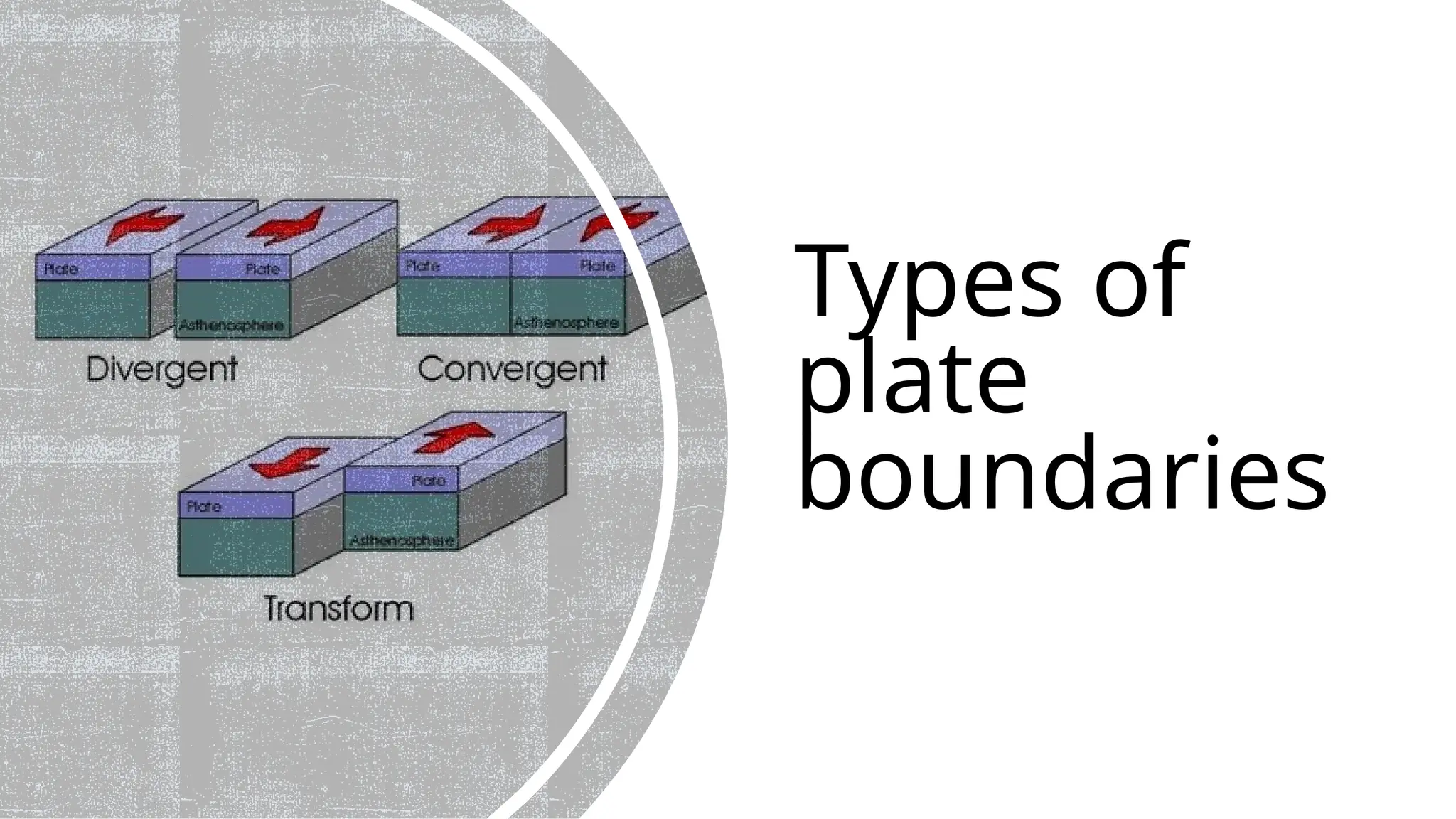
Types of
plate
boundaries
WHAT IS DIVERGENT
PLATE BOUNDARY?
Divergent plate
boundary
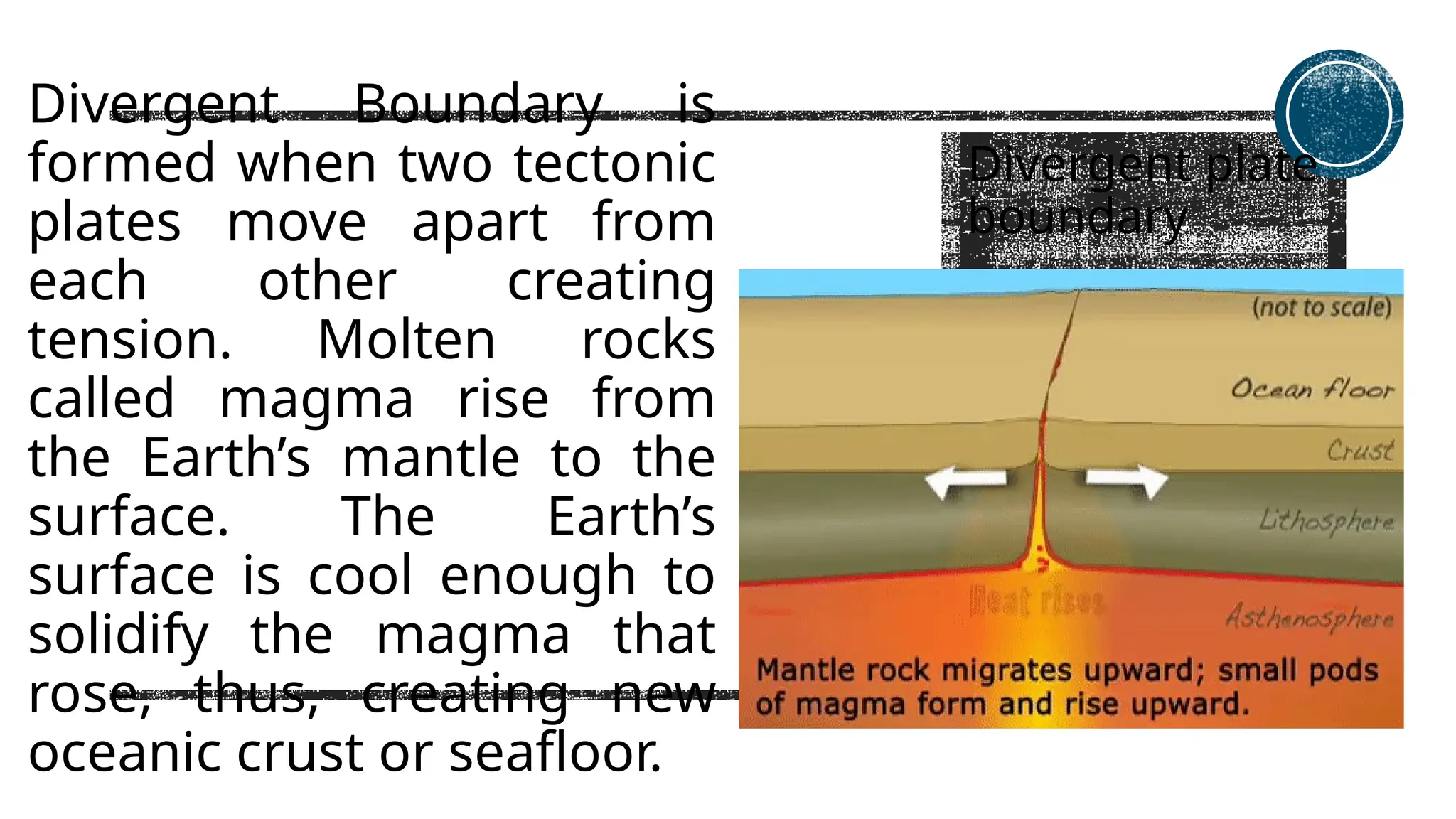
Divergent Boundary is
formed when two tectonic
plates move apart from
each other creating
tension. Molten rocks
called magma rise from
the Earth’s mantle to the
surface. The Earth’s
surface is cool enough to
solidify the magma that
rose, thus, creating new
oceanic crust or seafloor.
Types of
divergent
plate
boundary
Oceanic-Oceanic Divergent Plate Boundary
undergoes the process of formation of new crust. The
geologic features or events that may occur are
oceanic ridge and earthquake. Example is the Mid-
Atlantic Ocean Ridge formed between the South
American Plate and the African Plate.
Types of
divergent
plate
boundary
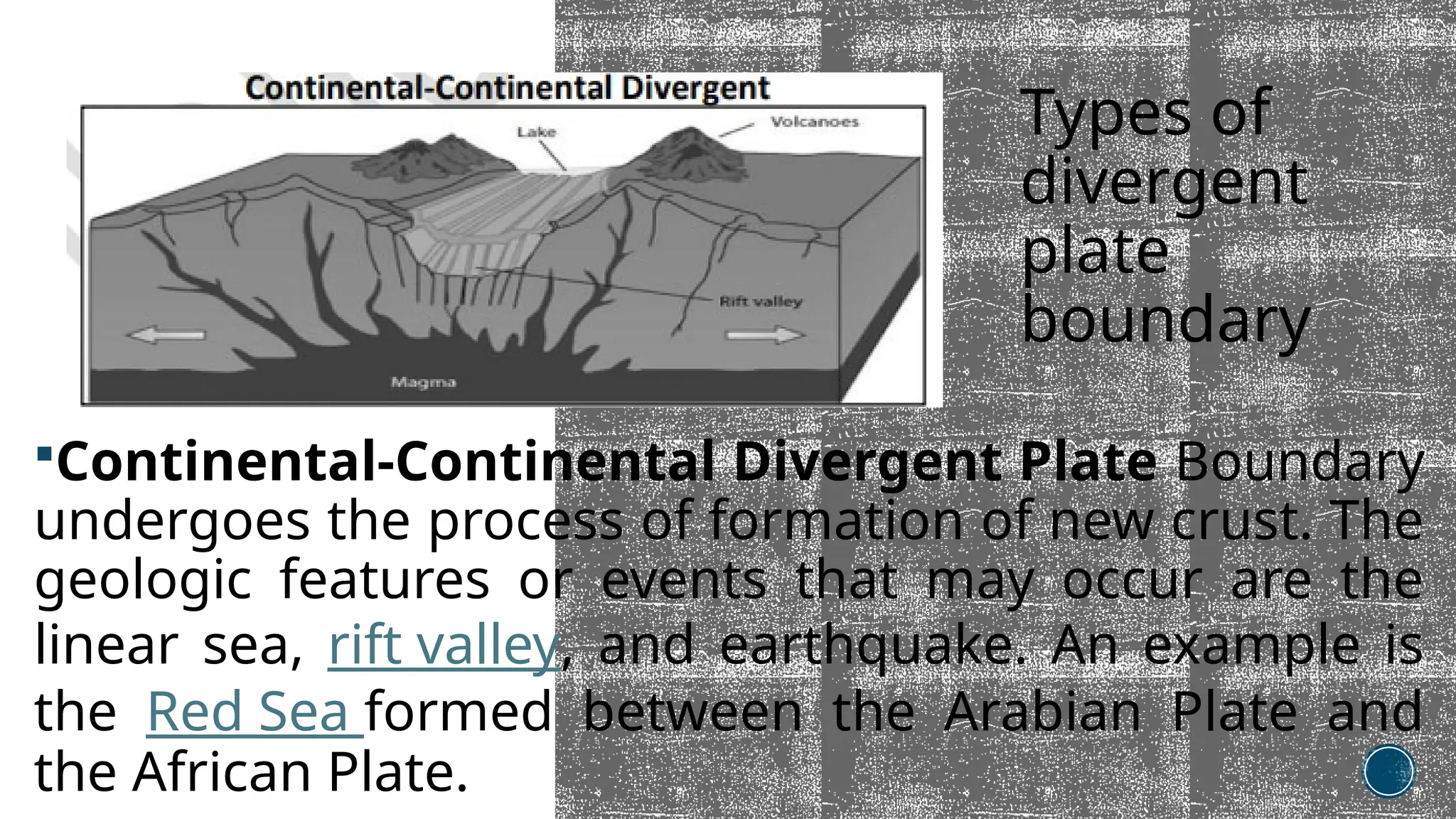
Continental-Continental Divergent Plate Boundary
undergoes the process of formation of new crust. The
geologic features or events that may occur are the
linear sea, rift valley, and earthquake. An example is
the Red Sea formed between the Arabian Plate and
the African Plate.
Processes and Landforms Along Divergent
Boundary
Divergent plate boundaries mostly happen
under the oceans. As plates pull away from each other,
a vertical space that may extend deep down into the
lowest layer of the crust is created. It is a rift valley.
The force of separation creates a tension zone. A
shallow earthquake may happen with this plate
movement.
Processes and Landforms Along Divergent
Boundary
Processes and Landforms Along Divergent
Boundary
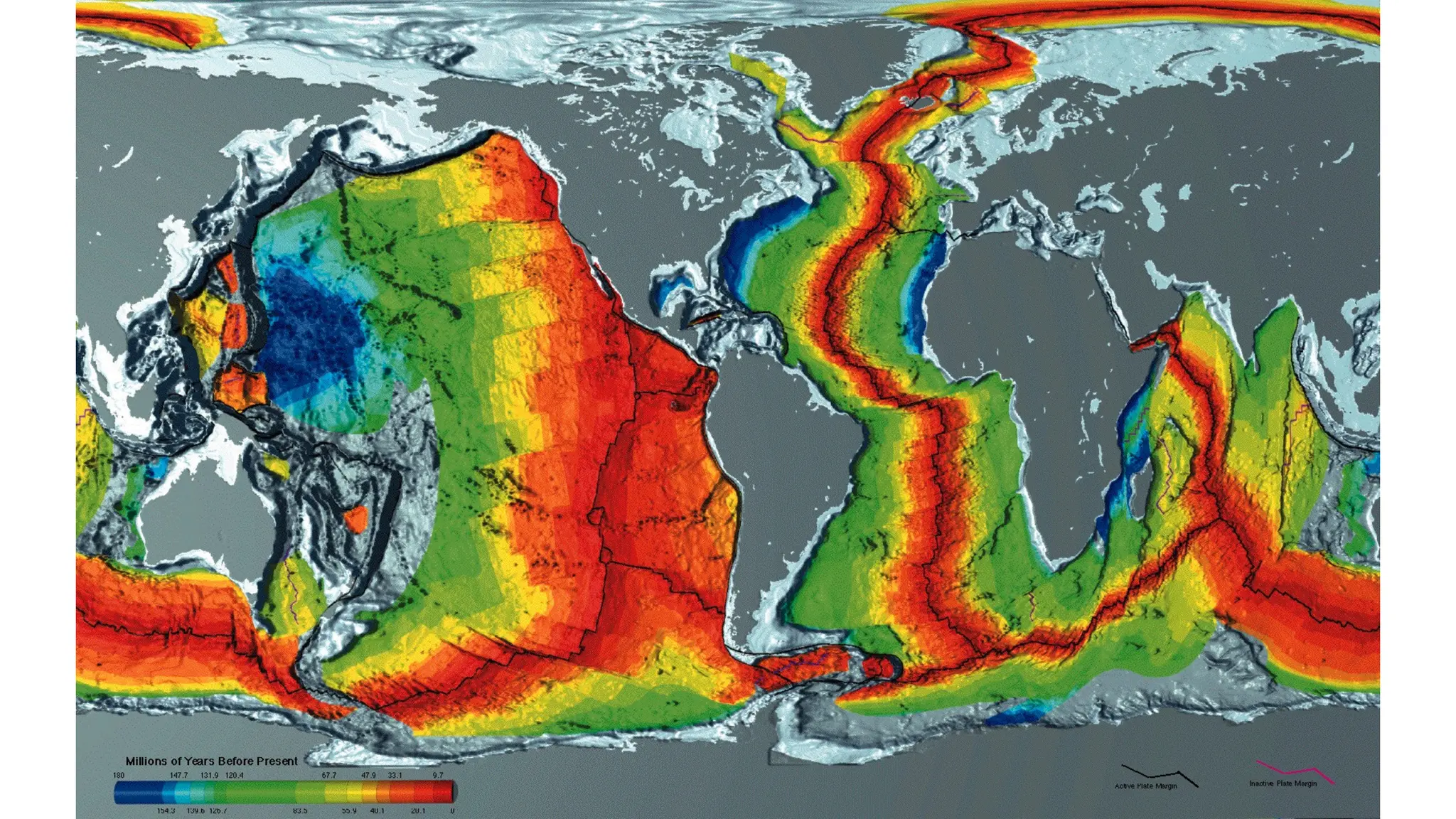
Plate divergence is believed to be a slow
continuous process. As the plates move away, the gap
between them increases. While this happens, materials
from the mantle may rise, filling up the space. These
materials pile up near the tension zone forming
mountain-like structures called oceanic ridges. But
new materials from the mantle may push the old ones.
The filled-up space between the plates becomes a new
seafloor. This process is known as seafloor spreading.
Mid-Atlantic Ridge
Rio Grande Rift (Continental Rift)
QUIZ
TOMORROW NALANG HAHAHHAHA
QUIZ AND ACTIVITY

DIVERGENT PLATE BOUNDARY IN PLATE TECTONIC

  • 1.
  • 2.
    Learning Objectives: • Explainthe processes that occur along divergent boundaries. • Determine the results of plates that are moving apart.
  • 3.
  • 4.
  • 5.
    Divergent plate boundary Divergent Boundaryis formed when two tectonic plates move apart from each other creating tension. Molten rocks called magma rise from the Earth’s mantle to the surface. The Earth’s surface is cool enough to solidify the magma that rose, thus, creating new oceanic crust or seafloor.
  • 6.
    Types of divergent plate boundary Oceanic-Oceanic DivergentPlate Boundary undergoes the process of formation of new crust. The geologic features or events that may occur are oceanic ridge and earthquake. Example is the Mid- Atlantic Ocean Ridge formed between the South American Plate and the African Plate.
  • 7.
    Types of divergent plate boundary Continental-Continental DivergentPlate Boundary undergoes the process of formation of new crust. The geologic features or events that may occur are the linear sea, rift valley, and earthquake. An example is the Red Sea formed between the Arabian Plate and the African Plate.
  • 8.
    Processes and LandformsAlong Divergent Boundary Divergent plate boundaries mostly happen under the oceans. As plates pull away from each other, a vertical space that may extend deep down into the lowest layer of the crust is created. It is a rift valley. The force of separation creates a tension zone. A shallow earthquake may happen with this plate movement.
  • 9.
    Processes and LandformsAlong Divergent Boundary
  • 10.
    Processes and LandformsAlong Divergent Boundary Plate divergence is believed to be a slow continuous process. As the plates move away, the gap between them increases. While this happens, materials from the mantle may rise, filling up the space. These materials pile up near the tension zone forming mountain-like structures called oceanic ridges. But new materials from the mantle may push the old ones. The filled-up space between the plates becomes a new seafloor. This process is known as seafloor spreading.
  • 12.
  • 13.
    Rio Grande Rift(Continental Rift)
  • 16.
  • 17.

Editor's Notes

  • #5 A divergent boundary is also known as a constructive boundary. The mid-ocean ridge is formed by the divergence between oceanic plates while continental rift valley is formed between continental plates. Rift valley can also be found at the bottom of the ocean where seafloor spreading occurs. Both the formation of mid-ocean ridge and rift valley had the occurrence of an earthquake. Examples are boundaries between South American plate and African plate, Pacific Plate and Nazca Plate, and North American Plate and Eurasian Plate.
  • #6 Continental-Continental Divergent Plate Boundary undergoes the process of formation of new crust. The geologic features or events that may occur are linear sea, rift valley, and earthquake. Example is the Red Sea formed between the Arabian Plate and African Plate. Oceanic-Oceanic Divergent Plate Boundary undergoes the process of formation of new crust. The geologic features or events that may occur are oceanic ridge, and earthquake. Example is the Mid-Atlantic Ocean Ridge formed between the South American Plate and African Plate.
  • #7 Continental-Continental Divergent Plate Boundary undergoes the process of formation of new crust. The geologic features or events that may occur are linear sea, rift valley, and earthquake. Example is the Red Sea formed between the Arabian Plate and African Plate. Oceanic-Oceanic Divergent Plate Boundary undergoes the process of formation of new crust. The geologic features or events that may occur are oceanic ridge, and earthquake. Example is the Mid-Atlantic Ocean Ridge formed between the South American Plate and African Plate.