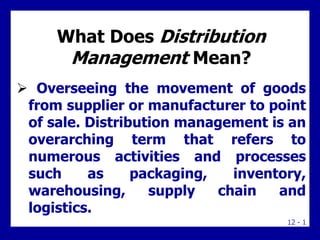
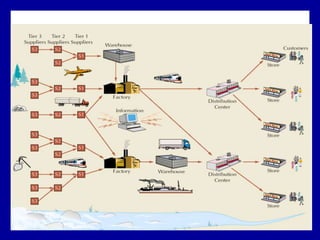
1. Distribution management refers to overseeing the movement of goods from suppliers to point of sale, including packaging, inventory, warehousing, and logistics. Effectively managing distribution is critical for financial success.
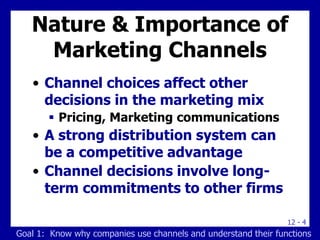
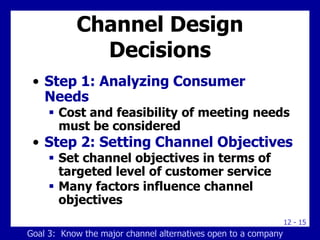
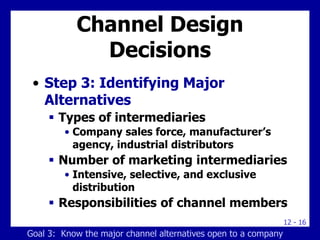
2. Marketing channels refer to the paths that products take from producers to consumers. They add value by bridging time, place, and possession gaps. Channel choices affect other marketing decisions and commitments.
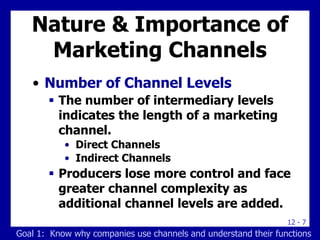
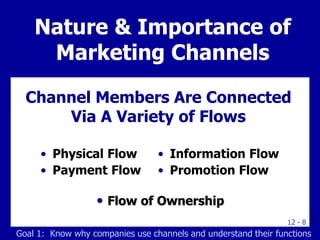
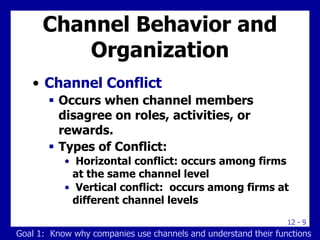
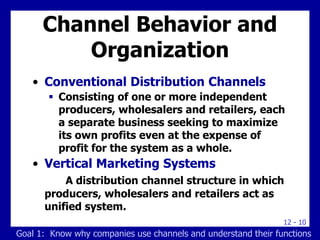
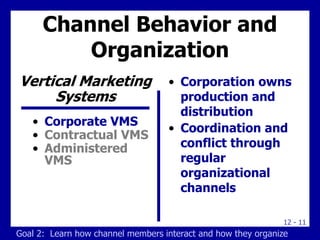
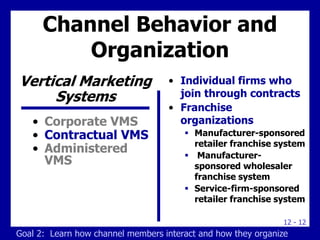
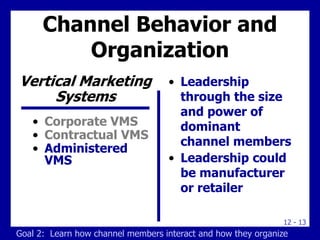
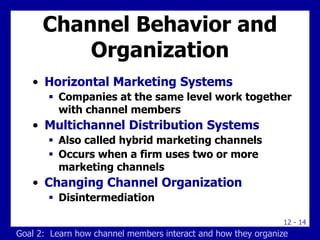
3. Channel members perform key functions like information provision, promotion, physical distribution, and financing. Producers lose more control as additional channel levels are added. Channels are organized through conventional, vertical, horizontal, and hybrid systems.




![Chapter 1[1].mmii](https://cdn.slidesharecdn.com/ss_thumbnails/chapter11-mmii-120117072155-phpapp02-thumbnail.jpg?width=640&height=640&fit=bounds)


