DISCLOSING AGENT
INTRODUCTION
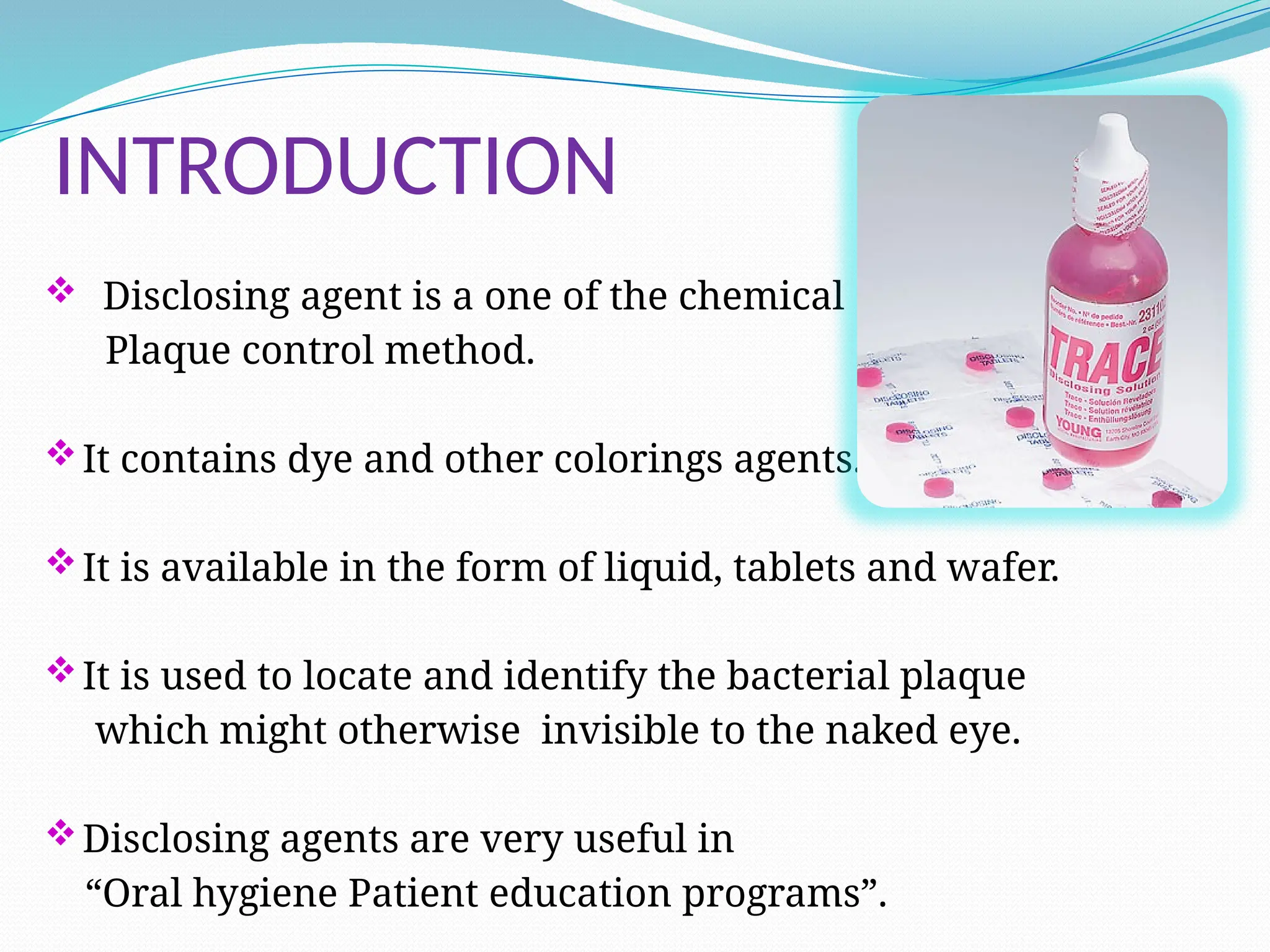
 Disclosing agent is a one of the chemical
Plaque control method.
It contains dye and other colorings agents.
It is available in the form of liquid, tablets and wafer.
It is used to locate and identify the bacterial plaque
which might otherwise invisible to the naked eye.
Disclosing agents are very useful in
“Oral hygiene Patient education programs”.
REQUIREMENTS
It should be clearly and distinctly stain only the plaque.
Its taste and flavor should be pleasant.
Its color should remain in the plaque for about 15 minutes.
It should have antiseptic and astringent properties.
Old and new plaques should stain in different colors to
help in the identification of mature and immature plaques.
CHEMICAL COMPOSITION
IODINE SOLUTION:
They have an unpleasant flavour and color.
SKINNER’S SOLUTION:
COMPOSITION:
 Potassium iodide - 1.0gm
 Iodine - 3gm
 Water - 16ml
 Glycerine - 13ml
 Zinc iodide - 1.0g
DILUTED TINCTURE OF IODINE:
 Tincture of iodine -21.0ml
 Distilled water -15.0ml
FLUORESCEIN:
 Sodium fluorescein -0.75%
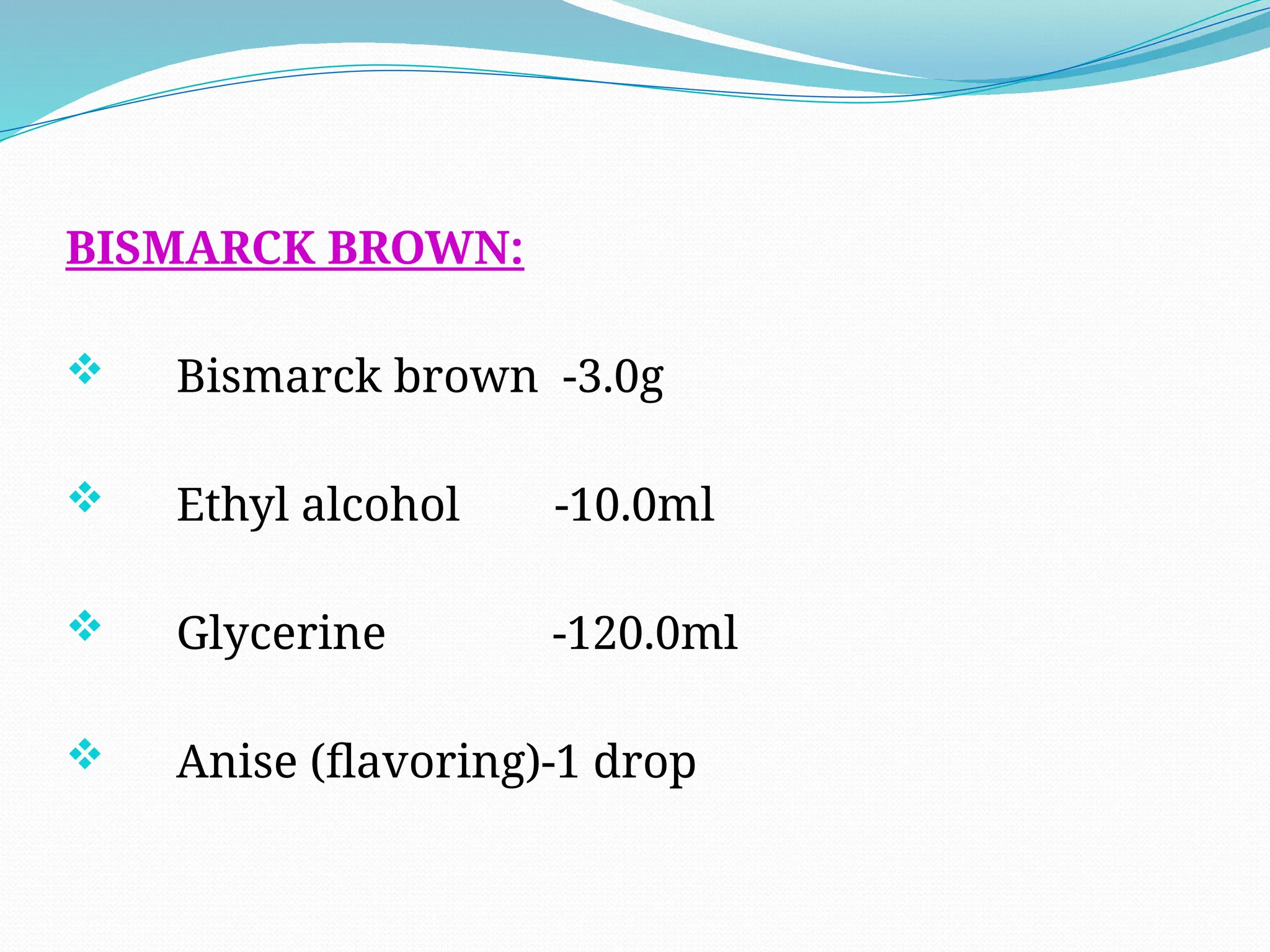
BISMARCK BROWN:
 Bismarck brown -3.0g
 Ethyl alcohol -10.0ml
 Glycerine -120.0ml
 Anise (flavoring)-1 drop
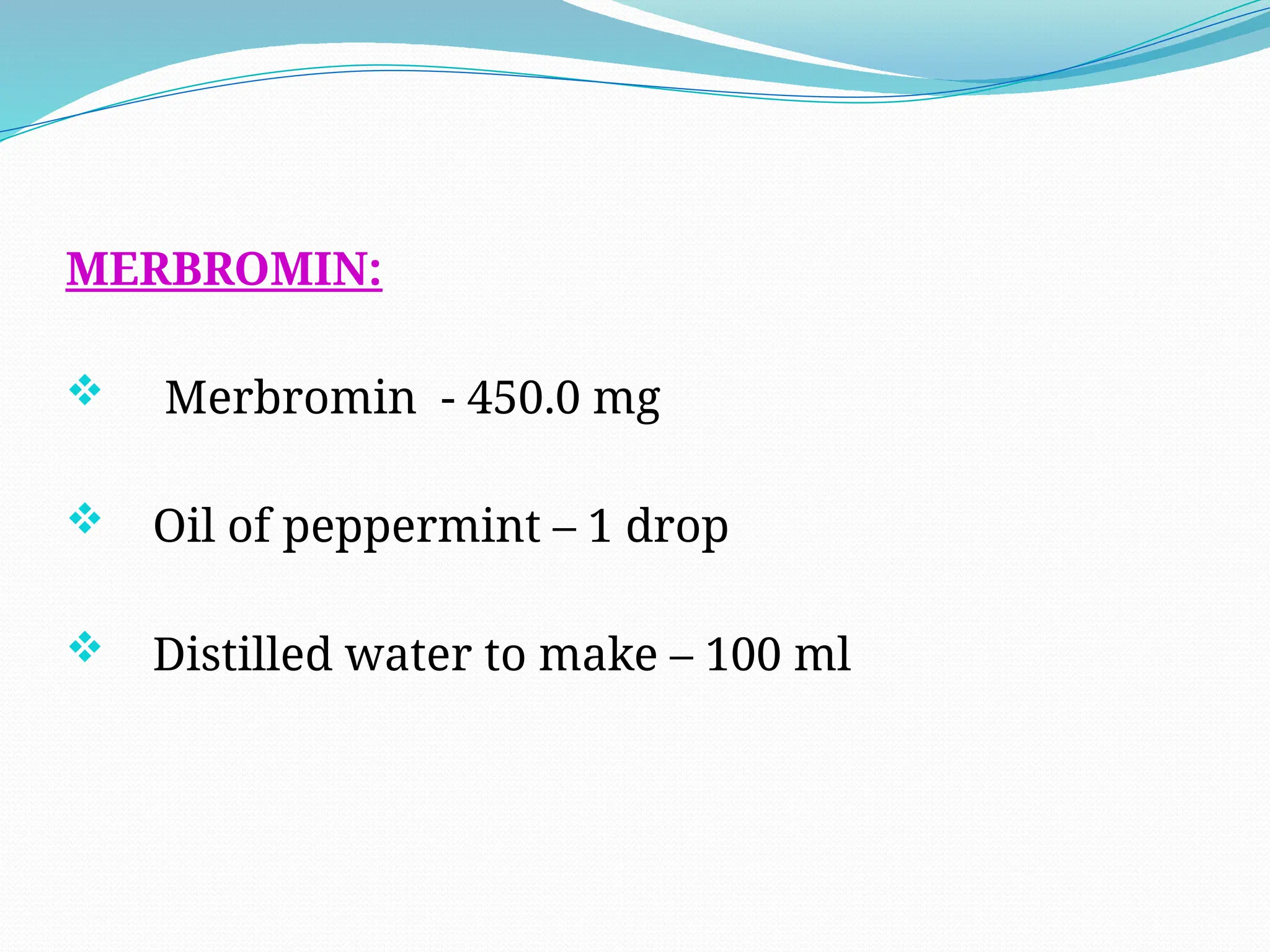
MERBROMIN:
 Merbromin - 450.0 mg
 Oil of peppermint – 1 drop
 Distilled water to make – 100 ml
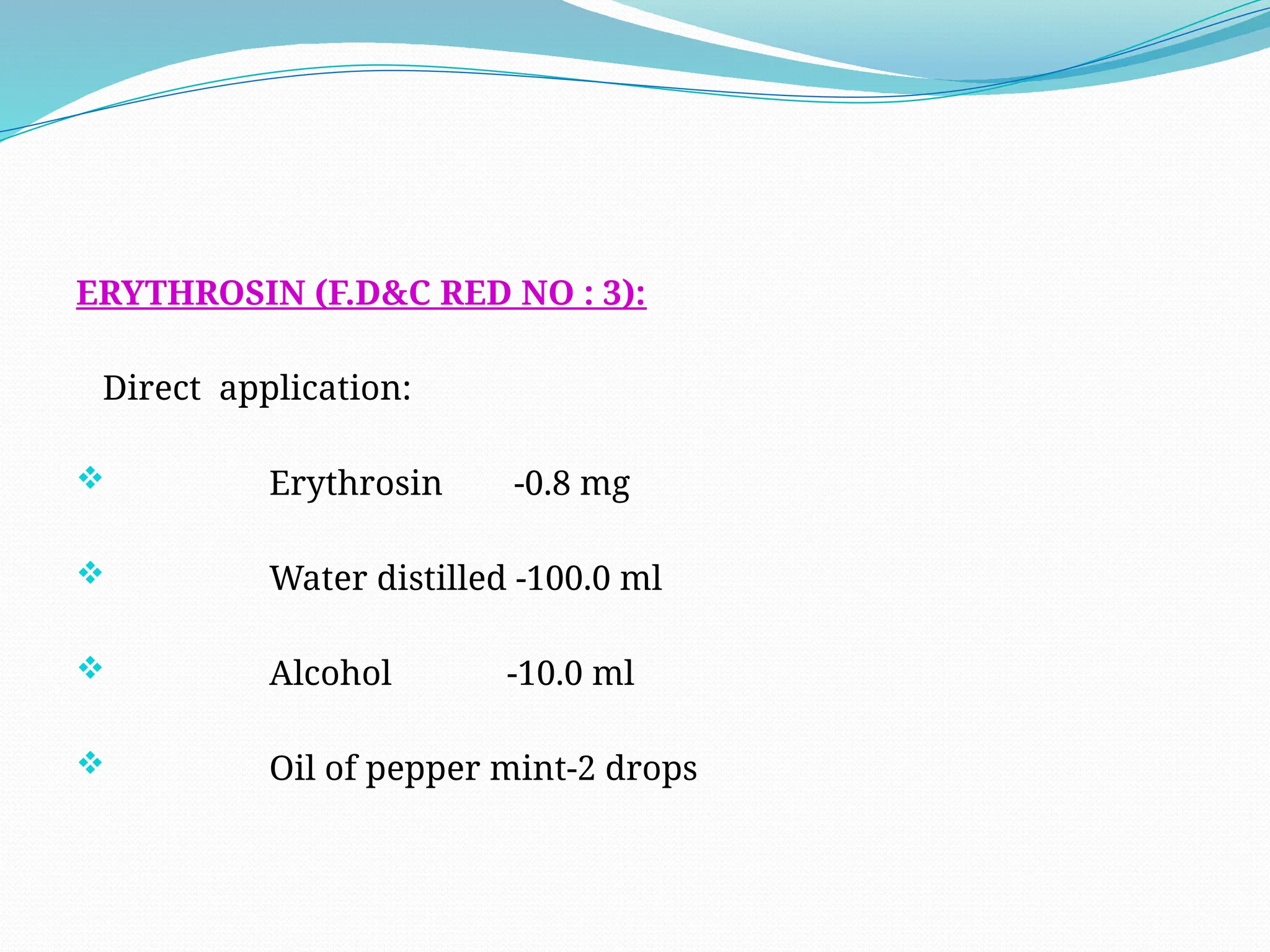
ERYTHROSIN (F.D&C RED NO : 3):
Direct application:
 Erythrosin -0.8 mg
 Water distilled -100.0 ml
 Alcohol -10.0 ml
 Oil of pepper mint-2 drops
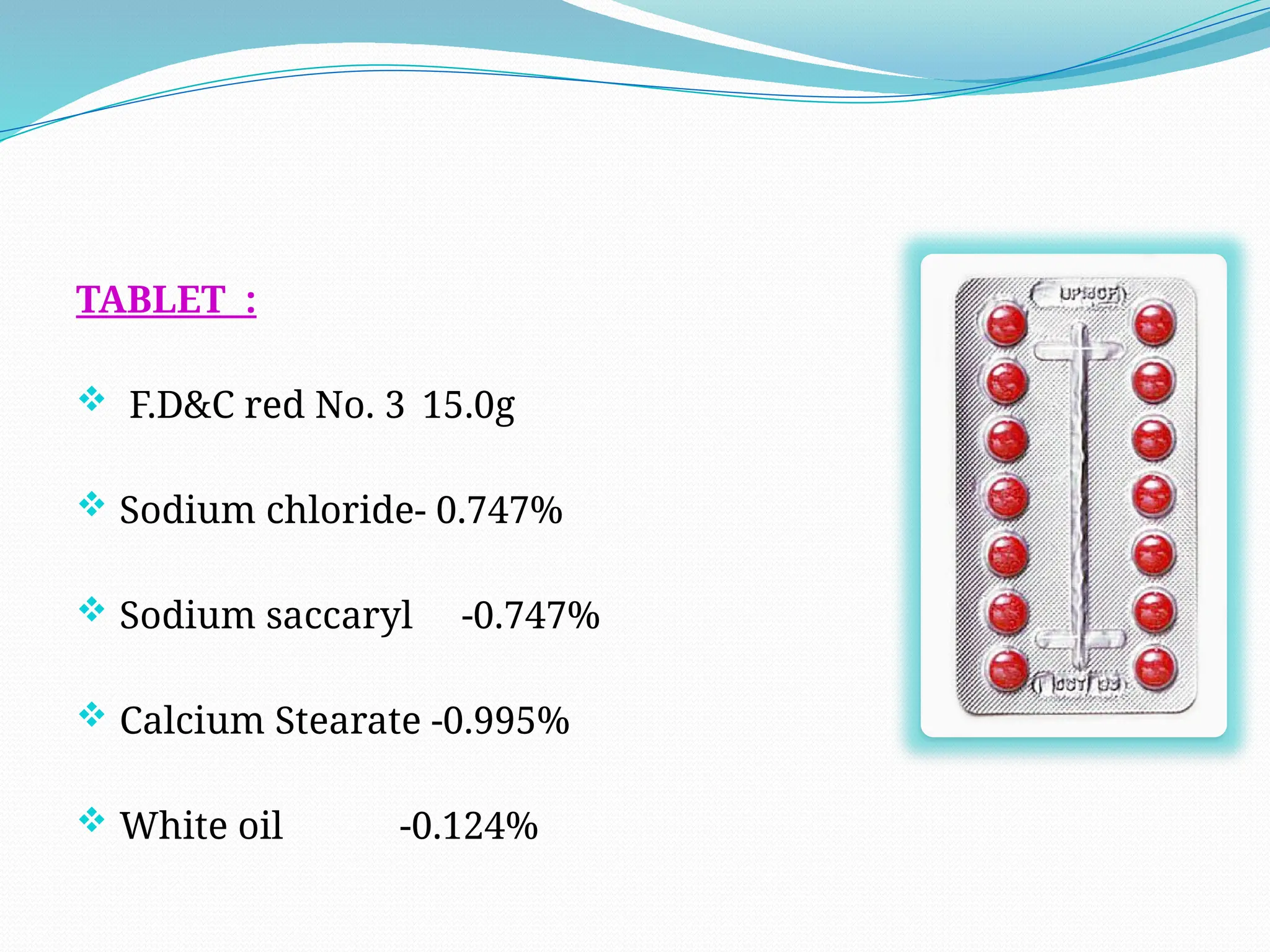
TABLET :
 F.D&C red No. 3 15.0g
 Sodium chloride- 0.747%
 Sodium saccaryl -0.747%
 Calcium Stearate -0.995%
 White oil -0.124%
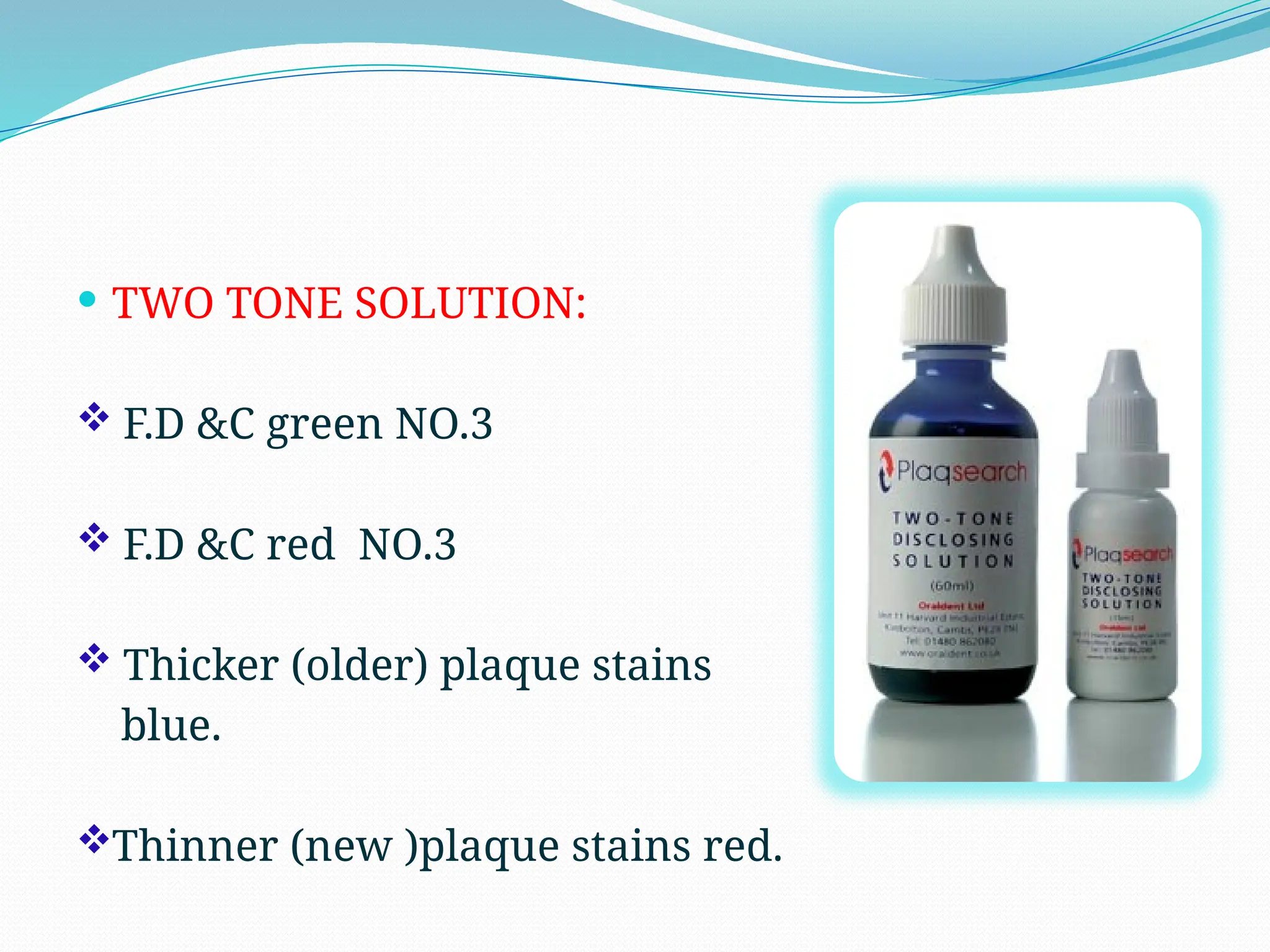
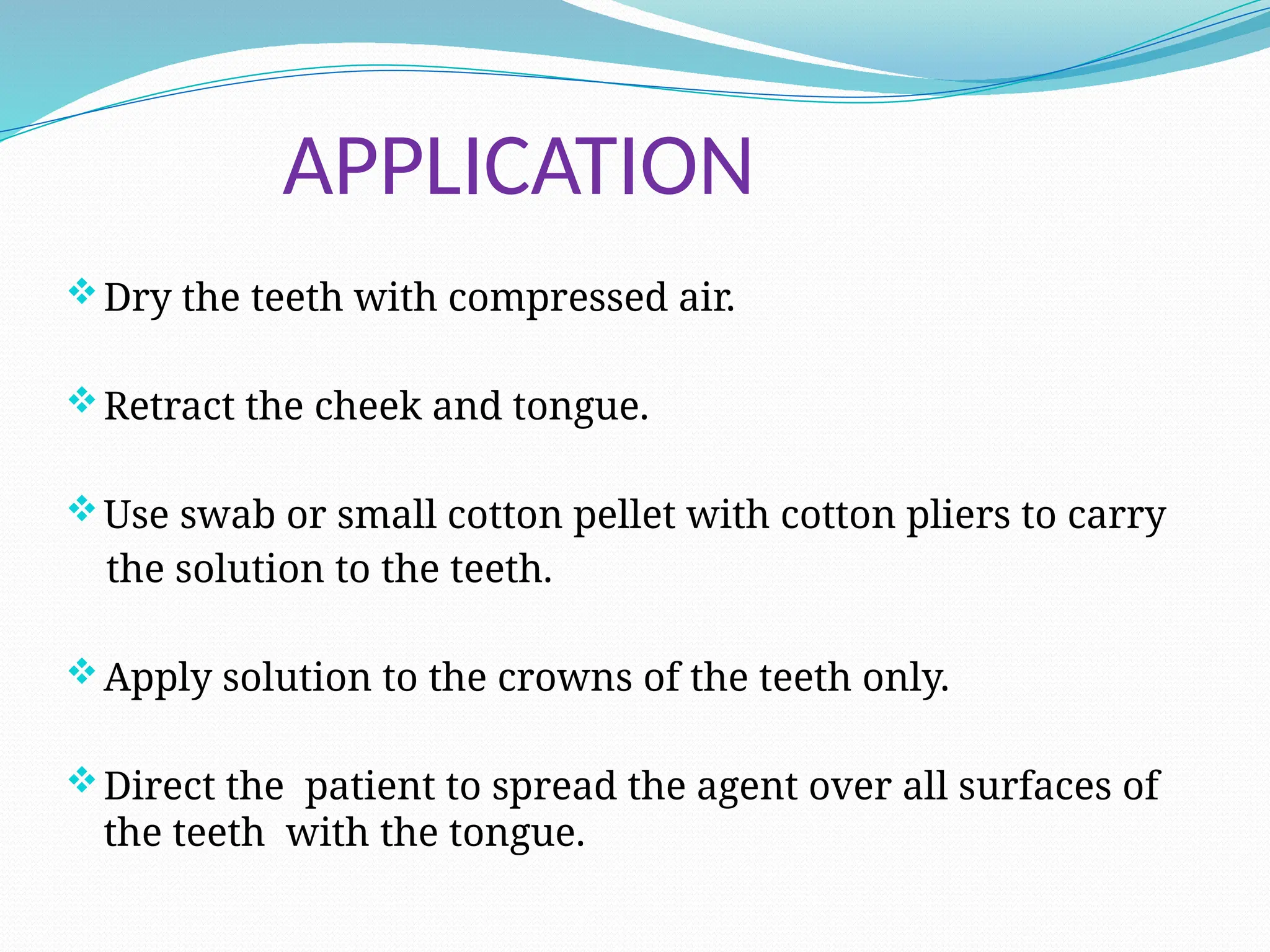
 TWO TONE SOLUTION:
 F.D &C green NO.3
 F.D &C red NO.3
 Thicker (older) plaque stains
blue.
Thinner (new )plaque stains red.
APPLICATION
Dry the teeth with compressed air.
Retract the cheek and tongue.
Use swab or small cotton pellet with cotton pliers to carry
the solution to the teeth.
Apply solution to the crowns of the teeth only.
Direct the patient to spread the agent over all surfaces of
the teeth with the tongue.
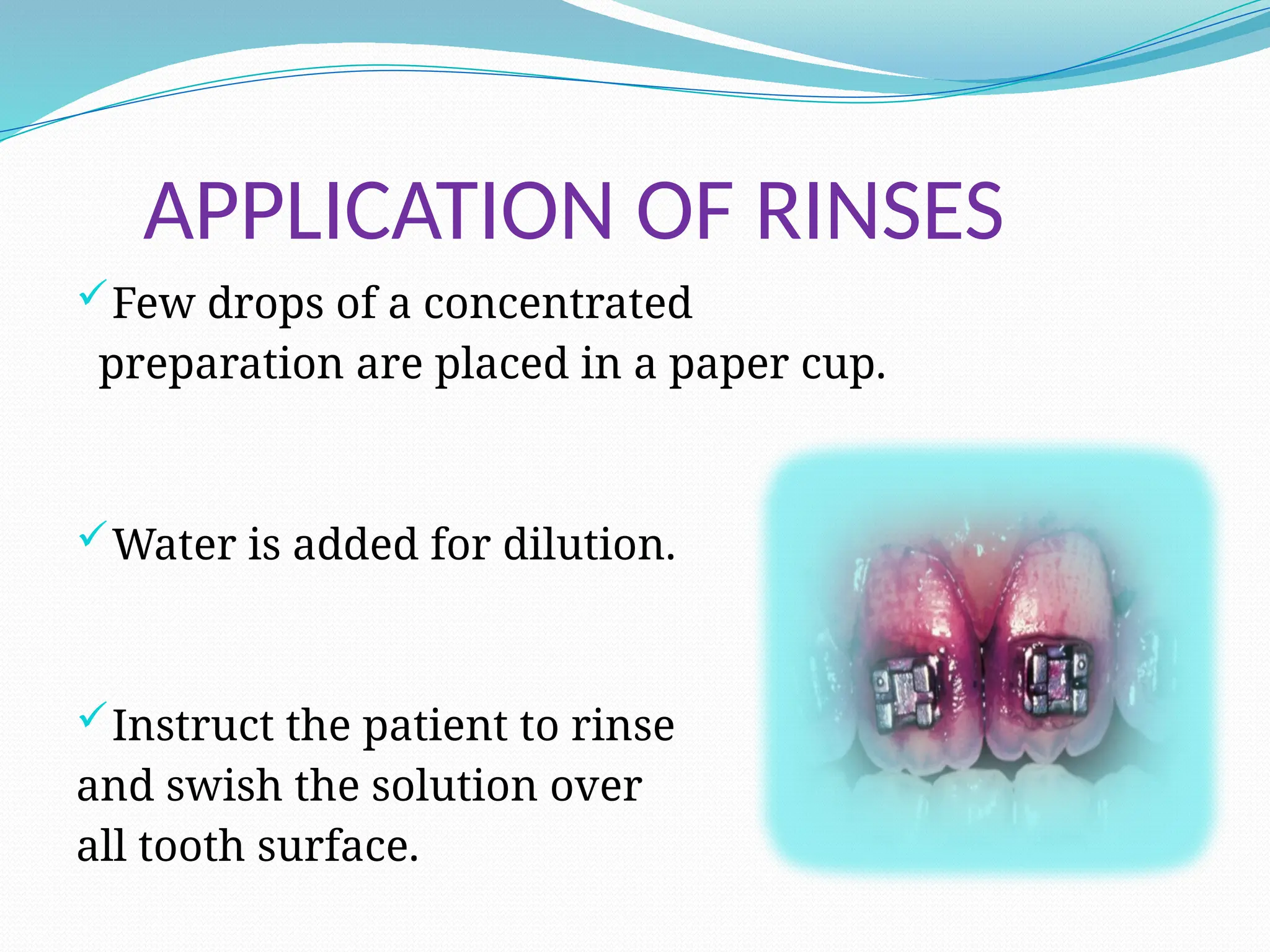
APPLICATION OF RINSES
Few drops of a concentrated
preparation are placed in a paper cup.
Water is added for dilution.
Instruct the patient to rinse
and swish the solution over
all tooth surface.
APPLICATION OF TABLET or WAFER
The patient chews the wafer.
Swishes it around for 30 to 60 seconds.
Rinses it completely.
INSTRUCTION TO PATIENT
Patient need to be informed about the effect of
bacterial plaque in the production of gingival
and periodontal infections.
Patient should be shown about the location and
distribution of plaque.
USES
Personalized patient education, instruction and
motivation.
Self evaluation by the patient.
To evaluate the effectiveness of oral hygiene maintainance.
Preparation of plaque indices.
CONTRAINDICATIONS
Disclosing agents should not be used in case of,
A) glass ionomer
B) composite resins
C) silicate cements to prevent the staining of the filling.
CONCLUSION
Disclosing agents are more helpful to assessing
gingival status and to take early measures for
maintenance of good oral hygiene.

DISCLOSING AGENT used for new docters, n

  • 1.
  • 2.
    INTRODUCTION  Disclosing agentis a one of the chemical Plaque control method. It contains dye and other colorings agents. It is available in the form of liquid, tablets and wafer. It is used to locate and identify the bacterial plaque which might otherwise invisible to the naked eye. Disclosing agents are very useful in “Oral hygiene Patient education programs”.
  • 3.
    REQUIREMENTS It should beclearly and distinctly stain only the plaque. Its taste and flavor should be pleasant. Its color should remain in the plaque for about 15 minutes. It should have antiseptic and astringent properties. Old and new plaques should stain in different colors to help in the identification of mature and immature plaques.
  • 4.
    CHEMICAL COMPOSITION IODINE SOLUTION: Theyhave an unpleasant flavour and color. SKINNER’S SOLUTION: COMPOSITION:  Potassium iodide - 1.0gm  Iodine - 3gm  Water - 16ml  Glycerine - 13ml  Zinc iodide - 1.0g
  • 5.
    DILUTED TINCTURE OFIODINE:  Tincture of iodine -21.0ml  Distilled water -15.0ml FLUORESCEIN:  Sodium fluorescein -0.75%
  • 6.
    BISMARCK BROWN:  Bismarckbrown -3.0g  Ethyl alcohol -10.0ml  Glycerine -120.0ml  Anise (flavoring)-1 drop
  • 7.
    MERBROMIN:  Merbromin -450.0 mg  Oil of peppermint – 1 drop  Distilled water to make – 100 ml
  • 8.
    ERYTHROSIN (F.D&C REDNO : 3): Direct application:  Erythrosin -0.8 mg  Water distilled -100.0 ml  Alcohol -10.0 ml  Oil of pepper mint-2 drops
  • 9.
    TABLET :  F.D&Cred No. 3 15.0g  Sodium chloride- 0.747%  Sodium saccaryl -0.747%  Calcium Stearate -0.995%  White oil -0.124%
  • 10.
     TWO TONESOLUTION:  F.D &C green NO.3  F.D &C red NO.3  Thicker (older) plaque stains blue. Thinner (new )plaque stains red.
  • 11.
    APPLICATION Dry the teethwith compressed air. Retract the cheek and tongue. Use swab or small cotton pellet with cotton pliers to carry the solution to the teeth. Apply solution to the crowns of the teeth only. Direct the patient to spread the agent over all surfaces of the teeth with the tongue.
  • 12.
    APPLICATION OF RINSES Fewdrops of a concentrated preparation are placed in a paper cup. Water is added for dilution. Instruct the patient to rinse and swish the solution over all tooth surface.
  • 13.
    APPLICATION OF TABLETor WAFER The patient chews the wafer. Swishes it around for 30 to 60 seconds. Rinses it completely.
  • 14.
    INSTRUCTION TO PATIENT Patientneed to be informed about the effect of bacterial plaque in the production of gingival and periodontal infections. Patient should be shown about the location and distribution of plaque.
  • 15.
    USES Personalized patient education,instruction and motivation. Self evaluation by the patient. To evaluate the effectiveness of oral hygiene maintainance. Preparation of plaque indices.
  • 16.
    CONTRAINDICATIONS Disclosing agents shouldnot be used in case of, A) glass ionomer B) composite resins C) silicate cements to prevent the staining of the filling.
  • 17.
    CONCLUSION Disclosing agents aremore helpful to assessing gingival status and to take early measures for maintenance of good oral hygiene.