


 Introduction
 What is digital jewellery??
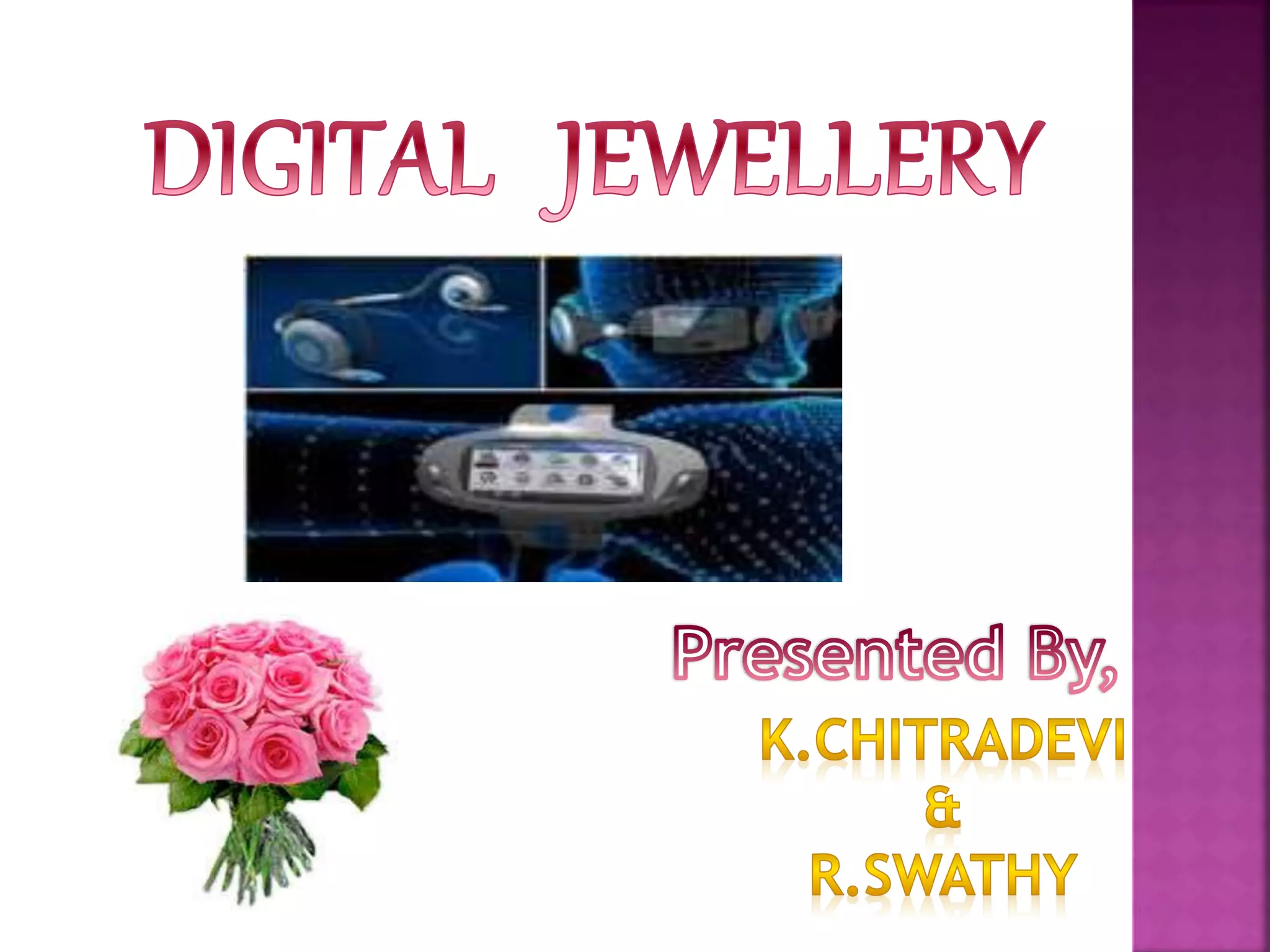
 Digital jewellery & its components
 Technical Specifications of Digital Jewellery
 Display Technology
 Java Ring & its Highlights
 Advantages & Disadvantages
 Conclusion
 In Computer Fashion Wave, "Digital
Jewellery" looks to be the next sizzling
fashion trend of the technological wave.
 The combination of shrinking computer
devices and increasing computer power has
allowed several companies to begin
producing fashion jewellery with embedded
intelligence.
 By the end of the decade, we could be
wearing our computers instead of sitting in
front of them.
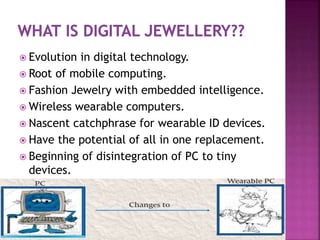
 Evolution in digital technology.
 Root of mobile computing.
 Fashion Jewelry with embedded intelligence.
 Wireless wearable computers.
 Nascent catchphrase for wearable ID devices.
 Have the potential of all in one replacement.
 Beginning of disintegration of PC to tiny
devices.
 A“cell phones” will take a totally new
form,appearing to have no form at all.
 Instead of one single device, cell phones will be
broken up into their basic components and
packaged as various pieces of digital jewellery.
 The various components that are inside a cell
phone: Microphone, Receiver, Touch pad, Display,
Circuit board, Antenna, and Battery.
 IBM has developed a prototype of a cell phone
that consists of several pieces of digital
jewellery that will work together wirelessly,
possibly with Bluetooth wireless technology.
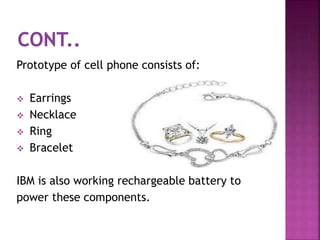
Prototype of cell phone consists of:
 Earrings
 Necklace
 Ring
 Bracelet
IBM is also working rechargeable battery to
power these components.
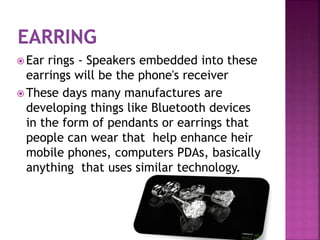
 Ear rings - Speakers embedded into these
earrings will be the phone's receiver
 These days many manufactures are
developing things like Bluetooth devices
in the form of pendants or earrings that
people can wear that help enhance heir
mobile phones, computers PDAs, basically
anything that uses similar technology.
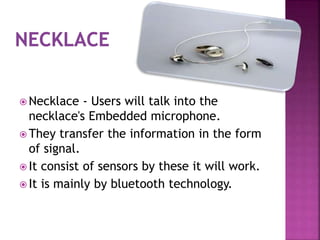
 Necklace - Users will talk into the
necklace's Embedded microphone.
 They transfer the information in the form
of signal.
 It consist of sensors by these it will work.
 It is mainly by bluetooth technology.
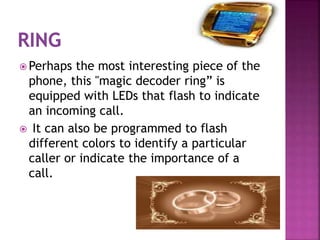
 Perhaps the most interesting piece of the
phone, this "magic decoder ring” is
equipped with LEDs that flash to indicate
an incoming call.
 It can also be programmed to flash
different colors to identify a particular
caller or indicate the importance of a
call.
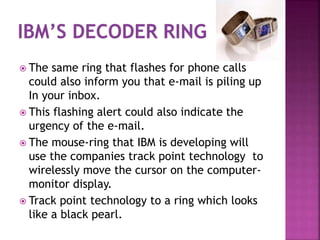
 The same ring that flashes for phone calls
could also inform you that e-mail is piling up
In your inbox.
 This flashing alert could also indicate the
urgency of the e-mail.
 The mouse-ring that IBM is developing will
use the companies track point technology to
wirelessly move the cursor on the computer-
monitor display.
 Track point technology to a ring which looks
like a black pearl.
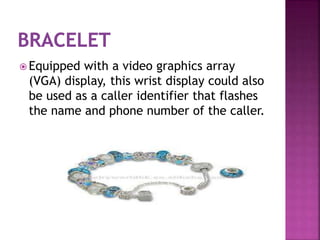
 Equipped with a video graphics array
(VGA) display, this wrist display could also
be used as a caller identifier that flashes
the name and phone number of the caller.
 Digital jewellery devices consist of a
screen or display for information, most
likely consisting of 7-16-segment, or dot
matrix LEDs, LCDs.
 An audio visual or other 'display' could
consist of a speaker, a single flashing light
and a sensor.
 A micro controller that is surface
mounted device on a printed circuit board
with resistors and capacitor are the
internal ‘guts’ of the jewellery.
 The digital jewelry display, for instance,
every alphabet and number system has found
representation within the electronics realm
and 'dot-matrix’
 It is used to display Chinese and Japanese
and other character sets, as can the
alternative display for LCDs (liquid-crystal-
displays) also be used, as often found in
watches.
 Digital Jewellery can be made in many
different sizes and shapes with a variety of
materials ranging from plastic and metal to
rubber and glass.
 This could range from LED 7-segment, 16-
segment, dot matrix, and other
programmable LEDs devices to LCDs, OLEDs,
and other displays
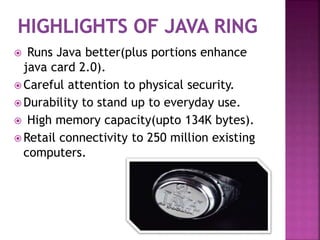
 The Java Ring can be programmed to give
you access to everydoor and device.
 The Java Ring is a stainless-steel ring, 16-
millimeters (0.6 inches)in diameter, which
houses a 1-million-transistor processor, called
an iButton.
 The ring has 134 KB of RAM, 32 KB of ROM,
which is a piece of software that recognizes
the Java language and translates it for the
user's computer system.
 Dallas Semiconductor is developing a new
Java-based, computerized ring that will
automatically unlock doors and
log on to computers.
 Runs Java better(plus portions enhance
java card 2.0).
 Careful attention to physical security.
 Durability to stand up to everyday use.
 High memory capacity(upto 134K bytes).
 Retail connectivity to 250 million existing
computers.
Wireless wearable technology.
Easy to carry every where.
Sizzling outlook to the user.
Natural interaction between the user.
Display is very small.
Rays may be harmful.
No waterproof care should be taken.
Very expensive to afford.
 The basic idea is to have the convenience
of wireless wearable computers while
marketing fashionably sound.
 It is hoped to be marketable soon. Several
bugs remain.
 Charging capabilities and cost are sample of
the problems that lurk.
Digital jewellery
Digital jewellery

Digital jewellery

  • 2.
     Introduction  Whatis digital jewellery??  Digital jewellery & its components  Technical Specifications of Digital Jewellery  Display Technology  Java Ring & its Highlights  Advantages & Disadvantages  Conclusion
  • 3.
     In ComputerFashion Wave, "Digital Jewellery" looks to be the next sizzling fashion trend of the technological wave.  The combination of shrinking computer devices and increasing computer power has allowed several companies to begin producing fashion jewellery with embedded intelligence.  By the end of the decade, we could be wearing our computers instead of sitting in front of them.
  • 4.
     Evolution indigital technology.  Root of mobile computing.  Fashion Jewelry with embedded intelligence.  Wireless wearable computers.  Nascent catchphrase for wearable ID devices.  Have the potential of all in one replacement.  Beginning of disintegration of PC to tiny devices.
  • 5.
     A“cell phones”will take a totally new form,appearing to have no form at all.  Instead of one single device, cell phones will be broken up into their basic components and packaged as various pieces of digital jewellery.  The various components that are inside a cell phone: Microphone, Receiver, Touch pad, Display, Circuit board, Antenna, and Battery.  IBM has developed a prototype of a cell phone that consists of several pieces of digital jewellery that will work together wirelessly, possibly with Bluetooth wireless technology.
  • 6.
    Prototype of cellphone consists of:  Earrings  Necklace  Ring  Bracelet IBM is also working rechargeable battery to power these components.
  • 7.
     Ear rings- Speakers embedded into these earrings will be the phone's receiver  These days many manufactures are developing things like Bluetooth devices in the form of pendants or earrings that people can wear that help enhance heir mobile phones, computers PDAs, basically anything that uses similar technology.
  • 8.
     Necklace -Users will talk into the necklace's Embedded microphone.  They transfer the information in the form of signal.  It consist of sensors by these it will work.  It is mainly by bluetooth technology.
  • 9.
     Perhaps themost interesting piece of the phone, this "magic decoder ring” is equipped with LEDs that flash to indicate an incoming call.  It can also be programmed to flash different colors to identify a particular caller or indicate the importance of a call.
  • 10.
     The samering that flashes for phone calls could also inform you that e-mail is piling up In your inbox.  This flashing alert could also indicate the urgency of the e-mail.  The mouse-ring that IBM is developing will use the companies track point technology to wirelessly move the cursor on the computer- monitor display.  Track point technology to a ring which looks like a black pearl.
  • 11.
     Equipped witha video graphics array (VGA) display, this wrist display could also be used as a caller identifier that flashes the name and phone number of the caller.
  • 12.
     Digital jewellerydevices consist of a screen or display for information, most likely consisting of 7-16-segment, or dot matrix LEDs, LCDs.  An audio visual or other 'display' could consist of a speaker, a single flashing light and a sensor.  A micro controller that is surface mounted device on a printed circuit board with resistors and capacitor are the internal ‘guts’ of the jewellery.
  • 13.
     The digitaljewelry display, for instance, every alphabet and number system has found representation within the electronics realm and 'dot-matrix’  It is used to display Chinese and Japanese and other character sets, as can the alternative display for LCDs (liquid-crystal- displays) also be used, as often found in watches.
  • 14.
     Digital Jewellerycan be made in many different sizes and shapes with a variety of materials ranging from plastic and metal to rubber and glass.  This could range from LED 7-segment, 16- segment, dot matrix, and other programmable LEDs devices to LCDs, OLEDs, and other displays
  • 15.
     The JavaRing can be programmed to give you access to everydoor and device.  The Java Ring is a stainless-steel ring, 16- millimeters (0.6 inches)in diameter, which houses a 1-million-transistor processor, called an iButton.  The ring has 134 KB of RAM, 32 KB of ROM, which is a piece of software that recognizes the Java language and translates it for the user's computer system.  Dallas Semiconductor is developing a new Java-based, computerized ring that will automatically unlock doors and log on to computers.
  • 16.
     Runs Javabetter(plus portions enhance java card 2.0).  Careful attention to physical security.  Durability to stand up to everyday use.  High memory capacity(upto 134K bytes).  Retail connectivity to 250 million existing computers.
  • 17.
    Wireless wearable technology. Easyto carry every where. Sizzling outlook to the user. Natural interaction between the user.
  • 18.
    Display is verysmall. Rays may be harmful. No waterproof care should be taken. Very expensive to afford.
  • 19.
     The basicidea is to have the convenience of wireless wearable computers while marketing fashionably sound.  It is hoped to be marketable soon. Several bugs remain.  Charging capabilities and cost are sample of the problems that lurk.