Digestive System
INTRODUCTION Digestion is defined as the process by which
food is broken down into simple chemical substances that can be
absorbed and used as nutrients by the body.
• Thus, the functions of digestive system include:
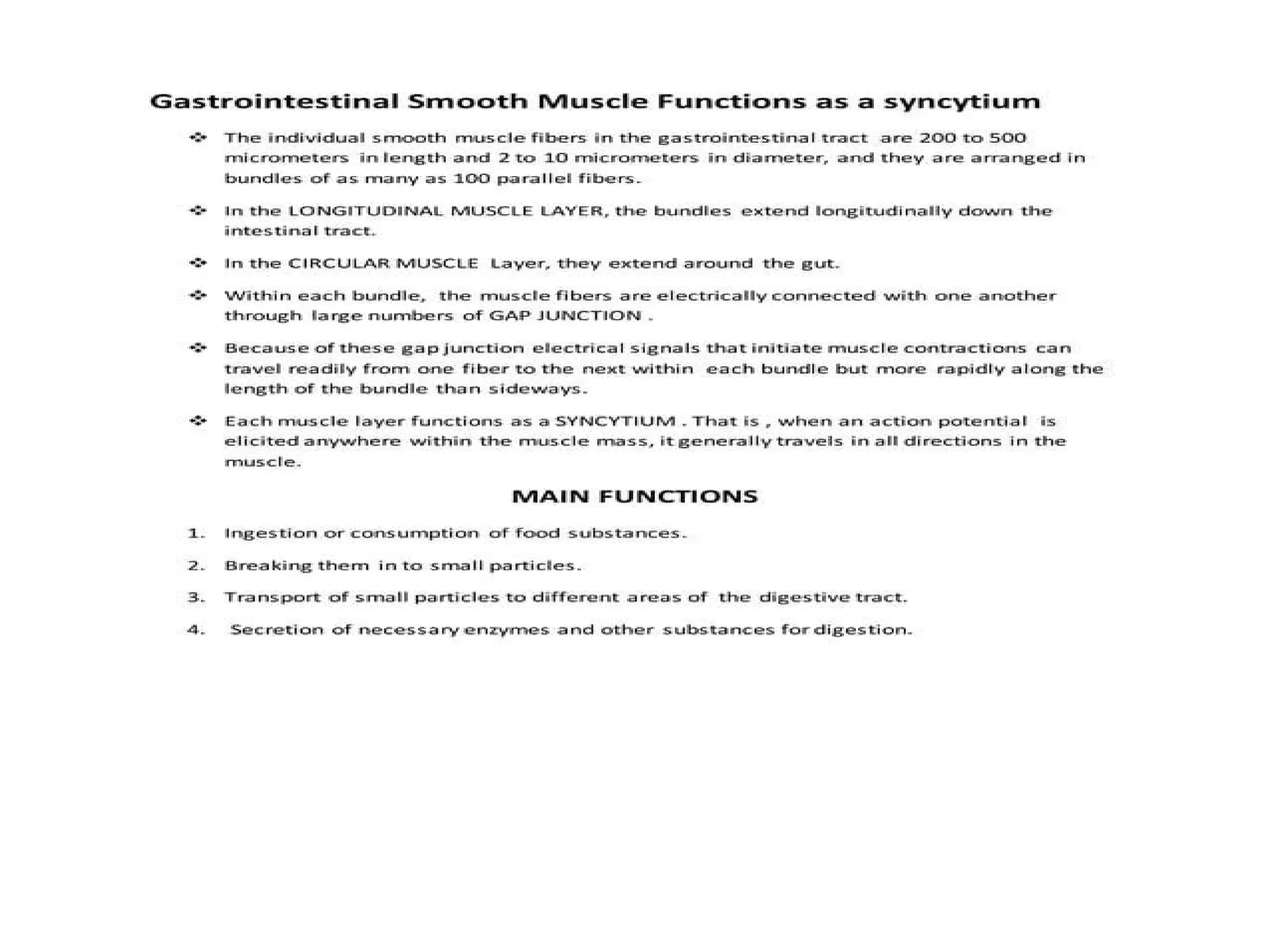
• 1. Ingestion or consumption of food substances
• 2. Breaking them into small particles
• 3. Transport of small particles to different areas of the
digestive tract
• 4. Secretion of necessary enzymes and other substances for
digestion
• 5. Digestion of the food particles 6. Absorption of the
digestive products (nutrients) 7. Removal of unwanted
substances from the body.
• FUNCTIONAL ANATOMY OF DIGESTIVE SYSTEM
„
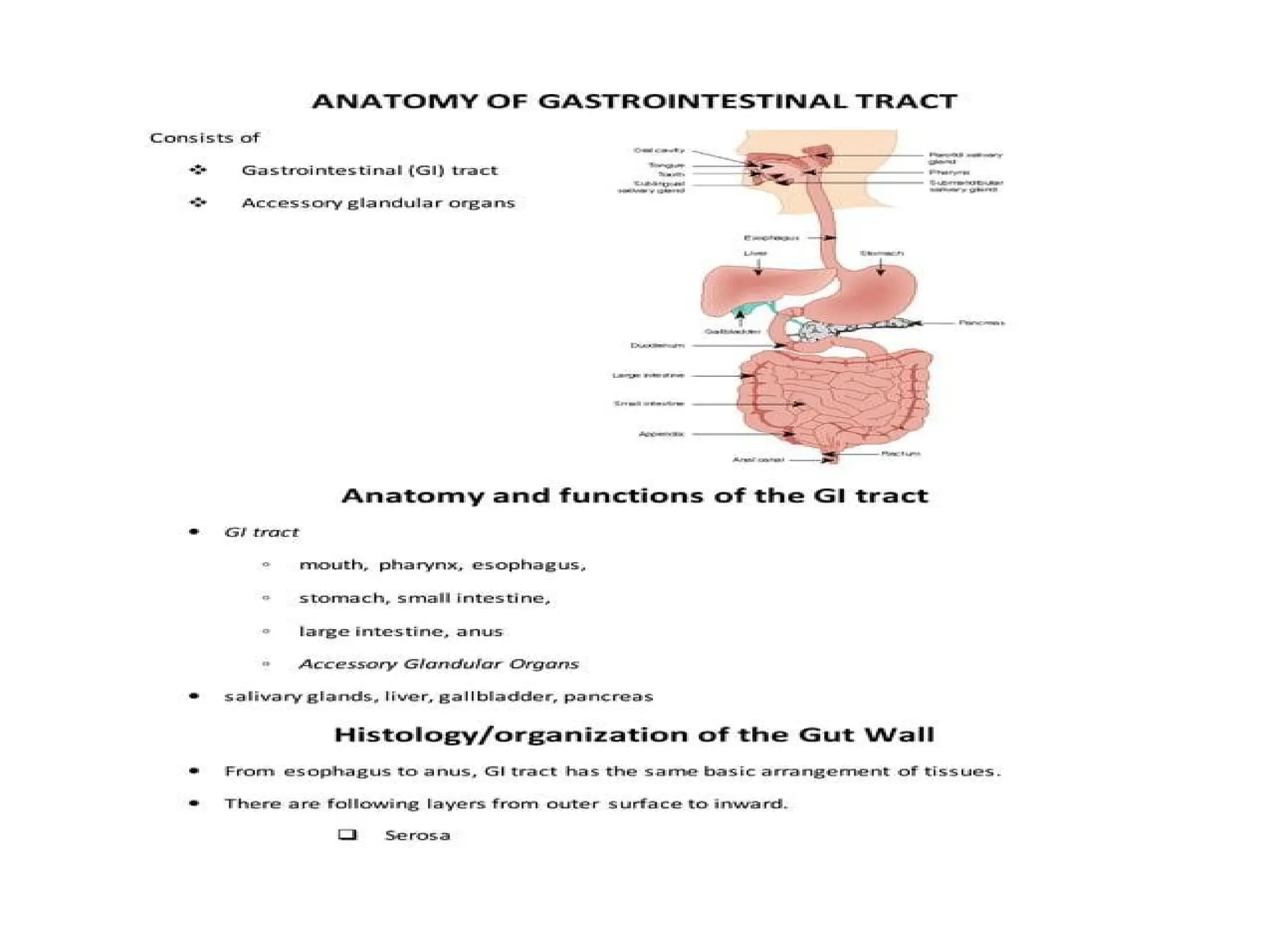
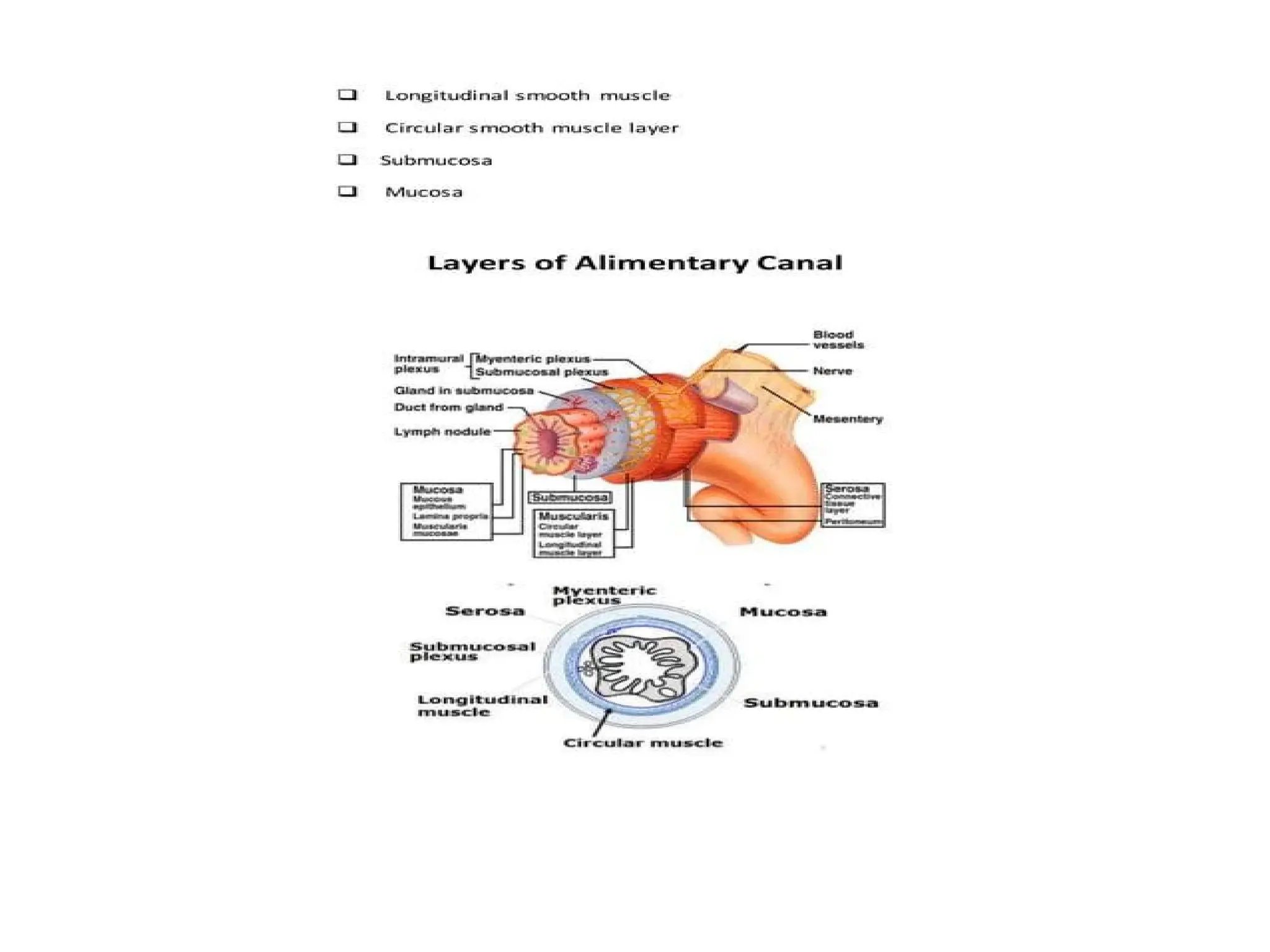
Digestive system is made up of gastrointestinal
tract (GI tract) or alimentary canal and
accessory organs, which help in the process of
digestion and absorption (Fig. 36.1). GI tract is a
tubular structure extending from the mouth up
to anus, with a length of about 30 feet. It opens
to the external environment on both ends. GI
tract is formed by two types of organs:
• 1. Primary digestive organs.
• 2. Accessory digestive organs
• The Human Digestive System
• MOUTH
• Chewing is important for:
• 1-Digestion of all foods, but especially important
for most fruits and raw vegetables because
these have indigestible cellulose membranes
around their nutrient portions that must be
broken before the food can be digested.
• 2- Chewing the digestion of food for simple
reason: Digestive enzymes (in saliva) act only on
the surfaces of food particles; therefore the rate
of digestion is absolutely dependent on the total
surface area exposed to the digestive secretions
• Saliva & Salivary glands: The principal glands
of salivation are the parotid,
submandibular ،and sublingual glands.
• Saliva contains two major types of protein
secretion: 1- The serous secretion (watery
saliva) contains ptyalin (α-amylase),which is an
enzyme for digesting starches. 2-The mucous
secretion contains mucin for lubrication and
for surface protection.
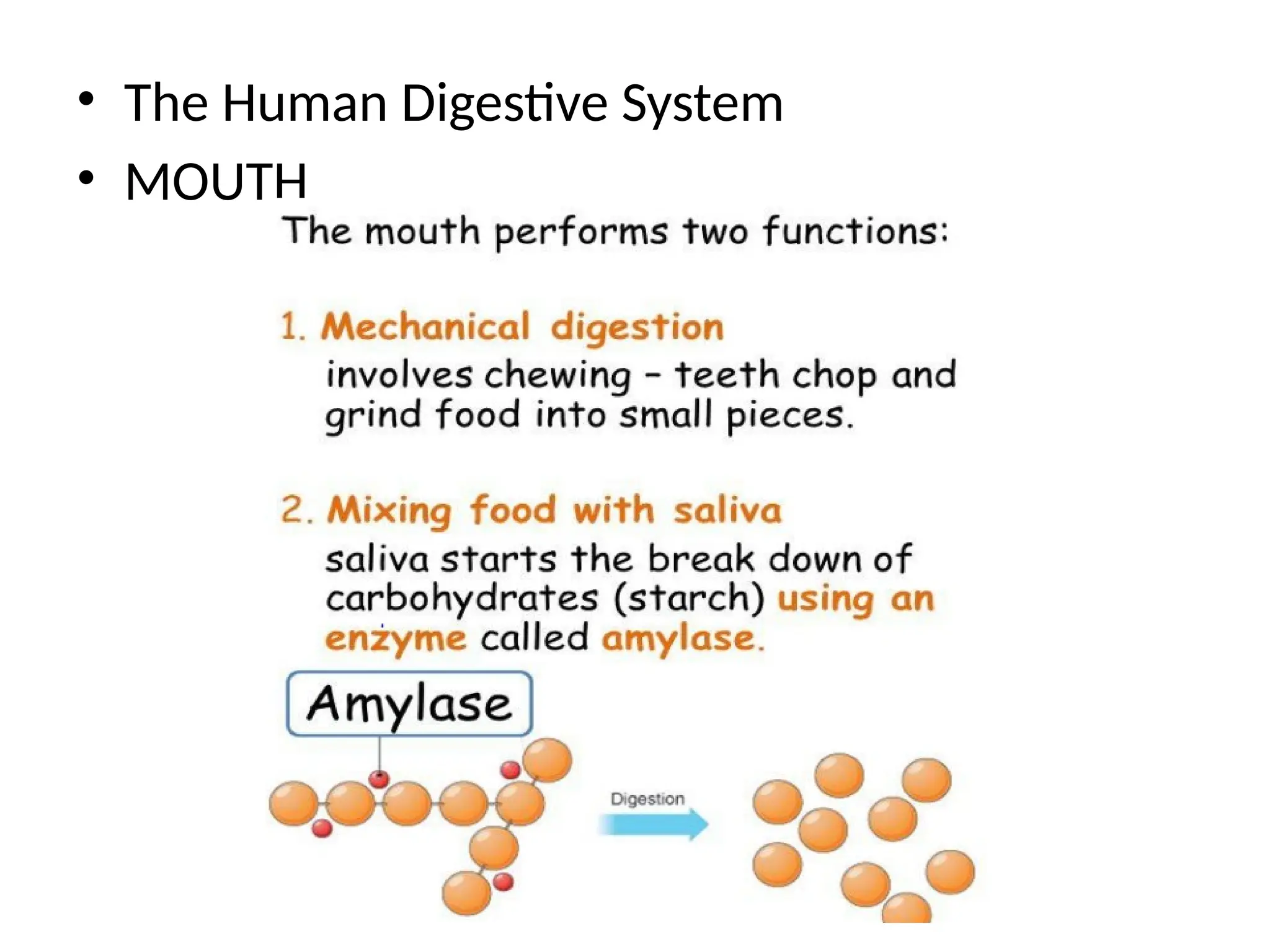
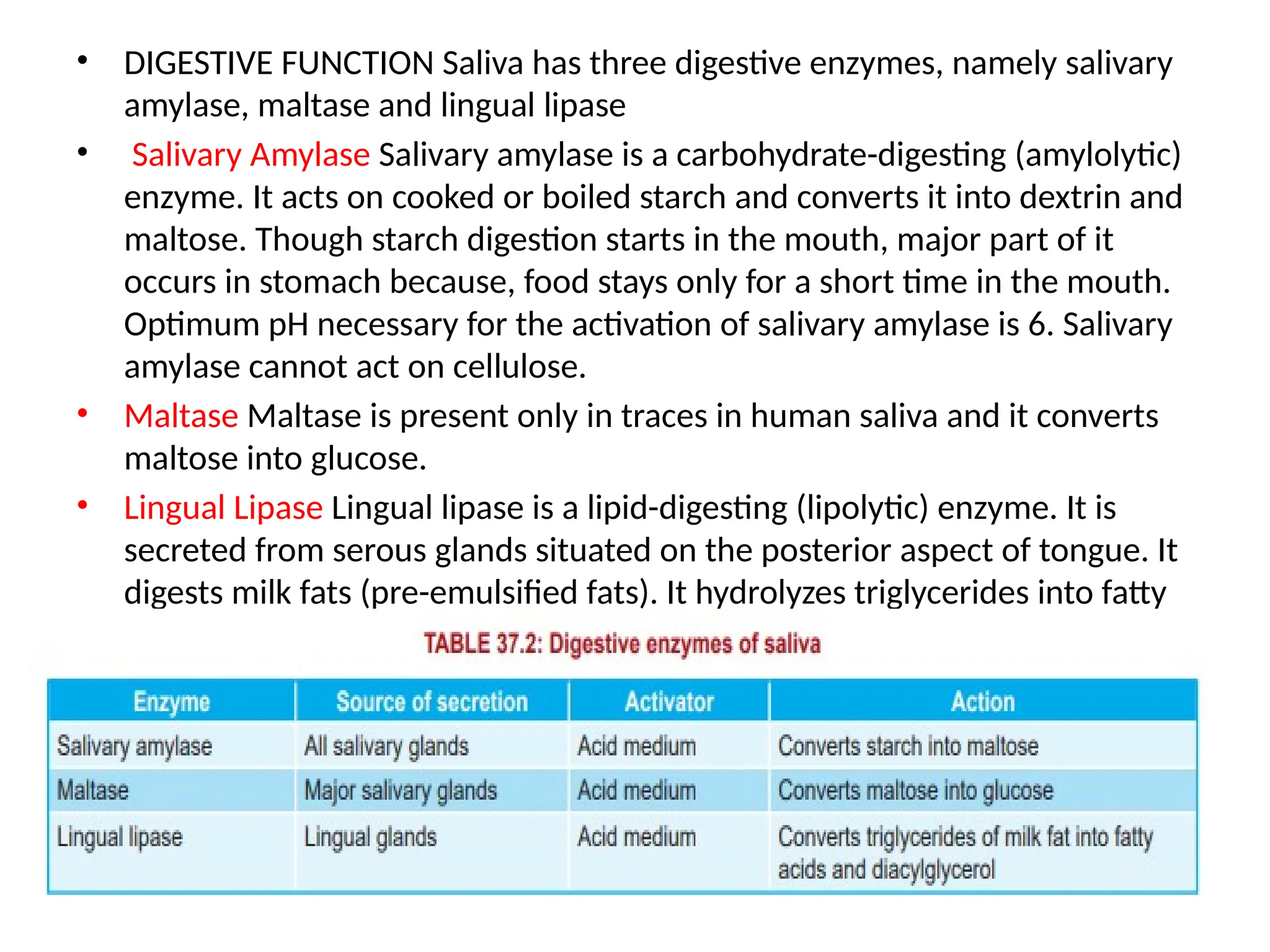
• DIGESTIVE FUNCTION Saliva has three digestive enzymes, namely salivary
amylase, maltase and lingual lipase
• Salivary Amylase Salivary amylase is a carbohydrate-digesting (amylolytic)
enzyme. It acts on cooked or boiled starch and converts it into dextrin and
maltose. Though starch digestion starts in the mouth, major part of it
occurs in stomach because, food stays only for a short time in the mouth.
Optimum pH necessary for the activation of salivary amylase is 6. Salivary
amylase cannot act on cellulose.
• Maltase Maltase is present only in traces in human saliva and it converts
maltose into glucose.
• Lingual Lipase Lingual lipase is a lipid-digesting (lipolytic) enzyme. It is
secreted from serous glands situated on the posterior aspect of tongue. It
digests milk fats (pre-emulsified fats). It hydrolyzes triglycerides into fatty
acids and diacylglycerol
• APPLIED PHYSIOLOGY „
• HYPOSALIVATION Reduction in the secretion of saliva is called
hyposalivation. It is of two types, namely temporary hyposalivation
and permanent hyposalivation. 1. Temporary hyposalivation occurs in:
i. Emotional conditions like fear. ii. Fever. iii. Dehydration.
• 2. Permanent hyposalivation occurs in: i. Sialolithiasis (obstruction of
salivary duct). ii. Congenital absence or hypoplasia of salivary glands.
iii. Bell palsy (paralysis of facial nerve). „
• HYPERSALIVATION Excess secretion of saliva is known as
hypersalivation. Physiological condition when hypersalivation occurs
is pregnancy. 1. Decay of tooth or neoplasm (abnormal new
growth or tumor) in mouth or tongue due to continuous irritation
of nerve endings in the mouth. 2. Disease of esophagus, stomach
and intestine. 3. Neurological disorders such as cerebral palsy,
mental retardation, cerebral stroke and parkinsonism. 4. Some
psychological and psychiatric conditions. 5. Nausea and vomiting
• Swallowing (Deglutition)
• It is a complicated mechanism, principally
because the pharynx subserves respiration as
well as swallowing. In general, swallowing can
be divided into:
• 1- A voluntary stage
• . 2- A pharyngeal stage,
• 3- An esophageal stage, involuntary phase that
transports food from the pharynx to the
stomach
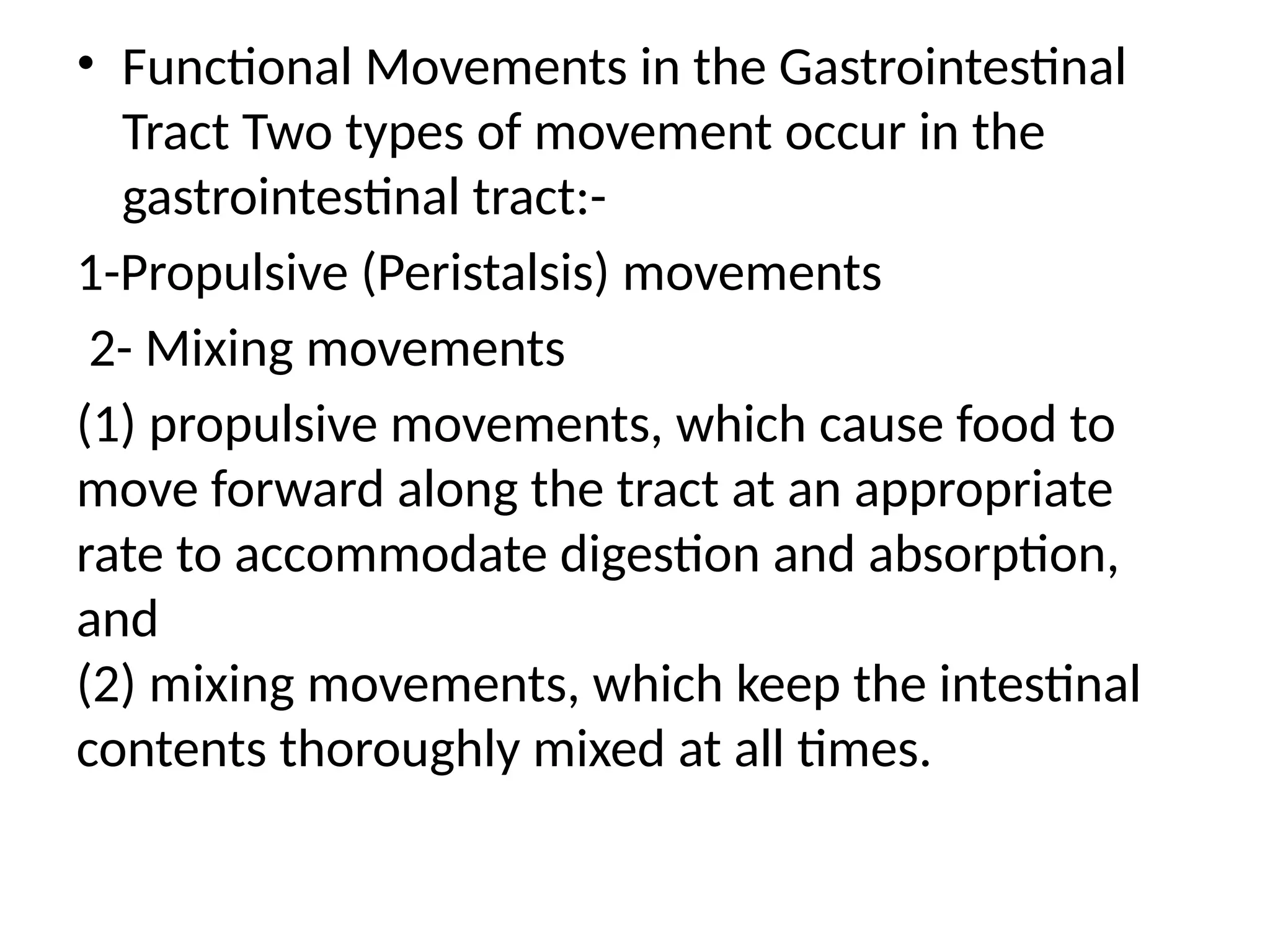
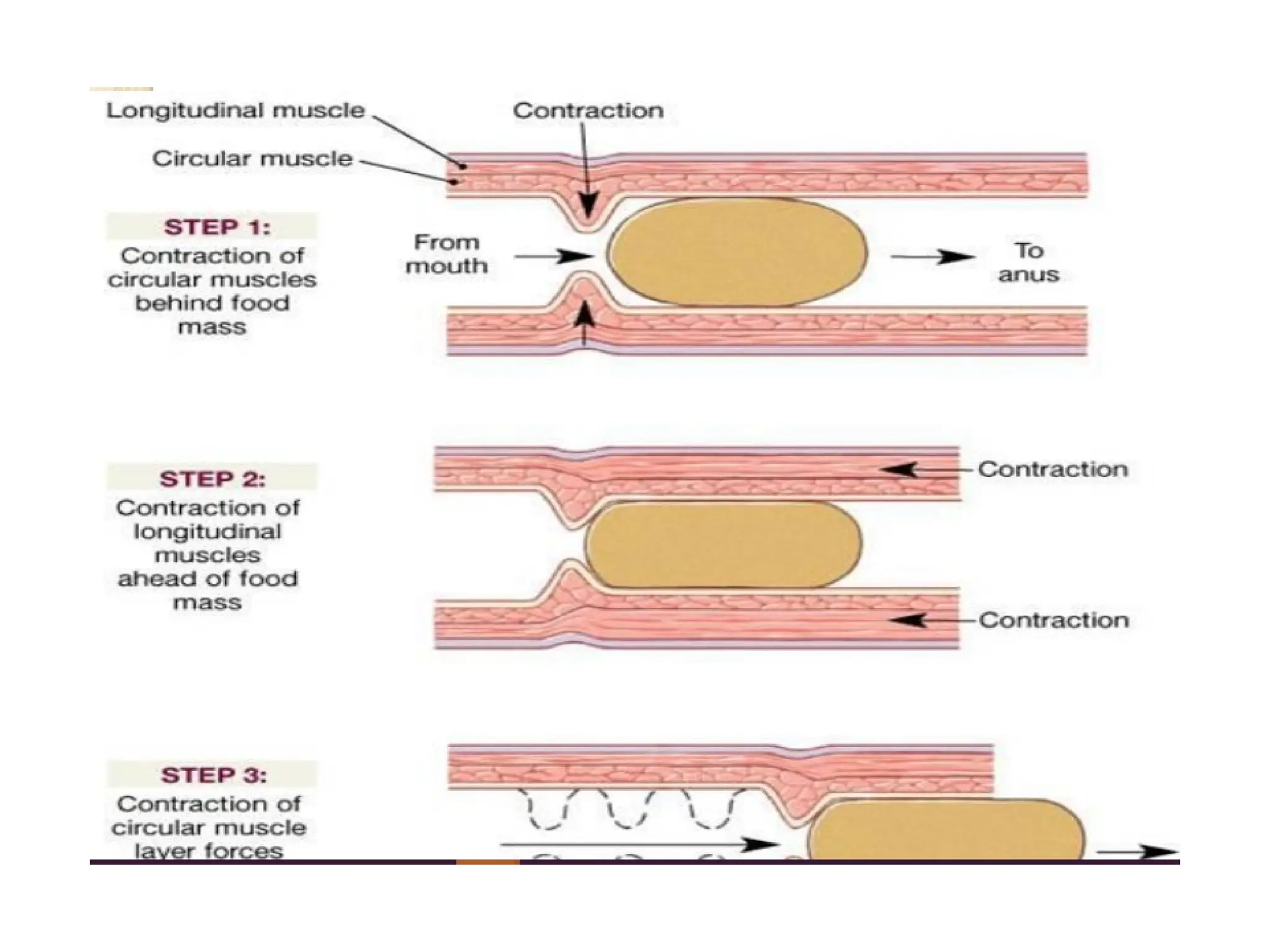
• Functional Movements in the Gastrointestinal
Tract Two types of movement occur in the
gastrointestinal tract:-
1-Propulsive (Peristalsis) movements
2- Mixing movements
(1) propulsive movements, which cause food to
move forward along the tract at an appropriate
rate to accommodate digestion and absorption,
and
(2) mixing movements, which keep the intestinal
contents thoroughly mixed at all times.
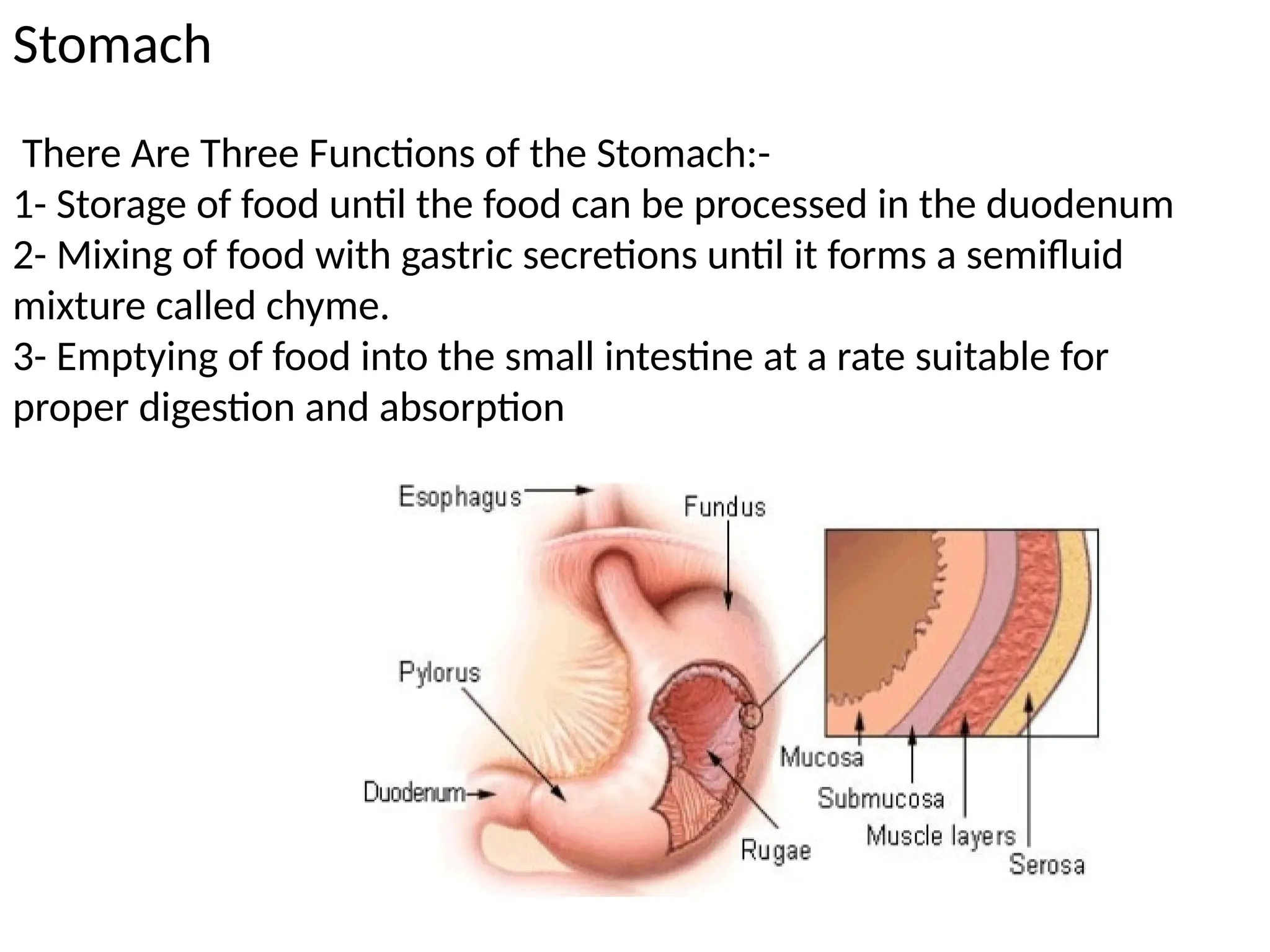
Stomach
There Are Three Functions of the Stomach:-
1- Storage of food until the food can be processed in the duodenum
2- Mixing of food with gastric secretions until it forms a semifluid
mixture called chyme.
3- Emptying of food into the small intestine at a rate suitable for
proper digestion and absorption
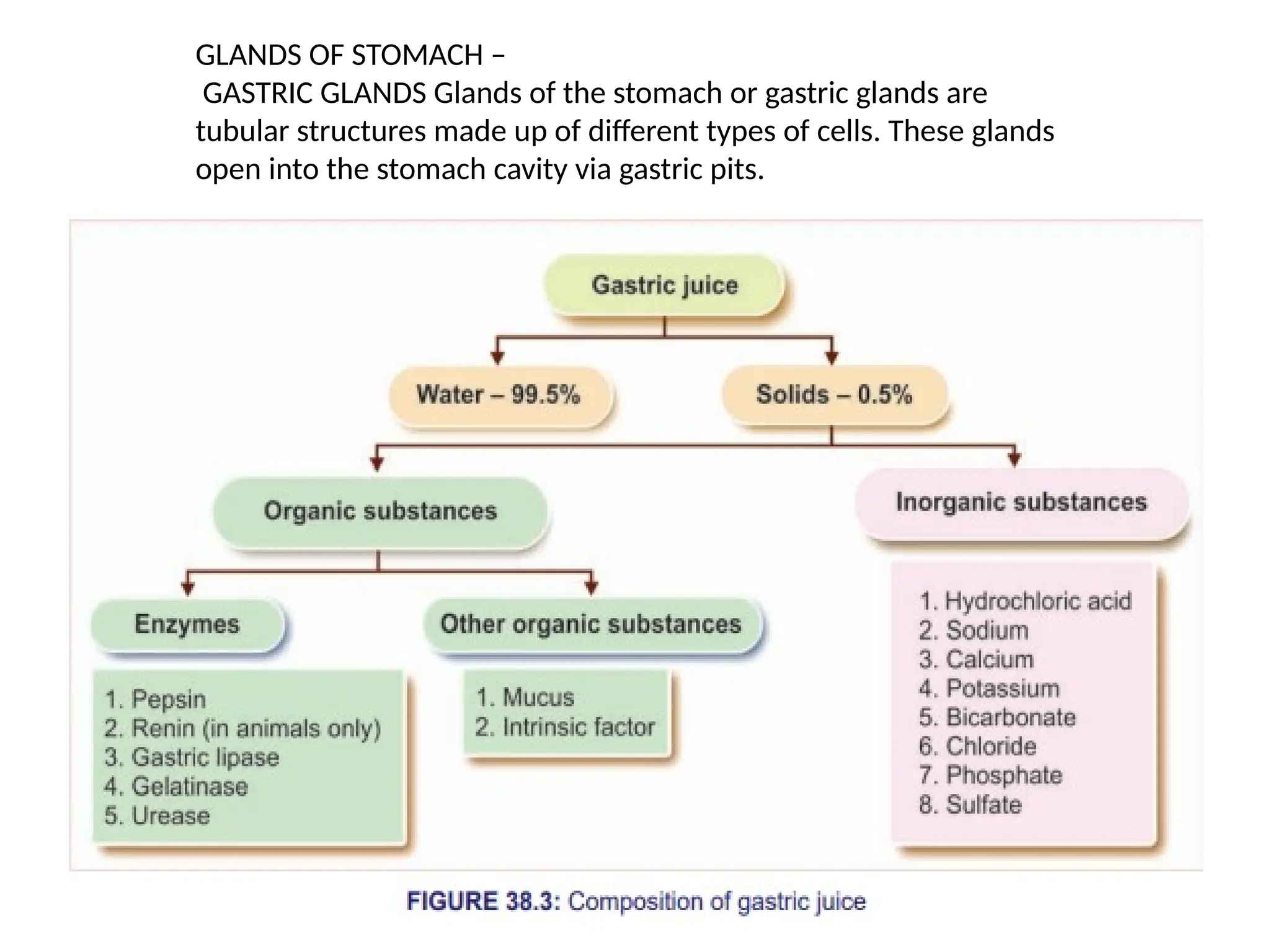
GLANDS OF STOMACH –
GASTRIC GLANDS Glands of the stomach or gastric glands are
tubular structures made up of different types of cells. These glands
open into the stomach cavity via gastric pits.
•Hydrochloric Acid (HCl)
•Source: Secreted by parietal cells in the stomach lining.
•Function:
•Lowers the pH of the stomach to 1.5 to 3.5, creating an acidic environment.
•Activation of Pepsinogen: This acidic environment activates pepsinogen (an
inactive enzyme) into its active form, pepsin.
•Protein Digestion: Pepsin then breaks down proteins into smaller peptides,
which is the first step in protein digestion.
•Antimicrobial Action: The acidity also kills or inhibits the growth of harmful
bacteria ingested with food, reducing the risk of infection.
•Pepsinogen
•Source: Secreted by chief cells in the stomach.
•Function:
•Pepsinogen is an inactive precursor (zymogen) to pepsin.
•Once activated by the acidic environment in the stomach (via HCl), pepsin
initiates the digestion of proteins by breaking them down into smaller peptide
chains.
•Pepsin is most effective in the acidic environment created by HCl.
•Mucus Secreted by mucus cells and surface epithelial cells in the stomach
lining.
•Function:
•Protects the Stomach Lining: Mucus creates a protective barrier that
shields the stomach lining from the corrosive effects of hydrochloric acid and
digestive enzymes.
•Prevents Ulcers: Without this protective mucus, the stomach lining would
be damaged by the very acids required for digestion, leading to conditions
like gastritis or peptic ulcers.
•Intrinsic Factor Secreted by parietal cells.
•Function:
•Intrinsic factor is essential for the absorption of Vitamin B12 in the small
intestine, specifically in the ileum.
•A deficiency in intrinsic factor leads to pernicious anemia, where vitamin
B12 cannot be absorbed properly, affecting red blood cell production and
nervous system function.
•Bicarbonate Secreted by epithelial cells.
•Function:
•Bicarbonate is released into the mucus layer and neutralizes small amounts
of acid that come into contact with the stomach lining, preventing damage.
Functions of Gastric Juices in Digestion
1. Protein Digestion
1. Pepsin: The most important enzyme for protein digestion in the
stomach. It breaks down complex proteins into smaller peptides that will
be further digested in the small intestine by other enzymes like trypsin
and chymotrypsin.
2. Acidification of Stomach Content
1. HCl: The acidic pH not only activates pepsinogen to pepsin but also
denatures proteins, making them easier for enzymes to break down. It
also helps in the absorption of certain minerals like calcium and iron.
3. Preparation for Small Intestine Digestion
1. The stomach’s acidic environment liquefies food, turning it into a semi-
fluid substance called chyme. This makes it easier for the digestive
enzymes in the small intestine to continue the breakdown of nutrients
for absorption.
• PHASES OF GASTRIC SECRETION
• Secretion of gastric juice is a continuous process. But the quantity
varies, depending upon time and stimulus. System Accordingly,
gastric secretion occurs in four different phases:
• 1, Cephalic phase
• 2. Gastric phase
• 3,. Intestinal phase,
• 4. Interdigestive phase . Each phase is regulated by neural
mechanism or hormonal mechanism or both.
• Cephalic Phase: This phase is triggered by the sight, smell, taste, or
even thought of food. It involves the brain signaling the stomach to
start secreting gastric juices (including hydrochloric acid and
pepsinogen) in preparation for food intake.
• Gastric Phase: This phase starts when food enters the stomach.
Stretching of the stomach and the presence of food stimulate the
secretion of gastric juices, further enhancing digestion. Gastrin, a
hormone, is released to increase acid production and enzyme activity
• .Intestinal Phase: This phase begins when partially digested food
moves into the small intestine. The presence of food in the intestine
inhibits further gastric secretion and promotes the release of
hormones like secretin and cholecystokinin to regulate digestive
processes.
• Interdigestive phase is the period between meals when the stomach
and digestive system are not actively processing food. During this
phase, the stomach remains relatively inactive, but the body still
prepares for the next meal.
• Read Pages 239 240 and 241 of japee essential book
• For physiological disorders
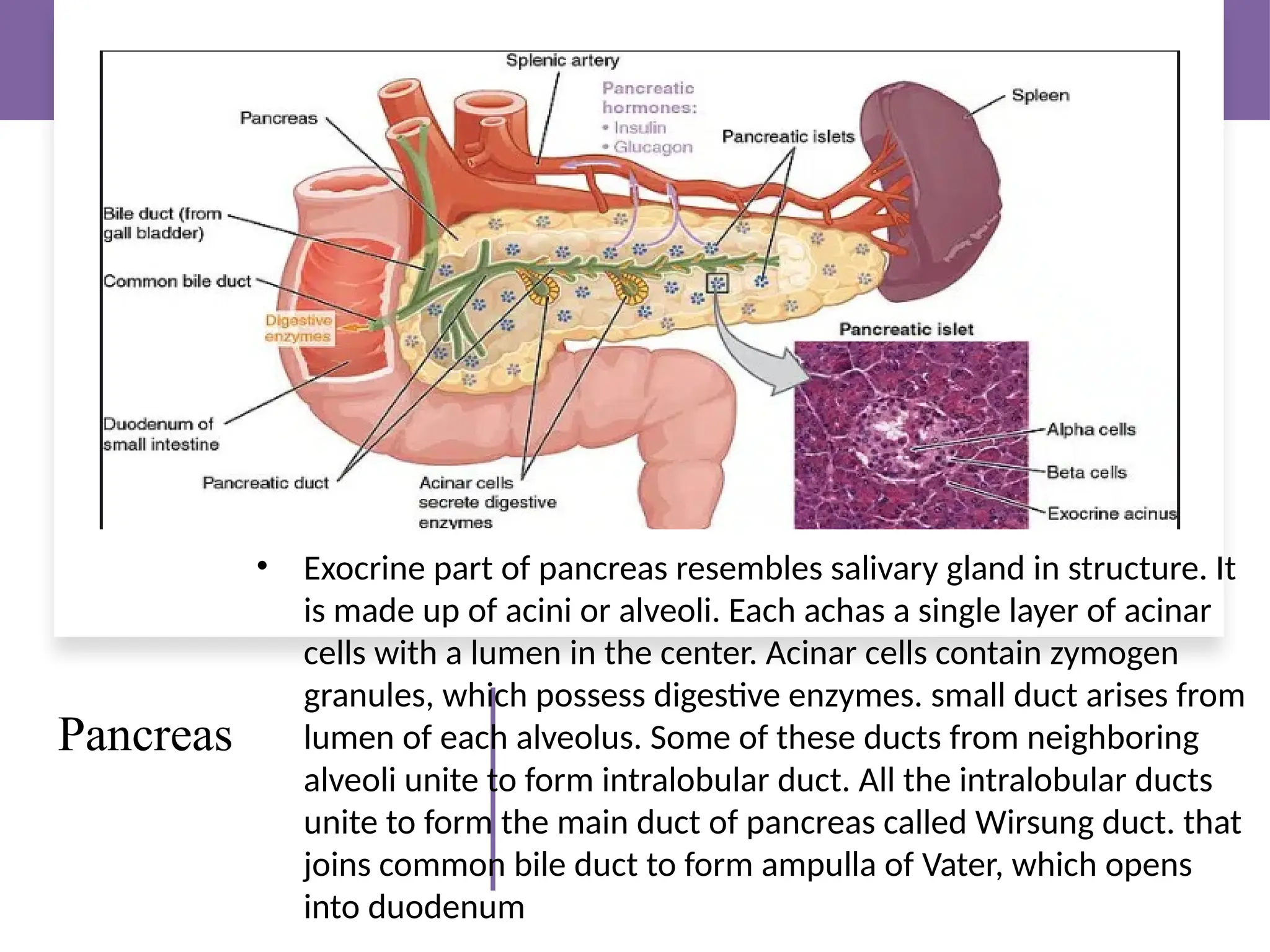
Pancreas
• Exocrine part of pancreas resembles salivary gland in structure. It
is made up of acini or alveoli. Each achas a single layer of acinar
cells with a lumen in the center. Acinar cells contain zymogen
granules, which possess digestive enzymes. small duct arises from
lumen of each alveolus. Some of these ducts from neighboring
alveoli unite to form intralobular duct. All the intralobular ducts
unite to form the main duct of pancreas called Wirsung duct. that
joins common bile duct to form ampulla of Vater, which opens
into duodenum
PROPERTIES OF PANCREATIC JUICE
• Volume : 500 to 800 mL/day
• Reaction : Highly alkaline with a pH of 8 to 8.3
• Specific gravity : 1.010 to 1.018
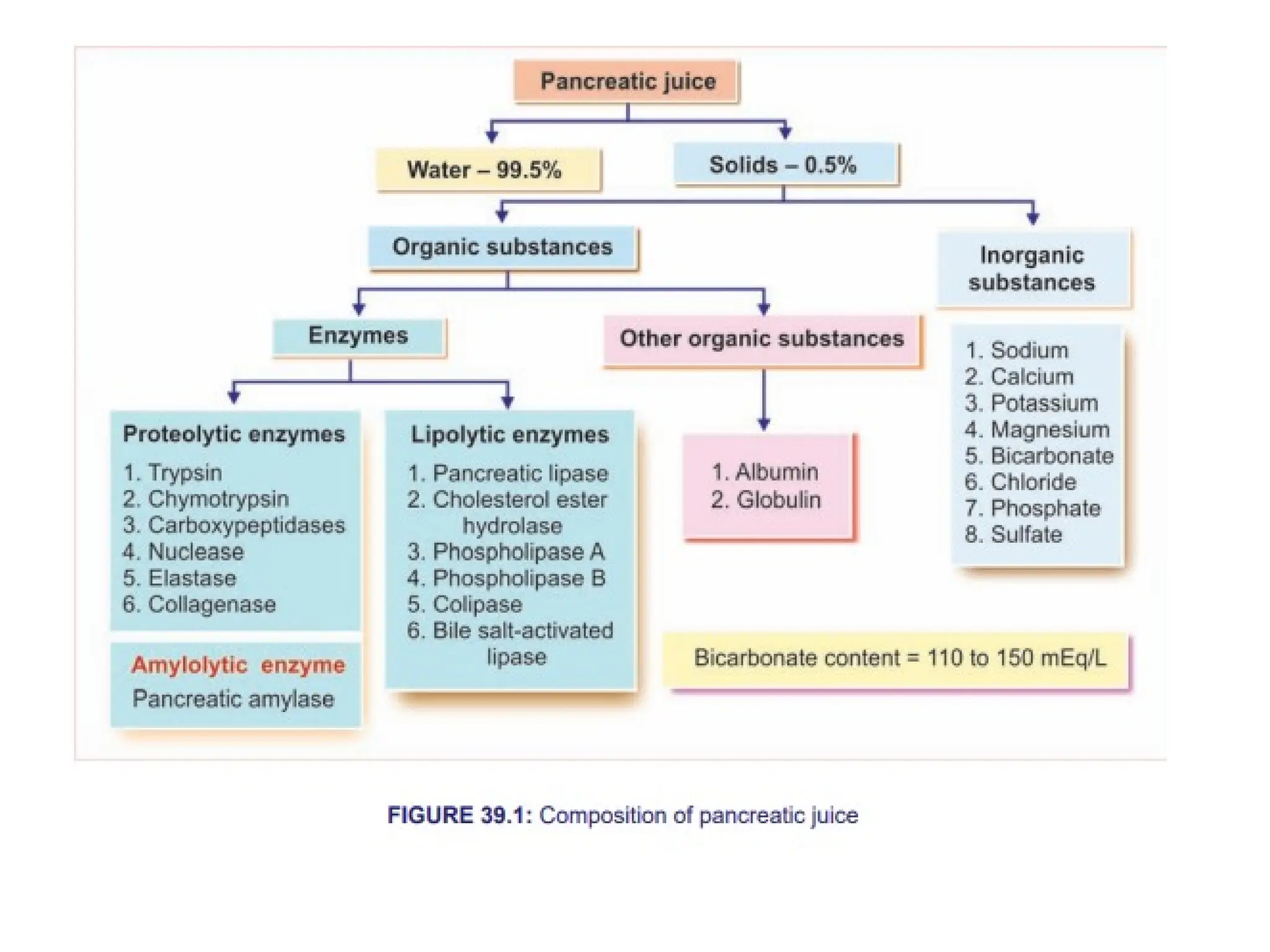
COMPOSITION OF PANCREATIC JUICE
• Pancreatic juice contains 99.5% of water and 0.5%
of solids. The solids are the organic and inorganicsubstances..
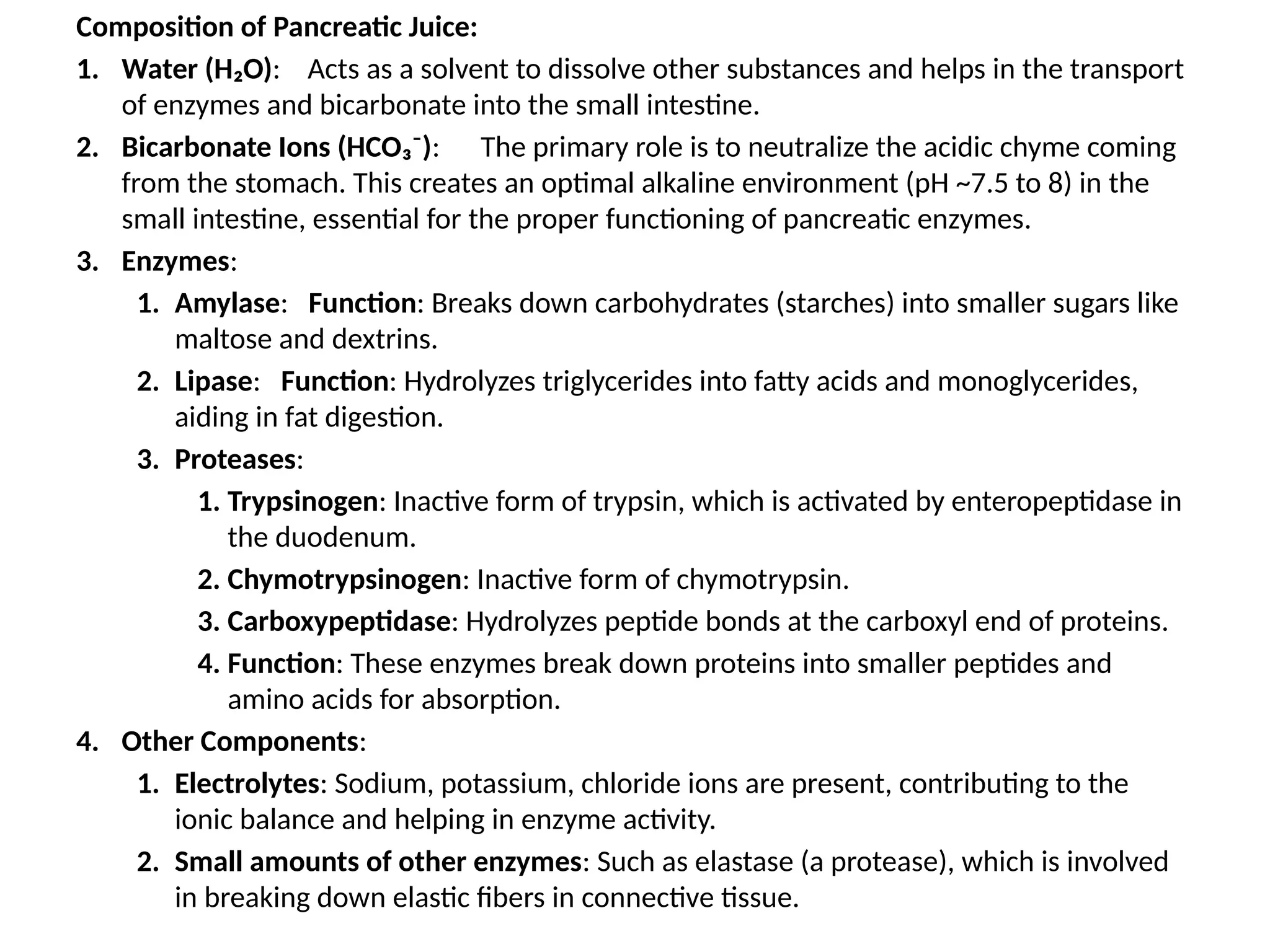
Composition of Pancreatic Juice:
1. Water (H₂O): Acts as a solvent to dissolve other substances and helps in the transport
of enzymes and bicarbonate into the small intestine.
2. Bicarbonate Ions (HCO₃⁻): The primary role is to neutralize the acidic chyme coming
from the stomach. This creates an optimal alkaline environment (pH ~7.5 to 8) in the
small intestine, essential for the proper functioning of pancreatic enzymes.
3. Enzymes:
1. Amylase: Function: Breaks down carbohydrates (starches) into smaller sugars like
maltose and dextrins.
2. Lipase: Function: Hydrolyzes triglycerides into fatty acids and monoglycerides,
aiding in fat digestion.
3. Proteases:
1. Trypsinogen: Inactive form of trypsin, which is activated by enteropeptidase in
the duodenum.
2. Chymotrypsinogen: Inactive form of chymotrypsin.
3. Carboxypeptidase: Hydrolyzes peptide bonds at the carboxyl end of proteins.
4. Function: These enzymes break down proteins into smaller peptides and
amino acids for absorption.
4. Other Components:
1. Electrolytes: Sodium, potassium, chloride ions are present, contributing to the
ionic balance and helping in enzyme activity.
2. Small amounts of other enzymes: Such as elastase (a protease), which is involved
in breaking down elastic fibers in connective tissue.
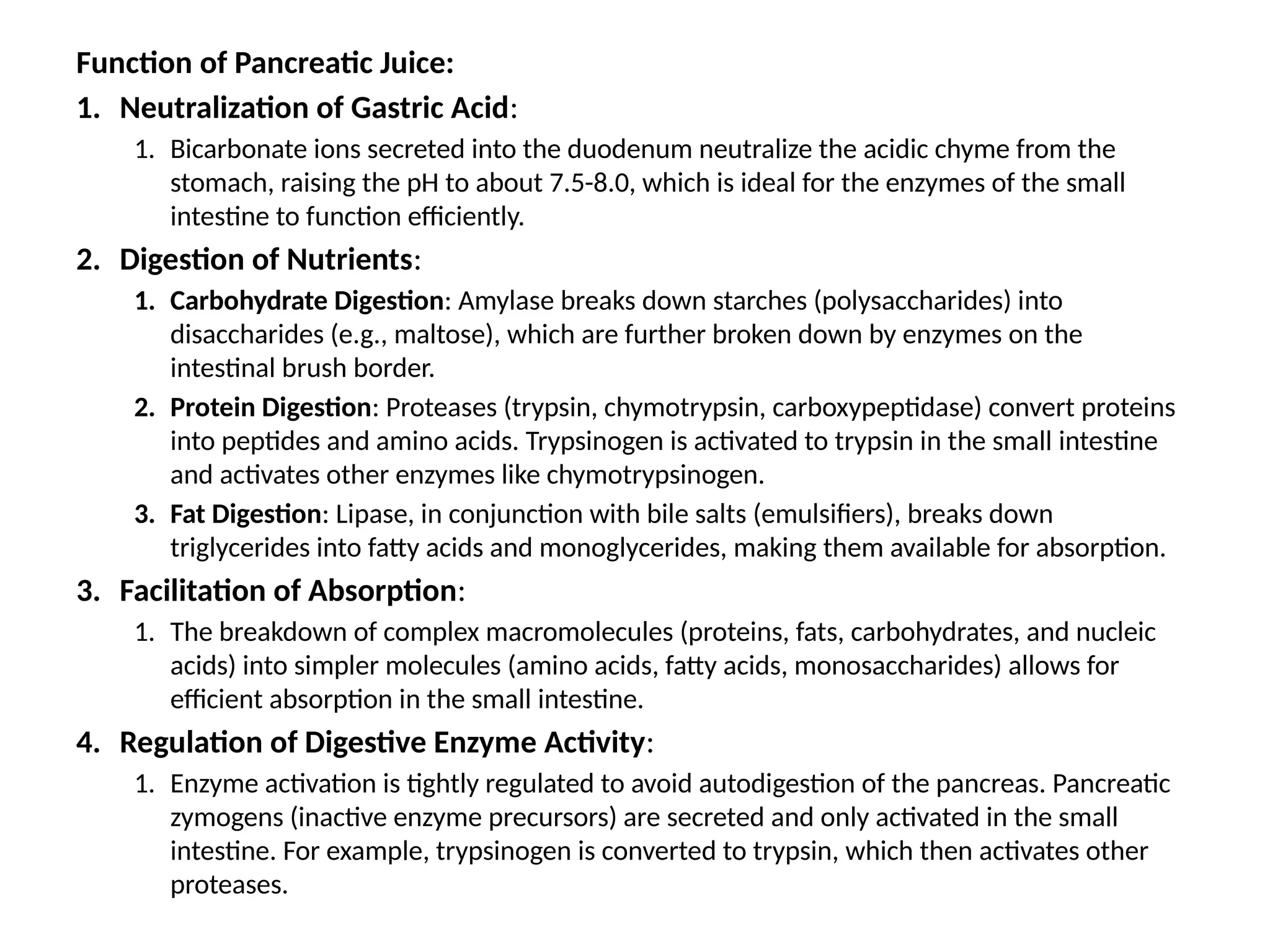
Function of Pancreatic Juice:
1. Neutralization of Gastric Acid:
1. Bicarbonate ions secreted into the duodenum neutralize the acidic chyme from the
stomach, raising the pH to about 7.5-8.0, which is ideal for the enzymes of the small
intestine to function efficiently.
2. Digestion of Nutrients:
1. Carbohydrate Digestion: Amylase breaks down starches (polysaccharides) into
disaccharides (e.g., maltose), which are further broken down by enzymes on the
intestinal brush border.
2. Protein Digestion: Proteases (trypsin, chymotrypsin, carboxypeptidase) convert proteins
into peptides and amino acids. Trypsinogen is activated to trypsin in the small intestine
and activates other enzymes like chymotrypsinogen.
3. Fat Digestion: Lipase, in conjunction with bile salts (emulsifiers), breaks down
triglycerides into fatty acids and monoglycerides, making them available for absorption.
3. Facilitation of Absorption:
1. The breakdown of complex macromolecules (proteins, fats, carbohydrates, and nucleic
acids) into simpler molecules (amino acids, fatty acids, monosaccharides) allows for
efficient absorption in the small intestine.
4. Regulation of Digestive Enzyme Activity:
1. Enzyme activation is tightly regulated to avoid autodigestion of the pancreas. Pancreatic
zymogens (inactive enzyme precursors) are secreted and only activated in the small
intestine. For example, trypsinogen is converted to trypsin, which then activates other
proteases.
APPLIED PHYSIOLOGY
• Pancreatitis
• Steatorrhea
•Pancreatitis: I
inflammation of pancreatic acini (glandular tissue)
•Types:
• Acute Pancreatitis (Severe, sudden onset)
• Chronic Pancreatitis (Long-term, repeated inflammation)
Acute Pancreatitis
• Causes: Heavy alcohol intake, gallstones
• Features:
• Severe upper abdominal pain
• Nausea and vomiting
• Loss of appetite and weight
• Fever and shock
Chronic Pancreatitis
• Causes:
• Long-term alcohol consumption
• Chronic gallstone obstruction
• Hereditary/genetic factors
• Cystic fibrosis, congenital duct abnormalities
• Malnutrition, idiopathic (unknown) causes
• Features:
• Repeated acute inflammation or chronic damage
• Complete destruction of pancreas tissue
• Pancreatic enzyme deficiency, affecting digestion
Steatorrhea
• Definition:
Steatorrhea is the presence of bulky, foul-smelling, frothy, and clay-
colored stools due to undigested fat.
• Cause:
• Any condition that causes indigestion or malabsorption of fat leads to
steatorrhea. Various causes of steatorrhea are:
• 1. Lack of pancreatic lipase: Since most of the fat is digested only by
pancreatic lipase, its deficiency leads to steatorrhea
• 2. Liver disease affecting secretion of bile: Bile salts are essential for
the digestion of fat by lipase and absorption of fat from intestine.
Absence of bile salts results in excretion of fatty stool
• 3. Celiac disease: Atrophy of intestinal villi leads to malabsorption,
resulting in steatorrheaImpaired digestion and absorption of fat due to
lack of pancreatic lipase (an enzyme essential for fat digestion)
• Steatorrhea is an important clinical sign of pancreatic insufficiency and fat
malabsorption.
Liver and gallbladder
Liver Structure
• Hepatic Lobes: The liver is made up of multiple lobes, each containing many
smaller units called hepatic lobules. There are about 50,000 to 100,000 lobules
in the liver.
• Hepatic Lobules: The basic structural and functional unit of the liver. The lobule
is a honeycomb-like structure composed of hepatocytes (liver cells).
• Hepatocytes and Hepatic Plates:
• Hepatocytes are arranged in columns called hepatic plates.
• Between two columns of hepatocytes is a bile canaliculus.
• Between hepatic plates, blood-filled spaces called sinusoids are present. These
sinusoids are lined by endothelial cells and contain special macrophages called Kupffer
cells.
• Portal Triads: Each lobule is surrounded by portal triads, which consist of three
vessels:
• A branch of the hepatic artery
• A branch of the portal vein
• A tributary of the bile duct
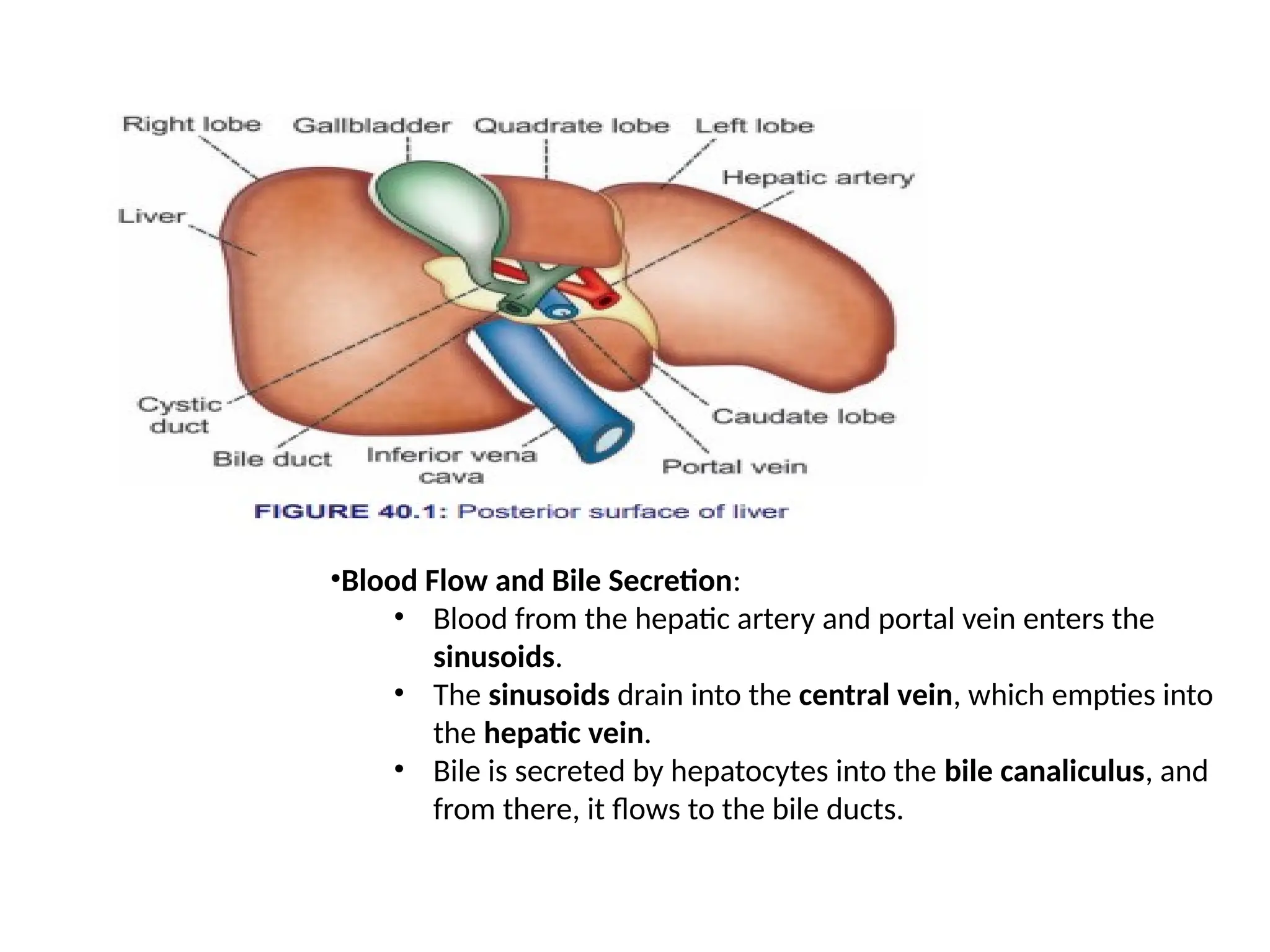
•Blood Flow and Bile Secretion:
• Blood from the hepatic artery and portal vein enters the
sinusoids.
• The sinusoids drain into the central vein, which empties into
the hepatic vein.
• Bile is secreted by hepatocytes into the bile canaliculus, and
from there, it flows to the bile ducts.
Biliary System
(Extrahepatic Biliary Apparatus
1. Components:
1. Gallbladder
2. Extrahepatic bile ducts
3. (bile ducts outside the liver)
2. Formation of Bile Ducts:
1. Right and left hepatic bile ducts emerge from the liver and join to
form the common hepatic duct.
2. The common hepatic duct unites with the cystic duct from the
gallbladder to form the common bile duct.
3. Common Hepatopancreatic Duct:
1. The common bile duct joins with the pancreatic duct to form the
common hepatopancreatic duct (also called ampulla of Vater).
2. The ampulla of Vater opens into the duodenum.
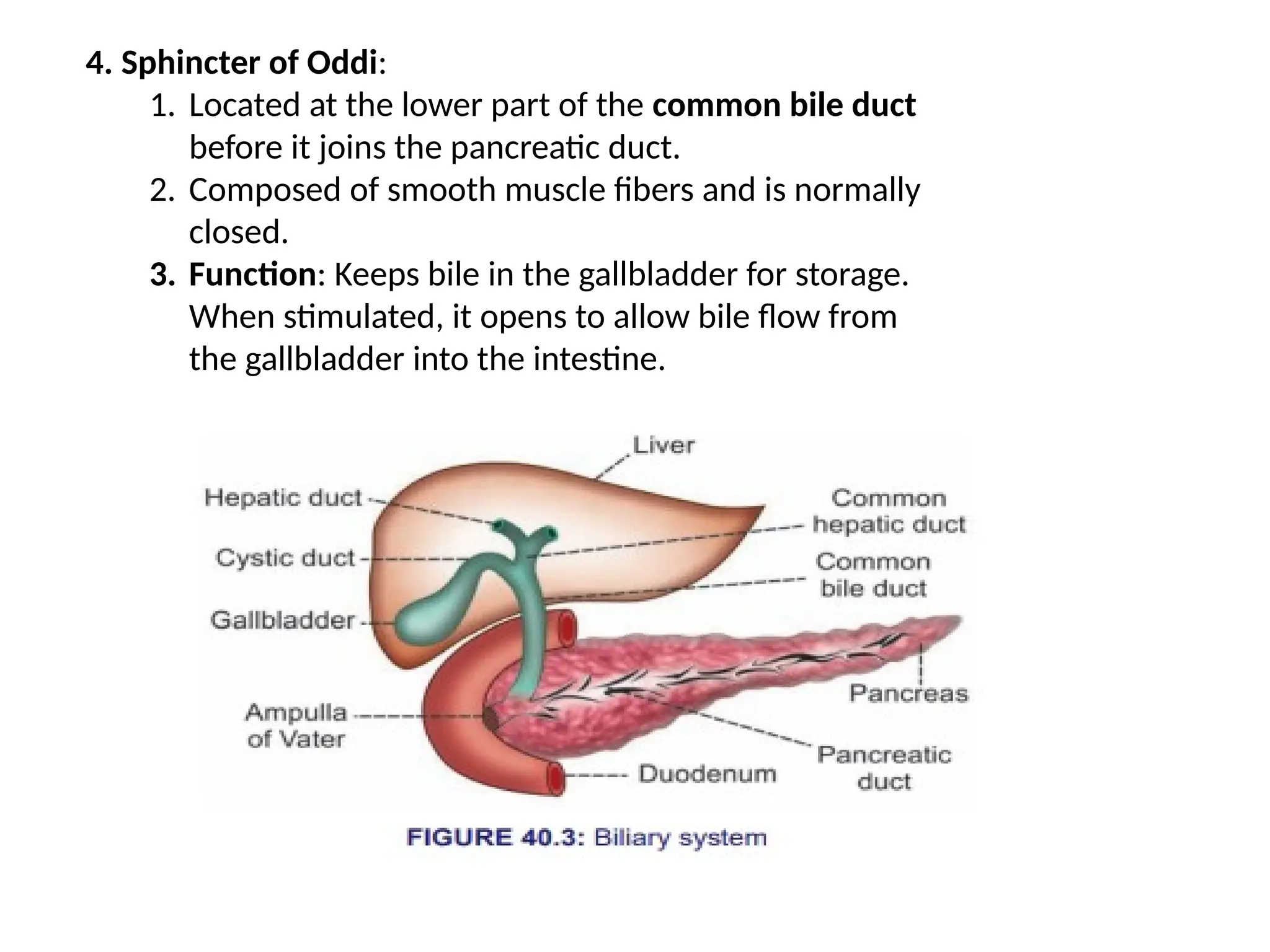
4. Sphincter of Oddi:
1. Located at the lower part of the common bile duct
before it joins the pancreatic duct.
2. Composed of smooth muscle fibers and is normally
closed.
3. Function: Keeps bile in the gallbladder for storage.
When stimulated, it opens to allow bile flow from
the gallbladder into the intestine.
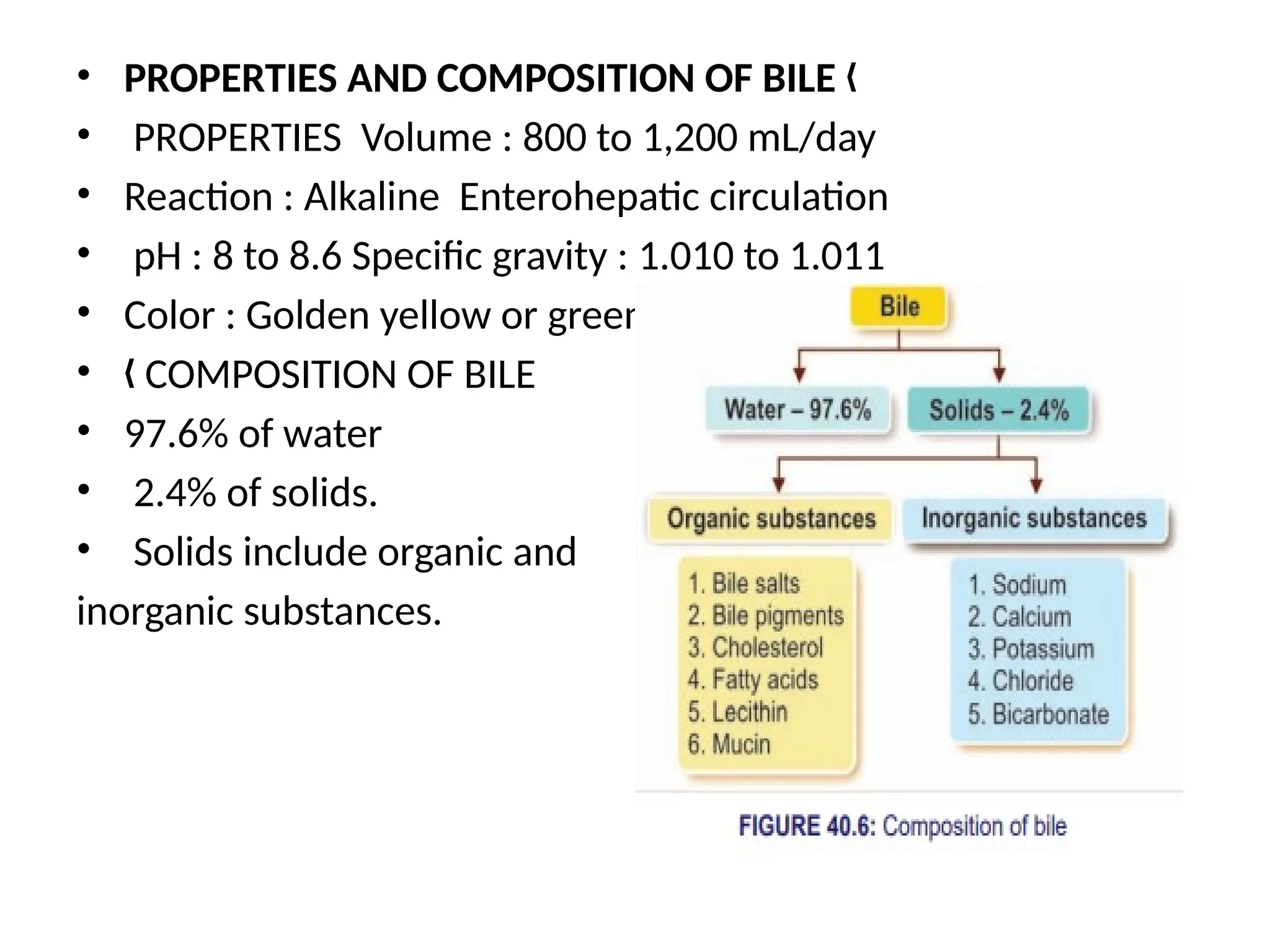
• PROPERTIES AND COMPOSITION OF BILE „
• PROPERTIES Volume : 800 to 1,200 mL/day
• Reaction : Alkaline Enterohepatic circulation
• pH : 8 to 8.6 Specific gravity : 1.010 to 1.011
• Color : Golden yellow or green.
• COMPOSITION OF BILE
„
• 97.6% of water
• 2.4% of solids.
• Solids include organic and
inorganic substances.
Secretion of Bile
• Production Site: Bile is synthesized by hepatocytes, the main functional cells of
the liver.​
• Initial Composition: The primary bile secreted contains:​
• Bile Acids: Synthesized from cholesterol.​
• Bile Pigments: Such as bilirubin, derived from the breakdown of hemoglobin.​
• Cholesterol: A lipid component.​
• Lecithin: A type of phospholipid.​
• Fatty Acids: Essential for lipid digestion.​
• Secretion Pathway:
• Bile Canaliculi: Hepatocytes secrete bile into small channels called bile canaliculi,
located between adjacent liver cell
• Biliary Ductal System: From the canaliculi, bile flows into progressively larger ducts:​
• Intrahepatic Bile Ducts: Located within the liver.
• Common Hepatic Duct: Formed by the merging of right and left hepatic ducts.
• Common Bile Duct: Formed by the union of the common hepatic duct and the cystic duct from
the gallbladder.
• Modification During Transit:
• As bile passes through the ducts, water, sodium, and bicarbonate ions are secreted by
the epithelial cells lining the ducts. This secretion increases the volume of bile and
helps neutralize stomach acids entering the duodenum.
• Storage of Bile
Gallbladder Function:
Between meals, bile is stored in the gallbladder, a pear-shaped organ
located beneath the liver.​
The gallbladder can concentrate bile by
absorbing water and electrolytes, increasing the potency of bile salts.
Storage Process: ​
• Bile Entry: Bile enters the gallbladder via the cystic duct.​
• Concentration: The gallbladder absorbs water and electrolytes
(except calcium and potassium), concentrating bile salts,
cholesterol, lecithin, and fatty acids.​
• Volume: The gallbladder typically stores about 30-50 mL of
concentrated bile.
• Regulation:The sphincter of Oddi, located at the junction of the
common bile duct and the duodenum, remains contracted during
fasting, preventing bile flow into the intestine and directing it into
the gallbladder for storage. ​
Release of Bile
• Stimulation:
• Upon ingestion of food, especially fats, the duodenum releases
• cholecystokinin (CCK), a hormone that stimulates:
•Gallbladder Contraction: Releases stored bile into the cystic
duct.
•Sphincter of Oddi Relaxation: Allows bile to flow into the
duodenum.
• Process:
• Contraction: The gallbladder contracts, sending bile through the
cystic duct.​
• Flow into Duodenum: Bile passes through the common bile
duct into the duodenum, aiding in the emulsification and
digestion of dietary fats.​
Formation of Bile Salts
Bile salts are the sodium and potassium salts of bile acids, which are
conjugated with glycine or taurine.
• Primary Bile Acids:
• Cholic acid and chenodeoxycholic acid are synthesized in the liver from
cholesterol.​
• Conversion in Intestine:
• Bacterial action in the intestine converts primary bile acids into secondary bile
acids:​
• Cholic acid → Deoxycholic acid
• Chenodeoxycholic acid → Lithocholic acid
• Enterohepatic Circulation:
• Reabsorption: Secondary bile acids are absorbed in the ileum of the small
intestine.​
• Return to Liver: They travel via the portal vein back to the liver.​
• Conjugation: In the liver, bile acids are conjugated with glycine or taurine to
form glycocholic acid and taurocholic acid, respectively.​
• Formation of Bile Salts: These conjugated bile acids combine with sodium or
potassium ions to form bile salts, which are more effective in emulsifying fat
• FUNCTIONS OF BILE SALTS
• Bile salts are required for digestion and absorption of fats in the intestine. The functions of
bile salts are:
1.Emulsification of Fats
Emulsification is the process by which the fat globules are broken down into minute
droplets and made in the form of a milky fluid called emulsion in small intestine, by the
action of bile salts.
2. Absorption of Fats
Bile salts help in the absorption of digested fats from intestine into blood.
3. Choleretic Action
Bile salts stimulate the secretion of bile from liver This action is called choleretic action.
4. Cholagogue Action
Cholagogue is an agent which causes contraction of gallbladder and release of bile into the
intestine..
5. Laxative Action
Laxative is an agent which induces defecation. Bile salts act as laxatives by stimulating
peristaltic movements of the intestine.
6. Prevention of Gallstone Formation Bile salts prevent the formation of
gallstone by keeping the cholesterol and lecithin in solution.
• BILE PIGMENTS
• Bile pigments are the excretory products in bile. Bilirubin and
biliverdin are the two bile pigments and bilirubin is the major
bile pigment in human beings.
• Bile pigments are formed during the breakdown of
hemoglobin, which is released from the destroyed RBCs in the
reticuloendothelial system
• NORMAL PLASMA LEVELS OF BILIRUBIN
„
Normal bilirubin (Total bilirubin) content in plasma is 0.5
to 1.5 mg/dL. When it exceeds 1mg/dL, the condition is
called hyperbilirubinemia. When it exceeds 2 mg/dL,
jaundice occurs.
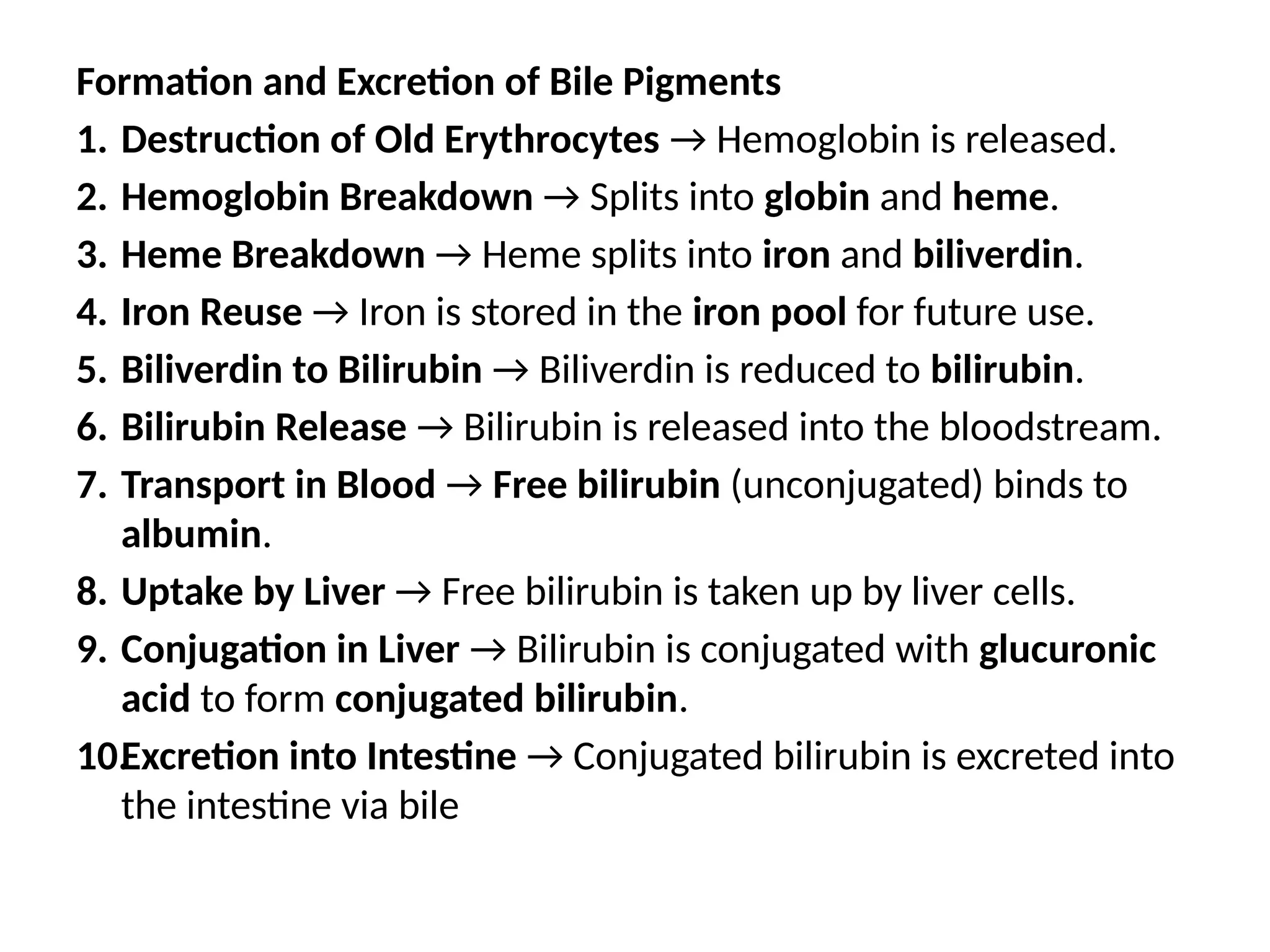
Formation and Excretion of Bile Pigments
1. Destruction of Old Erythrocytes → Hemoglobin is released.
2. Hemoglobin Breakdown → Splits into globin and heme.
3. Heme Breakdown → Heme splits into iron and biliverdin.
4. Iron Reuse → Iron is stored in the iron pool for future use.
5. Biliverdin to Bilirubin → Biliverdin is reduced to bilirubin.
6. Bilirubin Release → Bilirubin is released into the bloodstream.
7. Transport in Blood → Free bilirubin (unconjugated) binds to
albumin.
8. Uptake by Liver → Free bilirubin is taken up by liver cells.
9. Conjugation in Liver → Bilirubin is conjugated with glucuronic
acid to form conjugated bilirubin.
10.Excretion into Intestine → Conjugated bilirubin is excreted into
the intestine via bile
• GALLBLADDER
„
• Bile secreted from liver is stored ingallbladder. The capacity of
gallbladder is approximately 50 mL. Gallbladder is not essential for
life and it is removed (cholecystectomy) in patients suffering from
gallbladder dysfunction.
• FUNCTIONS OF GALLBLADDER
„
Major functions of gallbladder are the storage and concentration of
bile
1. Storage of Bile Bile is continuously secreted from liver. But it is
released into intestine only intermittently and most of the bile is
stored in gallbladder till it is required.
2. Concentration of Bile Bile is concentrated while it is stored in
gallbladder. The mucosa of gallbladder rapidly reabsorbs water and
electrolytes, except calcium and potassium. But the bile salts, bile
pigments, cholesterol and lecithin are not reabsorbed. So, the
concentration of these substances in bile increases 5 to 10 times
3. Alteration of pH of Bile The pH of bile decreases from 8 – 8.6
to 7 – 7.6 and it becomes less alkaline when it is stored in
gallbladder.
4. Secretion of Mucin Gallbladder secretes mucin and adds it to
bile. When bile is released into the intestine, mucin acts as a
lubricant for movement of chyme in the intestine.
5. Maintenance of Pressure in Biliary System Due to the
concentrating capacity, gallbladder maintains a pressure of about
7 cm H2 O in biliary system
• APPLIED PHYSIOLOGY IS GIVEN IN WORD
DOCUMENT ATTACHED IN GOOGLE
DRIVE
• OSPE TYPE QUESTIONS ARE ALSO
PROVIDED
• Small intestine
It is the part of gastrointestinal (GI) tract, extending between the pyloric sphincter of stomach
and ileocecal valve, which opens into large intestine
• Small intestine consists of three portions:
• 1. Proximal part (duodenum)
• 2. Middle part (jejunum)
• 3. Distal part (ileum)
INTESTINAL VILLI AND GLANDS OF SMALL INTESTINE
1. Intestinal Villi
• Villi are small projections on the mucous membrane of the small intestine.
• Size: Height ≈ 1 mm; Diameter < 1 mm.
• Structure: Lined by columnar cells (enterocytes) with hair-like projections called
microvilli.
• Function: Increase the surface area for absorption.
• Central channel: Each villus contains a lacteal (for lymphatic drainage) and blood
vessels.
2. Crypts of Lieberkühn (Intestinal Glands)
• Location: Found between the villi in the intestinal wall.
• Structure: Simple tubular glands that do not penetrate the muscularis mucosa.
• Cell Types:
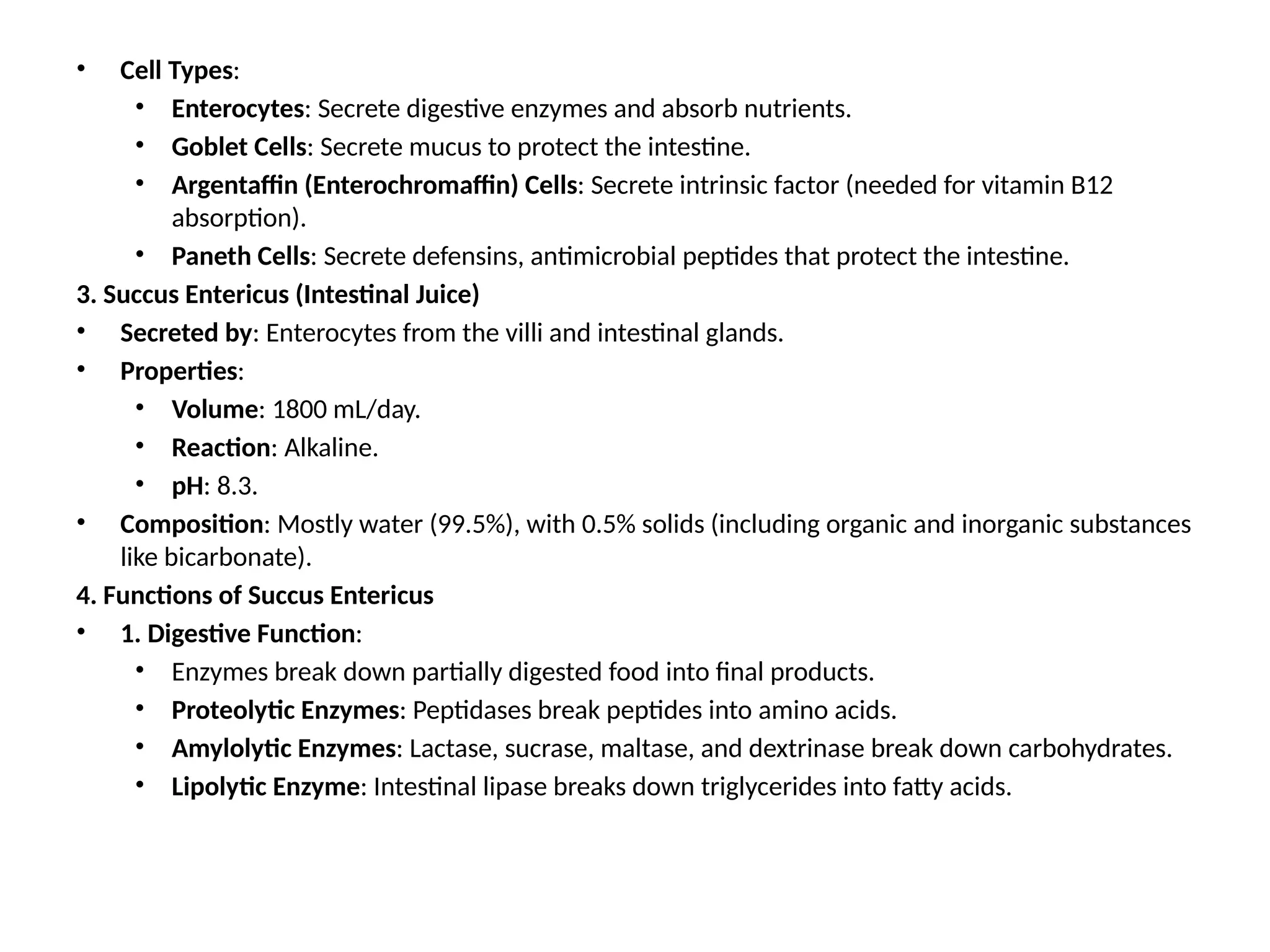
• Enterocytes: Secrete digestive enzymes and absorb nutrients.
• Goblet Cells: Secrete mucus to protect the intestine.
• Argentaffin (Enterochromaffin) Cells: Secrete intrinsic factor (needed for vitamin B12
absorption).
• Paneth Cells: Secrete defensins, antimicrobial peptides that protect the intestine.
3. Succus Entericus (Intestinal Juice)
• Secreted by: Enterocytes from the villi and intestinal glands.
• Properties:
• Volume: 1800 mL/day.
• Reaction: Alkaline.
• pH: 8.3.
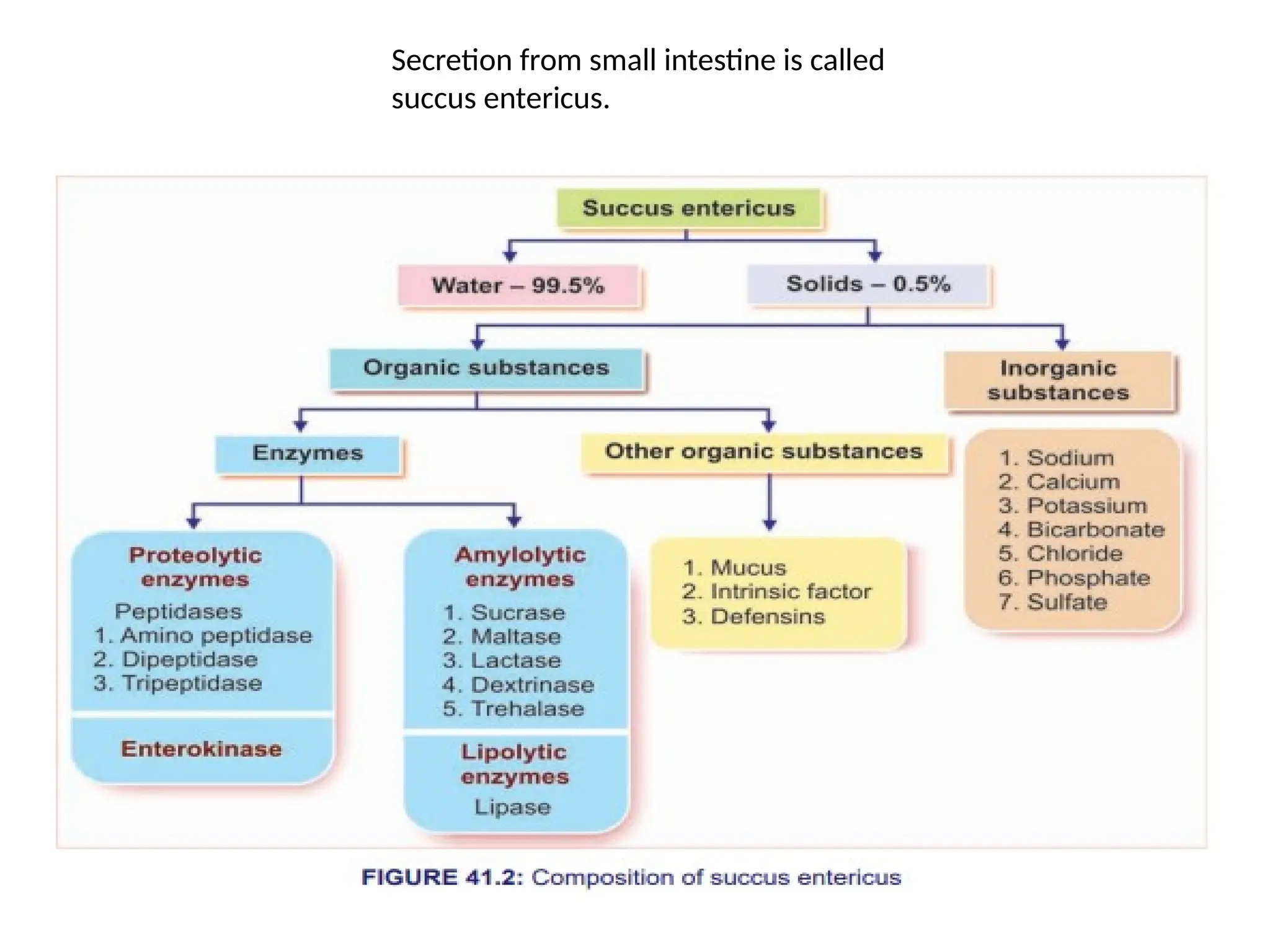
• Composition: Mostly water (99.5%), with 0.5% solids (including organic and inorganic substances
like bicarbonate).
4. Functions of Succus Entericus
• 1. Digestive Function:
• Enzymes break down partially digested food into final products.
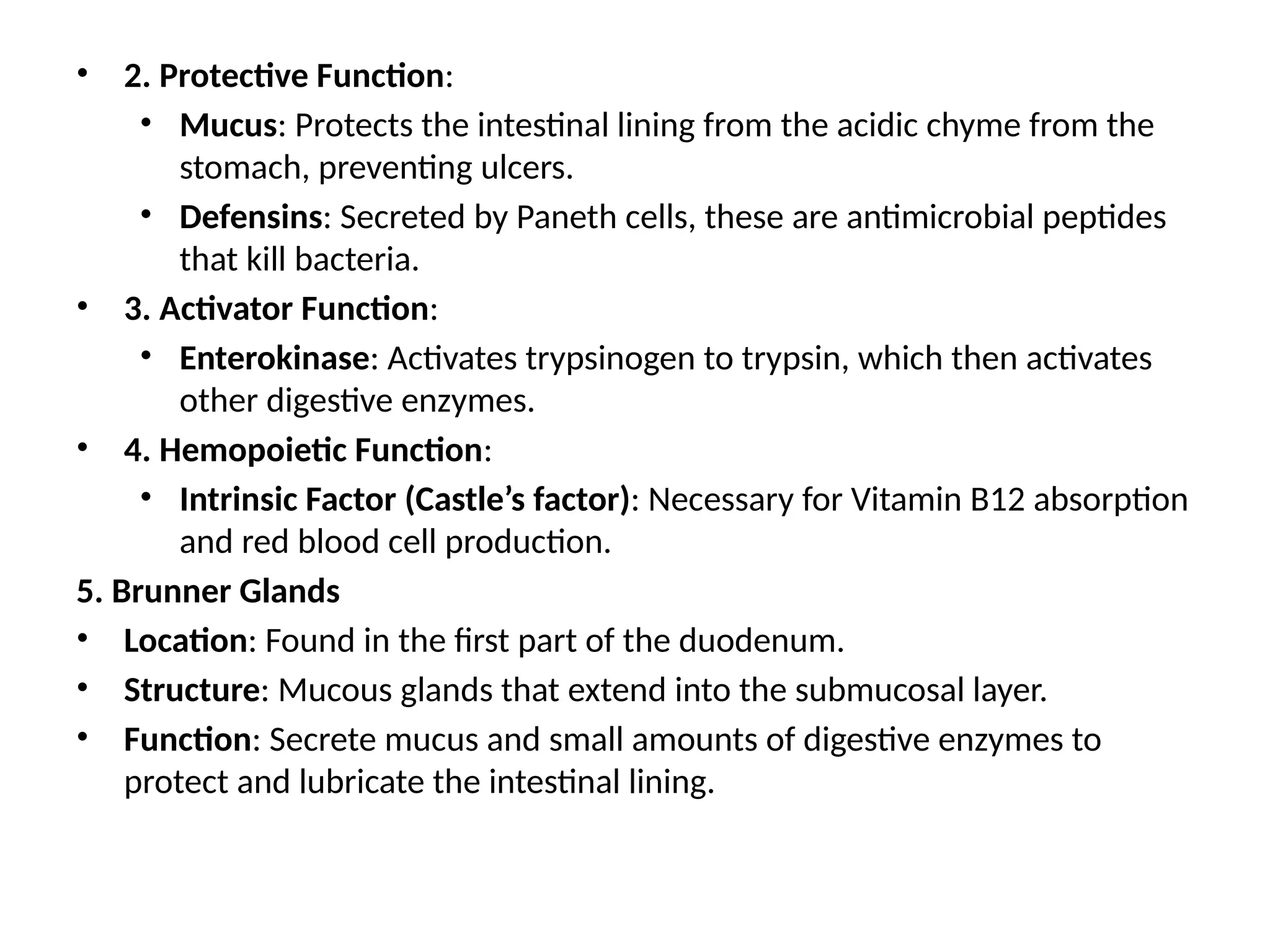
• Proteolytic Enzymes: Peptidases break peptides into amino acids.
• Amylolytic Enzymes: Lactase, sucrase, maltase, and dextrinase break down carbohydrates.
• Lipolytic Enzyme: Intestinal lipase breaks down triglycerides into fatty acids.
• 2. Protective Function:
• Mucus: Protects the intestinal lining from the acidic chyme from the
stomach, preventing ulcers.
• Defensins: Secreted by Paneth cells, these are antimicrobial peptides
that kill bacteria.
• 3. Activator Function:
• Enterokinase: Activates trypsinogen to trypsin, which then activates
other digestive enzymes.
• 4. Hemopoietic Function:
• Intrinsic Factor (Castle’s factor): Necessary for Vitamin B12 absorption
and red blood cell production.
5. Brunner Glands
• Location: Found in the first part of the duodenum.
• Structure: Mucous glands that extend into the submucosal layer.
• Function: Secrete mucus and small amounts of digestive enzymes to
protect and lubricate the intestinal lining.
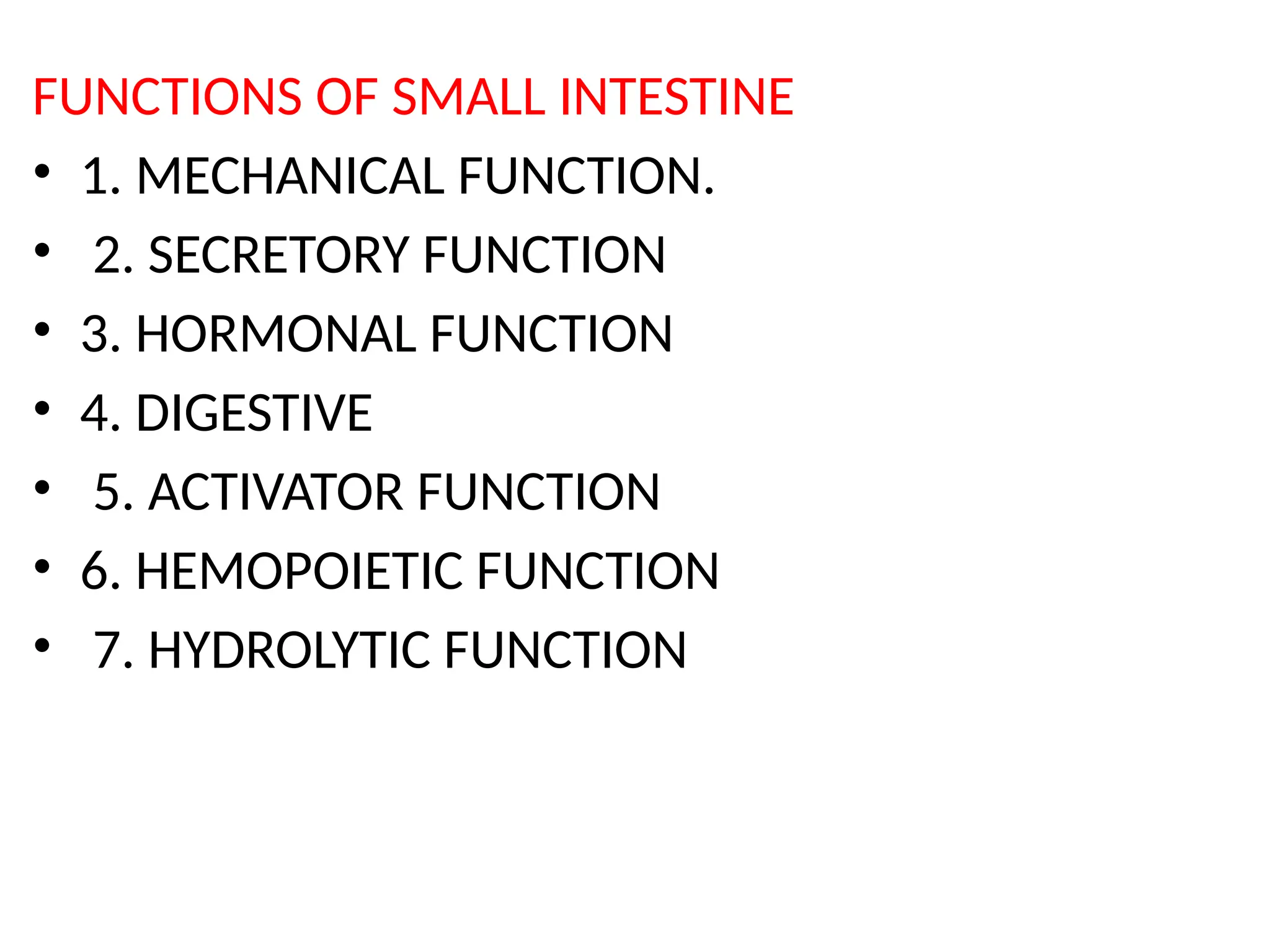
FUNCTIONS OF SMALL INTESTINE
• 1. MECHANICAL FUNCTION.
• 2. SECRETORY FUNCTION
• 3. HORMONAL FUNCTION
• 4. DIGESTIVE
• 5. ACTIVATOR FUNCTION
• 6. HEMOPOIETIC FUNCTION
• 7. HYDROLYTIC FUNCTION
Secretion from small intestine is called
succus entericus.
• FUNCTIONAL ANATOMY OF
• LARGE INTESTINE
• Large intestine or colon extends from ileocecal valve up
• to anus
PARTS OF LARGE INTESTINE
• Large intestine is made up of the following parts:
• 1. Cecum with appendix
• 2. Ascending colon
• 3. Transverse colon
• 4. Descending colon
• 5. Sigmoid colon or pelvic colon
• 6. Rectum
• 7. Anal canal.
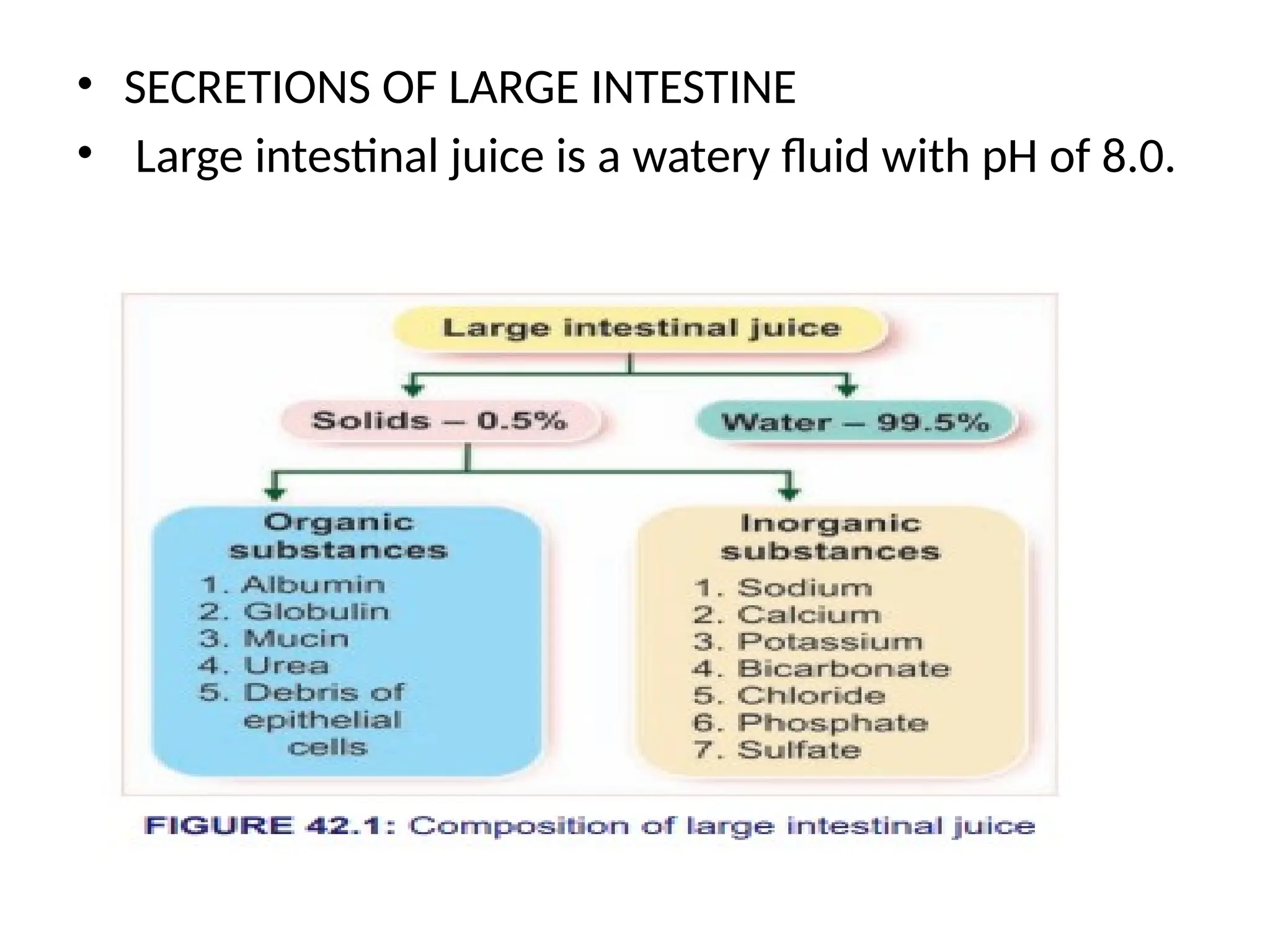
• SECRETIONS OF LARGE INTESTINE
• Large intestinal juice is a watery fluid with pH of 8.0.

DIGESTIVE SYSTEM.pptxgdgyruiitruyeqdgi99

  • 1.
  • 2.
    INTRODUCTION Digestion isdefined as the process by which food is broken down into simple chemical substances that can be absorbed and used as nutrients by the body. • Thus, the functions of digestive system include: • 1. Ingestion or consumption of food substances • 2. Breaking them into small particles • 3. Transport of small particles to different areas of the digestive tract • 4. Secretion of necessary enzymes and other substances for digestion • 5. Digestion of the food particles 6. Absorption of the digestive products (nutrients) 7. Removal of unwanted substances from the body.
  • 3.
    • FUNCTIONAL ANATOMYOF DIGESTIVE SYSTEM „ Digestive system is made up of gastrointestinal tract (GI tract) or alimentary canal and accessory organs, which help in the process of digestion and absorption (Fig. 36.1). GI tract is a tubular structure extending from the mouth up to anus, with a length of about 30 feet. It opens to the external environment on both ends. GI tract is formed by two types of organs: • 1. Primary digestive organs. • 2. Accessory digestive organs
  • 4.
    • The HumanDigestive System • MOUTH
  • 5.
    • Chewing isimportant for: • 1-Digestion of all foods, but especially important for most fruits and raw vegetables because these have indigestible cellulose membranes around their nutrient portions that must be broken before the food can be digested. • 2- Chewing the digestion of food for simple reason: Digestive enzymes (in saliva) act only on the surfaces of food particles; therefore the rate of digestion is absolutely dependent on the total surface area exposed to the digestive secretions
  • 6.
    • Saliva &Salivary glands: The principal glands of salivation are the parotid, submandibular ،and sublingual glands. • Saliva contains two major types of protein secretion: 1- The serous secretion (watery saliva) contains ptyalin (α-amylase),which is an enzyme for digesting starches. 2-The mucous secretion contains mucin for lubrication and for surface protection.
  • 7.
    • DIGESTIVE FUNCTIONSaliva has three digestive enzymes, namely salivary amylase, maltase and lingual lipase • Salivary Amylase Salivary amylase is a carbohydrate-digesting (amylolytic) enzyme. It acts on cooked or boiled starch and converts it into dextrin and maltose. Though starch digestion starts in the mouth, major part of it occurs in stomach because, food stays only for a short time in the mouth. Optimum pH necessary for the activation of salivary amylase is 6. Salivary amylase cannot act on cellulose. • Maltase Maltase is present only in traces in human saliva and it converts maltose into glucose. • Lingual Lipase Lingual lipase is a lipid-digesting (lipolytic) enzyme. It is secreted from serous glands situated on the posterior aspect of tongue. It digests milk fats (pre-emulsified fats). It hydrolyzes triglycerides into fatty acids and diacylglycerol
  • 8.
    • APPLIED PHYSIOLOGY„ • HYPOSALIVATION Reduction in the secretion of saliva is called hyposalivation. It is of two types, namely temporary hyposalivation and permanent hyposalivation. 1. Temporary hyposalivation occurs in: i. Emotional conditions like fear. ii. Fever. iii. Dehydration. • 2. Permanent hyposalivation occurs in: i. Sialolithiasis (obstruction of salivary duct). ii. Congenital absence or hypoplasia of salivary glands. iii. Bell palsy (paralysis of facial nerve). „ • HYPERSALIVATION Excess secretion of saliva is known as hypersalivation. Physiological condition when hypersalivation occurs is pregnancy. 1. Decay of tooth or neoplasm (abnormal new growth or tumor) in mouth or tongue due to continuous irritation of nerve endings in the mouth. 2. Disease of esophagus, stomach and intestine. 3. Neurological disorders such as cerebral palsy, mental retardation, cerebral stroke and parkinsonism. 4. Some psychological and psychiatric conditions. 5. Nausea and vomiting
  • 9.
    • Swallowing (Deglutition) •It is a complicated mechanism, principally because the pharynx subserves respiration as well as swallowing. In general, swallowing can be divided into: • 1- A voluntary stage • . 2- A pharyngeal stage, • 3- An esophageal stage, involuntary phase that transports food from the pharynx to the stomach
  • 10.
    • Functional Movementsin the Gastrointestinal Tract Two types of movement occur in the gastrointestinal tract:- 1-Propulsive (Peristalsis) movements 2- Mixing movements (1) propulsive movements, which cause food to move forward along the tract at an appropriate rate to accommodate digestion and absorption, and (2) mixing movements, which keep the intestinal contents thoroughly mixed at all times.
  • 15.
    Stomach There Are ThreeFunctions of the Stomach:- 1- Storage of food until the food can be processed in the duodenum 2- Mixing of food with gastric secretions until it forms a semifluid mixture called chyme. 3- Emptying of food into the small intestine at a rate suitable for proper digestion and absorption
  • 16.
    GLANDS OF STOMACH– GASTRIC GLANDS Glands of the stomach or gastric glands are tubular structures made up of different types of cells. These glands open into the stomach cavity via gastric pits.
  • 17.
    •Hydrochloric Acid (HCl) •Source:Secreted by parietal cells in the stomach lining. •Function: •Lowers the pH of the stomach to 1.5 to 3.5, creating an acidic environment. •Activation of Pepsinogen: This acidic environment activates pepsinogen (an inactive enzyme) into its active form, pepsin. •Protein Digestion: Pepsin then breaks down proteins into smaller peptides, which is the first step in protein digestion. •Antimicrobial Action: The acidity also kills or inhibits the growth of harmful bacteria ingested with food, reducing the risk of infection. •Pepsinogen •Source: Secreted by chief cells in the stomach. •Function: •Pepsinogen is an inactive precursor (zymogen) to pepsin. •Once activated by the acidic environment in the stomach (via HCl), pepsin initiates the digestion of proteins by breaking them down into smaller peptide chains. •Pepsin is most effective in the acidic environment created by HCl.
  • 18.
    •Mucus Secreted bymucus cells and surface epithelial cells in the stomach lining. •Function: •Protects the Stomach Lining: Mucus creates a protective barrier that shields the stomach lining from the corrosive effects of hydrochloric acid and digestive enzymes. •Prevents Ulcers: Without this protective mucus, the stomach lining would be damaged by the very acids required for digestion, leading to conditions like gastritis or peptic ulcers. •Intrinsic Factor Secreted by parietal cells. •Function: •Intrinsic factor is essential for the absorption of Vitamin B12 in the small intestine, specifically in the ileum. •A deficiency in intrinsic factor leads to pernicious anemia, where vitamin B12 cannot be absorbed properly, affecting red blood cell production and nervous system function. •Bicarbonate Secreted by epithelial cells. •Function: •Bicarbonate is released into the mucus layer and neutralizes small amounts of acid that come into contact with the stomach lining, preventing damage.
  • 19.
    Functions of GastricJuices in Digestion 1. Protein Digestion 1. Pepsin: The most important enzyme for protein digestion in the stomach. It breaks down complex proteins into smaller peptides that will be further digested in the small intestine by other enzymes like trypsin and chymotrypsin. 2. Acidification of Stomach Content 1. HCl: The acidic pH not only activates pepsinogen to pepsin but also denatures proteins, making them easier for enzymes to break down. It also helps in the absorption of certain minerals like calcium and iron. 3. Preparation for Small Intestine Digestion 1. The stomach’s acidic environment liquefies food, turning it into a semi- fluid substance called chyme. This makes it easier for the digestive enzymes in the small intestine to continue the breakdown of nutrients for absorption.
  • 20.
    • PHASES OFGASTRIC SECRETION • Secretion of gastric juice is a continuous process. But the quantity varies, depending upon time and stimulus. System Accordingly, gastric secretion occurs in four different phases: • 1, Cephalic phase • 2. Gastric phase • 3,. Intestinal phase, • 4. Interdigestive phase . Each phase is regulated by neural mechanism or hormonal mechanism or both.
  • 21.
    • Cephalic Phase:This phase is triggered by the sight, smell, taste, or even thought of food. It involves the brain signaling the stomach to start secreting gastric juices (including hydrochloric acid and pepsinogen) in preparation for food intake. • Gastric Phase: This phase starts when food enters the stomach. Stretching of the stomach and the presence of food stimulate the secretion of gastric juices, further enhancing digestion. Gastrin, a hormone, is released to increase acid production and enzyme activity • .Intestinal Phase: This phase begins when partially digested food moves into the small intestine. The presence of food in the intestine inhibits further gastric secretion and promotes the release of hormones like secretin and cholecystokinin to regulate digestive processes. • Interdigestive phase is the period between meals when the stomach and digestive system are not actively processing food. During this phase, the stomach remains relatively inactive, but the body still prepares for the next meal.
  • 22.
    • Read Pages239 240 and 241 of japee essential book • For physiological disorders
  • 23.
    Pancreas • Exocrine partof pancreas resembles salivary gland in structure. It is made up of acini or alveoli. Each achas a single layer of acinar cells with a lumen in the center. Acinar cells contain zymogen granules, which possess digestive enzymes. small duct arises from lumen of each alveolus. Some of these ducts from neighboring alveoli unite to form intralobular duct. All the intralobular ducts unite to form the main duct of pancreas called Wirsung duct. that joins common bile duct to form ampulla of Vater, which opens into duodenum
  • 24.
    PROPERTIES OF PANCREATICJUICE • Volume : 500 to 800 mL/day • Reaction : Highly alkaline with a pH of 8 to 8.3 • Specific gravity : 1.010 to 1.018 COMPOSITION OF PANCREATIC JUICE • Pancreatic juice contains 99.5% of water and 0.5% of solids. The solids are the organic and inorganicsubstances..
  • 26.
    Composition of PancreaticJuice: 1. Water (H₂O): Acts as a solvent to dissolve other substances and helps in the transport of enzymes and bicarbonate into the small intestine. 2. Bicarbonate Ions (HCO₃⁻): The primary role is to neutralize the acidic chyme coming from the stomach. This creates an optimal alkaline environment (pH ~7.5 to 8) in the small intestine, essential for the proper functioning of pancreatic enzymes. 3. Enzymes: 1. Amylase: Function: Breaks down carbohydrates (starches) into smaller sugars like maltose and dextrins. 2. Lipase: Function: Hydrolyzes triglycerides into fatty acids and monoglycerides, aiding in fat digestion. 3. Proteases: 1. Trypsinogen: Inactive form of trypsin, which is activated by enteropeptidase in the duodenum. 2. Chymotrypsinogen: Inactive form of chymotrypsin. 3. Carboxypeptidase: Hydrolyzes peptide bonds at the carboxyl end of proteins. 4. Function: These enzymes break down proteins into smaller peptides and amino acids for absorption. 4. Other Components: 1. Electrolytes: Sodium, potassium, chloride ions are present, contributing to the ionic balance and helping in enzyme activity. 2. Small amounts of other enzymes: Such as elastase (a protease), which is involved in breaking down elastic fibers in connective tissue.
  • 27.
    Function of PancreaticJuice: 1. Neutralization of Gastric Acid: 1. Bicarbonate ions secreted into the duodenum neutralize the acidic chyme from the stomach, raising the pH to about 7.5-8.0, which is ideal for the enzymes of the small intestine to function efficiently. 2. Digestion of Nutrients: 1. Carbohydrate Digestion: Amylase breaks down starches (polysaccharides) into disaccharides (e.g., maltose), which are further broken down by enzymes on the intestinal brush border. 2. Protein Digestion: Proteases (trypsin, chymotrypsin, carboxypeptidase) convert proteins into peptides and amino acids. Trypsinogen is activated to trypsin in the small intestine and activates other enzymes like chymotrypsinogen. 3. Fat Digestion: Lipase, in conjunction with bile salts (emulsifiers), breaks down triglycerides into fatty acids and monoglycerides, making them available for absorption. 3. Facilitation of Absorption: 1. The breakdown of complex macromolecules (proteins, fats, carbohydrates, and nucleic acids) into simpler molecules (amino acids, fatty acids, monosaccharides) allows for efficient absorption in the small intestine. 4. Regulation of Digestive Enzyme Activity: 1. Enzyme activation is tightly regulated to avoid autodigestion of the pancreas. Pancreatic zymogens (inactive enzyme precursors) are secreted and only activated in the small intestine. For example, trypsinogen is converted to trypsin, which then activates other proteases.
  • 28.
    APPLIED PHYSIOLOGY • Pancreatitis •Steatorrhea •Pancreatitis: I inflammation of pancreatic acini (glandular tissue) •Types: • Acute Pancreatitis (Severe, sudden onset) • Chronic Pancreatitis (Long-term, repeated inflammation)
  • 29.
    Acute Pancreatitis • Causes:Heavy alcohol intake, gallstones • Features: • Severe upper abdominal pain • Nausea and vomiting • Loss of appetite and weight • Fever and shock Chronic Pancreatitis • Causes: • Long-term alcohol consumption • Chronic gallstone obstruction • Hereditary/genetic factors • Cystic fibrosis, congenital duct abnormalities • Malnutrition, idiopathic (unknown) causes • Features: • Repeated acute inflammation or chronic damage • Complete destruction of pancreas tissue • Pancreatic enzyme deficiency, affecting digestion
  • 30.
    Steatorrhea • Definition: Steatorrhea isthe presence of bulky, foul-smelling, frothy, and clay- colored stools due to undigested fat. • Cause: • Any condition that causes indigestion or malabsorption of fat leads to steatorrhea. Various causes of steatorrhea are: • 1. Lack of pancreatic lipase: Since most of the fat is digested only by pancreatic lipase, its deficiency leads to steatorrhea • 2. Liver disease affecting secretion of bile: Bile salts are essential for the digestion of fat by lipase and absorption of fat from intestine. Absence of bile salts results in excretion of fatty stool • 3. Celiac disease: Atrophy of intestinal villi leads to malabsorption, resulting in steatorrheaImpaired digestion and absorption of fat due to lack of pancreatic lipase (an enzyme essential for fat digestion) • Steatorrhea is an important clinical sign of pancreatic insufficiency and fat malabsorption.
  • 31.
    Liver and gallbladder LiverStructure • Hepatic Lobes: The liver is made up of multiple lobes, each containing many smaller units called hepatic lobules. There are about 50,000 to 100,000 lobules in the liver. • Hepatic Lobules: The basic structural and functional unit of the liver. The lobule is a honeycomb-like structure composed of hepatocytes (liver cells). • Hepatocytes and Hepatic Plates: • Hepatocytes are arranged in columns called hepatic plates. • Between two columns of hepatocytes is a bile canaliculus. • Between hepatic plates, blood-filled spaces called sinusoids are present. These sinusoids are lined by endothelial cells and contain special macrophages called Kupffer cells. • Portal Triads: Each lobule is surrounded by portal triads, which consist of three vessels: • A branch of the hepatic artery • A branch of the portal vein • A tributary of the bile duct
  • 32.
    •Blood Flow andBile Secretion: • Blood from the hepatic artery and portal vein enters the sinusoids. • The sinusoids drain into the central vein, which empties into the hepatic vein. • Bile is secreted by hepatocytes into the bile canaliculus, and from there, it flows to the bile ducts.
  • 33.
    Biliary System (Extrahepatic BiliaryApparatus 1. Components: 1. Gallbladder 2. Extrahepatic bile ducts 3. (bile ducts outside the liver) 2. Formation of Bile Ducts: 1. Right and left hepatic bile ducts emerge from the liver and join to form the common hepatic duct. 2. The common hepatic duct unites with the cystic duct from the gallbladder to form the common bile duct. 3. Common Hepatopancreatic Duct: 1. The common bile duct joins with the pancreatic duct to form the common hepatopancreatic duct (also called ampulla of Vater). 2. The ampulla of Vater opens into the duodenum.
  • 34.
    4. Sphincter ofOddi: 1. Located at the lower part of the common bile duct before it joins the pancreatic duct. 2. Composed of smooth muscle fibers and is normally closed. 3. Function: Keeps bile in the gallbladder for storage. When stimulated, it opens to allow bile flow from the gallbladder into the intestine.
  • 35.
    • PROPERTIES ANDCOMPOSITION OF BILE „ • PROPERTIES Volume : 800 to 1,200 mL/day • Reaction : Alkaline Enterohepatic circulation • pH : 8 to 8.6 Specific gravity : 1.010 to 1.011 • Color : Golden yellow or green. • COMPOSITION OF BILE „ • 97.6% of water • 2.4% of solids. • Solids include organic and inorganic substances.
  • 36.
    Secretion of Bile •Production Site: Bile is synthesized by hepatocytes, the main functional cells of the liver.​ • Initial Composition: The primary bile secreted contains:​ • Bile Acids: Synthesized from cholesterol.​ • Bile Pigments: Such as bilirubin, derived from the breakdown of hemoglobin.​ • Cholesterol: A lipid component.​ • Lecithin: A type of phospholipid.​ • Fatty Acids: Essential for lipid digestion.​ • Secretion Pathway: • Bile Canaliculi: Hepatocytes secrete bile into small channels called bile canaliculi, located between adjacent liver cell • Biliary Ductal System: From the canaliculi, bile flows into progressively larger ducts:​ • Intrahepatic Bile Ducts: Located within the liver. • Common Hepatic Duct: Formed by the merging of right and left hepatic ducts. • Common Bile Duct: Formed by the union of the common hepatic duct and the cystic duct from the gallbladder. • Modification During Transit: • As bile passes through the ducts, water, sodium, and bicarbonate ions are secreted by the epithelial cells lining the ducts. This secretion increases the volume of bile and helps neutralize stomach acids entering the duodenum.
  • 37.
    • Storage ofBile Gallbladder Function: Between meals, bile is stored in the gallbladder, a pear-shaped organ located beneath the liver.​ The gallbladder can concentrate bile by absorbing water and electrolytes, increasing the potency of bile salts. Storage Process: ​ • Bile Entry: Bile enters the gallbladder via the cystic duct.​ • Concentration: The gallbladder absorbs water and electrolytes (except calcium and potassium), concentrating bile salts, cholesterol, lecithin, and fatty acids.​ • Volume: The gallbladder typically stores about 30-50 mL of concentrated bile. • Regulation:The sphincter of Oddi, located at the junction of the common bile duct and the duodenum, remains contracted during fasting, preventing bile flow into the intestine and directing it into the gallbladder for storage. ​
  • 38.
    Release of Bile •Stimulation: • Upon ingestion of food, especially fats, the duodenum releases • cholecystokinin (CCK), a hormone that stimulates: •Gallbladder Contraction: Releases stored bile into the cystic duct. •Sphincter of Oddi Relaxation: Allows bile to flow into the duodenum. • Process: • Contraction: The gallbladder contracts, sending bile through the cystic duct.​ • Flow into Duodenum: Bile passes through the common bile duct into the duodenum, aiding in the emulsification and digestion of dietary fats.​
  • 39.
    Formation of BileSalts Bile salts are the sodium and potassium salts of bile acids, which are conjugated with glycine or taurine. • Primary Bile Acids: • Cholic acid and chenodeoxycholic acid are synthesized in the liver from cholesterol.​ • Conversion in Intestine: • Bacterial action in the intestine converts primary bile acids into secondary bile acids:​ • Cholic acid → Deoxycholic acid • Chenodeoxycholic acid → Lithocholic acid • Enterohepatic Circulation: • Reabsorption: Secondary bile acids are absorbed in the ileum of the small intestine.​ • Return to Liver: They travel via the portal vein back to the liver.​ • Conjugation: In the liver, bile acids are conjugated with glycine or taurine to form glycocholic acid and taurocholic acid, respectively.​ • Formation of Bile Salts: These conjugated bile acids combine with sodium or potassium ions to form bile salts, which are more effective in emulsifying fat
  • 40.
    • FUNCTIONS OFBILE SALTS • Bile salts are required for digestion and absorption of fats in the intestine. The functions of bile salts are: 1.Emulsification of Fats Emulsification is the process by which the fat globules are broken down into minute droplets and made in the form of a milky fluid called emulsion in small intestine, by the action of bile salts. 2. Absorption of Fats Bile salts help in the absorption of digested fats from intestine into blood. 3. Choleretic Action Bile salts stimulate the secretion of bile from liver This action is called choleretic action. 4. Cholagogue Action Cholagogue is an agent which causes contraction of gallbladder and release of bile into the intestine.. 5. Laxative Action Laxative is an agent which induces defecation. Bile salts act as laxatives by stimulating peristaltic movements of the intestine. 6. Prevention of Gallstone Formation Bile salts prevent the formation of gallstone by keeping the cholesterol and lecithin in solution.
  • 41.
    • BILE PIGMENTS •Bile pigments are the excretory products in bile. Bilirubin and biliverdin are the two bile pigments and bilirubin is the major bile pigment in human beings. • Bile pigments are formed during the breakdown of hemoglobin, which is released from the destroyed RBCs in the reticuloendothelial system • NORMAL PLASMA LEVELS OF BILIRUBIN „ Normal bilirubin (Total bilirubin) content in plasma is 0.5 to 1.5 mg/dL. When it exceeds 1mg/dL, the condition is called hyperbilirubinemia. When it exceeds 2 mg/dL, jaundice occurs.
  • 42.
    Formation and Excretionof Bile Pigments 1. Destruction of Old Erythrocytes → Hemoglobin is released. 2. Hemoglobin Breakdown → Splits into globin and heme. 3. Heme Breakdown → Heme splits into iron and biliverdin. 4. Iron Reuse → Iron is stored in the iron pool for future use. 5. Biliverdin to Bilirubin → Biliverdin is reduced to bilirubin. 6. Bilirubin Release → Bilirubin is released into the bloodstream. 7. Transport in Blood → Free bilirubin (unconjugated) binds to albumin. 8. Uptake by Liver → Free bilirubin is taken up by liver cells. 9. Conjugation in Liver → Bilirubin is conjugated with glucuronic acid to form conjugated bilirubin. 10.Excretion into Intestine → Conjugated bilirubin is excreted into the intestine via bile
  • 43.
    • GALLBLADDER „ • Bilesecreted from liver is stored ingallbladder. The capacity of gallbladder is approximately 50 mL. Gallbladder is not essential for life and it is removed (cholecystectomy) in patients suffering from gallbladder dysfunction. • FUNCTIONS OF GALLBLADDER „ Major functions of gallbladder are the storage and concentration of bile 1. Storage of Bile Bile is continuously secreted from liver. But it is released into intestine only intermittently and most of the bile is stored in gallbladder till it is required. 2. Concentration of Bile Bile is concentrated while it is stored in gallbladder. The mucosa of gallbladder rapidly reabsorbs water and electrolytes, except calcium and potassium. But the bile salts, bile pigments, cholesterol and lecithin are not reabsorbed. So, the concentration of these substances in bile increases 5 to 10 times
  • 44.
    3. Alteration ofpH of Bile The pH of bile decreases from 8 – 8.6 to 7 – 7.6 and it becomes less alkaline when it is stored in gallbladder. 4. Secretion of Mucin Gallbladder secretes mucin and adds it to bile. When bile is released into the intestine, mucin acts as a lubricant for movement of chyme in the intestine. 5. Maintenance of Pressure in Biliary System Due to the concentrating capacity, gallbladder maintains a pressure of about 7 cm H2 O in biliary system
  • 45.
    • APPLIED PHYSIOLOGYIS GIVEN IN WORD DOCUMENT ATTACHED IN GOOGLE DRIVE • OSPE TYPE QUESTIONS ARE ALSO PROVIDED
  • 46.
    • Small intestine Itis the part of gastrointestinal (GI) tract, extending between the pyloric sphincter of stomach and ileocecal valve, which opens into large intestine • Small intestine consists of three portions: • 1. Proximal part (duodenum) • 2. Middle part (jejunum) • 3. Distal part (ileum) INTESTINAL VILLI AND GLANDS OF SMALL INTESTINE 1. Intestinal Villi • Villi are small projections on the mucous membrane of the small intestine. • Size: Height ≈ 1 mm; Diameter < 1 mm. • Structure: Lined by columnar cells (enterocytes) with hair-like projections called microvilli. • Function: Increase the surface area for absorption. • Central channel: Each villus contains a lacteal (for lymphatic drainage) and blood vessels. 2. Crypts of Lieberkühn (Intestinal Glands) • Location: Found between the villi in the intestinal wall. • Structure: Simple tubular glands that do not penetrate the muscularis mucosa.
  • 47.
    • Cell Types: •Enterocytes: Secrete digestive enzymes and absorb nutrients. • Goblet Cells: Secrete mucus to protect the intestine. • Argentaffin (Enterochromaffin) Cells: Secrete intrinsic factor (needed for vitamin B12 absorption). • Paneth Cells: Secrete defensins, antimicrobial peptides that protect the intestine. 3. Succus Entericus (Intestinal Juice) • Secreted by: Enterocytes from the villi and intestinal glands. • Properties: • Volume: 1800 mL/day. • Reaction: Alkaline. • pH: 8.3. • Composition: Mostly water (99.5%), with 0.5% solids (including organic and inorganic substances like bicarbonate). 4. Functions of Succus Entericus • 1. Digestive Function: • Enzymes break down partially digested food into final products. • Proteolytic Enzymes: Peptidases break peptides into amino acids. • Amylolytic Enzymes: Lactase, sucrase, maltase, and dextrinase break down carbohydrates. • Lipolytic Enzyme: Intestinal lipase breaks down triglycerides into fatty acids.
  • 48.
    • 2. ProtectiveFunction: • Mucus: Protects the intestinal lining from the acidic chyme from the stomach, preventing ulcers. • Defensins: Secreted by Paneth cells, these are antimicrobial peptides that kill bacteria. • 3. Activator Function: • Enterokinase: Activates trypsinogen to trypsin, which then activates other digestive enzymes. • 4. Hemopoietic Function: • Intrinsic Factor (Castle’s factor): Necessary for Vitamin B12 absorption and red blood cell production. 5. Brunner Glands • Location: Found in the first part of the duodenum. • Structure: Mucous glands that extend into the submucosal layer. • Function: Secrete mucus and small amounts of digestive enzymes to protect and lubricate the intestinal lining.
  • 49.
    FUNCTIONS OF SMALLINTESTINE • 1. MECHANICAL FUNCTION. • 2. SECRETORY FUNCTION • 3. HORMONAL FUNCTION • 4. DIGESTIVE • 5. ACTIVATOR FUNCTION • 6. HEMOPOIETIC FUNCTION • 7. HYDROLYTIC FUNCTION
  • 50.
    Secretion from smallintestine is called succus entericus.
  • 51.
    • FUNCTIONAL ANATOMYOF • LARGE INTESTINE • Large intestine or colon extends from ileocecal valve up • to anus PARTS OF LARGE INTESTINE • Large intestine is made up of the following parts: • 1. Cecum with appendix • 2. Ascending colon • 3. Transverse colon • 4. Descending colon • 5. Sigmoid colon or pelvic colon • 6. Rectum • 7. Anal canal.
  • 52.
    • SECRETIONS OFLARGE INTESTINE • Large intestinal juice is a watery fluid with pH of 8.0.