 Diffusion is the process by which an
innovation is communicated through certain
channels over time among the members of a
social system.
 It is a special type of communication, in that
the messages are concerned with new ideas.
Valuable insights provided by
diffusion of innovation are :
 What qualities make an innovation
spread in society
 Importance of peer-peer communication
network
 Understanding the needs of different user
segments
 19th century-Franz Boas (United States),
Gabriel Trade (France) Friedrich Ratzel
(Germany ) were the proponents of
diffusionist theory.
 Gabriel Trade- First to propose the S-
shaped curve of diffusion. Wrote about
the important role of opinion leaders or
change agents in the diffusion or
imitation process.
 Developed by E.M. Rogers in 1962, a professor
of communication studies, popularized the theory
in his book Diffusion of Innovation
 Explain how, why, and at what rate
new ideas and technology spread
through cultures.
 The theory explains how, over time, an idea or
product gains momentum and diffuses (or
spreads) through a specific population or social
system.
 The end result of this diffusion is that people, as part
of a social system, adopt a new idea, behaviour, or
product.
Adoption means that a person does something
differently than what they had previously.
key to adoption
 perceive the idea, behaviour, or product as new or
innovative. It is through this that diffusion is
possible.
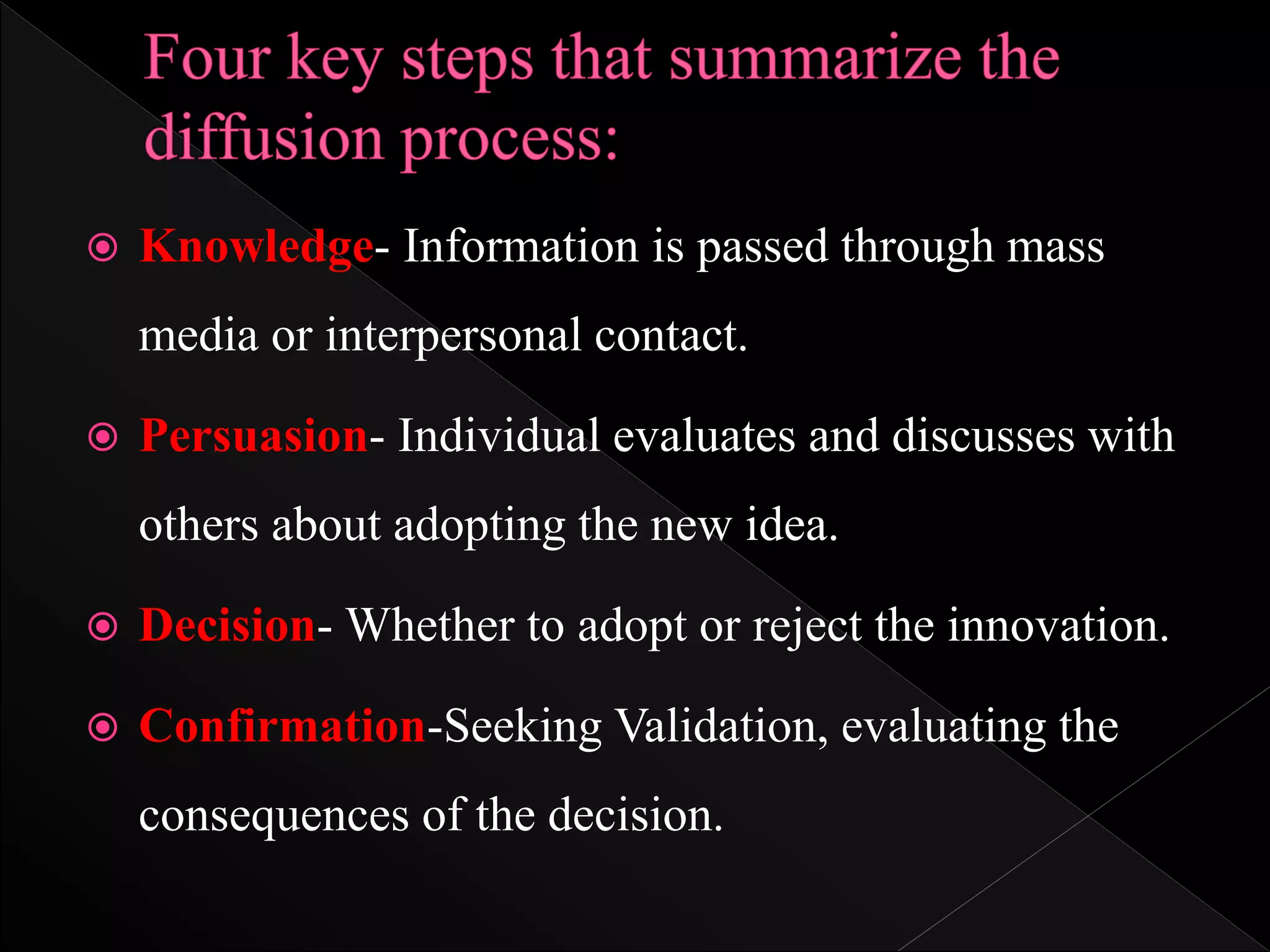
 Knowledge- Information is passed through mass
media or interpersonal contact.
 Persuasion- Individual evaluates and discusses with
others about adopting the new idea.
 Decision- Whether to adopt or reject the innovation.
 Confirmation-Seeking Validation, evaluating the
consequences of the decision.
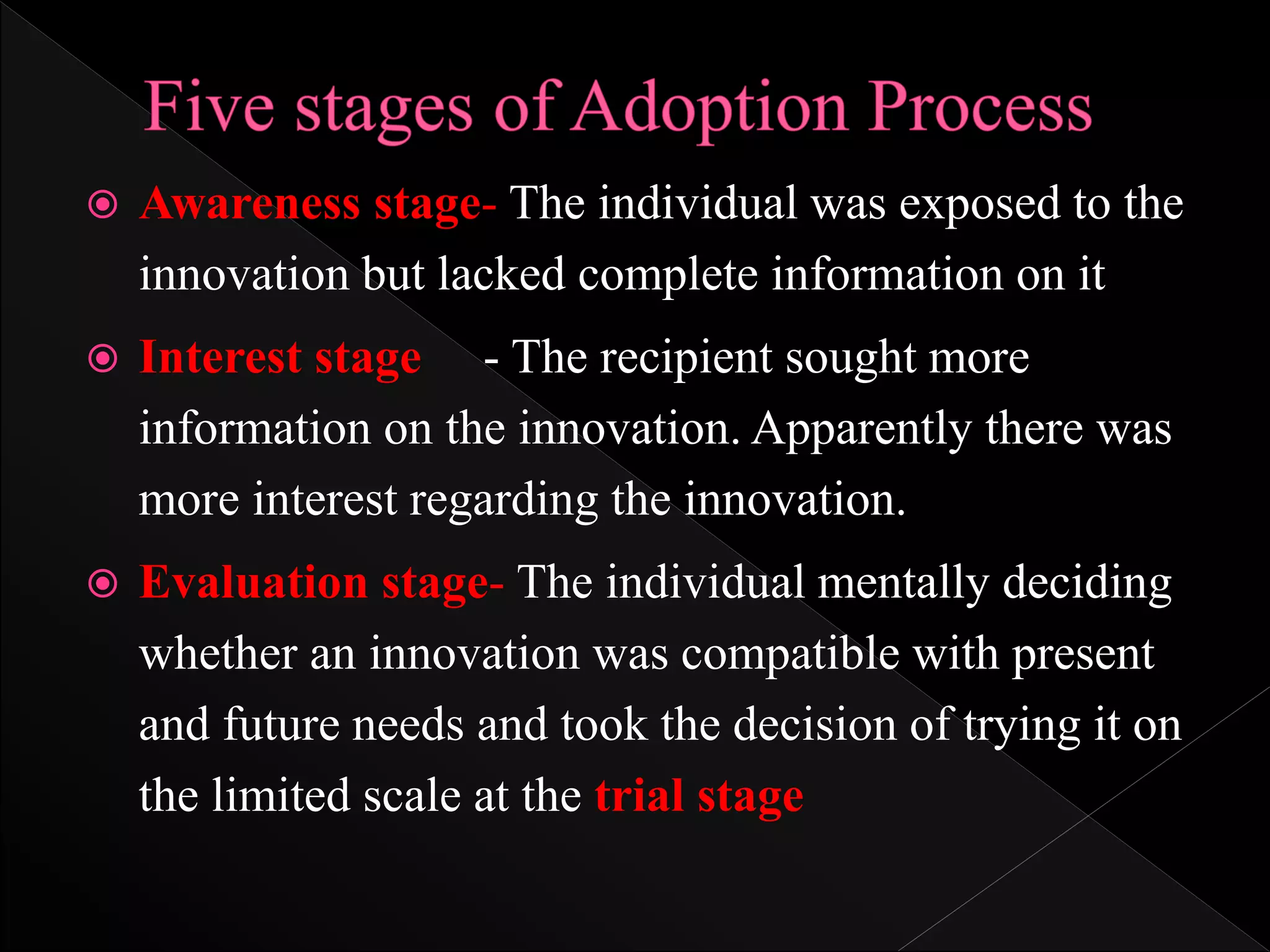
 Awareness stage- The individual was exposed to the
innovation but lacked complete information on it
 Interest stage - The recipient sought more
information on the innovation. Apparently there was
more interest regarding the innovation.
 Evaluation stage- The individual mentally deciding
whether an innovation was compatible with present
and future needs and took the decision of trying it on
the limited scale at the trial stage
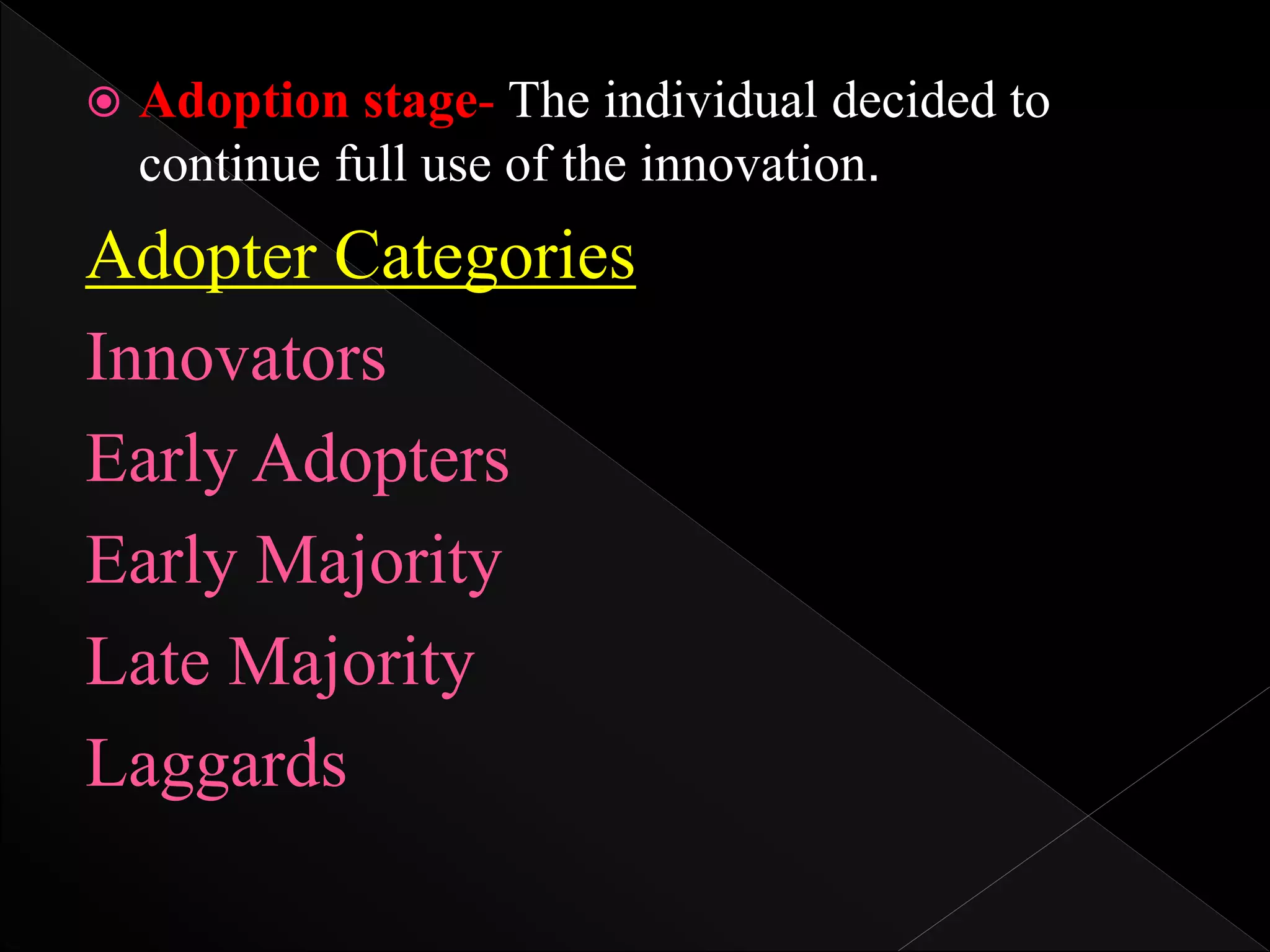
 Adoption stage- The individual decided to
continue full use of the innovation.
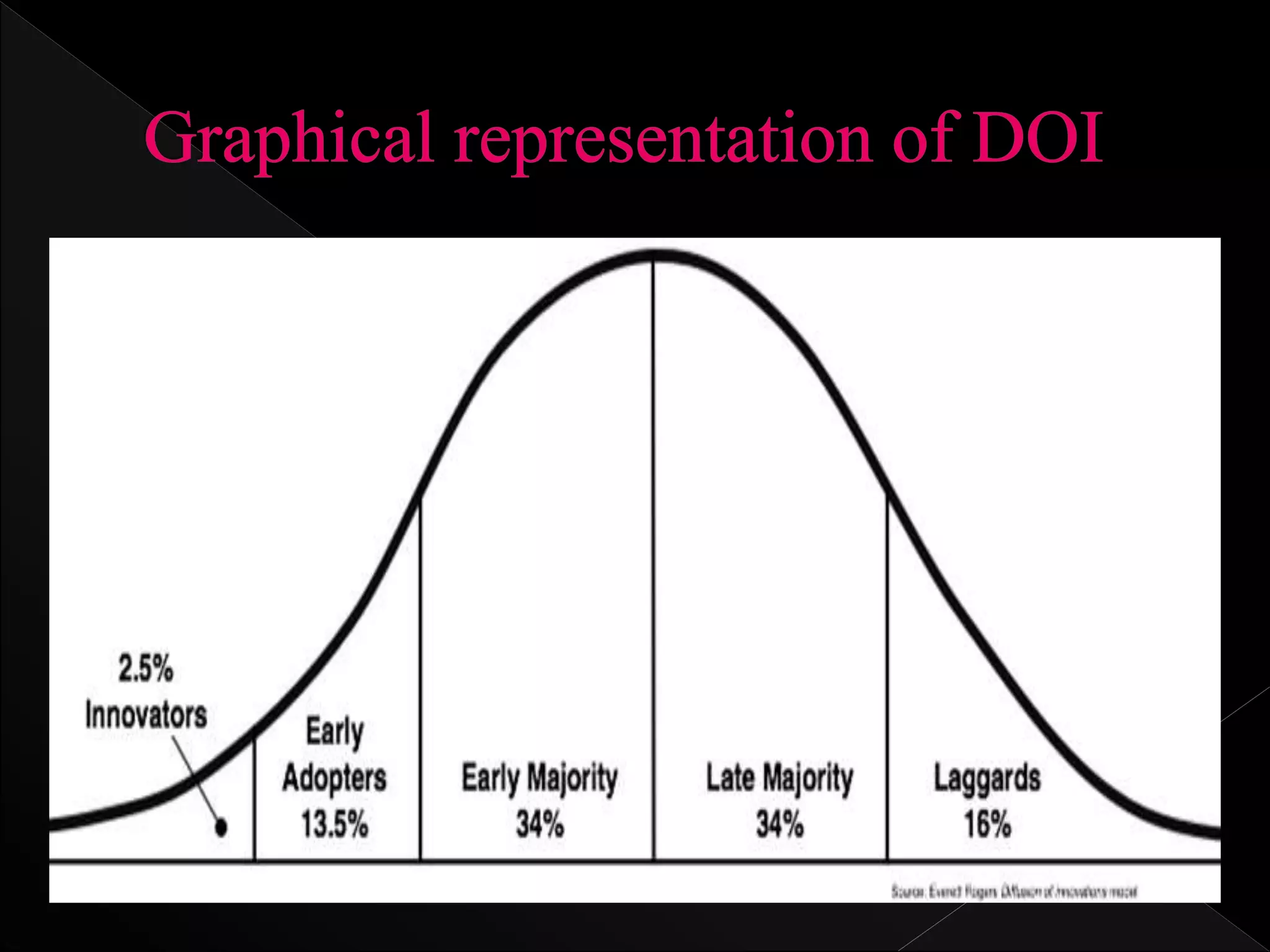
Adopter Categories
Innovators
Early Adopters
Early Majority
Late Majority
Laggards
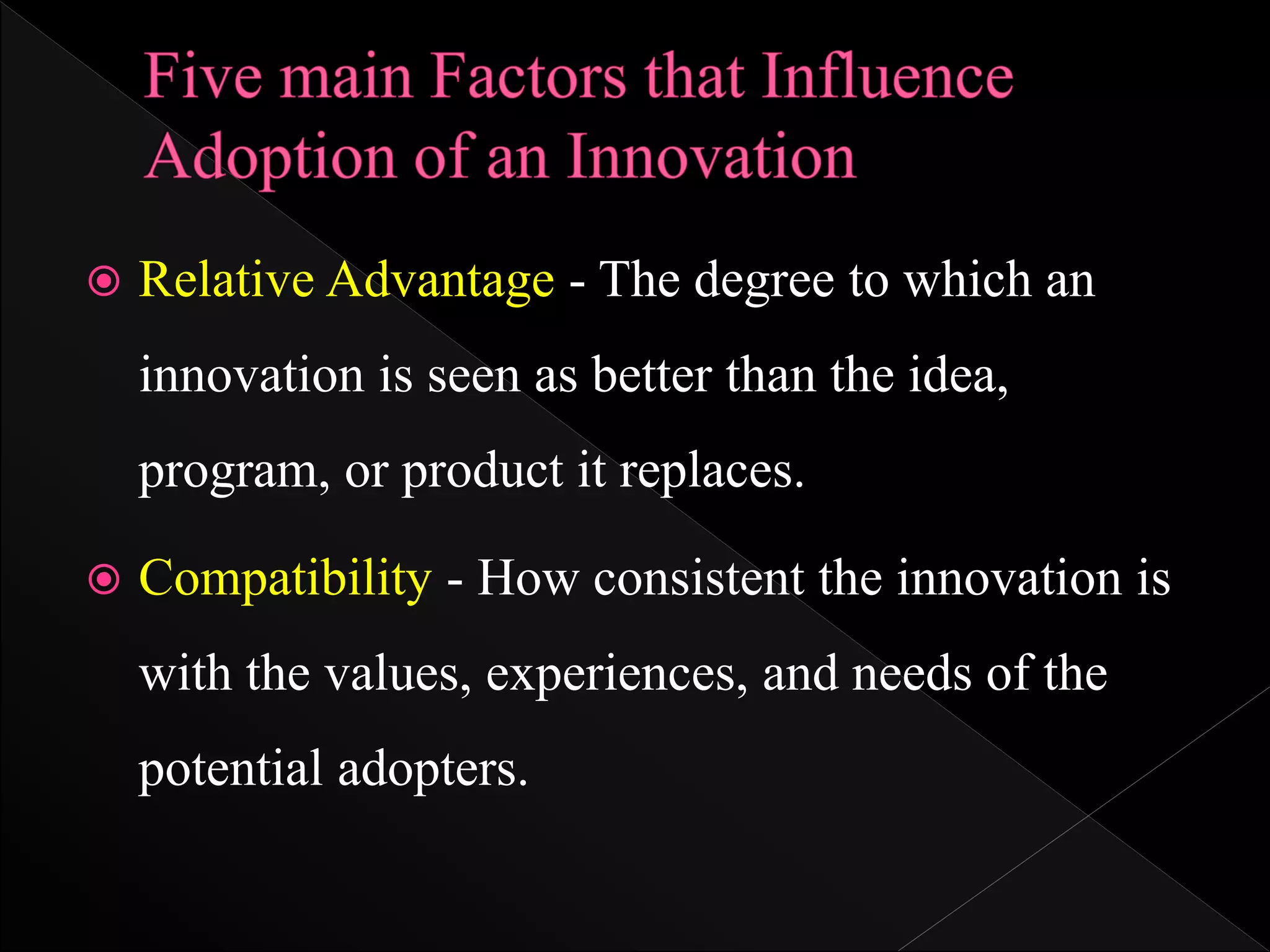
 Relative Advantage - The degree to which an
innovation is seen as better than the idea,
program, or product it replaces.
 Compatibility - How consistent the innovation is
with the values, experiences, and needs of the
potential adopters.
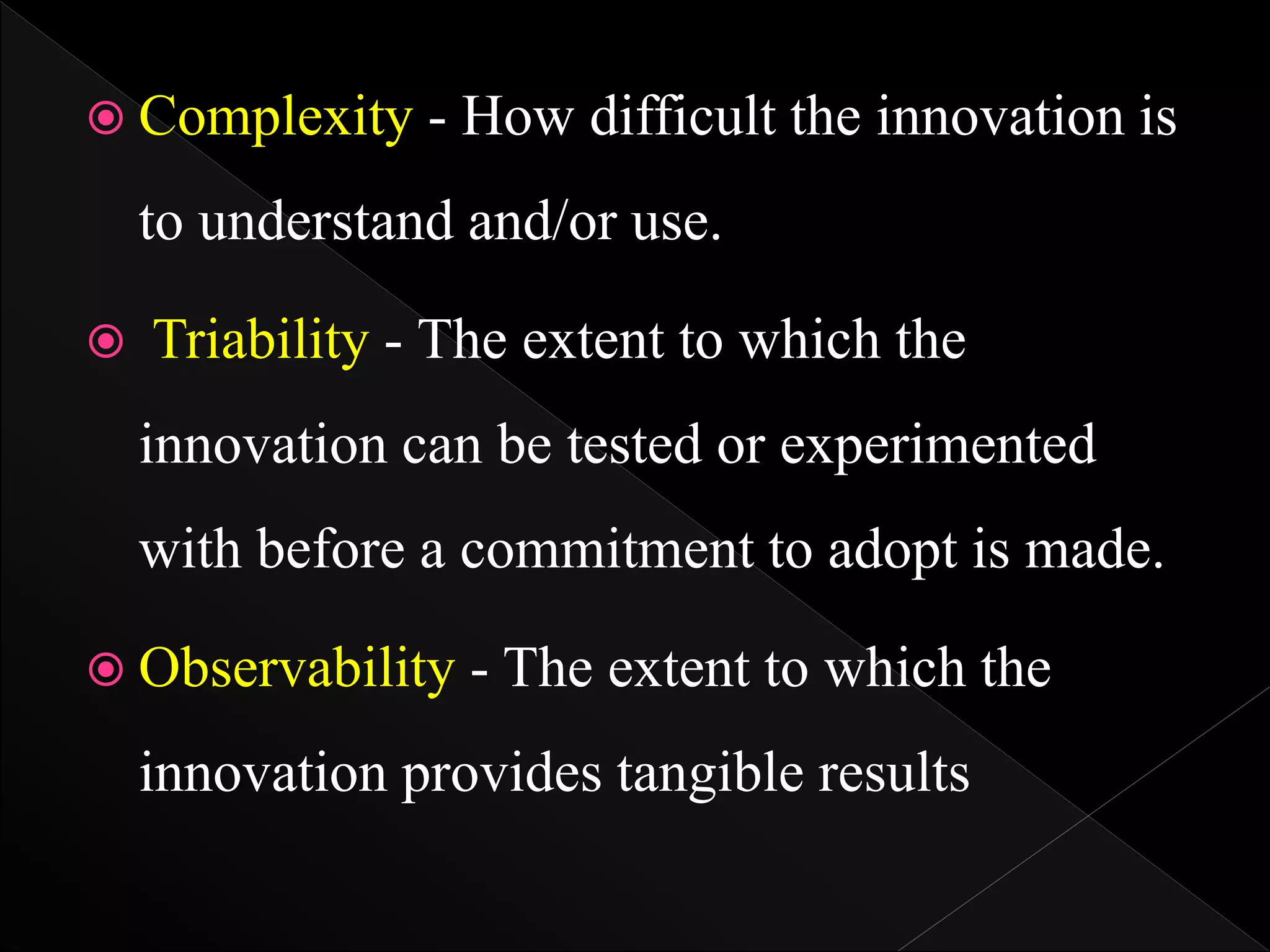
 Complexity - How difficult the innovation is
to understand and/or use.
 Triability - The extent to which the
innovation can be tested or experimented
with before a commitment to adopt is made.
 Observability - The extent to which the
innovation provides tangible results
 The Role of Social Systems- Opinion
Leaders
 Public and Private Consequences
 Benefits and Costs
 Failed Diffusion
 Diffusion of Innovation and Modernisation
 Does not foster a participatory approach
to adoption of a public health program
 Doesn’t take into account an individual's
resources or social support to adopt the
new behaviour (or innovation).
THANK YOU

Diffusion of innovation ppt

  • 2.
     Diffusion isthe process by which an innovation is communicated through certain channels over time among the members of a social system.  It is a special type of communication, in that the messages are concerned with new ideas.
  • 3.
    Valuable insights providedby diffusion of innovation are :  What qualities make an innovation spread in society  Importance of peer-peer communication network  Understanding the needs of different user segments
  • 4.
     19th century-FranzBoas (United States), Gabriel Trade (France) Friedrich Ratzel (Germany ) were the proponents of diffusionist theory.  Gabriel Trade- First to propose the S- shaped curve of diffusion. Wrote about the important role of opinion leaders or change agents in the diffusion or imitation process.
  • 5.
     Developed byE.M. Rogers in 1962, a professor of communication studies, popularized the theory in his book Diffusion of Innovation  Explain how, why, and at what rate new ideas and technology spread through cultures.  The theory explains how, over time, an idea or product gains momentum and diffuses (or spreads) through a specific population or social system.
  • 6.
     The endresult of this diffusion is that people, as part of a social system, adopt a new idea, behaviour, or product. Adoption means that a person does something differently than what they had previously. key to adoption  perceive the idea, behaviour, or product as new or innovative. It is through this that diffusion is possible.
  • 7.
     Knowledge- Informationis passed through mass media or interpersonal contact.  Persuasion- Individual evaluates and discusses with others about adopting the new idea.  Decision- Whether to adopt or reject the innovation.  Confirmation-Seeking Validation, evaluating the consequences of the decision.
  • 8.
     Awareness stage-The individual was exposed to the innovation but lacked complete information on it  Interest stage - The recipient sought more information on the innovation. Apparently there was more interest regarding the innovation.  Evaluation stage- The individual mentally deciding whether an innovation was compatible with present and future needs and took the decision of trying it on the limited scale at the trial stage
  • 9.
     Adoption stage-The individual decided to continue full use of the innovation. Adopter Categories Innovators Early Adopters Early Majority Late Majority Laggards
  • 11.
     Relative Advantage- The degree to which an innovation is seen as better than the idea, program, or product it replaces.  Compatibility - How consistent the innovation is with the values, experiences, and needs of the potential adopters.
  • 12.
     Complexity -How difficult the innovation is to understand and/or use.  Triability - The extent to which the innovation can be tested or experimented with before a commitment to adopt is made.  Observability - The extent to which the innovation provides tangible results
  • 13.
     The Roleof Social Systems- Opinion Leaders  Public and Private Consequences  Benefits and Costs  Failed Diffusion  Diffusion of Innovation and Modernisation
  • 14.
     Does notfoster a participatory approach to adoption of a public health program  Doesn’t take into account an individual's resources or social support to adopt the new behaviour (or innovation).
  • 15.