Difference between React JS
and React Native
React JS and React Native are two quite popular tools that are utilized
for programming a multitude of applications and websites. What’s more
interesting that each of their unique features is their unknown history.
Facebook, in the year 2011, realized that they need a newer model with
an advanced user interface to cater to the growing demands of the
application.
Constant updates and developments required the realignment of the
entire application which is why, Jordon Walke, an engineer at Facebook,
came up with the prototype for React JS. What’s more? This innovation
had turned out to be a game-changer for the company. Later on in the
year 2015, they came out with React Native which built an impressive
groundwork towards developing applications, for both smartphones and
websites.
An overview of React JS
React JS is an open-source JavaScript library that is used to build user
interfaces for applications, specifically for the web. You can use a feature
called ‘components’ which is a small part of a code in order to compose
complex user interfaces. React JS mainly incorporates two segments: One
of them is components which include pieces of HTML code that are
visible in your user interfaces and the other segment is the HTML
document where the rendering process of the components that you use
will take place.
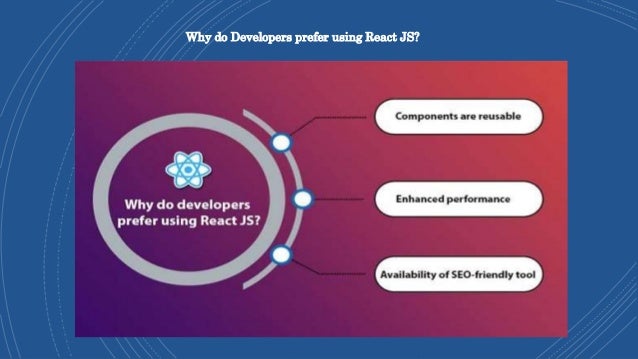
Why do Developers prefer using React JS?
Click to add text
An overview of React Native
React Native, which came after React JS, is an open-source JavaScript
framework. Developers use React Native to develop mobile and web
applications, suited for iOS, Android as well as Windows. It focuses on
developing cross-platform mobile applications using JavaScript only. React
Native and React JS are quite similar in this manner but React Native makes
use of native components as its building blocks. Moreover, React Native is
best suited for mobiles rather than the web.
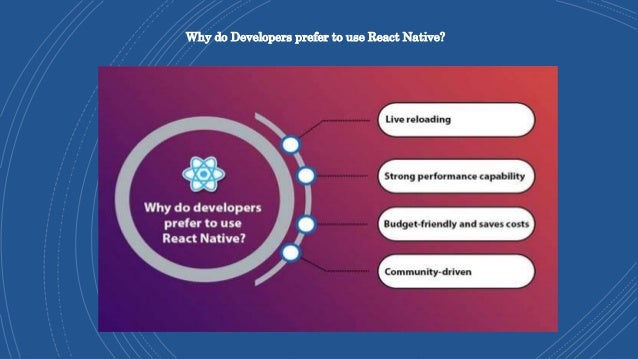
Why do Developers prefer to use React Native?
Drawing a Comparison between React
JS and React Native
Now that you have a clear idea of both the frameworks, let’s proceed with differentiating
between the two on the following parameters:
1. Base Derivative
React JS can be primarily considered as a base derivative of the React DOM. React Native, on
the other hand, can be considered as a base derivative in itself. This indicates that while the
components are altered, the syntax and workflow do not change.
2. The purpose of Each
React JS originally is a JavaScript library that aids developers in programming user interface
layers with enhanced performance and dynamo. React Native, on the other hand, is a complete
framework in itself that is useful to build cross-platform applications for mobile as well as the
web.
3. Rendering of the Browser Code and Developments
To render the browser code, React JS makes use of the virtual DOM feature. What’s more? In
React JS, the developed applications render the HTML code in the user interface. React
Native uses native APIs to render components in a mobile application. In React Native, the
rendering of the UI takes place with the help of the JSX, which is an abbreviation to
JavaScript.
4. Styling & Animations
React JS uses CSS for creating styling for coding components and animation in React JS is
created using CSS similar to web development. React Native makes use of a stylesheet for
styling. In React Native, you need to make use of an animated API to incorporate animation
in various components of the application.
5. Suitability
In order to develop a web application of enhanced performance, responsiveness,
and dynamic functionality, the best choice for you is React JS. Whereas, if you
want to create a mobile application with high performance, then React
Native should be your top preference.
Both frameworks have their strengths and limitations. In an environment where
technology is developing at a consistent pace, you will be bombarded with
improvements and updates which could be a hassle sometimes. Nevertheless, you
cannot expect everything to work perfectly. All you need is an adequate amount of
skill and knowledge and you are good to go. The bottom line is, deciding between
React JS and React Native should be child’s play once you determine the kind of
application that you want to develop.
Contactus
 Web: www.zenesys.com
 Address: 2591 Dallas Parkway, Suite 300 Frisco,
United States
 Email: info@zenesys.com
 Phone: +1 (323) 565-1141

Difference between React JS and React Native

  • 2.
    Difference between ReactJS and React Native
  • 3.
    React JS andReact Native are two quite popular tools that are utilized for programming a multitude of applications and websites. What’s more interesting that each of their unique features is their unknown history. Facebook, in the year 2011, realized that they need a newer model with an advanced user interface to cater to the growing demands of the application. Constant updates and developments required the realignment of the entire application which is why, Jordon Walke, an engineer at Facebook, came up with the prototype for React JS. What’s more? This innovation had turned out to be a game-changer for the company. Later on in the year 2015, they came out with React Native which built an impressive groundwork towards developing applications, for both smartphones and websites.
  • 4.
    An overview ofReact JS React JS is an open-source JavaScript library that is used to build user interfaces for applications, specifically for the web. You can use a feature called ‘components’ which is a small part of a code in order to compose complex user interfaces. React JS mainly incorporates two segments: One of them is components which include pieces of HTML code that are visible in your user interfaces and the other segment is the HTML document where the rendering process of the components that you use will take place.
  • 5.
    Why do Developersprefer using React JS? Click to add text
  • 6.
    An overview ofReact Native React Native, which came after React JS, is an open-source JavaScript framework. Developers use React Native to develop mobile and web applications, suited for iOS, Android as well as Windows. It focuses on developing cross-platform mobile applications using JavaScript only. React Native and React JS are quite similar in this manner but React Native makes use of native components as its building blocks. Moreover, React Native is best suited for mobiles rather than the web.
  • 7.
    Why do Developersprefer to use React Native?
  • 8.
    Drawing a Comparisonbetween React JS and React Native
  • 9.
    Now that youhave a clear idea of both the frameworks, let’s proceed with differentiating between the two on the following parameters: 1. Base Derivative React JS can be primarily considered as a base derivative of the React DOM. React Native, on the other hand, can be considered as a base derivative in itself. This indicates that while the components are altered, the syntax and workflow do not change. 2. The purpose of Each React JS originally is a JavaScript library that aids developers in programming user interface layers with enhanced performance and dynamo. React Native, on the other hand, is a complete framework in itself that is useful to build cross-platform applications for mobile as well as the web.
  • 10.
    3. Rendering ofthe Browser Code and Developments To render the browser code, React JS makes use of the virtual DOM feature. What’s more? In React JS, the developed applications render the HTML code in the user interface. React Native uses native APIs to render components in a mobile application. In React Native, the rendering of the UI takes place with the help of the JSX, which is an abbreviation to JavaScript. 4. Styling & Animations React JS uses CSS for creating styling for coding components and animation in React JS is created using CSS similar to web development. React Native makes use of a stylesheet for styling. In React Native, you need to make use of an animated API to incorporate animation in various components of the application.
  • 11.
    5. Suitability In orderto develop a web application of enhanced performance, responsiveness, and dynamic functionality, the best choice for you is React JS. Whereas, if you want to create a mobile application with high performance, then React Native should be your top preference. Both frameworks have their strengths and limitations. In an environment where technology is developing at a consistent pace, you will be bombarded with improvements and updates which could be a hassle sometimes. Nevertheless, you cannot expect everything to work perfectly. All you need is an adequate amount of skill and knowledge and you are good to go. The bottom line is, deciding between React JS and React Native should be child’s play once you determine the kind of application that you want to develop.
  • 12.
    Contactus  Web: www.zenesys.com Address: 2591 Dallas Parkway, Suite 300 Frisco, United States  Email: info@zenesys.com  Phone: +1 (323) 565-1141