1
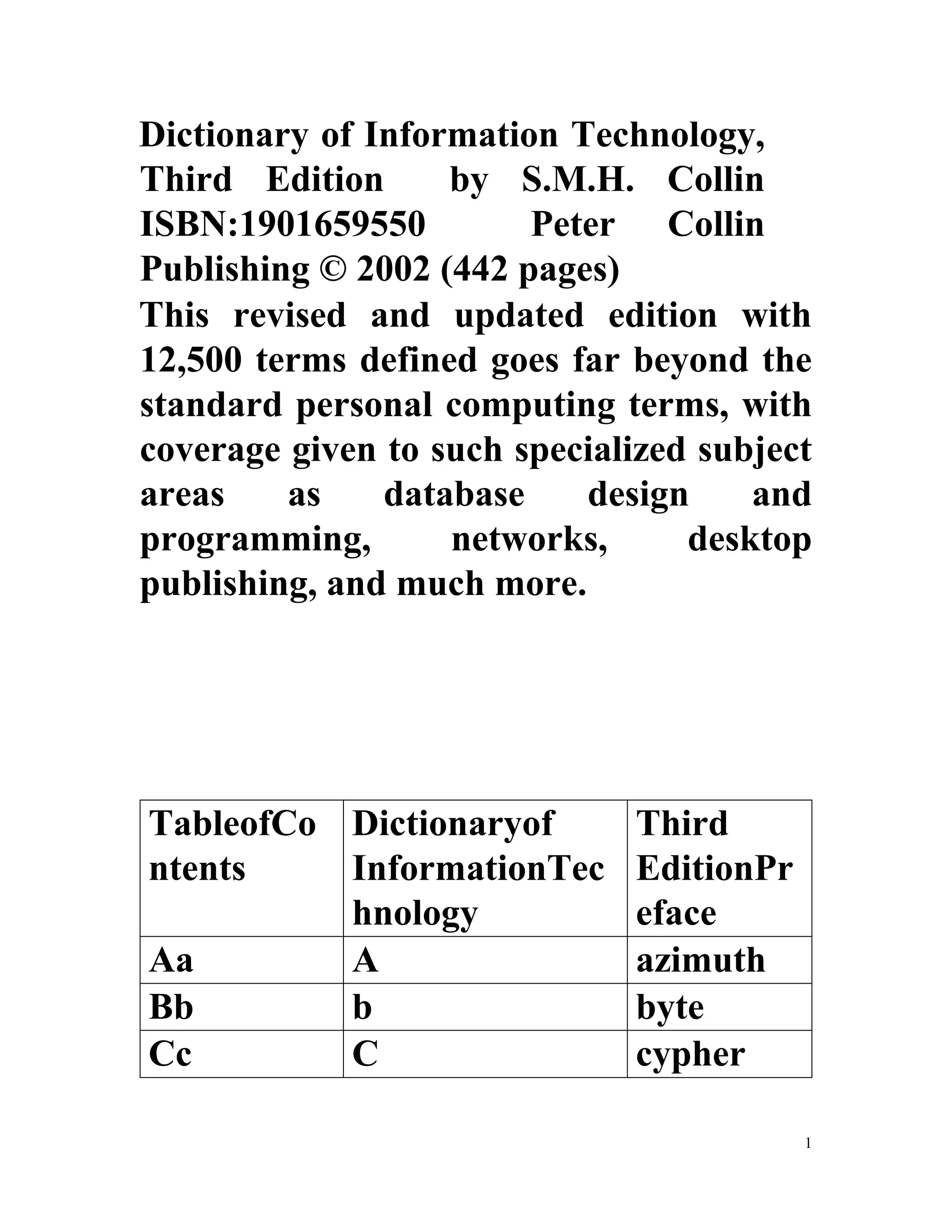
Dictionary of Information Technology,
Third Edition by S.M.H. Collin
ISBN:1901659550 Peter Collin
Publishing © 2002 (442 pages)
This revised and updated edition with
12,500 terms defined goes far beyond the
standard personal computing terms, with
coverage given to such specialized subject
areas as database design and
programming, networks, desktop
publishing, and much more.
TableofCo
ntents
Dictionaryof
InformationTec
hnology
Third
EditionPr
eface
Aa A azimuth
Bb b byte
Cc C cypher
2
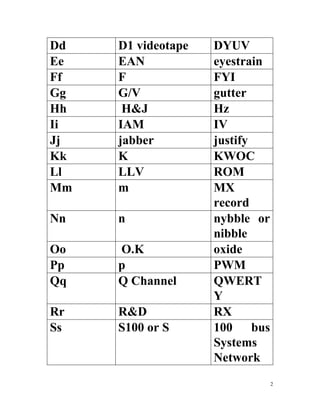
Dd D1 videotape DYUV
Ee EAN eyestrain
Ff F FYI
Gg G/V gutter
Hh H&J Hz
Ii IAM IV
Jj jabber justify
Kk K KWOC
Ll LLV ROM
Mm m MX
record
Nn n nybble or
nibble
Oo O.K oxide
Pp p PWM
Qq Q Channel QWERT
Y
Rr R&D RX
Ss S100 or S 100 bus
Systems
Network
3
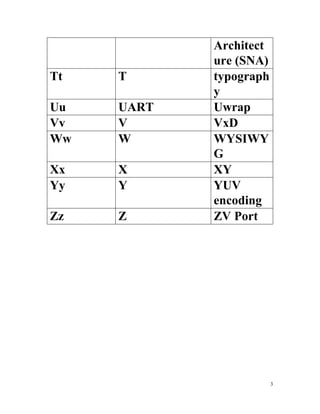
Architect
ure (SNA)
Tt T typograph
y
Uu UART Uwrap
Vv V VxD
Ww W WYSIWY
G
Xx X XY
Yy Y YUV
encoding
Zz Z ZV Port
4
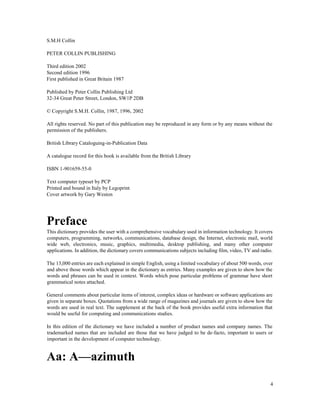
S.M.H Collin
PETER COLLIN PUBLISHING
Third edition 2002
Second edition 1996
First published in Great Britain 1987
Published by Peter Collin Publishing Ltd
32-34 Great Peter Street, London, SW1P 2DB
© Copyright S.M.H. Collin, 1987, 1996, 2002
All rights reserved. No part of this publication may be reproduced in any form or by any means without the
permission of the publishers.
British Library Cataloguing-in-Publication Data
A catalogue record for this book is available from the British Library
ISBN 1-901659-55-0
Text computer typeset by PCP
Printed and bound in Italy by Legoprint
Cover artwork by Gary Weston
Preface
This dictionary provides the user with a comprehensive vocabulary used in information technology. It covers
computers, programming, networks, communications, database design, the Internet, electronic mail, world
wide web, electronics, music, graphics, multimedia, desktop publishing, and many other computer
applications. In addition, the dictionary covers communications subjects including film, video, TV and radio.
The 13,000 entries are each explained in simple English, using a limited vocabulary of about 500 words, over
and above those words which appear in the dictionary as entries. Many examples are given to show how the
words and phrases can be used in context. Words which pose particular problems of grammar have short
grammatical notes attached.
General comments about particular items of interest, complex ideas or hardware or software applications are
given in separate boxes. Quotations from a wide range of magazines and journals are given to show how the
words are used in real text. The supplement at the back of the book provides useful extra information that
would be useful for computing and communications studies.
In this edition of the dictionary we have included a number of product names and company names. The
trademarked names that are included are those that we have judged to be de-facto, important to users or
important in the development of computer technology.
Aa: A—azimuth
5
A = AMPERE
Å see ANGSTROM
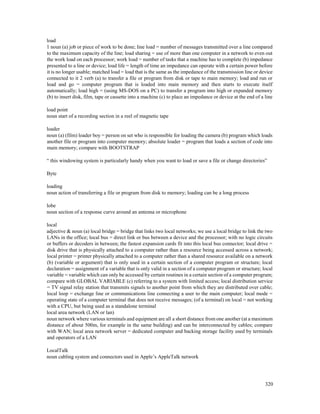
A: (used in some operating systems such as DOS and Windows) denotes the first disk drive on the system;
to see what is stored on your floppy disk, use the DOS command DIR A:; see also C:, FLOPPY DISK, HARD
DISK
COMMENT A PC usually has two or three disk drives within its casing: a floppy disk drive
(called ‘A:’), a hard disk (’C:’) and, sometimes, a second floppy disk (’B:’) and a CD-ROM drive (’D:’).
When talking about the different disk drives, you say ‘Drive A’ for the floppy drive, but normally write ‘A:’
A & I = ABSTRACTING AND INDEXING verb making summaries and indexes for articles and books
A Programming Language (APL)
high-level programming language used in scientific and mathematical work
‘A’ roll noun (film) one of two videotapes or film rolls; the other half is the ‘B’ roll used in an A/B roll
A to D or A/D = ANALOG TO DIGITAL; A to D converter or A/D converter = ANALOG TO DIGITAL
CONVERTER
A wind noun (film) videotape wound onto a reel so that it winds in a clockwise direction; the oxide layer
being on the inside
A/UX version of the Unix operating system for the Apple Macintosh range of computers; see also UNIX
A1, A2, A3, A4, A5 noun ISO recommended international standard sizes of paper or sizes of screen; you
must photocopy the spreadsheet on A3 paper; we must order some more A4 headed notepaper; a standard
300 d.p.i. black and white A4 monitor
AB roll noun two video or music segments that are synchronized so that one fades as the second starts; (film)
AB roll working = using two rolls of film to compile a film sequences; one roll using spacing or blanking
(the A roll) and one on which the images appear (the B roll)
abandon verb to clear a document or file or work from the computer’s memory without saving it to disk or
tape; once you have abandoned your spreadsheet, you cannot retrieve it again
abbreviation noun short form of a word or command or instruction; use the abbreviation TV for ‘television’;
abbreviated addressing or abb. add. = (in a network) user name that has fewer characters than the full name,
making it easier to remember or type in; my full network address is over 60 characters long, so you will find
it easier to use my abbreviated address; see also ALIAS; abbreviated installation = (during installation) to
install new hardware or software without restoring the previous backup settings of the operating system
ABC (film) = (i) AMERICAN BROADCASTING COMPANY; (ii) AUSTRALIAN BROADCASTING
COMMISSION
ABD = APPLE DESKTOP BUS
abend = ABNORMAL END unexpected stoppage of a program being run, due to a fault or power failure;
abend code = special number (generated by the operating system) that identifies the type of error that has
caused the problem
6
aberration noun (a) distortion of a light beam or image due to defects in the optical system (b) distortion of a
television picture caused by a corrupt signal or incorrect adjustment; see also SPHERICAL
ABERRATION
ablation noun method of writing data to an optical storage device; see also WORM
COMMENT A laser burns a hole or pit (that represents digital bits of data) into the thin metal surface of the
storage device
abnormal (adj) not normal; abnormal end or abend or abnormal termination = unexpected stoppage of a
program being run, caused by a fault or power failure
abnormally (adv) not as normal or not as usual; the signal is abnormally weak; the noise level on the line is
abnormally high
abort V to end a process (when a malfunction occurs), by switching the computer off manually or by an
internal feature; the program was aborted by pressing the red button; abort the program before it erases any
more files; aborted connection = connection to a network or online service that has not been shut down
correctly; abort sequence = unique sequence of bits that indicates that the transmission will be abnormally
terminated
About… (in the SAA CUA front-end) menu selection that tells you who developed the program and displays
copyright information; see also SAA
above-the-line costs plural noun variable costs involved in making TV films (such as scriptwriters, actors,
sets, etc.) as opposed to below-the-line costs (film crew, technicians, etc.); compare with BELOW-THE-
LINE ABS = ABSOLUTE FUNCTION programming instruction that returns the magnitude of a number
without the number’s sign; the command ABS(-13) will return the answer 13
absolute address or actual address
noun (a) computer storage address that directly, without any modification, accesses a location or device;
compare with INDEXED ADDRESS (b) computer storage address that can only access one location;
absolute addressing = locating a word of data in memory by the use of its absolute address; absolute assembler
= type of assembly language program designed to produce code which uses only absolute addresses and
values; absolute cell reference = spreadsheet reference that always refers to the same cell, even when copied
to another location; absolute code = binary code which directly operates the central processing unit, using
only absolute addresses and values (this is the final form of a program after a compiler or assembler pass);
see also OBJECT CODE; absolute coordinates = coordinates that describe the distance of a point from the
intersection of axes; compare with RELATIVE COORDINATES; absolute device = input device such as a
tablet or mouse that returns the coordinates of a pointer within specified axes; absolute error = value or
magnitude of an error, ignoring its sign; (in assembly language) absolute expression = value of an expression
that is not affected by program relocation; absolute function = programming function that returns the
magnitude of a number without the number’s sign; absolute instruction or code = (i) instruction which
completely describes the operation to be performed (no other data is required); (ii) graphics command that
uses absolute coordinates; absolute loader = program that loads a section of code into main memory; absolute
positioning = position of an object in relation to an origin; (in some operating system) absolute priority =
priority of a process that cannot be changed by the operating system; absolute program = computer program
written in absolute code; (in CD DA) absolute time = length of time that an audio disc has been playing;
absolute value = size or value of a number, regardless of its sign; the absolute value of –62.34 is 62.34
absorb
7
verb to take in (light or liquid or a signal)
absorptance
noun percentage of light that is absorbed by a material instead of reflecting it
Note the opposite is reflectance
absorption
noun power loss of a signal when travelling through a medium, due to its absorptance; absorption filter =
filter that blocks certain colours of light
abstract
1 noun short version of a book or article; in our library, abstracts are gathered together in separate volumes
allowing an easy and rapid search for a particular subject; it’s quicker to search through the abstracts than
the full text 2 verb (a) to remove something from something (b) to make a summary of an article
abstract data type
noun a general data type that can store any kind of information; the stack is a structure of abstract data types,
it can store any type of data from an integer to an address
abstracting and indexing
verb making summaries and indexes for articles and books
AC
1 = ALTERNATING CURRENT electric current whose value varies with time in a regular, sinusoidal way
2 = ASSISTANT CAMERAMAN person who carries out camera operations under the instruction of the
director of photography (these could be aperture changes, zooming, focusing, etc; in certain situations, he
may also operate the camera)
COMMENT The mains electricity supply uses alternating current to minimize transmission power loss,
with a frequency of 50Hz in UK, 60Hz in the USA
Academy
(film) (abbreviation for) The Academy of Motion Picture Arts and Sciences; Academy awards = yearly
presentation of the Oscar award by the Academy to artists and technicians for excellence in their area of the
film world
ACAP
= APPLICATION CONFIGURATION ACCESS PROTOCOL email system developed to work with the
IMAP4 email protocol to provide useful secondary features such as managing an address book; originally
termed IMSP (Interactive Mail Support Protocol)
ACC
noun = ACCUMULATOR most important internal CPU storage register, containing the data word that is to
be processed
accelerated motion
noun (film) special effect in which the camera is run at a slower frame rate than the standard 24 frames per
second which gives the effect of faster-than-average motion
acceleration
8
see MOUSE ACCELERATION
acceleration time
noun time taken for a disk drive or CD-ROM player to spin a disk to the correct speed, from rest
accelerator
see ACCELERATOR KEY
accelerator board or card
noun circuit board that carries a faster or more advanced version of the same processor that runs your
computer; adding an accelerator card to your computer makes it run faster
accelerator key
noun combination of keys that, when pressed together, carry out a function that would otherwise have to be
selected from a menu using a mouse; instead of selecting the File menu then the Save option, use the
accelerator keys Alt and S to do the same thing and save the file; see also
HOT KEY
accent
noun small sign placed on or above a printed or written character to show that it is pronounced in a different
way; acute accent = accent (é) above a character, which slopes upwards to the right; circumflex accent =
accent (ê) above a character, shaped like an upside down ‘v’; grave accent = accent (è) above a character,
which slopes upwards to the left; see also CEDILLA, TILDE,
UMLAUT
accented
adjective (letter) with an accent on it
accept
verb (a) to agree to do something; he accepted the quoted price for printing; she has accepted our terms; he
did not accept the job which he was offered; to accept a book for publication = to agree to publish a book (b)
to take something which is being offered; the laser printer will accept a card as small as a business card; the
multi-disk reader will accept 3.5 inch disks as well as old
5.25 inch formats (c) to establish a session or connection with another device
acceptable
adjective which can be accepted; the error rate was very low, and is acceptable
acceptable use policy see
AUP
acceptance
noun action of accepting something; acceptance angle = angle of total field of view of a lens or fibre optic; a
light beam at an angle greater than the acceptance angle of the lens will not be transmitted; acceptance
sampling = testing a small random part of a batch to see if the whole batch is up to standard; acceptance test
or testing = method of checking that a piece of equipment will perform as required or will reach required
standards
access
1 noun being allowed to use a computer and read or alter files held in it (this is usually controlled by a security
device such as a password); to have access to something = to be able to get or examine or reach something;
to have access to a file of data; he has access to large amounts of capital; to bar access to a system = to prevent
a person from using a system; access arm = mechanical device in a disk drive used to position the read/write
9
head over the disk; access authority = permission to carry out a particular operation on data; access barred =
to prevent a user accessing particular data; access category = one of several possible predefined access levels;
the category defines which files or data a user can access, and which he cannot; (in tokenring network) access
channel control = protocols that manage the data transfer between a station and a medium access control
(MAC); access charge = cost due when logging onto a system or viewing special pages on a bulletin board;
access code = series of characters or symbols that must be entered to identify the user; see also PASSWORD;
access control = security device (such as a password) that only allows selected users into a computer system;
(in token-r+ing network) access control byte = byte following start marker in the token that indicates if the
station can access the network; (in CD-i) access control list (ACL) = security system in which a list that
contains user names and passwords is used by an operating system to determine if a particular user is allowed
to access or use a resource or feature of the computer or network; access controller = electronic device that
transfers image data to the video controller; access counter = see COUNTER; access head = part of a disk
drive moves to the correct part of the disk’s surface and reads information stored on the disk; access hole =
opening in both sides of a floppy disk’s casing allowing the read-write head to be positioned over the disk’s
surface; access line = permanent communications line between a terminal and a DSE or two computers; see
also LEASED LINE; compare with DIALUP; access level = various predefined access categories; the lowest
access level might allow the user to only view data, the highest access level allows a user to do anything;
access log = file that stores a record of every visitor to a website; our access log shows us which pages on
the website are viewed most often; we use an analyzer program to produce reports from our website access
log; the access log is vital to check response to email marketing; access mechanism = mechanical device that
moves an access arm over the surface of a disk; access method = means used for the internal transfer of data
between memory and display or peripheral devices (differences in the methods used cause compatibility
problems); access method routines = software routines that move data between main storage and an output
device; access name = unique name that identifies an object in a database; access path = description of the
location of a stored file within a directory structure of a disk; access path journalling = recording changes to
an access path in case of malfunction; access period = period of time during which a user can access data;
access permission = description of all the access rights for a particular user; access point = test point on a
circuit board or software, allowing an engineer to check signals data; access privilege = status granted to a
user that allows them to see or read or alter files; access provider = see SERVICE PROVIDER; access rights
= permission for a particular user to access a particular file or data object; access time = (i) total time which
a storage device takes between the moment the data is requested and the data being returned; (ii) length of
time required to find a file or program, either in main memory or a secondary memory source; CD-ROM
drives have a normal access time of 400msec for a single speed and 300msec for a double-speed drive, whilst
a hard disk has an access time of around 15msec; see also DOUBLE SPEED; (in token-ring networks) access
unit = wiring concentrator; direct memory access (DMA) = direct, rapid link between a peripheral and a
computer’s main memory which avoids the use of accessing routines for each item of data required; public
access terminal = terminal which can be used by anyone 2 verb to call up (data) which is stored in a computer;
to obtain data from a storage device; she accessed the employee’s file stored on the computer
COMMENT A good access control system should allow valid users to operate the computer easily with the
minimum of checks, while barring entry to hackers or unauthorized users
access time
noun (a) total length of time which a storage device takes between the moment the data is requested and the
data being returned; the access time of this dynamic RAM chip is around 100nS – we have faster versions if
your system clock is running faster (b) length of time required to find a file or program, either in main
memory or a secondary memory source
COMMENT If you upgrade your computer by adding more memory, you must make sure the
RAM has the correct access time for the speed of the processor otherwise data errors will occur
10
accessible
adjective which can be reached or accessed; details of customers are easily accessible from the main computer
files
accessions
plural noun new books which are added to a library; accession number = (i) serial number used in a library
indexing system; (ii) number in a record that shows in which order each record was entered
accessor
noun person who accesses data
accessory
noun extra, add-on device (such as a mouse or printer) which is attached to or used with a computer; the
printer comes with several accessories, such as a soundproof hood; this popular computer has a large range
of accessories; see also PERIPHERAL
accidental
adjective which happens by accident; always keep backup copies in case of accidental damage to the master
file
accordion fold or fanfold
noun method of folding continuous paper, one sheet in one direction, the next sheet in the opposite direction,
allowing the paper to be fed into a printer continuously with no action on the part of the user
account
1 noun (in a network or online system) record of a user’s name, password and rights to access a network or
online system; if you are a new user, you will have to ask the supervisor to create an account for you; account
name = unique name of a user on a network or online system; John Smith’s account name is JSMITH 2 verb
to keep track of how much time and resources each user of a network or online system uses
accounting package or accounts package
noun software that automates a business’s accounting functions; we now type in each transaction into the
new accounting package rather than write it into a ledger
COMMENT Accounting packages typically mimic traditional practice, using disk files to simulate paper
ledgers. The main advantage is that a computer system will run a proper double-entry system while allowing
details of each transaction to be entered only once. Provided it is used properly, an accounting package can
produce summary accounts at any time and speeds up tasks such as making VAT returns. Many accounting
packages are sold as a set of separate modules which integrate together so that the user can choose only the
functions they require
accumulate
verb to gather several things together over a period of time; we have gradually accumulated a databank of
names and addresses
accumulator or ACC or accumulator register
noun most important internal CPU storage register, containing the data word that is to be processed; store the
two bytes of data in registers A and B and execute the add instruction – the answer will be in the accumulator;
accumulator address = address accessed by an instruction held in the accumulator
accuracy
11
noun total number of bits used to define a number in a computer, the more bits allocated the more accurate
the definition; accuracy control character = code that indicates whether data is accurate or whether the data
should be disregarded by a particular device
accurate
adjective correct; without any errors; the printed bar code has to be accurate to within a thousandth of a
micron
accurately
adverb correctly or with no errors; the OCR had difficulty in reading the accents accurately; the error was
caused because the data had not been accurately keyed
ACD
noun = AUTOMATIC CALL DISTRIBUTION specialised telephone system that can handle lots of
incoming calls and direct them to a particular operator according to programmed instructions in a database
ACE
noun (film) a 1000 watt spotlight
ACES
(film) = AUTOMATIC CAMERA EFFECTS SYSTEM computer-operated camera movement system
developed by Disney Studios which is designed to film repeatable camera moves on separate exposures
acetate
noun sheet of transparent plastic used for making overlays; the graphs were plotted on acetate, for use on an
overhead projector; acetate base = plastic material used as the standard base for motion picture film; see also
SAFEBASE; (film) acetate tape = audio-tape consisting of acetate backing with magnetically sensitive oxide
coating
acetone
noun (film) clear, flammable liquid which is used to clean film print surfaces and splices and other editing
and filming apparatus
achieve
verb to succeed in doing something; the hardware designers are trying to achieve compatibility between all
the components of the system
achromatic
adjective (an optical device) that has been corrected for chromatic aberration
achromatic colour
noun (grey) colour within the range between black and white displayed by a graphics adapter
ACIA
= ASYNCHRONOUS COMMUNICATIONS INTERFACE ADAPTER
ACK
= ACKNOWLEDGE signal that is sent from a receiver to indicate that a transmitted message has been
received and that it is ready for the next one
acknowledge
1 noun signal that is sent from a receiver to indicate that a transmitted message has been received and that it
is ready for the next one 2 verb (a) to tell a sender that a message or letter has been received (b) to send a
12
signal from a receiver to show that a transmitted message has been received; acknowledge character = special
code sent by a receiver to indicate to the transmitter that the message has been correctly received
acknowledged mail
noun function (in an email program) that signals to the sender when an electronic mail message has been read
by the recipient
acknowledgements
noun text printed at the beginning of a book, where the author or publisher thanks people who have helped
ACL
see ACCESS CONTROL LIST
Acorn Computers
noun computer company that developed the BBC micro and the Archimedes personal computers
acoustic
adjective referring to sound; acoustic delay line = device that will delay an audio signal for special effects;
acoustic hood = soundproof hood placed over a printer to reduce the noise; acoustic panel = sound-proofed
panel placed behind a device to reduce noise
acoustic coupler
noun device that connects to a telephone handset, converting binary computer data into sound signals to allow
data to be transmitted down a telephone line
COMMENT The acoustic coupler also converts back from sound signals to digital signals when receiving
messages; it is basically the same as a modem but uses a handset on which a loudspeaker is placed to send
the signals rather than direct connection to the phone line. It is portable, and clips over both ends of a normal
telephone handset; it can be used even in a public phone booth
acoustical feedback
noun distortion in an audio signal, due to a part of an amplified signal being picked up by the microphone
and amplified again until the amplifier is overloaded
acoustics
noun study and science of sound waves
acquisition
noun accepting or capturing or collecting information
ACR
1 = AUDIO CASSETTE RECORDER; ACR interface = interface which allows a cassette recorder to be
linked to a computer 2 = AUTOMATIC CASSETTE RECORDER a type of videotape recorder
Acrobat
see ADOBE ACROBAT
acronym
noun abbreviation, formed from various letters, which makes up a word which can be pronounced; for
example, GUI is an acronym of graphical user interface and is pronounced ‘gooey’; the acronym FORTRAN
means Formula Translator; the acronym RAM means Random
Access Memory
13
actintic light
noun light which is able to cause chemical change in a material, such as film
action
noun (a) thing which has been done; to take action = to do something; action message = prompt given for a
required user input (b) (in an SAA CUA front-end) user event, such as pressing a special key, that moves the
cursor to the action or menu bar at the top of the screen; action bar = top line of the screen that displays the
menu names; action bar pull-down = standard that defines what happens when a user moves the cursor to a
particular menu name on the action bar: the full menu is displayed below the menu name; action code =
single letter associated with a particular menu option to speed up selection; when the letter action code is
pressed, the menu option is selected; for example, in Windows, the convention is F for the file menu, E for
the edit menu, and H for the help menu; action cycle = complete set of actions involved in one operation
(including reading data, processing, storing results, etc.); action list = list of choices; action message message
displayed to inform the user that an action or input is required; action-object = object to which a user specifies
an action should be applied (c) movement; action field = area to be photographed by a camera; action frame
= camera field of view where the filmed action is taking place; action shot = still photograph showing action
taking place (such as a person running) (d) (film) the command to begin a performance, said by a director to
an actor
activate
verb to start a process or to make a device start working; pressing CR activates the printer
activated
adjective (in an authoring tool or programming language) button or field in a screen layout that has a script
attached to it; the script is executed when the user clicks on the button
Note if the button or field is not activated, it is normally displayed greyed out and does not respond if a user
selects it
active
adjective (in a multitasking operating system) active application = application currently being used by a user;
active area = (i) (in a spreadsheet program) the area that contains data bounded by the top left hand corner
and the bottom right hand cell; (ii) (in a graphical window) an area that will start or select a function if the
user moves the pointer into it with a mouse; active cell = spreadsheet cell which is currently selected with a
cursor or pointer; active code page = code page currently in use by the system; active database = database
file currently being accessed by a database management program; active device = electronic component that
provides gain; active document (in a network) = standard Windows application that is accessed from within
a web browser and controlled by special commands in the web page; active file = file which is being worked
on; active gateway = gateway that exchanges routing information, unlike a passive gateway; active high =
electronic signal that is logical one when it is high or at five volts; active hub = network device that selectively
directs packets of data according to their address or content; see also HUB; active line = line in a
communications link or port that is being used to transfer data or carry control signals; active link = link
currently being used to transfer information; active low = electronic signal that is valid when it is low or
logical zero or at zero volts; active matrix liquid crystal display way of making liquid crystal displays (for
laptop computer screens) in which each pixel is controlled by its own transistor giving a clearer and brighter
screen image, but that consumes more power; active menu menu selection currently displayed below a menu
bar; active node = node on a network connected to or available to connect to another node; active printer =
printer that is currently connected to the computer’s printer port; (in a multitasking system) active program
= program that is currently in control of the processor; active record = record that is being updated or
accessed; active region area on a screen that will start an action or has been defined as a hotspot; active state
= electronic state that causes an action to occur; Active Server Page (ASP) = technique used to create web
14
pages in real time as the user views the page; the system works with the web server software to run scripts
(often written in Visual Basic) and database components to provide information that is then displayed within
the web page, for example, a web page that displays a list of products could either be created as a complete
HTML file or could be created as an ASP template that extracts data about each product from a database
each time a user views the page; active storage = main storage, fast access RAM whose locations can be
directly and immediately addressed by the CPU; active window = (i) area of display screen in which you are
currently working; (ii) in a GUI or SAA CUA front-end) the window that is currently the focus of cursor
movements and screen displays; see also SAA, WINDOW; ActiveVRML = see VRML; ActiveX =
programming language and program definition used to create small applications designed to enhance the
functionality of a web page; for example, to add multimedia effects to a web page that are not supported by
the basic HTML commands, an ActiveX program, called an applet, could be used; see also APPLET, JAVA,
VBSCRIPT
activity
noun (a) being active or busy; activity level = maximum number of jobs that can run in a multitasking system;
activity light = small light or LED on the front of a disk drive or computer that indicates when the disk drive
is reading or writing data to disk; activity loading = method of organizing disk contents so that the most often
accessed files or programs can be loaded quickly; activity ratio = number of files currently in use compared
to the total stored; activity trail = record of activities carried out (b) activities = jobs or tasks which are being
performed on a computer
actual address or absolute address
noun computer storage address that directly, without any modification, accesses a location or device
actual data transfer rate
average number of data bits transferred in a period of time
actuator
noun mechanical device that can be controlled by an external signal (such as the read/write head in a disk
drive)
ACU
= AUTOMATIC CALLING UNIT
acuity
noun (a) ability of the eye to define between shades and shapes of an object (b) ability of the ear to detect
frequency or volume changes
acutance
noun ability of a lens to produce clear edges
acute
adjective (a) very sharp or clear (b) acute accent = accent above a character, which slopes upwards to the
right
AD
(film) = ASSISTANT DIRECTOR, ASSOCIATE DIRECTOR person who carries out the director’s
instructions, oversees the work and whereabouts of the actors, technicians and rest of crew and works in close
contact with the production unit
ADA
noun high-level programming language that is used mainly in military, industrial and scientific fields of
computing
15
adapt
verb to change to fit; can this computer be adapted to take 31/2-inch disks
adaptation
noun ability of a device to adjust its sensitivity range according to various situations; the adaptation of the
eye to respond to different levels of brightness
adapter or adaptor
noun device that allows two or more incompatible devices to be connected together; the cable adapter allows
attachment of the scanner to the SCSI interface; the cable to connect the scanner to the adapter is included in
the package; adapter card = interface card (that plugs into an expansion slot in a computer) that allows
incompatible devices to communicate; for example, a display adapter allows a computer to display text and
images on a monitor; adapter plug = plug which allows devices with different plugs (two-pin, three-pin, etc.)
to be fitted into the same socket; graphics adapter = electronic device (normally on an expansion card) in a
computer that converts software commands into electrical signals that display graphics on a connected
monitor; the new graphics adapter is capable of displaying higher resolution graphics; see also CGA, EGA,
VGA; network adapter = add-in board that connects a computer to a network; the board converts the
computer’s data into electrical signals that are then transmitted along the network cable
adaptive
= (something) that can change according to the requirements or demand; adaptive channel allocation
providing communications channels according to demand rather than a fixed allocation; adaptive differential
pulse-code modulation (ADPCM) = CCITT standard that defines a method of converting a voice or analog
signal into a compressed digital signal; adaptive interframe transform coding = class of compression
algorithms commonly used with video signals to reduce the data transmission rate; adaptive packet assembly
= method used by the MNP error correcting protocol to adjust the size of data packets according to the quality
of the telephone line (the better the line, the bigger the packet size); adaptive routing = ability of a system to
change its communications routes according to situations such as line failure; adaptive systems = ability of a
system to alter its responses and processes according to situations; adaptive compression = data compression
system that continuously monitors the data it is compressing and adjusts its own algorithm to provide the
most efficient compression
adaptor see
ADAPTER
ADB
= APPLE DESKTOP BUS noun serial bus built into Apple Macintosh computers that allows lowspeed
devices, such as the keyboard and mouse, to communicate with the processor; see also USB
ADC
= ANALOG TO DIGITAL CONVERTER noun electronic device that converts an analog input signal to a
digital output form, that can be used by a computer
add
verb (a) to put figures together to make a total; in the spreadsheet each column should be added to make a
subtotal (b) to put things together to form a larger group; the software house has added a new management
package to its range of products; adding or deleting material from the text is
easy using the edit program
added entry
noun secondary file entry in a library catalogue
16
addend
noun number added to the augend in an addition sum
adder
noun device or routine that provides the sum of two or more digital inputs; full adder or three input adder =
binary addition circuit which can produce the sum of two inputs, and can also accept a carry input, producing
a carry output if necessary; half adder or two input adder binary addition circuit which can produce the sum
of two inputs and a carry output if necessary, but will not accept a carry input
add-in
noun & adjective (something) which is added; the first method is to use a page description language, the
second is to use an add-in processor card; can you explain the add-in card method? processing is much faster
with add-in cards
additional dialogue replacement see
ADR
additional
adjective which is added or which is extra; can we add three additional workstations to the network
additive colour mixing
verb to mix different coloured lights to produce the colour which is wanted
add-on
noun & adjective piece of software or hardware that is added to a computer system to improve its
performance; the add-on hard disk will boost the computer’s storage capabilities; the new add-on board
allows colour graphics to be displayed
Note the opposite is built-in
address
1 noun (a) details of number, street and town where an office is or a person lives; my business address and
phone number are printed on the card; cable address = short address for sending cables; home address =
address of a house or flat where someone lives; please send the documents to my home address; address list
= list of addresses; we keep an address list of two thousand businesses in Europe (b) number allowing a
central processing unit to reference a physical location in a storage medium in a computer system; each
separate memory word has its own unique address; this is the address at which the data starts; address base
= part of an address that defines the origin to which the logical address is added; address bus = physical
connection that carries the address data in parallel form from the central processing unit to external devices;
see also BIT, DATA BUS; (in programming) address code = part of a computer instruction that contains the
location of the operand; address field or operand field = part of a computer instruction that contains the
operand address data; (in a virtual memory system) address mapping = virtual address that is translated to a
real address; see also VIRTUAL MEMORY; address modification = changing the address field, so that it
can refer to a different location; address register = register in a computer that is able to store all the bits of an
address which can then be processed as a single unit; see also MAR; address space = total number of possible
locations that can be directly addressed by the program or CPU; address track = track on a magnetic disk
containing the addresses of files, etc., stored on other tracks; address word = computer word, usually made
up of two data words that contain address data (c) unique number that identifies a device on a network;
address book = (i) (in a network) list of node addresses (ii) (in electronic mail) list of the network addresses
of other users to which electronic mail can be sent; (in networks) address code = part of a packet that contains
the address of the destination node; address mask = pattern of bits used to filter out parts of an address from
an address; normally used to read the network and subnet parts of an address within an Internet or IP address;
17
address resolution protocol (ARP) = protocol used within the TCP/IP standard to link one IP address to a
low-level physical address; see also TCP/IP; address translation = an address produced by calculating an
expression; destination address = address of the node to which data is being transferred or sent; network
address = unique number that identifies each device on a network 2 verb (a) to write the details of an address
on an envelope, etc.; to address a letter or a parcel; please address your reply to the manager; a letter addressed
to the managing director; an incorrectly addressed package (b) to put the location data onto an address bus
to identify which word in memory or storage device is to be accessed; a larger address word increases the
amount of memory a computer can address
“ The world’s largest open data network, the Internet, links more than 10,000 local networks and 3 million
workstations in 50 countries. It has grown so fast that its address space is ‘bust’ and is being redesigned to
allow further expansion”
Computing
addressability
noun the control available over pixels on screen
addressable
adjective which can be addressed; all the 256Mb of RAM is addressable; addressable cursor = cursor which
can be programmed to be placed in a certain position; addressable point = any point or pixel in a graphics
system that can be directly addressed
addressee
noun person to whom a letter or package or communication is addressed
addressing
noun (a) process of accessing a location in memory; addressing method = manner in which a section of
memory is located; direct addressing = method of addressing where the storage location address given in the
instruction is the location to be used; immediate addressing = accessing data immediately because it is held
in the address field itself; indexed addressing = way of addressing where the storage location is addressed
with a start address and an offset word, which is added in to give the destination address; indirect addressing
= way of addressing data, where the first instruction refers to an address which contains a second address (b)
process of printing a postal address or label on an envelope or parcel; addressing machine = machine which
puts addresses on envelopes automatically
adjacent
adjective which is near or next to something; the address is stored adjacent to the customer name field;
adjacent domains = two network domains linked by two adjacent nodes; adjacent nodes = two nodes in a
network connected by a path that does not connect any other node
adjunct register
noun 32-bit register in which the top 16 bits are used for control information and only the bottom 16 bits are
available for use by a program
adjust
verb to change something to fit new conditions or so that it works better; you can adjust the brightness and
contrast by turning a knob
adjustment
noun slight change made to something so that it works better; the brightness needs adjustment; I think the
joystick needs adjustment as it sometimes gets stuck
18
AdLib
noun (older) type of sound card for the PC with basic sound playback and MIDI functions; see also SOUND
CARD
administrator
noun (a) individual who is responsible for looking after a network; responsibilities include installing,
configuring and maintaining the network (b) control or supervisor or executive software or person; data
administrator = control section of a database management system
Adobe
noun software company that developed products including Acrobat, ATM, and PostScript
Adobe Acrobat
software (developed by Adobe Systems) that converts documents and formatted pages into a file format
(called PDF) that can be viewed or printed in an identical form on almost any computer platform or using a
web browser on the Internet; we layout this dictionary using DTP software then send convert this to a PDF
file using Acrobat before sending this file to the printer
Adobe Type Manager or ATM
software technology for describing scalable fonts – most commonly used with Apple System and Microsoft
Windows operating systems to provide fonts that can be scaled to almost any point size, and printed on almost
any printer; see also OUTLINE FONT; compare with BITMAPPED
FONT
ADP
= AUTOMATIC DATA PROCESSING
ADPCM
= ADAPTIVE DIFFERENTIAL PULSE-CODE MODULATION noun CCITT standard that defines a
method of converting a voice or analog signal into a compressed digital signal; see also LEVEL A, LEVEL
B, LEVEL C
ADR
(film) = ADDITIONAL DIALOGUE REPLACEMENT noun adding words or phrases to a section of film
in post production; a continuous loop of film is shown to the artists in which the same scene is shown
repeatedly to help them synchronize their speech with their filmed lip movements
ADSL
= ASYMMETRIC DIGITAL SUBSCRIBER LINE high-speed transmission standard that uses the same
copper telephone wires as a normal telephone service, but is much faster than a standard modem or a digital
system such as ISDN. As well as the speed, ADSL provides a user with an ‘always on’ connection to the
Internet – there is no need to dial an access number; compare with
DIAL-UP, ISDN
advance
verb to move forward; to make something move forward; the paper is advanced by turning this knob; advance
the cursor two spaces along the line
advanced
adjective more complicated or more difficult to learn; advanced peer-to-peer networking (APPN) = extension
to SNA that routes information around a network and dynamically adjusts the route if part of the network is
damaged; advanced program to program communications (APPC) = set of protocols that allows peer-to-peer
communication between workstations connected to an SNA network; also known as LU 6.2 protocols;
19
advanced run-length limited (ARLL) = method of storing data onto a hard disk that is faster and more efficient
than RLL; advanced version = program with more complex features for use by an experienced user;
Advanced Interactive Executive see AIX; Advanced Research Projects Agency Network (ARPANET) =
original network of interconnected computers, linked by leased lines, that formed the first prototype for the
current Internet; developed by the US Department of Defense (Defense Advanced Research Projects Agency)
adventure game
noun game played on a computer, where the user pretends to be a hero in an imaginary land and has to get
through various dangerous situations, fight monsters, etc.
advisory lock
noun (in a multitasking system) lock placed on a region of a file by one process to prevent any other process
accessing the same data
advisory system
noun expert system that provides advice to a user
aerial
1 noun device for receiving or sending radio transmissions by converting electromagnetic impulses into
electrical signals and vice-versa; aerial cable = wire stretched between poles which acts as an aerial; aerial
perspective = view of a three-dimensional landscape as if the viewer is above the scene 2 adjective in the air;
aerial image = a view from high above a scene
affect
verb to touch or to influence or to change something; changes in voltage will affect the way the computer
functions
affiliate
verb to connect or join with
affiliated
adjective connected with or owned by another company; one of our affiliated companies
affirmative
adjective meaning ‘yes’; the answer was in the affirmative = the answer was yes; affirmative
acknowledgement = acknowledge signal from the receiver that it has accepted the message and is ready for
the next one
AFIPS
= AMERICAN FEDERATION OF INFORMATION PROCESSING SOCIETIES
AFNOR
=; ASSOCIATION FRANCE DE NORMALISATION
AFP
= APPLETALK FILING PROTOCOL noun protocol used to communicate between workstations and servers
in a network of Apple Macintosh computers
after-image
noun copy of a block of data that has been modified
afterglow
see PERSISTENCE
20
AGC
= AUTOMATIC GAIN CONTROL electronic device that provides a constant amplitude output signal from
a varying input signal by changing its gain
agenda
noun list of tasks or appointments or activities that have to be carried out on a particular day; the conference
agenda or the agenda of the conference; after two hours we were still discussing the first item on the agenda;
the secretary put finance at the top of the agenda; the chairman wants two items removed from or taken off
the agenda; agenda item = topic on an agenda to be discussed; electronic agenda = software that allows a
user to record appointments for each day
agent
noun series of commands or actions that are carried out automatically on a particular file or data; the
commands can be executed at a particular time or in response to a signal
aggregate
noun & adjective collection of data objects; aggregate bandwidth = total bandwidth of a channel carrying a
multiplexed data stream; aggregate function = mathematical database function performed on a selected field
in every record in a selected database; aggregate line speed = maximum speed at which data can be
transmitted through a particular channel; aggregate operator = command in a database management program
that starts an aggregate function
AI
= ARTIFICIAL INTELLIGENCE noun the design and development of computer programs that imitate
human intelligence, providing basic reasoning and other human characteristics
aid
1 noun help; the computer is a great aid to rapid processing of large amounts of information 2 verb to help;
industrial design is aided by computers; see also COMPUTER-AIDED
aiming symbol or field
noun symbol displayed on screen which defines the area in which a light-pen can be detected
air circuit breaker
noun mechanical device that has an electrical or manual switched circuit isolator
air gap
noun narrow gap between a recording or playback head and the magnetic medium
airbrush
noun (in graphics software) a painting tool that creates a diffuse pattern of dots, like an mechanical airbrush;
we used the airbrush tool to create the cloud effects in this image
AIX
= ADVANCED INTERACTIVE EXECUTIVE version of UNIX produced by IBM to run on its range of
PCs, minicomputers and mainframes
alarm
noun ringing or other sound which warns of a danger; all staff must leave the building if the alarm sounds;
an alarm rings when the printer has run out of paper
albumen plate
21
noun photographic plate, with a light-sensitive coating
ALC
= AUTOMATIC LEVEL CONTROL; see AGC
alert
noun warning message sent from software to warn a person or application that an error or problem has
occurred; alert box = dialog box displayed with a sound that warns a user of the implications of the user’s
actions; the alert box warned me that I was about to delete all my files; alert condition = status of a particular
object or device that triggers an alarm; network alert = message sent from the network operating system to
the user warning that the network hardware is not working properly
algebra
noun use of letters in certain mathematical operations to represent unknown numbers or a range of possible
numbers; Boolean algebra = rules set down to define, simplify and manipulate logical functions, based on
statements that are true or false
algebraic language
noun context free language
ALGOL
= ALGORITHMIC LANGUAGE high level programming language using algorithmic methods for
mathematical and technical applications
algorithm
noun rules used to define or perform a specific task or to solve a specific problem
COMMENT Programmers write instructions to implement particular algorithms in their programs. The
choice of algorithm affects performance, memory requirements, etc. For example, some methods of sorting
are very quick while others are slower but do not need as much memory or disk space to operate
algorithmic
adjective expressed using algorithms; algorithmic language = computer language designed to process and
express algorithms, such as ALGOL
“ image processing algorithms are step by step procedures for performing image processing operations”
Byte
“ the steps are: acquiring a digitized image, developing an algorithm to process it, processing the image,
modifying the algorithm until you are satisfied with the result”
Byte
“ the complex algorithms needed for geometrical calculations make heavy demands on the processor”
PC Business World
alias
noun (a) alternative name for something; often used to provide a new keystroke to access a menu item; some
electronic mail programs allow you to define an alternative name (the alias) for your email address so that
any message sent to ‘boss&pcp.co.uk’ would go to ‘simon&pcp.co.uk’; (on a network) alias name another
22
name that is used instead of the user name (b) undesirable value within a digital sample – often because a
very high input signal has exceeded the limits of the converter and is wrongly represented as a very low
value; the operating system uses the alias COM1 to represent the serial port address 3FCh
aliasing
noun jagged edges that appear along diagonal or curved lines displayed on a computer screen caused by the
size of each pixel; anti-aliasing = (i) (in graphics) method of reducing the effects of jagged edges in graphics
by using shades of grey to blend in along edges; (ii) (in sound) to add sound signals between the sound
samples to create a smoother sound wave
alien
adjective different or not fitting the usual system; alien disk = disk formatted on another system or containing
data in a format which cannot be read; alien disk reader = add-on device which allows a computer to read
from disks from other computers or systems; when you have an alien disk select the multi-disk option to
allow to turn the disk drive into an alien disk reader
align
verb (a) (i) to make sure that the characters to be printed are spaced and levelled correctly, either vertically
or horizontally; (ii) to arrange numbers into a column with all figures lines up against the right hand side
(right-aligned) or the left-hand side (left-aligned); (in a word-processor) align text = to add spaces between
words in a line to make sure that the line of text fills the whole line; see also JUSTIFY (b) to tune two or
more radio circuits together (c) to ensure that a read/write head is correctly positioned over the recording
medium
aligner
noun device used to make sure that the paper is straight on a typewriter
aligning edge
noun edge of a optical character recognition system used to position a document
alignment
noun correct spacing and levelling of printed characters; in alignment = correctly aligned; out of alignment
= not aligned correctly; alignment pin = peg that fits in a hole to ensure that two devices are correctly aligned
all points addressable (APA) mode
noun graphics mode in which each pixel can be individually addressed and its colour and attributes defined
allocate
verb to divide (a sum of money or a period of time or a piece of work or a frequency band) in various ways
and share it out between users; this frequency band has been allocated to the police
allocation
noun dividing memory or disk space or printer use or program or operating system time or device in various
ways; allocation of time or capital to a project; allocation unit = one or more sectors on a hard disk that are
used to store a file or part of a file; band allocation = range of frequencies allocated to various users or for
various purposes; the new band allocation means we will have more channels; memory allocation = process
in which an operating system provides an application with the memory it requires in order to run
“ The fix is meant to correct seven problems. They include problems with swapper files and DOS memory
allocation”
Computing
23
allophone
noun smallest unit of sound from which speech can be formed
ALPHA
noun processor chip developed by Digital Equipment Corporation; the ALPHA chip is a 64-bit RISC
processor
alpha or alpha test
noun first working attempt of a computer product; the new software is still in an alpha product stage; see also
BETA TEST
alpha beta technique
noun technique used in Artificial Intelligence for solving game and strategy problems by tree structures
alpha channel
noun (a) video channel (often used to hold mattes) (b) (in 32-bit graphics systems) the top eight bits of a pixel
word that define the properties of a pixel; the lower 24 bits define the pixel’s colour; see also MATTE
alpha wrap
noun method used for feeding tape into a helical scan video recorder to make sure the alignment is correct
alphabet
noun the 26 letters used to make words
alphabetic character set
noun characters (capitals and small letters) that make up the alphabet
alphabetical order
noun arrangement of records (such as files, index cards) in the order of the letters of the alphabet (A,B,C,D,
etc.)
alphabetically
adverb in alphabetical order; the files are arranged alphabetically under the customer’s name
alphabetize
verb to put into alphabetical order; enter the bibliographical information and alphabetize it
alphageometric
adjective (set of codes) that instruct a teletext terminal to display various graphics modes
alphameric
=; US = ALPHANUMERIC
alphamosaic
adjective (character set) used in teletext to provide alphanumeric and graphics characters
alphanumeric
adjective roman letters and arabic numerals (and other signs such as punctuation marks); alphanumeric
characters or alphanumerics = roman letters and arabic numerals (and other signs such as punctuation marks);
alphanumeric data = data shown by the letters of the alphabet and the arabic numerals; alphanumeric display
= display device able to show characters as well as numbers; alphanumeric keyboard = keyboard containing
character keys as well as numerical keys
24
“ geometrical data takes up more storage space than alphanumeric data”
PC Business World
alpha-particle
noun emitted alpha radiation particle; alpha-particle sensitivity = problem experienced by certain (MOS)
memory devices exposed to alpha radiation, causing loss of stored charge (data)
alphaphotographic
adjective which represents pictures using predefined characters, for teletext services
alphasort
verb to sort data into alphabetical order
Alt key
noun special key on a PC’s keyboard used to activate special functions in an application; press Alt and P at
the same time to print your document
COMMENT The Alt key has become the standard method of activating a menu bar in any software running
on a PC; for example, Alt-F normally displays the File menu of a program, Alt-X normally exits the program
Alt
= ALTERNATIVE collection of Usenet newsgroups on the Internet that cover a wide selection of recreation,
discussion and controversial topics
alter
verb to change; to alter the terms of a contract; the program specifications have just been altered
alterable
adjective which can be altered; see EAPROM, EAROM
alteration
noun change which has been made; he made some alterations to the terms of a contract; the agreement was
signed without any alterations; the new version of the software has many alterations and improvements
alternate
1 verb to change from one to another over and over again 2 adjective which change from one to another;
alternate character set = second set of special characters that can be accessed from a keyboard; we can print
Greek characters by selecting the alternate character set; alternate key = key in a database file that is not the
primary key; alternate mode = application for multi-user use, where two operators can access and share a
single set of files; alternate route = backup method for communications systems
alternately
adverb switching from one to the other
alternating current or AC
noun electric current whose value varies with time in a regular, sinusoidal way (changing direction of flow
each half cycle)
alternative
25
1 noun (a) something which can be done instead of something else; what is the alternative to rekeying all the
data?; we have no alternative = there is nothing else we can do (b) see ALT 2 adjective other or which can
take the place of something; to find someone alternative employment = to find someone another job
alternator
noun device which produces an alternating current
ALU
= ARITHMETIC LOGIC UNIT section of the CPU that performs all arithmetic and logical functions; see
also CPU
always on
= communications link that is permanently active; compare with DIAL-UP
COMMENT Normally used to describe the feature of high-speed broadband communications devices (such
as cable modems and ADSL) that link your computer to the Internet – your computer appears to be
permanently connected to the Internet and you do not need to dial up a special number
AM
= AMPLITUDE MODULATION
A-MAC
noun low bandwidth variation of MAC
ambient
adjective normal background (conditions); ambient noise = normal background noise that is present all the
time; normally given a reference pressure level of 0.00002 pascal in SI units; ambient noise level = normal
background noise level; the ambient noise level in the office is greater than in the library; ambient
temperature = normal average temperature of the air around a device
ambiguous
adjective which has two possible meanings; ambiguous filename = filename which is not unique to a single
file, making it difficult to locate the file
ambisonics
noun recording more than one audio signal to give the effect of being surrounded by sound
America Online (AOL)
large US-based on-line service provider that offers UK and US connections for users to its own collection of
databases together with user areas and access to the Internet; electronic mail to or from users of America
Online are identified by the suffix ‘aol.com’; see also SERVICE
PROVIDER
American National Standards Institute (ANSI)
noun organization which specifies computer and software standards including those of high-level
programming languages
American Standard Code for Information Interchange (ASCII)
noun code which represents alphanumeric characters using a standard set of binary codes
American Standards Association (ASA)
26
noun organisation that sets standards for the light sensitivity of photographic film emulsion – for example,
100 ASA. The film is numbered in accordance to it’s sensitivity to light; the higher the number, the higher
the film’s sensitivity
Amiga
(old) range of personal computers developed by Commodore
COMMENT Amiga computers were based on the Motorola 68000 range of CPUs and are not normally
IBM PC compatible without add-on hardware or software
AMM
= ANALOG MULTIMETER multimeter that uses a graduated scale and a moving needle as a readout for
voltage, current and impedance levels; compare with DMM
amount
1 noun quantity of money or data or paper, etc.; what is the largest amount of data which can be processed
in one hour? 2 verb to amount to = to make a total of; their debts amount to over $1m; the total keyboarded
characters amount to ten million
amp or ampere
noun base SI unit of electrical current; defined as the current flowing through an impedance of one ohm
which has one volt across it
Note used with figures: a 13-amp plug
ampersand
noun printing sign (&) which means ‘and’
amplification
noun the ratio of the output signal strength compared to the input signal strength
amplifier
noun electronic circuit that magnifies the power of a signal; audio amplifier = domestic amplifier that handles
frequencies in the human hearing range; low noise amplifier = high-quality amplifier placed very close to a
receiving aerial to amplify the received signals before they are corrupted by noise; amplifier class = way of
classifying the design of amplifiers meant for different jobs; amplified telephone = system to allow hands-
off telephone conversations
amplify
verb to magnify a signal power or amplitude; the received signal needs to be amplified before it can be
processed
amplitude
noun strength or size of a signal; amplitude distortion = distortion of a signal due to uneven (nonlinear)
amplification (high levels amplified less than low); amplitude modulation (AM) = method of carrying data
by varying the size of a carrier signal (of fixed frequency) according to the data; compare with FREQUENCY
MODULATION; amplitude quantization = conversion of an analog signal to a numerical representation
analog or analogue
adjective representation and measurement of numerical data by continuously variable physical quantities,
such as: size of electrical voltages, volume of gas or gear ratio; compare with DIGITAL; analog channel =
27
communications line that carries analog signals such as speech; analog computer = computer which processes
data in analog form (that is, data which is represented by a continuously varying signal – as opposed to digital
data); analog data = data that is represented as a continuously variable signal; speech is a form of analog data;
analog display = display or monitor that can display an infinite range of colours or shades of grey (unlike
digital displays that can only display a finite range of colours); VGA monitors are a form of analog display;
analog input card = all circuitry on one PCB required for amplifying and converting analog input signals to
a digital form; analog line = communications line that carries analog signals, such as a telephone line; analog
loopback = test mode on a modem used to test the serial port of the local computer or terminal; analog
loopback with selftest = test mode on a modem used to test the serial port of the modem; analog monitor =
display screen that uses a continuously variable input signal to control the colours display so it can display a
near infinite range of colours; the video monitor accepts analog signals from the computer (digital to analog
conversion is performed in the video display board). The monitor may accept only a narrow range of display
resolutions; for example, a monitor might only be able to display VGA or VGA and Super VGA, or it may
accept a wide range of signals including TV; see also MULTIFREQUENCY MONITOR, RGB MONITOR;
analog multimeter = multimeter that uses a graduated scale and a moving needle as a readout for voltage,
current and impedance levels; compare with DMM; analog output card = all circuitry on one PCB required
to convert digital output data from a computer to an analog form; analog recording = storing signals in their
natural form without conversion to digital form; analog signal = continuously varying signal; when someone
speaks, the sound wave is an analog signal – it varies smoothly as the person talks; analog to digital (A to D
or A/D) = change a signal from an analog form to a digitally coded form; analog to digital converter (ADC
or A to D converter) = device used to convert an analog input signal to a digital output form, which can be
understood by a computer or other digital circuit such as a digital signal processor; compare with DIGITAL
TO ANALOG CONVERTER; analog transmission = data transmission in which the data is sent as a series
of changes in a continuously varying signal; the audio signal was first passed through an A to D converter
before being stored on disk; compare with DIGITAL TO ANALOG
CONVERTER
analyse or analyze
verb to examine in detail; to analyse a computer printout; to analyse the market potential for a new computer
analysis
noun detailed examination and report; market analysis; sales analysis; to carry out an analysis of the market
potential; to write an analysis of the sales position; cost analysis = examination in advance of the costs of a
new product; systems analysis = analysing a process or system to see if it could be more efficiently carried
out by computer
Note plural is analyses
analyst
noun person who carries out an analysis of a problem; systems analyst = person who specializes in systems
analysis
analytical engine
noun mechanical calculating machine developed by Charles Babbage in 1833 that is generally considered the
first general-purpose digital computer
analyzer
noun electronic test equipment that displays various features of a signal; frequency analyzer = test equipment
that displays the amplitudes of the various frequency components of a signal
anamorphic image
noun image which has been distorted in one direction
28
anamorphic lens
noun (film) motion picture camera lens which allows a wide picture to be compressed on to standard film.
When in a projector, it lets the image expand to fill a wide screen
ANAPROP
= ANOMALOUS PROPAGATION noun distortion of transmitted television signals due to atmospheric
conditions
anastigmatic
noun lens or optical device that has been corrected for astigmatism
ancestral file
noun system of backing up files (son to father to grandfather file), where the son is the current working file
anchor cell
noun cell in a spreadsheet program that defines the start of a range of cells
anchor
noun (film) the main presenter of a television programme who sets the style and tone of the show
ancillary equipment
noun equipment which is used to make a task easier, but which is not absolutely necessary
AND function
noun logical function whose output is true if both its inputs are true; AND gate = gate that performs a logical
AND function on electrical signals
COMMENT If both inputs are 1, results of the AND will be 1; if one of the input digits is 0, then
AND will produce a 0
anechoic
adjective (room) that produces no echoes, used for testing audio equipment; anechoic chamber perfectly quiet
room in which sound or radio waves do not reflect off the walls
angle
noun measure of the change in direction, usually as the distance turned from a reference line; wide-angle lens
= lens which has a large acceptance angle
angled line
line with three or more points (such as a zig-zag)
angstrom (Å)
noun unit of measurement equal to one thousand millionth of a metre
ANI
= AUTOMATIC NUMBER IDENTIFICATION telephone system which displays the telephone number of
the caller
animate
verb to make a series of drawings which, when filmed, will create moving images
29
animated GIF
= way of saving several small graphic images within one file so that they can be repeatedly displayed in
sequence giving an impression of animation; often used to create animated buttons or other effects on a web
page; see also GIF, TRANSPARENT GIF
animated graphics
images that move on the screen
animatic
noun (film) a succession of drawings describing the story of a film, advertisement, animation or multimedia
production before filming begins; see also STORY BOARD
animation
noun (a) drawing images on film, especially using a computer to create moving graphical images, such as
cartoons (b) filming puppets or still drawings in sequence in order to give the appearance of movement (c)
(with a computer) creating the illusion of movement by displaying a series of slightly different images on
screen; the images are displayed very rapidly to give the effect of smooth movement; animation software =
software that allows a user to create and manipulate a series of images so that when played back they give
the effect of movement
ANN
(film) = ANNOUNCER a voice over or a person on camera who gives information during a broadcast or who
introduces and closes a radio or TV programme
annotation
noun comment or note in a program which explains how the program is to be used; annotation symbol =
symbol used when making flowcharts, to allow comments to be added
announce
verb (a website) to publicise a new or updated website by informing the main search engines
announcer
see ANN
annunciator
noun & adjective signal that can be heard or seen that is used to attract attention
anode
noun positive electrical terminal of a device
anomalistic period
noun time taken for a satellite to travel between consecutive maximum points in its orbit
anomalous propagation
noun distortion of transmitted television signals due to atmospheric conditions
anonymous FTP
feature of an Internet site that allows any user to login to the computer with the user name ‘anonymous’ and
to transfer files using the FTP protocol; see also FTP
ANSI
=; US = AMERICAN NATIONAL STANDARDS INSTITUTE organization which specifies computer and
software standards, including those of high-level programming languages; ANSI C = standard version of the
30
C programming language; (in a PC) ANSI driver = small resident software program that interprets ANSI
screen control codes and controls the screen appropriately; ANSI escape sequence = sequence of ANSI screen
control characters that controls the colours and attributes of text on screen; the sequence must begin with the
ASCII character Esc (ASCII 27) and the character ‘[’ (ASCII 91); ANSI screen control = standard codes
developed by ANSI that control how colours and simple graphics are displayed on a computer screen
ANSI.SYS
a device driver that is supplied with DOS and allows programs to use a series of special character sequences
to change the colour and position of characters displayed on screen; also provides extra controls for the
keyboard and is normally used within batch files to enhance the look of a program
COMMENT Before experimenting with ANSI.SYS, it must be loaded when the PC is started by adding a
line such as ‘DEVICE= DOSANSI.SYS’ to the CONFIG.SYS file on the disk used to start the PC. It will
be apparent if a program needs ANSI.SYS but does not have it loaded, since the special character sequences
will appear on the screen rather than being carried out, leaving the screen display unreadable. These
sequences show up as a left arrow, left square bracket and then a combination of letters and numbers
answer
1 noun reply or letter or conversation coming after someone has written or spoken; I am writing in answer to
your letter of October 6th; my letter got no answer or there was no answer to my letter; I tried to phone his
office but there was no answer 2 verb (a) to speak or write after someone has spoken or written to you; to
answer a letter = to write a letter in reply to a letter which you have received; to answer the telephone = to
lift the telephone when it rings and listen to what the caller is saying (b) to reply to a signal and set up a
communications link; the first modem originates the call and the second answers it; answer back = signal
sent by the receiving end of a communications system to identify itself or to transmit a message; answer
mode = modem that is waiting to receive a telephone call and establish a connection; see also MODEM;
answer modem = mode of a modem that emits an answertone used to establish a connection with an originate
modem; answer time = time taken for a receiving device to respond to a signal; answertone = tone an
answering modem emits before the carrier is exchanged (c) answer print (film) the initial composite or graded
print (copy) from an edited negative colour film which includes sound, music, titles
answering
noun answering machine = machine which answers the telephone automatically when someone is not in the
office; answering service = office which answers the telephone and takes messages for someone or for a
company
answerphone
noun cassette recorder attached to a telephone, which plays a prerecorded message and records messages
from people dialling the number
antenna
noun aerial or device for receiving or sending radio transmissions by converting electromagnetic impulses
into electrical signals and vice-versa; antenna array = series of small transmitting or receiving elements
connected in parallel, that make up a complex antenna; antenna gain = transmitted signal power increase due
to using a certain type of antenna
anthropomorphic software
noun (in artificial intelligence) software that appears to react to what a user says
anti-
prefix meaning against; anti-aliasing = (i) method of reducing the effects of jagged edges in graphics by using
shades of grey to blend in along edges and make angled lines appear smooth; (ii) filter used to correct
31
sampling errors (aliases) due to a very high or low input signal; anti-static mat = special rubberised mat which
dissipates static electricity charge through an electrical earth connection; an operator touches the mat before
handling sensitive electronic components that could be damaged by static electricity; anti-tinkle suppression
= (in a modem) switch which prevents other telephones on a line ringing when a modem dials out; anti-virus
program = software program that looks for virus software on a computer and destroys it before it can damage
data or files; see also VIRUS
AOL
= AMERICA ONLINE
APA
= ALL POINTS ADDRESSABLE
APD
= AVALANCHE PHOTODIODE
aperture
noun (a) lens diaphragm that allows the amount of light that reaches the film to be regulated according to the
user’s wishes (b) opening in a device that allows a certain amount of light or a signal to pass through it;
aperture card = method of storing microfilmed information with a card surround, that can contain punched
information; (film) aperture correction = a method of improving image detail by boosting the high
frequencies in the video circuits of TV image generating equipment; aperture illumination = pattern generated
from an aperture antenna; aperture mask = metal sheet with holes in colour monitors, used to keep the red,
green and blue beams separate
API
= APPLICATION PROGRAMMING INTERFACE set of standard program functions and commands that
allow any programmer to interface a program with another application; if I follow the published API for this
system, my program will work properly
APL
= A PROGRAMMING LANGUAGE high-level programming language used in scientific and mathematical
work
APM
= ADVANCED POWER MANAGEMENT specification for computer equipment that allows an operating
system, such as Windows, to control the power management features of the equipment; this standard has
been replaced by the ACPI standard in newer versions of Windows and Windows NT; see also ACPI
apochromatic lens
noun optical lens that has been corrected for chromatic aberration
apogee
noun point in a satellite’s orbit where it is at its maximum distance from the earth
apostrophe
noun printing sign (’), which generally indicates that a letter is missing or used in (’s), to indicate possession
Note so computer’s can mean ‘belonging to a computer’ or ‘the computer is’: the computer’s casing is blue;
the computer’s broken and has to be repaired. Note that this is different from it’s = ‘it is’ as opposed to its =
‘belonging to it’ it’s easy to program; you cannot edit a disk when its write protect tag is closed
32
APPC
= ADVANCED PROGRAM TO PROGRAM COMMUNICATIONS set of protocols that allows peer-to-
peer communication between workstations connected to an SNA network; also known as LU 6.2 protocols
append
verb (i) to add data to an existing file or record (ii) to add a file or data to the end of an existing file; if you
enter the DOS command COPY A+B, the file B will be appended to the end of file A
appendix
noun section at the back of a book, containing additional information; for further details see the appendices;
a complete list is printed in the appendix
Note plural is appendices
Apple Computer Corporation
company (formed in 1975) which has developed a range of personal computers including the Apple II, Apple
Lisa and, more recently, the Apple Macintosh; Apple Desktop Bus = serial bus built into Apple Macintosh
computers that allows low-speed devices, such as the keyboard and mouse, to communicate with the
processor; Apple file exchange = software program that runs on an Apple Macintosh computer allowing it to
read disks from a PC; Apple filing protocol (AFP) = method of storing files on a network server so that they
can be accessed from an Apple Macintosh computer; Apple Key = special key on the keyboard of an Apple
Macintosh that, when pressed with another key, provides a short-cut to a menu selection; Apple Mac or Apple
Macintosh computer = range of personal computer developed by Apple Inc. that has a graphical user interface
and uses the 68000 family of processors; AppleScript (on an Apple Macintosh) script language built into the
System operation system that allows a user to automate simple tasks; Appleshare = software that allows
Apple Macintosh computers to share files and printers using a file server; AppleTalk = (older) proprietary
communications protocol developed by Apple Computer that carries data over network hardware between
two or more Apple Macintosh computers and peripherals; similar to the seven-layer OSI protocol model;
AppleTalk can link up to 32 devices, uses a CSMA/CA design and transmits data at 230Kbps, now mostly
replaced by USB; AppleTalk Filing Protocol (AFP) = protocol used to communicate between workstations
and servers in a network of Apple Macintosh computers
“ Apple Computer has fleshed out details of a migration path to the PowerPC RISC architecture for its 7
million Apple Macintosh users. Developments in the pipeline include PowerPC versions of the AppleTalk
Remote Access networking protocol”
Computing
applet
noun (a) utility application program (b) (in Microsoft Windows) application started from the Control Panel;
there are applets to help format your disk and configure your keyboard
appliance
noun machine, especially one used in the home; all electrical appliances should be properly earthed
appliance computer
noun ready to run computer system that can be bought in a shop, taken home and used immediately for a
particular purpose
applicant
noun person who applies for something; applicant for a job or job applicant; there were thousands of
applicants for shares in the new company
33
application
noun (a) asking for something, usually in writing; application for a job or job application; application form
= form to be filled in when applying; to fill in an application (form) for a job or a job application (form);
letter of application = letter in which someone applies for a job (b) task which a computer performs or
problem which a computer solves (as opposed to an operating system which is the way in which a computer
works); application developer = programmer who designs the look of an application and defines its functions;
application file = binary file stored on disk that contains the machine code instructions of a program;
application generator = special software that allows a programmer to define the main functions and look of
an application; the generator then automatically creates the instructions to carry out the defined application;
application icon = small image or graphical symbol that represents an application program in a graphical user
interface stock control, tax, etc.); application layer = top layer in an ISO/OSI network, which requests a
transmission (from a users program); application orientated language = programming language that provides
functions that allow the user to solve certain application problems; application package or program = set of
computer programs and manuals that cover all aspects of a particular task (such as payroll, stock control, tax,
etc.); application programming interface (API) = set of standard program functions and commands that allow
any programmer to interface a program with another application; if I follow the published API for this system,
my program will work properly; application service element = part of a program in the application layer of
an OSI environment that interacts with the layers beneath it; application service provider (ASP) = specialist
company that installs, configures and manages software on its own server and then allows any business to
use the software via the Internet (or a private network); the user does not realise that the software is located
on a distant server, and the business does not need to buy nor support the software, instead it normally just
rents the software; see also OUTSOURCING; application software or program = programs which are used
by a user to make the computer do what is required, designed to allow a particular task to be performed; the
multi-window editor is used to create and edit applications programs; application specific integrated circuits
(ASIC) = specially designed ICs for one particular function or to special specifications; application terminal
= terminal (such as at a sales desk) which is specially configured to carry out certain tasks; application
window = application program running in a window displayed in a graphical user interface such as
Microsoft’s Windows; see also GUI
“ How do users interact with a computer system? Via a terminal or PC. So what application layer OSI protocol
do we need first? The Virtual Terminal. And what do we get? File Transfer Access and Maintenance”
Computing
“ they have announced a fourth generation application development tool which allows users of
PCs and PC networks to exchange data with mainframe databases”
Minicomputer News
apply
verb (a) to ask for something, usually in writing; to apply for a job; to apply in writing; to apply in person (b)
to affect or to touch; this law applies only to sales outside the EU
APPN
= ADVANCED PEER-TO-PEER NETWORKING extension to SNA that routes information around a
network and dynamically adjusts the route if part of the network is damaged
appoint
verb to choose someone for a job; to appoint James Smith (to the post of) manager; we have appointed a new
computer services manager
Note you appoint a person to a job
34
appointee
noun person who is appointed to a job
appointment
noun (a) arrangement to meet; to make or to fix an appointment for two o’clock; to make an appointment
with someone for two o’clock; he was late for his appointment; she had to cancel her appointment;
appointments book = desk diary in which appointments are noted (b) being appointed to a job; on his
appointment as manager = when he was made manager; letter of appointment = letter in which someone is
appointed to a job (c) job; staff appointment = job on the staff; computer appointments vacant = list (in a
newspaper) of jobs which are available in the computer industry
approval
noun (a) agreement that something can be used; a BABT approval is needed for modems; certificate of
approval = document showing that an item has been approved officially (b) on approval = sale where the
buyer only pays for goods if they are satisfactory; to buy a photocopier on approval
Note no plural
approve
verb (a) to approve of = to think something is good; the chairman approves of the new company letter
heading; the sales staff do not approve of interference from the accounts division (b) to agree to something;
to approve the terms of a contract; the software has to be approved by the board; an approved modem should
carry a label with a green circle and the words ‘Approved by ….’
approximate
adjective not exact, but almost correct; we have made an approximate calculation of the time needed for
keyboarding
approximately
adverb almost correctly; processing time is approximately 10% lower than during the previous quarter
approximating
adjective which is nearly correct; the figures for running costs are only approximate
approximation
noun rough calculation; approximation of keyboarding time; the final figure is only an approximation;
approximation error = error caused by rounding off a real number
Arabic
adjective Arabic numbers or figures = figures such as 1, 2, 3, 4, etc. (as opposed to the Roman numerals I, II,
III. IV, etc.); the page numbers are written in Arabic figures
arbitrator
noun software that is responsible for allocating resources to devices, often used to manage the way Plug and
Play adapters use other resources in a computer
arcade game
coin-operated console that runs a dedicated games software, with input device (normally a joystick),
processor, graphics adapter and sound card built in
35
archetype
noun document or book that illustrates the styles of a particular time and subject
Archie
noun program available on the Internet that searches all anonymous FTP sites for a particular file and lists
the location of any matching files
COMMENT Archie can be used via the web or, for users who do not have a full Internet connection, by
sending an email message that contains the file names you want to search for to the Archie server; it searches
the Internet and sends back an email message with the results
Archimedes
noun personal computer developed by Acorn Computers; the Archimedes is based around a RISC central
processor and is not compatible with either the IBM PC or Apple Macintosh
architecture
noun layout and interconnection of a computer’s internal hardware and the logical relationships between
CPU, memory and I/O devices; onion skin architecture = design of a computer system in layers, according
to function or priority; the onion skin architecture of this computer is made up of a kernel at the centre, an
operating system, a low-level language and then the user’s programs
“ Software giant Microsoft is also interested in using Xerox’ Glyph technology as part of its Microsoft At
Work architecture that seeks to unite office computers with fax machines and copiers”
Computing
archival quality
noun length of time that a copy can be stored before it becomes illegible
“ on-line archiving is also used to keep down the interruption needed for archiving to seconds”
Computer News
archive
1 noun storage of data over a long period; archive attribute or bit or flag = special attribute attached to a file
in some operating systems that indicates if the file has been backed-up or archived since the file was last
changed; see also ATTRIBUTE; archive file = file containing data which is out of date, but which is kept for
future reference 2 verb to put data in storage; archived = (data) stored over a long period of time on backing
storage (such as magnetic tape rather than a hard disk); archived copy = copy kept in storage
archive site
noun one computer on the Internet that provides a vast collection of public-domain files and programs (copied
from other computers around the Internet) that a user can download; an archive site is a single, convenient
site for any user
ARCNET or ARCnet
= ATTACHED RESOURCE COMPUTER NETWORK network hardware and cable standard;
developed by Datapoint Corporation, it is a token bus network that transmits data at between 2.5 and 4Mbps
COMMENT ARCNET uses a single token that moves from one workstation to the next carrying data;
ARCNET transmits data at 2.5Mbits per second and uses a star-wired cable topology
36
area
noun (a) measurement of the space taken up by something (calculated by multiplying the length by the width);
the area of this office is 3,400 square feet; we are looking for a shop with a sales area of about 100 square
metres; type area = space on a page which is taken up by printed characters; area composition = organizing
and setting up pages before photocomposition; (in graphics) area fill = instruction to fill an area of the screen
or an enclosed pattern with a colour or pattern; area graph = line graph in which the area below the line is
filled with a pattern or colour (b) section of memory or code that is reserved for a certain purpose; area search
= search for specific data within a certain section of memory or files (c) part of a country or town; his sales
area is the centre of the town; he finds it difficult to cover all his area in a week; area code = part of a telephone
number that allows the exchange to identify the part of the country required; the area code for London is 020
7; area exchange = central point in a part of a country where telephone calls are directed to their correct
destination inside the area or to another exchange
area manager
noun manager who deals with a certain part of the country
arg
see ARGUMENT
argue
verb to discuss something about which you do not agree; they argued over or about the design of the cover;
we spent hours arguing with the managing director about the layout of the new factory
Note you argue with someone about or over something
argument
noun (a) discussing something without agreeing; they got into an argument with the customs officials over
the documents; he was sacked after an argument with the managing director (b) argument or arg variable
acted upon by an operator or function; for example, if you enter the words ‘MULTIPLY A, B’, the processor
will recognise the operator, MULTIPLY, and use it with the two arguments, A and B; see also OPERAND;
argument separator = punctuation mark or symbol that separates several arguments on one line; the command
‘MULTIPLY A, B’ uses a comma as the argument separator
arithmetic
noun concerned with mathematical functions such as addition, subtraction, division and multiplication;
arithmetic capability = ability of a device to perform mathematical functions; arithmetic functions =
calculations carried out on numbers, such as addition, subtraction, multiplication, division; arithmetic logic
unit (ALU) or arithmetic unit = hardware section of a CPU that performs all the mathematical and logical
functions; arithmetic operators = symbol which indicates an arithmetic function (such as + for addition, x for
multiplication); arithmetic register = memory location which stores operands; arithmetic shift = word or data
moved one bit to the left or right inside a register, losing the bit shifted off the end; compare with LOGICAL
SHIFT
ARP
= ADDRESS RESOLUTION PROTOCOL noun protocol used within the TCP/IP standard to link one IP
address to a low-level physical address; see also TCP/IP
ARPANET
= ADVANCED RESEARCH PROJECTS AGENCY NETWORK original network of interconnected
computers, linked by leased lines, that formed the first prototype for the current Internet; developed by the
US Department of Defense (Defense Advanced Research Projects Agency; see also INTERNET, TCP/IP
37
ARQ
= AUTOMATIC REPEAT REQUEST noun error correction system, used in some modems, which asks for
data to be re-transmitted if it contains errors
array
noun ordered structure containing individually accessible elements referenced by numbers, used to store
tables or sets of related data; array bounds = limits to the number of elements which can be given in an array;
array element = one individual piece of data within an array; array processor = computer that can act upon
several arrays of data simultaneously, for very fast mathematical applications
arrow keys
noun set of four keys on a keyboard that move the cursor or pointer around the screen; the four keys control
movement up, down, left and right
arrow pointer
noun arrow-shaped cursor that is displayed to indicate the position on the screen
arsenide
see GALLIUM ARSENIDE
art file
noun (film) digital picture store which has extra graphic and painting facilities
article
noun (a) section of a newspaper or magazine; he wrote an article about the user group for the local newspaper
(b) section of an agreement; see article 8 of the contract (c) message or comment added to a Usenet newsgroup
artifacts
plural noun very small errors in a digital version of an analog signal
artificial intelligence (AI)
noun the design and device of computer programs that imitate human intelligence, providing basic reasoning
and other human characteristics
artwork
noun graphical work or images which are to be printed; the artwork has been sent for filming
Note no plural
ASA
(film) = AMERICAN STANDARDS ASSOCIATION
ascend
verb to increase; ascending order = to arrange data with the smallest value or date first in the list
ascender
noun part of a character that rises above the main line of printed characters (as the ‘tail’ of a ‘b’, ‘d’, etc.)
ASCII
= AMERICAN STANDARD CODE FOR INFORMATION INTERCHANGE code which represents
38
alphanumeric characters in binary code; ASCII character = character which is in the ASCII list of codes;
ASCII file = stored file containing only ASCII coded character data; use a word processor or other program
that generates a standard ASCII file; ASCII keyboard = keyboard which gives all the ASCII characters;
ASCII text = letter and number characters with an ASCII code between 0 and 127; (in programming) ASCIIZ
string = a sequence of ASCII characters followed by the ASCII code zero that indicates the end of the
sequence
Note when speaking say ‘as-key’
ASIC
= APPLICATION SPECIFIC INTEGRATED CIRCUITS
ASP
=; (i) ACTIVE SERVER PAGE; (ii) APPLICATION SERVICE PROVIDER
aspect
noun way in which something appears; aspect card = card containing information on documents in an
information retrieval system; aspect ratio = ratio of the width to the height of a TV or cinema screen or of
pixel shapes; aspect system = method of storing and indexing documents in a retrieval system
COMMENT The aspect ratio of television is normally four units of width to every three units of height.
This is written as 4:3 aspect ratio; a standard 35mm photographic negative frame measures 24 x 36 mm,
which means it has an aspect ratio of 3:2
ASR
= AUTOMATIC SEND/RECEIVE device or terminal that can transmit or receive information; compare with
KSR
COMMENT An ASR terminal can input information via a keyboard or via a tape cassette or paper tape. It
can receive information and store it in internal memory or on tape
assemble
verb (a) to put a product together from various parts; the parts for the disk drive are made in Japan and
assembled in France (b) to translate assembly code into machine code
assemble edit
verb (film) adding new images, sounds, control tracks or timecodes to previous material on a videotape when
in the process of editing
assembler
noun assembly program or program which converts a program written in assembly language into machine
code; absolute assembler = type of assembly language program designed to produce code which uses only
absolute addresses; cross-assembler = assembler that produces machinecode code for one computer while
running on another
assembly
noun (a) putting an item together from various parts; there are no assembly instructions to show you how to
put the computer together; assembly plant = factory where units are put together from parts made in other
factories (b) converting a program into machine code; assembly code = mnemonics which are used to
represent machine code instructions in an assembler program; assembly language or assembler language =
39
programming language used to code information which will then be converted to machine code; assembly
listing = display of an assembly program ordered according to memory location; assembly program = number
of assembly code instructions which perform a task; assembly time = (i) time taken by an assembler program
to translate a program; (ii) period during which an assembler is converting a program from assembly language
into machine code
COMMENT Assembly language programs are difficult to write and modify. Each instruction does a simple
thing (such as move an item of data from memory into the processor) so many thousands are required to
create a program that performs a useful job. In contrast, a language like C, Pascal or Basic is ‘high-level’;
particular instructions do more complete tasks, such as printing information or writing it to a file. However,
assembly language is the most efficient way to program because it allows the programmer to specify exactly
what needs to be done and how, resulting in the smallest and fastest programs. Few applications today are
written in assembly language, but it is still widely used for system-level software such as device drivers and
for parts of large programs that need to run quickly
assertion
noun program statement of a fact or rule
assets
plural noun separate data elements (such as video, audio, image) that are used in a multimedia application
assign
verb (a) to give a computer or someone a job of work; he was assigned the job of checking the sales figures;
two PCs have been assigned to outputting the labels (b) (i) to set a variable equal to a string of characters or
numbers; (ii) to keep part of a computer system for use while a program is running; assigned frequency =
frequency reserved for one user or application; assigned numbers = document that contains a list of unique
numbers that are each assigned to an Internet or network manufacturer’s device, protocol or other resource;
manufacturers apply for a unique number from the IANA organisation
assignment
noun (a) transfer of a property or of a right; assignment of a copyright (b) particular job of work; he was
appointed managing director with the assignment to improve the company’s profits; the oil team is on an
assignment in the North Sea (c) setting a variable equal to a string of characters; (in the Pascal programming
language) assignment compatible = check to see if a value is allowed according to its type; (in the C and
Fortran programming languages) assignment conversion = operation to change the type of a value
assignor
noun person who assigns something to someone
assist
verb to help; can you assist the stock controller in counting the stock? he assists me with my income tax
returns
Note you assist someone in doing something or with something
assistance
noun help; financial assistance = help in the form of money
Note no plural
40
assistant
noun person who helps or an ordinary employee; personal assistant = secretary who also helps the boss in
various ways; shop assistant = person who serves the customers in a shop; assistant cameraman = person
who carries out camera operations under the instruction of the director of photography; assistant or associate
director = person who carries out the director’s instructions, oversees the work and whereabouts of the actors,
technicians and rest of crew and works in close contact with the production unit; assistant manager = person
who helps a manager
associate
1 adjective linked; associate company = company which is partly owned by another 2 noun person who works
in the same business as someone; she is a business associate of mine
associate producer
noun (film) personal assistant to the producer who is likely to have a particular understanding of the subject
of the film or programme being made
associated document or file
noun document or file that is linked to its originating application; when you select the file, the operating
system automatically starts the originating application
associational editing
noun way of editing a film or video so as to present together scenes which are similar to others associative
processor
noun processor that uses associative storage; associative storage or content-addressable storage = method of
data retrieval that uses part of the data rather than an address to locate the data
AST
(film) = AUTOMATIC SCAN TRACKING system which permits broadcast quality videotape pictures to be
broadcast at different speeds or frame rates
astable multivibrator
noun electronic current that repeatedly switches an output between two voltage levels
asterisk
noun graphical symbol used as a wildcard in many operating systems (including DOS) to mean any series of
characters in a search; to view all the files beginning with the letter ‘L’, use the DOS command DIR L *.* ;
asterisk fill = to fill unused decimal places with the asterisk symbol; we have used asterisk fill to produce the
answer of ’ ***122.33’
astigmatism
noun (film) a camera lens defect which causes focal problems such as out-of-focus or blurred images
asymmetric
adjective two sides or parts of something that are not equal or balanced
asymmetric compression
noun compression system that requires a lot of processing time and power to compress an image (or video
sequence) but is very quick to decompress; this type of compression is normally used when creating video
sequences for distribution
asymmetric system
noun (in video compression) a system that requires more equipment to compress the data than to decompress
it
41
asymmetric transmission
noun method of data transmission used in high-speed modems
COMMENT Asymmetric transmission splits a communications channel into two, one that can support fast
data transmission at 9,600bps or higher and a slower channel that can support transmission of around 300bps.
The slower channel is used to carry control and error-correcting data, the high-speed channel used to transfer
the bulk of the data
asymmetric video compression
noun using a powerful computer to compress video, allowing it to be played back on a less powerful computer
async (informal)
= ASYNCHRONOUS
asynchronous
adjective serial data or equipment which does not depend on being synchronized with another piece of
equipment; asynchronous access = communications using handshaking to synchronize data transmission
asynchronous cache
noun type of cache memory that provides the slowest performance and uses a type of SDRAM that is cheap
but slow; see also CACHE, SDRAM; asynchronous communications interface adapter (ACIA) = circuit that
allows a computer to transmit and receive serial data using asynchronous access; asynchronous data transfer
= transfer of data between two devices that takes place without any regular or predictable timing signal;
asynchronous mode = linking a terminal linked to another piece of equipment in a way where the two need
not be synchronized; asynchronous port = connection to a computer allowing asynchronous data access; since
asynchronous ports are used no special hardware is required;/R/ (in a program); asynchronous procedure call
(APC) = function that runs separately from the main program and will execute when a particular set of
conditions exist; asynchronous sound (film) = sound which is not synchronized to each particular frame but
is related to the general action; asynchronous transfer mode (ATM) = (i) method of transferring data very
rapidly (at up to 155Mbps) across an ISDN link or network; (ii) CCITT and ANSI standard defining cell
relay transmission; asynchronous transmission = data transmission that uses handshaking signals rather than
clock signals to synchronize data pulses
“ each channel handles two forms of communication: asynchronous communication is mainly for transferring
data between computers and peripheral devices, while character communication is for data transfer between
computer”
Electronics & Power
AT
noun standard of PC originally developed by IBM that uses a 16-bit 80286 processor; AT-bus = expansion
bus standard developed by IBM that uses an edge connector to carry 16-bits of data and address information;
AT command set = standard set of commands to control a modem, developed by Hayes Corporation; AT-
keyboard = standard keyboard layout for IBM AT personal computers; the keyboard has 102 keys with a row
of 12 function keys along the top; compare with XT-KEYBOARD; AT mode = mode of a modem that is
ready to accept commands using the
Hayes AT command set
COMMENT AT originally meant IBM’s Advanced Technology personal computer, but is now used to
describe any IBM PC compatible that uses a 16-bit processor
42
Atari ST
noun (old) range of personal computers developed by Atari Corporation; Atari ST computers use the 68000
range of processor and are not compatible with IBM PCs
ATD
= ATTENTION, DIAL standard command for compatible modems used to dial a telephone number; defined
by Hayes
ATM
= (i) ADOBE TYPE MANAGER; (ii) ASYNCHRONOUS TRANSFER MODE; (iii) AUTOMATED
TELLER MACHINE
atmosphere
noun gas which surrounds the earth
atmospheric
adjective referring to the atmosphere; atmospheric absorption = energy loss of a radio signal due to
atmospheric conditions causing dispersion of the signal; atmospheric conditions = state of the atmosphere
(including clouds, pressures, etc.)
atmospheric interference
noun electrical disturbances in the earth’s atmosphere which causes hissing and crackling sounds on radio or
TV channels
atom
noun smallest particle of an element that has the same properties as the element
atomic
adjective (a) referring to atoms; atomic clock = very accurate clock which uses changes in energy of atoms
as a reference (b) an operation that returns data to its original state if it is stopped during processing
attach
verb (a) to fasten or to link; I am attaching a copy of my previous letter; please find attached a copy of my
letter of June 24th; the machine is attached to the floor so it cannot be moved (b) to connect a node or login
to a server on a network; I issued the command to attach to the local server
attached processor
noun separate microprocessor in a system that performs certain functions under the control of a central
processor
attached resource computer network (ARCNET) see
ARCNET
attachment
noun (a) device which is attached to a machine for a special purpose; there is a special single sheet feed
attachment (b) named file which is transferred together with an electronic mail message; there is an
attachment with my last mail message – it contains the sales report
attack
noun start of a sound; attack envelope = shape of the initial section of a signal
attend
43
verb to be present at; the chairman has asked all managers to attend the meeting
attend to
verb to give careful thought to (something) and deal with it; the managing director will attend to your
complaint himself; we have brought in experts to attend to the problem of installing the new computer
attended operation
noun process which has an operator standing by in case of problems
attention
noun giving careful thought, especially to processing a particular section of a program; for the attention of
the Managing Director; your orders will have our best attention; this routine requires the attention of the
processor every minute; attention, dial = see ATD; attention interruption = interrupt signal that requests the
attention of the processor; attention key = key on a terminal that sends a interrupt signal to the processor
attention code
noun the characters AT used within the Hayes AT command set to tell a modem that a command follows
attenuate
verb to reduce the strength or size of peaks (of a signal)
attenuation
noun reduction or loss of signal strength; the difference between transmitted and received power measured
in decibels; if the cable is too long, the signal attenuation will start to cause data errors
Note opposite of gain
attribute
noun (a) (in printers, display) a single bit that defines whether the font has a particular characteristic, for
example, whether it is displayed in normal, bold or underlined; screen attributes = variables defining the
shape, size and colour of text or graphics displayed; pressing Ctrl and B keys at the same time will set the
bold attribute for this paragraph of text (b) (in a file) control bits of data stored with each file which control
particular functions or aspects of the file; archive attribute = special attribute attached to a file in some
operating systems that indicates if the file has been archived since it was last changed; read-only attribute =
special attribute attached to a file which, when switched on, only allows the contents of the file to be viewed,
the contents cannot be changed; system attribute = special attribute attached to a file used by the operating
system; the file is hidden from normal users
audible
adjective which can be heard; the printer makes an audible signal when it runs out of paper
audience
noun people who watch a TV programme or listen to a radio programme; audience rating = rating of a
programme by calculating the number of people who have watched it
audio
adjective & noun referring to sound or to things which can be heard; the human ear can hear a range of
frequencies between around 20Hz-20KHz; audio active = system used in a learning laboratory, where the
student can hear and respond to questions; audio board = see SOUND CARD; audio cassette = reel of
magnetic recording tape in a small protective casing inserted into a cassette recorder (for recording music or
voice or data); audio cassette recorder (ACR) = machine to transfer audio signals onto magnetic tape; audio
44
compressor = circuit that limits the maximum level of a signal by attenuating any peaks; audio conferencing
= see
TELECONFERENCING; audio file = digital sound sample stored on disk; often stored in WAV file format
on a PC; audio frequency = frequency within the audio range that a human can hear; audio range = frequency
range between 50–20000Hz; audio response unit = speech synthesizer that allows a computer to speak
responses to requests; audio slide = photographic slide that has magnetic tape along an edge allowing sound
to be recorded
audio/video interleaved (AVI)
Windows multimedia video format developed by Microsoft; the system interleaves standard waveform audio
and digital video frames (stored as bitmaps) to provide reduced speed animation at 15 frames per second at
a resolution of 160x120 pixels in eight colours; audio is recorded at 11,025Hz, 8-bit samples
audiotape
noun (film) tape treated with magnetizable metallic oxide in order to allow sound to be recorded
audiotex
noun interactive voice response over the telephone in which a computer asks the caller questions and the
caller responds by pressing numbers on his telephone
audiovisual (AV)
adjective which uses sound and images; audiovisual aids = equipment used in teaching, which includes both
sound and pictures; audio visual connection = see AVC; (film) audiovisual scripts = scripts that indicate and
separate live and mechanical sources
audit
1 noun (a) examination of the books and accounts of a company; external audit or independent audit = audit
carried out by an independent auditor; internal audit = audit carried out by a department inside the company
(b) noting tasks carried out by a computer; audit trail = recording details of use of a system by noting
transactions carried out (used for checking on illegal use or on a malfunction) 2 verb to examine the state of
a system and check that it is still secure or working properly; to audit the accounts; the books have not yet
been audited
augend
noun (in an addition) the number to which another number, the addend, is added to produce the sum
augment
verb to increase; augmented addressing = producing a usable address word from two shorter words
augmenter
noun value added to another
AUI connector
noun D-connector used to connect thick Ethernet cable to a network adapter
aural
adjective by ear
authentic
adjective which is true
authenticate
verb to say that something is true or genuine
45
authentication
noun making sure that something is authentic; authentication of messages = using special codes
to accurately identify the sender of messages, so that the messages can be recognized as being genuine; see
also RSA CIPHER SYSTEM, PUBLIC KEY CIPHER SYSTEM
authenticator
noun trust-worthy company that provides authentication for digital signatures on the Internet; this process is
used by secure web sites (shopping or payment sites) to prove to a visitor that the web site has been created
by the authorised publisher; see also AUTHENTICATION, RSA, SECURE PAYMENTS, SSL
author
1 noun person who wrote a book or program 2 verb to create a multimedia presentation or application by
combining text, video, sound and images using a programming language or special multimedia authoring
system; authoring = creating a multimedia application by combining sound, video and images, usually using
a script or authoring language
author level
noun mode of an authoring software package that is used by the author to design the application; the user
uses the finished application at user level
authoring language
noun programming language used to write CAL and training programs, multimedia applications or control a
cast of multimedia objects and define how they react to a user’s input
authoring system or software
noun set of tools normally used to develop multimedia applications; an authoring system provides special
commands to control CD-ROM players, play sound files and video clips and display a user-friendly front-
end
“ The authoring system is a software product that integrates text and fractally compressed images, using any
word-processor line editor, to create an electronic book with hypertext links between different pages”
Computing
authority
noun power to do something; he has no authority to act for the company; authority file or list = list of special
terms used by people compiling a database and also by the users of the database
authorization
noun (a) permission or power to do something; do you have authorization for this purchase? he has no
authorization to act for the company (b) giving a user permission to access a system; authorization code =
code used to restrict access to a computer system to authorized users only
Note no plural
authorize
verb (a) to give permission for something to be done; to authorize the purchase of a new computer system
(b) to give someone the authority to do something; to authorize someone to act for the company
authorized
adjective permitted; authorized user = person who is allowed to access a system
46
auto
adjective & prefix automatic or which works without the user needing to act; auto advance = paper in a printer
that is automatically moved forward to the next line at the end of a line; autoanswer = (modem) that will
automatically answer a telephone when called; (film) auto assembly = process in which a computer carries
out a previously entered edit decision list concerning the editing together of videotape programme sections;
auto-baud scanning = see SCANNING; auto boot = computer system that will initiate a boot-up procedure
when it is switched on; auto-dial = to dial a number automatically using stored data; auto-login or auto-logon
= phone number, password and user’s number transmitted when requested by a remote system to automate
logon; see also LOGIN, LOGON; auto-redial = (modem or telephone) that dials a telephone number again if
engaged, until it replies; auto repeat = facility where a character is automatically repeated if the key is kept
pressed down; auto restart = computer that can initialize and reload its operating system if there is a fault or
power failure or at switch on; auto save = feature of some application programs, such as word-processor or
database software, that automatically saves the file being used every few minutes in case of a power failure
or system crash; auto start = facility to load a program automatically when the computer is switched on; auto
stop = feature of a tape player which stops when it has reached the end of a tape; auto trace = feature of some
graphics programs that will transform a bit-mapped image into a vector image by automatically locating the
edges of the shapes in the image and drawing lines around them; auto verify = verification procedure carried
out automatically, as soon as the data has been saved
“ expansion accessories include auto-dial and auto-answer”
Electronic & Wireless Worlds
autocue
noun (film) method that enables a person to read out a rolling text which is projected on to an angled mirror
in front of the camera lens; autocue enables a TV presenter to read a script without looking down; an autocue
operator controls the speed
AUTOEXEC.BAT
(in an IBM PC running the MS-DOS operating system) batch file that contains commands that are executed
when the computer is first switched on or reset; see also CONFIG.SYS, BATCH FILE
COMMENT AUTOEXEC.BAT is a plain text file listing DOS commands (or commands to start programs)
one per line
autoflow
noun (in DTP or wordprocessor) text that automatically flows around a graphic image or from one page to
the next
autofocus
noun (film) an infrared sensors in cameras or camcorders that activate the focusing operation
automate
verb to install machines to do work previously done by people; automated office = office where many of the
tasks are done by machines; automated teller machine (ATM) = automatic telling machine or machine linked
to a main computer that allows cash to be taken out of a bank account when a special card is inserted and
special instructions given
automatic
adjective which works by itself, without being worked by an operator; automatic backup = feature of some
application programs, such as word-processor or database software, that automatically saves the file being
47
used every few minutes in case of a power failure or system crash; automatic call distribution (ACD) =
specialised telephone system that can handle lots of incoming calls and direct them to a particular operator
according to programmed instructions in a database; automatic calling unit (ACU) = device which allows a
computer to call telephone numbers automatically; automatic camera effects system (ACES) = computer-
operated camera movement system developed by Disney studios which is designed to film repeatable camera
moves on separate exposures; automatic carriage return = system where the cursor automatically returns to
the beginning of a new line when it reaches the end of the previous one; automatic cassette recorder = a type
of videotape recorder; automatic data capture = system where data is automatically recorded in a computer
system, as it is input; automatic data processing (ADP) = data processing done by a computer; automatic
decimal adjustment = process of lining up all the decimal points in a column of figures; automatic font
downloading = process in which special font information is sent to a printer by the application; automatic
gain electronic circuit which automatically increases the volume when someone is speaking quietly and drops
it when someone is speaking loudly; automatic gain control (AGC) = electronic device that provides a
constant amplitude output signal from a varying input signal, by changing its gain; automatic hyphenation =
feature of a software program that looks up in an electronic dictionary how to correctly split and hyphenate
words; (film) automatic image stabiliser = device that balances the movement of a camera lens and so
smooths out the camera moves by using a floating lens; automatic letter writing = writing of form letters;
automatic mailing list see LISTSERV; automatic message accounting = system of logging telephone calls
automatically so that details of them can be given to the user; automatic mode or frequency switching =
monitor that can adjust its internal circuits to the different frequencies used by different video standards;
automatic number identification = telephone system which displays the telephone number of the caller;
automatic recalculation = spreadsheet mode in which the answers to new formula are calculated every time
any value or cell changes; automatic repeat = facility where a character is automatically repeated if the key
is kept pressed down; automatic repeat request (ARQ) = error correction system used in some modems that
asks for data to be re-transmitted if it contains errors; automatic scan tracking (AST) = see AST; automatic
send/receive = device or terminal that can transmit or receive information; automatic speed matching = ability
of a modem to adjust its data rate to the speed of the remote modem; automatic telephone exchange =
telephone exchange operated by a computer rather than a human operator; automatic telling machine or US
automatic teller machine = machine which allows money to be taken out of a bank account when a special
card is inserted and special instructions given; automatic vending machine = machine which provides drinks,
cigarettes, etc., when money is put in; automatic volume control = see AVC
automatically
adverb (machine) working without a person giving instructions; the statements are sent out automatically;
addresses are typed in automatically; a demand note is sent automatically when payment is late
automation
noun use of machines to do work with very little supervision by people
Note no plural
autopositive
noun photographic process that produces a positive image without a negative stage
auto-reliable mode
noun modem mode in which the modem will try and establish a reliable connection with another modem
using error correction
autosizing
noun ability of a monitor to maintain the same rectangular image size when changing from one resolution to
another
48
AUX
= AUXILIARY abbreviation for a serial communications port under the DOS operating system; see also
COM1, SERIAL PORT
auxiliary
adjective which helps; the computer room has an auxiliary power supply in case there is a mains failure;
auxiliary audio device = audio device whose output is mixed with other waveforms, for example the output
from a CD-audio; auxiliary equipment = backup or secondary equipment in case of a breakdown; auxiliary
storage or store = any data storage medium (such a magnetic tape or floppy disk) that is not the main high
speed computer storage (RAM); disk drives and magnetic tape are auxiliary storage on this machine
AV or A/V
= AUDIOVISUAL
availability
noun being easily obtained; offer subject to availability = the offer is valid only if the goods are available
Note no plural
available
adjective which can be obtained or bought; available in all branches; item no longer available; items available
to order only; available capital = capital which is ready to be used; available light = light which is present at
a place where photographs are being taken, without needing additional artificial light; available point = see
PIXEL; available time = time during which a system may be used
avalanche
noun one action starting a number of other actions; avalanche photodiode (APD) = photodiode able to detect
very low light levels (since one photon received produces several electrons)
avatar
noun (a) the graphical image that is used to represent a real person in a cyberspace or threedimensional
system, for example the image of a person in a three-dimensional adventure game (b) the name for the
superuser account on a UNIX system; also known as ROOT
AVC
1 = AUDIO VISUAL CONNECTION multimedia software developed by IBM that works with its Audio
Capture and Video Capture boards 2 = AUTOMATIC VOLUME CONTROL electronic circuit that
maintains constant sound level despite undesired differences in strength of incoming signal
average
1 noun number calculated by adding together several figures and dividing by the number of figures added;
the average for the last three months or the last three months’ average; sales average or average of sales;
weighted average = average which is calculated taking several factors into account, giving some more value
than others; on an average = in general; on an average, $15 worth of goods are stolen every day 2 adjective
middle (figure); average cost per unit; average price; average sales per representative; the average figures for
the last three months; the average increase in prices; average access time = the average time taken between
a request being sent and data being returned from a memory device; average delay = average time that a user
must wait when accessing a communication network; see also MEAN 3 verb to produce as an average figure;
price increases have averaged 10% per year; days lost through sickness have averaged twenty-two over the
last four years
average out
49
verb to come to a figure as an average; it averages out at 120 dpi
AVI
= AUDIO/VIDEO INTERLEAVED Windows multimedia video format developed by Microsoft
COMMENT The system interleaves standard waveform audio and digital video frames (stored as bitmaps)
to provide reduced speed animation at 15 frames per second at a resolution of 160x120 pixels in eight colours;
audio is recorded at 11,025Hz, 8-bit samples
axis
noun (a) line around which something turns (b) reference line which is the basis for coordinates on a graph;
horizontal axis = reference line used for horizontal coordinates on a graph; vertical axis = reference line used
for vertical coordinates on a graph
Note plural is axes
azerty keyboard
noun method of arranging the keys on a keyboard where the first line begins AZERTY (used mainly in
Europe); compare with QWERTY
azimuth
noun the angle of an aerial or tape head to a reference (such as the earth’s surface or tape plane);
azimuth alignment = correct horizontal angle of a tape head to the magnetic tape; to minimize
distortion and loss of signal, the playback head should have the same azimuth alignment as the record
head
Bb: b— byte
b
abbreviation one bit; bps (bits per second) = number of bits transmitted or received per second; compare with
B
B
1 = BLUE one of the three primary colours used as a base for the colour spectrum of television (the others
being red and green) 2 = BYTE one byte; KB (kilobyte) = meaning equal to 1024 bytes
B:
(in personal computers) indicates the second disk drive, normally a floppy disk drive; copy the files from the
hard drive, C:, to the floppy drive, B; see also A:
B and C
(film) = BLACKED AND CODED (videotape) ready for editing; the tape includes the timecode, control
track and colour black signals
B and W or B/W
(film) = BLACK AND WHITE
B/W or B and W
(film) = BLACK AND WHITE
50
Babbage
noun Charles Babbage (1792–1871) English inventor of the first automatic calculator and inventor of the
forerunner of today’s digital computers
babble
noun crosstalk or noise from other sources which interferes with a signal
BABT
= BRITISH APPROVAL BOARD FOR TELECOMMUNICATIONS independent organisation that
tests and certifies telecommunications equipment; BABT approval = official approval for a device to be
connected to the public telephone system; if you design a new modem, you must have BABT approval before
you can sell it
baby
noun (film) spotlight with a 1000 watt bulb
baby legs or tripod
noun (film) small tripod which is used when shooting low angle shots
back
1 noun opposite side to the front; write your address on the back of the envelope; the conditions of sale are
printed on the back of the estimate; = back door = unauthorised route into a computer system that by-passes
the main security or password protection scheme; = back end = specialised processor (or server) that is
designed to carry out one task very efficiently – it is used to provide support to the main server on a network;
see also FRONT END, SERVER; back panel = panel at the rear of a computer which normally holds the
connectors to peripherals such as keyboard, printer, video display unit, and mouse; (in a tree structure) back
pointer = a pointer that holds the position of the parent node relative to the current node; used in programming
to search backwards through a file 2 adjective referring to the past; back orders = orders received in the past,
but not supplied because the item was out of stock 3 adverb as things were before; the store sent back the
cheque because the date was wrong; the company went back on its agreement to supply at £1.50 a unit 4 verb
to back someone to help someone with money; the bank is backing him to the tune of £10,000; he is looking
for someone to back his project
back focus
noun (film) distance between the electronic camera transducer (that converts light into electronic signals) and
the rear part of a zoom lens; this gap is adjusted when the lens is set to its widest point to produce a sharp
image
back number
noun old copy of a journal or periodical
back pack
noun (film) lightweight television recording equipment which the cameraman carries on his back when
filming
back projection
noun background projection or film projected onto the back of a screen, in front of which further action is
filmed
COMMENT Often used in animation where the static scene is displayed with back projection, then the
foreground characters are displayed and the composite scene photographed
51
back tab
verb (in SAA CUA front-end) to move the cursor back to the previous field
back up
verb (a) to make a copy of important data onto a backing storage media in case the original is corrupted or
damaged; the company accounts were backed up on disk as a protection against fire damage; the program
enables users to back up hard disk files (b) to support or to help; he brought along a file of documents to back
up his claim; the finance director said the managing director had refused to back him up in his argument with
the tax office
“ the system backs up at the rate of 2.5Gb per minute”
Microcomputer News
backbone
noun high-speed, high-capacity connection path that links smaller sub-networks; we have linked the networks
in each office using a high-speed backbone; backbone ring = high-speed ring network that connects a number
of smaller ring networks
backdate
verb to put an earlier date on a cheque or a document; backdate your cheque to April 1st; the pay increase is
backdated to January 1st
backdrop
noun static background image in front of which are displayed actors or scenes
back-end network
noun a connection between a mainframe computer and a high-speed mass storage device or file server rather
than the network between the user terminals and the mainframe
back-end server
noun computer connected to a network that carries out tasks requested by client workstations
backer
noun person who backs someone; he has an Australian backer; one of the company’s backers has withdrawn
“ The V3500 has on-board Ethernet and SCSI interfaces, up to 32Mb local DRAM, two programmable timers,
a battery-backed real-time clock with 32Kb RAM and four serial ports”
Computing
background
noun (a) past work or experience; his background is in the computer industry; the company is looking for
someone with a background of success in the electronics industry; she has a publishing background; what is
his background or do you know anything about his background? (b) part of a picture which is behind the
main object of interest; see also WALLPAPER; background colour = colour of a computer screen display
(characters and graphics are displayed in a different foreground colour); background image = image
displayed as a backdrop behind a program or windows of a GUI; the background image does not move and
does not interfere with any programs; the other machines around this device will produce a lot of background
noise; background plane see BACKDROP; background projection or back projection = film projected onto
the back of a screen, in front of which further action is filmed (c) system in a computer where low-priority
work can be done in the intervals when very important work is not being done; background communication
= data communication activity (such as downloading a file) carried out as a low-priority task in the
52
background; background job = low priority task; background operation = low priority process that works as
and when resources become available from highpriority foreground tasks; background printing = printing
from a computer while it is processing another task; see also PRINT QUEUE, PRINT SPOOLING;
background processing (i) low priority job which is executed when there are no higher priority activities for
the computer to attend to&np;(ii) process which does not use the on-line capabilities of a system
Note opposite is foreground
background program = computer program with a very low priority; (in a spreadsheet program) background
recalculation = facility that allows a user to enter new numbers or equations while the program recalculates
the solutions in the background; background task = process executed at any time by the computer system,
not normally noticed by the user (d) background reflectance = light reflected from a sheet of paper that is
being scanned or read by an optical character reader (e) background noise = noise which is present along
with the required signal; see also AMBIENT
NOISE
backing
noun (a) financial help; he has the backing of an Australian bank; the company will succeed only if it has
enough backing; who is providing the backing for the project or where does the backing for the project come
from? (b) backing store or backing memory = permanent storage medium onto which data can be recorded
before being processed by the computer or after for later retrieval; by adding another disk drive, I will increase
the backing store capabilities
backlash
(film) noun fault when slack film, caused by a fault in mechanics, is broken or damaged; common when using
take-up or rewind wheels
back-level
noun earlier release of a product which may not support a current function
backlight
1 noun light behind a liquid crystal display (LCD) unit that improves the contrast of characters on the screen
and allows it to be read in dim light 2 verb to place a light behind the subject which increases the feeling of
depth and helps to separate the subject from the background
backlit display
noun a liquid crystal display (LCD) unit that has a backlight fitted to improve the contrast of the display
backlog
noun work or tasks that have yet to be processed; work (such as orders or letters) which has piled up, waiting
to be done; the packing department is trying to deal with a backlog of orders; the programmers can’t deal
with the backlog of programming work
Note no plural
backout
verb to restore a file to its original condition before any changes were made
backplane
noun part of the body of a computer which holds the circuit boards, buses and expansion connectors; see
MOTHERBOARD
53
backscatter
noun reflected or scattered radio wave travelling in the opposite direction to the original signal
backslash
noun ASCII character 92, the sign  which is used in MS-DOS to represent the root directory of a disk, such
as C:, or to separate subdirectories in a path, such as C:APPSDATA
backspace
noun movement of a cursor or printhead back by one character; backspace character = code that causes a
backspace action in a display device; backspace key = key which moves the cursor back one space
backstage
noun (film) area behind a theatrical stage or film set which is not seen by the audience or camera
backtime
noun (film) method of timing the length of rewinding from a specific end point in material to establish a
specific start point in order to permit the end point to occur at a precise time
backup
adjective & noun (a) helping; we offer a free backup service to customers; after a series of sales tours by
representatives, the sales director sends backup letters to all the contacts (b) backup or backup file or backup
copy = copy of a file or set of data kept for security against original; backup agent = software utility that will
carry out an automatic backup of files or folders at a regular time and date each week; backup domain
controller = server in a network that keeps a copy of database of user accounts to validate login requests in
case of a fault with the main server; (in a Token-Ring network) backup path = alternative path for a signal
around a network avoiding a malfunctioning device; backup plan = set of rules that take effect when normal
operation has gone wrong; the normal UPS has gone wrong, so we will have to use our backup plan to try
and restore power; backup procedure = method of making backup copies of files; backup server = second
computer on a network that contains duplicate files and up-to-date data in case of a problem with the main
server; backup utility = software that simplifies the process of backing up data; backup utilities often allow
a user to backup files automatically at a particular time; backup version = copy of a file made during a backup
Backus-Naur-Form (BNF)
system of writing and expressing the syntax of a programming language
backward or backwards
adjective & adverb towards the back or in the opposite direction; backward chaining = method used in
artificial intelligence systems to calculate a goal from a set of results; backward channel = channel from the
receiver to transmitter allowing control and handshaking signals to be transmitted; (in a broadband network)
backward LAN channel = channel from receiver to sender used to carry control signals; backward recovery
= data retrieval from a system that has crashed; backwards compatible = hardware device (normally a
processor) that can still run all the same functions as earlier versions; Windows Me is backwards compatible
with Windows 3.x since it can run the same programs; Microsoft Word 2000 is backwards compatible with
Word 6; backwards learning = intelligent routing system that switches data to the correct path according to
its destination; (in a word-processor or database) backwards search = search for data that begins at the
position of the cursor or end of the file and searches to the beginning of the file; backwards supervision =
data transmission controlled by the receiver
COMMENT Backward recovery is carried out by passing the semi-processed data from the crashed
computer through a routine that reverses the effects of the main program to return the original data
54
BACS
= BANKERS AUTOMATED CLEARANCE SYSTEM
bacterium
see VIRUS
bad break
noun wrong hyphenation of a word at the end of a line of text
COMMENT This is a problem sometimes caused by the automatic hyphenation feature of wordprocessing
software
bad copy
noun illegible or badly edited manuscript which the typesetter will not accept
bad sector
noun sector which has been wrongly formatted or which contains an error or fault and is unable to be correctly
written to or read from; you will probably receive error messages when you copy files that are stored on bad
sectors on a disk
badge reader
noun machine that reads data from an identification badge; a badge reader makes sure that only authorized
personnel can gain access to a computer room
baffle
noun (a) sound absorber and deflector which is a moveable unit used in recording studios and film and
television sets (b) a loudspeaker which is built into the unit
BAFTA
(film) = BRITISH ACADEMY OF FILM AND TELEVISION ARTS
BAK file extension
noun standard three-letter file extension used in MS-DOS systems to signify a backup or copy of another file
balance
1 noun (a) placing of text and graphics on a page in an attractive way; (in a word-processor or DTP system)
column balance = method of making sure that the ends of two columns of text are level (b) positioning of
musical instruments so that they may be recorded to their best advantage (c) amplitude control of left and
right audio signals in a stereo system; balance stripe = thin magnetic stripe on a cine film on the opposite
side to the sound track, so that the whole film will lie flat when played back 2 verb (a) to calculate the amount
needed to make the two sides of an account equal; I have finished balancing the accounts for March; the
February accounts do not balance = the two sides are not equal (b) (film) the adjustment of the blue, green
and red TV camera signals in order to create a neutral chart of tones ranging from black to white. This is
done to enable the production of a true colour picture on television (c) (film) lighting equal to that in other
takes shot on the same set (d) to plan something so that two parts are equal; balanced circuit = electronic
circuit that presents a correct load to a communications line (the correct load is usually equal to the impedance
of a line element); you must use a balanced circuit at the end of the line to prevent signal reflections; balanced
line = communications line that is terminated at each end with a balanced circuit, preventing signal
reflections; balanced routing = method of using all possible routes through a network equally
ball printer
55
noun impact printer that uses a small metal ball on the surface of which are formed the characters; see also
GOLF-BALL
balun
noun transformer that matches two circuits which have different impedances; we have used a balun to connect
the coaxial cable to the twisted-pair circuit
band
noun range of frequencies between two limits; telephone voice band is 300–3400 Hz
banding
noun elastic banding method of defining the limits of an image on the computer screen by stretching a
boundary round it
bandlimited
adjective (signal) whose frequency range has been limited to one band
bandpass filter
noun circuit that allows a certain band of frequencies to pass while stopping any that are higher or lower;
compare with HIGH PASS FILTER
bandwidth
noun (a) range of frequencies (b) measure of the amount of data that can be transmitted along a cable or
channel or other medium; telephone bandwidth is 3100 Hz; this fibre-optic cable has a greater bandwidth
than the old copper cable and so it can carry data at higher speeds (c) measure of the range of frequencies
that a monitor or CRT will accept and display; high resolution monitors display more pixels per area so need
high speed data input and so a higher bandwidth
bank
noun collection of similar devices; bank switching = selection of a particular memory bank; memory bank =
collection of electronic memory devices connected together to form one large area of memory; an add-on
card has a 128MB memory bank made up of 16 chips; see also
DATABANK
bankers automated clearance system (BACS)
noun system to transfer money between banks using computers linked via a secure network
banner
noun (in printing) heading or title extending to the width of a page; banner headlines = large headlines on a
newspaper running across the width of the page; banner page = a page that is printed out first with the time,
date, name of the document and the name of the person who has printed it
banner advertisement
noun image that carries an advertising slogan, logo or message and is displayed on a web page; see also CTR,
IMPRESSION
COMMENT A short, wide strip is the unofficial standard format for advertisements that appear on almost
every commercial website on the net; some banner advertisements are images, others include animation to
attract the viewer’s attention. If you click on a banner ad, you will usually jump to the advertiser’s own site;
websites normally charge advertisers according either to the number of times the banner ad is displayed
(called the number of impressions) or the number of times that a user clicks on the ad (called the click-
through rate)
56
bar
1 noun (a) thick line or block of colour (b) see TOOLBAR 2 verb to stop someone from doing something;
journalists were barred from entering the house; to bar entry to a file = to stop someone accessing a file
bar chart or bar graph
noun graph on which values are represented as vertical or horizontal bars
bar code or
US bar graphics noun data represented as a series of printed stripes of varying widths; bar-code reader or or
optical scanner = optical device that reads data from a bar code
COMMENT Bar codes are found on most goods and their packages; the width and position of the stripes is
sensed by a light pen or optical wand and provides information about the goods, such as price, stock
quantities, etc.
bare board
noun circuit board with no components on it; usually refers to a memory expansion board that does not yet
have any memory chips mounted on it
barndoor
noun (film) hinged metal shutters at the front of a studio spotlight used to shield or direct the light
barney
noun (film) a piece of heavy cloth which is put over a film camera when recording sound in order to help
prevent the noise of the camera being heard
barrel
noun image distortion in which the image appears swollen in the middle and narrower at the top and the
bottom
barrel distortion
noun optical lens distortion causing sides of objects to appear curved
barrel printer
noun type of printer where characters are located around a rotating barrel
barrier box
noun device that electrically isolates equipment from a telephone line to prevent damage
baryta paper
noun coated matt paper used to produce final high quality proofs before printing
base
1 noun (a) lowest or first position; base year = first year of an index, against which later years’ changes are
measured; bank base rate = basic rate of interest which a bank charges on money lent to its customers (b)
place where a company has its main office or factory or place where a businessman has his office; the
company has its base in London and branches in all European countries; he has an office in Madrid which he
uses as a base while he is travelling in Southern Europe (c) initial or original position; base address = initial
address in a program used as a reference for others; base addressing = relative addressing; base address
register = register (in a CPU) used to store the base address; base font = default font and point size used by a
wordprocessing program or DTP package when no particular style or font has been selected; base line = (i)
57
lines (that are only displayed during the design stage or author level of an application) which define the size
and layout of a page in an application; (ii) horizontal line along which characters are printed or displayed;
the descenders of a character drop below the line horizontal line along which characters are printed or
displayed; the descenders of a character drop below the baseline; (in an IBM-compatible PC) base memory
or conventional memory or base RAM = first 640Kb of random access memory fitted to the PC; compare
with HIGH MEMORY, EXPANDED MEMORY SYSTEM; base station = fixed radio transmitter/receiver
that relays radio signals to and from data terminals or radios (d) referring to a number system; base 2 = binary
number system (using the two digits 0 and 1); base 8 = octal number system (using the eight digits 0 – 7);
base 10 = decimal number system (using the ten digits 0 – 9); base 16 = hexadecimal number system (using
the ten digits 0 – 9 and six letters A – F) 2 verb (a) to start to calculate from a position; we based our
calculations on the basic keyboarding rate; based on = calculating from; based on last year’s figures; the price
is based on estimates of keyboarding costs (b) to set up a company or a person in a place; the European
manager is based in our London office; a London-based sales executive
base film
noun (film) transparent material which bears the light sensitive emulsion of a film or the magnetic oxide of
magnetic recording tape
base hardware
noun minimum hardware requirements that a particular software package needs in order to run; graphics
programs often demand more sophisticated base hardware with more memory or a faster processor
base level synthesizer
noun (on a sound card) synthesizer that supports three melodic instruments and can play six notes
simultaneously; compare with EXTENDED LEVEL SYNTHESIZER
baseband or base band
noun (a) frequency range of a signal before it is processed or transmitted (b) digital signals transmitted
without modulation (c) information modulated with a single carrier frequency; baseband local area network
= transmission method in which the whole bandwidth of the cable is used and the data signal is not modulated;
Ethernet is a baseband network; base band local area networks can support a maximum cable length of around
300m; base band modem = communications circuit that transmits an unmodulated signal over a short range;
baseband signalling = transmitting data as varying voltage levels across a link
BASIC
= BEGINNER’S ALL-PURPOSE SYMBOLIC INSTRUCTION CODE high-level programming language
for developing programs in a conversational way, providing an easy introduction to computer programming;
see also VISUAL BASIC
basic
adjective normal or from which everything starts; basic rates of pay; she has a basic qualification in maths;
the basic discount is 20%; basic controller = part of a communications controller that carries out arithmetic
and logic functions; basic direct access method (BDAM) = method of directly updating or retrieving a
particular block of data stored on a direct access device; = basic encoding rules (BER) = standard method of
encoding data that is stored in the ASN language; often used in libraries and other Internet data sites; basic
exchange format = standard method of storing data on a disk so that it may be accessed by another type of
computer; basic mode link control = standardized control of transmission links using special codes; basic
rate access see BRA; basic sequential access method (BSAM) = method of storing or retrieving blocks of
data in a continuous sequence; basic weight = weight of printing paper per 500 sheets
basic input/output system
= BIOS
58
basically
adverb seen from the point from which everything starts; the acoustic coupler is basically the same as a
modem
basis
noun point or number from which calculations are made; we calculated keyboarding costs on the basis of
5,500 keystrokes per hour
bass
noun & adjective low sound or sound with a low frequency; bass control = knob used to vary the strength of
the bass frequencies in an audio signal; bass driver or speaker = large loudspeaker able to produce low
frequency sounds; bass response = characteristics of a circuit or device to bass signals; bass signal = audio
signals in the frequency range below 100Hz
BAT file extension
noun standard three-letter file extension used in MS-DOS systems to signify a batch file; a text file containing
system commands
batch
1 noun (a) group of items which are made at one time; this batch of shoes has the serial number 25–02 (b) (i)
group of documents which are processed at the same time; (ii) group of tasks or amount of data to be
processed as a single unit; today’s batch of orders; the director signed a batch of cheques; we deal with the
orders in batches of fifty; batch file or BAT = stored file containing a sequence of system commands, used
instead of typing them in; this batch file is used to save time and effort when carrying out a routine task; to
see if there are any batch files on the hard disk, use the ’DIR or .BAT’ command from the MS-DOS prompt
or the File Manager/Explorer in Windows and look for the BAT file extension; (processing data in) batch
mode = (processing the data) in related groups in one machine run; batch region = memory area where the
operating system executes batch programs 2 verb (a) to put data or tasks together in groups; batched
communication = high-speed transmission of large blocks of data without requiring an acknowledgement
from the receiver for each data item (b) to put items together in groups; to batch orders or cheques
batch number
noun number attached to a batch; when making a complaint always quote the batch number on the packet
batch processing
noun system of data processing where information is collected into batches before being processed by the
computer in one machine run
COMMENT Batch processing is the opposite to interactive processing (where the user gives instructions
and receives an immediate response)
battery
noun chemical device that produces electrical current; battery backup = use of a battery to provide power to
volatile storage devices (RAM chips) to retain data after a computer has been switched off; battery-backed =
(volatile storage device) that has a battery backup; battery meter = small utility (in a laptop computer) that
tells you how much life or working time is left in the batteries; battery voltage level = size of voltage being
provided by a battery
baud or baud rate
noun measure of number of signals transmitted per second; the baud rate of the binary signal was 56,000 bits
per second; a modem with auto-baud scanner can automatically sense at which baud rate it should operate;
baud rate generator = device that produces various timing signals to synchronize data at different baud rates;
59
split baud rate = modem which receives data at one baud rate but transmits data at another; the viewdata
modem uses a 1200/75 split baud rate; see also (AUTO-BAUD) SCANNING
COMMENT Baud rate is often considered the same as bits per second, but in fact it depends on the protocol
used, the compression and the error checking (300 baud is roughly equivalent to 30 characters per second at
standard error checking)
Baudot code
noun five-bit character transmission code, used mainly in teletypewriters
bay or drive bay
noun space within a computer’s case into which you can fit and secure a floppy disk drive or CDROM drive
or hard disk drive; to fit the drive into the bay you must open the case and connect the drive to the correct
controller card
bazooka
noun (film) adjustable pole used as a camera support in restricted locations where a tripod is too big
BBC
(film) = BRITISH BROADCASTING CORPORATION
BCC
1 = BLOCK CHARACTER CHECK error detection method for blocks of transmitted data 2 (film) =
BROADCASTING COMPLAINTS COMMISSION
BCD
= BINARY CODED DECIMAL representation of single decimal digits as a pattern of four binary digits; the
BCD representation of decimal 8 is 1000
BCNF
= BOYCE-CODD NORMAL FORM; see NORMAL FORM
BCPL
noun high level programming language
BCS
= BRITISH COMPUTER SOCIETY
BCU
(film) = BIG CLOSE UP a camera shot that is so close it only reveals part of the subject in the picture frame
beacon
verb signal transmitted repeatedly by a device that is malfunctioning on a network
beacon frame
noun special frame within the FDDI protocol that is sent after a network break has occurred; see also FDDI
bead
noun small section of a program that is used for a single task
beam
60
noun narrow radiated stream of waves or particles; a beam of laser light is used in this printer to produce
high-resolution graphics; beam deflection = change in beam direction; a magnetic field is used for beam
deflection in a CRT; beam diversity = using a single frequency communications band for two different sets
of data; beam splitter = device to redirect a part of a beam; beam width = maximum size of a transmission
beam which should not be exceeded if a constant received power is to maintained
beard
noun blank section between bottom of a character and the type face limit
bearding
noun (film) fault that occurs when the electronic limits of a television system have been exceeded and is
visible with marks between the horizontally adjacent light and dark areas of a television picture
Beaulieu
noun (film) lightweight motion picture camera that is popular with people making documentaries or news
programmes
BEC
= BUS EXTENSION CARD
BEEB
slang term for BRITISH BROADCASTING CORPORATION (BBC)
beep
1 noun audible warning noise; the printer will make a beep when it runs out of paper 2 verb to make a beep;
the computer beeped when the wrong key was hit; see also BLEEP
begin
verb to start; the company began to lose its market share; he began to keyboard the changes to the customer
address file
Note you begin something or begin to do something or begin with something. Note also:
beginning – began – has begun
Beginner’s All-Purpose Symbolic Instruction Code (BASIC)
noun high-level programming language for developing programs in a conversational way, providing an easy
introduction to computer programming; see also VISUAL BASIC
beginning
noun first part; beginning of file (bof) = character or symbol that shows the start of a valid section of data;
beginning of information mark (bim) = symbol indicating the start of a data stream stored on a disk drive or
tape; beginning of tape (bot) marker = section of material that marks the start of the recording area of a reel
of magnetic tape
behind-the-lens filter
noun (film) gelatin filter which is able to cut out chosen colours when placed behind the camera lens and in
front of the film
BEL
noun bell character (equivalent to ASCII code 7)
bel
61
noun unit used when expressing ratio of signal power in logarithmic form (P bels = Log (A/B) where A and
B are signal power)
bell character
noun control code which causes a machine to produce an audible signal (equivalent to ASCII code 7,
EBCDIC 2F)
Bell-compatible modem
noun modem that operates according to standards set down by AT&T
bells and whistles
plural noun every possible feature that has been included in an application or peripheral; this word-processor
has all the bells and whistles you would expect – including page preview
below-the-line
adjective below-the-line expenditure = exceptional payments which are separated from a company’s normal
accounts; below-the-line costs = costs of crew and technicians used in making a TV programme (as opposed
to scriptwriters, actors, etc., who are above-the-line costs)
benchmark
noun (a) point in an index which is important, and can be used to compare with other figures (b) program
used to test the performance of software or hardware or a system; the magazine gave the new program’s
benchmark test results
benchmarking
noun testing a system or program with a benchmark
COMMENT The same task or program is given to different systems and their results and speeds of working
are compared
bending
noun (film) distortion in videotape playback which is a result of defects in the tape or in the video machine
itself
BER
=; BASIC ENCODING RULES standard method of encoding data that is stored in the ASN language; often
used in libraries and other Internet data sites
Berkeley UNIX (BSD)
noun version of UNIX operating system developed by the University of California, Berkeley
Bernoulli drive or box
noun high capacity storage system using exchangeable 20MB cartridges
“ I use a pair of Bernoulli boxes for back up and simply do a disk-to-disk copy”
PC Business World
bespoke software
noun software that has been written especially for a customer’s particular requirements
best boy
62
noun second in command on the electrical team on a film set
best fit
noun (a) (something) which is the nearest match to a requirement (b) function that selects the smallest free
space in main memory for a requested virtual page
Beta
noun first home VCR format developed by Sony; the system used 1/2-inch tape cassettes; the Beta standard
is no longer produced and the prevalent home video standard is currently VHS
beta site
noun company or person that tests new software (before it is released) in a real environment to make sure it
works correctly
beta software
noun software that has not finished all its testing before release and so may still contain bugs
beta test
noun second stage of tests performed on new software just before it is due to be released; see also ALPHA
TEST; the application has passed the alpha tests and is just entering the beta test phase
beta version
noun version of a software application that is almost ready to be released; we’ll try out the beta test software
on as many different PCs as possible to try and find all the bugs
“ The client was so eager to get his hands on the product that the managing director bypassed internal testing
and decided to let it go straight out to beta test”
Computing
Betacam
noun standard developed for video player and cameras
Betacam SP
noun (film) = BETACAM SUPERIOR PERFORMANCE a more accurate and sharper version of the
Betacam system
Betamax
noun Sony’s VHS home video cassette recorder
bezel
noun front cover of a computer’s casing or disk drive unit
Bézier curve
noun geometric curve; the overall shape is defined by two midpoints, called control handles
COMMENT Bézier curves are a feature of many high-end design software packages; they allow a designer
to create smooth curves by defining a number of points. The PostScript page description language uses Bézier
curves to define the shapes of characters during printing
BFI
= BRITISH FILM INSTITUTE
63
BGP
= BORDER GATEWAY PROTOCOL a protocol allows routers to share routing information to allow each
router to calculate the most efficient path for information; this protocol is most often used between routers
installed at Internet Service Providers (ISPs)
bias
noun (a) electrical reference level (b) high frequency signal added to recorded information to minimize noise
and distortion (the high frequency is removed on playback) (c) deviation of statistical results from a reference
level
biased
adjective which has a bias; biased data = data or records which point to one conclusion
bibliographic or bibliographical
adjective referring to books or to bibliographies; bibliographical information = information about a book
(name of author, number of pages, ISBN, etc.) which is used for library cataloguing
bibliography
noun (a) list of documents and books which are relevant to a certain subject; he printed a bibliography at the
end of each chapter (b) catalogue of books
bid
noun attempt by a computer to gain control of a network in order to transmit data
bi-directional
adjective (operation or process) that can occur in forward or reverse directions; bi-directional file transfer;
bi-directional bus = data or control lines that can carry signals travelling in two directions; bi-directional
printer = printer which is able to print characters from left to right and from right to left as the head is moving
forward or backward across the paper; compare with
OMNIDIRECTIONAL
bifurcation
noun system where there are only two possible results
Big Blue
noun (informal) = IBM
big close up
see BCU
billion
number equal to one thousand million or one million million
Note in the US it means one thousand million, but in GB it usually means one million million.
With figures it is usually written bn: $5bn (say ‘five billion dollars’)
BIM
= BEGINNING OF INFORMATION MARK noun symbol indicating the start of a data stream stored on a
disk drive or tape
bin
64
noun tray used to hold a supply of paper ready to be fed into a printer
binary
adjective & noun base 2 or number notation system which uses only the digits 0 and 1; binary arithmetic =
rules and functions governing arithmetic operations in base 2; computers do all their calculations using binary
arithmetic, since the two values are easy to represent electrically; binary chop = see BINARY SEARCH;
binary coded decimal (BCD) = representation of single decimal digits as a pattern of four binary digits; binary
digit or bit = smallest unit in (base 2) binary notation, either a 0 or a 1; binary field = field (in a database
record) that contains binary numbers; often refers to a field that is capable of holding any information,
including data, text, graphics images, voice and video; binary file = file that contains data rather than
alphanumeric characters; a binary file can include any character code and cannot always be displayed or
edited; the program instructions are stored in the binary file; your letter is a text file, not a binary file; binary
fraction = representation of a decimal fraction binary form; the binary fraction 0.011 is equal to one quarter
plus one eighth (i.e. three eighths); binary large object or blob or BLOb = field in a database record that can
contain a large quantity of binary data – normally a bitmap image; binary notation = base 2 numerical system
using only the digits 0 and 1; binary number = quantity represented in base 2; binary scale = power of two
associated with each bit position in a word; in a four bit word, the binary scale is 1,2,4,8; binary search or
chop = fast search method for use on ordered lists of data; the search key is compared with the data in the
middle of the list and one half is discarded, this is repeated until only one data item remains; binary split =
method of iteration in which the existing number is compared to a new value calculated as the mid-point
between the high and low limits; binary tree = tree structure for data, where each item of data can have only
two branches; see also DIGITAL
“ with this type of compression you can only retrieve words by scanning the list sequentially, rather than by
faster means such as a binary search”
Practical Computing
binaural
adjective method of recording two audio channels
COMMENT Separate sound tracks for the left and right ears are recorded to provide enhanced depth of
sound
BIND
= BERKELEY INTERNET NAME DOMAIN specialist software application that provides the functions of
a Domain Name Server (DNS) for server computers running BSD UNIX
bind
verb to put a stiff cover on the printed pages of a book and to glue or attach sheets of paper along their spine
to form a book; the book is bound in laminated paper; a paperbound book; the sheets have been sent to the
bindery for binding
Note binding – bound
binder
noun (a) company which specializes in binding books (b) program that converts object code into a form that
can be executed (c) (film) substance used to join the metallic oxide particles together and to the base film
Bindery
65
noun special database used in a Novell NetWare network operating system to store user account, access and
security details; compare with REGISTRY
bindery
noun factory where books are bound
binding
noun (a) action of putting a cover on a book (b) cover of a book; the book has a soft plastic binding; binding
offset = extra wide margin on the inside of a printed page (left margin on a right hand page, right margin on
a left hand page) to prevent text being hidden during binding
BinHex
a method of encoding binary data into ASCII characters; software programs and data files are stored as binary
data (using all eight bits of information within one byte of storage space), wheras ASCII characters can be
stored in just the first seven of the eight bits of storage space within one byte; see also UUENCODE
COMMENT Older email and communication systems only supported the transfer of 7-bit text (ASCII
characters); to transfer a data file, the 8-bit data had to be encoded before it could be transferred; now, almost
all email software and links between computers support full eight bit transfer so data does not have to be
encoded
BIOS
= BASIC INPUT/OUTPUT SYSTEM software system-control routines that interface between high-level
program instructions and the system peripherals to control the input and output to various standard devices.
This often includes controlling the screen, keyboard and disk drives
biosensor
noun device that allows electrical impulses from an organism to be recorded; the nerve activity can be
measured by attaching a biosensor to your arm
bipack
noun (film) (a) two sections of film that are run in contact through a motion picture camera in order to be
printed as one (b) the camera which is used for this method of filming
biphase
noun (film) electronic signal that gives information about film speed and direction
bipolar
adjective with two levels; bipolar coding = transmission method which uses alternate positive and negative
voltage levels to represent a binary one, with binary zero represented by zero level; bipolar transistor =
transistor constructed of three layers of alternating types of doped semiconductor (p-n-p or n-p-n)
COMMENT Each layer has a terminal labelled emitter, base and collector, usually the base signal controls
the current flow between the emitter and collector
birdseye
noun (film) reflector type of spotlight
bis
used to describe an extension of the V-standards that cover the features of modems providing error detection
and correction; see also CCITT, V SERIES
66
B-ISDN
= BROADBAND INTEGRATED SERVICES DIGITAL NETWORK; see ISDN
bistable
adjective (device or circuit) that has two possible states, on and off
bit
noun (a) binary digit or smallest unit in binary number notation, which can have the value 0 or 1 (b) smallest
unit of data that a system can handle; (in computer graphics) bit blit or bitblt = to move a block of bits from
one memory location to another; if the computer has a memory-mapped display a bitblt effectively moves an
image on screen; bit block = group of bits treated as one unit; bit block transfer = to move a block of bits
from one memory location to another; bit bucket = area of memory into which data can be discarded; bit
density = number of bits that can be recorded per unit of storage medium; bit depth = number of bits used to
represent the number of colours that can be displayed on a screen or printer at one time
Note bit depth – Total number of colours = 4-bit – 16; 8-bit – 256; 16-bit – 65,536; 24-bit –
16,777,216
(normally referring to fibre optics) bit error rate (BER) = ratio of the number of bits received compared to
the number of errors in a transmission; bit flipping = to invert the state of bits from 0 to 1 and 1 to 0; bitFTP
= type of server that allows a user to retrieve a file using only an email link; the user sends an email to the
bitFTP server, the email contains a series of FTP commands that ask it to fetch the file from a remote server,
when it has done this, the bitFTP server sends an email back to the user as an email attachment or encoded
mail message; bit image = collection of bits that represent the pixels that make up an image on screen or on
a printer; bit interleaving = form of time domain multiplexing used in some synchronous transmission
protocols such as HDLC and X.25; bit parallel = transmission of a collection of bits simultaneously over a
number of lines; the parallel printer port uses bit parallel transmission to transfer eight bits at a time to a
printer; bits per inch (bpi) = number of bits that can be recorded per inch of recording medium; bits per
second (bps) = measure of the number of binary digits transmitted every second; this is a common way of
describing the speed of a modem or serial link between two computers or a computer and a printer; the
transmission rate is 60,000 bits per second (bps) through a parallel connection; bit position = place of a bit
of data in a computer word; bit rate = measure of the number of bits transmitted per second; bit slice design
= construction of a large word size CPU by joining a number of smaller word size blocks; the bit slice design
uses four four-bit word processors to construct a sixteen-bit processor; most significant bit (MSB) = bit in a
computer word that represents the greatest power of two (in an eight-bit word the MSB is in bit position eight
and represents a decimal number of two to the power eight, or 128); bit stream = binary data sequence that
does not consist of character codes or groups; bit stuffing = addition of extra bits to a group of data to make
up a certain length required for transmission; see also BYTE
bit map or bitmp
noun (a) image whose individual pixels can be controlled by changing the value of its stored bit (one is on,
zero is off; in colour displays, more than one bit is used to provide control for the three colours – Red, Green,
Blue); in Windows, every icon picture is stored as a small bitmap image (b) binary representation in which
each bit or set of bits corresponds to some object (image, font, etc.) or condition (c) file format for storing
images in which data in the file represents the value of each pixel; compare with VECTOR; bit-mapped font
= font whose characters are made up of patterns of pixels; bit-mapped fonts are quick and easy for a computer
or printer to use; compare with VECTOR FONT; bit-mapped graphics = image whose individual pixels can
be controlled by changing the value of its stored bit (one is on, zero is off; in colour displays, more than one
bit is used to provide control for the three colours: red, green, blue); bits per pixel (BPP) = number of bits
assigned to store the colour of each pixel; one bit provides black or white, four bits gives 16 colour
combinations, eight bits gives 256 colour combinations; (in computer graphics) bit plane = one layer of a
multiple-layer image; each layer defines one colour of each pixel; bit significant = using the bits within a
67
byte to describe something; testing bit six of a byte containing an ASCII character is bit significant and
determines if the ASCII character is upper or lower case; bit wise = action or operation carried out on each
bit in a byte, one bit at a time
“ it became possible to store more than one bit per pixel”
Practical Computing
“ the expansion cards fit into the PC’s expansion slot and convert bit-mapped screen images to video signals”
Publish
“ it is easy to turn any page into a bit-mapped graphic”
PC Business World
BitNet
noun wide area network used to connect (mostly) academic sites and computers and allows transfer of
electronic mail and listserver application; BitNet is similar to the Internet and is connected to allow the
transfer of electronic mail to and from academic users to other users on the Internet
biz
type of newsgroup that contains business discussions and opportunities; compare with ALT
COMMENT Only the biz series of newsgroups are supposed to discuss commercial aspects, the rest of the
newsgroups are for technical or academic discussion. For example, ‘biz.opportunities’ contains messages
from users that are offering ways of making money.
black
1 adjective (a) with no colour; black and white = (i) use of shades of grey to represent colours on a monitor
or display; (ii) an image in which each pixel is either black or white with no shades of grey; black box =
device that performs a function without the user knowing how; black crush = conversion of a television
picture to one with no tones, only black or white; black leader (black opaque leader) = strip of black film
leader without pinholes which is used to block the light of the printer when adapting the original film for A
and B roll printing; black level = level of a TV signal that produces no luminescence on screen; black level
clamp = circuit which makes the black level of a television picture remain at a fixed brightness; black matrix
= CRT monitor tube in which the colour phosphor dots are surrounded by black for increased contrast (b) in
the black = not owing any money; the company has moved into the black; my bank account is still in the
black 2 verb to forbid buying or selling certain goods or dealing with certain suppliers; three firms were
blacked by the government
black list
noun list of goods or people or companies which have been blacked
black writer
noun printer where toner sticks to the points hit by the laser beam when the image drum is scanned; compare
with WHITE WRITER
COMMENT A black writer produces sharp edges and graphics, but large areas of black are muddy
blacklist
68
verb to put goods or people or a company on a black list; his firm was blacklisted by the government
blackout or black-out
noun loss of electrical power
blank
1 adjective empty or with nothing written on it; blank cell = empty cell in a spreadsheet; blank character =
character code that prints a space; blank tape or blank disk = magnetic tape or disk that does not have data
stored on it; blank string = (i) empty string; (ii) string containing spaces 2 noun space on a form which has
to be completed; fill in the blanks and return the form to your local office
blanket
noun thick woollen cover for a bed; blanket agreement = agreement which covers many items; blanket
cylinder = rubber coated cylinder in a offset lithographic printing machine that transfers ink from the image
plate to the paper
blanking
noun preventing a television signal from reaching the scanning beam on its return trace; blanking interval =
time taken for the scanning beam in a TV to return from the end of a picture at the bottom right of the screen
to top left; blanking pulse = electrical signal used to start the blanking of a TV signal
blast-through alphanumerics
noun characters that can be displayed on a videotext terminal when it is in graphics mode
bleed
1 noun (a) line of printing that runs off the edge of the paper (b) badly adjusted colour monitor in which
colours of adjoining pixels blend 2 verb to lose distinction between separate areas of an image on film – often
caused by the development process; the photo is bled off = the photograph is printed so that the image runs
off the edge of the page
Note bleeding – bled
bleep
1 noun audible warning noise; the printer will make a bleep when it runs out of paper 2 verb to make a bleep;
see also BEEP
bleeper
noun device which bleeps (often used to mean radio pager); the doctor’s bleeper began to ring, and he went
to the telephone; he is in the factory somewhere – we’ll try to find him on his bleeper
blessed folder
noun (in an Apple Macintosh system) the System Folder that contains files loaded automatically when the
Macintosh is switched on
blimp
noun (film) a soundproofed film camera case which prevents camera noise being detected by the microphone
blind copy receipt
noun (in electronic mail) method of sending a message to several users, whose identities are not known to
the other recipients; compare with CARBON COPY
blind dialling
69
noun ability of a modem to dial out even if the line appears dead, used on certain private lines; blind keyboard
= keyboard whose output is not displayed but is stored directly on magnetic tape or disk
blink
verb way a cursor flashes on and off to show you where you are positioned on the screen or in a document
blinking
noun flashing effect caused by varying the intensity of a displayed character
blip
noun small mark on a tape or film counted to determine the position
blister pack
noun type of packing where the item for sale is covered with a thin plastic sheet sealed to a card backing
blit or
bitblt
verb (in computer graphics) to move a block of bits from one memory location to another; if the computer
has a memory-mapped display a bitblt effectively moves an image on screen
blitter
noun electronic component designed to process or move a bit-mapped image from one area of memory to
another; the new blitter chip speeds up the graphics display; blitting = transferring a bitmap image from a
storage device to an output window
blob or BLOb
= BINARY LARGE OBJECT field in a database record that can contain a large quantity of binary data –
normally a bitmap image
block
1 noun (a) series of items grouped together; he bought a block of 6,000 shares; block booking = booking of
several seats or rooms at the same time; the company has a block booking for twenty seats on the plane or
for ten rooms at the hotel (b) piece of metal from which a halftone or line drawing is printed (c) number of
stored records treated as a single unit; block character check (BCC) = error detection method for blocks of
transmitted data; block copy = to duplicate a block of data to another section of memory; (in a word-
processor) block delete = to delete a selected area of text; block device = device that manipulates many bytes
of data at once; the disk drive is a block device that can transfer 256bytes of data at a time; block diagram =
illustration of the way the main components in a system are connected, but without detail; the first step to
designing a new computer is to draw out a block diagram of its main components; block error rate = number
of blocks of data that contain errors compared with the total number transmitted; block length = number of
bytes of data in a block; (in a word-processor) block move = to move selected text from one area of a
document to another; (in memory) to move the contents of an area of memory to another area of memory;
block operation = process carried out on a block of data; block parity = parity error check on a block of data;
(in a word-processor) block protection = to prevent a selected block of text being split by an automatic page
break; block transfer = moving large numbers of records around in memory; building block = self-contained
unit that can be joined to others to form a system; interblock gap (IBG) = space between two blocks of stored
data (d) wide printed bar; block cursor = cursor the shape of a solid rectangle that fills a character position;
block diagram = graphical representation of a system or program operation (e) block capitals or block letters
= capital letters (such as A,B,C); write your name and address in block letters 2 verb (a) to stop something
taking place; he used his casting vote to block the motion (b) to block in = to sketch roughly the main items
of a design
blocking factor
noun number of records in a block
70
blond
noun (film) film business name for a 20,000 watt variable-beam floodlight
blooding
noun (film) (a) application of a particular opaque ink, paint or tape (b) using a triangular opaque patch when
dealing with a photographic sound-track to cover up noise caused by a join
bloom
noun bright spot on the screen of a faulty television
blooming
noun distortion of a picture on television due to a too high brightness control setting
bloop
verb to pass a magnet over a tape to erase signals which are not needed
blow or burn in
verb to program a PROM device with data
blow-up
noun (film) the enlargement of a picture from a 16mm to a 35mm film
blue packing shot
noun (film) foreground action shot in front of a blue background in order to enable the director to mix the
scene with another using a travelling matte or chromakey processes; the final picture appears with the blue
background replaced
blueprint
noun copy of an original set of specifications or design in graphical form
Bluetooth
noun a short-range radio communications system that is designed to provide a simple way for devices to
communicate; the technology was developed by a group of computer and telecoms companies that included
Ericsson, IBM, Intel, Nokia and Toshiba; a palm-top computer can transfer information to a mobile phone
using a Bluetooth link
blur
1 noun image where the edges or colours are not clear 2 verb to make the edges or colours of an image fuzzy;
we can’t use this blurred photograph on the book jacket
BMP
noun (in graphics) three-letter extension to a filename that indicates that the file contains a bitmapped
graphics image; this paint package lets you import BMP files; BMP file = filename extension used to
represent the Microsoft Windows standard for storing bitmap images
bn =
BILLION
BNC connector
noun cylindrical metal connector with a copper core that is at the end of coaxial cable and is used to connect
cables together; it attaches by pushing and twisting the outer cylinder onto two locking pins
BNC T-piece connector
71
noun T-shaped metal connector used to connect an adapter card to the ends of two sections of RG-58 ‘thin’
coaxial cable used in many Ethernet network installations
BNF
= BACKUS-NAUR-FORM
board
noun (a) board of directors = group of directors elected by the shareholders to run a company; board meeting
= meeting of the directors of a company; she was asked to join the board = she was asked to become a director
(b) people who run a group or a society; editorial board = group of editors (c) flat insulation material on
which electronic components are mounted and connected; printed circuit board (PCB) = flat insulating
material that has conducting tracks of metal printed or etched onto its surface, which complete a circuit when
components are mounted on it
“ both models can be expanded to the current maximum of the terminals by adding further serial interface
boards”
Micro Decision
body
noun (a) main section of text in a document (b) main part of a program; body size = length of a section of
text from top to bottom in points; body type = default font and point size that is used for the main section of
text in a document; compare with HEADER, FOOTER
bof or BOF
= BEGINNING OF FILE
boilerplate
noun final document that has been put together using standard sections of text held in a word processor
boilerplating
noun putting together a final document out of various standard sections of text
bold
adjective & noun bold face thicker and darker form of a typeface; the headwords are printed in Helvetica
bold; the bold is too dark for the headlines
bomb
1 noun routine in a program designed to crash the system or destroy data at a particular time 2 verb (of
software) (informal) to fail; the program bombed, and we lost all the data; the system can bomb if you set up
several desk accessories or memory-resident programs at the same time
bond paper
noun heavy grade writing paper
book
1 noun (a) set of sheets of paper attached together; they can print books up to 96 pages; the book is available
in paperback and hard cover (b) cheque book = book of new cheques; phone book or telephone book = book
which lists names of people or companies with their addresses and telephone numbers (c) another name for
a multimedia application 2 verb to order or to reserve something; to book a room in a hotel or a table at a
restaurant or a ticket on a plane; I booked a table for 7.45
book mark
72
noun (a) special character or code inserted at a particular point in a document that allows the user to move
straight back to that point at a later date (b) web page address that is stored in a list to allow the user to move
straight back to this page at a later date
book palette
noun set of colours that are used in a particular multimedia application; two different applications could use
different palettes and each must load its own palette otherwise the colours will appear corrupted
booklet
noun small book with a paper cover
bookseller
noun person who sells books
bookshop
noun shop which sells books
bookstall
noun small open bookshop (as in a railway station)
bookstore
noun US bookshop
bookwork
noun (a) keeping of financial records (b) printing and binding of books
Note no plural
Boolean algebra or logic
noun rules set down to define, simplify and manipulate logical functions based on statements which are true
or false; Boolean search = search that uses the AND and OR functions; monadic Boolean operation = logical
operation on only one word, such as NOT; Boolean variable or data type = a variable in a program that can
only be either 1 or 0 (or true or false); see AND
FUNCTION, NOT FUNCTION, OR FUNCTION
boom
1 noun (a) microphone connected to an adjustable pole that can be extended over the performer’s heads and
steered noiselessly around the set; long metal arm used to position a video camera (b) an upright pole on
which lights are mounted (c) time when sales or production or business activity are increasing; boom industry
= industry which is expanding rapidly; the boom years = years when there is a boom 2 verb to expand or to
do well in business; sales are booming; a booming industry or company; technology is a booming sector of
the economy
boost
1 noun help received; the prize was a real boost; the new model gave a boost to the sales figures
2 verb to make something increase; the extra hard disk will boost our storage capacity by 25Gb
boot
verb to automatically execute a set of instructions to reach a required state
boot block or record
noun first track (track 0) on a boot disk of an IBM-compatible floppy disk
73
boot disk
noun special disk which contains a bootstrap program and the operating system software; after you switch
on the computer, insert the boot disk
boot partition
noun on a hard disk with more than one partition, the partition that contains the bootstrap and operating
system
boot sector
noun part of a disk that contains instructions that are read by the computer when it is first switched on or
reset; the instructions tell the computer how to load the operating system from the disk
boot up or booting
noun automatic execution of a set of instructions usually held in ROM when a computer is switched on; the
boot instructions normally check the hardware and load the operating system software from disk
bootable
adjective storage device that holds the commands to boot up a computer and load the operating system; the
main hard disk on your PC is a bootable device and your computer will normally boot up from this disk
unless you insert a floppy disk into drive A:
booth
noun small place for one person to stand or sit; telephone booth = soundproof cabin with a public telephone
in it; ticket booth = place outdoors where a person sells tickets
bootleg
noun illegal copy of recorded material
BOOTP
BOOTSTRAP PROTOCOL an Internet protocol that is used by a diskless workstation to find out its IP
address, then load its operating system from a central server; this protocol allows a workstation to start up
and load all its software over the network; a normal workstation would load its operating system software
stored on an internal floppy or hard disk drive
bootstrap
noun set of instructions that are executed by the computer before a program is loaded, usually to load the
operating system once the computer is switched on; compare with LOADER
“ the digital signal processor includes special on-chip bootstrap hardware to allow easy loading of user
programs into the program RAM”
Electronics & Wireless World
border
noun (a) area around printed or displayed text (b) thin boundary line around a button or field or a graphic
image; border style = type of graphic line used as a border around an object, button or field; use a single-line
as the border style for the form
borrow
verb to take something (such as money or a library book) from someone for a time, returning it at the end of
the period; he borrowed $1,000 from the bank; she borrowed a book on computer construction
74
borrower
noun person who borrows; borrowers from the library are allowed to keep books for two weeks
borrowing
noun (a) action of borrowing money; borrowing power = amount of money which a company can borrow (b)
borrowings = money or books borrowed
bottom
1 noun lowest part or point; bottom price = lowest price; bottom line = last line on a balance sheet indicating
profit or loss; the boss is interested only in the bottom line = he is only interested in the final profit; bottom
space = blank lines at the bottom of a page of printed text 2 verb to bottom (out) = to reach the lowest point
bottom up method
noun combining low-level instructions to form a high-level instruction (which can then be further combined)
bounce
noun (film) (a) vertical film image distortion when being projected (b) an electronic mail message that could
not be correctly delivered and is returned to the sender
boundary
noun edge or limit of an area; boundary punctuation = punctuation which marks the beginning or end of a
file
bounding box
noun rectangle that determines the size, position and shape of a graphic image or video clip COMMENT In
graphics software there is normally a tool that allows you to select an area of an image to operate on: this
area is shown as a dashed or flashing bounding box that can be adjusted or moved using the mouse
bounds
noun limits or area in which one can operate; array bounds = limits to the number of elements which can be
given in an array
box
noun (a) cardboard or wood or plastic container; the goods were sent in thin cardboard boxes; the keyboard
is packed in plastic foam before being put into the box; box file = file (for papers) made like a box (b) box
number = reference number used in a post office or an advertisement to avoid giving an address; please reply
to Box No. 209; our address is: P.O. Box 74209, Edinburgh (c) cash box = metal box for keeping cash; letter
box or mail box = place where incoming mail is put; call box = outdoor telephone booth (d) square of ruled
lines round a text or illustration; the comments and quotations are printed in boxes
box in
verb to surround a section of text with ruled lines
boxed
adjective put in a box or sold in a box; boxed set = set of items sold together in a box
Boyce-Codd normal form (BCNF)
see NORMAL FORM
bozo bit
noun (in an Apple Macintosh system) attribute bit that prevents a file being copied or moved
75
BPI or bpi
= BITS PER INCH
BPP
= BITS PER PIXEL
Bps
= BYTES PER SECOND
BPS or bps
= BITS PER SECOND rate at which information is sent equal to the number of bits transmitted or received
per second; bps rate adjust = ability of a modem to automatically adjust the speed of its serial port to match
the communications speed
BRA
= BASIC RATE ACCESS basic ISDN service that provides two data channels capable of carrying data at a
rate of 64Kbps together with a signalling channel used to carry control signals at 16Kbps; see also ISDN
braces
noun curly bracket characters ( ) used in some programming languages to enclose a routine
bracket
1 noun printing sign to show that a piece of text is separated from the rest; the items in brackets need not be
included; the brackets in the phonetics show sounds which are not always pronounced; the four words
underlined should be put in brackets; curly brackets or braces = curly bracket characters ( ) used in some
programming languages to enclose a routine; round brackets or square brackets = different types of bracket
( ( ), [ ] ) 2 verb to bracket together to print brackets round several items to show that they are treated in the
same way and separated from the rest of the text
bracketed
adjective (characters) joined together with small lines between serif and main part
bracketing
noun photographing the same scene with different exposures to make sure there is one good picture
Braille
noun system of writing using raised dots on the paper to indicate letters, which allows a blind person to read
by passing his fingers over the page; she was reading a Braille book; the book has been published in Braille;
Braille marks = raised patterns on equipment or in books to permit identification by touch
branch
1 noun (a) local office of a bank or large business; local shop of a large chain of shops; the bank or the store
has branches in most towns in the south of the country; the computer shop has closed its branches in South
America; we have decided to open a branch office in Chicago; the manager of our branch in Lagos or of our
Lagos branch; branch manager = manager of a branch (b) possible path or jump from one instruction to
another; branch table = table that defines where to jump to in a program depending on the result of a test;
program branch = one or more paths that can be followed after a conditional statement (c) line linking one
or more devices to the main network; the faulty station is on this branch 2 verb (a) to branch out = to start a
new (but usually related) type of business (b) to jump from one section of a program to another
COMMENT In BASIC, the instruction GOTO makes the system jump to the line indicated; this is an
unconditional branch. The instruction IF…THEN is a conditional branch, because the jump will only take
place if the condition is met
76
branching
noun (in a program or script) decision with two or more possible results that lead to two different points in
the program
brand
noun make of product, which can be recognized by a name or by a design; the number one brand of magnetic
tape; the company is developing a new brand of screen cleaner; brand image = idea of a product which is
associated with the brand name; brand name = name of a brand; own brand = name of a store which is used
on products which are specially packed for that store
brand new
adjective quite new or very new
branded
adjective branded goods goods sold under brand names
breach
noun failure to carry out the terms of an agreement; breach of contract = failing to do something which is in
a contract; breach of warranty = supplying goods which do not meet the standards of the warranty applied to
them; the company is in breach of contract = it has failed to carry out the duties of the contract
breadboard
noun device that allows prototype electronic circuits to be constructed easily without permanent connections
or soldering
break
1 noun (a) action or key pressed to stop a program execution; break key = special key on an IBMcompatible
keyboard that halts execution of a program when pressed with the Control key; I stopped the problem by
pressing Ctrl-Break (b) short space of time, when you can rest; she typed for two hours without a break;
coffee break or tea break = rest time during work when the workers can drink coffee or tea 2 verb (a) to fail
to carry out the duties of a contract; the company has broken the contract or the agreement (b) to cancel (a
contract); the company is hoping to be able to break the contract (c) to decipher a difficult code; he finally
broke the cipher system
Note breaking – broke – has broken
break down
verb (a) to stop working because of mechanical failure; the telex machine has broken down; what do you do
when your photocopier breaks down? (b) to show all the items in a total list of costs; can you break down
this invoice into spare parts and labour?
break even
verb to balance costs and receipts, but not make a profit; last year the company only just broke even; we
broke even in our first two months of operations
break up
verb (a) to split something large into small sections; the company was broken up and separate divisions sold
off (b) to come to an end; the meeting broke up at 12.30
breakdown
77
noun (a) stopping work because of mechanical failure; we cannot communicate with our New York office
because of the breakdown of the telex lines (b) showing details item by item; give me a breakdown of costs
breaker
noun circuit breaker device which protects equipment by cutting off the electrical supply
breakeven point
noun point at which sales cover costs, but do not show a profit
breakout box
noun device that displays the status of lines within an interface, cable or connector; the serial interface doesn’t
seem to be working – use the breakout box to see which signals are present
breakpoint
noun (a) symbol inserted into a program which stops its execution at that point to allow registers, variables
and memory locations to be examined (used when debugging a program) (b) halt command inserted into a
program to stop execution temporarily, allowing the programmer to examine data and registers while
debugging a program
breakup
noun loss or distortion of a television picture or radio signal
breathing
noun (film) fault in which the image on screen continually comes in and out of focus; caused by buckling of
the film during exposure or during high intensity projection
breezeway
noun signal used to separate the colour information from the horizontal synchronizing pulse in a television
signal
bridge
1 verb to use bridgeware to help transfer programs, data files, etc., to another system 2 noun bridge or bridging
product (a) device that connects two networks together; bridges function at the data link layer of the OSI
network model; see also ROUTER, BROUTER (b) matching communications equipment that makes sure
that power losses are kept to a minimum (c) hardware or software that allows parts of an old system to be
used on a new system; a bridging product is available for companies with both generations of machines
“ Lotus Development and IMRS are jointly developing a bridge linking their respective spreadsheet and client
server reporting tools.”
Computing
COMMENT A bridge connects two similar networks, a gateway connects two different networks.
To connect two Ethernet networks, use a bridge
bridgeware
noun software used to make the transfer from one system to another easier
briefcase utility
noun (in Windows) a utility that allows you to keep files stored on a laptop and a desktop PC up to date
78
COMMENT If you travel away from the office and work on some documents or files on a laptop, when you
return to the office you can connect the laptop to your main desktop PC and the briefcase utility will update
the files on each computer
brightness
noun luminance of an object which can be seen; a control knob allows you to adjust brightness and contrast;
the brightness of the monitor can hurt the eyes
brightness range
noun (film) the difference in the highest and lowest reflected light in an image shot, measured by a light
meter
“ there is a brightness control on the front panel”
Micro Decision
brilliance
noun the luminance of an object as seen in a picture
brilliant
adjective very bright and shining (light or colour); the background colour is a brilliant red; he used brilliant
white for the highlights
bring up
verb to start a computer system
British Approval Board for Telecommunications see
BABT
British Standards Institute (BSI)
UK organization that monitors design and safety standards in the UK
broad
noun (film) wide-angled floodlight
broadband or wideband
noun (in local area networks or communications) transmission method that combines several
channels of data onto a carrier signal and can carry the data over long distances; compare with BASEBAND;
DIAL UP, MODEM; see also ADSL, ISDN
broadband communication device
noun communication device that allows a computer connect to a network (normally the Internet) at a very
high speed
COMMENT The three most popular broadband communication standards are ISDN, cable modems and
ADSL (part of the wider DSL standard). Each country has different prevalent standards and pricing models.
For example, ISDN provides a digital link that can transfer data at the rate of 64Kbps; it dials an access
number and provides a link when required. ADSL, in contrast, provides a direct connection that appears to
be ‘always on’ using a network adapter to link the computer to the Internet provider. ADSL normally supports
a transfer speed of up to 2Mbps.
broadcast
79
1 noun (a) (radio communications) data transmission to many receivers (b) (in a network) message or data
sent to a group of users; broadcast homes = homes with at least one TV or radio receiver; broadcast message
= message sent to everyone on a network; five minutes before we shut down the LAN, we send a broadcast
message to all users; broadcast network = network for sending data to a number of receivers; broadcast
satellite technique = method of providing greatest channel bandwidth for a geostationary satellite; broadcast
quality = video image or signal that is the same as that used by professional television stations; we can use
your multimedia presentation as the advert on TV if it’s of broadcast quality 2 verb to distribute information
over a wide area or audience; he broadcast the latest news over the radio; broadcasting station = radio station
that transmits received signals to other stations
broadsheet
noun uncut sheet of paper or paper which has printing on one side only
broadside
noun US publicity leaflet
brochure
noun publicity booklet; we sent off for a brochure about holidays in Greece or about maintenance services
bromide or bromide print
noun (a) positive photographic print from a negative or the finished product from a phototypesetting machine;
in 24 hours we had bromides ready to film (b) lithographic plate used for proofing
brouter
noun device that combines the functions of a router and bridge to connect networks together; the brouter
provides dynamic routing and can bridge two local area networks; see also BRIDGE,
ROUTER
browse
verb (a) to view data in a database or online system (b) to search through and access database material without
permission; browsing = to move through a multimedia title or through a list of files or through sites on the
Internet in no particular order; you control which page you move to next and what you view; see also
SURFING
browse mode
noun mode of operation in multimedia software that allows a user to move between pages in no fixed order
browser
noun software utility or front-end that allows a user to easily access and search through text or a database; a
browser can decode the HTML tags that are used to format pages on the Internet and can display images and
text; see also MOSAIC, NETSCAPE, WWW
brush
noun tool in paint package software that draws pixels on screen; the paint package lets you vary the width of
the brush (in pixels) and the colour it produces; brush style = width and shape of the brush tool in a paint
package; to fill in a big area, I select a wide, square brush style
brute
noun (film) large 10,000 watt spotlight, generally an arc lamp
brute force method
80
noun problem-solving method which depends on computer power rather than elegant programming
techniques
BS
= BACKSPACE
BSAM
= BASIC SEQUENTIAL ACCESS METHOD
BSC
(film) = BRITISH SOCIETY OF CINEMATOGRAPHY
BSD
= BERKLEY SOFTWARE DISTRIBUTION
BSI
= BRITISH STANDARDS INSTITUTE
BTL filter
(film) see BEHIND-THE-LENS FILTER
btree
= BINARY TREE
bubble jet printer
see INK-JET PRINTER
bubble memory
noun method of storing binary data using the magnetic properties of certain materials, allowing very large
amounts of data to be stored in primary memory
bubble pack noun =
BLISTER PACK
bubble sort
noun sorting method which repeatedly exchanges various pairs of data items until they are in order
bucket
noun storage area containing data for an application
buckle switch
noun (film) automatic circuit breaker in a film camera which is activated by a film jam and shuts off the
motor to prevent the film tearing or buckling
buckling
noun distortion and bending of a film due to heat or dryness
buffer
1 noun temporary storage area for data waiting to be processed; buffer size = total number of characters that
can be held in a buffer; I/O buffer = temporary storage area for data waiting to be input or output 2 verb to
use a temporary storage area to hold data until the processor or device is ready to deal with it; buffered
memory = device that allows instructions or data to be entered before it has completed its present ones;
double buffering = two buffers working together so that one can be read while the other is accepting data
81
COMMENT Buffers allow two parts of a computer system to work at different speeds (i.e. a highspeed
central processing unit and a slower line printer)
“ the speed is enhanced by the 1Mb RAM printer buffer included”
Which PC?
“ the software allocates a portion of cache as a print buffer to restore program control faster after sending
data to the printer”
Which PC?
bug
1 noun (informal) (a) error in a computer program which makes it run incorrectly; see also DEBUG (b)
hidden microphone which records conversations secretly 2 verb to hide a microphone to allow conversations
to be recorded secretly; the conference room was bugged
buggy
noun small computer-controlled vehicle
build
noun particular version of a program; this is the latest build of the new software
building block
noun self-contained unit that can be joined to others to form a system
buildup
noun (film) blank tape inserted into a videotape or film sequence in order to leave spaces for scenes that have
not yet been filmed
built into
adjective feature that is already a physical part of a system; there are communications ports built into all
modems
Note opposite is add-on
built-in
adjective (special feature) that is already included in a system; the built-in adapter card makes it fully IBM
compatible; the computer has a built-in hard disk; built-in function = special function already implemented
in a program; built-in message = message generated by a system or authoring language in response to an
action (such as a mouse click)
bulk
noun large quantity of goods; in bulk = in large quantities; bulk buying or bulk purchase = buying large
quantities of goods at a lower price; bulk erase = to erase a complete magnetic disk or tape in one action;
bulk storage medium = medium that is able to store large amounts of data in a convenient size and form;
magnetic tape is a reliable bulk storage medium; bulk update terminal = device used by an information
provider to prepare videotext pages off-line, then transmit them rapidly to the main computer
bulk eraser
82
noun (film) removal of recorded material on a magnetic tape or film by the repositioning of all iron dioxide
molecules
bullet
noun symbol (often a filled circle or square) in front of a line of text, used to draw attention to a particular
line in a list
“ For a bullet chart use four to six bullet points and no more than six to eight words each”
Computing
bulletin board system (BBS)
noun computer that you can call up and connect to via a modem and a telephone line
“ The Council of European Professional Informatics Societies has instituted an experimental
Bulletin Board System based at the University of Wageningen”
Computing
bullets
noun (a) solid area of typeset tone indicating the required image intensity (b) method of indicating an
important section of text by the use of large dots on the page
bundle
1 noun (a) number of optic fibres gathered together (b) package containing a computer together with software
or accessories offered at a special price; the bundle now includes a PC with spreadsheet and database
applications for just £999 2 verb to market at a special price a package that contains a computer together with
a range of software or accessories
bundled software
noun programs included in the price of a computer hardware package
bureau
noun (a) office which specializes in keyboarding data or processing batches of data for other small companies;
the company offers a number of bureau services, such as printing and data collection; our data manipulation
is handled by a bureau; employment bureau = office which finds jobs for people; information bureau = office
which gives information; visitors’ bureau = office which deals with visitors’ questions; word-processing
bureau = office which specializes in wordprocessing; we farm out the office typing to a local bureau (b)
company that specializes in typesetting from disks or outputting DTP or graphics files to bromide or film;
output bureau = office that converts data from a DTP program or a drawing stored on disk into typeset artwork
Note the plural is bureaux
“ IMC has a colour output bureau that puts images onto the uncommon CD-ROM XA format.”
Computing
burn
verb to destroy by fire; the managing director burnt the documents before the police arrived
Note burning – burnt
83
burn in
verb (a) to increase the exposure for a part of a photographic image (b) to mark a television screen after
displaying a high brightness image for too long (c) to write data into a PROM chip
burner
noun device which burns in programs onto PROM chips
burn-out
noun excess heat or incorrect use that causes an electronic circuit or device to fail
burst
1 noun short isolated sequence of transmitted signals; burst mode = data transmission using intermittent
bursts of data; see also COLOUR 2 verb to cut continuous printing paper into separate sheets
burster
noun machine which cuts continuous stationery into separate sheets
bus
noun (a) communication link consisting of a set of leads or wires which connects different parts of a computer
hardware system, and over which data is transmitted and received by various circuits in the system; address
bus = bus carrying address data between a CPU and a memory device; bi-directional bus = data and control
lines that can carry signals travelling in two directions; bus board = PCB containing conducting paths for all
the computer signals; bus clock = speed at which data is transferred along the main bus in a computer; this
is not always the same speed as the processor speed; see also WAIT STATE; bus extender or bus extension
card (BEC) = (i) device that extends an 8-bit bus to accommodate 16-bit add-in cards; (ii) special board (used
by repair engineers) that moves an add-in board up to a position that is easier to work on; bus master = device
that controls the bus whilst transmitting (bus master status can move between sending stations); normally
this is the central processor, but in high-performance computers, secondary processors in a network card or
graphics adapter can take over control of the bus from the CPU; bus master adapter = adapter card that fits
in a EISA or MCA expansion slot in a PC; the adapter can take control of the main bus and transfer data to
the computer’s main memory independently of the main processor; the bus master network adapter provides
much faster data throughput than the old adapter; bus mouse = mouse that plugs into the main data bus of a
computer (using an interface card) rather than using a serial port; bus network = network of computers where
the machines are connected to a central bus unit which transmits the messages it receives; bus topology =
network topology in which all devices are connected to a single cable which has terminators at each end;
Ethernet is a network that uses the bus topology; token ring uses a ring topology; bus unit = (within a
microprocessor) the place where instructions flow between the main memory and the processor; control bus
= bus carrying control signals between a CPU and other circuits; data bus = bus carrying data between a CPU
and memory and peripheral devices; dual bus system = way for linking different parts of a system which
keeps the memory bus separate from the input/output bus; expansion bus = data and address lines leading to
a connector and allowing expansion cards to control and access the data in main memory; input/output bus
(I/O bus) = links allowing data and control transfer between a CPU and external peripherals; memory bus =
bus carrying address data between a CPU and memory devices (b) central source of information which
supplies several devices; see also EISA, LOCAL BUS, MCA
business
noun (a) work in buying or selling; business is expanding; business is slow; he does a good business in
repairing computers; what’s your line of business?; business call = visit to talk to someone on business;
business centre = part of a town where the main banks, shops and offices are located; business college or
business school = place where business studies are taught; business efficiency exhibition = exhibition which
shows products (computers, word-processors) which help a business to be efficient; business system or
business package = set of programs adapted for business use (such as payroll, invoicing, customers file, etc.)
84
(b) commercial company; he owns a small computer repair business; she runs a business from her home; he
set up in business as an computer consultant; business address = details of number, street and town where a
company is located; business card = card showing a businessman’s name and the name and address of the
company he works for; business equipment = machines used in an office (c) things discussed at a meeting;
the main business of the meeting was finished by 3 p.m.; any other business = item at the end of an agenda,
where any matter can be raised
Note no plural for (a) and (c) ; (b) has the plural businesses
busy
adjective (a) occupied in doing something or in working; he is busy preparing the accounts; the manager is
busy at the moment, but he will be free in about fifteen minutes; the busiest time of year for stores is the
week before Christmas (b) electrical signal indicating that a device is not ready to receive data; when the
busy line goes low, the printer will accept more data; the line is busy = the telephone line is being used (c)
distracting or detailed (background to a film shot)
butt splice
noun (film) a join in film or tape which has been taped together with the edges touching in order to prevent
overlapping
button
noun (a) (on a mouse or joystick) switch that carries out an action; use the mouse to move the cursor to the
icon and start the application by pressing the mouse button (b) a square shape displayed on screen (or an area
of the screen) that will carry out a particular action if selected by the user with a pointer or keyboard; there
are two buttons at the bottom of the status window, select the left button to cancel the operation or the right
to continue; to see the range of applications in Windows click on the Start button displayed in the bottom
left-hand corner of the screen button-strip or button bar = a line of tiny buttons along the top of the screen,
just below the menu bar, on which each button has a tiny picture (called an icon) that tells you what will
happen when you click the button; see also CHECK BOX, HOTSPOT, PUSHBUTTON, RADIO BUTTON
buzz
1 noun sound like a loud hum, caused by interference in a receiver 2 verb to make a loud hum
buzz track
noun (film) sound track of a test film which is used to position correctly the visual film in an optical sound
reproduction system
buzzer
noun electrical device which makes a loud hum
buzzword
noun (informal) word which is popular among a certain group of people
BVA
(film) = BRITISH VIDEOGRAM ASSOCIATION
bypass
noun alternative route around a component or device, so that it is not used; there is an automatic bypass
around any faulty equipment
byte
85
noun group of bits or binary digits (usually eight) which a computer operates on as a single unit; one byte
can hold numbers between zero and 255; bytecode = form of Java instructions that can be executed in a
Java Virtual Machine; when a programmer develops a program written in Java, the Java compiler converts
the instructions in a bytecode form that can then be run on any computer that supports the Virtual Machine
software; see also JAVA, VIRTUAL MACHINE; byteorientated protocol = communications protocol
which transmits data as characters rather than as a bit-stream; bytes-per-inch = measure of data storage
capacity of magnetic tape; byte serial transmission = transmission of bytes of data sequentially, the
individual bits of which can be sent in a serial or parallel way
Cc: C—cypher
C
1 hexadecimal number equivalent to decimal 12 2 high-level programming language developed mainly for
writing structured systems programs; C++ = high-level programming language based on its predecessor, C,
but providing object-oriented programming functions
COMMENT The C language was originally developed for the UNIX operating system. Visual C is a
Microsoft product that includes a code-generator to create C code for Windows-based applications
“ these days a lot of commercial software is written in C”
PC Business World
C: the letter that is used in some operating systems, including DOS and Windows to denote the hard disk
drive on the system. When talking about the different disk drives, you say ‘Drive C’ for the hard disk, but
normally write ‘C:’; see also FLOPPY DISK, HARD DISK
C band
noun microwave communications frequency range of 3.9 – 6.2GHz
cable
1 noun (a) flexible conducting electrical or optical link; cable connector = connector at either end of a cable;
cable matcher = impedance matching device that allows non-standard cable to be used with a particular
device; cable modem = device that links a computer to the Internet via an existing cable television line; this
system provides very high speed access to the Internet (up to 2Mbps) sharing the coaxial cable that is used
to distribute cable television signals; see also ADSL; BROADBAND; cable plant = all the cables, connectors
and patch panels within a building or office; cable television or cable TV = communications system to which
a subscriber must pay a fee in order to receive programmes delivered through broadcasting signals by means
of a coaxial cable; cable tester = test equipment used to find breaks or faults or cracks in cabling; cable TV
relay station = receiving station which retransmits received television signals to a terminal point (where they
are then distributed by cable to viewers’ homes); see also CATV (b) telegram or message sent by telegraph;
he sent a cable to his office asking for more money; cable address = specially short address for sending cables
2 verb to send a message or money by telegraph; he cabled his office to ask them to send more money; the
office cabled him $1,000 to cover his expenses
cablegram
noun telegram or message sent by telegraph
cabling
noun cable (as a material); using high-quality cabling will allow the user to achieve very high data transfer
rates; cabling costs up to $10 a foot
86
Note no plural
cabling diagram = drawing showing where the cable runs throughout an office, including connection points
“ It has won a £500,000 contract to supply a structured voice and data cabling system to the bank and its
stockbroking subsidiary”
Computing
cache
1 noun cache controller logic circuits that determine when to store data in the high-speed cache memory,
when to access data in the cache and when to access data stored in the slower storage device; cache memory
= section of high-speed memory which stores data that the computer can access quickly; file access time is
much quicker if the most frequently used data is stored in cache memory 2 verb to file or store in a cache;
this program can cache any size font; this CPU caches instructions so improves performance by 15 percent
“ the first range of 5.25 inch Winchester disk drives to feature inbuilt cache”
Minicomputer News
“ a serious user might also want a tape streamer and cache memory”
PC Business World
“ The Alpha AXP PC runs at 150MHz and comes equipped with 256Kb of Cache RAM, 16Mb of
RAM (upgradeable to 128Mb) and Microsoft Windows NT”
Computing
CAD
= COMPUTER AIDED DESIGN or COMPUTER ASSISTED DESIGN software that allows a designer to
accurately draw objects on screen; CAD/CAM = CAD/COMPUTER AIDED MANUFACTURE interaction
between computers used for designing and those for manufacturing a product
“ CAD software is memory-intensive”
PC Business World
“ John Smith of CAD supplier CAD/CAM Limited has moved into sales with responsibilities for the
North of England. He was previously a technical support specialist”
Computing
caddy see CD
CADDY
CAI
= COMPUTER AIDED INSTRUCTION or COMPUTER ASSISTED INSTRUCTION use of a computer to
assist pupils in learning a subject
87
CAL
= COMPUTER AIDED LEARNING or COMPUTER ASSISTED LEARNING use of a computer to assist
pupils in learning a subject
calculate
verb (a) to find the answer to a problem using numbers; the DP manager calculated the rate for keyboarding;
calculated field = field within a database record that contains the results of calculations performed on other
fields (b) to estimate; I calculate that we have six months’ stock left
calculating machine noun machine
which calculates
calculation
noun answer to a problem in mathematics; rough calculation = approximate answer; I made some rough
calculations on the back of an envelope; according to my calculations, we have six months’ stock left
Calculator
a software utility that is supplied with Windows and works just like a normal calculator
calculator
noun electronic machine which works out the answers to numerical problems; my pocket calculator needs a
new battery; he worked out the discount on his calculator
Calendar
simple calendar and diary that was supplied with Windows 3.1. This has been replaced by the more
sophisticated Schedule+ in Windows 3.11 and by Outlook in current versions of Windows; calendar program
= software diary utility that allows a user to enter and keep track of appointments; multi-user or network
calendar program = software diary utility that allows many users to enter appointments and schedule meetings
with other users
calibrate
verb to adjust a monitor or joystick so that it is responding correctly and accurately to the signals or
movements
call
1 noun conversation on the telephone; local call = call to a number on the same exchange; trunk call or long-
distance call = call to a number in a different zone or area; person-to-person call = call where you ask the
operator to connect you with a named person; transferred charge call or US collect call = call where the
person receiving the call agrees to pay for it; to make a call = to dial and speak to someone on the telephone;
to take a call = to answer the telephone; to log calls = to note all details of telephone calls made 2 verb (a) to
transfer control to a separate program or routine from a main program; after an input is received, the first
function is called up; the subroutine call should be at this point; call instruction = programming instruction
that directs control to a routine (control is passed back once the routine has finished; before the call, the
program counter contents are saved to show the return instruction where to return to in the main program) to
try to contact another user by telephone; I’ll call you at your office tomorrow; call accepted signal = signal
sent by device meaning willing to accept caller’s data; call back modem = modem that, on answering a call,
immediately hangs up and calls the user back to establish a connection (used to provide better security than
a normal dial-up modem); call control signal = signal necessary to establish and end a call; call diverter =
device that on receiving a call, contacts another point and re-routes the call; call duration = length of time
spent between starting and ending a call; called party = person or station to which a call is made; call
forwarding = automatic redirection of calls to another user or station; we are having all calls forwarded from
the office to home; calling = signal to request attention, sent from a terminal or device to the main computer;
(in a fax server) call scheduling = arranging calls so that long-distance calls are made at off-peak times
88
call box
noun outdoor telephone booth
call discrimination
noun feature of a modem that allows it to check if an incoming telephone call is from a fax machine, another
computer with a modem or from a person
call handler
see HANDLER
call in
verb to telephone to make contact; we ask the representatives to call in every Friday to report the weeks’
sales
call up
verb to ask for information from a backing store to be displayed; all the customers addresses were called up;
call up the previous file
callback
noun security system that’s used to reduce the risk of any unauthorised user accessing a dial-in network; the
system works in a simple but effective way: the user’s computer dials the server, the user enters their name
and password, if correct, the server then hangs up and dials a preset telephone number to access the user’s
computer
caller
noun person who telephones
callier effect
noun scattering of light as it passes through one or more lenses
calligraphy
noun art of handwriting
calloc
noun (in C programming) instruction to allocate memory to a program
CAM
= COMPUTER AIDED MANUFACTURE or COMPUTER ASSISTED MANUFACTURING use of a
computer to control machinery or assist in a manufacturing process
Cambridge ring
noun local area networking standard used for connecting several devices and computers together in a ring
with simple cable links
camcorder
noun (film) compact, portable video camera with built-in video cassette recorder and microphone; records
onto VHS, S-VHS or Hi-8 format cassettes
cameo
noun (a) reverse characters, that is, white on a black background (b) front-lit subject filmed in front of a dark
background
89
camera
noun (a) photographic device that transfers a scene onto a piece of film, usually via a lens; (film) camera
original = original film in the camera which was used to photograph a scene; cameraready copy (crc) = final
text or graphics ready to be photographed before printing (b) device that transforms a scene into electronic
signals that can be displayed on a television; camera chain = pieces of equipment necessary to operate a
television camera; (film) camera exposure sheets = in animation photography, the frame by frame instruction
sheet for the camera operator; (film) camera operator or cameraman = main camera technician who is in
charge of the lighting and photography of a shot; camera script = script on which information of shots,
lighting and sound are listed; camera speed = speed with which film moves through camera; rate is measured
by frames per second, in feet, or metres per minute
campus environment
noun large area or location that has lots of users connected by several networks, such as a university or
hospital
cancel
verb to stop a process or instruction before it has been fully executed; we cancelled the order yesterday;
cancel character = control code used to indicate that data transmitted was incorrect; cancel page = extra
printed page inserted into a book to take the place of a page with errors on it
cancellation
noun action of stopping a process which has been instructed
candela
noun SI unit of measurement of light intensity
canonical schema
noun model of a database that is independent of hardware or software available
cans
plural noun (film) headphones
capability
noun being able to do something; resolution capabilities; electronic mail capabilities
capable
adjective able to do something; that is the highest speed that this printer is capable of; the software is capable
of far more complex functions
Note a device is capable of something
capacitance
noun ability of a component to store electrical charge
capacitor
noun electronic component that can store charge; capacitor microphone = microphone that uses variations in
capacitance due to sound pressure to generate an electrical signal; ceramic capacitors = general purpose, non-
polar small capacitors made from ceramic materials; electrolytic capacitors = polar, high-capacitance devices
made in a variety of materials; nonelectrolytic capacitors = non-polar, low-capacitance devices made from a
variety of materials; variable capacitor = device whose capacitance can be varied over a small range, used
for tuning purposes; memory backup capacitor = very high-capacitance, small device that can provide power
for volatile RAM chips for up to two weeks (used instead of a battery)
90
capacity
noun (a) amount which can be produced or amount of work which can be done; industrial or manufacturing
or production capacity; to work at full capacity = to do as much work as possible; to use up spare or excess
capacity = to make use of time or space which is not fully used (b) amount of storage space available in a
system or on a disk; storage capacity = space available for storage; total storage capacity is now 3Mb
capitalization
noun function of a word-processor to convert a line or block of text into capitals
capitals or
informal caps noun large form of letters (A,B,C,D, etc.) as opposed to lower case (a,b,c,d, etc.); the word
BASIC is always written in caps; caps lock = key on a keyboard or typewriter that allows all characters to be
entered as capitals
capstan
noun device in a tape player which ensures that the tape moves at a constant speed
caption
noun descriptive text that appears at the very top of a window or on a button or below an image; the captions
are printed in italics
COMMENT In Windows, double-click on the My Computer icon and a small window will pop up with the
caption ‘My Computer’ in white characters on a blue background. If you click anywhere outside this window,
the blue background to the caption turns grey to show that the window is no longer active
caption generator
noun computer or electronic device that allows a user to add titles or captions to a video sequence
capture
1 noun data capture action of taking data into a computer system (either by keyboarding or by scanning, etc.)
2 verb (a) to take data into a computer system (b) to store the image currently displayed on screen in a file;
useful when creating manuals about a software product; the software allows captured images to be edited;
this scanner can capture an images at a resolution of 1200 dots per inch (dpi) (c) (in a token ring network) to
remove a token from the network in order to transmit data across the network; see also TOKEN RING
NETWORK; capture (a printer port) = way of redirecting data intended for a computer’s printer port over a
network to a shared printer; capture (a screen) = to store the image that is currently displayed on the screen
as a graphics file; in Windows, you can save the current screen as a graphics image by pressing the
PrintScreen key on the keyboard; this graphics image can then be pasted into a document or paint program
“ In July this year it signed a two-year outsourcing and disaster-recovery deal with Unisys for the operation
and management of its Birmingham- based data-capture facility”
Computing
carbon
noun (a) carbon paper; you forgot to put a carbon in the typewriter (b) carbon copy, a copy made with carbon
paper; give me the original, and file the carbon copy; see also NCR PAPER
carbon microphone
noun microphone that uses changes of resistance in carbon granules due to sound pressure to produce a signal
91
carbon paper
noun thin paper with a coating of ink on one side, used to make copies in a typewriter or printer
carbon ribbon
noun thin plastic ribbon, coated with black ink, used in printers; compare with FIBRE RIBBON
carbon set
noun forms with carbon paper attached
carbon tissue
noun light sensitive material used to transfer an image to the printing plate of a photogravure process
carbonless
adjective which makes a copy without using carbon paper; our representatives use carbonless order pads;
carbonless paper = paper that transfers writing without carbon paper
card
noun (a) stiff paper; we have printed the instructions on thick white card
Note no plural
(b) small piece of stiff paper or plastic; cash card = plastic card containing the owner’s details on a magnetic
stripe, used to obtain money from a cash dispenser; charge card= plastic card which allows you to buy goods
and pay for them later; credit card = plastic card which allows you to borrow money or to buy goods without
paying for them immediately; filing card = card with information written on it, used to classify information
in correct order; index card = card used to make a card index; punched card = card with holes punched in it
that represent data; smart card = plastic card with a memory and microprocessor embedded in it, so that it
can be used for direct money transfer or for identification of the user (c) a punched card; card code =
representation of characters on a punched card; card column = line of punched information about one
character, parallel to the shorter side of the card; card feed = device which draws punched cards into a reader
automatically; card image = section of memory that contains an exact representation of the information on a
card; card punch (CP) = machine that punches the holes in punched cards; card reader or punched card reader
= device that transforms data on a punched card to a form that can be recognized by the computer; card row
= punch positions parallel to the longer edge of a card (d) sheet of insulating material on which electronic
components can be mounted; card cage or card frame = frame containing a motherboard into which printed
circuit boards can be plugged to provide a flexible system; expansion card or expansion board = printed
circuit board that is connected to a system (expansion connector) to increase its functions or performance;
hard card = board containing a hard disk drive and the required interfacing electronics, which can be slotted
into a system (expansion connector) (e) single page within a HyperCard program; each card can have text,
images, sound, video and buttons on it
card index
noun series of cards with information written on them, kept in special order so that the information can be
found easily; card-index file = information kept on filing cards
cardboard
noun thick stiff brown paper; cardboard box = box made of cardboard
Note no plural
CardBus
92
high-speed (up to 33MHz) version of the original PCMCIA PC Card standard that also allows 32bits of data
to be transferred in one operation compared to the 16-bit capability of the original PC Card standard
cardinal
noun & adjective positive integer; 13, 19 and 27 are cardinal numbers, –2.3 and 7.45 are not
cardioid microphone
noun (film) highly sensitive microphone which is used to pick up sound in a specific area; not used for general
noise recording
cardioid response
noun heart shaped response curve of an antenna or microphone when a signal source is moved around it
caret
noun symbol ‘ ^ ’ that is often used to mean the Control key
caret mark or sign
noun proofreading symbol to indicate that something has to be inserted in the text
carpal tunnel syndrome see
REPETITIVE STRAIN INJURY
carriage
noun mechanical section of a typewriter or printer that correctly feeds or spaces or moves paper that is being
printed; carriage control = codes that control the movements of a printer carriage; carriage return (CR) =
signal or key to move to the beginning of the next line of print or display
carrier
noun (a) substance that holds the ink for photocopying or printing processes (b) device that holds a section
of microfilm (c) continuous high frequency waveform that can be modulated by a signal; carrier detect (CD)
= signal generated by a modem to inform the local computer that it has detected a carrier from a remote
modem; carrier frequency = frequency of the carrier signal before it is modulated; carrier sense multiple
access – collision detection (CSMA-CD) = network communications protocol that avoids two sources
transmitting at the same time by waiting for a quiet moment, then attempting to transmit; carrier signalling =
simple data transmission by switching on and off a carrier signal; carrier system method of transmitting
several different signals on one channel by using different carrier frequencies; carrier telegraphy = method
of transmitting telegraph signals via a carrier signal; carrier wave = waveform used as a carrier; double
sideband-suppressed carrier (DSBSC) = modulation technique that uses two modulated signal sidebands, but
no carrier signal
carry
1 noun digit resulting from an addition result being greater than the number base; carry bit or flag = indicator
that a carry has occurred 2 verb to move (something) from one place to another; the fibre optic link carried
all the data; the information-carrying abilities of this link are very good
cartesian coordinates
noun positional system that uses two axes at right angles to represent a point which is located with two
numbers, giving a position on each; compare with AXIS, POLAR COORDINATES
cartridge
noun removable device made of a closed box, containing a disk or tape or program or data (usually stored in
ROM); (film) cartridge camera = camera which uses film cartridges instead of spools or reels; cartridge drive
= drive which operates a disk or tape in a cartridge; cartridge fonts = hardware which can be attached to a
93
printer, providing a choice of typefaces, but still limited to the typefaces and styles included in the cartridge;
compare with RESIDENT FONT; cartridge ribbon = printer ribbon in a closed cartridgedisk cartridge =
removable hard disk; ink cartridge = (for use in bubble-jet or ink-jet printers) plastic module that contains
ink; ROM cartridge = module which can be plugged into a computer and contains data or extra programs
stored in a ROM chip; tape cartridge = box containing magnetic tape
cartridge paper
noun good quality white paper for drawing or printing
CAS
= COMMUNICATING APPLICATIONS SPECIFICATION standard developed by Intel and DCA to allow
communication software to control a fax modems
cascading menu
noun secondary menu that is displayed to the side of the main pull-down menu
cascading windows
plural noun(in a GUI) multiple windows that are displayed overlapping so that only the title bar at the top of
each window is showing; see also GUI, WINDOW
case
1 noun (a) protective container for a device or circuit (b) box containing metal letters used in composing;
upper case or lower case = capital letters or ordinary letters; he corrected the word ‘coMputer’, replacing the
upper case M with a lower case; case change = key used to change from upper to lower case on a word-
processor; case sensitive = command or operation that will only work when the characters are entered in a
particular case; if your password is casesensitive, then ‘Fred’ will not be the same as ‘fred’; case sensitive
search = search function that succeeds only if both the search word and the case of the characters in the search
word match (c) programming command that jumps to various points in a program depending on the result of
a test; case branch = branch to a part of a program that is dependant upon the result of a test (d) cardboard
cover for a book; the library edition has a case and jacket; have you remembered to order the blocking for
the spine of the case?; case binding = stiff cardboard cover (e) cardboard or wooden box for packing and
carrying goods; a packing case = large wooden box for carrying items which can be easily broken 2 verb (a)
to bind a book in a stiff cardboard cover; cased book = book with a hard cover (b) to pack in a case
cash
noun money in coins or notes; cash card = plastic card containing the owner’s details on a magnetic stripe,
used to obtain money from a cash dispenser; cash desk = place in a store where you pay for the goods bought;
cash dispenser = machine which gives out money when a special card is inserted and instructions given; cash
register or cash till = machine which shows and adds the prices of items bought, with a drawer for keeping
the cash received
casing
noun solid protective box in which a computer or delicate equipment is housed
cassette
noun hard container used to store and protect magnetic tape on which speech or music or data can be recorded;
copy the information from the computer onto a cassette; audio cassette = small cassette containing a reel of
narrow magnetic tape on which audio signal can be recorded; cassette recorder = machine to transfer audio
signals onto magnetic tape; cassette tape = narrow reel of magnetic tape housed in a solid case for protection;
data cassette = special high-quality tape for storing data; video cassette = large cassette containing a reel of
wide magnetic tape on which video data can be recorded
94
COMMENT Using cassette tape allows data to be stored for future retrieval; it is used instead of a disk
system on small computers or as a slow high-capacity back up medium for very large systems
cast
noun (a) (in a programming language) instruction that converts data from one type to another (b) collection
of individual images, graphical objects and text that are used in a multimedia presentation; to convert the
variable from an integer to a character type, use the cast command; cast-based animation = animation in
which everything is an object and has its movement, colour, shape, etc. defined and controlled by a script of
commands; cast member = a single object within a cast used in a presentation, such as text, an image or an
animated object
cast off
1 noun amount of space required to print a text in a certain font 2 verb to calculate the amount of space needed
to print a text in a certain font
caster machine
noun machine that produces metal type
casting agent
noun (film) person who chooses the performers for a film or television production
CAT
= COMPUTER AIDED or ASSISTED TESTING or TRAINING
catadiatropic lens
noun (film) telephoto lens incorporating mirrors which are used to diminish the lens size
catalogue
1 noun list of contents or items in order; they sent us a catalogue of their office equipment; look in the
catalogue to find the price of the listing paper; disk catalogue = list of files stored on a magnetic disk 2 verb
to make a catalogue of items stored, especially of books in a library; the books are catalogued under the
author’s name
cataloguer
noun person who makes a catalogue
catastrophe
noun serious fault, error or breakdown of equipment, usually leading to serious damage and shutdown of a
system
catastrophic error
noun error that causes a program to crash or files to be accidentally erased
cathode
noun negative electrode in an electrical circuit; opposite is ANODE
cathode ray tube (CRT)
noun device used for displaying characters or figures or graphical information, similar to a TV set
Note CRT is now often used to mean ‘monitor’
95
COMMENT Cathode ray tubes are used in television sets, oscilloscopes, computer monitors and VDUs; a
CRT consists of a vacuum tube, one end of which is flat and coated with phosphor, the other end containing
an electron beam source. Characters or graphics are visible when a controllable electron beam causes the
phosphor to glow
CATV
= COMMUNITY ANTENNA TELEVISION cable television system using a single aerial to pick up
television signals and then distribute them over a wide area via cable
CAV
= CONSTANT ANGULAR VELOCITY
CB
= CITIZENS BAND RADIO cheap popular system of radio communications, usually between vehicles
CBL
= COMPUTER-BASED LEARNING education or learning using special programs running on a computer
CBMS
= COMPUTER-BASED MESSAGE SYSTEM
CBT
= COMPUTER-BASED TRAINING use of a computer system to train students
CBX
= COMPUTERIZED BRANCH EXCHANGE
CC
= COURTESY COPY a copy of an electronic mail sent to a second user
Note you can say ‘I’ve CC’d you a copy of my mail about the project’ )
CCD
= CHARGE-COUPLED DEVICE electronic device that has an array of tiny elements whose electrical charge
changes with light; each element represents a pixel and its state can be examined to record the light intensity
at that point; used in video cameras
CCIR 601
noun recommended standard for defining digital video
CCITT
= COMITE CONSULTATIF INTERNATIONAL TELEGRAPHIQUE ET TELEPHONIQUE international
committee that defines communications protocols and standards
CCR
= CAMERA CASSETTE RECORDER; see CAMCORDER
CCTV
= CLOSED CIRCUIT TELEVISION
CCU
96
= COMMUNICATIONS CONTROL UNIT
CD
(a) = COMPACT DISC; CD-ROM = COMPACT DISC READ ONLY MEMORY (b) = CHDIR or
CHANGE DIRECTORY system instruction in MS-DOS and UNIX that moves you around a directory
structure; type in CD DOCS to move into the DOCS subdirectory
cd see
CANDELA
CD32
unit with a processor and CD-ROM drive developed by Commodore that uses its Amiga computer – aimed
at the games market
CD-audio
see CD DA
CD-bridge
noun extension to the CD-ROM XA standard that allows extra data to be added so that the disc can be read
on a CD-i player
CD caddy
noun flat plastic container that holds a CD-ROM disc; the container is inserted into the CD-ROM disc drive
COMMENT Some CD-ROM drives use a CD caddy to hold the disc, others use a motorised tray on which
you place the disc
CD DA
= COMPACT DISC DIGITAL AUDIO standard that provides 73 minutes of high quality digital sound on a
CD at a sample rate of 44.1KHz
Note also called Red Book audio
CD+Graphics or CD+G
noun CD format that adds a text track to an audio disc – used to store song title information
CD-i
= COMPACT DISC INTERACTIVE CD-ROM system developed by Philips aimed for home use; CD-i
digital audio = a CD-i disc can record audio in digital format in one of four ways: mono or stereo and at two
different sample rates; CD-i digital images = the compression method used to store images and video frames
on a CD-i disc; CD-i disc = CD-ROM that contains video, text, images and sound and is read with a CD-i
player; CD-i player = console that contains all the drive, processing and display electronics to read a CD-i
disc and display images on a normal television; users interact either through a track-ball, joystick or mouse;
CD-i sector = unit of storage on a CD-i disc that can store 2352 bytes
COMMENT A CD-i disc provides similar features to the CD-ROM XA standard; the system includes a
central unit with a drive, processor, display hardware and electronics to connect to a television; CD-i is a mix
of hardware and software standards that combine sound, data, video and text onto a CD-ROM and allow a
user to interact with the software stored on a CD-ROM; the standard defines encoding, compression and
display functions
97
CD-R
= COMPACT DISC-RECORDABLE type of CD and player that allows a user to store (write) data onto the
disc; a CD-R disc can be played in any standard CD-ROM drive but needs a special CDR drive to write data
to the disc
CD real time operating system
see CDRTOS
CD-ROM or CD
= COMPACT DISC READ ONLY MEMORY small plastic disc that is used as a high capacity ROM storage
device that can store 650Mb of data; CD-ROM drive = disc drive that allows a computer to read data stored
on a CD-ROM; the player spins the disc and uses a laser beam to read etched patterns on the surface of the
CD-ROM that represent data bits; CD-ROM extensions = software required to allow an operating system
(typically DOS) to access a CD-ROM drive attached to a PC; CD-ROM player = disc drive that allows a
computer to read data stored on a CD-ROM; the player uses a laser beam to read patterns on the surface of
the CD-ROM that represent data bits; see also CD-i, DVI
COMMENT A CD can store any type of binary data from images to text to music. A CD normally refers to
a music disc which can be played in a HiFi or in a PC’s CD player. In computing, the same type of plastic
disc is used to store files and data and is called a CD-ROM. Data is stored in binary form as tiny holes etched
on the surface which are then read by a laser; CD-ROM drives normally have an access time of between
150–300 milliseconds, compared to under 15ms for a fast hard disk drive; a single-speed disc spins at 230rpm
CD-ROM mode 1
noun standard, original method of storing data in the High Sierra file format
CD-ROM mode 2
noun higher capacity storage format that stores data in the space used in mode 1 for error correction; neither
mode 1 nor mode 2 can play audio and simultaneously read data – hence the XA extension
CD-ROM Extended Architecture or CD-ROM/XA
noun enhanced CD-ROM format developed by Philips, Sony and Microsoft, that allows data to be read from
the disc at the same time as audio is played back
COMMENT The XA standard defines how audio, images and data are stored on a CD-ROM disc to allow
sound and video to be accessed at the same time; CD-ROM XA drives can read a Kodak Photo CD disc. CD-
ROM XA discs can be played on a CD-i player; a CD-ROM XA disc can be read in a standard CD-ROM
player, but requires a special CD-ROM XA controller card
CDRTOS
= CD REAL TIME OPERATING SYSTEM operating system used to run a CD-i hardware platform
CD-RW
= COMPACT DISC REWRITABLE CD-ROM disc and drive technology that allows a user to read or write
data to the disc; unlike CD-RO, data can be stored on the CD many times
CDS
(film) = CINEMA DIGITAL SOUND digital sound recorded on a film track
CDTV
98
= COMMODORE DYNAMIC TOTAL VISION CD-ROM standard developed by Commodore that
combines audio, graphics and text
COMMENT This standard is mainly intended as an interactive system for home use; the player connects to
a television and can also play music CDs
CD-V
= COMPACT DISC VIDEO format for storing 5 minutes of video data on a 3-inch disc in analog form (this
format is no longer used)
CD-WO
= COMPACT DISC WRITE ONCE CD-ROM disc and drive technology that allows a user to write data to
the disc once only and is useful for storing archived documents or for testing a CD-ROM before it is
duplicated
cedilla
noun accent under a letter c (ç), used in certain languages to change the pronunciation
cel
noun single frame within an animation sequence
cell
noun (a) single function or number in a spreadsheet program; (in a spreadsheet) cell address = code that
identifies the position of a cell by row and column; the rows are normally numbered and the columns use the
letters of the alphabet; cell definition = formula that is contained in a cell; cell format = way in which the
result or data in a cell is displayed; the cell format is right-aligned and emboldened; cell protection = to
prevent the contents of a particular cell or range of cells from being changed; current or active cell = thicker
line surrounding the border of the cell being edited (b) single memory location, capable of storing a data
word, accessed by an individual address; cell phone = mobile telephone system that uses a network of stations
to cover a large area
cellular
adjective cellular radio radio telephone linked to a main telephone system, which uses a network of stations,
each covering a certain area, to provide a service over a large area (the radio is switched from one station to
another as it moves from area to area); cellular service = changing from one transceiver station to another as
a cellular radio or cell phone user moves from area to area (c) clear plastic sheet used for animation and for
overhead projectors
celluloid
noun (film) cellulose nitrate which was used as a film base in the past; see also ACETATE
centering
noun action of putting text in the centre of the piece of paper; centering of headings is easily done, using this
function key
centi-
prefix meaning one hundred or one hundredth; centimetre = one hundredth of a metre
central
adjective in the middle; central computer = HOST COMPUTER; central memory (CM) = area of memory
whose locations can be directly and immediately addressed by the CPU; central processing unit (CPU) or
99
central processor = group of circuits which perform the basic functions of a computer, made up of three parts:
the control unit, the arithmetic and logic unit and the input/output unit
central processing unit see
CPU
centralized
adjective which is located in a central position; centralized data processing = data processing facilities located
in a centralized place that can be accessed by other users; centralized computer network = network with
processing power provided by a central computer
centre or US center
1 noun point in the middle of something; centre holes = location holes along the centre of punched tape;
centre operator = person who looks after central computer operations; centre sprocket feed = central paper
tape sprocket holes that line up with coding hole positions 2 verb (a) to align the read/write head correctly
with a magnetic disk or tape (b) to place a piece of text in the centre of the paper or display screen; which
key do you press to centre the heading?; centre text = an option in word-processing packages that lets you
place the line or paragraph of text in the centre of the page
Centronics interface
noun parallel printer interface devised by Centronics Inc
CEPT standard
noun videotex character standard defined by the Conference of European Post Telephone and Telegraph
ceramic
adjective made from baked clay; see CAPACITOR
certificate
noun unique set of numbers that uniquely identifies something or someone
COMMENT Certificates are used as the basis of security on the Internet – for digital signatures and secure
websites. The certificate is generated by a certificate authority (a trusted company); the certificate can now
be used by an individual to sign digital documents or by a company to implement a secure website (for
example, an online shop).
certificate authority
noun specialist trusted organization that issues digital certificates to individuals or companies for use in
security and authentication systems (such as digital signatures or secure websites); the authority will need to
see evidence that the person applying for a certificate is who they claim to be; see also DIGITAL
CERTIFICATE, DIGITAL SIGNATURE, SECURE WEBSITE, SSL
C-format
noun (film) popular, broadcast-quality videotape format that uses 1-inch magnetic tape to store analog video
recordings; often used before conversion to digital format
CGA
= COLOUR GRAPHICS ADAPTER (old video display standard developed by IBM that provided low-
resolution text and graphics; now superseded by EGA and VGA; the CGA standard could display images at
a resolution of 320x200 pixels
CGI
100
= COMMON GATEWAY INTERFACE standard that defines how a web page can access special programs
and scripts on an Internet server to carry out functions that enhance the web page; for example, if a web page
provides a search function, the web page starts and controls the program that carries out the search using CGI
commands; see also PERL
CGM
= COMPUTER GRAPHICS METAFILE device-independent file format that provides one method of storing
an image as a collection of separate objects
chad
noun waste material produced from holes punched in tape or card; chadless tape = punched tape that retains
chad by not punching holes through fully
chain
1 noun (a) series of files or data items linked sequentially (b) series of instructions to be executed sequentially;
chain delivery mechanism = mechanical system to move paper from machine to machine; chain list = list of
data with each piece of information providing an address for the next consecutive item in the list; chain
printer = printer whose characters are located on a continuous belt 2 verb to link files or data items in series
by storing a pointer to the next item at each entry; more than 1,000 articles or chapters can be chained together
when printing
chaining
noun execution of a very large program by running it in small segments
change
verb to make something different; to use one thing instead of another; change dump = printout of locations
where data has been changed; change file = file containing records that are to be used to update a master file
changeover cue
noun (film) visual warnings, usually circles or dots, towards the end of a reel of film to warn the operator to
change from one projector to the other
changer
noun device which changes one thing for another; record changer = device on a turntable which allows
records to be changed automatically
channel
1 noun (a) physical connection between two points that allows data to be transmitted (such as a link between
a CPU and a peripheral); channel bank = collection of a number of channels, and circuits to switch between
them; channel capacity = maximum rate of data transmission over a channel; channel group = collection of
twelve channels, treated as one group in a multiplexing system; channel isolation = separation of channels
measured as the amount of crosstalk between two channels (low crosstalk is due to good channel isolation);
channel overload = transmission of data at a rate greater than the channel capacity; I/O channel = link between
a processor and peripheral allowing data transfer (b) way in which information or goods are passed from one
place to another; to go through the official channels = to deal with government officials (especially when
making a request); to open up new channels of communication = to find new ways of communicating with
someone; distribution channels or channels of distribution = ways of sending goods from the manufacturer
for sale in shops (c) (communications) signal path for transporting information between two points (d) (in a
graphics application) term used to refer to an individual plane within an image that can store a matte or
special effect or one part of the final picture (e) (in MIDI) method of identifying individual tracks or
instruments in a MIDI setup; there are 16 channel numbers and an instrument can be set to respond to the
instructions on one particular channel; each channel also has a patch associated with it that defines the sound
that is played; (in Windows MIDI Mapper utility) channel map = list that shows which MIDI channel is being
101
redirected to another (f) (in animation or video editing software) method of organising cast members in a
presentation; each channel can hold a cast member, background or a special effect according to time – these
are played back together to create the final presentation 2 verb to send signals or data via a particular path
channelling
noun protective pipe containing cables or wires
chapter
noun (a) sequence of frames on a videodisc; chapter stop = code at the end of a videodisc chapter that enables
rapid location of a particular chapter (b) section of a book or document; chapter heading = special heading at
the beginning of each printed chapter; chapter headings are in 12 point bold
char
noun (in programming) a data type which defines a variable as containing data that represents a character
using the ASCII code
character
noun graphical symbol which appears as a printed or displayed mark, such as one of the letters of the alphabet,
a number or a punctuation mark; character assembly = method of designing characters with pixels on a
computer screen; character-based = screen design that is drawn using ASCII characters rather than graphical
windows; character block = the pattern of dots that will make up a character on a screen or printer; character
byte = byte of data containing the character code and any error check bits; character code = system where
each character is represented by a number; the ASCII code is the most frequently used character coding
system; character display = device that displays data in alphanumeric form; character generator = ROM that
provides the display circuits with a pattern of dots which represent the character (block); character
interleaving = transmission of one complete character word at a time in a TDM system; character key = word
processor control used to process text one character at a time; Character Map = a utility that is provided with
Windows to allow you access to the full range of 256 characters that make up every font rather than the
limited range that you can access from the keyboard; (of a display adapter) character mode = mode that can
only display the characters defined in the built-in character set; character printer = device that prints
characters one at a time; a typewriter is a character printer; character recognition = system that reads written
or printed characters into a computer; see also OCR; character rounding = making a displayed character more
pleasant to look at (within the limits of pixel size); character set = list of all the characters that can be
displayed; character skew = angle of a character in comparison to its correct position; characters per inch
(cpi) = number of printed characters which fit within the space of one inch; characters per second (cps) =
number of characters which are transmitted or printed per second; character stuffing = addition of blank
characters to a file to increase its length to a preset size
characteristic
1 noun (a) value of exponent in a floating point number (b) measurements or properties of a component 2
adjective which is typical or special; characteristic curve = response curve of an electronic component or
circuit
“ This explains a multitude of the database’s problems – three-letter months are treated like character strings
instead of as dates”
Computing
charge
1 noun (a) (i) a quantity of electricity; (ii) the number of or excess of or lack of electrons in a material or
component; charge-coupled device (CCD) = electronic device operated by charge; electric charge = a number
of atoms that are charged (due to an excess or deficiency of electrons) (b) money which must be paid or price
of a service; to make no charge for maintenance while the system is still under guarantee; there is no charge
102
for service or no charge is made for service; free of charge = free or with no money to be paid; inclusive
charge = charge which includes all items 2 verb (a) to supply a device with an electric charge; battery charging
= to replenish the charge stored in a re-chargeable battery (b) to ask someone to pay for services later; to ask
for money to be paid; to charge £5 for postage; how much does he charge?; to charge the packing to the
customer or to charge the customer with the packing = the customer has to pay for packing; he charges £6 an
hour = he asks to be paid £6 for an hour’s work
charge-coupled device see
CCD
chargeable
adjective which can be charged; costs of returning a system for repair are chargeable to the owner; re-
chargeable battery = battery that can be used to supply power, and then have its charge replenished
“ Compaq Computer and Duracell are developing a new type of standard-size re-chargeable battery for
portable computers that lasts 40% longer than those now available”
Computing
chart
noun diagram showing information as a series of lines or blocks, etc.; bar chart = diagram where quantities
and values are shown as thick columns of different heights or lengths; chart recorder = mechanical device
that records input values by drawing lines on a moving reel of paper; flowchart or flow diagram = diagram
showing the arrangement of various work processes as a series of stages; see also FLOWCHART;
organization chart = diagram showing how a company or an office is organized; pie chart = diagram where
ratios are shown as slices of a circle; sales chart = diagram showing how sales vary from month to month
“ You need a flowchart to understand Taylor’s early life: he was brought up in London, Paris and
Boston, secondary school in Paris, and universities in New York and Harvard”
Computing
chassis
noun metal frame that houses the circuit boards together with the wiring and sockets required in a computer
system or other equipment
chat room
noun area of a website where visitors can exchange messages with other visitors; if a visitor types in a
message, special software displays the name of the visitor and their message to all the other visitors, allowing
them to ‘talk’ and exchange messages, in real time
CHCP
noun (in MS-DOS and Windows) system command that selects which code page to use
CHDIR
= CHANGE DIRECTORY; see CD
cheapernet
(informal) see THIN-ETHERNET
check
1 noun (a) act of making sure that something is correct; check bit = one bit of a binary word that is used to
provide a parity function; (in a GUI or front-end) check box = small box displayed with a cross inside it if
103
the option has been selected, or empty if the option is not selected; unlike a radio button, more than one
checkbox can be selected; select the option by moving the cursor to the check box and pressing the mouse
button; see also BUTTON; check digit = additional digit inserted into transmitted text to monitor and correct
errors; check key = series of characters derived from a text used to check for and correct errors; check mark
= indicator in a checkbox that shows if the checkbox has been selected; often a cross or tick; check point =
point in a program where data and program status can be recorded or displayed; check sample = sample to
be used to see if goods which have been supplied are acceptable; check total = CHECKSUM (b) examination;
the auditors carried out checks on the company accounts; a routine check of the fire equipment (c) US mark
on paper to show that something is correct; make a check in the box marked ‘R’ 2 verb (a) to examine or to
make sure than something is in good working order; to check that a bill is correct; to check and sign for
goods; he checked the computer printout against the invoices = he examined the printout and the invoices to
see if the figures were the same (b) US to mark with a sign to show that something is correct; check the box
marked ‘R’
Note the GB English is tick
check-in
noun place where passengers give in their tickets for a flight; the check-in is on the first floor; check-in
counter = counter where passengers check in; check-in time = time at which passengers should check in
checking
noun examination; the maintenance engineer found some defects during his checking of the equipment
Note no plural
checkout
noun (a) (in a supermarket) place where you pay for the goods you have bought (b) (in a hotel) checkout time
is 12.00 = time by which you have to leave your room
checksum
noun number calculated from data, that is used to make sure that the data is correct and valid; on a barcode,
the last digit is a checksum to ensure that the scanner has read the barcode data correctly
checksum or check total
noun program which checks that data (retrieved from memory) is correct, summing it and comparing the sum
with a stored value; the data must be corrupted if the checksum is different
“ Four bits control three multiplexers within the function unit. The last bit is a check bit to read the block’s
output”
Computing
chemical
1 adjective referring to the interaction of substances; chemical reaction = interaction between two substances
or elements 2 noun product resulting from the interaction of other substances or elements
child process or program
noun second program run from within another program; for example, in some DOS applications you can
return to the DOS prompt, whilst the main program is still running: the DOS prompt is a child process that
has been started by running a second copy of the DOS command interpreter
104
child window
noun window within a main window; the smaller window cannot be moved outside the boundary of the main
window and is closed when the main window is closed
chinese
noun (film) camera movement which consists of a zoom out travel with a pan left or right
chip
noun electronic device consisting of a small piece of a crystal of a semiconductor onto which are etched or
manufactured (by doping) a number of components such as transistors, resistors and capacitors, which
together perform a function; chip architecture = design and layout of components on a chip; (film) chip
camera = television camera which works with light-sensitive chips instead of pickup tubes; chip select line
= connection to a chip that will enable it to function when a signal is present; diagnostic chip = chip that
contains circuits to carry out tests on circuits or other chips; single chip computer = complete simple computer
including CPU, memory and input/output ports on one chip; sound chip = device that will generate a sound
or tune; they are carrying out research on diagnostic chips to test computers that contain processors
“ Where the display is provided by an LCD system, high levels of performance must be achieved with the
lowest cost, smallest chip count and lowest power consumption”
Computing
CHKDSK
(in MS-DOS) system command that runs a check on the status of a disk drive and installed RAM
choke see
INDUCTOR
Chooser
noun operating system utility supplied with the Apple Macintosh that allows a user to select the type of
printer, network and other peripherals that are connected
chop see
BINARY
chord keying
noun action of pressing two or more keys at the same time to perform a function
COMMENT As an example, to access a second window, you may need to press control and F2; pressing
shift and character delete keys at the same time will delete a line of text
chroma
noun measure of the hue and saturation of a colour; chroma control = circuit in a TV that alters the colour
saturation; chroma detector = television circuit that checks whether a signal is monochrome or colour
chroma key or colour key
noun (in video) special effect in which an object is photographed against a (normally blue) background which
is then replaced with another image to give the impression that the object appears against the image; see
TRAVELLING MATTE
chromatic
105
adjective referring to colours; chromatic aberration = lens defect which is caused by the refraction of white
light into colours; chromatic dispersion = uneven refraction index across an optic fibre causing signal
distortion
chromaticity
noun quality of light according to its most prominent colour and purity
chrominance signal
noun part of a colour video signal containing colour hue and saturation information
COMMENT Chroma key can be used to give the appearance of flying; a video sequence of a person against
a deep ultramarine blue background is recorded, then this blue background colour (the chroma key) is
electronically replaced with footage of sky
chronological order
noun arrangement of records (files, invoices, etc.) according to their dates
chunk
noun basic part of a RIFF file that consists of an identifier (chunk ID) and data
CIDR
= CLASSLESS INTER-DOMAIN ROUTING method of organising IP addresses that is more compact and
efficient than the original, older IP system
COMMENT The original IP system used three classes of IP address (A, B and C) that could each represent
hundreds or thousands of individual addresses; the new system adds a slash and a new IP Prefix number that
represents a number of individual addresses. For example, the old system used an IP address such as
‘194.124.0.0’ wheras the new scheme would replace this with ‘194.124.0.0/12’; the IP Prefix number 12
represents 4,096 unique addresses and the lower the number the more addresses are represented
CIF
noun videophone ISDN standard which displays colour images at a resolution of 352x288 pixels; this
standard uses two ISDN B channels
CIM
(a) = COMPUTER INPUT FROM MICROFILM coordinated use of microfilm for computer data storage
and the method of reading the data (b) = COMPUTER INTEGRATED MANUFACTURING use of
computers in every aspect of design and manufacturing
cine-
prefix meaning moving pictures or film; cine camera = camera that records motion pictures onto a roll of
film; cine film = normally refers to 8mm or 16mm photographic film used to record motion pictures with an
optional sound track; cine orientated image = data or graphics on a microfilm where the image is at right
angles to the long edge of the roll of film; (film) cine spool = magnetic tape spool usually made of plastic
and not more than 7 inches in width
cinema
noun (a) the cinema = making of films for showing to the public (b) building where films are shown to the
public
106
cinema digital sound see
CDS
Cinemascope
noun (film) the first wide-screen filming system to be extensively used
cinematographer
noun (film) the person responsible for lighting and photography on a film set
cinematography
noun (film) (a) motion picture photography (b) special effects giving impression of motion
cipher
noun system of transforming a message into an unreadable form with a secret key (the message can be read
normally after it has passed through the cipher a second time); cipher key = secret sequence of characters
used with a cipher system to provide a unique ciphertext; cipher system = formula used to transform text into
a secret form; ciphertext = data output from a cipher
circuit
noun connection between electronic components that perform a function; circuit analyzer = device that
measures voltage or current or impedance or signal in a circuit; circuit board = insulating board used to hold
components which are then connected together (electrically) to form a circuit; circuit breaker = device which
protects equipment by cutting off the electrical supply when conditions are abnormal; circuit diagram =
graphical description of a circuit; circuit grade = ability of a communication channel to carry information
(the grades are: wideband, voice, subvoice and telegraph); circuit noise level = amplitude of noise in a circuit
compared to a reference level; circuit switched network = communications network in which each link can
be linked to another at a switching centre; circuit switching = communications circuit established on demand
and held until no longer required; data circuit = circuit which allows bi-directional data communications;
printed circuit board (PCB) = flat insulating material that has conducting tracks of metal printed or etched
onto its surface, which complete a circuit when components are mounted on it
circuitry
noun collection of circuits; the circuitry is still too complex
Note no plural
“ The biggest shock was to open up the PC and find the motherboard smothered in patch wires
(usually a sign that a design fault in the printed circuit board was rectified at the last minute)”
Computing
circular
1 adjective (a) which goes round in a circle; circular buffer = computer-based queue that uses two markers,
for top and bottom of the line of stored items (the markers move as items are read from or written to the
stack); circular file = a data file that has no visible beginning or end, each item points the way to the next
item with the last pointing back to the first; circular orbit = orbit of a satellite that is always at a constant
distance from the centre of the earth; (in a spreadsheet) circular reference = error condition that occurs when
two equations in two cells reference each other; circular waveguide = microwave beam carrying a channel,
of circular cross-section, allowing high frequencies to be carried (b) sent to many people; circular letter of
credit = letter of credit sent to all branches of the bank which sent it out 2 noun leaflet or letter sent to many
people; they sent out a circular offering 10% off demonstration models
107
circularize
verb to send a circular to; the committee has agreed to circularize the members; they circularized all their
customers with a new list of prices
circulate
verb (a) to go round in a circle, and return to the first point (b) to send information to; they circulated a new
list of prices to all their customers
circulating
adjective which is moving about freely; circulating register = shift register whose output is fed back to its
input to form a closed loop
circulation
noun (a) movement; the company is trying to improve the circulation of information between departments
(b) (of a newspaper) number of copies sold; what is the circulation of this computer magazine? a specialized
paper with a circulation of over 10,000
circumflex
noun printed accent (like a small ‘v’ printed upside down) placed above a letter, which may change the
pronunciation or distinguish the letter from others
CIS
= CONTACT IMAGE SENSOR scanner in which the detectors (a flat bar of light-sensitive diodes) touch
the original, without any lens that might distort the image
CISC
= COMPLEX INSTRUCTION SET COMPUTER central processor chip that can carry out a large number
of instructions each of which does a complete job; this compares with a RISC processor which has fewer
simple instructions that are executed more quickly but is often more complex to program
citizens band (CB) radio
noun cheap popular system of radio communications, usually between vehicles
cladding
noun protective material surrounding a (fibre optic) core
claim frame
noun (in an FDDI protocol network) special frame which is used to determine which station will initialise
the network
clamp
verb to find the voltage of a signal
clamper
noun circuit which limits the level of a signal from a scanning head or other input device to a maximum
before this is converted to a digital value; used to cut out noise and spikes
clapper
noun mechanical part of a dot matrix printer that drives the printing needles onto the ribbon
clapperboard
noun (film) a board on which is written all relevant information to a shot in a motion picture film
108
clarity
noun being clear; the atmospheric conditions affect the clarity of the signal
class
noun (in a programming language) definition of what a particular software routine will do or what sort of
variable it can operate on; class interval = range of values that can be contained in a class
Class 1, Class 2
noun standards that define how a to control a fax modem using software; the standard uses extensions to the
Hayes AT command set used for data modems. Class 2 expects the modem to carry out more work in
managing fax communications; Class 1 units can often be upgraded through software. Only modems
advertised as ‘Class 2.0’ follow the true Class 2 standard.
classification
noun way of putting into classes
classify
verb to put into classes or under various headings; classified directory = book which lists businesses grouped
under various headings (such as computer shops or newsagents)
claw
noun (film) mechanism in a camera or projector which moves the film through contact with the holes in the
edge of the film
clean
1 adjective not dirty or with no errors or with no programs; clean copy = copy which is ready for keyboarding,
and does not have many changes on it; clean machine = computer that contains only the minimum of ROM
based code to boot its system from disk, any languages required must also be loaded in; clean proof = proof
without any corrections; clean room = area where hard disks, wafers and chips are manufactured; the air
inside has been filtered to ensure no dust or particles are present which could damage a chip 2 verb to make
something clean; head cleaning disk = special disk which will clean dirt from the read/write head
clear
1 adjective easily understood; the program manual is not clear on copying files; the booklet gives clear
instructions how to connect the different parts of the system; he made it clear that the system will only work
on IBM-compatible hardware 2 verb (a) to sell cheaply in order to get rid of stock; ‘demonstration models to
clear’ (b) to wipe out or erase or set to zero a computer file or variable (c) to release a communications link
when transmissions have finished; to clear an area of memory; press ESCAPE to clear the screen; to clear
the data register; clear to send (CTS) = RS232C signal that a line or device is ready for data transmission
clearance
noun (a) authority to access a file (b) customs clearance = passing goods through the customs so that they
can enter or leave the country
click
1 noun (a) short duration sound, often used to indicate that a key has been pressed (b) pressing a key or button
on a keyboard or selecting a button or menu option on screen by moving the pointer over the object and
pressing the mouse button; you move through text and graphics with a click of the mouse; Windows uses a
click on the left-hand mouse button to select an icon and a click on the right-hand button to display a menu
of options that apply to the icon; = click through = action of someone clicking on a banner advertisement and
jumping to the advertiser’s website.; = click through rate (CTR) = a method of charging an advertiser for the
display of a banner advertisement on a website. Each time a visitor clicks on a displayed ad (that links to the
advertiser’s main site), the advertiser is charged a fee. A click through rate of just a few percent is common
109
and most advertisers have to pay per thousand impressions of their banner ad, sometimes written CTM (click
through, per thousand).; double-click = two rapid press-release actions on a mouse button; normally to start
a program or select an option; drag-and-click = to hold down a mouse button while moving the mouse, so
moving the object selected 2 verb to press a key or a button on a keyboard or the mouse; use the mouse to
enlarge a frame by clicking inside its border
click-and-mortar
Internet-based online shop that also has a real physical shop that customers can visit
COMMENT The bookshop Barnes & Noble is a click-and-mortar company: it has a chain of real bookshops
and an online shop at www.bn.com; compare this with Amazon.com that has an online shop but does not
have real physical bookshops
client
noun (a) (in a network) a workstation or PC or terminal connected to a network that can send instructions to
a server and display results (b) client application = application that can accept linked or embedded objects
from a server application; see OLE (c) (in a GUI) client area = area inside a window that can be used to
display graphics or text
client-server architecture
noun distribution of processing power in which a central server computer carries out the main tasks in
response to instructions from terminals or workstations; the results are sent back across the network to be
displayed on the terminal, the client (the terminal or workstation) does not need to be able to directly access
the data stored on the server nor does it need to carry out a lot of processing
client-server network
noun method of organising a network in which one central dedicated computer, the server, looks after tasks
such as security, user accounts, printing and file sharing, while clients (the terminals or workstations
connected to the server) run standard applications; compare with PEER-TO-PEER
NETWORK
clip
1 noun short piece of (live) film; there was a clip of the disaster on the news 2 verb (a) to attach papers
together with a wire; the corrections are clipped to the computer printout (b) to cut out with scissors; clipping
service = service which cuts out references to someone in newspapers or magazines and sends them to him
(c) to remove the peaks of a waveform; the voltage signal was clipped to prevent excess signal level
clip-art
noun set of pre-drawn images or drawings that a user can incorporate into a presentation or graphic; we have
used some clip-art to enhance our presentation
clipboard
noun (a) temporary storage area for data (b) (in Microsoft Windows and Macintosh Finder) utility that
temporarily stores any type of data, such as a word or image; copy the text to the clipboard, then paste it back
into a new document
Clipper chip
noun electronic device that provides data encryption for messages transmitted by computers, over the
Internet, telephones, and television programmes
110
COMMENT In the original scheme the US Government held the master key to the Clipper chip and so
could decrypt and read any encrypted messages – this angered many groups concerned with freedom of
speech and the US Government has since re-designed the original scheme and suggested an alternatives
clipping
noun cutting off the outer edges of an image or the highest and lowest parts of a signal
clock
noun (a) machine which shows the time; the office clock is fast; the micro has a built-in clock; digital clock
= clock which shows the time using numbers (as 12:05) (b) circuit that generates pulses used to synchronize
equipment; the central processing unit normally carries out one instruction every clock pulse, so the faster
the clock the more instructions it carries out; clock cycle = time period between two consecutive clock pulses;
clock doubler = component that doubles the speed of the main system clock to effectively double the
processing speed of the computer; clock pulse = regular pulse used for timing or synchronizing purposes;
clock rate or speed = number of pulses that a clock generates every second; clocked signals = signals that are
synchronized with a clock pulse; clock track = line of marks on a disk or tape which provides data about the
read head location
clock in or clock on
verb (of worker) to record the time of arriving for work by putting a card into a special timing machine
clock out or clock off
verb (of worker) to record the time of leaving work by putting a card into a special timing machine; the new
CPU from Intel has an optional clock doubler that will double performance
clogging
noun (film) build up of oxide and binder on a playback head or tape recording which results in drop-outs
clone
noun computer or circuit that behaves in the same way as the original it was copied from; they have copied
our new personal computer and brought out a cheaper clone
“ On the desktop, the IBM/Motorola/Apple triumvirate is planning to energise a worldwide clone industry
based on the PowerPC chip”
Computing
close
noun command (in a programming language) that means the program has finished accessing a particular file
or device; close menu option = (normally under the File menu) menu option that will shut the document that
is currently open, but will not exit the application. If you have not saved the document, the application will
warn you before it closes the document and give you the chance to save any changes.
close
verb to shut down access to a file or disk drive; closed bus system = computer with no expansion bus that
makes it very difficult for a user to upgrade; closed circuit television (CCTV) = TV system consisting of a
camera connected directly to a television monitor; closed loop = number of computer instructions that are
repeated; closed subroutine = number of computer instructions in a program that can be called at any time,
with control being returned on completion to the next instruction; closed user group (CUG) = to restrict the
entry to a database to certain known users, usually by means of a password; close file = to execute a computer
instruction to shut down access to a stored file
111
close up
verb to move pieces of type or typeset words closer together; if we close up the lines, we should save a page
close-up
noun photograph taken very close to the subject; close-up lens = extra lens that permits the ordinary lens to
focus closer to the subject than normal; (film) close-up shot or close-up or cs = camera shot very close to
subject
CLS
(in MS-DOS) system command to clear the screen, leaving the system prompt and cursor at the top, left-hand
corner of the screen
cluster
noun number of terminals or stations or devices or memory locations grouped together in one place,
controlled by a cluster controller; cluster controller = central computer that controls communications to a
cluster of devices or memory locations
“ cluster controllers are available with 8 or 16 channels”
Microcomputer News
CLUT
= COLOUR LOOK-UP TABLE table of values that define the colours in a palette; this allows a program to
use colours without having to calculate them each time
CLV
see CONSTANT LINEAR VELOCITY
CM
= CENTRAL MEMORY
C-MAC
noun new direct-broadcast TV standard using time division multiplexing for signals
CMI
= COMPUTER-MANAGED INSTRUCTION
CMIP
= COMMON MANAGEMENT INFORMATION PROTOCOL protocol officially adopted by the ISO used
to carry network management information across a network
CMIS
= COMMON MANAGEMENT INFORMATION SPECIFICATION powerful network management system
CML
= COMPUTER-MANAGED LEARNING
CMOS
= COMPLEMENTARY METAL OXIDE SEMICONDUCTOR integrated circuit design and
construction method (using a pair of complementary p- and n-type transistors); see also MOS,
NMOS, PMOS
112
COMMENT The final package uses very low power but is relatively slow and sensitive to static electricity
as compared to TTL integrated circuits; their main use is in portable computers where battery power is being
used
“ Similarly, customers who do not rush to acquire CMOS companion processors for their mainframes will be
rewarded with lower prices when they finally do migrate”
Computergram
CMOT
= CMIP/CMIS OVER TCP use of CMIP and CMIS network management protocols to manage gateways in
a TCP/IP network
CMYK
= CYAN-MAGENTA-YELLOW- BLACK; (in graphics or DTP) method of describing a colour by the
percentage content of its four component colours; see also HSV, RGB, YMCK
CNC
= COMPUTER NUMERIC CONTROL machine operated automatically by computer; see also
NUMERICAL CONTROL
co.uk
domain name suffix that indicates a business based in the UK; the Peter Collin Publishing domain name is
‘pcp.co.uk’; see also COM, DOMAIN
coat
verb to cover with a layer of liquid; coated papers = papers which have been covered with a layer of clay to
make them shiny
coating
noun material covering something; paper which has a coating of clay
co-axial cable or co-ax
noun cable made up of a central core, surrounded by an insulating layer then a second shielding conductor
COMMENT Co-axial cable is used for high frequency, low loss applications such as television transmission,
audio connections and network cabling; co-ax cable provides a higher bandwidth than twisted-pair cabling
COBOL
= COMMON ORDINARY BUSINESS ORIENTED LANGUAGE programming language mainly used in
business applications
code
1 noun (a) rules used to convert instructions or data from one form to another; code conversion = rules used
to change characters coded in one form, to another; (in MS-DOS) code page = table that defines the characters
that are produced from each key; in order to enter Swedish characters from an English keyboard, you have
to change the system code page (b) sequence of computer instructions; (in an IBM-compatible PC) code
segment = an area of memory assigned to hold the instructions that form a program (c) system of signs or
numbers or letters which mean something; area code = numbers which indicate an area for telephoning; what
is the code for Edinburgh?; bar code = data represented as a series of printed stripes of varying widths; bar-
code reader = optical device that reads data from a bar code; code bit = smallest signalling element used by
113
the physical layer (of an OSI model network) for transmission; code group = special sequence of five code
bits that represent an FDDI symbol; escape codes = transmitted code sequence which informs the receiver
that all following characters represent control actions; international dialling code = numbers used for dialling
to another country; machine-readable codes = sets of signs or letters (such as bar codes or post codes) which
can be read by computers; post code or US zip code = letters and numbers used to indicate a town or street
in an address on an envelope; stock code = numbers and letters which refer to an item of stock (d) set of
rules; code of practice = rules drawn up by an association which the members must follow when doing
business 2 verb (a) to convert instructions or data into another form (b) to write a program in a programming
language
CODEC
= CODER/DECODER electronic device that converts an audio or video signal into a digital form (and vice
versa) using various analogue to digital conversion techniques such as pulse code modulation; see also A/D,
D/A, PCM
codepage
noun the definition of the character that is produced by each key on the keyboard; in order to use your
computer when typing in a different language you need to change the keyboard layout and the font that is
used for the characters – both are defined by the codepage
coder
noun device which encodes a signal
coding
noun act of putting a code on something; the coding of data; coding sheet or coding form = special printed
sheet used by programmers to write instructions for coding a certain type of program
coercivity
noun magnetic field required to remove any flux saturation effects from a material
coherent
adjective referring to waveforms which are all in phase; the laser produces coherent light; coherent bundle =
number of optical fibres, grouped together so that they are all the same length and produce coherent signals
from either end
coil
noun number of turns of wire; an inductor is made from a coil of wire
coincidence circuit
noun electronic circuit that produces an output signal when two inputs occur simultaneously or two binary
words are equal
cold
adjective (a) not hot; the machines work badly in cold weather; the office was so cold that the staff started
complaining; we have to air-condition the computer room to keep the air cold enough to prevent the
computers overheating (b) without being prepared; cold boot = switching on a computer; cold call = sales
call where the salesman has no appointment and the customer is not known to the company; cold standby =
backup system that will allow the equipment to continue running, but with the loss of any volatile data;
compare with HOT STANDBY, WARM STANDBY; cold start = (i) starting a new business or opening a
new shop where there was none before; (ii) switching on a computer or to run a program from its original
start point; compare with WARM
START
114
collaboration
noun two or more people working together to produce or use a multimedia application
collate
verb (a) to compare and put items in order (b) to put signatures in order for sewing and binding; collating
marks = marks printed on the spine of a signature so that the binder can see if they have been collated in
correct order; collating sequence = (i) characters ordered according to their codes; (ii) order in which
signatures are stacked for printing
collator
noun machine which takes sheets or printed signatures and puts them in order for stapling or binding
collect
1 verb (a) to make someone pay money which is owed; to collect a debt = to go and make someone pay a
debt (b) to take things away from a place; we have to collect the stock from the warehouse; can you collect
my letters from the typing pool?; letters are collected twice a day = the post office workers take them from
the letter box to the post office to be sent 2 adverb & adjective US collect call = (phone call) where the person
receiving the call agrees to pay for it; to make a collect call; he called his office collect
collection
noun (a) gathering together (b) series of items put together
collector
noun (a) person who makes people pay money which is owed; collector of taxes or tax collector; debt
collector (b) connection to a bipolar transistor
college
noun place where people can study after they have left school; business college = college which teaches
general business methods
collision
noun two signals that interfere with each other over a network, normally causing an error; collision detection
= the detecting and reporting of the coincidence of two actions or events
co-location
noun computer used solely by one company as an Internet server that is located at a specialist site which
provides maintenance and high-speed links to the Internet
COMMENT Many websites are published on disk space rented from an Internet company; if the website is
very complex or large, it might need its own server computer. A company could install a server computer in
their office, but it is often easier to rent an entire computer that is located at an Internet service provider’s
office. The service provider provides maintenance and high-speed connections to the Internet, the customer
pays a monthly or yearly rental and has sole use of the computer and its disk storage space.
colon
noun printing sign (:), which shows a break in a string of words
colophon
noun design or symbol or company name, used on a printed item to show who are the publisher and the
printer
colorisation
115
noun (film) an electronic process of adding colour to a videotape transfer of a black and white film to be
transmitted on television
colour
noun sensation sensed by the eye, due to its response to various frequencies of light; colour balance = the
relationship between colour elements on film or television pictures; elements can be adjusted to provide a
pleasing over-all picture; (film) colour bars = video test waveform; colour bits = number of data bits assigned
to a pixel to describe its colour; one bit provides two colours, two bits give four colours and eight bits allow
256 colour combinations; colour burst = part of a TV signal used to provide information about the hue of the
colour; colour cell = smallest area on a CRT screen that can display colour information; colour correction =
altering characteristics such as balance in a colour reproduction system in order to improve the quality of the
image; colour cycling = to change the colours in a palette over a period of time, normally used to create a
special effect or animation; colour decoder = device which converts colour burst and picture signals so that
they can be displayed on a screen; colour depth = number of bits used to describe the colour of a pixel; for
example, if four bits are used to describe each pixel, it can support 16 different colours and has a depth of 4-
bits; colour display = display device able to represent characters or graphics in colour; colour encoder =
device that produces a standard TV signal from separate Red, Green and Blue signals; colour filter = filter
that blocks all colours of light except one; colour graphics adapter (CGA) = popular microcomputer colour
display system; colour key = image manipulation technique used to superimpose one image on another; often
used with two video sources to create special effects – one image is photographed against a blue (matte)
background which is then superimposed with another image to produce a combined picture; see also
CHROMA KEY, MATTE; colour look-up table (CLUT) = table of values that define the colours in a palette,
this allows a program to use colours without having to calculate them each time; colour monitor = screen
that has a demodulator which shows information in colour; colour palette = range of colours which can be
used (on a printer or display); colour printer = printer that can produce hard copy in colour; includes colour
ink-jet, colour dot-matrix and thermal-transfer printers; colour saturation = purity of a colour signal; colour
separation = process by which colours are separated into their primary colours; colour separation overlay =
special effects technique used in video, similar to chromakey; colour shift = (unwanted) change in colour;
colour standard = one of three international standards used to describe how colour TV and video images are
displayed and transmitted: NTSC, PAL and SECAM; colour temperature = method of standardizing the
colour of a body (at a certain temperature); colour tool = utility or icon in a graphics or DTP application that
allows the user to create custom colours by specifying the CMYK or RGB values and then draw or fill an
area with this colour; colour transparency = transparent positive film in colour, which can be used to project
on a screen or to make film for printing; (film) colour under = recording process of a colour TV signal on to
videotape which is common in most domestic video cassette recorders
Note The stroke colour is the colour displayed when a line is drawn in a graphics program or a brush tool is
used; fill colour is the colour used when filling an area of an image with colour; true colour normally refers
to 24-bit colour image
COMMENT Full colour printing using a printing press requires four-colour separation to produce four
printing plates for the cyan, magenta, yellow and black (CMYK) inks that together create a colour image
column
noun (a) series of characters, printed one under the other; to add up a column of figures; put the total at the
bottom of the column; 80-column printer = printer which has a maximum line width of 80 characters; column
report = viewing data in columns; each column is one field of a record and each row a separate record (b)
section of printed words in a newspaper or magazine; columncentimetre = space in centimetres in a
newspaper column, used for calculating charges for advertising; (in a DTP application) column guide =
vertical line that indicates the position and width of a column; (in word-processing software) column
indicator = status bar at the bottom of the screen that displays in which column the cursor is positioned
116
columnar
adjective in columns; columnar graph = graph on which values are shown as vertical or horizontal bars;
columnar working = showing information in columns
COM
= COMPUTER OUTPUT ON MICROFILM recording the output from a computer directly onto microfilm
or microfiche
.com
domain name suffix that indicates a business (originally, a company based in the USA, now refers to any
commercial website); we registered two domain names for our US and UK offices:
petercollin.com and petercollin.co.uk; see also DOMAIN
COM file
noun (in operating systems for the PC) three-letter extension to a file name which indicates that the file
contains a machine code in binary format and so can be executed by the operating system; to start the
program, type the name of the COM file at the MS-DOS prompt
COM1
(in an IBM-compatible PC) name for the first serial port; see also AUX
COMMENT If you plug an external modem into the first serial port, you are connecting it to COM1. There
are normally two serial ports (COM1 and COM2) in a PC, although it can support four. Some PCs have a
mouse plugged into the first serial port and the modem plugged into the second port. Communications
software needs to be configured so that it knows to which port a modem is connected
coma
noun lens aberration
COMAL
= COMMON ALGORITHMIC LANGUAGE structured programming language similar to BASIC combi
player
noun hardware drive that can read two or more different CD-ROM formats
combination
noun several things which are joined together; series of numbers which open a lock; he forgot the combination
of the safe
combinational
adjective which combines a number of separate elements; combinational circuit = electronic circuit consisting
of a number of connected components; combinational logic = logic function made up from a number of
separate logic gates
combine
verb to join together; combined station = high-level data link control station that processes commands and
responses
combo box
noun box that displays a number of different input and output objects; for example, a list of options, together
with radio buttons and a field in which the user can type their request
comic-strip oriented
117
adjective film-image orientation in which the image runs perpendicular to the outer edge of the film
Comité consultatif International télégraphique et téléphonique see CCITT
comma
noun symbol (,) that is often used to separate data or variables or arguments; comma-delimited file = data
file in which each data item is separated by a comma; inverted commas = printing sign (‘ ’) which marks the
beginning and end of a quotation; all databases can import and export to a comma-delimited file format
command
noun (a) word or phrase which is recognized by a computer system and starts or terminates an action; interrupt
command; the command to execute the program is RUN (b) electrical pulse or signal that will start or stop a
process; command control language = programming language that allows equipment to be easily controlled;
command-driven = (software) that is controlled by the user typing in command words rather than making a
selection from a menu; command file = sequence of frequently used commands stored in a file; command
interpreter = program within an operating system that recognises a set of system commands and controls the
processor, screen and storage devices accordingly; when you type in the command ‘DIR’, the command
interpreter asks the disk drive for a list of files and instructs the monitor to display the list; (on an Apple
Macintosh) command key = special key that gives access to various special functions, similar in effect to the
Control key on an IBM PC; command language = programming language made up of procedures for various
tasks, that can be called up by a series of commands; command line = (i) program line that contains a
command instruction; (ii) command prompt and system command; command line argument = additional
items entered following a command; use the command ‘DIR’ to view the files on disk, add the command line
argument ‘A:’ to view the files on drive A:; command line interface = user interface in which the user controls
the operating system (or program) by typing in commands; for example, DOS is a command line interface,
Windows is a graphical user interface that can be controlled by using a mouse; compare with GUI; command
mode = operating mode of a modem in which the user (or communications software) can send instructions
to a modem; the standard method of switching a modem to command mode is to type or send it the three
characters ‘+++’ the modem will reply with an ‘OK’ message and is then ready to accept configuration or
other commands; see also AT COMMAND SET, HAYES COMPATIBLE; command line operating system
= computer system software which is controlled by a user typing in commands (as in MS-DOS), now being
replaced by GUI front-ends, such as Microsoft Windows, which allow a user to control the system through
images; command prompt = symbol displayed to indicate a command is expected; command state = state of
a modem in which it is ready to accept commands; command string = character string that contains all the
information to carry out an MCI command; the string ends with a null character and is split by MCI into the
command message and data structure; command window = area of a screen where commands are entered to
control the low-level operation of a program, normally whilst another window displays the result; command
window history = list of previous commands entered in the command window; embedded command = printer
control command, such as indicating that text should be in italics, inserted into test and used by a word-
processor when text formatting
“ This gives Unix a friendly face instead of the terrifyingly complex command-line prompts that make most
users reach for their manuals”
Computing
COMMAND.COM
(in MS-DOS) program file that contains the command interpreter for the operating system; this program is
always resident in memory and recognises and translates system commands into actions; MS-DOS will not
work because you deleted the COMMAND.COM file by mistake
comment
118
noun helpful notes in a program to guide the user; comment out = temporarily disabling a command by
enclosing it in a comment field
commentary
noun spoken information which describes a film
commerce
see E-COMMERCE, SECURE WEB SITE, SHOPPING CART
commerce server
noun computer and specialist web software that provides the main functions of an online shop
including managing the shopping cart and dealing with the credit card payment processing; see also
SERVER, SHOPPING CART, SSL, WEBSITE
commercial
noun advertising film on TV
Commodore Dynamic Total Vision (CDTV)
noun CD-ROM standard developed by Commodore that combines audio, graphics and text; this standard is
mainly intended as an interactive system for home use; the player connects to a television and can also play
music CDs
common
adjective (a) which happens very often; putting the carbon paper in the wrong way round is a common
mistake; being caught by the customs is very common these days (b) belonging to several different people
or to everyone; common algorithmic language (COMAL) = structured programming language similar to
BASIC; common carrier = (i) firm which carries goods or passengers, and which anyone can use; (ii)
company which can provide information services to the public; common channel signalling = one channel
used as a communications link to a number of devices or circuits; common intermediate format (CIF) =
videophone ISDN standard which displays colour images at a resolution of 352x288 pixels; this standard
uses two ISDN B channels; common management information protocol (CMIP) = protocol officially adopted
by the ISO used to carry network management information across a network; common management
information specification (CMIS) = powerful network management system; common mode noise = external
noise on all power and ground lines; common ordinary business orientated language (COBOL) =
programming language mainly used in business applications; common pricing = illegal fixing of prices by
several businesses so that they all charge the same price; common realtime applications language (CORAL)
= programming language used in a real-time system
comms
(informal) = COMMUNICATIONS
communicate
verb to pass information to someone; he finds it impossible to communicate with his staff; communicating
with head office has been quicker since we installed the telex; communicating word processor = word
processor workstation which is able to transmit and receive data
communication
noun (a) passing of information; communication with the head office has been made easier by the telex; to
enter into communication with someone = to start discussing something with someone, usually in writing;
we have entered into communication with the relevant government department (b) official message; we have
had a communication from the local tax office (c) communications = process by which data is transmitted
and received, by means of telephones, satellites, radio or any medium capable of carrying signals;
communications buffer = terminal or modem that is able to store transmitted data; communications computer
119
= computer used to control data transmission in a network; communications control unit = electronic device
that controls data transmission and routes in a network; communications interface adapter = electronic circuit
that allows a computer to communicate with a modem; communications link = physical path that joins a
transmitter to a receiver; communications link control = processor that provides various handshaking and
error detection functions for a number of links between devices; communications network = group of devices
such as terminals and printers that are interconnected with a central computer, allowing the rapid and simple
transfer of data; communications network processor = processor that provides various interfacing and
management (buffering or code conversion) between a computer and communications link control;
communications package = software that allows a user to control a modem and use an online service;
communications port = socket or physical connection allowing a device to communicate; communications
protocol = parameters that define how the transfer of information will be controlled; the communications
protocol for most dial-up online services is eight-bit words, no stop bit and even parity; communications
satellite = satellite used for channelling radio or television or data signals from one point on the earth to
another; communications scanner = line monitoring equipment to check for data request signals;
communications server = computer with a modem or fax card attached that allows users on a network to
share the use of the modem; communications software = software that allows a user to control a modem and
use an online service; some on-line services, such as CompuServe and AOL, come with their own
speciallywritten communications software; data communications = transmission and reception of data rather
than speech or images; data communications buffer = buffer on a receiver that allows a slow peripheral to
accept data from a fast peripheral, without slowing either down
“ it requires no additional hardware, other than a communications board in the PC”
Electronics & Power
community
noun group of people living or working in the same place; the local business community = the business people
living and working in the area
community antenna television (CATV)
noun cable television system using a single aerial to pick up television signals and then distribute them over
a wide area via cable
compact
adjective (thing) which does not take up much space; compact cassette = audio recording tape contained
inside a standard plastic box; compact code = minimum number of program instructions required for a task;
compact disc (CD) = small plastic disc that contains audio signals in digital form etched onto the surface;
compact disc digital audio = see CD DA; compact discinteractive = see CD-I; compact disc player = machine
that reads the digital data from a CD and converts it back to audio signals; compact disc ROM or CD-ROM
= small plastic disc that is used as a high capacity ROM device, data is stored in binary form as holes on the
surface which are then read by a laser; compact disc video = see CD-V; compact disc write once = see CD-
WO; compacting algorithm = formula for reducing the amount of space required by text; compact model =
memory model in the Intel 80x86 family of CPUs that allows only 64Kb of space for the code of a program,
but 1Mb of space for the program’s data
companding
= COMPRESSING AND EXPANDING two processes which reduce or compact data before transmission or
storage then restore packed data to its original form
compandor
noun = COMPRESSOR/EXPANDER device used for companding signals
COMPAQ
120
noun personal computer company (founded in 1983) that was the first manufacturer to produce a clone to the
IBM PC
comparability
noun being able to be compared; pay comparability = similar pay system in two different companies
Note no plural
comparable
adjective which can be compared; the two sets of figures are not comparable; which is the nearest company
comparable to this one in size? = which company is of a similar size and can be compared with this one?
comparator
noun electronic circuit whose output is the difference between two input signals
compare
verb (a) to look at several things to see how they differ; the finance director compared the figures for the first
and second quarters (b) to check the differences between two pieces of information
compare with
verb to put two things together to see how they differ; how do the sales this year compare with last year’s?
compared with 2000, last year was a boom year
comparison
noun way of comparing; sales are down in comparison with last year; there is no comparison between speeds
of the two processors = one of the two is much faster than the other
compatibility
noun (of two hardware or software devices) ability to function together; compatibility box = window or
session in an operating system that can execute programs written for a different, but related, operating system;
Mac System software can support a compatibility box to allow it to run Windows applications
COMMENT By conforming to the standards of another manufacturer or organization, compatibility of
hardware or software allows programs or hardware to be interchanged with no modifications
“ check for software compatibility before choosing a display or graphics adaptor”
PC Business World
“ The manufacturer claims that this card does not require special drivers on the host machine, as a flash-
memory card does, and therefore has fewer compatibility problems”
Computing
compatible
1 adjective (two hardware or software devices) that function correctly together; is the hardware IBM-
compatible? 2 noun hardware or software device that functions correctly with other equipment or is a clone;
this computer is much cheaper than the other compatibles; buy an IBM PC or a compatible
“ low-cost compatibles have begun to find homes as terminals on LANS”
121
Minicomputer News
“ it is a fairly standard feature on most low-cost PC compatibles”
Which PC?
compilation
noun translation of an encoded source program into machine readable code; compilation error = syntax error
found during compilation; compilation time = length of time it takes for a computer to compile program; see
also DECOMPILATION
compile
verb to convert a high level language program into a separate machine code program that can be executed by
itself; compile and go = computer program not requiring operator interaction that will load, compile and
execute a high level language program
compiler (program)
noun software that translates a high-level language into machine code that will run directly on a processor;
compiler diagnostics = features in a compiler that help the programmer to find any faults; compare with
INTERPRETER
“ This utility divides the compilation of software into pieces and performs the compile in parallel across
available machines on the network”
Computergram
complement
1 noun inversion of a binary digit; the complement is found by changing the 1s to 0s and 0s to 1s; one’s
complement = inversion of a binary digit; two’s complement = formed by adding one to the one’s
complement of a number 2 verb to invert a binary digit; complemented = (binary digit) that has had a
complement performed
complementary
adjective (two things) that complete each other or go well together; (film) complementary colours
= colours resulting from subtracting a specific colour from white light, therefore the complementary colour
to red is ‘minus red,’ which is cyan (blue-green); complementary metal oxide semiconductor (CMOS) =
integrated circuit design and construction method (using a pair of complementary p- and n-type transistors)
complementation
noun number system used to represent positive and negative numbers
complete
1 adjective finished or all ready; the signatures are all complete and ready for binding; the spelling check is
complete 2 verb to finish a task; when you have completed the keyboarding, pass the text through the spelling
checker
completion
noun time when something is complete; completion date for dispatch of bound copies is November 15th
complex instruction set computer
see CISC
complex
122
1 adjective very complicated or difficult to understand; the complex mathematical formula was difficult to
solve; the controller must work hard to operate this complex network 2 noun series of buildings, housing
workshops and laboratories, etc.; the office complex houses all the staff
complexity
noun being complicated
complicated
adjective with many different parts or difficult to understand; this program is very complicated; the computer
design is more complicated than necessary
component
noun (a) piece of machinery or section which will be put into a final product (b) electronic device that
produces an electrical signal; the assembly line stopped because supply of a component was delayed; which
component goes on the PCB here? the component burnt out due to excessive input signal; components factory
= factory which makes parts which are used in other factories to make finished products; Component Object
Model (COM) = set of rules that define the way in which objects within the Windows OLE system interact
with other documents, objects and applications
compose
verb to arrange the required type, in the correct order, prior to printing; composing room = room in a
typesetters or in a newspaper, where the text is composed by compositors
composite circuit
noun electronic circuit made up of a number of smaller circuits and components
composite display
noun video display unit that accepts a single composite video signal and can display an infinite number of
colours or shade of grey
composite print
noun (film) copy of a film (called the print) that includes both audio and visual effects
composite video signal
noun single television signal containing synchronizing pulse and video signal in a modulated form
composite video
noun video signal which combines the colour signals and the monochrome signal into one single signal; most
TV set and video players expect a composite video feed; a composite video display is not as clear or crisp as
a display that uses separate red, green and blue signals from a computer or a video source
composition
noun creating typeset text, either using metal type or by keyboarding on a computer typesetter; composition
size = printing type size
compositor
noun person who sets up the required type prior to printing; electronic compositor = computer that allows a
user to easily arrange text on screen before it is electronically typeset
compound device
noun Windows MCI multimedia device that requires a data file, such as a sound card that plays back a WAV
file controlled by the waveform audio driver
123
compound document
noun document that contains information created by several other applications; see also OLE
COMMENT This is a feature of most Microsoft Windows that allows a user to include formatted
information from one application in another; for example, if you write a letter using a wordprocessor then
embed a WAV file voice message the result is a compound document; the technology to support compound
documents was developed with Microsoft Windows 3.1 which included OLE, a feature that allows data from
one application to be embedded in a document
compound file
noun individual files grouped together in one file
compound statement
noun a number of program instructions in one line of program
compress
verb to squeeze something to fit into a smaller space; compressed audio = audio signals that have been
adjusted to fit inside sound level limits; compressed video = video signals that have been compressed to
reduce the data rate required to transmit the information; a normal television picture is transmitted at around
50–90Mbits/second, a compressed video signal can be transmitted at around one tenth of the data rate
compression
noun varying the gain of a device depending on input level to maintain an output signal within certain limits;
see also RLE; compression ratio = ratio of the size of an original, uncompressed file to the final, compressed
file that has been more efficiently encoded; data compression = means of reducing the size of blocks of data
by removing spaces, empty sections and unused material; disk compression software = resident software that
compresses data as it is written to disk and de-compresses it as it is read back
compressor
noun (a) electronic circuit which compresses a signal (b) (program or device) that provides data compression;
audio compressor = circuit which limits the maximum signal level
comptometer
noun machine which counts automatically
CompuServe
one of the largest online Internet service providers and online information services; the service provides
access to the Internet with local telephone access numbers worldwide; users can access the Internet, electronic
mail and a range of databases and forums
computable
adjective which can be calculated
computation noun
calculation
computational
adjective referring to computation; computational error = mistake made in calculating
compute
verb to calculate or to do calculations
124
computer
noun (a) machine that receives or stores or processes data very quickly according to a stored program;
business computer = powerful small computer which is programmed for special business uses; mainframe
computer = large scale powerful computer system that can handle high capacity memory and backing storage
devices as well as a number of operators simultaneously; microcomputer or micro = complete small-scale,
cheap, low-power computer system based around a microprocessor chip and having limited memory
capacity; minicomputer or mini = small computer with a greater range of instructions and processing power
than a microcomputer, but not able to compete with the speed or data handling capacity of a mainframe
computer; personal computer (PC) = small computer which can be used in the home; supercomputer = very
powerful mainframe computer used for high speed mathematical tasks (b) computer animation = making a
series of computer-generated images displayed in sequence to emulate motion; computer bureau = office
which offers to do work on its computers for companies which do not have their own computers; computer
conferencing = connecting a number of computers or terminals together to allow a group of users to
communicate; computer crime = theft, fraud or other crimes involving computers; computer dating = use of
a computer to match single people who may want to get married; computer department = department in a
company which manages the company’s computers; computer engineer = person who maintains or programs
or designs computer equipment; computer error = mistake made by a computer; computer file = section of
information on a computer (such as the payroll, list of addresses, customer accounts); computer graphics =
information represented graphically on a computer display; computer graphics metafile (CGM) = device-
independent file format that provides one method of storing an image as objects; computer input from
microfilm (CIM) = use of microfilm for computer data storage, and the method of reading the data; computer
language = language (formed of figures or characters) used to communicate with a computer; computer
listing = printout of a list of items taken from data stored in a computer; computer literacy = understanding
the basic principles of computers, related expressions and concepts, and being able to use computers for
programming or applications; computer-literate = (person) able to understand how to use a computer, the
expressions and concepts used; the managing director is simply not computer-literate; computer mail =
messages sent between users of a bulletin board or network; computer manager = person in charge of a
computer department; (in Windows) computer name = identifying name of each computer that is connected
to a network; = computer names (in Windows) series of words that identify a computer on a network; each
computer that is connected to a network is given an identifying name, if you are linked to an office network,
you will see an icon on your Desktop called Network Neighborhood. Double-click on this and it will display
a list of the other computers on the network, and their computer name; computer network = number of
computers, terminals and peripherals connected together to allow communications between each; computer
numeric control (CNC) = control of a machine by computer; computer office system = computer and related
peripherals used for office tasks (filing, word processing, etc.); computer operator = person who operates a
computer; computer output = data or information produced after processing by a computer; computer output
on microfilm (COM) = information output from a computer, stored directly onto microfilm; computer
program = series of instructions to a computer, telling it to do a particular piece of work; computer
programmer = person who writes computer programs; computer science = scientific study of computers, the
construction of hardware and development of software; computer services = work using a computer, done
by a computer bureau; computer system = a central processor with storage and associated peripherals that
make up a working computer; computer time = time when a computer is being used (paid for at an hourly
rate); running all those sales reports costs a lot in computer time; computer virus = program which adds itself
to an executable file and copies (or spreads) itself to other executable files each time an infected file is run;
a virus can corrupt data, display a message or do nothing
computer-
prefix referring to a computer; computer-based learning (CBL) = learning mainly using a computer;
computer-based message system (CBMS) = use of a computer system to allow users to send and receive
messages from other users (usually in-house); computer-based training (CBT) = use of a computer system to
train students; computer-generated = which has been generated by a computer; computer-generated graphics;
computer-integrated manufacturing (CIM) = coordinated use of computers in every aspect of design and
manufacturing; computerintegrated systems = coordinated use of computers and other related equipment in
a process; this firm is a very well-known supplier of computer-integrated systems which allow both batch
125
pagination of very long documents with alteration of individual pages; computer-managed instruction (CMI)
= using a computer to assist students in learning a subject; computer-managed learning (CML) = using a
computer to teach students and assess their progress; computerreadable = which can be read and understood
by a computer; computer-readable codes
computer-aided or computer- assisted
adjective which uses a computer to make the work easier; computer-aided or assisted design (CAD) = the
use of computer and graphics terminal to help designers in their work; computeraided or assisted engineering
(CAE) = use of a computer to help an engineer solve problems or calculate design or product specifications;
computer-aided or assisted instruction (CAI) = use of a computer to assist pupils in learning a subject;
computer-aided or assisted learning (CAL) = use of a computer to assist pupils to learn a subject; computer-
aided or assisted manufacture or manufacturing (CAM) = use of a computer to control machinery or to assist
in a manufacturing process; computer-aided or assisted testing (CAT) = use of a computer to test equipment
or programs to find any faults; computer-aided or assisted training (CAT) = use of a computer to demonstrate
to and assist pupils in learning a skill
computer generations
noun way of defining the advances in the field of computing
COMMENT The development of computers has been divided into a series of ‘generations’:
first generation computers constructed using valves having limited storage; second generation computers
where transistors were used in construction; third generation use of integrated circuits in construction; fourth
generation most often used at present, using low cost memory and IC packages; fifth generation future
computers using very fast processors, large memory and allowing human input/output
computerization
noun action of introducing a computer system or of changing from a manual to a computer system;
computerization of the financial sector is proceeding very fast
computerize
verb to change from a manual system to one using computers; our stock control has been completely
computerized; they operate a computerized invoicing system; computerized branch exchange (CBX) =
telephone exchange operated by computer
computing
adjective & noun referring to computers or work done on computers; computing power = measure of speed
and ability of a computer to perform calculations; computing speed = speed at which a computer calculates
CON
noun (in IBM-PC compatible systems) name used to identify the console: the keyboard and monitor
concatenate
noun to join together two files or variables
concatenation
noun joining together of two or more sets of data; concatenation operator = instruction that joins two pieces
of data or variables together
conceal
verb to hide or not display information or graphics from a user
126
concentrate
verb (a) to focus a beam onto a narrow point (b) to combine a number of lines or circuits or data to take up
less space; to concentrate a beam of light on a lens; the concentrated data was transmitted cheaply
concentrator
noun (a) (in a Token-Ring network) device at the centre of a Token-Ring network which provides a logical
star topology in which nodes are connected to the concentrator, but connects each arm of the star as a physical
ring within the device (b) (in an FDDI network) node which provides access for one or more stations to the
network (c) (in a 10Base-T Ethernet network) the device at the centre of a star-topology 10Base-T Ethernet
network that receives signals from one port and regenerates them before sending them out to the other ports
(d) (in general networking) device where all the cables from nodes are interconnected
conceptual model
noun description of a database or program in terms of the data it contains and its relationships
concertina fold
noun accordion fold or method of folding continuous paper, one sheet in one direction, the next sheet in the
opposite direction, allowing the paper to be fed into a printer continuously with no action on the part of the
user
concurrency
noun data or resources that are accessed by more than one user or application at the same time
concurrent
adjective almost simultaneous (actions or sets); concurrent operating system = operating system software that
allows several programs or activities to be processed at the same time; concurrent processing = see
MULTITASKING; concurrent programming = running several programs apparently simultaneously,
achieved by executing small sections from each program in turn
concurrently
adverb running at almost the same time
“ The system uses parallel-processing technology to allow support for large numbers of concurrent users”
Computing
condenser lens
noun optical device, usually made of glass, that concentrates a beam of light onto a certain area
condensor microphone
see CAPACITOR MICROPHONE
condition
1 noun (a) term of a contract or duties which have to be carried out as part of a contract or something which
has to be agreed before a contract becomes valid; conditions of sale = agreed ways in which a sale takes place
(such as discounts or credit terms) (b) general state; the staff have complained of the bad working conditions
in the factory; a demonstration model sold in good condition; what was the condition of the system when it
was returned to the factory? 2 verb to modify data that is to be transmitted so as to meet set parameters
conditional
adjective (a) provided that certain things take place; to give a conditional acceptance = to accept, provided
that certain things happen or certain terms apply; the offer is conditional on the board’s acceptance = provided
the board accepts; he made a conditional offer = he offered to buy, provided that certain terms applied (b)
127
(process) which is dependent on the result of another; conditional jump or branch = programming instruction
that provides a jump to a section of a program if a certain condition is met; conditional statement = program
instruction that will redirect program control according to the outcome of an event
conduct
verb to allow an electrical current to flow through a material; to conduct electricity; copper conducts well
conduction
noun ability of a material to conduct; the conduction of electricity by gold contacts
conductive
adjective referring to the ability of a material to conduct
conductor
noun substance (such as a metal) which conducts electricity; copper is a good conductor of electricity; see
also SEMICONDUCTOR
conduit
noun protective pipe or channel for wires or cables
cone
noun moving section in most loudspeakers
conference
noun meeting of people to discuss problems; to be in conference = to be in a meeting; conference phone =
telephone so arranged that several people can speak into it from around a table; conference room = room
where small meetings can take place; conference call = telephone call which connects together three or more
telephone lines allowing each person or device to communicate with all the others; press conference =
meeting where newspaper and TV reporters are invited to hear news of a new product or a change of
management, etc.
conferencing
noun teleconferencing or holding a meeting of people in different places, using the telephones to allow each
person to communicate with the others; computer conferencing = connecting a number of computers or
terminals together to allow a group of users to communicate
“ Small organisations and individuals find it convenient to use online services, offering email, conferencing
and information services”
Computing
confidence
noun (a) feeling sure or being certain; the sales teams do not have much confidence in their manager; the
board has total confidence in the new system (b) in confidence = in secret; I will show you the report in
confidence
confidence level
noun likelihood that a number will lie to within a range of values
confident
adjective certain or sure; I am confident the sales will increase rapidly; are you confident the sales team is
capable of handling this product?
128
confidential
adjective secret; a confidential report on the new product
CONFIG .SYS
(on a PC, in DOS, and Windows) configuration text file that contains commands to set parameters and load
driver software; this file is read automatically once the PC is switched on and the operating system has loaded;
if you add a new adapter card to your PC you will have to add a new command to the CONFIG.SYS file; do
not delete an existing CONFIG.SYS file or make inappropriate changes to it as this may prevent software
and add-ons from working properly; see also AUTOEXEC.BAT
COMMENT CONFIG.SYS is one of two special text files that the user can create to configure the initial
environment of the PC and load special device drivers. It is a file stored in the root directory of the disk used
to start the PC (usually the hard disk if one is fitted or a floppy in drive A:) and the special commands stored
in it are automatically executed when DOS starts up. The other startup file is AUTOEXEC.BAT which
contains ordinary DOS commands that are executed after CONFIG.SYS. The CONFIG.SYS file is often
altered automatically if you install new programs onto your PC
configuration
noun way in which the hardware and software of a computer system are planned
configure
verb to select hardware, software and interconnections to make up a special system; this terminal has been
configured to display graphics
configured-in
adjective (device) whose configuration state indicates it is ready and available for use
COMMENT When installing a new software application there are two main steps: the first is the installation,
which creates a new folder and copies the files onto the hard disk from the floppy disk or CD-ROM. Once
the program is installed, it can be configured to work the way you want. For example, to change the way
Windows looks, use the Control Panel and select the Start button then the Settings option. This displays a set
of icons that let you define the basic look and feel of Windows: from the speed and sensitivity of the mouse
to the language used and the type of printer that is connected to your PC. For DOS users, the system is
configured with commands stored in two files: AUTOEXEC.BAT and CONFIG.SYS
“ It had the network configuration and administration capabilities required for implementing an international
business plan based on client-server computing”
Computing
“ the machine uses RAM to store system configuration information”
PC Business World
“ several configuration files are provided to assign memory to the program, depending on the available RAM
on your system”
PC Business World
“ users can configure four of the eight ports to handle links at speeds of 64K bit/sec”
Computer News
129
“ if you modify a program with the editor, or with a word-processor specified in the configuration file, it will
know that the program has changed and will execute the new one accordingly”
PC Business World
confirm
verb action to indicate that you agree with a particular action; click on the OK button to confirm that you
want to delete all your files
conform verb to work according to set rules; does the new socket conform to international standards?
congestion
noun state that occurs when communication or processing demands are greater than the capacity of a system
connect
verb to link together two points in a circuit or communications network; (in a commercial on-line database
or system) connect charge = the cost per minute of time when you are connected to the remote system;
connect state = state of a modem in which it is transferring data across a communications line; connect time
= length of time a user is logged onto an interactive system; direct connect = (modem) which plugs straight
into a standard telephone socket
connection
noun link or something which joins; connection-oriented = data transfer that occurs according to a series of
fixed, pre-defined steps that will create a known and reliable path between the two devices; for example,
TCP/IP is a connection-oriented protocol that uses a known modem or network adapter to contact another
known computer and establish a link via TCP/IP commands; parallel connection = connector on a computer
allowing parallel data to be transferred; their transmission rate is 60,000 bps through parallel connection
connectionless
data transfer that occurs between two devices that do not have a fixed or permanent link and so can take
different routes between the two devices; see also CIRCUIT SWITCHING
connectivity
noun ability of a device to connect with other devices and transfer information
connector
noun physical device with a number of metal contacts that allow devices to be easily linked together; the
connector at the end of the cable will fit any standard serial port; see also FEMALE CONNECTOR, MALE
CONNECTOR; (in an FDDI network) connector plug = device at the end of a fibre-optic or copper cable
that connects to a receptacle; connector receptacle = device mounted on a panel that connects to a plug
consecutive
adjective following one after another; the computer ran three consecutive files
consecutively
adverb one after the other; the sections of the program run consecutively
consistency check
noun check to make sure that objects, data or items conform to their expected formats
console
130
noun unit (keyboard and VDU, and usually a printer) which allows an operator to communicate with a
computer system; the console consists of input device such as a keyboard, and an output device such as a
printer or CRT; see also CON
constant
1 noun item of data, whose value does not change (as opposed to a variable) 2 adjective which does not
change; the disk drive motor spins at a constant velocity; constant angular velocity (CAV) = CD-ROM that
spins at a constant speed; the size of each data frame on the disc varies so as to maintain a regular data
throughput of one frame per second; any frame will be slightly larger than the one after it and slightly smaller
than the one before it; compare with CONSTANT LINEAR VELOCITY; constant linear velocity (CLV) =
disk technology in which the disk spins at different speeds according to the track that is being accessed; by
varying the speed of the disk, the physical density of bits in each track remains the same, so the tracks at the
outer edge of the disk hold more data than the inner tracks; CLV is normally used with CD-ROM drives;
compare with CONSTANT ANGULAR VELOCITY; constant length field = data field that always contains
the same number of characters; constant ratio code = character representation code that has a constant number
of binary ones per word length
constrain
verb to set limits that define the maximum movement of an object on screen
construct
verb to build or to make (a device or a system)
construction
noun building or making of a system; construction of the prototype is advancing rapidly; construction
techniques have changed over the past few years
consult
verb to ask an expert for advice; he consulted his the maintenance manager about the disk fault
consultancy
noun act of giving specialist advice; a consultancy firm; he offers a consultancy service
consultant
noun specialist who gives advice; engineering consultant; management consultant; computer consultant
consumable
adjective consumable goods goods which are bought by members of the public and not by companies
consumables
plural noun small cheap extra items required in the day-to-day running of a computer system (such as paper
and printer ribbons); put all the printer leads and paper over with the other consumables
consumer market
noun potential market for a product that is based on the general public buying advertised products from a
shop rather than a specialist or academic market
consumption
noun buying or using goods or services; a car with low petrol consumption; the office has a heavy
consumption of listing paper; home consumption or domestic consumption = use of something in the home
Note no plural
131
contact
1 noun (a) section of a switch or connector that provides an electrical path when it touches another
conductor; the circuit is not working because the contact is dirty; contact image sensor (CIS) = scanner in
which the detectors (a flat bar of light-sensitive diodes) touch the original, without any lens that might distort
the image; contact microphone = microphone which picks up vibrations through physical contact with a
person or object; contact printing photographic printing process in which the negative touches the light-
sensitive paper (b) person you know or person you can ask for help or advice; he has many contacts in the
city; who is your contact in the German company? (c) act of getting in touch with someone; I have lost
contact with them = I do not communicate with them any longer; he put me in contact with a good lawyer =
he told me how to get in touch with a good lawyer
Note no plural for (c)
2 verb (a) to get in touch with someone or to communicate with someone; he tried to contact his office
by phone; can you contact the managing director at his club? (b) to try to call a user or device in a network;
I’ve been trying to contact the operator, but the line is always busy
contain
verb to hold something inside; each carton contains two computers and their peripherals; a barrel contains
250 litres; we have lost a file containing important documents
container
noun (a) box or bottle or can, etc. which can hold goods; the ink is sold in strong metal containers; the
container burst while it was being loaded (b) very large metal case of a standard size for loading and carrying
goods on trucks, trains and ships; container ship; container port; container terminal; to ship goods in
containers (c) something that can be set to a value; for example, a variable is a container, as is an object’s
colour or position or other properties
containerization
noun putting into containers; carrying goods in containers
containerize
verb to put goods into containers; to ship goods in containers
content
noun text, images, sound, video and information within a database or multimedia application; the content of
the letter = the real meaning of the letter; to read a manuscript for content = to read it to see if the ideas in it
make sense; content provider = company or person who owns the copyright of text or images in an
application; content-rich = website or multimedia application that contains a lot of useful data or information;
this newspaper website is content-rich
content-addressable
adjective content-addressable file or location method of storing data in which each item may be individually
accessed; content- addressable storage or associative storage = method of data retrieval which uses part of
the data rather than an address to locate the data
contention
noun situation that occurs when two or more devices are trying to communicate with the same piece of
equipment; contention bus = communication control system in which a device must wait for a free moment
before transmitting data; contention delay = length of time spent waiting for equipment to become free for
use
132
contents
plural noun (a) things contained or what is inside something; the contents of the bottle poured out onto the
computer keyboard; the customs officials inspected the contents of the box; the contents of the letter = the
words written in the letter (b) list of items in a file or in a book; table of contents or contents list = list of the
main chapters in a book, given usually at the beginning
context
noun words and phrases among which a word is used; the example shows how the word is used in context
context-sensitive
adjective (information) which relates to the particular context; context-sensitive help = help message that
gives useful information about the particular function or part of the program you are in rather than general
information about the whole program
context-switching
noun process in which several programs are loaded in memory, but only one at a time can be executed
COMMENT Unlike a true multi-tasking system which can load several programs into memory and run
several programs at once, context-switching only allows one program to be run at a time
contiguous
adjective items that are next to each other without spacing; contiguous disk area = area of disk storage that is
made up of one block of adjacent sectors; contiguous graphics = graphic cells or characters that touch each
other; most display units do not provide contiguous graphics: their characters have a small space on each side
to improve legibility
“ If you later edit the file again, some of the new data clusters will not be contiguous with the original clusters
but spread around the disk”
Computing
continual
adjective which happens again and again; production was slow because of continual breakdowns; the
continual system breakdowns have slowed down the processing
continually
adverb again and again; the photocopier is continually breaking down
continuation
noun act of continuing; continuation page = page or screen of text that follows on from a main page
continue
verb to go on doing something or to do something which you were doing earlier; the chairman continued
speaking in spite of the noise; the meeting started at 10 a.m. and continued until six p.m.; printing will
continue all night
continuity
noun (a) clear conduction path between two points; continuity check = test to see whether a conduction path
exists between two points (b) checking that the details of one scene in a film continue into the next scene to
be shown, even if the two have been shot at different times; (film) continuity person = person who makes
sure that there are no differences in details such as clothes, props or dialogue between takes in a film or
133
television production; (film) continuity still = photograph, usually a polaroid, taken of a scene to record
details of clothes, props, lighting, etc.
to enable accurate reproduction of scene for other shots
continuous
adjective with no end or with no breaks; which goes on without stopping; continuous feed = device which
feeds continuous stationery into a printer; continuous loop = endless piece of recording or projection tape;
continuous stationery = paper made as one long sheet, used in computer printers; = continuous tone = image
that uses all possible values of grey or colours, such as a photograph; see also GREY-SCALE, LINE ART;
continuous wave = high frequency waveform that can be modulated to carry data; see also CARRIER
continuously
adverb without stopping; the printer overheated after working continuously for five hours
contouring
noun (a) (in a graphics application) process that converts a wire-frame drawing into a solidlooking object by
adding shadows and texture (b) (in a graphics application) function that creates realistic-looking ground or a
surface, for example to create the ground in a virtual-reality system
contrast
1 noun (a) difference between black and white tones or between colours; the control allows you to adjust
brightness and contrast; contrast enhancement filter = special filter put over a monitor to increase contrast
and prevent eye-strain (b) control knob on a display that alters the difference between black and white tones
or between colours 2 verb to examine the differences between two sets of information; the old data was
contrasted with the latest information
contrasting
adjective which show a sharp difference; a cover design in contrasting colours
control
1 verb to be in charge of something or to make sure that something is kept in check; controlled
vocabulary = set of terms or words used in an indexing language
Note controlling – controlled
2 noun (a) power or being able to direct something; the company is under the control of three directors;
the family lost control of its business; to gain control of a business = to buy more than 50% of the shares so
that you can direct the business; to lose control of a business = to find that you have less than 50% of the
shares in a company, and so are not longer able to direct it (b) restricting or checking something or making
sure that something is kept in check; out of control = not kept in check; under control = kept in check; breaks
in production are kept under tight control; the company is trying to bring its costs under control stock control
= &np;making sure that movements of stock are noted (c) key on a computer keyboard which sends a control
character; control block = reserved area of computer memory that contains control data; control bus = set of
connections to a microcomputer that carry the control signals between CPU, memory and input/output
devices; control cards = in a punched card system, the first cards which contain the processor control
instructions; (in MIDI) control change = message sent to a synthesizer to instruct it to change a setting, for
example to change the volume of a MIDI channel; control character = special character that provides a control
sequence rather than a alphanumeric character; normally a non-printing character that changes the
appearance of text; control computer = dedicated computer used to control a process or piece of equipment;
control driven = computer architecture where instructions are executed once a control sequence has been
received; (on IBM-PC compatible systems) control key or Ctrl = special key (in the lower left corner) that
provides a secondary function when pressed with another key; to halt a program, press Ctrl-C – the control
134
key and letter C – at the same time; to reset your PC, press Ctrl-Alt-Del; (in Microsoft Windows) control
menu = menu that allows you to move, resize or close the current window; the menu is accessed by pressing
Alt-Space; control mode = state of a device in which control signals can be received to select options or
functions; control panel = (i) main computer system control switches and status indicators; (ii) (in Windows
and Macintosh) utility that displays the user-definable options such as keyboard, country-code and type of
mouse; control program/monitor or control program for microcomputers (CP/M) = popular operating system
for microcomputers; control register = storage location only used for control data; control room = room in a
TV studio where the director watches the monitors of the film being shot and switches from one to another;
control signals = electrical signals transmitted to control the actions of a circuit; control sequence = (series
of) codes containing a control character and various arguments, used to carry out a process or change mode
in a device; control structure = set of instructions that are run in a particular circumstance; an IF..THEN
statement selects a particular control structure depending on the value of a variable; control token = special
sequence of bits transmitted over a LAN to provide control actions; control total = result of summing certain
fields in a computer file to provide error detection; control unit (CU) = section of central processor that
selects and executes instructions (d) control group = small group which is used to check a sample group;
control systems = systems used to check that a computer system is working correctly
controllable
adjective which can be controlled
controller
noun (a) person who controls (especially a company’s money); stock controller = person who notes
movements of stock (b) hardware or software device that controls a peripheral (such as a printer) or monitors
and directs the data transmission over a local area network; printer’s controller = main device in a printer that
translates output from the computer into printing instructions; see also DEVICE DRIVER
“ a printer’s controller is the brains of the machine. It translates the signals coming from your computer into
printing instructions that result in a hard copy of your electronic document”
Publish
conventional memory or RAM
noun (in an IBM-PC compatible system) the random access memory region installed in a PC from 0 up to
640Kb; this area of memory can be directly controlled by MS-DOS and it is where most programs are loaded
when they are executed; compare with HIGH MEMORY, EXPANDED
MEMORY
convergence
noun a measure of how accurately the three colour beams (red, green, blue) in a colour monitor align and
track when drawing an image on the screen; see also FOCUS, DOT PITCH
conversational mode
noun computer system that provides immediate responses to a user’s input; see also
INTERACTIVE MODE
conversion
noun change from one system to another; conversion tables or translation tables = lookup tables or collection
of stored results that can be accessed very rapidly by a process without the need to calculate each result when
needed; conversion tables may be created and used in conjunction with the customer’s data to convert it to
typesetting codes
convert
verb to change one thing into another
135
converter or convertor
noun device or program that translates data from one form to another; the convertor allowed the old data to
be used on the new system
convertibility
noun ability to be changed
convertible
adjective which can be converted
convey
verb to carry or import information; the chart conveyed the sales problem graphically
conveyor
noun method of carrying paper using a moving belt
cooperative processing
noun system in which two or more computers in a distributed network can each execute a part of a program
or work on a particular set of data
coordinate
1 noun coordinates = values used to locate a point on a graph or map; coordinate graph = means of displaying
one point on a graph, using two values referring to axes which are usually at right angles to each other; polar
coordinates = use of a distance and a direction to locate a point; rectangular coordinates = two numbers
referring to distances along axes at right angles from an origin 2 verb to organize complex tasks, so that they
fit together efficiently; she has to coordinate the keyboarding of several parts of a file in six different locations
coordination
noun organizing complex tasks; synchronizing two or more processes
copier
= COPYING MACHINE, PHOTOCOPIER
copper
noun red-coloured soft metal, a good conductor of electricity, used in wires and as connecting tracks on PCBs
copperplate printing
noun printing method that uses a copper plate on which the image is etched
coprocessor
noun extra, specialized processor, such as a numerical processor that can work with a main CPU to increase
execution speed
“ Inmos is hiring designers to create highly integrated transputers and co-processors for diverse computer
and telecoms systems”
Computing
copy
1 noun (a) document which looks the same as another; duplicate of an original; carbon copy = copy made
with carbon paper; file copy = copy of a document which is filed in an office for reference (b) document; fair
copy or final copy = document which is written or typed with no changes or mistakes; hard copy = printout
136
of a text which is on a computer or printed copy of something which is on microfilm; rough copy = draft of
a document which, it is expected, will have changes made to it before it is complete; top copy = first or top
sheet of a document which is typed with carbon copies (c) text of material ready to be keyboarded; Tuesday
is the last date for copy for the advertisement; copy reader = person who checks copy before printing (d) a
book or a newspaper; I kept yesterday’s copy of ‘The Times’; I read it in the office copy of ‘Fortune’; where
is my copy of the telephone directory? 2 verb to make a second document which is like the first; to duplicate
original data; he copied the company report at night and took it home; COPY = (operating system command)
that copies the contents of one file to another file on a storage device; make a copy of your data using the
COPY command before you edit it; copy-and-paste = to select a file or part of a file and copy it to a new
location; highlight this paragraph and copyand-paste it at the bottom of the document
copy protect
noun & verb switch to prevent copies of a disk being made; the program is not copy protected
copy protection
noun preventing copies being made; a hard disk may crash because of copy protection; the new product will
come without copy protection
copying machine or copier
noun machine which makes copies of documents
copyright
1 noun legal right (lasting for fifty years after the death of an artist whose work has been published) which a
writer or programmer has in his own work, allowing him not to have it copied without the payment of
royalties (now extended to 70 years in the EU); Copyright Act = (in the UK) Act of Parliament making
copyright legal, and controlling the copying of copyright material; copyright law = laws concerning the
protection of copyright; work which is out of copyright = work by a writer, etc., who has been dead for fifty
years, and which anyone can publish; work still in copyright = work by a living writer, or by a writer who
has not been dead for fifty years; infringement of copyright or copyright infringement = act of illegally
copying a work which is in copyright; copyright notice = note in a book showing who owns the copyright
and the date of ownership; copyright owner = person who owns the copyright in a work 2 verb to state the
copyright of a written work by printing a copyright notice and publishing the work 3 adjective covered by
the laws of copyright; it is illegal to take copies of a copyright work
copyrighted adjective
in copyright
CORAL
= COMMON REAL-TIME APPLICATIONS LANGUAGE computer programming language used in a real-
time system
cord
noun wire used to connect a device to a socket; telephone cord
cordless telephone
noun telephone which is not connected to a line by a cord, but which uses a radio link
core
noun (a) central conducting section of a cable; core memory or core store = non-volatile magnetic storage
method used in old computers (b) core memory = central memory of a computer; core program = computer
program stored in core memory
coresident
137
adjective (two or more programs) stored in main memory at the same time
corona
noun electric discharge that is used to charge the toner within a laser printer; corona wire = thin wire that
charges the powdered toner particles in a laser printer as they pass across it; if your printouts are smudged,
you may have to clean the corona wire
coroutine
noun section of a program or procedure that can pass data and control to another coroutine then halt itself
corporate video
noun video produced for internal training or as a publicity tool for a company and not intended to be broadcast
correct
1 adjective accurate or right; the published accounts do not give a correct picture of the company’s financial
position 2 verb to remove mistakes from something; the accounts department have corrected the invoice; you
will have to correct all these typing errors before you send the letter
correction
noun making something correct; change which makes something correct; he made some corrections to the
text of the speech
corrective maintenance
noun actions to trace, find and repair a fault after it has occurred
correspond
verb (a) to correspond with someone = to write letters to someone (b) to correspond with something = to fit
or to match something
correspondence
noun (a) letters and messages sent from one person to another; business correspondence = letters concerned
with a business; to be in correspondence with someone = to write letters to someone and receive letters back;
correspondence print quality = quality of print from a computer printer that is acceptable for business letters
(that is daisy-wheel rather than dot-matrix printing)
Note no plural
(b) way in which something fits in with something
correspondent
noun (a) person who writes letters (b) journalist who writes articles for a newspaper on specialist subjects;
the computer correspondent; the ‘Times’ business correspondent; he is the Paris correspondent of the
‘Telegraph’
corrupt
1 adjective data or a program that contains errors 2 verb to introduce errors into data or a program; power
loss during disk access can corrupt the data
corruption
noun data corruption = errors introduced into data, due to noise or faulty equipment; acoustic couplers suffer
from data corruption more than the direct connect form of modem; data corruption on the disk has made one
file unreadable
138
coulomb
noun SI unit of electrical charge
COMMENT A coulomb is measured as the amount of charge flowing in a conductor when one amp of
current is present for one second
count
verb (a) to add figures together to make a total; he counted up the sales for the six months to December (b)
to include; did you count the sales of software as part of the home sales figures?
counter
noun (a) device which counts (b) register or variable whose contents are increased or decreased by a set
amount every time an action occurs; the loop will repeat itself until the counter reaches 100; the number of
items changed are recorded with the counter; decade counter = electronic device able to count actions or
events from 0 – 9 before resetting to zero and starting again; instruction or program counter = register in a
CPU that contains the location of the next instruction to be processed (c) frame or footage indicator in motion
picture practice
counter-
prefix against; turning the opposite way to normal; counter-rotating ring = two signal paths transmitted in
opposite directions around a ring network; counterprogramming = running a popular TV programme at the
same time as another station is running a popular series, to try to steal viewers
counting perforator
noun paper tape punch, used in typesetting, that keeps a record of the characters, their widths, etc., to allow
justification operations
country file
noun file within an operating system that defines the parameters (such as character set and keyboard layout)
for different countries
couple
verb to join together; the two systems are coupled together
coupler
noun (a) mechanical device used to connect three or more conductors; acoustic coupler = device that connects
to a telephone handset, converting binary computer data into sound signals to allow it to be transmitted down
a telephone line (b) chemical that forms a dye when it reacts with another substance in a copying machine
Courier
noun fixed-space or monospace typeface that is similar to the type produced by an office typewriter
courseware
plural noun software, manuals and video that make up a training package or CAL product
courtesy copy
see CC
coverage
139
noun size of the potential audience capable of receiving a broadcast; press coverage or media coverage =
reports about something in the newspapers or on TV, etc.; the company had good media coverage for the
launch of its new model
CP
= CARD PUNCH
cp
UNIX command to make a copy of a file
CP/M
= CONTROL PROGRAM/MONITOR popular operating system for microcomputers
CPA
= COST PER ACTION cost of displaying a banner advertisement once (called one impression) on a website;
see also BANNER ADVERTISEMENT
cpi
= CHARACTERS PER INCH number of printed characters which fit within a space one inch wide
CPM
= CRITICAL PATH METHOD
cps
= CHARACTERS PER SECOND number of characters printed or processed every second
CPU
= CENTRAL PROCESSING UNIT group of circuits which perform the basic functions of a computer made
up of three parts, the control unit, the arithmetic and logic unit and the input/output unit; CPU bound =
performance of a computer which is limited by the number of instructions the CPU can carry out; effectively,
the memory and I/O devices can transfer data faster than the CPU can produce it; CPU cycle = period of time
taken to fetch and execute an instruction (usually a simple ADD instruction) used as a measure of computer
speed
COMMENT The specification of a CPU is defined in several ways: its speed (for example, 666MHz)
roughly defines the number of instructions that it can process each second – 666 million in this example. The
power of a CPU is also defined in terms of its data handling capabilities: a 32-bit CPU can add, subtract or
manipulate numbers that are 32-bits wide. A 16-bit processor can only handle 16-bit numbers, so would take
twice as long to deal with a big number. In a file handling program CPU time might be minimal, since data
retrieval (from disk) would account for a large part of the program run; in a mathematical program, the CPU
time could be much higher in proportion to the total run time. Multimedia programs tend to require fast hard
disk and video systems rather than a fast CPU (unless complex graphics are calculated). There are two main
families of CPU. The Intel-developed range of CPUs is derived from the 80x86 series and includes the
Pentium processor. These are used in IBM-compatible PCs and are backwards compatible with earlier Intel
processors. Other manufacturers, such as AMD, are licensed to manufacture these CPUs and they work in
exactly the same way. The second main family is dderived from the 680x0 and PowerPC range developed
by Motorola. These are used in Apple computers and are not directly compatible with the Intel range
CR
= CARRIAGE RETURN, CARD READER
CR/LF
140
= CARRIAGE RETURN/LINE FEED
crab
verb (film) move a camera or microphone sideways
crane
noun (film) large camera stand which holds the camera operator and camera; see also DOLLY
crash
1 noun failure of a component or a bug in a program during a run, which halts and prevents further use of the
system 2 verb (of a computer or program) to come to an sudden stop; the whole system crashed, and not
stock movements were possible; the disk has crashed and the data may have been lost
crash-protected
adjective (disk) which uses a head protection or data corruption protection system; if the disk is crash-
protected, you will never lose your data
COMMENT It is sometimes possible to recover data from a crashed hard disk before reformatting, if the
crash was caused by a bad sector on the disk
crawl
noun mechanical device that moves television or film titles down in front of a camera, to give the impression
that they are moving up the screen
crawling title
noun (film) line of titles moving across the screen
CRC
= CAMERA-READY COPY, CYCLIC REDUNDANCY CHECK
create
verb to make; a new file was created on disk to store the document; move to the CREATE NEW FILE
instruction on the menu
credit
noun (a) time given to a customer before he has to pay; they have asked for six months’ credit; credit card =
plastic card which allows the owner to borrow money and buy goods without paying for them immediately
(b) money received and placed in an account or in the balance sheet (c) credits = text at the end of a film,
giving the names of the actors or technical staff
crew
noun group of technical staff who work together (as on filming a TV programme, recording an outside
broadcast, etc.); camera crew = group of people who man a TV camera; the camera crew had to film all day
in the snow
crispener
noun (film) electronic device used to sharpen the edges of objects in an image
critical error
noun error that stops processing or crashes the computer
critical fusion frequency
141
noun the rate of display of frames of graphics or text that makes them appear continuous
critical path analysis
noun the definition of tasks or jobs and the time each requires arranged in order to achieve certain goals
Note also called PERT (Program Evaluation and Review Techniques)
critical path method (CPM)
use of analysis and projection of each critical step in a large project to help a management team
“ Surprisingly, critical path analysis and project management, frequently the next career step for engineers,
did not seem to warrant a mention”
Computing
crop mark
noun (in DTP software) printed mark that shows the edge of a page or image and allows it to be cut accurately
crop
verb to reduce the size or margins of an image or to cut out a rectangular section of an image
cropping
noun removal of areas of artwork or of a photograph which are not needed; the photographs can be edited by
cropping, sizing, touching up, etc.
cross-
prefix running from one side to another; cross-assembler = assembler that produces machinecode code for
one computer while running on another; cross-check = validation of an answer by using a different method
of calculation; cross-compiler = cross-assembler or compiler that compiles programs for one computer while
running on another; cross fade = to fade out one signal while bringing in another; crossfire = see
CROSSTALK; crosshair = cursor in the shape of a cross, used to indicate the position on screen normally
displayed when drawing in a CAD program; (in DOS and Windows) cross-linked files = error in which two
files claim to be using the same cluster on disk; cross modulation = two or more modulated signals on one
channel interfering with each other; crossover = change from one system to another; the crossover to
computerized file indexing was difficult
COMMENT Cross-compilers and assemblers are used to compile programs for micros, but are run on larger
computers to make the operation faster
cross-reference
1 noun reference in a document to another part of the document 2 verb to make a reference to another part of
the document; the SI units are cross-referenced to the appendix
cross-section
noun view of a material or object cut across its centre; the cross-section of the optical fibre showed the
problem
crosstalk
noun interference in one channel due to another nearby channel or signal (caused by badly isolated signals);
the crosstalk was so bad, the signal was unreadable
142
crow’s foot
noun (film) metal stand for a camera tripod
CRT
= CATHODE RAY TUBE device used for displaying characters or figures or graphical information, similar
to a TV set
COMMENT Cathode ray tubes are used in TV sets, oscilloscopes, computer monitors and VDUs; a tube
consists of a vacuum tube, one end of which is flat and coated with a phosphor, the other end containing an
electron beam source. Characters or graphics are visible when a controllable electron beam causes the
phosphor to glow
cruncher, crunching
see NUMBER
crushing
noun reduced contrast range on a TV image due to a fault
cryogenic memory
noun storage medium operating at very low temperatures (4ºK) to use the superconductive properties of a
material
cryptanalysis
noun study and methods of cipher breaking
cryptographic
adjective referring to cryptography; cryptographic algorithm = rules used to encipher and decipher data;
cryptographic key = number or code that is used with a cipher algorithm to personalize the encryption and
decryption of data
cryptography
noun study of encryption and decryption methods and techniques
crystal
noun small slice of quartz crystal which vibrates at a certain frequency, used as a very accurate clock signal
for computer or other high precision timing applications; crystal microphone = microphone that uses a piece
of piezoelectric crystal which produces a signal when sound waves distort it; crystal oscillator = small piece
of crystal that resonates at a certain frequency when a voltage is applied across it; this can be used as a high
precision clock; crystal shutter printer = page printer that uses a powerful light controlled by a liquid crystal
display to produce an image on a photo-sensitive drum; see also LASER PRINTER; liquid crystal display
(LCD) = liquid crystals that reflect light when a voltage is applied, used in many watch, calculator and digital
displays
CSMA-CD
= CARRIER SENSE MULTIPLE ACCESS-COLLISION DETECTION method of controlling access to a
network used in Ethernet networks
CTM
= CLICK THROUGH PER THOUSAND method of charging an advertiser for the display of a banner
advertisement on a website, where the price covers one thousand visitors clicking on the advertisement (and
being re-directed to the advertiser’s website); see also BANNER AD, CPM,
CLICK THROUGH
143
CTR or CTRL or Ctrl
= CONTROL; (on IBM-PC compatible systems) special key (in the lower left corner) that provides a
secondary function when pressed with another key; Ctrl-Alt-Del = pressing these three keys at once will
cause a PC to carry out a soft reset
CTS
= CLEAR TO SEND RS232C signal that a line or device is ready for data transmission
CU
= CONTROL UNIT
cue
noun (a) prompt or message displayed on a screen to remind the user that input is expected (b) (film)
command or signal for a pre-planned event to commence; cue dots = visual marks to signify the end of a
section of a programme. In television, they are generally a white square in the top right or left corners; see
CHANGEOVER CUE; cue tone = sound recorded on cue track to indicate prompt or cue; cue track = control
track used for control purposes on audio tape recorders and cartridge machines
CUG
= CLOSED USER GROUP
cumulative index
noun index made up from several different indexes
cumulative trauma disorder
see RSI
current
1 adjective referring to the present time; current address = address being used at this time; current directory
= directory within the directory tree which is currently being used; current drive = disk drive that is currently
being used or has been selected 2 noun movement of charge carrying particles in a conductor; direct current
(DC) = constant value electrical current supply that flows in one direction; alternating current (AC) =
electrical current whose value varies with time in a regular sinusoidal way (changing direction of flow each
half cycle)
cursor
noun marker on a display device which shows where the next character will appear; addressable cursor =
cursor whose position on the screen can be defined by a program; cursor control keys = keys on a keyboard
that allow the cursor to be moved in different directions; cursor home = movement of the cursor to the top
left hand corner of the screen; cursor pad = group of cursor control keys; cursor resource = image that is
displayed as a cursor; programming languages and authoring tools normally provide an array of different
cursor images that a developer can use: for example, an egg-timer cursor when waiting or an arrow when
pointing; see also CROSSHAIR, IBEAM, POINTER
COMMENT Cursors can take several forms, such as a square of bright light, a bright underline or a flashing
light take several forms, such as a square of bright light, a bright underline or a flashing light
“ Probably the most exciting technology demonstrated was ScreenCam, which allows users to combine voice,
cursor movement and on-screen activities into a movie which can be replayed”
Computing
144
custom colours
plural noun range of colours in a palette that are used by an image or application; see also
SYSTEM PALETTE
custom-built
adjective made specially for one customer
customer
noun person who buys or uses a computer system or any peripherals; customer engineering = maintenance
and repair of a customer’s equipment; customer service department = department which deals with customers
and their complaints and orders
customize
verb to modify a system to the customer’s requirements; we used customized computer terminals
cut
1 noun removing a piece from a text; piece removed from a text; the editors have asked for cuts in the first
chapter 2 verb (a) to divide something into parts, using scissors or knife or guillotine; cut in notes = printed
notes in the outer edge of a paragraph of a page; cut sheet feeder mechanism that automatically feeds single
sheets of paper into a printer (b) (in video) to switch from one scene to another in two consecutive frames,
with no special transition effect (such as a fade) (c) to remove pieces of text to make it shorter; the author
was asked to cut his manuscript to 250 pages
Note cuts – cutting – has cut
cut-and-paste
noun selecting section of text or data, copying it to the clipboard, then moving to another point or document
and inserting it (often used in word-processors and DTP packages for easy page editing)
cutaway shot
noun (film) (a) action shot that is not part of the main action but is connected to it and occurs at the same
time (b) camera movement away from the principal interest in a television interview, the interviewee, to the
interviewer
cut off
verb (a) to remove part of something; six metres of paper were cut off the reel (b) to stop something flowing;
the electricity supply was cut off
cutoff
adjective point at which (something) stops; cutoff frequency = frequency at which the response of a device
drops off
cutter
noun (film) film editor who decides which scenes are to be kept and in which order, and which are to be
discarded
cutting
noun action of cutting; cutting room = room in a film studio where the unedited film is cut and joined together;
press cuttings = pieces cut from newspapers or magazines which refer to someone or to a company
CWP
145
= COMMUNICATING WORD PROCESSOR
cXML
= COMMERCE XML version of the XML web page markup language that offers a standard way of
producing an online shop with pages about products for sale; the new features allow designers to include
information about the product being displayed and how it can be purchased by the viewer; see also DTD, E-
COMMERCE, XML
cyan
noun (film) the complimentary colour to red, which is blue-green
cyan-magenta-yellow-black
see CMYK, RGB
cybernetics
noun study of the mechanics of human or electronic machine movements, and the way in which electronic
devices can be made to work and imitate human actions
cybersquat
verb act in which someone registers a domain name, normally a trademark or brand name, then tries to sell
the name to the rightful owner; although not yet illegal in most countries, court cases almost always find in
favour of the company trying to recover its name
cycle
noun (a) period of time when something leaves its original position and then returns to it (b) one completed
operation in a repeated process; (film) cycle animation = photographed movement of animated characters
through repeated use of a series of cels to give the illusion of repetitive action such as walking; cycle stealing
= memory access operation by a peripheral that halts a CPU for one or more clock cycles; cycle time = time
between start and stop of an operation, especially between addressing a memory and receiving the data, and
then ending the operation
cyclic
adjective (operation) that is repeated regularly; cyclic code = see GRAY CODE; cyclic redundancy check
(CRC) = error checking method for transmitted data; cyclic shift = rotation of bits in a word with the previous
last bit inserted in the first bit position
cyclorama
noun (film) large, curved, white backdrop positioned at the back of a stage or set
cylinder
noun (a) round hollow object, like a tube (b) group of tracks on a disk that can be accessed without moving
the read/write head
cylindrical
adjective shaped like a cylinder
cypher
= CIPHER
Dd: D1 videotape—DYUV
146
D1 videotape
noun 19mm videotape format used for professional, digital recordings
DA
= DESK ACCESSORY
DAC or D/A converter or D to A converter
= DIGITAL TO ANALOG CONVERTER circuit that outputs an analog signal that is proportional to the
input digital signal, and so converts digital input to an analog form
COMMENT A D/A converter allows the computer to work outside the computer environment, by driving
a machine, imitating speech, etc.
DAD
= DIGITAL AUDIO DISK method of recording sound by converting and storing signals in a digital form on
magnetic disk
daemon
noun (in a UNIX system) utility program that performs its job automatically without the knowledge of the
user
dagger
noun printing sign (†) used to mark a special word; double dagger = printing sign (‡) used to give a second
reference level
dailies
plural noun (film) the first copy of the footage of a day’s filming which is seen by the director and production
team on a daily basis
daisy chain
noun method of connecting equipment with a single cable passing from one machine to the next; this is the
method used to connect SCSI devices and Ethernet networks
daisy-chain
verb to connect equipment using the daisy chain method
“ you can often daisy-chain cards or plug them into expansion boxes”
Byte
daisy-wheel
noun wheel-shaped printing head, with characters on the end of spokes, used in a serial printer; daisy-wheel
printer or daisy-wheel typewriter = serial printer or typewriter with characters arranged on interchangeable
wheels
DAMA
= DEMAND ASSIGNED MULTIPLE ACCESS
damage
1 noun harm done to things; to suffer damage = to be harmed; to cause damage = to harm something; the
breakdown of the electricity supply caused damage estimated at £100,000
147
Note no plural
2 verb to harm; the faulty read/write head appears to have damaged the disks
damaged
adjective which has suffered damage or which has been harmed; is it possible to repair the damaged files?
DAO
= DATA ACCESS OBJECTS programming interface provided with many of Microsoft’s database
applications that allow the developer to access Jet or ODBC compatible data sources; see also JET, ODBC
dark current
noun amount of electrical current that flows in an optoelectrical device when there is no light falling on it
dark trace tube
noun CRT with a dark image on a bright background
darkroom
noun special room with no light, where photographic film can be developed
DAS
= DUAL ATTACHMENT STATION
DASD
= DIRECT ACCESS STORAGE DEVICE
DASH
(film) = DIGITAL AUDIO STATIONARY HEAD sound tape recording system
dash
noun short line in printing; em dash or em rule = line as long as an em, used to separate one section of text
from another; en dash or en rule = line as long as an en, used to link two words or parts of words
DAT
= DIGITAL AUDIO TAPE compact cassette, smaller than an audio cassette, that provides a system of
recording sound as digital information onto magnetic tape with very high-quality reproduction; DAT drive =
mechanical drive that records data onto a DAT tape and retrieves data from a tape; we use a DAT drive as
the backup device for our network
COMMENT Also used as a high-capacity tape backup system that can store 1.3Gb of data; sound is recorded
at a sample rate of either 32, 44.1 or 48KHz to provide up to two hours of CDquality sound
data
noun collection of facts made up of numbers, characters and symbols, stored on a computer in such a way
that it can be processed by the computer; programs act upon data files; data is inputted at one of several
workstations; the company stores data on customers in its main computer file; a user needs a password to
access data; raw data = (i) pieces of information which have not been input into a computer system; (ii) data
in a databank which has to be processed to provide information to the user; data above voice (DAV) = data
transmission in a frequency range above that of the human voice; data access management = regulation of
the users who can access stored data; data acquisition = converting original image, sound or text into a digital
form; data buffer = temporary storage location for data transmitted to a device that is not ready to receive it;
148
data bus = electrical bus carrying the data between a CPU and memory and peripheral devices; data bus
connector = D-shape connector normally with two rows of pins used to connect devices that transfer data;
data capture = act of obtaining data (either by keyboarding or scanning, or often automatically from a
recording device or peripheral); data carrier = any device capable of storing data or waveform used as a
carrier for data signals; data carrier detect (DCD) = RS232C signal from a modem to a computer indicating
a carrier is being received; data cartridge = cartridge that contains data; data channel = communications link
able to carry data signals; data circuit = circuit which allows bi-directional data communications; data
collection = act of receiving data from various sources (either directly from a data capture device or from a
cartridge) and integrated in a database; data collection platform = station that transmits collected data to a
central point (usually via satellite); data communications = transmission and reception of data rather than
speech or images; data communications equipment (DCE) = equipment (such as a modem) which receives
or transmits data; data compacting = reducing the space taken by data by coding it in a more efficient way;
data compression = means of reducing size of data by removing spaces, empty sections and unused material
from the blocks of data; scanners use a technique called data compression which manages to reduce, even by
a third, the storage demand; data concentrator = data which combines intermittent data from various lines
and sends it along a single line in one go; data connection = link or anything which joins two devices and
allows data transmission; data corruption = errors introduced into data due to noise or faulty equipment; data
delimiter = special symbol or character that marks the end of a file or data item; data description language
(DDL) = part of a database system which describes the structure of the system and data; data
dictionary/directory (DD/D) = software which gives a list of types and forms of data contained in a database;
data division = part of a (COBOL) program giving full definitions of the data; data-driven = (computer
architecture) in which instructions are executed once relevant data has been received; data element = see
DATA ITEM; data encryption standard (DES) = standard for data cipher system; data entry = method of
entering data into a system (usually using a keyboard but also direct from disks after data preparation); data
file = file with data in it (as opposed to a program file); data format = rules defining the way in which data is
stored or transmitted; data flow = movement of data through a system; data flowchart = diagram used to
describe a computer or data processing system; data flow diagram (DFD) = diagram used to describe the
movement of data through a system; data glove electronic glove that fits
over a user’s hand and contains sensors that transmit the position of the user’s hand and fingers to a computer,
most often used in a virtual reality system; data independence = structure of a database which is such that it
may be changed without affecting the user; data input bus = see DIB; data integrity = protection of data
against damage or errors; data interchange format (DIF) = de facto standard method of storing spreadsheet
formula and data in a file; data in voice (DIV) = digital data transmission in place of a voice channel; data
item = one unit of data such as the quantity of items in stock, a person’s name, age or occupation, the
registered number of a company; data link = connection between two devices to allow the transmission of
data; data link control = protocol and rules used to define the way in which data is transmitted or received;
data link layer = one layer in the ISO/OSI network that sends packets of data to the next link and deals with
error correction; data logging = automatic data collection (such as temperature readings from a weather
station); data management = maintenance and upkeep of a database; data medium = medium which allows
data to be stored or displayed (such as a VDU or magnetic disk or screen); data name = group of characters
used to identify one item of data; data network = networking system which transmits data; data origination
= conversion of data from its original form to one which can be read by a computer; data pointer = register
containing the location of the next item of data; data preparation = conversion of data into a machine-readable
form (usually by keyboarding) before data entry; data processing (DP) = selecting and operating on data to
produce useful information; sorting or organizing of data files; data processing manager = person who runs
a computer department; data projector = device that uses three large coloured lights (red, green and blue) to
project a colour image output from a computer onto a large screen; compare this with a flat-panel display, a
colour LCD screen which is placed on an overhead projector to display an image on a larger screen; data
protection = means of making sure that data is private and secure; Data Protection Act = legislation passed
in 1984 in the UK that means any owner of a database that contains personal details must register with a
central Government agency; data retrieval = process of searching, selecting and reading data from a stored
file; data routing = defining the path taken by a message in a network; data security = protection of data
against corruption or unauthorized users; data services = public services (such as the telephone system) which
allow data to be transmitted; data sharing = one file or set of data that can be accessed by several users; data
149
signals = electrical or optical pulses or waveforms that represent binary data; data signalling rate = total
amount of data that is transmitted through a system per second; data sink = device in a data terminal which
receives data; data source = device in a data terminal which sends data; data station = point that contains a
data terminal and a data circuit; data stream = data transmitted serially one bit or character at a time; data
structure = number of related items that are treated as one by the computer (in an address book record, the
name, address and telephone number form separate entries which would be processed as one by the
computer); data switching exchange = device used to direct and switch data between lines; data terminal =
device that is able to display, transmit or receive data; a printer is a data terminal for computer output; data
terminal equipment (DTE) = device at which a communications path starts or finishes; data transaction = one
complete operation on data; data transfer rate = rate at which data is moved from one point to another; data
translation = conversion of data from one system to another; data transmission = process of sending data
from one location to another over a data link; data type = sort of data which can be stored in a register (such
as string, number, etc.); data under voice (DUV) = data transmission in a frequency range or channel lower
than that of a human voice; data validation = process of checking data for errors and relevance in a situation;
data vetting = process of checking data as it is input for errors and validity; data word = piece of data stored
as a single word; data word length = number of bits that make up a word in a computer
COMMENT Data is different from information in that it is facts stored in machine-readable form. When
the facts are processed by the computer into a form which can be understood by people, the data becomes
information
“ data compression is the art of squeezing more and more information into fewer and fewer bytes” Practical
Computing
“ it’s new notebook models use the power-saving Intel 486 SL microprocessor which offers 32-bit internal
and data bus operation”
Computing
databank
noun (a) large amount of data stored in a structured form (b) personal records stored in a computer
database
noun integrated collection of files of data stored in a structured form in a large memory, which can be
accessed by one or more users at different terminals; database administrator (DBA) = person in charge of
running and maintaining a database system; database engine = program that provides an interface between a
program written to access the functions of a DBMS and the DBMS; database machine = hardware and
software combination designed for the rapid processing of database information; database management
system (DBMS) or database manager = series of programs that allows the user to easily create and modify
databases
COMMENT A database could contain data such as contact names and addresses or customer details. Each
separate entry is called a record and each individual part of a record is called a field. For example, in a
database of names and addresses, a person’s details would be stored on one record, with their first name in
one field and surname in another
“ a database is a file of individual records of information which are stored in some kind of sequential order”
Which PC?
150
“ this information could include hypertext references to information held within a computer database, or
spreadsheet formulae”
Computing
datagram
noun packet of information in a packet switching system that contains its destination address and route
dataline
noun one line of broadcast TV signal that contains the teletext signals and data (usually transmitted at the
start of the image and identified with a special code)
dataplex
noun multiplexing of data signals
dataset
noun US modem; dataset ready = RS232C signal from a modem to a computer indicating it is ready for use
date
1 noun (a) number of day, month and year; I have received your letter of yesterday’s date; date of receipt =
date when something is received; date-time = current time and date stored permanently by one area of a PC’s
memory by means of a tiny battery inside the PC (b) up to date = current or recent or modern; an up-to-date
computer system; to bring something up to date = to add the latest information to something; to keep
something up to date = to keep adding information to something so that it is always up to date; we spend a
lot of time keeping our files up to date (c) out of date = old-fashioned; their computer system is years out of
date; they are still using out-ofdate equipment 2 verb to put a date on a document; the cheque was dated
March 24th; you forgot to date the cheque
DAV
= DATA ABOVE VOICE
day
noun (a) period of 24 hours; there are thirty days in June; the first day of the month is a public holiday; day
for night = filming during daylight with filters in order to give the impression that it is night (b) period of
work from morning to night; day shift = shift which works during the daylight hours such as from 8 a.m. to
5.30 p.m.; to work an eight-hour day = to spend eight hours at work each day
daylight
noun (film) colour temperature of sunlight, 5600 degrees Kelvin or higher; daylight filter = filter of a camera
lens which alters the colour temperature of light as it goes through the lens to allow filming outdoors (in
natural light) with film that is meant to be used in artificial light settings; daylight loading = cassette or spool
which can be loaded into a camera in dim lighting conditions without the film becoming fogged; daylight
saving time = scheme that defines the changes in time over the course of a year; in the UK this means moving
the clocks forward or backward by one hour each season; Windows will automatically detect if the system
time and date needs to be adjusted and warn you
db see
DECIBEL
DB connector
= DATA BUS CONNECTOR D-shape connector normally with two rows of pins used to connect devices
that transfer data; the most common DB connectors are DB-9, DB-25 and DB-50 with 9, 25 and 50
connections respectively
151
DBA
= DATABASE ADMINISTRATOR person in charge of running and maintaining a database system
dBA
(film) decibels which are measured with A-weighting; usually used to measure noise
dBASE
popular database software that includes a built-in programming language
COMMENT DBASE has several versions, II, III and IV; the software development is currently carried out
by Borland International. There have been several versions of dBASE, and files created in dBASE can
normally be imported into other database programs
DBMS
= DATABASE MANAGEMENT SYSTEM series of programs that allow to user to create and modify
databases
DBS
= DIRECT BROADCAST SATELLITE
DC
= DIRECT CURRENT
DC signalling
noun method of communications using pulses of current over a wire circuit, like a telegraph system
DCA
= DOCUMENT CONTENT ARCHITECTURE document format defined by IBM that allows documents to
be exchanged between computer systems
DCC
= DIGITAL COMPACT CASSETTE magnetic tape in a compact cassette box that is used to store computer
data or audio signals in a digital format (DCC is the newer version of the traditional audio cassette, but it can
record CD quality sound with its digital storage capability)
DCD
= DATA CARRIER DETECT RS232C signal from a modem to a computer indicating a carrier is being
received
DCE
= DATA COMMUNICATIONS EQUIPMENT; DCE rates = number of bits of information that a modem
can transmit per second over a telephone line (such as 36,600 bps); this is not the same as the DTE rate which
measures how fast a modem can exchange data with another PC and takes into account data compression
DCOM
= DISTRIBUTED COMPONENT OBJECT MODEL enhanced version of the COM specification that allows
applications to access objects over a network or over the Internet
DD
= DATA DICTIONARY, DATA DIRECTORY
152
DD
= DOUBLE DENSITY
DDE
(a) = DIRECT DATA ENTRY (b) = DYNAMIC DATA EXCHANGE
DDL
= DATA DESCRIPTION LANGUAGE part of database system software which describes the structure of
the system and data; many of DDL’s advantages come from the fact that it is a second generation language
DDP
= DISTRIBUTED DATA PROCESSING
DDR
(film) = DIRECT DOMESTIC RECEPTION television transmission by satellite
de facto standard
noun a design or method or system which is so widely used that it has become a standard but it has not been
officially recognised by any committee
dead
adjective (a) not working; (computer or piece of equipment) that does not function; dead keys = keys on a
keyboard that cause a function rather than a character to occur, such as the shift key; dead matter = type that
has been used for printing and is no longer required; the line went dead = the telephone line suddenly stopped
working (b) (room or space) that has no acoustical reverberation
deaden
verb to make a sound or colour less sharp; acoustic hoods are used to deaden the noise of printers
deadline
noun date by which something has to be done; to meet a deadline = to finish something in time; we’ve missed
our October 1st deadline
deadlock
1 noun (a) point where two sides cannot come to an agreement; the discussions have reached a deadlock; to
break a deadlock = to find a way to start discussions again (b) situation when two users want to access two
resources at the same time, one resource is assigned to each user but neither can use the other 2 verb to be
unable to agree to continue discussing; talks have been deadlocked for ten days = after ten days the talks
have not produced any agreement
deadly embrace
noun = DEADLOCK
deal
1 noun business agreement or contract; to arrange a deal or to set up a deal or to do a deal; to sign a deal; the
sales director set up a deal with an American software house; the deal will be signed tomorrow; they did a
deal with a Japanese disk manufacturer; package deal =agreement where several different items are agreed
at the same time; they agreed a package deal, which involves the development of software, customizing
hardware and training of staff; to call off a deal = to stop an agreement 2 verb (a) to deal with an order = to
supply an order; to deal with = to organize; leave it to the DP manager – he’ll deal with it (b) to buy and sell;
to deal with someone = to do business with someone
dealer
153
noun person who buys and sells; always buy hardware from a recognized dealer
de-bounce
noun preventing a single touch on a key giving multiple key contact
DEBUG
noun (in MS-DOS) software utility that allows a user to view the contents of binary files and assemble small
assembly-language programs
debug
verb to test a program and locate and correct any faults or errors; they spent weeks debugging the system
debugger
noun software that helps a programmer find faults or errors in a program
“ the debug monitor makes development and testing very easy”
Electronics & Wireless World
“ Further questions, such as how you debug an application built from multisourced software to be run on
multisourced hardware, must be resolved at this stage”
Computing
decade
noun ten items or events; decade counter = electronic device able to count actions or events from 0–9 before
resetting to zero and starting again
decay
1 noun rate at which an electronic impulse or the amplitude of a signal fades away; with a short decay, it
sounds very sharp; decay time = time taken for an impulse to fade 2 verb to decrease gradually in amplitude
or size; the signal decayed rapidly
deceleration time
noun time taken for an access arm to come to a stop after it has moved to the correct location over the surface
of a hard disk
decentralized computer network
noun network where the control is shared between several computers
deci-
prefix meaning one tenth of a number
decibel or dB
noun unit for measuring the power of a sound or the strength of a signal; decibel meter = signal power
measuring device
decile
noun one of a series of nine figures below which one tenth or several tenths of the total fall
decimal noun correct to three places of decimals correct to three figures after the decimal point (e.g.
3.485); decimal point = dot which indicates the division between the whole unit and its smaller parts (such
as 4.75); decimal system = number system using the digits 0 – 9; decimal tabbing = adjusting a column of
154
numbers so that the decimal points are vertically aligned; decimal tab key = key for entering decimal numbers
on a word processor
decimalization
noun changing to a decimal system
decimalize
verb to change to a decimal system
decimonic ringing
noun selecting one telephone by sending a certain ringing frequency
decipher
verb (a) to convert an encoded message into plain text (b) to read difficult handwriting
decision
noun making up one’s mind to do something; to come to a decision or to reach a decision; decision making
= act of coming to a decision; the decision-making processes = ways in which decisions are reached; decision
support system = suite of programs that help a manager reach decisions using previous databases; decision
table = chart which shows the relationships between certain variables and actions available when various
conditions are met; decision tree = graphical representation of a decision table showing possible paths and
actions if certain conditions are met
deck
noun (a) tape deck = drive for magnetic tape (b) pile of punched cards
deckle edge
noun rough edge of paper made by hand
declaration
noun official statement; customs declaration = statement declaring goods brought into a country on which
customs duty should be paid
declare
verb (a) to make an official statement; to declare goods to the customs = to state that you are importing goods
on which duty may be paid; the customs officials asked him if he had anything to declare (b) to define a
computer program variable or to set a variable equal to a number; he declared at the start of the program that
X was equal to nine
decode
verb to translate encoded data back to its original form
decoder
noun program or device used to convert data into another form; decode unit = part of a microprocessor that
translates a complex instruction into a simple form that the arithmetic and logic unit (ALU) part of the
processor can understand and process; instruction decoder = hardware that converts a machine-code code
instruction into actions
decoding
noun converting encoded data back into its original form
decollate
155
verb to separate continuous stationery into single sheets; to split two-part or three-part stationery into its
separate parts (and remove the carbon paper)
decollator
noun machine used to separate continuous stationery into single sheets or to split 2-part or 3-part stationery
into separate parts
decompilation
noun conversion of a compiled program in object code into a source language; fast incremental compilation
and decompilation
decompression
noun expanding a compressed image or data file so that it can be viewed
decrease
1 noun fall or reduction; decrease in price; decrease in value; decrease in sales; sales show a 10% decrease
on last year 2 verb to fall or to become less; sales are decreasing; the value of the pound has decreased by
5%
decrement
verb to subtract a set number from a variable; the register contents were decremented until they reached zero
decrypt
verb to convert encrypted data back into its original form
decryption
noun converting of encrypted data back into its original form
“ typically a file is encrypted using a password key and decrypted using the same key. A design fault of many
systems means the use of the wrong password for decryption results in double and often irretrievable
encryption”
PC Business World
dedicated
verb (program or procedure or system) reserved for a particular use; dedicated channel = communications
line reserved for a special purpose; dedicated computer = computer which is only used for a single special
purpose; dedicated line = telephone line used only for data communications; dedicated logic = logical
function implemented in hardware for one task; the person appointed should have a knowledge of micro-
based hardware and dedicated logic; dedicated word processor = computer which has been configured
specially for word processing
“ the server should reduce networking costs by using standard networking cable instead of dedicated links”
PC Business World
“ The PBX is changing from a dedicated proprietary hardware product into an open application software
development platform”
Computing
deduct
156
verb to remove something from a total; to deduct $3 from the price; to deduct a sum for expenses; after
deducting costs the margin is only 23%
deductible
adjective which can be deducted
deduction
noun removing of money from a total or money removed from a total; net salary is salary after deduction of
tax
deep field
noun (film) lens or camera that has very close and very distant objects in focus at the same time; see DEEP
FOCUS
deep focus
noun (film) type of cinematography where objects at a great distance and objects very close to the camera
are all in focus; see DEEP FIELD
default
1 noun (a) failure to carry out the terms of a contract, especially failure to pay back a debt; by default =
because no one else will act
Note no plural
the company is in default = the company has failed to carry out the terms of the contract (b) predefined course
of action or value that is assumed unless the operator alters it (c) value that is used by a program if the user
does not make any changes to the settings; an application may ask the user if he wants to install the application
to the default, i.e. the C:APP directory – the user can accept or change this; default drive = disk drive that is
accessed first in a multi-disk system (to try and load the operating system or a program); default option =
preset value or option that is to be used if no other value has been specified; default palette or system range
of colours that are available on a particular system; a user or application can often change these to create
their own palette range of colours; default rate = baud rate (in a modem) that is used if no other is selected;
default response = value which is used if the user does not enter new data; default value = value which is
automatically used by the computer if no other value has been specified 2 verb to fail to carry out the terms
of a contract, especially to fail to pay back a debt
defaulter
noun person who defaults
“ The default values of columns cannot be set in the database schema, so different applications can trash the
database”
Computing
defect
noun something which is wrong or which stops a machine from working properly; a computer defect or a
defect in the computer
defect skipping
noun means of identifying and labelling defective magnetic tracks during manufacture so that the next good
track will be used
157
defective
adjective (a) faulty or not working properly; the machine broke down because of a defective cooling system;
defective sector = fault with a hard disk in which data cannot be correctly read from a particular sector; it
could be caused by a damaged disk surface or faulty head alignment (b) not valid in law; his title to the
property is defective
defensive computing
noun method of programming that takes into account any problems or errors that might occur
deferred printing
noun the delaying of printing a document until a later, more convenient time
define
verb (a) to assign a value to a variable (b) to assign the characteristics of processes or data to something
definition
noun ability of a screen to display fine detail; see also RESOLUTION
deflect
verb to change the direction of an object or beam
deflection
noun deflection yokes magnetic coils around a television tube used to control the position of the picture beam
defocus
verb to deliberately focus the lens at a point very close to the camera, leaving the background action out-of
focus; usually used for special effects
DEFRAG
(in MS-DOS and Windows) defragmentation utility supplied with MS-DOS and Microsoft Windows
defragmentation
noun reorganisation of files scattered across non-contiguous sectors on a hard disk; defragmentation utility =
software utility that carries out the process of defragmentation on a hard disk
COMMENT When a file is saved to disk, it is not always saved in adjacent sectors; this will increase the
retrieval time. Defragmentation moves files back into adjacent sectors so that the read head does not have to
move far across the disk, and it increases performance
degauss
verb to remove unwanted magnetic fields and effects from magnetic tape, disks or read/write heads
degausser
noun device used to remove magnetic fields from a disk or tape or recording head
degradation
noun (a) loss of picture or signal quality; line art can be reproduced on scanners or photocopied without much
degradation; image degradation = loss of picture contrast and quality due to signal distortion or bad copying
of a video signal (b) loss of processing capacity because of a malfunction; graceful degradation = allowing
some parts of a system to continue to function after a part has broken down
dejagging
158
see ANTI-ALIASING, JAGGIES
DEL
= DELETE; (in MS-DOS) command to delete a file; to delete all files with the extension BAK, use the
command DEL or .BAK; DEL key = key on a keyboard that moves the cursor back one character space and
deletes any character at that position; to remove a word from the screen, press the DEL key repeatedly
delay
1 noun time when someone or something is later than planned; there was a delay of thirty seconds before the
printer started printing; we are sorry for the delay in supplying your order or in replying to your letter; delay
distortion = signal corruption due to echoes; delay equalizer = electronic circuit used to compensate for delays
caused by a communications line; delay line = device that causes a signal to take a certain time in crossing
it; delay vector = time that a message will take to pass from one packet switching network node to another 2
verb to be late; to make someone late; he was delayed because his taxi had an accident; the company has
delayed paying all its staff; delayed broadcast = filming a TV programme and broadcasting it later than other
stations in the network
delete
verb (a) to cut out words in a document; they want to delete all references to credit terms from the contract;
the lawyers have deleted some sections from the book (b) to remove text or data from a storage device; the
word-processor allows us to delete the whole file by pressing this key; delete character = special code used
to indicate data or text to be removed; undelete = to restore a file or text or data that was accidentally deleted;
thankfully, we could undelete the files
deletion
noun (a) making a cut in a document (b) text removed from a document; the editors asked the author to make
several deletions in the last chapter; deletion tracking = method of allowing deleted files to be undeleted;
when a file is deleted, the sectors on disk are monitored for a period of time in case the file was deleted by
mistake
COMMENT When you delete a file, you are not actually erasing it but you are making its space on disk
available for another file
delimited-field file
noun data file in which each field is separated by a special character (often a tab character or comma) and
each record is separated by a carriage return or a second special character; this allows data files to be
transferred between database applications; comma delimited = file in which each item or field of data is
separated by a comma
delimiter
noun (a) character or symbol used to indicate to a language or program the start or end of data or a record or
information (b) the boundary between an instruction and its argument
delivery system
noun hardware and software required to play a particular multimedia title
delta
noun type of connection used to connect the three wires in a 3-phase electrical supply; delta-delta =
connection between a delta source and load; delta modulation = differential pulse coded modulation that uses
only one bit per sample; delta routing = means of directing data around a packet switching network; delta
YUV = digital video encoding technique in which luminance of a pixel is calculated by the RGB input signal
(Y0.6G + 0.3R + 0.1B); from the value of Y, U and V are calculated as UR – Y; VB – Y
159
demagnetize
verb to remove stray or unwanted magnetic fields from a disk or tape or recording head
demagnetizer
noun device which demagnetizes something; he used the demagnetizer to degauss the tape heads
demand
1 noun (a) asking for something to be done; demand assigned multiple access (DAMA) = means of switching
in circuits, usually in a satellite, as and when they are required; demand multiplexing = time division
multiplexing method which allocates time segments to signals according to demand; demand processing =
processing data when it appears, rather than waiting; demand protocol architecture (DPA) = technique of
loading protocol stacks in memory only if they are required for a particular session; demand staging = moving
files or data from a secondary storage device to a fast access device when required by a database program
(b) need for goods at a certain price; there was an active demand for oil shares on the stock market; to meet
a demand or to fill a demand = to supply what is needed; the factory had to increase production to meet the
extra demand; the factory had to cut production when demand fell off; the office cleaning company cannot
keep up with the demand for its services; there is not much demand for this item = not many people want to
buy it; supply and demand = amount of a product which is available and the amount which is wanted by
customers 2 verb to ask for something and expect to get it; she demanded her money back; the suppliers are
demanding immediate payment
demarcation
noun showing the difference between two areas; demarcation strip = device that electrically isolates
equipment from a telephone line (to prevent damage)
demo
= DEMONSTRATION
democratic network
noun synchronized network where each station has equal priority
demodulation
noun recovery of the original signal from a received modulated carrier wave
demodulator
noun circuit that recovers a signal from a modulated carrier wave
demonstrate
verb to show how something works; he demonstrated the file management program
demonstration or demo
noun act of showing how something works; demonstration model = piece of equipment in a shop, used to
show customers how the equipment works; demonstration software = software that shows what an
application is like to use and what it can do, without implementing all the functions; the company gave away
demonstration software that lets you do everything except save your data
demultiplex
verb to split one channel into the original signals that were combined at source
demultiplexor
noun device that separates out the original multiplexed signals from one channel
160
denary notation
noun number system in base ten, using the digits 0 to 9
dense index
noun database index containing an entry for every item
densiometer
noun photographic device used to measure the density of a photograph
density
noun (a) amount of light that a photographic negative blocks (b) darkness of a printed image or text; density
dial = knob that controls the density of a printed image; when fading occurs, turn the density dial on the
printer to full black (c) amount of data that can be packed into a space on a disk or tape; double density =
system to double the storage capacity of a disk drive by doubling the number of bits which can be put on the
disk surface; double density disk (DD) = disk that can store two bits of data per unit area compared to a
standard disk, using a modified write process; single density disk (SD) = standard magnetic disk able to store
data
COMMENT Scanner software produces various shades of grey by using different densities or arrangements
of black and white dots and/or different size dots
deny access
verb to refuse access to a circuit or system for reasons of workload or security
dependent
adjective which is variable because of something; a process which is dependent on the result of another
process; the output is dependent on the physical state of the link
deposit
1 noun (a) thin layer of a substance which is put on a surface (b) printout of the contents of all or a selected
area of memory 2 verb to coat a surface with a thin layer of a substance
deposition
noun process by which a surface is coated with a thin layer of a substance; see also DOPING
depth of field
noun amount of a scene that will be in focus when photographed with a certain aperture setting; depth cuing
= reducing the colour and intensity of an object within a three-dimensional image to provide the illusion of
distance within an image; depth of focus = position of film behind a camera lens that will result in a sharp
image
derive
verb to come from; derived indexing = library index entries produced only from material in the book or
document; derived sound = sound signal produced by mixing the left and right hand channels of a stereo
signal
DES
= DATA ENCRYPTION STANDARD standardized popular method of encrypting data
descender
noun part of a character that goes below the line (such as the bottom section of a g); compare with
ASCENDER
161
de-scramble
verb to reassemble an original message or signal from its scrambled form
de-scrambler
noun device which produces a clear video signal from an encoded signal that is transmitted to prevent
unauthorized viewing
COMMENT De-scramblers are normally used to receive television channels via a satellite dish – the viewer
pays for the de-scrambler and can then watch certain television channels
describe
verb to say what someone or something is like; the leaflet describes the services the company can offer; the
managing director described the company’s difficulties with cash flow
description
noun words which show what something is like; data description language (DDL) = part of a database system
which describes the structure of the system and data; false description of contents = wrongly stating the
contents of a packet to trick customers into buying it; job description = official document from the
management which says what a job involves; page description programming language = programming
language that accepts commands to define the size, position and type style for text or graphics on a page;
trade description = description of a product to attract customers
descriptor
noun identification code used to mean the filename or program name or pass code to a file
design
1 noun planning or drawing of a product before it is built or manufactured; industrial design = design of
products made by machines (such as cars and refrigerators); product design = design of products; design
department = department in a large company which designs the company’s products or its advertising; design
parameters = specifications for the design of a product; design studio = independent firm which specializes
in creating designs 2 verb to plan or to draw something before it is built or manufactured; he designed a new
chip factory; she designs typefaces
designer
noun person who designs; she is the designer of the new computer
desk
noun (a) writing table in an office, usually with drawers for stationery; desk diary; desk drawer; desk light; a
three-drawer desk = desk with three drawers; desk accessories = useful devices or products used at a person’s
desk (such as pens, paper, desk light, etc.); desk pad = pad of paper kept on a desk for writing notes (b) cash
desk or pay desk = place in a store where you pay for goods bought
desk accessory (DA)
noun (in an Apple Macintosh system) add-in utility that enhances the system; we have installed several DAs
that help us manage our fonts
desktop
adjective (a) which sits on top of a desk; which can be done on a desk; desktop computer = small
microcomputer system that can be placed on a desk; (in an Apple Macintosh system) desktop file = system
file used to store information about all the files on a disk or volume (such as version, date, size, author);
desktop media = combination of presentation graphics, desktop publishing and multimedia; this is a phrase
162
that was originally used by Apple; desktop PC = normally refers to an IBM-compatible computer which can
be placed on a user’s desk: comprises a system unit (with main electronics, disk drive and controllers) and a
separate monitor and keyboard.; compare with LAPTOP COMPUTER; desktop presentations = presentation
graphics, text and charts produced and designed on a desktop personal computer; see also PRESENTATION
SOFTWARE; desktop publishing (DTP) = design, layout and printing of documents, books and magazines
using special software, a desktop computer and a high-resolution printer; the software normally provides a
WYSIWYG preview to show what the printed page will look like; desktop taskbar = status bar that is
normally displayed along the bottom of the screen in Windows; desktop video = software and hardware
combination that allow a user to edit video; normally consists of a PC or Macintosh with a digitiser, editing
software and control of external VCRs (b) (in a GUI) workspace that is a graphical representation of a real-
life desktop, with icons for telephone, diary, calculator, filing cabinet; desktop background = the patter or
image that is displayed by Windows as a backdrop (often called the wallpaper) and on top of which icons
and program windows appear; desktop icons = graphic symbols or images that are displayed on the desktop;
the two desktop icons that are always on Windows are My Computer and Recycle Bin
COMMENT A desktop makes it easier for a new user to operate a computer, they do not have to type in
commands, instead they can point at icons on the desktop using a mouse
“ desktop publishing or the ability to produce high-quality publications using a minicomputer, essentially
boils down to combining words and images on pages”
Byte
despotic network
noun network synchronized and controlled by one single clock
de-spun antenna
noun satellite aerial that always points to the same place on the earth
destination
noun place to which something is sent or to which something is going; location to which a data is sent; the
ship will take ten weeks to reach its destination; final destination = place reached at the end of a journey after
stopping at several place en route; (in a drag and drop operation) destination object = the object or icon onto
which you drop an object; many GUIs have a trashcan icon – a destination object onto which you drag and
drop files that you want to delete; destination page = the target page within a hyperlink; when a user clicks
on the active object in a hyperlink, the software displays the destination page
destructive cursor
noun cursor that erases the text as it moves over it; destructive readout = form of storage medium that loses
its data after it has been read
detail
1 noun small part of a description; the catalogue gives all the details of our product range; we are worried by
some of the details in the contract; in detail = giving many particulars; the catalogue lists all the products in
detail; detail paper = thin transparent paper used for layouts and tracing 2 verb to list in detail; the catalogue
details the shipping arrangements for customers; the terms of the licence are detailed in the contract
detailed
adjective in detail; detailed account = account which lists every item
detect
163
verb to sense something (usually something very slight); the equipment can detect faint signals from the
transducer
detection
noun process of detecting something; the detection of the cause of the fault is proving difficult
detector
noun device which can detect; metal detector = device which can sense hidden metal objects
determine
verb to fix or to arrange or to decide; to determine prices or quantities; conditions still to be determined
deuce
noun (film) 2000 watt Fresnel spotlight
Deutsche Industrienorm see
DIN
develop
verb (a) to plan and produce; to develop a new product (b) to apply a chemical process to photographic film
and paper to produce an image
developer
noun (a) a property developer = person who plans and builds a group of new houses or new factories; software
developer = person or company which writes software (b) chemical solution used to develop exposed film
developing
noun (film) method by which an invisible image in an exposed photographic film is made permanently visible
development
noun (a) planning the production of a new product; research and development (b) development area or
development zone = area which has been given special help from a government to encourage businesses and
factories to be set up there; industrial development = planning and building of new industries in special areas
device
noun small useful machine or piece of equipment; device address = location within the memory area that is
used by a particular device; the CPU can control the device by placing instructions at this address; device
control = special code sent in a transmission to a device to instruct it to perform a special function; device
dependent = software application that will not run correctly without a particular piece of hardware (for
example, this could be video editing software that will not run if the PC is not connected to a video player,
or a paint-package that needs a 24-bit graphics adapter); device driver = program or routine used to interface
and manage an I/O device or peripheral; device element = data required for an MCI compound device
(normally a data file), for example a WAVE file that is played back through a sound card; device independent
= programming technique that results in a program that is able to run with any peripheral hardware; device
independent bitmap (DIB) = file format for a Windows graphics image that consists of a header, colour table
(palette) and bitmap data; can be in 1, 4, 8 or 24-bit colour resolution; = device manager = software (normally
part of the operating system) that lets you change the settings or configure a device such as a printer or
monitor; device name = abbreviation that denotes a port or I/O device, such as COM for serial port, PRN for
printer port, CON for keyboard and monitor; I/O device = peripheral which can be used for both inputting
and outputting data to a processor (such as a terminal)
“ Users in remote locations can share ideas on the Liveboard through the use of a wireless peninput device
and network connections”
164
Computing
devise
verb to plan or build a system; they devised a cheap method of avoiding the problem
Dewey decimal classification
noun library cataloguing system using classes and subclasses that are arranged in groups of ten
DFD
= DATA FLOW DIAGRAM
DGIS
= DIRECT GRAPHICS INTERFACE STANDARD standard graphics interface for video adapters, primarily
used with the 340x0 range of graphics chips
DHCP
= DYNAMIC HOST CONFIGURATION PROTOCOL TCP/IP protocols that is used to assign an Internet
address to nodes (workstations or servers) in a network; a special server running DHCP software manages
the process of assigning addresses – a client computer can then ask this server for the address of another node
on the network
Dhrystone benchmark
noun benchmarking system developed to try and measure and compare the performance of computers; see
also BENCHMARK
DIA/DCA
= DOCUMENT INTERCHANGE ARCHITECTURE/ DOCUMENT CONTENT ARCHITECTURE
standard method for the transmission and storage of documents, text and video over networks; part of the
IBM SNA range of standards
diacritic
noun accent above or below a letter
diagnosis
noun finding of a fault or discovering the cause of a fault
diagnostic aid
noun hardware or software device that helps to find faults; diagnostic chip = chip that contains circuits to
carry out tests on other circuits or chips; diagnostic message = message that appears to explain the type,
location and probable cause of a software error or hardware failure; diagnostic program = software that helps
find faults in a computer system; diagnostic routine = routine in a program which helps to find faults in a
computer system; diagnostic test = means of locating faults in hardware and software by test circuits or
programs
diagnostics
noun features or tests that help a user find faults in hardware or software; compiler diagnostics = features in
a compiler that help the programmer find faults
diagonal cut
noun method of joining two pieces of film or magnetic tape together by cutting the ends at an angle so making
the join less obvious
165
diagram
noun drawing which shows something as a plan or a map; diagram showing sales locations; he drew a diagram
to show how the decision-making processes work; the paper gives a diagram of the company’s organizational
structure; flow diagram = diagram showing the arrangement of work processes in a series
diagrammatic
adjective in diagrammatic form in the form of a diagram; the chart showed the sales pattern in diagrammatic
form
diagrammatically
adverb using a diagram; the chart shows the sales pattern diagrammatically
dial
1 verb to call a telephone number on a telephone; to dial a number; to dial the operator; he dialled the
code for the USA; you can dial New York direct from London; to dial direct = to contact a phone number
without asking the operator to do it for you; to dial into = to call a telephone number, which has a modem
and computer at the other end; with the right access it is possible to dial into a customer’s computer to extract
the files wanted for typesetting
Note GB English is dialling – dialled but US spelling is dialing – dialed
2 noun (a) circular mechanical device which is turned to select something (b) round face on an
instrument, with numbers which indicate something (such as the time on a clock); to tune into the radio
station, turn the dial; dial conference = facility on a private exchange that allows one user to call a number
of other extensions for a teleconference; dial modifier extra commands sent to a Hayes-compatible modem
that instruct the modem to use a particular system when dialing a telephone number; for example, the
command ‘ATDT123’ tells the modem to use tone-dialing to dial the number ‘123’; see also AT
COMMAND SET; dial pulse = pulse-coded signals transmitted to represent numbers dialled; dial tone =
sound made by a telephone that indicates that the telephone system is ready for a number to be dialled; dial-
in modem = auto-answer modem that can be called at any time; density dial = knob that controls the density
of a printed image; if the text fades, turn the density dial on the printer to full black; dial-up access = a
connection to the Internet that is not permanent but that is established whenever you need access to the
Internet; you will need a modem to use dial-up access to the Internet; in our company we use the Internet a
lot so have a leased line rather than dial-up access; most ISPs provide dial-up access to the Internet; the new
ADSL standard is not dial-up access, it is always on; dial-up connection = the process of connecting to a
computer over a telephone link; Dial-up Networking (DUN) part of the Windows operating system that
supports and manages a dial-up link to a remote computer; dialup or dial-up service = online information
service that is accessed by dialling into the central computer
dialect
noun slight variation of a standard language; programming languages from different manufacturers often
contain slight differences and enhancements when compared to the standard
Dialer or Phone Dialer
utility provided with Windows that will dial telephone numbers for you, if you have a modem connected to
your PC; when the person picks up the telephone, you pick up the handset and talk as normal
dialling
noun act of calling a telephone number; dialling code = special series of numbers which you use to make a
call to another town or country; dialling tone = sound made by a telephone that indicates that the telephone
system is ready for a number to be dialled; international direct dialling (IDD) = calling telephone numbers
in other countries direct
166
Note no plural
“ Customers will be able to choose a wide variety of telephony products, from basic auto-dial programs to
call-centre applications”
Computing
dialogue or dialog
noun speech or speaking to another person; communication between devices such as computers; dialogue
box = on-screen message from a program to the user
diameter
noun distance across a round object
DIANE
= DIRECT INFORMATION ACCESS NETWORK FOR EUROPE services offered over the
Euronet network
diaphragm
noun (a) mechanical device in a camera that varies the aperture size (b) thin flexible sheet which vibrates in
response to sound waves to create an electrical signal (as in a microphone) or in response to electrical signals
to create sound waves (as in a speaker)
diapositive
noun positive transparency
diary
noun book in which you can write notes or appointments for each day of the week; diary management = part
of an office computer program, which records schedules and appointments
diascope
noun slide projector or device that projects slide images onto a screen
diazo (process)
noun method for copying documents (using sensitized paper exposed to the original)
DIB
1 = DATA INPUT BUS bus used when transferring data from one section of a computer to another, such as
between memory and CPU 2 = DEVICE INDEPENDENT BITMAP file format for a Microsoft Windows
graphics image that consists of a header, colour table (palette) and bitmap data; can be in 1, 4, 8 or 24-bit
colour resolution
dibit
noun digit made up of two binary bits
dice
(film) = DIGITAL INTERNATIONAL CONVERSION EQUIPMENT early system for broadcast television
standards conversion
dichotomizing search
noun fast search method that is used on ordered list of data
167
COMMENT The dichotomizing search works as follows: the search key is compared with the data in the
middle of the list and one half is discarded, this is repeated with the half remaining until only one data item
remains
dichroic
noun chemical coating on the surface of a lens which reflects selectively different colours of light
dichroic filter
noun (film) transmits certain wavelengths and reflects those which are not transmitted; it is not capable of
absorbing a great number of wavelengths
dichroic head
noun (film) source of colour light which is based on adjustable dichroic filters; generally used with rostrum
cameras and enlargers
dictate
verb to say something to someone who then writes down your words; to dictate a letter to a secretary; he was
dictating orders into his pocket dictating machine; dictating machine = small tape recorder that is used to
record notes or letters dictated by someone, which a secretary can play back and type out the text
dictation
noun act of dictating; to take dictation = to write down what someone is saying; dictation speed = number of
words per minute which a secretary can write down in shorthand
dictionary
noun (a) book which lists words and meanings (b) data management structure which allows files to be
referenced and sorted (c) part of a spelling checker program: the list of correctly spelled words against which
the program checks a text; see also SPELLCHECKER
dielectric
noun insulating material that allows an electric field to pass, but not an electric current
DIF file
= DATA INTERCHANGE FORMAT de facto standard that defines the way a spreadsheet, its formula and
data are stored in a file
differ
verb not to be the same as something else; the two products differ considerably – one has an electric motor,
the other runs on oil
difference
noun way in which two things are not the same; what is the difference between these two products?
differences in price or price differences
different
adjective not the same; our product range is quite different in design from the Japanese models; we offer ten
models each in six different colours
differential
adjective which shows a difference; (film) differential focus = cinematographic style where the area behind
and in front of the action is not as clearly focused as the action itself; see also SPLITFOCUS SHOT;
168
differential pulse coded modulation (DPCM) = method of encoding an analogue signal into a digital form in
which the value recorded is equal to the difference between the current sample and the previous sample pulse
coded modulation that uses the difference in size of a sample value and the previous one, requiring fewer bits
when transmitting
diffraction
noun (film) bending or spreading of sound waves, radio or light which is caused by contact with objects;
diffraction lens = lens which is used for special effects
diffuse
verb to move or insert something over an area or through a substance; the smoke from the faulty machine
rapidly diffused through the building; the chemical was diffused into the substrate
diffuser
noun (film) transparent frosted gel or glass which is attached to lamps in order to soften lighting
diffusion
noun (a) means of transferring doping materials into an integrated circuit substrate (b) light dispersion
digipulse telephone
noun push button telephone dialling method using coded pulses
digit
noun symbol or character which represents an integer that is smaller than the radix of the number base used;
a phone number with eight digits or an eight-digit phone number; the decimal digit 8; see also RADIX
digital
adjective which represents data or physical quantities in numerical form (especially using a binary system in
computer related devices); digital audio disk (DAD) = method of recording sound by converting and storing
signals in a digital form on magnetic disk, providing very high quality reproduction; see also COMPACT
DISC; digital audio stationary head (DASH) = sound tape recording system; digital audio tape (DAT) =
compact cassette, smaller than an audio cassette, that provides a system of recording sound as digital
information onto magnetic tape with very high-quality reproduction; also used as a high-capacity tape backup
system that can store 1.3Gb of data; sound is recorded at a sample rate of either 32, 44.1 or 48KHz to provide
up to two hours of CD-quality sound; digital camera = (i) camera that uses a bank of CCD units to capture
an image and store it digitally on to a miniature disk or in RAM in the camera’s body; (ii) video camera that
stores images in digital form – the light from the image is converted into thousands of individual pixels which
store the intensity of the light at that point as a number, using either a lightsensitive cell or CCD unit; in a
colour camera there are three sets of CCD units, each of which detects a particular colour and generates
values representing the red, green and blue components of the colour; see also PHOTOCD; digital cash =
method of paying for goods over the Internet; see also DIGITAL WALLET; E-COMMERCE;
MICROPAYMENTS; digital cassette = high quality magnetic tape housed in a standard size cassette with
write protect tabs, and a standard format leader; digital certificate see CERTIFICATE; digital channel =
communications path that can only transmit data as digital signals; voice, image or video signals have to be
converted from analog to digital form before they can be transmitted over a digital channel; see also
ANALOG TO DIGITAL CONVERTER; digital clock or watch = clock or watch which shows the time as a
series of digits (such as 12:22:04); digital compact cassette (DCC) = magnetic tape in a compact cassette box
that is used to store computer data or audio signals in a digital format; DCC is the newer version of the
traditional audio cassette, but it has CD quality sound with the digital storage; digital computer = machine
which processes data represented in discrete terms, that is, data elements and variables are in binary notation
and are made up of several bits, which can be one of only two numbers (0 or 1); compare with ANALOG;
digital data = data represented in (usually binary) numerical form; = Digital Equipment Corporation =
computer company that produces a range of high-performance workstations, mini computers and developed
169
the new Alpha processor that offers high-performance 64-bit data handling and can run Windows NT and
standard Windows applications; digital international conversion equipment (dice) = early system for
broadcast standards conversion; digital display = video display that can only show a fixed number of colours
or shades of grey; digital monitor = video monitor that can only show a fixed number of colours or shades of
grey; the monitor accepts a digital signal from the display adapter in the computer and converts it into an
analog signal; examples are MDA, CGA and EGA monitors; compare with ANALOG MONITOR; digital
multimeter (DMM) = multimeter that uses a digital readout (giving better clarity than an AMM); digital
nonlinear editing = see NONLINEAR VIDEO EDITING; digital optical recording (DOR) = recording
signals in binary form as small holes in the surface of an optical or compact disc which can then be read by
laser; (film) digital pitch changer = system which uses digital technique to change pitch of the original sound;
used to reduce onset of threshold howl; digital plotter = plotter whose pen position is controllable in discrete
steps, so that drawings in the computer can be output graphically; digital recording = conversion of sound
signals into a digital form and storing them on magnetic disk or tape usually in binary form; see DIGITAL
VIDEO, NONLINEAR VIDEO EDITING, MAGNETIC RECORDING;
digital resolution = smallest number that can be represented with one digit; the value assigned to the least
significant bit of a word or number; digital signal = electric signal that has only a number of possible states,
as opposed to analog signals which are totally variable; digital signalling = control and dialling codes sent
down a telephone line in digital form; digital signal processor (DSP) = special processor that carries out
mathematical calculations on digital signals which have been converted from original analog signals (such
as voice, audio or video); this type of processor is now used in telecommunications, voice processing,
multimedia applications and modems; digital signature = unique identification code sent by a terminal or
device in digital form, often used as a means of confirming the authenticity of a message or instruction;
digital speech = see SPEECH SYNTHESIS; digital switching = operating communications connections and
switches only by use of digital signals; digital to analog converter or D to A converter (DAC) = circuit that
converts a digital signal to an analog one (the analog signal is proportional to an input binary number); digital
subscriber line (DSL) = system of transmitting data at high speed over standard telephone wire; one of the
most popular DSL implementation is the ADSL (asymetric digital subscriber line) scheme that provides a
permanent, high-speed connection to the Internet over standard telephone lines; see also ADSL, POTS;
digital transmission system = communications achieved by converting analog signals to a digital form then
modulating and transmitting this, the signal is then converted back to analog form at the receiver; digital
versatile disc = see; DVD; digital video = video recorded in digital form; the output from a video camera is
converted to digital form using either a digital camera or a frame grabber – the digital output is then normally
compressed before being processed or transmitted or stored on videotape; digital video effects = see DVE;
Digital Video Interactive (DV-I) = system that defines how video and audio signals should be compressed
onto disk and then decompressed during playback on a computer; the DV-I technology is currently produced
by Intel as a chip-set which can record or playback compressed full-motion video in real time; digital wallet
= feature of new web browsers that makes it simpler and more secure to buy goods from online shops; the
digital wallet contains a unique personal digital signature and allows the user to pay for your goods in many
different ways, including credit card or digital cash
digitally
adverb (quantity represented) in digital form; the machine takes digitally recorded data and generates an
image
digitize
verb to change analog movement or signals into a digital form which can be processed by computers, etc.; if
you digitize speech you use an analog-to-digital converter to convert the sound into a series of numbers that
can be stored on disk and then played back; digitized photograph = image or photograph that has been
scanned to produce an analog signal which is then converted to digital form and stored or displayed on a
computer; digitizing pad or tablet = sensitive surface that translates the position of a pen into numerical form,
so that drawings can be entered into a computer
digitizer
170
noun analog to digital converter or device which converts an analog movement or signal to a digital one
which can be understood by a computer
“ The contract covers fibre optic cable and Synchronous Digital Hierarchy transmission equipment to be used
to digitize the telecommunications network”
Computergram
DIL
see DUAL IN-LINE PACKAGE
DIM
= DOCUMENT IMAGE MANAGEMENT software that allows a user to capture, store and index printed
text in a digital form
dimension
noun measurement of size; the dimensions of the computer are small enough for it to fit into a case
dimensioning
noun definition of the size of something (usually an array or matrix); array dimensioning occurs at this line
dimmer
noun (film) electronic or electrical device which reduces the brightness of lights
DIN
= DEUTSCHE INDUSTRIENORM German industry standards organization; often refers to specification
for plugs and sockets
Dingbat
noun font that contains stars, bullets, symbols, images and drawings in place of characters, designed by Zapf;
to insert a copyright symbol, use the Dingbat font
diode
noun electronic component that allows an electrical current to pass in one direction and not the other; diode
transistor logic = method of constructing logic functions in an integrated circuit using diodes and transistors;
light-emitting diode (LED) = semiconductor diode that emits light when a current is applied (used in clock
and calculator displays, and as an indicator)
“ Sullivan would not reveal the launch power of the diode, except that it was twice that of existing
LEDs because of the higher efficiency of electron injection in the part”
Electronic Times
diopter or dioptre
noun unit of measurement of the refractive power of a lens; diopter lens = optical device that is placed in
front of a standard camera lens when close up shots are required
DIP
1 = DOCUMENT IMAGE PROCESSING software that allows a user to capture, store and index printed text
in a digital form 2 = DUAL IN-LINE PACKAGE standard layout for integrated circuit packages using two
parallel rows of connecting pins along each side; DIP switch = number of small switches joined together that
are used to configure a device; use the DIP switches to set the interrupt level for this I/O card
171
diplex
noun simultaneous transmission of two signals over the same line
dipole
noun (a) material or molecule or object that has two potentials, one end positive and the other negative, due
to electron displacement from an applied electric field (b) short straight radio aerial that receives a signal
from a central connector
DIR
= DIRECTORY; (in MS-DOS) system command that displays a list of files stored on a disk
direct
1 verb to manage or to organize; he directs our European operations; she was directing the development unit
until last year 2 noun straight or with no interference or going in a straight way; direct access = storage and
retrieval of data without the need to read other data first; direct (access) address = ABSOLUTE ADDRESS;
direct access storage device (DASD) = storage medium whose memory locations can be directly read or
written to; direct addressing = method of addressing where the storage location address given in the
instruction is the location to be used; direct broadcast satellite (DBS) = TV and radio signal broadcast over a
wide area from an earth station via a satellite, received with a dish aerial; direct cable connection = a utility
supplied free with Windows 95 that allows you to link two computers together using a serial cable plugged
into each serial port; see also BRIEFCASE UTILITY; direct changeover = switching from one computer to
another in one go; direct cinema = usage of sound recorders and hand-held cameras to film live action with
natural sound; (film) direct colour print = colour print made from the original film; direct connect = (modem)
which plugs straight into the standard square telephone socket; direct current (DC) = constant value electric
current that flows in one direction; (film) direct cut = the joining of two shots in one scene in order to continue
the action without interruption; direct data entry (DDE) = keying in data directly onto a magnetic disk or
tape; direct dialling = calling a telephone number without passing through an internal exchange; direct
domestic reception (DDR) = television transmission by satellite; direct graphics interface standard = see
DGIS; direct image = image that is composed directly onto the screen rather than being composed off-screen
in memory before it is displayed; direct image film = photographic film that produces a positive image; direct
impression = use of a typewriter to compose a piece of text that is to be printed; direct information access
network for Europe (DIANE) = services offered over the Euronet network; direct inward dialling = automatic
routing of telephone calls in a private exchange; direct mail = selling a product by sending publicity material
to possible customers through the post; these calculators are only sold by direct mail; the company runs a
successful direct-mail operation; direct-mail advertising = advertising by sending leaflets to people through
the post; direct memory access (DMA) = direct rapid link between a peripheral and a computer’s main
memory which avoids accessing routines for each item of data required; direct outward dialling = automatic
access to a telephone network form a private exchange 3 adverb straight or with no third party involved; we
pay income tax direct to the government; to dial direct = to contact a phone number yourself without asking
the operator to do it for you; you can dial New York direct from London if you want
direction
noun (a) organizing or managing; he took over the direction of a software distribution group (b) directions
for use = instructions showing how to use something
Note no plural for (a)
directional
adjective which points in a certain direction; directional antenna = aerial that transmits or receives signals
from a single direction; directional pattern = chart of the response of an aerial or microphone to signals from
various directions
172
directive
noun programming instruction used to control the language translator
directly
adverb (a) immediately; he left for the airport directly after receiving the telephone message (b) straight or
with no third party involved; we deal directly with the manufacturer, without using a wholesaler
Director
noun multimedia authoring software developed by Macromedia that uses a grid to allow a user to control
elements over time
director
noun (a) person appointed by the shareholders to help run a company; managing director = director who is
in charge of the whole company; board of directors = all the directors of a company (b) person who is in
charge of a project, an official institute, etc.; the director of the government computer research institute; she
was appointed director of the organization (c) person who controls the filming of a film or TV programme;
director of photography = see CINEMATOGRAPHER; casting director = person in charge of choosing the
actors for a film or TV programme; lighting director = person in charge of lighting in a film or TV studio;
technical director = person in charge of the technical equipment (especially the cameras) in a TV studio
directory
noun (a) list of people or businesses with information about their addresses and telephone numbers; =
directory website = website that contains a list of other websites, normally organised into sections and often
with a search feature; Yahoo! (www.yahoo.com) is one of the best-known directories and lists over half a
million websites; see also SEARCH ENGINE; classified directory = list of businesses grouped under various
headings, such as computer shops or newsagents; commercial directory or trade directory = book which lists
all the businesses and business people in a town; street directory = list of people living in a street; map of a
town which lists all the streets in alphabetical order in an index; telephone directory = book which lists all
people and businesses in alphabetical order with their phone numbers; to look up a number in the telephone
directory; his number is in the London directory (b) method of organising the files stored on a disk; a directory
contains a group of files or further sub-directories; (in MS-DOS and UNIX) change directory (CD) = system
command to move to a directory; disk directory = list of names and information about files in a backing
storage device; make directory (MD) = system command to create a new directory on the disk; remove
directory (RD) = system command to remove an empty directory from disk; root directory = directory at the
top of the directory tree structure; subdirectory = directory within a directory; see also FOLDER; TREE
(STRUCTURE); directory routing = means of directing messages in a packet switching network by a list of
preferred routes at each node
COMMENT A directory is best imagined as a folder within a draw of a filing cabinet; the folder can contain
files or other folders
disable
verb to prevent a device or function from operating; he disabled the keyboard to prevent anyone changing
the data; disable interrupt = command to the CPU to ignore any interrupt signals
disassembler
noun software that translates a machine code program back into an assembly language form
disc
noun flat circular plate that can contain data as tiny holes, read by a laser; ‘disc’ normally refers to optical
storage, whereas magnetic media uses the spelling ‘disk’; optical disc = disk which contains binary data in
the form of small holes which are read by a laser beam (also called WORM (write once, read many) when
173
used on computers, and compact discs and videodiscs for sound or film); see also CD-ROM, COMPACT
DISC, DISK
discard
verb to throw out something which is not needed
disclose
verb to reveal details of something which were supposed to be secret
disclosure
noun act of telling details about something
disconnect
verb to unplug or break a connection between two devices; disconnect signal = code transmitted over a
telephone line to indicate that the connection should be broken
discrete
adjective (values or events or energy or data) which occurs in small individual units; the data word is made
up of discrete bits; discrete component = a single component; discrete multi-tone = see DMT
discretionary
adjective which can be used if wanted or not used if not wanted; discretionary hyphen or soft hyphen =
hyphen which is inserted to show that a word is broken (as at the end of a line), but which is not present when
the word is written normally
discussion group
noun (a) feature of a website that lets visitors discuss a particular subject; any visitor can write and post a
message that is displayed to any other visitors, who can then add their comments in reply to the message (b)
see NEWSGROUP
dish aerial
noun circular concave directional aerial used to pick up long distance transmissions; we use a dish aerial to
receive signals from the satellite
disjointed
adjective (set of information or data) that has no common subject
disk
noun flat circular plate coated with a substance that is capable of being magnetized (data is stored on this by
magnetizing selective sections to represent binary digits); disk normally refers to magnetic storage, whereas
disc refers to optical storage; backup disk = disk which contains a copy of the information from other disks,
as a security precaution; disk cache = high speed section of memory that is used to temporarily store
frequently used data that has been read from the disk; the computer checks the cache to see if the data is there
before it accesses the (much slower) disk and by using special controller software, this system can
dramatically improve apparent disk performance; disk cartridge = protective case containing a removable
hard disk; disk compression = a method of increasing the apparent capacity of a disk to store data; a special
piece of software compresses the data as it is being saved to disk and then decompresses the data when it is
read back; disk controller = IC or circuits used to translate a request for data by the CPU into control signals
for the disk drive (including motor control and access arm movement); disk compression = method of
increasing the apparent capacity of a disk to store data by using special software to compress the data as it is
being saved to disk and then decompresses the data when it is read back from the disk; disk crash = fault
caused by the read/write head touching the surface of the disk; disk drive = device that spins a magnetic disk
and controls the position of the read/write head; disk file = number of related records or data items stored
174
under one name on disk; disk formatting = initial setting up of a blank disk with track and sector markers and
other control information; disk map = display of the organization of data on a disk; disk mirroring or
duplexing = data protection system in which all or part of a hard disk is duplicated onto another, separate,
disk drive; any changes made to the data on the original drive are duplicated on the mirrored drive; disk
operating system (DOS) = section of the operating system software that controls disk and file management;
MS disk operating system or Microsoft DOS (MS-DOS) = popular DOS for microcomputers; disk pack =
number of disks on a single hub, each with its own read/write head; disk partition see PARTITION; disk
storage = using disks as a backing store; disk tools = a set of software programs that help to monitor the
performance of a disk, maintain it and ensure that it is storing data efficiently; fixed disk = disk which is
permanently fixed in a computer with its own inbuilt read/write head; floppy disk = small disk for storing
information which can be removed from a computer; hard disk = solid disk which will store a large amount
of computer information in a sealed case, and cannot usually be removed from the computer; Winchester
disk = hard disk with a large storage capacity sealed in a computer
COMMENT The disk surface is divided into tracks which can be accessed individually; magnetic tapes
cannot be accessed in this way
diskette
noun light, flexible disk that can store data in a magnetic form, used in most personal computers diskless
adjective which does not use disks for data storage; diskless system; they want to create a diskless workstation
dispenser
noun device which gives out something; cash dispenser = device which gives money when a card is inserted
and special instructions keyed in
dispersion
noun separation of a beam of light into its different wavelengths
displacement
noun offset used in an indexed address
display
1 noun device on which information or images can be presented; display adapter = device which allows
information in a computer to be displayed on a CRT (the adapter interfaces with both the computer and CRT);
composite display = video display unit that accepts a single composite video signal and can display an infinite
number of colours or shade of grey; digital display = video display unit that can only show a fixed number
of colours or shades of grey; display attribute = variable which defines the shape or size or colour of text or
graphics displayed; display character = graphical symbol which appears as a printed or displayed item, such
as one of the letters of the alphabet or a number; display character generator = ROM that provides the display
circuits with a pattern of dots which represent the character; display colour = colour of characters in a
videotext display system; display cycle = operations required to display an image on screen; display device
= see VIDEO DISPLAY; display element = (i) (in graphics) a basic graphic component, such as a
background, foreground, text or graphics image; (ii) (in computer graphics) any component of an image;
display format = number of characters that can be displayed on a screen, given as row and column lengths;
display highlights = emphasis of certain words or paragraphs by changing character display colour; display
line = horizontal printing positions for characters in a line of text; display mode = way of referring to the
character set to be used, usually graphics or alphanumerics; Display PostScript = an extension of PostScript
that allows PostScript commands to be interpreted and displayed on screen so that a user can see exactly
what will appear on the printer; display screen = the physical part of a Visual Display Unit, terminal or
monitor, which allows the user to see characters or graphics (usually a Cathode Ray Tube, but sometimes
LCD or LED displays are used); display size = character size greater than 14 points, used in composition and
headlines rather than normal text; display space = memory or amount of screen available to show graphics
175
or text; display unit = computer terminal or piece of equipment that is capable of showing data or information,
usually by means of CRT; gas discharge or plasma display = flat lightweight display screen that is made up
of two flat pieces of glass covered with a grid of conductors, separated by a thin layer of gas which luminesces
when a point of the grid is selected by two electrical signals; see also VISUAL DISPLAY UNIT 2 verb to
show information; the customer’s details were displayed on the screen; by keying HELP, the screen will
display the options available to the user
“ Barco Chromatics is to supply colour display monitors to the IBM/Siemens Plessey consortium, which is
installing the New En Route Centre for air-traffic control”
Computing
dissolve
noun transition effect between two scenes or audio segments in which one fades out as the second fades in
distant
adjective which is located some way away; the distant printers are connected with cables distinguish
verb to tell the difference between two things; the OCR has difficulty in distinguishing certain characters
distort
verb to introduce unwanted differences between a signal input and output from a device
distortion
noun unwanted differences in audio or light signals before and after they have passed through a piece of
equipment or lens; distortion optics = optical devices that are attached to a camera or optical printer to create
special effects; image distortion = fault in an optical lens causing the image to be distorted
distribute
verb (a) to break up (and sometimes melt down) old used metal type (b) to send out data or information to
users in a network or system; distributed adaptive routing = directing messages in a packet network switching
system by an exchange of information between nodes; distributed database system = data system where the
data is kept on different disks in different places; distributed data processing = operations to derive
information from data which is kept in different places; distributed file system = system that uses files stored
in more than one location or backing store but are processed at a central point; distributed (data) processing
(DDP) = system of processing in a large organization with many small computers at different workstations
instead of one central computer; distributed system = computer system which uses more than one processor
in different locations, all connected to a central computer
distribution
noun act of sending information out, especially via a network; distribution network = see LAN, WAN;
distribution point = point from which cable television or telephone signals are split up from a main line and
sent to individual users’ homes
distributor
noun company which sells goods for another company which manufactures them; he is the UK distributor
for a Japanese software house
“ CORBA sets out a standard for how objects in applications, repositories or class libraries should make
requests and receive responses across a distributed computing network”
Computing
dither
176
verb (a) to create a curve or line that looks smoother by adding shaded pixels beside the pixels that make up
the image (b) to create the appearance of a new colour by a pattern of coloured pixels that appear, to the eye,
to combine and form a new, composite colour (for example, a pattern of black and white dots will appear
like grey); dithered colour = colour that is made up of a pattern of different coloured pixels
dittogram
noun printing error caused by repeating the same letter twice
DIV
= DATA IN VOICE digital satellite data transmission in place of a voice channel
divergence
noun failure of light or particle beams to meet at a certain point
diversity
noun coming from more than one source; being aimed at more than one use; beam diversity = using a single
frequency communications band for two different sets of data
diverter
noun circuit or device that redirects a message or signal from one path or route to another; call diverter =
device which, on receiving a telephone call, contacts another point and re-routes the call
divide
verb (a) to divide a number by four = to find out how many fours can be contained in the other number;
twenty-one divided by three gives seven (b) to cut or to split into parts; in the hyphenation program, long
words are automatically divided at the end of lines
divider
noun frequency divider circuit which divides the frequency of a signal by a certain amount to change the
pitch
division
noun act of dividing
DLL
= DYNAMIC LINK LIBRARY;; (in Microsoft Windows) library of utility programs that can be called from
a main program; the word-processor calls a spell-check program that is stored as a DLL; DLL file = file
containing a library of routines that can be used by another program when required during the program’s
execution
DMA
= DIRECT MEMORY ACCESS direct rapid link between a peripheral and a computer’s main memory,
which avoids accessing routines for each item of data read; DMA controller = interface IC that controls high-
speed data transfer between a high-speed peripheral and main memory, usually the controller will also halt
or cycle steal from the CPU; DMA cycle stealing = CPU allowing the DMA controller to send data over the
bus during clock cycles when it performs internal or NOP instructions
“ A 32-bit DMA controller, 16-bit video I/O ports and I/O filters complete the chip.”
Computing
DMM
= DIGITAL MULTIMETER
177
DMT
= DISCRETE MULTI-TONE technology that uses digital signal processors to transmit video, sound, image
and data over cable at high speed
DNS
= DOMAIN NAME SERVICE
DOC
(film) = DROP-OUT COMPENSATOR provides a signal which reinstates lost information on a videotape
when it has been temporarily misplaced
dock
verb to connect a laptop computer to a special device that provides extra connections and the same resources
as a desktop computer; he carries his laptop with him and docks it when he is at his office; docking station
or docking unit = device unit that connects to a laptop computer to provide expansion ports, connectors and
the same resources as a desktop computer
docket
noun US record of an official proceeding
document
1 noun piece of paper with writing on it; document assembly = see DOCUMENT MERGE; document
delivery service = sending of a document which has been selected from an index or database; document
image management (DIM) or processing (DIP) = software that allows a user to capture, store and index
printed text in a digital form; document image processing (DIP) = process of scanning paper documents,
performing OCR on the contents and storing this on disk so that it can be searched for; document interchange
architecture/document content architecture = see DIA/DCA; document mark = mark on a roll of microfilm,
to provide a facility for counting frames; document merge = creating a new file by combining two or more
sections or complete documents; document processing = processing of documents (such as invoices) by a
computer; document reader = device which converts written or typed information to a form that a computer
can understand and process; document recovery = program which allows a document which has been
accidentally deleted to be recovered; document retrieval system = information storage and retrieval system
that contains complete documents rather than just quotes or references 2 verb to write a description of a
process
documentation
noun (a) all documents referring to something; please send all documentation concerning the product (b)
information, notes and diagrams that describe the function, use and operation of a piece of hardware or
software
Note no plural
Dolby system
noun (film) system for reducing background noise for recordings
dollar sign
noun printed or written character ($) used in some languages to identify a variable as a string type
dolly
178
noun (film) moveable stand on which the camera is mounted in order to be able to follow the action; see also
TRACKING; dolly pusher = grip who moves the dolly during filming; dolly shot = shot filmed while the
camera is moving away from the action
DOM
= DOCUMENT OBJECT MODEL scheme that describes how the different parts of a web page (the text,
images, and hyperlinks) are represented; each item is an object and has a set of attributes that defines how it
is displayed and managed by a web browser; dynamic HTML (DHTML) uses DOM to modify how a web
page is displayed to different users; see also CSS;
DHTML; XML
domain
noun (a) area of responsibility; public domain = land or property or information which belongs to and is
available to the public; program which is in the public domain = program which is not copyrighted (b) area
or group of nodes in a network (c) (on the Internet) part of the way of naming users on the Internet in which
the domain name is the name of the service provider or company the user works for; in an electronic mail
address, the domain name follows the ‘&’ symbol and is a unique name that identifies the location of an
Internet server or computer on the Internet.; our domain name is ‘petercollin.com’; domain name registration
= to apply for the right to use a domain name; see also DNS, IP ADDRESS; domain name server (DNS) =
computer on the Internet that stores part or all of the domain name system database; domain name system
(DNS) = distributed database used on the Internet to convert a name to its IP address; for example, the domain
name ‘pcp.co.uk’ is simple to remember and a DNS computer would convert this to its correct IP address
such as 158.137.234.112; see also DISTRIBUTED DATABASE, IP (d) domain controller = a server in a
network that is responsible for user security and verifying passwords within a group of other servers
COMMENT To view a web page a user types in the web page address into a web browser; the browser
sends this address to the nearest computer that is part of the domain name service database, asking for the IP
address of the domain name entered. The DNS database returns the Internet address that identifies the
location of the server that stores the web page. Domain names are followed by a suffix that describes the type
of organisation and the country in which it is located. Common suffix letters are: .com – commercial site or
business (originally based in the USA); .edu – education organisation; .gov – government organisation; .mil
– military organisation; .net – network or service provider company; .org – miscellaneous organisations.
Country identifiers are two-letters long and are at the very end of the domain name: .ar – Argentina; .be –
Belgium; .ca – Canada; .ch – Switzerland; .de – Germany; .fr – France; jp – Japan; .uk – United Kingdom.
New suffix types include .info – for websites providing information and .biz – for an ecommerce site.
domestic
adjective referring to the home market or the market of the country where the business is based; domestic
consumption = consumption on the home market; domestic market = market in the country where a company
is based; they produce goods for the domestic market; domestic production = production of goods for
domestic consumption; domestic satellite = satellite used for television or radio transmission, rather than
research or military applications
dongle
noun coded circuit or chip that has to be present in a system before a piece of copyright software will run
dopant
noun chemical substance that is diffused or implanted onto the substrate of a chip during manufacture, to
provide it with n- or p-type properties
dope
verb to introduce a dopant into a substance
179
dope sheet
noun (film) list consisting of the descriptions of takes on a roll of film which is generally used when filming
unscripted shots or documentaries
doped
adjective (chip) which has had a dopant added
doping
noun adding of dopant to a chip
DOR
= DIGITAL OPTICAL RECORDING
DOS
= DISK OPERATING SYSTEM section of the operating system software that controls the disk and file
access; MS-DOS = operating system developed by Microsoft for the IBM PC; DR-DOS = operating system
developed by Digital Research for the IBM PC
dot
noun small round spot; see also BIT MAP; dot addressable = display adapter that allows software to control
each pixel (or dot) on the display; dot command = method of writing instructions with a full stop followed
by the command, used mainly for embedded commands in word-processor systems; dot matrix = method of
forming characters by use of dots inside a rectangular matrix; dot-matrix printer = printer in which the
characters are made up by a series of closely spaced dots, it produces a page line by line; a dot-matrix printer
can be used either for printing using a ribbon or for thermal or electrostatic printing; dots per inch or d.p.i. or
dpi = standard method used to describe the resolution capabilities of a page printer or scanner; the greater the
number of dots, the smaller each must be and therefore the more capable the printer is of producing sharper
and clearer text and graphics; some laser printers offer high resolution printing at 1200 dpi; dot pitch = the
vertical distance between the centre of two similar-coloured phosphor dots on a colour screen; the smaller
the distance between the dots, the sharper the image displayed; typically the dot pitch is between .20 to
.40mm; (in dBASE programming language) dot prompt = command prompt displayed as a single dot on
screen; dot signal = telegraphy code, made up of marks and spaces
“ the characters are formed from an array of dots like in a dot-matrix printer, except that much higher
resolution is used”
Practical Computing
“ Star predicts that 500,000 customers will buy a dot matrix printer in the UK in the next 12 months”
Computing
dotted-decimal-notation
method of writing a domain name, email address or other IP network address using numbers and a decimal
point (the full stop) to separate the numeric parts of the address; the doman name ‘petercollin.com’ is the
domain name is written in dotted-decimal- notation as ‘133.223.33.22’
double
adjective twice; twice as large; twice the size; double buffering = use of two buffers, allowing one to be read
while the other is being written to; double-click = to click twice, rapidly, on a mouse button to start an action;
move the pointer to the icon then start the program with a double-click; double dagger = typeset character
(‡) used as a second reference mark; double density = system to double the storage capacity of a disk drive
180
by doubling the number of bits which can be put on the disk surface; double-density disk = disk that can store
two bits of data per unit area, compared to a standard disk; double document = error in photographing
documents for microfilm, where the same image appears consecutively; double exposure = two images
exposed on the same piece of photographic film, usually used for special effects; (film) double frame = in
motion picture photography, when the image area is double the standard size; double frame animation =
when each diagram or drawing in an animation sequence is photographed twice; (in CD-i) double frequency
scanning method of doubling the vertical resolution of a monitor by scanning at twice the normal rate; double-
headed = film projection equipment which can accept separate sound and picture films and run them at the
same time; double-perforation stock = perforations on both edges of film stock; double precision arithmetic
= use of two data words to store a number, providing greater precision; double sideband = modulation
technique whose frequency spectrum contains two modulated signals above and below the unmodulated
carrier frequency; doublesided disk = disk which can store information on both sides; double-sided disk drive
= disk drive which can access data on double-sided disks; double-sided or double-edged sound track = film
which has two separate magnetic strips on each edge onto which sound can be recorded; double-sided printed
circuit board (PCB) = circuit board with conducting tracks on both sides; double sideband suppressed carrier
(DSBSC) = modulation technique that uses two modulated signal sidebands, but no carrier signal; double
speed = high speed at which a CD-ROM disc is spun by a drive, normally 460rpm; double strike = printing
a character twice in order to make it appear bolder; double system = cinematographic system where sound
and picture are recorded on different films, or on a film and a tape
down
adverb(of computers or programs) not working; the computer system went down twice during the afternoon
Note opposite is up
down stroke = wide heavy section of a character written with an ink pen
download
verb (a) to load a program or section of data from a remote computer via a telephone line (b) to send printer
font data stored on a disk to a printer (where it will be stored in temporary memory or RAM) (c) to transfer
a file from a remote computer or online system onto your local computer; he downloaded the latest driver
files from the website
downloadable
adjective which can be downloaded; downloadable fonts = fonts or typefaces stored on a disk, which can be
downloaded or sent to a printer and stored in temporary memory or RAM
“ The cards will also download the latest version of the network drivers from the server”
Computing
downsize
verb to move a company from a computer system based around a central mainframe computer to a networked
environment (usually using PCs as workstations) in which the workstations are intelligent; downsizing is
more cost effective and gives more processing power to the end-user
downtime
noun period during which the computer or system is not usable
downward
adjective towards a lower position; downward compatibility = ability of a complex computer system to work
with a simple computer; the mainframe is downward compatible with the micro
181
dowser
noun (film) shutter used to block the beam of light in a film printer or projector
dp
= DATA PROCESSING operating on data to produce useful information or to sort and organize data files
DPA
= DEMAND PROTOCOL ARCHITECTURE technique of loading protocol stacks in memory only if they
are required for a particular session; see also PROTOCOL, STACK
d.p.i. or dpi
= DOTS PER INCH standard method used to describe the resolution capabilities of a page printer or scanner;
a 600 d.p.i. black and white A4 monitor; a 600 dpi image scanner
DPM
= DATA PROCESSING MANAGER
draft
1 noun rough copy of a document before errors have been corrected; draft printing = low quality, high speed
printing 2 verb to make a rough copy or drawing; he drafted out the details of the program on a piece of
paper; draft quality = printed output that is formatted and readable, but is not of finished quality and might
be printed at a low-resolution or not include all the illustrations, but which is faster to print
drag
verb to move (a mouse) while holding the button down, so moving an image or icon on screen; drag and drop
= feature of some GUIs (including X, Windows and Macintosh System) in which a user can drag a section
of text or icon or object onto another program icon which starts this program and inserts the data; drag and
drop the document icon onto the word-processor icon and the system will start the program and load the
document; drag image = the cursor, icon or outline image that is displayed when you drag an object across
the screen
“ press the mouse button and drag the mouse: this produces a dotted rectangle on the screen”
Desktop Publishing
“ you can easily enlarge the frame by dragging from any of the eight black rectangles round the border,
showing that it is selected”
Desktop Publishing
drain
1 noun electrical current provided by a battery or power supply; connection to a FET 2 verb to remove or
decrease power or energy from a device such as a battery
DRAM
= DYNAMIC RANDOM ACCESS MEMORY
“ cheap bulk memory systems are always built from DRAMs”
Electronics & Power
draw direct
182
noun process of drawing an object directly to the screen rather than to an off-screen memory buffer
drawing program
software that allows the user to draw and design on screen; see also PAINT PROGRAM
drawing tools
plural noun range of functions in a paint program that allows the user to draw; normally displayed as icons
in a toolbar, the drawing tools might include a circle-draw, line-draw and freehand drawing tools
D-region
noun section of the ionosphere 50–90km above the earth’s surface; the D-region is the main cause of
attenuation in transmitted radio signals
drift
noun changes in the characteristics of a circuit with time or changing temperature
drill-down
verb (in a database or spreadsheet) to work backwards and look at the individual items and formulae that
produced the final result
drive
1 noun mechanical device in a computer which operates a tape or disk, spinning the disk to the correct speed
and moving the read/write head to the correct location under software control; drive letter or designator =
letter that denotes the disk drive currently being used; A and B are normally floppy disks, C is normally the
hard disk in a personal computer; disk drive = device which spins a magnetic disk and controls the position
of the read/write head; tape drive = mechanism that carries magnetic tape over the drive heads 2 verb to make
a tape or disk work; the disk is driven by a motor
drive letters
noun (in Windows and DOS) a system of letters to identify the different drives that are fitted to the PC
COMMENT A PC can have up to 26 drives fitted – one for each letter of the alphabet. Each drive is normally
given a drive letter and the standard configuration is that A: is a floppy disk drive, B: is a second floppy disk
drive, C: is the hard disk drive and D: is a CD-ROM drive. If the PC is connected to an office network, it
might have other drive letters that map to a disk drive on someone else’s PC. If the hard disk drive is very
big, it might have been partitioned into manageable sections when the PC was bought. For example, if you
have a hard disk drive with a 10Gb capacity, you might find it more useful to split it up into two sections
each 5Gb in size. In this case, the first would be referred to as drive C: and the second as drive D:. If you
added a CDROM drive to this PC, it would now be called drive E:
driver or device driver or device handler
noun computer program or routine used to interface and manage an input/output device or other peripheral;
printer driver = dedicated software that controls and formats users’ commands ready for a printer
DRO
= DESTRUCTIVE READOUT form of storage medium that loses its data after it has been read
drop
noun fall to a lower position; drop cable section of cable that links an adapter fitted in a workstation to the
main network cable (sometimes to a transceiver or T-connector in the main network cable); drop cap first
letter in a sentence, printed in a larger typeface than the rest of the sentence; drop-down list box list of options
for an entry that appears when you move the cursor to the entry field; drop-down menu list of options that
183
appears below a menu title when it is selected; drop line cable television line, running from a feeder cable to
a user’s home
drop in
noun small piece of dirt that is on a disk or tape surface, which does not allow data to be recorded on that
section
drop out
noun (a) failure of a small piece of tape or disk to be correctly magnetized for the accurate storage of data (b)
short signal loss in a magnetic recording system caused by faults in the magnetic medium or failure in head-
to-tape contact; drop-out compensator (DOC) = provides a signal which reinstates lost information on a
videotape when it has been temporarily misplaced
drum
noun (a) helical scan video tape head assembly (b) rotatable cylinder around which film passes in order to
ensure steady movement in a photographic sound reproducer (c) early type of magnetic computer storage;
drum plotter = computer output device that consists of a movable pen and a piece of paper around a drum
that can be rotated, creating patterns and text when both are moved in various ways; magnetic drum =
cylindrical magnetic storage device
dry circuit
noun voice signal transmitting circuit that contains no DC signals or levels; dry joint = faulty or badly made
electrical connection; dry run = running a program with test data to check everything works
DSE
= DATA SWITCHING EXCHANGE
DSL
see DIGITAL SUBSCRIBER LINE
DSP
= DIGITAL SIGNAL PROCESSOR special processor that carries out mathematical calculations on digital
signals which have been converted from original analog signals (such as voice, audio or video); this type of
processor is now used in telecommunications, voice processing, multimedia applications and modems
DSTP
= DATA SPACE TRANSFER PROTOCOL scheme used to store and retrieve web-based data using the
XML page markup system
DTC
(film) = DUAL TIME CODE videotape recording system which provides two sets of time code information
used when editing; see also TIME CODE
DTE
= DATA TERMINAL EQUIPMENT device at which a communications path starts or finishes; = DTE rates
= measure of how fast a device (normally refers to a modem) can exchange data with another PC taking into
account data compression and coding systems; the DTE rate is normally much higher than the DCE rate
DTMF
= DUAL TONE, MULTI-FREQUENCY communication signalling system using two different frequencies
to transmit binary data
DTP
184
= DESKTOP PUBLISHING the design, layout and printing of documents using special software, a desktop
computer and a printer; the software normally provides a WYSIWYG preview to show what the printed page
will look like
DTV
see DESKTOP VIDEO
D-type connector
noun connector that is shaped like an elongated letter D, which prevents the connector being plugged in
upside down; the serial port on a PC uses a 9-pin D-type connector
D-type flip-flop
noun flip-flop device with one input and two outputs
dual
adjective two or a pair; (in an FDDI system) dual attachment station (DAS) = station that allows two
connections to the FDDI ring; dual channel = two separate audio recording paths, as found in stereo
equipment; dual column = two separate parallel lists of information; dual in-line package (DIP) = standard
layout for IC packages using two parallel rows of connecting pins; dual processor = computer system with
two processors for faster program execution; dual time code =; DTC; dual tone, multifrequency (DTMF) =
communication signalling system using two different frequencies to transmit binary data
dub
verb to add sound to a film after the film has been shot (usually to add a sound version in another language);
dubbed sound = sound effects added after the film has been shot
dubbing
noun (a) putting together two or more sound records into one combined recording (b) moving a sound
recording from one intermediary to another; for example from photographic film to magnetic tape (c) making
a copy; for example, making a showreel from a group of videotapes (d) (in cinematographic production) the
method of recording new dialogue which is used instead of the original version
duct
noun pipe containing cables, providing a tidy and protective surrounding to a group of cables
dumb terminal
noun peripheral that can only transmit and receive data from a computer, but is not capable of processing
data; compare with INTELLIGENT TERMINAL
dummy
noun imitation product to test the reaction of potential customers to its design; dummy pack = empty pack
for display; dummy variable = variable set up to satisfy the syntax of a language, but which is replaced when
the program is executed
dump
1 noun (a) data which has been copied from one device to another for storage (b) transferring of data to a
disk for storage (c) US printout of all or selected data in memory 2 verb (a) to move data from one device or
storage area to another; the account results were dumped to the backup disk (b) to dump goods on a market
= to get rid of large quantities of excess goods cheaply in another market
duotone
noun (film) two-colour reproduction of an image or photograph using only black and either sepia or yellow
185
duplex
noun (a) photographic paper that is light sensitive on both sides (b) simultaneous transmission of two signals
on one line; duplex circuit = electronic circuit used to transmit data in two directions simultaneously; duplex
operation = transmission of data in two directions simultaneously; see also HALF-DUPLEX, FULL
DUPLEX, SIMPLEX; duplexing = technique to increase the fault tolerance of a network or disk drive or
other critical device; two identical systems are installed so that if one fails, the second can be used without
interruption to the service; data is written to both duplexed disk drives so that if one goes wrong, the second
device is switched in under software control with no effect to the user; compare with DISK MIRRORING
duplicate
1 noun copy; he sent me the duplicate of the contract; duplicate receipt or duplicate of a receipt = copy of a
receipt; in duplicate = with a copy; receipt in duplicate = two copies of a receipt; to print an invoice in
duplicate 2 verb to copy; to duplicate a letter = to make a copy of a letter
duplicating
noun copying; duplicating machine = machine which makes copies of documents; duplicating paper = special
paper to be used in a duplicating machine
duplication
noun copying of documents; duplication of work = work which is done twice without being necessary
duplicator
noun machine which produces multiple copies from a master; duplicator paper = absorbent paper used in a
duplicator
durable
adjective which will not be destroyed easily; durable cartridge; durable goods = goods which will be used for
a long time (such as washing machines or refrigerators)
duration
noun length of time for which something lasts; pulse duration modulation (PDU) = pulse modulation where
the pulse width depends on the input signal
dustcover
noun protective cover for a machine
duty-rated
adjective maximum number of operations which a device can perform in a set time to a certain specification
“ the laser printer can provide letter-quality print on ordinary cut-sheet paper and is duty-rated at up to 3,000
pages per month”
Minicomputer News
DUV
= DATA UNDER VOICE data transmission in a frequency range or channel lower than that of a human
voice
DVD-RAM
type of rewritable DVD disc that allows a user to store data on the disc; this standard was developed by the
DVD Consortium and competes with the DVD-RW standard; provides storage capacity of 2.6GB per side
DVD-ROM
186
flat plastic disc (a type of compact disc) that can store up to 17GB of data
COMMENT In a DVD-ROM, the data is stored in a layer of the disc, which is then coated with a transparent
plastic layer to protect the data; the disc is read using a device that shines a laser beam onto the spinning disc;
DVD disc players are backward-compatible with older CD formats; DVD-ROMs can be used to store
computer data, software programs, images or video
DVD+RW
type of rewritable DVD disc that allows a user to store data on the disc; DVD discs offer much greater storage
capacity than a standard compact disc in a similar-sized disc; this standard was developed by Hewlett-
Packard, Philips and Sony and has a capacity of 3GB per side
DVD-video
standard that defines how full-length films can be compressed and stored on a DVD disc and played back on
a dedicated player attached to a television set or viewed on a computer fitted with a DVD drive
DVE
= DIGITAL VIDEO EFFECTS special effects carried out by a PC on a video sequence; for example, a fade
between two sequences or a dissolve
DV-I
= DIGITAL VIDEO INTERACTIVE system that defines how video and audio signals should be compressed
onto disk and then decompressed during playback on a computer; the DV-I technology is currently produced
as a chip-set by Intel which can record or play back compressed full-motion video in real time
DVORAK keyboard
noun keyboard layout that is more efficient to use than a normal QWERTY keyboard layout
dye-polymer recording
noun (in optical disks) recording method which creates minute changes in a thin layer of dye imbedded in
the plastic optical disk; dye-polymer recording has one big advantage – that the data stored on the optical
disk using this method can be erased
dye-sublimation printer
noun high-quality colour printer that produces images by squirting tiny drops of coloured ink onto paper; the
new dye-sublimation printer can produce colour images at a resolution of 600dpi
dynamic
adjective referring to data which can change with time; dynamic allocation = system where resources
allocated during a program run, rather than being determined in advance; dynamically redefinable character
set = computer or videotext character sets that can be changed when required; (in Windows) dynamic data
exchange (DDE) = a method for two programs to exchange data in which both programs must be running
and one asks the operating system (Windows) to create a link to the second program; dynamic data structure
= structure of a data management system which can be changed or adapted; dynamic memory = DYNAMIC
RAM; dynamic microphone = microphone using a coil that moves and induces a voltage according to sound
pressure; dynamic multiplexing = time division multiplexing method which allocates time segments to
signals according to demand; dynamic RAM or DRAM = random access memory that requires its contents
to be updated regularly; dynamic range = range of softest to loudest sounds that a device or instrument can
produce; dynamic routing = process of selecting the shortest or most reliable path for data through exchanges
at the time of the connection; dynamic stop = stop in a process where the system tells the user that some
action must be taken before the processing will continue; dynamic storage allocation = to allocate memory
187
to a program when it needs it rather than reserving a block before it has run; dynamic update = a display
(such as a graph) updated in real time as new data arrives
dynamic data exchange (DDE)
noun (in Microsoft Windows) method in which two active programs can exchange data; one program asks
the operating system to create a link between the two programs
dynamic link library (DLL)
(in Microsoft Windows) library of utility programs that can be called from a main program when needed and
when the program is running; this saves loading into memory functions that are only occasionally used; the
word-processor calls a spell-check program that is stored as a DLL
DYUV
= DELTA YUV digital video encoding technique in which luminance of a pixel is calculated by the RGB
input signal (Y0.6G + 0.3R + 0.1B); from the value of Y, U and V are calculated as UR – Y;
VB – Y
Ee: EAN—eye-strain
EAN
= EUROPEAN ARTICLE NUMBER numbering system for bar codes (European version of UPC)
EAPROM
= ELECTRICALLY ALTERABLE PROGRAMMABLE READ-ONLY MEMORY version of EAROM
which can be programmed
early token release
noun (in a Token-Ring or FDDI network) system that allows two tokens to be present on a ring network,
used when there is a lot of network traffic; see also FDDI; TOKEN-RING
EAROM
= ELECTRICALLY ALTERABLE READ-ONLY MEMORY read-only memory device whose contents can
be changed by an electric signal
earth
1 noun (a) the planet on which we live; earth coverage = area of the earth’s surface able to pick up a satellite’s
transmissions; earth station = dish antenna and circuitry used to communicate with a satellite (b) connection
in a circuit representing zero potential; earth wire = connecting wire between an electrical device and the
earth, representing zero potential 2 verb to connect an electrical device to the earth; all appliances must be
earthed
Note US English is ground
EAX
= ELECTRONIC AUTOMATIC EXCHANGE
EBCDIC
= EXTENDED BINARY CODED DECIMAL INTERCHANGE CODE
ebook see
ELECTRONIC BOOK
188
EBR
= ELECTRON BEAM RECORDING (a) recording the output from a computer directly onto microfilm using
an electron beam (b) (film) transfer system of high quality videotape to film
echo
1 noun return of a signal back to the source from which it was transmitted; echo chamber = acoustic or
electronic device used to increase the echo of a sound; echo check = on-screen checking of accurate data
transmission, where each character received at the terminal is returned and checked; echo suppressor = device
used on long-distance speech lines to prevent echoing effects 2 verb to return a received signal along the
same transmission path
ECL
= EMITTER-COUPLED LOGIC high-speed logic circuit design using the emitters of the transistors as
output connections to other stages
ECMA
= EUROPEAN COMPUTER MANUFACTURERS ASSOCIATION; ECMA symbols = standard set of
symbols used to draw flowcharts
e-commerce
= ELECTRONIC COMMERCE general term that refers to the process of buying and selling products on the
Internet
EDAC
= ERROR DETECTION AND CORRECTION
edge
noun side of a flat object or signal or clock pulse; edge card = printed circuit board that has a series of contact
strips along one edge allowing it to be inserted into an edge connector; edge connector = long connector with
a slot containing metal contacts to allow it to make electrical contact with an edge card; edge detection =
algorithm and routines used in graphics software to define the edges of an object, often used to convert a
bitmap to a vector image or for special effects or to sharpen an image; edge notched card = card which has
punched holes along an edge to represent data; (film) edge numbers = manufacturers of film stock print
identification numbers on the edge of the film at regular intervals in order to indicate footage; assists the
editing process; see also FOOTAGE NUMBERS, KEY NUMBER, NEGATIVE NUMBERS; edge track =
magnetic audio strip on the side of film stock that is not perforated; edge-triggered = process or circuit which
is clocked or synchronized by the changing level (edge) of a clock signal rather than the level itself; edge
wave = when one or both of the edges of film stock are stretched longer than the centre which results in film
distortion
“ Connections to the target board are made via IC test clips or the edge connector”
Electronics Today
EDI
= ELECTRONIC DATA INTERCHANGE system of sending orders, paying invoices or transferring
company information over a network or telephone line using an electronic mail system; often used to send
instructions to pay money direct from one company to another, or from one bank to a company
edit
verb to change, correct and modify text or programs or films; (film) edit code = to record data describing the
frames, seconds, minutes and hours of a programme that can then be used when editing; edit decision list
189
(EDL) = off-line video editing method in which the operator defines the points where he would like the video
to be edited; this list of actions is then used in an on-line edit suite to carry out the edits automatically; see
also NONLINEAR VIDEO EDITING; edit key key which starts a function that makes an editor easier to
use; edit window = area of the screen in which the user can display and edit text or graphics; editing block =
device for joining magnetic tape; (film) editing machine = (i) device for viewing and synchronizing film to
be edited; (ii) video tape editing machine; editing plan = detailed plan of how a film or TV programme is to
be edited before being shown; editing run = processing to check that new data meets certain requirements
before actually analysing the data and its implications; editing symbol = character on microfilm to aid
positioning, cutting and editing of the frames; editing terms = command words and instruction sequences
used when editing
edition
noun all the copies of a book or newspaper printed at one time; the second edition has had some changes to
the text; did you see the late edition of the evening paper?
editor
noun (a) person who edits a film or book (b) text editor = piece of software used to enter and correct text or
modify programs under development (c) person in charge of a newspaper or a section of a newspaper; the
editor of ‘The Times’; the paper’s computer editor
editorial
1 adjective referring to an editor or to editing; editorial processing centre = number of small publishers that
share a single computer to provide cheaper computing power 2 noun main article in a newspaper, written by
the editor
“ The Smartbook authoring system is a software product that integrates text and fractally compressed images,
using any word-processor line editor”
Computing
EDL
(film) = EDIT DECISION LIST off-line video editing method in which the operator defines the points where
he would like the video to be edited; this list of actions is then used in an on-line edit suite to carry out the
edits automatically; see also NONLINEAR VIDEO EDITING
EDLIN
(in MS-DOS) system utility that allows a user to make changes to a file on a line-by-line basis
EDO memory
= EXTENDED DATA OUTPUT MEMORY type of electronic memory component that can provide better
performance by temporarily storing the last piece of data that was saved to memory in a cache ready to be
read back from memory; this means that the processor can read more data from the memory component
within one clock cycle, so increasing the amount of data that can be transferred
EDP
= ELECTRONIC DATA PROCESSING data processing using computers and electronic devices;
EDP capability = word processor that is able to carry out certain data processing functions
Note EDP is more common in US English
EDS
= EXCHANGEABLE DISK STORAGE disk drive using removable disk pack (as opposed to a fixed disk)
190
EDTV
= EXTENDED-DEFINITION TELEVISION enhancement to the NTSC standard for television transmission
that offers higher definition and a wide aspect ratio; EDTV normally has an aspect ratio of 4:3; if greater than
this, the system is called EDTV-wide
educational
adjective referring to education; which is used to teach; educational TV = television programme that is in
some way educational
edutainment
noun software that is a cross between entertainment (or games software) and educational products
EEMS
= ENHANCED EXPANDED MEMORY SYSTEM; (in an IBM PC) development of EMS; standard method
of expanding the main memory fitted into a PC; see also EMS
EEPROM
= ELECTRICALLY ERASABLE PROGRAMMABLE READ-ONLY MEMORY storage chip which can
be programmed and erased using electrical signals
“ conventional EEPROM requires two transistors to store each bit of data”
Electronics & Power
EEROM
= ELECTRICALLY ERASABLE READ-ONLY MEMORY
effective aperture
noun (a) received signal power at the output of an aerial (b) amount of light allowed through a lens’ aperture
after taking into account camera faults and lens defects; see also DIFFUSION
COMMENT The effective aperture is measured as the ratio of focal length of the lens to the diameter of the
diaphragm
effective
adjective which can be used to produce a certain result; effective address = address resulting from the
modification of an address; effective bandwidth = usable frequency range of a system; effective search speed
= rate of finding a particular section of information from a storage device
effects track
noun (film) sound track which only contains the audio effects
efficiency
noun working well; he is doubtful about the efficiency of the new networking system
efficient
adjective which works well; the program is highly efficient at sorting files
efficiently
adverb in an efficient way; the word-processing package has produced a series of labelled letters very
efficiently
191
EFT
= ELECTRONIC FUNDS TRANSFER system where computers are used to transmit money to and from
banks
EFTPOS
= ELECTRONIC FUNDS TRANSFER POINT OF SALE
“ Alphameric has extended its range specifically for the hospitality market and has developed an eftpos
package which allows most credit and debit cards to be processed”
Computing
EGA
= ENHANCED GRAPHICS ADAPTER; (in an IBM PC) popular standard for medium-resolution colour
graphics display at a maximum resolution of 640x350 pixels; an EGA graphics adapter requires a digital
RGB monitor to display the images; see also CGA, VGA
EHF
= EXTREMELY HIGH FREQUENCY radio frequencies from 30 – 300GHz
EI
(film) = EXPOSURE INDEX the sensitivity of a photographic emulsion; see also ASA
EIA
= ELECTRONIC INDUSTRIES ASSOCIATION
eight millimeter film
noun eight mm wide film which was superseded by Super 8 film
eight-inch disk
noun high-capacity floppy disk which is eight inches in diameter; eight-inch drive = disk drive for a eight-
inch disk
eighty-column screen
noun screen that can display eighty characters horizontally
eighty-track disk
noun disk formatted to contain eighty tracks
EIS
= EXECUTIVE INFORMATION SYSTEM easy-to-use software providing information to a manager or
executive about his company; the EIS software is very easy to use; with this EIS software, we can see how
every part of the company performs
EISA
= ELECTRONICS INDUSTRY STANDARDS ASSOCIATION group of PC manufacturers who
formed an association to promote a 32-bit expansion bus standard as a rival to the MCA bus standard
from IBM
COMMENT The EISA expansion bus standard is backwards compatible with the older ISA standard of
expansion cards, but also features 32-bit data path and allows bus mastering
192
either-or operation
noun logical function that produces a true output if any input is true
elapsed time
noun time taken by the user to carry out a task on a computer
elastic banding
noun method of defining the limits of an image on a computer screen by stretching a boundary around it
elastic buffer
noun buffer size that changes according to demand
electret
noun piece of dielectric that keeps an electronic charge after a voltage has been applied at manufacture;
electret microphone = microphone using a section of dielectric as a transducer that provide an electric signal
with varying sound pressure
electret microphone
noun (film) reliable, cheap, small and low noise microphone
electric
adjective worked by electricity; electric current = mass movement of electric charge in a conductor; electric
charge = a number of atoms that are charged (due to excess or deficiency of electrons); electric typewriter =
typewriter whose keys are switches which control motors and solenoids to perform all the functions
electrical
adjective referring to electricity; the engineers are trying to repair an electrical fault
electrically
adverb referring to electricity; an electrically-powered motor; electrically alterable read-only memory
(EAROM) = read-only memory chip whose contents can be programmed by applying a certain voltage to a
write pin, and can be erased by light or a reverse voltage; electrically erasable read-only memory (EEROM)
= see EEPROM
electrician
noun (film) person on a set who is responsible for the lighting equipment
electricity
noun electric current used to provide light or heat or power; the electricity was cut off, and the computers
crashed; electricity prices are an important factor in the production costs
electro printing
noun (film) transferring sound from an original magnetic track directly to the final copy of the film; this
avoids the use of an optical sound track
electrode
noun part of an electric circuit or device that collects, controls or emits electrons
electroluminescence
noun light emitted from a phosphor dot when it is struck by an electron or charged particle
electroluminescent
193
adjective capable of emitting light due to electroluminescence; the TV screen coating is electroluminescent;
electroluminescent display = flat, lightweight display screen made up of two pieces of glass covered with a
grid of conductors, separated by a thin layer of gas which luminesces when a point of the grid is selected by
two electric signals
electroluminescing
adjective (object) which is emitting light due to electroluminescence
electromagnet
noun device that consists of a core and a coil of wire that produces a magnetic field when current is passed
through the coil
electromagnetic
adjective generating a magnetic field or magnetic effect when supplied with electrical power; electromagnetic
interference = corruption of data due to nearby electrically generated magnetic fields; electromagnetic
spectrum = frequency range of electromagnetic radiation (from light to radio wave)
electromagnetic radiation
noun energy wave consisting of electric and/or magnetic fields
COMMENT Electromagnetic radiation requires no medium to support it, travels approximately at the speed
of light and can support frequency ranges from light to radio waves
electromagnetically
adverb working due to electromagnetic effects
electromechanical switching
noun connection of two paths by an electrically operated switch or relay
electromotive flow
noun (film) force of a circuit or system which makes the current flow; the unit is the volt
electromotive force (EMF)
noun difference in electrical potential across a source of electric current
electron
noun elementary particle with an elementary negative charge; electron beam = narrow, focused stream of
electrons moving at high speed in the same direction (often in a vacuum); the electron beam draws the image
on the inside of a CRT screen; electron beam recording (EBR) = recording the output from a computer
directly onto microfilm using an electron beam; electron flow = movement of electrons from one point to
another, causing an electrical current; electron gun = electronic component that emits a large number of
electrons (usually by heating a filament of metal)
COMMENT An electron has a mass of 9.109 x 10⁻³¹, and charge of 1.602 x 10⁻¹⁹
electronic
adjective referring to something which is controlled by or controls the flow of electrons; electronic automatic
exchange = telephone routing system that uses electronic circuits to switch signals; (film) electronic beam
recording = process of making a film print from a videotape recording; achieved by stop printing from three
grey-scaled black and white negatives based on a digital grey scale; electronic book = see EBOOK (ii) general
term that describes a multimedia title; electronic blackboard = means of transmitting handwritten text and
194
diagrams over a telephone line; electronic clapper = camera device that flashes a couple of lengths of film
and sound simultaneously to a tape recorder so that the visual and audio can be synchronized for workprints;
electronic commerce = see E-COMMERCE; electronic composition = text manipulation by computer before
typesetting; electronic data interchange (EDI) = system of sending orders, paying invoices or transferring
company information over a network or telephone line using an electronic mail system; often used to send
instructions to pay money direct from one company to another, or from one bank to a company; electronic
data processing (EDP) = data processing using computers and electronic devices; electronic data processing
compatibility = word processor that is able to carry out certain data processing functions; electronic digital
computer = digital computer constructed with electronic components; a basic digital computer includes a
CPU, main memory, backing storage and input/output devices; electronic editing = the electronic selecting
and assembling of audio and visual material; there are no mechanical splices, lifts or reprints; electronic
engineer = person who specializes in work on electronic devices; electronic field production = recording on
location using lightweight television cameras for a full broadcast standard programme, usually drama;
electronic filing = system of storage of
documents which can be easily retrieved; electronic funds transfer (EFT) = using a computer to transfer
money to and from banks; electronic funds transfer point of sale (EFTPOS) = terminal at a POS that is linked
to a central computer which automatically transfers money from the customer’s account to the shop’s;
electronic keyboard = keyboard that generates characters electronically in response to a switch being pressed
rather than mechanical means; electronic lock = security device, usually in the form of a password (used to
protect a file or piece of equipment from unauthorized use); electronic mail or email = sending and receiving
messages over a telephone network, usually using a bulletin board; electronic mailbox = system for holding
messages sent by electronic mail until the person to whom they were sent is ready to accept them; when I log
onto the network, I always check my electronic mailbox for new messages; electronic money = smart cards
or phonecards, etc., which take the place of money; electronic news gathering (ENG) = method of reporting
news items for TV news programmes, where the reporter has a cameraman with a portable video camera
which can transmit live pictures direct to the studio; electronic office = office where all the work is done
using computers, which store information, communicate with different workstations, etc.; electronic pen or
stylus or wand = light pen or wand; stylus used to draw on a graphics tablet; electronic pin registration (EPR)
= ensures consistent frame-frame steadiness in telecine transfer; electronic point of sale (EPOS) = system
that uses a computer terminal at a point-of-sale site for electronic funds transfer or stock control as well as
product identification, etc.; electronic publishing = use of desktop publishing packages and laser printers to
produce printed matter or using computers to write and display information, such as viewdata; electronic
pulse = short voltage pulse; electronic shopping = system of shopping from the home, using computerized
catalogues displayed on television or on a computer; software lets you view the goods and pay by credit card,
all by means of a home computer terminal and a modem or interactive television; electronic signature =
special code which identifies the sender of a coded message; electronic smog = excessive stray
electromagnetic fields and static electricity generated by large numbers of electronic equipment – this can
damage equipment or a person’s health; electronic switching system = telephone routing using a computer
system to control the line switching circuits; electronic traffic = data transmitted in the form of electronic
pulses; electronic typewriter = typewriter using an electronic keyboard linked, via a buffer, to an electrically
driven printing mechanism, also with the facility to send or receive character data from a computer; electronic
viewfinder = miniature cathode ray tube in a television or video camera that allows the camera operator to
see the images being recorded
Electronic Industry Standards Association see
EISA
electronically
adverb referring to operations using electronic methods; the text is electronically transmitted to an outside
typesetter
electronics
noun science of applying the study of electrons and their properties to manufactured products, such as
components, computers, calculators, or telephones; the electronics industry; an electronics specialist
195
Note takes a singular verb
electro-optic effect
noun changes in the refractive index of a material due to a nearby electric field
electrophotography
noun forming an image using electrical and optical effects; electrophotographic = printed using a laser printer
technique in which a laser beam creates an image on a charged drum that attracts particles of fine black toner
and the drum transfers the image to the paper, which is then heated to melt the toner onto the paper
electrosensitive
adjective electrosensitive paper metal-coated printing paper, which can display characters using localized
heating with a special dot-matrix print head; electrosensitive printing = printing using electrosensitive paper
electrostatic
adjective referring to devices using the properties of static; electrostatic printer = type of printer which forms
an image on the paper by charging certain regions to provide character shapes etc, and using ink with an
opposite charge which sticks to the paper where required; electrostatic speaker = loudspeaker containing two
large charged plates, one flexible which moves when a signal is applied, creating sound signals; electrostatic
storage = data stored in the form of small electric charged regions on a dielectric material
electrostatically
adverb using properties of static charge
elegant programming
noun writing a well-structured program using the minimum number of instructions so that the program is
easy to understand and runs efficiently
element
noun (a) small part of an object which is made up of many similar parts (b) one number or cell of a matrix or
array (c) coil of resistive wire to which an electric current is applied to generate heat (d) substance in which
all the atoms have the same number of electrons and charge
elementary
adjective made of many similar small sections or objects; elementary cable section = model of the
characteristics of a short length of transmission cable that can be applied to the whole length of cable
elevator
noun small, square indicator displayed within a scroll bar that indicates where you are within a long document
or image; the user can scroll through the image or text by dragging the elevator up or down the scroll bar
ELF
= EXTREMELY LOW FREQUENCY communications frequencies of less than 100Hz
eliminate
verb to remove something completely; using a computer should eliminate all possibility of error in the address
system; the spelling checker does not eliminate all spelling mistakes
elimination
noun removing of something completely; elimination factor = during a search, the section of data that is not
used
196
elite
noun typewriter typeface
ellipse
noun oval shaped; like an elongated circle
ellipsoidal spotlight
noun (film) spotlight with a sharp beam produced by a spherical lens
elliptical cutting or editing
noun (film) film editing process which eliminates much of the action
elliptical orbit
noun path of a satellite around the earth that is in the shape of an ellipse
ELT
= ELECTRONIC TYPEWRITER
em
noun space taken by an ‘m’ in a given typeface (equal to 12 point or pica); em quad = space printed of a size
equal to an em; em dash or em rule = dash as long as an ‘m’, showing that words are separated; ems per hour
= rate of production of characters from a machine or operator; see also EN
E-mail or email
= ELECTRONIC MAIL system of sending messages to and receiving messages from other users on a
network or over the Internet; email-enabled application = software application (such as a wordprocessor or
spreadsheet) that includes a direct link to an email application to allow a user to send the current document
as an email attachment; Microsoft email-enabled applications such as Word include a Send option under the
File menu that allows a user to email the document directly
embedded code
noun sections or routines written in machine code, inserted into a high-level program to speed up or perform
a special function; embedded command = printing command (such as indicating that text should be in italic)
which is keyboarded into the text, and which appears on the screen but does not appear in the final printed
document; embedded computer = dedicated computer controlling a machine; (in Windows) embedded object
= feature of OLE that allows a file or object – such as an image – that is included within another document
or file; unlike linking, in which a link to the file or object is included; see OLE
embedding
noun (in Windows) dragging an object and dropping it into a document or file so that it is embedded within
the document
emboldening
noun making a word print in bold type
embrace
see DEADLY EMBRACE
EMF
= ELECTROMOTIVE FORCE
EMI
197
= ELECTROMAGNETIC INTERFERENCE corruption of data due to nearby electrically generated
magnetic fields
emission
noun sending out (of a signal or radiation, etc.); the emission of the electron beam; the receiver picked up the
radio emission
emit
verb to send out
emitter
noun connection to a bipolar transistor; emitter-coupled logic (ECL) = high-speed logic circuit design using
the emitters of the transistors as output connections to other stages
EMM
= EXPANDED MEMORY MANAGER software driver which manages the extra expanded memory fitted
in an IBM PC and makes it available for programs to use
EMMY
noun (film) annual prize given by the National Academy of Television, Arts and Sciences for the most
outstanding artistic work in each area of film and television
emphasis
noun (a) filter that helps cut down the background noise and so boost a signal (b) special effects function in
a paint program that will increase the value of a range of colours so that they appear brighter
empty
adjective with nothing inside; empty set = reserved area for related data items, containing no data; empty slot
= (i) packet of data in a packet-switching LAN that is carrying no information; (ii) unused expansion edge
connector on a motherboard; empty string = variable containing no characters
EMS or LIM EMS
= EXPANDED MEMORY SYSTEM or LOTUS-INTEL- MICROSOFT EXPANDED MEMORY
SYSTEM; (in an IBM PC) standard that defines extra memory added above the 640Kb limit of conventional
memory; this memory can only be used by specially-written programs; see also LIM EMS
emulate
verb to copy or behave like something else; some laser printers are able to emulate the more popular office
printers; a special piece of software running on an Apple Macintosh can emulate Microsoft Windows and
allow you to run PC programs on a Mac
emulation
noun behaviour by one computer or printer which is exactly the same as another, which allows the same
programs to be run and the same data to be processed; emulation facility = feature of hardware or software
to emulate another system
emulator
noun software or hardware that allows a machine to behave like another
“ full communications error checking built into the software ensures reliable file transfers and a terminal
emulation facility enables a user’s terminal to be used as if it were a terminal to the remote computer”
Byte
198
“ some application programs do not have the right drivers for a laser printer, so look out for laser printers
which are able to emulate the more popular office printers”
Publish
“ The London Borough of Hackney has standardised on terminal emulator software from Omniplex to allow
its networked desktop users to select Unix or DOS applications from a single menu”
Computing
emulsion
noun light-sensitive coating on photographic film or paper; emulsion laser storage = digital storage technique
using a laser to expose light-sensitive material
en
noun unit of measure equal to half the width of an em; en dash or en rule = line as long as an en, showing
that two words or parts of words are joined together; en quad = space that is half the width of an em quad
space; see also EM
enable
verb (a) to allow something to happen; a spooling program enables editing work to be carried out which
printing is going on (b) to use an electronic signal to start a process or access a function (on a chip or circuit)
enabled
adjective menu option, button or hotspot that will carry out a function if selected by a user; when a menu
option is not enabled it appears grey and cannot be selected
encapsulated
adjective (something) contained within something else; encapsulated PostScript (EPS) = PostScript
commands that describe an image or page contained within a file that can be placed within a graphics or DTP
program; encapsulated PostScript file (EPSF) = file that contains encapsulated PostScript instructions
together with a preview bitmap image
COMMENT An encapsulated PostScript file often contains a preview bitmap image of the page in TIFF or
PICT format that can be easily displayed by a graphics application
encapsulation
noun (in a network) system of sending a frame of data in one format within a frame of another format
encipher
verb to convert plaintext into a secure coded form by means of a cipher system
enclose
verb to surround with something; to put something inside something else; enclosed object = graphic object
that is closed on all sides and so can be filled with a colour or pattern
enclosure
noun protective casing for equipment
encode
verb to apply the rules of a code to a program or data
199
encoder
noun device that can translate data from one format to another; colour encoder = device that produces a
standard TV signal from separate Red, Green and Blue signals
encoding
noun translation of a message according to a coding system
encrypt
verb to convert plaintext to a secure coded form, using a cipher system; the encrypted text can be sent along
ordinary telephone lines
encryption
noun conversion of plaintext to a secure coded form by means of a cipher system; for example, the scrambling
of a television programme to secure that it can only be reproduced at stations which possess a matching
decoder; data encryption standard (DES) = standard for data cipher systems; see also RSA; SSL
end
1 noun (a) final point or last part; at the end of the data transmission; end product = manufactured product,
made at the end of a production process; after six months’ trial production, the end product is still not
acceptable; in the end = at last or after a lot of problems; in the end the company had to pull out of the US
market; in the end the company had to call in a consultant engineer; to come to an end = to finish; our
distribution agreement comes to an end next month (b) statement or character to indicate the last word of a
source file; end about carry = carry generated by the MSB of a mathematical function and added to the LSB
of the result; end of address (EOA) = transmitted code which indicates that address data has been sent; (film)
end board = a reversed clapperboard which is used at the end of a scene; end of block (EOB) = code which
shows that the last byte of a block of data has been sent through a communications link; end of data (EOD)
= code which shows that the end of a stored data file has been reached; end of document = see END OF
FILE; end of file (EOF) = marker after the last record in a file; end of job (EOJ) = code used in batch
processing to show that a job has been finished; (on an IBM PC keyboard) end key = key that moves the
cursor to the end of the current line; end of message (EOM) = code used to separate the last character of one
message from the first of another message; end office = see CENTRAL OFFICE; end of page indicator =
indicator on a typewriter to show that a page is nearly finished; end of record (EOR) = code used to show the
end of a record; end of tape = code used to indicate the end of a magnetic tape; end of text (EOT) = code sent
after last character of text 2 verb to finish or to stop something; ending the card-based index saved a lot of
time
end user
noun person who will use the device or program or product; the company is creating a computer with a
specific end user in mind
ending
noun (a) action of coming to an end or of stopping something (b) end part of something; line endings = last
words on each line of text, which may be hyphenated
endless
adjective with no end; endless loop = continuous piece of recording tape or number of computer instructions
that are continuously repeated
energy
noun (a) force or strength; ability of a body or object to do work (b) power from electricity or petrol, etc.; we
try to save energy by switching off the lights when the rooms are empty; if you reduce the room temperature
to eighteen degrees, you will save energy
200
Note no plural for (b)
energy-saving
adjective which saves energy; the company is introducing energy-saving measures
Energy Star
power management system that allows an electronic device to save electricity when it is switched on but has
not been used for a while
ENG
= ELECTRONIC NEWS GATHERING
engine
noun library of software routines optimised to perform a particular task, such as database search or graphics
display
COMMENT In a multimedia application, the front-end is often produced using a high-level programming
language that is easy to use, but slow, and the database or display routines are written in a separate engine in
low-level code for speed
enhance
verb to make better or clearer; enhanced dot matrix = clearer character or graphics printout (using smaller
dots and more dots per inch); (in an IBM PC) enhanced expanded memory system
(EEMS) = a development of EMS, standard method of expanding the main memory fitted into a PC; (in an
IBM PC) enhanced graphics adapter (EGA) = popular standard for medium-resolution colour graphics
display at a maximum resolution of 640x350 pixels; an EGA graphics adapter requires a digital RGB monitor
to display the images; see also CGA, VGA; enhanced graphics adapter screen = digital high-resolution colour
monitor that can display EGA system signals and graphics; (in an IBM PC) enhanced keyboard = keyboard
with 101 or 102 keys and a row of 12 function keys arranged along the top of the keyboard, with a separate
numeric keypad on the right; (in an IBM PC with an Intel 80386 CPU) enhanced mode = operation of
software which uses the CPU’s protected mode to allow several MS-DOS programs to run in a multitasking
environment; enhanced small device interface (ESDI) = interface standard between a CPU and peripherals
such as disk drives
Note this standard is no longer commonly used and has been replaced by the SCSI standard
see also IDE, SCSI
enhancement
noun add-on facility which improves output or performance
enlarge
verb to make (a photograph) larger
enlargement
noun making larger; a larger version of a photograph; an enlargement of the photograph was used to provide
better detail; enlargement printing = optical printing that enlarges a small frame area, for example 16mm to
35mm; see BLOW-UP
201
enquiry
noun request for data or information from a device or database; accessing data in a computer memory without
changing the data
ensure
verb to make sure; pushing the write-protect tab will ensure that the data on the disk cannot be erased
enter
verb (a) to go in; they all stood up when the chairman entered the room; the company has spent millions
trying to enter the home computer market (b) to write information in a book; to type in information on a
terminal or keyboard; to enter a name on a list; the data has been entered on data capture forms; enter key =
key pressed to indicate the end of an input or line of text; see also CARRIAGE RETURN
entering
noun act of typing in data or writing items in a record
Note no plural
enterprise network
noun network which connects all the workstations or terminals or computers in a company; it can be within
one building or linking several buildings in different countries
entity
noun subject to which the data stored in a file or database refers
entry
noun (a) single record or data about one action or object in a database or library (b) place where you can
enter; entry point = address from which a program or subroutine is to be executed
enumerated type
noun data storage or classification using numbers to represent chosen convenient labels; = enumeration =
method of identifying resources or objects using a unique number
envelope
noun (a) flat paper cover for sending letters; air mail envelope = very light envelope for air mail letters;
envelope feeder = special add-on to a printer used to print on an envelope instead of a sheet of paper; envelope
printer = special printer used to print the address on an envelope; window envelope = envelope with a hole
covered with film so that the address on the letter inside can be seen; sealed or unsealed envelope = envelope
where the flap has been stuck down to close it (b) variation of amplitude of a signal or sound with time; attack
envelope = shape of the initial section of a signal; envelope delay = see DELAY DISTORTION; envelope
detection = technique of signal recovery from a modulated waveform (c) transmitted packet of data
containing error-detection and control information (d) (in electronic mail) name for the data which contains
the mail message together with any attachment and the destination address information
environment
noun (a) condition in a computer system of all the registers and memory locations; environment space = the
amount of memory free to be used by a program; environment variable = variable set by the system or by a
user at the system command line which can be used by any program (b) surroundings or physical conditions
(c) the imaginary space in which a user works when using a computer; this can be changed to suit the user’s
needs – by defining its characteristics such as colour or wallpaper and by setting up a printer, keyboard and
fonts
202
EOA
= END OF ADDRESS
EOB
= END OF BLOCK
EOD
= END OF DATA
EOF
= END OF FILE
EOJ
= END OF JOB
EOM
= END OF MESSAGE
EOR
= END OF RECORD
EOT
= END OF TEXT code or character indicating that a transmission has been completed
epidiascope
noun optical projector which mixes the function of a diascope (a transparency projector) with that of an
episcope
episcope
noun projector that can display opaque material, such as photographs, and documents onto a screen
epitaxial layer
noun very thin layer of material or doped semiconductor deposited onto a substrate base
epitaxy
noun method of depositing very thin layers of materials onto a base, for use in chip manufacture
epos or EPOS
= ELECTRONIC POINT OF SALE
EPP
(film) = ELECTRONIC POST-PRODUCTION; see POST PRODUCTION
EPR
(film) = ELECTRONIC PIN REGISTRATION ensures consistent frame-frame steadiness in telecine transfer
EPROM
noun = ERASABLE PROGRAMMABLE READ-ONLY MEMORY
“ the densest EPROMs commercially available today are at the 1Mbit level”
Electronics & Power
203
EPS
= ENCAPSULATED POSTSCRIPT
EPSF
= ENCAPSULATED POSTSCRIPT (FILE
equal
1 adjective exactly the same; male and female workers have equal pay 2 verb to be the same as; production
this month has equalled our best month ever
Note equalling – equalledbut USequaling – equaled
equalization
noun process of making a signal equal (to preset values)
equalize
verb to make equal (to preset values); electronic adjustment of the frequency and intensity qualities in an
audio or visual source; the received signal was equalized to an optimum shape
equalizer
noun device which changes the amplitude of various parts of a signal according to preset values; frequency
equalizer = device that changes the amplitude of various frequency components of a signal according to
preset values
equally
adverb in the same way; costs will be shared equally between the two parties; they were both equally
responsible for the successful launch of the new system
equate
verb to make the same as; the variable was equated to the input data
equator
noun imaginary line running round the middle of the earth
equatorial orbit
noun satellite flight path that follows the earth’s equator
equip
verb to provide with machinery; to equip a factory with new machinery; the office is fully equipped with
word-processors
equipment
noun machinery and furniture required to make a factory or office work; office equipment or business
equipment; computer equipment supplier; office equipment catalogue
Note no plural
equivalence
204
noun (a) being equivalent (b) logical operation that is true if all the inputs are the same; equivalence function
= AND function or logical function whose output is true if both inputs are the same; equivalence gate = gate
which performs an equivalence function
COMMENT Output is 1 if both inputs are 1 or if both are 0; if the two inputs are different, the output is 0
equivalent
adjective to be equivalent to to have the same value as or to be the same as; the total characters keyboarded
so far is equivalent to one day’s printing time
erasable
adjective which can be erased; erasable programmable read-only memory (EPROM) = read-only memory
chip that can be programmed by sending data to the chip and, at the same time, applying a voltage to the
write pin; usually erasable by exposing to ultra-violet light; erasable storage or erasable memory = (i) storage
medium that can be re-used; (ii) temporary storage
erase
verb (a) to set all the digits in a storage area to zero (b) to remove any signal from a magnetic medium (c)
tool in a graphics program that sets an area of an image to the same colour as the background; erase head =
small magnet that clears a magnetic tape or disk of recorded signals; see also DELETE
eraser
(in a graphics program) eraser tool = function that allows areas of an image to be erased, or set to the
background colour; eraser UV = system to erase EPROM ready for re-programming
ERCC
= ERROR CHECKING AND CORRECTING memory which checks and corrects errors
E-region or Heaviside-Kennelly layer
noun section of the ionosphere that is 90–150 km above the earth’s surface
ergonomics
noun study of people at work, and their working conditions, concerned with improving safety and making
machines easy to use
ergonomist
noun scientist who studies people at work and tries to improve their working conditions
EROM
= ERASABLE READ-ONLY MEMORY;; same as EAROM
erratum
noun correction on a separate slip of paper to an error or omission from a document
Note plural is errata
error
noun mistake due to an operator; mistake caused by a hardware or software fault; mistake in a program that
prevents a program or system running correctly; he made an error in calculating the total; the secretary must
have made a typing error; compilation error = error occurring during program compilation time; diagnostic
error message = explanatory line of text displayed when an error has been found; error box = dialog box
205
displayed with a message alerting the user that an error has occurred; error burst = group of several
consecutive errors in a transmission; error code = code which indicates that a particular type of error has
occurred; error condition = state that is entered if an attempt is made to operate on data containing errors;
error correction = hardware or software that can detect and correct an error in a transmission; error detection
= using special hardware or software to detect errors in a data; error detection and correction (EDAC) =
forward error correction system for data communications; error logging = record of errors met; features of
the program include error logging; error message = report displayed to the user saying that an error has
occurred; error rate = (i) number of mistakes per thousand entries or per page; (ii) number of corrupt bits of
data in relation to the total transmission length; the error rate is less than 1%; errors = (in a software program)
problems caused by mistakes that have not been corrected by the software developer who created the
program; see also = BUG, PATCH; error trapping = detecting and correcting errors before they cause any
problems; execution error = error occurring during program execution, due to bad inputs or faulty program;
in error or by error = by mistake; the letter was sent to the London office in error; margin of error = number
of mistakes which are acceptable in a document or in a calculation; rejection error = error by the scanner
which is
unable to read a character and leaves a blank; scanning error = error introduced while scanning an image; a
wrinkled or torn page may be the cause of scanning errors; substitution error = error made by a scanner which
mistakes one character or letter for another; syntax error = error resulting from incorrect use of programming
language syntax
“ Microcom has launched a new version of its MNP proprietary error correction protocol, MNP10, which
automatically slows down the transmission rate when it detects line interference and speeds up again when
conditions improve”
Computing
ESC
abbreviation for escape key on a computer
escape codes
noun transmitted code sequence which informs the receiver that all following characters represent control
actions; escape key = key on a keyboard which allows the user to enter escape codes to control the computer’s
basic modes or actions; in Windows, pressing the Esc key is the same as selecting the Cancel button; escape
sequence = method of switching a Hayescompatible modem into command mode by sending the three
characters ‘+++’ allowing a user to enter new commands whilst still online; see also AT COMMAND SET
escapement
noun preset vertical movement of a sheet of paper in a typewriter
ESDI
= ENHANCED SMALL DEVICE INTERFACE interface standard between a CPU and peripherals such as
disk drives
Note this standard is no longer commonly used and has been replaced by the SCSI standard
ESS
= ELECTRONIC SWITCHING SYSTEM
establish
verb (a) to discover and prove something (b) to define the use or value of something; they established which
component was faulty
206
establishing shot
noun (film) atmospheric long shot that establishes the main location of the film or programme and is generally
used in the opening scene
etch
verb to use an acid to remove selected layers of metal from a metal printing plate or printed circuit board;
etch type = type for printing produced from an etched plate
Ethernet
(refers to IEEE 802.3 standard) standard defining the protocol and signalling method of a local area network;
thick-Ethernet = network implemented using thick coaxial cable and transceivers to connect branch cables;
can stretch long distances; thin-Ethernet = network implemented using thin coaxial cable and BNC
connectors; it is limited to distances of around 1000m, now generally replaced with unshielded-twisted-pair
(UTP) Ethernet networks; UTP-Ethernet = network using the Ethernet protocols implemented using
unshielded twisted-pair wiring; compare with ARCNET, TOKEN RING, UTP
COMMENT Ethernet has several implementations: 10Base5 (an older, but popular system) is a bus-based
topology running over coaxial cable; the more popular and convenient 10BaseT &np;uses thinner unshielded-
twisted-pair cable in a ring-based topology; Ethernet normally has a data transmission rate of 10Mbps or
100Mbps
EtherTalk
(in Apple Macintosh systems) variation of the standard Ethernet network developed to connect
Macintoshes together as an alternative to the slower AppleTalk
ETV
= EDUCATIONAL TV
Euronet
noun telephone connected network, covering the EC countries, that provides access to each country’s
scientific and economic information
European Article Number see
EAN
evaluate
verb to calculate a value or a quantity
evaluation
noun action of calculating a value or a quantity
evaluation copy
noun demonstration version of a software product that lets you try the main functions of a software product
before buying it
evaluative abstract
noun library abstract that contains details of the value and usefulness of the document
even
noun quantity or number that is a multiple of two; the first three even numbers are 2, 4, 6; even parity = error
checking method that only transmits an even number of binary ones in each word; compare with ODD
PARITY; even working = section of printed material in 16, 32 or 64 page format
207
event
noun an action or activity
event-driven
noun computer program or process where each step in the execution relies on external actions; Windows is
an event-driven program in that it waits for events and then responds to them – it won’t do something until
you tell it to do so
event handler
noun routine that responds to an event or message within an object-oriented programming environment; if a
user clicks the mouse button this generates a message which can be acted upon by the event handler
“ Forthcoming language extensions will include object-oriented features, including classes with full
inheritance, as well as event-driven programming”
Computing
e-wallet
noun feature of new web browsers that allows a user to securely store their credit card and other payment
details ready to use when shopping at an e-commerce site; the user’s payment information is sent
automatically rather than requiring the user to type in the details
except
preposition & conjunction not including; all the text has been keyboarded, except the last ten pages; sales are
rising in all markets except the Far East
exception
noun thing which is different from all others; exception dictionary = store of words and their special word-
break requirements, for word-processing and photocomposition; exception handling or error handling =
routines and procedures that diagnose and correct errors or minimise the effects of errors, so that a system
will run when an error is detected; exception report = report which only gives items which do not fit in the
general rule or pattern
exceptional
adjective not usual or different; exceptional items = items in a balance sheet which do not appear there each
year
excess
noun too much of something; there was an excess of resistors, but not enough capacitors
excessive
adjective too much or too large; the number of faulty components was excessive
Exchange
(older) program developed by Microsoft that was supplied with Windows 95 to manage fax and electronic
mail messages; now replaced by Microsoft Outlook
exchange
1 noun (a) giving of one thing for another; part exchange = giving an old product as part of the payment for
a new one (b) telephone equipment required to connect incoming and outgoing calls; exchange line = see
LOCAL LOOP 2 verb (a) to exchange one article for another = to give one thing in place of something else
(b) to swap data between two locations
208
exchangeable
adjective which can be exchanged; exchangeable disk storage (EDS) = disk drive using a removable disk
pack (as opposed to a fixed disk)
exciter light
noun (film) high-intensity lamp which is used to record and reproduce optical sound tracks on film
exclamation mark
noun printed or written sign (!), which shows surprise
exclude
verb to keep out or not to include; the interest charges have been excluded from the document; the password
is supposed to exclude hackers from the database
excluding
preposition not including; all salesmen, excluding those living in London, can stay at hotels during the sales
conference
exclusion
noun (a) act of not including; exclusion clause = section of an insurance policy or warranty which says which
items are not covered (b) restriction of access to a telephone line or system
exclusive
adjective which excludes; exclusive agreement = agreement where a person is made sole agent for a product
in a market
exclusive NOR (EXNOR)
logical function whose output is true if both inputs are the same; exclusive NOR gate = electronic
implementation of the EXNOR function
exclusive OR (EXOR)
logical function whose output is true if A or B is true, and false if both inputs are the same; exclusive OR
gate = electronic implementation of the EXOR function
EXE file
noun (in an operating system) three-letter extension to a filename which indicates that the file contains binary
data of a program; the file can be executed directly by the operating system
COMMENT By typing ‘DIR’ in DOS you can see the names of all the files stored in the current directory
on your hard disk. To the right of the file name is the three-letter filename extension that describes the type
of file: DOC means document, WAV means Wave or sound file, EXE means executable – a program file
that can be run. To run a file with an EXE extension, just type in its name and press return
executable file
noun file that contains a program rather than data
executable form
noun program translated or compiled into a machine code form that a processor can execute
execute
209
verb to run or carry out a computer program or process; execute cycle = events required to fetch, decode and
carry out an instruction stored in memory; execute phase = section of the execute cycle when the instruction
is carried out; execute time = EXECUTION TIME
execution
noun carrying out of a computer program or process; execution address = location in memory at which the
first instruction in a program is stored; execution error = error detected while a program is being run;
execution phase = section of the execute cycle when the instruction is carried out; execution time = time
taken to run or carry out a program or series of instructions
executive
1 adjective (person) who puts decisions into action; executive producer = person who organizes and arranges
for the finance for a film or TV programme but does not play an active part in making the film; executive
program or supervisor program = master program in a computer system that controls the execution of other
programs; executive control program = OPERATING SYSTEM 2 noun person in a business who takes
decisions (such a manager or director); executive terminal = terminal which is specially adapted for use by
company executives
executive information system (EIS)
noun easy-to-use software providing information to a manager or executive about his company; the EIS
software is very easy to use; with this EIS software, we can see how every part of the company performs
exhaustive search
noun search through every record in a database
EXIT
noun (in MS-DOS) system command to stop and leave a child process and return to the parent process; to
quit and close a DOS session within MS Windows, type EXIT
exit
verb to stop program execution or to leave a program and return control to the operating system or interpreter;
exit point = point in a subroutine where control is returned to the main program; you have to exit to another
editing system to add headlines
EXNOR
= EXCLUSIVE NOR; EXNOR gate = electronic implementation of the EXNOR function; see also
NOR
EXOR
= EXCLUSIVE OR; EXOR gate = electronic implementation of the EXOR function; see also OR
expand
verb to make larger; if you want to hold so much data, you will have to expand the disk capacity
expandable
adjective which can be expanded; expandable system = computer system that is designed to be able to grow
(in power or memory) by hardware or software additions
expanded memory system (EMS)
noun (in an IBM PC) standard that defines extra memory added above the 640Kb limit of conventional
memory; this memory can only be used by specially-written programs; see also LIM EMS; expanded memory
board = expansion card used to add extra memory to an IBM PC; the memory follows the EMS standard;
210
expanded memory manager (EMM) = utility which manages the extra expanded memory fitted in an IBM
PC and makes it available for programs to use
expander
noun video expander device that stores one frame of a video image as it is slowly received over a voice grade
communications link, with a video compressor used at the transmitting end
expansion
noun increase in computing power or storage size; expansion box = device that plugs into an expansion bus
and provides several more free expansion slots; expansion bus = data and address lines leading to a connector
and allowing expansion cards to control and access the data in main memory; expansion card or expansion
board = printed circuit board that is connected to a system to increase its functions or performance; a graphics
expansion card provides an interface between a computer and a monitor; expansion slot = connector inside a
computer into which an expansion card can be plugged; insert the board in the expansion slot
expert
noun person who knows a lot about something; he is a computer expert; she is an expert in programming
languages; expert system = software that applies the knowledge, advice and rules defined by experts in a
particular field to a user’s data to help solve a problem; some expert systems carry details of every type of
medical symptom and link these to the cause so that if you, the patient, type in that you have a runny nose
and a fever, the software will work out that this means you have a cold and not that you have sprained your
back!
expiration
noun coming to an end; expiration date = (i) last date at which photographic film or paper can be used with
good results; (ii) date when a computer file is no longer protected from deletion by the operating system
expire
verb to come to an end or to be no longer valid
explicit reference
noun (within a program or script) a way of identifying a particular object, such as a field or button, by a
unique name
Explorer
utility software developed by Microsoft and supplied with Windows; allows a user to manage all the files
stored on a disk
exponent
noun number indicating the power to which a base number is to be raised
exponentiation
noun raising a base number to a certain power
export
verb to save data in a different file format from the default; to use this data with dBASE, you will have to
export it as a DBF file; if you use Microsoft Word you would normally save the file as a DOC format file, if
you want to use the Viewer authoring tool, you would need to export the document as an RTF format file
expose
verb to allow light to reach photographic film or paper to form an image
exposure
211
noun letting light fall on a photographic film to form an image; exposure end point = quantity of light required
to produce a certain image density; exposure index = the sensitivity of a photographic emulsion; exposure
latitude = the extent to which film can be over-exposed or under-exposed and still provide a clear picture;
exposure meter = device for measuring the light intensity on or reflected by a scene which is to be filmed
express
verb to state or to describe; express the formula in its simplest form; the computer structure was expressed
graphically
expression
noun (a) mathematical formula or relationship (b) definition of a value or variable in a program; compare
with CONTAINER
extend
verb to make longer; extended addressing = see ABSOLUTE ADDRESSING; extended binary coded
decimal interchange code (EBCDIC) = 8-bit character coding system; extended character set = symbols or
foreign characters within a character set with an ASCII value between 128 and 255; extended-definition
television (EDTV) = enhancement to the NTSC standard for television transmission that offers higher
definition and a wider aspect ratio; EDTV normally has an aspect ratio of 4:3, if the broadcaster wants to
provide a greater aspect ratio than this, the standard is called EDTV-wide; extended graphics array (XGA) =
high resolution graphics standard developed by IBM; capable of displaying resolutions of up to 1024x768
pixels; extended industry standard architecture (EISA) = group of PC manufacturers who formed an
association to promote a 32-bit expansion bus standard as a rival to the MCA bus standard from IBM;
extended level synthesizer = synthesizer on a sound card that supports nine melodic instruments and can play
16 notes simultaneously; waveform synthesizers are extended level synthesizers; compare with BASE
LEVEL SYNTHESIZER;; (in an IBM PC) extended memory = most popular standard method of adding
extra memory above 1Mb which can be used directly by many operating systems or programs; extended
memory manager = software utility that configures extra memory fitted in a PC to conform to the extended
memory standard; extended memory specification (XMS) = rules that define how a program should access
extended memory fitted in a PC; extending serial file = file that can be added to or that has no maximum size
extensible
adjective software that can be extended by the user or by third-party software; extensible language = computer
programming language that allows the user to add his own data types and commands
extension
noun making longer; thing which makes something longer; extension cable = cable that allows a device
located at some distance to be connected; extension tube = device that moves photographic lens away from
the camera to allow close-up shots; filename extension = additional information after a filename, indicating
the type or use of the file
COMMENT In MS-DOS there is a three-character filename extension that normally indicates the type of
file; for example, a TIFF file has a .TIF extension, a sound file either a .WAV or .SND or .MDI extension
and an application program either a .EXE or .COM extension
extent
noun number of pages in a printed document, such as a book; by adding the appendix, we will increase the
page extent to 256
external
adjective outside a program or device; external clock = clock or synchronizing signal supplied from outside
a device; external data file = file containing data for a program that is stored separately from it; external disk
212
drive = device not built into the computer, but which is added to increase its storage capabilities; external
label = identifying piece of paper stuck to the outside of a device or disk; external memory = memory which
is located outside the main computer system confines but which can be accessed by the CPU; external modem
= modem which is selfcontained with its own power supply unit that connects to a serial port of a computer;
external schema = user’s view of the structure of data or a program; external sort = method of sorting which
uses a file stored in secondary memory, such as a disk, as its data source and uses the disk as temporary
memory during sorting; external storage or external store = storage device which is located outside the main
computer system but which can be accessed by the CPU
extra
1 adjective added or which is more than usual 2 noun (a) item which is additional to the package; the mouse
and cabling are sold as extras (b) mark at the end of a telegraphic transmission, induced by noise; extra-
terrestrial noise = random noise coming from the air, space and planets
extract
1 noun information selected from a database; printed document which is part of a longer document 2 verb to
remove required data or information from a database; we can extract the files required for typesetting
extranet
noun internal company network (an intranet) that has a connection to the public Internet and allows users to
gain access via the Internet; often used to provide access for employees who are working away from the
office; our Intranet was for internal use only, but the new extranet lets us access our data via the public
Internet; the extranet has very sophisticated security against hackers
extrapolation
noun process of predicting future quantities or trends by the analysis of current and past data
extremely
adverb to a very high degree; extremely high frequency (EHF) = radio frequencies from 30– 300GHz;
extremely low frequency (ELF) = communication frequencies of less than 100Hz
eye-lighting
noun (film) illuminating a close shot in order to produce a small highlight reflection on the actor’s eyeball
which causes the eye to sparkle
eyepiece
noun camera viewfinder; eyepiece lens = lens in the viewfinder of a camera through which the cameraman
looks
eye-strain
noun pain in the eyes, caused by looking at bright lights or at a VDU for too long
Ff: F—FYI
F
= FARAD
face
see TYPEFACE
facet
noun one surface or plane
213
faceted code
noun code which indicates various details of an item, by assigning each one a value
facility
noun (a) being able to do something easily; we offer facilities for processing a customer’s own disks (b)
facilities = equipment or buildings which make it easy to do something; storage facilities; harbour facilities;
transport facilities; there are no facilities for passengers; there are no facilities for unloading or there are no
unloading facilities (c) communications path between two or more locations, with no ancillary line equipment
(d) US single large building; we have opened our new data processing facility
facsimile
noun exact copy of an original; facsimile character generator = means of displaying characters on a computer
screen by copying preprogrammed images from memory; facsimile copy = exact copy of a document;
facsimile transmission (FAX) = method of sending and receiving images in digital form over a telephone or
radio link
COMMENT A PC can send and receive faxes – just like an office fax machine – if it has a special modem
and software that support this function. Windows and Macintosh System include software to manage fax data
to send and receive faxes. When the computer receives a fax, it is stored as a graphic image file, which can
then be viewed on screen or printed out.
FACT
(film) = FEDERATION AGAINST COPYRIGHT THEFT organization that prevents illegal copying of film
and TV material; see also FAST
factor
noun (a) thing which is important or which has an influence on something else; deciding factor = most
important factor which influences someone’s decision (b) any number in a multiplication that is the operand;
by a factor of ten = ten times
factorize
verb to break down a number into two whole numbers which when multiplied will give the original number;
when factorized, 15 gives the factors 1, 15 or 3, 5
factory
noun building where products are manufactured; computer factory; they have opened a new components
factory; factory price or price ex factory = price not including transport from the maker’s factory; factory
unit = single factory building on an industrial estate
fade
verb (of radio or electrical signal) to become less strong; (of colour or photograph) to become less dark; fade-
down = slow reduction of the brightness of a lamp or the strength of an audio signal; fade-in = gradual
forming of a picture, generally from black, or the increase of an audio signal; fade-out = gradual
disappearance of a picture, generally to black, or the decrease of an audio signal; to fade out = to reduce the
strength of an audio signal or image; fade-up = gradual increase of lamp brightness or of an audio signal
fader
noun (film) instrument which brightens or darkens the picture, or decreases or increases the audio levels;
fader shutter or fading shutter = shutter with two blades in a film camera; an adjustable opening can be used
to vary the exposure for fade or dissolve effects
fading
214
noun (a) variation in strength of radio and television broadcast signals (b) (of photograph or colour) becoming
less dark; when fading occurs turn the density dial on the printer to full black
fail
verb not to do something which should be done; not to work properly; the company failed to carry out routine
maintenance of its equipment; the prototype disk drive failed its first test; a computer has failed if you turn
on the power supply and nothing happens; fail safe system = system that has a predetermined state it will go
to if a main program or device fails, so avoiding a total catastrophe that a complete system shutdown would
produce; fail soft system = system that will still be partly operational even after a part of the system has
failed; see also GRACEFUL
DEGRADATION
failure
noun breaking down or stopping; not doing something which should be done; power failure = stopping of the
electric power supply; failure to pay a bill = not having paid the bill
“ if one processor system fails, the other takes recovery action on the database, before taking on the workload
of the failed system”
Computer News
“ The DTI is publishing a new code of best practice which covers hardware reliability and fail-safe software
systems”
Computing
fall back routines
noun routines that are called or procedures which are executed by a user when a machine or system has failed
fall-
off
noun (film) gradual decrease in brightness from the centre of a screen to the edges
false
adjective wrong; not true or not correct; false code = code that contains values not within specified limits;
false drop = unwanted files retrieved from a database through the use of incorrect search codes
FAM
= FAST ACCESS MEMORY
family
noun (a) range of different designs of a particular typeface (b) range of machines from one manufacturer that
are compatible with other products in the same line from the same manufacturer
fan
1 noun (a) mechanism that circulates air for cooling (b) a spread of data items or devices; if the fan fails, the
system will rapidly overheat 2 verb (a) to cool a device by blowing air over it (b) to spread out a series of
items or devices; fan antenna = antenna whose elements are arranged in a semicircle; fan-in = maximum
number of inputs that a circuit or chip can deal with; fan-out = maximum number of outputs that a circuit or
chip can drive without exceeding its power dissipation limit; fanning strip = cable supporting insulated strip
“ Intel is investigating other options to solve the Pentium system overheating problems, including selling the
chip with its own miniature fan”
Computing
215
fanfold paper
= ACCORDION FOLD
FAQ
= FREQUENTLY ASKED QUESTIONS file that contains the answers to questions users most often ask
about a particular topic
farad (f)
noun SI unit of capacitance, defined as coulombs over volts
fascia plate
noun front panel on a device; the fascia plate on the disk drive of this model is smaller than those on other
models
FAST
= FEDERATION AGAINST COPYRIGHT THEFT organization that prevents illegal copying of software
fast
adjective (a) which moves quickly; which works quickly; (storage or peripheral device) that performs its
functions very rapidly; fast access memory (FAM) = storage locations that can be read from or written to
very rapidly; fast peripheral = peripheral that communicates with the computer at very high speeds, limited
only by the speed of the electronic circuits, as opposed to a slow peripheral such as a card reader, where
mechanical movement determines speed (b) (photographic lens) with a very wide aperture; highly light-
sensitive photographic film; fast film = film which is very sensitive to light; fast lens = lens which can hold
a vast amount of light
FAT
= FILE ALLOCATION TABLE; (in DOS, and some other operating systems) data file stored on disk that
contains the names of each file stored on the disk, together with its starting sector position, date and size
fatal error
noun fault in a program or device that causes the system to crash
FatBits
noun MacPaint option which allows a user to edit an image one pixel at a time
father file
noun backup of the previous version of a file; see also GRANDFATHER FILE, SON FILE
fault
noun situation where something has gone wrong with software or hardware, causing it to malfunction; the
technical staff are trying to correct a programming fault; we think there is a basic fault in the product design;
see also BUG, ERROR; fault detection = (automatic) process which logically or mathematically determines
that a fault exists in a circuit; fault diagnosis = process by which the cause of a fault is located; fault trace =
program that checks and records the occurrences of faults in a system
fault-tolerant
adjective (system or device) that is able to continue functioning even when a fault occurs; they market a
highly successful range of fault-tolerant minis; see also DUPLEX, MIRROR
“ before fault-tolerant systems, users had to rely on cold standby”
216
Computer News
“ fault tolerance is usually associated with a system’s reliability”
Computer News
faulty
adjective which does not work properly; there must be a faulty piece of equipment in the system; they traced
the fault to a faulty cable; faulty sector = sector of a magnetic disk that cannot be written to or read from
correctly
fax or FAX
noun & verb (informal) = FACSIMILE COPY, FACSIMILE TRANSMISSION; we will send a fax of the
design plan; I’ve faxed the documents to our New York office; the fax machine is next to the telephone
switchboard; fax card or board or adapter = adapter card which plugs into an expansion slot and allows a
computer to send or receive fax data; fax group = method of defining the basic features of a fax machine or
modem: groups 1 and 2 are old and rarely used now, group 3 is the most common standard used today, groups
3bis and 4 provide higher speed and better resolution of transmission; fax server = computer connected to a
network and fitted with a fax modem so that all users on the network can send and receive faxes
FCB
= FILE CONTROL BLOCK area of memory (used by the operating system) that contains information about
the files in use or those stored on a disk drive
FCC
(film) (a) US = FEDERAL COMMUNICATIONS COMMISSION (b) = FRAME COUNT CUEING in
the printing of film, this is a control cue device based on the electronic counting of the amount of frames
moving through the machine
fd or FD
(a) = FULL DUPLEX data transmission down a channel in two directions simultaneously (b) =
FLOPPY DISK
fdc
= FLOPPY DISK CONTROLLER
FDDI
= FIBRE DISTRIBUTED DATA INTERFACE ANSI standard for high-speed networks which use fibre
optic cable in a dual ring topology; data is transmitted at 100Mbps; FDDI II = extension to FDDI standard
to allow transmission of analog data in digital form
FDISK
(in MS-DOS) system utility that configures the partitions on a hard disk
FDM
= FREQUENCY DIVISION MULTIPLEXING assigning a number of different signals to different
frequencies (or bands) to allow many signals to be sent along one channel; using FDM we can transmit 100
telephone calls along one main cable
fdx or FDX
= FULL DUPLEX
feasibility
217
noun ability to be done; he has been asked to report on the feasibility of a project; feasibility report = report
saying if something can be done; feasibility study = examination and report into the usefulness and cost of a
new product that is being considered for purchase; to carry out a feasibility study on a project = to carry out
an examination of costs and profits to see if the project should be started
Note no plural
feature film
noun commercial, full-length film production to be shown in a cinema; usually ninety minutes in length
feature
noun special function or ability or design of hardware or software; the key features of this system are: 20Gb
of formatted storage with an access time of 10ms
FED
see FIELD EMISSION DISPLAY
Federation Against Copyright Theft see
FACT
FEDS
= FIXED AND EXCHANGEABLE DISK STORAGE
feed
1 noun device which puts paper or tape into and through a machine, such as a printer or photocopier;
continuous feed = device which feeds in continuous computer stationery into a printer; front feed or sheet
feed attachment = device which can be attached to a line printer to allow individual sheets of paper to be fed
in automatically; feed holes = punched sprocket holes along the edge of continuous paper; feed horn =
microwave channelling device used to direct transmitted signals; feed reel = reel of tape or film which is
being fed into a machine; sheet feed = device which puts in one sheet at a time into a printer; paper feed =
slot into which the paper is introduced 2 verb to put paper into a machine or information into a computer;
this paper should be manually fed into the printer; data is fed into the computer
Note feeding – fed
feedback
noun (a) part of an output signal that is fed back to the input and amplified; feedback loop = path from output
to input by which feedback occurs; negative feedback = subtraction of part of the output from a device from
its input signal; positive feedback = addition of part of the output from a device to its input; if a microphone
is too close to a speaker the result is positive feedback or a howl; see also ACOUSTICAL FEEDBACK (b)
information from one source which can be used to modify something or provide a constructive criticism of
something; we are getting customer feedback on the new system; they asked the sales teams for feedback on
the reception of the new model; have you any feedback from the sales force about the customers’ reaction to
the new model?
Note no plural
COMMENT Negative or positive feedback can be accidental (when it may cause severe overloading of the
circuit) or designed into the circuit to make it more stable
218
feeder
noun (a) channel that carries signals from one point to another; feeder cable = (i) main transmission line that
carries signals from a central point for distribution; (ii) cable from an antenna to a circuit (b) mechanism that
automatically inserts the paper into a printer
feevee
noun US (informal) form of cable TV where the viewer pays an extra fee for extra channels
feint
noun very light lines on writing paper
female
adjective female connector connector with connecting sockets into which the pins or plugs of a male
connector can be inserted; female socket = hole into which a pin or plug can be inserted to make a connection
femto- (f)
prefix equal to ten exponent minus fifteen (10-15); femto second = thousandth of a picosecond
FEP
= FRONT-END PROCESSOR processor placed between an input source and the central computer, whose
function is to preprocess received data to relieve the workload of the main computer
ferric oxide
noun substance used as tape or disk coating that can be magnetized to store data or signals
ferrite
noun low loss radio frequency material, usually used as a coil former
ferromagnetic
adjective (material) that has a high magnetic permeability
FET
= FIELD EFFECT TRANSISTOR
fetch
noun command that retrieves the next instruction from memory; fetch-execute cycle = events required to
retrieve, decode and carry out an instruction stored in memory; fetch phase = section of the fetch-execute
cycle that retrieves and decodes the instructions from memory
FF
= FLIP-FLOP, FORM FEED
fibre distributed data interface (FDDI)
noun ANSI standard for high-speed networks that uses fibre optic cable in a dual ring topology; data is
transmitted at 100Mbps
fibre optics
noun light transmission through thin strands of glass or plastic, which allows data to be transmitted; fibre
optic cable or connection = fine strands of glass or plastic protected by a surrounding material, used for
transmission of light signals; fibre optic connections enabling nodes up to one kilometre apart to be used
219
“ Honeywell has won a contract worth £380,000 to cable Abbey National’s Milton Keynes-based
administration offices. The installation will be based on copper wire and fibre optics and will be carried out
by Honeywell’s PDS Group”
Computing
fibre ribbon
noun fabric-based ribbon used in printers and typewriters
fiche
see MICROFICHE
fidelity
noun ability of an audio system to reproduce sound correctly; high fidelity system (hi fi) = highquality
equipment for playing records or compact discs or tapes or for listening to the radio (tape recorder, turntable,
amplifier and speakers); see also HI FI
field emission display (FED)
noun method of producing thin, flat displays for laptop computers in which a miniature colour CRT is located
at each pixel point; this method uses less energy and provides a sharper image than active matrix LCD colour
screen; field strength = amplitude of the magnetic or electric field at one point in that field (b) sections
containing individual data items in a record; the employee record does have a field for age; field separator =
code used to indicate the end of one field and the start of the next (c) method of building up a picture on a
television screen; field blanking = interval when television signal field synchronizing pulses are transmitted;
field frequency = number of field scans per second; field fly back = return of electron beam to top left hand
corner of a screen; field sweep = vertical electron beam movement over a television screen; field sync pulse
= pulse in a TV signal that makes sure that the receiver’s field sweep is in sync (d) section of an image that
is available after the light has passed through the camera and lens (e) in the field = outside an office or factory;
field engineer = engineer who does not work at one single company, but travels between customers carrying
out maintenance on their computers; field sales manager = manager in charge of a group of salesmen working
in a particular area of the country; field tested = product tested outside a company or research laboratory, in
a real situation; field work = examining the situation among several potential customers
field
noun (a) area of force and energy distribution, caused by magnetic or electric energy sources; field effect
transistor (FET) = electronic device that can act as a variable current flow control, an external signal varies
the resistance of the device and current flow by changing the width of a conducting channel
fielding
noun arrangement of field allocations inside a record and file
FIF
= FRACTAL IMAGE FORMAT file format used to store graphics images which have been
highlycompressed using fractals
FIFO
= FIRST IN FIRST OUT (a) accounting policy where the stock is valued at the price of the oldest purchases
(b) temporary queue where the first item stored is the first read; compare with LIFO
fifth generation computers
noun next stage of computer system design using fast VLSI circuits and powerful programming languages
to allow human interaction
figure
220
noun (a) printed line illustration in a book; see figure 10 for a chart of ASCII codes (b) printed number;
figures case = characters in a telegraphic transmission that are mainly numbers or signs; figures shift = (i)
transmitted code that indicates to the receiver that all following characters should be read as upper case; (ii)
mechanical switch which allows a typewriter to print special characters and symbols located on the same
keys as the numbers; in round figures = not totally accurate, but correct to the nearest 10 or 100; they have a
workforce of 2,500 in round figures
file
1 noun (a) cardboard holder for documents, which can fit in the drawer of a filing cabinet; put these letters in
the customer file; look in the file marked ‘Scottish sales’; box file = cardboard box for holding documents
(b) documents kept for reference; file copy = copy of a document which is kept for reference in an office;
card-index file = information kept on filing cards; to keep someone’s name on file = to keep someone’s name
on a list for reference; to place something on file = to keep a record of something (c) section of data on a
computer (such as payroll, address list, customer accounts), in the form of individual records which may
contain data, characters, digits or graphics; distributed file system = system that uses files stored in more than
one location or backing store, but which are processed at a central point; (in a PC operating system) file
allocation table (FAT) = data file stored on disk containing the names of each file stored on the disk, together
with its starting sector position, date and size; file attributes = control bits of data stored with each file which
control particular functions or aspects of the file such as read-only, archived or system file; file cleanup =
tidying and removing unnecessary data from a file; file control block = see FCB; file conversion = change of
format or structure of a file system, usually when using a new program or file handling routine; file
defragmentation = see
DEFRAGMENTATION; file element = complete file contained within a RIFF compound file; see also RIFF;
file format = standard way in which information is stored within a file; a graphics image can be stored in
many different ways according to the file format used; see also TIFF, EPS, CGM; file fragmentation = file
that is stored in non contiguous sectors on a disk; file gap = section of blank tape or disk that indicates the
end of a file; file handle = number by which an open file is identified within a program; the new data is
written to the file identified by file handle 1; file handling routine = short computer program that manages
the reading/writing and organization of stored files; file header = information about the file stored at the
beginning of the file; the file header in the database file shows the total number of records and lists the index
fields; file layout = set of rules defining internal file structure; file locking = software mechanism that
prevents data in a file being updated by two different users at the same time; only one user can change the
particular information at any one time; file maintenance = process of updating a file by changing, adding or
deleting entries; file management = routines used to create and maintain a file; File Manager = a program
supplied with Windows 3.x that lets the user manage all the files stored on a disk; file organization = see
FILE LAYOUT; file processing = applying a set of rules or search limits to a file, in order to update or find
information; file properties = (in Windows) attributes that are assigned to a particular file, including its name,
date that it was created and owner; to view the file’s properties, highlight the file with a single click from
within Windows Explorer and click on the right-hand mouse button, choose the Properties menu option to
view the properties of the file; file protection = (i) software or physical device used to prevent any accidental
deletion or modification of a file or its records; (ii) see FILE SECURITY; file protect tab = plastic tab on a
disk which prevents accidental erasure of a file; file-recovery utility = software that allows files that have
been accidentally deleted or damaged to be read again; a lost file cannot be found without a file-recovery
utility; file security = hardware or software organization of a computer system to protect users files from
unauthorized access; file server = small microcomputer and large backing store device that is used for the
management and storage of a user’s files in a network; file sharing = one file that can be used by two or more
users or programs in a network (often using file locking); file size = the number of bytes a file occupies on
disk; file storage = physical means of preserving data in a file, such as a disk drive or tape machine; file store
= files that are available in main memory at any time; file transfer = moving a file from one area of memory
to another or to another storage device; file transfer access and management (FTAM) = standard method of
transferring files between different computer systems; file transfer protocol (FTP) = TCP/IP standard for
transferring files between computers; it is a file sharing protocol that operates at layers 5, 6 and 7 of an OSI
model network; file transfer utility = software utility that links two computers together (normally via a
physical serial cable) and allows files to be transferred between the computers; file type = method of
classifying what a file contains; (in an MS-DOS system this is often by the filename extension); files with
221
the extension EXE are file types that contain program code ;output file = set of records that have been
completely processed according to various parameters 2 verb to file documents to put documents in order so
that they can be found easily; the correspondence is filed under ‘complaints’; he filed the new papers in
chronological order
filename
noun unique identification code allocated to a program; in MS-DOS, a filename can be up to eight characters
long together with a three-character filename extension; in Windows, long filenames that are not limited to
eight characters can be entered; filename extension = additional information after a filename, indicating the
type or use of the file; the filename extension SYS indicates that this is a system file
“ it allows users to back up or restore read-only security files and hidden system files independently”
Minicomputer News
“ the lost file, while inaccessible without a file-recovery utility, remains on disk until new information writes
over it”
Publish
“ The first problem was solved by configuring a Windows swap file, which I hadn’t done before because my
4Mb 486 had never been overloaded”
Computing
“ when the filename is entered at the prompt, the operating system looks in the file and executes any
instructions stored there”
PC User
filing
noun (a) documents which have to be put in order (b) putting documents in order; there is a lot of filing to do
at the end of the week; the manager looked through the week’s filing to see what letters had been sent; filing
basket or filing tray = container kept on a desk for documents which have to be filed; filing cabinet = metal
box with several drawers for keeping files; filing card = card with information written on it, used to classify
information into the correct order
Note no plural
filing system
noun (a) way of putting documents in order for reference (b) software which organizes files
fill
verb (a) to make something full; we have filled our order book with orders for Africa; the production
department has filled the warehouse with products we cannot sell (b) to put characters into gaps in a field so
that there are no spaces left; fill character = character added to a string of characters to make up a required
length; filled cable = cable which uses a substance to fill any gaps between outer and conductors, so
preventing water getting in (c) to draw an enclosed area in one colour or shading
fill light or filler or fill-in light
noun (film) additional studio lamp used to provide extra light in shadows
222
fill
up
verb (a) to make something completely full; the disk was quickly filled up (b) to finish writing on a form; he
filled up the form and sent it to the bank
film
1 noun (a) transparent strip of plastic, coated with a light-sensitive compound and used to produce
photographs with the aid of a camera; film advance = (i) lever on a camera used to wind on a roll of film to
the next frame; (ii) the distance a phototypesetting machine has to move prior to the next line to be set; film
assembly = correct arrangement of photographs or negatives prior to the production of a printing plate; film
base = thin transparent roll of plastic used as a supporting material for photographic film; film chain = all the
necessary equipment needed when showing film or slides on television, such as a projector, TV camera and
synchronizer; film cutter or film editor = see EDITOR; film gate = the alliance of the aperture and pressure
plates in a camera or a projector to guide the film through, and to also ensure the correct focal distance
between the film and the lens; film gauge = diameter of different types of cinematographic film; film optical
scanning device for input into computers (FOSDIC) = storage device for computer data using microfilm;
film pickup = transmission of a motion picture film by television by electronically scanning each frame; film
recorder = device that produces a 35mm slide from a computer image; a film recorder can produce slides at
very high resolution, normally around 3,000 lines, by re-generating the image on an internal screen; film
running speed = speed in frames per second or meters per minute at which film passes through a camera or
a projector; film speed = light sensitivity of photographic film, as determined by ASA or DIN; film strip =
set of related images on a reel of film, usually for educational purposes; photographic film = lightsensitive
film used in a camera to record images (b) projection at high speed of a series of still images that creates the
impression of movement 2 verb to expose a photographic film to light by means of a camera, and so to
produce images
filming
noun shooting of a cinema film or TV film; filming will start next week if the weather is fine
filmsetting
noun photocomposition
filter
1 noun (a) electronic circuit that allows certain frequencies to pass while stopping others; bandpass filter =
circuit that allows a certain band of frequencies to pass while stopping any that are higher or lower; high pass
filter = circuit that allows frequencies above a certain limit to pass, but blocks those below that limit; low
pass filter = circuit that blocks signals above a certain frequency (b) option in a software application that
allows it to import or export a particular foreign file type; most graphics packages have import filters that
will decode TIFF, BMP and PCX file formats (c) optical coloured glass, which stops certain frequencies of
light; absorption filter = filter that blocks certain colours; character enhancement filter = filter placed over a
monitor to increase contrast, and also to prevent eye-strain; filter factor = indicator of the amount of light
that an optical filter absorbs when light passes through it; (film) filter heat = translucent material which
transmits light visible to the eye but absorbs or reflects infra-red radiation 2 verb to remove unwanted
elements from a signal or file
final
adjective last or coming at the end of a period; to keyboard the final data files; to make the final changes to
a document
final cut
noun (film) (a) original negative when it has been altered to conform with the workprint (b) the final version
of the edited film on which the sound track can now be placed
find
223
1 verb to get something back which has been lost
Note finding – found
2 noun command to locate a piece of information; Find = (in Windows) utility software that searches for a
file on a disk drive; find and replace = feature on a word-processor that allows certain words or sections of
text to be located and replaced with others
final trial composite
noun (film) film containing audio and visual effects; this is the final and approved version of all former trial
composites
Finder
noun (in an Apple Macintosh system) graphical user interface that is used to operate the Macintosh; allows
a user to view files, organise files into folders and start and control applications using a mouse
fine
adjective (a) very thin or very small) the engraving has some very fine lines (b) excellent or of very high
quality
fine tune
verb to adjust by small amounts the features or parameters of hardware or software to improve performance
finger
verb (in a program) to question the status of a remote computer on a network or on the Internet and display
the user name and status
finish
1 noun (a) final appearance; the product has an attractive finish (b) end of a process or function 2 verb (a) to
do something or to make something completely; the order was finished in time; she finished all the
keyboarding before lunch (b) to come to an end; the contract is due to finish next month
finished
adjective which has been completed; finished document = document which is typed, and is ready to be
printed; finished goods = manufactured goods which are ready to be sold
firewall
noun device connected between a local area network and the Internet that is used to protect an internal
network from unauthorised access via the Internet; a firewall computer normally has two network adapters
that connect the two networks and special software that checks the identity of each user before allowing
access
firmware
noun computer program or data that is permanently stored in a hardware memory chip, such as a ROM or
EPROM; compare with HARDWARE, SOFTWARE
first cameraman
noun (film) person who is the main operator of a camera
first
fit
noun routine or algorithm that selects the first, largest section of free memory in which to store a (virtual)
page
224
first generation computer
noun original computer made with valve based electronic technology, started around 1951
first generation image
noun master copy of an original image, text or document
first
grip
noun (film) on a film set, the principal stagehand who is responsible for the other stagehands; see GRIP
first in first out (FIFO)
noun temporary queue where the first item stored is the first read; see also FIFO
first party release
noun ending of a telephone connection as soon as either party puts his phone down or disconnects his modem
fisheye lens
noun extremely wide angle photographic lens that has a field of view of 180 degrees and produces a distorted
circular image
fishpole
noun (film) hand-held pole (about two metres long) which holds a microphone
fit
verb to plot or calculate a curve that most closely approximates a number of points or data
fix
1 noun chemical stage in processing a film that sets permanently the developed image on a film or paper 2
verb (a) to make something permanent or to attach something permanently; the computer is fixed to the
workstation; fixed and exchangeable disk storage (FEDS) = magnetic disk storage system that contains some
removable disks, such as floppy disks and some fixed or hard disk drives; fixed data = data written to a file
or screen for information or identification purposes and which cannot be altered by the user; fixed disk
storage = hard disk or magnetic disk which cannot be removed from the disk drive; fixed field = area in a
stored record that can only contain a certain amount of data; fixed-field file = data file in which each field
consists of a pre-defined and fixed number of characters; spaces are used to pad out each field to the correct
length; compare with DELIMITED-FIELD FILE; fixed-frequency monitor = monitor that can only accept
one frequency and type of video signal, such as VGA-only monitor; compare with MULTISCAN
MONITOR; fixed head disk (drive) = use of a separate read/write head over each disk track making access
time very short; fixed-length record = record whose size is preset; fixedlength word = preset number of bits
that make up a computer word; fixed-point notation = number representation that retains the position of the
digits and decimal points in the computer, so limiting the maximum manageable numbers; fixed-point
arithmetic = arithmetic rules and methods using fixed-point numbers; fixed routing = communications
direction routing that does not consider traffic or efficient paths (b) to mend; the technicians are trying to fix
the switchboard; can you fix the photocopier?
fixing or fixation
noun chemical stage in processing a film that sets permanently the developed image on a film or paper
flag
1 noun (a) (i) way of showing the end of field or of indicating something special in a database; (ii) method
of reporting the status of a register after a mathematical or logical operation; if the result is zero, the zero flag
is set; carry flag = indicator that a carry has occurred after a subtraction or addition; flag bit = single bit of a
word used as a flag for certain operations; flag code = see ESCAPE CODES; flag sequence = sequence of
225
codes sent on a packet switching network as identification of the start and finish of a frame of data; overflow
bit or flag = single bit in a word that is set to one (1) if a mathematical overflow has occurred (b) square or
rectangular opaque sheet which is used to stop light from the camera lens hitting places where it is not needed
on the set 2 verb to attract the attention of a program while it is running to provide a result or to report an
action or to indicate something special
flagging
noun (a) putting an indicator against an item so that it can be found later; see also BOOK MARK (b) distortion
in a television picture which is created by timing mistakes in a video tape recorder’s playback signal
flame
verb to send rude electronic mail messages with whose opinion you disagree
flare
noun (a) an error in which dispersion of light in a lens undesirably brightens the dark areas of an image (b)
areas of film that have been exposed to light on account of the camera not being fully light proof
flared
adjective image with unwanted bright spots or lines due to internal lens or camera reflections
flash
1 verb to switch a light on and off; to increase and lower the brightness of a cursor to provide an indicator 2
noun overexposure in the film frame or an unwanted refection causing a bright spot on the film; flash A/D =
parallel high speed A/D converter; flash card = card containing indexing information photographed with a
document; (film) flash frame = (i) in a film negative, a heavily exposed frame which produces a clear area in
the matching positive print; (ii) one frame added to a sequence in order to provide a diverse image for a split
second; flash memory = non-volatile memory similar to an EEPROM device but that operates with blocks
of data rather than single bytes; most often used as an alternative to a disk drive
flashing
noun signal sent over a telephone line to get the attention of an operator or user
flat
adjective (a) lacking contrast (in an image or photograph) (b) smooth (surface); compare with SEGMENTED
ADDRESS SPACE; flat file = two-dimensional file of data items; flat file database = database program that
does not allow relational data; it can only access data stored in one file at a time; flat pack = integrated circuit
package whose leads extend horizontally, allowing the device to be mounted directly onto a PCB without the
need for holes; flat screen = monitor tube that has a very flat display area with nearly square corners, rather
than the usual tube with a curved display with rounded edges; a flat screen distorts an image less than a
conventional CRT (c) fixed or not changing; flat rate = set pricing rate that covers all the use of a facility
flat address space
noun area of memory in which each location has a unique address (the Macintosh operating system uses a
flat address space, MS-DOS does not)
flatbed
noun printing or scanning machine that holds the paper or image on a flat surface while processing; scanners
are either flatbed models or platen type, paper-fed models; paper cannot be rolled through flatbed scanners;
flatbed plotter = movable pen that draws diagrams under the control of a computer onto a flat piece of paper;
flatbed press = mechanical printing machine where the inked printing plate lies flat on the bed of the machine;
flatbed scanner = device with a flat sheet of glass on which an image or photograph is placed; the scan head
moves below the glass and converts the image into data which can be manipulated by computer; see also
SCANNER; flatbed transmitter = device that keeps a document flat while it is being scanned before being
transmitted by facsimile means
226
flex
noun wire or cable used to connect an appliance to the mains electricity supply
Note no plural: a piece of flex
flexibilit
y
noun ability of hardware or software to adapt to various conditions or tasks
flexible
adjective which can be altered or changed; flexible disk = FLOPPY DISK; flexible machining system (FMS)
= computer numeric control (CNC) or control of a machine by a computer; flexible manufacturing system
(FMS) = use of CNC machines, robots and other automated devices in manufacturing; flexible working hours
= system where workers can start or stop working at different hours of the morning or evening, provided that
they work a certain number of hours per week
flicker
1 noun (a) random variation of brightness in a television picture (b) effect that occurs when a frame from a
videodisc is frozen and two different pictures are displayed alternately at high speed due to the incorrect field
matching (c) very short interruption in a film which is caused by a fault in the film projector or by a slow
film projector (d) computer graphic image whose brightness alternates due to a low image refresh rate 2 verb
to move very slightly; the image flickers where the printer is switched on
flicker-free
adjective (display) that does not flicker
flier
noun small advertising leaflet designed to encourage customers to ask for more information about a product
or service
flip-flop (FF)
noun electronic circuit or chip whose output can be one of two states, which can be used to store one bit of
digital data; D-flip-flop = flip-flop device with one input and two outputs; JK-flip-flop = flip-flop device
with two inputs (J and K) and two outputs whose states are always complementary and dependent on the
inputs
flippy
noun disk that is double-sided but used in a single-sided drive, so it has to be turned over to read the other
side
float
noun (film) (a) (in film projection) slow shake of the image up and down due to faulty synchronization (b)
overlapping images in multiple exposure rostrum camera work (c) part of a studio set which can easily be
moved into or out of position
floating
adjective not fixed; character which is separate from the character it should be attached to; floating accent =
method of printing an accent in text where the accent is separate from the letter above which it is printed (on
a typewriter, an accented letter may need three keystrokes, one for the accent, then backspace, then key the
letter); floating point = numerical notation in which a fractional number is represented with a point after the
first digit and a power, so that any number can be stored in a standard form; 56.47 in floating-point arithmetic
would be 0.5647 and a power of 2; floating point unit or processor (FPU) = specialized CPU that can process
floating point numbers very rapidly; the floating point processor speeds up the processing of the graphics
227
software; this model includes a built-in floating point processor; floating voltage = voltage in a network or
device that has no related ground or reference plane; floating window = window that can be moved anywhere
on screen; often used to describe a toolbar that can be moved around
flood or floodlight
noun (film) lamp which gives a wide range of light
flood track
noun (film) sound track on a photographic film which is not used for sound and reveals the standard maximum
width of a picture area
flooding
noun rapid, reliable but not very efficient means of routing packet-switched data, in which each node sends
the data received to each of its neighbours
floppy disk or floppy or FD
noun secondary storage device, in the form of a flat, circular flexible disk onto which data can be stored in a
magnetic form (a floppy disk cannot store as much data as a hard disk, but is easily removed, and is protected
by a flexible paper or plastic sleeve); floppy disk controller (FDC) = combination of hardware and software
devices that control and manage the read/write operations of a disk drive from a computer; floppy disk unit
= disk drive for floppy disks and ancillary electronics as a separate assembly; floppy tape or tape streamer =
continuous loop of tape, used for backing storage; see also MICROFLOPPY
COMMENT Floppies are available in various sizes: the commonest is 3.5 inch; older disks were made in
5.25 inch and 8 inch formats. The size refers to the diameter of the disk inside the sleeve.
flow
1 noun regular movement; automatic text flow across pages; the device controls the copy flow; current flow
is regulated by a resistor 2 verb to move smoothly; work is flowing normally again after the breakdown of
the printer
flow control
noun management of the flow of data into queues and buffers, to prevent spillage or lost data
flow text
verb to insert text into a page format in a DTP system; the text fills all the space around pictures, and between
set margins
flowchart
1 noun chart which shows the arrangement of the steps in a process or program; flowchart symbol = special
symbols used to represent devices, decisions and operations in a flowchart; flowchart template = plastic sheet
with template symbols cut out, to allow symbols to be drawn quickly and clearly 2 verb to describe a process,
its control and routes graphically
fluctuate
verb to move up and down; the electric current fluctuates between 1 Amp and 1.3 Amp
fluctuating
adjective moving up and down; fluctuating signal strength
fluctuation
noun up and down movement; current fluctuations can affect the functioning of the computer system
228
fluid head
noun (film) camera head for a tripod which possesses smooth pan and tilt facilities
flush
1 verb to clear or erase all the contents of a queue, buffer, file or section of memory; flush buffers = to erase
any data remaining in a buffer, ready for a new job or after a job has been aborted 2 adjective level or in line
with; the covers are trimmed flush with the pages; flush left or flush right = see JUSTIFY LEFT, JUSTIFY
RIGHT
fluting
noun (film) twisting and bending of film edges created by humidity or by winding the film too tightly around
a spool
flutter
noun fluctuations of tape speed due to mechanical or circuit problems, causing signal distortion; wow and
flutter and common faults on cheap tape recorders
flux
noun (a) measure of magnetic field strength; flux density = intensity of a magnetic flux (b) amount of reflected
light from an object
fly
verb to move (through the air)
flyback or line flyback
noun electron beam return from the end of a scan to the beginning of the next
FM synthesizer
noun synthesizer that generates sounds by combining base signals of different frequencies; compare with
WAVEFORM SYNTHESIZER
FM
= FREQUENCY MODULATION
FMS
(a) = FLEXIBLE MACHINING SYSTEM (b) = FLEXIBLE MANUFACTURING SYSTEM
FNP
= FRONT-END PROCESSOR
f-number
noun measurement of the amount of light that an optical lens can collect, measured as the ratio of focal length
to maximum aperture
COMMENT The measurement calculated is very important for focusing, lighting and film development
laboratory notes
FO
= FIBRE OPTICS
focal length
noun distance between the centre of an optical lens and the focusing plane, when the lens is focused at infinity
229
focal plane
noun (film) plane through the main focus of a camera lens which is at right angles to its optical axis
focus
1 noun (a) image or beam that is clear and well defined; the picture is out of focus or is not in focus = the
picture is not clear (b) object that is currently accepting user input or is being controlled by a program and
accepting commands from the program (for example, a button or check-box on screen); focus window =
window in a GUI that is currently active and accepting user input or is being controlled by a program and
accepting commands from the program (in Microsoft Windows, the focus window is indicated by a different
colour title bar) 2 verb to adjust the focal length of a lens or beam deflection system so that the image or
beam is clear and well defined; the camera is focused on the foreground; they adjusted the lens position so
that the beam focused correctly
fog
noun effect on photographic material which has been accidentally exposed to unwanted light, causing a loss
of picture contrast
fog
filter
noun (film) filter placed in front of the camera lens that diffuses the light to produce a softer image; also used
to create the impression of fog
fog level
noun (film) minimum density of the unexposed part of film which has been processed
-fold
suffix times; four-fold = four times
fold
verb to bend a flat thing, so that part of it is on top of the rest; she folded the letter so that the address was
clearly visible; accordion fold or fanfold = method of folding continuous stationery, one sheet in one
direction, the next sheet in the opposite direction, allowing the paper to stored conveniently and fed into a
printer continuously
folder
noun (a) (in Windows and Apple Macintosh) location for a group of files stored together under a name,
similar to a directory under MS-DOS; to open a folder and see the files it contains, double click on the folder’s
icon; see also DIRECTORY (b) cardboard envelope for carrying papers; put all the documents in a folder for
the chairman
folding machine
noun machine which automatically folds sheets of paper
folio
1 noun page with a number, especially two facing pages in an account book which have the same number 2
verb to put a number on a page
follow focus
verb (film) to keep an object in focus even if it is moving away from the camera
follow spot
noun (film) very strong spotlight which follows a performer
230
font or fount
noun set of characters all of the same style, size and typeface; downloadable fonts = fonts or typefaces which
are stored on a disk and can be downloaded to a printer and stored in temporary memory; font card = ROM
device that fits into a socket on a printer and adds another resident font; font change = function on a computer
to change the style of characters used on a display screen; (in an Apple Macintosh system) Font/DA Mover
= system utility that allows a user to add fonts and DA files to the system environment; font disk = (i)
transparent disk that contains the master images of a particular font, used in a phototypesetting machine; (ii)
magnetic disk that contains the data to drive a character generator to make up the various fonts on a computer
display; (in Windows) Fonts Folder = a special folder which stores all fonts that are currently installed on
your PC and that can be displayed or printed; to add a new font or to view the existing fonts, open the Fonts
Folder by clicking on Start/Settings/Fonts resident fonts &np;= fonts that can be used by any software
application; the font data is stored in a printer’s memory and does not have to be downloaded
“ laser printers store fonts in several ways: as resident, cartridge and downloadable fonts”
Desktop Publishing Today
“ Word Assistant is designed to help word-processing users produce better-looking documents. It has style
templates and forms providing 25 TrueType fonts, 100 clip-art images and two font utility programs”
Computing
foobar
term used by programmers to refer to whatever is being discussed; for example, if a programmer is explaining
how a graphic program works, he might refer to an example graphic file that stores the image as ‘foobar.gif’;
many programmers refer to example variables or example user details as foobar; you will often see this term
used in books and lessons about software and systems
foolscap
noun large size of writing paper, longer than A4; the letter was on six sheets of foolscap; a foolscap envelope
= large envelope which takes foolscap paper
Note no plural
foot
noun (a) bottom part; he signed his name at the foot of the letter (b) measurement of length (= 30cm); the
table is six feet long; my office is ten feet by twelve (c) (film) measurement of length of film which represents
a certain number of frames, for example: one foot contains 72 frames for Super 8, 40 for 16mm and 16 for
35mm
Note the plural is feet for (a) and (c) ; there is no plural for (b) . In measurements, foot is usually written ft
or ’ after figures: 10ft; 10’
foot candle
noun amount of light illumination in one square foot when the incident flux is one lumen
footage
noun (film) measurement of film length in metres or feet; footage numbers see EDGE NUMBERS
footer or footing
noun text at the bottom of all the pages in a printed document (such as the page number)
231
footnote
noun note at the bottom of a page, which refers to the text above it, usually using a superior number as a
reference
footprint
noun (a) area covered by a transmitting device such as a satellite or antenna (b) area that a computer takes up
on a desk
“ Acer has overhauled its desktop PC range with the launch of 16 new models ranging from small-footprint,
single-processing systems to large multiprocessing boxes”
Computing
for your information (FYI)
document that contains general background information related to the Internet or the TCP/IP protocols;
specific technical information is normally contained in RFC documents; see also FAQ, RFC
forbid
verb to say that something must not be done; the contract forbids sale of the goods to the USA; forbidden
combination = bit combination in a computer word that is not allowed according to the rules defined by the
programmer or system designer
Note forbidding – forbade – forbidden
force
1 noun (a) strength; to be in force = to be operating or working; the rules have been in force since
1946; to come into force = to start to operate or work; the new regulations will come into force on January
1st (b) group of people; sales force = group of salesmen 2 verb to make someone do something; competition
has forced the company to lower its prices; (film) forced development = film processing which uses increased
temperature or time to make up for the under-exposure of the original film; forced page break = embedded
character which makes a new page start
foreground
noun (a) front part of an illustration (as opposed to the background); foreground colour = colour of characters
and text displayed on a videotext screen (b) area in a shot which is closest to the camera (c) very important
work done by a computer; foreground processing memory = region of a multi-tasking operating system in
which high priority jobs or programs are executed; foreground program = high priority program in a multi-
tasking system, whose results are usually visible to the user (d) image displayed in front of another image in
a video clip (for example, Windows Movie Player displays an object in a high score channel in front of an
object in a low score channel); compare with BACKGROUND
“ This brighter – but still anti-glare – type of screen is especially useful for people using colourful graphic
applications, where both the background and foreground are visually important”
Computing
forelengthen
noun to create an illusion of depth by using a wide angle lens on a camera
foreshorten
verb to create an illusion that all objects are very close together by using a long (telephoto) lens on a camera
232
forest
noun number of interconnected data structure trees
fork
noun (in an Apple Macintosh) special folder that contains system files and information about a file or
application
form
1 noun (a) preprinted document with blank spaces where information can be entered (b) graphical display
that looks like an existing printed form and is used to enter data into a database; it’s been easy to train the
operators to use the new software since its display looks like the existing printed forms (c) complete plate or
block of type, ready for printing (d) page of computer stationery; form factor = size and shape of a device,
normally used to refer to a computer’s motherboard or other printed circuit board; a PC motherboard tends
to be the size of the motherboard in the first IBM desktop PC computer (full form factor) or smaller; form
feed = command to a printer to move to the next sheet of paper; form handling equipment = peripherals (such
as decollator) which deal with output from a printer; form letter = standard letter into which personal details
of each addressee are inserted, such as name, address and job; form mode = display method on a data entry
terminal, the form is displayed on the screen and the operator enters relevant details; form overlay = heading
or other matter held in store and printed out at the same time as the text; form stop = sensor on a printer which
indicates when the paper has run out; form type = four-character code that identifies the type of data chunk
within a RIFF file (for example, WAVE means waveform data) 2 verb to create a shape; to construct; the
system is formed of five separate modules
format
1 noun (a) size and shape of a book; the printer can deal with all formats up to quarto (b) specific method of
arranging text or data; way of arranging data on disk; low-level format = process that defines the physical
pattern and arrangement of tracks and sectors on a disk (c) precise syntax of instructions and arguments (d)
way of arranging a TV programme; magazine format = type of information programme which contains
several different items linked together 2 verb (a) to arrange text as it will appear in printed form on paper;
style sheets are used to format documents; formatted dump = text or data printed in a certain format (b) disk
formatting = setting up a blank disk by writing control and track location information on it; disk formatting
has to be done before you can use a new floppy disk; to format a disk = (i) to set up a blank disk so that it is
ready for data, by writing control and track information on it; (ii) to define the areas of a disk reserved for
data and control
formatter
noun hardware or software that arranges text or data according to certain rules; print formatter = software
that converts embedded codes and print commands to printer control signals
“ there are three models, offering 53, 80 and 160 Gb of formatted capacity”
Minicomputer News
“ As an increasing amount of information within businesses is generated in word-processed format, text
retrieval tools are becoming a highly attractive pragmatic solution”
Computing
formula
noun set of mathematical rules applied to solve a problem; formula portability = feature in a spreadsheet
program to find a value in a single cell from data in others, with the possibility of using the same formula in
other cells; formula translator = FORTRAN
233
Note plural is formulae
FORTH
computer programming language mainly used in control applications
“ the main attraction of FORTH over other computer languages is that it is not simply a language, rather it is
a programming tool in which it is possible to write other application specific languages”
Electronics & Power
FORTRAN
= FORMULA TRANSLATOR programming language developed in the first place for scientific use
forty-track disk
noun floppy disk formatted to contain forty tracks of data
forward
1 adjective moving in advance or in front; forward channel = communications line containing data transmitted
from the user to another party; forward clearing = switching telephone systems back to their clear state,
starting from the point where the call was made and travelling forward towards the destination; forward error
correction = method of detecting and correcting certain error conditions with the use of redundant codes; (in
a linked list) forward pointer = pointer that contains the address of the next item in the list; forward reference
= reference to something which has not yet been established; forward scatter = scattered sections of wave
travelling in the same direction as the incident 2 verb to pass a call on to another point
FOSDIC
= FILM OPTICAL SCANNING DEVICE FOR INPUT INTO COMPUTERS storage device for computer
data using microfilm
fount
= FONT
fourcc
= FOUR-CHARACTER CODE method of identifying the type of data within a RIFF file
Fourier series
noun mathematical representation of waveforms by a combination of fundamental and harmonic components
of a frequency
fourth generation computers
noun computer technology using LSI circuits, developed around 1970 and still in current use; fourth
generation languages = languages that are user-friendly and have been designed with the non-expert in mind
four-track recorder
noun tape recorder that is able to record and play back four independent audio tracks at once
FP
(film) = FRONT PROJECTION
FPS
234
= FRAMES PER SECOND (a) speed of single frames of a motion picture through a projector or camera
every second (b) number of television picture frames transmitted per second (c) number of individual images
(or frames) that can be displayed each second to give the impression of movement
FPU
= FLOATING POINT UNIT
FQDN
= FULLY QUALIFIED DOMAIN NAME complete domain name, for example ‘pcp.co.uk’ is a fully
qualified domain name that can be used to identify a server; ‘pcp’ is just the hostname
fractal
noun geometric shape that repeats itself within itself and always appears the same, however much you
magnify the image
fractal compression
noun technique used to compress images; uses complex alogrithms to analyse an image and discover if there
are any repeated patterns within the image; the process can offer up to 200:1 size reduction and is used in
JPEG and MPEG file formats
fractal image format (FIF)
noun file format used to store graphics images which have been highly compressed using fractals
fraction
noun part of a whole unit, expressed as one figure above another (such as 1/4, 1/2, etc.)
fractional
adjective made of fractions; referring to fractions; the root is the fractional power of a number; fractional
services = allocation of parts of a bandwidth to different signals or customers; the commercial carrier will
sell you fractional services that provide 64Kbps data transmission
fragment
noun one small part of a larger piece of information that has had to be split up into several smaller units
before being transmitted; the receiver re-assembles these small parts in the correct order to re-create the larger
piece of information
fragmentation
noun (a) (in main memory) memory allocation to a number of files, which has resulted in many small, free
sections or fragments that are too small to be of any use, but waste a lot of space (b)
(on a disk drive) files stored scattered across non-contiguous sectors on a hard disk; defragmentation utility
= software utility that carries out the process of defragmentation on a hard disk
COMMENT When a file is saved to disk, it is not always saved in adjacent sectors; this will increase the
retrieval time. Defragmentation moves files back into adjacent sectors so that the read head does not have to
move far across the disk, thus increasing performance
frame
noun (a) packet of transmitted data including control and route information; frame relay = communications
protocol (similar to X.25 and fast packet switching) that operates at OSI level 2 and routes data packets
directly to the destination (b) one complete image displayed on a television screen (in the US this is made up
of 525 lines, in the UK it is 625 lines); frame = (in a web page) way of dividing a web page into separate
sections that can each display different separate files containing HTML commands; we used frames in this
235
website design to provide a navigation panel on the left of the window; see also HTML; frame = (in
communications) standard unit of information (also called a packet) that contains the destination address
(header) and the sender’s address followed by the information and a trailer that contains error detection
information; see also PACKET; frame-based animation = series of screens displayed in quick succession,
each one slightly different, that gives the impression of movement; compare with CAST-BASED
ANIMATION; frame buffer = section of memory used to store an image before it is displayed on screen;
frame count cueing = see FCC; frame counter = in cinematographic equipment, it is a counter which notes
the number of film frames moving through it; frame flyback = electron beam return from the bottom right to
the top left corner of the screen to start building up a new field; frame frequency = number of television
frames transmitted per second; in the UK the frame frequency is 25 fps; frame grabber = high speed digital
sampling circuit that stores a television picture frame in memory so that it can then be processed by a
computer; frame hook = function executed by the Windows Movie Player for each frame of the video; frame
index = variable used by the Movie Player that identifies the current frame of the video; frame rate = speed
at which frames in a video sequence are displayed; measured in frames (one still image) displayed per second;
PAL is 25fps, NTSC is 30fps and film is 24fps; frame store = video system which can store a complete frame
of video information in digital form; it is used for special effects and for television standards conversion; the
frame store can be used to display weather satellite pictures; video frame = one complete image on a video
film; with the image processor you can freeze a video frame; the image processor allows you to store a video
frame in a built-in 8-bit frame store (c) one individual shot in a film or the area it occupies in the camera lens
(d) one screen of data (e) (in DTP) a movable, resizable box that holds text or an image; frame window =
controls (including the minimise and maximise buttons, scroll bar and window title) and border that surround
a window area
frames per second (fps)
noun (a) speed of single frames of a motion picture through a projector or camera every second (b) number
of television picture frames transmitted per second (c) number of individual images (or frames) that can be
displayed each second to give the impression of movement
COMMENT TV displays 25 frames per second which is fast enough to appear as continuous movement to
the eye
framework
noun basic structure of a database or process or program; the program framework was designed first
framing
noun (a) positioning of a camera’s field of view for a required image (b) synchronization of time division
multiplexed frames of data; framing bit = sync bit or transmitted bit used to synchronize devices; framing
code = method of synchronizing a receiver with a broadcast teletext stream of data
fraud
noun making money by tricking people or by making them believe something which is not true; computer
fraud = theft of data or dishonest use or other crimes involving computers
“ the offences led to the arrest of nine teenagers who were all charged with computer fraud”
Computer News
free
1 adjective available for use or not currently being used; (spare bytes) available on disk or in memory; free
form database = database that can store any type of data and does not have a fixed record structure; free
indexing = library entries having references to documents which the indexer considers useful, even if they
do not appear in the text; free line = telephone line that is not connected and so is available for use; free
236
running mode = interactive computer mode that allows more than one user to have simultaneous use of a
program; free space loss = measure of the loss of transmitted signals from a satellite antenna to an earth
station; free space media = empty space between a transmitter and a receiving aerial which is used for
transmission; free wheeling = transmission protocol where the computer transmitting receives no status
signals from the receiver 2 verb to erase or remove or backup programs or files to provide space in memory
freedom
noun being free to do something without restriction; freedom of information = being able to examine
computer records (both referring to government activities and to records kept about individuals); freedom of
the press = being able to write and publish in a newspaper what you wish without being afraid of prosecution,
provided that you do not break the law; freedom of speech = being able to say what you want without being
afraid of prosecution, provided that you do not break the law
freely
adverb with no restrictions; free WAIS = (non-commercial) version of the WAIS search index server that can
be used without charge; see also WAIS
freeware
noun software that is in the public domain and can be used by anyone without having to pay
freeze
verb see HANG, CRASH; to freeze (frame) = to stop and display a single frame from a film or TV or
videodisc or video tape machine; the image processor will freeze a single TV frame
F-region
noun section of the ionosphere that is 150–400Km from the earth’s surface
frequency
noun number of cycles or periods of a regular waveform that are repeated per second; one cycle per second
is called a Hertz (Hz); frequency changer = electronic circuit that shifts the frequency of a signal up or down;
frequency divider = electronic circuit that reduces the frequency of a signal by a multiple of two; frequency
division multiplexing (FDM) = transmission of several independent signals along a single channel, achieved
by shifting each signal up in frequency by a different amount; using FDM we can transmit 100 telephone
calls along one main cable; frequency domain = effects of a certain circuit on the frequency range of a signal;
frequency modulation (FM) = varying the frequency of one signal according to the level of a second signal;
sound synthesizers use FM synthesis to create a sound like an instrument, radio transmission uses frequency
modulation in which a very high frequency carrier signal is modified in level by the sound to be transmitted;
see also WAVEFORM; frequency range = range of allowable frequencies, between two limits; frequency
response = electronic circuit parameter given as the ratio of output to input signal amplitudes at various
frequencies; frequency shift keying (FSK) = transmission system using the translation of two state binary
data into two different frequencies, one for on, one for off; frequency variation = change of frequency of a
signal from normal; (in a CRT) line frequency = the number of times that the picture beam scans a horizontal
row of pixels in a monitor
frequent
adjective which comes or goes or takes place often; we send frequent telexes to New York; how frequent are
the planes to Birmingham?
frequently
adverb often; the photocopier is frequently out of use; we telex our New York office very frequently – at
least four times a day; frequently asked questions see FAQ
fresnel lens
237
noun (film) condenser or convex lens which is used to focus the beam of a spotlight
friction feed
noun printer mechanism where the paper is advanced by holding it between two rollers (as opposed to tractor
feed)
friendly front-end
noun design of the display of a program that is easy to use and understand
front
noun part of something which faces away from the back; the disks are inserted in slots in the front of the
terminal; (film) front axial projection special effects shot where the background of the shot is created by
projecting an image along the line of the camera lens on to a highly directional beaded reflecting screen; see
also REFLEX PROJECTION; front panel main computer system control switches and status indicators; front
porch section of television signal between the line blanking pulse and the line sync pulse; front projection
projection of background images onto a screen located behind a person
front-end
adjective (a) display presented by a program that is seen by an end user; the program is very easy to use
thanks to the uncomplicated front-end (b) located at the start or most important point of a circuit or network;
front-end processor (FEP) = processor placed between an input source and the central computer whose
function is to preprocess received data to relieve the workload of the main computer; front-end system =
typesetting system, where text is keyboarded on a terminal directly connected to the typesetting computer
FSK
= FREQUENCY SHIFT KEYING
FTP
= FILE TRANSFER PROTOCOL TCP/IP standard for transferring files between computers; it is a file
sharing protocol that operates at layers 5, 6 and 7 of an OSI model network; ftp mail see BITFTP
full
adjective (a) with as much inside as possible; the disk is full, so the material will have to be stored on another
disk (b) complete or including everything; full adder binary addition circuit that can produce the sum of two
inputs and can also accept a carry input, producing a carry output if necessary; (film) full aperture camera
lens iris opened to its full circumference; full duplex data transmission down a channel in two directions
simultaneously; see also DUPLEX, HALF DUPLEX, SIMPLEX; full-frame time code standard method of
counting video frames rather than using a time check signal for synchronization with music and effects; full
motion video transmission of video or television data that is displayed in real time and shows smooth,
continuous movement rather than single frame or jerky movements; it needs a computer fitted with a
digitising card that is fast enough to capture and display moving video images; compare with FREEZE
(FRAME); full motion video adapter computer fitted with a digitising card that is fast enough to capture and
display moving video images (at a rate of 25 or 30 frames per second); full path description of the position
of a directory (in relation to the root directory) in which a file is stored; full-screen (program display) that
uses all the available screen; it is not displayed within a window; full shot or full figure shot when the whole
of the subject being filmed or when the performer’s entire body is shown in the camera shot; full-size display
large screen VDU which can display a whole page of text; full-text search to carry out a search for something
through all the text in a file or database rather than limiting the search to an area or block
fully
adverb completely; fully connected network = situation where each node in a network is connected with
every other; fully formed characters = characters produced by a printer in a single action; fully populated
238
board = circuit board which has all components in place, including any optional or extra components; a daisy
wheel printer produces fully formed characters
“ transmitter and receiver can be operated independently, making full duplex communication possible”
Electronics & Power
function
1 noun (a) mathematical formula, where a result is dependent upon several other numbers (b) sequence of
computer program instructions in a main program that perform a certain task; function call = program
instruction that moves execution to a predefined function or named sequence of instructions; function code
= printing codes that control an action rather than representing a character (c) special feature available on a
computer or word-processor; the wordprocessor had a spelling-checker function but no built-in text-editing
function; function library = collection of functions that can be used by a program; function overloading =
programming system in which several different functions can have the same name, but are differentiated
because they operate on different data types 2 verb to operate or perform correctly; the new system has not
functioned properly since it was installed
function key
noun key or switch that has been assigned a particular task or sequence of instructions; tags can be allocated
to function keys; hitting F5 will put you into insert mode
COMMENT Function keys often form a separate group of keys on the keyboard, and have specific functions
attached to them. On a PC’s keyboard there are 12 function keys located in a row above the &np;main
characters and labelled F1, F2, etc.
“ they made it clear that the PC was to take its place as part of a much larger computing function that
comprised LANS, wide area networks, small systems, distributed systems and mainframes”
Minicomputer News
function key or programmablefunctional
adjective which refers to the way something works; functional diagram = drawing of the internal workings
and processes of a machine or piece of software; functional specification = specification which defines the
results which a program is expected to produce; functional unit = hardware or software that works as it should
fundamental frequency
noun most prominent frequency in a complex signal
COMMENT Almost all signals contain parts of other frequencies (harmonics) at lower amplitudes to the
fundamental, which often causes distortion
fuse
1 noun electrical protection device consisting of a small piece of metal, which will melt when too much
power passes through it; to blow a fuse = to melt a fuse by passing too much current through it 2 verb to draw
too much current, causing a fuse to melt; when the air-conditioning was switched on, it fused the whole
system
fusible link
noun small link in a PLA that can be blown to program the device permanently
239
fusion
noun combining two hardware devices or programs or chemical substances to create a single form
fuzzy
noun not clear; top quality paper will eliminate fuzzy characters; fuzzy logic or fuzzy theory = type of logic
applied to computer programming, which tries to replicate the reasoning methods of the human brain
FYI
= FOR YOUR INFORMATION document that contains general background information related to the
Internet or the TCP/IP protocols; specific technical information is normally contained in RFC documents;
see also FAQ, RFC
Gg: G/V—gutter
G/V
(film) = GENERAL VIEW establishing a film or video shot
G
= GIGA prefix meaning one thousand million; in computing G refers to 230 equal to
1,073,741,824; GHz = gigahertz
GaAs
= GALLIUM ARSENIDE
gaffer
noun (film) principal lighting electrician on a film or television set
gaffer tape
noun (film) sticky tape which is used on set or location
gain
1 noun (a) increase or becoming larger (b) amount by which a signal amplitude is changed as it passes through
a circuit, usually given as a ratio of output to input amplitude; gain control = variable control that sets the
amount of gain a circuit or amplifier will provide 2 verb to obtain or to get; to gain access to a file = to be
able to access a file; the user cannot gain access to the confidential information in the file without a password
galactic noise
noun random electrical noise which originates from planets and stars in space
galley proof or slip
noun rough initial proof of a column or section of text, printed on a long piece of paper
gallium arsenide (GaAs)
noun semiconductor compound, a new material for chip construction, that allows for faster operation than
silicon chips
game
noun something which is played for enjoyment or relaxation; computer game = game played on a computer;
game cartridge = ROM device that contains the program code for a computer game, and which is plugged
into a game console; game console = dedicated computer, joystick and display adapter that is designed to be
only used to play games; game paddle = device held in the hand to move a cursor or graphics in a computer
240
game; game port = connection that allows a joystick to be plugged into a computer; gaming gear = accessories
(for a computer) that are designed to increase the enjoyment of playing a computer game; for example, a
joystick for action games or a steering wheel and foot pedals for a driving game
gamma
noun (a) unit of magnetic intensity (b) measurement of the degree of contrast in a television picture; for
television cameras and receivers, the measurement is found from the input and output voltage and the light
input or output (c) measure of the contrast of a film emulsion
ganged
adjective mechanically linked devices that are operated by a single action; ganged switch = series of switches
that operate on different parts of a circuit, but which are all switched by a single action
gap
noun (a) space between recorded data; interblock gap (IBG) = blank magnetic tape between the end of one
block of data and the start of the next in backing store (b) space between a read head and the magnetic
medium; air gap = narrow gap between a recording or playback head and the magnetic medium; gap loss =
signal attenuation due to incorrect alignment of the read/write head with the storage medium (c) method of
radio communications using a carrier signal that is switched on and off, as in a telegraphic system
garbage
noun (a) radio interference from adjacent channels (b) data or information that is no longer required due to
being out of date or containing errors; garbage collection = reorganization and removal of unwanted or out
of date files and records; clearing a section of memory of a program or its data that is not in use; garbage in
garbage out (GIGO) = expression meaning that the accuracy and quality of information that is output depends
on the quality of the input
COMMENT GIGO is sometimes taken to mean ‘garbage in gospel out’: i.e. that whatever wrong
information is put into a computer, people will always believe that the output results are true
gas discharge display or gas plasma display
noun flat, lightweight display screen that is made of two flat pieces of glass covered with a grid of conductors,
separated by a thin layer of a gas which luminesces when one point of the grid is selected by two electric
signals; see also LCD
COMMENT Mainly used in modern portable computer displays, but the definition is not as good as in
cathode ray tube displays
gate
noun (a) logical electronic switch whose output depends on the states of the inputs and the type of logical
function implemented; AND gate = gate that performs a logical AND function; EXNOR gate = electronic
implementation of the EXNOR function; EXOR = electronic implementation of the EXOR function; gate
array = number of interconnected logic gates built into an integrated circuit to perform a complex function;
NAND gate = electronic circuit that provides a NAND function; NOR gate = electronic circuit which
performs a NOR function; NOT gate = single input gate whose output is equal to the inverse of the input;
OR gate = electronic circuit that provides the OR function (b) connection pin of a FET device (c) mechanical
film or slide frame aligner in a camera or projector (d) (of a camera or projector) the aperture in which the
frame is exposed or projected; gated= GATE DAEMON (pronounced ‘gate-dee’) software that redirects
network traffic (normally Internet traffic) according to a set of rules; it can also be used to limit access to a
site or to route information to another site; see also ROUTED
241
gateway
noun (a) (i) device that links two dissimilar networks; (ii) software protocol translation device that allows
users working in one network to access another; we use a gateway to link the LAN to WAN (b) (in electronic
mail) software that allows mail messages to be sent via a different route or to another network; to send
messages by fax instead of across the network, you’ll need to install a fax gateway; gateway interface see
CGI; fax gateway = computer or software that allows users to send an email or information as a fax
transmission to a remote fax machine
gauge
1 noun (a) device which measures thickness or width (b) film or tape diameter, usually described in
millimetres 2 verb to measure the thickness or width of something
gauss
noun unit of magnetic induction
gauze
noun (film) material which is transparent or translucent and is used for special effects
Gb
= gigabyte
gel
noun (film) translucent sheet of coloured plastic used to alter the colour characteristics of the source of light
gelatin filter or gel filter
noun (film) sheet of coloured gelatin which is used with a camera to alter the colour of the source light
gender changer
noun (informal) device for changing a female connector to a male and vice versa
general
adjective (a) ordinary or not special; general office = main administrative office (b) dealing with everything;
general purpose computer = computer whose processing power may be applied to many different sorts of
applications, depending on its hardware or software instructions; general purpose interface bus (GPIB) =
standard for an interface bus between a computer and laboratory equipment; general purpose program =
program or device able to perform many different jobs or applications; general register = data register in a
computer processing unit that can store items of data for many different mathematical or logical operations;
general view = establishing a film or video shot
general MIDI
standards for a synthesizer that set out the first 128 different instrument sounds in a synthesizer and the patch
number that refers to it; for example, patch 40 is always a violin
generate
verb to use software or a device to produce codes or a program automatically; to generate an image from
digitally recorded data; computer- generated = produced using a computer; they analyzed the computer-
generated image
generation
noun (a) producing software or programs using a computer; the computer is used in the generation of graphic
images (b) state or age of the technology used in the design of a system (c) distance between a file and the
original version, used when making backups) the father file is a first generation backup (d) generation loss =
degradation of signal quality with each successive recording of a video or audio signal
242
COMMENT Computer technology is normally divided into different generations; each refers to a different
development:
first generation = earliest type of technology; first generation computers = original computers made with
valve-based electronic technology, started around 1951; first generation image = master copy of an original
image, text or document; second generation computers = computers which used transistors instead of valves;
third generation computers = computers which used integrated circuits instead of transistors; fourth
generation computers = computer technology using LSI circuits, developed around 1970 and still in current
use; fourth generation languages = languages that are user-friendly and have been designed with the non-
expert in mind; fifth generation computers = next stage of computer system design using fast VLSI circuits
and powerful programming languages to allow human interaction
generator
noun device which generates electricity; the factory has its own independent generator, in case of mains
power failure
generator lock or genlock
noun device that synchronizes two video signals from different sources so that they can be successfully
combined or mixed; often used to synchronise the output of a computer’s display adapter with an external
video source when using the computer to create overlays or titles
generic
adjective (something) that is compatible with a whole family of hardware or software devices from one
manufacturer
genuine
adjective real or correct; authentication allows the system to recognize that a sender’s message is genuine
geometric distortion
noun linear distortion of a television picture, which can be caused by fluctuations in the speed of a video tape
geostationary satellite
noun satellite which moves at the same velocity as the earth, so remains above the same area of the earth’s
surface, and appears stationary when viewed from the earth
geotarget
verb to analyse the actions of a visitor to a website to determine their location and so display custom
advertisements or content relevant to them; we use geotargetting to provide local weather reports; if you
check the weather website for a forecast for London, geotargetting will display banner ads for London hotels
germanium
noun semiconductor material, used as a substrate in some transistors instead of silicon
get
noun instruction to obtain a record from a file or database
ghost
noun (a) effect on a television image where a weaker copy of the picture is displayed to one side of the main
image, caused by signal reflections (b) sometimes used to mean ‘greyed’ menu items that are displayed in
grey and are not currently available; ghost cursor = second cursor which can be used in some programs
243
ghosting
noun (film) hazy double images appearing in a picture
COMMENT In film projection, ghosting can be a result of an out-of-phase shutter and in television, it can
result from undesirable reflections in a cable system or from physical objects in a radiated signal. Can also
be used on purpose to give the illusion of the presence of a phantom on film through double exposure or
double printing
GHz
= GIGAHERTZ
GIF
= GRAPHICS INTERFACE FORMAT graphics file format of a file containing a bit-mapped image;
originally used on the CompuServe on-line system, now a standard for encoding colour bitmapped images
normally in either 16 or 256 colours with options for compression; GIF file = graphics file format of a file
containing a bit-mapped image
giga- or G
prefix meaning one thousand million; in computing G refers to 230 equal to 1,073,741,824; gigabyte = 109
bytes; gigahertz (GHz) = frequency of 109 Hertz
gigaflop
noun one thousand million floating-point operations per second
GIGO
= GARBAGE IN GARBAGE OUT expression meaning that the accuracy and quality of information that is
output depends on the quality of the input
COMMENT GIGO is sometimes taken to mean ‘garbage in gospel out’: i.e. that whatever wrong
information is put into a computer, people will always believe that the output results are true
GINO
= GRAPHICAL INPUT OUTPUT graphical control routine written in FORTRAN
GKS
= GRAPHICS KERNEL SYSTEM standard for software command and functions describing graphical
input/output to provide the same functions, etc., on any type of hardware
glare
noun very bright light reflections, especially on a VDU screen; the glare from the screen makes my eyes hurt;
glare filter = coated glass or plastic sheet placed in front of a screen to cut out bright light reflections
Note no plural
glitch
noun (informal) anything which causes the sudden unexpected failure of a computer or equipment
“ The programmer was upgrading a verification system at Visa’s UK data centre when his work triggered a
software glitch causing hundreds of valid cards to be rejected for several hours”
244
Computing
global
adjective covering everything; global backup = (i) backup of all data stored on all nodes or workstations
connected to a network; (ii) backup of all files on a hard disk or file server; global exchange = replace function
which replaces one piece of text (such as a word) with another throughout a whole text; (in Microsoft
Windows) global memory = memory available to all Windows applications; global search and replace =
word-processor search and replace function covering a complete file or document; global variable = variable
or number that can be accessed by any routine or structure in a program; compare with LOCAL VARIABLE
“ In an attempt to bring order to an electronic Tower of Babel, pharmaceutical giant RhonePoulenc has
assembled an X.400-based global messaging network and a patchwork directory system that will be used
until a single email system is deployed worldwide”
Computing
glossy
1 adjective shiny (paper); the illustrations are printed on glossy art paper 2 noun (informal) the glossies =
expensive magazines
GND
= GROUND
go ahead
noun signal to indicate that a receiver or device is ready to accept information
go to black
verb to fade gradually from an image to a dark or empty screen
goal
noun (a) aim or what you are trying to do (b) final state reached when a task has been finished or has produced
satisfactory results
gobo
noun (film) moveable opaque shield which is used to hide light between a lamp and a camera lens
gofer or gopher noun (informal) person who does all types of work in an office or
studio, etc.
gold contacts
plural noun electrical contacts (usually for low-level signals) that are coated with gold to reduce the electrical
resistance
golf-ball
noun metal ball with characters on its surface, which print on paper; golf-ball typewriter = typewriter that
uses a golf-ball printhead
COMMENT A golf-ball contains all the characters of a single typeface; to change the face, the ball is taken
out and replaced by another. The main defect of a golf-ball typewriter when used as a printer, is that it is
slower than a dot-matrix printer
gooseneck
245
noun adjustable microphone stand
GOSIP
= GOVERNMENT OPEN SYSTEMS INTERCONNECT PROFILE standards defined by the
government of a country to ensure that computers and communications systems can interact
gospel
see note at GARBAGE
GOSUB
programming command which executes a routine then returns to the following instruction
GOTO
programming command which instructs a jump
Gouraud shading
noun mathematical equation that is used to create the effect of shade in a three-dimensional computer image;
the equation is applied to each side of each object and produces a gradual change in colour to give the
impression of light and shade.
Government Open Systems Interconnect Profile see
GOSIP
GPF
= GENERAL PROTECTION FAULT serious error that occurs in Windows and causes an application to
malfunction or stop (crash); new versions of Windows minimise the effects of this type of error; the GPF
was caused by using an incompatible device driver
GPIB
= GENERAL PURPOSE INTERFACE BUS standard for an interface bus between a computer and laboratory
equipment
GPRS
= GENERAL PACKET RADIO SERVICE standard for wireless radio and mobile telephone
communications
COMMENT GPRS replaces GSM (Global System for Mobile Communications); GPRS supports high-
speed data transfer rates of up to 150Kbps compared to the GSM limit of 9.6Kbps; mobile telephones that
use the GPRS system will make mobile access to the Internet and email much faster.
grab
verb to take something and hold it
grabber or frame grabber
noun high speed digital sampling circuit that stores a TV picture in memory so that it can then be processed
by a computer
“ sometimes a program can grab all the available memory, even if it is not going to use it”
Byte
“ the frame grabber is distinguished by its ability to acquire a TV image in a single frame interval”
246
Electronics & Wireless World
graceful degradation
noun allowing some parts of a system to continue to function after a part has broken down
grade
noun level or rank; a top-grade computer expert; grade of service = quality of telephone service at a given
time, defined by the likelihood of a successful connection via a telephone network at its busiest time
grading
noun (in cinematographic work) choosing the colour and density printing values needed for each scene on a
negative; (in the editing of videotapes) matching colour balance between shots
graduated
adjective which has a scale or measurements marked on it
graduated filter
noun (film) coloured filter which has a colour on edge and gradually fades into a clear filter on the other side
of the filter
grain
noun molecular make-up of film emulsion (fine grain film has very small particles that provide a very sharp,
clear image)
graininess
noun collection of visible silver particles which create a granular effect on a film’s picture; the more visible
the particles are, the grainier the picture
gram or gramme
noun unit of measurement of weight, one thousandth of a kilogram; the book is printed on 70 gram paper
grammage
noun weight of paper, calculated as grams per square metre
Note usually shown as gsm : 80 gsm paper
grammar
noun rules for the correct use of language; grammar checker = software utility used to check a document or
letter to make sure it is grammatically correct
grammatical error
noun incorrect use of a computer programming language syntax
grandfather file
noun third most recent version of a backed up file, after father and son files
granularity
noun size of memory segments in a virtual memory system, such as Microsoft Windows
graph
247
noun diagram showing the relationship between two or more variables as a line or series of points; graph
paper = paper with many little squares, used for drawing graphs; graph plotter = printing device with a pen
which takes data from a computer and plots it in graphic form
graphic
adjective (representation of information) in the form of pictures or plots instead of by text; graphic display =
computer screen able to present graphical information; graphic display resolution = number of pixels that a
computer is able to display on the screen; graphic language = computer programming language with inbuilt
commands that are useful when displaying graphics; this graphic language can plot lines, circles and graphs
with a single command; graphic object = small graphic image imported from another drawing application
and placed on a page; in most DTP, paint or drawing packages, the object can be moved, sized and positioned
independently from the other elements on the page
graphical
adjective referring to something represented by graphics; graphical input output = see GINO; graphical user
interface (GUI) = interface between an operating system or program and the user; it uses graphics or icons
to represent functions or files and allow the software to be controlled more easily; system commands do not
have to be typed in; compare with COMMAND LINE
INTERFACE
COMMENT GUIs normally use a combination of windows, icons and a mouse to control the operating
system. In many GUIs, such as Microsoft Windows, Apple Macintosh System and X, you can control all the
functions of the operating system just using the mouse. Icons represent programs and files; instead of entering
the file name, you select it by moving a pointer with a mouse
graphically
adverb using pictures; the sales figures are graphically represented as a pie chart
graphics
noun pictures or lines which can be drawn on paper or on a screen to represent information; graphics output
such as bar charts, pie charts, line drawings, etc.; graphics accelerator = video display board with its own
graphics coprocessor and high-speed RAM that can carry out graphical drawing operations (such as fill) at
high speed; often used to speed up GUIs such as Windows or for graphics-intensive applications such as
multimedia or DTP; graphics adapter = electronic device (normally on an expansion card) in a computer that
provides converts software commands into electrical signals that display graphics on a connected monitor;
the new graphics adapter is capable of displaying higher resolution graphics; graphics art terminal =
typesetting terminal that is used with a phototypesetter; graphics character = preprogrammed shape that can
be displayed on a non-graphical screen instead of a character, used extensively in videotext systems to display
simple pictures; graphics coprocessor = see GRAPHICS PROCESSOR; graphics file = (binary) file which
contains data describing an image; there are many standards for graphics files including TIFF, IMG and EPS;
graphics file format = method in which data describing an image is stored; see also GIF, PCX, PICT, TIFF;
graphics interface format = see GIFF; graphics kernel system (GKS) = standard for software command and
functions describing graphical input/output to provide the same functions, etc., on any type of hardware;
graphics library = number of routines stored in a library file that can be added to any user program to simplify
the task of writing graphics programs; graphics mode = videotext terminal whose displayed characters are
taken from a range of graphics characters instead of text; graphics overlay card = expansion card for a PC or
Macintosh that combines generated text or images with an external video source; graphics pad or tablet = flat
device that allows a user to input graphical information into a computer by drawing on its surface; graphics
primitive = basic shape (such as an arc, line or filled square) that is used to create other shapes or objects;
graphics printer = printer capable of printing bit-mapped images; graphics processor or graphics coprocessor
= secondary processor used to speed up the display of graphics: it calculates the position of pixels that form
a line or shape and display graphic lines or shapes; this graphics adapter has a graphics coprocessor fitted
248
and is much faster; graphics software = prewritten routines which perform standard graphics commands such
as line drawing, plotting, etc., that can be called from within a program to simplify program writing; graphics
terminal = special terminal with a high-resolution graphic display and graphics pad or other input device;
graphics VDU = special VDU which can display graphics; graphics: vector and raster = there are two methods
generally used to store an image: vector graphics (also known as object-oriented graphics) stores the image
as a series of points, lines, arcs and other geometric shapes; raster graphics (or bitmap graphics) represents
the image as a grid of pixels or dots; paint packages generally let you work on bitmap graphics, a drawing
package or CAD software uses vector graphics
“ one interesting feature of this model is graphics amplification, which permits graphic or text enlargement
of up to 800 per cent”
Byte
“ the custom graphics chips can display an image that has 640 columns by 400 rows of 4-bit pixel”
Byte
“ several tools exist for manipulating image and graphical data: some were designed for graphics
manipulation”
Byte
gravure
see PHOTOGRAVURE
Gray code
noun coding system in which the binary representation of (decimal) numbers changes by only one bit at a
time from one number to the next
COMMENT Used in communications systems to provide error detection facilities
gray scale
see GREY SCALE
greeked
adjective (in a DTP program) font with a point size too small to display accurately, shown as a line rather
than individual characters; thumbnail displays of a page or image use greeked text to give a representation
of the final layout
Green Book
formal specification for CD-i standard published by Philips; see also CD-i, RED BOOK AUDIO,
WHITE BOOK, YELLOW BOOK
gremlin
noun (informal) unexplained fault in a system; line gremlin = unexplained fault when data is lost during
transmission
grey scale
noun (a) shades of grey that are used to measure the correct exposure when filming (b) shades which are
produced from displaying what should be colour information on a monochrome monitor; see also
HALFTONE
249
COMMENT A line drawing has no grey scale information, only black or white. A scanner will scan a
photograph with grey levels representing the tones. Like colour information, a grey scale needs multiple bits
of data for each pixel – 256 grey scales per pixel requires one byte (8 bits)
grid
noun system of numbered squares used to help when drawing; matrix of lines at right angles allowing points
to be easily plotted or located; grid gauge = positioning tool for microfiche image display; (in a graphics
program) grid snap = feature that limits the position of the cursor to a point on the grid, so ensuring that
drawings are aligned; if you want to draw accurate lines, you’ll find it easier with grid snap turned on
grip
1 noun person on film set who is responsible for pushing a camera or moving equipment 2 verb to hold
something tightly; in friction feed, the paper is gripped by the rollers
ground
noun (a) electrical circuit connection to earth or to a point with a zero voltage level; ground absorption = loss
of transmitted power in radio waves that are near the ground
Note ground is more common in US English; the GB English is earth
(b) the earth’s surface; ground station = equipment and antenna on the earth used to communicate with an
orbiting satellite
ground glass
noun (film) translucent sheet of glass (which has been etched on one side) on which an image is seen in a
film camera’s viewfinder
group
1 noun (a) collection of objects that can be moved or resized as a single object; (in a GUI) collection of icons
of files or programs displayed together in a window; all the icons in this group are to do with painting; group
icon = (in a GUI) icon that represents a window which contains a collection of icons of files or programs (b)
set of computer records that contain related information (c) six-character word used in telegraphic
communications (d) single communications channel made up from a number of others that have been
multiplexed together (e) (in a network) collection of users conveniently identified by one name; the group
ACCOUNTS contains all the users who work in the accounts department 2 verb to bring several things
together
Group 3 see
FAX GROUP
groupware
noun (on a network) software specially written to be used by a group of people connected to a network and
help them carry out a particular task; it provides useful functions such as a diary or electronic mail that can
be accessed by all users
GSM
= GLOBAL SYSTEM FOR MOBILE COMMUNICATIONS popular system used for wireless cellular
telephone communications throughout Europe, Asia and parts of North America; see also GPRS, MOBILE
PHONE, PCS
250
COMMENT The GSM system allows eight calls to share the same radio frequency and transmits voice
signals as digital data. The main drawback of GSM is that it does not offer very fast data transfer rates which
has become more important as users want to access the Internet and read email via a mobile telephone
connection. GSM provides data transfer at up to 9.6Kbps, is being replaced by the GPRS system that can
support high-speed data transfer at up to
150Kbps
gsm or g/m2
= GRAMS PER SQUARE METRE (per sheet way of showing the weight of paper used in printing; the book
is printed on 70 gsm coated paper
guarantee
noun legal document promising that a machine will work properly or that an item is of good quality; the
system is still under guarantee and will be repaired free of charge
guard band
noun (a) frequency gap between two communication bands to prevent data corruption due to interference
between each other (b) section of magnetic tape between two channels recorded on the same tape
guarding
noun joining a single sheet to a book or magazine
GUI
= GRAPHICAL USER INTERFACE
Note pronounced ‘gooey’
guide bars
noun special lines in a bar code that show the start and finish of the code; the standard guide bars are two thin
lines that are a little longer than the coding lines
guide path
noun (film) in audio and video recorders, the posts and mechanical guides that ensure that the tape follows
the correct path
guide track
noun (film) a sound track of low quality which is recorded with the picture only as a guide for post
synchronization
guillotine
noun office machine for cutting paper
gulp
noun a group of words; see also BYTE, NIBBLE
gun or electron gun
noun source of an electron beam located inside a cathode ray tube; black and white TVs have a single beam
gun, while colour TVs contain three, one for each primary colour
gun microphone
251
noun (film) a highly directional microphone, also called a rifle microphone, often mounted on a rifle stock
that allows it to be easily aimed at the source of the sound
gutter
noun (in a DTP system) space between two adjacent columns of text or blank space or inner margin between
two facing pages
Hh: H & J—Hz
H & J
= HYPHENATION AND JUSTIFICATION
hack
verb (a) to experiment and explore computer software and hardware (b) to break into a computer system for
criminal purposes
hacker
noun person who hacks
“ software manufacturers try more and more sophisticated methods to protect their programs and the hackers
use equally clever methods to break into them”
Electronics & Wireless World
“ the hackers used their own software to break into the credit card centre”
Computer News
“ any computer linked to the system will be alerted if a hacker uses its code number”
Practical Computing
“ The two were also charged with offences under the Computer Misuse Act and found guilty of the very
actions upon which every hacker is intent”
Computing
hair in the gate
noun (film) hair-shaped particles visible on the edge of film images after the development process
hairline rule
noun (in a DTP system) very thin line
halation
noun photographic effect seen as a dark region with a very bright surround, caused by pointing the camera
into the light
half
noun one of two equal parts; half the data was lost in transmission; the second half of the program contains
some errors; half adder = binary adder that can produce the sum of two inputs, producing a carry output if
necessary, but cannot accept a carry input; half card = expansion card that is half full length; half duplex =
252
data transmission in one direction at a time over a bidirectional channel; half-duplex modem = modem which
works in one mode at a time (either transmitting or receiving); some modems can operate in half-duplex
mode if required; see also DUPLEX; (film) half frame = frame with smaller dimensions than the standard
35mm frame; half space = paper movement in a printer by a half the amount of a normal character; half title
= first page of a book, with the title, but not the publisher’s colophon or details of the author; (film) half track
= sound recording that has taken up less than half of the availble surface of the tapes; half wave rectifier =
circuit that allows current to pass in one direction only; half word = sequence of bits occupying half a standard
computer word, but that can be accessed as a single unit
halftone or half-tone
1 adjective (a) continuous shading of a printed area (b) grey shade half way between white and black; halftone
process or half-toning = making halftones from photographs 2 noun photograph or image that originally had
continuous tones, displayed or printed by a computer using groups of dots to represent the tones; the book is
illustrated with twenty halftones
COMMENT Small dots represent lighter tones and larger dots the darker tones – halftones are produced
before printing since printers (laser and offset) can only print dots or line drawings
halide
noun silver compound that is used to provide a light-sensitive coating on photographic film and paper
hall effect
noun description of the effect of a magnetic field on electron flow; hall effect switch = solid state electronic
switch operated by a magnetic field
halo
noun photographic effect seen as a dark region with a very bright line around it, caused by pointing the
camera into the light
halt
1 noun computer instruction to stop a CPU carrying out any further instructions until restarted, or until the
program is restarted, usually by external means (such as a reset button) 2 verb to stop; hitting CTRL S will
halt the program
ham
noun radio ham private radio operator who works especially with a short-wave transceiver
hamming code
noun coding system that uses check bits and check sums to detect and correct errors in transmitted data,
mainly used in teletext systems
hand
noun part of the body at the end of each arm; hands on = working system where the operator controls the
operations by keying instructions on the keyboard; the sales representatives have received hands-on
experience of the new computer; the computer firm gives a two day hands-on training course; hands off =
working system where (i) the operator does not control the operation which is automatic; (ii) the operator
does not need to touch the device in use; hand camera = small film camera which can be operated by hand
without the use of a dolly or tripod; hand portable set or handy talkies or HTs = small low-range portable
transceiver; hand receiver = device containing all necessary electronics to allow reception of broadcast radio
signals; hand viewer = hand-held magnifying lens with a mount to allow photographic slides to be viewed
hand-held
253
adjective which can be held in the hand; hand-held camera = cine-camera held by the operator and not
supported; hand-held programmable = very small computer which can be held in the hand, useful for basic
information input, when a terminal is not available; hand-held scanner = device that is held in your hand and
contains a row of photo-electric cells which, when moved over an image, convert it into data which can be
displayed as an image on a computer
“ all acquisition, data reduction, processing, and memory circuitry is contained in the single handheld unit”
Byte
“ A year ago the hand-held computer business resembled that of PCs a decade ago, with a large number of
incompatible models, often software incompatible and using proprietary displays, operating systems and
storage media”
Computing
hand off
noun passing control of a communications channel from one transmitter to another
handle
noun (a) (in programming) number used to identify an active file within the program that is accessing the file
(b) (in a GUI) small square displayed that can be dragged to change the shape of a window or graphical
object; to stretch the box in the DTP program, select it once to display the handles then drag one handle to
change its shape
handler or driver
noun special software routine that controls a device or function; the disk drive handler code is supplied in the
library; see also DEVICE DRIVER; error handler = software routine that controls and reports on an error
when it occurs
handset
noun telephone receiver, with both microphone and loudspeaker; see also ACOUSTIC
COUPLER
handshake or handshaking
noun standardized signals between two devices to make sure that the system is working correctly, equipment
is compatible and data transfer is correct (signals would include ready to receive, ready to transmit, data OK);
full handshaking = RS232C signals transmitted between two communicating devices indicating ready to
transmit, ready to receive, received, transmitted, etc.
“ if a line is free, the device waits another 400ms before reserving the line with a quick handshake process”
Practical Computing
handwriting
noun words written by hand; the keyboarders are having difficulty in reading the author’s handwriting;
handwriting recognition = software that is capable of recognising handwritten text and converting it into
ASCII characters; the new PDA has excellent handwriting recognition
handwritten
adjective written by hand, using a pen or pencil, not typed; the author sent in two hundred pages of
handwritten manuscript
254
handy talkies
see HT
hang
verb (slang) (a computer) to stop responding to instructions because of temporary fault
hang up
verb to cut off a communications line; after she had finished talking on the telephone, she hung up
hangover
noun (a) effect on a TV screen where the previous image can still be seen when the next image appears (b)
sudden tone change on a document that is transmitted over a fax machine as a gradual change, due to
equipment faults
hangup
noun sudden stop of a working program
hard
adjective (a) solid, as opposed to soft; (parts of a computer system) that cannot be programmed or altered;
hard card = board containing a hard disk drive and the required interfacing electronics, which can be slotted
into a system; hard copy = printed document or copy of information contained in a computer or system, in a
form that is readable (as opposed to soft copy); hard disk = rigid magnetic disk that is able to store many
times more data than a floppy drive, and usually cannot be removed from the disk drive; hard disk drive =
unit used to store and retrieve data from a hard disk, on the commands of a computer; hard disk drives are
normally compact (3.5-inch diameter) and offer low access times (around 10ms) and high capacity (normal
is 10Gb); hard disk model = model of computer with a hard disk; (film) hard edge = clearly defined edge to
a picture area, as in a matte or wipe; hard error = error which is permanent in a system; hard return = code in
a word-processing document that (normally) indicates the end of a paragraph (b) high contrast (photographic
paper or film)
hard reset
noun switch or signal that controls the CPU and resets the processor and any attached devices to their initial
condition, equivalent to switching the computer off then back on again
hardbound
adjective (book) with a hard cased cover, as opposed to a paperback
hardcover
noun & adjective version of a book with a cased binding (as opposed to paperback); we printed 4,000 copies
of the hardcover edition, and 10,000 of the paperback
hard-sectoring
noun method of permanently formatting a disk, where each track is split into sectors, sometimes preformatted
by a series of punched holes around the central hub, where a hole marks the start of sector
hardware
noun (a) physical units, components, integrated circuits, disks and mechanisms that make up a computer or
its peripherals; hardware compatibility = architecture of two different computers that allows one to run the
programs of the other without changing any device drivers or memory locations, or the ability of one to use
the add-on boards of the other; hardware configuration = way in which the hardware of a computer system
is connected together and configured; hardware dependent = something which will only work with a
particular model or brand of hardware; the communications software is hardware dependent and will only
work with Hayes-compatible modems; hardware failure = fault with a hardware device or hardware that has
255
stopped working properly; hardware interrupt = interrupt signal generated by a piece of hardware rather than
by software; hardware platform = standard of a particular computer (such as IBM PC, Apple Macintosh);
hardware reliability = ability of a piece of hardware to function normally over a period of time; hardware
reset = switch that generates an electrical signal to reset the CPU and all devices, equivalent to turning a
computer off and back on again; hardware security = making a system secure by means of hardware (such
as keys, cards, etc.)
Note no plural
compare with SOFTWARE (b) equipment used on set or location
COMMENT Computer hardware can include the computer itself, the disks and disk drive, printer, VDU,
etc.
“ Sequent’s Platform division will focus on hardware and software manufacture, procurement and marketing,
with the Enterprise division concentrating on services and client-server implementation”
Computing
hardwired connection
noun (a) permanent phone line connection, rather than using a plug and socket (b) logical function or
program, which is built into the hardware, using electronic devices, such as gates, rather than in software
harmonic
noun frequency of an order of magnitude greater or smaller than a fundamental; harmonic distortion =
unwanted harmonics produced by a non-linear circuit from an input signal; harmonic telephone ringer =
telephone that will only detect a certain range of ringing frequencies, this allows many telephones on a single
line to be rung individually
hash
1 verb to produce a unique number derived from the entry itself, for each entry in a database 2 noun (a) see
HASHMARK (b) hash code = coding system derived from the ASCII codes, where the code numbers for the
first three letters are added up giving a new number used as hash code; hash-code system = coding system
using hash codes; hashing function = algorithm used to produce a hash code for an entry and ensure that it is
different from every other entry; hash index = list of entries according to their hashed numbers; hash total =
total of a number of hashed entries used for error detection
hashmark or hash mark
noun printed sign ( # ) used as a hard copy marker or as an indicator
Note in US usage ( # ) means number; # 32 = number 32 (apartment number in an address, paragraph
number in a text, etc.)
Hayes Corporation
modem manufacturer who developed standard control language for modems; Hayes AT command set = set
of commands to control a modem prefixed with the letters AT; to dial the number 1234, use the Hayes AT
command ATD1234; Hayes compatible = modem that is compatible with the Hayes AT command set
hazard
256
noun fault in hardware due to incorrect signal timing; hazard-free implementation = logical function design
that has taken into account any hazards that could occur, and solved them
haze filter or haze-cutting filter
noun (film) lens filter which cuts out ultraviolet light and reduces haziness
HCI
= HOST CONTROLLER INTERFACE
HD
= HALF DUPLEX data transmission in one direction only, over a bidirectional channel
HDLC
= HIGH-LEVEL DATA LINK CONTROL
HDTV
= HIGH DEFINITION TELEVISION proposed new television format made up of 1125 lines and requiring
a wide screen and high bandwidth equipment to view it on, so limited at present to satellite and cable
television installations
HDX
= HALF DUPLEX
-head
1 noun (a) (read/write) head = transducer that can read or write data from the surface of a magnetic storage
medium, such as a floppy disk; cleaning disk = special disk which is used to clean the drive heads; disk head
= head which reads or writes on a floppy disk; head alignment = (i) correct position of a tape or disk head in
relation to the magnetic surface, to give the best performance and correct track location; (ii) location of the
read head in the same position as the write head was (in relation to the magnetic medium); head crash =
component failure in a disk drive, where the head is allowed to hit the surface of the spinning disk, causing
disk surface damage and data corruption; head demagnetizer = device used to remove any stray magnetic
effects that might have built up on the surface of the tape head; head positioning = moving the read/write
head to the correct track on a disk; head wheel = wheel that keeps video tape in contact with the head; tape
head = head which reads or writes signals on a magnetic tape (b) data that indicates the start address of a list
of items stored in memory (c) top edge of a book or of a page; head of form = first line on a form or sheet of
paper that can be printed on (d) start of a reel of photographic film or recording tape; (film) head out = film
or tape which is wound on a reel ready to be used; head wheel = see DRUM (e) top part of a device, network
or body; head end = interconnection equipment between an antenna and a cable television network; (film)
head shot = when the performers in a shot move straight towards the camera (f) adjustable mounting for a
camera on its tripod 2 verb to be the first item of data in a list; the queue was headed by my file
-header
noun (a) in a local area network, a packet of data that is sent before a transmission to provide information on
destination and routing (b) information at the beginning of a list of data relating to the rest of the data; header
block = block of data at the beginning of a file containing data about file characteristics; header card =
punched card containing information about the rest of the cards in the set (c) words at the top of a page of a
document (such as title, author’s name, page number, etc.); see also FOOTER
-heading
noun (a) title or name of a document or file (b) header or words at the top of each page of a document (such
as the title, the page numbers, etc.) (c) title for a page within a multimedia book
headlife
257
noun length of time that a video or tape head can work before being serviced or replaced
headline
= HEADING
headset or headphones
noun small speakers with padding, worn over a person’s ears (used for private listening, instead of
loudspeakers)
headword
noun main entry word in a printed dictionary
heap
noun temporary data storage area that allows random access; compare with STACK
heat-absorbing filter or heat filter
noun filter that is able to reflect or absorb infrared radiation; used in projectors to reduce the amount of heat
on a film
heat sink
noun metal device used to conduct heat away from an electronic component to prevent damage
Heaviside-Kennelly layer
see E-REGION
helical scan
noun method of accessing data stored on video tape which is stored at an angle to the tape edge
helios noise
noun noise originating from the sun that is picked up by an earth- based antenna when it points in the direction
of the sun
help
noun (a) thing which makes it easy to do something; he finds his word- processor a great help in the office;
they need some help with their programming (b) function in a program or system that provides the user useful
information about the program in use; help key = (i) (on an Apple Macintosh) special key that displays help
information; (ii) (on an IBM PC) F1 function key used to display help information; help screen = display of
information about a program or function; context sensitive help = help message that gives useful information
about the particular function or part of the program you are in, rather than general information about the
whole program; hit the HELP key if you want information about what to do next; helper application =
program that works with a web browser to add a new function; if you want to view Adobe Acrobat pages in
your web browser you will need to get the Adobe helper application; see also BROWSER, PLUG-IN
COMMENT Most software applications for PCs have standardized the use of the F1 function key to display
help text explaining how something can be done.
Hercules graphics adapter (HGA)
noun standard for high-resolution mono graphics adapter developed by Hercules Corporation that can display
text or graphics at a resolution of 720x348 pixels
Hertz
noun SI unit of frequency, defined as the number of cycles per second of time; see also GHZ, KHZ, MHZ
258
COMMENT Hertz rate is the frequency at which mains electricity is supplied to the consumer.
The Hertz rate in the USA and Canada is 60; in Europe it is 50
heterodyne
noun circuit producing two outputs equal to the sum and difference in frequency of two inputs; method used
in television and radio reception
heterogeneous network
noun computer network joining computers of many different types and makes; heterogeneous multiplexing
= communications multiplexing system that can deal with channels with different transmission rates and
protocols
heuristic
noun which learns from past experiences; a heuristic program learns from its previous actions and decisions
Hewlett Packard
manufacturer of computers, test equipment, and printers; Hewlett Packard Graphics Language (HPGL) =
standard set of commands used to describe graphics; Hewlett Packard Interface Bus
(HPIB) = standard method of interfacing peripheral devices or test equipment and computers; Hewlett
Packard LaserJet or HP LaserJet = laser printer manufactured by Hewlett Packard that uses its PCL language
to describe a page; Hewlett Packard Printer Control Language (HP-PCL) = standard set of commands
developed by Hewlett Packard to allow a software application to control a laser printer’s functions
hex or hexadecimal notation
number system using base 16 and digits 0–9 and A-F; hex dump = display of a section of memory in
hexadecimal form; hex pad = keypad with keys for each hexadecimal digit
HF
= HIGH FREQUENCY radio communications range of frequencies from 3 – 30 MHz
HFS
= HIERARCHICAL FILING SYSTEM; (in an Apple Macintosh system) method used to store and organise
files on disk or CD-ROM; see also HIGH SIERRA SPECIFICATION
HGA
= HERCULES GRAPHICS ADAPTER
HI arc
(film) = HIGH INTENSITY ARC carbon arc lamp which produces a very bright beam of light
hi fi or hifi
= HIGH FIDELITY accurate reproduction of audio signals by equipment such as a record player and
amplifier; a hi fi system or a hi fi = equipment for playing records or compact discs or tapes or listening to
the radio (including tape recorder, turntable, amplifier and speakers)
Hi-8
video cassette tape format that uses 8mm wide tape; mostly used in camcorders
hidden
adjective which cannot be seen; hidden defect in a program = defect which was not seen when the program
was tested; hidden files = important system files which are not displayed in a directory listing and cannot
259
normally be read by a user; it allows users to backup or restore hidden system files independently; hidden
lines = lines which make up a three-dimensional object, but are obscured when displayed as a two-
dimensional image; hidden line algorithm = mathematical formula that removes hidden lines from a two-
dimensional computer image of a 3-D object; hidden line removal = erasure of lines which should not be
visible when looking at a twodimensional image of a three-dimensional object
hierarchical classification
noun library classification system where the list of subjects is divided down into more and more selective
subsets; hierarchical communications system = network in which each branch has a number of separate minor
branches dividing from it; hierarchical computer network = method of allocating control and processing
functions in a network to the computers which are most suited to the task; hierarchical database = database
in which records can be related to each other in a defined structure; hierarchical directory = directory listing
of files on a disk, showing the main directory and its files, branches and any sub-directories; (in an Apple
Macintosh system) hierarchical filing system (HFS) = method used to store and organise files on a disk or
CD-ROM; hierarchical routing = method of moving information across a network by organising the structure
of the network into separate levels: each level is responsible for directing traffic within its area; for example,
the Internet has a three-level hierarchical routing system (backbone, mid-level, server) in which the backbone
can direct traffic from one mid-level to another, the mid-levels can direct traffic from one server site to
another and each server site can direct traffic internally; hierarchical vector quantization (HVQ) = video
compression standard which allows colour video images to be transmitted in a bandwidth of 112Kbps
high
adjective large or very great; (film) high angle shot = shot made by positioning the camera above the action
and pointing it down; high band = videotape recording system which produces broadcast quality pictures; for
example, the 1-inch format and 3/4-inch BVU; high definition television or HDTV = broadcast television
standard that can display very clear images with much better definition than existing television sets; there are
several standards: the Japanese standard, MUSE, uses 1125 lines/screen, the European standard, HD-MAC,
uses 1250 lines/screen; high density storage = very large number of bits stored per area of storage medium;
a hard disk is a high density storage medium compared to paper tape; high-end = expensive or high-
performance device; high fidelity or hifi or hi fi = accurate reproduction of audio signals by equipment such
as a record player and amplifier; high frequency = radio communications range of frequencies between 3–30
MHz; high intensity arc = see HI ARC; high-level data link control (HLDLC) = ISO defined communications
interface protocol which allows several computers to be linked; highlevel data link control station =
equipment and programs which correctly receive and transmit standard HLDLC data frames; high-level
(programming) language (HLL) = computer programming language that is easy to learn and allows the user
to write programs using words and commands that are easy to understand and look like English words, the
program is then translated into machine code, with one HLL command often representing a number of
machine code instructions; programmers should have a knowledge of high-level languages (particularly
PASCAL); compare with LOW-LEVEL LANGUAGE;; (in an IBM PC) high memory = memory area
between 640Kb and 1Mb; (in an IBM PC) high memory area (HMA) = first 64Kb of extended memory above
1Mb that can be used by programs; high pass filter = circuit that allows frequencies above a certain limit to
pass, while blocking those below that frequency limit; high reduction = reduction of text or graphics for use
in micrographics, usually reduced by 30 to 60 times; high specification or high spec = giving a high degree
of accuracy or having a large number of features; high spec cabling needs to be very carefully handled; high
usage trunk = main communications line that carries a large number of calls
highlight
1 noun highlights characters or symbols treated to make them stand out from the rest of the text, often by
using bold type 2 verb (a) to make part of the text stand out from the rest; the headings are highlighted in
bold (b) to select an object or text by dragging the pointer across it; when text is highlighted it normally
appears inverted (white on a black background); highlight bar = bar that a user can move up and down a list
of options to choose an option
260
high-resolution or hi-res
noun ability to display or detect a very large number of pixels per unit area; high-resolution graphics; this
high-resolution monitor can display 640 x 320 pixels; the new hi-res optical scanner can detect 1200 dots per
inch
COMMENT Currently, high-resolution graphics displays can show images at a resolution of at least
1024x1024 pixels, high-resolution printers can print at 1200 dots per inch and a highresolution scanner can
scan at a resolution of 1200 or 2400 dots per inch
“ the computer is uniquely suited to image processing because of its high- resolution graphics”
Byte
High Sierra specification
noun early CD-ROM standard that then became the ISO 9660 standard (it was named after an area near Lake
Tahoe, USA)
high-speed
adjective which operates faster than normal data transmission or processing; high-speed camera = camera
that operates at a higher speed than normal and is used to obtain slow-motion effects when the film is run at
ordinary speed; high-speed duplicator = machine that copies video or audio tapes by running them at a faster
speed than normal; high-speed film = (i) extremely lightsensitive film; (ii) film used in a high-speed camera;
(iii) film with extra perforations to enable it to be used in a high-speed camera; high-speed photography =
see SLOW MOTION; high-speed skip = rapid movement in a printer to miss the perforations in continuous
stationery
high-tech or high technology
adjective technologically advanced
highway or bus
noun communications link consisting of a set of leads or wires which connect different parts of a computer
hardware system and over which data is transmitted and received by various circuits inside the system
hill climbing
noun method of achieving a goal in an expert system
hi-res
= HIGH-RESOLUTION; hi-res graphics; this hi-res monitor can display 640 x 320 pixels; the new hi-res
optical scanner can detect 1200 dots per inch
hiss
noun high-frequency noise mixed with a signal
histogram
noun graph on which values are represented as vertical or horizontal bars
history
noun a feature of some applications that keeps a log of the actions that the user has carried out, the places
within a hypertext document that they have visited or the sites on the Internet that they have explored; you
can return to any point you had previously visited by looking at the history list
hit
261
1 noun successful match or search of a database; cache hit = data retrieved from cache memory rather than
from the storage device; indicates that time was saved and the cache was useful; hit on the line = short period
of noise on a communications line, causing data corruption 2 verb to press a key; to save the text, hit ESCAPE
S
“ the cause of the data disaster is usually due to your finger hitting the wrong key”
PC Business World
HLDLC
= HIGH-LEVEL DATA LINK CONTROL
HLL
= HIGH-LEVEL (PROGRAMMING) LANGUAGE
HMA
= HIGH MEMORY AREA; (in an IBM PC) first 64Kb of extended memory above 1Mb that can be used by
programs
HMI
= HUMAN MACHINE INTERFACE study of ergonomics and the way in which a user interacts with
hardware or software; software that has been designed to be easy to use
HMS time format
noun system used by MCI to express time in hours, minutes and seconds – normally used only for videodisc
devices; see MCI
HOF
= HEAD OF FORM
hold
1 noun synchronization timing pulse for a television time base signal 2 verb to retain or keep a value or
communications line or section of memory; hold current = amount of electrical current that has to be supplied
to keep a device in its operating state, but not operating; hold frame = see FREEZE (FRAME); holding line
= boundary line indicating the limits of an area of artwork or tone; holding loop = section of program that
loops until it is broken by some action, most often used when waiting for a response from the keyboard or a
device; holding time = time spent by a communications circuit on call
holdup
noun (a) time period over which power will be supplied by a UPS (b) pause in a program or device due to a
malfunction
COMMENT The hold feature keeps the picture steady and central on the screen; some televisions have
horizontal and vertical hold controls to allow the picture to be moved and set up according to various
conditions
hole
noun method of describing the absence of an electron from an atomic structure
COMMENT A hole may move, but in the opposite direction to the flow of electrons in a material; it is also
considered to have a positive charge as compared to a electron. This concept is mostly used in semiconductor
physics, where the bulk movement of holes and electrons in an electronic device are studied
262
Hollerith code
noun a coding system that uses punched holes in a card to represent characters and symbols, the system uses
two sets of twelve rows to provide possible positions for each code
hologram
noun imagined three-dimensional image produced by the interference pattern when a part of a coherent light
source, such as a laser, is reflected from an object and mixed with the main beam
holograph
noun handwritten manuscript, as written by the author using a pen or pencil, but not typed
holographic image
noun hologram of a three-dimensional object; holographic storage = storage of data as a holographic image
which is then read by a bank of photocells and a laser, a new storage medium with massive storage potential
holography
noun science and study of holograms and their manufacture
home
noun (a) place where a person lives; his business card gives his home address as well as his business address;
home address = address of a house or flat where someone lives; home banking = method of examining and
carrying out bank transactions via a terminal and modem in the user’s home; home computer =
microcomputer designed for home use, whose applications might include teaching, games, personal finance
and word-processing (b) starting point for printing on a screen, usually taken as the top left hand corner; (on
an IBM PC keyboard) home key = key that moves the cursor to the beginning of a line of text
home page
noun (on the Internet) first page that is displayed when you visit a website; if you visit the Peter Collin
Publishing website at ‘www.petercollin.com’ the home page is the first page that is displayed
homing
noun location of the source of a transmitted signal or data item
homogeneous computer network
noun network made up of similar machines, that are compatible or from the same manufacturer;
homogeneous multiplexing = switching multiplexor system where all the channels contain data using the
same protocol and transmission rate
hood
noun cover which protects something; acoustic hood = soundproof cover put over a line printer to cut down
its noise
hook
noun point in a program at which a programmer can insert test code or debugging code
hooking
noun distortion of a video picture caused by tape head timing errors
hop
noun (a) (radio or TV transmissions) direct transmission path, using the reflections from only the ionosphere,
not the earth, to propagate the signal from one point on the earth to another (b) (in networks) link between
263
two devices or computers; the connection between the two offices has two sections of cable and a bridge so
takes two hops; hop count = number of individal connections that data has to cross to travel from one
computer to another over a network
hopper
noun device which holds punched cards and feeds them into the reader
horizontal
adjective lying flat or going from side to side, not up and down; horizontal blanking = prevention of a picture
signal reaching a television beam during the time it contains no picture information on its return trace;
horizontal blanking period = time taken for the picture beam in a monitor to return to the start of the next line
from the end of the previous line; horizontal scan frequency = the number of lines on a video display that are
refreshed each second; a display with a resolution of 200 lines refreshed 60 times per second requires a
horizontal scan frequency of 12KHz; compare with VERTICAL SCAN FREQUENCY;; (in a GUI)
horizontal scrollbar = bar along the bottom of a window that indicates that the page is wider than the window;
a user can move horizontally across the page by dragging the indicator bar on the scrollbar; horizontal
scrolling = to move across a page, horizontally; horizontal synchronization pulse = pulse in a television
broadcast signal that synchronizes the receiver sweep circuitry; horizontal wraparound = movement of a
cursor on a computer display from the end of one line to the beginning of the next
horn
noun directional radio device with a wider open end leading to a narrow section, used for the reception and
transmission of radio waves; feed horn = microwave channelling device used to direct transmitted signals
host
noun & adjective host adapter adapter which connects to a host computer; the cable to connect the scanner
to the host adapter is included; host address or host number see INTERNET
ADDRESS
host computer
noun (a) main controlling computer in a multi-user or distributed system (b) computer used to write and
debug software for another computer, often using a cross compiler (c) computer in a network that provides
special services or programming languages to all users; hosting service = company (normally called an ISP)
that provides storage space on its web server to store the pages that form a website; the company also
maintains the server and its connections to the Internet; see also ISP
“ you select fonts manually or through commands sent from the host computer along with the text”
Byte
hot
adjective (a) connected to electricity) hot chassis metal framework or case around a computer that is
connected to a voltage supply rather than being earthed; hot fix = to detect and repair a fault (normally a
corrupt sector on a hard disk) without affecting normal operations; hot frame = very bright film frame caused
by overexposure; hot plugging or hot swapping = feature of a computer that lets you plug in or remove a
device while the computer is running; the computer’s operating system software automatically detects the
change and alters its configuration; to support hot plugging the computer needs a special connection and
operating system software that can manage this feature; currently USB, IEEE and PC-Card ports support hot
plugging; hot plugging lets you plug a PC-Card modem into a PC-Card slot and the computer will
automatically detect this change and configure the PC to use the modem; hot standby = piece of hardware
that is kept operational at all times and is used as backup in case of system failure (b) active or something
that will start a process) hot key = special key or key combination which starts a process or activates a
program; a useful hot key shortcut is Alt-F4 which will quit any Windows program; hot link = command
264
within a hypertext program that links a hotspot or hotword on one page with a second destination page which
is displayed if the user selects the hotspot; hot zone = text area to the left of the right margin in a word-
processed document (if a word does not fit in completely, a hyphen is automatically inserted) (c) high
temperature) hot metal composition = old method of producing typeset pages from individual metal letters
which were cast from hot liquid metal, now mainly replaced by phototypesetting; hot type = characters cast
from hot liquid metal
hotspot
noun (a) special area on an image or display that does something when the cursor is moved onto it; the image
of the trumpet is a hotspot and will play a sound when you move the pointer over it (b) region of high
brightness on a film or display screen
hotword
noun word within displayed text that does something when the cursor is moved onto it or it is selected; often
displayed in a different colour and used to define complex words or link one text to another
house
1 noun company (especially a publishing company); one of the biggest software houses in the US; house
corrections = printing or composition errors, caused by and corrected by the printers of a document; house
style = (i) style of spelling and layout, used by a publishing company in all its books; (ii) method or design
of products of a company, used to identify them from the products of competitors 2 verb to put a device in a
case; the magnetic tape is housed in a solid plastic case
housekeeping
noun tasks that have to be regularly carried out to maintain a computer system (checking backups, deleting
unwanted files, etc.); see also IN-HOUSE
houselights
plural noun (film) studio lighting, or lights illuminating where the audience is seated
housing
noun solid case; the computer housing was damaged when it fell on the floor
howler
noun (a) buzzer that indicates to a telephone exchange operator that a user’s telephone handset is not on the
receiver (b) very bad and obvious mistake; what a howler, no wonder your program won’t work
HP
= HEWLETT PACKARD
HPFS
= HIGH PERFORMANCE FILING SYSTEM; (in OS/2 operating system) method of storing file information
that is faster and more flexible than MS-DOS FAT
HPGL
= HEWLETT PACKARD GRAPHICS LANGUAGE
HPIB
= HEWLETT PACKARD INTERFACE BUS
HP-PCL
= HEWLETT PACKARD PRINTER CONTROL LANGUAGE
265
HRG
= HIGH RESOLUTION GRAPHICS
HSV
= HUE, SATURATION AND VALUE
HTs
= HANDY TALKIES small portable transceivers
HTML
= HYPERTEXT MARKUP LANGUAGE series of special codes inserted into a text file to define the
typeface and style of the text and the layout and images used in a page; also allows hypertext links to be
inserted to link to other parts of the document or to other documents; see also
INTERNET, SGML, WML, WWW, XML
COMMENT HTML is most commonly used to create the pages in a website that are displayed in a web
browser; many software programs can create HTML documents, including wordprocessors, and specialist
page-layout software
HTTP
= HYPERTEXT TRANSFER PROTOCOL protocol (that is part of the TCP/IP set of protocols) used to
request information (such as a web page) from a web server; when you type in the address of a web page in
your web browser, it requests this web page from the remote web server using the HTTP protocol; web page
addresses should be written starting ‘http://’; see also FTP, TCP/IP
hub
noun (a) (in a floppy disk) central part of a disk, usually with a hole and ring which the disk drive grips to
spin the disk (b) (in a star-topology network) central ring or wiring cabinet where all circuits meet (and form
an electrical path for signals) (c) continuous audible sound of low frequency
hue
noun description of a colour according to its frequency of light
hue, saturation and value (HSV)
noun method of defining a colour through its three properties: hue (the wavelength); saturation (the purity of
the hue); and value (the brightness); see also RGB, CMYK
Huffman code
noun data compression code, where frequent characters occupy less bit space than less frequent ones
huge model
noun (in programming) memory model of an Intel processor that allows data and program code to exceed
64Kb (but the total of both must be less than 1Mb)
hum
noun low frequency electrical noise or interference on a signal; (film) hum bars = slow-moving horizontal
bars on a television picture which are created by the input of an undesirable mains hum into the video signal
human-computer or human- machine interface (HMI)
noun facilities provided to improve the interaction between a user and a computer system
266
hung see
CRASH
hunting
noun (a) process of searching out (i) a free line or channel on a telephone exchange; (ii) a data record in a file
(b) (in video tape reproduction) low-frequency instability of sound or picture created by cyclic variations in
tape or film transport speed
hybrid circuit
noun connection of a number of different electronic components such as integrated circuits, transistors,
resistors and capacitors in a small package, which since the components are not contained in their own
protective packages, requires far less space than the individual discrete components; hybrid computer =
combination of analog and digital circuits in a computer system to achieve a particular goal
hyper-cardoid microphone
noun (film) microphone with a directional sensitivity pattern similar to a figure-of-eight
hyperlink
noun series of commands attached to a button or word in one page that link it to another page in a multimedia
book, so that if a user clicks on the button or word, the hyperlink will move the user to another position in
the book or display another page
hypermedia
noun hypertext document that is also capable of displaying images and sound
HyperTalk
noun programming language used to define the elements in a HyperCard database, document or card
HyperTerminal
communications program that is included with Windows that allows you to call a remote computer via a
modem and transfer files; it is not used to access the Internet but can be used to access a bulletin board or
other on-line service
hypertext
adjective system of organising information where certain words or objects in a document link to and display
another document when the word is selected; in this web page, click once on the word ‘weather’ and you will
see a new page with a weather forecast for the city hypertext markup language =; see HTML; hypertext
transfer protocol = see HTTP; hypertext transfer protocol daemon see HTTPd
hyphen
noun printing sign (-) to show that a word has been split; soft hyphen = hyphen which is inserted when a
word is split at the end of a line in word-processed text, but is not present when the word is written normally
hyphenated
adjective written with a hyphen; the word ‘high-level’ is usually hyphenated
hyphenation
noun splitting of a word (as at the end of a line, when the word is too long to fit); hyphenation and justification
or H & J = justifying lines to a set width, splitting the long words correctly at the end of each line; an
American hyphenation and justification program will not work with British English spellings
“ the hyphenation program is useful for giving a professional appearance to documents and for getting as
many words onto the page as possible”
267
Micro Decision
hypo
abbreviation photographic fixing solution
Hz
= HERTZ
Ii: IAM—IV
IAM
= INTERMEDIATE ACCESS MEMORY
IANA
= INTERNET ASSIGNED NUMBERS AUTHORITY
IAR
= INSTRUCTION ADDRESS REGISTER
IAS
= IMMEDIATE ACCESS STORE
I-beam
noun cursor shaped like the letter ‘I’ used (in a GUI) to edit text or indicate text operations
IBG
= INTERBLOCK GAP
IBM
= INTERNATIONAL BUSINESS MACHINES largest computer company in the world; developed the first
PC based on the Intel processor; IBM AT = personal computer based on the Intel 80286 16-bit processor and
featured an ISA expansion bus; IBM AT keyboard = keyboard layout that features 12 function keys in a row
along the top of the keyboard, with a separate numeric keypad; IBM- compatible = generic term for a personal
computer that is hardware and software compatible with the IBM PC regardless of which Intel processor it
uses; it normally features an ISA, EISA or MCA expansion bus; IBM PC = personal computer based on the
Intel 8088 8-bit processor; IBM PC keyboard = keyboard layout that features 10 function keys arranged to
the left of the main keys, with no separate numeric keypad; IBM PS/2 or IBM Personal System/2 = range of
personal computers based on the Intel 8086, 80286 and 80386 processors that feature an MCA expansion
bus; IBM XT = personal computer based on the IBM PC but with an internal hard disk drive and featuring
an ISA expansion bus
IC
= INTEGRATED CIRCUIT device consisting of a small piece of a crystal of a semiconductor onto which
are etched or manufactured (by doping) a number of components such as transistors, resistors and capacitors,
which together perform a function
Note plural is ICs
ICE
268
= INSERTION COMMUNICATION EQUIPMENT communication system (developed by the BBC) which
transmits data in the field blanking period
ICMP
= INTERNET CONTROL MESSAGE PROTOCOL extension to the Internet Protocol (IP) that provides
error detection and control information; the Internet command ‘ping’ uses ICMP to test if a named node is
working correctly and displays any errors; see also IP, PING
icon or ikon
noun graphic symbol or picture displayed on screen, used in an interactive computer system to provide an
easy way of identifying a function; the icon for a word-processor icon might be a small picture of a typewriter;
icon resource = file that contains the bitmap image of an icon, used by a programmer when writing an
application
“ the system has on-screen icons and pop-up menus and is easy to control using the mouse”
Electronics & Power
“ an icon-based system allows easy use of a computer without the need to memorize the complicated
command structure of the native operating system”
Micro Decision
“ Despite (or because of?) the swap file, loading was slow and the hourglass icon of the mouse pointer
frequently returned to the arrow symbol well before loading was complete”
Computing
iconoscope
noun early camera picture tube which was replaced by the image orthicon tube; it is an electron tube that
turns visual images into electric impulses for television signals; iconoscope camera = television camera
which holds an iconoscope tube
ID
= IDENTIFICATION; ID card = card which identifies a person, and is carried about to prove their identity;
ID code = password or word that identifies a user so that he can access a system
IDA
= INTEGRATED DIGITAL ACCESS
IDD
= INTERNATIONAL DIRECT DIALLING
IDE
= INTEGRATED DRIVE ELECTRONICS or INTELLIGENT DEVICE ELECTRONICS popular
standard for hard disk drive unit that includes the control electronics on the drive; IDE drives are the standard
fitted to most PCs
ideal
adjective perfect or very good for something; she is the ideal designer for children’s books; ideal format =
standard large format for photographic negatives, used mainly in professional equipment
identical
269
adjective exactly the same; the two systems use identical software
identification
noun procedure used by a host computer to establish the identity and nature of the calling computer or user
(this could be for security and access restriction purposes or to provide transmission protocol information);
identification character = single code character used to establish the identity and location of a remote
computer or terminal with the host computer
identifier
noun set of characters used to distinguish between different blocks of data or files
identify
verb to note who someone is or what something is; the user has to identify himself by using a password before
accessing the system; the maintenance engineers have identified the cause of the system failure
identity
noun who someone is; identity number = unique number, used usually with a password to identify a user
when logging into a system; don’t forget to log in your identity number; identity operation = logical function
whose output is true only if all the operands are of the same value; identity palette = 256-colour palette in
which the first and last 10 colours are the system colours; used to speed up the process of loading bitmap
files
idiot tape
noun tape containing unformatted text, which cannot be typeset until formatting data, such as justification,
line width, and page size, has been added by a computer
idle
adjective (machine or telephone line or device) which is not being used, but is ready and waiting to be used;
idle character = symbol or code that means ‘do nothing’ or a code that is transmitted when there is no data
available for transmission at that time; idle time = period of time when a device is switched on but not doing
anything
IDP
= INTEGRATED DATA PROCESSING
IEC connector
noun standard for a three-pin connector used on sockets that carry mains electricity to the computer; all PCs
use a male IEC connector and a mains lead with a female IEC connector
IEE
= INSTITUTION OF ELECTRICAL ENGINEERS
IEEE
US = INSTITUTE OF ELECTRICAL AND ELECTRONIC ENGINEERS; IEEE bus = interface that
conforms to IEEE standards; IEEE-488 = interfacing standard as laid down by the IEEE, where only data
and handshaking signals are used, mainly used in laboratories to connect computers and measuring
equipment; IEEE-802.2 = standard defining data links used with 802.3, 802.4 and 802.5; IEEE-802.3 =
standard defining Ethernet network system (CSMA/CD access using a bustopology); IEEE-802.4 = standard
defining Token Bus; IEEE-802.5 = standard defining IBM Token-Ring network system (access using a token
passed around a ring network)
IEN
INTERNET EXPERIMENT NOTE
270
if
= INTERMEDIATE FREQUENCY
IF statement
noun computer programming statement, meaning do an action IF a condition is true (usually followed by
THEN); IF-THEN-ELSE = high-level programming language statement, meaning IF something cannot be
done, THEN do this, or ELSE do that
IFF
(a) = INTERCHANGE FILE FORMAT standard that defines how palette data is stored in an Amiga and
some graphics program (b) = INTERNATIONAL FILE FORMAT; (in CD-i) standard for compressed files
stored on a CD-i
IGMP
= INTERNET GROUP MANAGEMENT PROTOCOL network protocol that helps manage how
data is transferred during an IP Multicast operation in which one server computer sends packets of data to
several destinations at the same time; the IGMP standard is defined in RFC1112
ignore
verb not to recognize or not to do what someone says; this command instructs the computer to ignore all
punctuation
IGP
= INTERIOR GATEWAY PROTOCOL protocol that distributes information to gateways (now normally
called routers) within a particular network
IH
= INTERRUPT HANDLER
IIL
= INTEGRATED INJECTION LOGIC
Note say ‘I squared L’
IKBS
= INTELLIGENT KNOWLEDGE-BASED SYSTEM
ikon or icon
noun graphic symbol or picture displayed on screen, used in an interactive computer system to provide an
easy way of identifying a function
ILF
= INFRA-LOW FREQUENCY
ILL
= INTER-LIBRARY LOAN
illegal
adjective which is not legal or which is against the law or against (syntax) rules; illegal character = invalid
combination of bits in a computer word, according to preset rules; illegal operation = instruction or process
that does not follow the computer system’s protocol or language syntax
271
illegally
adverb against the law or against rules; the company has been illegally copying copyright software
illegible
adjective which cannot be read; if the manuscript is illegible, send it back to the author to have it typed
illiterate
adjective (person) who cannot read; computer illiterate = (person) who does not understand computer-related
expressions or operations; see also LITERATE
“ three years ago the number of people who were computer illiterate was much higher than today”
Minicomputer News
illuminance
noun measurement of the amount of light that strikes a surface, measured in lux
illuminate
verb to shine a light on something; the screen is illuminated by a low-power light
illumination
noun lighting; aperture illumination = pattern generated from an aperture antenna
illustrate
verb to add pictures to a text; the book is illustrated in colour; the manual is illustrated with charts and pictures
of the networking connections
illustration
noun picture (in a book); the book has twenty-five pages of full-colour illustrations
IMA
(a) = INTERACTIVE MULTIMEDIA ASSOCIATION professional organisation that covers subjects
including authoring languages, formats, and intellectual property (b) = INTERACTIVE MIDI
ASSOCIATION association that distributes information on the MIDI specification
iMac
personal computer developed by Apple Computer that has a stylish transparent casing that houses the monitor
and main computer system with the mouse and keyboard as the only separate items
image
noun (a) exact duplicate of an area of memory (b) copy of an original picture or design (c) projected picture
that is shown when light is shone through a photograph film; image enhancer = electronic device that
improves the clarity of an image; image intensifier = system which allows a camera to shoot in very low
light, such as starlight; image master = data describing fonts and character shapes in a phototypesetter; image
orthicon tube = standard television picture tube; image pickup tube = system that changes visual images into
electrical signals through the use of an electronic scanning operation; image plane = region where the
photographic film is located in a camera, where a sharp image of a scene is formed when the lens is correctly
focused; image point = point behind the lens where an object being filmed is clearly focused when the lens
is set at infinity (d) picture displayed on a screen or monitor; image area = region of microfilm or display
screen on which characters or designs can be displayed; image buffer = area of memory that is used to build
up an image before it is transferred to screen; image carrier = storage medium containing data that defines
the typefaces used in a phototypesetter; image compression = compressing the data that forms an image;
image degradation = picture contrast and quality loss due to signal distortion or bad copying of a video signal;
272
image distortion = optical lens fault causing an image to be distorted; image editing = altering or adjusting
an image using a paint package or special image editing program; normally this means cropping, cutting and
pasting, changing colours or retouching parts of an image; image enhancement = adjusting parts of an image
using special image editing program, normally to change the contrast, brightness or sharpness of an image;
imagemap = graphic image that has areas of the image defined as hotspots that link to other web pages; an
image map can either be created with special HTML commands that define the coordinates of the areas and
are interpreted by a user’s web browser (this is called a client-side image map) and is the usual method of
creating an imagemap, the alternative is to use a special program that runs on a web server; image processing
= analysis of information contained in an image, usually to enhance the image or to create special effects; for
example, to adjust the colour balance, sharpen the image, etc.; image processor = electronic or computer
system used for image processing, giving digitized pictures; image retention = time taken for a TV image to
disappear after it has been displayed, caused by long persistence phosphor; image scanner = input device
which converts documents or drawings or photographs into a digitized, machine-readable form; image sensor
= photoelectric device that produces a signal related to the amount of light falling on it; image setter =
typesetting device that can process a PostScript page and produce a high-resolution output; see also
TYPESETTER; image stability = ability of a display screen to provide a flicker-free picture; image storage
space = region of memory in which a digitized image is stored; image table = two bit-mapped tables used to
control input and output devices or processes
imaging
noun technique for creating pictures on a screen (in medicine used to provide pictures of sections of the body,
using scanners attached to computers); imaging system = equipment and software used to capture, digitize
and compress video or still images; magnetic resonance imaging = scanning technique, using magnetic fields
and radio waves; X-ray imaging = showing X-ray pictures of the inside of part of the body on a screen
“ The Max FX also acts as a server to a growing number of printers, including a Varityper 5300 with emerald
raster image processor and a Canon CLC 500 colour photocopier”
Computing
IMAP
= INTERNET MESSAGE ACCESS PROTOCOL standard that defines how electronic mail messages can
be managed and read; see alsoPOP3 , SMTP
COMMENT The IMAP standard (currently at version four) provides an alternative to the POP3 standard.
The IMAP standard stores a user’s messages on a shared server (for example, at your ISP) and allows a user
to connect from any computer and read, send or manage messages. In contrast, the POP3 protocol downloads
all messages from a shared server onto the user’s computer. This makes it very difficult for a user to access
messages from different computer – for example, if you are travelling. Regardless of whether IMAP or POP3
is used to read messages, the SMTP protocol is normally used to send messages
IMAX
wide-screen motion picture system using 70 mm film and having a frame size of 70 multiplied by 46 mm
immediate
adjective which happens at once; immediate access store (IAS) = high speed main memory area in a computer
system; immediate addressing = accessing data immediately because it is held in the address field itself;
immediate mode = mode where a computer that executes an instruction as soon as it is entered
immunity see
INTERFERENCE
273
impact
noun hitting or striking something; impact paper = carbonless paper used to provide multiple copies without
the use of carbon paper; impact printer = printer that prints text and symbols by striking an ink ribbon onto
paper with a metal character (such as a daisy-wheel printer, as opposed to a non-impact printer like a laser
printer); see also DAISY-WHEEL PRINTER, DOTMATRIX PRINTER
“ Lexmark is shipping the Wheelwriter family of typewriters that can be connected to a PC using the parallel
printer port, making it act like a PC impact printer”
Computing
impairment scale
noun scale of the loss of quality in sound or picture reproduction in both film and video; scale 5 is negligible
loss and scale 1 is unacceptable
impedance
noun measurement of the effect an electrical circuit has on signal current magnitude and phase when a steady
voltage is applied; impedance matching = means of making the best signal power transfer between two
circuits by making sure that their output and input impedances are the same as the transmission line;
impedance matching a transmitter and receiver minimizes power losses to transmitted signals; impedance
mismatch = situation where the impedance of the transmission or receiving end of a system does not match
the other, resulting in loss of signal power (due to increased attenuation effects of the two different
impedances); see also OHM
implant
verb to fix deeply into something; to bond one substance into another chemically; the dopant is implanted
into the substrate
implement
verb to carry out or to put something into action
implementation
noun version of something that works; the latest implementation of the software runs much faster
import
verb (a) to bring goods into a country for sale (b) to bring something in from outside a system; imported
signal = broadcast television signal from outside a normal reception area, that is routed into and distributed
over a cable network (c) to convert a file stored in one format to the default format used by a program
importation
noun the act of importing; compare with EXPORT
“ text and graphics importation from other systems is possible”
Publish
“ At the moment, Acrobat supports only the sending and viewing of documents. There are legal implications
associated with allowing users to edit documents in the style of the original application, without having the
tool itself on their desks, and there is no import facility back into applications”
Computing
impression
274
noun number of books or documents printed all on the same printrun; impression cylinder = roller in a printing
press that presses the sheets of paper against the inked type
imprint
noun publisher’s or printer’s name which appears on the title page or in the bibliographical details of a book;
imprint position = on a sheet of paper, place where the next letter or symbol is to be printed
impulse
noun (voltage) pulse which last a very short time
impulsive
adjective lasting a very short time; impulsive noise = interference on a signal caused by short periods of noise
in camera process
noun film processing which takes place inside the camera
in circuit emulator
noun electronic circuit that emulates the actions of another circuit or device and is connected to a device that
is being tested
in phase
adverb (a) (two electrical signals) that have no phase difference between them, i.e. there is no delay or a delay
of one complete cycle between them (b) synchronization of film frames and projector shutter timing
inaccuracy
noun mistake or error; the bibliography is full of inaccuracies
inaccurate
adjective not correct or wrong; he entered an inaccurate password
inactive
adjective (process or window or program or device) which is not being used or is not currently active; (in a
GUI) inactive window = window still displayed, but not currently being used
in-band signalling
noun use of a normal voice grade channel for data transmission
InBox
software that is part of Windows and is used to manage electronic messages, including mail sent over the
network, fax messages and email sent over the Internet
inbuilt
adjective (feature or device) included in a system; this software has inbuilt error correction
in-camera matte shot
noun camera shot where some of the action area is obscured by a black mask positioned in front of the camera
so that other action can be recorded on the same film by using a second mask
incandescence
noun generation of light by heating a wire in an inert gas (as in a light bulb)
incandescent
275
adjective shining because of heat produced in an inert gas; current passing through gas and heating a filament
in a light bulb causes it to produce incandescent light; (film) incandescent lighting or inkie or inky = a light
using heated tungsten, gas-filled bulbs or tubes instead of bulbs with carbon arcs
incident
noun (film) light that is reflected from an object
inclined orbit
noun orbit that is not polar or equatorial
inclusive
adjective which counts something in with other things; prices are inclusive of VAT; inclusive OR = see OR
FUNCTION
incoming
adjective which is coming in from outside; incoming message = message received in a computer; (film)
incoming shot = shot that follows the one presently being watched or the next to be put into the editing
machine; incoming traffic = amount of data or messages received
incompatible
adjective not compatible; they tried to link the two systems, but found they were incompatible
incorrect
adjective not correct or with mistakes; the input data was incorrect, so the output is also incorrect
incorrectly
adverb not correctly or with mistakes; the data was incorrectly keyboarded
increment
1 noun (a) addition of a set number, usually one, to a register, often for counting purposes (b) value of the
number added to a register 2 verb (a) to add something or to increase a number (b) to move forward to the
next location (c) to move a document or card forward to its next preset location for printing or reading
incremental backup
noun backup procedure that only backs up the files which have changed since the last full or incremental
backup
incremental plotter
noun graphical output device that can only move in small steps, so drawing lines and curves as a series of
short straight lines
indent
1 noun space or series of spaces from the left margin, when starting a line of text 2 verb to start a line of text
with a space in from the left margin; the first line of the paragraph is indented two ens
indentation
noun leaving a space at the beginning of a line of text
independent
adjective free or not controlled by anyone
independently
adverb freely or without being controlled or without being connected; in spooling, the printer is acting
independently of the keyboard; the item is indexed independently
276
index
1 noun (a) list of items in a computer memory, usually arranged alphabetically; index build = creation of an
ordered list from the results of a database or file search; index page = videotext page that tells the user the
locations of other pages or areas of interest; index register = computer address register that is added to a
reference address to provide the location to be accessed (b) list of subjects and contents of a book in
alphabetical order (usually at the back of a book) (c) list of terms classified into groups or put in alphabetical
order; index card = small card used for storing information; index letter or index number = letter or number
which identifies an item in an index (d) address to be used that is the result of an offset value added to a start
location; see INDEXED ADDRESSING (e) guide marks along the edge of a piece of film or strip of
microfilm; index hole = hole in the edge of a hand-sectored disk (f) (on the Internet) index.html name given
to the file that is used to store the home page on a website; seeHOMEPAGE 2 verb (a) to write an index (for
a book); the book was sent out for indexing; the book has been badly indexed (b) to put marks against items,
so that they form an index
indexed address
noun address of the location to be accessed is found in an index register; indexed addressing = method of
addressing where the storage location is addressed with a start address and an offset word, which is added to
give the destination address; indexed sequential access method (ISAM) = data retrieval method using a list
containing the address of each stored record; indexed sequential storage = method of storing records in a
consecutive order, but in such a way that they can be accessed rapidly
indexer
noun person who writes an index
indexing
noun (a) use of indexed addressing methods in a computer (b) process of building and sorting a list of records;
indexing language = language used in building library or book indexes (c) writing an index for a book;
computer indexing = using a computer to compile an index for a book by selecting relevant words or items
in the text
indicate
verb to show
indication
noun sign or thing which shows
indicator
noun something which shows the state of a process, usually a light or buzzer; indicator flag = register or
single bit that indicates the state of the processor and its registers, such as a carry or overflow; indicator light
= light used to warn or to indicate the condition of equipment
indirect
adjective not direct; indirect addressing = way of addressing data, where the first instruction refers to an
address which contains a second address; indirect ray = transmission path of a radio wave that does not take
the shortest route, such as a reflection
individual
1 noun single person; each individual has his own password to access the system 2 adjective single or
belonging to a single person; the individual workstations are all linked to the mainframe
induce
277
verb to generate an electrical current in a (coil of) wire by electromagnetic effects; induced interference =
electrical noise on a signal due to induced signals from nearby electromagnetic sources
inductance
noun measurement of the amount of energy a device can store in its magnetic field
induction
noun generation of an electrical current due to electromagnetic effects from a nearby source; induction coil
= transformer consisting of two nearby coils of insulated wire, one inducing a signal in the other; is often
used either to isolate a signal supply from a some equipment or as a method of stepping up or down a voltage;
see also TRANSFORMER
inductive coordination
noun agreement between electrical power suppliers and communications providers on methods of reducing
induced interference
inductor
noun electrical component consisting of a coil of wire used to introduce inductance effects into a circuit (by
storing energy in its magnetic field)
Industry Standard Architecture (ISA)
noun standard used for the 16-bit expansion bus in an IBM PC or compatible; compare with EISA; MCA
inequality operator
noun symbol used to indicate that two variables or quantities are not equal; the C programming language
uses the symbol ‘!=’ as its inequality operator
inert
adjective (chemical substance or gas) that does not react with other chemicals
COMMENT Inert gas is used to protect a filament from oxidizing
INF file
noun configuration file supplied by a hardware manufacturer to allow Windows to correctly install the device
or peripheral
infected computer
noun computer that carries a virus program
inference
noun (a) deduction of results from data according to certain rules; inference engine or machine = set of rules
used in an expert system to deduce goals or results from data (b) method of deducing a result about
confidential information concerning an individual by using various data related to groups of people; inference
control = determining which information may be released without disclosing personal information about a
single individual
inferior figures
noun smaller numbers or characters that are printed slightly below normal characters, used in mathematical
and chemical formulae; see also SUBSCRIPT, SUPERSCRIPT, SUPERIOR
NUMBER
Note used in chemical formula: CO2
278
infinite
adjective with no end; infinite loop = loop which has no exit (except by ending the running of the program)
infinity
noun (a) very large incomprehensible quantity even bigger than the biggest you can think of (b) distance of
an object from a viewer where beams of light from the object would be seen to be parallel (i.e. very far away)
(c) distance setting on a camera lens beyond which all images are in focus
infix notation
noun method of computer programming syntax where operators are embedded inside operands (such as C –
D or X + Y); compare with PREFIX, POSTFIX NOTATION
informatics
noun science and study of ways and means of information processing and transmission
Note no plural
information
noun (a) knowledge presented to a person in a form which can be understood (b) data that has been processed
or arranged to provide facts which have a meaning; information bearer channel = communications channel
that is able to carry control and message data, usually at a higher rate than a data only channel; information
content = measurement of the amount of information conveyed by the transmission of a symbol or character,
often measured in shannons; information flow control = regulation of access to certain information;
information line = line running across the screen which gives the user information about the program running
or the file being edited, etc.; information management system = computer program that allows information
to be easily stored, retrieved, searched and updated; information networks = number of databases linked
together, usually by telephone lines and modems, allowing a large amount of data to be accessed by a wider
section of users; information processing = organizing, processing and extracting information from data;
information processor = machine that processes a received signal, according to a program, using stored
information and provides an output, this is an example of a computer that is not dealing with mathematical
functions; information provider (IP) = company or user that provides an information source for use in a
videotext system (such as the company providing weather information or stock market reports); information
rate = amount of information content per character multiplied by the number of characters transmitted per
second; information retrieval = locating quantities of data stored in a database and producing information
from the data; information retrieval centre = information search system, providing specific information from
a database for a user; information storage = storing data in a form which allows it to be processed at a later
date; information storage and retrieval (ISR) = techniques involved in storing information and retrieving data
from a store; information system = computer system which provides information according to a user’s
requests; information technology (IT) = technology involved in acquiring, storing, processing and
distributing information by electronic means (including radio, television, telephone, computers); information
theory = formulae and mathematics concerned with data transmission equipment and signals; information
transfer channel = connection between a data transmitter and a receiver; see also DATA TERMINAL
EQUIPMENT
“ Information Technology is still too young to be an established discipline. However, the national and
international IT research programmes are reasonably agreed that it comprises electronics, computing and
telecommunications”
Electronics and Power
279
“ Racal-Datacom has picked up a 1.5 million order for its ISDN digital access multiplexers from financial
information provider Telerate, its second from the company this year”
Computing
infra-
prefix meaning below or less than; infra-low frequency (ILF) = range of audio frequencies between 300Hz-
3KHz
infrared
1 adjective section of the electromagnetic radiation spectrum extending from visible red to microwaves;
infrared cinematography = filming that uses film which is sensitive to infrared light; infrared communications
= line of sight of communications path using a modulated infrared light beam rather than electrical signals
down a cable; infrared controller = remote control unit used to control a slide projector or camera; infrared
detector = photoelectric cell that is sensitive to the infrared region of the electromagnetic spectrum; infrared
film = film that is sensitive to infrared radiation and is used to photograph at night; infrared photography =
part of the photographic field that uses a special film, sensitive to infrared radiation that can be used for very
low level light photography; infrared sights = camera and specialized optical equipment that can be used in
situations where the light level is low, providing bright, enhanced images 2 noun film emulsion which is
sensitive to longer light waves than visible red
infrasonic frequency
noun sound wave frequency that is in the range below that audible by the human ear
infrastructure
noun basic structure or basic services
infringement
noun breaking the law or a rule; copyright infringement = illegally making a copy of a book which is in
copyright
inherit
verb (in object-oriented programming) one class or data type that acquires the characteristics of another
inheritance
noun (in object-oriented programming) the characteristics of one class or data type that are passed to another
(called its descendant)
inhibit
verb to stop a process taking place or to prevent an integrated circuit or gate from operating, by means of an
applied signal or command
in-house
adverb& adjective working inside a company; all the data processing is done in-house; the inhouse
maintenance staff deal with all our equipment
INI file
noun configuration file used in Windows 3.x (and earlier) that contains information to allow Windows to
load and run an application; the INI file could contain the working directory, user name, and user settings;
see also REGISTRY
initial
1 adjective first or at the beginning; initial program header = small machine-code program usually stored in
a read-only memory device that directs the CPU to load a larger program or operating system from store into
280
main memory (such as a boot up routine that loads the operating system when a computer is switched on);
initial value = starting point (usually zero) set when initializing variables at the beginning of a program 2
noun first letter of a word, especially of a name; what do the initials IBM stand for?
initialize
verb to set values or parameters or control lines to their initial values, to allow a program or process to be re-
started
injection laser
noun solid state laser device used to transmit data as pulses of light down an optic fibre
injection logic
see INTEGRATED INJECTION LOGIC
ink
1 noun (a) dark liquid used to mark or write with (b) colour selected that appears when you paint or draw
using a drawing program on a computer; ink effect = features of Windows Movie Player utility that defines
how cast members are drawn; for example, transparent ink effect displays the cast member with the
background showing through; ink-jet printer = computer printer that produces characters by sending a stream
of tiny drops of electrically charged ink onto the paper (the movement of the ink drops is controlled by an
electric field, producing a non-impact printer with few moving parts); colour ink-jet technology and thermal
transfer technology compete with each other 2 verb (a) to apply ink to printing rollers in a printing machine
(b) to draw lines on paper by pen or by the use of a plotter device
inkie or inky
noun (informal) = INCANDESCENT LIGHTING
inking
noun applying ink; overinking = applying too much ink
“ ink-jet printers work by squirting a fine stream of ink onto the paper”
Personal Computer World
inlay
noun combination of two television or video signals to produce a single picture; inlay card = identification
card inside a tape or disk box
inline
1 noun connection pins on a chip arranged in one or two rows 2 adverb to process unsorted or unedited data
inline image
noun graphical image that is part of a web page
inline plug-in see
PLUG-IN
inner loop
noun loop contained inside another loop; see also NESTED LOOP
input (i/p or I/P)
1 verb to transfer data or information from outside a computer to its main memory; the data was input
via a modem
281
Note inputs – inputting – input
2 noun (a) action of inputting information (b) data or information that is transferred into a computer;
input device = device such as a keyboard or bar code reader, which converts actions or information into a
form which a computer can understand and transfers the data to the processor; input lead = lead which
connects an input device to a computer; input port = circuit or connector that allows a computer to receive
data from other external devices; input statement = computer programming command that waits for data
entry from a port or keyboard (c) electrical signals which are applied to relevant circuits to perform the
operation
input-bound or input-limited
adjective (program) which is not running as fast as it could, due to limiting input rate from a slower peripheral
input/output (I/O)
noun receiving or transmitting of data between a computer and its peripherals, and other points outside the
system; input/output buffer = temporary storage area for data waiting to be input or output; input/output bus
= parallel link allowing transfer of data and control signals between a CPU and memory or peripheral device;
input/output channel = link between a processor and peripheral allowing data transfer; input/output device =
peripheral (such as a terminal in a workstation) which can be used both for inputting and outputting data to
a processor; input/output instruction = programming instruction that transfers data from memory to an
input/output port; input/output port = circuit or connector that provides an input/output channel to another
device
“ In fact, the non-Qwerty format of the Maltron keyboard did cause a few gasps when it was first shown to
the staff, but within a month all the Maltron users had regained normal input speeds”
Computing
inquiry
noun (a) asking a question (b) accessing data held in a computer system; inquiry/response = interactive
computer mode, in which a user’s commands and enquiries are responded to very quickly
insert
1 verb (a) to put something into something; first insert the system disk in the left slot (b) to add new text
inside a word or sentence; insert key or Ins key = key that switches a word-processor or editor program into
insert mode rather than overwrite mode; insert mode = interactive computer mode used for editing and
correcting documents (c) (in video tape editing) to replace a part of an existing recording with inserted
material 2 noun (in film) generally a scene shot separately which is added during the editing process
COMMENT Insert mode is a standard feature on most word-processing packages where the cursor is placed
at the required point in the document and any characters typed will be added, with the existing text moving
on as necessary
insertion communication equipment see ICE
insertion loss
noun attenuation to a signal caused by adding a device into an existing channel or circuit
insertion point
noun cursor positioned to show where any text typed in will be entered within a document; usually shown by
an I-beam cursor
282
install
verb to put a machine into an office or factory; to set up a new computer system to the user’s requirements
or to configure a new program to the existing system capabilities; the system is easy to install and simple to
use; install program or software software utility that transfers program code from the distribution disks onto
a computer’s hard disk and configures the program
installable device driver
noun device driver that is loaded into memory and remains resident, replacing a similar function built-into
the operating system
installation
noun (a) a computer and equipment used for one type of work and processing (b) setting up a new computer
system or software; the installation of the equipment took only a few hours
instance
noun (a) (in object-oriented programming) object or duplicate object that has been created (b) one copy of an
application, routine or object; Microsoft Windows will let you run several copies of the same program at the
same time; each is called an instance of the original
instant jump
noun (in a videodisc player) hardware feature that allows the player to skip a number of frames (up to 200)
in the time it takes to refresh the screen
instant messaging (IM)
software that allows users to type in and instantly exchange messages with one or more other people
connected to a network (normally used on the Internet); each person runs special software that tells them
when a friend or colleague has connected to the Internet and is available to receive messages; unlike email,
when you type something in this instant messaging software, it is sent instantly to the other user
instant replay
noun feature found in video recording systems that allows the action that has just been recorded to be viewed
immediately
instruct
verb to tell someone or a computer what to do
instruction
noun word used in a programming language that is understood by the computer to represent an action; the
instruction PRINT is used in this BASIC dialect as an operand to display the following data; instruction
counter or instruction address register (IAR) or program counter = register in a CPU that contains the location
of the next instruction to be processed; instruction cycle = sequence of events and their timing that is involved
when fetching and executing an instruction stored in memory; instruction cycle time = amount of time taken
for one instruction cycle; instruction decoder = program which decodes instructions in machine code;
instruction execution time = time taken to carry out an instruction; instruction pointer = register in a CPU
that contains the location of the next instruction to be processed; instruction processor = section of the central
processing unit that decodes the instruction and performs the necessary arithmetic and logical functions;
instruction register = register in a central processing unit that stores an instruction during decoding and
execution operations; instruction set = total number of instructions that a processor can recognize and
execute; instruction time = amount of time taken for a central processing unit to carry out a complete
instruction; instruction word = fixed set of characters used to initiate an instruction; the manufacturers of this
CPU have decided that JMP will be the instruction word to call the jump function; input/output instruction =
computer programming instruction that allows data to be input or output from a processor
283
COMMENT In a high level language the instructions are translated by the compiler or interpreter to a form
that is understood by the computer
“ A Taos kernel, typically 15Kb in size, resides at each processing node to ‘translate’, non-native instructions
– on the fly when needed. This kernel contains the only code which has to be written in the processor’s native
instruction set”
Computing
instrument
noun electronic device that can produce a sound in response to a MIDI note or to a keyboard press
instrumentation
noun equipment for testing, display or recording signals; we’ve improved the instrumentation on this model
to keep you better informed of the machine’s position
insufficient
adjective not enough; there is insufficient time to train the keyboarders properly
insulate
verb to prevent energy from a conductor reaching another point by separating the two points with an
insulation material
insulation material
noun substance that is very bad conductor, used to prevent energy reaching a point
insulator
noun material that does not conduct electricity; plastic is a good insulator
integer
noun a mathematical term used to describe a whole number, such as 12, 135 or 987; an integer cannot have
fractions or decimal points; integer BASIC = faster version of BASIC that uses only integer mathematics and
cannot support fractions
integral
adjective (a feature or hardware device) that is already built into the program or computer; the Print Manager
utility within Windows provides printer control as an integral part of Windows
integrated
adjective (system) that contains many peripherals grouped together in order to provide a neat, complete
system; integrated database = database that is able to provide information for varied requirements without
any redundant data; integrated data processing (IDP) = organizational method for the entry and retrieval of
data to provide maximum efficiency; integrated device = device that is part of another machine or device;
our competitor’s computer doesn’t have an integrated disk drive like this model; integrated device electronics
or integrated drive electronics (IDE) = popular standard for hard disk drive unit that combines the drive and
control electronics in one device; integrated digital access (IDA) = system where subscribers can make two
telephone calls and be linked (from their office or home) to a database, and send material by fax, all at the
same time; integrated digital network = communications network that uses digital signals to transmit data;
integrated injection logic (IIL) = method of designing and constructing logical circuits on an integrated circuit
to provide low power consumption with medium speed gates; integrated modem = modem that is a internal
part of the system; integrated office = office environment in which all operations are carried out using a
284
central computer (to store information, print, etc.); integrated optical circuit = optoelectronic circuit that can
generate, detect and transmit light for communications over optical fibres; integrated services digital network
(ISDN) = international digital communications network which can transmit sound, fax and data over the
same channel; integrated software = software such as an operating system or word-processor that is stored in
the computer system and has been tailored to the requirements of the system
integrated circuit (IC)
noun circuit where all the active and passive components are formed on one small piece of semiconductor,
by means of etching and chemical processes; the central processor of a computer is a very complex integrated
circuit that can perform mathematical operations on numbers
COMMENT Integrated circuits can be classified as follows: Small Scale Integration (SSI): 1 to 10
components per IC; Medium Scale Integration (MSI): 10 to 500 components per IC; Large
Scale Integration (LSI): 500 to 10,000 components per IC; Very Large Scale Integration (VLSI):
10,000 to 100,000 components per IC
integration
noun bringing several operations together
integrity
noun reliability of data (when being processed or stored on disk); integrity of a file = the fact that a file that
has been stored on disk is not corrupted or distorted in any way; the data in this file has integrity = the data
has not been corrupted
“ it is intended for use in applications demanding high data integrity, such as archival storage or permanent
databases”
Minicomputer News
Intel
company which developed the first commercially available microprocessor (the 4004); it developed the range
of processors that is used in IBM PCs and compatible computers; Intel 8086 = microprocessor that uses a
16-bit data bus and can address up to 1Mb of RAM; Intel 8088 = microprocessor that uses a 16-bit data bus
internally, but uses an 8-bit data bus externally; used in the first IBM PC computers; Intel 80286 =
microprocessor that uses a 16-bit data bus and can address up to 16Mb of RAM; Intel 80386 = microprocessor
that uses a 32-bit data bus and can address up to 4Gb of RAM; Intel 80486 = microprocessor that uses a 32-
bit data bus and can address up to 64Gb of RAM; Intel Celeron = advanced microprocessor that uses a 32-
bit data bus; Intel Pentium = advanced microprocessor that uses a 32-bit data bus; versions of this processor
are used in the current range of purchase; see also AMD, MOTOROLA
intelligence
noun (a) ability to reason (b) ability of a device to carry out processing or run a program
intelligent
noun (in machine) (program or device) that is capable of limited reasoning facilities, giving it human-like
responses; intelligent device = peripheral device that contains a central processing unit allowing it to process
data; intelligent knowledge-based system (IKBS) or expert system = software that applies the knowledge,
advice and rules defined by an expert in a particular field to a user’s data to help solve a problem; intelligent
spacer = facility on a word-processing system used to prevent words from being hyphenated or separated at
the wrong point; intelligent terminal = computer terminal which contains a CPU and memory, usually with
a facility to allow the user to program it independently of the main CPU
285
Note the opposite is dumb terminal
intelligent tutoring system = computer-aided learning system that provides responsive and interactive
teaching facilities for users; intelligent wiring hub = wiring hub that can be controlled from a workstation to
direct which circuits to connect to each other
INTELSAT
= INTERNATIONAL TELECOMMUNICATIONS SATELLITE ORGANIZATION international group
that deals with the design, construction and allocation of space to various communications satellite projects
intensity
noun measure of the strength of a signal or loudness of a noise or the brightness of a light source
COMMENT Sound intensity is usually measured in decibels
inter-
prefix meaning between; interblock = between blocks; inter-library = between two libraries
interact
verb (of two things) to act on each other
interaction
noun action of two things on each other
interactive
adjective (system or piece of software) that allows communication between the user and the computer (in
conversational mode); interactive cable television = cable television system that allows the viewer to transmit
signals such as program choice, teleshopping or answers to game questions back to the television
transmission centre; interactive graphics = display system that is able to react to different inputs from the
user; the space invaders machine has great interactive graphics, the player controls the position of his
spaceship on the screen with the joystick; interactive media = communication between a group of people
using different transmission means; interactive processing = computer mode that allows the user to enter
commands or programs or data and receive immediate responses; see also INQUIRY/ RESPONSE;
interactive routine = computer program that can accept data from an operator, process it and provide a
realtime reaction to it; interactive system = system which provides an immediate response to the user’s
commands or programs or data; interactive terminal = terminal in an interactive system which sends and
receives information; interactive TV = channel that allows two-way communication between the viewer and
broadcasting station; this feature often allows the user to choose which programme to watch or respond
directly to questions displayed on-screen; interactive video (IV) = system that uses a computer linked to a
videodisc player to provide processing power and real images or moving pictures; interactive videotext =
viewdata service that allows the operator to select pages, display them, ask questions or use a service such
as teleshopping
COMMENT Interactive video is often used in teaching to ask a student questions, which if answered
correctly will provide him with a filmed sequence from the videodisc
Interactive Multimedia Association (IMA)
noun professional organisation that covers subjects including authoring languages, formats, and intellectual
property
286
“ soon pupils will be able to go shopping in a French town from the comfort of their classroom – carried to
their destination by interactive video, a medium which combines the power of the computer with the
audiovisual impact of video”
Electronics & Power
“ Oracle today details its interactive information superhighway aims, endorsed by 17 industry partners. The
lynchpin to the announcement will be software based on the Oracle Media Server, a multimedia database
designed to run on massively parallel computers”
Computing
interblock gap (IBG)
noun blank magnetic tape between the end of one block of data and the start of the next in backing store
intercarrier noise
noun interference caused by two different signal carriers getting mixed; television intercarrier noise is noticed
when the picture and the sound signal carriers clash
interchange
1 noun exchange of one thing for another; the machine allows document interchange between it and other
machines without reformatting 2 verb to exchange one thing for another
interchange file format (IFF)
noun standard that defines how palette data is stored in an Amiga and some graphics programs
interchangeable
adjective which can be exchanged
intercharacter spacing
noun word-processor feature that provides variable spacing between words to create a justified line
intercom
noun short-range voice communications system
COMMENT Used mainly in offices or in automatic door systems where room-to-room communication of
voice signals is required
interconnect
verb (of several things) to connect together; a series of interconnected terminals
interconnection
noun (a) section of connecting material between two devices (b) connection between a telephone set and a
telephone network
interface
1 noun (a) point at which one computer system ends and another begins (b) circuit or device or port
that allows two or more incompatible units to be linked together in a standard communication system,
allowing data to be transferred between them; interface card = add-on board that allows a computer to
interface to certain equipment or conform to a certain standard (c) section of a program which allows
transmission of data to another program; interface message processor = computer in a packet switching
network that deals with the flow of data, acting as an interface processor; interface processor = computer that
287
controls data transfer between a processor and a terminal or network; parallel interface = computer circuit or
connector that allows parallel data to be transmitted or received; serial interface = circuit that converts
parallel data in a computer to and from a serial form, allowing serial data to be transmitted to or received
from other equipment
Note the most common serial interface is RS232C
2 verb (a) to modify a device by adding a circuit or connector to allow it to conform to a standard
communications system (b) to connect two or more incompatible devices together with a circuit, to allow
them to communicate
“ The original release of ODBC only included a driver for Microsoft’s own SQL Server database. Microsoft
has subsequently published the ODBC application program interface enabling thirdparty vendors to create
drivers for other databases and tools”
Computing
interfacing
noun hardware or software used to interface two computers or programs or devices
interfere
verb to interfere with something to stop something working properly or to get in the way
interference
noun (a) unwanted addition of signals or noise to a transmitted signal (b) effect seen when two signals are
added, creating constructive interference when both signals are in phase or destructive interference when
they are out of phase; interference fading = effect in radio reception when destructive interference occurs;
interference immunity = ability of a system (i) to ignore interference signals; (ii) to function correctly even
with interference; interference pattern = effect seen when light or radio or X-ray waves interact and produce
destructive and constructive interference, causing patterns; constructive interference = increase in peak and
trough amplitude when two in phase signals are added; destructive interference = cancellation of peaks and
troughs when two out of phase signals are added (if the signals are exactly out of phase, they completely
cancel out each other)
COMMENT Interference can be due to electrical noise (such as from a relay), natural galactic noise or two
signals mixing due to insufficient insulation
interframe coding
noun system of compressing video images such that only the differences between each frame are recorded
interlace
verb method of building up an image on a television screen using two passes, each displaying alternate lines;
interlaced video = video signal made up of two separate fields; this is the normal display mode for home
video
COMMENT This system uses two picture fields made up of alternate lines to reduce picture flicker effects
interleave
288
verb to store data on alternate tracks on a hard disk drive, used to slow down data transfer from a fast disk
drive so that it can be used by a slower processor; interleave factor ratio of sectors skipped between access
operations on a hard disk
COMMENT In a hard disk with an interleave of 3, the first sector is read, then three sectors are skipped and
the next sector is read. This is used to allow hard disks with slow access time to store more data on the disk
interleaved
adjective (a) (thin sheets of paper) which are stuck between the pages of a book; blank paper was interleaved
with the newly printed text to prevent the ink running (b) sections of two programs executed alternately to
give the impression that they are running simultaneously; interleaved memory = two separate banks of
memory used together in sequence
interleaving
noun (a) processor dealing with slices or sections of processes alternately, so that they appear to be executed
simultaneously (b) addition of blank paper between printed sheets to prevent the ink from making other sheets
dirty (c) dividing data storage into sections so that each can be accessed separately
inter-library loan (ILL)
noun lending of books or documents from one library to another
interlinear spacing
noun (on a phototypesetter) insertion of spaces between lines of text
interlock
1 noun (a) security device which is part of the logon prompt and requires a password (b) method of
synchronizing audio tape with a video or filmed sequence (this can be achieved by using a frame counter or
a timer or by running both audio and visual tapes on the same motor); interlock projector = film display
machine that can also provide synchronized sound 2 verb to prevent a device from performing another task
until the present one has been completed
intermediate
adjective (a) which is at a stage between two others; intermediate access memory (IAM) = memory storage
that has an access time between that of main memory and disk based systems; intermediate code = code used
by a computer or assembler during the translation of a high-level code to machine code; intermediate file =
series of records that contain partially processed data, that will be used at a later date to complete that task;
intermediate materials = medium or format used for recording prior to the transfer to another format; those
slides, photographs, video and film are the intermediate materials to be mastered onto the videodisc;
intermediate storage = temporary area of memory for items that are currently being processed (b) widespread
term for colour master positives and duplicate negatives which are printed on an integral colour masking film
stock
intermediate frequency (if)
noun frequency in a radio receiver to which the incoming received signal is transformed
COMMENT This is to allow high frequency signals to be converted to a lower intermediate frequency so
that they can be processed with standard components, rather than more expensive high-frequency versions
intermittent error
noun error which apparently occurs randomly in a computer or communications system due to a program
fault or noise
289
COMMENT These errors are very difficult to trace and correct due to their apparent random appearance
internal
adjective which is inside; internal character code = representation of characters in a particular operating
system; internal command = command that is part of the operating system, rather than a separate utility
program; in MS-DOS, the internal command DIR is used frequently; internal or resident font = font that is
stored on a ROM in a printer; internal hard disk = hard disk drive mounted inside the main case of a computer;
internal language = language used in a computer system that is not under the direct control of the operator
COMMENT Many compiled languages are translated to an internal language
internal memory
noun section of RAM and ROM to which the central processing unit is directly connected without the use of
an interface (as in external memory devices such as disk drives)
internal modem
noun modem on an expansion card that fits into an expansion connector and transfers information to the
processor through the bus rather than connecting to a serial port
internal sort
noun sorting program using only the main memory of a system
internally stored program
noun computer program code that is stored in a ROM device in a computer system (and does not have to be
loaded)
international
adjective referring to different countries; international direct dialling (IDD) = system using an international
dialling code that allow a user to telephone any country without going through an operator; international
dialling code = INTERNATIONAL PREFIX CODE;; (in CD-i) international file format (IFF) = standard for
compressed files stored on a CD-i; International MIDI Association (IMA) = professional organisation that
covers subjects including authoring languages, formats, and intellectual property; international number =
digits to be dialled after the international prefix code to reach a subscriber in another country; international
prefix code = code number to be dialled at the start of a number to select another country’s exchange system;
international standard book number (ISBN) = ten-digit identifying number allocated to every new book
published; international standard serial number (ISSN) = identifying number allocated to every journal or
magazine published
International Standards Organization (ISO)
organization which regulates standards for many types of product; International Standards Organization Open
System Interconnection (ISO/OSI) = standardized ISO network design which is constructed in layered form,
with each layer having a specific task, allowing different systems to communicate if they conform to the
standard
International Telecommunications Satellite Organization see
INTELSAT
inter-negative
noun (film) duplicate colour negative film which is prepared directly from an original colour negative film
exposed in the camera
290
Internet
noun international wide area network that provides file and data transfer, together with electronic mail
functions for millions of users around the world; I used the Internet to check the share prices; it’s cheaper to
buy the book on the Internet; see also EMAIL, NEWSGROUPS, WEB
internet
noun wide area network formed of many local area networks; internet protocol (IP) = TCP/IP standard that
defines how data is transferred across a network; internet protocol address (IP Address) = unique, 32-bit
number which identifies each computer connected to a TCP/IP network
Internet address
noun unique number that identifies the precise location of a particular node on the Internet; this address is
also called an IP address and is a 32-bit number usually written in dotted decimal format; it used by the
TCP/IP protocol and is normally of the form ‘123.33.22.32’; see also DNS, IP
Internet architecture board (IAB)
group of people who monitor and manage the development of the Internet; the group includes the IETF and
the IRTF
Internet assigned numbers authority (IANA)
group of people who assign unique identifying numbers to the different protocols and network products used
on the Internet
Internet-draft (I-D)
draft documents produced by the IETF that often lead to RFCs
Internet engineering steering group (IESG)
group of people who review Internet standards and manage the IETF
Internet engineering task force (IETF)
large group of network designers, researchers, programmers, vendors and engineers that work together to
improve and develop the Internet (further information is at www.info.isoc.org)
Internet Explorer (IE)
noun web browser developed by Microsoft that allows a user to view web pages and HTML documents; it
supports many features including ActiveX applets; see also BROWSER, HTML,
NETSCAPE
Internet Information Server (IIS)
Internet web server software developed by Microsoft
Internet merchant account (IMA)
business bank account that allows a company to accept credit card payments via the Internet
Internet message access protocol see
IMAP
Internet number
INTERNET ADDRESS
Internet protocol (IP)
protocol used to carry data over the Internet; it is part of the TCP/IP protocol suite; see also
291
PROTOCOL, TCP/IP
internet relay chat (IRC)
function of the Internet that allows several users to send and receive text messages in real-time as if they were
all in a room
Internet research steering group (IRSG)
group that manages the Internet research task force; part of the Internet Society
Internet research task force (IRTF)
group that considers the long-term technical objectives and standards for the Internet; part of the Internet
Society
Internet service provider (ISP)
noun company that provides a link to the Internet for individual users and small businesses dialling in via a
modem; the ISP provides telephone numbers for dial-up customers using modems and has direct high-speed
links to the Internet to send and receive information to other computers on the Internet; see also
BACKBONE; DIAL-UP; POP
Internet Society
organisation that looks after the maintenance and future developments of the Internet; it is not linked to any
government nor company so provides an independent view of the future of the Internet; it is made up of
committees, such as the Internet Advisory Board and the Internet Engineering Task Force, that are
responsible for developing and approving new Internet standards
Internet telephony
system that allows someone to make a telephone call using the Internet to transfer the voice signals rather
than the normal telephone lines
COMMENT If you have low-cost dial-up access to the Internet, Internet telephony allows you to make long
distance calls for the low-price you pay for your Internet connection. To make a telephone call, you need a
computer with a sound card fitted and a microphone and loudspeaker plugged in; special software manages
the connection and transfers the voice data over the Internet to the person you are calling. Some systems let
you call and speak to anyone else connected to the Internet who is using the same software. More
sophisticated software links you to a real telephone exchange and lets you call any normal telephone number
and so speak to anyone in the world. This type of system normally charges an extra fee to manage the link to
the real telephone exchange, but this is often cheaper than the cost of a normal long-distance telephone call.
InterNIC
organistation that was originally responsible for managing the way domain names were registered, assigned
and paid for by organisations; this has recently changed and now groups of companies in different countries
manage the registration and payment process
interoperability
noun the ability of two devices or computers to exchange information
interpolation
noun calculation of intermediate values between two points
inter-positive
noun (film) positive colour duplicate film made from an original negative
292
interpret
verb to translate what is said in one language into another; interpreted language = programming language
that is executed by an interpreter
interpreter
noun software that is used to translate (at the time of execution) a user’s high-level program into machine
code
COMMENT Compare with a compiler, that takes time to translate the high-level language into machine
code and then executes it, rather than real-time translation with an interpreter
interrecord gap
= INTERBLOCK GAP
interrogation
noun asking questions; file interrogation = questions asked to select various records or data items from a file
interrupt
1 verb to stop something happening while it is happening 2 noun (a) stopping of a transmission due to an
action at the receiving end of a system (b) signal which diverts a central processing unit from one task to
another which has higher priority, allowing the CPU to return to the first task later; this printer port design
uses an interrupt line to let the CPU know it is ready to receive data; interrupt-driven = (program) that works
in response to an interrupt; interrupt handler (IH) = software that accepts interrupt signals and acts on them
(such as running a program or sending data to a peripheral); interrupt level = priority assigned to the interrupt
from a peripheral; interrupt line = connection to a central processing unit from outside the system that allows
external devices to use the CPU’s interrupt facility; interrupt mask = term in computer programming that
selects which interrupt lines are to be activated; interrupt request (IRQ) = signal from a device that indicates
to the CPU that it requires attention; priority interrupt table = list of peripherals and their priorities when they
send an interrupt signal (used instead of a hardware priority scheduler); vectored interrupt = interrupt which
directs the CPU to transfer to a particular location
interstation muting
noun ability of a radio receiver to prevent the noise found between radio stations from being amplified and
heard by the user
interval
noun short pause between two actions; there was an interval between pressing the key and the starting of the
printout
intervention
noun acting to make a change in a system
interword spacing
noun variable spacing between words in a text, used to justify lines
intrinsic
adjective pure (substance) which has had no other chemicals (such as dopants) added; the base material for
ICs is an intrinsic semiconductor which is then doped
introduce
verb to put something into something; errors were introduced into the text at keyboarding
293
intruder
noun person who is not authorized to use a computer or connect to a network
intrusion
noun action by a telephone operator to allow both parties on each end of the telephone line to hear his or her
message
invalid
adjective not valid; he tried to use an invalid password; the message was that the instruction was invalid
inverse video
noun television effect created by swapping the background and foreground text display colours
inversion
noun changing over the numbers in a binary word (one to zero, zero to one); the inversion of a binary digit
takes place in one’s complement
invert
verb (a) to change one item or colour for another; the image looks better with the black inverted to white (b)
to change all binary ones to zeros and zeros to ones
inverted commas
noun printing sign (‘ ’) which is usually used to indicate a quotation
inverted file
noun file in which indexes exist for every data item
inverter
noun (a) logical gate that provides inversion facilities (b) circuit used to provide alternating current supply
from a DC battery source; inverter AC/DC = device which changes alternating current to direct current, or
direct current to alternating current
invisible
adjective guide or object visible on a DTP page or graphics layout during the design phase, but is not printed
invitation
noun action by a processor to contact another device to allow it to send a message; invitation to send = special
character transmitted to indicate to a device that the host computer is willing to receive messages
invite
verb to ask someone to do something
involve
verb to have to do with; to include (something) in a process; backing up involves copying current working
files onto a separate storage disk
I/O
= INPUT/OUTPUT referring to the receiving or transmitting of data; I/O address = the memory location that
is used by an I/O port to transfer data with the CPU; I/O bound = processor that is doing very little processing
since its time is taken up reading or writing data from a I/O port; I/O buffer = temporary storage area for data
waiting to be input or output; I/O bus = cable linking peripherals (such as a keyboard or printer) to a CPU
parallel link, allowing transfer of data and control signals between a CPU and memory or peripheral devices;
294
I/O channel = link between a processor and peripheral, allowing data transfer; I/O device = peripheral (such
as a terminal in a workstation) which can be used for both inputting and outputting data to a processor; I/O
instruction = computer programming instruction that allows data to be input or output from a processor; I/O
mapping = method of assigning a special address to each I/O port that does not use any memory locations;
compare with MEMORY MAPPED; I/O port = circuit or connector that provides an input/output channel to
another device; see also SERIAL PORT, PARALLEL PORT ion
noun charged particle
COMMENT An ion is an atom that has gained or lost an extra electron, producing a negative or positive
ion
ion deposition
noun printing technology that works in a similar way to a laser printer, but instead of using light, it uses a
printhead that deposits ions to create a charged image which attracts the toner; used for very high-speed
printers
ionosphere
noun layer of charged particles surrounding the earth
COMMENT The ionosphere extends from 50km above the surface of the earth
i/p or I/P
= INPUT
IP
(a) = INFORMATION PROVIDER company or user that provides an information source for use in a
videotext system or on the Internet (such as a company providing weather information or stock market
reports); ip terminal = special visual display unit that allows users to create and edit videotext pages before
sending to the main videotext page database (b) = INTERNET PROTOCOL TCP/IP standard that defines
how data is transferred over a network; IP address = unique, 32-bit number which identifies computers that
want to connect to a TCP/IP network; IP datagram = packet of data transferred across a TCP/IP network; IP
multicast = process of sending out one set of data to several recipients simultaneously
IP spoofing
method of gaining unauthorised access to a computer (or network) by immitating the IP address of an
authorised computer or device
COMMENT Each device on the network has its own unique address (its IP address) and many security
systems block or allow access to networks based on the computer’s IP address. A hacker needs to find out
which IP address is allowed (or trusted), then modifies the header information in the data packets from his
computer to include this IP address and so allowing access to the target computer. Newer routers and firewalls
use a range of techniques to spot this scheme and block the data.
IPng
= INTERNET PROTOCOL NEXT GENERATION new version of IP (Internet Protocol) that allows more
computers to connect to the Internet and supports more data traffic; see also IP
ips
(film) (a) = INCHES PER SECOND (b) = INSTRUCTIONS PER SECOND
295
IPsec
= IP SECURITY security protocol that allows information to be transferred securely over the
Internet and is used primarily to run and support secure virtual private networks (VPNs); see also
= HEADER, PACKET, PUBLIC-KEY ENCRYPTION, VPN
COMMENT The system works with packets of data at the IP layer and supports two types of public-key
data encryption. The first, called Transport mode encrypts the data within a packet, but does not touch the
header information (that contains the destination address, subject and source of a packet); a second mode,
Tunnel mode, provides a greater level of security by encrypting all of the packet, including the header
information.
IR
= INFORMATION RETRIEVAL
IRC
(i) = INFORMATION RETRIEVAL CENTRE; (ii) = INTERNET RELAY CHAT
iris
noun small, adjustable hole in a camera between the lens and the film; the size can be changed to regulate
the amount of light passing through it to the film
IRQs
= INTERRUPT REQUESTS
COMMENT An IRQ is a signal sent to the central processing unit (CPU) to temporarily suspend normal
processing and transfer control to an interrupt handling routine IRQ Device (in a PC): 0=System timer,
1=Keyboard, 2=Bus mouse or network card, 3=COM2, COM4, 4=COM1, COM3, 5=LPT2, CD-ROM,
6=Floppy disk, 7=LPT1, sound card, 8=Realtime clock, 9=not used, 10=not used, 11=not used, 12=not used,
13=Maths coprocessor, 14=Hard disk, 15=not used
irradiation
noun light diffused by the silver grains contained in the film emulsion
irretrievable
adjective which cannot be retrieved; the files are irretrievable since the computer crashed
IRSG =
INTERNET RESEARCH STEERING GROUP
IS
= INDEXED SEQUENTIAL (STORAGE
ISA
= INDUSTRY STANDARD ARCHITECTURE standard used for the 16-bit expansion bus in an
IBM PC or compatible; compare with EISA, MCA
COMMENT This has been replaced as a standard in more powerful PCs by either the MCA or EISA bus
which provide a 32-bit data path and bus-mastering; local bus is often used for peripherals that require high-
speed data transfer, such as a network or graphics adapter; there are two types: the VL-bus (from VESA) and
Intel’s PCI bus – both allow direct data transfer between main memory and the peripheral
296
ISAM
= INDEXED SEQUENTIAL ACCESS METHOD
ISAPI
= INTERNET SERVER APPLICATION PROGRAM INTERFACE (on a Windows NT server) set of
commands and procedures that allow web server software to access other applications on the same server
running Windows NT
ISBN
= INTERNATIONAL STANDARD BOOK NUMBER
ISDN
= INTEGRATED SERVICES DIGITAL NETWORK standard method of transmitting digital data over a
telephone network at high speeds – faster than a normal modem
ISO
= INTERNATIONAL STANDARDS ORGANIZATION; ISO 9660 = standard method of storing files
on a CD-ROM, used in many formats including PhotoCD; its predecessor was High Sierra;
ISO/OSI model = INTERNATIONAL STANDARDS ORGANIZATION/OPEN SYSTEM
INTERCONNECTION layered architecture that defines how computers and networks should interact
isolate
verb (a) to separate something from a system (b) to insulate (something) electrically; isolated adaptive routing
= method of controlling message transmission path
isolation
noun being isolated; isolation transformer = transformer used to isolate equipment from direct connection
with the mains electricity supply, in case of voltage spikes, etc.
isolator
noun device or material which isolates
isometric view
noun (in graphics) a drawing that shows all three dimensions of an object in equal proportion; an isometric
view does not show any perspective
isotropic
adjective with the same properties in all dimensions and directions; isotropic radiator = antenna that transmits
in all directions
ISP
= INTERNET SERVICE PROVIDER
ISR
= INFORMATION STORAGE AND RETRIEVAL
ISSN
= INTERNATIONAL STANDARD SERIAL NUMBER
IT
= INFORMATION TECHNOLOGY
italic
297
adjective & noun type of character font in which the characters slope to the right; the headline is printed in
10 point italic; italics = italic characters; all the footnotes are printed in italics
item
noun single thing among many; a data item can be a word or a series of figures or a record in a file
iterate
noun loop or series of instructions in a program which repeat over and over again until the program is
completed
iteration
noun repeated application of a program to solve a problem
ITS
= INVITATION TO SEND
IV
= INTERACTIVE VIDEO
Jj: jabber—justify
jabber
noun continuous random signal transmitted by a faulty adapter card or node on a network
jack or jack plug
noun plug which consists of a single pin; normally used with audio equipment (such as a headphone or
microphone)
jacket
noun cover for a book or disk; the book jacket has the author’s name on it
jaggies
plural noun jagged edges which appear along diagonal or curved lines displayed on a computer screen, caused
by the size of each pixel; see also ALIASING, ANTI-ALIASING
jam
1 noun process or mechanism which has stopped working due to a fault; a jam in the paper feed 2 verb (a)
(of a device) to stop working because something is blocking the functioning; the recorder’s not working
because the tape is jammed in the motor; lightweight copier paper will feed without jamming; the switchboard
was jammed with incoming calls (b) to prevent a transmission from being correctly received by transmitting
a strong noise at the same frequency (often used to prevent unauthorized transmission); the TV signals are
being jammed from that tower
jam-sync
noun regeneration of a time-code, especially when video tape editing, to make sure that the numbers are in
ascending order throughout the tape
JANET
= JOINT ACADEMIC NETWORK wide area network that connects universities and academic
establishments
jar
298
verb to give a sharp shock to a device; you can cause trouble by turning off or jarring the PC while the disk
read heads are moving
Java
programming language developed by Sun Microsystems; it is used to develop software and is often used to
create applets for the Internet that enhance the functions of a web page; Java Beans = software system
(developed by Sun Microsystems) that provides objects within the Java programming language, that is similar
to COM and CORBA and can work with both these standards; JavaScript = programming language made up
of instructions that can be included within a web page (the commands are included within the HTML file
that contains the web page); see also ACTIVEX APPLET, VBSCRIPT
COMMENT JavaScript commands carry out a function to enhance the web page, such as providing the time
of day, animation or form processing; Java applet is a self-contained program file that is downloaded
separately from the web page and run on the user’s computer; a JavaScript program is a series of commands
included within a web page HTML file and executed by the web browser. To write JavaScript you need to
learn the script commands and then use an editor to add them to your web page file; to create a Java
application you need a program compiler and programming skills
JCL
= JOB CONTROL LANGUAGE commands that describe the identification of and resources required by a
job that a computer has to process
JDBC
= JAVA DATABASE CONNECTIVITY
jelly
noun (film) colour filter which is put in front of a lighting source; see GEL
jet
see INK-JET PRINTER
jingle
noun short easily-remembered tune used to advertise a product on television
jitter
noun rapid small up and down movements of characters or pixels on a screen or movement of image bits in
a facsimile transmission; looking at this screen jitter is giving me a headache
JK-flip-flop
noun flip-flop device with two inputs (J and K) and two complementary outputs that are dependent on the
inputs
job
noun task or number of tasks or work to be processed as a single unit; the next job to be processed is to sort
all the records; job control file = file which contains instructions in a JCL; job control language (JCL) =
commands that describe the identification of and resources required by a job that a computer has to process;
job number = number which is given to a job to be processed; job orientated language = computer
programming language that provides specialized instructions relating to job control tasks and processing; job
orientated terminal = computer terminal used for a particular task; job priority = importance of a job
compared to others; job queue or job stream = number of tasks arranged in an order waiting to be processed
in a multitasking or batch system; job scheduling = arranging the order in which jobs are processed; job step
= one unit of processing involved in a task
jobbing printer
299
noun person who does small printing jobs, such as printing business cards
jog
verb to advance a video tape by one frame at a time
joggle
verb to align a stack of punched cards or sheets of paper
join
1 verb (a) to put several things together; they joined several pieces of paper to make an extra large sheet (b)
to combine two or more pieces of information to produce a single unit of information; join files = instruction
to produce a new file consisting of one file added to the end of another 2 noun an edit or splice between two
shots
joint academic network see
JANET
joint photographic expert group see
JPEG
journal
noun (a) note of all communications to and from a terminal; journal file = stored record of every
communication between a user and the central computer, used to help retrieve files after a system crash or
fault (b) list of any changes or updates to a file; the modified records were added to the master file and noted
in the journal (c) learned journal = specialized magazine
journalist
noun person who writes for a newspaper
joystick
noun device that allows a user either to move a cursor around the screen by moving an upright rod connected
to the computer or to control the remote action of a robot or device; joystick port = circuit and connector used
to interface a joystick with a computer; (film) joystick zoom control = zoom lens control button which starts
the motor which zooms the lens in or out; a joystick port is provided with the home computer
COMMENT Joysticks are mostly used for computer games and CAD or desktop publishing packages.
In order to use a joystick, a joystick controller card needs to be fitted inside your PC. The first PCs had
joystick ports fitted, but now it is common for the sound card to provide the joystick port
JPEG
JOINT PHOTOGRAPHIC EXPERT GROUP ISO/CCITT standard for compressing images;
JPEG++ an extension to JPEG that allows parts of an image to be compressed in different ways
COMMENT The compressed image is not as sharp as the original; JPEG can either work through hardware
or software routines and works as follows: the image is divided into a matrix of tiny pixels, every other pixel
is ignored and the grid is divided into blocks of 8x8 pixels, the algorithm then calculates the average of the
blocks and so can delete one block – the decompression is the reverse of this process. MPEG is a similar
standard that is used with fullmotion colour digital video
JScript
scripting language, similar to JavaScript, developed by Microsoft
300
judder
noun unwanted movement in a printing or facsimile machine that results in a distorted picture
jukebox
noun CD-ROM player that can hold several discs at the same time and load and play a disc automatically
jumbo chip
noun integrated circuit made using the whole of a semiconductor wafer; see also WAFER SCALE
INTEGRATION
jump
verb (a) programming command to end one set of instructions and direct the processor to another section of
the program; conditional jump = situation where the processor is directed to another section of the program
only if a condition is met; jump on zero = conditional jump executed if a flag or register is zero (b) to miss a
page or a line or a space when printing; the typewriter jumped two lines; the paging system has jumped two
folio numbers
jump cut
verb (in film and video editing) to eliminate a part of the continuous action within a scene
jump out
verb (film) to delete frames in film or video tape editing
jumper
noun temporary wire connection on a circuit board; jumper-selectable = circuit or device whose options can
be selected by positioning various wire connections; the printer’s typeface was jumper-selectable
junction
noun (a) connection between wires or cables; junction box = small box where a number of wires can be
interconnected (b) region between two areas of semiconductor which have different doping levels (such as a
p-type and n-type area), resulting in a potential difference between them; bipolar junction transistor (BJT) =
transistor constructed of 3 layers of alternating types of doped semiconductor (p-n-p or n-p-n), each layer
having a terminal labelled as emitter, base and collector; usually the base controls the current flow between
emitter and collector
junior (spot)
noun (film) spotlight which uses a 1,000 to 2,000 watt lamp
junk
1 noun information or hardware which is useless or out-of-date or non-functional; junk mail = form letters
containing special offers or advertisements; space junk = satellites and hardware that are out of action and
no longer used, but are still in orbit in space 2 verb to get rid of a file; to make a file or piece of hardware
redundant; to junk a file = to erase or delete from storage a file that is no longer used
justification
noun moving data bits or characters to the left or right so that the lines have straight margins; hyphenation
and justification or H & J = justifying lines to a set width, splitting the long words correctly at the end of
each line; an American hyphenation and justification program will not work with British English spellings
justify
verb (a) to align text so that it is level on both right and left margins, normally by adding spaces between
words; justify inhibit = to prevent a word processor justifying a document; hyphenate and justify = to break
301
long words correctly where they split at the ends of lines, so as to give a straight right margin; left justify =
to print with a straight left-hand margin; right justify = to print with a straight right-hand margin; this book
would look far neater if you right justified each line (b) to shift the contents of a computer register by a set
amount (c) to set lines of printed text as wide as possible in a certain page size
Kk: K—KWOC
K
prefix (a) = KILO symbol used to represent one thousand (b) symbol used to represent 1,024
K56flex
communications standard developed by Hayes Corporation and other manufacturers for a range of high-speed
modems that can transfer data at 56,000 bits per second; see also V SERIES, X2
Kaleida Labs
noun company formed as a joint venture between Apple and IBM to produce cross-platform multimedia
authoring tools, the first of which is called ScriptX; see also SCRIPTX
Karnaugh map
noun graphical representation of states and conditions in a logic circuit; the prototype was checked for hazards
with a Karnaugh map
Kb or Kbit
= KILOBIT measure of 1,024 bits
KB or Kbyte
= KILOBYTE unit of measure for high capacity storage devices meaning 1,024 bytes; the new disk drive has
a 100KB capacity; the original PC cannot access more than 640K bytes of RAM
COMMENT 1,024 is the strict definition in computer or electronics applications, being equal to a convenient
power of two; these abbreviations can also be taken to equal approximately one thousand, even in computing
applications. 1KB is roughly equal to 1,000 output characters in a PC
Kermit
noun file transfer protocol usually used when downloading data from a mainframe or via a modem
kern
verb to adjust the space between pairs of letters so that they are printed closer together; we have kerned ‘T’
and ‘o’ so they are closer together
kernel
noun basic essential instruction routines required as a basis for any operations in a computer system; graphics
kernel = number of basic commands required to illuminate in various shades and colours the pixels on a
screen; these are then used to provide more complex functions such as line or shape plotting
COMMENT Kernel routines are usually hidden from the user; they are used by the operating system for
tasks such as loading a program or displaying text on a screen
kerning
302
noun slight overlapping of certain printed character areas to prevent large spaces between them, giving a
neater appearance
key
1 noun (a) button on a keyboard that operates a switch; there are 64 keys on the keyboard; key click = sound
produced by a computer to allow the operator to know that the key he pressed has been registered; key force
= pressure required to close the switch in a key; key matrix = design of interconnections between keys on a
keyboard; key number = numeric code used to identify which key has been pressed; key overlay = paper
placed over the keys on a keyboard describing their functions for a particular application; key punch =
machine used for punching data into punched cards by means of a keyboard; key rollover = use of a buffer
between the keyboard and computer to provide rapid key stroke storage for fast typists who hit several keys
in rapid succession; key strip = piece of paper above certain keys used to remind the operator of their special
function; key travel = distance a key has to be pressed before it registers (b) (names of keys) alphanumeric
key or character key = key which produces a character (letter or symbol or figure); function key = key which
has a specific task or sequence of instructions; tags can be allocated to function keys; shift key = key which
provides a second function for a key (usually by moving the output into upper case); carriage return key =
key which moves a cursor or printhead to the beginning of the next line on screen or on a typewriter or in
printing (c) important object or group of characters in a computer system, used to represent an instruction or
set of data; key plate = initial printing plate used when printing colour images; key terminal = most important
terminal in a computer system or one with the highest priority (d) special combination of numbers or
characters that are used with a cipher to encrypt or decrypt a message; type this key into the machine, that
will decode the last message; key management = the selection, protection and safe transmission of cipher
keys (e) identification code or word used for a stored record or data item; we selected all the records with the
word disk in their keys; key field = field which identifies entries in a record 2 verb to key in to enter text or
commands via a keyboard; they keyed in the latest data
key frame
noun (a) single picture in an animation that describes the main actions in the sequence (b) (in hypertext
document) a page that gives the user a choice of destination (c) (in full motion video) a frame that is recorded
in full rather than being compressed or differentially recorded
key grip
(film) = FIRST GRIP
key light
noun (film) main light which projects the most brightness on to the subject being filmed
keyboard
1 noun number of keys fixed together in some order, used to enter information into a computer or to produce
characters on a typewriter; ASCII keyboard = keyboard that provides for every ASCII code; keyboard layout
= way in which various function and character keys are arranged; keyboard scan = method for a computer to
determine if a key has been pressed by applying a voltage across each key switch (if the key is pressed a
signal will be read by the computer); keyboard send/receive = see KSAM; keyboard to disk entry = system
where information entered on a keyboard is stored directly on to disk with no processing; QWERTY
keyboard = standard English language key layout (the first 6 letters on the top left row of keys are QWERTY)
2 verb to enter information by using a keyboard; it was cheaper to have the manuscript keyboarded by another
company
keyboarder
noun person who enters data via a keyboard
keyboarding
noun action of entering data using a keyboard; the cost of keyboarding is calculated in keystrokes per hour
303
keyed sequential access method see
KSAM
keyer
noun (film) an effect from a vision mixer which is created by cutting a hole in the principal picture whose
outline is decided by another camera output; in this way, captions or titles may be keyed into a picture; see
CHROMA KEY
keying
noun method of overlaying one particular video signal onto another
keypad
noun group of special keys used for certain applications; you can use the numeric keypad to enter the figures;
numeric keypad = set of nine keys with figures, included in most computer keyboards as a separate group,
used for entering large amounts of data in numeric form
keystroke
noun action of pressing a key; keystroke count = counting of each keystroke made, often used to calculate
keyboarding costs; keystroke verification = check made on each key pressed to make sure it is valid for a
particular application
key-to-disk
noun system where data is keyed in and stored directly on disk without any processing
keyword
noun (a) command word used in a programming language to provide a function (b) important or informative
word in a title or document that describes its contents (c) word which is relevant or important to a text; the
BASIC keyword PRINT will display text on the screen; computer is a keyword in IT; keyword and context
(KWAC) = library index system using important words from the text and title as index entries; keyword in
context (KWIC) = library index system that uses keywords from the title or text of a book or document as an
indexed entry, followed by the title or text it relates to; keyword out of context (KWOC) = library index
system that indexes book or document titles under any relevant keywords
“ the new keyboard is almost unchanged, and features sixteen programmable function keys”
Micro Decision
“ it uses a six button keypad to select the devices and functions”
Byte
KHz
= KILOHERTZ unit of frequency measurement equal to one thousand Hertz; see also HERTZ
COMMENT The higher the KHz number, the higher pitched the sound. Normal speech has a very limited
frequency range – mostly between 300Hz and 2.4KHz – whereas music and other sounds can be heard at far
higher and lower frequencies. In the specification of a sound card, KHz can define two separate functions:
the first is the range of frequencies that the sound card can output and the second, and more usual use, is the
frequency at which the sound card takes samples of a sound when recording it onto a disk. A sound card
looks at the level of a sound (from a microphone) thousands of times each second and so builds up a picture
of the sound. The more times it takes a sample, the more accurate the recording – and the number of times
304
the sound card takes a sample per second is described in KHz. A good sound card would cope with 22KHz
or 44KHz samples – 22,000 or 44,000 samples each second
kicker
noun (film) spotlight which is used to produce a highlight effect in backlighting
kill
verb to erase a file or stop a program during execution; kill file = command to erase a stored file completely;
kill job = command to halt a computer job while it is running
kilo
prefix (a) meaning one thousand; kilobaud = 1,000 bits per second; kilohertz or KHz = unit of frequency
measurement equal to one thousand Hertz; kilo instructions per second (KIPS) = one thousand computer
instructions processed every second, used as a measure of computer power; kilo-ohm = resistance of one
thousand ohms; kiloVolt-ampere output rating (KVA) = method of measuring the power rating of a device;
kilowatt or kW = power measurement equal to one thousand watts (b) meaning 1,024 units (used only in
computer and electronics applications); kilobit or Kb = 1,024 bits of data; kilobyte or KB or Kbyte = unit of
measurement for high capacity storage devices meaning 1,024 bytes of data; kiloword or KW = unit of
measurement of 1,024 computer words; see also WORD
kimball tag
noun coded card attached to a product in a shop, containing information about the product that is read by a
scanner when the product is sold
kinetograph
noun (film) early cinematographic film strip machine
kiosk
noun small booth with a screen, means of user input and a computer, used to provide information for the
general public
KIPS
= KILO INSTRUCTIONS PER SECOND one thousand computer instructions processed every second, used
as a measure of computer power
kludge or kluge
noun (informal) (a) temporary correction made to a badly written or constructed piece of software or to a
keyboarding error (b) hardware which should be used for demonstration purposes only
kluged
adjective temporarily repaired
knob
noun round button (such as on a receiver or TV set), which can be turned to control some process; turn the
on/off knob; the brightness can be regulated by turning a knob at the back of the monitor
knowledge
noun what is known; knowledge-based system = computer system that applies the stored reactions,
instructions and knowledge of experts in a particular field to a problem; see also
EXPERT SYSTEM; knowledge engineering = designing and writing expert computer systems
305
Kodak PhotoCD see
PHOTOCD
KSAM
= KEYED SEQUENTIAL ACCESS METHOD file structure that allows data to be accessed using key fields
or key field content
KSR
= KEYBOARD SEND/RECEIVE terminal which has a keyboard and monitor, and is linked to a
CPU; compare with ASR
KVA
= KILOVOLT-AMPERE OUTPUT RATING
KW
(a) = KILOWATT (b) = KILOWORD
KWAC
= KEYWORD AND CONTEXT library indexing system using important words from the text and title as
indexed entries
KWIC
= KEYWORD IN CONTEXT library indexing system that uses keywords from the title or text of a book or
document as an indexed entry followed by the text it relates to
KWOC
= KEYWORD OUT OF CONTEXT library indexing system that indexes books or document titles under any
relevant keywords
Ll: L—LV-ROM
L
(film) = LAMBERT unit of surface brightness
L2TP
= LAYER TWO TUNNELING PROTOCOL network protocol (an extension to the PPP protocol) that allows
the data from small Virtual Private Networks (VPN) to be transferred over a network (such as the public
Internet) by enclosing the network packets from the VPN within a special
packet that can then travel over the Internet (a process called tunneling); see also PPP,
TUNNELING, VIRTUAL PRIVATE NETWORK
label
1 noun (a) (i) word or other symbol used in a computer program to identify a routine or statement; (ii)
character(s) used to identify a piece of data or a file; BASIC uses many program labels such as line numbers;
label field an item of data in a record that contains a label; label record record containing identification for a
stored file (b) piece of paper or card attached to something to show its price or an address or instructions for
use; address label label with an address on it; continuous labels removable adhesive labels attached to a
backing sheet that can be fed into a printer; label printer special printer used to print addresses onto
continuous labels; price label label showing a price 2 verb to print an address or a price on a label
Note labelling – labelled but US labeling – labeled
306
labelling
noun (a) putting a label on something (b) printing labels; the word-processor has a special utility allowing
simple and rapid labelling
Note no plural
COMMENT There are two ways of labelling a floppy disk – the first is to stick a paper label on the outside
and write on it, and the second is to give the disk an electronic label. This is called the volume name. If you
want to give a short description to a floppy disk (which will appear at the top of any DIR command or within
the MyComputer window), use the LABEL command at the DOS prompt or, in Windows 95, highlight the
floppy disk icon, select its properties window and type in the new volume name
laboratory
noun place where scientists work on research and development of new products; the new chip is being
developed in the university laboratories
lace
verb to thread film on to a projector or tape on to a cassette recorder
lag
noun (a) time taken for a signal to pass through a circuit, such that the output is delayed compared to the
input; time lag is noticeable on international phone calls (b) time taken for an image to be no longer visible
after it has been displayed on a TV screen (this is caused by long persistence phosphor)
lambert
see L
laminate
verb to cover a paper with a thin film of plastic, to give it a glossy look; the book has a laminated cover
lamp
noun an electrical component which provides artificial light by heating a thin wire within a glass bulb filled
with an inert gas
LAN or lan
= LOCAL AREA NETWORK network where various terminals and equipment are all within a short distance
of one another (at a maximum distance of about 500m, for example in the same building), and can be
interconnected by cables; LAN segment = part of a network separated from the rest by a bridge; LAN server
= dedicated computer and backing storage facility used by terminals and operators of a LAN; see also PEER-
TO-PEER NETWORK; compare with WAN
“ The opportunities to delete and destroy data are far greater on our LAN than in the days when we had a
mainframe. PC people are culturally different from mainframe people. You really don’t think about security
problems when you can physically lock your system up in a closet”
Computing
“ since most of the LAN hardware is already present, the installation costs are only $50 per connection”
Practical Computing
307
landing zone
noun area of a hard disk which does not carry data, the head can come into contact with the disk in this area
without damaging the disk or data; see also PARK
landline
noun communications link that uses cable laid in the ground to physically and electrically link two devices
landscape
noun orientation of a page or piece of paper where the longest edge is horizontal; compare with
PORTRAIT
language
noun (a) spoken or written words which are used to communicate with other people; he speaks several
European languages; foreign language = language which is spoken by people of another country (b) system
of words or symbols which allows communication with computers (such as one that allows computer
instructions to be entered as words which are easy to understand, and then translates them into machine code);
assembly language or assembler language = programming language used to code information which will then
be converted to machine code; command language = programming language made up of procedures for
various tasks, that can be called up by a series of commands; graphic language = computer programming
language with inbuilt commands that are useful when displaying graphics; high-level language (HLL) =
computer programming language that is easy to learn and allows the user to write programs using words and
commands that are easy to understand and look like English words, the program is then translated into
machine code, with one HLL instruction often representing more than one machine code instruction;
language assembler = program used to translate and assemble a source code program into a machine
executable binary form; language interpreter = any program that takes each consecutive line of source
program and translates it into another language; language support environment = hardware and software tools
supplied to help the programmer write programs in a particular language; language translation = using a
computer to translate text from one language to another; language translator = program that converts code
written in one language into equivalent code in another language; low-level language = language which is
long and complex to program, where each instruction represents a single machine code instruction;
programming language = software that allows a user to enter a program in a certain language and then to
execute it; assembly language uses mnemonics to represent machine code instructions; machine code is the
basic binary patterns that instruct the processor to perform various tasks
COMMENT There are three main types of computer languages: machine code, assembler and high-level
language. The higher the level the language is, the easier it is to program and understand, but the slower it is
to execute. The following are the commonest high-level languages: ADA, ALGOL, APL, BASIC, C,
COBOL, COMAL, CORAL, FORTH, FORTRAN, LISP, LOGO, PASCAL, PL/1, POP-2, PROLOG
LAP
= LINK ACCESS PROTOCOL CCITT standard protocol used to start and maintain links over an
X.25 network; LAP-B = CCITT standard setup routine to establish a link between a DCE and DTE (such as
a computer and modem); LAP-M = LINK ACCESS PROTOCOL FOR MODEMS variation of LAP-B
protocol used in V.42 error correcting modems
lap
noun (a) a person’s knees, when he is sitting down; he placed the computer on his lap and keyboarded some
orders while sitting in his car (b) overlap of printed colours which prevents any gaps showing
lapel microphone
noun small microphone that is pinned to the someone’s jacket
laptop computer
308
noun computer that is light enough to carry (but not so small as to fit in a pocket) and normally has a clam-
shell construction with a fold-down lid that houses the screen, a keyboard and a floppy disk and hard disk
drive; an internal battery pack provides power for a few hours’ use; compare with PDA
“ Michael Business Systems has provided research company BMRB with 240 Toshiba laptop computers in
a deal valued at $300,000. The deal includes a three-year maintenance contract”
Computing
large model
noun (in an Intel processor) memory model in which both code and data can exceed 64Kb in size, but
combined size should be less than 1Mb
large-scale integration (LSI)
noun integrated circuit with 500 to 10,000 components
laser
noun = LIGHT AMPLIFICATION BY STIMULATED EMISSION OF RADIATION electrical device that
produces coherent light of a single wavelength in a narrow beam, used to read data from a CD-ROM and to
charge points in a laser printer; laser beam recording = production of characters on a light-sensitive film by
a laser beam controlled directly from a computer; laser beam communications = use of a modulated laser
beam as a line-of-sight communications medium; laser disc = COMPACT DISC plastic disc containing
binary data in the form of small etched dots that can be read by a laser, used to record high quality TV images
or sound in digital form; laser emulsion storage = digital storage technique using a laser to expose light-
sensitive material; injection laser = solid-state laser device used to transmit data as pulses of light down an
optic fibre
laser printer
noun high-resolution computer printer that uses a laser source to print high-quality dot matrix character
patterns on paper; see also DOT-MATRIX PRINTER, INK-JET PRINTER
COMMENT A laser printer creates an image on a charged drum (using a laser). This then attracts particles
of fine black toner and the drum transfers the image to the paper which is then heated to melt the toner onto
the paper. A laser printer offers high-resolution printing with, typically 600dpi. There are actually very few
printers that use a laser; most use a laser diode or an LED light source for the same effect
LaserDisc
noun optical disc that is either 12, 20 or 30cm in diameter, used to store analog video and digital sound and
generally used to refer to videodiscs that use the Philips LaserVision system
LaserJet or Hewlett Packard LaserJet or HP LaserJet
noun laser printer manufactured by Hewlett Packard that uses its PCL language to describe a page (or
PostScript in the newer LaserJet 4M series)
LaserVision
original interactive videodisc format, developed by Philips, that provides analog video and two analog audio
signals on a 30cm diameter disc; two formats are used to store the video images: CAV and CLV; see CAV,
CLV, VIDEODISC
LaserWriter
noun laser printer manufactured by Apple that uses the PostScript page description language
309
last in first out (LIFO)
noun queue system that reads the last item stored, first; this computer stack uses a last in first out data retrieval
method; compare with FIRST IN FIRST OUT
latch
1 noun electronic component that maintains an output condition until it receives an input signal to change;
see also FLIP-FLOP 2 verb to set an output state; the output latched high until we reset the computer
“ other features of the device include a programmable latch bypass which allows any number of latches from
0 to 8 so that this device may be used as latched or combinatorial”
Electronics & Power
latency
noun time delay between the moment when an instruction is given to a computer and the performance of the
instruction (as between a request for data and the data being transferred from memory)
latent image
noun the recorded invisible image in exposed but undeveloped film
lateral reversal
noun creating the mirror image of a picture by swapping left and right
latitude
noun (film) acceptable range of exposure that is possible in film stock
launch
1 noun (a) putting a new product on the market; the launch of the new PC has been put back six months (b)
putting a satellite in space; the launch date for the network will be September 2 verb (a) to put a new product
on the market; the new PC was launched at the Personal Computer Show; launching costs for the computer
range were calculated at $250,000 (b) to put a satellite into space (c) to start or run a program; you launch
the word-processor by double-clicking on this icon
launch amplifier
noun amplifier used to boost the television signals before they are transmitted over a cable network
launch vehicle
noun spacecraft used to transport a satellite from earth into space
lavacier
noun microphone which is hung around the neck
lay in
verb to synchronize a frame of film with the music or sound tracks
lay out
verb to plan and design the positions and sizes of a piece of work to be printed; the designers have laid out
the pages in A4 format
layer
noun (a) division of sections of space at certain distances from the earth into separate regions used for various
radio communications (these are: D-Region from 50 – 90km above earth’s surface, E-Region from 90 –
150km above earth’s surface, F-Region from 150 – 400km above the earth’s surface) (b) ISO/OSI standards
defining the stages a message has to pass through when being transmitted from one computer to another over
310
a local area network; application layer = the program that requests a transmission; data link layer = layer that
sends packets of data to the next link, and deals with error correction; network layer = layer that decides on
the routes to be used, the costs, etc.; physical layer = layer that defines the rules for bit rate, power, medium
for transmission, etc.; presentation layer = section that agrees on format, codes and request for start/end of a
connection; session layer = layer that makes the connection/disconnection between a transmitter and receiver;
transport layer = layer that checks and controls the quality of the connection (c) feature of graphics software
that provides a stack of separate drawing areas that can be overlaid to produce the final image, or controlled
and manipulated independently; often used in complex images: for example, the background might be on
layer 1, an image of a house on layer 2 and any special effects on layer 3; the finished picture is made up of
the three layers combined and viewed together
layered
adjective consisting of layers
layout
noun (a) mock-up of a finished piece of printed work showing the positioning and sizes of text and graphics;
the design team is working on the layouts for the new magazine (b) rules governing the data input and output
from a computer; keyboard layout = arrangement of the keys on a keyboard; different countries have different
keyboard layouts – the UK and US have a standard QWERTY layout which refers to the order of the first
keys on the top left-hand corner of the keyboard; other countries have different key layouts according to their
accents and local requirements; page or paper layout = way of using a sheet of paper with the long edge
horizontally (called landscape) or with the long edge vertically (called portrait); see also
LANDSCAPE, PORTRAIT
LBR
= LASER BEAM RECORDING producing characters on a light sensitive film by laser beam directly
controlled from a computer
LC circuit
noun simple inductor-capacitor circuit that acts as a filter or oscillator
LCD
= LIQUID CRYSTAL DISPLAY liquid crystal that turns black when a voltage is applied, used in many
watches, calculators and other small digital displays; LCD shutter printer = page printer that uses an LCD
panel in front of a bright light to describe images onto the photosensitive drum; the LCD panel stops the light
passing through, except at pixels that describe the image
COMMENT There are several types of LCD display. Passive Matrix, in which the transistors controlling
the LCD pixels are outside of the display, provides sharp monochrome but a less defined colour image. There
are two types of Passive Matrix: TN (twisted nematic) is used in cheaper screens and provides black on a
grey background; STN (supertwisted nematic) is used on most laptops for both mono and colour displays.
Active Addressing provides a sharper display than an equivalent Passive Matrix display. Dual Scan Passive
Matrix effectively doubles the refresh rate of the screen and improves the sharpness of Passive Matrix colour
screens. Active Matrix or thin film transistor LCD (TFT) is used in most high-end colour laptop screens; the
controlling transistors are built into each pixel for each colour – this provides the best quality colour and
contrast, but is the most expensive
“ LCD screens can run for long periods on ordinary or rechargeable batteries”
Micro Decision
LCP
311
= LINK CONTROL PROCEDURE rules defining the transmission of data over a channel
LDAP
= LIGHTWEIGHT DIRECTORY ACCESS PROTOCOL standard system that provides directory services
over the Internet; derived from the X.500 standard, LDAP is beginning to be included in many Internet
applications and provides a way of organising, locating and using resources over the Internet listed within its
database
LDS
= LOCAL DISTRIBUTION SERVICE TV signal relay station that transmits signals to another point from
which they are distributed over cable
lead in page
noun videotext page that directs the user to other pages of interest
lead
noun (a) electrical conducting wire (b) thin piece of metal used to give extra space between lines of type
before printing
leader
noun (a) section of magnetic tape or photographic film that contains no signal or images, used at the beginning
of the reel for identification and to aid the tape machine to pick up the tape (b) row of printed dots
leading
noun (a) extra space between lines of print, normally measured in points (b) something that is first or before
something else
leading edge
noun first edge of a punched card that enters the card reader
leading zero
noun zero digit used to pad out the beginning of a stored number
leaf
noun (a) page of a book (printed on both sides) (b) final node in a data tree structure
leaflet
noun small publicity sheet (usually one page folded in half)
leak
1 noun (a) loss of secret documents or a breach of security; a leak informed the press of our new designs (b)
gradual loss of charge from a charged component due to faulty insulation 2 verb (a) to provide secret
information to unauthorized people; the details of our new software package have been leaked to the press
(b) to lose electric charge gradually; in this circuit, the capacitor charge leaks out at 10% per second
leakage
noun loss of signal strength
“ signal leakages in both directions can be a major problem in co-axial cable systems”
Electronics & Wireless World
learning curve
312
noun graphical description of how someone can acquire knowledge (about a product or subject) over time;
steep learning curve = (a product) that is very difficult to use
lease
1 noun written contract for letting or renting a piece of equipment for a period against payment of a fee 2
verb to let or rent equipment for a period; the company has a policy of only using leased equipment; all the
company’s computers are leased; leased circuit = electronic circuit or communications channel rented for a
period; leased line = communications channel such as a telephone line, which is rented for the exclusive use
of the subscriber
least cost design
noun best money-saving use of space or components; the budget is only £1000, we need the least cost design
for the new circuit
least recently used algorithm see
LRU
least significant digit (LSD)
noun digit which occupies the right hand position in a number and so carries least power (equal to the number
radix raised to zero = 1); least significant bit (LSB) = binary digit occupying the right hand position of a word
and carrying the least power of two in the word (usually equal to two raised to zero = 1)
leaving files open
phrase meaning that a file has not been closed or does not contain an end of text marker (this will result in
the loss of data since the text will not have been saved)
LED
= LIGHT EMITTING DIODE semiconductor diode that emits light when a current is applied; LED printer
= page printer (similar to a laser printer) that uses an LED light source instead of a laser; see also LASER
PRINTER
COMMENT LED displays are used to display small amounts of information, as in pocket calculators,
watches, etc.
left justification
noun (a) shifting a binary number to the left hand end of the word containing it (b) printing command that
makes sure that the left hand margin of the text is even
left-handed mouse
noun configuration of a mouse so that the function of the two buttons are reversed; if you are lefthanded you
can swap the functions of the two keys using the setup software supplied with the mouse or by using the
Settings function of Windows
legacy
older technology or a previous version that is still supported in new developments to allow existing
applications and hardware to still be used
legibility
noun being able to be read; the keyboarders find the manuscript lacks legibility
legible
adjective which can be read easily; the manuscript is written in pencil and is hardly legible
313
length
noun how long something is; the number of data items in a variable or list; buffer length = number of data
item that can be stored in a buffer while waiting for the processor to attend to them; file length = number of
characters or bytes in a stored file; length of filename = number of characters allowed for identification of a
file; line length = number of characters which can fit into a set line of type
lens
noun an optical system of transparent glass through which light is refracted on curved surfaces to produce
photographic images; concave lens = lens that is thinner in the centre than at the edges, bending light out;
convex lens = lens that is thicker in the centre than the edges, bending light in; lens aperture = the opening
of a lens system; it may be expressed as a fraction (f) -number, the ratio of focal length to physical opening,
or as a measured factor of transmission, T number) lens coating = fluoride coating which is used to decrease
reflection and to let more light through the lens of the camera; lens flare = luminous spot which appears on
a film image, caused by the lens having received overbright light from a natural or artificial source; lens hood
= extension of outer part of lens which prevents unwanted light entering the lens; lens mount = device used
to fix a lens to a camera; lens prism = device which is used for multiple-image photography and is attached
to the lens; lens speed = the maximum aperture of a lens, relating to the amount of light that can enter the
lens; lens stop = lens aperture size; lens spotlight = a light whose beam is controlled by a single, sliding lens;
lens turret = a revolving mounting which carries two or more lenses, making it possible to change lenses very
quickly
letter
noun (a) piece of writing sent from one person to another or from a company to another, to give information,
to send an instruction, etc.; business letter = letter dealing with business matters; circular letter = letter sent
to many people; form letter or standard letter = letter sent to several addressees by name without any change
to the text (b) written or printed sign, which goes to make a word (such as A, B, C, etc.); his name was written
in capital letters
letterhead
noun name and address of a company printed at the top of the company’s notepaper; business forms and
letterheads can now be designed on a PC
letter-quality (LQ) printing
noun feature of some dot-matrix printers to provide characters of the same quality as a typewriter by using
dots which are very close together; see also NLQ
“ the printer offers reasonable speeds of printing in both draft and letter-quality modes”
Which PC?
level
noun (a) strength or power of an electrical signal; turn the sound level down, it’s far too loud; sound pressure
level (SPL) = measurement of the magnitude of the pressure wave conveying sound (b) quantity of bits that
make up a digital transmitted signal
Level 1 cache
see L1 CACHE
Level 2 cache see
L2 CACHE
Level A
314
ADPCM audio quality level with a 20KHz bandwidth, 38.7KHz sample rate and 8-bit samples
Level B
ADPCM audio quality level with a 17KHz bandwidth, 38.7KHz sample rate and 4-bit samples Level C
ADPCM audio quality level with an 8.5KHz bandwidth, 18.9KHz sample rate and 4-bit samples
lexical analysis
noun stage in program translation when the compiling or translating software replaces program keywords
with machine code instructions
lexicographical order
noun order of items, where the words are listed in the order of the letters of the alphabet, as in a dictionary
LF
(a) = LOW FREQUENCY range of audio frequencies between 5 – 300Hz or range of radio frequencies
between 30 – 300KHz (b) = LINE FEED
librarian
noun person who works in a library
“ a library of popular shapes and images is supplied”
Practical Computing
library
noun (a) collection of files or documents or books or records, etc., which can be consulted or borrowed by
the public, usually kept in a public place; the editors have checked all the references in the local library; a
copy of each new book has to be deposited in the British Library; look up the bibliographical details in the
library catalogue (b) collection of programs or books belonging to a person; he has a large library of computer
games (c) library program = (i) number of specially written or relevant software routines, which a user can
insert into his own program, saving time and effort; (ii) group of functions which a computer needs to refer
to often, but which are not kept in memory; the square root function is already in the library program; library
function = software routine that a user can insert into his program to provide the function with no effort;
library routine = prewritten routine that can be inserted into a main program and called up when required
licence
noun permission given by one manufacturer to another manufacturer to make copies of his products against
payment of a fee; the software is manufactured in this country under licence
licence agreement
noun the legal document that accompanies any commercial software product, defining how the software can
be used and, importantly, how many people can use it; unless you buy a network version of a software
product, the licence allows one person to use the software
lifetime
noun period of time during which a device is useful or not outdated; this new computer has a fouryear lifetime
LIFO
= LAST IN FIRST OUT queue system that reads the last item stored, first; this computer stack uses a LIFO
data retrieval method; see also FIFO
lifter
noun mechanical device that lifts magnetic tape away from the heads when rewinding the tape
315
ligature
noun two characters printed together to form a combined character or a short line connecting two characters
light
1 noun perception of brightness due to electromagnetic effects in the frequency range 400 – 750 nm, which
allows a person to see; the VDU should not be placed under a bright light; coherent light = light beam in
which all the waveforms are in phase; infrared light (IR light) = electromagnetic radiation just below visible
red (often used for communications purposes such as remote control); (film) light box = a box which is
covered by frosted glass against which film or slides can be examined; light changes = changes in intensity
of the printer light, used to correct overexposed or underexposed film; light conduit = fibre optics used to
transmit light from one place to another rather than for the transmission of data; light emitting diode (LED)
= semiconductor diode that emits light when a current is applied (used in calculators and clock displays and
as indicators); light guide = fine strands of glass or plastic protected by a surrounding material, used for the
transmission of light; light level = light intensity which is measured in candelas; light meter = device which
is used to measure light intensity in candelas; light pen = computer accessory in the shape of a pen that
contains a light-sensitive device that can detect pixels on a video screen (often used with suitable software to
draw graphics on a screen or position a cursor); light pipe = LIGHT GUIDE; (film) light source filter = filter
which is used to change the colour or colour temperature of light; visible light = range of light colours that
can be seen with the human eye; ultra-violet light (UV light) = electromagnetic radiation with wavelengths
just greater than the visible spectrum, from 200 to 4,000 angstrom (often used to erase data from EPROMs)
2 adjective not dark; light face = typeface with thin lines, which appears light on the page
light-sensitive
adjective which is sensitive to light; the photograph is printed on light-sensitive paper; lightsensitive device
= device (such as a phototransistor) which is sensitive to light, and produces a change in signal strength or
resistance
lighting
noun (a) any regulated illumination of an object or person which is being filmed (b) source of this
illumination, whether natural or artificial; lighting rig = a group of lights and their stands and controls
lightweight
adjective which is not heavy; a lightweight computer which can easily fit into a suitcase; the book is printed
on thin, lightweight paper
LIM EMS
= LOTUS, INTEL, MICROSOFT EXPANDED MEMORY SYSTEM;; (in an IBM PC) standard that defines
extra memory added above the 640Kb limit of conventional memory; this memory can only be used by
specially-written programs
limited distance modem
noun data transmission device with a very short range that sends pure digital data rather than on a modulated
carrier
limiter
noun electronic circuit that prevents a signal from going above a certain level; used with audio and video
signals to prevent overloading an amplifier
limiting resolution
noun maximum number of lines that make up a television picture
limits
noun predefined maximum ranges for numbers in a computer
316
line
noun (a) physical connection for data transmission (such as a cable between parts of a system or a telephone
wire); line adapter = electronic circuit that matches the correct signal voltage and impedance for a particular
line; line analyzer = test equipment that displays the characteristics of a line or the signals carried on the line;
line busy tone = signal generated to indicate that a connection or telephone line is already in use; line
communications = signal transmission using a cable link or telegraph wire; line conditioning = (techniques)
used to keep the quality of data transmissions or signals on a line to a certain standard; line control = special
codes used to control a communications channel; line extender = circuit used to boost a television signal; line
impedance = impedance of a communications line or cable (equipment should have a matching load to
minimize power loss); line level = amplitude of a signal transmitted over a cable; line load = number of
messages transmitted over a line compared to the maximum capacity; line speed = rate at which data is sent
along a line; line switching = communications line and circuit established on demand and held until no longer
required; line transient = large voltage spike on a line; telephone line = cable used to connect a telephone
handset with a central exchange (b) single long thin mark drawn by a pen or printed on a surface; the printer
has difficulty in reproducing very fine lines; line art = black and white graphics, with no shades of grey; line
drawing = illustration in which objects are drawn using thin lines, without shading or surface texture; see
also WIRE FRAME MODEL; the book is illustrated with line drawings and halftones (c) one trace by the
electron picture beam on a television screen; line blanking interval = period of time when the picture beam
is not displayed, this is during line flyback; line drive signal = signal to start the scanning procedure in a
television camera; line flyback = electron beam returning from the end of one line to the beginning of the
next; line frequency = number of picture lines that are scanned per second (d) row of characters (printed on
a page or displayed on a computer screen or printer); each page has 52 lines of text; several lines of
manuscript seem to have been missed by the compositor; can we insert an extra line of spacing between the
paragraphs?; line editor = piece of software that allows the operator to modify one line of text from a file at
a time; line ending = character which shows that a line has ended (instructed by pressing the carriage return
key); line feed (LF) = control on a printer or computer terminal that moves the cursor down by one line; line
folding = move a section of a long line of text onto the next row; line frequency = number of picture lines
that are scanned per second; line increment = minimum distance between two lines of type, which can be as
small as one eighteenth of a point; line length = number of characters contained in a displayed line (on a
computer screen this is normally 80 characters, on a printer often 132 characters); line noise = unwanted
interference on a telephone or communications line that causes errors in a data transmission; lines per minute
(LPM) = number of lines printed by a line printer per minute; line spacing = distance between two rows of
characters; see also LEADING; line style = appearance of a line displayed on screen or printed (e) series of
characters received as a single input by a computer; line input = command to receive all characters including
punctuation entered up to a carriage return code (f) one row of commands or arguments in a computer
program; line number = number that refers to a line of program code in a computer program
COMMENT The programming language will sort out the program into order according to line number
“ straight lines are drawn by clicking the points on the screen where you would like the line to start and
finish”
Personal Computer World
“ while pixel editing is handy for line art, most desktop scanners have trouble producing the shades of grey
or half-tones found in black and white photography”
Publish
line of sight
noun clear transmission path for radio communications in a straight line
317
COMMENT Line of sight paths are used with a very directional transmission medium such as a laser beam
rather than uni-directional one such as radio
line printer
noun device for printing draft quality information at high speeds, typical output is 200 to 300 lines per minute
COMMENT Line printers print a whole line at a time, running from right to left and left to right, and are
usually dot matrix printers with not very high quality print. Compare page printers, which print a whole page
at a time
linear
adjective (circuit output) that varies directly with the input signal so that the output to input characteristics
are a straight line (in practice this is never achieved since all components have maximum and minimum
output limits at which points the signal becomes distorted); linear array = antenna whose elements lie in a
straight line; linear function = mathematical expression where the input is not raised to a power above one
and contains no multiplications other than by a constant; the expression Y = 10 + 5X – 3W is a linear function;
the expression Y = (10 + 5X2) is not a linear function; linear integrated circuit = electronic device whose
output varies linearly with its input over a restricted range (device usually used to provide gain to an analog
signal); linear program = computer program that contains no loops or branches; linear programming = method
of mathematically breaking down a problem so that it can be solved by computer; linear search = search
method which compares each item in a list with the search key until the correct entry is found (starting with
the first item and working sequentially towards the end); linear video = (i) continuous playback of a video
sequence from videotape; (ii) normal video that is played back in a continuous sequence rather than a single
frame at a time as in interactive video; linear video editing = video sequence (on videotape) that is edited by
inserting or deleting new frames but without changing the order of the frames; see also EDL
linearity
noun the shape of the frequency response curve of a device (such as a microphone or A/D converter); if the
curve is straight, the device is very accurate, if it is not, the device is introducing frequency distortion
line-up
verb to prepare a camera ready to photograph a scene
Lingo
scripting language used to control the actions in the Macromedia Director authoring software
link
1 noun (a) communications path or channel between two components or devices; to transmit faster, you can
use the direct link with the mainframe; link access protocol = see LAP; link access protocol for modems =
see LAP-M; link control procedure (LCP) = rules defining the transmission of data over a channel; link loss
= attenuation of signals transmitted over a link; satellite link = use of a satellite to allow the transmission of
data from one point on earth to another (b) software routine that allows data transfer between incompatible
programs; link trials = testing computer programs so as to see if each module works in conjunction with the
others 2 verb (a) to combine separate routines from different files and library files to create a program (b) (in
hypertext) to create an association between two objects in a title, for example to link a button to another page
in the title that is displayed when the user selects the button; the two computers are linked; link files =
command to merge together a list of separate files; linked list = list of data where each entry carries the
address of the next consecutive entry; (in Windows) linked object = feature of OLE that allows one object or
document or image to be referenced and displayed in another document; only a link is inserted and the
originating application must be present; compare with EMBEDDED OBJECT; linked subroutine = number
318
of computer instructions in a program that can be called at any time, with control being returned on
completion to the next instruction in the main program
linkage
noun act of linking two things; linkage software = special software which links; graphics and text
are joined without linkage software
linking
noun merging of a number of small programs together to enable them to run as one unit; (in Microsoft
Windows) linking information = linking together different types of data using the OLE function; see also
OLE; linking loader = short software routine that merges sections of programs to allow them to be run as one
Linux
(normally pronounced ‘lee-nucks’) popular version of the UNIX operating system originally developed by
Linus Torvalds, who then distributed it free of charge over the Internet.
COMMENT Enthusiasts and other developers have extended and enhanced the Linux software, normally
also publishing their software free of charge. Linux has a very enthusiastic and loyal following and is one of
the most popular operating systems for developers and people running web-based applications. Unlike many
other operating systems, such as Microsoft Windows, the Linux software runs on a range of different types
of computer hardware including the PC and Macintosh.
lip sync
noun (film) voice recorded at the same time that a person is filmed to ensure that the movement of the mouth
matches the speech
LIPS
= LOGICAL INFERENCES PER SECOND standard for the measurement of processing power of an
inference engine
COMMENT One inference often requires thousands of computer instructions
liquid crystal display (LCD)
noun liquid crystals that turn black when a voltage is applied, used in many watch, calculator and digital
displays; liquid crystal display shutter printer = see LCD SHUTTER PRINTER
COMMENT LCDs do not generate light and so cannot be seen in the dark without an external light source
(as opposed to LEDs)
LISP
= LIST PROCESSING high-level language used mainly in processing lists of instructions or data and in
artificial intelligence work
LIST chunk
noun (in a RIFF file) four-character code LIST that contains a series of subchunks
list
1 noun series of ordered items of data; list box = display element in GUIs that can show a list of items (such
as files in a directory) and allows a user to move a bar up and down the list to choose an item; the list box is
normally intelligent enough to add a scroll bar if there are more items that can fit in the box; list processing
= (i) computation of a series of items of data such as adding or deleting or sorting or updating entries; (ii)
319
LISP or a high-level language used mainly in processing lists of instructions or data, and in artificial
intelligence work 2 verb to print or display certain items of information; to list a program = to display a
program line by line in correct order
listing
noun (a) program lines printed or displayed in an ordered way; a program listing = a printed copy of the lines
of a program; computer listing = printout of a list of items, taken from data stored in a computer; listing paper
= continuous stationery (b) listings = series of information items (such as cinema times, etc.) listed in a
newspaper
literacy
noun being able to read; computer literacy = understanding the basic principles of computers, related
expressions and being able to use computers for programming or applications
literal
noun (a) computer instruction that contains a number rather than its location (b) printing error when one
character is replaced by another or when two characters are transposed
literate
adjective (person) who can read; computer-literate = able to understand expressions relating to computers
and how to use a computer
lith
film
noun high quality and contrast photographic film used in lithographic printing
Lithium-Ion battery
rechargeable battery that provides high output power in a compact and lightweight unit; this type of battery
is often used in mobile telephones, PDAs and lightweight laptop computers; Lithium-Ion batteries are light,
powerful, and do not suffer from memory effect; see also MEMORY EFFECT, NICAD, NIMH
lithographic
adjective referring to lithography; lithographic film = LITH FILM
lithography or litho
noun offset lithography printing process used for printing books, where the ink sticks to dry areas on the film
and is transferred to rubber rollers from which it is printed on to the paper
live
adjective (in television) action transmitted as it happens rather than being transmitted from a recording; (film)
live recording = original recording; live-on-tape = action which is recorded without any break, is not edited
and is filmed to fit into a particular time frame; Live3D see VRML
liveware
noun the operators and users of a computer system (as opposed to the hardware and software)
LLC
= LOGICAL LINK CONTROL IEEE 802.2 standard defining the protocol for data-link-level transmissions
LLL
= LOW-LEVEL LANGUAGE
lm
= LUMEN unit of luminous flux
320
load
1 noun (a) job or piece of work to be done; line load = number of messages transmitted over a line compared
to the maximum capacity of the line; load sharing = use of more than one computer in a network to even out
the work load on each processor; work load = number of tasks that a machine has to complete (b) impedance
presented to a line or device; load life = length of time an impedance can operate with a certain power before
it is no longer usable; matched load = load that is the same as the impedance of the transmission line or device
connected to it 2 verb (a) to transfer a file or program from disk or tape to main memory; load and run or
load and go = computer program that is loaded into main memory and then starts to execute itself
automatically; load high = (using MS-DOS on a PC) to transfer a program into high or expanded memory
(b) to insert disk, film, tape or cassette into a machine (c) to place an impedance or device at the end of a line
load point
noun start of a recording section in a reel of magnetic tape
loader
noun (a) (film) loader boy = person on set who is responsible for loading the camera (b) program which loads
another file or program into computer memory; absolute loader = program that loads a section of code into
main memory; compare with BOOTSTRAP
“ this windowing system is particularly handy when you want to load or save a file or change directories”
Byte
loading
noun action of transferring a file or program from disk to memory; loading can be a long process
lobe
noun section of a response curve around an antenna or microphone
local
adjective & noun (a) local bridge = bridge that links two local networks; we use a local bridge to link the two
LANs in the office; local bus = direct link or bus between a device and the processor; with no logic circuits
or buffers or decoders in between; the fastest expansion cards fit into this local bus connector; local drive =
disk drive that is physically attached to a computer rather than a resource being accessed across a network;
local printer = printer physically attached to a computer rather than a shared resource available on a network
(b) (variable or argument) that is only used in a certain section of a computer program or structure; local
declaration = assignment of a variable that is only valid in a section of a computer program or structure; local
variable = variable which can only be accessed by certain routines in a certain section of a computer program;
compare with GLOBAL VARIABLE (c) referring to a system with limited access; local distribution service
= TV signal relay station that transmits signals to another point from which they are distributed over cable;
local loop = exchange line or communications line connecting a user to the main computer; local mode =
operating state of a computer terminal that does not receive messages; (of a terminal) on local = not working
with a CPU, but being used as a standalone terminal
local area network (LAN or lan)
noun network where various terminals and equipment are all a short distance from one another (at a maximum
distance of about 500m, for example in the same building) and can be interconnected by cables; compare
with WAN; local area network server = dedicated computer and backing storage facility used by terminals
and operators of a LAN
LocalTalk
noun cabling system and connectors used in Apple’s AppleTalk network
321
COMMENT LANs use cables or optical fibre links; WANs use modems, radio and other long distance
transmission methods
locate
verb (a) to place or to set the computer is located in the main office building (b) to find have you managed to
locate the programming fault?
location
noun (a) number or absolute address which specifies the point in memory where a data word can be found
and accessed (b) any setting away from the studio, whether outdoors or indoors, where a film or programme
is recorded; location shots = sections of a film which are shot on location; on location = filming in real
situations, and not in the studio
lock
verb (a) to prevent access to a system or file; locking a file = the action of preventing any further writing to
a file; often used in multi-user database applications to prevent someone writing changes to a file when
another user is reading the data (b) to synchronize two devices or signals, such as two video recorders or two
clocks; to lock onto = to synchronize an internal clock with a received signal
lock up
noun faulty operating state of computer that cannot be recovered from without switching off the power
COMMENT This can be caused by an infinite program loop or a deadly embrace
lockout
noun preventing a user sending messages over a network by continuously transmitting data
log
1 noun (a) record of computer processing operations; log file (i) file that contains a record of actions; (ii) (on
a web server) file that contains details of the visitors to a web site, recorded automatically with the visitor’s
DNS address, time and the name of the web page that they viewed; see also ACCESS LOG; log on script =
series of batch instructions that are automatically executed when you connect or log on to network a server;
log on server = computer that checks user identification and password data against a user database to
authorize connection to a network or server; log sheet = a single page of a log (b) (film) a detailed record of
camera and sound-recording operations during filming 2 verb to record a series of actions; automatic log on
= telephone number, password and user number transmitted when requested by a remote system to automate
logon; to log in or log on = to enter various identification data, such as a password, usually by means of a
terminal, to the central computer before accessing a program or data (used as a means of making sure that
only authorized users can access the computer system); to log calls = to keep a record of telephone calls; to
log off or log out = to enter a symbol or instruction at the end of a computing session to close all files and
break the channel between the user’s terminal and the main computer
Note the verbs can be spelled log on, log-on, or logon; log off, log-off or logoff
logarithm
noun mathematical operation that gives the power a number must be raised to, to give the required number;
decimal logarithm of 1,000 is 3 (= 10 x 10 x 10)
logarithmic
322
adjective referring to variations in the logarithm of a scale; bel is a unit in the logarithmic scale; logarithmic
graph = graph whose axes have a scale that is the logarithm of the linear measurement
logger
noun call logger device which logs telephone calls (and notes the number called, the time when the call was
made, and the length of the call)
logging
noun input of data into a system; call logging = system of monitoring telephone calls; error logging =
recording errors met; features of the program include error logging; logging on or logging off = process of
opening or ending operations with a system
“ logging on and off from terminals is simple, requiring only a user name and password”
Micro Decision
“ once the server is up and running it is possible for users to log-on”
Micro Decision
“ facilities for protection against hardware failure and software malfunction include log files”
Computer News
logic
noun (a) science which deals with thought and reasoning (b) mathematical treatment of formal logic
operations such as AND, OR, etc., and their transformation into various circuits; see also BOOLEAN
ALGEBRA; logic map graphical representation of states and conditions in a logic circuit; logic state one out
of two possible levels in a digital circuit, the levels being 1 and 0 or TRUE and FALSE; logic state analyzer
test equipment that displays the logic states of a number of components or circuits; logic symbol graphical
symbol used to represent a type of logic function (c) (in computing and electronics) system for deducing
results from binary data; logic bomb section of code that performs various unpleasant functions such as fraud
or system crash when a number of conditions are true (the logic bomb is installed by unpleasant hackers or
very annoyed programmers); logic level voltage used to represent a particular logic state (this is often five
volts for a one and zero volts for a zero); logic operation computer operation or procedure in which a decision
is made (d) components of a computer or digital system) logic card or logic board printed circuit board
containing binary logic gates rather than analog components; logic circuit electronic circuit made up of
various logical gates such as AND, OR and EXOR; logic element gate or combination of logic gates; logic
gate electronic circuit that applies a logical operator to an input signal and produces an output; see also GATE
“ a reduction in the number of logic gates leads to faster operation and lower silicon costs”
Electronics & Power
“ the removal of complex but infrequently used logic makes the core of the processor simpler and faster, so
simple operations execute faster”
Electronics & Power
logical
adjective that uses logic in its operation; logical reasoning can be simulated by an artificial intelligence
machine; logical channel electronic circuit between a terminal and a network node in a packet switching
system; logical comparison function to see if two logic signals are the same; logical drive letter assigned to
a disk drive or storage area on a disk drive that can be used as if it were a local drive; the logical drive F:
323
actually stores data on part of the server’s disk drive; logical error fault in a program design causing incorrect
branching or operations; logical expression function made up from a series of logical operators such as AND
and OR; logical inferences per second (LIPS) standard for the measurement of processing power of an
inference engine; logical link control (LLC) IEEE 802.2 standard defining the protocol for data-link-level
transmissions; logical operator character or word that describes the logical action it will perform (the most
common logical operators are AND, NOT, and OR); (in Windows) logical palette graphics object that
includes the colour palette information it requires; the application asks Windows if it can use these colours
(in a process called realizing the palette); logical record unit of information ready for processing that is not
necessarily the same as the original data item in storage, which might contain control data, etc.; (in a token
ring or FDDI network) logical ring the path a token follows through the layers of each node; in FDDI the
physical topology does not effect the logical ring; logical shift data movement to the left or right in a word,
the bits falling outside the word boundary are discarded, the free positions are filled with zeros; compare
with ARITHMETIC SHIFT
logic-seeking
adjective printer that can print the required information with the minimum head movement, detecting end of
lines, justification commands, etc.
login
= LOGGING IN
login script
noun a series of instructions that are automatically run when you log into a network; if you log into your
office network in the morning by typing your name and password, the login script might remind you of
important information or just display ‘good morning’
LOGO
noun high-level programming language used mainly for educational purposes, with graphical commands that
are easy to use
logo
noun special printed set of characters or symbols used to identify a company or product
logoff
= LOG OFF, LOGGING OFF
logon
= LOG ON, LOGGING ON
logout
= LOGOUT
long filename
noun feature of Windows (introduced with Windows 95) that allows files to have long descriptive names (up
to 254 characters long); the old system only allowed file names to be eight-characters long
long focal-length lens or long lens see
TELEPHOTO LENS
long haul network
noun communications network between distant computers that usually uses the public telephone system
long integer
324
noun (in programming languages) an integer represented by several bytes of data
long persistence phosphor
noun television screen coating that retains the displayed image for a period of time longer than the refresh
rate, reducing flicker effects
long shot
noun (film) photograph of a general view of the setting where the action takes place
longitudinal time code (LTC)
noun method of recording a time code signal on a linear audio track along a video tape; the disadvantage of
this method is that the code is not readable at slow speeds or when the tape has stopped; compare with VITC
look ahead
noun action by some CPUs to fetch instructions and examine them before they are executed (to speed up
operations)
look-up table or LUT
noun collection of stored results that can be accessed very rapidly by a program without the need to calculate
each result whenever needed; lookup tables are preprogrammed then used in processing so saving
calculations for each result required
“ a lookup table changes a pixel’s value based on the values in a table”
Byte
loop
1 noun (a) procedure or series of instructions in a computer program that are performed again and again until
a test shows that a specific condition has been met or until the program is completed) endless loop or infinite
loop= loop which has no end, except when the program is stopped; holding loop=section of program that
loops until it is broken by some action, most often used when waiting for a response from the keyboard or a
device; loop check =check that data has been correctly transmitted down a line by returning the data to the
transmitter; nested loop= loop contained inside another (b) long piece of tape with the two ends joined; loop
film = (i) endless piece of magnetic or photographic film that plays continuously; (ii) the parts of slack film
above and below the gate in a camera or film projector (c) communications channel that is passed via all
receivers and is terminated where it started from; loopback= diagnostic test that returns the transmitted signal
to the sending device after it has passed through a device or across a link (d) length of wire coiled in the
shape of a circle; loop antenna =aerial in the shape of a circle; loop network communications network that
consists of a ring of cable joining all terminals 2 verb to make a piece of wire or tape into a circle; looping
program= computer program that runs continuously
loose gate
noun (film) the gate of a projector which is loosened in order to prevent damage occurring to the film
lose
verb not to have something any more; we have lost the signal in the noise; all the current files were lost when
the system crashed and we had no backup copies; (film) lose the loop = the accidental tightening of the loop
in the slack film between the projector picture and the sound head which causes loss of synchronization; lost
call = telephone call that cannot be established; lost cluster = number of sectors on a disk whose identification
bits have been corrupted; the operating system has marked this area of disk as being used by a file, but the
data they contain can no longer be identified with a particular file; lost time = period of a transmitted facsimile
signal when the image is being scanned, that contains no image data
loss
325
noun the power of a signal that is lost when passing through a circuit
lossless compression
noun image compression techniques that can reduce the number of bits used for each pixel in an image,
without losing any information or sharpness (such as Huffman Encoding)
lossy compression
noun image compression techniques that can reduce the number of bits used for each pixel in an image, but
in doing so loses information; see also JPEG
Lotus
software company best known for its desktop applications such as the spreadsheet program 1–2– 3 and
networking products such as cc:Mail and Notes
Lotus, Intel, Microsoft Expanded Memory System
see LIM EMS
loudness
noun volume of a signal which you can hear
loudspeaker
noun electromagnetic device that converts electrical signals into audible noise
low angle shot
noun (film) camera shot taken from below the subject with the camera tilted up towards subject
low band video
noun (film) video tape recording system which is usually used for low-quality home use and does not meet
television broadcast standards
low contrast
noun (film) (a) muted colours in a film (b) film which does not have a great contrast between its black and
white tones; low contrast filter = a camera lens which mutes colours
low end
noun hardware or software that is not very powerful or sophisticated and is designed for beginners
low frequency (LF)
noun range of audio frequencies between 5–300Hz or range of radio frequencies between 30– 300kHz; low
pass filter = electronic circuit that blocks signals above a certain frequency
low key
noun (film) (a) pictures in which the lower grey scale tones, or shadowy parts, are emphasized (b) low lighting
of subject
low speed communications
noun data transmission at less than 2400 bits per second
low-level format
noun process that defines the physical pattern and arrangement of tracks and sectors on a disk
low-level language (LLL)
326
noun programming language similar to assembler and in which each instruction has a single equivalent
machine code instruction (the language is particular to one system or computer); see also HIGH-LEVEL
LANGUAGE
low-memory
noun (in a PC) memory locations from zero up to 640Kb; compare with HIGH MEMORY
low-power standby
noun an energy-saving feature of laptop computers and many monitors connected to a desktop; if the
computer is not used for a few minutes, it will shut down some parts of the electronics – normally the hard
disk drive and the screen or monitor – and when you start typing or move the mouse, the computer switches
these parts back on to normal power levels; see also ENERGY STAR
low-priority work
noun task which is not particularly important
low-resolution graphics or low-res graphics
plural noun character-sized graphic blocks or preset shapes, rather than individual pixels, displayed on a
screen; compare with HIGH-RESOLUTION
lower case
noun small characters (such as a, b, c, as opposed to upper case A, B, C)
LPM
= LINES PER MINUTE
LPT1
(in a PC) name given to the first, main parallel printer port in the system; the laser printer is connected to
LPT1
LQ
= LETTER QUALITY
LRU
= LEAST RECENTLY USED ALGORITHM noun algorithm which finds the page of memory that was last
accessed before any other, and erases it to make room for another page
LS
(a) = LONG SHOT (b) = LOUDSPEAKER
LSB
= LEAST SIGNIFICANT BIT binary digit occupying the right hand position of a word and carrying
the least power of two in the word, usually equal to two raised to zero = 1
LSD
= LEAST SIGNIFICANT DIGIT digit which occupies the right hand position in a number and so carries
least power (equal to the number radix raised to zero = 1)
LSI
= LARGE-SCALE INTEGRATION system with between 500 and 10,000 circuits on a single IC
LTC
= LONGITUDINAL TIME CODE occasionally referred to as audio time code, recorded in the audio track
of video tapes in off-line editing
327
lumen
noun SI unit of illumination, defined as the amount of flux emitted from a candela into an angle of one
steradion
luminance
noun amount of light radiated from a source; luminance signal = part of television signal providing luminance
data
luminous flux
noun rate of stream of visible light coming from a source, measured in lumens
lurk
verb to join an online conference, discussion group or chat room and listen to the messages without
contributing anything yourself
COMMENT Most discussion forums do not object to users lurking, since it helps to build the confidence
of new users and allows a user to check the content before joining in. However, some chat rooms do not
approve of lurking and immediately identify anyone joining to discourage people who do not contribute to
the forum.
LUT
= LOOK-UP TABLE
“ an image processing system can have three LUTs that map the image memory to the display device”
Byte
lux
noun SI unit of measurement of one lumen per square metre
LV
see LASERVISION
LV-ROM
12-inch diameter optical disc developed by Philips that can store both analog video and digital data
Mm: m—MX record
m
prefix = MILLI one thousandth; mA = milliampere
M
prefix = MEGA (a) one million; Mbps = MEGABITS PER SECOND number of million bits transmitted
every second (b) symbol for 1,048,576, used only in computer and electronic related applications; MByte
(MB) = measurement of mass storage equal to 1048576 bytes; 300Mbyte hard disk
M and S microphone
(film) = MIDDLE AND SIDE MICROPHONE combination used for stereo sound recording
M out of N code
328
noun coding system providing error detection; each valid character which is N bits long must contain M
binary ‘one’ bits
M signal
noun signal produced from the sum of left and right signals in a stereophonic system
mA
= MILLIAMPERE electrical current measure equal to one thousandth of an ampere
MAC
(a) = MULTIPLEXED ANALOG COMPONENTS standard colour television broadcast signal format (b) =
MESSAGE AUTHENTICATION CODE special code transmitted at the same time as a message as proof of
its authenticity
Mac
see MACINTOSH
MacBinary
noun file storage and transfer system that allows Macintosh files, together with their icons and long file
names, to be stored on other computer systems
machine
noun (a) number of separate moving parts or components, acting together to carry out a process; copying
machine or duplicating machine = machine which makes copies of documents; dictating machine = recording
machine which records what someone dictates, so that the text can be typed (b) computer or system or
processor made of various components connected together to provide a function or perform a task; machine
address = number or absolute address which specifies the point in memory where a data word can be found
and accessed; machine check = fault caused by equipment failure; machine code or machine language =
programming language that consists of commands in binary code that can be directly understood by the
central processing unit without the need for translation; machine code instruction = instruction that directly
controls the CPU and is recognized without the need for translation; machine cycle = minimum period of
time taken by the CPU for the execution of an instruction; machine dependent = not standardized; cannot be
used on hardware or software from a different manufacturer without modifications; machine error = error
caused by a hardware malfunction; machine independent = computer software that can be run on any
computer system; machine instruction = an instruction which can be recognized by a machine and is part of
its limited set of commands; machine language = MACHINE CODE; (film) machine leader = leader which
is used to pull film through the film processor; machine proof = proof of sheets of a book, taken from the
printing machine; machine-readable = (commands or data) stored on a medium that can be directly input to
the computer; the disk stores data in machine-readable form; machine translation = computer system that is
used to translate text and commands from one language and syntax to another; source machine = computer
which can compile source code
machinery
noun machines
Note no plural
machining
noun making a product using a machine; printing the sheets of a book
machinist
noun person who works a machine
329
Macintosh
noun range of personal computers designed by Apple Corporation
COMMENT The Macintosh uses the Motorola family of processors, originally the 68000 and now the
PowerPC, and offers similar computing power to a PC. The Macintosh is best known for its graphical user
interface which allows a user to control the computer using icons and a mouse; Macintosh computers are not
hardware compatible with an IBM PC unless you use special emulation software running on the Macintosh
that can run Microsoft Windows-compatible software
macro
noun program routine or block of instructions identified by a single word or label; macro assembler =
assembler program that is able to decode macro instructions; macro code or macro instruction = one word
that is used to represent a number of instructions, simplifying program writing; macro language =
programming language that allows the programmer to define and use macro instructions; macro
programming = writing a program using macro instructions or defining macro instructions; macro virus =
type of virus that is created using a macro language and attached to a document or email message
COMMENT A macro virus can hit advanced software applications, such as Microsoft Word
(wordprocessor) or Excel (spreadsheet) or Outlook (email software); these applications provide a macro
language that allows a user to extend the application and add automate features. However, as macro languages
become more advanced and powerful, they also provide an opportunity for someone to create a macro that
can delete files or corrupt data when run. The macro virus will run when the document is opened; some
viruses are benign, others carry out malicious damage on your files and data. The virus will also try and
spread to other compatible documents and applications on your computer, so that any new documents you
create are also infected. The latest macro virus attacks have targetted the Microsoft Outlook email software;
the virus uses the macro feature of Outlook to re-send itself to all the email addresses stored in the email
address book. The last major macro virus created so much extra network email traffic on the Internet that
many servers were overloaded. The best way to avoid a macro virus is to regularly run virus detection
software that can check and remove viruses attached to documents and new email messages.
“ Microsoft has released a developer’s kit for its Word 6.0 for Windows word-processing package.
The 900-page kit explains how to use the WordBasic macro language supplied with the software”
Computing
macro-
prefix very large or applying to the whole system
macrocinematography
noun filming of very small objects with the use of special camera attachments
macro-focusing telephoto lens or macro-telephoto lens
noun special telephoto lens which is able to focus on objects which are placed very close to the camera
macro lens
noun a magnifying lens which is used for close-up shots
Macromedia Director
authoring software for the PC and Macintosh using the Lingo scripting language
330
macrozoom
noun zoom lens that can focus on very close objects
mag tape
noun (informal) = MAGNETIC TAPE
magazine
noun (a) paper, usually with illustrations which comes out regularly, every month or every week; a weekly
magazine; he edits a computer magazine (b) number of pages in a multimedia book or videotext system (c)
light-tight film container which is used with a camera, printer or film processing machine
magnet
noun something that produces a magnetic field
magnetic
adjective which has a magnetic field associated with it; magnetic bubble memory = method of storing large
amounts of binary data as small magnetized areas in the medium (certain pure materials); magnetic card =
plastic card with a strip of magnetic recording material on its surface, allowing data to be stored (used in
automatic cash dispensers); magnetic card reader or magnetic strip reader = machine that can read data stored
on a magnetic card; magnetic cartridge or cassette = small box containing a reel of magnetic tape and a pick
up reel; magnetic cell = small piece of material whose magnetic field can be altered to represent the two
states of binary data; magnetic core = early main memory system for storing data in the first types of
computer, each bit of data was stored in a magnetic cell; magnetic disk = flat circular piece of coated material
onto the surface of which signals can be stored magnetically; see also FLOPPY DISK, HARD DISK;
magnetic disk unit = computer peripheral made up of a disk drive and necessary control electronics; magnetic
drum = computer data storage peripheral that uses a coated cylinder to store data (not often used now);
magnetic encoding = storage of (binary) data signals on a magnetic medium; magnetic field = description of
the polarity and strength of magnetic effects at a point; magnetic film or mag film = iron oxide-coated film
which is used to record sound and from which sound can be reproduced; magnetic film recorder = sound
recorder which uses perforated magnetic film instead of tape; magnetic flux = measure of magnetic field
strength per unit area; magnetic focusing = use of magnetic field to focus a beam of electrons (in a television);
magnetic head = electromagnetic component that converts electrical signals into a magnetic field, allowing
them to be stored on a magnetic medium; magnetic ink = printing ink that contains a magnetic material, used
in character recognition systems; magnetic ink character recognition (MICR) = system that identifies
characters by sensing the magnetic ink patterns (as used on bank cheques); magnetic master = original version
of a recorded tape or disk; magnetic material or medium = substance that will retain a magnetic flux pattern
when a magnetic field is applied; magnetic media = magnetic materials used to store signals, such as disk,
tape, etc.; magnetic recording = transferring an electrical signal onto a moving magnetic tape or disk by
means of a magnetic field generated by a write head; magnetic screen = metal screen used to prevent stray
magnetic fields affecting electronic components; magnetic storm = disturbance in the earth’s magnetic fields
affecting radio and cable communications; magnetic strip = layer of magnetic material on the surface of a
plastic card, used for recording data; magnetic stripe or mag stripe = iron oxide stripe which is put on one
edge of clear photographic film, used for recording a single or mixed soundtrack; magnetic thin film storage
= high-speed access RAM device using a matrix of magnetic cells and a matrix of read/write heads to access
them; magnetic track = a magnetically recorded sound track which is imprinted on to a composite film base;
magnetic transfer = copy signals stored on one type of magnetic medium to another
magnetic tape
noun audiotape or narrow length of thin plastic coated with a magnetic material used to store signals
magnetically; see also AUDIOTAPE, VIDEOTAPE; magnetic tape cartridge or cassette = small box
containing a reel of magnetic tape and a pick up reel; magnetic tape encoder = device that directly writes data
entered at a keyboard onto magnetic tape; magnetic tape recorder = device with a magnetic head, motor and
331
circuitry to allow electrical signals to be recorded onto or played back from a magnetic tape; magnetic tape
transport = (computer) controlled magnetic tape drive mechanism
COMMENT Magnetic tape is available on spools of between 200 and 800 metres. The tape is magnetized
by the read/write head. Tape is a storage medium which only allows serial access, that is, all the tape has to
be read until the required location is found (as opposed to disk storage, which can be accessed randomly)
magnetize
verb to convert a material or object into a magnet
magneto-optical disc
noun optical disc that is used in a magneto-optical recording device
magneto-optical recording
noun storage media that uses an optical disc
COMMENT The optical disk has a thin layer of magnetic film which is heated by a laser, the particles are
then polarised by a weak magnetic field. Magneto-optical media is high capacity (over 600Mb) and is re-
writable
magnification
noun amount by which something has been made to appear larger; the lens gives a magnification of 10 times
magnify
verb to make something appear larger; the photograph has been magnified 200 times
magnitude
noun level or strength of a signal or variable; signal magnitude = strength of an electrical current and voltage
or power signal
mag-opt
noun (film) motion picture print which contains both magnetic and optical sound tracks
mail
1 noun (a) system of sending letters and parcels from one place to another; to put a letter in the mail; the
cheque was lost in the mail; the letter was put in the mail yesterday; mail to some of the islands in the Pacific
can take six weeks; by mail = using the postal services, not sending something by hand or by messenger (b)
letters sent or received; has the mail arrived yet? to open the mail; your cheque arrived in yesterday’s mail;
my secretary opens my mail as soon as it arrives; the receipt was in this morning’s mail; incoming mail =
mail which arrives; mail exchange record (MX record) = (in an electronic mail system) information stored
in the DNS that tells an email system how to deliver a mail message to a particular domain; outgoing mail =
mail which is sent out (c) direct mail = selling a product by sending publicity material to possible buyers
through the post; direct-mail advertising = advertising by sending leaflets to people by post; mail shot leaflets
sent by mail to possible customers; he company runs a successful direct-mail operation; these calculators are
sold only by direct mail (d) electronic messages sent to and from users of a network; mail-enabled =
application that has access to an electronic mail system without leaving the application; this word-processor
is mail-enabled – you can send messages to other users from within it; mail server = computer that stores
incoming mail and sends it to the correct user and stores outgoing mail and transfers it to the correct
destination server on the Internet; mail transfer agent (MTA) = software program that manages the way
electronic mail messages are transferred over a network; see also EMAIL, MAIL USER AGENT, MAPI,
POP3, SMTP; mail user agent (MUA) = software used to create and read electronic mail messages; this
332
software creates a message in the correct format and standard and passes this to the mail transfer agent that
is responsible for transferring the message over the network; see alsoEMAIL, MAIL USER AGENT, MAPI,
POP3, SMTP 2 verb to send something by post; to mail a letter; we mailed our order last
Wednesday
mail-merge
noun word-processing program which allows a standard letter to be printed out to a series of different names
and addresses
“ Spreadsheet views for data and graphical forms for data entry have been added to the Q&A database, with
the traditional reporting, mail-merge, and labels improved through Windows facilities”
Computing
mail-order
noun system of buying and selling from a catalogue, placing orders and sending goods by mail; mail-order
business or mail-order firm or mail-order house = company which sells a product by mail; mail-order
catalogue = catalogue from which a customer can order items to be sent by mail
mailbox or mail box
noun (a) one of several boxes where incoming mail is put in a large building; box for putting letters, etc.
which you want to post (b) electronic storage space with an address in which a user’s incoming messages are
stored
mailing
noun sending something using the post; the mailing of publicity material; direct mailing = sending of
publicity material by post to possible buyers; mailing list = list of names and addresses of people who might
be interested in a product or list of names and addresses of members of a society; his name is on our mailing
list; to build up a mailing list; mailing piece = leaflet suitable for sending by direct mail; mailing shot =
leaflets sent by mail to possible customers; to buy a mailing list = to pay a society, etc. money to buy the list
of members so that you can use it to mail publicity material
main
adjective most important; main office; main building; one of our main customers; main beam = direction of
the central most powerful region of an antenna’s transmission pattern; main body (of a program) = set of
instructions that form the main part of a program and from which other subroutines are called; main clock =
clock signal that synchronizes all the components in a system; main distributing frame = racks of termination
circuits for the cables in a telephone network; main entry = entry in a catalogue under which is contained the
most important information about the document; main index = more general index that directs the user
gradually to more specific index areas; main memory or main storage = area of fast access time RAM whose
locations can be directly and immediately addressed by the CPU; the 16-bit system includes up to 3Mb of
main memory; main loop (of a program) = series of instructions performed repeatedly that carry out the main
action of a program; this loop is often used to wait for user input before processing the event
mainframe (computer)
noun large-scale high power computer system that can handle high capacity memory and backing storage
devices as well as a number of operators simultaneously
mainly
adverb mostly or usually; their sales are mainly in the home market; we are interested mainly in buying colour
printing
mains electricity
333
noun normal domestic electricity supply to consumers
COMMENT In UK this is 240 volts at 50Hz; in the USA, it is 120 volts at 60Hz
maintain
verb to ensure a system is in good condition and functioning correctly
maintainability
noun the ability to have repairs carried out quickly and efficiently if a failure occurs
maintenance
noun (a) keeping a machine in good working condition (b) tasks carried out in order to keep a system running,
such as repairing faults, replacing components, etc.; maintenance contract = arrangement with a repair
company that provides regular checks and special repair prices in the event of a fault; maintenance release =
program revision that corrects a minor problem or bug but does not offer any major new features; the
maintenance release of the database program, version 2.01, corrects the problem with the margins; preventive
maintenance = regular inspection and cleaning of a system to prevent faults occurring
majordomo see
LISTSERV
majuscule
noun capital letter
make up
verb to arrange type into the correct page formats before printing
make up or makeup
noun arrangement and layout of type into correct page formats before printing; corrections after the page
makeup are very expensive
make-ready time
noun time taken by a printer to prepare the machines and film for printing
male connector
noun plug with conducting pins that can be inserted into a female connector
malfunction
1 noun (of hardware or software) not working correctly; the data was lost due to a software malfunction 2
verb not to work properly; some of the keys on the keyboard have started to malfunction
malfunctioning
noun not working properly
maltese cross
noun (film) a mechanical device which provides the frame-by-frame movement of film through a camera or
projector
man
1 noun person or ordinary worker; all the men went back to work yesterday 2 verb to provide the workforce
for something; to man a shift; to man an exhibition; the exhibition stand was manned by three members of
the sales department
334
MAN
= METROPOLITAN AREA NETWORK network extending over a limited area (normally a city); compare
with LAN, WAN
man machine interface (MMI)
noun hardware and software designed to make it easier for users to communicate effectively with a machine;
see also HMI
manage
verb to direct or to be in charge of; to manage a department; to manage a branch office
manageable
adjective which can be dealt with easily; processing problems which are still manageable; the problems are
too large to be manageable; data should be split into manageable files
management
noun directing or running a business; to study management; good management or efficient management; bad
management or inefficient management; management information service (MIS) = department within a
company that is responsible for information and data processing; in practice, this department is often
responsible for the computer system in a company; management information system (MIS) = software that
allows managers in a company to access and analyse data; management training = training managers by
making them study problems and work out ways of solving them; product management = directing the
making and selling of a product as an independent item
Note no plural
manager
noun head of a department in a company; a department manager; data processing manager; production
manager; sales manager
managerial
adjective referring to managers; managerial staff
Manchester coding
noun method of encoding data and timing signals that is used in communications; the first half of the bit
period indicates the value of the bit (1 or 0) and the second half is used as a timing signal
Mandlebrot set
noun mathematical equation that is called recursively to generate a set of values; when plotted these form a
fractal image; see also FRACTAL
manipulate
verb to move, edit and change text or data; an image processor that captures, displays and manipulates video
images
manipulation
noun moving or editing or changing text or data; the high-speed database management program allows the
manipulation of very large amounts of data
man-made
335
adjective not natural, produced by man; man-made noise = electrical interference caused by machines or
motors; compare with GALACTIC NOISE
mantissa
noun fractional part of a number; the mantissa of the number 45.897 is 0.897
manual
1 noun document containing instructions about the operation of a system or piece of software; the manual is
included with the system; installation manual = booklet showing how a system should be installed; user’s
manual = booklet showing how a device or system should be used 2 adjective (work) done by hand; (process)
carried out by the operator without the help of a machine; manual data processing = sorting and processing
information without the help of a computer; manual entry or manual input = act of entering data into a
computer, by an operator via a keyboard
manually
adverb done by hand, not automatically; the paper has to be manually fed into the printer
manufacture
verb to make in a factory; the company manufactures diskettes and magnetic tape
manufacturer
noun company which manufactures a product; if the system develops a fault it should be returned to the
manufacturer for checking; the manufacturer guarantees the system for 12 months
manuscript or MS
noun original draft copy of a book written or typed by the author; this manuscript was all written on computer
map
1 noun (a) diagram representing the internal layout of a computer’s memory or communications regions;
memory map = diagram indicating the allocation of address ranges to various memory devices, such as RAM,
ROM and memory-mapped input/output devices; memory-mapped
(input/output) = allocation of addresses to a computer’s input/output devices to allow them to be accessed as
if they are a memory location; a memory-mapped screen has an address allocated to each pixel allowing
direct access to the screen by the CPU (b) data that is linked to another set of data (c) list of data items or
objects within an application or multimedia book 2 verb (a) to retrieve data and display it as a map; to map
out = to draw or set down the basic way in which something should be done (b) (i) to link and represent a
network directory path on a remote computer with a local drive letter; you can map E: to point to a disk drive
that is actually located on another computer on the network; map drive G: to the fileswork path on the
network server (ii) to link and represent a remote shared printer with a local printer name; map the shared
laser printer so that you can use it on your PC (c) to transform a two-dimensional image into a
threedimensional form that can then be rotated or manipulated (d) to transfer data from one region of memory
to another; the graphic image is mapped in main memory and on the display (e) to relate or link one set of
data items with another; see also BIT MAP
MAR
= MEMORY ADDRESS REGISTER register within the CPU that contains the next location to be accessed
marching display
noun display device that contains a buffer to show the last few characters entered
margin
noun (a) blank space around a section of printed text; when typing the contract leave wide margins; the left
margin and right margin are the two sections of blank paper on either side of the page; to set the margin = to
336
define the size of a margin (b) extra time or space; margin of error = number of mistakes which are accepted
in a document or in a calculation; safety margin = time or space allowed for something to be safe
margination
noun giving margins to a printed page
mark
1 noun (a) sign put on a page to show something; proof correction marks = special marks used to show
changes to a proof (b) transmitted signal that represents a logical one or true condition; mark hold =
continuously transmitted mark signal that indicates there are no messages on the network; mark space = two-
state transmission code using a mark and a space without a mark as signals 2 verb to put a mark on something;
mark block = to put a block marker at the beginning and end of a block of text; marking interval = time when
a mark signal is being carried out; mark sense = to write characters with conductive or magnetic ink so that
they are then machine readable; mark sense device or reader = device that reads data from special cards
containing conductive or magnetic marks; mark sensing card = preprinted card with spaces for mark sense
characters
mark up
verb to prepare copy for the compositor to set, by showing on the copy the typeface to be used, the line width,
and other typesetting instructions
marker
noun (a) marker pen = coloured pen used to indicate or highlight sections of text (b) code inserted in a file or
text to indicate a special section; block markers = two markers inserted at the start and finish of a section of
data to indicate a special block which can then be moved or deleted or copied as a single unit
marquee
noun (in a graphics application) area selected by a selection tool
married print
noun (film) motion picture film which has synchronised picture and sound on the film strip ready for
projection
MASER
= MICROWAVE AMPLIFICATION BY STIMULATED EMISSION OF RADIATION low noise
amplifier, formerly used for microwave signals from satellites
mask
1 noun (a) integrated circuit layout that is used to define the pattern to be etched or doped onto a slice of
semiconductor; a mask or stencil is used to transfer the transistor design onto silicon (b) photographic device
used to prevent light reaching selected areas of the film (c) pattern of binary digits used to select various bits
from a binary word (a one in the mask retains that bit in the word); interrupt mask = data word in a computer
that selects which interrupt lines are to be activated; mask register = storage location in a computer that
contains the pattern of bits used as a mask 2 verb to cover an area of (something) with (something) so that
the area is not transformed by subsequent special effects or paint operations; an image of a man in a field
could be masked out and the background blurred to make him stand out more as a sharp image on a blurred
background; masked ROM = read-only memory device that is programmed during manufacture, by
depositing metal onto selected regions dictated by the shape of a mask
maskable
adjective which can be masked
masking
337
noun (a) operation used to select various bits in a word (b) the adjustment of the colour balance by matrixing
the RGB signals; this method is used to match colour film primaries to the television standard
“ the device features a maskable interrupt feature which reduces CPU overheads”
Electronics & Power
mass media
noun media which aim to reach a large public (such as television, radio, mass-market newspapers)
mass storage
noun storage and retrieval of large amounts of data; mass storage device = computer backing store device
that is able to store large amounts of data; the hard disk is definitely a mass storage device; mass storage
system = data storage system that can hold more than one million million bits of data
mast
noun radio mast tall structure used to position an aerial above natural obstacles (such as houses, hills, etc.)
master
1 noun (a) main or most important device or person in a system; most up-to-date and correct file; the master
computer controls everything else (b) (film) special positive print which is made from an original negative
for duplication or protection instead of for projection (c) (film) the finished version of any type of programme
from which release or show copies will be made (d) (film) output gain control on an audio mixer or video
chain; image master = data describing fonts and character shapes in a phototypesetter; master antenna
television system (MATV) = single main receiving antenna that provides television signals to a number of
nearby receivers; master clock = timing signal to which all components in a system are synchronized; master
disk = (i) disk containing all the files for a task; (ii) disk containing the code for a computer’s operating
system that must be loaded before the system will operate; (iii) (in CD-ROM or optical disc technology)
glass disc onto which a laser etches pits to represent data; the glass disc is then used to press the plastic discs
ready for distribution; master file = set of all the records of reference data required, can be updated
periodically; master proof = final proof of a section of text before it is printed 2 verb to learn and understand
a language or process; we mastered the new wordprocessor quite quickly
mastering
noun process to convert finished data to a master disc
mat
noun plain coloured border that is displayed around an image that is smaller than the window in which it is
displayed
match
verb (a) to search through a database for a similar piece of information (b) to set a register or electrical
impedance equal to another; impedance matching = means of making the best signal power transfer between
two circuits by making sure that their output and input impedances are the same; matched load = impedance
of the same value as the cable across which it is connected, so minimizing signal reflections; matching
transformer = transformer used to connect and match two lines of differing impedance, while isolating them
electrically
material
noun (a) substance which can be used to make a finished product; gold is the ideal material for electrical
connections; materials control system to check that a company has enough materials in stock to do its work;
materials handling = moving materials from one part of a factory to another in an efficient way; synthetic
338
materials = substances made as products of a chemical process (b) display material = posters, photographs,
etc., which can be used to attract attention to goods which are for sale
mathematical
adjective referring to mathematics; mathematical model = representation of a system using mathematical
ideas and formulae
mathematics
noun study of the relationship between numbers, their manipulation and organization to (logically) prove
facts and theories; see also ALGEBRA
matrix
noun (a) array of numbers or data items arranged in rows and columns; matrix rotation = swapping the rows
with the columns in an array (equal to rotating by 90 degrees) (b) array of connections between logic gates
providing a number of possible logical functions; key matrix = keyboard whose keys are arranged as an array
of connections (c) pattern of the dots that make up a character in phototypesetting or on a computer screen;
character matrix = pattern of dots that makes up a displayed character; matrix printer or dot-matrix printer =
printer in which the characters are made up by a series of dots printed close together, producing a page line
by line; a dot-matrix printer can be used either for printing using a ribbon or for thermal or electrostatic
printing (d) (film) a filmstrip of images which contains dyed emulsion and is combined with two other
filmstrips on a film base to create colour film
matt
way in which an object or surface of an object reflects light equally in all directions
matt or matte
1 noun (a) addition of an image onto a film of a background (b) an opaque mask limiting the picture area
which is exposed in special effects; the mask can be a cut-out aperture, a high density image on film, or, in
video, it may be electronically created in order to blank off the particular signal (c) device put before the
camera which is used to soften or block light from sections of the action area, or from exposure in the printer
2 adjective (print) which is not shiny; see also CHROMA KEY
matte bleed or ride
noun (film) an abnormality in the matte image which causes the matte lines to become visible
matte shot
noun (film) any shot in which some of the action is blocked out so that other action can be added later
matter
noun (a) problem; it is a matter of concern to the members of the committee = the members of the committee
are worried about it (b) main section of text on a page as opposed to titles or headlines; printed matter =
printed books, newspapers, publicity sheets, etc.; publicity matter = sheets or posters or leaflets used for
publicity (c) question or problem to be discussed; the most important matter on the agenda; we shall consider
first the matter of last month’s fall in prices
Note no plural for (b)
matting
noun (film) inserting an image into a background, whether electronically or optically
MATV
= MASTER ANTENNA TELEVISION SYSTEM
339
maximise
verb (in MS-Windows) to expand an application icon back to its original display window; you maximise a
window by clicking once on the up arrow in the top right hand corner; compare with MINIMISE
COMMENT You maximise a window by clicking once on the up arrow in the top right hand corner
maximum
adjective & noun highest value used or which is allowed; maximum capacity = greatest amount of data that
can be stored; maximum reading = greatest signal magnitude recorded; maximum transmission rate = greatest
number of data that can be transmitted every second; maximum usable frequency = highest signal frequency
which can be used in a circuit without distortion; maximum users = greatest number of users that a system
can support at any one time
MB or MByte
= MEGABYTE equal to 1,048,576 bytes of storage, or equal to 220 bytes; megabytes are used to measure
the storage capacity of hard disk drives or main memory (RAM); see also KBYTE
“ the maximum storage capacity is restricted to 8 Mbytes”
Micro Decision
Mb
= MEGABIT equal to 1,048,576 bits of storage, or equal to 131,072 bytes
Mbps
= MEGABITS PER SECOND number of million bits transmitted every second
MBR
= MEMORY BUFFER REGISTER register in a CPU that temporarily buffers all inputs and outputs
MC
= MILLICOULOMB
MCA
= MICROCHANNEL ARCHITECTURE (old design of the expansion bus within IBM’s PS/2 range of
personal computers that replaced the older ISA/AT bus; MCA is a 32-bit bus that supports bus master
devices; MCA chipset = number of electronic components required to manage the timing and data signals
over an MCA expansion bus
MCGA
= MULTICOLOUR GRAPHICS ADAPTER colour graphics adapter standard fitted in low-end IBM
PS/2 computers
MCI
= MEDIA CONTROL INTERFACE device-independent programming interface, developed by IBM and
Microsoft, that provides basic control (such as play, stop, rewind) of installed multimedia devices from within
a programming language such as C and Visual Basic
COMMENT MCI is part of Microsoft Windows; the Windows Media Player is a simple front-end that
issues MCI commands to any installed multimedia device (such as to play a CD audio disc, video clip or
sound file)
340
MCI device
noun recognised multimedia device that is installed in a computer with the correct drivers; for example, a
sound card could either be installed with an MCI driver or with its own proprietary driver
MCS
(film) = MEDIUM CLOSE SHOT shot which pictures the subject from waist and above
MCU
(film) = MEDIUM CLOSE-UP shot showing the head and shoulders of a subject
MD or MKDIR
= MAKE DIRECTORY DOS command used to create a new directory on a disk
MDA
= MONOCHROME DISPLAY ADAPTER video adapter standard used in early PC systems that could
display text in 25 lines of 80 columns
MDR
= MEMORY DATA REGISTER register in a CPU that holds data before it is processed or moved to a
memory location
mean
1 noun & adjective average value of a set of numbers or values; mean grade = average quality from a series
of products; mean time between failures (MTBF) = average period of time that a piece of equipment will
operate before a failure; mean time to repair = average period of time required to repair a faulty piece of
equipment 2 verb to signify something; the message DISK FULL means that there is no more room on the
disk for further data
measure
1 noun (a) way of calculating size or quantity; square measure = area in square feet or metres, calculated by
multiplying width and length (b) tape measure = long tape with centimetres or inches marked on it, used to
measure how long something is (c) total width of a printed line of text (shown in picas) (d) type of action; to
take measures to prevent something happening = to act to stop something happening; safety measures =
actions to make sure that something is safe 2 verb (a) to find out the size or quantity of something (b) to be
of a certain size or quantity; to measure the size of a package; a package which measures 10cm by 25cm or
a package measuring 10cm by 25cm
measurement
noun (a) measurements = size (in inches, centimetres, etc.); to write down the measurements of a package
(b) way of judging something; performance measurement or measurement of performance
mechanical
adjective referring to machines; mechanical paper = paper (such as newsprint) made from rough wood, which
has not been processed
mechanical mouse
noun pointing device that is operated by moving it across a flat surface; as the mouse is moved, a ball inside
spins and turns two sensors that feed the horizontal and vertical movement back to the computer; compare
with OPTICAL MOUSE
mechanism
341
noun piece of machinery; the printer mechanism is very simple; the drive mechanism appears to be faulty
media
noun (a) means of communicating information to the public (such as television, radio, newspapers); the
product attracted a lot of interest in the media or a lot of media interest; media analysis or media research =
examining different types of media (such as the readers of newspapers, television viewers) to see which is
best for advertising a certain type of product; media control interface = see MCI; media coverage = number
of reports about an event or product in newspapers, magazines and on TV; we got good media coverage for
the launch of the new model
Note media is followed by a singular or plural verb
(b) any physical material that can be used to store data; computers can store data on a variety of media, such
as disk, punched card or CD-ROM; media conversion = to copy data from one type of storage media to
another; to transfer from magnetic tape to floppy disk, you need a media conversion device; media error =
fault in the storage media that corrupts data; media server = file server on a local area network that is primarily
used to store multimedia data (such as sound, images, and video); see also MEDIUM
Media Player
utility supplied with Windows that allows the user to control installed multimedia hardware and pass data to
the device – such as playing an audio CD-ROM, a video clip or a sound file through a sound card
COMMENT The Media Player utility is actually a simple front-end that issues MCI commands to a
multimedia device
medium
1 adjective middle or average; the company is of medium size; a medium-sized computer system; medium
close shot = see MCS; medium long shot = see MLS 2 noun (a) way of doing something or means of doing
something; method used to communicate with an end-user, for example, film, sound, or text; advertising
medium = type of advertisement (such as a TV commercial); the product was advertised through the medium
of the trade press (b) any physical material that can be used to store data for a computer application; data
storage mediums such as paper tape, magnetic disk, magnetic tape, paper, card and microfiche are available
Note plural is mediums or media
medium frequency
noun radio frequency range between 300 to 3000KHz (often referred to as medium wave (MW), especially
on radio receivers)
medium lens
noun optical photographic lens that has a focal length near the standard for the film size
medium model
noun memory model of the Intel 80x86 processor family that allows 64Kb of data and up to 1MB of code;
used when writing applications in assembly language, C or C++
medium scale integration (MSI)
noun integrated circuit with 10 to 500 components
medium speed
342
noun data communication speed between 2400 and 9600 bits per second
COMMENT Medium speed transmission describes the maximum rate of transfer for a normal voice grade
channel
medium wave (MW)
see MEDIUM FREQUENCY
meg
abbreviation (informal) = MEGABYTE; this computer has a ninety-meg hard disk
mega-
prefix meaning one million; megabit (Mb) = equal to 1,048,576 bits, or equal to 131,072 bytes; megabits per
second = see MBPS; megabyte (MB) = equal to 1,048,576 bytes of storage, or equal to 10sup 22bytes;
MegaCD = add-on to a console games system with a built-in CD-ROM drive to play interactive titles;
developed by Sega, the MegaCD plugs into a Mega-Drive console; Mega-Drive = interactive console that
can run titles from cartridge or CD; developed by Sega; megaflops (MFLOPS) = measure of computing
power equal to one million floating point operations per second; megahertz (MHz) = measure of frequency
equal to one million cycles per second; megapixel display = display adapter and monitor that are capable of
displaying over one million pixels; this means a resolution of at least 1,024x1,024 pixels; Megastream = data
link provided by British Telecom that offers data transfer at rates up to 8Mbits/second; Mega VGA = 256
colour Super VGA mode with a resolution of 1024x768 that requires one megabyte of video
RAM; megawatt = one million watts
“ The component manufacturers sell flash memory at an average price of $30 a megabyte. By comparison,
the hard-disk components sell at $3 a megabyte”
Computing
melody
noun series of musical notes that form the basis for a musical tune
member
noun (a) one object on a page of a multimedia book (b) individual record or item in a field
membrane keyboard
noun keyboard that uses a thin plastic or rubber sheet with key shapes moulded into it; when the user presses
on a key, it activates a pressure sensor
COMMENT The keys in a membrane keyboard have less travel than normal mechanical keys, but since
they have no moving parts, they are more robust and reliable
memo field
noun field in a database or text window in an application that allows a user to add comments or a memo about
the entry
COMMENT Memo fields cannot normally be searched but can store a larger amount of text than a normal
text field
memomotion
343
noun (film) a photographic method used to show a very slow process at normal projection speeds; see TIME-
LAPSE
memorize
verb to remember or to retain in the memory
“ The lower-power design, together with an additional 8Kb of on-board cache memory, will increase the
chip’s performance to 75 million instructions per second”
Computing
memory
noun storage space in a computer system or medium that is capable of retaining data or instructions; bubble
memory = method of storing large amounts of binary data, as small magnetized areas in the medium (certain
pure materials); core memory or primary memory = central fast-access memory which stores the programs
and data currently in use; disk memory = memory held on magnetic disk, not on tape; external memory =
memory which is located outside the main computer system confines, but which can be accessed by the CPU;
fast access memory (FAM) = storage locations that can be read from or written to very rapidly; memory
access time = time delay between requesting access to a location and being able to do so; memory address
register (MAR) = register within the CPU that contains the address of the next location to be accessed;
memory bank = number of smaller storage devices connected together to form one large area of memory;
memory buffer register (MBR) = register in a CPU that temporarily buffers all inputs and outputs; memory
chip = electronic component that is able to store binary data; memory cycle = period of time from when the
CPU reads or writes to a location and the action being performed; memory data register (MDR) = register in
a CPU which holds data before it is processed or moved to a memory location; memory dump = printout of
all the contents of an area of memory; memory edit = to change selectively the contents of various memory
locations; memory effect = (unwanted) feature of nickel-cadmium (NiCad) rechargeable batteries in which
the battery’s capacity to hold charge is reduced if the battery is recharged before it has been fully discharged;
if a battery is already half-charged when it is recharged, it appears only to have the capacity to carry the new
half-charge rather than a full charge; the newer Lithium Ion battery, do not suffer from memory effect; see
also LITHIUM ION BATTERY, NICAD, NIMH; memory expansion = the addition of more electronic
memory chips to a computer; memory-intensive software = software that uses large amounts of RAM or disk
storage during run-time, such as programs whose entire code has to be in main memory during execution;
memory management = software that controls and regulates the flow and position in memory of files and
data; memory management unit (MMU) = electronic logic circuits that generate the memory refresh signals
and manage the mapping of virtual memory addresses to physical memory locations; the MMU is normally
integrated into the processor chip; memory map = diagram indicating the allocation of address ranges to
various devices such as RAM, ROM and memory-mapped input/output devices; memory-mapped = with
addresses allocated to a computer’s input or output devices to allow them to be accessed as if they were a
memory location; a memory-mapped screen has an address allocated to each pixel, allowing direct access to
the screen by the CPU; memory model = method used in a program to address the code and data that is used
within that program; the memory model defines how much memory is available for code and data; processors
with a segmented address space (like the Intel 80x86 range) can support multiple memory models; memory
page = one section of main store which is divided into pages, and which contains data or programs; memory
protect = feature on most storage systems to prevent the accidental overwriting of data; memory-resident or
resident = (program) that is held permanently in memory; the system can bomb if you set up too many
memory-residentat the same time; memory switching system = system which communicates information,
stores it in memory and then transmits it according to instructions; memory workspace = amount of extra
memory required by a program to store data used during execution; virtual memory = system where the
workspace is held in both backing store and memory at the same time
menu
344
noun list of options or programs available to the user; (in a GUI) main menu = list of primary options
available; menu-bar = list of options available to a user which are displayed on a horizontal line along the
top of the screen or window: each menu option activates a pull-down menu; almost all Windows programs
have a menu-bar that starts with the word ‘File’, which if you select it displays the options that include Open,
Save and Exit; menu-driven software = program where commands or options are selected from a menu by
the operator; menu item = one of the choices in a menu; menu selection = choosing commands from a list of
options presented to the operator; menu shortcut = a combination of two or more keys that activate the same
function as selecting the menu option; Ctrl-S is the standard menu shortcut for saving a document you are
working on; pop-up menu set of options that are displayed in the centre of the screen; pull-down menu =
menu of options that can be displayed at any time, usually overwriting any other text; the pull-down menu is
viewed by clicking on the menu bar at the top of the screen
“ when the operator is required to make a choice a menu is displayed”
Micro Decision
“ The London Borough of Hackney has standardised on terminal emulator software from Omniplex to allow
its networked desktop users to select Unix or DOS applications from a single menu”
Computing
merge
verb to combine two data files, but still retaining an overall order; the system automatically merges text and
illustrations into the document; merge sort = software application in which the sorted files are merged into a
new file; see also MAIL-MERGE
mesh
noun any system with two or more possible paths at each interconnection; mesh network = method of
connecting several machines together, where each pair of devices has two or more connections
message
noun (a) information sent from one person to another; he sent a message to his head office; there are two
messages on your answerphone (b) certain defined amount of information (c) (in an object-oriented
programming system) code generated by an action or object and interpreted by another object; if a user
presses the mouse button it generates a ‘button_down’ message that can then be interpreted by a user-
interface or program; message authentication code = see MAC (b) message format = predetermined rules
defining the coding, size and speed of transmitted messages; message heading = section of a message that
contains routing and destination information; message numbering = identification of messages by allocating
a number to each one; message routing = selection of a suitable path between the source and destination of a
message in a network; message slot = number of bits that can hold a message which circulates around a ring
network; message switching = storing, arranging and making up batches of convenient sizes of data to allow
for their economical transmission over a network; message text = information that concerns the user at the
destination without routing or network control data (d) text displayed to a user to report on a condition or
program; message box = small window displayed on screen with text that informs the user of a condition,
error or report (e) (in MIDI) data that is sent to control an instrument
metafile
noun (a) file that contains other files (b) file that defines or contains data about other files; the operating
system uses a metafile to hold data that defines where each file is stored on disk
metal halide lamp
noun (film) a mercury arc light
345
metal oxide
noun (film) mixture of oxygen and a metal; complementary metal oxide semiconductor (CMOS) = integrated
circuit design and construction method, using a pair of complementary p- and n-type transistors; metal oxide
semiconductor (MOS) = production and design method for a certain family of integrated circuits using
patterns of metal conductors and oxide deposited onto a semiconductor; metal oxide semiconductor field
effect transistor (MOSFET) = high-powered and high-speed field effect transistor manufactured using MOS
techniques
metalanguage
noun language which describes a programming language
meter
1 noun (a) device which counts or records something; an electricity meter; a meter attached to the photocopier
records the number of copies made; see also MULTIMETER (b) (in Windows) an icon in the bottom right-
hand corner of the status bar that indicates how much power is left in a laptop’s battery and whether the
laptop is running off battery or mains electricity power 2 verb to record and count; the calls from each office
are metered by the call logger
metre kilogram second see
MKS
metropolitan area network (MAN)
noun network extending over a limited area (normally a city); compare with LAN, WAN
MF
= MEDIUM FREQUENCY
MFLOPS
= MEGA FLOATING POINT OPERATIONS PER SECOND measure of computing speed calculated as the
number of floating point operations that can be processed each second
MFM
= MODIFIED FREQUENCY MODULATION method of storing data on magnetic media (such as a
magnetic disk) that encodes the data bit according to the state of the previous bit; MFM is more efficient than
FM, but less efficient than RLL encoding
M-format or M-wrap
noun (film) a tape path which is used in the VHS video cassette recorder
MHz
= MEGAHERTZ a measure of the frequency of a timing signal that is equal to one million cycles per second
COMMENT The higher the MHz number, the faster the clock that is generating the timing signal. This
normally refers to the main clock that sets the timing signal for the processor chip in a PC. The faster the
timing signal, the faster the processor will operate and so the faster the software will run
MIC
= MICROPHONE device which converts sound to an electrical analogue signal
MICR
= MAGNETIC INK CHARACTER RECOGNITION system that identifies characters by sensing magnetic
ink patterns (as used on bank cheques)
346
micro
noun = MICROCOMPUTER
micro-
prefix (a) meaning one millionth of a unit; micrometre = one millionth of a metre; microsecond = one
millionth of a second (b) meaning very small; microcassette = small format audio cassette used mainly in
pocket dictating equipment; microcontroller = small self-contained microcomputer for use in dedicated
control applications; microdevice = very small device, such as a microprocessor
Microchannel Architecture see
MCA
microcircuit
noun complex integrated circuit
microcode
noun ALU control instructions implemented as hardwired software
Microcom Networking Protocol see
MNP
microcomputer or micro
noun complete small-scale, cheap, low-power computer system based around a microprocessor chip and
having limited memory capacity; microcomputing = referring to microcomputers and their use; the
microcomputing industry
COMMENT Micros are particularly used as home computers or as small office computers
microelectronics
noun design and manufacture of electronic circuits with integrated circuits and chips
microfiche
noun sheet of text and graphics in highly reduced form on a photographic film
microfilm
1 noun reel of film containing a sequence of very small images used for document storage; we hold all our
records on microfilm 2 verb to take very small photographs; the 2000 records have been sent away for
microfilming
microfloppy
noun small size magnetic floppy disk (usually refers to 3.5 inch disks)
microform
noun medium used for storing information in microimage form
micrographics
noun images and graphics stored as microimages
microimage
noun graphical image too small to be seen with the naked eye
347
microinstruction
noun one hardwired instruction (part of a microcode) that controls the actions of the ALU
micron
noun one millionth of a metre
microphone
noun device that converts sound waves into an electrical analogue signal; dynamic microphone = microphone
using a coil that moves and induces a voltage according to sound pressure; lapel microphone = small
microphone that is pinned to someone’s jacket; moving coil microphone = microphone hat uses a coil of wire
moved by sound waves to generate an electrical signal; (film) microphone boom = a pole to which a
microphone is attached and which can be extended over the area where the action is taking place; microphone
presence = unwanted noise such as breathing which appears when the performer and microphone are too
close together
microphotography
noun photographic production of microimages (too small to be seen with the naked eye)
microprocessor
noun small central processing unit contained on a single integrated circuit chip; microprocessor unit (MPU)
= unit containing the main elements of a microprocessor
microprogram
noun series of microinstructions; microprogram store = storage device used to hold a microprogram
microprogramming
noun writing microcode using microinstructions
microreciprocal degree
noun (film) numerical value which is used to indicate the colour temperature of a light or filter
microsecond
noun one millionth of a second
Microsoft
major developer and publisher of software for the PC and Macintosh; Microsoft developed the MS-DOS
operating system for the IBM PC and later Windows together with a wide range of application software;
Microsoft Compact Disc Extensions = see MSCDEX; Microsoft DOS (MSDOS) = operating system for IBM
PC range of personal computers that manages data storage onto disks, display output and user input; MS-
DOS is a single-user, single-tasking operating system that is controlled by a command-line interface;
Microsoft Exchange = a program included in Windows 95 that coordinates the electronic mail, fax and
network messages sent and received on a PC, now replaced by Outlook; Microsoft Fax = a series of programs
supplied with Windows 3.1 and 95 that let the user send and receive fax transmissions from their PC;
coversheets for fax transmissions can also be created with the Fax software; Microsoft Network (MSN) = a
vast online service to provide information, weather reports, database links to the Internet and electronic mail;
Microsoft Outlook = application that provides a range of features to manage email, fax messages, contacts,
diary appointments, notes and projects; = Microsoft Outlook Express = free version of Outlook that has fewer
extra features for managing contacts and appointments; Microsoft Windows 3.1 = multi-tasking graphical
user interface designed to be easy to use;
Windows uses icons to represent files and devices and can be controlled using a mouse, unlike MS-DOS
which requires commands to be typed in; Microsoft Windows 9x = multi-tasking graphical user interface
that has superseded Windows 3.1; with versions 95 and 98 each providing full 32-bit software support and
pre-emptive multitasking together with built-in networking and Internet support; Microsoft Windows for
348
Workgroups = multi-tasking GUI designed to be easy to use, that is compatible and nearly identical to
Windows 3.1 but includes built-in networking support; Microsoft Windows Me = version of Windows with
improvements designed to appeal to home users; Microsoft Windows NT = high-performance multitasking
version of Windows that is used on servers and high-performance workstations
microwave
noun radio frequency range from 1 to 3000GHz; microwave amplification by stimulated emission of radiation
= see MASER; microwave communications link = use of a microwave beam to transmit data between two
points; microwave relay = radiocommunications equipment used to receive microwave signals, then boost
and retransmit them; microwave transmission = communication using modulated microwaves allowing high
data rates, used for international telephone and satellite communications
microwriter
noun portable keyboard and display, used for keyboarding when travelling
middle and side microphone see M
AND S MICROPHONE
MID-F1
(in CD-i) mid-quality sound at Level B; see LEVEL B
MIDI
= MUSICAL INSTRUMENT DIGITAL INTERFACE serial interface that connects electronic instruments;
the MIDI interface carries signals from a controller or computer that instructs the different instruments to
play notes; MIDI connector = standard 5-pin, round DIN connector used to connect MIDI devices; MIDI
control-change message = message sent to a synthesizer to control the volume or pitch of a sound or to change
the instrument patch used to generate a sound; MIDI device = device that can receive or send MIDI data;
MIDI file = file format used to store a MIDI song, made up of notes and control-change messages (normally
has a MIDI file extension); MIDI interface card = adapter card that plugs into an expansion connector in a
PC and allows it to send and receive MIDI data; MIDI Mapper = utility provided with Microsoft Windows
that allows a user to redefine the way MIDI channels are used – for example, it can be used to send any data
marked for channel two to channel four and also modify its controls, such as the volume setting; MIDI
mapping = translating and redirecting MIDI messages between channels according to settings in a MIDI
map; MIDI program-change message = message sent to a synthesizer to request a patch change for a
particular MIDI channel; MIDI sequence = data that has time-sequence data embedded and that can be played
by a MIDI sequencer; MIDI sequencer = (i) software that allows a user to record, edit, add special effects
and playback MIDI data through a synthesizer; (ii) hardware device that records or plays back stored MIDI
data; MIDI setup map = (used with MIDI Mapper) file that contains all the data required to define the settings
for MIDI Mapper; MIDI time code (MTC) = messages used to synchronize MIDI sequences with an external
device, such as an SMPTE time code
COMMENT The MIDI interface can connect up to 32 different instruments and carries signals from a
sequencer or computer that instructs the different instruments – such as a drum machine or synthesizer – to
play notes together with instructions called control- change messages, which control the volume, pitch and
type of instrument used. A MIDI interface does not carry sounds, rather it carries notes and instructions to
change to a different preset sound; many PC sound cards include electronics to generate sounds from MIDI
data on-board. There are two kinds of MIDI sound generation: FM synthesis simulates musical notes by
modulating the frequency of a base carrier wave, whereas waveform synthesis uses digitized samples of the
notes to produce a more realistic sound. MIDI also allows multiple different voices, or notes, to be played
back simultaneously (MPC requires an 8-voice synthesizer, but studio-quality instruments can have up to 32
MIDI voices)
349
mid-user
noun operator who retrieves relevant information from a database for a customer or end user
migration
noun moving users from one hardware platform to another
milk disk
noun disk used to transfer data from a small machine onto a larger computer, which provides greater
processing power
milking machine
noun portable machine which can accept data from different machines, then transfer it to another larger
computer
Millennium compliance
computer or software that has been designed to work correctly after the year 2000; see Y2K, YEAR 2000
milli-
prefix meaning one thousandth; milliampere or mA = electrical current measure equal to one thousandth of
an ampere; millicoulomb or mC = one thousandth of a coulomb; millisecond or mS = one thousandth of a
second
million instructions per second see
MIPS
MIMD
= MULTIPLE INSTRUCTION STREAM-MULTIPLE DATA STREAM architecture of a parallel processor
that uses a number of ALUs and memory devices in parallel to provide high speed processing
mini-
prefix meaning small; minidisk = magnetic disk smaller than the 5.25 inch standard, usually 3.5 inch;
minifloppy = magnetic disk (usually refers to the 5.25 inch standard); (slang) miniwinny = small Winchester
hard disk
minicam
noun (film) a hand-held, lightweight video camera
minicomputer or mini
noun small computer, with a greater range of instructions and processing power than a microcomputer, but
not able to compete with the speed or data handling capacity of a mainframe computer
minimise or minimize
verb (a) to make as small as possible; we minimized costs by cutting down the number of components (b) (in
MS-Windows) to shrink an application window to an icon; compare with
MAXIMISE
COMMENT The application can continue to run in the background; you minimise a window by clicking
once on the first icon, that displays a ‘_’, of the three small icons in the top right-hand corner of every window
minimum
noun the smallest amount of something; minimum weight routing = method of optimizing the transmission
path of a message through a network
350
minmax
noun method used in artificial intelligence to solve problems
minuend
noun number from which another is subtracted
minus or minus sign
noun printed or written sign (like a small dash) to indicate subtraction or to show a negative value
minuscule
noun lower case printed character
MIPS
= MILLION INSTRUCTIONS PER SECOND measure of processor speed
“ ICL has staked its claim to the massively parallel market with the launch of the Goldrush
MegaServer, providing up to 16,000 Unix MIPS of processing power”
Computing
mirror
1 noun glass with a metal backing, which reflects an image; mirror image = image produced that is equivalent
to that which would be seen in a mirror; (film) mirror shutter = a reflex shutter system which enables the
cameraman to see the shot as it is being filmed 2 verb (a) to create an identical copy (b) to duplicate all disk
operations onto a second disk drive that can be used if the first breaks down; there’s less chance of losing our
data now that we have mirrored the server’s disk drive (c) to) rotate an image by 180 degrees
“ they also offer mirror-disk protection against disk failure, providing automatic backup of a database”
Computer News
“ disks are also mirrored so that the system can continue to run in the event of a disk crash”
Computer News
“ mirroring of the database is handled automatically by systems software”
Computer News
MIS
= MANAGEMENT INFORMATION SYSTEM
MISD
= MULTIPLE INSTRUCTION STREAM-SINGLE DATA STREAM architecture of a parallel computer
that has a single ALU and data bus with a number of control units
mismatch
noun situation occurring when two things are not correctly matched; impedance mismatch = situation where
the impedance of the transmission or receiving end of a system does not match the other, resulting in loss of
signal power
351
mission-critical
adjective (application or hardware) on which your company depends; mission-critical application = software
program without which your company cannot function
mix
1 noun (a) creative blending together of audio or video sources (b) a visual effect which is similar to a dissolve
2 verb to combine several separate signals into a single signal; to mix down = to combine the signals from
several sources such as a number of recorded audio tracks or instruments into a single signal
mixed highs
noun fine colour detail that is in monochrome in a TV signal
mixer
noun electronic circuit used to combine two or more separate signals into a single output
mixing
noun (a) combining several audio signals into a single signal; mixing studio = room with audio mixers and
sound processors used when recording music (b) printing a line of text with several different typefaces
MKS
= METRE KILOGRAM SECOND widely used measurement system based on the metre, kilogram and
second; see also SI UNITS
MLS
(film) = MEDIUM LONG SHOT shot picturing almost the whole of a subject
MMA
= MIDI MANUFACTURERS ASSOCIATION
MME
= MULTIMEDIA EXTENSIONS
MMI
= MAN MACHINE INTERFACE hardware and software designed to make it easier for users to
communicate effectively with a machine
MMU
= MEMORY MANAGEMENT UNIT electronic logic circuits that generate the memory refresh signals and
manage the mapping of virtual memory addresses to physical memory locations; the MMU is normally
integrated into the processor chip
mnemonic
noun shortened form of a word or function that is helpful as a reminder (such as INCA for increment register
A); assembler mnemonics = standard word abbreviations used when writing a program for a particular CPU
in assembly language (such as LDA for load register A); mnemonic keyboard shortcut = combination of keys
(on a keyboard) that provide direct access to a menu option or function
COMMENT Normally a mnemonic keyboard shortcut is a combination of the Alt key on a PC or the Apple
key on a Mac at the same time as another key; the convention is that the second key is underlined. For
example, the standard shortcut to pull-down the File menu in Windows is Alt-F (the F in File is underlined
to show that it is the shortcut key)
352
MNP
= MICROCOM NETWORKING PROTOCOL error detection and correction system developed by
Microcom Inc., used in modems and some communications software
mobile
adjective (a) which can move about; mobile earth terminal = satellite communications equipment that is
mobile; mobile unit = complete set of television filming and editing equipment carried in a vehicle (for
outside broadcasts) (b) (informal) meaning a portable telephone or radio base such as a car transceiver;
mobile phone or cellular phone small, portable device that lets someone make and receive telephone calls;
see also = BLUETOOTH, GPRS, GSM, PCS, SMS, WAP; mobile radiophone = radio telephone linked to a
main telephone system, which uses a network of stations, each covering a certain area, to provide a service
over a large area
COMMENT Older mobile phone standards transmitted the user’s voice as an analogue radio signal, current
phones convert the voice to digital data and transmit this via a radio signal, new mobile phones provide data
transmission, messaging services and access to online services, as well as basic telephone functions: some
phones include built-in modems to provide dial-up access to the Internet, many allow text messages to be
transmitted to other phone users and some incorporate an electronic diary, organiser and address book;
current mobile telephones transmit information using the GSM, PCS or GPRS standard and can provide basic
Internet access using WAP and GPRS
mock-up
noun model of a new product for testing or to show to possible customers
modal
adjective (a) referring to modes (b) method of displaying a window so that the user cannot do anything outside
this window; dialog boxes are normally modal windows and will not let you do anything outside the window
until you choose an option or close the dialog box
Mode 1
encoding format used on compact discs, that has error-detection and correction codes, and is used in CD-
ROM, DV-I and CD-TV; supports a data area of 2048bytes per sector
Mode 2
encoding format with two forms: form 1 is the same as Mode 1, form 2 requires no processing and the data
can be sent straight to the output channel; this is used in CD-ROM XA, PhotoCD and CD-i. Mode 2 form 2
has a larger data area than Mode 1, since there is less error correction code
“ the printer gives print quality in three modes: high speed, data processing and letter-quality”
Minicomputer News
“ The approach being established by the Jedec committee provides for burst mode data transfer clocked at up
to 100MHz”
Computing
mode
noun (a) way of doing something; method of operating a computer; when you want to type in text, press this
function key which will put the terminal in its alphanumeric mode; execute mode = entering a command in
direct mode to start a program run; input mode = mode in which a computer is receiving data; insert mode =
interactive computer mode in which new text is entered within the previous text, which adjusts to accept it;
353
interactive mode = mode in which a computer allows the user to enter commands or programs or data and
receive an immediate response; replace mode = interactive computer mode in which new text entered replaces
any previous text in its place (b) number of paths taken by light when travelling down an optical fibre; mode
dispersion = loss of power in a light signal transmitted down an optic fibre due to dispersion from
transmission paths that are not directly along the axis of the fibre; see MONOMODE FIBRE, MULTIMODE
FIBRE (c) number that occurs most frequently in a series of samples
model
1 noun (a) small copy of something to show what it will look like when finished; he showed us a model of
the new computer centre building (b) style or type of product; version of a product; the new model B has
taken the place of model A; this is the latest model; the model on display is last year’s; they are selling off
the old models at half price; demonstration model = piece of equipment used in demonstrations (and then
sold cheaply) 2 adjective which is a perfect example to be copied; a model agreement 3 verb to make a
computerized model of a new product or of the economic system, etc.
Note modelling – modelled but US modeling – modeled
modelling
noun (a) creating computer models (b) colouring and shading a (normally wire-frame or vecto) graphic object
so that it looks solid and real; (film) modelling light = lighting which creates both highlights and creates
shadows on objects or performers in the area of action
modem or MODEM
noun = MODULATOR/DEMODULATOR device that allows data to be sent over telephone lines by
converting binary signals from a computer into analog sound signals, which can be transmitted over a
telephone line; dial-in modem = auto-answer modem that can be called at any time; modem eliminator =
cable or device that allows two computers to communicate via their serial ports without using modems; null
modem = circuit or cable that allows two computers to communicate via their serial ports; this cable is
configured as a null modem, which will allow me
to connect these two computers together easily; see also STANDARD; compare with ACOUSTIC
COUPLER
COMMENT The process of converting binary signals to analog is called ‘modulation’. When the signal is
received, another modem reverses the process (called ‘demodulation’). Both modems must be working
according to the same standards
“ AST Research has bundled together a notebook PC with a third-party PCMCIA fax modem technology for
a limited-period special offer”
Computing
moderated newsgroup
noun newsgroup in which someone (the moderator) reads all the material that has been submitted before it is
published in the newsgroup; most newsgroups are not moderated and anyone can write anything; moderated
newsgroups usually have a ‘-d’ after their name
moderator
noun person responsible for reading messages sent to a mailing list and editing any messages that do not
conform to the rules of the list, for example by deleting commercial messages
modification
354
noun change made to something; they are using the stock control system without any modifications; the
modifications to the system, allow it to be run as part of a LAN
modified frequency modulation (MFM)
noun method of storing data on magnetic media (such as a magnetic disk) that encodes the data bit according
to the state of the previous bit; MFM is more efficient than FM, but less efficient than RLL encoding
modified NTSC
noun (film) colour television system which uses NTSC coding but with a colour sub-carrier frequency of
4.43 MHz instead of 3.8 MHz; this is occasionally used in video cassette recorders and monitors
modifier
noun programming instruction that alters the normal action of a command
modify
verb to change something or to make something fit a different use; the keyboard was modified for European
users; we are running a modified version of the mail-merge system; the software will have to be modified to
run on a small PC
Modula-2
noun high-level programming language derived from Pascal that supports modular programming techniques
and data abstraction
modular
adjective (method of constructing hardware or software products) by connecting several smaller blocks
together to produce a customized product; modular programming = programming small individually written
sections of computer code that can be made to fit into a structured program and can be called up from a main
program
modularity
noun being made up from modules; the modularity of the software or hardware allows the system to be
changed
modularization
verb designing programs from a set of standard modules
modulate
verb to change a carrier wave so that it can carry data; modulated signal = constant frequency and amplitude
carrier signal that is used in a modulated form to transmit data; modulating signal = signal to be transmitted
that is used to modulate a carrier
modulation
noun process of varying a carrier’s amplitude or frequency or phase according to an applied signal; amplitude
modulation (AM) = system that varies the amplitude of a constant carrier signal according to an external
signal; frequency modulation (FM) = system that varies the frequency of a constant amplitude carrier signal
according to an external signal
modulator
noun electronic circuit that varies a carrier signal according to an applied signal; often used to convert the
output of a computer to a composite signal (by varying a generated carrier signal) that can be displayed on a
standard television set; modulator/demodulator = MODEM
module
355
noun (a) small section of a large program that can if required function independently as a program in its own
right (b) self-contained piece of hardware that can be connected with other modules to form a new system; a
multifunction analog interface module includes analog to digital and digital to analog converters (c) (film)
(i) a system for imprinting a signal on a radio frequency carrier; (ii) a system for producing audio effects
where one sound is modulated by another
modulo arithmetic
noun branch of arithmetic that uses the remainder of one number when divided by another
modulus or MOD
noun the remainder after the division of one number by another; 7 mod 3 = 1
moiré
noun (a) picture distortion which is caused by interference beats of similar frequencies (b) unwanted optical
effect when images are printed by a printing press using the wrong screen angle for the images for this
particular printer; see also SCREEN ANGLE
momentary switch
noun switch that only conducts while it is being pressed
monitor
1 noun (a) visual display unit used to display high quality text or graphics, generated by a computer (b)
loudspeaker used to listen to the sound signals produced during recording or mixing; (film) monitor
loudspeaker = high-quality loudspeaker which is used to listen to all sound elements during the recording
and mixing of audio (c) TV screen in a TV studio control room, which shows the image being filmed by one
of the cameras; monitor viewfinder = viewfinder where the picture is seen on a small screen (d) computer
program that allows basic commands to be entered to operate a system (such as load a program, examine the
state of devices, etc.); see also OPERATING SYSTEM (e) system that watches for faults or failures in a
circuit; power monitor = circuit that shuts off the electricity supply if it is faulty or likely to damage
equipment 2 verb (a) to check or to examine how something is working (b) to look after and supervise a
process or experiment to make sure it is operating correctly; he is monitoring the progress of the trainee
programmers; the machine monitors each signal as it is sent out; see also ANALOG
MONITOR, DIGITAL MONITOR, MULTI-SCAN MONITOR
mono
= MONOAURAL
mono-
prefix meaning single or one
monoaural
adjective single audio channel presented to only one ear
monochromatic light
noun (film) light of a single colour
monochrome
adjective & noun (image) in one colour, usually shades of grey and black and white; monochrome display
adapter (MDA) = video adapter standard used in early PC systems that could display text in 25 lines of 80
columns; monochrome monitor = computer monitor that displays text and graphics in black, white and shades
of grey instead of colours
monolithic
356
adjective (integrated circuit) manufactured on a single crystal of semiconductor; monolithic driver = driver
software that has a range of different functions or applications within one program; see also = DRIVER
monomode fibre
noun optical fibre that only allows light to travel along its axis without any internal reflections, as the result
of having a very fine core diameter; see also MODE
monophonic
adjective system where one audio signal is used to feed one or more loudspeakers; compare with
STEREOPHONIC
monoprogramming system
noun computer batch processing system that executes one program at a time; compare with
MULTI-PROGRAMMING SYSTEM
monospacing
noun system of printing where each character occupies the same amount of space, as on a typewriter (as
opposed to proportional spacing)
monostable
noun electronic circuit that produces a output pulse for a predetermined period when it receives an input
signal
montage
noun (a) series of quickly changing images, sometimes with general pictures seen simultaneously on the
screen (b) combining several still or video images
Monte Carlo method
noun statistical analysis technique
morphing
noun process of transforming one image into another over a period of time; usually used for special effects;
we morphed an image of a house into a bird in 20 separate frames so that the change appears animated when
played back
Morse code
noun system of signalling using only two symbols: dots and dashes; morse key = switch used to send morse
messages by hand
MOS
= METAL OXIDE SEMICONDUCTOR production and design method for a certain family of integrated
circuits using patterns of metal conductors and oxide deposited onto a semiconductor; see also MOSFET,
NMOS; CMOS = COMPLEMENTARY METAL OXIDE SEMICONDUCTOR integrated circuit design
and construction (using a pair of complementary p- and n-type transistors)
“ integrated circuits fall into one of two distinct classes, based either on bipolar or metal oxide semiconductor
(MOS) transistors”
Electronics & Power
Mosaic
noun (old) web browser software used to view web pages on the Internet; see also BROWSER,
HTML, MICROSOFT IE, NETSCAPE, WWW
357
mosaic
noun (a) display character used in videotext systems that is made up of small dots (b) lightsensitive surface
of a television camera pick-up tube which is scanned by the electron beam
MOSFET
= METAL OXIDE SEMICONDUCTOR FIELD EFFECT TRANSISTOR high power and high speed field
effect transistor manufactured using MOS techniques
most significant bit or msb or MSB
noun bit in a word that represents the greatest value or weighting (usually the bit which is furthest to the left);
the most significant bit in an eight bit binary word represents 128 in decimal notation
most significant character or most significant digit (MSD)
noun digit at the far left of a number, that represents the greatest power of the base
motherboard
noun main printed circuit board of a system, containing most of the components and connections for
expansion boards, etc.
motion blur
noun blurring of an object that moves too fast to be frozen by the camera
motion control
noun computer that allows a user to control all the aspects of a camera to allow special effects in video or
still images
motion picture
noun series of still pictures (each slightly different) which give an object the appearance of motion when
projected on to a screen; motion-picture camera = a box with lens, shutter, viewfinder and film advance
system in which motion-picture film is exposed; motion picture experts group = see MPEG; motion-picture
film light-sensitive film which is used in a motion picture camera
motor
noun electromagnetic machine that converts an electrical supply into (rotary) motion (by means of a magnetic
field)
Motorola
manufacturer of electronic components, including the 68000 range of processors used in original Apple
Macintosh computers; Motorola 68000 = processor that can manage 32-bit words internally, but transfers
data externally via a 16-bit data bus; used in the original Apple Macintosh; Motorola PowerPC = RISC-based
32-bit processor used in high-end Macintosh computers and other high-performance workstations; it is still
downwards compatible with the 68000 range; see also AMD, INTEL
mount
1 noun stand on which a camera is put when needed to be raised 2 verb (a) to fix a device or a circuit onto a
base; the chips are mounted in sockets on the PCB (b) operation to insert a disk in a disk drive or inform an
operating system that a disk drive is ready to be used
mouse
noun small hand-held input device moved on a flat surface to control the position of a cursor on the screen;
bus mouse = mouse that connects to a special expansion card plugged into the computer’s expansion bus;
mechanical mouse = pointing device that is operated by moving it across a flat surface; as the mouse is
358
moved, a ball inside spins and turns two sensors that feed the horizontal and vertical movement back to the
computer; mouse-driven = (software) which uses a mouse rather than a keyboard for input; mouse driver =
program which controls the use of a mouse; mouse pointer = small arrow displayed on screen that moves
around as the mouse is moved; optical mouse = pointing device that is operated by moving it across a special
flat mat; on the mat is printed a grid of lines, as the mouse is moved, two light sensors count the number of
lines that have been passed to produce a measure of the distance and direction of travel; an optical mouse has
fewer moving parts than a mechanical mouse and so is more reliable, but requires an accurately printed mat;
serial mouse = mouse that connects to the serial port of a PC and transfers positional data via the serial port
Note the plural is mice or sometimes mouses
“ Other areas of research include a sound system which allows a sound to ‘move’, mirroring the movement
of a mouse”
Computing
mouth
noun open end of an antenna
movable
adjective which can be moved; movable head disk = magnetic disk head assembly that moves across the disk
until the required track is reached
move
verb to change the place of something; move block = command which changes the place of a block of text
identified by block markers; moving coil microphone = microphone which uses a coil of wire moved by
sound waves to generate an electrical signal
movement
noun changing the place of something; movement file = file continuing recent changes or transactions to
records, which is then used to update a master file
movie file
noun file that contains data used to display a moving image or animation when viewed with special software;
Windows Movie Player can display movie files with an .MMM or .MPG extension; the movie file contains
graphic objects (the cast members) together with information that defines how they move around the screen
movie ID
noun unique ID number assigned to a movie in Movie Player; each separate instance has a different ID
number
Movie Player
Windows utility that can playback AVI-format video clips or movie files with the MMM extension
Movie Player instance
noun one copy of the Movie Player program that is running
moving pictures expert group see
MPEG
moving shot
359
noun (film) shot filmed while the camera is moving; camera movement is created by use of a dolly, crane or
car
MP3
= MPEG AUDIO LEVEL 3 method of encoding digital audio data into a compressed format that is
approximately one twelfth the size of the original without perceptible loss of quality
COMMENT MP3 files (that normally have the file name extension ‘MP3’) are now one of the most popular
ways of storing and distributing music over the Internet. Because MP3 files are compact and easy to copy,
they are relatively quick to download and very easy to distribute – which is causing problems for the original
artists who are trying to protect their copyright material. Once you have an MP3 file you can listen to it by
opening it and playing it with special software on your computer or by transferring it to a dedicated pocket-
sized device that stores the file in its memory, has no moving parts and but can play back CD-quality music.
MPC
= MULTIMEDIA PC minimum hardware requirements for a multimedia PC specified by the Multimedia PC
Marketing Council; this gives the user a guide when buying a PC that is capable of running multimedia
applications
MPEG
= MOTION PICTURE EXPERTS GROUP full-motion video compression technique that is more efficient
than the similar still-image compression scheme, JPEG
COMMENT MPEG compares two successive frames and only records the changes between the two;
MPEG-1 is used for data rates of 2Mb per second, MPEG-2 for data rates of 2–10Mb per second
MPPP
= MULTI-LINK POINT TO POINT PROTOCOL communications protocol used with ISDN to link the two
B-channels in a standard ISDN adapter to create a transmission channel that can transfer data at a higher
speed
MPU
= MICROPROCESSOR UNIT
MS
= MANUSCRIPT
Note plural is MSS
ms
= MILLISECOND one thousandth of a second
msb or MSB
= MOST SIGNIFICANT BIT
MSCDEX
= MICROSOFT COMPACT DISC EXTENSIONS driver software installed on a PC to allow DOS and
Windows to access a CD-ROM drive as a normal disk drive letter; normally drive D:
MSD
360
= MOST SIGNIFICANT DIGIT
MS-DOS
= MICROSOFT DOS operating system for IBM PC range of personal computers that manages data storage
onto disks, display output and user input
COMMENT MS-DOS is a single-user, single-tasking operating system that is controlled by a command-
line interface
MSF time format
noun time format that counts frames per second used by MCI, normally used by CD-audio devices (in a CD-
A device there are 75 frames per second)
MSI
= MEDIUM SCALE INTEGRATION
MS-Windows
see MICROSOFT WINDOWS
MSX
noun hardware and software standard for home computers using compatible software
MTBF
= MEAN TIME BETWEEN FAILURES average period of time that a piece of equipment will operate
between failures
MTC
= MIDI TIME CODE messages used to synchronize MIDI sequences with an external device, such as a
SMPTE time code
MUA
= MAIL USER AGENT software used to create and read electronic mail messages; this software creates a
message in the correct format and standard and passes this to the mail transfer agent that is responsible for
transferring the message over the network; see also EMAIL, MAIL USER AGENT, MAPI, POP3, SMTP
MUD
= MULTI-USER DUNGEON adventure game played by multiple users over the Internet
multi statement line
noun line from a computer program that contains more than one instruction or statement
multi-
prefix meaning many or more than one; multimegabyte memory card; a multistandard unit
multi-access system
noun computer system that allows several users to access one file or program at the same time; see also
MULTI-USER SYSTEM
multi-board computer
noun computer which has several integrated circuit boards connected with a mother board
361
multiburst signal noun
television test signal
multicast
noun to transmit one message to a group of recipients; see also BROADCAST, MAILING LIST,
NARROWCAST
COMMENT A multicast could be as simple as sending an email message to a list of email addresses or
posting a message to a mailing list. It can also refer to more complex transfers such as a teleconference or
video- conference in which several users link together by telephone or video link. A broadcast, in comparison,
refers to the process of sending a message to anyone who could receive the message rather than a select group
of recipients. Narrowcasting is very similar in concept to a multicast, but is normally used to refer to the
concept, whereas multicast refers to the technology used
multicasting
noun broadcasting to a number of receivers or nodes, with an address in each message to indicate the node
required
multichannel
adjective with more than one channel
multicolour graphics adapter (MCGA)
noun colour graphics adapter standard fitted in low-end IBM PS/2 computers
multicolour
adjective with several colours
multidimensional
adjective with features in more than one dimension; multidimensional array = number of arrays arranged in
parallel, providing depth; multidimensional language = programming language that can be represented in a
number of ways
multi-disk
adjective referring to several types of disk; multi-disk option = system that can have disk drives installed in
a number of sizes; multi-disk reader = device which car read from various sizes and formats of disk
multidrop circuit
noun network allowing communications between a number of terminals and a central computer, but not
directly between terminals
MultiFinder
version of Apple Macintosh Finder that supports multi-tasking
multifrequency
noun dual tone, multifrequency (DTMF) communication signalling system using two different frequencies
to transmit binary data
multifunction
adjective which has several functions; a multifunction analog interface module includes analog to digital and
digital to analog converters; multifunction card = add-on circuit board that provides many features to upgrade
a computer; multifunction workstation = workstation where several tasks can be carried out
362
multifunctional
adjective which has several functions; a multifunctional scanner
multilayer
noun printed circuit board that has several layers or interconnecting conduction tracks; multilayer colour film
= photographic film with two or more layers, each being sensitive to a different colour
multilevel
noun signal with a number of possible values (quaternary signals have four levels)
multilink system
noun system where there is more than one connection between two points
multimedia
adjective the combination of sound, graphics, animation, video and text within an application; multimedia
developer’s kit (MDK) = product developed by Microsoft that allows developers to produce multimedia
applications more easily using the supplied libraries of routines to control video playback, process images
and display text; multimedia extensions (MME) = part of Microsoft Windows 3.1 that supports multimedia
functions, specifically audio recording and playback, animation playback, MIDI, and MCI devices such as
for CD-ROM and video players; multimedia mail = messages that can contain voice, sound, images or data;
multimedia PC = computer that can run multimedia application; normally equipped with a sound card, CD-
ROM drive and high-resolution colour monitor; multimedia ready = computer that has the necessary extra
hardware to allow it to run multimedia applications; this normally means a PC or Macintosh that has a CD-
ROM drive, sound card and graphics adapter, or that conforms to the MPC specification
multimeter
noun testing equipment that provides an indication of the voltage or current or impedance at a point or of a
component; analog multimeter (AMM) = testing equipment using a moving needle to indicate voltage,
current or impedance levels; digital multimeter (DMM) = multimeter that uses a digital readout to indicate
voltage, current or impedance levels
multimode fibre
noun optical fibre that allows many different paths in addition to the direct straight path for light beams,
causing pulse stretching and interference on reception of the signal
multi-part stationery
noun continuous stationery with two or more sheets together, either with carbons between or carbonless
multipass overlap
noun system of producing higher quality print from a dot matrix printer by repeating the line of characters
but shifted slightly,
multi-platform
noun software that can run on several different hardware platforms
“ The Oracle Media Server is a multimedia database designed to run on massively parallel computers, running
hundreds of transactions per second and managing multiple data types, such as video, audio and text”
Computing
multiple
adjective having many parts or acting in many ways; (film) multiple image = when a number of images are
combined, all from different sources; multiple instruction stream – multiple data stream (MIMD) =
363
architecture of a parallel processor that uses a number of ALUs and memories in parallel to provide high
speed processing; multiple instruction stream – single data stream (MISD) = architecture of a parallel
computer that has a single ALU and data bus with a number of control units; multiple precision = use of more
than one byte of data for number storage to increase possible precision
multiplex
verb to combine several messages in the same transmission medium; multiplexed analog components (MAC)
= standard television broadcast signal format
multiplexing
noun combining several messages in the same transmission medium; dynamic multiplexing = multiplexing
method which allocates time segments to signals according to demand; homogeneous multiplexing =
switching multiplexor system where all the channels contain data using the same protocol and transmission
rate; optical multiplexing = sending several light beams down a single path or fibre
multiplexor (MUX)
noun circuit that combines a number of inputs into a smaller number of outputs; compare with
DEMULTIPLEXOR; a 4 to 1 multiplexor combines four inputs into a single output
“ the displays use BCD input signals and can be multiplexed to provide up to six digits”
Electronics & Power
multiplication
noun mathematical operation that adds one number to itself a number of times; the multiplication of 5 x 3 =
15; multiplication sign = printed or written sign (x) used to show that numbers are multiplied
multiply
verb to perform a multiplication of a number (the multiplicand) by another number (the multiplier)
multipoint
adjective (connection) with several lines, attaching several terminals to a single line to a single computer
multiprocessing system
noun system where several processing units work together sharing the same memory multiprocessor
noun number of processing units acting together or separately but sharing the same area of memory
multi-programming system
noun operating system used to execute more than one program apparently simultaneously (each program
being executed a little at a time)
multipurpose Internet mail extensions
= MIME
multi-scan monitor
noun monitor which contains circuitry to lock onto the required scanning frequency of any type of graphics
card; see also MULTIFREQUENCY
multisession
noun CD-ROM which has had data stored onto it at different times (each time is called a session); this
normally applies to PhotoCD discs: with a multisession PhotoCD disc, you can store extra images onto it
until it is full
364
multisession compatible
adjective (drive) that can read multisession discs; if you want to access a PhotoCD disc, you normally require
a multisession compatible drive
multi-strike printer ribbon
noun inked ribbon in a printer that can be used more than once
multisync monitor
see MULTIFREQUENCY
multitasking or multi-tasking
noun ability of a computer system to run two or more programs at the same time; the system is multi-user
and multi-tasking
COMMENT Few small systems are capable of simultaneous multitasking, since each program would
require its own processor; this is overcome by allocating to each program an amount of processing time,
executing each a little at a time so that they will appear to run simultaneously due to the speed of the processor
and the relatively short gaps between programs; Microsoft Windows and Apple System are operating systems
which are capable of multitasking several programs at the same time
“ this is a true multi-tasking system, meaning that several computer applications can be running at the same
time”
Which PC?
“ page management programs are so greedy for memory that it is not a good idea to ask them to share RAM
space with anything else, so the question of multi-tasking does not arise here”
Desktop Publishing
“ X is the underlying technology which allows Unix applications to run under a multi-user, multitasking
GUI.”
Computing
multi-terminal system
noun system where several terminals are linked to a single CPU
multithreading
noun running several different processes in rapid succession within a program (effectively multitasking
within a program)
multi-user system
noun computer system that can support more than one user at a time; the program runs on a standalone
machine or a multi-user system
multivibrator
noun electronic circuit that switches continuously between two output states, often used for clock generation;
astable multivibrator = electronic circuit that repeatedly switches an output betweenvoltage levels
multi-window editor
noun program used for creating and editing a number of applications programs on screen at the same time
365
mung up
verb (informal) to distort data or to ruin a file
Murray code
noun code used for teleprinters that uses only 5 bits
mush
noun distortion and loss of signal; mush area = distortion and loss of signal due to two transmissions
interfering
music chip
noun integrated circuit capable of generating musical sounds and tunes; music synthesizer = device able to
generate musical notes which are similar to those made by musical instruments
music track
noun (film) sound track on which is recorded music for a film
musical instrument digital interface (MIDI)
noun serial interface that connects electronic instruments
COMMENT The MIDI interface carries signals from a controller or computer that instructs the different
instruments to play notes
mute neg
noun (film) picture negative with no sound track
mute print
noun (film) positive film print with no sound track
muting
noun interstation muting ability of a radio receiver to prevent the noise found between radio signals from
being amplified and heard by the user
MUX
= MULTIPLEXOR circuit that combines a number of inputs into a smaller number of outputs; compare with
DEMULTIPLEXOR
MW
1 = MEDIUM WAVE 2 (film) = MEGAWATT one million watts
MX record
= MAIL EXCHANGE RECORD (in an electronic mail system) information stored in the DNS that tells a
mail system how to deliver a mail message to a particular domain; the MX record will ensure that any email
message sent to the user ‘smith&pcp.co.uk’ will be correctly routed to the pcp.co.uk domain
Nn: n—nybble or nibble
n
prefix meaning nano-
366
NAB
(film) = NATIONAL ASSOCIATION OF BROADCASTERS US term used to describe standards specified
by this organisation; NAB cartridge = NAB approved continuous loop magnetic tape cartridge which is
broadcast standard and is made in three tape capacity sizes; NAB curve = the standard for audio playback
equalization; NAB spool = NAB approved magnetic tape spool which has a large central hole and is made
in three tape capacity sizes
NAK
= NEGATIVE ACKNOWLEDGEMENT
name
noun (a) word used to call a thing or a person; brand name = name of a particular make of product; corporate
name = name of a large corporation; the company buys computer parts from several suppliers, and packages
them together to make their own name product (b) ordinary word used to identify an address in machine
language; name table or symbol table = list of reserved words or commands in a language and the addresses
in the computer that refer to them; name registration see DOMAIN NAME REGISTRATION; name
resolution = process of converting a domain name into its numerical IP address; see also DNS; namespace =
group of unique names; for example, in a small office network the namespace might include 20 users, in the
Internet the namespace runs into hundreds of millions
NAND function
noun logical function whose output is false if both inputs are true, and true if any input is false; NAND gate
= electronic circuit that provides a NAND function
Note the NAND function is equivalent to an AND function with a NOT function at the output
COMMENT The output is 0 only if both inputs are 1; if one input is 1 and the other 0, or if both inputs are
0, then the output is 1
nano- or n
prefix meaning one thousand millionth or (US) one billionth; nanometre or nm one thousand millionth of a
metre; nanosecond or ns = one thousand millionth of a second
Note US billion is the same as UK one thousand million (10 to the power of nine); UK billion is one million
million (10 to the power of 10)
“ the cache’s internal RAM is accessed in under 70ns from address strobe to ready signal”
Electronics & Power
Napster
software that allows users to share MP3-format music files over the Internet
COMMENT The software, developed by Shawn Fanning, allows anyone to download music files from any
another Napster users’ computer; once installed, the software searches your hard disk for any MP3 music
files, then allows other Napster users online to access these files from your hard disk, via the Internet; the
software has now been modified after complaints that it was used to allegedly distribute copyright material
narrative
367
noun text or story that describes a video or animation
narrow band
noun communication method that uses a bandwidth less than that of a voice channel; narrow band FM
(NBFM) = frequency modulation system using very small bandwidth (with only one pair of sidebands);
compare with WIDEBAND; narrowcast see MULTICAST
narrow-gauge film
noun (film) film diameter that is less than 35mm
NAT
NETWORK ADDRESS TRANSLATION system that allows a local area network to work with two sets of
IP addresses for each computer or node in the network: one for internal traffic, the other for external traffic
COMMENT This system provides basic security against external attacks, for example using IP spoofing.
Its main purpose is that it allows the local area network to use as many IP addresses as are required, but only
using a minimal number of public IP addresses
National Association of Broadcasters see
NAB
National Center for Supercomputing Applications (NCSA)
organisation that helped define and create the world wide web with its Mosaic web browser
National Television Standards Committee (NTSC)
noun official body that defines television and video formats or standards used mainly in the USA and in
Japan; see also VIDEO STANDARDS
COMMENT NTSC standards for television transmission and reception use a 525-line picture refreshed at
30 frames per second; the picture is broadcast using amplitude modulation and the sound using frequency
modulation. NTSC is the standard in the USA, Central America and Japan. Most of Europe uses the PAL
standard, except France which uses SECAM
native
adjective native compiler compiler that produces code that will run on the same system on which it is running
(a cross-compiler produces code that will run on another hardware platform); native file format = (normally
proprietary) default file format that is used by an application to store its data on disk; native format = first or
basic format; native language = language that can be executed by a processor without the need for any special
software (normally this means the processor’s native machine code)
natural
adjective occurring in nature or not created artificially; natural binary coded decimal (NBCD) = see BCD;
natural language = language that is used or understood by humans; the expert system can be programmed in
a natural language
“ there are two main types of natural-language interface: those based on menus, and those where the user has
to discover what questions the computer will respond to by trial and error”
Electronics & Power
navigation
368
noun moving around a multimedia title using hotspots, buttons and a user interface
NBCD
= NATURAL BINARY CODED DECIMAL
NBFM
= NARROW BAND FREQUENCY MODULATION
NC
see NETWORK COMPUTER
NC
see NUMERICAL CONTROL
n-channel metal oxide Semiconductor
noun transistor design, with MOS techniques, that uses an n-type region for conduction
NCR paper
= NO CARBON REQUIRED special type of paper impregnated with chemicals and used in multipart forms;
when NCR paper is printed on by an impact printer, the writing also appears on the sheets below
NCSA
= NATIONAL CENTER FOR SUPERCOMPUTING APPLICATIONS organisation that helped define and
create the world wide web with its Mosaic web browser
ND
(film) = NEUTRAL DENSITY FILTER used to lower the level of light without altering the colour
NDIS
= NETWORK DRIVER INTERFACE SPECIFICATION standard command interface (defined by
Microsoft) between network driver software and network adapter cards
NDR
= NON DESTRUCTIVE READOUT display system that continues to display previous characters when new
ones are displayed
near instantaneously compounded audio multiplex see
NICAM
near letter-quality (NLQ)
noun printing by a dot-matrix printer that provides higher quality type, which is almost as good as a
typewriter, by decreasing the spaces between the dots; switch the printer to NLQ for these circular letters
needle
noun tiny metal pin on a dot matrix printer which prints one of the dots
negate
verb to reverse the sign of a number; if you negate 23.4 the result is –23.4
negation
noun reversing the sign of a number (such as from 5 to –5)
369
negative
1 adjective meaning ‘no’; negative acknowledgement (NAK) = signal sent by a receiver to indicate that data
has been incorrectly or incompletely received; negative feedback = loop around a circuit in which part of the
output signal is subtracted from the input signal; negative number = number which represents zero minus the
number 2 noun normal photographic film where the colours are reversed (black is white and white is black);
contact negative = film which can be used to produce a print without any reduction or enlargement; negative
film or neg stock = (i) specially designed film which produces a clear negative image when it is exposed or
processed; (ii) film which creates images which have reverse tones; negative numbers = the manufacturer’s
numbers which are imprinted on the film edge
neg-pos
noun (film) method where the film in the camera is processed as a negative image from which a separate
positive is printed
NEQ
= NON-EQUIVALENCE; NEQ function = logical function where the output is true if the inputs are not the
same, otherwise false; NEQ gate = electronic implementation of an NEQ function
nested loop
noun loop inside another loop in the same program
nested macro call
noun a macro called from within another macro
nested structure
noun section of a program in which one control loop or subroutine is used within another
NetBIOS
= NETWORK BASIC INPUT OUTPUT SYSTEM commonly used standard set of commands
(originally developed by IBM) that allow application programs to carry out basic operations over a network
(operations such as file sharing and transferring data between nodes); this software uses NetBIOS calls to
manage file sharing
netiquette
unofficial rules that define good manners on the Internet
NetScape
(a) software company that develops Internet applications, now part of AOL (b) popular browser software
used to view web pages on the Internet; see also WEB BROWSER, MOSAIC,
MICROSOFT
network
1 noun any system made of a number of points or circuits that are interconnected; computer network = shared
use of a series of interconnected computers, peripherals and terminals; local area network (LAN) = network
where the various terminals and equipment are all within a short distance of one another (at a maximum
distance of 500m, for example in the same building) and can be interconnected by cables; network adapter =
add-in board that connects a computer to a network; the board converts the computer’s data into electrical
signals that are then transmitted along the network cable; = network address = part of an IP address that
defines the main network on which the domain is located: for class A networks this is the first byte of the
address, for class B networks it is the first two bytes and for class C networks it is the first three bytes. The
rest of the IP address forms the host address; network address translation see NAT; network administrator =
individual who is responsible for looking after a network; responsibilities include installing, configuring and
maintaining the network; network analysis = study of messages, destinations and routes in a network to
370
provide a better operation; network architecture = method in which a network is constructed, such as layers
in an OSI system; Network Basic Input Output System = see NETBIOS; network computer (NC) = design
of desktop computer that does not have a floppy disk drive and downloads any software and applications
required from a central server; network computers are cheaper and simpler in design than current desktop
computers, have few moving parts (so are more reliable), and are designed to be easier to manage in a large
company; network control program = software that regulates the flow of and channels for data transmitted in
a network; network controller = network user responsible for allocating disk space, answering queries and
solving problems from other users of the same network; network database = database structure in which data
items can be linked together; network device driver = software which controls and manages a network adapter
card to ensure that it functions correctly with other hardware and software in the computer; network diagram
= graphical representation describing the interconnections between points; network directory = directory that
is stored on a disk drive on another computer in the network, but it can be accessed by anyone on the network;
not on the local disk drive; network drive = disk drive that is part of another computer on a network, but it
can be used by anyone on the network; network driver interface specification = see NDIS; network file system
(NFS) = network protocol developed by Sun Microsystems that allows a computer to share its local disk
drives with other users on a network and is now used as a standard across most of the Internet; network
interface card (NIC) = add-in board that connects a computer to a network; the board converts the computer’s
data into electrical signals that are then transmitted along the network cable; network layer = ISO/OSI
standard layer that decides on the routes to be used, the costs, etc.; see also LAYER; network hardware =
NETWORKING HARDWARE; network management = organization, planning, running and upkeep of a
network; network operating system (NOS) = operating system running on a (normally dedicated) server
computer that controls access to the network resources, manages network links, printing, and users; network
printer = printer attached to a server or workstation that can be used by any user connected to the network;
network processor = signal multiplexor controlled by a microprocessor in a network; network protocol = set
of handshaking signals that defines how a workstation sends data over a network without clashing with other
data transmissions; network redundancy = extra links between points allowing continued operation in the
event of one failing; network server = computer which runs a network operating system and controls the
basic network operations; all the workstations in a LAN are connected to the central network server and users
log onto a network server; network software = NETWORKING SOFTWARE; network structure = data
structure that allows each node to be connected to any of the others; = network time protocol (NTP) = protocol
that provides an accurate time signal to computers on the Internet based on an atomic clock; allows local
computers to synchronise their clocks; network timing = signals that correctly synchronize the transmission
of data; network topology = arrangement of nodes and links within a network; a bus network topology; ring
network topology; neural network = system running an artificial intelligence program that attempts to
simulate the way the brain works, how it learns and remembers; see also BUS NETWORK, MESH
NETWORK; PROTOCOL, RING NETWORK, STAR NETWORK, TOPOLOGY; radio or television
network = series of local radio or TV stations linked to a main central station; wide area network (WAN) =
network where the various terminals are far apart and linked by radio or satellite; see also BUS NETWORK,
MESH NETWORK; PROTOCOL, RING NETWORK, STAR NETWORK, TOPOLOGY 2 verb to link
points together in a network; they run a system of networked micros; the workstations have been networked
together rather than used as standalone systems; networked TV programme = programme which is broadcast
(usually simultaneously) by all the stations in a TV network
networking
noun (a) broadcasting a prime-time TV programme over several local stations at the same time (b) (i) working
or organization of a network; (ii) interconnecting two or more computers either in the same room or different
buildings, in the same or different towns, allowing them to exchange information; networking hardware or
network hardware = physical links, computers and control equipment that make up a network; networking
software or network software = software which is used to establish the link between a user’s program and
the network; networking specialist = company or person who specializes in designing and setting up
networks; this computer firm is a UK networking specialist
COMMENT Networking allows a machine with floppy disk to use another PC’s hard disk when both
machines are linked by a cable and use networking software
371
“ the traditional way of operating networks involves have a network manager and training network users to
familiarize themselves with a special set of new commands”
Which PC?
“ workstations are cheaper the more you buy, because they are usually networked and share resources”
PC Business World
neutral
adjective with no state or bias or voltage; (film) neutral density filter or nd filter = a filter with a grey lens
which reduces the light which is transmitted in order to leave colours, definition and contrast unaffected;
neutral transmission = (transmission) system in which a voltage pulse or zero volts represent the binary digits
new
adjective recent or not old; they have installed a new computer system; the new programmer does not seem
as efficient as the old one; new line character = character that moves a cursor or printhead to the beginning
of the next line; see also CARRIAGE RETURN (CR) ; new technology = electronic instruments which have
recently been invented
newbie
noun person who is new to the Internet and is still learning how to use it
news
noun information about things which have happened; business news; financial news; financial markets were
shocked by the news of the collapse of the computer company; news agency = office which distributes news
to newspapers and television companies; newsgroup = collection of articles on the Usenet relating to one
particular subject; news release = sheet giving information about a new event which is sent to newspapers
and TV and radio stations so that they can use it; the company sent out a news release about the new managing
director
newsletter
noun company newsletter = printed sheet or small newspaper giving news about a company
newsprint
noun mechanical paper used for printing newspapers
Note no plural
next instruction register
noun register in a CPU that contains the location where the next instruction to be executed is stored; see also
REGISTER
nexus noun
connection
NFS
see NETWORK FILE SYSTEM
nibble or nybble
372
noun half the length of a standard byte
Note a nibble is normally 4 bits, but can vary according to different micros or people
NIC
= NETWORK INTERFACE CARD add-in board that connects a computer to a network; the board converts
the computer’s data into electrical signals that are then transmitted along the network cable
NICAM
(film) = NEAR INSTANTANEOUSLY COMPOUNDED AUDIO MULTIPLEX digital system used for
coding in the television transmission of stereo sound
night filter
noun (film) filter which alters the colour of a shot filmed during the day to give the impression that it was
filmed at night
n-key rollover
noun use of a buffer between the keyboard and computer to provide key stroke storage (up to ‘n’ keys can be
stored) for fast typists who hit several keys in rapid succession
NLQ
= NEAR LETTER-QUALITY
NMI
= NON-MASKABLE INTERRUPT
NMOS
= N-CHANNEL METAL OXIDE SEMICONDUCTOR
NNTP
= NETWORK NEWS TRANSFER PROTOCOL network standard used to distribute news messages over
the Internet, the NNTP is one of the protocols within the TCP/IP protocol suite and provides a way of creating,
reading and distributing messages within newsgroups over the Internet; see also NEWSGROUP
no carbon required paper
see NCR PAPER
no op
= NO OPERATION programming instruction which does nothing
no parity
noun data transmission which does not use a parity bit
no-break
adjective (power supply system) which will not be affected by a power failure; see also UPS
nodal point
noun optical centre of an objective lens through which all rays pass
node
noun interconnection point in a structure or network; a tree is made of branches that connect together at
nodes; this network has fibre optic connection with nodes up to one kilometre apart
373
no-drop image
noun (in a GUI) icon image displayed during a drag and drop operation when the pointer is over an object
that cannot be the destination object (the object being dragged cannot be dropped onto it)
noise
noun random signal present in addition to any wanted signal, caused by static, temperature, power supply,
magnetic or electric fields and also from stars and the sun; noise immunity = ability of a circuit to ignore or
filter out or be protected from noise; noise margin = maximum amplitude of noise that will affect a device,
such as switch a logic gate; (film) noise reduction = system which reduces noise to improve quality in sound
or picture; noise temperature = temperature of a component for it to produce the same thermal noise as a
source; galactic noise = electrical noise which originates from planets and stars in space; impulsive noise =
interference on a signal caused by short periods of noise; thermal noise = background noise signal caused by
temperature variations in components
“ the photographs were grainy, out of focus, and distorted by signal noise”
Byte
nomenclature
noun predefined system for assigning words and symbols
nomogram or nomograph
noun graphical system for solving one value given two others
non-
prefix meaning not
non return to zero (NRZ)
noun signalling system in which a positive voltage represents one binary digit and a negative voltage the
other
nonaligned
adjective two devices that are not correctly positioned in relation to each other, for optimum performance;
nonaligned read head = read head that is not in the same position on a magnetic medium as the write head
was
non-breaking space
noun (in word-processing or DTP software) space character that prevents two words being separated by a
line break
noncompatibility
noun two or more pieces of hardware or software that cannot exchange data or peripherals
non-composite video signal
noun video signal which has no synchronising signals but contains picture and blanking information
noncounting keyboard
noun entry keyboard on a phototypesetter that does not allow page format instructions to be entered
non-dedicated server
noun computer that runs a network operating system in the background and can also be used to run normal
applications at the same time
374
non-destructive cursor
noun cursor on a display that does not erase characters already displayed as it passes over them; the screen
quickly became unreadable when using a non-destructive cursor; nondestructive readout (NDR) = display
device that retains previous characters when displaying new characters; non-destructive test = series of tests
carried out on a piece of equipment without destroying it; I will carry out a number of non-destructive tests
on your computer, if it passes, you can start using it again
nondirectional microphone
noun (film) microphone which picks up sound equally in every direction
non-equivalence function (NEQ)
noun logical function where the output is true if the inputs are not the same otherwise false; nonequivalence
gate = electronic implementation of an NEQ function
nonerasable storage
noun storage medium that cannot be erased and re-used; paper tape is a nonerasable storage
non-impact printer
noun printer (like an ink-jet printer) where the character form does not hit the paper
non-interlaced
adjective (in a monitor) system in which the picture electron beam scans each line of the display once during
each refresh cycle; the beam in an interlaced display scans every alternate line
“ 100 sets of test results can be stored in non-volatile memory for later hard-copy printout”
Computing
nonlinear
adjective electronic circuit whose output does not change linearly in proportion to its input; nonlinear video
editing = method of editing a video sequence in which the video is digitized and stored in a computer; the
editor can then cut and move frames in any order before outputting the finished sequence
non-maskable interrupt (NMI)
noun computer interrupt signal that cannot be blocked by software and overrides other commands
nonmodal
adjective (in a GUI) displaying a window but still allowing a user to access other windows that are on-screen
before closing the nonmodal window; compare with MODAL
non-printing codes
noun codes that represent an action of the printer rather than a printed character
non-scrollable
adjective (part of the screen display) which is always displayed (in a WP, the text can scroll while the menu
bar or status line are always visible)
non-synchronous sound or non-sync sound
noun (film) any sound recorded without a camera operating at the same time
non-volatile
375
adjective non-volatile memory or non-volatile store or storage storage medium or memory that retains data
even when the power has been switched off; bubble memory is a non-volatile storage; using magnetic tape
provides non-volatile memory
Note opposite is volatile
COMMENT Disks (both hard and floppy) and tapes are non-volatile memory stores; RAM chips are volatile
NOR function
noun logical function whose output is false if either input is true; NOR gate = electric circuit or chip which
performs a NOR function
COMMENT The output is 1 only if both inputs are 0; if the two inputs are different or if both are
1, the output is 0
normal
adjective usual or which happens regularly; the normal procedure is for backup copies to be made at the end
of each day’s work; normal form = method of structuring information in a database to avoid redundancy and
improve storage efficiency
normal lens
noun (film) motion picture lens with a focal length double the diagonal width of the area where the action is
occurring
normalization
noun process of normalizing data
normalize
verb (a) to convert data into a form which can be read by a particular computer system (b) to store and
represent numbers in a pre-agreed form, usually to provide maximum precision; all the new data has been
normalized to 10 decimal places
northlight
see FILL LIGHT
NOS
= NETWORK OPERATING SYSTEM
NOT function
noun logical inverse function where the output is true if the input is false; NOT gate = electronic circuit or
chip which performs a NOT function
COMMENT If the input is 1, the output is 0; if the input is 0, the output is 1
notation
noun method of writing or representing numbers; decimal notation = number representation in base 10;
binary, hexadecimal notation; prefix notation = normal notation: (x-y) + z, but using prefix notation: – xy +
z
notch
376
noun (film) a small emulsion mark made on a filmstrip’s edge which is used in the dark room for
identification
notched
see EDGE NOTCHED CARD
notepad
noun pad of paper for writing notes; screen notepad = part of the screen used to store information even when
the terminal is switched off
notice board
noun (a) board fixed to a wall where notices can be pinned up (b) type of bulletin board on which messages
to all users can be left
notification message
noun message within authoring software to notify other objects that a particular task has been completed; if
an object is moved, the application will generate a notification message to tell other processes when it has
finished moving the object
notify handler
noun series of commands that are executed when a particular notification message is received; the
programmer could create a notify handler to carry out a task when it receives a message from a button object
that says it has been selected with the mouse pointer
npn transistor
noun bipolar transistor design using p-type semiconductor for the base and n-type for the collector and
emitter; see also TRANSISTOR, BIPOLAR TRANSISTOR
NRZ
= NON RETURN TO ZERO
ns
abbreviation nanosecond
NSFnet
wide area network developed by the National Science Foundation (NSF) to replace ArpaNet as the main
government-funded network linking together universities and research laboratories; see also ARPANET,
INTERNET
COMMENT NSFnet was a crucial stepping-stone in the development history of the Internet; it was closed
down in 1995 and replaced by a commercial high-speed network backbone that formed one of the foundations
for the current commercial Internet
NTFS
see WINDOWS NT FILE SYSTEM
NTP
see NETWORK TIME PROTOCOL
NTSC
= NATIONAL TELEVISION STANDARDS COMMITTEE official body that defines television and video
formats or standards used mainly in the USA and in Japan; see also VIDEO STANDARDS
377
COMMENT The NTSC standard is based on 525 horizontal lines and 60 frames per seconds
“ the system has a composite video output port that conforms to the NTSC video specification”
Byte
n-type material or n-type semiconductor
noun semiconductor that has been doped with a substance that provides extra electrons in the material giving
it an overall negative charge compared to the intrinsic semiconductor; see also
NPN TRANSISTOR
NuBus
noun (old) 96-pin expansion bus used within Apple Macintosh II computers
null
noun nothing; null character = character which means nothing (usually code 0); null list = list which contains
nothing; null modem = emulator circuit that allows two pieces of equipment, that normally require modems
to communicate, to be connected together over a short distance; this cable is configured as a null modem,
which will allow me to easily connect these two computers together; null set = set that only contains zeros;
null string = string that contains no characters; null terminated string = string of characters that has a null
character to indicate the end of the string
“ you have to connect the two RS-232 ports together using a crossed cable, or null modem”
PC Business World
Num Lock key
noun (on a keyboard) key that switches the function of a numeric keypad from cursor control to numeric
entry
number
1 noun (a) representation of a quantity; number cruncher = dedicated processor used for highspeed
calculations; number crunching = performing high-speed calculations; a very powerful processor is needed
for graphics applications which require extensive number crunching capabilities; number range = set of
allowable values (b) written figure; each piece of hardware has a production number; please note the
reference number of your order; box number = reference number used when asking for mail to be sent to a
post office or to a newspaper, in reply to advertisements 2 verb (a) to put a figure on a document; the pages
of the manuscript are numbered 1 to 395 (b) to assign digits to a list of items in an ordered manner
numeral
noun character or symbol which represents a number; Arabic numerals = figures written 1, 2, 3, 4, etc.;
Roman numerals = figures written I, II, III, IV, etc.
numeric
adjective (a) referring to numbers (b) (field, etc.) which contains only numbers; numeric keypad = set of nine
keys with figures, included in most computer keyboards as a separate group, used for entering large amounts
of data in numeric form
numerical
378
adjective referring to numbers; numerical analysis = study of ways of solving mathematical problems;
numerical control (NC) or computer numerical control (CNC) = machine operated automatically by computer
or circuits controlled by stored data
“ Hewlett-Packard’s 100LX Palmtop PC weighs 11oz and has a separate numeric keypad”
Computing
nybble or nibble
noun (informal) half the length of a standard byte
Note a nybble is normally 4 bits, but can vary according to different computer architectures
Oo: O.K.—oxide
O.K.
used as a prompt in place of ‘ready’ in some systems; (in a GUI) OK button = button with ‘OK’ label that is
used to start or confirm an action
O/P or o/p
= OUTPUT
OA
= OFFICE AUTOMATION
object
noun (a) the data that makes up a particular image or sound (b) variable used in an expert system within a
reasoning operation (c) data in a statement which is to be operated on by the operator; see also ARGUMENT,
OPERAND; object animation = seeCAST-BASED ANIMATION ; object or object-orientated architecture
= structure where all files, outputs, etc., in a system are represented as objects; object code = binary code
which directly operates a central processing unit, a program code after it has been translated, compiled or
assembled (into machine code); object file = file that contains object code for a routine or program; object
hierarchy = order in which messages are passed from one object to another; object language = the language
of a program after it has been translated; compare with SOURCE LANGUAGE;; (in Microsoft Windows
3.x) Object Packager = Microsoft Windows utility that combines a data file with information about the
application that created it so that the combined package can be inserted into another application; see also
OLE; object program = computer program in object code form, produced by a compiler or assembler
object linking and embedding (OLE)
noun (in Microsoft Windows) method of sharing data between applications; an object (such as an
image or sound) can be linked to a document or spreadsheet; compare with DDE; see also
EMBEDDING, LINKING, OBJECT PACKAGER
object-oriented
adjective (system or language) that uses objects which respond to messages from the system (such as a mouse
click) or from other objects; object-oriented graphics = image which uses vector definitions (lines, curves)
to describe the shapes of the image rather than pixels in a bitmap image; this object-oriented graphics program
lets you move shapes around very easily; object-oriented language = programming language that is used for
object-oriented programming, such as C++; object-oriented programming (OOP) = method of programming,
such as C++, in which each element of the program is treated as an object that can interact with other objects
within the program; see also OBJECT
379
“ It has signed a strategic agreement with NeXT Computer designed to create a volume market in
Europe for NeXT’s pioneering object based operating system”
Computing
objective
noun (a) something which someone tries to do (b) optical lens nearest the object viewed (c) any optical device
which has the ability to form images; (film) objective camera or objective camera angle = camera angle
producing shots which give the cinema audience the illusion that they are actually seeing the action happen
while they are sitting in their seats; objective camera shots exclude establishing shots, long shots, etc.
obtain
verb to get or to receive; to obtain data from a storage device; a clear signal is obtained after filtering
OCCAM
computer programming language, used in large multiprocessor or multi-user systems
occur
verb to happen or to take place; data loss can occur because of power supply variations
OCE
= OPEN COLLABORATION ENVIRONMENT set of standards that allow networked Macintosh users to
share objects and files
OCP
= ORDER CODE PROCESSOR
OCR
(a) = OPTICAL CHARACTER READER device which scans printed or written characters, recognizes them,
and converts them into machine-readable form for processing in a computer (b) = OPTICAL CHARACTER
RECOGNITION process that allows printed or written characters to be recognized optically and converted
into machine-readable code that can be input into a computer, using an optical character reader; OCR font =
character design that can be easily read using an OCR reader
COMMENT There are two OCR fonts in common use: OCR-A, which is easy for scanners to read, and
OCR-B, which is easier for people to read than the OCR-A font
“ This is the first neural-network-based OCR system that can read complex pages containing any mixture of
non-decorative fonts without manual training”
Computing
octal (notation)
noun number notation using base 8, with digits 0 to 7; octal digit = digit (0 to 7) used in the octal system;
octal scale = power of eight associated with each digit position in a number
COMMENT In octal, the digits used are 0 to 7; so decimal 9 is octal 11
octave
noun series of 8 musical notes, each a semitone higher than the previous one
380
octet
noun a group of eight bits treated as one unit; see also BYTE
OCX
small program that carries out a particular function and is stored in a separate file with an OCX file extension;
the program is normally an ActiveX component that provides a particular function for an application (such
as a web browser) running under Microsoft Windows; the spellchecker function is implemented in an OCX
file; the web browser automatically downloads the OCX to support this multimedia feature
ODBC
= OPEN DATABASE CONNECTIVITY standard software system that provides a link between a database
and an application; developed by Microsoft, any application that supports the standard can access any
compatible data source; the accounts software stores all the records in an ODBC database
odd
adjective (number, such as 5 or 7) which cannot be divided by two
Note opposite is even
odd even check = method of checking that transmitted binary data has not been corrupted; odd parity = error
checking system in which any series of bits transmitted must have an odd number of binary ones
ODI
= OPEN DATALINK INTERFACE standard interface, defined by Novell, between a network driver and
network interface card; compare with NDIS
OEM
= ORIGINAL EQUIPMENT MANUFACTURER company which produces equipment using basic parts
made by other manufacturers, and customizes the product for a particular application
off hook
adverb state of a telephone unit indicating to incoming calls that it is being used
Note opposite is on hook
off microphone or off mike
adverb (a) dialogue which is spoken away from the microphone in order to give the impression of sound
being heard at a distance (b) sound that is too far away to be picked up by the microphone
off screen
adverb (in television or film) action that is taking place off the screen, outside the viewer’s field of vision;
off-screen buffer = area of RAM used to hold an off-screen image before it is displayed on screen; off-screen
image = image that is first drawn into a memory area and then is transferred to the display memory
off-cut
noun scrap paper that is left when a sheet is trimmed to size
office
noun room or building where a company works or where business is done; office automation = use of
machines and computers to carry out normal office tasks; office computer = small computer (sometimes with
381
a hard disk and several terminals) suitable for office use; office copier = copying machine in an office; office
equipment = desks, typewriters, and other furniture and
machines needed in an office; office of the future = design of an office that is completely coordinated by a
computer; see also PAPERLESS OFFICE
off-line
adjective (a) (processor or printer or terminal) that is not connected to a network or central computer (usually
temporarily) (b) peripheral connected to a network, but not available for use; before changing the paper in
the printer, switch it off-line; (film) off-line edit = the editing of video material using inexpensive equipment
to create a rough edit before using expensive broadcast standard equipment to make the final edit; off-line
editing = editing process in which copies of the original sound or video tape are used, cut, edited to create an
EDL that is then used in an on-line editing suite to automatically assemble all the sectors of the tape according
to the instructions in the EDL; off-line printing = printout operation that is not supervised by a computer;
off-line processing processing by devices not under the control of a central computer; off-line reader (OLR)
= software that will dial and connect to an on-line service, download any electronic mail and new messages
from newsgroups and then disconnect, minimising the telephone charges; off-line storage = storage that is
not currently available for access, such as a magnetic tape that must first be loaded into the tape machine
Note opposite is on-line
offprint
noun section of a journal reprinted separately
off-scale
adverb(in film printing) outside the area of the standard light point scale of a printer
offset
1 noun (a) offset lithography = printing process used for printing books, where the ink sticks to dry areas on
the film and is transferred to rubber rollers from which it is printed on to the paper; offset printing = printing
method that transfers the ink image to the paper via a second roller (b) offset word = value to be added to a
base address to provide a final indexed address (c) positive or negative time displacement in systems using
time code synchronisation 2 verb to balance one thing against another, with the result that they cancel each
other
ohm
noun unit of measurement of electrical resistance; this resistance has a value of 100 ohms; kiloohm = one
thousand ohms
Ohm’s Law
noun definition of one ohm as: one volt drop across a resistance of one ohm when one amp of current is
flowing
OLE
= OBJECT LINKING AND EMBEDDING;; (in Microsoft Windows) method of sharing data between
applications; see also EMBEDDING, LINKING, OBJECT PACKAGER; OLE container object = object that
contains a reference to a linked object or a copy of an embedded object; OLE-2 = extends the functions of
OLE to include visual editing to allow an embedded object to be edited without leaving the document in
which it is embedded
COMMENT An object (such as an image or sound file) can be linked to a document. The application that
creates the document that holds an embedded object is the client application, whereas the application that
382
creates the object that is embedded is called the server application – an application can be both client and
server
omega wrap
noun system of threading video tape around a video head
COMMENT The tape passes over most of the circular head and is held in place by two small rollers
omission factor
noun number of relevant documents that were missed in a search
omnidirectional
adjective device that can pick up signals from all directions; omnidirectional aerial; (film) omnidirectional
microphone = microphone which is able to pick up sound evenly in all directions
OMR
(a) = OPTICAL MARK READER device that can recognize marks, lines on a special forms (such as on an
order form or a reply to a questionnaire) and that inputs them into a computer (b) = OPTICAL MARK
RECOGNITION process that allows certain marks or lines on special forms (such as on an order form or a
reply to a questionnaire) to be recognized by an optical mark reader, and input in a computer
on chip
noun circuit constructed on a chip
on hook
adverb state of a telephone unit indicating that it is not busy and can receive incoming calls
on the fly
adverb (to examine and modify data) during a program run without stopping the run
on-board
adjective feature or circuit which is contained on a motherboard or main PCB; the electronic page is converted
to a printer-readable video image by the on-board raster image processor
“ the key intelligence features of these laser printers are emulation modes and on-board memory”
Byte
on-chip
adjective (circuit) constructed on a chip; the processor uses on-chip bootstrap hardware to allow programs to
be loaded rapidly
one address computer
noun computer structure whose machine code only uses one address at a time
one for one
noun programming language, usually assembler, that produces one machine code instruction for each
instruction or command word in the language
one’s complement
383
noun binary representation for positive and negative numbers, formed by inverting each bit of the binary
number for negative numbers; the one’s complement of 10011 is 01100; compare with
TWO’S COMPLEMENT
one-light print
noun (film) film print which is made at a single exposure level, without changing from scene to scene
one-pass assembler
noun assembler program that translates the source code in one action; this new one-pass assembler is very
quick in operation
one-time pad
noun coding system that uses a unique cipher key each time it is used
COMMENT Two identical pieces of paper with an encrypted alphabet printed on each one are used, one by
the sender, one by the receiver; this is one of the most secure cipher systems
one-to-one position
noun camera setting where the object and the image in the camera are the same size
onion skin architecture
noun design of a computer system in layers, according to function or priority; the onion skin architecture of
this computer is made up of a kernel at the centre, an operating system, a lowlevel language and then the
user’s program
onion skin language
noun database manipulation language that can process hierarchical data structures
on-line
1 adverb (terminal or device) connected to and under the control of a central processor; anything which is
‘live’, or actively connected to the line or system, etc.; the terminal is on-line to the mainframe 2 adjective
data or information that is available when a terminal is connected to a central computer via a modem; on-line
editing = process of creating a finished audio or film sequence from original tape using editing instructions
in an EDL list; on-line help = text screen displayed from within an application that explains how to use the
application; on-line information retrieval = system that allows an operator of an on-line terminal to access,
search and display data held in a main computer; on-line processing = processing by devices connected to
and under the control of the central computer (the user remains in contact with the central computer while
processing); on-line storage = data storage equipment that is directly controlled by a computer; on-line system
= computer system that allows users who are on-line to transmit and receive information; on-line transaction
processing = interactive processing in which a user enters commands and data on a terminal which is linked
to a central computer, with results being displayed on-screen
OnNow
power management standard that adds power management and control within a computer or peripheral;
OnNow allows the development of a computer that is dormant but will be ready to use almost immediately
after it has been switched on; see also ENERGYSTAR
on-screen
adjective (information) that is displayed on a computer screen rather than printed out
on-site
adjective at the place where something is; the new model has an on-site upgrade facility
384
OOP
= OBJECT-ORIENTED PROGRAMMING
op amp
= OPERATIONAL AMPLIFIER term for a versatile electronic component that provides amplification,
integration, addition, subtraction and many other functions on signals depending on external components
added
COMMENT An op amp component is usually in the form of an 8 pin IC package with 2 inputs
(inverting and non-inverting), output, power supply and other control functions
op code
= OPERATION CODE part of the machine code instruction that defines the action to be performed
opacity
noun measure of how opaque an optical lens is
Note opposite is transmittance
opaque
adjective will not allow light to pass through it; the screen is opaque – you cannot see through it; (film)
opaque leader = part of a filmstrip which is used as a leader: no image is present; opaque projector = device
that is able to project an image of an opaque object
open
1 adjective (a) command to prepare a file before reading or writing actions can occur; you cannot access the
data unless the file is open (b) not closed; open access = system where many workstations are available for
anyone to use; open architecture = computer with a published expansion interface that has been designed to
allow add-on hardware to be plugged in; Open Collaboration Environment (OCE) = set of standards that
allow networked Macintosh users to share objects and files; open datalink interface see ODI; open file = file
that can be read from or written to; the application opens the file which locates the file on disk and prepares
it for an operation; open loop = control system whose input is free of feedback; see also FEEDBACK; open
reel = film or tape on a reel that is not enclosed in a cartridge or cassette; OpenScript = object-oriented
programming language used in Asymetrix’ Toolbook authoring software; open subroutine = code for a
subroutine which is copied into memory whenever a call instruction is found; open system = system which
is constructed in such a way that different operating systems can work together; Open System Interconnection
(OSI) = standardized ISO network which is constructed in layered form, with each layer having a specific
task, allowing different systems to communicate if they conform to the standard; see also LAYER,
INTERNATIONAL STANDARDS ORGANIZATION, OPEN SYSTEM INTERCONNECTION 2 verb (a)
to take the cover off or to make a door open; open the disk drive door; open the top of the computer here (b)
to prepare a file before editing or carrying out other transactions; open a file; you cannot access the data
unless the file has been opened
“ X.400 messaging company Isocor has appointed Steve McDaniel to the position of sales director.
Steve previously worked for Retix, where he was European sales manager for the company’s OSI
products”
Computing
operand
385
noun data (in a computer instruction) which is to be operated on by the operator; in the instruction ADD 74,
the operator ADD will add the operand 74 to the accumulator; operand field = space allocated for an operand
in a program instruction; see also ARGUMENT, MACHINE-CODE
INSTRUCTION
operate
verb to work or to make a machine work; do you know how to operate the telephone switchboard; operating
instructions = commands and instructions used to operate a computer; operating system (OS) = basic software
that controls the running of the hardware, and the management of data files; the operating system is usually
supplied with the computer, for example Unix on a server, Windows XP for a PC or SystemX on a Macintosh;
see also DISK OPERATING SYSTEM (DOS); operating time = total time required to carry out a task
operation
noun working (of a machine); operation code (OP-CODE) = the part of a machine-code instruction that
defines the action to be performed; operation trial = series of tests to check programs and data preparation
operational amplifier (op amp)
noun versatile electronic component that provides amplification, integration, addition, subtraction and many
other functions on signals depending on external components added
COMMENT Usually in the form of an 8 pin IC package with 2 inputs (inverting and non-inverting) output,
power supply and other control functions
operational
adjective which is working or which refers to the way a machine works; operational information =
information about the normal operations of a system
operator
noun (a) person who makes a machine or process work; the operator was sitting at his console; operator’s
console = input and output devices used by an operator to control a computer (usually consisting of a
keyboard and VDU); computer operator = person who operates a computer (b) character or symbol or word
that defines a function or operation; x is the multiplication operator; operator overloading = assigning more
than one function to a particular operator (the function often depends on the type of data being operated on
and is used in the C++ and Ada programming languages); operator precedence = order in which a number of
(mathematical) operations will be carried out; operator procedure = set of actions that an operator has to carry
out to work a machine or process
optic
adjective referring to sight; optic fibre = OPTICAL FIBRE
optical
adjective (a) referring to or making use of light (b) referring to the eyes; an optical reader uses a light beam
to scan characters or patterns or lines; optical axis = axis in an optical system about which all light properties
or images are symmetrical; optical bar reader or bar code reader or optical wand = optical device that reads
data from a bar code; optical character reader (OCR) = device which scans printed or written characters,
recognizes them, and converts them into machine-readable code for processing in a computer; optical
character recognition (OCR) = process that allows printed or written characters to be recognized optically
and converted into machine-readable code that can be input into a computer, using an optical character reader;
optical communication system = communication system using fibre optics; optical disc = disc that contains
binary data in the form of small holes which are read by a laser beam
386
Note also called WORM (write one, read many, for computers) or compact disc (CD) and videodisc for
sound or images
optical effects = special visual effects that are created by an optical printer after filming is finished, such as
dissolves, wipes, fades, etc.; optical fibre = fine strand of glass or plastic protected by a surrounding material,
that is used for the convenient transmission of light signals; optical flop = an image which is reversed in an
optical printer; optical font or OCR font = character design that can be easily read using an OCR reader;
optical mark reader (OMR) = device that can recognize marks or lines on a special form (such as on an order
form or a reply to a questionnaire) and that inputs them into a computer; optical mark recognition (OMR) =
process that allows certain marks or lines on special forms (such as on an order form or a reply to a
questionnaire) to be recognized by an optical mark reader, and input into a computer; optical memory =
optical disks; optical mouse = pointing device that is operated by moving it across a special flat mat; on the
mat is printed a grid of lines and, as the mouse is moved, two light sensors count the number of lines that
have been passed to produce a measure of the distance and direction of travel; compare with MECHANICAL
MOUSE; optical negative = a negative which is used in the final picture printing process; optical printing =
photographic printing method where an image of the original is created on print stock by a copy lens; optical
scanner = equipment that converts an image into electrical signals which can be stored in and displayed on a
computer; optical sound = sound that is recorded from a photographic sound track rather than from magnetic
film, tapes or records; optical storage = data storage using mediums such as microfiche, optical disk, etc.;
(film) optical system = parts of a film camera which create visual images on film; optical transfer = transfer
of sound to an optical sound recorder from a magnetic tape track in order to produce a positive or negative
film sound track; optical transmission = use of fibre optic cables, laser beams and other light sources to carry
data, in the form of pulses of light; optical viewfinder = system in a camera consisting of an objective lens
and an eyepiece which enables the camera operator to accurately frame a scene; optical wand = OPTICAL
BAR READER
optically
adverb by using an optical device; the text is scanned optically
optics
noun science of light and sight; fibre optics = using optical fibres (fine strands of glass or plastic protected
by a surrounding material) for the transmission of light signals
optimization
noun making something work as efficiently as possible
optimize
verb to make something work as efficiently as possible; optimized code = program that has had any inefficient
code or statements removed to make it run faster or to use less memory
optimizer
noun program which adapts another program to run more efficiently
optimizing compiler
noun compiler that analyses the machine code it produces in order to improve the speed or efficiency of the
code
optimum
noun & adjective best possible; this is the optimum PCB design
opt-in mailing list
387
noun list of email addresses in which each recipient has specifically asked to receive advertising email
messages – normally so that they can keep up to date with a topic or industry; see also EMAIL, MAILING
LIST
option
noun action or member of a list which can be chosen by a user; there are usually four options along the top
of the screen; (on an Apple Macintosh) Option key = key on the keyboard that gives access to secondary
functions of keys; similar to Ctrl or Alt keys on an IBM PC keyboard, located to the left of the space bar
optional
adjective which can be chosen; the system comes with optional 3.5 or 5.25 disk drives
“ with the colour palette option, remarkable colour effects can be achieved on an RGB colour monitor”
Electronics & Wireless World
optoelectrical
adjective which converts light to electrical signals or electrical signals into light
optoelectronic
adjective (microelectronic component) that has optoelectrical properties
optoelectronics
noun electronic components that can generate or detect light, such as phototransistors, lightemitting diodes
optomechanical mouse see
MECHANICAL MOUSE
OR function
noun logical function that produces a true output if either input is true; OR gate = electronic implementation
of the OR function
COMMENT The result of the OR function will be 1 if either or both inputs is 1; if both inputs are
0, then the result is 0
Orange Book
set of standards published by Philips that define the format for a recordable CD-ROM; see also
GREEN BOOK, RED BOOK, WHITE BOOK, YELLOW BOOK
orbit
1 noun path in space that a satellite follows around the earth; the satellite’s orbit is 100km from the earth’s
surface; elliptical orbit = path of a satellite around the earth that is in the shape of an ellipse; geostationary
orbit = satellite which moves at the same velocity as the earth, so remains above the same area of the earth’s
surface, and appears stationary when viewed from earth; polar orbit = satellite flight path that goes over the
earth’s poles 2 verb to follow a path in space around the earth; the weather satellite orbits the earth every four
hours
order
verb to sort according to a key
order code processor (OCP)
388
noun (in a multiprocessor system) a processor which decodes and performs the arithmetic and logical
operations according to the program code
ordered list
noun list of data items which has been sorted into an order
organization
noun (a) way of arranging something so that it works efficiently; the chairman handles the organization of
the sales force; the organization of the group is too centralized to be efficient; the organization of the head
office into departments; organization and methods = examining how an office works, and suggesting how it
can be made more efficient; organization chart = list of people working in various departments, showing how
a company or office is organized (b) group of people which is arranged for efficient work; a government
organization = official body, run by the government; an employers’ organization = group of employers with
similar interests
Note no plural for (a)
organizational
adjective referring to the way in which something is organized; the paper gives a diagram of the company’s
organizational structure
organize
verb to arrange something so that it works efficiently; the company is organized into six profit centres; the
group is organized by areas of sales
orientated
adjective aimed towards; the aerial was orientated towards the satellite
orientation
noun (a) direction or position of an object (b) (when printing or in word-processing or DTP software)
direction of a page, either landscape (long edge horizontal) or portrait (long edge vertical)
origin
noun (a) position on a display screen to which all coordinates are referenced, usually the top left hand corner
of the screen (b) location in memory at which the first instruction of a program is stored
original equipment manufacturer (OEM)
noun company which produces equipment using basic parts made by other manufacturers, and customizes
the product for a particular application; an OEM supplies the disk drive, another the monitor; he started in
business as a manufacturer of PCs for the OEM market
original
1 adjective used or made first; this is the original artwork for the advertisement 2 noun (a) first document,
from which a copy is made; did you keep the original of the letter? the original document is too faint to
photocopy well (b) (first) master data disk or photographic film or sound recording used, from which a copy
can be made
originate
verb to start or come from; the data originated from the new computer; originate modem = modem that
(normally) makes a call to another modem that is waiting to answer calls; the originate modem emits a carrier
in response to an answertone from the remote modem
389
origination
noun work involved in creating something; the origination of the artwork will take several weeks
“ IBM UK has appointed Steve Wainwright as regional sales manager, northern Europe, for micro-electronics
products. He was previously OEM sales manager,north Europe, for Harris Corporation”
Computing
orphan (line)
noun first line of a paragraph of text printed alone at the bottom of a column, with the rest of the paragraph
at the top of the next column; an orphan makes a page look ugly; see also WIDOW
ortho or orthochromatic film
noun photographic black and white film that is not sensitive to red light; used to achieve a correct colour tone
OS
= OPERATING SYSTEM
OS/2
(old) multitasking operating system for PC computers developed by IBM and Microsoft
COMMENT OS/2 provides a 32-bit software kernel with both a graphical user interface (called
Presentation Manager) and a command line user interface
oscillator
noun electronic circuit that produces a pulse or signal at a particular frequency
oscilloscope
noun electronic test equipment that displays on a CRT the size and shape of an electrical signal
OSI
= OPEN SYSTEM INTERCONNECTION
OTF
(film) = OPTICAL TRANSFER FUNCTION system of accurately measuring the features of lenses or
photographic reproduction systems
out of band signalling
noun transmission of signals outside the frequency limits of a normal voice channel
out of phase
adverb situation where a waveform is delayed in comparison to another
out of range
adjective (number or quantity) that is outside the limits of a system
outage
noun time during which a system is not operational; see also SUN OUTAGE
outdent
verb to move part of a line of text into the margin
390
Note opposite is indent
outlet
noun connection or point in a circuit or network where a signal or data can be accessed
outline
1 noun edge round an image; outline font = printer or display font (collection of characters) stored as a set of
outlines that mathematically describe the shape of each character (which are then used to draw each character
rather than actual patterns of dots); outline fonts can be easily scaled, unlike bit-map fonts; see also BIT-
MAPPED FONT 2 verb to describe the main features of something
outliner
noun utility program used to help a user order sections and sub-sections of a list of things to do or parts of a
project
out-of-sync
adjective fault when the sound and picture are not synchronised
output (o/p or O/P)
1 noun (a) information or data that is transferred from a CPU or the main memory to another device such as
a monitor or printer or secondary storage device
Note opposite is input
(b) action of transferring the information or data from store to a user; output bound = processor that cannot
function at normal speed because of a slower peripheral; output device = device (such as a monitor or printer)
which allows information to be displayed to the user; output file = set of records that have been completely
processed according to various parameters; output port = circuit and connector that allow a computer to
output or transmit data to other devices or machines; connect the printer to the printer output port; output
stream = communications channel carrying data output to a peripheral; output port = circuit and connector
that allow a computer to output or transmit data to other devices or machines; printer output port; input/output
(I/O) = (i) receiving or transmitting of data between a computer and its peripherals and other points outside
the system; (ii) all data received or transmitted by a computer; see also INPUT 2 verb to transfer data from a
computer to a monitor or printer; finished documents can be
dictionary-of-information-technology,-third-edition.docx

dictionary-of-information-technology,-third-edition.docx

  • 1.
    1 Dictionary of InformationTechnology, Third Edition by S.M.H. Collin ISBN:1901659550 Peter Collin Publishing © 2002 (442 pages) This revised and updated edition with 12,500 terms defined goes far beyond the standard personal computing terms, with coverage given to such specialized subject areas as database design and programming, networks, desktop publishing, and much more. TableofCo ntents Dictionaryof InformationTec hnology Third EditionPr eface Aa A azimuth Bb b byte Cc C cypher
  • 2.
    2 Dd D1 videotapeDYUV Ee EAN eyestrain Ff F FYI Gg G/V gutter Hh H&J Hz Ii IAM IV Jj jabber justify Kk K KWOC Ll LLV ROM Mm m MX record Nn n nybble or nibble Oo O.K oxide Pp p PWM Qq Q Channel QWERT Y Rr R&D RX Ss S100 or S 100 bus Systems Network
  • 3.
    3 Architect ure (SNA) Tt Ttypograph y Uu UART Uwrap Vv V VxD Ww W WYSIWY G Xx X XY Yy Y YUV encoding Zz Z ZV Port
  • 4.
    4 S.M.H Collin PETER COLLINPUBLISHING Third edition 2002 Second edition 1996 First published in Great Britain 1987 Published by Peter Collin Publishing Ltd 32-34 Great Peter Street, London, SW1P 2DB © Copyright S.M.H. Collin, 1987, 1996, 2002 All rights reserved. No part of this publication may be reproduced in any form or by any means without the permission of the publishers. British Library Cataloguing-in-Publication Data A catalogue record for this book is available from the British Library ISBN 1-901659-55-0 Text computer typeset by PCP Printed and bound in Italy by Legoprint Cover artwork by Gary Weston Preface This dictionary provides the user with a comprehensive vocabulary used in information technology. It covers computers, programming, networks, communications, database design, the Internet, electronic mail, world wide web, electronics, music, graphics, multimedia, desktop publishing, and many other computer applications. In addition, the dictionary covers communications subjects including film, video, TV and radio. The 13,000 entries are each explained in simple English, using a limited vocabulary of about 500 words, over and above those words which appear in the dictionary as entries. Many examples are given to show how the words and phrases can be used in context. Words which pose particular problems of grammar have short grammatical notes attached. General comments about particular items of interest, complex ideas or hardware or software applications are given in separate boxes. Quotations from a wide range of magazines and journals are given to show how the words are used in real text. The supplement at the back of the book provides useful extra information that would be useful for computing and communications studies. In this edition of the dictionary we have included a number of product names and company names. The trademarked names that are included are those that we have judged to be de-facto, important to users or important in the development of computer technology. Aa: A—azimuth
  • 5.
    5 A = AMPERE Åsee ANGSTROM A: (used in some operating systems such as DOS and Windows) denotes the first disk drive on the system; to see what is stored on your floppy disk, use the DOS command DIR A:; see also C:, FLOPPY DISK, HARD DISK COMMENT A PC usually has two or three disk drives within its casing: a floppy disk drive (called ‘A:’), a hard disk (’C:’) and, sometimes, a second floppy disk (’B:’) and a CD-ROM drive (’D:’). When talking about the different disk drives, you say ‘Drive A’ for the floppy drive, but normally write ‘A:’ A & I = ABSTRACTING AND INDEXING verb making summaries and indexes for articles and books A Programming Language (APL) high-level programming language used in scientific and mathematical work ‘A’ roll noun (film) one of two videotapes or film rolls; the other half is the ‘B’ roll used in an A/B roll A to D or A/D = ANALOG TO DIGITAL; A to D converter or A/D converter = ANALOG TO DIGITAL CONVERTER A wind noun (film) videotape wound onto a reel so that it winds in a clockwise direction; the oxide layer being on the inside A/UX version of the Unix operating system for the Apple Macintosh range of computers; see also UNIX A1, A2, A3, A4, A5 noun ISO recommended international standard sizes of paper or sizes of screen; you must photocopy the spreadsheet on A3 paper; we must order some more A4 headed notepaper; a standard 300 d.p.i. black and white A4 monitor AB roll noun two video or music segments that are synchronized so that one fades as the second starts; (film) AB roll working = using two rolls of film to compile a film sequences; one roll using spacing or blanking (the A roll) and one on which the images appear (the B roll) abandon verb to clear a document or file or work from the computer’s memory without saving it to disk or tape; once you have abandoned your spreadsheet, you cannot retrieve it again abbreviation noun short form of a word or command or instruction; use the abbreviation TV for ‘television’; abbreviated addressing or abb. add. = (in a network) user name that has fewer characters than the full name, making it easier to remember or type in; my full network address is over 60 characters long, so you will find it easier to use my abbreviated address; see also ALIAS; abbreviated installation = (during installation) to install new hardware or software without restoring the previous backup settings of the operating system ABC (film) = (i) AMERICAN BROADCASTING COMPANY; (ii) AUSTRALIAN BROADCASTING COMMISSION ABD = APPLE DESKTOP BUS abend = ABNORMAL END unexpected stoppage of a program being run, due to a fault or power failure; abend code = special number (generated by the operating system) that identifies the type of error that has caused the problem
  • 6.
    6 aberration noun (a)distortion of a light beam or image due to defects in the optical system (b) distortion of a television picture caused by a corrupt signal or incorrect adjustment; see also SPHERICAL ABERRATION ablation noun method of writing data to an optical storage device; see also WORM COMMENT A laser burns a hole or pit (that represents digital bits of data) into the thin metal surface of the storage device abnormal (adj) not normal; abnormal end or abend or abnormal termination = unexpected stoppage of a program being run, caused by a fault or power failure abnormally (adv) not as normal or not as usual; the signal is abnormally weak; the noise level on the line is abnormally high abort V to end a process (when a malfunction occurs), by switching the computer off manually or by an internal feature; the program was aborted by pressing the red button; abort the program before it erases any more files; aborted connection = connection to a network or online service that has not been shut down correctly; abort sequence = unique sequence of bits that indicates that the transmission will be abnormally terminated About… (in the SAA CUA front-end) menu selection that tells you who developed the program and displays copyright information; see also SAA above-the-line costs plural noun variable costs involved in making TV films (such as scriptwriters, actors, sets, etc.) as opposed to below-the-line costs (film crew, technicians, etc.); compare with BELOW-THE- LINE ABS = ABSOLUTE FUNCTION programming instruction that returns the magnitude of a number without the number’s sign; the command ABS(-13) will return the answer 13 absolute address or actual address noun (a) computer storage address that directly, without any modification, accesses a location or device; compare with INDEXED ADDRESS (b) computer storage address that can only access one location; absolute addressing = locating a word of data in memory by the use of its absolute address; absolute assembler = type of assembly language program designed to produce code which uses only absolute addresses and values; absolute cell reference = spreadsheet reference that always refers to the same cell, even when copied to another location; absolute code = binary code which directly operates the central processing unit, using only absolute addresses and values (this is the final form of a program after a compiler or assembler pass); see also OBJECT CODE; absolute coordinates = coordinates that describe the distance of a point from the intersection of axes; compare with RELATIVE COORDINATES; absolute device = input device such as a tablet or mouse that returns the coordinates of a pointer within specified axes; absolute error = value or magnitude of an error, ignoring its sign; (in assembly language) absolute expression = value of an expression that is not affected by program relocation; absolute function = programming function that returns the magnitude of a number without the number’s sign; absolute instruction or code = (i) instruction which completely describes the operation to be performed (no other data is required); (ii) graphics command that uses absolute coordinates; absolute loader = program that loads a section of code into main memory; absolute positioning = position of an object in relation to an origin; (in some operating system) absolute priority = priority of a process that cannot be changed by the operating system; absolute program = computer program written in absolute code; (in CD DA) absolute time = length of time that an audio disc has been playing; absolute value = size or value of a number, regardless of its sign; the absolute value of –62.34 is 62.34 absorb
  • 7.
    7 verb to takein (light or liquid or a signal) absorptance noun percentage of light that is absorbed by a material instead of reflecting it Note the opposite is reflectance absorption noun power loss of a signal when travelling through a medium, due to its absorptance; absorption filter = filter that blocks certain colours of light abstract 1 noun short version of a book or article; in our library, abstracts are gathered together in separate volumes allowing an easy and rapid search for a particular subject; it’s quicker to search through the abstracts than the full text 2 verb (a) to remove something from something (b) to make a summary of an article abstract data type noun a general data type that can store any kind of information; the stack is a structure of abstract data types, it can store any type of data from an integer to an address abstracting and indexing verb making summaries and indexes for articles and books AC 1 = ALTERNATING CURRENT electric current whose value varies with time in a regular, sinusoidal way 2 = ASSISTANT CAMERAMAN person who carries out camera operations under the instruction of the director of photography (these could be aperture changes, zooming, focusing, etc; in certain situations, he may also operate the camera) COMMENT The mains electricity supply uses alternating current to minimize transmission power loss, with a frequency of 50Hz in UK, 60Hz in the USA Academy (film) (abbreviation for) The Academy of Motion Picture Arts and Sciences; Academy awards = yearly presentation of the Oscar award by the Academy to artists and technicians for excellence in their area of the film world ACAP = APPLICATION CONFIGURATION ACCESS PROTOCOL email system developed to work with the IMAP4 email protocol to provide useful secondary features such as managing an address book; originally termed IMSP (Interactive Mail Support Protocol) ACC noun = ACCUMULATOR most important internal CPU storage register, containing the data word that is to be processed accelerated motion noun (film) special effect in which the camera is run at a slower frame rate than the standard 24 frames per second which gives the effect of faster-than-average motion acceleration
  • 8.
    8 see MOUSE ACCELERATION accelerationtime noun time taken for a disk drive or CD-ROM player to spin a disk to the correct speed, from rest accelerator see ACCELERATOR KEY accelerator board or card noun circuit board that carries a faster or more advanced version of the same processor that runs your computer; adding an accelerator card to your computer makes it run faster accelerator key noun combination of keys that, when pressed together, carry out a function that would otherwise have to be selected from a menu using a mouse; instead of selecting the File menu then the Save option, use the accelerator keys Alt and S to do the same thing and save the file; see also HOT KEY accent noun small sign placed on or above a printed or written character to show that it is pronounced in a different way; acute accent = accent (é) above a character, which slopes upwards to the right; circumflex accent = accent (ê) above a character, shaped like an upside down ‘v’; grave accent = accent (è) above a character, which slopes upwards to the left; see also CEDILLA, TILDE, UMLAUT accented adjective (letter) with an accent on it accept verb (a) to agree to do something; he accepted the quoted price for printing; she has accepted our terms; he did not accept the job which he was offered; to accept a book for publication = to agree to publish a book (b) to take something which is being offered; the laser printer will accept a card as small as a business card; the multi-disk reader will accept 3.5 inch disks as well as old 5.25 inch formats (c) to establish a session or connection with another device acceptable adjective which can be accepted; the error rate was very low, and is acceptable acceptable use policy see AUP acceptance noun action of accepting something; acceptance angle = angle of total field of view of a lens or fibre optic; a light beam at an angle greater than the acceptance angle of the lens will not be transmitted; acceptance sampling = testing a small random part of a batch to see if the whole batch is up to standard; acceptance test or testing = method of checking that a piece of equipment will perform as required or will reach required standards access 1 noun being allowed to use a computer and read or alter files held in it (this is usually controlled by a security device such as a password); to have access to something = to be able to get or examine or reach something; to have access to a file of data; he has access to large amounts of capital; to bar access to a system = to prevent a person from using a system; access arm = mechanical device in a disk drive used to position the read/write
  • 9.
    9 head over thedisk; access authority = permission to carry out a particular operation on data; access barred = to prevent a user accessing particular data; access category = one of several possible predefined access levels; the category defines which files or data a user can access, and which he cannot; (in tokenring network) access channel control = protocols that manage the data transfer between a station and a medium access control (MAC); access charge = cost due when logging onto a system or viewing special pages on a bulletin board; access code = series of characters or symbols that must be entered to identify the user; see also PASSWORD; access control = security device (such as a password) that only allows selected users into a computer system; (in token-r+ing network) access control byte = byte following start marker in the token that indicates if the station can access the network; (in CD-i) access control list (ACL) = security system in which a list that contains user names and passwords is used by an operating system to determine if a particular user is allowed to access or use a resource or feature of the computer or network; access controller = electronic device that transfers image data to the video controller; access counter = see COUNTER; access head = part of a disk drive moves to the correct part of the disk’s surface and reads information stored on the disk; access hole = opening in both sides of a floppy disk’s casing allowing the read-write head to be positioned over the disk’s surface; access line = permanent communications line between a terminal and a DSE or two computers; see also LEASED LINE; compare with DIALUP; access level = various predefined access categories; the lowest access level might allow the user to only view data, the highest access level allows a user to do anything; access log = file that stores a record of every visitor to a website; our access log shows us which pages on the website are viewed most often; we use an analyzer program to produce reports from our website access log; the access log is vital to check response to email marketing; access mechanism = mechanical device that moves an access arm over the surface of a disk; access method = means used for the internal transfer of data between memory and display or peripheral devices (differences in the methods used cause compatibility problems); access method routines = software routines that move data between main storage and an output device; access name = unique name that identifies an object in a database; access path = description of the location of a stored file within a directory structure of a disk; access path journalling = recording changes to an access path in case of malfunction; access period = period of time during which a user can access data; access permission = description of all the access rights for a particular user; access point = test point on a circuit board or software, allowing an engineer to check signals data; access privilege = status granted to a user that allows them to see or read or alter files; access provider = see SERVICE PROVIDER; access rights = permission for a particular user to access a particular file or data object; access time = (i) total time which a storage device takes between the moment the data is requested and the data being returned; (ii) length of time required to find a file or program, either in main memory or a secondary memory source; CD-ROM drives have a normal access time of 400msec for a single speed and 300msec for a double-speed drive, whilst a hard disk has an access time of around 15msec; see also DOUBLE SPEED; (in token-ring networks) access unit = wiring concentrator; direct memory access (DMA) = direct, rapid link between a peripheral and a computer’s main memory which avoids the use of accessing routines for each item of data required; public access terminal = terminal which can be used by anyone 2 verb to call up (data) which is stored in a computer; to obtain data from a storage device; she accessed the employee’s file stored on the computer COMMENT A good access control system should allow valid users to operate the computer easily with the minimum of checks, while barring entry to hackers or unauthorized users access time noun (a) total length of time which a storage device takes between the moment the data is requested and the data being returned; the access time of this dynamic RAM chip is around 100nS – we have faster versions if your system clock is running faster (b) length of time required to find a file or program, either in main memory or a secondary memory source COMMENT If you upgrade your computer by adding more memory, you must make sure the RAM has the correct access time for the speed of the processor otherwise data errors will occur
  • 10.
    10 accessible adjective which canbe reached or accessed; details of customers are easily accessible from the main computer files accessions plural noun new books which are added to a library; accession number = (i) serial number used in a library indexing system; (ii) number in a record that shows in which order each record was entered accessor noun person who accesses data accessory noun extra, add-on device (such as a mouse or printer) which is attached to or used with a computer; the printer comes with several accessories, such as a soundproof hood; this popular computer has a large range of accessories; see also PERIPHERAL accidental adjective which happens by accident; always keep backup copies in case of accidental damage to the master file accordion fold or fanfold noun method of folding continuous paper, one sheet in one direction, the next sheet in the opposite direction, allowing the paper to be fed into a printer continuously with no action on the part of the user account 1 noun (in a network or online system) record of a user’s name, password and rights to access a network or online system; if you are a new user, you will have to ask the supervisor to create an account for you; account name = unique name of a user on a network or online system; John Smith’s account name is JSMITH 2 verb to keep track of how much time and resources each user of a network or online system uses accounting package or accounts package noun software that automates a business’s accounting functions; we now type in each transaction into the new accounting package rather than write it into a ledger COMMENT Accounting packages typically mimic traditional practice, using disk files to simulate paper ledgers. The main advantage is that a computer system will run a proper double-entry system while allowing details of each transaction to be entered only once. Provided it is used properly, an accounting package can produce summary accounts at any time and speeds up tasks such as making VAT returns. Many accounting packages are sold as a set of separate modules which integrate together so that the user can choose only the functions they require accumulate verb to gather several things together over a period of time; we have gradually accumulated a databank of names and addresses accumulator or ACC or accumulator register noun most important internal CPU storage register, containing the data word that is to be processed; store the two bytes of data in registers A and B and execute the add instruction – the answer will be in the accumulator; accumulator address = address accessed by an instruction held in the accumulator accuracy
  • 11.
    11 noun total numberof bits used to define a number in a computer, the more bits allocated the more accurate the definition; accuracy control character = code that indicates whether data is accurate or whether the data should be disregarded by a particular device accurate adjective correct; without any errors; the printed bar code has to be accurate to within a thousandth of a micron accurately adverb correctly or with no errors; the OCR had difficulty in reading the accents accurately; the error was caused because the data had not been accurately keyed ACD noun = AUTOMATIC CALL DISTRIBUTION specialised telephone system that can handle lots of incoming calls and direct them to a particular operator according to programmed instructions in a database ACE noun (film) a 1000 watt spotlight ACES (film) = AUTOMATIC CAMERA EFFECTS SYSTEM computer-operated camera movement system developed by Disney Studios which is designed to film repeatable camera moves on separate exposures acetate noun sheet of transparent plastic used for making overlays; the graphs were plotted on acetate, for use on an overhead projector; acetate base = plastic material used as the standard base for motion picture film; see also SAFEBASE; (film) acetate tape = audio-tape consisting of acetate backing with magnetically sensitive oxide coating acetone noun (film) clear, flammable liquid which is used to clean film print surfaces and splices and other editing and filming apparatus achieve verb to succeed in doing something; the hardware designers are trying to achieve compatibility between all the components of the system achromatic adjective (an optical device) that has been corrected for chromatic aberration achromatic colour noun (grey) colour within the range between black and white displayed by a graphics adapter ACIA = ASYNCHRONOUS COMMUNICATIONS INTERFACE ADAPTER ACK = ACKNOWLEDGE signal that is sent from a receiver to indicate that a transmitted message has been received and that it is ready for the next one acknowledge 1 noun signal that is sent from a receiver to indicate that a transmitted message has been received and that it is ready for the next one 2 verb (a) to tell a sender that a message or letter has been received (b) to send a
  • 12.
    12 signal from areceiver to show that a transmitted message has been received; acknowledge character = special code sent by a receiver to indicate to the transmitter that the message has been correctly received acknowledged mail noun function (in an email program) that signals to the sender when an electronic mail message has been read by the recipient acknowledgements noun text printed at the beginning of a book, where the author or publisher thanks people who have helped ACL see ACCESS CONTROL LIST Acorn Computers noun computer company that developed the BBC micro and the Archimedes personal computers acoustic adjective referring to sound; acoustic delay line = device that will delay an audio signal for special effects; acoustic hood = soundproof hood placed over a printer to reduce the noise; acoustic panel = sound-proofed panel placed behind a device to reduce noise acoustic coupler noun device that connects to a telephone handset, converting binary computer data into sound signals to allow data to be transmitted down a telephone line COMMENT The acoustic coupler also converts back from sound signals to digital signals when receiving messages; it is basically the same as a modem but uses a handset on which a loudspeaker is placed to send the signals rather than direct connection to the phone line. It is portable, and clips over both ends of a normal telephone handset; it can be used even in a public phone booth acoustical feedback noun distortion in an audio signal, due to a part of an amplified signal being picked up by the microphone and amplified again until the amplifier is overloaded acoustics noun study and science of sound waves acquisition noun accepting or capturing or collecting information ACR 1 = AUDIO CASSETTE RECORDER; ACR interface = interface which allows a cassette recorder to be linked to a computer 2 = AUTOMATIC CASSETTE RECORDER a type of videotape recorder Acrobat see ADOBE ACROBAT acronym noun abbreviation, formed from various letters, which makes up a word which can be pronounced; for example, GUI is an acronym of graphical user interface and is pronounced ‘gooey’; the acronym FORTRAN means Formula Translator; the acronym RAM means Random Access Memory
  • 13.
    13 actintic light noun lightwhich is able to cause chemical change in a material, such as film action noun (a) thing which has been done; to take action = to do something; action message = prompt given for a required user input (b) (in an SAA CUA front-end) user event, such as pressing a special key, that moves the cursor to the action or menu bar at the top of the screen; action bar = top line of the screen that displays the menu names; action bar pull-down = standard that defines what happens when a user moves the cursor to a particular menu name on the action bar: the full menu is displayed below the menu name; action code = single letter associated with a particular menu option to speed up selection; when the letter action code is pressed, the menu option is selected; for example, in Windows, the convention is F for the file menu, E for the edit menu, and H for the help menu; action cycle = complete set of actions involved in one operation (including reading data, processing, storing results, etc.); action list = list of choices; action message message displayed to inform the user that an action or input is required; action-object = object to which a user specifies an action should be applied (c) movement; action field = area to be photographed by a camera; action frame = camera field of view where the filmed action is taking place; action shot = still photograph showing action taking place (such as a person running) (d) (film) the command to begin a performance, said by a director to an actor activate verb to start a process or to make a device start working; pressing CR activates the printer activated adjective (in an authoring tool or programming language) button or field in a screen layout that has a script attached to it; the script is executed when the user clicks on the button Note if the button or field is not activated, it is normally displayed greyed out and does not respond if a user selects it active adjective (in a multitasking operating system) active application = application currently being used by a user; active area = (i) (in a spreadsheet program) the area that contains data bounded by the top left hand corner and the bottom right hand cell; (ii) (in a graphical window) an area that will start or select a function if the user moves the pointer into it with a mouse; active cell = spreadsheet cell which is currently selected with a cursor or pointer; active code page = code page currently in use by the system; active database = database file currently being accessed by a database management program; active device = electronic component that provides gain; active document (in a network) = standard Windows application that is accessed from within a web browser and controlled by special commands in the web page; active file = file which is being worked on; active gateway = gateway that exchanges routing information, unlike a passive gateway; active high = electronic signal that is logical one when it is high or at five volts; active hub = network device that selectively directs packets of data according to their address or content; see also HUB; active line = line in a communications link or port that is being used to transfer data or carry control signals; active link = link currently being used to transfer information; active low = electronic signal that is valid when it is low or logical zero or at zero volts; active matrix liquid crystal display way of making liquid crystal displays (for laptop computer screens) in which each pixel is controlled by its own transistor giving a clearer and brighter screen image, but that consumes more power; active menu menu selection currently displayed below a menu bar; active node = node on a network connected to or available to connect to another node; active printer = printer that is currently connected to the computer’s printer port; (in a multitasking system) active program = program that is currently in control of the processor; active record = record that is being updated or accessed; active region area on a screen that will start an action or has been defined as a hotspot; active state = electronic state that causes an action to occur; Active Server Page (ASP) = technique used to create web
  • 14.
    14 pages in realtime as the user views the page; the system works with the web server software to run scripts (often written in Visual Basic) and database components to provide information that is then displayed within the web page, for example, a web page that displays a list of products could either be created as a complete HTML file or could be created as an ASP template that extracts data about each product from a database each time a user views the page; active storage = main storage, fast access RAM whose locations can be directly and immediately addressed by the CPU; active window = (i) area of display screen in which you are currently working; (ii) in a GUI or SAA CUA front-end) the window that is currently the focus of cursor movements and screen displays; see also SAA, WINDOW; ActiveVRML = see VRML; ActiveX = programming language and program definition used to create small applications designed to enhance the functionality of a web page; for example, to add multimedia effects to a web page that are not supported by the basic HTML commands, an ActiveX program, called an applet, could be used; see also APPLET, JAVA, VBSCRIPT activity noun (a) being active or busy; activity level = maximum number of jobs that can run in a multitasking system; activity light = small light or LED on the front of a disk drive or computer that indicates when the disk drive is reading or writing data to disk; activity loading = method of organizing disk contents so that the most often accessed files or programs can be loaded quickly; activity ratio = number of files currently in use compared to the total stored; activity trail = record of activities carried out (b) activities = jobs or tasks which are being performed on a computer actual address or absolute address noun computer storage address that directly, without any modification, accesses a location or device actual data transfer rate average number of data bits transferred in a period of time actuator noun mechanical device that can be controlled by an external signal (such as the read/write head in a disk drive) ACU = AUTOMATIC CALLING UNIT acuity noun (a) ability of the eye to define between shades and shapes of an object (b) ability of the ear to detect frequency or volume changes acutance noun ability of a lens to produce clear edges acute adjective (a) very sharp or clear (b) acute accent = accent above a character, which slopes upwards to the right AD (film) = ASSISTANT DIRECTOR, ASSOCIATE DIRECTOR person who carries out the director’s instructions, oversees the work and whereabouts of the actors, technicians and rest of crew and works in close contact with the production unit ADA noun high-level programming language that is used mainly in military, industrial and scientific fields of computing
  • 15.
    15 adapt verb to changeto fit; can this computer be adapted to take 31/2-inch disks adaptation noun ability of a device to adjust its sensitivity range according to various situations; the adaptation of the eye to respond to different levels of brightness adapter or adaptor noun device that allows two or more incompatible devices to be connected together; the cable adapter allows attachment of the scanner to the SCSI interface; the cable to connect the scanner to the adapter is included in the package; adapter card = interface card (that plugs into an expansion slot in a computer) that allows incompatible devices to communicate; for example, a display adapter allows a computer to display text and images on a monitor; adapter plug = plug which allows devices with different plugs (two-pin, three-pin, etc.) to be fitted into the same socket; graphics adapter = electronic device (normally on an expansion card) in a computer that converts software commands into electrical signals that display graphics on a connected monitor; the new graphics adapter is capable of displaying higher resolution graphics; see also CGA, EGA, VGA; network adapter = add-in board that connects a computer to a network; the board converts the computer’s data into electrical signals that are then transmitted along the network cable adaptive = (something) that can change according to the requirements or demand; adaptive channel allocation providing communications channels according to demand rather than a fixed allocation; adaptive differential pulse-code modulation (ADPCM) = CCITT standard that defines a method of converting a voice or analog signal into a compressed digital signal; adaptive interframe transform coding = class of compression algorithms commonly used with video signals to reduce the data transmission rate; adaptive packet assembly = method used by the MNP error correcting protocol to adjust the size of data packets according to the quality of the telephone line (the better the line, the bigger the packet size); adaptive routing = ability of a system to change its communications routes according to situations such as line failure; adaptive systems = ability of a system to alter its responses and processes according to situations; adaptive compression = data compression system that continuously monitors the data it is compressing and adjusts its own algorithm to provide the most efficient compression adaptor see ADAPTER ADB = APPLE DESKTOP BUS noun serial bus built into Apple Macintosh computers that allows lowspeed devices, such as the keyboard and mouse, to communicate with the processor; see also USB ADC = ANALOG TO DIGITAL CONVERTER noun electronic device that converts an analog input signal to a digital output form, that can be used by a computer add verb (a) to put figures together to make a total; in the spreadsheet each column should be added to make a subtotal (b) to put things together to form a larger group; the software house has added a new management package to its range of products; adding or deleting material from the text is easy using the edit program added entry noun secondary file entry in a library catalogue
  • 16.
    16 addend noun number addedto the augend in an addition sum adder noun device or routine that provides the sum of two or more digital inputs; full adder or three input adder = binary addition circuit which can produce the sum of two inputs, and can also accept a carry input, producing a carry output if necessary; half adder or two input adder binary addition circuit which can produce the sum of two inputs and a carry output if necessary, but will not accept a carry input add-in noun & adjective (something) which is added; the first method is to use a page description language, the second is to use an add-in processor card; can you explain the add-in card method? processing is much faster with add-in cards additional dialogue replacement see ADR additional adjective which is added or which is extra; can we add three additional workstations to the network additive colour mixing verb to mix different coloured lights to produce the colour which is wanted add-on noun & adjective piece of software or hardware that is added to a computer system to improve its performance; the add-on hard disk will boost the computer’s storage capabilities; the new add-on board allows colour graphics to be displayed Note the opposite is built-in address 1 noun (a) details of number, street and town where an office is or a person lives; my business address and phone number are printed on the card; cable address = short address for sending cables; home address = address of a house or flat where someone lives; please send the documents to my home address; address list = list of addresses; we keep an address list of two thousand businesses in Europe (b) number allowing a central processing unit to reference a physical location in a storage medium in a computer system; each separate memory word has its own unique address; this is the address at which the data starts; address base = part of an address that defines the origin to which the logical address is added; address bus = physical connection that carries the address data in parallel form from the central processing unit to external devices; see also BIT, DATA BUS; (in programming) address code = part of a computer instruction that contains the location of the operand; address field or operand field = part of a computer instruction that contains the operand address data; (in a virtual memory system) address mapping = virtual address that is translated to a real address; see also VIRTUAL MEMORY; address modification = changing the address field, so that it can refer to a different location; address register = register in a computer that is able to store all the bits of an address which can then be processed as a single unit; see also MAR; address space = total number of possible locations that can be directly addressed by the program or CPU; address track = track on a magnetic disk containing the addresses of files, etc., stored on other tracks; address word = computer word, usually made up of two data words that contain address data (c) unique number that identifies a device on a network; address book = (i) (in a network) list of node addresses (ii) (in electronic mail) list of the network addresses of other users to which electronic mail can be sent; (in networks) address code = part of a packet that contains the address of the destination node; address mask = pattern of bits used to filter out parts of an address from an address; normally used to read the network and subnet parts of an address within an Internet or IP address;
  • 17.
    17 address resolution protocol(ARP) = protocol used within the TCP/IP standard to link one IP address to a low-level physical address; see also TCP/IP; address translation = an address produced by calculating an expression; destination address = address of the node to which data is being transferred or sent; network address = unique number that identifies each device on a network 2 verb (a) to write the details of an address on an envelope, etc.; to address a letter or a parcel; please address your reply to the manager; a letter addressed to the managing director; an incorrectly addressed package (b) to put the location data onto an address bus to identify which word in memory or storage device is to be accessed; a larger address word increases the amount of memory a computer can address “ The world’s largest open data network, the Internet, links more than 10,000 local networks and 3 million workstations in 50 countries. It has grown so fast that its address space is ‘bust’ and is being redesigned to allow further expansion” Computing addressability noun the control available over pixels on screen addressable adjective which can be addressed; all the 256Mb of RAM is addressable; addressable cursor = cursor which can be programmed to be placed in a certain position; addressable point = any point or pixel in a graphics system that can be directly addressed addressee noun person to whom a letter or package or communication is addressed addressing noun (a) process of accessing a location in memory; addressing method = manner in which a section of memory is located; direct addressing = method of addressing where the storage location address given in the instruction is the location to be used; immediate addressing = accessing data immediately because it is held in the address field itself; indexed addressing = way of addressing where the storage location is addressed with a start address and an offset word, which is added in to give the destination address; indirect addressing = way of addressing data, where the first instruction refers to an address which contains a second address (b) process of printing a postal address or label on an envelope or parcel; addressing machine = machine which puts addresses on envelopes automatically adjacent adjective which is near or next to something; the address is stored adjacent to the customer name field; adjacent domains = two network domains linked by two adjacent nodes; adjacent nodes = two nodes in a network connected by a path that does not connect any other node adjunct register noun 32-bit register in which the top 16 bits are used for control information and only the bottom 16 bits are available for use by a program adjust verb to change something to fit new conditions or so that it works better; you can adjust the brightness and contrast by turning a knob adjustment noun slight change made to something so that it works better; the brightness needs adjustment; I think the joystick needs adjustment as it sometimes gets stuck
  • 18.
    18 AdLib noun (older) typeof sound card for the PC with basic sound playback and MIDI functions; see also SOUND CARD administrator noun (a) individual who is responsible for looking after a network; responsibilities include installing, configuring and maintaining the network (b) control or supervisor or executive software or person; data administrator = control section of a database management system Adobe noun software company that developed products including Acrobat, ATM, and PostScript Adobe Acrobat software (developed by Adobe Systems) that converts documents and formatted pages into a file format (called PDF) that can be viewed or printed in an identical form on almost any computer platform or using a web browser on the Internet; we layout this dictionary using DTP software then send convert this to a PDF file using Acrobat before sending this file to the printer Adobe Type Manager or ATM software technology for describing scalable fonts – most commonly used with Apple System and Microsoft Windows operating systems to provide fonts that can be scaled to almost any point size, and printed on almost any printer; see also OUTLINE FONT; compare with BITMAPPED FONT ADP = AUTOMATIC DATA PROCESSING ADPCM = ADAPTIVE DIFFERENTIAL PULSE-CODE MODULATION noun CCITT standard that defines a method of converting a voice or analog signal into a compressed digital signal; see also LEVEL A, LEVEL B, LEVEL C ADR (film) = ADDITIONAL DIALOGUE REPLACEMENT noun adding words or phrases to a section of film in post production; a continuous loop of film is shown to the artists in which the same scene is shown repeatedly to help them synchronize their speech with their filmed lip movements ADSL = ASYMMETRIC DIGITAL SUBSCRIBER LINE high-speed transmission standard that uses the same copper telephone wires as a normal telephone service, but is much faster than a standard modem or a digital system such as ISDN. As well as the speed, ADSL provides a user with an ‘always on’ connection to the Internet – there is no need to dial an access number; compare with DIAL-UP, ISDN advance verb to move forward; to make something move forward; the paper is advanced by turning this knob; advance the cursor two spaces along the line advanced adjective more complicated or more difficult to learn; advanced peer-to-peer networking (APPN) = extension to SNA that routes information around a network and dynamically adjusts the route if part of the network is damaged; advanced program to program communications (APPC) = set of protocols that allows peer-to-peer communication between workstations connected to an SNA network; also known as LU 6.2 protocols;
  • 19.
    19 advanced run-length limited(ARLL) = method of storing data onto a hard disk that is faster and more efficient than RLL; advanced version = program with more complex features for use by an experienced user; Advanced Interactive Executive see AIX; Advanced Research Projects Agency Network (ARPANET) = original network of interconnected computers, linked by leased lines, that formed the first prototype for the current Internet; developed by the US Department of Defense (Defense Advanced Research Projects Agency) adventure game noun game played on a computer, where the user pretends to be a hero in an imaginary land and has to get through various dangerous situations, fight monsters, etc. advisory lock noun (in a multitasking system) lock placed on a region of a file by one process to prevent any other process accessing the same data advisory system noun expert system that provides advice to a user aerial 1 noun device for receiving or sending radio transmissions by converting electromagnetic impulses into electrical signals and vice-versa; aerial cable = wire stretched between poles which acts as an aerial; aerial perspective = view of a three-dimensional landscape as if the viewer is above the scene 2 adjective in the air; aerial image = a view from high above a scene affect verb to touch or to influence or to change something; changes in voltage will affect the way the computer functions affiliate verb to connect or join with affiliated adjective connected with or owned by another company; one of our affiliated companies affirmative adjective meaning ‘yes’; the answer was in the affirmative = the answer was yes; affirmative acknowledgement = acknowledge signal from the receiver that it has accepted the message and is ready for the next one AFIPS = AMERICAN FEDERATION OF INFORMATION PROCESSING SOCIETIES AFNOR =; ASSOCIATION FRANCE DE NORMALISATION AFP = APPLETALK FILING PROTOCOL noun protocol used to communicate between workstations and servers in a network of Apple Macintosh computers after-image noun copy of a block of data that has been modified afterglow see PERSISTENCE
  • 20.
    20 AGC = AUTOMATIC GAINCONTROL electronic device that provides a constant amplitude output signal from a varying input signal by changing its gain agenda noun list of tasks or appointments or activities that have to be carried out on a particular day; the conference agenda or the agenda of the conference; after two hours we were still discussing the first item on the agenda; the secretary put finance at the top of the agenda; the chairman wants two items removed from or taken off the agenda; agenda item = topic on an agenda to be discussed; electronic agenda = software that allows a user to record appointments for each day agent noun series of commands or actions that are carried out automatically on a particular file or data; the commands can be executed at a particular time or in response to a signal aggregate noun & adjective collection of data objects; aggregate bandwidth = total bandwidth of a channel carrying a multiplexed data stream; aggregate function = mathematical database function performed on a selected field in every record in a selected database; aggregate line speed = maximum speed at which data can be transmitted through a particular channel; aggregate operator = command in a database management program that starts an aggregate function AI = ARTIFICIAL INTELLIGENCE noun the design and development of computer programs that imitate human intelligence, providing basic reasoning and other human characteristics aid 1 noun help; the computer is a great aid to rapid processing of large amounts of information 2 verb to help; industrial design is aided by computers; see also COMPUTER-AIDED aiming symbol or field noun symbol displayed on screen which defines the area in which a light-pen can be detected air circuit breaker noun mechanical device that has an electrical or manual switched circuit isolator air gap noun narrow gap between a recording or playback head and the magnetic medium airbrush noun (in graphics software) a painting tool that creates a diffuse pattern of dots, like an mechanical airbrush; we used the airbrush tool to create the cloud effects in this image AIX = ADVANCED INTERACTIVE EXECUTIVE version of UNIX produced by IBM to run on its range of PCs, minicomputers and mainframes alarm noun ringing or other sound which warns of a danger; all staff must leave the building if the alarm sounds; an alarm rings when the printer has run out of paper albumen plate
  • 21.
    21 noun photographic plate,with a light-sensitive coating ALC = AUTOMATIC LEVEL CONTROL; see AGC alert noun warning message sent from software to warn a person or application that an error or problem has occurred; alert box = dialog box displayed with a sound that warns a user of the implications of the user’s actions; the alert box warned me that I was about to delete all my files; alert condition = status of a particular object or device that triggers an alarm; network alert = message sent from the network operating system to the user warning that the network hardware is not working properly algebra noun use of letters in certain mathematical operations to represent unknown numbers or a range of possible numbers; Boolean algebra = rules set down to define, simplify and manipulate logical functions, based on statements that are true or false algebraic language noun context free language ALGOL = ALGORITHMIC LANGUAGE high level programming language using algorithmic methods for mathematical and technical applications algorithm noun rules used to define or perform a specific task or to solve a specific problem COMMENT Programmers write instructions to implement particular algorithms in their programs. The choice of algorithm affects performance, memory requirements, etc. For example, some methods of sorting are very quick while others are slower but do not need as much memory or disk space to operate algorithmic adjective expressed using algorithms; algorithmic language = computer language designed to process and express algorithms, such as ALGOL “ image processing algorithms are step by step procedures for performing image processing operations” Byte “ the steps are: acquiring a digitized image, developing an algorithm to process it, processing the image, modifying the algorithm until you are satisfied with the result” Byte “ the complex algorithms needed for geometrical calculations make heavy demands on the processor” PC Business World alias noun (a) alternative name for something; often used to provide a new keystroke to access a menu item; some electronic mail programs allow you to define an alternative name (the alias) for your email address so that any message sent to ‘boss&pcp.co.uk’ would go to ‘simon&pcp.co.uk’; (on a network) alias name another
  • 22.
    22 name that isused instead of the user name (b) undesirable value within a digital sample – often because a very high input signal has exceeded the limits of the converter and is wrongly represented as a very low value; the operating system uses the alias COM1 to represent the serial port address 3FCh aliasing noun jagged edges that appear along diagonal or curved lines displayed on a computer screen caused by the size of each pixel; anti-aliasing = (i) (in graphics) method of reducing the effects of jagged edges in graphics by using shades of grey to blend in along edges; (ii) (in sound) to add sound signals between the sound samples to create a smoother sound wave alien adjective different or not fitting the usual system; alien disk = disk formatted on another system or containing data in a format which cannot be read; alien disk reader = add-on device which allows a computer to read from disks from other computers or systems; when you have an alien disk select the multi-disk option to allow to turn the disk drive into an alien disk reader align verb (a) (i) to make sure that the characters to be printed are spaced and levelled correctly, either vertically or horizontally; (ii) to arrange numbers into a column with all figures lines up against the right hand side (right-aligned) or the left-hand side (left-aligned); (in a word-processor) align text = to add spaces between words in a line to make sure that the line of text fills the whole line; see also JUSTIFY (b) to tune two or more radio circuits together (c) to ensure that a read/write head is correctly positioned over the recording medium aligner noun device used to make sure that the paper is straight on a typewriter aligning edge noun edge of a optical character recognition system used to position a document alignment noun correct spacing and levelling of printed characters; in alignment = correctly aligned; out of alignment = not aligned correctly; alignment pin = peg that fits in a hole to ensure that two devices are correctly aligned all points addressable (APA) mode noun graphics mode in which each pixel can be individually addressed and its colour and attributes defined allocate verb to divide (a sum of money or a period of time or a piece of work or a frequency band) in various ways and share it out between users; this frequency band has been allocated to the police allocation noun dividing memory or disk space or printer use or program or operating system time or device in various ways; allocation of time or capital to a project; allocation unit = one or more sectors on a hard disk that are used to store a file or part of a file; band allocation = range of frequencies allocated to various users or for various purposes; the new band allocation means we will have more channels; memory allocation = process in which an operating system provides an application with the memory it requires in order to run “ The fix is meant to correct seven problems. They include problems with swapper files and DOS memory allocation” Computing
  • 23.
    23 allophone noun smallest unitof sound from which speech can be formed ALPHA noun processor chip developed by Digital Equipment Corporation; the ALPHA chip is a 64-bit RISC processor alpha or alpha test noun first working attempt of a computer product; the new software is still in an alpha product stage; see also BETA TEST alpha beta technique noun technique used in Artificial Intelligence for solving game and strategy problems by tree structures alpha channel noun (a) video channel (often used to hold mattes) (b) (in 32-bit graphics systems) the top eight bits of a pixel word that define the properties of a pixel; the lower 24 bits define the pixel’s colour; see also MATTE alpha wrap noun method used for feeding tape into a helical scan video recorder to make sure the alignment is correct alphabet noun the 26 letters used to make words alphabetic character set noun characters (capitals and small letters) that make up the alphabet alphabetical order noun arrangement of records (such as files, index cards) in the order of the letters of the alphabet (A,B,C,D, etc.) alphabetically adverb in alphabetical order; the files are arranged alphabetically under the customer’s name alphabetize verb to put into alphabetical order; enter the bibliographical information and alphabetize it alphageometric adjective (set of codes) that instruct a teletext terminal to display various graphics modes alphameric =; US = ALPHANUMERIC alphamosaic adjective (character set) used in teletext to provide alphanumeric and graphics characters alphanumeric adjective roman letters and arabic numerals (and other signs such as punctuation marks); alphanumeric characters or alphanumerics = roman letters and arabic numerals (and other signs such as punctuation marks); alphanumeric data = data shown by the letters of the alphabet and the arabic numerals; alphanumeric display = display device able to show characters as well as numbers; alphanumeric keyboard = keyboard containing character keys as well as numerical keys
  • 24.
    24 “ geometrical datatakes up more storage space than alphanumeric data” PC Business World alpha-particle noun emitted alpha radiation particle; alpha-particle sensitivity = problem experienced by certain (MOS) memory devices exposed to alpha radiation, causing loss of stored charge (data) alphaphotographic adjective which represents pictures using predefined characters, for teletext services alphasort verb to sort data into alphabetical order Alt key noun special key on a PC’s keyboard used to activate special functions in an application; press Alt and P at the same time to print your document COMMENT The Alt key has become the standard method of activating a menu bar in any software running on a PC; for example, Alt-F normally displays the File menu of a program, Alt-X normally exits the program Alt = ALTERNATIVE collection of Usenet newsgroups on the Internet that cover a wide selection of recreation, discussion and controversial topics alter verb to change; to alter the terms of a contract; the program specifications have just been altered alterable adjective which can be altered; see EAPROM, EAROM alteration noun change which has been made; he made some alterations to the terms of a contract; the agreement was signed without any alterations; the new version of the software has many alterations and improvements alternate 1 verb to change from one to another over and over again 2 adjective which change from one to another; alternate character set = second set of special characters that can be accessed from a keyboard; we can print Greek characters by selecting the alternate character set; alternate key = key in a database file that is not the primary key; alternate mode = application for multi-user use, where two operators can access and share a single set of files; alternate route = backup method for communications systems alternately adverb switching from one to the other alternating current or AC noun electric current whose value varies with time in a regular, sinusoidal way (changing direction of flow each half cycle) alternative
  • 25.
    25 1 noun (a)something which can be done instead of something else; what is the alternative to rekeying all the data?; we have no alternative = there is nothing else we can do (b) see ALT 2 adjective other or which can take the place of something; to find someone alternative employment = to find someone another job alternator noun device which produces an alternating current ALU = ARITHMETIC LOGIC UNIT section of the CPU that performs all arithmetic and logical functions; see also CPU always on = communications link that is permanently active; compare with DIAL-UP COMMENT Normally used to describe the feature of high-speed broadband communications devices (such as cable modems and ADSL) that link your computer to the Internet – your computer appears to be permanently connected to the Internet and you do not need to dial up a special number AM = AMPLITUDE MODULATION A-MAC noun low bandwidth variation of MAC ambient adjective normal background (conditions); ambient noise = normal background noise that is present all the time; normally given a reference pressure level of 0.00002 pascal in SI units; ambient noise level = normal background noise level; the ambient noise level in the office is greater than in the library; ambient temperature = normal average temperature of the air around a device ambiguous adjective which has two possible meanings; ambiguous filename = filename which is not unique to a single file, making it difficult to locate the file ambisonics noun recording more than one audio signal to give the effect of being surrounded by sound America Online (AOL) large US-based on-line service provider that offers UK and US connections for users to its own collection of databases together with user areas and access to the Internet; electronic mail to or from users of America Online are identified by the suffix ‘aol.com’; see also SERVICE PROVIDER American National Standards Institute (ANSI) noun organization which specifies computer and software standards including those of high-level programming languages American Standard Code for Information Interchange (ASCII) noun code which represents alphanumeric characters using a standard set of binary codes American Standards Association (ASA)
  • 26.
    26 noun organisation thatsets standards for the light sensitivity of photographic film emulsion – for example, 100 ASA. The film is numbered in accordance to it’s sensitivity to light; the higher the number, the higher the film’s sensitivity Amiga (old) range of personal computers developed by Commodore COMMENT Amiga computers were based on the Motorola 68000 range of CPUs and are not normally IBM PC compatible without add-on hardware or software AMM = ANALOG MULTIMETER multimeter that uses a graduated scale and a moving needle as a readout for voltage, current and impedance levels; compare with DMM amount 1 noun quantity of money or data or paper, etc.; what is the largest amount of data which can be processed in one hour? 2 verb to amount to = to make a total of; their debts amount to over $1m; the total keyboarded characters amount to ten million amp or ampere noun base SI unit of electrical current; defined as the current flowing through an impedance of one ohm which has one volt across it Note used with figures: a 13-amp plug ampersand noun printing sign (&) which means ‘and’ amplification noun the ratio of the output signal strength compared to the input signal strength amplifier noun electronic circuit that magnifies the power of a signal; audio amplifier = domestic amplifier that handles frequencies in the human hearing range; low noise amplifier = high-quality amplifier placed very close to a receiving aerial to amplify the received signals before they are corrupted by noise; amplifier class = way of classifying the design of amplifiers meant for different jobs; amplified telephone = system to allow hands- off telephone conversations amplify verb to magnify a signal power or amplitude; the received signal needs to be amplified before it can be processed amplitude noun strength or size of a signal; amplitude distortion = distortion of a signal due to uneven (nonlinear) amplification (high levels amplified less than low); amplitude modulation (AM) = method of carrying data by varying the size of a carrier signal (of fixed frequency) according to the data; compare with FREQUENCY MODULATION; amplitude quantization = conversion of an analog signal to a numerical representation analog or analogue adjective representation and measurement of numerical data by continuously variable physical quantities, such as: size of electrical voltages, volume of gas or gear ratio; compare with DIGITAL; analog channel =
  • 27.
    27 communications line thatcarries analog signals such as speech; analog computer = computer which processes data in analog form (that is, data which is represented by a continuously varying signal – as opposed to digital data); analog data = data that is represented as a continuously variable signal; speech is a form of analog data; analog display = display or monitor that can display an infinite range of colours or shades of grey (unlike digital displays that can only display a finite range of colours); VGA monitors are a form of analog display; analog input card = all circuitry on one PCB required for amplifying and converting analog input signals to a digital form; analog line = communications line that carries analog signals, such as a telephone line; analog loopback = test mode on a modem used to test the serial port of the local computer or terminal; analog loopback with selftest = test mode on a modem used to test the serial port of the modem; analog monitor = display screen that uses a continuously variable input signal to control the colours display so it can display a near infinite range of colours; the video monitor accepts analog signals from the computer (digital to analog conversion is performed in the video display board). The monitor may accept only a narrow range of display resolutions; for example, a monitor might only be able to display VGA or VGA and Super VGA, or it may accept a wide range of signals including TV; see also MULTIFREQUENCY MONITOR, RGB MONITOR; analog multimeter = multimeter that uses a graduated scale and a moving needle as a readout for voltage, current and impedance levels; compare with DMM; analog output card = all circuitry on one PCB required to convert digital output data from a computer to an analog form; analog recording = storing signals in their natural form without conversion to digital form; analog signal = continuously varying signal; when someone speaks, the sound wave is an analog signal – it varies smoothly as the person talks; analog to digital (A to D or A/D) = change a signal from an analog form to a digitally coded form; analog to digital converter (ADC or A to D converter) = device used to convert an analog input signal to a digital output form, which can be understood by a computer or other digital circuit such as a digital signal processor; compare with DIGITAL TO ANALOG CONVERTER; analog transmission = data transmission in which the data is sent as a series of changes in a continuously varying signal; the audio signal was first passed through an A to D converter before being stored on disk; compare with DIGITAL TO ANALOG CONVERTER analyse or analyze verb to examine in detail; to analyse a computer printout; to analyse the market potential for a new computer analysis noun detailed examination and report; market analysis; sales analysis; to carry out an analysis of the market potential; to write an analysis of the sales position; cost analysis = examination in advance of the costs of a new product; systems analysis = analysing a process or system to see if it could be more efficiently carried out by computer Note plural is analyses analyst noun person who carries out an analysis of a problem; systems analyst = person who specializes in systems analysis analytical engine noun mechanical calculating machine developed by Charles Babbage in 1833 that is generally considered the first general-purpose digital computer analyzer noun electronic test equipment that displays various features of a signal; frequency analyzer = test equipment that displays the amplitudes of the various frequency components of a signal anamorphic image noun image which has been distorted in one direction
  • 28.
    28 anamorphic lens noun (film)motion picture camera lens which allows a wide picture to be compressed on to standard film. When in a projector, it lets the image expand to fill a wide screen ANAPROP = ANOMALOUS PROPAGATION noun distortion of transmitted television signals due to atmospheric conditions anastigmatic noun lens or optical device that has been corrected for astigmatism ancestral file noun system of backing up files (son to father to grandfather file), where the son is the current working file anchor cell noun cell in a spreadsheet program that defines the start of a range of cells anchor noun (film) the main presenter of a television programme who sets the style and tone of the show ancillary equipment noun equipment which is used to make a task easier, but which is not absolutely necessary AND function noun logical function whose output is true if both its inputs are true; AND gate = gate that performs a logical AND function on electrical signals COMMENT If both inputs are 1, results of the AND will be 1; if one of the input digits is 0, then AND will produce a 0 anechoic adjective (room) that produces no echoes, used for testing audio equipment; anechoic chamber perfectly quiet room in which sound or radio waves do not reflect off the walls angle noun measure of the change in direction, usually as the distance turned from a reference line; wide-angle lens = lens which has a large acceptance angle angled line line with three or more points (such as a zig-zag) angstrom (Å) noun unit of measurement equal to one thousand millionth of a metre ANI = AUTOMATIC NUMBER IDENTIFICATION telephone system which displays the telephone number of the caller animate verb to make a series of drawings which, when filmed, will create moving images
  • 29.
    29 animated GIF = wayof saving several small graphic images within one file so that they can be repeatedly displayed in sequence giving an impression of animation; often used to create animated buttons or other effects on a web page; see also GIF, TRANSPARENT GIF animated graphics images that move on the screen animatic noun (film) a succession of drawings describing the story of a film, advertisement, animation or multimedia production before filming begins; see also STORY BOARD animation noun (a) drawing images on film, especially using a computer to create moving graphical images, such as cartoons (b) filming puppets or still drawings in sequence in order to give the appearance of movement (c) (with a computer) creating the illusion of movement by displaying a series of slightly different images on screen; the images are displayed very rapidly to give the effect of smooth movement; animation software = software that allows a user to create and manipulate a series of images so that when played back they give the effect of movement ANN (film) = ANNOUNCER a voice over or a person on camera who gives information during a broadcast or who introduces and closes a radio or TV programme annotation noun comment or note in a program which explains how the program is to be used; annotation symbol = symbol used when making flowcharts, to allow comments to be added announce verb (a website) to publicise a new or updated website by informing the main search engines announcer see ANN annunciator noun & adjective signal that can be heard or seen that is used to attract attention anode noun positive electrical terminal of a device anomalistic period noun time taken for a satellite to travel between consecutive maximum points in its orbit anomalous propagation noun distortion of transmitted television signals due to atmospheric conditions anonymous FTP feature of an Internet site that allows any user to login to the computer with the user name ‘anonymous’ and to transfer files using the FTP protocol; see also FTP ANSI =; US = AMERICAN NATIONAL STANDARDS INSTITUTE organization which specifies computer and software standards, including those of high-level programming languages; ANSI C = standard version of the
  • 30.
    30 C programming language;(in a PC) ANSI driver = small resident software program that interprets ANSI screen control codes and controls the screen appropriately; ANSI escape sequence = sequence of ANSI screen control characters that controls the colours and attributes of text on screen; the sequence must begin with the ASCII character Esc (ASCII 27) and the character ‘[’ (ASCII 91); ANSI screen control = standard codes developed by ANSI that control how colours and simple graphics are displayed on a computer screen ANSI.SYS a device driver that is supplied with DOS and allows programs to use a series of special character sequences to change the colour and position of characters displayed on screen; also provides extra controls for the keyboard and is normally used within batch files to enhance the look of a program COMMENT Before experimenting with ANSI.SYS, it must be loaded when the PC is started by adding a line such as ‘DEVICE= DOSANSI.SYS’ to the CONFIG.SYS file on the disk used to start the PC. It will be apparent if a program needs ANSI.SYS but does not have it loaded, since the special character sequences will appear on the screen rather than being carried out, leaving the screen display unreadable. These sequences show up as a left arrow, left square bracket and then a combination of letters and numbers answer 1 noun reply or letter or conversation coming after someone has written or spoken; I am writing in answer to your letter of October 6th; my letter got no answer or there was no answer to my letter; I tried to phone his office but there was no answer 2 verb (a) to speak or write after someone has spoken or written to you; to answer a letter = to write a letter in reply to a letter which you have received; to answer the telephone = to lift the telephone when it rings and listen to what the caller is saying (b) to reply to a signal and set up a communications link; the first modem originates the call and the second answers it; answer back = signal sent by the receiving end of a communications system to identify itself or to transmit a message; answer mode = modem that is waiting to receive a telephone call and establish a connection; see also MODEM; answer modem = mode of a modem that emits an answertone used to establish a connection with an originate modem; answer time = time taken for a receiving device to respond to a signal; answertone = tone an answering modem emits before the carrier is exchanged (c) answer print (film) the initial composite or graded print (copy) from an edited negative colour film which includes sound, music, titles answering noun answering machine = machine which answers the telephone automatically when someone is not in the office; answering service = office which answers the telephone and takes messages for someone or for a company answerphone noun cassette recorder attached to a telephone, which plays a prerecorded message and records messages from people dialling the number antenna noun aerial or device for receiving or sending radio transmissions by converting electromagnetic impulses into electrical signals and vice-versa; antenna array = series of small transmitting or receiving elements connected in parallel, that make up a complex antenna; antenna gain = transmitted signal power increase due to using a certain type of antenna anthropomorphic software noun (in artificial intelligence) software that appears to react to what a user says anti- prefix meaning against; anti-aliasing = (i) method of reducing the effects of jagged edges in graphics by using shades of grey to blend in along edges and make angled lines appear smooth; (ii) filter used to correct
  • 31.
    31 sampling errors (aliases)due to a very high or low input signal; anti-static mat = special rubberised mat which dissipates static electricity charge through an electrical earth connection; an operator touches the mat before handling sensitive electronic components that could be damaged by static electricity; anti-tinkle suppression = (in a modem) switch which prevents other telephones on a line ringing when a modem dials out; anti-virus program = software program that looks for virus software on a computer and destroys it before it can damage data or files; see also VIRUS AOL = AMERICA ONLINE APA = ALL POINTS ADDRESSABLE APD = AVALANCHE PHOTODIODE aperture noun (a) lens diaphragm that allows the amount of light that reaches the film to be regulated according to the user’s wishes (b) opening in a device that allows a certain amount of light or a signal to pass through it; aperture card = method of storing microfilmed information with a card surround, that can contain punched information; (film) aperture correction = a method of improving image detail by boosting the high frequencies in the video circuits of TV image generating equipment; aperture illumination = pattern generated from an aperture antenna; aperture mask = metal sheet with holes in colour monitors, used to keep the red, green and blue beams separate API = APPLICATION PROGRAMMING INTERFACE set of standard program functions and commands that allow any programmer to interface a program with another application; if I follow the published API for this system, my program will work properly APL = A PROGRAMMING LANGUAGE high-level programming language used in scientific and mathematical work APM = ADVANCED POWER MANAGEMENT specification for computer equipment that allows an operating system, such as Windows, to control the power management features of the equipment; this standard has been replaced by the ACPI standard in newer versions of Windows and Windows NT; see also ACPI apochromatic lens noun optical lens that has been corrected for chromatic aberration apogee noun point in a satellite’s orbit where it is at its maximum distance from the earth apostrophe noun printing sign (’), which generally indicates that a letter is missing or used in (’s), to indicate possession Note so computer’s can mean ‘belonging to a computer’ or ‘the computer is’: the computer’s casing is blue; the computer’s broken and has to be repaired. Note that this is different from it’s = ‘it is’ as opposed to its = ‘belonging to it’ it’s easy to program; you cannot edit a disk when its write protect tag is closed
  • 32.
    32 APPC = ADVANCED PROGRAMTO PROGRAM COMMUNICATIONS set of protocols that allows peer-to- peer communication between workstations connected to an SNA network; also known as LU 6.2 protocols append verb (i) to add data to an existing file or record (ii) to add a file or data to the end of an existing file; if you enter the DOS command COPY A+B, the file B will be appended to the end of file A appendix noun section at the back of a book, containing additional information; for further details see the appendices; a complete list is printed in the appendix Note plural is appendices Apple Computer Corporation company (formed in 1975) which has developed a range of personal computers including the Apple II, Apple Lisa and, more recently, the Apple Macintosh; Apple Desktop Bus = serial bus built into Apple Macintosh computers that allows low-speed devices, such as the keyboard and mouse, to communicate with the processor; Apple file exchange = software program that runs on an Apple Macintosh computer allowing it to read disks from a PC; Apple filing protocol (AFP) = method of storing files on a network server so that they can be accessed from an Apple Macintosh computer; Apple Key = special key on the keyboard of an Apple Macintosh that, when pressed with another key, provides a short-cut to a menu selection; Apple Mac or Apple Macintosh computer = range of personal computer developed by Apple Inc. that has a graphical user interface and uses the 68000 family of processors; AppleScript (on an Apple Macintosh) script language built into the System operation system that allows a user to automate simple tasks; Appleshare = software that allows Apple Macintosh computers to share files and printers using a file server; AppleTalk = (older) proprietary communications protocol developed by Apple Computer that carries data over network hardware between two or more Apple Macintosh computers and peripherals; similar to the seven-layer OSI protocol model; AppleTalk can link up to 32 devices, uses a CSMA/CA design and transmits data at 230Kbps, now mostly replaced by USB; AppleTalk Filing Protocol (AFP) = protocol used to communicate between workstations and servers in a network of Apple Macintosh computers “ Apple Computer has fleshed out details of a migration path to the PowerPC RISC architecture for its 7 million Apple Macintosh users. Developments in the pipeline include PowerPC versions of the AppleTalk Remote Access networking protocol” Computing applet noun (a) utility application program (b) (in Microsoft Windows) application started from the Control Panel; there are applets to help format your disk and configure your keyboard appliance noun machine, especially one used in the home; all electrical appliances should be properly earthed appliance computer noun ready to run computer system that can be bought in a shop, taken home and used immediately for a particular purpose applicant noun person who applies for something; applicant for a job or job applicant; there were thousands of applicants for shares in the new company
  • 33.
    33 application noun (a) askingfor something, usually in writing; application for a job or job application; application form = form to be filled in when applying; to fill in an application (form) for a job or a job application (form); letter of application = letter in which someone applies for a job (b) task which a computer performs or problem which a computer solves (as opposed to an operating system which is the way in which a computer works); application developer = programmer who designs the look of an application and defines its functions; application file = binary file stored on disk that contains the machine code instructions of a program; application generator = special software that allows a programmer to define the main functions and look of an application; the generator then automatically creates the instructions to carry out the defined application; application icon = small image or graphical symbol that represents an application program in a graphical user interface stock control, tax, etc.); application layer = top layer in an ISO/OSI network, which requests a transmission (from a users program); application orientated language = programming language that provides functions that allow the user to solve certain application problems; application package or program = set of computer programs and manuals that cover all aspects of a particular task (such as payroll, stock control, tax, etc.); application programming interface (API) = set of standard program functions and commands that allow any programmer to interface a program with another application; if I follow the published API for this system, my program will work properly; application service element = part of a program in the application layer of an OSI environment that interacts with the layers beneath it; application service provider (ASP) = specialist company that installs, configures and manages software on its own server and then allows any business to use the software via the Internet (or a private network); the user does not realise that the software is located on a distant server, and the business does not need to buy nor support the software, instead it normally just rents the software; see also OUTSOURCING; application software or program = programs which are used by a user to make the computer do what is required, designed to allow a particular task to be performed; the multi-window editor is used to create and edit applications programs; application specific integrated circuits (ASIC) = specially designed ICs for one particular function or to special specifications; application terminal = terminal (such as at a sales desk) which is specially configured to carry out certain tasks; application window = application program running in a window displayed in a graphical user interface such as Microsoft’s Windows; see also GUI “ How do users interact with a computer system? Via a terminal or PC. So what application layer OSI protocol do we need first? The Virtual Terminal. And what do we get? File Transfer Access and Maintenance” Computing “ they have announced a fourth generation application development tool which allows users of PCs and PC networks to exchange data with mainframe databases” Minicomputer News apply verb (a) to ask for something, usually in writing; to apply for a job; to apply in writing; to apply in person (b) to affect or to touch; this law applies only to sales outside the EU APPN = ADVANCED PEER-TO-PEER NETWORKING extension to SNA that routes information around a network and dynamically adjusts the route if part of the network is damaged appoint verb to choose someone for a job; to appoint James Smith (to the post of) manager; we have appointed a new computer services manager Note you appoint a person to a job
  • 34.
    34 appointee noun person whois appointed to a job appointment noun (a) arrangement to meet; to make or to fix an appointment for two o’clock; to make an appointment with someone for two o’clock; he was late for his appointment; she had to cancel her appointment; appointments book = desk diary in which appointments are noted (b) being appointed to a job; on his appointment as manager = when he was made manager; letter of appointment = letter in which someone is appointed to a job (c) job; staff appointment = job on the staff; computer appointments vacant = list (in a newspaper) of jobs which are available in the computer industry approval noun (a) agreement that something can be used; a BABT approval is needed for modems; certificate of approval = document showing that an item has been approved officially (b) on approval = sale where the buyer only pays for goods if they are satisfactory; to buy a photocopier on approval Note no plural approve verb (a) to approve of = to think something is good; the chairman approves of the new company letter heading; the sales staff do not approve of interference from the accounts division (b) to agree to something; to approve the terms of a contract; the software has to be approved by the board; an approved modem should carry a label with a green circle and the words ‘Approved by ….’ approximate adjective not exact, but almost correct; we have made an approximate calculation of the time needed for keyboarding approximately adverb almost correctly; processing time is approximately 10% lower than during the previous quarter approximating adjective which is nearly correct; the figures for running costs are only approximate approximation noun rough calculation; approximation of keyboarding time; the final figure is only an approximation; approximation error = error caused by rounding off a real number Arabic adjective Arabic numbers or figures = figures such as 1, 2, 3, 4, etc. (as opposed to the Roman numerals I, II, III. IV, etc.); the page numbers are written in Arabic figures arbitrator noun software that is responsible for allocating resources to devices, often used to manage the way Plug and Play adapters use other resources in a computer arcade game coin-operated console that runs a dedicated games software, with input device (normally a joystick), processor, graphics adapter and sound card built in
  • 35.
    35 archetype noun document orbook that illustrates the styles of a particular time and subject Archie noun program available on the Internet that searches all anonymous FTP sites for a particular file and lists the location of any matching files COMMENT Archie can be used via the web or, for users who do not have a full Internet connection, by sending an email message that contains the file names you want to search for to the Archie server; it searches the Internet and sends back an email message with the results Archimedes noun personal computer developed by Acorn Computers; the Archimedes is based around a RISC central processor and is not compatible with either the IBM PC or Apple Macintosh architecture noun layout and interconnection of a computer’s internal hardware and the logical relationships between CPU, memory and I/O devices; onion skin architecture = design of a computer system in layers, according to function or priority; the onion skin architecture of this computer is made up of a kernel at the centre, an operating system, a low-level language and then the user’s programs “ Software giant Microsoft is also interested in using Xerox’ Glyph technology as part of its Microsoft At Work architecture that seeks to unite office computers with fax machines and copiers” Computing archival quality noun length of time that a copy can be stored before it becomes illegible “ on-line archiving is also used to keep down the interruption needed for archiving to seconds” Computer News archive 1 noun storage of data over a long period; archive attribute or bit or flag = special attribute attached to a file in some operating systems that indicates if the file has been backed-up or archived since the file was last changed; see also ATTRIBUTE; archive file = file containing data which is out of date, but which is kept for future reference 2 verb to put data in storage; archived = (data) stored over a long period of time on backing storage (such as magnetic tape rather than a hard disk); archived copy = copy kept in storage archive site noun one computer on the Internet that provides a vast collection of public-domain files and programs (copied from other computers around the Internet) that a user can download; an archive site is a single, convenient site for any user ARCNET or ARCnet = ATTACHED RESOURCE COMPUTER NETWORK network hardware and cable standard; developed by Datapoint Corporation, it is a token bus network that transmits data at between 2.5 and 4Mbps COMMENT ARCNET uses a single token that moves from one workstation to the next carrying data; ARCNET transmits data at 2.5Mbits per second and uses a star-wired cable topology
  • 36.
    36 area noun (a) measurementof the space taken up by something (calculated by multiplying the length by the width); the area of this office is 3,400 square feet; we are looking for a shop with a sales area of about 100 square metres; type area = space on a page which is taken up by printed characters; area composition = organizing and setting up pages before photocomposition; (in graphics) area fill = instruction to fill an area of the screen or an enclosed pattern with a colour or pattern; area graph = line graph in which the area below the line is filled with a pattern or colour (b) section of memory or code that is reserved for a certain purpose; area search = search for specific data within a certain section of memory or files (c) part of a country or town; his sales area is the centre of the town; he finds it difficult to cover all his area in a week; area code = part of a telephone number that allows the exchange to identify the part of the country required; the area code for London is 020 7; area exchange = central point in a part of a country where telephone calls are directed to their correct destination inside the area or to another exchange area manager noun manager who deals with a certain part of the country arg see ARGUMENT argue verb to discuss something about which you do not agree; they argued over or about the design of the cover; we spent hours arguing with the managing director about the layout of the new factory Note you argue with someone about or over something argument noun (a) discussing something without agreeing; they got into an argument with the customs officials over the documents; he was sacked after an argument with the managing director (b) argument or arg variable acted upon by an operator or function; for example, if you enter the words ‘MULTIPLY A, B’, the processor will recognise the operator, MULTIPLY, and use it with the two arguments, A and B; see also OPERAND; argument separator = punctuation mark or symbol that separates several arguments on one line; the command ‘MULTIPLY A, B’ uses a comma as the argument separator arithmetic noun concerned with mathematical functions such as addition, subtraction, division and multiplication; arithmetic capability = ability of a device to perform mathematical functions; arithmetic functions = calculations carried out on numbers, such as addition, subtraction, multiplication, division; arithmetic logic unit (ALU) or arithmetic unit = hardware section of a CPU that performs all the mathematical and logical functions; arithmetic operators = symbol which indicates an arithmetic function (such as + for addition, x for multiplication); arithmetic register = memory location which stores operands; arithmetic shift = word or data moved one bit to the left or right inside a register, losing the bit shifted off the end; compare with LOGICAL SHIFT ARP = ADDRESS RESOLUTION PROTOCOL noun protocol used within the TCP/IP standard to link one IP address to a low-level physical address; see also TCP/IP ARPANET = ADVANCED RESEARCH PROJECTS AGENCY NETWORK original network of interconnected computers, linked by leased lines, that formed the first prototype for the current Internet; developed by the US Department of Defense (Defense Advanced Research Projects Agency; see also INTERNET, TCP/IP
  • 37.
    37 ARQ = AUTOMATIC REPEATREQUEST noun error correction system, used in some modems, which asks for data to be re-transmitted if it contains errors array noun ordered structure containing individually accessible elements referenced by numbers, used to store tables or sets of related data; array bounds = limits to the number of elements which can be given in an array; array element = one individual piece of data within an array; array processor = computer that can act upon several arrays of data simultaneously, for very fast mathematical applications arrow keys noun set of four keys on a keyboard that move the cursor or pointer around the screen; the four keys control movement up, down, left and right arrow pointer noun arrow-shaped cursor that is displayed to indicate the position on the screen arsenide see GALLIUM ARSENIDE art file noun (film) digital picture store which has extra graphic and painting facilities article noun (a) section of a newspaper or magazine; he wrote an article about the user group for the local newspaper (b) section of an agreement; see article 8 of the contract (c) message or comment added to a Usenet newsgroup artifacts plural noun very small errors in a digital version of an analog signal artificial intelligence (AI) noun the design and device of computer programs that imitate human intelligence, providing basic reasoning and other human characteristics artwork noun graphical work or images which are to be printed; the artwork has been sent for filming Note no plural ASA (film) = AMERICAN STANDARDS ASSOCIATION ascend verb to increase; ascending order = to arrange data with the smallest value or date first in the list ascender noun part of a character that rises above the main line of printed characters (as the ‘tail’ of a ‘b’, ‘d’, etc.) ASCII = AMERICAN STANDARD CODE FOR INFORMATION INTERCHANGE code which represents
  • 38.
    38 alphanumeric characters inbinary code; ASCII character = character which is in the ASCII list of codes; ASCII file = stored file containing only ASCII coded character data; use a word processor or other program that generates a standard ASCII file; ASCII keyboard = keyboard which gives all the ASCII characters; ASCII text = letter and number characters with an ASCII code between 0 and 127; (in programming) ASCIIZ string = a sequence of ASCII characters followed by the ASCII code zero that indicates the end of the sequence Note when speaking say ‘as-key’ ASIC = APPLICATION SPECIFIC INTEGRATED CIRCUITS ASP =; (i) ACTIVE SERVER PAGE; (ii) APPLICATION SERVICE PROVIDER aspect noun way in which something appears; aspect card = card containing information on documents in an information retrieval system; aspect ratio = ratio of the width to the height of a TV or cinema screen or of pixel shapes; aspect system = method of storing and indexing documents in a retrieval system COMMENT The aspect ratio of television is normally four units of width to every three units of height. This is written as 4:3 aspect ratio; a standard 35mm photographic negative frame measures 24 x 36 mm, which means it has an aspect ratio of 3:2 ASR = AUTOMATIC SEND/RECEIVE device or terminal that can transmit or receive information; compare with KSR COMMENT An ASR terminal can input information via a keyboard or via a tape cassette or paper tape. It can receive information and store it in internal memory or on tape assemble verb (a) to put a product together from various parts; the parts for the disk drive are made in Japan and assembled in France (b) to translate assembly code into machine code assemble edit verb (film) adding new images, sounds, control tracks or timecodes to previous material on a videotape when in the process of editing assembler noun assembly program or program which converts a program written in assembly language into machine code; absolute assembler = type of assembly language program designed to produce code which uses only absolute addresses; cross-assembler = assembler that produces machinecode code for one computer while running on another assembly noun (a) putting an item together from various parts; there are no assembly instructions to show you how to put the computer together; assembly plant = factory where units are put together from parts made in other factories (b) converting a program into machine code; assembly code = mnemonics which are used to represent machine code instructions in an assembler program; assembly language or assembler language =
  • 39.
    39 programming language usedto code information which will then be converted to machine code; assembly listing = display of an assembly program ordered according to memory location; assembly program = number of assembly code instructions which perform a task; assembly time = (i) time taken by an assembler program to translate a program; (ii) period during which an assembler is converting a program from assembly language into machine code COMMENT Assembly language programs are difficult to write and modify. Each instruction does a simple thing (such as move an item of data from memory into the processor) so many thousands are required to create a program that performs a useful job. In contrast, a language like C, Pascal or Basic is ‘high-level’; particular instructions do more complete tasks, such as printing information or writing it to a file. However, assembly language is the most efficient way to program because it allows the programmer to specify exactly what needs to be done and how, resulting in the smallest and fastest programs. Few applications today are written in assembly language, but it is still widely used for system-level software such as device drivers and for parts of large programs that need to run quickly assertion noun program statement of a fact or rule assets plural noun separate data elements (such as video, audio, image) that are used in a multimedia application assign verb (a) to give a computer or someone a job of work; he was assigned the job of checking the sales figures; two PCs have been assigned to outputting the labels (b) (i) to set a variable equal to a string of characters or numbers; (ii) to keep part of a computer system for use while a program is running; assigned frequency = frequency reserved for one user or application; assigned numbers = document that contains a list of unique numbers that are each assigned to an Internet or network manufacturer’s device, protocol or other resource; manufacturers apply for a unique number from the IANA organisation assignment noun (a) transfer of a property or of a right; assignment of a copyright (b) particular job of work; he was appointed managing director with the assignment to improve the company’s profits; the oil team is on an assignment in the North Sea (c) setting a variable equal to a string of characters; (in the Pascal programming language) assignment compatible = check to see if a value is allowed according to its type; (in the C and Fortran programming languages) assignment conversion = operation to change the type of a value assignor noun person who assigns something to someone assist verb to help; can you assist the stock controller in counting the stock? he assists me with my income tax returns Note you assist someone in doing something or with something assistance noun help; financial assistance = help in the form of money Note no plural
  • 40.
    40 assistant noun person whohelps or an ordinary employee; personal assistant = secretary who also helps the boss in various ways; shop assistant = person who serves the customers in a shop; assistant cameraman = person who carries out camera operations under the instruction of the director of photography; assistant or associate director = person who carries out the director’s instructions, oversees the work and whereabouts of the actors, technicians and rest of crew and works in close contact with the production unit; assistant manager = person who helps a manager associate 1 adjective linked; associate company = company which is partly owned by another 2 noun person who works in the same business as someone; she is a business associate of mine associate producer noun (film) personal assistant to the producer who is likely to have a particular understanding of the subject of the film or programme being made associated document or file noun document or file that is linked to its originating application; when you select the file, the operating system automatically starts the originating application associational editing noun way of editing a film or video so as to present together scenes which are similar to others associative processor noun processor that uses associative storage; associative storage or content-addressable storage = method of data retrieval that uses part of the data rather than an address to locate the data AST (film) = AUTOMATIC SCAN TRACKING system which permits broadcast quality videotape pictures to be broadcast at different speeds or frame rates astable multivibrator noun electronic current that repeatedly switches an output between two voltage levels asterisk noun graphical symbol used as a wildcard in many operating systems (including DOS) to mean any series of characters in a search; to view all the files beginning with the letter ‘L’, use the DOS command DIR L *.* ; asterisk fill = to fill unused decimal places with the asterisk symbol; we have used asterisk fill to produce the answer of ’ ***122.33’ astigmatism noun (film) a camera lens defect which causes focal problems such as out-of-focus or blurred images asymmetric adjective two sides or parts of something that are not equal or balanced asymmetric compression noun compression system that requires a lot of processing time and power to compress an image (or video sequence) but is very quick to decompress; this type of compression is normally used when creating video sequences for distribution asymmetric system noun (in video compression) a system that requires more equipment to compress the data than to decompress it
  • 41.
    41 asymmetric transmission noun methodof data transmission used in high-speed modems COMMENT Asymmetric transmission splits a communications channel into two, one that can support fast data transmission at 9,600bps or higher and a slower channel that can support transmission of around 300bps. The slower channel is used to carry control and error-correcting data, the high-speed channel used to transfer the bulk of the data asymmetric video compression noun using a powerful computer to compress video, allowing it to be played back on a less powerful computer async (informal) = ASYNCHRONOUS asynchronous adjective serial data or equipment which does not depend on being synchronized with another piece of equipment; asynchronous access = communications using handshaking to synchronize data transmission asynchronous cache noun type of cache memory that provides the slowest performance and uses a type of SDRAM that is cheap but slow; see also CACHE, SDRAM; asynchronous communications interface adapter (ACIA) = circuit that allows a computer to transmit and receive serial data using asynchronous access; asynchronous data transfer = transfer of data between two devices that takes place without any regular or predictable timing signal; asynchronous mode = linking a terminal linked to another piece of equipment in a way where the two need not be synchronized; asynchronous port = connection to a computer allowing asynchronous data access; since asynchronous ports are used no special hardware is required;/R/ (in a program); asynchronous procedure call (APC) = function that runs separately from the main program and will execute when a particular set of conditions exist; asynchronous sound (film) = sound which is not synchronized to each particular frame but is related to the general action; asynchronous transfer mode (ATM) = (i) method of transferring data very rapidly (at up to 155Mbps) across an ISDN link or network; (ii) CCITT and ANSI standard defining cell relay transmission; asynchronous transmission = data transmission that uses handshaking signals rather than clock signals to synchronize data pulses “ each channel handles two forms of communication: asynchronous communication is mainly for transferring data between computers and peripheral devices, while character communication is for data transfer between computer” Electronics & Power AT noun standard of PC originally developed by IBM that uses a 16-bit 80286 processor; AT-bus = expansion bus standard developed by IBM that uses an edge connector to carry 16-bits of data and address information; AT command set = standard set of commands to control a modem, developed by Hayes Corporation; AT- keyboard = standard keyboard layout for IBM AT personal computers; the keyboard has 102 keys with a row of 12 function keys along the top; compare with XT-KEYBOARD; AT mode = mode of a modem that is ready to accept commands using the Hayes AT command set COMMENT AT originally meant IBM’s Advanced Technology personal computer, but is now used to describe any IBM PC compatible that uses a 16-bit processor
  • 42.
    42 Atari ST noun (old)range of personal computers developed by Atari Corporation; Atari ST computers use the 68000 range of processor and are not compatible with IBM PCs ATD = ATTENTION, DIAL standard command for compatible modems used to dial a telephone number; defined by Hayes ATM = (i) ADOBE TYPE MANAGER; (ii) ASYNCHRONOUS TRANSFER MODE; (iii) AUTOMATED TELLER MACHINE atmosphere noun gas which surrounds the earth atmospheric adjective referring to the atmosphere; atmospheric absorption = energy loss of a radio signal due to atmospheric conditions causing dispersion of the signal; atmospheric conditions = state of the atmosphere (including clouds, pressures, etc.) atmospheric interference noun electrical disturbances in the earth’s atmosphere which causes hissing and crackling sounds on radio or TV channels atom noun smallest particle of an element that has the same properties as the element atomic adjective (a) referring to atoms; atomic clock = very accurate clock which uses changes in energy of atoms as a reference (b) an operation that returns data to its original state if it is stopped during processing attach verb (a) to fasten or to link; I am attaching a copy of my previous letter; please find attached a copy of my letter of June 24th; the machine is attached to the floor so it cannot be moved (b) to connect a node or login to a server on a network; I issued the command to attach to the local server attached processor noun separate microprocessor in a system that performs certain functions under the control of a central processor attached resource computer network (ARCNET) see ARCNET attachment noun (a) device which is attached to a machine for a special purpose; there is a special single sheet feed attachment (b) named file which is transferred together with an electronic mail message; there is an attachment with my last mail message – it contains the sales report attack noun start of a sound; attack envelope = shape of the initial section of a signal attend
  • 43.
    43 verb to bepresent at; the chairman has asked all managers to attend the meeting attend to verb to give careful thought to (something) and deal with it; the managing director will attend to your complaint himself; we have brought in experts to attend to the problem of installing the new computer attended operation noun process which has an operator standing by in case of problems attention noun giving careful thought, especially to processing a particular section of a program; for the attention of the Managing Director; your orders will have our best attention; this routine requires the attention of the processor every minute; attention, dial = see ATD; attention interruption = interrupt signal that requests the attention of the processor; attention key = key on a terminal that sends a interrupt signal to the processor attention code noun the characters AT used within the Hayes AT command set to tell a modem that a command follows attenuate verb to reduce the strength or size of peaks (of a signal) attenuation noun reduction or loss of signal strength; the difference between transmitted and received power measured in decibels; if the cable is too long, the signal attenuation will start to cause data errors Note opposite of gain attribute noun (a) (in printers, display) a single bit that defines whether the font has a particular characteristic, for example, whether it is displayed in normal, bold or underlined; screen attributes = variables defining the shape, size and colour of text or graphics displayed; pressing Ctrl and B keys at the same time will set the bold attribute for this paragraph of text (b) (in a file) control bits of data stored with each file which control particular functions or aspects of the file; archive attribute = special attribute attached to a file in some operating systems that indicates if the file has been archived since it was last changed; read-only attribute = special attribute attached to a file which, when switched on, only allows the contents of the file to be viewed, the contents cannot be changed; system attribute = special attribute attached to a file used by the operating system; the file is hidden from normal users audible adjective which can be heard; the printer makes an audible signal when it runs out of paper audience noun people who watch a TV programme or listen to a radio programme; audience rating = rating of a programme by calculating the number of people who have watched it audio adjective & noun referring to sound or to things which can be heard; the human ear can hear a range of frequencies between around 20Hz-20KHz; audio active = system used in a learning laboratory, where the student can hear and respond to questions; audio board = see SOUND CARD; audio cassette = reel of magnetic recording tape in a small protective casing inserted into a cassette recorder (for recording music or voice or data); audio cassette recorder (ACR) = machine to transfer audio signals onto magnetic tape; audio
  • 44.
    44 compressor = circuitthat limits the maximum level of a signal by attenuating any peaks; audio conferencing = see TELECONFERENCING; audio file = digital sound sample stored on disk; often stored in WAV file format on a PC; audio frequency = frequency within the audio range that a human can hear; audio range = frequency range between 50–20000Hz; audio response unit = speech synthesizer that allows a computer to speak responses to requests; audio slide = photographic slide that has magnetic tape along an edge allowing sound to be recorded audio/video interleaved (AVI) Windows multimedia video format developed by Microsoft; the system interleaves standard waveform audio and digital video frames (stored as bitmaps) to provide reduced speed animation at 15 frames per second at a resolution of 160x120 pixels in eight colours; audio is recorded at 11,025Hz, 8-bit samples audiotape noun (film) tape treated with magnetizable metallic oxide in order to allow sound to be recorded audiotex noun interactive voice response over the telephone in which a computer asks the caller questions and the caller responds by pressing numbers on his telephone audiovisual (AV) adjective which uses sound and images; audiovisual aids = equipment used in teaching, which includes both sound and pictures; audio visual connection = see AVC; (film) audiovisual scripts = scripts that indicate and separate live and mechanical sources audit 1 noun (a) examination of the books and accounts of a company; external audit or independent audit = audit carried out by an independent auditor; internal audit = audit carried out by a department inside the company (b) noting tasks carried out by a computer; audit trail = recording details of use of a system by noting transactions carried out (used for checking on illegal use or on a malfunction) 2 verb to examine the state of a system and check that it is still secure or working properly; to audit the accounts; the books have not yet been audited augend noun (in an addition) the number to which another number, the addend, is added to produce the sum augment verb to increase; augmented addressing = producing a usable address word from two shorter words augmenter noun value added to another AUI connector noun D-connector used to connect thick Ethernet cable to a network adapter aural adjective by ear authentic adjective which is true authenticate verb to say that something is true or genuine
  • 45.
    45 authentication noun making surethat something is authentic; authentication of messages = using special codes to accurately identify the sender of messages, so that the messages can be recognized as being genuine; see also RSA CIPHER SYSTEM, PUBLIC KEY CIPHER SYSTEM authenticator noun trust-worthy company that provides authentication for digital signatures on the Internet; this process is used by secure web sites (shopping or payment sites) to prove to a visitor that the web site has been created by the authorised publisher; see also AUTHENTICATION, RSA, SECURE PAYMENTS, SSL author 1 noun person who wrote a book or program 2 verb to create a multimedia presentation or application by combining text, video, sound and images using a programming language or special multimedia authoring system; authoring = creating a multimedia application by combining sound, video and images, usually using a script or authoring language author level noun mode of an authoring software package that is used by the author to design the application; the user uses the finished application at user level authoring language noun programming language used to write CAL and training programs, multimedia applications or control a cast of multimedia objects and define how they react to a user’s input authoring system or software noun set of tools normally used to develop multimedia applications; an authoring system provides special commands to control CD-ROM players, play sound files and video clips and display a user-friendly front- end “ The authoring system is a software product that integrates text and fractally compressed images, using any word-processor line editor, to create an electronic book with hypertext links between different pages” Computing authority noun power to do something; he has no authority to act for the company; authority file or list = list of special terms used by people compiling a database and also by the users of the database authorization noun (a) permission or power to do something; do you have authorization for this purchase? he has no authorization to act for the company (b) giving a user permission to access a system; authorization code = code used to restrict access to a computer system to authorized users only Note no plural authorize verb (a) to give permission for something to be done; to authorize the purchase of a new computer system (b) to give someone the authority to do something; to authorize someone to act for the company authorized adjective permitted; authorized user = person who is allowed to access a system
  • 46.
    46 auto adjective & prefixautomatic or which works without the user needing to act; auto advance = paper in a printer that is automatically moved forward to the next line at the end of a line; autoanswer = (modem) that will automatically answer a telephone when called; (film) auto assembly = process in which a computer carries out a previously entered edit decision list concerning the editing together of videotape programme sections; auto-baud scanning = see SCANNING; auto boot = computer system that will initiate a boot-up procedure when it is switched on; auto-dial = to dial a number automatically using stored data; auto-login or auto-logon = phone number, password and user’s number transmitted when requested by a remote system to automate logon; see also LOGIN, LOGON; auto-redial = (modem or telephone) that dials a telephone number again if engaged, until it replies; auto repeat = facility where a character is automatically repeated if the key is kept pressed down; auto restart = computer that can initialize and reload its operating system if there is a fault or power failure or at switch on; auto save = feature of some application programs, such as word-processor or database software, that automatically saves the file being used every few minutes in case of a power failure or system crash; auto start = facility to load a program automatically when the computer is switched on; auto stop = feature of a tape player which stops when it has reached the end of a tape; auto trace = feature of some graphics programs that will transform a bit-mapped image into a vector image by automatically locating the edges of the shapes in the image and drawing lines around them; auto verify = verification procedure carried out automatically, as soon as the data has been saved “ expansion accessories include auto-dial and auto-answer” Electronic & Wireless Worlds autocue noun (film) method that enables a person to read out a rolling text which is projected on to an angled mirror in front of the camera lens; autocue enables a TV presenter to read a script without looking down; an autocue operator controls the speed AUTOEXEC.BAT (in an IBM PC running the MS-DOS operating system) batch file that contains commands that are executed when the computer is first switched on or reset; see also CONFIG.SYS, BATCH FILE COMMENT AUTOEXEC.BAT is a plain text file listing DOS commands (or commands to start programs) one per line autoflow noun (in DTP or wordprocessor) text that automatically flows around a graphic image or from one page to the next autofocus noun (film) an infrared sensors in cameras or camcorders that activate the focusing operation automate verb to install machines to do work previously done by people; automated office = office where many of the tasks are done by machines; automated teller machine (ATM) = automatic telling machine or machine linked to a main computer that allows cash to be taken out of a bank account when a special card is inserted and special instructions given automatic adjective which works by itself, without being worked by an operator; automatic backup = feature of some application programs, such as word-processor or database software, that automatically saves the file being
  • 47.
    47 used every fewminutes in case of a power failure or system crash; automatic call distribution (ACD) = specialised telephone system that can handle lots of incoming calls and direct them to a particular operator according to programmed instructions in a database; automatic calling unit (ACU) = device which allows a computer to call telephone numbers automatically; automatic camera effects system (ACES) = computer- operated camera movement system developed by Disney studios which is designed to film repeatable camera moves on separate exposures; automatic carriage return = system where the cursor automatically returns to the beginning of a new line when it reaches the end of the previous one; automatic cassette recorder = a type of videotape recorder; automatic data capture = system where data is automatically recorded in a computer system, as it is input; automatic data processing (ADP) = data processing done by a computer; automatic decimal adjustment = process of lining up all the decimal points in a column of figures; automatic font downloading = process in which special font information is sent to a printer by the application; automatic gain electronic circuit which automatically increases the volume when someone is speaking quietly and drops it when someone is speaking loudly; automatic gain control (AGC) = electronic device that provides a constant amplitude output signal from a varying input signal, by changing its gain; automatic hyphenation = feature of a software program that looks up in an electronic dictionary how to correctly split and hyphenate words; (film) automatic image stabiliser = device that balances the movement of a camera lens and so smooths out the camera moves by using a floating lens; automatic letter writing = writing of form letters; automatic mailing list see LISTSERV; automatic message accounting = system of logging telephone calls automatically so that details of them can be given to the user; automatic mode or frequency switching = monitor that can adjust its internal circuits to the different frequencies used by different video standards; automatic number identification = telephone system which displays the telephone number of the caller; automatic recalculation = spreadsheet mode in which the answers to new formula are calculated every time any value or cell changes; automatic repeat = facility where a character is automatically repeated if the key is kept pressed down; automatic repeat request (ARQ) = error correction system used in some modems that asks for data to be re-transmitted if it contains errors; automatic scan tracking (AST) = see AST; automatic send/receive = device or terminal that can transmit or receive information; automatic speed matching = ability of a modem to adjust its data rate to the speed of the remote modem; automatic telephone exchange = telephone exchange operated by a computer rather than a human operator; automatic telling machine or US automatic teller machine = machine which allows money to be taken out of a bank account when a special card is inserted and special instructions given; automatic vending machine = machine which provides drinks, cigarettes, etc., when money is put in; automatic volume control = see AVC automatically adverb (machine) working without a person giving instructions; the statements are sent out automatically; addresses are typed in automatically; a demand note is sent automatically when payment is late automation noun use of machines to do work with very little supervision by people Note no plural autopositive noun photographic process that produces a positive image without a negative stage auto-reliable mode noun modem mode in which the modem will try and establish a reliable connection with another modem using error correction autosizing noun ability of a monitor to maintain the same rectangular image size when changing from one resolution to another
  • 48.
    48 AUX = AUXILIARY abbreviationfor a serial communications port under the DOS operating system; see also COM1, SERIAL PORT auxiliary adjective which helps; the computer room has an auxiliary power supply in case there is a mains failure; auxiliary audio device = audio device whose output is mixed with other waveforms, for example the output from a CD-audio; auxiliary equipment = backup or secondary equipment in case of a breakdown; auxiliary storage or store = any data storage medium (such a magnetic tape or floppy disk) that is not the main high speed computer storage (RAM); disk drives and magnetic tape are auxiliary storage on this machine AV or A/V = AUDIOVISUAL availability noun being easily obtained; offer subject to availability = the offer is valid only if the goods are available Note no plural available adjective which can be obtained or bought; available in all branches; item no longer available; items available to order only; available capital = capital which is ready to be used; available light = light which is present at a place where photographs are being taken, without needing additional artificial light; available point = see PIXEL; available time = time during which a system may be used avalanche noun one action starting a number of other actions; avalanche photodiode (APD) = photodiode able to detect very low light levels (since one photon received produces several electrons) avatar noun (a) the graphical image that is used to represent a real person in a cyberspace or threedimensional system, for example the image of a person in a three-dimensional adventure game (b) the name for the superuser account on a UNIX system; also known as ROOT AVC 1 = AUDIO VISUAL CONNECTION multimedia software developed by IBM that works with its Audio Capture and Video Capture boards 2 = AUTOMATIC VOLUME CONTROL electronic circuit that maintains constant sound level despite undesired differences in strength of incoming signal average 1 noun number calculated by adding together several figures and dividing by the number of figures added; the average for the last three months or the last three months’ average; sales average or average of sales; weighted average = average which is calculated taking several factors into account, giving some more value than others; on an average = in general; on an average, $15 worth of goods are stolen every day 2 adjective middle (figure); average cost per unit; average price; average sales per representative; the average figures for the last three months; the average increase in prices; average access time = the average time taken between a request being sent and data being returned from a memory device; average delay = average time that a user must wait when accessing a communication network; see also MEAN 3 verb to produce as an average figure; price increases have averaged 10% per year; days lost through sickness have averaged twenty-two over the last four years average out
  • 49.
    49 verb to cometo a figure as an average; it averages out at 120 dpi AVI = AUDIO/VIDEO INTERLEAVED Windows multimedia video format developed by Microsoft COMMENT The system interleaves standard waveform audio and digital video frames (stored as bitmaps) to provide reduced speed animation at 15 frames per second at a resolution of 160x120 pixels in eight colours; audio is recorded at 11,025Hz, 8-bit samples axis noun (a) line around which something turns (b) reference line which is the basis for coordinates on a graph; horizontal axis = reference line used for horizontal coordinates on a graph; vertical axis = reference line used for vertical coordinates on a graph Note plural is axes azerty keyboard noun method of arranging the keys on a keyboard where the first line begins AZERTY (used mainly in Europe); compare with QWERTY azimuth noun the angle of an aerial or tape head to a reference (such as the earth’s surface or tape plane); azimuth alignment = correct horizontal angle of a tape head to the magnetic tape; to minimize distortion and loss of signal, the playback head should have the same azimuth alignment as the record head Bb: b— byte b abbreviation one bit; bps (bits per second) = number of bits transmitted or received per second; compare with B B 1 = BLUE one of the three primary colours used as a base for the colour spectrum of television (the others being red and green) 2 = BYTE one byte; KB (kilobyte) = meaning equal to 1024 bytes B: (in personal computers) indicates the second disk drive, normally a floppy disk drive; copy the files from the hard drive, C:, to the floppy drive, B; see also A: B and C (film) = BLACKED AND CODED (videotape) ready for editing; the tape includes the timecode, control track and colour black signals B and W or B/W (film) = BLACK AND WHITE B/W or B and W (film) = BLACK AND WHITE
  • 50.
    50 Babbage noun Charles Babbage(1792–1871) English inventor of the first automatic calculator and inventor of the forerunner of today’s digital computers babble noun crosstalk or noise from other sources which interferes with a signal BABT = BRITISH APPROVAL BOARD FOR TELECOMMUNICATIONS independent organisation that tests and certifies telecommunications equipment; BABT approval = official approval for a device to be connected to the public telephone system; if you design a new modem, you must have BABT approval before you can sell it baby noun (film) spotlight with a 1000 watt bulb baby legs or tripod noun (film) small tripod which is used when shooting low angle shots back 1 noun opposite side to the front; write your address on the back of the envelope; the conditions of sale are printed on the back of the estimate; = back door = unauthorised route into a computer system that by-passes the main security or password protection scheme; = back end = specialised processor (or server) that is designed to carry out one task very efficiently – it is used to provide support to the main server on a network; see also FRONT END, SERVER; back panel = panel at the rear of a computer which normally holds the connectors to peripherals such as keyboard, printer, video display unit, and mouse; (in a tree structure) back pointer = a pointer that holds the position of the parent node relative to the current node; used in programming to search backwards through a file 2 adjective referring to the past; back orders = orders received in the past, but not supplied because the item was out of stock 3 adverb as things were before; the store sent back the cheque because the date was wrong; the company went back on its agreement to supply at £1.50 a unit 4 verb to back someone to help someone with money; the bank is backing him to the tune of £10,000; he is looking for someone to back his project back focus noun (film) distance between the electronic camera transducer (that converts light into electronic signals) and the rear part of a zoom lens; this gap is adjusted when the lens is set to its widest point to produce a sharp image back number noun old copy of a journal or periodical back pack noun (film) lightweight television recording equipment which the cameraman carries on his back when filming back projection noun background projection or film projected onto the back of a screen, in front of which further action is filmed COMMENT Often used in animation where the static scene is displayed with back projection, then the foreground characters are displayed and the composite scene photographed
  • 51.
    51 back tab verb (inSAA CUA front-end) to move the cursor back to the previous field back up verb (a) to make a copy of important data onto a backing storage media in case the original is corrupted or damaged; the company accounts were backed up on disk as a protection against fire damage; the program enables users to back up hard disk files (b) to support or to help; he brought along a file of documents to back up his claim; the finance director said the managing director had refused to back him up in his argument with the tax office “ the system backs up at the rate of 2.5Gb per minute” Microcomputer News backbone noun high-speed, high-capacity connection path that links smaller sub-networks; we have linked the networks in each office using a high-speed backbone; backbone ring = high-speed ring network that connects a number of smaller ring networks backdate verb to put an earlier date on a cheque or a document; backdate your cheque to April 1st; the pay increase is backdated to January 1st backdrop noun static background image in front of which are displayed actors or scenes back-end network noun a connection between a mainframe computer and a high-speed mass storage device or file server rather than the network between the user terminals and the mainframe back-end server noun computer connected to a network that carries out tasks requested by client workstations backer noun person who backs someone; he has an Australian backer; one of the company’s backers has withdrawn “ The V3500 has on-board Ethernet and SCSI interfaces, up to 32Mb local DRAM, two programmable timers, a battery-backed real-time clock with 32Kb RAM and four serial ports” Computing background noun (a) past work or experience; his background is in the computer industry; the company is looking for someone with a background of success in the electronics industry; she has a publishing background; what is his background or do you know anything about his background? (b) part of a picture which is behind the main object of interest; see also WALLPAPER; background colour = colour of a computer screen display (characters and graphics are displayed in a different foreground colour); background image = image displayed as a backdrop behind a program or windows of a GUI; the background image does not move and does not interfere with any programs; the other machines around this device will produce a lot of background noise; background plane see BACKDROP; background projection or back projection = film projected onto the back of a screen, in front of which further action is filmed (c) system in a computer where low-priority work can be done in the intervals when very important work is not being done; background communication = data communication activity (such as downloading a file) carried out as a low-priority task in the
  • 52.
    52 background; background job= low priority task; background operation = low priority process that works as and when resources become available from highpriority foreground tasks; background printing = printing from a computer while it is processing another task; see also PRINT QUEUE, PRINT SPOOLING; background processing (i) low priority job which is executed when there are no higher priority activities for the computer to attend to&np;(ii) process which does not use the on-line capabilities of a system Note opposite is foreground background program = computer program with a very low priority; (in a spreadsheet program) background recalculation = facility that allows a user to enter new numbers or equations while the program recalculates the solutions in the background; background task = process executed at any time by the computer system, not normally noticed by the user (d) background reflectance = light reflected from a sheet of paper that is being scanned or read by an optical character reader (e) background noise = noise which is present along with the required signal; see also AMBIENT NOISE backing noun (a) financial help; he has the backing of an Australian bank; the company will succeed only if it has enough backing; who is providing the backing for the project or where does the backing for the project come from? (b) backing store or backing memory = permanent storage medium onto which data can be recorded before being processed by the computer or after for later retrieval; by adding another disk drive, I will increase the backing store capabilities backlash (film) noun fault when slack film, caused by a fault in mechanics, is broken or damaged; common when using take-up or rewind wheels back-level noun earlier release of a product which may not support a current function backlight 1 noun light behind a liquid crystal display (LCD) unit that improves the contrast of characters on the screen and allows it to be read in dim light 2 verb to place a light behind the subject which increases the feeling of depth and helps to separate the subject from the background backlit display noun a liquid crystal display (LCD) unit that has a backlight fitted to improve the contrast of the display backlog noun work or tasks that have yet to be processed; work (such as orders or letters) which has piled up, waiting to be done; the packing department is trying to deal with a backlog of orders; the programmers can’t deal with the backlog of programming work Note no plural backout verb to restore a file to its original condition before any changes were made backplane noun part of the body of a computer which holds the circuit boards, buses and expansion connectors; see MOTHERBOARD
  • 53.
    53 backscatter noun reflected orscattered radio wave travelling in the opposite direction to the original signal backslash noun ASCII character 92, the sign which is used in MS-DOS to represent the root directory of a disk, such as C:, or to separate subdirectories in a path, such as C:APPSDATA backspace noun movement of a cursor or printhead back by one character; backspace character = code that causes a backspace action in a display device; backspace key = key which moves the cursor back one space backstage noun (film) area behind a theatrical stage or film set which is not seen by the audience or camera backtime noun (film) method of timing the length of rewinding from a specific end point in material to establish a specific start point in order to permit the end point to occur at a precise time backup adjective & noun (a) helping; we offer a free backup service to customers; after a series of sales tours by representatives, the sales director sends backup letters to all the contacts (b) backup or backup file or backup copy = copy of a file or set of data kept for security against original; backup agent = software utility that will carry out an automatic backup of files or folders at a regular time and date each week; backup domain controller = server in a network that keeps a copy of database of user accounts to validate login requests in case of a fault with the main server; (in a Token-Ring network) backup path = alternative path for a signal around a network avoiding a malfunctioning device; backup plan = set of rules that take effect when normal operation has gone wrong; the normal UPS has gone wrong, so we will have to use our backup plan to try and restore power; backup procedure = method of making backup copies of files; backup server = second computer on a network that contains duplicate files and up-to-date data in case of a problem with the main server; backup utility = software that simplifies the process of backing up data; backup utilities often allow a user to backup files automatically at a particular time; backup version = copy of a file made during a backup Backus-Naur-Form (BNF) system of writing and expressing the syntax of a programming language backward or backwards adjective & adverb towards the back or in the opposite direction; backward chaining = method used in artificial intelligence systems to calculate a goal from a set of results; backward channel = channel from the receiver to transmitter allowing control and handshaking signals to be transmitted; (in a broadband network) backward LAN channel = channel from receiver to sender used to carry control signals; backward recovery = data retrieval from a system that has crashed; backwards compatible = hardware device (normally a processor) that can still run all the same functions as earlier versions; Windows Me is backwards compatible with Windows 3.x since it can run the same programs; Microsoft Word 2000 is backwards compatible with Word 6; backwards learning = intelligent routing system that switches data to the correct path according to its destination; (in a word-processor or database) backwards search = search for data that begins at the position of the cursor or end of the file and searches to the beginning of the file; backwards supervision = data transmission controlled by the receiver COMMENT Backward recovery is carried out by passing the semi-processed data from the crashed computer through a routine that reverses the effects of the main program to return the original data
  • 54.
    54 BACS = BANKERS AUTOMATEDCLEARANCE SYSTEM bacterium see VIRUS bad break noun wrong hyphenation of a word at the end of a line of text COMMENT This is a problem sometimes caused by the automatic hyphenation feature of wordprocessing software bad copy noun illegible or badly edited manuscript which the typesetter will not accept bad sector noun sector which has been wrongly formatted or which contains an error or fault and is unable to be correctly written to or read from; you will probably receive error messages when you copy files that are stored on bad sectors on a disk badge reader noun machine that reads data from an identification badge; a badge reader makes sure that only authorized personnel can gain access to a computer room baffle noun (a) sound absorber and deflector which is a moveable unit used in recording studios and film and television sets (b) a loudspeaker which is built into the unit BAFTA (film) = BRITISH ACADEMY OF FILM AND TELEVISION ARTS BAK file extension noun standard three-letter file extension used in MS-DOS systems to signify a backup or copy of another file balance 1 noun (a) placing of text and graphics on a page in an attractive way; (in a word-processor or DTP system) column balance = method of making sure that the ends of two columns of text are level (b) positioning of musical instruments so that they may be recorded to their best advantage (c) amplitude control of left and right audio signals in a stereo system; balance stripe = thin magnetic stripe on a cine film on the opposite side to the sound track, so that the whole film will lie flat when played back 2 verb (a) to calculate the amount needed to make the two sides of an account equal; I have finished balancing the accounts for March; the February accounts do not balance = the two sides are not equal (b) (film) the adjustment of the blue, green and red TV camera signals in order to create a neutral chart of tones ranging from black to white. This is done to enable the production of a true colour picture on television (c) (film) lighting equal to that in other takes shot on the same set (d) to plan something so that two parts are equal; balanced circuit = electronic circuit that presents a correct load to a communications line (the correct load is usually equal to the impedance of a line element); you must use a balanced circuit at the end of the line to prevent signal reflections; balanced line = communications line that is terminated at each end with a balanced circuit, preventing signal reflections; balanced routing = method of using all possible routes through a network equally ball printer
  • 55.
    55 noun impact printerthat uses a small metal ball on the surface of which are formed the characters; see also GOLF-BALL balun noun transformer that matches two circuits which have different impedances; we have used a balun to connect the coaxial cable to the twisted-pair circuit band noun range of frequencies between two limits; telephone voice band is 300–3400 Hz banding noun elastic banding method of defining the limits of an image on the computer screen by stretching a boundary round it bandlimited adjective (signal) whose frequency range has been limited to one band bandpass filter noun circuit that allows a certain band of frequencies to pass while stopping any that are higher or lower; compare with HIGH PASS FILTER bandwidth noun (a) range of frequencies (b) measure of the amount of data that can be transmitted along a cable or channel or other medium; telephone bandwidth is 3100 Hz; this fibre-optic cable has a greater bandwidth than the old copper cable and so it can carry data at higher speeds (c) measure of the range of frequencies that a monitor or CRT will accept and display; high resolution monitors display more pixels per area so need high speed data input and so a higher bandwidth bank noun collection of similar devices; bank switching = selection of a particular memory bank; memory bank = collection of electronic memory devices connected together to form one large area of memory; an add-on card has a 128MB memory bank made up of 16 chips; see also DATABANK bankers automated clearance system (BACS) noun system to transfer money between banks using computers linked via a secure network banner noun (in printing) heading or title extending to the width of a page; banner headlines = large headlines on a newspaper running across the width of the page; banner page = a page that is printed out first with the time, date, name of the document and the name of the person who has printed it banner advertisement noun image that carries an advertising slogan, logo or message and is displayed on a web page; see also CTR, IMPRESSION COMMENT A short, wide strip is the unofficial standard format for advertisements that appear on almost every commercial website on the net; some banner advertisements are images, others include animation to attract the viewer’s attention. If you click on a banner ad, you will usually jump to the advertiser’s own site; websites normally charge advertisers according either to the number of times the banner ad is displayed (called the number of impressions) or the number of times that a user clicks on the ad (called the click- through rate)
  • 56.
    56 bar 1 noun (a)thick line or block of colour (b) see TOOLBAR 2 verb to stop someone from doing something; journalists were barred from entering the house; to bar entry to a file = to stop someone accessing a file bar chart or bar graph noun graph on which values are represented as vertical or horizontal bars bar code or US bar graphics noun data represented as a series of printed stripes of varying widths; bar-code reader or or optical scanner = optical device that reads data from a bar code COMMENT Bar codes are found on most goods and their packages; the width and position of the stripes is sensed by a light pen or optical wand and provides information about the goods, such as price, stock quantities, etc. bare board noun circuit board with no components on it; usually refers to a memory expansion board that does not yet have any memory chips mounted on it barndoor noun (film) hinged metal shutters at the front of a studio spotlight used to shield or direct the light barney noun (film) a piece of heavy cloth which is put over a film camera when recording sound in order to help prevent the noise of the camera being heard barrel noun image distortion in which the image appears swollen in the middle and narrower at the top and the bottom barrel distortion noun optical lens distortion causing sides of objects to appear curved barrel printer noun type of printer where characters are located around a rotating barrel barrier box noun device that electrically isolates equipment from a telephone line to prevent damage baryta paper noun coated matt paper used to produce final high quality proofs before printing base 1 noun (a) lowest or first position; base year = first year of an index, against which later years’ changes are measured; bank base rate = basic rate of interest which a bank charges on money lent to its customers (b) place where a company has its main office or factory or place where a businessman has his office; the company has its base in London and branches in all European countries; he has an office in Madrid which he uses as a base while he is travelling in Southern Europe (c) initial or original position; base address = initial address in a program used as a reference for others; base addressing = relative addressing; base address register = register (in a CPU) used to store the base address; base font = default font and point size used by a wordprocessing program or DTP package when no particular style or font has been selected; base line = (i)
  • 57.
    57 lines (that areonly displayed during the design stage or author level of an application) which define the size and layout of a page in an application; (ii) horizontal line along which characters are printed or displayed; the descenders of a character drop below the line horizontal line along which characters are printed or displayed; the descenders of a character drop below the baseline; (in an IBM-compatible PC) base memory or conventional memory or base RAM = first 640Kb of random access memory fitted to the PC; compare with HIGH MEMORY, EXPANDED MEMORY SYSTEM; base station = fixed radio transmitter/receiver that relays radio signals to and from data terminals or radios (d) referring to a number system; base 2 = binary number system (using the two digits 0 and 1); base 8 = octal number system (using the eight digits 0 – 7); base 10 = decimal number system (using the ten digits 0 – 9); base 16 = hexadecimal number system (using the ten digits 0 – 9 and six letters A – F) 2 verb (a) to start to calculate from a position; we based our calculations on the basic keyboarding rate; based on = calculating from; based on last year’s figures; the price is based on estimates of keyboarding costs (b) to set up a company or a person in a place; the European manager is based in our London office; a London-based sales executive base film noun (film) transparent material which bears the light sensitive emulsion of a film or the magnetic oxide of magnetic recording tape base hardware noun minimum hardware requirements that a particular software package needs in order to run; graphics programs often demand more sophisticated base hardware with more memory or a faster processor base level synthesizer noun (on a sound card) synthesizer that supports three melodic instruments and can play six notes simultaneously; compare with EXTENDED LEVEL SYNTHESIZER baseband or base band noun (a) frequency range of a signal before it is processed or transmitted (b) digital signals transmitted without modulation (c) information modulated with a single carrier frequency; baseband local area network = transmission method in which the whole bandwidth of the cable is used and the data signal is not modulated; Ethernet is a baseband network; base band local area networks can support a maximum cable length of around 300m; base band modem = communications circuit that transmits an unmodulated signal over a short range; baseband signalling = transmitting data as varying voltage levels across a link BASIC = BEGINNER’S ALL-PURPOSE SYMBOLIC INSTRUCTION CODE high-level programming language for developing programs in a conversational way, providing an easy introduction to computer programming; see also VISUAL BASIC basic adjective normal or from which everything starts; basic rates of pay; she has a basic qualification in maths; the basic discount is 20%; basic controller = part of a communications controller that carries out arithmetic and logic functions; basic direct access method (BDAM) = method of directly updating or retrieving a particular block of data stored on a direct access device; = basic encoding rules (BER) = standard method of encoding data that is stored in the ASN language; often used in libraries and other Internet data sites; basic exchange format = standard method of storing data on a disk so that it may be accessed by another type of computer; basic mode link control = standardized control of transmission links using special codes; basic rate access see BRA; basic sequential access method (BSAM) = method of storing or retrieving blocks of data in a continuous sequence; basic weight = weight of printing paper per 500 sheets basic input/output system = BIOS
  • 58.
    58 basically adverb seen fromthe point from which everything starts; the acoustic coupler is basically the same as a modem basis noun point or number from which calculations are made; we calculated keyboarding costs on the basis of 5,500 keystrokes per hour bass noun & adjective low sound or sound with a low frequency; bass control = knob used to vary the strength of the bass frequencies in an audio signal; bass driver or speaker = large loudspeaker able to produce low frequency sounds; bass response = characteristics of a circuit or device to bass signals; bass signal = audio signals in the frequency range below 100Hz BAT file extension noun standard three-letter file extension used in MS-DOS systems to signify a batch file; a text file containing system commands batch 1 noun (a) group of items which are made at one time; this batch of shoes has the serial number 25–02 (b) (i) group of documents which are processed at the same time; (ii) group of tasks or amount of data to be processed as a single unit; today’s batch of orders; the director signed a batch of cheques; we deal with the orders in batches of fifty; batch file or BAT = stored file containing a sequence of system commands, used instead of typing them in; this batch file is used to save time and effort when carrying out a routine task; to see if there are any batch files on the hard disk, use the ’DIR or .BAT’ command from the MS-DOS prompt or the File Manager/Explorer in Windows and look for the BAT file extension; (processing data in) batch mode = (processing the data) in related groups in one machine run; batch region = memory area where the operating system executes batch programs 2 verb (a) to put data or tasks together in groups; batched communication = high-speed transmission of large blocks of data without requiring an acknowledgement from the receiver for each data item (b) to put items together in groups; to batch orders or cheques batch number noun number attached to a batch; when making a complaint always quote the batch number on the packet batch processing noun system of data processing where information is collected into batches before being processed by the computer in one machine run COMMENT Batch processing is the opposite to interactive processing (where the user gives instructions and receives an immediate response) battery noun chemical device that produces electrical current; battery backup = use of a battery to provide power to volatile storage devices (RAM chips) to retain data after a computer has been switched off; battery-backed = (volatile storage device) that has a battery backup; battery meter = small utility (in a laptop computer) that tells you how much life or working time is left in the batteries; battery voltage level = size of voltage being provided by a battery baud or baud rate noun measure of number of signals transmitted per second; the baud rate of the binary signal was 56,000 bits per second; a modem with auto-baud scanner can automatically sense at which baud rate it should operate; baud rate generator = device that produces various timing signals to synchronize data at different baud rates;
  • 59.
    59 split baud rate= modem which receives data at one baud rate but transmits data at another; the viewdata modem uses a 1200/75 split baud rate; see also (AUTO-BAUD) SCANNING COMMENT Baud rate is often considered the same as bits per second, but in fact it depends on the protocol used, the compression and the error checking (300 baud is roughly equivalent to 30 characters per second at standard error checking) Baudot code noun five-bit character transmission code, used mainly in teletypewriters bay or drive bay noun space within a computer’s case into which you can fit and secure a floppy disk drive or CDROM drive or hard disk drive; to fit the drive into the bay you must open the case and connect the drive to the correct controller card bazooka noun (film) adjustable pole used as a camera support in restricted locations where a tripod is too big BBC (film) = BRITISH BROADCASTING CORPORATION BCC 1 = BLOCK CHARACTER CHECK error detection method for blocks of transmitted data 2 (film) = BROADCASTING COMPLAINTS COMMISSION BCD = BINARY CODED DECIMAL representation of single decimal digits as a pattern of four binary digits; the BCD representation of decimal 8 is 1000 BCNF = BOYCE-CODD NORMAL FORM; see NORMAL FORM BCPL noun high level programming language BCS = BRITISH COMPUTER SOCIETY BCU (film) = BIG CLOSE UP a camera shot that is so close it only reveals part of the subject in the picture frame beacon verb signal transmitted repeatedly by a device that is malfunctioning on a network beacon frame noun special frame within the FDDI protocol that is sent after a network break has occurred; see also FDDI bead noun small section of a program that is used for a single task beam
  • 60.
    60 noun narrow radiatedstream of waves or particles; a beam of laser light is used in this printer to produce high-resolution graphics; beam deflection = change in beam direction; a magnetic field is used for beam deflection in a CRT; beam diversity = using a single frequency communications band for two different sets of data; beam splitter = device to redirect a part of a beam; beam width = maximum size of a transmission beam which should not be exceeded if a constant received power is to maintained beard noun blank section between bottom of a character and the type face limit bearding noun (film) fault that occurs when the electronic limits of a television system have been exceeded and is visible with marks between the horizontally adjacent light and dark areas of a television picture Beaulieu noun (film) lightweight motion picture camera that is popular with people making documentaries or news programmes BEC = BUS EXTENSION CARD BEEB slang term for BRITISH BROADCASTING CORPORATION (BBC) beep 1 noun audible warning noise; the printer will make a beep when it runs out of paper 2 verb to make a beep; the computer beeped when the wrong key was hit; see also BLEEP begin verb to start; the company began to lose its market share; he began to keyboard the changes to the customer address file Note you begin something or begin to do something or begin with something. Note also: beginning – began – has begun Beginner’s All-Purpose Symbolic Instruction Code (BASIC) noun high-level programming language for developing programs in a conversational way, providing an easy introduction to computer programming; see also VISUAL BASIC beginning noun first part; beginning of file (bof) = character or symbol that shows the start of a valid section of data; beginning of information mark (bim) = symbol indicating the start of a data stream stored on a disk drive or tape; beginning of tape (bot) marker = section of material that marks the start of the recording area of a reel of magnetic tape behind-the-lens filter noun (film) gelatin filter which is able to cut out chosen colours when placed behind the camera lens and in front of the film BEL noun bell character (equivalent to ASCII code 7) bel
  • 61.
    61 noun unit usedwhen expressing ratio of signal power in logarithmic form (P bels = Log (A/B) where A and B are signal power) bell character noun control code which causes a machine to produce an audible signal (equivalent to ASCII code 7, EBCDIC 2F) Bell-compatible modem noun modem that operates according to standards set down by AT&T bells and whistles plural noun every possible feature that has been included in an application or peripheral; this word-processor has all the bells and whistles you would expect – including page preview below-the-line adjective below-the-line expenditure = exceptional payments which are separated from a company’s normal accounts; below-the-line costs = costs of crew and technicians used in making a TV programme (as opposed to scriptwriters, actors, etc., who are above-the-line costs) benchmark noun (a) point in an index which is important, and can be used to compare with other figures (b) program used to test the performance of software or hardware or a system; the magazine gave the new program’s benchmark test results benchmarking noun testing a system or program with a benchmark COMMENT The same task or program is given to different systems and their results and speeds of working are compared bending noun (film) distortion in videotape playback which is a result of defects in the tape or in the video machine itself BER =; BASIC ENCODING RULES standard method of encoding data that is stored in the ASN language; often used in libraries and other Internet data sites Berkeley UNIX (BSD) noun version of UNIX operating system developed by the University of California, Berkeley Bernoulli drive or box noun high capacity storage system using exchangeable 20MB cartridges “ I use a pair of Bernoulli boxes for back up and simply do a disk-to-disk copy” PC Business World bespoke software noun software that has been written especially for a customer’s particular requirements best boy
  • 62.
    62 noun second incommand on the electrical team on a film set best fit noun (a) (something) which is the nearest match to a requirement (b) function that selects the smallest free space in main memory for a requested virtual page Beta noun first home VCR format developed by Sony; the system used 1/2-inch tape cassettes; the Beta standard is no longer produced and the prevalent home video standard is currently VHS beta site noun company or person that tests new software (before it is released) in a real environment to make sure it works correctly beta software noun software that has not finished all its testing before release and so may still contain bugs beta test noun second stage of tests performed on new software just before it is due to be released; see also ALPHA TEST; the application has passed the alpha tests and is just entering the beta test phase beta version noun version of a software application that is almost ready to be released; we’ll try out the beta test software on as many different PCs as possible to try and find all the bugs “ The client was so eager to get his hands on the product that the managing director bypassed internal testing and decided to let it go straight out to beta test” Computing Betacam noun standard developed for video player and cameras Betacam SP noun (film) = BETACAM SUPERIOR PERFORMANCE a more accurate and sharper version of the Betacam system Betamax noun Sony’s VHS home video cassette recorder bezel noun front cover of a computer’s casing or disk drive unit Bézier curve noun geometric curve; the overall shape is defined by two midpoints, called control handles COMMENT Bézier curves are a feature of many high-end design software packages; they allow a designer to create smooth curves by defining a number of points. The PostScript page description language uses Bézier curves to define the shapes of characters during printing BFI = BRITISH FILM INSTITUTE
  • 63.
    63 BGP = BORDER GATEWAYPROTOCOL a protocol allows routers to share routing information to allow each router to calculate the most efficient path for information; this protocol is most often used between routers installed at Internet Service Providers (ISPs) bias noun (a) electrical reference level (b) high frequency signal added to recorded information to minimize noise and distortion (the high frequency is removed on playback) (c) deviation of statistical results from a reference level biased adjective which has a bias; biased data = data or records which point to one conclusion bibliographic or bibliographical adjective referring to books or to bibliographies; bibliographical information = information about a book (name of author, number of pages, ISBN, etc.) which is used for library cataloguing bibliography noun (a) list of documents and books which are relevant to a certain subject; he printed a bibliography at the end of each chapter (b) catalogue of books bid noun attempt by a computer to gain control of a network in order to transmit data bi-directional adjective (operation or process) that can occur in forward or reverse directions; bi-directional file transfer; bi-directional bus = data or control lines that can carry signals travelling in two directions; bi-directional printer = printer which is able to print characters from left to right and from right to left as the head is moving forward or backward across the paper; compare with OMNIDIRECTIONAL bifurcation noun system where there are only two possible results Big Blue noun (informal) = IBM big close up see BCU billion number equal to one thousand million or one million million Note in the US it means one thousand million, but in GB it usually means one million million. With figures it is usually written bn: $5bn (say ‘five billion dollars’) BIM = BEGINNING OF INFORMATION MARK noun symbol indicating the start of a data stream stored on a disk drive or tape bin
  • 64.
    64 noun tray usedto hold a supply of paper ready to be fed into a printer binary adjective & noun base 2 or number notation system which uses only the digits 0 and 1; binary arithmetic = rules and functions governing arithmetic operations in base 2; computers do all their calculations using binary arithmetic, since the two values are easy to represent electrically; binary chop = see BINARY SEARCH; binary coded decimal (BCD) = representation of single decimal digits as a pattern of four binary digits; binary digit or bit = smallest unit in (base 2) binary notation, either a 0 or a 1; binary field = field (in a database record) that contains binary numbers; often refers to a field that is capable of holding any information, including data, text, graphics images, voice and video; binary file = file that contains data rather than alphanumeric characters; a binary file can include any character code and cannot always be displayed or edited; the program instructions are stored in the binary file; your letter is a text file, not a binary file; binary fraction = representation of a decimal fraction binary form; the binary fraction 0.011 is equal to one quarter plus one eighth (i.e. three eighths); binary large object or blob or BLOb = field in a database record that can contain a large quantity of binary data – normally a bitmap image; binary notation = base 2 numerical system using only the digits 0 and 1; binary number = quantity represented in base 2; binary scale = power of two associated with each bit position in a word; in a four bit word, the binary scale is 1,2,4,8; binary search or chop = fast search method for use on ordered lists of data; the search key is compared with the data in the middle of the list and one half is discarded, this is repeated until only one data item remains; binary split = method of iteration in which the existing number is compared to a new value calculated as the mid-point between the high and low limits; binary tree = tree structure for data, where each item of data can have only two branches; see also DIGITAL “ with this type of compression you can only retrieve words by scanning the list sequentially, rather than by faster means such as a binary search” Practical Computing binaural adjective method of recording two audio channels COMMENT Separate sound tracks for the left and right ears are recorded to provide enhanced depth of sound BIND = BERKELEY INTERNET NAME DOMAIN specialist software application that provides the functions of a Domain Name Server (DNS) for server computers running BSD UNIX bind verb to put a stiff cover on the printed pages of a book and to glue or attach sheets of paper along their spine to form a book; the book is bound in laminated paper; a paperbound book; the sheets have been sent to the bindery for binding Note binding – bound binder noun (a) company which specializes in binding books (b) program that converts object code into a form that can be executed (c) (film) substance used to join the metallic oxide particles together and to the base film Bindery
  • 65.
    65 noun special databaseused in a Novell NetWare network operating system to store user account, access and security details; compare with REGISTRY bindery noun factory where books are bound binding noun (a) action of putting a cover on a book (b) cover of a book; the book has a soft plastic binding; binding offset = extra wide margin on the inside of a printed page (left margin on a right hand page, right margin on a left hand page) to prevent text being hidden during binding BinHex a method of encoding binary data into ASCII characters; software programs and data files are stored as binary data (using all eight bits of information within one byte of storage space), wheras ASCII characters can be stored in just the first seven of the eight bits of storage space within one byte; see also UUENCODE COMMENT Older email and communication systems only supported the transfer of 7-bit text (ASCII characters); to transfer a data file, the 8-bit data had to be encoded before it could be transferred; now, almost all email software and links between computers support full eight bit transfer so data does not have to be encoded BIOS = BASIC INPUT/OUTPUT SYSTEM software system-control routines that interface between high-level program instructions and the system peripherals to control the input and output to various standard devices. This often includes controlling the screen, keyboard and disk drives biosensor noun device that allows electrical impulses from an organism to be recorded; the nerve activity can be measured by attaching a biosensor to your arm bipack noun (film) (a) two sections of film that are run in contact through a motion picture camera in order to be printed as one (b) the camera which is used for this method of filming biphase noun (film) electronic signal that gives information about film speed and direction bipolar adjective with two levels; bipolar coding = transmission method which uses alternate positive and negative voltage levels to represent a binary one, with binary zero represented by zero level; bipolar transistor = transistor constructed of three layers of alternating types of doped semiconductor (p-n-p or n-p-n) COMMENT Each layer has a terminal labelled emitter, base and collector, usually the base signal controls the current flow between the emitter and collector birdseye noun (film) reflector type of spotlight bis used to describe an extension of the V-standards that cover the features of modems providing error detection and correction; see also CCITT, V SERIES
  • 66.
    66 B-ISDN = BROADBAND INTEGRATEDSERVICES DIGITAL NETWORK; see ISDN bistable adjective (device or circuit) that has two possible states, on and off bit noun (a) binary digit or smallest unit in binary number notation, which can have the value 0 or 1 (b) smallest unit of data that a system can handle; (in computer graphics) bit blit or bitblt = to move a block of bits from one memory location to another; if the computer has a memory-mapped display a bitblt effectively moves an image on screen; bit block = group of bits treated as one unit; bit block transfer = to move a block of bits from one memory location to another; bit bucket = area of memory into which data can be discarded; bit density = number of bits that can be recorded per unit of storage medium; bit depth = number of bits used to represent the number of colours that can be displayed on a screen or printer at one time Note bit depth – Total number of colours = 4-bit – 16; 8-bit – 256; 16-bit – 65,536; 24-bit – 16,777,216 (normally referring to fibre optics) bit error rate (BER) = ratio of the number of bits received compared to the number of errors in a transmission; bit flipping = to invert the state of bits from 0 to 1 and 1 to 0; bitFTP = type of server that allows a user to retrieve a file using only an email link; the user sends an email to the bitFTP server, the email contains a series of FTP commands that ask it to fetch the file from a remote server, when it has done this, the bitFTP server sends an email back to the user as an email attachment or encoded mail message; bit image = collection of bits that represent the pixels that make up an image on screen or on a printer; bit interleaving = form of time domain multiplexing used in some synchronous transmission protocols such as HDLC and X.25; bit parallel = transmission of a collection of bits simultaneously over a number of lines; the parallel printer port uses bit parallel transmission to transfer eight bits at a time to a printer; bits per inch (bpi) = number of bits that can be recorded per inch of recording medium; bits per second (bps) = measure of the number of binary digits transmitted every second; this is a common way of describing the speed of a modem or serial link between two computers or a computer and a printer; the transmission rate is 60,000 bits per second (bps) through a parallel connection; bit position = place of a bit of data in a computer word; bit rate = measure of the number of bits transmitted per second; bit slice design = construction of a large word size CPU by joining a number of smaller word size blocks; the bit slice design uses four four-bit word processors to construct a sixteen-bit processor; most significant bit (MSB) = bit in a computer word that represents the greatest power of two (in an eight-bit word the MSB is in bit position eight and represents a decimal number of two to the power eight, or 128); bit stream = binary data sequence that does not consist of character codes or groups; bit stuffing = addition of extra bits to a group of data to make up a certain length required for transmission; see also BYTE bit map or bitmp noun (a) image whose individual pixels can be controlled by changing the value of its stored bit (one is on, zero is off; in colour displays, more than one bit is used to provide control for the three colours – Red, Green, Blue); in Windows, every icon picture is stored as a small bitmap image (b) binary representation in which each bit or set of bits corresponds to some object (image, font, etc.) or condition (c) file format for storing images in which data in the file represents the value of each pixel; compare with VECTOR; bit-mapped font = font whose characters are made up of patterns of pixels; bit-mapped fonts are quick and easy for a computer or printer to use; compare with VECTOR FONT; bit-mapped graphics = image whose individual pixels can be controlled by changing the value of its stored bit (one is on, zero is off; in colour displays, more than one bit is used to provide control for the three colours: red, green, blue); bits per pixel (BPP) = number of bits assigned to store the colour of each pixel; one bit provides black or white, four bits gives 16 colour combinations, eight bits gives 256 colour combinations; (in computer graphics) bit plane = one layer of a multiple-layer image; each layer defines one colour of each pixel; bit significant = using the bits within a
  • 67.
    67 byte to describesomething; testing bit six of a byte containing an ASCII character is bit significant and determines if the ASCII character is upper or lower case; bit wise = action or operation carried out on each bit in a byte, one bit at a time “ it became possible to store more than one bit per pixel” Practical Computing “ the expansion cards fit into the PC’s expansion slot and convert bit-mapped screen images to video signals” Publish “ it is easy to turn any page into a bit-mapped graphic” PC Business World BitNet noun wide area network used to connect (mostly) academic sites and computers and allows transfer of electronic mail and listserver application; BitNet is similar to the Internet and is connected to allow the transfer of electronic mail to and from academic users to other users on the Internet biz type of newsgroup that contains business discussions and opportunities; compare with ALT COMMENT Only the biz series of newsgroups are supposed to discuss commercial aspects, the rest of the newsgroups are for technical or academic discussion. For example, ‘biz.opportunities’ contains messages from users that are offering ways of making money. black 1 adjective (a) with no colour; black and white = (i) use of shades of grey to represent colours on a monitor or display; (ii) an image in which each pixel is either black or white with no shades of grey; black box = device that performs a function without the user knowing how; black crush = conversion of a television picture to one with no tones, only black or white; black leader (black opaque leader) = strip of black film leader without pinholes which is used to block the light of the printer when adapting the original film for A and B roll printing; black level = level of a TV signal that produces no luminescence on screen; black level clamp = circuit which makes the black level of a television picture remain at a fixed brightness; black matrix = CRT monitor tube in which the colour phosphor dots are surrounded by black for increased contrast (b) in the black = not owing any money; the company has moved into the black; my bank account is still in the black 2 verb to forbid buying or selling certain goods or dealing with certain suppliers; three firms were blacked by the government black list noun list of goods or people or companies which have been blacked black writer noun printer where toner sticks to the points hit by the laser beam when the image drum is scanned; compare with WHITE WRITER COMMENT A black writer produces sharp edges and graphics, but large areas of black are muddy blacklist
  • 68.
    68 verb to putgoods or people or a company on a black list; his firm was blacklisted by the government blackout or black-out noun loss of electrical power blank 1 adjective empty or with nothing written on it; blank cell = empty cell in a spreadsheet; blank character = character code that prints a space; blank tape or blank disk = magnetic tape or disk that does not have data stored on it; blank string = (i) empty string; (ii) string containing spaces 2 noun space on a form which has to be completed; fill in the blanks and return the form to your local office blanket noun thick woollen cover for a bed; blanket agreement = agreement which covers many items; blanket cylinder = rubber coated cylinder in a offset lithographic printing machine that transfers ink from the image plate to the paper blanking noun preventing a television signal from reaching the scanning beam on its return trace; blanking interval = time taken for the scanning beam in a TV to return from the end of a picture at the bottom right of the screen to top left; blanking pulse = electrical signal used to start the blanking of a TV signal blast-through alphanumerics noun characters that can be displayed on a videotext terminal when it is in graphics mode bleed 1 noun (a) line of printing that runs off the edge of the paper (b) badly adjusted colour monitor in which colours of adjoining pixels blend 2 verb to lose distinction between separate areas of an image on film – often caused by the development process; the photo is bled off = the photograph is printed so that the image runs off the edge of the page Note bleeding – bled bleep 1 noun audible warning noise; the printer will make a bleep when it runs out of paper 2 verb to make a bleep; see also BEEP bleeper noun device which bleeps (often used to mean radio pager); the doctor’s bleeper began to ring, and he went to the telephone; he is in the factory somewhere – we’ll try to find him on his bleeper blessed folder noun (in an Apple Macintosh system) the System Folder that contains files loaded automatically when the Macintosh is switched on blimp noun (film) a soundproofed film camera case which prevents camera noise being detected by the microphone blind copy receipt noun (in electronic mail) method of sending a message to several users, whose identities are not known to the other recipients; compare with CARBON COPY blind dialling
  • 69.
    69 noun ability ofa modem to dial out even if the line appears dead, used on certain private lines; blind keyboard = keyboard whose output is not displayed but is stored directly on magnetic tape or disk blink verb way a cursor flashes on and off to show you where you are positioned on the screen or in a document blinking noun flashing effect caused by varying the intensity of a displayed character blip noun small mark on a tape or film counted to determine the position blister pack noun type of packing where the item for sale is covered with a thin plastic sheet sealed to a card backing blit or bitblt verb (in computer graphics) to move a block of bits from one memory location to another; if the computer has a memory-mapped display a bitblt effectively moves an image on screen blitter noun electronic component designed to process or move a bit-mapped image from one area of memory to another; the new blitter chip speeds up the graphics display; blitting = transferring a bitmap image from a storage device to an output window blob or BLOb = BINARY LARGE OBJECT field in a database record that can contain a large quantity of binary data – normally a bitmap image block 1 noun (a) series of items grouped together; he bought a block of 6,000 shares; block booking = booking of several seats or rooms at the same time; the company has a block booking for twenty seats on the plane or for ten rooms at the hotel (b) piece of metal from which a halftone or line drawing is printed (c) number of stored records treated as a single unit; block character check (BCC) = error detection method for blocks of transmitted data; block copy = to duplicate a block of data to another section of memory; (in a word- processor) block delete = to delete a selected area of text; block device = device that manipulates many bytes of data at once; the disk drive is a block device that can transfer 256bytes of data at a time; block diagram = illustration of the way the main components in a system are connected, but without detail; the first step to designing a new computer is to draw out a block diagram of its main components; block error rate = number of blocks of data that contain errors compared with the total number transmitted; block length = number of bytes of data in a block; (in a word-processor) block move = to move selected text from one area of a document to another; (in memory) to move the contents of an area of memory to another area of memory; block operation = process carried out on a block of data; block parity = parity error check on a block of data; (in a word-processor) block protection = to prevent a selected block of text being split by an automatic page break; block transfer = moving large numbers of records around in memory; building block = self-contained unit that can be joined to others to form a system; interblock gap (IBG) = space between two blocks of stored data (d) wide printed bar; block cursor = cursor the shape of a solid rectangle that fills a character position; block diagram = graphical representation of a system or program operation (e) block capitals or block letters = capital letters (such as A,B,C); write your name and address in block letters 2 verb (a) to stop something taking place; he used his casting vote to block the motion (b) to block in = to sketch roughly the main items of a design blocking factor noun number of records in a block
  • 70.
    70 blond noun (film) filmbusiness name for a 20,000 watt variable-beam floodlight blooding noun (film) (a) application of a particular opaque ink, paint or tape (b) using a triangular opaque patch when dealing with a photographic sound-track to cover up noise caused by a join bloom noun bright spot on the screen of a faulty television blooming noun distortion of a picture on television due to a too high brightness control setting bloop verb to pass a magnet over a tape to erase signals which are not needed blow or burn in verb to program a PROM device with data blow-up noun (film) the enlargement of a picture from a 16mm to a 35mm film blue packing shot noun (film) foreground action shot in front of a blue background in order to enable the director to mix the scene with another using a travelling matte or chromakey processes; the final picture appears with the blue background replaced blueprint noun copy of an original set of specifications or design in graphical form Bluetooth noun a short-range radio communications system that is designed to provide a simple way for devices to communicate; the technology was developed by a group of computer and telecoms companies that included Ericsson, IBM, Intel, Nokia and Toshiba; a palm-top computer can transfer information to a mobile phone using a Bluetooth link blur 1 noun image where the edges or colours are not clear 2 verb to make the edges or colours of an image fuzzy; we can’t use this blurred photograph on the book jacket BMP noun (in graphics) three-letter extension to a filename that indicates that the file contains a bitmapped graphics image; this paint package lets you import BMP files; BMP file = filename extension used to represent the Microsoft Windows standard for storing bitmap images bn = BILLION BNC connector noun cylindrical metal connector with a copper core that is at the end of coaxial cable and is used to connect cables together; it attaches by pushing and twisting the outer cylinder onto two locking pins BNC T-piece connector
  • 71.
    71 noun T-shaped metalconnector used to connect an adapter card to the ends of two sections of RG-58 ‘thin’ coaxial cable used in many Ethernet network installations BNF = BACKUS-NAUR-FORM board noun (a) board of directors = group of directors elected by the shareholders to run a company; board meeting = meeting of the directors of a company; she was asked to join the board = she was asked to become a director (b) people who run a group or a society; editorial board = group of editors (c) flat insulation material on which electronic components are mounted and connected; printed circuit board (PCB) = flat insulating material that has conducting tracks of metal printed or etched onto its surface, which complete a circuit when components are mounted on it “ both models can be expanded to the current maximum of the terminals by adding further serial interface boards” Micro Decision body noun (a) main section of text in a document (b) main part of a program; body size = length of a section of text from top to bottom in points; body type = default font and point size that is used for the main section of text in a document; compare with HEADER, FOOTER bof or BOF = BEGINNING OF FILE boilerplate noun final document that has been put together using standard sections of text held in a word processor boilerplating noun putting together a final document out of various standard sections of text bold adjective & noun bold face thicker and darker form of a typeface; the headwords are printed in Helvetica bold; the bold is too dark for the headlines bomb 1 noun routine in a program designed to crash the system or destroy data at a particular time 2 verb (of software) (informal) to fail; the program bombed, and we lost all the data; the system can bomb if you set up several desk accessories or memory-resident programs at the same time bond paper noun heavy grade writing paper book 1 noun (a) set of sheets of paper attached together; they can print books up to 96 pages; the book is available in paperback and hard cover (b) cheque book = book of new cheques; phone book or telephone book = book which lists names of people or companies with their addresses and telephone numbers (c) another name for a multimedia application 2 verb to order or to reserve something; to book a room in a hotel or a table at a restaurant or a ticket on a plane; I booked a table for 7.45 book mark
  • 72.
    72 noun (a) specialcharacter or code inserted at a particular point in a document that allows the user to move straight back to that point at a later date (b) web page address that is stored in a list to allow the user to move straight back to this page at a later date book palette noun set of colours that are used in a particular multimedia application; two different applications could use different palettes and each must load its own palette otherwise the colours will appear corrupted booklet noun small book with a paper cover bookseller noun person who sells books bookshop noun shop which sells books bookstall noun small open bookshop (as in a railway station) bookstore noun US bookshop bookwork noun (a) keeping of financial records (b) printing and binding of books Note no plural Boolean algebra or logic noun rules set down to define, simplify and manipulate logical functions based on statements which are true or false; Boolean search = search that uses the AND and OR functions; monadic Boolean operation = logical operation on only one word, such as NOT; Boolean variable or data type = a variable in a program that can only be either 1 or 0 (or true or false); see AND FUNCTION, NOT FUNCTION, OR FUNCTION boom 1 noun (a) microphone connected to an adjustable pole that can be extended over the performer’s heads and steered noiselessly around the set; long metal arm used to position a video camera (b) an upright pole on which lights are mounted (c) time when sales or production or business activity are increasing; boom industry = industry which is expanding rapidly; the boom years = years when there is a boom 2 verb to expand or to do well in business; sales are booming; a booming industry or company; technology is a booming sector of the economy boost 1 noun help received; the prize was a real boost; the new model gave a boost to the sales figures 2 verb to make something increase; the extra hard disk will boost our storage capacity by 25Gb boot verb to automatically execute a set of instructions to reach a required state boot block or record noun first track (track 0) on a boot disk of an IBM-compatible floppy disk
  • 73.
    73 boot disk noun specialdisk which contains a bootstrap program and the operating system software; after you switch on the computer, insert the boot disk boot partition noun on a hard disk with more than one partition, the partition that contains the bootstrap and operating system boot sector noun part of a disk that contains instructions that are read by the computer when it is first switched on or reset; the instructions tell the computer how to load the operating system from the disk boot up or booting noun automatic execution of a set of instructions usually held in ROM when a computer is switched on; the boot instructions normally check the hardware and load the operating system software from disk bootable adjective storage device that holds the commands to boot up a computer and load the operating system; the main hard disk on your PC is a bootable device and your computer will normally boot up from this disk unless you insert a floppy disk into drive A: booth noun small place for one person to stand or sit; telephone booth = soundproof cabin with a public telephone in it; ticket booth = place outdoors where a person sells tickets bootleg noun illegal copy of recorded material BOOTP BOOTSTRAP PROTOCOL an Internet protocol that is used by a diskless workstation to find out its IP address, then load its operating system from a central server; this protocol allows a workstation to start up and load all its software over the network; a normal workstation would load its operating system software stored on an internal floppy or hard disk drive bootstrap noun set of instructions that are executed by the computer before a program is loaded, usually to load the operating system once the computer is switched on; compare with LOADER “ the digital signal processor includes special on-chip bootstrap hardware to allow easy loading of user programs into the program RAM” Electronics & Wireless World border noun (a) area around printed or displayed text (b) thin boundary line around a button or field or a graphic image; border style = type of graphic line used as a border around an object, button or field; use a single-line as the border style for the form borrow verb to take something (such as money or a library book) from someone for a time, returning it at the end of the period; he borrowed $1,000 from the bank; she borrowed a book on computer construction
  • 74.
    74 borrower noun person whoborrows; borrowers from the library are allowed to keep books for two weeks borrowing noun (a) action of borrowing money; borrowing power = amount of money which a company can borrow (b) borrowings = money or books borrowed bottom 1 noun lowest part or point; bottom price = lowest price; bottom line = last line on a balance sheet indicating profit or loss; the boss is interested only in the bottom line = he is only interested in the final profit; bottom space = blank lines at the bottom of a page of printed text 2 verb to bottom (out) = to reach the lowest point bottom up method noun combining low-level instructions to form a high-level instruction (which can then be further combined) bounce noun (film) (a) vertical film image distortion when being projected (b) an electronic mail message that could not be correctly delivered and is returned to the sender boundary noun edge or limit of an area; boundary punctuation = punctuation which marks the beginning or end of a file bounding box noun rectangle that determines the size, position and shape of a graphic image or video clip COMMENT In graphics software there is normally a tool that allows you to select an area of an image to operate on: this area is shown as a dashed or flashing bounding box that can be adjusted or moved using the mouse bounds noun limits or area in which one can operate; array bounds = limits to the number of elements which can be given in an array box noun (a) cardboard or wood or plastic container; the goods were sent in thin cardboard boxes; the keyboard is packed in plastic foam before being put into the box; box file = file (for papers) made like a box (b) box number = reference number used in a post office or an advertisement to avoid giving an address; please reply to Box No. 209; our address is: P.O. Box 74209, Edinburgh (c) cash box = metal box for keeping cash; letter box or mail box = place where incoming mail is put; call box = outdoor telephone booth (d) square of ruled lines round a text or illustration; the comments and quotations are printed in boxes box in verb to surround a section of text with ruled lines boxed adjective put in a box or sold in a box; boxed set = set of items sold together in a box Boyce-Codd normal form (BCNF) see NORMAL FORM bozo bit noun (in an Apple Macintosh system) attribute bit that prevents a file being copied or moved
  • 75.
    75 BPI or bpi =BITS PER INCH BPP = BITS PER PIXEL Bps = BYTES PER SECOND BPS or bps = BITS PER SECOND rate at which information is sent equal to the number of bits transmitted or received per second; bps rate adjust = ability of a modem to automatically adjust the speed of its serial port to match the communications speed BRA = BASIC RATE ACCESS basic ISDN service that provides two data channels capable of carrying data at a rate of 64Kbps together with a signalling channel used to carry control signals at 16Kbps; see also ISDN braces noun curly bracket characters ( ) used in some programming languages to enclose a routine bracket 1 noun printing sign to show that a piece of text is separated from the rest; the items in brackets need not be included; the brackets in the phonetics show sounds which are not always pronounced; the four words underlined should be put in brackets; curly brackets or braces = curly bracket characters ( ) used in some programming languages to enclose a routine; round brackets or square brackets = different types of bracket ( ( ), [ ] ) 2 verb to bracket together to print brackets round several items to show that they are treated in the same way and separated from the rest of the text bracketed adjective (characters) joined together with small lines between serif and main part bracketing noun photographing the same scene with different exposures to make sure there is one good picture Braille noun system of writing using raised dots on the paper to indicate letters, which allows a blind person to read by passing his fingers over the page; she was reading a Braille book; the book has been published in Braille; Braille marks = raised patterns on equipment or in books to permit identification by touch branch 1 noun (a) local office of a bank or large business; local shop of a large chain of shops; the bank or the store has branches in most towns in the south of the country; the computer shop has closed its branches in South America; we have decided to open a branch office in Chicago; the manager of our branch in Lagos or of our Lagos branch; branch manager = manager of a branch (b) possible path or jump from one instruction to another; branch table = table that defines where to jump to in a program depending on the result of a test; program branch = one or more paths that can be followed after a conditional statement (c) line linking one or more devices to the main network; the faulty station is on this branch 2 verb (a) to branch out = to start a new (but usually related) type of business (b) to jump from one section of a program to another COMMENT In BASIC, the instruction GOTO makes the system jump to the line indicated; this is an unconditional branch. The instruction IF…THEN is a conditional branch, because the jump will only take place if the condition is met
  • 76.
    76 branching noun (in aprogram or script) decision with two or more possible results that lead to two different points in the program brand noun make of product, which can be recognized by a name or by a design; the number one brand of magnetic tape; the company is developing a new brand of screen cleaner; brand image = idea of a product which is associated with the brand name; brand name = name of a brand; own brand = name of a store which is used on products which are specially packed for that store brand new adjective quite new or very new branded adjective branded goods goods sold under brand names breach noun failure to carry out the terms of an agreement; breach of contract = failing to do something which is in a contract; breach of warranty = supplying goods which do not meet the standards of the warranty applied to them; the company is in breach of contract = it has failed to carry out the duties of the contract breadboard noun device that allows prototype electronic circuits to be constructed easily without permanent connections or soldering break 1 noun (a) action or key pressed to stop a program execution; break key = special key on an IBMcompatible keyboard that halts execution of a program when pressed with the Control key; I stopped the problem by pressing Ctrl-Break (b) short space of time, when you can rest; she typed for two hours without a break; coffee break or tea break = rest time during work when the workers can drink coffee or tea 2 verb (a) to fail to carry out the duties of a contract; the company has broken the contract or the agreement (b) to cancel (a contract); the company is hoping to be able to break the contract (c) to decipher a difficult code; he finally broke the cipher system Note breaking – broke – has broken break down verb (a) to stop working because of mechanical failure; the telex machine has broken down; what do you do when your photocopier breaks down? (b) to show all the items in a total list of costs; can you break down this invoice into spare parts and labour? break even verb to balance costs and receipts, but not make a profit; last year the company only just broke even; we broke even in our first two months of operations break up verb (a) to split something large into small sections; the company was broken up and separate divisions sold off (b) to come to an end; the meeting broke up at 12.30 breakdown
  • 77.
    77 noun (a) stoppingwork because of mechanical failure; we cannot communicate with our New York office because of the breakdown of the telex lines (b) showing details item by item; give me a breakdown of costs breaker noun circuit breaker device which protects equipment by cutting off the electrical supply breakeven point noun point at which sales cover costs, but do not show a profit breakout box noun device that displays the status of lines within an interface, cable or connector; the serial interface doesn’t seem to be working – use the breakout box to see which signals are present breakpoint noun (a) symbol inserted into a program which stops its execution at that point to allow registers, variables and memory locations to be examined (used when debugging a program) (b) halt command inserted into a program to stop execution temporarily, allowing the programmer to examine data and registers while debugging a program breakup noun loss or distortion of a television picture or radio signal breathing noun (film) fault in which the image on screen continually comes in and out of focus; caused by buckling of the film during exposure or during high intensity projection breezeway noun signal used to separate the colour information from the horizontal synchronizing pulse in a television signal bridge 1 verb to use bridgeware to help transfer programs, data files, etc., to another system 2 noun bridge or bridging product (a) device that connects two networks together; bridges function at the data link layer of the OSI network model; see also ROUTER, BROUTER (b) matching communications equipment that makes sure that power losses are kept to a minimum (c) hardware or software that allows parts of an old system to be used on a new system; a bridging product is available for companies with both generations of machines “ Lotus Development and IMRS are jointly developing a bridge linking their respective spreadsheet and client server reporting tools.” Computing COMMENT A bridge connects two similar networks, a gateway connects two different networks. To connect two Ethernet networks, use a bridge bridgeware noun software used to make the transfer from one system to another easier briefcase utility noun (in Windows) a utility that allows you to keep files stored on a laptop and a desktop PC up to date
  • 78.
    78 COMMENT If youtravel away from the office and work on some documents or files on a laptop, when you return to the office you can connect the laptop to your main desktop PC and the briefcase utility will update the files on each computer brightness noun luminance of an object which can be seen; a control knob allows you to adjust brightness and contrast; the brightness of the monitor can hurt the eyes brightness range noun (film) the difference in the highest and lowest reflected light in an image shot, measured by a light meter “ there is a brightness control on the front panel” Micro Decision brilliance noun the luminance of an object as seen in a picture brilliant adjective very bright and shining (light or colour); the background colour is a brilliant red; he used brilliant white for the highlights bring up verb to start a computer system British Approval Board for Telecommunications see BABT British Standards Institute (BSI) UK organization that monitors design and safety standards in the UK broad noun (film) wide-angled floodlight broadband or wideband noun (in local area networks or communications) transmission method that combines several channels of data onto a carrier signal and can carry the data over long distances; compare with BASEBAND; DIAL UP, MODEM; see also ADSL, ISDN broadband communication device noun communication device that allows a computer connect to a network (normally the Internet) at a very high speed COMMENT The three most popular broadband communication standards are ISDN, cable modems and ADSL (part of the wider DSL standard). Each country has different prevalent standards and pricing models. For example, ISDN provides a digital link that can transfer data at the rate of 64Kbps; it dials an access number and provides a link when required. ADSL, in contrast, provides a direct connection that appears to be ‘always on’ using a network adapter to link the computer to the Internet provider. ADSL normally supports a transfer speed of up to 2Mbps. broadcast
  • 79.
    79 1 noun (a)(radio communications) data transmission to many receivers (b) (in a network) message or data sent to a group of users; broadcast homes = homes with at least one TV or radio receiver; broadcast message = message sent to everyone on a network; five minutes before we shut down the LAN, we send a broadcast message to all users; broadcast network = network for sending data to a number of receivers; broadcast satellite technique = method of providing greatest channel bandwidth for a geostationary satellite; broadcast quality = video image or signal that is the same as that used by professional television stations; we can use your multimedia presentation as the advert on TV if it’s of broadcast quality 2 verb to distribute information over a wide area or audience; he broadcast the latest news over the radio; broadcasting station = radio station that transmits received signals to other stations broadsheet noun uncut sheet of paper or paper which has printing on one side only broadside noun US publicity leaflet brochure noun publicity booklet; we sent off for a brochure about holidays in Greece or about maintenance services bromide or bromide print noun (a) positive photographic print from a negative or the finished product from a phototypesetting machine; in 24 hours we had bromides ready to film (b) lithographic plate used for proofing brouter noun device that combines the functions of a router and bridge to connect networks together; the brouter provides dynamic routing and can bridge two local area networks; see also BRIDGE, ROUTER browse verb (a) to view data in a database or online system (b) to search through and access database material without permission; browsing = to move through a multimedia title or through a list of files or through sites on the Internet in no particular order; you control which page you move to next and what you view; see also SURFING browse mode noun mode of operation in multimedia software that allows a user to move between pages in no fixed order browser noun software utility or front-end that allows a user to easily access and search through text or a database; a browser can decode the HTML tags that are used to format pages on the Internet and can display images and text; see also MOSAIC, NETSCAPE, WWW brush noun tool in paint package software that draws pixels on screen; the paint package lets you vary the width of the brush (in pixels) and the colour it produces; brush style = width and shape of the brush tool in a paint package; to fill in a big area, I select a wide, square brush style brute noun (film) large 10,000 watt spotlight, generally an arc lamp brute force method
  • 80.
    80 noun problem-solving methodwhich depends on computer power rather than elegant programming techniques BS = BACKSPACE BSAM = BASIC SEQUENTIAL ACCESS METHOD BSC (film) = BRITISH SOCIETY OF CINEMATOGRAPHY BSD = BERKLEY SOFTWARE DISTRIBUTION BSI = BRITISH STANDARDS INSTITUTE BTL filter (film) see BEHIND-THE-LENS FILTER btree = BINARY TREE bubble jet printer see INK-JET PRINTER bubble memory noun method of storing binary data using the magnetic properties of certain materials, allowing very large amounts of data to be stored in primary memory bubble pack noun = BLISTER PACK bubble sort noun sorting method which repeatedly exchanges various pairs of data items until they are in order bucket noun storage area containing data for an application buckle switch noun (film) automatic circuit breaker in a film camera which is activated by a film jam and shuts off the motor to prevent the film tearing or buckling buckling noun distortion and bending of a film due to heat or dryness buffer 1 noun temporary storage area for data waiting to be processed; buffer size = total number of characters that can be held in a buffer; I/O buffer = temporary storage area for data waiting to be input or output 2 verb to use a temporary storage area to hold data until the processor or device is ready to deal with it; buffered memory = device that allows instructions or data to be entered before it has completed its present ones; double buffering = two buffers working together so that one can be read while the other is accepting data
  • 81.
    81 COMMENT Buffers allowtwo parts of a computer system to work at different speeds (i.e. a highspeed central processing unit and a slower line printer) “ the speed is enhanced by the 1Mb RAM printer buffer included” Which PC? “ the software allocates a portion of cache as a print buffer to restore program control faster after sending data to the printer” Which PC? bug 1 noun (informal) (a) error in a computer program which makes it run incorrectly; see also DEBUG (b) hidden microphone which records conversations secretly 2 verb to hide a microphone to allow conversations to be recorded secretly; the conference room was bugged buggy noun small computer-controlled vehicle build noun particular version of a program; this is the latest build of the new software building block noun self-contained unit that can be joined to others to form a system buildup noun (film) blank tape inserted into a videotape or film sequence in order to leave spaces for scenes that have not yet been filmed built into adjective feature that is already a physical part of a system; there are communications ports built into all modems Note opposite is add-on built-in adjective (special feature) that is already included in a system; the built-in adapter card makes it fully IBM compatible; the computer has a built-in hard disk; built-in function = special function already implemented in a program; built-in message = message generated by a system or authoring language in response to an action (such as a mouse click) bulk noun large quantity of goods; in bulk = in large quantities; bulk buying or bulk purchase = buying large quantities of goods at a lower price; bulk erase = to erase a complete magnetic disk or tape in one action; bulk storage medium = medium that is able to store large amounts of data in a convenient size and form; magnetic tape is a reliable bulk storage medium; bulk update terminal = device used by an information provider to prepare videotext pages off-line, then transmit them rapidly to the main computer bulk eraser
  • 82.
    82 noun (film) removalof recorded material on a magnetic tape or film by the repositioning of all iron dioxide molecules bullet noun symbol (often a filled circle or square) in front of a line of text, used to draw attention to a particular line in a list “ For a bullet chart use four to six bullet points and no more than six to eight words each” Computing bulletin board system (BBS) noun computer that you can call up and connect to via a modem and a telephone line “ The Council of European Professional Informatics Societies has instituted an experimental Bulletin Board System based at the University of Wageningen” Computing bullets noun (a) solid area of typeset tone indicating the required image intensity (b) method of indicating an important section of text by the use of large dots on the page bundle 1 noun (a) number of optic fibres gathered together (b) package containing a computer together with software or accessories offered at a special price; the bundle now includes a PC with spreadsheet and database applications for just £999 2 verb to market at a special price a package that contains a computer together with a range of software or accessories bundled software noun programs included in the price of a computer hardware package bureau noun (a) office which specializes in keyboarding data or processing batches of data for other small companies; the company offers a number of bureau services, such as printing and data collection; our data manipulation is handled by a bureau; employment bureau = office which finds jobs for people; information bureau = office which gives information; visitors’ bureau = office which deals with visitors’ questions; word-processing bureau = office which specializes in wordprocessing; we farm out the office typing to a local bureau (b) company that specializes in typesetting from disks or outputting DTP or graphics files to bromide or film; output bureau = office that converts data from a DTP program or a drawing stored on disk into typeset artwork Note the plural is bureaux “ IMC has a colour output bureau that puts images onto the uncommon CD-ROM XA format.” Computing burn verb to destroy by fire; the managing director burnt the documents before the police arrived Note burning – burnt
  • 83.
    83 burn in verb (a)to increase the exposure for a part of a photographic image (b) to mark a television screen after displaying a high brightness image for too long (c) to write data into a PROM chip burner noun device which burns in programs onto PROM chips burn-out noun excess heat or incorrect use that causes an electronic circuit or device to fail burst 1 noun short isolated sequence of transmitted signals; burst mode = data transmission using intermittent bursts of data; see also COLOUR 2 verb to cut continuous printing paper into separate sheets burster noun machine which cuts continuous stationery into separate sheets bus noun (a) communication link consisting of a set of leads or wires which connects different parts of a computer hardware system, and over which data is transmitted and received by various circuits in the system; address bus = bus carrying address data between a CPU and a memory device; bi-directional bus = data and control lines that can carry signals travelling in two directions; bus board = PCB containing conducting paths for all the computer signals; bus clock = speed at which data is transferred along the main bus in a computer; this is not always the same speed as the processor speed; see also WAIT STATE; bus extender or bus extension card (BEC) = (i) device that extends an 8-bit bus to accommodate 16-bit add-in cards; (ii) special board (used by repair engineers) that moves an add-in board up to a position that is easier to work on; bus master = device that controls the bus whilst transmitting (bus master status can move between sending stations); normally this is the central processor, but in high-performance computers, secondary processors in a network card or graphics adapter can take over control of the bus from the CPU; bus master adapter = adapter card that fits in a EISA or MCA expansion slot in a PC; the adapter can take control of the main bus and transfer data to the computer’s main memory independently of the main processor; the bus master network adapter provides much faster data throughput than the old adapter; bus mouse = mouse that plugs into the main data bus of a computer (using an interface card) rather than using a serial port; bus network = network of computers where the machines are connected to a central bus unit which transmits the messages it receives; bus topology = network topology in which all devices are connected to a single cable which has terminators at each end; Ethernet is a network that uses the bus topology; token ring uses a ring topology; bus unit = (within a microprocessor) the place where instructions flow between the main memory and the processor; control bus = bus carrying control signals between a CPU and other circuits; data bus = bus carrying data between a CPU and memory and peripheral devices; dual bus system = way for linking different parts of a system which keeps the memory bus separate from the input/output bus; expansion bus = data and address lines leading to a connector and allowing expansion cards to control and access the data in main memory; input/output bus (I/O bus) = links allowing data and control transfer between a CPU and external peripherals; memory bus = bus carrying address data between a CPU and memory devices (b) central source of information which supplies several devices; see also EISA, LOCAL BUS, MCA business noun (a) work in buying or selling; business is expanding; business is slow; he does a good business in repairing computers; what’s your line of business?; business call = visit to talk to someone on business; business centre = part of a town where the main banks, shops and offices are located; business college or business school = place where business studies are taught; business efficiency exhibition = exhibition which shows products (computers, word-processors) which help a business to be efficient; business system or business package = set of programs adapted for business use (such as payroll, invoicing, customers file, etc.)
  • 84.
    84 (b) commercial company;he owns a small computer repair business; she runs a business from her home; he set up in business as an computer consultant; business address = details of number, street and town where a company is located; business card = card showing a businessman’s name and the name and address of the company he works for; business equipment = machines used in an office (c) things discussed at a meeting; the main business of the meeting was finished by 3 p.m.; any other business = item at the end of an agenda, where any matter can be raised Note no plural for (a) and (c) ; (b) has the plural businesses busy adjective (a) occupied in doing something or in working; he is busy preparing the accounts; the manager is busy at the moment, but he will be free in about fifteen minutes; the busiest time of year for stores is the week before Christmas (b) electrical signal indicating that a device is not ready to receive data; when the busy line goes low, the printer will accept more data; the line is busy = the telephone line is being used (c) distracting or detailed (background to a film shot) butt splice noun (film) a join in film or tape which has been taped together with the edges touching in order to prevent overlapping button noun (a) (on a mouse or joystick) switch that carries out an action; use the mouse to move the cursor to the icon and start the application by pressing the mouse button (b) a square shape displayed on screen (or an area of the screen) that will carry out a particular action if selected by the user with a pointer or keyboard; there are two buttons at the bottom of the status window, select the left button to cancel the operation or the right to continue; to see the range of applications in Windows click on the Start button displayed in the bottom left-hand corner of the screen button-strip or button bar = a line of tiny buttons along the top of the screen, just below the menu bar, on which each button has a tiny picture (called an icon) that tells you what will happen when you click the button; see also CHECK BOX, HOTSPOT, PUSHBUTTON, RADIO BUTTON buzz 1 noun sound like a loud hum, caused by interference in a receiver 2 verb to make a loud hum buzz track noun (film) sound track of a test film which is used to position correctly the visual film in an optical sound reproduction system buzzer noun electrical device which makes a loud hum buzzword noun (informal) word which is popular among a certain group of people BVA (film) = BRITISH VIDEOGRAM ASSOCIATION bypass noun alternative route around a component or device, so that it is not used; there is an automatic bypass around any faulty equipment byte
  • 85.
    85 noun group ofbits or binary digits (usually eight) which a computer operates on as a single unit; one byte can hold numbers between zero and 255; bytecode = form of Java instructions that can be executed in a Java Virtual Machine; when a programmer develops a program written in Java, the Java compiler converts the instructions in a bytecode form that can then be run on any computer that supports the Virtual Machine software; see also JAVA, VIRTUAL MACHINE; byteorientated protocol = communications protocol which transmits data as characters rather than as a bit-stream; bytes-per-inch = measure of data storage capacity of magnetic tape; byte serial transmission = transmission of bytes of data sequentially, the individual bits of which can be sent in a serial or parallel way Cc: C—cypher C 1 hexadecimal number equivalent to decimal 12 2 high-level programming language developed mainly for writing structured systems programs; C++ = high-level programming language based on its predecessor, C, but providing object-oriented programming functions COMMENT The C language was originally developed for the UNIX operating system. Visual C is a Microsoft product that includes a code-generator to create C code for Windows-based applications “ these days a lot of commercial software is written in C” PC Business World C: the letter that is used in some operating systems, including DOS and Windows to denote the hard disk drive on the system. When talking about the different disk drives, you say ‘Drive C’ for the hard disk, but normally write ‘C:’; see also FLOPPY DISK, HARD DISK C band noun microwave communications frequency range of 3.9 – 6.2GHz cable 1 noun (a) flexible conducting electrical or optical link; cable connector = connector at either end of a cable; cable matcher = impedance matching device that allows non-standard cable to be used with a particular device; cable modem = device that links a computer to the Internet via an existing cable television line; this system provides very high speed access to the Internet (up to 2Mbps) sharing the coaxial cable that is used to distribute cable television signals; see also ADSL; BROADBAND; cable plant = all the cables, connectors and patch panels within a building or office; cable television or cable TV = communications system to which a subscriber must pay a fee in order to receive programmes delivered through broadcasting signals by means of a coaxial cable; cable tester = test equipment used to find breaks or faults or cracks in cabling; cable TV relay station = receiving station which retransmits received television signals to a terminal point (where they are then distributed by cable to viewers’ homes); see also CATV (b) telegram or message sent by telegraph; he sent a cable to his office asking for more money; cable address = specially short address for sending cables 2 verb to send a message or money by telegraph; he cabled his office to ask them to send more money; the office cabled him $1,000 to cover his expenses cablegram noun telegram or message sent by telegraph cabling noun cable (as a material); using high-quality cabling will allow the user to achieve very high data transfer rates; cabling costs up to $10 a foot
  • 86.
    86 Note no plural cablingdiagram = drawing showing where the cable runs throughout an office, including connection points “ It has won a £500,000 contract to supply a structured voice and data cabling system to the bank and its stockbroking subsidiary” Computing cache 1 noun cache controller logic circuits that determine when to store data in the high-speed cache memory, when to access data in the cache and when to access data stored in the slower storage device; cache memory = section of high-speed memory which stores data that the computer can access quickly; file access time is much quicker if the most frequently used data is stored in cache memory 2 verb to file or store in a cache; this program can cache any size font; this CPU caches instructions so improves performance by 15 percent “ the first range of 5.25 inch Winchester disk drives to feature inbuilt cache” Minicomputer News “ a serious user might also want a tape streamer and cache memory” PC Business World “ The Alpha AXP PC runs at 150MHz and comes equipped with 256Kb of Cache RAM, 16Mb of RAM (upgradeable to 128Mb) and Microsoft Windows NT” Computing CAD = COMPUTER AIDED DESIGN or COMPUTER ASSISTED DESIGN software that allows a designer to accurately draw objects on screen; CAD/CAM = CAD/COMPUTER AIDED MANUFACTURE interaction between computers used for designing and those for manufacturing a product “ CAD software is memory-intensive” PC Business World “ John Smith of CAD supplier CAD/CAM Limited has moved into sales with responsibilities for the North of England. He was previously a technical support specialist” Computing caddy see CD CADDY CAI = COMPUTER AIDED INSTRUCTION or COMPUTER ASSISTED INSTRUCTION use of a computer to assist pupils in learning a subject
  • 87.
    87 CAL = COMPUTER AIDEDLEARNING or COMPUTER ASSISTED LEARNING use of a computer to assist pupils in learning a subject calculate verb (a) to find the answer to a problem using numbers; the DP manager calculated the rate for keyboarding; calculated field = field within a database record that contains the results of calculations performed on other fields (b) to estimate; I calculate that we have six months’ stock left calculating machine noun machine which calculates calculation noun answer to a problem in mathematics; rough calculation = approximate answer; I made some rough calculations on the back of an envelope; according to my calculations, we have six months’ stock left Calculator a software utility that is supplied with Windows and works just like a normal calculator calculator noun electronic machine which works out the answers to numerical problems; my pocket calculator needs a new battery; he worked out the discount on his calculator Calendar simple calendar and diary that was supplied with Windows 3.1. This has been replaced by the more sophisticated Schedule+ in Windows 3.11 and by Outlook in current versions of Windows; calendar program = software diary utility that allows a user to enter and keep track of appointments; multi-user or network calendar program = software diary utility that allows many users to enter appointments and schedule meetings with other users calibrate verb to adjust a monitor or joystick so that it is responding correctly and accurately to the signals or movements call 1 noun conversation on the telephone; local call = call to a number on the same exchange; trunk call or long- distance call = call to a number in a different zone or area; person-to-person call = call where you ask the operator to connect you with a named person; transferred charge call or US collect call = call where the person receiving the call agrees to pay for it; to make a call = to dial and speak to someone on the telephone; to take a call = to answer the telephone; to log calls = to note all details of telephone calls made 2 verb (a) to transfer control to a separate program or routine from a main program; after an input is received, the first function is called up; the subroutine call should be at this point; call instruction = programming instruction that directs control to a routine (control is passed back once the routine has finished; before the call, the program counter contents are saved to show the return instruction where to return to in the main program) to try to contact another user by telephone; I’ll call you at your office tomorrow; call accepted signal = signal sent by device meaning willing to accept caller’s data; call back modem = modem that, on answering a call, immediately hangs up and calls the user back to establish a connection (used to provide better security than a normal dial-up modem); call control signal = signal necessary to establish and end a call; call diverter = device that on receiving a call, contacts another point and re-routes the call; call duration = length of time spent between starting and ending a call; called party = person or station to which a call is made; call forwarding = automatic redirection of calls to another user or station; we are having all calls forwarded from the office to home; calling = signal to request attention, sent from a terminal or device to the main computer; (in a fax server) call scheduling = arranging calls so that long-distance calls are made at off-peak times
  • 88.
    88 call box noun outdoortelephone booth call discrimination noun feature of a modem that allows it to check if an incoming telephone call is from a fax machine, another computer with a modem or from a person call handler see HANDLER call in verb to telephone to make contact; we ask the representatives to call in every Friday to report the weeks’ sales call up verb to ask for information from a backing store to be displayed; all the customers addresses were called up; call up the previous file callback noun security system that’s used to reduce the risk of any unauthorised user accessing a dial-in network; the system works in a simple but effective way: the user’s computer dials the server, the user enters their name and password, if correct, the server then hangs up and dials a preset telephone number to access the user’s computer caller noun person who telephones callier effect noun scattering of light as it passes through one or more lenses calligraphy noun art of handwriting calloc noun (in C programming) instruction to allocate memory to a program CAM = COMPUTER AIDED MANUFACTURE or COMPUTER ASSISTED MANUFACTURING use of a computer to control machinery or assist in a manufacturing process Cambridge ring noun local area networking standard used for connecting several devices and computers together in a ring with simple cable links camcorder noun (film) compact, portable video camera with built-in video cassette recorder and microphone; records onto VHS, S-VHS or Hi-8 format cassettes cameo noun (a) reverse characters, that is, white on a black background (b) front-lit subject filmed in front of a dark background
  • 89.
    89 camera noun (a) photographicdevice that transfers a scene onto a piece of film, usually via a lens; (film) camera original = original film in the camera which was used to photograph a scene; cameraready copy (crc) = final text or graphics ready to be photographed before printing (b) device that transforms a scene into electronic signals that can be displayed on a television; camera chain = pieces of equipment necessary to operate a television camera; (film) camera exposure sheets = in animation photography, the frame by frame instruction sheet for the camera operator; (film) camera operator or cameraman = main camera technician who is in charge of the lighting and photography of a shot; camera script = script on which information of shots, lighting and sound are listed; camera speed = speed with which film moves through camera; rate is measured by frames per second, in feet, or metres per minute campus environment noun large area or location that has lots of users connected by several networks, such as a university or hospital cancel verb to stop a process or instruction before it has been fully executed; we cancelled the order yesterday; cancel character = control code used to indicate that data transmitted was incorrect; cancel page = extra printed page inserted into a book to take the place of a page with errors on it cancellation noun action of stopping a process which has been instructed candela noun SI unit of measurement of light intensity canonical schema noun model of a database that is independent of hardware or software available cans plural noun (film) headphones capability noun being able to do something; resolution capabilities; electronic mail capabilities capable adjective able to do something; that is the highest speed that this printer is capable of; the software is capable of far more complex functions Note a device is capable of something capacitance noun ability of a component to store electrical charge capacitor noun electronic component that can store charge; capacitor microphone = microphone that uses variations in capacitance due to sound pressure to generate an electrical signal; ceramic capacitors = general purpose, non- polar small capacitors made from ceramic materials; electrolytic capacitors = polar, high-capacitance devices made in a variety of materials; nonelectrolytic capacitors = non-polar, low-capacitance devices made from a variety of materials; variable capacitor = device whose capacitance can be varied over a small range, used for tuning purposes; memory backup capacitor = very high-capacitance, small device that can provide power for volatile RAM chips for up to two weeks (used instead of a battery)
  • 90.
    90 capacity noun (a) amountwhich can be produced or amount of work which can be done; industrial or manufacturing or production capacity; to work at full capacity = to do as much work as possible; to use up spare or excess capacity = to make use of time or space which is not fully used (b) amount of storage space available in a system or on a disk; storage capacity = space available for storage; total storage capacity is now 3Mb capitalization noun function of a word-processor to convert a line or block of text into capitals capitals or informal caps noun large form of letters (A,B,C,D, etc.) as opposed to lower case (a,b,c,d, etc.); the word BASIC is always written in caps; caps lock = key on a keyboard or typewriter that allows all characters to be entered as capitals capstan noun device in a tape player which ensures that the tape moves at a constant speed caption noun descriptive text that appears at the very top of a window or on a button or below an image; the captions are printed in italics COMMENT In Windows, double-click on the My Computer icon and a small window will pop up with the caption ‘My Computer’ in white characters on a blue background. If you click anywhere outside this window, the blue background to the caption turns grey to show that the window is no longer active caption generator noun computer or electronic device that allows a user to add titles or captions to a video sequence capture 1 noun data capture action of taking data into a computer system (either by keyboarding or by scanning, etc.) 2 verb (a) to take data into a computer system (b) to store the image currently displayed on screen in a file; useful when creating manuals about a software product; the software allows captured images to be edited; this scanner can capture an images at a resolution of 1200 dots per inch (dpi) (c) (in a token ring network) to remove a token from the network in order to transmit data across the network; see also TOKEN RING NETWORK; capture (a printer port) = way of redirecting data intended for a computer’s printer port over a network to a shared printer; capture (a screen) = to store the image that is currently displayed on the screen as a graphics file; in Windows, you can save the current screen as a graphics image by pressing the PrintScreen key on the keyboard; this graphics image can then be pasted into a document or paint program “ In July this year it signed a two-year outsourcing and disaster-recovery deal with Unisys for the operation and management of its Birmingham- based data-capture facility” Computing carbon noun (a) carbon paper; you forgot to put a carbon in the typewriter (b) carbon copy, a copy made with carbon paper; give me the original, and file the carbon copy; see also NCR PAPER carbon microphone noun microphone that uses changes of resistance in carbon granules due to sound pressure to produce a signal
  • 91.
    91 carbon paper noun thinpaper with a coating of ink on one side, used to make copies in a typewriter or printer carbon ribbon noun thin plastic ribbon, coated with black ink, used in printers; compare with FIBRE RIBBON carbon set noun forms with carbon paper attached carbon tissue noun light sensitive material used to transfer an image to the printing plate of a photogravure process carbonless adjective which makes a copy without using carbon paper; our representatives use carbonless order pads; carbonless paper = paper that transfers writing without carbon paper card noun (a) stiff paper; we have printed the instructions on thick white card Note no plural (b) small piece of stiff paper or plastic; cash card = plastic card containing the owner’s details on a magnetic stripe, used to obtain money from a cash dispenser; charge card= plastic card which allows you to buy goods and pay for them later; credit card = plastic card which allows you to borrow money or to buy goods without paying for them immediately; filing card = card with information written on it, used to classify information in correct order; index card = card used to make a card index; punched card = card with holes punched in it that represent data; smart card = plastic card with a memory and microprocessor embedded in it, so that it can be used for direct money transfer or for identification of the user (c) a punched card; card code = representation of characters on a punched card; card column = line of punched information about one character, parallel to the shorter side of the card; card feed = device which draws punched cards into a reader automatically; card image = section of memory that contains an exact representation of the information on a card; card punch (CP) = machine that punches the holes in punched cards; card reader or punched card reader = device that transforms data on a punched card to a form that can be recognized by the computer; card row = punch positions parallel to the longer edge of a card (d) sheet of insulating material on which electronic components can be mounted; card cage or card frame = frame containing a motherboard into which printed circuit boards can be plugged to provide a flexible system; expansion card or expansion board = printed circuit board that is connected to a system (expansion connector) to increase its functions or performance; hard card = board containing a hard disk drive and the required interfacing electronics, which can be slotted into a system (expansion connector) (e) single page within a HyperCard program; each card can have text, images, sound, video and buttons on it card index noun series of cards with information written on them, kept in special order so that the information can be found easily; card-index file = information kept on filing cards cardboard noun thick stiff brown paper; cardboard box = box made of cardboard Note no plural CardBus
  • 92.
    92 high-speed (up to33MHz) version of the original PCMCIA PC Card standard that also allows 32bits of data to be transferred in one operation compared to the 16-bit capability of the original PC Card standard cardinal noun & adjective positive integer; 13, 19 and 27 are cardinal numbers, –2.3 and 7.45 are not cardioid microphone noun (film) highly sensitive microphone which is used to pick up sound in a specific area; not used for general noise recording cardioid response noun heart shaped response curve of an antenna or microphone when a signal source is moved around it caret noun symbol ‘ ^ ’ that is often used to mean the Control key caret mark or sign noun proofreading symbol to indicate that something has to be inserted in the text carpal tunnel syndrome see REPETITIVE STRAIN INJURY carriage noun mechanical section of a typewriter or printer that correctly feeds or spaces or moves paper that is being printed; carriage control = codes that control the movements of a printer carriage; carriage return (CR) = signal or key to move to the beginning of the next line of print or display carrier noun (a) substance that holds the ink for photocopying or printing processes (b) device that holds a section of microfilm (c) continuous high frequency waveform that can be modulated by a signal; carrier detect (CD) = signal generated by a modem to inform the local computer that it has detected a carrier from a remote modem; carrier frequency = frequency of the carrier signal before it is modulated; carrier sense multiple access – collision detection (CSMA-CD) = network communications protocol that avoids two sources transmitting at the same time by waiting for a quiet moment, then attempting to transmit; carrier signalling = simple data transmission by switching on and off a carrier signal; carrier system method of transmitting several different signals on one channel by using different carrier frequencies; carrier telegraphy = method of transmitting telegraph signals via a carrier signal; carrier wave = waveform used as a carrier; double sideband-suppressed carrier (DSBSC) = modulation technique that uses two modulated signal sidebands, but no carrier signal carry 1 noun digit resulting from an addition result being greater than the number base; carry bit or flag = indicator that a carry has occurred 2 verb to move (something) from one place to another; the fibre optic link carried all the data; the information-carrying abilities of this link are very good cartesian coordinates noun positional system that uses two axes at right angles to represent a point which is located with two numbers, giving a position on each; compare with AXIS, POLAR COORDINATES cartridge noun removable device made of a closed box, containing a disk or tape or program or data (usually stored in ROM); (film) cartridge camera = camera which uses film cartridges instead of spools or reels; cartridge drive = drive which operates a disk or tape in a cartridge; cartridge fonts = hardware which can be attached to a
  • 93.
    93 printer, providing achoice of typefaces, but still limited to the typefaces and styles included in the cartridge; compare with RESIDENT FONT; cartridge ribbon = printer ribbon in a closed cartridgedisk cartridge = removable hard disk; ink cartridge = (for use in bubble-jet or ink-jet printers) plastic module that contains ink; ROM cartridge = module which can be plugged into a computer and contains data or extra programs stored in a ROM chip; tape cartridge = box containing magnetic tape cartridge paper noun good quality white paper for drawing or printing CAS = COMMUNICATING APPLICATIONS SPECIFICATION standard developed by Intel and DCA to allow communication software to control a fax modems cascading menu noun secondary menu that is displayed to the side of the main pull-down menu cascading windows plural noun(in a GUI) multiple windows that are displayed overlapping so that only the title bar at the top of each window is showing; see also GUI, WINDOW case 1 noun (a) protective container for a device or circuit (b) box containing metal letters used in composing; upper case or lower case = capital letters or ordinary letters; he corrected the word ‘coMputer’, replacing the upper case M with a lower case; case change = key used to change from upper to lower case on a word- processor; case sensitive = command or operation that will only work when the characters are entered in a particular case; if your password is casesensitive, then ‘Fred’ will not be the same as ‘fred’; case sensitive search = search function that succeeds only if both the search word and the case of the characters in the search word match (c) programming command that jumps to various points in a program depending on the result of a test; case branch = branch to a part of a program that is dependant upon the result of a test (d) cardboard cover for a book; the library edition has a case and jacket; have you remembered to order the blocking for the spine of the case?; case binding = stiff cardboard cover (e) cardboard or wooden box for packing and carrying goods; a packing case = large wooden box for carrying items which can be easily broken 2 verb (a) to bind a book in a stiff cardboard cover; cased book = book with a hard cover (b) to pack in a case cash noun money in coins or notes; cash card = plastic card containing the owner’s details on a magnetic stripe, used to obtain money from a cash dispenser; cash desk = place in a store where you pay for the goods bought; cash dispenser = machine which gives out money when a special card is inserted and instructions given; cash register or cash till = machine which shows and adds the prices of items bought, with a drawer for keeping the cash received casing noun solid protective box in which a computer or delicate equipment is housed cassette noun hard container used to store and protect magnetic tape on which speech or music or data can be recorded; copy the information from the computer onto a cassette; audio cassette = small cassette containing a reel of narrow magnetic tape on which audio signal can be recorded; cassette recorder = machine to transfer audio signals onto magnetic tape; cassette tape = narrow reel of magnetic tape housed in a solid case for protection; data cassette = special high-quality tape for storing data; video cassette = large cassette containing a reel of wide magnetic tape on which video data can be recorded
  • 94.
    94 COMMENT Using cassettetape allows data to be stored for future retrieval; it is used instead of a disk system on small computers or as a slow high-capacity back up medium for very large systems cast noun (a) (in a programming language) instruction that converts data from one type to another (b) collection of individual images, graphical objects and text that are used in a multimedia presentation; to convert the variable from an integer to a character type, use the cast command; cast-based animation = animation in which everything is an object and has its movement, colour, shape, etc. defined and controlled by a script of commands; cast member = a single object within a cast used in a presentation, such as text, an image or an animated object cast off 1 noun amount of space required to print a text in a certain font 2 verb to calculate the amount of space needed to print a text in a certain font caster machine noun machine that produces metal type casting agent noun (film) person who chooses the performers for a film or television production CAT = COMPUTER AIDED or ASSISTED TESTING or TRAINING catadiatropic lens noun (film) telephoto lens incorporating mirrors which are used to diminish the lens size catalogue 1 noun list of contents or items in order; they sent us a catalogue of their office equipment; look in the catalogue to find the price of the listing paper; disk catalogue = list of files stored on a magnetic disk 2 verb to make a catalogue of items stored, especially of books in a library; the books are catalogued under the author’s name cataloguer noun person who makes a catalogue catastrophe noun serious fault, error or breakdown of equipment, usually leading to serious damage and shutdown of a system catastrophic error noun error that causes a program to crash or files to be accidentally erased cathode noun negative electrode in an electrical circuit; opposite is ANODE cathode ray tube (CRT) noun device used for displaying characters or figures or graphical information, similar to a TV set Note CRT is now often used to mean ‘monitor’
  • 95.
    95 COMMENT Cathode raytubes are used in television sets, oscilloscopes, computer monitors and VDUs; a CRT consists of a vacuum tube, one end of which is flat and coated with phosphor, the other end containing an electron beam source. Characters or graphics are visible when a controllable electron beam causes the phosphor to glow CATV = COMMUNITY ANTENNA TELEVISION cable television system using a single aerial to pick up television signals and then distribute them over a wide area via cable CAV = CONSTANT ANGULAR VELOCITY CB = CITIZENS BAND RADIO cheap popular system of radio communications, usually between vehicles CBL = COMPUTER-BASED LEARNING education or learning using special programs running on a computer CBMS = COMPUTER-BASED MESSAGE SYSTEM CBT = COMPUTER-BASED TRAINING use of a computer system to train students CBX = COMPUTERIZED BRANCH EXCHANGE CC = COURTESY COPY a copy of an electronic mail sent to a second user Note you can say ‘I’ve CC’d you a copy of my mail about the project’ ) CCD = CHARGE-COUPLED DEVICE electronic device that has an array of tiny elements whose electrical charge changes with light; each element represents a pixel and its state can be examined to record the light intensity at that point; used in video cameras CCIR 601 noun recommended standard for defining digital video CCITT = COMITE CONSULTATIF INTERNATIONAL TELEGRAPHIQUE ET TELEPHONIQUE international committee that defines communications protocols and standards CCR = CAMERA CASSETTE RECORDER; see CAMCORDER CCTV = CLOSED CIRCUIT TELEVISION CCU
  • 96.
    96 = COMMUNICATIONS CONTROLUNIT CD (a) = COMPACT DISC; CD-ROM = COMPACT DISC READ ONLY MEMORY (b) = CHDIR or CHANGE DIRECTORY system instruction in MS-DOS and UNIX that moves you around a directory structure; type in CD DOCS to move into the DOCS subdirectory cd see CANDELA CD32 unit with a processor and CD-ROM drive developed by Commodore that uses its Amiga computer – aimed at the games market CD-audio see CD DA CD-bridge noun extension to the CD-ROM XA standard that allows extra data to be added so that the disc can be read on a CD-i player CD caddy noun flat plastic container that holds a CD-ROM disc; the container is inserted into the CD-ROM disc drive COMMENT Some CD-ROM drives use a CD caddy to hold the disc, others use a motorised tray on which you place the disc CD DA = COMPACT DISC DIGITAL AUDIO standard that provides 73 minutes of high quality digital sound on a CD at a sample rate of 44.1KHz Note also called Red Book audio CD+Graphics or CD+G noun CD format that adds a text track to an audio disc – used to store song title information CD-i = COMPACT DISC INTERACTIVE CD-ROM system developed by Philips aimed for home use; CD-i digital audio = a CD-i disc can record audio in digital format in one of four ways: mono or stereo and at two different sample rates; CD-i digital images = the compression method used to store images and video frames on a CD-i disc; CD-i disc = CD-ROM that contains video, text, images and sound and is read with a CD-i player; CD-i player = console that contains all the drive, processing and display electronics to read a CD-i disc and display images on a normal television; users interact either through a track-ball, joystick or mouse; CD-i sector = unit of storage on a CD-i disc that can store 2352 bytes COMMENT A CD-i disc provides similar features to the CD-ROM XA standard; the system includes a central unit with a drive, processor, display hardware and electronics to connect to a television; CD-i is a mix of hardware and software standards that combine sound, data, video and text onto a CD-ROM and allow a user to interact with the software stored on a CD-ROM; the standard defines encoding, compression and display functions
  • 97.
    97 CD-R = COMPACT DISC-RECORDABLEtype of CD and player that allows a user to store (write) data onto the disc; a CD-R disc can be played in any standard CD-ROM drive but needs a special CDR drive to write data to the disc CD real time operating system see CDRTOS CD-ROM or CD = COMPACT DISC READ ONLY MEMORY small plastic disc that is used as a high capacity ROM storage device that can store 650Mb of data; CD-ROM drive = disc drive that allows a computer to read data stored on a CD-ROM; the player spins the disc and uses a laser beam to read etched patterns on the surface of the CD-ROM that represent data bits; CD-ROM extensions = software required to allow an operating system (typically DOS) to access a CD-ROM drive attached to a PC; CD-ROM player = disc drive that allows a computer to read data stored on a CD-ROM; the player uses a laser beam to read patterns on the surface of the CD-ROM that represent data bits; see also CD-i, DVI COMMENT A CD can store any type of binary data from images to text to music. A CD normally refers to a music disc which can be played in a HiFi or in a PC’s CD player. In computing, the same type of plastic disc is used to store files and data and is called a CD-ROM. Data is stored in binary form as tiny holes etched on the surface which are then read by a laser; CD-ROM drives normally have an access time of between 150–300 milliseconds, compared to under 15ms for a fast hard disk drive; a single-speed disc spins at 230rpm CD-ROM mode 1 noun standard, original method of storing data in the High Sierra file format CD-ROM mode 2 noun higher capacity storage format that stores data in the space used in mode 1 for error correction; neither mode 1 nor mode 2 can play audio and simultaneously read data – hence the XA extension CD-ROM Extended Architecture or CD-ROM/XA noun enhanced CD-ROM format developed by Philips, Sony and Microsoft, that allows data to be read from the disc at the same time as audio is played back COMMENT The XA standard defines how audio, images and data are stored on a CD-ROM disc to allow sound and video to be accessed at the same time; CD-ROM XA drives can read a Kodak Photo CD disc. CD- ROM XA discs can be played on a CD-i player; a CD-ROM XA disc can be read in a standard CD-ROM player, but requires a special CD-ROM XA controller card CDRTOS = CD REAL TIME OPERATING SYSTEM operating system used to run a CD-i hardware platform CD-RW = COMPACT DISC REWRITABLE CD-ROM disc and drive technology that allows a user to read or write data to the disc; unlike CD-RO, data can be stored on the CD many times CDS (film) = CINEMA DIGITAL SOUND digital sound recorded on a film track CDTV
  • 98.
    98 = COMMODORE DYNAMICTOTAL VISION CD-ROM standard developed by Commodore that combines audio, graphics and text COMMENT This standard is mainly intended as an interactive system for home use; the player connects to a television and can also play music CDs CD-V = COMPACT DISC VIDEO format for storing 5 minutes of video data on a 3-inch disc in analog form (this format is no longer used) CD-WO = COMPACT DISC WRITE ONCE CD-ROM disc and drive technology that allows a user to write data to the disc once only and is useful for storing archived documents or for testing a CD-ROM before it is duplicated cedilla noun accent under a letter c (ç), used in certain languages to change the pronunciation cel noun single frame within an animation sequence cell noun (a) single function or number in a spreadsheet program; (in a spreadsheet) cell address = code that identifies the position of a cell by row and column; the rows are normally numbered and the columns use the letters of the alphabet; cell definition = formula that is contained in a cell; cell format = way in which the result or data in a cell is displayed; the cell format is right-aligned and emboldened; cell protection = to prevent the contents of a particular cell or range of cells from being changed; current or active cell = thicker line surrounding the border of the cell being edited (b) single memory location, capable of storing a data word, accessed by an individual address; cell phone = mobile telephone system that uses a network of stations to cover a large area cellular adjective cellular radio radio telephone linked to a main telephone system, which uses a network of stations, each covering a certain area, to provide a service over a large area (the radio is switched from one station to another as it moves from area to area); cellular service = changing from one transceiver station to another as a cellular radio or cell phone user moves from area to area (c) clear plastic sheet used for animation and for overhead projectors celluloid noun (film) cellulose nitrate which was used as a film base in the past; see also ACETATE centering noun action of putting text in the centre of the piece of paper; centering of headings is easily done, using this function key centi- prefix meaning one hundred or one hundredth; centimetre = one hundredth of a metre central adjective in the middle; central computer = HOST COMPUTER; central memory (CM) = area of memory whose locations can be directly and immediately addressed by the CPU; central processing unit (CPU) or
  • 99.
    99 central processor =group of circuits which perform the basic functions of a computer, made up of three parts: the control unit, the arithmetic and logic unit and the input/output unit central processing unit see CPU centralized adjective which is located in a central position; centralized data processing = data processing facilities located in a centralized place that can be accessed by other users; centralized computer network = network with processing power provided by a central computer centre or US center 1 noun point in the middle of something; centre holes = location holes along the centre of punched tape; centre operator = person who looks after central computer operations; centre sprocket feed = central paper tape sprocket holes that line up with coding hole positions 2 verb (a) to align the read/write head correctly with a magnetic disk or tape (b) to place a piece of text in the centre of the paper or display screen; which key do you press to centre the heading?; centre text = an option in word-processing packages that lets you place the line or paragraph of text in the centre of the page Centronics interface noun parallel printer interface devised by Centronics Inc CEPT standard noun videotex character standard defined by the Conference of European Post Telephone and Telegraph ceramic adjective made from baked clay; see CAPACITOR certificate noun unique set of numbers that uniquely identifies something or someone COMMENT Certificates are used as the basis of security on the Internet – for digital signatures and secure websites. The certificate is generated by a certificate authority (a trusted company); the certificate can now be used by an individual to sign digital documents or by a company to implement a secure website (for example, an online shop). certificate authority noun specialist trusted organization that issues digital certificates to individuals or companies for use in security and authentication systems (such as digital signatures or secure websites); the authority will need to see evidence that the person applying for a certificate is who they claim to be; see also DIGITAL CERTIFICATE, DIGITAL SIGNATURE, SECURE WEBSITE, SSL C-format noun (film) popular, broadcast-quality videotape format that uses 1-inch magnetic tape to store analog video recordings; often used before conversion to digital format CGA = COLOUR GRAPHICS ADAPTER (old video display standard developed by IBM that provided low- resolution text and graphics; now superseded by EGA and VGA; the CGA standard could display images at a resolution of 320x200 pixels CGI
  • 100.
    100 = COMMON GATEWAYINTERFACE standard that defines how a web page can access special programs and scripts on an Internet server to carry out functions that enhance the web page; for example, if a web page provides a search function, the web page starts and controls the program that carries out the search using CGI commands; see also PERL CGM = COMPUTER GRAPHICS METAFILE device-independent file format that provides one method of storing an image as a collection of separate objects chad noun waste material produced from holes punched in tape or card; chadless tape = punched tape that retains chad by not punching holes through fully chain 1 noun (a) series of files or data items linked sequentially (b) series of instructions to be executed sequentially; chain delivery mechanism = mechanical system to move paper from machine to machine; chain list = list of data with each piece of information providing an address for the next consecutive item in the list; chain printer = printer whose characters are located on a continuous belt 2 verb to link files or data items in series by storing a pointer to the next item at each entry; more than 1,000 articles or chapters can be chained together when printing chaining noun execution of a very large program by running it in small segments change verb to make something different; to use one thing instead of another; change dump = printout of locations where data has been changed; change file = file containing records that are to be used to update a master file changeover cue noun (film) visual warnings, usually circles or dots, towards the end of a reel of film to warn the operator to change from one projector to the other changer noun device which changes one thing for another; record changer = device on a turntable which allows records to be changed automatically channel 1 noun (a) physical connection between two points that allows data to be transmitted (such as a link between a CPU and a peripheral); channel bank = collection of a number of channels, and circuits to switch between them; channel capacity = maximum rate of data transmission over a channel; channel group = collection of twelve channels, treated as one group in a multiplexing system; channel isolation = separation of channels measured as the amount of crosstalk between two channels (low crosstalk is due to good channel isolation); channel overload = transmission of data at a rate greater than the channel capacity; I/O channel = link between a processor and peripheral allowing data transfer (b) way in which information or goods are passed from one place to another; to go through the official channels = to deal with government officials (especially when making a request); to open up new channels of communication = to find new ways of communicating with someone; distribution channels or channels of distribution = ways of sending goods from the manufacturer for sale in shops (c) (communications) signal path for transporting information between two points (d) (in a graphics application) term used to refer to an individual plane within an image that can store a matte or special effect or one part of the final picture (e) (in MIDI) method of identifying individual tracks or instruments in a MIDI setup; there are 16 channel numbers and an instrument can be set to respond to the instructions on one particular channel; each channel also has a patch associated with it that defines the sound that is played; (in Windows MIDI Mapper utility) channel map = list that shows which MIDI channel is being
  • 101.
    101 redirected to another(f) (in animation or video editing software) method of organising cast members in a presentation; each channel can hold a cast member, background or a special effect according to time – these are played back together to create the final presentation 2 verb to send signals or data via a particular path channelling noun protective pipe containing cables or wires chapter noun (a) sequence of frames on a videodisc; chapter stop = code at the end of a videodisc chapter that enables rapid location of a particular chapter (b) section of a book or document; chapter heading = special heading at the beginning of each printed chapter; chapter headings are in 12 point bold char noun (in programming) a data type which defines a variable as containing data that represents a character using the ASCII code character noun graphical symbol which appears as a printed or displayed mark, such as one of the letters of the alphabet, a number or a punctuation mark; character assembly = method of designing characters with pixels on a computer screen; character-based = screen design that is drawn using ASCII characters rather than graphical windows; character block = the pattern of dots that will make up a character on a screen or printer; character byte = byte of data containing the character code and any error check bits; character code = system where each character is represented by a number; the ASCII code is the most frequently used character coding system; character display = device that displays data in alphanumeric form; character generator = ROM that provides the display circuits with a pattern of dots which represent the character (block); character interleaving = transmission of one complete character word at a time in a TDM system; character key = word processor control used to process text one character at a time; Character Map = a utility that is provided with Windows to allow you access to the full range of 256 characters that make up every font rather than the limited range that you can access from the keyboard; (of a display adapter) character mode = mode that can only display the characters defined in the built-in character set; character printer = device that prints characters one at a time; a typewriter is a character printer; character recognition = system that reads written or printed characters into a computer; see also OCR; character rounding = making a displayed character more pleasant to look at (within the limits of pixel size); character set = list of all the characters that can be displayed; character skew = angle of a character in comparison to its correct position; characters per inch (cpi) = number of printed characters which fit within the space of one inch; characters per second (cps) = number of characters which are transmitted or printed per second; character stuffing = addition of blank characters to a file to increase its length to a preset size characteristic 1 noun (a) value of exponent in a floating point number (b) measurements or properties of a component 2 adjective which is typical or special; characteristic curve = response curve of an electronic component or circuit “ This explains a multitude of the database’s problems – three-letter months are treated like character strings instead of as dates” Computing charge 1 noun (a) (i) a quantity of electricity; (ii) the number of or excess of or lack of electrons in a material or component; charge-coupled device (CCD) = electronic device operated by charge; electric charge = a number of atoms that are charged (due to an excess or deficiency of electrons) (b) money which must be paid or price of a service; to make no charge for maintenance while the system is still under guarantee; there is no charge
  • 102.
    102 for service orno charge is made for service; free of charge = free or with no money to be paid; inclusive charge = charge which includes all items 2 verb (a) to supply a device with an electric charge; battery charging = to replenish the charge stored in a re-chargeable battery (b) to ask someone to pay for services later; to ask for money to be paid; to charge £5 for postage; how much does he charge?; to charge the packing to the customer or to charge the customer with the packing = the customer has to pay for packing; he charges £6 an hour = he asks to be paid £6 for an hour’s work charge-coupled device see CCD chargeable adjective which can be charged; costs of returning a system for repair are chargeable to the owner; re- chargeable battery = battery that can be used to supply power, and then have its charge replenished “ Compaq Computer and Duracell are developing a new type of standard-size re-chargeable battery for portable computers that lasts 40% longer than those now available” Computing chart noun diagram showing information as a series of lines or blocks, etc.; bar chart = diagram where quantities and values are shown as thick columns of different heights or lengths; chart recorder = mechanical device that records input values by drawing lines on a moving reel of paper; flowchart or flow diagram = diagram showing the arrangement of various work processes as a series of stages; see also FLOWCHART; organization chart = diagram showing how a company or an office is organized; pie chart = diagram where ratios are shown as slices of a circle; sales chart = diagram showing how sales vary from month to month “ You need a flowchart to understand Taylor’s early life: he was brought up in London, Paris and Boston, secondary school in Paris, and universities in New York and Harvard” Computing chassis noun metal frame that houses the circuit boards together with the wiring and sockets required in a computer system or other equipment chat room noun area of a website where visitors can exchange messages with other visitors; if a visitor types in a message, special software displays the name of the visitor and their message to all the other visitors, allowing them to ‘talk’ and exchange messages, in real time CHCP noun (in MS-DOS and Windows) system command that selects which code page to use CHDIR = CHANGE DIRECTORY; see CD cheapernet (informal) see THIN-ETHERNET check 1 noun (a) act of making sure that something is correct; check bit = one bit of a binary word that is used to provide a parity function; (in a GUI or front-end) check box = small box displayed with a cross inside it if
  • 103.
    103 the option hasbeen selected, or empty if the option is not selected; unlike a radio button, more than one checkbox can be selected; select the option by moving the cursor to the check box and pressing the mouse button; see also BUTTON; check digit = additional digit inserted into transmitted text to monitor and correct errors; check key = series of characters derived from a text used to check for and correct errors; check mark = indicator in a checkbox that shows if the checkbox has been selected; often a cross or tick; check point = point in a program where data and program status can be recorded or displayed; check sample = sample to be used to see if goods which have been supplied are acceptable; check total = CHECKSUM (b) examination; the auditors carried out checks on the company accounts; a routine check of the fire equipment (c) US mark on paper to show that something is correct; make a check in the box marked ‘R’ 2 verb (a) to examine or to make sure than something is in good working order; to check that a bill is correct; to check and sign for goods; he checked the computer printout against the invoices = he examined the printout and the invoices to see if the figures were the same (b) US to mark with a sign to show that something is correct; check the box marked ‘R’ Note the GB English is tick check-in noun place where passengers give in their tickets for a flight; the check-in is on the first floor; check-in counter = counter where passengers check in; check-in time = time at which passengers should check in checking noun examination; the maintenance engineer found some defects during his checking of the equipment Note no plural checkout noun (a) (in a supermarket) place where you pay for the goods you have bought (b) (in a hotel) checkout time is 12.00 = time by which you have to leave your room checksum noun number calculated from data, that is used to make sure that the data is correct and valid; on a barcode, the last digit is a checksum to ensure that the scanner has read the barcode data correctly checksum or check total noun program which checks that data (retrieved from memory) is correct, summing it and comparing the sum with a stored value; the data must be corrupted if the checksum is different “ Four bits control three multiplexers within the function unit. The last bit is a check bit to read the block’s output” Computing chemical 1 adjective referring to the interaction of substances; chemical reaction = interaction between two substances or elements 2 noun product resulting from the interaction of other substances or elements child process or program noun second program run from within another program; for example, in some DOS applications you can return to the DOS prompt, whilst the main program is still running: the DOS prompt is a child process that has been started by running a second copy of the DOS command interpreter
  • 104.
    104 child window noun windowwithin a main window; the smaller window cannot be moved outside the boundary of the main window and is closed when the main window is closed chinese noun (film) camera movement which consists of a zoom out travel with a pan left or right chip noun electronic device consisting of a small piece of a crystal of a semiconductor onto which are etched or manufactured (by doping) a number of components such as transistors, resistors and capacitors, which together perform a function; chip architecture = design and layout of components on a chip; (film) chip camera = television camera which works with light-sensitive chips instead of pickup tubes; chip select line = connection to a chip that will enable it to function when a signal is present; diagnostic chip = chip that contains circuits to carry out tests on circuits or other chips; single chip computer = complete simple computer including CPU, memory and input/output ports on one chip; sound chip = device that will generate a sound or tune; they are carrying out research on diagnostic chips to test computers that contain processors “ Where the display is provided by an LCD system, high levels of performance must be achieved with the lowest cost, smallest chip count and lowest power consumption” Computing CHKDSK (in MS-DOS) system command that runs a check on the status of a disk drive and installed RAM choke see INDUCTOR Chooser noun operating system utility supplied with the Apple Macintosh that allows a user to select the type of printer, network and other peripherals that are connected chop see BINARY chord keying noun action of pressing two or more keys at the same time to perform a function COMMENT As an example, to access a second window, you may need to press control and F2; pressing shift and character delete keys at the same time will delete a line of text chroma noun measure of the hue and saturation of a colour; chroma control = circuit in a TV that alters the colour saturation; chroma detector = television circuit that checks whether a signal is monochrome or colour chroma key or colour key noun (in video) special effect in which an object is photographed against a (normally blue) background which is then replaced with another image to give the impression that the object appears against the image; see TRAVELLING MATTE chromatic
  • 105.
    105 adjective referring tocolours; chromatic aberration = lens defect which is caused by the refraction of white light into colours; chromatic dispersion = uneven refraction index across an optic fibre causing signal distortion chromaticity noun quality of light according to its most prominent colour and purity chrominance signal noun part of a colour video signal containing colour hue and saturation information COMMENT Chroma key can be used to give the appearance of flying; a video sequence of a person against a deep ultramarine blue background is recorded, then this blue background colour (the chroma key) is electronically replaced with footage of sky chronological order noun arrangement of records (files, invoices, etc.) according to their dates chunk noun basic part of a RIFF file that consists of an identifier (chunk ID) and data CIDR = CLASSLESS INTER-DOMAIN ROUTING method of organising IP addresses that is more compact and efficient than the original, older IP system COMMENT The original IP system used three classes of IP address (A, B and C) that could each represent hundreds or thousands of individual addresses; the new system adds a slash and a new IP Prefix number that represents a number of individual addresses. For example, the old system used an IP address such as ‘194.124.0.0’ wheras the new scheme would replace this with ‘194.124.0.0/12’; the IP Prefix number 12 represents 4,096 unique addresses and the lower the number the more addresses are represented CIF noun videophone ISDN standard which displays colour images at a resolution of 352x288 pixels; this standard uses two ISDN B channels CIM (a) = COMPUTER INPUT FROM MICROFILM coordinated use of microfilm for computer data storage and the method of reading the data (b) = COMPUTER INTEGRATED MANUFACTURING use of computers in every aspect of design and manufacturing cine- prefix meaning moving pictures or film; cine camera = camera that records motion pictures onto a roll of film; cine film = normally refers to 8mm or 16mm photographic film used to record motion pictures with an optional sound track; cine orientated image = data or graphics on a microfilm where the image is at right angles to the long edge of the roll of film; (film) cine spool = magnetic tape spool usually made of plastic and not more than 7 inches in width cinema noun (a) the cinema = making of films for showing to the public (b) building where films are shown to the public
  • 106.
    106 cinema digital soundsee CDS Cinemascope noun (film) the first wide-screen filming system to be extensively used cinematographer noun (film) the person responsible for lighting and photography on a film set cinematography noun (film) (a) motion picture photography (b) special effects giving impression of motion cipher noun system of transforming a message into an unreadable form with a secret key (the message can be read normally after it has passed through the cipher a second time); cipher key = secret sequence of characters used with a cipher system to provide a unique ciphertext; cipher system = formula used to transform text into a secret form; ciphertext = data output from a cipher circuit noun connection between electronic components that perform a function; circuit analyzer = device that measures voltage or current or impedance or signal in a circuit; circuit board = insulating board used to hold components which are then connected together (electrically) to form a circuit; circuit breaker = device which protects equipment by cutting off the electrical supply when conditions are abnormal; circuit diagram = graphical description of a circuit; circuit grade = ability of a communication channel to carry information (the grades are: wideband, voice, subvoice and telegraph); circuit noise level = amplitude of noise in a circuit compared to a reference level; circuit switched network = communications network in which each link can be linked to another at a switching centre; circuit switching = communications circuit established on demand and held until no longer required; data circuit = circuit which allows bi-directional data communications; printed circuit board (PCB) = flat insulating material that has conducting tracks of metal printed or etched onto its surface, which complete a circuit when components are mounted on it circuitry noun collection of circuits; the circuitry is still too complex Note no plural “ The biggest shock was to open up the PC and find the motherboard smothered in patch wires (usually a sign that a design fault in the printed circuit board was rectified at the last minute)” Computing circular 1 adjective (a) which goes round in a circle; circular buffer = computer-based queue that uses two markers, for top and bottom of the line of stored items (the markers move as items are read from or written to the stack); circular file = a data file that has no visible beginning or end, each item points the way to the next item with the last pointing back to the first; circular orbit = orbit of a satellite that is always at a constant distance from the centre of the earth; (in a spreadsheet) circular reference = error condition that occurs when two equations in two cells reference each other; circular waveguide = microwave beam carrying a channel, of circular cross-section, allowing high frequencies to be carried (b) sent to many people; circular letter of credit = letter of credit sent to all branches of the bank which sent it out 2 noun leaflet or letter sent to many people; they sent out a circular offering 10% off demonstration models
  • 107.
    107 circularize verb to senda circular to; the committee has agreed to circularize the members; they circularized all their customers with a new list of prices circulate verb (a) to go round in a circle, and return to the first point (b) to send information to; they circulated a new list of prices to all their customers circulating adjective which is moving about freely; circulating register = shift register whose output is fed back to its input to form a closed loop circulation noun (a) movement; the company is trying to improve the circulation of information between departments (b) (of a newspaper) number of copies sold; what is the circulation of this computer magazine? a specialized paper with a circulation of over 10,000 circumflex noun printed accent (like a small ‘v’ printed upside down) placed above a letter, which may change the pronunciation or distinguish the letter from others CIS = CONTACT IMAGE SENSOR scanner in which the detectors (a flat bar of light-sensitive diodes) touch the original, without any lens that might distort the image CISC = COMPLEX INSTRUCTION SET COMPUTER central processor chip that can carry out a large number of instructions each of which does a complete job; this compares with a RISC processor which has fewer simple instructions that are executed more quickly but is often more complex to program citizens band (CB) radio noun cheap popular system of radio communications, usually between vehicles cladding noun protective material surrounding a (fibre optic) core claim frame noun (in an FDDI protocol network) special frame which is used to determine which station will initialise the network clamp verb to find the voltage of a signal clamper noun circuit which limits the level of a signal from a scanning head or other input device to a maximum before this is converted to a digital value; used to cut out noise and spikes clapper noun mechanical part of a dot matrix printer that drives the printing needles onto the ribbon clapperboard noun (film) a board on which is written all relevant information to a shot in a motion picture film
  • 108.
    108 clarity noun being clear;the atmospheric conditions affect the clarity of the signal class noun (in a programming language) definition of what a particular software routine will do or what sort of variable it can operate on; class interval = range of values that can be contained in a class Class 1, Class 2 noun standards that define how a to control a fax modem using software; the standard uses extensions to the Hayes AT command set used for data modems. Class 2 expects the modem to carry out more work in managing fax communications; Class 1 units can often be upgraded through software. Only modems advertised as ‘Class 2.0’ follow the true Class 2 standard. classification noun way of putting into classes classify verb to put into classes or under various headings; classified directory = book which lists businesses grouped under various headings (such as computer shops or newsagents) claw noun (film) mechanism in a camera or projector which moves the film through contact with the holes in the edge of the film clean 1 adjective not dirty or with no errors or with no programs; clean copy = copy which is ready for keyboarding, and does not have many changes on it; clean machine = computer that contains only the minimum of ROM based code to boot its system from disk, any languages required must also be loaded in; clean proof = proof without any corrections; clean room = area where hard disks, wafers and chips are manufactured; the air inside has been filtered to ensure no dust or particles are present which could damage a chip 2 verb to make something clean; head cleaning disk = special disk which will clean dirt from the read/write head clear 1 adjective easily understood; the program manual is not clear on copying files; the booklet gives clear instructions how to connect the different parts of the system; he made it clear that the system will only work on IBM-compatible hardware 2 verb (a) to sell cheaply in order to get rid of stock; ‘demonstration models to clear’ (b) to wipe out or erase or set to zero a computer file or variable (c) to release a communications link when transmissions have finished; to clear an area of memory; press ESCAPE to clear the screen; to clear the data register; clear to send (CTS) = RS232C signal that a line or device is ready for data transmission clearance noun (a) authority to access a file (b) customs clearance = passing goods through the customs so that they can enter or leave the country click 1 noun (a) short duration sound, often used to indicate that a key has been pressed (b) pressing a key or button on a keyboard or selecting a button or menu option on screen by moving the pointer over the object and pressing the mouse button; you move through text and graphics with a click of the mouse; Windows uses a click on the left-hand mouse button to select an icon and a click on the right-hand button to display a menu of options that apply to the icon; = click through = action of someone clicking on a banner advertisement and jumping to the advertiser’s website.; = click through rate (CTR) = a method of charging an advertiser for the display of a banner advertisement on a website. Each time a visitor clicks on a displayed ad (that links to the advertiser’s main site), the advertiser is charged a fee. A click through rate of just a few percent is common
  • 109.
    109 and most advertisershave to pay per thousand impressions of their banner ad, sometimes written CTM (click through, per thousand).; double-click = two rapid press-release actions on a mouse button; normally to start a program or select an option; drag-and-click = to hold down a mouse button while moving the mouse, so moving the object selected 2 verb to press a key or a button on a keyboard or the mouse; use the mouse to enlarge a frame by clicking inside its border click-and-mortar Internet-based online shop that also has a real physical shop that customers can visit COMMENT The bookshop Barnes & Noble is a click-and-mortar company: it has a chain of real bookshops and an online shop at www.bn.com; compare this with Amazon.com that has an online shop but does not have real physical bookshops client noun (a) (in a network) a workstation or PC or terminal connected to a network that can send instructions to a server and display results (b) client application = application that can accept linked or embedded objects from a server application; see OLE (c) (in a GUI) client area = area inside a window that can be used to display graphics or text client-server architecture noun distribution of processing power in which a central server computer carries out the main tasks in response to instructions from terminals or workstations; the results are sent back across the network to be displayed on the terminal, the client (the terminal or workstation) does not need to be able to directly access the data stored on the server nor does it need to carry out a lot of processing client-server network noun method of organising a network in which one central dedicated computer, the server, looks after tasks such as security, user accounts, printing and file sharing, while clients (the terminals or workstations connected to the server) run standard applications; compare with PEER-TO-PEER NETWORK clip 1 noun short piece of (live) film; there was a clip of the disaster on the news 2 verb (a) to attach papers together with a wire; the corrections are clipped to the computer printout (b) to cut out with scissors; clipping service = service which cuts out references to someone in newspapers or magazines and sends them to him (c) to remove the peaks of a waveform; the voltage signal was clipped to prevent excess signal level clip-art noun set of pre-drawn images or drawings that a user can incorporate into a presentation or graphic; we have used some clip-art to enhance our presentation clipboard noun (a) temporary storage area for data (b) (in Microsoft Windows and Macintosh Finder) utility that temporarily stores any type of data, such as a word or image; copy the text to the clipboard, then paste it back into a new document Clipper chip noun electronic device that provides data encryption for messages transmitted by computers, over the Internet, telephones, and television programmes
  • 110.
    110 COMMENT In theoriginal scheme the US Government held the master key to the Clipper chip and so could decrypt and read any encrypted messages – this angered many groups concerned with freedom of speech and the US Government has since re-designed the original scheme and suggested an alternatives clipping noun cutting off the outer edges of an image or the highest and lowest parts of a signal clock noun (a) machine which shows the time; the office clock is fast; the micro has a built-in clock; digital clock = clock which shows the time using numbers (as 12:05) (b) circuit that generates pulses used to synchronize equipment; the central processing unit normally carries out one instruction every clock pulse, so the faster the clock the more instructions it carries out; clock cycle = time period between two consecutive clock pulses; clock doubler = component that doubles the speed of the main system clock to effectively double the processing speed of the computer; clock pulse = regular pulse used for timing or synchronizing purposes; clock rate or speed = number of pulses that a clock generates every second; clocked signals = signals that are synchronized with a clock pulse; clock track = line of marks on a disk or tape which provides data about the read head location clock in or clock on verb (of worker) to record the time of arriving for work by putting a card into a special timing machine clock out or clock off verb (of worker) to record the time of leaving work by putting a card into a special timing machine; the new CPU from Intel has an optional clock doubler that will double performance clogging noun (film) build up of oxide and binder on a playback head or tape recording which results in drop-outs clone noun computer or circuit that behaves in the same way as the original it was copied from; they have copied our new personal computer and brought out a cheaper clone “ On the desktop, the IBM/Motorola/Apple triumvirate is planning to energise a worldwide clone industry based on the PowerPC chip” Computing close noun command (in a programming language) that means the program has finished accessing a particular file or device; close menu option = (normally under the File menu) menu option that will shut the document that is currently open, but will not exit the application. If you have not saved the document, the application will warn you before it closes the document and give you the chance to save any changes. close verb to shut down access to a file or disk drive; closed bus system = computer with no expansion bus that makes it very difficult for a user to upgrade; closed circuit television (CCTV) = TV system consisting of a camera connected directly to a television monitor; closed loop = number of computer instructions that are repeated; closed subroutine = number of computer instructions in a program that can be called at any time, with control being returned on completion to the next instruction; closed user group (CUG) = to restrict the entry to a database to certain known users, usually by means of a password; close file = to execute a computer instruction to shut down access to a stored file
  • 111.
    111 close up verb tomove pieces of type or typeset words closer together; if we close up the lines, we should save a page close-up noun photograph taken very close to the subject; close-up lens = extra lens that permits the ordinary lens to focus closer to the subject than normal; (film) close-up shot or close-up or cs = camera shot very close to subject CLS (in MS-DOS) system command to clear the screen, leaving the system prompt and cursor at the top, left-hand corner of the screen cluster noun number of terminals or stations or devices or memory locations grouped together in one place, controlled by a cluster controller; cluster controller = central computer that controls communications to a cluster of devices or memory locations “ cluster controllers are available with 8 or 16 channels” Microcomputer News CLUT = COLOUR LOOK-UP TABLE table of values that define the colours in a palette; this allows a program to use colours without having to calculate them each time CLV see CONSTANT LINEAR VELOCITY CM = CENTRAL MEMORY C-MAC noun new direct-broadcast TV standard using time division multiplexing for signals CMI = COMPUTER-MANAGED INSTRUCTION CMIP = COMMON MANAGEMENT INFORMATION PROTOCOL protocol officially adopted by the ISO used to carry network management information across a network CMIS = COMMON MANAGEMENT INFORMATION SPECIFICATION powerful network management system CML = COMPUTER-MANAGED LEARNING CMOS = COMPLEMENTARY METAL OXIDE SEMICONDUCTOR integrated circuit design and construction method (using a pair of complementary p- and n-type transistors); see also MOS, NMOS, PMOS
  • 112.
    112 COMMENT The finalpackage uses very low power but is relatively slow and sensitive to static electricity as compared to TTL integrated circuits; their main use is in portable computers where battery power is being used “ Similarly, customers who do not rush to acquire CMOS companion processors for their mainframes will be rewarded with lower prices when they finally do migrate” Computergram CMOT = CMIP/CMIS OVER TCP use of CMIP and CMIS network management protocols to manage gateways in a TCP/IP network CMYK = CYAN-MAGENTA-YELLOW- BLACK; (in graphics or DTP) method of describing a colour by the percentage content of its four component colours; see also HSV, RGB, YMCK CNC = COMPUTER NUMERIC CONTROL machine operated automatically by computer; see also NUMERICAL CONTROL co.uk domain name suffix that indicates a business based in the UK; the Peter Collin Publishing domain name is ‘pcp.co.uk’; see also COM, DOMAIN coat verb to cover with a layer of liquid; coated papers = papers which have been covered with a layer of clay to make them shiny coating noun material covering something; paper which has a coating of clay co-axial cable or co-ax noun cable made up of a central core, surrounded by an insulating layer then a second shielding conductor COMMENT Co-axial cable is used for high frequency, low loss applications such as television transmission, audio connections and network cabling; co-ax cable provides a higher bandwidth than twisted-pair cabling COBOL = COMMON ORDINARY BUSINESS ORIENTED LANGUAGE programming language mainly used in business applications code 1 noun (a) rules used to convert instructions or data from one form to another; code conversion = rules used to change characters coded in one form, to another; (in MS-DOS) code page = table that defines the characters that are produced from each key; in order to enter Swedish characters from an English keyboard, you have to change the system code page (b) sequence of computer instructions; (in an IBM-compatible PC) code segment = an area of memory assigned to hold the instructions that form a program (c) system of signs or numbers or letters which mean something; area code = numbers which indicate an area for telephoning; what is the code for Edinburgh?; bar code = data represented as a series of printed stripes of varying widths; bar- code reader = optical device that reads data from a bar code; code bit = smallest signalling element used by
  • 113.
    113 the physical layer(of an OSI model network) for transmission; code group = special sequence of five code bits that represent an FDDI symbol; escape codes = transmitted code sequence which informs the receiver that all following characters represent control actions; international dialling code = numbers used for dialling to another country; machine-readable codes = sets of signs or letters (such as bar codes or post codes) which can be read by computers; post code or US zip code = letters and numbers used to indicate a town or street in an address on an envelope; stock code = numbers and letters which refer to an item of stock (d) set of rules; code of practice = rules drawn up by an association which the members must follow when doing business 2 verb (a) to convert instructions or data into another form (b) to write a program in a programming language CODEC = CODER/DECODER electronic device that converts an audio or video signal into a digital form (and vice versa) using various analogue to digital conversion techniques such as pulse code modulation; see also A/D, D/A, PCM codepage noun the definition of the character that is produced by each key on the keyboard; in order to use your computer when typing in a different language you need to change the keyboard layout and the font that is used for the characters – both are defined by the codepage coder noun device which encodes a signal coding noun act of putting a code on something; the coding of data; coding sheet or coding form = special printed sheet used by programmers to write instructions for coding a certain type of program coercivity noun magnetic field required to remove any flux saturation effects from a material coherent adjective referring to waveforms which are all in phase; the laser produces coherent light; coherent bundle = number of optical fibres, grouped together so that they are all the same length and produce coherent signals from either end coil noun number of turns of wire; an inductor is made from a coil of wire coincidence circuit noun electronic circuit that produces an output signal when two inputs occur simultaneously or two binary words are equal cold adjective (a) not hot; the machines work badly in cold weather; the office was so cold that the staff started complaining; we have to air-condition the computer room to keep the air cold enough to prevent the computers overheating (b) without being prepared; cold boot = switching on a computer; cold call = sales call where the salesman has no appointment and the customer is not known to the company; cold standby = backup system that will allow the equipment to continue running, but with the loss of any volatile data; compare with HOT STANDBY, WARM STANDBY; cold start = (i) starting a new business or opening a new shop where there was none before; (ii) switching on a computer or to run a program from its original start point; compare with WARM START
  • 114.
    114 collaboration noun two ormore people working together to produce or use a multimedia application collate verb (a) to compare and put items in order (b) to put signatures in order for sewing and binding; collating marks = marks printed on the spine of a signature so that the binder can see if they have been collated in correct order; collating sequence = (i) characters ordered according to their codes; (ii) order in which signatures are stacked for printing collator noun machine which takes sheets or printed signatures and puts them in order for stapling or binding collect 1 verb (a) to make someone pay money which is owed; to collect a debt = to go and make someone pay a debt (b) to take things away from a place; we have to collect the stock from the warehouse; can you collect my letters from the typing pool?; letters are collected twice a day = the post office workers take them from the letter box to the post office to be sent 2 adverb & adjective US collect call = (phone call) where the person receiving the call agrees to pay for it; to make a collect call; he called his office collect collection noun (a) gathering together (b) series of items put together collector noun (a) person who makes people pay money which is owed; collector of taxes or tax collector; debt collector (b) connection to a bipolar transistor college noun place where people can study after they have left school; business college = college which teaches general business methods collision noun two signals that interfere with each other over a network, normally causing an error; collision detection = the detecting and reporting of the coincidence of two actions or events co-location noun computer used solely by one company as an Internet server that is located at a specialist site which provides maintenance and high-speed links to the Internet COMMENT Many websites are published on disk space rented from an Internet company; if the website is very complex or large, it might need its own server computer. A company could install a server computer in their office, but it is often easier to rent an entire computer that is located at an Internet service provider’s office. The service provider provides maintenance and high-speed connections to the Internet, the customer pays a monthly or yearly rental and has sole use of the computer and its disk storage space. colon noun printing sign (:), which shows a break in a string of words colophon noun design or symbol or company name, used on a printed item to show who are the publisher and the printer colorisation
  • 115.
    115 noun (film) anelectronic process of adding colour to a videotape transfer of a black and white film to be transmitted on television colour noun sensation sensed by the eye, due to its response to various frequencies of light; colour balance = the relationship between colour elements on film or television pictures; elements can be adjusted to provide a pleasing over-all picture; (film) colour bars = video test waveform; colour bits = number of data bits assigned to a pixel to describe its colour; one bit provides two colours, two bits give four colours and eight bits allow 256 colour combinations; colour burst = part of a TV signal used to provide information about the hue of the colour; colour cell = smallest area on a CRT screen that can display colour information; colour correction = altering characteristics such as balance in a colour reproduction system in order to improve the quality of the image; colour cycling = to change the colours in a palette over a period of time, normally used to create a special effect or animation; colour decoder = device which converts colour burst and picture signals so that they can be displayed on a screen; colour depth = number of bits used to describe the colour of a pixel; for example, if four bits are used to describe each pixel, it can support 16 different colours and has a depth of 4- bits; colour display = display device able to represent characters or graphics in colour; colour encoder = device that produces a standard TV signal from separate Red, Green and Blue signals; colour filter = filter that blocks all colours of light except one; colour graphics adapter (CGA) = popular microcomputer colour display system; colour key = image manipulation technique used to superimpose one image on another; often used with two video sources to create special effects – one image is photographed against a blue (matte) background which is then superimposed with another image to produce a combined picture; see also CHROMA KEY, MATTE; colour look-up table (CLUT) = table of values that define the colours in a palette, this allows a program to use colours without having to calculate them each time; colour monitor = screen that has a demodulator which shows information in colour; colour palette = range of colours which can be used (on a printer or display); colour printer = printer that can produce hard copy in colour; includes colour ink-jet, colour dot-matrix and thermal-transfer printers; colour saturation = purity of a colour signal; colour separation = process by which colours are separated into their primary colours; colour separation overlay = special effects technique used in video, similar to chromakey; colour shift = (unwanted) change in colour; colour standard = one of three international standards used to describe how colour TV and video images are displayed and transmitted: NTSC, PAL and SECAM; colour temperature = method of standardizing the colour of a body (at a certain temperature); colour tool = utility or icon in a graphics or DTP application that allows the user to create custom colours by specifying the CMYK or RGB values and then draw or fill an area with this colour; colour transparency = transparent positive film in colour, which can be used to project on a screen or to make film for printing; (film) colour under = recording process of a colour TV signal on to videotape which is common in most domestic video cassette recorders Note The stroke colour is the colour displayed when a line is drawn in a graphics program or a brush tool is used; fill colour is the colour used when filling an area of an image with colour; true colour normally refers to 24-bit colour image COMMENT Full colour printing using a printing press requires four-colour separation to produce four printing plates for the cyan, magenta, yellow and black (CMYK) inks that together create a colour image column noun (a) series of characters, printed one under the other; to add up a column of figures; put the total at the bottom of the column; 80-column printer = printer which has a maximum line width of 80 characters; column report = viewing data in columns; each column is one field of a record and each row a separate record (b) section of printed words in a newspaper or magazine; columncentimetre = space in centimetres in a newspaper column, used for calculating charges for advertising; (in a DTP application) column guide = vertical line that indicates the position and width of a column; (in word-processing software) column indicator = status bar at the bottom of the screen that displays in which column the cursor is positioned
  • 116.
    116 columnar adjective in columns;columnar graph = graph on which values are shown as vertical or horizontal bars; columnar working = showing information in columns COM = COMPUTER OUTPUT ON MICROFILM recording the output from a computer directly onto microfilm or microfiche .com domain name suffix that indicates a business (originally, a company based in the USA, now refers to any commercial website); we registered two domain names for our US and UK offices: petercollin.com and petercollin.co.uk; see also DOMAIN COM file noun (in operating systems for the PC) three-letter extension to a file name which indicates that the file contains a machine code in binary format and so can be executed by the operating system; to start the program, type the name of the COM file at the MS-DOS prompt COM1 (in an IBM-compatible PC) name for the first serial port; see also AUX COMMENT If you plug an external modem into the first serial port, you are connecting it to COM1. There are normally two serial ports (COM1 and COM2) in a PC, although it can support four. Some PCs have a mouse plugged into the first serial port and the modem plugged into the second port. Communications software needs to be configured so that it knows to which port a modem is connected coma noun lens aberration COMAL = COMMON ALGORITHMIC LANGUAGE structured programming language similar to BASIC combi player noun hardware drive that can read two or more different CD-ROM formats combination noun several things which are joined together; series of numbers which open a lock; he forgot the combination of the safe combinational adjective which combines a number of separate elements; combinational circuit = electronic circuit consisting of a number of connected components; combinational logic = logic function made up from a number of separate logic gates combine verb to join together; combined station = high-level data link control station that processes commands and responses combo box noun box that displays a number of different input and output objects; for example, a list of options, together with radio buttons and a field in which the user can type their request comic-strip oriented
  • 117.
    117 adjective film-image orientationin which the image runs perpendicular to the outer edge of the film Comité consultatif International télégraphique et téléphonique see CCITT comma noun symbol (,) that is often used to separate data or variables or arguments; comma-delimited file = data file in which each data item is separated by a comma; inverted commas = printing sign (‘ ’) which marks the beginning and end of a quotation; all databases can import and export to a comma-delimited file format command noun (a) word or phrase which is recognized by a computer system and starts or terminates an action; interrupt command; the command to execute the program is RUN (b) electrical pulse or signal that will start or stop a process; command control language = programming language that allows equipment to be easily controlled; command-driven = (software) that is controlled by the user typing in command words rather than making a selection from a menu; command file = sequence of frequently used commands stored in a file; command interpreter = program within an operating system that recognises a set of system commands and controls the processor, screen and storage devices accordingly; when you type in the command ‘DIR’, the command interpreter asks the disk drive for a list of files and instructs the monitor to display the list; (on an Apple Macintosh) command key = special key that gives access to various special functions, similar in effect to the Control key on an IBM PC; command language = programming language made up of procedures for various tasks, that can be called up by a series of commands; command line = (i) program line that contains a command instruction; (ii) command prompt and system command; command line argument = additional items entered following a command; use the command ‘DIR’ to view the files on disk, add the command line argument ‘A:’ to view the files on drive A:; command line interface = user interface in which the user controls the operating system (or program) by typing in commands; for example, DOS is a command line interface, Windows is a graphical user interface that can be controlled by using a mouse; compare with GUI; command mode = operating mode of a modem in which the user (or communications software) can send instructions to a modem; the standard method of switching a modem to command mode is to type or send it the three characters ‘+++’ the modem will reply with an ‘OK’ message and is then ready to accept configuration or other commands; see also AT COMMAND SET, HAYES COMPATIBLE; command line operating system = computer system software which is controlled by a user typing in commands (as in MS-DOS), now being replaced by GUI front-ends, such as Microsoft Windows, which allow a user to control the system through images; command prompt = symbol displayed to indicate a command is expected; command state = state of a modem in which it is ready to accept commands; command string = character string that contains all the information to carry out an MCI command; the string ends with a null character and is split by MCI into the command message and data structure; command window = area of a screen where commands are entered to control the low-level operation of a program, normally whilst another window displays the result; command window history = list of previous commands entered in the command window; embedded command = printer control command, such as indicating that text should be in italics, inserted into test and used by a word- processor when text formatting “ This gives Unix a friendly face instead of the terrifyingly complex command-line prompts that make most users reach for their manuals” Computing COMMAND.COM (in MS-DOS) program file that contains the command interpreter for the operating system; this program is always resident in memory and recognises and translates system commands into actions; MS-DOS will not work because you deleted the COMMAND.COM file by mistake comment
  • 118.
    118 noun helpful notesin a program to guide the user; comment out = temporarily disabling a command by enclosing it in a comment field commentary noun spoken information which describes a film commerce see E-COMMERCE, SECURE WEB SITE, SHOPPING CART commerce server noun computer and specialist web software that provides the main functions of an online shop including managing the shopping cart and dealing with the credit card payment processing; see also SERVER, SHOPPING CART, SSL, WEBSITE commercial noun advertising film on TV Commodore Dynamic Total Vision (CDTV) noun CD-ROM standard developed by Commodore that combines audio, graphics and text; this standard is mainly intended as an interactive system for home use; the player connects to a television and can also play music CDs common adjective (a) which happens very often; putting the carbon paper in the wrong way round is a common mistake; being caught by the customs is very common these days (b) belonging to several different people or to everyone; common algorithmic language (COMAL) = structured programming language similar to BASIC; common carrier = (i) firm which carries goods or passengers, and which anyone can use; (ii) company which can provide information services to the public; common channel signalling = one channel used as a communications link to a number of devices or circuits; common intermediate format (CIF) = videophone ISDN standard which displays colour images at a resolution of 352x288 pixels; this standard uses two ISDN B channels; common management information protocol (CMIP) = protocol officially adopted by the ISO used to carry network management information across a network; common management information specification (CMIS) = powerful network management system; common mode noise = external noise on all power and ground lines; common ordinary business orientated language (COBOL) = programming language mainly used in business applications; common pricing = illegal fixing of prices by several businesses so that they all charge the same price; common realtime applications language (CORAL) = programming language used in a real-time system comms (informal) = COMMUNICATIONS communicate verb to pass information to someone; he finds it impossible to communicate with his staff; communicating with head office has been quicker since we installed the telex; communicating word processor = word processor workstation which is able to transmit and receive data communication noun (a) passing of information; communication with the head office has been made easier by the telex; to enter into communication with someone = to start discussing something with someone, usually in writing; we have entered into communication with the relevant government department (b) official message; we have had a communication from the local tax office (c) communications = process by which data is transmitted and received, by means of telephones, satellites, radio or any medium capable of carrying signals; communications buffer = terminal or modem that is able to store transmitted data; communications computer
  • 119.
    119 = computer usedto control data transmission in a network; communications control unit = electronic device that controls data transmission and routes in a network; communications interface adapter = electronic circuit that allows a computer to communicate with a modem; communications link = physical path that joins a transmitter to a receiver; communications link control = processor that provides various handshaking and error detection functions for a number of links between devices; communications network = group of devices such as terminals and printers that are interconnected with a central computer, allowing the rapid and simple transfer of data; communications network processor = processor that provides various interfacing and management (buffering or code conversion) between a computer and communications link control; communications package = software that allows a user to control a modem and use an online service; communications port = socket or physical connection allowing a device to communicate; communications protocol = parameters that define how the transfer of information will be controlled; the communications protocol for most dial-up online services is eight-bit words, no stop bit and even parity; communications satellite = satellite used for channelling radio or television or data signals from one point on the earth to another; communications scanner = line monitoring equipment to check for data request signals; communications server = computer with a modem or fax card attached that allows users on a network to share the use of the modem; communications software = software that allows a user to control a modem and use an online service; some on-line services, such as CompuServe and AOL, come with their own speciallywritten communications software; data communications = transmission and reception of data rather than speech or images; data communications buffer = buffer on a receiver that allows a slow peripheral to accept data from a fast peripheral, without slowing either down “ it requires no additional hardware, other than a communications board in the PC” Electronics & Power community noun group of people living or working in the same place; the local business community = the business people living and working in the area community antenna television (CATV) noun cable television system using a single aerial to pick up television signals and then distribute them over a wide area via cable compact adjective (thing) which does not take up much space; compact cassette = audio recording tape contained inside a standard plastic box; compact code = minimum number of program instructions required for a task; compact disc (CD) = small plastic disc that contains audio signals in digital form etched onto the surface; compact disc digital audio = see CD DA; compact discinteractive = see CD-I; compact disc player = machine that reads the digital data from a CD and converts it back to audio signals; compact disc ROM or CD-ROM = small plastic disc that is used as a high capacity ROM device, data is stored in binary form as holes on the surface which are then read by a laser; compact disc video = see CD-V; compact disc write once = see CD- WO; compacting algorithm = formula for reducing the amount of space required by text; compact model = memory model in the Intel 80x86 family of CPUs that allows only 64Kb of space for the code of a program, but 1Mb of space for the program’s data companding = COMPRESSING AND EXPANDING two processes which reduce or compact data before transmission or storage then restore packed data to its original form compandor noun = COMPRESSOR/EXPANDER device used for companding signals COMPAQ
  • 120.
    120 noun personal computercompany (founded in 1983) that was the first manufacturer to produce a clone to the IBM PC comparability noun being able to be compared; pay comparability = similar pay system in two different companies Note no plural comparable adjective which can be compared; the two sets of figures are not comparable; which is the nearest company comparable to this one in size? = which company is of a similar size and can be compared with this one? comparator noun electronic circuit whose output is the difference between two input signals compare verb (a) to look at several things to see how they differ; the finance director compared the figures for the first and second quarters (b) to check the differences between two pieces of information compare with verb to put two things together to see how they differ; how do the sales this year compare with last year’s? compared with 2000, last year was a boom year comparison noun way of comparing; sales are down in comparison with last year; there is no comparison between speeds of the two processors = one of the two is much faster than the other compatibility noun (of two hardware or software devices) ability to function together; compatibility box = window or session in an operating system that can execute programs written for a different, but related, operating system; Mac System software can support a compatibility box to allow it to run Windows applications COMMENT By conforming to the standards of another manufacturer or organization, compatibility of hardware or software allows programs or hardware to be interchanged with no modifications “ check for software compatibility before choosing a display or graphics adaptor” PC Business World “ The manufacturer claims that this card does not require special drivers on the host machine, as a flash- memory card does, and therefore has fewer compatibility problems” Computing compatible 1 adjective (two hardware or software devices) that function correctly together; is the hardware IBM- compatible? 2 noun hardware or software device that functions correctly with other equipment or is a clone; this computer is much cheaper than the other compatibles; buy an IBM PC or a compatible “ low-cost compatibles have begun to find homes as terminals on LANS”
  • 121.
    121 Minicomputer News “ itis a fairly standard feature on most low-cost PC compatibles” Which PC? compilation noun translation of an encoded source program into machine readable code; compilation error = syntax error found during compilation; compilation time = length of time it takes for a computer to compile program; see also DECOMPILATION compile verb to convert a high level language program into a separate machine code program that can be executed by itself; compile and go = computer program not requiring operator interaction that will load, compile and execute a high level language program compiler (program) noun software that translates a high-level language into machine code that will run directly on a processor; compiler diagnostics = features in a compiler that help the programmer to find any faults; compare with INTERPRETER “ This utility divides the compilation of software into pieces and performs the compile in parallel across available machines on the network” Computergram complement 1 noun inversion of a binary digit; the complement is found by changing the 1s to 0s and 0s to 1s; one’s complement = inversion of a binary digit; two’s complement = formed by adding one to the one’s complement of a number 2 verb to invert a binary digit; complemented = (binary digit) that has had a complement performed complementary adjective (two things) that complete each other or go well together; (film) complementary colours = colours resulting from subtracting a specific colour from white light, therefore the complementary colour to red is ‘minus red,’ which is cyan (blue-green); complementary metal oxide semiconductor (CMOS) = integrated circuit design and construction method (using a pair of complementary p- and n-type transistors) complementation noun number system used to represent positive and negative numbers complete 1 adjective finished or all ready; the signatures are all complete and ready for binding; the spelling check is complete 2 verb to finish a task; when you have completed the keyboarding, pass the text through the spelling checker completion noun time when something is complete; completion date for dispatch of bound copies is November 15th complex instruction set computer see CISC complex
  • 122.
    122 1 adjective verycomplicated or difficult to understand; the complex mathematical formula was difficult to solve; the controller must work hard to operate this complex network 2 noun series of buildings, housing workshops and laboratories, etc.; the office complex houses all the staff complexity noun being complicated complicated adjective with many different parts or difficult to understand; this program is very complicated; the computer design is more complicated than necessary component noun (a) piece of machinery or section which will be put into a final product (b) electronic device that produces an electrical signal; the assembly line stopped because supply of a component was delayed; which component goes on the PCB here? the component burnt out due to excessive input signal; components factory = factory which makes parts which are used in other factories to make finished products; Component Object Model (COM) = set of rules that define the way in which objects within the Windows OLE system interact with other documents, objects and applications compose verb to arrange the required type, in the correct order, prior to printing; composing room = room in a typesetters or in a newspaper, where the text is composed by compositors composite circuit noun electronic circuit made up of a number of smaller circuits and components composite display noun video display unit that accepts a single composite video signal and can display an infinite number of colours or shade of grey composite print noun (film) copy of a film (called the print) that includes both audio and visual effects composite video signal noun single television signal containing synchronizing pulse and video signal in a modulated form composite video noun video signal which combines the colour signals and the monochrome signal into one single signal; most TV set and video players expect a composite video feed; a composite video display is not as clear or crisp as a display that uses separate red, green and blue signals from a computer or a video source composition noun creating typeset text, either using metal type or by keyboarding on a computer typesetter; composition size = printing type size compositor noun person who sets up the required type prior to printing; electronic compositor = computer that allows a user to easily arrange text on screen before it is electronically typeset compound device noun Windows MCI multimedia device that requires a data file, such as a sound card that plays back a WAV file controlled by the waveform audio driver
  • 123.
    123 compound document noun documentthat contains information created by several other applications; see also OLE COMMENT This is a feature of most Microsoft Windows that allows a user to include formatted information from one application in another; for example, if you write a letter using a wordprocessor then embed a WAV file voice message the result is a compound document; the technology to support compound documents was developed with Microsoft Windows 3.1 which included OLE, a feature that allows data from one application to be embedded in a document compound file noun individual files grouped together in one file compound statement noun a number of program instructions in one line of program compress verb to squeeze something to fit into a smaller space; compressed audio = audio signals that have been adjusted to fit inside sound level limits; compressed video = video signals that have been compressed to reduce the data rate required to transmit the information; a normal television picture is transmitted at around 50–90Mbits/second, a compressed video signal can be transmitted at around one tenth of the data rate compression noun varying the gain of a device depending on input level to maintain an output signal within certain limits; see also RLE; compression ratio = ratio of the size of an original, uncompressed file to the final, compressed file that has been more efficiently encoded; data compression = means of reducing the size of blocks of data by removing spaces, empty sections and unused material; disk compression software = resident software that compresses data as it is written to disk and de-compresses it as it is read back compressor noun (a) electronic circuit which compresses a signal (b) (program or device) that provides data compression; audio compressor = circuit which limits the maximum signal level comptometer noun machine which counts automatically CompuServe one of the largest online Internet service providers and online information services; the service provides access to the Internet with local telephone access numbers worldwide; users can access the Internet, electronic mail and a range of databases and forums computable adjective which can be calculated computation noun calculation computational adjective referring to computation; computational error = mistake made in calculating compute verb to calculate or to do calculations
  • 124.
    124 computer noun (a) machinethat receives or stores or processes data very quickly according to a stored program; business computer = powerful small computer which is programmed for special business uses; mainframe computer = large scale powerful computer system that can handle high capacity memory and backing storage devices as well as a number of operators simultaneously; microcomputer or micro = complete small-scale, cheap, low-power computer system based around a microprocessor chip and having limited memory capacity; minicomputer or mini = small computer with a greater range of instructions and processing power than a microcomputer, but not able to compete with the speed or data handling capacity of a mainframe computer; personal computer (PC) = small computer which can be used in the home; supercomputer = very powerful mainframe computer used for high speed mathematical tasks (b) computer animation = making a series of computer-generated images displayed in sequence to emulate motion; computer bureau = office which offers to do work on its computers for companies which do not have their own computers; computer conferencing = connecting a number of computers or terminals together to allow a group of users to communicate; computer crime = theft, fraud or other crimes involving computers; computer dating = use of a computer to match single people who may want to get married; computer department = department in a company which manages the company’s computers; computer engineer = person who maintains or programs or designs computer equipment; computer error = mistake made by a computer; computer file = section of information on a computer (such as the payroll, list of addresses, customer accounts); computer graphics = information represented graphically on a computer display; computer graphics metafile (CGM) = device- independent file format that provides one method of storing an image as objects; computer input from microfilm (CIM) = use of microfilm for computer data storage, and the method of reading the data; computer language = language (formed of figures or characters) used to communicate with a computer; computer listing = printout of a list of items taken from data stored in a computer; computer literacy = understanding the basic principles of computers, related expressions and concepts, and being able to use computers for programming or applications; computer-literate = (person) able to understand how to use a computer, the expressions and concepts used; the managing director is simply not computer-literate; computer mail = messages sent between users of a bulletin board or network; computer manager = person in charge of a computer department; (in Windows) computer name = identifying name of each computer that is connected to a network; = computer names (in Windows) series of words that identify a computer on a network; each computer that is connected to a network is given an identifying name, if you are linked to an office network, you will see an icon on your Desktop called Network Neighborhood. Double-click on this and it will display a list of the other computers on the network, and their computer name; computer network = number of computers, terminals and peripherals connected together to allow communications between each; computer numeric control (CNC) = control of a machine by computer; computer office system = computer and related peripherals used for office tasks (filing, word processing, etc.); computer operator = person who operates a computer; computer output = data or information produced after processing by a computer; computer output on microfilm (COM) = information output from a computer, stored directly onto microfilm; computer program = series of instructions to a computer, telling it to do a particular piece of work; computer programmer = person who writes computer programs; computer science = scientific study of computers, the construction of hardware and development of software; computer services = work using a computer, done by a computer bureau; computer system = a central processor with storage and associated peripherals that make up a working computer; computer time = time when a computer is being used (paid for at an hourly rate); running all those sales reports costs a lot in computer time; computer virus = program which adds itself to an executable file and copies (or spreads) itself to other executable files each time an infected file is run; a virus can corrupt data, display a message or do nothing computer- prefix referring to a computer; computer-based learning (CBL) = learning mainly using a computer; computer-based message system (CBMS) = use of a computer system to allow users to send and receive messages from other users (usually in-house); computer-based training (CBT) = use of a computer system to train students; computer-generated = which has been generated by a computer; computer-generated graphics; computer-integrated manufacturing (CIM) = coordinated use of computers in every aspect of design and manufacturing; computerintegrated systems = coordinated use of computers and other related equipment in a process; this firm is a very well-known supplier of computer-integrated systems which allow both batch
  • 125.
    125 pagination of verylong documents with alteration of individual pages; computer-managed instruction (CMI) = using a computer to assist students in learning a subject; computer-managed learning (CML) = using a computer to teach students and assess their progress; computerreadable = which can be read and understood by a computer; computer-readable codes computer-aided or computer- assisted adjective which uses a computer to make the work easier; computer-aided or assisted design (CAD) = the use of computer and graphics terminal to help designers in their work; computeraided or assisted engineering (CAE) = use of a computer to help an engineer solve problems or calculate design or product specifications; computer-aided or assisted instruction (CAI) = use of a computer to assist pupils in learning a subject; computer-aided or assisted learning (CAL) = use of a computer to assist pupils to learn a subject; computer- aided or assisted manufacture or manufacturing (CAM) = use of a computer to control machinery or to assist in a manufacturing process; computer-aided or assisted testing (CAT) = use of a computer to test equipment or programs to find any faults; computer-aided or assisted training (CAT) = use of a computer to demonstrate to and assist pupils in learning a skill computer generations noun way of defining the advances in the field of computing COMMENT The development of computers has been divided into a series of ‘generations’: first generation computers constructed using valves having limited storage; second generation computers where transistors were used in construction; third generation use of integrated circuits in construction; fourth generation most often used at present, using low cost memory and IC packages; fifth generation future computers using very fast processors, large memory and allowing human input/output computerization noun action of introducing a computer system or of changing from a manual to a computer system; computerization of the financial sector is proceeding very fast computerize verb to change from a manual system to one using computers; our stock control has been completely computerized; they operate a computerized invoicing system; computerized branch exchange (CBX) = telephone exchange operated by computer computing adjective & noun referring to computers or work done on computers; computing power = measure of speed and ability of a computer to perform calculations; computing speed = speed at which a computer calculates CON noun (in IBM-PC compatible systems) name used to identify the console: the keyboard and monitor concatenate noun to join together two files or variables concatenation noun joining together of two or more sets of data; concatenation operator = instruction that joins two pieces of data or variables together conceal verb to hide or not display information or graphics from a user
  • 126.
    126 concentrate verb (a) tofocus a beam onto a narrow point (b) to combine a number of lines or circuits or data to take up less space; to concentrate a beam of light on a lens; the concentrated data was transmitted cheaply concentrator noun (a) (in a Token-Ring network) device at the centre of a Token-Ring network which provides a logical star topology in which nodes are connected to the concentrator, but connects each arm of the star as a physical ring within the device (b) (in an FDDI network) node which provides access for one or more stations to the network (c) (in a 10Base-T Ethernet network) the device at the centre of a star-topology 10Base-T Ethernet network that receives signals from one port and regenerates them before sending them out to the other ports (d) (in general networking) device where all the cables from nodes are interconnected conceptual model noun description of a database or program in terms of the data it contains and its relationships concertina fold noun accordion fold or method of folding continuous paper, one sheet in one direction, the next sheet in the opposite direction, allowing the paper to be fed into a printer continuously with no action on the part of the user concurrency noun data or resources that are accessed by more than one user or application at the same time concurrent adjective almost simultaneous (actions or sets); concurrent operating system = operating system software that allows several programs or activities to be processed at the same time; concurrent processing = see MULTITASKING; concurrent programming = running several programs apparently simultaneously, achieved by executing small sections from each program in turn concurrently adverb running at almost the same time “ The system uses parallel-processing technology to allow support for large numbers of concurrent users” Computing condenser lens noun optical device, usually made of glass, that concentrates a beam of light onto a certain area condensor microphone see CAPACITOR MICROPHONE condition 1 noun (a) term of a contract or duties which have to be carried out as part of a contract or something which has to be agreed before a contract becomes valid; conditions of sale = agreed ways in which a sale takes place (such as discounts or credit terms) (b) general state; the staff have complained of the bad working conditions in the factory; a demonstration model sold in good condition; what was the condition of the system when it was returned to the factory? 2 verb to modify data that is to be transmitted so as to meet set parameters conditional adjective (a) provided that certain things take place; to give a conditional acceptance = to accept, provided that certain things happen or certain terms apply; the offer is conditional on the board’s acceptance = provided the board accepts; he made a conditional offer = he offered to buy, provided that certain terms applied (b)
  • 127.
    127 (process) which isdependent on the result of another; conditional jump or branch = programming instruction that provides a jump to a section of a program if a certain condition is met; conditional statement = program instruction that will redirect program control according to the outcome of an event conduct verb to allow an electrical current to flow through a material; to conduct electricity; copper conducts well conduction noun ability of a material to conduct; the conduction of electricity by gold contacts conductive adjective referring to the ability of a material to conduct conductor noun substance (such as a metal) which conducts electricity; copper is a good conductor of electricity; see also SEMICONDUCTOR conduit noun protective pipe or channel for wires or cables cone noun moving section in most loudspeakers conference noun meeting of people to discuss problems; to be in conference = to be in a meeting; conference phone = telephone so arranged that several people can speak into it from around a table; conference room = room where small meetings can take place; conference call = telephone call which connects together three or more telephone lines allowing each person or device to communicate with all the others; press conference = meeting where newspaper and TV reporters are invited to hear news of a new product or a change of management, etc. conferencing noun teleconferencing or holding a meeting of people in different places, using the telephones to allow each person to communicate with the others; computer conferencing = connecting a number of computers or terminals together to allow a group of users to communicate “ Small organisations and individuals find it convenient to use online services, offering email, conferencing and information services” Computing confidence noun (a) feeling sure or being certain; the sales teams do not have much confidence in their manager; the board has total confidence in the new system (b) in confidence = in secret; I will show you the report in confidence confidence level noun likelihood that a number will lie to within a range of values confident adjective certain or sure; I am confident the sales will increase rapidly; are you confident the sales team is capable of handling this product?
  • 128.
    128 confidential adjective secret; aconfidential report on the new product CONFIG .SYS (on a PC, in DOS, and Windows) configuration text file that contains commands to set parameters and load driver software; this file is read automatically once the PC is switched on and the operating system has loaded; if you add a new adapter card to your PC you will have to add a new command to the CONFIG.SYS file; do not delete an existing CONFIG.SYS file or make inappropriate changes to it as this may prevent software and add-ons from working properly; see also AUTOEXEC.BAT COMMENT CONFIG.SYS is one of two special text files that the user can create to configure the initial environment of the PC and load special device drivers. It is a file stored in the root directory of the disk used to start the PC (usually the hard disk if one is fitted or a floppy in drive A:) and the special commands stored in it are automatically executed when DOS starts up. The other startup file is AUTOEXEC.BAT which contains ordinary DOS commands that are executed after CONFIG.SYS. The CONFIG.SYS file is often altered automatically if you install new programs onto your PC configuration noun way in which the hardware and software of a computer system are planned configure verb to select hardware, software and interconnections to make up a special system; this terminal has been configured to display graphics configured-in adjective (device) whose configuration state indicates it is ready and available for use COMMENT When installing a new software application there are two main steps: the first is the installation, which creates a new folder and copies the files onto the hard disk from the floppy disk or CD-ROM. Once the program is installed, it can be configured to work the way you want. For example, to change the way Windows looks, use the Control Panel and select the Start button then the Settings option. This displays a set of icons that let you define the basic look and feel of Windows: from the speed and sensitivity of the mouse to the language used and the type of printer that is connected to your PC. For DOS users, the system is configured with commands stored in two files: AUTOEXEC.BAT and CONFIG.SYS “ It had the network configuration and administration capabilities required for implementing an international business plan based on client-server computing” Computing “ the machine uses RAM to store system configuration information” PC Business World “ several configuration files are provided to assign memory to the program, depending on the available RAM on your system” PC Business World “ users can configure four of the eight ports to handle links at speeds of 64K bit/sec” Computer News
  • 129.
    129 “ if youmodify a program with the editor, or with a word-processor specified in the configuration file, it will know that the program has changed and will execute the new one accordingly” PC Business World confirm verb action to indicate that you agree with a particular action; click on the OK button to confirm that you want to delete all your files conform verb to work according to set rules; does the new socket conform to international standards? congestion noun state that occurs when communication or processing demands are greater than the capacity of a system connect verb to link together two points in a circuit or communications network; (in a commercial on-line database or system) connect charge = the cost per minute of time when you are connected to the remote system; connect state = state of a modem in which it is transferring data across a communications line; connect time = length of time a user is logged onto an interactive system; direct connect = (modem) which plugs straight into a standard telephone socket connection noun link or something which joins; connection-oriented = data transfer that occurs according to a series of fixed, pre-defined steps that will create a known and reliable path between the two devices; for example, TCP/IP is a connection-oriented protocol that uses a known modem or network adapter to contact another known computer and establish a link via TCP/IP commands; parallel connection = connector on a computer allowing parallel data to be transferred; their transmission rate is 60,000 bps through parallel connection connectionless data transfer that occurs between two devices that do not have a fixed or permanent link and so can take different routes between the two devices; see also CIRCUIT SWITCHING connectivity noun ability of a device to connect with other devices and transfer information connector noun physical device with a number of metal contacts that allow devices to be easily linked together; the connector at the end of the cable will fit any standard serial port; see also FEMALE CONNECTOR, MALE CONNECTOR; (in an FDDI network) connector plug = device at the end of a fibre-optic or copper cable that connects to a receptacle; connector receptacle = device mounted on a panel that connects to a plug consecutive adjective following one after another; the computer ran three consecutive files consecutively adverb one after the other; the sections of the program run consecutively consistency check noun check to make sure that objects, data or items conform to their expected formats console
  • 130.
    130 noun unit (keyboardand VDU, and usually a printer) which allows an operator to communicate with a computer system; the console consists of input device such as a keyboard, and an output device such as a printer or CRT; see also CON constant 1 noun item of data, whose value does not change (as opposed to a variable) 2 adjective which does not change; the disk drive motor spins at a constant velocity; constant angular velocity (CAV) = CD-ROM that spins at a constant speed; the size of each data frame on the disc varies so as to maintain a regular data throughput of one frame per second; any frame will be slightly larger than the one after it and slightly smaller than the one before it; compare with CONSTANT LINEAR VELOCITY; constant linear velocity (CLV) = disk technology in which the disk spins at different speeds according to the track that is being accessed; by varying the speed of the disk, the physical density of bits in each track remains the same, so the tracks at the outer edge of the disk hold more data than the inner tracks; CLV is normally used with CD-ROM drives; compare with CONSTANT ANGULAR VELOCITY; constant length field = data field that always contains the same number of characters; constant ratio code = character representation code that has a constant number of binary ones per word length constrain verb to set limits that define the maximum movement of an object on screen construct verb to build or to make (a device or a system) construction noun building or making of a system; construction of the prototype is advancing rapidly; construction techniques have changed over the past few years consult verb to ask an expert for advice; he consulted his the maintenance manager about the disk fault consultancy noun act of giving specialist advice; a consultancy firm; he offers a consultancy service consultant noun specialist who gives advice; engineering consultant; management consultant; computer consultant consumable adjective consumable goods goods which are bought by members of the public and not by companies consumables plural noun small cheap extra items required in the day-to-day running of a computer system (such as paper and printer ribbons); put all the printer leads and paper over with the other consumables consumer market noun potential market for a product that is based on the general public buying advertised products from a shop rather than a specialist or academic market consumption noun buying or using goods or services; a car with low petrol consumption; the office has a heavy consumption of listing paper; home consumption or domestic consumption = use of something in the home Note no plural
  • 131.
    131 contact 1 noun (a)section of a switch or connector that provides an electrical path when it touches another conductor; the circuit is not working because the contact is dirty; contact image sensor (CIS) = scanner in which the detectors (a flat bar of light-sensitive diodes) touch the original, without any lens that might distort the image; contact microphone = microphone which picks up vibrations through physical contact with a person or object; contact printing photographic printing process in which the negative touches the light- sensitive paper (b) person you know or person you can ask for help or advice; he has many contacts in the city; who is your contact in the German company? (c) act of getting in touch with someone; I have lost contact with them = I do not communicate with them any longer; he put me in contact with a good lawyer = he told me how to get in touch with a good lawyer Note no plural for (c) 2 verb (a) to get in touch with someone or to communicate with someone; he tried to contact his office by phone; can you contact the managing director at his club? (b) to try to call a user or device in a network; I’ve been trying to contact the operator, but the line is always busy contain verb to hold something inside; each carton contains two computers and their peripherals; a barrel contains 250 litres; we have lost a file containing important documents container noun (a) box or bottle or can, etc. which can hold goods; the ink is sold in strong metal containers; the container burst while it was being loaded (b) very large metal case of a standard size for loading and carrying goods on trucks, trains and ships; container ship; container port; container terminal; to ship goods in containers (c) something that can be set to a value; for example, a variable is a container, as is an object’s colour or position or other properties containerization noun putting into containers; carrying goods in containers containerize verb to put goods into containers; to ship goods in containers content noun text, images, sound, video and information within a database or multimedia application; the content of the letter = the real meaning of the letter; to read a manuscript for content = to read it to see if the ideas in it make sense; content provider = company or person who owns the copyright of text or images in an application; content-rich = website or multimedia application that contains a lot of useful data or information; this newspaper website is content-rich content-addressable adjective content-addressable file or location method of storing data in which each item may be individually accessed; content- addressable storage or associative storage = method of data retrieval which uses part of the data rather than an address to locate the data contention noun situation that occurs when two or more devices are trying to communicate with the same piece of equipment; contention bus = communication control system in which a device must wait for a free moment before transmitting data; contention delay = length of time spent waiting for equipment to become free for use
  • 132.
    132 contents plural noun (a)things contained or what is inside something; the contents of the bottle poured out onto the computer keyboard; the customs officials inspected the contents of the box; the contents of the letter = the words written in the letter (b) list of items in a file or in a book; table of contents or contents list = list of the main chapters in a book, given usually at the beginning context noun words and phrases among which a word is used; the example shows how the word is used in context context-sensitive adjective (information) which relates to the particular context; context-sensitive help = help message that gives useful information about the particular function or part of the program you are in rather than general information about the whole program context-switching noun process in which several programs are loaded in memory, but only one at a time can be executed COMMENT Unlike a true multi-tasking system which can load several programs into memory and run several programs at once, context-switching only allows one program to be run at a time contiguous adjective items that are next to each other without spacing; contiguous disk area = area of disk storage that is made up of one block of adjacent sectors; contiguous graphics = graphic cells or characters that touch each other; most display units do not provide contiguous graphics: their characters have a small space on each side to improve legibility “ If you later edit the file again, some of the new data clusters will not be contiguous with the original clusters but spread around the disk” Computing continual adjective which happens again and again; production was slow because of continual breakdowns; the continual system breakdowns have slowed down the processing continually adverb again and again; the photocopier is continually breaking down continuation noun act of continuing; continuation page = page or screen of text that follows on from a main page continue verb to go on doing something or to do something which you were doing earlier; the chairman continued speaking in spite of the noise; the meeting started at 10 a.m. and continued until six p.m.; printing will continue all night continuity noun (a) clear conduction path between two points; continuity check = test to see whether a conduction path exists between two points (b) checking that the details of one scene in a film continue into the next scene to be shown, even if the two have been shot at different times; (film) continuity person = person who makes sure that there are no differences in details such as clothes, props or dialogue between takes in a film or
  • 133.
    133 television production; (film)continuity still = photograph, usually a polaroid, taken of a scene to record details of clothes, props, lighting, etc. to enable accurate reproduction of scene for other shots continuous adjective with no end or with no breaks; which goes on without stopping; continuous feed = device which feeds continuous stationery into a printer; continuous loop = endless piece of recording or projection tape; continuous stationery = paper made as one long sheet, used in computer printers; = continuous tone = image that uses all possible values of grey or colours, such as a photograph; see also GREY-SCALE, LINE ART; continuous wave = high frequency waveform that can be modulated to carry data; see also CARRIER continuously adverb without stopping; the printer overheated after working continuously for five hours contouring noun (a) (in a graphics application) process that converts a wire-frame drawing into a solidlooking object by adding shadows and texture (b) (in a graphics application) function that creates realistic-looking ground or a surface, for example to create the ground in a virtual-reality system contrast 1 noun (a) difference between black and white tones or between colours; the control allows you to adjust brightness and contrast; contrast enhancement filter = special filter put over a monitor to increase contrast and prevent eye-strain (b) control knob on a display that alters the difference between black and white tones or between colours 2 verb to examine the differences between two sets of information; the old data was contrasted with the latest information contrasting adjective which show a sharp difference; a cover design in contrasting colours control 1 verb to be in charge of something or to make sure that something is kept in check; controlled vocabulary = set of terms or words used in an indexing language Note controlling – controlled 2 noun (a) power or being able to direct something; the company is under the control of three directors; the family lost control of its business; to gain control of a business = to buy more than 50% of the shares so that you can direct the business; to lose control of a business = to find that you have less than 50% of the shares in a company, and so are not longer able to direct it (b) restricting or checking something or making sure that something is kept in check; out of control = not kept in check; under control = kept in check; breaks in production are kept under tight control; the company is trying to bring its costs under control stock control = &np;making sure that movements of stock are noted (c) key on a computer keyboard which sends a control character; control block = reserved area of computer memory that contains control data; control bus = set of connections to a microcomputer that carry the control signals between CPU, memory and input/output devices; control cards = in a punched card system, the first cards which contain the processor control instructions; (in MIDI) control change = message sent to a synthesizer to instruct it to change a setting, for example to change the volume of a MIDI channel; control character = special character that provides a control sequence rather than a alphanumeric character; normally a non-printing character that changes the appearance of text; control computer = dedicated computer used to control a process or piece of equipment; control driven = computer architecture where instructions are executed once a control sequence has been received; (on IBM-PC compatible systems) control key or Ctrl = special key (in the lower left corner) that provides a secondary function when pressed with another key; to halt a program, press Ctrl-C – the control
  • 134.
    134 key and letterC – at the same time; to reset your PC, press Ctrl-Alt-Del; (in Microsoft Windows) control menu = menu that allows you to move, resize or close the current window; the menu is accessed by pressing Alt-Space; control mode = state of a device in which control signals can be received to select options or functions; control panel = (i) main computer system control switches and status indicators; (ii) (in Windows and Macintosh) utility that displays the user-definable options such as keyboard, country-code and type of mouse; control program/monitor or control program for microcomputers (CP/M) = popular operating system for microcomputers; control register = storage location only used for control data; control room = room in a TV studio where the director watches the monitors of the film being shot and switches from one to another; control signals = electrical signals transmitted to control the actions of a circuit; control sequence = (series of) codes containing a control character and various arguments, used to carry out a process or change mode in a device; control structure = set of instructions that are run in a particular circumstance; an IF..THEN statement selects a particular control structure depending on the value of a variable; control token = special sequence of bits transmitted over a LAN to provide control actions; control total = result of summing certain fields in a computer file to provide error detection; control unit (CU) = section of central processor that selects and executes instructions (d) control group = small group which is used to check a sample group; control systems = systems used to check that a computer system is working correctly controllable adjective which can be controlled controller noun (a) person who controls (especially a company’s money); stock controller = person who notes movements of stock (b) hardware or software device that controls a peripheral (such as a printer) or monitors and directs the data transmission over a local area network; printer’s controller = main device in a printer that translates output from the computer into printing instructions; see also DEVICE DRIVER “ a printer’s controller is the brains of the machine. It translates the signals coming from your computer into printing instructions that result in a hard copy of your electronic document” Publish conventional memory or RAM noun (in an IBM-PC compatible system) the random access memory region installed in a PC from 0 up to 640Kb; this area of memory can be directly controlled by MS-DOS and it is where most programs are loaded when they are executed; compare with HIGH MEMORY, EXPANDED MEMORY convergence noun a measure of how accurately the three colour beams (red, green, blue) in a colour monitor align and track when drawing an image on the screen; see also FOCUS, DOT PITCH conversational mode noun computer system that provides immediate responses to a user’s input; see also INTERACTIVE MODE conversion noun change from one system to another; conversion tables or translation tables = lookup tables or collection of stored results that can be accessed very rapidly by a process without the need to calculate each result when needed; conversion tables may be created and used in conjunction with the customer’s data to convert it to typesetting codes convert verb to change one thing into another
  • 135.
    135 converter or convertor noundevice or program that translates data from one form to another; the convertor allowed the old data to be used on the new system convertibility noun ability to be changed convertible adjective which can be converted convey verb to carry or import information; the chart conveyed the sales problem graphically conveyor noun method of carrying paper using a moving belt cooperative processing noun system in which two or more computers in a distributed network can each execute a part of a program or work on a particular set of data coordinate 1 noun coordinates = values used to locate a point on a graph or map; coordinate graph = means of displaying one point on a graph, using two values referring to axes which are usually at right angles to each other; polar coordinates = use of a distance and a direction to locate a point; rectangular coordinates = two numbers referring to distances along axes at right angles from an origin 2 verb to organize complex tasks, so that they fit together efficiently; she has to coordinate the keyboarding of several parts of a file in six different locations coordination noun organizing complex tasks; synchronizing two or more processes copier = COPYING MACHINE, PHOTOCOPIER copper noun red-coloured soft metal, a good conductor of electricity, used in wires and as connecting tracks on PCBs copperplate printing noun printing method that uses a copper plate on which the image is etched coprocessor noun extra, specialized processor, such as a numerical processor that can work with a main CPU to increase execution speed “ Inmos is hiring designers to create highly integrated transputers and co-processors for diverse computer and telecoms systems” Computing copy 1 noun (a) document which looks the same as another; duplicate of an original; carbon copy = copy made with carbon paper; file copy = copy of a document which is filed in an office for reference (b) document; fair copy or final copy = document which is written or typed with no changes or mistakes; hard copy = printout
  • 136.
    136 of a textwhich is on a computer or printed copy of something which is on microfilm; rough copy = draft of a document which, it is expected, will have changes made to it before it is complete; top copy = first or top sheet of a document which is typed with carbon copies (c) text of material ready to be keyboarded; Tuesday is the last date for copy for the advertisement; copy reader = person who checks copy before printing (d) a book or a newspaper; I kept yesterday’s copy of ‘The Times’; I read it in the office copy of ‘Fortune’; where is my copy of the telephone directory? 2 verb to make a second document which is like the first; to duplicate original data; he copied the company report at night and took it home; COPY = (operating system command) that copies the contents of one file to another file on a storage device; make a copy of your data using the COPY command before you edit it; copy-and-paste = to select a file or part of a file and copy it to a new location; highlight this paragraph and copyand-paste it at the bottom of the document copy protect noun & verb switch to prevent copies of a disk being made; the program is not copy protected copy protection noun preventing copies being made; a hard disk may crash because of copy protection; the new product will come without copy protection copying machine or copier noun machine which makes copies of documents copyright 1 noun legal right (lasting for fifty years after the death of an artist whose work has been published) which a writer or programmer has in his own work, allowing him not to have it copied without the payment of royalties (now extended to 70 years in the EU); Copyright Act = (in the UK) Act of Parliament making copyright legal, and controlling the copying of copyright material; copyright law = laws concerning the protection of copyright; work which is out of copyright = work by a writer, etc., who has been dead for fifty years, and which anyone can publish; work still in copyright = work by a living writer, or by a writer who has not been dead for fifty years; infringement of copyright or copyright infringement = act of illegally copying a work which is in copyright; copyright notice = note in a book showing who owns the copyright and the date of ownership; copyright owner = person who owns the copyright in a work 2 verb to state the copyright of a written work by printing a copyright notice and publishing the work 3 adjective covered by the laws of copyright; it is illegal to take copies of a copyright work copyrighted adjective in copyright CORAL = COMMON REAL-TIME APPLICATIONS LANGUAGE computer programming language used in a real- time system cord noun wire used to connect a device to a socket; telephone cord cordless telephone noun telephone which is not connected to a line by a cord, but which uses a radio link core noun (a) central conducting section of a cable; core memory or core store = non-volatile magnetic storage method used in old computers (b) core memory = central memory of a computer; core program = computer program stored in core memory coresident
  • 137.
    137 adjective (two ormore programs) stored in main memory at the same time corona noun electric discharge that is used to charge the toner within a laser printer; corona wire = thin wire that charges the powdered toner particles in a laser printer as they pass across it; if your printouts are smudged, you may have to clean the corona wire coroutine noun section of a program or procedure that can pass data and control to another coroutine then halt itself corporate video noun video produced for internal training or as a publicity tool for a company and not intended to be broadcast correct 1 adjective accurate or right; the published accounts do not give a correct picture of the company’s financial position 2 verb to remove mistakes from something; the accounts department have corrected the invoice; you will have to correct all these typing errors before you send the letter correction noun making something correct; change which makes something correct; he made some corrections to the text of the speech corrective maintenance noun actions to trace, find and repair a fault after it has occurred correspond verb (a) to correspond with someone = to write letters to someone (b) to correspond with something = to fit or to match something correspondence noun (a) letters and messages sent from one person to another; business correspondence = letters concerned with a business; to be in correspondence with someone = to write letters to someone and receive letters back; correspondence print quality = quality of print from a computer printer that is acceptable for business letters (that is daisy-wheel rather than dot-matrix printing) Note no plural (b) way in which something fits in with something correspondent noun (a) person who writes letters (b) journalist who writes articles for a newspaper on specialist subjects; the computer correspondent; the ‘Times’ business correspondent; he is the Paris correspondent of the ‘Telegraph’ corrupt 1 adjective data or a program that contains errors 2 verb to introduce errors into data or a program; power loss during disk access can corrupt the data corruption noun data corruption = errors introduced into data, due to noise or faulty equipment; acoustic couplers suffer from data corruption more than the direct connect form of modem; data corruption on the disk has made one file unreadable
  • 138.
    138 coulomb noun SI unitof electrical charge COMMENT A coulomb is measured as the amount of charge flowing in a conductor when one amp of current is present for one second count verb (a) to add figures together to make a total; he counted up the sales for the six months to December (b) to include; did you count the sales of software as part of the home sales figures? counter noun (a) device which counts (b) register or variable whose contents are increased or decreased by a set amount every time an action occurs; the loop will repeat itself until the counter reaches 100; the number of items changed are recorded with the counter; decade counter = electronic device able to count actions or events from 0 – 9 before resetting to zero and starting again; instruction or program counter = register in a CPU that contains the location of the next instruction to be processed (c) frame or footage indicator in motion picture practice counter- prefix against; turning the opposite way to normal; counter-rotating ring = two signal paths transmitted in opposite directions around a ring network; counterprogramming = running a popular TV programme at the same time as another station is running a popular series, to try to steal viewers counting perforator noun paper tape punch, used in typesetting, that keeps a record of the characters, their widths, etc., to allow justification operations country file noun file within an operating system that defines the parameters (such as character set and keyboard layout) for different countries couple verb to join together; the two systems are coupled together coupler noun (a) mechanical device used to connect three or more conductors; acoustic coupler = device that connects to a telephone handset, converting binary computer data into sound signals to allow it to be transmitted down a telephone line (b) chemical that forms a dye when it reacts with another substance in a copying machine Courier noun fixed-space or monospace typeface that is similar to the type produced by an office typewriter courseware plural noun software, manuals and video that make up a training package or CAL product courtesy copy see CC coverage
  • 139.
    139 noun size ofthe potential audience capable of receiving a broadcast; press coverage or media coverage = reports about something in the newspapers or on TV, etc.; the company had good media coverage for the launch of its new model CP = CARD PUNCH cp UNIX command to make a copy of a file CP/M = CONTROL PROGRAM/MONITOR popular operating system for microcomputers CPA = COST PER ACTION cost of displaying a banner advertisement once (called one impression) on a website; see also BANNER ADVERTISEMENT cpi = CHARACTERS PER INCH number of printed characters which fit within a space one inch wide CPM = CRITICAL PATH METHOD cps = CHARACTERS PER SECOND number of characters printed or processed every second CPU = CENTRAL PROCESSING UNIT group of circuits which perform the basic functions of a computer made up of three parts, the control unit, the arithmetic and logic unit and the input/output unit; CPU bound = performance of a computer which is limited by the number of instructions the CPU can carry out; effectively, the memory and I/O devices can transfer data faster than the CPU can produce it; CPU cycle = period of time taken to fetch and execute an instruction (usually a simple ADD instruction) used as a measure of computer speed COMMENT The specification of a CPU is defined in several ways: its speed (for example, 666MHz) roughly defines the number of instructions that it can process each second – 666 million in this example. The power of a CPU is also defined in terms of its data handling capabilities: a 32-bit CPU can add, subtract or manipulate numbers that are 32-bits wide. A 16-bit processor can only handle 16-bit numbers, so would take twice as long to deal with a big number. In a file handling program CPU time might be minimal, since data retrieval (from disk) would account for a large part of the program run; in a mathematical program, the CPU time could be much higher in proportion to the total run time. Multimedia programs tend to require fast hard disk and video systems rather than a fast CPU (unless complex graphics are calculated). There are two main families of CPU. The Intel-developed range of CPUs is derived from the 80x86 series and includes the Pentium processor. These are used in IBM-compatible PCs and are backwards compatible with earlier Intel processors. Other manufacturers, such as AMD, are licensed to manufacture these CPUs and they work in exactly the same way. The second main family is dderived from the 680x0 and PowerPC range developed by Motorola. These are used in Apple computers and are not directly compatible with the Intel range CR = CARRIAGE RETURN, CARD READER CR/LF
  • 140.
    140 = CARRIAGE RETURN/LINEFEED crab verb (film) move a camera or microphone sideways crane noun (film) large camera stand which holds the camera operator and camera; see also DOLLY crash 1 noun failure of a component or a bug in a program during a run, which halts and prevents further use of the system 2 verb (of a computer or program) to come to an sudden stop; the whole system crashed, and not stock movements were possible; the disk has crashed and the data may have been lost crash-protected adjective (disk) which uses a head protection or data corruption protection system; if the disk is crash- protected, you will never lose your data COMMENT It is sometimes possible to recover data from a crashed hard disk before reformatting, if the crash was caused by a bad sector on the disk crawl noun mechanical device that moves television or film titles down in front of a camera, to give the impression that they are moving up the screen crawling title noun (film) line of titles moving across the screen CRC = CAMERA-READY COPY, CYCLIC REDUNDANCY CHECK create verb to make; a new file was created on disk to store the document; move to the CREATE NEW FILE instruction on the menu credit noun (a) time given to a customer before he has to pay; they have asked for six months’ credit; credit card = plastic card which allows the owner to borrow money and buy goods without paying for them immediately (b) money received and placed in an account or in the balance sheet (c) credits = text at the end of a film, giving the names of the actors or technical staff crew noun group of technical staff who work together (as on filming a TV programme, recording an outside broadcast, etc.); camera crew = group of people who man a TV camera; the camera crew had to film all day in the snow crispener noun (film) electronic device used to sharpen the edges of objects in an image critical error noun error that stops processing or crashes the computer critical fusion frequency
  • 141.
    141 noun the rateof display of frames of graphics or text that makes them appear continuous critical path analysis noun the definition of tasks or jobs and the time each requires arranged in order to achieve certain goals Note also called PERT (Program Evaluation and Review Techniques) critical path method (CPM) use of analysis and projection of each critical step in a large project to help a management team “ Surprisingly, critical path analysis and project management, frequently the next career step for engineers, did not seem to warrant a mention” Computing crop mark noun (in DTP software) printed mark that shows the edge of a page or image and allows it to be cut accurately crop verb to reduce the size or margins of an image or to cut out a rectangular section of an image cropping noun removal of areas of artwork or of a photograph which are not needed; the photographs can be edited by cropping, sizing, touching up, etc. cross- prefix running from one side to another; cross-assembler = assembler that produces machinecode code for one computer while running on another; cross-check = validation of an answer by using a different method of calculation; cross-compiler = cross-assembler or compiler that compiles programs for one computer while running on another; cross fade = to fade out one signal while bringing in another; crossfire = see CROSSTALK; crosshair = cursor in the shape of a cross, used to indicate the position on screen normally displayed when drawing in a CAD program; (in DOS and Windows) cross-linked files = error in which two files claim to be using the same cluster on disk; cross modulation = two or more modulated signals on one channel interfering with each other; crossover = change from one system to another; the crossover to computerized file indexing was difficult COMMENT Cross-compilers and assemblers are used to compile programs for micros, but are run on larger computers to make the operation faster cross-reference 1 noun reference in a document to another part of the document 2 verb to make a reference to another part of the document; the SI units are cross-referenced to the appendix cross-section noun view of a material or object cut across its centre; the cross-section of the optical fibre showed the problem crosstalk noun interference in one channel due to another nearby channel or signal (caused by badly isolated signals); the crosstalk was so bad, the signal was unreadable
  • 142.
    142 crow’s foot noun (film)metal stand for a camera tripod CRT = CATHODE RAY TUBE device used for displaying characters or figures or graphical information, similar to a TV set COMMENT Cathode ray tubes are used in TV sets, oscilloscopes, computer monitors and VDUs; a tube consists of a vacuum tube, one end of which is flat and coated with a phosphor, the other end containing an electron beam source. Characters or graphics are visible when a controllable electron beam causes the phosphor to glow cruncher, crunching see NUMBER crushing noun reduced contrast range on a TV image due to a fault cryogenic memory noun storage medium operating at very low temperatures (4ºK) to use the superconductive properties of a material cryptanalysis noun study and methods of cipher breaking cryptographic adjective referring to cryptography; cryptographic algorithm = rules used to encipher and decipher data; cryptographic key = number or code that is used with a cipher algorithm to personalize the encryption and decryption of data cryptography noun study of encryption and decryption methods and techniques crystal noun small slice of quartz crystal which vibrates at a certain frequency, used as a very accurate clock signal for computer or other high precision timing applications; crystal microphone = microphone that uses a piece of piezoelectric crystal which produces a signal when sound waves distort it; crystal oscillator = small piece of crystal that resonates at a certain frequency when a voltage is applied across it; this can be used as a high precision clock; crystal shutter printer = page printer that uses a powerful light controlled by a liquid crystal display to produce an image on a photo-sensitive drum; see also LASER PRINTER; liquid crystal display (LCD) = liquid crystals that reflect light when a voltage is applied, used in many watch, calculator and digital displays CSMA-CD = CARRIER SENSE MULTIPLE ACCESS-COLLISION DETECTION method of controlling access to a network used in Ethernet networks CTM = CLICK THROUGH PER THOUSAND method of charging an advertiser for the display of a banner advertisement on a website, where the price covers one thousand visitors clicking on the advertisement (and being re-directed to the advertiser’s website); see also BANNER AD, CPM, CLICK THROUGH
  • 143.
    143 CTR or CTRLor Ctrl = CONTROL; (on IBM-PC compatible systems) special key (in the lower left corner) that provides a secondary function when pressed with another key; Ctrl-Alt-Del = pressing these three keys at once will cause a PC to carry out a soft reset CTS = CLEAR TO SEND RS232C signal that a line or device is ready for data transmission CU = CONTROL UNIT cue noun (a) prompt or message displayed on a screen to remind the user that input is expected (b) (film) command or signal for a pre-planned event to commence; cue dots = visual marks to signify the end of a section of a programme. In television, they are generally a white square in the top right or left corners; see CHANGEOVER CUE; cue tone = sound recorded on cue track to indicate prompt or cue; cue track = control track used for control purposes on audio tape recorders and cartridge machines CUG = CLOSED USER GROUP cumulative index noun index made up from several different indexes cumulative trauma disorder see RSI current 1 adjective referring to the present time; current address = address being used at this time; current directory = directory within the directory tree which is currently being used; current drive = disk drive that is currently being used or has been selected 2 noun movement of charge carrying particles in a conductor; direct current (DC) = constant value electrical current supply that flows in one direction; alternating current (AC) = electrical current whose value varies with time in a regular sinusoidal way (changing direction of flow each half cycle) cursor noun marker on a display device which shows where the next character will appear; addressable cursor = cursor whose position on the screen can be defined by a program; cursor control keys = keys on a keyboard that allow the cursor to be moved in different directions; cursor home = movement of the cursor to the top left hand corner of the screen; cursor pad = group of cursor control keys; cursor resource = image that is displayed as a cursor; programming languages and authoring tools normally provide an array of different cursor images that a developer can use: for example, an egg-timer cursor when waiting or an arrow when pointing; see also CROSSHAIR, IBEAM, POINTER COMMENT Cursors can take several forms, such as a square of bright light, a bright underline or a flashing light take several forms, such as a square of bright light, a bright underline or a flashing light “ Probably the most exciting technology demonstrated was ScreenCam, which allows users to combine voice, cursor movement and on-screen activities into a movie which can be replayed” Computing
  • 144.
    144 custom colours plural nounrange of colours in a palette that are used by an image or application; see also SYSTEM PALETTE custom-built adjective made specially for one customer customer noun person who buys or uses a computer system or any peripherals; customer engineering = maintenance and repair of a customer’s equipment; customer service department = department which deals with customers and their complaints and orders customize verb to modify a system to the customer’s requirements; we used customized computer terminals cut 1 noun removing a piece from a text; piece removed from a text; the editors have asked for cuts in the first chapter 2 verb (a) to divide something into parts, using scissors or knife or guillotine; cut in notes = printed notes in the outer edge of a paragraph of a page; cut sheet feeder mechanism that automatically feeds single sheets of paper into a printer (b) (in video) to switch from one scene to another in two consecutive frames, with no special transition effect (such as a fade) (c) to remove pieces of text to make it shorter; the author was asked to cut his manuscript to 250 pages Note cuts – cutting – has cut cut-and-paste noun selecting section of text or data, copying it to the clipboard, then moving to another point or document and inserting it (often used in word-processors and DTP packages for easy page editing) cutaway shot noun (film) (a) action shot that is not part of the main action but is connected to it and occurs at the same time (b) camera movement away from the principal interest in a television interview, the interviewee, to the interviewer cut off verb (a) to remove part of something; six metres of paper were cut off the reel (b) to stop something flowing; the electricity supply was cut off cutoff adjective point at which (something) stops; cutoff frequency = frequency at which the response of a device drops off cutter noun (film) film editor who decides which scenes are to be kept and in which order, and which are to be discarded cutting noun action of cutting; cutting room = room in a film studio where the unedited film is cut and joined together; press cuttings = pieces cut from newspapers or magazines which refer to someone or to a company CWP
  • 145.
    145 = COMMUNICATING WORDPROCESSOR cXML = COMMERCE XML version of the XML web page markup language that offers a standard way of producing an online shop with pages about products for sale; the new features allow designers to include information about the product being displayed and how it can be purchased by the viewer; see also DTD, E- COMMERCE, XML cyan noun (film) the complimentary colour to red, which is blue-green cyan-magenta-yellow-black see CMYK, RGB cybernetics noun study of the mechanics of human or electronic machine movements, and the way in which electronic devices can be made to work and imitate human actions cybersquat verb act in which someone registers a domain name, normally a trademark or brand name, then tries to sell the name to the rightful owner; although not yet illegal in most countries, court cases almost always find in favour of the company trying to recover its name cycle noun (a) period of time when something leaves its original position and then returns to it (b) one completed operation in a repeated process; (film) cycle animation = photographed movement of animated characters through repeated use of a series of cels to give the illusion of repetitive action such as walking; cycle stealing = memory access operation by a peripheral that halts a CPU for one or more clock cycles; cycle time = time between start and stop of an operation, especially between addressing a memory and receiving the data, and then ending the operation cyclic adjective (operation) that is repeated regularly; cyclic code = see GRAY CODE; cyclic redundancy check (CRC) = error checking method for transmitted data; cyclic shift = rotation of bits in a word with the previous last bit inserted in the first bit position cyclorama noun (film) large, curved, white backdrop positioned at the back of a stage or set cylinder noun (a) round hollow object, like a tube (b) group of tracks on a disk that can be accessed without moving the read/write head cylindrical adjective shaped like a cylinder cypher = CIPHER Dd: D1 videotape—DYUV
  • 146.
    146 D1 videotape noun 19mmvideotape format used for professional, digital recordings DA = DESK ACCESSORY DAC or D/A converter or D to A converter = DIGITAL TO ANALOG CONVERTER circuit that outputs an analog signal that is proportional to the input digital signal, and so converts digital input to an analog form COMMENT A D/A converter allows the computer to work outside the computer environment, by driving a machine, imitating speech, etc. DAD = DIGITAL AUDIO DISK method of recording sound by converting and storing signals in a digital form on magnetic disk daemon noun (in a UNIX system) utility program that performs its job automatically without the knowledge of the user dagger noun printing sign (†) used to mark a special word; double dagger = printing sign (‡) used to give a second reference level dailies plural noun (film) the first copy of the footage of a day’s filming which is seen by the director and production team on a daily basis daisy chain noun method of connecting equipment with a single cable passing from one machine to the next; this is the method used to connect SCSI devices and Ethernet networks daisy-chain verb to connect equipment using the daisy chain method “ you can often daisy-chain cards or plug them into expansion boxes” Byte daisy-wheel noun wheel-shaped printing head, with characters on the end of spokes, used in a serial printer; daisy-wheel printer or daisy-wheel typewriter = serial printer or typewriter with characters arranged on interchangeable wheels DAMA = DEMAND ASSIGNED MULTIPLE ACCESS damage 1 noun harm done to things; to suffer damage = to be harmed; to cause damage = to harm something; the breakdown of the electricity supply caused damage estimated at £100,000
  • 147.
    147 Note no plural 2verb to harm; the faulty read/write head appears to have damaged the disks damaged adjective which has suffered damage or which has been harmed; is it possible to repair the damaged files? DAO = DATA ACCESS OBJECTS programming interface provided with many of Microsoft’s database applications that allow the developer to access Jet or ODBC compatible data sources; see also JET, ODBC dark current noun amount of electrical current that flows in an optoelectrical device when there is no light falling on it dark trace tube noun CRT with a dark image on a bright background darkroom noun special room with no light, where photographic film can be developed DAS = DUAL ATTACHMENT STATION DASD = DIRECT ACCESS STORAGE DEVICE DASH (film) = DIGITAL AUDIO STATIONARY HEAD sound tape recording system dash noun short line in printing; em dash or em rule = line as long as an em, used to separate one section of text from another; en dash or en rule = line as long as an en, used to link two words or parts of words DAT = DIGITAL AUDIO TAPE compact cassette, smaller than an audio cassette, that provides a system of recording sound as digital information onto magnetic tape with very high-quality reproduction; DAT drive = mechanical drive that records data onto a DAT tape and retrieves data from a tape; we use a DAT drive as the backup device for our network COMMENT Also used as a high-capacity tape backup system that can store 1.3Gb of data; sound is recorded at a sample rate of either 32, 44.1 or 48KHz to provide up to two hours of CDquality sound data noun collection of facts made up of numbers, characters and symbols, stored on a computer in such a way that it can be processed by the computer; programs act upon data files; data is inputted at one of several workstations; the company stores data on customers in its main computer file; a user needs a password to access data; raw data = (i) pieces of information which have not been input into a computer system; (ii) data in a databank which has to be processed to provide information to the user; data above voice (DAV) = data transmission in a frequency range above that of the human voice; data access management = regulation of the users who can access stored data; data acquisition = converting original image, sound or text into a digital form; data buffer = temporary storage location for data transmitted to a device that is not ready to receive it;
  • 148.
    148 data bus =electrical bus carrying the data between a CPU and memory and peripheral devices; data bus connector = D-shape connector normally with two rows of pins used to connect devices that transfer data; data capture = act of obtaining data (either by keyboarding or scanning, or often automatically from a recording device or peripheral); data carrier = any device capable of storing data or waveform used as a carrier for data signals; data carrier detect (DCD) = RS232C signal from a modem to a computer indicating a carrier is being received; data cartridge = cartridge that contains data; data channel = communications link able to carry data signals; data circuit = circuit which allows bi-directional data communications; data collection = act of receiving data from various sources (either directly from a data capture device or from a cartridge) and integrated in a database; data collection platform = station that transmits collected data to a central point (usually via satellite); data communications = transmission and reception of data rather than speech or images; data communications equipment (DCE) = equipment (such as a modem) which receives or transmits data; data compacting = reducing the space taken by data by coding it in a more efficient way; data compression = means of reducing size of data by removing spaces, empty sections and unused material from the blocks of data; scanners use a technique called data compression which manages to reduce, even by a third, the storage demand; data concentrator = data which combines intermittent data from various lines and sends it along a single line in one go; data connection = link or anything which joins two devices and allows data transmission; data corruption = errors introduced into data due to noise or faulty equipment; data delimiter = special symbol or character that marks the end of a file or data item; data description language (DDL) = part of a database system which describes the structure of the system and data; data dictionary/directory (DD/D) = software which gives a list of types and forms of data contained in a database; data division = part of a (COBOL) program giving full definitions of the data; data-driven = (computer architecture) in which instructions are executed once relevant data has been received; data element = see DATA ITEM; data encryption standard (DES) = standard for data cipher system; data entry = method of entering data into a system (usually using a keyboard but also direct from disks after data preparation); data file = file with data in it (as opposed to a program file); data format = rules defining the way in which data is stored or transmitted; data flow = movement of data through a system; data flowchart = diagram used to describe a computer or data processing system; data flow diagram (DFD) = diagram used to describe the movement of data through a system; data glove electronic glove that fits over a user’s hand and contains sensors that transmit the position of the user’s hand and fingers to a computer, most often used in a virtual reality system; data independence = structure of a database which is such that it may be changed without affecting the user; data input bus = see DIB; data integrity = protection of data against damage or errors; data interchange format (DIF) = de facto standard method of storing spreadsheet formula and data in a file; data in voice (DIV) = digital data transmission in place of a voice channel; data item = one unit of data such as the quantity of items in stock, a person’s name, age or occupation, the registered number of a company; data link = connection between two devices to allow the transmission of data; data link control = protocol and rules used to define the way in which data is transmitted or received; data link layer = one layer in the ISO/OSI network that sends packets of data to the next link and deals with error correction; data logging = automatic data collection (such as temperature readings from a weather station); data management = maintenance and upkeep of a database; data medium = medium which allows data to be stored or displayed (such as a VDU or magnetic disk or screen); data name = group of characters used to identify one item of data; data network = networking system which transmits data; data origination = conversion of data from its original form to one which can be read by a computer; data pointer = register containing the location of the next item of data; data preparation = conversion of data into a machine-readable form (usually by keyboarding) before data entry; data processing (DP) = selecting and operating on data to produce useful information; sorting or organizing of data files; data processing manager = person who runs a computer department; data projector = device that uses three large coloured lights (red, green and blue) to project a colour image output from a computer onto a large screen; compare this with a flat-panel display, a colour LCD screen which is placed on an overhead projector to display an image on a larger screen; data protection = means of making sure that data is private and secure; Data Protection Act = legislation passed in 1984 in the UK that means any owner of a database that contains personal details must register with a central Government agency; data retrieval = process of searching, selecting and reading data from a stored file; data routing = defining the path taken by a message in a network; data security = protection of data against corruption or unauthorized users; data services = public services (such as the telephone system) which allow data to be transmitted; data sharing = one file or set of data that can be accessed by several users; data
  • 149.
    149 signals = electricalor optical pulses or waveforms that represent binary data; data signalling rate = total amount of data that is transmitted through a system per second; data sink = device in a data terminal which receives data; data source = device in a data terminal which sends data; data station = point that contains a data terminal and a data circuit; data stream = data transmitted serially one bit or character at a time; data structure = number of related items that are treated as one by the computer (in an address book record, the name, address and telephone number form separate entries which would be processed as one by the computer); data switching exchange = device used to direct and switch data between lines; data terminal = device that is able to display, transmit or receive data; a printer is a data terminal for computer output; data terminal equipment (DTE) = device at which a communications path starts or finishes; data transaction = one complete operation on data; data transfer rate = rate at which data is moved from one point to another; data translation = conversion of data from one system to another; data transmission = process of sending data from one location to another over a data link; data type = sort of data which can be stored in a register (such as string, number, etc.); data under voice (DUV) = data transmission in a frequency range or channel lower than that of a human voice; data validation = process of checking data for errors and relevance in a situation; data vetting = process of checking data as it is input for errors and validity; data word = piece of data stored as a single word; data word length = number of bits that make up a word in a computer COMMENT Data is different from information in that it is facts stored in machine-readable form. When the facts are processed by the computer into a form which can be understood by people, the data becomes information “ data compression is the art of squeezing more and more information into fewer and fewer bytes” Practical Computing “ it’s new notebook models use the power-saving Intel 486 SL microprocessor which offers 32-bit internal and data bus operation” Computing databank noun (a) large amount of data stored in a structured form (b) personal records stored in a computer database noun integrated collection of files of data stored in a structured form in a large memory, which can be accessed by one or more users at different terminals; database administrator (DBA) = person in charge of running and maintaining a database system; database engine = program that provides an interface between a program written to access the functions of a DBMS and the DBMS; database machine = hardware and software combination designed for the rapid processing of database information; database management system (DBMS) or database manager = series of programs that allows the user to easily create and modify databases COMMENT A database could contain data such as contact names and addresses or customer details. Each separate entry is called a record and each individual part of a record is called a field. For example, in a database of names and addresses, a person’s details would be stored on one record, with their first name in one field and surname in another “ a database is a file of individual records of information which are stored in some kind of sequential order” Which PC?
  • 150.
    150 “ this informationcould include hypertext references to information held within a computer database, or spreadsheet formulae” Computing datagram noun packet of information in a packet switching system that contains its destination address and route dataline noun one line of broadcast TV signal that contains the teletext signals and data (usually transmitted at the start of the image and identified with a special code) dataplex noun multiplexing of data signals dataset noun US modem; dataset ready = RS232C signal from a modem to a computer indicating it is ready for use date 1 noun (a) number of day, month and year; I have received your letter of yesterday’s date; date of receipt = date when something is received; date-time = current time and date stored permanently by one area of a PC’s memory by means of a tiny battery inside the PC (b) up to date = current or recent or modern; an up-to-date computer system; to bring something up to date = to add the latest information to something; to keep something up to date = to keep adding information to something so that it is always up to date; we spend a lot of time keeping our files up to date (c) out of date = old-fashioned; their computer system is years out of date; they are still using out-ofdate equipment 2 verb to put a date on a document; the cheque was dated March 24th; you forgot to date the cheque DAV = DATA ABOVE VOICE day noun (a) period of 24 hours; there are thirty days in June; the first day of the month is a public holiday; day for night = filming during daylight with filters in order to give the impression that it is night (b) period of work from morning to night; day shift = shift which works during the daylight hours such as from 8 a.m. to 5.30 p.m.; to work an eight-hour day = to spend eight hours at work each day daylight noun (film) colour temperature of sunlight, 5600 degrees Kelvin or higher; daylight filter = filter of a camera lens which alters the colour temperature of light as it goes through the lens to allow filming outdoors (in natural light) with film that is meant to be used in artificial light settings; daylight loading = cassette or spool which can be loaded into a camera in dim lighting conditions without the film becoming fogged; daylight saving time = scheme that defines the changes in time over the course of a year; in the UK this means moving the clocks forward or backward by one hour each season; Windows will automatically detect if the system time and date needs to be adjusted and warn you db see DECIBEL DB connector = DATA BUS CONNECTOR D-shape connector normally with two rows of pins used to connect devices that transfer data; the most common DB connectors are DB-9, DB-25 and DB-50 with 9, 25 and 50 connections respectively
  • 151.
    151 DBA = DATABASE ADMINISTRATORperson in charge of running and maintaining a database system dBA (film) decibels which are measured with A-weighting; usually used to measure noise dBASE popular database software that includes a built-in programming language COMMENT DBASE has several versions, II, III and IV; the software development is currently carried out by Borland International. There have been several versions of dBASE, and files created in dBASE can normally be imported into other database programs DBMS = DATABASE MANAGEMENT SYSTEM series of programs that allow to user to create and modify databases DBS = DIRECT BROADCAST SATELLITE DC = DIRECT CURRENT DC signalling noun method of communications using pulses of current over a wire circuit, like a telegraph system DCA = DOCUMENT CONTENT ARCHITECTURE document format defined by IBM that allows documents to be exchanged between computer systems DCC = DIGITAL COMPACT CASSETTE magnetic tape in a compact cassette box that is used to store computer data or audio signals in a digital format (DCC is the newer version of the traditional audio cassette, but it can record CD quality sound with its digital storage capability) DCD = DATA CARRIER DETECT RS232C signal from a modem to a computer indicating a carrier is being received DCE = DATA COMMUNICATIONS EQUIPMENT; DCE rates = number of bits of information that a modem can transmit per second over a telephone line (such as 36,600 bps); this is not the same as the DTE rate which measures how fast a modem can exchange data with another PC and takes into account data compression DCOM = DISTRIBUTED COMPONENT OBJECT MODEL enhanced version of the COM specification that allows applications to access objects over a network or over the Internet DD = DATA DICTIONARY, DATA DIRECTORY
  • 152.
    152 DD = DOUBLE DENSITY DDE (a)= DIRECT DATA ENTRY (b) = DYNAMIC DATA EXCHANGE DDL = DATA DESCRIPTION LANGUAGE part of database system software which describes the structure of the system and data; many of DDL’s advantages come from the fact that it is a second generation language DDP = DISTRIBUTED DATA PROCESSING DDR (film) = DIRECT DOMESTIC RECEPTION television transmission by satellite de facto standard noun a design or method or system which is so widely used that it has become a standard but it has not been officially recognised by any committee dead adjective (a) not working; (computer or piece of equipment) that does not function; dead keys = keys on a keyboard that cause a function rather than a character to occur, such as the shift key; dead matter = type that has been used for printing and is no longer required; the line went dead = the telephone line suddenly stopped working (b) (room or space) that has no acoustical reverberation deaden verb to make a sound or colour less sharp; acoustic hoods are used to deaden the noise of printers deadline noun date by which something has to be done; to meet a deadline = to finish something in time; we’ve missed our October 1st deadline deadlock 1 noun (a) point where two sides cannot come to an agreement; the discussions have reached a deadlock; to break a deadlock = to find a way to start discussions again (b) situation when two users want to access two resources at the same time, one resource is assigned to each user but neither can use the other 2 verb to be unable to agree to continue discussing; talks have been deadlocked for ten days = after ten days the talks have not produced any agreement deadly embrace noun = DEADLOCK deal 1 noun business agreement or contract; to arrange a deal or to set up a deal or to do a deal; to sign a deal; the sales director set up a deal with an American software house; the deal will be signed tomorrow; they did a deal with a Japanese disk manufacturer; package deal =agreement where several different items are agreed at the same time; they agreed a package deal, which involves the development of software, customizing hardware and training of staff; to call off a deal = to stop an agreement 2 verb (a) to deal with an order = to supply an order; to deal with = to organize; leave it to the DP manager – he’ll deal with it (b) to buy and sell; to deal with someone = to do business with someone dealer
  • 153.
    153 noun person whobuys and sells; always buy hardware from a recognized dealer de-bounce noun preventing a single touch on a key giving multiple key contact DEBUG noun (in MS-DOS) software utility that allows a user to view the contents of binary files and assemble small assembly-language programs debug verb to test a program and locate and correct any faults or errors; they spent weeks debugging the system debugger noun software that helps a programmer find faults or errors in a program “ the debug monitor makes development and testing very easy” Electronics & Wireless World “ Further questions, such as how you debug an application built from multisourced software to be run on multisourced hardware, must be resolved at this stage” Computing decade noun ten items or events; decade counter = electronic device able to count actions or events from 0–9 before resetting to zero and starting again decay 1 noun rate at which an electronic impulse or the amplitude of a signal fades away; with a short decay, it sounds very sharp; decay time = time taken for an impulse to fade 2 verb to decrease gradually in amplitude or size; the signal decayed rapidly deceleration time noun time taken for an access arm to come to a stop after it has moved to the correct location over the surface of a hard disk decentralized computer network noun network where the control is shared between several computers deci- prefix meaning one tenth of a number decibel or dB noun unit for measuring the power of a sound or the strength of a signal; decibel meter = signal power measuring device decile noun one of a series of nine figures below which one tenth or several tenths of the total fall decimal noun correct to three places of decimals correct to three figures after the decimal point (e.g. 3.485); decimal point = dot which indicates the division between the whole unit and its smaller parts (such as 4.75); decimal system = number system using the digits 0 – 9; decimal tabbing = adjusting a column of
  • 154.
    154 numbers so thatthe decimal points are vertically aligned; decimal tab key = key for entering decimal numbers on a word processor decimalization noun changing to a decimal system decimalize verb to change to a decimal system decimonic ringing noun selecting one telephone by sending a certain ringing frequency decipher verb (a) to convert an encoded message into plain text (b) to read difficult handwriting decision noun making up one’s mind to do something; to come to a decision or to reach a decision; decision making = act of coming to a decision; the decision-making processes = ways in which decisions are reached; decision support system = suite of programs that help a manager reach decisions using previous databases; decision table = chart which shows the relationships between certain variables and actions available when various conditions are met; decision tree = graphical representation of a decision table showing possible paths and actions if certain conditions are met deck noun (a) tape deck = drive for magnetic tape (b) pile of punched cards deckle edge noun rough edge of paper made by hand declaration noun official statement; customs declaration = statement declaring goods brought into a country on which customs duty should be paid declare verb (a) to make an official statement; to declare goods to the customs = to state that you are importing goods on which duty may be paid; the customs officials asked him if he had anything to declare (b) to define a computer program variable or to set a variable equal to a number; he declared at the start of the program that X was equal to nine decode verb to translate encoded data back to its original form decoder noun program or device used to convert data into another form; decode unit = part of a microprocessor that translates a complex instruction into a simple form that the arithmetic and logic unit (ALU) part of the processor can understand and process; instruction decoder = hardware that converts a machine-code code instruction into actions decoding noun converting encoded data back into its original form decollate
  • 155.
    155 verb to separatecontinuous stationery into single sheets; to split two-part or three-part stationery into its separate parts (and remove the carbon paper) decollator noun machine used to separate continuous stationery into single sheets or to split 2-part or 3-part stationery into separate parts decompilation noun conversion of a compiled program in object code into a source language; fast incremental compilation and decompilation decompression noun expanding a compressed image or data file so that it can be viewed decrease 1 noun fall or reduction; decrease in price; decrease in value; decrease in sales; sales show a 10% decrease on last year 2 verb to fall or to become less; sales are decreasing; the value of the pound has decreased by 5% decrement verb to subtract a set number from a variable; the register contents were decremented until they reached zero decrypt verb to convert encrypted data back into its original form decryption noun converting of encrypted data back into its original form “ typically a file is encrypted using a password key and decrypted using the same key. A design fault of many systems means the use of the wrong password for decryption results in double and often irretrievable encryption” PC Business World dedicated verb (program or procedure or system) reserved for a particular use; dedicated channel = communications line reserved for a special purpose; dedicated computer = computer which is only used for a single special purpose; dedicated line = telephone line used only for data communications; dedicated logic = logical function implemented in hardware for one task; the person appointed should have a knowledge of micro- based hardware and dedicated logic; dedicated word processor = computer which has been configured specially for word processing “ the server should reduce networking costs by using standard networking cable instead of dedicated links” PC Business World “ The PBX is changing from a dedicated proprietary hardware product into an open application software development platform” Computing deduct
  • 156.
    156 verb to removesomething from a total; to deduct $3 from the price; to deduct a sum for expenses; after deducting costs the margin is only 23% deductible adjective which can be deducted deduction noun removing of money from a total or money removed from a total; net salary is salary after deduction of tax deep field noun (film) lens or camera that has very close and very distant objects in focus at the same time; see DEEP FOCUS deep focus noun (film) type of cinematography where objects at a great distance and objects very close to the camera are all in focus; see DEEP FIELD default 1 noun (a) failure to carry out the terms of a contract, especially failure to pay back a debt; by default = because no one else will act Note no plural the company is in default = the company has failed to carry out the terms of the contract (b) predefined course of action or value that is assumed unless the operator alters it (c) value that is used by a program if the user does not make any changes to the settings; an application may ask the user if he wants to install the application to the default, i.e. the C:APP directory – the user can accept or change this; default drive = disk drive that is accessed first in a multi-disk system (to try and load the operating system or a program); default option = preset value or option that is to be used if no other value has been specified; default palette or system range of colours that are available on a particular system; a user or application can often change these to create their own palette range of colours; default rate = baud rate (in a modem) that is used if no other is selected; default response = value which is used if the user does not enter new data; default value = value which is automatically used by the computer if no other value has been specified 2 verb to fail to carry out the terms of a contract, especially to fail to pay back a debt defaulter noun person who defaults “ The default values of columns cannot be set in the database schema, so different applications can trash the database” Computing defect noun something which is wrong or which stops a machine from working properly; a computer defect or a defect in the computer defect skipping noun means of identifying and labelling defective magnetic tracks during manufacture so that the next good track will be used
  • 157.
    157 defective adjective (a) faultyor not working properly; the machine broke down because of a defective cooling system; defective sector = fault with a hard disk in which data cannot be correctly read from a particular sector; it could be caused by a damaged disk surface or faulty head alignment (b) not valid in law; his title to the property is defective defensive computing noun method of programming that takes into account any problems or errors that might occur deferred printing noun the delaying of printing a document until a later, more convenient time define verb (a) to assign a value to a variable (b) to assign the characteristics of processes or data to something definition noun ability of a screen to display fine detail; see also RESOLUTION deflect verb to change the direction of an object or beam deflection noun deflection yokes magnetic coils around a television tube used to control the position of the picture beam defocus verb to deliberately focus the lens at a point very close to the camera, leaving the background action out-of focus; usually used for special effects DEFRAG (in MS-DOS and Windows) defragmentation utility supplied with MS-DOS and Microsoft Windows defragmentation noun reorganisation of files scattered across non-contiguous sectors on a hard disk; defragmentation utility = software utility that carries out the process of defragmentation on a hard disk COMMENT When a file is saved to disk, it is not always saved in adjacent sectors; this will increase the retrieval time. Defragmentation moves files back into adjacent sectors so that the read head does not have to move far across the disk, and it increases performance degauss verb to remove unwanted magnetic fields and effects from magnetic tape, disks or read/write heads degausser noun device used to remove magnetic fields from a disk or tape or recording head degradation noun (a) loss of picture or signal quality; line art can be reproduced on scanners or photocopied without much degradation; image degradation = loss of picture contrast and quality due to signal distortion or bad copying of a video signal (b) loss of processing capacity because of a malfunction; graceful degradation = allowing some parts of a system to continue to function after a part has broken down dejagging
  • 158.
    158 see ANTI-ALIASING, JAGGIES DEL =DELETE; (in MS-DOS) command to delete a file; to delete all files with the extension BAK, use the command DEL or .BAK; DEL key = key on a keyboard that moves the cursor back one character space and deletes any character at that position; to remove a word from the screen, press the DEL key repeatedly delay 1 noun time when someone or something is later than planned; there was a delay of thirty seconds before the printer started printing; we are sorry for the delay in supplying your order or in replying to your letter; delay distortion = signal corruption due to echoes; delay equalizer = electronic circuit used to compensate for delays caused by a communications line; delay line = device that causes a signal to take a certain time in crossing it; delay vector = time that a message will take to pass from one packet switching network node to another 2 verb to be late; to make someone late; he was delayed because his taxi had an accident; the company has delayed paying all its staff; delayed broadcast = filming a TV programme and broadcasting it later than other stations in the network delete verb (a) to cut out words in a document; they want to delete all references to credit terms from the contract; the lawyers have deleted some sections from the book (b) to remove text or data from a storage device; the word-processor allows us to delete the whole file by pressing this key; delete character = special code used to indicate data or text to be removed; undelete = to restore a file or text or data that was accidentally deleted; thankfully, we could undelete the files deletion noun (a) making a cut in a document (b) text removed from a document; the editors asked the author to make several deletions in the last chapter; deletion tracking = method of allowing deleted files to be undeleted; when a file is deleted, the sectors on disk are monitored for a period of time in case the file was deleted by mistake COMMENT When you delete a file, you are not actually erasing it but you are making its space on disk available for another file delimited-field file noun data file in which each field is separated by a special character (often a tab character or comma) and each record is separated by a carriage return or a second special character; this allows data files to be transferred between database applications; comma delimited = file in which each item or field of data is separated by a comma delimiter noun (a) character or symbol used to indicate to a language or program the start or end of data or a record or information (b) the boundary between an instruction and its argument delivery system noun hardware and software required to play a particular multimedia title delta noun type of connection used to connect the three wires in a 3-phase electrical supply; delta-delta = connection between a delta source and load; delta modulation = differential pulse coded modulation that uses only one bit per sample; delta routing = means of directing data around a packet switching network; delta YUV = digital video encoding technique in which luminance of a pixel is calculated by the RGB input signal (Y0.6G + 0.3R + 0.1B); from the value of Y, U and V are calculated as UR – Y; VB – Y
  • 159.
    159 demagnetize verb to removestray or unwanted magnetic fields from a disk or tape or recording head demagnetizer noun device which demagnetizes something; he used the demagnetizer to degauss the tape heads demand 1 noun (a) asking for something to be done; demand assigned multiple access (DAMA) = means of switching in circuits, usually in a satellite, as and when they are required; demand multiplexing = time division multiplexing method which allocates time segments to signals according to demand; demand processing = processing data when it appears, rather than waiting; demand protocol architecture (DPA) = technique of loading protocol stacks in memory only if they are required for a particular session; demand staging = moving files or data from a secondary storage device to a fast access device when required by a database program (b) need for goods at a certain price; there was an active demand for oil shares on the stock market; to meet a demand or to fill a demand = to supply what is needed; the factory had to increase production to meet the extra demand; the factory had to cut production when demand fell off; the office cleaning company cannot keep up with the demand for its services; there is not much demand for this item = not many people want to buy it; supply and demand = amount of a product which is available and the amount which is wanted by customers 2 verb to ask for something and expect to get it; she demanded her money back; the suppliers are demanding immediate payment demarcation noun showing the difference between two areas; demarcation strip = device that electrically isolates equipment from a telephone line (to prevent damage) demo = DEMONSTRATION democratic network noun synchronized network where each station has equal priority demodulation noun recovery of the original signal from a received modulated carrier wave demodulator noun circuit that recovers a signal from a modulated carrier wave demonstrate verb to show how something works; he demonstrated the file management program demonstration or demo noun act of showing how something works; demonstration model = piece of equipment in a shop, used to show customers how the equipment works; demonstration software = software that shows what an application is like to use and what it can do, without implementing all the functions; the company gave away demonstration software that lets you do everything except save your data demultiplex verb to split one channel into the original signals that were combined at source demultiplexor noun device that separates out the original multiplexed signals from one channel
  • 160.
    160 denary notation noun numbersystem in base ten, using the digits 0 to 9 dense index noun database index containing an entry for every item densiometer noun photographic device used to measure the density of a photograph density noun (a) amount of light that a photographic negative blocks (b) darkness of a printed image or text; density dial = knob that controls the density of a printed image; when fading occurs, turn the density dial on the printer to full black (c) amount of data that can be packed into a space on a disk or tape; double density = system to double the storage capacity of a disk drive by doubling the number of bits which can be put on the disk surface; double density disk (DD) = disk that can store two bits of data per unit area compared to a standard disk, using a modified write process; single density disk (SD) = standard magnetic disk able to store data COMMENT Scanner software produces various shades of grey by using different densities or arrangements of black and white dots and/or different size dots deny access verb to refuse access to a circuit or system for reasons of workload or security dependent adjective which is variable because of something; a process which is dependent on the result of another process; the output is dependent on the physical state of the link deposit 1 noun (a) thin layer of a substance which is put on a surface (b) printout of the contents of all or a selected area of memory 2 verb to coat a surface with a thin layer of a substance deposition noun process by which a surface is coated with a thin layer of a substance; see also DOPING depth of field noun amount of a scene that will be in focus when photographed with a certain aperture setting; depth cuing = reducing the colour and intensity of an object within a three-dimensional image to provide the illusion of distance within an image; depth of focus = position of film behind a camera lens that will result in a sharp image derive verb to come from; derived indexing = library index entries produced only from material in the book or document; derived sound = sound signal produced by mixing the left and right hand channels of a stereo signal DES = DATA ENCRYPTION STANDARD standardized popular method of encrypting data descender noun part of a character that goes below the line (such as the bottom section of a g); compare with ASCENDER
  • 161.
    161 de-scramble verb to reassemblean original message or signal from its scrambled form de-scrambler noun device which produces a clear video signal from an encoded signal that is transmitted to prevent unauthorized viewing COMMENT De-scramblers are normally used to receive television channels via a satellite dish – the viewer pays for the de-scrambler and can then watch certain television channels describe verb to say what someone or something is like; the leaflet describes the services the company can offer; the managing director described the company’s difficulties with cash flow description noun words which show what something is like; data description language (DDL) = part of a database system which describes the structure of the system and data; false description of contents = wrongly stating the contents of a packet to trick customers into buying it; job description = official document from the management which says what a job involves; page description programming language = programming language that accepts commands to define the size, position and type style for text or graphics on a page; trade description = description of a product to attract customers descriptor noun identification code used to mean the filename or program name or pass code to a file design 1 noun planning or drawing of a product before it is built or manufactured; industrial design = design of products made by machines (such as cars and refrigerators); product design = design of products; design department = department in a large company which designs the company’s products or its advertising; design parameters = specifications for the design of a product; design studio = independent firm which specializes in creating designs 2 verb to plan or to draw something before it is built or manufactured; he designed a new chip factory; she designs typefaces designer noun person who designs; she is the designer of the new computer desk noun (a) writing table in an office, usually with drawers for stationery; desk diary; desk drawer; desk light; a three-drawer desk = desk with three drawers; desk accessories = useful devices or products used at a person’s desk (such as pens, paper, desk light, etc.); desk pad = pad of paper kept on a desk for writing notes (b) cash desk or pay desk = place in a store where you pay for goods bought desk accessory (DA) noun (in an Apple Macintosh system) add-in utility that enhances the system; we have installed several DAs that help us manage our fonts desktop adjective (a) which sits on top of a desk; which can be done on a desk; desktop computer = small microcomputer system that can be placed on a desk; (in an Apple Macintosh system) desktop file = system file used to store information about all the files on a disk or volume (such as version, date, size, author); desktop media = combination of presentation graphics, desktop publishing and multimedia; this is a phrase
  • 162.
    162 that was originallyused by Apple; desktop PC = normally refers to an IBM-compatible computer which can be placed on a user’s desk: comprises a system unit (with main electronics, disk drive and controllers) and a separate monitor and keyboard.; compare with LAPTOP COMPUTER; desktop presentations = presentation graphics, text and charts produced and designed on a desktop personal computer; see also PRESENTATION SOFTWARE; desktop publishing (DTP) = design, layout and printing of documents, books and magazines using special software, a desktop computer and a high-resolution printer; the software normally provides a WYSIWYG preview to show what the printed page will look like; desktop taskbar = status bar that is normally displayed along the bottom of the screen in Windows; desktop video = software and hardware combination that allow a user to edit video; normally consists of a PC or Macintosh with a digitiser, editing software and control of external VCRs (b) (in a GUI) workspace that is a graphical representation of a real- life desktop, with icons for telephone, diary, calculator, filing cabinet; desktop background = the patter or image that is displayed by Windows as a backdrop (often called the wallpaper) and on top of which icons and program windows appear; desktop icons = graphic symbols or images that are displayed on the desktop; the two desktop icons that are always on Windows are My Computer and Recycle Bin COMMENT A desktop makes it easier for a new user to operate a computer, they do not have to type in commands, instead they can point at icons on the desktop using a mouse “ desktop publishing or the ability to produce high-quality publications using a minicomputer, essentially boils down to combining words and images on pages” Byte despotic network noun network synchronized and controlled by one single clock de-spun antenna noun satellite aerial that always points to the same place on the earth destination noun place to which something is sent or to which something is going; location to which a data is sent; the ship will take ten weeks to reach its destination; final destination = place reached at the end of a journey after stopping at several place en route; (in a drag and drop operation) destination object = the object or icon onto which you drop an object; many GUIs have a trashcan icon – a destination object onto which you drag and drop files that you want to delete; destination page = the target page within a hyperlink; when a user clicks on the active object in a hyperlink, the software displays the destination page destructive cursor noun cursor that erases the text as it moves over it; destructive readout = form of storage medium that loses its data after it has been read detail 1 noun small part of a description; the catalogue gives all the details of our product range; we are worried by some of the details in the contract; in detail = giving many particulars; the catalogue lists all the products in detail; detail paper = thin transparent paper used for layouts and tracing 2 verb to list in detail; the catalogue details the shipping arrangements for customers; the terms of the licence are detailed in the contract detailed adjective in detail; detailed account = account which lists every item detect
  • 163.
    163 verb to sensesomething (usually something very slight); the equipment can detect faint signals from the transducer detection noun process of detecting something; the detection of the cause of the fault is proving difficult detector noun device which can detect; metal detector = device which can sense hidden metal objects determine verb to fix or to arrange or to decide; to determine prices or quantities; conditions still to be determined deuce noun (film) 2000 watt Fresnel spotlight Deutsche Industrienorm see DIN develop verb (a) to plan and produce; to develop a new product (b) to apply a chemical process to photographic film and paper to produce an image developer noun (a) a property developer = person who plans and builds a group of new houses or new factories; software developer = person or company which writes software (b) chemical solution used to develop exposed film developing noun (film) method by which an invisible image in an exposed photographic film is made permanently visible development noun (a) planning the production of a new product; research and development (b) development area or development zone = area which has been given special help from a government to encourage businesses and factories to be set up there; industrial development = planning and building of new industries in special areas device noun small useful machine or piece of equipment; device address = location within the memory area that is used by a particular device; the CPU can control the device by placing instructions at this address; device control = special code sent in a transmission to a device to instruct it to perform a special function; device dependent = software application that will not run correctly without a particular piece of hardware (for example, this could be video editing software that will not run if the PC is not connected to a video player, or a paint-package that needs a 24-bit graphics adapter); device driver = program or routine used to interface and manage an I/O device or peripheral; device element = data required for an MCI compound device (normally a data file), for example a WAVE file that is played back through a sound card; device independent = programming technique that results in a program that is able to run with any peripheral hardware; device independent bitmap (DIB) = file format for a Windows graphics image that consists of a header, colour table (palette) and bitmap data; can be in 1, 4, 8 or 24-bit colour resolution; = device manager = software (normally part of the operating system) that lets you change the settings or configure a device such as a printer or monitor; device name = abbreviation that denotes a port or I/O device, such as COM for serial port, PRN for printer port, CON for keyboard and monitor; I/O device = peripheral which can be used for both inputting and outputting data to a processor (such as a terminal) “ Users in remote locations can share ideas on the Liveboard through the use of a wireless peninput device and network connections”
  • 164.
    164 Computing devise verb to planor build a system; they devised a cheap method of avoiding the problem Dewey decimal classification noun library cataloguing system using classes and subclasses that are arranged in groups of ten DFD = DATA FLOW DIAGRAM DGIS = DIRECT GRAPHICS INTERFACE STANDARD standard graphics interface for video adapters, primarily used with the 340x0 range of graphics chips DHCP = DYNAMIC HOST CONFIGURATION PROTOCOL TCP/IP protocols that is used to assign an Internet address to nodes (workstations or servers) in a network; a special server running DHCP software manages the process of assigning addresses – a client computer can then ask this server for the address of another node on the network Dhrystone benchmark noun benchmarking system developed to try and measure and compare the performance of computers; see also BENCHMARK DIA/DCA = DOCUMENT INTERCHANGE ARCHITECTURE/ DOCUMENT CONTENT ARCHITECTURE standard method for the transmission and storage of documents, text and video over networks; part of the IBM SNA range of standards diacritic noun accent above or below a letter diagnosis noun finding of a fault or discovering the cause of a fault diagnostic aid noun hardware or software device that helps to find faults; diagnostic chip = chip that contains circuits to carry out tests on other circuits or chips; diagnostic message = message that appears to explain the type, location and probable cause of a software error or hardware failure; diagnostic program = software that helps find faults in a computer system; diagnostic routine = routine in a program which helps to find faults in a computer system; diagnostic test = means of locating faults in hardware and software by test circuits or programs diagnostics noun features or tests that help a user find faults in hardware or software; compiler diagnostics = features in a compiler that help the programmer find faults diagonal cut noun method of joining two pieces of film or magnetic tape together by cutting the ends at an angle so making the join less obvious
  • 165.
    165 diagram noun drawing whichshows something as a plan or a map; diagram showing sales locations; he drew a diagram to show how the decision-making processes work; the paper gives a diagram of the company’s organizational structure; flow diagram = diagram showing the arrangement of work processes in a series diagrammatic adjective in diagrammatic form in the form of a diagram; the chart showed the sales pattern in diagrammatic form diagrammatically adverb using a diagram; the chart shows the sales pattern diagrammatically dial 1 verb to call a telephone number on a telephone; to dial a number; to dial the operator; he dialled the code for the USA; you can dial New York direct from London; to dial direct = to contact a phone number without asking the operator to do it for you; to dial into = to call a telephone number, which has a modem and computer at the other end; with the right access it is possible to dial into a customer’s computer to extract the files wanted for typesetting Note GB English is dialling – dialled but US spelling is dialing – dialed 2 noun (a) circular mechanical device which is turned to select something (b) round face on an instrument, with numbers which indicate something (such as the time on a clock); to tune into the radio station, turn the dial; dial conference = facility on a private exchange that allows one user to call a number of other extensions for a teleconference; dial modifier extra commands sent to a Hayes-compatible modem that instruct the modem to use a particular system when dialing a telephone number; for example, the command ‘ATDT123’ tells the modem to use tone-dialing to dial the number ‘123’; see also AT COMMAND SET; dial pulse = pulse-coded signals transmitted to represent numbers dialled; dial tone = sound made by a telephone that indicates that the telephone system is ready for a number to be dialled; dial- in modem = auto-answer modem that can be called at any time; density dial = knob that controls the density of a printed image; if the text fades, turn the density dial on the printer to full black; dial-up access = a connection to the Internet that is not permanent but that is established whenever you need access to the Internet; you will need a modem to use dial-up access to the Internet; in our company we use the Internet a lot so have a leased line rather than dial-up access; most ISPs provide dial-up access to the Internet; the new ADSL standard is not dial-up access, it is always on; dial-up connection = the process of connecting to a computer over a telephone link; Dial-up Networking (DUN) part of the Windows operating system that supports and manages a dial-up link to a remote computer; dialup or dial-up service = online information service that is accessed by dialling into the central computer dialect noun slight variation of a standard language; programming languages from different manufacturers often contain slight differences and enhancements when compared to the standard Dialer or Phone Dialer utility provided with Windows that will dial telephone numbers for you, if you have a modem connected to your PC; when the person picks up the telephone, you pick up the handset and talk as normal dialling noun act of calling a telephone number; dialling code = special series of numbers which you use to make a call to another town or country; dialling tone = sound made by a telephone that indicates that the telephone system is ready for a number to be dialled; international direct dialling (IDD) = calling telephone numbers in other countries direct
  • 166.
    166 Note no plural “Customers will be able to choose a wide variety of telephony products, from basic auto-dial programs to call-centre applications” Computing dialogue or dialog noun speech or speaking to another person; communication between devices such as computers; dialogue box = on-screen message from a program to the user diameter noun distance across a round object DIANE = DIRECT INFORMATION ACCESS NETWORK FOR EUROPE services offered over the Euronet network diaphragm noun (a) mechanical device in a camera that varies the aperture size (b) thin flexible sheet which vibrates in response to sound waves to create an electrical signal (as in a microphone) or in response to electrical signals to create sound waves (as in a speaker) diapositive noun positive transparency diary noun book in which you can write notes or appointments for each day of the week; diary management = part of an office computer program, which records schedules and appointments diascope noun slide projector or device that projects slide images onto a screen diazo (process) noun method for copying documents (using sensitized paper exposed to the original) DIB 1 = DATA INPUT BUS bus used when transferring data from one section of a computer to another, such as between memory and CPU 2 = DEVICE INDEPENDENT BITMAP file format for a Microsoft Windows graphics image that consists of a header, colour table (palette) and bitmap data; can be in 1, 4, 8 or 24-bit colour resolution dibit noun digit made up of two binary bits dice (film) = DIGITAL INTERNATIONAL CONVERSION EQUIPMENT early system for broadcast television standards conversion dichotomizing search noun fast search method that is used on ordered list of data
  • 167.
    167 COMMENT The dichotomizingsearch works as follows: the search key is compared with the data in the middle of the list and one half is discarded, this is repeated with the half remaining until only one data item remains dichroic noun chemical coating on the surface of a lens which reflects selectively different colours of light dichroic filter noun (film) transmits certain wavelengths and reflects those which are not transmitted; it is not capable of absorbing a great number of wavelengths dichroic head noun (film) source of colour light which is based on adjustable dichroic filters; generally used with rostrum cameras and enlargers dictate verb to say something to someone who then writes down your words; to dictate a letter to a secretary; he was dictating orders into his pocket dictating machine; dictating machine = small tape recorder that is used to record notes or letters dictated by someone, which a secretary can play back and type out the text dictation noun act of dictating; to take dictation = to write down what someone is saying; dictation speed = number of words per minute which a secretary can write down in shorthand dictionary noun (a) book which lists words and meanings (b) data management structure which allows files to be referenced and sorted (c) part of a spelling checker program: the list of correctly spelled words against which the program checks a text; see also SPELLCHECKER dielectric noun insulating material that allows an electric field to pass, but not an electric current DIF file = DATA INTERCHANGE FORMAT de facto standard that defines the way a spreadsheet, its formula and data are stored in a file differ verb not to be the same as something else; the two products differ considerably – one has an electric motor, the other runs on oil difference noun way in which two things are not the same; what is the difference between these two products? differences in price or price differences different adjective not the same; our product range is quite different in design from the Japanese models; we offer ten models each in six different colours differential adjective which shows a difference; (film) differential focus = cinematographic style where the area behind and in front of the action is not as clearly focused as the action itself; see also SPLITFOCUS SHOT;
  • 168.
    168 differential pulse codedmodulation (DPCM) = method of encoding an analogue signal into a digital form in which the value recorded is equal to the difference between the current sample and the previous sample pulse coded modulation that uses the difference in size of a sample value and the previous one, requiring fewer bits when transmitting diffraction noun (film) bending or spreading of sound waves, radio or light which is caused by contact with objects; diffraction lens = lens which is used for special effects diffuse verb to move or insert something over an area or through a substance; the smoke from the faulty machine rapidly diffused through the building; the chemical was diffused into the substrate diffuser noun (film) transparent frosted gel or glass which is attached to lamps in order to soften lighting diffusion noun (a) means of transferring doping materials into an integrated circuit substrate (b) light dispersion digipulse telephone noun push button telephone dialling method using coded pulses digit noun symbol or character which represents an integer that is smaller than the radix of the number base used; a phone number with eight digits or an eight-digit phone number; the decimal digit 8; see also RADIX digital adjective which represents data or physical quantities in numerical form (especially using a binary system in computer related devices); digital audio disk (DAD) = method of recording sound by converting and storing signals in a digital form on magnetic disk, providing very high quality reproduction; see also COMPACT DISC; digital audio stationary head (DASH) = sound tape recording system; digital audio tape (DAT) = compact cassette, smaller than an audio cassette, that provides a system of recording sound as digital information onto magnetic tape with very high-quality reproduction; also used as a high-capacity tape backup system that can store 1.3Gb of data; sound is recorded at a sample rate of either 32, 44.1 or 48KHz to provide up to two hours of CD-quality sound; digital camera = (i) camera that uses a bank of CCD units to capture an image and store it digitally on to a miniature disk or in RAM in the camera’s body; (ii) video camera that stores images in digital form – the light from the image is converted into thousands of individual pixels which store the intensity of the light at that point as a number, using either a lightsensitive cell or CCD unit; in a colour camera there are three sets of CCD units, each of which detects a particular colour and generates values representing the red, green and blue components of the colour; see also PHOTOCD; digital cash = method of paying for goods over the Internet; see also DIGITAL WALLET; E-COMMERCE; MICROPAYMENTS; digital cassette = high quality magnetic tape housed in a standard size cassette with write protect tabs, and a standard format leader; digital certificate see CERTIFICATE; digital channel = communications path that can only transmit data as digital signals; voice, image or video signals have to be converted from analog to digital form before they can be transmitted over a digital channel; see also ANALOG TO DIGITAL CONVERTER; digital clock or watch = clock or watch which shows the time as a series of digits (such as 12:22:04); digital compact cassette (DCC) = magnetic tape in a compact cassette box that is used to store computer data or audio signals in a digital format; DCC is the newer version of the traditional audio cassette, but it has CD quality sound with the digital storage; digital computer = machine which processes data represented in discrete terms, that is, data elements and variables are in binary notation and are made up of several bits, which can be one of only two numbers (0 or 1); compare with ANALOG; digital data = data represented in (usually binary) numerical form; = Digital Equipment Corporation = computer company that produces a range of high-performance workstations, mini computers and developed
  • 169.
    169 the new Alphaprocessor that offers high-performance 64-bit data handling and can run Windows NT and standard Windows applications; digital international conversion equipment (dice) = early system for broadcast standards conversion; digital display = video display that can only show a fixed number of colours or shades of grey; digital monitor = video monitor that can only show a fixed number of colours or shades of grey; the monitor accepts a digital signal from the display adapter in the computer and converts it into an analog signal; examples are MDA, CGA and EGA monitors; compare with ANALOG MONITOR; digital multimeter (DMM) = multimeter that uses a digital readout (giving better clarity than an AMM); digital nonlinear editing = see NONLINEAR VIDEO EDITING; digital optical recording (DOR) = recording signals in binary form as small holes in the surface of an optical or compact disc which can then be read by laser; (film) digital pitch changer = system which uses digital technique to change pitch of the original sound; used to reduce onset of threshold howl; digital plotter = plotter whose pen position is controllable in discrete steps, so that drawings in the computer can be output graphically; digital recording = conversion of sound signals into a digital form and storing them on magnetic disk or tape usually in binary form; see DIGITAL VIDEO, NONLINEAR VIDEO EDITING, MAGNETIC RECORDING; digital resolution = smallest number that can be represented with one digit; the value assigned to the least significant bit of a word or number; digital signal = electric signal that has only a number of possible states, as opposed to analog signals which are totally variable; digital signalling = control and dialling codes sent down a telephone line in digital form; digital signal processor (DSP) = special processor that carries out mathematical calculations on digital signals which have been converted from original analog signals (such as voice, audio or video); this type of processor is now used in telecommunications, voice processing, multimedia applications and modems; digital signature = unique identification code sent by a terminal or device in digital form, often used as a means of confirming the authenticity of a message or instruction; digital speech = see SPEECH SYNTHESIS; digital switching = operating communications connections and switches only by use of digital signals; digital to analog converter or D to A converter (DAC) = circuit that converts a digital signal to an analog one (the analog signal is proportional to an input binary number); digital subscriber line (DSL) = system of transmitting data at high speed over standard telephone wire; one of the most popular DSL implementation is the ADSL (asymetric digital subscriber line) scheme that provides a permanent, high-speed connection to the Internet over standard telephone lines; see also ADSL, POTS; digital transmission system = communications achieved by converting analog signals to a digital form then modulating and transmitting this, the signal is then converted back to analog form at the receiver; digital versatile disc = see; DVD; digital video = video recorded in digital form; the output from a video camera is converted to digital form using either a digital camera or a frame grabber – the digital output is then normally compressed before being processed or transmitted or stored on videotape; digital video effects = see DVE; Digital Video Interactive (DV-I) = system that defines how video and audio signals should be compressed onto disk and then decompressed during playback on a computer; the DV-I technology is currently produced by Intel as a chip-set which can record or playback compressed full-motion video in real time; digital wallet = feature of new web browsers that makes it simpler and more secure to buy goods from online shops; the digital wallet contains a unique personal digital signature and allows the user to pay for your goods in many different ways, including credit card or digital cash digitally adverb (quantity represented) in digital form; the machine takes digitally recorded data and generates an image digitize verb to change analog movement or signals into a digital form which can be processed by computers, etc.; if you digitize speech you use an analog-to-digital converter to convert the sound into a series of numbers that can be stored on disk and then played back; digitized photograph = image or photograph that has been scanned to produce an analog signal which is then converted to digital form and stored or displayed on a computer; digitizing pad or tablet = sensitive surface that translates the position of a pen into numerical form, so that drawings can be entered into a computer digitizer
  • 170.
    170 noun analog todigital converter or device which converts an analog movement or signal to a digital one which can be understood by a computer “ The contract covers fibre optic cable and Synchronous Digital Hierarchy transmission equipment to be used to digitize the telecommunications network” Computergram DIL see DUAL IN-LINE PACKAGE DIM = DOCUMENT IMAGE MANAGEMENT software that allows a user to capture, store and index printed text in a digital form dimension noun measurement of size; the dimensions of the computer are small enough for it to fit into a case dimensioning noun definition of the size of something (usually an array or matrix); array dimensioning occurs at this line dimmer noun (film) electronic or electrical device which reduces the brightness of lights DIN = DEUTSCHE INDUSTRIENORM German industry standards organization; often refers to specification for plugs and sockets Dingbat noun font that contains stars, bullets, symbols, images and drawings in place of characters, designed by Zapf; to insert a copyright symbol, use the Dingbat font diode noun electronic component that allows an electrical current to pass in one direction and not the other; diode transistor logic = method of constructing logic functions in an integrated circuit using diodes and transistors; light-emitting diode (LED) = semiconductor diode that emits light when a current is applied (used in clock and calculator displays, and as an indicator) “ Sullivan would not reveal the launch power of the diode, except that it was twice that of existing LEDs because of the higher efficiency of electron injection in the part” Electronic Times diopter or dioptre noun unit of measurement of the refractive power of a lens; diopter lens = optical device that is placed in front of a standard camera lens when close up shots are required DIP 1 = DOCUMENT IMAGE PROCESSING software that allows a user to capture, store and index printed text in a digital form 2 = DUAL IN-LINE PACKAGE standard layout for integrated circuit packages using two parallel rows of connecting pins along each side; DIP switch = number of small switches joined together that are used to configure a device; use the DIP switches to set the interrupt level for this I/O card
  • 171.
    171 diplex noun simultaneous transmissionof two signals over the same line dipole noun (a) material or molecule or object that has two potentials, one end positive and the other negative, due to electron displacement from an applied electric field (b) short straight radio aerial that receives a signal from a central connector DIR = DIRECTORY; (in MS-DOS) system command that displays a list of files stored on a disk direct 1 verb to manage or to organize; he directs our European operations; she was directing the development unit until last year 2 noun straight or with no interference or going in a straight way; direct access = storage and retrieval of data without the need to read other data first; direct (access) address = ABSOLUTE ADDRESS; direct access storage device (DASD) = storage medium whose memory locations can be directly read or written to; direct addressing = method of addressing where the storage location address given in the instruction is the location to be used; direct broadcast satellite (DBS) = TV and radio signal broadcast over a wide area from an earth station via a satellite, received with a dish aerial; direct cable connection = a utility supplied free with Windows 95 that allows you to link two computers together using a serial cable plugged into each serial port; see also BRIEFCASE UTILITY; direct changeover = switching from one computer to another in one go; direct cinema = usage of sound recorders and hand-held cameras to film live action with natural sound; (film) direct colour print = colour print made from the original film; direct connect = (modem) which plugs straight into the standard square telephone socket; direct current (DC) = constant value electric current that flows in one direction; (film) direct cut = the joining of two shots in one scene in order to continue the action without interruption; direct data entry (DDE) = keying in data directly onto a magnetic disk or tape; direct dialling = calling a telephone number without passing through an internal exchange; direct domestic reception (DDR) = television transmission by satellite; direct graphics interface standard = see DGIS; direct image = image that is composed directly onto the screen rather than being composed off-screen in memory before it is displayed; direct image film = photographic film that produces a positive image; direct impression = use of a typewriter to compose a piece of text that is to be printed; direct information access network for Europe (DIANE) = services offered over the Euronet network; direct inward dialling = automatic routing of telephone calls in a private exchange; direct mail = selling a product by sending publicity material to possible customers through the post; these calculators are only sold by direct mail; the company runs a successful direct-mail operation; direct-mail advertising = advertising by sending leaflets to people through the post; direct memory access (DMA) = direct rapid link between a peripheral and a computer’s main memory which avoids accessing routines for each item of data required; direct outward dialling = automatic access to a telephone network form a private exchange 3 adverb straight or with no third party involved; we pay income tax direct to the government; to dial direct = to contact a phone number yourself without asking the operator to do it for you; you can dial New York direct from London if you want direction noun (a) organizing or managing; he took over the direction of a software distribution group (b) directions for use = instructions showing how to use something Note no plural for (a) directional adjective which points in a certain direction; directional antenna = aerial that transmits or receives signals from a single direction; directional pattern = chart of the response of an aerial or microphone to signals from various directions
  • 172.
    172 directive noun programming instructionused to control the language translator directly adverb (a) immediately; he left for the airport directly after receiving the telephone message (b) straight or with no third party involved; we deal directly with the manufacturer, without using a wholesaler Director noun multimedia authoring software developed by Macromedia that uses a grid to allow a user to control elements over time director noun (a) person appointed by the shareholders to help run a company; managing director = director who is in charge of the whole company; board of directors = all the directors of a company (b) person who is in charge of a project, an official institute, etc.; the director of the government computer research institute; she was appointed director of the organization (c) person who controls the filming of a film or TV programme; director of photography = see CINEMATOGRAPHER; casting director = person in charge of choosing the actors for a film or TV programme; lighting director = person in charge of lighting in a film or TV studio; technical director = person in charge of the technical equipment (especially the cameras) in a TV studio directory noun (a) list of people or businesses with information about their addresses and telephone numbers; = directory website = website that contains a list of other websites, normally organised into sections and often with a search feature; Yahoo! (www.yahoo.com) is one of the best-known directories and lists over half a million websites; see also SEARCH ENGINE; classified directory = list of businesses grouped under various headings, such as computer shops or newsagents; commercial directory or trade directory = book which lists all the businesses and business people in a town; street directory = list of people living in a street; map of a town which lists all the streets in alphabetical order in an index; telephone directory = book which lists all people and businesses in alphabetical order with their phone numbers; to look up a number in the telephone directory; his number is in the London directory (b) method of organising the files stored on a disk; a directory contains a group of files or further sub-directories; (in MS-DOS and UNIX) change directory (CD) = system command to move to a directory; disk directory = list of names and information about files in a backing storage device; make directory (MD) = system command to create a new directory on the disk; remove directory (RD) = system command to remove an empty directory from disk; root directory = directory at the top of the directory tree structure; subdirectory = directory within a directory; see also FOLDER; TREE (STRUCTURE); directory routing = means of directing messages in a packet switching network by a list of preferred routes at each node COMMENT A directory is best imagined as a folder within a draw of a filing cabinet; the folder can contain files or other folders disable verb to prevent a device or function from operating; he disabled the keyboard to prevent anyone changing the data; disable interrupt = command to the CPU to ignore any interrupt signals disassembler noun software that translates a machine code program back into an assembly language form disc noun flat circular plate that can contain data as tiny holes, read by a laser; ‘disc’ normally refers to optical storage, whereas magnetic media uses the spelling ‘disk’; optical disc = disk which contains binary data in the form of small holes which are read by a laser beam (also called WORM (write once, read many) when
  • 173.
    173 used on computers,and compact discs and videodiscs for sound or film); see also CD-ROM, COMPACT DISC, DISK discard verb to throw out something which is not needed disclose verb to reveal details of something which were supposed to be secret disclosure noun act of telling details about something disconnect verb to unplug or break a connection between two devices; disconnect signal = code transmitted over a telephone line to indicate that the connection should be broken discrete adjective (values or events or energy or data) which occurs in small individual units; the data word is made up of discrete bits; discrete component = a single component; discrete multi-tone = see DMT discretionary adjective which can be used if wanted or not used if not wanted; discretionary hyphen or soft hyphen = hyphen which is inserted to show that a word is broken (as at the end of a line), but which is not present when the word is written normally discussion group noun (a) feature of a website that lets visitors discuss a particular subject; any visitor can write and post a message that is displayed to any other visitors, who can then add their comments in reply to the message (b) see NEWSGROUP dish aerial noun circular concave directional aerial used to pick up long distance transmissions; we use a dish aerial to receive signals from the satellite disjointed adjective (set of information or data) that has no common subject disk noun flat circular plate coated with a substance that is capable of being magnetized (data is stored on this by magnetizing selective sections to represent binary digits); disk normally refers to magnetic storage, whereas disc refers to optical storage; backup disk = disk which contains a copy of the information from other disks, as a security precaution; disk cache = high speed section of memory that is used to temporarily store frequently used data that has been read from the disk; the computer checks the cache to see if the data is there before it accesses the (much slower) disk and by using special controller software, this system can dramatically improve apparent disk performance; disk cartridge = protective case containing a removable hard disk; disk compression = a method of increasing the apparent capacity of a disk to store data; a special piece of software compresses the data as it is being saved to disk and then decompresses the data when it is read back; disk controller = IC or circuits used to translate a request for data by the CPU into control signals for the disk drive (including motor control and access arm movement); disk compression = method of increasing the apparent capacity of a disk to store data by using special software to compress the data as it is being saved to disk and then decompresses the data when it is read back from the disk; disk crash = fault caused by the read/write head touching the surface of the disk; disk drive = device that spins a magnetic disk and controls the position of the read/write head; disk file = number of related records or data items stored
  • 174.
    174 under one nameon disk; disk formatting = initial setting up of a blank disk with track and sector markers and other control information; disk map = display of the organization of data on a disk; disk mirroring or duplexing = data protection system in which all or part of a hard disk is duplicated onto another, separate, disk drive; any changes made to the data on the original drive are duplicated on the mirrored drive; disk operating system (DOS) = section of the operating system software that controls disk and file management; MS disk operating system or Microsoft DOS (MS-DOS) = popular DOS for microcomputers; disk pack = number of disks on a single hub, each with its own read/write head; disk partition see PARTITION; disk storage = using disks as a backing store; disk tools = a set of software programs that help to monitor the performance of a disk, maintain it and ensure that it is storing data efficiently; fixed disk = disk which is permanently fixed in a computer with its own inbuilt read/write head; floppy disk = small disk for storing information which can be removed from a computer; hard disk = solid disk which will store a large amount of computer information in a sealed case, and cannot usually be removed from the computer; Winchester disk = hard disk with a large storage capacity sealed in a computer COMMENT The disk surface is divided into tracks which can be accessed individually; magnetic tapes cannot be accessed in this way diskette noun light, flexible disk that can store data in a magnetic form, used in most personal computers diskless adjective which does not use disks for data storage; diskless system; they want to create a diskless workstation dispenser noun device which gives out something; cash dispenser = device which gives money when a card is inserted and special instructions keyed in dispersion noun separation of a beam of light into its different wavelengths displacement noun offset used in an indexed address display 1 noun device on which information or images can be presented; display adapter = device which allows information in a computer to be displayed on a CRT (the adapter interfaces with both the computer and CRT); composite display = video display unit that accepts a single composite video signal and can display an infinite number of colours or shade of grey; digital display = video display unit that can only show a fixed number of colours or shades of grey; display attribute = variable which defines the shape or size or colour of text or graphics displayed; display character = graphical symbol which appears as a printed or displayed item, such as one of the letters of the alphabet or a number; display character generator = ROM that provides the display circuits with a pattern of dots which represent the character; display colour = colour of characters in a videotext display system; display cycle = operations required to display an image on screen; display device = see VIDEO DISPLAY; display element = (i) (in graphics) a basic graphic component, such as a background, foreground, text or graphics image; (ii) (in computer graphics) any component of an image; display format = number of characters that can be displayed on a screen, given as row and column lengths; display highlights = emphasis of certain words or paragraphs by changing character display colour; display line = horizontal printing positions for characters in a line of text; display mode = way of referring to the character set to be used, usually graphics or alphanumerics; Display PostScript = an extension of PostScript that allows PostScript commands to be interpreted and displayed on screen so that a user can see exactly what will appear on the printer; display screen = the physical part of a Visual Display Unit, terminal or monitor, which allows the user to see characters or graphics (usually a Cathode Ray Tube, but sometimes LCD or LED displays are used); display size = character size greater than 14 points, used in composition and headlines rather than normal text; display space = memory or amount of screen available to show graphics
  • 175.
    175 or text; displayunit = computer terminal or piece of equipment that is capable of showing data or information, usually by means of CRT; gas discharge or plasma display = flat lightweight display screen that is made up of two flat pieces of glass covered with a grid of conductors, separated by a thin layer of gas which luminesces when a point of the grid is selected by two electrical signals; see also VISUAL DISPLAY UNIT 2 verb to show information; the customer’s details were displayed on the screen; by keying HELP, the screen will display the options available to the user “ Barco Chromatics is to supply colour display monitors to the IBM/Siemens Plessey consortium, which is installing the New En Route Centre for air-traffic control” Computing dissolve noun transition effect between two scenes or audio segments in which one fades out as the second fades in distant adjective which is located some way away; the distant printers are connected with cables distinguish verb to tell the difference between two things; the OCR has difficulty in distinguishing certain characters distort verb to introduce unwanted differences between a signal input and output from a device distortion noun unwanted differences in audio or light signals before and after they have passed through a piece of equipment or lens; distortion optics = optical devices that are attached to a camera or optical printer to create special effects; image distortion = fault in an optical lens causing the image to be distorted distribute verb (a) to break up (and sometimes melt down) old used metal type (b) to send out data or information to users in a network or system; distributed adaptive routing = directing messages in a packet network switching system by an exchange of information between nodes; distributed database system = data system where the data is kept on different disks in different places; distributed data processing = operations to derive information from data which is kept in different places; distributed file system = system that uses files stored in more than one location or backing store but are processed at a central point; distributed (data) processing (DDP) = system of processing in a large organization with many small computers at different workstations instead of one central computer; distributed system = computer system which uses more than one processor in different locations, all connected to a central computer distribution noun act of sending information out, especially via a network; distribution network = see LAN, WAN; distribution point = point from which cable television or telephone signals are split up from a main line and sent to individual users’ homes distributor noun company which sells goods for another company which manufactures them; he is the UK distributor for a Japanese software house “ CORBA sets out a standard for how objects in applications, repositories or class libraries should make requests and receive responses across a distributed computing network” Computing dither
  • 176.
    176 verb (a) tocreate a curve or line that looks smoother by adding shaded pixels beside the pixels that make up the image (b) to create the appearance of a new colour by a pattern of coloured pixels that appear, to the eye, to combine and form a new, composite colour (for example, a pattern of black and white dots will appear like grey); dithered colour = colour that is made up of a pattern of different coloured pixels dittogram noun printing error caused by repeating the same letter twice DIV = DATA IN VOICE digital satellite data transmission in place of a voice channel divergence noun failure of light or particle beams to meet at a certain point diversity noun coming from more than one source; being aimed at more than one use; beam diversity = using a single frequency communications band for two different sets of data diverter noun circuit or device that redirects a message or signal from one path or route to another; call diverter = device which, on receiving a telephone call, contacts another point and re-routes the call divide verb (a) to divide a number by four = to find out how many fours can be contained in the other number; twenty-one divided by three gives seven (b) to cut or to split into parts; in the hyphenation program, long words are automatically divided at the end of lines divider noun frequency divider circuit which divides the frequency of a signal by a certain amount to change the pitch division noun act of dividing DLL = DYNAMIC LINK LIBRARY;; (in Microsoft Windows) library of utility programs that can be called from a main program; the word-processor calls a spell-check program that is stored as a DLL; DLL file = file containing a library of routines that can be used by another program when required during the program’s execution DMA = DIRECT MEMORY ACCESS direct rapid link between a peripheral and a computer’s main memory, which avoids accessing routines for each item of data read; DMA controller = interface IC that controls high- speed data transfer between a high-speed peripheral and main memory, usually the controller will also halt or cycle steal from the CPU; DMA cycle stealing = CPU allowing the DMA controller to send data over the bus during clock cycles when it performs internal or NOP instructions “ A 32-bit DMA controller, 16-bit video I/O ports and I/O filters complete the chip.” Computing DMM = DIGITAL MULTIMETER
  • 177.
    177 DMT = DISCRETE MULTI-TONEtechnology that uses digital signal processors to transmit video, sound, image and data over cable at high speed DNS = DOMAIN NAME SERVICE DOC (film) = DROP-OUT COMPENSATOR provides a signal which reinstates lost information on a videotape when it has been temporarily misplaced dock verb to connect a laptop computer to a special device that provides extra connections and the same resources as a desktop computer; he carries his laptop with him and docks it when he is at his office; docking station or docking unit = device unit that connects to a laptop computer to provide expansion ports, connectors and the same resources as a desktop computer docket noun US record of an official proceeding document 1 noun piece of paper with writing on it; document assembly = see DOCUMENT MERGE; document delivery service = sending of a document which has been selected from an index or database; document image management (DIM) or processing (DIP) = software that allows a user to capture, store and index printed text in a digital form; document image processing (DIP) = process of scanning paper documents, performing OCR on the contents and storing this on disk so that it can be searched for; document interchange architecture/document content architecture = see DIA/DCA; document mark = mark on a roll of microfilm, to provide a facility for counting frames; document merge = creating a new file by combining two or more sections or complete documents; document processing = processing of documents (such as invoices) by a computer; document reader = device which converts written or typed information to a form that a computer can understand and process; document recovery = program which allows a document which has been accidentally deleted to be recovered; document retrieval system = information storage and retrieval system that contains complete documents rather than just quotes or references 2 verb to write a description of a process documentation noun (a) all documents referring to something; please send all documentation concerning the product (b) information, notes and diagrams that describe the function, use and operation of a piece of hardware or software Note no plural Dolby system noun (film) system for reducing background noise for recordings dollar sign noun printed or written character ($) used in some languages to identify a variable as a string type dolly
  • 178.
    178 noun (film) moveablestand on which the camera is mounted in order to be able to follow the action; see also TRACKING; dolly pusher = grip who moves the dolly during filming; dolly shot = shot filmed while the camera is moving away from the action DOM = DOCUMENT OBJECT MODEL scheme that describes how the different parts of a web page (the text, images, and hyperlinks) are represented; each item is an object and has a set of attributes that defines how it is displayed and managed by a web browser; dynamic HTML (DHTML) uses DOM to modify how a web page is displayed to different users; see also CSS; DHTML; XML domain noun (a) area of responsibility; public domain = land or property or information which belongs to and is available to the public; program which is in the public domain = program which is not copyrighted (b) area or group of nodes in a network (c) (on the Internet) part of the way of naming users on the Internet in which the domain name is the name of the service provider or company the user works for; in an electronic mail address, the domain name follows the ‘&’ symbol and is a unique name that identifies the location of an Internet server or computer on the Internet.; our domain name is ‘petercollin.com’; domain name registration = to apply for the right to use a domain name; see also DNS, IP ADDRESS; domain name server (DNS) = computer on the Internet that stores part or all of the domain name system database; domain name system (DNS) = distributed database used on the Internet to convert a name to its IP address; for example, the domain name ‘pcp.co.uk’ is simple to remember and a DNS computer would convert this to its correct IP address such as 158.137.234.112; see also DISTRIBUTED DATABASE, IP (d) domain controller = a server in a network that is responsible for user security and verifying passwords within a group of other servers COMMENT To view a web page a user types in the web page address into a web browser; the browser sends this address to the nearest computer that is part of the domain name service database, asking for the IP address of the domain name entered. The DNS database returns the Internet address that identifies the location of the server that stores the web page. Domain names are followed by a suffix that describes the type of organisation and the country in which it is located. Common suffix letters are: .com – commercial site or business (originally based in the USA); .edu – education organisation; .gov – government organisation; .mil – military organisation; .net – network or service provider company; .org – miscellaneous organisations. Country identifiers are two-letters long and are at the very end of the domain name: .ar – Argentina; .be – Belgium; .ca – Canada; .ch – Switzerland; .de – Germany; .fr – France; jp – Japan; .uk – United Kingdom. New suffix types include .info – for websites providing information and .biz – for an ecommerce site. domestic adjective referring to the home market or the market of the country where the business is based; domestic consumption = consumption on the home market; domestic market = market in the country where a company is based; they produce goods for the domestic market; domestic production = production of goods for domestic consumption; domestic satellite = satellite used for television or radio transmission, rather than research or military applications dongle noun coded circuit or chip that has to be present in a system before a piece of copyright software will run dopant noun chemical substance that is diffused or implanted onto the substrate of a chip during manufacture, to provide it with n- or p-type properties dope verb to introduce a dopant into a substance
  • 179.
    179 dope sheet noun (film)list consisting of the descriptions of takes on a roll of film which is generally used when filming unscripted shots or documentaries doped adjective (chip) which has had a dopant added doping noun adding of dopant to a chip DOR = DIGITAL OPTICAL RECORDING DOS = DISK OPERATING SYSTEM section of the operating system software that controls the disk and file access; MS-DOS = operating system developed by Microsoft for the IBM PC; DR-DOS = operating system developed by Digital Research for the IBM PC dot noun small round spot; see also BIT MAP; dot addressable = display adapter that allows software to control each pixel (or dot) on the display; dot command = method of writing instructions with a full stop followed by the command, used mainly for embedded commands in word-processor systems; dot matrix = method of forming characters by use of dots inside a rectangular matrix; dot-matrix printer = printer in which the characters are made up by a series of closely spaced dots, it produces a page line by line; a dot-matrix printer can be used either for printing using a ribbon or for thermal or electrostatic printing; dots per inch or d.p.i. or dpi = standard method used to describe the resolution capabilities of a page printer or scanner; the greater the number of dots, the smaller each must be and therefore the more capable the printer is of producing sharper and clearer text and graphics; some laser printers offer high resolution printing at 1200 dpi; dot pitch = the vertical distance between the centre of two similar-coloured phosphor dots on a colour screen; the smaller the distance between the dots, the sharper the image displayed; typically the dot pitch is between .20 to .40mm; (in dBASE programming language) dot prompt = command prompt displayed as a single dot on screen; dot signal = telegraphy code, made up of marks and spaces “ the characters are formed from an array of dots like in a dot-matrix printer, except that much higher resolution is used” Practical Computing “ Star predicts that 500,000 customers will buy a dot matrix printer in the UK in the next 12 months” Computing dotted-decimal-notation method of writing a domain name, email address or other IP network address using numbers and a decimal point (the full stop) to separate the numeric parts of the address; the doman name ‘petercollin.com’ is the domain name is written in dotted-decimal- notation as ‘133.223.33.22’ double adjective twice; twice as large; twice the size; double buffering = use of two buffers, allowing one to be read while the other is being written to; double-click = to click twice, rapidly, on a mouse button to start an action; move the pointer to the icon then start the program with a double-click; double dagger = typeset character (‡) used as a second reference mark; double density = system to double the storage capacity of a disk drive
  • 180.
    180 by doubling thenumber of bits which can be put on the disk surface; double-density disk = disk that can store two bits of data per unit area, compared to a standard disk; double document = error in photographing documents for microfilm, where the same image appears consecutively; double exposure = two images exposed on the same piece of photographic film, usually used for special effects; (film) double frame = in motion picture photography, when the image area is double the standard size; double frame animation = when each diagram or drawing in an animation sequence is photographed twice; (in CD-i) double frequency scanning method of doubling the vertical resolution of a monitor by scanning at twice the normal rate; double- headed = film projection equipment which can accept separate sound and picture films and run them at the same time; double-perforation stock = perforations on both edges of film stock; double precision arithmetic = use of two data words to store a number, providing greater precision; double sideband = modulation technique whose frequency spectrum contains two modulated signals above and below the unmodulated carrier frequency; doublesided disk = disk which can store information on both sides; double-sided disk drive = disk drive which can access data on double-sided disks; double-sided or double-edged sound track = film which has two separate magnetic strips on each edge onto which sound can be recorded; double-sided printed circuit board (PCB) = circuit board with conducting tracks on both sides; double sideband suppressed carrier (DSBSC) = modulation technique that uses two modulated signal sidebands, but no carrier signal; double speed = high speed at which a CD-ROM disc is spun by a drive, normally 460rpm; double strike = printing a character twice in order to make it appear bolder; double system = cinematographic system where sound and picture are recorded on different films, or on a film and a tape down adverb(of computers or programs) not working; the computer system went down twice during the afternoon Note opposite is up down stroke = wide heavy section of a character written with an ink pen download verb (a) to load a program or section of data from a remote computer via a telephone line (b) to send printer font data stored on a disk to a printer (where it will be stored in temporary memory or RAM) (c) to transfer a file from a remote computer or online system onto your local computer; he downloaded the latest driver files from the website downloadable adjective which can be downloaded; downloadable fonts = fonts or typefaces stored on a disk, which can be downloaded or sent to a printer and stored in temporary memory or RAM “ The cards will also download the latest version of the network drivers from the server” Computing downsize verb to move a company from a computer system based around a central mainframe computer to a networked environment (usually using PCs as workstations) in which the workstations are intelligent; downsizing is more cost effective and gives more processing power to the end-user downtime noun period during which the computer or system is not usable downward adjective towards a lower position; downward compatibility = ability of a complex computer system to work with a simple computer; the mainframe is downward compatible with the micro
  • 181.
    181 dowser noun (film) shutterused to block the beam of light in a film printer or projector dp = DATA PROCESSING operating on data to produce useful information or to sort and organize data files DPA = DEMAND PROTOCOL ARCHITECTURE technique of loading protocol stacks in memory only if they are required for a particular session; see also PROTOCOL, STACK d.p.i. or dpi = DOTS PER INCH standard method used to describe the resolution capabilities of a page printer or scanner; a 600 d.p.i. black and white A4 monitor; a 600 dpi image scanner DPM = DATA PROCESSING MANAGER draft 1 noun rough copy of a document before errors have been corrected; draft printing = low quality, high speed printing 2 verb to make a rough copy or drawing; he drafted out the details of the program on a piece of paper; draft quality = printed output that is formatted and readable, but is not of finished quality and might be printed at a low-resolution or not include all the illustrations, but which is faster to print drag verb to move (a mouse) while holding the button down, so moving an image or icon on screen; drag and drop = feature of some GUIs (including X, Windows and Macintosh System) in which a user can drag a section of text or icon or object onto another program icon which starts this program and inserts the data; drag and drop the document icon onto the word-processor icon and the system will start the program and load the document; drag image = the cursor, icon or outline image that is displayed when you drag an object across the screen “ press the mouse button and drag the mouse: this produces a dotted rectangle on the screen” Desktop Publishing “ you can easily enlarge the frame by dragging from any of the eight black rectangles round the border, showing that it is selected” Desktop Publishing drain 1 noun electrical current provided by a battery or power supply; connection to a FET 2 verb to remove or decrease power or energy from a device such as a battery DRAM = DYNAMIC RANDOM ACCESS MEMORY “ cheap bulk memory systems are always built from DRAMs” Electronics & Power draw direct
  • 182.
    182 noun process ofdrawing an object directly to the screen rather than to an off-screen memory buffer drawing program software that allows the user to draw and design on screen; see also PAINT PROGRAM drawing tools plural noun range of functions in a paint program that allows the user to draw; normally displayed as icons in a toolbar, the drawing tools might include a circle-draw, line-draw and freehand drawing tools D-region noun section of the ionosphere 50–90km above the earth’s surface; the D-region is the main cause of attenuation in transmitted radio signals drift noun changes in the characteristics of a circuit with time or changing temperature drill-down verb (in a database or spreadsheet) to work backwards and look at the individual items and formulae that produced the final result drive 1 noun mechanical device in a computer which operates a tape or disk, spinning the disk to the correct speed and moving the read/write head to the correct location under software control; drive letter or designator = letter that denotes the disk drive currently being used; A and B are normally floppy disks, C is normally the hard disk in a personal computer; disk drive = device which spins a magnetic disk and controls the position of the read/write head; tape drive = mechanism that carries magnetic tape over the drive heads 2 verb to make a tape or disk work; the disk is driven by a motor drive letters noun (in Windows and DOS) a system of letters to identify the different drives that are fitted to the PC COMMENT A PC can have up to 26 drives fitted – one for each letter of the alphabet. Each drive is normally given a drive letter and the standard configuration is that A: is a floppy disk drive, B: is a second floppy disk drive, C: is the hard disk drive and D: is a CD-ROM drive. If the PC is connected to an office network, it might have other drive letters that map to a disk drive on someone else’s PC. If the hard disk drive is very big, it might have been partitioned into manageable sections when the PC was bought. For example, if you have a hard disk drive with a 10Gb capacity, you might find it more useful to split it up into two sections each 5Gb in size. In this case, the first would be referred to as drive C: and the second as drive D:. If you added a CDROM drive to this PC, it would now be called drive E: driver or device driver or device handler noun computer program or routine used to interface and manage an input/output device or other peripheral; printer driver = dedicated software that controls and formats users’ commands ready for a printer DRO = DESTRUCTIVE READOUT form of storage medium that loses its data after it has been read drop noun fall to a lower position; drop cable section of cable that links an adapter fitted in a workstation to the main network cable (sometimes to a transceiver or T-connector in the main network cable); drop cap first letter in a sentence, printed in a larger typeface than the rest of the sentence; drop-down list box list of options for an entry that appears when you move the cursor to the entry field; drop-down menu list of options that
  • 183.
    183 appears below amenu title when it is selected; drop line cable television line, running from a feeder cable to a user’s home drop in noun small piece of dirt that is on a disk or tape surface, which does not allow data to be recorded on that section drop out noun (a) failure of a small piece of tape or disk to be correctly magnetized for the accurate storage of data (b) short signal loss in a magnetic recording system caused by faults in the magnetic medium or failure in head- to-tape contact; drop-out compensator (DOC) = provides a signal which reinstates lost information on a videotape when it has been temporarily misplaced drum noun (a) helical scan video tape head assembly (b) rotatable cylinder around which film passes in order to ensure steady movement in a photographic sound reproducer (c) early type of magnetic computer storage; drum plotter = computer output device that consists of a movable pen and a piece of paper around a drum that can be rotated, creating patterns and text when both are moved in various ways; magnetic drum = cylindrical magnetic storage device dry circuit noun voice signal transmitting circuit that contains no DC signals or levels; dry joint = faulty or badly made electrical connection; dry run = running a program with test data to check everything works DSE = DATA SWITCHING EXCHANGE DSL see DIGITAL SUBSCRIBER LINE DSP = DIGITAL SIGNAL PROCESSOR special processor that carries out mathematical calculations on digital signals which have been converted from original analog signals (such as voice, audio or video); this type of processor is now used in telecommunications, voice processing, multimedia applications and modems DSTP = DATA SPACE TRANSFER PROTOCOL scheme used to store and retrieve web-based data using the XML page markup system DTC (film) = DUAL TIME CODE videotape recording system which provides two sets of time code information used when editing; see also TIME CODE DTE = DATA TERMINAL EQUIPMENT device at which a communications path starts or finishes; = DTE rates = measure of how fast a device (normally refers to a modem) can exchange data with another PC taking into account data compression and coding systems; the DTE rate is normally much higher than the DCE rate DTMF = DUAL TONE, MULTI-FREQUENCY communication signalling system using two different frequencies to transmit binary data DTP
  • 184.
    184 = DESKTOP PUBLISHINGthe design, layout and printing of documents using special software, a desktop computer and a printer; the software normally provides a WYSIWYG preview to show what the printed page will look like DTV see DESKTOP VIDEO D-type connector noun connector that is shaped like an elongated letter D, which prevents the connector being plugged in upside down; the serial port on a PC uses a 9-pin D-type connector D-type flip-flop noun flip-flop device with one input and two outputs dual adjective two or a pair; (in an FDDI system) dual attachment station (DAS) = station that allows two connections to the FDDI ring; dual channel = two separate audio recording paths, as found in stereo equipment; dual column = two separate parallel lists of information; dual in-line package (DIP) = standard layout for IC packages using two parallel rows of connecting pins; dual processor = computer system with two processors for faster program execution; dual time code =; DTC; dual tone, multifrequency (DTMF) = communication signalling system using two different frequencies to transmit binary data dub verb to add sound to a film after the film has been shot (usually to add a sound version in another language); dubbed sound = sound effects added after the film has been shot dubbing noun (a) putting together two or more sound records into one combined recording (b) moving a sound recording from one intermediary to another; for example from photographic film to magnetic tape (c) making a copy; for example, making a showreel from a group of videotapes (d) (in cinematographic production) the method of recording new dialogue which is used instead of the original version duct noun pipe containing cables, providing a tidy and protective surrounding to a group of cables dumb terminal noun peripheral that can only transmit and receive data from a computer, but is not capable of processing data; compare with INTELLIGENT TERMINAL dummy noun imitation product to test the reaction of potential customers to its design; dummy pack = empty pack for display; dummy variable = variable set up to satisfy the syntax of a language, but which is replaced when the program is executed dump 1 noun (a) data which has been copied from one device to another for storage (b) transferring of data to a disk for storage (c) US printout of all or selected data in memory 2 verb (a) to move data from one device or storage area to another; the account results were dumped to the backup disk (b) to dump goods on a market = to get rid of large quantities of excess goods cheaply in another market duotone noun (film) two-colour reproduction of an image or photograph using only black and either sepia or yellow
  • 185.
    185 duplex noun (a) photographicpaper that is light sensitive on both sides (b) simultaneous transmission of two signals on one line; duplex circuit = electronic circuit used to transmit data in two directions simultaneously; duplex operation = transmission of data in two directions simultaneously; see also HALF-DUPLEX, FULL DUPLEX, SIMPLEX; duplexing = technique to increase the fault tolerance of a network or disk drive or other critical device; two identical systems are installed so that if one fails, the second can be used without interruption to the service; data is written to both duplexed disk drives so that if one goes wrong, the second device is switched in under software control with no effect to the user; compare with DISK MIRRORING duplicate 1 noun copy; he sent me the duplicate of the contract; duplicate receipt or duplicate of a receipt = copy of a receipt; in duplicate = with a copy; receipt in duplicate = two copies of a receipt; to print an invoice in duplicate 2 verb to copy; to duplicate a letter = to make a copy of a letter duplicating noun copying; duplicating machine = machine which makes copies of documents; duplicating paper = special paper to be used in a duplicating machine duplication noun copying of documents; duplication of work = work which is done twice without being necessary duplicator noun machine which produces multiple copies from a master; duplicator paper = absorbent paper used in a duplicator durable adjective which will not be destroyed easily; durable cartridge; durable goods = goods which will be used for a long time (such as washing machines or refrigerators) duration noun length of time for which something lasts; pulse duration modulation (PDU) = pulse modulation where the pulse width depends on the input signal dustcover noun protective cover for a machine duty-rated adjective maximum number of operations which a device can perform in a set time to a certain specification “ the laser printer can provide letter-quality print on ordinary cut-sheet paper and is duty-rated at up to 3,000 pages per month” Minicomputer News DUV = DATA UNDER VOICE data transmission in a frequency range or channel lower than that of a human voice DVD-RAM type of rewritable DVD disc that allows a user to store data on the disc; this standard was developed by the DVD Consortium and competes with the DVD-RW standard; provides storage capacity of 2.6GB per side DVD-ROM
  • 186.
    186 flat plastic disc(a type of compact disc) that can store up to 17GB of data COMMENT In a DVD-ROM, the data is stored in a layer of the disc, which is then coated with a transparent plastic layer to protect the data; the disc is read using a device that shines a laser beam onto the spinning disc; DVD disc players are backward-compatible with older CD formats; DVD-ROMs can be used to store computer data, software programs, images or video DVD+RW type of rewritable DVD disc that allows a user to store data on the disc; DVD discs offer much greater storage capacity than a standard compact disc in a similar-sized disc; this standard was developed by Hewlett- Packard, Philips and Sony and has a capacity of 3GB per side DVD-video standard that defines how full-length films can be compressed and stored on a DVD disc and played back on a dedicated player attached to a television set or viewed on a computer fitted with a DVD drive DVE = DIGITAL VIDEO EFFECTS special effects carried out by a PC on a video sequence; for example, a fade between two sequences or a dissolve DV-I = DIGITAL VIDEO INTERACTIVE system that defines how video and audio signals should be compressed onto disk and then decompressed during playback on a computer; the DV-I technology is currently produced as a chip-set by Intel which can record or play back compressed full-motion video in real time DVORAK keyboard noun keyboard layout that is more efficient to use than a normal QWERTY keyboard layout dye-polymer recording noun (in optical disks) recording method which creates minute changes in a thin layer of dye imbedded in the plastic optical disk; dye-polymer recording has one big advantage – that the data stored on the optical disk using this method can be erased dye-sublimation printer noun high-quality colour printer that produces images by squirting tiny drops of coloured ink onto paper; the new dye-sublimation printer can produce colour images at a resolution of 600dpi dynamic adjective referring to data which can change with time; dynamic allocation = system where resources allocated during a program run, rather than being determined in advance; dynamically redefinable character set = computer or videotext character sets that can be changed when required; (in Windows) dynamic data exchange (DDE) = a method for two programs to exchange data in which both programs must be running and one asks the operating system (Windows) to create a link to the second program; dynamic data structure = structure of a data management system which can be changed or adapted; dynamic memory = DYNAMIC RAM; dynamic microphone = microphone using a coil that moves and induces a voltage according to sound pressure; dynamic multiplexing = time division multiplexing method which allocates time segments to signals according to demand; dynamic RAM or DRAM = random access memory that requires its contents to be updated regularly; dynamic range = range of softest to loudest sounds that a device or instrument can produce; dynamic routing = process of selecting the shortest or most reliable path for data through exchanges at the time of the connection; dynamic stop = stop in a process where the system tells the user that some action must be taken before the processing will continue; dynamic storage allocation = to allocate memory
  • 187.
    187 to a programwhen it needs it rather than reserving a block before it has run; dynamic update = a display (such as a graph) updated in real time as new data arrives dynamic data exchange (DDE) noun (in Microsoft Windows) method in which two active programs can exchange data; one program asks the operating system to create a link between the two programs dynamic link library (DLL) (in Microsoft Windows) library of utility programs that can be called from a main program when needed and when the program is running; this saves loading into memory functions that are only occasionally used; the word-processor calls a spell-check program that is stored as a DLL DYUV = DELTA YUV digital video encoding technique in which luminance of a pixel is calculated by the RGB input signal (Y0.6G + 0.3R + 0.1B); from the value of Y, U and V are calculated as UR – Y; VB – Y Ee: EAN—eye-strain EAN = EUROPEAN ARTICLE NUMBER numbering system for bar codes (European version of UPC) EAPROM = ELECTRICALLY ALTERABLE PROGRAMMABLE READ-ONLY MEMORY version of EAROM which can be programmed early token release noun (in a Token-Ring or FDDI network) system that allows two tokens to be present on a ring network, used when there is a lot of network traffic; see also FDDI; TOKEN-RING EAROM = ELECTRICALLY ALTERABLE READ-ONLY MEMORY read-only memory device whose contents can be changed by an electric signal earth 1 noun (a) the planet on which we live; earth coverage = area of the earth’s surface able to pick up a satellite’s transmissions; earth station = dish antenna and circuitry used to communicate with a satellite (b) connection in a circuit representing zero potential; earth wire = connecting wire between an electrical device and the earth, representing zero potential 2 verb to connect an electrical device to the earth; all appliances must be earthed Note US English is ground EAX = ELECTRONIC AUTOMATIC EXCHANGE EBCDIC = EXTENDED BINARY CODED DECIMAL INTERCHANGE CODE ebook see ELECTRONIC BOOK
  • 188.
    188 EBR = ELECTRON BEAMRECORDING (a) recording the output from a computer directly onto microfilm using an electron beam (b) (film) transfer system of high quality videotape to film echo 1 noun return of a signal back to the source from which it was transmitted; echo chamber = acoustic or electronic device used to increase the echo of a sound; echo check = on-screen checking of accurate data transmission, where each character received at the terminal is returned and checked; echo suppressor = device used on long-distance speech lines to prevent echoing effects 2 verb to return a received signal along the same transmission path ECL = EMITTER-COUPLED LOGIC high-speed logic circuit design using the emitters of the transistors as output connections to other stages ECMA = EUROPEAN COMPUTER MANUFACTURERS ASSOCIATION; ECMA symbols = standard set of symbols used to draw flowcharts e-commerce = ELECTRONIC COMMERCE general term that refers to the process of buying and selling products on the Internet EDAC = ERROR DETECTION AND CORRECTION edge noun side of a flat object or signal or clock pulse; edge card = printed circuit board that has a series of contact strips along one edge allowing it to be inserted into an edge connector; edge connector = long connector with a slot containing metal contacts to allow it to make electrical contact with an edge card; edge detection = algorithm and routines used in graphics software to define the edges of an object, often used to convert a bitmap to a vector image or for special effects or to sharpen an image; edge notched card = card which has punched holes along an edge to represent data; (film) edge numbers = manufacturers of film stock print identification numbers on the edge of the film at regular intervals in order to indicate footage; assists the editing process; see also FOOTAGE NUMBERS, KEY NUMBER, NEGATIVE NUMBERS; edge track = magnetic audio strip on the side of film stock that is not perforated; edge-triggered = process or circuit which is clocked or synchronized by the changing level (edge) of a clock signal rather than the level itself; edge wave = when one or both of the edges of film stock are stretched longer than the centre which results in film distortion “ Connections to the target board are made via IC test clips or the edge connector” Electronics Today EDI = ELECTRONIC DATA INTERCHANGE system of sending orders, paying invoices or transferring company information over a network or telephone line using an electronic mail system; often used to send instructions to pay money direct from one company to another, or from one bank to a company edit verb to change, correct and modify text or programs or films; (film) edit code = to record data describing the frames, seconds, minutes and hours of a programme that can then be used when editing; edit decision list
  • 189.
    189 (EDL) = off-linevideo editing method in which the operator defines the points where he would like the video to be edited; this list of actions is then used in an on-line edit suite to carry out the edits automatically; see also NONLINEAR VIDEO EDITING; edit key key which starts a function that makes an editor easier to use; edit window = area of the screen in which the user can display and edit text or graphics; editing block = device for joining magnetic tape; (film) editing machine = (i) device for viewing and synchronizing film to be edited; (ii) video tape editing machine; editing plan = detailed plan of how a film or TV programme is to be edited before being shown; editing run = processing to check that new data meets certain requirements before actually analysing the data and its implications; editing symbol = character on microfilm to aid positioning, cutting and editing of the frames; editing terms = command words and instruction sequences used when editing edition noun all the copies of a book or newspaper printed at one time; the second edition has had some changes to the text; did you see the late edition of the evening paper? editor noun (a) person who edits a film or book (b) text editor = piece of software used to enter and correct text or modify programs under development (c) person in charge of a newspaper or a section of a newspaper; the editor of ‘The Times’; the paper’s computer editor editorial 1 adjective referring to an editor or to editing; editorial processing centre = number of small publishers that share a single computer to provide cheaper computing power 2 noun main article in a newspaper, written by the editor “ The Smartbook authoring system is a software product that integrates text and fractally compressed images, using any word-processor line editor” Computing EDL (film) = EDIT DECISION LIST off-line video editing method in which the operator defines the points where he would like the video to be edited; this list of actions is then used in an on-line edit suite to carry out the edits automatically; see also NONLINEAR VIDEO EDITING EDLIN (in MS-DOS) system utility that allows a user to make changes to a file on a line-by-line basis EDO memory = EXTENDED DATA OUTPUT MEMORY type of electronic memory component that can provide better performance by temporarily storing the last piece of data that was saved to memory in a cache ready to be read back from memory; this means that the processor can read more data from the memory component within one clock cycle, so increasing the amount of data that can be transferred EDP = ELECTRONIC DATA PROCESSING data processing using computers and electronic devices; EDP capability = word processor that is able to carry out certain data processing functions Note EDP is more common in US English EDS = EXCHANGEABLE DISK STORAGE disk drive using removable disk pack (as opposed to a fixed disk)
  • 190.
    190 EDTV = EXTENDED-DEFINITION TELEVISIONenhancement to the NTSC standard for television transmission that offers higher definition and a wide aspect ratio; EDTV normally has an aspect ratio of 4:3; if greater than this, the system is called EDTV-wide educational adjective referring to education; which is used to teach; educational TV = television programme that is in some way educational edutainment noun software that is a cross between entertainment (or games software) and educational products EEMS = ENHANCED EXPANDED MEMORY SYSTEM; (in an IBM PC) development of EMS; standard method of expanding the main memory fitted into a PC; see also EMS EEPROM = ELECTRICALLY ERASABLE PROGRAMMABLE READ-ONLY MEMORY storage chip which can be programmed and erased using electrical signals “ conventional EEPROM requires two transistors to store each bit of data” Electronics & Power EEROM = ELECTRICALLY ERASABLE READ-ONLY MEMORY effective aperture noun (a) received signal power at the output of an aerial (b) amount of light allowed through a lens’ aperture after taking into account camera faults and lens defects; see also DIFFUSION COMMENT The effective aperture is measured as the ratio of focal length of the lens to the diameter of the diaphragm effective adjective which can be used to produce a certain result; effective address = address resulting from the modification of an address; effective bandwidth = usable frequency range of a system; effective search speed = rate of finding a particular section of information from a storage device effects track noun (film) sound track which only contains the audio effects efficiency noun working well; he is doubtful about the efficiency of the new networking system efficient adjective which works well; the program is highly efficient at sorting files efficiently adverb in an efficient way; the word-processing package has produced a series of labelled letters very efficiently
  • 191.
    191 EFT = ELECTRONIC FUNDSTRANSFER system where computers are used to transmit money to and from banks EFTPOS = ELECTRONIC FUNDS TRANSFER POINT OF SALE “ Alphameric has extended its range specifically for the hospitality market and has developed an eftpos package which allows most credit and debit cards to be processed” Computing EGA = ENHANCED GRAPHICS ADAPTER; (in an IBM PC) popular standard for medium-resolution colour graphics display at a maximum resolution of 640x350 pixels; an EGA graphics adapter requires a digital RGB monitor to display the images; see also CGA, VGA EHF = EXTREMELY HIGH FREQUENCY radio frequencies from 30 – 300GHz EI (film) = EXPOSURE INDEX the sensitivity of a photographic emulsion; see also ASA EIA = ELECTRONIC INDUSTRIES ASSOCIATION eight millimeter film noun eight mm wide film which was superseded by Super 8 film eight-inch disk noun high-capacity floppy disk which is eight inches in diameter; eight-inch drive = disk drive for a eight- inch disk eighty-column screen noun screen that can display eighty characters horizontally eighty-track disk noun disk formatted to contain eighty tracks EIS = EXECUTIVE INFORMATION SYSTEM easy-to-use software providing information to a manager or executive about his company; the EIS software is very easy to use; with this EIS software, we can see how every part of the company performs EISA = ELECTRONICS INDUSTRY STANDARDS ASSOCIATION group of PC manufacturers who formed an association to promote a 32-bit expansion bus standard as a rival to the MCA bus standard from IBM COMMENT The EISA expansion bus standard is backwards compatible with the older ISA standard of expansion cards, but also features 32-bit data path and allows bus mastering
  • 192.
    192 either-or operation noun logicalfunction that produces a true output if any input is true elapsed time noun time taken by the user to carry out a task on a computer elastic banding noun method of defining the limits of an image on a computer screen by stretching a boundary around it elastic buffer noun buffer size that changes according to demand electret noun piece of dielectric that keeps an electronic charge after a voltage has been applied at manufacture; electret microphone = microphone using a section of dielectric as a transducer that provide an electric signal with varying sound pressure electret microphone noun (film) reliable, cheap, small and low noise microphone electric adjective worked by electricity; electric current = mass movement of electric charge in a conductor; electric charge = a number of atoms that are charged (due to excess or deficiency of electrons); electric typewriter = typewriter whose keys are switches which control motors and solenoids to perform all the functions electrical adjective referring to electricity; the engineers are trying to repair an electrical fault electrically adverb referring to electricity; an electrically-powered motor; electrically alterable read-only memory (EAROM) = read-only memory chip whose contents can be programmed by applying a certain voltage to a write pin, and can be erased by light or a reverse voltage; electrically erasable read-only memory (EEROM) = see EEPROM electrician noun (film) person on a set who is responsible for the lighting equipment electricity noun electric current used to provide light or heat or power; the electricity was cut off, and the computers crashed; electricity prices are an important factor in the production costs electro printing noun (film) transferring sound from an original magnetic track directly to the final copy of the film; this avoids the use of an optical sound track electrode noun part of an electric circuit or device that collects, controls or emits electrons electroluminescence noun light emitted from a phosphor dot when it is struck by an electron or charged particle electroluminescent
  • 193.
    193 adjective capable ofemitting light due to electroluminescence; the TV screen coating is electroluminescent; electroluminescent display = flat, lightweight display screen made up of two pieces of glass covered with a grid of conductors, separated by a thin layer of gas which luminesces when a point of the grid is selected by two electric signals electroluminescing adjective (object) which is emitting light due to electroluminescence electromagnet noun device that consists of a core and a coil of wire that produces a magnetic field when current is passed through the coil electromagnetic adjective generating a magnetic field or magnetic effect when supplied with electrical power; electromagnetic interference = corruption of data due to nearby electrically generated magnetic fields; electromagnetic spectrum = frequency range of electromagnetic radiation (from light to radio wave) electromagnetic radiation noun energy wave consisting of electric and/or magnetic fields COMMENT Electromagnetic radiation requires no medium to support it, travels approximately at the speed of light and can support frequency ranges from light to radio waves electromagnetically adverb working due to electromagnetic effects electromechanical switching noun connection of two paths by an electrically operated switch or relay electromotive flow noun (film) force of a circuit or system which makes the current flow; the unit is the volt electromotive force (EMF) noun difference in electrical potential across a source of electric current electron noun elementary particle with an elementary negative charge; electron beam = narrow, focused stream of electrons moving at high speed in the same direction (often in a vacuum); the electron beam draws the image on the inside of a CRT screen; electron beam recording (EBR) = recording the output from a computer directly onto microfilm using an electron beam; electron flow = movement of electrons from one point to another, causing an electrical current; electron gun = electronic component that emits a large number of electrons (usually by heating a filament of metal) COMMENT An electron has a mass of 9.109 x 10⁻³¹, and charge of 1.602 x 10⁻¹⁹ electronic adjective referring to something which is controlled by or controls the flow of electrons; electronic automatic exchange = telephone routing system that uses electronic circuits to switch signals; (film) electronic beam recording = process of making a film print from a videotape recording; achieved by stop printing from three grey-scaled black and white negatives based on a digital grey scale; electronic book = see EBOOK (ii) general term that describes a multimedia title; electronic blackboard = means of transmitting handwritten text and
  • 194.
    194 diagrams over atelephone line; electronic clapper = camera device that flashes a couple of lengths of film and sound simultaneously to a tape recorder so that the visual and audio can be synchronized for workprints; electronic commerce = see E-COMMERCE; electronic composition = text manipulation by computer before typesetting; electronic data interchange (EDI) = system of sending orders, paying invoices or transferring company information over a network or telephone line using an electronic mail system; often used to send instructions to pay money direct from one company to another, or from one bank to a company; electronic data processing (EDP) = data processing using computers and electronic devices; electronic data processing compatibility = word processor that is able to carry out certain data processing functions; electronic digital computer = digital computer constructed with electronic components; a basic digital computer includes a CPU, main memory, backing storage and input/output devices; electronic editing = the electronic selecting and assembling of audio and visual material; there are no mechanical splices, lifts or reprints; electronic engineer = person who specializes in work on electronic devices; electronic field production = recording on location using lightweight television cameras for a full broadcast standard programme, usually drama; electronic filing = system of storage of documents which can be easily retrieved; electronic funds transfer (EFT) = using a computer to transfer money to and from banks; electronic funds transfer point of sale (EFTPOS) = terminal at a POS that is linked to a central computer which automatically transfers money from the customer’s account to the shop’s; electronic keyboard = keyboard that generates characters electronically in response to a switch being pressed rather than mechanical means; electronic lock = security device, usually in the form of a password (used to protect a file or piece of equipment from unauthorized use); electronic mail or email = sending and receiving messages over a telephone network, usually using a bulletin board; electronic mailbox = system for holding messages sent by electronic mail until the person to whom they were sent is ready to accept them; when I log onto the network, I always check my electronic mailbox for new messages; electronic money = smart cards or phonecards, etc., which take the place of money; electronic news gathering (ENG) = method of reporting news items for TV news programmes, where the reporter has a cameraman with a portable video camera which can transmit live pictures direct to the studio; electronic office = office where all the work is done using computers, which store information, communicate with different workstations, etc.; electronic pen or stylus or wand = light pen or wand; stylus used to draw on a graphics tablet; electronic pin registration (EPR) = ensures consistent frame-frame steadiness in telecine transfer; electronic point of sale (EPOS) = system that uses a computer terminal at a point-of-sale site for electronic funds transfer or stock control as well as product identification, etc.; electronic publishing = use of desktop publishing packages and laser printers to produce printed matter or using computers to write and display information, such as viewdata; electronic pulse = short voltage pulse; electronic shopping = system of shopping from the home, using computerized catalogues displayed on television or on a computer; software lets you view the goods and pay by credit card, all by means of a home computer terminal and a modem or interactive television; electronic signature = special code which identifies the sender of a coded message; electronic smog = excessive stray electromagnetic fields and static electricity generated by large numbers of electronic equipment – this can damage equipment or a person’s health; electronic switching system = telephone routing using a computer system to control the line switching circuits; electronic traffic = data transmitted in the form of electronic pulses; electronic typewriter = typewriter using an electronic keyboard linked, via a buffer, to an electrically driven printing mechanism, also with the facility to send or receive character data from a computer; electronic viewfinder = miniature cathode ray tube in a television or video camera that allows the camera operator to see the images being recorded Electronic Industry Standards Association see EISA electronically adverb referring to operations using electronic methods; the text is electronically transmitted to an outside typesetter electronics noun science of applying the study of electrons and their properties to manufactured products, such as components, computers, calculators, or telephones; the electronics industry; an electronics specialist
  • 195.
    195 Note takes asingular verb electro-optic effect noun changes in the refractive index of a material due to a nearby electric field electrophotography noun forming an image using electrical and optical effects; electrophotographic = printed using a laser printer technique in which a laser beam creates an image on a charged drum that attracts particles of fine black toner and the drum transfers the image to the paper, which is then heated to melt the toner onto the paper electrosensitive adjective electrosensitive paper metal-coated printing paper, which can display characters using localized heating with a special dot-matrix print head; electrosensitive printing = printing using electrosensitive paper electrostatic adjective referring to devices using the properties of static; electrostatic printer = type of printer which forms an image on the paper by charging certain regions to provide character shapes etc, and using ink with an opposite charge which sticks to the paper where required; electrostatic speaker = loudspeaker containing two large charged plates, one flexible which moves when a signal is applied, creating sound signals; electrostatic storage = data stored in the form of small electric charged regions on a dielectric material electrostatically adverb using properties of static charge elegant programming noun writing a well-structured program using the minimum number of instructions so that the program is easy to understand and runs efficiently element noun (a) small part of an object which is made up of many similar parts (b) one number or cell of a matrix or array (c) coil of resistive wire to which an electric current is applied to generate heat (d) substance in which all the atoms have the same number of electrons and charge elementary adjective made of many similar small sections or objects; elementary cable section = model of the characteristics of a short length of transmission cable that can be applied to the whole length of cable elevator noun small, square indicator displayed within a scroll bar that indicates where you are within a long document or image; the user can scroll through the image or text by dragging the elevator up or down the scroll bar ELF = EXTREMELY LOW FREQUENCY communications frequencies of less than 100Hz eliminate verb to remove something completely; using a computer should eliminate all possibility of error in the address system; the spelling checker does not eliminate all spelling mistakes elimination noun removing of something completely; elimination factor = during a search, the section of data that is not used
  • 196.
    196 elite noun typewriter typeface ellipse nounoval shaped; like an elongated circle ellipsoidal spotlight noun (film) spotlight with a sharp beam produced by a spherical lens elliptical cutting or editing noun (film) film editing process which eliminates much of the action elliptical orbit noun path of a satellite around the earth that is in the shape of an ellipse ELT = ELECTRONIC TYPEWRITER em noun space taken by an ‘m’ in a given typeface (equal to 12 point or pica); em quad = space printed of a size equal to an em; em dash or em rule = dash as long as an ‘m’, showing that words are separated; ems per hour = rate of production of characters from a machine or operator; see also EN E-mail or email = ELECTRONIC MAIL system of sending messages to and receiving messages from other users on a network or over the Internet; email-enabled application = software application (such as a wordprocessor or spreadsheet) that includes a direct link to an email application to allow a user to send the current document as an email attachment; Microsoft email-enabled applications such as Word include a Send option under the File menu that allows a user to email the document directly embedded code noun sections or routines written in machine code, inserted into a high-level program to speed up or perform a special function; embedded command = printing command (such as indicating that text should be in italic) which is keyboarded into the text, and which appears on the screen but does not appear in the final printed document; embedded computer = dedicated computer controlling a machine; (in Windows) embedded object = feature of OLE that allows a file or object – such as an image – that is included within another document or file; unlike linking, in which a link to the file or object is included; see OLE embedding noun (in Windows) dragging an object and dropping it into a document or file so that it is embedded within the document emboldening noun making a word print in bold type embrace see DEADLY EMBRACE EMF = ELECTROMOTIVE FORCE EMI
  • 197.
    197 = ELECTROMAGNETIC INTERFERENCEcorruption of data due to nearby electrically generated magnetic fields emission noun sending out (of a signal or radiation, etc.); the emission of the electron beam; the receiver picked up the radio emission emit verb to send out emitter noun connection to a bipolar transistor; emitter-coupled logic (ECL) = high-speed logic circuit design using the emitters of the transistors as output connections to other stages EMM = EXPANDED MEMORY MANAGER software driver which manages the extra expanded memory fitted in an IBM PC and makes it available for programs to use EMMY noun (film) annual prize given by the National Academy of Television, Arts and Sciences for the most outstanding artistic work in each area of film and television emphasis noun (a) filter that helps cut down the background noise and so boost a signal (b) special effects function in a paint program that will increase the value of a range of colours so that they appear brighter empty adjective with nothing inside; empty set = reserved area for related data items, containing no data; empty slot = (i) packet of data in a packet-switching LAN that is carrying no information; (ii) unused expansion edge connector on a motherboard; empty string = variable containing no characters EMS or LIM EMS = EXPANDED MEMORY SYSTEM or LOTUS-INTEL- MICROSOFT EXPANDED MEMORY SYSTEM; (in an IBM PC) standard that defines extra memory added above the 640Kb limit of conventional memory; this memory can only be used by specially-written programs; see also LIM EMS emulate verb to copy or behave like something else; some laser printers are able to emulate the more popular office printers; a special piece of software running on an Apple Macintosh can emulate Microsoft Windows and allow you to run PC programs on a Mac emulation noun behaviour by one computer or printer which is exactly the same as another, which allows the same programs to be run and the same data to be processed; emulation facility = feature of hardware or software to emulate another system emulator noun software or hardware that allows a machine to behave like another “ full communications error checking built into the software ensures reliable file transfers and a terminal emulation facility enables a user’s terminal to be used as if it were a terminal to the remote computer” Byte
  • 198.
    198 “ some applicationprograms do not have the right drivers for a laser printer, so look out for laser printers which are able to emulate the more popular office printers” Publish “ The London Borough of Hackney has standardised on terminal emulator software from Omniplex to allow its networked desktop users to select Unix or DOS applications from a single menu” Computing emulsion noun light-sensitive coating on photographic film or paper; emulsion laser storage = digital storage technique using a laser to expose light-sensitive material en noun unit of measure equal to half the width of an em; en dash or en rule = line as long as an en, showing that two words or parts of words are joined together; en quad = space that is half the width of an em quad space; see also EM enable verb (a) to allow something to happen; a spooling program enables editing work to be carried out which printing is going on (b) to use an electronic signal to start a process or access a function (on a chip or circuit) enabled adjective menu option, button or hotspot that will carry out a function if selected by a user; when a menu option is not enabled it appears grey and cannot be selected encapsulated adjective (something) contained within something else; encapsulated PostScript (EPS) = PostScript commands that describe an image or page contained within a file that can be placed within a graphics or DTP program; encapsulated PostScript file (EPSF) = file that contains encapsulated PostScript instructions together with a preview bitmap image COMMENT An encapsulated PostScript file often contains a preview bitmap image of the page in TIFF or PICT format that can be easily displayed by a graphics application encapsulation noun (in a network) system of sending a frame of data in one format within a frame of another format encipher verb to convert plaintext into a secure coded form by means of a cipher system enclose verb to surround with something; to put something inside something else; enclosed object = graphic object that is closed on all sides and so can be filled with a colour or pattern enclosure noun protective casing for equipment encode verb to apply the rules of a code to a program or data
  • 199.
    199 encoder noun device thatcan translate data from one format to another; colour encoder = device that produces a standard TV signal from separate Red, Green and Blue signals encoding noun translation of a message according to a coding system encrypt verb to convert plaintext to a secure coded form, using a cipher system; the encrypted text can be sent along ordinary telephone lines encryption noun conversion of plaintext to a secure coded form by means of a cipher system; for example, the scrambling of a television programme to secure that it can only be reproduced at stations which possess a matching decoder; data encryption standard (DES) = standard for data cipher systems; see also RSA; SSL end 1 noun (a) final point or last part; at the end of the data transmission; end product = manufactured product, made at the end of a production process; after six months’ trial production, the end product is still not acceptable; in the end = at last or after a lot of problems; in the end the company had to pull out of the US market; in the end the company had to call in a consultant engineer; to come to an end = to finish; our distribution agreement comes to an end next month (b) statement or character to indicate the last word of a source file; end about carry = carry generated by the MSB of a mathematical function and added to the LSB of the result; end of address (EOA) = transmitted code which indicates that address data has been sent; (film) end board = a reversed clapperboard which is used at the end of a scene; end of block (EOB) = code which shows that the last byte of a block of data has been sent through a communications link; end of data (EOD) = code which shows that the end of a stored data file has been reached; end of document = see END OF FILE; end of file (EOF) = marker after the last record in a file; end of job (EOJ) = code used in batch processing to show that a job has been finished; (on an IBM PC keyboard) end key = key that moves the cursor to the end of the current line; end of message (EOM) = code used to separate the last character of one message from the first of another message; end office = see CENTRAL OFFICE; end of page indicator = indicator on a typewriter to show that a page is nearly finished; end of record (EOR) = code used to show the end of a record; end of tape = code used to indicate the end of a magnetic tape; end of text (EOT) = code sent after last character of text 2 verb to finish or to stop something; ending the card-based index saved a lot of time end user noun person who will use the device or program or product; the company is creating a computer with a specific end user in mind ending noun (a) action of coming to an end or of stopping something (b) end part of something; line endings = last words on each line of text, which may be hyphenated endless adjective with no end; endless loop = continuous piece of recording tape or number of computer instructions that are continuously repeated energy noun (a) force or strength; ability of a body or object to do work (b) power from electricity or petrol, etc.; we try to save energy by switching off the lights when the rooms are empty; if you reduce the room temperature to eighteen degrees, you will save energy
  • 200.
    200 Note no pluralfor (b) energy-saving adjective which saves energy; the company is introducing energy-saving measures Energy Star power management system that allows an electronic device to save electricity when it is switched on but has not been used for a while ENG = ELECTRONIC NEWS GATHERING engine noun library of software routines optimised to perform a particular task, such as database search or graphics display COMMENT In a multimedia application, the front-end is often produced using a high-level programming language that is easy to use, but slow, and the database or display routines are written in a separate engine in low-level code for speed enhance verb to make better or clearer; enhanced dot matrix = clearer character or graphics printout (using smaller dots and more dots per inch); (in an IBM PC) enhanced expanded memory system (EEMS) = a development of EMS, standard method of expanding the main memory fitted into a PC; (in an IBM PC) enhanced graphics adapter (EGA) = popular standard for medium-resolution colour graphics display at a maximum resolution of 640x350 pixels; an EGA graphics adapter requires a digital RGB monitor to display the images; see also CGA, VGA; enhanced graphics adapter screen = digital high-resolution colour monitor that can display EGA system signals and graphics; (in an IBM PC) enhanced keyboard = keyboard with 101 or 102 keys and a row of 12 function keys arranged along the top of the keyboard, with a separate numeric keypad on the right; (in an IBM PC with an Intel 80386 CPU) enhanced mode = operation of software which uses the CPU’s protected mode to allow several MS-DOS programs to run in a multitasking environment; enhanced small device interface (ESDI) = interface standard between a CPU and peripherals such as disk drives Note this standard is no longer commonly used and has been replaced by the SCSI standard see also IDE, SCSI enhancement noun add-on facility which improves output or performance enlarge verb to make (a photograph) larger enlargement noun making larger; a larger version of a photograph; an enlargement of the photograph was used to provide better detail; enlargement printing = optical printing that enlarges a small frame area, for example 16mm to 35mm; see BLOW-UP
  • 201.
    201 enquiry noun request fordata or information from a device or database; accessing data in a computer memory without changing the data ensure verb to make sure; pushing the write-protect tab will ensure that the data on the disk cannot be erased enter verb (a) to go in; they all stood up when the chairman entered the room; the company has spent millions trying to enter the home computer market (b) to write information in a book; to type in information on a terminal or keyboard; to enter a name on a list; the data has been entered on data capture forms; enter key = key pressed to indicate the end of an input or line of text; see also CARRIAGE RETURN entering noun act of typing in data or writing items in a record Note no plural enterprise network noun network which connects all the workstations or terminals or computers in a company; it can be within one building or linking several buildings in different countries entity noun subject to which the data stored in a file or database refers entry noun (a) single record or data about one action or object in a database or library (b) place where you can enter; entry point = address from which a program or subroutine is to be executed enumerated type noun data storage or classification using numbers to represent chosen convenient labels; = enumeration = method of identifying resources or objects using a unique number envelope noun (a) flat paper cover for sending letters; air mail envelope = very light envelope for air mail letters; envelope feeder = special add-on to a printer used to print on an envelope instead of a sheet of paper; envelope printer = special printer used to print the address on an envelope; window envelope = envelope with a hole covered with film so that the address on the letter inside can be seen; sealed or unsealed envelope = envelope where the flap has been stuck down to close it (b) variation of amplitude of a signal or sound with time; attack envelope = shape of the initial section of a signal; envelope delay = see DELAY DISTORTION; envelope detection = technique of signal recovery from a modulated waveform (c) transmitted packet of data containing error-detection and control information (d) (in electronic mail) name for the data which contains the mail message together with any attachment and the destination address information environment noun (a) condition in a computer system of all the registers and memory locations; environment space = the amount of memory free to be used by a program; environment variable = variable set by the system or by a user at the system command line which can be used by any program (b) surroundings or physical conditions (c) the imaginary space in which a user works when using a computer; this can be changed to suit the user’s needs – by defining its characteristics such as colour or wallpaper and by setting up a printer, keyboard and fonts
  • 202.
    202 EOA = END OFADDRESS EOB = END OF BLOCK EOD = END OF DATA EOF = END OF FILE EOJ = END OF JOB EOM = END OF MESSAGE EOR = END OF RECORD EOT = END OF TEXT code or character indicating that a transmission has been completed epidiascope noun optical projector which mixes the function of a diascope (a transparency projector) with that of an episcope episcope noun projector that can display opaque material, such as photographs, and documents onto a screen epitaxial layer noun very thin layer of material or doped semiconductor deposited onto a substrate base epitaxy noun method of depositing very thin layers of materials onto a base, for use in chip manufacture epos or EPOS = ELECTRONIC POINT OF SALE EPP (film) = ELECTRONIC POST-PRODUCTION; see POST PRODUCTION EPR (film) = ELECTRONIC PIN REGISTRATION ensures consistent frame-frame steadiness in telecine transfer EPROM noun = ERASABLE PROGRAMMABLE READ-ONLY MEMORY “ the densest EPROMs commercially available today are at the 1Mbit level” Electronics & Power
  • 203.
    203 EPS = ENCAPSULATED POSTSCRIPT EPSF =ENCAPSULATED POSTSCRIPT (FILE equal 1 adjective exactly the same; male and female workers have equal pay 2 verb to be the same as; production this month has equalled our best month ever Note equalling – equalledbut USequaling – equaled equalization noun process of making a signal equal (to preset values) equalize verb to make equal (to preset values); electronic adjustment of the frequency and intensity qualities in an audio or visual source; the received signal was equalized to an optimum shape equalizer noun device which changes the amplitude of various parts of a signal according to preset values; frequency equalizer = device that changes the amplitude of various frequency components of a signal according to preset values equally adverb in the same way; costs will be shared equally between the two parties; they were both equally responsible for the successful launch of the new system equate verb to make the same as; the variable was equated to the input data equator noun imaginary line running round the middle of the earth equatorial orbit noun satellite flight path that follows the earth’s equator equip verb to provide with machinery; to equip a factory with new machinery; the office is fully equipped with word-processors equipment noun machinery and furniture required to make a factory or office work; office equipment or business equipment; computer equipment supplier; office equipment catalogue Note no plural equivalence
  • 204.
    204 noun (a) beingequivalent (b) logical operation that is true if all the inputs are the same; equivalence function = AND function or logical function whose output is true if both inputs are the same; equivalence gate = gate which performs an equivalence function COMMENT Output is 1 if both inputs are 1 or if both are 0; if the two inputs are different, the output is 0 equivalent adjective to be equivalent to to have the same value as or to be the same as; the total characters keyboarded so far is equivalent to one day’s printing time erasable adjective which can be erased; erasable programmable read-only memory (EPROM) = read-only memory chip that can be programmed by sending data to the chip and, at the same time, applying a voltage to the write pin; usually erasable by exposing to ultra-violet light; erasable storage or erasable memory = (i) storage medium that can be re-used; (ii) temporary storage erase verb (a) to set all the digits in a storage area to zero (b) to remove any signal from a magnetic medium (c) tool in a graphics program that sets an area of an image to the same colour as the background; erase head = small magnet that clears a magnetic tape or disk of recorded signals; see also DELETE eraser (in a graphics program) eraser tool = function that allows areas of an image to be erased, or set to the background colour; eraser UV = system to erase EPROM ready for re-programming ERCC = ERROR CHECKING AND CORRECTING memory which checks and corrects errors E-region or Heaviside-Kennelly layer noun section of the ionosphere that is 90–150 km above the earth’s surface ergonomics noun study of people at work, and their working conditions, concerned with improving safety and making machines easy to use ergonomist noun scientist who studies people at work and tries to improve their working conditions EROM = ERASABLE READ-ONLY MEMORY;; same as EAROM erratum noun correction on a separate slip of paper to an error or omission from a document Note plural is errata error noun mistake due to an operator; mistake caused by a hardware or software fault; mistake in a program that prevents a program or system running correctly; he made an error in calculating the total; the secretary must have made a typing error; compilation error = error occurring during program compilation time; diagnostic error message = explanatory line of text displayed when an error has been found; error box = dialog box
  • 205.
    205 displayed with amessage alerting the user that an error has occurred; error burst = group of several consecutive errors in a transmission; error code = code which indicates that a particular type of error has occurred; error condition = state that is entered if an attempt is made to operate on data containing errors; error correction = hardware or software that can detect and correct an error in a transmission; error detection = using special hardware or software to detect errors in a data; error detection and correction (EDAC) = forward error correction system for data communications; error logging = record of errors met; features of the program include error logging; error message = report displayed to the user saying that an error has occurred; error rate = (i) number of mistakes per thousand entries or per page; (ii) number of corrupt bits of data in relation to the total transmission length; the error rate is less than 1%; errors = (in a software program) problems caused by mistakes that have not been corrected by the software developer who created the program; see also = BUG, PATCH; error trapping = detecting and correcting errors before they cause any problems; execution error = error occurring during program execution, due to bad inputs or faulty program; in error or by error = by mistake; the letter was sent to the London office in error; margin of error = number of mistakes which are acceptable in a document or in a calculation; rejection error = error by the scanner which is unable to read a character and leaves a blank; scanning error = error introduced while scanning an image; a wrinkled or torn page may be the cause of scanning errors; substitution error = error made by a scanner which mistakes one character or letter for another; syntax error = error resulting from incorrect use of programming language syntax “ Microcom has launched a new version of its MNP proprietary error correction protocol, MNP10, which automatically slows down the transmission rate when it detects line interference and speeds up again when conditions improve” Computing ESC abbreviation for escape key on a computer escape codes noun transmitted code sequence which informs the receiver that all following characters represent control actions; escape key = key on a keyboard which allows the user to enter escape codes to control the computer’s basic modes or actions; in Windows, pressing the Esc key is the same as selecting the Cancel button; escape sequence = method of switching a Hayescompatible modem into command mode by sending the three characters ‘+++’ allowing a user to enter new commands whilst still online; see also AT COMMAND SET escapement noun preset vertical movement of a sheet of paper in a typewriter ESDI = ENHANCED SMALL DEVICE INTERFACE interface standard between a CPU and peripherals such as disk drives Note this standard is no longer commonly used and has been replaced by the SCSI standard ESS = ELECTRONIC SWITCHING SYSTEM establish verb (a) to discover and prove something (b) to define the use or value of something; they established which component was faulty
  • 206.
    206 establishing shot noun (film)atmospheric long shot that establishes the main location of the film or programme and is generally used in the opening scene etch verb to use an acid to remove selected layers of metal from a metal printing plate or printed circuit board; etch type = type for printing produced from an etched plate Ethernet (refers to IEEE 802.3 standard) standard defining the protocol and signalling method of a local area network; thick-Ethernet = network implemented using thick coaxial cable and transceivers to connect branch cables; can stretch long distances; thin-Ethernet = network implemented using thin coaxial cable and BNC connectors; it is limited to distances of around 1000m, now generally replaced with unshielded-twisted-pair (UTP) Ethernet networks; UTP-Ethernet = network using the Ethernet protocols implemented using unshielded twisted-pair wiring; compare with ARCNET, TOKEN RING, UTP COMMENT Ethernet has several implementations: 10Base5 (an older, but popular system) is a bus-based topology running over coaxial cable; the more popular and convenient 10BaseT &np;uses thinner unshielded- twisted-pair cable in a ring-based topology; Ethernet normally has a data transmission rate of 10Mbps or 100Mbps EtherTalk (in Apple Macintosh systems) variation of the standard Ethernet network developed to connect Macintoshes together as an alternative to the slower AppleTalk ETV = EDUCATIONAL TV Euronet noun telephone connected network, covering the EC countries, that provides access to each country’s scientific and economic information European Article Number see EAN evaluate verb to calculate a value or a quantity evaluation noun action of calculating a value or a quantity evaluation copy noun demonstration version of a software product that lets you try the main functions of a software product before buying it evaluative abstract noun library abstract that contains details of the value and usefulness of the document even noun quantity or number that is a multiple of two; the first three even numbers are 2, 4, 6; even parity = error checking method that only transmits an even number of binary ones in each word; compare with ODD PARITY; even working = section of printed material in 16, 32 or 64 page format
  • 207.
    207 event noun an actionor activity event-driven noun computer program or process where each step in the execution relies on external actions; Windows is an event-driven program in that it waits for events and then responds to them – it won’t do something until you tell it to do so event handler noun routine that responds to an event or message within an object-oriented programming environment; if a user clicks the mouse button this generates a message which can be acted upon by the event handler “ Forthcoming language extensions will include object-oriented features, including classes with full inheritance, as well as event-driven programming” Computing e-wallet noun feature of new web browsers that allows a user to securely store their credit card and other payment details ready to use when shopping at an e-commerce site; the user’s payment information is sent automatically rather than requiring the user to type in the details except preposition & conjunction not including; all the text has been keyboarded, except the last ten pages; sales are rising in all markets except the Far East exception noun thing which is different from all others; exception dictionary = store of words and their special word- break requirements, for word-processing and photocomposition; exception handling or error handling = routines and procedures that diagnose and correct errors or minimise the effects of errors, so that a system will run when an error is detected; exception report = report which only gives items which do not fit in the general rule or pattern exceptional adjective not usual or different; exceptional items = items in a balance sheet which do not appear there each year excess noun too much of something; there was an excess of resistors, but not enough capacitors excessive adjective too much or too large; the number of faulty components was excessive Exchange (older) program developed by Microsoft that was supplied with Windows 95 to manage fax and electronic mail messages; now replaced by Microsoft Outlook exchange 1 noun (a) giving of one thing for another; part exchange = giving an old product as part of the payment for a new one (b) telephone equipment required to connect incoming and outgoing calls; exchange line = see LOCAL LOOP 2 verb (a) to exchange one article for another = to give one thing in place of something else (b) to swap data between two locations
  • 208.
    208 exchangeable adjective which canbe exchanged; exchangeable disk storage (EDS) = disk drive using a removable disk pack (as opposed to a fixed disk) exciter light noun (film) high-intensity lamp which is used to record and reproduce optical sound tracks on film exclamation mark noun printed or written sign (!), which shows surprise exclude verb to keep out or not to include; the interest charges have been excluded from the document; the password is supposed to exclude hackers from the database excluding preposition not including; all salesmen, excluding those living in London, can stay at hotels during the sales conference exclusion noun (a) act of not including; exclusion clause = section of an insurance policy or warranty which says which items are not covered (b) restriction of access to a telephone line or system exclusive adjective which excludes; exclusive agreement = agreement where a person is made sole agent for a product in a market exclusive NOR (EXNOR) logical function whose output is true if both inputs are the same; exclusive NOR gate = electronic implementation of the EXNOR function exclusive OR (EXOR) logical function whose output is true if A or B is true, and false if both inputs are the same; exclusive OR gate = electronic implementation of the EXOR function EXE file noun (in an operating system) three-letter extension to a filename which indicates that the file contains binary data of a program; the file can be executed directly by the operating system COMMENT By typing ‘DIR’ in DOS you can see the names of all the files stored in the current directory on your hard disk. To the right of the file name is the three-letter filename extension that describes the type of file: DOC means document, WAV means Wave or sound file, EXE means executable – a program file that can be run. To run a file with an EXE extension, just type in its name and press return executable file noun file that contains a program rather than data executable form noun program translated or compiled into a machine code form that a processor can execute execute
  • 209.
    209 verb to runor carry out a computer program or process; execute cycle = events required to fetch, decode and carry out an instruction stored in memory; execute phase = section of the execute cycle when the instruction is carried out; execute time = EXECUTION TIME execution noun carrying out of a computer program or process; execution address = location in memory at which the first instruction in a program is stored; execution error = error detected while a program is being run; execution phase = section of the execute cycle when the instruction is carried out; execution time = time taken to run or carry out a program or series of instructions executive 1 adjective (person) who puts decisions into action; executive producer = person who organizes and arranges for the finance for a film or TV programme but does not play an active part in making the film; executive program or supervisor program = master program in a computer system that controls the execution of other programs; executive control program = OPERATING SYSTEM 2 noun person in a business who takes decisions (such a manager or director); executive terminal = terminal which is specially adapted for use by company executives executive information system (EIS) noun easy-to-use software providing information to a manager or executive about his company; the EIS software is very easy to use; with this EIS software, we can see how every part of the company performs exhaustive search noun search through every record in a database EXIT noun (in MS-DOS) system command to stop and leave a child process and return to the parent process; to quit and close a DOS session within MS Windows, type EXIT exit verb to stop program execution or to leave a program and return control to the operating system or interpreter; exit point = point in a subroutine where control is returned to the main program; you have to exit to another editing system to add headlines EXNOR = EXCLUSIVE NOR; EXNOR gate = electronic implementation of the EXNOR function; see also NOR EXOR = EXCLUSIVE OR; EXOR gate = electronic implementation of the EXOR function; see also OR expand verb to make larger; if you want to hold so much data, you will have to expand the disk capacity expandable adjective which can be expanded; expandable system = computer system that is designed to be able to grow (in power or memory) by hardware or software additions expanded memory system (EMS) noun (in an IBM PC) standard that defines extra memory added above the 640Kb limit of conventional memory; this memory can only be used by specially-written programs; see also LIM EMS; expanded memory board = expansion card used to add extra memory to an IBM PC; the memory follows the EMS standard;
  • 210.
    210 expanded memory manager(EMM) = utility which manages the extra expanded memory fitted in an IBM PC and makes it available for programs to use expander noun video expander device that stores one frame of a video image as it is slowly received over a voice grade communications link, with a video compressor used at the transmitting end expansion noun increase in computing power or storage size; expansion box = device that plugs into an expansion bus and provides several more free expansion slots; expansion bus = data and address lines leading to a connector and allowing expansion cards to control and access the data in main memory; expansion card or expansion board = printed circuit board that is connected to a system to increase its functions or performance; a graphics expansion card provides an interface between a computer and a monitor; expansion slot = connector inside a computer into which an expansion card can be plugged; insert the board in the expansion slot expert noun person who knows a lot about something; he is a computer expert; she is an expert in programming languages; expert system = software that applies the knowledge, advice and rules defined by experts in a particular field to a user’s data to help solve a problem; some expert systems carry details of every type of medical symptom and link these to the cause so that if you, the patient, type in that you have a runny nose and a fever, the software will work out that this means you have a cold and not that you have sprained your back! expiration noun coming to an end; expiration date = (i) last date at which photographic film or paper can be used with good results; (ii) date when a computer file is no longer protected from deletion by the operating system expire verb to come to an end or to be no longer valid explicit reference noun (within a program or script) a way of identifying a particular object, such as a field or button, by a unique name Explorer utility software developed by Microsoft and supplied with Windows; allows a user to manage all the files stored on a disk exponent noun number indicating the power to which a base number is to be raised exponentiation noun raising a base number to a certain power export verb to save data in a different file format from the default; to use this data with dBASE, you will have to export it as a DBF file; if you use Microsoft Word you would normally save the file as a DOC format file, if you want to use the Viewer authoring tool, you would need to export the document as an RTF format file expose verb to allow light to reach photographic film or paper to form an image exposure
  • 211.
    211 noun letting lightfall on a photographic film to form an image; exposure end point = quantity of light required to produce a certain image density; exposure index = the sensitivity of a photographic emulsion; exposure latitude = the extent to which film can be over-exposed or under-exposed and still provide a clear picture; exposure meter = device for measuring the light intensity on or reflected by a scene which is to be filmed express verb to state or to describe; express the formula in its simplest form; the computer structure was expressed graphically expression noun (a) mathematical formula or relationship (b) definition of a value or variable in a program; compare with CONTAINER extend verb to make longer; extended addressing = see ABSOLUTE ADDRESSING; extended binary coded decimal interchange code (EBCDIC) = 8-bit character coding system; extended character set = symbols or foreign characters within a character set with an ASCII value between 128 and 255; extended-definition television (EDTV) = enhancement to the NTSC standard for television transmission that offers higher definition and a wider aspect ratio; EDTV normally has an aspect ratio of 4:3, if the broadcaster wants to provide a greater aspect ratio than this, the standard is called EDTV-wide; extended graphics array (XGA) = high resolution graphics standard developed by IBM; capable of displaying resolutions of up to 1024x768 pixels; extended industry standard architecture (EISA) = group of PC manufacturers who formed an association to promote a 32-bit expansion bus standard as a rival to the MCA bus standard from IBM; extended level synthesizer = synthesizer on a sound card that supports nine melodic instruments and can play 16 notes simultaneously; waveform synthesizers are extended level synthesizers; compare with BASE LEVEL SYNTHESIZER;; (in an IBM PC) extended memory = most popular standard method of adding extra memory above 1Mb which can be used directly by many operating systems or programs; extended memory manager = software utility that configures extra memory fitted in a PC to conform to the extended memory standard; extended memory specification (XMS) = rules that define how a program should access extended memory fitted in a PC; extending serial file = file that can be added to or that has no maximum size extensible adjective software that can be extended by the user or by third-party software; extensible language = computer programming language that allows the user to add his own data types and commands extension noun making longer; thing which makes something longer; extension cable = cable that allows a device located at some distance to be connected; extension tube = device that moves photographic lens away from the camera to allow close-up shots; filename extension = additional information after a filename, indicating the type or use of the file COMMENT In MS-DOS there is a three-character filename extension that normally indicates the type of file; for example, a TIFF file has a .TIF extension, a sound file either a .WAV or .SND or .MDI extension and an application program either a .EXE or .COM extension extent noun number of pages in a printed document, such as a book; by adding the appendix, we will increase the page extent to 256 external adjective outside a program or device; external clock = clock or synchronizing signal supplied from outside a device; external data file = file containing data for a program that is stored separately from it; external disk
  • 212.
    212 drive = devicenot built into the computer, but which is added to increase its storage capabilities; external label = identifying piece of paper stuck to the outside of a device or disk; external memory = memory which is located outside the main computer system confines but which can be accessed by the CPU; external modem = modem which is selfcontained with its own power supply unit that connects to a serial port of a computer; external schema = user’s view of the structure of data or a program; external sort = method of sorting which uses a file stored in secondary memory, such as a disk, as its data source and uses the disk as temporary memory during sorting; external storage or external store = storage device which is located outside the main computer system but which can be accessed by the CPU extra 1 adjective added or which is more than usual 2 noun (a) item which is additional to the package; the mouse and cabling are sold as extras (b) mark at the end of a telegraphic transmission, induced by noise; extra- terrestrial noise = random noise coming from the air, space and planets extract 1 noun information selected from a database; printed document which is part of a longer document 2 verb to remove required data or information from a database; we can extract the files required for typesetting extranet noun internal company network (an intranet) that has a connection to the public Internet and allows users to gain access via the Internet; often used to provide access for employees who are working away from the office; our Intranet was for internal use only, but the new extranet lets us access our data via the public Internet; the extranet has very sophisticated security against hackers extrapolation noun process of predicting future quantities or trends by the analysis of current and past data extremely adverb to a very high degree; extremely high frequency (EHF) = radio frequencies from 30– 300GHz; extremely low frequency (ELF) = communication frequencies of less than 100Hz eye-lighting noun (film) illuminating a close shot in order to produce a small highlight reflection on the actor’s eyeball which causes the eye to sparkle eyepiece noun camera viewfinder; eyepiece lens = lens in the viewfinder of a camera through which the cameraman looks eye-strain noun pain in the eyes, caused by looking at bright lights or at a VDU for too long Ff: F—FYI F = FARAD face see TYPEFACE facet noun one surface or plane
  • 213.
    213 faceted code noun codewhich indicates various details of an item, by assigning each one a value facility noun (a) being able to do something easily; we offer facilities for processing a customer’s own disks (b) facilities = equipment or buildings which make it easy to do something; storage facilities; harbour facilities; transport facilities; there are no facilities for passengers; there are no facilities for unloading or there are no unloading facilities (c) communications path between two or more locations, with no ancillary line equipment (d) US single large building; we have opened our new data processing facility facsimile noun exact copy of an original; facsimile character generator = means of displaying characters on a computer screen by copying preprogrammed images from memory; facsimile copy = exact copy of a document; facsimile transmission (FAX) = method of sending and receiving images in digital form over a telephone or radio link COMMENT A PC can send and receive faxes – just like an office fax machine – if it has a special modem and software that support this function. Windows and Macintosh System include software to manage fax data to send and receive faxes. When the computer receives a fax, it is stored as a graphic image file, which can then be viewed on screen or printed out. FACT (film) = FEDERATION AGAINST COPYRIGHT THEFT organization that prevents illegal copying of film and TV material; see also FAST factor noun (a) thing which is important or which has an influence on something else; deciding factor = most important factor which influences someone’s decision (b) any number in a multiplication that is the operand; by a factor of ten = ten times factorize verb to break down a number into two whole numbers which when multiplied will give the original number; when factorized, 15 gives the factors 1, 15 or 3, 5 factory noun building where products are manufactured; computer factory; they have opened a new components factory; factory price or price ex factory = price not including transport from the maker’s factory; factory unit = single factory building on an industrial estate fade verb (of radio or electrical signal) to become less strong; (of colour or photograph) to become less dark; fade- down = slow reduction of the brightness of a lamp or the strength of an audio signal; fade-in = gradual forming of a picture, generally from black, or the increase of an audio signal; fade-out = gradual disappearance of a picture, generally to black, or the decrease of an audio signal; to fade out = to reduce the strength of an audio signal or image; fade-up = gradual increase of lamp brightness or of an audio signal fader noun (film) instrument which brightens or darkens the picture, or decreases or increases the audio levels; fader shutter or fading shutter = shutter with two blades in a film camera; an adjustable opening can be used to vary the exposure for fade or dissolve effects fading
  • 214.
    214 noun (a) variationin strength of radio and television broadcast signals (b) (of photograph or colour) becoming less dark; when fading occurs turn the density dial on the printer to full black fail verb not to do something which should be done; not to work properly; the company failed to carry out routine maintenance of its equipment; the prototype disk drive failed its first test; a computer has failed if you turn on the power supply and nothing happens; fail safe system = system that has a predetermined state it will go to if a main program or device fails, so avoiding a total catastrophe that a complete system shutdown would produce; fail soft system = system that will still be partly operational even after a part of the system has failed; see also GRACEFUL DEGRADATION failure noun breaking down or stopping; not doing something which should be done; power failure = stopping of the electric power supply; failure to pay a bill = not having paid the bill “ if one processor system fails, the other takes recovery action on the database, before taking on the workload of the failed system” Computer News “ The DTI is publishing a new code of best practice which covers hardware reliability and fail-safe software systems” Computing fall back routines noun routines that are called or procedures which are executed by a user when a machine or system has failed fall- off noun (film) gradual decrease in brightness from the centre of a screen to the edges false adjective wrong; not true or not correct; false code = code that contains values not within specified limits; false drop = unwanted files retrieved from a database through the use of incorrect search codes FAM = FAST ACCESS MEMORY family noun (a) range of different designs of a particular typeface (b) range of machines from one manufacturer that are compatible with other products in the same line from the same manufacturer fan 1 noun (a) mechanism that circulates air for cooling (b) a spread of data items or devices; if the fan fails, the system will rapidly overheat 2 verb (a) to cool a device by blowing air over it (b) to spread out a series of items or devices; fan antenna = antenna whose elements are arranged in a semicircle; fan-in = maximum number of inputs that a circuit or chip can deal with; fan-out = maximum number of outputs that a circuit or chip can drive without exceeding its power dissipation limit; fanning strip = cable supporting insulated strip “ Intel is investigating other options to solve the Pentium system overheating problems, including selling the chip with its own miniature fan” Computing
  • 215.
    215 fanfold paper = ACCORDIONFOLD FAQ = FREQUENTLY ASKED QUESTIONS file that contains the answers to questions users most often ask about a particular topic farad (f) noun SI unit of capacitance, defined as coulombs over volts fascia plate noun front panel on a device; the fascia plate on the disk drive of this model is smaller than those on other models FAST = FEDERATION AGAINST COPYRIGHT THEFT organization that prevents illegal copying of software fast adjective (a) which moves quickly; which works quickly; (storage or peripheral device) that performs its functions very rapidly; fast access memory (FAM) = storage locations that can be read from or written to very rapidly; fast peripheral = peripheral that communicates with the computer at very high speeds, limited only by the speed of the electronic circuits, as opposed to a slow peripheral such as a card reader, where mechanical movement determines speed (b) (photographic lens) with a very wide aperture; highly light- sensitive photographic film; fast film = film which is very sensitive to light; fast lens = lens which can hold a vast amount of light FAT = FILE ALLOCATION TABLE; (in DOS, and some other operating systems) data file stored on disk that contains the names of each file stored on the disk, together with its starting sector position, date and size fatal error noun fault in a program or device that causes the system to crash FatBits noun MacPaint option which allows a user to edit an image one pixel at a time father file noun backup of the previous version of a file; see also GRANDFATHER FILE, SON FILE fault noun situation where something has gone wrong with software or hardware, causing it to malfunction; the technical staff are trying to correct a programming fault; we think there is a basic fault in the product design; see also BUG, ERROR; fault detection = (automatic) process which logically or mathematically determines that a fault exists in a circuit; fault diagnosis = process by which the cause of a fault is located; fault trace = program that checks and records the occurrences of faults in a system fault-tolerant adjective (system or device) that is able to continue functioning even when a fault occurs; they market a highly successful range of fault-tolerant minis; see also DUPLEX, MIRROR “ before fault-tolerant systems, users had to rely on cold standby”
  • 216.
    216 Computer News “ faulttolerance is usually associated with a system’s reliability” Computer News faulty adjective which does not work properly; there must be a faulty piece of equipment in the system; they traced the fault to a faulty cable; faulty sector = sector of a magnetic disk that cannot be written to or read from correctly fax or FAX noun & verb (informal) = FACSIMILE COPY, FACSIMILE TRANSMISSION; we will send a fax of the design plan; I’ve faxed the documents to our New York office; the fax machine is next to the telephone switchboard; fax card or board or adapter = adapter card which plugs into an expansion slot and allows a computer to send or receive fax data; fax group = method of defining the basic features of a fax machine or modem: groups 1 and 2 are old and rarely used now, group 3 is the most common standard used today, groups 3bis and 4 provide higher speed and better resolution of transmission; fax server = computer connected to a network and fitted with a fax modem so that all users on the network can send and receive faxes FCB = FILE CONTROL BLOCK area of memory (used by the operating system) that contains information about the files in use or those stored on a disk drive FCC (film) (a) US = FEDERAL COMMUNICATIONS COMMISSION (b) = FRAME COUNT CUEING in the printing of film, this is a control cue device based on the electronic counting of the amount of frames moving through the machine fd or FD (a) = FULL DUPLEX data transmission down a channel in two directions simultaneously (b) = FLOPPY DISK fdc = FLOPPY DISK CONTROLLER FDDI = FIBRE DISTRIBUTED DATA INTERFACE ANSI standard for high-speed networks which use fibre optic cable in a dual ring topology; data is transmitted at 100Mbps; FDDI II = extension to FDDI standard to allow transmission of analog data in digital form FDISK (in MS-DOS) system utility that configures the partitions on a hard disk FDM = FREQUENCY DIVISION MULTIPLEXING assigning a number of different signals to different frequencies (or bands) to allow many signals to be sent along one channel; using FDM we can transmit 100 telephone calls along one main cable fdx or FDX = FULL DUPLEX feasibility
  • 217.
    217 noun ability tobe done; he has been asked to report on the feasibility of a project; feasibility report = report saying if something can be done; feasibility study = examination and report into the usefulness and cost of a new product that is being considered for purchase; to carry out a feasibility study on a project = to carry out an examination of costs and profits to see if the project should be started Note no plural feature film noun commercial, full-length film production to be shown in a cinema; usually ninety minutes in length feature noun special function or ability or design of hardware or software; the key features of this system are: 20Gb of formatted storage with an access time of 10ms FED see FIELD EMISSION DISPLAY Federation Against Copyright Theft see FACT FEDS = FIXED AND EXCHANGEABLE DISK STORAGE feed 1 noun device which puts paper or tape into and through a machine, such as a printer or photocopier; continuous feed = device which feeds in continuous computer stationery into a printer; front feed or sheet feed attachment = device which can be attached to a line printer to allow individual sheets of paper to be fed in automatically; feed holes = punched sprocket holes along the edge of continuous paper; feed horn = microwave channelling device used to direct transmitted signals; feed reel = reel of tape or film which is being fed into a machine; sheet feed = device which puts in one sheet at a time into a printer; paper feed = slot into which the paper is introduced 2 verb to put paper into a machine or information into a computer; this paper should be manually fed into the printer; data is fed into the computer Note feeding – fed feedback noun (a) part of an output signal that is fed back to the input and amplified; feedback loop = path from output to input by which feedback occurs; negative feedback = subtraction of part of the output from a device from its input signal; positive feedback = addition of part of the output from a device to its input; if a microphone is too close to a speaker the result is positive feedback or a howl; see also ACOUSTICAL FEEDBACK (b) information from one source which can be used to modify something or provide a constructive criticism of something; we are getting customer feedback on the new system; they asked the sales teams for feedback on the reception of the new model; have you any feedback from the sales force about the customers’ reaction to the new model? Note no plural COMMENT Negative or positive feedback can be accidental (when it may cause severe overloading of the circuit) or designed into the circuit to make it more stable
  • 218.
    218 feeder noun (a) channelthat carries signals from one point to another; feeder cable = (i) main transmission line that carries signals from a central point for distribution; (ii) cable from an antenna to a circuit (b) mechanism that automatically inserts the paper into a printer feevee noun US (informal) form of cable TV where the viewer pays an extra fee for extra channels feint noun very light lines on writing paper female adjective female connector connector with connecting sockets into which the pins or plugs of a male connector can be inserted; female socket = hole into which a pin or plug can be inserted to make a connection femto- (f) prefix equal to ten exponent minus fifteen (10-15); femto second = thousandth of a picosecond FEP = FRONT-END PROCESSOR processor placed between an input source and the central computer, whose function is to preprocess received data to relieve the workload of the main computer ferric oxide noun substance used as tape or disk coating that can be magnetized to store data or signals ferrite noun low loss radio frequency material, usually used as a coil former ferromagnetic adjective (material) that has a high magnetic permeability FET = FIELD EFFECT TRANSISTOR fetch noun command that retrieves the next instruction from memory; fetch-execute cycle = events required to retrieve, decode and carry out an instruction stored in memory; fetch phase = section of the fetch-execute cycle that retrieves and decodes the instructions from memory FF = FLIP-FLOP, FORM FEED fibre distributed data interface (FDDI) noun ANSI standard for high-speed networks that uses fibre optic cable in a dual ring topology; data is transmitted at 100Mbps fibre optics noun light transmission through thin strands of glass or plastic, which allows data to be transmitted; fibre optic cable or connection = fine strands of glass or plastic protected by a surrounding material, used for transmission of light signals; fibre optic connections enabling nodes up to one kilometre apart to be used
  • 219.
    219 “ Honeywell haswon a contract worth £380,000 to cable Abbey National’s Milton Keynes-based administration offices. The installation will be based on copper wire and fibre optics and will be carried out by Honeywell’s PDS Group” Computing fibre ribbon noun fabric-based ribbon used in printers and typewriters fiche see MICROFICHE fidelity noun ability of an audio system to reproduce sound correctly; high fidelity system (hi fi) = highquality equipment for playing records or compact discs or tapes or for listening to the radio (tape recorder, turntable, amplifier and speakers); see also HI FI field emission display (FED) noun method of producing thin, flat displays for laptop computers in which a miniature colour CRT is located at each pixel point; this method uses less energy and provides a sharper image than active matrix LCD colour screen; field strength = amplitude of the magnetic or electric field at one point in that field (b) sections containing individual data items in a record; the employee record does have a field for age; field separator = code used to indicate the end of one field and the start of the next (c) method of building up a picture on a television screen; field blanking = interval when television signal field synchronizing pulses are transmitted; field frequency = number of field scans per second; field fly back = return of electron beam to top left hand corner of a screen; field sweep = vertical electron beam movement over a television screen; field sync pulse = pulse in a TV signal that makes sure that the receiver’s field sweep is in sync (d) section of an image that is available after the light has passed through the camera and lens (e) in the field = outside an office or factory; field engineer = engineer who does not work at one single company, but travels between customers carrying out maintenance on their computers; field sales manager = manager in charge of a group of salesmen working in a particular area of the country; field tested = product tested outside a company or research laboratory, in a real situation; field work = examining the situation among several potential customers field noun (a) area of force and energy distribution, caused by magnetic or electric energy sources; field effect transistor (FET) = electronic device that can act as a variable current flow control, an external signal varies the resistance of the device and current flow by changing the width of a conducting channel fielding noun arrangement of field allocations inside a record and file FIF = FRACTAL IMAGE FORMAT file format used to store graphics images which have been highlycompressed using fractals FIFO = FIRST IN FIRST OUT (a) accounting policy where the stock is valued at the price of the oldest purchases (b) temporary queue where the first item stored is the first read; compare with LIFO fifth generation computers noun next stage of computer system design using fast VLSI circuits and powerful programming languages to allow human interaction figure
  • 220.
    220 noun (a) printedline illustration in a book; see figure 10 for a chart of ASCII codes (b) printed number; figures case = characters in a telegraphic transmission that are mainly numbers or signs; figures shift = (i) transmitted code that indicates to the receiver that all following characters should be read as upper case; (ii) mechanical switch which allows a typewriter to print special characters and symbols located on the same keys as the numbers; in round figures = not totally accurate, but correct to the nearest 10 or 100; they have a workforce of 2,500 in round figures file 1 noun (a) cardboard holder for documents, which can fit in the drawer of a filing cabinet; put these letters in the customer file; look in the file marked ‘Scottish sales’; box file = cardboard box for holding documents (b) documents kept for reference; file copy = copy of a document which is kept for reference in an office; card-index file = information kept on filing cards; to keep someone’s name on file = to keep someone’s name on a list for reference; to place something on file = to keep a record of something (c) section of data on a computer (such as payroll, address list, customer accounts), in the form of individual records which may contain data, characters, digits or graphics; distributed file system = system that uses files stored in more than one location or backing store, but which are processed at a central point; (in a PC operating system) file allocation table (FAT) = data file stored on disk containing the names of each file stored on the disk, together with its starting sector position, date and size; file attributes = control bits of data stored with each file which control particular functions or aspects of the file such as read-only, archived or system file; file cleanup = tidying and removing unnecessary data from a file; file control block = see FCB; file conversion = change of format or structure of a file system, usually when using a new program or file handling routine; file defragmentation = see DEFRAGMENTATION; file element = complete file contained within a RIFF compound file; see also RIFF; file format = standard way in which information is stored within a file; a graphics image can be stored in many different ways according to the file format used; see also TIFF, EPS, CGM; file fragmentation = file that is stored in non contiguous sectors on a disk; file gap = section of blank tape or disk that indicates the end of a file; file handle = number by which an open file is identified within a program; the new data is written to the file identified by file handle 1; file handling routine = short computer program that manages the reading/writing and organization of stored files; file header = information about the file stored at the beginning of the file; the file header in the database file shows the total number of records and lists the index fields; file layout = set of rules defining internal file structure; file locking = software mechanism that prevents data in a file being updated by two different users at the same time; only one user can change the particular information at any one time; file maintenance = process of updating a file by changing, adding or deleting entries; file management = routines used to create and maintain a file; File Manager = a program supplied with Windows 3.x that lets the user manage all the files stored on a disk; file organization = see FILE LAYOUT; file processing = applying a set of rules or search limits to a file, in order to update or find information; file properties = (in Windows) attributes that are assigned to a particular file, including its name, date that it was created and owner; to view the file’s properties, highlight the file with a single click from within Windows Explorer and click on the right-hand mouse button, choose the Properties menu option to view the properties of the file; file protection = (i) software or physical device used to prevent any accidental deletion or modification of a file or its records; (ii) see FILE SECURITY; file protect tab = plastic tab on a disk which prevents accidental erasure of a file; file-recovery utility = software that allows files that have been accidentally deleted or damaged to be read again; a lost file cannot be found without a file-recovery utility; file security = hardware or software organization of a computer system to protect users files from unauthorized access; file server = small microcomputer and large backing store device that is used for the management and storage of a user’s files in a network; file sharing = one file that can be used by two or more users or programs in a network (often using file locking); file size = the number of bytes a file occupies on disk; file storage = physical means of preserving data in a file, such as a disk drive or tape machine; file store = files that are available in main memory at any time; file transfer = moving a file from one area of memory to another or to another storage device; file transfer access and management (FTAM) = standard method of transferring files between different computer systems; file transfer protocol (FTP) = TCP/IP standard for transferring files between computers; it is a file sharing protocol that operates at layers 5, 6 and 7 of an OSI model network; file transfer utility = software utility that links two computers together (normally via a physical serial cable) and allows files to be transferred between the computers; file type = method of classifying what a file contains; (in an MS-DOS system this is often by the filename extension); files with
  • 221.
    221 the extension EXEare file types that contain program code ;output file = set of records that have been completely processed according to various parameters 2 verb to file documents to put documents in order so that they can be found easily; the correspondence is filed under ‘complaints’; he filed the new papers in chronological order filename noun unique identification code allocated to a program; in MS-DOS, a filename can be up to eight characters long together with a three-character filename extension; in Windows, long filenames that are not limited to eight characters can be entered; filename extension = additional information after a filename, indicating the type or use of the file; the filename extension SYS indicates that this is a system file “ it allows users to back up or restore read-only security files and hidden system files independently” Minicomputer News “ the lost file, while inaccessible without a file-recovery utility, remains on disk until new information writes over it” Publish “ The first problem was solved by configuring a Windows swap file, which I hadn’t done before because my 4Mb 486 had never been overloaded” Computing “ when the filename is entered at the prompt, the operating system looks in the file and executes any instructions stored there” PC User filing noun (a) documents which have to be put in order (b) putting documents in order; there is a lot of filing to do at the end of the week; the manager looked through the week’s filing to see what letters had been sent; filing basket or filing tray = container kept on a desk for documents which have to be filed; filing cabinet = metal box with several drawers for keeping files; filing card = card with information written on it, used to classify information into the correct order Note no plural filing system noun (a) way of putting documents in order for reference (b) software which organizes files fill verb (a) to make something full; we have filled our order book with orders for Africa; the production department has filled the warehouse with products we cannot sell (b) to put characters into gaps in a field so that there are no spaces left; fill character = character added to a string of characters to make up a required length; filled cable = cable which uses a substance to fill any gaps between outer and conductors, so preventing water getting in (c) to draw an enclosed area in one colour or shading fill light or filler or fill-in light noun (film) additional studio lamp used to provide extra light in shadows
  • 222.
    222 fill up verb (a) tomake something completely full; the disk was quickly filled up (b) to finish writing on a form; he filled up the form and sent it to the bank film 1 noun (a) transparent strip of plastic, coated with a light-sensitive compound and used to produce photographs with the aid of a camera; film advance = (i) lever on a camera used to wind on a roll of film to the next frame; (ii) the distance a phototypesetting machine has to move prior to the next line to be set; film assembly = correct arrangement of photographs or negatives prior to the production of a printing plate; film base = thin transparent roll of plastic used as a supporting material for photographic film; film chain = all the necessary equipment needed when showing film or slides on television, such as a projector, TV camera and synchronizer; film cutter or film editor = see EDITOR; film gate = the alliance of the aperture and pressure plates in a camera or a projector to guide the film through, and to also ensure the correct focal distance between the film and the lens; film gauge = diameter of different types of cinematographic film; film optical scanning device for input into computers (FOSDIC) = storage device for computer data using microfilm; film pickup = transmission of a motion picture film by television by electronically scanning each frame; film recorder = device that produces a 35mm slide from a computer image; a film recorder can produce slides at very high resolution, normally around 3,000 lines, by re-generating the image on an internal screen; film running speed = speed in frames per second or meters per minute at which film passes through a camera or a projector; film speed = light sensitivity of photographic film, as determined by ASA or DIN; film strip = set of related images on a reel of film, usually for educational purposes; photographic film = lightsensitive film used in a camera to record images (b) projection at high speed of a series of still images that creates the impression of movement 2 verb to expose a photographic film to light by means of a camera, and so to produce images filming noun shooting of a cinema film or TV film; filming will start next week if the weather is fine filmsetting noun photocomposition filter 1 noun (a) electronic circuit that allows certain frequencies to pass while stopping others; bandpass filter = circuit that allows a certain band of frequencies to pass while stopping any that are higher or lower; high pass filter = circuit that allows frequencies above a certain limit to pass, but blocks those below that limit; low pass filter = circuit that blocks signals above a certain frequency (b) option in a software application that allows it to import or export a particular foreign file type; most graphics packages have import filters that will decode TIFF, BMP and PCX file formats (c) optical coloured glass, which stops certain frequencies of light; absorption filter = filter that blocks certain colours; character enhancement filter = filter placed over a monitor to increase contrast, and also to prevent eye-strain; filter factor = indicator of the amount of light that an optical filter absorbs when light passes through it; (film) filter heat = translucent material which transmits light visible to the eye but absorbs or reflects infra-red radiation 2 verb to remove unwanted elements from a signal or file final adjective last or coming at the end of a period; to keyboard the final data files; to make the final changes to a document final cut noun (film) (a) original negative when it has been altered to conform with the workprint (b) the final version of the edited film on which the sound track can now be placed find
  • 223.
    223 1 verb toget something back which has been lost Note finding – found 2 noun command to locate a piece of information; Find = (in Windows) utility software that searches for a file on a disk drive; find and replace = feature on a word-processor that allows certain words or sections of text to be located and replaced with others final trial composite noun (film) film containing audio and visual effects; this is the final and approved version of all former trial composites Finder noun (in an Apple Macintosh system) graphical user interface that is used to operate the Macintosh; allows a user to view files, organise files into folders and start and control applications using a mouse fine adjective (a) very thin or very small) the engraving has some very fine lines (b) excellent or of very high quality fine tune verb to adjust by small amounts the features or parameters of hardware or software to improve performance finger verb (in a program) to question the status of a remote computer on a network or on the Internet and display the user name and status finish 1 noun (a) final appearance; the product has an attractive finish (b) end of a process or function 2 verb (a) to do something or to make something completely; the order was finished in time; she finished all the keyboarding before lunch (b) to come to an end; the contract is due to finish next month finished adjective which has been completed; finished document = document which is typed, and is ready to be printed; finished goods = manufactured goods which are ready to be sold firewall noun device connected between a local area network and the Internet that is used to protect an internal network from unauthorised access via the Internet; a firewall computer normally has two network adapters that connect the two networks and special software that checks the identity of each user before allowing access firmware noun computer program or data that is permanently stored in a hardware memory chip, such as a ROM or EPROM; compare with HARDWARE, SOFTWARE first cameraman noun (film) person who is the main operator of a camera first fit noun routine or algorithm that selects the first, largest section of free memory in which to store a (virtual) page
  • 224.
    224 first generation computer nounoriginal computer made with valve based electronic technology, started around 1951 first generation image noun master copy of an original image, text or document first grip noun (film) on a film set, the principal stagehand who is responsible for the other stagehands; see GRIP first in first out (FIFO) noun temporary queue where the first item stored is the first read; see also FIFO first party release noun ending of a telephone connection as soon as either party puts his phone down or disconnects his modem fisheye lens noun extremely wide angle photographic lens that has a field of view of 180 degrees and produces a distorted circular image fishpole noun (film) hand-held pole (about two metres long) which holds a microphone fit verb to plot or calculate a curve that most closely approximates a number of points or data fix 1 noun chemical stage in processing a film that sets permanently the developed image on a film or paper 2 verb (a) to make something permanent or to attach something permanently; the computer is fixed to the workstation; fixed and exchangeable disk storage (FEDS) = magnetic disk storage system that contains some removable disks, such as floppy disks and some fixed or hard disk drives; fixed data = data written to a file or screen for information or identification purposes and which cannot be altered by the user; fixed disk storage = hard disk or magnetic disk which cannot be removed from the disk drive; fixed field = area in a stored record that can only contain a certain amount of data; fixed-field file = data file in which each field consists of a pre-defined and fixed number of characters; spaces are used to pad out each field to the correct length; compare with DELIMITED-FIELD FILE; fixed-frequency monitor = monitor that can only accept one frequency and type of video signal, such as VGA-only monitor; compare with MULTISCAN MONITOR; fixed head disk (drive) = use of a separate read/write head over each disk track making access time very short; fixed-length record = record whose size is preset; fixedlength word = preset number of bits that make up a computer word; fixed-point notation = number representation that retains the position of the digits and decimal points in the computer, so limiting the maximum manageable numbers; fixed-point arithmetic = arithmetic rules and methods using fixed-point numbers; fixed routing = communications direction routing that does not consider traffic or efficient paths (b) to mend; the technicians are trying to fix the switchboard; can you fix the photocopier? fixing or fixation noun chemical stage in processing a film that sets permanently the developed image on a film or paper flag 1 noun (a) (i) way of showing the end of field or of indicating something special in a database; (ii) method of reporting the status of a register after a mathematical or logical operation; if the result is zero, the zero flag is set; carry flag = indicator that a carry has occurred after a subtraction or addition; flag bit = single bit of a word used as a flag for certain operations; flag code = see ESCAPE CODES; flag sequence = sequence of
  • 225.
    225 codes sent ona packet switching network as identification of the start and finish of a frame of data; overflow bit or flag = single bit in a word that is set to one (1) if a mathematical overflow has occurred (b) square or rectangular opaque sheet which is used to stop light from the camera lens hitting places where it is not needed on the set 2 verb to attract the attention of a program while it is running to provide a result or to report an action or to indicate something special flagging noun (a) putting an indicator against an item so that it can be found later; see also BOOK MARK (b) distortion in a television picture which is created by timing mistakes in a video tape recorder’s playback signal flame verb to send rude electronic mail messages with whose opinion you disagree flare noun (a) an error in which dispersion of light in a lens undesirably brightens the dark areas of an image (b) areas of film that have been exposed to light on account of the camera not being fully light proof flared adjective image with unwanted bright spots or lines due to internal lens or camera reflections flash 1 verb to switch a light on and off; to increase and lower the brightness of a cursor to provide an indicator 2 noun overexposure in the film frame or an unwanted refection causing a bright spot on the film; flash A/D = parallel high speed A/D converter; flash card = card containing indexing information photographed with a document; (film) flash frame = (i) in a film negative, a heavily exposed frame which produces a clear area in the matching positive print; (ii) one frame added to a sequence in order to provide a diverse image for a split second; flash memory = non-volatile memory similar to an EEPROM device but that operates with blocks of data rather than single bytes; most often used as an alternative to a disk drive flashing noun signal sent over a telephone line to get the attention of an operator or user flat adjective (a) lacking contrast (in an image or photograph) (b) smooth (surface); compare with SEGMENTED ADDRESS SPACE; flat file = two-dimensional file of data items; flat file database = database program that does not allow relational data; it can only access data stored in one file at a time; flat pack = integrated circuit package whose leads extend horizontally, allowing the device to be mounted directly onto a PCB without the need for holes; flat screen = monitor tube that has a very flat display area with nearly square corners, rather than the usual tube with a curved display with rounded edges; a flat screen distorts an image less than a conventional CRT (c) fixed or not changing; flat rate = set pricing rate that covers all the use of a facility flat address space noun area of memory in which each location has a unique address (the Macintosh operating system uses a flat address space, MS-DOS does not) flatbed noun printing or scanning machine that holds the paper or image on a flat surface while processing; scanners are either flatbed models or platen type, paper-fed models; paper cannot be rolled through flatbed scanners; flatbed plotter = movable pen that draws diagrams under the control of a computer onto a flat piece of paper; flatbed press = mechanical printing machine where the inked printing plate lies flat on the bed of the machine; flatbed scanner = device with a flat sheet of glass on which an image or photograph is placed; the scan head moves below the glass and converts the image into data which can be manipulated by computer; see also SCANNER; flatbed transmitter = device that keeps a document flat while it is being scanned before being transmitted by facsimile means
  • 226.
    226 flex noun wire orcable used to connect an appliance to the mains electricity supply Note no plural: a piece of flex flexibilit y noun ability of hardware or software to adapt to various conditions or tasks flexible adjective which can be altered or changed; flexible disk = FLOPPY DISK; flexible machining system (FMS) = computer numeric control (CNC) or control of a machine by a computer; flexible manufacturing system (FMS) = use of CNC machines, robots and other automated devices in manufacturing; flexible working hours = system where workers can start or stop working at different hours of the morning or evening, provided that they work a certain number of hours per week flicker 1 noun (a) random variation of brightness in a television picture (b) effect that occurs when a frame from a videodisc is frozen and two different pictures are displayed alternately at high speed due to the incorrect field matching (c) very short interruption in a film which is caused by a fault in the film projector or by a slow film projector (d) computer graphic image whose brightness alternates due to a low image refresh rate 2 verb to move very slightly; the image flickers where the printer is switched on flicker-free adjective (display) that does not flicker flier noun small advertising leaflet designed to encourage customers to ask for more information about a product or service flip-flop (FF) noun electronic circuit or chip whose output can be one of two states, which can be used to store one bit of digital data; D-flip-flop = flip-flop device with one input and two outputs; JK-flip-flop = flip-flop device with two inputs (J and K) and two outputs whose states are always complementary and dependent on the inputs flippy noun disk that is double-sided but used in a single-sided drive, so it has to be turned over to read the other side float noun (film) (a) (in film projection) slow shake of the image up and down due to faulty synchronization (b) overlapping images in multiple exposure rostrum camera work (c) part of a studio set which can easily be moved into or out of position floating adjective not fixed; character which is separate from the character it should be attached to; floating accent = method of printing an accent in text where the accent is separate from the letter above which it is printed (on a typewriter, an accented letter may need three keystrokes, one for the accent, then backspace, then key the letter); floating point = numerical notation in which a fractional number is represented with a point after the first digit and a power, so that any number can be stored in a standard form; 56.47 in floating-point arithmetic would be 0.5647 and a power of 2; floating point unit or processor (FPU) = specialized CPU that can process floating point numbers very rapidly; the floating point processor speeds up the processing of the graphics
  • 227.
    227 software; this modelincludes a built-in floating point processor; floating voltage = voltage in a network or device that has no related ground or reference plane; floating window = window that can be moved anywhere on screen; often used to describe a toolbar that can be moved around flood or floodlight noun (film) lamp which gives a wide range of light flood track noun (film) sound track on a photographic film which is not used for sound and reveals the standard maximum width of a picture area flooding noun rapid, reliable but not very efficient means of routing packet-switched data, in which each node sends the data received to each of its neighbours floppy disk or floppy or FD noun secondary storage device, in the form of a flat, circular flexible disk onto which data can be stored in a magnetic form (a floppy disk cannot store as much data as a hard disk, but is easily removed, and is protected by a flexible paper or plastic sleeve); floppy disk controller (FDC) = combination of hardware and software devices that control and manage the read/write operations of a disk drive from a computer; floppy disk unit = disk drive for floppy disks and ancillary electronics as a separate assembly; floppy tape or tape streamer = continuous loop of tape, used for backing storage; see also MICROFLOPPY COMMENT Floppies are available in various sizes: the commonest is 3.5 inch; older disks were made in 5.25 inch and 8 inch formats. The size refers to the diameter of the disk inside the sleeve. flow 1 noun regular movement; automatic text flow across pages; the device controls the copy flow; current flow is regulated by a resistor 2 verb to move smoothly; work is flowing normally again after the breakdown of the printer flow control noun management of the flow of data into queues and buffers, to prevent spillage or lost data flow text verb to insert text into a page format in a DTP system; the text fills all the space around pictures, and between set margins flowchart 1 noun chart which shows the arrangement of the steps in a process or program; flowchart symbol = special symbols used to represent devices, decisions and operations in a flowchart; flowchart template = plastic sheet with template symbols cut out, to allow symbols to be drawn quickly and clearly 2 verb to describe a process, its control and routes graphically fluctuate verb to move up and down; the electric current fluctuates between 1 Amp and 1.3 Amp fluctuating adjective moving up and down; fluctuating signal strength fluctuation noun up and down movement; current fluctuations can affect the functioning of the computer system
  • 228.
    228 fluid head noun (film)camera head for a tripod which possesses smooth pan and tilt facilities flush 1 verb to clear or erase all the contents of a queue, buffer, file or section of memory; flush buffers = to erase any data remaining in a buffer, ready for a new job or after a job has been aborted 2 adjective level or in line with; the covers are trimmed flush with the pages; flush left or flush right = see JUSTIFY LEFT, JUSTIFY RIGHT fluting noun (film) twisting and bending of film edges created by humidity or by winding the film too tightly around a spool flutter noun fluctuations of tape speed due to mechanical or circuit problems, causing signal distortion; wow and flutter and common faults on cheap tape recorders flux noun (a) measure of magnetic field strength; flux density = intensity of a magnetic flux (b) amount of reflected light from an object fly verb to move (through the air) flyback or line flyback noun electron beam return from the end of a scan to the beginning of the next FM synthesizer noun synthesizer that generates sounds by combining base signals of different frequencies; compare with WAVEFORM SYNTHESIZER FM = FREQUENCY MODULATION FMS (a) = FLEXIBLE MACHINING SYSTEM (b) = FLEXIBLE MANUFACTURING SYSTEM FNP = FRONT-END PROCESSOR f-number noun measurement of the amount of light that an optical lens can collect, measured as the ratio of focal length to maximum aperture COMMENT The measurement calculated is very important for focusing, lighting and film development laboratory notes FO = FIBRE OPTICS focal length noun distance between the centre of an optical lens and the focusing plane, when the lens is focused at infinity
  • 229.
    229 focal plane noun (film)plane through the main focus of a camera lens which is at right angles to its optical axis focus 1 noun (a) image or beam that is clear and well defined; the picture is out of focus or is not in focus = the picture is not clear (b) object that is currently accepting user input or is being controlled by a program and accepting commands from the program (for example, a button or check-box on screen); focus window = window in a GUI that is currently active and accepting user input or is being controlled by a program and accepting commands from the program (in Microsoft Windows, the focus window is indicated by a different colour title bar) 2 verb to adjust the focal length of a lens or beam deflection system so that the image or beam is clear and well defined; the camera is focused on the foreground; they adjusted the lens position so that the beam focused correctly fog noun effect on photographic material which has been accidentally exposed to unwanted light, causing a loss of picture contrast fog filter noun (film) filter placed in front of the camera lens that diffuses the light to produce a softer image; also used to create the impression of fog fog level noun (film) minimum density of the unexposed part of film which has been processed -fold suffix times; four-fold = four times fold verb to bend a flat thing, so that part of it is on top of the rest; she folded the letter so that the address was clearly visible; accordion fold or fanfold = method of folding continuous stationery, one sheet in one direction, the next sheet in the opposite direction, allowing the paper to stored conveniently and fed into a printer continuously folder noun (a) (in Windows and Apple Macintosh) location for a group of files stored together under a name, similar to a directory under MS-DOS; to open a folder and see the files it contains, double click on the folder’s icon; see also DIRECTORY (b) cardboard envelope for carrying papers; put all the documents in a folder for the chairman folding machine noun machine which automatically folds sheets of paper folio 1 noun page with a number, especially two facing pages in an account book which have the same number 2 verb to put a number on a page follow focus verb (film) to keep an object in focus even if it is moving away from the camera follow spot noun (film) very strong spotlight which follows a performer
  • 230.
    230 font or fount nounset of characters all of the same style, size and typeface; downloadable fonts = fonts or typefaces which are stored on a disk and can be downloaded to a printer and stored in temporary memory; font card = ROM device that fits into a socket on a printer and adds another resident font; font change = function on a computer to change the style of characters used on a display screen; (in an Apple Macintosh system) Font/DA Mover = system utility that allows a user to add fonts and DA files to the system environment; font disk = (i) transparent disk that contains the master images of a particular font, used in a phototypesetting machine; (ii) magnetic disk that contains the data to drive a character generator to make up the various fonts on a computer display; (in Windows) Fonts Folder = a special folder which stores all fonts that are currently installed on your PC and that can be displayed or printed; to add a new font or to view the existing fonts, open the Fonts Folder by clicking on Start/Settings/Fonts resident fonts &np;= fonts that can be used by any software application; the font data is stored in a printer’s memory and does not have to be downloaded “ laser printers store fonts in several ways: as resident, cartridge and downloadable fonts” Desktop Publishing Today “ Word Assistant is designed to help word-processing users produce better-looking documents. It has style templates and forms providing 25 TrueType fonts, 100 clip-art images and two font utility programs” Computing foobar term used by programmers to refer to whatever is being discussed; for example, if a programmer is explaining how a graphic program works, he might refer to an example graphic file that stores the image as ‘foobar.gif’; many programmers refer to example variables or example user details as foobar; you will often see this term used in books and lessons about software and systems foolscap noun large size of writing paper, longer than A4; the letter was on six sheets of foolscap; a foolscap envelope = large envelope which takes foolscap paper Note no plural foot noun (a) bottom part; he signed his name at the foot of the letter (b) measurement of length (= 30cm); the table is six feet long; my office is ten feet by twelve (c) (film) measurement of length of film which represents a certain number of frames, for example: one foot contains 72 frames for Super 8, 40 for 16mm and 16 for 35mm Note the plural is feet for (a) and (c) ; there is no plural for (b) . In measurements, foot is usually written ft or ’ after figures: 10ft; 10’ foot candle noun amount of light illumination in one square foot when the incident flux is one lumen footage noun (film) measurement of film length in metres or feet; footage numbers see EDGE NUMBERS footer or footing noun text at the bottom of all the pages in a printed document (such as the page number)
  • 231.
    231 footnote noun note atthe bottom of a page, which refers to the text above it, usually using a superior number as a reference footprint noun (a) area covered by a transmitting device such as a satellite or antenna (b) area that a computer takes up on a desk “ Acer has overhauled its desktop PC range with the launch of 16 new models ranging from small-footprint, single-processing systems to large multiprocessing boxes” Computing for your information (FYI) document that contains general background information related to the Internet or the TCP/IP protocols; specific technical information is normally contained in RFC documents; see also FAQ, RFC forbid verb to say that something must not be done; the contract forbids sale of the goods to the USA; forbidden combination = bit combination in a computer word that is not allowed according to the rules defined by the programmer or system designer Note forbidding – forbade – forbidden force 1 noun (a) strength; to be in force = to be operating or working; the rules have been in force since 1946; to come into force = to start to operate or work; the new regulations will come into force on January 1st (b) group of people; sales force = group of salesmen 2 verb to make someone do something; competition has forced the company to lower its prices; (film) forced development = film processing which uses increased temperature or time to make up for the under-exposure of the original film; forced page break = embedded character which makes a new page start foreground noun (a) front part of an illustration (as opposed to the background); foreground colour = colour of characters and text displayed on a videotext screen (b) area in a shot which is closest to the camera (c) very important work done by a computer; foreground processing memory = region of a multi-tasking operating system in which high priority jobs or programs are executed; foreground program = high priority program in a multi- tasking system, whose results are usually visible to the user (d) image displayed in front of another image in a video clip (for example, Windows Movie Player displays an object in a high score channel in front of an object in a low score channel); compare with BACKGROUND “ This brighter – but still anti-glare – type of screen is especially useful for people using colourful graphic applications, where both the background and foreground are visually important” Computing forelengthen noun to create an illusion of depth by using a wide angle lens on a camera foreshorten verb to create an illusion that all objects are very close together by using a long (telephoto) lens on a camera
  • 232.
    232 forest noun number ofinterconnected data structure trees fork noun (in an Apple Macintosh) special folder that contains system files and information about a file or application form 1 noun (a) preprinted document with blank spaces where information can be entered (b) graphical display that looks like an existing printed form and is used to enter data into a database; it’s been easy to train the operators to use the new software since its display looks like the existing printed forms (c) complete plate or block of type, ready for printing (d) page of computer stationery; form factor = size and shape of a device, normally used to refer to a computer’s motherboard or other printed circuit board; a PC motherboard tends to be the size of the motherboard in the first IBM desktop PC computer (full form factor) or smaller; form feed = command to a printer to move to the next sheet of paper; form handling equipment = peripherals (such as decollator) which deal with output from a printer; form letter = standard letter into which personal details of each addressee are inserted, such as name, address and job; form mode = display method on a data entry terminal, the form is displayed on the screen and the operator enters relevant details; form overlay = heading or other matter held in store and printed out at the same time as the text; form stop = sensor on a printer which indicates when the paper has run out; form type = four-character code that identifies the type of data chunk within a RIFF file (for example, WAVE means waveform data) 2 verb to create a shape; to construct; the system is formed of five separate modules format 1 noun (a) size and shape of a book; the printer can deal with all formats up to quarto (b) specific method of arranging text or data; way of arranging data on disk; low-level format = process that defines the physical pattern and arrangement of tracks and sectors on a disk (c) precise syntax of instructions and arguments (d) way of arranging a TV programme; magazine format = type of information programme which contains several different items linked together 2 verb (a) to arrange text as it will appear in printed form on paper; style sheets are used to format documents; formatted dump = text or data printed in a certain format (b) disk formatting = setting up a blank disk by writing control and track location information on it; disk formatting has to be done before you can use a new floppy disk; to format a disk = (i) to set up a blank disk so that it is ready for data, by writing control and track information on it; (ii) to define the areas of a disk reserved for data and control formatter noun hardware or software that arranges text or data according to certain rules; print formatter = software that converts embedded codes and print commands to printer control signals “ there are three models, offering 53, 80 and 160 Gb of formatted capacity” Minicomputer News “ As an increasing amount of information within businesses is generated in word-processed format, text retrieval tools are becoming a highly attractive pragmatic solution” Computing formula noun set of mathematical rules applied to solve a problem; formula portability = feature in a spreadsheet program to find a value in a single cell from data in others, with the possibility of using the same formula in other cells; formula translator = FORTRAN
  • 233.
    233 Note plural isformulae FORTH computer programming language mainly used in control applications “ the main attraction of FORTH over other computer languages is that it is not simply a language, rather it is a programming tool in which it is possible to write other application specific languages” Electronics & Power FORTRAN = FORMULA TRANSLATOR programming language developed in the first place for scientific use forty-track disk noun floppy disk formatted to contain forty tracks of data forward 1 adjective moving in advance or in front; forward channel = communications line containing data transmitted from the user to another party; forward clearing = switching telephone systems back to their clear state, starting from the point where the call was made and travelling forward towards the destination; forward error correction = method of detecting and correcting certain error conditions with the use of redundant codes; (in a linked list) forward pointer = pointer that contains the address of the next item in the list; forward reference = reference to something which has not yet been established; forward scatter = scattered sections of wave travelling in the same direction as the incident 2 verb to pass a call on to another point FOSDIC = FILM OPTICAL SCANNING DEVICE FOR INPUT INTO COMPUTERS storage device for computer data using microfilm fount = FONT fourcc = FOUR-CHARACTER CODE method of identifying the type of data within a RIFF file Fourier series noun mathematical representation of waveforms by a combination of fundamental and harmonic components of a frequency fourth generation computers noun computer technology using LSI circuits, developed around 1970 and still in current use; fourth generation languages = languages that are user-friendly and have been designed with the non-expert in mind four-track recorder noun tape recorder that is able to record and play back four independent audio tracks at once FP (film) = FRONT PROJECTION FPS
  • 234.
    234 = FRAMES PERSECOND (a) speed of single frames of a motion picture through a projector or camera every second (b) number of television picture frames transmitted per second (c) number of individual images (or frames) that can be displayed each second to give the impression of movement FPU = FLOATING POINT UNIT FQDN = FULLY QUALIFIED DOMAIN NAME complete domain name, for example ‘pcp.co.uk’ is a fully qualified domain name that can be used to identify a server; ‘pcp’ is just the hostname fractal noun geometric shape that repeats itself within itself and always appears the same, however much you magnify the image fractal compression noun technique used to compress images; uses complex alogrithms to analyse an image and discover if there are any repeated patterns within the image; the process can offer up to 200:1 size reduction and is used in JPEG and MPEG file formats fractal image format (FIF) noun file format used to store graphics images which have been highly compressed using fractals fraction noun part of a whole unit, expressed as one figure above another (such as 1/4, 1/2, etc.) fractional adjective made of fractions; referring to fractions; the root is the fractional power of a number; fractional services = allocation of parts of a bandwidth to different signals or customers; the commercial carrier will sell you fractional services that provide 64Kbps data transmission fragment noun one small part of a larger piece of information that has had to be split up into several smaller units before being transmitted; the receiver re-assembles these small parts in the correct order to re-create the larger piece of information fragmentation noun (a) (in main memory) memory allocation to a number of files, which has resulted in many small, free sections or fragments that are too small to be of any use, but waste a lot of space (b) (on a disk drive) files stored scattered across non-contiguous sectors on a hard disk; defragmentation utility = software utility that carries out the process of defragmentation on a hard disk COMMENT When a file is saved to disk, it is not always saved in adjacent sectors; this will increase the retrieval time. Defragmentation moves files back into adjacent sectors so that the read head does not have to move far across the disk, thus increasing performance frame noun (a) packet of transmitted data including control and route information; frame relay = communications protocol (similar to X.25 and fast packet switching) that operates at OSI level 2 and routes data packets directly to the destination (b) one complete image displayed on a television screen (in the US this is made up of 525 lines, in the UK it is 625 lines); frame = (in a web page) way of dividing a web page into separate sections that can each display different separate files containing HTML commands; we used frames in this
  • 235.
    235 website design toprovide a navigation panel on the left of the window; see also HTML; frame = (in communications) standard unit of information (also called a packet) that contains the destination address (header) and the sender’s address followed by the information and a trailer that contains error detection information; see also PACKET; frame-based animation = series of screens displayed in quick succession, each one slightly different, that gives the impression of movement; compare with CAST-BASED ANIMATION; frame buffer = section of memory used to store an image before it is displayed on screen; frame count cueing = see FCC; frame counter = in cinematographic equipment, it is a counter which notes the number of film frames moving through it; frame flyback = electron beam return from the bottom right to the top left corner of the screen to start building up a new field; frame frequency = number of television frames transmitted per second; in the UK the frame frequency is 25 fps; frame grabber = high speed digital sampling circuit that stores a television picture frame in memory so that it can then be processed by a computer; frame hook = function executed by the Windows Movie Player for each frame of the video; frame index = variable used by the Movie Player that identifies the current frame of the video; frame rate = speed at which frames in a video sequence are displayed; measured in frames (one still image) displayed per second; PAL is 25fps, NTSC is 30fps and film is 24fps; frame store = video system which can store a complete frame of video information in digital form; it is used for special effects and for television standards conversion; the frame store can be used to display weather satellite pictures; video frame = one complete image on a video film; with the image processor you can freeze a video frame; the image processor allows you to store a video frame in a built-in 8-bit frame store (c) one individual shot in a film or the area it occupies in the camera lens (d) one screen of data (e) (in DTP) a movable, resizable box that holds text or an image; frame window = controls (including the minimise and maximise buttons, scroll bar and window title) and border that surround a window area frames per second (fps) noun (a) speed of single frames of a motion picture through a projector or camera every second (b) number of television picture frames transmitted per second (c) number of individual images (or frames) that can be displayed each second to give the impression of movement COMMENT TV displays 25 frames per second which is fast enough to appear as continuous movement to the eye framework noun basic structure of a database or process or program; the program framework was designed first framing noun (a) positioning of a camera’s field of view for a required image (b) synchronization of time division multiplexed frames of data; framing bit = sync bit or transmitted bit used to synchronize devices; framing code = method of synchronizing a receiver with a broadcast teletext stream of data fraud noun making money by tricking people or by making them believe something which is not true; computer fraud = theft of data or dishonest use or other crimes involving computers “ the offences led to the arrest of nine teenagers who were all charged with computer fraud” Computer News free 1 adjective available for use or not currently being used; (spare bytes) available on disk or in memory; free form database = database that can store any type of data and does not have a fixed record structure; free indexing = library entries having references to documents which the indexer considers useful, even if they do not appear in the text; free line = telephone line that is not connected and so is available for use; free
  • 236.
    236 running mode =interactive computer mode that allows more than one user to have simultaneous use of a program; free space loss = measure of the loss of transmitted signals from a satellite antenna to an earth station; free space media = empty space between a transmitter and a receiving aerial which is used for transmission; free wheeling = transmission protocol where the computer transmitting receives no status signals from the receiver 2 verb to erase or remove or backup programs or files to provide space in memory freedom noun being free to do something without restriction; freedom of information = being able to examine computer records (both referring to government activities and to records kept about individuals); freedom of the press = being able to write and publish in a newspaper what you wish without being afraid of prosecution, provided that you do not break the law; freedom of speech = being able to say what you want without being afraid of prosecution, provided that you do not break the law freely adverb with no restrictions; free WAIS = (non-commercial) version of the WAIS search index server that can be used without charge; see also WAIS freeware noun software that is in the public domain and can be used by anyone without having to pay freeze verb see HANG, CRASH; to freeze (frame) = to stop and display a single frame from a film or TV or videodisc or video tape machine; the image processor will freeze a single TV frame F-region noun section of the ionosphere that is 150–400Km from the earth’s surface frequency noun number of cycles or periods of a regular waveform that are repeated per second; one cycle per second is called a Hertz (Hz); frequency changer = electronic circuit that shifts the frequency of a signal up or down; frequency divider = electronic circuit that reduces the frequency of a signal by a multiple of two; frequency division multiplexing (FDM) = transmission of several independent signals along a single channel, achieved by shifting each signal up in frequency by a different amount; using FDM we can transmit 100 telephone calls along one main cable; frequency domain = effects of a certain circuit on the frequency range of a signal; frequency modulation (FM) = varying the frequency of one signal according to the level of a second signal; sound synthesizers use FM synthesis to create a sound like an instrument, radio transmission uses frequency modulation in which a very high frequency carrier signal is modified in level by the sound to be transmitted; see also WAVEFORM; frequency range = range of allowable frequencies, between two limits; frequency response = electronic circuit parameter given as the ratio of output to input signal amplitudes at various frequencies; frequency shift keying (FSK) = transmission system using the translation of two state binary data into two different frequencies, one for on, one for off; frequency variation = change of frequency of a signal from normal; (in a CRT) line frequency = the number of times that the picture beam scans a horizontal row of pixels in a monitor frequent adjective which comes or goes or takes place often; we send frequent telexes to New York; how frequent are the planes to Birmingham? frequently adverb often; the photocopier is frequently out of use; we telex our New York office very frequently – at least four times a day; frequently asked questions see FAQ fresnel lens
  • 237.
    237 noun (film) condenseror convex lens which is used to focus the beam of a spotlight friction feed noun printer mechanism where the paper is advanced by holding it between two rollers (as opposed to tractor feed) friendly front-end noun design of the display of a program that is easy to use and understand front noun part of something which faces away from the back; the disks are inserted in slots in the front of the terminal; (film) front axial projection special effects shot where the background of the shot is created by projecting an image along the line of the camera lens on to a highly directional beaded reflecting screen; see also REFLEX PROJECTION; front panel main computer system control switches and status indicators; front porch section of television signal between the line blanking pulse and the line sync pulse; front projection projection of background images onto a screen located behind a person front-end adjective (a) display presented by a program that is seen by an end user; the program is very easy to use thanks to the uncomplicated front-end (b) located at the start or most important point of a circuit or network; front-end processor (FEP) = processor placed between an input source and the central computer whose function is to preprocess received data to relieve the workload of the main computer; front-end system = typesetting system, where text is keyboarded on a terminal directly connected to the typesetting computer FSK = FREQUENCY SHIFT KEYING FTP = FILE TRANSFER PROTOCOL TCP/IP standard for transferring files between computers; it is a file sharing protocol that operates at layers 5, 6 and 7 of an OSI model network; ftp mail see BITFTP full adjective (a) with as much inside as possible; the disk is full, so the material will have to be stored on another disk (b) complete or including everything; full adder binary addition circuit that can produce the sum of two inputs and can also accept a carry input, producing a carry output if necessary; (film) full aperture camera lens iris opened to its full circumference; full duplex data transmission down a channel in two directions simultaneously; see also DUPLEX, HALF DUPLEX, SIMPLEX; full-frame time code standard method of counting video frames rather than using a time check signal for synchronization with music and effects; full motion video transmission of video or television data that is displayed in real time and shows smooth, continuous movement rather than single frame or jerky movements; it needs a computer fitted with a digitising card that is fast enough to capture and display moving video images; compare with FREEZE (FRAME); full motion video adapter computer fitted with a digitising card that is fast enough to capture and display moving video images (at a rate of 25 or 30 frames per second); full path description of the position of a directory (in relation to the root directory) in which a file is stored; full-screen (program display) that uses all the available screen; it is not displayed within a window; full shot or full figure shot when the whole of the subject being filmed or when the performer’s entire body is shown in the camera shot; full-size display large screen VDU which can display a whole page of text; full-text search to carry out a search for something through all the text in a file or database rather than limiting the search to an area or block fully adverb completely; fully connected network = situation where each node in a network is connected with every other; fully formed characters = characters produced by a printer in a single action; fully populated
  • 238.
    238 board = circuitboard which has all components in place, including any optional or extra components; a daisy wheel printer produces fully formed characters “ transmitter and receiver can be operated independently, making full duplex communication possible” Electronics & Power function 1 noun (a) mathematical formula, where a result is dependent upon several other numbers (b) sequence of computer program instructions in a main program that perform a certain task; function call = program instruction that moves execution to a predefined function or named sequence of instructions; function code = printing codes that control an action rather than representing a character (c) special feature available on a computer or word-processor; the wordprocessor had a spelling-checker function but no built-in text-editing function; function library = collection of functions that can be used by a program; function overloading = programming system in which several different functions can have the same name, but are differentiated because they operate on different data types 2 verb to operate or perform correctly; the new system has not functioned properly since it was installed function key noun key or switch that has been assigned a particular task or sequence of instructions; tags can be allocated to function keys; hitting F5 will put you into insert mode COMMENT Function keys often form a separate group of keys on the keyboard, and have specific functions attached to them. On a PC’s keyboard there are 12 function keys located in a row above the &np;main characters and labelled F1, F2, etc. “ they made it clear that the PC was to take its place as part of a much larger computing function that comprised LANS, wide area networks, small systems, distributed systems and mainframes” Minicomputer News function key or programmablefunctional adjective which refers to the way something works; functional diagram = drawing of the internal workings and processes of a machine or piece of software; functional specification = specification which defines the results which a program is expected to produce; functional unit = hardware or software that works as it should fundamental frequency noun most prominent frequency in a complex signal COMMENT Almost all signals contain parts of other frequencies (harmonics) at lower amplitudes to the fundamental, which often causes distortion fuse 1 noun electrical protection device consisting of a small piece of metal, which will melt when too much power passes through it; to blow a fuse = to melt a fuse by passing too much current through it 2 verb to draw too much current, causing a fuse to melt; when the air-conditioning was switched on, it fused the whole system fusible link noun small link in a PLA that can be blown to program the device permanently
  • 239.
    239 fusion noun combining twohardware devices or programs or chemical substances to create a single form fuzzy noun not clear; top quality paper will eliminate fuzzy characters; fuzzy logic or fuzzy theory = type of logic applied to computer programming, which tries to replicate the reasoning methods of the human brain FYI = FOR YOUR INFORMATION document that contains general background information related to the Internet or the TCP/IP protocols; specific technical information is normally contained in RFC documents; see also FAQ, RFC Gg: G/V—gutter G/V (film) = GENERAL VIEW establishing a film or video shot G = GIGA prefix meaning one thousand million; in computing G refers to 230 equal to 1,073,741,824; GHz = gigahertz GaAs = GALLIUM ARSENIDE gaffer noun (film) principal lighting electrician on a film or television set gaffer tape noun (film) sticky tape which is used on set or location gain 1 noun (a) increase or becoming larger (b) amount by which a signal amplitude is changed as it passes through a circuit, usually given as a ratio of output to input amplitude; gain control = variable control that sets the amount of gain a circuit or amplifier will provide 2 verb to obtain or to get; to gain access to a file = to be able to access a file; the user cannot gain access to the confidential information in the file without a password galactic noise noun random electrical noise which originates from planets and stars in space galley proof or slip noun rough initial proof of a column or section of text, printed on a long piece of paper gallium arsenide (GaAs) noun semiconductor compound, a new material for chip construction, that allows for faster operation than silicon chips game noun something which is played for enjoyment or relaxation; computer game = game played on a computer; game cartridge = ROM device that contains the program code for a computer game, and which is plugged into a game console; game console = dedicated computer, joystick and display adapter that is designed to be only used to play games; game paddle = device held in the hand to move a cursor or graphics in a computer
  • 240.
    240 game; game port= connection that allows a joystick to be plugged into a computer; gaming gear = accessories (for a computer) that are designed to increase the enjoyment of playing a computer game; for example, a joystick for action games or a steering wheel and foot pedals for a driving game gamma noun (a) unit of magnetic intensity (b) measurement of the degree of contrast in a television picture; for television cameras and receivers, the measurement is found from the input and output voltage and the light input or output (c) measure of the contrast of a film emulsion ganged adjective mechanically linked devices that are operated by a single action; ganged switch = series of switches that operate on different parts of a circuit, but which are all switched by a single action gap noun (a) space between recorded data; interblock gap (IBG) = blank magnetic tape between the end of one block of data and the start of the next in backing store (b) space between a read head and the magnetic medium; air gap = narrow gap between a recording or playback head and the magnetic medium; gap loss = signal attenuation due to incorrect alignment of the read/write head with the storage medium (c) method of radio communications using a carrier signal that is switched on and off, as in a telegraphic system garbage noun (a) radio interference from adjacent channels (b) data or information that is no longer required due to being out of date or containing errors; garbage collection = reorganization and removal of unwanted or out of date files and records; clearing a section of memory of a program or its data that is not in use; garbage in garbage out (GIGO) = expression meaning that the accuracy and quality of information that is output depends on the quality of the input COMMENT GIGO is sometimes taken to mean ‘garbage in gospel out’: i.e. that whatever wrong information is put into a computer, people will always believe that the output results are true gas discharge display or gas plasma display noun flat, lightweight display screen that is made of two flat pieces of glass covered with a grid of conductors, separated by a thin layer of a gas which luminesces when one point of the grid is selected by two electric signals; see also LCD COMMENT Mainly used in modern portable computer displays, but the definition is not as good as in cathode ray tube displays gate noun (a) logical electronic switch whose output depends on the states of the inputs and the type of logical function implemented; AND gate = gate that performs a logical AND function; EXNOR gate = electronic implementation of the EXNOR function; EXOR = electronic implementation of the EXOR function; gate array = number of interconnected logic gates built into an integrated circuit to perform a complex function; NAND gate = electronic circuit that provides a NAND function; NOR gate = electronic circuit which performs a NOR function; NOT gate = single input gate whose output is equal to the inverse of the input; OR gate = electronic circuit that provides the OR function (b) connection pin of a FET device (c) mechanical film or slide frame aligner in a camera or projector (d) (of a camera or projector) the aperture in which the frame is exposed or projected; gated= GATE DAEMON (pronounced ‘gate-dee’) software that redirects network traffic (normally Internet traffic) according to a set of rules; it can also be used to limit access to a site or to route information to another site; see also ROUTED
  • 241.
    241 gateway noun (a) (i)device that links two dissimilar networks; (ii) software protocol translation device that allows users working in one network to access another; we use a gateway to link the LAN to WAN (b) (in electronic mail) software that allows mail messages to be sent via a different route or to another network; to send messages by fax instead of across the network, you’ll need to install a fax gateway; gateway interface see CGI; fax gateway = computer or software that allows users to send an email or information as a fax transmission to a remote fax machine gauge 1 noun (a) device which measures thickness or width (b) film or tape diameter, usually described in millimetres 2 verb to measure the thickness or width of something gauss noun unit of magnetic induction gauze noun (film) material which is transparent or translucent and is used for special effects Gb = gigabyte gel noun (film) translucent sheet of coloured plastic used to alter the colour characteristics of the source of light gelatin filter or gel filter noun (film) sheet of coloured gelatin which is used with a camera to alter the colour of the source light gender changer noun (informal) device for changing a female connector to a male and vice versa general adjective (a) ordinary or not special; general office = main administrative office (b) dealing with everything; general purpose computer = computer whose processing power may be applied to many different sorts of applications, depending on its hardware or software instructions; general purpose interface bus (GPIB) = standard for an interface bus between a computer and laboratory equipment; general purpose program = program or device able to perform many different jobs or applications; general register = data register in a computer processing unit that can store items of data for many different mathematical or logical operations; general view = establishing a film or video shot general MIDI standards for a synthesizer that set out the first 128 different instrument sounds in a synthesizer and the patch number that refers to it; for example, patch 40 is always a violin generate verb to use software or a device to produce codes or a program automatically; to generate an image from digitally recorded data; computer- generated = produced using a computer; they analyzed the computer- generated image generation noun (a) producing software or programs using a computer; the computer is used in the generation of graphic images (b) state or age of the technology used in the design of a system (c) distance between a file and the original version, used when making backups) the father file is a first generation backup (d) generation loss = degradation of signal quality with each successive recording of a video or audio signal
  • 242.
    242 COMMENT Computer technologyis normally divided into different generations; each refers to a different development: first generation = earliest type of technology; first generation computers = original computers made with valve-based electronic technology, started around 1951; first generation image = master copy of an original image, text or document; second generation computers = computers which used transistors instead of valves; third generation computers = computers which used integrated circuits instead of transistors; fourth generation computers = computer technology using LSI circuits, developed around 1970 and still in current use; fourth generation languages = languages that are user-friendly and have been designed with the non- expert in mind; fifth generation computers = next stage of computer system design using fast VLSI circuits and powerful programming languages to allow human interaction generator noun device which generates electricity; the factory has its own independent generator, in case of mains power failure generator lock or genlock noun device that synchronizes two video signals from different sources so that they can be successfully combined or mixed; often used to synchronise the output of a computer’s display adapter with an external video source when using the computer to create overlays or titles generic adjective (something) that is compatible with a whole family of hardware or software devices from one manufacturer genuine adjective real or correct; authentication allows the system to recognize that a sender’s message is genuine geometric distortion noun linear distortion of a television picture, which can be caused by fluctuations in the speed of a video tape geostationary satellite noun satellite which moves at the same velocity as the earth, so remains above the same area of the earth’s surface, and appears stationary when viewed from the earth geotarget verb to analyse the actions of a visitor to a website to determine their location and so display custom advertisements or content relevant to them; we use geotargetting to provide local weather reports; if you check the weather website for a forecast for London, geotargetting will display banner ads for London hotels germanium noun semiconductor material, used as a substrate in some transistors instead of silicon get noun instruction to obtain a record from a file or database ghost noun (a) effect on a television image where a weaker copy of the picture is displayed to one side of the main image, caused by signal reflections (b) sometimes used to mean ‘greyed’ menu items that are displayed in grey and are not currently available; ghost cursor = second cursor which can be used in some programs
  • 243.
    243 ghosting noun (film) hazydouble images appearing in a picture COMMENT In film projection, ghosting can be a result of an out-of-phase shutter and in television, it can result from undesirable reflections in a cable system or from physical objects in a radiated signal. Can also be used on purpose to give the illusion of the presence of a phantom on film through double exposure or double printing GHz = GIGAHERTZ GIF = GRAPHICS INTERFACE FORMAT graphics file format of a file containing a bit-mapped image; originally used on the CompuServe on-line system, now a standard for encoding colour bitmapped images normally in either 16 or 256 colours with options for compression; GIF file = graphics file format of a file containing a bit-mapped image giga- or G prefix meaning one thousand million; in computing G refers to 230 equal to 1,073,741,824; gigabyte = 109 bytes; gigahertz (GHz) = frequency of 109 Hertz gigaflop noun one thousand million floating-point operations per second GIGO = GARBAGE IN GARBAGE OUT expression meaning that the accuracy and quality of information that is output depends on the quality of the input COMMENT GIGO is sometimes taken to mean ‘garbage in gospel out’: i.e. that whatever wrong information is put into a computer, people will always believe that the output results are true GINO = GRAPHICAL INPUT OUTPUT graphical control routine written in FORTRAN GKS = GRAPHICS KERNEL SYSTEM standard for software command and functions describing graphical input/output to provide the same functions, etc., on any type of hardware glare noun very bright light reflections, especially on a VDU screen; the glare from the screen makes my eyes hurt; glare filter = coated glass or plastic sheet placed in front of a screen to cut out bright light reflections Note no plural glitch noun (informal) anything which causes the sudden unexpected failure of a computer or equipment “ The programmer was upgrading a verification system at Visa’s UK data centre when his work triggered a software glitch causing hundreds of valid cards to be rejected for several hours”
  • 244.
    244 Computing global adjective covering everything;global backup = (i) backup of all data stored on all nodes or workstations connected to a network; (ii) backup of all files on a hard disk or file server; global exchange = replace function which replaces one piece of text (such as a word) with another throughout a whole text; (in Microsoft Windows) global memory = memory available to all Windows applications; global search and replace = word-processor search and replace function covering a complete file or document; global variable = variable or number that can be accessed by any routine or structure in a program; compare with LOCAL VARIABLE “ In an attempt to bring order to an electronic Tower of Babel, pharmaceutical giant RhonePoulenc has assembled an X.400-based global messaging network and a patchwork directory system that will be used until a single email system is deployed worldwide” Computing glossy 1 adjective shiny (paper); the illustrations are printed on glossy art paper 2 noun (informal) the glossies = expensive magazines GND = GROUND go ahead noun signal to indicate that a receiver or device is ready to accept information go to black verb to fade gradually from an image to a dark or empty screen goal noun (a) aim or what you are trying to do (b) final state reached when a task has been finished or has produced satisfactory results gobo noun (film) moveable opaque shield which is used to hide light between a lamp and a camera lens gofer or gopher noun (informal) person who does all types of work in an office or studio, etc. gold contacts plural noun electrical contacts (usually for low-level signals) that are coated with gold to reduce the electrical resistance golf-ball noun metal ball with characters on its surface, which print on paper; golf-ball typewriter = typewriter that uses a golf-ball printhead COMMENT A golf-ball contains all the characters of a single typeface; to change the face, the ball is taken out and replaced by another. The main defect of a golf-ball typewriter when used as a printer, is that it is slower than a dot-matrix printer gooseneck
  • 245.
    245 noun adjustable microphonestand GOSIP = GOVERNMENT OPEN SYSTEMS INTERCONNECT PROFILE standards defined by the government of a country to ensure that computers and communications systems can interact gospel see note at GARBAGE GOSUB programming command which executes a routine then returns to the following instruction GOTO programming command which instructs a jump Gouraud shading noun mathematical equation that is used to create the effect of shade in a three-dimensional computer image; the equation is applied to each side of each object and produces a gradual change in colour to give the impression of light and shade. Government Open Systems Interconnect Profile see GOSIP GPF = GENERAL PROTECTION FAULT serious error that occurs in Windows and causes an application to malfunction or stop (crash); new versions of Windows minimise the effects of this type of error; the GPF was caused by using an incompatible device driver GPIB = GENERAL PURPOSE INTERFACE BUS standard for an interface bus between a computer and laboratory equipment GPRS = GENERAL PACKET RADIO SERVICE standard for wireless radio and mobile telephone communications COMMENT GPRS replaces GSM (Global System for Mobile Communications); GPRS supports high- speed data transfer rates of up to 150Kbps compared to the GSM limit of 9.6Kbps; mobile telephones that use the GPRS system will make mobile access to the Internet and email much faster. grab verb to take something and hold it grabber or frame grabber noun high speed digital sampling circuit that stores a TV picture in memory so that it can then be processed by a computer “ sometimes a program can grab all the available memory, even if it is not going to use it” Byte “ the frame grabber is distinguished by its ability to acquire a TV image in a single frame interval”
  • 246.
    246 Electronics & WirelessWorld graceful degradation noun allowing some parts of a system to continue to function after a part has broken down grade noun level or rank; a top-grade computer expert; grade of service = quality of telephone service at a given time, defined by the likelihood of a successful connection via a telephone network at its busiest time grading noun (in cinematographic work) choosing the colour and density printing values needed for each scene on a negative; (in the editing of videotapes) matching colour balance between shots graduated adjective which has a scale or measurements marked on it graduated filter noun (film) coloured filter which has a colour on edge and gradually fades into a clear filter on the other side of the filter grain noun molecular make-up of film emulsion (fine grain film has very small particles that provide a very sharp, clear image) graininess noun collection of visible silver particles which create a granular effect on a film’s picture; the more visible the particles are, the grainier the picture gram or gramme noun unit of measurement of weight, one thousandth of a kilogram; the book is printed on 70 gram paper grammage noun weight of paper, calculated as grams per square metre Note usually shown as gsm : 80 gsm paper grammar noun rules for the correct use of language; grammar checker = software utility used to check a document or letter to make sure it is grammatically correct grammatical error noun incorrect use of a computer programming language syntax grandfather file noun third most recent version of a backed up file, after father and son files granularity noun size of memory segments in a virtual memory system, such as Microsoft Windows graph
  • 247.
    247 noun diagram showingthe relationship between two or more variables as a line or series of points; graph paper = paper with many little squares, used for drawing graphs; graph plotter = printing device with a pen which takes data from a computer and plots it in graphic form graphic adjective (representation of information) in the form of pictures or plots instead of by text; graphic display = computer screen able to present graphical information; graphic display resolution = number of pixels that a computer is able to display on the screen; graphic language = computer programming language with inbuilt commands that are useful when displaying graphics; this graphic language can plot lines, circles and graphs with a single command; graphic object = small graphic image imported from another drawing application and placed on a page; in most DTP, paint or drawing packages, the object can be moved, sized and positioned independently from the other elements on the page graphical adjective referring to something represented by graphics; graphical input output = see GINO; graphical user interface (GUI) = interface between an operating system or program and the user; it uses graphics or icons to represent functions or files and allow the software to be controlled more easily; system commands do not have to be typed in; compare with COMMAND LINE INTERFACE COMMENT GUIs normally use a combination of windows, icons and a mouse to control the operating system. In many GUIs, such as Microsoft Windows, Apple Macintosh System and X, you can control all the functions of the operating system just using the mouse. Icons represent programs and files; instead of entering the file name, you select it by moving a pointer with a mouse graphically adverb using pictures; the sales figures are graphically represented as a pie chart graphics noun pictures or lines which can be drawn on paper or on a screen to represent information; graphics output such as bar charts, pie charts, line drawings, etc.; graphics accelerator = video display board with its own graphics coprocessor and high-speed RAM that can carry out graphical drawing operations (such as fill) at high speed; often used to speed up GUIs such as Windows or for graphics-intensive applications such as multimedia or DTP; graphics adapter = electronic device (normally on an expansion card) in a computer that provides converts software commands into electrical signals that display graphics on a connected monitor; the new graphics adapter is capable of displaying higher resolution graphics; graphics art terminal = typesetting terminal that is used with a phototypesetter; graphics character = preprogrammed shape that can be displayed on a non-graphical screen instead of a character, used extensively in videotext systems to display simple pictures; graphics coprocessor = see GRAPHICS PROCESSOR; graphics file = (binary) file which contains data describing an image; there are many standards for graphics files including TIFF, IMG and EPS; graphics file format = method in which data describing an image is stored; see also GIF, PCX, PICT, TIFF; graphics interface format = see GIFF; graphics kernel system (GKS) = standard for software command and functions describing graphical input/output to provide the same functions, etc., on any type of hardware; graphics library = number of routines stored in a library file that can be added to any user program to simplify the task of writing graphics programs; graphics mode = videotext terminal whose displayed characters are taken from a range of graphics characters instead of text; graphics overlay card = expansion card for a PC or Macintosh that combines generated text or images with an external video source; graphics pad or tablet = flat device that allows a user to input graphical information into a computer by drawing on its surface; graphics primitive = basic shape (such as an arc, line or filled square) that is used to create other shapes or objects; graphics printer = printer capable of printing bit-mapped images; graphics processor or graphics coprocessor = secondary processor used to speed up the display of graphics: it calculates the position of pixels that form a line or shape and display graphic lines or shapes; this graphics adapter has a graphics coprocessor fitted
  • 248.
    248 and is muchfaster; graphics software = prewritten routines which perform standard graphics commands such as line drawing, plotting, etc., that can be called from within a program to simplify program writing; graphics terminal = special terminal with a high-resolution graphic display and graphics pad or other input device; graphics VDU = special VDU which can display graphics; graphics: vector and raster = there are two methods generally used to store an image: vector graphics (also known as object-oriented graphics) stores the image as a series of points, lines, arcs and other geometric shapes; raster graphics (or bitmap graphics) represents the image as a grid of pixels or dots; paint packages generally let you work on bitmap graphics, a drawing package or CAD software uses vector graphics “ one interesting feature of this model is graphics amplification, which permits graphic or text enlargement of up to 800 per cent” Byte “ the custom graphics chips can display an image that has 640 columns by 400 rows of 4-bit pixel” Byte “ several tools exist for manipulating image and graphical data: some were designed for graphics manipulation” Byte gravure see PHOTOGRAVURE Gray code noun coding system in which the binary representation of (decimal) numbers changes by only one bit at a time from one number to the next COMMENT Used in communications systems to provide error detection facilities gray scale see GREY SCALE greeked adjective (in a DTP program) font with a point size too small to display accurately, shown as a line rather than individual characters; thumbnail displays of a page or image use greeked text to give a representation of the final layout Green Book formal specification for CD-i standard published by Philips; see also CD-i, RED BOOK AUDIO, WHITE BOOK, YELLOW BOOK gremlin noun (informal) unexplained fault in a system; line gremlin = unexplained fault when data is lost during transmission grey scale noun (a) shades of grey that are used to measure the correct exposure when filming (b) shades which are produced from displaying what should be colour information on a monochrome monitor; see also HALFTONE
  • 249.
    249 COMMENT A linedrawing has no grey scale information, only black or white. A scanner will scan a photograph with grey levels representing the tones. Like colour information, a grey scale needs multiple bits of data for each pixel – 256 grey scales per pixel requires one byte (8 bits) grid noun system of numbered squares used to help when drawing; matrix of lines at right angles allowing points to be easily plotted or located; grid gauge = positioning tool for microfiche image display; (in a graphics program) grid snap = feature that limits the position of the cursor to a point on the grid, so ensuring that drawings are aligned; if you want to draw accurate lines, you’ll find it easier with grid snap turned on grip 1 noun person on film set who is responsible for pushing a camera or moving equipment 2 verb to hold something tightly; in friction feed, the paper is gripped by the rollers ground noun (a) electrical circuit connection to earth or to a point with a zero voltage level; ground absorption = loss of transmitted power in radio waves that are near the ground Note ground is more common in US English; the GB English is earth (b) the earth’s surface; ground station = equipment and antenna on the earth used to communicate with an orbiting satellite ground glass noun (film) translucent sheet of glass (which has been etched on one side) on which an image is seen in a film camera’s viewfinder group 1 noun (a) collection of objects that can be moved or resized as a single object; (in a GUI) collection of icons of files or programs displayed together in a window; all the icons in this group are to do with painting; group icon = (in a GUI) icon that represents a window which contains a collection of icons of files or programs (b) set of computer records that contain related information (c) six-character word used in telegraphic communications (d) single communications channel made up from a number of others that have been multiplexed together (e) (in a network) collection of users conveniently identified by one name; the group ACCOUNTS contains all the users who work in the accounts department 2 verb to bring several things together Group 3 see FAX GROUP groupware noun (on a network) software specially written to be used by a group of people connected to a network and help them carry out a particular task; it provides useful functions such as a diary or electronic mail that can be accessed by all users GSM = GLOBAL SYSTEM FOR MOBILE COMMUNICATIONS popular system used for wireless cellular telephone communications throughout Europe, Asia and parts of North America; see also GPRS, MOBILE PHONE, PCS
  • 250.
    250 COMMENT The GSMsystem allows eight calls to share the same radio frequency and transmits voice signals as digital data. The main drawback of GSM is that it does not offer very fast data transfer rates which has become more important as users want to access the Internet and read email via a mobile telephone connection. GSM provides data transfer at up to 9.6Kbps, is being replaced by the GPRS system that can support high-speed data transfer at up to 150Kbps gsm or g/m2 = GRAMS PER SQUARE METRE (per sheet way of showing the weight of paper used in printing; the book is printed on 70 gsm coated paper guarantee noun legal document promising that a machine will work properly or that an item is of good quality; the system is still under guarantee and will be repaired free of charge guard band noun (a) frequency gap between two communication bands to prevent data corruption due to interference between each other (b) section of magnetic tape between two channels recorded on the same tape guarding noun joining a single sheet to a book or magazine GUI = GRAPHICAL USER INTERFACE Note pronounced ‘gooey’ guide bars noun special lines in a bar code that show the start and finish of the code; the standard guide bars are two thin lines that are a little longer than the coding lines guide path noun (film) in audio and video recorders, the posts and mechanical guides that ensure that the tape follows the correct path guide track noun (film) a sound track of low quality which is recorded with the picture only as a guide for post synchronization guillotine noun office machine for cutting paper gulp noun a group of words; see also BYTE, NIBBLE gun or electron gun noun source of an electron beam located inside a cathode ray tube; black and white TVs have a single beam gun, while colour TVs contain three, one for each primary colour gun microphone
  • 251.
    251 noun (film) ahighly directional microphone, also called a rifle microphone, often mounted on a rifle stock that allows it to be easily aimed at the source of the sound gutter noun (in a DTP system) space between two adjacent columns of text or blank space or inner margin between two facing pages Hh: H & J—Hz H & J = HYPHENATION AND JUSTIFICATION hack verb (a) to experiment and explore computer software and hardware (b) to break into a computer system for criminal purposes hacker noun person who hacks “ software manufacturers try more and more sophisticated methods to protect their programs and the hackers use equally clever methods to break into them” Electronics & Wireless World “ the hackers used their own software to break into the credit card centre” Computer News “ any computer linked to the system will be alerted if a hacker uses its code number” Practical Computing “ The two were also charged with offences under the Computer Misuse Act and found guilty of the very actions upon which every hacker is intent” Computing hair in the gate noun (film) hair-shaped particles visible on the edge of film images after the development process hairline rule noun (in a DTP system) very thin line halation noun photographic effect seen as a dark region with a very bright surround, caused by pointing the camera into the light half noun one of two equal parts; half the data was lost in transmission; the second half of the program contains some errors; half adder = binary adder that can produce the sum of two inputs, producing a carry output if necessary, but cannot accept a carry input; half card = expansion card that is half full length; half duplex =
  • 252.
    252 data transmission inone direction at a time over a bidirectional channel; half-duplex modem = modem which works in one mode at a time (either transmitting or receiving); some modems can operate in half-duplex mode if required; see also DUPLEX; (film) half frame = frame with smaller dimensions than the standard 35mm frame; half space = paper movement in a printer by a half the amount of a normal character; half title = first page of a book, with the title, but not the publisher’s colophon or details of the author; (film) half track = sound recording that has taken up less than half of the availble surface of the tapes; half wave rectifier = circuit that allows current to pass in one direction only; half word = sequence of bits occupying half a standard computer word, but that can be accessed as a single unit halftone or half-tone 1 adjective (a) continuous shading of a printed area (b) grey shade half way between white and black; halftone process or half-toning = making halftones from photographs 2 noun photograph or image that originally had continuous tones, displayed or printed by a computer using groups of dots to represent the tones; the book is illustrated with twenty halftones COMMENT Small dots represent lighter tones and larger dots the darker tones – halftones are produced before printing since printers (laser and offset) can only print dots or line drawings halide noun silver compound that is used to provide a light-sensitive coating on photographic film and paper hall effect noun description of the effect of a magnetic field on electron flow; hall effect switch = solid state electronic switch operated by a magnetic field halo noun photographic effect seen as a dark region with a very bright line around it, caused by pointing the camera into the light halt 1 noun computer instruction to stop a CPU carrying out any further instructions until restarted, or until the program is restarted, usually by external means (such as a reset button) 2 verb to stop; hitting CTRL S will halt the program ham noun radio ham private radio operator who works especially with a short-wave transceiver hamming code noun coding system that uses check bits and check sums to detect and correct errors in transmitted data, mainly used in teletext systems hand noun part of the body at the end of each arm; hands on = working system where the operator controls the operations by keying instructions on the keyboard; the sales representatives have received hands-on experience of the new computer; the computer firm gives a two day hands-on training course; hands off = working system where (i) the operator does not control the operation which is automatic; (ii) the operator does not need to touch the device in use; hand camera = small film camera which can be operated by hand without the use of a dolly or tripod; hand portable set or handy talkies or HTs = small low-range portable transceiver; hand receiver = device containing all necessary electronics to allow reception of broadcast radio signals; hand viewer = hand-held magnifying lens with a mount to allow photographic slides to be viewed hand-held
  • 253.
    253 adjective which canbe held in the hand; hand-held camera = cine-camera held by the operator and not supported; hand-held programmable = very small computer which can be held in the hand, useful for basic information input, when a terminal is not available; hand-held scanner = device that is held in your hand and contains a row of photo-electric cells which, when moved over an image, convert it into data which can be displayed as an image on a computer “ all acquisition, data reduction, processing, and memory circuitry is contained in the single handheld unit” Byte “ A year ago the hand-held computer business resembled that of PCs a decade ago, with a large number of incompatible models, often software incompatible and using proprietary displays, operating systems and storage media” Computing hand off noun passing control of a communications channel from one transmitter to another handle noun (a) (in programming) number used to identify an active file within the program that is accessing the file (b) (in a GUI) small square displayed that can be dragged to change the shape of a window or graphical object; to stretch the box in the DTP program, select it once to display the handles then drag one handle to change its shape handler or driver noun special software routine that controls a device or function; the disk drive handler code is supplied in the library; see also DEVICE DRIVER; error handler = software routine that controls and reports on an error when it occurs handset noun telephone receiver, with both microphone and loudspeaker; see also ACOUSTIC COUPLER handshake or handshaking noun standardized signals between two devices to make sure that the system is working correctly, equipment is compatible and data transfer is correct (signals would include ready to receive, ready to transmit, data OK); full handshaking = RS232C signals transmitted between two communicating devices indicating ready to transmit, ready to receive, received, transmitted, etc. “ if a line is free, the device waits another 400ms before reserving the line with a quick handshake process” Practical Computing handwriting noun words written by hand; the keyboarders are having difficulty in reading the author’s handwriting; handwriting recognition = software that is capable of recognising handwritten text and converting it into ASCII characters; the new PDA has excellent handwriting recognition handwritten adjective written by hand, using a pen or pencil, not typed; the author sent in two hundred pages of handwritten manuscript
  • 254.
    254 handy talkies see HT hang verb(slang) (a computer) to stop responding to instructions because of temporary fault hang up verb to cut off a communications line; after she had finished talking on the telephone, she hung up hangover noun (a) effect on a TV screen where the previous image can still be seen when the next image appears (b) sudden tone change on a document that is transmitted over a fax machine as a gradual change, due to equipment faults hangup noun sudden stop of a working program hard adjective (a) solid, as opposed to soft; (parts of a computer system) that cannot be programmed or altered; hard card = board containing a hard disk drive and the required interfacing electronics, which can be slotted into a system; hard copy = printed document or copy of information contained in a computer or system, in a form that is readable (as opposed to soft copy); hard disk = rigid magnetic disk that is able to store many times more data than a floppy drive, and usually cannot be removed from the disk drive; hard disk drive = unit used to store and retrieve data from a hard disk, on the commands of a computer; hard disk drives are normally compact (3.5-inch diameter) and offer low access times (around 10ms) and high capacity (normal is 10Gb); hard disk model = model of computer with a hard disk; (film) hard edge = clearly defined edge to a picture area, as in a matte or wipe; hard error = error which is permanent in a system; hard return = code in a word-processing document that (normally) indicates the end of a paragraph (b) high contrast (photographic paper or film) hard reset noun switch or signal that controls the CPU and resets the processor and any attached devices to their initial condition, equivalent to switching the computer off then back on again hardbound adjective (book) with a hard cased cover, as opposed to a paperback hardcover noun & adjective version of a book with a cased binding (as opposed to paperback); we printed 4,000 copies of the hardcover edition, and 10,000 of the paperback hard-sectoring noun method of permanently formatting a disk, where each track is split into sectors, sometimes preformatted by a series of punched holes around the central hub, where a hole marks the start of sector hardware noun (a) physical units, components, integrated circuits, disks and mechanisms that make up a computer or its peripherals; hardware compatibility = architecture of two different computers that allows one to run the programs of the other without changing any device drivers or memory locations, or the ability of one to use the add-on boards of the other; hardware configuration = way in which the hardware of a computer system is connected together and configured; hardware dependent = something which will only work with a particular model or brand of hardware; the communications software is hardware dependent and will only work with Hayes-compatible modems; hardware failure = fault with a hardware device or hardware that has
  • 255.
    255 stopped working properly;hardware interrupt = interrupt signal generated by a piece of hardware rather than by software; hardware platform = standard of a particular computer (such as IBM PC, Apple Macintosh); hardware reliability = ability of a piece of hardware to function normally over a period of time; hardware reset = switch that generates an electrical signal to reset the CPU and all devices, equivalent to turning a computer off and back on again; hardware security = making a system secure by means of hardware (such as keys, cards, etc.) Note no plural compare with SOFTWARE (b) equipment used on set or location COMMENT Computer hardware can include the computer itself, the disks and disk drive, printer, VDU, etc. “ Sequent’s Platform division will focus on hardware and software manufacture, procurement and marketing, with the Enterprise division concentrating on services and client-server implementation” Computing hardwired connection noun (a) permanent phone line connection, rather than using a plug and socket (b) logical function or program, which is built into the hardware, using electronic devices, such as gates, rather than in software harmonic noun frequency of an order of magnitude greater or smaller than a fundamental; harmonic distortion = unwanted harmonics produced by a non-linear circuit from an input signal; harmonic telephone ringer = telephone that will only detect a certain range of ringing frequencies, this allows many telephones on a single line to be rung individually hash 1 verb to produce a unique number derived from the entry itself, for each entry in a database 2 noun (a) see HASHMARK (b) hash code = coding system derived from the ASCII codes, where the code numbers for the first three letters are added up giving a new number used as hash code; hash-code system = coding system using hash codes; hashing function = algorithm used to produce a hash code for an entry and ensure that it is different from every other entry; hash index = list of entries according to their hashed numbers; hash total = total of a number of hashed entries used for error detection hashmark or hash mark noun printed sign ( # ) used as a hard copy marker or as an indicator Note in US usage ( # ) means number; # 32 = number 32 (apartment number in an address, paragraph number in a text, etc.) Hayes Corporation modem manufacturer who developed standard control language for modems; Hayes AT command set = set of commands to control a modem prefixed with the letters AT; to dial the number 1234, use the Hayes AT command ATD1234; Hayes compatible = modem that is compatible with the Hayes AT command set hazard
  • 256.
    256 noun fault inhardware due to incorrect signal timing; hazard-free implementation = logical function design that has taken into account any hazards that could occur, and solved them haze filter or haze-cutting filter noun (film) lens filter which cuts out ultraviolet light and reduces haziness HCI = HOST CONTROLLER INTERFACE HD = HALF DUPLEX data transmission in one direction only, over a bidirectional channel HDLC = HIGH-LEVEL DATA LINK CONTROL HDTV = HIGH DEFINITION TELEVISION proposed new television format made up of 1125 lines and requiring a wide screen and high bandwidth equipment to view it on, so limited at present to satellite and cable television installations HDX = HALF DUPLEX -head 1 noun (a) (read/write) head = transducer that can read or write data from the surface of a magnetic storage medium, such as a floppy disk; cleaning disk = special disk which is used to clean the drive heads; disk head = head which reads or writes on a floppy disk; head alignment = (i) correct position of a tape or disk head in relation to the magnetic surface, to give the best performance and correct track location; (ii) location of the read head in the same position as the write head was (in relation to the magnetic medium); head crash = component failure in a disk drive, where the head is allowed to hit the surface of the spinning disk, causing disk surface damage and data corruption; head demagnetizer = device used to remove any stray magnetic effects that might have built up on the surface of the tape head; head positioning = moving the read/write head to the correct track on a disk; head wheel = wheel that keeps video tape in contact with the head; tape head = head which reads or writes signals on a magnetic tape (b) data that indicates the start address of a list of items stored in memory (c) top edge of a book or of a page; head of form = first line on a form or sheet of paper that can be printed on (d) start of a reel of photographic film or recording tape; (film) head out = film or tape which is wound on a reel ready to be used; head wheel = see DRUM (e) top part of a device, network or body; head end = interconnection equipment between an antenna and a cable television network; (film) head shot = when the performers in a shot move straight towards the camera (f) adjustable mounting for a camera on its tripod 2 verb to be the first item of data in a list; the queue was headed by my file -header noun (a) in a local area network, a packet of data that is sent before a transmission to provide information on destination and routing (b) information at the beginning of a list of data relating to the rest of the data; header block = block of data at the beginning of a file containing data about file characteristics; header card = punched card containing information about the rest of the cards in the set (c) words at the top of a page of a document (such as title, author’s name, page number, etc.); see also FOOTER -heading noun (a) title or name of a document or file (b) header or words at the top of each page of a document (such as the title, the page numbers, etc.) (c) title for a page within a multimedia book headlife
  • 257.
    257 noun length oftime that a video or tape head can work before being serviced or replaced headline = HEADING headset or headphones noun small speakers with padding, worn over a person’s ears (used for private listening, instead of loudspeakers) headword noun main entry word in a printed dictionary heap noun temporary data storage area that allows random access; compare with STACK heat-absorbing filter or heat filter noun filter that is able to reflect or absorb infrared radiation; used in projectors to reduce the amount of heat on a film heat sink noun metal device used to conduct heat away from an electronic component to prevent damage Heaviside-Kennelly layer see E-REGION helical scan noun method of accessing data stored on video tape which is stored at an angle to the tape edge helios noise noun noise originating from the sun that is picked up by an earth- based antenna when it points in the direction of the sun help noun (a) thing which makes it easy to do something; he finds his word- processor a great help in the office; they need some help with their programming (b) function in a program or system that provides the user useful information about the program in use; help key = (i) (on an Apple Macintosh) special key that displays help information; (ii) (on an IBM PC) F1 function key used to display help information; help screen = display of information about a program or function; context sensitive help = help message that gives useful information about the particular function or part of the program you are in, rather than general information about the whole program; hit the HELP key if you want information about what to do next; helper application = program that works with a web browser to add a new function; if you want to view Adobe Acrobat pages in your web browser you will need to get the Adobe helper application; see also BROWSER, PLUG-IN COMMENT Most software applications for PCs have standardized the use of the F1 function key to display help text explaining how something can be done. Hercules graphics adapter (HGA) noun standard for high-resolution mono graphics adapter developed by Hercules Corporation that can display text or graphics at a resolution of 720x348 pixels Hertz noun SI unit of frequency, defined as the number of cycles per second of time; see also GHZ, KHZ, MHZ
  • 258.
    258 COMMENT Hertz rateis the frequency at which mains electricity is supplied to the consumer. The Hertz rate in the USA and Canada is 60; in Europe it is 50 heterodyne noun circuit producing two outputs equal to the sum and difference in frequency of two inputs; method used in television and radio reception heterogeneous network noun computer network joining computers of many different types and makes; heterogeneous multiplexing = communications multiplexing system that can deal with channels with different transmission rates and protocols heuristic noun which learns from past experiences; a heuristic program learns from its previous actions and decisions Hewlett Packard manufacturer of computers, test equipment, and printers; Hewlett Packard Graphics Language (HPGL) = standard set of commands used to describe graphics; Hewlett Packard Interface Bus (HPIB) = standard method of interfacing peripheral devices or test equipment and computers; Hewlett Packard LaserJet or HP LaserJet = laser printer manufactured by Hewlett Packard that uses its PCL language to describe a page; Hewlett Packard Printer Control Language (HP-PCL) = standard set of commands developed by Hewlett Packard to allow a software application to control a laser printer’s functions hex or hexadecimal notation number system using base 16 and digits 0–9 and A-F; hex dump = display of a section of memory in hexadecimal form; hex pad = keypad with keys for each hexadecimal digit HF = HIGH FREQUENCY radio communications range of frequencies from 3 – 30 MHz HFS = HIERARCHICAL FILING SYSTEM; (in an Apple Macintosh system) method used to store and organise files on disk or CD-ROM; see also HIGH SIERRA SPECIFICATION HGA = HERCULES GRAPHICS ADAPTER HI arc (film) = HIGH INTENSITY ARC carbon arc lamp which produces a very bright beam of light hi fi or hifi = HIGH FIDELITY accurate reproduction of audio signals by equipment such as a record player and amplifier; a hi fi system or a hi fi = equipment for playing records or compact discs or tapes or listening to the radio (including tape recorder, turntable, amplifier and speakers) Hi-8 video cassette tape format that uses 8mm wide tape; mostly used in camcorders hidden adjective which cannot be seen; hidden defect in a program = defect which was not seen when the program was tested; hidden files = important system files which are not displayed in a directory listing and cannot
  • 259.
    259 normally be readby a user; it allows users to backup or restore hidden system files independently; hidden lines = lines which make up a three-dimensional object, but are obscured when displayed as a two- dimensional image; hidden line algorithm = mathematical formula that removes hidden lines from a two- dimensional computer image of a 3-D object; hidden line removal = erasure of lines which should not be visible when looking at a twodimensional image of a three-dimensional object hierarchical classification noun library classification system where the list of subjects is divided down into more and more selective subsets; hierarchical communications system = network in which each branch has a number of separate minor branches dividing from it; hierarchical computer network = method of allocating control and processing functions in a network to the computers which are most suited to the task; hierarchical database = database in which records can be related to each other in a defined structure; hierarchical directory = directory listing of files on a disk, showing the main directory and its files, branches and any sub-directories; (in an Apple Macintosh system) hierarchical filing system (HFS) = method used to store and organise files on a disk or CD-ROM; hierarchical routing = method of moving information across a network by organising the structure of the network into separate levels: each level is responsible for directing traffic within its area; for example, the Internet has a three-level hierarchical routing system (backbone, mid-level, server) in which the backbone can direct traffic from one mid-level to another, the mid-levels can direct traffic from one server site to another and each server site can direct traffic internally; hierarchical vector quantization (HVQ) = video compression standard which allows colour video images to be transmitted in a bandwidth of 112Kbps high adjective large or very great; (film) high angle shot = shot made by positioning the camera above the action and pointing it down; high band = videotape recording system which produces broadcast quality pictures; for example, the 1-inch format and 3/4-inch BVU; high definition television or HDTV = broadcast television standard that can display very clear images with much better definition than existing television sets; there are several standards: the Japanese standard, MUSE, uses 1125 lines/screen, the European standard, HD-MAC, uses 1250 lines/screen; high density storage = very large number of bits stored per area of storage medium; a hard disk is a high density storage medium compared to paper tape; high-end = expensive or high- performance device; high fidelity or hifi or hi fi = accurate reproduction of audio signals by equipment such as a record player and amplifier; high frequency = radio communications range of frequencies between 3–30 MHz; high intensity arc = see HI ARC; high-level data link control (HLDLC) = ISO defined communications interface protocol which allows several computers to be linked; highlevel data link control station = equipment and programs which correctly receive and transmit standard HLDLC data frames; high-level (programming) language (HLL) = computer programming language that is easy to learn and allows the user to write programs using words and commands that are easy to understand and look like English words, the program is then translated into machine code, with one HLL command often representing a number of machine code instructions; programmers should have a knowledge of high-level languages (particularly PASCAL); compare with LOW-LEVEL LANGUAGE;; (in an IBM PC) high memory = memory area between 640Kb and 1Mb; (in an IBM PC) high memory area (HMA) = first 64Kb of extended memory above 1Mb that can be used by programs; high pass filter = circuit that allows frequencies above a certain limit to pass, while blocking those below that frequency limit; high reduction = reduction of text or graphics for use in micrographics, usually reduced by 30 to 60 times; high specification or high spec = giving a high degree of accuracy or having a large number of features; high spec cabling needs to be very carefully handled; high usage trunk = main communications line that carries a large number of calls highlight 1 noun highlights characters or symbols treated to make them stand out from the rest of the text, often by using bold type 2 verb (a) to make part of the text stand out from the rest; the headings are highlighted in bold (b) to select an object or text by dragging the pointer across it; when text is highlighted it normally appears inverted (white on a black background); highlight bar = bar that a user can move up and down a list of options to choose an option
  • 260.
    260 high-resolution or hi-res nounability to display or detect a very large number of pixels per unit area; high-resolution graphics; this high-resolution monitor can display 640 x 320 pixels; the new hi-res optical scanner can detect 1200 dots per inch COMMENT Currently, high-resolution graphics displays can show images at a resolution of at least 1024x1024 pixels, high-resolution printers can print at 1200 dots per inch and a highresolution scanner can scan at a resolution of 1200 or 2400 dots per inch “ the computer is uniquely suited to image processing because of its high- resolution graphics” Byte High Sierra specification noun early CD-ROM standard that then became the ISO 9660 standard (it was named after an area near Lake Tahoe, USA) high-speed adjective which operates faster than normal data transmission or processing; high-speed camera = camera that operates at a higher speed than normal and is used to obtain slow-motion effects when the film is run at ordinary speed; high-speed duplicator = machine that copies video or audio tapes by running them at a faster speed than normal; high-speed film = (i) extremely lightsensitive film; (ii) film used in a high-speed camera; (iii) film with extra perforations to enable it to be used in a high-speed camera; high-speed photography = see SLOW MOTION; high-speed skip = rapid movement in a printer to miss the perforations in continuous stationery high-tech or high technology adjective technologically advanced highway or bus noun communications link consisting of a set of leads or wires which connect different parts of a computer hardware system and over which data is transmitted and received by various circuits inside the system hill climbing noun method of achieving a goal in an expert system hi-res = HIGH-RESOLUTION; hi-res graphics; this hi-res monitor can display 640 x 320 pixels; the new hi-res optical scanner can detect 1200 dots per inch hiss noun high-frequency noise mixed with a signal histogram noun graph on which values are represented as vertical or horizontal bars history noun a feature of some applications that keeps a log of the actions that the user has carried out, the places within a hypertext document that they have visited or the sites on the Internet that they have explored; you can return to any point you had previously visited by looking at the history list hit
  • 261.
    261 1 noun successfulmatch or search of a database; cache hit = data retrieved from cache memory rather than from the storage device; indicates that time was saved and the cache was useful; hit on the line = short period of noise on a communications line, causing data corruption 2 verb to press a key; to save the text, hit ESCAPE S “ the cause of the data disaster is usually due to your finger hitting the wrong key” PC Business World HLDLC = HIGH-LEVEL DATA LINK CONTROL HLL = HIGH-LEVEL (PROGRAMMING) LANGUAGE HMA = HIGH MEMORY AREA; (in an IBM PC) first 64Kb of extended memory above 1Mb that can be used by programs HMI = HUMAN MACHINE INTERFACE study of ergonomics and the way in which a user interacts with hardware or software; software that has been designed to be easy to use HMS time format noun system used by MCI to express time in hours, minutes and seconds – normally used only for videodisc devices; see MCI HOF = HEAD OF FORM hold 1 noun synchronization timing pulse for a television time base signal 2 verb to retain or keep a value or communications line or section of memory; hold current = amount of electrical current that has to be supplied to keep a device in its operating state, but not operating; hold frame = see FREEZE (FRAME); holding line = boundary line indicating the limits of an area of artwork or tone; holding loop = section of program that loops until it is broken by some action, most often used when waiting for a response from the keyboard or a device; holding time = time spent by a communications circuit on call holdup noun (a) time period over which power will be supplied by a UPS (b) pause in a program or device due to a malfunction COMMENT The hold feature keeps the picture steady and central on the screen; some televisions have horizontal and vertical hold controls to allow the picture to be moved and set up according to various conditions hole noun method of describing the absence of an electron from an atomic structure COMMENT A hole may move, but in the opposite direction to the flow of electrons in a material; it is also considered to have a positive charge as compared to a electron. This concept is mostly used in semiconductor physics, where the bulk movement of holes and electrons in an electronic device are studied
  • 262.
    262 Hollerith code noun acoding system that uses punched holes in a card to represent characters and symbols, the system uses two sets of twelve rows to provide possible positions for each code hologram noun imagined three-dimensional image produced by the interference pattern when a part of a coherent light source, such as a laser, is reflected from an object and mixed with the main beam holograph noun handwritten manuscript, as written by the author using a pen or pencil, but not typed holographic image noun hologram of a three-dimensional object; holographic storage = storage of data as a holographic image which is then read by a bank of photocells and a laser, a new storage medium with massive storage potential holography noun science and study of holograms and their manufacture home noun (a) place where a person lives; his business card gives his home address as well as his business address; home address = address of a house or flat where someone lives; home banking = method of examining and carrying out bank transactions via a terminal and modem in the user’s home; home computer = microcomputer designed for home use, whose applications might include teaching, games, personal finance and word-processing (b) starting point for printing on a screen, usually taken as the top left hand corner; (on an IBM PC keyboard) home key = key that moves the cursor to the beginning of a line of text home page noun (on the Internet) first page that is displayed when you visit a website; if you visit the Peter Collin Publishing website at ‘www.petercollin.com’ the home page is the first page that is displayed homing noun location of the source of a transmitted signal or data item homogeneous computer network noun network made up of similar machines, that are compatible or from the same manufacturer; homogeneous multiplexing = switching multiplexor system where all the channels contain data using the same protocol and transmission rate hood noun cover which protects something; acoustic hood = soundproof cover put over a line printer to cut down its noise hook noun point in a program at which a programmer can insert test code or debugging code hooking noun distortion of a video picture caused by tape head timing errors hop noun (a) (radio or TV transmissions) direct transmission path, using the reflections from only the ionosphere, not the earth, to propagate the signal from one point on the earth to another (b) (in networks) link between
  • 263.
    263 two devices orcomputers; the connection between the two offices has two sections of cable and a bridge so takes two hops; hop count = number of individal connections that data has to cross to travel from one computer to another over a network hopper noun device which holds punched cards and feeds them into the reader horizontal adjective lying flat or going from side to side, not up and down; horizontal blanking = prevention of a picture signal reaching a television beam during the time it contains no picture information on its return trace; horizontal blanking period = time taken for the picture beam in a monitor to return to the start of the next line from the end of the previous line; horizontal scan frequency = the number of lines on a video display that are refreshed each second; a display with a resolution of 200 lines refreshed 60 times per second requires a horizontal scan frequency of 12KHz; compare with VERTICAL SCAN FREQUENCY;; (in a GUI) horizontal scrollbar = bar along the bottom of a window that indicates that the page is wider than the window; a user can move horizontally across the page by dragging the indicator bar on the scrollbar; horizontal scrolling = to move across a page, horizontally; horizontal synchronization pulse = pulse in a television broadcast signal that synchronizes the receiver sweep circuitry; horizontal wraparound = movement of a cursor on a computer display from the end of one line to the beginning of the next horn noun directional radio device with a wider open end leading to a narrow section, used for the reception and transmission of radio waves; feed horn = microwave channelling device used to direct transmitted signals host noun & adjective host adapter adapter which connects to a host computer; the cable to connect the scanner to the host adapter is included; host address or host number see INTERNET ADDRESS host computer noun (a) main controlling computer in a multi-user or distributed system (b) computer used to write and debug software for another computer, often using a cross compiler (c) computer in a network that provides special services or programming languages to all users; hosting service = company (normally called an ISP) that provides storage space on its web server to store the pages that form a website; the company also maintains the server and its connections to the Internet; see also ISP “ you select fonts manually or through commands sent from the host computer along with the text” Byte hot adjective (a) connected to electricity) hot chassis metal framework or case around a computer that is connected to a voltage supply rather than being earthed; hot fix = to detect and repair a fault (normally a corrupt sector on a hard disk) without affecting normal operations; hot frame = very bright film frame caused by overexposure; hot plugging or hot swapping = feature of a computer that lets you plug in or remove a device while the computer is running; the computer’s operating system software automatically detects the change and alters its configuration; to support hot plugging the computer needs a special connection and operating system software that can manage this feature; currently USB, IEEE and PC-Card ports support hot plugging; hot plugging lets you plug a PC-Card modem into a PC-Card slot and the computer will automatically detect this change and configure the PC to use the modem; hot standby = piece of hardware that is kept operational at all times and is used as backup in case of system failure (b) active or something that will start a process) hot key = special key or key combination which starts a process or activates a program; a useful hot key shortcut is Alt-F4 which will quit any Windows program; hot link = command
  • 264.
    264 within a hypertextprogram that links a hotspot or hotword on one page with a second destination page which is displayed if the user selects the hotspot; hot zone = text area to the left of the right margin in a word- processed document (if a word does not fit in completely, a hyphen is automatically inserted) (c) high temperature) hot metal composition = old method of producing typeset pages from individual metal letters which were cast from hot liquid metal, now mainly replaced by phototypesetting; hot type = characters cast from hot liquid metal hotspot noun (a) special area on an image or display that does something when the cursor is moved onto it; the image of the trumpet is a hotspot and will play a sound when you move the pointer over it (b) region of high brightness on a film or display screen hotword noun word within displayed text that does something when the cursor is moved onto it or it is selected; often displayed in a different colour and used to define complex words or link one text to another house 1 noun company (especially a publishing company); one of the biggest software houses in the US; house corrections = printing or composition errors, caused by and corrected by the printers of a document; house style = (i) style of spelling and layout, used by a publishing company in all its books; (ii) method or design of products of a company, used to identify them from the products of competitors 2 verb to put a device in a case; the magnetic tape is housed in a solid plastic case housekeeping noun tasks that have to be regularly carried out to maintain a computer system (checking backups, deleting unwanted files, etc.); see also IN-HOUSE houselights plural noun (film) studio lighting, or lights illuminating where the audience is seated housing noun solid case; the computer housing was damaged when it fell on the floor howler noun (a) buzzer that indicates to a telephone exchange operator that a user’s telephone handset is not on the receiver (b) very bad and obvious mistake; what a howler, no wonder your program won’t work HP = HEWLETT PACKARD HPFS = HIGH PERFORMANCE FILING SYSTEM; (in OS/2 operating system) method of storing file information that is faster and more flexible than MS-DOS FAT HPGL = HEWLETT PACKARD GRAPHICS LANGUAGE HPIB = HEWLETT PACKARD INTERFACE BUS HP-PCL = HEWLETT PACKARD PRINTER CONTROL LANGUAGE
  • 265.
    265 HRG = HIGH RESOLUTIONGRAPHICS HSV = HUE, SATURATION AND VALUE HTs = HANDY TALKIES small portable transceivers HTML = HYPERTEXT MARKUP LANGUAGE series of special codes inserted into a text file to define the typeface and style of the text and the layout and images used in a page; also allows hypertext links to be inserted to link to other parts of the document or to other documents; see also INTERNET, SGML, WML, WWW, XML COMMENT HTML is most commonly used to create the pages in a website that are displayed in a web browser; many software programs can create HTML documents, including wordprocessors, and specialist page-layout software HTTP = HYPERTEXT TRANSFER PROTOCOL protocol (that is part of the TCP/IP set of protocols) used to request information (such as a web page) from a web server; when you type in the address of a web page in your web browser, it requests this web page from the remote web server using the HTTP protocol; web page addresses should be written starting ‘http://’; see also FTP, TCP/IP hub noun (a) (in a floppy disk) central part of a disk, usually with a hole and ring which the disk drive grips to spin the disk (b) (in a star-topology network) central ring or wiring cabinet where all circuits meet (and form an electrical path for signals) (c) continuous audible sound of low frequency hue noun description of a colour according to its frequency of light hue, saturation and value (HSV) noun method of defining a colour through its three properties: hue (the wavelength); saturation (the purity of the hue); and value (the brightness); see also RGB, CMYK Huffman code noun data compression code, where frequent characters occupy less bit space than less frequent ones huge model noun (in programming) memory model of an Intel processor that allows data and program code to exceed 64Kb (but the total of both must be less than 1Mb) hum noun low frequency electrical noise or interference on a signal; (film) hum bars = slow-moving horizontal bars on a television picture which are created by the input of an undesirable mains hum into the video signal human-computer or human- machine interface (HMI) noun facilities provided to improve the interaction between a user and a computer system
  • 266.
    266 hung see CRASH hunting noun (a)process of searching out (i) a free line or channel on a telephone exchange; (ii) a data record in a file (b) (in video tape reproduction) low-frequency instability of sound or picture created by cyclic variations in tape or film transport speed hybrid circuit noun connection of a number of different electronic components such as integrated circuits, transistors, resistors and capacitors in a small package, which since the components are not contained in their own protective packages, requires far less space than the individual discrete components; hybrid computer = combination of analog and digital circuits in a computer system to achieve a particular goal hyper-cardoid microphone noun (film) microphone with a directional sensitivity pattern similar to a figure-of-eight hyperlink noun series of commands attached to a button or word in one page that link it to another page in a multimedia book, so that if a user clicks on the button or word, the hyperlink will move the user to another position in the book or display another page hypermedia noun hypertext document that is also capable of displaying images and sound HyperTalk noun programming language used to define the elements in a HyperCard database, document or card HyperTerminal communications program that is included with Windows that allows you to call a remote computer via a modem and transfer files; it is not used to access the Internet but can be used to access a bulletin board or other on-line service hypertext adjective system of organising information where certain words or objects in a document link to and display another document when the word is selected; in this web page, click once on the word ‘weather’ and you will see a new page with a weather forecast for the city hypertext markup language =; see HTML; hypertext transfer protocol = see HTTP; hypertext transfer protocol daemon see HTTPd hyphen noun printing sign (-) to show that a word has been split; soft hyphen = hyphen which is inserted when a word is split at the end of a line in word-processed text, but is not present when the word is written normally hyphenated adjective written with a hyphen; the word ‘high-level’ is usually hyphenated hyphenation noun splitting of a word (as at the end of a line, when the word is too long to fit); hyphenation and justification or H & J = justifying lines to a set width, splitting the long words correctly at the end of each line; an American hyphenation and justification program will not work with British English spellings “ the hyphenation program is useful for giving a professional appearance to documents and for getting as many words onto the page as possible”
  • 267.
    267 Micro Decision hypo abbreviation photographicfixing solution Hz = HERTZ Ii: IAM—IV IAM = INTERMEDIATE ACCESS MEMORY IANA = INTERNET ASSIGNED NUMBERS AUTHORITY IAR = INSTRUCTION ADDRESS REGISTER IAS = IMMEDIATE ACCESS STORE I-beam noun cursor shaped like the letter ‘I’ used (in a GUI) to edit text or indicate text operations IBG = INTERBLOCK GAP IBM = INTERNATIONAL BUSINESS MACHINES largest computer company in the world; developed the first PC based on the Intel processor; IBM AT = personal computer based on the Intel 80286 16-bit processor and featured an ISA expansion bus; IBM AT keyboard = keyboard layout that features 12 function keys in a row along the top of the keyboard, with a separate numeric keypad; IBM- compatible = generic term for a personal computer that is hardware and software compatible with the IBM PC regardless of which Intel processor it uses; it normally features an ISA, EISA or MCA expansion bus; IBM PC = personal computer based on the Intel 8088 8-bit processor; IBM PC keyboard = keyboard layout that features 10 function keys arranged to the left of the main keys, with no separate numeric keypad; IBM PS/2 or IBM Personal System/2 = range of personal computers based on the Intel 8086, 80286 and 80386 processors that feature an MCA expansion bus; IBM XT = personal computer based on the IBM PC but with an internal hard disk drive and featuring an ISA expansion bus IC = INTEGRATED CIRCUIT device consisting of a small piece of a crystal of a semiconductor onto which are etched or manufactured (by doping) a number of components such as transistors, resistors and capacitors, which together perform a function Note plural is ICs ICE
  • 268.
    268 = INSERTION COMMUNICATIONEQUIPMENT communication system (developed by the BBC) which transmits data in the field blanking period ICMP = INTERNET CONTROL MESSAGE PROTOCOL extension to the Internet Protocol (IP) that provides error detection and control information; the Internet command ‘ping’ uses ICMP to test if a named node is working correctly and displays any errors; see also IP, PING icon or ikon noun graphic symbol or picture displayed on screen, used in an interactive computer system to provide an easy way of identifying a function; the icon for a word-processor icon might be a small picture of a typewriter; icon resource = file that contains the bitmap image of an icon, used by a programmer when writing an application “ the system has on-screen icons and pop-up menus and is easy to control using the mouse” Electronics & Power “ an icon-based system allows easy use of a computer without the need to memorize the complicated command structure of the native operating system” Micro Decision “ Despite (or because of?) the swap file, loading was slow and the hourglass icon of the mouse pointer frequently returned to the arrow symbol well before loading was complete” Computing iconoscope noun early camera picture tube which was replaced by the image orthicon tube; it is an electron tube that turns visual images into electric impulses for television signals; iconoscope camera = television camera which holds an iconoscope tube ID = IDENTIFICATION; ID card = card which identifies a person, and is carried about to prove their identity; ID code = password or word that identifies a user so that he can access a system IDA = INTEGRATED DIGITAL ACCESS IDD = INTERNATIONAL DIRECT DIALLING IDE = INTEGRATED DRIVE ELECTRONICS or INTELLIGENT DEVICE ELECTRONICS popular standard for hard disk drive unit that includes the control electronics on the drive; IDE drives are the standard fitted to most PCs ideal adjective perfect or very good for something; she is the ideal designer for children’s books; ideal format = standard large format for photographic negatives, used mainly in professional equipment identical
  • 269.
    269 adjective exactly thesame; the two systems use identical software identification noun procedure used by a host computer to establish the identity and nature of the calling computer or user (this could be for security and access restriction purposes or to provide transmission protocol information); identification character = single code character used to establish the identity and location of a remote computer or terminal with the host computer identifier noun set of characters used to distinguish between different blocks of data or files identify verb to note who someone is or what something is; the user has to identify himself by using a password before accessing the system; the maintenance engineers have identified the cause of the system failure identity noun who someone is; identity number = unique number, used usually with a password to identify a user when logging into a system; don’t forget to log in your identity number; identity operation = logical function whose output is true only if all the operands are of the same value; identity palette = 256-colour palette in which the first and last 10 colours are the system colours; used to speed up the process of loading bitmap files idiot tape noun tape containing unformatted text, which cannot be typeset until formatting data, such as justification, line width, and page size, has been added by a computer idle adjective (machine or telephone line or device) which is not being used, but is ready and waiting to be used; idle character = symbol or code that means ‘do nothing’ or a code that is transmitted when there is no data available for transmission at that time; idle time = period of time when a device is switched on but not doing anything IDP = INTEGRATED DATA PROCESSING IEC connector noun standard for a three-pin connector used on sockets that carry mains electricity to the computer; all PCs use a male IEC connector and a mains lead with a female IEC connector IEE = INSTITUTION OF ELECTRICAL ENGINEERS IEEE US = INSTITUTE OF ELECTRICAL AND ELECTRONIC ENGINEERS; IEEE bus = interface that conforms to IEEE standards; IEEE-488 = interfacing standard as laid down by the IEEE, where only data and handshaking signals are used, mainly used in laboratories to connect computers and measuring equipment; IEEE-802.2 = standard defining data links used with 802.3, 802.4 and 802.5; IEEE-802.3 = standard defining Ethernet network system (CSMA/CD access using a bustopology); IEEE-802.4 = standard defining Token Bus; IEEE-802.5 = standard defining IBM Token-Ring network system (access using a token passed around a ring network) IEN INTERNET EXPERIMENT NOTE
  • 270.
    270 if = INTERMEDIATE FREQUENCY IFstatement noun computer programming statement, meaning do an action IF a condition is true (usually followed by THEN); IF-THEN-ELSE = high-level programming language statement, meaning IF something cannot be done, THEN do this, or ELSE do that IFF (a) = INTERCHANGE FILE FORMAT standard that defines how palette data is stored in an Amiga and some graphics program (b) = INTERNATIONAL FILE FORMAT; (in CD-i) standard for compressed files stored on a CD-i IGMP = INTERNET GROUP MANAGEMENT PROTOCOL network protocol that helps manage how data is transferred during an IP Multicast operation in which one server computer sends packets of data to several destinations at the same time; the IGMP standard is defined in RFC1112 ignore verb not to recognize or not to do what someone says; this command instructs the computer to ignore all punctuation IGP = INTERIOR GATEWAY PROTOCOL protocol that distributes information to gateways (now normally called routers) within a particular network IH = INTERRUPT HANDLER IIL = INTEGRATED INJECTION LOGIC Note say ‘I squared L’ IKBS = INTELLIGENT KNOWLEDGE-BASED SYSTEM ikon or icon noun graphic symbol or picture displayed on screen, used in an interactive computer system to provide an easy way of identifying a function ILF = INFRA-LOW FREQUENCY ILL = INTER-LIBRARY LOAN illegal adjective which is not legal or which is against the law or against (syntax) rules; illegal character = invalid combination of bits in a computer word, according to preset rules; illegal operation = instruction or process that does not follow the computer system’s protocol or language syntax
  • 271.
    271 illegally adverb against thelaw or against rules; the company has been illegally copying copyright software illegible adjective which cannot be read; if the manuscript is illegible, send it back to the author to have it typed illiterate adjective (person) who cannot read; computer illiterate = (person) who does not understand computer-related expressions or operations; see also LITERATE “ three years ago the number of people who were computer illiterate was much higher than today” Minicomputer News illuminance noun measurement of the amount of light that strikes a surface, measured in lux illuminate verb to shine a light on something; the screen is illuminated by a low-power light illumination noun lighting; aperture illumination = pattern generated from an aperture antenna illustrate verb to add pictures to a text; the book is illustrated in colour; the manual is illustrated with charts and pictures of the networking connections illustration noun picture (in a book); the book has twenty-five pages of full-colour illustrations IMA (a) = INTERACTIVE MULTIMEDIA ASSOCIATION professional organisation that covers subjects including authoring languages, formats, and intellectual property (b) = INTERACTIVE MIDI ASSOCIATION association that distributes information on the MIDI specification iMac personal computer developed by Apple Computer that has a stylish transparent casing that houses the monitor and main computer system with the mouse and keyboard as the only separate items image noun (a) exact duplicate of an area of memory (b) copy of an original picture or design (c) projected picture that is shown when light is shone through a photograph film; image enhancer = electronic device that improves the clarity of an image; image intensifier = system which allows a camera to shoot in very low light, such as starlight; image master = data describing fonts and character shapes in a phototypesetter; image orthicon tube = standard television picture tube; image pickup tube = system that changes visual images into electrical signals through the use of an electronic scanning operation; image plane = region where the photographic film is located in a camera, where a sharp image of a scene is formed when the lens is correctly focused; image point = point behind the lens where an object being filmed is clearly focused when the lens is set at infinity (d) picture displayed on a screen or monitor; image area = region of microfilm or display screen on which characters or designs can be displayed; image buffer = area of memory that is used to build up an image before it is transferred to screen; image carrier = storage medium containing data that defines the typefaces used in a phototypesetter; image compression = compressing the data that forms an image; image degradation = picture contrast and quality loss due to signal distortion or bad copying of a video signal;
  • 272.
    272 image distortion =optical lens fault causing an image to be distorted; image editing = altering or adjusting an image using a paint package or special image editing program; normally this means cropping, cutting and pasting, changing colours or retouching parts of an image; image enhancement = adjusting parts of an image using special image editing program, normally to change the contrast, brightness or sharpness of an image; imagemap = graphic image that has areas of the image defined as hotspots that link to other web pages; an image map can either be created with special HTML commands that define the coordinates of the areas and are interpreted by a user’s web browser (this is called a client-side image map) and is the usual method of creating an imagemap, the alternative is to use a special program that runs on a web server; image processing = analysis of information contained in an image, usually to enhance the image or to create special effects; for example, to adjust the colour balance, sharpen the image, etc.; image processor = electronic or computer system used for image processing, giving digitized pictures; image retention = time taken for a TV image to disappear after it has been displayed, caused by long persistence phosphor; image scanner = input device which converts documents or drawings or photographs into a digitized, machine-readable form; image sensor = photoelectric device that produces a signal related to the amount of light falling on it; image setter = typesetting device that can process a PostScript page and produce a high-resolution output; see also TYPESETTER; image stability = ability of a display screen to provide a flicker-free picture; image storage space = region of memory in which a digitized image is stored; image table = two bit-mapped tables used to control input and output devices or processes imaging noun technique for creating pictures on a screen (in medicine used to provide pictures of sections of the body, using scanners attached to computers); imaging system = equipment and software used to capture, digitize and compress video or still images; magnetic resonance imaging = scanning technique, using magnetic fields and radio waves; X-ray imaging = showing X-ray pictures of the inside of part of the body on a screen “ The Max FX also acts as a server to a growing number of printers, including a Varityper 5300 with emerald raster image processor and a Canon CLC 500 colour photocopier” Computing IMAP = INTERNET MESSAGE ACCESS PROTOCOL standard that defines how electronic mail messages can be managed and read; see alsoPOP3 , SMTP COMMENT The IMAP standard (currently at version four) provides an alternative to the POP3 standard. The IMAP standard stores a user’s messages on a shared server (for example, at your ISP) and allows a user to connect from any computer and read, send or manage messages. In contrast, the POP3 protocol downloads all messages from a shared server onto the user’s computer. This makes it very difficult for a user to access messages from different computer – for example, if you are travelling. Regardless of whether IMAP or POP3 is used to read messages, the SMTP protocol is normally used to send messages IMAX wide-screen motion picture system using 70 mm film and having a frame size of 70 multiplied by 46 mm immediate adjective which happens at once; immediate access store (IAS) = high speed main memory area in a computer system; immediate addressing = accessing data immediately because it is held in the address field itself; immediate mode = mode where a computer that executes an instruction as soon as it is entered immunity see INTERFERENCE
  • 273.
    273 impact noun hitting orstriking something; impact paper = carbonless paper used to provide multiple copies without the use of carbon paper; impact printer = printer that prints text and symbols by striking an ink ribbon onto paper with a metal character (such as a daisy-wheel printer, as opposed to a non-impact printer like a laser printer); see also DAISY-WHEEL PRINTER, DOTMATRIX PRINTER “ Lexmark is shipping the Wheelwriter family of typewriters that can be connected to a PC using the parallel printer port, making it act like a PC impact printer” Computing impairment scale noun scale of the loss of quality in sound or picture reproduction in both film and video; scale 5 is negligible loss and scale 1 is unacceptable impedance noun measurement of the effect an electrical circuit has on signal current magnitude and phase when a steady voltage is applied; impedance matching = means of making the best signal power transfer between two circuits by making sure that their output and input impedances are the same as the transmission line; impedance matching a transmitter and receiver minimizes power losses to transmitted signals; impedance mismatch = situation where the impedance of the transmission or receiving end of a system does not match the other, resulting in loss of signal power (due to increased attenuation effects of the two different impedances); see also OHM implant verb to fix deeply into something; to bond one substance into another chemically; the dopant is implanted into the substrate implement verb to carry out or to put something into action implementation noun version of something that works; the latest implementation of the software runs much faster import verb (a) to bring goods into a country for sale (b) to bring something in from outside a system; imported signal = broadcast television signal from outside a normal reception area, that is routed into and distributed over a cable network (c) to convert a file stored in one format to the default format used by a program importation noun the act of importing; compare with EXPORT “ text and graphics importation from other systems is possible” Publish “ At the moment, Acrobat supports only the sending and viewing of documents. There are legal implications associated with allowing users to edit documents in the style of the original application, without having the tool itself on their desks, and there is no import facility back into applications” Computing impression
  • 274.
    274 noun number ofbooks or documents printed all on the same printrun; impression cylinder = roller in a printing press that presses the sheets of paper against the inked type imprint noun publisher’s or printer’s name which appears on the title page or in the bibliographical details of a book; imprint position = on a sheet of paper, place where the next letter or symbol is to be printed impulse noun (voltage) pulse which last a very short time impulsive adjective lasting a very short time; impulsive noise = interference on a signal caused by short periods of noise in camera process noun film processing which takes place inside the camera in circuit emulator noun electronic circuit that emulates the actions of another circuit or device and is connected to a device that is being tested in phase adverb (a) (two electrical signals) that have no phase difference between them, i.e. there is no delay or a delay of one complete cycle between them (b) synchronization of film frames and projector shutter timing inaccuracy noun mistake or error; the bibliography is full of inaccuracies inaccurate adjective not correct or wrong; he entered an inaccurate password inactive adjective (process or window or program or device) which is not being used or is not currently active; (in a GUI) inactive window = window still displayed, but not currently being used in-band signalling noun use of a normal voice grade channel for data transmission InBox software that is part of Windows and is used to manage electronic messages, including mail sent over the network, fax messages and email sent over the Internet inbuilt adjective (feature or device) included in a system; this software has inbuilt error correction in-camera matte shot noun camera shot where some of the action area is obscured by a black mask positioned in front of the camera so that other action can be recorded on the same film by using a second mask incandescence noun generation of light by heating a wire in an inert gas (as in a light bulb) incandescent
  • 275.
    275 adjective shining becauseof heat produced in an inert gas; current passing through gas and heating a filament in a light bulb causes it to produce incandescent light; (film) incandescent lighting or inkie or inky = a light using heated tungsten, gas-filled bulbs or tubes instead of bulbs with carbon arcs incident noun (film) light that is reflected from an object inclined orbit noun orbit that is not polar or equatorial inclusive adjective which counts something in with other things; prices are inclusive of VAT; inclusive OR = see OR FUNCTION incoming adjective which is coming in from outside; incoming message = message received in a computer; (film) incoming shot = shot that follows the one presently being watched or the next to be put into the editing machine; incoming traffic = amount of data or messages received incompatible adjective not compatible; they tried to link the two systems, but found they were incompatible incorrect adjective not correct or with mistakes; the input data was incorrect, so the output is also incorrect incorrectly adverb not correctly or with mistakes; the data was incorrectly keyboarded increment 1 noun (a) addition of a set number, usually one, to a register, often for counting purposes (b) value of the number added to a register 2 verb (a) to add something or to increase a number (b) to move forward to the next location (c) to move a document or card forward to its next preset location for printing or reading incremental backup noun backup procedure that only backs up the files which have changed since the last full or incremental backup incremental plotter noun graphical output device that can only move in small steps, so drawing lines and curves as a series of short straight lines indent 1 noun space or series of spaces from the left margin, when starting a line of text 2 verb to start a line of text with a space in from the left margin; the first line of the paragraph is indented two ens indentation noun leaving a space at the beginning of a line of text independent adjective free or not controlled by anyone independently adverb freely or without being controlled or without being connected; in spooling, the printer is acting independently of the keyboard; the item is indexed independently
  • 276.
    276 index 1 noun (a)list of items in a computer memory, usually arranged alphabetically; index build = creation of an ordered list from the results of a database or file search; index page = videotext page that tells the user the locations of other pages or areas of interest; index register = computer address register that is added to a reference address to provide the location to be accessed (b) list of subjects and contents of a book in alphabetical order (usually at the back of a book) (c) list of terms classified into groups or put in alphabetical order; index card = small card used for storing information; index letter or index number = letter or number which identifies an item in an index (d) address to be used that is the result of an offset value added to a start location; see INDEXED ADDRESSING (e) guide marks along the edge of a piece of film or strip of microfilm; index hole = hole in the edge of a hand-sectored disk (f) (on the Internet) index.html name given to the file that is used to store the home page on a website; seeHOMEPAGE 2 verb (a) to write an index (for a book); the book was sent out for indexing; the book has been badly indexed (b) to put marks against items, so that they form an index indexed address noun address of the location to be accessed is found in an index register; indexed addressing = method of addressing where the storage location is addressed with a start address and an offset word, which is added to give the destination address; indexed sequential access method (ISAM) = data retrieval method using a list containing the address of each stored record; indexed sequential storage = method of storing records in a consecutive order, but in such a way that they can be accessed rapidly indexer noun person who writes an index indexing noun (a) use of indexed addressing methods in a computer (b) process of building and sorting a list of records; indexing language = language used in building library or book indexes (c) writing an index for a book; computer indexing = using a computer to compile an index for a book by selecting relevant words or items in the text indicate verb to show indication noun sign or thing which shows indicator noun something which shows the state of a process, usually a light or buzzer; indicator flag = register or single bit that indicates the state of the processor and its registers, such as a carry or overflow; indicator light = light used to warn or to indicate the condition of equipment indirect adjective not direct; indirect addressing = way of addressing data, where the first instruction refers to an address which contains a second address; indirect ray = transmission path of a radio wave that does not take the shortest route, such as a reflection individual 1 noun single person; each individual has his own password to access the system 2 adjective single or belonging to a single person; the individual workstations are all linked to the mainframe induce
  • 277.
    277 verb to generatean electrical current in a (coil of) wire by electromagnetic effects; induced interference = electrical noise on a signal due to induced signals from nearby electromagnetic sources inductance noun measurement of the amount of energy a device can store in its magnetic field induction noun generation of an electrical current due to electromagnetic effects from a nearby source; induction coil = transformer consisting of two nearby coils of insulated wire, one inducing a signal in the other; is often used either to isolate a signal supply from a some equipment or as a method of stepping up or down a voltage; see also TRANSFORMER inductive coordination noun agreement between electrical power suppliers and communications providers on methods of reducing induced interference inductor noun electrical component consisting of a coil of wire used to introduce inductance effects into a circuit (by storing energy in its magnetic field) Industry Standard Architecture (ISA) noun standard used for the 16-bit expansion bus in an IBM PC or compatible; compare with EISA; MCA inequality operator noun symbol used to indicate that two variables or quantities are not equal; the C programming language uses the symbol ‘!=’ as its inequality operator inert adjective (chemical substance or gas) that does not react with other chemicals COMMENT Inert gas is used to protect a filament from oxidizing INF file noun configuration file supplied by a hardware manufacturer to allow Windows to correctly install the device or peripheral infected computer noun computer that carries a virus program inference noun (a) deduction of results from data according to certain rules; inference engine or machine = set of rules used in an expert system to deduce goals or results from data (b) method of deducing a result about confidential information concerning an individual by using various data related to groups of people; inference control = determining which information may be released without disclosing personal information about a single individual inferior figures noun smaller numbers or characters that are printed slightly below normal characters, used in mathematical and chemical formulae; see also SUBSCRIPT, SUPERSCRIPT, SUPERIOR NUMBER Note used in chemical formula: CO2
  • 278.
    278 infinite adjective with noend; infinite loop = loop which has no exit (except by ending the running of the program) infinity noun (a) very large incomprehensible quantity even bigger than the biggest you can think of (b) distance of an object from a viewer where beams of light from the object would be seen to be parallel (i.e. very far away) (c) distance setting on a camera lens beyond which all images are in focus infix notation noun method of computer programming syntax where operators are embedded inside operands (such as C – D or X + Y); compare with PREFIX, POSTFIX NOTATION informatics noun science and study of ways and means of information processing and transmission Note no plural information noun (a) knowledge presented to a person in a form which can be understood (b) data that has been processed or arranged to provide facts which have a meaning; information bearer channel = communications channel that is able to carry control and message data, usually at a higher rate than a data only channel; information content = measurement of the amount of information conveyed by the transmission of a symbol or character, often measured in shannons; information flow control = regulation of access to certain information; information line = line running across the screen which gives the user information about the program running or the file being edited, etc.; information management system = computer program that allows information to be easily stored, retrieved, searched and updated; information networks = number of databases linked together, usually by telephone lines and modems, allowing a large amount of data to be accessed by a wider section of users; information processing = organizing, processing and extracting information from data; information processor = machine that processes a received signal, according to a program, using stored information and provides an output, this is an example of a computer that is not dealing with mathematical functions; information provider (IP) = company or user that provides an information source for use in a videotext system (such as the company providing weather information or stock market reports); information rate = amount of information content per character multiplied by the number of characters transmitted per second; information retrieval = locating quantities of data stored in a database and producing information from the data; information retrieval centre = information search system, providing specific information from a database for a user; information storage = storing data in a form which allows it to be processed at a later date; information storage and retrieval (ISR) = techniques involved in storing information and retrieving data from a store; information system = computer system which provides information according to a user’s requests; information technology (IT) = technology involved in acquiring, storing, processing and distributing information by electronic means (including radio, television, telephone, computers); information theory = formulae and mathematics concerned with data transmission equipment and signals; information transfer channel = connection between a data transmitter and a receiver; see also DATA TERMINAL EQUIPMENT “ Information Technology is still too young to be an established discipline. However, the national and international IT research programmes are reasonably agreed that it comprises electronics, computing and telecommunications” Electronics and Power
  • 279.
    279 “ Racal-Datacom haspicked up a 1.5 million order for its ISDN digital access multiplexers from financial information provider Telerate, its second from the company this year” Computing infra- prefix meaning below or less than; infra-low frequency (ILF) = range of audio frequencies between 300Hz- 3KHz infrared 1 adjective section of the electromagnetic radiation spectrum extending from visible red to microwaves; infrared cinematography = filming that uses film which is sensitive to infrared light; infrared communications = line of sight of communications path using a modulated infrared light beam rather than electrical signals down a cable; infrared controller = remote control unit used to control a slide projector or camera; infrared detector = photoelectric cell that is sensitive to the infrared region of the electromagnetic spectrum; infrared film = film that is sensitive to infrared radiation and is used to photograph at night; infrared photography = part of the photographic field that uses a special film, sensitive to infrared radiation that can be used for very low level light photography; infrared sights = camera and specialized optical equipment that can be used in situations where the light level is low, providing bright, enhanced images 2 noun film emulsion which is sensitive to longer light waves than visible red infrasonic frequency noun sound wave frequency that is in the range below that audible by the human ear infrastructure noun basic structure or basic services infringement noun breaking the law or a rule; copyright infringement = illegally making a copy of a book which is in copyright inherit verb (in object-oriented programming) one class or data type that acquires the characteristics of another inheritance noun (in object-oriented programming) the characteristics of one class or data type that are passed to another (called its descendant) inhibit verb to stop a process taking place or to prevent an integrated circuit or gate from operating, by means of an applied signal or command in-house adverb& adjective working inside a company; all the data processing is done in-house; the inhouse maintenance staff deal with all our equipment INI file noun configuration file used in Windows 3.x (and earlier) that contains information to allow Windows to load and run an application; the INI file could contain the working directory, user name, and user settings; see also REGISTRY initial 1 adjective first or at the beginning; initial program header = small machine-code program usually stored in a read-only memory device that directs the CPU to load a larger program or operating system from store into
  • 280.
    280 main memory (suchas a boot up routine that loads the operating system when a computer is switched on); initial value = starting point (usually zero) set when initializing variables at the beginning of a program 2 noun first letter of a word, especially of a name; what do the initials IBM stand for? initialize verb to set values or parameters or control lines to their initial values, to allow a program or process to be re- started injection laser noun solid state laser device used to transmit data as pulses of light down an optic fibre injection logic see INTEGRATED INJECTION LOGIC ink 1 noun (a) dark liquid used to mark or write with (b) colour selected that appears when you paint or draw using a drawing program on a computer; ink effect = features of Windows Movie Player utility that defines how cast members are drawn; for example, transparent ink effect displays the cast member with the background showing through; ink-jet printer = computer printer that produces characters by sending a stream of tiny drops of electrically charged ink onto the paper (the movement of the ink drops is controlled by an electric field, producing a non-impact printer with few moving parts); colour ink-jet technology and thermal transfer technology compete with each other 2 verb (a) to apply ink to printing rollers in a printing machine (b) to draw lines on paper by pen or by the use of a plotter device inkie or inky noun (informal) = INCANDESCENT LIGHTING inking noun applying ink; overinking = applying too much ink “ ink-jet printers work by squirting a fine stream of ink onto the paper” Personal Computer World inlay noun combination of two television or video signals to produce a single picture; inlay card = identification card inside a tape or disk box inline 1 noun connection pins on a chip arranged in one or two rows 2 adverb to process unsorted or unedited data inline image noun graphical image that is part of a web page inline plug-in see PLUG-IN inner loop noun loop contained inside another loop; see also NESTED LOOP input (i/p or I/P) 1 verb to transfer data or information from outside a computer to its main memory; the data was input via a modem
  • 281.
    281 Note inputs –inputting – input 2 noun (a) action of inputting information (b) data or information that is transferred into a computer; input device = device such as a keyboard or bar code reader, which converts actions or information into a form which a computer can understand and transfers the data to the processor; input lead = lead which connects an input device to a computer; input port = circuit or connector that allows a computer to receive data from other external devices; input statement = computer programming command that waits for data entry from a port or keyboard (c) electrical signals which are applied to relevant circuits to perform the operation input-bound or input-limited adjective (program) which is not running as fast as it could, due to limiting input rate from a slower peripheral input/output (I/O) noun receiving or transmitting of data between a computer and its peripherals, and other points outside the system; input/output buffer = temporary storage area for data waiting to be input or output; input/output bus = parallel link allowing transfer of data and control signals between a CPU and memory or peripheral device; input/output channel = link between a processor and peripheral allowing data transfer; input/output device = peripheral (such as a terminal in a workstation) which can be used both for inputting and outputting data to a processor; input/output instruction = programming instruction that transfers data from memory to an input/output port; input/output port = circuit or connector that provides an input/output channel to another device “ In fact, the non-Qwerty format of the Maltron keyboard did cause a few gasps when it was first shown to the staff, but within a month all the Maltron users had regained normal input speeds” Computing inquiry noun (a) asking a question (b) accessing data held in a computer system; inquiry/response = interactive computer mode, in which a user’s commands and enquiries are responded to very quickly insert 1 verb (a) to put something into something; first insert the system disk in the left slot (b) to add new text inside a word or sentence; insert key or Ins key = key that switches a word-processor or editor program into insert mode rather than overwrite mode; insert mode = interactive computer mode used for editing and correcting documents (c) (in video tape editing) to replace a part of an existing recording with inserted material 2 noun (in film) generally a scene shot separately which is added during the editing process COMMENT Insert mode is a standard feature on most word-processing packages where the cursor is placed at the required point in the document and any characters typed will be added, with the existing text moving on as necessary insertion communication equipment see ICE insertion loss noun attenuation to a signal caused by adding a device into an existing channel or circuit insertion point noun cursor positioned to show where any text typed in will be entered within a document; usually shown by an I-beam cursor
  • 282.
    282 install verb to puta machine into an office or factory; to set up a new computer system to the user’s requirements or to configure a new program to the existing system capabilities; the system is easy to install and simple to use; install program or software software utility that transfers program code from the distribution disks onto a computer’s hard disk and configures the program installable device driver noun device driver that is loaded into memory and remains resident, replacing a similar function built-into the operating system installation noun (a) a computer and equipment used for one type of work and processing (b) setting up a new computer system or software; the installation of the equipment took only a few hours instance noun (a) (in object-oriented programming) object or duplicate object that has been created (b) one copy of an application, routine or object; Microsoft Windows will let you run several copies of the same program at the same time; each is called an instance of the original instant jump noun (in a videodisc player) hardware feature that allows the player to skip a number of frames (up to 200) in the time it takes to refresh the screen instant messaging (IM) software that allows users to type in and instantly exchange messages with one or more other people connected to a network (normally used on the Internet); each person runs special software that tells them when a friend or colleague has connected to the Internet and is available to receive messages; unlike email, when you type something in this instant messaging software, it is sent instantly to the other user instant replay noun feature found in video recording systems that allows the action that has just been recorded to be viewed immediately instruct verb to tell someone or a computer what to do instruction noun word used in a programming language that is understood by the computer to represent an action; the instruction PRINT is used in this BASIC dialect as an operand to display the following data; instruction counter or instruction address register (IAR) or program counter = register in a CPU that contains the location of the next instruction to be processed; instruction cycle = sequence of events and their timing that is involved when fetching and executing an instruction stored in memory; instruction cycle time = amount of time taken for one instruction cycle; instruction decoder = program which decodes instructions in machine code; instruction execution time = time taken to carry out an instruction; instruction pointer = register in a CPU that contains the location of the next instruction to be processed; instruction processor = section of the central processing unit that decodes the instruction and performs the necessary arithmetic and logical functions; instruction register = register in a central processing unit that stores an instruction during decoding and execution operations; instruction set = total number of instructions that a processor can recognize and execute; instruction time = amount of time taken for a central processing unit to carry out a complete instruction; instruction word = fixed set of characters used to initiate an instruction; the manufacturers of this CPU have decided that JMP will be the instruction word to call the jump function; input/output instruction = computer programming instruction that allows data to be input or output from a processor
  • 283.
    283 COMMENT In ahigh level language the instructions are translated by the compiler or interpreter to a form that is understood by the computer “ A Taos kernel, typically 15Kb in size, resides at each processing node to ‘translate’, non-native instructions – on the fly when needed. This kernel contains the only code which has to be written in the processor’s native instruction set” Computing instrument noun electronic device that can produce a sound in response to a MIDI note or to a keyboard press instrumentation noun equipment for testing, display or recording signals; we’ve improved the instrumentation on this model to keep you better informed of the machine’s position insufficient adjective not enough; there is insufficient time to train the keyboarders properly insulate verb to prevent energy from a conductor reaching another point by separating the two points with an insulation material insulation material noun substance that is very bad conductor, used to prevent energy reaching a point insulator noun material that does not conduct electricity; plastic is a good insulator integer noun a mathematical term used to describe a whole number, such as 12, 135 or 987; an integer cannot have fractions or decimal points; integer BASIC = faster version of BASIC that uses only integer mathematics and cannot support fractions integral adjective (a feature or hardware device) that is already built into the program or computer; the Print Manager utility within Windows provides printer control as an integral part of Windows integrated adjective (system) that contains many peripherals grouped together in order to provide a neat, complete system; integrated database = database that is able to provide information for varied requirements without any redundant data; integrated data processing (IDP) = organizational method for the entry and retrieval of data to provide maximum efficiency; integrated device = device that is part of another machine or device; our competitor’s computer doesn’t have an integrated disk drive like this model; integrated device electronics or integrated drive electronics (IDE) = popular standard for hard disk drive unit that combines the drive and control electronics in one device; integrated digital access (IDA) = system where subscribers can make two telephone calls and be linked (from their office or home) to a database, and send material by fax, all at the same time; integrated digital network = communications network that uses digital signals to transmit data; integrated injection logic (IIL) = method of designing and constructing logical circuits on an integrated circuit to provide low power consumption with medium speed gates; integrated modem = modem that is a internal part of the system; integrated office = office environment in which all operations are carried out using a
  • 284.
    284 central computer (tostore information, print, etc.); integrated optical circuit = optoelectronic circuit that can generate, detect and transmit light for communications over optical fibres; integrated services digital network (ISDN) = international digital communications network which can transmit sound, fax and data over the same channel; integrated software = software such as an operating system or word-processor that is stored in the computer system and has been tailored to the requirements of the system integrated circuit (IC) noun circuit where all the active and passive components are formed on one small piece of semiconductor, by means of etching and chemical processes; the central processor of a computer is a very complex integrated circuit that can perform mathematical operations on numbers COMMENT Integrated circuits can be classified as follows: Small Scale Integration (SSI): 1 to 10 components per IC; Medium Scale Integration (MSI): 10 to 500 components per IC; Large Scale Integration (LSI): 500 to 10,000 components per IC; Very Large Scale Integration (VLSI): 10,000 to 100,000 components per IC integration noun bringing several operations together integrity noun reliability of data (when being processed or stored on disk); integrity of a file = the fact that a file that has been stored on disk is not corrupted or distorted in any way; the data in this file has integrity = the data has not been corrupted “ it is intended for use in applications demanding high data integrity, such as archival storage or permanent databases” Minicomputer News Intel company which developed the first commercially available microprocessor (the 4004); it developed the range of processors that is used in IBM PCs and compatible computers; Intel 8086 = microprocessor that uses a 16-bit data bus and can address up to 1Mb of RAM; Intel 8088 = microprocessor that uses a 16-bit data bus internally, but uses an 8-bit data bus externally; used in the first IBM PC computers; Intel 80286 = microprocessor that uses a 16-bit data bus and can address up to 16Mb of RAM; Intel 80386 = microprocessor that uses a 32-bit data bus and can address up to 4Gb of RAM; Intel 80486 = microprocessor that uses a 32- bit data bus and can address up to 64Gb of RAM; Intel Celeron = advanced microprocessor that uses a 32- bit data bus; Intel Pentium = advanced microprocessor that uses a 32-bit data bus; versions of this processor are used in the current range of purchase; see also AMD, MOTOROLA intelligence noun (a) ability to reason (b) ability of a device to carry out processing or run a program intelligent noun (in machine) (program or device) that is capable of limited reasoning facilities, giving it human-like responses; intelligent device = peripheral device that contains a central processing unit allowing it to process data; intelligent knowledge-based system (IKBS) or expert system = software that applies the knowledge, advice and rules defined by an expert in a particular field to a user’s data to help solve a problem; intelligent spacer = facility on a word-processing system used to prevent words from being hyphenated or separated at the wrong point; intelligent terminal = computer terminal which contains a CPU and memory, usually with a facility to allow the user to program it independently of the main CPU
  • 285.
    285 Note the oppositeis dumb terminal intelligent tutoring system = computer-aided learning system that provides responsive and interactive teaching facilities for users; intelligent wiring hub = wiring hub that can be controlled from a workstation to direct which circuits to connect to each other INTELSAT = INTERNATIONAL TELECOMMUNICATIONS SATELLITE ORGANIZATION international group that deals with the design, construction and allocation of space to various communications satellite projects intensity noun measure of the strength of a signal or loudness of a noise or the brightness of a light source COMMENT Sound intensity is usually measured in decibels inter- prefix meaning between; interblock = between blocks; inter-library = between two libraries interact verb (of two things) to act on each other interaction noun action of two things on each other interactive adjective (system or piece of software) that allows communication between the user and the computer (in conversational mode); interactive cable television = cable television system that allows the viewer to transmit signals such as program choice, teleshopping or answers to game questions back to the television transmission centre; interactive graphics = display system that is able to react to different inputs from the user; the space invaders machine has great interactive graphics, the player controls the position of his spaceship on the screen with the joystick; interactive media = communication between a group of people using different transmission means; interactive processing = computer mode that allows the user to enter commands or programs or data and receive immediate responses; see also INQUIRY/ RESPONSE; interactive routine = computer program that can accept data from an operator, process it and provide a realtime reaction to it; interactive system = system which provides an immediate response to the user’s commands or programs or data; interactive terminal = terminal in an interactive system which sends and receives information; interactive TV = channel that allows two-way communication between the viewer and broadcasting station; this feature often allows the user to choose which programme to watch or respond directly to questions displayed on-screen; interactive video (IV) = system that uses a computer linked to a videodisc player to provide processing power and real images or moving pictures; interactive videotext = viewdata service that allows the operator to select pages, display them, ask questions or use a service such as teleshopping COMMENT Interactive video is often used in teaching to ask a student questions, which if answered correctly will provide him with a filmed sequence from the videodisc Interactive Multimedia Association (IMA) noun professional organisation that covers subjects including authoring languages, formats, and intellectual property
  • 286.
    286 “ soon pupilswill be able to go shopping in a French town from the comfort of their classroom – carried to their destination by interactive video, a medium which combines the power of the computer with the audiovisual impact of video” Electronics & Power “ Oracle today details its interactive information superhighway aims, endorsed by 17 industry partners. The lynchpin to the announcement will be software based on the Oracle Media Server, a multimedia database designed to run on massively parallel computers” Computing interblock gap (IBG) noun blank magnetic tape between the end of one block of data and the start of the next in backing store intercarrier noise noun interference caused by two different signal carriers getting mixed; television intercarrier noise is noticed when the picture and the sound signal carriers clash interchange 1 noun exchange of one thing for another; the machine allows document interchange between it and other machines without reformatting 2 verb to exchange one thing for another interchange file format (IFF) noun standard that defines how palette data is stored in an Amiga and some graphics programs interchangeable adjective which can be exchanged intercharacter spacing noun word-processor feature that provides variable spacing between words to create a justified line intercom noun short-range voice communications system COMMENT Used mainly in offices or in automatic door systems where room-to-room communication of voice signals is required interconnect verb (of several things) to connect together; a series of interconnected terminals interconnection noun (a) section of connecting material between two devices (b) connection between a telephone set and a telephone network interface 1 noun (a) point at which one computer system ends and another begins (b) circuit or device or port that allows two or more incompatible units to be linked together in a standard communication system, allowing data to be transferred between them; interface card = add-on board that allows a computer to interface to certain equipment or conform to a certain standard (c) section of a program which allows transmission of data to another program; interface message processor = computer in a packet switching network that deals with the flow of data, acting as an interface processor; interface processor = computer that
  • 287.
    287 controls data transferbetween a processor and a terminal or network; parallel interface = computer circuit or connector that allows parallel data to be transmitted or received; serial interface = circuit that converts parallel data in a computer to and from a serial form, allowing serial data to be transmitted to or received from other equipment Note the most common serial interface is RS232C 2 verb (a) to modify a device by adding a circuit or connector to allow it to conform to a standard communications system (b) to connect two or more incompatible devices together with a circuit, to allow them to communicate “ The original release of ODBC only included a driver for Microsoft’s own SQL Server database. Microsoft has subsequently published the ODBC application program interface enabling thirdparty vendors to create drivers for other databases and tools” Computing interfacing noun hardware or software used to interface two computers or programs or devices interfere verb to interfere with something to stop something working properly or to get in the way interference noun (a) unwanted addition of signals or noise to a transmitted signal (b) effect seen when two signals are added, creating constructive interference when both signals are in phase or destructive interference when they are out of phase; interference fading = effect in radio reception when destructive interference occurs; interference immunity = ability of a system (i) to ignore interference signals; (ii) to function correctly even with interference; interference pattern = effect seen when light or radio or X-ray waves interact and produce destructive and constructive interference, causing patterns; constructive interference = increase in peak and trough amplitude when two in phase signals are added; destructive interference = cancellation of peaks and troughs when two out of phase signals are added (if the signals are exactly out of phase, they completely cancel out each other) COMMENT Interference can be due to electrical noise (such as from a relay), natural galactic noise or two signals mixing due to insufficient insulation interframe coding noun system of compressing video images such that only the differences between each frame are recorded interlace verb method of building up an image on a television screen using two passes, each displaying alternate lines; interlaced video = video signal made up of two separate fields; this is the normal display mode for home video COMMENT This system uses two picture fields made up of alternate lines to reduce picture flicker effects interleave
  • 288.
    288 verb to storedata on alternate tracks on a hard disk drive, used to slow down data transfer from a fast disk drive so that it can be used by a slower processor; interleave factor ratio of sectors skipped between access operations on a hard disk COMMENT In a hard disk with an interleave of 3, the first sector is read, then three sectors are skipped and the next sector is read. This is used to allow hard disks with slow access time to store more data on the disk interleaved adjective (a) (thin sheets of paper) which are stuck between the pages of a book; blank paper was interleaved with the newly printed text to prevent the ink running (b) sections of two programs executed alternately to give the impression that they are running simultaneously; interleaved memory = two separate banks of memory used together in sequence interleaving noun (a) processor dealing with slices or sections of processes alternately, so that they appear to be executed simultaneously (b) addition of blank paper between printed sheets to prevent the ink from making other sheets dirty (c) dividing data storage into sections so that each can be accessed separately inter-library loan (ILL) noun lending of books or documents from one library to another interlinear spacing noun (on a phototypesetter) insertion of spaces between lines of text interlock 1 noun (a) security device which is part of the logon prompt and requires a password (b) method of synchronizing audio tape with a video or filmed sequence (this can be achieved by using a frame counter or a timer or by running both audio and visual tapes on the same motor); interlock projector = film display machine that can also provide synchronized sound 2 verb to prevent a device from performing another task until the present one has been completed intermediate adjective (a) which is at a stage between two others; intermediate access memory (IAM) = memory storage that has an access time between that of main memory and disk based systems; intermediate code = code used by a computer or assembler during the translation of a high-level code to machine code; intermediate file = series of records that contain partially processed data, that will be used at a later date to complete that task; intermediate materials = medium or format used for recording prior to the transfer to another format; those slides, photographs, video and film are the intermediate materials to be mastered onto the videodisc; intermediate storage = temporary area of memory for items that are currently being processed (b) widespread term for colour master positives and duplicate negatives which are printed on an integral colour masking film stock intermediate frequency (if) noun frequency in a radio receiver to which the incoming received signal is transformed COMMENT This is to allow high frequency signals to be converted to a lower intermediate frequency so that they can be processed with standard components, rather than more expensive high-frequency versions intermittent error noun error which apparently occurs randomly in a computer or communications system due to a program fault or noise
  • 289.
    289 COMMENT These errorsare very difficult to trace and correct due to their apparent random appearance internal adjective which is inside; internal character code = representation of characters in a particular operating system; internal command = command that is part of the operating system, rather than a separate utility program; in MS-DOS, the internal command DIR is used frequently; internal or resident font = font that is stored on a ROM in a printer; internal hard disk = hard disk drive mounted inside the main case of a computer; internal language = language used in a computer system that is not under the direct control of the operator COMMENT Many compiled languages are translated to an internal language internal memory noun section of RAM and ROM to which the central processing unit is directly connected without the use of an interface (as in external memory devices such as disk drives) internal modem noun modem on an expansion card that fits into an expansion connector and transfers information to the processor through the bus rather than connecting to a serial port internal sort noun sorting program using only the main memory of a system internally stored program noun computer program code that is stored in a ROM device in a computer system (and does not have to be loaded) international adjective referring to different countries; international direct dialling (IDD) = system using an international dialling code that allow a user to telephone any country without going through an operator; international dialling code = INTERNATIONAL PREFIX CODE;; (in CD-i) international file format (IFF) = standard for compressed files stored on a CD-i; International MIDI Association (IMA) = professional organisation that covers subjects including authoring languages, formats, and intellectual property; international number = digits to be dialled after the international prefix code to reach a subscriber in another country; international prefix code = code number to be dialled at the start of a number to select another country’s exchange system; international standard book number (ISBN) = ten-digit identifying number allocated to every new book published; international standard serial number (ISSN) = identifying number allocated to every journal or magazine published International Standards Organization (ISO) organization which regulates standards for many types of product; International Standards Organization Open System Interconnection (ISO/OSI) = standardized ISO network design which is constructed in layered form, with each layer having a specific task, allowing different systems to communicate if they conform to the standard International Telecommunications Satellite Organization see INTELSAT inter-negative noun (film) duplicate colour negative film which is prepared directly from an original colour negative film exposed in the camera
  • 290.
    290 Internet noun international widearea network that provides file and data transfer, together with electronic mail functions for millions of users around the world; I used the Internet to check the share prices; it’s cheaper to buy the book on the Internet; see also EMAIL, NEWSGROUPS, WEB internet noun wide area network formed of many local area networks; internet protocol (IP) = TCP/IP standard that defines how data is transferred across a network; internet protocol address (IP Address) = unique, 32-bit number which identifies each computer connected to a TCP/IP network Internet address noun unique number that identifies the precise location of a particular node on the Internet; this address is also called an IP address and is a 32-bit number usually written in dotted decimal format; it used by the TCP/IP protocol and is normally of the form ‘123.33.22.32’; see also DNS, IP Internet architecture board (IAB) group of people who monitor and manage the development of the Internet; the group includes the IETF and the IRTF Internet assigned numbers authority (IANA) group of people who assign unique identifying numbers to the different protocols and network products used on the Internet Internet-draft (I-D) draft documents produced by the IETF that often lead to RFCs Internet engineering steering group (IESG) group of people who review Internet standards and manage the IETF Internet engineering task force (IETF) large group of network designers, researchers, programmers, vendors and engineers that work together to improve and develop the Internet (further information is at www.info.isoc.org) Internet Explorer (IE) noun web browser developed by Microsoft that allows a user to view web pages and HTML documents; it supports many features including ActiveX applets; see also BROWSER, HTML, NETSCAPE Internet Information Server (IIS) Internet web server software developed by Microsoft Internet merchant account (IMA) business bank account that allows a company to accept credit card payments via the Internet Internet message access protocol see IMAP Internet number INTERNET ADDRESS Internet protocol (IP) protocol used to carry data over the Internet; it is part of the TCP/IP protocol suite; see also
  • 291.
    291 PROTOCOL, TCP/IP internet relaychat (IRC) function of the Internet that allows several users to send and receive text messages in real-time as if they were all in a room Internet research steering group (IRSG) group that manages the Internet research task force; part of the Internet Society Internet research task force (IRTF) group that considers the long-term technical objectives and standards for the Internet; part of the Internet Society Internet service provider (ISP) noun company that provides a link to the Internet for individual users and small businesses dialling in via a modem; the ISP provides telephone numbers for dial-up customers using modems and has direct high-speed links to the Internet to send and receive information to other computers on the Internet; see also BACKBONE; DIAL-UP; POP Internet Society organisation that looks after the maintenance and future developments of the Internet; it is not linked to any government nor company so provides an independent view of the future of the Internet; it is made up of committees, such as the Internet Advisory Board and the Internet Engineering Task Force, that are responsible for developing and approving new Internet standards Internet telephony system that allows someone to make a telephone call using the Internet to transfer the voice signals rather than the normal telephone lines COMMENT If you have low-cost dial-up access to the Internet, Internet telephony allows you to make long distance calls for the low-price you pay for your Internet connection. To make a telephone call, you need a computer with a sound card fitted and a microphone and loudspeaker plugged in; special software manages the connection and transfers the voice data over the Internet to the person you are calling. Some systems let you call and speak to anyone else connected to the Internet who is using the same software. More sophisticated software links you to a real telephone exchange and lets you call any normal telephone number and so speak to anyone in the world. This type of system normally charges an extra fee to manage the link to the real telephone exchange, but this is often cheaper than the cost of a normal long-distance telephone call. InterNIC organistation that was originally responsible for managing the way domain names were registered, assigned and paid for by organisations; this has recently changed and now groups of companies in different countries manage the registration and payment process interoperability noun the ability of two devices or computers to exchange information interpolation noun calculation of intermediate values between two points inter-positive noun (film) positive colour duplicate film made from an original negative
  • 292.
    292 interpret verb to translatewhat is said in one language into another; interpreted language = programming language that is executed by an interpreter interpreter noun software that is used to translate (at the time of execution) a user’s high-level program into machine code COMMENT Compare with a compiler, that takes time to translate the high-level language into machine code and then executes it, rather than real-time translation with an interpreter interrecord gap = INTERBLOCK GAP interrogation noun asking questions; file interrogation = questions asked to select various records or data items from a file interrupt 1 verb to stop something happening while it is happening 2 noun (a) stopping of a transmission due to an action at the receiving end of a system (b) signal which diverts a central processing unit from one task to another which has higher priority, allowing the CPU to return to the first task later; this printer port design uses an interrupt line to let the CPU know it is ready to receive data; interrupt-driven = (program) that works in response to an interrupt; interrupt handler (IH) = software that accepts interrupt signals and acts on them (such as running a program or sending data to a peripheral); interrupt level = priority assigned to the interrupt from a peripheral; interrupt line = connection to a central processing unit from outside the system that allows external devices to use the CPU’s interrupt facility; interrupt mask = term in computer programming that selects which interrupt lines are to be activated; interrupt request (IRQ) = signal from a device that indicates to the CPU that it requires attention; priority interrupt table = list of peripherals and their priorities when they send an interrupt signal (used instead of a hardware priority scheduler); vectored interrupt = interrupt which directs the CPU to transfer to a particular location interstation muting noun ability of a radio receiver to prevent the noise found between radio stations from being amplified and heard by the user interval noun short pause between two actions; there was an interval between pressing the key and the starting of the printout intervention noun acting to make a change in a system interword spacing noun variable spacing between words in a text, used to justify lines intrinsic adjective pure (substance) which has had no other chemicals (such as dopants) added; the base material for ICs is an intrinsic semiconductor which is then doped introduce verb to put something into something; errors were introduced into the text at keyboarding
  • 293.
    293 intruder noun person whois not authorized to use a computer or connect to a network intrusion noun action by a telephone operator to allow both parties on each end of the telephone line to hear his or her message invalid adjective not valid; he tried to use an invalid password; the message was that the instruction was invalid inverse video noun television effect created by swapping the background and foreground text display colours inversion noun changing over the numbers in a binary word (one to zero, zero to one); the inversion of a binary digit takes place in one’s complement invert verb (a) to change one item or colour for another; the image looks better with the black inverted to white (b) to change all binary ones to zeros and zeros to ones inverted commas noun printing sign (‘ ’) which is usually used to indicate a quotation inverted file noun file in which indexes exist for every data item inverter noun (a) logical gate that provides inversion facilities (b) circuit used to provide alternating current supply from a DC battery source; inverter AC/DC = device which changes alternating current to direct current, or direct current to alternating current invisible adjective guide or object visible on a DTP page or graphics layout during the design phase, but is not printed invitation noun action by a processor to contact another device to allow it to send a message; invitation to send = special character transmitted to indicate to a device that the host computer is willing to receive messages invite verb to ask someone to do something involve verb to have to do with; to include (something) in a process; backing up involves copying current working files onto a separate storage disk I/O = INPUT/OUTPUT referring to the receiving or transmitting of data; I/O address = the memory location that is used by an I/O port to transfer data with the CPU; I/O bound = processor that is doing very little processing since its time is taken up reading or writing data from a I/O port; I/O buffer = temporary storage area for data waiting to be input or output; I/O bus = cable linking peripherals (such as a keyboard or printer) to a CPU parallel link, allowing transfer of data and control signals between a CPU and memory or peripheral devices;
  • 294.
    294 I/O channel =link between a processor and peripheral, allowing data transfer; I/O device = peripheral (such as a terminal in a workstation) which can be used for both inputting and outputting data to a processor; I/O instruction = computer programming instruction that allows data to be input or output from a processor; I/O mapping = method of assigning a special address to each I/O port that does not use any memory locations; compare with MEMORY MAPPED; I/O port = circuit or connector that provides an input/output channel to another device; see also SERIAL PORT, PARALLEL PORT ion noun charged particle COMMENT An ion is an atom that has gained or lost an extra electron, producing a negative or positive ion ion deposition noun printing technology that works in a similar way to a laser printer, but instead of using light, it uses a printhead that deposits ions to create a charged image which attracts the toner; used for very high-speed printers ionosphere noun layer of charged particles surrounding the earth COMMENT The ionosphere extends from 50km above the surface of the earth i/p or I/P = INPUT IP (a) = INFORMATION PROVIDER company or user that provides an information source for use in a videotext system or on the Internet (such as a company providing weather information or stock market reports); ip terminal = special visual display unit that allows users to create and edit videotext pages before sending to the main videotext page database (b) = INTERNET PROTOCOL TCP/IP standard that defines how data is transferred over a network; IP address = unique, 32-bit number which identifies computers that want to connect to a TCP/IP network; IP datagram = packet of data transferred across a TCP/IP network; IP multicast = process of sending out one set of data to several recipients simultaneously IP spoofing method of gaining unauthorised access to a computer (or network) by immitating the IP address of an authorised computer or device COMMENT Each device on the network has its own unique address (its IP address) and many security systems block or allow access to networks based on the computer’s IP address. A hacker needs to find out which IP address is allowed (or trusted), then modifies the header information in the data packets from his computer to include this IP address and so allowing access to the target computer. Newer routers and firewalls use a range of techniques to spot this scheme and block the data. IPng = INTERNET PROTOCOL NEXT GENERATION new version of IP (Internet Protocol) that allows more computers to connect to the Internet and supports more data traffic; see also IP ips (film) (a) = INCHES PER SECOND (b) = INSTRUCTIONS PER SECOND
  • 295.
    295 IPsec = IP SECURITYsecurity protocol that allows information to be transferred securely over the Internet and is used primarily to run and support secure virtual private networks (VPNs); see also = HEADER, PACKET, PUBLIC-KEY ENCRYPTION, VPN COMMENT The system works with packets of data at the IP layer and supports two types of public-key data encryption. The first, called Transport mode encrypts the data within a packet, but does not touch the header information (that contains the destination address, subject and source of a packet); a second mode, Tunnel mode, provides a greater level of security by encrypting all of the packet, including the header information. IR = INFORMATION RETRIEVAL IRC (i) = INFORMATION RETRIEVAL CENTRE; (ii) = INTERNET RELAY CHAT iris noun small, adjustable hole in a camera between the lens and the film; the size can be changed to regulate the amount of light passing through it to the film IRQs = INTERRUPT REQUESTS COMMENT An IRQ is a signal sent to the central processing unit (CPU) to temporarily suspend normal processing and transfer control to an interrupt handling routine IRQ Device (in a PC): 0=System timer, 1=Keyboard, 2=Bus mouse or network card, 3=COM2, COM4, 4=COM1, COM3, 5=LPT2, CD-ROM, 6=Floppy disk, 7=LPT1, sound card, 8=Realtime clock, 9=not used, 10=not used, 11=not used, 12=not used, 13=Maths coprocessor, 14=Hard disk, 15=not used irradiation noun light diffused by the silver grains contained in the film emulsion irretrievable adjective which cannot be retrieved; the files are irretrievable since the computer crashed IRSG = INTERNET RESEARCH STEERING GROUP IS = INDEXED SEQUENTIAL (STORAGE ISA = INDUSTRY STANDARD ARCHITECTURE standard used for the 16-bit expansion bus in an IBM PC or compatible; compare with EISA, MCA COMMENT This has been replaced as a standard in more powerful PCs by either the MCA or EISA bus which provide a 32-bit data path and bus-mastering; local bus is often used for peripherals that require high- speed data transfer, such as a network or graphics adapter; there are two types: the VL-bus (from VESA) and Intel’s PCI bus – both allow direct data transfer between main memory and the peripheral
  • 296.
    296 ISAM = INDEXED SEQUENTIALACCESS METHOD ISAPI = INTERNET SERVER APPLICATION PROGRAM INTERFACE (on a Windows NT server) set of commands and procedures that allow web server software to access other applications on the same server running Windows NT ISBN = INTERNATIONAL STANDARD BOOK NUMBER ISDN = INTEGRATED SERVICES DIGITAL NETWORK standard method of transmitting digital data over a telephone network at high speeds – faster than a normal modem ISO = INTERNATIONAL STANDARDS ORGANIZATION; ISO 9660 = standard method of storing files on a CD-ROM, used in many formats including PhotoCD; its predecessor was High Sierra; ISO/OSI model = INTERNATIONAL STANDARDS ORGANIZATION/OPEN SYSTEM INTERCONNECTION layered architecture that defines how computers and networks should interact isolate verb (a) to separate something from a system (b) to insulate (something) electrically; isolated adaptive routing = method of controlling message transmission path isolation noun being isolated; isolation transformer = transformer used to isolate equipment from direct connection with the mains electricity supply, in case of voltage spikes, etc. isolator noun device or material which isolates isometric view noun (in graphics) a drawing that shows all three dimensions of an object in equal proportion; an isometric view does not show any perspective isotropic adjective with the same properties in all dimensions and directions; isotropic radiator = antenna that transmits in all directions ISP = INTERNET SERVICE PROVIDER ISR = INFORMATION STORAGE AND RETRIEVAL ISSN = INTERNATIONAL STANDARD SERIAL NUMBER IT = INFORMATION TECHNOLOGY italic
  • 297.
    297 adjective & nountype of character font in which the characters slope to the right; the headline is printed in 10 point italic; italics = italic characters; all the footnotes are printed in italics item noun single thing among many; a data item can be a word or a series of figures or a record in a file iterate noun loop or series of instructions in a program which repeat over and over again until the program is completed iteration noun repeated application of a program to solve a problem ITS = INVITATION TO SEND IV = INTERACTIVE VIDEO Jj: jabber—justify jabber noun continuous random signal transmitted by a faulty adapter card or node on a network jack or jack plug noun plug which consists of a single pin; normally used with audio equipment (such as a headphone or microphone) jacket noun cover for a book or disk; the book jacket has the author’s name on it jaggies plural noun jagged edges which appear along diagonal or curved lines displayed on a computer screen, caused by the size of each pixel; see also ALIASING, ANTI-ALIASING jam 1 noun process or mechanism which has stopped working due to a fault; a jam in the paper feed 2 verb (a) (of a device) to stop working because something is blocking the functioning; the recorder’s not working because the tape is jammed in the motor; lightweight copier paper will feed without jamming; the switchboard was jammed with incoming calls (b) to prevent a transmission from being correctly received by transmitting a strong noise at the same frequency (often used to prevent unauthorized transmission); the TV signals are being jammed from that tower jam-sync noun regeneration of a time-code, especially when video tape editing, to make sure that the numbers are in ascending order throughout the tape JANET = JOINT ACADEMIC NETWORK wide area network that connects universities and academic establishments jar
  • 298.
    298 verb to givea sharp shock to a device; you can cause trouble by turning off or jarring the PC while the disk read heads are moving Java programming language developed by Sun Microsystems; it is used to develop software and is often used to create applets for the Internet that enhance the functions of a web page; Java Beans = software system (developed by Sun Microsystems) that provides objects within the Java programming language, that is similar to COM and CORBA and can work with both these standards; JavaScript = programming language made up of instructions that can be included within a web page (the commands are included within the HTML file that contains the web page); see also ACTIVEX APPLET, VBSCRIPT COMMENT JavaScript commands carry out a function to enhance the web page, such as providing the time of day, animation or form processing; Java applet is a self-contained program file that is downloaded separately from the web page and run on the user’s computer; a JavaScript program is a series of commands included within a web page HTML file and executed by the web browser. To write JavaScript you need to learn the script commands and then use an editor to add them to your web page file; to create a Java application you need a program compiler and programming skills JCL = JOB CONTROL LANGUAGE commands that describe the identification of and resources required by a job that a computer has to process JDBC = JAVA DATABASE CONNECTIVITY jelly noun (film) colour filter which is put in front of a lighting source; see GEL jet see INK-JET PRINTER jingle noun short easily-remembered tune used to advertise a product on television jitter noun rapid small up and down movements of characters or pixels on a screen or movement of image bits in a facsimile transmission; looking at this screen jitter is giving me a headache JK-flip-flop noun flip-flop device with two inputs (J and K) and two complementary outputs that are dependent on the inputs job noun task or number of tasks or work to be processed as a single unit; the next job to be processed is to sort all the records; job control file = file which contains instructions in a JCL; job control language (JCL) = commands that describe the identification of and resources required by a job that a computer has to process; job number = number which is given to a job to be processed; job orientated language = computer programming language that provides specialized instructions relating to job control tasks and processing; job orientated terminal = computer terminal used for a particular task; job priority = importance of a job compared to others; job queue or job stream = number of tasks arranged in an order waiting to be processed in a multitasking or batch system; job scheduling = arranging the order in which jobs are processed; job step = one unit of processing involved in a task jobbing printer
  • 299.
    299 noun person whodoes small printing jobs, such as printing business cards jog verb to advance a video tape by one frame at a time joggle verb to align a stack of punched cards or sheets of paper join 1 verb (a) to put several things together; they joined several pieces of paper to make an extra large sheet (b) to combine two or more pieces of information to produce a single unit of information; join files = instruction to produce a new file consisting of one file added to the end of another 2 noun an edit or splice between two shots joint academic network see JANET joint photographic expert group see JPEG journal noun (a) note of all communications to and from a terminal; journal file = stored record of every communication between a user and the central computer, used to help retrieve files after a system crash or fault (b) list of any changes or updates to a file; the modified records were added to the master file and noted in the journal (c) learned journal = specialized magazine journalist noun person who writes for a newspaper joystick noun device that allows a user either to move a cursor around the screen by moving an upright rod connected to the computer or to control the remote action of a robot or device; joystick port = circuit and connector used to interface a joystick with a computer; (film) joystick zoom control = zoom lens control button which starts the motor which zooms the lens in or out; a joystick port is provided with the home computer COMMENT Joysticks are mostly used for computer games and CAD or desktop publishing packages. In order to use a joystick, a joystick controller card needs to be fitted inside your PC. The first PCs had joystick ports fitted, but now it is common for the sound card to provide the joystick port JPEG JOINT PHOTOGRAPHIC EXPERT GROUP ISO/CCITT standard for compressing images; JPEG++ an extension to JPEG that allows parts of an image to be compressed in different ways COMMENT The compressed image is not as sharp as the original; JPEG can either work through hardware or software routines and works as follows: the image is divided into a matrix of tiny pixels, every other pixel is ignored and the grid is divided into blocks of 8x8 pixels, the algorithm then calculates the average of the blocks and so can delete one block – the decompression is the reverse of this process. MPEG is a similar standard that is used with fullmotion colour digital video JScript scripting language, similar to JavaScript, developed by Microsoft
  • 300.
    300 judder noun unwanted movementin a printing or facsimile machine that results in a distorted picture jukebox noun CD-ROM player that can hold several discs at the same time and load and play a disc automatically jumbo chip noun integrated circuit made using the whole of a semiconductor wafer; see also WAFER SCALE INTEGRATION jump verb (a) programming command to end one set of instructions and direct the processor to another section of the program; conditional jump = situation where the processor is directed to another section of the program only if a condition is met; jump on zero = conditional jump executed if a flag or register is zero (b) to miss a page or a line or a space when printing; the typewriter jumped two lines; the paging system has jumped two folio numbers jump cut verb (in film and video editing) to eliminate a part of the continuous action within a scene jump out verb (film) to delete frames in film or video tape editing jumper noun temporary wire connection on a circuit board; jumper-selectable = circuit or device whose options can be selected by positioning various wire connections; the printer’s typeface was jumper-selectable junction noun (a) connection between wires or cables; junction box = small box where a number of wires can be interconnected (b) region between two areas of semiconductor which have different doping levels (such as a p-type and n-type area), resulting in a potential difference between them; bipolar junction transistor (BJT) = transistor constructed of 3 layers of alternating types of doped semiconductor (p-n-p or n-p-n), each layer having a terminal labelled as emitter, base and collector; usually the base controls the current flow between emitter and collector junior (spot) noun (film) spotlight which uses a 1,000 to 2,000 watt lamp junk 1 noun information or hardware which is useless or out-of-date or non-functional; junk mail = form letters containing special offers or advertisements; space junk = satellites and hardware that are out of action and no longer used, but are still in orbit in space 2 verb to get rid of a file; to make a file or piece of hardware redundant; to junk a file = to erase or delete from storage a file that is no longer used justification noun moving data bits or characters to the left or right so that the lines have straight margins; hyphenation and justification or H & J = justifying lines to a set width, splitting the long words correctly at the end of each line; an American hyphenation and justification program will not work with British English spellings justify verb (a) to align text so that it is level on both right and left margins, normally by adding spaces between words; justify inhibit = to prevent a word processor justifying a document; hyphenate and justify = to break
  • 301.
    301 long words correctlywhere they split at the ends of lines, so as to give a straight right margin; left justify = to print with a straight left-hand margin; right justify = to print with a straight right-hand margin; this book would look far neater if you right justified each line (b) to shift the contents of a computer register by a set amount (c) to set lines of printed text as wide as possible in a certain page size Kk: K—KWOC K prefix (a) = KILO symbol used to represent one thousand (b) symbol used to represent 1,024 K56flex communications standard developed by Hayes Corporation and other manufacturers for a range of high-speed modems that can transfer data at 56,000 bits per second; see also V SERIES, X2 Kaleida Labs noun company formed as a joint venture between Apple and IBM to produce cross-platform multimedia authoring tools, the first of which is called ScriptX; see also SCRIPTX Karnaugh map noun graphical representation of states and conditions in a logic circuit; the prototype was checked for hazards with a Karnaugh map Kb or Kbit = KILOBIT measure of 1,024 bits KB or Kbyte = KILOBYTE unit of measure for high capacity storage devices meaning 1,024 bytes; the new disk drive has a 100KB capacity; the original PC cannot access more than 640K bytes of RAM COMMENT 1,024 is the strict definition in computer or electronics applications, being equal to a convenient power of two; these abbreviations can also be taken to equal approximately one thousand, even in computing applications. 1KB is roughly equal to 1,000 output characters in a PC Kermit noun file transfer protocol usually used when downloading data from a mainframe or via a modem kern verb to adjust the space between pairs of letters so that they are printed closer together; we have kerned ‘T’ and ‘o’ so they are closer together kernel noun basic essential instruction routines required as a basis for any operations in a computer system; graphics kernel = number of basic commands required to illuminate in various shades and colours the pixels on a screen; these are then used to provide more complex functions such as line or shape plotting COMMENT Kernel routines are usually hidden from the user; they are used by the operating system for tasks such as loading a program or displaying text on a screen kerning
  • 302.
    302 noun slight overlappingof certain printed character areas to prevent large spaces between them, giving a neater appearance key 1 noun (a) button on a keyboard that operates a switch; there are 64 keys on the keyboard; key click = sound produced by a computer to allow the operator to know that the key he pressed has been registered; key force = pressure required to close the switch in a key; key matrix = design of interconnections between keys on a keyboard; key number = numeric code used to identify which key has been pressed; key overlay = paper placed over the keys on a keyboard describing their functions for a particular application; key punch = machine used for punching data into punched cards by means of a keyboard; key rollover = use of a buffer between the keyboard and computer to provide rapid key stroke storage for fast typists who hit several keys in rapid succession; key strip = piece of paper above certain keys used to remind the operator of their special function; key travel = distance a key has to be pressed before it registers (b) (names of keys) alphanumeric key or character key = key which produces a character (letter or symbol or figure); function key = key which has a specific task or sequence of instructions; tags can be allocated to function keys; shift key = key which provides a second function for a key (usually by moving the output into upper case); carriage return key = key which moves a cursor or printhead to the beginning of the next line on screen or on a typewriter or in printing (c) important object or group of characters in a computer system, used to represent an instruction or set of data; key plate = initial printing plate used when printing colour images; key terminal = most important terminal in a computer system or one with the highest priority (d) special combination of numbers or characters that are used with a cipher to encrypt or decrypt a message; type this key into the machine, that will decode the last message; key management = the selection, protection and safe transmission of cipher keys (e) identification code or word used for a stored record or data item; we selected all the records with the word disk in their keys; key field = field which identifies entries in a record 2 verb to key in to enter text or commands via a keyboard; they keyed in the latest data key frame noun (a) single picture in an animation that describes the main actions in the sequence (b) (in hypertext document) a page that gives the user a choice of destination (c) (in full motion video) a frame that is recorded in full rather than being compressed or differentially recorded key grip (film) = FIRST GRIP key light noun (film) main light which projects the most brightness on to the subject being filmed keyboard 1 noun number of keys fixed together in some order, used to enter information into a computer or to produce characters on a typewriter; ASCII keyboard = keyboard that provides for every ASCII code; keyboard layout = way in which various function and character keys are arranged; keyboard scan = method for a computer to determine if a key has been pressed by applying a voltage across each key switch (if the key is pressed a signal will be read by the computer); keyboard send/receive = see KSAM; keyboard to disk entry = system where information entered on a keyboard is stored directly on to disk with no processing; QWERTY keyboard = standard English language key layout (the first 6 letters on the top left row of keys are QWERTY) 2 verb to enter information by using a keyboard; it was cheaper to have the manuscript keyboarded by another company keyboarder noun person who enters data via a keyboard keyboarding noun action of entering data using a keyboard; the cost of keyboarding is calculated in keystrokes per hour
  • 303.
    303 keyed sequential accessmethod see KSAM keyer noun (film) an effect from a vision mixer which is created by cutting a hole in the principal picture whose outline is decided by another camera output; in this way, captions or titles may be keyed into a picture; see CHROMA KEY keying noun method of overlaying one particular video signal onto another keypad noun group of special keys used for certain applications; you can use the numeric keypad to enter the figures; numeric keypad = set of nine keys with figures, included in most computer keyboards as a separate group, used for entering large amounts of data in numeric form keystroke noun action of pressing a key; keystroke count = counting of each keystroke made, often used to calculate keyboarding costs; keystroke verification = check made on each key pressed to make sure it is valid for a particular application key-to-disk noun system where data is keyed in and stored directly on disk without any processing keyword noun (a) command word used in a programming language to provide a function (b) important or informative word in a title or document that describes its contents (c) word which is relevant or important to a text; the BASIC keyword PRINT will display text on the screen; computer is a keyword in IT; keyword and context (KWAC) = library index system using important words from the text and title as index entries; keyword in context (KWIC) = library index system that uses keywords from the title or text of a book or document as an indexed entry, followed by the title or text it relates to; keyword out of context (KWOC) = library index system that indexes book or document titles under any relevant keywords “ the new keyboard is almost unchanged, and features sixteen programmable function keys” Micro Decision “ it uses a six button keypad to select the devices and functions” Byte KHz = KILOHERTZ unit of frequency measurement equal to one thousand Hertz; see also HERTZ COMMENT The higher the KHz number, the higher pitched the sound. Normal speech has a very limited frequency range – mostly between 300Hz and 2.4KHz – whereas music and other sounds can be heard at far higher and lower frequencies. In the specification of a sound card, KHz can define two separate functions: the first is the range of frequencies that the sound card can output and the second, and more usual use, is the frequency at which the sound card takes samples of a sound when recording it onto a disk. A sound card looks at the level of a sound (from a microphone) thousands of times each second and so builds up a picture of the sound. The more times it takes a sample, the more accurate the recording – and the number of times
  • 304.
    304 the sound cardtakes a sample per second is described in KHz. A good sound card would cope with 22KHz or 44KHz samples – 22,000 or 44,000 samples each second kicker noun (film) spotlight which is used to produce a highlight effect in backlighting kill verb to erase a file or stop a program during execution; kill file = command to erase a stored file completely; kill job = command to halt a computer job while it is running kilo prefix (a) meaning one thousand; kilobaud = 1,000 bits per second; kilohertz or KHz = unit of frequency measurement equal to one thousand Hertz; kilo instructions per second (KIPS) = one thousand computer instructions processed every second, used as a measure of computer power; kilo-ohm = resistance of one thousand ohms; kiloVolt-ampere output rating (KVA) = method of measuring the power rating of a device; kilowatt or kW = power measurement equal to one thousand watts (b) meaning 1,024 units (used only in computer and electronics applications); kilobit or Kb = 1,024 bits of data; kilobyte or KB or Kbyte = unit of measurement for high capacity storage devices meaning 1,024 bytes of data; kiloword or KW = unit of measurement of 1,024 computer words; see also WORD kimball tag noun coded card attached to a product in a shop, containing information about the product that is read by a scanner when the product is sold kinetograph noun (film) early cinematographic film strip machine kiosk noun small booth with a screen, means of user input and a computer, used to provide information for the general public KIPS = KILO INSTRUCTIONS PER SECOND one thousand computer instructions processed every second, used as a measure of computer power kludge or kluge noun (informal) (a) temporary correction made to a badly written or constructed piece of software or to a keyboarding error (b) hardware which should be used for demonstration purposes only kluged adjective temporarily repaired knob noun round button (such as on a receiver or TV set), which can be turned to control some process; turn the on/off knob; the brightness can be regulated by turning a knob at the back of the monitor knowledge noun what is known; knowledge-based system = computer system that applies the stored reactions, instructions and knowledge of experts in a particular field to a problem; see also EXPERT SYSTEM; knowledge engineering = designing and writing expert computer systems
  • 305.
    305 Kodak PhotoCD see PHOTOCD KSAM =KEYED SEQUENTIAL ACCESS METHOD file structure that allows data to be accessed using key fields or key field content KSR = KEYBOARD SEND/RECEIVE terminal which has a keyboard and monitor, and is linked to a CPU; compare with ASR KVA = KILOVOLT-AMPERE OUTPUT RATING KW (a) = KILOWATT (b) = KILOWORD KWAC = KEYWORD AND CONTEXT library indexing system using important words from the text and title as indexed entries KWIC = KEYWORD IN CONTEXT library indexing system that uses keywords from the title or text of a book or document as an indexed entry followed by the text it relates to KWOC = KEYWORD OUT OF CONTEXT library indexing system that indexes books or document titles under any relevant keywords Ll: L—LV-ROM L (film) = LAMBERT unit of surface brightness L2TP = LAYER TWO TUNNELING PROTOCOL network protocol (an extension to the PPP protocol) that allows the data from small Virtual Private Networks (VPN) to be transferred over a network (such as the public Internet) by enclosing the network packets from the VPN within a special packet that can then travel over the Internet (a process called tunneling); see also PPP, TUNNELING, VIRTUAL PRIVATE NETWORK label 1 noun (a) (i) word or other symbol used in a computer program to identify a routine or statement; (ii) character(s) used to identify a piece of data or a file; BASIC uses many program labels such as line numbers; label field an item of data in a record that contains a label; label record record containing identification for a stored file (b) piece of paper or card attached to something to show its price or an address or instructions for use; address label label with an address on it; continuous labels removable adhesive labels attached to a backing sheet that can be fed into a printer; label printer special printer used to print addresses onto continuous labels; price label label showing a price 2 verb to print an address or a price on a label Note labelling – labelled but US labeling – labeled
  • 306.
    306 labelling noun (a) puttinga label on something (b) printing labels; the word-processor has a special utility allowing simple and rapid labelling Note no plural COMMENT There are two ways of labelling a floppy disk – the first is to stick a paper label on the outside and write on it, and the second is to give the disk an electronic label. This is called the volume name. If you want to give a short description to a floppy disk (which will appear at the top of any DIR command or within the MyComputer window), use the LABEL command at the DOS prompt or, in Windows 95, highlight the floppy disk icon, select its properties window and type in the new volume name laboratory noun place where scientists work on research and development of new products; the new chip is being developed in the university laboratories lace verb to thread film on to a projector or tape on to a cassette recorder lag noun (a) time taken for a signal to pass through a circuit, such that the output is delayed compared to the input; time lag is noticeable on international phone calls (b) time taken for an image to be no longer visible after it has been displayed on a TV screen (this is caused by long persistence phosphor) lambert see L laminate verb to cover a paper with a thin film of plastic, to give it a glossy look; the book has a laminated cover lamp noun an electrical component which provides artificial light by heating a thin wire within a glass bulb filled with an inert gas LAN or lan = LOCAL AREA NETWORK network where various terminals and equipment are all within a short distance of one another (at a maximum distance of about 500m, for example in the same building), and can be interconnected by cables; LAN segment = part of a network separated from the rest by a bridge; LAN server = dedicated computer and backing storage facility used by terminals and operators of a LAN; see also PEER- TO-PEER NETWORK; compare with WAN “ The opportunities to delete and destroy data are far greater on our LAN than in the days when we had a mainframe. PC people are culturally different from mainframe people. You really don’t think about security problems when you can physically lock your system up in a closet” Computing “ since most of the LAN hardware is already present, the installation costs are only $50 per connection” Practical Computing
  • 307.
    307 landing zone noun areaof a hard disk which does not carry data, the head can come into contact with the disk in this area without damaging the disk or data; see also PARK landline noun communications link that uses cable laid in the ground to physically and electrically link two devices landscape noun orientation of a page or piece of paper where the longest edge is horizontal; compare with PORTRAIT language noun (a) spoken or written words which are used to communicate with other people; he speaks several European languages; foreign language = language which is spoken by people of another country (b) system of words or symbols which allows communication with computers (such as one that allows computer instructions to be entered as words which are easy to understand, and then translates them into machine code); assembly language or assembler language = programming language used to code information which will then be converted to machine code; command language = programming language made up of procedures for various tasks, that can be called up by a series of commands; graphic language = computer programming language with inbuilt commands that are useful when displaying graphics; high-level language (HLL) = computer programming language that is easy to learn and allows the user to write programs using words and commands that are easy to understand and look like English words, the program is then translated into machine code, with one HLL instruction often representing more than one machine code instruction; language assembler = program used to translate and assemble a source code program into a machine executable binary form; language interpreter = any program that takes each consecutive line of source program and translates it into another language; language support environment = hardware and software tools supplied to help the programmer write programs in a particular language; language translation = using a computer to translate text from one language to another; language translator = program that converts code written in one language into equivalent code in another language; low-level language = language which is long and complex to program, where each instruction represents a single machine code instruction; programming language = software that allows a user to enter a program in a certain language and then to execute it; assembly language uses mnemonics to represent machine code instructions; machine code is the basic binary patterns that instruct the processor to perform various tasks COMMENT There are three main types of computer languages: machine code, assembler and high-level language. The higher the level the language is, the easier it is to program and understand, but the slower it is to execute. The following are the commonest high-level languages: ADA, ALGOL, APL, BASIC, C, COBOL, COMAL, CORAL, FORTH, FORTRAN, LISP, LOGO, PASCAL, PL/1, POP-2, PROLOG LAP = LINK ACCESS PROTOCOL CCITT standard protocol used to start and maintain links over an X.25 network; LAP-B = CCITT standard setup routine to establish a link between a DCE and DTE (such as a computer and modem); LAP-M = LINK ACCESS PROTOCOL FOR MODEMS variation of LAP-B protocol used in V.42 error correcting modems lap noun (a) a person’s knees, when he is sitting down; he placed the computer on his lap and keyboarded some orders while sitting in his car (b) overlap of printed colours which prevents any gaps showing lapel microphone noun small microphone that is pinned to the someone’s jacket laptop computer
  • 308.
    308 noun computer thatis light enough to carry (but not so small as to fit in a pocket) and normally has a clam- shell construction with a fold-down lid that houses the screen, a keyboard and a floppy disk and hard disk drive; an internal battery pack provides power for a few hours’ use; compare with PDA “ Michael Business Systems has provided research company BMRB with 240 Toshiba laptop computers in a deal valued at $300,000. The deal includes a three-year maintenance contract” Computing large model noun (in an Intel processor) memory model in which both code and data can exceed 64Kb in size, but combined size should be less than 1Mb large-scale integration (LSI) noun integrated circuit with 500 to 10,000 components laser noun = LIGHT AMPLIFICATION BY STIMULATED EMISSION OF RADIATION electrical device that produces coherent light of a single wavelength in a narrow beam, used to read data from a CD-ROM and to charge points in a laser printer; laser beam recording = production of characters on a light-sensitive film by a laser beam controlled directly from a computer; laser beam communications = use of a modulated laser beam as a line-of-sight communications medium; laser disc = COMPACT DISC plastic disc containing binary data in the form of small etched dots that can be read by a laser, used to record high quality TV images or sound in digital form; laser emulsion storage = digital storage technique using a laser to expose light- sensitive material; injection laser = solid-state laser device used to transmit data as pulses of light down an optic fibre laser printer noun high-resolution computer printer that uses a laser source to print high-quality dot matrix character patterns on paper; see also DOT-MATRIX PRINTER, INK-JET PRINTER COMMENT A laser printer creates an image on a charged drum (using a laser). This then attracts particles of fine black toner and the drum transfers the image to the paper which is then heated to melt the toner onto the paper. A laser printer offers high-resolution printing with, typically 600dpi. There are actually very few printers that use a laser; most use a laser diode or an LED light source for the same effect LaserDisc noun optical disc that is either 12, 20 or 30cm in diameter, used to store analog video and digital sound and generally used to refer to videodiscs that use the Philips LaserVision system LaserJet or Hewlett Packard LaserJet or HP LaserJet noun laser printer manufactured by Hewlett Packard that uses its PCL language to describe a page (or PostScript in the newer LaserJet 4M series) LaserVision original interactive videodisc format, developed by Philips, that provides analog video and two analog audio signals on a 30cm diameter disc; two formats are used to store the video images: CAV and CLV; see CAV, CLV, VIDEODISC LaserWriter noun laser printer manufactured by Apple that uses the PostScript page description language
  • 309.
    309 last in firstout (LIFO) noun queue system that reads the last item stored, first; this computer stack uses a last in first out data retrieval method; compare with FIRST IN FIRST OUT latch 1 noun electronic component that maintains an output condition until it receives an input signal to change; see also FLIP-FLOP 2 verb to set an output state; the output latched high until we reset the computer “ other features of the device include a programmable latch bypass which allows any number of latches from 0 to 8 so that this device may be used as latched or combinatorial” Electronics & Power latency noun time delay between the moment when an instruction is given to a computer and the performance of the instruction (as between a request for data and the data being transferred from memory) latent image noun the recorded invisible image in exposed but undeveloped film lateral reversal noun creating the mirror image of a picture by swapping left and right latitude noun (film) acceptable range of exposure that is possible in film stock launch 1 noun (a) putting a new product on the market; the launch of the new PC has been put back six months (b) putting a satellite in space; the launch date for the network will be September 2 verb (a) to put a new product on the market; the new PC was launched at the Personal Computer Show; launching costs for the computer range were calculated at $250,000 (b) to put a satellite into space (c) to start or run a program; you launch the word-processor by double-clicking on this icon launch amplifier noun amplifier used to boost the television signals before they are transmitted over a cable network launch vehicle noun spacecraft used to transport a satellite from earth into space lavacier noun microphone which is hung around the neck lay in verb to synchronize a frame of film with the music or sound tracks lay out verb to plan and design the positions and sizes of a piece of work to be printed; the designers have laid out the pages in A4 format layer noun (a) division of sections of space at certain distances from the earth into separate regions used for various radio communications (these are: D-Region from 50 – 90km above earth’s surface, E-Region from 90 – 150km above earth’s surface, F-Region from 150 – 400km above the earth’s surface) (b) ISO/OSI standards defining the stages a message has to pass through when being transmitted from one computer to another over
  • 310.
    310 a local areanetwork; application layer = the program that requests a transmission; data link layer = layer that sends packets of data to the next link, and deals with error correction; network layer = layer that decides on the routes to be used, the costs, etc.; physical layer = layer that defines the rules for bit rate, power, medium for transmission, etc.; presentation layer = section that agrees on format, codes and request for start/end of a connection; session layer = layer that makes the connection/disconnection between a transmitter and receiver; transport layer = layer that checks and controls the quality of the connection (c) feature of graphics software that provides a stack of separate drawing areas that can be overlaid to produce the final image, or controlled and manipulated independently; often used in complex images: for example, the background might be on layer 1, an image of a house on layer 2 and any special effects on layer 3; the finished picture is made up of the three layers combined and viewed together layered adjective consisting of layers layout noun (a) mock-up of a finished piece of printed work showing the positioning and sizes of text and graphics; the design team is working on the layouts for the new magazine (b) rules governing the data input and output from a computer; keyboard layout = arrangement of the keys on a keyboard; different countries have different keyboard layouts – the UK and US have a standard QWERTY layout which refers to the order of the first keys on the top left-hand corner of the keyboard; other countries have different key layouts according to their accents and local requirements; page or paper layout = way of using a sheet of paper with the long edge horizontally (called landscape) or with the long edge vertically (called portrait); see also LANDSCAPE, PORTRAIT LBR = LASER BEAM RECORDING producing characters on a light sensitive film by laser beam directly controlled from a computer LC circuit noun simple inductor-capacitor circuit that acts as a filter or oscillator LCD = LIQUID CRYSTAL DISPLAY liquid crystal that turns black when a voltage is applied, used in many watches, calculators and other small digital displays; LCD shutter printer = page printer that uses an LCD panel in front of a bright light to describe images onto the photosensitive drum; the LCD panel stops the light passing through, except at pixels that describe the image COMMENT There are several types of LCD display. Passive Matrix, in which the transistors controlling the LCD pixels are outside of the display, provides sharp monochrome but a less defined colour image. There are two types of Passive Matrix: TN (twisted nematic) is used in cheaper screens and provides black on a grey background; STN (supertwisted nematic) is used on most laptops for both mono and colour displays. Active Addressing provides a sharper display than an equivalent Passive Matrix display. Dual Scan Passive Matrix effectively doubles the refresh rate of the screen and improves the sharpness of Passive Matrix colour screens. Active Matrix or thin film transistor LCD (TFT) is used in most high-end colour laptop screens; the controlling transistors are built into each pixel for each colour – this provides the best quality colour and contrast, but is the most expensive “ LCD screens can run for long periods on ordinary or rechargeable batteries” Micro Decision LCP
  • 311.
    311 = LINK CONTROLPROCEDURE rules defining the transmission of data over a channel LDAP = LIGHTWEIGHT DIRECTORY ACCESS PROTOCOL standard system that provides directory services over the Internet; derived from the X.500 standard, LDAP is beginning to be included in many Internet applications and provides a way of organising, locating and using resources over the Internet listed within its database LDS = LOCAL DISTRIBUTION SERVICE TV signal relay station that transmits signals to another point from which they are distributed over cable lead in page noun videotext page that directs the user to other pages of interest lead noun (a) electrical conducting wire (b) thin piece of metal used to give extra space between lines of type before printing leader noun (a) section of magnetic tape or photographic film that contains no signal or images, used at the beginning of the reel for identification and to aid the tape machine to pick up the tape (b) row of printed dots leading noun (a) extra space between lines of print, normally measured in points (b) something that is first or before something else leading edge noun first edge of a punched card that enters the card reader leading zero noun zero digit used to pad out the beginning of a stored number leaf noun (a) page of a book (printed on both sides) (b) final node in a data tree structure leaflet noun small publicity sheet (usually one page folded in half) leak 1 noun (a) loss of secret documents or a breach of security; a leak informed the press of our new designs (b) gradual loss of charge from a charged component due to faulty insulation 2 verb (a) to provide secret information to unauthorized people; the details of our new software package have been leaked to the press (b) to lose electric charge gradually; in this circuit, the capacitor charge leaks out at 10% per second leakage noun loss of signal strength “ signal leakages in both directions can be a major problem in co-axial cable systems” Electronics & Wireless World learning curve
  • 312.
    312 noun graphical descriptionof how someone can acquire knowledge (about a product or subject) over time; steep learning curve = (a product) that is very difficult to use lease 1 noun written contract for letting or renting a piece of equipment for a period against payment of a fee 2 verb to let or rent equipment for a period; the company has a policy of only using leased equipment; all the company’s computers are leased; leased circuit = electronic circuit or communications channel rented for a period; leased line = communications channel such as a telephone line, which is rented for the exclusive use of the subscriber least cost design noun best money-saving use of space or components; the budget is only £1000, we need the least cost design for the new circuit least recently used algorithm see LRU least significant digit (LSD) noun digit which occupies the right hand position in a number and so carries least power (equal to the number radix raised to zero = 1); least significant bit (LSB) = binary digit occupying the right hand position of a word and carrying the least power of two in the word (usually equal to two raised to zero = 1) leaving files open phrase meaning that a file has not been closed or does not contain an end of text marker (this will result in the loss of data since the text will not have been saved) LED = LIGHT EMITTING DIODE semiconductor diode that emits light when a current is applied; LED printer = page printer (similar to a laser printer) that uses an LED light source instead of a laser; see also LASER PRINTER COMMENT LED displays are used to display small amounts of information, as in pocket calculators, watches, etc. left justification noun (a) shifting a binary number to the left hand end of the word containing it (b) printing command that makes sure that the left hand margin of the text is even left-handed mouse noun configuration of a mouse so that the function of the two buttons are reversed; if you are lefthanded you can swap the functions of the two keys using the setup software supplied with the mouse or by using the Settings function of Windows legacy older technology or a previous version that is still supported in new developments to allow existing applications and hardware to still be used legibility noun being able to be read; the keyboarders find the manuscript lacks legibility legible adjective which can be read easily; the manuscript is written in pencil and is hardly legible
  • 313.
    313 length noun how longsomething is; the number of data items in a variable or list; buffer length = number of data item that can be stored in a buffer while waiting for the processor to attend to them; file length = number of characters or bytes in a stored file; length of filename = number of characters allowed for identification of a file; line length = number of characters which can fit into a set line of type lens noun an optical system of transparent glass through which light is refracted on curved surfaces to produce photographic images; concave lens = lens that is thinner in the centre than at the edges, bending light out; convex lens = lens that is thicker in the centre than the edges, bending light in; lens aperture = the opening of a lens system; it may be expressed as a fraction (f) -number, the ratio of focal length to physical opening, or as a measured factor of transmission, T number) lens coating = fluoride coating which is used to decrease reflection and to let more light through the lens of the camera; lens flare = luminous spot which appears on a film image, caused by the lens having received overbright light from a natural or artificial source; lens hood = extension of outer part of lens which prevents unwanted light entering the lens; lens mount = device used to fix a lens to a camera; lens prism = device which is used for multiple-image photography and is attached to the lens; lens speed = the maximum aperture of a lens, relating to the amount of light that can enter the lens; lens stop = lens aperture size; lens spotlight = a light whose beam is controlled by a single, sliding lens; lens turret = a revolving mounting which carries two or more lenses, making it possible to change lenses very quickly letter noun (a) piece of writing sent from one person to another or from a company to another, to give information, to send an instruction, etc.; business letter = letter dealing with business matters; circular letter = letter sent to many people; form letter or standard letter = letter sent to several addressees by name without any change to the text (b) written or printed sign, which goes to make a word (such as A, B, C, etc.); his name was written in capital letters letterhead noun name and address of a company printed at the top of the company’s notepaper; business forms and letterheads can now be designed on a PC letter-quality (LQ) printing noun feature of some dot-matrix printers to provide characters of the same quality as a typewriter by using dots which are very close together; see also NLQ “ the printer offers reasonable speeds of printing in both draft and letter-quality modes” Which PC? level noun (a) strength or power of an electrical signal; turn the sound level down, it’s far too loud; sound pressure level (SPL) = measurement of the magnitude of the pressure wave conveying sound (b) quantity of bits that make up a digital transmitted signal Level 1 cache see L1 CACHE Level 2 cache see L2 CACHE Level A
  • 314.
    314 ADPCM audio qualitylevel with a 20KHz bandwidth, 38.7KHz sample rate and 8-bit samples Level B ADPCM audio quality level with a 17KHz bandwidth, 38.7KHz sample rate and 4-bit samples Level C ADPCM audio quality level with an 8.5KHz bandwidth, 18.9KHz sample rate and 4-bit samples lexical analysis noun stage in program translation when the compiling or translating software replaces program keywords with machine code instructions lexicographical order noun order of items, where the words are listed in the order of the letters of the alphabet, as in a dictionary LF (a) = LOW FREQUENCY range of audio frequencies between 5 – 300Hz or range of radio frequencies between 30 – 300KHz (b) = LINE FEED librarian noun person who works in a library “ a library of popular shapes and images is supplied” Practical Computing library noun (a) collection of files or documents or books or records, etc., which can be consulted or borrowed by the public, usually kept in a public place; the editors have checked all the references in the local library; a copy of each new book has to be deposited in the British Library; look up the bibliographical details in the library catalogue (b) collection of programs or books belonging to a person; he has a large library of computer games (c) library program = (i) number of specially written or relevant software routines, which a user can insert into his own program, saving time and effort; (ii) group of functions which a computer needs to refer to often, but which are not kept in memory; the square root function is already in the library program; library function = software routine that a user can insert into his program to provide the function with no effort; library routine = prewritten routine that can be inserted into a main program and called up when required licence noun permission given by one manufacturer to another manufacturer to make copies of his products against payment of a fee; the software is manufactured in this country under licence licence agreement noun the legal document that accompanies any commercial software product, defining how the software can be used and, importantly, how many people can use it; unless you buy a network version of a software product, the licence allows one person to use the software lifetime noun period of time during which a device is useful or not outdated; this new computer has a fouryear lifetime LIFO = LAST IN FIRST OUT queue system that reads the last item stored, first; this computer stack uses a LIFO data retrieval method; see also FIFO lifter noun mechanical device that lifts magnetic tape away from the heads when rewinding the tape
  • 315.
    315 ligature noun two charactersprinted together to form a combined character or a short line connecting two characters light 1 noun perception of brightness due to electromagnetic effects in the frequency range 400 – 750 nm, which allows a person to see; the VDU should not be placed under a bright light; coherent light = light beam in which all the waveforms are in phase; infrared light (IR light) = electromagnetic radiation just below visible red (often used for communications purposes such as remote control); (film) light box = a box which is covered by frosted glass against which film or slides can be examined; light changes = changes in intensity of the printer light, used to correct overexposed or underexposed film; light conduit = fibre optics used to transmit light from one place to another rather than for the transmission of data; light emitting diode (LED) = semiconductor diode that emits light when a current is applied (used in calculators and clock displays and as indicators); light guide = fine strands of glass or plastic protected by a surrounding material, used for the transmission of light; light level = light intensity which is measured in candelas; light meter = device which is used to measure light intensity in candelas; light pen = computer accessory in the shape of a pen that contains a light-sensitive device that can detect pixels on a video screen (often used with suitable software to draw graphics on a screen or position a cursor); light pipe = LIGHT GUIDE; (film) light source filter = filter which is used to change the colour or colour temperature of light; visible light = range of light colours that can be seen with the human eye; ultra-violet light (UV light) = electromagnetic radiation with wavelengths just greater than the visible spectrum, from 200 to 4,000 angstrom (often used to erase data from EPROMs) 2 adjective not dark; light face = typeface with thin lines, which appears light on the page light-sensitive adjective which is sensitive to light; the photograph is printed on light-sensitive paper; lightsensitive device = device (such as a phototransistor) which is sensitive to light, and produces a change in signal strength or resistance lighting noun (a) any regulated illumination of an object or person which is being filmed (b) source of this illumination, whether natural or artificial; lighting rig = a group of lights and their stands and controls lightweight adjective which is not heavy; a lightweight computer which can easily fit into a suitcase; the book is printed on thin, lightweight paper LIM EMS = LOTUS, INTEL, MICROSOFT EXPANDED MEMORY SYSTEM;; (in an IBM PC) standard that defines extra memory added above the 640Kb limit of conventional memory; this memory can only be used by specially-written programs limited distance modem noun data transmission device with a very short range that sends pure digital data rather than on a modulated carrier limiter noun electronic circuit that prevents a signal from going above a certain level; used with audio and video signals to prevent overloading an amplifier limiting resolution noun maximum number of lines that make up a television picture limits noun predefined maximum ranges for numbers in a computer
  • 316.
    316 line noun (a) physicalconnection for data transmission (such as a cable between parts of a system or a telephone wire); line adapter = electronic circuit that matches the correct signal voltage and impedance for a particular line; line analyzer = test equipment that displays the characteristics of a line or the signals carried on the line; line busy tone = signal generated to indicate that a connection or telephone line is already in use; line communications = signal transmission using a cable link or telegraph wire; line conditioning = (techniques) used to keep the quality of data transmissions or signals on a line to a certain standard; line control = special codes used to control a communications channel; line extender = circuit used to boost a television signal; line impedance = impedance of a communications line or cable (equipment should have a matching load to minimize power loss); line level = amplitude of a signal transmitted over a cable; line load = number of messages transmitted over a line compared to the maximum capacity; line speed = rate at which data is sent along a line; line switching = communications line and circuit established on demand and held until no longer required; line transient = large voltage spike on a line; telephone line = cable used to connect a telephone handset with a central exchange (b) single long thin mark drawn by a pen or printed on a surface; the printer has difficulty in reproducing very fine lines; line art = black and white graphics, with no shades of grey; line drawing = illustration in which objects are drawn using thin lines, without shading or surface texture; see also WIRE FRAME MODEL; the book is illustrated with line drawings and halftones (c) one trace by the electron picture beam on a television screen; line blanking interval = period of time when the picture beam is not displayed, this is during line flyback; line drive signal = signal to start the scanning procedure in a television camera; line flyback = electron beam returning from the end of one line to the beginning of the next; line frequency = number of picture lines that are scanned per second (d) row of characters (printed on a page or displayed on a computer screen or printer); each page has 52 lines of text; several lines of manuscript seem to have been missed by the compositor; can we insert an extra line of spacing between the paragraphs?; line editor = piece of software that allows the operator to modify one line of text from a file at a time; line ending = character which shows that a line has ended (instructed by pressing the carriage return key); line feed (LF) = control on a printer or computer terminal that moves the cursor down by one line; line folding = move a section of a long line of text onto the next row; line frequency = number of picture lines that are scanned per second; line increment = minimum distance between two lines of type, which can be as small as one eighteenth of a point; line length = number of characters contained in a displayed line (on a computer screen this is normally 80 characters, on a printer often 132 characters); line noise = unwanted interference on a telephone or communications line that causes errors in a data transmission; lines per minute (LPM) = number of lines printed by a line printer per minute; line spacing = distance between two rows of characters; see also LEADING; line style = appearance of a line displayed on screen or printed (e) series of characters received as a single input by a computer; line input = command to receive all characters including punctuation entered up to a carriage return code (f) one row of commands or arguments in a computer program; line number = number that refers to a line of program code in a computer program COMMENT The programming language will sort out the program into order according to line number “ straight lines are drawn by clicking the points on the screen where you would like the line to start and finish” Personal Computer World “ while pixel editing is handy for line art, most desktop scanners have trouble producing the shades of grey or half-tones found in black and white photography” Publish line of sight noun clear transmission path for radio communications in a straight line
  • 317.
    317 COMMENT Line ofsight paths are used with a very directional transmission medium such as a laser beam rather than uni-directional one such as radio line printer noun device for printing draft quality information at high speeds, typical output is 200 to 300 lines per minute COMMENT Line printers print a whole line at a time, running from right to left and left to right, and are usually dot matrix printers with not very high quality print. Compare page printers, which print a whole page at a time linear adjective (circuit output) that varies directly with the input signal so that the output to input characteristics are a straight line (in practice this is never achieved since all components have maximum and minimum output limits at which points the signal becomes distorted); linear array = antenna whose elements lie in a straight line; linear function = mathematical expression where the input is not raised to a power above one and contains no multiplications other than by a constant; the expression Y = 10 + 5X – 3W is a linear function; the expression Y = (10 + 5X2) is not a linear function; linear integrated circuit = electronic device whose output varies linearly with its input over a restricted range (device usually used to provide gain to an analog signal); linear program = computer program that contains no loops or branches; linear programming = method of mathematically breaking down a problem so that it can be solved by computer; linear search = search method which compares each item in a list with the search key until the correct entry is found (starting with the first item and working sequentially towards the end); linear video = (i) continuous playback of a video sequence from videotape; (ii) normal video that is played back in a continuous sequence rather than a single frame at a time as in interactive video; linear video editing = video sequence (on videotape) that is edited by inserting or deleting new frames but without changing the order of the frames; see also EDL linearity noun the shape of the frequency response curve of a device (such as a microphone or A/D converter); if the curve is straight, the device is very accurate, if it is not, the device is introducing frequency distortion line-up verb to prepare a camera ready to photograph a scene Lingo scripting language used to control the actions in the Macromedia Director authoring software link 1 noun (a) communications path or channel between two components or devices; to transmit faster, you can use the direct link with the mainframe; link access protocol = see LAP; link access protocol for modems = see LAP-M; link control procedure (LCP) = rules defining the transmission of data over a channel; link loss = attenuation of signals transmitted over a link; satellite link = use of a satellite to allow the transmission of data from one point on earth to another (b) software routine that allows data transfer between incompatible programs; link trials = testing computer programs so as to see if each module works in conjunction with the others 2 verb (a) to combine separate routines from different files and library files to create a program (b) (in hypertext) to create an association between two objects in a title, for example to link a button to another page in the title that is displayed when the user selects the button; the two computers are linked; link files = command to merge together a list of separate files; linked list = list of data where each entry carries the address of the next consecutive entry; (in Windows) linked object = feature of OLE that allows one object or document or image to be referenced and displayed in another document; only a link is inserted and the originating application must be present; compare with EMBEDDED OBJECT; linked subroutine = number
  • 318.
    318 of computer instructionsin a program that can be called at any time, with control being returned on completion to the next instruction in the main program linkage noun act of linking two things; linkage software = special software which links; graphics and text are joined without linkage software linking noun merging of a number of small programs together to enable them to run as one unit; (in Microsoft Windows) linking information = linking together different types of data using the OLE function; see also OLE; linking loader = short software routine that merges sections of programs to allow them to be run as one Linux (normally pronounced ‘lee-nucks’) popular version of the UNIX operating system originally developed by Linus Torvalds, who then distributed it free of charge over the Internet. COMMENT Enthusiasts and other developers have extended and enhanced the Linux software, normally also publishing their software free of charge. Linux has a very enthusiastic and loyal following and is one of the most popular operating systems for developers and people running web-based applications. Unlike many other operating systems, such as Microsoft Windows, the Linux software runs on a range of different types of computer hardware including the PC and Macintosh. lip sync noun (film) voice recorded at the same time that a person is filmed to ensure that the movement of the mouth matches the speech LIPS = LOGICAL INFERENCES PER SECOND standard for the measurement of processing power of an inference engine COMMENT One inference often requires thousands of computer instructions liquid crystal display (LCD) noun liquid crystals that turn black when a voltage is applied, used in many watch, calculator and digital displays; liquid crystal display shutter printer = see LCD SHUTTER PRINTER COMMENT LCDs do not generate light and so cannot be seen in the dark without an external light source (as opposed to LEDs) LISP = LIST PROCESSING high-level language used mainly in processing lists of instructions or data and in artificial intelligence work LIST chunk noun (in a RIFF file) four-character code LIST that contains a series of subchunks list 1 noun series of ordered items of data; list box = display element in GUIs that can show a list of items (such as files in a directory) and allows a user to move a bar up and down the list to choose an item; the list box is normally intelligent enough to add a scroll bar if there are more items that can fit in the box; list processing = (i) computation of a series of items of data such as adding or deleting or sorting or updating entries; (ii)
  • 319.
    319 LISP or ahigh-level language used mainly in processing lists of instructions or data, and in artificial intelligence work 2 verb to print or display certain items of information; to list a program = to display a program line by line in correct order listing noun (a) program lines printed or displayed in an ordered way; a program listing = a printed copy of the lines of a program; computer listing = printout of a list of items, taken from data stored in a computer; listing paper = continuous stationery (b) listings = series of information items (such as cinema times, etc.) listed in a newspaper literacy noun being able to read; computer literacy = understanding the basic principles of computers, related expressions and being able to use computers for programming or applications literal noun (a) computer instruction that contains a number rather than its location (b) printing error when one character is replaced by another or when two characters are transposed literate adjective (person) who can read; computer-literate = able to understand expressions relating to computers and how to use a computer lith film noun high quality and contrast photographic film used in lithographic printing Lithium-Ion battery rechargeable battery that provides high output power in a compact and lightweight unit; this type of battery is often used in mobile telephones, PDAs and lightweight laptop computers; Lithium-Ion batteries are light, powerful, and do not suffer from memory effect; see also MEMORY EFFECT, NICAD, NIMH lithographic adjective referring to lithography; lithographic film = LITH FILM lithography or litho noun offset lithography printing process used for printing books, where the ink sticks to dry areas on the film and is transferred to rubber rollers from which it is printed on to the paper live adjective (in television) action transmitted as it happens rather than being transmitted from a recording; (film) live recording = original recording; live-on-tape = action which is recorded without any break, is not edited and is filmed to fit into a particular time frame; Live3D see VRML liveware noun the operators and users of a computer system (as opposed to the hardware and software) LLC = LOGICAL LINK CONTROL IEEE 802.2 standard defining the protocol for data-link-level transmissions LLL = LOW-LEVEL LANGUAGE lm = LUMEN unit of luminous flux
  • 320.
    320 load 1 noun (a)job or piece of work to be done; line load = number of messages transmitted over a line compared to the maximum capacity of the line; load sharing = use of more than one computer in a network to even out the work load on each processor; work load = number of tasks that a machine has to complete (b) impedance presented to a line or device; load life = length of time an impedance can operate with a certain power before it is no longer usable; matched load = load that is the same as the impedance of the transmission line or device connected to it 2 verb (a) to transfer a file or program from disk or tape to main memory; load and run or load and go = computer program that is loaded into main memory and then starts to execute itself automatically; load high = (using MS-DOS on a PC) to transfer a program into high or expanded memory (b) to insert disk, film, tape or cassette into a machine (c) to place an impedance or device at the end of a line load point noun start of a recording section in a reel of magnetic tape loader noun (a) (film) loader boy = person on set who is responsible for loading the camera (b) program which loads another file or program into computer memory; absolute loader = program that loads a section of code into main memory; compare with BOOTSTRAP “ this windowing system is particularly handy when you want to load or save a file or change directories” Byte loading noun action of transferring a file or program from disk to memory; loading can be a long process lobe noun section of a response curve around an antenna or microphone local adjective & noun (a) local bridge = bridge that links two local networks; we use a local bridge to link the two LANs in the office; local bus = direct link or bus between a device and the processor; with no logic circuits or buffers or decoders in between; the fastest expansion cards fit into this local bus connector; local drive = disk drive that is physically attached to a computer rather than a resource being accessed across a network; local printer = printer physically attached to a computer rather than a shared resource available on a network (b) (variable or argument) that is only used in a certain section of a computer program or structure; local declaration = assignment of a variable that is only valid in a section of a computer program or structure; local variable = variable which can only be accessed by certain routines in a certain section of a computer program; compare with GLOBAL VARIABLE (c) referring to a system with limited access; local distribution service = TV signal relay station that transmits signals to another point from which they are distributed over cable; local loop = exchange line or communications line connecting a user to the main computer; local mode = operating state of a computer terminal that does not receive messages; (of a terminal) on local = not working with a CPU, but being used as a standalone terminal local area network (LAN or lan) noun network where various terminals and equipment are all a short distance from one another (at a maximum distance of about 500m, for example in the same building) and can be interconnected by cables; compare with WAN; local area network server = dedicated computer and backing storage facility used by terminals and operators of a LAN LocalTalk noun cabling system and connectors used in Apple’s AppleTalk network
  • 321.
    321 COMMENT LANs usecables or optical fibre links; WANs use modems, radio and other long distance transmission methods locate verb (a) to place or to set the computer is located in the main office building (b) to find have you managed to locate the programming fault? location noun (a) number or absolute address which specifies the point in memory where a data word can be found and accessed (b) any setting away from the studio, whether outdoors or indoors, where a film or programme is recorded; location shots = sections of a film which are shot on location; on location = filming in real situations, and not in the studio lock verb (a) to prevent access to a system or file; locking a file = the action of preventing any further writing to a file; often used in multi-user database applications to prevent someone writing changes to a file when another user is reading the data (b) to synchronize two devices or signals, such as two video recorders or two clocks; to lock onto = to synchronize an internal clock with a received signal lock up noun faulty operating state of computer that cannot be recovered from without switching off the power COMMENT This can be caused by an infinite program loop or a deadly embrace lockout noun preventing a user sending messages over a network by continuously transmitting data log 1 noun (a) record of computer processing operations; log file (i) file that contains a record of actions; (ii) (on a web server) file that contains details of the visitors to a web site, recorded automatically with the visitor’s DNS address, time and the name of the web page that they viewed; see also ACCESS LOG; log on script = series of batch instructions that are automatically executed when you connect or log on to network a server; log on server = computer that checks user identification and password data against a user database to authorize connection to a network or server; log sheet = a single page of a log (b) (film) a detailed record of camera and sound-recording operations during filming 2 verb to record a series of actions; automatic log on = telephone number, password and user number transmitted when requested by a remote system to automate logon; to log in or log on = to enter various identification data, such as a password, usually by means of a terminal, to the central computer before accessing a program or data (used as a means of making sure that only authorized users can access the computer system); to log calls = to keep a record of telephone calls; to log off or log out = to enter a symbol or instruction at the end of a computing session to close all files and break the channel between the user’s terminal and the main computer Note the verbs can be spelled log on, log-on, or logon; log off, log-off or logoff logarithm noun mathematical operation that gives the power a number must be raised to, to give the required number; decimal logarithm of 1,000 is 3 (= 10 x 10 x 10) logarithmic
  • 322.
    322 adjective referring tovariations in the logarithm of a scale; bel is a unit in the logarithmic scale; logarithmic graph = graph whose axes have a scale that is the logarithm of the linear measurement logger noun call logger device which logs telephone calls (and notes the number called, the time when the call was made, and the length of the call) logging noun input of data into a system; call logging = system of monitoring telephone calls; error logging = recording errors met; features of the program include error logging; logging on or logging off = process of opening or ending operations with a system “ logging on and off from terminals is simple, requiring only a user name and password” Micro Decision “ once the server is up and running it is possible for users to log-on” Micro Decision “ facilities for protection against hardware failure and software malfunction include log files” Computer News logic noun (a) science which deals with thought and reasoning (b) mathematical treatment of formal logic operations such as AND, OR, etc., and their transformation into various circuits; see also BOOLEAN ALGEBRA; logic map graphical representation of states and conditions in a logic circuit; logic state one out of two possible levels in a digital circuit, the levels being 1 and 0 or TRUE and FALSE; logic state analyzer test equipment that displays the logic states of a number of components or circuits; logic symbol graphical symbol used to represent a type of logic function (c) (in computing and electronics) system for deducing results from binary data; logic bomb section of code that performs various unpleasant functions such as fraud or system crash when a number of conditions are true (the logic bomb is installed by unpleasant hackers or very annoyed programmers); logic level voltage used to represent a particular logic state (this is often five volts for a one and zero volts for a zero); logic operation computer operation or procedure in which a decision is made (d) components of a computer or digital system) logic card or logic board printed circuit board containing binary logic gates rather than analog components; logic circuit electronic circuit made up of various logical gates such as AND, OR and EXOR; logic element gate or combination of logic gates; logic gate electronic circuit that applies a logical operator to an input signal and produces an output; see also GATE “ a reduction in the number of logic gates leads to faster operation and lower silicon costs” Electronics & Power “ the removal of complex but infrequently used logic makes the core of the processor simpler and faster, so simple operations execute faster” Electronics & Power logical adjective that uses logic in its operation; logical reasoning can be simulated by an artificial intelligence machine; logical channel electronic circuit between a terminal and a network node in a packet switching system; logical comparison function to see if two logic signals are the same; logical drive letter assigned to a disk drive or storage area on a disk drive that can be used as if it were a local drive; the logical drive F:
  • 323.
    323 actually stores dataon part of the server’s disk drive; logical error fault in a program design causing incorrect branching or operations; logical expression function made up from a series of logical operators such as AND and OR; logical inferences per second (LIPS) standard for the measurement of processing power of an inference engine; logical link control (LLC) IEEE 802.2 standard defining the protocol for data-link-level transmissions; logical operator character or word that describes the logical action it will perform (the most common logical operators are AND, NOT, and OR); (in Windows) logical palette graphics object that includes the colour palette information it requires; the application asks Windows if it can use these colours (in a process called realizing the palette); logical record unit of information ready for processing that is not necessarily the same as the original data item in storage, which might contain control data, etc.; (in a token ring or FDDI network) logical ring the path a token follows through the layers of each node; in FDDI the physical topology does not effect the logical ring; logical shift data movement to the left or right in a word, the bits falling outside the word boundary are discarded, the free positions are filled with zeros; compare with ARITHMETIC SHIFT logic-seeking adjective printer that can print the required information with the minimum head movement, detecting end of lines, justification commands, etc. login = LOGGING IN login script noun a series of instructions that are automatically run when you log into a network; if you log into your office network in the morning by typing your name and password, the login script might remind you of important information or just display ‘good morning’ LOGO noun high-level programming language used mainly for educational purposes, with graphical commands that are easy to use logo noun special printed set of characters or symbols used to identify a company or product logoff = LOG OFF, LOGGING OFF logon = LOG ON, LOGGING ON logout = LOGOUT long filename noun feature of Windows (introduced with Windows 95) that allows files to have long descriptive names (up to 254 characters long); the old system only allowed file names to be eight-characters long long focal-length lens or long lens see TELEPHOTO LENS long haul network noun communications network between distant computers that usually uses the public telephone system long integer
  • 324.
    324 noun (in programminglanguages) an integer represented by several bytes of data long persistence phosphor noun television screen coating that retains the displayed image for a period of time longer than the refresh rate, reducing flicker effects long shot noun (film) photograph of a general view of the setting where the action takes place longitudinal time code (LTC) noun method of recording a time code signal on a linear audio track along a video tape; the disadvantage of this method is that the code is not readable at slow speeds or when the tape has stopped; compare with VITC look ahead noun action by some CPUs to fetch instructions and examine them before they are executed (to speed up operations) look-up table or LUT noun collection of stored results that can be accessed very rapidly by a program without the need to calculate each result whenever needed; lookup tables are preprogrammed then used in processing so saving calculations for each result required “ a lookup table changes a pixel’s value based on the values in a table” Byte loop 1 noun (a) procedure or series of instructions in a computer program that are performed again and again until a test shows that a specific condition has been met or until the program is completed) endless loop or infinite loop= loop which has no end, except when the program is stopped; holding loop=section of program that loops until it is broken by some action, most often used when waiting for a response from the keyboard or a device; loop check =check that data has been correctly transmitted down a line by returning the data to the transmitter; nested loop= loop contained inside another (b) long piece of tape with the two ends joined; loop film = (i) endless piece of magnetic or photographic film that plays continuously; (ii) the parts of slack film above and below the gate in a camera or film projector (c) communications channel that is passed via all receivers and is terminated where it started from; loopback= diagnostic test that returns the transmitted signal to the sending device after it has passed through a device or across a link (d) length of wire coiled in the shape of a circle; loop antenna =aerial in the shape of a circle; loop network communications network that consists of a ring of cable joining all terminals 2 verb to make a piece of wire or tape into a circle; looping program= computer program that runs continuously loose gate noun (film) the gate of a projector which is loosened in order to prevent damage occurring to the film lose verb not to have something any more; we have lost the signal in the noise; all the current files were lost when the system crashed and we had no backup copies; (film) lose the loop = the accidental tightening of the loop in the slack film between the projector picture and the sound head which causes loss of synchronization; lost call = telephone call that cannot be established; lost cluster = number of sectors on a disk whose identification bits have been corrupted; the operating system has marked this area of disk as being used by a file, but the data they contain can no longer be identified with a particular file; lost time = period of a transmitted facsimile signal when the image is being scanned, that contains no image data loss
  • 325.
    325 noun the powerof a signal that is lost when passing through a circuit lossless compression noun image compression techniques that can reduce the number of bits used for each pixel in an image, without losing any information or sharpness (such as Huffman Encoding) lossy compression noun image compression techniques that can reduce the number of bits used for each pixel in an image, but in doing so loses information; see also JPEG Lotus software company best known for its desktop applications such as the spreadsheet program 1–2– 3 and networking products such as cc:Mail and Notes Lotus, Intel, Microsoft Expanded Memory System see LIM EMS loudness noun volume of a signal which you can hear loudspeaker noun electromagnetic device that converts electrical signals into audible noise low angle shot noun (film) camera shot taken from below the subject with the camera tilted up towards subject low band video noun (film) video tape recording system which is usually used for low-quality home use and does not meet television broadcast standards low contrast noun (film) (a) muted colours in a film (b) film which does not have a great contrast between its black and white tones; low contrast filter = a camera lens which mutes colours low end noun hardware or software that is not very powerful or sophisticated and is designed for beginners low frequency (LF) noun range of audio frequencies between 5–300Hz or range of radio frequencies between 30– 300kHz; low pass filter = electronic circuit that blocks signals above a certain frequency low key noun (film) (a) pictures in which the lower grey scale tones, or shadowy parts, are emphasized (b) low lighting of subject low speed communications noun data transmission at less than 2400 bits per second low-level format noun process that defines the physical pattern and arrangement of tracks and sectors on a disk low-level language (LLL)
  • 326.
    326 noun programming languagesimilar to assembler and in which each instruction has a single equivalent machine code instruction (the language is particular to one system or computer); see also HIGH-LEVEL LANGUAGE low-memory noun (in a PC) memory locations from zero up to 640Kb; compare with HIGH MEMORY low-power standby noun an energy-saving feature of laptop computers and many monitors connected to a desktop; if the computer is not used for a few minutes, it will shut down some parts of the electronics – normally the hard disk drive and the screen or monitor – and when you start typing or move the mouse, the computer switches these parts back on to normal power levels; see also ENERGY STAR low-priority work noun task which is not particularly important low-resolution graphics or low-res graphics plural noun character-sized graphic blocks or preset shapes, rather than individual pixels, displayed on a screen; compare with HIGH-RESOLUTION lower case noun small characters (such as a, b, c, as opposed to upper case A, B, C) LPM = LINES PER MINUTE LPT1 (in a PC) name given to the first, main parallel printer port in the system; the laser printer is connected to LPT1 LQ = LETTER QUALITY LRU = LEAST RECENTLY USED ALGORITHM noun algorithm which finds the page of memory that was last accessed before any other, and erases it to make room for another page LS (a) = LONG SHOT (b) = LOUDSPEAKER LSB = LEAST SIGNIFICANT BIT binary digit occupying the right hand position of a word and carrying the least power of two in the word, usually equal to two raised to zero = 1 LSD = LEAST SIGNIFICANT DIGIT digit which occupies the right hand position in a number and so carries least power (equal to the number radix raised to zero = 1) LSI = LARGE-SCALE INTEGRATION system with between 500 and 10,000 circuits on a single IC LTC = LONGITUDINAL TIME CODE occasionally referred to as audio time code, recorded in the audio track of video tapes in off-line editing
  • 327.
    327 lumen noun SI unitof illumination, defined as the amount of flux emitted from a candela into an angle of one steradion luminance noun amount of light radiated from a source; luminance signal = part of television signal providing luminance data luminous flux noun rate of stream of visible light coming from a source, measured in lumens lurk verb to join an online conference, discussion group or chat room and listen to the messages without contributing anything yourself COMMENT Most discussion forums do not object to users lurking, since it helps to build the confidence of new users and allows a user to check the content before joining in. However, some chat rooms do not approve of lurking and immediately identify anyone joining to discourage people who do not contribute to the forum. LUT = LOOK-UP TABLE “ an image processing system can have three LUTs that map the image memory to the display device” Byte lux noun SI unit of measurement of one lumen per square metre LV see LASERVISION LV-ROM 12-inch diameter optical disc developed by Philips that can store both analog video and digital data Mm: m—MX record m prefix = MILLI one thousandth; mA = milliampere M prefix = MEGA (a) one million; Mbps = MEGABITS PER SECOND number of million bits transmitted every second (b) symbol for 1,048,576, used only in computer and electronic related applications; MByte (MB) = measurement of mass storage equal to 1048576 bytes; 300Mbyte hard disk M and S microphone (film) = MIDDLE AND SIDE MICROPHONE combination used for stereo sound recording M out of N code
  • 328.
    328 noun coding systemproviding error detection; each valid character which is N bits long must contain M binary ‘one’ bits M signal noun signal produced from the sum of left and right signals in a stereophonic system mA = MILLIAMPERE electrical current measure equal to one thousandth of an ampere MAC (a) = MULTIPLEXED ANALOG COMPONENTS standard colour television broadcast signal format (b) = MESSAGE AUTHENTICATION CODE special code transmitted at the same time as a message as proof of its authenticity Mac see MACINTOSH MacBinary noun file storage and transfer system that allows Macintosh files, together with their icons and long file names, to be stored on other computer systems machine noun (a) number of separate moving parts or components, acting together to carry out a process; copying machine or duplicating machine = machine which makes copies of documents; dictating machine = recording machine which records what someone dictates, so that the text can be typed (b) computer or system or processor made of various components connected together to provide a function or perform a task; machine address = number or absolute address which specifies the point in memory where a data word can be found and accessed; machine check = fault caused by equipment failure; machine code or machine language = programming language that consists of commands in binary code that can be directly understood by the central processing unit without the need for translation; machine code instruction = instruction that directly controls the CPU and is recognized without the need for translation; machine cycle = minimum period of time taken by the CPU for the execution of an instruction; machine dependent = not standardized; cannot be used on hardware or software from a different manufacturer without modifications; machine error = error caused by a hardware malfunction; machine independent = computer software that can be run on any computer system; machine instruction = an instruction which can be recognized by a machine and is part of its limited set of commands; machine language = MACHINE CODE; (film) machine leader = leader which is used to pull film through the film processor; machine proof = proof of sheets of a book, taken from the printing machine; machine-readable = (commands or data) stored on a medium that can be directly input to the computer; the disk stores data in machine-readable form; machine translation = computer system that is used to translate text and commands from one language and syntax to another; source machine = computer which can compile source code machinery noun machines Note no plural machining noun making a product using a machine; printing the sheets of a book machinist noun person who works a machine
  • 329.
    329 Macintosh noun range ofpersonal computers designed by Apple Corporation COMMENT The Macintosh uses the Motorola family of processors, originally the 68000 and now the PowerPC, and offers similar computing power to a PC. The Macintosh is best known for its graphical user interface which allows a user to control the computer using icons and a mouse; Macintosh computers are not hardware compatible with an IBM PC unless you use special emulation software running on the Macintosh that can run Microsoft Windows-compatible software macro noun program routine or block of instructions identified by a single word or label; macro assembler = assembler program that is able to decode macro instructions; macro code or macro instruction = one word that is used to represent a number of instructions, simplifying program writing; macro language = programming language that allows the programmer to define and use macro instructions; macro programming = writing a program using macro instructions or defining macro instructions; macro virus = type of virus that is created using a macro language and attached to a document or email message COMMENT A macro virus can hit advanced software applications, such as Microsoft Word (wordprocessor) or Excel (spreadsheet) or Outlook (email software); these applications provide a macro language that allows a user to extend the application and add automate features. However, as macro languages become more advanced and powerful, they also provide an opportunity for someone to create a macro that can delete files or corrupt data when run. The macro virus will run when the document is opened; some viruses are benign, others carry out malicious damage on your files and data. The virus will also try and spread to other compatible documents and applications on your computer, so that any new documents you create are also infected. The latest macro virus attacks have targetted the Microsoft Outlook email software; the virus uses the macro feature of Outlook to re-send itself to all the email addresses stored in the email address book. The last major macro virus created so much extra network email traffic on the Internet that many servers were overloaded. The best way to avoid a macro virus is to regularly run virus detection software that can check and remove viruses attached to documents and new email messages. “ Microsoft has released a developer’s kit for its Word 6.0 for Windows word-processing package. The 900-page kit explains how to use the WordBasic macro language supplied with the software” Computing macro- prefix very large or applying to the whole system macrocinematography noun filming of very small objects with the use of special camera attachments macro-focusing telephoto lens or macro-telephoto lens noun special telephoto lens which is able to focus on objects which are placed very close to the camera macro lens noun a magnifying lens which is used for close-up shots Macromedia Director authoring software for the PC and Macintosh using the Lingo scripting language
  • 330.
    330 macrozoom noun zoom lensthat can focus on very close objects mag tape noun (informal) = MAGNETIC TAPE magazine noun (a) paper, usually with illustrations which comes out regularly, every month or every week; a weekly magazine; he edits a computer magazine (b) number of pages in a multimedia book or videotext system (c) light-tight film container which is used with a camera, printer or film processing machine magnet noun something that produces a magnetic field magnetic adjective which has a magnetic field associated with it; magnetic bubble memory = method of storing large amounts of binary data as small magnetized areas in the medium (certain pure materials); magnetic card = plastic card with a strip of magnetic recording material on its surface, allowing data to be stored (used in automatic cash dispensers); magnetic card reader or magnetic strip reader = machine that can read data stored on a magnetic card; magnetic cartridge or cassette = small box containing a reel of magnetic tape and a pick up reel; magnetic cell = small piece of material whose magnetic field can be altered to represent the two states of binary data; magnetic core = early main memory system for storing data in the first types of computer, each bit of data was stored in a magnetic cell; magnetic disk = flat circular piece of coated material onto the surface of which signals can be stored magnetically; see also FLOPPY DISK, HARD DISK; magnetic disk unit = computer peripheral made up of a disk drive and necessary control electronics; magnetic drum = computer data storage peripheral that uses a coated cylinder to store data (not often used now); magnetic encoding = storage of (binary) data signals on a magnetic medium; magnetic field = description of the polarity and strength of magnetic effects at a point; magnetic film or mag film = iron oxide-coated film which is used to record sound and from which sound can be reproduced; magnetic film recorder = sound recorder which uses perforated magnetic film instead of tape; magnetic flux = measure of magnetic field strength per unit area; magnetic focusing = use of magnetic field to focus a beam of electrons (in a television); magnetic head = electromagnetic component that converts electrical signals into a magnetic field, allowing them to be stored on a magnetic medium; magnetic ink = printing ink that contains a magnetic material, used in character recognition systems; magnetic ink character recognition (MICR) = system that identifies characters by sensing the magnetic ink patterns (as used on bank cheques); magnetic master = original version of a recorded tape or disk; magnetic material or medium = substance that will retain a magnetic flux pattern when a magnetic field is applied; magnetic media = magnetic materials used to store signals, such as disk, tape, etc.; magnetic recording = transferring an electrical signal onto a moving magnetic tape or disk by means of a magnetic field generated by a write head; magnetic screen = metal screen used to prevent stray magnetic fields affecting electronic components; magnetic storm = disturbance in the earth’s magnetic fields affecting radio and cable communications; magnetic strip = layer of magnetic material on the surface of a plastic card, used for recording data; magnetic stripe or mag stripe = iron oxide stripe which is put on one edge of clear photographic film, used for recording a single or mixed soundtrack; magnetic thin film storage = high-speed access RAM device using a matrix of magnetic cells and a matrix of read/write heads to access them; magnetic track = a magnetically recorded sound track which is imprinted on to a composite film base; magnetic transfer = copy signals stored on one type of magnetic medium to another magnetic tape noun audiotape or narrow length of thin plastic coated with a magnetic material used to store signals magnetically; see also AUDIOTAPE, VIDEOTAPE; magnetic tape cartridge or cassette = small box containing a reel of magnetic tape and a pick up reel; magnetic tape encoder = device that directly writes data entered at a keyboard onto magnetic tape; magnetic tape recorder = device with a magnetic head, motor and
  • 331.
    331 circuitry to allowelectrical signals to be recorded onto or played back from a magnetic tape; magnetic tape transport = (computer) controlled magnetic tape drive mechanism COMMENT Magnetic tape is available on spools of between 200 and 800 metres. The tape is magnetized by the read/write head. Tape is a storage medium which only allows serial access, that is, all the tape has to be read until the required location is found (as opposed to disk storage, which can be accessed randomly) magnetize verb to convert a material or object into a magnet magneto-optical disc noun optical disc that is used in a magneto-optical recording device magneto-optical recording noun storage media that uses an optical disc COMMENT The optical disk has a thin layer of magnetic film which is heated by a laser, the particles are then polarised by a weak magnetic field. Magneto-optical media is high capacity (over 600Mb) and is re- writable magnification noun amount by which something has been made to appear larger; the lens gives a magnification of 10 times magnify verb to make something appear larger; the photograph has been magnified 200 times magnitude noun level or strength of a signal or variable; signal magnitude = strength of an electrical current and voltage or power signal mag-opt noun (film) motion picture print which contains both magnetic and optical sound tracks mail 1 noun (a) system of sending letters and parcels from one place to another; to put a letter in the mail; the cheque was lost in the mail; the letter was put in the mail yesterday; mail to some of the islands in the Pacific can take six weeks; by mail = using the postal services, not sending something by hand or by messenger (b) letters sent or received; has the mail arrived yet? to open the mail; your cheque arrived in yesterday’s mail; my secretary opens my mail as soon as it arrives; the receipt was in this morning’s mail; incoming mail = mail which arrives; mail exchange record (MX record) = (in an electronic mail system) information stored in the DNS that tells an email system how to deliver a mail message to a particular domain; outgoing mail = mail which is sent out (c) direct mail = selling a product by sending publicity material to possible buyers through the post; direct-mail advertising = advertising by sending leaflets to people by post; mail shot leaflets sent by mail to possible customers; he company runs a successful direct-mail operation; these calculators are sold only by direct mail (d) electronic messages sent to and from users of a network; mail-enabled = application that has access to an electronic mail system without leaving the application; this word-processor is mail-enabled – you can send messages to other users from within it; mail server = computer that stores incoming mail and sends it to the correct user and stores outgoing mail and transfers it to the correct destination server on the Internet; mail transfer agent (MTA) = software program that manages the way electronic mail messages are transferred over a network; see also EMAIL, MAIL USER AGENT, MAPI, POP3, SMTP; mail user agent (MUA) = software used to create and read electronic mail messages; this
  • 332.
    332 software creates amessage in the correct format and standard and passes this to the mail transfer agent that is responsible for transferring the message over the network; see alsoEMAIL, MAIL USER AGENT, MAPI, POP3, SMTP 2 verb to send something by post; to mail a letter; we mailed our order last Wednesday mail-merge noun word-processing program which allows a standard letter to be printed out to a series of different names and addresses “ Spreadsheet views for data and graphical forms for data entry have been added to the Q&A database, with the traditional reporting, mail-merge, and labels improved through Windows facilities” Computing mail-order noun system of buying and selling from a catalogue, placing orders and sending goods by mail; mail-order business or mail-order firm or mail-order house = company which sells a product by mail; mail-order catalogue = catalogue from which a customer can order items to be sent by mail mailbox or mail box noun (a) one of several boxes where incoming mail is put in a large building; box for putting letters, etc. which you want to post (b) electronic storage space with an address in which a user’s incoming messages are stored mailing noun sending something using the post; the mailing of publicity material; direct mailing = sending of publicity material by post to possible buyers; mailing list = list of names and addresses of people who might be interested in a product or list of names and addresses of members of a society; his name is on our mailing list; to build up a mailing list; mailing piece = leaflet suitable for sending by direct mail; mailing shot = leaflets sent by mail to possible customers; to buy a mailing list = to pay a society, etc. money to buy the list of members so that you can use it to mail publicity material main adjective most important; main office; main building; one of our main customers; main beam = direction of the central most powerful region of an antenna’s transmission pattern; main body (of a program) = set of instructions that form the main part of a program and from which other subroutines are called; main clock = clock signal that synchronizes all the components in a system; main distributing frame = racks of termination circuits for the cables in a telephone network; main entry = entry in a catalogue under which is contained the most important information about the document; main index = more general index that directs the user gradually to more specific index areas; main memory or main storage = area of fast access time RAM whose locations can be directly and immediately addressed by the CPU; the 16-bit system includes up to 3Mb of main memory; main loop (of a program) = series of instructions performed repeatedly that carry out the main action of a program; this loop is often used to wait for user input before processing the event mainframe (computer) noun large-scale high power computer system that can handle high capacity memory and backing storage devices as well as a number of operators simultaneously mainly adverb mostly or usually; their sales are mainly in the home market; we are interested mainly in buying colour printing mains electricity
  • 333.
    333 noun normal domesticelectricity supply to consumers COMMENT In UK this is 240 volts at 50Hz; in the USA, it is 120 volts at 60Hz maintain verb to ensure a system is in good condition and functioning correctly maintainability noun the ability to have repairs carried out quickly and efficiently if a failure occurs maintenance noun (a) keeping a machine in good working condition (b) tasks carried out in order to keep a system running, such as repairing faults, replacing components, etc.; maintenance contract = arrangement with a repair company that provides regular checks and special repair prices in the event of a fault; maintenance release = program revision that corrects a minor problem or bug but does not offer any major new features; the maintenance release of the database program, version 2.01, corrects the problem with the margins; preventive maintenance = regular inspection and cleaning of a system to prevent faults occurring majordomo see LISTSERV majuscule noun capital letter make up verb to arrange type into the correct page formats before printing make up or makeup noun arrangement and layout of type into correct page formats before printing; corrections after the page makeup are very expensive make-ready time noun time taken by a printer to prepare the machines and film for printing male connector noun plug with conducting pins that can be inserted into a female connector malfunction 1 noun (of hardware or software) not working correctly; the data was lost due to a software malfunction 2 verb not to work properly; some of the keys on the keyboard have started to malfunction malfunctioning noun not working properly maltese cross noun (film) a mechanical device which provides the frame-by-frame movement of film through a camera or projector man 1 noun person or ordinary worker; all the men went back to work yesterday 2 verb to provide the workforce for something; to man a shift; to man an exhibition; the exhibition stand was manned by three members of the sales department
  • 334.
    334 MAN = METROPOLITAN AREANETWORK network extending over a limited area (normally a city); compare with LAN, WAN man machine interface (MMI) noun hardware and software designed to make it easier for users to communicate effectively with a machine; see also HMI manage verb to direct or to be in charge of; to manage a department; to manage a branch office manageable adjective which can be dealt with easily; processing problems which are still manageable; the problems are too large to be manageable; data should be split into manageable files management noun directing or running a business; to study management; good management or efficient management; bad management or inefficient management; management information service (MIS) = department within a company that is responsible for information and data processing; in practice, this department is often responsible for the computer system in a company; management information system (MIS) = software that allows managers in a company to access and analyse data; management training = training managers by making them study problems and work out ways of solving them; product management = directing the making and selling of a product as an independent item Note no plural manager noun head of a department in a company; a department manager; data processing manager; production manager; sales manager managerial adjective referring to managers; managerial staff Manchester coding noun method of encoding data and timing signals that is used in communications; the first half of the bit period indicates the value of the bit (1 or 0) and the second half is used as a timing signal Mandlebrot set noun mathematical equation that is called recursively to generate a set of values; when plotted these form a fractal image; see also FRACTAL manipulate verb to move, edit and change text or data; an image processor that captures, displays and manipulates video images manipulation noun moving or editing or changing text or data; the high-speed database management program allows the manipulation of very large amounts of data man-made
  • 335.
    335 adjective not natural,produced by man; man-made noise = electrical interference caused by machines or motors; compare with GALACTIC NOISE mantissa noun fractional part of a number; the mantissa of the number 45.897 is 0.897 manual 1 noun document containing instructions about the operation of a system or piece of software; the manual is included with the system; installation manual = booklet showing how a system should be installed; user’s manual = booklet showing how a device or system should be used 2 adjective (work) done by hand; (process) carried out by the operator without the help of a machine; manual data processing = sorting and processing information without the help of a computer; manual entry or manual input = act of entering data into a computer, by an operator via a keyboard manually adverb done by hand, not automatically; the paper has to be manually fed into the printer manufacture verb to make in a factory; the company manufactures diskettes and magnetic tape manufacturer noun company which manufactures a product; if the system develops a fault it should be returned to the manufacturer for checking; the manufacturer guarantees the system for 12 months manuscript or MS noun original draft copy of a book written or typed by the author; this manuscript was all written on computer map 1 noun (a) diagram representing the internal layout of a computer’s memory or communications regions; memory map = diagram indicating the allocation of address ranges to various memory devices, such as RAM, ROM and memory-mapped input/output devices; memory-mapped (input/output) = allocation of addresses to a computer’s input/output devices to allow them to be accessed as if they are a memory location; a memory-mapped screen has an address allocated to each pixel allowing direct access to the screen by the CPU (b) data that is linked to another set of data (c) list of data items or objects within an application or multimedia book 2 verb (a) to retrieve data and display it as a map; to map out = to draw or set down the basic way in which something should be done (b) (i) to link and represent a network directory path on a remote computer with a local drive letter; you can map E: to point to a disk drive that is actually located on another computer on the network; map drive G: to the fileswork path on the network server (ii) to link and represent a remote shared printer with a local printer name; map the shared laser printer so that you can use it on your PC (c) to transform a two-dimensional image into a threedimensional form that can then be rotated or manipulated (d) to transfer data from one region of memory to another; the graphic image is mapped in main memory and on the display (e) to relate or link one set of data items with another; see also BIT MAP MAR = MEMORY ADDRESS REGISTER register within the CPU that contains the next location to be accessed marching display noun display device that contains a buffer to show the last few characters entered margin noun (a) blank space around a section of printed text; when typing the contract leave wide margins; the left margin and right margin are the two sections of blank paper on either side of the page; to set the margin = to
  • 336.
    336 define the sizeof a margin (b) extra time or space; margin of error = number of mistakes which are accepted in a document or in a calculation; safety margin = time or space allowed for something to be safe margination noun giving margins to a printed page mark 1 noun (a) sign put on a page to show something; proof correction marks = special marks used to show changes to a proof (b) transmitted signal that represents a logical one or true condition; mark hold = continuously transmitted mark signal that indicates there are no messages on the network; mark space = two- state transmission code using a mark and a space without a mark as signals 2 verb to put a mark on something; mark block = to put a block marker at the beginning and end of a block of text; marking interval = time when a mark signal is being carried out; mark sense = to write characters with conductive or magnetic ink so that they are then machine readable; mark sense device or reader = device that reads data from special cards containing conductive or magnetic marks; mark sensing card = preprinted card with spaces for mark sense characters mark up verb to prepare copy for the compositor to set, by showing on the copy the typeface to be used, the line width, and other typesetting instructions marker noun (a) marker pen = coloured pen used to indicate or highlight sections of text (b) code inserted in a file or text to indicate a special section; block markers = two markers inserted at the start and finish of a section of data to indicate a special block which can then be moved or deleted or copied as a single unit marquee noun (in a graphics application) area selected by a selection tool married print noun (film) motion picture film which has synchronised picture and sound on the film strip ready for projection MASER = MICROWAVE AMPLIFICATION BY STIMULATED EMISSION OF RADIATION low noise amplifier, formerly used for microwave signals from satellites mask 1 noun (a) integrated circuit layout that is used to define the pattern to be etched or doped onto a slice of semiconductor; a mask or stencil is used to transfer the transistor design onto silicon (b) photographic device used to prevent light reaching selected areas of the film (c) pattern of binary digits used to select various bits from a binary word (a one in the mask retains that bit in the word); interrupt mask = data word in a computer that selects which interrupt lines are to be activated; mask register = storage location in a computer that contains the pattern of bits used as a mask 2 verb to cover an area of (something) with (something) so that the area is not transformed by subsequent special effects or paint operations; an image of a man in a field could be masked out and the background blurred to make him stand out more as a sharp image on a blurred background; masked ROM = read-only memory device that is programmed during manufacture, by depositing metal onto selected regions dictated by the shape of a mask maskable adjective which can be masked masking
  • 337.
    337 noun (a) operationused to select various bits in a word (b) the adjustment of the colour balance by matrixing the RGB signals; this method is used to match colour film primaries to the television standard “ the device features a maskable interrupt feature which reduces CPU overheads” Electronics & Power mass media noun media which aim to reach a large public (such as television, radio, mass-market newspapers) mass storage noun storage and retrieval of large amounts of data; mass storage device = computer backing store device that is able to store large amounts of data; the hard disk is definitely a mass storage device; mass storage system = data storage system that can hold more than one million million bits of data mast noun radio mast tall structure used to position an aerial above natural obstacles (such as houses, hills, etc.) master 1 noun (a) main or most important device or person in a system; most up-to-date and correct file; the master computer controls everything else (b) (film) special positive print which is made from an original negative for duplication or protection instead of for projection (c) (film) the finished version of any type of programme from which release or show copies will be made (d) (film) output gain control on an audio mixer or video chain; image master = data describing fonts and character shapes in a phototypesetter; master antenna television system (MATV) = single main receiving antenna that provides television signals to a number of nearby receivers; master clock = timing signal to which all components in a system are synchronized; master disk = (i) disk containing all the files for a task; (ii) disk containing the code for a computer’s operating system that must be loaded before the system will operate; (iii) (in CD-ROM or optical disc technology) glass disc onto which a laser etches pits to represent data; the glass disc is then used to press the plastic discs ready for distribution; master file = set of all the records of reference data required, can be updated periodically; master proof = final proof of a section of text before it is printed 2 verb to learn and understand a language or process; we mastered the new wordprocessor quite quickly mastering noun process to convert finished data to a master disc mat noun plain coloured border that is displayed around an image that is smaller than the window in which it is displayed match verb (a) to search through a database for a similar piece of information (b) to set a register or electrical impedance equal to another; impedance matching = means of making the best signal power transfer between two circuits by making sure that their output and input impedances are the same; matched load = impedance of the same value as the cable across which it is connected, so minimizing signal reflections; matching transformer = transformer used to connect and match two lines of differing impedance, while isolating them electrically material noun (a) substance which can be used to make a finished product; gold is the ideal material for electrical connections; materials control system to check that a company has enough materials in stock to do its work; materials handling = moving materials from one part of a factory to another in an efficient way; synthetic
  • 338.
    338 materials = substancesmade as products of a chemical process (b) display material = posters, photographs, etc., which can be used to attract attention to goods which are for sale mathematical adjective referring to mathematics; mathematical model = representation of a system using mathematical ideas and formulae mathematics noun study of the relationship between numbers, their manipulation and organization to (logically) prove facts and theories; see also ALGEBRA matrix noun (a) array of numbers or data items arranged in rows and columns; matrix rotation = swapping the rows with the columns in an array (equal to rotating by 90 degrees) (b) array of connections between logic gates providing a number of possible logical functions; key matrix = keyboard whose keys are arranged as an array of connections (c) pattern of the dots that make up a character in phototypesetting or on a computer screen; character matrix = pattern of dots that makes up a displayed character; matrix printer or dot-matrix printer = printer in which the characters are made up by a series of dots printed close together, producing a page line by line; a dot-matrix printer can be used either for printing using a ribbon or for thermal or electrostatic printing (d) (film) a filmstrip of images which contains dyed emulsion and is combined with two other filmstrips on a film base to create colour film matt way in which an object or surface of an object reflects light equally in all directions matt or matte 1 noun (a) addition of an image onto a film of a background (b) an opaque mask limiting the picture area which is exposed in special effects; the mask can be a cut-out aperture, a high density image on film, or, in video, it may be electronically created in order to blank off the particular signal (c) device put before the camera which is used to soften or block light from sections of the action area, or from exposure in the printer 2 adjective (print) which is not shiny; see also CHROMA KEY matte bleed or ride noun (film) an abnormality in the matte image which causes the matte lines to become visible matte shot noun (film) any shot in which some of the action is blocked out so that other action can be added later matter noun (a) problem; it is a matter of concern to the members of the committee = the members of the committee are worried about it (b) main section of text on a page as opposed to titles or headlines; printed matter = printed books, newspapers, publicity sheets, etc.; publicity matter = sheets or posters or leaflets used for publicity (c) question or problem to be discussed; the most important matter on the agenda; we shall consider first the matter of last month’s fall in prices Note no plural for (b) matting noun (film) inserting an image into a background, whether electronically or optically MATV = MASTER ANTENNA TELEVISION SYSTEM
  • 339.
    339 maximise verb (in MS-Windows)to expand an application icon back to its original display window; you maximise a window by clicking once on the up arrow in the top right hand corner; compare with MINIMISE COMMENT You maximise a window by clicking once on the up arrow in the top right hand corner maximum adjective & noun highest value used or which is allowed; maximum capacity = greatest amount of data that can be stored; maximum reading = greatest signal magnitude recorded; maximum transmission rate = greatest number of data that can be transmitted every second; maximum usable frequency = highest signal frequency which can be used in a circuit without distortion; maximum users = greatest number of users that a system can support at any one time MB or MByte = MEGABYTE equal to 1,048,576 bytes of storage, or equal to 220 bytes; megabytes are used to measure the storage capacity of hard disk drives or main memory (RAM); see also KBYTE “ the maximum storage capacity is restricted to 8 Mbytes” Micro Decision Mb = MEGABIT equal to 1,048,576 bits of storage, or equal to 131,072 bytes Mbps = MEGABITS PER SECOND number of million bits transmitted every second MBR = MEMORY BUFFER REGISTER register in a CPU that temporarily buffers all inputs and outputs MC = MILLICOULOMB MCA = MICROCHANNEL ARCHITECTURE (old design of the expansion bus within IBM’s PS/2 range of personal computers that replaced the older ISA/AT bus; MCA is a 32-bit bus that supports bus master devices; MCA chipset = number of electronic components required to manage the timing and data signals over an MCA expansion bus MCGA = MULTICOLOUR GRAPHICS ADAPTER colour graphics adapter standard fitted in low-end IBM PS/2 computers MCI = MEDIA CONTROL INTERFACE device-independent programming interface, developed by IBM and Microsoft, that provides basic control (such as play, stop, rewind) of installed multimedia devices from within a programming language such as C and Visual Basic COMMENT MCI is part of Microsoft Windows; the Windows Media Player is a simple front-end that issues MCI commands to any installed multimedia device (such as to play a CD audio disc, video clip or sound file)
  • 340.
    340 MCI device noun recognisedmultimedia device that is installed in a computer with the correct drivers; for example, a sound card could either be installed with an MCI driver or with its own proprietary driver MCS (film) = MEDIUM CLOSE SHOT shot which pictures the subject from waist and above MCU (film) = MEDIUM CLOSE-UP shot showing the head and shoulders of a subject MD or MKDIR = MAKE DIRECTORY DOS command used to create a new directory on a disk MDA = MONOCHROME DISPLAY ADAPTER video adapter standard used in early PC systems that could display text in 25 lines of 80 columns MDR = MEMORY DATA REGISTER register in a CPU that holds data before it is processed or moved to a memory location mean 1 noun & adjective average value of a set of numbers or values; mean grade = average quality from a series of products; mean time between failures (MTBF) = average period of time that a piece of equipment will operate before a failure; mean time to repair = average period of time required to repair a faulty piece of equipment 2 verb to signify something; the message DISK FULL means that there is no more room on the disk for further data measure 1 noun (a) way of calculating size or quantity; square measure = area in square feet or metres, calculated by multiplying width and length (b) tape measure = long tape with centimetres or inches marked on it, used to measure how long something is (c) total width of a printed line of text (shown in picas) (d) type of action; to take measures to prevent something happening = to act to stop something happening; safety measures = actions to make sure that something is safe 2 verb (a) to find out the size or quantity of something (b) to be of a certain size or quantity; to measure the size of a package; a package which measures 10cm by 25cm or a package measuring 10cm by 25cm measurement noun (a) measurements = size (in inches, centimetres, etc.); to write down the measurements of a package (b) way of judging something; performance measurement or measurement of performance mechanical adjective referring to machines; mechanical paper = paper (such as newsprint) made from rough wood, which has not been processed mechanical mouse noun pointing device that is operated by moving it across a flat surface; as the mouse is moved, a ball inside spins and turns two sensors that feed the horizontal and vertical movement back to the computer; compare with OPTICAL MOUSE mechanism
  • 341.
    341 noun piece ofmachinery; the printer mechanism is very simple; the drive mechanism appears to be faulty media noun (a) means of communicating information to the public (such as television, radio, newspapers); the product attracted a lot of interest in the media or a lot of media interest; media analysis or media research = examining different types of media (such as the readers of newspapers, television viewers) to see which is best for advertising a certain type of product; media control interface = see MCI; media coverage = number of reports about an event or product in newspapers, magazines and on TV; we got good media coverage for the launch of the new model Note media is followed by a singular or plural verb (b) any physical material that can be used to store data; computers can store data on a variety of media, such as disk, punched card or CD-ROM; media conversion = to copy data from one type of storage media to another; to transfer from magnetic tape to floppy disk, you need a media conversion device; media error = fault in the storage media that corrupts data; media server = file server on a local area network that is primarily used to store multimedia data (such as sound, images, and video); see also MEDIUM Media Player utility supplied with Windows that allows the user to control installed multimedia hardware and pass data to the device – such as playing an audio CD-ROM, a video clip or a sound file through a sound card COMMENT The Media Player utility is actually a simple front-end that issues MCI commands to a multimedia device medium 1 adjective middle or average; the company is of medium size; a medium-sized computer system; medium close shot = see MCS; medium long shot = see MLS 2 noun (a) way of doing something or means of doing something; method used to communicate with an end-user, for example, film, sound, or text; advertising medium = type of advertisement (such as a TV commercial); the product was advertised through the medium of the trade press (b) any physical material that can be used to store data for a computer application; data storage mediums such as paper tape, magnetic disk, magnetic tape, paper, card and microfiche are available Note plural is mediums or media medium frequency noun radio frequency range between 300 to 3000KHz (often referred to as medium wave (MW), especially on radio receivers) medium lens noun optical photographic lens that has a focal length near the standard for the film size medium model noun memory model of the Intel 80x86 processor family that allows 64Kb of data and up to 1MB of code; used when writing applications in assembly language, C or C++ medium scale integration (MSI) noun integrated circuit with 10 to 500 components medium speed
  • 342.
    342 noun data communicationspeed between 2400 and 9600 bits per second COMMENT Medium speed transmission describes the maximum rate of transfer for a normal voice grade channel medium wave (MW) see MEDIUM FREQUENCY meg abbreviation (informal) = MEGABYTE; this computer has a ninety-meg hard disk mega- prefix meaning one million; megabit (Mb) = equal to 1,048,576 bits, or equal to 131,072 bytes; megabits per second = see MBPS; megabyte (MB) = equal to 1,048,576 bytes of storage, or equal to 10sup 22bytes; MegaCD = add-on to a console games system with a built-in CD-ROM drive to play interactive titles; developed by Sega, the MegaCD plugs into a Mega-Drive console; Mega-Drive = interactive console that can run titles from cartridge or CD; developed by Sega; megaflops (MFLOPS) = measure of computing power equal to one million floating point operations per second; megahertz (MHz) = measure of frequency equal to one million cycles per second; megapixel display = display adapter and monitor that are capable of displaying over one million pixels; this means a resolution of at least 1,024x1,024 pixels; Megastream = data link provided by British Telecom that offers data transfer at rates up to 8Mbits/second; Mega VGA = 256 colour Super VGA mode with a resolution of 1024x768 that requires one megabyte of video RAM; megawatt = one million watts “ The component manufacturers sell flash memory at an average price of $30 a megabyte. By comparison, the hard-disk components sell at $3 a megabyte” Computing melody noun series of musical notes that form the basis for a musical tune member noun (a) one object on a page of a multimedia book (b) individual record or item in a field membrane keyboard noun keyboard that uses a thin plastic or rubber sheet with key shapes moulded into it; when the user presses on a key, it activates a pressure sensor COMMENT The keys in a membrane keyboard have less travel than normal mechanical keys, but since they have no moving parts, they are more robust and reliable memo field noun field in a database or text window in an application that allows a user to add comments or a memo about the entry COMMENT Memo fields cannot normally be searched but can store a larger amount of text than a normal text field memomotion
  • 343.
    343 noun (film) aphotographic method used to show a very slow process at normal projection speeds; see TIME- LAPSE memorize verb to remember or to retain in the memory “ The lower-power design, together with an additional 8Kb of on-board cache memory, will increase the chip’s performance to 75 million instructions per second” Computing memory noun storage space in a computer system or medium that is capable of retaining data or instructions; bubble memory = method of storing large amounts of binary data, as small magnetized areas in the medium (certain pure materials); core memory or primary memory = central fast-access memory which stores the programs and data currently in use; disk memory = memory held on magnetic disk, not on tape; external memory = memory which is located outside the main computer system confines, but which can be accessed by the CPU; fast access memory (FAM) = storage locations that can be read from or written to very rapidly; memory access time = time delay between requesting access to a location and being able to do so; memory address register (MAR) = register within the CPU that contains the address of the next location to be accessed; memory bank = number of smaller storage devices connected together to form one large area of memory; memory buffer register (MBR) = register in a CPU that temporarily buffers all inputs and outputs; memory chip = electronic component that is able to store binary data; memory cycle = period of time from when the CPU reads or writes to a location and the action being performed; memory data register (MDR) = register in a CPU which holds data before it is processed or moved to a memory location; memory dump = printout of all the contents of an area of memory; memory edit = to change selectively the contents of various memory locations; memory effect = (unwanted) feature of nickel-cadmium (NiCad) rechargeable batteries in which the battery’s capacity to hold charge is reduced if the battery is recharged before it has been fully discharged; if a battery is already half-charged when it is recharged, it appears only to have the capacity to carry the new half-charge rather than a full charge; the newer Lithium Ion battery, do not suffer from memory effect; see also LITHIUM ION BATTERY, NICAD, NIMH; memory expansion = the addition of more electronic memory chips to a computer; memory-intensive software = software that uses large amounts of RAM or disk storage during run-time, such as programs whose entire code has to be in main memory during execution; memory management = software that controls and regulates the flow and position in memory of files and data; memory management unit (MMU) = electronic logic circuits that generate the memory refresh signals and manage the mapping of virtual memory addresses to physical memory locations; the MMU is normally integrated into the processor chip; memory map = diagram indicating the allocation of address ranges to various devices such as RAM, ROM and memory-mapped input/output devices; memory-mapped = with addresses allocated to a computer’s input or output devices to allow them to be accessed as if they were a memory location; a memory-mapped screen has an address allocated to each pixel, allowing direct access to the screen by the CPU; memory model = method used in a program to address the code and data that is used within that program; the memory model defines how much memory is available for code and data; processors with a segmented address space (like the Intel 80x86 range) can support multiple memory models; memory page = one section of main store which is divided into pages, and which contains data or programs; memory protect = feature on most storage systems to prevent the accidental overwriting of data; memory-resident or resident = (program) that is held permanently in memory; the system can bomb if you set up too many memory-residentat the same time; memory switching system = system which communicates information, stores it in memory and then transmits it according to instructions; memory workspace = amount of extra memory required by a program to store data used during execution; virtual memory = system where the workspace is held in both backing store and memory at the same time menu
  • 344.
    344 noun list ofoptions or programs available to the user; (in a GUI) main menu = list of primary options available; menu-bar = list of options available to a user which are displayed on a horizontal line along the top of the screen or window: each menu option activates a pull-down menu; almost all Windows programs have a menu-bar that starts with the word ‘File’, which if you select it displays the options that include Open, Save and Exit; menu-driven software = program where commands or options are selected from a menu by the operator; menu item = one of the choices in a menu; menu selection = choosing commands from a list of options presented to the operator; menu shortcut = a combination of two or more keys that activate the same function as selecting the menu option; Ctrl-S is the standard menu shortcut for saving a document you are working on; pop-up menu set of options that are displayed in the centre of the screen; pull-down menu = menu of options that can be displayed at any time, usually overwriting any other text; the pull-down menu is viewed by clicking on the menu bar at the top of the screen “ when the operator is required to make a choice a menu is displayed” Micro Decision “ The London Borough of Hackney has standardised on terminal emulator software from Omniplex to allow its networked desktop users to select Unix or DOS applications from a single menu” Computing merge verb to combine two data files, but still retaining an overall order; the system automatically merges text and illustrations into the document; merge sort = software application in which the sorted files are merged into a new file; see also MAIL-MERGE mesh noun any system with two or more possible paths at each interconnection; mesh network = method of connecting several machines together, where each pair of devices has two or more connections message noun (a) information sent from one person to another; he sent a message to his head office; there are two messages on your answerphone (b) certain defined amount of information (c) (in an object-oriented programming system) code generated by an action or object and interpreted by another object; if a user presses the mouse button it generates a ‘button_down’ message that can then be interpreted by a user- interface or program; message authentication code = see MAC (b) message format = predetermined rules defining the coding, size and speed of transmitted messages; message heading = section of a message that contains routing and destination information; message numbering = identification of messages by allocating a number to each one; message routing = selection of a suitable path between the source and destination of a message in a network; message slot = number of bits that can hold a message which circulates around a ring network; message switching = storing, arranging and making up batches of convenient sizes of data to allow for their economical transmission over a network; message text = information that concerns the user at the destination without routing or network control data (d) text displayed to a user to report on a condition or program; message box = small window displayed on screen with text that informs the user of a condition, error or report (e) (in MIDI) data that is sent to control an instrument metafile noun (a) file that contains other files (b) file that defines or contains data about other files; the operating system uses a metafile to hold data that defines where each file is stored on disk metal halide lamp noun (film) a mercury arc light
  • 345.
    345 metal oxide noun (film)mixture of oxygen and a metal; complementary metal oxide semiconductor (CMOS) = integrated circuit design and construction method, using a pair of complementary p- and n-type transistors; metal oxide semiconductor (MOS) = production and design method for a certain family of integrated circuits using patterns of metal conductors and oxide deposited onto a semiconductor; metal oxide semiconductor field effect transistor (MOSFET) = high-powered and high-speed field effect transistor manufactured using MOS techniques metalanguage noun language which describes a programming language meter 1 noun (a) device which counts or records something; an electricity meter; a meter attached to the photocopier records the number of copies made; see also MULTIMETER (b) (in Windows) an icon in the bottom right- hand corner of the status bar that indicates how much power is left in a laptop’s battery and whether the laptop is running off battery or mains electricity power 2 verb to record and count; the calls from each office are metered by the call logger metre kilogram second see MKS metropolitan area network (MAN) noun network extending over a limited area (normally a city); compare with LAN, WAN MF = MEDIUM FREQUENCY MFLOPS = MEGA FLOATING POINT OPERATIONS PER SECOND measure of computing speed calculated as the number of floating point operations that can be processed each second MFM = MODIFIED FREQUENCY MODULATION method of storing data on magnetic media (such as a magnetic disk) that encodes the data bit according to the state of the previous bit; MFM is more efficient than FM, but less efficient than RLL encoding M-format or M-wrap noun (film) a tape path which is used in the VHS video cassette recorder MHz = MEGAHERTZ a measure of the frequency of a timing signal that is equal to one million cycles per second COMMENT The higher the MHz number, the faster the clock that is generating the timing signal. This normally refers to the main clock that sets the timing signal for the processor chip in a PC. The faster the timing signal, the faster the processor will operate and so the faster the software will run MIC = MICROPHONE device which converts sound to an electrical analogue signal MICR = MAGNETIC INK CHARACTER RECOGNITION system that identifies characters by sensing magnetic ink patterns (as used on bank cheques)
  • 346.
    346 micro noun = MICROCOMPUTER micro- prefix(a) meaning one millionth of a unit; micrometre = one millionth of a metre; microsecond = one millionth of a second (b) meaning very small; microcassette = small format audio cassette used mainly in pocket dictating equipment; microcontroller = small self-contained microcomputer for use in dedicated control applications; microdevice = very small device, such as a microprocessor Microchannel Architecture see MCA microcircuit noun complex integrated circuit microcode noun ALU control instructions implemented as hardwired software Microcom Networking Protocol see MNP microcomputer or micro noun complete small-scale, cheap, low-power computer system based around a microprocessor chip and having limited memory capacity; microcomputing = referring to microcomputers and their use; the microcomputing industry COMMENT Micros are particularly used as home computers or as small office computers microelectronics noun design and manufacture of electronic circuits with integrated circuits and chips microfiche noun sheet of text and graphics in highly reduced form on a photographic film microfilm 1 noun reel of film containing a sequence of very small images used for document storage; we hold all our records on microfilm 2 verb to take very small photographs; the 2000 records have been sent away for microfilming microfloppy noun small size magnetic floppy disk (usually refers to 3.5 inch disks) microform noun medium used for storing information in microimage form micrographics noun images and graphics stored as microimages microimage noun graphical image too small to be seen with the naked eye
  • 347.
    347 microinstruction noun one hardwiredinstruction (part of a microcode) that controls the actions of the ALU micron noun one millionth of a metre microphone noun device that converts sound waves into an electrical analogue signal; dynamic microphone = microphone using a coil that moves and induces a voltage according to sound pressure; lapel microphone = small microphone that is pinned to someone’s jacket; moving coil microphone = microphone hat uses a coil of wire moved by sound waves to generate an electrical signal; (film) microphone boom = a pole to which a microphone is attached and which can be extended over the area where the action is taking place; microphone presence = unwanted noise such as breathing which appears when the performer and microphone are too close together microphotography noun photographic production of microimages (too small to be seen with the naked eye) microprocessor noun small central processing unit contained on a single integrated circuit chip; microprocessor unit (MPU) = unit containing the main elements of a microprocessor microprogram noun series of microinstructions; microprogram store = storage device used to hold a microprogram microprogramming noun writing microcode using microinstructions microreciprocal degree noun (film) numerical value which is used to indicate the colour temperature of a light or filter microsecond noun one millionth of a second Microsoft major developer and publisher of software for the PC and Macintosh; Microsoft developed the MS-DOS operating system for the IBM PC and later Windows together with a wide range of application software; Microsoft Compact Disc Extensions = see MSCDEX; Microsoft DOS (MSDOS) = operating system for IBM PC range of personal computers that manages data storage onto disks, display output and user input; MS- DOS is a single-user, single-tasking operating system that is controlled by a command-line interface; Microsoft Exchange = a program included in Windows 95 that coordinates the electronic mail, fax and network messages sent and received on a PC, now replaced by Outlook; Microsoft Fax = a series of programs supplied with Windows 3.1 and 95 that let the user send and receive fax transmissions from their PC; coversheets for fax transmissions can also be created with the Fax software; Microsoft Network (MSN) = a vast online service to provide information, weather reports, database links to the Internet and electronic mail; Microsoft Outlook = application that provides a range of features to manage email, fax messages, contacts, diary appointments, notes and projects; = Microsoft Outlook Express = free version of Outlook that has fewer extra features for managing contacts and appointments; Microsoft Windows 3.1 = multi-tasking graphical user interface designed to be easy to use; Windows uses icons to represent files and devices and can be controlled using a mouse, unlike MS-DOS which requires commands to be typed in; Microsoft Windows 9x = multi-tasking graphical user interface that has superseded Windows 3.1; with versions 95 and 98 each providing full 32-bit software support and pre-emptive multitasking together with built-in networking and Internet support; Microsoft Windows for
  • 348.
    348 Workgroups = multi-taskingGUI designed to be easy to use, that is compatible and nearly identical to Windows 3.1 but includes built-in networking support; Microsoft Windows Me = version of Windows with improvements designed to appeal to home users; Microsoft Windows NT = high-performance multitasking version of Windows that is used on servers and high-performance workstations microwave noun radio frequency range from 1 to 3000GHz; microwave amplification by stimulated emission of radiation = see MASER; microwave communications link = use of a microwave beam to transmit data between two points; microwave relay = radiocommunications equipment used to receive microwave signals, then boost and retransmit them; microwave transmission = communication using modulated microwaves allowing high data rates, used for international telephone and satellite communications microwriter noun portable keyboard and display, used for keyboarding when travelling middle and side microphone see M AND S MICROPHONE MID-F1 (in CD-i) mid-quality sound at Level B; see LEVEL B MIDI = MUSICAL INSTRUMENT DIGITAL INTERFACE serial interface that connects electronic instruments; the MIDI interface carries signals from a controller or computer that instructs the different instruments to play notes; MIDI connector = standard 5-pin, round DIN connector used to connect MIDI devices; MIDI control-change message = message sent to a synthesizer to control the volume or pitch of a sound or to change the instrument patch used to generate a sound; MIDI device = device that can receive or send MIDI data; MIDI file = file format used to store a MIDI song, made up of notes and control-change messages (normally has a MIDI file extension); MIDI interface card = adapter card that plugs into an expansion connector in a PC and allows it to send and receive MIDI data; MIDI Mapper = utility provided with Microsoft Windows that allows a user to redefine the way MIDI channels are used – for example, it can be used to send any data marked for channel two to channel four and also modify its controls, such as the volume setting; MIDI mapping = translating and redirecting MIDI messages between channels according to settings in a MIDI map; MIDI program-change message = message sent to a synthesizer to request a patch change for a particular MIDI channel; MIDI sequence = data that has time-sequence data embedded and that can be played by a MIDI sequencer; MIDI sequencer = (i) software that allows a user to record, edit, add special effects and playback MIDI data through a synthesizer; (ii) hardware device that records or plays back stored MIDI data; MIDI setup map = (used with MIDI Mapper) file that contains all the data required to define the settings for MIDI Mapper; MIDI time code (MTC) = messages used to synchronize MIDI sequences with an external device, such as an SMPTE time code COMMENT The MIDI interface can connect up to 32 different instruments and carries signals from a sequencer or computer that instructs the different instruments – such as a drum machine or synthesizer – to play notes together with instructions called control- change messages, which control the volume, pitch and type of instrument used. A MIDI interface does not carry sounds, rather it carries notes and instructions to change to a different preset sound; many PC sound cards include electronics to generate sounds from MIDI data on-board. There are two kinds of MIDI sound generation: FM synthesis simulates musical notes by modulating the frequency of a base carrier wave, whereas waveform synthesis uses digitized samples of the notes to produce a more realistic sound. MIDI also allows multiple different voices, or notes, to be played back simultaneously (MPC requires an 8-voice synthesizer, but studio-quality instruments can have up to 32 MIDI voices)
  • 349.
    349 mid-user noun operator whoretrieves relevant information from a database for a customer or end user migration noun moving users from one hardware platform to another milk disk noun disk used to transfer data from a small machine onto a larger computer, which provides greater processing power milking machine noun portable machine which can accept data from different machines, then transfer it to another larger computer Millennium compliance computer or software that has been designed to work correctly after the year 2000; see Y2K, YEAR 2000 milli- prefix meaning one thousandth; milliampere or mA = electrical current measure equal to one thousandth of an ampere; millicoulomb or mC = one thousandth of a coulomb; millisecond or mS = one thousandth of a second million instructions per second see MIPS MIMD = MULTIPLE INSTRUCTION STREAM-MULTIPLE DATA STREAM architecture of a parallel processor that uses a number of ALUs and memory devices in parallel to provide high speed processing mini- prefix meaning small; minidisk = magnetic disk smaller than the 5.25 inch standard, usually 3.5 inch; minifloppy = magnetic disk (usually refers to the 5.25 inch standard); (slang) miniwinny = small Winchester hard disk minicam noun (film) a hand-held, lightweight video camera minicomputer or mini noun small computer, with a greater range of instructions and processing power than a microcomputer, but not able to compete with the speed or data handling capacity of a mainframe computer minimise or minimize verb (a) to make as small as possible; we minimized costs by cutting down the number of components (b) (in MS-Windows) to shrink an application window to an icon; compare with MAXIMISE COMMENT The application can continue to run in the background; you minimise a window by clicking once on the first icon, that displays a ‘_’, of the three small icons in the top right-hand corner of every window minimum noun the smallest amount of something; minimum weight routing = method of optimizing the transmission path of a message through a network
  • 350.
    350 minmax noun method usedin artificial intelligence to solve problems minuend noun number from which another is subtracted minus or minus sign noun printed or written sign (like a small dash) to indicate subtraction or to show a negative value minuscule noun lower case printed character MIPS = MILLION INSTRUCTIONS PER SECOND measure of processor speed “ ICL has staked its claim to the massively parallel market with the launch of the Goldrush MegaServer, providing up to 16,000 Unix MIPS of processing power” Computing mirror 1 noun glass with a metal backing, which reflects an image; mirror image = image produced that is equivalent to that which would be seen in a mirror; (film) mirror shutter = a reflex shutter system which enables the cameraman to see the shot as it is being filmed 2 verb (a) to create an identical copy (b) to duplicate all disk operations onto a second disk drive that can be used if the first breaks down; there’s less chance of losing our data now that we have mirrored the server’s disk drive (c) to) rotate an image by 180 degrees “ they also offer mirror-disk protection against disk failure, providing automatic backup of a database” Computer News “ disks are also mirrored so that the system can continue to run in the event of a disk crash” Computer News “ mirroring of the database is handled automatically by systems software” Computer News MIS = MANAGEMENT INFORMATION SYSTEM MISD = MULTIPLE INSTRUCTION STREAM-SINGLE DATA STREAM architecture of a parallel computer that has a single ALU and data bus with a number of control units mismatch noun situation occurring when two things are not correctly matched; impedance mismatch = situation where the impedance of the transmission or receiving end of a system does not match the other, resulting in loss of signal power
  • 351.
    351 mission-critical adjective (application orhardware) on which your company depends; mission-critical application = software program without which your company cannot function mix 1 noun (a) creative blending together of audio or video sources (b) a visual effect which is similar to a dissolve 2 verb to combine several separate signals into a single signal; to mix down = to combine the signals from several sources such as a number of recorded audio tracks or instruments into a single signal mixed highs noun fine colour detail that is in monochrome in a TV signal mixer noun electronic circuit used to combine two or more separate signals into a single output mixing noun (a) combining several audio signals into a single signal; mixing studio = room with audio mixers and sound processors used when recording music (b) printing a line of text with several different typefaces MKS = METRE KILOGRAM SECOND widely used measurement system based on the metre, kilogram and second; see also SI UNITS MLS (film) = MEDIUM LONG SHOT shot picturing almost the whole of a subject MMA = MIDI MANUFACTURERS ASSOCIATION MME = MULTIMEDIA EXTENSIONS MMI = MAN MACHINE INTERFACE hardware and software designed to make it easier for users to communicate effectively with a machine MMU = MEMORY MANAGEMENT UNIT electronic logic circuits that generate the memory refresh signals and manage the mapping of virtual memory addresses to physical memory locations; the MMU is normally integrated into the processor chip mnemonic noun shortened form of a word or function that is helpful as a reminder (such as INCA for increment register A); assembler mnemonics = standard word abbreviations used when writing a program for a particular CPU in assembly language (such as LDA for load register A); mnemonic keyboard shortcut = combination of keys (on a keyboard) that provide direct access to a menu option or function COMMENT Normally a mnemonic keyboard shortcut is a combination of the Alt key on a PC or the Apple key on a Mac at the same time as another key; the convention is that the second key is underlined. For example, the standard shortcut to pull-down the File menu in Windows is Alt-F (the F in File is underlined to show that it is the shortcut key)
  • 352.
    352 MNP = MICROCOM NETWORKINGPROTOCOL error detection and correction system developed by Microcom Inc., used in modems and some communications software mobile adjective (a) which can move about; mobile earth terminal = satellite communications equipment that is mobile; mobile unit = complete set of television filming and editing equipment carried in a vehicle (for outside broadcasts) (b) (informal) meaning a portable telephone or radio base such as a car transceiver; mobile phone or cellular phone small, portable device that lets someone make and receive telephone calls; see also = BLUETOOTH, GPRS, GSM, PCS, SMS, WAP; mobile radiophone = radio telephone linked to a main telephone system, which uses a network of stations, each covering a certain area, to provide a service over a large area COMMENT Older mobile phone standards transmitted the user’s voice as an analogue radio signal, current phones convert the voice to digital data and transmit this via a radio signal, new mobile phones provide data transmission, messaging services and access to online services, as well as basic telephone functions: some phones include built-in modems to provide dial-up access to the Internet, many allow text messages to be transmitted to other phone users and some incorporate an electronic diary, organiser and address book; current mobile telephones transmit information using the GSM, PCS or GPRS standard and can provide basic Internet access using WAP and GPRS mock-up noun model of a new product for testing or to show to possible customers modal adjective (a) referring to modes (b) method of displaying a window so that the user cannot do anything outside this window; dialog boxes are normally modal windows and will not let you do anything outside the window until you choose an option or close the dialog box Mode 1 encoding format used on compact discs, that has error-detection and correction codes, and is used in CD- ROM, DV-I and CD-TV; supports a data area of 2048bytes per sector Mode 2 encoding format with two forms: form 1 is the same as Mode 1, form 2 requires no processing and the data can be sent straight to the output channel; this is used in CD-ROM XA, PhotoCD and CD-i. Mode 2 form 2 has a larger data area than Mode 1, since there is less error correction code “ the printer gives print quality in three modes: high speed, data processing and letter-quality” Minicomputer News “ The approach being established by the Jedec committee provides for burst mode data transfer clocked at up to 100MHz” Computing mode noun (a) way of doing something; method of operating a computer; when you want to type in text, press this function key which will put the terminal in its alphanumeric mode; execute mode = entering a command in direct mode to start a program run; input mode = mode in which a computer is receiving data; insert mode = interactive computer mode in which new text is entered within the previous text, which adjusts to accept it;
  • 353.
    353 interactive mode =mode in which a computer allows the user to enter commands or programs or data and receive an immediate response; replace mode = interactive computer mode in which new text entered replaces any previous text in its place (b) number of paths taken by light when travelling down an optical fibre; mode dispersion = loss of power in a light signal transmitted down an optic fibre due to dispersion from transmission paths that are not directly along the axis of the fibre; see MONOMODE FIBRE, MULTIMODE FIBRE (c) number that occurs most frequently in a series of samples model 1 noun (a) small copy of something to show what it will look like when finished; he showed us a model of the new computer centre building (b) style or type of product; version of a product; the new model B has taken the place of model A; this is the latest model; the model on display is last year’s; they are selling off the old models at half price; demonstration model = piece of equipment used in demonstrations (and then sold cheaply) 2 adjective which is a perfect example to be copied; a model agreement 3 verb to make a computerized model of a new product or of the economic system, etc. Note modelling – modelled but US modeling – modeled modelling noun (a) creating computer models (b) colouring and shading a (normally wire-frame or vecto) graphic object so that it looks solid and real; (film) modelling light = lighting which creates both highlights and creates shadows on objects or performers in the area of action modem or MODEM noun = MODULATOR/DEMODULATOR device that allows data to be sent over telephone lines by converting binary signals from a computer into analog sound signals, which can be transmitted over a telephone line; dial-in modem = auto-answer modem that can be called at any time; modem eliminator = cable or device that allows two computers to communicate via their serial ports without using modems; null modem = circuit or cable that allows two computers to communicate via their serial ports; this cable is configured as a null modem, which will allow me to connect these two computers together easily; see also STANDARD; compare with ACOUSTIC COUPLER COMMENT The process of converting binary signals to analog is called ‘modulation’. When the signal is received, another modem reverses the process (called ‘demodulation’). Both modems must be working according to the same standards “ AST Research has bundled together a notebook PC with a third-party PCMCIA fax modem technology for a limited-period special offer” Computing moderated newsgroup noun newsgroup in which someone (the moderator) reads all the material that has been submitted before it is published in the newsgroup; most newsgroups are not moderated and anyone can write anything; moderated newsgroups usually have a ‘-d’ after their name moderator noun person responsible for reading messages sent to a mailing list and editing any messages that do not conform to the rules of the list, for example by deleting commercial messages modification
  • 354.
    354 noun change madeto something; they are using the stock control system without any modifications; the modifications to the system, allow it to be run as part of a LAN modified frequency modulation (MFM) noun method of storing data on magnetic media (such as a magnetic disk) that encodes the data bit according to the state of the previous bit; MFM is more efficient than FM, but less efficient than RLL encoding modified NTSC noun (film) colour television system which uses NTSC coding but with a colour sub-carrier frequency of 4.43 MHz instead of 3.8 MHz; this is occasionally used in video cassette recorders and monitors modifier noun programming instruction that alters the normal action of a command modify verb to change something or to make something fit a different use; the keyboard was modified for European users; we are running a modified version of the mail-merge system; the software will have to be modified to run on a small PC Modula-2 noun high-level programming language derived from Pascal that supports modular programming techniques and data abstraction modular adjective (method of constructing hardware or software products) by connecting several smaller blocks together to produce a customized product; modular programming = programming small individually written sections of computer code that can be made to fit into a structured program and can be called up from a main program modularity noun being made up from modules; the modularity of the software or hardware allows the system to be changed modularization verb designing programs from a set of standard modules modulate verb to change a carrier wave so that it can carry data; modulated signal = constant frequency and amplitude carrier signal that is used in a modulated form to transmit data; modulating signal = signal to be transmitted that is used to modulate a carrier modulation noun process of varying a carrier’s amplitude or frequency or phase according to an applied signal; amplitude modulation (AM) = system that varies the amplitude of a constant carrier signal according to an external signal; frequency modulation (FM) = system that varies the frequency of a constant amplitude carrier signal according to an external signal modulator noun electronic circuit that varies a carrier signal according to an applied signal; often used to convert the output of a computer to a composite signal (by varying a generated carrier signal) that can be displayed on a standard television set; modulator/demodulator = MODEM module
  • 355.
    355 noun (a) smallsection of a large program that can if required function independently as a program in its own right (b) self-contained piece of hardware that can be connected with other modules to form a new system; a multifunction analog interface module includes analog to digital and digital to analog converters (c) (film) (i) a system for imprinting a signal on a radio frequency carrier; (ii) a system for producing audio effects where one sound is modulated by another modulo arithmetic noun branch of arithmetic that uses the remainder of one number when divided by another modulus or MOD noun the remainder after the division of one number by another; 7 mod 3 = 1 moiré noun (a) picture distortion which is caused by interference beats of similar frequencies (b) unwanted optical effect when images are printed by a printing press using the wrong screen angle for the images for this particular printer; see also SCREEN ANGLE momentary switch noun switch that only conducts while it is being pressed monitor 1 noun (a) visual display unit used to display high quality text or graphics, generated by a computer (b) loudspeaker used to listen to the sound signals produced during recording or mixing; (film) monitor loudspeaker = high-quality loudspeaker which is used to listen to all sound elements during the recording and mixing of audio (c) TV screen in a TV studio control room, which shows the image being filmed by one of the cameras; monitor viewfinder = viewfinder where the picture is seen on a small screen (d) computer program that allows basic commands to be entered to operate a system (such as load a program, examine the state of devices, etc.); see also OPERATING SYSTEM (e) system that watches for faults or failures in a circuit; power monitor = circuit that shuts off the electricity supply if it is faulty or likely to damage equipment 2 verb (a) to check or to examine how something is working (b) to look after and supervise a process or experiment to make sure it is operating correctly; he is monitoring the progress of the trainee programmers; the machine monitors each signal as it is sent out; see also ANALOG MONITOR, DIGITAL MONITOR, MULTI-SCAN MONITOR mono = MONOAURAL mono- prefix meaning single or one monoaural adjective single audio channel presented to only one ear monochromatic light noun (film) light of a single colour monochrome adjective & noun (image) in one colour, usually shades of grey and black and white; monochrome display adapter (MDA) = video adapter standard used in early PC systems that could display text in 25 lines of 80 columns; monochrome monitor = computer monitor that displays text and graphics in black, white and shades of grey instead of colours monolithic
  • 356.
    356 adjective (integrated circuit)manufactured on a single crystal of semiconductor; monolithic driver = driver software that has a range of different functions or applications within one program; see also = DRIVER monomode fibre noun optical fibre that only allows light to travel along its axis without any internal reflections, as the result of having a very fine core diameter; see also MODE monophonic adjective system where one audio signal is used to feed one or more loudspeakers; compare with STEREOPHONIC monoprogramming system noun computer batch processing system that executes one program at a time; compare with MULTI-PROGRAMMING SYSTEM monospacing noun system of printing where each character occupies the same amount of space, as on a typewriter (as opposed to proportional spacing) monostable noun electronic circuit that produces a output pulse for a predetermined period when it receives an input signal montage noun (a) series of quickly changing images, sometimes with general pictures seen simultaneously on the screen (b) combining several still or video images Monte Carlo method noun statistical analysis technique morphing noun process of transforming one image into another over a period of time; usually used for special effects; we morphed an image of a house into a bird in 20 separate frames so that the change appears animated when played back Morse code noun system of signalling using only two symbols: dots and dashes; morse key = switch used to send morse messages by hand MOS = METAL OXIDE SEMICONDUCTOR production and design method for a certain family of integrated circuits using patterns of metal conductors and oxide deposited onto a semiconductor; see also MOSFET, NMOS; CMOS = COMPLEMENTARY METAL OXIDE SEMICONDUCTOR integrated circuit design and construction (using a pair of complementary p- and n-type transistors) “ integrated circuits fall into one of two distinct classes, based either on bipolar or metal oxide semiconductor (MOS) transistors” Electronics & Power Mosaic noun (old) web browser software used to view web pages on the Internet; see also BROWSER, HTML, MICROSOFT IE, NETSCAPE, WWW
  • 357.
    357 mosaic noun (a) displaycharacter used in videotext systems that is made up of small dots (b) lightsensitive surface of a television camera pick-up tube which is scanned by the electron beam MOSFET = METAL OXIDE SEMICONDUCTOR FIELD EFFECT TRANSISTOR high power and high speed field effect transistor manufactured using MOS techniques most significant bit or msb or MSB noun bit in a word that represents the greatest value or weighting (usually the bit which is furthest to the left); the most significant bit in an eight bit binary word represents 128 in decimal notation most significant character or most significant digit (MSD) noun digit at the far left of a number, that represents the greatest power of the base motherboard noun main printed circuit board of a system, containing most of the components and connections for expansion boards, etc. motion blur noun blurring of an object that moves too fast to be frozen by the camera motion control noun computer that allows a user to control all the aspects of a camera to allow special effects in video or still images motion picture noun series of still pictures (each slightly different) which give an object the appearance of motion when projected on to a screen; motion-picture camera = a box with lens, shutter, viewfinder and film advance system in which motion-picture film is exposed; motion picture experts group = see MPEG; motion-picture film light-sensitive film which is used in a motion picture camera motor noun electromagnetic machine that converts an electrical supply into (rotary) motion (by means of a magnetic field) Motorola manufacturer of electronic components, including the 68000 range of processors used in original Apple Macintosh computers; Motorola 68000 = processor that can manage 32-bit words internally, but transfers data externally via a 16-bit data bus; used in the original Apple Macintosh; Motorola PowerPC = RISC-based 32-bit processor used in high-end Macintosh computers and other high-performance workstations; it is still downwards compatible with the 68000 range; see also AMD, INTEL mount 1 noun stand on which a camera is put when needed to be raised 2 verb (a) to fix a device or a circuit onto a base; the chips are mounted in sockets on the PCB (b) operation to insert a disk in a disk drive or inform an operating system that a disk drive is ready to be used mouse noun small hand-held input device moved on a flat surface to control the position of a cursor on the screen; bus mouse = mouse that connects to a special expansion card plugged into the computer’s expansion bus; mechanical mouse = pointing device that is operated by moving it across a flat surface; as the mouse is
  • 358.
    358 moved, a ballinside spins and turns two sensors that feed the horizontal and vertical movement back to the computer; mouse-driven = (software) which uses a mouse rather than a keyboard for input; mouse driver = program which controls the use of a mouse; mouse pointer = small arrow displayed on screen that moves around as the mouse is moved; optical mouse = pointing device that is operated by moving it across a special flat mat; on the mat is printed a grid of lines, as the mouse is moved, two light sensors count the number of lines that have been passed to produce a measure of the distance and direction of travel; an optical mouse has fewer moving parts than a mechanical mouse and so is more reliable, but requires an accurately printed mat; serial mouse = mouse that connects to the serial port of a PC and transfers positional data via the serial port Note the plural is mice or sometimes mouses “ Other areas of research include a sound system which allows a sound to ‘move’, mirroring the movement of a mouse” Computing mouth noun open end of an antenna movable adjective which can be moved; movable head disk = magnetic disk head assembly that moves across the disk until the required track is reached move verb to change the place of something; move block = command which changes the place of a block of text identified by block markers; moving coil microphone = microphone which uses a coil of wire moved by sound waves to generate an electrical signal movement noun changing the place of something; movement file = file continuing recent changes or transactions to records, which is then used to update a master file movie file noun file that contains data used to display a moving image or animation when viewed with special software; Windows Movie Player can display movie files with an .MMM or .MPG extension; the movie file contains graphic objects (the cast members) together with information that defines how they move around the screen movie ID noun unique ID number assigned to a movie in Movie Player; each separate instance has a different ID number Movie Player Windows utility that can playback AVI-format video clips or movie files with the MMM extension Movie Player instance noun one copy of the Movie Player program that is running moving pictures expert group see MPEG moving shot
  • 359.
    359 noun (film) shotfilmed while the camera is moving; camera movement is created by use of a dolly, crane or car MP3 = MPEG AUDIO LEVEL 3 method of encoding digital audio data into a compressed format that is approximately one twelfth the size of the original without perceptible loss of quality COMMENT MP3 files (that normally have the file name extension ‘MP3’) are now one of the most popular ways of storing and distributing music over the Internet. Because MP3 files are compact and easy to copy, they are relatively quick to download and very easy to distribute – which is causing problems for the original artists who are trying to protect their copyright material. Once you have an MP3 file you can listen to it by opening it and playing it with special software on your computer or by transferring it to a dedicated pocket- sized device that stores the file in its memory, has no moving parts and but can play back CD-quality music. MPC = MULTIMEDIA PC minimum hardware requirements for a multimedia PC specified by the Multimedia PC Marketing Council; this gives the user a guide when buying a PC that is capable of running multimedia applications MPEG = MOTION PICTURE EXPERTS GROUP full-motion video compression technique that is more efficient than the similar still-image compression scheme, JPEG COMMENT MPEG compares two successive frames and only records the changes between the two; MPEG-1 is used for data rates of 2Mb per second, MPEG-2 for data rates of 2–10Mb per second MPPP = MULTI-LINK POINT TO POINT PROTOCOL communications protocol used with ISDN to link the two B-channels in a standard ISDN adapter to create a transmission channel that can transfer data at a higher speed MPU = MICROPROCESSOR UNIT MS = MANUSCRIPT Note plural is MSS ms = MILLISECOND one thousandth of a second msb or MSB = MOST SIGNIFICANT BIT MSCDEX = MICROSOFT COMPACT DISC EXTENSIONS driver software installed on a PC to allow DOS and Windows to access a CD-ROM drive as a normal disk drive letter; normally drive D: MSD
  • 360.
    360 = MOST SIGNIFICANTDIGIT MS-DOS = MICROSOFT DOS operating system for IBM PC range of personal computers that manages data storage onto disks, display output and user input COMMENT MS-DOS is a single-user, single-tasking operating system that is controlled by a command- line interface MSF time format noun time format that counts frames per second used by MCI, normally used by CD-audio devices (in a CD- A device there are 75 frames per second) MSI = MEDIUM SCALE INTEGRATION MS-Windows see MICROSOFT WINDOWS MSX noun hardware and software standard for home computers using compatible software MTBF = MEAN TIME BETWEEN FAILURES average period of time that a piece of equipment will operate between failures MTC = MIDI TIME CODE messages used to synchronize MIDI sequences with an external device, such as a SMPTE time code MUA = MAIL USER AGENT software used to create and read electronic mail messages; this software creates a message in the correct format and standard and passes this to the mail transfer agent that is responsible for transferring the message over the network; see also EMAIL, MAIL USER AGENT, MAPI, POP3, SMTP MUD = MULTI-USER DUNGEON adventure game played by multiple users over the Internet multi statement line noun line from a computer program that contains more than one instruction or statement multi- prefix meaning many or more than one; multimegabyte memory card; a multistandard unit multi-access system noun computer system that allows several users to access one file or program at the same time; see also MULTI-USER SYSTEM multi-board computer noun computer which has several integrated circuit boards connected with a mother board
  • 361.
    361 multiburst signal noun televisiontest signal multicast noun to transmit one message to a group of recipients; see also BROADCAST, MAILING LIST, NARROWCAST COMMENT A multicast could be as simple as sending an email message to a list of email addresses or posting a message to a mailing list. It can also refer to more complex transfers such as a teleconference or video- conference in which several users link together by telephone or video link. A broadcast, in comparison, refers to the process of sending a message to anyone who could receive the message rather than a select group of recipients. Narrowcasting is very similar in concept to a multicast, but is normally used to refer to the concept, whereas multicast refers to the technology used multicasting noun broadcasting to a number of receivers or nodes, with an address in each message to indicate the node required multichannel adjective with more than one channel multicolour graphics adapter (MCGA) noun colour graphics adapter standard fitted in low-end IBM PS/2 computers multicolour adjective with several colours multidimensional adjective with features in more than one dimension; multidimensional array = number of arrays arranged in parallel, providing depth; multidimensional language = programming language that can be represented in a number of ways multi-disk adjective referring to several types of disk; multi-disk option = system that can have disk drives installed in a number of sizes; multi-disk reader = device which car read from various sizes and formats of disk multidrop circuit noun network allowing communications between a number of terminals and a central computer, but not directly between terminals MultiFinder version of Apple Macintosh Finder that supports multi-tasking multifrequency noun dual tone, multifrequency (DTMF) communication signalling system using two different frequencies to transmit binary data multifunction adjective which has several functions; a multifunction analog interface module includes analog to digital and digital to analog converters; multifunction card = add-on circuit board that provides many features to upgrade a computer; multifunction workstation = workstation where several tasks can be carried out
  • 362.
    362 multifunctional adjective which hasseveral functions; a multifunctional scanner multilayer noun printed circuit board that has several layers or interconnecting conduction tracks; multilayer colour film = photographic film with two or more layers, each being sensitive to a different colour multilevel noun signal with a number of possible values (quaternary signals have four levels) multilink system noun system where there is more than one connection between two points multimedia adjective the combination of sound, graphics, animation, video and text within an application; multimedia developer’s kit (MDK) = product developed by Microsoft that allows developers to produce multimedia applications more easily using the supplied libraries of routines to control video playback, process images and display text; multimedia extensions (MME) = part of Microsoft Windows 3.1 that supports multimedia functions, specifically audio recording and playback, animation playback, MIDI, and MCI devices such as for CD-ROM and video players; multimedia mail = messages that can contain voice, sound, images or data; multimedia PC = computer that can run multimedia application; normally equipped with a sound card, CD- ROM drive and high-resolution colour monitor; multimedia ready = computer that has the necessary extra hardware to allow it to run multimedia applications; this normally means a PC or Macintosh that has a CD- ROM drive, sound card and graphics adapter, or that conforms to the MPC specification multimeter noun testing equipment that provides an indication of the voltage or current or impedance at a point or of a component; analog multimeter (AMM) = testing equipment using a moving needle to indicate voltage, current or impedance levels; digital multimeter (DMM) = multimeter that uses a digital readout to indicate voltage, current or impedance levels multimode fibre noun optical fibre that allows many different paths in addition to the direct straight path for light beams, causing pulse stretching and interference on reception of the signal multi-part stationery noun continuous stationery with two or more sheets together, either with carbons between or carbonless multipass overlap noun system of producing higher quality print from a dot matrix printer by repeating the line of characters but shifted slightly, multi-platform noun software that can run on several different hardware platforms “ The Oracle Media Server is a multimedia database designed to run on massively parallel computers, running hundreds of transactions per second and managing multiple data types, such as video, audio and text” Computing multiple adjective having many parts or acting in many ways; (film) multiple image = when a number of images are combined, all from different sources; multiple instruction stream – multiple data stream (MIMD) =
  • 363.
    363 architecture of aparallel processor that uses a number of ALUs and memories in parallel to provide high speed processing; multiple instruction stream – single data stream (MISD) = architecture of a parallel computer that has a single ALU and data bus with a number of control units; multiple precision = use of more than one byte of data for number storage to increase possible precision multiplex verb to combine several messages in the same transmission medium; multiplexed analog components (MAC) = standard television broadcast signal format multiplexing noun combining several messages in the same transmission medium; dynamic multiplexing = multiplexing method which allocates time segments to signals according to demand; homogeneous multiplexing = switching multiplexor system where all the channels contain data using the same protocol and transmission rate; optical multiplexing = sending several light beams down a single path or fibre multiplexor (MUX) noun circuit that combines a number of inputs into a smaller number of outputs; compare with DEMULTIPLEXOR; a 4 to 1 multiplexor combines four inputs into a single output “ the displays use BCD input signals and can be multiplexed to provide up to six digits” Electronics & Power multiplication noun mathematical operation that adds one number to itself a number of times; the multiplication of 5 x 3 = 15; multiplication sign = printed or written sign (x) used to show that numbers are multiplied multiply verb to perform a multiplication of a number (the multiplicand) by another number (the multiplier) multipoint adjective (connection) with several lines, attaching several terminals to a single line to a single computer multiprocessing system noun system where several processing units work together sharing the same memory multiprocessor noun number of processing units acting together or separately but sharing the same area of memory multi-programming system noun operating system used to execute more than one program apparently simultaneously (each program being executed a little at a time) multipurpose Internet mail extensions = MIME multi-scan monitor noun monitor which contains circuitry to lock onto the required scanning frequency of any type of graphics card; see also MULTIFREQUENCY multisession noun CD-ROM which has had data stored onto it at different times (each time is called a session); this normally applies to PhotoCD discs: with a multisession PhotoCD disc, you can store extra images onto it until it is full
  • 364.
    364 multisession compatible adjective (drive)that can read multisession discs; if you want to access a PhotoCD disc, you normally require a multisession compatible drive multi-strike printer ribbon noun inked ribbon in a printer that can be used more than once multisync monitor see MULTIFREQUENCY multitasking or multi-tasking noun ability of a computer system to run two or more programs at the same time; the system is multi-user and multi-tasking COMMENT Few small systems are capable of simultaneous multitasking, since each program would require its own processor; this is overcome by allocating to each program an amount of processing time, executing each a little at a time so that they will appear to run simultaneously due to the speed of the processor and the relatively short gaps between programs; Microsoft Windows and Apple System are operating systems which are capable of multitasking several programs at the same time “ this is a true multi-tasking system, meaning that several computer applications can be running at the same time” Which PC? “ page management programs are so greedy for memory that it is not a good idea to ask them to share RAM space with anything else, so the question of multi-tasking does not arise here” Desktop Publishing “ X is the underlying technology which allows Unix applications to run under a multi-user, multitasking GUI.” Computing multi-terminal system noun system where several terminals are linked to a single CPU multithreading noun running several different processes in rapid succession within a program (effectively multitasking within a program) multi-user system noun computer system that can support more than one user at a time; the program runs on a standalone machine or a multi-user system multivibrator noun electronic circuit that switches continuously between two output states, often used for clock generation; astable multivibrator = electronic circuit that repeatedly switches an output betweenvoltage levels multi-window editor noun program used for creating and editing a number of applications programs on screen at the same time
  • 365.
    365 mung up verb (informal)to distort data or to ruin a file Murray code noun code used for teleprinters that uses only 5 bits mush noun distortion and loss of signal; mush area = distortion and loss of signal due to two transmissions interfering music chip noun integrated circuit capable of generating musical sounds and tunes; music synthesizer = device able to generate musical notes which are similar to those made by musical instruments music track noun (film) sound track on which is recorded music for a film musical instrument digital interface (MIDI) noun serial interface that connects electronic instruments COMMENT The MIDI interface carries signals from a controller or computer that instructs the different instruments to play notes mute neg noun (film) picture negative with no sound track mute print noun (film) positive film print with no sound track muting noun interstation muting ability of a radio receiver to prevent the noise found between radio signals from being amplified and heard by the user MUX = MULTIPLEXOR circuit that combines a number of inputs into a smaller number of outputs; compare with DEMULTIPLEXOR MW 1 = MEDIUM WAVE 2 (film) = MEGAWATT one million watts MX record = MAIL EXCHANGE RECORD (in an electronic mail system) information stored in the DNS that tells a mail system how to deliver a mail message to a particular domain; the MX record will ensure that any email message sent to the user ‘smith&pcp.co.uk’ will be correctly routed to the pcp.co.uk domain Nn: n—nybble or nibble n prefix meaning nano-
  • 366.
    366 NAB (film) = NATIONALASSOCIATION OF BROADCASTERS US term used to describe standards specified by this organisation; NAB cartridge = NAB approved continuous loop magnetic tape cartridge which is broadcast standard and is made in three tape capacity sizes; NAB curve = the standard for audio playback equalization; NAB spool = NAB approved magnetic tape spool which has a large central hole and is made in three tape capacity sizes NAK = NEGATIVE ACKNOWLEDGEMENT name noun (a) word used to call a thing or a person; brand name = name of a particular make of product; corporate name = name of a large corporation; the company buys computer parts from several suppliers, and packages them together to make their own name product (b) ordinary word used to identify an address in machine language; name table or symbol table = list of reserved words or commands in a language and the addresses in the computer that refer to them; name registration see DOMAIN NAME REGISTRATION; name resolution = process of converting a domain name into its numerical IP address; see also DNS; namespace = group of unique names; for example, in a small office network the namespace might include 20 users, in the Internet the namespace runs into hundreds of millions NAND function noun logical function whose output is false if both inputs are true, and true if any input is false; NAND gate = electronic circuit that provides a NAND function Note the NAND function is equivalent to an AND function with a NOT function at the output COMMENT The output is 0 only if both inputs are 1; if one input is 1 and the other 0, or if both inputs are 0, then the output is 1 nano- or n prefix meaning one thousand millionth or (US) one billionth; nanometre or nm one thousand millionth of a metre; nanosecond or ns = one thousand millionth of a second Note US billion is the same as UK one thousand million (10 to the power of nine); UK billion is one million million (10 to the power of 10) “ the cache’s internal RAM is accessed in under 70ns from address strobe to ready signal” Electronics & Power Napster software that allows users to share MP3-format music files over the Internet COMMENT The software, developed by Shawn Fanning, allows anyone to download music files from any another Napster users’ computer; once installed, the software searches your hard disk for any MP3 music files, then allows other Napster users online to access these files from your hard disk, via the Internet; the software has now been modified after complaints that it was used to allegedly distribute copyright material narrative
  • 367.
    367 noun text orstory that describes a video or animation narrow band noun communication method that uses a bandwidth less than that of a voice channel; narrow band FM (NBFM) = frequency modulation system using very small bandwidth (with only one pair of sidebands); compare with WIDEBAND; narrowcast see MULTICAST narrow-gauge film noun (film) film diameter that is less than 35mm NAT NETWORK ADDRESS TRANSLATION system that allows a local area network to work with two sets of IP addresses for each computer or node in the network: one for internal traffic, the other for external traffic COMMENT This system provides basic security against external attacks, for example using IP spoofing. Its main purpose is that it allows the local area network to use as many IP addresses as are required, but only using a minimal number of public IP addresses National Association of Broadcasters see NAB National Center for Supercomputing Applications (NCSA) organisation that helped define and create the world wide web with its Mosaic web browser National Television Standards Committee (NTSC) noun official body that defines television and video formats or standards used mainly in the USA and in Japan; see also VIDEO STANDARDS COMMENT NTSC standards for television transmission and reception use a 525-line picture refreshed at 30 frames per second; the picture is broadcast using amplitude modulation and the sound using frequency modulation. NTSC is the standard in the USA, Central America and Japan. Most of Europe uses the PAL standard, except France which uses SECAM native adjective native compiler compiler that produces code that will run on the same system on which it is running (a cross-compiler produces code that will run on another hardware platform); native file format = (normally proprietary) default file format that is used by an application to store its data on disk; native format = first or basic format; native language = language that can be executed by a processor without the need for any special software (normally this means the processor’s native machine code) natural adjective occurring in nature or not created artificially; natural binary coded decimal (NBCD) = see BCD; natural language = language that is used or understood by humans; the expert system can be programmed in a natural language “ there are two main types of natural-language interface: those based on menus, and those where the user has to discover what questions the computer will respond to by trial and error” Electronics & Power navigation
  • 368.
    368 noun moving arounda multimedia title using hotspots, buttons and a user interface NBCD = NATURAL BINARY CODED DECIMAL NBFM = NARROW BAND FREQUENCY MODULATION NC see NETWORK COMPUTER NC see NUMERICAL CONTROL n-channel metal oxide Semiconductor noun transistor design, with MOS techniques, that uses an n-type region for conduction NCR paper = NO CARBON REQUIRED special type of paper impregnated with chemicals and used in multipart forms; when NCR paper is printed on by an impact printer, the writing also appears on the sheets below NCSA = NATIONAL CENTER FOR SUPERCOMPUTING APPLICATIONS organisation that helped define and create the world wide web with its Mosaic web browser ND (film) = NEUTRAL DENSITY FILTER used to lower the level of light without altering the colour NDIS = NETWORK DRIVER INTERFACE SPECIFICATION standard command interface (defined by Microsoft) between network driver software and network adapter cards NDR = NON DESTRUCTIVE READOUT display system that continues to display previous characters when new ones are displayed near instantaneously compounded audio multiplex see NICAM near letter-quality (NLQ) noun printing by a dot-matrix printer that provides higher quality type, which is almost as good as a typewriter, by decreasing the spaces between the dots; switch the printer to NLQ for these circular letters needle noun tiny metal pin on a dot matrix printer which prints one of the dots negate verb to reverse the sign of a number; if you negate 23.4 the result is –23.4 negation noun reversing the sign of a number (such as from 5 to –5)
  • 369.
    369 negative 1 adjective meaning‘no’; negative acknowledgement (NAK) = signal sent by a receiver to indicate that data has been incorrectly or incompletely received; negative feedback = loop around a circuit in which part of the output signal is subtracted from the input signal; negative number = number which represents zero minus the number 2 noun normal photographic film where the colours are reversed (black is white and white is black); contact negative = film which can be used to produce a print without any reduction or enlargement; negative film or neg stock = (i) specially designed film which produces a clear negative image when it is exposed or processed; (ii) film which creates images which have reverse tones; negative numbers = the manufacturer’s numbers which are imprinted on the film edge neg-pos noun (film) method where the film in the camera is processed as a negative image from which a separate positive is printed NEQ = NON-EQUIVALENCE; NEQ function = logical function where the output is true if the inputs are not the same, otherwise false; NEQ gate = electronic implementation of an NEQ function nested loop noun loop inside another loop in the same program nested macro call noun a macro called from within another macro nested structure noun section of a program in which one control loop or subroutine is used within another NetBIOS = NETWORK BASIC INPUT OUTPUT SYSTEM commonly used standard set of commands (originally developed by IBM) that allow application programs to carry out basic operations over a network (operations such as file sharing and transferring data between nodes); this software uses NetBIOS calls to manage file sharing netiquette unofficial rules that define good manners on the Internet NetScape (a) software company that develops Internet applications, now part of AOL (b) popular browser software used to view web pages on the Internet; see also WEB BROWSER, MOSAIC, MICROSOFT network 1 noun any system made of a number of points or circuits that are interconnected; computer network = shared use of a series of interconnected computers, peripherals and terminals; local area network (LAN) = network where the various terminals and equipment are all within a short distance of one another (at a maximum distance of 500m, for example in the same building) and can be interconnected by cables; network adapter = add-in board that connects a computer to a network; the board converts the computer’s data into electrical signals that are then transmitted along the network cable; = network address = part of an IP address that defines the main network on which the domain is located: for class A networks this is the first byte of the address, for class B networks it is the first two bytes and for class C networks it is the first three bytes. The rest of the IP address forms the host address; network address translation see NAT; network administrator = individual who is responsible for looking after a network; responsibilities include installing, configuring and maintaining the network; network analysis = study of messages, destinations and routes in a network to
  • 370.
    370 provide a betteroperation; network architecture = method in which a network is constructed, such as layers in an OSI system; Network Basic Input Output System = see NETBIOS; network computer (NC) = design of desktop computer that does not have a floppy disk drive and downloads any software and applications required from a central server; network computers are cheaper and simpler in design than current desktop computers, have few moving parts (so are more reliable), and are designed to be easier to manage in a large company; network control program = software that regulates the flow of and channels for data transmitted in a network; network controller = network user responsible for allocating disk space, answering queries and solving problems from other users of the same network; network database = database structure in which data items can be linked together; network device driver = software which controls and manages a network adapter card to ensure that it functions correctly with other hardware and software in the computer; network diagram = graphical representation describing the interconnections between points; network directory = directory that is stored on a disk drive on another computer in the network, but it can be accessed by anyone on the network; not on the local disk drive; network drive = disk drive that is part of another computer on a network, but it can be used by anyone on the network; network driver interface specification = see NDIS; network file system (NFS) = network protocol developed by Sun Microsystems that allows a computer to share its local disk drives with other users on a network and is now used as a standard across most of the Internet; network interface card (NIC) = add-in board that connects a computer to a network; the board converts the computer’s data into electrical signals that are then transmitted along the network cable; network layer = ISO/OSI standard layer that decides on the routes to be used, the costs, etc.; see also LAYER; network hardware = NETWORKING HARDWARE; network management = organization, planning, running and upkeep of a network; network operating system (NOS) = operating system running on a (normally dedicated) server computer that controls access to the network resources, manages network links, printing, and users; network printer = printer attached to a server or workstation that can be used by any user connected to the network; network processor = signal multiplexor controlled by a microprocessor in a network; network protocol = set of handshaking signals that defines how a workstation sends data over a network without clashing with other data transmissions; network redundancy = extra links between points allowing continued operation in the event of one failing; network server = computer which runs a network operating system and controls the basic network operations; all the workstations in a LAN are connected to the central network server and users log onto a network server; network software = NETWORKING SOFTWARE; network structure = data structure that allows each node to be connected to any of the others; = network time protocol (NTP) = protocol that provides an accurate time signal to computers on the Internet based on an atomic clock; allows local computers to synchronise their clocks; network timing = signals that correctly synchronize the transmission of data; network topology = arrangement of nodes and links within a network; a bus network topology; ring network topology; neural network = system running an artificial intelligence program that attempts to simulate the way the brain works, how it learns and remembers; see also BUS NETWORK, MESH NETWORK; PROTOCOL, RING NETWORK, STAR NETWORK, TOPOLOGY; radio or television network = series of local radio or TV stations linked to a main central station; wide area network (WAN) = network where the various terminals are far apart and linked by radio or satellite; see also BUS NETWORK, MESH NETWORK; PROTOCOL, RING NETWORK, STAR NETWORK, TOPOLOGY 2 verb to link points together in a network; they run a system of networked micros; the workstations have been networked together rather than used as standalone systems; networked TV programme = programme which is broadcast (usually simultaneously) by all the stations in a TV network networking noun (a) broadcasting a prime-time TV programme over several local stations at the same time (b) (i) working or organization of a network; (ii) interconnecting two or more computers either in the same room or different buildings, in the same or different towns, allowing them to exchange information; networking hardware or network hardware = physical links, computers and control equipment that make up a network; networking software or network software = software which is used to establish the link between a user’s program and the network; networking specialist = company or person who specializes in designing and setting up networks; this computer firm is a UK networking specialist COMMENT Networking allows a machine with floppy disk to use another PC’s hard disk when both machines are linked by a cable and use networking software
  • 371.
    371 “ the traditionalway of operating networks involves have a network manager and training network users to familiarize themselves with a special set of new commands” Which PC? “ workstations are cheaper the more you buy, because they are usually networked and share resources” PC Business World neutral adjective with no state or bias or voltage; (film) neutral density filter or nd filter = a filter with a grey lens which reduces the light which is transmitted in order to leave colours, definition and contrast unaffected; neutral transmission = (transmission) system in which a voltage pulse or zero volts represent the binary digits new adjective recent or not old; they have installed a new computer system; the new programmer does not seem as efficient as the old one; new line character = character that moves a cursor or printhead to the beginning of the next line; see also CARRIAGE RETURN (CR) ; new technology = electronic instruments which have recently been invented newbie noun person who is new to the Internet and is still learning how to use it news noun information about things which have happened; business news; financial news; financial markets were shocked by the news of the collapse of the computer company; news agency = office which distributes news to newspapers and television companies; newsgroup = collection of articles on the Usenet relating to one particular subject; news release = sheet giving information about a new event which is sent to newspapers and TV and radio stations so that they can use it; the company sent out a news release about the new managing director newsletter noun company newsletter = printed sheet or small newspaper giving news about a company newsprint noun mechanical paper used for printing newspapers Note no plural next instruction register noun register in a CPU that contains the location where the next instruction to be executed is stored; see also REGISTER nexus noun connection NFS see NETWORK FILE SYSTEM nibble or nybble
  • 372.
    372 noun half thelength of a standard byte Note a nibble is normally 4 bits, but can vary according to different micros or people NIC = NETWORK INTERFACE CARD add-in board that connects a computer to a network; the board converts the computer’s data into electrical signals that are then transmitted along the network cable NICAM (film) = NEAR INSTANTANEOUSLY COMPOUNDED AUDIO MULTIPLEX digital system used for coding in the television transmission of stereo sound night filter noun (film) filter which alters the colour of a shot filmed during the day to give the impression that it was filmed at night n-key rollover noun use of a buffer between the keyboard and computer to provide key stroke storage (up to ‘n’ keys can be stored) for fast typists who hit several keys in rapid succession NLQ = NEAR LETTER-QUALITY NMI = NON-MASKABLE INTERRUPT NMOS = N-CHANNEL METAL OXIDE SEMICONDUCTOR NNTP = NETWORK NEWS TRANSFER PROTOCOL network standard used to distribute news messages over the Internet, the NNTP is one of the protocols within the TCP/IP protocol suite and provides a way of creating, reading and distributing messages within newsgroups over the Internet; see also NEWSGROUP no carbon required paper see NCR PAPER no op = NO OPERATION programming instruction which does nothing no parity noun data transmission which does not use a parity bit no-break adjective (power supply system) which will not be affected by a power failure; see also UPS nodal point noun optical centre of an objective lens through which all rays pass node noun interconnection point in a structure or network; a tree is made of branches that connect together at nodes; this network has fibre optic connection with nodes up to one kilometre apart
  • 373.
    373 no-drop image noun (ina GUI) icon image displayed during a drag and drop operation when the pointer is over an object that cannot be the destination object (the object being dragged cannot be dropped onto it) noise noun random signal present in addition to any wanted signal, caused by static, temperature, power supply, magnetic or electric fields and also from stars and the sun; noise immunity = ability of a circuit to ignore or filter out or be protected from noise; noise margin = maximum amplitude of noise that will affect a device, such as switch a logic gate; (film) noise reduction = system which reduces noise to improve quality in sound or picture; noise temperature = temperature of a component for it to produce the same thermal noise as a source; galactic noise = electrical noise which originates from planets and stars in space; impulsive noise = interference on a signal caused by short periods of noise; thermal noise = background noise signal caused by temperature variations in components “ the photographs were grainy, out of focus, and distorted by signal noise” Byte nomenclature noun predefined system for assigning words and symbols nomogram or nomograph noun graphical system for solving one value given two others non- prefix meaning not non return to zero (NRZ) noun signalling system in which a positive voltage represents one binary digit and a negative voltage the other nonaligned adjective two devices that are not correctly positioned in relation to each other, for optimum performance; nonaligned read head = read head that is not in the same position on a magnetic medium as the write head was non-breaking space noun (in word-processing or DTP software) space character that prevents two words being separated by a line break noncompatibility noun two or more pieces of hardware or software that cannot exchange data or peripherals non-composite video signal noun video signal which has no synchronising signals but contains picture and blanking information noncounting keyboard noun entry keyboard on a phototypesetter that does not allow page format instructions to be entered non-dedicated server noun computer that runs a network operating system in the background and can also be used to run normal applications at the same time
  • 374.
    374 non-destructive cursor noun cursoron a display that does not erase characters already displayed as it passes over them; the screen quickly became unreadable when using a non-destructive cursor; nondestructive readout (NDR) = display device that retains previous characters when displaying new characters; non-destructive test = series of tests carried out on a piece of equipment without destroying it; I will carry out a number of non-destructive tests on your computer, if it passes, you can start using it again nondirectional microphone noun (film) microphone which picks up sound equally in every direction non-equivalence function (NEQ) noun logical function where the output is true if the inputs are not the same otherwise false; nonequivalence gate = electronic implementation of an NEQ function nonerasable storage noun storage medium that cannot be erased and re-used; paper tape is a nonerasable storage non-impact printer noun printer (like an ink-jet printer) where the character form does not hit the paper non-interlaced adjective (in a monitor) system in which the picture electron beam scans each line of the display once during each refresh cycle; the beam in an interlaced display scans every alternate line “ 100 sets of test results can be stored in non-volatile memory for later hard-copy printout” Computing nonlinear adjective electronic circuit whose output does not change linearly in proportion to its input; nonlinear video editing = method of editing a video sequence in which the video is digitized and stored in a computer; the editor can then cut and move frames in any order before outputting the finished sequence non-maskable interrupt (NMI) noun computer interrupt signal that cannot be blocked by software and overrides other commands nonmodal adjective (in a GUI) displaying a window but still allowing a user to access other windows that are on-screen before closing the nonmodal window; compare with MODAL non-printing codes noun codes that represent an action of the printer rather than a printed character non-scrollable adjective (part of the screen display) which is always displayed (in a WP, the text can scroll while the menu bar or status line are always visible) non-synchronous sound or non-sync sound noun (film) any sound recorded without a camera operating at the same time non-volatile
  • 375.
    375 adjective non-volatile memoryor non-volatile store or storage storage medium or memory that retains data even when the power has been switched off; bubble memory is a non-volatile storage; using magnetic tape provides non-volatile memory Note opposite is volatile COMMENT Disks (both hard and floppy) and tapes are non-volatile memory stores; RAM chips are volatile NOR function noun logical function whose output is false if either input is true; NOR gate = electric circuit or chip which performs a NOR function COMMENT The output is 1 only if both inputs are 0; if the two inputs are different or if both are 1, the output is 0 normal adjective usual or which happens regularly; the normal procedure is for backup copies to be made at the end of each day’s work; normal form = method of structuring information in a database to avoid redundancy and improve storage efficiency normal lens noun (film) motion picture lens with a focal length double the diagonal width of the area where the action is occurring normalization noun process of normalizing data normalize verb (a) to convert data into a form which can be read by a particular computer system (b) to store and represent numbers in a pre-agreed form, usually to provide maximum precision; all the new data has been normalized to 10 decimal places northlight see FILL LIGHT NOS = NETWORK OPERATING SYSTEM NOT function noun logical inverse function where the output is true if the input is false; NOT gate = electronic circuit or chip which performs a NOT function COMMENT If the input is 1, the output is 0; if the input is 0, the output is 1 notation noun method of writing or representing numbers; decimal notation = number representation in base 10; binary, hexadecimal notation; prefix notation = normal notation: (x-y) + z, but using prefix notation: – xy + z notch
  • 376.
    376 noun (film) asmall emulsion mark made on a filmstrip’s edge which is used in the dark room for identification notched see EDGE NOTCHED CARD notepad noun pad of paper for writing notes; screen notepad = part of the screen used to store information even when the terminal is switched off notice board noun (a) board fixed to a wall where notices can be pinned up (b) type of bulletin board on which messages to all users can be left notification message noun message within authoring software to notify other objects that a particular task has been completed; if an object is moved, the application will generate a notification message to tell other processes when it has finished moving the object notify handler noun series of commands that are executed when a particular notification message is received; the programmer could create a notify handler to carry out a task when it receives a message from a button object that says it has been selected with the mouse pointer npn transistor noun bipolar transistor design using p-type semiconductor for the base and n-type for the collector and emitter; see also TRANSISTOR, BIPOLAR TRANSISTOR NRZ = NON RETURN TO ZERO ns abbreviation nanosecond NSFnet wide area network developed by the National Science Foundation (NSF) to replace ArpaNet as the main government-funded network linking together universities and research laboratories; see also ARPANET, INTERNET COMMENT NSFnet was a crucial stepping-stone in the development history of the Internet; it was closed down in 1995 and replaced by a commercial high-speed network backbone that formed one of the foundations for the current commercial Internet NTFS see WINDOWS NT FILE SYSTEM NTP see NETWORK TIME PROTOCOL NTSC = NATIONAL TELEVISION STANDARDS COMMITTEE official body that defines television and video formats or standards used mainly in the USA and in Japan; see also VIDEO STANDARDS
  • 377.
    377 COMMENT The NTSCstandard is based on 525 horizontal lines and 60 frames per seconds “ the system has a composite video output port that conforms to the NTSC video specification” Byte n-type material or n-type semiconductor noun semiconductor that has been doped with a substance that provides extra electrons in the material giving it an overall negative charge compared to the intrinsic semiconductor; see also NPN TRANSISTOR NuBus noun (old) 96-pin expansion bus used within Apple Macintosh II computers null noun nothing; null character = character which means nothing (usually code 0); null list = list which contains nothing; null modem = emulator circuit that allows two pieces of equipment, that normally require modems to communicate, to be connected together over a short distance; this cable is configured as a null modem, which will allow me to easily connect these two computers together; null set = set that only contains zeros; null string = string that contains no characters; null terminated string = string of characters that has a null character to indicate the end of the string “ you have to connect the two RS-232 ports together using a crossed cable, or null modem” PC Business World Num Lock key noun (on a keyboard) key that switches the function of a numeric keypad from cursor control to numeric entry number 1 noun (a) representation of a quantity; number cruncher = dedicated processor used for highspeed calculations; number crunching = performing high-speed calculations; a very powerful processor is needed for graphics applications which require extensive number crunching capabilities; number range = set of allowable values (b) written figure; each piece of hardware has a production number; please note the reference number of your order; box number = reference number used when asking for mail to be sent to a post office or to a newspaper, in reply to advertisements 2 verb (a) to put a figure on a document; the pages of the manuscript are numbered 1 to 395 (b) to assign digits to a list of items in an ordered manner numeral noun character or symbol which represents a number; Arabic numerals = figures written 1, 2, 3, 4, etc.; Roman numerals = figures written I, II, III, IV, etc. numeric adjective (a) referring to numbers (b) (field, etc.) which contains only numbers; numeric keypad = set of nine keys with figures, included in most computer keyboards as a separate group, used for entering large amounts of data in numeric form numerical
  • 378.
    378 adjective referring tonumbers; numerical analysis = study of ways of solving mathematical problems; numerical control (NC) or computer numerical control (CNC) = machine operated automatically by computer or circuits controlled by stored data “ Hewlett-Packard’s 100LX Palmtop PC weighs 11oz and has a separate numeric keypad” Computing nybble or nibble noun (informal) half the length of a standard byte Note a nybble is normally 4 bits, but can vary according to different computer architectures Oo: O.K.—oxide O.K. used as a prompt in place of ‘ready’ in some systems; (in a GUI) OK button = button with ‘OK’ label that is used to start or confirm an action O/P or o/p = OUTPUT OA = OFFICE AUTOMATION object noun (a) the data that makes up a particular image or sound (b) variable used in an expert system within a reasoning operation (c) data in a statement which is to be operated on by the operator; see also ARGUMENT, OPERAND; object animation = seeCAST-BASED ANIMATION ; object or object-orientated architecture = structure where all files, outputs, etc., in a system are represented as objects; object code = binary code which directly operates a central processing unit, a program code after it has been translated, compiled or assembled (into machine code); object file = file that contains object code for a routine or program; object hierarchy = order in which messages are passed from one object to another; object language = the language of a program after it has been translated; compare with SOURCE LANGUAGE;; (in Microsoft Windows 3.x) Object Packager = Microsoft Windows utility that combines a data file with information about the application that created it so that the combined package can be inserted into another application; see also OLE; object program = computer program in object code form, produced by a compiler or assembler object linking and embedding (OLE) noun (in Microsoft Windows) method of sharing data between applications; an object (such as an image or sound) can be linked to a document or spreadsheet; compare with DDE; see also EMBEDDING, LINKING, OBJECT PACKAGER object-oriented adjective (system or language) that uses objects which respond to messages from the system (such as a mouse click) or from other objects; object-oriented graphics = image which uses vector definitions (lines, curves) to describe the shapes of the image rather than pixels in a bitmap image; this object-oriented graphics program lets you move shapes around very easily; object-oriented language = programming language that is used for object-oriented programming, such as C++; object-oriented programming (OOP) = method of programming, such as C++, in which each element of the program is treated as an object that can interact with other objects within the program; see also OBJECT
  • 379.
    379 “ It hassigned a strategic agreement with NeXT Computer designed to create a volume market in Europe for NeXT’s pioneering object based operating system” Computing objective noun (a) something which someone tries to do (b) optical lens nearest the object viewed (c) any optical device which has the ability to form images; (film) objective camera or objective camera angle = camera angle producing shots which give the cinema audience the illusion that they are actually seeing the action happen while they are sitting in their seats; objective camera shots exclude establishing shots, long shots, etc. obtain verb to get or to receive; to obtain data from a storage device; a clear signal is obtained after filtering OCCAM computer programming language, used in large multiprocessor or multi-user systems occur verb to happen or to take place; data loss can occur because of power supply variations OCE = OPEN COLLABORATION ENVIRONMENT set of standards that allow networked Macintosh users to share objects and files OCP = ORDER CODE PROCESSOR OCR (a) = OPTICAL CHARACTER READER device which scans printed or written characters, recognizes them, and converts them into machine-readable form for processing in a computer (b) = OPTICAL CHARACTER RECOGNITION process that allows printed or written characters to be recognized optically and converted into machine-readable code that can be input into a computer, using an optical character reader; OCR font = character design that can be easily read using an OCR reader COMMENT There are two OCR fonts in common use: OCR-A, which is easy for scanners to read, and OCR-B, which is easier for people to read than the OCR-A font “ This is the first neural-network-based OCR system that can read complex pages containing any mixture of non-decorative fonts without manual training” Computing octal (notation) noun number notation using base 8, with digits 0 to 7; octal digit = digit (0 to 7) used in the octal system; octal scale = power of eight associated with each digit position in a number COMMENT In octal, the digits used are 0 to 7; so decimal 9 is octal 11 octave noun series of 8 musical notes, each a semitone higher than the previous one
  • 380.
    380 octet noun a groupof eight bits treated as one unit; see also BYTE OCX small program that carries out a particular function and is stored in a separate file with an OCX file extension; the program is normally an ActiveX component that provides a particular function for an application (such as a web browser) running under Microsoft Windows; the spellchecker function is implemented in an OCX file; the web browser automatically downloads the OCX to support this multimedia feature ODBC = OPEN DATABASE CONNECTIVITY standard software system that provides a link between a database and an application; developed by Microsoft, any application that supports the standard can access any compatible data source; the accounts software stores all the records in an ODBC database odd adjective (number, such as 5 or 7) which cannot be divided by two Note opposite is even odd even check = method of checking that transmitted binary data has not been corrupted; odd parity = error checking system in which any series of bits transmitted must have an odd number of binary ones ODI = OPEN DATALINK INTERFACE standard interface, defined by Novell, between a network driver and network interface card; compare with NDIS OEM = ORIGINAL EQUIPMENT MANUFACTURER company which produces equipment using basic parts made by other manufacturers, and customizes the product for a particular application off hook adverb state of a telephone unit indicating to incoming calls that it is being used Note opposite is on hook off microphone or off mike adverb (a) dialogue which is spoken away from the microphone in order to give the impression of sound being heard at a distance (b) sound that is too far away to be picked up by the microphone off screen adverb (in television or film) action that is taking place off the screen, outside the viewer’s field of vision; off-screen buffer = area of RAM used to hold an off-screen image before it is displayed on screen; off-screen image = image that is first drawn into a memory area and then is transferred to the display memory off-cut noun scrap paper that is left when a sheet is trimmed to size office noun room or building where a company works or where business is done; office automation = use of machines and computers to carry out normal office tasks; office computer = small computer (sometimes with
  • 381.
    381 a hard diskand several terminals) suitable for office use; office copier = copying machine in an office; office equipment = desks, typewriters, and other furniture and machines needed in an office; office of the future = design of an office that is completely coordinated by a computer; see also PAPERLESS OFFICE off-line adjective (a) (processor or printer or terminal) that is not connected to a network or central computer (usually temporarily) (b) peripheral connected to a network, but not available for use; before changing the paper in the printer, switch it off-line; (film) off-line edit = the editing of video material using inexpensive equipment to create a rough edit before using expensive broadcast standard equipment to make the final edit; off-line editing = editing process in which copies of the original sound or video tape are used, cut, edited to create an EDL that is then used in an on-line editing suite to automatically assemble all the sectors of the tape according to the instructions in the EDL; off-line printing = printout operation that is not supervised by a computer; off-line processing processing by devices not under the control of a central computer; off-line reader (OLR) = software that will dial and connect to an on-line service, download any electronic mail and new messages from newsgroups and then disconnect, minimising the telephone charges; off-line storage = storage that is not currently available for access, such as a magnetic tape that must first be loaded into the tape machine Note opposite is on-line offprint noun section of a journal reprinted separately off-scale adverb(in film printing) outside the area of the standard light point scale of a printer offset 1 noun (a) offset lithography = printing process used for printing books, where the ink sticks to dry areas on the film and is transferred to rubber rollers from which it is printed on to the paper; offset printing = printing method that transfers the ink image to the paper via a second roller (b) offset word = value to be added to a base address to provide a final indexed address (c) positive or negative time displacement in systems using time code synchronisation 2 verb to balance one thing against another, with the result that they cancel each other ohm noun unit of measurement of electrical resistance; this resistance has a value of 100 ohms; kiloohm = one thousand ohms Ohm’s Law noun definition of one ohm as: one volt drop across a resistance of one ohm when one amp of current is flowing OLE = OBJECT LINKING AND EMBEDDING;; (in Microsoft Windows) method of sharing data between applications; see also EMBEDDING, LINKING, OBJECT PACKAGER; OLE container object = object that contains a reference to a linked object or a copy of an embedded object; OLE-2 = extends the functions of OLE to include visual editing to allow an embedded object to be edited without leaving the document in which it is embedded COMMENT An object (such as an image or sound file) can be linked to a document. The application that creates the document that holds an embedded object is the client application, whereas the application that
  • 382.
    382 creates the objectthat is embedded is called the server application – an application can be both client and server omega wrap noun system of threading video tape around a video head COMMENT The tape passes over most of the circular head and is held in place by two small rollers omission factor noun number of relevant documents that were missed in a search omnidirectional adjective device that can pick up signals from all directions; omnidirectional aerial; (film) omnidirectional microphone = microphone which is able to pick up sound evenly in all directions OMR (a) = OPTICAL MARK READER device that can recognize marks, lines on a special forms (such as on an order form or a reply to a questionnaire) and that inputs them into a computer (b) = OPTICAL MARK RECOGNITION process that allows certain marks or lines on special forms (such as on an order form or a reply to a questionnaire) to be recognized by an optical mark reader, and input in a computer on chip noun circuit constructed on a chip on hook adverb state of a telephone unit indicating that it is not busy and can receive incoming calls on the fly adverb (to examine and modify data) during a program run without stopping the run on-board adjective feature or circuit which is contained on a motherboard or main PCB; the electronic page is converted to a printer-readable video image by the on-board raster image processor “ the key intelligence features of these laser printers are emulation modes and on-board memory” Byte on-chip adjective (circuit) constructed on a chip; the processor uses on-chip bootstrap hardware to allow programs to be loaded rapidly one address computer noun computer structure whose machine code only uses one address at a time one for one noun programming language, usually assembler, that produces one machine code instruction for each instruction or command word in the language one’s complement
  • 383.
    383 noun binary representationfor positive and negative numbers, formed by inverting each bit of the binary number for negative numbers; the one’s complement of 10011 is 01100; compare with TWO’S COMPLEMENT one-light print noun (film) film print which is made at a single exposure level, without changing from scene to scene one-pass assembler noun assembler program that translates the source code in one action; this new one-pass assembler is very quick in operation one-time pad noun coding system that uses a unique cipher key each time it is used COMMENT Two identical pieces of paper with an encrypted alphabet printed on each one are used, one by the sender, one by the receiver; this is one of the most secure cipher systems one-to-one position noun camera setting where the object and the image in the camera are the same size onion skin architecture noun design of a computer system in layers, according to function or priority; the onion skin architecture of this computer is made up of a kernel at the centre, an operating system, a lowlevel language and then the user’s program onion skin language noun database manipulation language that can process hierarchical data structures on-line 1 adverb (terminal or device) connected to and under the control of a central processor; anything which is ‘live’, or actively connected to the line or system, etc.; the terminal is on-line to the mainframe 2 adjective data or information that is available when a terminal is connected to a central computer via a modem; on-line editing = process of creating a finished audio or film sequence from original tape using editing instructions in an EDL list; on-line help = text screen displayed from within an application that explains how to use the application; on-line information retrieval = system that allows an operator of an on-line terminal to access, search and display data held in a main computer; on-line processing = processing by devices connected to and under the control of the central computer (the user remains in contact with the central computer while processing); on-line storage = data storage equipment that is directly controlled by a computer; on-line system = computer system that allows users who are on-line to transmit and receive information; on-line transaction processing = interactive processing in which a user enters commands and data on a terminal which is linked to a central computer, with results being displayed on-screen OnNow power management standard that adds power management and control within a computer or peripheral; OnNow allows the development of a computer that is dormant but will be ready to use almost immediately after it has been switched on; see also ENERGYSTAR on-screen adjective (information) that is displayed on a computer screen rather than printed out on-site adjective at the place where something is; the new model has an on-site upgrade facility
  • 384.
    384 OOP = OBJECT-ORIENTED PROGRAMMING opamp = OPERATIONAL AMPLIFIER term for a versatile electronic component that provides amplification, integration, addition, subtraction and many other functions on signals depending on external components added COMMENT An op amp component is usually in the form of an 8 pin IC package with 2 inputs (inverting and non-inverting), output, power supply and other control functions op code = OPERATION CODE part of the machine code instruction that defines the action to be performed opacity noun measure of how opaque an optical lens is Note opposite is transmittance opaque adjective will not allow light to pass through it; the screen is opaque – you cannot see through it; (film) opaque leader = part of a filmstrip which is used as a leader: no image is present; opaque projector = device that is able to project an image of an opaque object open 1 adjective (a) command to prepare a file before reading or writing actions can occur; you cannot access the data unless the file is open (b) not closed; open access = system where many workstations are available for anyone to use; open architecture = computer with a published expansion interface that has been designed to allow add-on hardware to be plugged in; Open Collaboration Environment (OCE) = set of standards that allow networked Macintosh users to share objects and files; open datalink interface see ODI; open file = file that can be read from or written to; the application opens the file which locates the file on disk and prepares it for an operation; open loop = control system whose input is free of feedback; see also FEEDBACK; open reel = film or tape on a reel that is not enclosed in a cartridge or cassette; OpenScript = object-oriented programming language used in Asymetrix’ Toolbook authoring software; open subroutine = code for a subroutine which is copied into memory whenever a call instruction is found; open system = system which is constructed in such a way that different operating systems can work together; Open System Interconnection (OSI) = standardized ISO network which is constructed in layered form, with each layer having a specific task, allowing different systems to communicate if they conform to the standard; see also LAYER, INTERNATIONAL STANDARDS ORGANIZATION, OPEN SYSTEM INTERCONNECTION 2 verb (a) to take the cover off or to make a door open; open the disk drive door; open the top of the computer here (b) to prepare a file before editing or carrying out other transactions; open a file; you cannot access the data unless the file has been opened “ X.400 messaging company Isocor has appointed Steve McDaniel to the position of sales director. Steve previously worked for Retix, where he was European sales manager for the company’s OSI products” Computing operand
  • 385.
    385 noun data (ina computer instruction) which is to be operated on by the operator; in the instruction ADD 74, the operator ADD will add the operand 74 to the accumulator; operand field = space allocated for an operand in a program instruction; see also ARGUMENT, MACHINE-CODE INSTRUCTION operate verb to work or to make a machine work; do you know how to operate the telephone switchboard; operating instructions = commands and instructions used to operate a computer; operating system (OS) = basic software that controls the running of the hardware, and the management of data files; the operating system is usually supplied with the computer, for example Unix on a server, Windows XP for a PC or SystemX on a Macintosh; see also DISK OPERATING SYSTEM (DOS); operating time = total time required to carry out a task operation noun working (of a machine); operation code (OP-CODE) = the part of a machine-code instruction that defines the action to be performed; operation trial = series of tests to check programs and data preparation operational amplifier (op amp) noun versatile electronic component that provides amplification, integration, addition, subtraction and many other functions on signals depending on external components added COMMENT Usually in the form of an 8 pin IC package with 2 inputs (inverting and non-inverting) output, power supply and other control functions operational adjective which is working or which refers to the way a machine works; operational information = information about the normal operations of a system operator noun (a) person who makes a machine or process work; the operator was sitting at his console; operator’s console = input and output devices used by an operator to control a computer (usually consisting of a keyboard and VDU); computer operator = person who operates a computer (b) character or symbol or word that defines a function or operation; x is the multiplication operator; operator overloading = assigning more than one function to a particular operator (the function often depends on the type of data being operated on and is used in the C++ and Ada programming languages); operator precedence = order in which a number of (mathematical) operations will be carried out; operator procedure = set of actions that an operator has to carry out to work a machine or process optic adjective referring to sight; optic fibre = OPTICAL FIBRE optical adjective (a) referring to or making use of light (b) referring to the eyes; an optical reader uses a light beam to scan characters or patterns or lines; optical axis = axis in an optical system about which all light properties or images are symmetrical; optical bar reader or bar code reader or optical wand = optical device that reads data from a bar code; optical character reader (OCR) = device which scans printed or written characters, recognizes them, and converts them into machine-readable code for processing in a computer; optical character recognition (OCR) = process that allows printed or written characters to be recognized optically and converted into machine-readable code that can be input into a computer, using an optical character reader; optical communication system = communication system using fibre optics; optical disc = disc that contains binary data in the form of small holes which are read by a laser beam
  • 386.
    386 Note also calledWORM (write one, read many, for computers) or compact disc (CD) and videodisc for sound or images optical effects = special visual effects that are created by an optical printer after filming is finished, such as dissolves, wipes, fades, etc.; optical fibre = fine strand of glass or plastic protected by a surrounding material, that is used for the convenient transmission of light signals; optical flop = an image which is reversed in an optical printer; optical font or OCR font = character design that can be easily read using an OCR reader; optical mark reader (OMR) = device that can recognize marks or lines on a special form (such as on an order form or a reply to a questionnaire) and that inputs them into a computer; optical mark recognition (OMR) = process that allows certain marks or lines on special forms (such as on an order form or a reply to a questionnaire) to be recognized by an optical mark reader, and input into a computer; optical memory = optical disks; optical mouse = pointing device that is operated by moving it across a special flat mat; on the mat is printed a grid of lines and, as the mouse is moved, two light sensors count the number of lines that have been passed to produce a measure of the distance and direction of travel; compare with MECHANICAL MOUSE; optical negative = a negative which is used in the final picture printing process; optical printing = photographic printing method where an image of the original is created on print stock by a copy lens; optical scanner = equipment that converts an image into electrical signals which can be stored in and displayed on a computer; optical sound = sound that is recorded from a photographic sound track rather than from magnetic film, tapes or records; optical storage = data storage using mediums such as microfiche, optical disk, etc.; (film) optical system = parts of a film camera which create visual images on film; optical transfer = transfer of sound to an optical sound recorder from a magnetic tape track in order to produce a positive or negative film sound track; optical transmission = use of fibre optic cables, laser beams and other light sources to carry data, in the form of pulses of light; optical viewfinder = system in a camera consisting of an objective lens and an eyepiece which enables the camera operator to accurately frame a scene; optical wand = OPTICAL BAR READER optically adverb by using an optical device; the text is scanned optically optics noun science of light and sight; fibre optics = using optical fibres (fine strands of glass or plastic protected by a surrounding material) for the transmission of light signals optimization noun making something work as efficiently as possible optimize verb to make something work as efficiently as possible; optimized code = program that has had any inefficient code or statements removed to make it run faster or to use less memory optimizer noun program which adapts another program to run more efficiently optimizing compiler noun compiler that analyses the machine code it produces in order to improve the speed or efficiency of the code optimum noun & adjective best possible; this is the optimum PCB design opt-in mailing list
  • 387.
    387 noun list ofemail addresses in which each recipient has specifically asked to receive advertising email messages – normally so that they can keep up to date with a topic or industry; see also EMAIL, MAILING LIST option noun action or member of a list which can be chosen by a user; there are usually four options along the top of the screen; (on an Apple Macintosh) Option key = key on the keyboard that gives access to secondary functions of keys; similar to Ctrl or Alt keys on an IBM PC keyboard, located to the left of the space bar optional adjective which can be chosen; the system comes with optional 3.5 or 5.25 disk drives “ with the colour palette option, remarkable colour effects can be achieved on an RGB colour monitor” Electronics & Wireless World optoelectrical adjective which converts light to electrical signals or electrical signals into light optoelectronic adjective (microelectronic component) that has optoelectrical properties optoelectronics noun electronic components that can generate or detect light, such as phototransistors, lightemitting diodes optomechanical mouse see MECHANICAL MOUSE OR function noun logical function that produces a true output if either input is true; OR gate = electronic implementation of the OR function COMMENT The result of the OR function will be 1 if either or both inputs is 1; if both inputs are 0, then the result is 0 Orange Book set of standards published by Philips that define the format for a recordable CD-ROM; see also GREEN BOOK, RED BOOK, WHITE BOOK, YELLOW BOOK orbit 1 noun path in space that a satellite follows around the earth; the satellite’s orbit is 100km from the earth’s surface; elliptical orbit = path of a satellite around the earth that is in the shape of an ellipse; geostationary orbit = satellite which moves at the same velocity as the earth, so remains above the same area of the earth’s surface, and appears stationary when viewed from earth; polar orbit = satellite flight path that goes over the earth’s poles 2 verb to follow a path in space around the earth; the weather satellite orbits the earth every four hours order verb to sort according to a key order code processor (OCP)
  • 388.
    388 noun (in amultiprocessor system) a processor which decodes and performs the arithmetic and logical operations according to the program code ordered list noun list of data items which has been sorted into an order organization noun (a) way of arranging something so that it works efficiently; the chairman handles the organization of the sales force; the organization of the group is too centralized to be efficient; the organization of the head office into departments; organization and methods = examining how an office works, and suggesting how it can be made more efficient; organization chart = list of people working in various departments, showing how a company or office is organized (b) group of people which is arranged for efficient work; a government organization = official body, run by the government; an employers’ organization = group of employers with similar interests Note no plural for (a) organizational adjective referring to the way in which something is organized; the paper gives a diagram of the company’s organizational structure organize verb to arrange something so that it works efficiently; the company is organized into six profit centres; the group is organized by areas of sales orientated adjective aimed towards; the aerial was orientated towards the satellite orientation noun (a) direction or position of an object (b) (when printing or in word-processing or DTP software) direction of a page, either landscape (long edge horizontal) or portrait (long edge vertical) origin noun (a) position on a display screen to which all coordinates are referenced, usually the top left hand corner of the screen (b) location in memory at which the first instruction of a program is stored original equipment manufacturer (OEM) noun company which produces equipment using basic parts made by other manufacturers, and customizes the product for a particular application; an OEM supplies the disk drive, another the monitor; he started in business as a manufacturer of PCs for the OEM market original 1 adjective used or made first; this is the original artwork for the advertisement 2 noun (a) first document, from which a copy is made; did you keep the original of the letter? the original document is too faint to photocopy well (b) (first) master data disk or photographic film or sound recording used, from which a copy can be made originate verb to start or come from; the data originated from the new computer; originate modem = modem that (normally) makes a call to another modem that is waiting to answer calls; the originate modem emits a carrier in response to an answertone from the remote modem
  • 389.
    389 origination noun work involvedin creating something; the origination of the artwork will take several weeks “ IBM UK has appointed Steve Wainwright as regional sales manager, northern Europe, for micro-electronics products. He was previously OEM sales manager,north Europe, for Harris Corporation” Computing orphan (line) noun first line of a paragraph of text printed alone at the bottom of a column, with the rest of the paragraph at the top of the next column; an orphan makes a page look ugly; see also WIDOW ortho or orthochromatic film noun photographic black and white film that is not sensitive to red light; used to achieve a correct colour tone OS = OPERATING SYSTEM OS/2 (old) multitasking operating system for PC computers developed by IBM and Microsoft COMMENT OS/2 provides a 32-bit software kernel with both a graphical user interface (called Presentation Manager) and a command line user interface oscillator noun electronic circuit that produces a pulse or signal at a particular frequency oscilloscope noun electronic test equipment that displays on a CRT the size and shape of an electrical signal OSI = OPEN SYSTEM INTERCONNECTION OTF (film) = OPTICAL TRANSFER FUNCTION system of accurately measuring the features of lenses or photographic reproduction systems out of band signalling noun transmission of signals outside the frequency limits of a normal voice channel out of phase adverb situation where a waveform is delayed in comparison to another out of range adjective (number or quantity) that is outside the limits of a system outage noun time during which a system is not operational; see also SUN OUTAGE outdent verb to move part of a line of text into the margin
  • 390.
    390 Note opposite isindent outlet noun connection or point in a circuit or network where a signal or data can be accessed outline 1 noun edge round an image; outline font = printer or display font (collection of characters) stored as a set of outlines that mathematically describe the shape of each character (which are then used to draw each character rather than actual patterns of dots); outline fonts can be easily scaled, unlike bit-map fonts; see also BIT- MAPPED FONT 2 verb to describe the main features of something outliner noun utility program used to help a user order sections and sub-sections of a list of things to do or parts of a project out-of-sync adjective fault when the sound and picture are not synchronised output (o/p or O/P) 1 noun (a) information or data that is transferred from a CPU or the main memory to another device such as a monitor or printer or secondary storage device Note opposite is input (b) action of transferring the information or data from store to a user; output bound = processor that cannot function at normal speed because of a slower peripheral; output device = device (such as a monitor or printer) which allows information to be displayed to the user; output file = set of records that have been completely processed according to various parameters; output port = circuit and connector that allow a computer to output or transmit data to other devices or machines; connect the printer to the printer output port; output stream = communications channel carrying data output to a peripheral; output port = circuit and connector that allow a computer to output or transmit data to other devices or machines; printer output port; input/output (I/O) = (i) receiving or transmitting of data between a computer and its peripherals and other points outside the system; (ii) all data received or transmitted by a computer; see also INPUT 2 verb to transfer data from a computer to a monitor or printer; finished documents can be