THE CLIMATE CHANGE AND TO GLOBAL WARMING


CISNEROS SERNA YOCELYN
CONTRERAS CASTILLO RAYMUNDO
ESPINOZA CASTILLO LUIS FERNANDO
HERNANDEZ RODRIGUEZ CIELO
TOBIAS OLVERA JOSUE DANIEL
THE CLIMATE CHANGE


 With financial support from the Ford Company, which recognized his
   work with the Ford Award in 2004, Dr. Takahashi has been studying
   how climate change mayalter interactions between land and
   oceans, as well as the solutions for mitigating these alterations.
 SUSTAINABLE DEVELOPMENT: ENVIRONMENT; CLIMATE
   CHANGE; ENERGY
NEW TECHNOLOGIES


 says that transferring new technologies to developing countries is
   essential in combating climate change


 Climate Change, global emissions must be reduced to at least 60%
   below 1990 levels.
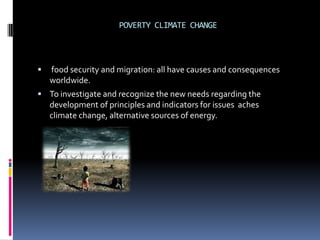
POVERTY CLIMATE CHANGE


   food security and migration: all have causes and consequences
    worldwide.
 To investigate and recognize the new needs regarding the
    development of principles and indicators for issues aches
    climate change, alternative sources of energy.
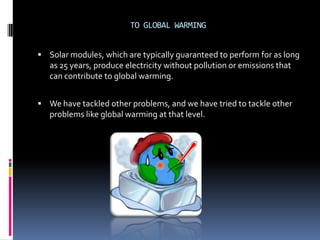
TO GLOBAL WARMING


 Solar modules, which are typically guaranteed to perform for as long
   as 25 years, produce electricity without pollution or emissions that
   can contribute to global warming.


 We have tackled other problems, and we have tried to tackle other
   problems like global warming at that level.
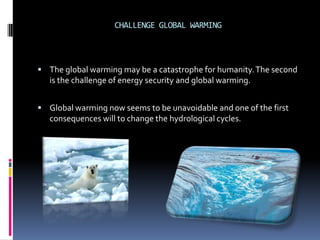
CHALLENGE GLOBAL WARMING


 The global warming may be a catastrophe for humanity. The second
   is the challenge of energy security and global warming.


 Global warming now seems to be unavoidable and one of the first
   consequences will to change the hydrological cycles.
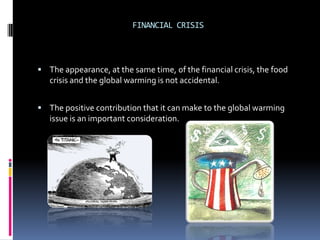
FINANCIAL CRISIS


 The appearance, at the same time, of the financial crisis, the food
   crisis and the global warming is not accidental.


 The positive contribution that it can make to the global warming
   issue is an important consideration.
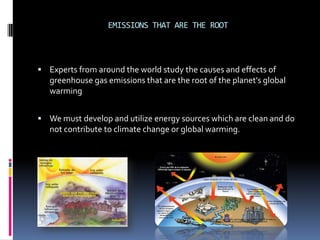
EMISSIONS THAT ARE THE ROOT


 Experts from around the world study the causes and effects of
   greenhouse gas emissions that are the root of the planet's global
   warming


 We must develop and utilize energy sources which are clean and do
   not contribute to climate change or global warming.
¿How can we tackle the danger of extinction
resulting from global warming?


 People will need to adapt to face impacts from warming
   that is already unavoidable, due to past greenhouse gas emissions.


 The problem of global warming should be addressed alongside the
   more general issues of limited resources and sustainable
   development.

Diapositivas en ingles

  • 1.
    THE CLIMATE CHANGEAND TO GLOBAL WARMING CISNEROS SERNA YOCELYN CONTRERAS CASTILLO RAYMUNDO ESPINOZA CASTILLO LUIS FERNANDO HERNANDEZ RODRIGUEZ CIELO TOBIAS OLVERA JOSUE DANIEL
  • 2.
    THE CLIMATE CHANGE With financial support from the Ford Company, which recognized his work with the Ford Award in 2004, Dr. Takahashi has been studying how climate change mayalter interactions between land and oceans, as well as the solutions for mitigating these alterations.  SUSTAINABLE DEVELOPMENT: ENVIRONMENT; CLIMATE CHANGE; ENERGY
  • 3.
    NEW TECHNOLOGIES  saysthat transferring new technologies to developing countries is essential in combating climate change  Climate Change, global emissions must be reduced to at least 60% below 1990 levels.
  • 4.
    POVERTY CLIMATE CHANGE  food security and migration: all have causes and consequences worldwide.  To investigate and recognize the new needs regarding the development of principles and indicators for issues aches climate change, alternative sources of energy.
  • 5.
    TO GLOBAL WARMING Solar modules, which are typically guaranteed to perform for as long as 25 years, produce electricity without pollution or emissions that can contribute to global warming.  We have tackled other problems, and we have tried to tackle other problems like global warming at that level.
  • 6.
    CHALLENGE GLOBAL WARMING The global warming may be a catastrophe for humanity. The second is the challenge of energy security and global warming.  Global warming now seems to be unavoidable and one of the first consequences will to change the hydrological cycles.
  • 7.
    FINANCIAL CRISIS  Theappearance, at the same time, of the financial crisis, the food crisis and the global warming is not accidental.  The positive contribution that it can make to the global warming issue is an important consideration.
  • 8.
    EMISSIONS THAT ARETHE ROOT  Experts from around the world study the causes and effects of greenhouse gas emissions that are the root of the planet's global warming  We must develop and utilize energy sources which are clean and do not contribute to climate change or global warming.
  • 9.
    ¿How can wetackle the danger of extinction resulting from global warming?  People will need to adapt to face impacts from warming that is already unavoidable, due to past greenhouse gas emissions.  The problem of global warming should be addressed alongside the more general issues of limited resources and sustainable development.