Download to read offline
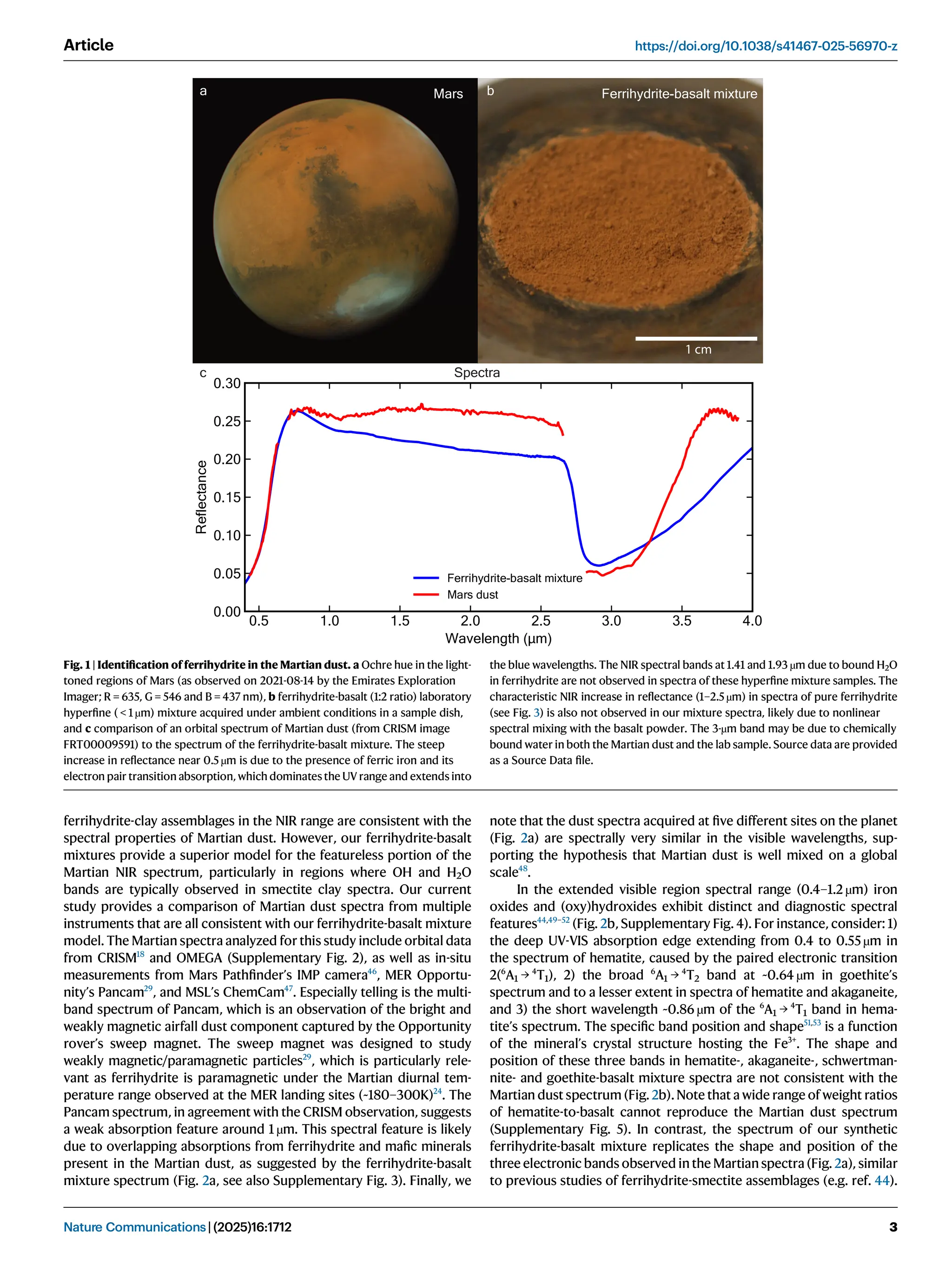
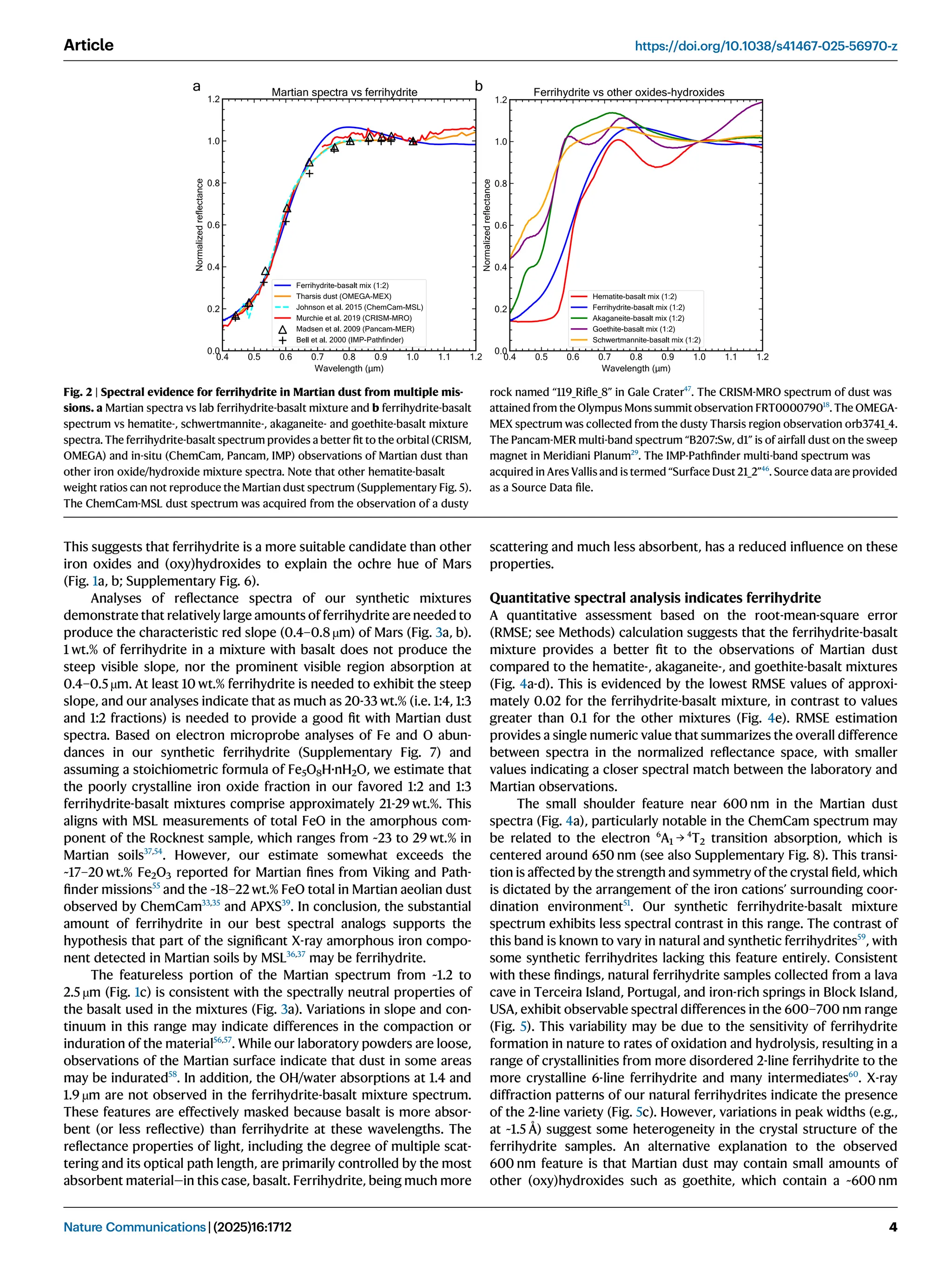
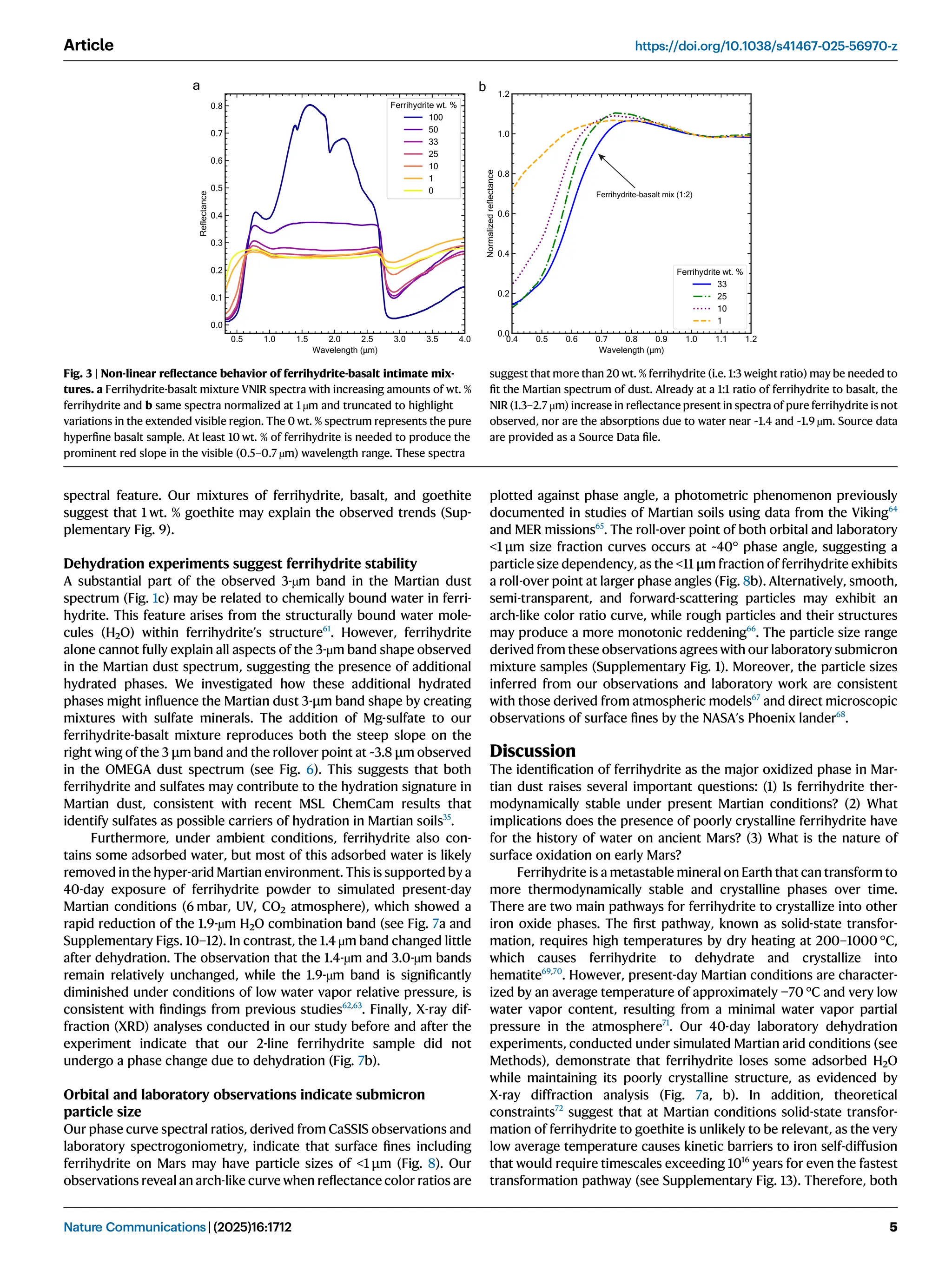
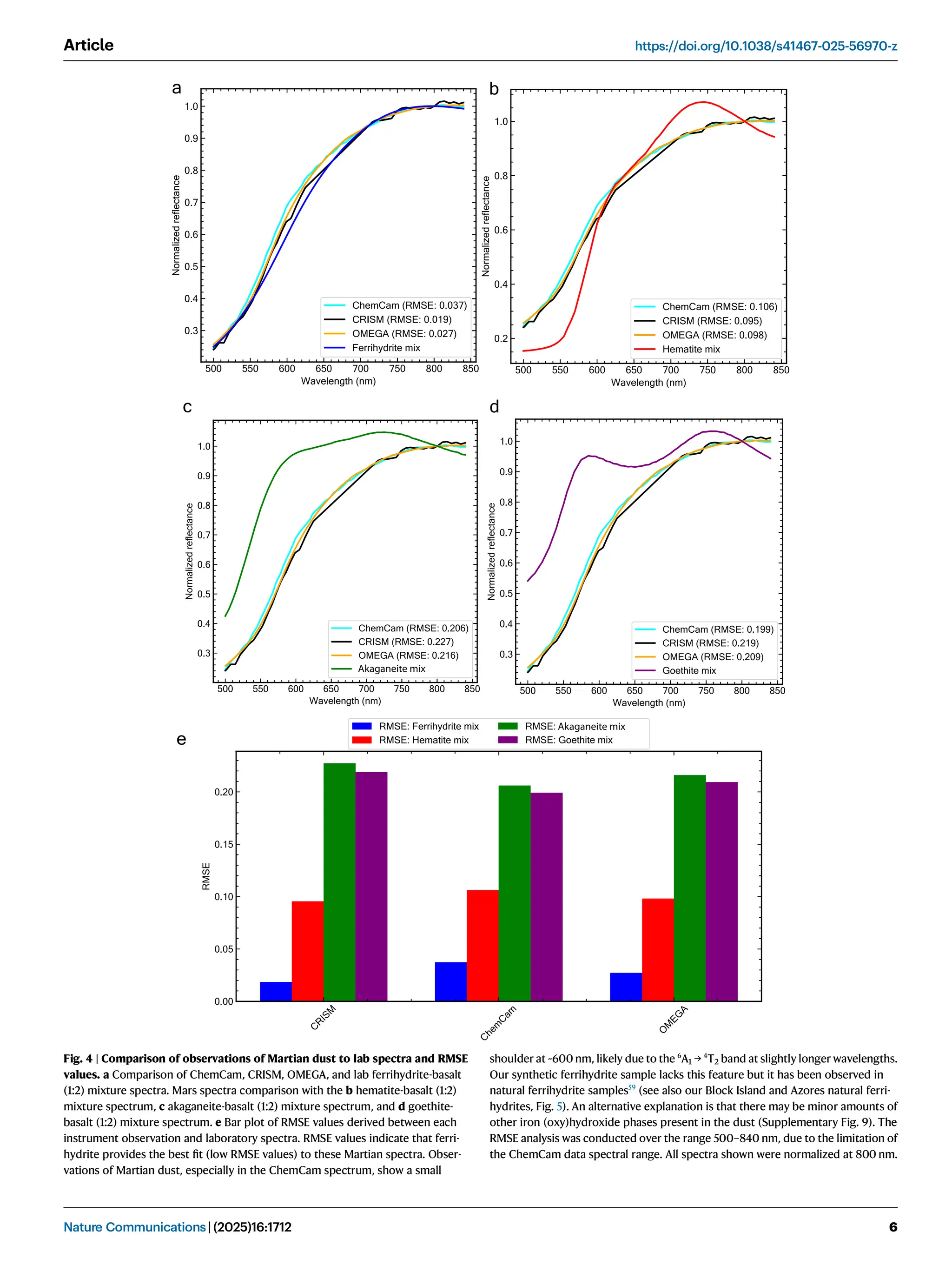
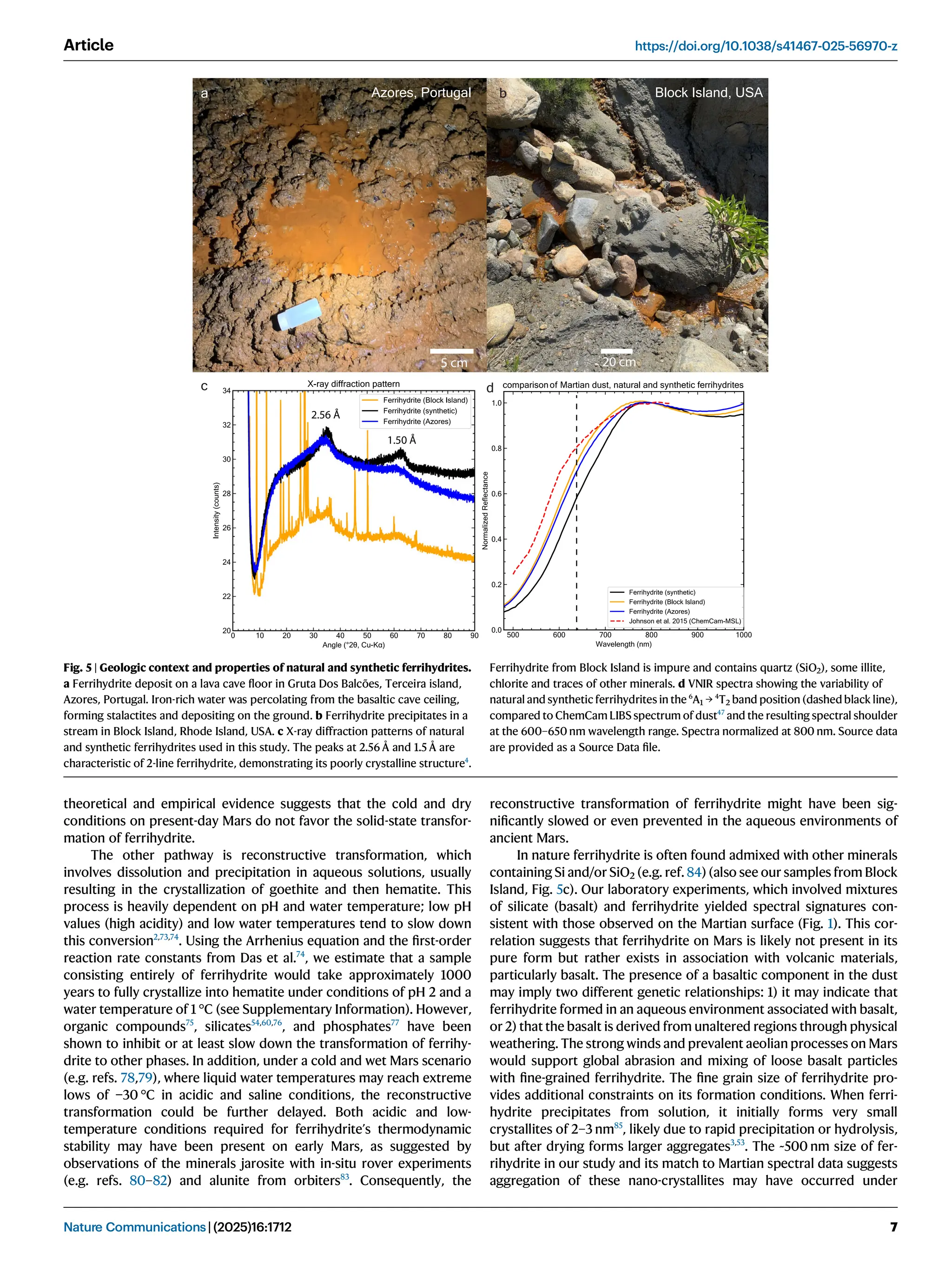
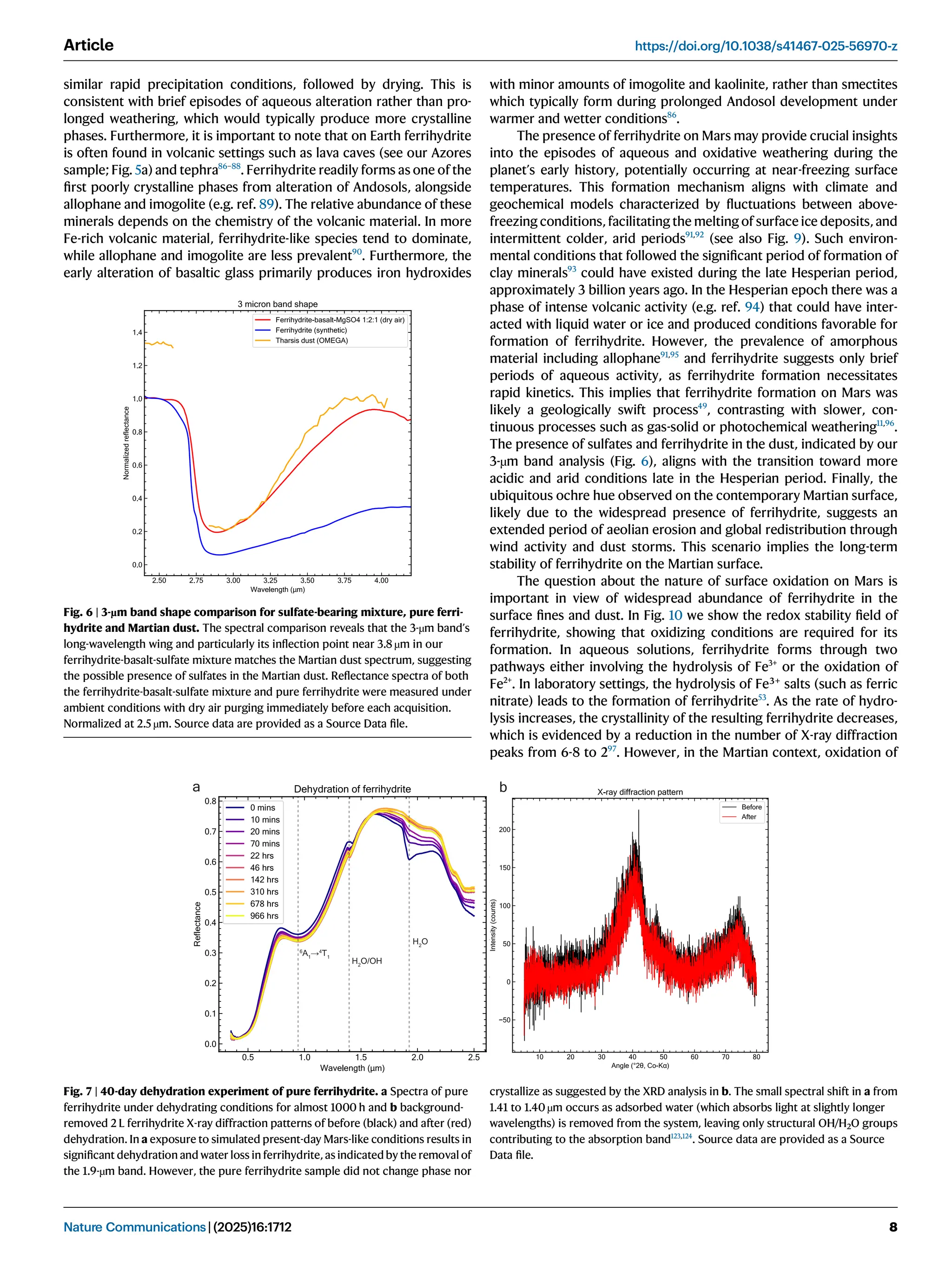
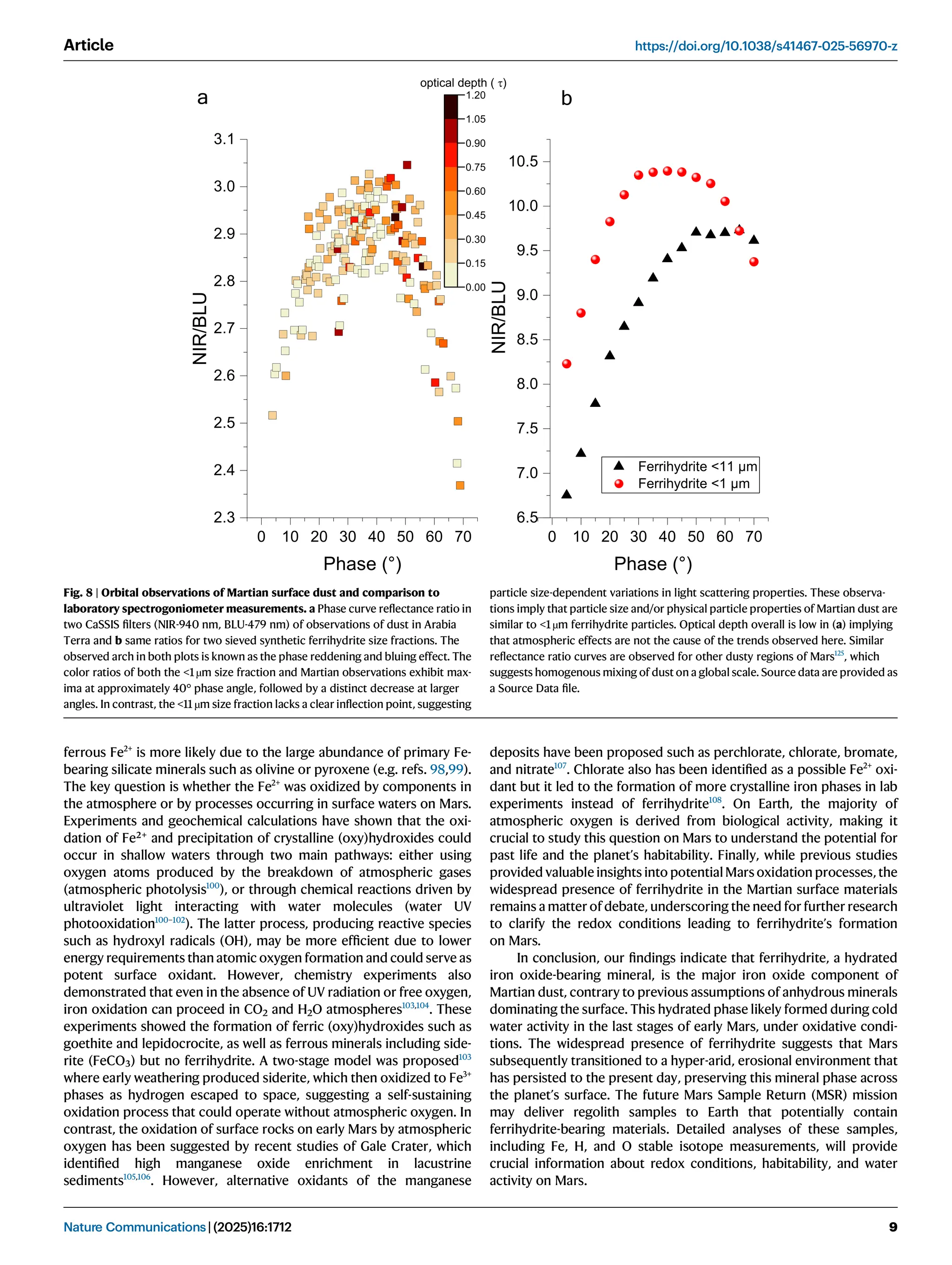
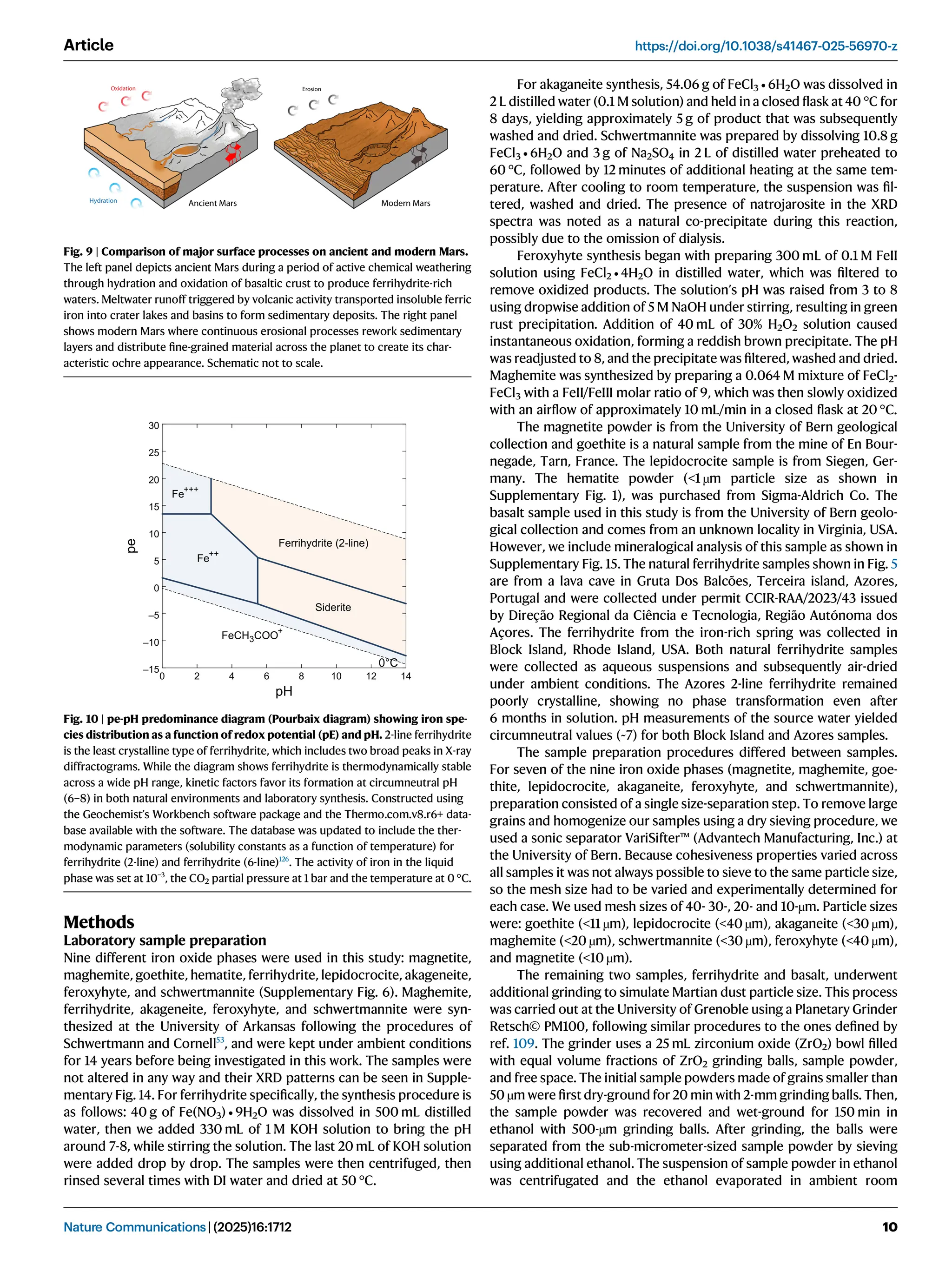
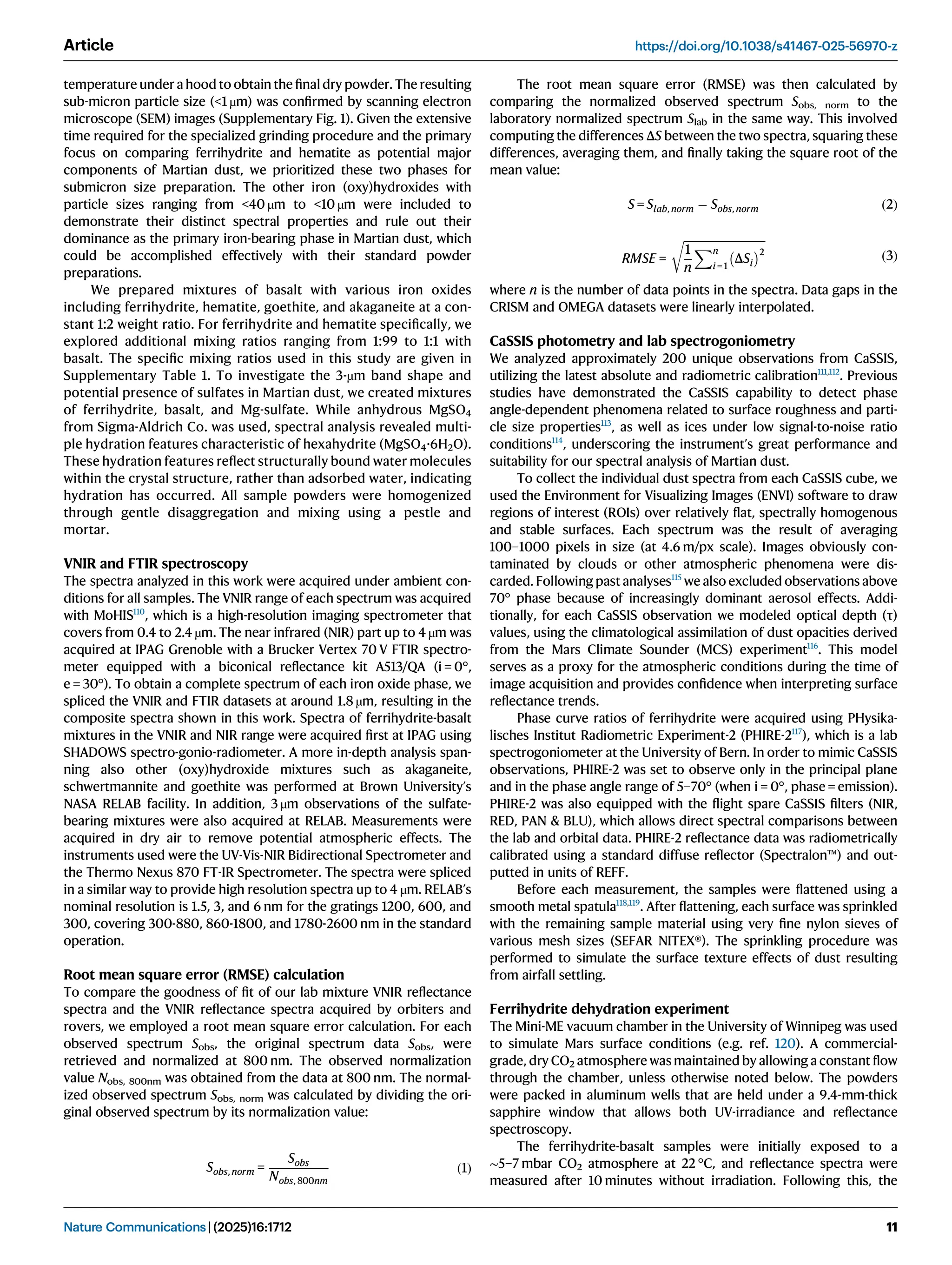

Iron oxide-hydroxide minerals in Martian dust provide crucial insights into Mars’ past climate and habitability. Previous studies attributed Mars’ red color to anhydrous hematite formed through recent weathering. Here, we show that poorly crystalline ferrihydrite (Fe5O8H · nH2O) is the dominant iron oxidebearing phase in Martian dust, based on combined analyses of orbital, in-situ, and laboratory visible near-infrared spectra. Spectroscopic analyses indicate that a hyperfine mixture of ferrihydrite, basalt and sulfate best matches Martian dust observations. Through laboratory experiments and kinetic calculations, we demonstrate that ferrihydrite remains stable under present-day Martian conditions, preserving its poorly crystalline structure. The persistence of ferrihydrite suggests it formed during a cold, wet period on early Mars under oxidative conditions, followed by a transition to the current hyper-arid environment. This finding challenges previous models of continuous dry oxidation and indicates that ancient Mars experienced aqueous alteration before transitioning to its current desert state.


