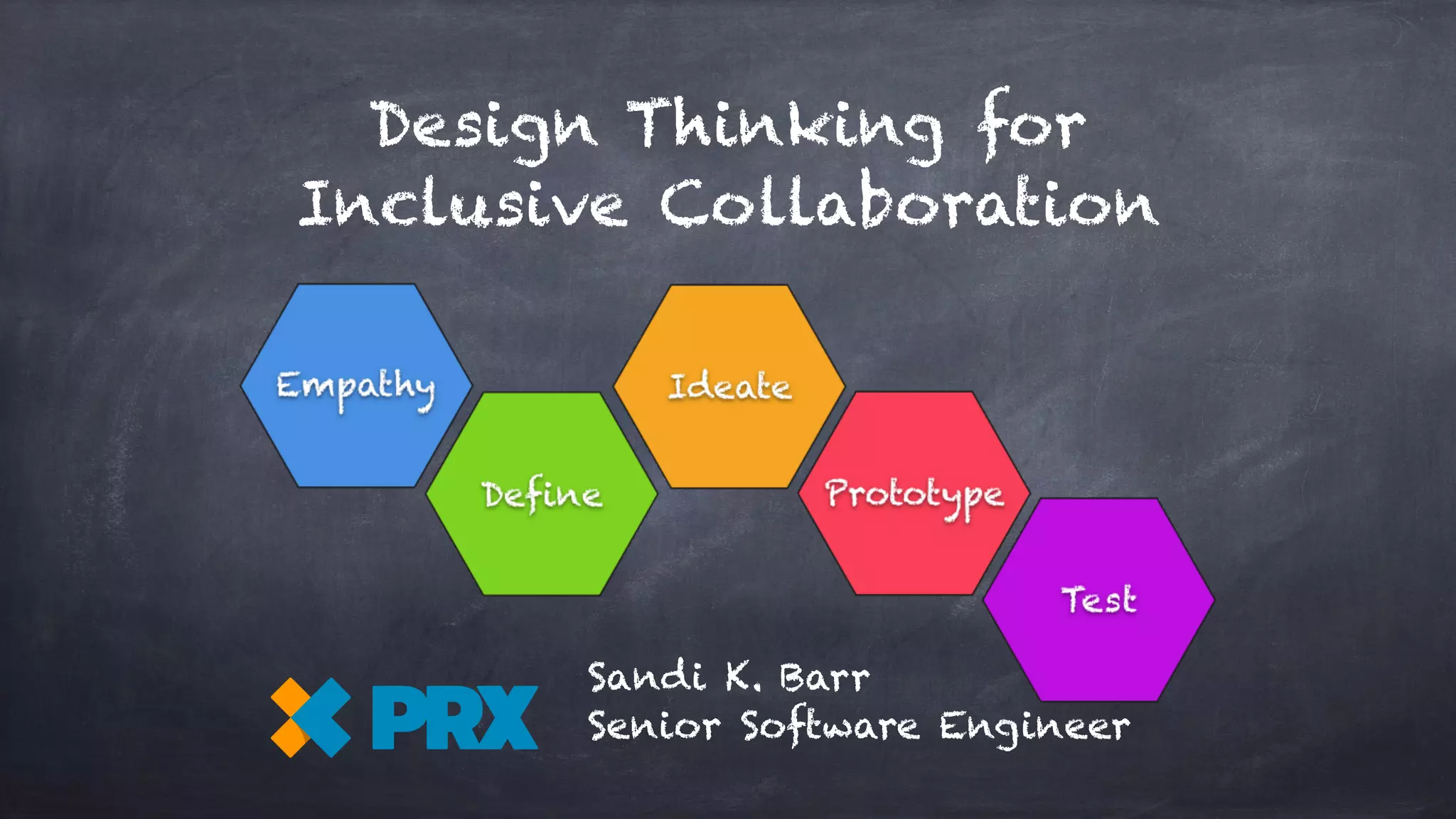
Design Thinking for
Inclusive Collaboration
Sandi K. Barr
Senior Software Engineer
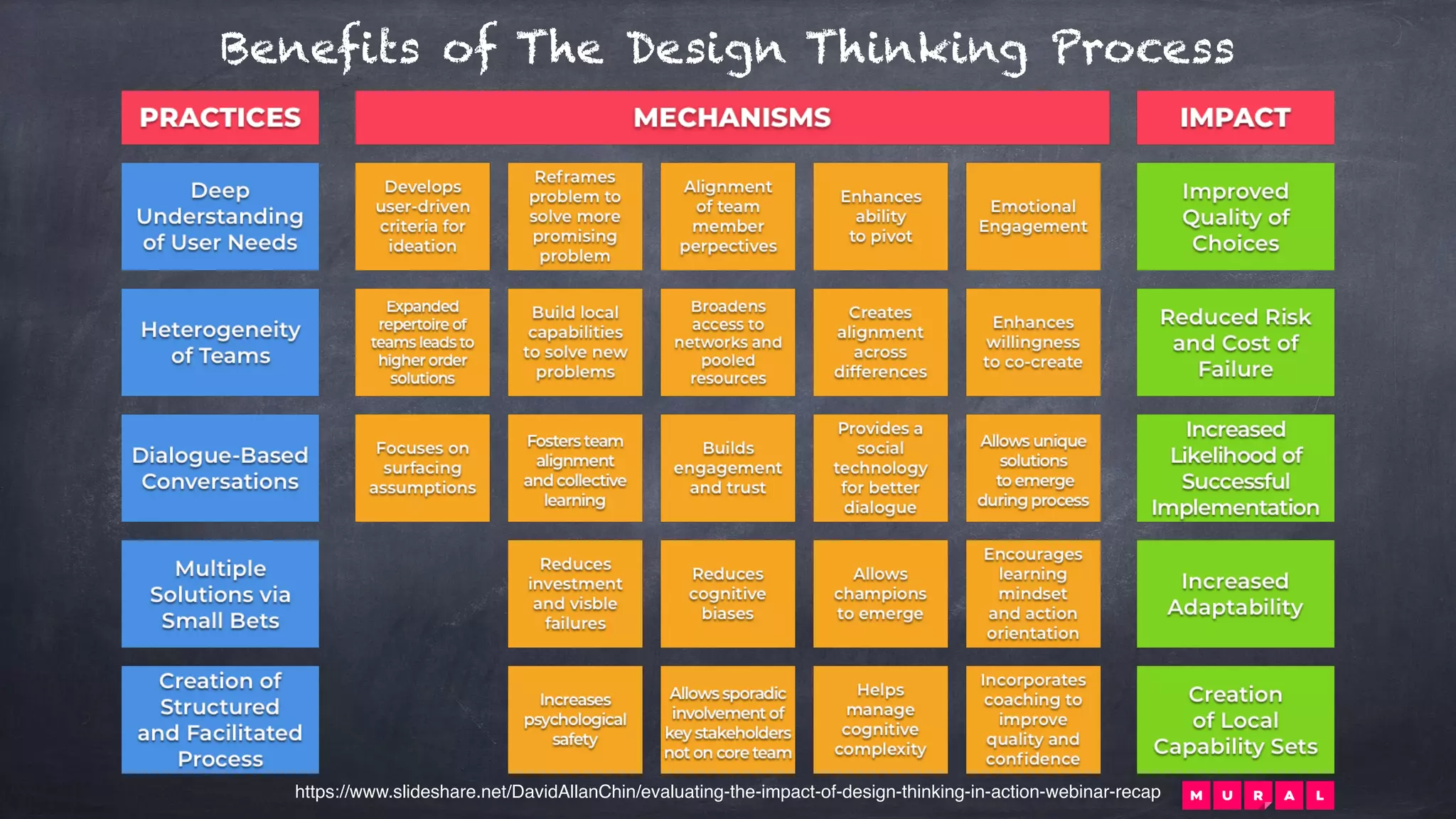
Benefits of The Design Thinking Process
https://www.slideshare.net/DavidAllanChin/evaluating-the-impact-of-design-thinking-in-action-webinar-recap
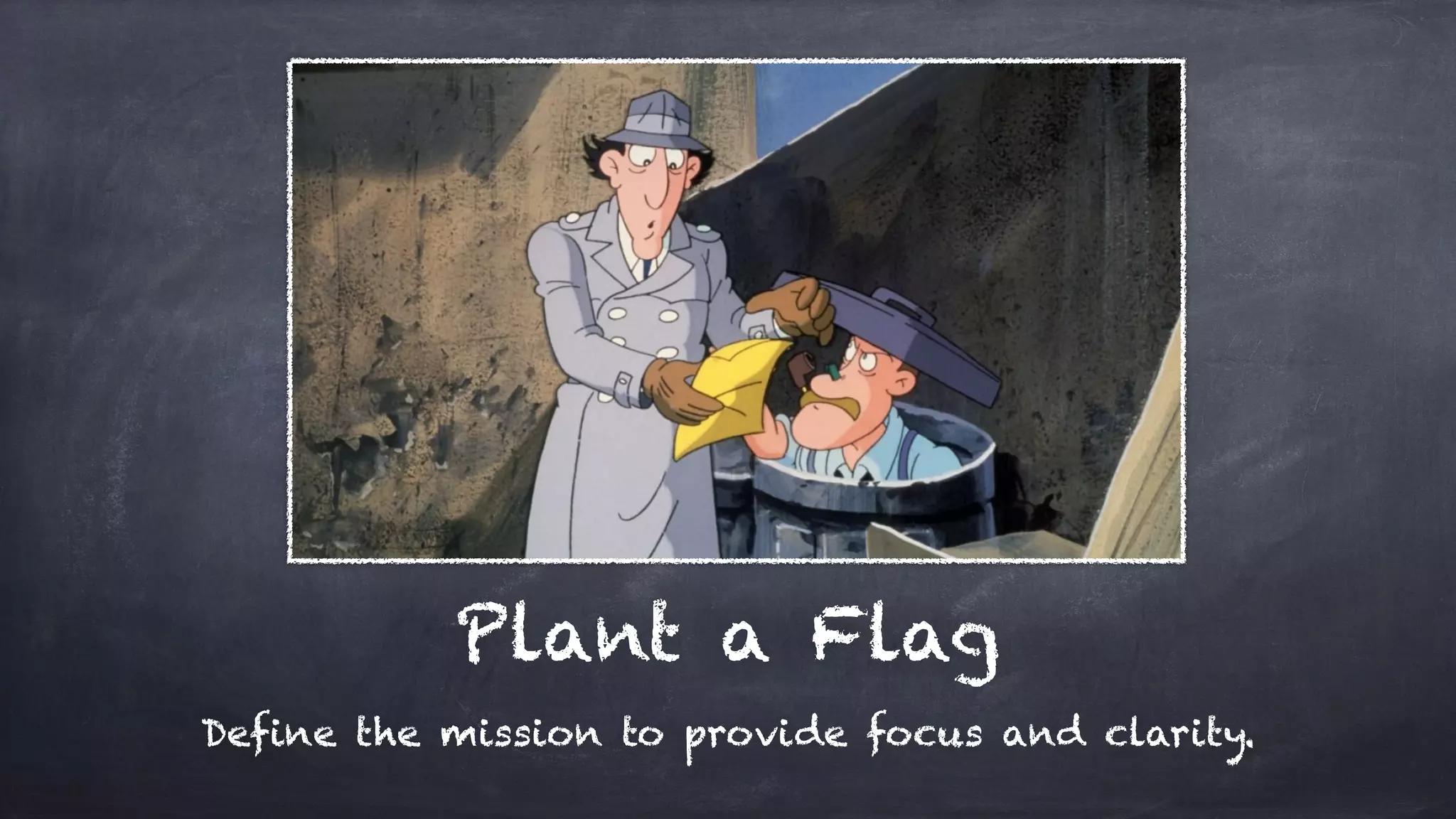
Plant a Flag
Define the mission to provide focus and clarity.
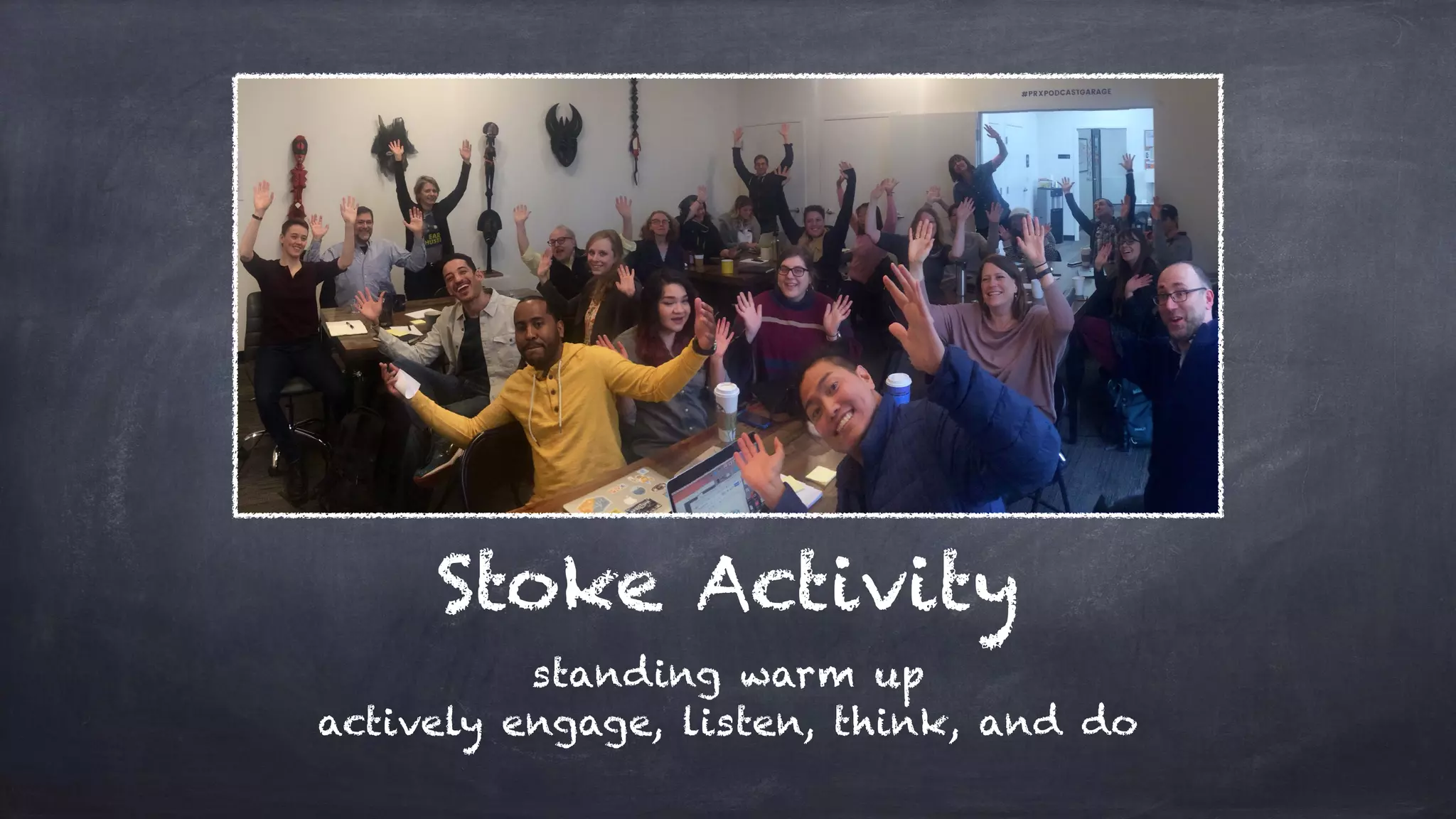
Stoke Activity
standing warm up
actively engage, listen, think, and do
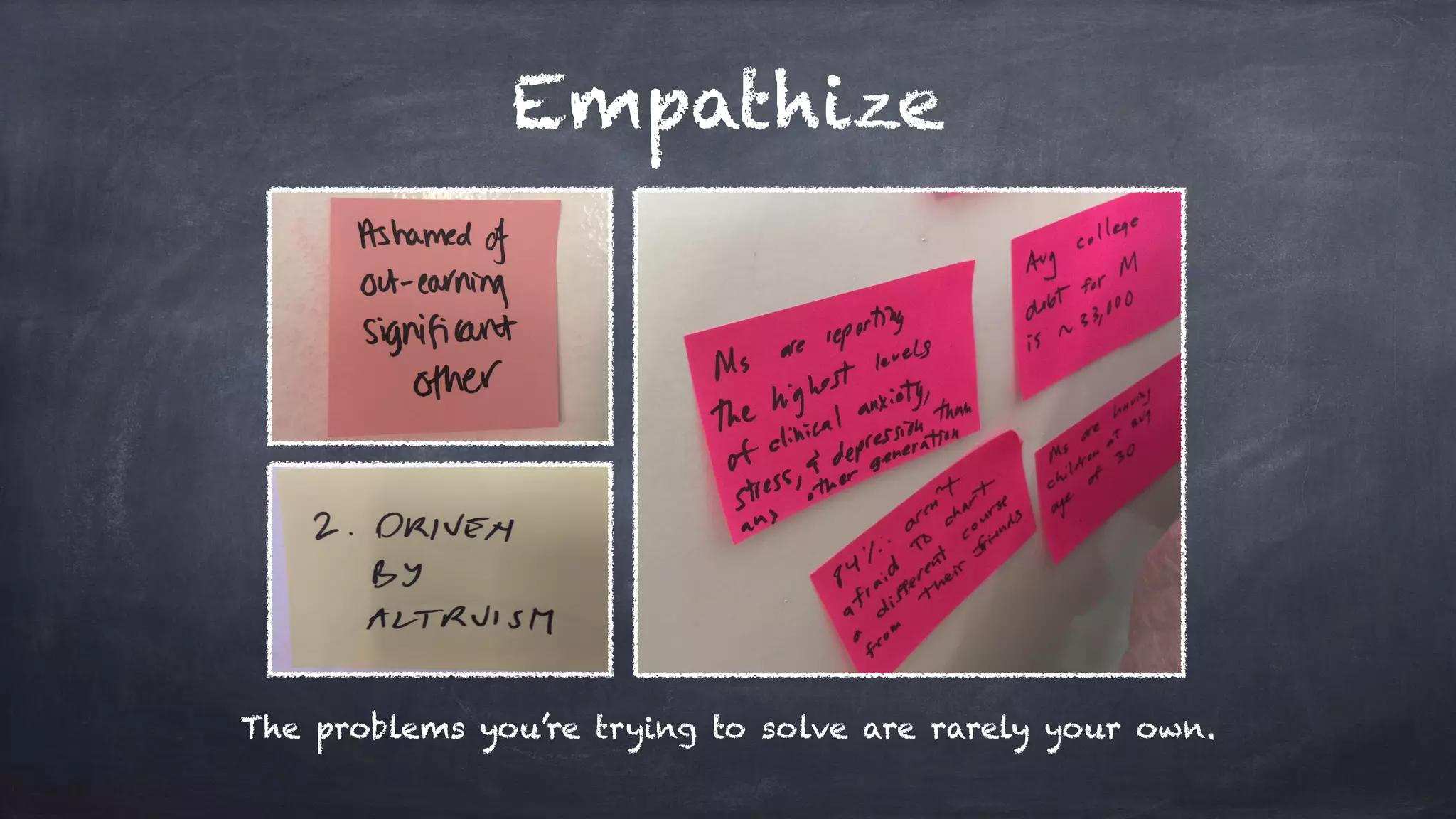
Empathize
The problems you’re trying to solve are rarely your own.
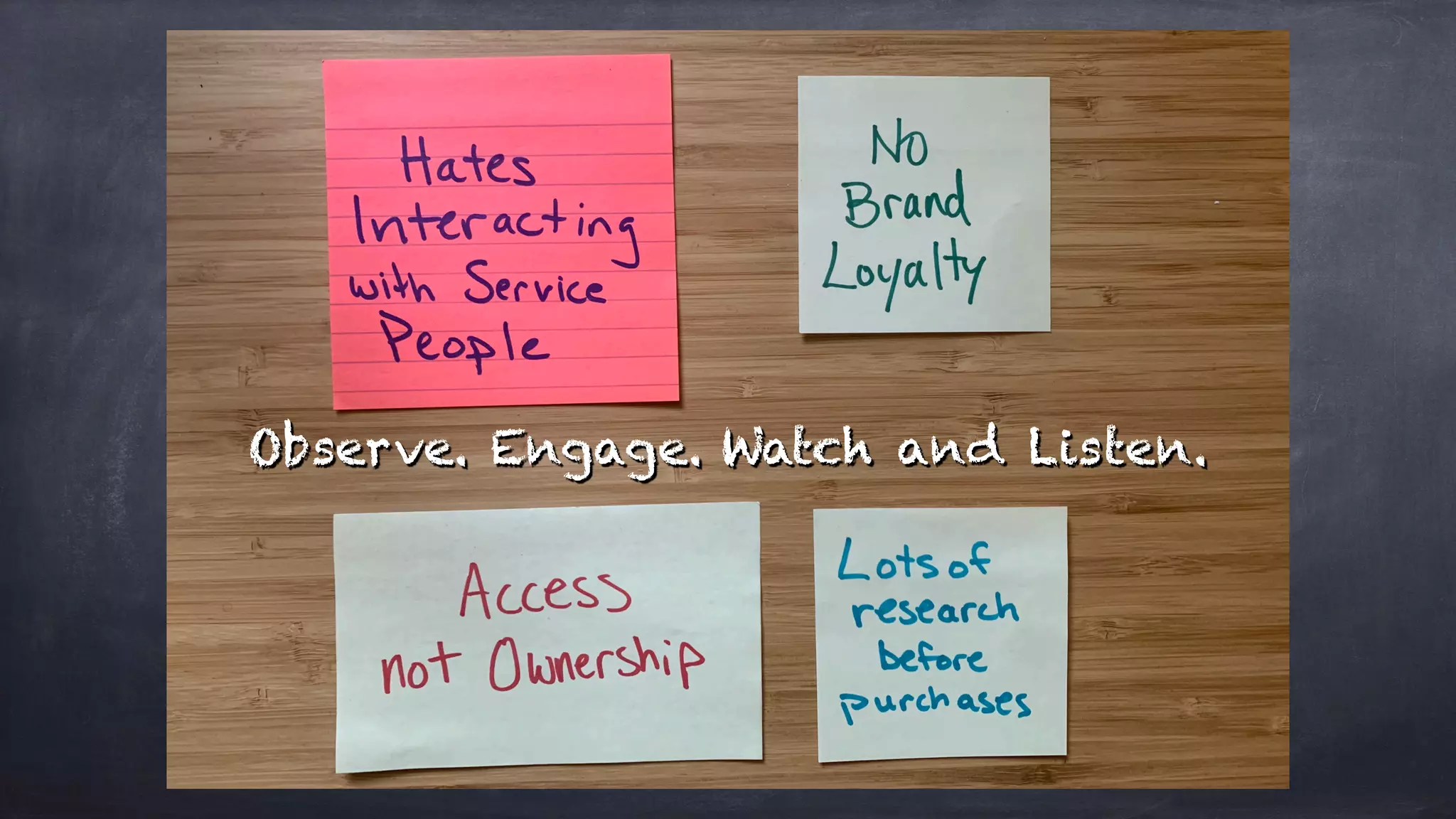
Observe. Engage. Watch and Listen.
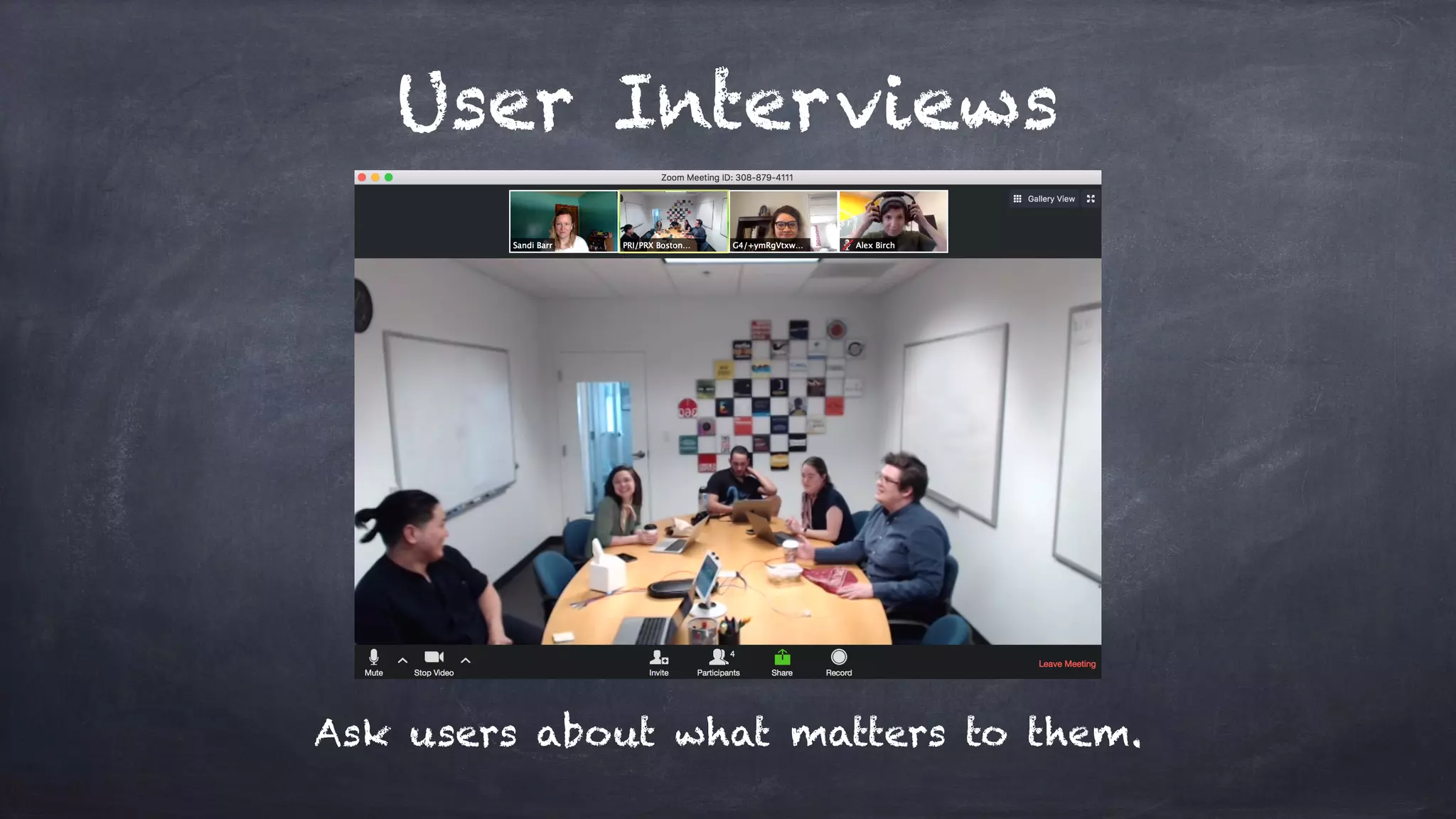
User Interviews
Ask users about what matters to them.
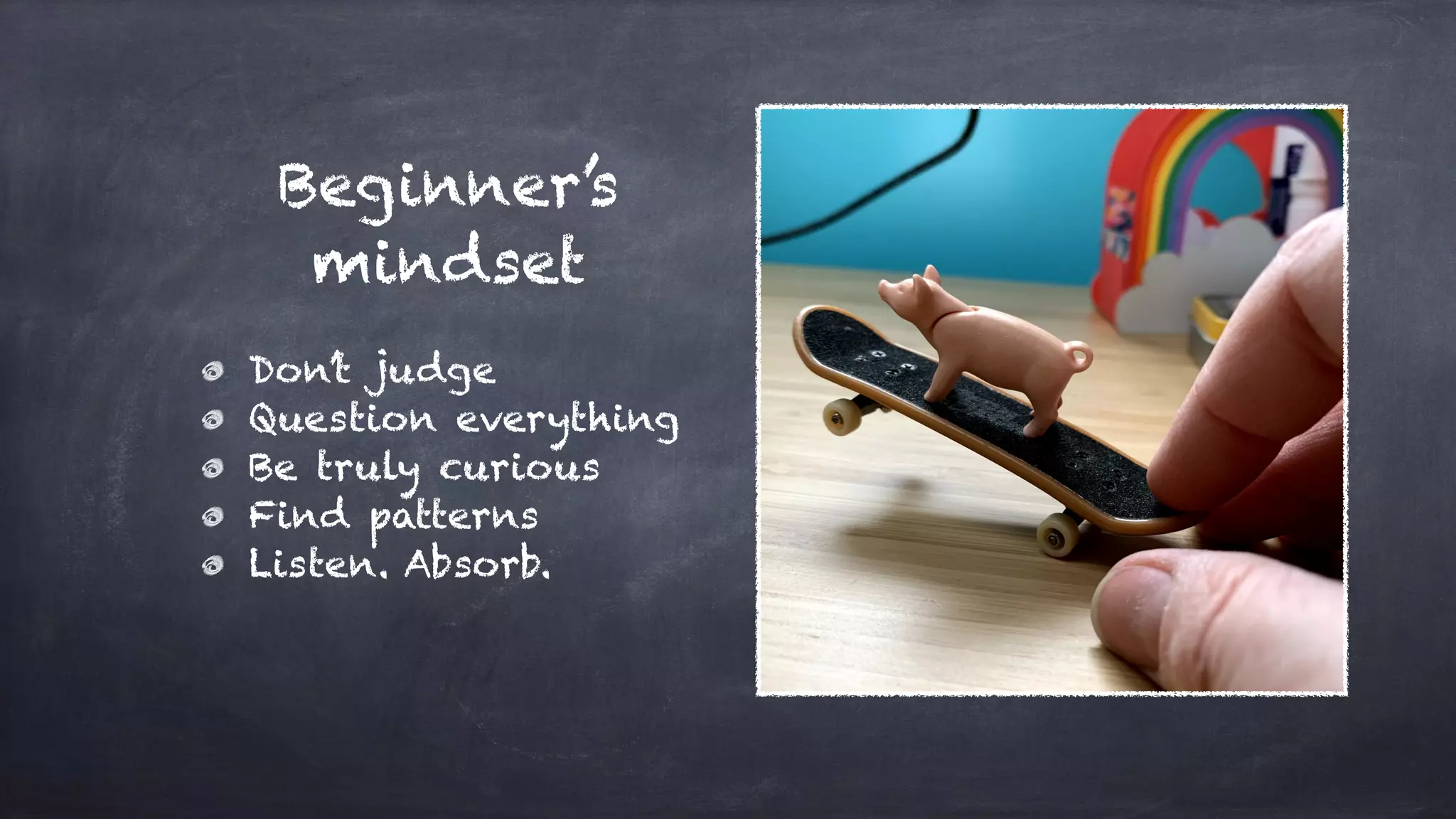
Beginner’s
mindset
Don’t judge
Question everything
Be truly curious
Find patterns
Listen. Absorb.
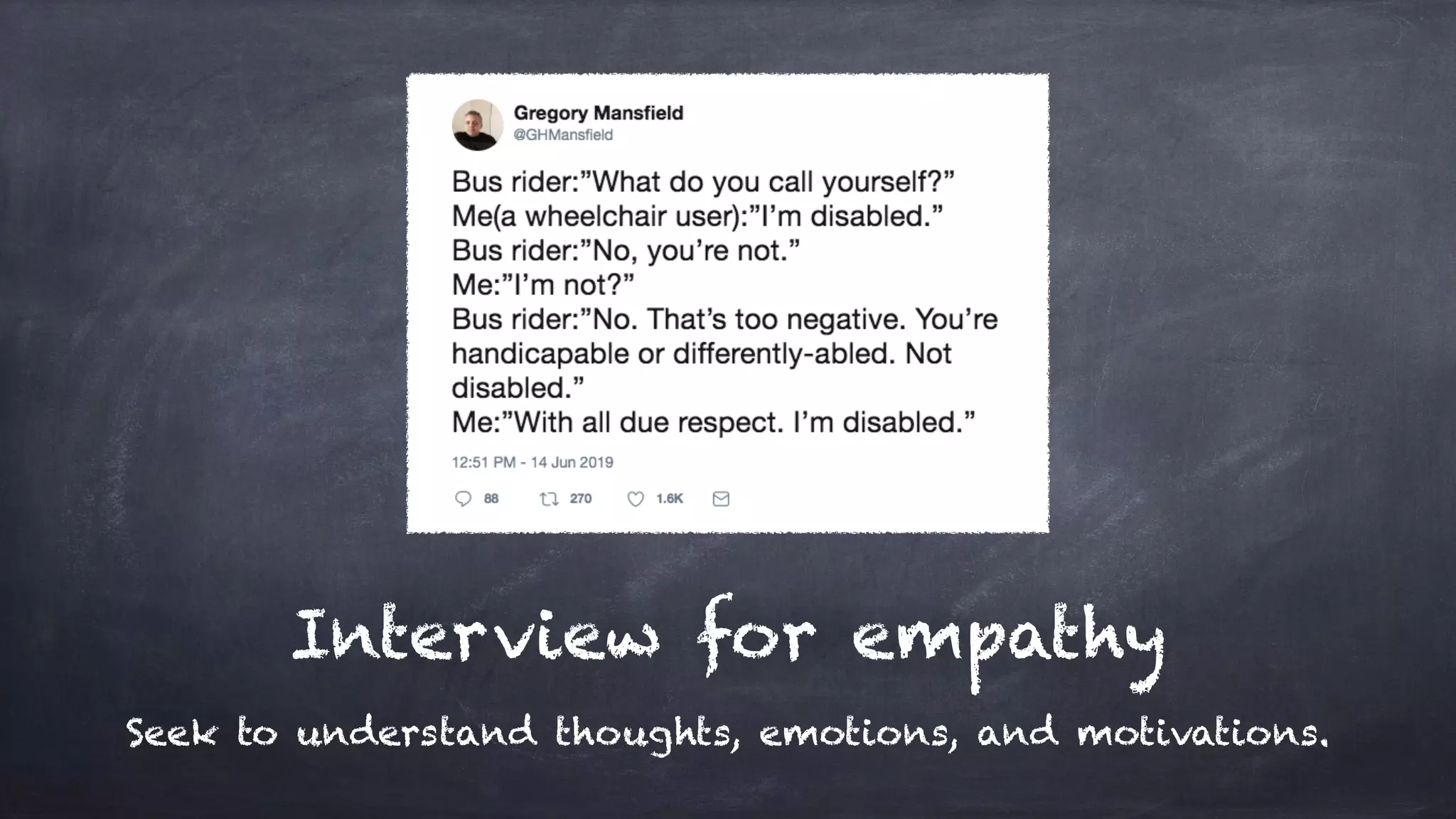
Interview for empathy
Seek to understand thoughts, emotions, and motivations.
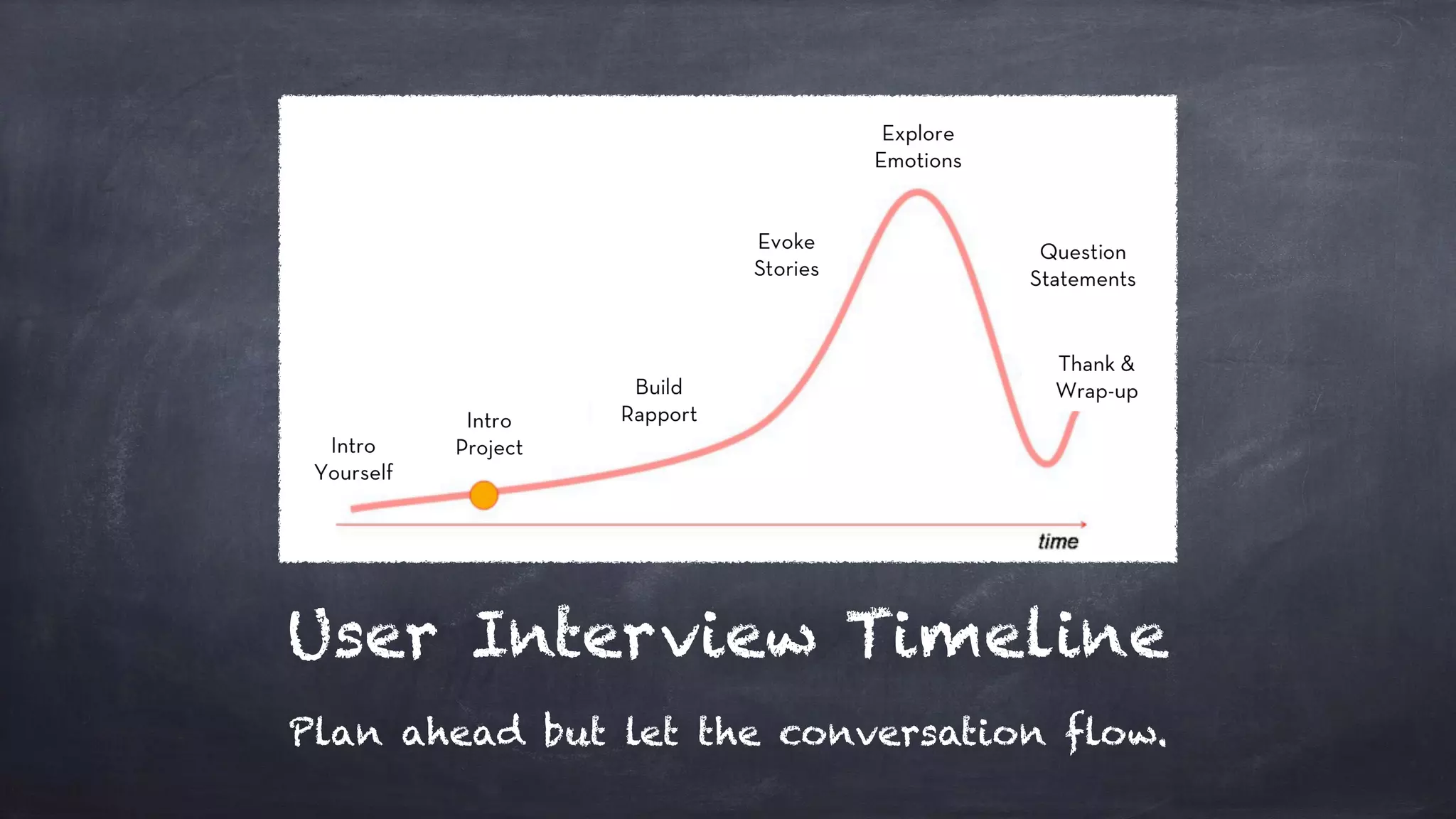
User Interview Timeline
Plan ahead but let the conversation flow.
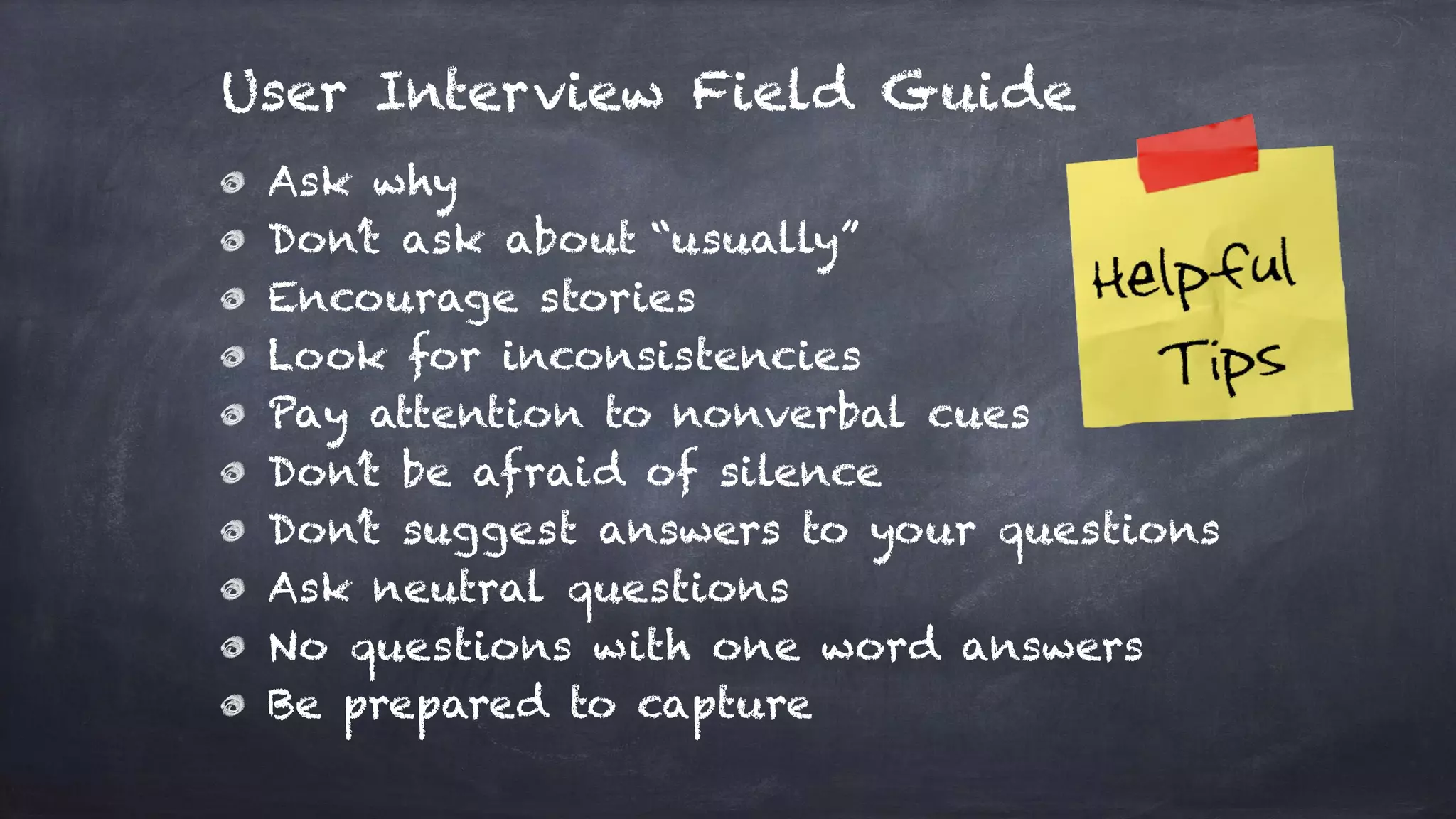
Ask why
Don’t ask about “usually”
Encourage stories
Look for inconsistencies
Pay attention to nonverbal cues
Don’t be afraid of silence
Don’t suggest answers to your questions
Ask neutral questions
No questions with one word answers
Be prepared to capture
User Interview Field Guide
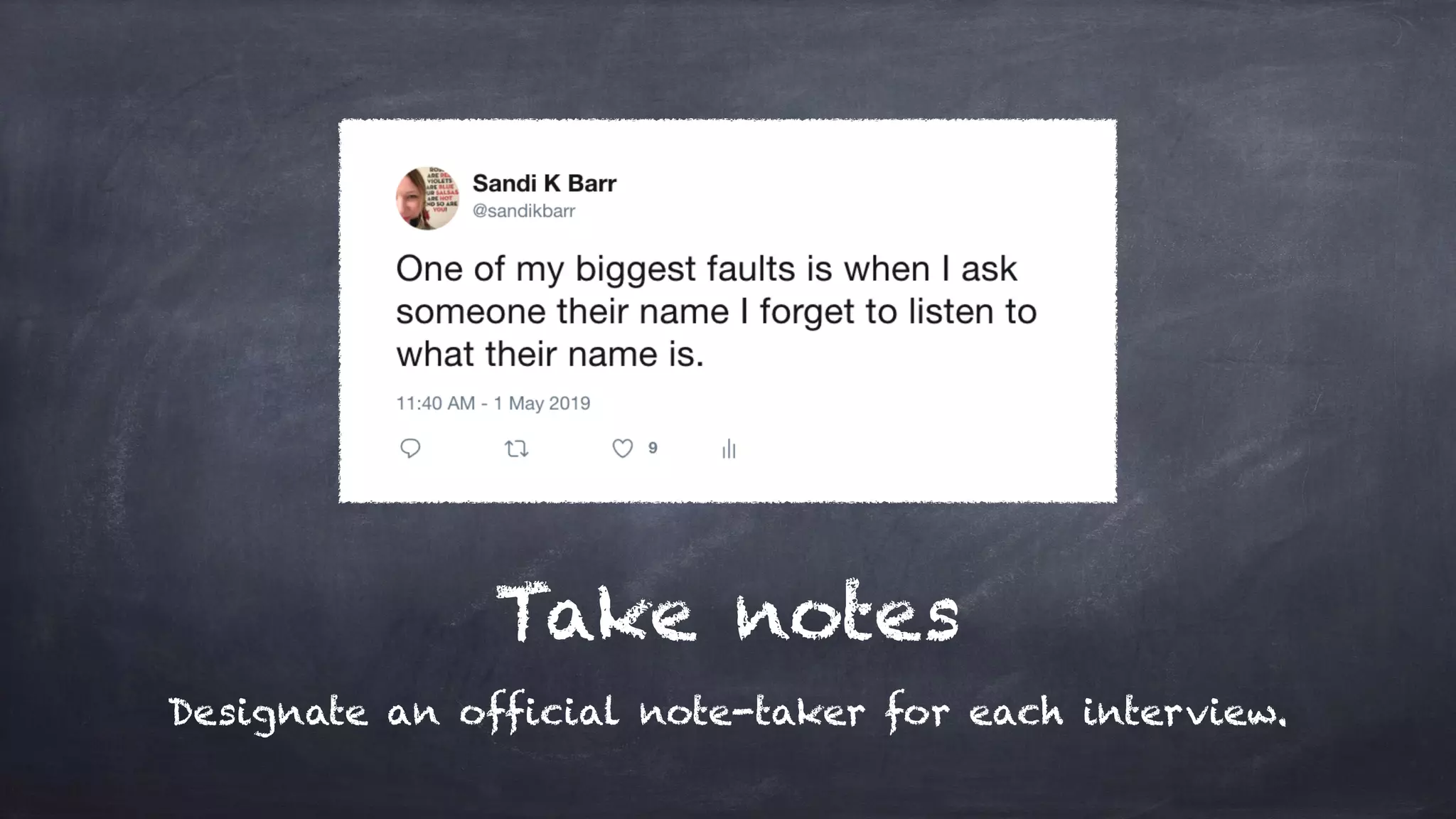
Take notes
Designate an official note-taker for each interview.
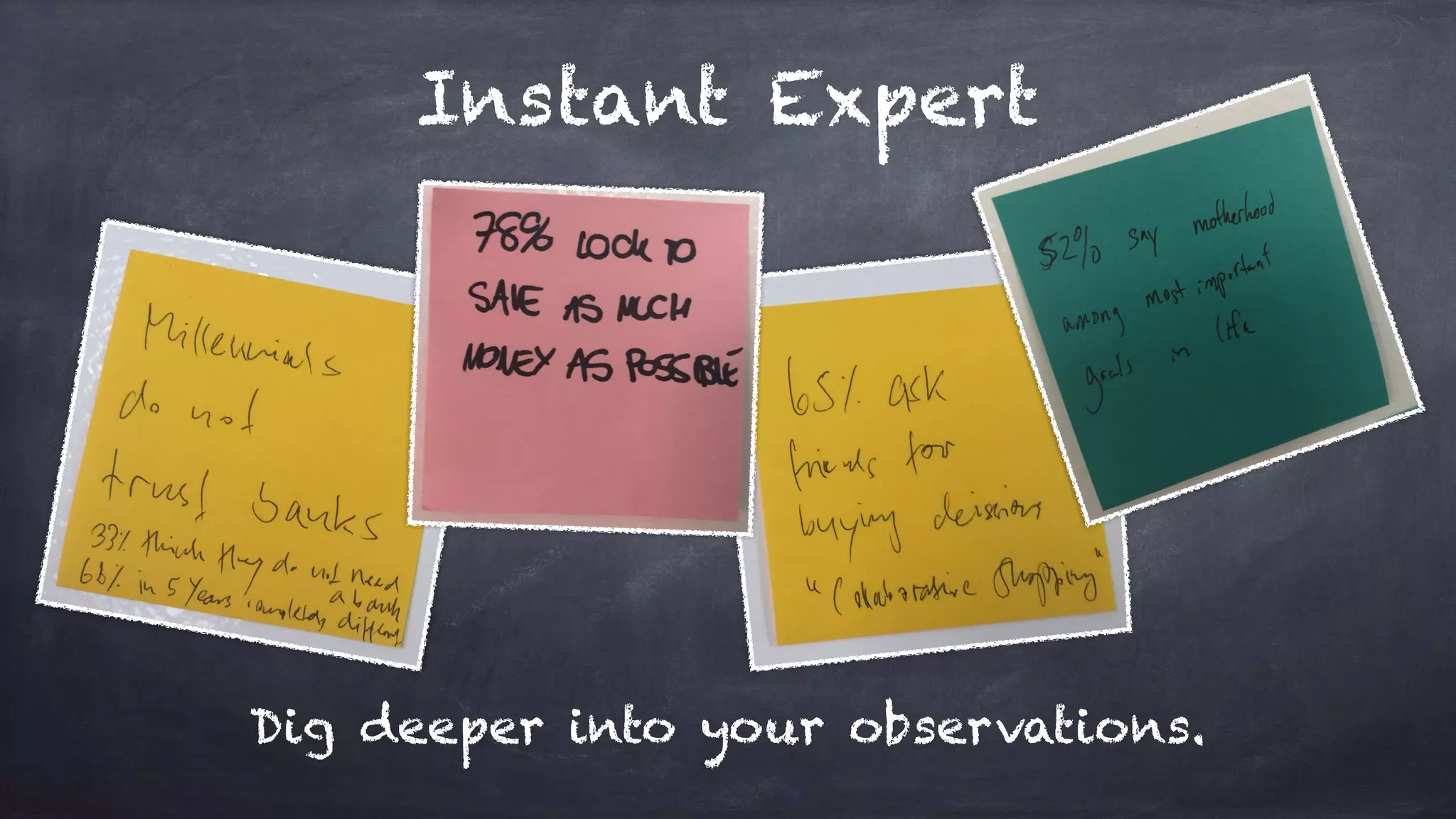
Instant Expert
Dig deeper into your observations.
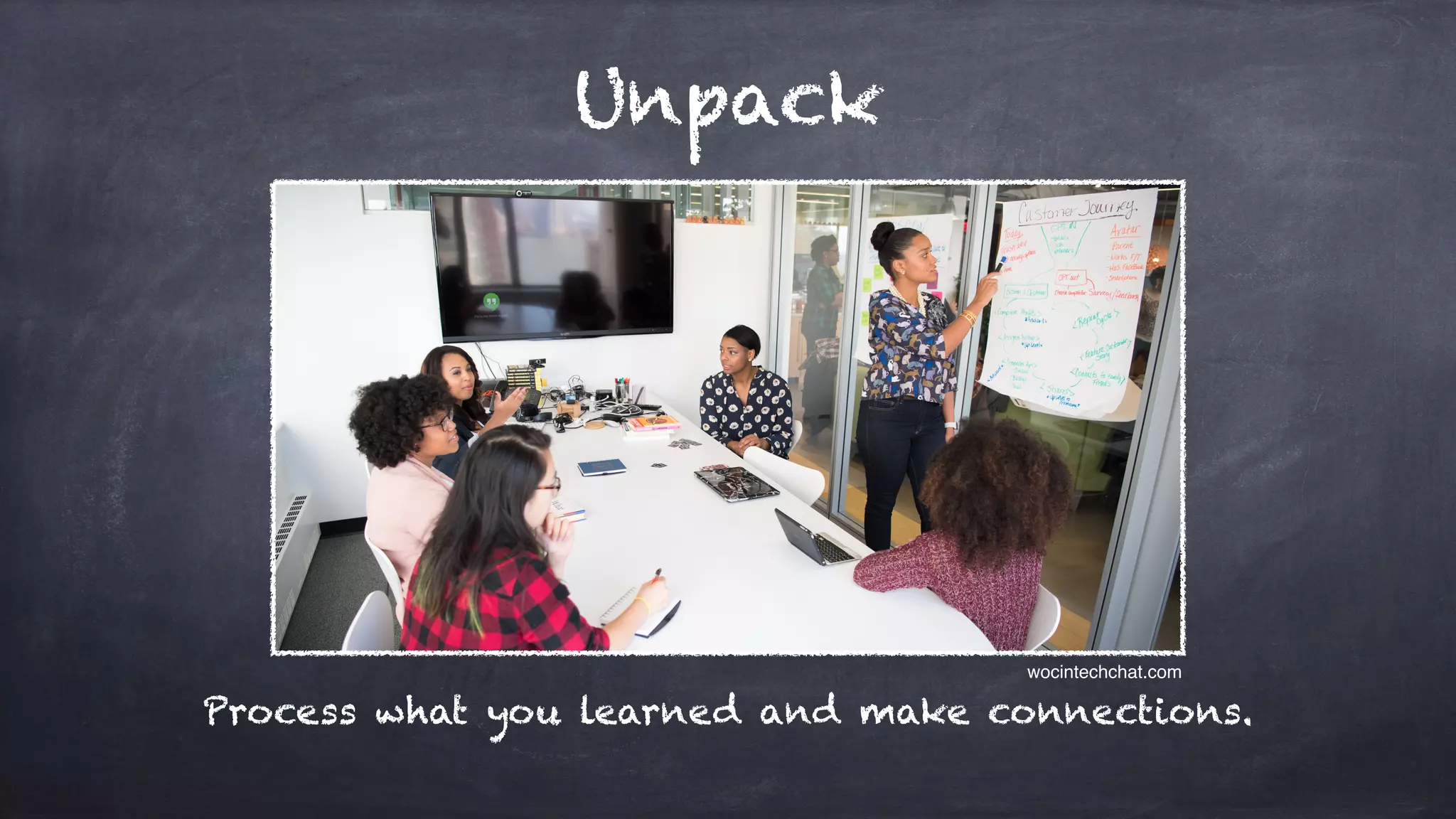
Unpack
Process what you learned and make connections.
wocintechchat.com
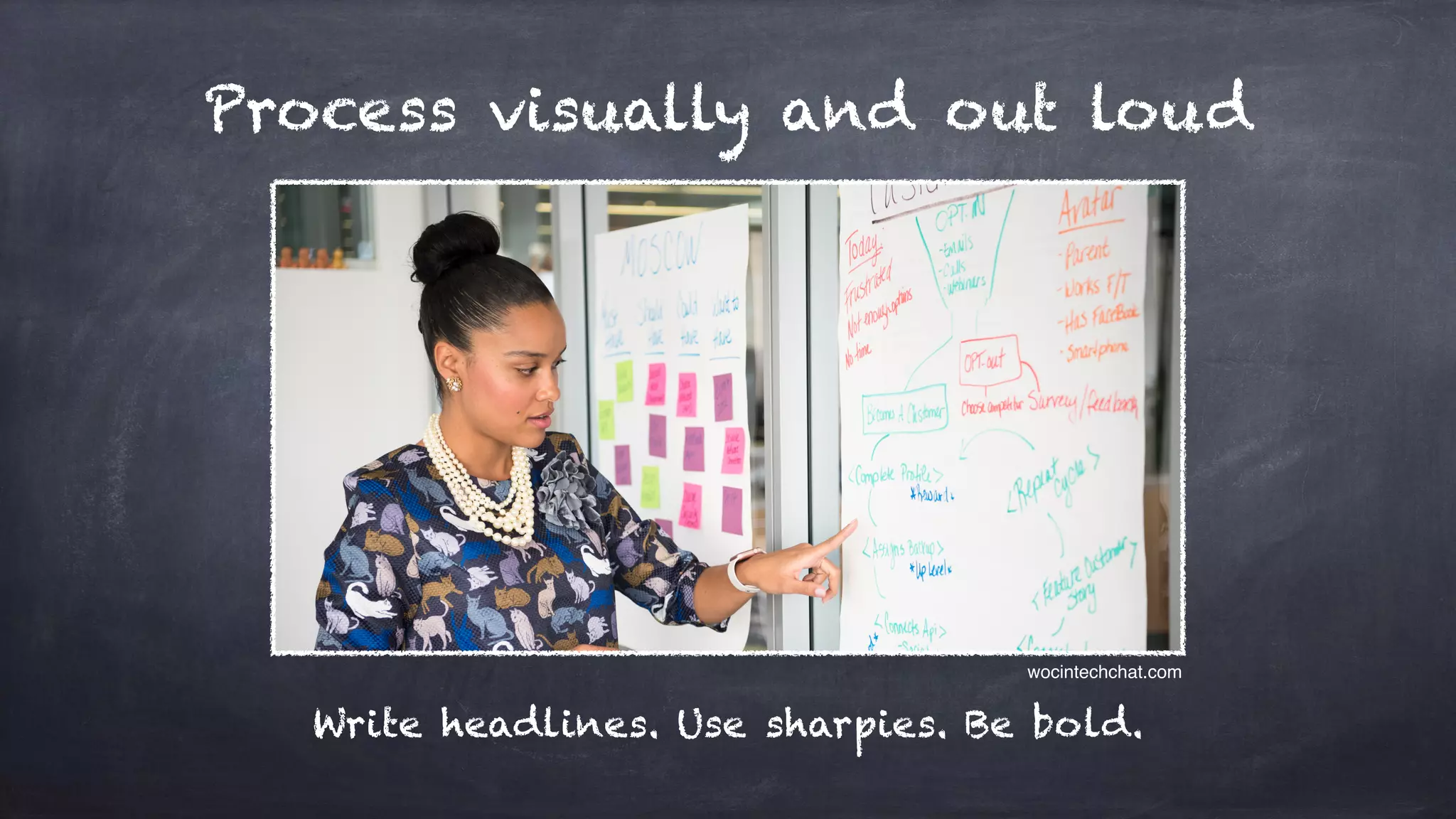
Process visually and out loud
Write headlines. Use sharpies. Be bold.
wocintechchat.com
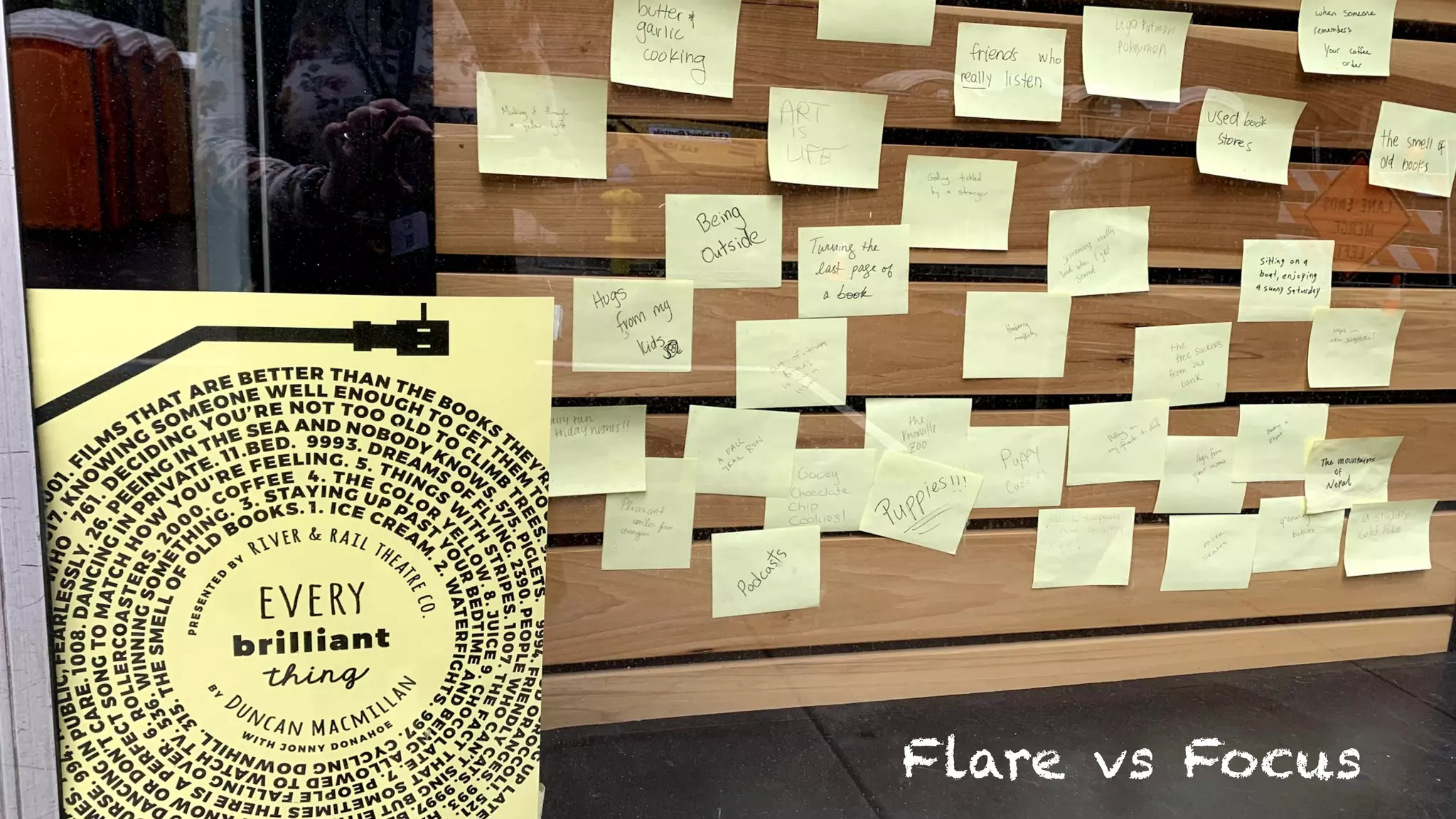
Flare vs Focus
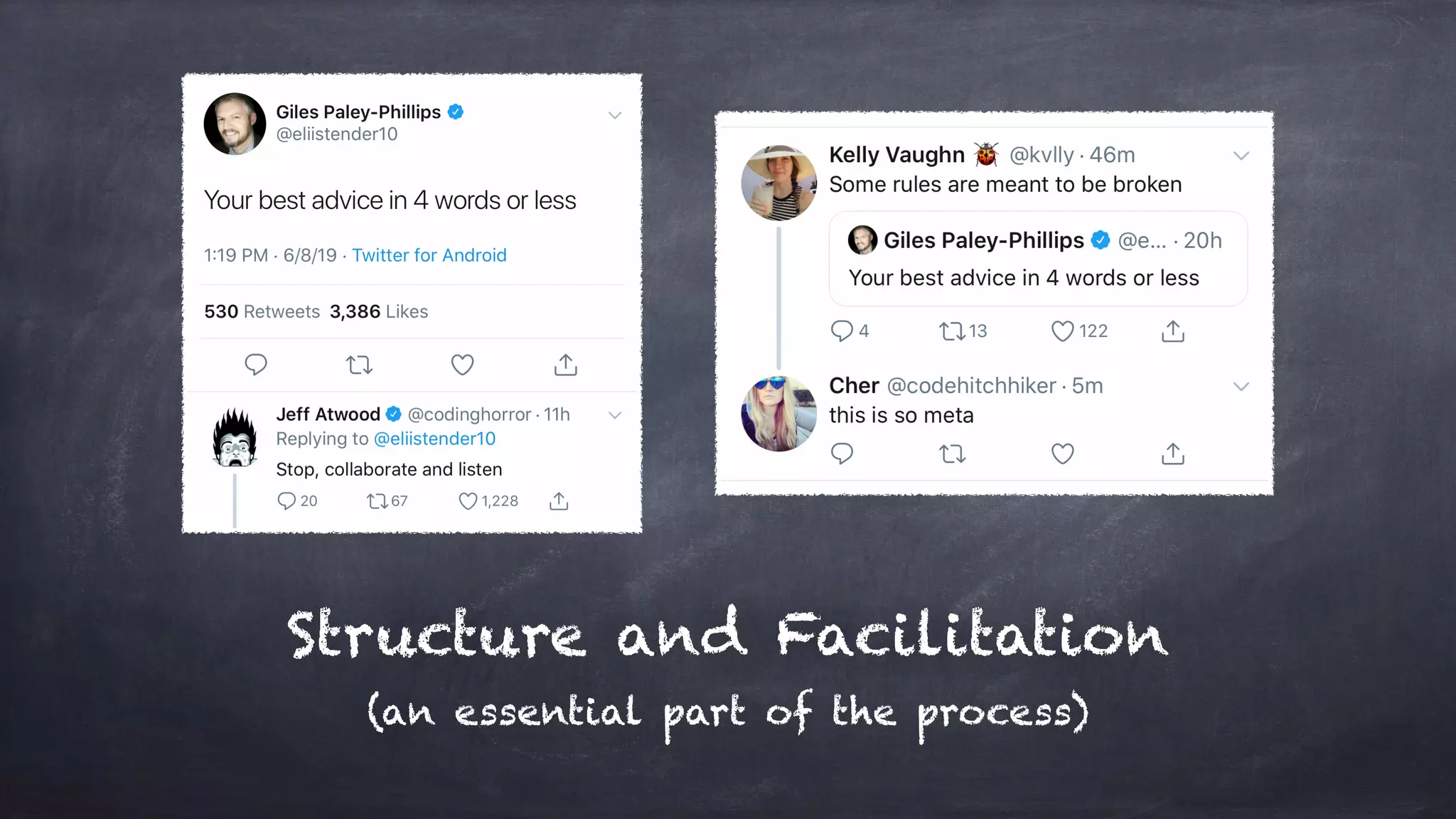
Structure and Facilitation
(an essential part of the process)
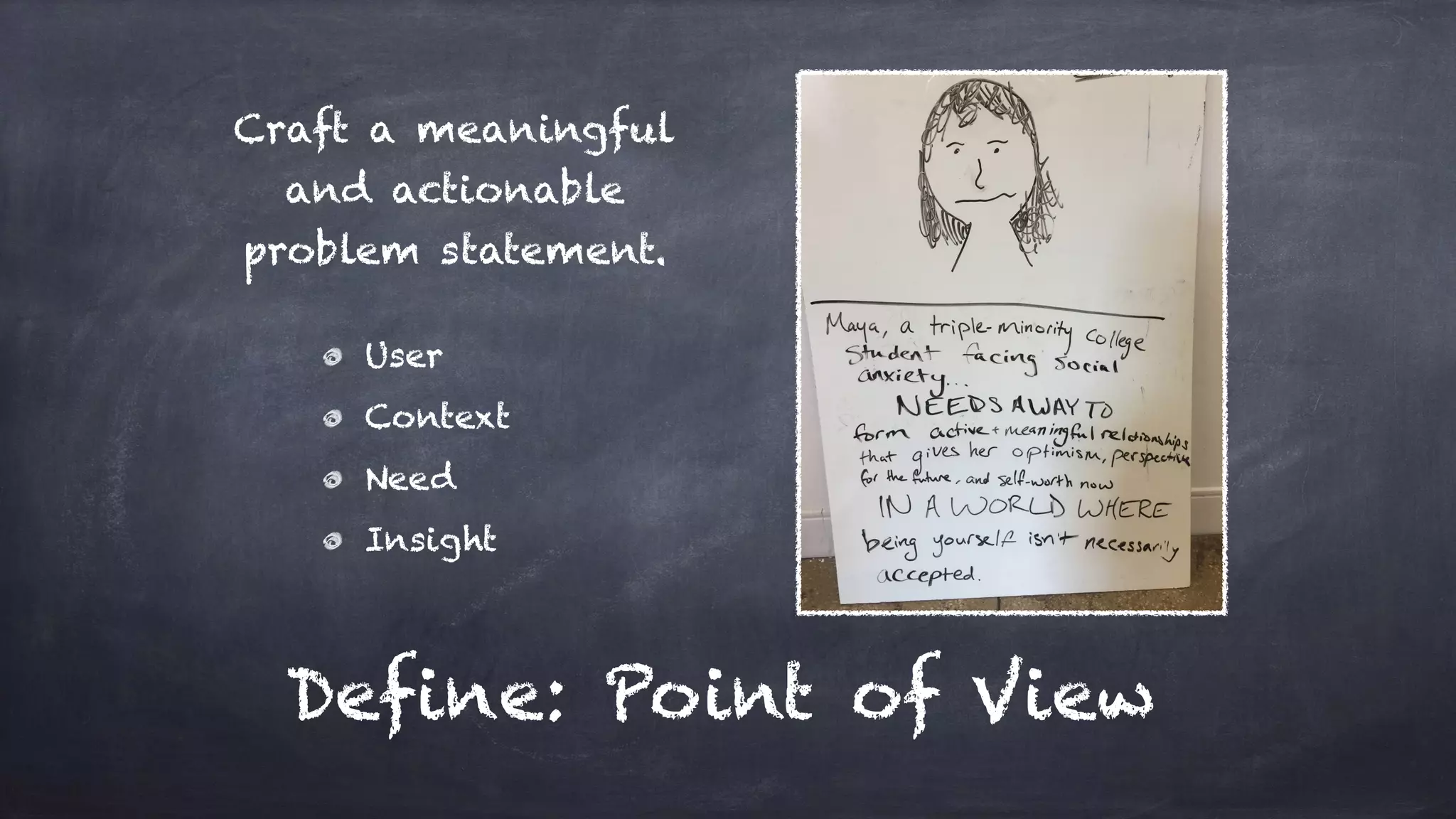
Define: Point of View
User
Context
Need
Insight
Craft a meaningful
and actionable
problem statement.
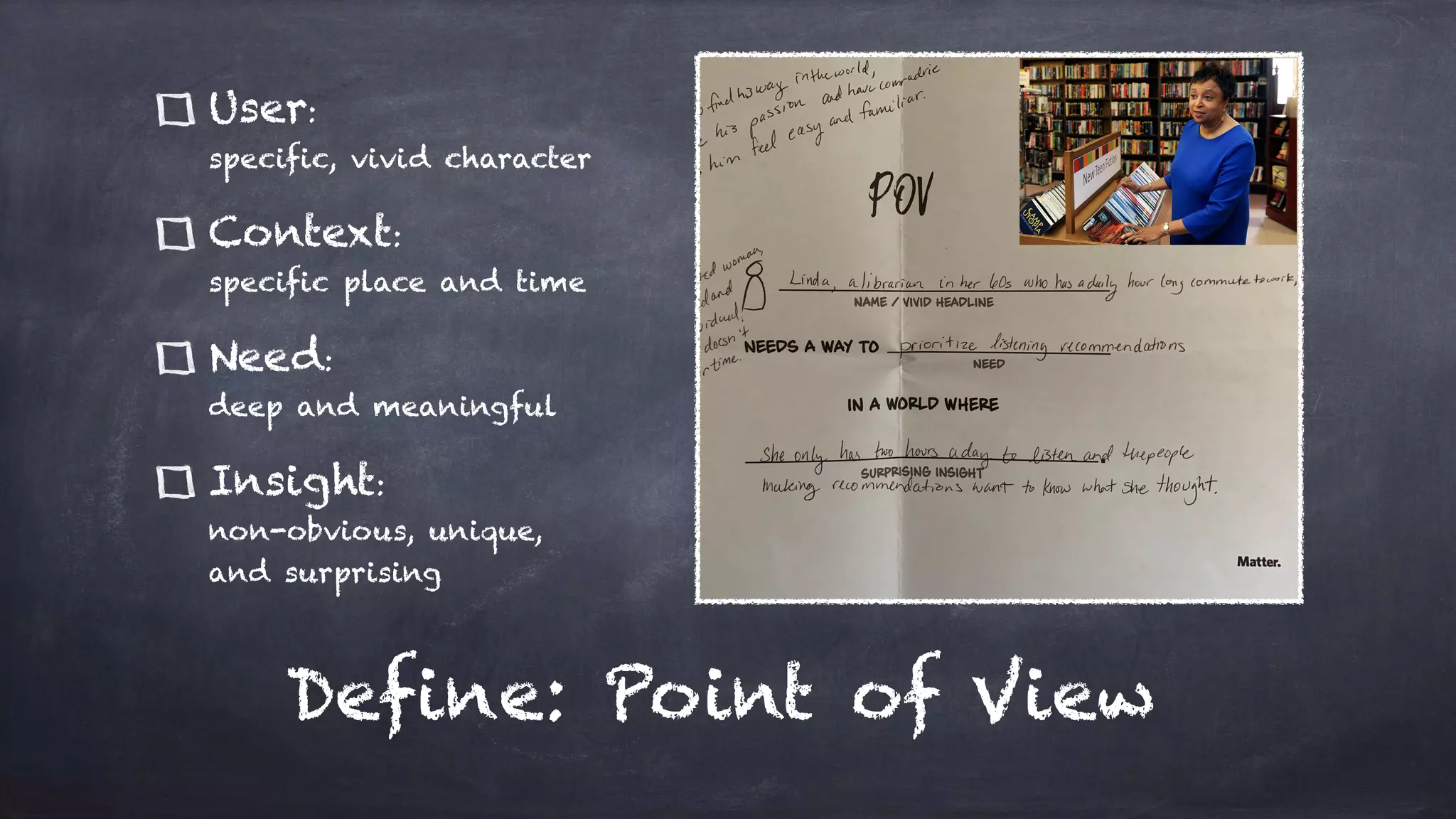
User:
specific, vivid character
Context:
specific place and time
Need:
deep and meaningful
Insight:
non-obvious, unique,
and surprising
Define: Point of View
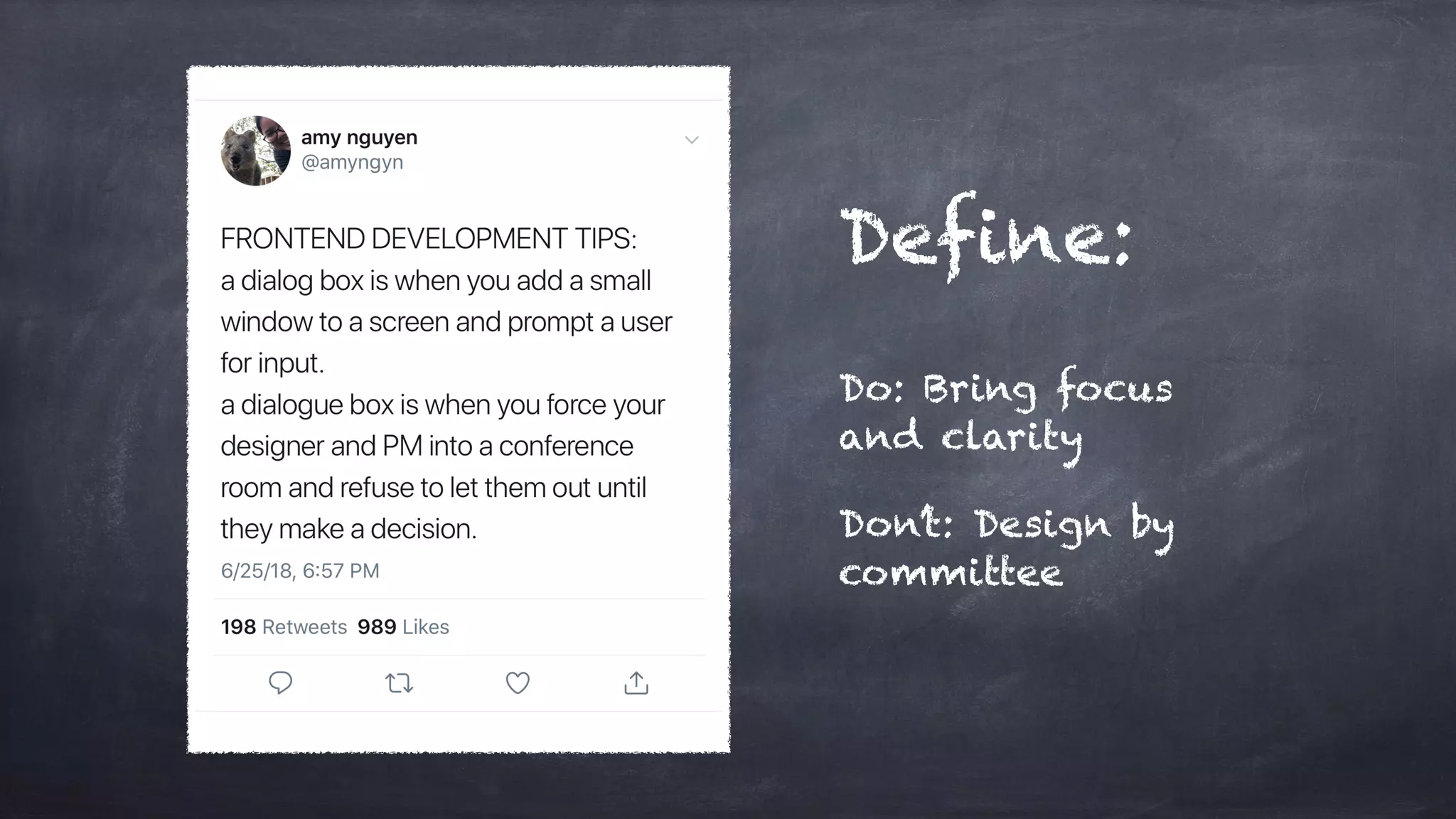
Define:
Do: Bring focus
and clarity
Don’t: Design by
committee
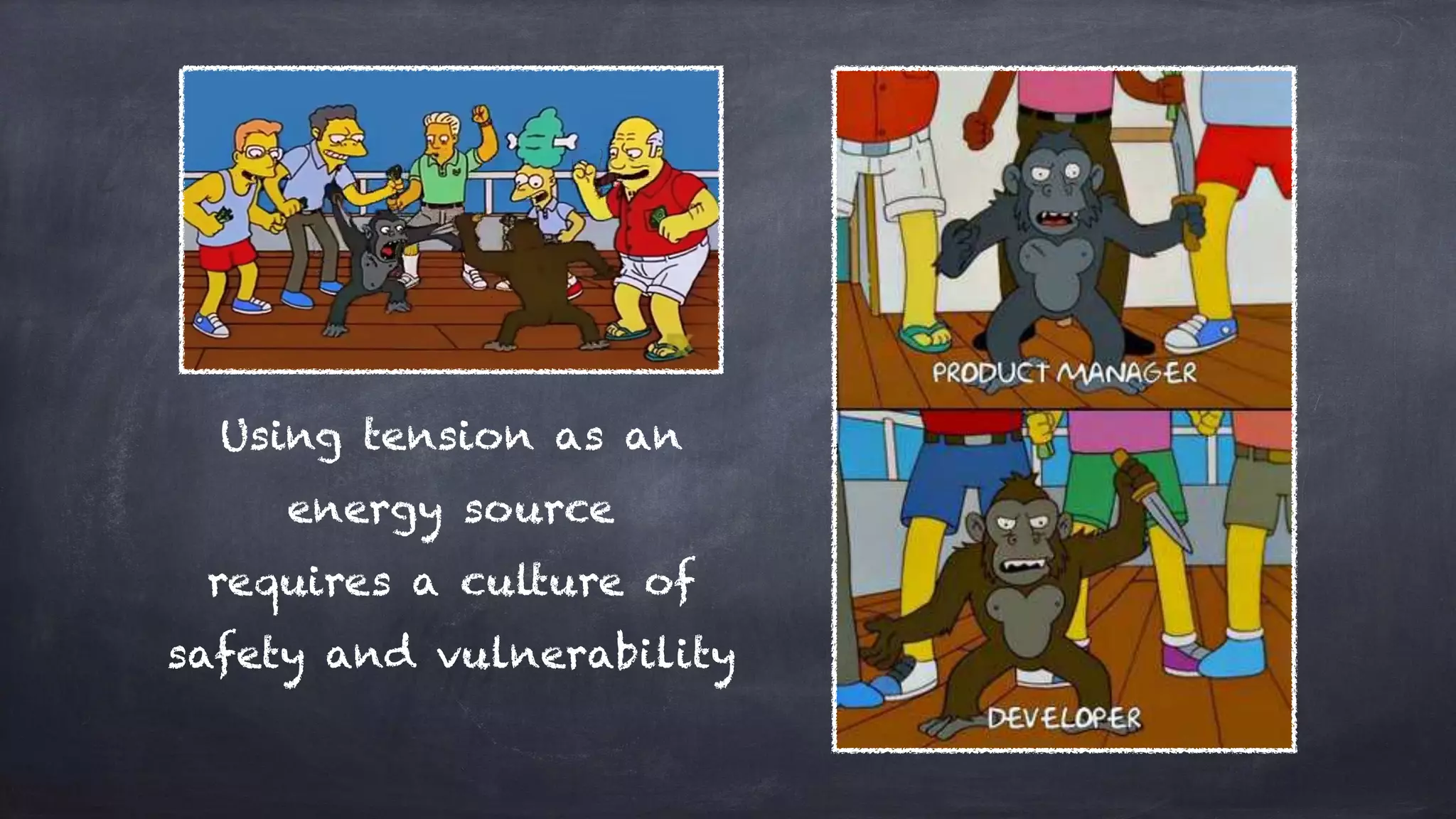
Using tension as an
energy source
requires a culture of
safety and vulnerability
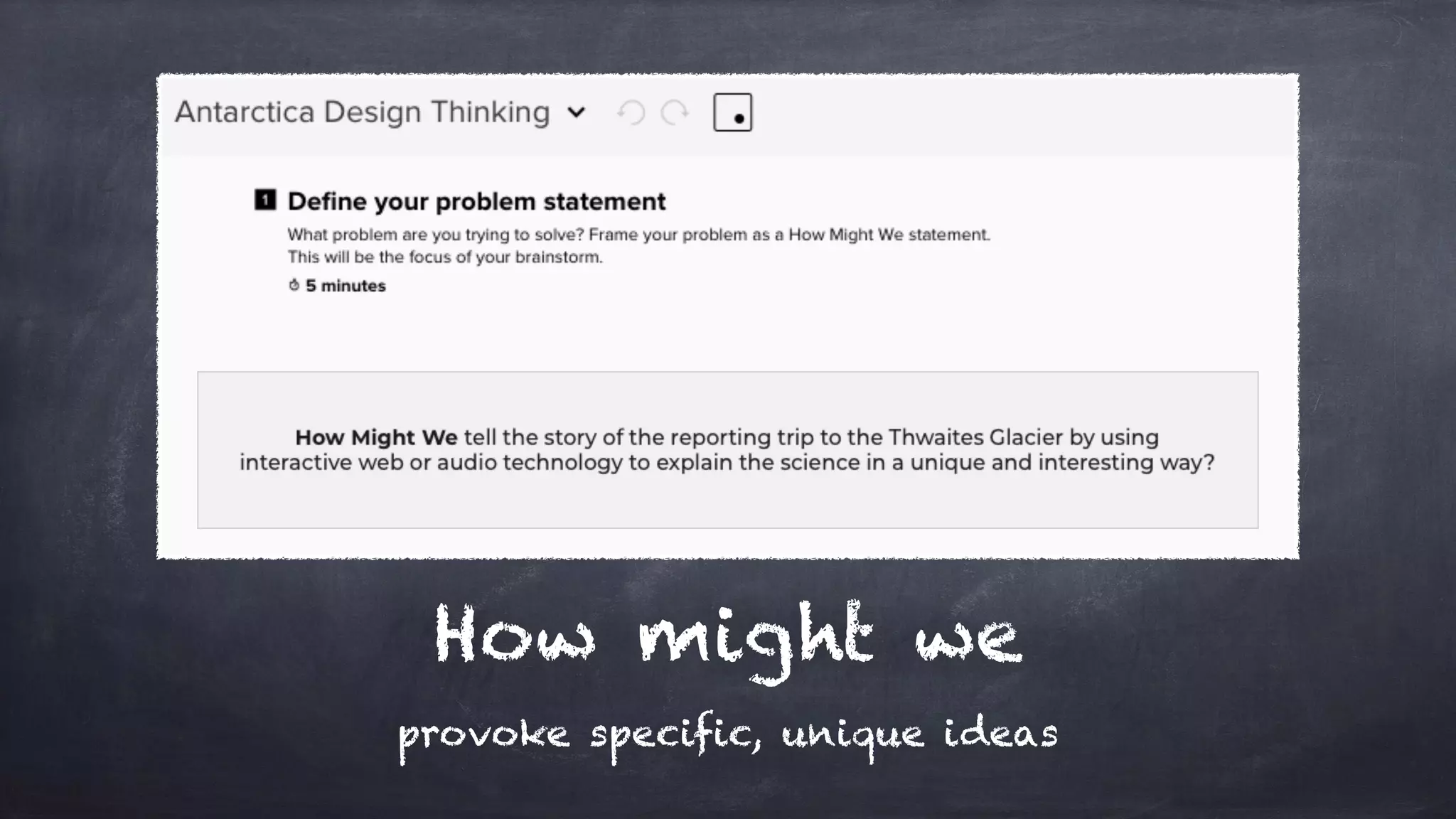
How might we
provoke specific, unique ideas
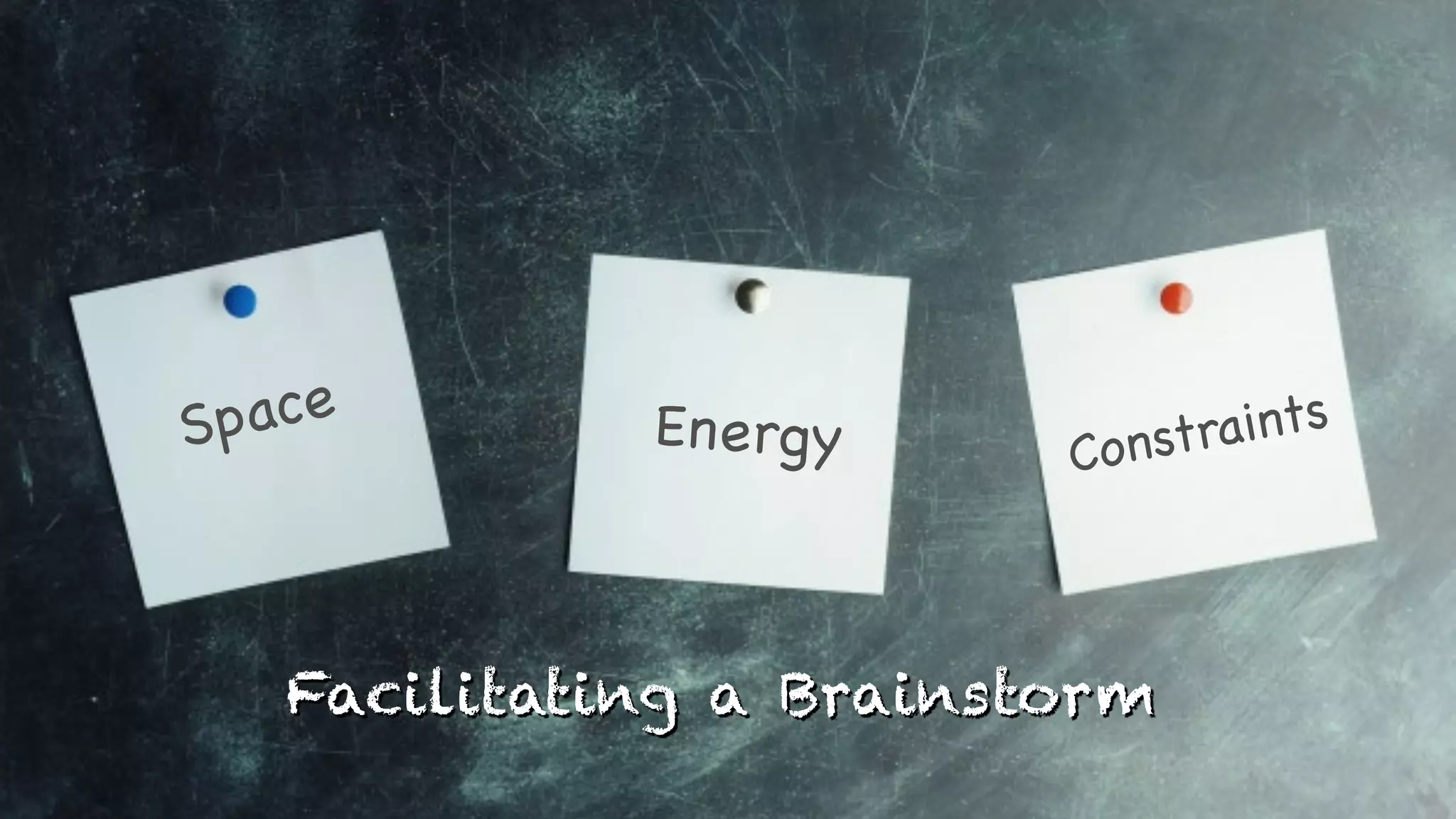
Space Energy Constraints
Facilitating a Brainstorm
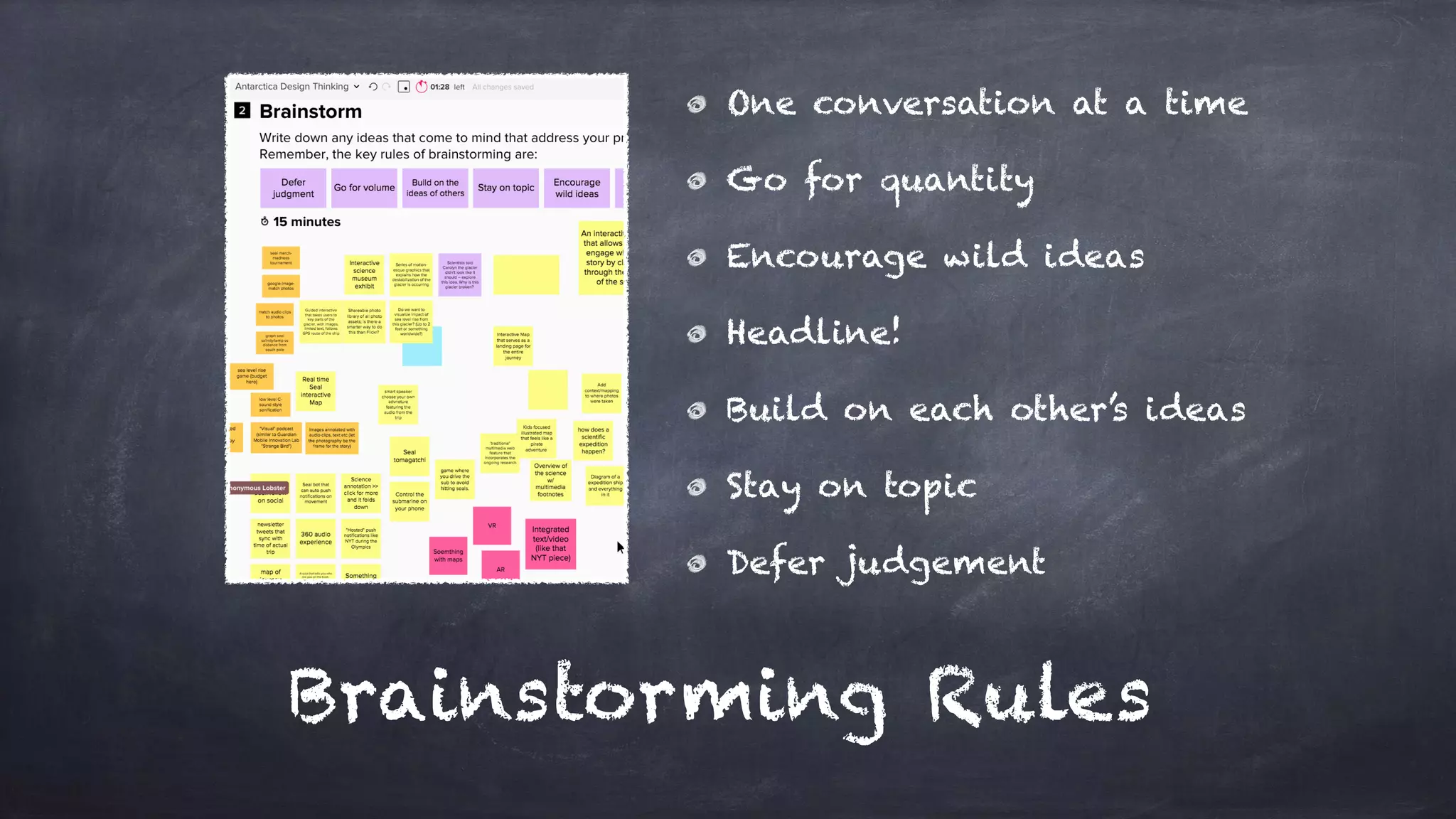
One conversation at a time
Go for quantity
Encourage wild ideas
Headline!
Build on each other’s ideas
Stay on topic
Defer judgement
Brainstorming Rules
Ideate
Get beyond the obvious
Uncover unexpected areas
of exploration
Harness the collective
perspectives and strengths
of your team
Create a high volume and
variety of solutions
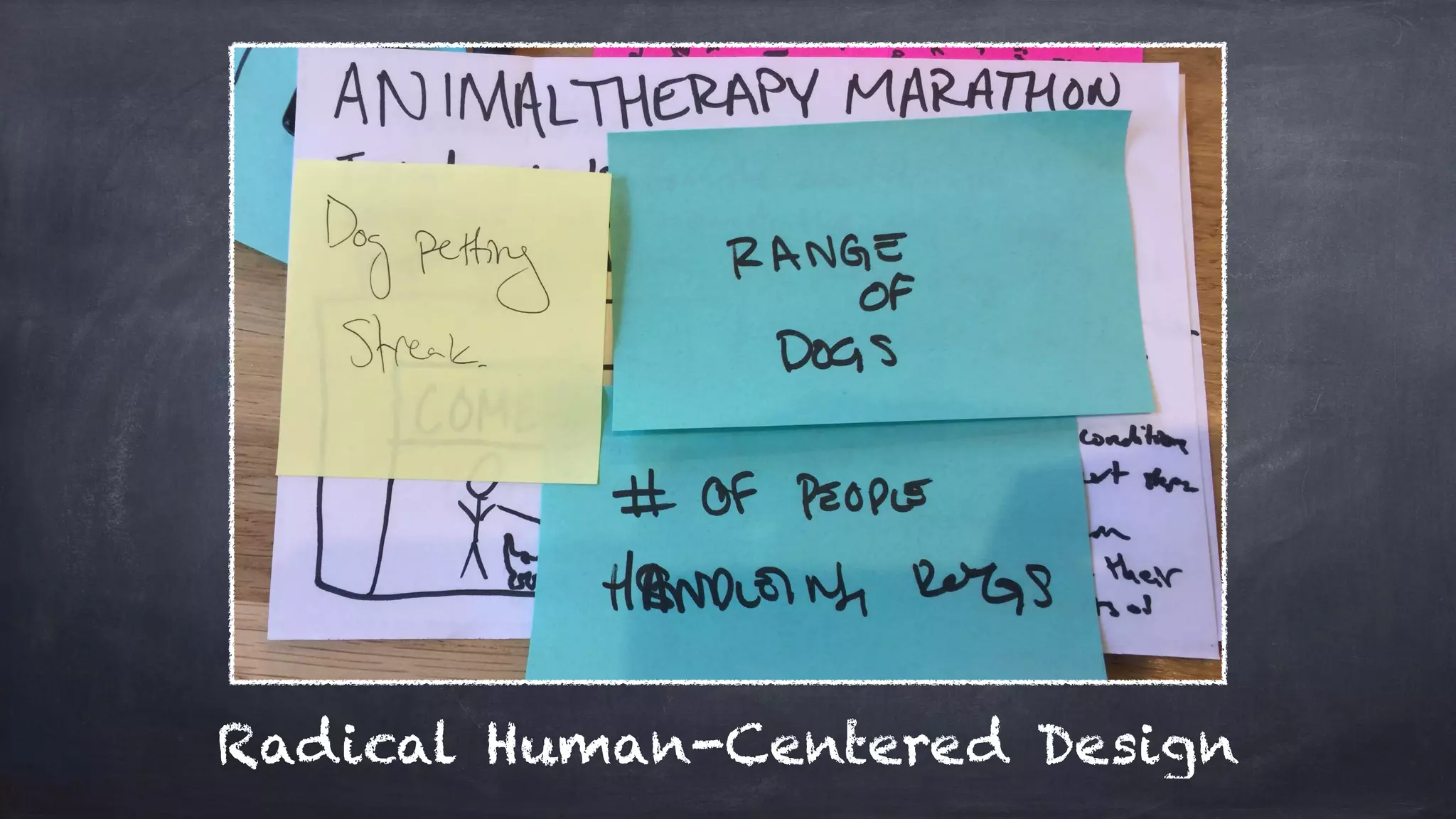
Radical Human-Centered Design
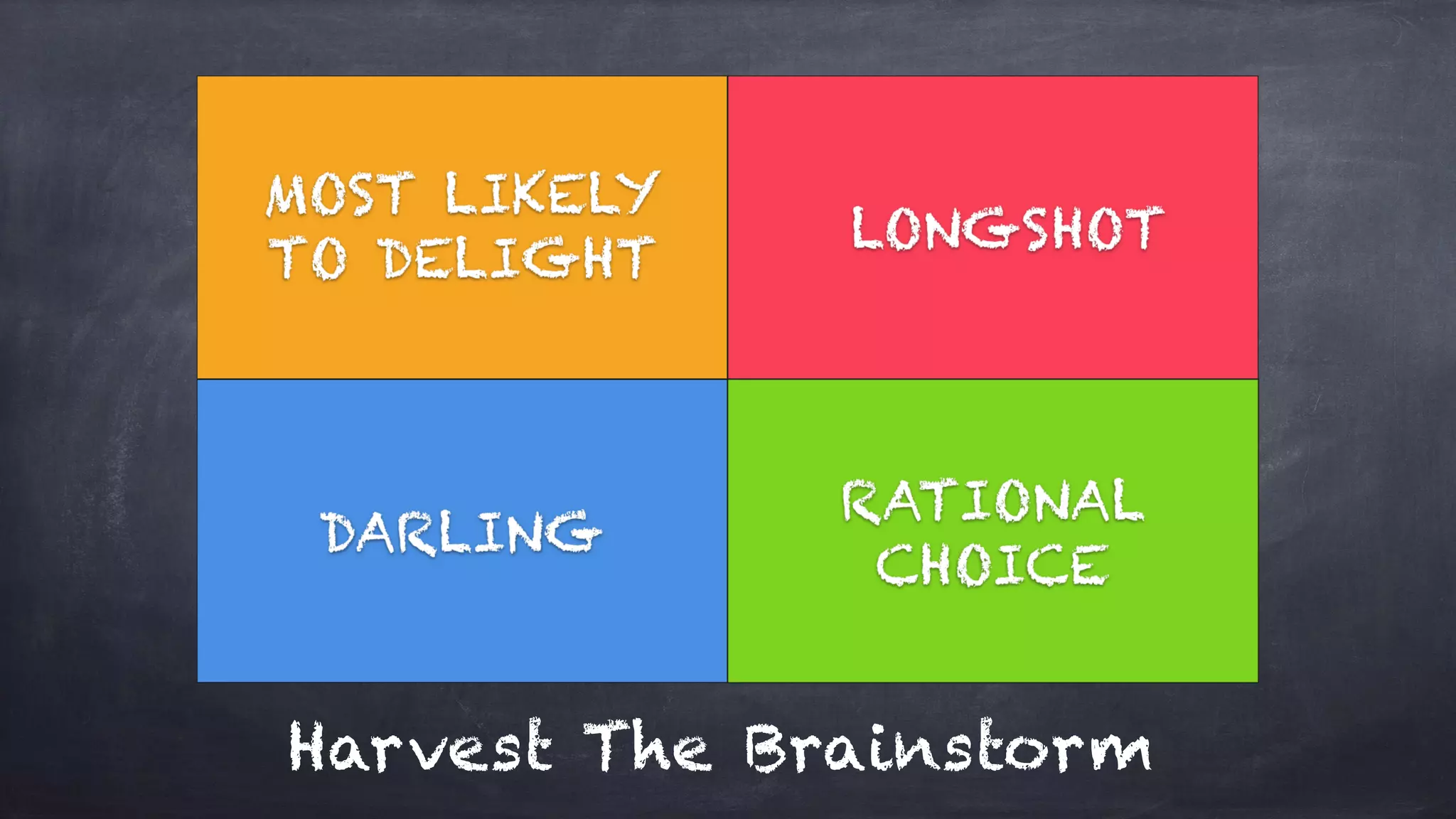
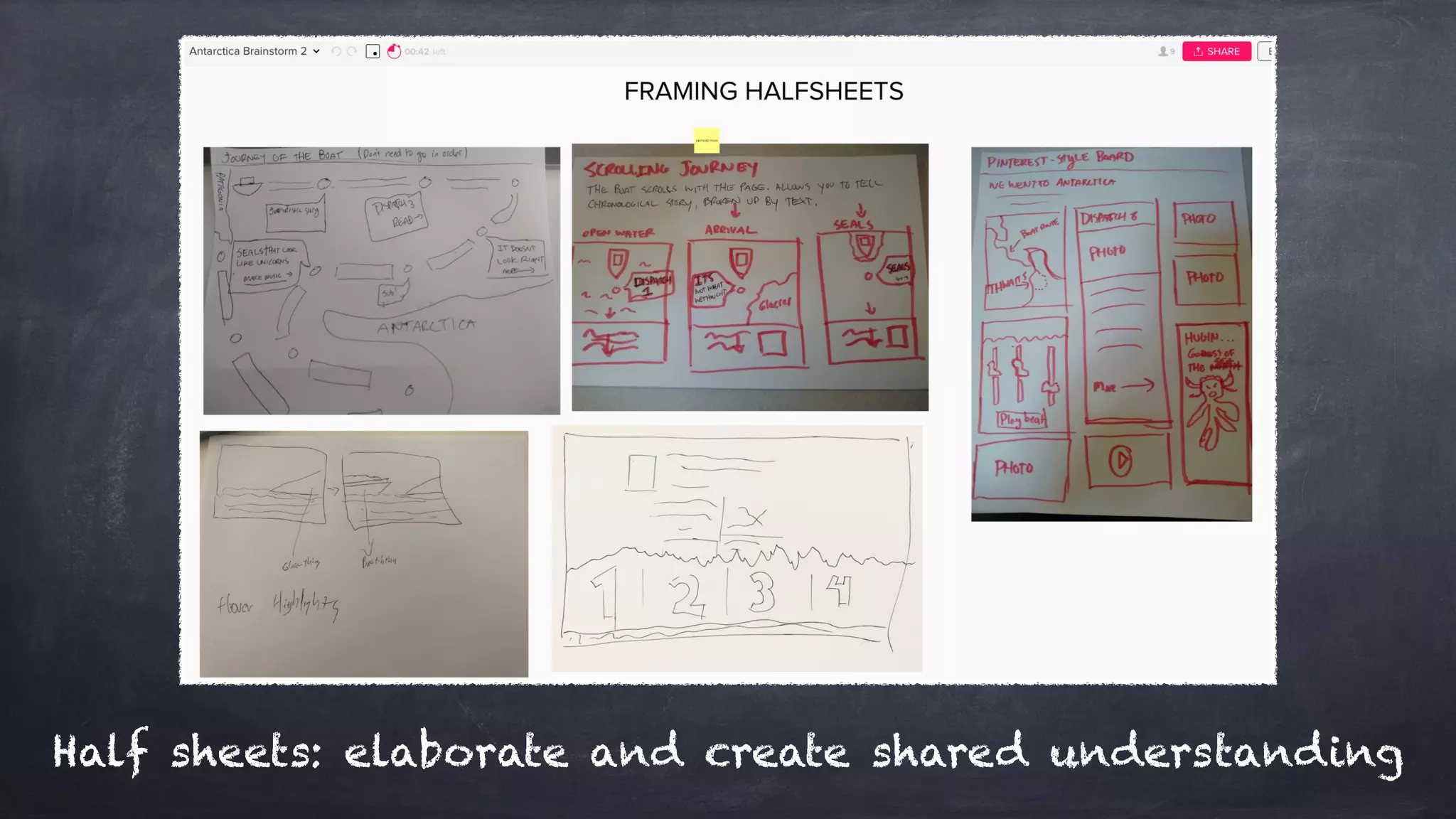
Harvest The Brainstorm
Half sheets: elaborate and create shared understanding
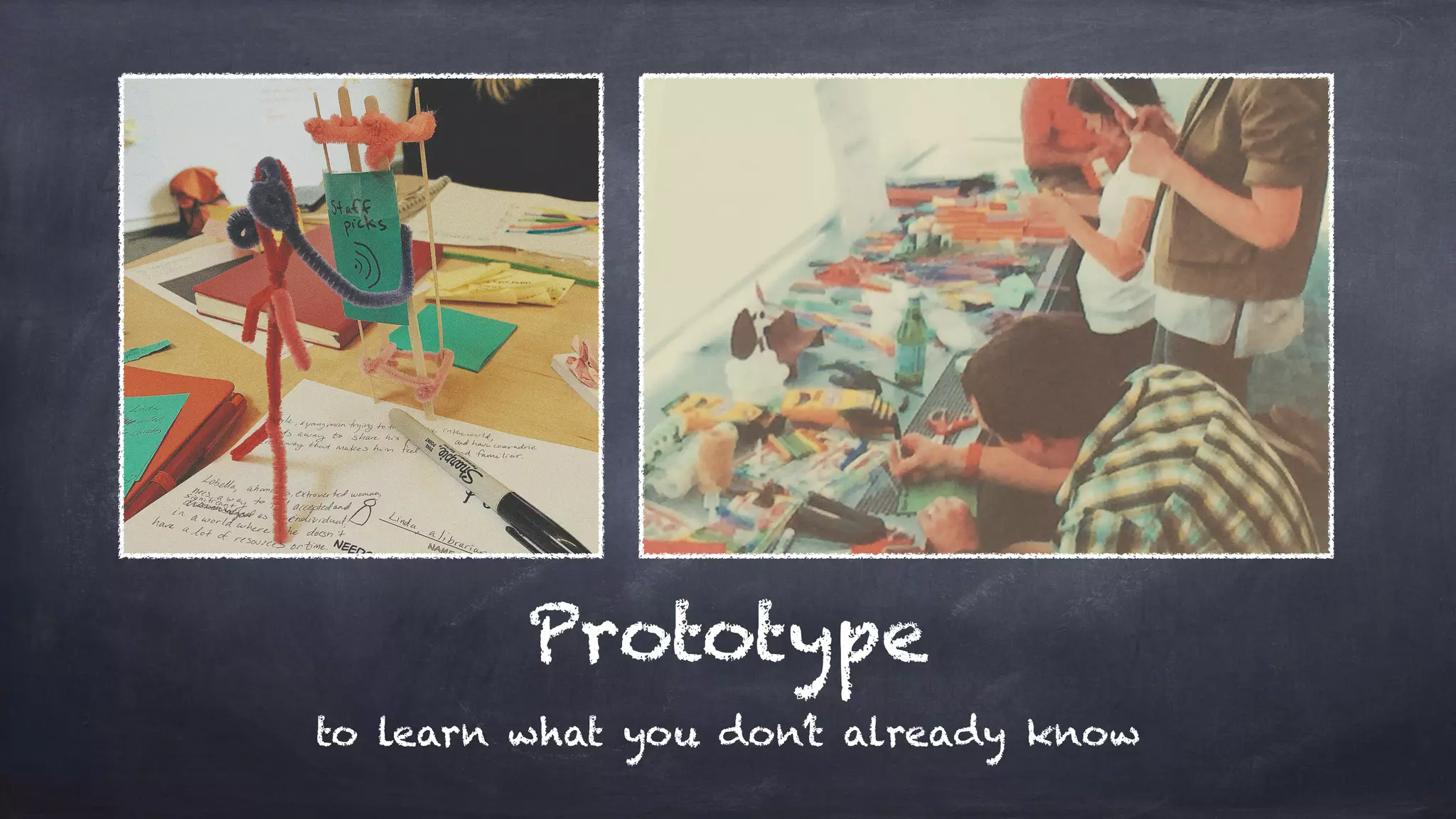
Prototype
to learn what you don’t already know
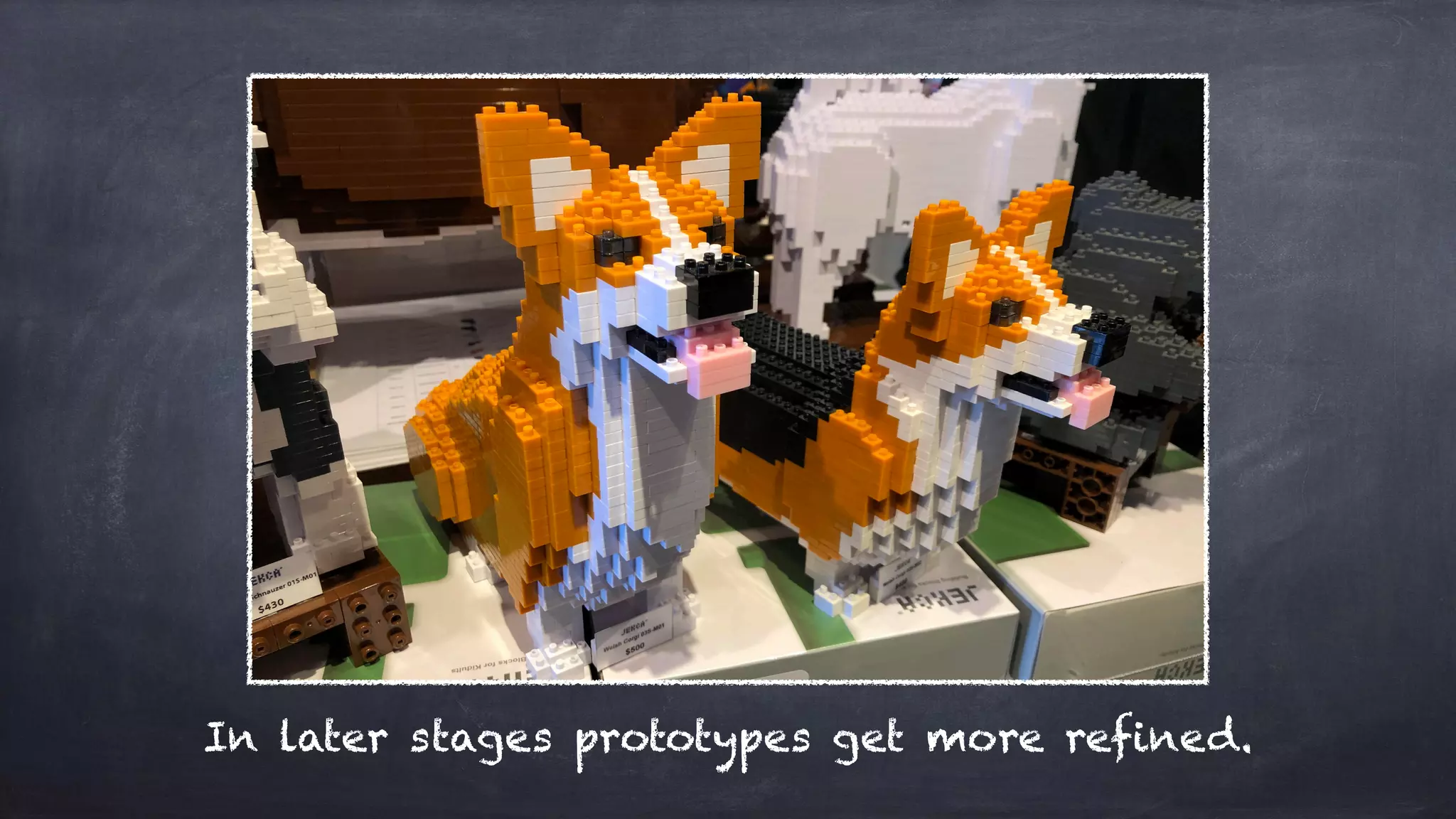
In later stages prototypes get more refined.
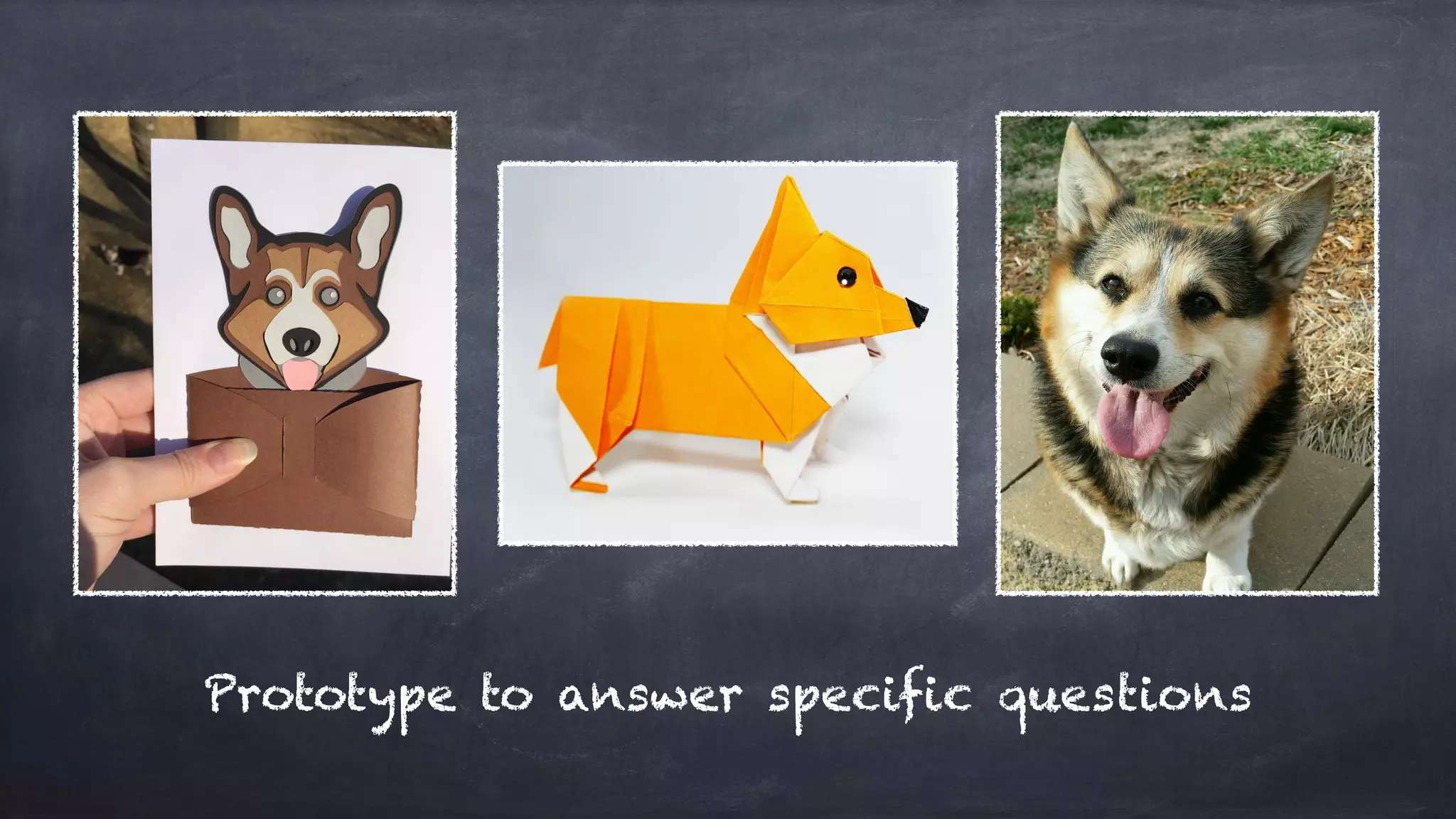
Prototype to answer specific questions
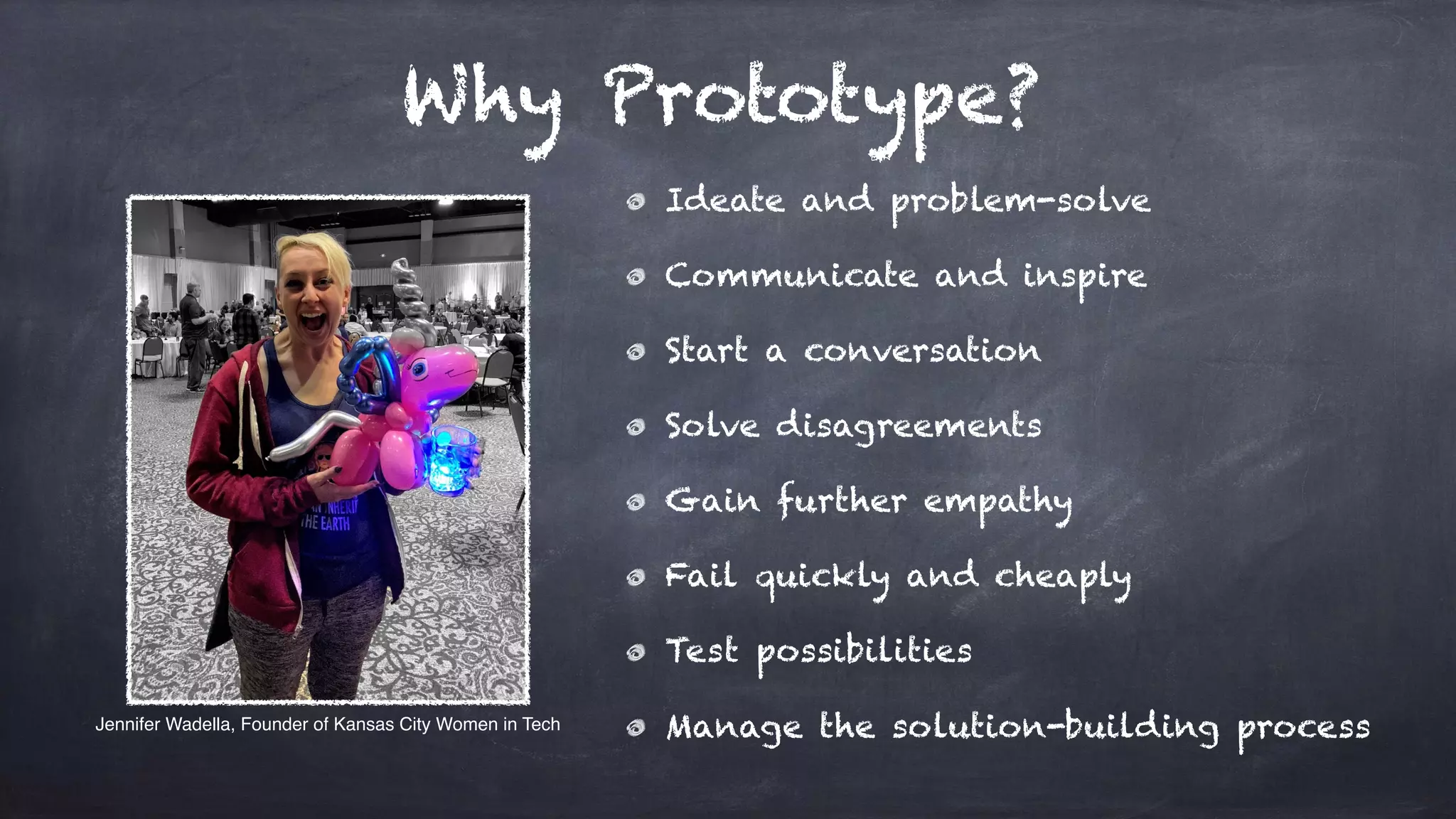
Why Prototype?
Ideate and problem-solve
Communicate and inspire
Start a conversation
Solve disagreements
Gain further empathy
Fail quickly and cheaply
Test possibilities
Manage the solution-building processJennifer Wadella, Founder of Kansas City Women in Tech
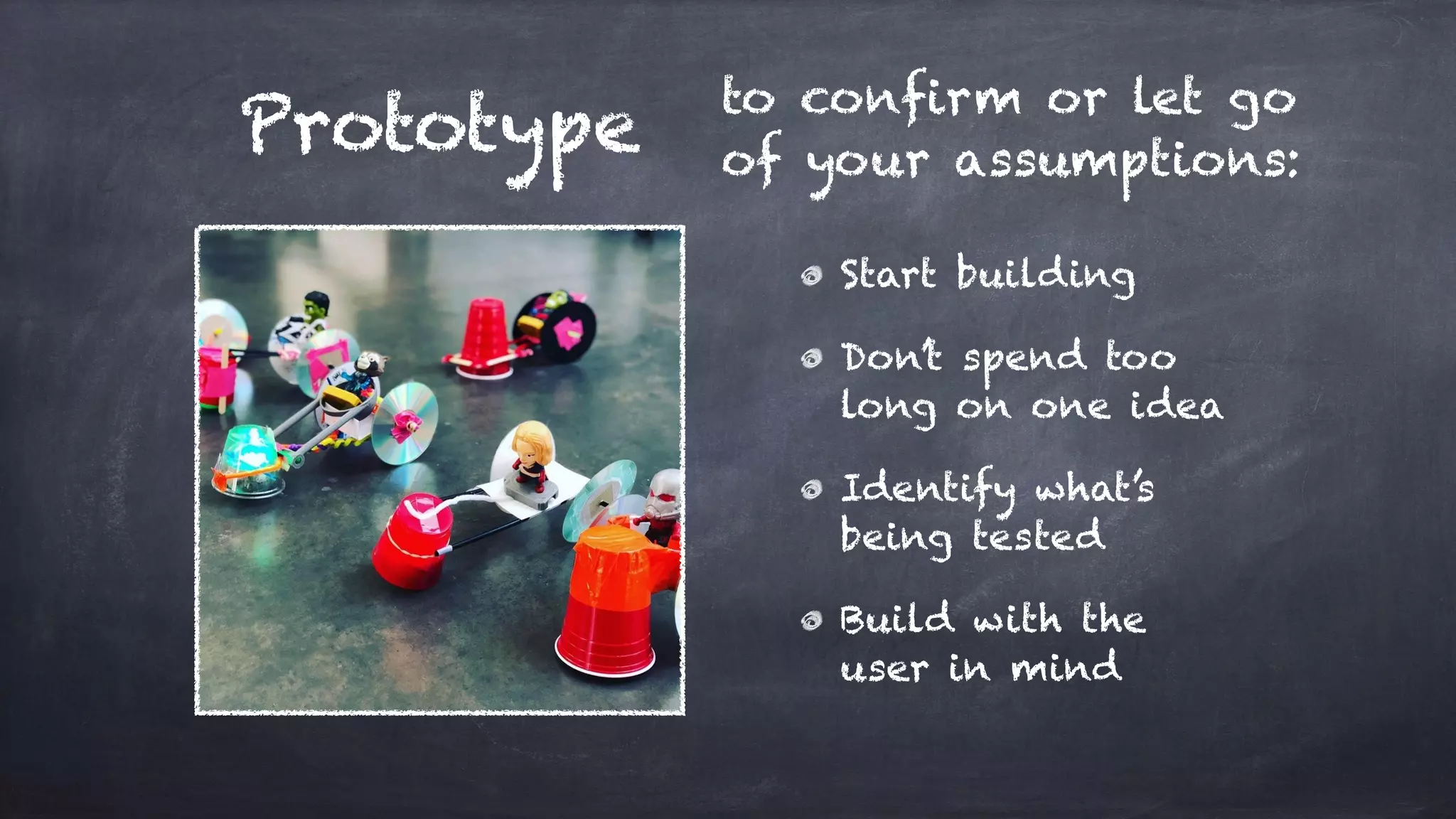
Prototype to confirm or let go
of your assumptions:
Start building
Don’t spend too
long on one idea
Identify what’s
being tested
Build with the
user in mind
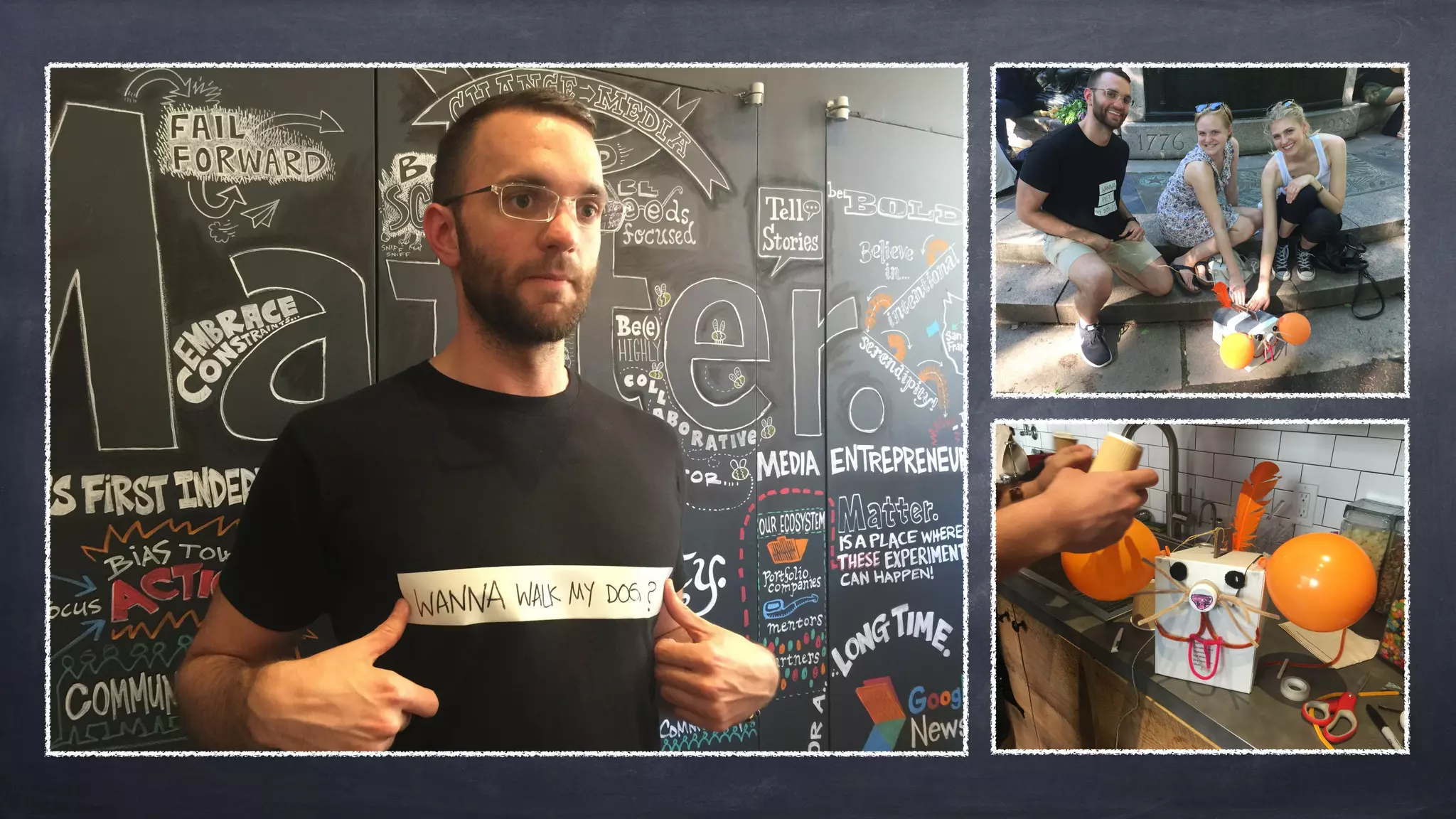
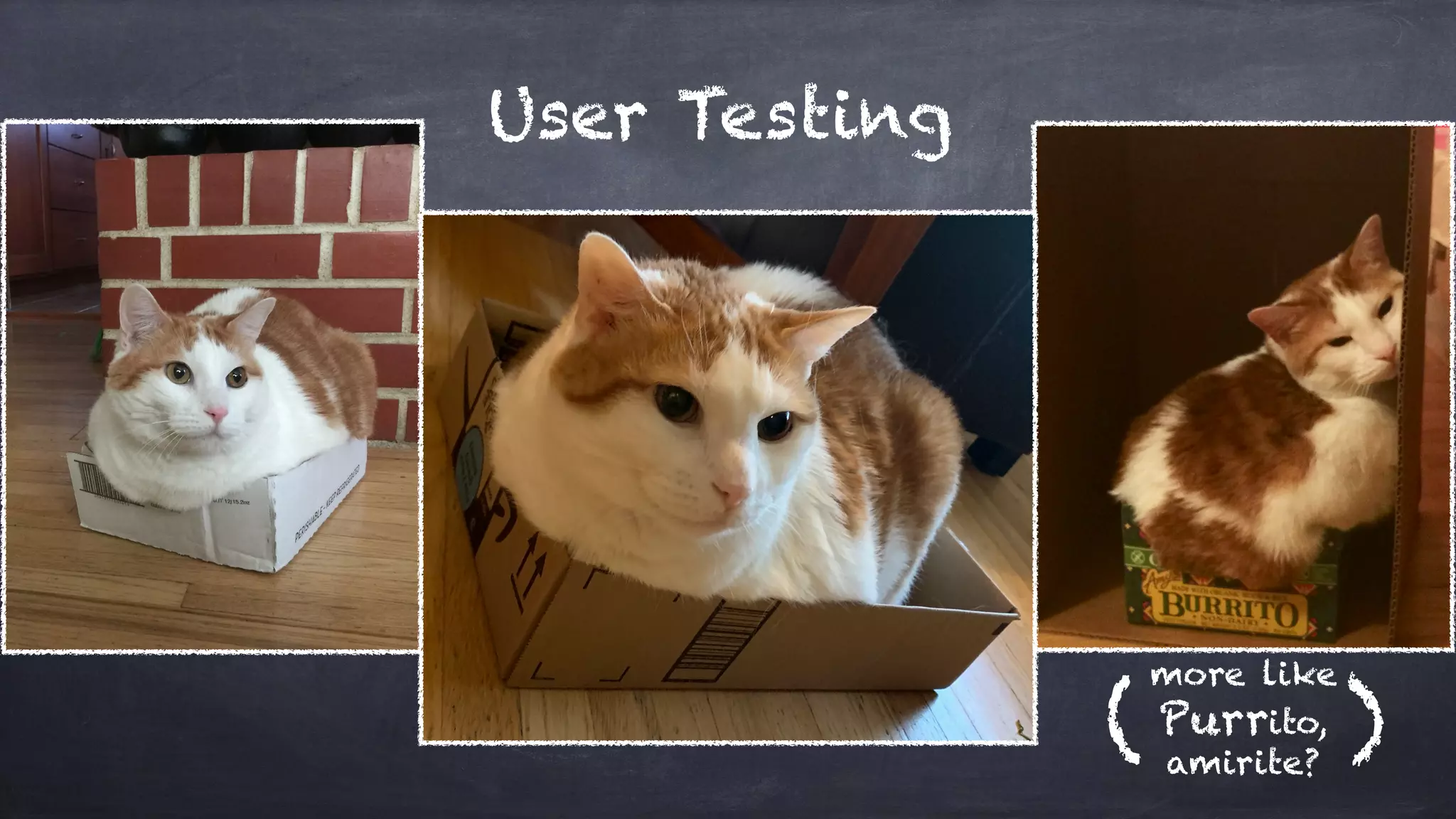
User Testing
( )
more like
Purrito,
amirite?
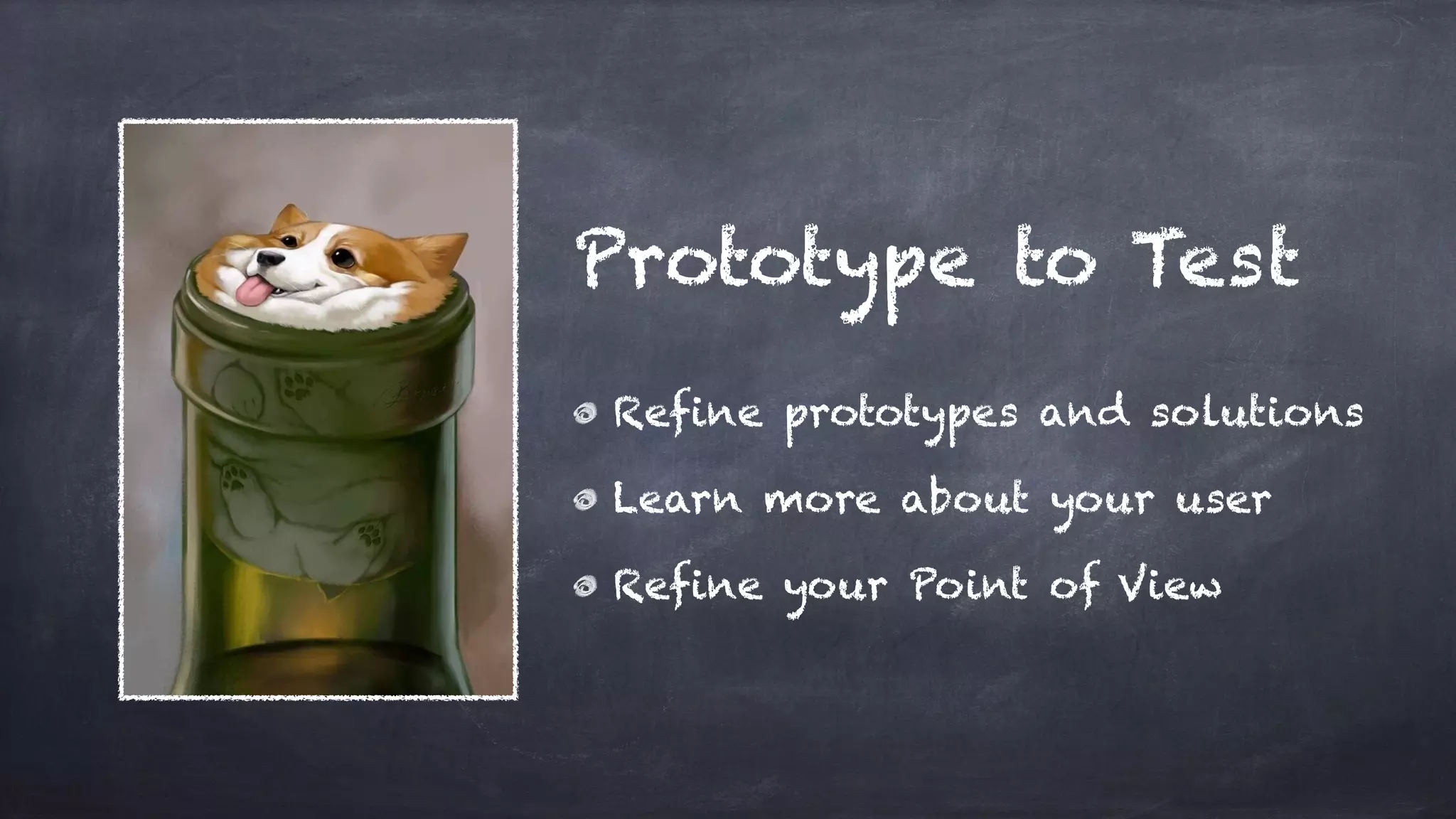
Refine prototypes and solutions
Learn more about your user
Refine your Point of View
Prototype to Test
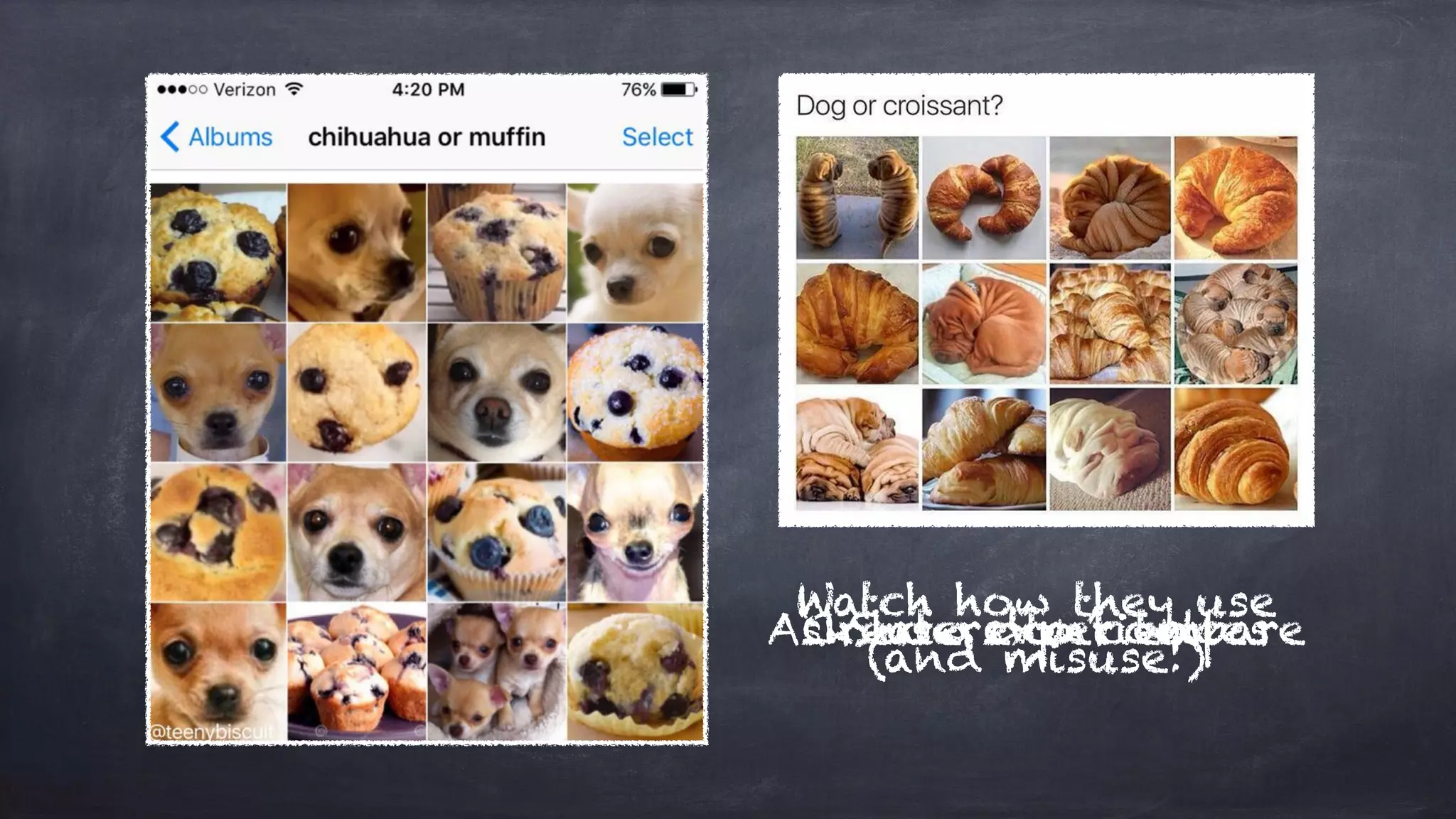
Show don’t tell
Watch how they use
(and misuse!)
Create experiencesAsk users to compare
User Testing
1. Prototype
2. Context or scenario
3. How you interact
with the user
4. Observe and
capture feedback
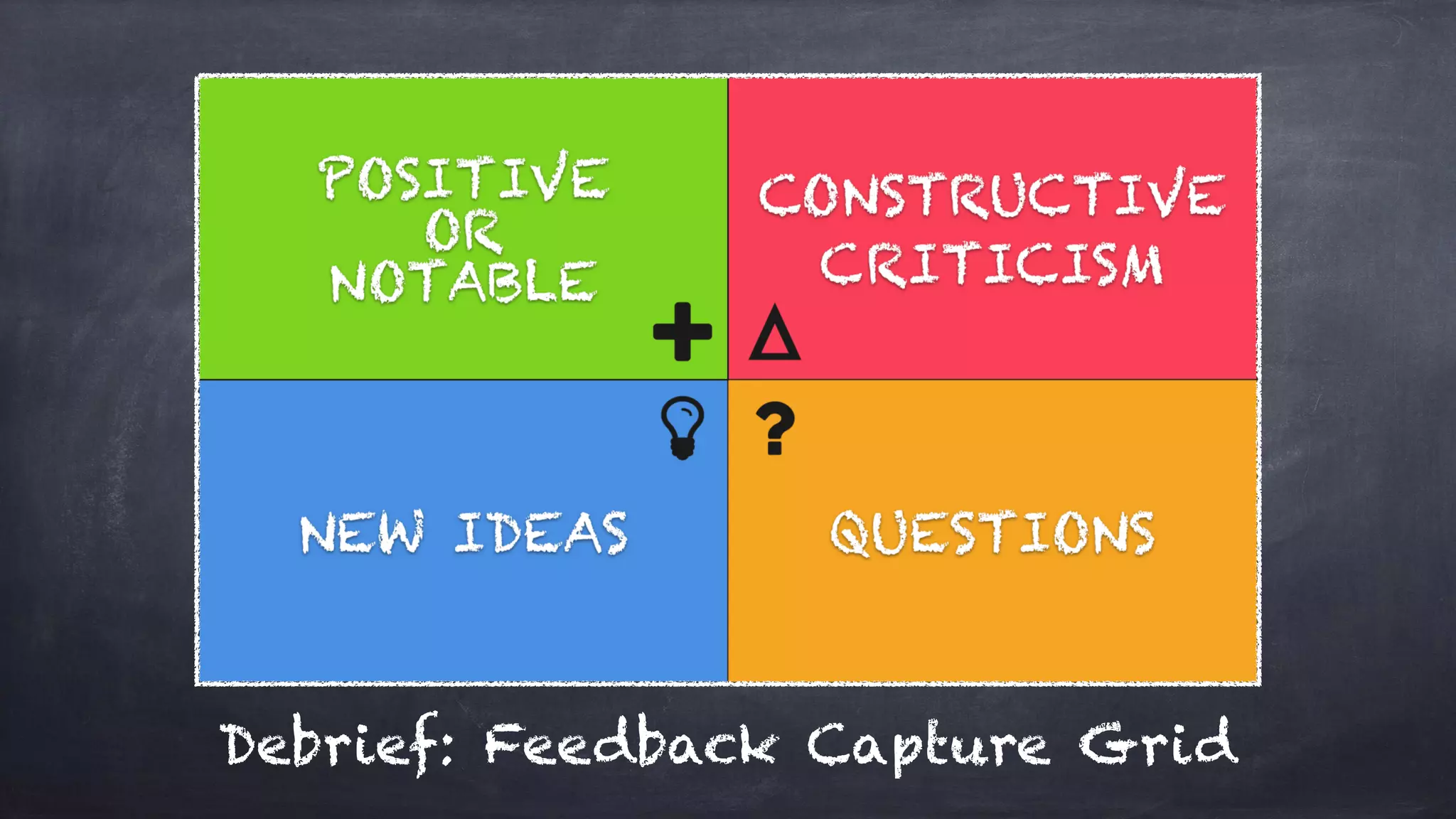
Debrief: Feedback Capture Grid
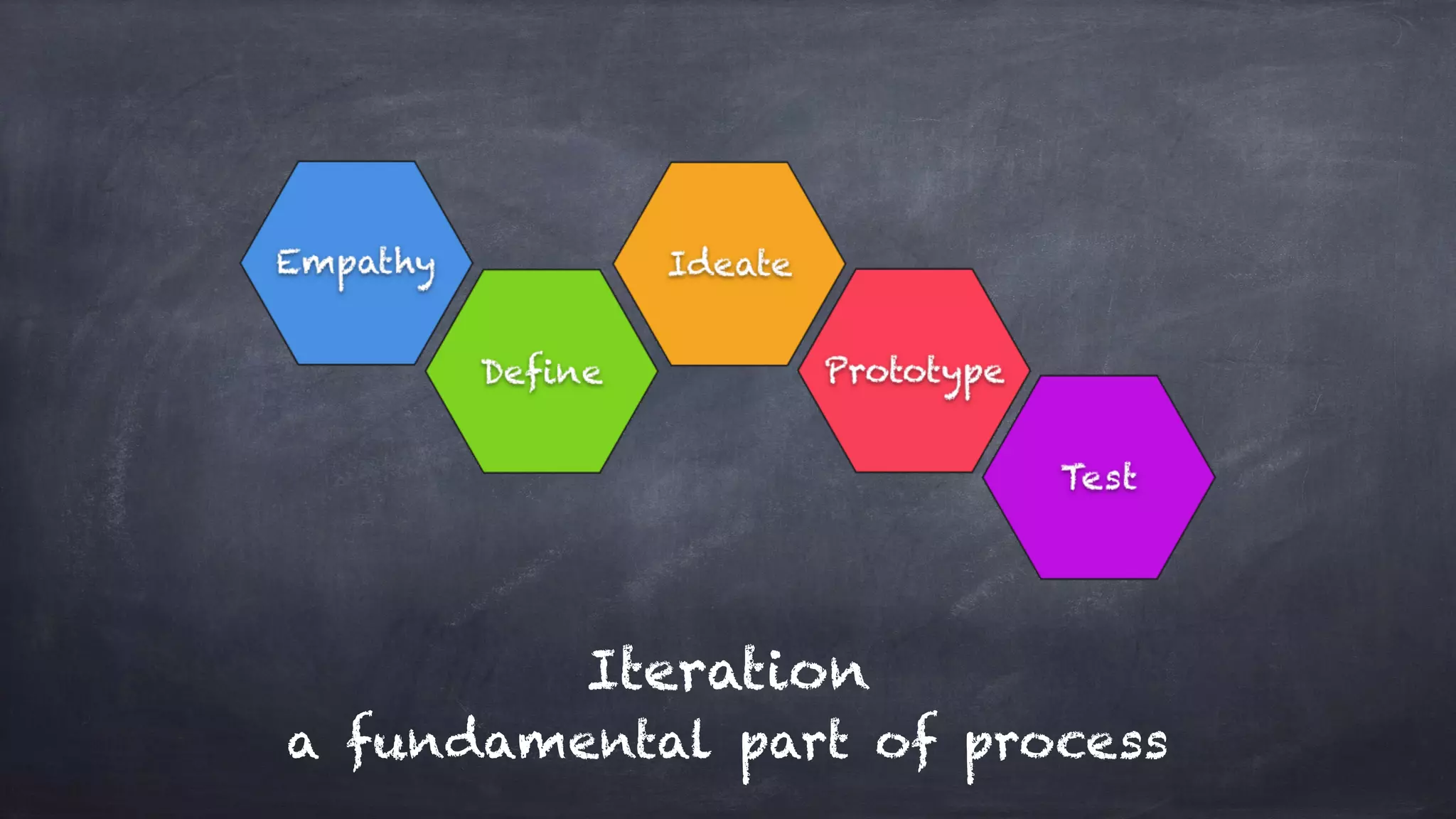
a fundamental part of process
Iteration
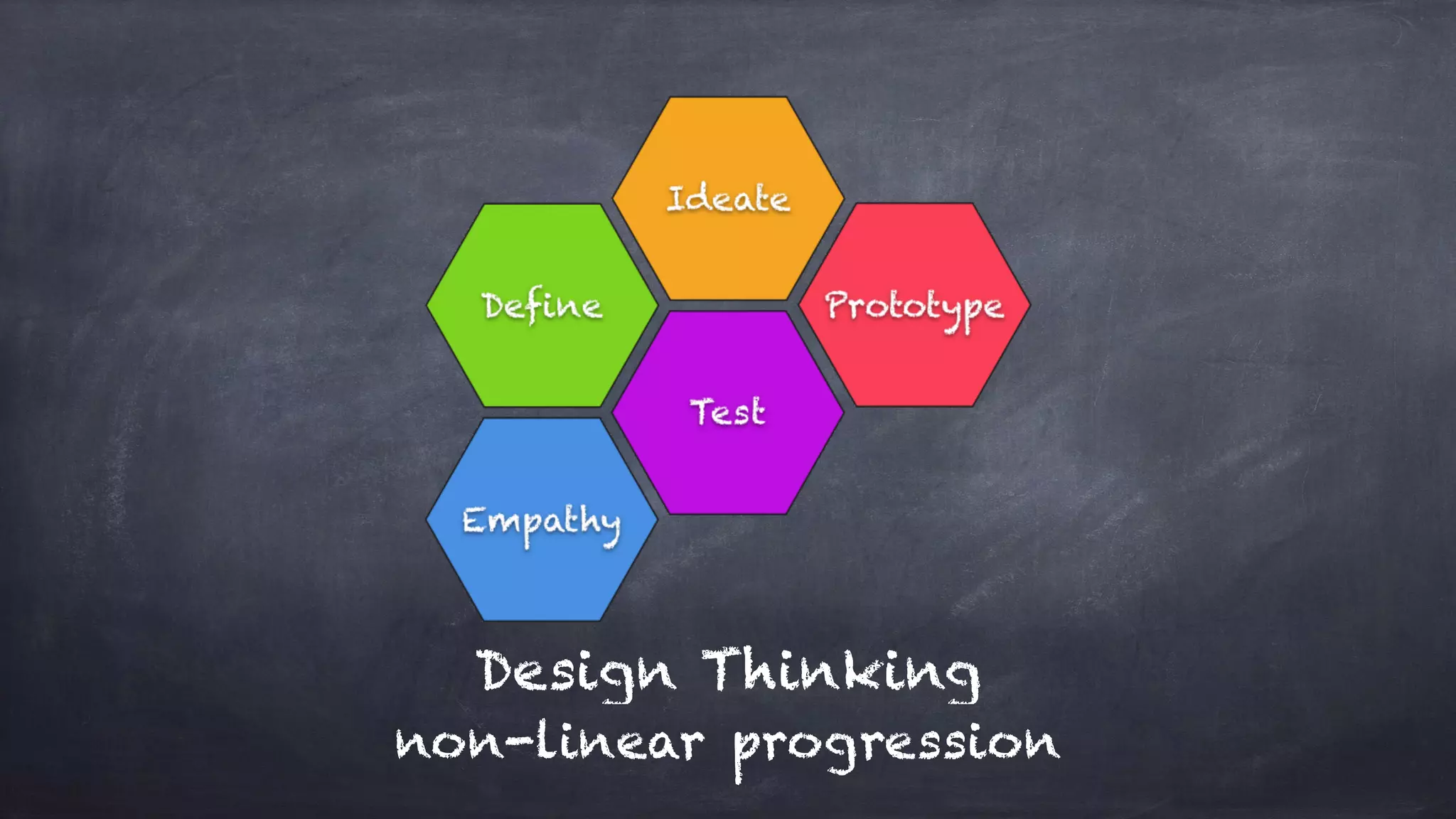
non-linear progression
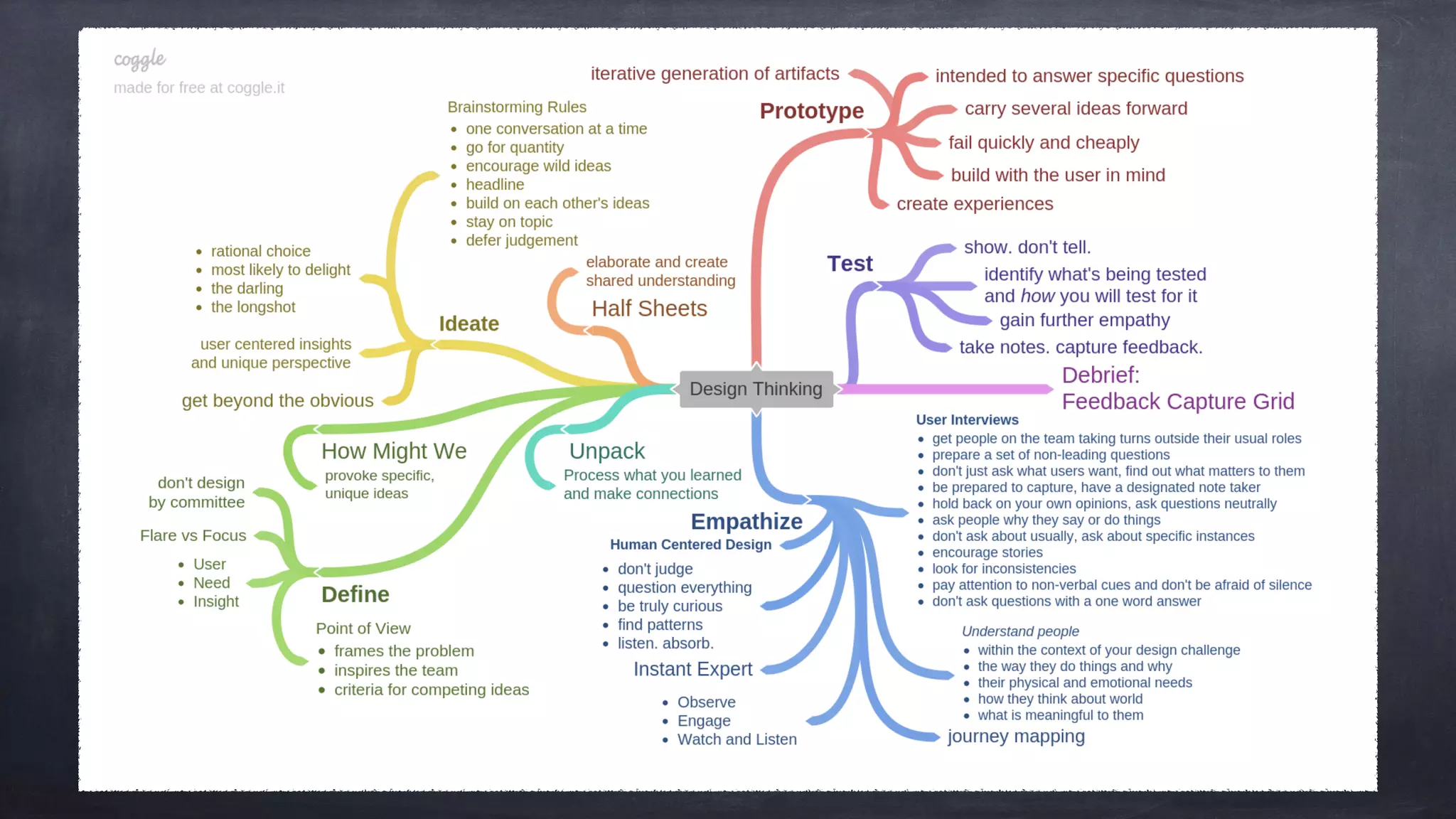
Design Thinking
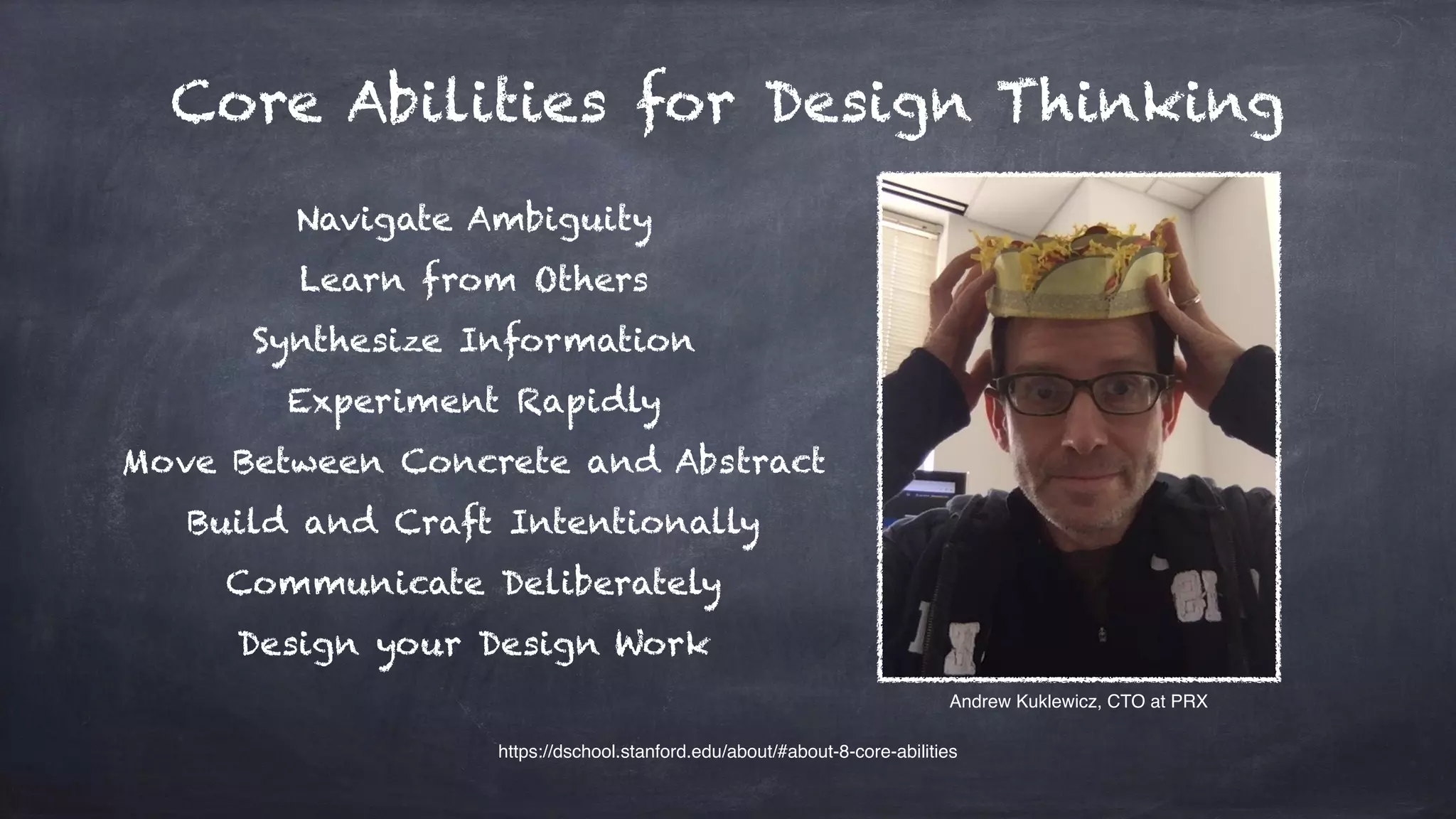
Core Abilities for Design Thinking
Navigate Ambiguity
Learn from Others
Synthesize Information
Experiment Rapidly
Move Between Concrete and Abstract
Build and Craft Intentionally
Communicate Deliberately
Design your Design Work
https://dschool.stanford.edu/about/#about-8-core-abilities
Andrew Kuklewicz, CTO at PRX
!
But not a demand for change.

Design Thinking for Inclusive Collaboration