DESIGN THINKING 101

Summer Meeting | August 2017	
Presented by Bill Bulman
What Is Design Thinking?
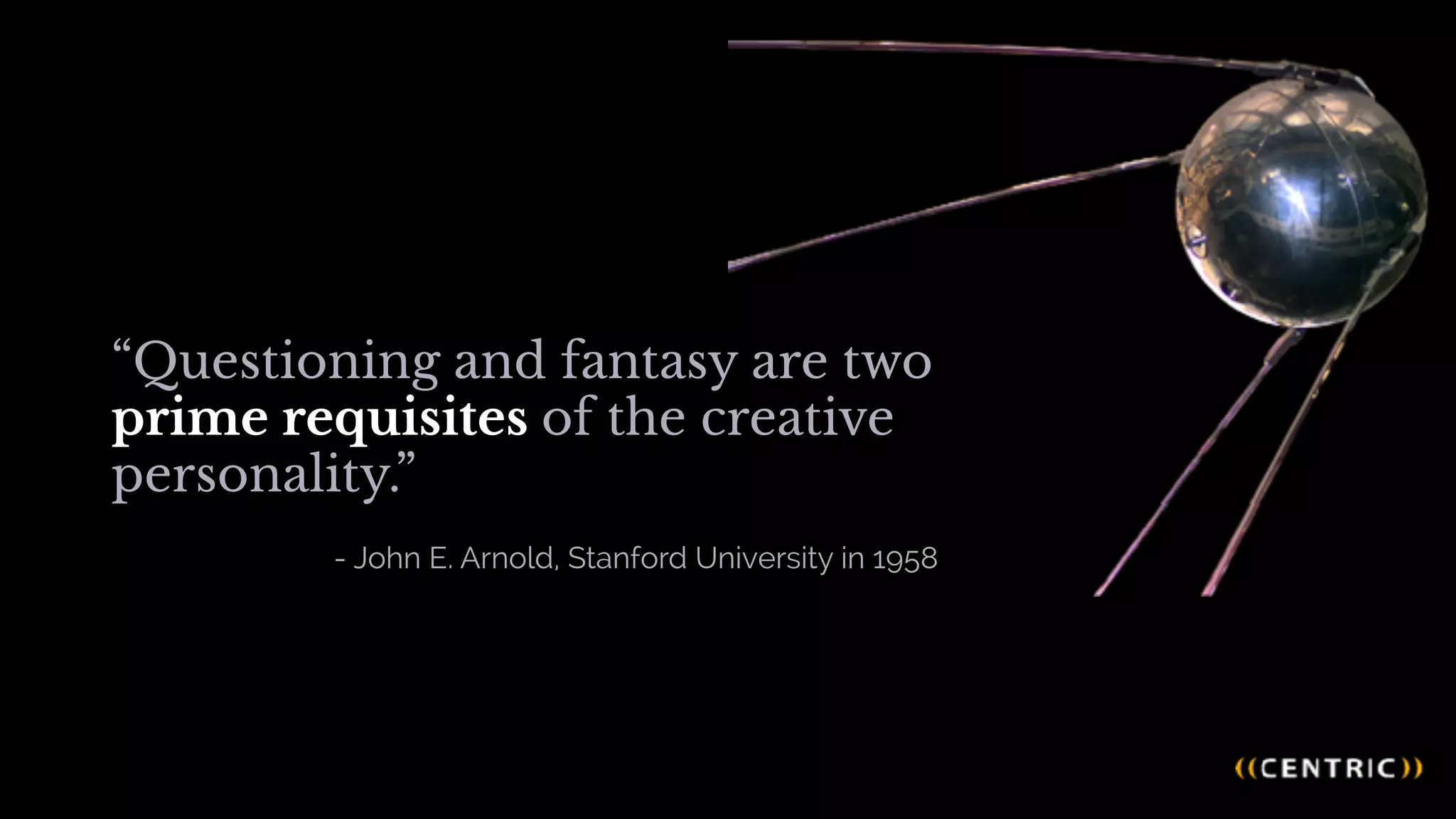
- John E. Arnold, Stanford University in 1958
“Questioning and fantasy are two
prime requisites of the creative
personality.”                        
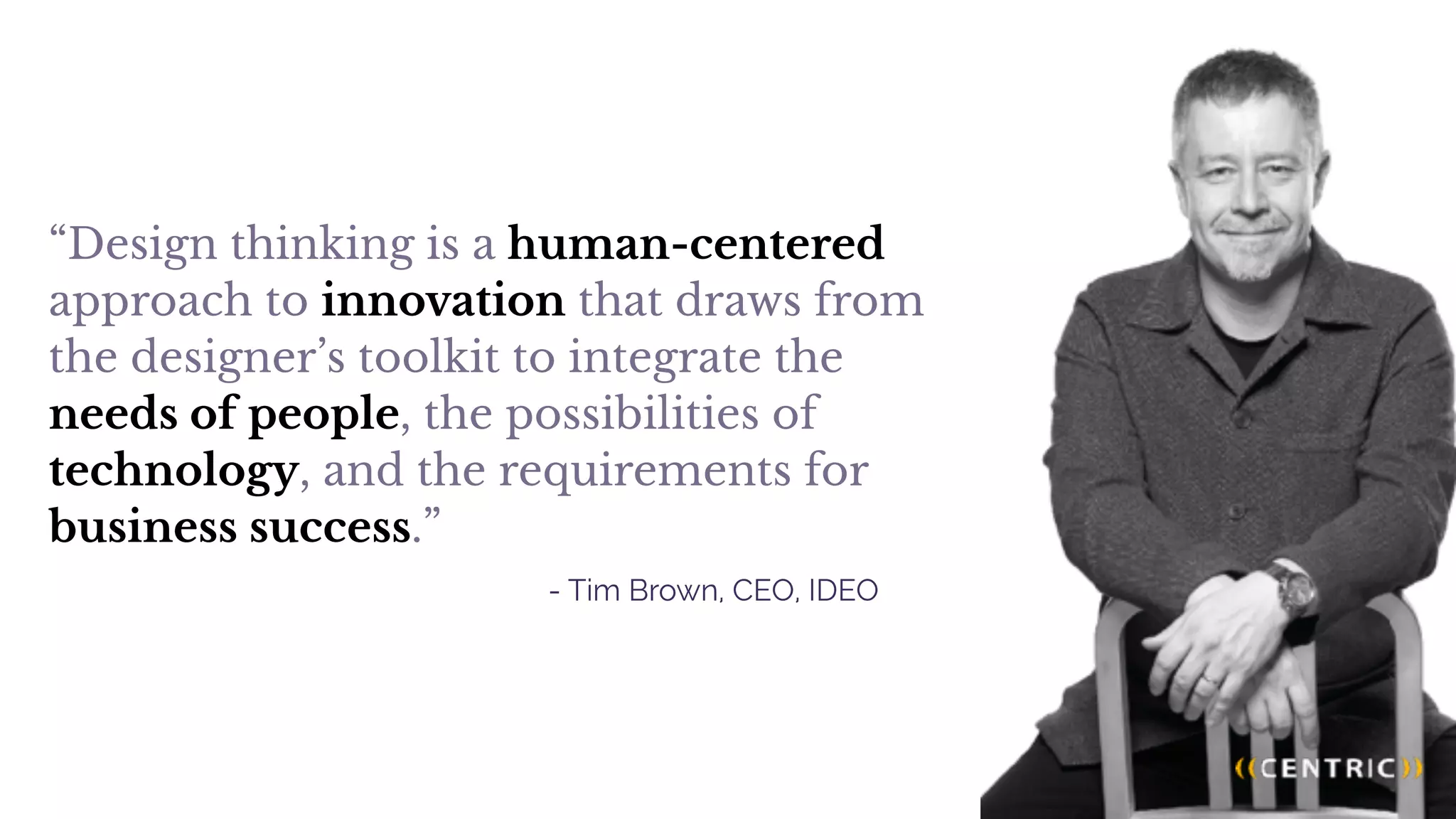
“Design thinking is a human-centered
approach to innovation that draws from
the designer’s toolkit to integrate the
needs of people, the possibilities of
technology, and the requirements for
business success.”
- Tim Brown, CEO, IDEO
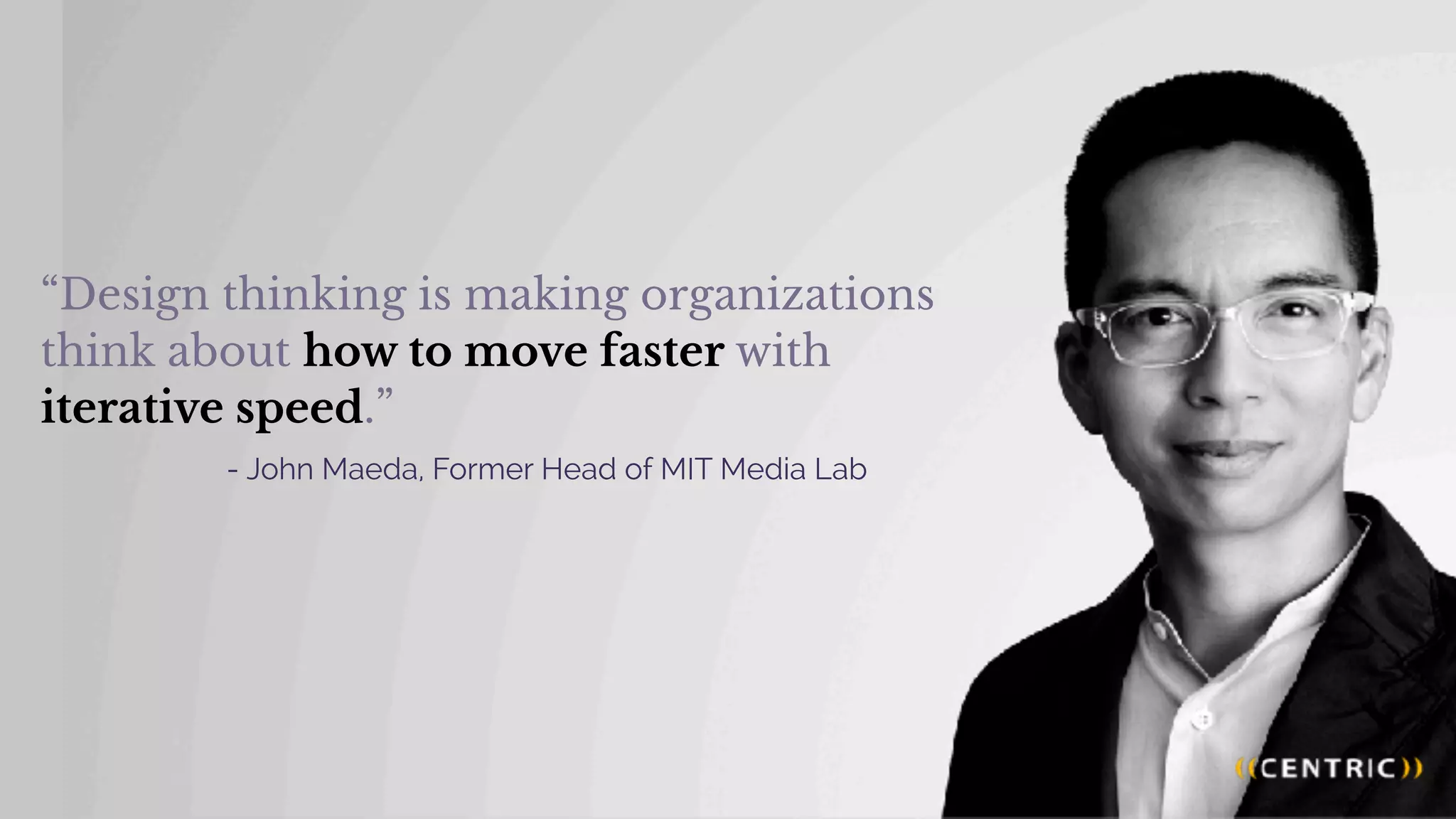
“Design thinking is making organizations
think about how to move faster with
iterative speed.”
- John Maeda, Former Head of MIT Media Lab
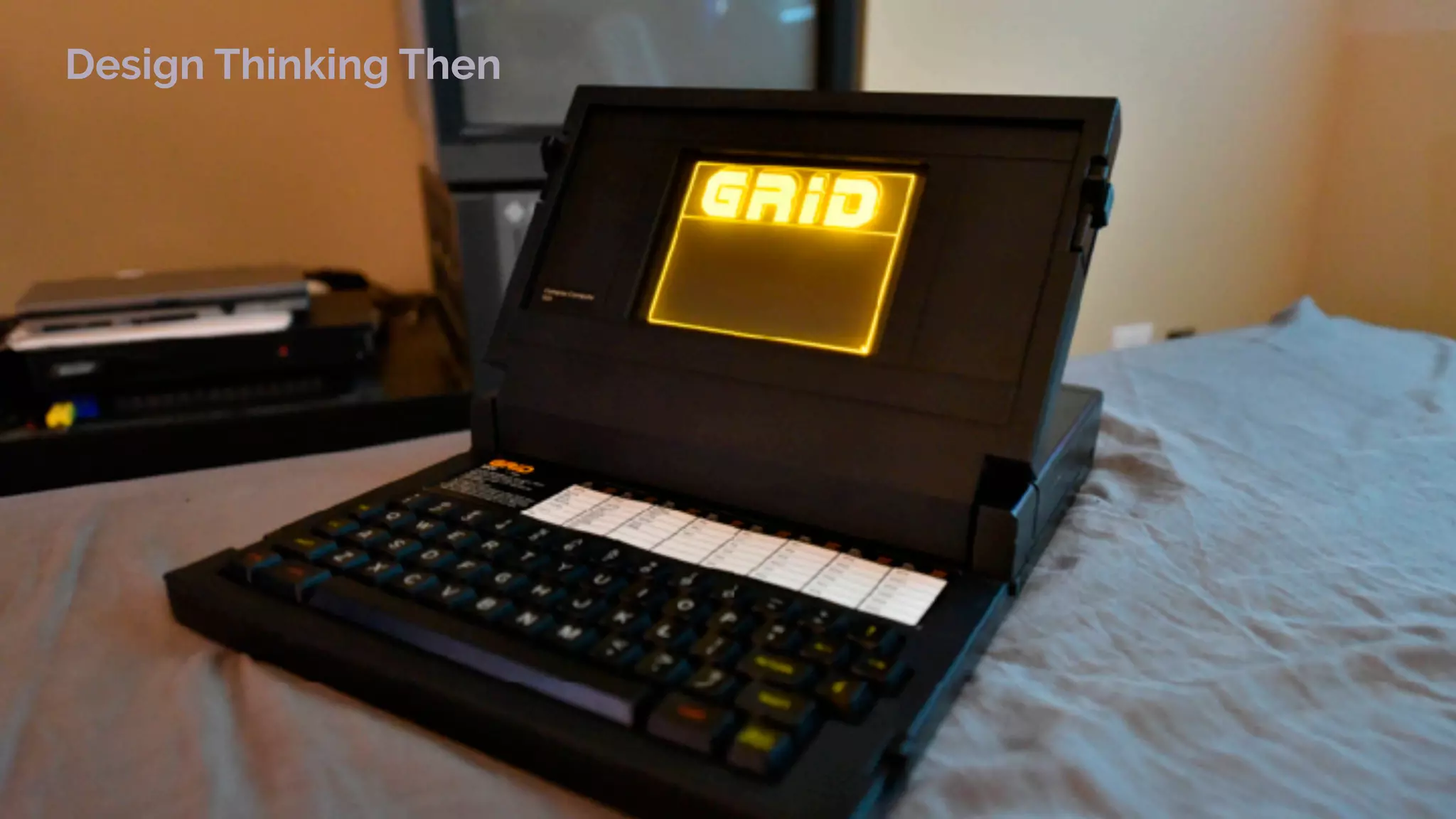
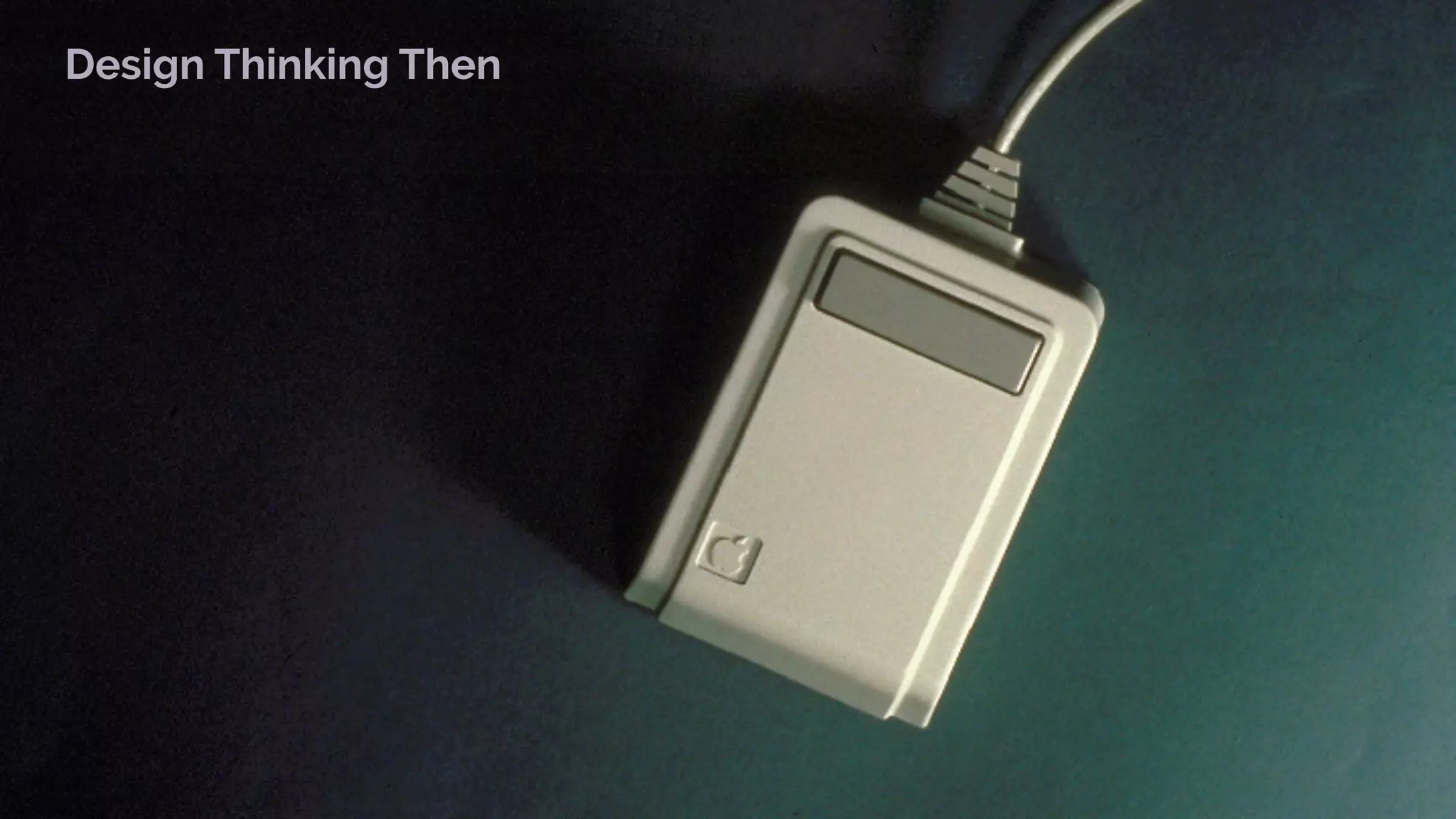
Design Thinking Then
Design Thinking Now
Design Thinking Now
A B
Project Expectations
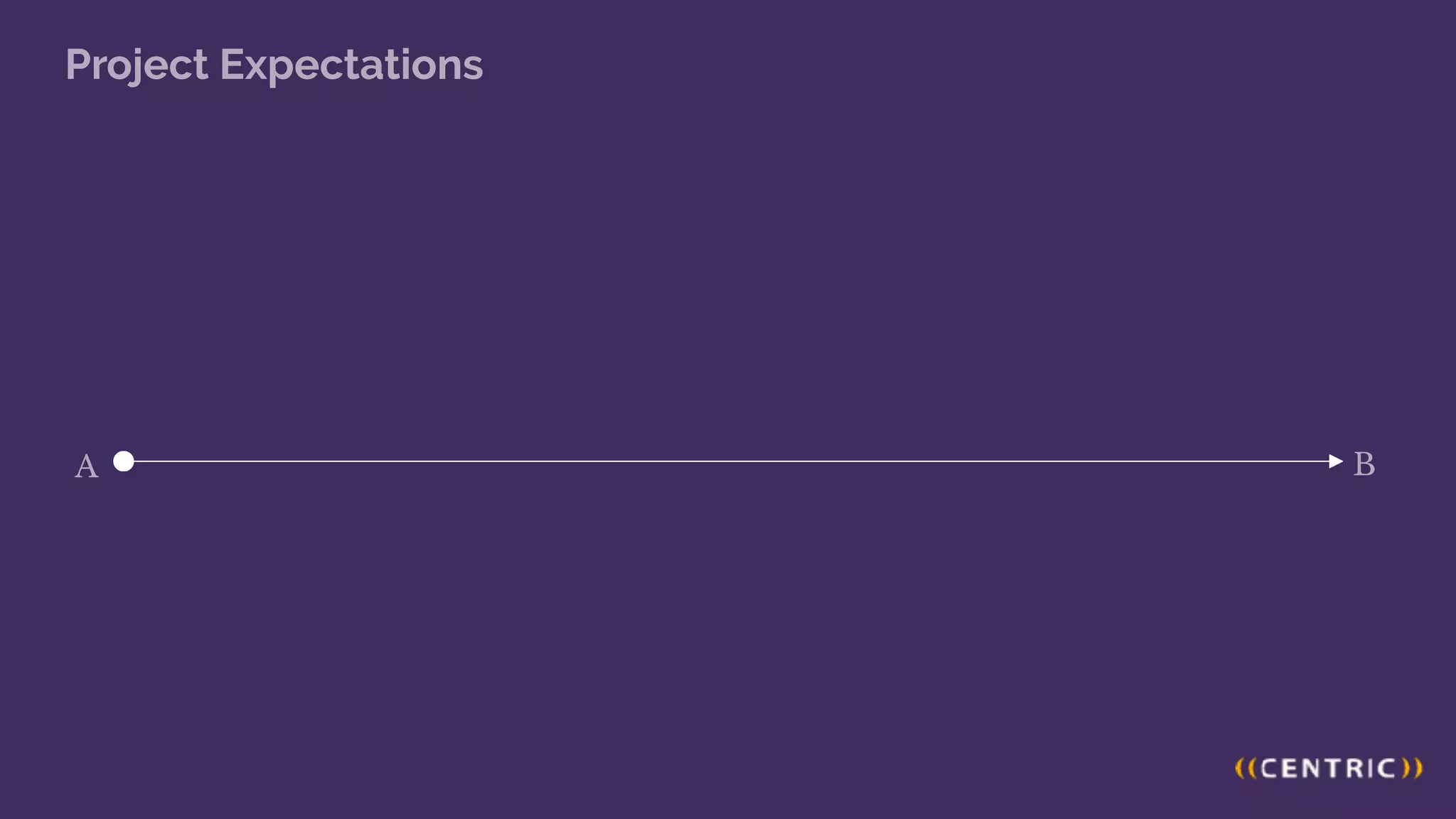
A B
Project Expectations
A B
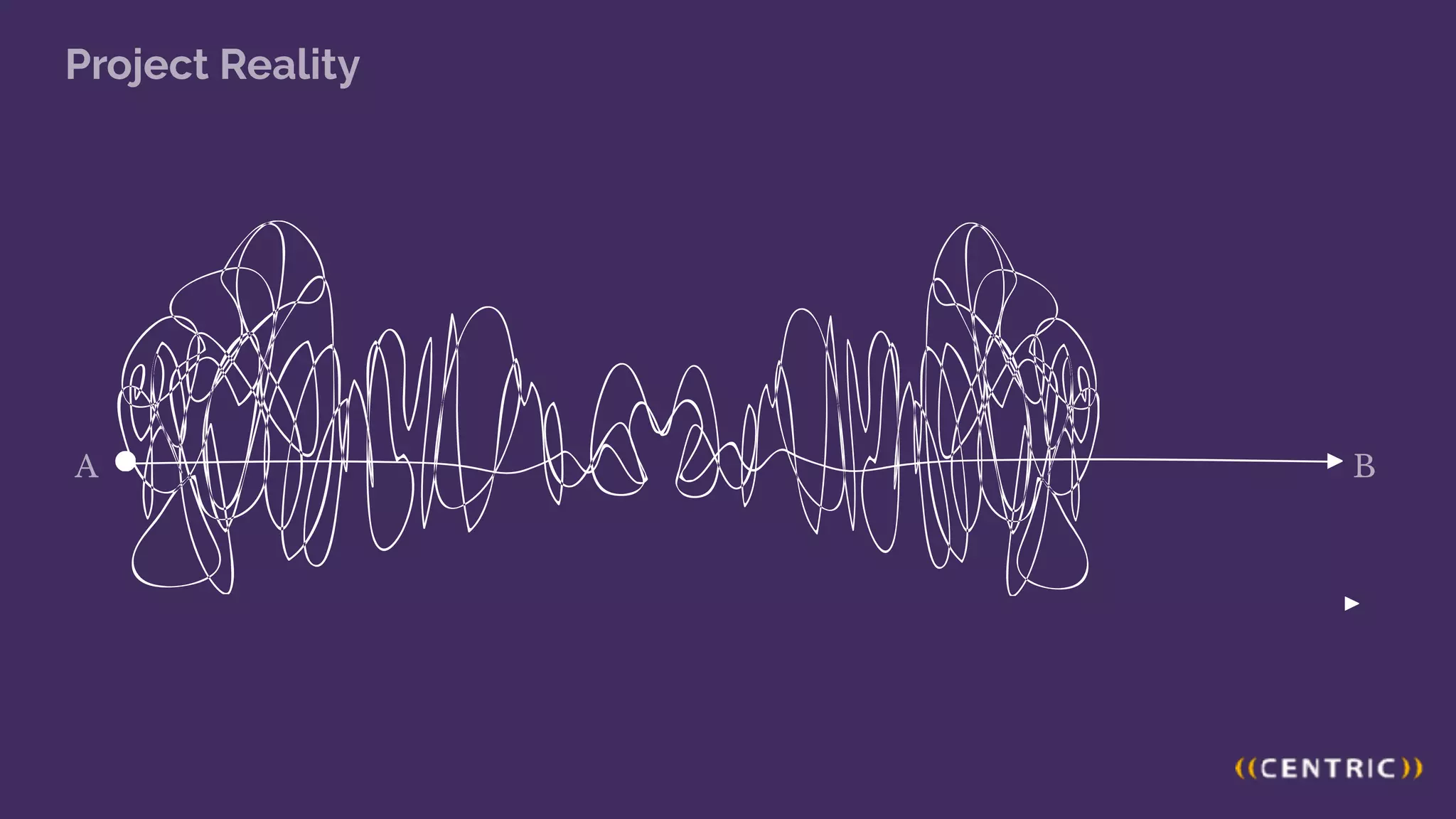
Project Reality
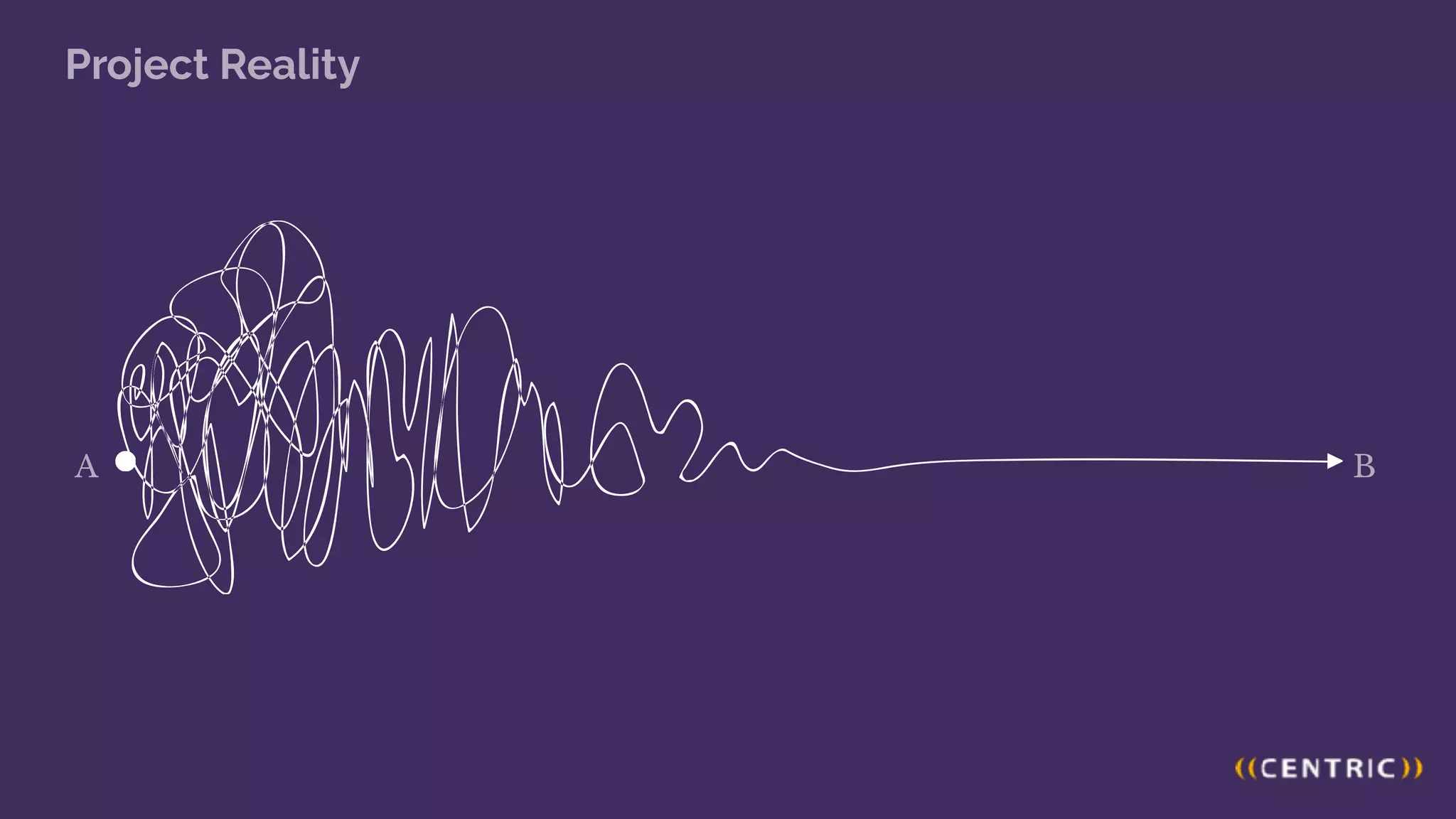
A B
Project Reality
A B
Project Reality
A B
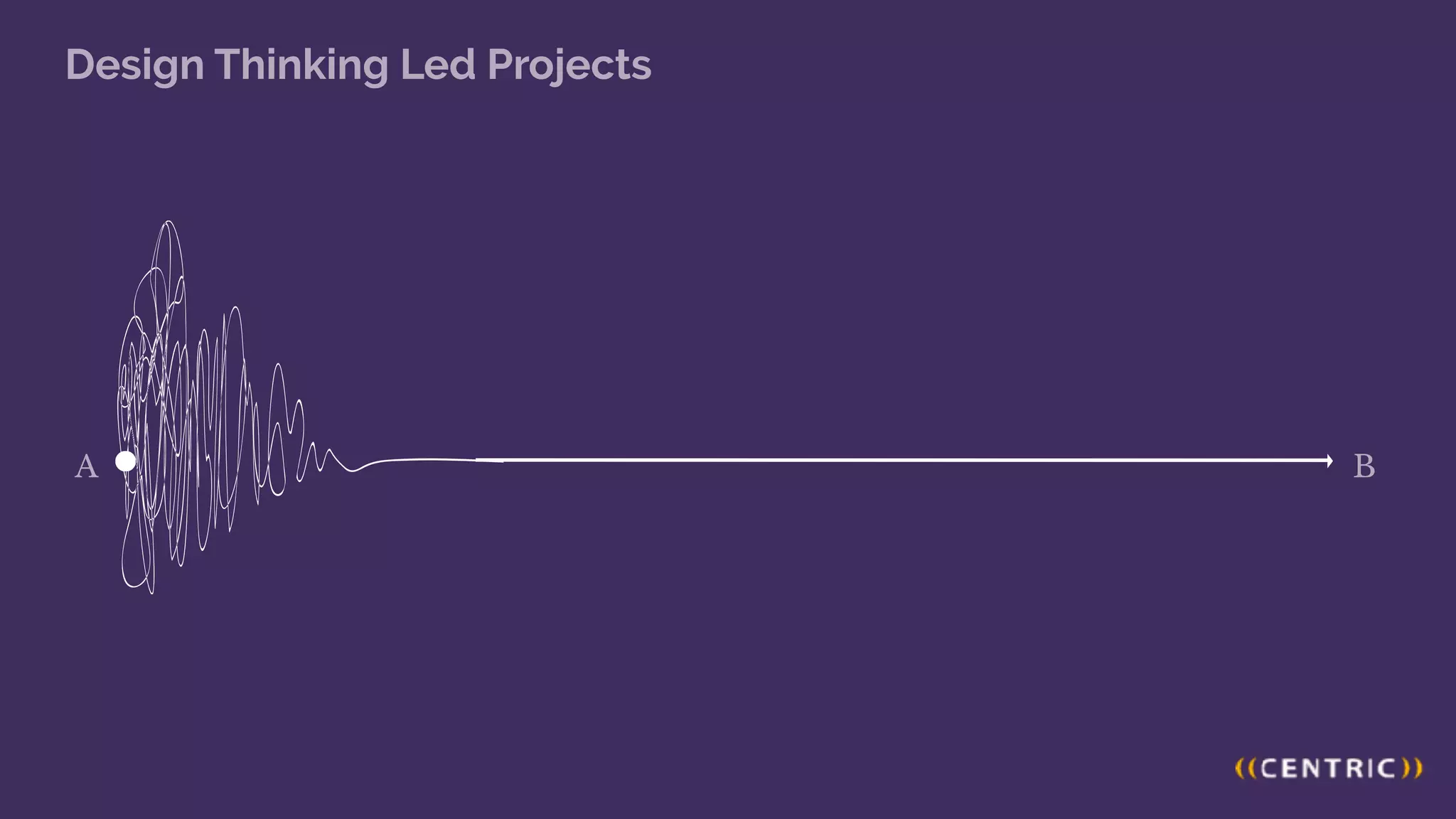
Design Thinking Led Projects
A B
Design Thinking Led Projects
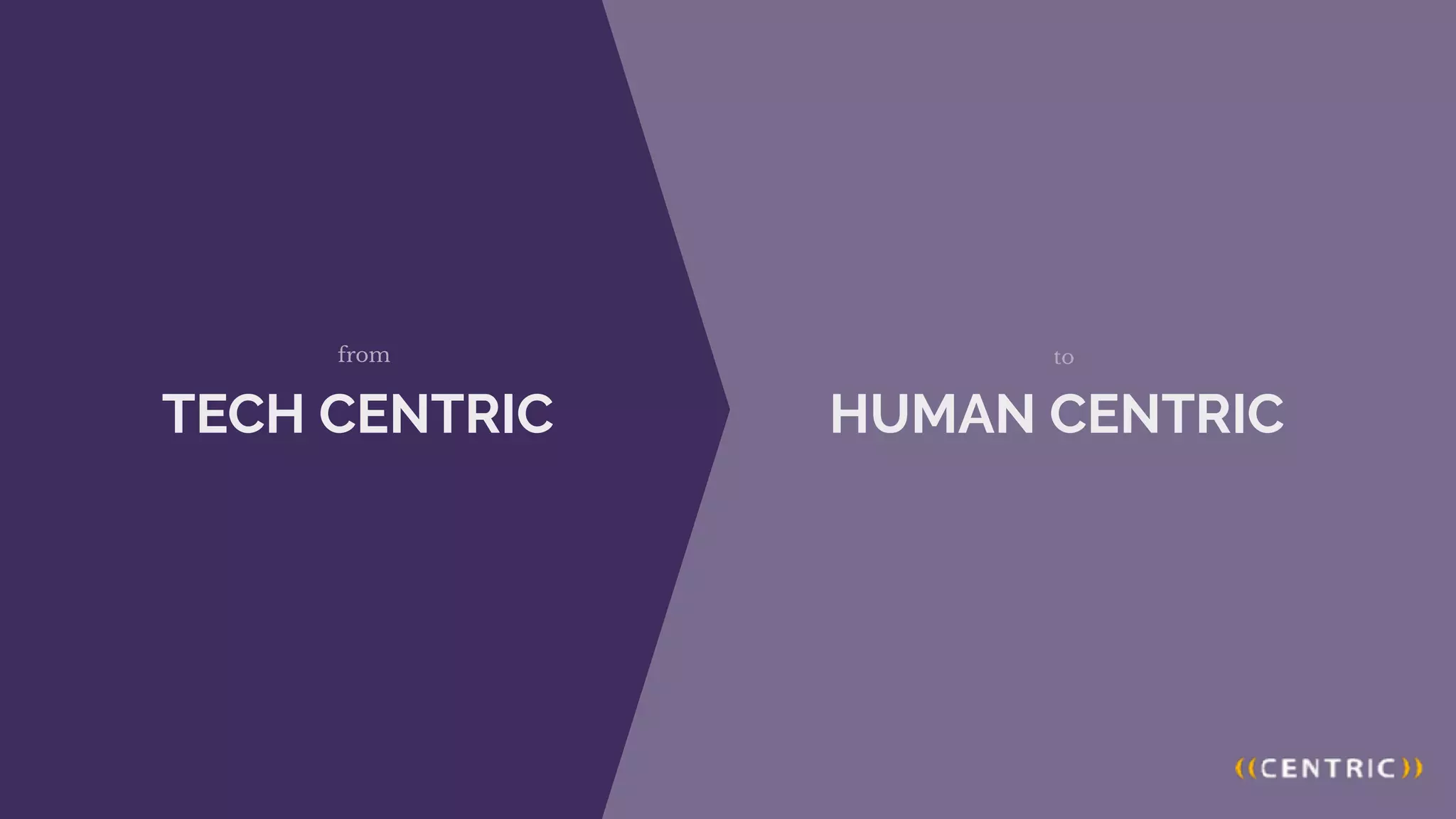
TECH CENTRIC
from
HUMAN CENTRIC
to
How does design thinking make
projects more successful?
How does design thinking make
projects more successful?
INNOVATION
TRANSFORMATION
+
PROJECT RISK
SCOPE CREEP
+
Design happens whether you’re aware
you’re doing it or not paying attention.
Nothing is undesigned. Things are
badly designed, well designed, and all
points between.
Design happens rather there is a trained
designer involved or not.
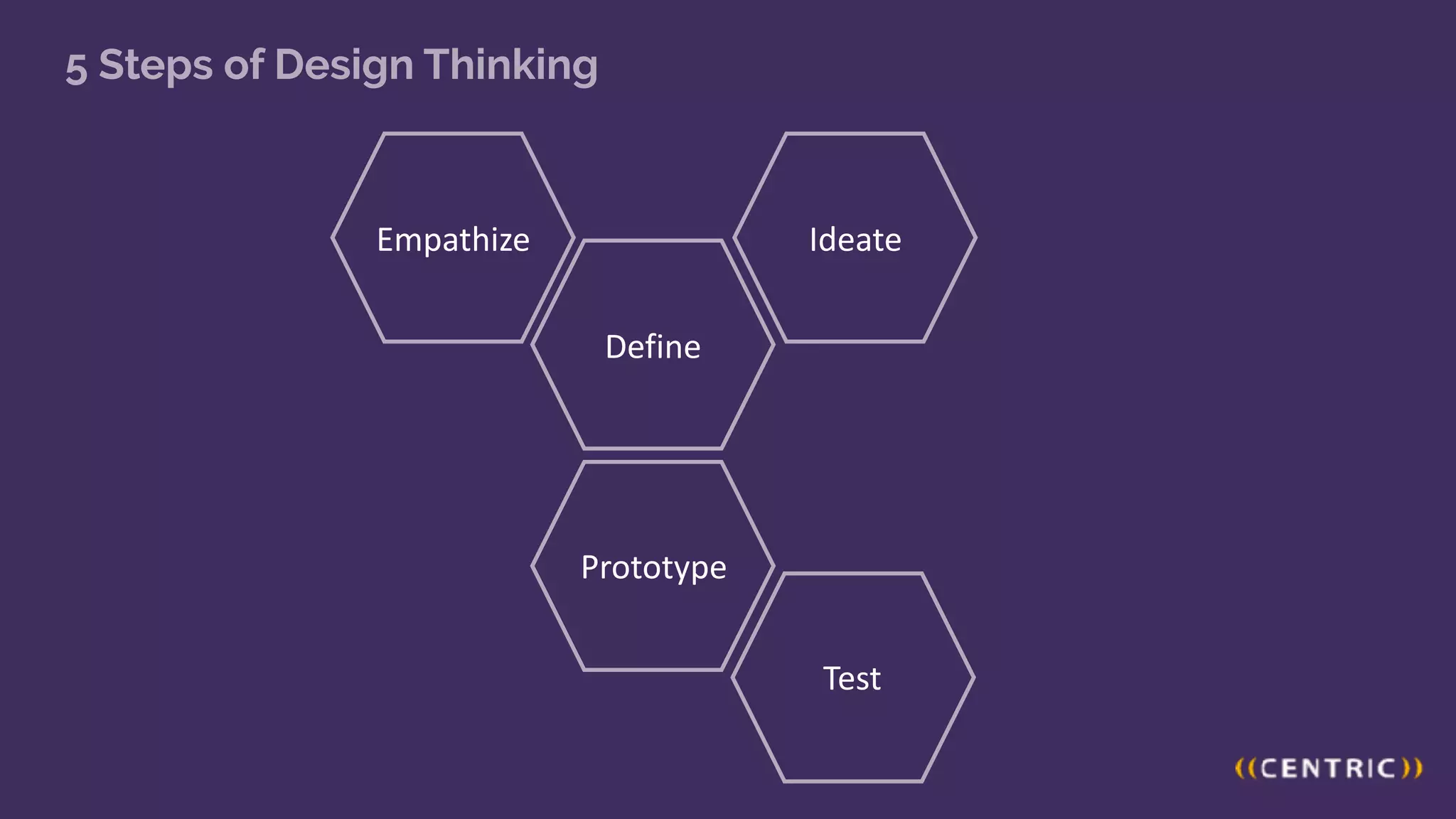
Empathize Ideate
Define
Prototype
Test
5 Steps of Design Thinking
Understanding Users
EMPATHIZE
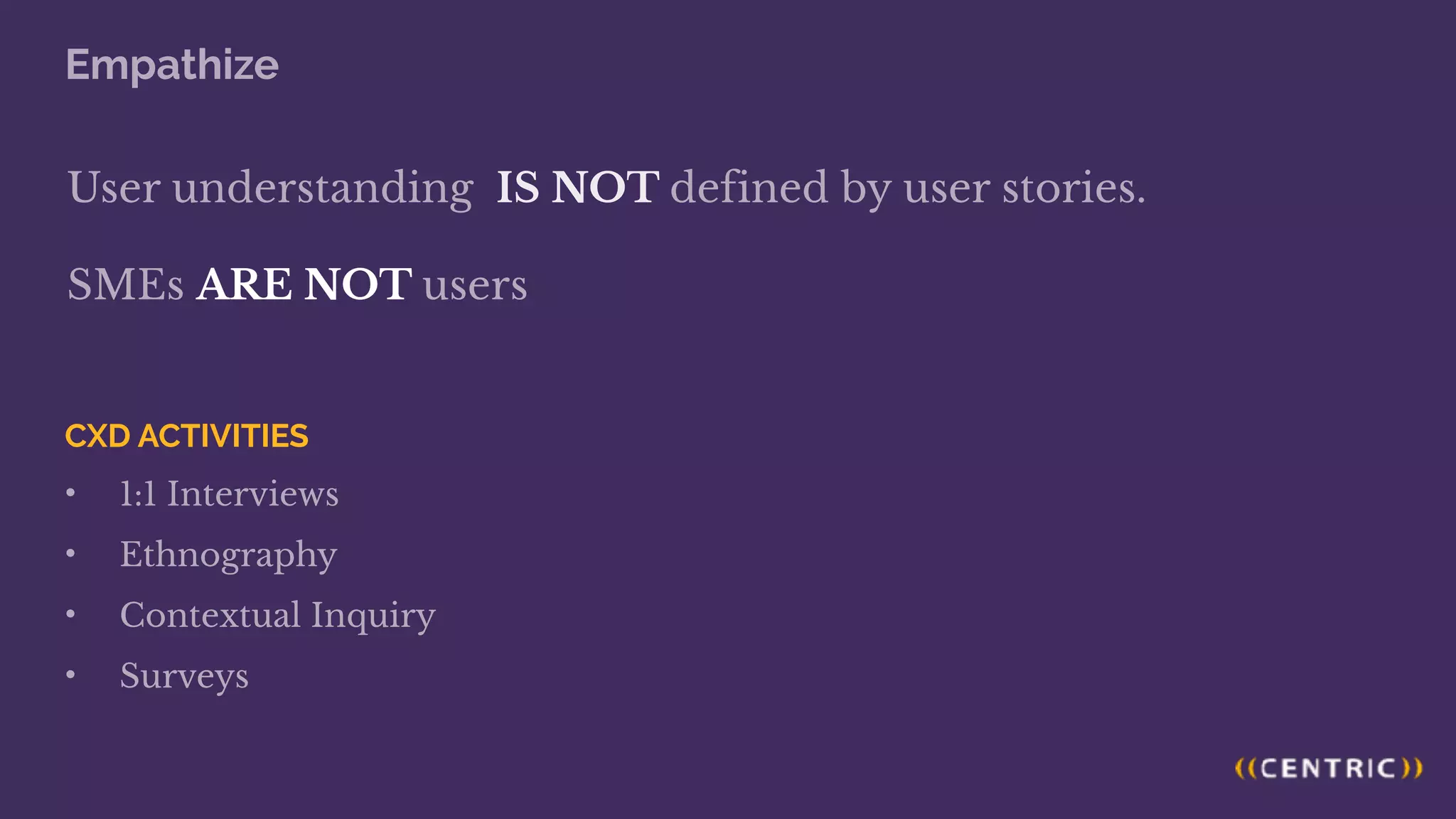
User understanding IS NOT defined by user stories.
SMEs ARE NOT users
Empathize
CXD ACTIVITIES
• 1:1 Interviews
• Ethnography
• Contextual Inquiry
• Surveys
Reframing The Problem
DEFINE
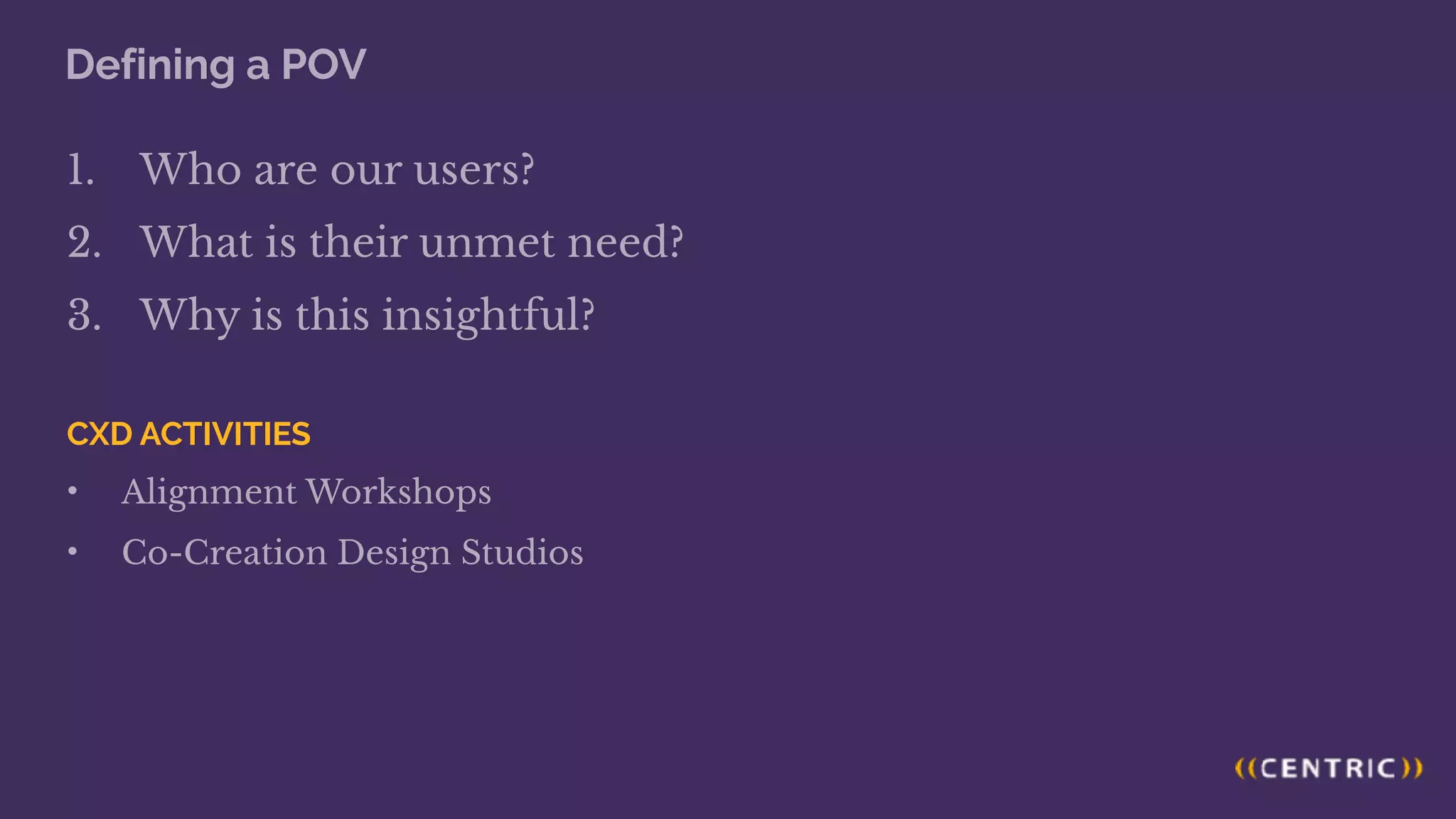
Defining a POV
1. Who are our users?
2. What is their unmet need?
3. Why is this insightful?
CXD ACTIVITIES
• Alignment Workshops
• Co-Creation Design Studios
Reframing the POV
Powers of 10: http://bit.ly/1gn7Jxb
Beyond Basic Brainstorms
IDEATE
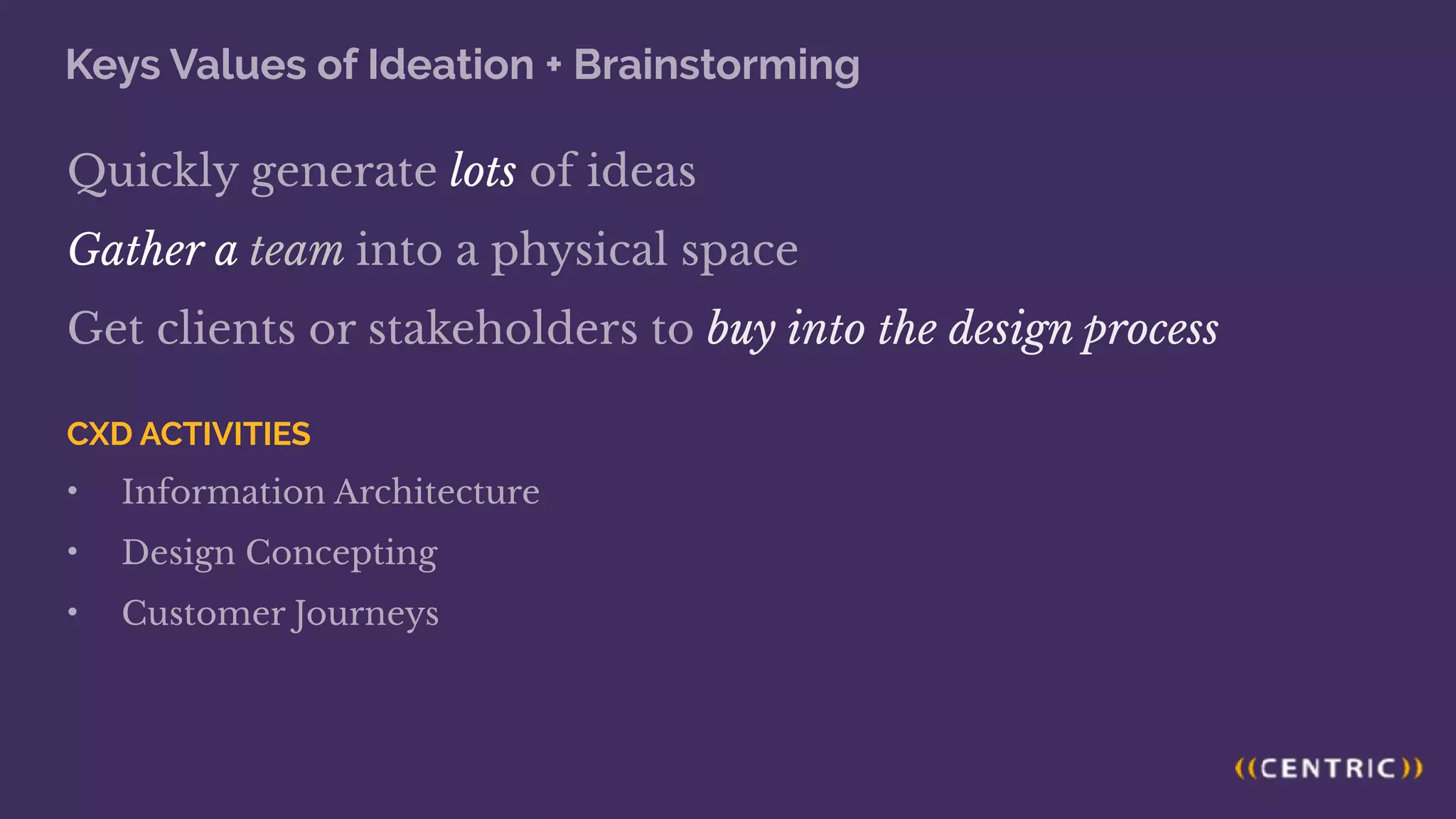
Keys Values of Ideation + Brainstorming
Quickly generate lots of ideas
Gather a team into a physical space
Get clients or stakeholders to buy into the design process
CXD ACTIVITIES
• Information Architecture
• Design Concepting
• Customer Journeys
Get Smarter, Faster
PROTOTYPE
Prototypes Help Us
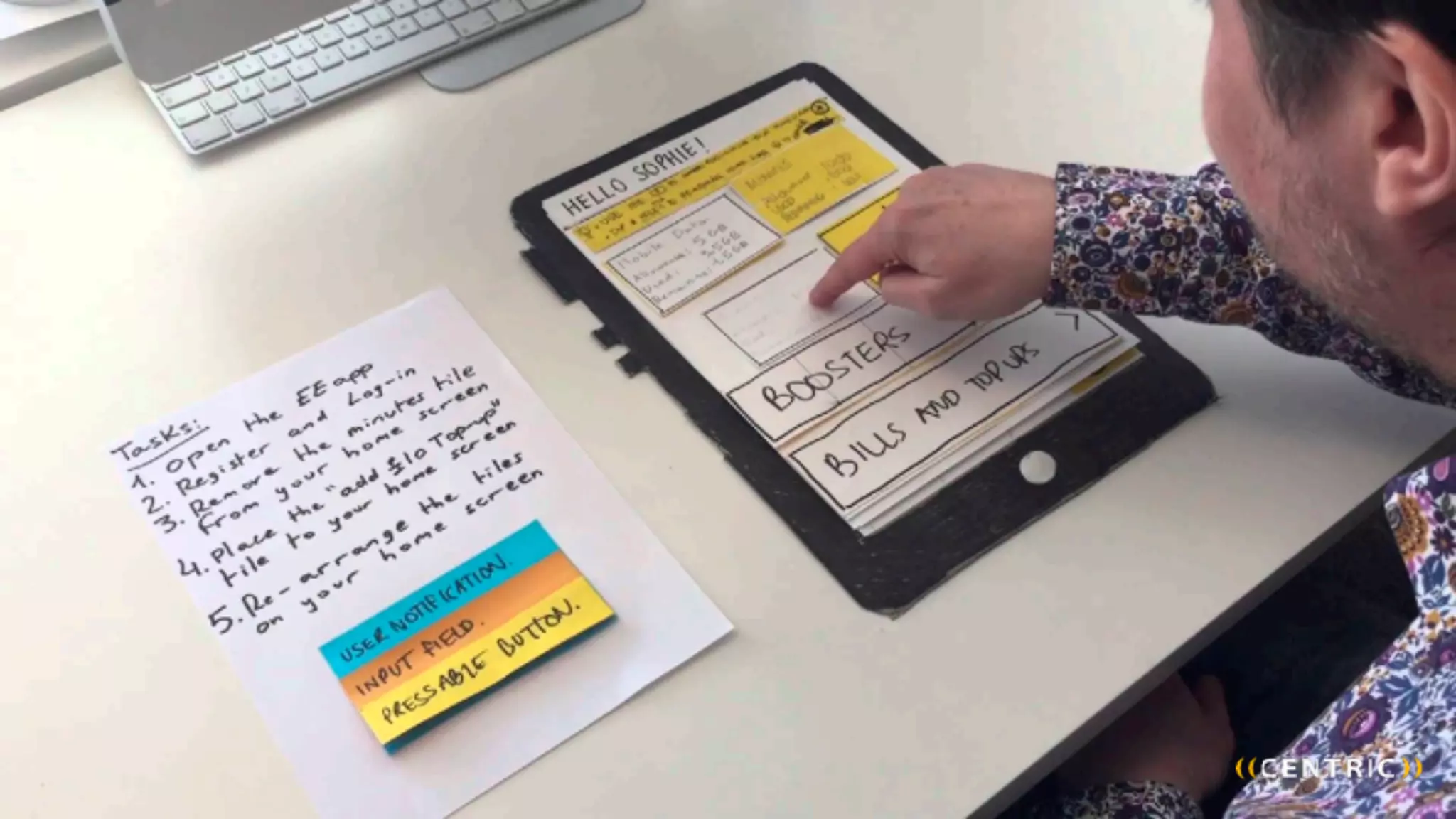
1. Work through design challenges
2. Communicate concepts
3. Sell an idea/concept
4. Gauge technical feasibility
5. Test usability
CXD ACTIVITIES
• Low-Fidelity Prototyping
• High-Fidelity Prototyping
Early and Often
TEST
The Rules of Usability Testing
1. It doesn’t necessarily have to be scientific
2. It doesn’t have to be expensive
3. Testing a few users is better than none
4. We ARE NOT smarter than our users
CXD ACTIVITIES
• Usability Testing
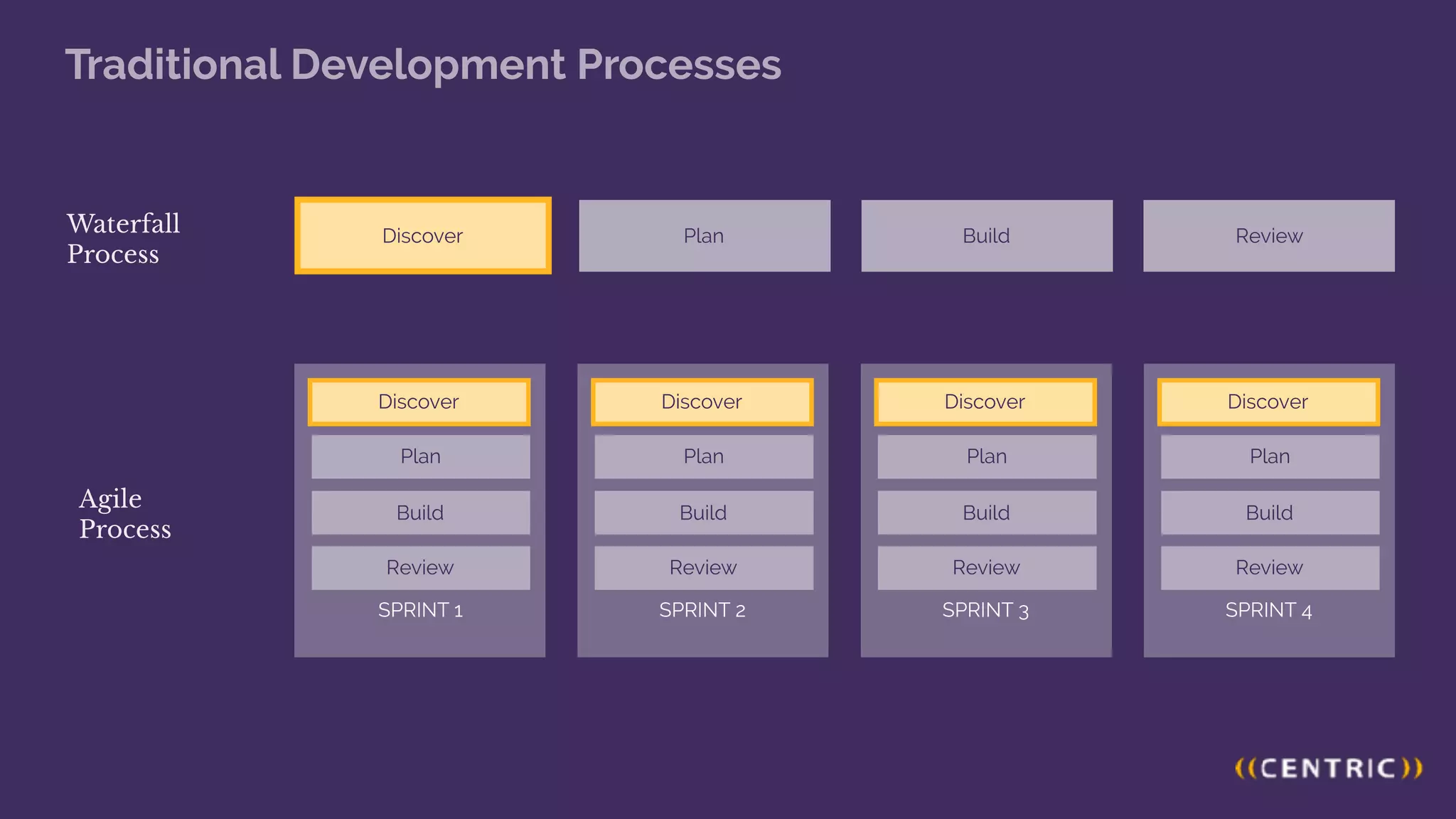
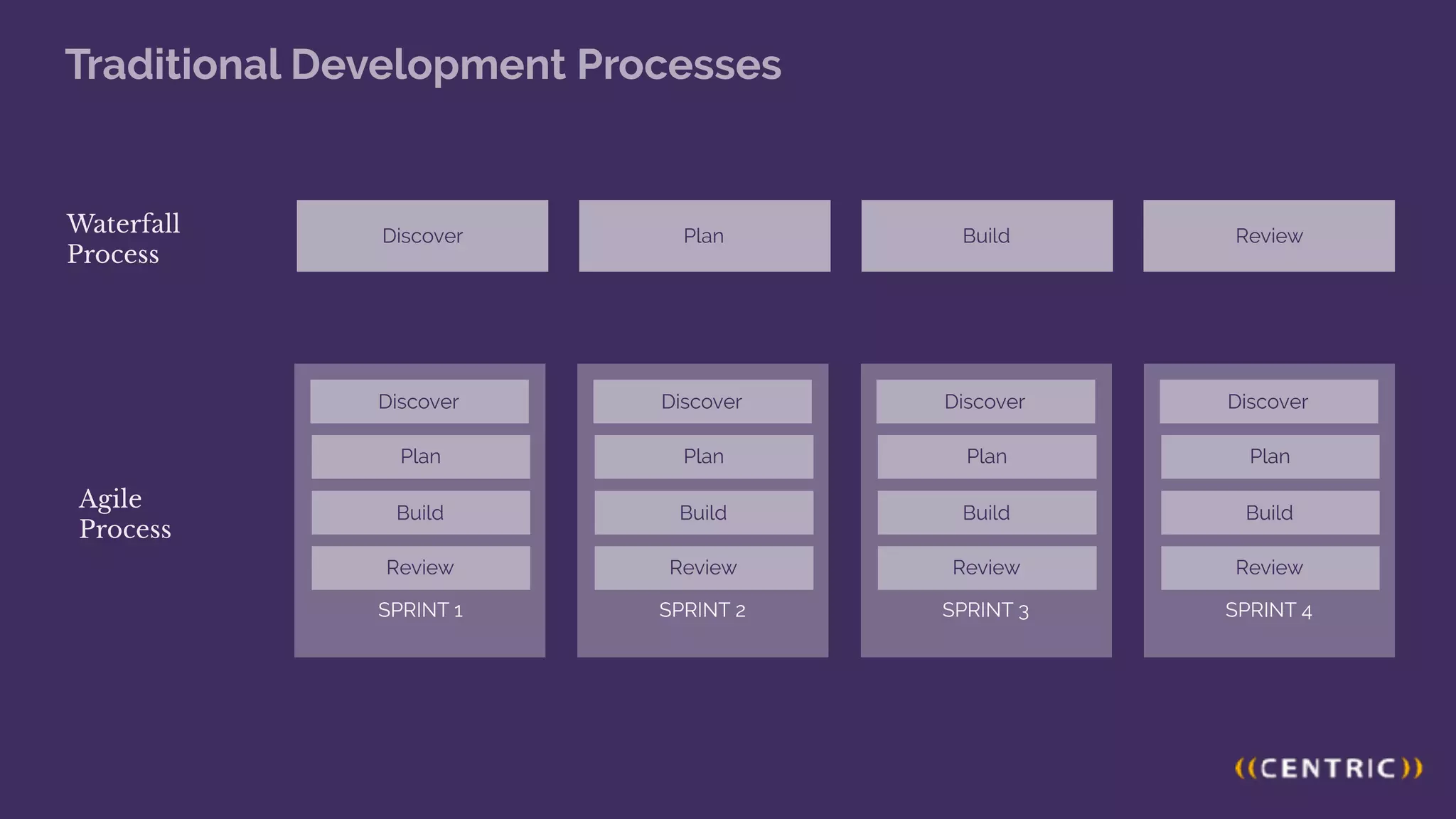
Traditional Development Processes
Discover Plan Build Review
Waterfall
Process
SPRINT 1
Discover
Plan
Build
Review
SPRINT 2
Discover
Plan
Build
Review
SPRINT 3
Discover
Plan
Build
Review
SPRINT 4
Discover
Plan
Build
Review
Agile
Process
Traditional Development Processes
Discover Plan Build Review
Waterfall
Process
SPRINT 1
Discover
Plan
Build
Review
SPRINT 2
Discover
Plan
Build
Review
SPRINT 3
Discover
Plan
Build
Review
SPRINT 4
Discover
Plan
Build
Review
Agile
Process
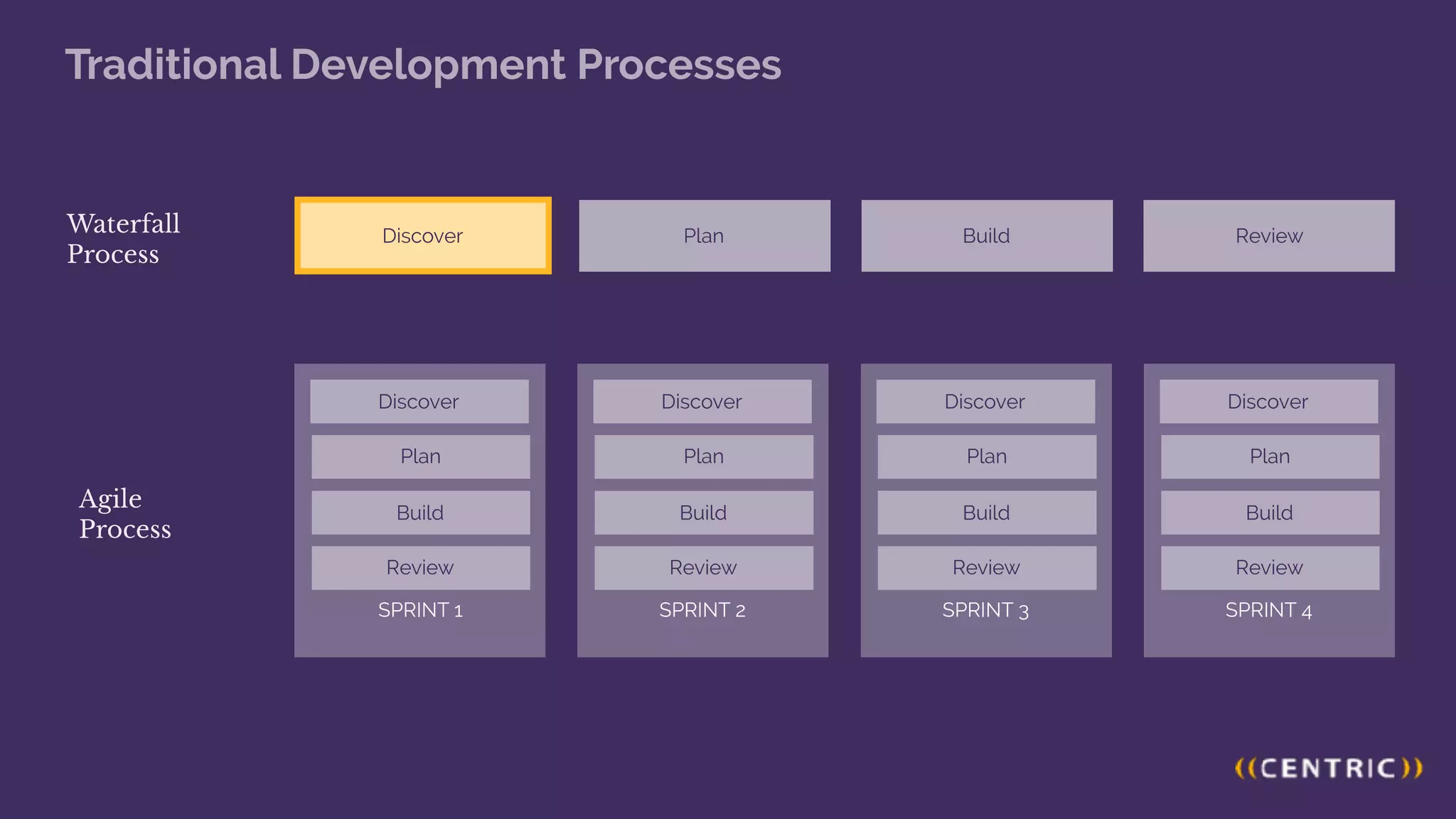
Traditional Development Processes
Discover
Discover Plan Build Review
Waterfall
Process
SPRINT 1
Discover
Plan
Build
Review
SPRINT 2
Discover
Plan
Build
Review
SPRINT 3
Discover
Plan
Build
Review
SPRINT 4
Discover
Plan
Build
Review
Agile
Process
Traditional Development Processes
Discover
Discover Discover Discover Discover
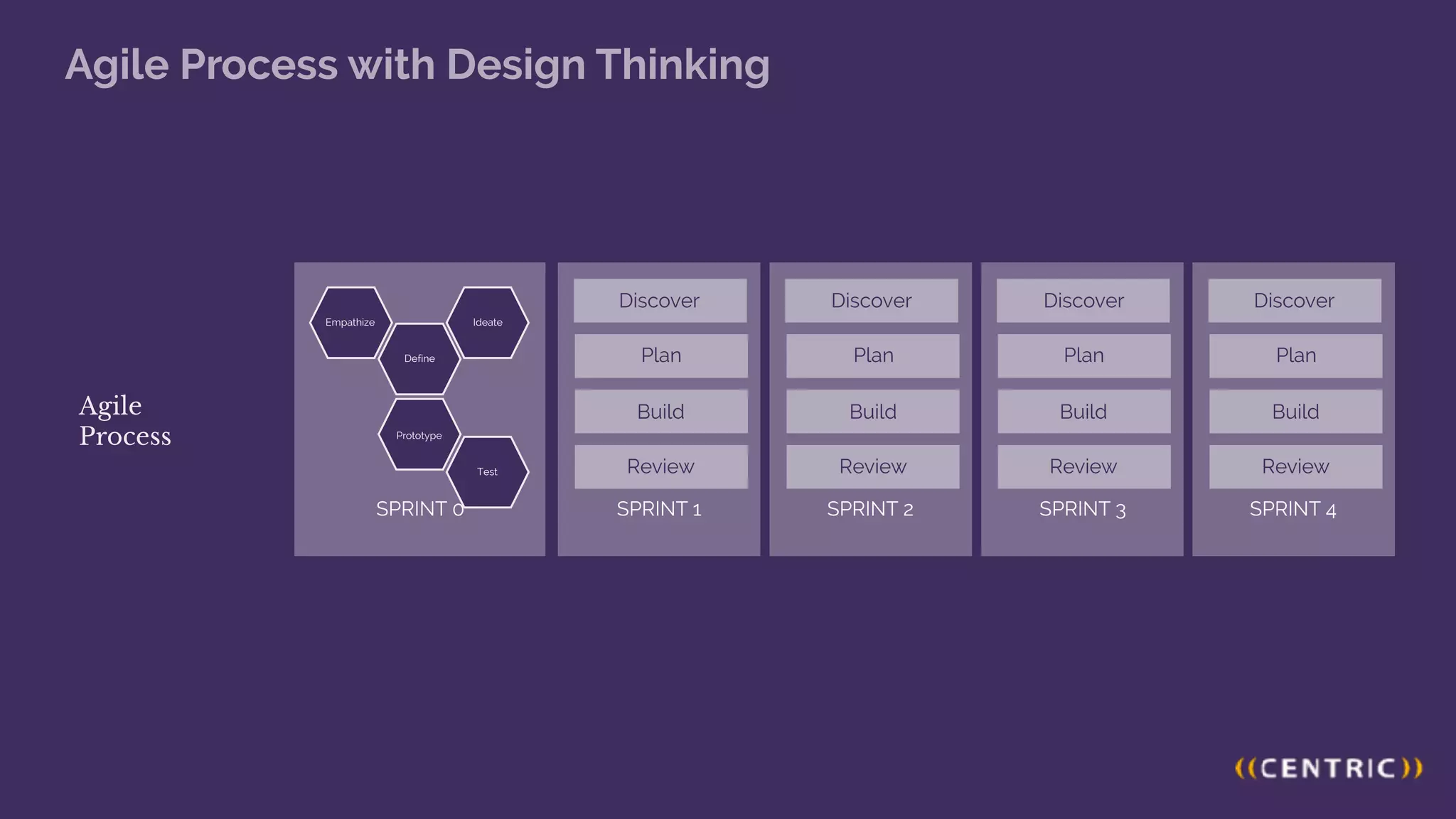
Agile Process with Design Thinking
SPRINT 4
Discover
Plan
Build
Review
Agile
Process
SPRINT 3
Discover
Plan
Build
Review
SPRINT 2
Discover
Plan
Build
Review
SPRINT 1
Discover
Plan
Build
Review
SPRINT 0
Empathize Ideate
Define
Prototype
Test
DESIGN THINKING
BEHAVIORS
Be
Optimistic
Collaborate
Embrace
Ambiguity
Learn
From
Failure
Make
Others
Successful
Take
Ownership
Talk Less,
Do More
Resources
Learn more about Centric’s CXD offering on Centricity.
Explore Design Thinking framesworks on GDrive.
Join our #Design@Centric on Slack.
QUESTIONS?

Design Thinking 101 - An Introduction to Design Thinking for Developers