Design for Value Flexibility
March 15, 2018
Pieter E. Vermaas
Philosophy, Delft University of Technology
The four issues in design for values
1. value operationalization
2. value assessment
3. value dynamics
4. value conflict
Design for values problematic in architecture
1. value operationalization
2. value assessment
3. value dynamics
4. value conflict
• Buildings and urban infrastructure have long life cycles
• Values and their meaning change over time
Even if architecture can design for current values,
the buildings and infrastructure need not meet future values
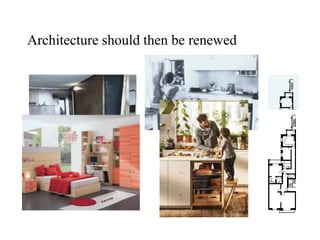
Architecture becomes outdated
Architecture should then be renewed
Solutions to value dynamics
• Demolishment: architecture with shorter life cycles
• Visionary: architecture for the predicted future values
• Refurbishment: architecture with value flexibility
Solutions to value dynamics
• Demolishment: architecture with shorter life cycles
• Visionary: architecture for the predicted future values
• Refurbishment: architecture with value flexibility
Adding to housing shape grammar systems for refurbishment
Rabo de Bacalhau apartments in Lisbon
Mid 20th century apartments designed for the lifestyle of that
time
Rabo de Bacalhau transformation grammar
A shape grammar that
• with an existing floorplan, and
• new requirements
gives a new floorplan meeting these requirements
Rabo de Bacalhau transformation grammar
A shape grammar that
• with an existing floorplan, and
• new requirements
gives a new floorplan meeting these requirements
Rabo de Bacalhau transformation grammar
In terms of values: a design tool for customisation that
• allows inhabitants to adjust their apartments to their values
• realises inhabitants autonomy
• violates the architects’ authority
Solution to value dynamics: values flexibility
• Demolishment: architecture with shorter life cycles
• Visionary: architecture for the predicted future values
• Refurbishment: architecture with value flexibility
Design for values with customisation:
architects can design housing for current values and give
inhabitants the means to adjusting housing to future values

Design for Value Flexibility

  • 1.
    Design for ValueFlexibility March 15, 2018 Pieter E. Vermaas Philosophy, Delft University of Technology
  • 2.
    The four issuesin design for values 1. value operationalization 2. value assessment 3. value dynamics 4. value conflict
  • 3.
    Design for valuesproblematic in architecture 1. value operationalization 2. value assessment 3. value dynamics 4. value conflict • Buildings and urban infrastructure have long life cycles • Values and their meaning change over time Even if architecture can design for current values, the buildings and infrastructure need not meet future values
  • 4.
  • 5.
  • 6.
    Solutions to valuedynamics • Demolishment: architecture with shorter life cycles • Visionary: architecture for the predicted future values • Refurbishment: architecture with value flexibility
  • 7.
    Solutions to valuedynamics • Demolishment: architecture with shorter life cycles • Visionary: architecture for the predicted future values • Refurbishment: architecture with value flexibility Adding to housing shape grammar systems for refurbishment
  • 8.
    Rabo de Bacalhauapartments in Lisbon Mid 20th century apartments designed for the lifestyle of that time
  • 9.
    Rabo de Bacalhautransformation grammar A shape grammar that • with an existing floorplan, and • new requirements gives a new floorplan meeting these requirements
  • 10.
    Rabo de Bacalhautransformation grammar A shape grammar that • with an existing floorplan, and • new requirements gives a new floorplan meeting these requirements
  • 11.
    Rabo de Bacalhautransformation grammar In terms of values: a design tool for customisation that • allows inhabitants to adjust their apartments to their values • realises inhabitants autonomy • violates the architects’ authority
  • 12.
    Solution to valuedynamics: values flexibility • Demolishment: architecture with shorter life cycles • Visionary: architecture for the predicted future values • Refurbishment: architecture with value flexibility Design for values with customisation: architects can design housing for current values and give inhabitants the means to adjusting housing to future values