Descriptive Essay
Definition & Guide
Made by: Olimboyeva Dilaferuz
Checked by: Sabrina Jumanova
What is a Descriptive Essay?
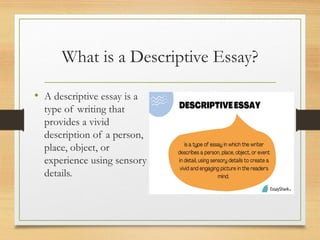
• A descriptive essay is a
type of writing that
provides a vivid
description of a person,
place, object, or
experience using sensory
details.
Key Features of a Descriptive
Essay
• - Uses sensory details (sight, sound, smell,
taste, touch)
• - Creates a clear and vivid picture
• - Engages the reader emotionally
• - Uses figurative language (similes,
metaphors, etc.)
Importance of Sensory Details
• Sensory details help
make descriptions more
engaging and immersive
for the reader, making
them feel as if they are
experiencing the scene
themselves.
Show, Don't Tell Technique
• Instead of simply stating facts, a descriptive essay
'shows' the reader through detailed and vivid
descriptions.
• Example:
• 'Tell: The cake was delicious.'
• 'Show: The warm, chocolatey aroma filled the room
as I took my first bite of the soft, creamy cake.'
Steps to Writing a Descriptive
Essay
• 1. Choose a topic
• 2. Create an outline
• 3. Write a strong introduction
• 4. Develop body paragraphs with
details
• 5. Use vivid and figurative language
• 6. Edit and revise
Choosing a Topic
• Pick a subject that can be described in detail:
• - A memorable place
• - A person who influenced you
• - A favorite object
• - A special experience
Structuring the Essay
• 1. **Introduction** – Grab the reader’s
attention, introduce the topic
• 2. **Body Paragraphs** – Provide detailed
descriptions using sensory details
• 3. **Conclusion** – Summarize and
reinforce the main impression
Using Vivid Language &
Adjectives
• Descriptive writing relies on strong adjectives and
action words to create a lively image in the reader's
mind.
Common Mistakes & How to
Avoid Them
• - Overusing adjectives without
real description
• - Not using enough sensory
details
• - Telling instead of showing
• - Lack of organization and
clarity
Example of a Descriptive Essay
• Imagine walking through a
quiet forest, where the crisp
autumn leaves crunch under
your feet, and a cool breeze
carries the scent of pine and
earth...
Review & Editing Tips
• - Read your essay out loud to
check for flow and clarity
• - Remove unnecessary words
and improve descriptions
• - Ask someone to review and
give feedback
Conclusion & Final Thoughts
• A descriptive essay allows readers to see, feel, and
experience your story through words. Use sensory
details and vivid language to bring your subject to
life!
Thank you for attention!!!

Descriptive_Essay_Presentation.pptx writing a descriptive essay

  • 1.
    Descriptive Essay Definition &Guide Made by: Olimboyeva Dilaferuz Checked by: Sabrina Jumanova
  • 2.
    What is aDescriptive Essay? • A descriptive essay is a type of writing that provides a vivid description of a person, place, object, or experience using sensory details.
  • 3.
    Key Features ofa Descriptive Essay • - Uses sensory details (sight, sound, smell, taste, touch) • - Creates a clear and vivid picture • - Engages the reader emotionally • - Uses figurative language (similes, metaphors, etc.)
  • 4.
    Importance of SensoryDetails • Sensory details help make descriptions more engaging and immersive for the reader, making them feel as if they are experiencing the scene themselves.
  • 5.
    Show, Don't TellTechnique • Instead of simply stating facts, a descriptive essay 'shows' the reader through detailed and vivid descriptions. • Example: • 'Tell: The cake was delicious.' • 'Show: The warm, chocolatey aroma filled the room as I took my first bite of the soft, creamy cake.'
  • 6.
    Steps to Writinga Descriptive Essay • 1. Choose a topic • 2. Create an outline • 3. Write a strong introduction • 4. Develop body paragraphs with details • 5. Use vivid and figurative language • 6. Edit and revise
  • 7.
    Choosing a Topic •Pick a subject that can be described in detail: • - A memorable place • - A person who influenced you • - A favorite object • - A special experience
  • 8.
    Structuring the Essay •1. **Introduction** – Grab the reader’s attention, introduce the topic • 2. **Body Paragraphs** – Provide detailed descriptions using sensory details • 3. **Conclusion** – Summarize and reinforce the main impression
  • 9.
    Using Vivid Language& Adjectives • Descriptive writing relies on strong adjectives and action words to create a lively image in the reader's mind.
  • 10.
    Common Mistakes &How to Avoid Them • - Overusing adjectives without real description • - Not using enough sensory details • - Telling instead of showing • - Lack of organization and clarity
  • 11.
    Example of aDescriptive Essay • Imagine walking through a quiet forest, where the crisp autumn leaves crunch under your feet, and a cool breeze carries the scent of pine and earth...
  • 12.
    Review & EditingTips • - Read your essay out loud to check for flow and clarity • - Remove unnecessary words and improve descriptions • - Ask someone to review and give feedback
  • 13.
    Conclusion & FinalThoughts • A descriptive essay allows readers to see, feel, and experience your story through words. Use sensory details and vivid language to bring your subject to life!
  • 14.
    Thank you forattention!!!