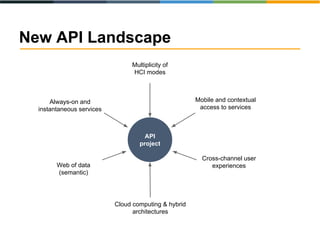
New API Landscape 
Multiplicity of 
HCI modes 
API 
project 
Always-on and 
instantaneous services 
Mobile and contextual 
access to services 
Cross-channel user 
experiences 
Cloud computing & hybrid 
architectures 
Web of data 
(semantic)
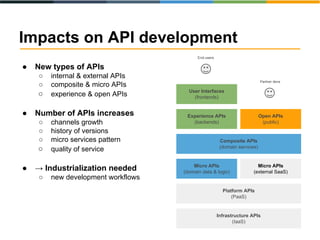
Impacts on API development 
● New types of APIs 
○ internal & external APIs 
○ composite & micro APIs 
○ experience & open APIs 
● Number of APIs increases 
○ channels growth 
○ history of versions 
○ micro services pattern 
○ quality of service 
● → Industrialization needed 
○ new development workflows 
User Interfaces 
(frontends) 
Experience APIs 
Composite APIs 
(domain services) 
Platform APIs 
(PaaS) 
(backends) 
Partner devs 
Infrastructure APIs 
(IaaS) 
Micro APIs 
(domain data & logic) 
Open APIs 
(public) 
End-users 
Micro APIs 
(external SaaS)
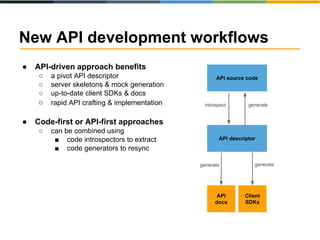
New API development workflows 
● API-driven approach benefits 
○ a pivot API descriptor 
○ server skeletons & mock generation 
○ up-to-date client SDKs & docs 
○ rapid API crafting & implementation 
● Code-first or API-first approaches 
○ can be combined using 
■ code introspectors to extract 
■ code generators to resync 
API source code 
introspect generate 
API descriptor 
generate generate 
API 
docs 
Client 
SDKs
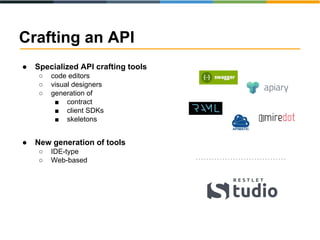
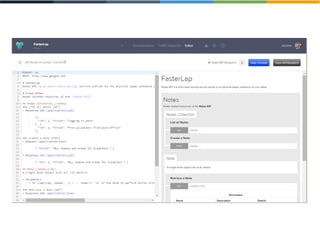
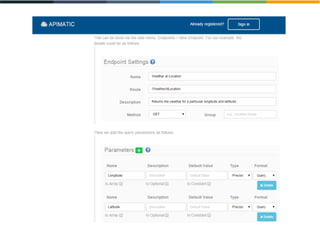
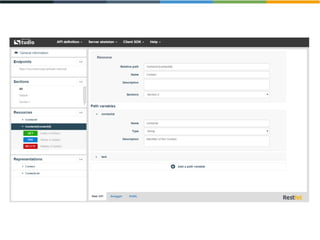
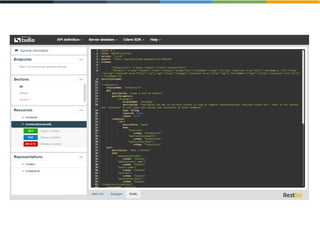
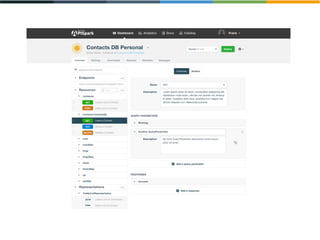
Crafting an API 
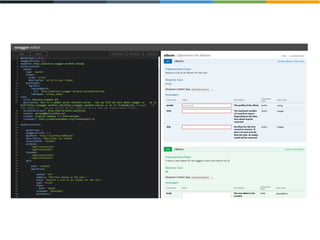
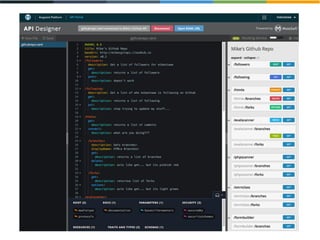
● Specialized API crafting tools 
○ code editors 
○ visual designers 
○ generation of 
■ contract 
■ client SDKs 
■ skeletons 
● New generation of tools 
○ IDE-type 
○ Web-based
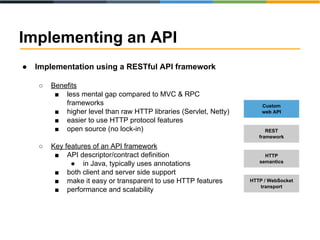
Implementing an API 
● Implementation using a RESTful API framework 
○ Benefits 
■ less mental gap compared to MVC & RPC 
frameworks 
■ higher level than raw HTTP libraries (Servlet, Netty) 
■ easier to use HTTP protocol features 
■ open source (no lock-in) 
○ Key features of an API framework 
■ API descriptor/contract definition 
● in Java, typically uses annotations 
■ both client and server side support 
■ make it easy or transparent to use HTTP features 
■ performance and scalability 
Custom 
web API 
REST 
framework 
HTTP 
semantics 
HTTP / WebSocket 
transport
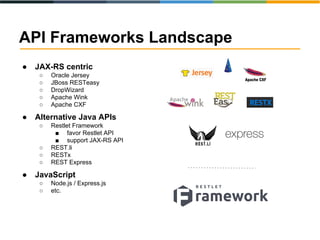
API Frameworks Landscape 
● JAX-RS centric 
○ Oracle Jersey 
○ JBoss RESTeasy 
○ DropWizard 
○ Apache Wink 
○ Apache CXF 
● Alternative Java APIs 
○ Restlet Framework 
■ favor Restlet API 
■ support JAX-RS API 
○ REST.li 
○ RESTx 
○ REST Express 
● JavaScript 
○ Node.js / Express.js 
○ etc.
Deploying an API 
● PaaS make it easier to deploy 
○ less operational burden 
○ cost and time effective to start then scale 
○ more availability and lower latency 
■ necessary for a global reach 
● Generic Infrastructure PaaS 
○ hosting and auto-scaling 
○ good density thanks to VMs 
○ better density thanks to containers (Docker) 
● Specialized PaaS for APIs 
○ add API management on top of the hosted API 
○ integrate with Infrastructure PaaS 
■ remote agent close to API or API wrapper
Managing an API 
● Typical Benefits 
○ documentation 
○ access control 
○ firewall 
○ adaptation 
○ monetization 
○ analytics 
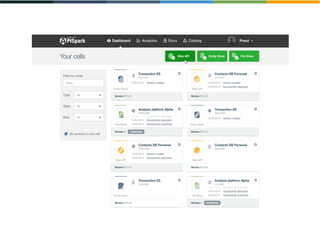
● APISpark Supports 
○ APIs with large # of resources (sections) 
○ skeleton and SDK generation 
○ integration with Restlet Framework 
○ includes creation and hosting as well
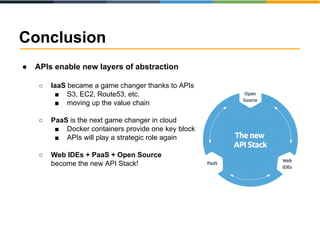
Conclusion 
● APIs enable new layers of abstraction 
○ IaaS became a game changer thanks to APIs 
■ S3, EC2, Route53, etc. 
■ moving up the value chain 
○ PaaS is the next game changer in cloud 
■ Docker containers provide one key block 
■ APIs will play a strategic role again 
○ Web IDEs + PaaS + Open Source 
become the new API Stack!
Defrag 2014 - Blend Web IDEs, Open Source and PaaS to Create and Deploy APIs

Defrag 2014 - Blend Web IDEs, Open Source and PaaS to Create and Deploy APIs

  • 2.
    New API Landscape Multiplicity of HCI modes API project Always-on and instantaneous services Mobile and contextual access to services Cross-channel user experiences Cloud computing & hybrid architectures Web of data (semantic)
  • 3.
    Impacts on APIdevelopment ● New types of APIs ○ internal & external APIs ○ composite & micro APIs ○ experience & open APIs ● Number of APIs increases ○ channels growth ○ history of versions ○ micro services pattern ○ quality of service ● → Industrialization needed ○ new development workflows User Interfaces (frontends) Experience APIs Composite APIs (domain services) Platform APIs (PaaS) (backends) Partner devs Infrastructure APIs (IaaS) Micro APIs (domain data & logic) Open APIs (public) End-users Micro APIs (external SaaS)
  • 4.
    New API developmentworkflows ● API-driven approach benefits ○ a pivot API descriptor ○ server skeletons & mock generation ○ up-to-date client SDKs & docs ○ rapid API crafting & implementation ● Code-first or API-first approaches ○ can be combined using ■ code introspectors to extract ■ code generators to resync API source code introspect generate API descriptor generate generate API docs Client SDKs
  • 5.
    Crafting an API ● Specialized API crafting tools ○ code editors ○ visual designers ○ generation of ■ contract ■ client SDKs ■ skeletons ● New generation of tools ○ IDE-type ○ Web-based
  • 12.
    Implementing an API ● Implementation using a RESTful API framework ○ Benefits ■ less mental gap compared to MVC & RPC frameworks ■ higher level than raw HTTP libraries (Servlet, Netty) ■ easier to use HTTP protocol features ■ open source (no lock-in) ○ Key features of an API framework ■ API descriptor/contract definition ● in Java, typically uses annotations ■ both client and server side support ■ make it easy or transparent to use HTTP features ■ performance and scalability Custom web API REST framework HTTP semantics HTTP / WebSocket transport
  • 13.
    API Frameworks Landscape ● JAX-RS centric ○ Oracle Jersey ○ JBoss RESTeasy ○ DropWizard ○ Apache Wink ○ Apache CXF ● Alternative Java APIs ○ Restlet Framework ■ favor Restlet API ■ support JAX-RS API ○ REST.li ○ RESTx ○ REST Express ● JavaScript ○ Node.js / Express.js ○ etc.
  • 14.
    Deploying an API ● PaaS make it easier to deploy ○ less operational burden ○ cost and time effective to start then scale ○ more availability and lower latency ■ necessary for a global reach ● Generic Infrastructure PaaS ○ hosting and auto-scaling ○ good density thanks to VMs ○ better density thanks to containers (Docker) ● Specialized PaaS for APIs ○ add API management on top of the hosted API ○ integrate with Infrastructure PaaS ■ remote agent close to API or API wrapper
  • 15.
    Managing an API ● Typical Benefits ○ documentation ○ access control ○ firewall ○ adaptation ○ monetization ○ analytics ● APISpark Supports ○ APIs with large # of resources (sections) ○ skeleton and SDK generation ○ integration with Restlet Framework ○ includes creation and hosting as well
  • 18.
    Conclusion ● APIsenable new layers of abstraction ○ IaaS became a game changer thanks to APIs ■ S3, EC2, Route53, etc. ■ moving up the value chain ○ PaaS is the next game changer in cloud ■ Docker containers provide one key block ■ APIs will play a strategic role again ○ Web IDEs + PaaS + Open Source become the new API Stack!