
Marketing Nutrition: It’s Not What You ThinkDavid R. JustJune 2011
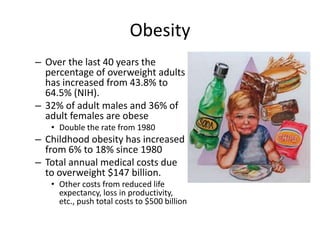
ObesityOver the last 40 years the percentage of overweight adults has increased from 43.8% to 64.5% (NIH).32% of adult males and 36% of adult females are obese Double the rate from 1980Childhood obesity has increased from 6% to 18% since 1980 Total annual medical costs due to overweight $147 billion.Other costs from reduced life expectancy, loss in productivity, etc., push total costs to $500 billion
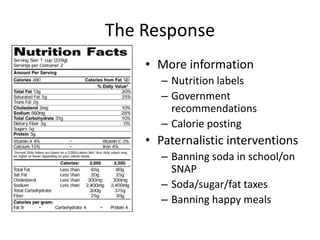
The ResponseMore informationNutrition labelsGovernment recommendationsCalorie postingPaternalistic interventionsBanning soda in school/on SNAPSoda/sugar/fat taxesBanning happy meals
Are These Policies Effective?Nutrition Labels: 30%-60% use nutrition labels regularlyObservation leads us to a number closer to 10%Even among those who use them, a majority do not understand them or use them ineffectivelyFocus on one dimension (e.g., Fat)Can lead to backfireDifficulty understanding what RDA meansDifficulty with understanding per serving information
Are These Policies Effective?My Pyramid, etc:Wonderful coverage and wide viewershipNo impact on consumptionCalorie Posting:Three major studiesTwo find no effect on consumptionOne finds dieters consume more with calorie informationOne finds that those who use the labels consume fewer caloriesCorrelation not causation
Why?: Economics and PsychologyOne reason these policies fail is endogeneityThose who overeat when visiting a fast food restaurant do so because they like toThey will be more resistant to information, or other policiesReactance Rebelling against a threat to freedomFat tax versus a thin subsidyLimits on ketchupDon’t press this button
Why?: Economics and PsychologyAnother reason is an inability to make reasoned decisionsIndividuals make 200-300 food decisions a dayMaking deliberate decisions for each would be impossibleWe fall back on rules of thumb and habit What would happen if we did rationally consider each decision?How could cognitively based policies engage the unthinking?
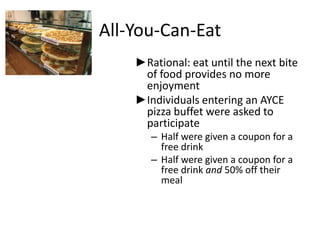
All-You-Can-EatRational: eat until the next bite of food provides no more enjoyment
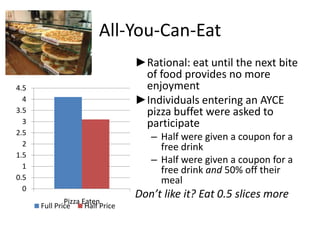
Individuals entering an AYCE pizza buffet were asked to participateHalf were given a coupon for a free drinkHalf were given a coupon for a free drink and 50% off their meal
All-You-Can-EatRational: eat until the next bite of food provides no more enjoyment
Individuals entering an AYCE pizza buffet were asked to participateHalf were given a coupon for a free drinkHalf were given a coupon for a free drink and 50% off their meal
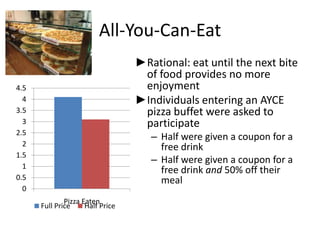
All-You-Can-EatRational: eat until the next bite of food provides no more enjoyment
Individuals entering an AYCE pizza buffet were asked to participateHalf were given a coupon for a free drinkHalf were given a coupon for a free drink and 50% off their mealDon’t like it? Eat 0.5 slices more
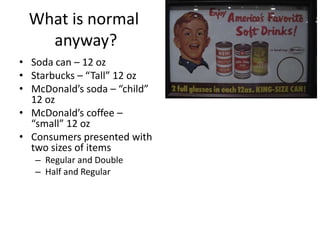
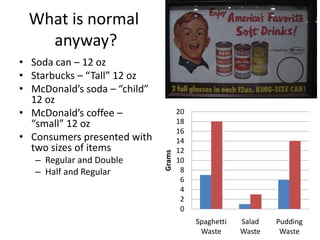
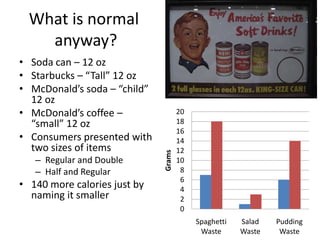
What is normal anyway?Soda can – 12 ozStarbucks – “Tall” 12 ozMcDonald’s soda – “child” 12 ozMcDonald’s coffee – “small” 12 ozConsumers presented with two sizes of itemsRegular and DoubleHalf and Regular140 more calories just by naming it smaller
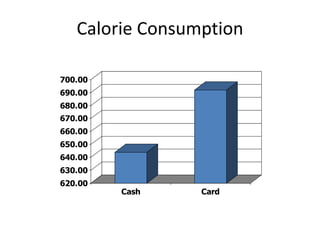
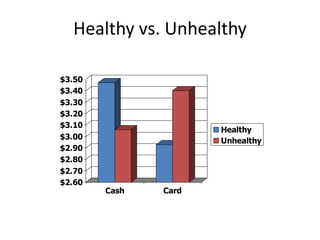
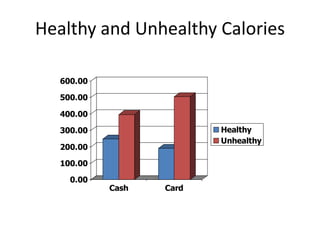
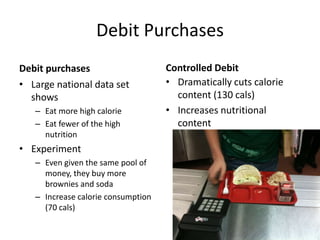
Debit or CashLunch items were chosen to balance “healthy” and “unhealthy” choices in each categoryCommonly offered in Cornell dining areasPrices charged in Cornell dining areasTwo treatmentsCash: Given $20 in cashDebit Card: Given $10 in cash and $10 on a debit card
Calorie Consumption
Healthy vs. Unhealthy
Healthy and Unhealthy Calories
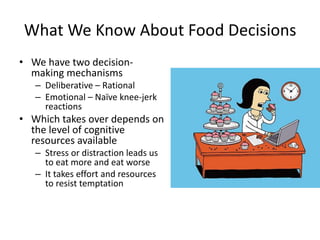
What We Know About Food DecisionsWe have two decision-making mechanismsDeliberative – Rational Emotional – Naïve knee-jerk reactionsWhich takes over depends on the level of cognitive resources availableStress or distraction leads us to eat more and eat worseIt takes effort and resources to resist temptation
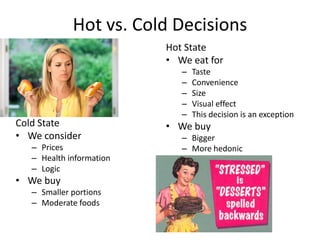
Hot vs. Cold DecisionsHot StateWe eat forTasteConvenienceSizeVisual effectThis decision is an exceptionWe buyBiggerMore hedonicCold StateWe considerPricesHealth informationLogicWe buySmaller portionsModerate foods
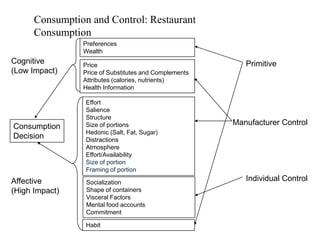
Consumption and Control: Restaurant ConsumptionPreferencesWealthCognitive(Low Impact)PrimitivePricePrice of Substitutes and ComplementsAttributes (calories, nutrients)Health InformationEffortSalienceStructureSize of portionsHedonic (Salt, Fat, Sugar)DistractionsAtmosphereEffort/AvailabilitySize of portionFraming of portionManufacturer ControlConsumptionDecisionIndividual ControlAffective(High Impact)SocializationShape of containersVisceral FactorsMental food accountsCommitmentHabit
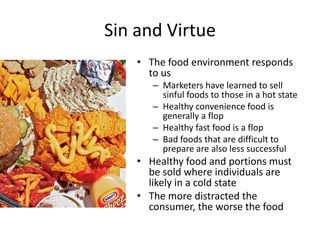
Sin and VirtueThe food environment responds to usMarketers have learned to sell sinful foods to those in a hot stateHealthy convenience food is generally a flopHealthy fast food is a flopBad foods that are difficult to prepare are also less successfulHealthy food and portions must be sold where individuals are likely in a cold stateThe more distracted the consumer, the worse the food
Sin and VirtueCognitive policies won’t impact hot state consumersIn a hot state, I don’t care how many calories it hasI am not concerned with my budgetI am concerned with my hunger, taste and conveniencePolicymakers must engage the thoughtless decision-maker
Sin and VirtueCommit while in a cold state:Control your future environmentLimit exposure to temptationProducers can sell commitmentSmaller portions at a premiumWould you like to cut 150 calories by forgoing the side?Less distracted eating environmentsPolicymakers can use thoughtless choice to public advantage
The Problem of Influencing DecisionsDirectly restricting choices leads to reactanceThis is costly to any policySaps the effect, makes the beneficiary feel like they are worse offWhat about regulating subtle influences in the environment that impact choice?Simple example: Normative size labels12 oz is regular/mediumNo restriction on choiceBenefit from attributionIt was my choice, I will repeat it in the future
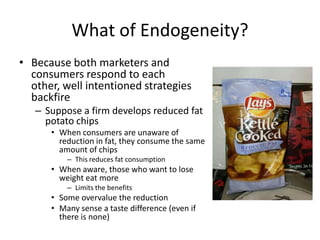
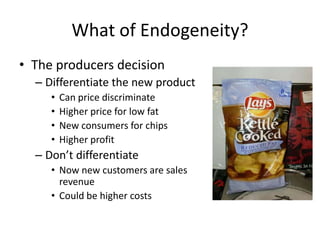
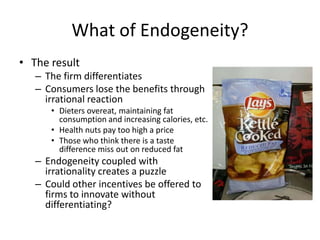
What of Endogeneity? Because both marketers and consumers respond to each other, well intentioned strategies backfireSuppose a firm develops reduced fat potato chipsWhen consumers are unaware of reduction in fat, they consume the same amount of chipsThis reduces fat consumptionWhen aware, those who want to lose weight eat moreLimits the benefitsSome overvalue the reductionMany sense a taste difference (even if there is none)
What of Endogeneity? The producers decisionDifferentiate the new productCan price discriminateHigher price for low fatNew consumers for chipsHigher profitDon’t differentiateNow new customers are sales revenueCould be higher costs
What of Endogeneity? The resultThe firm differentiatesConsumers lose the benefits through irrational reactionDieters overeat, maintaining fat consumption and increasing calories, etc.Health nuts pay too high a priceThose who think there is a taste difference miss out on reduced fatEndogeneity coupled with irrationality creates a puzzleCould other incentives be offered to firms to innovate without differentiating?
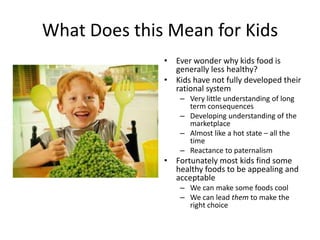
What Does this Mean for KidsEver wonder why kids food is generally less healthy?Kids have not fully developed their rational systemVery little understanding of long term consequencesDeveloping understanding of the marketplaceAlmost like a hot state – all the timeReactance to paternalismFortunately most kids find some healthy foods to be appealing and acceptableWe can make some foods coolWe can lead them to make the right choice
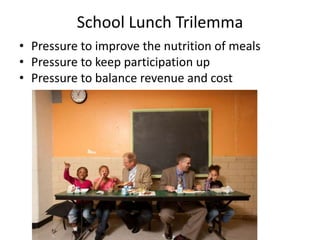
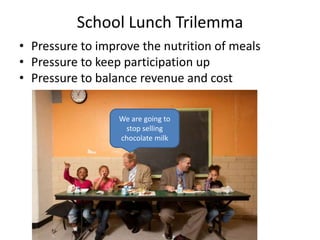
School Lunch TrilemmaPressure to improve the nutrition of mealsPressure to keep participation upPressure to balance revenue and cost
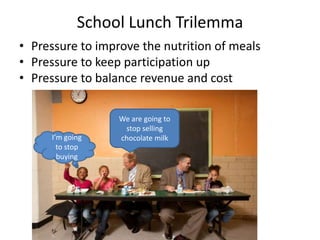
School Lunch TrilemmaPressure to improve the nutrition of mealsPressure to keep participation upPressure to balance revenue and costWe are going to stop selling chocolate milk
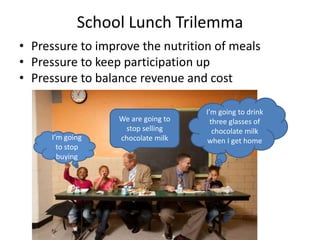
School Lunch TrilemmaPressure to improve the nutrition of mealsPressure to keep participation upPressure to balance revenue and costWe are going to stop selling chocolate milkI’m going to stop buying
School Lunch TrilemmaPressure to improve the nutrition of mealsPressure to keep participation upPressure to balance revenue and costI’m going to drink three glasses of chocolate milk when I get homeWe are going to stop selling chocolate milkI’m going to stop buying
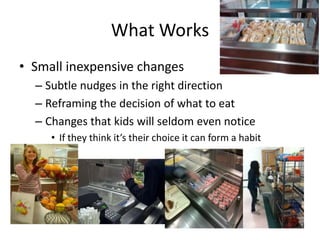
What WorksSmall inexpensive changesSubtle nudges in the right directionReframing the decision of what to eatChanges that kids will seldom even noticeIf they think it’s their choice it can form a habit
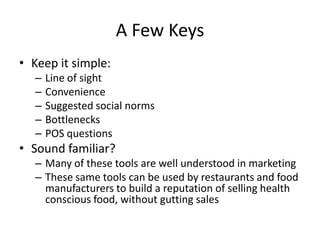
A Few KeysKeep it simple:Line of sightConvenienceSuggested social normsBottlenecksPOS questionsSound familiar?Many of these tools are well understood in marketingThese same tools can be used by restaurants and food manufacturers to build a reputation of selling health conscious food, without gutting sales
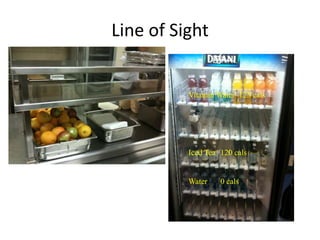
Line of SightVitamin Water  125 calsIced Tea	120 calsWater	0 cals
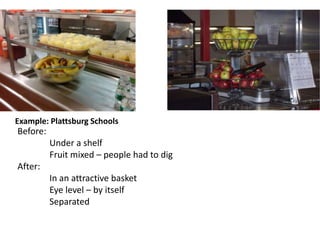
Example: Plattsburg SchoolsBefore:	Under a shelf	Fruit mixed – people had to digAfter: 	In an attractive basket	Eye level – by itself	Separated
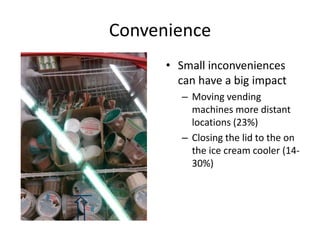
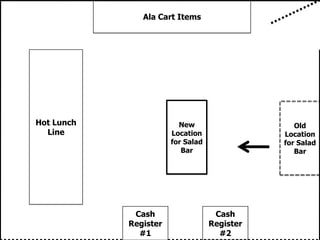
ConvenienceSmall inconveniences can have a big impactMoving vending machines more distant locations (23%)Closing the lid to the on the ice cream cooler (14-30%)
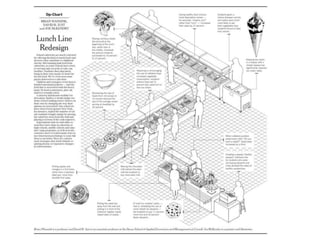
Ala Cart ItemsHot Lunch LineNew Location for Salad BarOld Location for Salad BarCash Register #2Cash Register #1
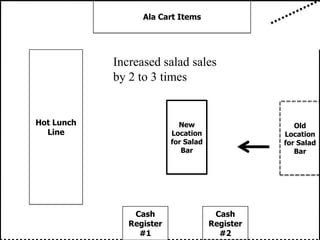
Ala Cart ItemsHot Lunch LineIncreased salad salesby 2 to 3 timesNew Location for Salad BarOld Location for Salad BarCash Register #2Cash Register #1
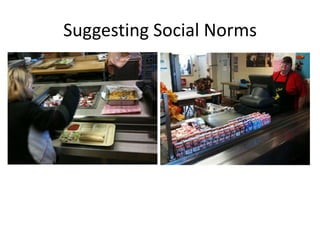
Suggesting Social Norms
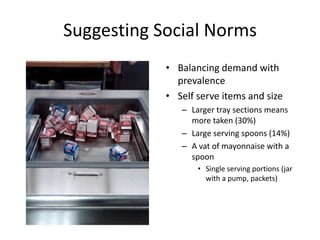
Suggesting Social NormsBalancing demand with prevalenceSelf serve items and sizeLarger tray sections means more taken (30%)Large serving spoons (14%)A vat of mayonnaise with a spoon Single serving portions (jar with a pump, packets)
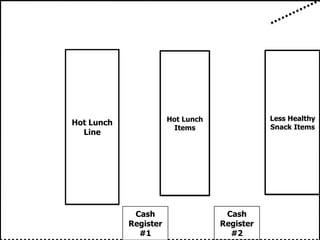
Hot Lunch LineLess Healthy Snack ItemsHot Lunch ItemsCash Register #2Cash Register #1
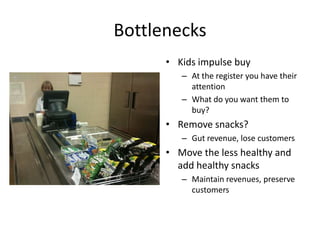
BottlenecksKids impulse buyAt the register you have their attentionWhat do you want them to buy?Remove snacks?Gut revenue, lose customersMove the less healthy and add healthy snacksMaintain revenues, preserve customers
POS QuestionsWhat to askComplete the mealMilk Half finds its way into the garbageFruit?PortableSeveral studies have shown effectiveWait for an answer (30%)How to ask

David Just presentation at 2011 Access to Healthy Foods Summit

  • 1.
    Marketing Nutrition: It’sNot What You ThinkDavid R. JustJune 2011
  • 2.
    ObesityOver the last40 years the percentage of overweight adults has increased from 43.8% to 64.5% (NIH).32% of adult males and 36% of adult females are obese Double the rate from 1980Childhood obesity has increased from 6% to 18% since 1980 Total annual medical costs due to overweight $147 billion.Other costs from reduced life expectancy, loss in productivity, etc., push total costs to $500 billion
  • 3.
    The ResponseMore informationNutritionlabelsGovernment recommendationsCalorie postingPaternalistic interventionsBanning soda in school/on SNAPSoda/sugar/fat taxesBanning happy meals
  • 4.
    Are These PoliciesEffective?Nutrition Labels: 30%-60% use nutrition labels regularlyObservation leads us to a number closer to 10%Even among those who use them, a majority do not understand them or use them ineffectivelyFocus on one dimension (e.g., Fat)Can lead to backfireDifficulty understanding what RDA meansDifficulty with understanding per serving information
  • 5.
    Are These PoliciesEffective?My Pyramid, etc:Wonderful coverage and wide viewershipNo impact on consumptionCalorie Posting:Three major studiesTwo find no effect on consumptionOne finds dieters consume more with calorie informationOne finds that those who use the labels consume fewer caloriesCorrelation not causation
  • 6.
    Why?: Economics andPsychologyOne reason these policies fail is endogeneityThose who overeat when visiting a fast food restaurant do so because they like toThey will be more resistant to information, or other policiesReactance Rebelling against a threat to freedomFat tax versus a thin subsidyLimits on ketchupDon’t press this button
  • 7.
    Why?: Economics andPsychologyAnother reason is an inability to make reasoned decisionsIndividuals make 200-300 food decisions a dayMaking deliberate decisions for each would be impossibleWe fall back on rules of thumb and habit What would happen if we did rationally consider each decision?How could cognitively based policies engage the unthinking?
  • 8.
    All-You-Can-EatRational: eat untilthe next bite of food provides no more enjoyment
  • 9.
    Individuals entering anAYCE pizza buffet were asked to participateHalf were given a coupon for a free drinkHalf were given a coupon for a free drink and 50% off their meal
  • 10.
    All-You-Can-EatRational: eat untilthe next bite of food provides no more enjoyment
  • 11.
    Individuals entering anAYCE pizza buffet were asked to participateHalf were given a coupon for a free drinkHalf were given a coupon for a free drink and 50% off their meal
  • 12.
    All-You-Can-EatRational: eat untilthe next bite of food provides no more enjoyment
  • 13.
    Individuals entering anAYCE pizza buffet were asked to participateHalf were given a coupon for a free drinkHalf were given a coupon for a free drink and 50% off their mealDon’t like it? Eat 0.5 slices more
  • 14.
    What is normalanyway?Soda can – 12 ozStarbucks – “Tall” 12 ozMcDonald’s soda – “child” 12 ozMcDonald’s coffee – “small” 12 ozConsumers presented with two sizes of itemsRegular and DoubleHalf and Regular140 more calories just by naming it smaller
  • 15.
    What is normalanyway?Soda can – 12 ozStarbucks – “Tall” 12 ozMcDonald’s soda – “child” 12 ozMcDonald’s coffee – “small” 12 ozConsumers presented with two sizes of itemsRegular and DoubleHalf and Regular140 more calories just by naming it smaller
  • 16.
    What is normalanyway?Soda can – 12 ozStarbucks – “Tall” 12 ozMcDonald’s soda – “child” 12 ozMcDonald’s coffee – “small” 12 ozConsumers presented with two sizes of itemsRegular and DoubleHalf and Regular140 more calories just by naming it smaller
  • 17.
    Debit or CashLunchitems were chosen to balance “healthy” and “unhealthy” choices in each categoryCommonly offered in Cornell dining areasPrices charged in Cornell dining areasTwo treatmentsCash: Given $20 in cashDebit Card: Given $10 in cash and $10 on a debit card
  • 18.
  • 19.
  • 20.
  • 21.
    What We KnowAbout Food DecisionsWe have two decision-making mechanismsDeliberative – Rational Emotional – Naïve knee-jerk reactionsWhich takes over depends on the level of cognitive resources availableStress or distraction leads us to eat more and eat worseIt takes effort and resources to resist temptation
  • 22.
    Hot vs. ColdDecisionsHot StateWe eat forTasteConvenienceSizeVisual effectThis decision is an exceptionWe buyBiggerMore hedonicCold StateWe considerPricesHealth informationLogicWe buySmaller portionsModerate foods
  • 23.
    Consumption and Control:Restaurant ConsumptionPreferencesWealthCognitive(Low Impact)PrimitivePricePrice of Substitutes and ComplementsAttributes (calories, nutrients)Health InformationEffortSalienceStructureSize of portionsHedonic (Salt, Fat, Sugar)DistractionsAtmosphereEffort/AvailabilitySize of portionFraming of portionManufacturer ControlConsumptionDecisionIndividual ControlAffective(High Impact)SocializationShape of containersVisceral FactorsMental food accountsCommitmentHabit
  • 24.
    Sin and VirtueThefood environment responds to usMarketers have learned to sell sinful foods to those in a hot stateHealthy convenience food is generally a flopHealthy fast food is a flopBad foods that are difficult to prepare are also less successfulHealthy food and portions must be sold where individuals are likely in a cold stateThe more distracted the consumer, the worse the food
  • 25.
    Sin and VirtueCognitivepolicies won’t impact hot state consumersIn a hot state, I don’t care how many calories it hasI am not concerned with my budgetI am concerned with my hunger, taste and conveniencePolicymakers must engage the thoughtless decision-maker
  • 26.
    Sin and VirtueCommitwhile in a cold state:Control your future environmentLimit exposure to temptationProducers can sell commitmentSmaller portions at a premiumWould you like to cut 150 calories by forgoing the side?Less distracted eating environmentsPolicymakers can use thoughtless choice to public advantage
  • 27.
    The Problem ofInfluencing DecisionsDirectly restricting choices leads to reactanceThis is costly to any policySaps the effect, makes the beneficiary feel like they are worse offWhat about regulating subtle influences in the environment that impact choice?Simple example: Normative size labels12 oz is regular/mediumNo restriction on choiceBenefit from attributionIt was my choice, I will repeat it in the future
  • 28.
    What of Endogeneity?Because both marketers and consumers respond to each other, well intentioned strategies backfireSuppose a firm develops reduced fat potato chipsWhen consumers are unaware of reduction in fat, they consume the same amount of chipsThis reduces fat consumptionWhen aware, those who want to lose weight eat moreLimits the benefitsSome overvalue the reductionMany sense a taste difference (even if there is none)
  • 29.
    What of Endogeneity?The producers decisionDifferentiate the new productCan price discriminateHigher price for low fatNew consumers for chipsHigher profitDon’t differentiateNow new customers are sales revenueCould be higher costs
  • 30.
    What of Endogeneity?The resultThe firm differentiatesConsumers lose the benefits through irrational reactionDieters overeat, maintaining fat consumption and increasing calories, etc.Health nuts pay too high a priceThose who think there is a taste difference miss out on reduced fatEndogeneity coupled with irrationality creates a puzzleCould other incentives be offered to firms to innovate without differentiating?
  • 31.
    What Does thisMean for KidsEver wonder why kids food is generally less healthy?Kids have not fully developed their rational systemVery little understanding of long term consequencesDeveloping understanding of the marketplaceAlmost like a hot state – all the timeReactance to paternalismFortunately most kids find some healthy foods to be appealing and acceptableWe can make some foods coolWe can lead them to make the right choice
  • 32.
    School Lunch TrilemmaPressureto improve the nutrition of mealsPressure to keep participation upPressure to balance revenue and cost
  • 33.
    School Lunch TrilemmaPressureto improve the nutrition of mealsPressure to keep participation upPressure to balance revenue and costWe are going to stop selling chocolate milk
  • 34.
    School Lunch TrilemmaPressureto improve the nutrition of mealsPressure to keep participation upPressure to balance revenue and costWe are going to stop selling chocolate milkI’m going to stop buying
  • 35.
    School Lunch TrilemmaPressureto improve the nutrition of mealsPressure to keep participation upPressure to balance revenue and costI’m going to drink three glasses of chocolate milk when I get homeWe are going to stop selling chocolate milkI’m going to stop buying
  • 36.
    What WorksSmall inexpensivechangesSubtle nudges in the right directionReframing the decision of what to eatChanges that kids will seldom even noticeIf they think it’s their choice it can form a habit
  • 37.
    A Few KeysKeepit simple:Line of sightConvenienceSuggested social normsBottlenecksPOS questionsSound familiar?Many of these tools are well understood in marketingThese same tools can be used by restaurants and food manufacturers to build a reputation of selling health conscious food, without gutting sales
  • 38.
    Line of SightVitaminWater 125 calsIced Tea 120 calsWater 0 cals
  • 39.
    Example: Plattsburg SchoolsBefore: Undera shelf Fruit mixed – people had to digAfter: In an attractive basket Eye level – by itself Separated
  • 40.
    ConvenienceSmall inconveniences canhave a big impactMoving vending machines more distant locations (23%)Closing the lid to the on the ice cream cooler (14-30%)
  • 41.
    Ala Cart ItemsHotLunch LineNew Location for Salad BarOld Location for Salad BarCash Register #2Cash Register #1
  • 42.
    Ala Cart ItemsHotLunch LineIncreased salad salesby 2 to 3 timesNew Location for Salad BarOld Location for Salad BarCash Register #2Cash Register #1
  • 43.
  • 44.
    Suggesting Social NormsBalancingdemand with prevalenceSelf serve items and sizeLarger tray sections means more taken (30%)Large serving spoons (14%)A vat of mayonnaise with a spoon Single serving portions (jar with a pump, packets)
  • 45.
    Hot Lunch LineLessHealthy Snack ItemsHot Lunch ItemsCash Register #2Cash Register #1
  • 46.
    BottlenecksKids impulse buyAtthe register you have their attentionWhat do you want them to buy?Remove snacks?Gut revenue, lose customersMove the less healthy and add healthy snacksMaintain revenues, preserve customers
  • 47.
    POS QuestionsWhat toaskComplete the mealMilk Half finds its way into the garbageFruit?PortableSeveral studies have shown effectiveWait for an answer (30%)How to ask