University of Hartford
Marcia Hughes, Ph.D. Sociology
David Pines, Ph.D. Engineering
ď‚— Rockwell Rookey, Civil Engineer, LEED AP
ď‚— Dr. Thomas Boving, URI
ď‚— Dr. Katherine Owens, UHart, Politics and Government
ď‚— Maria Arroyo, UHart Politics and Government Student
ď‚— Alex Schettino, UHart ME Student (Graduated)
ď‚— KARI
  ď‚— Dr. George Ayaga
  ď‚— Ruth Orlale
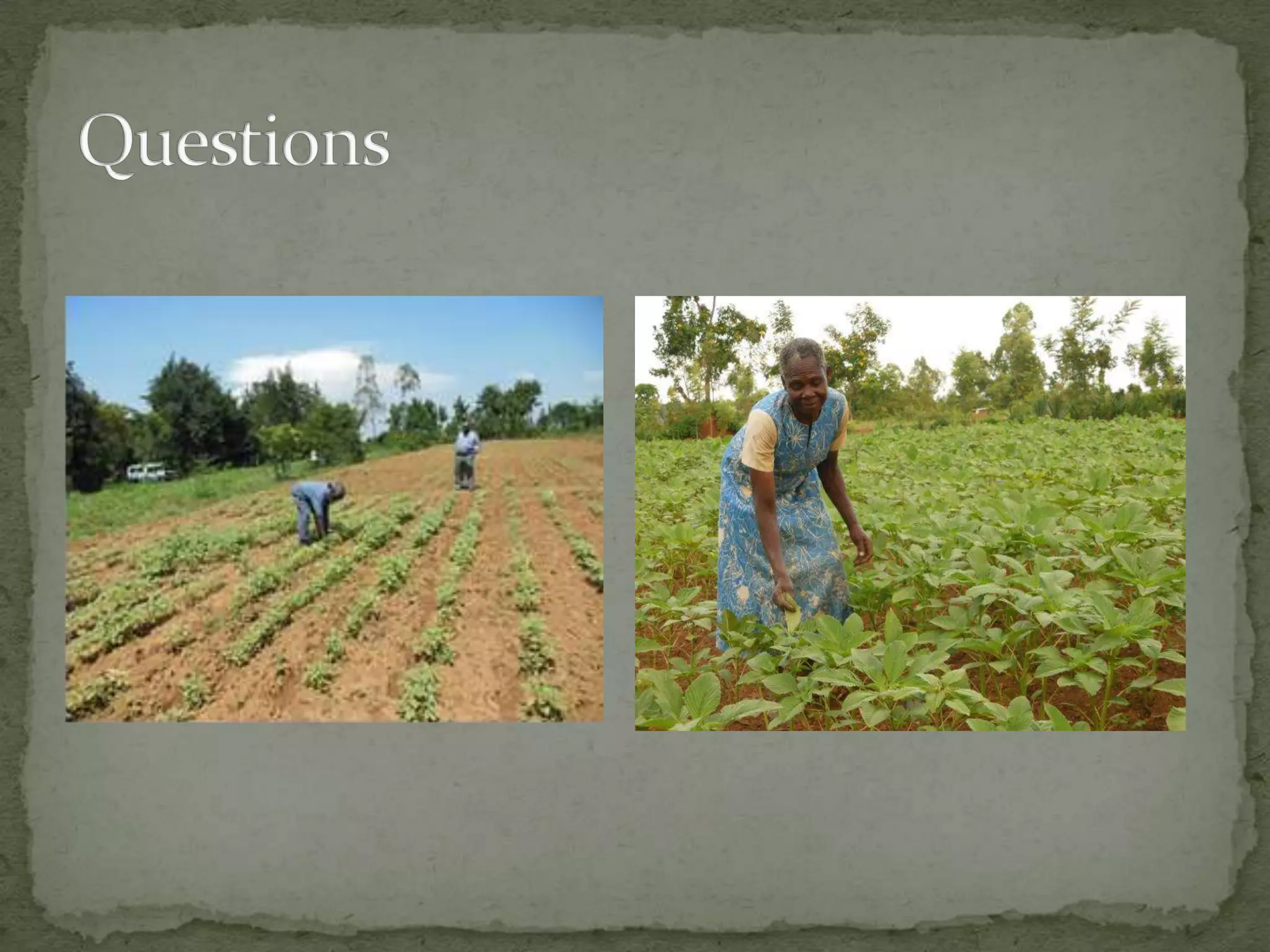
ď‚— Amaranth grain was introduced to Western Kenya and
 other countries as a CASH CROP by Poverty
 Eradication Commission- 2005

 Highly nutritious “super food” (addresses health and
 food security issues)

ď‚— Drought (and pest) resistant (addresses climate
 change) – Maize is failing

ď‚— Short growing period (Increased production)
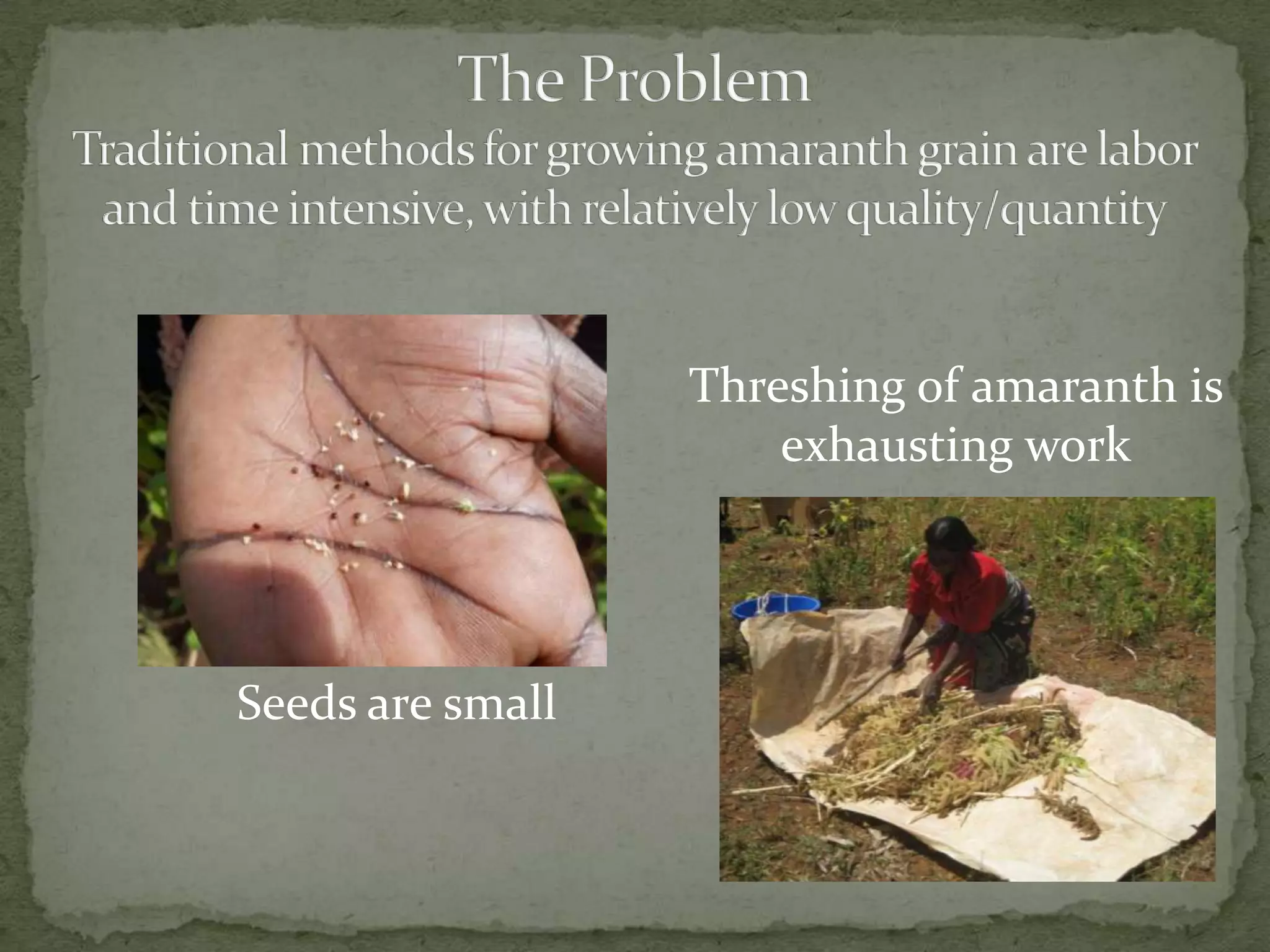
Threshing of amaranth is
                      exhausting work


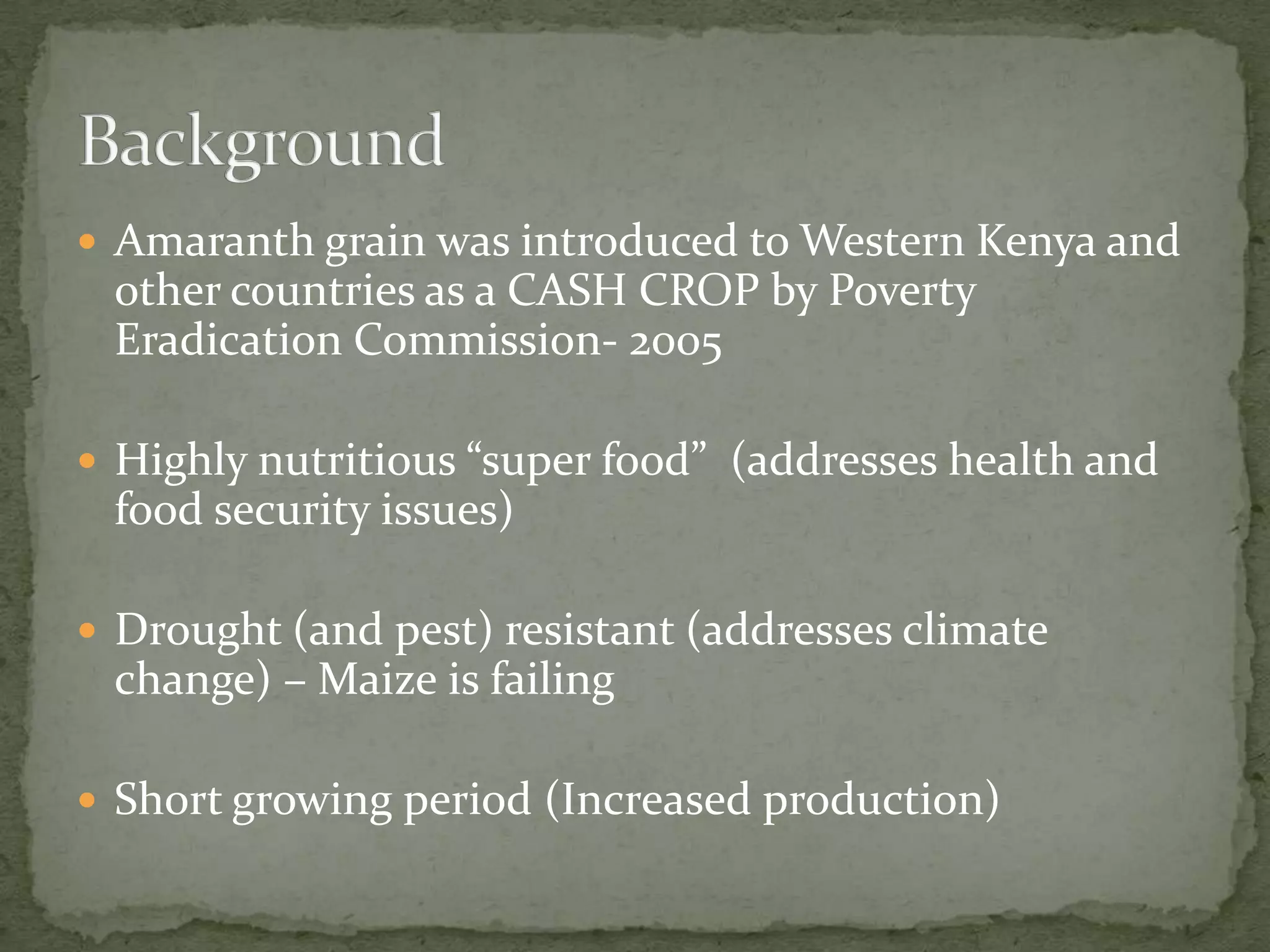
Seeds are small
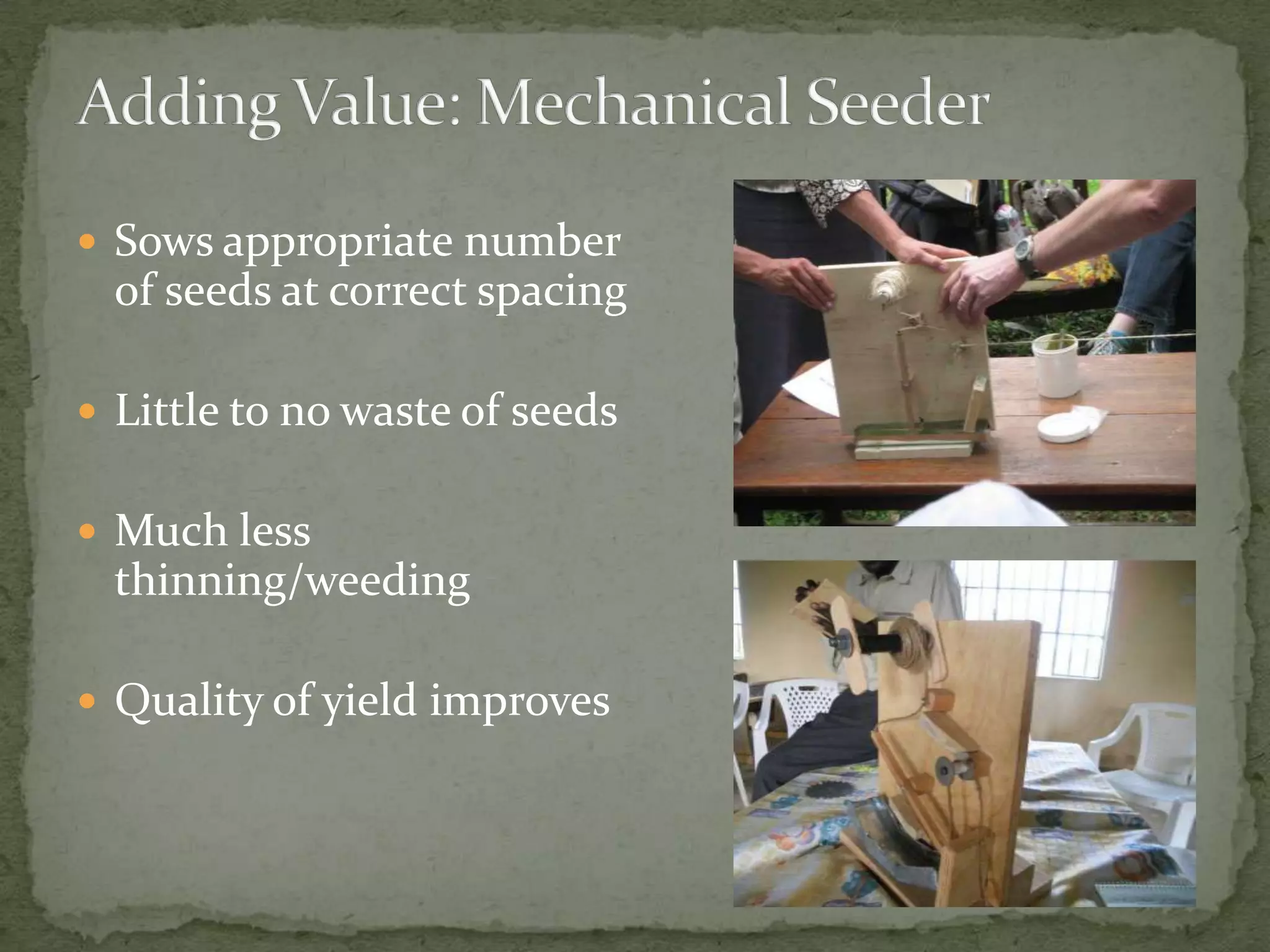
ď‚— Sows appropriate number
  of seeds at correct spacing

ď‚— Little to no waste of seeds


ď‚— Much less
  thinning/weeding

ď‚— Quality of yield improves
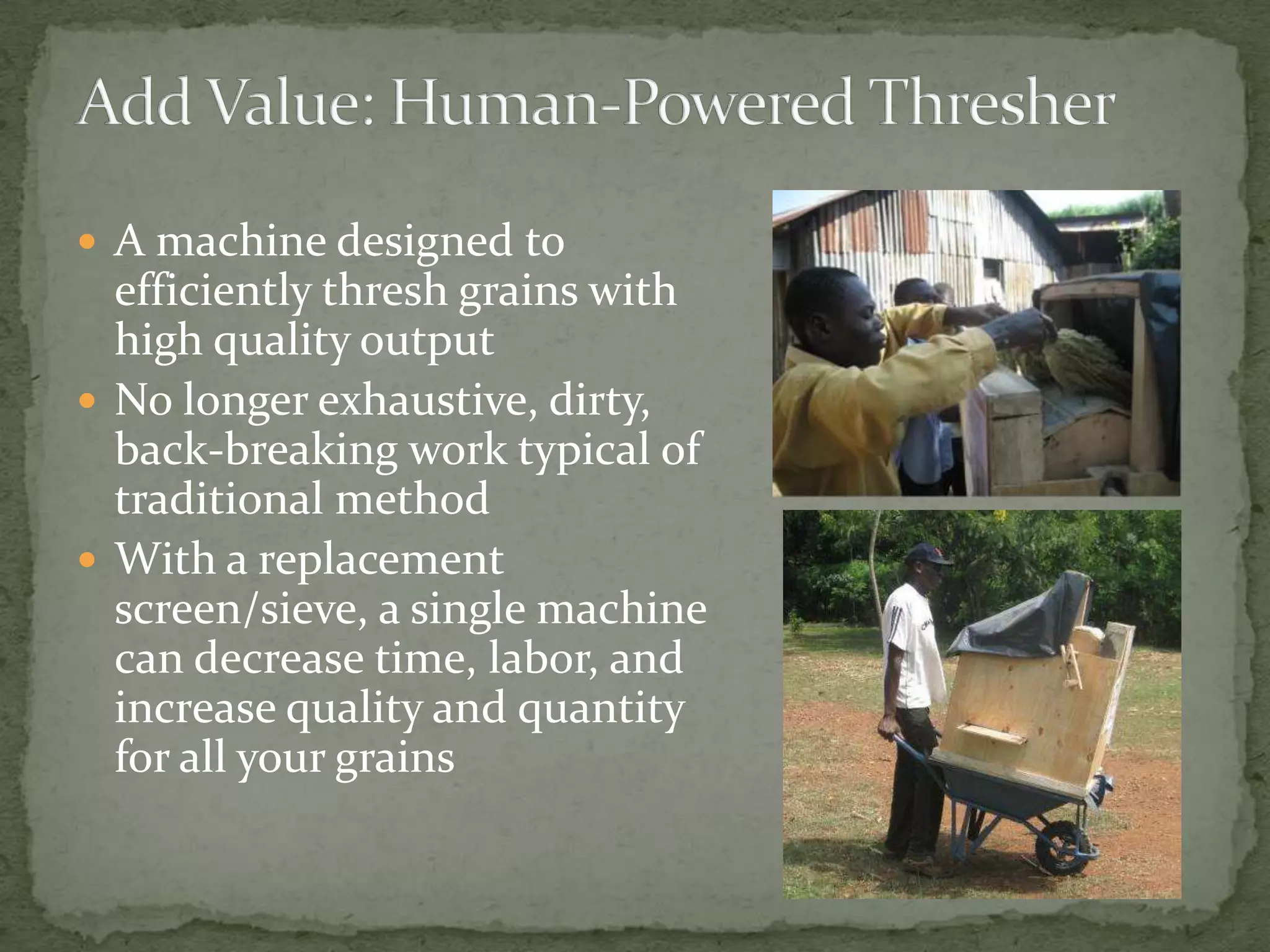
ď‚— A machine designed to
  efficiently thresh grains with
  high quality output
ď‚— No longer exhaustive, dirty,
  back-breaking work typical of
  traditional method
ď‚— With a replacement
  screen/sieve, a single machine
  can decrease time, labor, and
  increase quality and quantity
  for all your grains
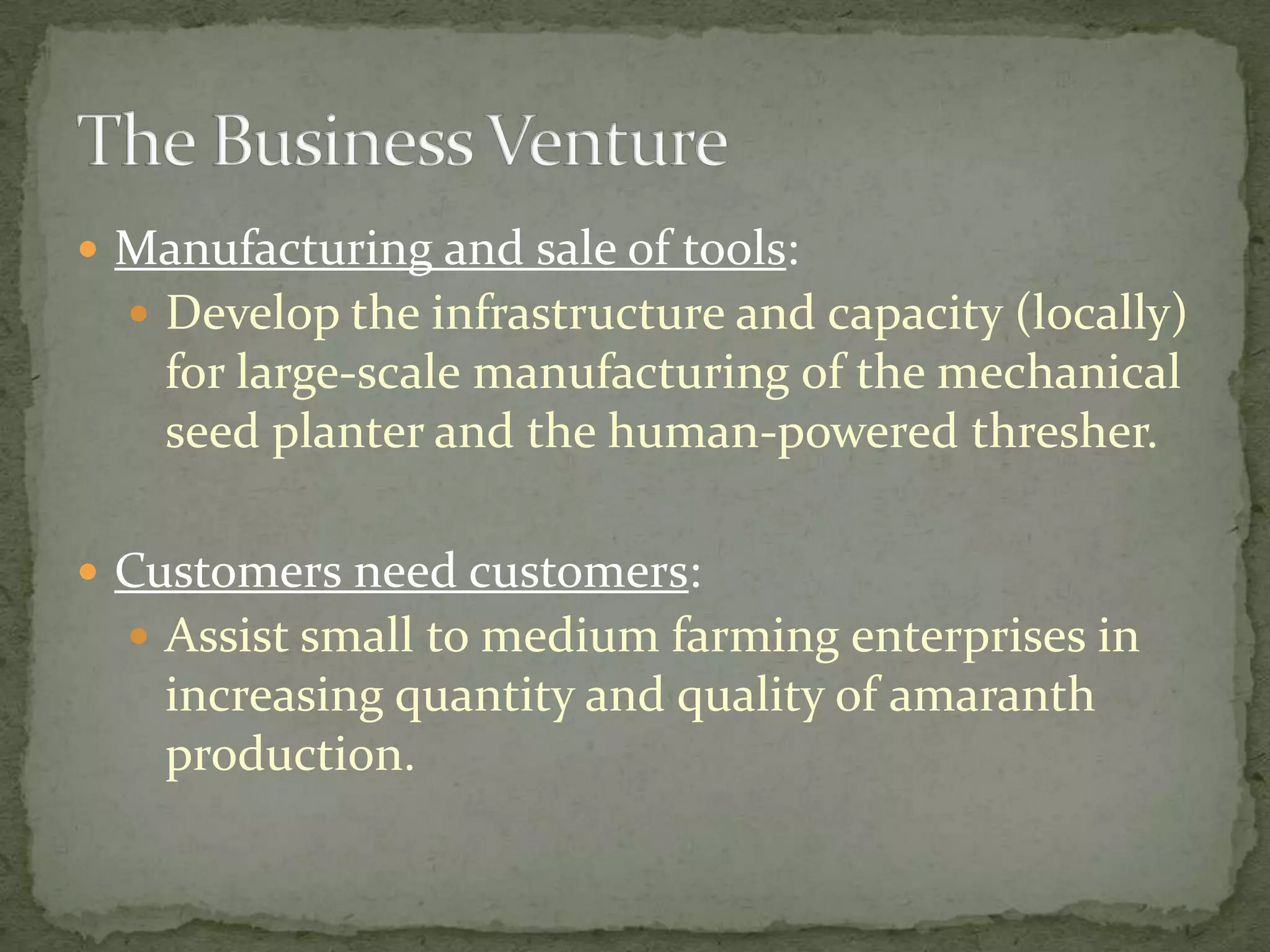
ď‚— Manufacturing and sale of tools:
  ď‚— Develop the infrastructure and capacity (locally)
    for large-scale manufacturing of the mechanical
    seed planter and the human-powered thresher.

ď‚— Customers need customers:
  ď‚— Assist small to medium farming enterprises in
    increasing quantity and quality of amaranth
    production.
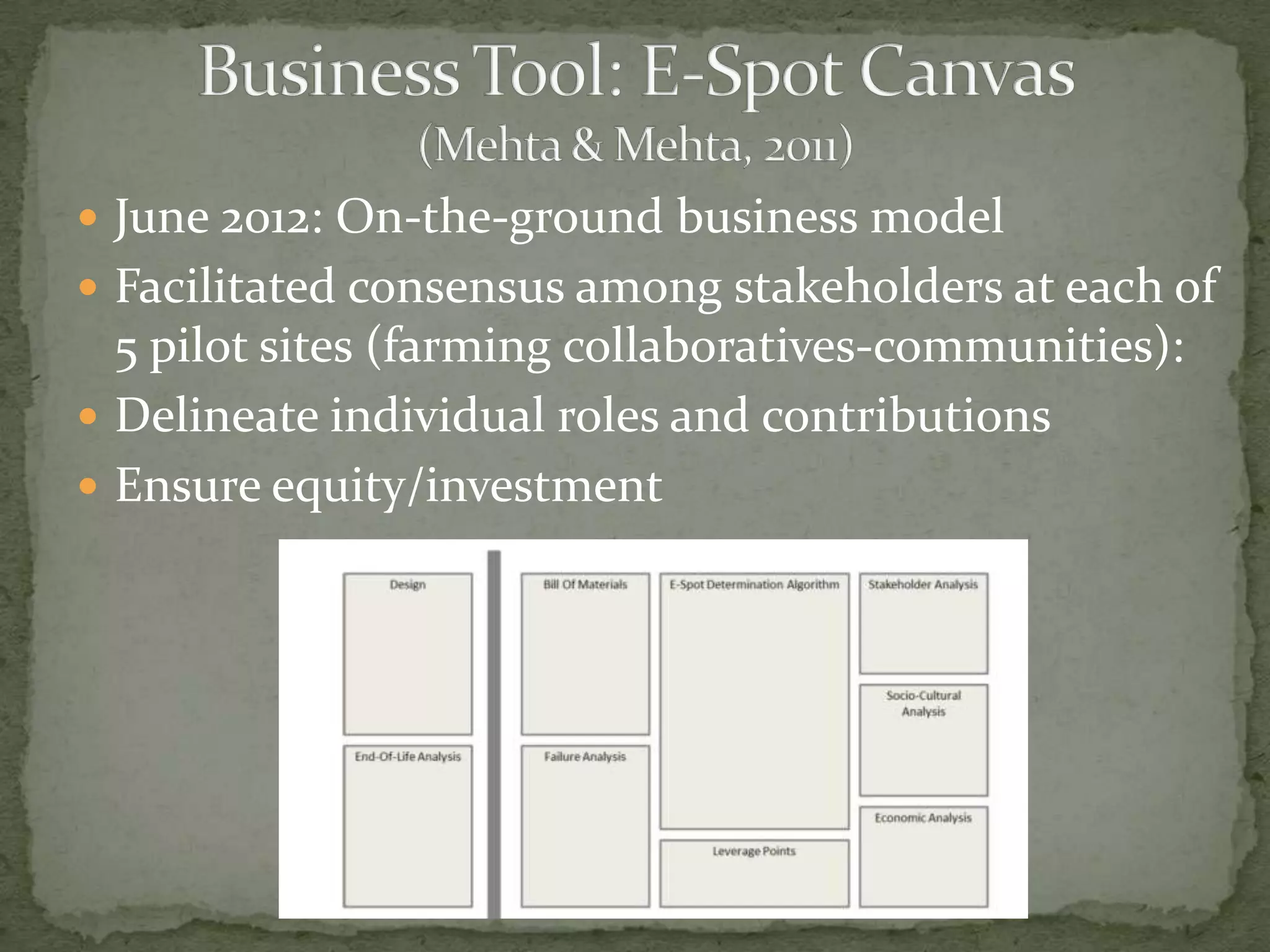
ď‚— June 2012: On-the-ground business model
ď‚— Facilitated consensus among stakeholders at each of
  5 pilot sites (farming collaboratives-communities):
ď‚— Delineate individual roles and contributions
ď‚— Ensure equity/investment
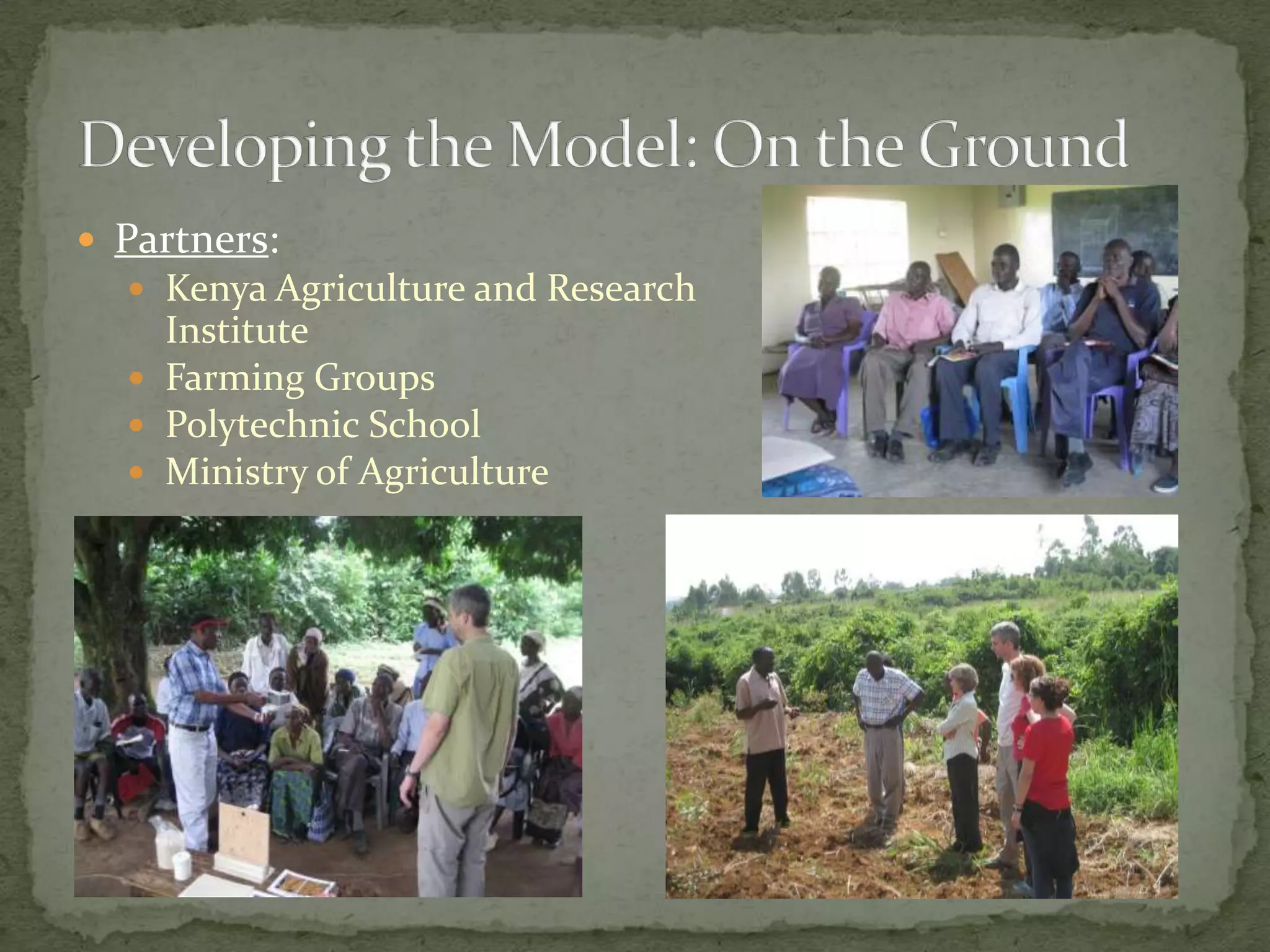
ď‚— Partners:
  ď‚— Kenya Agriculture and Research
    Institute
  ď‚— Farming Groups
  ď‚— Polytechnic School
  ď‚— Ministry of Agriculture
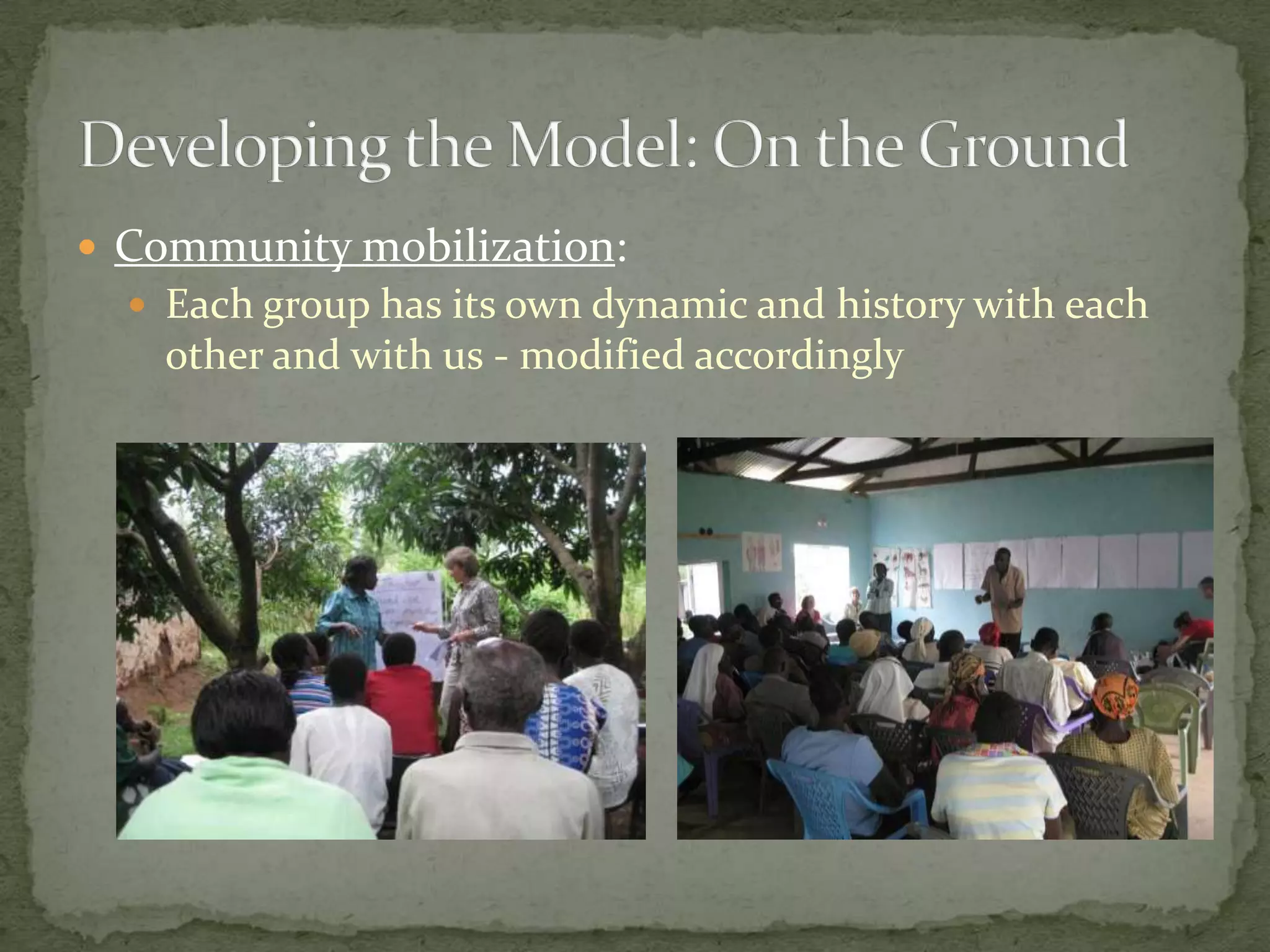
ď‚— Community mobilization:
  ď‚— Each group has its own dynamic and history with each
    other and with us - modified accordingly
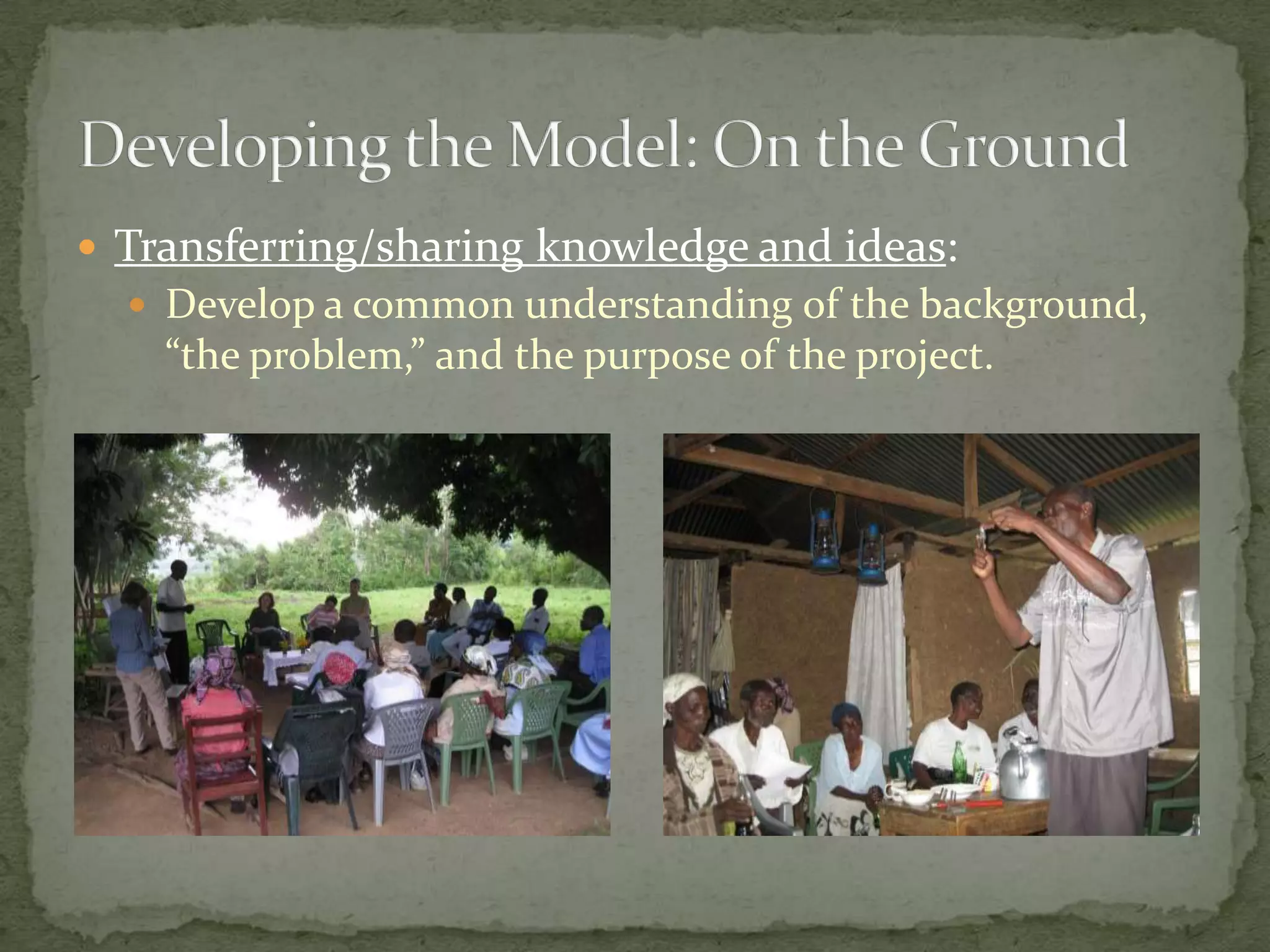
ď‚— Transferring/sharing knowledge and ideas:
  ď‚— Develop a common understanding of the background,
    “the problem,” and the purpose of the project.
ď‚— Implementation of Shared Use of Tools:
   ď‚— Activities, roles, responsibilities
ď‚— Who will keep the tools?
ď‚— Who will provide oversight, training, and
    management?
ď‚—   How many days will each farm utilize tools?
ď‚—   How will tools be transported from farm to farm?
ď‚—   Who will be in charge of maintenance?
ď‚—   How much to charge individual users?

    ď‚— **Our customers have customers: Increasing production
      of amaranth grain locally
ď‚— November 2012 and January 2013 field trips
  ď‚— Assess progress:
     ď‚— Practical/shared use of tools
     ď‚— Tools versus traditional methods (research)
     ď‚— Further field testing and modifications
     ď‚— Plan for upscaling of amaranth production
  ď‚— Identify entrepreneurs: expand/innovate venture
    model
  ď‚— Marketing/partnerships (i.e., Ministry of
    Agriculture, registries of collaboratives)
  ď‚— Seed production and related training
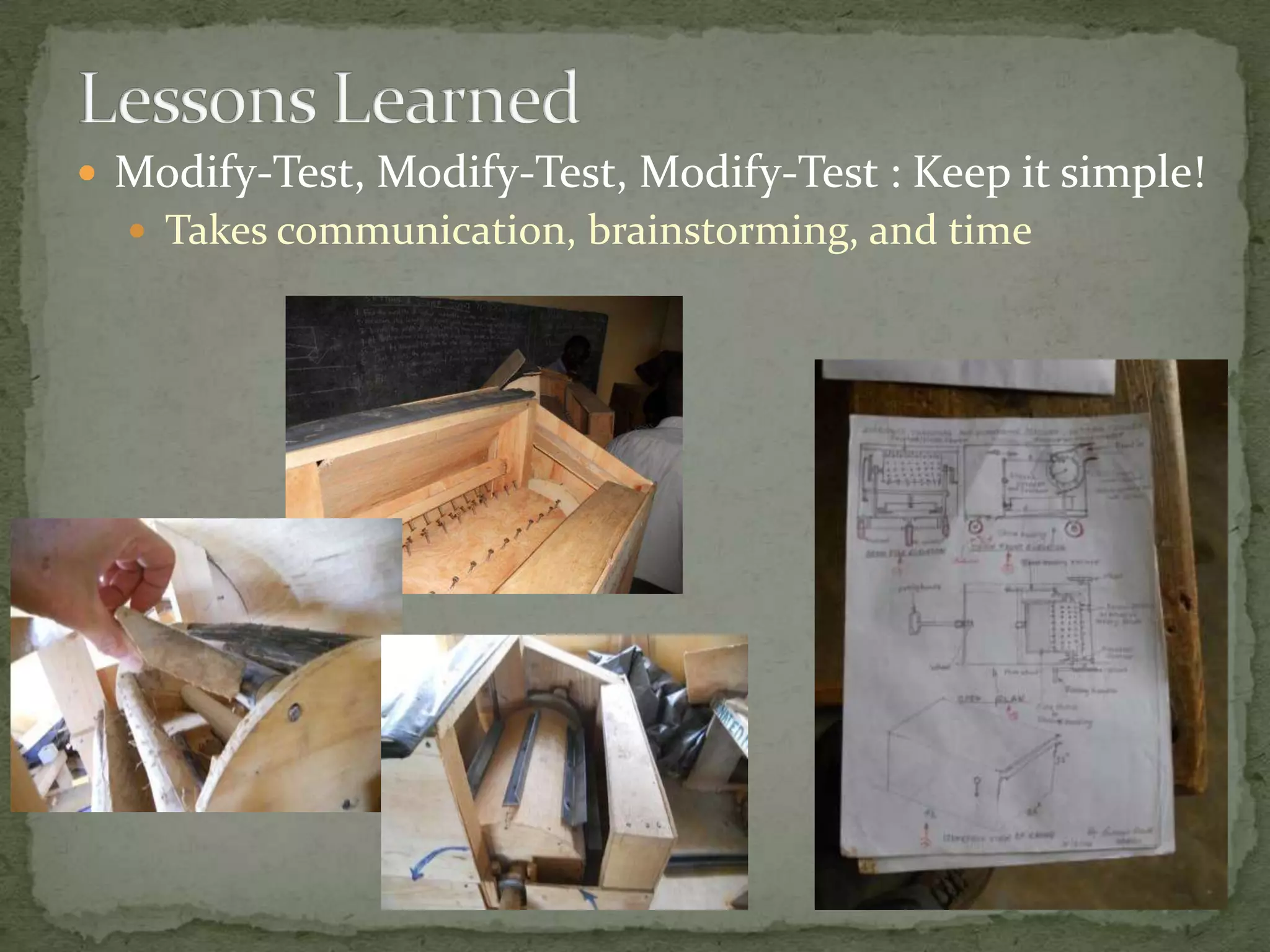
ď‚— Modify-Test, Modify-Test, Modify-Test : Keep it simple!
  ď‚— Takes communication, brainstorming, and time
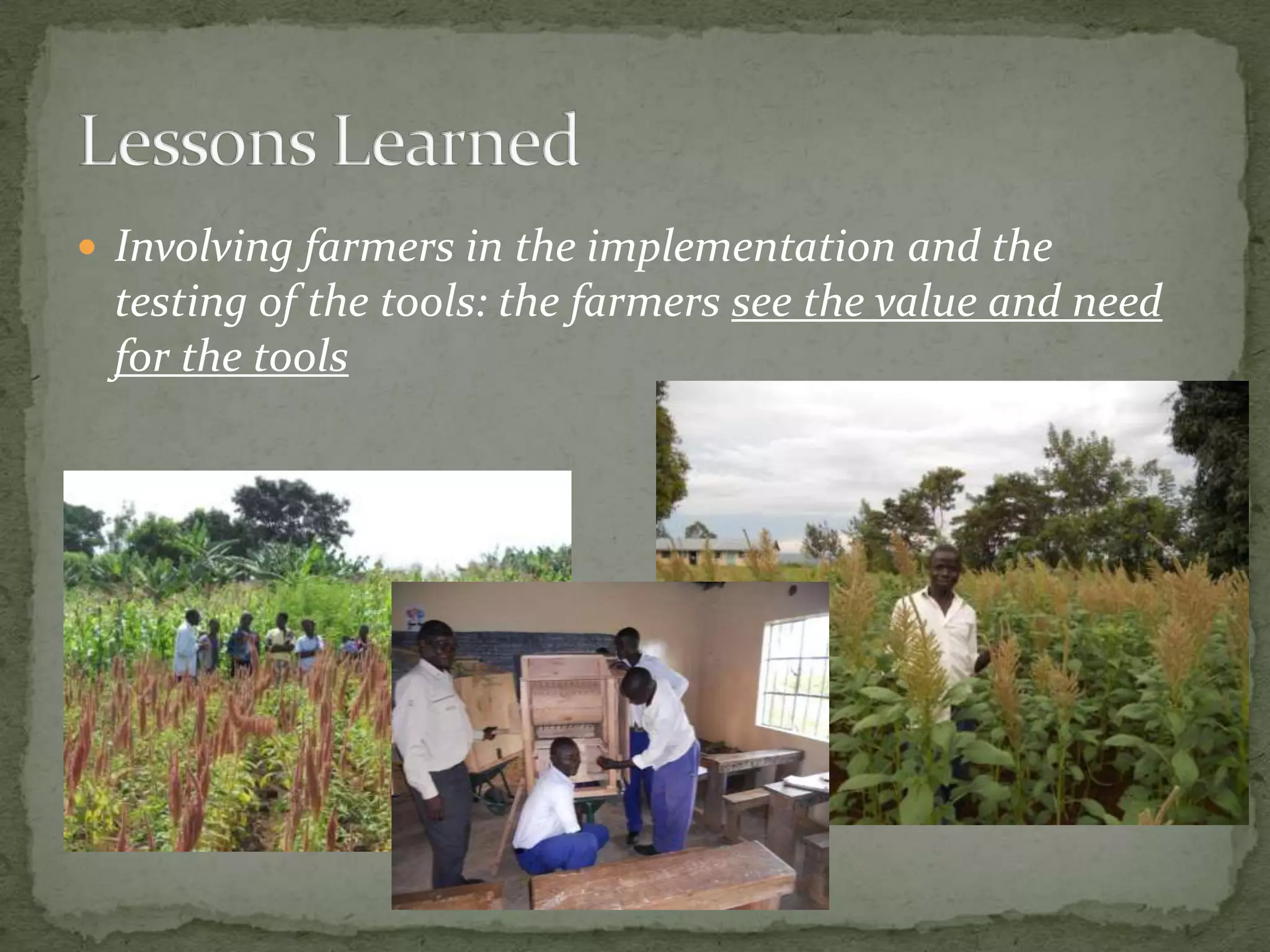
ď‚— Involving farmers in the implementation and the
 testing of the tools: the farmers see the value and need
 for the tools
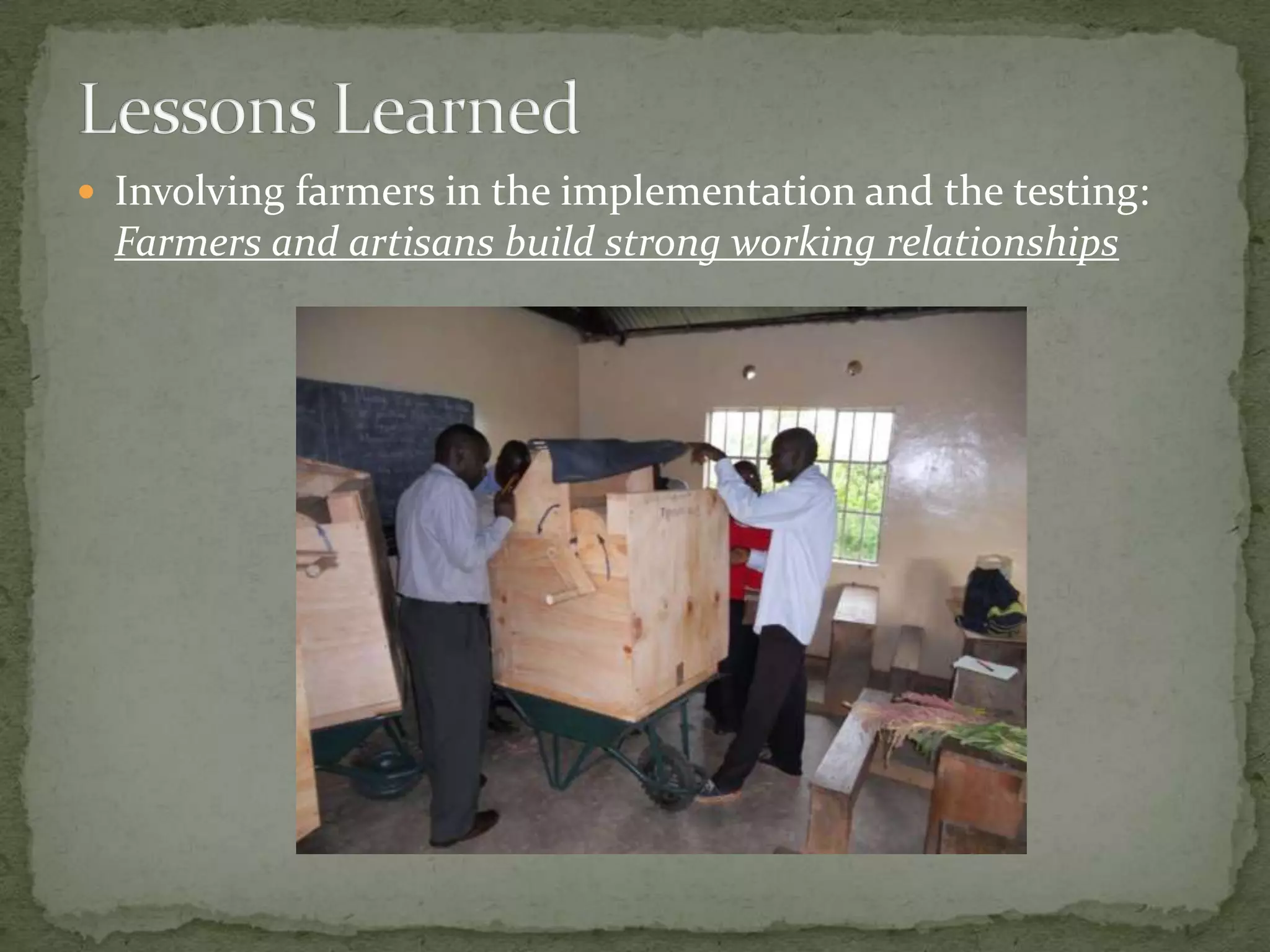
ď‚— Involving farmers in the implementation and the testing:
  Farmers and artisans build strong working relationships
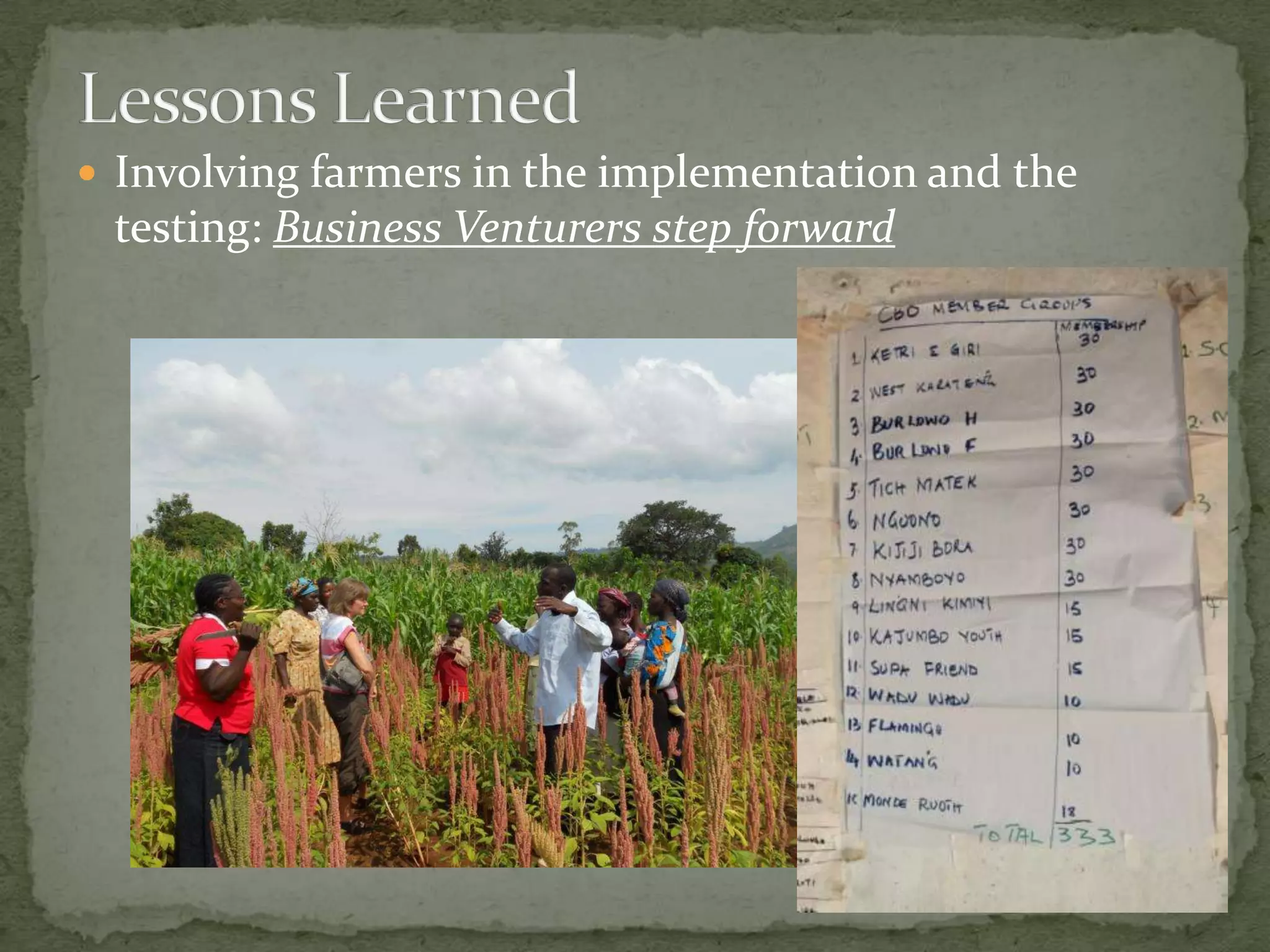
ď‚— Involving farmers in the implementation and the
 testing: Business Venturers step forward
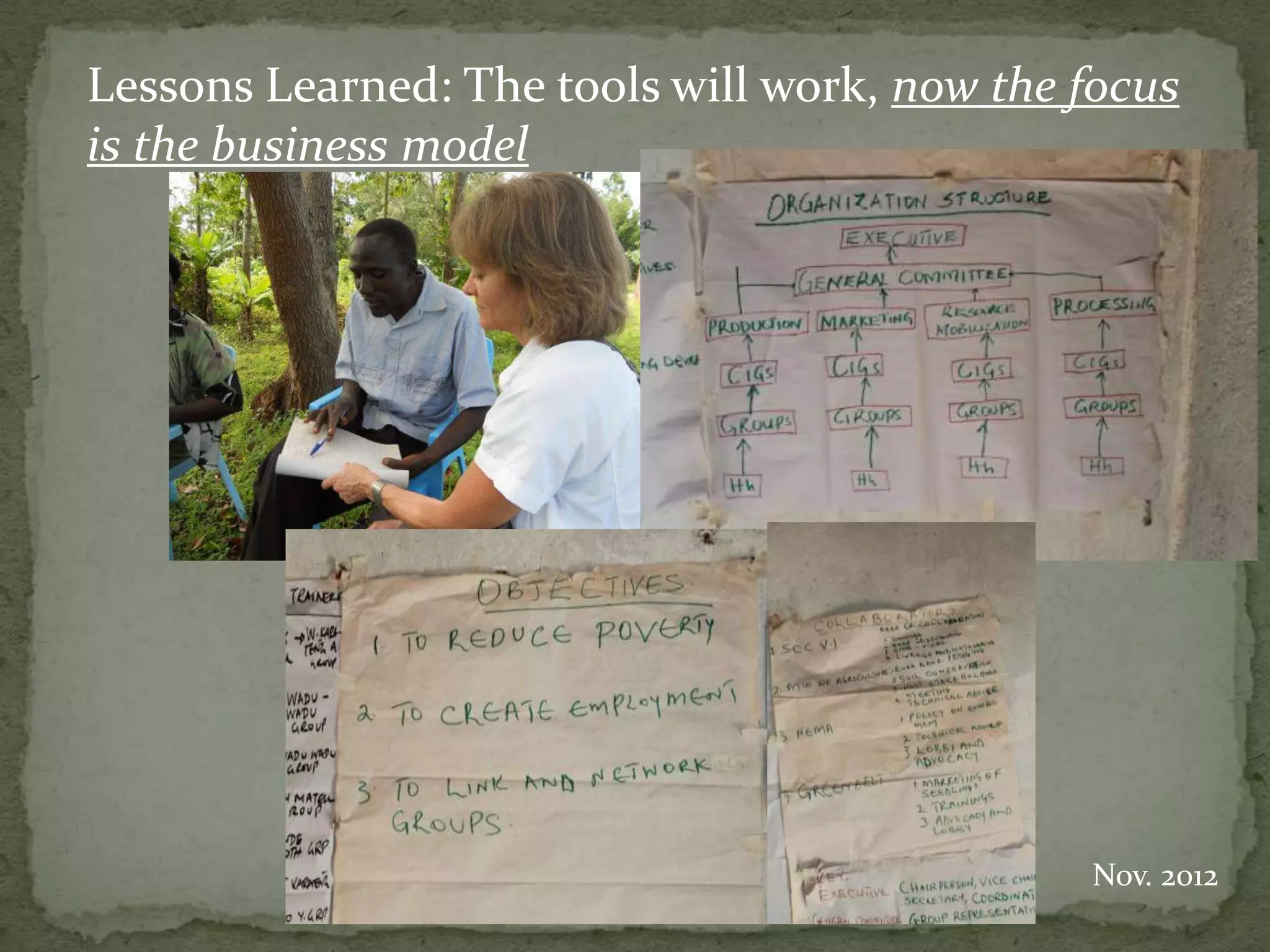
Lessons Learned: The tools will work, now the focus
is the business model


                                              Nov. 2012
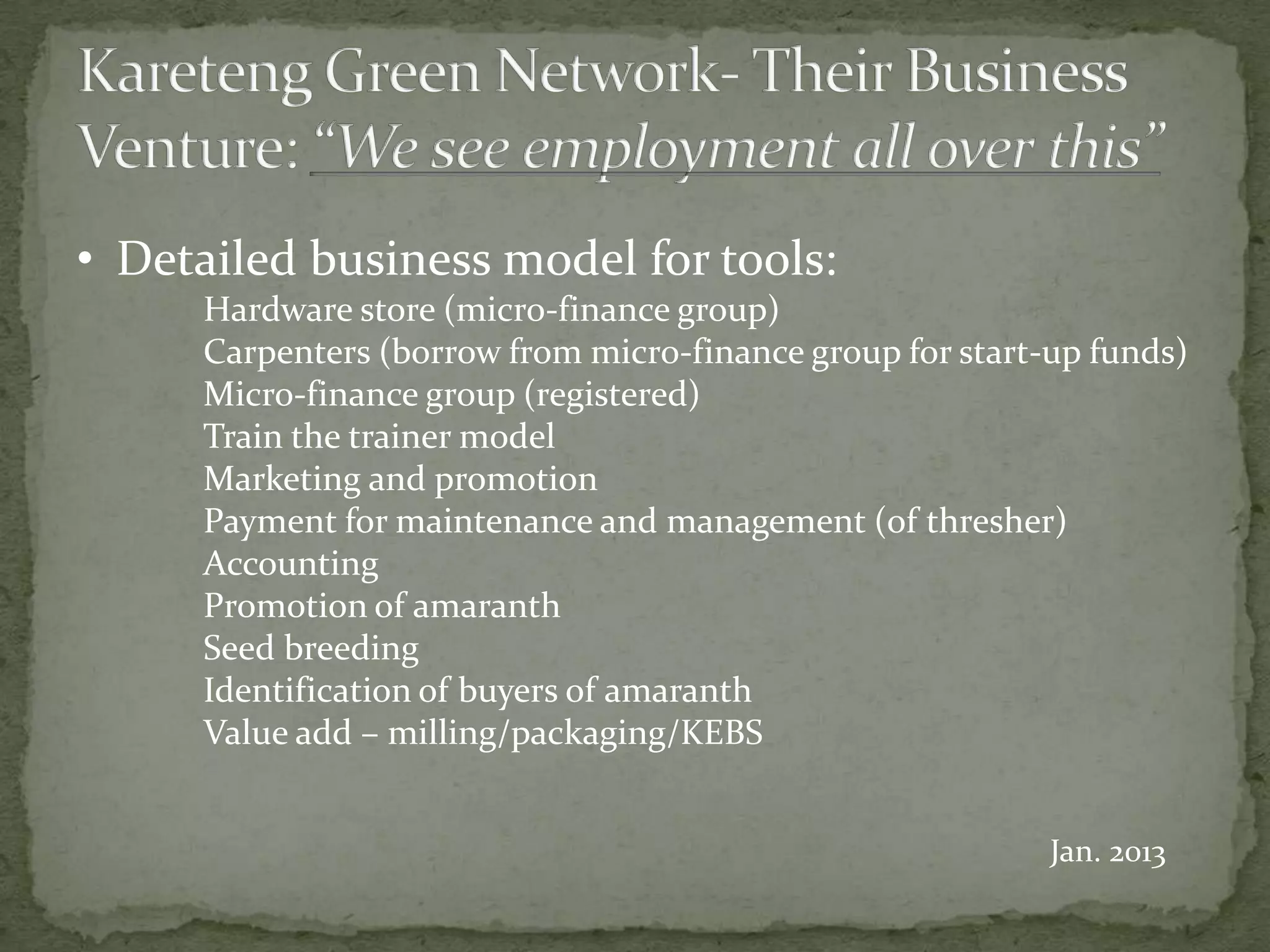
• Detailed business model for tools:
      Hardware store (micro-finance group)
      Carpenters (borrow from micro-finance group for start-up funds)
      Micro-finance group (registered)
      Train the trainer model
      Marketing and promotion
      Payment for maintenance and management (of thresher)
      Accounting
      Promotion of amaranth
      Seed breeding
      Identification of buyers of amaranth
      Value add – milling/packaging/KEBS


                                                            Jan. 2013
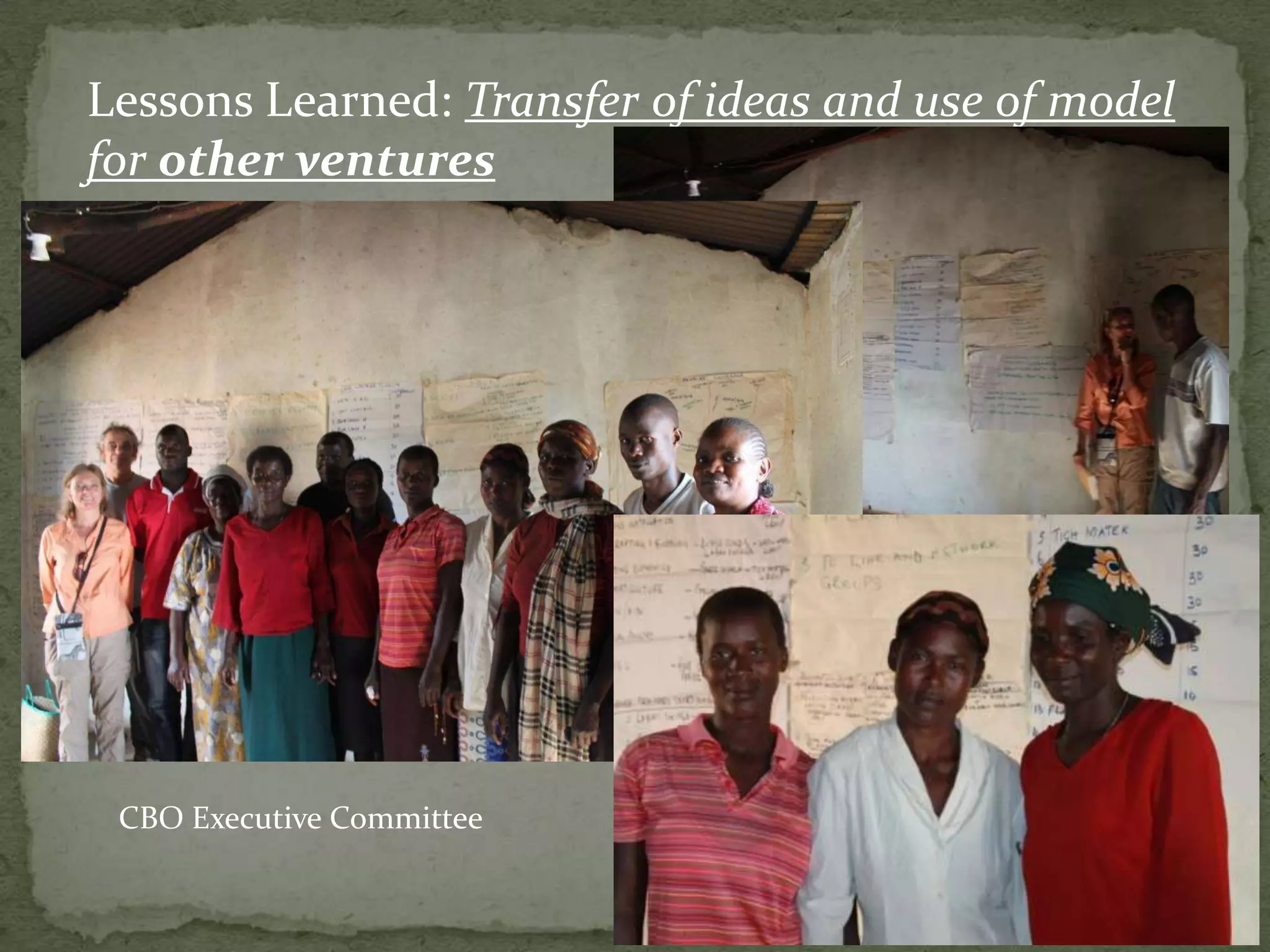
Lessons Learned: Transfer of ideas and use of model
for other ventures


 CBO Executive Committee
ď‚— Expand our partners and focus on supporting business
    venture and other entrepreneurs
ď‚—   Increase production of amaranth
ď‚—   Further too development: Are we saving on time and
    improving work conditions? Are we improving quality
    and quantity?
ď‚—   More training on production of amaranth and develop
    train the trainer model
ď‚—   Advisory committee
Open 2013:   Promoting Entrepreneurial Development and Sustainable Agribusinesses in Rural Western Kenya

Open 2013: Promoting Entrepreneurial Development and Sustainable Agribusinesses in Rural Western Kenya

  • 1.
    University of Hartford MarciaHughes, Ph.D. Sociology David Pines, Ph.D. Engineering
  • 2.
    ď‚— Rockwell Rookey,Civil Engineer, LEED AP ď‚— Dr. Thomas Boving, URI ď‚— Dr. Katherine Owens, UHart, Politics and Government ď‚— Maria Arroyo, UHart Politics and Government Student ď‚— Alex Schettino, UHart ME Student (Graduated) ď‚— KARI ď‚— Dr. George Ayaga ď‚— Ruth Orlale
  • 3.
     Amaranth grainwas introduced to Western Kenya and other countries as a CASH CROP by Poverty Eradication Commission- 2005  Highly nutritious “super food” (addresses health and food security issues)  Drought (and pest) resistant (addresses climate change) – Maize is failing  Short growing period (Increased production)
  • 4.
    Threshing of amaranthis exhausting work Seeds are small
  • 5.
    ď‚— Sows appropriatenumber of seeds at correct spacing ď‚— Little to no waste of seeds ď‚— Much less thinning/weeding ď‚— Quality of yield improves
  • 6.
    ď‚— A machinedesigned to efficiently thresh grains with high quality output ď‚— No longer exhaustive, dirty, back-breaking work typical of traditional method ď‚— With a replacement screen/sieve, a single machine can decrease time, labor, and increase quality and quantity for all your grains
  • 7.
    ď‚— Manufacturing andsale of tools: ď‚— Develop the infrastructure and capacity (locally) for large-scale manufacturing of the mechanical seed planter and the human-powered thresher. ď‚— Customers need customers: ď‚— Assist small to medium farming enterprises in increasing quantity and quality of amaranth production.
  • 8.
    ď‚— June 2012:On-the-ground business model ď‚— Facilitated consensus among stakeholders at each of 5 pilot sites (farming collaboratives-communities): ď‚— Delineate individual roles and contributions ď‚— Ensure equity/investment
  • 9.
    ď‚— Partners: ď‚— Kenya Agriculture and Research Institute ď‚— Farming Groups ď‚— Polytechnic School ď‚— Ministry of Agriculture
  • 10.
    ď‚— Community mobilization: ď‚— Each group has its own dynamic and history with each other and with us - modified accordingly
  • 11.
     Transferring/sharing knowledgeand ideas:  Develop a common understanding of the background, “the problem,” and the purpose of the project.
  • 12.
    ď‚— Implementation ofShared Use of Tools: ď‚— Activities, roles, responsibilities ď‚— Who will keep the tools? ď‚— Who will provide oversight, training, and management? ď‚— How many days will each farm utilize tools? ď‚— How will tools be transported from farm to farm? ď‚— Who will be in charge of maintenance? ď‚— How much to charge individual users? ď‚— **Our customers have customers: Increasing production of amaranth grain locally
  • 13.
    ď‚— November 2012and January 2013 field trips ď‚— Assess progress: ď‚— Practical/shared use of tools ď‚— Tools versus traditional methods (research) ď‚— Further field testing and modifications ď‚— Plan for upscaling of amaranth production ď‚— Identify entrepreneurs: expand/innovate venture model ď‚— Marketing/partnerships (i.e., Ministry of Agriculture, registries of collaboratives) ď‚— Seed production and related training
  • 14.
    ď‚— Modify-Test, Modify-Test,Modify-Test : Keep it simple! ď‚— Takes communication, brainstorming, and time
  • 15.
    ď‚— Involving farmersin the implementation and the testing of the tools: the farmers see the value and need for the tools
  • 16.
    ď‚— Involving farmersin the implementation and the testing: Farmers and artisans build strong working relationships
  • 17.
    ď‚— Involving farmersin the implementation and the testing: Business Venturers step forward
  • 18.
    Lessons Learned: Thetools will work, now the focus is the business model Nov. 2012
  • 19.
    • Detailed businessmodel for tools: Hardware store (micro-finance group) Carpenters (borrow from micro-finance group for start-up funds) Micro-finance group (registered) Train the trainer model Marketing and promotion Payment for maintenance and management (of thresher) Accounting Promotion of amaranth Seed breeding Identification of buyers of amaranth Value add – milling/packaging/KEBS Jan. 2013
  • 20.
    Lessons Learned: Transferof ideas and use of model for other ventures CBO Executive Committee
  • 21.
    ď‚— Expand ourpartners and focus on supporting business venture and other entrepreneurs ď‚— Increase production of amaranth ď‚— Further too development: Are we saving on time and improving work conditions? Are we improving quality and quantity? ď‚— More training on production of amaranth and develop train the trainer model ď‚— Advisory committee