Prof.Gabriela Manzano
Prof.Ernesto Correa
• A settlement is a place where people
live and interact through activities
such as agriculture, trading and
entertainment.
• A settlement in Geography helps us to
understand the relationship of
humans with their environment.
• Get in pairs and name at least 5.
3.Soils- The fertility of soils is also another
consideration for agricultural activities.
4.Shelter- Areas which are sheltered from
natural elements. Windswept highlands with
harsh cold climate are conducive for
settlement.
5.Defence- The threat from enemies and
predatory animals driven people to live
together for protection.
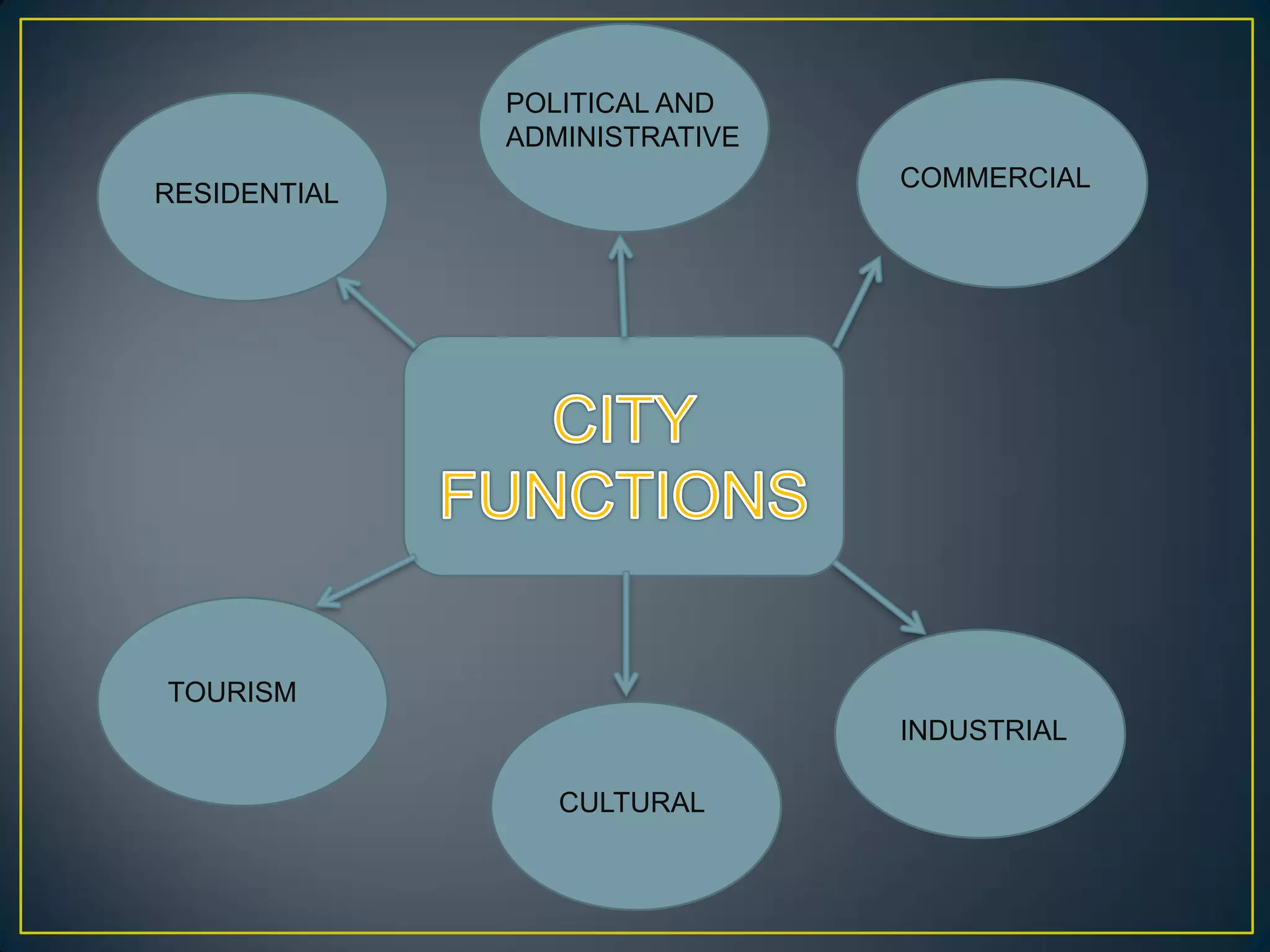
RESIDENTIAL
TOURISM
POLITICAL AND
ADMINISTRATIVE
COMMERCIAL
CULTURAL
INDUSTRIAL
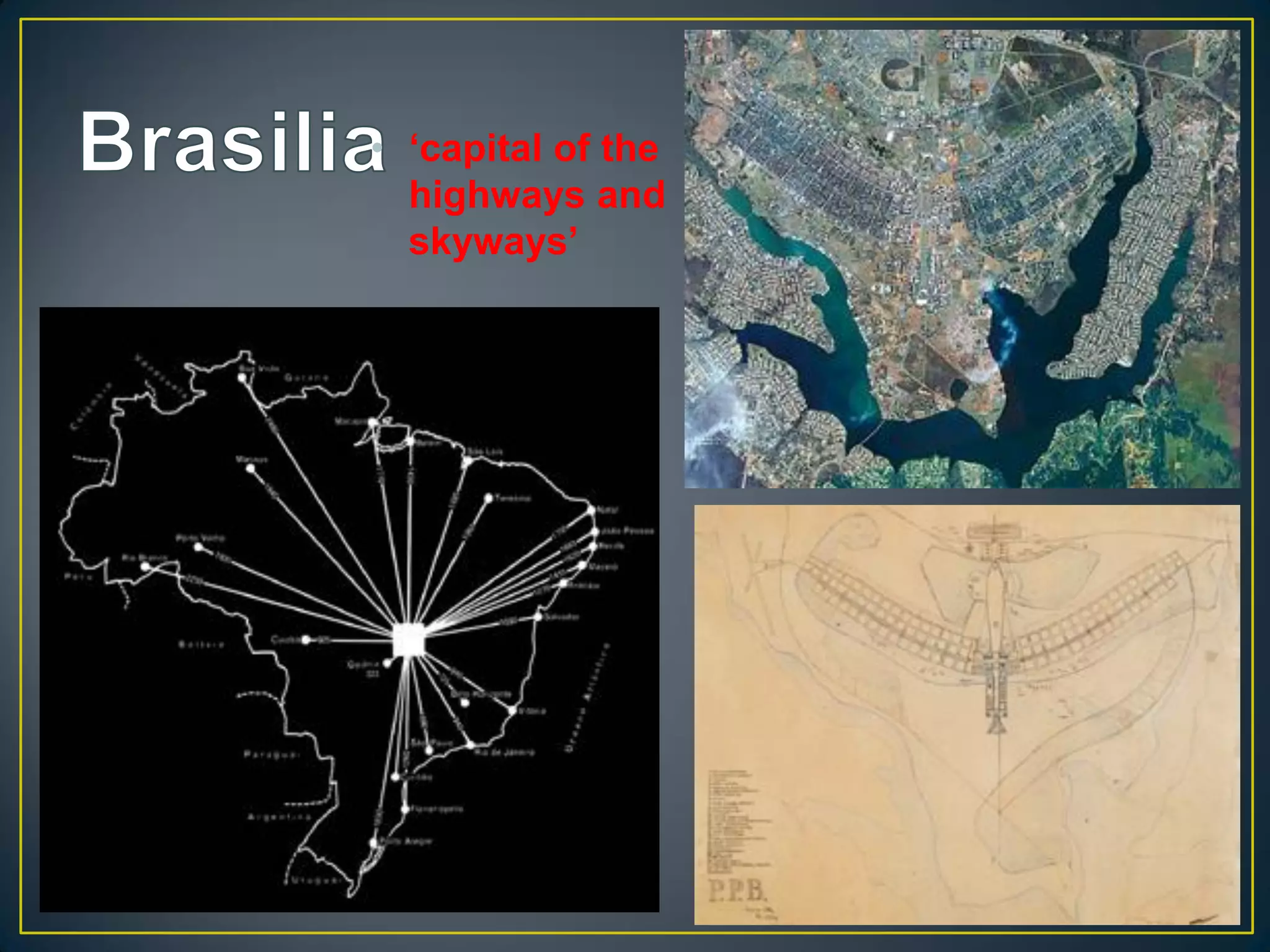
• ‘capital of the
highways and
skyways’
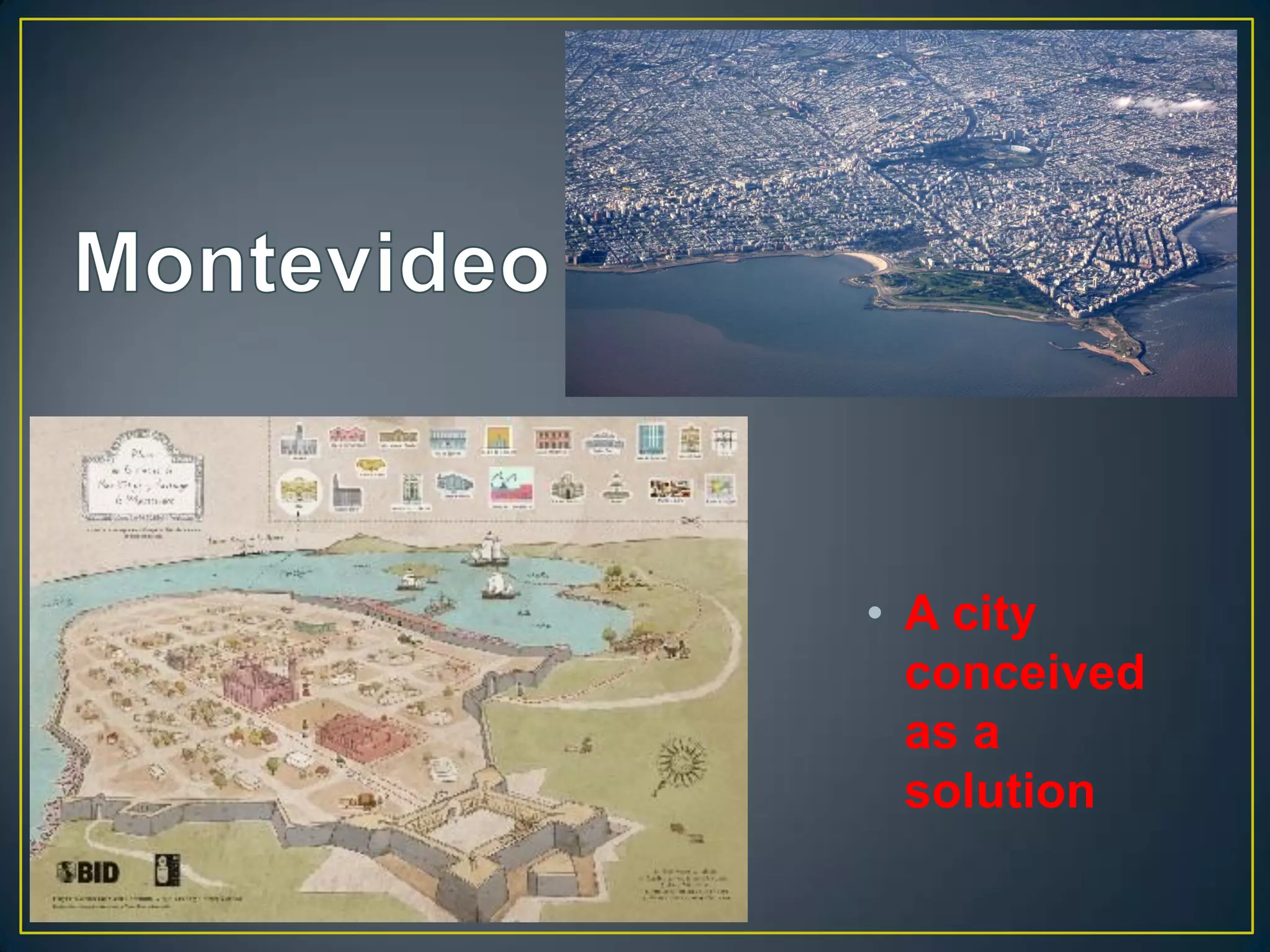
• A city
conceived
as a
solution
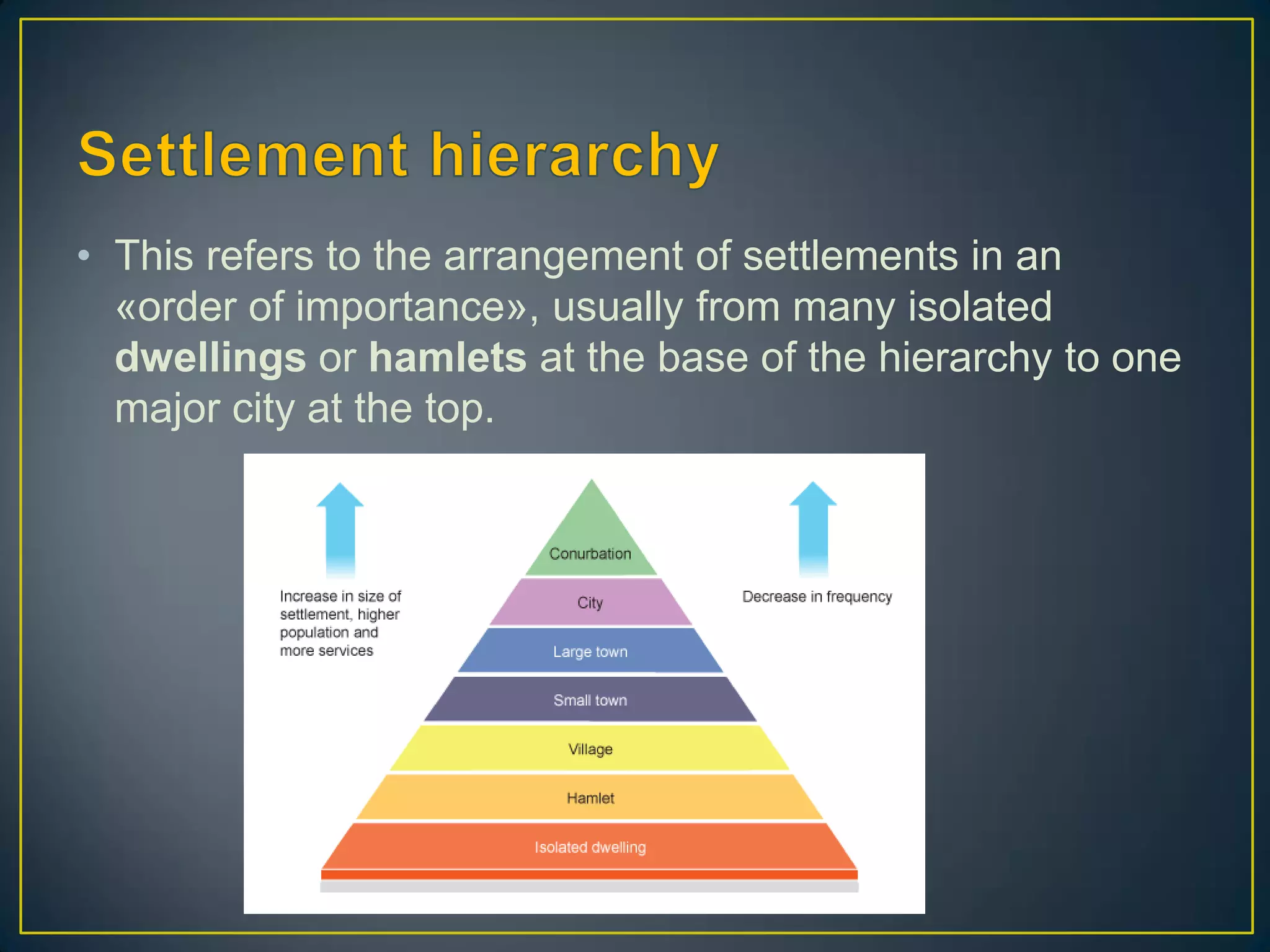
• This refers to the arrangement of settlements in an
«order of importance», usually from many isolated
dwellings or hamlets at the base of the hierarchy to one
major city at the top.
• 1. The area and population of the
settlement
• 2. The range and number of
services/functions within each
settlement
• 3. The relative sphere of influence
of each settlement
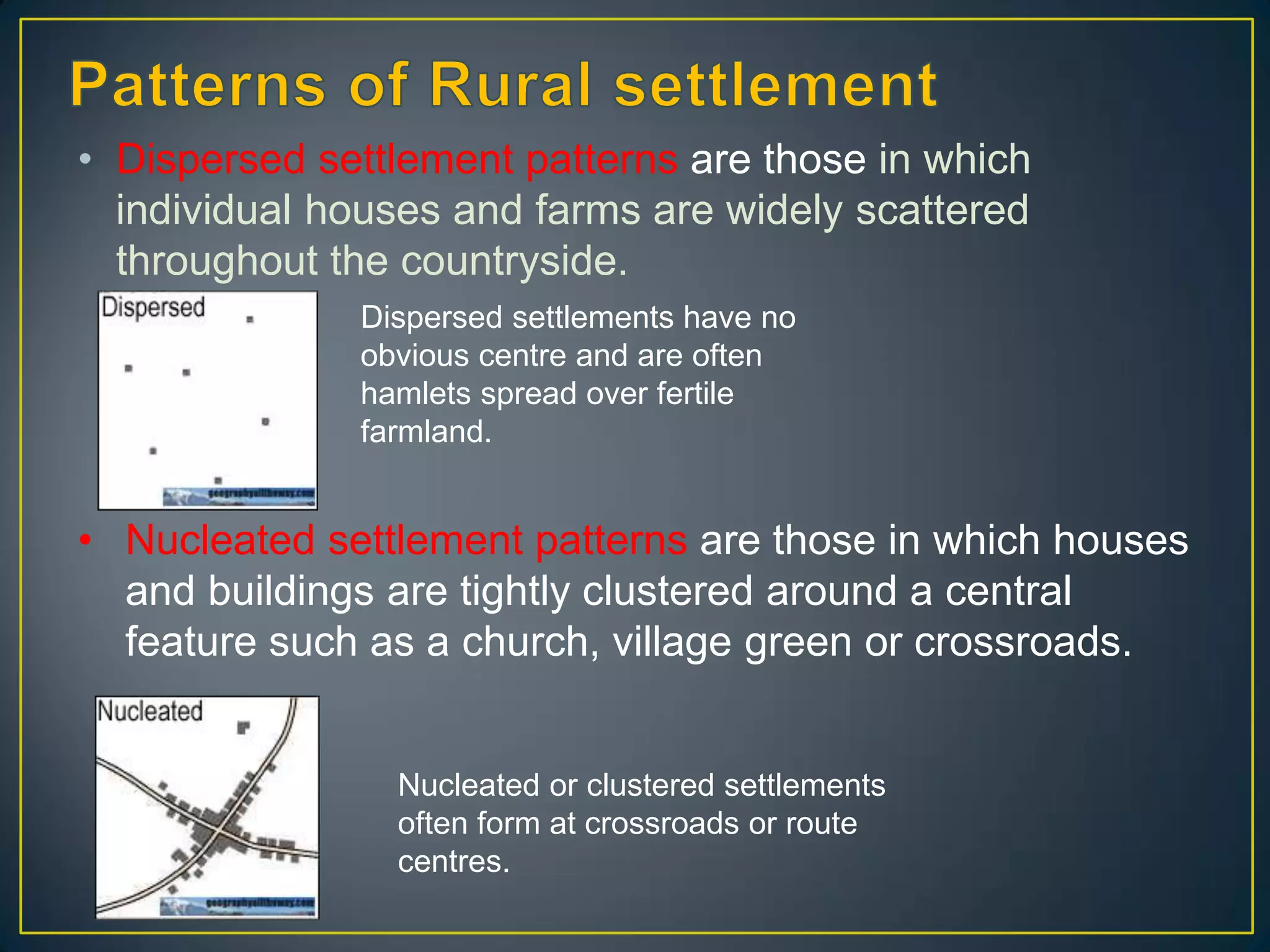
• Dispersed settlement patterns are those in which
individual houses and farms are widely scattered
throughout the countryside.
Dispersed settlements have no
obvious centre and are often
hamlets spread over fertile
farmland.
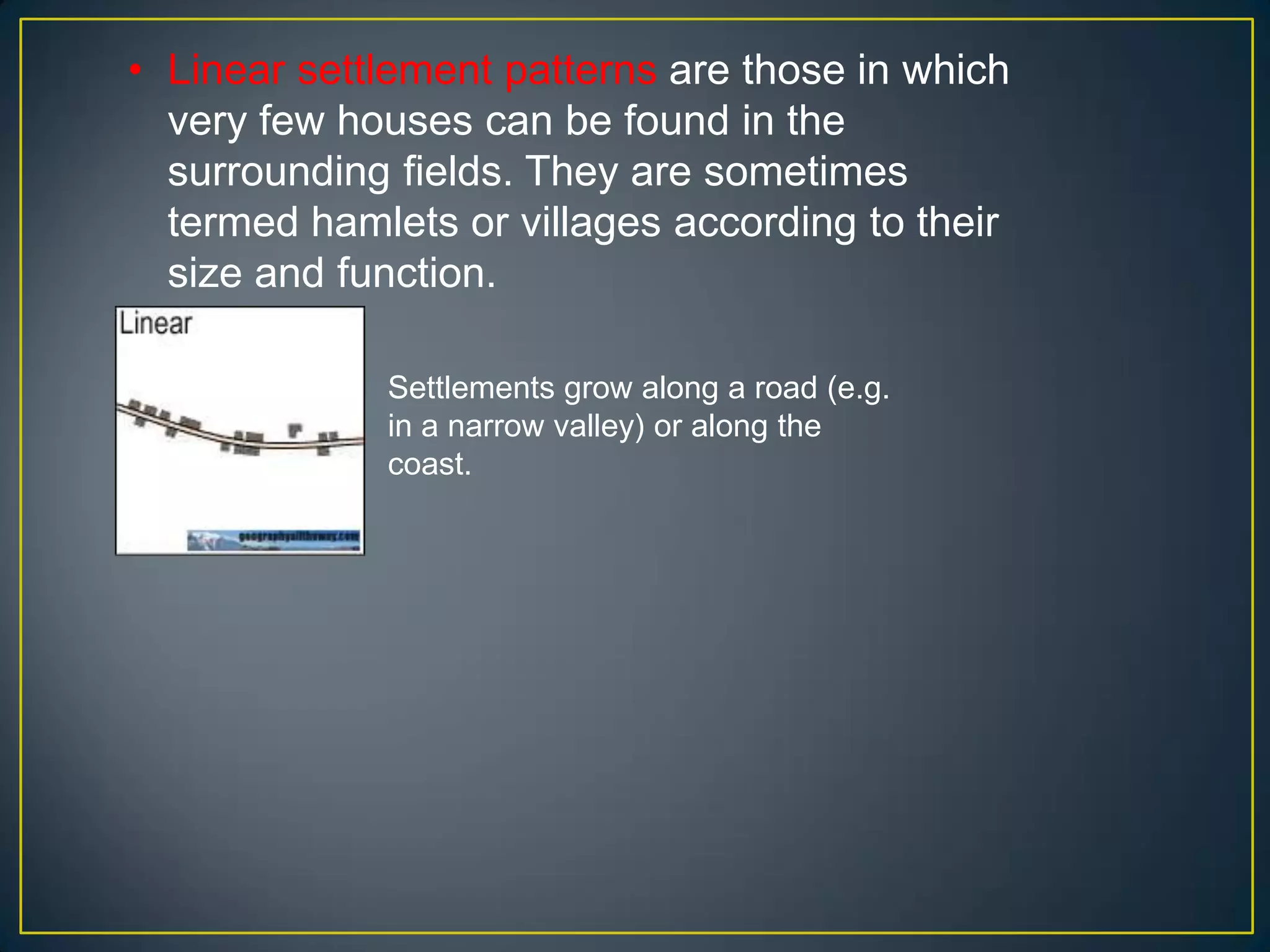
Nucleated or clustered settlements
often form at crossroads or route
centres.
• Nucleated settlement patterns are those in which houses
and buildings are tightly clustered around a central
feature such as a church, village green or crossroads.
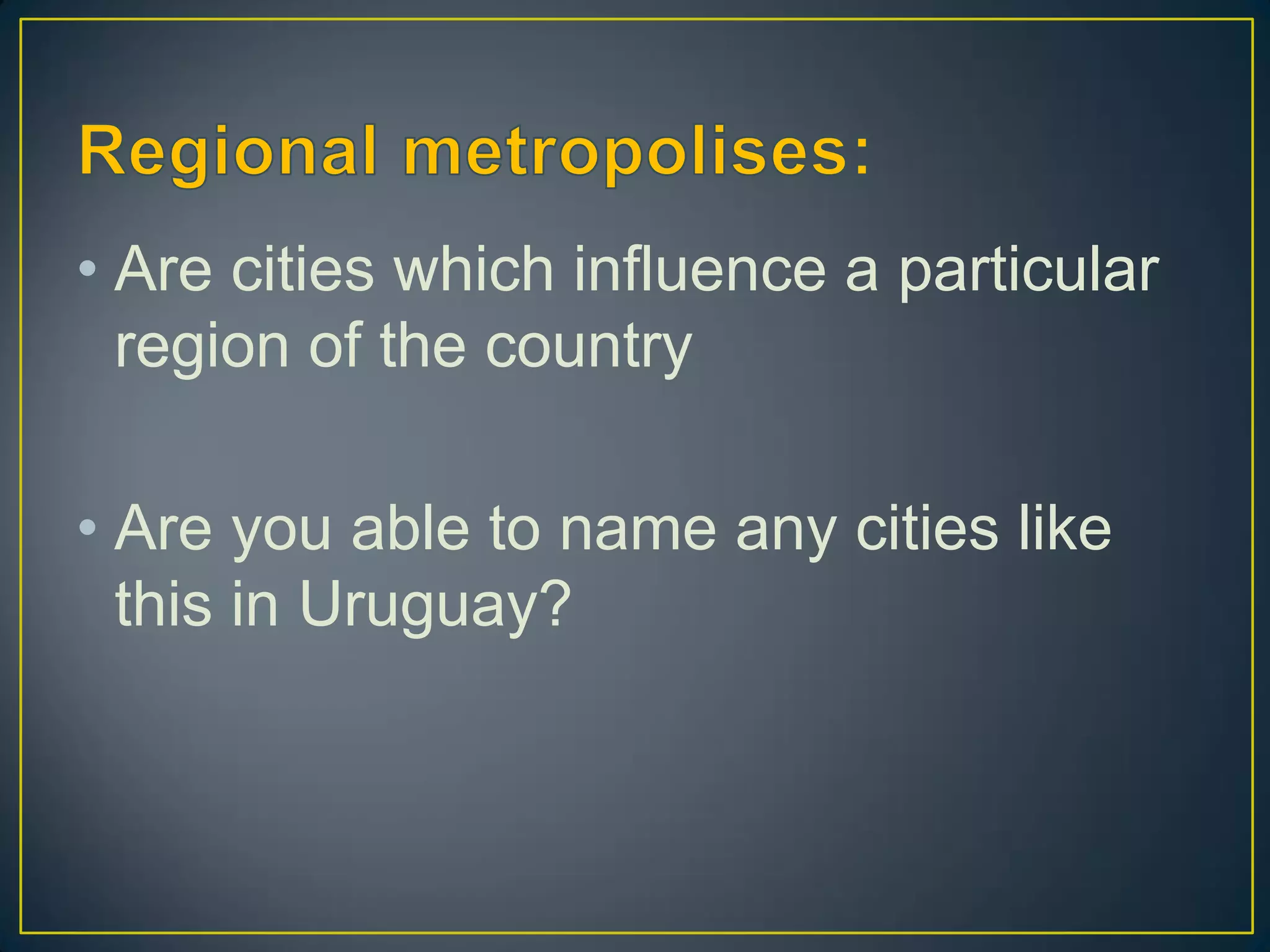
• Linear settlement patterns are those in which
very few houses can be found in the
surrounding fields. They are sometimes
termed hamlets or villages according to their
size and function.
Settlements grow along a road (e.g.
in a narrow valley) or along the
coast.
Urban
hierarchy
World metropolises
National metropolises
Regional metropolises
Smaller cities
• NYC, London, Tokyo. They have
global influence. Important
international institutions, the main
stock exchanges and large
multinational companies are based
there.
• Are capital cities and cities which
have influence in a particular country.
• Government bodies and large
companies are based there. Every
country generally has one or two
national metropolises.
• Are cities which influence a particular
region of the country
• Are you able to name any cities like
this in Uruguay?
• You can measure levels of urbanisation by calculating
the percentage of the total population living in urban
areas.
• The UN estimates that about 50% of the world´s
population live in urban areas. THE WORLD IS NOW
URBANISED
• MEDCs tend to have high levels of urbanisation.
• LEDCs tend to have low levels of urbanisation. However,
they are urbanising very rapidly.
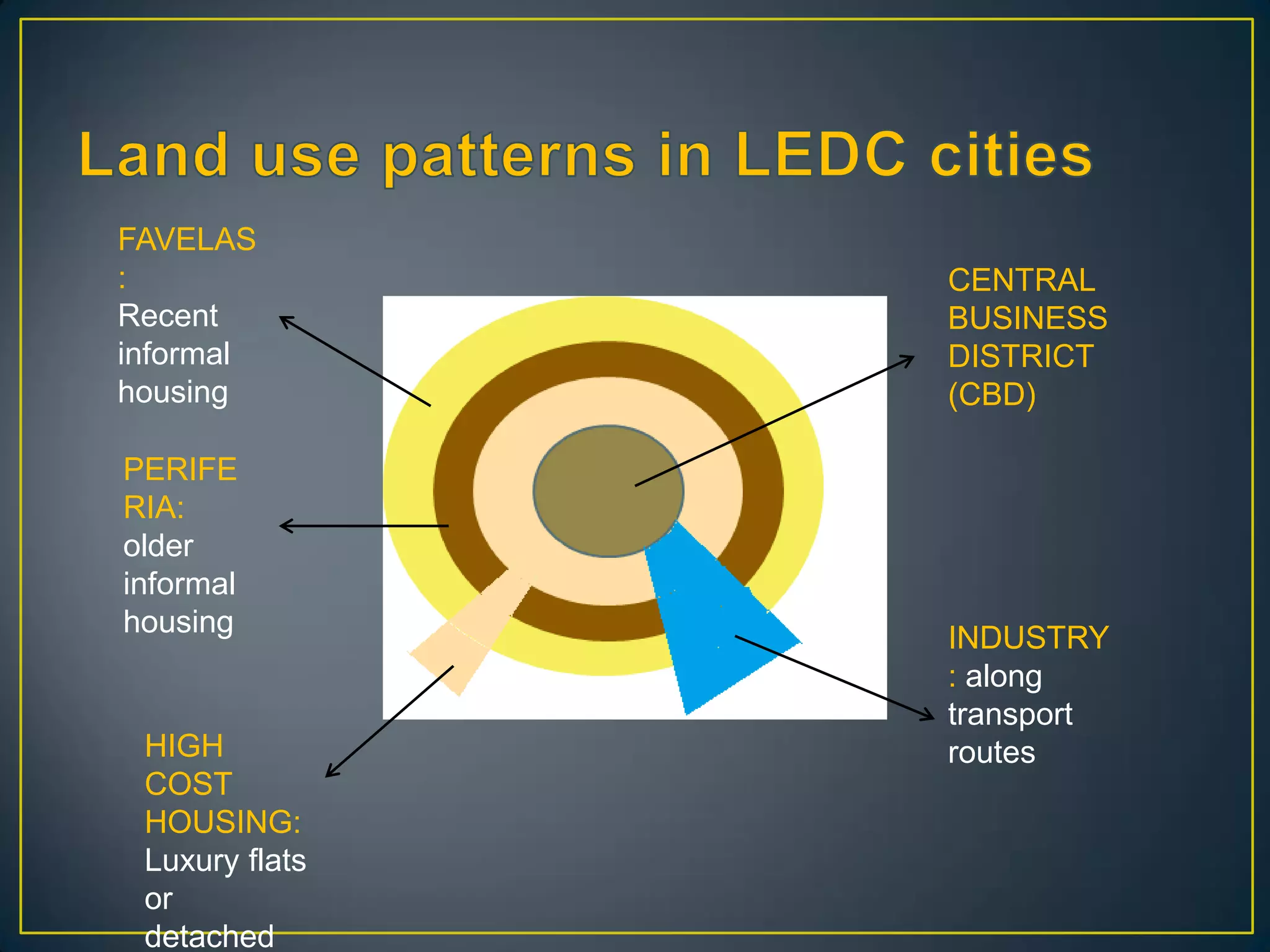
• To help us understand land use, geographers have
drawn models of a «typical» urban settlement.
OUTER
SUBURBS:
high cost,
low density
housing
INNER
SUBURBS:
medium
density
housing
CENTRAL
BUSINESS
DISTRICT (CBD):
Shops and offices
ZONE IN
TRANSITION:
Inner city-
industry and
high density,
low cost
housing
CENTRAL
BUSINESS
DISTRICT
(CBD)
INDUSTRY
: along
transport
routesHIGH
COST
HOUSING:
Luxury flats
or
detached
PERIFE
RIA:
older
informal
housing
FAVELAS
:
Recent
informal
housing
• Towns and cities grow in size and number
as the urban population expands.
• The rapid rate of urbanisation in developed
and developing countries brings a host of
urban problems due to a large increase in
the number of urban dwellers.
• Which are the problems you can think of?
• 1.Housing- lack of houses and the inability to afford
proper housing. Development of squattered settlement.
• 2.Water supply- shortage of water supply due to the
demand of water supply and poor piping system.
• 3.Transport- too many cars in major cities. Poor public
transport system.
• 4.Pollution- domestic and industrial waste contribute to
land pollution in urban areas.
• 5. Overcrowding- LEDC cities often have a very high
population density.
• 6. Competition for land- job opportunities and services
tend to be poor in the squattered settlements.
• 7. Disease- poor sanitation, limited healthcare and little
clean water in squattered settlements means that there is
a high risk of disease.
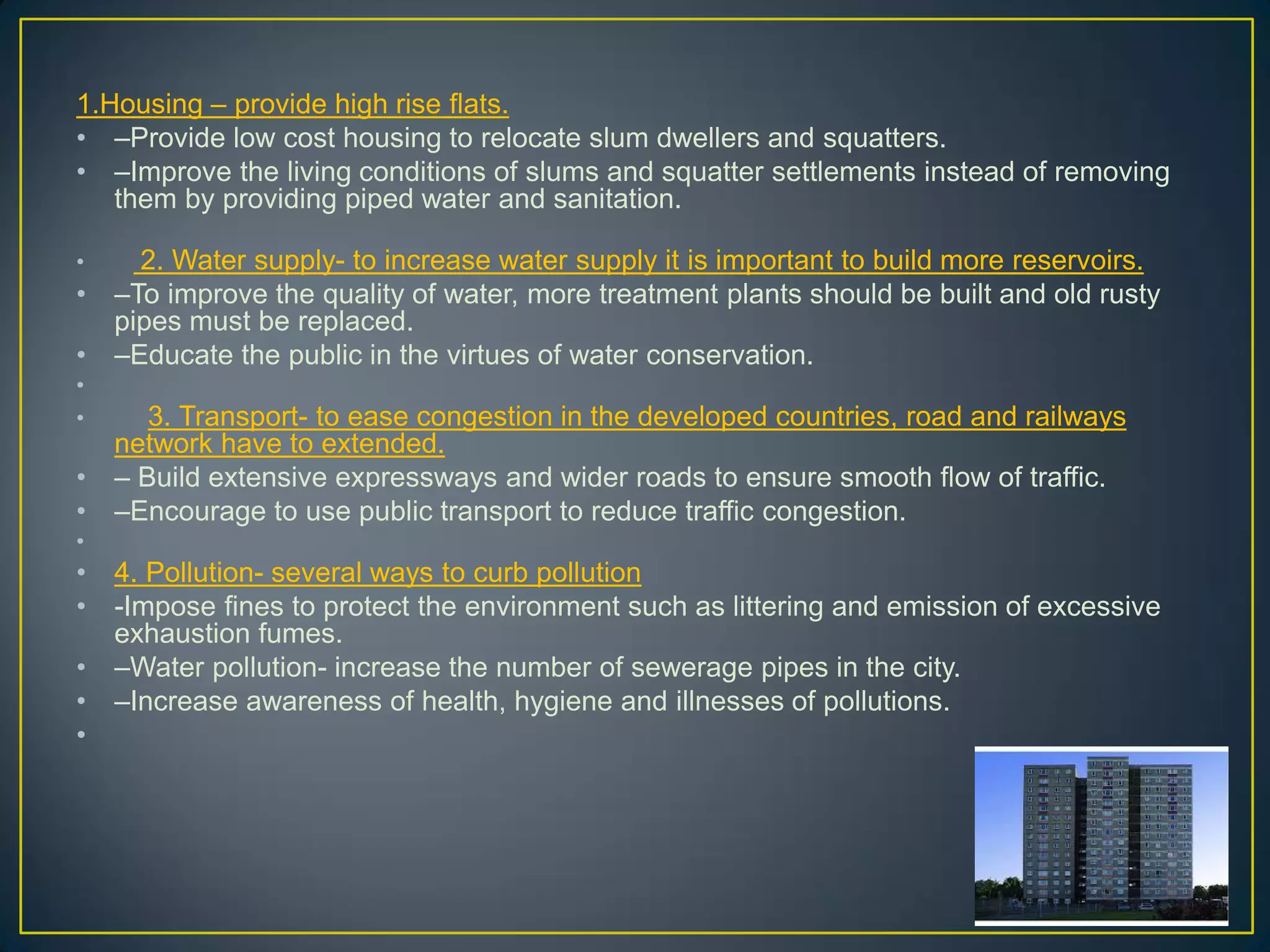
1.Housing – provide high rise flats.
• –Provide low cost housing to relocate slum dwellers and squatters.
• –Improve the living conditions of slums and squatter settlements instead of removing
them by providing piped water and sanitation.
• 2. Water supply- to increase water supply it is important to build more reservoirs.
• –To improve the quality of water, more treatment plants should be built and old rusty
pipes must be replaced.
• –Educate the public in the virtues of water conservation.
•
• 3. Transport- to ease congestion in the developed countries, road and railways
network have to extended.
• – Build extensive expressways and wider roads to ensure smooth flow of traffic.
• –Encourage to use public transport to reduce traffic congestion.
•
• 4. Pollution- several ways to curb pollution
• -Impose fines to protect the environment such as littering and emission of excessive
exhaustion fumes.
• –Water pollution- increase the number of sewerage pipes in the city.
• –Increase awareness of health, hygiene and illnesses of pollutions.
•

Settlement - Introduction for the topic

  • 1.
  • 2.
    • A settlementis a place where people live and interact through activities such as agriculture, trading and entertainment. • A settlement in Geography helps us to understand the relationship of humans with their environment.
  • 3.
    • Get inpairs and name at least 5.
  • 5.
    3.Soils- The fertilityof soils is also another consideration for agricultural activities. 4.Shelter- Areas which are sheltered from natural elements. Windswept highlands with harsh cold climate are conducive for settlement. 5.Defence- The threat from enemies and predatory animals driven people to live together for protection.
  • 6.
  • 7.
    • ‘capital ofthe highways and skyways’
  • 8.
  • 9.
    • This refersto the arrangement of settlements in an «order of importance», usually from many isolated dwellings or hamlets at the base of the hierarchy to one major city at the top.
  • 11.
    • 1. Thearea and population of the settlement • 2. The range and number of services/functions within each settlement • 3. The relative sphere of influence of each settlement
  • 12.
    • Dispersed settlementpatterns are those in which individual houses and farms are widely scattered throughout the countryside. Dispersed settlements have no obvious centre and are often hamlets spread over fertile farmland. Nucleated or clustered settlements often form at crossroads or route centres. • Nucleated settlement patterns are those in which houses and buildings are tightly clustered around a central feature such as a church, village green or crossroads.
  • 13.
    • Linear settlementpatterns are those in which very few houses can be found in the surrounding fields. They are sometimes termed hamlets or villages according to their size and function. Settlements grow along a road (e.g. in a narrow valley) or along the coast.
  • 14.
  • 15.
    • NYC, London,Tokyo. They have global influence. Important international institutions, the main stock exchanges and large multinational companies are based there.
  • 16.
    • Are capitalcities and cities which have influence in a particular country. • Government bodies and large companies are based there. Every country generally has one or two national metropolises.
  • 17.
    • Are citieswhich influence a particular region of the country • Are you able to name any cities like this in Uruguay?
  • 18.
    • You canmeasure levels of urbanisation by calculating the percentage of the total population living in urban areas. • The UN estimates that about 50% of the world´s population live in urban areas. THE WORLD IS NOW URBANISED • MEDCs tend to have high levels of urbanisation. • LEDCs tend to have low levels of urbanisation. However, they are urbanising very rapidly.
  • 19.
    • To helpus understand land use, geographers have drawn models of a «typical» urban settlement. OUTER SUBURBS: high cost, low density housing INNER SUBURBS: medium density housing CENTRAL BUSINESS DISTRICT (CBD): Shops and offices ZONE IN TRANSITION: Inner city- industry and high density, low cost housing
  • 20.
  • 21.
    • Towns andcities grow in size and number as the urban population expands. • The rapid rate of urbanisation in developed and developing countries brings a host of urban problems due to a large increase in the number of urban dwellers. • Which are the problems you can think of?
  • 22.
    • 1.Housing- lackof houses and the inability to afford proper housing. Development of squattered settlement. • 2.Water supply- shortage of water supply due to the demand of water supply and poor piping system. • 3.Transport- too many cars in major cities. Poor public transport system. • 4.Pollution- domestic and industrial waste contribute to land pollution in urban areas. • 5. Overcrowding- LEDC cities often have a very high population density. • 6. Competition for land- job opportunities and services tend to be poor in the squattered settlements. • 7. Disease- poor sanitation, limited healthcare and little clean water in squattered settlements means that there is a high risk of disease.
  • 24.
    1.Housing – providehigh rise flats. • –Provide low cost housing to relocate slum dwellers and squatters. • –Improve the living conditions of slums and squatter settlements instead of removing them by providing piped water and sanitation. • 2. Water supply- to increase water supply it is important to build more reservoirs. • –To improve the quality of water, more treatment plants should be built and old rusty pipes must be replaced. • –Educate the public in the virtues of water conservation. • • 3. Transport- to ease congestion in the developed countries, road and railways network have to extended. • – Build extensive expressways and wider roads to ensure smooth flow of traffic. • –Encourage to use public transport to reduce traffic congestion. • • 4. Pollution- several ways to curb pollution • -Impose fines to protect the environment such as littering and emission of excessive exhaustion fumes. • –Water pollution- increase the number of sewerage pipes in the city. • –Increase awareness of health, hygiene and illnesses of pollutions. •